Research Articles
RT-qPCR in Liquid Biopsy: A Comprehensive Guide for Cancer Detection and Monitoring
This article provides a detailed examination of Reverse Transcription Quantitative PCR (RT-qPCR) for liquid biopsy applications in oncology, tailored for researchers and drug development professionals.
Beyond GAPDH and ACTB: A Modern Guide to Selecting Stable Reference Genes for Accurate qPCR in Cancer Research
Accurate gene expression analysis via qPCR is foundational to cancer research, yet a pervasive reliance on traditional reference genes like GAPDH and ACTB frequently leads to data distortion and irreproducible...
MIQE Guidelines for Cancer Biomarker Validation: Ensuring Reproducibility in Molecular Diagnostics
This article provides a comprehensive guide for researchers and drug development professionals on implementing MIQE (Minimum Information for Publication of Quantitative Real-Time PCR Experiments) guidelines specifically for cancer biomarker validation.
Real-Time PCR in Transcriptional Biomarker Discovery: A Foundational Guide from Discovery to Clinical Application
This article provides a comprehensive overview of the critical role real-time quantitative PCR (qPCR) plays in the discovery and validation of transcriptional biomarkers for drug development and clinical diagnostics.
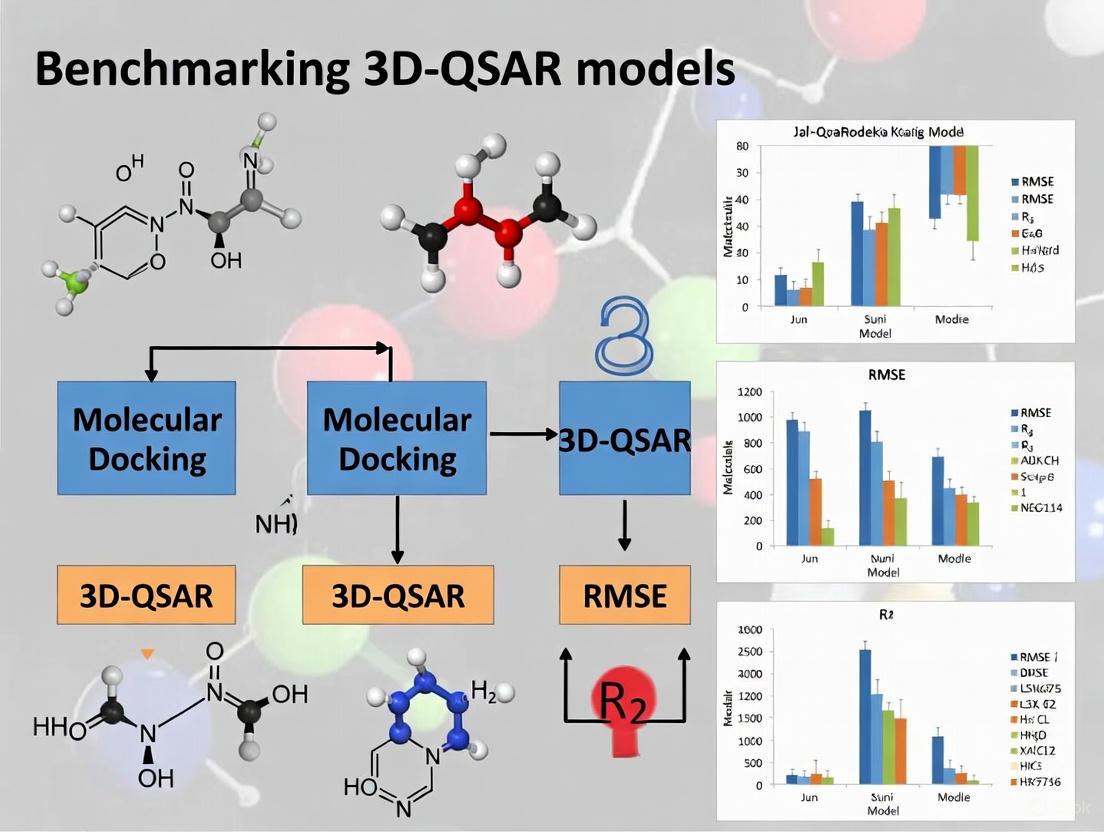
Benchmarking 3D-QSAR Against Molecular Docking: A Practical Guide for Predictive Drug Discovery
This article provides a comprehensive framework for researchers and drug development professionals to benchmark 3D-QSAR models against molecular docking results.
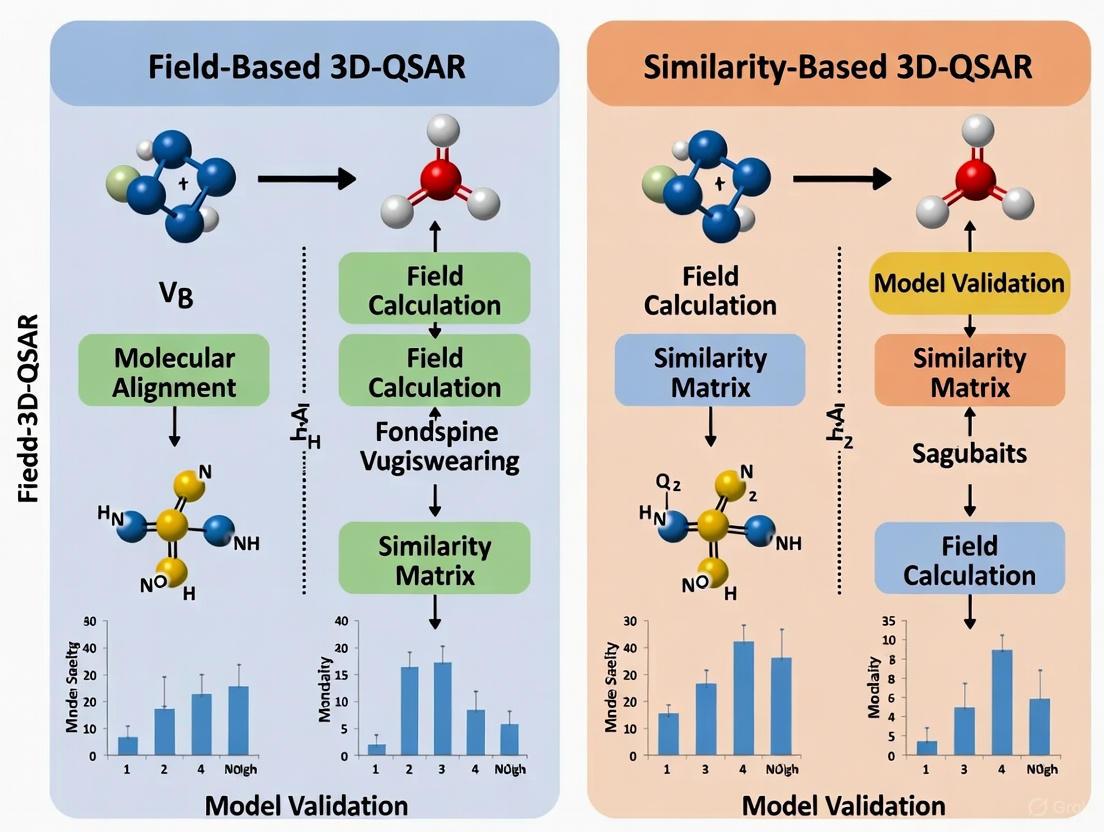
Field-Based vs. Similarity-Based 3D-QSAR: A Comprehensive Guide for Modern Drug Discovery
This article provides a thorough comparative analysis of two foundational 3D-QSAR methodologies: field-based and similarity-based approaches.
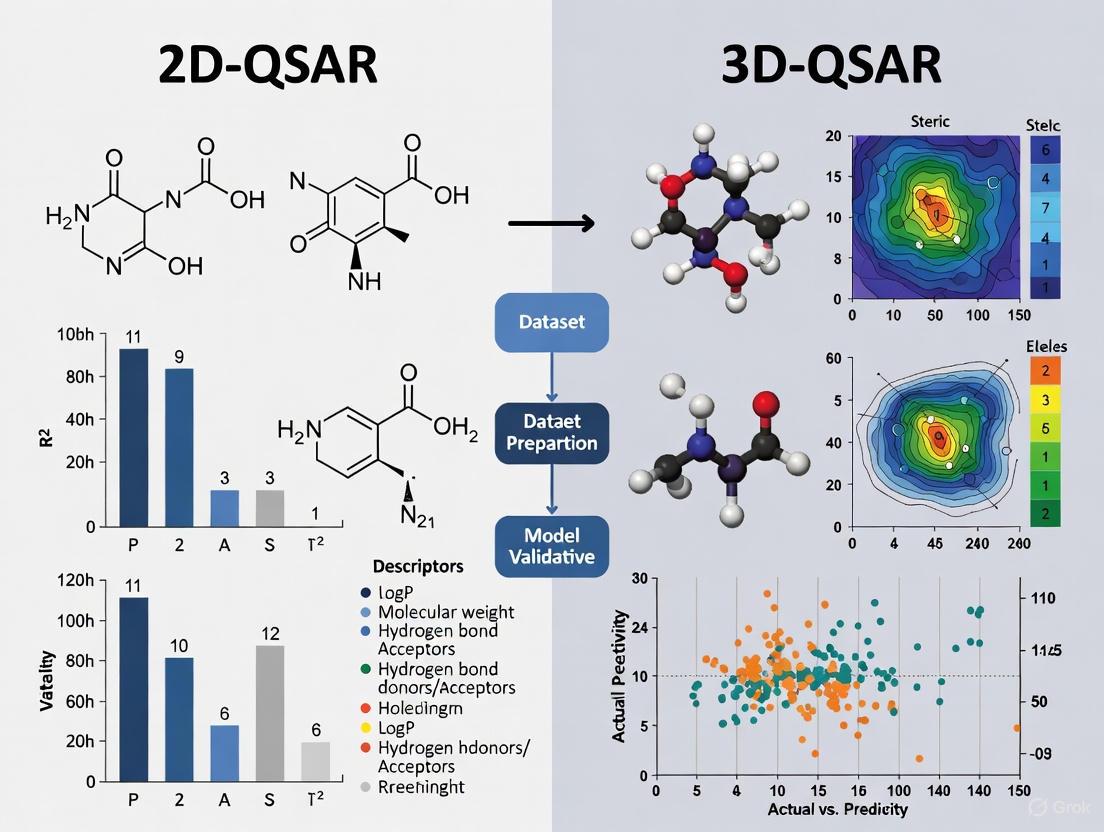
2D-QSAR vs. 3D-QSAR: A Comprehensive Performance Comparison for Glioblastoma Drug Discovery
This article provides a detailed comparison of 2D and 3D Quantitative Structure-Activity Relationship (QSAR) models in the context of glioblastoma multiforme (GBM) therapeutics.
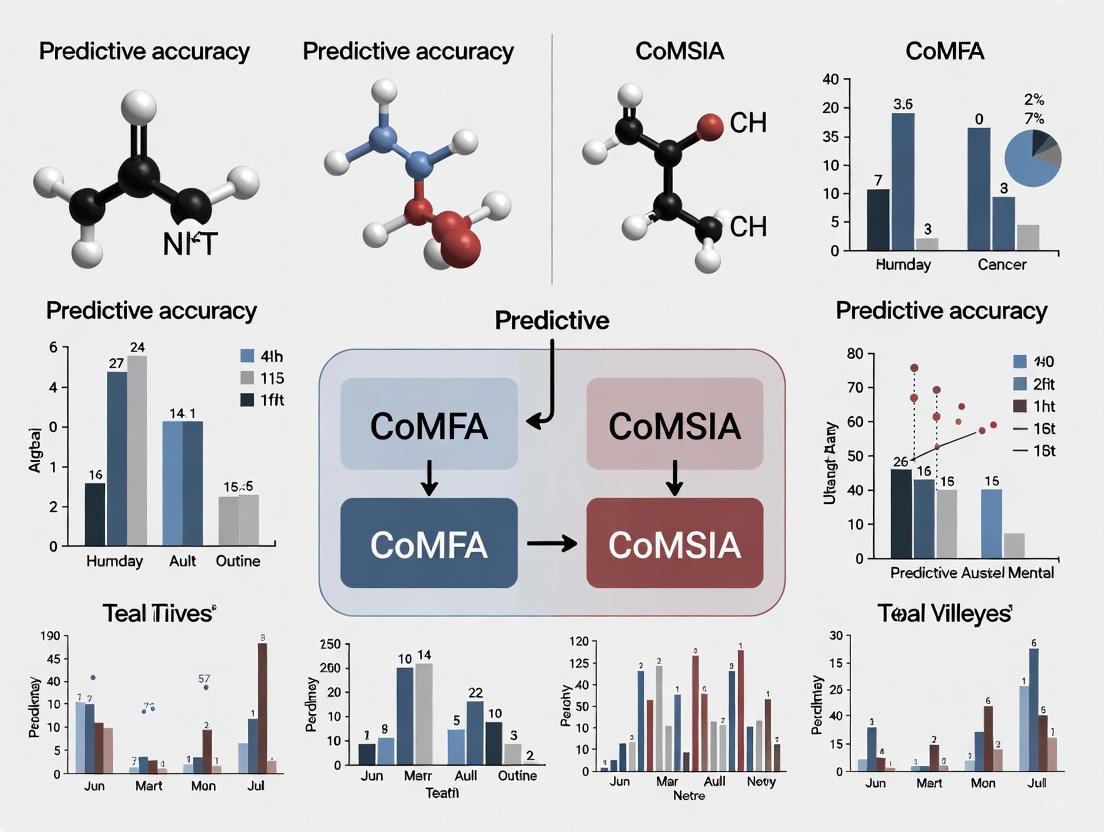
CoMFA vs. CoMSIA: A Comparative Analysis of Predictive Accuracy in Cancer Drug Design
This article provides a comprehensive comparison of two cornerstone 3D-QSAR techniques—Comparative Molecular Field Analysis (CoMFA) and Comparative Molecular Similarity Indices Analysis (CoMSIA)—in the context of cancer drug discovery.
Optimizing CoMSIA Field Combinations for Robust 3D-QSAR Models in Drug Discovery
This article provides a comprehensive guide for computational chemists and drug development professionals on optimizing Comparative Molecular Similarity Indices Analysis (CoMSIA) field combinations to enhance model performance.
Overcoming the Activity Cliff Challenge: Strategies for Robust 3D-QSAR Prediction
Activity cliffs (ACs), where minute structural modifications cause drastic potency shifts, represent a significant source of prediction error and a central challenge for 3D-QSAR modeling in drug discovery.