Real-Time PCR in Transcriptional Biomarker Discovery: A Foundational Guide from Discovery to Clinical Application
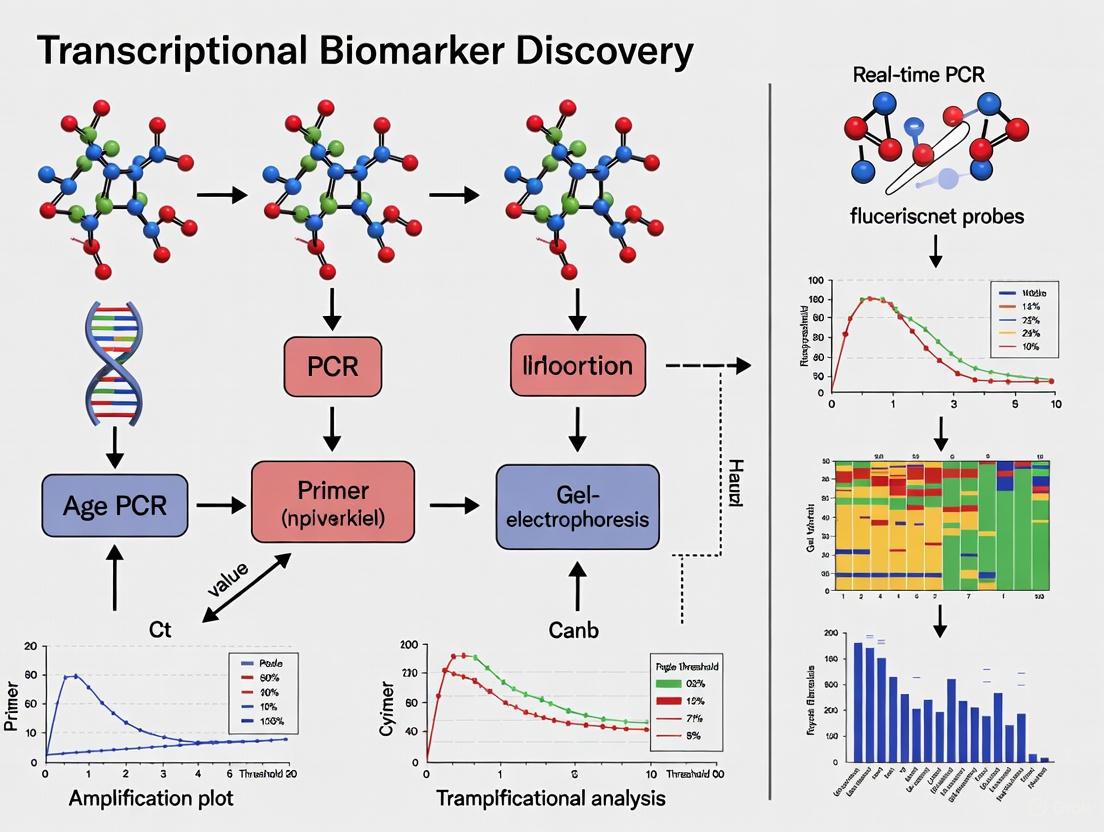
This article provides a comprehensive overview of the critical role real-time quantitative PCR (qPCR) plays in the discovery and validation of transcriptional biomarkers for drug development and clinical diagnostics.
Real-Time PCR in Transcriptional Biomarker Discovery: A Foundational Guide from Discovery to Clinical Application
Abstract
This article provides a comprehensive overview of the critical role real-time quantitative PCR (qPCR) plays in the discovery and validation of transcriptional biomarkers for drug development and clinical diagnostics. It covers foundational principles, from the advantages of nucleic acids as biomarkers to the various RNA types (mRNA, miRNA, lncRNA) under investigation. The piece delves into detailed methodological protocols for assay design and data normalization, addresses key troubleshooting and optimization strategies as per MIQE guidelines, and explores validation frameworks, including comparisons with emerging high-throughput transcriptomic technologies. Aimed at researchers and drug development professionals, this article serves as a practical guide for employing qPCR to develop robust, clinically actionable biomarker signatures.
The Transcriptional Biomarker Landscape: Why qPCR is a Gold Standard for Discovery
Transcriptional biomarkers, comprising both protein-coding mRNAs and non-coding RNAs (ncRNAs), are revolutionizing molecular diagnostics and therapeutic development. These biomarkers provide critical insights into cellular states, disease mechanisms, and treatment responses. The discovery and validation of these biomarkers increasingly rely on robust molecular techniques, with real-time PCR standing as a cornerstone technology due to its quantitative precision, sensitivity, and throughput. This whitepaper provides a comprehensive technical guide to defining transcriptional biomarkers, with emphasis on integrated analytical approaches and the pivotal role of real-time PCR in translating biomarker discovery into clinically actionable tools.
Transcriptional biomarkers are measurable RNA molecules whose expression patterns are indicative of specific biological states, pathological conditions, or responses to therapeutic intervention. The transcriptome encompasses not only messenger RNAs (mRNAs) that code for proteins but also a diverse array of non-coding RNAs (ncRNAs) with crucial regulatory functions [1]. Once considered "junk," ncRNAs are now established as key players in cellular homeostasis, with microRNAs (miRNAs) and long non-coding RNAs (lncRNAs) being the most extensively studied families in pathological conditions such as cancer [2].
The stability of DNA methylation patterns in cell-free DNA (cfDNA) makes them particularly attractive as biomarkers for liquid biopsies, offering enhanced resistance to degradation compared to more labile RNA molecules [3]. As the field advances, the integration of multiple biomarker types—mRNA, miRNA, lncRNA, and DNA methylation marks—within coordinated regulatory networks is providing unprecedented insights into disease mechanisms and enabling more precise diagnostic and therapeutic applications.
Classes of Transcriptional Biomarkers
mRNA Biomarkers
mRNAs represent the classical transcriptional biomarkers, serving as intermediaries between genes and proteins. Their expression levels directly reflect the transcriptional activity of genes and can indicate disease states, cellular differentiation, or response to environmental stimuli. In cancer, mRNA expression profiles of key genes involved in oncogenic pathways (e.g., cell cycle regulation, apoptosis, metastasis) provide valuable diagnostic, prognostic, and predictive information [1].
Non-Coding RNA Biomarkers
Table 1: Major Classes of Non-Coding RNA Biomarkers
| RNA Class | Size | Primary Function | Role in Disease | Example Biomarkers |
|---|---|---|---|---|
| microRNA (miRNA) | 18-24 nt | Post-transcriptional gene regulation via mRNA targeting | Oncogenic or tumor suppressor roles; deregulated in cancer, viral diseases, cardiovascular and neurodegenerative diseases [2] | miR-21 (suppresses tumor suppressors), miR-155 (oncogenic) |
| Long Non-Coding RNA (lncRNA) | >200 nt | Transcriptional and post-transcriptional regulation; miRNA sponging | Influence tumour growth, invasion, and metastasis; drug sensitivity/resistance [2] | HOTAIR (promotes cancer development), MEG3 (tumor suppressor) |
| Circular RNA (circRNA) | Variable | miRNA sponging; protein decoys | Emerging roles in various cancers | Not specified in search results |
MicroRNAs (miRNAs) are short RNA transcripts that typically regulate gene expression by binding to the 3'-untranslated region of target mRNAs, leading to translational repression or mRNA degradation [2]. A single miRNA can target multiple mRNAs, enabling coordinated regulation across entire pathways. miRNA expression is frequently tissue-specific and deregulated in numerous diseases, making them promising biomarker candidates.
Long Non-Coding RNAs (lncRNAs) exceed 200 nucleotides and exhibit diverse regulatory mechanisms, including chromatin modification, transcriptional interference, and sequestration of miRNAs (acting as "miRNA sponges") [2]. They show remarkable cell- and tissue-specific expression patterns and are specifically deregulated under pathological conditions, offering high specificity as biomarkers.
Real-Time PCR: The Gold Standard in Biomarker Analysis
Fundamental Principles and Workflow
Real-time PCR, also known as quantitative PCR (qPCR), has revolutionized transcriptional biomarker analysis by enabling accurate quantification of nucleic acids during the amplification process. Unlike traditional PCR that relies on end-point detection, real-time PCR monitors PCR product accumulation in real-time using fluorescent reporter molecules [1]. This approach provides both quantification and amplification capabilities within a single, closed-tube system, significantly reducing contamination risk while increasing throughput.
The critical distinction between qPCR (quantification of DNA targets) and RT-qPCR (quantification of RNA targets after reverse transcription to cDNA) is essential for proper experimental design [1]. RT-qPCR represents one of the most sensitive gene analysis techniques available, capable of detecting down to a single copy of a transcript, making it indispensable for studying low-abundance biomarkers in complex biological samples [1].
Experimental Design and Workflow
The following diagram illustrates the comprehensive RT-qPCR workflow for transcriptional biomarker analysis:
Key Considerations for Robust qPCR Assays
Assay Specificity and Efficiency: qPCR assays must demonstrate high specificity for intended targets with amplification efficiencies between 90-110% for reliable quantification [1]. Proper assay design requires checking against known sequence databases (NCBI, Ensembl) to ensure target specificity, particularly for discriminating between closely related gene family members or splice variants.
Normalization Strategies: Accurate gene expression quantification requires appropriate normalization using validated reference genes (endogenous controls) to correct for technical variations in RNA input, reverse transcription efficiency, and sample quality [1]. The selection of stable reference genes must be empirically determined for specific experimental conditions as their expression can vary across tissue types and treatments.
MIQE Guidelines: The Minimum Information for Publication of Quantitative Real-Time PCR Experiments (MIQE) guidelines provide a comprehensive framework for ensuring qPCR assay quality, transparency, and reproducibility [4]. Recent updates to MIQE 2.0 emphasize the need for rigorous methodological practices, including proper documentation of sample handling, assay validation, efficiency calculations, and normalization strategies. Adherence to these guidelines is critical for generating reliable transcriptional biomarker data, particularly in molecular diagnostics where results inform clinical decisions [4].
Advanced Biomarker Discovery and Validation
Integrated Transcriptomic Analysis
Advanced biomarker discovery increasingly focuses on regulatory networks rather than individual molecules. Integrated analyses of mRNA-lncRNA-miRNA interactions reveal complex regulatory circuits that drive disease processes. For example, in hepatocellular carcinoma, a comprehensive mRNA-lncRNA-miRNA (MLMI) network identified 16 miRNAs, 3 lncRNAs, and 253 mRNAs with reciprocal interactions that synergistically modulate carcinogenesis [5]. Such networks provide a more complete understanding of molecular mechanisms and identify coordinated biomarker signatures with enhanced diagnostic and prognostic value.
The following diagram illustrates the complex interactions within an integrated mRNA-lncRNA-miRNA network:
Biomarker Categorization in Meta-Analysis
With the accumulation of transcriptomic datasets, meta-analysis approaches have become essential for identifying robust biomarkers across multiple studies. Biomarker categorization by differential expression patterns across studies helps explain between-study heterogeneity and classifies biomarkers into functional categories [6]. Advanced statistical methods, such as the adaptively weighted Fisher's method, now enable biomarker categorization that simultaneously considers concordant patterns, biological significance (effect size), and statistical significance (p-values) across studies [6].
This approach is particularly valuable in pan-cancer analyses, where biomarkers can be categorized as: (1) universally dysregulated across all cancer types, (2) specific to particular cancer lineages, or (3) exhibiting context-dependent regulation. Such categorization facilitates more focused downstream analyses, including pathway enrichment and regulatory network construction specific to each biomarker category [6].
Analytical Validation Frameworks
Robust biomarker validation requires rigorous analytical frameworks. For real-time PCR assays, both laboratory-developed tests (LDTs) and commercial assays must undergo comprehensive verification to establish analytical specificity, sensitivity, precision, and reproducibility [7]. Key validation parameters include:
- Limit of Detection (LOD): The lowest concentration of the biomarker that can be reliably detected
- Dynamic Range: The quantitative range over which the assay provides accurate measurements
- Precision: Reproducibility of measurements across replicates, operators, and days
- Specificity: Ability to distinguish target from related biomarkers
The validation process must also consider sample-specific factors, including the presence of inhibitors, RNA integrity, and reverse transcription efficiency [7]. For clinical applications, analytical validation should follow established guidelines such as CLIA requirements in the United States or IVD Regulations in Europe [7].
Table 2: Key Research Reagent Solutions for Transcriptional Biomarker Analysis
| Reagent/Resource | Function | Application Notes |
|---|---|---|
| NGS Panels | Comprehensive biomarker discovery via transcriptome sequencing | Enables identification of mRNA, miRNA, lncRNA in parallel; Foundation Medicine offers RNA testing for >1,500 genes [8] |
| qPCR Assays | Targeted biomarker quantification and validation | Pre-designed assays available for pathways or specific gene sets; TaqMan and SYBR Green chemistries [1] |
| Reverse Transcription Kits | cDNA synthesis from RNA templates | Choice of oligo dT (mRNA-specific) or random primers (total RNA/broader representation) [1] |
| Reference Genes | Normalization of qPCR data | Essential for accurate quantification; must be validated for specific tissue/experimental conditions [1] |
| PCR Arrays | Multi-gene expression profiling | Pre-configured 96- or 384-well plates with assays for specific pathways or disease states [1] |
| Standard Curves | Absolute quantification | Serial dilutions of standards with known concentration for calibration [1] |
| Internal Controls | Monitoring reaction efficiency | Included in each reaction to detect inhibitors or reaction failure [7] |
Applications in Drug Development and Clinical Translation
Transcriptional biomarkers play increasingly critical roles throughout the drug development pipeline. In cellular therapies, potency testing represents one of the most challenging analytical requirements, where gene expression profiling of both coding and non-coding RNAs can serve as important tools for quantifying biological activity [9]. The complexity of cellular therapies, combined with limited product quantity and short release timelines, makes transcriptional biomarkers particularly attractive for lot-release testing and quality control [9].
In pharmacogenomics, transcriptional biomarkers inform drug selection and dosing strategies. The FDA's Table of Pharmacogenomic Biomarkers in Drug Labeling includes numerous examples where gene expression patterns guide therapeutic decisions [10]. For instance, hormone receptor (ESR) status determines eligibility for multiple targeted therapies in breast cancer, while PD-L1 expression levels inform immunotherapy selection across multiple cancer types [10].
The transition of transcriptional biomarkers into clinical practice requires demonstration of clinical utility through large-scale validation studies. Liquid biopsy approaches, particularly those leveraging DNA methylation biomarkers in plasma, urine, or other biofluids, offer minimally invasive options for cancer detection and monitoring [3]. While few DNA methylation-based tests have achieved routine clinical implementation to date, promising examples such as Epi proColon for colorectal cancer detection demonstrate the potential of epigenetic transcriptional markers in diagnostic applications [3].
The field of transcriptional biomarkers has evolved dramatically from single mRNA quantification to integrated analyses of complex regulatory networks encompassing multiple RNA species. Real-time PCR remains foundational to biomarker discovery and validation, offering unparalleled sensitivity, quantitative accuracy, and practical utility across research and clinical applications. As biomarker approaches increasingly incorporate multi-omic data and complex analytical frameworks, the fundamental principles of robust assay design, rigorous validation, and analytical transparency remain essential for generating reliable, clinically actionable results. The continued advancement of transcriptional biomarkers promises to enhance personalized medicine through improved disease detection, monitoring, and therapeutic selection.
Abstract This whitepaper delineates the pivotal advantages of nucleic acid biomarkers—specifically, their superior sensitivity, specificity, and cost-efficiency—within the framework of modern drug development. The discourse is centered on the indispensable role of real-time quantitative PCR (qPCR) in the discovery and validation of transcriptional biomarkers, providing a technical guide for researchers and scientists. We present quantitative data, detailed protocols, and essential toolkits to facilitate the integration of these biomarkers into preclinical and clinical research pipelines.
1. Introduction: The Centrality of Real-Time PCR in Biomarker Discovery Transcriptional biomarkers, comprising mRNA and non-coding RNA species, offer a dynamic snapshot of cellular state and physiological responses. Their utility in diagnosing disease, predicting therapeutic response, and monitoring treatment efficacy is paramount. Real-time PCR serves as the cornerstone technology for this field, enabling the sensitive, specific, and quantitative detection of transcript levels. The subsequent sections will dissect how the intrinsic properties of nucleic acid biomarkers, as measured by qPCR and its advanced derivatives, confer significant advantages in biomarker-driven research.
2. Quantitative Advantages of Nucleic Acid Biomarkers The following table summarizes key performance metrics of nucleic acid biomarkers, particularly when assessed via qPCR and digital PCR (dPCR), compared to traditional protein-based biomarkers.
Table 1: Comparative Analysis of Biomarker Performance Characteristics
| Characteristic | Nucleic Acid Biomarkers (qPCR/dPCR) | Traditional Protein Biomarkers (ELISA) |
|---|---|---|
| Sensitivity | Detects down to a few copies of RNA/DNA per reaction. LOD can be <1 fg for specific transcripts. | Typically in the picogram (pg) to nanogram (ng) per milliliter range. |
| Specificity | Extremely high; ensured by primer/probe design targeting unique genomic sequences. | Can be compromised by cross-reactivity with structurally similar proteins or isoforms. |
| Dynamic Range | 7-8 orders of magnitude for qPCR; >4 orders for dPCR. | Typically 3-4 orders of magnitude. |
| Sample Throughput | Very high (96-, 384-, 1536-well formats). | Moderate to high (96-well format standard). |
| Sample Input | Low (nanograms of total RNA required). | Higher (microliters of serum/plasma often required). |
| Multiplexing Capacity | Moderate (up to 4-6 targets per well with probe-based multiplex qPCR). | Low to moderate (2-3 targets per well in validated panels). |
| Time to Result | Fast (from sample to data in 3-4 hours). | Slower (often 5-8 hours including long incubation steps). |
| Cost per Sample | Low for single-plex, increases with multiplexing. Reagent costs are generally lower. | Higher, driven by costly capture and detection antibodies. |
3. Detailed Experimental Protocol: qPCR Workflow for Transcriptional Biomarker Validation This protocol outlines the steps from sample collection to data analysis for validating a candidate mRNA biomarker.
3.1. Sample Lysis and Nucleic Acid Extraction
- Principle: Homogenize tissue or lyse cells to release total RNA while preserving RNA integrity.
- Procedure:
- Homogenize 10-30 mg of tissue or pellet from 1x10^6 cells in 1 ml of TRIzol reagent.
- Incubate for 5 minutes at room temperature.
- Add 0.2 ml of chloroform, vortex vigorously for 15 seconds, and incubate for 3 minutes.
- Centrifuge at 12,000 x g for 15 minutes at 4°C.
- Transfer the aqueous upper phase to a new tube.
- Precipitate RNA by adding 0.5 ml of isopropyl alcohol. Incubate for 10 minutes at room temperature.
- Centrifuge at 12,000 x g for 10 minutes at 4°C to form an RNA pellet.
- Wash the pellet with 1 ml of 75% ethanol.
- Air-dry the pellet and resuspend in 20-50 µl of RNase-free water.
- Quantify RNA concentration using a spectrophotometer (e.g., NanoDrop).
3.2. Reverse Transcription (cDNA Synthesis)
- Principle: Convert RNA into complementary DNA (cDNA) using reverse transcriptase.
- Procedure (using a 20 µl reaction):
- Combine 1 µg of total RNA, 1 µl of Oligo(dT)18 primer (500 µg/ml), and 1 µl of 10 mM dNTP mix. Add nuclease-free water to 13 µl.
- Heat the mixture to 65°C for 5 minutes, then quickly chill on ice.
- Add 4 µl of 5X Reverse Transcription Buffer, 1 µl of RNase Inhibitor (20 U/µl), and 1 µl of Reverse Transcriptase (200 U/µl).
- Incubate in a thermal cycler: 42°C for 60 minutes, followed by 70°C for 5 minutes to inactivate the enzyme.
- Dilute the cDNA 1:5 or 1:10 with nuclease-free water before qPCR.
3.3. Quantitative Real-Time PCR (qPCR)
- Principle: Amplify and quantify a specific cDNA target in real-time using a sequence-specific TaqMan probe.
- Procedure (using a 20 µl reaction in a 384-well plate):
- Prepare a master mix for each target: 10 µl of 2X TaqMan Master Mix, 1 µl of 20X TaqMan Gene Expression Assay (primers and probe), 4 µl of nuclease-free water.
- Aliquot 15 µl of master mix into each well.
- Add 5 µl of diluted cDNA template per well.
- Seal the plate and centrifuge briefly.
- Run on a real-time PCR instrument using the following cycling conditions:
- Hold Stage: 50°C for 2 minutes (UDG incubation), 95°C for 10 minutes.
- PCR Stage (40 cycles): 95°C for 15 seconds (denaturation), 60°C for 1 minute (annealing/extension).
- Data Analysis: Calculate the Cycle Threshold (Cq) values. Use the comparative ΔΔCq method to determine relative gene expression, normalizing to a validated endogenous control (e.g., GAPDH, ACTB) and relative to a calibrator sample (e.g., untreated control).
4. Visualizing the Workflow and Technology Comparison
Diagram Title: qPCR Biomarker Workflow
Diagram Title: Detection Tech Comparison
5. The Scientist's Toolkit: Essential Research Reagents The following table lists critical reagents and their functions for a successful qPCR-based biomarker study.
Table 2: Key Research Reagent Solutions for qPCR Biomarker Analysis
| Reagent / Material | Function | Critical Consideration |
|---|---|---|
| RNA Stabilization Reagent (e.g., RNAlater, TRIzol) | Preserves RNA integrity immediately upon sample collection by inactivating RNases. | Essential for preventing pre-analytical RNA degradation, which directly impacts data accuracy. |
| DNase I, RNase-free | Degrades genomic DNA contamination during RNA purification to prevent false-positive amplification in qPCR. | A critical step for accurate mRNA quantification. |
| High-Capacity Reverse Transcription Kit | Synthesizes stable cDNA from total RNA templates. | Should include RNase inhibitor and use random hexamers or oligo-dT primers for comprehensive conversion. |
| TaqMan Gene Expression Assays | Pre-optimized, sequence-specific primers and FAM-labeled probes for target amplification. | Provides high specificity and reproducibility; requires prior knowledge of the target sequence. |
| TaqMan Universal Master Mix | Contains HotStart Taq DNA Polymerase, dNTPs, and optimized buffer for robust probe-based qPCR. | Includes UNG to prevent carryover contamination; ensures efficient and specific amplification. |
| Validated Endogenous Control Assays | Targets housekeeping genes (e.g., GAPDH, 18S rRNA) for normalization of Cq values. | Must be empirically validated to ensure stable expression across all experimental conditions. |
| Nuclease-Free Water | Serves as a solvent and negative control. | Guarantees the absence of nucleases that could degrade reagents or templates. |
The Central Role of qPCR in Translating NGS Discoveries to Clinical Assays
The journey from genomic discovery to routine clinical assay represents a critical pathway in modern precision medicine. Next-generation sequencing (NGS) has revolutionized genomic discovery by providing unprecedented capacity to identify novel genetic biomarkers across the entire transcriptome without prior knowledge of target sequences [11] [12]. However, the transition of these discoveries into robust, clinically implementable assays presents significant challenges related to validation, reproducibility, and cost-effectiveness that NGS alone cannot optimally address [13] [14]. Quantitative polymerase chain reaction (qPCR) fulfills this essential role as the bridge between discovery and application, providing the methodological rigor necessary to validate NGS findings and transform them into reliable clinical tools [15] [16]. This technical guide examines the central role of qPCR in the translational pipeline, detailing the experimental protocols, performance characteristics, and practical implementations that make it indispensable for bringing NGS discoveries to patient care.
The complementary relationship between these technologies stems from their fundamental strengths: NGS offers unparalleled discovery power, while qPCR delivers precision, sensitivity, and practical efficiency for targeted analysis [17] [12]. This synergy enables researchers to leverage the comprehensive screening capabilities of NGS while relying on the proven reliability of qPCR for validation and routine monitoring [13] [16]. As the demand for personalized medicine grows, with the market projected to reach nearly $590 billion by 2028, the efficient translation of genomic discoveries into clinically actionable assays becomes increasingly critical [16]. This guide provides researchers and drug development professionals with the technical framework for effectively integrating qPCR into their translational workflows, ensuring that NGS discoveries can be rapidly, reliably, and economically implemented to improve patient outcomes.
Technological Synergy: How qPCR and NGS Complement Each Other
Fundamental Technological Differences
The functional synergy between NGS and qPCR emerges from their complementary operational characteristics and performance metrics. NGS operates as a hypothesis-free discovery engine, capable of sequencing millions of DNA fragments simultaneously to provide a comprehensive view of genetic variations, gene expression profiles, and epigenetic modifications without requiring prior knowledge of target sequences [11] [12]. This unbiased approach enables identification of novel transcripts, alternatively spliced isoforms, and non-coding RNA species that might be missed by targeted methods [17] [12]. In contrast, qPCR functions as a precision validation tool, employing sequence-specific probes or primers to quantitatively detect predefined targets with exceptional sensitivity, reproducibility, and quantitative accuracy [15] [18]. This fundamental difference in scope—broad discovery versus targeted quantification—creates a natural partnership in the translational pipeline.
The key distinction lies in what each technology detects. While qPCR reliably detects only known sequences for which probes have been designed, NGS can identify both known and novel variants in a single assay [16] [12]. This gives NGS significantly higher discovery power, defined as the ability to identify novel genetic elements [12]. However, for validation and routine application where targets are already defined, qPCR offers superior practical efficiency, with familiar workflows, accessible equipment available in most laboratories, and significantly lower per-sample costs for limited target numbers [17] [12]. The technologies also differ in mutation resolution, with NGS capable of detecting variants ranging from single nucleotide changes to large chromosomal rearrangements, while qPCR is generally limited to detecting specific predefined mutations [12].
Performance Characteristics and Applications
Table 1: Comparative Analysis of NGS and qPCR Technical Characteristics
| Parameter | Next-Generation Sequencing (NGS) | Quantitative PCR (qPCR) |
|---|---|---|
| Discovery Power | High (detects known and novel variants) [12] | Limited to known sequences [16] |
| Throughput | High (1000+ targets simultaneously) [12] | Moderate (optimal for ≤20 targets) [17] [12] |
| Sensitivity | High (detects variants at 1% frequency) [12] | Very High (detects rare transcripts) [15] [19] |
| Quantitative Capability | Absolute quantification via read counts [12] | Relative or absolute quantification via Ct values [15] |
| Turnaround Time | Days to weeks (including data analysis) [17] | Hours (rapid results) [17] [16] |
| Cost per Sample | Higher for comprehensive analysis [17] [16] | Lower for limited target numbers [16] [12] |
| Best Applications | Novel biomarker discovery, comprehensive profiling [11] [17] | Targeted validation, routine monitoring, clinical implementation [13] [16] |
The performance characteristics outlined in Table 1 demonstrate how these technologies naturally complement each other in translational research. NGS provides the comprehensive breadth needed for initial discovery, while qPCR delivers the precision and efficiency required for validation and clinical implementation [17] [16]. For example, in cancer genomics, NGS can identify a complex array of mutations across thousands of genes, but qPCR provides the rapid, cost-effective means to monitor specific actionable mutations in clinical settings [20] [16]. This division of labor creates an efficient translational pipeline where each technology performs the tasks best suited to its capabilities.
The difference in throughput characteristics is particularly important for practical implementation. While NGS can profile hundreds to thousands of targets across multiple samples in a single run, this comes with substantial data analysis burdens and longer turnaround times [17]. qPCR, while handling fewer targets per reaction, provides results in hours rather than days, making it more responsive for clinical decision-making [16]. This speed advantage, combined with significantly lower equipment costs and greater accessibility in clinical laboratories, positions qPCR as the optimal technology for routine monitoring of established biomarkers [17] [12].
The Validation Pipeline: Methodological Framework
Experimental Workflow for NGS Discovery Followed by qPCR Validation
The standard validation pipeline begins with NGS-based discovery and progresses through systematic qPCR confirmation. This workflow ensures that initial findings from NGS experiments are rigorously verified before implementation in clinical settings. The process can be visualized as a sequential pathway with distinct phases:
NGS Discovery Phase: The process initiates with comprehensive profiling using NGS technology. For transcriptomic studies, this typically involves RNA-Seq to capture both known and novel transcripts, or targeted transcriptome sequencing focused on protein-coding genes [17]. The critical requirement at this stage is generating high-quality sequencing data with sufficient depth to detect even low-abundance transcripts. Studies have shown that sequencing depth of at least 20-30 million reads per sample is often necessary for robust transcript quantification [11]. During the COVID-19 pandemic, researchers used the ARTIC sequencing method for SARS-CoV-2 genomic characterization, though this approach demonstrated limitations with high PCR cycle threshold (Ct) values and primer-variant mismatches in heavily mutated lineages [13].
Bioinformatic Analysis: Following sequencing, specialized bioinformatics pipelines process the raw data to identify differentially expressed genes, splice variants, or other transcriptional biomarkers of interest [11] [20]. For cancer applications, this includes identification of single-nucleotide variants (SNVs), small insertions and deletions (indels), copy number alterations (CNAs), and structural variants (SVs) using tools like Mutect2 (for SNVs/indels), CNVkit (for CNAs), and LUMPY (for gene fusions) [20]. Variants are typically classified according to established guidelines such as the Association for Molecular Pathology (AMP) tiers, with Tier I representing variants of strong clinical significance and Tier II representing variants of potential clinical significance [20].
Candidate Selection: Bioinformatic analysis typically generates a substantial list of candidate biomarkers that must be prioritized for validation. Selection criteria generally include statistical significance of expression differences, magnitude of fold-change, biological plausibility, and potential clinical utility [15]. This prioritization step is crucial as it determines which candidates will advance to the more resource-intensive validation phase.
qPCR Assay Design: For each selected candidate, specific qPCR assays are designed according to MIQE (Minimum Information for Publication of Quantitative Real-Time PCR Experiments) guidelines to ensure reproducibility and reliability [15]. TaqMan assays represent the gold standard approach, utilizing sequence-specific probes and primers that ideally span exon-exon junctions to avoid genomic DNA amplification [17] [18]. For variant-specific detection, assays must be carefully designed to distinguish between closely related sequences, such as different transcript isoforms or mutant versus wild-type alleles [17].
Experimental Validation: The core qPCR validation process involves testing the candidate biomarkers on independent sample sets that were not used in the initial discovery phase. This critical step confirms that the NGS findings are reproducible across different patient cohorts and experimental conditions [15] [17]. The quantitative nature of qPCR allows for precise measurement of expression levels, enabling researchers to establish clinical thresholds and define positive/negative cutoffs for diagnostic implementation [18].
Clinical Implementation: Successfully validated assays transition to clinical application, where they are used for diagnostic, prognostic, or predictive testing. At this stage, considerations shift to clinical reproducibility, turnaround time, cost-effectiveness, and regulatory compliance [14] [16]. qPCR excels in this environment due to its rapid processing time (typically hours rather than days), lower cost per sample for limited target numbers, and established regulatory pathways for clinical laboratory implementation [16] [12].
Case Study: SARS-CoV-2 Variant Surveillance
A compelling example of this synergistic approach comes from SARS-CoV-2 variant surveillance during the COVID-19 pandemic [13]. Researchers implemented a two-pronged strategy combining NGS for comprehensive genomic characterization with qPCR for rapid variant tracking. This approach leveraged the TaqPath COVID-19 Combo Kit to monitor S-gene target failure (SGTF), which is associated with specific spike protein deletions (H69-V70) present in Alpha and certain Omicron lineages [13].
The methodology included:
- Periodic NGS: Using the ARTIC sequencing method for definitive variant identification and phylogenetic analysis [13]
- Targeted RT-qPCR assays: Designed to detect lineage-specific deletions including NTD156-7 (for Delta variant tracking) and NTD25-7 (for Omicron BA.2, BA.4, and BA.5 lineage tracking) [13]
- In silico validation: Ensuring primer and probe binding sites showed low variability in publicly available SARS-CoV-2 genome databases [13]
- In vitro correlation: Demonstrating excellent agreement between qPCR results and NGS-confirmed variants [13]
This combined approach enabled near-real-time monitoring of circulating variants while providing ongoing validation of qPCR screening through periodic sequencing. The efficiency of qPCR allowed for widespread variant surveillance, while NGS provided definitive characterization of novel variants and validation of the qPCR assays [13]. This model demonstrates how qPCR can transform NGS discoveries into practical surveillance tools for public health applications.
Practical Implementation: Experimental Protocols and Reagents
Detailed Validation Protocol for Transcriptional Biomarkers
The transition from NGS-derived candidate biomarkers to clinically applicable qPCR assays requires meticulous experimental validation. The following protocol outlines a robust framework for this critical translational step:
Step 1: RNA Extraction and Quality Control
- Extract total RNA using silica-membrane based methods (e.g., QIAamp kits) suitable for the sample type (FFPE tissues, liquid biopsies, fresh frozen tissue) [20].
- Assess RNA quality and quantity using appropriate methods. For FFPE samples, implement additional quality control measures due to potential RNA fragmentation [20].
- Critical Step: Determine RNA integrity numbers (RIN) or similar quality metrics. Only proceed with samples meeting predetermined quality thresholds (typically RIN >7 for fresh samples, with adjusted thresholds for FFPE specimens) [15].
Step 2: Reverse Transcription
- Convert 100-1000 ng of total RNA to cDNA using reverse transcriptase with random hexamers and/or oligo-dT primers [15].
- Include controls without reverse transcriptase (-RT controls) to assess genomic DNA contamination.
- Use uniform reaction conditions across all samples to minimize technical variability [15].
Step 3: qPCR Assay Selection and Design
- Select appropriate assays based on the candidate biomarkers identified through NGS.
- For known transcripts: Use commercially available TaqMan Gene Expression Assays that span exon-exon junctions [17] [18].
- For novel variants or specific isoforms: Design custom assays using tools like the TaqMan Custom Assay Design Tool [17].
- Critical Step: Validate assay specificity and efficiency through dilution series, ensuring amplification efficiency between 90-110% with R² >0.98 [15].
Step 4: Experimental Setup and Run Conditions
- Perform reactions in technical and biological replicates (minimum 3 each) to account for variability [15].
- Utilize appropriate qPCR instrumentation capable of detecting the specific fluorescence chemistry (e.g., QuantStudio 12K Flex system for high-throughput applications) [18].
- Standardize reaction volumes and master mix compositions across all samples. Commercial master mixes (e.g., Thermo Fisher's TaqMan Universal Master Mix) provide consistent performance [18].
Step 5: Data Analysis and Normalization
- Calculate cycle threshold (Ct) values using the instrument's software with consistent threshold settings.
- Normalize data using carefully selected reference genes that show stable expression across the sample set [15].
- Critical Step: Validate reference gene stability using algorithms like geNorm or NormFinder [15].
- Express results as ΔCt (relative to reference genes) or ΔΔCt (relative to control group) for fold-change calculations [15].
Step 6: Establishment of Clinical Thresholds
- Analyze receiver operating characteristic (ROC) curves to determine optimal cut-off values that maximize clinical sensitivity and specificity [20].
- Establish positive/negative thresholds based on validation cohort results.
- Define gray zones where applicable and establish protocols for retesting or alternative testing in these cases.
This protocol emphasizes the critical quality control checkpoints that ensure the reliability of the validated assays. Adherence to MIQE guidelines throughout the process is essential for generating clinically actionable data [15].
Research Reagent Solutions for qPCR Validation
Table 2: Essential Reagents and Platforms for qPCR Validation Workflows
| Reagent Category | Specific Examples | Function and Application | Key Features |
|---|---|---|---|
| qPCR Master Mixes | TaqMan Universal Master Mix, dUTP master mixes [16] | Enzymatic components for amplification | Contains polymerase, dNTPs, optimized buffer; dUTP formats prevent amplicon contamination |
| Assay Formats | Individual tubes, 96/384-well pre-loaded plates, TaqMan Array Cards, OpenArray Plates [18] | Flexible formats for different throughput needs | Pre-plated assays increase reproducibility; Array cards enable high-throughput profiling |
| Reverse Transcription Kits | High-Capacity cDNA Reverse Transcription Kit [17] | Convert RNA to cDNA for gene expression analysis | High efficiency conversion with minimal bias |
| RNA Extraction Kits | QIAamp DNA FFPE Tissue Kit [20] | Nucleic acid purification from various sample types | Optimized for challenging samples including FFPE tissues |
| Quality Control Assays | Qubit dsDNA HS Assay, NanoDrop Spectrophotometer [20] | Assess nucleic acid quantity and quality | Accurate quantification and purity assessment |
| Instrument Platforms | QuantStudio 12K Flex System [18] | Detection and quantification of qPCR reactions | Scalable from single tubes to 384-well plates and arrays |
The selection of appropriate reagents and platforms significantly impacts the success and reproducibility of qPCR validation studies. Commercial master mixes optimized for specific applications (e.g., lyo-ready formulations for ambient-temperature stability or glycerol-free enzymes for enhanced performance) can improve assay robustness [16]. Similarly, matching the assay format to the experimental needs—from individual tubes for maximum flexibility to OpenArray plates for the highest throughput—ensures efficient resource utilization while maintaining data quality [18].
Performance Metrics and Clinical Utility
Analytical Performance Comparison
The translation of NGS discoveries to clinical assays requires careful consideration of the performance characteristics of both technologies. Understanding these metrics is essential for designing an effective translational workflow:
Table 3: Analytical Performance Metrics for NGS and qPCR
| Performance Metric | NGS Performance | qPCR Performance | Clinical Implications |
|---|---|---|---|
| Sensitivity | High (detects variants at 1% frequency) [12] | Very High (detects single copies) [19] | qPCR better for minimal residual disease detection |
| Specificity | High (with appropriate bioinformatics) [14] | Very High (sequence-specific probes) [18] | Both suitable for clinical application |
| Reproducibility | Moderate (library prep introduces variability) [14] | High (coefficient of variation typically <5%) [15] | qPCR more reliable for serial monitoring |
| Dynamic Range | >5 logs [12] | 7-8 logs [15] | qPCR better for quantifying large expression differences |
| Multiplexing Capacity | Very High (1000+ targets) [12] | Moderate (typically 4-6 targets per reaction) [18] | NGS more efficient for comprehensive profiling |
| Turnaround Time | 2-7 days (including analysis) [17] | 2-4 hours [16] | qPCR preferable when rapid results needed |
The data in Table 3 highlight why qPCR remains the gold standard for analytical validation despite the discovery advantages of NGS. The exceptional reproducibility of qPCR, with coefficients of variation typically below 5%, makes it ideally suited for clinical applications where consistent performance across time and laboratories is essential [15]. Similarly, the extensive dynamic range of 7-8 logs enables accurate quantification of biomarkers that may be expressed at vastly different levels in clinical samples [15].
The difference in turnaround time has significant implications for clinical implementation. While NGS requires days to weeks from sample preparation to final report (particularly when outsourced to core facilities), qPCR can generate results in hours [17] [16]. This rapid processing time makes qPCR more suitable for clinical scenarios where timely results directly impact patient management decisions, such as selection of targeted therapies or infectious disease diagnosis [16].
Clinical Implementation and Economic Considerations
The successful implementation of genomically-matched therapies in real-world clinical practice demonstrates the practical utility of the NGS-to-qPCR pipeline. A 2025 study of 990 patients with advanced solid tumors who underwent NGS testing found that 26.0% harbored Tier I variants (strong clinical significance) and 86.8% carried Tier II variants (potential clinical significance) [20]. Among patients with Tier I variants, 13.7% received NGS-based therapy, with response rates of 37.5% (partial response) and 34.4% (stable disease) among those with measurable lesions [20]. This study illustrates how NGS identifies actionable biomarkers, but also highlights the need for more efficient methods to routinely monitor these biomarkers during treatment.
Economic considerations strongly favor qPCR for routine clinical monitoring once biomarkers have been identified. While NGS provides comprehensive profiling, its cost-effectiveness diminishes when tracking a limited number of known biomarkers [16] [12]. The infrastructure requirements also differ significantly: NGS demands substantial bioinformatics resources, specialized personnel, and computational infrastructure, while qPCR can be implemented in most clinical laboratories with minimal additional resources [20] [16]. This accessibility advantage makes qPCR particularly valuable for resource-limited settings or point-of-care applications.
The combination of both technologies in a hybrid approach maximizes economic efficiency. In this model, NGS serves as the comprehensive discovery tool, while qPCR provides the cost-effective monitoring solution for established biomarkers [16]. This approach was successfully implemented during the COVID-19 pandemic, where NGS provided genomic surveillance of emerging variants while qPCR enabled widespread testing and tracking of specific variants of concern [13] [16]. Similarly, in oncology, NGS can identify the complex mutation profile of a tumor, while qPCR enables monitoring of minimal residual disease or emergence of specific resistance mutations during treatment [16].
The integration of NGS and qPCR represents a powerful paradigm for translating genomic discoveries into clinically actionable assays. NGS provides the unparalleled discovery power needed to identify novel biomarkers across the entire transcriptome, while qPCR delivers the precision, reproducibility, and practical efficiency required for clinical implementation [17] [16]. This synergistic relationship enables researchers to leverage the strengths of both technologies, creating an efficient pipeline from initial discovery to routine clinical application.
The future of molecular diagnostics will increasingly embrace hybrid approaches that strategically deploy each technology at the appropriate point in the clinical workflow [16]. Emerging technologies such as digital PCR chips and microfluidic PCR platforms will further enhance the role of qPCR in clinical translation by enabling absolute quantification of rare biomarkers and single-cell analysis [19]. These advancements, coupled with the growing availability of lyophilized, ambient-temperature stable reagents, will expand the application of qPCR to point-of-care settings and resource-limited environments [16].
For researchers and drug development professionals implementing this pipeline, several best practices emerge:
- Utilize qPCR both upstream and downstream of NGS—for quality control of input samples and validation of results [17]
- Adhere to MIQE guidelines throughout qPCR assay development and validation to ensure reproducibility and reliability [15]
- Establish clear criteria for transitioning from comprehensive NGS profiling to targeted qPCR monitoring based on clinical utility and economic considerations [16]
- Leverage standardized assay formats such as TaqMan Array Cards or OpenArray Plates to maintain consistency across validation studies and clinical implementation [18]
As personalized medicine continues to evolve, the complementary relationship between NGS and qPCR will remain fundamental to the translation of genomic discoveries into improved patient care. By understanding the respective strengths and optimal applications of each technology, researchers can effectively bridge the gap between discovery and clinical implementation, ultimately accelerating the delivery of precision medicine to patients who stand to benefit.
The transcriptome represents a dynamic and rich source of molecular information for biomarker discovery, extending far beyond the protein-coding genes that comprise just 1-2% of the human genome [15]. The remaining majority of the genome is pervasively transcribed into non-coding RNAs, once dismissed as "junk DNA" but now recognized as crucial regulatory molecules [21] [22]. Among these, messenger RNA (mRNA), microRNA (miRNA), and long non-coding RNA (lncRNA) have emerged as particularly valuable transcriptional biomarkers in molecular diagnostics and therapeutic development. These RNA species offer distinct advantages for clinical applications, including the ability to detect pathological changes minutes after a cellular signal, significantly earlier than corresponding protein-level alterations [15]. Furthermore, transcriptional biomarkers can be detected with exceptional sensitivity through amplification methods like reverse transcription quantitative PCR (RT-qPCR), enabling their measurement in minimal sample volumes, including liquid biopsies [15]. This technical guide explores the characteristics, functions, and research methodologies for these three RNA classes within the context of transcriptional biomarker discovery, with particular emphasis on the role of real-time PCR in validation workflows essential for translating biomarker signatures into clinically applicable tools.
RNA Types: Characteristics and Biological Functions
The following table summarizes the defining characteristics, biological functions, and biomarker potential of mRNA, miRNA, and lncRNA.
Table 1: Comparative overview of key RNA types in transcriptional biomarker research
| Characteristic | Messenger RNA (mRNA) | MicroRNA (miRNA) | Long Non-Coding RNA (lncRNA) |
|---|---|---|---|
| Definition | Protein-coding RNA transcript | Short non-coding RNA (~22 nt) | Long non-coding RNA (>200 nt) [15] |
| Primary Function | Template for protein synthesis | Post-transcriptional gene regulation | Diverse regulatory roles (transcriptional, epigenetic, structural) [21] [22] |
| Sequence Conservation | Generally high | High | Generally low to moderate [21] |
| Expression Level | Variable, from low to high | Variable | Typically low and tissue-specific [21] [15] |
| Stability in Circulation | Lower | High (protected in vesicles/protein complexes) [15] | Variable |
| Key Regulatory Mechanisms | Transcription, degradation | Transcription, processing, target mRNA interaction | Transcription, chromatin modification, molecular scaffolding [21] |
| Biomarker Applications | Disease signatures, treatment response [23] | Diagnostic and prognostic markers in cancer [15] [24] | Diagnostic, prognostic markers (e.g., H19, HOTAIR) [15] [24] |
Messenger RNA (mRNA)
As the intermediary between DNA and protein, mRNA has been the traditional focus of gene expression analysis. Its expression frequently correlates with pathological processes, making it a valuable biomarker. For instance, the PAM50 signature, consisting of 50 mRNA transcripts, is used for breast cancer subtyping and prognosis [15].
MicroRNA (miRNA)
miRNAs are small non-coding RNAs that regulate gene expression post-transcriptionally by binding to target mRNAs, leading to translational repression or mRNA degradation [21] [15]. Their remarkable stability in body fluids (e.g., blood, urine, saliva) due to protection within extracellular vesicles or by RNA-binding proteins makes them excellent biomarker candidates [15]. Specific isoforms of miRNAs, known as isomiRs, can display even higher discriminatory power than canonical miRNAs for cancer diagnosis [15].
Long Non-Coding RNA (lncRNA)
lncRNAs are defined as non-coding transcripts longer than 200 nucleotides [15] and represent a vast, heterogeneous RNA class. They exhibit more tissue-specific expression than protein-coding genes [15] and function through diverse mechanisms, including interactions with DNA, RNA, proteins, and chromatin-modifying complexes [21] [22]. Their specific expression patterns and roles in disease pathogenesis, especially cancer, underscore their growing biomarker potential [15] [24]. Examples include H19 for liver and bladder cancer, and HOTAIR for breast cancer prognosis [15].
The Role of Real-Time PCR in Transcriptional Biomarker Discovery
Real-time PCR, or quantitative PCR (qPCR), is a cornerstone technology in the biomarker development pipeline, bridging the gap between high-throughput discovery platforms like RNA sequencing (RNA-seq) and routine clinical application [15]. Its exceptional sensitivity, specificity, wide dynamic range, and quantitative capabilities make it indispensable for validating biomarker signatures identified through holistic discovery approaches [15] [25] [23].
The Biomarker Development Workflow
The following diagram illustrates the standard pipeline for developing and validating a transcriptional biomarker, highlighting the critical role of RT-qPCR.
Diagram 1: Transcriptional biomarker development workflow.
This workflow typically begins with hypothesis generation and target discovery, often using RNA sequencing (RNA-seq) for unbiased, holistic profiling of the transcriptome to identify differentially expressed RNA candidates [15] [26]. Bioinformatic analysis then refines these findings into a candidate biomarker signature [24]. The signature undergoes rigorous RT-qPCR validation using specific assays (e.g., TaqMan) on independent sample sets. This step is critical for confirming the accuracy and reproducibility of the biomarker signature using a highly specific and quantitative platform [15]. Finally, the validated signature moves into clinical validation, where its diagnostic accuracy (e.g., via Receiver Operating Characteristic - ROC analysis) and prognostic value (e.g., via survival analysis) are assessed in well-defined patient cohorts, paving the way for its development into a routine diagnostic assay [24].
Key Phases of RT-qPCR in Biomarker Workflows
- Discovery Support with High-Throughput qPCR: In early stages, function-tested RT-qPCR assays can facilitate high-throughput screening of dozens to hundreds of putative biomarker candidate genes from in silico selections across various models (e.g., cell lines, xenograft models) [23].
- Signature Verification: RT-qPCR is the gold-standard method for confirming the expression patterns of candidate biomarkers (e.g., lncRNAs, miRNAs) identified through discovery platforms like RNA-seq. This step often involves confirmation in both tissue and liquid biopsies [24].
- Analytical and Clinical Validation: For a biomarker to be clinically useful, its measurement must be robust and reproducible. Adherence to the MIQE (Minimum Information for Publication of Quantitative Real-Time PCR Experiments) guidelines is essential at this stage to ensure experimental rigor, proper normalization using validated reference genes, and reliable data analysis [15].
Experimental Protocols for Biomarker Validation
This section outlines detailed methodologies for validating transcriptional biomarkers using RT-qPCR, from sample preparation to data analysis.
Sample Collection and Nucleic Acid Isolation
The choice of sample type and isolation method significantly impacts RNA quality and assay performance.
- Sample Types: Liquid biopsies (blood plasma, urine, saliva) are increasingly popular due to their minimally invasive nature and ability to provide systemic disease information [15]. Traditional solid tissues (fresh frozen or FFPE) are also widely used.
- Nucleic Acid Isolation: Commercial kits (e.g., Qiagen AllPrep DNA/RNA kits) are commonly used for concurrent DNA/RNA extraction from the same sample, which is crucial for integrated analyses [26]. For liquid biopsies, specialized protocols are required to isolate cell-free RNA (cfRNA) or RNA from extracellular vesicles.
- Quality Control (QC): RNA quantity and quality must be assessed using instruments like Qubit Fluorometer and TapeStation. Metrics such as RNA Integrity Number (RIN) are critical for FFPE samples, which often contain fragmented RNA [26].
Reverse Transcription and qPCR Assay Design
This phase converts RNA into a stable cDNA template and designs specific detection assays.
- Reverse Transcription: This is a critical "key step" where RNA is reverse-transcribed into complementary DNA (cDNA) using reverse transcriptase. The reaction conditions and enzyme choice must be optimized, especially for challenging samples like FFPE or for specific RNA types (e.g., miRNA requires specialized stem-loop primers) [15].
- Assay Design: For mRNA and lncRNA, assays are typically designed to span exon-exon junctions to avoid genomic DNA amplification. For miRNA, specific stem-loop RT primers and TaqMan assays are often employed due to their short length [25].
- Reference Gene Selection: Proper normalization using stable reference genes (e.g., GAPDH, tubulin, ribosomal RNAs) is fundamental for accurate quantification. Reference genes must be validated for the specific sample type and experimental condition [15] [27].
qPCR Execution and Data Analysis
The final experimental phase involves running the qPCR reaction and analyzing the data.
- qPCR Reaction: The reaction mix includes cDNA template, primers/probe, dNTPs, and a thermo-stable DNA polymerase in a suitable buffer. The process involves repeated cycles of denaturation, annealing, and extension in a thermal cycler equipped with optical modules to excite fluorophores and detect fluorescence [27].
- Detection Chemistry:
- Non-specific detection using DNA-binding dyes (e.g., SYBR Green) is cost-effective but requires melt curve analysis to confirm amplicon specificity.
- Sequence-specific DNA probes (e.g., TaqMan) provide superior specificity, enable multiplexing, and prevent false signals from primer-dimers, making them ideal for clinical biomarker validation [15] [27].
- Data Analysis: The quantification cycle (Cq) is the primary output, representing the cycle number at which fluorescence crosses a threshold. The Cq value is inversely proportional to the starting amount of the target transcript. Relative gene expression is typically calculated using the ΔΔCq method, which compares the Cq of the target gene to a reference gene across different sample groups [15] [27].
The Scientist's Toolkit: Essential Research Reagents and Solutions
The table below details key reagents and technologies essential for working with mRNA, miRNA, and lncRNA in biomarker research.
Table 2: Key research reagents and solutions for transcriptional biomarker analysis
| Tool / Reagent | Function / Application | Examples / Notes |
|---|---|---|
| Nucleic Acid Isolation Kits | Parallel isolation of DNA and RNA from same sample; specialized isolation of cell-free RNA from liquid biopsies. | Qiagen AllPrep DNA/RNA kits [26]; kits optimized for FFPE tissue (e.g., AllPrep DNA/RNA FFPE Kit) or liquid biopsies. |
| Reverse Transcriptase Enzymes | Converts RNA into stable cDNA for subsequent PCR amplification; critical for assay performance. | Enzymes must be selected based on sample type (e.g., high efficiency for degraded RNA from FFPE). |
| TaqMan Assays | Sequence-specific probes and primers for highly specific target detection and quantification in qPCR. | Ideal for discriminating between highly homologous targets or quantifying small-fold changes; available for mRNA, miRNA, and lncRNA [25]. |
| MIQE Guidelines | A framework for ensuring the transparency, rigor, and reproducibility of qPCR experiments. | Critical for proper experimental design, reporting, and data analysis in biomarker validation studies [15]. |
| Normalization Reference Genes | Stable endogenous controls for reliable relative quantification of gene expression. | Housekeeping genes (GAPDH, tubulin) or ribosomal RNAs; must be validated for each experimental system [15] [27]. |
| Integrated RNA-seq & WES Assays | Holistic discovery platform for identifying biomarker signatures from DNA and RNA from a single sample. | BostonGene's Tumor Portrait assay; enables correlation of somatic alterations with gene expression and fusion detection [26]. |
The field of transcriptional biomarker research is rapidly evolving, driven by technological advancements. Key future trends expected to shape the field by 2025 include:
- Enhanced Integration of AI and Machine Learning: AI-driven algorithms will revolutionize biomarker data processing, enabling more sophisticated predictive models for disease progression and treatment response, automated data interpretation, and personalized treatment plans [28].
- Rise of Multi-Omics Approaches: Researchers will increasingly integrate data from genomics, transcriptomics, proteomics, and metabolomics to identify comprehensive biomarker signatures that reflect the full complexity of diseases [28].
- Advancements in Liquid Biopsy and Single-Cell Analysis: Liquid biopsies are poised to become a standard tool, with improved sensitivity and specificity for early detection and real-time monitoring [28]. Single-cell analysis technologies will provide deeper insights into tumor heterogeneity and identify rare cell populations driving disease [28].
In conclusion, mRNA, miRNA, and lncRNA each offer unique advantages and challenges as transcriptional biomarkers. Their successful translation into clinical tools relies heavily on a robust development pipeline in which real-time PCR remains an indispensable technology for validation and verification. By adhering to rigorous guidelines like MIQE and leveraging emerging trends in multi-omics and AI, researchers can harness the full potential of these RNA types to advance personalized medicine and improve patient outcomes.
From Raw Data to Reliable Results: qPCR Workflows for Biomarker Analysis
This whitepaper details the core experimental protocol for real-time reverse transcription PCR (RT-qPCR), a cornerstone technology in the discovery and validation of transcriptional biomarkers. The accuracy of this method is paramount for molecular diagnostics and drug development, as it directly influences the reliability of gene expression data used to identify disease states and therapeutic targets. This guide provides researchers with a standardized framework encompassing in silico primer design, robust laboratory setup, and optimized thermal cycling parameters to ensure the generation of precise, reproducible, and meaningful results in transcriptional biomarker research.
Transcriptional biomarkers, which are measurable indicators of biological state based on RNA expression levels, have revolutionized molecular diagnostics and personalized medicine. They offer a dynamic view into cellular processes, allowing for the detection of diseases long before symptoms manifest or proteins are produced [15]. The transcriptome includes protein-coding messenger RNA (mRNA) and various non-coding RNAs, such as microRNA (miRNA) and long non-coding RNA (lncRNA), many of which have demonstrated high discriminatory power as biomarkers for cancers, infectious diseases, and other pathologies [15] [29].
Among the technologies available for quantifying these biomarkers, RT-qPCR remains the gold standard due to its exceptional sensitivity, specificity, broad dynamic range, and relative cost-effectiveness [15] [30]. Its ability to reliably detect and quantify RNA from minimal sample input, such as liquid biopsies, makes it indispensable for both foundational research and clinical assay development [15]. The subsequent sections of this guide will provide a detailed, actionable protocol to ensure that this powerful technique is implemented with the rigor required for robust transcriptional biomarker research.
In Silico Primer and Probe Design
The foundation of a successful RT-qPCR assay lies in the meticulous design of primers and probes. Specificity here is critical to accurately measure the intended biomarker without cross-reacting with homologous genes or non-target sequences.
Core Design Parameters
The following parameters are essential for designing effective primers and probes [31] [32].
Table 1: Core Design Guidelines for Primers and Probes
| Parameter | Primer Guidelines | Probe Guidelines (TaqMan) |
|---|---|---|
| Length | 18–30 nucleotides | 20–30 nucleotides |
| Melting Temperature (Tm) | 60–64°C; difference between forward & reverse ≤ 2°C | 5–10°C higher than primers |
| GC Content | 35–65% (ideal: 50%) | 35–65%; avoid 'G' at 5' end |
| Amplicon Length | 70–200 base pairs (ideal for qPCR: 90-110 bp) | N/A |
| 3' End | Avoid stable secondary structures and complementary | N/A |
Ensuring Specificity and Efficiency
- Avoiding Secondary Structures: Screen all oligonucleotides for self-dimers, heterodimers, and hairpin loops. The ΔG value for any secondary structure should be weaker (more positive) than –9.0 kcal/mol to prevent stable, non-productive structures from forming [31] [33]. Tools like the IDT OligoAnalyzer are indispensable for this analysis.
- Genomic DNA Control: Design primers to span an exon-exon junction, thereby ensuring amplification only from cDNA and not from contaminating genomic DNA [31] [32].
- Specificity Validation: Always perform an in silico specificity check using tools like NCBI Primer-BLAST to confirm that primers are unique to the desired target sequence across all homologous genes, a step especially critical in plant and animal genomes with gene families [31] [34].
Experimental Workflow and Reaction Setup
A rigorous wet-lab protocol is essential for converting a well-designed in silico assay into reliable quantitative data.
RNA Isolation and Quality Control (QC)
The quality of the starting RNA template is the most critical variable. RNA should be extracted using a robust method (e.g., column-based kits) and must undergo stringent QC [32]:
- Purity: Assess spectrophotometrically (A260/A280 ratio ~2.0; A260/A230 ratio >1.8).
- Integrity: Verify via denaturing agarose gel electrophoresis, observing sharp 28S and 18S ribosomal RNA bands, or using specialized instruments like a Bioanalyzer.
cDNA Synthesis (Two-Step Protocol)
The reverse transcription reaction converts RNA into stable cDNA.
- Input Standardization: Use a standardized amount of high-quality total RNA (e.g., 500 ng) per reaction to ensure comparability across samples [35] [32].
- Genomic DNA Control: Include a no-reverse transcriptase control (-RT control) for each sample to detect genomic DNA contamination [32].
- Thermal Cycling: A typical protocol involves primer annealing (25°C for 2 min), cDNA synthesis (55°C for 10-60 min), and enzyme heat inactivation (95°C for 1 min) [35] [32]. The resulting cDNA should be diluted (e.g., 1:10 to 1:20) before use in qPCR.
Quantitative PCR (qPCR) Setup
- Master Mix Preparation: Assemble reactions on ice using a pre-formulated qPCR master mix. Prepare a single master mix for each gene to minimize pipetting errors and ensure well-to-well consistency [35] [32].
- Reaction Composition: A standard 20 µL reaction contains [32]:
- 10 µL of 2X qPCR Master Mix
- 0.5 µL each of Forward and Reverse Primer (10 µM stock)
- 5 µL of diluted cDNA template
- 4 µL Nuclease-Free Water
- Essential Controls:
- No-Template Control (NTC): Contains water instead of cDNA to check for reagent contamination.
- -RT Control: To confirm the absence of gDNA amplification.
Table 2: The Scientist's Toolkit - Essential Reagents and Equipment
| Category | Item | Function & Note |
|---|---|---|
| Core Reagents | RNA Isolation Kit | Obtains pure, intact RNA; column-based (e.g., RNeasy, Zymo Research) are common. |
| Reverse Transcription Kit | Converts RNA to cDNA; contains reverse transcriptase, buffer, dNTPs. | |
| qPCR Master Mix | Core of amplification; contains hot-start DNA polymerase, dNTPs, MgCl₂, and fluorescent reporter (SYBR Green or probe). | |
| Primers & Probes | Sequence-specific oligonucleotides for target amplification and detection. | |
| Critical Controls | No-RT Control | Detects genomic DNA contamination. |
| No-Template Control (NTC) | Detects reagent/labware contamination. | |
| Positive Control | Confirms assay functionality; use a sample with known target expression. | |
| Inter-Plate Calibrator | Controls for run-to-run variation. | |
| Equipment | Real-time PCR Cycler | Instrument for thermal cycling and fluorescence detection. |
| Spectrophotometer | Measures nucleic acid concentration and purity (e.g., NanoDrop). | |
| RNase Decontamination Solution | Eliminates RNases from surfaces and equipment to protect sample integrity. |
Thermal Cycling and Data Acquisition
The thermal cycler is not merely a heating block; its performance is a key determinant of assay specificity, efficiency, and speed.
Standard Thermal Cycling Profile
A universal cycling protocol for SYBR Green-based detection is outlined below. Note that the annealing temperature (Ta) must be optimized for each primer pair.
Table 3: Standard qPCR Thermal Cycling Parameters
| Step | Temperature | Time | Cycles | Function |
|---|---|---|---|---|
| Initial Denaturation | 95°C | 5–15 min | 1 | Activates hot-start polymerase; fully denatures complex templates. |
| Denaturation | 95°C | 10–30 sec | Separates double-stranded DNA. | |
| Annealing | 55–65°C* | 20–30 sec | 35–45 | Allows primers to bind to the template. |
| Extension/Data Acquisition | 72°C | 20–30 sec | Polymerase extends the primers. Fluorescence is measured at this step in each cycle. | |
| Melt Curve Analysis | 65°C to 95°C, read every 0.2–0.5°C | 1 | Verifies amplification of a single, specific product. |
*The annealing temperature is typically set 5°C below the primer Tm and must be determined empirically [31] [35].
Instrument Considerations and Fast PCR
- Thermal Cycler Performance: Critical metrics include temperature accuracy (how close the block is to the setpoint) and uniformity (consistency across all wells), as these directly impact amplification efficiency and reproducibility [36].
- Fast PCR: Advancements in polymerase enzymes and instrument design (faster ramp rates) enable "Fast PCR" protocols. These can reduce run times from ~2 hours to under 1 hour without compromising sensitivity or specificity, as demonstrated in SARS-CoV-2 diagnostics [37]. This is particularly beneficial for high-throughput biomarker validation.
Quality Control and Data Analysis
Robust quality control is non-negotiable for data integrity in biomarker research.
- Amplification Efficiency: Determine via a standard curve of serially diluted cDNA. The ideal efficiency is 90–110% (a slope of -3.1 to -3.6), which is a prerequisite for accurate quantification using the comparative Ct (2–ΔΔCt) method [34] [30] [32].
- Melt Curve Analysis: For SYBR Green assays, a single, sharp peak in the melt curve confirms the amplification of a single, specific product. Multiple peaks indicate primer-dimer formation or non-specific amplification [35] [32].
- Reference Gene Validation: The choice of reference genes (e.g., GAPDH, ACTB, cyclophilin A) for normalization must be experimentally validated for stability under the specific experimental conditions. Unstable reference genes are a major source of error in gene expression studies [35] [34] [32].
Mastering the core protocol of primer design, reaction setup, and thermal cycling is fundamental to leveraging the full power of RT-qPCR in transcriptional biomarker discovery. By adhering to the detailed guidelines presented in this whitepaper—from in silico design that accounts for genetic homology to meticulous laboratory practice and rigorous quality control—researchers can generate data of the highest quality. This rigor ensures that transcriptional biomarkers can be reliably discovered and validated, accelerating their translation into clinical diagnostics and personalized therapeutic strategies.
In the realm of transcriptional biomarker discovery, real-time quantitative PCR (qPCR) remains the gold standard for validating gene expression patterns due to its exceptional sensitivity, specificity, and dynamic range [38] [39]. However, the precision of this powerful technique is entirely dependent on appropriate normalization to control for technical variations introduced during RNA isolation, reverse transcription, and PCR amplification [40]. The identification of stable reference genes—formerly called housekeeping genes—represents a critical methodological step that underpins the validity of all subsequent expression data and biological conclusions.
Historically, researchers normalized gene expression against a single, presumed invariant internal control, such as β-actin (ACTB) or glyceraldehyde-3-phosphate dehydrogenase (GAPDH). This practice has been fundamentally challenged by accumulating evidence demonstrating that the expression of these classic reference genes can vary significantly across different tissues, developmental stages, and experimental conditions [40] [41]. Such variability introduces substantial bias, potentially leading to erroneous biological interpretations. As emphasized by Bustin et al. (2009), failing to implement appropriate normalization controls represents one of the most frequent pitfalls in qPCR experimental design, threatening the reliability of countless studies [38]. Within biomarker discovery pipelines, where subtle expression differences may carry profound diagnostic or therapeutic implications, rigorous reference gene validation transitions from a recommended practice to an absolute necessity.
The Critical Need for Systematic Validation
The assumption that commonly used reference genes maintain constant expression levels has been systematically debunked across diverse biological contexts. A seminal study by Vandesompele et al. (2002) demonstrated that using a single reference gene for normalization can lead to significant errors—in some cases exceeding 20-fold differences—in a substantial proportion of samples tested [40]. This problem is exacerbated in complex experimental systems, such as developmental time courses or disease progression models, where cellular composition and metabolic activity are inherently dynamic [41].
The consequences of inappropriate normalization are not merely theoretical. Investigations have revealed that the expression of commonly used reference genes can fluctuate dramatically under experimental conditions. For instance, during early postnatal development of the mouse cerebellum, mRNA levels of candidate reference genes like Tbp and Gapdh exhibited significant variation, with fold changes that would profoundly skew the normalized expression profile of target genes like Mbp [41]. Similarly, in clinical samples, the ratio of rRNA to mRNA can vary significantly, as evidenced by imbalances observed in approximately 7.5% of mammary adenocarcinomas, rendering normalization to total RNA mass unreliable [40]. These findings underscore a fundamental principle: reference gene stability must be empirically determined for each specific experimental system rather than assumed based on convention or historical usage.
Table 1: Consequences of Improper Normalization Demonstrated in Various Studies
| Experimental Context | Observation | Impact on Normalized Data | Citation |
|---|---|---|---|
| Mouse Cerebellum Development | Actb mRNA levels varied significantly across postnatal time points | Mbp expression profiles showed dramatically different kinetics | [41] |
| Human Tissue Panels | Expression ratios of common reference genes (e.g., ACTB, GAPDH) varied between samples | Potential for >20-fold errors in expression calculations | [40] |
| Mammary Adenocarcinomas | rRNA:mRNA ratio imbalance in 7.5% of samples | Normalization to total RNA introduces significant errors | [40] |
Selection of Candidate Reference Genes
The initial step in the validation pipeline involves selecting a panel of candidate reference genes for evaluation. Traditional approaches selected candidates based on their known involvement in basic cellular maintenance, including genes encoding structural proteins (e.g., β-actin, tubulin), glycolytic enzymes (e.g., GAPDH), or proteins involved in protein synthesis (e.g., ribosomal proteins) [38] [42]. However, contemporary strategies increasingly leverage transcriptomics data to identify genes with inherently stable expression across specific experimental conditions [43] [44].
An effective candidate panel should include genes from diverse functional classes to minimize the likelihood of co-regulation, which represents a key consideration in selection strategy [40]. For example, a robust panel might include genes involved in different cellular processes such as cytoskeletal structure (ACTB, TUB), glycolysis (GAPDH), protein degradation (UBC), and translation (RPL13A, RPS). The number of candidate genes typically ranges from 7 to 12, providing sufficient diversity for comprehensive stability analysis without becoming prohibitively labor-intensive [45] [43] [41].
Table 2: Common Candidate Reference Genes and Their Cellular Functions
| Gene Symbol | Gene Name | Primary Cellular Function | Considerations |
|---|---|---|---|
| ACTB/ACT | β-Actin | Cytoskeletal structural protein | Highly abundant; often varies across conditions |
| GAPDH | Glyceraldehyde-3-phosphate dehydrogenase | Glycolytic enzyme | Expression affected by cellular metabolism |
| TUB | Tubulin | Cytoskeletal structural protein | May vary during cell division/differentiation |
| UBC | Ubiquitin C | Protein degradation | Multiple isoforms; generally stable |
| RPS/RPL | Ribosomal proteins | Protein synthesis | High abundance; potential variation |
| EF1α/EEF1A | Elongation Factor 1-α | Protein translation | Often highly stable across conditions |
| B2M | Beta-2-microglobulin | MHC class I component | May vary in immune contexts |
| HPRT1 | Hypoxanthine phosphoribosyltransferase 1 | Purine synthesis | Moderate expression; generally stable |
Methodological Framework for Validation
Experimental Design and RNA Quality Control
Robust validation begins with proper experimental design that incorporates biological replicates representing the entire scope of the intended experimental conditions. RNA integrity represents a fundamental prerequisite for reliable qPCR data; degraded RNA samples inevitably yield variable results regardless of normalization strategy [38]. Quality assessment should include spectrophotometric measurement (A260/280 ratios ~1.9-2.1) and evaluation via denaturing gel electrophoresis to confirm the presence of sharp, distinct ribosomal RNA bands [45]. More sophisticated approaches may employ the SPUD assay or RNA Integrity Number (RIN) assessment, though researchers should note that RIN algorithms were originally optimized for mammalian tissues and may require adaptation for plants or other organisms [38].
Primer Design and Amplification Efficiency
Primer specificity and amplification efficiency profoundly impact quantification accuracy. Primer pairs should be designed to span exon-exon junctions where possible to minimize genomic DNA amplification, with amplicon lengths typically between 80-160 base pairs [42]. Each primer set must be validated through melting curve analysis to confirm the production of a single, specific amplification product without primer-dimer formation [45] [42]. Amplification efficiency, calculated from standard curves of serial cDNA dilutions, should fall between 90-110%, with correlation coefficients (R²) exceeding 0.985 [45] [42]. These parameters must be established for each candidate reference gene prior to stability analysis.
Diagram 1: Reference Gene Validation Workflow
Statistical Algorithms for Stability Assessment
No single statistical method universally prevails in reference gene validation; consequently, the field recommends a consensus approach utilizing multiple algorithms [45] [41]. Each algorithm operates on distinct principles and assumptions, making them differentially sensitive to various expression patterns.
geNorm
The geNorm algorithm ranks genes based on their pairwise variation, calculating a stability measure (M) through stepwise exclusion of the least stable gene [45]. A key feature of geNorm is its capacity to determine the optimal number of reference genes required for reliable normalization by calculating the pairwise variation (V) between sequential normalization factors [40]. A commonly applied threshold is V < 0.15, indicating that the inclusion of an additional reference gene does not significantly improve the normalization factor. Limitations of geNorm include its tendency to select co-regulated genes with high expression correlation, which may not necessarily reflect true stability [41].
NormFinder
NormFinder employs a model-based approach that estimates both intra-group and inter-group variation, providing a stability value for each candidate gene [45] [41]. This method offers the advantage of identifying the best single reference gene while also suggesting optimal gene pairs. Unlike geNorm, NormFinder is less influenced by gene co-regulation, making it particularly valuable when genes within the candidate panel may share regulatory elements [41]. The algorithm performs optimally when sample subgroups are clearly defined within the experimental design.
BestKeeper
The BestKeeper algorithm utilizes pairwise correlation analysis of raw quantification cycle (Cq) values, calculating standard deviation and correlation coefficients to estimate expression stability [45] [46]. Genes with low standard deviation and high correlation coefficients are deemed most stable. BestKeeper operates effectively on raw Cq values without requiring transformation, providing a straightforward stability assessment. However, it may be less reliable when candidate genes exhibit substantially different amplification efficiencies [46].
Comparative ΔCq Method
The comparative ΔCq method analyzes the standard deviation of ΔCq values between pairs of genes across all samples [45] [41]. Genes with smaller average pairwise variations are considered more stable. This method provides a simple yet effective approach to stability assessment, though it may be influenced by the overall variation within the candidate gene panel.
RefFinder
To integrate results from multiple algorithms, web tools like RefFinder provide a comprehensive ranking by assigning appropriate weights to the individual rankings from geNorm, NormFinder, BestKeeper, and the comparative ΔCq method [45]. This composite approach offers a more robust stability assessment than any single method alone.
Table 3: Comparison of Statistical Methods for Reference Gene Validation
| Method | Algorithm Principle | Key Output | Advantages | Limitations |
|---|---|---|---|---|
| geNorm | Pairwise variation comparison | Stability measure (M); Optimal gene number | Determines optimal number of reference genes | May select co-regulated genes |
| NormFinder | Model-based variance estimation | Stability value (S) | Accounts for sample subgroups; Less affected by co-regulation | Requires predefined sample groups |
| BestKeeper | Correlation analysis of raw Cq values | Standard deviation; Correlation coefficient | Simple implementation; Uses raw Cq values | Sensitive to varying amplification efficiencies |
| ΔCq Method | Pairwise comparison of ΔCq values | Average standard deviation | Simple calculation; Intuitive results | Ranking influenced by overall panel variation |
| RefFinder | Comprehensive ranking integration | Geometric mean of rankings | Combines strengths of multiple methods | Dependent on quality of input analyses |
Implementing the Normalization Factor
Following stability analysis, the geometric mean of the most stable reference genes provides the optimal normalization factor (NF) for relative quantification [40]. The MIQE (Minimum Information for Publication of Quantitative Real-Time PCR Experiments) guidelines explicitly recommend against using a single reference gene, advocating instead for the implementation of multiple validated reference genes [45]. The number of genes constituting the NF should be informed by the geNorm V-analysis, with most experimental scenarios requiring 2-3 reference genes for robust normalization [40].
Diagram 2: From Validation to Normalization
Case Studies in Reference Gene Validation
Plant-Pathogen Interactions
In a 2024 investigation of Phytophthora capsici during infection of Piper nigrum, researchers evaluated seven candidate reference genes across infection time points and developmental stages [45]. Comprehensive analysis using four algorithms revealed that ef1, ws21, and ubc displayed the highest stability across combined datasets, whereas the most stable genes differed specifically during infection (ef1, ws21, act) versus developmental stages (ef1, btub, ubc). This study underscores the condition-dependent nature of reference gene stability and exemplifies the rigorous validation required for accurate pathogen gene expression analysis during host interaction.
Aquatic Toxicology and Physiology
A 2024 study on crimson snapper (Lutjanus erythropterus) exemplified the application of transcriptomics data to identify stable reference genes across tissues, developmental stages, and astaxanthin treatment conditions [43]. From twelve candidate genes examined, RAB10 and PFDN2 exhibited remarkable stability across tissues and treatment groups, while NDUFS7 and MRPL17 proved optimal across developmental stages. The stability of these genes was subsequently validated using target genes (CRADD and CAPNS1), confirming that proper normalization produced expression profiles consistent with transcriptome-wide patterns.
Microbial Systems
In petroleum hydrocarbon degradation research, a 2025 study identified stable reference genes for Pseudomonas aeruginosa L10 under varying n-hexadecane concentrations [46]. Among eight candidates, nadB and anr emerged as the most stable through RefFinder analysis, while tipA demonstrated poor stability. This application highlights the importance of reference gene validation in microbial biotechnology and bioremediation, where accurate gene expression data guides metabolic engineering strategies for enhanced hydrocarbon degradation.
Table 4: Key Research Reagent Solutions for Reference Gene Validation
| Reagent/Resource | Function | Considerations |
|---|---|---|
| RNA Extraction Kit | Isolation of high-quality total RNA | Assess yield and purity; DNase treatment recommended |
| Reverse Transcription Kit | cDNA synthesis from RNA templates | Include gDNA removal step; Use consistent input RNA amounts |
| qPCR Master Mix | Fluorescent detection of amplification | SYBR Green or probe-based; Contains polymerase, dNTPs, buffer |
| Validated Primer Sets | Gene-specific amplification | Verify specificity and efficiency for each candidate gene |
| Nucleic Acid Quality Assessment | Spectrophotometer/ Bioanalyzer | Confirm RNA integrity and purity (A260/280 ≈ 2.0) |
| Reference Gene Validation Software | Stability analysis | geNorm, NormFinder, BestKeeper, RefFinder |
The identification of stable reference genes represents a methodologically rigorous process that stands as a prerequisite for biologically meaningful gene expression analysis in transcriptional biomarker discovery. As evidenced by numerous studies across diverse biological systems, no universal reference genes exist, necessitating empirical validation for each unique experimental context [45] [43] [41]. The integration of multiple statistical algorithms provides the most robust approach to stability assessment, mitigating the limitations inherent in any single method [41]. By implementing the systematic validation framework outlined in this guide—encompassing careful candidate selection, rigorous experimental design, comprehensive statistical analysis, and appropriate normalization factor calculation—researchers can ensure the accuracy and reliability of their qPCR data, thereby solidifying the foundation for valid biological conclusions and advancing the field of transcriptional biomarker research.
In transcriptional biomarker discovery research, quantitative real-time PCR (qPCR) remains a cornerstone technology for validating gene expression patterns due to its sensitivity, specificity, and reproducibility. The reliability of biomarker data hinges on rigorous analysis methods that account for technical variability across the experimental workflow. The recent publication of MIQE 2.0 guidelines underscores that "transparent, clear, and comprehensive description and reporting of all experimental details are necessary to ensure the repeatability and reproducibility of qPCR results" [47]. This technical guide details the core data analysis methodologies—Cq determination, efficiency correction, and relative quantification—that researchers must implement to generate clinically actionable biomarker data for drug development applications.
Cq Determination: Foundation of Quantification
Understanding Cq Values
The quantification cycle (Cq) value, also known as Ct value, represents the fractional PCR cycle number at which the amplification curve crosses the fluorescence threshold [48]. This value serves as the primary raw data for subsequent quantification because it reflects the initial target quantity; reactions with more starting template will display amplification earlier, resulting in lower Cq values [48]. The inverse relationship between Cq and the logarithm of the starting quantity forms the mathematical basis of qPCR quantification.
Establishing the Fluorescence Threshold
Proper threshold setting is critical for accurate Cq determination. The threshold must be set within the exponential phase of amplification, where PCR efficiency remains constant [48]. Exponential phases are best identified on a plot with a logarithmic y-axis scale, where they appear as parallel lines with a positive slope [48]. As shown in Figure 1, thresholds should not be set too low where signal-to-noise ratio is poor, nor too high where amplification efficiency decreases during the transition to plateau phase.
Diagram: Cq Determination in qPCR Analysis
Baseline Correction Considerations
Accurate baseline correction is essential for proper Cq determination. The baseline represents fluorescence present in early cycles before amplification becomes detectable [48]. Modern qPCR instruments subtract this baseline to set all starting fluorescence to approximately zero, enabling consistent threshold setting across wells [48]. However, improper baseline correction can significantly impact Cq values, particularly for samples with high target quantity where early cycles may already show amplification [49].
PCR Efficiency Correction
The Critical Role of Amplification Efficiency
PCR amplification efficiency (E) represents the fold-increase in amplicons per cycle during the exponential phase of amplification [49]. An ideal reaction with 100% efficiency (E=2) doubles the target each cycle, but actual efficiency often deviates due to factors like inhibitor presence, suboptimal primer design, or reagent limitations. Efficiency correction is essential because "the quantitative interpretation of a Ct value depends on the exponential-phase efficiency" [48]. Uncorrected efficiency differences between assays can dramatically skew quantification results, particularly in relative quantification where target and reference gene efficiencies must be comparable.
Efficiency Calculation Methods
The MIQE 2.0 guidelines emphasize that "Cq values should be converted into efficiency-corrected target quantities" [47]. Several approaches exist for determining amplification efficiency:
- Standard Curve Method: Efficiency is calculated from the slope of a standard curve using the formula E = 10^(-1/slope) [50]. A slope of -3.32 indicates 100% efficiency.
- Amplification Curve Analysis: Methods like linear regression of the exponential phase or sigmoidal curve fitting can estimate efficiency without standard curves [49].
- Validation Experiments: For comparative Cq methods, a validation experiment must demonstrate that target and reference gene efficiencies are approximately equal [50].
Impact on Quantification Accuracy
The fundamental qPCR kinetic equation is Nc = N0 × E^Cq, where Nc is the number of amplicons at cycle Cq, and N0 is the initial target quantity [49]. When efficiency is not 100%, failure to incorporate actual efficiency values into this equation introduces substantial quantification errors. Efficiency correction transforms the abstract Cq value into a meaningful quantitative measurement, enabling accurate fold-change calculations essential for biomarker discovery.
Relative Quantification Strategies
Delta-Delta Ct (2-ΔΔCt) Method
The 2-ΔΔCt method enables relative quantification without standard curves by comparing target gene expression between experimental and control groups after normalization to reference genes [51]. This approach involves:
- Normalization to Reference Genes: ΔCt = Ct(target) - Ct(reference) for each sample
- Calibration to Control Group: ΔΔCt = ΔCt(test sample) - ΔCt(calibrator sample)
- Fold Change Calculation: Relative Quantity = 2^(-ΔΔCt) [51] [50]
This method requires that the amplification efficiencies of target and reference genes are approximately equal and close to 100% [50]. The 2-ΔΔCt method is widely used in biomarker research due to its simplicity and minimal reagent requirements.
2-ΔCt Method for Individual Sample Analysis
For study designs requiring analysis of individual data points rather than group means, the 2-ΔCt method is more appropriate [51]. This approach involves:
- Normalization: ΔCt = Ct(target) - Ct(reference) for each sample
- Transformation: Normalized expression = 2^(-ΔCt)
- Comparison: Statistical analysis of transformed values between groups
This method preserves individual sample variation, making it suitable for studies with high biological variability or when assessing correlations with clinical parameters.
Computational Tools for Relative Quantification
Several R packages facilitate robust relative quantification analysis. The RQdeltaCT package (version 1.3.2) provides comprehensive functionality for implementing delta Ct methods, including data import, quality control, visualization, and statistical analysis [51]. This package is particularly valuable for biomarker discovery as it offers "functions that cover other essential steps of analysis, including importing datasets, multistep quality control of data, numerous visualisations, and enrichment of the standard workflow with additional analyses" [51].
Diagram: Relative Quantification Workflow
Method Comparison and Selection Guidelines
Table 1: Comparison of qPCR Quantification Methods
| Method | Principle | Efficiency Requirement | Applications in Biomarker Discovery | Key Considerations |
|---|---|---|---|---|
| 2-ΔΔCt | Relative quantification using group mean comparisons | Must be approximately equal between target and reference genes | High-throughput screening of candidate biomarkers; group comparisons | Requires efficiency validation; simple calculation; minimal reagents |
| 2-ΔCt | Relative quantification using individual sample data | Must be approximately equal between target and reference genes | Correlating expression with clinical parameters; heterogeneous sample sets | Preserves individual variation; appropriate for regression analyses |
| Standard Curve | Absolute or relative quantification using external standards | Calculated from standard curve slope | Quantification against reference materials; clinical assay development | Requires dilution series; accounts for efficiency differences |
| Digital PCR | Absolute quantification by limiting dilution and Poisson statistics | Independent of efficiency measurements | Rare allele detection; validation of key biomarkers; complex mixtures | No standards needed; high sensitivity; precise absolute quantification [52] [50] |
Implementation in Biomarker Research
Reference Gene Validation
The accuracy of relative quantification depends critically on proper normalization using validated reference genes. Reference genes must exhibit stable expression across all experimental conditions [53]. As emphasized in MIQE 2.0, inappropriate normalization remains a major source of inaccurate qPCR results [47]. Bioinformatic tools and experimental approaches like geNorm or NormFinder can identify stably expressed genes for specific experimental systems [53]. For example, in cultured human odontoblast studies, significant differences in cannabinoid receptor expression were observed when comparing results normalized with validated reference genes versus non-validated β-actin [53].
Quality Control and Data Reporting
Robust biomarker discovery requires comprehensive quality control throughout the qPCR workflow. The RQdeltaCT package facilitates this through functions that assess "the number of Ct values that meet or fail predefined reliability criteria, facilitating the identification and filtering of samples and genes with a high proportion of low-quality Ct values" [51]. Researchers should report:
- RNA quality and integrity measurements
- PCR efficiency values for all assays
- Reference gene stability data
- Cq values with prediction intervals
- Dynamic range and detection limits for each target [47]
Research Reagent Solutions
Table 2: Essential Reagents and Materials for qPCR Biomarker Studies
| Reagent/Material | Function | Quality Considerations |
|---|---|---|
| Sequence-Specific Primers | Amplification of target and reference genes | Validation of specificity and efficiency; minimal dimer formation |
| Fluorescent Probes or DNA-Binding Dyes | Detection of amplified products | Selection based on multiplexing needs and specificity requirements |
| Reverse Transcriptase | cDNA synthesis from RNA templates | High efficiency and consistency across samples |
| DNA Polymerase | PCR amplification | Robust performance with sample inhibitors; high processivity |
| Low-Binding Plasticware | Sample and reagent preparation | Minimizes nucleic acid loss, especially critical for digital PCR [50] |
| Nucleic Acid Standards | Standard curve generation | Accurate quantification for absolute quantification methods |
Advanced Applications: Digital PCR in Biomarker Validation
Digital PCR (dPCR) represents a third generation of PCR technology that enables absolute quantification without standard curves [52]. By partitioning samples into thousands of individual reactions, dPCR applies Poisson statistics to count target molecules directly [50]. This approach offers "high sensitivity, absolute quantification, high accuracy and reproducibility as well as rapid turnaround time" [52]. In biomarker research, dPCR is particularly valuable for:
- Validating fold-changes identified through qPCR screening
- Detecting rare genetic mutations in complex backgrounds
- Absolute quantification of key biomarker transcripts
- Analyzing samples with PCR inhibitors that affect efficiency [52]
The MIQE guidelines now encompass dPCR applications, recognizing its growing importance in clinical biomarker development [54].
Robust data analysis methods form the foundation of reliable transcriptional biomarker discovery. Proper Cq determination, efficiency correction, and appropriate relative quantification strategies are essential for generating clinically meaningful data. The recent MIQE 2.0 updates provide critical guidance for implementing these methods with necessary rigor [47]. As the field advances toward increasingly precise biomarker applications, including liquid biopsy and rare variant detection, digital PCR methodologies offer complementary approaches for biomarker validation [52]. By adhering to these standardized analysis frameworks and reporting guidelines, researchers can ensure their qPCR data withstand scrutiny in the drug development pipeline and ultimately contribute to clinically useful biomarker panels.
Transcriptional biomarkers, which are measurable indicators of normal biological or pathogenic processes based on RNA expression, provide critical insights for disease diagnosis, prognosis, and therapeutic monitoring [15]. Unlike DNA-based biomarkers, transcriptional profiles can detect cellular changes within minutes of a stimulus, offering a dynamic window into cellular status that protein-level changes may take hours to manifest [15]. The transcriptome encompasses various RNA types, including messenger RNA (mRNA), long non-coding RNA (lncRNA), and microRNA (miRNA), each with distinct advantages as biomarkers. For instance, lncRNAs often exhibit more tissue-specific expression than protein-coding genes, while miRNAs are notably stable in body fluids and resistant to RNase degradation, making them ideal for liquid biopsy applications [15].
The integration of real-time PCR (qPCR) into biomarker discovery pipelines provides a fast, reproducible, and sensitive method for validating transcriptional biomarkers initially identified through holistic approaches like RNA sequencing [15]. This technical guide explores two advanced qPCR methodologies—multiplex qPCR and single-cell analysis—that are revolutionizing the precision and scope of transcriptional biomarker profiling in research and clinical diagnostics.
Multiplex qPCR for High-Throughput Biomarker Screening
Principles and Applications
Multiplex qPCR enables the simultaneous detection and quantification of multiple nucleic acid targets in a single reaction. This capability is crucial for comprehensive biomarker screening, where analyzing numerous candidate markers saves precious sample material, reduces reagent costs, and minimizes inter-assay variability.
A sophisticated application of this technology uses color-coded molecular beacon probes to dramatically expand multiplexing capacity [55]. Instead of labeling each target-specific probe with a single fluorophore, probes are assigned a unique combination of two fluorophores. With an instrument capable of distinguishing six colors, this dual-color coding system can theoretically identify up to 15 different targets—far exceeding the traditional six-target limit of single-color detection [55]. This approach is particularly valuable in clinical scenarios requiring rapid identification of pathogens from a lengthy list of potential candidates or for comprehensive cancer subtyping based on multi-gene expression signatures.
Key Experimental Protocol: Multiplex Assay with Molecular Beacons
The following protocol outlines the key steps for establishing a multiplex screening assay using color-coded molecular beacons:
- Probe Design and Synthesis: Design molecular beacon probes (typically 25-30 nucleotides) with target-specific sequences in the loop region and complementary stem sequences (5-7 nucleotides) on each end. The 5' end is labeled with a reporter fluorophore, and the 3' end with a quencher. For a 15-plex assay, create 15 probe pairs, each specific to a different target and each labeled with a unique combination of two fluorophores from your available palette [55].
- Reaction Setup: Prepare a master mix containing:
- All 30 color-coded molecular beacons (15 pairs).
- PCR buffers, dNTPs, and DNA polymerase.
- Template DNA (e.g., from patient samples). The probes are present in the reaction before thermal cycling begins, enabling real-time monitoring [55].
- Thermal Cycling and Detection: Run the PCR with standard cycling conditions. During the annealing step, molecular beacons bind specifically to their targets, undergoing a conformational change that separates the fluorophore from the quencher and produces a fluorescent signal. The instrument detects the fluorescence of each color channel at the end of every cycle [55].
- Data Analysis: Identify the positive target in each sample by recognizing the specific pair of fluorophores that exhibit increasing fluorescence. The threshold cycle (Cq) provides quantitative information about the target's abundance [55].
Research Reagent Solutions for Multiplex qPCR
Table 1: Essential Reagents for Multiplex qPCR and Single-Cell Analysis
| Item | Function | Example Products/Formats |
|---|---|---|
| TaqMan Assays | Gold standard for quantitative genomic analysis with high specificity and reproducibility. Pre-designed for various targets (gene expression, miRNA, SNP) [18]. | Individual tubes, 96/384-well pre-loaded plates, TaqMan Array cards, OpenArray plates [18]. |
| Color-coded Molecular Beacons | Dual-fluorophore probes that enable highly multiplexed screening assays by fluorescing upon hybridization with specific DNA targets [55]. | Custom-designed probes for specific bacterial species or genetic targets. |
| High-Throughput qPCR Instruments | Systems designed for flexible, high-throughput analysis across various sample and assay formats. | QuantStudio 12K Flex system (supports from single tubes to OpenArray plates) [18]. |
| Microfluidic qPCR Chips | Platforms for high-throughput parallel qPCR analysis of hundreds of transcripts from limited material, such as single cells [56]. | Fluidigm Biomark dynamic arrays (48.48 or 96.96), enabling up to 9,216 reactions on a single chip [56]. |
| DNA Binding Dyes | Cost-effective, flexible alternative to probe-based detection for qPCR; fluorescence increases upon binding to double-stranded DNA [56]. | EvaGreen dye [56]. |
Single-Cell qPCR for Dissecting Cellular Heterogeneity
Rationale and Technical Considerations
Bulk tissue analysis averages gene expression across thousands to millions of cells, potentially masking critical differences between rare cell subpopulations—such as cancer stem cells or specific neuronal subtypes—that drive disease processes [56] [57]. Single-cell qPCR (sc-qPCR) resolves this heterogeneity, enabling the profiling of dozens to hundreds of transcripts from individual cells.
This approach is indispensable in neuronal stem cell biology and cancer research, where cellular reprogramming and tumor microenvironments generate highly diverse cell populations [56] [57]. For example, a 2025 study on intrahepatic cholangiocarcinoma (ICC) used single-cell RNA sequencing to identify a rare subpopulation of metastasis-associated epithelial cells (MAECs) that drive cancer dissemination—a finding obscured in bulk analyses [57].
Key Experimental Protocol: Comprehensive qPCR Profiling of Single Neuronal Cells
This protocol, typically completed over 2-3 days, utilizes microfluidic chips for high-throughput analysis [56]:
Single-Cell Collection:
- For cells in culture, visually identify individual cells based on morphology.
- Using a fine glass pipette, aspirate a single cell into a minimal volume to preserve RNA integrity and avoid disrupting complex cellular morphologies [56].
- (Alternative: Cells can also be collected directly from tissues or via fluorescence-activated cell sorting.) [56]
Reverse Transcription and Target Pre-Amplification:
- Lyse the collected cell to release its RNA.
- Perform reverse transcription to generate cDNA.
- Use a pool of sequence-specific primers to pre-amplify the cDNA targets of interest (e.g., several hundred transcripts). This step is critical for generating sufficient template material from the minute RNA quantities in a single cell [56].
Microfluidic qPCR Array Setup:
- Load the pre-amplified cDNA samples and the qPCR assays (e.g., TaqMan probes or Evagreen dye with experimenter-designed primers) into the inlets of a Fluidigm Biomark dynamic array chip (48.48 or 96.96 format) [56].
- The microfluidic circuit automatically mixes nanoliter volumes of each sample with each assay, distributing them into individual reaction chambers on the chip. A single 96.96 chip can run 9,216 simultaneous qPCR reactions [56].
Thermal Cycling and Data Acquisition:
- Place the loaded chip into the Biomark instrument for thermal cycling.
- The instrument performs real-time PCR while imaging the entire chip at the end of each cycle to measure fluorescence accumulation in every chamber [56].
Data Analysis and Quality Control:
- Use the instrument's software to calculate Cq values for each reaction.
- Implement rigorous quality controls. When using DNA-binding dyes like EvaGreen, analyze amplification efficiency through standard curve dilution series and confirm reaction specificity by examining amplicon melting curves [56].
- Visualize and compare expression profiles across multiple cells to identify distinct cellular subtypes and expression patterns.
Data Visualization and Analysis
The massive datasets generated from sc-qPCR require specialized visualization tools. One effective method is the "dots in boxes" plot, which translates data from multiple qPCR runs (e.g., 18 wells per target) into a single dot [58]. This dot is plotted based on two key parameters:
- X-axis: The calculated PCR efficiency from a standard curve.
- Y-axis: The Delta Cq, representing the distance between the last template dilution and the no-template control [58].
To enhance information density, each dot is assigned a size based on a quality score (1-5) derived from factors like curve sigmoidality and triplicate Cq tightness. This allows researchers to quickly assess trends across large datasets, identifying experiments that yield high-quality, reliable data (e.g., those falling within 90-110% efficiency and a Delta Cq ≥3) [58].
Integrated Workflow and Data Analysis
The synergy between multiplex qPCR and single-cell analysis creates a powerful pipeline for biomarker discovery and validation. The following diagram illustrates the logical workflow integrating these technologies, from sample preparation to clinical application.
Diagram 1: Integrated workflow for biomarker discovery and validation using single-cell and multiplex qPCR technologies. The process begins with sample processing and single-cell analysis to identify rare cell subpopulations, moves to biomarker discovery and validation, and culminates in clinical application.
Case Study: Translating Single-Cell Findings into a Clinical Prognostic Tool
A landmark 2025 study on intrahepatic cholangiocarcinoma (ICC) exemplifies the power of integrating single-cell analysis with qPCR validation [57]. Researchers performed single-cell RNA sequencing on ICC tumors, identifying a rare subpopulation of malignant epithelial cells termed metastasis-associated epithelial cells (MAECs) that were distinctively linked to metastatic lesions [57].
From this discovery pipeline, three key biomarker candidates—MMP7, FXYD2, and PTHLH—were identified as uniquely enriched in MAECs [57]. The study then translated these findings into a clinically actionable framework:
- Biomarker Validation: The expression of MMP7, FXYD2, and PTHLH was confirmed in 34 clinical ICC specimens using multiplex immunofluorescence, showing elevated levels in metastatic tumors [57].
- Functional Validation: siRNA-mediated silencing of each biomarker in the HuCCT1 cholangiocarcinoma cell line significantly reduced cell proliferation and migration, confirming their functional role in metastasis [57].
- Prognostic Tool Development: Researchers constructed a Metastasis Index (Met-Index) based on one-class logistic regression that integrated expression patterns of the three biomarkers. When validated against TCGA bulk RNA-seq data, the Met-Index robustly stratified ICC patients into high-risk and low-risk groups, with high Met-Index scores correlating with significantly poorer overall and progression-free survival [57].
This case study demonstrates a complete translational pipeline from single-cell discovery to the development of a qPCR-based prognostic assay with direct clinical utility.
Multiplex qPCR and single-cell analysis represent two advanced methodologies that significantly expand the utility of real-time PCR in transcriptional biomarker research. Multiplexing with color-coded probes increases screening throughput and diagnostic power, while single-cell profiling unveils critical cellular heterogeneity that is inaccessible to bulk tissue analysis. The integration of these approaches—using single-cell analysis for unbiased discovery and multiplex qPCR for targeted validation—creates a powerful framework for developing robust, clinically applicable biomarker signatures. As these technologies continue to evolve, they will undoubtedly play an increasingly central role in advancing molecular diagnostics and personalized medicine.
Ensuring Accuracy and Reproducibility: A MIQE-Guided Troubleshooting Framework
Adhering to MIQE Guidelines for Publication-Quality qPCR Data
The expansion of quantitative PCR (qPCR) into molecular diagnostics has made it a fundamental bridge between research and clinical practice, particularly in the field of transcriptional biomarker discovery [59]. The accuracy and reliability of qPCR data are of paramount importance when identifying disease-specific biomarker signatures from diverse sample types, including liquid biopsies like blood plasma, urine, and saliva [15]. However, the reliability of this data faces challenges from factors associated with experimental design, execution, and analysis. The MIQE guidelines (Minimum Information for Publication of Quantitative Real-Time PCR Experiments) were established to address these concerns by providing a standardized framework for ensuring the integrity, consistency, and transparency of qPCR experiments [60] [61] [59]. Adherence to these guidelines is not merely a bureaucratic hurdle; it is a fundamental prerequisite for producing publication-quality data that can reliably inform diagnostic and therapeutic development.
The Evolution and Core Principles of the MIQE Guidelines
Originally published in 2009, the MIQE guidelines were created to combat a lack of consensus and insufficient experimental detail in many qPCR publications [61]. Their primary goal was to ensure the reliability of results, promote inter-laboratory consistency, and enable other investigators to reproduce experiments through full disclosure of reagents, sequences, and methods [61]. The MIQE guidelines have recently been updated to MIQE 2.0, reflecting advances in qPCR technology and the complexities of contemporary applications [47]. These revisions offer clarified recommendations for sample handling, assay design, validation, and data analysis, while streamlining reporting requirements to encourage comprehensive reporting without undue burden [47].
The core principle of MIQE is transparency. It mandates that all relevant experimental conditions and assay characteristics are provided so reviewers and readers can critically assess the validity of the protocols used [60] [61]. This is especially critical in biomarker research, where the ultimate goal is often the development of clinical diagnostics. Following MIQE helps ensure that transcriptional biomarker signatures discovered via pipelines like RNA sequencing are validated with the rigor they require using RT-qPCR [15].
Implementing MIQE in Transcriptional Biomarker Research Workflows
Sample Preparation and Quality Assessment
The foundation of any reliable qPCR experiment lies in the quality of the starting material. This is particularly true for transcriptional biomarkers, which are often analyzed from liquid biopsies where sample collection and processing can significantly impact RNA integrity.
- Sample Type Considerations: Biomarker research frequently utilizes liquid biopsies such as blood plasma, urine, and saliva due to their minimally invasive nature and ability to provide systemic information [15]. The choice of sample type and the method of its collection, processing, and storage must be thoroughly documented.
- Nucleic Acid Quality and Quantity: The integrity and concentration of the isolated RNA must be assessed. The MIQE guidelines require reporting the method of quantification (e.g., spectrophotometry, fluorometry) and an assessment of RNA integrity (e.g., RIN value) to ensure that the template is of sufficient quality for reverse transcription and subsequent qPCR [15].
Assay Design and Validation for Different Transcriptional Biomarkers
Transcriptional biomarkers can encompass various RNA types, each with distinct characteristics and design requirements [15]. The table below summarizes key biomarker types and corresponding assay design considerations.
Table 1: Transcriptional Biomarker Types and Assay Design Considerations
| Biomarker Type | Length & Characteristics | Key Design Considerations | Example Biomarkers |
|---|---|---|---|
| mRNA | Varies; carries protein-coding sequence | Design across exon-exon junctions to avoid genomic DNA amplification. | PON2 for bladder cancer; PAM50 for breast cancer [15]. |
| Long Non-coding RNA (lncRNA) | >200 nucleotides; non-coding | Tissue-specific expression; may require specialized bioinformatics for unique transcript identification. | XLOC_009167 for lung cancer; HOTAIR for breast cancer prognosis [15]. |
| microRNA (miRNA) | ~22 nucleotides; non-coding | Short length requires specialized assays for cDNA synthesis and quantification (e.g., stem-loop RT primers). | miR-421 for gastric carcinoma; miR-141 for prostate cancer [15]. |
| isomiR | ~22 nt; isoforms of canonical miRNAs | Sequence variations require detection methods capable of distinguishing minor sequence differences. | 5'isomiR-140-3p in breast cancer; miR-574-3p in esophageal cancer [15]. |
For any assay, comprehensive validation is required. MIQE guidelines stress the need for establishing PCR efficiency and the dynamic range of the assay. Efficiency should be determined using a minimum of a 5-log dilution series with at least three replicates per dilution to accurately determine the slope of the standard curve, which should be -3.3 ±10%, reflecting an efficiency of 100% ±10% [62]. The linear dynamic range of the assay must be reported, and the correlation coefficient (R²) should be >0.99 [62]. Furthermore, the limit of detection (LoD) and limit of quantification (LoQ) should be established, especially critical for detecting low-abundance biomarkers in liquid biopsies [62].
Essential Reagents and Materials for MIQE-Compliant Workflow
A MIQE-compliant experiment requires careful selection and documentation of all reagents and materials. The following table outlines key solutions and their functions.
Table 2: Research Reagent Solutions for a MIQE-Compliant qPCR Workflow
| Reagent/Material | Function & Importance | MIQE Compliance Consideration |
|---|---|---|
| TaqMan Assays | Predesigned hydrolysis probes offering high specificity and ease of multiplexing. | Report the unique Assay ID. For sequence disclosure, provide the amplicon context sequence from the supplier [60]. |
| Master Mix | Contains DNA polymerase, dNTPs, and buffer. Composition affects fluorescence baseline and Ct values [62]. | Specify manufacturer, lot number, and concentration of all components, including passive reference dye (e.g., ROX). |
| Reverse Transcriptase | Enzyme for synthesizing cDNA from RNA templates; critical for RT-qPCR. | Document the manufacturer, kit, and reaction conditions (e.g., priming method: oligo-dT, random hexamers, or gene-specific). |
| Nucleic Acid Standards | Serial dilutions for generating standard curves to determine assay efficiency and dynamic range. | Describe the source and nature of the standard (e.g., synthetic oligo, linearized plasmid, purified amplicon). |
| Passive Reference Dye | Normalizes for non-PCR-related fluorescence fluctuations between wells. | Report the dye used (e.g., ROX) and its concentration, as this impacts the baseline Rn and absolute Ct values [62]. |
The entire process, from sample to data, must be meticulously planned and recorded. The following workflow diagram illustrates the key stages and decision points in a MIQE-compliant qPCR experiment for biomarker validation.
Data Analysis and Reporting According to MIQE
Determining Cq Values and Setting the Baseline and Threshold
The quantification cycle (Cq) is the primary metric in qPCR analysis. MIQE 2.0 emphasizes that Cq values should be converted into efficiency-corrected target quantities [47]. The accurate determination of Cq is dependent on two critical settings: the baseline and the threshold.
- Baseline Correction: The baseline is the fluorescent signal level during the initial cycles of PCR, representing background noise. It must be set in the cycles where amplification has not yet begun, typically between cycles 3-15, but this should be determined empirically for each run. Incorrect baseline settings can distort the amplification plot and lead to inaccurate Cq values [63].
- Threshold Setting: The threshold is a fluorescence level set within the exponential phase of all amplifications, above the baseline. The Cq is the cycle at which the amplification curve intersects this threshold. The threshold must be set in the region where the amplification plots for all samples are parallel, indicating similar reaction efficiencies [63]. Setting the threshold in a non-parallel region, often encountered at high Cq values, can lead to erroneous ΔCq values and incorrect fold-change calculations [63].
Normalization and Quality Control
Normalization is essential to correct for technical variations in RNA input, cDNA synthesis efficiency, and sample loading. The MIQE guidelines stress the importance of using validated reference genes for this purpose.
- Reference Gene Selection: The reference gene(s) must exhibit stable expression across all experimental conditions tested. It is not sufficient to use a single "housekeeping" gene without validating its stability. GeNorm or similar algorithms should be used to identify the most stable reference genes from a panel of candidates for a given experimental set-up [15].
- Quality Control Metrics: Several key parameters must be reported to demonstrate the quality of the qPCR data.
- Amplification Efficiency: As determined from the standard curve, should be between 90-110% [62].
- Precision: The standard deviation of Cq values from replicate reactions should be reported. A standard deviation of ≤0.167 for technical replicates allows for discrimination of a 2-fold change in more than 99.7% of cases [62].
- Specificity: Evidence of amplification of a single specific product, typically via melt curve analysis for SYBR Green assays or sequence verification for probe-based assays, must be provided.
Quantitative Strategies and Statistical Analysis
For transcriptional biomarker studies, relative quantification is commonly used to compare gene expression between different sample groups (e.g., disease vs. healthy control).
- The ΔΔCq Model: This widely used model calculates the fold-change in gene expression by comparing the ΔCq (Cq[target] - Cq[reference]) of a test sample to a calibrator sample (e.g., healthy control). The fold-change is given by 2^(-ΔΔCq) [64]. However, this model assumes that the amplification efficiency of the target and reference genes is 100% [64].
- Efficiency-Corrected Models: For more accurate results, the Pfaffl model is recommended, as it incorporates the actual, experimentally determined amplification efficiencies of both the target and reference genes [63] [64]. The ratio is calculated as (Etarget)^(ΔCqtarget) / (Ereference)^(ΔCqreference) [64].
Statistical analysis must go beyond simple fold-change calculations. MIQE encourages reporting Cq values with prediction intervals [47]. Furthermore, appropriate statistical tests should be applied to determine the significance of observed expression differences. Methods such as multiple regression analysis or ANCOVA (analysis of covariance) can be used to derive ΔΔCq while considering the effects of different experimental factors, providing confidence intervals and p-values for robust interpretation [64].
Advanced Applications: Multiplex qPCR and Future Directions
The need for high-throughput biomarker validation has driven innovations in multiplex qPCR. Strategies like Multicolor Combinatorial Probe Coding (MCPC) can significantly increase the number of targets detectable in a single reaction. By using a limited number (n) of fluorophores in various combinations to label probes, MCPC can theoretically detect up to 2^n - 1 targets in one tube [65]. This approach is particularly valuable for diagnostic applications where identifying one pathogen or genetic variant from many possible candidates is required [65].
Looking forward, the role of MIQE in ensuring data quality remains paramount. The updated MIQE 2.0 guidelines are tailored to the evolving complexities of qPCR, emphasizing the export of raw data to facilitate re-analysis and the reporting of detection limits for each target [47]. As qPCR continues to be a cornerstone of molecular diagnostics and personalized medicine, adherence to these principles will be crucial for the successful translation of transcriptional biomarker signatures from the research bench to the clinical bedside [15].
The Critical Role of Normalization in Transcriptional Biomarker Discovery
In the field of transcriptional biomarker discovery, reverse transcription quantitative PCR (RT-qPCR) remains a cornerstone technology due to its exceptional sensitivity, specificity, and wide dynamic range. Its accuracy, however, is fundamentally dependent on proper normalization procedures to control for technical variations that occur throughout the complex analytical workflow. Despite widespread recognition of this requirement, many studies continue to rely on so-called 'universal' reference genes such as GAPDH, β-actin, and miR-16 without experimental validation—a practice that frequently generates misleading biological conclusions and compromises the reliability of biomarker data.
This technical guide examines the critical pitfalls associated with improper normalization and provides evidence-based frameworks for implementing robust normalization strategies that ensure accurate interpretation of gene expression data in biomarker research and drug development.
Why 'Universal' Reference Genes Fail in Biomarker Research
The assumption that traditional housekeeping genes maintain constant expression across all biological contexts has been repeatedly disproven by extensive experimental evidence. These genes often participate in diverse cellular processes beyond basic maintenance and can be actively regulated under various experimental conditions.
Documented Instability of Common Reference Genes
Table 1: Evidence of Regulation in Commonly Used Reference Genes
| Reference Gene | Documented Regulation | Experimental Context | Impact |
|---|---|---|---|
| GAPDH | Increased expression (21.2%–75.1%) | Lung cancer cell lines under hypoxia [66] | False negative results for target genes |
| β-actin (ACTB) | Increased expression (5.6%–27.3%); Upregulated in most cancers | Hypoxic conditions; Various cancer types [66] | Overestimation of target gene expression |
| GAPDH | Varied extensively; Increased in serum-stimulated fibroblasts | Fibroblast stimulation studies [67] | Inaccurate fold-change calculations |
| HPRT | Actively regulated during lymphocyte activation | Immune cell activation studies [67] | Misinterpretation of immune response pathways |
| miR-16 | Not consistently stable across populations | Circulating miRNA studies in ageing populations [68] | Inconsistent biomarker quantification |
The consequences of using inappropriate reference genes are not merely theoretical. A striking example comes from a study of IL-4 mRNA levels in tuberculosis patients, where normalization with GAPDH versus a properly validated reference gene (HuPO) produced contradictory results: an increase in IL-4 expression in TB patients normalized to HuPO disappeared when using GAPDH, while a non-significant decrease after anti-TB treatment turned into a significant increase with GAPDH normalization [67]. Such discrepancies can lead to both false positive and false negative conclusions in biomarker studies.
Methodological Framework for Reference Gene Validation
Establishing a reliable normalization strategy requires systematic validation of candidate reference genes specific to your experimental system. The following workflow provides a robust methodology for this process.
Comprehensive Stability Analysis Using Multiple Algorithms
No single algorithm can comprehensively assess gene expression stability. Each approach evaluates stability from different statistical perspectives, making a multi-algorithm approach essential for robust validation.
Table 2: Key Algorithms for Reference Gene Stability Assessment
| Algorithm | Statistical Approach | Output | Key Consideration |
|---|---|---|---|
| geNorm | Pairwise comparison of expression ratios | M-value (lower = more stable); Determines optimal number of genes | Tends to identify co-regulated gene pairs [67] [69] |
| NormFinder | Model-based approach considering intra- and inter-group variation | Stability value (lower = more stable) | Better at identifying non-co-regulated genes [70] [69] |
| BestKeeper | Uses raw Cq values and pairwise correlation analysis | Standard deviation (SD) and coefficient of variation (CV) | Directly works with Cq values without transformation [71] [66] |
| RefFinder | Web-based tool aggregating results from multiple algorithms | Comprehensive ranking index | Provides integrated stability ranking [70] [71] |
| NORMA-Gene | Algorithm-only method using least squares regression | Normalization factor from multiple genes | Does not require stable reference genes [69] |
Experimental Design Considerations for Biomarker Studies
Proper validation requires testing candidate reference genes across the full spectrum of biological conditions relevant to the biomarker study:
- Cell and Tissue Types: Include all relevant pathological and normal states [66]
- Developmental/Time Points: Account for temporal expression variations [71]
- Experimental Treatments: Include drug exposures, stressors, and interventions [66]
- Technical Variability: Incorporate different RNA preparations, operators, and instruments [68]
- Sample Types: For liquid biopsies, validate in appropriate biofluids (plasma, serum, urine) [15] [68]
Advanced Normalization Strategies Beyond Single Reference Genes
The Multi-Gene Normalization Approach
Strong evidence indicates that using multiple reference genes significantly improves normalization accuracy. The geometric mean of carefully selected reference genes provides a more stable normalization factor than any single gene [67] [70]. Studies across various biological systems consistently demonstrate that combinations of two or three validated reference genes yield more reliable results, with the optimal number determinable using the geNorm pairwise variation (V) analysis [67].
Innovative Approaches: Stable Combinations of Non-Stable Genes
Emerging research introduces a paradigm shift in normalization strategy—the use of mathematically derived gene combinations where individual gene expression fluctuations balance each other to create a stable composite normalizer. This approach, validated in tomato studies using RNA-seq data, outperformed traditional stable reference genes by identifying optimal gene combinations whose geometric means showed exceptional stability across conditions [72].
Algorithm-Only Normalization Methods
For situations where suitable reference genes are unavailable, algorithm-based methods like NORMA-Gene offer an alternative approach. This method uses a least squares regression to calculate a normalization factor from multiple genes, requiring expression data from at least five genes. A recent sheep study found NORMA-Gene better reduced variance in target gene expression compared to traditional reference gene normalization [69].
The Scientist's Toolkit: Essential Reagents and Controls
Table 3: Key Research Reagent Solutions for Robust Normalization
| Reagent/Control Type | Function | Implementation Examples |
|---|---|---|
| Spike-In Controls | Monitor miRNA isolation and reverse transcription efficiency | Synthetic miRNAs (e.g., cel-miR-39), double spike-in controls for both extraction and RT steps [68] |
| Haemolysis Detection | Assess sample quality for plasma/serum miRNA studies | Absorbance-based haemoglobin detection; ΔCq (miR-23a-3p - miR-451a) with threshold <7 [68] |
| RNA Quality Assessment | Verify RNA integrity and purity | NanoDrop OD260/280 ratios; agarose gel electrophoresis; automated electrophoresis systems [70] [66] |
| Primer Validation | Ensure amplification specificity and efficiency | Melting curve analysis; amplification efficiency calculation (90-110%); product sequencing [70] [71] |
| Instrument Controls | Monitor technical variation across runs | Inter-plate calibrators; standard curves for efficiency determination [68] |
Special Considerations for Different Sample Types
Liquid Biopsies and Circulating Biomarkers
Normalization for circulating nucleic acids presents unique challenges, as traditional cellular reference genes are physiologically irrelevant in acellular biofluids. For circulating miRNA studies, the field has moved toward using globally identified stable miRNAs rather than presumed universal references. A 2023 study identified seven stable normalizers validated in an ageing population including Alzheimer's patients, providing a robust framework for circulating miRNA quantification in clinical studies [68].
Complex Tissue Samples
In heterogeneous tissue samples (e.g., tumor biopsies with stromal contamination), normalization requires special consideration. As noted in PMC2779446, comparing diseased myocardial tissue with normal tissue can yield misleading results when normalizing for total tissue or protein content without accounting for changes in cellular composition and extracellular matrix [67]. In such cases, strategies like normalization for genomic DNA or using reference genes validated for specific cell types may be necessary.
A Protocol for Validating Reference Genes in Biomarker Studies
Step-by-Step Experimental Protocol
Candidate Gene Selection: Identify 8-12 candidate reference genes from literature and RNA-seq databases. Include both traditional and novel candidates specific to your biological system [66] [72].
Comprehensive Sample Collection: Collect samples representing all biological conditions in your study (different tissues, disease states, treatments, time points) with appropriate replication (minimum n=3-5 biological replicates) [70] [71].
RNA Extraction and Quality Control: Extract RNA using standardized methods. Verify RNA quality using appropriate metrics (A260/A280 ratios ~1.8-2.0, RIN >7 for tissues, clear ribosomal bands on gel) [70] [66].
cDNA Synthesis: Perform reverse transcription with consistent RNA input amounts across samples. Include genomic DNA removal steps [70] [71].
qPCR Amplification: Run qPCR with all candidate genes on all samples in technical replicates. Include no-template controls. Verify amplification efficiencies (90-110%) and specificity (single peak in melting curves) [70] [71].
Stability Analysis: Analyze resulting Cq values using multiple algorithms (geNorm, NormFinder, BestKeeper, RefFinder) [70] [69] [71].
Validation: Confirm the selected reference genes provide stable normalization using target genes with known expression patterns [70].
The discovery and validation of transcriptional biomarkers requires uncompromising rigor in normalization practices. Moving beyond the convenient but flawed assumption of 'universal' reference genes demands additional experimental effort but is non-negotiable for generating reliable, reproducible data. The framework presented here—incorporating systematic validation, multi-gene normalization, and appropriate controls—provides a roadmap for implementing normalization strategies that withstand scientific scrutiny and advance the field of biomarker research.
As RT-qPCR continues to play a crucial role in transcriptional biomarker verification—complementing high-throughput discovery methods like RNA-seq—proper normalization ensures that this powerful technique delivers on its potential to provide accurate, clinically relevant insights into disease mechanisms and therapeutic responses.
In the context of transcriptional biomarker discovery, the reliability of real-time quantitative PCR (qPCR) data is paramount. At the core of a precise qPCR assay lies amplification efficiency, a factor that directly influences the accuracy with which original transcript levels are deduced [73]. Amplification efficiency (E) is defined as the fraction of target templates that is amplified during each PCR cycle, with a maximum value of 2, representing 100% efficiency, where the amount of product doubles with every cycle [49] [74]. In biomarker research, where the goal is often to identify subtle but biologically significant changes in gene expression, miscalculated efficiency can lead to grossly biased results, misrepresenting the true quantitative differences between samples [49] [15].
The fundamental kinetic equation of PCR describes the exponential accumulation of amplicon: N_C = N_0 × E^C, where N_C is the number of amplicons at cycle C, and N_0 is the initial number of target molecules [49]. The fluorescence (F) measured in a qPCR reaction is directly proportional to N_C, allowing this equation to be rewritten as F_C = F_0 × E^C. The practical goal of qPCR analysis is to solve this equation for F_0, which represents the fluorescence—and by extension, the quantity—of the target at the start of the reaction. The accuracy of this back-calculation is entirely dependent on the correct determination of E [49]. Assays with low or variable efficiency compromise the quantitative integrity of the data, which is especially critical when developing a transcriptional biomarker signature intended for clinical application [15].
Critical Evaluation of Amplification Efficiency Determination Methods
A critical challenge in qPCR is that amplification efficiency is not inherently constant. The widely held presumption that a "log-linear region" of the amplification profile reflects a period of constant efficiency has been challenged by sigmoidal models of PCR kinetics [75]. These models posit that efficiency is dynamic, starting at a maximum (E_max) at the onset of thermocycling and linearly decreasing as amplicon DNA accumulates until it approaches zero at the plateau phase [75]. This understanding reframes the goal of efficiency analysis from finding a region of constant efficiency to accurately determining the maximal efficiency, E_max.
Standard Curve Method
The current gold standard for efficiency determination relies on analyzing a serially diluted target to construct a standard curve [75] [74]. In this method, the log of the known starting quantities is plotted against the resulting quantification cycle (Cq) values. The slope of the linear regression line through these points is used to calculate efficiency (E = 10^{-1/slope}) [75] [74]. A slope of -3.32 corresponds to 100% efficiency.
Table 1: Advantages and Limitations of the Standard Curve Method
| Aspect | Description |
|---|---|
| Principle | Positional analysis based on the Cq shift between known concentrations [75]. |
| Key Advantage | Directly measures the assay's performance across a dynamic range [74]. |
| Major Limitations | Highly resource-intensive; assumes sample efficiency matches the standard; prone to dilution and pipetting errors that affect the slope [75] [74]. |
| Use in Biomarker Research | Essential for initial assay validation and determining dynamic range prior to high-throughput analysis of clinical samples [74]. |
Kinetic Analysis of Individual Reactions
To overcome the limitations of standard curves, several methods analyze the fluorescence data from individual amplification reactions.
- Log-Linear Region Analysis: This traditional approach identifies a linear segment when fluorescence is plotted on a log scale against cycle number. The efficiency is calculated from the slope of this region
(E = 10^{slope})[75]. However, this method is based on the flawed premise that efficiency is constant in this region. Research indicates the log-linear region actually originates from an exponential loss in amplification rate, leading to potential underestimation of the trueE_max[75]. - Linear Regression of Efficiency (LRE) Analysis: This sigmoidal model-based method redefines efficiency as
E_C = ΔE × F_C + E_max, whereE_Cis the cycle efficiency,F_Cis the fluorescence, andΔEis the rate of efficiency loss [75].E_maxis determined by applying linear regression to fluorescence readings from the central region of the amplification profile, avoiding anomalies in the plateau phase. LRE-generated estimates have been shown to correlate closely with standard curve-derived efficiencies, providing a viable alternative that does not require a standard curve [75].
Comparative Analysis of Methods
Table 2: Comparison of Amplification Efficiency Determination Methods
| Method | Theoretical Basis | Required Input | Output | Key Advantages | Key Limitations |
|---|---|---|---|---|---|
| Standard Curve | Exponential model; positional analysis [74] | Serially diluted standard (e.g., 5-10 points) | Slope-derived efficiency (E) | Gold standard; validates dynamic range [74] | Resource-intensive; prone to dilution errors; assumes standard = sample efficiency [75] [74] |
| Log-Linear Region | Assumed constant exponential phase [75] | Single amplification curve | Slope-derived efficiency (E) | Simple; uses individual reaction data | Underestimates true Emax; misinterprets curve kinetics [75] |
| LRE (Sigmoidal) | Dynamic efficiency model [75] | Single amplification curve | Maximal efficiency (E_max) | No standard curve needed; provides insights into reaction kinetics; robust to plateau distortions [75] | Requires high-quality fluorescence data; less familiar to many researchers [75] |
Efficiency Analysis Decision Guide
Experimental Protocols for Efficiency Evaluation
Protocol 1: Standard Curve Construction and Analysis
This protocol is critical for the initial validation of any qPCR assay intended for transcriptional biomarker discovery [74].
- Standard Preparation: Create a dilution series of the target nucleic acid (e.g., cDNA, gDNA, or plasmid) covering at least 5 to 7 orders of magnitude (e.g., 1:10 or 1:5 serial dilutions). The standard must be of known concentration or copy number [74].
- qPCR Run: Amplify each dilution in replicate (at least n=3) using the optimized qPCR conditions, including the same primer pairs and chemistry (e.g., SYBR Green I or TaqMan probe) intended for sample analysis.
- Data Collection: Record the Cq value for each replicate.
- Curve Fitting and Efficiency Calculation:
- Plot the mean Cq value (y-axis) against the logarithm of the starting quantity (x-axis) for each dilution.
- Perform linear regression to obtain the line of best fit:
y = mx + b, wheremis the slope. - Calculate the amplification efficiency using the formula:
E = 10^{-1/slope}[74]. - An ideal assay with 100% efficiency will have a slope of -3.32. The linear correlation coefficient (r²) should be >0.99, indicating a strong linear relationship.
Protocol 2: LRE (Linear Regression of Efficiency) Analysis
This protocol allows for the determination of maximal amplification efficiency (E_max) from a single amplification profile without a standard curve [75].
- Fluorescence Data Export: After the qPCR run, export the raw fluorescence data for each cycle (
F_C). - Cycle Efficiency Calculation: For each cycle
C, calculate the observed cycle efficiency (E_C) using the relative increase in fluorescence:E_C = F_C / F_{C-1} - 1[75]. - Identify Central Analysis Region: Plot
E_CagainstF_C. Identify the central region of the profile where the relationship betweenE_CandF_Cappears linear, avoiding the noisy early cycles and the plateau phase. - Linear Regression: Perform linear regression on the data points within the selected central region, with
F_Cas the independent variable andE_Cas the dependent variable. The resulting linear equation will be of the form:E_C = ΔE × F_C + E_max. - Determine E_max: The y-intercept of this linear regression is the maximal amplification efficiency,
E_max, which represents the theoretical efficiency at the start of the reaction whenF_C = 0[75].
The Scientist's Toolkit: Essential Reagents and Materials
The following reagents are fundamental for conducting robust real-time PCR experiments in biomarker research.
Table 3: Key Research Reagent Solutions for qPCR
| Reagent/Material | Function | Considerations for Biomarker Research |
|---|---|---|
| TaqMan Assays | Hydrolysis probes offering high specificity and reproducibility for gene expression or SNP genotyping [18]. | Ideal for validating a defined biomarker signature; available as off-the-shelf or custom designs [18] [15]. |
| SYBR Green I Dye | An intercalating dye that fluoresces when bound to double-stranded DNA [73]. | Cost-effective for screening potential biomarker candidates; requires meticulous optimization and melt curve analysis to ensure specificity [75] [73]. |
| Reverse Transcriptase | Enzyme that synthesizes complementary DNA (cDNA) from RNA templates [73]. | Critical for transcriptional biomarker studies; choice between one-step and two-step RT-PCR protocols affects throughput and potential for re-analysis [73]. |
| PCR Chips (Microfluidic) | Miniaturized platforms for high-throughput nucleic acid amplification [76]. | Enable rapid, parallel processing of many samples with minimal reagent consumption, accelerating biomarker validation in drug development [76]. |
Advanced Analysis and Impact on Biomarker Quantification
Efficiency-Corrected Quantification
For absolute confidence in quantitative results, especially when comparing the expression of a target gene across multiple samples or against a reference gene, efficiency-corrected quantification is essential. The standard curve method transforms Cq values into quantities using its own line equation [74]. For methods like the ΔΔCq, which simplifies calculations by assuming 100% efficiency for all assays, a modified equation can be applied to account for actual efficiencies [74]:
Uncalibrated Quantity = (E_target^{-Cq_target}) / (E_ref^{-Cq_ref})
Where E_target and E_ref are the amplification efficiencies of the target and reference genes, respectively. Using this formula prevents the propagation of efficiency-based bias into the final fold-change calculations, a critical step when confirming a biomarker signature [15].
The Critical Role of Baseline Correction
Accurate amplification curve analysis is heavily dependent on proper baseline correction. The baseline is the fluorescence signal present in the initial cycles that is independent of amplicon accumulation [49]. Traditional methods subtract a trendline fitted through the ground phase cycles, but this is highly susceptible to noise in the early PCR cycles and can produce significant errors, particularly in samples with high target quantity [49]. For high-precision work, it is advised to use analysis software that employs more robust baseline correction algorithms that are less dependent on the noisy early cycles, ensuring that the quantification cycle (Cq) and subsequent efficiency calculations are not artificially skewed [49].
qPCR Data Analysis Workflow
Within the framework of transcriptional biomarker discovery, the precision of real-time PCR is non-negotiable. This technical guide has underscored that rigorous evaluation of amplification efficiency is not a mere optional optimization but a fundamental prerequisite for generating reliable data. Moving beyond the assumption of 100% efficiency or reliance on potentially flawed log-linear analysis is critical. Researchers should employ standard curves for initial assay validation and consider adopting more robust kinetic models, such as LRE analysis, for high-throughput screening of clinical samples. By systematically integrating these precise methods for efficiency evaluation and curve analysis into the biomarker development pipeline—from signature discovery to clinical validation—researchers can significantly enhance the accuracy and reproducibility of their findings, thereby accelerating the development of robust diagnostic and prognostic tools for personalized medicine.
The discovery of robust transcriptional biomarkers via real-time PCR (qPCR) or droplet digital PCR (ddPCR) is a cornerstone of modern molecular diagnostics and drug development. However, the accuracy of this process is entirely dependent on effective normalization to account for technical variabilities such as differences in RNA input, enzymatic efficiencies, and sample quality [77]. A critical barrier in translating biomarkers from discovery to clinical application lies in the flawed selection of endogenous controls (ECs) used for data normalization [77]. Historically, many studies defaulted to "universal" reference genes like GAPDH for mRNA or miR-16 for miRNA studies without validating their stability in specific disease contexts. This practice introduces systematic bias, as these genes can exhibit significant expression variability under different pathological conditions; for instance, miR-16 has been shown to correlate with disease progression in melanoma and cardiovascular disease, making it an unsuitable reference in those contexts [77]. Such improper normalization compromises data reproducibility, leading to erroneous results and costly delays in diagnostic development [77].
To address this challenge, algorithmic tools have been developed to empirically determine the most stable reference genes for a given experimental system. The geNorm algorithm, introduced in 2002, was a pioneering solution that revolutionized qPCR normalization by advocating for the use of multiple, carefully selected housekeeping genes [40]. More recently, next-generation platforms like HeraNorm have emerged, designed to bridge the gap between large-scale NGS biomarker discovery and targeted PCR-based validation in clinical diagnostics [77]. This technical guide provides an in-depth examination of both established and cutting-edge normalization tools, offering detailed methodologies for their implementation within transcriptional biomarker research and drug development pipelines.
Core Normalization Algorithms and Platforms
geNorm: A Foundational Algorithm for Reference Gene Validation
The geNorm algorithm was developed to address a critical flaw in qPCR analysis: the reliance on a single housekeeping gene for normalization. Its underlying principle is that the expression ratio of two ideal internal control genes should be identical in all samples, regardless of experimental conditions or tissue types [40]. By evaluating a set of candidate reference genes, geNorm ranks them based on their expression stability (M value) and determines the optimal number of genes required to calculate a robust normalization factor [78] [40].
The algorithm operates through a stepwise elimination procedure. It first calculates the stability measure M for each gene, defined as the average pairwise variation of that gene with all other candidate genes. The gene with the highest M value (least stable) is excluded, and M values are recalculated for the remaining genes. This process repeats until the two most stable genes remain [40]. The geometric mean of these top-ranked genes provides a reliable normalization factor that significantly outperforms single-gene normalization [40]. The current implementation is available as a module in the qbase+ software, which offers full automation, handles missing data, and is available for Windows, Mac, and Linux systems [78].
HeraNorm: A Next-Generation Platform for NGS-Driven Normalization
HeraNorm is an R Shiny application introduced to address limitations in legacy tools like geNorm and NormFinder, which were designed for smaller-scale qPCR studies and lack direct applicability to NGS discovery datasets [77]. It enables the identification of optimal endogenous controls directly from RNA-Seq or miRNA-Seq count data, facilitating a more seamless transition from biomarker discovery to clinical PCR assay validation [77].
The platform uses a wrapper around the DESeq2 package, employing median-of-ratios normalization and negative binomial modeling to account for overdispersion and compositional biases inherent in NGS data [77]. For identifying stable ECs, HeraNorm evaluates expression stability using dispersion estimates and applies log2 fold change constraints (default |log2FC| < 0.02 between groups), retaining candidates with minimal intra- and inter-group variability (P-value ≥ 0.8 by default) [77]. A key advantage is its ability to perform in silico simulation of qPCR/ddPCR outcomes by normalizing user-selected biomarkers against app-identified ECs, providing researchers with a preview of expected results before moving to wet-lab validation [77].
Table 1: Comparative Analysis of geNorm and HeraNorm
| Feature | geNorm | HeraNorm |
|---|---|---|
| Primary Use Case | Normalization for qPCR/ddPCR data [40] | Identification of ECs from NGS data for PCR assay design [77] |
| Input Data | Raw, non-normalized qPCR expression values (Cq or Ct) [40] | Raw count matrices from RNA-Seq/miRNA-Seq (e.g., from RSEM, HTseq, miRge3) [77] |
| Core Algorithm | Stepwise exclusion based on pairwise variation of expression ratios [40] | DESeq2-based differential expression analysis with dispersion estimates [77] |
| Key Outputs | Gene stability measure (M), optimal number of reference genes, normalization factor [78] [40] | Ranked list of stable ECs, differential expression results, in silico normalization visualizations [77] |
| Strengths | Established, widely cited (22,000+ papers); ideal for qPCR-focused workflows [78] | Bridges NGS and PCR workflows; handles large feature sets; provides visualization capabilities [77] |
| Limitations | Designed for ~10 candidate genes; not suitable for NGS datasets [77] | Requires bioinformatics basic skills; newer and less established in the community [77] |
Experimental Protocol: Implementing geNorm for qPCR Normalization
Objective: To identify the most stable reference genes from a panel of candidates for normalizing qPCR data from human visceral adipose samples.
Materials and Reagents:
- RNA Extraction: RNeasy Plant Mini Kit (Qiagen) or equivalent [79]
- cDNA Synthesis: Maxima H Minus Double-Stranded cDNA Synthesis Kit or equivalent reverse transcription system [79]
- qPCR Reagents: TaqMan Gene Expression Assays or SYBR Green Master Mix [18]
- Primers: Validated primer pairs for candidate reference genes (e.g., ACTB, RPII, GAPDH, HPRT1, UBC) [80]
- Instrumentation: Real-time PCR system (e.g., QuantStudio 12K Flex) [18]
Methodology:
- Candidate Gene Selection: Select 8-10 candidate reference genes representing different functional classes to reduce co-regulation probability. Example candidates include ACTB (cytoskeletal structure), GAPDH (glycolysis), HPRT1 (purine synthesis), UBC (protein degradation), and RPII (transcription) [80].
- Sample Preparation and qPCR Run: Isolate high-quality RNA from all experimental samples (e.g., 10 obese and 9 lean visceral adipose tissues). Synthesize cDNA and run qPCR in technical replicates for all candidate genes across all samples [80].
- Data Input Preparation: Compile raw quantification cycle (Cq) values for all genes and samples into a table format. The qbase+ software implementation accepts this data directly [78].
- GeNorm Analysis in qbase+:
- Import the data table into the geNorm module.
- The algorithm automatically converts Cq values to relative quantities.
- geNorm calculates the stability measure M for each gene and ranks them from least to most stable.
- The stepwise exclusion process identifies the top two most stable genes (e.g., ACTB and RPII as identified in adipose tissue) [80].
- The pairwise variation (V) is calculated between sequential normalization factors (NFn and NFn+1) to determine the optimal number of reference genes. A V-value below 0.15 indicates that n genes are sufficient [80].
- Calculation of Normalization Factor: For each sample, calculate the normalization factor as the geometric mean of the Cq values for the optimal number of selected reference genes [78] [40].
Experimental Protocol: Implementing HeraNorm for Cross-Platform Biomarker Validation
Objective: To identify context-specific endogenous controls from an miRNA-Seq dataset for subsequent normalization of ddPCR assays in an endometriosis study.
Materials and Reagents:
- NGS Data: miRNA-Seq raw count data from serum samples (e.g., 20 endometriosis patients, 20 controls) [77]
- Computational Tools: R environment, HeraNorm Shiny app [77]
- Validation Reagents: ddPCR reagents and assays for top biomarker and EC candidates [77]
Methodology:
- Data Input Preparation:
- Prepare a raw count matrix with miRNAs as rows and samples as columns.
- Prepare a metadata table with samples as rows and experimental variables (e.g., disease status) as columns.
- Ensure proper formatting using example templates from the HeraNorm GitHub repository [77].
- HeraNorm Analysis:
- Launch the R Shiny application and upload the count matrix and metadata files.
- Initiate the analysis with default parameters or custom settings (e.g., adjust P-value and log2FC thresholds).
- The app performs differential expression analysis, identifying significantly dysregulated miRNAs (e.g., miR-21-5p as upregulated in endometriosis) [77].
- Simultaneously, the app identifies stable EC candidates (e.g., miR-92a-3p and miR-421) meeting stability criteria (P-value ≥ 0.8, |log2FC| ≤ 0.02) [77].
- In Silico Normalization and Visualization:
- Use the app's visualization module to generate heatmaps and volcano plots of differentially expressed miRNAs.
- Perform in silico normalization by selecting a top biomarker (e.g., miR-21-5p) and normalizing it against an app-nominated EC (e.g., miR-92a-3p).
- The app generates boxplots showing the expression ratio (biomarker/EC) across sample groups, predicting the outcome of a ddPCR assay [77].
- Wet-Lab Validation:
- Proceed to ddPCR validation using the identified stable ECs for normalization, confirming the expression trends observed in the in silico analysis.
Diagram Title: HeraNorm Workflow for NGS-to-PCR Translation
Essential Research Reagent Solutions
The successful implementation of normalization strategies depends on access to high-quality reagents and platforms. The following table details key solutions used in the featured experimental protocols.
Table 2: Essential Research Reagents and Platforms for Biomarker Normalization Studies
| Reagent/Platform | Function | Application Context |
|---|---|---|
| TaqMan Gene Expression Assays [18] | Provide high specificity, reproducibility, and sensitivity for qPCR target quantification. | Gold-standard for qPCR-based biomarker validation and reference gene analysis. |
| RNeasy Plant Mini Kit [79] | Isolation of high-quality RNA from tissue samples. | RNA extraction for downstream cDNA synthesis and qPCR, as used in reference gene validation studies. |
| Maxima H Minus cDNA Synthesis Kit [79] | Reverse transcription of RNA to cDNA with high efficiency and robustness. | cDNA synthesis for qPCR template preparation. |
| QuantStudio 12K Flex System [18] | All-in-one real-time PCR instrument for flexible throughput from single tubes to array cards. | High-throughput qPCR profiling of candidate reference genes and biomarkers. |
| qbase+ Software [78] | Integrated software suite containing the improved geNorm module for reference gene validation. | Automated stability analysis and normalization factor calculation for qPCR data. |
| HeraNorm R Shiny App [77] | Web application for identifying optimal endogenous controls from NGS count data. | Identification of context-specific ECs for transitioning from NGS discovery to PCR validation. |
The journey from transcriptional biomarker discovery to clinically actionable assays hinges on robust normalization strategies. While foundational tools like geNorm remain indispensable for standard qPCR workflows by eliminating the errors inherent in single-gene normalization, next-generation platforms like HeraNorm represent a significant evolution. HeraNorm addresses the modern research paradigm by enabling the discovery of optimal normalization genes directly from expansive NGS datasets, thus providing a critical bridge between high-throughput discovery and targeted clinical validation. For researchers engaged in biomarker-driven drug development, mastering both established algorithms and emerging platforms is no longer optional but essential for generating reliable, reproducible, and translatable gene expression data that can withstand the rigors of clinical application.
Benchmarking qPCR: Validation Strategies and Comparison with Emerging Technologies
The translation of transcriptional biomarkers from research discoveries to clinically actionable tools is a complex, multi-stage process demanding rigorous validation. Quantitative real-time PCR (qRT-PCR) remains a cornerstone technology in this pipeline, yet the noticeable lack of technical standardization often hinders the successful adoption of biomarker assays in clinical research and drug development. This whitepaper delineates the critical validation pathway for qRT-PCR-based transcriptional biomarkers, framing it within a fit-for-purpose paradigm that bridges the gap between analytical performance and demonstrable clinical utility. We provide a structured framework—from initial assay design and analytical verification to the final assessment of clinical validity and utility—supplemented with detailed experimental protocols, performance criteria, and visual workflows. This guide aims to equip researchers and drug development professionals with the technical knowledge to robustly validate biomarker assays, thereby enhancing the reproducibility and impact of biomarker-driven research.
In the landscape of modern drug development, transcriptional biomarkers—measurable indicators of biological processes, pathogenic states, or pharmacological responses to a therapeutic intervention—have become indispensable [81]. They enable patient stratification, prognosis prediction, therapy monitoring, and toxicity evaluation, thereby accelerating the shift from traditional approaches toward precision medicine [76]. Despite thousands of publications on potential biomarkers, a paucity successfully transitions to clinical practice, largely due to a lack of technical standardization and reproducibility in validation [81].
Quantitative real-time PCR (qRT-PCR) is a powerful, sensitive, and specific method for nucleic acid quantification that has transformed the drug development process [82]. However, its effectiveness is entirely contingent on the rigorous validation of the assays used [7]. The validation pathway for a qRT-PCR assay is a continuous process, ensuring that the test not only performs robustly in the analytical realm (e.g., is sensitive and specific) but also provides meaningful information that can be acted upon in a clinical or research context—its clinical utility [7] [81]. This paper outlines the core components of this pathway, providing a technical guide for researchers navigating the journey from assay development to clinical application.
The Validation Workflow: A Hierarchical Approach
The successful validation of a qRT-PCR assay is not a single event but a hierarchical process that ensures the assay is fit for its intended purpose. The journey begins with foundational analytical validation and progresses to demonstrate clinical value. The following diagram illustrates this integrated pathway.
This workflow underscores that validation is a continuous, hierarchical process where establishing a robust analytical foundation is a prerequisite for assessing clinical performance and utility [7] [81].
Foundational Stage: Analytical Verification
Analytical verification establishes that the individual components of an assay meet predefined analytical performance requirements. This stage is critical for Laboratory-Developed Tests (LDTs) and is also required when verifying a commercial assay's performance claims in your own laboratory [7].
Key Performance Parameters and Experimental Protocols
Table 1: Core Analytical Performance Parameters and Validation Methodologies
| Performance Parameter | Definition | Recommended Experimental Protocol & Sample Considerations |
|---|---|---|
| Analytical Specificity | The ability of the assay to distinguish the target from non-target analytes [81]. | - Cross-reactivity Testing: Test against a panel of pathogens with homologous sequences or similar clinical presentation. A study evaluating an MPXV assay tested 19 different pathogens in triplicate and observed no cross-reactivity [83]. - Interference Testing: Spike samples with potentially interfering endogenous/exogenous substances (e.g., lipids, hemoglobin, common medications) and evaluate changes in Ct values. No statistically significant change in Ct value should be observed [83]. |
| Analytical Sensitivity (Limit of Detection, LoD) | The minimum detectable concentration of the analyte [81]. | - LoD Determination: Serially dilute a reference material (e.g., synthetic DNA, quantified viral stock) in the relevant biological matrix (e.g., whole blood, swab medium). - Procedural Details: A study for an MPXV kit determined the LoD by diluting MPXV DNA from 10e4 to 10e2 copies/mL, quantifying with digital PCR, and performing independent extractions. The LoD was established as <200 cp/mL for different sample types [83]. The LoD is typically the concentration at which 95% of replicates test positive. |
| Precision | The closeness of agreement between independent measurement results obtained under stipulated conditions [81]. | - Repeatability & Reproducibility: Run multiple replicates (n≥3) of samples across the assay's dynamic range (high, medium, low) within the same run (intra-assay), across different runs and days (inter-assay), and by different operators. - Acceptance Criteria: The coefficient of variation (%CV) for the Ct values should be less than 5% for robust assays [83]. |
| Accuracy/Trueness | The closeness of agreement between the measured value and the true value [81]. | - Method Comparison: Compare results against a well-validated reference method. - Use of Certified Reference Materials: Analyze standardized reference panels or materials with known concentrations to assess recovery. |
| Dynamic Range & Linearity | The range of analyte concentrations over which the assay provides quantitative results with acceptable accuracy and precision. | - Standard Curve Dilution Series: Prepare a serial dilution (e.g., 5-6 logs) of the target nucleic acid. The correlation coefficient (R²) of the standard curve should be >0.98, and the PCR efficiency should typically be between 90% and 110% [84]. |
The Scientist's Toolkit: Essential Research Reagent Solutions
Table 2: Key Reagents and Materials for qRT-PCR Assay Validation
| Item | Function & Importance in Validation |
|---|---|
| Certified Reference Materials | Provide a traceable and standardized source of the target analyte for determining LoD, accuracy, and constructing standard curves. Essential for assay calibration [83]. |
| Nucleic Acid Extraction Kits | The choice of extraction method significantly impacts yield, purity, and removal of inhibitors. The extraction process must be validated as part of the overall assay [7] [83]. |
| qRT-PCR Master Mix | Contains enzymes, dNTPs, and buffers necessary for reverse transcription and amplification. Selection of a robust master mix is vital for achieving high sensitivity, specificity, and efficiency [60]. |
| Positive & Negative Controls | - Positive Control: Verifies the entire assay process is working correctly. - Negative Control (No-Template Control): Critical for detecting contamination or non-specific amplification [7]. |
| Inhibition Controls | Typically an internal or external control spiked into the sample to confirm the sample matrix does not contain PCR inhibitors, ensuring a false negative is not reported [7]. |
| Precision Panels | Comprise samples with known, stable concentrations of the analyte. Used for repeated testing to establish the precision (repeatability and reproducibility) of the assay. |
Bridging to Clinical Relevance: Clinical Validation
Once analytical robustness is established, the assay must be validated in a clinical context. This phase assesses the assay's ability to accurately discriminate between clinical states in the target population.
Assessing Clinical Performance
Clinical performance is evaluated using well-characterized clinical samples from relevant patient cohorts. The key parameters are defined in the table below.
Table 3: Key Parameters for Clinical Performance Validation
| Parameter | Definition | Calculation |
|---|---|---|
| Diagnostic Sensitivity | The proportion of subjects with the disease (or condition) that are correctly identified as positive by the test [81]. | (True Positives / (True Positives + False Negatives)) × 100 |
| Diagnostic Specificity | The proportion of subjects without the disease (or condition) that are correctly identified as negative by the test [81]. | (True Negatives / (True Negatives + False Positives)) × 100 |
| Positive Predictive Value (PPV) | The probability that subjects with a positive test result truly have the disease [81]. | (True Positives / (True Positives + False Positives)) |
| Negative Predictive Value (NPV) | The probability that subjects with a negative test result truly do not have the disease [81]. | (True Negatives / (True Negatives + False Negatives)) |
Experimental Protocol for Clinical Validation: A cross-sectional, observational study design is often employed. For example, in a study validating an MPXV assay, 63 retrospective samples (32 positive, 31 negative by initial diagnostic testing) were used. The new assay was compared against a CE-marked comparator device. Virus culturing and Sanger sequencing were used to resolve discrepant results and confirm the initial findings. The study calculated a diagnostic sensitivity of 100.00% and a diagnostic specificity of 96.97% for the new kit [83].
The Importance of Context of Use (COU) and Fit-for-Purpose
The stringency of validation should be guided by the assay's intended Context of Use (COU). The COU is a formal statement that describes the appropriate use of the product or test, including what is being measured, the clinical purpose, and the interpretation of the results [81]. Validation must adhere to the "fit-for-purpose" (FFP) concept, meaning the level of validation is sufficient to support its specific COU [81]. An assay intended for early-stage biomarker discovery (RUO) requires less rigorous validation than one used to stratify patients in a pivotal Phase III clinical trial.
Technical Appendix: Protocols and Data Analysis
Detailed Experimental Protocol: Determining the Limit of Detection (LoD)
Objective: To establish the lowest concentration of the target analyte that can be reliably detected by the assay.
Materials:
- Certified reference material (e.g., ATCC Quantitative Synthetic Monkeypox Virus DNA [83]).
- Appropriate negative matrix (e.g., pathogen-free whole blood, transport medium).
- Nucleic acid extraction kit.
- qRT-PCR reagents and instrument.
Procedure:
- Sample Preparation: Perform a serial dilution (e.g., 1:10 dilutions) of the reference material in the negative matrix to create a dilution series covering a range expected to be around the LoD.
- Extraction and Amplification: For each dilution level, process a minimum of 20 independent replicates through the entire workflow (extraction followed by qRT-PCR). This accounts for the variation in the entire process.
- Data Analysis: Determine the proportion of positive results for each dilution level.
- LoD Calculation: The LoD is the lowest concentration at which ≥95% of the replicates test positive. Probit or logistic regression analysis can be used for a more precise statistical estimation.
Fundamental qPCR Data Analysis Concepts
Robust data analysis is non-negotiable for reliable results. Adherence to the MIQE (Minimum Information for Publication of Quantitative Real-Time PCR Experiments) guidelines is strongly recommended to ensure the transparency and reproducibility of qPCR data [7] [60].
- Baseline Correction: The baseline is the signal level during the initial cycles of PCR, which represents the background fluorescence. It must be set correctly, typically from cycles 3-15, to avoid distorting the amplification plot and resulting Cq values [84].
- Threshold Setting: The threshold is a fluorescence level set above the baseline but within the exponential phase of amplification. The cycle at which the sample's amplification curve crosses this threshold is the Cq (Quantification Cycle) value. The threshold should be set where the amplification plots for all samples are parallel, indicating similar reaction efficiencies [84].
- Quantification Strategies:
- Absolute Quantification: Uses a standard curve of known concentrations to determine the exact quantity of the target in unknown samples.
- Relative Quantification: Determines the fold-change in target quantity between test and control samples. This requires stable reference genes for normalization. The Pfaffl method is preferred as it incorporates the actual PCR efficiency of both the target and reference genes, providing a more accurate result than methods assuming 100% efficiency [84].
The relationship between core analytical experiments and the data they produce is summarized in the following workflow.
Navigating the validation pathway from analytical performance to clinical utility is a deliberate and critical process for the successful integration of qRT-PCR-based transcriptional biomarkers into drug development and clinical research. By adhering to a fit-for-purpose framework—beginning with rigorous analytical verification, progressing through clinical validation, and culminating in the demonstration of utility—researchers can significantly enhance the reliability, reproducibility, and translational impact of their work. The protocols, parameters, and considerations outlined in this guide provide a foundational roadmap for this essential endeavor, ultimately contributing to the advancement of biomarker-driven precision medicine.
Within the framework of transcriptional biomarker discovery, selecting an appropriate validation platform is crucial for translating molecular findings into clinically actionable insights. Real-time quantitative PCR (qPCR) has long been the gold standard for validating results from global genomic profiling methods due to its sensitivity, reproducibility, and quantitative nature [85]. The emergence of alternative technologies, particularly the nCounter NanoString system, presents researchers with additional options for gene expression analysis and copy number alteration (CNA) validation. This technical analysis provides a comprehensive comparison of these platforms, examining their concordance, correlation with clinical outcomes, and practical implementation within biomarker development workflows. Understanding the technical capabilities and limitations of each platform is essential for researchers and drug development professionals seeking to implement robust biomarker strategies in translational research.
Platform Fundamentals: Technical Mechanisms and Workflows
The fundamental differences between qPCR and NanoString technologies begin with their underlying detection mechanisms, which directly influence their workflow complexity, sample requirements, and application suitability.
Real-time qPCR operates on the principle of fluorescent detection during temperature cycling for nucleic acid amplification. The reaction is monitored in "real-time" as fluorescence intensity increases proportionally with amplified DNA product during each PCR cycle [86]. This technology requires RNA conversion to cDNA via reverse transcription, followed by target amplification through thermal cycling. The extensive temperature cycling and enzymatic reactions contribute to a more complex workflow with multiple manual steps and longer turnaround times.
In contrast, the nCounter NanoString system utilizes direct digital detection without enzymatic reactions or amplification steps [87]. This technology employs unique color-coded reporter probes that hybridize directly to target nucleic acids, with each target-probe pair individually resolved and counted digitally [85]. The elimination of amplification steps and reduced enzymatic handling contributes to a simplified workflow requiring approximately 15 minutes of hands-on time and producing results within 24 hours [87].
The visual representation below illustrates the fundamental procedural differences between these technologies:
Practical Implementation Considerations
The platform selection decision involves balancing multiple technical and practical factors that impact research outcomes and resource allocation:
Sample Compatibility: Both platforms demonstrate broad sample compatibility, including FFPE, fresh frozen tissue, blood, and other biofluids [87]. However, NanoString has demonstrated particular robustness with challenging sample types like degraded RNA from archival FFPE samples [87].
Multiplexing Capability: Standard qPCR assays typically target limited numbers of genes per reaction, while NanoString enables multiplexing of up to 800 targets simultaneously without partitioning [87]. This high-plex capability makes NanoString particularly advantageous for analyzing pre-defined gene signatures.
Throughput and Automation: qPCR systems offer flexible throughput options with various plate formats, while NanoString provides walk-away automation with minimal hands-on time after sample loading [87].
Sensitivity and Dynamic Range: Both platforms offer broad dynamic ranges exceeding five logs [87]. However, qPCR generally provides higher sensitivity for detecting low-abundance targets, particularly in challenging sample matrices like biofluids [88].
Table 1: Platform Characteristics Comparison
| Parameter | qPCR | nCounter NanoString |
|---|---|---|
| Detection Principle | Fluorescent detection during amplification | Direct digital detection without amplification |
| Workflow Duration | Several hours to complete run | <24 hours total processing |
| Hands-on Time | Moderate to high | ~15 minutes |
| Multiplexing Capacity | Low to moderate (typically <10-plex per reaction) | High (up to 800-plex) |
| Sample Input | Varies by application (often requires conversion to cDNA) | Direct RNA input (typically 50-300ng) |
| Amplification Required | Yes (enzymatic amplification) | No |
| Dynamic Range | >5 logs | >5 logs |
Comparative Performance Analysis: Concordance and Clinical Correlation
Direct comparative studies reveal significant differences in platform performance regarding technical concordance and association with clinical outcomes, with important implications for biomarker validation strategies.
Technical Concordance Metrics
A comprehensive 2025 study comparing qPCR and NanoString for validating copy number alterations in oral cancer demonstrated variable correlation between platforms [85]. The research analyzed 119 oral cancer samples across 24 genes, revealing Spearman's rank correlation coefficients ranging from weak to moderate (r = 0.188 to 0.517) [85]. Only two genes (TNFRSF4 and YAP1) showed moderate correlation (r > 0.5), while six genes displayed no significant correlation [85].
Cohen's kappa score analysis, which measures agreement on categorical calls (gain/loss/no change), showed moderate to substantial agreement for only eight of the twenty-four genes [85]. Nine genes demonstrated no agreement between platforms regarding CNA classification [85]. This substantial discrepancy in concordance highlights the platform-specific technical biases that can significantly impact data interpretation.
Similar findings were reported in a bladder cancer hypoxia signature study, which compared TaqMan Low Density Array (TLDA) cards, NanoString, and microarrays [89]. While this study reported stronger correlations (TLDA vs. NanoString: r=0.80, P<0.0001), it nonetheless underscores that correlation levels are application-dependent and should not be assumed across different research contexts [89].
Table 2: Performance Comparison in Clinical Studies
| Study Context | Sample Type | Concordance Metric | Key Findings |
|---|---|---|---|
| Oral Cancer CNA Validation(n=119 samples, 24 genes) [85] | Oral squamous cell carcinoma | Spearman's correlation: 0.188-0.517Cohen's kappa: Moderate to substantial for 8/24 genes | Variable correlation; platform-dependent prognostic associations |
| Bladder Cancer Hypoxia Signature(n=51 samples, 24 genes) [89] | Muscle-invasive bladder cancer | TLDA vs. NanoString: r=0.80Concordance: 78% | Good agreement between platforms for hypoxia scores |
| miRNA Profiling in Biofluids(Reference samples) [88] | Human serum and plasma | Inter-run concordance:qPCR: CCC >0.9NanoString: CCC=0.82 | NanoString showed lower reproducibility in biofluids with low miRNA content |
| Cardiac Allograft Gene Expression(Cynomolgus monkey) [90] | Cardiac transplant tissue | Variable and sometimes weak correlation between RT-qPCR and NanoString | NanoString less sensitive to small expression changes |
Association with Clinical Outcomes
Perhaps the most striking finding from recent comparative studies concerns the divergent clinical correlations generated by each platform. In the oral cancer CNA study, the gene ISG15 demonstrated contrasting prognostic associations depending on the validation platform [85]. When analyzed by qPCR, ISG15 amplification was associated with significantly better recurrence-free survival (HR 0.40, p=0.009), disease-specific survival (HR 0.31, p=0.005), and overall survival (HR 0.30, p=0.002) [85]. However, when the same samples were analyzed using NanoString, ISG15 amplification was associated with poor prognosis for all three survival endpoints (RFS HR: 3.396, p=0.001; DSS HR: 3.42, p=0.008; OS HR: 3.069, p=0.015) [85].
This dramatic reversal in prognostic association for the same biomarker highlights the critical importance of platform selection in biomarker development. The study also identified different prognostic genes depending on the platform: qPCR identified CASP4, CYB5A, and ATM as associated with poor RFS, while NanoString identified CDK11A as a prognostic marker [85]. These findings suggest that technical differences between platforms may capture distinct biological aspects of complex biomarkers.
The relationship between platform technical characteristics and their impact on clinical correlation can be visualized as follows:
Experimental Design and Implementation Considerations
Implementing either platform effectively requires careful consideration of multiple experimental parameters to ensure data quality and biological relevance.
Research Reagent Solutions and Essential Materials
Table 3: Essential Research Reagents and Their Applications
| Reagent Category | Specific Examples | Function in Experimental Workflow |
|---|---|---|
| Nucleic Acid Isolation Kits | RNeasy Plus Universal Mini Kit (Qiagen),Roche High Pure FFPET RNA isolation kit | RNA extraction and purification from various sample types including challenging FFPE samples [85] [90] |
| Reverse Transcription Kits | SuperScript VILO Master Mix,High-capacity RNA-to-cDNA kit | cDNA synthesis for qPCR applications; conversion of RNA to compatible amplification template [85] [89] |
| Preamplification Systems | Ovation RNA-Seq System V2,TaqMan PreAmp Master Mix | Target enrichment for limited samples; improves detection of low-abundance targets [89] [90] |
| qPCR Assays & Reagents | TaqMan assays,TaqMan Fast Advanced Master Mix | Target-specific amplification and detection in qPCR workflows [85] [89] |
| NanoString CodeSets | Custom nCounter CodeSets,Panels (e.g., nCounter Human v3 miRNA) | Target-specific probes for hybridization-based detection without amplification [87] [88] |
| Quality Control Tools | Agilent Bioanalyzer,NanoDrop UV-Vis Spectrophotometer | RNA quantification and integrity assessment; critical for sample QC prior to analysis [89] [90] |
Methodological Protocols for Platform Comparison
For researchers conducting cross-platform validation studies, several methodological considerations emerge from the reviewed literature:
Sample Selection and Processing: The oral cancer CNA study utilized 119 OSCC samples with DNA extracted from treatment-naive patients [85]. Consistent sample processing across platforms is essential, with attention to input quantity and quality measurements.
Platform-Specific Optimization: The qPCR reactions were performed in quadruplicate following MIQE guidelines, while NanoString analyses used single reactions as per manufacturer recommendations [85]. These platform-specific requirements must be respected in experimental design.
Normalization Strategies: Both platforms require careful normalization using reference genes or controls. The oral cancer study used female pooled DNA as a reference for both methods [85], while the bladder cancer study used endogenous controls and spike-in controls for normalization [89].
Data Analysis Parameters: Different statistical approaches are needed for each platform's output. The oral cancer study employed Spearman's rank correlation for continuous data and Cohen's kappa for categorical agreement [85], while survival analyses used Kaplan-Meier curves with log-rank tests [85].
For comprehensive biomarker development, a strategic approach combining both technologies often proves most effective, as illustrated below:
Within the context of transcriptional biomarker discovery, both qPCR and nCounter NanoString offer distinct advantages and limitations. qPCR remains the established gold standard for sensitive, quantitative validation of individual biomarkers, while NanoString provides superior multiplexing capacity and workflow efficiency for analyzing pre-defined gene signatures. The concerning discrepancy in prognostic associations observed between platforms underscores the necessity of platform-aware biomarker development strategies. Rather than viewing these technologies as interchangeable, researchers should recognize their complementary strengths—utilizing NanoString for signature validation and high-plex screening, while employing qPCR for ultrasensitive quantification of priority targets. As precision medicine continues to evolve, understanding these platform characteristics becomes increasingly critical for generating robust, reproducible, and clinically meaningful biomarker data that can reliably inform therapeutic decisions.
The development of new drugs is multidisciplinary and systematic work that has been profoundly transformed by high-throughput techniques based on "-omics" technologies. These approaches have driven the discovery of disease biomarkers and therapeutic targets, with transcriptomics emerging as a particularly powerful tool for comprehensive biomarker screening [91]. Transcriptome research demonstrates gene functions and structures at a systems level, revealing the molecular mechanisms of specific biological processes in diseases and in response to therapeutic interventions [91]. Among these technologies, RNA sequencing (RNA-seq) has become a cornerstone of modern biological, medical, clinical, and drug research due to its ability to provide an unbiased, genome-wide view of the transcriptome with high sensitivity and specificity [91] [92].
The emergence of DRUG-seq represents a specialized application of these principles optimized for drug discovery contexts. This platform combines the comprehensive profiling capabilities of RNA-seq with the scalability required for high-throughput compound screening [93]. Traditional high-throughput screening often relied on visual markers that were challenging to quantify and limited in analytical scope, whereas RNA-seq-based screening offers a comprehensive view of the transcriptome at scale, providing quantitative data for discovering genes and pathways affected by active compounds independent of visual detection [93]. Modern implementations of these technologies can work directly from lysates, are compatible with plate formats, and are applicable for primary cells down to single-cell resolution, dramatically accelerating the biomarker discovery pipeline [93].
Technological Foundations and Platform Comparisons
Evolution of Transcriptomic Profiling Technologies
Transcriptomic technologies have evolved significantly from early methods to contemporary high-throughput platforms. Gene expression microarray technology, invented in the 1990s, was among the first high-throughput methods enabling parallel analysis of thousands of transcripts [91]. This technique involves fixing nucleic acid probes with known sequences to a solid support and hybridizing them with labeled sample molecules, allowing researchers to obtain sequence information and abundance data for numerous transcripts simultaneously [91]. While microarrays advanced the field through their high throughput, faster detection speed, and relatively low price, they are limited to quantifying gene expression with existing reference sequences [91].
The introduction of high-throughput RNA sequencing (RNA-seq) represented a paradigm shift, offering several powerful advantages over microarray technology [91]. RNA-seq can detect novel transcripts, alternative splicing variants, and other transcriptional events without prior knowledge of the genome, providing a more comprehensive view of the transcriptome [92]. With continuing development of detection technology and improvement of analytical methods, the detection flux of RNA-seq has become much higher while costs have decreased, making it particularly advantageous for detecting biomarkers and drug discovery applications [91]. The emergence of single-cell RNA sequencing (scRNA-seq) has further enhanced this field with higher accuracy and efficiency, enabling gene expression pattern analysis at the single-cell level to provide more detailed information for drug and biomarker discovery [91].
Comparison of High-Throughput Sequencing Platforms
Table 1: Comparison of High-Throughput Sequencing Platforms
| Platform | Technology Basis | Read Length | Primary Error Type | Key Applications in Biomarker Discovery |
|---|---|---|---|---|
| Illumina | Bridge amplification with fluorescently labeled nucleotides | 50-300 bp | Substitution errors (~0.11%) | Whole transcriptome analysis, expression quantitative trait loci (eQTL) mapping [92] [94] |
| Ion Torrent | Semiconductor sequencing with detection of hydrogen ions released during DNA polymerization | Variable | Homopolymer indels | Targeted sequencing, rapid screening applications [92] |
| PacBio RS | Single Molecule Real-Time (SMRT) sequencing in Zero Mode Waveguides (ZMWs) | Long reads (multiple kb) | Random insertion/deletion errors | Full-length transcript sequencing, isoform discovery [92] |
| DRUG-seq | Multiplexed RNA-seq adapted for plate-based screening | Varies by sequencing system | Platform-dependent | High-throughput compound screening, mechanism of action studies [93] |
Each sequencing platform employs distinct biochemical approaches with characteristic strengths and limitations. Illumina's bridge amplification method allows for generation of small "clusters" with identical sequences to be analyzed on flow cells, enabling paired-end sequencing that identifies splice variants in RNA-seq and helps deduplicate reads [92]. Ion Torrent and 454 platforms utilize polymerase chain reactions to amplify DNA within emulsified droplets, with sequencing information correlated with either light (in 454) or hydrogen ions (in Ion Torrent) detection during nucleotide incorporation events [92]. The PacBio RS system requires that each circular library molecule be bound to a polymerase enzyme for sequencing on single-molecule real-time sequencing (SMRT) cells, enabling long reads that facilitate the detection of complex splicing patterns and structural variations [92].
Experimental Design and Methodological Workflows
DRUG-seq Experimental Protocol
DRUG-seq represents a specialized implementation of RNA-seq technology optimized for high-throughput drug screening applications. The methodology enables comprehensive transcriptome analysis at scale while maintaining compatibility with automated screening platforms [93]. Below is the detailed experimental workflow:
Sample Preparation and Compound Treatment: Cells are seeded in multi-well plates (typically 96- or 384-well format) and treated with compounds of interest. The platform is compatible with various cell types, including primary cells, and can work with input materials down to single-cell levels [93].
Cell Lysis and RNA Isolation: Following treatment, cells are lysed directly in the culture plates using specialized lysis buffers. This extraction-free approach significantly streamlines the workflow and enhances reproducibility by minimizing sample handling [93]. The lysate-compatible nature of DRUG-seq libraries eliminates the need for RNA purification, reducing processing time and potential sample loss.
Library Preparation: Library construction utilizes multiplexed, plate-based approaches specifically designed for high-throughput applications. The process includes:
- cDNA synthesis with barcoded primers for sample multiplexing
- PCR amplification with platform-specific adapters
- Quality control assessment using capillary electrophoresis or other rapid QC methods [93]
Sequencing and Data Analysis: Pooled libraries are sequenced on high-throughput platforms (typically Illumina). The resulting data undergoes comprehensive bioinformatic analysis, including:
- Demultiplexing and quality control
- Read alignment to reference genomes
- Gene expression quantification
- Differential expression analysis
- Pathway enrichment studies [93]
Table 2: Key Advantages of DRUG-seq for Biomarker Screening
| Feature | Advantage | Impact on Biomarker Discovery |
|---|---|---|
| Lysate compatibility | Eliminates RNA purification step; reduces processing time and sample loss | Enables higher throughput and more reproducible results [93] |
| Plate format compatibility | Works directly with standard screening plates (96/384-well) | Facilitates integration with existing automated screening systems [93] |
| Single-cell sensitivity | Can profile limited input material, including single cells | Allows screening of rare cell populations and primary cells [93] |
| Multiplexing capabilities | Multiple samples can be processed and sequenced together | Reduces per-sample costs and increases experimental throughput [93] |
| Whole transcriptome coverage | Detects coding and non-coding RNAs across abundance ranges | Provides comprehensive biomarker signatures beyond predefined gene sets [93] |
RNA-seq Biomarker Discovery Pipeline
The standard workflow for RNA-seq-based biomarker discovery involves multiple carefully optimized steps to ensure robust and reproducible results:
Experimental Design and Sample Collection: Appropriate biological samples are collected with consideration for relevant factors including developmental stage, physiological condition, or disease status [91]. For liquid biopsies (increasingly popular in molecular diagnostics), blood plasma, urine, or saliva can be used as minimally invasive sample sources [15].
RNA Extraction and Quality Control: Total RNA is isolated using appropriate extraction methods. RNA quality is assessed using methods such as capillary electrophoresis to ensure RNA integrity number (RIN) values exceed minimum thresholds (typically >8.0 for optimal results) [15].
Library Preparation and Sequencing: RNA is converted into sequencing libraries through a series of steps including:
- Ribosomal RNA depletion or poly-A selection to enrich for relevant RNA species
- cDNA synthesis with reverse transcriptase
- Adapter ligation and PCR amplification
- Library quantification and normalization [92]
Bioinformatic Analysis:
- Quality Control and Preprocessing: Raw sequencing data undergoes quality assessment using tools like FastQC, followed by adapter trimming and quality filtering.
- Alignment and Quantification: Processed reads are aligned to reference genomes using splice-aware aligners (e.g., STAR, HISAT2), and gene expression is quantified.
- Differential Expression Analysis: Statistical methods (e.g., DESeq2, edgeR) identify significantly differentially expressed genes between conditions.
- Biomarker Signature Identification: Machine learning approaches and network analyses identify robust biomarker signatures with diagnostic, prognostic, or predictive value [95] [96].
The Integral Role of Real-Time PCR in Biomarker Validation
Analytical Validation of Transcriptional Biomarkers
While high-throughput sequencing technologies excel at biomarker discovery, real-time reverse transcription PCR (RT-qPCR) plays an indispensable role in the validation pipeline. This orthogonal verification is critical for translating discoveries into clinically applicable biomarkers [15] [94]. The concordance between RNA-seq and RT-qPCR data has been extensively demonstrated, with studies showing high correlation coefficients (R² > 0.9) for fold-change measurements of differentially expressed genes [94].
The MIQE (Minimum Information for Publication of Quantitative Real-Time PCR Experiments) guidelines provide a framework for ensuring the reliability of RT-qPCR results in transcriptional biomarker research [15]. Key considerations include:
Reverse Transcription Optimization: The reverse transcription process must be carefully optimized, as efficiency can vary significantly between samples and target transcripts. Using fixed amounts of input RNA and consistent enzyme preparations is essential for reproducible results [15].
Reference Gene Selection: Proper selection of validated reference genes is critical for accurate normalization. Reference genes must demonstrate stable expression across experimental conditions, as variations can significantly distort results and lead to false conclusions [15].
Automated Data Analysis: Implementation of automated RT-qPCR data analysis software reduces manual processing errors and enhances reproducibility, especially when handling large sample sets typical of biomarker validation studies [15].
Complementary Strengths in the Biomarker Pipeline
The relationship between high-throughput sequencing and RT-qPCR in transcriptional biomarker discovery is fundamentally complementary rather than competitive. RNA-seq and related technologies provide the unbiased discovery power to identify novel biomarker candidates across the entire transcriptome, including mRNA, long non-coding RNA (lncRNA), microRNA (miRNA), and other RNA species [91] [15]. Subsequently, RT-qPCR offers a rapid, cost-effective, and highly precise method for validating these candidates across larger sample cohorts, which is essential for establishing clinical utility [15].
This synergistic relationship extends to the analysis of diverse RNA biomarker types:
- mRNA Biomarkers: Protein-coding transcripts such as PON2 for bladder cancer diagnosis or the PAM50 signature for breast cancer classification [15].
- Long Non-Coding RNAs (lncRNAs): Transcripts longer than 200 nucleotides that regulate gene expression, such as XLOC_009167 for lung cancer detection or HOTAIR for breast cancer prognosis [15].
- MicroRNAs (miRNAs): Small ~22 nucleotide RNAs that post-transcriptionally regulate gene expression, such as miR-421 for gastric carcinoma or miR-141 for prostate cancer detection [15].
- IsomiRs: miRNA isoforms with sequence variations that can display higher discriminatory power than canonical miRNAs for cancer detection [15].
Advanced Applications and Integrative Approaches
Artificial Intelligence in RNA-seq Analysis
The integration of artificial intelligence (AI), particularly machine learning (ML) and deep learning (DL), has transformed RNA-seq analysis for biomarker discovery [95]. AI-based approaches can identify complex patterns in high-dimensional transcriptomic data that may elude conventional statistical methods. Key applications include:
Biomarker Signature Identification: Supervised ML algorithms (e.g., random forests, support vector machines) can be trained on RNA-seq data to identify minimal gene sets that optimally classify disease states or predict treatment responses [95].
Novel Subtype Discovery: Unsupervised learning approaches (e.g., clustering, dimensionality reduction) can identify previously unrecognized disease subtypes based on transcriptional profiles, enabling more precise biomarker development [95].
Pathway Analysis Enhancement: DL models can integrate RNA-seq data with other omics datasets to identify dysregulated pathways and networks that serve as functional biomarkers of disease processes or therapeutic interventions [95].
These AI-driven approaches are particularly valuable for addressing the heterogeneity and complexity of transcriptomic data, enabling the identification of robust biomarkers that maintain performance across diverse patient populations [95].
Network-Based Biomarker Discovery
Moving beyond individual gene biomarkers, network-based approaches leverage the organizational principles of biological systems to identify more robust biomarker signatures [96]. These methods utilize molecular interaction networks (e.g., protein-protein interactions, gene regulatory networks) to identify biomarkers that capture the system-level perturbations associated with disease states or drug responses [96].
A prominent example is the multi-objective optimization framework applied to circulating miRNA biomarkers for colorectal cancer prognosis [96]. This approach integrated:
- Data-Driven Components: miRNA expression profiles from patient plasma samples.
- Knowledge-Based Components: miRNA-mediated regulatory networks from existing biological knowledge.
- Multi-Objective Optimization: Simultaneous optimization of predictive power and functional relevance to identify robust biomarker signatures [96].
This strategy identified an 11-miRNA signature that predicted patient survival outcomes and targeted pathways underlying colorectal cancer progression, demonstrating how integrating high-throughput data with biological networks can yield biomarkers with enhanced clinical utility [96].
The Researcher's Toolkit: Essential Reagents and Platforms
Table 3: Research Reagent Solutions for High-Throughput Transcriptomic Screening
| Reagent/Platform | Function | Application Notes |
|---|---|---|
| Lysis Buffers (DRUG-seq compatible) | Cell lysis and RNA stabilization | Enable direct processing from culture plates; eliminate RNA purification step [93] |
| Multiplexed Barcoding Primers | Sample indexing for pooled sequencing | Allow processing of hundreds of samples in single sequencing run; reduce per-sample costs [93] |
| TaqMan Gene Expression Assays | RT-qPCR validation of candidate biomarkers | Considered gold standard with wide dynamic range (>6 logs), high sensitivity and specificity [94] |
| Stranded RNA Library Prep Kits | Preparation of sequencing libraries | Maintain strand information; improve annotation of overlapping transcripts |
| RNA Quality Assessment Reagents | Evaluation of RNA integrity | Critical for ensuring input quality; especially important for clinical samples [15] |
| OpenArray miRNA Panels | High-throughput miRNA profiling | Enable simultaneous quantification of hundreds miRNAs using RT-qPCR platform [96] |
Visualizing Workflows and Relationships
High-Throughput Biomarker Discovery Pipeline
Transcriptional Biomarker Types and Applications
The rise of high-throughput platforms including DRUG-seq and RNA-seq has fundamentally transformed biomarker screening, enabling comprehensive, unbiased transcriptomic analysis at unprecedented scale and resolution. These technologies have expanded our understanding of the transcriptome's complexity, revealing diverse biomarker classes including mRNA, lncRNA, miRNA, and isomiRs with diagnostic, prognostic, and predictive applications [91] [15].
The integration of these discovery platforms with RT-qPCR validation creates a powerful synergistic workflow, combining the breadth of sequencing technologies with the precision, sensitivity, and practical efficiency of established PCR-based methods [15] [94]. This complementary relationship ensures that biomarker discovery efforts can be efficiently translated into clinically applicable assays.
Looking forward, several emerging trends will shape the next generation of transcriptional biomarker research. The incorporation of artificial intelligence and machine learning will enhance our ability to identify subtle patterns in complex transcriptomic data [95]. Network-based approaches will continue to evolve, focusing on system-level biomarkers that capture the multifaceted nature of disease processes [96]. The development of even more scalable and cost-effective technologies will make comprehensive transcriptomic profiling increasingly accessible. Single-cell and spatial transcriptomics will provide unprecedented resolution for understanding cellular heterogeneity and tissue context [91].
As these technologies mature, the integration of high-throughput discovery platforms with robust validation methodologies will remain essential for delivering reliable, clinically impactful biomarkers that advance personalized medicine and therapeutic development.
Integrating qPCR with Multi-Omics Data for Comprehensive Biomarker Signatures
The integration of quantitative polymerase chain reaction (qPCR) with multi-omics approaches represents a powerful methodological synergy in transcriptional biomarker discovery. While next-generation sequencing (NGS) provides hypothesis-free exploration in multi-omics studies, qPCR delivers a highly sensitive, specific, and accessible platform for targeted validation of transcriptional biomarkers across genomics, transcriptomics, and epigenomics. This technical guide examines experimental frameworks, computational integration strategies, and translational applications of qPCR within multi-omics paradigms, highlighting its critical role in verifying complex biomarker signatures for clinical application in oncology, metabolic diseases, and beyond.
Multi-omics strategies, which integrate data from genomics, transcriptomics, proteomics, and metabolomics, have revolutionized biomarker discovery by providing a comprehensive view of biological systems and disease mechanisms [97]. Within this integrative framework, transcriptomics plays a pivotal role in capturing dynamic gene expression patterns that reflect both genetic predisposition and environmental influences. While RNA sequencing (RNA-seq) has emerged as a powerful discovery tool for transcriptomics, quantitative PCR (qPCR) remains indispensable for targeted validation due to its superior sensitivity, reproducibility, and accessibility [98].
The fundamental advantage of multi-omics integration lies in its ability to reveal interactions and regulatory mechanisms across different biological layers that would be overlooked in single-omics studies [99]. For instance, genomic variants may not necessarily translate to functional changes without transcriptomic and proteomic validation. Similarly, proteomic alterations often require transcriptomic data to distinguish between regulatory and post-translational mechanisms. Within this context, qPCR provides a critical bridge between high-throughput discovery platforms and clinically applicable biomarker assays, offering the precision and quantitative rigor necessary for translational research [100] [98].
This technical guide examines methodologies, workflows, and applications for effectively integrating qPCR with multi-omics data to develop comprehensive biomarker signatures, with particular emphasis on its role within a broader thesis on transcriptional biomarker discovery.
Methodological Framework: qPCR Integration in Multi-Omics Workflows
Complementary Roles of qPCR and Multi-Omics Technologies
In multi-omics research, qPCR serves distinct but complementary functions to NGS-based approaches. While NGS technologies enable hypothesis-free discovery across the entire transcriptome or methylome, qPCR provides superior sensitivity for validating prioritized targets in larger patient cohorts [98]. This methodological synergy is particularly valuable for establishing robust biomarker signatures with clinical potential.
Table 1: Comparative Analysis of qPCR and NGS in Multi-Omics Research
| Parameter | qPCR | NGS (RNA-seq, WGBS) |
|---|---|---|
| Throughput | Targeted (dozens to hundreds of targets) | Comprehensive (entire transcriptome/epigenome) |
| Sensitivity | High (detection of single copies possible) | Moderate (limited by sequencing depth) |
| Quantitative Accuracy | Excellent (precise absolute quantification with digital PCR) | Good (relative quantification with normalization) |
| Sample Quality Requirements | Compatible with partially degraded RNA (with targeted assays) | Requires high-quality RNA/DNA |
| Cost per Sample | Low to moderate | High |
| Technical Accessibility | High (widely available instrumentation) | Moderate (requires specialized facilities) |
| Primary Role in Multi-omics | Target validation, clinical assay development, biomarker verification | Discovery, hypothesis generation, comprehensive profiling |
| Integration Potential | Direct quantification of prioritized multi-omics targets | Foundation for identifying qPCR targets |
The integration of qPCR within multi-omics workflows typically follows a sequential pattern: (1) initial discovery using NGS-based multi-omics platforms, (2) identification of candidate biomarkers through bioinformatics analysis, and (3) validation and refinement of biomarker panels using targeted qPCR assays in larger clinical cohorts [100]. This approach leverages the respective strengths of each technology while mitigating their individual limitations.
qPCR Workflow for Multi-Omics Target Validation
The technical workflow for qPCR-based validation of multi-omics-derived biomarkers involves several critical steps that ensure analytical rigor and reproducibility:
Target Selection from Multi-omics Discovery: Candidate biomarkers are identified through integrated analysis of genomics, transcriptomics, epigenomics, and/or proteomics data. For example, a transcriptomics-epigenomics integration might identify genes with expression changes correlated with promoter methylation patterns [101].
Assay Design: Specific primers and probes are designed for each candidate biomarker. For mRNA targets, this typically involves spanning exon-exon junctions to minimize genomic DNA amplification. For DNA methylation analysis, methylation-specific primers or methylation-sensitive restriction enzymes are employed [98].
Experimental Validation:
- Sample Preparation: RNA/DNA is extracted from patient samples (e.g., blood, tissues, liquid biopsies). For transcriptomic applications, RNA is reverse-transcribed to cDNA using reverse transcriptase [98].
- qPCR Amplification: Reactions are performed in multiplex or singleplex formats with appropriate controls (no-template controls, positive controls, reference genes).
- Data Analysis: Quantification cycles (Cq) are determined and relative or absolute quantification methods are applied. Normalization is performed using validated reference genes [100].
Statistical Integration: qPCR data are integrated with other omics data layers and clinical parameters to evaluate the biomarker signature's diagnostic, prognostic, or predictive value.
Figure 1: qPCR Integration Workflow in Multi-omics Biomarker Discovery
Case Studies: Successful Integration of qPCR in Multi-Omics Research
Type 2 Diabetes and Retinopathy Biomarker Discovery
A recent investigation exemplifies the powerful integration of qPCR within a multi-omics framework for biomarker discovery in type 2 diabetes (T2D) and diabetic retinopathy (DR) [100]. The study employed a sophisticated workflow that combined in vitro discovery with clinical validation:
Experimental Protocol:
- In Vitro Discovery: Human endothelial cells were exposed to hyperglycemic conditions to simulate diabetic pathology. Protein expression changes were identified via 2D gel electrophoresis and LC-MS/MS.
- Target Selection: Four mRNA biomarkers (PROM1, HSPB1, HSPB2, CKM) were selected based on their significant upregulation in hyperglycemic conditions.
- qPCR Validation: These candidate mRNAs, along with candidate miRNAs and proteins, were profiled using qPCR and other assays in 962 individuals from the Qatar Biobank cohort.
- Data Integration: Random Forest machine learning was applied to integrate the multi-omics data (44 miRNAs, 4 mRNAs, 23 proteins) for risk stratification.
Key Findings:
- The qPCR-validated mRNA biomarkers significantly contributed to the predictive model, which achieved an AUC of 0.83 for distinguishing T2D cases from controls.
- A regulatory axis involving miR-29c and PROM1 (validated by qPCR) was identified as a central driver for T2D and DR progression.
- The integration of qPCR-based mRNA quantification with other omics data enabled robust risk stratification in a Middle Eastern population, demonstrating the clinical utility of this approach.
This case study highlights how qPCR provides essential transcriptional validation within a multi-omics framework, moving beyond discovery to clinical application.
Forensic Saliva Stain Aging Through mRNA Degradation Analysis
While not a disease biomarker study, forensic research provides another compelling example of qPCR integration in multi-omics-type analyses. A 2025 investigation developed a method for estimating the age of saliva stains using qPCR to measure degradation patterns of specific mRNA markers [102]:
Experimental Protocol:
- Sample Collection: Saliva samples were collected from 10 participants and aged under controlled conditions for 0, 15, 30, and 45 days.
- RNA Extraction: Total RNA was extracted using the RNeasy Blood/Tissue Mini Kit following manufacturer's protocol.
- qPCR Analysis: Expression levels of SPRR1A and GAPDH mRNA were quantified by RT-qPCR and normalized to the reference gene B2M.
- Model Development: A multiple regression model was developed to predict the time since deposition based on the degradation patterns.
Key Findings:
- The degradation rates of SPRR1A and GAPDH followed distinct patterns, with GAPDH degrading more rapidly.
- The model T = -3.40⋅log(FCSPRR1A) - 12.43⋅log(FCGAPDH) + 7.07 explained 77.3% of the variance in the time since deposition.
- This qPCR-based approach provided a reliable tool for forensic timeline establishment, demonstrating the precision of qPCR for quantitative biomarker applications.
Ovarian Cancer Microenvironment Analysis
In cancer research, a 2025 study on ovarian cancer (OC) employed single-cell RNA sequencing (scRNA-seq) to identify novel immune-related biomarkers in the tumor microenvironment [103]. While scRNA-seq served as the discovery platform, the findings were validated using qPCR and immunohistochemistry:
Experimental Protocol:
- scRNA-seq Discovery: The OC tumor microenvironment was analyzed using scRNA-seq to identify distinct immune cell subpopulations and transcription factor networks.
- Risk Model Development: A 9-gene risk model was constructed based on differential expression between immunological subtypes.
- qPCR Validation: Expression of novel biomarker candidates (JCHAIN, UBD, and RARRES1) was confirmed using qPCR in OC tissues.
- Functional Validation: Colony formation and Transwell assays demonstrated the functional relevance of these biomarkers in OC proliferation, migration, and invasion.
This study exemplifies a sequential multi-omics approach where high-throughput discovery (scRNA-seq) identifies candidate biomarkers, followed by targeted validation (qPCR) and functional characterization, ensuring robust biomarker identification.
Experimental Protocols: Detailed Methodologies for qPCR Integration
RNA Extraction and Quality Control for Multi-Omics Applications
High-quality RNA is essential for reliable qPCR results, particularly when integrating with other omics data. The following protocol is adapted from the forensic saliva study [102] and generalized for multi-omics applications:
Reagents and Equipment:
- RNeasy Blood/Tissue Mini Kit (Qiagen) or equivalent
- RNase-free consumables
- Nanodrop spectrophotometer or equivalent
- Bioanalyzer system (for RNA Integrity Number calculation)
Procedure:
- Sample Lysis: Add 350 µL of lysis buffer to the biological sample (e.g., saliva swab, tissue homogenate, cell pellet). Vortex for 30 seconds to ensure complete mixing.
- Centrifugation: Centrifuge at 8000 rpm for 3 minutes and collect the supernatant.
- RNA Binding: Transfer the supernatant to an RNeasy Mini spin column. Centrifuge at 10,000 rpm for 30 seconds to bind RNA to the silica membrane.
- Washing: Perform two wash steps using the provided buffer solutions to remove contaminants.
- Elution: Elute high-quality RNA in 30-50 µL of RNase-free water by centrifugation at 10,000 rpm for 1 minute.
- Quality Assessment:
- Quantify RNA concentration using Nanodrop (A260/A280 ratio of ~2.0 indicates pure RNA).
- Assess RNA integrity using Agilent Bioanalyzer (RIN >7.0 is recommended for transcriptomic applications).
Reverse Transcription and qPCR Amplification
The following protocol details the critical steps for cDNA synthesis and qPCR amplification, adapted from the T2D study [100] and generalized for multi-omics validation:
Reagents and Equipment:
- High-Capacity cDNA Reverse Transcription Kit (Thermo Fisher) or equivalent
- TaqMan Gene Expression Assays or SYBR Green Master Mix
- Real-time PCR instrument
- MicroAmp Optical 96-well or 384-well reaction plates
Procedure:
- Reverse Transcription:
- Prepare reaction mix: 2 µL 10× RT Buffer, 0.8 µL 25× dNTP Mix, 2 µL 10× RT Random Primers, 1 µL MultiScribe Reverse Transcriptase, 1 µL RNase Inhibitor, and RNA template (up to 1 µg in 13.2 µL total volume).
- Run thermal cycler: 25°C for 10 minutes, 37°C for 120 minutes, 85°C for 5 minutes.
- qPCR Setup:
- Prepare reaction mix: 10 µL TaqMan Universal PCR Master Mix, 1 µL TaqMan Gene Expression Assay, 8 µL nuclease-free water, and 1 µL cDNA template per reaction.
- For SYBR Green assays: Use Power SYBR Green PCR Master Mix with optimized primer concentrations.
- qPCR Amplification:
- Run on real-time PCR instrument: 50°C for 2 minutes, 95°C for 10 minutes, followed by 40 cycles of 95°C for 15 seconds and 60°C for 1 minute.
- Data Analysis:
- Determine quantification cycles (Cq) using the instrument software.
- Calculate relative expression using the 2^(-ΔΔCq) method with normalization to validated reference genes.
DNA Methylation Analysis by Methylation-Sensitive qPCR
Epigenomic integration often requires DNA methylation analysis, which can be efficiently performed using qPCR-based methods:
Reagents and Equipment:
- Methylation-sensitive restriction enzymes (e.g., HpaII)
- Isoschizomer control enzymes (e.g., MspI)
- DNA purification reagents
- SYBR Green or probe-based qPCR master mix
Procedure:
- Restriction Digest:
- Divide each DNA sample into three aliquots: (1) Experimental digest with methylation-sensitive enzyme, (2) Control digest with methylation-insensitive isoschizomer, (3) Undigested control.
- Incubate at 37°C for 4-16 hours.
- Enzyme Inactivation: Heat-inactivate enzymes at 65°C for 20 minutes.
- qPCR Amplification:
- Perform qPCR on all three aliquots using primers flanking the CpG region of interest.
- Include reference primers for a non-CpG region as loading controls.
- Data Analysis:
- Calculate percentage methylation: 100 × 2^(ΔCq), where ΔCq = Cq(methylation-sensitive) - Cq(methylation-insensitive).
Computational Integration Strategies
Data Normalization and Integration Frameworks
The integration of qPCR data with other omics layers requires careful normalization and statistical harmonization. The following approaches have proven effective in multi-omics studies:
Cross-Platform Normalization:
- Reference Gene Normalization: For qPCR data, use multiple validated reference genes (e.g., B2M, GAPDH, ACTB) selected based on stability across experimental conditions [102].
- Quantile Normalization: Apply across omics datasets to standardize distributions while preserving between-sample rankings.
- Batch Effect Correction: Use ComBat or similar algorithms to account for technical variations between different analytical platforms.
Multi-Omics Data Integration Methods:
- Correlation Analysis: Identify pairwise correlations between different molecular entities (e.g., mRNA-protein, miRNA-mRNA) to uncover regulatory relationships [101].
- Graph-Based Integration: Construct knowledge graphs where nodes represent biological entities (genes, proteins, metabolites) and edges represent known relationships, enabling network-based analysis [101].
- Machine Learning Integration: Apply Random Forest, LASSO regression, or other ML algorithms to identify optimal biomarker combinations across omics layers [100].
Table 2: Key Computational Tools for qPCR and Multi-Omics Integration
| Tool/Method | Primary Function | Application in Multi-omics |
|---|---|---|
| Random Forest | Machine learning classification | Risk stratification using multi-omics features [100] |
| Graph Neural Networks | Network-based integration | Modeling complex biological interactions [101] |
| LASSO Regression | Feature selection with regularization | Identifying minimal biomarker panels [100] |
| SCENIC | Transcription factor network inference | Single-cell regulatory analysis [103] |
| CellChat | Cell-cell communication analysis | Tumor microenvironment characterization [103] |
Biomarker Signature Validation
The transition from multi-omics discovery to clinically applicable biomarker signatures requires rigorous validation:
Analytical Validation:
- Assess qPCR assay performance: sensitivity, specificity, dynamic range, and reproducibility.
- Determine intra- and inter-assay coefficients of variation.
Clinical Validation:
- Evaluate biomarker signature performance in independent patient cohorts.
- Assess diagnostic sensitivity/specificity, prognostic value, or predictive capacity using ROC analysis, Kaplan-Meier survival analysis, or multivariate regression.
Biological Validation:
- Correlate qPCR findings with functional assays (e.g., cell proliferation, migration, invasion) [103].
- Confirm protein-level expression through Western blot, ELISA, or immunohistochemistry.
Figure 2: Data Integration and Validation Pipeline for Biomarker Development
Research Reagent Solutions for qPCR-based Multi-Omics Studies
Table 3: Essential Research Reagents for qPCR Integration in Multi-omics
| Reagent Category | Specific Examples | Function in Workflow |
|---|---|---|
| Nucleic Acid Extraction | RNeasy Blood/Tissue Mini Kit, DNA extraction kits | High-quality nucleic acid isolation for multiple omics applications [102] |
| Reverse Transcription | High-Capacity cDNA Reverse Transcription Kit, Reverse transcriptases | cDNA synthesis from RNA for transcriptomic analysis [98] |
| qPCR Master Mixes | TaqMan Universal PCR Master Mix, Power SYBR Green PCR Master Mix | Fluorescent detection and quantification of specific targets [98] |
| Gene Expression Assays | TaqMan Gene Expression Assays, Custom primers/probes | Target-specific amplification and detection [100] |
| DNA Modification Enzymes | Methylation-sensitive restriction enzymes, DNMT methyltransferases | Epigenomic analysis through DNA modification [98] |
| Quality Control Tools | RNA Integrity Number analysis, Nanodrop spectrophotometry | Assessment of sample quality and quantity [102] |
| Multiplex Assay Platforms | Luminex xMAP technology, TaqMan OpenArray | Parallel measurement of multiple biomarkers [100] |
The integration of qPCR with multi-omics data represents a powerful and methodologically rigorous approach for comprehensive biomarker signature development. As demonstrated across diverse applications from type 2 diabetes to cancer research, qPCR provides the precision, sensitivity, and accessibility necessary to translate multi-omics discoveries into validated biomarker panels with clinical potential. The experimental protocols and computational integration strategies outlined in this technical guide provide a framework for researchers to effectively leverage qPCR within multi-omics paradigms, advancing the field of transcriptional biomarker discovery toward meaningful clinical applications.
The continuing evolution of qPCR technologies, including digital PCR and advanced multiplexing capabilities, promises to further enhance its role in multi-omics research, enabling even more precise quantification of complex biomarker signatures across diverse patient populations and disease states.
Conclusion
Real-time PCR remains an indispensable and robust pillar in the pipeline for transcriptional biomarker discovery and validation. Its unparalleled sensitivity, specificity, and cost-effectiveness make it the method of choice for confirming discoveries from high-throughput sequencing and for developing routine clinical diagnostic assays. The future of qPCR lies not in being supplanted by newer technologies, but in its strategic integration with them. Success hinges on rigorous adherence to MIQE guidelines, context-specific validation of reference genes, and the use of advanced data analysis methods. As the field advances, qPCR will continue to be the critical bridge between innovative biomarker discovery in the research lab and the development of reliable, actionable diagnostic tools that power personalized medicine and improve patient outcomes.
References
- 1. Introduction to Quantitative PCR (qPCR) Gene Expression ... [https://www.thermofisher.com/us/en/home/life-science/pcr/real-time-pcr/real-time-pcr-learning-center/gene-expression-analysis-real-time-pcr-information/introduction-gene-expression.html]
- 2. MicroRNAs (miRNAs) and Long Non-Coding RNAs (lncRNAs ... [https://pmc.ncbi.nlm.nih.gov/articles/PMC7283209/]
- 3. a roadmap for DNA methylation biomarkers in liquid biopsies [https://www.nature.com/articles/s41388-025-03624-5]
- 4. MIQE 2.0 and the Urgent Need to Rethink qPCR Standards [https://pmc.ncbi.nlm.nih.gov/articles/PMC12154065/]
- 5. Transcriptomic Analysis of mRNA-lncRNA-miRNA ... [https://www.nature.com/articles/s41598-019-52559-x]
- 6. Biomarker Categorization in Transcriptomic Meta-Analysis by ... [https://pmc.ncbi.nlm.nih.gov/articles/PMC8283696/]
- 7. Validating Real-Time Polymerase Chain Reaction (PCR) Assays [https://pmc.ncbi.nlm.nih.gov/articles/PMC7834634/]
- 8. Biomarker Discovery & Translational Research [https://www.foundationmedicine.com/service/discovery-and-translational-research]
- 9. Global Transcriptional Analysis for Biomarker Discovery and ... [https://pmc.ncbi.nlm.nih.gov/articles/PMC2949270/]
- 10. Table of Pharmacogenomic Biomarkers in Drug Labeling [https://www.fda.gov/drugs/science-and-research-drugs/table-pharmacogenomic-biomarkers-drug-labeling]
- 11. Next-Generation Sequencing Technology: Current Trends ... [https://pmc.ncbi.nlm.nih.gov/articles/PMC10376292/]
- 12. NGS vs qPCR [https://www.illumina.com/science/technology/next-generation-sequencing/beginners/advantages/ngs-vs-qpcr.html]
- 13. Combined Use of RT-qPCR and NGS for Identification ... [https://pmc.ncbi.nlm.nih.gov/articles/PMC10059866/]
- 14. Guidelines for Validation of Next-Generation Sequencing– ... [https://pmc.ncbi.nlm.nih.gov/articles/PMC6941185/]
- 15. Obtaining Reliable RT-qPCR Results in Molecular ... [https://pmc.ncbi.nlm.nih.gov/articles/PMC8953338/]
- 16. The Growing Demand for Personalized Diagnostics [https://www.meridianbioscience.com/lifescience-blog/the-growing-demand-for-personalized-diagnostics-navigating-the-benefits-and-limits-of-qpcr-vs-ngs/]
- 17. Real-Time PCR (qPCR) and Whole-Transcriptome NGS [https://www.thermofisher.com/us/en/home/life-science/pcr/real-time-pcr/ngs-comparison.html]
- 18. Biomarker Analysis with Real-Time PCR [https://www.thermofisher.com/us/en/home/life-science/pcr/real-time-pcr/real-time-pcr-applications/biomarker-analysis-real-time-pcr.html]
- 19. Polymerase Chain Reaction Chips for Biomarker Discovery ... [https://pmc.ncbi.nlm.nih.gov/articles/PMC11944077/]
- 20. Clinical implementation of next-generation sequencing ... [https://www.nature.com/articles/s41598-024-84909-9]
- 21. A Comprehensive Review of Long Non-Coding RNAs in Plants [https://pmc.ncbi.nlm.nih.gov/articles/PMC12294436/]
- 22. Long non-coding RNAs: definitions, functions, challenges ... [https://www.nature.com/articles/s41580-022-00566-8]
- 23. Gene expression analysis in biomarker research and early ... [https://www.sciencedirect.com/science/article/pii/S1046202312001582]
- 24. Computational identification and validation of non-coding ... [https://pubmed.ncbi.nlm.nih.gov/41254342/]
- 25. Real-Time PCR Research Applications & Technologies [https://www.thermofisher.com/id/en/home/life-science/pcr/real-time-pcr/real-time-pcr-applications.html]
- 26. Clinical and analytical validation of a combined RNA ... [https://www.nature.com/articles/s43856-025-00934-3]
- 27. Real-time polymerase chain reaction [https://en.wikipedia.org/wiki/Real-time_polymerase_chain_reaction]
- 28. Challenges and Future Trends in Biomarker Analysis for ... [https://blog.crownbio.com/challenges-and-future-trends-in-biomarker-analysis-for-clinical-research-whats-ahead-in-2025]
- 29. Host-response transcriptional biomarkers accurately ... [https://www.nature.com/articles/s41598-023-49734-6]
- 30. The Basics: RT-PCR [https://www.thermofisher.com/us/en/home/references/ambion-tech-support/rtpcr-analysis/general-articles/rt--pcr-the-basics.html]
- 31. Rules and Tips for PCR & qPCR Primer Design | IDT [https://www.idtdna.com/page/support-and-education/decoded-plus/how-to-design-primers-and-probes-for-pcr-and-qpcr/]
- 32. A Detailed Guide to Quantitative RT-PCR (qRT-PCR) Protocols [https://www.clyte.tech/post/a-detailed-guide-to-quantitative-rt-pcr-qrt-pcr-protocols?srsltid=AfmBOoobMGwyX3qTt5NGDgD3fxfth3FJcflI200HiBvCqDsFA0vIgkDX]
- 33. A Definitive, Practical Guide to Designing Primers for PCR ... [https://medium.com/@zweyehtut/a-definitive-practical-guide-to-designing-primers-for-pcr-qpcr-88d7bf6e2d93]
- 34. An optimized protocol for stepwise optimization of real-time ... [https://www.nature.com/articles/s41438-021-00616-w]
- 35. RT-PCR Protocols | Office of Scientific Affairs [https://osa.stonybrookmedicine.edu/research-core-facilities/dna-sequencing/rtpcr/protocols]
- 36. and PCR Technology: Fundamentals, Applications... Thermal Cycler [https://www.labx.com/resources/pcr-and-thermal-cycler-technology-fundamentals-applications-and-emerging-trends-in-dna/5577]
- 37. - Real fast Time amplification using designated and conventional... PCR [https://pmc.ncbi.nlm.nih.gov/articles/PMC9584428/]
- 38. Reference genes in real-time PCR - PMC [https://pmc.ncbi.nlm.nih.gov/articles/PMC3825189/]
- 39. Real-time RT-PCR normalisation - genes & immunity [https://www.nature.com/articles/6364190]
- 40. Accurate normalization of real-time quantitative RT-PCR data ... [https://pmc.ncbi.nlm.nih.gov/articles/PMC126239/]
- 41. Optimal use of statistical methods to validate reference gene ... [https://pmc.ncbi.nlm.nih.gov/articles/PMC6650036/]
- 42. Selection and Evaluation of Reference Genes for RT-qPCR ... [https://pmc.ncbi.nlm.nih.gov/articles/PMC10454643/]
- 43. Systematic selection of suitable reference genes for ... [https://www.nature.com/articles/s41598-024-63335-x]
- 44. Selection and evaluation of new reference genes for qRT ... [https://www.sciencedirect.com/science/article/pii/S235251342500167X]
- 45. Validation of reference gene stability for normalization ... [https://www.nature.com/articles/s41598-024-58139-y]
- 46. Identification and validation of reference genes for qPCR of ... [https://bmcmicrobiol.biomedcentral.com/articles/10.1186/s12866-025-04112-2]
- 47. MIQE 2.0: Revision of the Minimum Information for ... [https://pubmed.ncbi.nlm.nih.gov/40272429/]
- 48. Understanding Ct Values in Real-Time PCR [https://www.thermofisher.com/blog/behindthebench/understanding-ct-values/]
- 49. Analysis of qPCR Data: From PCR Efficiency to Absolute ... [https://www.preprints.org/manuscript/202510.2485]
- 50. Absolute vs. Relative Quantification for qPCR [https://www.thermofisher.com/us/en/home/life-science/pcr/real-time-pcr/real-time-pcr-learning-center/real-time-pcr-basics/absolute-vs-relative-quantification-real-time-pcr.html]
- 51. RQdeltaCT: an open-source R package for relative ... [https://www.nature.com/articles/s41598-025-11822-0]
- 52. Digital PCR: from early developments to its future application ... [https://pubs.rsc.org/en/content/articlehtml/2025/lc/d5lc00055f]
- 53. Reference gene validation for the relative quantification of ... [https://www.sciencedirect.com/science/article/pii/S2212426822001270]
- 54. Reference Gene Evaluation for digital PCR; applications ... [https://www.sciencedirect.com/science/article/pii/S0166093425001612]
- 55. Color-coded molecular beacons for multiplex PCR screening ... [https://pubmed.ncbi.nlm.nih.gov/30883590/]
- 56. Comprehensive qPCR profiling of gene expression in single neuronal cells - PMC [https://pmc.ncbi.nlm.nih.gov/articles/PMC4377330/]
- 57. Single-Cell Multi-Omics Uncover Cholangiocarcinoma Drivers [https://bioengineer.org/single-cell-multi-omics-uncover-cholangiocarcinoma-drivers/]
- 58. Dots in Boxes: Visualization of qPCR Data [https://www.neb.com/en-us/tools-and-resources/video-library/dots-in-boxes-visualization-of-qpcr-data?srsltid=AfmBOorIl1jsLqtXUofqBW1v_3sL2iT7ot17C5V59GdQOC1RjktM-u4Q]
- 59. Improving the quality of quantitative polymerase chain ... [https://www.sciencedirect.com/science/article/pii/S0098299724000086]
- 60. MIQE Guidelines | Thermo Fisher Scientific - US [https://www.thermofisher.com/us/en/home/life-science/pcr/real-time-pcr/real-time-pcr-assays/why-choose-taqman-assays/publish-real-time-pcr-results.html]
- 61. The MIQE guidelines: minimum information for publication ... [https://pubmed.ncbi.nlm.nih.gov/19246619/]
- 62. Real-Time PCR: Understanding Ct [https://www.thermofisher.com/us/en/home/life-science/pcr/real-time-pcr/real-time-pcr-learning-center/real-time-pcr-basics/real-time-pcr-understanding-ct.html]
- 63. PCR/qPCR Data Analysis [https://www.sigmaaldrich.com/US/en/technical-documents/technical-article/genomics/qpcr/data-analysis?srsltid=AfmBOoonFfodNV0mPo4zCvzK08UJQJdsjUimd7yxZ4VozCl7GVCSigbZ]
- 64. Statistical analysis of real-time PCR data - BMC Bioinformatics [https://bmcbioinformatics.biomedcentral.com/articles/10.1186/1471-2105-7-85]
- 65. Multicolor Combinatorial Probe Coding for Real-Time PCR [https://pmc.ncbi.nlm.nih.gov/articles/PMC3021529/]
- 66. Experimental assessment of robust reference genes for ... [https://www.frontiersin.org/journals/oncology/articles/10.3389/fonc.2023.1178629/full]
- 67. Pitfalls in the normalization of real-time polymerase chain ... [https://pmc.ncbi.nlm.nih.gov/articles/PMC2779446/]
- 68. Optimized RT-qPCR and a novel normalization method for ... [https://www.nature.com/articles/s41598-023-47971-3]
- 69. A comparison of normalization methods for the expression of ... [https://pmc.ncbi.nlm.nih.gov/articles/PMC12312509/]
- 70. Validated reference genes for normalization of RT-qPCR in ... [https://www.nature.com/articles/s41598-025-08295-6]
- 71. Validation of reference genes for quantitative real-time ... [https://www.nature.com/articles/s41598-021-03098-x]
- 72. A stable combination of non-stable genes outperforms ... [https://www.nature.com/articles/s41598-024-82651-w]
- 73. Real-Time Polymerase Chain Reaction: Current Techniques ... [https://pmc.ncbi.nlm.nih.gov/articles/PMC9778061/]
- 74. Efficiency of Real-Time PCR | Thermo Fisher Scientific - US [https://www.thermofisher.com/us/en/home/life-science/pcr/real-time-pcr/real-time-pcr-learning-center/real-time-pcr-basics/efficiency-real-time-pcr-qpcr.html]
- 75. Critical evaluation of methods used to determine amplification efficiency refutes the exponential character of real-time PCR | BMC Molecular Biology | Full Text [https://bmcmolbiol.biomedcentral.com/articles/10.1186/1471-2199-9-96]
- 76. Polymerase Chain Reaction Chips for Biomarker Discovery ... [https://www.mdpi.com/2072-666X/16/3/243]
- 77. HeraNorm: an R shiny application for identifying optimal ... [https://pmc.ncbi.nlm.nih.gov/articles/PMC12596163/]
- 78. geNorm normalization of real-time PCR expression data [https://genorm.cmgg.be/]
- 79. Identification of best housekeeping gene for normalization ... [https://www.nature.com/articles/s41598-025-10295-5]
- 80. Validation of endogenous reference genes for qRT- PCR analysis of... [https://bmcmolbiol.biomedcentral.com/articles/10.1186/1471-2199-11-39]
- 81. Consensus guidelines for the validation of qRT-PCR ... [https://pmc.ncbi.nlm.nih.gov/articles/PMC8792405/]
- 82. Quantitative real time polymerase chain reaction in drug ... [https://pmc.ncbi.nlm.nih.gov/articles/PMC7163540/]
- 83. Analytical and clinical evaluation of a novel real-time PCR ... [https://link.springer.com/article/10.1007/s00430-024-00800-4]
- 84. PCR/qPCR Data Analysis [https://www.sigmaaldrich.com/US/en/technical-documents/technical-article/genomics/qpcr/data-analysis?srsltid=AfmBOordeCWMkCbrJIJG82dIY3XQAMJFcFHbYhJR1NYNbu1d134wsffN]
- 85. Comparison of real-time PCR and nCounter NanoString ... [https://www.nature.com/articles/s41598-025-08036-9]
- 86. Real-time PCR Market Size and Growth 2025 to 2034 [https://www.precedenceresearch.com/real-time-pcr-market]
- 87. nCounter® Analysis Systems for Biomarker Validation and ... [https://nanostring.com/products/ncounter-analysis-system/ncounter-systems-overview/]
- 88. Systematic evaluation of multiple qPCR platforms ... [https://www.nature.com/articles/s41598-021-83365-z]
- 89. Comparison of multiple gene expression platforms for ... [https://www.spandidos-publications.com/mmr/26/2/261]
- 90. Multi-Gene Technical Assessment of qPCR and Nanostring ... [https://pmc.ncbi.nlm.nih.gov/articles/PMC7060784/]
- 91. High-Throughput Transcriptome Profiling in Drug and ... [https://pmc.ncbi.nlm.nih.gov/articles/PMC7013098/]
- 92. Overview of High Throughput Sequencing Technologies to ... [https://pmc.ncbi.nlm.nih.gov/articles/PMC3831009/]
- 93. High-throughput Drug Sequencing | Lexogen NGS Services [https://www.lexogen.com/services/high-throughput-drug-seq/]
- 94. Gene Expression/RNA Biomarker Analysis [https://www.thermofisher.com/us/en/home/life-science/gene-expression-analysis-genotyping/gene-expression-profiling/gene-expression-biomarker-analysis-.html]
- 95. Transforming RNA-seq analysis into biomarker discovery ... [https://www.sciencedirect.com/science/article/abs/pii/S1359644625001047]
- 96. A data-driven, knowledge-based approach to biomarker ... [https://www.nature.com/articles/s41540-018-0056-1]
- 97. Multi-omics strategies for biomarker discovery and application in personalized oncology | Molecular Biomedicine [https://link.springer.com/article/10.1186/s43556-025-00340-0]
- 98. Supporting Multi-omics Approaches | Thermo Fisher Scientific - US [https://www.thermofisher.com/us/en/home/brands/thermo-scientific/molecular-biology/molecular-biology-learning-center/molecular-biology-resource-library/spotlight-articles/supporting-multi-omics-approaches.html]
- 99. Multi-Omics in Biomarker Discovery: Opportunities & Challenges [https://www.elucidata.io/blog/multi-omics-opportunities-challenges-and-applications-in-biomarker-discovery]
- 100. Plasma multi-omics and machine learning reveal predictive biomarkers for type 2 diabetes and retinopathy in Qatar biobank cohort | Journal of Translational Medicine | Full Text [https://translational-medicine.biomedcentral.com/articles/10.1186/s12967-025-07113-x]
- 101. Integrative Multi-Omics Analysis for Etiology Classification and Biomarker Discovery in Stroke: Advancing towards Precision Medicine [https://www.mdpi.com/2079-7737/13/5/338]
- 102. Forensic saliva stains aging, using reverse transcription real ... [https://ejfs.springeropen.com/articles/10.1186/s41935-025-00438-0]
- 103. Transcription factor networks and novel immune ... [https://pmc.ncbi.nlm.nih.gov/articles/PMC11904056/]