Structure-Based vs Ligand-Based Drug Design in Oncology: A Comprehensive Guide for Researchers
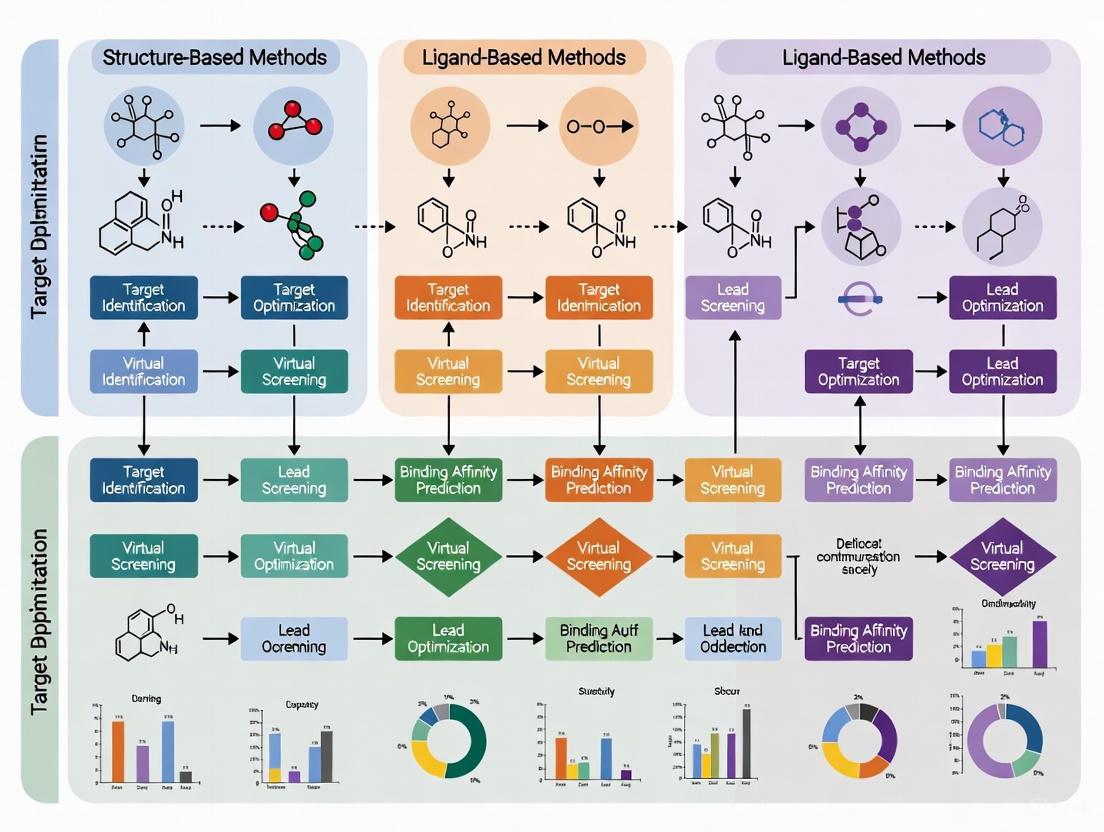
This article provides a comprehensive comparison of structure-based and ligand-based drug design methodologies, focusing on their applications, challenges, and synergistic potential in oncology.
Structure-Based vs Ligand-Based Drug Design in Oncology: A Comprehensive Guide for Researchers
Abstract
This article provides a comprehensive comparison of structure-based and ligand-based drug design methodologies, focusing on their applications, challenges, and synergistic potential in oncology. It explores the foundational principles of both approaches, detailing key techniques like molecular docking, pharmacophore modeling, and AI-driven methods. The content addresses common troubleshooting scenarios and optimization strategies, supported by case studies including PARP1 and βIII-tubulin inhibitors. Aimed at researchers and drug development professionals, it synthesizes current trends and validates methods through comparative analysis, offering insights into future directions for targeted cancer therapy development.
Core Principles and Data Requirements in Oncology Drug Design
Structure-Based Drug Design (SBDD) is a foundational pillar in modern computational drug discovery, distinguished by its direct use of the three-dimensional (3D) structure of a biological target to guide the design and optimization of small-molecule therapeutics [1] [2]. This approach is particularly powerful in oncology research, where understanding precise ligand-protein interactions can lead to more effective and targeted cancer therapies [3] [4]. This guide provides an objective comparison of SBDD with Ligand-Based Drug Design (LBDD), detailing methodologies, experimental protocols, and key resources.
Core Principles and Workflow of SBDD
SBDD operates on the principle of "structure-centric" design. The process initiates with the 3D structure of a target protein, often involved in disease progression, with the goal of designing a novel molecule or optimizing an existing one to fit its binding site with high affinity and specificity [1] [2] [5]. The standard SBDD workflow is an iterative cycle consisting of several key stages.
Table: Key Stages in a Standard SBDD Workflow
| Stage | Description | Key Techniques |
|---|---|---|
| Target Identification & Validation | Identifying a therapeutically relevant protein target (e.g., an enzyme critical for cancer cell survival) and validating its role in the disease. | Genomic, proteomic studies, and functional assays [1] [3]. |
| Structure Determination | Obtaining the high-resolution 3D structure of the target protein. | X-ray crystallography, Nuclear Magnetic Resonance (NMR), Cryo-Electron Microscopy (Cryo-EM) [1] [2]. |
| Binding Site Analysis | Identifying and characterizing the cavity on the protein where a ligand can bind. | Computational tools like Q-SiteFinder that use energy-based probes [1]. |
| Molecular Design & Docking | Designing new molecules or screening virtual libraries to find hits that complement the binding site. | De novo design, virtual screening, molecular docking [1] [6] [5]. |
| Scoring & Affinity Estimation | Ranking the designed or docked molecules based on their predicted binding affinity. | Docking scores (e.g., Vina score), machine learning-based scoring functions (e.g., DrugCLIP) [6]. |
| Lead Optimization | Refining the top candidate molecules to improve properties like potency, selectivity, and drug-likeness. | Molecular Dynamics (MD) simulations, free-energy perturbation (FEP) calculations [1] [3] [5]. |
| Experimental Validation | Synthesizing the lead compounds and testing their biological activity and binding in the lab. | In vitro biochemical assays, in vivo testing [1] [3]. |
The following diagram illustrates the logical sequence and iterative nature of this SBDD workflow.
SBDD vs. LBDD: An Objective Comparison for Oncology Research
While SBDD relies on the target's structure, Ligand-Based Drug Design (LBDD) uses information from known active molecules (ligands) to predict new active compounds, operating under the principle that structurally similar molecules have similar biological activities [2] [5]. The choice between them depends heavily on the available data and the research context.
Table: Comparison of SBDD vs. LBDD in an Oncology Context
| Feature | Structure-Based Drug Design (SBDD) | Ligand-Based Drug Design (LBDD) |
|---|---|---|
| Fundamental Principle | Direct 3D structure of the target protein guides design [2]. | Known active ligands and their properties guide design [2]. |
| Data Requirement | High-resolution protein structure (from X-ray, Cryo-EM, or prediction) [1] [2]. | A set of known active (and sometimes inactive) compounds for the target [5]. |
| Primary Application | De novo drug design, lead optimization, understanding binding interactions [1] [7]. | Hit identification, scaffold hopping, when target structure is unknown [5]. |
| Key Strengths | • Rational design of novel scaffolds.• Provides atomic-level insight into binding mechanics.• Can optimize for affinity and specificity directly [2] [5]. | • Fast and scalable for virtual screening.• Does not require target structure.• Excellent for finding chemically similar actives [5]. |
| Key Limitations | • Dependent on availability/accuracy of protein structure.• Computationally intensive for large libraries.• Scoring functions can be imperfect and prone to overfitting [6] [2] [5]. | • Cannot design truly novel scaffolds outside known chemical space.• Relies on quality/quantity of known actives.• Provides no direct information on binding mode [3] [5]. |
| Representative Techniques | Molecular Docking, Molecular Dynamics (MD), Free Energy Perturbation (FEP) [1] [5]. | Quantitative Structure-Activity Relationship (QSAR), Pharmacophore Modeling, 2D/3D Similarity Search [2] [5]. |
Experimental Protocols in SBDD
For researchers, the practical application of SBDD involves several well-established computational protocols. Below are detailed methodologies for two critical experiments.
Protocol 1: Structure-Based Virtual Screening (SBVS) via Molecular Docking
This protocol is used to computationally screen millions of compounds from virtual libraries to identify potential hits [1] [5].
- Protein Preparation: Obtain the 3D structure of the target protein from the PDB (Protein Data Bank). Remove native ligands and water molecules (unless critical for binding). Add hydrogen atoms, assign partial charges, and correct for missing residues or atoms using modeling software [1].
- Binding Site Definition: Define the spatial coordinates of the binding pocket. This can be the known active site from a co-crystallized structure or predicted using a tool like Q-SiteFinder, which identifies energetically favorable probe clusters [1].
- Ligand Library Preparation: Prepare a database of small molecules in a suitable format (e.g., SDF, MOL2). Generate plausible 3D conformations for each compound and minimize their energy [5].
- Molecular Docking: Use docking software (e.g., AutoDock Vina) to perform flexible ligand docking into the defined binding site. The algorithm will search for the optimal orientation and conformation (pose) of each ligand [6] [5].
- Scoring and Ranking: The docking software scores each pose using a scoring function that approximates the binding affinity. Compounds are ranked based on their best docking score [6] [5].
- Post-Docking Analysis: Visually inspect the top-ranked poses to analyze key protein-ligand interactions (e.g., hydrogen bonds, hydrophobic contacts). Select a diverse subset of high-ranking compounds for experimental testing [5].
Protocol 2: Binding Affinity Refinement using Molecular Dynamics (MD)
MD simulations are used to validate docking results and more accurately assess binding stability and free energy [1] [3].
- System Setup: Place the docked protein-ligand complex in a simulation box filled with water molecules (e.g., TIP3P water model). Add ions (e.g., Na+, Cl-) to neutralize the system's charge and mimic physiological ionic strength.
- Energy Minimization: Run a minimization algorithm (e.g., steepest descent) to remove any steric clashes or unrealistic geometry in the initial system, relaxing the structure to a local energy minimum.
- Equilibration: Perform two phases of equilibration under periodic boundary conditions:
- NVT Ensemble: Hold the Number of particles, Volume, and Temperature constant to stabilize the system temperature (e.g., 310 K).
- NPT Ensemble: Hold the Number of particles, Pressure, and Temperature constant to stabilize the system density and pressure (e.g., 1 bar).
- Production Run: Execute a long, unrestrained MD simulation (typically tens to hundreds of nanoseconds). The trajectory of atomic coordinates is saved at regular intervals for analysis.
- Trajectory Analysis: Analyze the saved trajectory to calculate:
- Root Mean Square Deviation (RMSD): Measures the stability of the protein-ligand complex.
- Root Mean Square Fluctuation (RMSF): Identifies flexible regions of the protein.
- Interaction Analysis: Profiles specific interactions (hydrogen bonds, hydrophobic contacts) over time.
- Binding Free Energy Calculation: Use advanced methods like Molecular Mechanics/Poisson-Boltzmann Surface Area (MM/PBSA) or Free Energy Perturbation (FEP) on simulation snapshots to compute a more rigorous estimate of the binding free energy than the docking score [3] [5].
The Scientist's Toolkit: Essential Research Reagents and Solutions
Successful execution of SBDD relies on a suite of computational tools and data resources.
Table: Key Research Reagent Solutions for SBDD
| Item Name | Function in SBDD | Brief Explanation |
|---|---|---|
| Protein Data Bank (PDB) | Data Repository | A central, public repository for 3D structural data of proteins and nucleic acids, providing the initial target structures [1] [8]. |
| AutoDock Vina | Docking Software | A widely used program for molecular docking and virtual screening, providing a scoring function to rank ligand poses [6]. |
| GROMACS | Simulation Software | A high-performance MD simulation package used to simulate the physical movements of atoms and molecules in the protein-ligand complex over time [8]. |
| Proasis Platform | Integrated Data System | An enterprise solution that integrates and manages 3D structural data, binding affinity data, and other SBDD-critical information, transforming raw data into a strategic asset [8]. |
| CrossDocked Dataset | Benchmarking Data | A curated dataset of protein-ligand complexes commonly used to train and benchmark machine learning models for SBDD [6] [7]. |
| SE(3)-Equivariant GNN | AI Model Architecture | A type of graph neural network that respects the geometric symmetries of 3D space (rotation, translation), making it powerful for generating 3D molecular structures [7]. |
In the direct comparison between SBDD and LBDD, SBDD offers an unmatched, rational approach for designing novel therapeutics when a target structure is available, making it indispensable for precision oncology. However, the field is evolving beyond this dichotomy. The most powerful modern approaches integrate SBDD and LBDD [5]. For example, LBDD can rapidly pre-screen vast chemical libraries, and SBDD can then be applied to the top hits for detailed interaction analysis and optimization [5].
Furthermore, the advent of Artificial Intelligence (AI) is profoundly transforming SBDD. Deep generative models like DiffSBDD can create novel, drug-like molecules directly conditioned on protein pockets [7]. These AI models are also being used to develop more reliable scoring functions than traditional empirical scores, helping to bridge the gap between theoretical predictions and real-world applicability [6]. As these technologies mature, combined with the strategic treatment of data as a core product, the target-centric approach of SBDD is poised to drive the next wave of innovation in cancer drug discovery [3] [8].
Ligand-based drug design (LBDD) is a foundational approach in computer-aided drug discovery applied when the three-dimensional structure of the biological target is unknown or unavailable [9] [10]. Instead of directly targeting protein structures, LBDD relies on the chemical information from known active molecules to guide the design and optimization of new drug candidates [11]. The core hypothesis underpinning this methodology is that similar molecules exhibit similar biological activities, allowing researchers to establish a correlation between chemical structure and pharmacological effect through Structure-Activity Relationship (SAR) studies [9] [10]. This approach is particularly valuable in oncology research, where rapid identification of novel therapeutic agents is critical, and structural information for novel targets may be lacking initially.
LBDD encompasses several computational techniques, including pharmacophore modeling, quantitative structure-activity relationships (QSAR), and molecular similarity analysis [11]. These methods enable researchers to explore chemical space, predict drug properties, and virtually screen large compound libraries to identify molecules with desired biological activity. By leveraging existing knowledge of active compounds, LBDD significantly accelerates the early stages of drug discovery, from initial hit identification to lead optimization, making it an indispensable tool in the development of oncology therapeutics [10] [11].
Core Methodologies in LBDD
Pharmacophore Modeling
Pharmacophore modeling identifies the essential structural features and their spatial arrangements responsible for a molecule's biological activity [11]. These features typically include hydrogen bond donors, hydrogen bond acceptors, hydrophobic regions, and charged groups that collectively define the molecular interaction capabilities with the target.
- Ligand-based pharmacophore models are derived from aligning multiple known active compounds to identify common chemical features, while structure-based models are generated from analysis of ligand-target interactions in available crystal structures [11].
- Automated generation algorithms like HipHop and HypoGen align compounds and extract pharmacophoric features based on predefined rules and scoring functions, with consensus approaches combining multiple models to improve robustness [11].
- In virtual screening, these 3D pharmacophore models serve as queries to identify potential hits from large compound libraries, often combined with other filters like physicochemical properties or ADME criteria to prioritize experimental testing [11].
Quantitative Structure-Activity Relationships (QSAR)
QSAR modeling establishes mathematical relationships between structural descriptors and biological activity through a defined development process [10] [11]:
- Data Collection: Curating ligands with experimentally measured biological activities
- Descriptor Calculation: Generating molecular descriptors representing structural and physicochemical properties
- Feature Selection: Identifying the most relevant descriptors correlating with activity
- Model Building: Applying statistical or machine learning methods to establish mathematical relationships
- Validation: Rigorously testing statistical stability and predictive power
The methodology includes both 2D QSAR approaches that utilize 2D structural features and 3D QSAR methods like CoMFA and CoMSIA that consider the three-dimensional alignment of compounds and calculate field-based descriptors [11]. Recent advances include the conformationally sampled pharmacophore (CSP) approach, which generates multiple conformations of each ligand to create more comprehensive and predictive models [10].
Molecular Similarity and Virtual Screening
Molecular similarity analysis quantifies structural resemblance between compounds using 2D fingerprint-based or 3D shape-based approaches [11] [5]. Common similarity metrics include the Tanimoto coefficient for fingerprints and Tversky index for pharmacophoric features. These techniques enable:
- Scaffold hopping to identify novel chemotypes that maintain biological activity but possess distinct molecular frameworks
- Bioisosteric replacement to substitute functional groups with alternatives having similar physicochemical properties but potentially improved ADME profiles
- Similarity-based virtual screening to identify novel active compounds from large libraries based on their similarity to known ligands [5]
Table 1: Key LBDD Methodologies and Applications
| Methodology | Key Features | Primary Applications | Common Tools/Approaches |
|---|---|---|---|
| Pharmacophore Modeling | Identifies essential spatial features required for activity | Virtual screening, Lead optimization | HipHop, HypoGen, Catalyst |
| QSAR | Mathematical relationship between descriptors and activity | Activity prediction, Compound prioritization | CoMFA, CoMSIA, CSP-SAR |
| Molecular Similarity | Quantifies structural resemblance between compounds | Scaffold hopping, Virtual screening | Tanimoto coefficient, ROCS |
Performance Comparison: LBDD vs. Structure-Based Methods
Direct comparison studies provide valuable insights into the relative strengths and limitations of ligand-based versus structure-based virtual screening methods. A performance evaluation on ten anti-cancer targets revealed that ligand-based methods using tools like vROCS can produce better early enrichment (EF1%), while both approaches yield similar results at higher enrichment factors (EF5% and EF10%) [12]. This highlights the particular value of ligand-based methods for identifying the most promising candidates from large compound libraries.
Structure-based drug design (SBDD), including molecular docking and free-energy perturbation, requires the 3D structure of the target protein, typically obtained through X-ray crystallography, cryo-electron microscopy, or predicted using AI methods like AlphaFold [5]. While these methods provide atomic-level insights into protein-ligand interactions and binding affinities, they face challenges with large, flexible molecules and depend heavily on the quality of the target structure [5].
The integration of both approaches creates a powerful synergistic workflow, where ligand-based methods rapidly filter large compound libraries based on similarity to known actives, and structure-based techniques then apply more computationally intensive docking and binding affinity predictions to the narrowed candidate set [5]. This hybrid strategy leverages the complementary strengths of both methodologies to improve efficiency and success rates in early-stage drug discovery.
Table 2: Performance Comparison on Anti-Cancer Targets [12]
| Virtual Screening Method | EF1% Performance | EF5% Performance | EF10% Performance | Key Advantages |
|---|---|---|---|---|
| Ligand-Based (vROCS) | Better results | Similar to structure-based | Similar to structure-based | Speed, scaffold hopping |
| Structure-Based (FRED Docking) | Lower performance | Similar to ligand-based | Similar to ligand-based | Atomic-level insight, pose prediction |
Experimental Protocols and Workflows
Standard QSAR Model Development Protocol
The development of a robust QSAR model follows a systematic experimental protocol [10]:
Compound Selection and Data Curation: Select 20-50 congeneric compounds with experimentally measured biological activity (e.g., IC₅₀, Ki) spanning a wide potency range. Ensure chemical diversity while maintaining structural similarity to establish meaningful SAR.
Molecular Descriptor Calculation:
- Generate optimized 3D structures using molecular mechanics (MMFF94) or quantum mechanical methods (DFT with 6-31G* basis set)
- Calculate relevant molecular descriptors including electronic (HOMO/LUMO energies, partial charges), steric (molar volume, polar surface area), and hydrophobic (logP) properties
- For 3D QSAR, align molecules using common pharmacophoric features or binding hypotheses
Statistical Analysis and Model Validation:
- Apply variable selection methods (genetic algorithm, stepwise regression) to identify most relevant descriptors
- Develop model using partial least squares (PLS) regression with cross-validation
- Validate model externally with test set compounds not used in model development
- Define applicability domain to identify compounds for reliable prediction
Integrated LBDD-SBDD Workflow
Combining ligand-based and structure-based approaches follows logical sequential relationships, as illustrated in the workflow below:
Pharmacophore-Based Virtual Screening Protocol
A standardized protocol for pharmacophore-based screening includes [11]:
Model Generation: Select a diverse set of 15-30 known active compounds with varying potencies. Generate multiple low-energy conformations for each compound using molecular dynamics or systematic conformational search. Identify common pharmacophoric features through ligand alignment.
Model Validation: Validate the pharmacophore model using a test set of active and inactive compounds. Assess screening efficiency using enrichment factors and receiver operating characteristic curves.
Virtual Screening: Screen large compound libraries (e.g., ZINC, in-house collections) using the validated pharmacophore as a 3D query. Apply additional filters including drug-likeness (Lipinski's Rule of Five), physicochemical properties, and structural diversity.
Hit Validation: Select top-ranked compounds for experimental testing. Include structurally diverse hits to explore novel chemical space and enable scaffold hopping.
Successful implementation of LBDD requires specialized computational tools and data resources. The following table details essential components of the LBDD research toolkit:
Table 3: Essential Research Reagent Solutions for LBDD
| Resource Type | Specific Examples | Function in LBDD | Key Features |
|---|---|---|---|
| Compound Databases | ChEMBL, PubChem, ZINC | Source of known actives and screening libraries | Annotated bioactivity data, purchasable compounds, structural information |
| Software Tools | OpenEye ROCS, Schrödinger Phase | 3D shape similarity and pharmacophore screening | Molecular alignment, shape-based scoring, feature mapping |
| QSAR Modeling | MATLAB, R, CSP-SAR | Model development and validation | Descriptor calculation, statistical analysis, predictive modeling |
| Descriptor Packages | Dragon, CDK | Molecular descriptor calculation | 2D/3D descriptors, electronic properties, topological indices |
| Conformational Sampling | OMEGA, CONFLEX | Generate representative conformations | Low-energy conformer generation, ring flexibility handling |
Ligand-based drug design represents a powerful approach in oncology drug discovery, particularly when structural information about the target is limited. By leveraging known active compounds through pharmacophore modeling, QSAR, and molecular similarity methods, researchers can efficiently identify and optimize novel therapeutic agents. The integration of LBDD with structure-based approaches creates a synergistic workflow that maximizes the strengths of both methodologies, accelerating the discovery of new cancer treatments. As computational power and artificial intelligence methods continue to advance, LBDD approaches are expected to become even more accurate and impactful in the ongoing fight against cancer.
In oncology drug discovery, the choice between structure-based and ligand-based design methods is fundamentally dictated by the type of data available, each with distinct requirements, applications, and limitations. Structure-based drug design (SBDD) relies on three-dimensional structural information of the target protein, typically obtained through experimental methods like X-ray crystallography, nuclear magnetic resonance (NMR), or cryo-electron microscopy (cryo-EM), or increasingly through computational predictions from tools like AlphaFold [2] [5]. Conversely, ligand-based drug design (LBDD) utilizes information from known active small molecules (ligands) that bind to the target, making it applicable even when the protein structure is unknown [2] [5]. The complementary nature of these approaches has stimulated continued efforts toward developing hybrid strategies that integrate both ligand and target information within a holistic computational framework to enhance drug discovery success [13]. This guide provides an objective comparison of their data requirements, supported by experimental data and methodologies relevant to oncology research.
Data Fundamentals and Methodological Approaches
The foundational data required for each approach differs significantly, influencing project feasibility, resource allocation, and methodological choices.
Table 1: Comparison of Core Data Requirements
| Aspect | Structure-Based Methods | Ligand-Based Methods |
|---|---|---|
| Primary Data | 3D protein structure (from PDB, AlphaFold, etc.) [14] [2] | Chemical structures and/or biological activities of known ligands [2] [5] |
| Key Techniques | Molecular docking, binding site prediction, free-energy perturbation [15] [5] | QSAR, Pharmacophore modeling, molecular similarity search [2] [5] |
| Ideal Application Scenario | Target structure is known; designing novel scaffolds; optimizing binding interactions [2] [5] | Target structure is unknown; sufficient known actives exist; scaffold hopping [2] [5] |
| Data Availability Challenge | Obtaining high-quality structures for membrane proteins or flexible targets [2] | Bias towards chemical space of known actives; limited novelty [13] [5] |
Experimental and Computational Methodologies
A. Structure-Based Binding Site Prediction
Accurately identifying protein-ligand binding sites is a critical first step in SBDD. Benchmarking studies evaluate numerous computational methods using curated datasets like LIGYSIS, which aggregates biologically relevant protein-ligand interfaces from biological units of multiple structures for the same protein, avoiding artificial crystal contacts [15].
Protocol for Benchmarking Binding Site Predictors:
- Dataset Curation: The LIGYSIS dataset is constructed by clustering biologically relevant protein-ligand interactions from the PDBe biological assemblies, ensuring non-redundant interfaces [15].
- Method Execution: Multiple prediction tools (e.g., VN-EGNN, IF-SitePred, P2Rank, fpocket) are run on the dataset using standard settings [15].
- Performance Metrics: Methods are evaluated using metrics like recall (ability to identify true binding sites) and precision. The top-N+2 recall is proposed as a universal benchmark metric, which accounts for the prediction of the true binding site plus two additional potential sites [15].
- Result: A benchmark of 13 methods showed that re-scoring fpocket predictions with PRANK or DeepPocket achieved the highest recall (60%), while IF-SitePred had the lowest (39%). The study highlighted that stronger pocket scoring schemes could improve recall by up to 14% and precision by 30% [15].
B. Ligand-Based Quantitative Structure-Activity Relationship (QSAR)
QSAR is a cornerstone LBDD technique that relates chemical structure to biological activity through mathematical models.
Protocol for QSAR Modeling:
- Data Collection: A set of compounds with experimentally measured activities (e.g., IC₅₀, Kᵢ) for the target is compiled.
- Descriptor Calculation: Molecular descriptors (e.g., physicochemical properties, topological indices, 3D shape) are computed for each compound [2] [5].
- Model Training: Statistical or machine learning methods (e.g., regression, random forest, neural networks) are used to build a model that relates the descriptors to the activity [16] [5].
- Validation: The model is validated using external test sets or cross-validation to ensure its predictive power and avoid overfitting.
- Application: The trained model predicts the activity of new, untested compounds, enabling virtual screening and prioritization [5].
Integrated Workflows and Performance Comparison
Hybrid and Sequential Approaches
Given the complementary strengths of SBDD and LBDD, integrated workflows are increasingly common, typically implemented in sequential, parallel, or hybrid schemes [13] [16] [5].
Table 2: Combined Workflow Strategies and Outcomes
| Strategy | Description | Reported Outcome/Advantage |
|---|---|---|
| Sequential | A funnel approach where LBVS rapidly filters large libraries, followed by more computationally intensive SBVS on the narrowed set [13] [5]. | Optimizes trade-off between computational cost and method complexity; improves overall efficiency in screening ultra-large libraries [16] [5]. |
| Parallel | LBVS and SBVS are run independently, and their results are combined using data fusion algorithms to create a final ranked list [13]. | Increases performance and robustness over single-modality approaches; can mitigate limitations inherent in each method [13] [5]. |
| Hybrid | Integration of LB and SB techniques into a unified framework, such as using interaction fingerprints or AI models trained on both data types [13] [16]. | Leverages synergistic effects; can improve prediction of binding poses and biological activity [13] [5]. |
Performance Data from AI-Driven Methods
Recent advances in artificial intelligence are bridging the gap between SBDD and LBDD. The CMD-GEN framework, for instance, uses a coarse-grained pharmacophore point sampling from a diffusion model to bridge ligand-protein complexes with drug-like molecules, effectively leveraging both structure and ligand information [17]. In benchmark tests, CMD-GEN outperformed other methods in generating drug-like molecules and was successfully validated in designing selective PARP1/2 inhibitors for cancer therapy [17].
For pure protein-ligand complex prediction, the AI system Umol can predict the fully flexible all-atom structure of protein-ligand complexes directly from protein sequence and ligand SMILES information [18]. In performance benchmarks on 428 diverse complexes:
- Umol (blind prediction) achieved an 18% success rate (SR, ligand RMSD ≤ 2 Å).
- Umol-pocket (with pocket information) achieved a 45% SR.
- This compares to a 52% SR for AutoDock Vina, which requires a native holo-protein structure as input [18].
Umol also provides a confidence metric (plDDT); at plDDT >80, the success rate for Umol-pocket rises to 72%, demonstrating the utility of internal scoring for identifying high-quality predictions [18].
Diagram Title: SBDD and LBDD Workflow Integration
Table 3: Key Resources for Structure-Based and Ligand-Based Research
| Resource/Solution | Function/Purpose | Relevance |
|---|---|---|
| RCSB Protein Data Bank (PDB) [14] | Primary repository for experimentally determined 3D structures of proteins and nucleic acids. | Essential data source for SBDD; provides structures for docking, homology modeling, and binding site analysis. |
| SitesBase [19] | Database of pre-calculated protein-ligand binding site similarities across the PDB. | Enables analysis of molecular recognition and structure-function relationships independent of overall fold. |
| LIGYSIS Dataset [15] | Curated dataset of biologically relevant protein-ligand interfaces from biological units. | Standardized benchmark for developing and validating ligand binding site prediction methods. |
| MAGPIE Software [20] | Tool for visualizing and analyzing interactions between a target ligand and all its protein binders. | Identifies interaction "hotspots" from thousands of complexes, useful for de novo design and analyzing molecular evolution. |
| AlphaFold DB & ModelArchive [14] | Databases of highly accurate predicted protein structures. | Provides structural models for targets with no experimentally solved structure, expanding the scope of SBDD. |
| CHEMBL Database [17] | Manually curated database of bioactive molecules with drug-like properties. | Key resource for LBDD; provides chemical structures and bioactivity data for building QSAR and similarity models. |
The decision to employ structure-based or ligand-based methods in oncology research is fundamentally guided by data availability. SBDD offers atomic-level insight for rational design but is contingent on the availability and quality of a protein structure. LBDD provides a powerful, resource-efficient approach when a set of active ligands is known but may be constrained by the chemical diversity of those ligands. Experimental data and benchmarks confirm that the integration of both approaches—through sequential, parallel, or hybrid strategies—mitigates their individual limitations and leverages their complementary strengths. The ongoing integration of artificial intelligence and multi-dimensional data is further blurring the lines between these paradigms, promising enhanced efficiency and success in the discovery of novel oncology therapeutics.
Historical Evolution and Key Milestones in Oncology Applications
The integration of computational methods has redefined oncology drug discovery, transitioning it from a largely serendipitous process to a rational, targeted endeavor. This guide objectively compares the two predominant computational approaches—structure-based drug design (SBDD) and ligand-based drug design (LBDD)—within the context of oncology research. SBDD relies on the three-dimensional structural information of the target protein (e.g., from X-ray crystallography or cryo-electron microscopy) to design molecules that fit precisely into its binding site [2]. In contrast, LBDD is applied when the target structure is unknown; it uses information from known active small molecules (ligands) to predict and design new compounds with similar activity [2]. The evolution of these methods, accelerated by artificial intelligence (AI), has dramatically improved the speed and precision of developing oncology therapeutics, from small-molecule inhibitors to immunomodulatory drugs [21] [22].
Historical Timeline of Key Methodologies
The adoption of computational strategies in oncology has followed a clear trajectory, evolving from foundational ligand-based principles to high-resolution structure-guided design and, most recently, to integrated AI-driven platforms.
Table 1: Historical Evolution of Key Computational Methods in Oncology
| Decade | Dominant Paradigm | Key Methodological Advancements | Sample Oncology Application |
|---|---|---|---|
| 1980s-1990s | Rise of LBDD | Development of Quantitative Structure-Activity Relationship (QSAR) models and pharmacophore modeling [2]. | Optimization of early tamoxifen-like derivatives for breast cancer [23]. |
| 1990s-2000s | Emergence of SBDD | Broad availability of X-ray crystal structures of oncology targets; development of molecular docking algorithms [2]. | Design of inhibitors for kinase domains in various cancers [17]. |
| 2010s | High-Throughput & Hybrid Screening | Combination of LBDD and SBDD in sequential or parallel workflows to improve screening efficiency [16] [5]. | Virtual screening for hard-to-drug targets like the LRRK2-WDR domain in Parkinson's-related cancer risks [16]. |
| 2020s-Present | AI and Deep Learning Integration | Application of deep generative models (VAEs, GANs), transformer networks, and pretrained machine learning scoring functions (ML SFs) for de novo molecular design and binding affinity prediction [17] [21] [24]. | Generation of selective PARP1/2 inhibitors (CMD-GEN) and discovery of novel STK33 inhibitors for cancer therapy [17] [25]. |
Comparative Performance Analysis of SBDD and LBDD
Benchmarking studies and real-world competitions provide robust data for comparing the performance of structure-based and ligand-based virtual screening methods.
Table 2: Virtual Screening Performance Benchmarking for Oncology-Relevant Targets
| Method / Tool | Target | Performance Metric | Result | Context & Notes |
|---|---|---|---|---|
| PLANTS + CNN-Score [24] | PfDHFR (WT) | Enrichment Factor at 1% (EF 1%) | 28 | Structure-based docking with machine learning re-scoring. |
| FRED + CNN-Score [24] | PfDHFR (Quadruple Mutant) | Enrichment Factor at 1% (EF 1%) | 31 | SBDD effective against resistant mutant variants. |
| AutoDock Vina (alone) [24] | PfDHFR (WT) | Enrichment Factor at 1% (EF 1%) | Worse-than-random | Highlights limitation of classical scoring functions. |
| MolTarPred [26] | General Target Prediction | Recall & Precision | Highest among 7 methods | Ligand-centric method outperformed other target prediction tools in systematic comparison. |
| CACHE Challenge #1 [16] | LRRK2-WDR (Novel Target) | Success Rate | ~1-2% (across all teams) | Real-world benchmark; most successful teams used combined SBDD/LBDD or SBDD-focused strategies. |
Detailed Experimental Protocols and Workflows
Protocol 1: Structure-Based Virtual Screening with Machine Learning Re-Scoring
This protocol, used to identify antimalarial agents with relevance to kinase targets in oncology, details the benchmarking of docking tools against wild-type and resistant mutant PfDHFR [24].
- Protein Structure Preparation: Crystal structures of the target (e.g., PDB ID: 6A2M for wild-type) are obtained. Water molecules and redundant chains are removed, followed by hydrogen addition and optimization using tools like OpenEye's "Make Receptor." [24]
- Ligand/Decoy Library Preparation: A benchmark set like DEKOIS 2.0 is used, containing known bioactive molecules and structurally similar but inactive decoys. Multiple conformations are generated for each molecule. [24]
- Molecular Docking: Three docking tools (AutoDock Vina, PLANTS, FRED) are evaluated. The docking grid is defined to encompass the binding site, and compounds are docked into the protein structure. [24]
- Machine Learning Re-scoring: The generated ligand poses are re-scored using pretrained ML scoring functions (e.g., CNN-Score, RF-Score-VS v2) instead of relying solely on the docking tool's native scoring function. [24]
- Performance Analysis: Enrichment factors (EF) and area under the curve (AUC) of ROC curves are calculated to measure the ability to prioritize true active compounds over decoys. [24]
Structure-Based Screening with ML Re-scoring Workflow
Protocol 2: Ligand-Based Target Fishing for Drug Repurposing
This protocol employs ligand-centric similarity searching to identify new targets for existing drugs, a key strategy for oncology drug repurposing [26].
- Database Curation: A comprehensive database of known ligand-target interactions is built, typically from ChEMBL. Entries are filtered for high confidence (e.g., confidence score ≥ 7) and well-annotated targets. [26]
- Fingerprint Calculation: Molecular fingerprints (e.g., Morgan fingerprints with a radius of 2 and 2048 bits) are computed for all molecules in the database and for the query drug molecule. [26]
- Similarity Search: The similarity (e.g., Tanimoto similarity) between the query molecule's fingerprint and every molecule in the database is calculated. [26]
- Target Prediction & Ranking: The targets of the top-N most similar molecules in the database are retrieved. The frequency of each target appearing in this set is used to rank the most likely targets for the query molecule. [26]
- Validation: Predictions are validated by comparing against held-out test sets of known FDA-approved drugs or through experimental assays. [26]
Protocol 3: Integrated AI-DrivenDe NovoMolecular Generation
Frameworks like CMD-GEN represent the cutting edge, combining SBDD and LBDD principles through AI to generate novel, optimized molecules for targets like PARP1/2 [17].
- Coarse-Grained Pharmacophore Sampling: A diffusion model samples a 3D pharmacophore point cloud (representing features like hydrogen bond donors/acceptors) conditioned on the protein pocket's structure. [17]
- Chemical Structure Generation: A separate module (GCPG) uses a transformer encoder-decoder architecture to convert the sampled pharmacophore points into a valid 2D chemical structure (SMILES string), constrained by desired molecular properties. [17]
- Conformation Alignment: The 2D structure is placed into 3D space, aligning its functional groups with the original pharmacophore points to ensure complementary fit with the protein pocket. [17]
- Experimental Validation: The top-ranked generated molecules are synthesized and tested in biochemical and cellular assays to confirm activity and selectivity (e.g., wet-lab validation for PARP1/2 inhibitors) [17].
The Scientist's Toolkit: Essential Research Reagent Solutions
Table 3: Key Research Reagents and Computational Tools for Oncology Drug Discovery
| Item / Resource | Function / Application | Context in SBDD/LBDD |
|---|---|---|
| Protein Data Bank (PDB) | Repository for experimentally determined 3D structures of proteins and nucleic acids. | Foundation for SBDD; provides initial protein structures for docking and modeling [24]. |
| ChEMBL Database [26] | Manually curated database of bioactive molecules with drug-like properties and their annotated targets. | Core resource for LBDD; used to train QSAR models and for ligand-centric target fishing [26]. |
| DEKOIS 2.0 Benchmark Sets [24] | Collections of known active molecules and matched decoys for specific protein targets. | Used to objectively evaluate and benchmark the performance of virtual screening methods [24]. |
| Machine Learning Scoring Functions (e.g., CNN-Score, RF-Score-VS) [24] | Pretrained ML models that predict protein-ligand binding affinity from complex structures. | Used to re-score docking outputs, significantly improving enrichment over classical scoring functions [24]. |
| Molecular Fingerprints (e.g., Morgan, ECFP4) [26] | Bit-string representations of molecular structure. | Core to LBDD; used for rapid similarity searching and as features in QSAR models [26]. |
| AlphaFold2 Predicted Structures [16] | Highly accurate computational predictions of protein 3D structures from amino acid sequences. | Expands the scope of SBDD to targets without experimentally solved structures [16]. |
Analysis of Oncology Signaling Pathway Targeting
Computational methods are crucial for targeting specific nodes in dysregulated oncology signaling pathways. The successful discovery of a novel STK33 inhibitor, Z29077885, via an AI-driven screen illustrates this application. STK33 inhibition induces apoptosis by deactivating the STAT3 signaling pathway and causes cell cycle arrest at the S-phase, confirmed by in vitro and in vivo studies showing decreased tumor size [25]. This example demonstrates how computational screening can yield hits with defined mechanisms of action within critical cancer pathways.
STK33 Inhibitor Mechanism in Cancer
The historical evolution of oncology applications reveals a clear trend from distinct, siloed SBDD and LBDD approaches toward powerful, synergistic integrations. Modern AI-driven frameworks like CMD-GEN, which coarse-grain structural information into pharmacophores and then generate specific molecules, exemplify this fusion [17]. The future of computational oncology lies in these hybrid models that leverage the complementary strengths of both paradigms—the precision of structure-based design and the generalizability and speed of ligand-based approaches [16] [5]. This will be critical for addressing persistent challenges such as drug resistance and for accelerating the discovery of next-generation, precision oncology therapeutics.
Techniques, Workflows, and Oncology Case Studies
This guide provides an objective comparison of three foundational structure-based drug design (SBDD) techniques—molecular docking, molecular dynamics (MD), and structure-based virtual screening (SBVS)—within the context of oncology research. As the field increasingly shifts from ligand-based to structure-based paradigms, understanding the performance and application of these tools is crucial for developing targeted cancer therapies.
Comparative Analysis of SBDD Techniques at a Glance
The table below summarizes the core purpose, key performance metrics, and primary limitations of each technique, providing a high-level comparison for researchers.
| Technique | Core Purpose & Role in SBDD | Key Performance Metrics & Typical Outputs | Primary Limitations & Challenges |
|---|---|---|---|
| Molecular Docking | Predicts the preferred orientation (binding pose) and affinity of a small molecule when bound to a target protein [27]. | • Binding Affinity (kcal/mol): Estimated scores (e.g., -35.77 kcal/mol for a strong binder) [28].• Pose RMSD (Å): Measures pose prediction accuracy [28].• Interaction Maps: Identifies key residue interactions (e.g., with Gln123, His250) [28]. | • Static view of binding [27].• Scoring functions can be inaccurate [27].• Often misses protein flexibility and solvation effects [27]. |
| Molecular Dynamics (MD) | Simulates the physical movements of atoms and molecules over time, assessing the stability and dynamics of a protein-ligand complex [3] [28]. | • RMSD (Å): Measures structural stability (<2-3 Å is stable) [28].• RMSF (Å): Quantifies residual flexibility [28].• Binding Free Energy (kcal/mol): Calculated via MM/GBSA/PBSA (e.g., -35.77 kcal/mol) [3] [28].• H-bond Analysis: Number and persistence of H-bonds over simulation time [29]. | • Extremely high computational cost [3].• Sensitivity to force field parameters [3].• Simulation timescales may not capture all biological events [3]. |
| Structure-Based Virtual Screening (SBVS) | Rapidly computationally screens vast libraries of compounds (e.g., 4,561+ molecules) against a target structure to identify potential "hit" molecules [28]. | • Hit Rate: % of promising candidates identified from the library [28].• Enrichment Factor: How well the method prioritizes active compounds over inactives.• Docking Scores: Primary filter for selecting top candidates [28]. | • Quality depends on docking reliability [27].• High false-positive rate; requires experimental validation [3].• Limited by library size and diversity [28]. |
Detailed Experimental Protocols and Methodologies
To ensure reproducibility and provide a clear framework for implementation, this section outlines detailed, step-by-step protocols for each technique, based on a cited study that identified potential metallo-β-lactamase (MBL) inhibitors [28].
Protocol 1: Structure-Based Virtual Screening (SBVS)
This protocol describes a machine learning-enhanced workflow for high-throughput screening.
- Library Preparation: Download a library of compounds (e.g., 4,561 natural products from ChemDiv). Prepare the 3D structures of all ligands using a tool like OpenBabel with the MMFF94 force field for 2500 steps to minimize energy and ensure conformational stability [28].
- Target Preparation: Obtain the 3D structure of the target protein (e.g., from the Protein Data Bank, PDB: 4EYL). Remove the native ligand and any crystallographic water molecules. Add hydrogen atoms and assign partial charges using software like AutoDockTools [28].
- Machine Learning-based QSAR Pre-screening:
- Train a QSAR model (e.g., using Random Forest or Support Vector Regression) on known active and inactive compounds from a database like ChEMBL.
- Use molecular descriptors (e.g., MACCS keys) generated by RDKit.
- Screen the entire library with the trained model to predict activity and filter out compounds with poor predicted activity [28].
- Molecular Docking:
- Grid Box Definition: Using AutoDockTools, define a grid box centered on the binding site of the co-crystallized ligand. For example, use center coordinates (2.19, -40.58, 2.22) and dimensions 20x16x16 Å [28].
- Docking Execution: Perform docking simulations with AutoDock Vina, setting an exhaustiveness value of 8-16 to balance accuracy and computational time. Generate multiple poses (e.g., 10) per ligand [28].
- Hit Identification and Clustering:
- Rank compounds based on their normalized docking scores.
- Cluster the top-ranking compounds based on structural similarity (e.g., using Tanimoto similarity and k-means clustering in RDKit) to select chemically diverse hits for further analysis [28].
Protocol 2: Molecular Docking for Binding Pose Analysis
This protocol focuses on the detailed analysis of top hits identified from SBVS.
- Refined Docking: For the selected hit compounds (e.g., the best representative from each cluster), perform a more rigorous docking simulation with a higher exhaustiveness value and a greater number of poses to thoroughly explore the binding pocket.
- Pose Analysis and Selection:
- Visually inspect the top-ranked docking poses.
- Prioritize poses where the ligand forms key interactions with the protein's active site residues (e.g., hydrogen bonds, hydrophobic contacts, pi-stacking).
- Select the most biologically plausible pose for each compound for further validation with MD simulation [28].
Protocol 3: Molecular Dynamics for Binding Stability Assessment
This protocol validates the stability of docking results and provides quantitative binding affinity estimates.
- System Setup:
- Place the protein-ligand complex in a simulation box (e.g., a cubic box) with an appropriate buffer distance (e.g., 10 Å).
- Solvate the system using explicit water molecules (e.g., TIP3P model) and add ions (e.g., Na⁺ or Cl⁻) to neutralize the system's charge [28].
- Simulation Execution:
- Perform energy minimization to remove steric clashes.
- Gradually heat the system to the target temperature (e.g., 310 K) under constant volume (NVT ensemble).
- Equilibrate the system under constant pressure (NPT ensemble) to achieve correct density.
- Run a production MD simulation for a sufficient timeframe (e.g., 300 ns) using software like GROMACS or AMBER. Use a 2-fs time step [28].
- Trajectory Analysis:
- Root Mean Square Deviation (RMSD): Calculate the protein and ligand RMSD to assess the overall stability of the complex. A stable complex will show a plateau in RMSD over time [28].
- Root Mean Square Fluctuation (RMSF): Analyze RMSF to determine the flexibility of individual protein residues.
- Interaction Analysis: Use tools to monitor hydrogen bonds and other non-covalent interactions throughout the simulation.
- Binding Free Energy Calculation: Employ the Molecular Mechanics/Generalized Born Surface Area (MM/GBSA) or MM/Poisson-Boltzmann Surface Area (MM/PBSA) method on multiple trajectory frames to calculate the binding free energy. A more negative value indicates stronger binding [3] [28].
Experimental Workflow for Integrated SBDD in Oncology
The true power of SBDD is realized when these techniques are used in an integrated, sequential workflow. The diagram below illustrates a typical pipeline for identifying and validating a novel oncology drug candidate.
Integrated SBDD Workflow for Oncology Target
The Scientist's Toolkit: Essential Research Reagents and Software
Successful implementation of these SBDD techniques relies on a suite of specialized software tools and databases. This table details key resources for oncology drug discovery.
| Tool / Resource Name | Primary Function | Key Application in SBDD |
|---|---|---|
| AutoDock Vina [28] | Molecular Docking | Used for predicting ligand binding poses and calculating binding affinities. |
| GROMACS / AMBER [28] | Molecular Dynamics | Software suites for running all-atom MD simulations to study protein-ligand complex stability. |
| RDKit [28] | Cheminformatics | An open-source toolkit for cheminformatics, used for calculating molecular descriptors (e.g., for QSAR) and structural clustering. |
| PDB (Protein Data Bank) [28] | Structural Repository | The primary global database for experimentally-determined 3D structures of proteins and nucleic acids, essential for obtaining target structures. |
| ChemDiv Library [28] | Compound Database | A commercial library of diverse chemical compounds, often used as a source for virtual screening. |
| ChEMBL [28] | Bioactivity Database | A manually curated database of bioactive molecules with drug-like properties, used for training QSAR models. |
Molecular docking, MD simulation, and SBVS are complementary pillars of modern SBDD. Docking and SBVS offer speed and high-throughput capability for initial hit discovery, while MD provides deep, dynamic insights into binding stability and mechanisms. For oncology researchers, the strategic integration of these techniques, from initial virtual screening to rigorous dynamics-based validation, creates a powerful pipeline for rational drug design. This approach directly addresses the limitations of ligand-based methods by enabling the design of novel, high-affinity inhibitors against specific cancer targets, even in the absence of known ligand information, thereby accelerating the development of precision oncology therapies [27] [30].
A Primer on Ligand-Based Drug Discovery
In the landscape of modern drug development, particularly in oncology, computational methods are indispensable for accelerating the identification of novel therapeutic candidates. When the three-dimensional structure of a target protein is unavailable or uncertain, researchers turn to Ligand-Based Drug Discovery (LBDD) methods. These approaches leverage the known chemical structures and biological activities of molecules that interact with a target of interest. The core principle, known as the similarity principle, posits that structurally similar molecules are likely to exhibit similar biological effects [31]. This guide focuses on three essential LBDD methodologies: Quantitative Structure-Activity Relationship (QSAR), Pharmacophore Modeling, and Ligand-Based Virtual Screening (LBVS), and objectively compares their performance and applications.
Method Performance and Comparative Data
The utility of LBDD methods is demonstrated by their predictive accuracy and efficiency in real-world drug discovery campaigns. The table below summarizes benchmark data for these methods from recent studies.
Table 1: Performance Benchmarks of LBDD Methods
| Method | Reported Performance / Outcome | Context / Target | Key Metric |
|---|---|---|---|
| QSAR | R² = 0.793, Q² = 0.692, R²pred = 0.653 [32] | SmHDAC8 Inhibitors (Schistosomiasis) | Predictive Capability |
| 3D-QSAR | R² = 0.9521, Q² = 0.8589 [31] | Anti-tubercular Agents (InhA & DprE1) | Statistical Significance |
| LBVS (ML-Based) | ~1000x faster than molecular docking [33] | MAO Inhibitors (CNS Disorders) | Screening Speed |
| LBVS (Similarity Search) | Identified 2 active compounds [34] | Kinase Inhibitors (Fyn & Lyn, Oncology) | Hit Identification |
Detailed Experimental Protocols
Quantitative Structure-Activity Relationship (QSAR) Modeling
QSAR models quantitatively link a molecule's physicochemical properties and structural features (descriptors) to its biological activity. A robust QSAR protocol involves:
- Data Set Curation and Preparation: A series of compounds with experimentally determined activity values (e.g., IC₅₀, Ki) is collected from databases like ChEMBL [33]. The activity is often converted to pIC₅₀ (-log₁₀IC₅₀) to create a more normally distributed parameter for modeling [33] [31]. The data set is then divided into a training set (used to build the model, ~70-85% of data) and a test set (used to validate the model, ~15-30% of data) [31].
- Molecular Descriptor Calculation and Selection: Low-energy 3D structures of all compounds are generated. Thousands of molecular descriptors (e.g., molecular weight, logP, topological indices, electronic properties) are calculated using software like MOE or RDKit [35]. Redundant or irrelevant descriptors are filtered out to avoid overfitting.
- Model Construction and Validation: The model is built by correlating the selected descriptors with the biological activity using machine learning algorithms such as Random Forest [36]. The model's performance is evaluated using the training set (e.g., R², Q²cv) and, crucially, its predictive power is confirmed using the external test set (R²pred) [32].
Pharmacophore Modeling
A pharmacophore is an abstract model that defines the spatial and functional arrangement of features necessary for a molecule to interact with its target. A structure-based protocol using molecular dynamics (MD) is as follows:
- Molecular Dynamics Simulations of the Apo Protein: An experimentally determined structure of the target protein (e.g., from the PDB) without a bound ligand is placed in a solvated box. An all-atom MD simulation is run for tens to hundreds of nanoseconds to capture the protein's flexible and hydrated state [34]. Software like Amber20 with the AMBER-ff19SB force field is typically used [34].
- Analysis of Water Dynamics and Interaction Hotspots: The trajectories from the MD simulation are analyzed to map the dynamics of explicit water molecules within the binding site. Tools like PyRod are used to generate dynamic molecular interaction fields (dMIFs) from the geometric and energetic properties of these water molecules [34].
- Pharmacophore Feature Generation: The dMIFs are converted into pharmacophore features (e.g., hydrogen bond donors/acceptors, hydrophobic regions). These features represent consensus interaction points that a ligand must fulfill for high-affinity binding, derived directly from the behavior of the solvent in the apo protein structure [34].
Ligand-Based Virtual Screening (LBVS)
LBVS prioritizes compounds from large libraries based on their similarity to known active molecules.
- Reference Ligand and Database Selection: One or more potent and well-characterized active compounds are chosen as reference or "query" ligands. A screening database, such as ZINC or PubChem, is selected [33] [31].
- Molecular Representation and Similarity Calculation: Molecules are encoded into a numerical format using molecular fingerprints (e.g., ECFP4, MACCS keys) [37] [26]. The similarity between the query fingerprint and every database compound's fingerprint is calculated using a metric like the Tanimoto coefficient [26].
- Hit Prioritization and Validation: Database compounds are ranked based on their similarity scores. Top-ranking compounds are visually inspected and subjected to further computational and experimental validation to confirm activity [34].
Ligand-Based Virtual Screening Workflow
The Scientist's Toolkit: Research Reagent Solutions
Successful implementation of LBDD methods relies on a combination of software tools and chemical databases.
Table 2: Essential Research Reagents and Tools for LBDD
| Tool / Resource | Type | Primary Function in LBDD |
|---|---|---|
| ChEMBL [26] | Database | Source of curated bioactivity data for model training and validation. |
| ZINC / PubChem [33] [31] | Database | Libraries of commercially available or synthesizable compounds for virtual screening. |
| RDKit | Software/Chemoinformatics | Open-source toolkit for cheminformatics, descriptor calculation, and fingerprinting. |
| Schrödinger Suite [35] [31] | Software Platform | Integrated platform for molecular modeling, QSAR, pharmacophore modeling, and docking. |
| MOE (Molecular Operating Environment) [35] | Software Platform | All-in-one software for molecular modeling, simulation, and QSAR. |
| PyRod [34] | Software/Tool | Generates water-based pharmacophore models from MD simulation trajectories. |
| Amber20 [34] | Software Suite | Performs molecular dynamics simulations to study protein flexibility and solvation. |
| MACCS Keys / ECFP4 Fingerprints [37] [26] | Molecular Representation | Encodes molecular structure into a bit-string for rapid similarity searching. |
LBDD methods provide a powerful and complementary approach to structure-based methods in oncology research. QSAR models offer quantitative predictive power for activity optimization, while pharmacophore modeling provides an intuitive, feature-based framework for scaffold hopping and understanding key interactions. Ligand-based virtual screening, especially when accelerated by machine learning, offers unparalleled speed for exploring vast chemical spaces [33].
The choice between LBDD and structure-based methods is not mutually exclusive. The most successful drug discovery campaigns often integrate both. LBDD excels when structural data is scarce, when seeking novel chemotypes, or in the early stages of screening. As the field advances, the integration of machine learning and dynamics-based approaches, like water-based pharmacophores, is pushing the boundaries of what is possible with ligand-based design, making it an indispensable part of the modern drug hunter's arsenal.
The integration of artificial intelligence (AI) and machine learning (ML) is fundamentally reshaping oncology drug discovery, marking a transition from traditional, labor-intensive methods to computationally driven, predictive science. Traditional drug development, often requiring over a decade and billions of dollars, is constrained by high attrition rates, particularly in oncology where tumor heterogeneity and complex microenvironmental factors present unique challenges [38]. AI technologies, encompassing machine learning (ML), deep learning (DL), and generative models, are now capable of integrating massive, multimodal datasets—from genomic profiles to clinical outcomes—to generate predictive models that dramatically accelerate the identification of druggable targets and the optimization of lead compounds [38] [25].
A central dichotomy in computational drug discovery lies between structure-based and ligand-based methods. Structure-based approaches, exemplified by AlphaFold, rely on the 3D atomic coordinates of a biological target to design molecules that fit into specific binding pockets [39] [40]. In contrast, ligand-based methods utilize knowledge of known active molecules to infer the properties of new drug candidates without direct reference to the target's structure [17]. This guide provides a comparative analysis of these methodologies, focusing on their applications, performance metrics, and experimental protocols within oncology research, offering scientists a framework for selecting the optimal tools for their specific research challenges.
Comparative Analysis of Structure-Based and Ligand-Based AI Platforms
The performance of AI-driven drug discovery platforms can be evaluated across multiple dimensions, including prediction accuracy, discovery speed, and success in generating viable clinical candidates. The following section provides a structured comparison of leading platforms, highlighting the distinct advantages and limitations of structure-based and ligand-based paradigms.
Table 1: Performance Metrics of Leading AI-Driven Drug Discovery Platforms
| Platform / Model | Primary Approach | Key Capabilities | Reported Performance/Impact | Known Limitations |
|---|---|---|---|---|
| AlphaFold 3 [41] [39] | Structure-Based | Predicts structures & interactions of proteins, DNA, RNA, ligands, and molecular complexes. | Surpasses traditional docking; predicts protein-ligand interactions with remarkable precision [39]. | Struggles with dynamic/flexible regions, disordered proteins, and multi-state conformations [39] [42]. |
| AlphaFold 2 [41] [40] | Structure-Based | Predicts 3D protein structures from amino acid sequences with high accuracy. | Solved 50-year protein folding challenge; >200 million structures predicted [41]. | Suboptimal for virtual screening; structures often fail to capture ligand-induced conformational changes (apo-to-holo) [40]. |
| Exscientia [38] [43] | Ligand & Structure-Informed | Generative AI for small-molecule design integrated with patient-derived biology. | Designed first AI-drug in clinic; design cycles ~70% faster, require 10x fewer synthesized compounds [43]. | No AI-discovered drug approved yet; some programs discontinued due to therapeutic index concerns [43]. |
| Insilico Medicine [38] [43] | Ligand-Based (Generative AI) | Generative models for target identification and molecular design. | Advanced IPF drug from target to Phase I in 18 months (typical: 3-6 years) [38] [43]. | High reliance on data quality; clinical success of candidates still under evaluation [38]. |
| BInD Model [30] | Structure-Based | Diffusion model that designs drug candidates using only target protein structure. | Generates optimal drug candidates without prior molecular data; designs molecules meeting multiple drug criteria [30]. | Novel methodology; independent validation and extensive clinical testing results are pending [30]. |
| CMD-GEN Framework [17] | Structure-Based | Generates 3D molecules via coarse-grained pharmacophore points conditioned on protein pockets. | Outperforms other generative models in benchmarks; validated in wet-lab for selective PARP1/2 inhibitors [17]. | Architecture is complex, involving multiple hierarchical stages [17]. |
Table 2: Clinical-Stage Output of AI Drug Discovery Platforms (as of 2025)
| Company / Platform | Lead Clinical Candidate(s) | Therapeutic Area | Clinical Stage (as of 2025) | Reported Discovery Speed |
|---|---|---|---|---|
| Exscientia [43] | DSP-1181 (OCD), GTAEXS-617 (CDK7 inhibitor, oncology), EXS-74539 (LSD1 inhibitor) | Oncology, Immunology, CNS | Phase I/II (GTAEXS-617) | "Substantially faster than industry standards" [43] |
| Insilico Medicine [38] [43] | ISM001-055 (TNK inhibitor, Idiopathic Pulmonary Fibrosis) | Fibrosis, Oncology | Phase IIa (Positive results reported) [43] | 18 months from target to Phase I [38] |
| Schrödinger [43] | Zasocitinib (TAK-279, TYK2 inhibitor) | Immunology | Phase III | N/A (Physics-enabled design strategy) [43] |
| BenevolentAI [38] [43] | Novel targets for Glioblastoma | Oncology | Preclinical / Target Identification | N/A |
The quantitative data reveals that structure-based methods like AlphaFold 3 and CMD-GEN provide an unparalleled view of molecular interactions, which is critical for designing selective inhibitors and understanding complex binding mechanisms [39] [17]. Conversely, ligand-based generative platforms such as those from Exscientia and Insilico Medicine demonstrate a profound ability to accelerate the early drug discovery timeline, compressing years of work into months [43]. For oncology researchers, the choice of method depends on the specific research question: structure-based models are superior for novel targets with unknown ligands, while ligand-based models can rapidly optimize chemical matter when active compounds are already known.
Experimental Protocols for Key Methodologies
Understanding the experimental and computational workflows is essential for the practical application and critical assessment of these AI tools.
Protocol: Enhancing AlphaFold2 for Structure-Based Virtual Screening
A significant limitation of using standard AlphaFold2 predictions for virtual screening is their frequent failure to capture the ligand-bound (holo) conformation of a protein, leading to suboptimal results [40]. The following protocol describes a method to explore AlphaFold2's structural space to generate more drug-friendly conformations.
- Input Preparation: Begin with the protein's amino acid sequence and generate a standard multiple sequence alignment (MSA).
- MSA Manipulation: Deliberately introduce alanine mutations at key residues within the predicted ligand-binding site in the MSA. This perturbation encourages AlphaFold2 to sample alternative conformations.
- Iterative Exploration and Guidance:
- Generate a series of 3D protein models using the modified MSAs.
- Perform molecular docking simulations of known active compounds and decoys into each generated model.
- Use a genetic algorithm to optimize the MSA mutation strategy. The algorithm selects mutation patterns that maximize the enrichment of active compounds over decoys in docking poses. If sufficient active compound data is unavailable, a random search strategy can be employed instead.
- Output: The result is an optimized AlphaFold2-derived protein structure that is more amenable to structure-based virtual screening, demonstrating significantly improved performance over the raw prediction [40].
Protocol: Selective Inhibitor Design with CMD-GEN Framework
The CMD-GEN framework is designed to overcome challenges in generating stable, active, and selective molecules by leveraging a hierarchical, structure-based approach [17].
- Coarse-Grained Pharmacophore Sampling:
- Input: The 3D structure of the target protein's binding pocket (e.g., from a crystal structure or AlphaFold prediction).
- Process: A diffusion model samples a cloud of coarse-grained pharmacophore points (e.g., hydrogen bond donors, acceptors, hydrophobic features) conditioned on the geometry and chemical properties of the pocket. This step captures the essential interaction pattern required for binding.
- Chemical Structure Generation:
- Input: The sampled pharmacophore point cloud.
- Process: A transformer-based module (Gating Condition Mechanism and Pharmacophore Constraints, GCPG) translates the pharmacophore points into a valid 2D chemical structure (SMILES string) that possesses the functional groups needed to match the features.
- 3D Conformation Alignment and Output:
- Process: A conformation prediction module aligns the generated chemical structure into a 3D geometry where its functional groups precisely match the spatial arrangement of the sampled pharmacophore points.
- Output: A physically meaningful 3D molecular structure with predicted activity and selectivity, ready for further validation. This workflow has been wet-lab validated through the design of highly effective PARP1/2 selective inhibitors [17].
Workflow Visualization: Structure-Based vs. Ligand-Based AI Discovery
The following diagram illustrates the core workflows and logical relationships of the primary AI approaches in drug discovery.
(caption:AI Drug Discovery Workflow Decision Tree)
The Scientist's Toolkit: Essential Research Reagent Solutions
The effective application of AI in oncology research relies on a suite of computational and experimental tools. The following table details key resources that form the backbone of this research paradigm.
Table 3: Essential Research Reagents and Tools for AI-Enhanced Oncology Discovery
| Tool / Resource Name | Type | Primary Function in Research | Relevance to AI Methodology |
|---|---|---|---|
| AlphaFold Protein Database [41] | Database | Provides free, immediate access to predicted protein structures for over 200 million proteins. | Foundational resource for structure-based design, especially for targets with no experimental structure. |
| AlphaFold Server [41] | Software Tool | Allows researchers to input protein sequences and receive predicted 3D structures and interactions via a cloud-based platform. | Enables custom structure prediction for novel targets or complexes not in the database. |
| ChEMBL [17] | Database | A large, open-source database of bioactive molecules with drug-like properties, annotated with experimental data. | Critical training data for ligand-based generative models and for benchmarking new compound designs. |
| CrossDocked Dataset [17] | Dataset | A curated set of protein-ligand complexes with aligned structures, used for training and testing machine learning models. | Standard benchmark for training and evaluating structure-based molecular generation models like CMD-GEN. |
| Molecular Docking Software (e.g., AutoDock, Glide) [40] | Software Tool | Computationally simulates how a small molecule (ligand) binds to a protein target and predicts its binding affinity and pose. | Used for virtual screening of AI-generated compounds and for providing feedback in genetic algorithm-guided structure exploration. |
| BInD Model [30] | AI Model | A diffusion model that designs drug candidates and predicts their binding mechanism using only target protein structure. | Represents a state-of-the-art, "prior-free" structure-based design tool for initiating drug campaigns on novel targets. |
The integration of AI and ML into oncology research marks a definitive paradigm shift from serendipitous discovery to rational, data-driven design. Both structure-based and ligand-based methods offer powerful and complementary paths toward this goal. Structure-based approaches, empowered by AlphaFold's revolutionary capabilities, provide an atomic-level blueprint for designing novel, selective inhibitors, especially for previously "undruggable" targets. Meanwhile, ligand-based generative models dramatically accelerate the optimization of drug-like properties and the exploration of vast chemical spaces.
For the modern oncology researcher, the strategic integration of these tools into a unified workflow is key. The future lies in hybrid systems that leverage the structural insights from platforms like AlphaFold 3 and CMD-GEN to inform and constrain the generative power of ligand-based models, creating a closed-loop, self-improving drug discovery engine [44]. As these technologies mature and their predictions are validated through clinical success, they promise to usher in a new era of precision oncology, delivering safer and more effective therapies to patients at an unprecedented pace.
The table below provides a consolidated overview of the performance data for the featured therapeutic strategies, highlighting their mechanisms, efficacy, and research applications.
Table 1: Comparison of Featured Oncology Therapeutic Strategies
| Therapeutic Approach | Specific Agent / Method | Key Molecular Target | Reported Efficacy (IC50 or Model Response) | Primary Clinical/Research Context |
|---|---|---|---|---|
| PARP1-Selective Inhibition | Saruparib (AZD5305) | PARP1 | Preclinical CRR: 75% in HRD PDX models; median PFS >386 days [45] | BRCA1/2-associated cancers; superior antitumor activity vs. non-selective PARP1/2 inhibitors [45] |
| PARP1/2 Inhibition (1st Gen) | Olaparib | PARP1 & PARP2 | Preclinical CRR: 37% in HRD PDX models; median PFS 90 days [45] | HRR-deficient cancers; benchmark for first-generation PARP inhibitors [46] [45] |
| βIII-Tubulin Targeting | Vinorelbine + BET Inhibitor (iBET-762) | βIII-tubulin (TUBB3) | 75% long-term survival in mouse BM model; tumor volume reduction [47] | Breast cancer brain metastases; sensitization strategy [47] |
| Dual EGFR/PARP-1 Inhibition | Compound 4f (Spirooxindole-triazole hybrid) | EGFR & PARP1 | PARP-1 IC50: 18.4 nM; Cytotoxicity IC50: 1.9 μM (HepG2) [48] | Targeted liver cancer therapy; multi-targeted agent [48] |
PARP1 Inhibitors: Mechanism and Clinical Evolution
Core Mechanism of Action and Synthetic Lethality
PARP1 (Poly (ADP-ribose) polymerase 1) is a crucial DNA damage sensor and a primary target in oncology. Its enzyme activity is rapidly activated by DNA single-strand breaks (SSBs), leading to the synthesis of poly (ADP-ribose) (PAR) chains. This PARylation serves as a platform to recruit DNA repair proteins, such as XRCC1, essential for the repair of SSBs via the base excision repair/single-strand break repair (BER/SSBR) pathway [46] [49].
PARP inhibitors (PARPi) exploit a concept called synthetic lethality. They exert their cytotoxic effect through two primary mechanisms:
- Catalytic Inhibition: Blocking PARP1's enzymatic activity, preventing autoPARylation and the recruitment of repair factors, leading to the accumulation of unrepaired SSBs [46] [49].
- PARP Trapping: Stabilizing the PARP-DNA complex at the site of damage, which is more cytotoxic than catalytic inhibition alone. These trapped complexes collide with and stall the replication fork, causing its collapse into highly toxic double-strand breaks (DSBs) [46] [50] [45].
In healthy cells with functional Homologous Recombination Repair (HRR), these DSBs are effectively repaired. However, in cancer cells with pre-existing HRR deficiencies (e.g., due to BRCA1 or BRCA2 mutations), the loss of both major DNA repair pathways (SSBR via PARP inhibition and DSBR via HRR deficiency) leads to genomic instability and cell death [46] [49].
The Shift to PARP1-Selective Inhibitors
First-generation PARPi (e.g., Olaparib, Talazoparib) inhibit both PARP1 and PARP2. While clinically effective, their use is limited by toxicity, particularly hematological toxicity linked to PARP2 inhibition, and the development of resistance [46] [45].
Recent research has established that synthetic lethality in BRCA-mutated cancers is primarily dependent on PARP1 inhibition, not PARP2 [46]. This discovery has driven the development of next-generation, highly selective PARP1 inhibitors, such as Saruparib (AZD5305).
Table 2: Comparison of PARP Inhibitor Profiles
| Inhibitor | Selectivity | Key Efficacy Data (Preclinical) | Key Toxicity and Resistance Considerations |
|---|---|---|---|
| Saruparib (AZD5305) | PARP1-Selective | 75% pCRR; Median PFS >386 days; profound antitumor response in PDX models [45] | Improved safety profile; reduced hematological toxicity; delays resistance [45] |
| Olaparib | PARP1/2 | 37% pCRR; Median PFS 90 days in PDX models [45] | Hematological toxicity (anemia, neutropenia) associated with PARP2 inhibition [46] [45] |
| Talazoparib | PARP1/2 | Most potent PARP trapper (100x more than Olaparib) [50] | Hematological toxicity; non-selective profile [46] [50] |
The superior efficacy of saruparib is attributed to its potent PARP1 trapping capacity and its ability to induce greater replication stress and genomic instability in HRD tumors. Furthermore, its selective profile allows for more effective combination strategies with other agents, such as ATR inhibitors (e.g., ceralasertib) or carboplatin, which have shown promise in overcoming PARPi resistance [45].
βIII-Tubulin (TUBB3) as a Therapeutic Target
Regulatory Mechanism and Role in Brain Metastases
βIII-tubulin (TUBB3) is a cytoskeletal protein overexpressed in many aggressive cancers, including breast cancer brain metastases. It promotes resistance to microtubule-targeting chemotherapies and is linked to poor prognosis [47] [51].
Research has uncovered a key regulatory pathway for TUBB3 expression:
- The transcription factor MZF-1 binds to the TUBB3 promoter and suppresses its expression.
- Inhibition of Bromodomain and Extra-Terminal (BET) proteins (e.g., with JQ1 or iBET-762) decreases MZF-1 expression.
- The subsequent reduction in MZF-1 derepresses the TUBB3 promoter, leading to increased TUBB3 protein levels [47].
Strategic Sensitization with BET Inhibition
While TUBB3 overexpression is often linked to therapy resistance, it can be exploited therapeutically. The strategy involves deliberately upregulating TUBB3 using a BET inhibitor to sensitize cancer cells to microtubule-stabilizing drugs like Vinorelbine (VRB). The elevated TUBB3 level renders the cancer cells more susceptible to VRB-induced apoptosis [47]. In vivo studies demonstrated that the combination of radiation, BET inhibitor (iBET-762), and VRB resulted in 75% long-term survival in a mouse model of breast cancer brain metastasis [47].
Experimental Protocols for Key Studies
Protocol: Evaluating PARP1 Inhibitor Efficacy in Vivo
This methodology is adapted from studies assessing saruparib in Patient-Derived Xenograft (PDX) models [45].
- 1. Model Generation: Implant fresh patient tumor samples (e.g., from BRCA-mutated breast, ovarian, or pancreatic cancer) into immunodeficient mice to establish PDX models.
- 2. Treatment Groups: Randomize tumor-bearing mice into groups receiving:
- Vehicle control.
- Investigational PARP1 inhibitor (e.g., saruparib at 1 mg/kg, p.o., six times per week).
- First-generation PARPi control (e.g., olaparib at 100 mg/kg, p.o., six times per week).
- Combination therapy arms (e.g., PARPi + ATR inhibitor ceralasertib or carboplatin).
- 3. Efficacy Monitoring: Measure tumor volumes with calipers twice weekly. Calculate tumor volume (V = 4π/3 × L × l²). Treatment continues for up to 150 days or until progression.
- 4. Response Assessment: Apply modified RECIST criteria:
- Preclinical Complete Response (CR): Best response < -95% tumor volume change.
- Preclinical Progressive Disease (PD): Best response > +20% tumor volume change.
- 5. Resistance Analysis: At progression, analyze tumors for mechanisms like BRCA reversion mutations and HRR functionality restoration (e.g., via RAD51 foci formation assay).
Protocol: Sensitization to Vinorelbine via BET Inhibition
This protocol outlines the key experiments for the βIII-tubulin targeting strategy [47].
- 1. In Vitro Sensitization:
- Treat trastuzumab-sensitive or -resistant breast cancer cell lines with a BET inhibitor (e.g., JQ1).
- Perform Western blotting or qRT-PCR to confirm downregulation of MZF-1 and concomitant upregulation of TUBB3.
- Treat cells with Vinorelbine (VRB) and measure apoptosis (e.g., by Annexin V staining).
- 2. In Vivo Brain Metastasis Model:
- Establish orthotopic xenograft models or models of multiple brain metastases.
- Distribute mice into treatment groups: Vehicle, BETi (iBET-762) alone, VRB alone, BETi + VRB, and potentially with radiation.
- Monitor tumor volume via imaging and record survival rates.
- Perform immunohistochemistry on tumor tissues to validate TUBB3 expression levels.
The Scientist's Toolkit: Research Reagent Solutions
Table 3: Essential Reagents for Featured Oncology Research
| Reagent / Tool | Function in Research | Example Application in Context |
|---|---|---|
| Patient-Derived Xenograft (PDX) Models | In vivo models that better recapitulate human tumor biology and therapeutic response. | Evaluating efficacy and resistance mechanisms of saruparib vs. olaparib [45]. |
| BRD4 BET Inhibitors (JQ1, iBET-762) | Small-molecule inhibitors that disrupt BET protein binding to acetylated histones, altering gene transcription. | Upregulating TUBB3 expression to sensitize breast cancer cells to vinorelbine [47]. |
| CRISPR-Cas9 Nickase (Cas9D10A) | A genome-editing tool that creates single-strand breaks, inducing replication-dependent toxicity in amplified genomic regions. | Selective targeting of amplified oncogenes (e.g., MYCN) for cancer cell death [52]. |
| ATR Inhibitor (Ceralasertib, AZD6738) | A small-molecule inhibitor that targets the ATR kinase, a key regulator of the DNA damage response. | Combination therapy with saruparib to overcome PARP inhibitor resistance [45]. |
| RAD51 Foci Formation Assay | An immunofluorescence-based assay to measure functional Homologous Recombination (HR) repair. | Detecting restoration of HR functionality as a mechanism of PARPi resistance [45]. |
Structural vs. Ligand-Based Methods in Inhibitor Discovery
The search for novel PARP1 inhibitors provides a concrete framework for comparing structure-based and ligand-based virtual screening (VS) methods, a core thesis in modern drug discovery.
Ligand-Based Methods: These rely on known active compounds. For example, a study used ROCS software to perform 3D shape similarity screening (Shape Tanimoto) and chemical feature overlap (Color Tanimoto) using Talazoparib as a reference molecule to screen the ZINC20 database. This approach efficiently identifies compounds with diverse scaffolds but similar overall geometry and pharmacophores to the reference [50]. Another study found that similarity searching based on Torsion fingerprint and SAR models showed excellent screening performance for PARP1 [53].
Structure-Based Methods: These depend on the 3D structure of the target protein. Techniques include molecular docking (e.g., using Glide or ICM-PRO) to predict how small molecules bind to the PARP1 catalytic domain, and pharmacophore screening (e.g., using Phase) based on the spatial arrangement of functional groups necessary for biological activity [53] [50].
A systematic comparison concluded that for PARP1, ligand-based methods generally showed better performance in early-stage virtual screening. However, the most effective strategy is often a combination of both. Data fusion methods, such as sum rank and reciprocal rank, can integrate results from both approaches to improve the enrichment of highly active and structurally diverse hits [53] [50].
In modern oncology drug discovery, Structure-Based Drug Design (SBDD) and Ligand-Based Drug Design (LBDD) have traditionally existed as parallel yet separate computational streams. SBDD leverages the three-dimensional structural information of target proteins to design molecules that fit complementary binding sites, while LBDD infers drug-target interactions from the chemical features of known active compounds when structural data is unavailable or limited [2] [54]. Each approach carries distinct advantages and inherent limitations. SBDD provides atomic-level resolution of binding interactions but depends entirely on the availability and quality of target structures. Conversely, LBDD enables rapid screening based on chemical similarity but may lack mechanistic insights into why compounds bind effectively [55] [54].
The emerging paradigm of integrating SBDD and LBDD represents a transformative shift in computational oncology, creating synergistic frameworks that overcome the limitations of either approach used in isolation. By combining the mechanistic insights from structural biology with the pattern recognition capabilities of ligand-based methods, researchers can accelerate hit identification, improve prediction accuracy, and enhance the chemical diversity of therapeutic candidates [54]. This integration has become increasingly feasible due to complementary advancements in both fields: the explosion of available protein structures through experimental methods and AI-powered prediction tools like AlphaFold, coupled with sophisticated ligand-based machine learning algorithms that can extrapolate from increasingly smaller datasets [55] [56]. For oncology researchers facing the complexity of cancer pathogenesis and drug resistance mechanisms, these hybrid approaches offer unprecedented opportunities to develop more effective and targeted therapeutics through computational intelligence.
Core Methodologies and Techniques
Structure-Based Drug Design (SBDD) Arsenal
SBDD methodologies rely on detailed three-dimensional structural information of biological targets to guide drug discovery efforts. The core techniques include molecular docking, which predicts the binding orientation and conformation of small molecules within target binding sites; virtual screening of compound libraries against protein structures; and molecular dynamics (MD) simulations that model the physical movements of atoms and molecules over time, providing insights into binding stability and conformational changes [2] [55]. The remarkable expansion of available protein structures, fueled by advances in crystallography, cryo-electron microscopy (cryo-EM), and computational prediction tools, has dramatically accelerated SBDD applications in oncology. Notably, machine learning tools like AlphaFold have predicted over 214 million protein structures, vastly expanding the structural landscape available for drug discovery compared to the approximately 200,000 experimental structures in the Protein Data Bank [55].
Molecular dynamics simulations have emerged as particularly valuable for addressing the challenge of target flexibility in SBDD. Methods like accelerated molecular dynamics (aMD) enhance conformational sampling by reducing energy barriers, enabling researchers to identify cryptic binding pockets not evident in static crystal structures [55]. The Relaxed Complex Method represents another significant advancement, where multiple target conformations sampled from MD simulations are used for docking studies, accounting for natural protein flexibility and improving the identification of biologically relevant binding modes [55]. In oncology applications, these advanced SBDD techniques have enabled targeting of challenging proteins like GPCRs, ion channels, and dynamic enzymes that undergo significant conformational changes during function or inhibition [55].
Ligand-Based Drug Design (LBDD) Toolkit
LBDD methodologies operate without requiring three-dimensional target structures, instead leveraging information from known active compounds to guide drug discovery. Core techniques include quantitative structure-activity relationship (QSAR) modeling, which establishes mathematical relationships between molecular descriptors and biological activity; pharmacophore modeling, which identifies essential steric and electronic features responsible for molecular recognition; and similarity-based virtual screening, which identifies novel candidates based on structural or property similarity to known actives [2] [54]. Recent advances in LBDD have been driven by machine learning algorithms that can detect complex, non-linear patterns in chemical data, enabling more accurate predictions of compound activity and properties.
QSAR modeling has evolved from traditional statistical approaches to sophisticated machine learning methods including support vector machines (SVMs), random forests, and deep neural networks [21] [57]. Modern 3D-QSAR techniques incorporating physics-based representations of molecular interactions have demonstrated improved ability to generalize across chemically diverse ligands, even with limited structure-activity data [54]. Pharmacophore modeling serves as a powerful abstraction of ligand-receptor interactions, capturing the essential molecular features required for binding without being constrained to specific chemical scaffolds. This approach enables "scaffold hopping" – identifying structurally distinct compounds that maintain the key interactions needed for biological activity – particularly valuable in oncology drug discovery for circumventing patent restrictions or optimizing drug-like properties [2] [54].
Integrated Frameworks: Synergistic Applications in Oncology
Sequential Integration Workflows
Sequential integration represents the most established hybrid approach, applying SBDD and LBDD methods in a staged pipeline to leverage the unique strengths of each paradigm. A typical workflow begins with ligand-based virtual screening to rapidly filter large compound libraries (often containing millions to billions of molecules) down to a more manageable subset enriched with potential actives, followed by structure-based docking of this focused library to further prioritize candidates based on predicted binding modes and interactions [54]. This sequential approach capitalizes on the computational efficiency of LBDD methods for initial filtering, then applies the more resource-intensive SBDD techniques to a pre-enriched compound set, optimizing both computational resources and predictive accuracy.
In oncology research, this sequential integration has demonstrated significant value in projects targeting well-validated cancer targets. For example, researchers screening for novel kinase inhibitors might initially employ 3D pharmacophore models or QSAR models based on known kinase inhibitors to reduce a billion-compound virtual library to 10,000-100,000 candidates, subsequently applying molecular docking against kinase crystal structures or AlphaFold models to further prioritize synthetic efforts [55] [54]. The complementary nature of this approach mitigates the risk of false positives and negatives inherent in either method alone – ligand-based methods may identify novel scaffolds missed by rigid docking protocols, while structure-based approaches can reject compounds that resemble actives but would have steric clashes or unfavorable interactions with the target [54].
Parallel and Consensus Strategies
Parallel integration strategies implement SBDD and LBDD methods independently but simultaneously, then combine results through consensus scoring frameworks to enhance prediction confidence. In these workflows, compound libraries undergo virtual screening through both structure-based (docking) and ligand-based (similarity searching, QSAR) pipelines, with each method generating its own ranking or scoring of compounds [54]. The results are then integrated through various consensus approaches, such as hybrid scoring (multiplying ranks from each method to generate a unified ranking) or top-percentage selection (selecting top candidates from each method without requiring consensus) [54].
The parallel approach offers distinct advantages for challenging oncology targets where either structural information may be limited or ligand data may be sparse. When targeting proteins with uncertain binding sites or significant flexibility, ligand-based methods can compensate for limitations in structure-based predictions, and vice versa [54]. For instance, in targeting the p53-MDM2 interaction for cancer therapy, researchers might combine docking against available structural data with similarity searching based on known nutlin inhibitors, with consensus hits representing compounds that satisfy both structural complementarity and chemical similarity criteria. This strategy increases the probability of identifying authentic binders while maximizing chemical diversity for subsequent optimization cycles [54].
Table 1: Comparison of Integration Strategies for Oncology Drug Discovery
| Integration Approach | Key Features | Advantages | Ideal Oncology Applications |
|---|---|---|---|
| Sequential Integration | LBDD screening followed by SBDD prioritization | Computational efficiency; Focused resource application | Ultra-large library screening; Targets with abundant structural and ligand data |
| Parallel Integration | Independent SBDD and LBDD screening with consensus scoring | Risk mitigation; Enhanced confidence in predictions | Challenging targets with flexible binding sites; Scaffold hopping initiatives |
| Hybrid Workflows | Combined scoring functions; Protein conformation ensembles | Improved enrichment; Better pose prediction | Allosteric modulator discovery; Covalent inhibitor design |
Advanced Hybrid Methodologies
Beyond sequential and parallel integrations, more sophisticated hybrid frameworks are emerging that deeply intertwine SBDD and LBDD methodologies throughout the discovery pipeline. These include the use of protein conformation ensembles derived from molecular dynamics simulations for docking, accompanied by ligand data from diverse chemotypes that bind to different conformational states [55] [54]. Such approaches are particularly valuable for allosteric modulator discovery in oncology, where targeting alternative binding sites can offer improved selectivity profiles compared to orthosteric site inhibition.
Another advanced integration involves combining free energy perturbation (FEP) calculations with 3D-QSAR models to enhance binding affinity predictions during lead optimization [54]. While FEP provides rigorous physics-based estimation of relative binding energies for structurally similar compounds, 3D-QSAR can extrapolate across more diverse chemical scaffolds, offering complementary perspectives on structure-activity relationships. In kinase inhibitor optimization for cancer therapy, this dual approach enables researchers to both precisely quantify the energetic consequences of specific structural modifications (FEP) and generalize across broader chemical space (3D-QSAR), accelerating the optimization of potency, selectivity, and drug-like properties [54].
Experimental Protocols and Validation
Standardized Workflow for Hybrid Virtual Screening
A robust experimental protocol for integrated SBDD-LBDD screening incorporates both computational and experimental validation components. The following protocol has been demonstrated effective for oncology targets including kinases, epigenetic regulators, and protein-protein interaction interfaces:
Target Preparation: Obtain high-quality 3D structures from the Protein Data Bank or generate models using AlphaFold2 or RoseTTAFold. For experimental structures, validate resolution, completeness, and binding site residue assignment. For homology models, verify template selection and model quality scores [55] [56].
Ligand Library Curation: Compile a diverse compound library from commercial sources (e.g., ZINC, Enamine REAL) or corporate collections. Apply standard filters for drug-likeness, pan-assay interference compounds (PAINS), and synthetic accessibility. Prepare 3D conformers using tools like OMEGA or CONFRANK [55] [54].
Ligand-Based Pre-screening: Implement similarity searching using 2D fingerprints (ECFP4) or 3D pharmacophore queries based on known active compounds. Apply QSAR models if sufficient training data exists. Select top 1-5% of compounds from each method for further analysis [54].
Structure-Based Docking: Perform molecular docking against multiple protein conformations if available (e.g., from molecular dynamics trajectories). Use docking programs like Glide, GOLD, or AutoDock. Apply consensus scoring from multiple scoring functions to reduce false positives [55] [54].
Hybrid Hit Selection: Combine results using rank-based fusion methods or machine learning-based meta-scoring. Select 50-200 compounds for experimental testing based on diversity and commercial availability [54].
Experimental Validation: Test selected compounds in biochemical or cell-based assays. For confirmed hits (typically >10% inhibition at 10μM), determine IC50 values and assess specificity against related targets. Validate binding through orthogonal methods like SPR or ITC where possible [54].
This protocol typically yields hit rates of 5-20%, significantly higher than traditional high-throughput screening, while maintaining chemical diversity and intellectual property potential [55] [54].
Case Study: Kinase Inhibitor Discovery
A representative example of successful hybrid implementation comes from kinase inhibitor development, where researchers combined ligand-based similarity searching with structure-based docking to identify novel chemotypes targeting resistance mutations. The study initially identified 2,000 compounds using 3D similarity to known type II kinase inhibitors, then docked these against both active and DFG-out conformations of the target kinase [54]. From 50 compounds selected by hybrid scoring, 8 showed significant activity in enzymatic assays, with 2 compounds demonstrating nanomolar potency and selectivity profiles superior to initial reference compounds. This case highlights how hybrid approaches can efficiently navigate complex conformational landscapes of kinase targets while maintaining focus on desirable chemotypes [54].
Research Reagent Solutions
Table 2: Essential Research Tools for Integrated SBDD-LBDD Platforms
| Tool Category | Specific Solutions | Key Functionality | Applications in Oncology |
|---|---|---|---|
| Protein Structure Resources | PDB, AlphaFold Database, RaptorX | Provides 3D structural data for targets | Binding site identification; Conformational analysis |
| Compound Libraries | Enamine REAL, ZINC, ChEMBL | Sources of screening compounds | Virtual screening; Hit identification |
| Molecular Docking Software | Glide, AutoDock Vina, GOLD | Predicts ligand binding poses and affinity | Structure-based virtual screening |
| Ligand-Based Screening Tools | ROCS, Phase, Open3DALIGN | 3D shape and feature similarity searching | Scaffold hopping; Lead optimization |
| Dynamics Simulation Packages | AMBER, GROMACS, NAMD | Models protein flexibility and binding processes | Cryptic pocket identification; Mechanism studies |
| QSAR Modeling Platforms | MOE, Schrodinger QSAR, OpenSAR | Builds predictive activity models | Property optimization; Toxicity prediction |
| Visualization & Analysis | PyMOL, Chimera, Maestro | Interactive molecular visualization | Binding mode analysis; Results interpretation |
Signaling Pathways and Workflow Visualization
Integrated SBDD-LBDD Workflow for Oncology Drug Discovery
Comparative Performance Data
Table 3: Quantitative Performance Metrics of SBDD, LBDD, and Hybrid Approaches
| Performance Metric | SBDD Alone | LBDD Alone | Hybrid SBDD-LBDD |
|---|---|---|---|
| Virtual Screening Hit Rate | 10-30% [55] | 5-25% [54] | 15-40% [54] |
| Computational Time Requirements | High (docking-intensive) | Low to Moderate | Moderate to High |
| Chemical Diversity of Hits | Variable (structure-dependent) | Limited by known chemotypes | Enhanced diversity |
| Accuracy of Binding Pose Prediction | 70-90% (highly target-dependent) | Not applicable | 80-95% with consensus [54] |
| Success Rate for Novel Targets | Limited without structural data | Limited without known actives | Improved through complementary data |
| Required Target Information | High-resolution structure | Known active compounds | Either (benefits from both) |
The integration of SBDD and LBDD methodologies represents a maturing paradigm in computational oncology that consistently demonstrates superior outcomes compared to either approach in isolation. By leveraging the complementary strengths of structural insight and chemical intelligence, hybrid frameworks achieve enhanced hit rates, improved prediction accuracy, and greater chemical diversity in resulting lead compounds [54]. The continuing expansion of available protein structures through experimental methods and AI prediction, coupled with increasingly sophisticated ligand-based machine learning algorithms, suggests that these integrated approaches will become standard practice in oncology drug discovery.
Future advancements in hybrid frameworks will likely focus on deeper integration of artificial intelligence and machine learning to create more seamless workflows that automatically leverage both structural and ligand data [21] [57]. We anticipate increased use of transformer-based models that can simultaneously process sequence, structure, and chemical information, enabling more accurate predictions of binding affinity and specificity. Additionally, the growing application of federated learning approaches may allow researchers to build robust models across distributed datasets while preserving data privacy and intellectual property [21]. As these technologies mature, the distinction between SBDD and LBDD may increasingly blur, ultimately converging into unified computational drug discovery platforms that transparently leverage all available data to accelerate the development of novel oncology therapeutics.
Overcoming Limitations and Enhancing Method Efficacy
Structure-based drug design (SBDD) represents a rational approach to drug discovery that utilizes the three-dimensional structure of biological targets to design and optimize therapeutic candidates [58]. While traditional SBDD methods like molecular docking have become cornerstone technologies in computer-aided drug design, they face two fundamental challenges that limit their predictive accuracy and translational success [55] [59]. The first major challenge is protein flexibility—the inability of most docking methods to adequately account for the dynamic nature of proteins and their conformational changes upon ligand binding [55] [59]. The second critical challenge lies in scoring function accuracy—the limited ability of current scoring functions to reliably predict binding affinities and distinguish true binders from non-binders [59] [60].
These challenges are particularly consequential in oncology research, where drug candidates must exhibit high specificity for their intended targets to minimize off-target effects in complex biological systems. This comparison guide examines contemporary computational strategies addressing these persistent limitations, providing researchers with objective performance assessments to inform method selection for cancer drug discovery pipelines.
Understanding Protein Flexibility and Molecular Recognition
Protein-ligand binding is not a static process but rather a dynamic molecular recognition event. Traditional docking tools typically model proteins as rigid structures while allowing ligand flexibility, creating an oversimplified representation of the binding process [55]. This limitation is particularly problematic for proteins with multiple conformational states or those undergoing significant structural rearrangements upon ligand binding.
Molecular Recognition Models
Three primary models describe the physical mechanisms of molecular recognition [59]:
- Lock-and-key model: Theorizes complementary, rigid binding interfaces between protein and ligand.
- Induced-fit model: Proposes conformational changes in the protein to accommodate the ligand.
- Conformational selection model: Suggests ligands selectively bind to pre-existing conformational states from an ensemble of protein structures.
The conformational selection model, supported by molecular dynamics simulations, most accurately represents the dynamic nature of protein-ligand interactions but presents the greatest computational challenges for implementation in docking workflows [55] [59].
Advanced Sampling with Molecular Dynamics
Molecular dynamics (MD) simulations have emerged as a powerful solution to address protein flexibility by capturing the dynamic behavior of biological systems at atomic resolution [55] [58]. Unlike static docking, MD simulations can model conformational changes, identify transient binding pockets, and provide insights into binding stability through time-dependent analysis [58].
The Relaxed Complex Method (RCM) represents a systematic approach that integrates MD simulations with docking studies [55]. This method involves: (1) running MD simulations of the target protein, (2) identifying representative conformations from the simulation trajectory, and (3) docking compounds against this ensemble of protein structures to account for binding site flexibility [55]. Advanced MD variants like accelerated MD (aMD) apply boost potentials to smooth energy barriers, enabling more efficient sampling of distinct biomolecular conformations within feasible simulation timescales [55].
Table 1: Computational Methods for Addressing Protein Flexibility
| Method | Mechanism | Applications in Oncology | Key Advantages |
|---|---|---|---|
| Ensemble Docking | Docking against multiple protein conformations [5] [55] | Targeting oncoproteins with multiple conformational states | Accounts for binding site plasticity; improved hit rates [5] |
| Molecular Dynamics Simulations | Atomistic simulation of protein dynamics [55] [58] | Identifying cryptic pockets in cancer targets; studying allosteric regulation | Captures transient states; reveals cryptic pockets [55] |
| Relaxed Complex Method | Combines MD with ensemble docking [55] | Targeting flexible binding sites in kinase inhibitors | Incorporates dynamic structural information [55] |
| Accelerated MD (aMD) | Enhanced sampling via smoothed energy landscape [55] | Efficiently exploring conformational space of large oncoproteins | Faster convergence; crosses energy barriers more efficiently [55] |
Advancements in Scoring Function Accuracy
Scoring functions are mathematical algorithms used to predict the binding affinity between a protein and ligand [59]. Despite their critical role in virtual screening, traditional scoring functions often struggle with accuracy due to the complex thermodynamics of binding and limitations in modeling key physicochemical interactions [59] [60].
Physical Basis of Scoring Functions
Protein-ligand binding is governed by various non-covalent interactions that scoring functions must accurately quantify [59]:
- Hydrogen bonds: Polar electrostatic interactions between donor and acceptor atoms (∼5 kcal/mol)
- Van der Waals interactions: Non-specific attractions from transient dipoles (∼1 kcal/mol)
- Hydrophobic interactions: Entropy-driven associations of nonpolar surfaces
- Ionic interactions: Electrostatic attractions between oppositely charged groups
The net binding affinity emerges from the complex interplay of these interactions, further complicated by enthalpy-entropy compensation effects and solvation phenomena [59].
Machine Learning-Enhanced Scoring
Recent approaches have integrated machine learning with traditional physics-based scoring to improve binding affinity prediction [27] [60]. Deep learning models can learn complex patterns from structural data that correlate with binding affinity, potentially capturing interactions that are difficult to parameterize in conventional scoring functions [27].
Equivariant diffusion models, such as DiffSBDD, represent a cutting-edge approach that generates novel ligands conditioned on protein pockets while respecting rotational and translational symmetries in 3D space [60]. These models simultaneously generate molecular structures and their binding conformations, learning the distribution of high-affinity binders from training data [60].
Table 2: Performance Comparison of Scoring Approaches
| Scoring Method | Basis | Test System | Reported Performance | Key Limitations |
|---|---|---|---|---|
| Traditional Docking Scores | Force fields & empirical data [59] | Various protein targets | Hit rates of 10-40% in virtual screening [55] | Limited accuracy for binding affinity prediction [59] |
| Free Energy Perturbation (FEP) | Thermodynamic cycles [5] | Lead optimization series | High accuracy for small perturbations [5] | Computationally expensive; limited to similar compounds [5] |
| 3D-QSAR Models | Ligand alignment & statistical modeling [5] | Diverse ligand sets | Good generalization across chemical series [5] | Dependent on alignment quality; no explicit protein structure |
| Deep Learning Models (DiffSBDD) | 3D structural data & neural networks [60] | CrossDocked dataset | Generates binders with improved Vina scores vs. reference [60] | Training data quality dependency [60] |
Experimental Protocols for Method Validation
Validation of Flexibility-Aware Docking Protocols
Protocol 1: Ensemble Docking with MD-Derived Structures
- System Preparation: Obtain the target protein structure through X-ray crystallography, cryo-EM, or AI-based prediction (e.g., AlphaFold) [55] [2].
- MD Simulation: Perform molecular dynamics simulations (≥100 ns) using AMBER, CHARMM, or GROMACS to sample conformational space [55] [58].
- Conformational Clustering: Apply clustering algorithms (e.g., RMSD-based) to identify representative protein conformations from the MD trajectory [55].
- Ensemble Docking: Dock compound libraries against all representative conformations using docking software (e.g., AutoDock, Glide, GOLD) [5] [59].
- Consensus Scoring: Rank compounds based on consensus scores across the ensemble to identify binders robust to protein flexibility [5].
- Experimental Validation: Test top-ranked compounds using binding assays (e.g., SPR, ITC) and functional cellular assays relevant to oncology targets [61].
Validation of Scoring Function Accuracy
Protocol 2: Benchmarking Scoring Functions
- Curate Test Set: Compile diverse protein-ligand complexes with experimentally determined binding affinities (Kd, Ki, or IC50 values) [59] [60].
- Pose Prediction Assessment: Evaluate the ability to reproduce crystallographic binding poses (root-mean-square deviation < 2.0 Å) [59].
- Affinity Prediction Assessment: Calculate correlation coefficients (R²) between predicted and experimental binding affinities [59] [60].
- Enrichment Assessment: Perform virtual screening campaigns and calculate enrichment factors (EF1%) to measure early recognition of true binders [5] [59].
- Statistical Analysis: Compare performance metrics across different scoring functions using standardized benchmarks like the Directory of Useful Decoys (DUD-E) [59].
Research Reagent Solutions for SBDD
Table 3: Essential Computational Tools for Addressing SBDD Challenges
| Research Reagent | Type | Primary Function | Application in Oncology SBDD |
|---|---|---|---|
| AlphaFold Database [55] | Protein structure database | Provides predicted structures for targets lacking experimental data | Enables SBDD for oncology targets without crystal structures |
| Enamine REAL Library [55] | Virtual compound library | Ultra-large screening library (>6.7B compounds) for virtual screening | Expands chemical space exploration for novel oncology therapeutics |
| Molecular Dynamics Software (e.g., GROMACS, AMBER) [55] [58] | Simulation software | Models protein flexibility and dynamics | Studies conformational changes in oncoproteins and identifies cryptic pockets |
| DiffSBDD [60] | Equivariant diffusion model | Generates novel ligands conditioned on protein pockets | De novo design of targeted cancer therapeutics with improved properties |
| Free Energy Perturbation (FEP) [5] | Advanced scoring method | Precisely calculates binding free energy differences | Optimizes lead compounds for oncology targets during lead optimization |
Integrated Workflows and Visual Guides
Structure-Based Drug Design Workflow
The following diagram illustrates an integrated SBDD workflow that combines multiple computational approaches to address both protein flexibility and scoring function challenges:
Relaxed Complex Method Workflow
The Relaxed Complex Method represents a powerful integration of molecular dynamics and docking to address protein flexibility:
The integration of advanced sampling techniques with machine learning-enhanced scoring represents the most promising direction for overcoming traditional SBDD limitations. For oncology targets exhibiting significant flexibility (e.g., kinases, GPCRs), ensemble-based approaches combining MD simulations with multiple conformation docking provide substantial improvements over rigid receptor docking [55]. For binding affinity prediction, hybrid strategies that leverage both physics-based methods (FEP) and deep learning models offer complementary advantages across different stages of the drug discovery pipeline [5] [60].
The rapidly expanding availability of high-quality structural data, combined with advances in computational methods, continues to enhance the precision and impact of structure-based drug design in oncology. Researchers should consider implementing integrated workflows that address both protein flexibility and scoring function accuracy to maximize the success of their oncology drug discovery programs.
Ligand-based drug design (LBDD) represents a fundamental computational approach in oncology drug discovery, applied extensively when the three-dimensional structure of the target is unavailable. Operating on the principle of molecular similarity, which posits that structurally similar compounds likely exhibit similar biological activities, LBDD methods include similarity searching, quantitative structure-activity relationship (QSAR) modeling, and pharmacophore mapping [5]. Despite their widespread use and utility, particularly for novel targets lacking structural characterization, LBDD approaches face two significant challenges: reliably enabling scaffold hopping (the identification of novel chemotypes with similar activity) and accurately predicting activity cliffs (pairs of structurally similar molecules that exhibit large differences in potency) [62] [63]. This guide objectively compares the performance of various LBDD methods and emerging solutions against structure-based drug design (SBDD) alternatives, providing oncology researchers with experimental data and methodologies to navigate these limitations.
Experimental Benchmarking: Protocols and Methodologies
To ensure fair and interpretable comparisons, researchers have established standardized benchmarking protocols that quantify a method's ability to overcome LBDD limitations.
Evaluating Activity Cliff Prediction
Protocol Overview: Benchmarking activity cliff prediction requires carefully curated datasets and specific evaluation metrics to measure a model's accuracy on these challenging edge cases [62] [63].
- Data Curation: Bioactivity data (e.g., IC50, Ki) for specific oncology targets is collected from reliable databases like ChEMBL. Molecules undergo rigorous cleaning to remove duplicates, standardize structures, and eliminate experimental noise that could create "fake" activity cliffs [62].
- Activity Cliff Definition: Pairs of molecules are identified as activity cliffs based on two criteria: 1) High structural similarity, measured using the Tanimoto coefficient on molecular fingerprints like ECFP, and 2) A large difference in potency (e.g., a 100-fold difference in activity) [62].
- Model Training and Evaluation: Models are trained on a training set and evaluated on a held-out test set. Critically, the test set is stratified to maintain a similar proportion of activity cliff compounds as the training set. Performance is measured using:
Evaluating Scaffold Hopping Capability
Protocol Overview: Assessing scaffold hopping potential involves measuring a method's ability to identify active compounds with diverse, novel chemotypes not present in the query set.
- Data Setup: A set of known active molecules for a target is used as the query.
- Virtual Screening: Methods are used to screen a large, diverse compound library. The resulting hit list is analyzed.
- Key Metrics:
- Enrichment: The improvement in hit rate over random selection, particularly for novel scaffolds.
- Effectiveness: The proportion of generated molecules that are valid chemical structures.
- Novelty: The proportion of generated molecules not present in the training data [17].
- Structural Diversity Analysis: The structural diversity of the top-ranked hits, often measured by Bemis-Murcko scaffold analysis, indicates scaffold hopping potential [53].
Comparative Performance Analysis
Performance on Activity Cliffs
Quantitative benchmarking across 30 macromolecular targets reveals that while all methods struggle with activity cliffs, significant performance differences exist.
Table 1: Performance Comparison of Machine Learning Methods on Activity Cliff Prediction [62]
| Method Category | Representative Methods | Overall RMSE (Average) | RMSEcliff (Average) | Key Limitations |
|---|---|---|---|---|
| Traditional ML (Descriptor-Based) | Random Forest, SVM with ECFP/Morgan fingerprints | Lower | ~25-40% higher than overall RMSE | Performance is dataset-size dependent; requires feature engineering |
| Deep Learning (Graph-Based) | Graph Neural Networks (GNNs) | Moderate | ~45-60% higher than overall RMSE | Struggles to capture subtle structural changes leading to cliffs; poorest performer on cliffs |
| Deep Learning (Sequence-Based) | CNN, Transformer on SMILES strings | Moderate | ~40-55% higher than overall RMSE | SMILES representation may not optimally encode structural nuances for cliff prediction |
| Deep Learning (LSTM-Based) | LSTM on SMILES strings | Moderate | ~35-50% higher than overall RMSE | Performs better than other DL architectures but still lags behind traditional ML |
Key Findings:
- Traditional machine learning methods based on human-engineered molecular descriptors consistently outperform more complex deep learning methods in predicting the potency of activity cliff compounds [62] [63].
- The performance gap between overall accuracy and activity cliff accuracy (RMSEcliff) is substantial for all methods, highlighting the intrinsic difficulty of this task.
- For larger datasets (n > 1000-1500), the overall model performance (RMSE) becomes a reasonable proxy for its performance on activity cliffs. In low-data scenarios, this relationship breaks down, making dedicated metrics like RMSEcliff essential [63].
Performance in Scaffold Hopping and Virtual Screening
Comparative studies on specific oncology targets like PARP1 illustrate the relative strengths of different approaches.
Table 2: Virtual Screening Performance for PARP1 Inhibitors [53]
| Screening Method | Category | Early Enrichment (EF1%) | Scaffold Diversity | Key Characteristics |
|---|---|---|---|---|
| 2D Similarity (Torsion Fingerprint) | LBDD | High | Moderate | Effective at finding structurally similar actives |
| SAR (QSAR) Models | LBDD | High | Low to Moderate | Good enrichment but limited by training data chemical space |
| Docking (Glide) | SBDD | High | High | Better at identifying diverse scaffolds due to structure-based approach |
| Pharmacophore (Phase) | SBDD | High | High | Explicit 3D interaction requirements promote scaffold hopping |
| Data Fusion (Reciprocal Rank) | Hybrid | Highest | High | Combines strengths of multiple methods for superior performance |
Key Findings:
- Ligand-based methods like 2D similarity searching and QSAR models generally show excellent screening efficiency and enrichment for known targets [53] [5].
- Structure-based methods like molecular docking and pharmacophore screening excelled at enriching hits with diverse frameworks, making them particularly valuable for scaffold hopping [53].
- Hybrid approaches that fuse results from both LBDD and SBDD methods (e.g., sum rank or reciprocal rank) often achieve the best overall performance, balancing high enrichment with good scaffold diversity [53] [5].
Integrated Workflows and Advanced Solutions
To overcome LBDD limitations, researchers are developing integrated workflows and novel algorithms that leverage the complementary strengths of multiple approaches.
Hybrid LBDD-SBDD Workflows
A common and effective strategy is the sequential integration of LBDD and SBDD, which balances efficiency with effectiveness.
Diagram: Sequential LBDD-SBDD workflow for efficient hit identification.
This workflow applies fast LBDD methods to narrow down large chemical libraries to a manageable subset of promising candidates, which are then evaluated with more computationally intensive, but more precise, SBDD methods [5]. This leverages the scalability of LBDD and the accuracy and scaffold-hopping potential of SBDD.
Emerging Methods and AI-Driven Solutions
Novel algorithms are being developed to address LBDD limitations directly:
- MoleculeACE Benchmarking Platform: This open-access tool allows researchers to quantitatively evaluate their models' performance on activity cliffs during development, steering the community toward addressing this overlooked challenge [62] [63].
- CMD-GEN Framework: A structure-based generative model that uses a coarse-grained pharmacophore sampling approach to guide molecular generation. This method bridges ligand-protein complex data with drug-like molecules and has shown promise in generating molecules with controlled properties and for selective inhibitor design, effectively navigating around activity cliffs [17].
- Advanced Similarity Methods: Methods like Torsion fingerprint similarity and 3D QSAR models grounded in physics-based representations show improved ability to generalize across chemically diverse ligands, enhancing both scaffold hopping and predictive accuracy for novel chemotypes [53] [5].
Successful navigation of LBDD limitations relies on a suite of computational tools and data resources.
Table 3: Key Research Reagent Solutions for Computational Oncology Research
| Tool/Resource | Type | Primary Function | Relevance to LBDD Limitations |
|---|---|---|---|
| ChEMBL [26] | Database | Curated bioactivity data on drug-like molecules. | Essential for training and benchmarking QSAR and machine learning models. |
| MoleculeACE [62] [63] | Benchmarking Tool | Python-based evaluation of model performance on activity cliffs. | Directly addresses the activity cliff prediction challenge. |
| MolTarPred [26] | Target Prediction | Ligand-centric target prediction via 2D similarity. | Aids in understanding polypharmacology and off-target effects that cause cliffs. |
| ECFP/Morgan Fingerprints [62] [26] | Molecular Descriptor | Numerical representation of molecular structure. | The foundation of many successful traditional ML models for activity prediction. |
| CMD-GEN [17] | Generative Model | Structure-based generation of novel molecules. | Provides a path to scaffold hopping and avoiding activity cliffs via 3D information. |
| RDKit | Cheminformatics | Open-source toolkit for cheminformatics. | Core functions for handling molecules, calculating descriptors, and fingerprinting. |
Ligand-based drug design remains a powerful and efficient approach in oncology discovery, particularly when structural data is scarce. However, its inherent limitations in predicting activity cliffs and enabling scaffold hopping are significant. Quantitative benchmarks demonstrate that traditional descriptor-based machine learning methods currently outperform deep learning for activity cliff prediction, while structure-based and hybrid methods are superior for scaffold hopping.
For researchers, the path forward involves a pragmatic, integrated approach: using dedicated benchmarking tools like MoleculeACE to validate models against activity cliffs, adopting hybrid LBDD-SBDD workflows to leverage the strengths of both paradigms, and incorporating emerging generative models that explicitly design molecules against 3D constraints. By understanding these limitations and strategically deploying the available toolkit, drug discovery professionals can better navigate the complex structure-activity landscape to develop more effective and novel oncology therapeutics.
In oncology research, the scarcity of high-quality structural and activity data presents a significant bottleneck in the discovery of new therapeutic compounds. This challenge is particularly acute for novel or poorly characterized targets, such as certain RNA structures or protein complexes, where experimental structural data is limited. Researchers have developed two primary computational strategies to overcome these limitations: coarse-grained (CG) modeling and data augmentation. These approaches enable scientists to extrapolate meaningful insights from limited datasets, accelerating the drug discovery process.
Coarse-grained modeling addresses data scarcity by reducing the complexity of biological systems. By representing molecules with fewer interaction sites, CG models extend the simulation of key biological processes to relevant time and length scales, even when atomic-level resolution is unavailable [64]. Data augmentation techniques, conversely, generate additional, synthetic data points from existing experimental data, enriching limited datasets to improve the robustness and predictive power of computational models [65]. Within the ongoing comparison of structure-based versus ligand-based drug design, these strategies are employed differently, each playing to the strengths of its respective paradigm.
Coarse-Grained Modeling: A Bridge Between Resolution and Scale
Core Concepts and Applications
Coarse-grained (CG) modeling is a computational technique that simplifies the representation of a molecular system. Instead of modeling every atom, groups of atoms are combined into single "beads," thereby reducing the number of interaction sites and the computational cost of simulations. This allows researchers to model biological processes, such as protein-ligand binding or large-scale conformational changes, over microseconds to milliseconds—timescales that are often inaccessible to all-atom simulations [64].
The application of CG modeling differs between structure-based and ligand-based design workflows. In structure-based drug design (SBDD), CG potentials are used to study the interactions between a ligand and a simplified model of its protein target, facilitating efficient binding free energy estimation and the exploration of binding pathways [66]. For ligand-based drug design (LBDD), CG methods can be applied to simplify the representations of known active molecules themselves or to coarse-grain complex gene regulatory networks (GRNs) into core regulatory circuits that are more tractable for analysis [65].
Quantitative Comparison of CG Methods
The table below summarizes the performance, typical applications, and resource requirements of various coarse-grained modeling approaches discussed in recent literature.
Table 1: Performance Comparison of Coarse-Grained Modeling Methods
| Method | Reported Performance/Advantage | Typical Application | Computational Resource Demand |
|---|---|---|---|
| CG Funnel Metadynamics (Martini 3) [66] | ΔGbind estimates comparable to experimental values; Fraction of the computational cost of all-atom MD. | Protein-ligand binding free energy estimation. | High (relative to docking), but low relative to all-atom FMD. |
| SacoGraci Network Coarse-Graining [65] | Robust against errors in GRNs; Handles networks with missing, wrong-signed, or redundant edges. | Coarse-graining large gene regulatory networks (GRNs) into core circuits. | Medium (depends on MCMC method and network size). |
| ML-CG Potentials [64] | Extends simulation to biologically relevant scales; ML potentials achieve quantum-mechanical accuracy. | General biomolecular simulation; Multiscale modeling. | High for training, variable for application. |
| Hybrid Stochastic Coarse-Graining [67] | Hugely speeds up age-structured SSA simulations; Preserves stochastic effects. | Multi-scale models of cell populations and tumour growth. | Medium to High. |
Experimental Protocols
Protocol 1: Coarse-Grained Funnel Metadynamics for Binding Free Energy Estimation [66]
This protocol is used for efficient estimation of protein-ligand binding free energies (ΔGbind) when detailed atomic simulations are prohibitively expensive.
- System Preparation: Parameterize the ligand and the protein target using a coarse-grained forcefield (e.g., Martini 3). Solvate the system in a CG water model and add ions to neutralize the system.
- Equilibration: Run short CG molecular dynamics (MD) simulations to relax the system and eliminate bad contacts.
- Funnel Metadynamics Setup: Define a collective variable that describes the distance between the ligand and the protein's binding pocket. A "funnel"-shaped restraint potential is applied to keep the ligand aligned with the binding site while allowing it to move freely along the binding pathway.
- Enhanced Sampling: Run the funnel metadynamics simulation. This technique adds a history-dependent bias potential that forces the system to explore the entire binding pathway and unbind, thereby efficiently calculating the binding free energy.
- Analysis: The ΔGbind is calculated from the bias potential deposited during the simulation. The robustness of the prediction is evaluated by running multiple independent simulations or one very long simulation to ensure convergence.
Protocol 2: SacoGraci for Coarse-Graining Gene Regulatory Networks [65]
This data-driven method reduces large, complex GRNs into smaller, functionally representative core circuits, which is vital for understanding cancer pathways.
- Input: Provide the topology of the large GRN as the only input.
- Network State Simulation: Apply the RACIPE (Random Circuit Perturbation) algorithm to the full GRN. RACIPE simulates an ensemble of mathematical models with random kinetic parameters to generate the network's stable steady-state gene expression profiles.
- Clustering Analysis: Use hierarchical clustering analysis (HCA) on the simulated gene expression profiles to identify clusters of models (network states) and clusters of genes that behave similarly.
- Circuit Optimization: Sample candidate coarse-grained circuits (CGCs) using a Markov Chain Monte Carlo (MCMC) method (e.g., Metropolis-Hastings, Simulated Annealing, Parallel Tempering). A scoring function quantifies the mismatch between the network states of the CGC and the full GRN.
- Output: The optimal CGCs that best capture the dynamic behavior of the original large network.
Data Augmentation: Enriching Limited Datasets
Strategies for Ligand and Structure-Based Design
Data augmentation involves creating synthetic data from an existing dataset to improve the performance and generalizability of machine learning models. In cheminformatics and bioinformatics, this is crucial for building predictive models when experimental data is scarce.
In ligand-based design, data augmentation can involve generating new virtual compound structures from known actives, or creating multiple conformations and tautomers of existing molecules to better represent the chemical space [37]. For structure-based design, augmentation techniques might include generating alternative, plausible conformations of a protein binding pocket (pocket ensembles) or creating synthetic protein-ligand complex structures to train deep learning models [17].
A key framework, CMD-GEN, exemplifies this for SBDD. It uses a coarse-grained pharmacophore sampling module to generate diverse 3D pharmacophore point clouds conditioned on a protein pocket. These point clouds are then used to generate novel chemical structures, effectively augmenting the structural data available for a given target and enabling the generation of new, target-aware molecular entities [17].
Performance of Data Augmentation and Consensus Methods
Quantitative benchmarks demonstrate the value of data augmentation and consensus approaches in overcoming data scarcity.
Table 2: Performance of Data Augmentation and Consensus Methods in Virtual Screening
| Method / Descriptor | Key Finding / Advantage | Impact on Data Scarcity |
|---|---|---|
| Consensus Ligand-Based Method [37] | Outperformed all other tested single-template ligand-based methods. | Mitigates the lack of known active compounds by combining multiple similarity algorithms. |
| CMD-GEN Framework [17] | Outperforms other generative models (ORGAN, VAE) in benchmarks; effectively controls drug-likeness. | Generates novel, drug-like molecules for targets with limited structural or ligand data. |
| Coarse-grained Pharmacophore Sampling [17] | Sampled pharmacophore distributions closely matched original complexes; enabled rapid sampling of diverse feature combinations. | Augments scarce structural data by generating novel, physically meaningful binding hypotheses. |
| Parallel/Consensus Screening [5] | Improves enrichment over single-method screening; increases confidence in selecting true positives. | Leverages limited data from both structure and ligand domains to create more robust virtual screens. |
Integrated Workflows and Reagent Solutions
Hybrid Workflows for Practical Application
The most powerful applications of CG modeling and data augmentation often come from their integration into hybrid workflows that leverage both structure-based and ligand-based insights.
A common sequential workflow, as illustrated in Figure 1, begins with a rapid ligand-based screen of a large compound library using 2D fingerprints or 3D shape similarity. This step narrows the chemical space from hundreds of thousands to a more manageable number of candidates (e.g., a few thousand). This subset then undergoes more computationally intensive structure-based techniques, such as molecular docking or CG-FMD simulations [5]. This two-stage process improves overall efficiency by applying resource-intensive methods only to pre-filtered, promising candidates.
The Scientist's Toolkit: Essential Research Reagents and Solutions
Successful implementation of the methods described relies on a suite of computational tools and databases.
Table 3: Key Research Reagent Solutions for CG Modeling and Data Augmentation
| Resource / Tool | Type | Primary Function | Relevance to Data Scarcity |
|---|---|---|---|
| Martini Forcefield [66] | Coarse-Grained Forcefield | Provides parameters for CG molecular dynamics simulations. | Enables simulation of large systems/timescales unattainable with all-atom models. |
| RACIPE [65] | Algorithm / Software | Generates an ensemble of models and stable states for a network topology. | Allows robust network analysis without needing detailed kinetic parameters. |
| RDKit [37] | Cheminformatics Toolkit | Calculates molecular descriptors, fingerprints, and handles chemical data. | Facilitates ligand-based similarity screening and QSAR model building from limited data. |
| HARIBOSS [37] | Database | Curated repository of RNA-ligand structures. | Provides essential structural data for a target class with scarce experimental data. |
| ROBIN [37] | Database | Contains small-molecule ligands annotated with RNA-bioactivities. | Provides ligand activity data for a pharmaceutically underexplored target class (RNA). |
| ChEMBL [17] | Database | Large-scale database of bioactive molecules with drug-like properties. | Source of known active compounds for ligand-based design and model training. |
| SacoGraci [65] | Algorithm / Software | Coarse-grains large gene regulatory networks into core circuits. | Makes analysis of complex biological networks tractable, revealing key regulators. |
In the face of data scarcity, coarse-grained modeling and data augmentation provide indispensable strategies for advancing oncology drug discovery. CG modeling offers a path to simulate complex biological processes at relevant scales, while data augmentation techniques enrich limited datasets to power robust AI/ML models. The choice between structure-based and ligand-based methods is not binary; rather, the most effective research programs are those that can fluidly integrate both approaches, using CG and augmentation as bridges to overcome data limitations. As these computational techniques continue to evolve and integrate with experimental validation, they will undoubtedly play an increasingly critical role in the efficient discovery of novel cancer therapeutics.
The development of selective inhibitors is a central challenge in modern oncology. Non-selective compounds that interact with multiple biological targets are a leading cause of dose-limiting toxicities and adverse side effects in cancer therapy [68]. The clinical success of drugs like selpercatinib and pralsetinib, highly selective RET inhibitors for thyroid cancer, underscores the transformative potential of precision targeting [69]. Achieving such selectivity requires sophisticated design strategies, primarily categorized as structure-based drug design (SBDD) and ligand-based drug design (LBDD). These computational approaches enable researchers to discern subtle differences between closely related target proteins, such as kinase family members, and to design compounds that exploit these differences for selective binding. This guide objectively compares the performance, experimental requirements, and output quality of SBDD and LBDD methodologies, providing a framework for selecting the optimal approach for specific oncology targets.
Core Methodological Frameworks and Strategic Approaches
Structure-Based Drug Design (SBDD)
SBDD relies on the three-dimensional structural information of the target protein, obtained through techniques such as X-ray crystallography, nuclear magnetic resonance (NMR), or cryo-electron microscopy (Cryo-EM) [2]. This structural knowledge allows researchers to directly visualize the binding pocket and design molecules that complement its specific topography and chemical features.
- Key Techniques: The core technique in SBDD is molecular docking, which predicts the orientation and conformation of a ligand within the binding pocket [5]. More advanced methods like free-energy perturbation (FEP) provide quantitative estimates of binding affinities, while molecular dynamics (MD) simulations assess the stability of protein-ligand complexes over time [70] [5].
- Application to Selectivity: SBDD excels at designing selective inhibitors by enabling direct comparison of binding sites across related targets. For example, a study targeting PKMYT1 for pancreatic cancer used SBDD to identify a lead compound, HIT101481851, which demonstrated stable interactions with key residues like CYS-190 and PHE-240 while showing lower toxicity to normal cells [70].
Ligand-Based Drug Design (LBDD)
LBDD is employed when the three-dimensional structure of the target is unknown. Instead, it leverages information from known active molecules (ligands) to infer the structural features necessary for biological activity [2].
- Key Techniques: Primary LBDD methods include quantitative structure-activity relationship (QSAR) modelling, which correlates molecular descriptors with biological activity, and pharmacophore modeling, which abstracts the essential steric and electronic features required for molecular recognition [32] [5]. Similarity-based virtual screening is another fundamental technique used to identify new hits from large compound libraries [5].
- Application to Selectivity: LBDD can infer selectivity by analyzing the common features and critical differences among ligands known to be selective for a particular target. For instance, a QSAR model for SmHDAC8 inhibitors demonstrated strong predictive capability (R² = 0.793), enabling the design of novel derivatives with improved binding affinities and potential selectivity [32].
Emerging and Integrated Approaches
The distinction between SBDD and LBDD is becoming increasingly blurred with the rise of integrated frameworks. The Coarse-grained and Multi-dimensional Data-driven molecular generation (CMD-GEN) framework, for example, bridges both worlds by using a coarse-grained pharmacophore model (derived from structure) to guide the generation of novel, drug-like molecules [17]. Furthermore, novel therapeutic modalities like molecular glues represent a new frontier. These small, monovalent molecules function by reshaping the surface of an E3 ubiquitin ligase to promote interaction with a specific target protein, leading to its degradation [71]. This mechanism offers a promising route to target proteins traditionally considered "undruggable" by conventional occupancy-driven inhibitors.
Table 1: Comparison of Fundamental Drug Design Approaches
| Feature | Structure-Based Drug Design (SBDD) | Ligand-Based Drug Design (LBDD) | Integrated Approach (e.g., CMD-GEN) |
|---|---|---|---|
| Primary Requirement | 3D structure of the target protein [2] | Known active ligands [2] | Both structural and ligand data [17] |
| Core Methodology | Molecular docking, MD simulations [5] | QSAR, Pharmacophore modeling [5] | Hierarchical generation via pharmacophore sampling [17] |
| Typical Output | Predicted binding pose & affinity [70] | Predictive activity model [32] | Novel, optimized molecular structures [17] |
| Key Selectivity Mechanism | Exploiting atomic-level differences in binding pockets | Inferring features from selective ligand datasets | Directly designing for selective pocket interactions [17] |
Performance Comparison: Quantitative Benchmarks and Experimental Validation
Directly comparing the performance of SBDD and LBDD reveals their complementary strengths in generating potent and selective inhibitors. The following table summarizes key experimental data from recent case studies in oncology.
Table 2: Experimental Performance Benchmarks from Recent Oncology Studies
| Case Study / Target | Design Approach | Key Experimental Metrics | Reported Selectivity Evidence |
|---|---|---|---|
| PARP-1 Inhibitors (Compound 5) [68] | SBDD: Pharmacophore modeling & virtual screening | IC₅₀ = 0.07 ± 0.01 nM (PARP-1 enzyme); Potent cell proliferation inhibition [68] | Selectivity across 63 different kinases; Molecular dynamics confirm stable binding [68] |
| PKMYT1 Inhibitor (HIT101481851) [70] | SBDD: Pharmacophore screening & MD simulations | In vivo dose-dependent inhibition of pancreatic cancer cell viability [70] | Lower toxicity toward normal pancreatic epithelial cells [70] |
| SmHDAC8 Inhibitors [32] | LBDD: QSAR Modelling & optimization | QSAR model: R² = 0.793, R²pred = 0.653 [32] | Improved binding affinities predicted for novel derivatives (D1-D5) [32] |
| CMD-GEN Framework [17] | Integrated SBDD/LBDD | Outperformed other methods in benchmark tests; effective drug-likeness control [17] | Successful design of selective PARP1/2 inhibitors with wet-lab validation [17] |
Experimental Protocols for Selective Inhibitor Development
A Structure-Based Workflow for Kinase Inhibitor Discovery
The following diagram illustrates a typical SBDD protocol, as used in the discovery of the PKMYT1 inhibitor [70]:
Detailed Methodology [68] [70]:
- Protein Preparation: The crystal structure from the Protein Data Bank is processed using software like Schrödinger's Protein Preparation Wizard. This involves adding hydrogen atoms, filling missing loops, optimizing H-bonding networks, and energy minimization using a force field like OPLS4.
- Pharmacophore Modeling: Critical interaction features (e.g., hydrogen bond donors/acceptors, aromatic rings, hydrophobic centers) are defined based on the co-crystalized ligand or the binding site geometry.
- Virtual Screening & Docking: A compound library is screened against the pharmacophore model. Hits undergo hierarchical molecular docking (High-Throughput Virtual Screening → Standard Precision → Extra Precision) to predict binding poses and affinity.
- Dynamics & Validation: Top candidates are subjected to molecular dynamics simulations (e.g., 1 µs) to assess complex stability. Binding free energies are calculated via methods like MM/GBSA. The most promising compounds are synthesized and validated in cellular and in vivo assays.
A Ligand-Based Workflow for Target-Based Screening
The following diagram outlines a standard LBDD protocol, applicable when structural data is limited [32] [5]:
Detailed Methodology [32] [5]:
- Dataset Curation: A set of known active compounds and their measured biological activities (e.g., IC₅₀ values) is assembled. The data is split into training and test sets for model development and validation.
- QSAR Model Development: Molecular descriptors (e.g., physicochemical properties, 2D fingerprints, 3D shape) are calculated. A statistical or machine learning model is then trained to correlate these descriptors with biological activity. The model's predictive power is assessed using metrics like R² and Q² [32].
- Pharmacophore Generation: Alternatively, common chemical features from multiple active ligands are extracted to build a pharmacophore model, which represents the essential framework for target recognition.
- Screening and Validation: Large virtual compound libraries are screened using the QSAR model or pharmacophore. The top-ranked compounds are selected for experimental testing to confirm predicted activity.
The Scientist's Toolkit: Essential Research Reagents and Solutions
Successful implementation of SBDD and LBDD relies on a suite of specialized software, databases, and experimental tools.
Table 3: Key Research Reagent Solutions for Selective Inhibitor Design
| Tool Category | Example Products/Platforms | Primary Function in Inhibitor Design |
|---|---|---|
| Structural Biology | X-ray Crystallography, Cryo-EM, NMR [2] | Determine high-resolution 3D structures of target proteins and protein-ligand complexes. |
| Protein Structure Databases | Protein Data Bank (PDB) [68] [70] | Repository of experimentally determined protein structures for use in SBDD. |
| Compound Libraries | TargetMol Natural Compound Library [70] | Large collections of small molecules for virtual and high-throughput screening. |
| Computational Suites | Schrödinger Suite [70], MOE (Molecular Operating Environment) [68] | Integrated software for protein prep, pharmacophore modeling, molecular docking, and MD simulations. |
| MD Simulation Software | Desmond [70] | Simulate the dynamic behavior of protein-ligand complexes to assess binding stability. |
| Cell-Based Assays | Human cancer cell lines (e.g., HCT116, SNU-1) [68] | Validate inhibitor potency and selectivity in physiological models. |
| Selectivity Panels | Kinase selectivity panels (e.g., 63 kinases) [68] | Profile lead compounds against multiple related targets to experimentally confirm selectivity. |
The choice between structure-based and ligand-based design strategies is not a matter of which is universally superior, but which is most appropriate for the specific research context. SBDD provides an atomic-resolution roadmap for designing and optimizing inhibitors, making it exceptionally powerful for exploiting subtle differences in binding pockets to achieve selectivity, as demonstrated with PARP-1 and PKMYT1 inhibitors [68] [70]. Its primary limitation is the dependency on a high-quality target structure. LBDD, in contrast, offers a powerful solution for novel targets with unknown structures, leveraging historical ligand data to build predictive models and identify new chemotypes through similarity searching [32] [5].
The most robust and effective modern drug discovery pipelines increasingly integrate both approaches. A common workflow involves using LBDD for rapid initial filtering of large chemical libraries, followed by SBDD for detailed analysis and optimization of the most promising hits [5]. Furthermore, emerging frameworks like CMD-GEN are natively blending these methodologies to generate novel, optimized, and selective inhibitors from the outset [17]. For researchers aiming to overcome selectivity challenges in oncology, a pragmatic, integrated strategy that leverages the complementary strengths of both SBDD and LBDD will provide the highest probability of success in bringing safer, more effective targeted therapies to patients.
Balancing Computational Efficiency and Predictive Accuracy in Large-Scale Screens
In modern oncology drug discovery, computational screening methods are indispensable for identifying promising therapeutic candidates. These approaches broadly fall into two categories: structure-based and ligand-based methods. Structure-based drug design relies on three-dimensional structural information of target proteins, such as binding pockets, to design active compounds [17]. In contrast, ligand-based methods utilize known bioactive molecules to find new candidates with similar properties, operating without explicit target structure information [37] [26]. The fundamental trade-off between these approaches often involves balancing the detailed structural insights and novel discovery potential of structure-based methods against the generally lower computational demands and speed of ligand-based techniques. This comparison guide objectively evaluates their performance, computational requirements, and applicability in large-scale oncology screens, providing researchers with evidence-based selection criteria.
Performance Comparison at a Glance
The table below summarizes the core performance characteristics of representative structure-based and ligand-based methods, highlighting key metrics relevant to large-scale screening.
Table 1: Core Performance Comparison of Screening Methods
| Method | Representative Tool | Key Performance Metrics | Computational Demand | Typical Application Scale |
|---|---|---|---|---|
| Structure-Based | CMD-GEN [17] | Effective generation of drug-like molecules; excels in selective inhibitor design. | High (requires 3D pocket analysis, conformational sampling) | Target-focused screening |
| Structure-Based | Molecular Docking [26] | Predictive accuracy limited by scoring functions; improves with machine learning. | Very High (explicit pose generation and scoring) | Low-to-medium throughput (≈10,000-100,000 compounds) |
| Ligand-Based (2D Similarity) | MolTarPred (Morgan FP) [26] | High recall for target prediction; performance depends on fingerprint and similarity metric. | Low | Ultra-high throughput (>>1,000,000 compounds) |
| Ligand-Based (2D Similarity) | Multiple Fingerprints [37] | Classification performance varies significantly by descriptor, similarity measure, and target. | Low | Ultra-high throughput (>>1,000,000 compounds) |
| Ligand-Based (3D Similarity) | SHAFTS, LiSiCA [37] | Combines shape-based alignment with pharmacophore matching; can outperform 2D methods. | Medium (requires 3D alignment) | Medium-to-high throughput |
Detailed Experimental Data and Benchmarking
Performance in Molecular Generation and Target Prediction
Independent benchmarking studies provide quantitative data for direct comparison. The following table consolidates key experimental findings from recent evaluations.
Table 2: Quantitative Benchmarking Results from Experimental Studies
| Study Focus | Test Method | Comparison / Baseline | Key Result | Dataset & Context |
|---|---|---|---|---|
| Molecular Generation [17] | CMD-GEN (Structure-Based) | Other generative models (e.g., LiGAN, GraphBP) | Outperformed others in benchmark tests; effectively controlled drug-likeness. | CrossDocked dataset; PARP1/2 selective inhibitor design. |
| Target Prediction [26] | MolTarPred (Ligand-Centric) | RF-QSAR, TargetNet, SuperPred, etc. | Most effective method; Morgan fingerprints with Tanimoto score performed best. | ChEMBL v34 database; benchmark of 100 FDA-approved drugs. |
| Nucleic Acid Targeting [37] | Consensus Ligand-Based Method | Individual fingerprints, molecular docking | Outperformed all other tested single-template ligand-based methods and docking. | Diverse DNA/RNA-ligand datasets from R-BIND and other sources. |
| Nucleic Acid Targeting [37] | Structure-Based Docking | Ligand-Based Methods | Limited by scarce reliable RNA 3D structures (~1,000 in HARIBOSS vs. >240,000 protein structures in PDB). | Various nucleic acid targets. |
Computational Resource Requirements
The computational cost of a screening method is a critical factor in determining its feasibility for large-scale projects.
Table 3: Analysis of Computational Resource Demands
| Method Category | Hardware Scaling | Infrastructure Trend | Key Bottleneck / Justification |
|---|---|---|---|
| Advanced AI Models (e.g., Structure-Based Generation) | GPU clusters (AI Factories) [72] | Shift to liquid-cooled AI data centers for performance and efficiency [72]. | High demand for computing capacity, memory, and networking for AI training and inference [73]. |
| Structure-Based Docking & Simulation | High-Performance Computing (HPC) | Expansion of "compute fabric" integrating scale-up and scale-out communications [72]. | "Exponentially higher demands for computing capacity" for complex simulations [73]. |
| Ligand-Based (2D Similarity) | Standard servers or cloud computing | Less dependent on specialized computing infrastructure. | Simple fingerprint comparison is inherently less computationally intensive than 3D simulations. |
Experimental Protocols and Workflows
Structure-Based Workflow: The CMD-GEN Framework
The CMD-GEN framework exemplifies a modern, hierarchical structure-based approach. Its workflow, detailed in studies of PARP1/2 inhibitor design, can be broken down into three distinct modules [17].
Detailed Protocol:
- Coarse-Grained Pharmacophore Sampling: A diffusion model samples a cloud of pharmacophore points (e.g., hydrogen bond donors, acceptors, hydrophobic features) conditioned on the 3D structure of the target protein's binding pocket. This step captures essential interaction patterns without the complexity of full atoms [17].
- Chemical Structure Generation (GCPG Module): A transformer-based encoder-decoder architecture converts the sampled pharmacophore point cloud into a molecular structure (e.g., SMILES string). This module can be conditioned on properties like molecular weight and LogP to steer generation toward drug-like compounds [17].
- Conformation Prediction & Alignment: The 2D chemical structure is placed into 3D space by aligning it with the pharmacophore point cloud sampled in the first step, ensuring the generated molecule's conformation is complementary to the target pocket [17].
Validation: The framework's success was validated through wet-lab experiments, confirming the generation of highly effective PARP1/2 selective inhibitors [17].
Ligand-Based Workflow: Single-Template Virtual Screening
Ligand-based screening is a foundational approach for targets with known active compounds but limited structural data. The protocol below is generalized from benchmark studies on nucleic acid targets [37].
Detailed Protocol:
- Template and Database Curation: Select a known active compound as the query template. Prepare a database of compounds to be screened, ensuring all molecular structures are standardized (e.g., using RDKit Normalizer in KNIME) [37].
- Descriptor Calculation: Encode the template and database compounds into molecular representations. Common choices include:
- Similarity Calculation: Compare the template's descriptors against every compound in the database using a similarity metric. The Tanimoto coefficient is most common for 2D fingerprints, while methods like volume overlap are used for 3D shape [37].
- Hit Identification: Rank all database compounds based on their similarity score to the template. Apply a threshold to select the top-ranking compounds as potential hits for experimental testing [37].
Consensus Methods: For improved performance, a consensus approach that combines the scores from multiple high-performing algorithms of distinct nature (e.g., different fingerprints or 3D methods) is recommended and has been shown to outperform individual methods [37].
The Scientist's Toolkit: Essential Research Reagents and Solutions
Successful implementation of computational screens relies on key software tools and data resources.
Table 4: Key Research Reagents and Computational Tools
| Item Name | Type / Category | Primary Function in Screening | Relevant Context |
|---|---|---|---|
| ChEMBL Database | Bioactivity Database | Provides experimentally validated bioactivity data (IC50, Ki, etc.) and ligand-target interactions for training and benchmarking ligand-based models. | Used as the primary knowledge base for methods like MolTarPred [26]. |
| RDKit | Cheminformatics Toolkit | An open-source toolkit for cheminformatics; used for standardizing molecules, calculating fingerprints, and molecular descriptor analysis. | Used in benchmark studies for fingerprint calculation and similarity metrics [37]. |
| AlphaFold DB | Protein Structure Database | Provides high-quality predicted protein structures for targets lacking experimentally solved 3D structures, expanding the scope of structure-based methods. | Noted for expanding target coverage for protein structures in target-centric approaches [26]. |
| HARIBOSS | RNA-Ligand Structure Database | A specialized database providing 3D structures of RNA-ligand complexes, enabling structure-based screening for nucleic acid targets. | Cited as a key resource for RNA-targeted drug discovery [37]. |
| KNIME | Data Analytics Platform | A visual platform for creating data workflows; often used in conjunction with cheminformatics plugins (e.g., CDK, RDKit) to standardize molecules and calculate descriptors for virtual screening. | Used in benchmarking studies for data preparation and fingerprint calculation [37]. |
| Molecular Fingerprints (ECFP, MACCS) | Molecular Descriptor | Bit-string representations of molecular structure used to compute similarity between molecules rapidly. Choice of fingerprint significantly influences screening performance [37] [26]. | Core component of all ligand-based 2D similarity screening methods. |
Performance Metrics, Validation, and Strategic Selection
In the field of oncology drug discovery, computational methods like structure-based (SB) and ligand-based (LB) virtual screening have become indispensable for identifying potential therapeutic candidates. However, the ultimate value of these methods hinges on their rigorous benchmarking and experimental confirmation. Without standardized validation metrics and experimental verification, researchers cannot reliably assess which computational approaches will most effectively prioritize true active compounds for their specific targets. This guide provides a comprehensive comparison of validation metrics and experimental protocols for SB and LB methods, drawing on recent benchmarking studies and case examples to inform their application in oncology research.
Quantitative Performance Metrics for Virtual Screening
The performance of virtual screening methods is quantitatively assessed using specific metrics that measure their ability to enrich active compounds over inactive ones in a ranked list. The table below summarizes the key metrics used in formal evaluations.
Table 1: Key Validation Metrics for Virtual Screening Performance
| Metric | Calculation/Definition | Interpretation | Typical Range |
|---|---|---|---|
| Enrichment Factor (EF) | (Hitssampled / Nsampled) / (Hitstotal / Ntotal) | Measures how much more prevalent actives are in the selected subset compared to random selection. | 1 (no enrichment) to >10 (excellent) |
| EF1% | EF calculated at the top 1% of the ranked database | Evaluates early enrichment capability, crucial for large library screening. | Highly target-dependent |
| EF5% | EF calculated at the top 5% of the ranked database | A common benchmark for overall early performance. | [12] |
| EF10% | EF calculated at the top 10% of the ranked database | Assesses broader enrichment performance. | [12] |
| Recall (Sensitivity) | True Positives / (True Positives + False Negatives) | The proportion of actual actives successfully retrieved. | 0 to 1 (or 0% to 100%) |
| Mean Unsigned Error (MUE) | Average of the absolute differences between predicted and experimental values (e.g., pKi) | Quantifies the average error in affinity predictions; lower values indicate higher accuracy. | Varies by method and affinity range [74] |
Performance Trends from Benchmarking Studies
Comparative studies reveal that the performance of SB and LB methods is not absolute but varies significantly based on the target and the specific metric considered.
- Early Enrichment (EF1%): Ligand-based methods, particularly 3D shape similarity tools like vROCS, have demonstrated superior performance for early enrichment (EF1%) in several anti-cancer targets [12]. This suggests that when a known active ligand is available, LB methods can be highly effective for the initial rapid filtering of very large libraries.
- Broader Enrichment (EF5% and EF10%): At higher fractions of the screened library (e.g., EF5% and EF10%), structure-based docking methods can achieve enrichment levels comparable to, and in some cases surpassing, ligand-based approaches [12]. This indicates that docking is effective at identifying a wider set of potential actives.
- Quantitative Affinity Prediction: For predicting precise binding affinities, hybrid approaches that combine LB and SB methods have shown remarkable success. A collaboration between Optibrium and Bristol Myers Squibb on LFA-1 inhibitors for immunomodulation demonstrated that a model averaging predictions from both LB (QuanSA) and SB (FEP+) methods performed better than either method alone, achieving a lower Mean Unsigned Error (MUE) through partial cancellation of errors [74].
Experimental Protocols for Method Validation
To ensure that virtual screening results are reliable and reproducible, researchers must adhere to detailed experimental protocols. The following workflows are standard in the field for both benchmarking and prospective screening campaigns.
Standardized Benchmarking Protocol
This protocol is used to objectively evaluate and compare different virtual screening methods on a level playing field.
Dataset Curation:
- Source: Use publicly available benchmark sets like the 'Demanding Evaluation Kits for Objective In silico Screening' (DEKOIS) for anti-cancer targets [12] or the DUD-E+ dataset [75].
- Composition: These datasets contain a collection of known active compounds and a set of decoy molecules that are chemically similar but topologically distinct to avoid trivial recognition [12].
- Preparation: Molecular structures of both actives and decoys are standardized using toolkits like the RDKit Normalizer [37].
Method Execution:
- Run the LB (e.g., fingerprint similarity, pharmacophore screening) and SB (e.g., molecular docking) methods on the entire benchmark dataset.
- For LBVS, calculate molecular descriptors (e.g., ECFP, MACCS keys) and similarity measures (e.g., Tanimoto coefficient) [37] [26].
- For SBVS, perform molecular docking of all compounds into the target's binding site using tools like FRED [12].
Performance Assessment:
- Rank all compounds based on the output score from each method (e.g., similarity score, docking score).
- Calculate the enrichment factors (EF1%, EF5%, EF10%) and other relevant metrics by analyzing the position of the known actives in the ranked list [12].
The following diagram illustrates the logical workflow of this benchmarking process:
Prospective Screening and Experimental Confirmation Protocol
This protocol outlines the steps for applying validated virtual screening methods in a real-world drug discovery project, culminating in experimental confirmation.
Virtual Screening Campaign:
- Library Preparation: Compile a virtual library of compounds, such as PubChem [76] or Enamine REAL [16].
- Screening Execution: Apply a sequential or parallel LB/SB screening strategy.
- Sequential: A large library is first filtered using a fast LB method (e.g., ROCS based on Tanimoto Combo score) [76]. The top-ranked hits are then subjected to a more computationally intensive SB method like molecular docking [76] [75].
- Parallel: Both LB and SB methods are run independently, and their results are combined using consensus scoring [13] [74].
Hit Selection and Validation:
- Select top-ranking compounds for purchase or synthesis.
- Primary Assay: Test selected hits in a binding affinity assay (e.g., Surface Plasmon Resonance - SPR) or a functional cell-based assay to determine half-maximal inhibitory concentration (IC50) or dissociation constant (KD) [16]. Compounds meeting a predefined activity threshold (e.g., KD < 150 μM in CACHE Challenge #1) are considered confirmed hits [16].
- Hit Expansion: Test structurally similar analogs of the confirmed hits to rule out false positives and establish initial structure-activity relationships (SAR) [16].
Advanced Characterization:
- Molecular Dynamics (MD) Simulation: To validate binding stability and understand dynamic interactions, top hits are subjected to MD simulations (e.g., 100 ns). Metrics like Root-Mean-Square Deviation (RMSD) and Root-Mean-Square Fluctuation (RMSF) are analyzed to confirm complex stability and binding site flexibility [76].
- Binding Free Energy Calculation: Use methods like MM/GBSA (Molecular Mechanics/Generalized Born Surface Area) on MD trajectories to compute the binding free energy and perform per-residue energy decomposition, identifying key residues contributing to binding [76].
The workflow for this comprehensive protocol is visualized below:
The Scientist's Toolkit: Essential Research Reagents and Solutions
Successful virtual screening and validation rely on a suite of computational tools and experimental reagents. The following table details key solutions used in the featured studies.
Table 2: Key Research Reagent Solutions for Virtual Screening and Validation
| Category | Tool/Reagent | Primary Function | Application Example |
|---|---|---|---|
| Ligand-Based Software | ROCS (OpenEye) [76] | 3D shape and feature similarity screening | Initial ranking of PubChem database for ER-α inhibitors [76] |
| Structure-Based Software | FRED (OpenEye) [12] | Molecular docking and scoring | Docking-based virtual screening on DEKOIS anti-cancer targets [12] |
| Fingerprint & Descriptor Tools | RDKit [37] | Calculates molecular fingerprints (e.g., ECFP) and descriptors | Standardization and descriptor calculation in nucleic acid binder benchmarking [37] |
| Databases | ChEMBL [26] | Repository of bioactive molecules with drug-like properties | Source of known active ligands and bioactivity data for model training [37] [26] |
| Databases | PubChem [76] | Large database of chemical structures and their biological activities | Source library for virtual screening of ER-α inhibitors [76] |
| Experimental Assay | Surface Plasmon Resonance (SPR) | Label-free measurement of biomolecular binding kinetics and affinity (KD) | Primary hit confirmation in CACHE Challenge #1 (KD < 150 μM) [16] |
| Computational Analysis | Molecular Dynamics (MD) Simulation (e.g., with VMD) [76] | Simulates the physical movements of atoms and molecules over time | Validation of binding stability and interactions for docked complexes [76] |
| Free Energy Calculation | MM/GBSA [76] | Calculates binding free energies from MD trajectories | Final ranking and validation of top hits from virtual screening [76] |
Benchmarking studies consistently show that no single virtual screening method universally outperforms all others across all targets and metrics. The choice between structure-based and ligand-based approaches—or, more effectively, a hybrid of both—should be guided by the specific oncology target, the available data (protein structures or known active ligands), and the stage of the screening campaign. Robust validation using standardized metrics like Enrichment Factors, followed by rigorous experimental confirmation through binding assays and advanced simulation, is paramount for translating computational hits into viable oncology therapeutics. The integrated workflows and tools detailed in this guide provide a roadmap for researchers to achieve this critical benchmark for success.
The choice between structure-based drug design (SBDD) and ligand-based drug design (LBDD) represents a fundamental strategic decision in oncology drug discovery. These computational approaches offer distinct pathways for identifying and optimizing therapeutic compounds, each with unique strengths, limitations, and optimal application scenarios. SBDD relies on the three-dimensional structural information of target proteins to design molecules that fit complementarily into binding sites [2]. In contrast, LBDD utilizes information from known active ligands to predict and design compounds with similar activity, without requiring direct knowledge of the target structure [2]. This comparative analysis examines the performance characteristics of both methodologies across various oncology scenarios, providing evidence-based guidance for method selection in specific research contexts.
Fundamental Principles and Technical Foundations
Core Methodological Approaches
Structure-Based Drug Design employs techniques such as X-ray crystallography, nuclear magnetic resonance (NMR), and cryo-electron microscopy (cryo-EM) to obtain high-resolution protein structures [2]. These structural insights enable direct visualization of binding sites, facilitating rational design through molecular docking, molecular dynamics simulations, and binding affinity calculations. For example, in targeting the βIII-tubulin isotype in cancer, researchers utilized homology modeling to construct the three-dimensional atomic coordinates, followed by virtual screening of natural compound libraries against the 'Taxol site' [77].
Ligand-Based Drug Design operates on the principle of molecular similarity, where compounds sharing structural or physicochemical properties with known active molecules are predicted to exhibit similar biological activity [13]. Key LBDD techniques include Quantitative Structure-Activity Relationship (QSAR) modeling, pharmacophore modeling, and similarity-based virtual screening [2]. These methods are particularly valuable when the target structure is unknown or difficult to resolve experimentally.
Emerging Integrative Frameworks
Recent advancements have introduced hybrid methodologies that bridge SBDD and LBDD approaches. The Coarse-grained and Multi-dimensional Data-driven molecular generation (CMD-GEN) framework exemplifies this trend by utilizing coarse-grained pharmacophore points sampled from diffusion models to bridge ligand-protein complexes with drug-like molecules [17]. This hierarchical architecture decomposes three-dimensional molecule generation within the pocket into pharmacophore point sampling, chemical structure generation, and conformation alignment, effectively mitigating conformational instability issues common in pure structure-based approaches [17].
Table 1: Fundamental Characteristics of SBDD and LBDD Approaches
| Characteristic | Structure-Based Design (SBDD) | Ligand-Based Design (LBDD) |
|---|---|---|
| Primary Data Source | 3D protein structures from X-ray crystallography, cryo-EM, NMR [2] | Known active ligands, chemical databases [2] |
| Key Techniques | Molecular docking, molecular dynamics simulations, binding site analysis [2] | QSAR, pharmacophore modeling, similarity searching [2] |
| Information Requirement | High-resolution target structure [2] | Sufficient known active compounds [13] |
| Target Flexibility Handling | Limited without specialized approaches [13] | Implicitly accounted for in ligand diversity [13] |
Performance Comparison in Oncology Scenarios
Target Identification and Validation
In target identification, ligand-centric methods have demonstrated remarkable efficacy by leveraging chemical similarity to established bioactive compounds. MolTarPred, a ligand-centric prediction method, emerged as the most effective approach in a systematic comparison of seven target prediction methods, utilizing Morgan fingerprints with Tanimoto scores for optimal performance [26]. These methods excel in exploring polypharmacology and drug repurposing opportunities, as evidenced by the prediction of hMAPK14 as a potent target of mebendazole and Carbonic Anhydrase II (CAII) as a new target of Actarit [26].
Structure-based target identification faces limitations due to dependencies on high-quality protein structures, though advances in computational tools like AlphaFold have expanded target coverage [26]. The accuracy of structure-based approaches remains constrained by the predictive capabilities of scoring functions, despite improvements through machine learning integration [26].
Lead Identification and Optimization
Structure-Based Performance: The CMD-GEN framework has demonstrated exceptional capability in generating novel compounds with desired properties. In benchmark tests, CMD-GEN effectively controlled critical drug-likeness parameters including molecular weight (MW ~400), LogP (~3), QED (~0.6), and synthetic accessibility (SA ~2) [17]. The framework excelled in selective inhibitor design, with wet-lab validation confirming its potential in developing PARP1/2 selective inhibitors [17]. In another study targeting the βIII-tubulin isotype, structure-based virtual screening of 89,399 natural compounds identified four promising candidates (ZINC12889138, ZINC08952577, ZINC08952607, and ZINC03847075) with exceptional binding affinities and ADME-T properties [77].
Ligand-Based Performance: LBDD approaches demonstrate particular strength in scaffold hopping and generating novel chemotypes with similar pharmacological activity to known actives. In a study developing tamoxifen derivatives as estrogen receptor antagonists against breast cancer, QSAR modeling of 29 tamoxifen-like derivatives using Principal Component Regression (PCR) showed high predictive performance (R² = 0.755; R²_test > 0.6) [23]. This ligand-based approach facilitated the design of four novel derivatives (D1-D4) with improved physicochemical properties compared to tamoxifen (LogP 3.3–5.2 vs. 6.3 for tamoxifen) and enhanced binding affinities [23].
Table 2: Performance Metrics Across Oncology Scenarios
| Oncology Scenario | Methodology | Performance Indicators | Limitations |
|---|---|---|---|
| Novel Target Identification | LBDD: Similarity-based (MolTarPred) [26] | Highest effectiveness in systematic comparison; enables drug repurposing | Limited by known ligand information; reduced recall with high-confidence filtering [26] |
| Selective Inhibitor Design | SBDD: CMD-GEN framework [17] | Successful wet-lab validation with PARP1/2 inhibitors; controlled drug-likeness | Requires protein structure; complex implementation |
| Lead Optimization | SBDD: Molecular docking & dynamics [77] | Identified natural inhibitors with strong binding affinities; favorable ADME profiles | Computationally intensive for large libraries |
| Derivative Design | LBDD: QSAR modeling [23] | R² = 0.755; improved LogP (3.3-5.2 vs. 6.3) | Dependent on congeneric series; limited novelty |
| Resistance Overcoming | SBDD: βIII-tubulin targeting [77] | Specific targeting of resistance-associated isotype | Requires homology modeling for some targets |
Handling Specific Oncology Challenges
Drug Resistance: SBDD provides distinct advantages in addressing drug resistance mechanisms through precise targeting of specific structural features. In targeting the βIII-tubulin isotype, which is significantly overexpressed in various cancers and associated with resistance to anticancer agents, structure-based approaches enabled the specific design of compounds binding to the 'Taxol site' of this resistant isotype [77]. Molecular dynamics simulations confirmed that identified compounds significantly influenced the structural stability of the αβIII-tubulin heterodimer compared to the apo form, demonstrating the potential to overcome resistance mechanisms [77].
Selectivity and Toxicity Concerns: Both approaches offer pathways to enhance selectivity, but through different mechanisms. SBDD enables direct visualization of binding pockets, allowing for precise modifications that enhance complementarity to the target while reducing affinity for off-targets [2]. The CMD-GEN framework demonstrated this capability in designing selective PARP1/2 inhibitors through explicit consideration of binding pocket interactions [17]. LBDD addresses selectivity through careful analysis of structure-activity relationships across related targets, though with less direct structural insight [13].
Experimental Protocols and Methodologies
Structure-Based Virtual Screening Protocol
The following experimental workflow illustrates a comprehensive structure-based approach for identifying natural inhibitors against the human αβIII tubulin isotype [77]:
Figure 1: Structure-based virtual screening workflow for identifying αβIII tubulin inhibitors [77].
Detailed Experimental Protocol:
Target Preparation:
- Retrieve target sequence from UniProt database (e.g., Q13509 for βIII-tubulin)
- Perform homology modeling using Modeller 10.2 with template structure (e.g., PDB ID: 1JFF)
- Select model based on DOPE score and validate stereo-chemical quality using Ramachandran plot via PROCHECK [77]
Compound Library Preparation:
- Retrieve natural compounds from ZINC database (89,399 compounds in PDBQT format)
- Convert SDF files to PDBQT format using Open-Babel software [77]
Virtual Screening:
- Perform screening against target binding site using AutoDock Vina software
- Filter compounds based on binding energy using InstaDock v1.0
- Select top hits (e.g., 1,000 compounds) for further analysis [77]
Machine Learning Classification:
- Prepare training dataset with known active and inactive compounds
- Generate molecular descriptors using PaDEL-Descriptor software
- Implement 5-fold cross-validation with performance metrics (precision, recall, F-score, accuracy, MCC, AUC) [77]
ADME-T and Biological Activity Prediction:
- Evaluate absorption, distribution, metabolism, excretion, and toxicity properties
- Perform PASS prediction for anti-tubulin activity [77]
Molecular Docking and Dynamics:
- Conduct detailed molecular docking with selected compounds
- Perform 100ns molecular dynamics simulations
- Analyze RMSD, RMSF, Rg, and SASA parameters [77]
Ligand-Based QSAR Modeling Protocol
The following protocol outlines the ligand-based approach for designing tamoxifen derivatives as estrogen receptor antagonists [23]:
Figure 2: Ligand-based QSAR workflow for tamoxifen derivative design [23].
Detailed Experimental Protocol:
Dataset Preparation:
- Curate set of 29 tamoxifen-like derivatives with known activity data
- Divide dataset into training and test sets [23]
Descriptor Calculation and Model Development:
- Calculate molecular descriptors encoding structural and physicochemical properties
- Develop QSAR models using multiple regression approaches
- Select optimal model (e.g., Principal Component Regression) based on predictive performance [23]
Design and Evaluation:
- Design novel derivatives guided by QSAR models
- Evaluate drug-likeness using Lipinski, Veber, and Egan filters
- Perform ADME profiling for oral absorption prediction [23]
Structure-Based Validation:
- Conduct molecular docking to assess binding affinities
- Perform 100ns molecular dynamics simulations to evaluate complex stability [23]
Integrated Approaches and Hybrid Strategies
Sequential, Parallel, and Hybrid Frameworks
Research indicates that combining LB and SB methods can enhance virtual screening success rates through three principal strategies [13]:
Sequential Approaches: These methods apply LB and SB techniques in consecutive steps, typically beginning with computationally efficient LB prefiltering followed by more demanding SB analysis. This strategy optimizes the tradeoff between computational cost and methodological complexity while progressively filtering candidate compounds [13].
Parallel Approaches: LB and SB methods operate independently, with results integrated afterward. Studies demonstrate that combined rank orders from parallel approaches increase both performance and robustness compared to single-modality methods, though results show sensitivity to target structural details and reference ligand selection [13].
Hybrid Strategies: These fully integrated approaches leverage both ligand and target information simultaneously. The CMD-GEN framework represents an advanced hybrid implementation, bridging ligand-protein complexes with drug-like molecules through coarse-grained pharmacophore points [17]. This architecture establishes associations between 3D protein-ligand complex structures and drug molecule sequences, facilitating incremental generation of molecules with potential biological activity [17].
AI-Enhanced Integrative Frameworks
Artificial intelligence is revolutionizing both SBDD and LBDD while enabling novel integrative approaches. AI-driven methods are significantly enhancing key aspects of structure-based discovery, including ligand binding site prediction, protein-ligand binding pose estimation, scoring function development, and virtual screening [78]. Graph neural networks, mixture density networks, transformers, and diffusion models have demonstrated improved predictive performance compared to traditional docking methods based on empirical scoring functions [78].
In ligand-based design, AI techniques such as variational autoencoders (VAEs) and generative adversarial networks (GANs) are transforming de novo molecular design. VAEs learn compressed latent spaces of molecules, enabling generation of novel structures with specific pharmacological properties, while GANs employ competitive learning between generator and discriminator networks to produce compounds with enhanced diversity and improved binding profiles [21].
Essential Research Reagent Solutions
Table 3: Key Research Reagents and Computational Tools
| Reagent/Tool | Function | Application Context |
|---|---|---|
| CMD-GEN Framework [17] | Hierarchical molecular generation using coarse-grained pharmacophore points | Selective inhibitor design; novel compound generation |
| MolTarPred [26] | Target prediction based on 2D molecular similarity | Drug repurposing; polypharmacology prediction |
| AutoDock Vina [77] | Molecular docking and virtual screening | Structure-based binding pose prediction |
| PaDEL-Descriptor [77] | Molecular descriptor calculation (797 descriptors and 10 fingerprints) | Machine learning-based compound classification |
| ChEMBL Database [26] | Bioactive molecule data with drug-target interactions | Ligand-based screening; QSAR model development |
| Modeller [77] | Homology modeling of protein structures | Target preparation when experimental structures unavailable |
| ZINC Natural Compound Database [77] | Library of purchasable natural compounds | Virtual screening compound sources |
The comparative analysis of structure-based and ligand-based drug design approaches reveals distinct but complementary profiles of strengths and weaknesses across different oncology scenarios. SBDD provides superior performance when high-resolution target structures are available, particularly for designing selective inhibitors, addressing drug resistance mechanisms, and exploring novel binding sites. Its precision in optimizing binding interactions comes with higher computational costs and dependency on quality structural data.
LBDD offers advantages in scenarios with limited structural information but abundant ligand data, demonstrating exceptional capability in target identification, drug repurposing, and initial lead generation. Its computational efficiency enables rapid screening of large chemical spaces, though with potentially lower novelty and greater dependency on existing chemical knowledge.
The most significant recent advancement lies in integrative frameworks that combine both approaches, such as the CMD-GEN framework, alongside AI-enhanced methodologies that leverage the complementary strengths of both strategies. These hybrid approaches represent the future of computational oncology drug discovery, offering enhanced capability to address the complex challenges of cancer therapeutics including selectivity, resistance, and polypharmacology.
For research planning, selection between SBDD and LBDD should be guided by specific project parameters including structural data availability, chemical starting points, computational resources, and specific oncology targets. In many cases, a sequential or parallel implementation of both approaches may yield optimal results, leveraging their complementary strengths while mitigating their respective limitations.
In the field of oncology drug discovery, the debate between structure-based drug design (SBDD) and ligand-based drug design (LBDD) is settled not by theoretical superiority but by tangible, real-world outcomes. SBDD leverages the three-dimensional structure of target proteins to design molecules that fit precisely into binding sites, while LBDD utilizes information from known active ligands to predict and design new compounds with similar activity [2]. This guide objectively compares the performance of these approaches by presenting published experimental data and validation studies, providing researchers with a clear-eyed view of their practical utility in the demanding path from concept to clinic.
Experimental Data and Performance Comparison
The following tables summarize quantitative results from various studies, offering a direct comparison of the performance and validation levels achieved by structure-based and ligand-based methods.
Table 1: Performance Benchmarks of Representative Methods
| Method Name | Core Approach | Key Performance Metrics | Validation Level (Wet-Lab / Clinical) |
|---|---|---|---|
| CMD-GEN [17] | Structure-based generative AI | Outperformed other methods in benchmark tests; effectively controlled drug-likeness. | Wet-lab validation with synthesized PARP1/2 inhibitors confirmed design potential. |
| MolTarPred [26] | Ligand-based target prediction | Most effective method in systematic comparison of seven target prediction tools. | Case study on fenofibric acid suggested repurposing potential; in vitro validation for other predictions [26]. |
| AI-driven Virtual Screening [77] | Structure-based with ML | Identified 4 natural compounds with exceptional ADME-T properties and anti-tubulin activity via MD simulations. | Computational validation (Molecular Dynamics, docking); no wet-lab reported. |
| QSAR & Docking (Camptothecin) [79] | Hybrid (Ligand-based QSAR & Structure-based Docking) | QSAR models with r2 of 0.95/0.93 for HepG2/A549; docking showed significant binding affinity. | Wet-lab validation: derived compounds chemically synthesized and showed anti-cancer activity in cell lines (A549, HepG2). |
Table 2: Analysis of Real-World Validation Evidence
| Cancer Type / Target | Discovery Approach | Key Experimental Outcomes | Stage of Evidence |
|---|---|---|---|
| PARP1/2 [17] | Structure-based (CMD-GEN) | Wet-lab validation confirmed the potential of the generated selective inhibitors. | Preclinical (Inhibitor Design) |
| Liver/Lung (HepG2/A549) [79] | Ligand-based (QSAR) & Docking | In-vitro cytotoxicity results were consistent with predicted activity. | Preclinical (Cell Line Assays) |
| αβIII Tubulin [77] | Structure-based & ML | Identified natural inhibitors with high binding affinity and stability via MD simulations. | In silico |
| Multiple Cancers [80] | AI-empowered Diagnostic (OncoSeek) | Multi-centre study (15,122 participants): 58.4% sensitivity, 92.0% specificity for cancer detection. | Clinical (Patient Validation) |
Detailed Experimental Protocols
Understanding the methodologies behind the data is crucial for critical appraisal and replication. Below are detailed protocols for key experiments cited in this guide.
Protocol: Structure-Based Generative Molecular Design (CMD-GEN)
This protocol outlines the hierarchical framework used to generate novel, selective inhibitors [17].
- Data Preparation: Utilize a dataset of 3D protein-ligand complexes (e.g., CrossDocked dataset) for training. Protein pockets can be described using all atoms or only alpha carbon atoms.
- Coarse-Grained Pharmacophore Sampling:
- Use a diffusion model to sample a 3D cloud of pharmacophore points (e.g., hydrogen bond donors, acceptors, hydrophobic features) conditioned on the geometry of the target protein's binding pocket.
- This step acts as a "virtual coarse-grained dynamics" simulation, enriching the data and bridging complexes with drug-like molecules.
- Chemical Structure Generation:
- Employ a transformer encoder-decoder architecture (Gating Condition Mechanism and Pharmacophore Constraints - GCPG module).
- The model converts the sampled pharmacophore point cloud into a molecular structure (e.g., SMILES string) under the constraint of the pharmacophore features.
- Conformation Alignment:
- Use a conformation prediction module based on pharmacophore alignment to align the generated chemical structure with the original sampled pharmacophore points in 3D space.
- This ensures the final molecule has a physically meaningful and stable conformation within the binding pocket.
- Validation: The generated molecules are evaluated through benchmark metrics (e.g., drug-likeness, uniqueness) and, for top candidates, advanced to in vitro wet-lab synthesis and biological testing.
Protocol: Ligand-Based QSAR Modeling and Wet-Lab Validation
This protocol describes the workflow for deriving and testing active compounds using ligand-based methods, as demonstrated with Camptothecin derivatives [79].
- Dataset Curation: Collect a set of known active and inactive compounds with consistent experimental bioactivity data (e.g., IC50) against the target of interest (e.g., HepG2 and A549 cancer cell lines).
- QSAR Model Development:
- Calculate molecular descriptors (e.g., electronic, hydrophobic, steric) for all compounds in the dataset.
- Use a multiple linear regression (MLR) method to build a quantitative model that correlates the molecular descriptors with the biological activity.
- Validate the model's robustness using metrics like the regression coefficient (r²) and cross-validation regression coefficients (rCV²).
- In-silico ADMET and Docking:
- Predict the absorption, distribution, metabolism, excretion, and toxicity (ADMET) properties of the proposed derivatives to filter for drug-like compounds.
- Perform molecular docking of the top candidates against the known target (e.g., DNA Topoisomerase-I) to evaluate binding affinity and pose.
- Wet-Lab Synthesis and Characterization:
- Chemically synthesize the predicted active derivatives.
- Characterize the synthesized compounds using spectroscopic methods (e.g., NMR, mass spectrometry) to confirm their structure and purity.
- In-vitro Biological Assay:
- Evaluate the cytotoxic/anti-cancer activity of the synthesized derivatives against the relevant cancer cell lines (e.g., HepG2, A549).
- Compare the experimental results with the model's predictions to validate the QSAR model's accuracy.
Protocol: Virtual Screening Workflow with Machine Learning
This protocol combines structure-based and ligand-based concepts for identifying active compounds, as applied to the αβIII tubulin isotype [77].
- Target Preparation:
- Obtain or generate a high-quality 3D structure of the target protein (e.g., via homology modeling using a template like PDB ID: 1JFF).
- Define the binding site of interest (e.g., the 'Taxol site').
- Virtual Screening:
- Prepare a library of compounds (e.g., from the ZINC database) in a suitable format for docking (e.g., PDBQT).
- Perform high-throughput virtual screening using molecular docking software (e.g., AutoDock Vina) to score and rank compounds based on predicted binding energy.
- Select the top hits (e.g., 1000 compounds) for further analysis.
- Machine Learning Classification:
- Training Data: Assemble a training dataset with known active compounds (e.g., Taxol-site targeting drugs) and inactive compounds/decoys.
- Descriptor Calculation: Generate molecular descriptors and fingerprints (e.g., using PaDEL-Descriptor) for both the training set and the top hits from virtual screening.
- Model Training & Prediction: Train a supervised machine learning classifier (e.g., using 5-fold cross-validation) to distinguish active from inactive molecules. Use this model to predict the activity of the virtual screening hits and select the most promising candidates.
- In-depth Evaluation:
- Subject the final shortlisted compounds to PASS prediction for biological activity, ADME-T analysis, and rigorous molecular dynamics (MD) simulations to assess binding stability and affinity.
Diagram 1: A simplified workflow comparing the fundamental decision points and methodologies in SBDD and LBDD, converging on experimental validation.
The Scientist's Toolkit: Essential Research Reagents & Materials
Successful drug discovery, whether structure- or ligand-based, relies on a suite of essential tools and reagents. The table below details key solutions used in the featured experiments.
Table 3: Key Research Reagent Solutions for Computational Oncology
| Item / Solution | Function in Research | Example in Context |
|---|---|---|
| Protein Data Bank (PDB) | Repository of experimentally determined 3D structures of proteins and nucleic acids, providing the foundation for SBDD. | Used as a source for template structures (e.g., PDB ID: 1JFF for tubulin modeling) [77]. |
| ChEMBL Database | A manually curated database of bioactive molecules with drug-like properties, containing quantitative binding data and targets. | Serves as the primary source of ligand-target interactions for training ligand-centric models like MolTarPred [26]. |
| ZINC Database | A free database of commercially available compounds for virtual screening, often used to find lead-like and fragment-like molecules. | Source of 89,399 natural compounds for virtual screening against αβIII tubulin [77]. |
| Pharmacophore Modeling Software | Identifies the essential molecular features responsible for a ligand's biological activity, a concept central to both SBDD and LBDD. | Core to the CMD-GEN framework for sampling key interaction points [17]. |
| Molecular Docking Software (e.g., AutoDock Vina) | Predicts the preferred orientation and binding affinity of a small molecule (ligand) to a protein target. | Used for high-throughput virtual screening and binding pose prediction in multiple studies [79] [77]. |
| Cell-Based Viability/Cytotoxicity Assays (e.g., MTT) | In vitro assays to measure the ability of compounds to kill or inhibit the growth of cancer cell lines. | Used to validate the anti-cancer activity of synthesized Camptothecin derivatives against HepG2 and A549 cells [79]. |
Diagram 2: The validation pipeline from computational discovery to clinical outcomes, showing how pre-clinical wet-lab results feed into ultimate clinical trial endpoints like survival.
Virtual screening (VS) has become a cornerstone of modern drug discovery, offering a computational strategy to identify promising hit compounds from vast chemical libraries before costly experimental testing. The approaches are broadly classified as structure-based virtual screening (SBVS), which relies on the three-dimensional structure of a protein target, and ligand-based virtual screening (LBVS), which leverages the known chemical features of active compounds [81]. In the field of oncology research, where target identification and validation are critical, understanding the relative strengths and limitations of these methods is essential for efficient therapeutic development.
The CACHE Challenge (Critical Assessment of Computational Hit-finding Experiments) serves as a unique, real-world benchmark for these methodologies. It is an ongoing, competitive initiative where international teams from academia and industry apply their computational pipelines to find bioactive molecules for protein targets with no previously known ligands or with a need for novel chemical scaffolds [16] [82]. This guide synthesizes the performance data from the first five CACHE challenges to objectively compare the effectiveness of various virtual screening strategies, providing oncology researchers with data-driven insights for their drug discovery campaigns.
Performance Analysis of CACHE Challenges
The CACHE challenges follow a rigorous two-round experimental protocol. In Round 1 (hit-finding), participants computationally select up to 100 compounds, which CACHE purchases and tests for binding. In Round 2 (hit-expansion), participants whose compounds show activity select up to 50 analogs to establish initial structure-activity relationships (SAR) [16] [83]. The following table summarizes the outcomes and key methodological trends from the completed challenges.
Table 1: Summary of CACHE Challenge Experimental Results and Methodological Trends
| Challenge & Target | Target Context | Participants | Round 1 Compounds Tested | Confirmed Hits (Round 1) | Top-Performing Method Trends |
|---|---|---|---|---|---|
| CACHE #1: LRRK2-WDR [16] | Parkinson's disease target; no known ligands | 23 | 1955 | 7 | Modern machine learning (6 out of 7 top teams) [82] |
| CACHE #2: SARS-CoV-2 NSP13 [83] | Viral helicase; fragment structures available | 23 | 1957 | 46+ | Diverse approaches; top scores from crowd-sourcing & hybrid methods [83] |
| CACHE #3: SARS-CoV-2 NSP3 [82] | Viral macrodomain; inhibitors in PDB | 25 | 1739 | 28 | Information not specified |
| CACHE #4: CBLB TKB [82] | Immuno-oncology target; known patent ligands | 23 | 1688 | 10 | 1 team produced a novel chemical hit [82] |
| CACHE #5: MCHR1 [84] | GPCR target | 24 | 1455 | 44 (26 full antagonists, 18 PAMs) | A diverse array of physics-based and AI methods |
Quantitative Performance Metrics from CACHE #2
CACHE #2 provides one of the most transparent and quantifiable performance comparisons. The Hit Evaluation Committee scored each team's output based on the biophysical data and SAR of their hits. The table below aggregates the scores of the de-anonymized participants, offering a clear view of the performance of different computational strategies.
Table 2: Performance Metrics of De-anonymized Participants in CACHE Challenge #2 (SARS-CoV-2 NSP13) [83]
| Participant / Method | Score of Best Compound | Aggregated Score of All Selected Compounds | Efficiency (Aggregated Score of Predicted Hits / Number of Predicted Hits) |
|---|---|---|---|
| Moretti, Scott, Meiler (Crowd-sourcing) | 20.2 | 28.5 | 0.38 |
| Poda, Hoffer (Ontario Institute for Cancer Research) | 18.3 | 18.5 | 0.20 |
| Blay, McGibbon, Money-Kyrle, Houston (U. Edinburgh) | 17.3 | 17.3 | 0.00 |
| Machado, Werhli, Schmitt (FURG, Brazil) | 16.3 | 51.4 | 0.46 |
| Cree, Pirie, et al. (Newcastle U., U.K.) | 15.6 | 15.6 | 0.55 |
| Kireev, Mettu, Wang (U. of Missouri) | 13.3 | 29.8 | 0.33 |
| Zhao, Bourne (U. of Virginia) | 12.5 | 21.3 | 0.34 |
| Zheng, Lu, Jixian (Shanghai Jiao Tong & Aureka Bio) | 10.6 | 10.6 | 0.15 |
| Moroz, Tarkhanova, Protopopov (Chemspace) | 7.5 | 25.0 | 0.18 |
Combined Virtual Screening Strategies
A key insight from CACHE and broader literature is that SBVS and LBVS are complementary. Their integration mitigates the limitations of each approach—such as LBVS's bias toward known chemical scaffolds and SBVS's high computational cost and sensitivity to protein structure quality [16] [13]. The combined strategies can be classified into three main categories.
Sequential Combination
This is a funnel-like strategy where computationally cheaper methods (often LBVS) are used first to filter the library, followed by more demanding and precise SBVS methods on the reduced compound set. This approach optimizes for computational economy but can miss true positives if early filters are too restrictive [16] [13].
Parallel Combination
LBVS and SBVS are run independently on the entire library. The resulting ranked lists are then combined using data fusion algorithms to produce a final consensus ranking. This approach leverages the complementary strengths of both methods and has been shown to produce "the best and most consistent performance" in benchmark studies [85] [13]. The main challenge lies in normalizing the heterogeneous scores from different methods [16].
Hybrid Combination
This strategy fully integrates LB and SB information into a single, unified framework. Examples include machine learning scoring functions trained on both protein-ligand interaction data and ligand similarity metrics, or methods using interaction fingerprints [16]. These "physical-informed interaction-based models have potentials to gain generalizability and interpretability" and represent a growing trend in the AI-driven VS landscape [16].
Experimental Protocols in Virtual Screening
A robust VS campaign, as seen in successful CACHE entries, follows a detailed workflow. The protocol below outlines the key steps, from initial data collection to experimental validation.
The Virtual Screening Workflow
Key Experimental Steps
Bibliographic and Data Research: A thorough investigation of the target's biological function, natural ligands, and catalytic mechanism is essential. Researchers must gather known active and inactive compounds from databases like ChEMBL, BindingDB, or PubChem to inform LBVS models. The availability, quantity, and quality of 3D protein structures in the PDB must also be assessed [81].
Library Preparation: Compound libraries (e.g., from ZINC or Enamine) are typically obtained in 2D format. They must be converted to 3D structures, generating a set of low-energy conformers for each molecule using tools like OMEGA or RDKit. Correctly defining protonation and tautomeric states at a relevant pH is also critical [81].
Receptor Preparation: If using SBVS, the 3D protein structure from the PDB must be prepared. This involves adding hydrogen atoms, removing co-crystallized water and heteroatoms, assigning partial charges, and energy-minimizing the structure to relieve steric clashes using software like UCSF Chimera [86].
Virtual Screening Execution: The chosen VS strategy (LBVS, SBVS, or a combination) is applied to the prepared library. For SBVS, molecular docking with a tool like AutoDock Vina is standard. For LBVS, similarity searches using molecular fingerprints or pharmacophore models are common [86] [13].
Hit Selection and Analysis: Top-ranked compounds are visually inspected for sensible docking poses and favorable interactions with the target (e.g., hydrogen bonds, hydrophobic contacts). Their drug-likeness is evaluated using rules like Lipinski's Rule of Five, and ADMET (Absorption, Distribution, Metabolism, Excretion, Toxicity) properties are predicted using tools like SwissADME [81] [86].
Experimental Validation: As in the CACHE challenges, computationally selected hits must be experimentally validated. This typically involves:
- Binding Assays: Techniques like Surface Plasmon Resonance (SPR) and Isothermal Titration Calorimetry (ITC) are used to confirm binding and measure affinity (KD) [83].
- Orthogonal Assays: Methods like
19F-NMRfor fluorinated compounds or Differential Scanning Fluorimetry (DSF) provide additional binding confirmation [83]. - Solubility and Aggregation Tests: Dynamic Light Scattering (DLS) is used to detect compound aggregation, which can cause false positives in assays [83].
- Functional Assays: For targets like enzymes or GPCRs, functional assays (e.g., cAMP assays for GPCRs) are necessary to determine if a binder is an agonist or antagonist [84].
The Scientist's Toolkit: Key Research Reagents and Solutions
The following table details essential resources, both computational and experimental, used in successful virtual screening campaigns like the CACHE challenges.
Table 3: Essential Research Reagents and Solutions for Virtual Screening
| Item Name | Type | Function in Virtual Screening |
|---|---|---|
| Enamine REAL Library [16] [82] | Chemical Library | A ultra-large library of billions of commercially available, synthesizable compounds used as the screening source in CACHE challenges. |
| Protein Data Bank (PDB) [81] [86] | Database | The primary repository for experimentally-determined 3D structures of proteins and nucleic acids, providing the starting point for SBVS. |
| ChEMBL / BindingDB [81] | Database | Curated databases containing bioactivity data, functional assays, and ADMET information for known drug-like molecules, crucial for LBVS. |
| RDKit [81] | Software | An open-source toolkit for cheminformatics, used for molecule standardization, descriptor calculation, and conformer generation. |
| AutoDock Vina [86] [13] | Software | A widely used, open-source program for molecular docking, central to most SBVS workflows. |
| OMEGA [81] | Software | A commercial, high-performance conformer generator used to create accurate 3D molecular models from 2D structures. |
| Surface Plasmon Resonance (SPR) [83] | Experimental Assay | A label-free biophysical technique used to validate binding interactions and quantify binding affinity (KD) of virtual screening hits. |
| Dynamic Light Scattering (DLS) [83] | Experimental Assay | Used to measure the solubility of compounds and detect the formation of aggregates, which are a common source of false positives. |
| 19F-NMR [83] | Experimental Assay | An orthogonal binding assay that provides robust confirmation of binding for fluorinated hit compounds. |
The empirical data from the CACHE challenges provide clear, field-tested insights for oncology researchers and drug discovery professionals. No single virtual screening method is universally superior; success is context-dependent. However, the consistent trend is that combined approaches, particularly those integrating modern machine learning, demonstrate enhanced performance and robustness [16] [85]. The most successful strategies leverage the complementary nature of LBVS and SBVS, either in parallel or hybrid frameworks, to maximize the exploration of chemical space while mitigating the limitations of individual techniques. As the field evolves, these integrated, AI-informed methodologies are poised to become the standard for efficient and effective hit identification in oncology and beyond.
In the relentless pursuit of innovative oncology therapeutics, computational drug discovery has become an indispensable accelerator, primarily leveraging two distinct but complementary methodologies: structure-based drug design (SBDD) and ligand-based drug design (LBDD). The strategic selection between these approaches at the outset of a project is a critical determinant of its efficiency and ultimate success. This guide provides an objective comparison of SBDD and LBDD, framing them within a practical decision framework tailored for oncology researchers. By synthesizing current experimental data and methodologies, we aim to equip scientists with the evidence needed to align their target characteristics and available data with the most effective computational strategy.
Core Principles and Applicability
Structure-Based Drug Design (SBDD)
SBDD relies on the three-dimensional structural information of the target, typically a protein, to design or optimize molecules that can bind to it with high affinity and selectivity. [5] [2] This method is applicable when a high-resolution structure of the target is available, obtained through experimental techniques like X-ray crystallography, cryo-electron microscopy (Cryo-EM), or predicted with high confidence by AI systems such as AlphaFold. [5] [87] The core principle is "structure-centric" optimization, using the physical and chemical properties of the binding site to guide molecular design. [2]
Key Techniques:
- Molecular Docking: Predicts the bound orientation and conformation (pose) of a ligand within a protein's binding pocket and scores its potential binding affinity. [5]
- Free-Energy Perturbation (FEP): A highly accurate but computationally expensive method that estimates binding free energies, typically used during lead optimization for small, precise structural changes. [5]
- Pharmacophore Screening: Uses the 3D arrangement of structural features essential for biological activity (e.g., hydrogen bond donors/acceptors, hydrophobic regions) derived from the protein-ligand complex for virtual screening. [53]
Ligand-Based Drug Design (LBDD)
LBDD is deployed when the target's 3D structure is unknown or difficult to obtain. Instead, it infers the requirements for binding and activity from the collective information of known active small molecules (ligands) that interact with the target. [5] [2] Its foundational assumption is that structurally similar molecules tend to exhibit similar biological properties.
Key Techniques:
- Similarity-Based Virtual Screening: Compares candidate molecules against known active ligands using 2D (e.g., molecular fingerprints) or 3D (e.g., molecular shape, electrostatics) descriptors. [5] [88]
- Quantitative Structure-Activity Relationship (QSAR) Modeling: Uses statistical or machine learning models to relate molecular descriptors to biological activity, enabling the prediction of activity for new compounds. [5] [2]
- Pharmacophore Modeling: Identifies the essential ensemble of steric and electronic features responsible for a ligand's biological activity, without direct reference to the target structure. [88] [2]
Decision Framework at a Glance
The following table summarizes the primary conditions that should guide the selection of SBDD or LBDD for an oncology target.
Table 1: Decision Framework for Selecting SBDD vs. LBDD
| Factor | Structure-Based Drug Design (SBDD) | Ligand-Based Drug Design (LBDD) |
|---|---|---|
| Primary Requirement | 3D structure of the target protein is available or reliably predictable. [5] | A set of known active ligands for the target is available. [5] |
| Ideal Use Case | Novel targets with resolved structures; designing for selective inhibition; exploiting novel binding sites. [17] | Well-established targets with rich historical bioactivity data; scaffold hopping to find novel chemotypes. [53] [5] |
| Key Advantage | Direct, atomic-level insight into protein-ligand interactions enables rational design. [5] [2] | High speed and scalability; not limited by the availability of a target structure. [5] |
| Main Limitation | Dependent on the quality and biological relevance of the protein structure. [5] [2] | Limited by the diversity, quality, and bias of known active compounds. [5] |
Diagram 1: Approach Selection Logic
Performance Comparison and Experimental Data
Quantitative Benchmarking on PARP1 Inhibitors
A systematic comparison of VS methods on poly (ADP-ribose) polymerase-1 (PARP1), a critical oncology target, provides robust, target-specific performance data. [53] The study evaluated multiple SBDD and LBDD methods, assessing their ability to enrich active compounds from decoy libraries.
Table 2: Performance Benchmark on PARP1 Inhibitors [53]
| Method Category | Specific Method | Key Performance Insight |
|---|---|---|
| Ligand-Based | 2D Similarity (Torsion Fingerprint) | Excellent screening performance |
| Ligand-Based | SAR Models (6 models) | Excellent screening performance |
| Structure-Based | Glide Docking | Excellent screening performance |
| Structure-Based | Pharmacophore (Phase) | Excellent screening performance |
| Data Fusion | Reciprocal Rank | Best overall data fusion method |
| Data Fusion | Sum Score | Strong performance in framework enrichment |
The study concluded that, in general, ligand-based VS methods showed better performance for PARP1 inhibitor screening. [53] However, structure-based methods like Glide docking also ranked among the top performers. A key finding was that adding ligand-based methods to the early screening stage greatly improved efficiency and enhanced the identification of highly active inhibitors with diverse structures. [53]
Case Study: Selective PARP1/2 Inhibitor Design with CMD-GEN
A recent, advanced SBDD application demonstrates its power in addressing complex design challenges like selectivity. Researchers developed the Coarse-grained and Multi-dimensional Data-driven molecular generation (CMD-GEN) framework to design selective inhibitors for PARP1 over PARP2, both key targets in cancer therapy via synthetic lethality. [17]
The SBDD workflow involved:
- Coarse-grained pharmacophore sampling from a diffusion model conditioned on the PARP1 binding pocket.
- Chemical structure generation via a transformer-based decoder, translating pharmacophore points into drug-like molecules.
- Conformation alignment to ensure generated molecules fit the 3D pharmacophore model. [17]
Experimental Validation: The computationally generated molecules were synthesized and tested in wet-lab assays. The results confirmed the framework's potential, as the novel compounds exhibited high efficacy and the desired selectivity profile for PARP1/2. [17] This case underscores SBDD's unique value in tackling selectivity problems, which require an atomic-level understanding of differences between related target proteins.
Integrated and Sequential Workflows
Given the complementary strengths of SBDD and LBDD, integrated workflows often yield the best outcomes by mitigating the limitations of each standalone approach. [5] Two common integration strategies are sequential and parallel screening.
Sequential Workflow for Efficiency
A highly efficient strategy is to use the speed of LBDD to narrow down a massive chemical library before applying the more computationally intensive SBDD methods. [5]
Diagram 2: Sequential Screening Workflow
Parallel/Consensus Workflow for Robustness
Running LBDD and SBDD independently in parallel and then combining the results provides a robust consensus that can increase confidence in the selected hits. [5]
- Consensus Scoring: Compounds are ranked by each method, and the ranks are combined (e.g., multiplied) to create a unified score. This prioritizes compounds that are highly ranked by both approaches. [5]
- Top n% Selection: The top n% of compounds from each independent ranking are selected without requiring consensus. This increases sensitivity and the likelihood of recovering true actives, even if one method fails for a particular compound. [5]
The Scientist's Toolkit: Essential Research Reagents and Materials
The successful application of these computational methods relies on a foundation of high-quality experimental data and resources.
Table 3: Essential Research Reagents and Resources
| Item / Resource | Function / Description | Relevance in Workflow |
|---|---|---|
| Protein Structure Data (e.g., from PDB, AlphaFold DB) | Provides the 3D coordinates of the target; the essential starting point for all SBDD. [5] [87] | SBDD |
| Compound Libraries (e.g., ZINC, Enamine, in-house corporate libraries) | Large, annotated collections of purchasable or synthesizable molecules for virtual screening. [88] | SBDD & LBDD |
| Known Active Ligands | A curated set of small molecules with confirmed bioactivity against the target; the foundation for LBDD. [5] | LBDD |
| Structure-Activity Data | Quantitative data linking chemical structures to measured biological activity (e.g., IC50); used for training QSAR models. [5] [2] | LBDD |
| Molecular Docking Software (e.g., Glide, AutoDock Vina, GOLD) | Predicts the binding pose and affinity of a ligand to a protein structure. [5] | SBDD |
| Pharmacophore Modeling Software (e.g., Phase, MOE) | Creates and screens compounds against 3D pharmacophore models derived from structures or ligands. [53] [2] | SBDD & LBDD |
| QSAR Modeling Tools (e.g., KNIME, Python/R with RDKit, Schrodinger QSAR) | Builds and validates machine learning models to predict activity from molecular descriptors. [5] [21] | LBDD |
The choice between a structure-based and ligand-based approach is not a matter of which is universally superior, but which is most appropriate for the specific context of your oncology target. As the experimental data shows, both can be top performers, and their synergistic use often provides the most robust path forward. By applying the decision framework outlined here—assessing the availability of structural and ligand data, leveraging performance benchmarks, and implementing efficient integrated workflows—researchers can strategically deploy computational resources to accelerate the discovery of novel oncology therapeutics.
Conclusion
The comparative analysis of structure-based and ligand-based drug design reveals their complementary strengths in oncology. SBDD provides atomic-level precision for novel target engagement, while LBDD offers efficiency in lead optimization using known ligand data. The future lies in integrated hybrid approaches, as demonstrated by frameworks like CMD-GEN, which combine coarse-grained modeling with multi-dimensional data. The integration of AI and machine learning, improved force fields, and better handling of protein flexibility will further enhance predictive accuracy. These computational advancements are poised to accelerate the discovery of next-generation oncology therapeutics, particularly for challenging targets like βIII-tubulin and resistance-prone pathways, ultimately contributing to more personalized and effective cancer treatments.
References
- 1. A Structure - Based Discovery Paradigm - PMC Drug [https://pmc.ncbi.nlm.nih.gov/articles/PMC6601033/]
- 2. Structure-Based vs Ligand-Based Drug Design [https://www.iaanalysis.com/structure-based-vs-ligand-based-drug-design.html]
- 3. Strategies for the drug development of cancer therapeutics [https://pmc.ncbi.nlm.nih.gov/articles/PMC12518319/]
- 4. Structure and Ligand Based Drug Design Strategies in the ... [https://pmc.ncbi.nlm.nih.gov/articles/PMC3480706/]
- 5. Leveraging ligand-based and structure-based approaches ... [https://www.iptonline.com/articles/leveraging-ligand-based-and-structure-based-approaches-for-advan]
- 6. Reframing SBDD Model Evaluation via Practical Metrics [https://arxiv.org/html/2406.08980v1]
- 7. - Structure with... | Nature Computational Science based drug design [https://www.nature.com/articles/s43588-024-00737-x?error=cookies_not_supported&code=82b40baa-b392-405b-9294-13e4ee6d8b43]
- 8. Data as a Product for Structure-Based Drug Design (SBDD) [https://www.desertsci.com/2025/04/17/data-as-a-product-for-structure-based-drug-design-sbdd/]
- 9. Ligand-based drug design [https://revive.gardp.org/resource/ligand-based-drug-design/?cf=encyclopaedia]
- 10. Recent Advances in Ligand-Based Drug Design [https://pmc.ncbi.nlm.nih.gov/articles/PMC2975775/]
- 11. 7.2 Ligand-based drug design - Medicinal Chemistry [https://fiveable.me/medicinal-chemistry/unit-7/ligand-based-drug-design/study-guide/Hw6bzoj7iN3SbL6p]
- 12. Performance evaluation of structure and based virtual... ligand based [https://pubmed.ncbi.nlm.nih.gov/26330079/]
- 13. Merging Ligand-Based and Structure-Based Methods in ... [https://pmc.ncbi.nlm.nih.gov/articles/PMC7587536/]
- 14. RCSB PDB: Homepage [https://www.rcsb.org/]
- 15. Comparative evaluation of methods for the prediction of ... [https://jcheminf.biomedcentral.com/articles/10.1186/s13321-024-00923-z]
- 16. Combined usage of ligand- and structure-based virtual ... [https://www.sciencedirect.com/science/article/abs/pii/S0223523424010444]
- 17. A structure-based framework for selective inhibitor design ... [https://www.nature.com/articles/s42003-025-07840-3]
- 18. Structure prediction of protein-ligand complexes from ... [https://www.nature.com/articles/s41467-024-48837-6]
- 19. SitesBase: a database for structure-based protein–ligand ... [https://pmc.ncbi.nlm.nih.gov/articles/PMC1347425/]
- 20. MAGPIE: An interactive tool for visualizing and analyzing ... [https://pmc.ncbi.nlm.nih.gov/articles/PMC11237554/]
- 21. Integrating artificial intelligence into small molecule ... [https://www.nature.com/articles/s44386-025-00029-y]
- 22. Artificial Intelligence-Driven Innovations in Oncology Drug ... [https://www.dovepress.com/artificial-intelligence-driven-innovations-in-oncology-drug-discovery--peer-reviewed-fulltext-article-DDDT]
- 23. Structure-Based Design and Computational Evaluation of ... [https://www.sciencedirect.com/science/article/pii/S2468227625004934]
- 24. Benchmarking the Structure-Based Virtual Screening ... [https://pmc.ncbi.nlm.nih.gov/articles/PMC12363558/]
- 25. Artificial Intelligence-Driven Innovations in Oncology Drug ... [https://pmc.ncbi.nlm.nih.gov/articles/PMC12232943/]
- 26. A precise comparison of molecular target prediction methods [https://pubs.rsc.org/en/content/articlehtml/2025/dd/d5dd00199d]
- 27. Incorporating targeted protein structure in deep learning ... [https://pubs.rsc.org/en/content/articlehtml/2025/sc/d5sc05748e?page=search]
- 28. Structure-based virtual screening, molecular docking, and MD simulation studies: An in-silico approach for identifying potential MBL inhibitors - PMC [https://pmc.ncbi.nlm.nih.gov/articles/PMC12312920/]
- 29. NMR-driven structure-based drug discovery by unveiling ... [https://www.nature.com/articles/s42004-025-01542-x]
- 30. Researchers develop AI that automatically designs optimal ... [https://ecancer.org/en/news/26879-researchers-develop-ai-that-automatically-designs-optimal-drug-candidates-for-cancer-targeting-mutations]
- 31. atom-based 3D-QSAR, molecular docking, ADME-Tox, MD ... [https://pmc.ncbi.nlm.nih.gov/articles/PMC11827359/]
- 32. Ligand-based virtual screening and QSAR modelling for ... [https://www.sciencedirect.com/science/article/pii/S3050787125000435]
- 33. Machine learning accelerates pharmacophore-based ... [https://www.nature.com/articles/s41598-024-58122-7]
- 34. Water-Based Pharmacophore Modeling in Kinase Inhibitor ... [https://pmc.ncbi.nlm.nih.gov/articles/PMC12458683/]
- 35. Top Drug Discovery Software Solutions to Watch in 2025 [https://www.deepmirror.ai/post/top-drug-discovery-software-solutions-to-watch-in-2025]
- 36. Structure-based QSAR Models to Predict Repeat Dose ... [https://pmc.ncbi.nlm.nih.gov/articles/PMC8128699/]
- 37. Evaluation of single-template ligand-based methods for the ... [https://pmc.ncbi.nlm.nih.gov/articles/PMC12636511/]
- 38. Artificial Intelligence in Cancer Drug Discovery in 2025 [https://oncodaily.com/oncolibrary/artificial-intelligence-in-cancer-drug-discovery]
- 39. AlphaFold3: An Overview of Applications and Performance ... [https://pmc.ncbi.nlm.nih.gov/articles/PMC12027460/]
- 40. Leveraging AlphaFold2 structural space exploration for ... [https://www.sciencedirect.com/science/article/pii/S2405580825001979]
- 41. AlphaFold: Five Years of Impact [https://deepmind.google/blog/alphafold-five-years-of-impact/]
- 42. Deep generative modeling of temperature-dependent ... [https://www.nature.com/articles/s42004-025-01737-2]
- 43. Leading AI-Driven Drug Discovery Platforms [https://www.sciencedirect.com/science/article/abs/pii/S0031699725075118]
- 44. Deep Generative AI for Multi-Target Therapeutic Design [https://www.mdpi.com/1422-0067/26/23/11443]
- 45. The PARP selective 1 saruparib (AZD5305) elicits potent and... inhibitor [https://genomemedicine.biomedcentral.com/articles/10.1186/s13073-024-01370-z]
- 46. Targeting PARP1: A Promising Approach for Next- ... [https://pmc.ncbi.nlm.nih.gov/articles/PMC12162764/]
- 47. BET inhibition increases βIII-tubulin expression and sensitizes ... [https://pubmed.ncbi.nlm.nih.gov/32848091/]
- 48. Potent EGFR/ PARP - 1 by spirooxindole-triazole hybrids for... inhibition [https://pubs.rsc.org/en/content/articlelanding/2025/ra/d4ra05966b]
- 49. PARP Inhibitors: Clinical Relevance, Mechanisms of Action ... [https://www.frontiersin.org/journals/cell-and-developmental-biology/articles/10.3389/fcell.2020.564601/full]
- 50. Combination of ligand and structure virtual... | PLOS based One [https://journals.plos.org/plosone/article?id=10.1371/journal.pone.0272065]
- 51. Cytoskeletal dynamics in breast cancer: mechanistic ... [https://www.sciencedirect.com/science/article/pii/S2667005425001188]
- 52. Selective targeting of genome amplifications and repeat ... [https://www.nature.com/articles/s41467-025-60160-2]
- 53. Systematic comparison of ligand - based and structure - based virtual... [https://pubmed.ncbi.nlm.nih.gov/33940596/]
- 54. Leveraging ligand-based and structure-based approaches ... [https://www.iptonline.com/collections/ipt-summer-2025/leveraging-ligand-based-and-structure-based-approaches-for-advan]
- 55. Structure and dynamics in drug discovery [https://www.nature.com/articles/s44386-024-00001-2]
- 56. Computational-aided drug design strategies for drug ... [https://pmc.ncbi.nlm.nih.gov/articles/PMC12634332/]
- 57. Automated drug design for druggable target identification ... [https://www.nature.com/articles/s41598-025-18091-x]
- 58. Structure-Based Drug Design [https://selvita.com/drug-discovery/small-molecules/expertise-areas/cadd/structure-based-drug-design]
- 59. Docking strategies for predicting protein-ligand interactions ... [https://pmc.ncbi.nlm.nih.gov/articles/PMC11583305/]
- 60. Structure-based drug design with equivariant diffusion ... [https://www.nature.com/articles/s43588-024-00737-x]
- 61. Structural bioinformatics for rational drug design [https://www.sciencedirect.com/science/article/pii/S2475037925000159]
- 62. Exposing the Limitations of Molecular Machine Learning ... [https://pmc.ncbi.nlm.nih.gov/articles/PMC9749029/]
- 63. Exposing the Limitations of Molecular Machine Learning with ... [https://portal.valencelabs.com/blogs/post/exposing-the-limitations-of-molecular-machine-learning-with-activity-cliffs-rRwjhSY9Ur52UOl]
- 64. Recent advances in machine learning and coarse-grained ... [https://www.sciencedirect.com/science/article/pii/S0006349525003790]
- 65. A data-driven optimization method for coarse-graining ... [https://pmc.ncbi.nlm.nih.gov/articles/PMC9868542/]
- 66. Efficient Protein-Ligand Binding Free Energy Estimation ... [https://chemrxiv.org/engage/chemrxiv/article-details/68f75765aec32c65683d01e6]
- 67. Coarse-graining and hybrid methods for efficient simulation ... [https://www.sciencedirect.com/science/article/pii/S0021999117306782]
- 68. Structure-based design of new potent and highly selective ... [https://pmc.ncbi.nlm.nih.gov/articles/PMC12344681/]
- 69. Review and analysis of clinical trials of selective RET ... [https://pubmed.ncbi.nlm.nih.gov/41278287/]
- 70. Structure-based discovery and experimental validation of ... [https://www.frontiersin.org/journals/pharmacology/articles/10.3389/fphar.2025.1605741/full]
- 71. The Rise of Molecular Glues: A New Class of Smart Cancer ... [https://www.news-medical.net/life-sciences/The-Rise-of-Molecular-Glues-A-New-Class-of-Smart-Cancer-Drugs.aspx]
- 72. Enterprises, Researchers Home In on Humanoids, AI Agents [https://blogs.nvidia.com/blog/generative-ai-predictions-2025-humanoids-agents/]
- 73. McKinsey technology trends outlook 2025 [https://www.mckinsey.com/capabilities/tech-and-ai/our-insights/the-top-trends-in-tech]
- 74. Combining Ligand- and Structure-Based Methods for More ... [https://www.genengnews.com/topics/drug-discovery/combining-ligand-and-structure-based-methods-for-more-effective-virtual-screening/]
- 75. Structure-based and ligand-based drug discovery [https://optibrium.com/knowledge-base/leveraging-structure-based-and-ligand-based-drug-discovery/]
- 76. Ligand and structure based virtual screening of chemical ... [https://www.sciencedirect.com/science/article/abs/pii/S1093326319309349]
- 77. Structure based drug design and machine learning ... [https://www.nature.com/articles/s41598-025-17708-5]
- 78. Recent advances in AI-driven protein-ligand interaction ... [https://www.sciencedirect.com/science/article/pii/S0959440X25000387]
- 79. In-silico Studies and Wet-Lab Validation of Camptothecin ... [https://pubmed.ncbi.nlm.nih.gov/33902420/]
- 80. A large-scale, multi-centre validation study of an AI- ... [https://www.nature.com/articles/s41698-025-01105-2]
- 81. The Light and Dark Sides of Virtual Screening [https://pmc.ncbi.nlm.nih.gov/articles/PMC6470506/]
- 82. CACHE News [https://cache-challenge.org/cache-news]
- 83. Results of the CACHE challenge #2 [https://cache-challenge.org/results-cache-challenge-2]
- 84. Summary of CACHE#5 Round 1 experimental Validation ... [https://cache-challenge.org/cache-challenge-5-round-1-experimental-validation-data]
- 85. Structure- and Ligand-Based Virtual Screening on DUD-E+: Performance Dependence on Approximations to the Binding Pocket - PubMed [https://pubmed.ncbi.nlm.nih.gov/32271577/]
- 86. Structure based virtual screening and molecular simulation ... [https://www.nature.com/articles/s41598-023-41325-9]
- 87. Envisioning the Future of Cancer Science and Medicine [https://cancerprogressreport.aacr.org/progress/cpr25-contents/cpr25-envisioning-the-future-of-cancer-science-and-medicine/]
- 88. Virtual Screening Techniques in Drug Discovery [https://www.azolifesciences.com/article/Virtual-Screening-Techniques-in-Drug-Discovery.aspx]