RT-qPCR for Angiogenesis Biomarkers in Tumor Tissue: A Comprehensive Guide from Biomarker Discovery to Clinical Validation
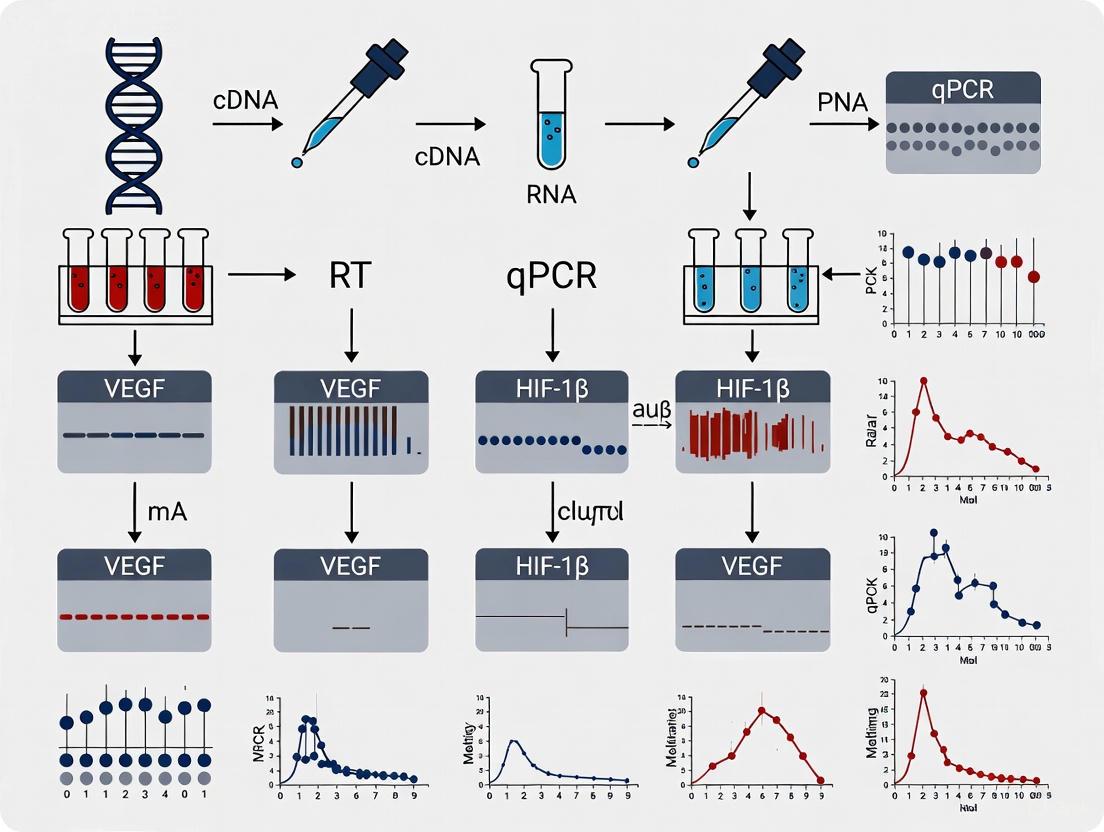
This article provides a comprehensive guide for researchers and drug development professionals on the application of Reverse Transcription Quantitative Polymerase Chain Reaction (RT-qPCR) for analyzing angiogenesis biomarkers in tumor tissue.
RT-qPCR for Angiogenesis Biomarkers in Tumor Tissue: A Comprehensive Guide from Biomarker Discovery to Clinical Validation
Abstract
This article provides a comprehensive guide for researchers and drug development professionals on the application of Reverse Transcription Quantitative Polymerase Chain Reaction (RT-qPCR) for analyzing angiogenesis biomarkers in tumor tissue. It covers the foundational role of angiogenic factors in cancer progression, explores key biomarkers like VEGFA, MMP9, and NID2, and details robust methodological pipelines from RNA extraction to data normalization. The content addresses critical troubleshooting aspects, including the pitfalls of common housekeeping genes like GAPDH, and outlines rigorous validation strategies incorporating machine learning and single-cell RNA sequencing. By integrating recent research and multi-omics approaches, this resource aims to enhance the accuracy and translational potential of angiogenesis biomarker studies in oncology.
The Critical Role of Angiogenesis in Cancer and Key Biomarker Targets
Angiogenesis, the formation of new blood vessels from pre-existing vasculature, is a critical hallmark of cancer that enables tumor growth, invasion, and metastasis [1]. In 1971, Professor Judah Folkman first proposed that tumor growth is dependent on angiogenesis, establishing a new theoretical foundation for anti-cancer therapy [2]. When tumors grow beyond 1-2 mm³, they require new blood vessels to supply oxygen and nutrients, triggering an "angiogenic switch" where pro-angiogenic factors overwhelm anti-angiogenic factors [1] [2]. This process is particularly mediated by the VEGF signaling pathway and represents a promising therapeutic target. This Application Note details the molecular profiling of angiogenesis biomarkers in tumor tissue using real-time quantitative PCR (RT-qPCR) methodologies, providing researchers with standardized protocols for quantifying angiogenic activity in cancer research and drug development.
Molecular Mechanisms of Tumor Angiogenesis
Key Signaling Pathways and Regulators
Tumor angiogenesis is regulated by a complex interplay of signaling pathways and molecular regulators. The VEGF/VEGFR pathway serves as the central signaling axis, with VEGF-A identified as the primary pro-angiogenic factor [1] [2]. VEGF signaling occurs primarily through VEGFR-2, which mediates endothelial cell proliferation, survival, migration, and vascular permeability [3]. The angiopoietin-Tie system provides complementary regulation, where Angiopoietin-1 (ANGPT-1) promotes vessel stabilization and maturation, while Angiopoietin-2 (ANGPT-2) acts as a context-dependent antagonist that destabilizes vessels for sprouting angiogenesis [4]. Additional signaling pathways include FGF/FGFR, PDGF/PDGFR, and TGF-β pathways, which contribute to angiogenesis through endothelial cell proliferation and pericyte recruitment [3] [2].
The diagram below illustrates the core VEGF/VEGFR signaling pathway and its key components:
Figure 1: VEGF/VEGFR Signaling Pathway in Angiogenesis
Modes of Tumor Angiogenesis
Tumors employ multiple mechanisms to develop vascular networks [2]:
- Sprouting Angiogenesis: The most classical mechanism, involving VEGF-driven activation of tip cells, basement membrane degradation, endothelial cell migration, and lumen formation.
- Intussusceptive Angiogenesis: A rapid process where existing vessels split through the formation of transvascular tissue pillars.
- Vasculogenesis: Recruitment of bone marrow-derived endothelial progenitor cells (EPCs) that incorporate into developing vessels.
- Vascular Mimicry: Formation of vessel-like structures by tumor cells themselves, independent of endothelial cells.
- Vessel Co-option: Tumor cell migration along pre-existing vessels without initiating new vessel growth.
Quantitative Analysis of Angiogenesis Markers
Key Angiogenesis Biomarkers for RT-qPCR Profiling
Comprehensive molecular profiling requires quantification of multiple angiogenesis-related genes. Research indicates that a panel of nine key markers provides robust assessment of angiogenic activity [5].
Table 1: Core Angiogenesis Biomarkers for RT-qPCR Profiling
| Biomarker Category | Gene Symbol | Full Name | Function in Angiogenesis | Expression Change in Tumors |
|---|---|---|---|---|
| Growth Factors | VEGF-A | Vascular Endothelial Growth Factor A | Primary regulator of endothelial proliferation, permeability | Significantly upregulated [4] |
| ANGPT-1 | Angiopoietin-1 | Vessel stabilization, maturation | Significantly downregulated [4] | |
| ANGPT-2 | Angiopoietin-2 | Vessel destabilization, sprouting promotion | Significantly upregulated [4] | |
| Receptor Tyrosine Kinases | KDR/VEGFR2 | Kinase Insert Domain Receptor | Main VEGF signaling receptor | Upregulated (4-fold in high VEGF) [5] |
| FLT-1/VEGFR1 | Fms Related Receptor Tyrosine Kinase 1 | VEGF receptor, modulates VEGFR2 signaling | Upregulated (4-fold in high VEGF) [5] | |
| TIE-1 | Tyrosine Kinase With Immunoglobulin Like And EGF Like Domains 1 | Endothelial cell stability and integrity | Upregulated (8-fold in high VEGF) [5] | |
| Adhesion Molecules | PECAM-1 | Platelet Endothelial Cell Adhesion Molecule | Endothelial cell-cell adhesion, migration | Upregulated (10-fold in high VEGF) [5] |
| CDH5/VE-cadherin | Cadherin 5 | Endothelial adherens junctions, vessel integrity | Upregulated (10-fold in high VEGF) [5] | |
| Reference Gene | PPIA | Peptidylprolyl Isomerase A | Cyclophilin A, stable expression | Unchanged, normalization control [5] |
Quantitative Data from Angiogenesis Models
Experimental models demonstrate significant changes in angiogenesis marker expression. In VEGF-driven mouse skin models, transcript numbers of key markers increased dramatically compared to controls [5]:
Table 2: Quantitative Changes in Angiogenesis Markers in VEGF-Stimulated Tissue
| Angiogenesis Marker | Fold-Increase vs Control | Biological Significance |
|---|---|---|
| ANGPT-2 | 35-fold | Highest induction, indicates active vessel sprouting |
| PECAM-1 (CD31) | 10-fold | Reflects increased endothelial cell mass |
| VE-cadherin (CDH5) | 10-fold | Indicates endothelial junction formation |
| TIE-1 | 8-fold | Marks endothelial cell activation |
| KDR/VEGFR2 | 4-fold | Upregulation of main VEGF receptor |
| FLT-1/VEGFR1 | 4-fold | Increased VEGF signaling capacity |
| ANGPT-1 | 2-fold | Moderate increase in stabilizing factor |
In colorectal cancer patients, significant differential expression patterns are observed: VEGF-A and ANGPT-2 show significantly higher expression in tumor tissues compared to normal adjacent tissue, while ANGPT-1 has significantly lower expression in tumors [4]. Metastatic CRC patients demonstrate further increased VEGF-A and ANGPT-2 expression with decreased ANGPT-1 expression [4].
Experimental Protocols
RT-qPCR Protocol for Angiogenesis Biomarker Profiling
Sample Preparation and RNA Extraction
Materials Required:
- Tissue samples (tumor and matched normal adjacent tissue)
- RNase-free conditions and equipment
- RNeasy RNA Extraction Kit (Qiagen) or equivalent
- DNase I treatment kit (Ambion)
- Spectrophotometer for RNA quantification
Procedure:
- Tissue Preservation: Immediately freeze tissue specimens in liquid nitrogen after collection and store at -80°C until RNA extraction.
- Homogenization: Lyse 30 mg tissue in guanidinium isothiocyanate buffer using a mechanical homogenizer.
- RNA Extraction: Purify total RNA using silica membrane columns following manufacturer's protocol.
- DNA Digestion: Treat 1 μg total RNA with DNase I to remove genomic DNA contamination.
- Quality Assessment: Determine RNA concentration using spectrophotometry (A260/A280 ratio of 1.8-2.0 indicates pure RNA). Assess RNA integrity by agarose gel electrophoresis or Bioanalyzer.
cDNA Synthesis
Materials Required:
- DNase-treated RNA samples
- Murine leukemia virus reverse transcriptase (Gibco BRL)
- Random hexamers or oligo-dT primers
- dNTP mix
- RNase inhibitor
Procedure:
- Reaction Setup: Combine 100 ng DNase-treated RNA with 1× reverse transcription buffer, 0.5 mM dNTPs, 2.5 μM random hexamers, 20 U RNase inhibitor, and 100 U reverse transcriptase in a total volume of 20 μL.
- Incubation Conditions: Incubate at 25°C for 10 minutes, 42°C for 60 minutes, followed by enzyme inactivation at 70°C for 15 minutes.
- Storage: Aliquot cDNA samples and store at -80°C to avoid freeze-thaw cycles.
Quantitative Real-Time PCR
Materials Required:
- cDNA templates
- SYBR Green PCR Master Mix (Applied Biosystems)
- Gene-specific forward and reverse primers (Table 3)
- ABI Prism 7700 Sequence Detection System or equivalent
- 96-well or 384-well optical reaction plates
Table 3: Primer Sequences for Angiogenesis Biomarkers [5]
| Gene Target | Forward Primer (5'→3') | Reverse Primer (5'→3') | Amplicon Size |
|---|---|---|---|
| ANGPT-1 | CATTCTTCGCTGCCATTCTG | GCACATTGCCCATGTTGAATC | 103 bp |
| ANGPT-2 | TTAGCACAAAGGATTCGGACAAT | TTTTGTGGGTAGTACTGTCCATTCA | 121 bp |
| VEGF-A | Refer to original publication for complete sequences | ||
| KDR/VEGFR2 | Refer to original publication for complete sequences | ||
| FLT-1/VEGFR1 | Refer to original publication for complete sequences | ||
| PECAM-1 | Refer to original publication for complete sequences | ||
| VE-cadherin | Refer to original publication for complete sequences | ||
| TIE-1 | Refer to original publication for complete sequences | ||
| PPIA | CAGACGCCACTGTCGCTTT | TGTCTTTGGAACTTTGTCTGCAA | 133 bp |
Procedure:
- Reaction Setup: Prepare 25 μL reactions containing 1× SYBR Green Master Mix, 200 nM forward and reverse primers, and 2.5 μL cDNA template (equivalent to 12.5 ng reverse-transcribed RNA).
- PCR Conditions: Program thermal cycler as follows: 50°C for 2 minutes, 95°C for 10 minutes, followed by 40 cycles of 95°C for 15 seconds and 60°C for 1 minute.
- Melting Curve Analysis: After amplification, heat products from 60°C to 95°C with continuous fluorescence monitoring to verify specific amplification.
- Quantification: Include standard curves of known template concentrations for absolute quantification. Perform all reactions in duplicate.
The experimental workflow for angiogenesis biomarker profiling is summarized below:
Figure 2: RT-qPCR Workflow for Angiogenesis Biomarkers
Data Analysis and Normalization
Absolute Quantification:
- Generate standard curves for each target gene using serial dilutions of known template concentrations.
- Calculate copy numbers of target mRNAs in experimental samples by interpolation from standard curves.
- Normalize target gene copy numbers to the reference gene PPIA (cyclophilin A) to account for variations in input RNA.
- Express results as copies per nanogram of total RNA or relative to control samples.
Quality Control Considerations:
- Ensure PCR efficiency between 90-110% for all assays
- Confirm single peak in melting curve analysis for primer specificity
- Maintain inter-assay coefficient of variation <10% for replicate samples
- Exclude samples with degraded RNA (28S:18S rRNA ratio <1.5)
Research Reagent Solutions
Table 4: Essential Research Reagents for Angiogenesis Studies
| Reagent Category | Specific Product | Application | Key Features |
|---|---|---|---|
| RNA Isolation | RNeasy Kit (Qiagen) | Total RNA extraction from tissues | Efficient recovery of intact RNA, includes DNase treatment |
| cDNA Synthesis | SuperScript Reverse Transcriptase (Thermo Fisher) | cDNA synthesis from RNA templates | High efficiency, includes RNase H activity |
| qPCR Master Mix | SYBR Green PCR Master Mix (Applied Biosystems) | Quantitative PCR detection | Optimized for real-time detection, includes ROX reference dye |
| Reference Gene Assay | Human PPIA TaqMan Assay (Applied Biosystems) | Normalization control | Validated reference gene for angiogenesis studies |
| Positive Control RNA | Universal Human Reference RNA (Agilent) | Assay standardization | Representative mRNA profile for standard curves |
| Endothelial Cells | HUVEC (Lonza) | In vitro angiogenesis models | Primary human umbilical vein endothelial cells |
| Tube Formation Assay | Matrigel (Corning) | Endothelial network formation assay | Basement membrane matrix for 3D culture |
| Automated Analysis | Angiogenesis Analyzer for ImageJ | Network quantification | Open-source tool for morphological analysis [6] |
Applications in Drug Development
Anti-Angiogenic Therapy Assessment
RT-qPCR profiling of angiogenesis biomarkers provides crucial insights for anti-cancer drug development. The most widely used anti-angiogenic agents include monoclonal antibodies targeting VEGF (e.g., bevacizumab) and tyrosine kinase inhibitors (TKIs) targeting VEGFR signaling (e.g., sorafenib, lenvatinib) [1]. However, resistance to anti-angiogenic therapy remains a significant challenge mediated by multiple mechanisms including upregulation of alternative pro-angiogenic factors (VEGFC, PIGF), recruitment of pro-angiogenic bone marrow-derived cells, and activation of alternative angiogenesis modes like vessel co-option and vascular mimicry [2].
RT-qPCR biomarker profiling enables:
- Patient Stratification: Identification of tumors with specific angiogenic profiles likely to respond to targeted therapies.
- Therapy Monitoring: Detection of emerging resistance mechanisms through changes in biomarker expression patterns.
- Combination Therapy Guidance: Rational selection of drug combinations based on comprehensive angiogenic signaling assessment.
Biomarker Validation in Clinical Specimens
In colorectal cancer, angiogenesis biomarker profiling has demonstrated clinical relevance. Studies show that VEGF-A and ANGPT-2 gene expression are significantly higher in tumor tissues compared to normal adjacent tissue, while ANGPT-1 expression is significantly lower in tumors [4]. Furthermore, metastatic CRC patients show significantly increased VEGF-A and ANGPT-2 expression with decreased ANGPT-1 expression compared to non-metastatic cases [4]. EMAST-positive colorectal tumors also demonstrate significantly increased VEGF-A and decreased ANGPT-1 expression, providing novel insights into molecular pathogenesis [4].
Comprehensive molecular profiling of angiogenesis biomarkers using RT-qPCR provides researchers with a sensitive, quantitative approach for evaluating tumor angiogenic activity. The standardized protocols outlined in this Application Note enable robust quantification of key angiogenesis regulators, supporting both basic research and drug development applications. As anti-angiogenic therapies continue to evolve, with emerging approaches targeting multiple pathways and combining with immunotherapy [1] [2], RT-qPCR-based biomarker profiling will remain an essential tool for understanding angiogenic mechanisms, stratifying patients, and developing more effective therapeutic strategies against cancer.
Angiogenesis, the formation of new blood vessels from pre-existing vasculature, is a critical process in tumor progression and metastasis [7] [8]. For solid tumors to grow beyond 1-2 mm³, they must develop an independent blood supply to deliver oxygen and nutrients, making angiogenic switching a crucial step in carcinogenesis [9]. This process is orchestrated by three major classes of angiogenesis-related genes (AAGs): growth factors, matrix metalloproteinases (MMPs), and adhesion molecules [10] [7] [9]. Within the context of tumor tissue research, precise quantification of these AAGs using RT-qPCR provides valuable insights into the angiogenic potential of tumors and can serve as biomarkers for diagnosis and therapeutic monitoring [11]. This article explores these major AAG classes, their complex interactions in the tumor microenvironment, and detailed protocols for their analysis, with particular emphasis on RT-qPCR applications for angiogenesis biomarkers in tumor research.
Major Classes of Angiogenesis-Related Genes
Angiogenic Growth Factors
Angiogenic growth factors (AGFs) are secreted cytokines that directly stimulate blood vessel formation. They represent the primary initiators of angiogenic signaling and are frequently upregulated in tumor tissues [12].
Table 1: Major Angiogenic Growth Factor Families and Their Characteristics
| Growth Factor Family | Key Members | Primary Receptors | Main Functions in Angiogenesis | Expression in Tumors |
|---|---|---|---|---|
| VEGF Family | VEGFA, VEGFB, VEGFC, VEGFD, PlGF | VEGFR-1 (Flt-1), VEGFR-2 (KDR/Flk-1), VEGFR-3 (Flt-4) | Endothelial cell proliferation, migration, and permeability; vasculogenesis and angiogenesis [10] [12] | Upregulated in glioma, breast cancer, and other solid tumors [11] [12] |
| PDGF Family | PDGF-A, PDGF-B, PDGF-C, PDGF-D | PDGFR-α, PDGFR-β | Pericyte recruitment, vessel maturation and stabilization [10] | Overexpressed in osteosarcoma, melanoma, glioblastoma [10] |
| FGF Family | FGF-1 (aFGF), FGF-2 (bFGF) | FGFR1-FGFR4 | Endothelial cell proliferation, migration, and ECM degradation [9] | Elevated in multiple cancer types [13] |
| Angiopoietins | ANG-1, ANG-2 | Tie-2 | Vessel stabilization (ANG-1) and destabilization (ANG-2) [12] | Altered expression in various cancers [14] |
| TGF-β Family | TGF-β1, TGF-β2, TGF-β3 | TGF-βR1, TGF-βR2 | ECM production, endothelial cell proliferation control [12] | Context-dependent pro- or anti-angiogenic effects |
The VEGF family represents the most potent and well-characterized angiogenic growth factors. VEGFA/VEGFR2 is the most significant ligand-receptor pair in tumor angiogenesis, mediating endothelial cell proliferation, migration, and permeability [12]. In glioblastoma, a highly vascularized tumor, VEGF is dramatically overexpressed and correlates with poor prognosis [12]. PDGFs, particularly PDGF-BB, are crucial for recruiting pericytes and smooth muscle cells to stabilize newly formed vessels [10]. The PDGF-B gene is the human homolog of the v-sis oncogene, and its overexpression can contribute to tumor development [10].
Beyond their direct angiogenic functions, many growth factors exhibit immunomodulatory properties in the tumor microenvironment. VEGF, for instance, inhibits dendritic cell maturation, thereby reducing tumor antigen presentation and facilitating immune evasion [12]. This dual functionality makes AGFs particularly compelling therapeutic targets.
Matrix Metalloproteinases (MMPs)
Matrix metalloproteinases constitute a family of zinc-dependent endopeptidases that collectively degrade all components of the extracellular matrix (ECM). They facilitate angiogenesis by remodeling the vascular basement membrane and surrounding ECM to allow endothelial cell migration [7] [15].
Table 2: Key Matrix Metalloproteinases in Angiogenesis
| MMP Type | Key Members | Substrates | Role in Angiogenesis | Inhibitors |
|---|---|---|---|---|
| Collagenases | MMP-1, MMP-8, MMP-13 | Fibrillar collagens | Initiate collagen degradation [15] | TIMP-1, TIMP-2, TIMP-3, TIMP-4 |
| Gelatinases | MMP-2 (Gelatinase A), MMP-9 (Gelatinase B) | Type IV collagen, gelatin, elastin | Degrade basement membrane; release ECM-bound growth factors [7] [8] | TIMP-1 (MMP-9), TIMP-2 (MMP-2) |
| Stromelysins | MMP-3, MMP-10, MMP-11 | Proteoglycans, laminin, fibronectin | ECM remodeling; activate other MMPs [8] | TIMP-1, TIMP-2, TIMP-3 |
| Membrane-type MMPs | MT1-MMP (MMP-14) | Type I collagen, laminin, fibronectin | Pro-MMP-2 activation; pericellular proteolysis [8] [16] | TIMP-2, TIMP-3 |
MMPs contribute to angiogenesis through multiple mechanisms beyond simple ECM degradation. Specific MMPs release ECM-bound angiogenic growth factors such as VEGF and FGF-2, making them available to endothelial cells [7]. They also expose cryptic pro-angiogenic integrin binding sites in the ECM and generate promigratory ECM component fragments that stimulate endothelial cell movement [7]. MMP-2 and MT1-MMP are particularly important for endothelial cell invasion and tube formation during angiogenesis [16].
The role of MMPs in angiogenesis is complex and context-dependent. Certain MMPs, including MMP-7, MMP-9, and MMP-12, can generate anti-angiogenic factors like angiostatin through proteolytic cleavage of plasminogen, thereby inhibiting rather than promoting vessel formation [15]. This dual functionality underscores the importance of understanding specific MMP functions in different tumor environments.
Cell Adhesion Molecules
Cell adhesion molecules mediate critical interactions between endothelial cells, between endothelial cells and the ECM, and between endothelial cells and peri-vascular cells during angiogenesis [9]. They facilitate both the initial sprouting and subsequent stabilization of new vessels.
Table 3: Major Classes of Adhesion Molecules in Angiogenesis
| Adhesion Molecule Family | Key Members | Ligands | Primary Functions in Angiogenesis |
|---|---|---|---|
| Integrins | αvβ3, αvβ5, α5β1, α1β1, α2β1 | Fibronectin, vitronectin, collagens, laminins [8] | Endothelial cell-ECM adhesion; migration; survival signaling [9] |
| Cadherins | VE-cadherin, N-cadherin | Homophilic binding to other cadherins | Endothelial cell-cell adhesion; vessel assembly and integrity [9] |
| Immunoglobulin Superfamily | ICAM-1, VCAM-1, PECAM-1 | Integrins, other immunoglobulin family members | Leukocyte-endothelial adhesion; endothelial cell migration [8] |
| Selectins | E-selectin, P-selectin | Sialylated carbohydrate ligands | Leukocyte rolling; endothelial progenitor cell homing [8] |
Integrins are particularly important during the migratory phase of angiogenesis. The αvβ3 and αvβ5 integrins recognize the RGD (Arg-Gly-Asp) sequence in various ECM proteins and are upregulated on angiogenic endothelial cells [9]. These integrins not only mediate adhesion but also transduce survival signals that prevent endothelial cell apoptosis during vessel formation. Antibodies or RGD-peptide antagonists against αvβ3 integrin inhibit angiogenesis and promote endothelial cell apoptosis [9].
VE-cadherin (vascular endothelial cadherin) is an endothelial-specific adhesion molecule located at intercellular junctions that is essential for vascular integrity and endothelial cell survival [9]. During angiogenesis, VE-cadherin regulates contact inhibition of growth and maintains the newly formed vessels in a quiescent state. Antibodies against VE-cadherin disrupt endothelial cell junctions and inhibit angiogenesis, highlighting its critical role in vessel maturation and stabilization [9].
Molecular Interactions and Signaling Pathways
The three classes of AAGs function in a highly coordinated manner to regulate the complex process of angiogenesis. Growth factors initiate signaling cascades that promote endothelial cell activation, while adhesion molecules and MMPs facilitate the cellular rearrangements and migrations necessary for vessel formation.
The process begins with angiogenic growth factors such as VEGF binding to their specific receptors on endothelial cells, initiating intracellular signaling cascades including the PI3K/Akt and MAPK pathways [12]. These signals lead to upregulation and activation of various MMPs, particularly MMP-2, MMP-9, and MT1-MMP [16]. MT1-MMP activates pro-MMP-2 in a TIMP-2-dependent mechanism, localizing proteolytic activity to the cell surface [16]. The activated MMPs then degrade the vascular basement membrane and remodel the ECM, which releases additional matrix-bound growth factors and exposes cryptic sites that can be recognized by integrins and other adhesion molecules [7].
Adhesion molecules subsequently guide endothelial cell migration and assembly. Integrins such as αvβ3 and αvβ5 bind to exposed ECM components and transmit signals that promote endothelial cell survival and migration [9]. As endothelial cells organize into cords, cadherins (particularly VE-cadherin) mediate stable cell-cell contacts that are essential for tube formation and vessel integrity [9]. This coordinated interplay between growth factors, MMPs, and adhesion molecules ensures the spatial and temporal regulation necessary for effective angiogenesis.
Experimental Protocols for AAG Analysis
RT-qPCR Analysis of Angiogenesis-Related Genes in Tumor Tissues
Accurate quantification of AAG expression in tumor tissues provides critical insights into the angiogenic potential and can guide therapeutic decisions. This protocol describes a multiplex RT-qPCR approach for simultaneous analysis of multiple AAGs, optimized for tumor research applications.
Sample Preparation and RNA Extraction
- Tissue Collection: Obtain fresh tumor tissue samples via biopsy or surgical resection. Immediately stabilize tissue in RNA preservation solution and store at -80°C until processing. Include normal adjacent tissue as control if available.
- Homogenization: Homogenize 20-30 mg of tumor tissue in 1 mL of TRIzol reagent using a mechanical homogenizer. Incubate for 5 minutes at room temperature.
- RNA Extraction:
- Add 0.2 mL of chloroform per 1 mL of TRIzol, shake vigorously for 15 seconds, and incubate for 3 minutes at room temperature.
- Centrifuge at 12,000 × g for 15 minutes at 4°C.
- Transfer the aqueous phase to a new tube and precipitate RNA with 0.5 mL of isopropyl alcohol.
- Incubate for 10 minutes at room temperature, then centrifuge at 12,000 × g for 10 minutes at 4°C.
- Wash the RNA pellet with 75% ethanol, air dry, and resuspend in RNase-free water.
- RNA Quantification and Quality Control: Measure RNA concentration using a spectrophotometer. Ensure A260/A280 ratio is between 1.8-2.0 and A260/A230 ratio is >2.0. Assess RNA integrity using agarose gel electrophoresis or Bioanalyzer, with RNA Integrity Number (RIN) >7.0.
cDNA Synthesis
Genomic DNA Elimination:
- Prepare the following reaction mix:
- Total RNA: 1 μg
- gDNA Eraser Buffer: 2.0 μL
- gDNA Eraser: 1.0 μL
- RNase-free water to 10 μL
- Incubate at 42°C for 2 minutes, then place on ice.
- Prepare the following reaction mix:
Reverse Transcription:
- Add to the above reaction:
- PrimeScript RT Enzyme Mix I: 1.0 μL
- RT Primer Mix: 1.0 μL
- 5× PrimeScript Buffer: 4.0 μL
- RNase-free water: 4.0 μL
- Total reaction volume: 20 μL
- Use the following thermal cycling conditions:
- 37°C for 15 minutes
- 85°C for 5 seconds
- 4°C hold
- Dilute cDNA 1:5 with nuclease-free water before use in qPCR.
- Add to the above reaction:
Multiplex RT-qPCR Amplification
Reaction Setup:
- Prepare master mix for each sample (10 μL total volume):
- 2× SYBR Green Pro Taq HS Premix: 5 μL
- Forward Primer (10 μM): 0.2 μL
- Reverse Primer (10 μM): 0.2 μL
- cDNA template: 2 μL
- RNase-free water: 2.6 μL
- For multiplex reactions using probe-based detection, include:
- TaqMan Probe (10 μM): 0.2 μL
- Adjust water volume accordingly
- Prepare master mix for each sample (10 μL total volume):
Primer and Probe Design:
- Design primers to span exon-exon junctions to avoid genomic DNA amplification
- Ensure amplicon length between 70-150 bp for optimal efficiency
- Validate primer specificity using BLAST and electrophoresis
- Use touchdown PCR protocol to improve specificity [11]
Thermal Cycling Conditions:
- Initial denaturation: 95°C for 30 seconds
- 40 cycles of:
- Denaturation: 95°C for 5 seconds
- Annealing/Extension: 60°C for 30 seconds
- Melt curve analysis: 65°C to 95°C, increment 0.5°C for 5 seconds each
Data Analysis:
- Use the comparative Ct (ΔΔCt) method for relative quantification
- Normalize target gene expression to reference genes (RPL13A, GAPDH, β-actin)
- Calculate fold changes using the formula: 2^(-ΔΔCt)
Table 4: Recommended Primer Sequences for Key Angiogenesis-Related Genes
| Gene | Gene ID | Primer Sequence (5'→3') | Amplicon Size | Function |
|---|---|---|---|---|
| VEGFA | 7422 | F: CTC TAC CTC CAC CAT GCC AAR: CAC AGC CTG GCT CAC CGC CT | 88 bp | Key angiogenic growth factor [12] |
| MMP2 | 4313 | F: CAA GTT CCC CGG CGA TGT CR: TTC TGG TCA AGG TCA CCT GTC | 92 bp | Gelatinase A, ECM remodeling [7] |
| MMP9 | 4318 | F: TGT ACC GCT ATG GTT ACA CTC GR: GGC AGG GAC AGT TGC TTC T | 95 bp | Gelatinase B, basement membrane degradation [7] |
| ITGAV | 3685 | F: GAC CTG CAG TAC GAG TGT GGR: CAA CGT CAA ACC GCT TCT CC | 85 bp | αv integrin subunit, endothelial migration [9] |
| KDR | 3791 | F: CAA GTC CAG GAG CAA GAC CAR: GCA TTG GAG ACA CCA CGA AT | 90 bp | VEGFR2, main VEGF signaling receptor [12] |
| PECAM1 | 5175 | F: GCT GTG ACC CAG TAC CAA GGR: AGG TGT TCT GCT CGC TCT TC | 87 bp | Platelet endothelial cell adhesion molecule [9] |
| RPL13A | 23521 | F: CCT GGA GGA GAA GAG GAA AGA GAR: TTG AGG ACC TCT GTG TAT TTG TCA A | 75 bp | Reference gene [11] |
Tube Formation Assay for Functional Validation
The tube formation assay using Human Umbilical Vein Endothelial Cells (HUVECs) represents a standard in vitro method for assessing the functional consequences of AAG expression on angiogenic potential [13].
Protocol
Matrigel Preparation:
- Thick Matrigel matrix overnight at 4°C.
- Coat 15-well μ-slides with 10 μL of chilled Matrigel per well using pre-cooled tips.
- Allow Matrigel to polymerize for 30 minutes at 37°C.
Cell Preparation and Seeding:
- Culture HUVECs in EGM-2 medium supplemented with growth factors.
- Harvest cells at 80-90% confluence using trypsin/EDTA.
- Resuspend in serum-free medium at 15,000 cells/well.
- Add cell suspension to polymerized Matrigel.
- For conditioned media experiments, treat with 1:4 ratio of conditioned medium from tumor cells [13].
Incubation and Imaging:
- Incubate cells at 37°C, 5% CO₂ for 12-16 hours.
- Capture images using an inverted phase contrast microscope at 4×, 10×, and 20× magnification.
- Acquire 3-5 non-overlapping fields per well.
Quantitative Analysis:
- Analyze images using ImageJ with Angiogenesis Analyzer plugin.
- Quantify:
- Number of branches per field
- Number of junctions per field
- Total tubule length per field
- Number of meshes per field
The Scientist's Toolkit: Research Reagent Solutions
Table 5: Essential Research Reagents for Angiogenesis-Related Gene Studies
| Reagent Category | Specific Products | Applications | Key Features |
|---|---|---|---|
| RNA Extraction Reagents | TRIzol, RNeasy Mini Kit | High-quality RNA isolation from tumor tissues | Maintains RNA integrity, removes genomic DNA contamination |
| Reverse Transcription Kits | PrimeScript RT Reagent Kit, High-Capacity cDNA Reverse Transcription Kit | cDNA synthesis from RNA templates | High efficiency, includes gDNA removal |
| qPCR Master Mixes | SYBR Green Pro Taq HS Premix, TaqMan Universal Master Mix | Amplification and detection of target genes | High sensitivity, low background, compatible with multiplexing |
| Endothelial Cell Cultures | HUVECs, HRMECs | Functional angiogenesis assays [14] | Primary cells retaining physiological characteristics |
| Extracellular Matrix Proteins | Matrigel, Collagen I, Fibronectin | Tube formation assays, cell migration studies [13] | Basement membrane matrix supporting endothelial morphogenesis |
| Angiogenic Growth Factors | Recombinant VEGFA, FGF2, EGF | Positive controls, stimulation experiments | High purity, biological activity |
| MMP Inhibitors | GM6001, TIMP-1, TIMP-2 | Functional validation of MMP activity [15] | Specific inhibition of metalloproteinase activity |
| Reference Genes | RPL13A, GAPDH, β-actin [11] | qPCR normalization | Stable expression across samples and treatments |
Discussion and Research Applications
The comprehensive analysis of angiogenesis-related genes through RT-qPCR provides researchers with powerful tools to investigate tumor angiogenesis mechanisms and evaluate potential therapeutic interventions. The simultaneous quantification of growth factors, MMPs, and adhesion molecules offers a multidimensional perspective on the angiogenic status of tumor tissues.
In application to tumor research, this approach has revealed significant correlations between specific AAG expression profiles and clinical outcomes. For example, in breast cancer diagnosis, multiplex RT-qPCR analysis of HER2, PGR, ESR, and angiogenesis genes (Hif1A, ANG, VEGFR) provides swift identification of subtypes and insights into metastatic potential [11]. Similarly, in colorectal cancer, K-RAS mutational status influences VEGF production, with KRAS-mutated cell lines showing enhanced angiogenic potential through HIF-1α overexpression [13].
The functional integration of AAG classes creates a complex regulatory network that extends beyond traditional pro-angiogenic signaling. MMPs, for instance, not only facilitate endothelial migration but also modulate the immune microenvironment through processing of cytokines and chemokines [7] [15]. Growth factors such as VEGF exhibit immunomodulatory functions by inhibiting dendritic cell maturation and promoting immunosuppressive macrophage phenotypes [12]. This complexity underscores the importance of comprehensive AAG profiling rather than single-marker analysis.
From a therapeutic perspective, AAG quantification provides valuable biomarkers for monitoring response to anti-angiogenic treatments. The ability to track expression changes in multiple AAG classes during therapy offers insights into resistance mechanisms and potential escape pathways. Furthermore, the identification of specific AAG signatures may guide combination therapies targeting complementary pathways in the angiogenic cascade.
The systematic analysis of growth factors, matrix metalloproteinases, and adhesion molecules provides crucial insights into the molecular mechanisms driving tumor angiogenesis. The RT-qPCR protocols and experimental approaches outlined in this article offer researchers standardized methods for quantifying these angiogenesis-related genes in tumor tissues. As research progresses, the integration of AAG profiling with other molecular data promises to enhance our understanding of tumor vascularization and identify novel therapeutic targets for cancer treatment. The continued refinement of these analytical approaches will support the development of personalized anti-angiogenic strategies and improved patient outcomes in oncology.
Angiogenesis, the formation of new blood vessels from pre-existing vasculature, is a fundamental process in tumor growth and metastasis. Solid tumors cannot grow beyond 1-2 mm³ without developing their own blood supply to deliver oxygen and nutrients [2]. This process is regulated by a complex interplay of pro-angiogenic and anti-angiogenic factors within the tumor microenvironment. When pro-angiogenic factors outnumber their inhibitors, tumors activate an "angiogenic switch" that triggers new blood vessel formation [2]. Among the numerous molecules involved, VEGFA, MMP9, ANGPT2, and NID2 have emerged as critically important biomarkers in tumor angiogenesis. Their expression patterns provide valuable insights into tumor behavior, prognosis, and potential therapeutic responses, making them essential targets for research and drug development.
The study of these angiogenesis biomarkers using Reverse Transcription Quantitative Polymerase Chain Reaction (RT-qPCR) offers a highly sensitive and quantitative approach for tumor tissue research. This methodology allows researchers to precisely measure gene expression levels in tumor samples, providing crucial data for understanding tumor biology, patient stratification, and monitoring therapeutic efficacy. This Application Note details the roles of these key biomarkers and provides standardized protocols for their investigation using RT-qPCR in the context of solid tumor research.
Biomarker Profiles and Clinical Significance
Comprehensive Biomarker Characteristics
Table 1: Key Angiogenesis Biomarkers in Solid Tumor Research
| Biomarker | Full Name | Primary Function in Angiogenesis | Expression in Tumors | Clinical/Prognostic Significance |
|---|---|---|---|---|
| VEGFA | Vascular Endothelial Growth Factor A | Key regulator of endothelial cell proliferation, migration, and vascular permeability; induces angiogenic sprouting [2] | Significantly higher in tumor tissues compared to normal adjacent tissues (P-value < 0.001) [17] | Overexpression correlated with poor prognosis; primary target for anti-angiogenic therapies like bevacizumab [17] [2] |
| ANGPT2 | Angiopoietin-2 | Antagonizes ANGPT-1/Tie2 signaling, causing vessel destabilization; prerequisite for angiogenic sprouting [17] | Significantly elevated in tumor tissues; strong correlation with VEGFA expression [17] | High expression associated with poor prognosis in multiple cancers; promotes vascular instability and immune evasion [18] |
| MMP9 | Matrix Metalloproteinase 9 | Degrades extracellular matrix to facilitate endothelial cell migration; releases sequestered growth factors [2] | Upregulated in various solid tumors | Facilitates tumor invasion and metastasis; correlates with advanced disease stage |
| NID2 | Nidogen-2 | Basement membrane component involved in vascular structural integrity; potential role in vascular maturation | Altered expression in tumor vasculature | Emerging biomarker with potential diagnostic and prognostic value |
Biomarker Interactions and Co-Expression Patterns
Research has demonstrated significant co-expression and interaction between these angiogenesis biomarkers. A comprehensive study on colorectal cancer revealed a strong correlation between ANGPT2 and VEGFA gene expressions, suggesting coordinated regulation in tumor angiogenesis [17]. This interplay is particularly important for therapeutic targeting, as combined inhibition of both VEGFA and ANGPT2 has demonstrated superior antitumor activity compared to single-pathway inhibition in preclinical models [19]. The complementary actions of these signaling pathways highlight the importance of monitoring multiple biomarkers simultaneously rather than in isolation.
The expression profiles of these biomarkers also vary according to tumor characteristics. For instance, VEGFA and ANGPT2 show significantly increased expression in metastatic colorectal cancer patients (P-value = 0.001), while ANGPT-1 demonstrates decreased expression in tumor samples compared to normal colon tissue (P-value < 0.01) [17]. These coordinated expression patterns underscore the complex regulatory networks governing tumor angiogenesis and emphasize the value of multi-biomarker panels for comprehensive assessment.
RT-qPCR Protocols for Angiogenesis Biomarker Analysis
Sample Preparation and RNA Extraction
Principle: High-quality RNA extraction is critical for reliable RT-qPCR results. Tumor tissue samples must be rapidly processed to prevent RNA degradation.
Protocol:
- Tissue Collection: Obtain tumor tissue samples via biopsy or surgical resection. Snap-freeze in liquid nitrogen within 30 minutes of excision.
- Homogenization: Homogenize 30 mg of tissue in 1 mL TRIzol reagent using a mechanical homogenizer.
- RNA Extraction:
- Add 200 μL chloroform per 1 mL TRIzol, shake vigorously for 15 seconds
- Centrifuge at 12,000 × g for 15 minutes at 4°C
- Transfer aqueous phase to new tube, add 500 μL isopropanol
- Incubate at -20°C for 1 hour, centrifuge at 12,000 × g for 10 minutes
- Wash RNA pellet with 75% ethanol, air dry, resuspend in RNase-free water
- RNA Quantification: Measure RNA concentration using Nanodrop spectrophotometer
- Quality Control: Assess RNA integrity using Bioanalyzer system; accept samples with RIN >7.0
Multiplex RT-qPCR Analysis
Principle: Multiplex RT-qPCR with touch-down methods enables simultaneous quantification of multiple angiogenesis biomarkers with high precision and reduced CT values [11].
Protocol:
- cDNA Synthesis:
- Use 1 μg total RNA in 20 μL reaction volume with reverse transcriptase
- Include genomic DNA removal step
- Cycling conditions: 25°C for 10 min, 37°C for 120 min, 85°C for 5 min
qPCR Reaction Setup:
- Primer/Probe Design: Design primers with TM ~60°C, amplicons 70-200 bp
- Reaction Mix: 10 μL 2X Master Mix, 1 μL cDNA, 0.5 μL each primer (10 μM), 0.25 μL probe (10 μM), RNase-free water to 20 μL
- Touch-down Cycling:
- Initial denaturation: 95°C for 3 min
- 10 cycles: 95°C for 15 sec, 65-56°C for 30 sec (decreasing 1°C/cycle)
- 40 cycles: 95°C for 15 sec, 55°C for 30 sec
Data Analysis:
- Use RPL13A or GAPDH as endogenous control genes [11]
- Calculate ΔCT values (CTtarget - CTreference)
- For relative quantification, use 2^(-ΔΔCT) method
- Normalize to control samples or reference group
Table 2: Research Reagent Solutions for Angiogenesis Biomarker Analysis
| Reagent/Category | Specific Examples | Function/Application |
|---|---|---|
| RNA Extraction Kits | TRIzol reagent, column-based kits | High-quality RNA isolation from tumor tissues |
| Reverse Transcription Kits | High-Capacity cDNA Reverse Transcription Kit | cDNA synthesis from RNA templates |
| qPCR Master Mixes | TaqMan Gene Expression Master Mix, SYBR Green kits | Fluorescence-based detection of amplified DNA |
| Primer/Probe Sets | TaqMan assays, custom-designed primers | Target-specific amplification of VEGFA, MMP9, ANGPT2, NID2 |
| Reference Genes | RPL13A, GAPDH, ACTB, HPRT1 | Endogenous controls for data normalization |
| Quality Control Tools | Bioanalyzer RNA kits, Nanodrop spectrophotometer | Assessment of RNA quality and quantity |
Quality Control and Validation Measures
Critical Steps for Reproducibility:
- Include no-template controls (NTC) and positive controls in each run
- Perform technical replicates (minimum n=3)
- Establish standard curves for efficiency calculations (90-110% acceptable)
- Maintain inter-assay CV <15% for reliable results
- Validate with a subset of samples using alternative method (e.g., RNA-seq)
Signaling Pathways and Experimental Workflows
Angiogenesis Signaling Pathways
Diagram 1: Key Signaling Pathways in Tumor Angiogenesis
Experimental Workflow for Biomarker Analysis
Diagram 2: Experimental Workflow for Biomarker Analysis
Applications in Drug Development and Clinical Translation
Biomarker-Guided Therapeutic Development
The quantitative assessment of VEGFA, MMP9, ANGPT2, and NID2 using RT-qPCR has significant implications for drug development. These biomarkers serve as pharmacodynamic markers to demonstrate target engagement and biological activity of therapeutic agents. For instance, in Phase I clinical trials of BI 836880 (a bispecific VEGF/Ang-2 inhibitor), measurements of free and total VEGF-A and Ang-2 were used to support dose selection [19]. The study showed that doses ≥ 360 mg every 3 weeks led to >90% inhibition of free Ang-2 at steady-state in most patients, demonstrating the utility of these biomarkers in determining biologically relevant doses [19].
Furthermore, these biomarkers can help identify mechanisms of resistance to anti-angiogenic therapies. Resistance to VEGF pathway inhibitors like bevacizumab often involves upregulation of alternative pro-angiogenic factors, including VEGFC, PIGF, and IL-8, as well as activation of other angiogenic pathways [2] [13]. Monitoring expression patterns of multiple angiogenesis biomarkers during treatment can provide early indications of emerging resistance and guide combination therapy strategies.
Integration with Multi-Omics Approaches
Advanced research applications are increasingly integrating RT-qPCR data with other omics technologies for comprehensive biomarker validation. The combination of AI and RNA biomarker analysis is revolutionizing cancer diagnostics and therapeutics by deciphering complex expression patterns [20]. Machine learning algorithms can analyze RT-qPCR data alongside other molecular data to identify subtle yet clinically significant expression patterns that conventional statistical methods might miss.
The construction of ceRNA networks involving angiogenesis biomarkers represents another advanced application. Research has identified regulatory networks where long non-coding RNAs (lncRNAs) act as competitive endogenous RNAs (ceRNAs) to sponge miRNAs targeting ANGPT2 and other angiogenesis genes [18]. These networks provide insights into the complex regulatory mechanisms controlling angiogenesis biomarker expression and may identify novel therapeutic targets.
The analysis of VEGFA, MMP9, ANGPT2, and NID2 using RT-qPCR provides a powerful approach for investigating tumor angiogenesis in solid tumors. The protocols outlined in this Application Note enable robust, quantitative assessment of these key biomarkers, supporting research in tumor biology, biomarker discovery, and therapeutic development. As the field advances, integration of these methods with multi-omics approaches and AI-driven analysis will further enhance our understanding of angiogenesis mechanisms and accelerate the development of novel anti-cancer therapies.
Linking Biomarker Expression to Tumor Microenvironment and Clinical Outcomes
The tumor microenvironment (TME) has emerged as a critical determinant of cancer progression, therapeutic response, and patient survival. Comprising immune cells, stromal cells, vasculature, signaling molecules, and extracellular matrix, the TME regulates tumor immune surveillance and immunological evasion through complex interplay [21]. Within this niche, angiogenesis—the formation of new blood vessels—plays a fundamental role in supporting tumor growth and metastasis. The expression of angiogenesis-related biomarkers within the TME not only reflects tumor biology but also holds significant prognostic and predictive value [22] [23].
Substantial improvement in prognosis among metastatic renal cell carcinoma (mRCC) patients has been achieved through immunotherapy, particularly immune checkpoint inhibitors (ICIs) alongside multi-targeted tyrosine kinase inhibitors (TKIs) [21]. However, approximately two-thirds of patients present with non-response or acquired resistance to ICIs, creating an urgent need for reliable biomarkers to predict immunotherapeutic outcomes [21]. The integration of RT-qPCR for quantifying angiogenesis biomarker expression offers a powerful approach to decipher TME dynamics and their clinical implications, enabling more precise patient stratification and treatment selection.
Angiogenesis Biomarkers in the Tumor Microenvironment
Key Angiogenesis-Related Biomarkers
Angiogenesis is activated early in tumorigenesis by hypoxia, activated oncogenes, and metabolic stress through an "angiogenic switch" that tips the balance in favor of new blood vessel formation [22]. Vascular endothelial growth factor (VEGF) represents the most extensively characterized therapeutic target in tumor angiogenesis, with multiple strategies developed for its inhibition including anti-VEGF monoclonal antibodies (bevacizumab), small molecule receptor tyrosine kinase inhibitors (sunitinib), and VEGF-Trap constructs (aflibercept) [22].
Table 1: Key Angiogenesis-Related Biomarkers in the TME
| Biomarker | Biological Function | Therapeutic Significance | Expression in TME |
|---|---|---|---|
| VEGF-A | Primary mediator of angiogenesis; binds VEGFR-1 and VEGFR-2 | Target of bevacizumab; consistent drug-induced increases in plasma VEGF-A reported | Upregulated in hypoxic regions |
| VEGFR-2 (KDR) | Principal receptor for VEGF pro-angiogenic action | Primary target of VEGFR tyrosine kinase inhibitors | Expressed on endothelial cells |
| STAT3 | Signaling molecule in angiogenesis pathways | Potential therapeutic target; associated with poor prognosis | Upregulated in multiple cancer types |
| HMOX1 | Heme oxygenase involved in stress response | Diagnostic biomarker for cerebral ischemia-reperfusion injury | Expressed in endothelial cells |
| EGFR | Epithelial growth factor receptor | Associated with apoptosis, hematopoietic cell lineage | Upregulated in various tumors |
| CCL2 | Chemokine involved in immune cell recruitment | Downregulated in vascular dementia models; diagnostic potential | Secreted by multiple TME components |
| ANGPT2 | Angiopoietin involved in vessel destabilization | Downregulated in vascular dementia; diagnostic potential | Expressed by endothelial cells |
Recent bioinformatic approaches have identified additional angiogenesis-related biomarkers with diagnostic and prognostic significance across various pathological conditions. In cerebral ischemia-reperfusion injury, biomarkers including Stat3, Hmox1, Egfr, Col18a1, and Ptgs2 demonstrated high diagnostic value with area under the curve (AUC) values exceeding 0.7 in both training and validation sets [23]. Similarly, in vascular dementia, five key genes (CCL2, VEGFA, SPP1, ANGPT2, and ANGPTL4) were identified as angiogenesis diagnostic genes, all showing downregulation in disease models [24].
Biomarker Expression and Clinical Outcomes
The expression levels of angiogenesis biomarkers within the TME show significant correlations with clinical outcomes across multiple cancer types. In metastatic renal cell carcinoma, the expression of Programmed Death-Ligand 1 (PD-L1) has been extensively studied as a potential biomarker for immunotherapy response [21]. Higher PD-L1 expression has been associated with improved objective response rates (ORRs) in some clinical trials, though conflicting results have been reported across studies [21].
Machine learning approaches have further refined our understanding of biomarker interactions in determining patient prognosis. In non-small cell lung cancer (NSCLC), random survival forest models achieved a C-index of 0.84 for predicting overall survival based on PD-L1 expression and CD3+ T-cell infiltration [25]. These analyses revealed that patients with high PD-L1 expression combined with low CD3 counts experienced a higher risk of death within five years of surgical resection, highlighting the prognostic significance of combined biomarker assessment [25].
RT-qPCR Protocols for Angiogenesis Biomarker Analysis
Sample Preparation and RNA Extraction
Protocol: RNA Isolation from Tumor Tissue Specimens
Tissue Collection and Preservation:
- Collect fresh tumor tissue samples during surgical resection or biopsy procedures
- Immediately preserve samples in RNAlater solution to prevent RNA degradation
- Store at -80°C for long-term preservation
Homogenization:
- Place 30 mg of tumor tissue in 600 μL of RLT lysis buffer (with β-mercaptoethanol)
- Homogenize using a rotor-stator homogenizer for 30-60 seconds
- Pass the lysate through a 20-gauge needle 5-10 times to shear genomic DNA
RNA Extraction:
- Use silica membrane-based spin columns for RNA purification
- Perform on-column DNase digestion to remove genomic DNA contamination
- Elute RNA in 30-50 μL of RNase-free water
- Determine RNA concentration and purity using spectrophotometry (A260/A280 ratio >1.8)
- Assess RNA integrity using agarose gel electrophoresis or bioanalyzer (RIN >7)
cDNA Synthesis and RT-qPCR Analysis
Protocol: Reverse Transcription and Quantitative PCR
cDNA Synthesis:
- Use 1 μg of total RNA as template
- Employ oligo(dT) primers for mRNA-specific reverse transcription
- Include reverse transcriptase-negative controls to detect genomic DNA contamination
- Use the following thermal cycler conditions:
- 25°C for 5 minutes (primer annealing)
- 42°C for 30 minutes (reverse transcription)
- 85°C for 5 minutes (enzyme inactivation)
qPCR Reaction Setup:
- Prepare reactions in triplicate for each sample
- Use 10-100 ng cDNA per reaction
- Select commercially available validated probe-based assays or design SYBR Green compatible primers
- Apply the following cycling parameters:
- Initial denaturation: 95°C for 10 minutes
- 40 cycles of:
- Denaturation: 95°C for 15 seconds
- Annealing/Extension: 60°C for 1 minute
Data Quality Control:
- Ensure PCR efficiency between 85-110% using serial dilutions
- Include no-template controls to detect contamination
- Use reference genes with stable expression (e.g., GAPDH, ACTB, HPRT1) for normalization
Data Analysis and Interpretation
Protocol: RT-qPCR Data Analysis Using the Livak Method
The Livak method (2^(-ΔΔCt)) is appropriate when PCR efficiencies for target and reference genes are between 90-100% [26].
Calculate ΔCt values:
- ΔCt = Ct(target gene) - Ct(reference gene)
- Example: ΔCt(treatment) = Ct(VEGF treatment) - Ct(GAPDH treatment) = 13 - 16.2 = -3.2
Calculate ΔΔCt values:
- ΔΔCt = ΔCt(treatment) - ΔCt(control)
Calculate fold change:
- Fold change = 2^(-ΔΔCt)
For experiments with PCR efficiencies outside the 90-100% range, the Pfaffl method should be employed, which incorporates actual PCR efficiency values into the calculation [26].
Table 2: Troubleshooting RT-qPCR Analysis
| Issue | Potential Causes | Solutions |
|---|---|---|
| High Ct values | Low template quality, inhibitor presence, inefficient reverse transcription | Check RNA integrity, dilute inhibitors, optimize RT reaction |
| Poor reproducibility | Pipetting errors, uneven template distribution, bubble formation | Use master mixes, calibrate pipettes, centrifuge plates |
| Multiple peaks in melt curve | Primer-dimer formation, non-specific amplification, genomic DNA contamination | Redesign primers, optimize annealing temperature, include DNase step |
| Abnormal standard curve | Serial dilution errors, degraded standards, pipette calibration issues | Freshly prepare standards, verify pipette calibration |
Research Reagent Solutions
Table 3: Essential Research Reagents for Angiogenesis Biomarker Analysis
| Reagent Category | Specific Products | Application Notes |
|---|---|---|
| RNA Stabilization Reagents | RNAlater, RNAstable | Immediate tissue preservation prevents degradation |
| RNA Extraction Kits | RNeasy Mini Kit, TRIzol | Consistent yield and quality across samples |
| Reverse Transcription Kits | High-Capacity cDNA Reverse Transcription Kit | Include genomic DNA removal steps |
| qPCR Master Mixes | TaqMan Gene Expression Master Mix, SYBR Green PCR Master Mix | Probe-based for specificity; SYBR Green for cost-effectiveness |
| Reference Genes | GAPDH, β-actin, HPRT1, 18S rRNA | Validate stability in specific tissue types |
| Pre-designed Assays | TaqMan Gene Expression Assays, PrimeTime qPCR Assays | Ensure reproducibility across laboratories |
Data Analysis and Clinical Correlation
Advanced Analytical Approaches
Machine learning algorithms have demonstrated remarkable utility in identifying prognostic subtypes based on TME biomarker expression. In NSCLC, random survival forest models outperformed traditional Cox regression (C-index 0.84 vs. 0.70) in predicting overall survival based on PD-L1 expression and CD3+ T-cell infiltration [25]. Such approaches enable delineation of prognostic subtypes within the biomarker space, facilitating patient stratification.
Bioinformatic methodologies including weighted gene co-expression network analysis (WGCNA) and differential expression analysis can identify angiogenesis-associated genes with clinical relevance [24]. Subsequent validation using techniques such as least absolute shrinkage and selection operator (LASSO) regression further refines biomarker panels for diagnostic applications.
Correlation with Clinical Parameters
The integration of angiogenesis biomarker expression data with clinical outcomes enables the development of predictive models for therapeutic response. In metastatic renal cell carcinoma, the expression of PD-L1 has shown association with improved progression-free survival (PFS) and overall survival (OS) in patients treated with immune checkpoint inhibitors, though with variability across studies [21].
Table 4: Clinical Correlations of TME Biomarkers in Selected Cancers
| Cancer Type | Biomarker | Clinical Correlation | Study Details |
|---|---|---|---|
| Metastatic Renal Cell Carcinoma | PD-L1 | Improved PFS and OS with ICIs in PD-L1 positive patients | HR 0.62 (0.47-0.80) for PFS in PD-L1 ≥1% [21] |
| Non-Small Cell Lung Cancer | PD-L1 + CD3 | High PD-L1 + low CD3 associated with worse 5-year survival | Random survival forest model C-index 0.84 [25] |
| Thyroid Cancer | HAPLN1, HIP1 | Higher expression associated with poor survival | Hub genes identified through bioinformatics analysis [27] |
| Various Solid Tumors | VEGF-A | Drug-induced increases associated with response to VEGF inhibitors | Pharmacodynamic biomarker for anti-angiogenic therapy [22] |
Visualizing Angiogenesis Signaling Pathways
Angiogenesis Signaling in TME
Experimental Workflow for TME Biomarker Analysis
Biomarker Analysis Workflow
The systematic analysis of angiogenesis biomarker expression within the tumor microenvironment using RT-qPCR provides critical insights into tumor biology and therapeutic response. Standardized protocols for sample processing, RNA extraction, cDNA synthesis, and quantitative PCR enable robust and reproducible measurement of key biomarkers including VEGF, STAT3, and EGFR. Integration of these molecular profiles with clinical outcomes through advanced analytical approaches facilitates the development of predictive models for patient stratification and treatment selection. As personalized cancer therapy continues to evolve, RT-qPCR-based assessment of angiogenesis biomarkers will remain an essential component of comprehensive TME characterization, ultimately contributing to improved patient outcomes through more precise therapeutic targeting.
Bioinformatics and Public Databases for Initial Biomarker Discovery (GEO, TCGA, MSigDB)
The discovery of robust biomarkers for complex processes like tumor angiogenesis requires a systematic approach that leverages large-scale genomic data before committing costly laboratory resources. Public data repositories provide unprecedented access to molecular profiling data from thousands of tumor samples, enabling researchers to identify candidate biomarkers in silico with statistical power far beyond what most individual laboratories could generate. This application note outlines a structured workflow using three complementary databases—The Cancer Genome Atlas (TCGA), Gene Expression Omnibus (GEO), and the Molecular Signatures Database (MSigDB)—for the identification and prioritization of angiogenesis-related biomarkers in tumor tissue research, with subsequent validation via reverse transcription quantitative PCR (RT-qPCR).
The integration of these resources is particularly valuable in angiogenesis research, where multiple molecular pathways contribute to blood vessel formation in tumors. For example, a 2023 study identified Hif1A and VEGFR as promising biomarkers for assessing metastatic potential in breast cancer through multiplex RT-qPCR, demonstrating how database findings can translate to validated clinical insights [11]. This document provides researchers with both the conceptual framework and practical protocols to implement this discovery pipeline.
Database Fundamentals and Access
Three primary databases form the foundation of most computational biomarker discovery pipelines, each offering distinct data types and analytical advantages.
Table 1: Core Databases for Biomarker Discovery
| Database | Primary Content | Key Features | Data Types | Access Method |
|---|---|---|---|---|
| The Cancer Genome Atlas (TCGA) | Genomic data from >20,000 primary cancer and matched normal samples across 33 cancer types [28] | Clinical data integration; Multi-platform molecular characterization; Uniform processing | Genomic, epigenomic, transcriptomic, proteomic data [28] [29] | Genomic Data Commons Data Portal [28] |
| Gene Expression Omnibus (GEO) | Curated gene expression data from microarray and sequencing technologies [30] [31] | International public repository; Supports MIAME-compliant submissions; Diverse experimental conditions | Gene expression profiling, non-coding RNA profiling, chromatin immunoprecipitation, genome methylation profiling [31] | Web search interface; FTP site; Programmatic access [31] |
| Molecular Signatures Database (MSigDB) | 35,134 annotated gene sets divided into 9 major collections [32] | Pathway-level analysis; Gene set enrichment analysis (GSEA) support; Computational gene sets | Hallmark gene sets, curated gene sets, regulatory targets, computational gene sets, oncogenic signatures [32] | Online browser; GMT file downloads; JSON bundles [32] |
Database Selection Workflow
The following diagram illustrates the decision process for selecting appropriate databases based on research objectives:
Practical Workflow for Angiogenesis Biomarker Discovery
TCGA Data Mining Protocol
Objective: Identify differentially expressed angiogenesis-related genes across cancer types with clinical correlation.
Step-by-Step Protocol:
Data Access: Navigate to the Genomic Data Commons Data Portal to access TCGA data. Select "TCGA" program and choose relevant cancer types (e.g., LUAD for lung adenocarcinoma) [28].
Clinical Data Integration: Download clinical datasets that include overall survival, disease-free survival, and tumor stage information for correlation analysis.
Gene Selection: Focus on known angiogenesis-related genes from MSigDB pathways (e.g., WPINTEGRATEDCANCERPATHWAY) as starting points [33]. The WPINTEGRATEDCANCERPATHWAY includes 48 cancer-related genes, including key regulators like VEGFA [33].
Differential Expression Analysis:
- Extract normalized gene expression values (FPKM or TPM) for target genes
- Compare tumor vs. normal samples using appropriate statistical tests (e.g., Mann-Whitney U test)
- Apply multiple testing correction (Benjamini-Hochberg FDR < 0.05)
Survival Analysis:
- Implement Kaplan-Meier analysis using overall survival data
- Divide patients into high and low expression groups based on median expression
- Calculate hazard ratios and log-rank p-values
A recent study on lung adenocarcinoma (LUAD) exemplifies this approach, where researchers used CIBERSORT analysis of TCGA data to characterize the immune landscape and identify prognostic macrophage-related genes, followed by experimental validation [34].
GEO Query and Analysis Protocol
Objective: Leverage GEO's diverse dataset collection to validate TCGA findings across multiple experimental conditions.
Step-by-Step Protocol:
Dataset Identification:
- Use the GEO DataSets advanced search builder with keywords: "angiogenesis," "cancer," "tumor," and specific genes of interest
- Filter by organism ("Homo sapiens"), study type ("expression profiling by array" or "expression profiling by high throughput sequencing")
- Select datasets with adequate sample size (>20 per group) and relevant experimental conditions [31]
Data Retrieval:
- Download processed data files in SOFT, TXT, or CSV format
- For raw sequencing data, access through Sequence Read Archive (SRA)
- Use GEO2R for preliminary analysis of selected datasets [31]
Cross-Study Validation:
- Compare expression patterns of candidate biomarkers across multiple independent datasets
- Assess consistency of differential expression direction and magnitude
- Note any technical variables (platform differences, batch effects) that might influence results
Meta-Analysis: For robust candidates present in multiple datasets, consider formal meta-analysis to calculate pooled effect sizes and assess heterogeneity.
Challenges in finding relevant GEO data include navigating vast datasets with inconsistent metadata. Platforms like Elucidata's Polly can facilitate this process through curated standard fields and knowledge graph-backed filters [31].
MSigDB Pathway Analysis Protocol
Objective: Contextualize candidate biomarkers within biological pathways and processes.
Step-by-Step Protocol:
Collection Selection: Navigate to the MSigDB collections page and identify relevant gene sets [32]:
Gene Set Retrieval:
- Browse or search for angiogenesis-related gene sets
- Download GMT files containing gene members
- Cross-reference candidate biomarkers with pathway members
Enrichment Analysis:
- Input your candidate gene list into GSEA software
- Select appropriate background gene set (usually all genes in platform)
- Run enrichment analysis against MSigDB collections
- Identify significantly enriched pathways (FDR < 0.25)
Biological Interpretation:
- Map candidate biomarkers onto integrated cancer pathways
- Identify central regulators and network neighbors
- Generate hypotheses about mechanistic roles in angiogenesis
Experimental Validation via RT-qPCR
RT-qPCR Wet-Lab Validation Protocol
Objective: Experimentally validate computationally identified angiogenesis biomarkers using RT-qPCR.
Step-by-Step Protocol:
Sample Preparation:
- Obtain tumor tissue samples with appropriate ethical approvals
- Extract high-quality RNA using commercial kits (e.g., OMEGA Total RNA Kit) [34]
- Assess RNA integrity and purity (A260/280 ratio >1.8, RIN >7)
Reverse Transcription:
qPCR Setup:
- Select detection chemistry: SYBR Green for cost-effectiveness or TaqMan for specificity [35]
- Design assays targeting candidate biomarkers (HER2, PGR, ESR, Ki67, Hif1A, VEGFR) and reference genes (RPL13A, β-actin) [11] [34]
- Perform reactions in technical triplicates
- Include no-template controls for each assay
Data Collection:
- Monitor amplification in real-time using platforms like QuantStudio
- Determine quantification cycle (Cq) values during exponential phase [35]
- Generate melting curves for SYBR Green assays to verify specificity
RT-qPCR Data Analysis Protocol
Objective: Analyze RT-qPCR data to confirm differential expression of candidate biomarkers.
Step-by-Step Protocol:
Quality Assessment:
- Verify amplification efficiency (90-110%) using standard curves [35]
- Assess reproducibility across technical replicates (CV < 5%)
Normalization:
Relative Quantification:
- Apply the comparative Cq (ΔΔCq) method for relative quantification [35]
- Calculate fold-change values: 2^(-ΔΔCq)
- Perform statistical testing (t-tests, ANOVA) on ΔCq values
Data Reporting:
The following diagram illustrates the complete experimental validation workflow:
Research Reagent Solutions
Table 2: Essential Reagents and Tools for Angiogenesis Biomarker Discovery and Validation
| Category | Specific Product/Kit | Application Note | Reference |
|---|---|---|---|
| RNA Extraction | OMEGA Total RNA Kit | Isolate high-quality RNA from tumor tissues; suitable for difficult samples | [34] |
| Reverse Transcription | FastKing One Step RT-qPCR Kit (SYBR) | Integrated system for cDNA synthesis and amplification; reduces handling steps | [34] |
| qPCR Master Mix | SYBR Green PCR Master Mix | Cost-effective detection for multiple targets; requires melting curve verification | [35] [34] |
| qPCR Platform | QuantStudio Real-time PCR Systems | Reliable data collection with multiple dye detection capabilities | [34] |
| Predesigned Assays | TaqMan Gene Expression Assays | Target-specific probes for validated genes; minimal optimization required | [35] |
| Reference Genes | TaqMan Endogenous Controls | Preformulated assays for housekeeping genes (β-actin, RPL13A) | [11] [35] |
| Pathway Resources | MSigDB Hallmark Gene Sets | Curated angiogenesis pathway genes for computational discovery | [32] |
Data Management and Reporting Standards
Proper data management and adherence to community standards are essential for research reproducibility. The following practices are recommended:
MIQE Compliance: Follow Minimum Information for Publication of Quantitative Real-Time PCR Experiments guidelines, documenting all critical experimental parameters including RNA quality, amplification efficiency, and normalization strategy [36].
Raw Data Submission: Provide RT-qPCR raw data using standardized formats such as the Real-time PCR Data Essential Spreadsheet (RDES) or Real-Time PCR Data Markup Language (RDML) [36].
Public Repository Deposition: Archive large datasets in public repositories like GEO, which accepts RT-qPCR data and provides stable accession numbers for citation [31] [36].
Transparent Methodology: Document all experimental procedures in the main Materials and Methods section rather than supplemental information only, enabling proper evaluation of technical validity [36].
The integration of bioinformatics discovery from public databases with rigorous RT-qPCR validation provides a powerful framework for angiogenesis biomarker development. This application note outlines a systematic approach from computational analysis of TCGA, GEO, and MSigDB resources to experimental verification, emphasizing practical protocols and data standards. By following this roadmap, researchers can prioritize the most promising candidates in silico before committing to laboratory validation, ultimately accelerating the development of clinically relevant biomarkers for cancer angiogenesis while maximizing resource efficiency.
A Step-by-Step RT-qPCR Workflow for Reliable Angiogenesis Biomarker Quantification
Best Practices for Tumor Tissue Collection, Preservation, and RNA Extraction
The reliability of gene expression profiling for angiogenesis biomarkers using reverse transcription quantitative polymerase chain reaction (RT-qPCR) is fundamentally dependent on the quality of the starting material. The analysis of key angiogenic factors such as VEGF, angiopoietins, and endothelial cell receptors requires intact RNA that accurately represents the in vivo transcriptional state of the tumor [5]. Preanalytical variables during tissue collection, preservation, and processing introduce significant variability that can compromise downstream molecular analyses [37]. This protocol outlines evidence-based procedures to maintain RNA integrity and yield, specifically tailored for RT-qPCR-based angiogenesis research, to ensure data reproducibility and reliability in drug development studies.
Tumor Tissue Collection and Preservation
Proper collection and preservation are critical first steps to stabilize RNA and prevent degradation by endogenous nucleases. The chosen method directly impacts the suitability of samples for subsequent RNA extraction and RT-qPCR analysis.
Collection Methods
- Intraoperative Collection: Collect tissue specimens during surgical resection using aseptic techniques.
- Sample Size: Prefer 1-2 mg tissue fragments for optimal preservation; larger samples (5-15 mg) show increased RNA degradation [38].
- Processing Timeline: Process tissue immediately after resection—ideally within 20 minutes—to minimize RNA degradation.
- Stabilization Reagents: For non-frozen stabilization, immerse tissue in 5 volumes of RNAlater solution to permeate tissue and inactivate RNases immediately without freezing [39].
Preservation Methods: Cryopreservation vs. FFPE
The preservation method chosen significantly impacts biomolecule quality and downstream applications. The table below compares the two primary approaches:
Table 1: Comparison of Tumor Tissue Preservation Methods
| Feature | Cryopreserved (Fresh Frozen) Tissue | Standard Pathology (FFPE) Tissue |
|---|---|---|
| Preservation Method | Rapid freezing (liquid nitrogen, -80°C); halts metabolism [40] | Formalin fixation (cross-links proteins) + paraffin embedding [40] |
| RNA Quality | High: Intact, native RNA. Gold standard for gene expression analysis [40] | Lower: Fragmented, chemically modified RNA due to cross-linking [40] |
| Morphology | Good, but potential freezing artifacts [40] | Excellent: Preserves cellular/tissue architecture for diagnosis [40] |
| Storage | Ultra-cold freezers (-80°C) or liquid nitrogen; high maintenance [40] | Room temperature; highly stable for decades; easy storage/transport [40] |
| Primary Use | Advanced molecular profiling (genomics, transcriptomics), RT-qPCR [40] | Routine histopathology, immunohistochemistry (IHC) [40] |
Cryopreservation Protocol for Optimal RNA Integrity
- Snap-Freezing: Place tissue sample in cryovial and submerge immediately in liquid nitrogen for 10-15 seconds.
- Long-Term Storage: Transfer to -80°C freezer or liquid nitrogen vapor phase for long-term storage.
- Temperature Monitoring: Implement continuous temperature monitoring systems to ensure samples remain below -70°C.
- Avoid Freeze-Thaw: Divide tissue into multiple aliquots to prevent repeated freeze-thaw cycles.
For research focusing on angiogenesis biomarker discovery, cryopreservation is strongly recommended over FFPE due to superior RNA integrity, which is crucial for accurate quantification of transcriptional profiles [40].
RNA Extraction from Tumor Tissue
Successful RNA extraction from tumor tissue requires optimized methods to address challenges such as high nuclease content, tissue heterogeneity, and varying lipid/protein composition.
Pre-Extraction Tissue Processing
Cryopreserved Tissue Processing:
- Cool mortar and pestle with liquid nitrogen.
- Place frozen tissue in mortar and pulverize to fine powder under liquid nitrogen.
- Transfer powder to lysis buffer while still frozen [39].
RNAlater-Preserved Tissue Processing:
- Remove tissue from RNAlater solution.
- Blot excess solution and proceed directly to homogenization in lysis buffer.
- No freezing/grinding required [39].
Optimization of Extraction Parameters
Research has systematically evaluated factors influencing RNA quality from tumor tissues:
Table 2: Optimized Conditions for RNA Extraction from Tumor Tissues
| Factor | Optimal Condition | Effect on RNA Quality |
|---|---|---|
| Tissue Amount | 1-2 mg | Yields best quality RNA; higher amounts (2-15 mg) show degraded 28S/18S bands [38] |
| Lysis Buffer | Trizol or TriPure | No significant difference in extraction quality between these common buffers [38] |
| RNase Inhibition | Guanidinium thiocyanate-based buffers | Effective without need for additional β-mercaptoethanol [38] |
| Processing Temperature | Cold room or ice buckets | Critical for preserving nucleic acids from degradation [38] |
Guanidinium Thiocyanate-Phenol-Chloroform Extraction Protocol
This robust method is particularly effective for diverse tumor types:
Homogenization:
- Add 1 ml Trizol or TriPure reagent to 1-2 mg tissue powder.
- Homogenize using mechanical homogenizer (15-30 seconds).
- Incubate 5 minutes at room temperature.
Phase Separation:
- Add 200 μl chloroform, shake vigorously 15 seconds.
- Incubate 2-3 minutes at room temperature.
- Centrifuge at 12,000 × g for 15 minutes at 4°C.
RNA Precipitation:
- Transfer aqueous phase to new tube.
- Add 500 μl isopropanol, mix.
- Incubate 10 minutes at room temperature.
- Centrifuge at 12,000 × g for 10 minutes at 4°C.
RNA Wash:
- Remove supernatant.
- Wash pellet with 1 ml 75% ethanol.
- Centrifuge at 7,500 × g for 5 minutes at 4°C.
RNA Resuspension:
- Air-dry pellet 5-10 minutes.
- Dissolve in 20-50 μl RNase-free water.
- Incubate at 55-60°C for 10-15 minutes to dissolve [38].
Tissue-Specific Modifications
Different tumor types present unique challenges that require protocol adjustments:
- Fibrous Tumors (e.g., breast): Thorough disruption is essential. Freeze tissue and grind under liquid nitrogen before homogenization [39].
- Nuclease-Rich Tissues (e.g., pancreatic tumors): Efficient disruption is critical. Freeze tissues and grind; consider additional phenol:chloroform extractions [39].
- Lipid-Rich Tumors (e.g., brain metastases): Dilute lysate; modify extraction with additional chloroform to remove lipids [39].
RNA Quality Control and Assessment
Rigorous quality control is essential before proceeding to RT-qPCR analysis of angiogenesis biomarkers.
- Spectrophotometric Analysis: Use NanoDrop or similar instrument.
- Acceptable criteria: A260/280 ratio ≥1.8, A260/230 ratio ≥2.0
- Microfluidic Analysis: Use Bioanalyzer or TapeStation.
- Acceptable criteria: RNA Integrity Number (RIN) ≥7.0
- Distinct 18S and 28S ribosomal bands indicate minimal degradation
- Functionality Testing: Perform pilot RT-qPCR analysis of housekeeping genes (e.g., RPL13A, cyclophilin) to confirm amplification efficiency [5] [11].
Application to Angiogenesis Biomarker Research Using RT-qPCR
The quality of RNA extracted using these protocols directly impacts the sensitivity and accuracy of angiogenesis biomarker quantification.
Angiogenesis Biomarker Panel
Research has identified a panel of mRNA markers closely associated with tumor neovascularization:
- Angiogenic cytokines: VEGF, angiopoietin-1 (Ang-1), angiopoietin-2 (Ang-2)
- Endothelial cell receptor tyrosine kinases: Flt-1, KDR, Tie-1
- Endothelial cell adhesion molecules: VE-cadherin, PECAM-1 [5]
RT-qPCR Protocol for Angiogenesis Biomarkers
cDNA Synthesis:
- Use 100-500 ng high-quality total RNA.
- Treat with DNase I to remove genomic DNA contamination.
- Perform reverse transcription using murine leukemia virus reverse transcriptase [5].
Quantitative PCR:
- Use SYBR Green I assay or TaqMan chemistry.
- Perform reactions in duplicate for both target and reference genes.
- Use primer sequences specifically validated for angiogenesis markers:
Table 3: Primer Sequences for Angiogenesis Biomarker RT-qPCR
| Gene | Forward Primer (5'→3') | Reverse Primer (5'→3') |
|---|---|---|
| Ang-1 | CATTCTTCGCTGCCATTCTG | GCACATTGCCCATGTTGAATC [5] |
| Ang-2 | TTAGCACAAAGGATTCGGACAAT | TTTTGTGGGTAGTACTGTCCATTCA [5] |
| Cyclophilin | CAGACGCCACTGTCGCTTT | TGTCTTTGGAACTTTGTCTGCAA [5] |
- Data Analysis:
- Normalize target gene expression to reference genes (e.g., cyclophilin).
- Calculate relative expression using ΔΔCt method.
- Express results as relative units or absolute copy numbers using external standards [5].
The Scientist's Toolkit: Research Reagent Solutions
Table 4: Essential Reagents for Tumor Tissue RNA Extraction and Angiogenesis Biomarker Analysis
| Reagent/Category | Specific Examples | Function/Application |
|---|---|---|
| RNA Stabilization | RNAlater Solution | Stabilizes RNA in unfrozen tissues, inactivates RNases [39] |
| Lysis Buffers | Trizol (Invitrogen), TriPure (Roche) | Guanidinium thiocyanate-based denaturation and lysis [38] |
| DNase Treatment | DNase I (Ambion) | Removes contaminating genomic DNA prior to RT-PCR [5] |
| Reverse Transcriptase | Murine Leukemia Virus Reverse Transcriptase | Converts RNA to cDNA for RT-qPCR analysis [5] |
| qPCR Reagents | SYBR Green I, TaqMan Probes | Fluorescent detection of amplified DNA in real-time PCR [5] [11] |
| RNA Quality Assessment | Bioanalyzer RNA kits | Microfluidic analysis of RNA integrity (RIN) [38] |
Workflow and Pathway Diagrams
Diagram 1: Tumor Tissue RNA Workflow for Angiogenesis Biomarkers
Diagram 2: Angiogenesis Pathway and Biomarker Detection
Standardized protocols for tumor tissue collection, cryopreservation, and RNA extraction are foundational for reliable RT-qPCR analysis of angiogenesis biomarkers. The methods detailed herein emphasize rapid processing, maintained cold chain, and appropriate tissue-specific modifications to ensure RNA of high integrity. Implementing these best practices enables robust quantification of key angiogenic factors, advancing both basic research into tumor neovascularization and the development of novel anti-angiogenic therapies in precision oncology.
Within the context of a broader thesis on RT-qPCR for angiogenesis biomarkers in tumor tissue research, the synthesis of high-quality complementary DNA (cDNA) represents a critical first step whose fidelity directly impacts experimental outcomes. Tumor tissues present unique challenges for molecular analysis, including varying RNA integrity, the presence of potent enzymatic inhibitors, and the complex nature of angiogenesis-related gene transcripts. This application note provides detailed methodologies and strategic considerations for optimizing the reverse transcription process specifically for tumor tissue research, ensuring accurate and reproducible quantification of angiogenesis biomarkers through subsequent RT-qPCR analysis.
Technical Considerations for Reverse Transcription
Critical Parameter: RNA Template Quality and Integrity
The quality of the RNA template is the foundational determinant of successful cDNA synthesis. Tumor specimens, particularly those from formalin-fixed, paraffin-embedded (FFPE) tissues, frequently present with compromised RNA integrity, necessitating rigorous quality assessment [41] [42].
- Prevention of RNA Degradation: Implement strict RNase-free techniques including wearing gloves, using aerosol barrier pipette tips, and decontaminating work surfaces. Process tissues promptly after collection and store purified RNA at -80°C with minimal freeze-thaw cycles to preserve integrity [42] [43].
- Assessment of RNA Quality: Utilize multiple complementary methods:
- Spectrophotometric Analysis: Determine RNA concentration via absorbance at 260 nm and assess purity using A260/A280 and A260/A230 ratios. Target A260/A280 ≈ 2.0 for pure RNA and A260/A230 > 1.8 to minimize contaminant carryover [42].
- Fluorometric Methods: Employ target-selective dyes (e.g., Qubit RNA assays) for more accurate quantification that is specific to RNA rather than total nucleic acids [42].
- RNA Integrity Number (RIN): Use microfluidics-based systems to generate RIN values, where 8-10 indicates high-quality RNA and values below 7 suggest significant degradation, which is common in archival tumor samples [42].
Essential Step: Genomic DNA Removal
Contaminating genomic DNA (gDNA) can lead to false-positive signals in RT-qPCR, critically compromising the quantification of angiogenesis biomarkers. Traditional DNase I treatment requires careful inactivation or removal to prevent degradation of cDNA and primers [42] [43].
- Advanced Solution: Thermolabile, double-strand-specific DNases (e.g., ezDNase Enzyme) offer a streamlined solution, effectively eliminating gDNA contamination in just 2 minutes at 37°C with optional simple inactivation at 55°C. This approach minimizes RNA damage and procedural time compared to conventional DNase I treatments [42] [43].
Strategic Selection: Reverse Transcriptase Enzymes
The choice of reverse transcriptase profoundly impacts cDNA yield, length, and representation, particularly for challenging tumor RNA templates. Advanced engineered enzymes offer significant advantages over wild-type variants [41] [42] [43].
Table 1: Comparison of Reverse Transcriptase Properties
| Property | AMV Reverse Transcriptase | MMLV Reverse Transcriptase | Engineered MMLV RT (e.g., SuperScript IV) |
|---|---|---|---|
| RNase H Activity | High | Medium | Low |
| Optimal Reaction Temperature | 42°C | 37°C | 50–55°C |
| Typical Reaction Time | 60 minutes | 60 minutes | 10 minutes |
| Maximum cDNA Length | ≤5 kb | ≤7 kb | >12 kb |
| Performance with Challenging RNA | Medium | Low | High |
| Inhibitor Tolerance | Moderate | Low | High |
Engineered reverse transcriptases like SuperScript IV demonstrate substantially improved performance characteristics, including up to 100-fold higher cDNA yields with degraded RNA (RIN 1-3), 8-cycle reduction in Ct values in RT-qPCR, and superior resistance to common inhibitors found in tumor tissues [41].
Strategic Decision: Primer Selection
The priming strategy determines which RNA populations are reverse transcribed and can introduce bias in transcript representation. Three primary primer types offer distinct advantages for different applications [42].
- Oligo(dT) Primers: Consist of 12-18 deoxythymidine residues that anneal specifically to the poly(A) tails of eukaryotic mRNA. Ideal for focusing on messenger RNA and generating full-length cDNA, but unsuitable for degraded RNA or transcripts lacking poly(A) tails. Anchored oligo(dT) primers with degenerate bases at the 3' end prevent poly(A) slippage and improve priming precision [42].
- Random Hexamers: Six-nucleotide primers with random sequences that anneal throughout the RNA population. Particularly valuable for degraded RNA samples (common in FFPE tissues) and for detecting non-polyadenylated transcripts. Higher concentrations yield more cDNA but generate shorter fragments; a mixture with oligo(dT) primers often provides optimal coverage [42].
- Gene-Specific Primers: Provide the most specific priming for particular targets of interest, resulting in higher sensitivity for low-abundance angiogenesis biomarkers. Best suited for two-step RT-qPCR protocols where cDNA is synthesized first, then amplified [42].
Optimized Experimental Protocols
Comprehensive Workflow for cDNA Synthesis Optimization
The following diagram illustrates the integrated optimization workflow for high-quality cDNA synthesis from tumor tissue samples:
Detailed Protocol: RNA Integrity Assessment and gDNA Removal
Principle: Ensure RNA template quality and eliminate genomic DNA contamination to prevent false positives in subsequent RT-qPCR analysis of angiogenesis biomarkers.
Materials:
- Qubit Fluorometer with RNA HS Assay Kit or equivalent
- Agilent 2100 Bioanalyzer with RNA Nano Kit or equivalent
- Thermolabile double-strand-specific DNase (e.g., ezDNase Enzyme)
- Nuclease-free water and microcentrifuge tubes
Procedure:
- RNA Quantification and Quality Assessment:
- Quantify RNA concentration using fluorometric methods per manufacturer's instructions.
- Assess RNA integrity through microfluidics-based analysis (RIN) or gel electrophoresis.
- Acceptance Criteria: Proceed with samples showing RIN ≥ 7.0 for optimal results; samples with RIN 5.0-7.0 require enhanced reverse transcription protocols [42].
- Genomic DNA Removal:
- Prepare reaction mix: 1-2 μg RNA, 1 μL ezDNase Enzyme (or equivalent), nuclease-free water to 10 μL.
- Incubate at 37°C for 2 minutes.
- Optional: Inactivate enzyme at 55°C for 2 minutes (inactivation is optional with thermolabile DNases).
- Proceed immediately to reverse transcription or store prepared RNA at -80°C [42] [43].
Detailed Protocol: Optimized cDNA Synthesis for Angiogenesis Biomarker Detection
Principle: Generate high-fidelity cDNA representing the original RNA population from tumor tissue, with emphasis on detecting angiogenesis-related transcripts that may exhibit complex secondary structures or low abundance.
Materials:
- SuperScript IV Reverse Transcriptase (or equivalent engineered MMLV RT)
- Appropriate 5X reaction buffer
- 10 mM dNTP mix
- DTT (if recommended for specific enzyme)
- RNase inhibitor
- Primers (oligo(dT), random hexamers, or gene-specific)
- Nuclease-free water
- Thermal cycler
Procedure:
- Primer-Template Annealing:
- Combine in nuclease-free tube: 1 μg DNA-free RNA, 1 μL primer(s) (50 ng oligo(dT) or 150 ng random hexamers, or 10 pmol gene-specific primer), nuclease-free water to 8 μL.
- For structured templates or GC-rich angiogenesis transcripts: Incubate at 65°C for 5 minutes then immediately place on ice for 1 minute to denature secondary structures.
- For random hexamers only: Incubate at 25°C for 10 minutes to improve annealing [43].
cDNA Synthesis Reaction:
- Prepare master mix on ice: 4 μL 5X reaction buffer, 1 μL 10 mM dNTP mix, 1 μL RNase inhibitor, 1 μL DTT (if required), 1 μL SuperScript IV Reverse Transcriptase, 4 μL nuclease-free water.
- Add 12 μL master mix to each 8 μL primer-RNA mixture for total 20 μL reaction.
- Mix gently and centrifuge briefly.
Incubation Conditions:
Reaction Termination:
- Inactivate reaction by heating at 80°C for 10 minutes.
- Dilute cDNA with nuclease-free water to suitable concentration for subsequent RT-qPCR analysis.
- Store at -20°C for short-term use or -80°C for long-term storage.
Troubleshooting:
- Low cDNA yield: Verify RNA integrity, ensure reaction components are fresh, consider increasing RNA input or trying different priming strategy.
- Poor RT-qPCR efficiency: Test different reverse transcriptases, optimize primer annealing temperature, include no-reverse transcriptase controls to detect gDNA contamination.
The Scientist's Toolkit: Research Reagent Solutions
Table 2: Essential Reagents for Optimized cDNA Synthesis from Tumor Tissue
| Reagent Category | Specific Examples | Function & Application Notes |
|---|---|---|
| Reverse Transcriptase | SuperScript IV Reverse Transcriptase [41] | Engineered MMLV RT with low RNase H activity, high thermostability (55°C), and superior inhibitor tolerance for challenging tumor RNA. |
| gDNA Removal | ezDNase Enzyme [42] [43] | Thermolabile, double-strand-specific DNase for rapid gDNA removal without damaging RNA or requiring rigorous inactivation. |
| RNA Quality Assessment | Qubit RNA IQ Assay [42] | Fluorometric method for specific RNA quantification and integrity assessment, more accurate than UV spectrophotometry for degraded samples. |
| Primers | Anchored Oligo(dT) [42] | Modified oligo(dT) primers with degenerate 3' end to prevent poly(A) slippage, improving cDNA synthesis from mRNA. |
| Reaction Buffer | Manufacturer-Supplied 5X Buffer [41] | Optimized for specific reverse transcriptase, maintaining pH and ionic strength while potentially including additives to enhance efficiency. |
| RNase Inhibitor | Recombinant RNasin [44] | Protects RNA templates from degradation by common RNases during reverse transcription reaction setup. |
Optimized reverse transcription is not merely a preliminary step but a determinant of success in the accurate quantification of angiogenesis biomarkers in tumor tissue research. The strategic integration of quality RNA templates, advanced reverse transcriptases with superior thermal stability and inhibitor resistance, appropriate priming strategies, and streamlined gDNA removal workflows enables researchers to overcome the particular challenges presented by tumor-derived RNA. Implementation of these detailed protocols and considerations provides the foundation for reliable, sensitive, and reproducible RT-qPCR data, ultimately supporting robust conclusions in angiogenesis research and therapeutic development.
Within the context of tumor tissue research, the precise quantification of angiogenesis biomarkers via Reverse Transcription quantitative PCR (RT-qPCR) is pivotal for understanding cancer progression, metastatic potential, and therapeutic response [11] [5]. The exquisite sensitivity and specificity of this method, however, are fundamentally dependent on the quality of the primer pairs used for amplification [45]. Poorly designed primers can lead to reduced technical precision, false positives, or false negatives, ultimately compromising data integrity and its value in drug development [45]. This Application Note provides a detailed protocol for the design and rigorous validation of primers targeting key angiogenesis-related genes, ensuring reliable and reproducible results for cancer research.
Primer Design Workflow for Angiogenesis Targets
A systematic approach to primer design is the first critical step in developing a robust RT-qPCR assay. The workflow below outlines the key stages from initial sequence analysis to final experimental validation.
In Silico Design and Specificity Checking
The NCBI Primer-BLAST tool is recommended for designing target-specific primers and performing an initial in silico specificity check [46] [47]. This tool integrates the primer design capabilities of Primer3 with a BLAST search, ensuring primers are unique to the intended transcript.
- Template Input: Use the RefSeq mRNA accession number or FASTA sequence for your target angiogenesis gene (e.g., VEGFA, KDR, PECAM-1) [47].
- Specificity Checking: Select the "Refseq mRNA" database and restrict the organism to, for example, "Homo sapiens" to ensure primers are specific to human sequences and minimize off-target amplification [47].
- Exon Spanning: To avoid amplification of genomic DNA contamination, select the option "Primer must span an exon-exon junction" [47]. This requires at least one primer to anneal across the boundary between two exons.
- Parameters: The following core parameters should be set for optimal results [46]:
- Primer Length: 18-25 bases.
- Amplicon Size: 75-150 base pairs (optimal), maximum 250 bp.
- Melting Temperature (Tm): Aim for 60 ± 1 °C for both forward and reverse primers.
Table 1: Key Parameters for Primer Design Using NCBI Primer-BLAST
| Parameter | Recommended Value | Purpose |
|---|---|---|
| Amplicon Size | 75-150 bp | Optimizes PCR efficiency and kinetics [46]. |
| Tm | 60 ± 1 °C | Allows for uniform annealing/extension at 60°C [46]. |
| Exon-Junction Span | Enabled | Distinguishes cDNA from gDNA amplification [47]. |
| Organism Restriction | e.g., Homo sapiens | Ensures primer specificity to the target species [47]. |
| Database | Refseq mRNA | Uses high-quality, curated reference sequences [47]. |
Selection of Angiogenesis Targets and Reference Genes
In angiogenesis research, a panel of markers is often quantified to profile the angiogenic phenotype. The table below summarizes key targets and considerations for reference gene selection.
Table 2: Example Angiogenesis Targets and Reference Gene Guidance for Tumor Research
| Target Category | Example Genes | Biological Role | Reference Gene Considerations |
|---|---|---|---|
| Growth Factors | VEGFA, ANG-1, ANG-2 | Key cytokines driving blood vessel formation [5]. | Use multiple validated reference genes; common genes like GAPDH can be unstable under experimental conditions [48]. |
| Endothelial Cell Receptors | KDR (VEGFR2), Flt-1 (VEGFR1), Tie-1 | Receptor tyrosine kinases mediating pro-angiogenic signals [5]. | |
| Endothelial Cell Markers | PECAM-1 (CD31), VE-cadherin (CDH5) | Adhesion molecules abundant in endothelial cells; correlate with vessel density [5]. | |
| Metastasis Potential | Hif1A, VEGFR | Indicators of hypoxia and advanced disease [11]. |
- Reference Gene Selection: The expression of classic housekeeping genes like GAPDH can vary under different experimental conditions, such as mechanical stress or drug treatment [48]. It is strongly recommended to select and validate multiple reference genes (e.g., RPL22, TBP) using algorithms like geNorm or NormFinder to ensure their stability in your specific tumor model and treatment context [46] [48].
Experimental Validation of Primers
After in silico design, primers must be experimentally validated to confirm their performance.
Protocol: Validation of Primer Specificity and Efficiency
Materials:
- cDNA synthesized from tumor and control tissue RNA.
- SYBR Green PCR Master Mix.
- Real-time PCR instrument.
- Equipment for agarose gel electrophoresis.
Method:
- Amplification and Melt Curve Analysis:
- Perform qPCR amplification using a standardized protocol: initial denaturation at 95°C for 2 min, followed by 40 cycles of 95°C for 15 s and 60°C for 1 min [46].
- After amplification, generate a melt curve by gradually increasing the temperature from 60°C to 95°C while continuously monitoring fluorescence. A single, sharp peak in the melt curve indicates amplification of a single, specific product [46] [48].
Agarose Gel Electrophoresis:
- Run the PCR products on a 1.5% agarose gel. The presence of a single band at the expected amplicon size confirms primer specificity and the absence of primer-dimers or non-specific products [46].
Calculation of PCR Efficiency:
- Prepare a standard curve using a serial dilution (e.g., 1:10, 1:100, 1:1000) of a cDNA sample.
- Amplify each dilution in duplicate with the target primer set.
- Plot the log of the dilution factor against the Cq value for each dilution. The slope of the line is used to calculate PCR efficiency (E) using the formula: E = [10^(-1/slope)] - 1.
- PCR efficiency, expressed as a percentage, should ideally be between 90% and 110% [46]. The mean efficiency value from all reactions can be used for subsequent accurate quantification.
Calculations and Normalization in Angiogenesis Studies
For relative quantification of gene expression, the classic 2^–ΔΔCt method assumes perfect PCR efficiency (100%), which is often not the case. A more accurate approach is to use the Normalized Relative Quantity (NRQ).
NRQ Calculation Formula:
Where E is the PCR efficiency (1 + e) and Cq is the quantification cycle for the target and reference genes [46]. This formula directly incorporates the actual PCR efficiencies, providing a more reliable relative expression value that does not require all primers to have an efficiency close to 100%.
The Scientist's Toolkit: Essential Reagents and Materials
Table 3: Key Research Reagent Solutions for RT-qPCR in Angiogenesis
| Reagent / Material | Function | Example / Note |
|---|---|---|
| Primer Design Tool | Designs specific primers and checks for off-target binding. | NCBI Primer-BLAST [47]. |
| Reference Gene Software | Identifies the most stable reference genes for a given experimental set. | geNorm, NormFinder [46] [48]. |
| SYBR Green Master Mix | Fluorescent dye for detecting PCR products in real-time. | Contains all components except primers and template [46]. |
| RNA Extraction Kit | Isolates high-quality, intact RNA from tumor tissue samples. | Essential for reliable cDNA synthesis [5]. |
| Reverse Transcriptase | Synthesizes complementary DNA (cDNA) from mRNA templates. | First step in RT-qPCR workflow [5]. |
| PCR Efficiency Calculator | Calculates primer efficiency from a standard curve. | Software like LinRegPCR [46]. |
Rigorous primer design and validation are non-negotiable for generating meaningful RT-qPCR data on angiogenesis biomarkers in tumor research. By adhering to the detailed workflow and protocols outlined in this document—encompassing strategic in silico design, thorough experimental validation of specificity and efficiency, and the use of accurate normalization methods with stable reference genes—researchers and drug development professionals can ensure their findings are both reliable and reproducible. This foundational work is critical for advancing our understanding of tumor angiogenesis and evaluating the efficacy of novel anti-angiogenic therapies.
Within the broader research on RT-qPCR for angiogenesis biomarkers in tumor tissue, the reliability of the final quantitative data is paramount. Accurate quantification of gene expression patterns for markers like Vascular Endothelial Growth Factor (VEGF), its receptors (KDR, Flt-1), and other angiogenic factors (Angiopoietin-1, Angiopoietin-2) is crucial for understanding tumor progression, malignant potential, and response to therapy [5]. This application note provides a detailed protocol for the reaction setup, cycling conditions, and data analysis using the ΔΔCq method, specifically framed within the context of angiogenesis research in oncology.
Reaction Setup
Core Reaction Components
A robust qPCR reaction requires the precise combination of several key components. The choice between dye-based and probe-based detection is often determined by the requirements for specificity, multiplexing capability, and budget [49].
Table 1: Essential Reaction Components for qPCR Setup
| Component | Function | Common Examples & Notes |
|---|---|---|
| Polymerase | Enzymatic amplification of the target DNA. | Thermostable DNA polymerase (e.g., Taq). |
| dNTPs | Building blocks for new DNA strands. | |
| Primers | Sequence-specific binding to flank the target amplicon. | Designed for angiogenesis targets (e.g., VEGF, PECAM-1) [5]. |
| Fluorescent Reporter | Real-time detection of amplified product. | SYBR Green I (binds dsDNA) or TaqMan Probes (sequence-specific hydrolysis probes) [5] [49]. |
| Reaction Buffer | Provides optimal ionic and pH conditions for the reaction. | Often includes MgCl₂. |
| Template cDNA | The reverse-transcribed target mRNA. | Derived from tumor tissue RNA; quality is critical. |
One-Step vs. Two-Step RT-qPCR
The initial step in RT-qPCR involves converting RNA into cDNA. The choice between one-step and two-step protocols depends on experimental throughput and flexibility.
Table 2: Comparison of One-Step and Two-Step RT-qPCR
| Parameter | One-Step RT-qPCR | Two-Step RT-qPCR |
|---|---|---|
| Process | Reverse transcription and PCR amplification occur in a single tube. | Reverse transcription and PCR amplification are performed as separate, discrete reactions. |
| Advantages | - Faster, higher throughput- Reduced risk of cross-contamination | - cDNA can be stored and used for multiple targets- More flexible for optimization |
| Disadvantages | - Less flexible for analyzing multiple targets from a single sample- Potentially less sensitive | - More hands-on time- Increased risk of contamination during tube transfer |
| Ideal Use Case | High-throughput screening of a few angiogenesis targets. | Profiling many angiogenic genes or biomarkers from a limited sample [49]. |
Cycling Conditions
A standard qPCR run comprises three fundamental stages, with the cycling phase typically consisting of 40-50 repeats of denaturation, annealing, and extension.
Post-Amplification Melt Curve Analysis
When using intercalating dyes like SYBR Green I, a melt curve analysis is mandatory to verify the specificity of the amplification product. After cycling, the temperature is gradually increased from about 60°C to 95°C while continuously monitoring fluorescence. A single, sharp peak in the first derivative of the fluorescence (-dF/dT) indicates amplification of a single, specific product. Broad peaks or multiple peaks suggest primer-dimer formation or non-specific amplification, which would compromise quantification of angiogenesis biomarkers [49].
Quantification Methods: The ΔΔCq Method
The ΔΔCq method is a relative quantification strategy that determines the change in gene expression of a target gene (e.g., an angiogenesis marker) in a test sample relative to a control sample, normalized to one or more reference genes.
Critical Assumptions and Considerations
The ΔΔCq method relies on several key assumptions that researchers must validate for their experimental system [50] [51]:
- Primer Efficiency: The amplification efficiencies of the target and reference genes must be approximately equal and close to 100%. Even small differences in efficiency can lead to significant miscalculations of the fold-change [51].
- Stable Reference Genes: The expression of the chosen reference gene(s) must not be affected by the experimental treatment or tissue pathology. Unstable reference genes are a major source of inaccurate results [52].
- Normalization Strategy: Using a single reference gene is discouraged. The use of multiple, validated reference genes or the global mean (GM) of a large set of genes (when profiling dozens of targets) is recommended for greater accuracy [52].
Table 3: Key Steps and Formulae for ΔΔCq Calculation
| Step | Calculation | Description |
|---|---|---|
| 1. Calculate ΔCq | ΔCq_sample = Cq(target gene) - Cq(reference gene) |
Normalizes the Cq of the angiogenesis target gene to the reference gene within the same sample. |
| 2. Calculate ΔΔCq | ΔΔCq = ΔCq(test sample) - ΔCq(control sample) |
Compares the normalized gene expression in the test condition (e.g., tumor) to the control condition (e.g., normal tissue). |
| 3. Calculate Fold Change | Fold Change = 2^(-ΔΔCq) |
Derives the relative expression change. A value >1 indicates upregulation; <1 indicates downregulation. |
Application in Angiogenesis Biomarker Research
A Representative Experimental Protocol
Title: Quantification of Angiogenesis mRNA Markers in Mouse Prostate Adenocarcinoma (TRAMP) Model [5]
- Objective: To profile the expression of a panel of nine angiogenesis-related genes in transgenic prostate tumors compared to normal prostate tissue.
- Tissue Samples: Prostate tumors from TRAMP mice and normal prostates from non-transgenic littermates [5].
- RNA Extraction & cDNA Synthesis: Total RNA is extracted using a commercial kit (e.g., RNeasy). After DNase I treatment to remove genomic DNA, 100 ng of RNA is reverse-transcribed into cDNA [5].
- qPCR Reaction:
- Master Mix: SYBR Green I dye-based system.
- Template: 0.25–2.5 ng of reverse-transcribed cDNA.
- Primers: Validated primers for target genes (VEGF, Flt-1, KDR, Tie-1, Ang-1, Ang-2, PECAM-1, VE-cadherin) and a reference gene (e.g., cyclophilin) [5].
- Cycling: Performed on an ABI Prism 7700 sequence detection system with 40 cycles.
- Data Analysis: The ΔΔCq method is used. The Cq values for each angiogenesis marker are normalized to cyclophilin, and the expression fold-change in tumors is calculated relative to the normal prostate control.
The Scientist's Toolkit: Research Reagent Solutions
Table 4: Essential Materials and Reagents for Angiogenesis qPCR Studies
| Item | Function/Application |
|---|---|
| RNeasy Kit (or equivalent) | High-quality total RNA isolation from tumor tissues. |
| DNase I (RNase-free) | Removal of contaminating genomic DNA from RNA samples prior to RT. |
| Reverse Transcriptase | Synthesis of first-strand cDNA from purified RNA templates. |
| SYBR Green I qPCR Master Mix | Ready-to-use mix containing polymerase, dNTPs, buffer, and fluorescent dye for robust amplification. |
| Validated Primer Assays | Pre-designed and tested primers for angiogenesis targets (VEGF, PECAM-1, etc.) and stable reference genes (RPS5, RPL8, HMBS) [5] [52]. |
| TaqMan Probes | For multiplexed, highly specific detection of multiple angiogenesis targets in a single well. |
Mastering the technical aspects of the qPCR run—from meticulous reaction setup and optimized cycling conditions to the mathematically sound application of the ΔΔCq method—is non-negotiable for generating reliable data in angiogenesis research. Adherence to this detailed protocol, combined with rigorous validation of critical assumptions like primer efficiency and reference gene stability, will ensure the accurate quantification of key angiogenic biomarkers. This precision is fundamental to advancing our understanding of tumor neovascularization and developing effective anti-angiogenic therapies.
In the molecular analysis of tumor tissues, particularly in the study of angiogenesis, reverse transcription quantitative polymerase chain reaction (RT-qPCR) has become an indispensable tool for quantifying biomarker expression. However, the accuracy of this technique is entirely contingent upon a critical preliminary step: the selection and validation of stable reference genes, often referred to as housekeeping genes (HKGs). These genes serve as internal controls to normalize target gene expression data, correcting for variations in RNA input, quality, and cDNA synthesis efficiency across samples [53]. The improper selection of a reference gene, without empirical validation for the specific experimental context, is a pervasive methodological flaw that can lead to significant distortion of gene expression profiles and fundamentally erroneous conclusions [54] [55]. Within the dynamic and complex microenvironment of a tumor, where pathways like angiogenesis are highly active, the assumption that commonly used HKGs such as GAPDH and ACTB are stably expressed is not just unreliable—it is scientifically dangerous. This application note provides a detailed framework for the rigorous selection and validation of stable housekeeping genes, specifically tailored for research on angiogenesis biomarkers in tumor tissue.
The Perils of Common Housekeeping Genes in Cancer and Angiogenesis Research
Many historically favored HKGs are now known to be unsuitable for cancer research due to their involvement in core cellular processes that are frequently dysregulated in tumors.
GAPDH Instability: Glyceraldehyde-3-phosphate dehydrogenase (GAPDH) is no longer considered a reliable HKG in cancer contexts. It is a multifunctional "moonlighting" protein whose transcription is influenced by a multitude of factors including insulin, growth hormone, oxidative stress, and apoptosis [55]. Alarmingly, GAPDH has been implicated in various oncogenic roles, such as tumor survival, hypoxic growth, and angiogenesis, and has been identified as a pan-cancer marker. Its use to normalize RNA levels from different individuals or tumor states has been strongly discouraged due to its overt inaccuracy [55].
ACTB and Ribosomal Protein Instability: The gene for β-actin (ACTB), a cytoskeletal protein, and genes encoding ribosomal proteins like RPS23, RPS18, and RPL13A, have been shown to undergo dramatic expression changes under specific experimental conditions. For instance, in cancer cells treated with mTOR inhibitors (a pathway crucial in angiogenesis), these genes were found to be "categorically inappropriate" for normalization [54]. This is particularly relevant for tumor research, as mTOR signaling is a central regulator of cell growth and proliferation in cancer.
Table 1: Housekeeping Genes with Documented Instability in Cancer and Stress Models
| Gene Symbol | Gene Name | Documented Reason for Instability |
|---|---|---|
| GAPDH | Glyceraldehyde-3-Phosphate Dehydrogenase | Involved in oncogenesis, tumor angiogenesis; regulated by hypoxia, oxidative stress, and other factors [55]. |
| ACTB | Beta-Actin | Expression rewired by mTOR inhibition; cytoskeleton remodeling in cancer cells [54]. |
| RPS23/RPS18 | Ribosomal Proteins | Global translation suppression (e.g., via mTOR inhibition) drastically alters their expression [54]. |
| RPL13A | Ribosomal Protein L13a | Similar to RPS23/RPS18; unstable under translational stress [54]. |
A Strategic Workflow for Reference Gene Selection and Validation
A robust validation protocol employs a systematic, multi-step process, leveraging specialized algorithms to rank candidate gene stability. The following workflow and corresponding diagram outline the critical stages.
Diagram 1: HKG Validation Workflow
This diagram illustrates the sequential process for validating housekeeping genes, from initial candidate selection to final validation.
Step-by-Step Protocol for Validation
Step 1: Candidate Gene Selection Select a panel of 8-12 candidate reference genes from diverse functional classes to minimize the chance of co-regulation. Promising candidates identified in various studies include YWHAZ, TBP, B2M, CYC1, UBC, TUB1A, RPS34, and RHA [54] [53] [56]. Do not rely on a single gene or classics like GAPDH alone.
Step 2: Sample Preparation and RT-qPCR
- Tissue Collection: Collect tumor tissue samples representing all experimental conditions (e.g., different stages, treatments, tumor subtypes).
- RNA Extraction: Extract total RNA using a commercial kit (e.g., RNeasy Kit, ZRMA) and treat with DNase I to remove genomic DNA contamination. Assess RNA purity (A260/A280 ratio ~2.0) and integrity via agarose gel electrophoresis [57] [56].
- cDNA Synthesis: Synthesize cDNA from 1 µg of total RNA using a Reverse Transcriptase kit (e.g., PrimeScript, Omniscript) with a mixture of oligo(dT) and random hexamer primers [53] [58].
Step 3: qPCR Amplification
- Perform qPCR reactions in duplicate or triplicate using a platform such as the StepOnePlus or MIC system.
- Use a reaction mix (e.g., AmpliTaq Gold Fast PCR Master Mix, TB Green Premix) with standard cycling conditions: initial denaturation (95°C for 2 min), followed by 40 cycles of denaturation (95°C for 10 s) and annealing/extension (60°C for 30 s) [53] [58].
- Include no-template controls (NTCs) to confirm the absence of contamination.
Step 4: Stability Analysis with Computational Algorithms Export Cycle Quantification (Cq) values and analyze them using multiple algorithms for a robust assessment:
- geNorm: Calculates a stability measure (M); lower M values indicate greater stability. The software also determines the pairwise variation (V) to identify the optimal number of reference genes [53] [59].
- NormFinder: Uses a model-based approach to estimate intra- and inter-group variation, providing a stability value [59].
- BestKeeper: Relies on raw Cq values and pairwise correlations to determine the most stable genes [59] [57].
- RefFinder: A comprehensive tool that integrates the results from geNorm, NormFinder, BestKeeper, and the comparative ΔCq method to generate an overall final ranking [56].
Step 5: Determination of the Optimal Number of Genes The geNorm algorithm calculates the pairwise variation (Vn/Vn+1) between sequential normalization factors. A cut-off value of V < 0.15 is generally accepted, indicating that the inclusion of the next reference gene is not required. In most cases, the combination of the two most stable genes is sufficient for accurate normalization [53] [59].
Step 6: Experimental Validation Confirm the validity of the selected HKG panel by normalizing a well-characterized target gene. For angiogenesis studies, this could be VEGF or HIF1A. The normalized expression data should align with expected biological outcomes or previously published data, confirming that the normalization step does not introduce artifactual results [53] [58].
Case Studies and Best Practices in Model Systems
Case Study: Dormant Cancer Cells and mTOR Inhibition
A 2025 study investigating dormant cancer cells highlighted the criticality of context-specific validation. Researchers found that inhibition of the mTOR kinase, a key pathway in tumor metabolism and angiogenesis, significantly rewired basic cellular functions. The study demonstrated that ACTB, RPS23, RPS18, and RPL13A underwent such dramatic expression changes that they were deemed "categorically inappropriate" for normalization in this model. Instead, the optimal reference genes were cell-line-specific: B2M/YWHAZ in A549 cells and TUBA1A/GAPDH in T98G cells. This underscores that a gene panel validated for one cancer cell type or treatment may be wholly unsuitable for another [54].
Case Study: Breast Cancer Angiogenesis Biomarkers
In a 2023 study on breast cancer diagnosis and angiogenesis, researchers successfully employed a multiplex RT-qPCR approach to profile biomarkers like HER2, ESR, PGR, and Ki67, alongside angiogenesis-related genes HIF1A, ANG, and VEGF. For normalization, they selected RPL13A as their endogenous control gene. The use of a pre-validated reference gene was crucial for achieving remarkable precision in subtyping breast cancers and for reliably assessing the metastatic potential of tumors via angiogenesis markers [58].
Table 2: Stable Housekeeping Genes Identified in Various Research Contexts
| Experimental Context | Recommended Stable Housekeeping Genes | Citation |
|---|---|---|
| Dormant Cancer Cells (A549) | B2M, YWHAZ | [54] |
| Dormant Cancer Cells (T98G) | TUBA1A, GAPDH | [54] |
| Mouse Wound Healing Model | TBP | [53] |
| Breast Cancer Subtyping | RPL13A | [58] |
| Ralstonia-Tomato Interaction | UBI3, TIP41, ACT | [59] |
| Plant Abiotic Stress (Vigna mungo) | RPS34, RHA, ACT2 | [56] |
Table 3: Key Research Reagent Solutions for HKG Validation
| Reagent / Kit | Function / Application | Example Use Case |
|---|---|---|
| RNeasy Kit (Qiagen) | Total RNA extraction from cells and tissues. | RNA isolation from tumor tissue samples for cDNA synthesis [56]. |
| PrimeScript RT Reagent Kit (Takara) | High-efficiency cDNA synthesis from RNA templates. | First-strand cDNA synthesis for subsequent qPCR amplification [58]. |
| AmpliTaq Gold Fast PCR Master Mix (Applied Biosystems) | Pre-mixed, optimized solution for fast, robust qPCR. | Amplification of candidate housekeeping and target genes in RT-qPCR [53]. |
| TaqMan Assays (Applied Biosystems) | Primer-probe sets for specific gene targets. | Quantification of specific HKGs like B2M, TBP, ACTB [53]. |
| geNorm / NormFinder Software | Algorithmic analysis of Cq values to rank gene stability. | Determining the most stable HKGs from a panel of candidates [53] [59]. |
In the rigorous field of cancer research, particularly in the nuanced study of angiogenesis, there is no universal housekeeping gene. The practice of using a single, unvalidated HKG like GAPDH or ACTB is a significant source of erroneous data and irreproducible results. As detailed in this application note, a methodical approach—involving the selection of a diverse gene panel, meticulous experimental execution, and validation through multiple computational algorithms—is non-negotiable for generating accurate, reliable gene expression data. Adopting this rigorous framework for HKG selection and validation is the foundational step that ensures subsequent conclusions about angiogenesis biomarkers and their role in tumor biology are built upon a solid and trustworthy molecular footing.
Overcoming Common Pitfalls and Optimizing RT-qPCR Data Quality
Why GAPDH is a Poor Housekeeping Gene Choice in Cancer and Superior Alternatives
Glyceraldehyde-3-phosphate dehydrogenase (GAPDH) remains one of the most frequently used housekeeping genes (HKG) in real-time quantitative polymerase chain reaction (RT-qPCR) experiments for normalizing gene expression data. However, accumulating evidence demonstrates that GAPDH is transcriptionally regulated in numerous pathological states, particularly in cancer, making it an unreliable internal control. This application note synthesizes current research on GAPDH dysregulation in malignancy, provides validated experimental protocols for identifying superior alternative reference genes, and offers practical guidance for angiogenesis biomarker studies in tumor tissue research. We emphasize that the selection of appropriate HKGs is not merely a technical consideration but a critical methodological factor that fundamentally affects data interpretation and scientific validity in cancer research.
The Problem: GAPDH Dysregulation in Cancer
Molecular Evidence of GAPDH Instability
GAPDH, traditionally considered a constitutively expressed glycolytic enzyme, exhibits significant expression variability in cancer tissues. A comprehensive pan-cancer analysis of The Cancer Genome Atlas (TCGA) data revealed that GAPDH mRNA is significantly overexpressed in the majority of TCGA tumors compared to adjacent normal tissues. Notable examples include bladder urothelial carcinoma (BLCA), lung squamous cell carcinoma (LUSC), and several other malignancies [60]. This systematic overexpression undermines its fundamental requirement as a stable reference gene.
At the protein level, validation using the Clinical Proteomic Tumor Analysis Consortium (CPTAC) dataset confirmed significant GAPDH overexpression in ovarian serous cystadenocarcinoma (OV), kidney renal clear cell carcinoma (KIRC), lung adenocarcinoma (LUAD), and pancreatic adenocarcinoma (PAAD) compared to normal tissues [60]. Immunohistochemical staining from the Human Protein Atlas further corroborated these findings, showing low to medium staining in normal ovary, kidney, lung, and pancreas tissues, contrasted with medium to strong staining in corresponding tumor tissues [60].
Functional Diversification of GAPDH in Oncology
The problematic nature of GAPDH extends beyond mere expression changes. GAPDH is now recognized as a multifunctional "moonlighting" protein with diverse roles in tumor biology:
- Metabolic Reprogramming: As a key glycolytic enzyme, GAPDH is integral to the Warburg effect—the metabolic shift toward aerobic glycolysis that characterizes cancer cells [61].
- Transcriptional Regulation: GAPDH participates in control of tumor cell gene expression and posttranscriptional regulation of tumor cell mRNA [62].
- Oncogenic Signaling: GAPDH facilitates tumor survival, hypoxic tumor cell growth, tumor angiogenesis, and interacts with key signaling pathways [62].
- Apoptosis Regulation: GAPDH undergoes nuclear translocation during cellular stress and modulates apoptotic pathways [61].
These diverse functions mean GAPDH expression is responsive to numerous regulatory inputs, including hypoxia, oxidative stress, and growth factors, further compromising its stability as a normalizer [62].
Table 1: GAPDH Dysregulation Across Cancer Types
| Cancer Type | Expression Change | Validation Method | Clinical Correlation |
|---|---|---|---|
| Colorectal Cancer | Overexpressed in early-stage tumors | IHC, mRNA analysis | Associated with tumor onset [61] |
| Multiple TCGA Tumors | Overexpressed in majority of cancers | Bioinformatics analysis | Poor overall survival [60] |
| Cervical Cancer | Significant overexpression | TCGA analysis | Poor survival (P=0.0022) [60] |
| Liver Hepatocellular Carcinoma | Marked overexpression | TCGA analysis | Poor survival (P=2.1e-05) [60] |
| Glioblastoma | Consistent overexpression | TCGA analysis | Poor survival (P=0.023) [60] |
| Lung Adenocarcinoma | Significant overexpression | TCGA analysis | Poor survival (P=3e-04) [60] |
Impact on Gene Expression Data Interpretation
The consequences of using GAPDH in cancer research are substantial. Normalization to GAPDH can lead to:
- False Negatives: Masking genuine overexpression of target genes due to concurrent elevation of the reference gene
- False Positives: Misinterducing downregulation of target genes when GAPDH is overexpressed
- Data Distortion: Introducing systematic errors in quantitative comparisons between tumor and normal tissues
A critical study demonstrated that normalizing to GAPDH in colorectal cancer experiments could generate dramatic misinterpretations due to its variability between patients and responsiveness to hypoxia [63]. Furthermore, the typical ΔCt values between GAPDH and target genes can be excessively large (e.g., ΔCt=13, indicating ~8200-fold expression difference), raising questions about quantification accuracy when expression levels differ so substantially [63].
Experimental Approaches for Reference Gene Validation
Protocol: Identification and Validation of Stable Housekeeping Genes
Principle Identify the most stable reference genes for a specific experimental system by evaluating a panel of candidate HKGs across all experimental conditions using algorithmic stability measures.
Materials
- RNA samples from all experimental conditions (e.g., normal vs. tumor tissue, different treatments)
- High-quality RNA extraction kit (e.g., Qiagen RNeasy)
- Reverse transcription reagents (e.g., Omniscript Reverse Transcriptase)
- RT-qPCR system with SYBR Green chemistry
- Primer sets for candidate reference genes
Procedure
- Select Candidate Gene Panel: Choose 3-12 candidate reference genes representing diverse cellular functions to reduce co-regulation probability. Example candidates include:
- Rer1: Golgi apparatus structural protein
- Rpl13a, Rpl27: Ribosomal proteins (translation)
- TBP: Transcription factor
- Hprt1: Purine metabolism
- Actb: Cytoskeletal structure [64]
RNA Extraction and Quality Control:
- Extract total RNA using column-based methods
- Treat with DNase I to remove genomic DNA contamination
- Verify RNA integrity and purity (A260/A280 ratio ~2.0)
- Convert 100-1000 ng RNA to cDNA using reverse transcriptase
RT-qPCR Amplification:
- Perform reactions in duplicate or triplicate
- Use consistent cDNA input across samples (e.g., 25 ng per reaction)
- Include no-template controls for each primer pair
- Validate primer specificity through melting curve analysis
Data Analysis:
- Determine quantification cycle (Cq) values
- Calculate PCR efficiency for each primer pair using LinRegPCR software
- Apply inter-run calibration if experiments span multiple plates using Factor-qPCR [64]
Stability Assessment:
- Analyze results with multiple algorithms:
- geNorm: Calculates stability measure M (lower M = greater stability); recommends pairwise variation analysis to determine optimal number of reference genes [53]
- NormFinder: Algorithm-based approach that estimates intra- and inter-group variation [64]
- BestKeeper: Determines stability based on Cq standard deviation and correlation coefficients [64]
- Delta Cq: Compares relative expression of gene pairs [64]
- Select genes with highest stability rankings across multiple algorithms
- Analyze results with multiple algorithms:
Validation:
- Confirm consistency of selected reference genes across experimental conditions
- Test normalization factor using geometric mean of top 2-3 most stable genes
Case Study: Reference Gene Validation in Choroid Plexus Research
Although not in cancer, a rigorous reference gene validation study in mouse choroid plexus exemplifies the approach. Researchers evaluated 12 candidate HKGs across developmental stages and environmental conditions (light/dark exposure). The study revealed:
- Developmental Context: Rer1 and Rpl13a were most stable throughout postnatal development
- Experimental Manipulation: Hprt1 and Rpl27 were most stable across sensory deprivation conditions
- Consistent Performers: Rpl13a, Rpl27 and Tbp ranked among the top five most stable genes in both experiments [64]
This underscores that optimal reference genes are context-dependent and must be validated for specific experimental conditions.
Alternative Reference Genes for Angiogenesis Research
Superior Alternatives to GAPDH
Based on systematic evaluations, several reference genes demonstrate superior stability compared to GAPDH in cancer and angiogenesis research:
Table 2: Validated Alternative Housekeeping Genes for Cancer Research
| Gene Symbol | Gene Name | Cellular Function | Stability Evidence |
|---|---|---|---|
| TBP | TATA-box binding protein | Transcription initiation | Stable in wound healing models [53] |
| RPLP2 | Ribosomal protein large P2 | Translation | Stable across multiple conditions [53] |
| RPL13a | Ribosomal protein L13a | Translation | Top performer in developmental studies [64] |
| RPL27 | Ribosomal protein L27 | Translation | Stable across experimental conditions [64] |
| HPRT1 | Hypoxanthine phosphoribosyltransferase 1 | Purine synthesis | Stable in sensory deprivation models [64] |
| RER1 | Retention in endoplasmic reticulum 1 | Protein trafficking | Most stable in developmental study [64] |
| UBC | Ubiquitin C | Protein degradation | Included in validated geNorm panels [53] |
| B2M | Beta-2-microglobulin | MHC class I component | Variable performance; requires validation [53] |
Recommended Gene Combinations for Angiogenesis Studies
For angiogenesis research in tumor tissues, we recommend validating a panel that includes:
- Primary Genes: TBP, RPL13a, and HPRT1
- Secondary Genes: RPL27, UBC, and RER1
- Validation Required: B2M and ACTB (show variable stability)
The geometric mean of multiple validated reference genes provides more reliable normalization than any single gene. For angiogenesis studies specifically, include at least one reference gene confirmed to be stable in vascular endothelial cells or your specific tumor model.
The Scientist's Toolkit: Essential Research Reagents
Table 3: Research Reagent Solutions for Reference Gene Validation
| Reagent/Category | Specific Examples | Function/Application |
|---|---|---|
| RNA Extraction | RNeasy Kit (Qiagen), TRIzol Reagent | High-quality RNA isolation from tumor tissues |
| Reverse Transcription | Omniscript Reverse Transcriptase, MuLV Reverse Transcriptase | cDNA synthesis from RNA templates |
| qPCR Master Mix | SYBR Green Master Mix, TaqMan Fast Universal PCR Master Mix | Fluorescence-based detection of amplification |
| Stability Analysis Software | geNorm, NormFinder, BestKeeper | Algorithmic determination of gene expression stability |
| Reference Gene Panels | TaqMan Human Endogenous Control Panel | Pre-optimized assays for common reference genes |
| Bioinformatics Databases | TIMER2, GEPIA2, UALCAN | In silico analysis of gene expression in tumors |
Molecular Pathways of GAPDH Dysregulation
The dysregulation of GAPDH in cancer occurs through multiple interconnected signaling pathways and molecular mechanisms:
Best Practice Recommendations
Protocol Implementation Guidelines
- Always Validate Reference Genes: Never assume HKG stability across experimental conditions
- Use Multiple Reference Genes: Employ the geometric mean of at least two validated HKGs for normalization
- Include Diverse Functional Classes: Select candidates from different cellular pathways to avoid co-regulation
- Assess Stability in Pilot Experiments: Perform reference gene validation before main experiments
- Document Validation Procedures: Report complete methodology for reference gene selection in publications
Angiogenesis-Specific Considerations
For angiogenesis research in tumor tissues:
- Validate reference genes in both tumor and normal endothelial cells
- Consider hypoxic conditions when testing stability, as tumor microenvironments often experience oxygen deprivation
- Test reference gene stability in response to angiogenic stimuli (VEGF, FGF) if studying angiogenic activation
- Verify that reference genes are not regulated by key angiogenesis transcription factors (HIF-1α, ETS family)
GAPDH represents a poor choice for gene expression normalization in cancer research due to its systematic dysregulation across multiple malignancies and involvement in fundamental cancer pathways. Researchers studying angiogenesis biomarkers in tumor tissues should adopt rigorous validation protocols to identify context-appropriate reference genes. By implementing the methodologies and alternatives outlined in this application note, scientists can significantly improve the reliability and interpretability of gene expression data in oncological research. The extra investment in proper reference gene validation pays substantial dividends in data quality and scientific accuracy.
Addressing Challenges from Tumor Heterogeneity and Low RNA Quality
In tumor tissue research, the accurate quantification of angiogenesis biomarkers via RT-qPCR is critically hampered by two fundamental challenges: tumor heterogeneity and inherent RNA instability. Intra-tumor heterogeneity (ITH) leads to significant variations in gene expression profiles across different regions of the same tumor, complicating biomarker analysis and prognostic model development [65]. This spatial diversity means that a single biopsy may fail to capture the complete molecular landscape of the tumor, potentially overlooking critical angiogenic drivers. Concurrently, the labile nature of RNA presents a persistent obstacle for reliable gene expression analysis, as RNA integrity can be rapidly compromised during sample collection, storage, and processing, particularly in clinical settings [66]. This application note provides detailed protocols and strategic frameworks to mitigate these challenges, ensuring robust and reproducible quantification of angiogenesis biomarkers in tumor tissue research.
The Dual Challenge in Tumor Biology
Comprehending Intra-Tumor Heterogeneity (ITH)
Intra-tumor heterogeneity (ITH) refers to the coexistence of distinct subpopulations of cells with varying genetic compositions and phenotypic characteristics within a single tumor [65]. This diversity arises from clonal evolution and generates substantial variations in molecular profiles, including the expression of angiogenesis-related genes (ARGs). Transcriptomic ITH poses a particular challenge for biomarker development, as it can lead to shifts in molecular subtyping and the heterogeneous distribution of therapeutic targets, ultimately compromising the reproducibility of biomarkers [65]. For angiogenesis research, this heterogeneity means that pro- and anti-angiogenic factors may be expressed in distinct patterns across different tumor regions, potentially explaining varied responses to anti-angiogenic therapies.
Navigating RNA Stability and Quality Issues
RNA molecules are notoriously unstable, especially when compared to DNA. The rapid clearance of cell-free RNA and its susceptibility to degradation by ubiquitous RNases present significant challenges for accurate expression analysis [66]. This instability is exacerbated in tumor tissue samples, which may undergo variable ischemic times between surgical resection and preservation. The integrity of RNA is paramount for RT-qPCR accuracy, as degraded templates can lead to substantial quantification errors and false conclusions regarding biomarker expression levels. Furthermore, the tumor microenvironment often contains varying degrees of necrotic tissue, which can further contribute to RNA degradation and introduce additional analytical variability.
Strategic Framework for Mitigating Heterogeneity and RNA Quality Issues
Multi-Region Sampling to Overcome ITH
A powerful approach to address ITH involves implementing multi-region sampling strategies. By collecting and analyzing samples from multiple spatially distinct regions of the same tumor, researchers can systematically capture molecular diversity and develop more comprehensive biomarker profiles [65]. This technique helps mitigate the sampling bias inherent in single-point biopsies and provides a more accurate representation of the tumor's angiogenic landscape.
Protocol: Multi-Region Sampling and RNA Extraction
- Sample Collection: From freshly resected tumor tissue, collect multiple biopsy samples (recommended: 3-5 samples depending on tumor size) from distinct anatomical regions, including the tumor center, invasive margin, and any visually distinct areas. Immediately preserve tissue samples in RNAlater or flash-freeze in liquid nitrogen.
- Documentation: Photograph the resection specimen with sampling locations marked on a schematic diagram. Record the spatial coordinates of each sample relative to tumor landmarks.
- RNA Extraction: For each region separately, homogenize 20-30 mg of tissue in TRIzol reagent using a mechanical homogenizer. Continue with standard TRIzol-chloroform RNA extraction protocol [65].
- Quality Assessment: Assess RNA integrity for each sample independently using an Agilent Bioanalyzer. Only proceed with samples exhibiting RNA Integrity Numbers (RIN) >7.0.
- Pooling Strategy (Optional): For a homogeneous representation, create a pooled RNA sample by combining equal quantities of high-quality RNA from each region. Analyze pooled and individual samples separately to assess regional variation.
Robust RNA Handling and Quality Control Protocols
Implementing stringent RNA handling procedures is essential for maintaining RNA integrity throughout the experimental workflow. All steps from sample acquisition to cDNA synthesis should be optimized to minimize RNase exposure and template degradation.
Protocol: RNA Quality Control and Storage
- Rapid Processing: Process tumor specimens within 30 minutes of resection to minimize RNA degradation.
- Workstation Decontamination: Treat all surfaces and equipment with RNase decontamination solutions before use.
- Storage Conditions: Store isolated RNA at -80°C in nuclease-free buffers. Avoid repeated freeze-thaw cycles; aliquot RNA for single-use applications.
- Quality Verification:
- Spectrophotometry: Confirm A260/A280 ratio between 1.8-2.0 and A260/A230 >2.0 using Nanodrop.
- Microfluidics: Determine RIN value using Agilent Bioanalyzer or TapeStation. Require RIN >7.0 for reliable RT-qPCR results.
- PCR-based QC: Include a RNA QC PCR assay that amplifies products of different lengths (e.g., 100bp, 200bp, 300bp) from a reference gene to confirm integrity.
Validated Angiogenesis Biomarkers for Tumor Research
Research has identified numerous angiogenesis-related genes with prognostic significance across various cancers. The table below summarizes key angiogenesis biomarkers validated in recent studies:
Table 1: Validated Angiogenesis-Related Biomarkers in Cancer Research
| Gene Symbol | Full Name | Function in Angiogenesis | Cancer Context Validated | Reference |
|---|---|---|---|---|
| SPP1 | Secreted Phosphoprotein 1 (Osteopontin) | Enhances endothelial cell migration and invasion | Colorectal Cancer, Vascular Dementia | [67] [24] |
| VEGFA | Vascular Endothelial Growth Factor A | Key mitogen for endothelial cells; increases vascular permeability | Universal Angiogenesis Marker | [24] |
| CXCL12 | C-X-C Motif Chemokine Ligand 12 | Regulates endothelial cell chemotaxis and progenitor cell recruitment | Colorectal Cancer | [67] |
| MMP14 | Matrix Metalloproteinase 14 | Degrades extracellular matrix to facilitate endothelial cell invasion | Colorectal Cancer | [67] |
| TIMP1 | TIMP Metallopeptidase Inhibitor 1 | Regulates MMP activity; influences extracellular matrix remodeling | Colorectal Cancer | [67] |
| CCL2 | C-C Motif Chemokine Ligand 2 | Recruits pro-angiogenic monocytes/macrophages | Vascular Dementia | [24] |
| ANGPT2 | Angiopoietin 2 | Destabilizes vasculature for sprouting angiogenesis | Vascular Dementia | [24] |
Experimental Workflow for Reliable Angiogenesis Biomarker Quantification
The following diagram illustrates a comprehensive workflow designed to address both tumor heterogeneity and RNA quality challenges in parallel:
Technical Protocols
cDNA Synthesis with Quality Control Checkpoints
Protocol: cDNA Synthesis from Tumor RNA
- DNase Treatment: Treat 1μg of total RNA with DNase I (amplification grade) following manufacturer's protocol to remove genomic DNA contamination.
- Reverse Transcription: Use a high-capacity cDNA reverse transcription kit with random hexamers. Include a no-reverse transcriptase (-RT) control for each sample to detect genomic DNA contamination.
- QC Verification: Perform qPCR on -RT controls with a reference gene primer set. Cycle threshold (Cq) values should be at least 5 cycles higher than +RT samples, indicating minimal genomic DNA contamination.
- cDNA Storage: Store cDNA at -20°C for short-term use or -80°C for long-term preservation.
RT-qPCR Optimization for Heterogeneous Samples
Protocol: Quantitative PCR for Angiogenesis Biomarkers
- Reaction Setup: Prepare 10-20μL reactions containing 1X SYBR Green Master Mix, 200nM of each primer, and 10ng cDNA equivalent.
- Primer Validation: Use previously validated primer sets for angiogenesis biomarkers (see Table 2). Ensure amplification efficiency of 90-110% with R² >0.98 in standard curves.
- qPCR Cycling Conditions:
- Stage 1: 95°C for 10 min (polymerase activation)
- Stage 2 (40 cycles): 95°C for 15 sec, 60°C for 30 sec, 72°C for 30 sec
- Melt Curve: 65°C to 95°C, increment 0.5°C
- Digital PCR for Low-Abundance Targets: For biomarkers with low expression or significant heterogeneity, use digital PCR systems to achieve absolute quantification with high precision.
Table 2: Research Reagent Solutions for Angiogenesis Biomarker Analysis
| Reagent/Category | Specific Product Examples | Function/Application |
|---|---|---|
| RNA Stabilization Reagents | RNAlater, RNAstable | Preserves RNA integrity immediately post-collection |
| Nucleic Acid Extraction Kits | TRIzol, RNeasy Mini Kit | Isolates high-quality total RNA from tumor tissues |
| Reverse Transcription Kits | High-Capacity cDNA Reverse Transcription Kit | Converts RNA to stable cDNA for amplification |
| qPCR Master Mixes | SYBR Green, TaqMan Gene Expression Master Mix | Enables real-time quantification of gene expression |
| Quality Control Instruments | Agilent Bioanalyzer, TapeStation | Assesses RNA integrity and quantification accuracy |
| Reference Gene Assays | GAPDH, β-actin, HPRT1 | Provides stable endogenous controls for normalization |
Data Normalization and Heterogeneity Assessment
Protocol: Data Analysis for Heterogeneous Samples
- Reference Gene Selection: Validate reference genes (e.g., GAPDH, β-actin) for stability across tumor regions using geNorm or NormFinder algorithms. Require M-value <0.5 for gene stability.
- Normalization: Calculate ΔCq values relative to the geometric mean of stable reference genes.
- Heterogeneity Quantification: Calculate the coefficient of variation (CV) of ΔCq values across different tumor regions for each biomarker. Genes with low regional variation (CV <25%) are more reliable as heterogeneity-resistant biomarkers [65].
- Statistical Analysis: Compare biomarker expression using appropriate statistical tests (e.g., ANOVA for multiple regions, t-tests for group comparisons) with significance threshold of p <0.05.
Quality Assurance and Validation Framework
Integrated Quality Control Checkpoints
Implement a comprehensive quality assurance protocol with checkpoints at each experimental stage:
- Pre-analytical Phase: Document ischemic time, preservation method, and storage duration for each sample.
- Analytical Phase: Include positive controls (reference RNA) and negative controls (no template, no reverse transcriptase) in each batch.
- Post-analytical Phase: Apply pre-defined criteria for data acceptance: RIN >7.0, amplification efficiency 90-110%, and reference gene stability M-value <0.5.
Orthogonal Validation Methods
Correlate RT-qPCR findings with orthogonal methods to confirm expression patterns:
- Immunohistochemistry: Validate protein-level expression of key angiogenesis biomarkers (e.g., VEGFA, SPP1) in adjacent tissue sections [68].
- RNA-seq: For a subset of samples, perform RNA sequencing to confirm RT-qPCR results and identify potential novel isoforms or fusion transcripts [68].
- Functional Assays: Correlate gene expression with functional angiogenesis assays such as endothelial tube formation or sprouting assays.
The following diagram illustrates the integrated validation framework:
The strategic integration of multi-region sampling protocols, stringent RNA quality control measures, and validated data normalization methods provides a robust framework for overcoming the challenges of tumor heterogeneity and RNA quality in angiogenesis research. By implementing these detailed application notes and protocols, researchers can generate reliable, reproducible quantification of angiogenesis biomarkers that truly represent the complex biology of heterogeneous tumors. This approach enables the development of more accurate prognostic models and facilitates the identification of novel therapeutic targets for anti-angiogenic cancer treatments.
Strategies to Minimize Pre-Analytical Variation in Tissue Processing
In tumor tissue research, particularly for studies of angiogenesis biomarkers using reverse transcription quantitative polymerase chain reaction (RT-qPCR), the reliability of molecular data is profoundly influenced by pre-analytical conditions. Pre-analytical variables in tissue processing introduce significant variation that can compromise the integrity of RNA, proteins, and other biomolecules, ultimately affecting the accuracy of gene expression measurements [69]. For angiogenesis research, where precise quantification of transcriptional biomarkers like VEGF-A, Ang-2, and related pathways is crucial, standardized tissue handling is not merely a preliminary step but a foundational requirement for valid biological conclusions [19]. This document outlines evidence-based strategies and detailed protocols to minimize pre-analytical variation, ensuring the generation of robust and reproducible data in oncological research and drug development.
Critical Pre-Analytical Factors and Their Impacts
Pre-analytical factors can be systematically categorized and controlled. The following table summarizes the key variables, their specific effects on molecular analyses, and evidence-based thresholds for mitigation.
Table 1: Critical Pre-Analytical Factors and Recommended Thresholds for Molecular Analysis
| Pre-Analytical Factor | Object of Analysis | Key Effects | Recommended Maximum Threshold |
|---|---|---|---|
| Cold Ischemia (Time from resection to fixation/stabilization) | DNA | Affects mutation analysis [70] | ≤ 1 hour (for FISH); ≤ 24 hours (for PCR) [70] |
| RNA | Degrades RNA; alters gene expression profiles [70] [71] [72] | < 12 hours [70] | |
| Protein/Phosphoprotein | Alters protein modifications and stability [70] [69] | < 12 hours [70] | |
| Morphology | Compromises cellular structure [70] | < 6 hours [70] | |
| Fixation Time in Neutral Buffered Formalin (NBF) | DNA | Causes nucleic acid degradation and cross-linking [70] | < 72 hours [70] |
| RNA | Results in strand breakage; variable RNA quality [70] [73] | 8 - 48 hours (Optimal window) [70] | |
| Protein | Affects epitope recognition for IHC [70] [69] | 6 - 24 hours [70] | |
| Tissue Storage (Paraffin blocks) | DNA | Limited degradation over time [70] | ≤ 5 years [70] |
| RNA | Significant degradation over time [70] | ≤ 1 year [70] | |
| Protein (IHC) | Relatively stable [70] | ≤ 25 years [70] | |
| Post-Resection Storage Temperature (for RNA) | RNA (4°C) | Slower degradation; higher integrity [72] | RIN remains stable for up to 24 hours [72] |
| RNA (22°C) | Rapid, temperature-dependent degradation [72] | Widespread expression changes after >7 days [72] |
Comprehensive Experimental Protocols
Protocol: Standardized Tissue Collection and Stabilization for Angiogenesis Biomarker Research
This protocol is designed for the collection of surgical tumor specimens intended for RNA extraction and subsequent RT-qPCR analysis of angiogenesis-related genes (e.g., VEGF, Ang-2, PECAM1).
I. Materials and Reagents
- Sterile surgical instruments (scalpels, forceps)
- Pre-labeled cryovials or specimen containers
- RNAlater RNA Stabilization Reagent [71]
- Liquid nitrogen or dry ice for snap-freezing
- Isotonic Phosphate Buffered Saline (PBS) [72]
- -80°C freezer for long-term storage
II. Step-by-Step Procedure
- Plan and Coordinate: Prior to surgery, coordinate with the surgical and pathology teams to minimize cold ischemia time. The goal is to transfer tissue to preservation within <1 hour of devascularization [70] [69].
- Tissue Resection and Transport: Immediately upon resection, place the surgical specimen on ice and transport it promptly to the pathology laboratory.
- Gross Examination and Sampling: A pathologist should perform gross examination and dissect the specimen. Select a representative portion of the tumor, avoiding areas of necrosis, excessive inflammation, or fibrosis [70].
- Tissue Mincing: Using a sterile blade, mince the selected tumor tissue into fragments of approximately 3 x 3 x 3 mm (up to 30 mg) to facilitate rapid penetration of preservatives [71] [72].
- Stabilization (Choose ONE method):
- A. RNAlater Stabilization:
- Place tissue fragments into a pre-labeled tube containing a sufficient volume of RNAlater to completely submerge the tissue (e.g., 1.5 mL for a 30 mg fragment) [71].
- Store the tube at 4°C overnight to allow thorough penetration, then transfer to -80°C for long-term storage.
- B. Snap-Freezing:
- Place tissue fragments in a pre-chilled cryovial and immediately immerse in liquid nitrogen or a dry ice-ethanol bath.
- Store the snap-frozen tissue at -80°C or in liquid nitrogen vapor.
- A. RNAlater Stabilization:
- Documentation: Record the exact time of tissue devascularization and the time of placement into the stabilization medium. Document the sample location and any relevant pathological observations.
Protocol: RNA Extraction and Quality Control for RT-qPCR
This protocol assumes the use of RNAlater-stabilized or snap-frozen tissue fragments.
I. Materials and Reagents
- RNeasy Fibrous Tissue Mini Kit (Qiagen) or equivalent [72]
- DNase I, RNase-free
- TissueLyser II (Qiagen) or similar homogenizer [72]
- β-mercaptoethanol
- Ethanol (70% and 100%)
- NanoDrop or Qubit spectrophotometer [74] [71]
- Agilent 2100 Bioanalyzer with RNA 6000 Pico/Pico Assay Kit [71] [72]
II. Step-by-Step Procedure
- Homogenization:
- For a 30 mg tissue fragment, add 600 µL of RLT lysis buffer (supplemented with β-mercaptoethanol) to a safe-lock tube.
- Homogenize the tissue using a TissueLyser for 2 x 2 minutes at 20 Hz. Ensure the tissue is completely disrupted [72].
- RNA Extraction:
- Centrifuge the lysate to pellet insoluble debris.
- Transfer the supernatant to a new tube and follow the manufacturer's instructions for the RNeasy kit.
- Perform on-column DNase I digestion to remove genomic DNA contamination [72].
- Elute RNA in 30-50 µL of RNase-free water.
- Quality and Quantity Assessment:
- Quantity: Measure RNA concentration using a NanoDrop or, for higher accuracy, a Qubit RNA HS Assay [72].
- Purity: Assess RNA purity via NanoDrop A260/A280 ratio. A ratio of ~1.8-2.1 is generally acceptable [74] [71].
- Integrity: Evaluate RNA integrity using the Agilent Bioanalyzer. The RNA Integrity Number (RIN) and DV200 (percentage of fragments >200 nucleotides) are critical metrics. For RT-qPCR, a RIN > 7.0 or a DV200 > 70% is typically recommended [71] [72].
Protocol: Morphological Control and Tumor Enrichment for Molecular Analysis
Accurate molecular analysis, especially from FFPE tissue, requires careful selection of tissue with a sufficient proportion of neoplastic cells.
I. Materials and Reagents
- Microtome
- Hematoxylin and Eosin (H&E) staining solutions
- Microscope slides and coverslips
- Permanent histology marker
II. Step-by-Step Procedure
- Sectioning for Morphological Control:
- For FFPE blocks, first cut a 3 µm section and stain with H&E for morphological evaluation [70].
- Pathologist Review:
- A pathologist should examine the H&E slide under a microscope to identify and mark the area of interest containing the highest density of viable tumor cells.
- Estimate the neoplastic cell fraction in deciles (e.g., 10%, 20%...). Avoid regions with necrosis, inflammation, or desmoplastic stroma for molecular analysis [70].
- Macrodissection:
- Based on the marked H&E slide, manually scrape the corresponding region from unstained, serial sections (typically 10 µm thick) using a sterile blade or needle.
- This macrodissection step enriches the tumor cell population, thereby improving the sensitivity of downstream molecular tests like RT-qPCR or NGS by reducing dilution from non-neoplastic cells [70].
- Nucleic Acid Extraction:
- Proceed with RNA extraction from the macrodissected material using a protocol suitable for FFPE tissue, if applicable.
The Scientist's Toolkit: Key Research Reagent Solutions
Table 2: Essential Reagents and Kits for Tissue-Based Angiogenesis Research
| Research Reagent / Kit | Primary Function | Application Note |
|---|---|---|
| RNAlater RNA Stabilization Reagent | Stabilizes and protects cellular RNA in unfrozen tissue specimens by inactivating RNases. | Superior to snap-freezing for RNA yield and integrity in small tissue biopsies; allows for flexible sample transport [71]. |
| RNeasy Fibrous Tissue Mini Kit | Silica-membrane based purification of high-quality total RNA from tough, fibrous tissues. | Ideal for cardiac or fibrotic tumor tissues; includes DNase digest step to remove genomic DNA [72]. |
| SMARTer Stranded Total RNA-Seq Kit | Library preparation for whole transcriptome sequencing from low-input and degraded RNA (e.g., from FFPE). | Useful for comprehensive biomarker discovery beyond a predefined RT-qPCR panel [72]. |
| Agilent Bioanalyzer 2100 & RNA 6000 Pico Kit | Microfluidics-based system for assessing RNA integrity (RIN) and quantification. | Essential quality control step before proceeding to costly downstream applications like RT-qPCR or RNA-Seq [71] [72]. |
| Neutral Buffered Formalin (NBF) | Universal fixative for histopathology; cross-links proteins to preserve tissue morphology. | Must be used at a stable 4% concentration. Adhere to strict fixation windows (6-48 hrs) to preserve nucleic acid quality [70] [73]. |
| EDTA-Based Decalcification Solution | Chelating agent for gentle decalcification of bone-involved tumors. | Preferred over strong acids for molecular studies, as it better preserves nucleic acid integrity [70]. |
Workflow and Pathway Visualization
Tissue Processing Workflow for Molecular Analysis
The following diagram illustrates the critical decision points and pathways in tissue processing to ensure sample quality for molecular analysis.
Key Angiogenesis Signaling Pathway
This diagram outlines the core VEGF and Angiopoietin signaling pathways, highlighting key biomarkers relevant to angiogenesis research in tumor tissue.
By adhering to these detailed strategies and protocols, researchers can significantly reduce pre-analytical variation, thereby enhancing the reliability and translational potential of their angiogenesis biomarker research in tumor tissues.
In the context of tumor research, precise quantification of angiogenesis biomarkers (e.g., VEGFR, HIF1A, ANG) via RT-qPCR is paramount for understanding cancer progression and therapeutic response. However, common amplification issues such as primer-dimer formation, suboptimal PCR efficiency, and high data variability can severely compromise the reliability of gene expression data. This application note details structured protocols to identify, troubleshoot, and resolve these challenges, ensuring the generation of robust and reproducible results in angiogenesis studies.
Understanding and Identifying Common Amplification Issues
Accurate detection and quantification are the cornerstones of reliable RT-qPCR data, especially when working with low-abundance angiogenesis transcripts from tumor tissue. Being able to correctly identify the source of an problem is the first critical step in troubleshooting.
Primer Dimers are short, unintended amplification artifacts that form when primers anneal to each other instead of the target template. On an agarose gel, they typically appear as a smeary band or a sharp band well below 100 bp [75]. In qPCR, they are often indicated by a late-amplifying curve or multiple peaks in the melt curve. Since they form even in the absence of a template, they are a common cause of false positives and can reduce amplification efficiency by competing for reagents [75].
Poor Amplification Efficiency is a quantitative problem where the polymerase fails to double the amplicon product each cycle. The efficiency (E) of a qPCR reaction, calculated from a standard curve using the formula E = 10^(-1/slope) - 1, should ideally be between 90% and 110% (slope of -3.6 to -3.1) [76] [77]. Efficiency outside this range leads to inaccurate quantification of gene expression levels. A slope less than -3.6 (efficiency < 90%) often indicates issues like PCR inhibitors or poor primer design, while a slope greater than -3.1 (efficiency > 110%) can paradoxically point to the presence of inhibitors in concentrated samples [78].
High Inter-Assay Variability refers to excessive fluctuation in results between different qPCR runs, making it difficult to reproduce findings. This is a significant concern in longitudinal studies of angiogenesis markers. A recent study highlighted that for SARS-CoV-2 targets, the coefficient of variation (CV) for efficiency could range from 4.38% to 4.99%, underscoring the inherent variability that must be managed [79]. This variability can stem from inconsistent sample processing, reagent degradation, or improper calibration between instrument runs [79] [80].
Table 1: Troubleshooting Guide for Common RT-qPCR Issues
| Issue | Primary Indicators | Common Causes |
|---|---|---|
| Primer Dimers | Smear below 100 bp on gel; late Cq in NTC; multiple melt curve peaks [75] | High primer concentration; low annealing temperature; primers with 3' complementarity [75] |
| Low Efficiency (<90%) | Slope > -3.6; large ∆Cq between dilutions [76] [77] | PCR inhibitors (e.g., heparin, phenol); poor primer/probe design; amplicon secondary structure [76] |
| High Efficiency (>110%) | Slope < -3.1; small ∆Cq between dilutions in concentrated samples [78] | PCR inhibitors affecting concentrated samples; inaccurate serial dilutions; primer-dimer artifacts [78] |
| High Inter-Assay Variability | High standard deviation of Cq among replicates; inconsistent standard curves between runs [79] [80] | Inconsistent sample input/quality; pipetting errors; instrument calibration drift; operator handling [76] [80] |
Experimental Protocols for Diagnosis and Validation
Implementing systematic diagnostic protocols is essential for pinpointing the root causes of amplification problems. The following procedures provide a step-by-step guide for validating your RT-qPCR assays.
Protocol: No-Template Control (NTC) and No-Amplification Control (NAC) Assay
This protocol checks for contamination and primer-dimer formation.
- Prepare the NTC: Create a reaction mix identical to your sample wells but replace the template RNA/cDNA with nuclease-free water.
- Prepare the NAC (for RT-qPCR): For assays involving RNA, create a reaction mix that includes all components except the reverse transcriptase enzyme.
- Run Amplification: Load the NTC and NAC onto the qPCR plate alongside your experimental samples and run the full thermal cycling protocol.
- Analysis: The NTC should yield no amplification signal. Any Cq value in the NTC, particularly a late Cq with a non-specific melt curve, indicates contaminating DNA or primer-dimer formation [77]. Amplification in the NAC but not the NTC suggests genomic DNA contamination in the RNA sample [77].
Protocol: Standard Curve and Amplification Efficiency Calculation
This protocol is used to validate assay performance and calculate PCR efficiency.
- Create a Dilution Series: Prepare a minimum of 5 serial dilutions (e.g., 1:5 or 1:10) of a known, high-quality template (e.g., synthetic gBlock, plasmid, or cDNA from a high-expressing cell line).
- Run qPCR: Amplify each dilution in duplicate or triplicate across the qPCR plate.
- Generate Standard Curve: The qPCR software will plot the Log10(Starting Quantity) of each dilution against its mean Cq value and perform a linear regression.
- Calculate Efficiency: Obtain the slope of the standard curve from the software and calculate efficiency (E) using the formula:
E = (10^(-1/slope) - 1) * 100%[76] [77].- Example Calculation: A slope of -3.32 gives
E = (10^(-1/-3.32) - 1) * 100% = 100%.
- Example Calculation: A slope of -3.32 gives
Protocol: Assessing RNA Quality and Purity
Sample quality is a frequent source of variability and inhibition.
- Spectrophotometric Measurement: Use a NanoDrop or similar instrument. Load 1-2 µL of RNA sample.
- Record Metrics: Note the concentration and the absorbance ratios.
- Optional - Fragment Analysis: For a more rigorous check of RNA integrity, use a Bioanalyzer or TapeStation to view the RNA integrity number (RIN). A RIN > 8 is generally recommended for gene expression studies.
Diagram 1: A diagnostic workflow for initial problem identification in RT-qPCR.
Optimizing Protocols for Robust Angiogenesis Biomarker Quantification
Once the nature of the problem is identified, targeted optimization strategies can be applied to resolve it. This is critical for the accurate quantification of angiogenesis-related genes, which may be expressed at moderate to low levels in tumor tissue.
Strategies to Eliminate Primer Dimers
- Primer Design and Validation: Design primers with minimal self-complementarity and especially no complementarity at the 3' ends. Use reputable primer design software and BLAST the sequences to ensure specificity. For angiogenesis biomarkers, ensure primers span an exon-exon junction to prevent genomic DNA amplification [77].
- Optimize Reaction Conditions: Lower primer concentrations (e.g., 50-300 nM) to reduce the chance of primer-primer interactions. Increase the annealing temperature incrementally by 1-2°C to favor specific binding. Using a hot-start DNA polymerase is highly recommended, as it remains inactive until the high-temperature denaturation step, preventing nonspecific amplification during reaction setup [75].
- Use Probe-Based Chemistry: While SYBR Green is cost-effective, switching to TaqMan or other probe-based assays can dramatically reduce interference from primer dimers, as the fluorescence is generated only upon probe cleavage, providing superior specificity [77].
Strategies to Improve Amplification Efficiency
- Eliminate PCR Inhibitors: If sample purity is low (A260/280 ≠ ~2.0), re-purify the RNA using phenol-chloroform extraction or commercial cleanup kits. For difficult tumor tissues (e.g., high in lipids or hemoglobin), consider using a master mix formulated to be more tolerant of inhibitors [76] [78].
- Verify Primer/Probe Design: Ensure the amplicon length is short (e.g., 70-150 bp) and check for secondary structures in the target region. Verify that primers and probes have appropriate melting temperatures (Tm) with the probe Tm 5-10°C higher than the primer Tm.
- Accurate Pipetting and Dilutions: Use calibrated pipettes for low-volume work. When creating standard curve dilutions, ensure consistency and accuracy. Avoid using very high-concentration samples where inhibition may occur or very low-concentration samples where stochastic effects dominate [76] [78].
Strategies to Minimize Data Variability
- Use a Master Mix: Prepare a single, large-volume master mix for all replicates of an experiment to minimize well-to-well variation. Use a master mix containing a passive reference dye (like ROX) to correct for pipetting inaccuracies and well-to-well fluorescence fluctuations [77].
- Include Inter-Run Calibrators: In multi-plate experiments, include identical calibrator samples (e.g., a pool of cDNA) on every plate. This allows for the application of a correction factor to normalize Cq values across different runs, effectively removing between-plate variation [80].
- Include a Standard Curve in Every Run: As demonstrated in a 2025 study, while efficiency rates might be adequate, significant inter-assay variability persists. Including a standard curve in every experiment is the most reliable way to account for run-to-run fluctuations and obtain accurate quantitative results [79].
Table 2: Key Reagents and Solutions for Reliable RT-qPCR in Tumor Research
| Reagent / Solution | Function & Importance | Recommendation for Angiogenesis Studies |
|---|---|---|
| Hot-Start DNA Polymerase | Prevents non-specific amplification and primer-dimer formation during reaction setup by requiring heat activation [75]. | Essential for multiplex assays targeting HIF1A, VEGFR, etc. |
| Inhibitor-Tolerant Master Mix | Contains additives to counteract common inhibitors (e.g., heparin, collagen) found in complex tumor tissues [76] [78]. | Crucial for RNA from FFPE tissues or lipid-rich tumors. |
| ROX Passive Reference Dye | Normalizes for non-PCR-related fluorescence fluctuations between wells, improving well-to-well reproducibility [77]. | Use with master mixes that require it for precise Cq determination. |
| Synthetic RNA Standards (e.g., ATCC) | Provides an absolute external standard for generating standard curves; ensures quantitation is traceable and reproducible [79]. | Use to create standard curves for absolute quantification of biomarker copy number. |
| Nuclease-Free Water | Serves as the diluent for reagents and the negative control; must be free of nucleases to prevent template degradation. | Always use for preparing master mixes and controls. |
Diagram 2: An optimized end-to-end workflow for quantifying angiogenesis biomarkers in tumor tissue.
The reliable quantification of angiogenesis biomarkers in tumor tissue demands a meticulous approach to RT-qPCR. By systematically diagnosing issues like primer dimers, suboptimal efficiency, and inter-assay variability through controlled experiments, researchers can implement targeted solutions. Adherence to robust protocols—including rigorous primer design, the use of hot-start enzymes, careful quality control of input RNA, and the routine inclusion of standard curves—is fundamental to generating precise and reproducible data. This rigorous framework ensures that conclusions about tumor angiogenesis and therapeutic response are built upon a foundation of trustworthy molecular data.
Implementing Rigorous Quality Control Checks for Reproducible Results
The accurate quantification of angiogenesis biomarkers in tumor tissue using RT-qPCR is foundational to advancing our understanding of cancer biology and therapeutic development. Angiogenesis—the formation of new blood vessels—is a critical hallmark of cancer progression, driven by complex genetic programs. In this context, implementing rigorous quality control (QC) checks is not merely a procedural formality but an essential practice to ensure that research findings are reproducible, reliable, and clinically translatable. The inherent heterogeneity of tumor tissue, coupled with the technical sensitivity of RT-qPCR, creates multiple potential failure points that can compromise data integrity. Adherence to established quality frameworks, such as the MIQE (Minimum Information for Publication of Quantitative Real-Time PCR Experiments) guidelines, provides a standardized approach to validate every experimental step, from sample collection to data analysis [81] [82]. This protocol details a comprehensive QC strategy specifically tailored for the analysis of angiogenesis-related gene expression in complex tumor tissue samples, enabling researchers to generate data with the robustness required for high-impact publications and drug development decisions.
Establishing a Comprehensive QC Framework: The MIQE Guidelines
The MIQE guidelines represent the international standard for ensuring the transparency, reproducibility, and reliability of qPCR experiments. These guidelines provide a comprehensive checklist of critical parameters that must be documented and validated throughout the experimental workflow [81]. For research focusing on angiogenesis biomarkers in tumor tissue, strict MIQE compliance is non-negotiable, as it directly addresses major sources of pre-analytical and analytical variation.
Table 1: Essential MIQE-Compliant QC Checkpoints for Angiogenesis Biomarker Studies
| Experimental Stage | QC Checkpoint | Validation Criteria | Angiogenesis-Specific Application |
|---|---|---|---|
| Sample & Assay Design | RNA Integrity Number (RIN) | RIN > 7.0 for tumor tissue [82] | Critical for labile transcripts like VEGFA, FGF2. |
| Assay Specificity & Efficiency | Amplicon context sequence provided; Efficiency: 90-110% (Slope: -3.1 to -3.6) [81] [83] | BLAST confirmation against homologous gene families (e.g., VEGF family). | |
| Genomic DNA Contamination | No-RT control Ct value >5 cycles greater than test sample [82] | Prevents false-positive signal from pseudogenes. | |
| qPCR Run | Amplification Efficiency | Standard curve R² > 0.98 [83] | Required for Pfaffl method in relative quantification. |
| Replicate Consistency | CV (Coefficient of Variation) < 5% for technical replicates [83] | Ensures precision in measuring subtle expression changes. | |
| Specificity Verification | Single peak in melt curve analysis [83] | Confirms detection of a single, specific angiogenesis target. | |
| Data Analysis | Normalization | Use of ≥2 validated reference genes [84] | Geometric mean of stable genes (e.g., PPIA, YWHAZ) for tumor tissue. |
| Outlier Management | Application of Grubbs' test or 2SD method [83] | Justified exclusion of erroneous data points. | |
| Statistical Reporting | Provision of confidence intervals for fold-change values [84] [82] | Essential for assessing biological significance of changes. |
The MIQE 2.0 guidelines emphasize that quantification cycle (Cq) values must be converted into efficiency-corrected target quantities and reported with prediction intervals [82]. This is particularly crucial in angiogenesis studies where fold-change values of key biomarkers like VEGFA or ANGPT2 are used to make inferences about therapeutic efficacy. Furthermore, the guidelines mandate clear disclosure of assay identifiers or sequences. For widely used assays like TaqMan, publishing the unique Assay ID is typically sufficient, as the primer/probe sequences for a given ID are immutable, ensuring long-term referenceability [81].
Experimental Protocol: A Step-by-Step Workflow for Robust Gene Expression Analysis
The following protocol is designed for the relative quantification of angiogenesis biomarkers (e.g., VEGFA, PECAM1) relative to validated reference genes in tumor tissue lysates.
Sample Preparation and RNA QC
- Tissue Lysis and RNA Extraction: Homogenize ~30 mg of snap-frozen tumor tissue using a rotor-stator homogenizer in a denaturing guanidinium isothiocyanate-containing lysis buffer. Isolate total RNA using a silica-membrane column kit, including an on-column DNase I digestion step to remove genomic DNA.
- RNA Quality Control (QC1):
- Quantify RNA using a fluorometric method (e.g., Qubit) for accuracy.
- Assess purity via spectrophotometry (A260/A280 ratio ~2.0; A260/A230 > 2.0).
- Determine RNA integrity using a microfluidic capillary electrophoresis system (e.g., Bioanalyzer). Acceptance Criterion: RIN ≥ 7.0 [82]. Discard samples with degraded RNA (RIN < 6.0).
- Reverse Transcription: Convert 1 µg of total RNA to cDNA using a reverse transcriptase kit with a mixture of oligo(dT) and random hexamer primers. Include a "No-RT" control (all components except the reverse transcriptase enzyme) for each sample to test for gDNA contamination.
Assay Validation and Plate Setup
- Efficiency Calculation (QC2): Perform a 10-fold serial dilution of a pooled cDNA sample (e.g., 1:10, 1:100, 1:1000) run in duplicate. Plot Cq values against the log of the dilution factor. The slope of the line is used to calculate amplification efficiency: E = 10^(-1/slope) - 1. Acceptance Criterion: Efficiency between 90% and 110% (corresponding to a slope between -3.1 and -3.6) [83].
- Plate Layout Design: Use a 96-well or 384-well plate. Include:
- All test samples and controls for both target (angiogenesis) and reference genes.
- No-Template Controls (NTCs) containing nuclease-free water instead of cDNA.
- Inter-plate calibrators to control for run-to-run variation.
- All reactions should be set up in technical triplicates.
qPCR Run and Post-Run QC
- qPCR Reaction: Use a TaqMan or SYBR Green master mix according to manufacturer instructions. Standard cycling conditions are: 95°C for 10 min (enzyme activation), followed by 40 cycles of 95°C for 15 sec (denaturation) and 60°C for 1 min (annealing/extension).
- Post-Run Quality Checks (QC3):
- Amplification Curves: Inspect for a clean, exponential increase in fluorescence. Discard wells with irregular profiles.
- Melt Curve Analysis (for SYBR Green): Verify a single, sharp peak for each assay, indicating specific amplification.
- Control Checks: Confirm that NTCs show no amplification or a Cq value >5 cycles later than the sample with the lowest expression. Confirm that No-RT controls show negligible signal.
Data Analysis and Normalization
This protocol utilizes the Pfaffl method, which is more accurate than the Livak (2^−ΔΔCq) method as it corrects for differences in amplification efficiency between the target and reference genes [84].
- Calculate Weighted ΔCq (wΔCq): For each sample, calculate the efficiency-weighted ΔCq.
wΔCq = log₂(E_target) * Cq_target - log₂(E_ref) * Cq_ref[84]- Etarget and Eref are the amplification efficiencies (e.g., 2.0 for 100% efficiency) for the target and reference gene, respectively.
- Normalize to Reference Genes: Use the geometric mean of the wΔCq values from at least two validated reference genes.
- Calculate Fold Change: Compute the fold change in gene expression between treatment and control groups using the formula:
Fold Change = 2^[ − (wΔCq_treatment − wΔCq_control) ][84]
- Statistical Analysis: Perform statistical tests (e.g., t-test, ANOVA) on the wΔCq or wΔΔCq values, as these are normally distributed, unlike the log-normally distributed fold-change values [84]. Report fold-change values with confidence intervals.
The Scientist's Toolkit: Essential Research Reagent Solutions
Table 2: Key Research Reagent Solutions for RT-qPCR of Angiogenesis Biomarkers
| Reagent / Tool | Function | Application Note |
|---|---|---|
| DNase I Digestion Kit | Enzymatically degrades genomic DNA during RNA purification. | Critical for preventing false positives from intronless pseudogenes of angiogenesis factors. |
| TaqMan Assays | Sequence-specific hydrolysis probes for target detection. | Provide high specificity; use Assay ID for MIQE compliance. Ideal for discriminating between homologous VEGF isoforms [81]. |
| SYBR Green Master Mix | Fluorescent dye that intercalates into double-stranded DNA. | Cost-effective for assay validation and melt curve analysis; requires stringent specificity optimization. |
| RIN-Compliant RNA Kit | RNA extraction system optimized for preserving RNA integrity from complex tissues. | Essential for obtaining high-quality RNA from fibrous or necrotic tumor tissue samples. |
| rtpcr R Package | Statistical software for efficiency-corrected fold-change calculation and analysis. | Implements the Pfaffl method and provides statistical comparisons with confidence intervals [84]. |
| Automated qPCR Apps (e.g., Ganymede) | Platform for automated ΔΔCq calculation, QC metrics, and visualization. | Standardizes analysis across teams, automates outlier detection, and ensures traceability for regulatory compliance [83]. |
The path to reproducible and clinically relevant findings in tumor angiogenesis research is paved with meticulous attention to quality control. By rigorously implementing the MIQE guidelines, validating assays, utilizing efficiency-corrected calculation methods like Pfaffl, and employing a structured QC workflow, researchers can generate data that truly reflects the underlying biology. This disciplined approach is fundamental for advancing our knowledge of angiogenesis mechanisms and for developing robust biomarkers that can reliably inform drug development and patient stratification strategies.
Advanced Validation: From Bioinformatics to Clinical Translation
Integrating Machine Learning (LASSO, SVM-RFE) for Biomarker Signature Refinement
The discovery and validation of robust biomarkers are critical for advancing precision medicine, particularly in complex fields like tumor angiogenesis research. Traditional statistical methods often fall short when analyzing high-dimensional genomic and transcriptomic data, where the number of features (genes) vastly exceeds the number of observations (samples). Machine learning (ML) algorithms have emerged as powerful tools to address this challenge, enabling researchers to identify subtle but biologically significant patterns in large datasets that would otherwise remain undetected [85] [20]. The integration of these computational approaches with experimental validation techniques like RT-qPCR creates a robust framework for biomarker development that combines predictive power with biological verification.
This protocol focuses specifically on the integration of two ML feature selection techniques—Least Absolute Shrinkage and Selection Operator (LASSO) and Support Vector Machine-Recursive Feature Elimination (SVM-RFE)—for refining angiogenesis-related biomarker signatures from tumor tissue data. These methods have demonstrated exceptional utility in biomarker discovery across diverse pathological contexts, including psoriasis, acute myocardial infarction, diabetic retinopathy, osteoarthritis, and various cancer types [86] [87] [88]. Their ability to eliminate redundant features while retaining biologically relevant genes makes them particularly valuable for constructing parsimonious yet powerful biomarker panels suitable for clinical application.
Table 1: Key Machine Learning Algorithms for Biomarker Refinement
| Algorithm | Primary Mechanism | Advantages | Common Applications |
|---|---|---|---|
| LASSO | L1 regularization that shrinks coefficients of irrelevant features to zero | Automatic feature selection, handles multicollinearity, produces interpretable models | Initial feature reduction, identifying core biomarker candidates [86] [87] |
| SVM-RFE | Recursively removes features with smallest weights from SVM | Effective with high-dimensional data, robust to overfitting, captures non-linear relationships | Refining biomarker panels, prioritizing top candidate genes [86] [89] |
| Random Forest | Ensemble of decision trees with feature importance scoring | Handles non-linear relationships, robust to outliers, provides feature importance rankings | Complementary validation, assessing feature stability [90] [20] |
| XGBoost | Gradient boosting with regularized objective function | High predictive accuracy, handles missing values, computationally efficient | Final model building, prognostic signature development [90] [85] |
Computational Methodology: Feature Selection Pipeline
Data Preprocessing and Differential Expression Analysis
The foundation of any successful biomarker discovery pipeline lies in rigorous data preprocessing. For tumor angiogenesis studies, begin by obtaining transcriptomic data from public repositories such as the Gene Expression Omnibus (GEO) or The Cancer Genome Atlas (TCGA). The dataset should include both tumor and control samples, with appropriate sample sizes to ensure statistical power (typically ≥10 samples per group) [91]. Normalize the data using appropriate methods such as quantile normalization or the "normalizeBetweenArrays" function from the limma package in R to remove technical variability [88].
Following normalization, perform differential expression analysis using the limma package with thresholds typically set at |log2 fold change (FC)| > 1 and adjusted p-value < 0.05 [86] [89]. For angiogenesis-focused studies, intersect the resulting differentially expressed genes (DEGs) with known angiogenesis-related genes (ARGs) from databases like Molecular Signatures Database (MSigDB) or GeneCards [90] [91]. Additionally, apply Weighted Gene Co-expression Network Analysis (WGCNA) to identify gene modules correlated with angiogenic phenotypes [86] [88]. The intersection of DEGs, ARGs, and key module genes from WGCNA comprises the candidate gene pool for subsequent machine learning analysis.
LASSO Regression for Feature Selection
The LASSO algorithm is particularly effective for initial feature reduction from large candidate gene sets. Implement LASSO using the glmnet package in R with the following specifications [86] [87] [91]:
- Set the family parameter to "binomial" for classification problems or "gaussian" for continuous outcomes
- Perform k-fold cross-validation (typically 3- to 10-fold) to determine the optimal lambda (λ) value
- Select the lambda value that minimizes the binomial deviance (for classification) or mean-squared error (for regression)
- Extract genes with non-zero coefficients at the optimal lambda value
The LASSO penalty function is defined as:
where β_j represents the coefficient for gene j, and λ is the regularization parameter that controls the strength of penalty. As λ increases, more coefficients are shrunk to zero, effectively performing feature selection [86] [91]. In practice, LASSO typically reduces the candidate gene set by 60-80%, retaining the most promising biomarkers for further refinement.
SVM-RFE for Advanced Feature Ranking
Following LASSO preprocessing, apply SVM-RFE to further refine the biomarker signature. This algorithm recursively removes features with the smallest ranking criteria, refining the feature set through multiple iterations. Implementation requires the e1071 package in R with these parameters [91] [89]:
- Use a linear kernel function (kernel = "linear") for interpretability
- Set the cost parameter (C) through cross-validation, typically testing values from 0.01 to 100
- Implement recursive feature elimination by sequentially removing features with smallest weights
- Track model performance (accuracy or AUC) at each iteration to identify the optimal feature subset
SVM-RFE operates by solving the optimization problem:
subject to yi(w·xi + b) ≥ 1 - ξi, where w is the weight vector, C is the cost parameter, and ξi are slack variables. The feature ranking criterion is based on the absolute value of the components of w [89]. The algorithm typically identifies a compact gene signature of 5-15 biomarkers with maximal predictive power for the angiogenic phenotype.
Validation and Performance Assessment
Validate the refined biomarker signature using both internal and external validation strategies. For internal validation, employ k-fold cross-validation or bootstrap resampling to assess model stability. For external validation, apply the signature to independent datasets not used during the training process [90] [92]. Evaluate performance using:
- Receiver Operating Characteristic (ROC) analysis: Calculate the Area Under the Curve (AUC) with values >0.8 indicating strong diagnostic performance [86] [91]
- Principal Component Analysis (PCA): Visualize separation between sample groups based on the biomarker signature
- t-distributed Stochastic Neighbor Embedding (t-SNE): Assess risk group stratification patterns in nonlinear dimensionality reduction [90]
Table 2: Performance Metrics for Biomarker Signature Validation
| Validation Method | Key Metrics | Interpretation Guidelines | Typical Values in Published Studies |
|---|---|---|---|
| ROC Analysis | Area Under Curve (AUC) | <0.7: Poor; 0.7-0.8: Acceptable; 0.8-0.9: Excellent; >0.9: Outstanding | AUC > 0.9 for PI3 and LCE3D in psoriasis [86] |
| Cross-Validation | Accuracy, Precision, Recall | Higher values indicate more robust performance | Random Forest and XGBoost achieve >90% accuracy in ovarian cancer [85] |
| Survival Analysis | Hazard Ratio, Log-rank P-value | HR > 1 indicates increased risk; P < 0.05 statistically significant | Used in bladder cancer angiogenesis signatures [90] |
| Clinical Validation | Sensitivity, Specificity | Trade-off between detecting true positives and avoiding false positives | Combined CA-125 and HE4 in ovarian cancer [85] |
Experimental Validation: RT-qPCR Protocol for Angiogenesis Biomarkers
Sample Preparation and RNA Extraction
The transition from computational prediction to biological validation requires meticulous experimental execution. Begin with tumor tissue samples collected under standardized conditions, with matched control tissues when possible. For angiogenesis studies, synovial tissue [91], retinal tissue [88], or tumor biopsies [90] may be appropriate depending on the research context. Preserve samples immediately in RNAlater or similar stabilization solution to prevent RNA degradation.
Extract total RNA using column-based purification kits with DNase I treatment to eliminate genomic DNA contamination. Assess RNA quality using automated electrophoresis systems such as Agilent Bioanalyzer, accepting only samples with RNA Integrity Number (RIN) > 7.0 for subsequent analysis. Quantify RNA concentration using spectrophotometric methods, ensuring A260/A280 ratios between 1.8-2.0 and A260/A230 ratios > 2.0 [91]. Aliquot and store RNA at -80°C until use.
Reverse Transcription and qPCR Optimization
Perform reverse transcription with 500 ng - 1 μg of total RNA using high-capacity cDNA reverse transcription kits with random hexamers. Include controls without reverse transcriptase (-RT controls) to detect genomic DNA contamination. Dilute cDNA 1:5 to 1:10 with nuclease-free water before qPCR analysis.
Design TaqMan assays or SYBR Green primers for each biomarker identified through the machine learning pipeline. For angiogenesis-related studies, this typically includes 4-12 target genes [91]. Primers should span exon-exon junctions where possible to minimize amplification of genomic DNA. Validate primer efficiency using standard curves with serial dilutions of pooled cDNA, accepting only primers with efficiency between 90-110% and R² > 0.98 [91].
qPCR Amplification and Data Analysis
Perform qPCR reactions in technical triplicates using 96- or 384-well plates on compatible real-time PCR systems. Use reaction volumes of 10-20 μL containing 1X master mix, optimized primer/probe concentrations, and 2-5 μL cDNA template. Apply the following thermal cycling conditions: initial denaturation at 95°C for 10-20 minutes, followed by 40 cycles of 95°C for 15 seconds and 60°C for 1 minute [91].
Analyze data using the comparative Cq (ΔΔCq) method with normalization to multiple reference genes (e.g., GAPDH, ACTB, HPRT1) that demonstrate stable expression across sample groups. Validate reference gene stability using algorithms such as geNorm or NormFinder. Calculate fold-change values between experimental and control groups, applying appropriate statistical tests (t-tests, ANOVA) to determine significance, with p < 0.05 considered statistically significant [86] [91].
Integrated Workflow: From Computation to Validation
The following diagram illustrates the complete integrated workflow for biomarker signature refinement and validation:
Biomarker Refinement and Validation Workflow
Table 3: Essential Research Reagents and Computational Tools
| Category | Specific Product/Resource | Application Note | Validation Context |
|---|---|---|---|
| RNA Isolation | Column-based purification kits with DNase I treatment | Critical for high-quality RNA from tumor tissue; include quality assessment | Used in osteoarthritis biomarker study [91] |
| Reverse Transcription | High-capacity cDNA reverse transcription kits with random hexamers | Use consistent input RNA amounts (500ng-1μg) across samples | Validated in diabetic retinopathy models [88] |
| qPCR Platform | TaqMan assays or SYBR Green master mixes on real-time PCR systems | Perform primer efficiency validation; use technical replicates | Applied in psoriasis biomarker verification [86] |
| Data Repository | GEO database (https://www.ncbi.nlm.nih.gov/geo/) | Primary source for training and validation datasets | Used in multiple studies [86] [88] [91] |
| Gene Database | MSigDB, GeneCards for angiogenesis-related genes | Provides curated gene sets for candidate generation | Angiogenesis signatures in bladder cancer [90] |
| Analysis Package | limma, glmnet, e1071 R packages | Core tools for differential expression and machine learning | Implemented across multiple studies [86] [87] [91] |
| Validation Tool | pROC package for ROC curve analysis | Quantitative assessment of biomarker performance | Diagnostic AUC evaluation in osteoarthritis [91] |
Troubleshooting and Technical Considerations
Addressing Common Computational Challenges
When implementing the machine learning pipeline, several technical challenges may arise. For LASSO regression, if the algorithm selects too many features, increase the lambda value or implement a two-step approach with higher fold-change thresholds in the initial differential expression analysis [86]. If the selected features vary significantly between cross-validation folds, consider increasing the sample size or applying stability selection techniques.
For SVM-RFE, performance can be sensitive to the cost parameter (C). Systematically test multiple values (e.g., 0.01, 0.1, 1, 10, 100) and select the value that maximizes cross-validation accuracy [89]. When dealing with class imbalance (unequal sample sizes between groups), apply weighting schemes or synthetic minority over-sampling techniques (SMOTE) to prevent bias toward the majority class.
Optimizing Experimental Validation
In the RT-qPCR validation phase, poor RNA quality represents the most common limitation. Implement strict quality control measures and consider using digital PCR for low-abundance targets if conventional qPCR demonstrates high variability [91]. If reference genes show variable expression across sample types, identify and validate alternative reference genes specific to the tissue context using stability algorithms like geNorm.
When expected fold-changes from computational analysis fail to materialize in experimental validation, consider biological factors such as post-transcriptional regulation or tissue heterogeneity. Single-cell RNA sequencing can help resolve cellular heterogeneity issues and validate biomarker expression in specific cell types relevant to angiogenesis [88] [89].
The integration of machine learning feature selection methods with experimental validation provides a robust framework for biomarker discovery in angiogenesis research. The complementary strengths of LASSO (efficient feature reduction) and SVM-RFE (precise feature ranking) enable researchers to distill complex transcriptomic data into compact, biologically relevant biomarker signatures. Subsequent validation using RT-qPCR in relevant tissue samples establishes the clinical translatability of these computational findings.
Future developments in this field will likely include the integration of multi-omics data, the application of deep learning architectures for pattern recognition, and the implementation of explainable AI techniques to enhance biological interpretability [85] [20]. As single-cell technologies advance, cell-type-specific biomarker signatures will enable even more precise diagnostic and therapeutic applications in angiogenesis research and beyond.
This protocol provides a comprehensive roadmap for researchers seeking to bridge computational discovery with biological validation, ultimately accelerating the development of robust biomarker panels for clinical application in cancer and other angiogenesis-related pathologies.
Correlating RT-qPCR Data with Protein Levels and Histological Validation (IHC)
The analysis of gene expression via Reverse Transcription Quantitative Polymerase Chain Reaction (RT-qPCR) is a cornerstone of modern molecular biology, providing critical insights into transcriptional regulation in health and disease [93]. In the context of tumor angiogenesis, the process by which tumors develop new blood vessels, RT-qPCR enables researchers to profile the expression of key angiogenic biomarkers such as Vascular Endothelial Growth Factor (VEGF), angiopoietins, and endothelial cell receptor tyrosine kinases [5]. However, mRNA expression data alone presents an incomplete picture; it must be correlated with protein-level analysis and histological validation to fully understand the underlying biology and assess the therapeutic potential of drug targets [23]. This application note details a standardized protocol for triangulating data from RT-qPCR, protein quantification, and Immunohistochemistry (IHC) to provide a comprehensive validation pipeline for angiogenesis biomarkers in tumor tissue research, directly supporting drug development workflows.
The Principle of Correlation
The central hypothesis of this integrated approach is that a significant change in the mRNA expression of an angiogenesis-related gene should correspond to a measurable change in the concentration and spatial distribution of its encoded protein within the tumor microenvironment. For instance, studies have shown that elevated levels of VEGF mRNA are closely associated with VEGF-induced neovascularization [5]. Similarly, biomarkers like STAT3 and EGFR, identified through bioinformatic analyses in other pathologies, demonstrate the critical nature of this mRNA-protein relationship [23]. IHC serves as the crucial bridge, confirming not only the presence of the protein but also providing topological context—showing whether the protein is expressed in vascular endothelial cells, tumor cells, or other stromal components. This multi-layered validation is essential for confidently designating a gene product as a bona fide angiogenesis biomarker and a potential therapeutic target.
Experimental Protocols
RT-qPCR for Angiogenesis mRNA Biomarkers
Key Materials:
- Tissue: Snap-frozen tumor and matched non-tumor control tissue.
- RNA Isolation Kit: e.g., RNeasy Kit (Qiagen) [5].
- DNase I: To remove genomic DNA contamination [5] [94].
- Reverse Transcriptase: e.g., Murine Leukemia Virus Reverse Transcriptase (M-MLV) [5].
- Real-time PCR System: e.g., ABI Prism 7700 Sequence Detection System or equivalent [5].
- qPCR Master Mix: Contains DNA polymerase, dNTPs, and buffer (e.g., SYBR Green I assay) [5].
- Gene-Specific Primers: For angiogenesis targets and reference genes.
Procedure:
- RNA Extraction and DNase Treatment: Extract total RNA from ~30 mg of pulverized frozen tissue using a commercial kit. Treat 1 μg of total RNA with DNase I to eliminate genomic DNA [5].
- cDNA Synthesis: Convert 100 ng of DNase-treated RNA into cDNA using M-MLV Reverse Transcriptase and oligo(dT) or random hexamer primers [5]. Store aliquots at -80°C.
- Primer Design and Validation: Design primers for angiogenesis markers (e.g., VEGF, FLT-1, KDR, ANG-1, ANG-2, PECAM-1) and stable reference genes using software like Primer Express. Validate primer specificity by analyzing amplicon melting curves [5].
- qPCR Amplification: Perform reactions in duplicate using 0.25-2.5 ng of reverse-transcribed cDNA, gene-specific primers, and SYBR Green I master mix on a real-time PCR instrument [5].
- Data Analysis: Calculate relative gene expression using the 2−ΔΔCt method. Normalize the Cq values of target genes to those of validated reference genes (e.g., Cyclophilin) [93] [5].
Protein Extraction and Quantification
Key Materials:
- RIPA Lysis Buffer: supplemented with protease and phosphatase inhibitors.
- BCA or Bradford Protein Assay Kit.
Procedure:
- Homogenization: Homogenize ~50 mg of snap-frozen tissue in RIPA buffer on ice.
- Clarification: Centrifuge the lysate at 14,000 x g for 15 minutes at 4°C. Transfer the supernatant to a new tube.
- Quantification: Determine the protein concentration of the lysate using the BCA assay according to the manufacturer's instructions. Aliquot and store lysates at -80°C.
Immunohistochemistry (IHC) for Protein Localization
Key Materials:
- Tissue: Formalin-Fixed Paraffin-Embedded (FFPE) tumor tissue blocks, sectioned at 4-5 μm.
- Primary Antibodies: Specific to the protein of interest (e.g., anti-VEGF, anti-CD31/PECAM-1).
- IHC Detection Kit: e.g., HRP-based system with DAB chromogen.
- Antigen Retrieval Buffer: (e.g., citrate-based or EDTA-based).
Procedure:
- Dewaxing and Rehydration: Deparaffinize FFPE sections in xylene and rehydrate through a graded ethanol series to water.
- Antigen Retrieval: Perform heat-induced epitope retrieval using an appropriate buffer in a microwave or pressure cooker.
- Blocking and Antibody Incubation: Block endogenous peroxidase activity and non-specific sites. Incubate sections with a optimized dilution of the primary antibody overnight at 4°C.
- Detection and Staining: Apply a secondary antibody conjugated to HRP, followed by incubation with the DAB chromogen to develop a brown precipitate at the antigen site.
- Counterstaining and Mounting: Counterstain with hematoxylin, dehydrate, clear, and mount with a permanent mounting medium.
- Digital Pathology and AI Analysis (Optional): Scan stained slides to create Whole Slide Images (WSIs). Use artificial intelligence (AI) models to objectively quantify staining intensity and percentage of positive cells, reducing inter-observer variability [95].
Data Analysis and Integration
Reference Gene Validation
A critical first step in RT-qPCR data analysis is the selection of stable reference genes. Studies across various tissues, including sweet potato, demonstrate that the stability of reference genes like ACT and ARF is tissue-dependent [94]. Researchers must validate potential reference genes (e.g., GAPDH, β-actin) for their specific tumor model to ensure accurate normalization.
Table 1: Example Stability of Candidate Reference Genes Across Tissues (based on RefFinder analysis) [94]
| Gene Symbol | Fibrous Root | Tuberous Root | Stem | Leaf | Overall Rank |
|---|---|---|---|---|---|
| IbACT | 1 (Most Stable) | 3 | 4 | 2 | 1 |
| IbARF | 2 | 2 | 2 | 4 | 2 |
| IbCYC | 5 | 7 | 1 (Most Stable) | 3 | 3 |
| IbGAP | 3 | 1 (Most Stable) | 6 | 5 | 4 |
| IbRPL | 8 | 8 | 7 | 1 (Most Stable) | 5 |
| IbCOX | 9 | 9 | 9 | 9 | 9 |
Correlation of RT-qPCR with Protein Data
After normalization, correlate the relative mRNA expression (2−ΔΔCt) with normalized protein data (e.g., from Western blot densitometry). A strong positive correlation reinforces the biological significance of the transcriptional change. The following workflow diagram outlines the entire process from experiment to data integration:
IHC Scoring and Pathway Mapping
IHC staining should be scored semi-quantitatively (e.g., 0, 1+, 2+, 3+) based on staining intensity and distribution. AI-based classification models have demonstrated high accuracy, particularly in distinguishing 2+ and 3+ scores, which can standardize interpretation [95]. Furthermore, identified biomarkers should be mapped to their relevant signaling pathways. For example, a biomarker like STAT3 is involved in pathways such as the JAK-STAT signaling pathway, which plays a role in cell growth and survival [23].
Table 2: Key Angiogenesis Biomarkers and Associated Pathways [5] [23]
| Biomarker | Full Name | Function | Associated Signaling Pathway(s) |
|---|---|---|---|
| VEGF | Vascular Endothelial Growth Factor | Key mitogen for endothelial cells; promotes vascular permeability. | HIF-1 Signaling Pathway |
| KDR/FLK-1 | Kinase Insert Domain Receptor | VEGF Receptor 2; primary mediator of VEGF-induced angiogenesis. | VEGF Signaling Pathway |
| STAT3 | Signal Transducer and Activator of Transcription 3 | Transcription factor; regulates cell growth, survival, and angiogenesis. | JAK-STAT Signaling Pathway |
| EGFR | Epidermal Growth Factor Receptor | Receptor tyrosine kinase; promotes proliferation, can influence angiogenesis. | EGFR Signaling Pathway |
| PECAM-1 (CD31) | Platelet Endothelial Cell Adhesion Molecule | Cell adhesion molecule on endothelial cells; marker for microvessel density. | Not Applicable (Structural Marker) |
| ANG-1/ANG-2 | Angiopoietin 1 & 2 | Regulate vascular maturation and stability. | Tie2 Signaling Pathway |
The following diagram illustrates the central role of VEGF in angiogenesis and its connection to other key pathways:
The Scientist's Toolkit: Research Reagent Solutions
Table 3: Essential Materials for RT-qPCR and IHC Correlation Studies
| Item | Function/Application in Protocol | Example(s) |
|---|---|---|
| RNeasy Kit | Spin-column-based purification of high-quality total RNA from tissue samples. | Qiagen RNeasy Kits [5] |
| DNase I | Enzyme that degrades trace genomic DNA contaminants in RNA samples to prevent false-positive PCR results. | Ambion DNase I (RNase-free) [5] [94] |
| SYBR Green I Assay | Fluorescent dye that binds double-stranded DNA PCR products, allowing real-time quantification of amplicons. | Applied Biosystems SYBR Green Master Mix [5] |
| Validated Reference Genes | Genes with stable expression used to normalize RT-qPCR data (Cq values) for accurate relative quantification. | ACT, ARF, CYC; must be validated for specific tissue [94] |
| Primary Antibodies for IHC | Immunoglobulins that specifically bind to the protein target of interest (e.g., VEGF, CD31) in FFPE tissue sections. | Anti-VEGF, Anti-CD31/PECAM-1 [5] |
| IHC Detection Kit (HRP/DAB) | A system typically containing a secondary antibody, HRP enzyme, and chromogen to visualize antibody binding. | kits from Abcam, Cell Signaling Technology, etc. |
| AI-Based Scoring Algorithm | Software tool that uses deep learning to objectively quantify IHC staining intensity and patterns from WSIs. | Convolutional Neural Networks (CNNs) [95] |
Leveraging Single-Cell and Spatial Transcriptomics for Cellular Context
The tumor microenvironment (TME) represents a highly complex and dynamic ecosystem where cancer cells interact with diverse stromal and immune components embedded within the extracellular matrix (ECM) [96]. Within this intricate architecture, angiogenesis—the formation of new blood vessels—plays a critical role in tumor progression and metastasis by supplying oxygen and nutrients to growing tumors [97] [98]. While RT-qPCR provides a highly sensitive and quantitative method for assessing angiogenesis biomarker expression, it traditionally relies on bulk tissue analysis, which obscures crucial spatial context and cellular heterogeneity.
The integration of single-cell RNA sequencing (scRNA-seq) and spatial transcriptomics (ST) has emerged as a transformative approach that bridges this methodological gap. scRNA-seq resolves cellular heterogeneity by profiling gene expression at individual-cell resolution, enabling identification of rare cell populations and distinct cellular states [96] [99]. However, this technique requires tissue dissociation, resulting in complete loss of spatial information. Spatial transcriptomics effectively compensates for this limitation by mapping gene expression patterns within intact tissue sections, preserving the native histological context [96] [100]. Together, these technologies provide a comprehensive framework for validating and contextualizing angiogenesis biomarkers identified via RT-qPCR, allowing researchers to precisely localize angiogenic signals to specific cellular compartments and tissue niches within the TME.
Table 1: Key Technologies for Contextualizing Angiogenesis Biomarkers
| Technology | Key Capabilities | Limitations | Relevance to Angiogenesis Research |
|---|---|---|---|
| scRNA-seq | Identifies cellular heterogeneity at single-cell resolution; reveals rare cell populations; characterizes transcriptional states [96] | Loss of spatial context due to tissue dissociation; relatively high cost [96] | Discovers angiogenic cell subtypes (e.g., VEGFAhi neutrophils, SPP1hi macrophages) [101] |
| Spatial Transcriptomics (ST) | Preserves spatial localization of gene expression; maps tissue architecture; visualizes cellular neighborhoods [96] [100] | Lower resolution than scRNA-seq (though improving); computational complexity for data integration [96] | Reveals angiogenic niches and spatial relationships between endothelial cells and pro-angiogenic immune cells [101] |
| RT-qPCR | Highly sensitive quantification of specific gene targets; cost-effective; high throughput validation [98] | Requires pre-selection of targets; lacks spatial context without complementary techniques | Validates expression of angiogenesis-related genes (e.g., VEGFA, CD34, CD105) in specific contexts identified by scRNA-seq/ST [98] |
Experimental Workflows and Data Integration Strategies
Sample Preparation and Quality Control
Comprehensive analysis begins with careful sample acquisition and processing. For human tissues, fresh triple-negative breast cancer (TNBC) samples should be obtained from surgical resections following appropriate ethical approval and informed consent [101]. Tissue processing varies significantly depending on the downstream application. For scRNA-seq, tissues require digestion into single-cell suspensions using enzyme cocktails typically containing hyaluronidase (1 mg/ml), collagenase type IV (1 mg/ml), and DNase I (0.5 mg/ml) incubated for 30 minutes at 37°C in 5% CO₂ [101]. Following digestion, cells are filtered through 70-μm strainers, and erythrocytes are lysed using ACK lysis buffer. Cell viability and concentration should be determined before proceeding with library preparation.
For spatial transcriptomics, tissue integrity must be meticulously preserved. Optimal results are obtained from fresh-frozen tissue sections (typically 10-15 μm thickness) mounted directly onto specialized capture areas [100] [102]. The Visium platform from 10x Genomics utilizes spatially barcoded oligonucleotide capture probes arranged in a grid pattern, while image-based approaches like seqFISH and MERFISH use sequential hybridization of fluorescent probes to preserve spatial context at subcellular resolution [96] [103]. Quality control metrics for scRNA-seq include assessment of mitochondrial gene percentage (typically <20% post-filtering) and minimum gene counts per cell (typically >150-200 genes) [101]. For spatial data, quality is assessed through metrics like total unique molecular identifiers (UMIs) per spot and spatial distribution of housekeeping genes.
Computational Integration Pipelines
The true power of these approaches emerges through computational integration, which bridges single-cell resolution with spatial context. Several robust pipelines have been developed for this purpose. The Seurat package provides a comprehensive toolkit for integrating scRNA-seq with spatial data, including functions for normalization (SCTransform), dimensional reduction, clustering, and cell-type mapping from reference scRNA-seq data to spatial locations [100]. The Panpipes workflow offers a standardized, reproducible framework for multimodal single-cell and spatial transcriptomic analyses, performing quality control, preprocessing, integration, clustering, and reference mapping at scale [104]. For high-resolution spatial data, the FaST (Fast analysis of Spatial Transcriptomics) pipeline enables rapid processing of datasets containing >500 million reads in approximately one hour on standard workstations, performing RNA-based cell segmentation without requiring histological imaging [102].
A critical integration method involves using scRNA-seq data as a reference to "deconvolve" spatial transcriptomics spots, which often contain multiple cells. This approach computationally infers the proportional composition of cell types within each spatial location, enabling researchers to determine whether specific angiogenic cell subtypes (identified through scRNA-seq) localize to particular tissue regions such as hypoxic niches or invasive fronts [104] [100]. Multimodal intersection analysis (MIA) represents another powerful approach that was used to reveal how stress-associated cancer cells colocalize with inflammatory fibroblasts in pancreatic ductal adenocarcinoma, with the latter identified as major producers of interleukin-6 (IL-6) [96].
Diagram 1: Integrated scRNA-seq and ST Workflow. This workflow illustrates the comprehensive pipeline from sample collection through computational integration to validation, highlighting how spatial context informs angiogenesis biomarker research.
Key Angiogenesis Insights from Integrated Transcriptomic Approaches
Cellular Players in Tumor Angiogenesis
The application of integrated scRNA-seq and ST approaches has revealed unprecedented complexity in the cellular mediators of tumor angiogenesis. In triple-negative breast cancer, a specialized "angiogenic niche" has been identified where VEGFAhi neutrophils and SPP1hi macrophage subtypes colocalize with epithelial cancer cells and APLNhi endothelial tip cells within hypoxic regions [101]. These protumoral myeloid subtypes exhibit distinct transcriptional programs centered around angiogenesis promotion, and their spatial proximity suggests coordinated functional interactions in driving vessel formation. Notably, patients with SPP1hi macrophage-enriched TNBC showed poor prognosis, which further worsened in patients who also displayed abundant VEGFAhi neutrophils [101].
Beyond breast cancer, comprehensive assessments of angiogenesis patterns in colorectal cancer (CRC) based on 36 angiogenesis-related genes (ARGs) have identified distinct molecular subtypes with different prognostic implications [97]. The angiogenesis cluster characterized by increased stromal and immune activation was associated with unfavorable survival odds. Through machine learning approaches, researchers developed an ARGscore incorporating 9 key genes that effectively predicted recurrence-free survival in CRC patients [97]. Low ARGscore patients exhibited high mutation burden, high microsatellite instability, and immune activation with better prognosis, while high ARG_score was associated with more aggressive disease.
Table 2: Key Angiogenic Cell Types and Their Identified Markers
| Cell Type | Key Marker Genes | Functional Role in Angiogenesis | Spatial Localization |
|---|---|---|---|
| VEGFAhi Neutrophils | VEGFA, S100A8, S100A9 | Produce potent angiogenic factors; promote endothelial proliferation [101] | Hypoxic regions; angiogenic niches adjacent to endothelial tip cells [101] |
| SPP1hi Macrophages | SPP1, MMP9, IL1B | Secrete matrix-remodeling factors; produce pro-angiogenic cytokines [101] | Colocalized with cancer cells and endothelial cells in invasive fronts [101] |
| APLNhi Endothelial Tip Cells | APLN, VWF, PECAM1, ENG | Lead new vessel sprouting; guide vascular network formation [101] | Vascular sprouting points; neovascularization zones [101] |
| Cancer-Associated Fibroblasts (CAFs) | POSTN, VCAN, FAP, ACTA2 | Remodel ECM to facilitate endothelial migration; secrete pro-angiogenic factors [96] [97] | Stromal-rich regions; tumor-stroma interface [96] |
Angiogenesis-Related Gene Signatures and Clinical Implications
The analytical power of integrated transcriptomics enables the construction of sophisticated angiogenesis signatures with clinical utility. In stomach adenocarcinoma (STAD), a prognostic signature incorporating four angiogenesis-related long noncoding RNAs (ARLncs) - PVT1, LINC01315, AC245041.1, and AC037198.1 - effectively stratified patients into high-risk and low-risk groups [98]. Patients in the high-risk group showed significantly worse overall survival, and the signature demonstrated independent prognostic value beyond conventional clinical parameters. The risk score positively correlated with expression of established angiogenesis markers CD34 and CD105, confirming its biological relevance to vascularization processes [98].
The functional annotation of angiogenesis-related gene signatures consistently reveals enrichment in biological processes including angiogenesis, cell adhesion, wound healing, and extracellular matrix organization [97] [98]. These pathways highlight the multifaceted nature of blood vessel formation, which requires coordinated endothelial proliferation, matrix remodeling, and cellular migration. From a therapeutic perspective, these signatures not only predict prognosis but may also inform treatment selection, as patients with different angiogenesis patterns demonstrate variable responses to anti-angiogenic agents and immunotherapies [97].
The Scientist's Toolkit: Essential Research Reagent Solutions
Table 3: Essential Research Reagents and Platforms for scRNA-seq and ST
| Category | Specific Products/Platforms | Key Function | Application Notes |
|---|---|---|---|
| Single-Cell Platforms | 10x Genomics Chromium, CelSeq, Drop-seq | Partition individual cells into nanoliter droplets for barcoding and library preparation [96] | 10x Genomics is widely adopted for high-throughput applications; enables profiling of thousands of cells simultaneously |
| Spatial Transcriptomics Platforms | 10x Visium, SeqFISH, MERFISH, Slide-seq | Capture transcriptome-wide data while preserving spatial context in tissue sections [100] [103] | Visium offers whole transcriptome coverage; MERFISH/SeqFISH provide subcellular resolution with targeted gene panels |
| Bioinformatics Tools | Seurat, Scanpy, Panpipes, FaST pipeline | Process, integrate, and analyze multimodal single-cell and spatial data [104] [100] [102] | Seurat (R-based) and Scanpy (Python-based) are comprehensive frameworks; Panpipes provides standardized workflows |
| Tissue Dissociation Reagents | Collagenase Type IV, Hyaluronidase, DNase I | Digest extracellular matrix to liberate individual cells while maintaining viability [101] | Optimization required for different tissue types; concentration and incubation time critical for viability and yield |
| Cell Sorting Methods | Fluorescence-Activated Cell Sorting (FACS), Magnetic-Activated Cell Sorting (MACS) | Enrich specific cell populations prior to sequencing [101] | Enables focused analysis of rare populations (e.g., specific immune subsets); requires validated surface markers |
Advanced Computational Methods and Emerging Applications
Novel Computational Frameworks
The rapidly evolving computational landscape for spatial transcriptomics continues to yield innovative analytical frameworks. Panpipes represents the first set of open-source workflows specifically designed for multimodal single-cell and spatial transcriptomic datasets, performing quality control, preprocessing, integration, clustering, and reference mapping at scale [104]. Its modular design allows researchers to systematically compare different analytical parameters and algorithms, ensuring robust and reproducible results. For extremely large datasets, the FaST pipeline enables rapid analysis of subcellular resolution spatial transcriptomics data, processing datasets with >500 million reads in approximately one hour on standard workstations with 32 GB RAM [102]. This efficiency makes large-scale spatial studies practically feasible without requiring extensive high-performance computing infrastructure.
Emerging computational approaches are pushing beyond transcriptional analysis alone. A novel computational framework for spatial mechano-transcriptomics enables the joint statistical analysis of transcriptional and mechanical signals in developing tissues [103]. This approach integrates transcriptomic profiling with image-based mechanical force inference to quantify tensions at cell-cell junctions and intracellular pressure, revealing how mechanical forces interface with gene expression programs during tissue patterning. While initially applied to developmental biology, this methodology has significant implications for understanding how mechanical forces in the tumor stroma influence angiogenic programs and vascular patterning.
Signaling Pathways in Angiogenesis Regulation
Diagram 2: Angiogenic Signaling Network. This diagram illustrates key signaling pathways in tumor angiogenesis, highlighting cellular interactions and molecular effectors identified through integrated transcriptomic approaches.
Validation and Clinical Translation
RT-qPCR Validation of Spatial Findings
The integration of scRNA-seq and spatial transcriptomics with RT-qPCR creates a powerful validation pipeline that combines discovery power with quantitative precision. After identifying spatially-restricted angiogenic niches and their associated molecular signatures through omics approaches, researchers can design targeted RT-qPCR assays to quantitatively validate key findings across larger patient cohorts. This approach was effectively demonstrated in stomach adenocarcinoma research, where ARLnc signatures identified through bioinformatics analysis were subsequently validated using RT-qPCR in clinical samples, confirming correlations with angiogenesis markers CD34 and CD105 [98].
For optimal validation, tissue sampling should be guided by spatial transcriptomics data to ensure precise microdissection of relevant regions. Laser capture microdissection enables isolation of specific cellular neighborhoods identified through ST analysis, such as angiogenic niches containing VEGFAhi neutrophils and SPP1hi macrophages [101]. RNA extracted from these spatially-defined regions can then be subjected to RT-qPCR analysis using customized panels targeting angiogenesis-related genes identified through prior scRNA-seq analysis. This targeted approach increases statistical power while reducing costs compared to whole-transcriptome methods, enabling validation across larger patient cohorts.
Clinical Applications and Therapeutic Implications
The clinical translation of integrated transcriptomic findings is already underway, with several promising applications emerging. In colorectal cancer, angiogenesis patterns identified through transcriptomic profiling have demonstrated predictive value for immunotherapy response [97]. Patients with low ARGscore signatures, characterized by immune activation and high mutation burden, showed better responses to immune checkpoint blockade, while those with high ARGscore patterns derived less benefit. Similarly, in metastatic colorectal cancer, machine learning algorithms applied to molecular biomarkers including chromosomal instability, mutational profiles, and whole transcriptome data have shown promising accuracy in predicting chemotherapy response, with area under the curve (AUC) values of 0.83 in validation datasets [92].
Beyond prognostication, these approaches are identifying novel therapeutic targets within the angiogenic cascade. The discovery of specific myeloid subpopulations driving angiogenesis suggests opportunities for targeted cellular therapy. Furthermore, the identification of angiogenesis-related long noncoding RNAs opens new avenues for RNA-targeted therapeutics [98]. The integration of microbiome analysis with angiogenesis profiling has revealed that Fusobacterium nucleatum infection significantly induces expression of the angiogenesis-related gene KLK10 in colorectal cancer, suggesting a mechanistic link between intratumoral microbes and vascularization [97]. These findings highlight how multidimensional transcriptomic integration can uncover unexpected regulatory networks with therapeutic potential.
The integration of single-cell and spatial transcriptomics provides an unprecedentedly detailed view of angiogenesis within its native tissue context, moving beyond bulk tissue analysis to reveal the precise cellular orchestrators, spatial relationships, and molecular programs driving blood vessel formation in tumors. These advanced transcriptomic approaches serve as both discovery engines for identifying novel angiogenic mechanisms and validation frameworks for contextualizing established biomarkers. When coupled with RT-qPCR's quantitative precision, they create a powerful methodological pipeline that bridges exploratory science with clinical application. As computational methods continue to evolve and spatial technologies become more accessible, these integrated approaches will increasingly guide therapeutic development and personalized medicine strategies in angiogenesis-dependent diseases.
Linking Biomarker Profiles to Immune Infiltration and Drug Response Data
The tumor microenvironment (TME) is a complex ecosystem where angiogenesis and immune cell infiltration interact dynamically to influence cancer progression and therapeutic response. Angiogenesis, the formation of new blood vessels, is crucial for tumor growth and metastasis, providing essential oxygen and nutrients while creating an immunosuppressive landscape [105]. Research has established that profiling angiogenesis-related biomarkers offers significant potential for predicting patient prognosis and understanding the immune context of tumors.
The integration of angiogenesis-related long non-coding RNAs (lncRNAs) has emerged as a particularly promising approach. Studies in lung adenocarcinoma (LUAD) have demonstrated that angiogenesis-related lncRNA (ARlncRNA) signatures can effectively stratify patients into distinct risk categories with differential immune function and drug sensitivity [106]. Similarly, in hepatocellular carcinoma (HCC), angiogenesis-related gene models have shown capacity to predict clinical outcomes and immune infiltration patterns [105]. These biomarker profiles provide a framework for understanding how angiogenic processes shape the immune landscape and influence therapeutic efficacy.
Table 1: Key Angiogenesis-Related Biomarkers and Their Clinical Implications
| Biomarker Category | Specific Examples | Cancer Type | Clinical Utility |
|---|---|---|---|
| Protein-Coding Genes | VEGFC, HIF1A, ANG | Breast Cancer, HCC | Assess metastatic potential, predict anti-angiogenic therapy response [58] [107] [105] |
| Long Non-Coding RNAs (lncRNAs) | AL157388.1, AL590428.1, LINC02057, AC245041.1 | Lung Adenocarcinoma | Prognostic stratification, immune function prediction [106] |
| Multi-Gene Signatures | 13-gene angiogenesis signature, 6-lncRNA signature | HCC, LUAD | Overall survival prediction, immune microenvironment characterization [106] [105] |
| Immune-Related Metastasis Genes | AGTR1, CD86, CMKLR1, TNFSF13B | Metastatic Colorectal Cancer | Diagnostic biomarkers, tumor-immune microenvironment interactions [107] |
RT-qPCR Methodologies for Angiogenesis Biomarker Profiling
Sample Preparation and RNA Extraction
The reliability of biomarker profiling begins with proper sample handling and RNA extraction. For formalin-fixed paraffin-embedded (FFPE) tumor tissues, the Quick-DNA/RNA FFPE Kit (or equivalent) provides effective nucleic acid isolation. Critical steps include:
- Selecting sample blocks with >⅔ tumor tissue content and microdissecting tumor-rich areas specifically for RNA extraction
- Assessing RNA concentration and purity using spectrophotometry (NanoDrop One C or equivalent) with acceptable A260/280 ratios of 1.8-2.0
- Storing isolated RNA at -80°C to prevent degradation until analysis [58]
For studies involving intervertebral disc degeneration, collagenase digestion protocols (500 U/ml type I collagenase with 150 U/ml type II collagenase) effectively generate single-cell suspensions for subsequent RNA analysis while preserving RNA integrity [108].
Multiplex RT-qPCR Assay Design and Validation
Multiplex RT-qPCR enables simultaneous quantification of multiple angiogenesis biomarkers in limited sample material. The touch-down PCR approach consistently yields significantly lower Cycle Threshold (CT) values, enhancing detection sensitivity [58].
Table 2: Recommended Multiplex RT-qPCR Configuration for Angiogenesis Biomarkers
| Reaction Tube | Target Genes | Endogenous Control | Amplification Efficiency Range | Key Applications |
|---|---|---|---|---|
| Tube 1 | ESR, PGR, HER2 | RPL13A | 99.046%-101.78% | Breast cancer subtyping, treatment selection [58] |
| Tube 2 | Ki67 | RPL13A | 98.435% | Tumor proliferation assessment [58] |
| Tube 3 | HIF1A, ANG, VEGF | RPL13A | 98.841%-102.695% | Angiogenesis potential, metastatic risk evaluation [58] |
Primer and Probe Design Specifications:
- Lyophilized primers and probes resuspended in PCR-grade water to 100μM stock concentration
- Working dilution of 1:10 to achieve 10μM final concentration
- Dual hybridization probes for specific target detection
- Validation of amplification efficiencies (90-105% ideal range) using standard curve method: E = -1+10^(-1/slope) [58]
Thermocycling Protocol:
- cDNA formation: 50°C for 10 minutes
- Initial denaturation: 95°C for 2 minutes
- Pre-cycling (3 cycles):
- 95°C for 10 seconds
- 70°C for 15 seconds
- Touch-down cycling (3 cycles):
- 95°C for 10 seconds
- 67°C for 15 seconds
- Main cycling (40 cycles):
- 95°C for 5 seconds
- 60°C for 30 seconds with data collection [58]
Data Normalization and Analysis
Appropriate data normalization is critical for accurate gene expression quantification. The comparative CT (ΔΔCT) method effectively normalizes target gene expression to reference genes and enables fold-change calculations between experimental groups:
- Calculate ΔCT values: CT(target gene) - CT(reference gene)
- Apply inversion by subtracting from maximum PCR cycle number when necessary for intuitive interpretation
- Compute ΔΔCT values: ΔCT(treated) - ΔCT(control)
- Determine fold change using formula: 2^(-ΔΔCT) [58]
Reference gene selection requires validation of stable expression across experimental conditions. While GAPDH and ACTB are common choices, RPL13A has demonstrated superior stability in breast cancer studies with 99.913% amplification efficiency [58]. Statistical analysis using t-tests in GraphPad Prism 8.3.0 or equivalent software determines significance of expression differences between sample groups.
Assessing Immune Infiltration Landscapes
Computational Deconvolution of Immune Cell Populations
Bioinformatic algorithms enable comprehensive characterization of immune infiltration using transcriptomic data from tumor tissues. Multiple complementary approaches provide robust immune profiling:
CIBERSORT Analysis:
- Quantifies relative proportions of 22 immune cell types from gene expression data
- Applied to identify significant increases in follicular helper T cells (p<0.05) and M2 macrophages (p<0.05) in degenerative conditions
- Reveals trends in M1 macrophage infiltration associated with inflammatory responses [109] [108]
ssGSEA (Single-Sample Gene Set Enrichment Analysis):
- Evaluates enrichment of predefined gene signatures in individual samples
- Characterizes immune cell infiltration patterns in colorectal cancer datasets
- Implemented using R packages "GSEABase" and "GSVA" [107]
xCell Algorithm:
- Provides comprehensive cell type enrichment analysis across 64 immune and stromal cell populations
- Validated through computational simulations and empirical immunophenotyping
- Effectively compares immune infiltration between metastatic and non-metastatic colorectal cancer [107]
Experimental Validation of Immune Infiltration
Computational findings require validation through experimental techniques that provide direct evidence of immune cell presence and localization:
Flow Cytometry (FACS):
- Single-cell suspensions from tumor tissues stained with antibody panels specific for immune cell markers
- Fluorescence Minus One (FMO) controls establish gating boundaries
- Ring gate strategy with FSC-H threshold set to capture all cell populations
- Analysis via FlowJo V10.6.1 software quantifies immune subset proportions
- Established postoperative day 14 as peak leukocyte infiltration in rat models following puncture [108]
Single-Cell RNA Sequencing (scRNA-seq):
- Resolves cellular heterogeneity within tumor microenvironments
- Fastp software filters adaptor sequences and low-quality reads
- Alignment to reference genome (e.g., mRatBN7.2) using CellRanger (v6.1.1)
- Quality thresholds: >200 active genes per cell, mitochondrial UMI percentage <20%
- Normalization and regression using Seurat package (version 4.0.3)
- Identified seven cellular subsets in degenerated rat tissues: annulus fibrosus cells, smooth muscle cells, fibroblasts, macrophages, monocytes, vascular endothelial cells, and nucleus pulposus cells [108]
Linking Biomarker Profiles to Therapeutic Response
Predicting Immunotherapy Efficacy
Biomarker profiles significantly enhance prediction of immune checkpoint inhibitor responses. Key predictive factors include:
Immune Checkpoint Expression:
- Low-risk LUAD patients exhibit higher expression of immune checkpoints, suggesting more active immune function and potential benefit from checkpoint blockade immunotherapy [106]
Tumor Mutational Burden (TMB):
- High TMB may predict response to immune checkpoint inhibition in breast cancer
- Serves as a tumor-agnostic biomarker for ICI selection [110]
Tumor Infiltrating Lymphocytes (TILs):
- Predictive and prognostic value demonstrated in breast cancer
- Higher TIL levels associated with improved response to immunotherapies [110]
Homologous Recombination Deficiency (HRD):
- Investigational biomarker for ICI response prediction
- May help tailor immunotherapy use to breast cancer patients most likely to benefit [110]
Predicting Targeted Therapy Response
Angiogenesis biomarkers provide critical insights for anti-angiogenic therapy selection and resistance monitoring:
IC50 Value Prediction:
- Computational prediction of half-maximal inhibitory concentration for anti-vascular drugs
- High-risk LUAD cohorts demonstrate lower IC50 values for sensitive anti-angiogenic drugs, indicating reduced resistance potential [106]
Angiogenesis Signature Stratification:
- HCC risk models based on 13 angiogenesis-related genes stratify patients by prognosis
- High-risk groups show worse outcomes, informing personalized treatment approaches [105]
Pathway Activation Analysis:
- Gene Set Variation Analysis (GSVA) identifies enriched pathways in risk-stratified groups
- High-risk HCC patients show elevated activity in purine, pyrimidine, and riboflavin metabolic pathways [105]
The Scientist's Toolkit: Research Reagent Solutions
Table 3: Essential Research Reagents for Angiogenesis-Immune Studies
| Reagent/Category | Specific Examples | Function/Application | Validation Considerations |
|---|---|---|---|
| Nucleic Acid Extraction Kits | Quick-DNA/RNA FFPE Kit (Catalog #R1009) | Simultaneous DNA/RNA isolation from FFPE tissues | Tumor tissue enrichment (>⅔ content), RNA integrity number assessment |
| PCR Reagents | Primers/Probes for ESR, PGR, HER2, Ki67, HIF1A, ANG, VEGF | Multiplex RT-qPCR gene expression profiling | Amplification efficiency validation (90-105%), specificity confirmation |
| Reference Genes | RPL13A, GAPDH | Data normalization for quantitative RT-qPCR | Stability testing across experimental conditions and sample types |
| Immune Cell Markers | Antibody panels for FACS (species-specific) | Immune cell population quantification | FMO controls, titration for optimal signal-to-noise ratios |
| Cell Isolation Enzymes | Type I collagenase (500 U/ml) + Type II collagenase (150 U/ml) | Tissue dissociation for single-cell applications | Viability assessment, cell surface epitope preservation |
| Bioinformatics Tools | CIBERSORT, ssGSEA, xCell, WGCNA | Computational deconvolution of immune cells from RNA data | Cross-platform reproducibility, correlation with histological validation |
Integrated Data Analysis and Interpretation Framework
Correlation Analysis of Biomarkers and Immune Features
Spearman's correlation analysis effectively identifies associations between angiogenesis biomarkers and immune cell populations, revealing functional relationships within the tumor microenvironment. In metastatic colorectal cancer, significant inverse relationships were observed between epithelial cells and three immune-related genes (TNFSF13B, CD86, and IL10RA), suggesting dynamic interactions in the metastatic niche [107].
Weighted Gene Co-expression Network Analysis (WGCNA)
WGCNA identifies co-expressed gene modules associated with clinical traits and immune infiltration:
- Construction of weighted gene coexpression networks using the 'WGCNA' R package
- Definition of similarity matrix converted to adjacency matrix with soft threshold power
- Transformation into topological overlap matrix (TOM) and generation of hierarchical clustering trees
- Module identification through dynamic tree cutting with height cutoff <0.3
- Correlation evaluation based on gene significance (GS) >0.5 and module membership (MM) >0.8
- Identification of key modules (e.g., "blue module") positively correlated with M1 macrophage infiltration (r=0.87, P<0.001) [108]
Artificial Intelligence Integration in Biomarker Analysis
Machine learning and deep learning algorithms enhance biomarker discovery and clinical application:
- Random Forest and XGBoost algorithms effectively identify significant genes in lung cancer pathogenesis
- Multilayer Perceptron (MLP) algorithm achieves high accuracy in sample classification
- Support vector machines (SVMs) and neural networks differentiate between benign and malignant disease using circulating RNA data [111]
- AI-driven analysis of multi-omics data integrates RNA sequencing with genomic and proteomic profiles for comprehensive diagnostic signatures [111]
Experimental Workflows and Signaling Pathways
Integrated Biomarker-Immune-Drug Response Profiling Workflow
Diagram 1: Integrated Profiling Workflow. This workflow outlines the comprehensive process from tumor tissue collection to clinical application, highlighting key analytical stages.
Biomarker-Immune-Therapeutic Response Signaling Network
Diagram 2: Biomarker-Immune-Therapeutic Network. This diagram illustrates the functional relationships between angiogenesis biomarkers, immune regulation, and therapeutic outcomes in the tumor microenvironment.
The integration of angiogenesis biomarker profiling with immune infiltration analysis and drug response prediction represents a powerful approach for advancing precision oncology. The methodologies outlined—particularly multiplex RT-qPCR for biomarker quantification, computational deconvolution of immune populations, and machine learning-based predictive modeling—provide researchers with comprehensive tools to dissect the complex interplay between angiogenic processes and anti-tumor immunity.
Future directions include the standardization of biomarker panels across cancer types, validation in larger prospective cohorts, and integration of artificial intelligence approaches to enhance predictive accuracy. As these techniques mature, they hold significant promise for guiding more personalized treatment strategies that simultaneously target angiogenic and immune pathways, ultimately improving outcomes for cancer patients.
Assessing Diagnostic and Prognostic Value via ROC Analysis and Survival Models
In the era of personalized oncology, the discovery and validation of robust biomarkers are critical for accurate diagnosis, prognosis, and therapeutic decision-making. Angiogenesis—the formation of new blood vessels—is a fundamental process in tumor growth, progression, and metastasis. The identification of angiogenesis-related biomarkers in tumor tissue provides valuable insights into tumor behavior and patient outcomes. This protocol details a comprehensive framework for assessing the diagnostic and prognostic value of angiogenesis biomarkers through reverse transcription quantitative polymerase chain reaction (RT-qPCR) analysis, receiver operating characteristic (ROC) curve evaluation, and survival model construction.
The integration of computational biology with experimental validation offers a powerful approach for biomarker development. Recent studies have demonstrated that angiogenesis-related gene signatures can effectively stratify patients into distinct risk groups across various cancers, including bladder cancer [112], breast cancer [113], and colorectal cancer [114]. This protocol synthesizes these advanced methodologies into a standardized workflow for researchers and drug development professionals working in tumor angiogenesis research.
Computational Biomarker Discovery
Data Acquisition and Preprocessing
- Data Sources: Obtain RNA transcriptome sequencing data and corresponding clinical information from public repositories such as The Cancer Genome Atlas (TCGA) and Gene Expression Omnibus (GEO) [112] [115]. These databases provide large-scale, well-annotated datasets suitable for biomarker discovery.
- Angiogenesis-Related Genes: Compile a comprehensive list of angiogenesis-related genes from specialized databases including Molecular Signatures Database (MSigDB) and GeneCards [112] [113]. These resources curate genes involved in vascular development and endothelial cell function.
- Data Normalization: Process raw transcriptomic data using the GC-Robust Multi-array Average (gcRMA) algorithm followed by log2 transformation of gene expression values to ensure normality and comparability across samples [116].
- Differential Expression Analysis: Identify differentially expressed genes (DEGs) between tumor and normal tissues using the limma package in R, with criteria of |log2(fold change)| > 1 and false discovery rate (FDR) < 0.05 [112] [113].
Feature Selection and Signature Development
- Univariate Cox Regression: Perform initial screening of angiogenesis-related genes to identify those significantly associated with overall survival (p < 0.2) [113].
- LASSO Regression: Apply least absolute shrinkage and selection operator (LASSO) regression to prevent overfitting and select the most predictive genes for inclusion in the prognostic signature [112] [115].
- Multivariate Cox Regression: Construct a final prognostic model using significant genes from univariate analysis. Calculate risk scores using the formula: Risk score = (ExpressionLevel of Gene1 × Coefficient1) + (ExpressionLevel of Gene2 × Coefficient2) + ... + (ExpressionLevel of Genen × Coefficientn) [112] [113].
- Risk Stratification: Dichotomize patients into high-risk and low-risk groups using the median risk score as the cutoff point [112].
Diagnostic and Prognostic Model Evaluation
- ROC Curve Analysis: Assess the diagnostic accuracy of the gene signature by plotting time-dependent ROC curves and calculating the area under the curve (AUC) values at 1, 3, and 5 years [112] [115].
- Survival Analysis: Compare overall survival between risk groups using Kaplan-Meier curves with log-rank tests to evaluate the prognostic significance of the signature [112] [113].
- Nomogram Development: Construct nomograms incorporating the gene signature and clinical parameters to predict 1-, 3-, and 5-year survival probabilities [112].
- Validation: Validate the prognostic model in independent patient cohorts to ensure generalizability and robustness [113].
Table 1: Exemplary Angiogenesis-Related Gene Signatures in Various Cancers
| Cancer Type | Biomarkers | AUC | Performance Assessment | Reference |
|---|---|---|---|---|
| Bladder Cancer | 12-gene angiogenesis-related gene signature (ARGS) | Not specified | Stratified patients into high-risk and low-risk groups with significant survival differences | [112] |
| Breast Cancer | TNFSF12, SCG2, COL4A3, TNNI3 | Not specified | Risk score demonstrated good accuracy for predicting patient survival | [113] |
| Esophageal Cancer | IL-8, TIE2, HGF | Not specified | Predictive of immune checkpoint inhibitor response and prognosis | [117] |
| Colorectal Cancer | VEGF-A, VEGF-D, bFGF | Not specified | Associated with improved overall survival in bevacizumab-treated patients | [114] |
| Cerebral Ischemia-Reperfusion | Stat3, Hmox1, Egfr, Col18a1, Ptgs2 | >0.7 (all biomarkers) | High diagnostic value for cerebral ischemia-reperfusion injury | [23] |
| Pancreatic Cancer | LAMC2, TSPAN1, MYO1E, MYOF, SULF1 | 0.83 (blood samples) | Utility in distinguishing cancer from normal conditions | [116] |
Experimental Validation Using RT-qPCR
Sample Collection and Preparation
- Patient Selection: Recruit patients with histologically confirmed cancer and age- and gender-matched healthy controls following approved ethical guidelines [116]. Inclusion criteria should specify cancer type, stage, and treatment history, while exclusion criteria typically encompass other malignancies, severe organ dysfunction, and active infections.
- Sample Collection: For tissue analysis, collect tumor and adjacent normal tissues during surgical procedures. For liquid biopsy approaches, collect peripheral blood samples (e.g., 5 mL in EDTA tubes) following standard venipuncture procedures [116]. Process samples within 2 hours of collection to preserve RNA integrity.
- RNA Extraction: Isolate total RNA using TRIzol LS reagent following manufacturer's protocol [116]. Assess RNA quality and quantity using NanoDrop spectrophotometry and Agilent Bioanalyzer. Only samples with RNA integrity number (RIN) > 7 should proceed to analysis.
RT-qPCR Analysis
- cDNA Synthesis: Synthesize first-strand cDNA from 1 μg of total RNA using the SuperScript III First-Strand Synthesis System [116].
- Primer Design: Design and validate primer sequences for target angiogenesis-related genes and reference genes (e.g., GAPDH, ACTB) for specificity and efficiency [116].
- qPCR Amplification: Perform quantitative PCR using SYBR Green Master Mix on a real-time PCR system. Run each reaction in triplicate under the following conditions: initial denaturation at 95°C for 10 minutes, followed by 40 cycles of 95°C for 15 seconds and 60°C for 1 minute [116].
- Data Analysis: Calculate relative gene expression using the 2-ΔΔCt method, normalizing to reference genes and comparing to control samples [116].
Data Analysis and Interpretation
Statistical Analysis
- Diagnostic Performance: Evaluate the diagnostic potential of individual biomarkers and gene signatures by performing ROC analysis and calculating AUC values. An AUC > 0.7 is generally considered acceptable, >0.8 good, and >0.9 excellent [23].
- Survival Analysis: Assess the prognostic value using Kaplan-Meier survival curves and log-rank tests to compare survival distributions between risk groups. Perform univariate and multivariate Cox regression analyses to evaluate whether the gene signature serves as an independent prognostic factor [112] [113].
- Correlation with Clinical Parameters: Investigate associations between gene expression levels and clinicopathological characteristics (TNM staging, pathological grading, age, gender) using appropriate statistical tests (chi-square, t-test, or ANOVA) [112].
Advanced Modeling Techniques
- Machine Learning Integration: Employ multiple machine learning algorithms (random forest, support vector machines, XGBoost) to improve prognostic accuracy and validate findings across different computational approaches [112] [23].
- Multi-Omics Integration: For comprehensive analysis, integrate transcriptomic data with other omics modalities (DNA methylation, copy number variations, miRNA expression) to enhance prognostic power and biological insights [118].
- Immune Microenvironment Analysis: Investigate the relationship between angiogenesis biomarkers and immune cell infiltration using algorithms such as CIBERSORT, ssGSEA, and xCell to understand the interplay between angiogenesis and tumor immunity [113].
Research Reagent Solutions
Table 2: Essential Research Reagents and Their Applications
| Reagent/Category | Specific Examples | Function in Protocol |
|---|---|---|
| RNA Extraction Reagents | TRIzol LS Reagent | Isolation of high-quality total RNA from tissue and blood samples |
| cDNA Synthesis Kits | SuperScript III First-Strand Synthesis System | Reverse transcription of RNA to cDNA for subsequent qPCR analysis |
| qPCR Master Mixes | SYBR Green Master Mix | Fluorescence-based detection of amplified DNA during qPCR |
| Reference Genes | GAPDH, ACTB | Endogenous controls for normalization of gene expression data |
| Angiogenesis Gene Panels | Custom-designed primers for identified signatures (e.g., TNFSF12, SCG2, COL4A3, TNNI3) | Specific detection and quantification of target angiogenesis-related genes |
| Bioinformatics Tools | limma R package, clusterProfiler, glmnet, survival ROC | Statistical analysis, functional enrichment, and prognostic model development |
Workflow and Signaling Pathways
Figure 1: Comprehensive Workflow for Angiogenesis Biomarker Development and Validation
This integrated protocol provides a standardized approach for assessing the diagnostic and prognostic value of angiogenesis biomarkers using ROC analysis and survival models. The combination of computational biomarker discovery with experimental RT-qPCR validation offers a robust framework for identifying clinically relevant gene signatures in tumor tissue research. The methodologies outlined here have been successfully applied across various cancer types, demonstrating their versatility and effectiveness in translational oncology research. As personalized medicine continues to evolve, such comprehensive approaches will be increasingly valuable for stratifying patients, predicting treatment responses, and developing novel targeted therapies against tumor angiogenesis.
Conclusion
RT-qPCR remains a powerful, accessible tool for quantifying angiogenesis biomarkers in tumor tissue, directly linking molecular profiles to cancer biology. A rigorous methodology, underscored by careful normalization and validation, is paramount for generating reliable data. The future of this field lies in the deep integration of RT-qPCR with multi-omics approaches—such as single-cell sequencing and AI-driven bioinformatics—to deconvolute the complex tumor microenvironment and discover novel, therapeutically targetable pathways. This synergy will be crucial for advancing personalized anti-angiogenic therapies, developing non-invasive diagnostic panels, and ultimately improving patient outcomes in oncology. Future research must focus on standardizing protocols and translating these robust biomarker signatures into clinical applications.
References
- 1. Angiogenic signaling pathways and anti- ... - Nature [https://www.nature.com/articles/s41392-023-01460-1]
- 2. Decoding tumor angiogenesis: pathways, mechanisms ... [https://biomarkerres.biomedcentral.com/articles/10.1186/s40364-025-00779-x]
- 3. Biomarkers in Tumor Angiogenesis and Anti-Angiogenic ... [https://pmc.ncbi.nlm.nih.gov/articles/PMC3211028/]
- 4. Differential expression of angiogenesis-related genes ' ... [https://www.nature.com/articles/s41598-024-61000-x]
- 5. Molecular Profiling of Angiogenesis Markers - PMC [https://pmc.ncbi.nlm.nih.gov/articles/PMC1850687/]
- 6. Angiogenesis Analyzer for ImageJ — A comparative ... [https://www.nature.com/articles/s41598-020-67289-8]
- 7. Matrix metalloproteinases and angiogenesis - PMC [https://pmc.ncbi.nlm.nih.gov/articles/PMC6740080/]
- 8. Vasculogenesis and Angiogenesis: Molecular and Cellular ... [https://pmc.ncbi.nlm.nih.gov/articles/PMC3548209/]
- 9. The functional role of cell adhesion molecules in tumor ... [https://www.sciencedirect.com/science/article/abs/pii/S1044579X09000674]
- 10. Classification of Growth Factors and Their Receptors - NCBI [https://www.ncbi.nlm.nih.gov/books/NBK12423/]
- 11. Advanced breast cancer diagnosis: Multiplex RT-qPCR for ... [https://www.sciencedirect.com/science/article/pii/S2405580823001966]
- 12. The role of angiogenic growth factors in the immune ... [https://www.frontiersin.org/journals/oncology/articles/10.3389/fonc.2023.1254694/full]
- 13. Expression of pro-angiogenic factors as potential biomarkers ... [https://pmc.ncbi.nlm.nih.gov/articles/PMC11804433/]
- 14. Comprehensive analysis of angiogenesis-related genes ... [https://bmcmedgenomics.biomedcentral.com/articles/10.1186/s12920-020-00799-6]
- 15. Complex role of matrix metalloproteinases in angiogenesis [https://www.nature.com/articles/cr199817]
- 16. Matrix metalloproteinases in angiogenesis: a moving target ... [https://www.jci.org/articles/view/6870]
- 17. Differential expression of angiogenesis-related genes ' ... [https://pmc.ncbi.nlm.nih.gov/articles/PMC11079037/]
- 18. Integrated pan-cancer and melanoma-specific analysis of ... [https://pmc.ncbi.nlm.nih.gov/articles/PMC12401860/]
- 19. Comprehensive biomarker and modeling approach to support ... [https://translational-medicine.biomedcentral.com/articles/10.1186/s12967-024-05612-x]
- 20. Integrating AI and RNA biomarkers in cancer: advances in ... [https://biosignaling.biomedcentral.com/articles/10.1186/s12964-025-02434-2]
- 21. The components of tumor microenvironment as biomarker ... [https://pmc.ncbi.nlm.nih.gov/articles/PMC10282412/]
- 22. Biomarkers of angiogenesis and their role in the development ... [https://pmc.ncbi.nlm.nih.gov/articles/PMC2813747/]
- 23. Bioinformatics Identification of angiogenesis-related ... [https://www.nature.com/articles/s41598-024-83783-9]
- 24. Comprehensive analysis and validation of angiogenesis in ... [https://www.frontiersin.org/journals/genetics/articles/10.3389/fgene.2025.1646991/full]
- 25. Machine learning identifies prognostic subtypes of the ... [https://www.nature.com/articles/s41598-024-64977-7]
- 26. How To Interpret RT-qPCR Results [https://www.goldbio.com/blogs/articles/how-to-interpret-rt-qpcr-results?srsltid=AfmBOopD7VSx-AFT2e2gnKgGDX5_dYBxtxTKGXLR8bQQL07CQjjl2vls]
- 27. Identification and functional characterization of hub genes ... [https://pmc.ncbi.nlm.nih.gov/articles/PMC12081531/]
- 28. The Cancer Genome Atlas Program (TCGA) - NCI [https://www.cancer.gov/ccg/research/genome-sequencing/tcga]
- 29. The Cancer Genome Atlas (TCGA) [https://www.genome.gov/Funded-Programs-Projects/Cancer-Genome-Atlas]
- 30. Gene Expression Omnibus - NCBI - NIH [https://www.ncbi.nlm.nih.gov/geo/]
- 31. All You Need to Know about Gene Expression Omnibus ... [https://www.elucidata.io/blog/all-you-need-to-know-about-gene-expression-omnibus-geo]
- 32. Human MSigDB Collections [https://www.gsea-msigdb.org/gsea/msigdb/human/collections.jsp]
- 33. Human Gene Set: WP_INTEGRATED_CANCER_PATHWAY [https://www.gsea-msigdb.org/gsea/msigdb/cards/WP_INTEGRATED_CANCER_PATHWAY.html]
- 34. MS4A1 regulates M1-polarized tumor-associated macrophage ... [https://pmc.ncbi.nlm.nih.gov/articles/PMC12583355/]
- 35. Introduction to Quantitative PCR (qPCR) Gene Expression ... [https://www.thermofisher.com/us/en/home/life-science/pcr/real-time-pcr/real-time-pcr-learning-center/gene-expression-analysis-real-time-pcr-information/introduction-gene-expression.html]
- 36. Disclosing quantitative RT‐PCR raw data during manuscript ... [https://pmc.ncbi.nlm.nih.gov/articles/PMC10158759/]
- 37. About BBRB - NCI [https://dctd.cancer.gov/programs/cdp/organization/bbrb]
- 38. RNA Extraction from Animal and Human's Cancerous ... [https://pmc.ncbi.nlm.nih.gov/articles/PMC4359706/]
- 39. Isolation of Total RNA from Difficult Tissues [https://www.thermofisher.com/us/en/home/references/ambion-tech-support/rna-isolation/tech-notes/isolation-of-total-rna-from-difficult-tissues.html]
- 40. How is Cryopreserved Tissue Different from Standard ... [https://specicare.com/how-is-cryopreserved-tissue-different-from-standard-tumor-preservation-ffpe/]
- 41. SuperScript IV Reverse Transcriptase [https://www.thermofisher.com/us/en/home/life-science/pcr/reverse-transcription/superscript-iv-reverse-transcriptase.html]
- 42. Reverse Transcription Reaction Setup [https://www.thermofisher.com/us/en/home/life-science/cloning/cloning-learning-center/invitrogen-school-of-molecular-biology/rt-education/reverse-transcription-setup.html]
- 43. Five Steps to Optimal cDNA Synthesis [https://www.thermofisher.com/us/en/home/life-science/pcr/reverse-transcription/5steps-cDNA.html]
- 44. How to Optimize RT-qPCR using the PCR Optimization Kit [https://www.promega.com/resources/pubhub/2017/rt-qpcr-using-the-pcr-optimization-kit/]
- 45. qPCR primer design revisited - ScienceDirect [https://www.sciencedirect.com/science/article/pii/S221475351730181X]
- 46. Real-Time Quantitative PCR: Primer Design, Reference Gene Selection, Calculations and Statistics - PMC [https://pmc.ncbi.nlm.nih.gov/articles/PMC10384377/]
- 47. Primer designing tool [https://www.ncbi.nlm.nih.gov/tools/primer-blast/]
- 48. Selection and validation of reference genes by RT-qPCR ... [https://www.nature.com/articles/s41598-020-67449-w]
- 49. qPCR and RT-qPCR [https://www.promega.com/resources/guides/nucleic-acid-analysis/qpcr-and-rt-qpcr-amplification/]
- 50. qPCR Double Delta Ct Analysis in 4 Easy Steps [https://bitesizebio.com/24894/4-easy-steps-to-analyze-your-qpcr-data-using-double-delta-ct-analysis/]
- 51. An improvement of the 2ˆ(–delta delta CT) method for ... [https://pmc.ncbi.nlm.nih.gov/articles/PMC4280562/]
- 52. Evaluation of normalisation strategies for qPCR data ... [https://www.nature.com/articles/s41598-025-06657-8]
- 53. Importance of Housekeeping gene selection for accurate ... [https://pmc.ncbi.nlm.nih.gov/articles/PMC2939911/]
- 54. Selection and validation of reference genes for RT-qPCR ... [https://pubmed.ncbi.nlm.nih.gov/40450038/]
- 55. Selecting Optimal Housekeeping Genes for RT-qPCR in ... [https://www.mdpi.com/1422-0067/26/17/8610]
- 56. Identification of best housekeeping gene for normalization ... [https://www.nature.com/articles/s41598-025-10295-5]
- 57. Stability evaluation of reference genes for gene expression ... [https://journals.plos.org/plosone/article?id=10.1371/journal.pone.0189405]
- 58. Advanced breast cancer diagnosis: Multiplex RT-qPCR for ... [https://pmc.ncbi.nlm.nih.gov/articles/PMC10776909/]
- 59. Stability analysis of reference genes for RT-qPCR assays ... [https://www.nature.com/articles/s41598-021-97854-8]
- 60. Research on the oncogenic role of the house - keeping ... gene GAPDH [https://pmc.ncbi.nlm.nih.gov/articles/PMC10080318/]
- 61. Glyceraldehyde-3-phosphate dehydrogenase is overexpressed in... [https://transmedcomms.biomedcentral.com/articles/10.1186/s41231-017-0015-7]
- 62. Selecting Optimal Housekeeping Genes for RT-qPCR in ... [https://pmc.ncbi.nlm.nih.gov/articles/PMC12429465/]
- 63. Is GAPDH a relevant housekeeping for normalisation in... gene [https://www.nature.com/articles/6605851?error=cookies_not_supported]
- 64. Assessment of common housekeeping genes as reference ... [https://www.nature.com/articles/s41598-021-82800-5]
- 65. Intra-tumor heterogeneity-resistant gene signature predicts ... [https://pmc.ncbi.nlm.nih.gov/articles/PMC12511067/]
- 66. a roadmap for DNA methylation biomarkers in liquid biopsies [https://www.nature.com/articles/s41388-025-03624-5]
- 67. Integrative analysis of angiogenesis-related genes highlights ... [https://pmc.ncbi.nlm.nih.gov/articles/PMC12534639/]
- 68. RNA sequencing and immunohistochemistry jointly ... [https://www.nature.com/articles/s41598-025-12780-3]
- 69. Understanding Preanalytical Variables and their Effects on ... [https://pmc.ncbi.nlm.nih.gov/articles/PMC6004232/]
- 70. Tissue management in precision medicine - PubMed Central [https://pmc.ncbi.nlm.nih.gov/articles/PMC9644376/]
- 71. Effects of Tissue Handling on RNA Integrity and Microarray ... [https://pmc.ncbi.nlm.nih.gov/articles/PMC3243675/]
- 72. RNA degradation patterns in cardiac tissues kept at different ... [https://journals.plos.org/plosone/article?id=10.1371/journal.pone.0323786]
- 73. Factors in Tissue Handling and Processing That Impact ... [https://pmc.ncbi.nlm.nih.gov/articles/PMC2569903/]
- 74. Validation of Reference Genes for Normalization ... [https://www.nature.com/articles/s41598-019-49247-1]
- 75. Troubleshooting primer dimer in PCR [https://www.minipcr.com/primer-dimer-pcr/]
- 76. Poor PCR Efficiency [https://www.thermofisher.com/us/en/home/life-science/pcr/real-time-pcr/real-time-pcr-learning-center/real-time-pcr-basics/real-time-pcr-troubleshooting-tool/gene-expression-quantitation-troubleshooting/poor-pcr-efficiency.html]
- 77. Ten Tips for Successful qPCR - Behind the Bench [https://www.thermofisher.com/blog/behindthebench/ten-tips-for-successful-qpcr/]
- 78. Understanding qPCR Efficiency and Why It Exceeds 100% [https://biosistemika.com/blog/qpcr-efficiency-over-100/]
- 79. The Impact of the Variability of RT-qPCR Standard Curves ... [https://pmc.ncbi.nlm.nih.gov/articles/PMC12029521/]
- 80. Removal of between-run variation in a multi-plate qPCR ... [https://www.sciencedirect.com/science/article/pii/S2214753515300012]
- 81. MIQE Guidelines | Thermo Fisher Scientific - US [https://www.thermofisher.com/us/en/home/life-science/pcr/real-time-pcr/real-time-pcr-assays/why-choose-taqman-assays/publish-real-time-pcr-results.html]
- 82. MIQE 2.0: Revision of the Minimum Information for ... [https://pubmed.ncbi.nlm.nih.gov/40272429/]
- 83. qPCR | Ganymede Documentation [https://docs.ganymede.bio/app/ma/apps/qPCR]
- 84. rtpcr: a package for statistical analysis and graphical ... [https://pmc.ncbi.nlm.nih.gov/articles/PMC12530193/]
- 85. A Review on Biomarker‐Enhanced Machine Learning for ... [https://pmc.ncbi.nlm.nih.gov/articles/PMC12421415/]
- 86. Genetic analysis of potential biomarkers and therapeutic ... [https://pmc.ncbi.nlm.nih.gov/articles/PMC12636341/]
- 87. Identification and validation of biomarkers associated with ... [https://www.nature.com/articles/s41598-025-25391-9]
- 88. Multi-omics and experimental validation studies reveal key ... [https://dmsjournal.biomedcentral.com/articles/10.1186/s13098-025-01899-y]
- 89. Integrative transcriptomics and single-cell ... [https://www.frontiersin.org/journals/genetics/articles/10.3389/fgene.2025.1536198/full]
- 90. Developing angiogenesis-related prognostic biomarkers ... [https://www.nature.com/articles/s41598-025-08945-9]
- 91. Investigating Angiogenesis-Related Biomarkers in ... [https://pmc.ncbi.nlm.nih.gov/articles/PMC11638479/]
- 92. Clinical Validation of a Machine Learning-Based ... [https://pmc.ncbi.nlm.nih.gov/articles/PMC11857289/]
- 93. Quantitative Real-Time Analysis of Differentially Expressed ... [https://pmc.ncbi.nlm.nih.gov/articles/PMC8872078/]
- 94. Evaluation and validation of reference genes for RT-qPCR ... [https://www.nature.com/articles/s41598-025-22650-7]
- 95. Systematic review and meta-analysis of artificial ... [https://www.nature.com/articles/s41746-025-01483-8]
- 96. Single-cell and spatial transcriptomics integration [https://www.frontiersin.org/journals/immunology/articles/10.3389/fimmu.2025.1649468/full]
- 97. Construction and validation of a novel angiogenesis ... [https://www.aging-us.com/article/205189/text]
- 98. Angiogenesis-related lncRNAs predict the prognosis ... [https://bmccancer.biomedcentral.com/articles/10.1186/s12885-021-08987-y]
- 99. Decoding the Tumor Microenvironment: Insights and New ... [https://pmc.ncbi.nlm.nih.gov/articles/PMC12468534/]
- 100. Analysis, visualization, and integration of spatial datasets ... [https://satijalab.org/seurat/articles/spatial_vignette.html]
- 101. Single-cell transcriptomics of the myeloid milieu reveals an ... [https://www.nature.com/articles/s12276-025-01571-5]
- 102. Fast analysis of Spatial Transcriptomics (FaST) [https://pmc.ncbi.nlm.nih.gov/articles/PMC12004221/]
- 103. A computational pipeline for spatial mechano-transcriptomics [https://www.nature.com/articles/s41592-025-02618-1]
- 104. Panpipes: a pipeline for multiomic single-cell and spatial ... [https://genomebiology.biomedcentral.com/articles/10.1186/s13059-024-03322-7]
- 105. To construct and validate a risk score model of ... [https://www.nature.com/articles/s41598-025-87459-w]
- 106. Immune infiltration and drug treatment response of ... [https://pubmed.ncbi.nlm.nih.gov/40629658/]
- 107. Exploration of effective biomarkers and infiltrating immune ... [https://www.nature.com/articles/s41598-025-18589-4]
- 108. Comprehensive profiling of immune cell infiltration and ... [https://josr-online.biomedcentral.com/articles/10.1186/s13018-025-06250-9]
- 109. Comprehensive profiling of immune cell infiltration and ... [https://pubmed.ncbi.nlm.nih.gov/40993805/]
- 110. Biomarkers of response and resistance to immune ... [https://www.sciencedirect.com/science/article/pii/S0960977625005624]
- 111. Integrating AI and RNA biomarkers in cancer [https://pmc.ncbi.nlm.nih.gov/articles/PMC12512311/]
- 112. Developing angiogenesis-related prognostic biomarkers ... [https://pmc.ncbi.nlm.nih.gov/articles/PMC12263826/]
- 113. Identification of Angiogenesis-Related Prognostic ... [https://pmc.ncbi.nlm.nih.gov/articles/PMC9121305/]
- 114. Predicting Survival in Bevacizumab-Treated Colorectal ... [https://pmc.ncbi.nlm.nih.gov/articles/PMC12525502/]
- 115. Identification and Validation of Diagnostic Model Based on ... [https://pmc.ncbi.nlm.nih.gov/articles/PMC11283268/]
- 116. Integrating traditional machine learning with qPCR ... [https://pmc.ncbi.nlm.nih.gov/articles/PMC11754184/]
- 117. Prognostic and predictive value of angiogenesis-associated ... [https://pmc.ncbi.nlm.nih.gov/articles/PMC10836376/]
- 118. Multi-omics prognostic marker discovery and survival ... [https://www.nature.com/articles/s41598-025-20572-y]