Overcoming Tumor Heterogeneity in Liquid Biopsy: Strategies for Capturing the Full Cancer Landscape
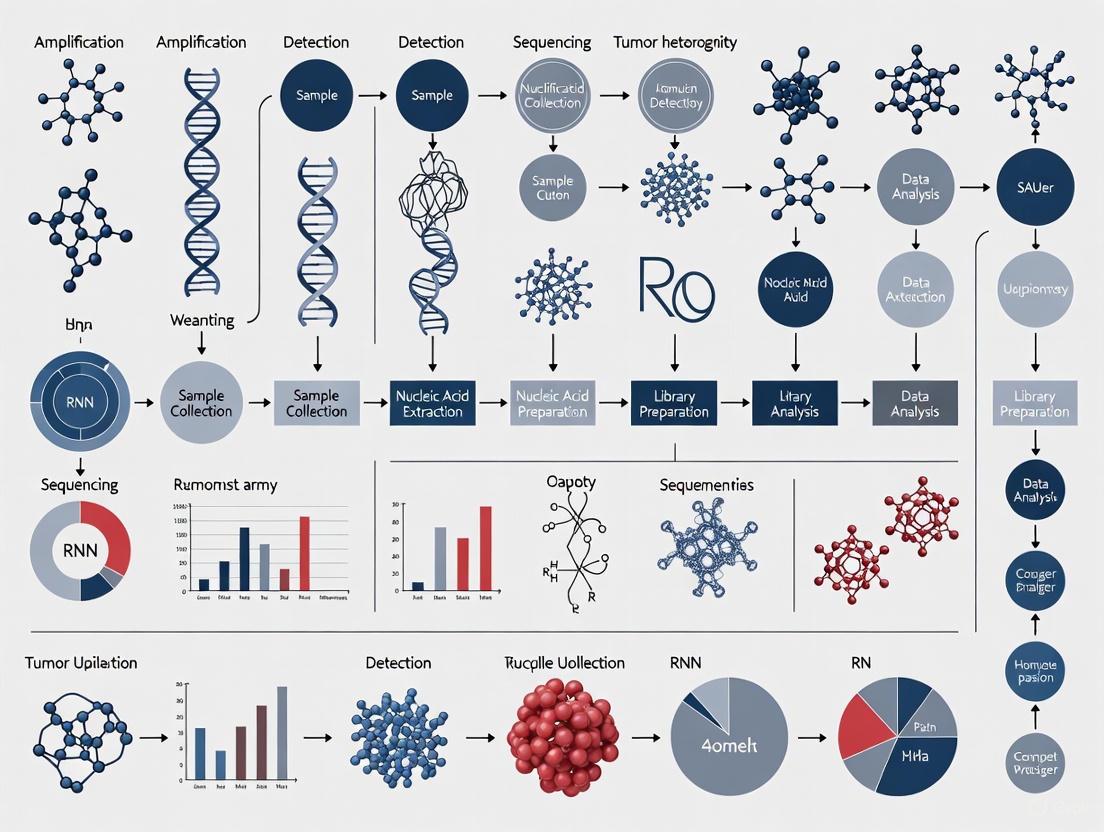
Tumor heterogeneity, encompassing spatial, temporal, and molecular diversity, poses a significant challenge for accurate cancer diagnosis, treatment selection, and monitoring.
Overcoming Tumor Heterogeneity in Liquid Biopsy: Strategies for Capturing the Full Cancer Landscape
Abstract
Tumor heterogeneity, encompassing spatial, temporal, and molecular diversity, poses a significant challenge for accurate cancer diagnosis, treatment selection, and monitoring. This article explores the transformative potential of liquid biopsy as a minimally invasive tool to overcome this hurdle. We delve into the foundational concepts of tumor heterogeneity and its clinical implications, followed by a detailed examination of methodological approaches utilizing multi-analyte strategies, including circulating tumor DNA (ctDNA), circulating tumor cells (CTCs), and extracellular vesicles (EVs). The content addresses current technical limitations and optimization strategies, such as enhancing assay sensitivity and integrating artificial intelligence. Finally, we present validation frameworks and comparative analyses against tissue biopsy, providing a comprehensive resource for researchers and drug development professionals aiming to advance precision oncology.
Decoding Tumor Heterogeneity: The Fundamental Challenge in Cancer Biology
Tumor heterogeneity represents a fundamental challenge in cancer research and therapy development. Spatial heterogeneity refers to the genomic and phenotypic variations that occur in different geographical locations—both between separate tumors (inter-tumoral) and within a single tumor mass (intra-tumoral). Temporal heterogeneity describes the dynamic evolution of tumor cell populations over time, often driven by selective pressures such as therapy [1] [2] [3]. For researchers and drug development professionals, understanding and overcoming this heterogeneity is crucial for developing effective treatment strategies and improving patient outcomes. This technical support center provides practical guidance for addressing these complexities in liquid biopsy research.
Troubleshooting Guides
Guide 1: Low Concordance Between Liquid and Tissue Biopsy Results
Problem: Liquid biopsy (LBx) results show significant variant discrepancies when compared to traditional tissue biopsy (TBx).
Explanation: This is a common manifestation of underlying tumor heterogeneity. A single tissue biopsy captures only a snapshot of a specific lesion, while liquid biopsy samples circulating tumor DNA (ctDNA) shed from multiple tumor sites, potentially capturing a more comprehensive profile [1] [4].
Solution: Follow this systematic approach to diagnose the cause and refine your protocol.
Quantify the Discrepancy:
- Calculate the percentage of overlapping mutations versus tissue-specific or LBx-specific variants. One study found overlaps ranging from 33% to 92% between LBx and multi-region tissue sampling [1].
- Note the variant allele frequencies (VAFs). LBx-exclusive variants often have low VAFs (e.g., 0.2–2.8%), indicating a minor subclone [1].
Verify Sample Timing:
- Ensure liquid biopsies are collected as close as possible to tissue sampling. Pre-analytical variables can significantly impact results.
- Recommended Protocol: Collect blood in cell-stabilization tubes, process within 96 hours at 4°C, and perform double-centrifugation to obtain cell-free plasma before cfDNA extraction [5] [6].
Adjust Your Analysis:
- Do not treat LBx as a direct 1:1 replacement for TBx. Interpret LBx results as a composite snapshot of the total tumor burden, including subclonal populations that may be absent in a single tissue sample [1] [6].
- Utilize high-sensitivity NGS panels with a detection sensitivity of <0.1% to better capture low-frequency clones [1].
Guide 2: Detecting Emerging Therapy Resistance
Problem: A patient initially responds to targeted therapy but later relapses. Standard post-therapy tissue biopsy is not feasible or fails to identify a resistance mechanism.
Explanation: Temporal heterogeneity and clonal evolution under therapeutic pressure can lead to the outgrowth of pre-existing or newly acquired resistant subclones. These may be geographically confined in a single metastasis and missed by a localized tissue biopsy [2] [4].
Solution: Implement longitudinal liquid biopsy monitoring to track clonal dynamics in real-time.
Establish a Baseline: Perform LBx (ctDNA analysis) before initiating treatment to identify all detectable driver and passenger mutations.
Monitor with High Frequency: Schedule follow-up LBx at regular intervals during treatment (e.g., every 4-8 weeks) and at the first sign of radiographic or clinical progression [6].
Analyze for Resistance Mutations:
- Use targeted NGS panels that include known resistance genes relevant to the therapy (e.g., KRAS for anti-EGFR in CRC, EGFR T790M for first-generation TKIs in NSCLC) [6].
- Track the change in VAFs of specific mutations. A decline in the original driver mutation with a concomitant rise in a new, resistant mutation is a classic signature of clonal evolution [1] [6].
Experimental Workflow for Resistance Monitoring: The following diagram illustrates the multi-step process for using liquid biopsy to monitor temporal heterogeneity and therapy resistance.
Guide 3: Inconsistent Circulating Tumor Cell (CTC) Analysis
Problem: CTC yields are low or highly variable, and phenotypic characterization does not align with primary tumor histology.
Explanation: CTCs are rare (approximately 1 per 10^6 leukocytes) and undergo dynamic changes, including Epithelial-to-Mesenchymal Transition (EMT), which downregulates epithelial markers (like EpCAM) used in many capture technologies. This leads to underestimation and a biased population [5] [6].
Solution: Optimize CTC capture and analysis protocols to account for heterogeneity.
Employ Marker-Independent Enrichment Strategies:
- Use size-based filtration (e.g., ISET platform) or density gradient centrifugation to avoid reliance on epithelial markers [5] [6].
- For downstream molecular analysis, use platforms like the CellSearch system (FDA-cleared for prognostic use in breast, prostate, and colorectal cancer) for standardized enumeration [5].
Characterize Heterogeneous CTC Populations:
Functional Analysis:
- Where possible, culture patient-derived CTCs ex vivo to establish models for drug sensitivity testing, providing functional data on therapeutic response [6].
Frequently Asked Questions (FAQs)
FAQ 1: What is the concrete evidence that intra-tumoral heterogeneity is a clinical problem, not just a molecular observation?
- Answer: Clinical evidence is strong. Tissue biopsies from multiple metastatic sites within the same patient reveal distinct mutational profiles and variable VAFs for shared mutations [1]. This translates to "mixed" clinical responses, where some lesions shrink while others progress on the same therapy. Furthermore, pre-existing resistant subclones present at low frequencies (<1% VAF) at diagnosis can expand to become the dominant population upon treatment, leading to relapse [2] [7].
FAQ 2: Can liquid biopsy truly capture the complete spatial heterogeneity of a patient's cancer?
- Answer: While liquid biopsy provides a more comprehensive view than a single tissue biopsy, it may not capture the entire heterogeneity. Studies comparing LBx to multi-region tissue sampling show that LBx detects the majority of clonal (truncal) mutations but can miss some subclonal variants that are geographically restricted and do not shed sufficient ctDNA into the bloodstream. Conversely, LBx can also detect unique variants not found in a single, limited tissue sample [1]. Therefore, LBx is best viewed as a powerful tool to assess the dominant and emerging clonal landscape, but not necessarily a perfect substitute for understanding the full spatial complexity.
FAQ 3: How do we differentiate between spatial and temporal heterogeneity in a liquid biopsy sample?
- Answer: Disentangling these requires longitudinal sampling.
- Spatial heterogeneity is inferred when you detect multiple, distinct mutations (e.g., in TP53 and APC) simultaneously in a single LBx sample, suggesting they originate from different tumor sites [1] [3].
- Temporal heterogeneity is demonstrated by tracking the change in these mutations over time. The disappearance of a mutation under selective pressure and the emergence of a new one is a clear sign of temporal evolution and clonal dynamics [1] [6]. A single time point can suggest spatial diversity; multiple time points are needed to confirm temporal evolution.
FAQ 4: What are the best-fit model systems to study functional intra-tumoral heterogeneity pre-clinically?
- Answer: Patient-Derived Xenografts (PDXs) are currently considered the gold standard as they better recapitulate the cellular heterogeneity and architecture of the original patient tumor compared to traditional cell lines [7]. Additionally, ex vivo cultures of CTCs or patient-derived tumor organoids can provide valuable models that preserve some of the genetic and functional diversity for high-throughput drug screening and biological studies [3] [6].
The Scientist's Toolkit: Research Reagent Solutions
The following table details essential materials and their applications for studying tumor heterogeneity.
| Research Reagent | Function & Application in Heterogeneity Research |
|---|---|
| CellSearch System | FDA-cleared immunomagnetic platform for standardized enumeration of EpCAM-positive CTCs from blood samples. Used for prognostic assessment and capturing CTCs for downstream analysis [5] [6]. |
| ctDNA NGS Panels | Targeted next-generation sequencing panels optimized for low VAF detection (down to 0.1%) in plasma. Crucial for identifying subclonal mutations that constitute spatial and temporal heterogeneity [1] [5]. |
| Single-Cell RNA-Seq Kits | Reagents for whole-transcriptome amplification and sequencing of individual cells (e.g., CTCs or tumor dissociates). Reveals transcriptional heterogeneity, identifies CSC subpopulations, and characterizes EMT states [3] [6]. |
| Patient-Derived Xenograft (PDX) Models | In vivo models generated by implanting patient tumor tissue into immunodeficient mice. Preserves the original tumor's heterogeneity and clonal architecture better than cell lines, ideal for studying clonal evolution and therapy response [7]. |
| Digital PCR Assays | Ultra-sensitive PCR technology for absolute quantification of specific known mutations (e.g., KRAS G12D, EGFR T790M). Ideal for longitudinally tracking the VAF of key driver or resistance mutations with high precision [5] [6]. |
Visualizing Tumor Heterogeneity Models
A key to designing effective experiments is understanding the conceptual models that explain how heterogeneity arises. The two primary non-mutually exclusive models are the Clonal Evolution Model and the Cancer Stem Cell (CSC) Model.
Quantitative Data on Biopsy Concordance
The following table summarizes quantitative findings from a study directly comparing multi-region tissue biopsies with liquid biopsies, highlighting the challenges and capabilities of LBx in capturing heterogeneity [1].
| Metric | Tissue Biopsy (TBx) Findings | Liquid Biopsy (LBx) Findings | Overlap & Discrepancies |
|---|---|---|---|
| Number of Variants | 4 - 12 mutations per patient (across all lesions) | 4 - 17 mutations per patient | Overlap ranged from 33% to 92% per patient. |
| Variant Allele Frequency (VAF) | Ranged from 1.5% to 71.4% | Ranged from 0.2% to 31.1% | LBx detected low VAF clones (0.2-2.8%) missed by regional TBx. |
| Exclusive Variants | 22 variants were absent in LBx. | 18 variants were exclusive to LBx. | Highlights the complementary nature of the two methods. |
| Key Insight | Revealed significant inter- and intra-lesional heterogeneity. | Effectively captured a composite of the clonal landscape. | Conclusion: LBx and TBx should be used in conjunction for comprehensive genetic profiling. |
Clonal Evolution and its Impact on Treatment Response and Resistance
FAQs: Clonal Evolution in Liquid Biopsy Research
What is clonal evolution and why is it a major obstacle in cancer therapy? Clonal evolution describes the process by which tumors develop genetic heterogeneity, leading to subpopulations (clones) of cells with unique mutations. When treatment applies selective pressure, it can eradicate sensitive clones while allowing resistant subclones to survive and expand, ultimately causing therapeutic failure and disease relapse. This dynamic process is a fundamental driver of acquired treatment resistance across cancer types, including lung cancers and hematologic malignancies [8] [9].
How can liquid biopsies help overcome the challenge of tumor heterogeneity? Traditional single-site tissue biopsies may miss resistant subclones present only in other anatomic locations. Serial liquid biopsies, which analyze circulating tumor DNA (ctDNA) from blood, provide a more comprehensive, real-time snapshot of the total clonal landscape. This allows researchers to monitor the rise and fall of different resistant clones throughout treatment, capturing tumor heterogeneity more effectively than single tissue biopsies [10] [11].
What are the technical advantages of using structural variants (SVs) over single nucleotide variants (SNVs) in ctDNA analysis? Structural variants offer a superior signal-to-noise ratio in liquid biopsy assays. Their unique breakpoint sequences are highly specific and resistant to sequencing errors, resulting in negligible error rates compared to SNVs. This makes SVs highly sensitive and specific endogenous markers for tracking individual clones, even without complex error-correction sequencing methods [11]. The table below compares these two types of markers.
Table 1: Comparison of Genomic Markers for Clonal Tracking in Liquid Biopsies
| Feature | Structural Variants (SVs) | Single Nucleotide Variants (SNVs) |
|---|---|---|
| Example Markers | Chromothripsis, breakage-fusion-bridge cycles, specific translocations [11] | Point mutations in genes like TP53 or EGFR [10] [11] |
| Error Rate | Very low (e.g., ~1x10⁻⁷); highly specific [11] | Higher (e.g., 6.7x10⁻⁶ for duplex sequencing) [11] |
| Key Advantage | High specificity and low error rate enable confident detection of rare clones [11] | Larger number of potential markers available per genome [11] |
| Common Detection Method | Patient-specific hybrid capture probes with duplex sequencing [11] | Targeted deep sequencing panels (e.g., Guardant360, FoundationOne) [10] [11] |
Which pre-existing genomic features can predict a higher risk of clonal evolution toward resistance? Certain genomic alterations present at diagnosis can predispose a tumor to specific resistance mechanisms. Key examples include:
- Baseline RB1 loss: In EGFR-mutant lung adenocarcinoma, this is a strong predictor for subsequent small-cell lung cancer (SCLC) transformation as a resistance mechanism to tyrosine kinase inhibitor (TKI) therapy [10].
- Whole-genome doubling and chromothripsis: In high-grade serous ovarian cancer (HGSOC), these complex events are frequently found in clones that expand at relapse [11].
- Oncogene amplifications: Pre-existing amplifications of genes like CCNE1, MYC, ERBB2, and NOTCH3 are linked to drug-resistant outgrowth in HGSOC [11].
Troubleshooting Guides
Problem: Inconsistent Clonal Dynamics from Longitudinal ctDNA Profiling
Issue: Data from serial liquid biopsies shows fluctuating mutant allele frequencies (MAFs), but it is unclear if this represents technical noise or true clonal competition.
Solution:
- Confirm with a High-Sensitivity SV Assay: Implement a method like CloneSeq-SV, which uses clone-specific structural variants as high-fidelity markers to confirm the dynamics observed with SNV panels [11].
- Correlate with Radiographic Data: Match the ctDNA dynamics with imaging. For example, if a T790M-positive clone emerges in ctDNA, corresponding growth should be seen in the specific lesion harboring that clone, while other sites may remain stable [10].
- Establish a Baseline Clonal Map: Use single-cell whole-genome sequencing (scWGS) on a pre-treatment tissue sample to definitively characterize the founding clones and their specific genomic markers. This provides a phylogenetic framework for interpreting later ctDNA data [11].
Table 2: Key Reagent Solutions for Clonal Evolution Studies
| Research Reagent / Tool | Function in Experiment |
|---|---|
| DLP+ scWGS Platform | Enables high-throughput single-cell whole-genome sequencing from pretreatment tumor tissues to establish baseline clonal composition and identify clone-specific markers [11]. |
| Patient-Bespoke Hybrid Capture Probes | Designed to target clone-specific structural variant breakpoints or SNVs; used for deep sequencing of ctDNA to track specific clones over time [11]. |
| Duplex Sequencing | An error-correction method that sequences both strands of a DNA molecule; significantly reduces false-positive rates in ctDNA mutation detection [11]. |
| DNA Content-Based Flow Cytometry | Used to physically separate and purify distinct aneuploid and diploid neoplastic cell populations from solid tumor samples for clean genomic analysis [12]. |
Problem: Failure to Detect Resistance Mechanism at Progression
Issue: A patient progresses on targeted therapy, but a standard liquid biopsy test does not identify a known resistance mutation.
Solution:
- Investigate Histological Transformation: If baseline RB1 mutation is known, consider the possibility of SCLC transformation. This resistance mechanism may not be detected by standard ctDNA genotyping focused on the original adenocarcinoma-associated mutations. A tissue biopsy of a progressing lesion is recommended for histologic confirmation [10].
- Profile Phenotypic State: If material is available, perform single-cell RNA sequencing (scRNA-seq) on a progressing lesion or from circulating tumor cells (CTCs). Resistant clones may exhibit distinct transcriptional states, such as upregulation of epithelial-to-mesenchymal transition (EMT) or VEGF pathways, without a new driver mutation [11].
- Expand the Genetic Panel: Use a broader NGS panel to search for other, less common resistance mechanisms, such as MET amplification or BRAF mutations, which may not be covered in a targeted assay.
Experimental Protocols
Protocol 1: CloneSeq-SV for Tracking Clonal Dynamics in cfDNA
This protocol leverages structural variants (SVs) to track clonal evolution with high specificity over the course of therapy [11].
Key Materials:
- Fresh or frozen pre-treatment tumor tissue
- Serial plasma samples (e.g., at baseline, each cycle, progression)
- scWGS platform (e.g., DLP+)
- Materials for patient-specific hybrid capture probe synthesis
Methodology:
- Single-Cell Sequencing and Clonal Deconvolution:
- Perform scWGS on pre-treatment tumor cells (aim for hundreds to thousands of cells).
- Infer a phylogenetic tree of the tumor's clonal structure using allele-specific copy number alterations.
- Define major clonal populations based on divergent branches of the tree.
- Generate high-resolution, clone-specific copy number profiles and call SVs from pseudobulk data for each clone.
Probe Design and Library Preparation:
- Design custom hybrid-capture probes targeting the breakpoint sequences of truncal and clone-specific SVs (and SNVs for comparison).
- Extract cfDNA from serial plasma samples.
- Prepare sequencing libraries and perform duplex sequencing using the custom probes to ensure error correction.
Sequencing and Clonal Tracking:
- Sequence the captured libraries to high depth (>1000x duplex coverage).
- Identify sequencing reads that span the specific SV breakpoints.
- Calculate the variant allele frequency (VAF) for each clone-specific SV in every serial sample.
- Model the evolution of the tumor by plotting the VAFs of each clone's signature SVs over the treatment timeline.
The following diagram illustrates the core workflow of the CloneSeq-SV protocol.
Protocol 2: Flow Cytometry-Based Clonal Purification for Solid Tumor Genomics
This protocol details the use of flow sorting to isolate pure neoplastic populations from heavily admixed clinical solid tumor samples for high-resolution genomic analysis [12].
Key Materials:
- Fresh or frozen tumor tissue (e.g., needle biopsy, surgically resected tissue)
- NST buffer and DAPI stain
- High-efficiency flow cytometer/cell sorter
- 40-μm mesh filter
Methodology:
- Tissue Preparation and Staining:
- Quickly thaw frozen biopsy on ice. Mince the tissue in NST buffer containing DAPI.
- Mechanically disaggregate the tissue to release nuclei.
- Filter the nuclear suspension through a 40-μm mesh to remove clumps.
Flow Sorting and Population Isolation:
- Use a flow sorter to identify and separate distinct populations based on DNA content (DAPI fluorescence). Aneuploid tumor cell populations will have distinct DNA peaks separate from diploid normal cells.
- Sort nuclei from diploid normal cells, diploid neoplastic cells, and aneuploid neoplastic populations into separate tubes. Purity can exceed 95%.
- Optionally, combine DNA staining with immunohistochemical markers (e.g., cytokeratins) to further refine the population of interest.
Downstream Genomic Analysis:
- Extract DNA from the purified populations.
- Perform high-definition genomic analyses such as array comparative genomic hybridization (aCGH), whole-exome, or whole-genome sequencing to identify copy number alterations and mutations specific to each clonal population.
- Compare genomes from pre- and post-treatment samples to identify aberrations selected during therapy.
Visualizing Evolutionary Patterns and Therapeutic Impact
The following diagram summarizes the common patterns of clonal evolution in response to therapy, as revealed by longitudinal studies.
FAQs: Understanding the Core Limitations
1. Why is a tissue biopsy considered a "static snapshot"? A tissue biopsy captures the molecular state of a tumor at a single point in time and from a single location. It does not reflect the dynamic evolution of the tumor under therapeutic pressure or over the natural course of the disease. This static nature means it can miss critical later developments, such as the emergence of treatment-resistant subclones [13] [14].
2. How does tumor heterogeneity limit the information from a single tissue biopsy? Tumors are not uniform; they exhibit significant spatial heterogeneity (differences between geographic regions of the same tumor or between primary and metastatic sites) and temporal heterogeneity (changes over time). A single tissue sample, therefore, provides a limited view and may not capture the complete genomic landscape of the entire tumor burden in a patient [15] [14]. One study dissecting multiple post-mortem tumor lesions found distinct mutational profiles in different metastases, with variants present in some lesions and completely absent in others [14].
3. What are the practical and clinical risks associated with tissue biopsies? Tissue biopsies are invasive surgical procedures that carry clinical risks such as infection, bleeding, and pain. For tumors in hard-to-reach locations (e.g., lung or pancreas) or for patients with advanced disease, the procedure may not be feasible. Furthermore, the process is resource-intensive, can delay treatment, and is difficult to repeat for monitoring [16] [5] [17].
4. Can you provide a quantitative example of discordance between tissue biopsies? Research has demonstrated substantial genetic discordance. For instance, in breast cancer, HER2 status can change between the primary tumor and recurrent sites. Studies report discordance in approximately 40% of patients, potentially leading to missed therapeutic opportunities [13].
Table 1: Key Limitations of Tissue Biopsy in Capturing Tumor Heterogeneity
| Limitation Category | Specific Challenge | Impact on Research/Clinical Care |
|---|---|---|
| Spatial Heterogeneity | A single biopsy may not represent the genetic diversity across different regions of a single tumor or between metastatic sites. | Incomplete molecular profiling; failure to identify key driver mutations or resistance mechanisms present in other tumor regions [15] [14]. |
| Temporal Heterogeneity | Provides data from one moment in time, unable to monitor clonal evolution in response to therapy. | Inability to detect the emergence of new, treatment-resistant subclones, leading to eventual therapeutic failure [14]. |
| Clinical Feasibility | Invasive procedure with associated risks; not easily repeatable; challenging for inaccessible tumors. | Limits ability to obtain serial samples for longitudinal studies; not suitable for rapid monitoring of treatment response [5] [13]. |
| Molecular Discordance | Biomarker status (e.g., HER2) can differ between primary and metastatic tumors. | Patients may miss out on potentially effective targeted therapies based on outdated biomarker information [13]. |
Troubleshooting Guides for Researchers
Challenge: Incomplete Genetic Profiling Due to Spatial Heterogeneity
- Background: Your tissue biopsy data shows a clear actionable mutation, but the patient does not respond to the corresponding targeted therapy. This suggests the presence of other resistant subclones not captured in the biopsied sample.
- Investigation Strategy:
- Utilize Multi-Region Sequencing: If ethically and practically possible, analyze multiple distinct regions from the same tumor or from different metastatic lesions. This will help map the extent of intra- and inter-lesional heterogeneity [15].
- Integrate Liquid Biopsy for a Systemic View: Supplement tissue data with a liquid biopsy analyzing circulating tumor DNA (ctDNA). ctDNA is shed from multiple tumor sites throughout the body, offering a more comprehensive, albeit diluted, genetic overview. A 2025 study comparing 56 post-mortem tissue samples to pre-mortem liquid biopsies found that LBx detected mutations overlapping with tissue by 33–92% per patient, and also identified 18 unique variants missed by tissue sampling [14].
- Experimental Protocol: Complementary Tissue and Liquid Biopsy Analysis
- Sample Collection:
- Tissue: Collect and preserve (e.g., FFPE) a core needle or surgical biopsy from one accessible lesion.
- Liquid: Draw two 10 mL blood samples into cell-free DNA BCT tubes. Process plasma within 6 hours of collection by double centrifugation to isolate cell-free DNA.
- Genomic Analysis:
- Perform Next-Generation Sequencing (NGS) on both tissue DNA and plasma-derived cell-free DNA using the same targeted panel of cancer-related genes to ensure comparability.
- For tissue, also conduct histopathological review to confirm tumor content.
- Data Interpretation:
- Compare variant allele frequencies (VAFs) and mutational profiles between the tissue and liquid samples.
- Action: If a resistance mutation is found only in the liquid biopsy, it indicates a subclone not represented in the tissue sample but likely contributing to treatment failure.
- Sample Collection:
The following workflow outlines a strategy to overcome spatial heterogeneity by integrating liquid biopsy:
Challenge: Inability to Monitor Temporal Evolution and Therapy Resistance
- Background: A patient initially responds to a targeted therapy but later relapses. A repeat tissue biopsy is clinically contraindicated, leaving the mechanism of resistance unknown.
- Investigation Strategy:
- Implement Serial Liquid Biopsies: Establish a protocol for collecting blood samples at key clinical timepoints: baseline, during treatment, at radiological progression, and when resistance is suspected.
- Track Clonal Dynamics: Use NGS or digital PCR (ddPCR) on serial liquid biopsies to monitor changes in the VAFs of known driver mutations and the emergence of new resistance mutations. Studies show that liquid biopsy can detect resistance mutations absent in matched tissue biopsies in up to 78% of cases of acquired resistance in gastrointestinal cancers [14].
- Experimental Protocol: Longitudinal Monitoring via Liquid Biopsy
- Baseline: Collect tissue (if available) and liquid biopsy prior to initiation of treatment.
- Longitudinal Sampling: Draw blood for liquid biopsy at defined intervals (e.g., every 2-3 treatment cycles) and at the time of suspected progression.
- Analysis:
- Isolate ctDNA from each timepoint.
- Use a high-sensitivity NGS panel or ddPCR assays to quantify specific mutations.
- Data Interpretation:
- Plot the VAF of key mutations over time to visualize clonal expansion and regression.
- Action: The appearance of a new, low-VAF mutation (e.g., in ESR1 in breast cancer or KRAS in colorectal cancer) at a time of clinical response can signal the early emergence of resistance, allowing for pre-emptive therapy adjustment [13] [14].
The Scientist's Toolkit: Research Reagent Solutions
Table 2: Essential Materials for Studying Tumor Heterogeneity
| Research Tool | Primary Function | Key Considerations for Use |
|---|---|---|
| ctDNA Extraction Kits (e.g., magnetic bead-based) | To isolate cell-free DNA from blood plasma with high sensitivity and specificity, maximizing yield from small fragmented chains. | Look for kits that recover more cfDNA per mL of plasma, are automation-compatible, and yield DNA suitable for NGS. Consistency in results is critical [16]. |
| Liquid Biopsy Tubes (e.g., Cell-free DNA BCT) | To stabilize blood samples and prevent the release of genomic DNA from white blood cells, preserving the native ctDNA profile. | Ensures sample integrity, allowing for processing within 6 hours to several days post-draw, which is vital for multi-center trials [5]. |
| Next-Generation Sequencing (NGS) Panels | For high-throughput, parallel sequencing of cancer-associated genes from both tissue and liquid DNA samples. | Use the same targeted gene panel for both sample types to enable direct comparison. Consider the limit of detection for low-frequency variants in ctDNA [15] [18]. |
| CTC Enrichment Systems (e.g., Parsortix) | To isolate and harvest intact circulating tumor cells (CTCs) from whole blood based on size or marker expression. | Enables functional and molecular analysis of rare cells. Data shows mutational profiles from CTC-DNA can be distinct and complementary to ctDNA [13]. |
| Digital PCR (ddPCR) Assays | For ultrasensitive, absolute quantification of specific known mutations (e.g., for monitoring MRD or resistance alleles). | Offers higher sensitivity than NGS for tracking specific low-VAF mutations in ctDNA, with studies showing utility even when NGS is negative [19]. |
Liquid Biopsy as a Dynamic Window into Tumor Heterogeneity
Troubleshooting Guide: Common Experimental Challenges in ctDNA Analysis
1.1. Low ctDNA Yield or Concentration
- Problem: Inability to detect ctDNA or signal below the limit of detection for downstream assays.
- Possible Causes & Solutions:
- Cause: Low tumor shedding due to cancer type (e.g., brain, renal) or early disease stage [20].
- Solution: Process a larger volume of plasma (e.g., 2-4 mL instead of 1 mL) to increase the total input of cfDNA for extraction. Use extraction methods optimized for low-abundance targets.
- Cause: Successful therapy leading to reduced tumor burden and ctDNA shed [20].
- Solution: This is an expected biological outcome. Use the most sensitive technologies available, such as ddPCR or targeted NGS, and confirm results with a follow-up sample to track the trend.
- Cause: Inefficient DNA extraction from plasma.
- Solution: Use validated cfDNA extraction kits specifically designed for low-yield samples. Ensure proper handling and processing of blood samples to prevent leukocyte lysis, which contaminates the sample with wild-type genomic DNA.
1.2. High Background Wild-Type DNA
- Problem: The high ratio of non-tumor cell-free DNA (cfDNA) to ctDNA obscures the detection of tumor-specific variants [21] [5].
- Possible Causes & Solutions:
- Cause: Contamination from genomic DNA due to delayed plasma processing or rough handling of blood samples, leading to leukocyte lysis.
- Solution: Process blood samples within 1-2 hours of collection. Use specialized blood collection tubes for cell stabilization. Isolate plasma carefully using double centrifugation protocols.
- Cause: Presence of clonal hematopoiesis of indeterminate potential (CHIP) variants [20].
- Solution: Use paired white blood cell (WBC) controls to identify and filter out CHIP-derived mutations. Employ bioinformatic tools that can flag variants commonly associated with CHIP.
1.3. Inconsistent or Non-Reproducible Results
- Problem: Poor replicate concordance or results that do not correlate with clinical findings.
- Possible Causes & Solutions:
- Cause: Pre-analytical variability in sample collection, processing, or storage [5].
- Solution: Implement a Standard Operating Procedure (SOP) for the entire workflow, from phlebotomy to DNA quantification. Train all personnel on the SOP and use quality control checkpoints.
- Cause: Assay sensitivity limitations, especially for variants with very low variant allele frequency (VAF).
- Solution: Determine the limit of detection (LOD) for your assay rigorously. Use technical replicates and set a minimum VAF threshold for calling variants. For critical findings, confirm with an orthogonal method (e.g., confirm NGS results with ddPCR).
1.4. Inability to Detect Certain Genomic Alterations
- Problem: Failure to identify gene fusions, copy number variations (CNVs), or large indels.
- Possible Causes & Solutions:
- Cause: Assay design limitations. Many DNA-based liquid biopsy tests are not optimized for detecting large structural variants or are incapable of detecting RNA-based fusions [20].
- Solution: For DNA-based fusions and CNVs, ensure the NGS panel has sufficient coverage across breakpoint regions and uses specialized bioinformatic algorithms. For comprehensive fusion detection, consider RNA-based analysis of cfRNA [22].
Frequently Asked Questions (FAQs)
Q1: When should a liquid biopsy be considered over a tissue biopsy in a research setting? Liquid biopsy is particularly powerful in these research contexts [5] [22] [23]:
- Longitudinal Studies: When serial sampling is needed to monitor tumor evolution, therapy response, or emergence of resistance.
- Assessing Heterogeneity: To capture a comprehensive genomic profile of all tumor subclones across different disease sites, overcoming the limitation of a single-site tissue biopsy.
- When Tissue is Unavailable or Insufficient: If an archival tissue sample is unavailable, degraded, or of insufficient quantity for comprehensive genomic analysis.
Q2: What is the typical half-life and fragment size of ctDNA, and why is this important? ctDNA has a short half-life, ranging from 16 minutes to 2.5 hours [5]. This allows for real-time monitoring of tumor dynamics. ctDNA fragments are typically shorter than wild-type cfDNA, often around 20-50 base pairs [5]. Understanding these characteristics is crucial for optimizing assay sensitivity, as size-selection methods can be used to enrich for ctDNA fragments.
Q3: How can we differentiate between a true tumor-derived variant and a variant from clonal hematopoiesis (CHIP)? This is a major challenge. The primary method is to sequence a matched white blood cell (WBC) control sample in parallel [20]. Any variant found in both the plasma and the WBC DNA is likely of hematopoietic origin. Bioinformatic filtering can also help, as CHIP mutations are frequently found in specific genes (e.g., DNMT3A, TET2, ASXL1).
Q4: What are the primary biological mechanisms that release ctDNA into the bloodstream? The main mechanisms are [21]:
- Apoptosis (Programmed Cell Death): Produces short, uniform DNA fragments (~160-180 bp).
- Necrosis (Unprogrammed Cell Death): Results in longer, more fragmented DNA.
- Active Secretion: DNA is released within extracellular vesicles (EVs) like exosomes.
Table 1: Comparison of Key ctDNA Detection Methods
| Method | Typical Sensitivity | Key Strengths | Key Limitations | Ideal Application in Research |
|---|---|---|---|---|
| Digital Droplet PCR (ddPCR) | ~0.01%-0.1% VAF [21] | High sensitivity for known hotspots; absolute quantification; cost-effective for few targets. | Low multiplexing capability; only detects pre-defined mutations. | Tracking known mutations in longitudinal studies; validating NGS findings. |
| Targeted Next-Generation Sequencing (NGS) | ~0.1%-1% VAF [21] | High multiplexing; can detect SNVs, indels, CNVs, fusions in a single assay. | Higher cost and bioinformatic burden; lower sensitivity than ddPCR for single variants. | Comprehensive profiling for heterogeneous tumors; discovery of resistance mechanisms. |
| Whole Genome Sequencing (WGS) | >5% VAF (for low-pass) | Untargeted; can detect copy number alterations and chromosomal rearrangements. | Low sensitivity for point mutations; high cost and data output. | Studying genome-wide copy number changes and chromosomal instability. |
| Methylation Analysis | Varies by assay | Provides epigenetic information; can trace tissue of origin. | Complex bioinformatics; requires specialized library preparation. | Early cancer detection and determining the origin of metastases. |
Table 2: Key Research Reagent Solutions
| Reagent / Material | Function | Key Considerations |
|---|---|---|
| Cell-Free DNA Blood Collection Tubes | Stabilizes blood cells to prevent genomic DNA contamination during transport and storage. | Critical for maintaining pre-analytical sample integrity, especially in multi-center trials. |
| cfDNA Extraction Kits | Isolate and purify cell-free DNA from plasma samples. | Choose kits validated for low DNA concentrations and high fragment recovery. |
| Multiplex PCR Panels | Amplify multiple target genes simultaneously for targeted NGS. | Panel size and gene content should be tailored to the specific cancer type and research question. |
| Unique Molecular Identifiers (UMIs) | Short DNA barcodes ligated to each DNA fragment prior to PCR amplification. | Essential for correcting PCR amplification errors and duplicates, enabling accurate quantification and ultra-sensitive detection. |
Experimental Protocol: Targeted NGS for ctDNA Mutation Profiling
Objective: To detect and quantify tumor-specific somatic mutations in plasma-derived ctDNA using a targeted next-generation sequencing approach.
Workflow Summary:
- Sample Collection & Processing: Collect blood in cfDNA-stabilizing tubes. Process within 1-2 hours with double centrifugation (e.g., 1,600 x g for 10 min, then 16,000 x g for 10 min) to obtain cell-free plasma [5].
- cfDNA Extraction: Extract cfDNA from 2-4 mL of plasma using a commercial cfDNA extraction kit. Quantify yield using a fluorometer sensitive to low DNA concentrations.
- Library Preparation: Construct sequencing libraries using a hybrid-capture or amplicon-based targeted panel covering genes of interest. Incorporate Unique Molecular Identifiers (UMIs) during the library prep to tag original DNA molecules.
- Sequencing: Sequence the libraries on an NGS platform to achieve a minimum depth of 10,000x coverage to reliably detect low-frequency variants.
- Bioinformatic Analysis:
- Alignment: Map sequencing reads to the human reference genome.
- UID Deduplication: Group reads originating from the same original DNA molecule using UMIs.
- Variant Calling: Use specialized algorithms (e.g., MuTect, VarScan2) designed for low-VAF variant detection in ctDNA.
- Filtering: Filter variants against dbSNP, in-house databases, and matched WBC controls to remove germline and CHIP-associated variants.
Biological Pathways and Mechanisms
Table 3: ctDNA Release Mechanisms and Their Characteristics
| Mechanism | Trigger | DNA Fragment Characteristics | Biological Context |
|---|---|---|---|
| Apoptosis | Programmed cell death [21] | Short, uniform (~160-180 bp) [21] | Homeostasis, therapy-induced cell death. |
| Necrosis | Cellular damage, hypoxia [21] | Longer, variable (>10 kb), fragmented [21] | Tumor core, inflammatory response. |
| Active Secretion | Cellular communication [21] | Protected within extracellular vesicles [21] | Tumor microenvironment crosstalk. |
Multi-Analyte Liquid Biopsy Strategies: Capturing a Comprehensive Genomic Profile
Troubleshooting Common ctDNA Analysis Challenges
FAQ: What are the primary reasons for false-negative results in ctDNA analysis, and how can they be mitigated?
False-negative results most commonly occur when the amount of tumor-derived DNA in a sample is below the detection limit of the assay. Key factors and solutions include:
- Low Tumor DNA Shedding: Some tumors, even at advanced stages, release minimal DNA into the bloodstream. These are known as "non-shedders" [24]. Furthermore, the specific location of metastases influences shedding; for instance, primary and metastatic spread to the central nervous system is associated with lower rates of ctDNA detection due to the blood-brain barrier [24].
- Insufficient Input DNA: The absolute number of mutant DNA fragments is the ultimate constraint on sensitivity. For example, a 10 mL blood draw from a lung cancer patient (with low cfDNA levels of ~5 ng/mL) might yield only ~8,000 haploid genome equivalents (GEs). If the ctDNA fraction is 0.1%, this provides a mere eight mutant GEs for the entire analysis, making detection statistically improbable [25].
- Inadequate Sequencing Depth: Detecting ultra-low frequency variants requires very high sequencing coverage. Achieving a 99% probability of detecting a variant at a 0.1% Variant Allele Frequency (VAF) requires approximately 10,000x coverage [25]. Commercial panels like Guardant360 CDx achieve a raw coverage of ~15,000x, but after bioinformatic processing (deduplication), the effective depth is reduced to ~2,000x, which is consistent with a limit of detection (LoD) of ~0.5% [25].
Table 1: Strategies to Overcome False-Negative Results
| Challenge | Potential Solution |
|---|---|
| Low tumor shedding | Increase blood collection volume (e.g., multiple 10 mL tubes) to maximize the number of genome equivalents analyzed [26]. |
| Low sequencing depth | Multiplex fewer samples per sequencing run to achieve higher coverage per sample, or use ultra-deep sequencing approaches [25]. |
| Early-stage disease / MRD | Employ tumor-informed, patient-specific assays that track multiple mutations simultaneously to increase the probability of detecting any ctDNA signal [27]. |
FAQ: How can we minimize false-positive variants in NGS-based ctDNA profiling?
False positives often arise from sequencing errors, sample degradation, or non-tumor sources of DNA.
- Clonal Hematopoiesis (CHIP): This is a major source of false positives. Somatic mutations arise in blood cell precursors and are released into the plasma, mimicking ctDNA. Genes commonly affected include TP53, KRAS, and DNMT3A [24].
Solution: Always sequence matched peripheral blood mononuclear cell (PBMC) DNA (the "buffy coat") in parallel. This allows for the identification and subtraction of variants originating from CHIP [24] [6].
Technical Artifacts: PCR amplification errors during library preparation can be misidentified as low-frequency variants.
- Solution: Incorporate Unique Molecular Identifiers (UMIs) into the library preparation protocol. UMIs are short random barcodes attached to each original DNA fragment before amplification. Bioinformatic consensus building based on UMIs helps distinguish true mutations from PCR or sequencing errors [25] [28]. Techniques like Duplex Sequencing, which sequences both strands of the original DNA duplex, provide the highest accuracy [28].
Diagram 1: UMI workflow for error correction.
Methodologies for Tracking Clonal Dynamics
Experimental Protocol: Longitudinal Monitoring of Therapy Response and Resistance
This protocol is used to track how tumor populations evolve under selective drug pressure.
Detailed Methodology:
Baseline Sampling:
- Collect blood (two 10 mL tubes recommended) in K2/K3-EDTA or cell preservation tubes (e.g., Streck) before initiating treatment [26].
- Process within 4-6 hours for EDTA tubes (or according to manufacturer's instructions for preservation tubes) using a two-step centrifugation protocol: first at 800-1,600×g for 10 minutes, then a second centrifugation of the supernatant at 14,000-16,000×g for 10 minutes to obtain cell-free plasma [26].
- Isolate cfDNA and perform comprehensive NGS profiling (e.g., using a panel like Guardant360) to identify all detectable mutations and their VAFs [29].
On-Treatment Monitoring:
- Schedule follow-up blood draws at predefined intervals (e.g., every 2-4 weeks) [29].
- For efficient monitoring, switch to a tumor-informed approach. Use the baseline profile to select 5-20 patient-specific mutations and track them using a highly sensitive method like ddPCR or a targeted NGS panel [27] [28].
- Monitor the total ctDNA level and the VAFs of individual mutations. A decrease indicates response, while a persistent or increasing level suggests resistance [28].
Progression Sampling:
Table 2: Key Reagent Solutions for ctDNA Clonal Dynamics
| Research Reagent / Tool | Function in Experiment |
|---|---|
| Cell-Free DNA Blood Collection Tubes (e.g., Streck, PAXgene) | Preserves blood cells and prevents lysis, stabilizing the cfDNA profile for up to several days at room temperature [27] [26]. |
| Kits for Circulating Nucleic Acid Extraction (e.g., QIAamp Circulating Nucleic Acid Kit) | Efficiently isolates short-fragment cfDNA from large-volume plasma samples [30] [29]. |
| Unique Molecular Identifiers (UMIs) | Tags individual DNA molecules before PCR to enable bioinformatic error correction and accurate quantification [25] [28]. |
| Targeted NGS Panels (e.g., Guardant360, FoundationOne Liquid CDx) | Provides a hypothesis-free, comprehensive snapshot of point mutations, indels, CNVs, and fusions across a wide gene set [25] [29]. |
| Droplet Digital PCR (ddPCR) Systems | Enables ultra-sensitive, absolute quantification of a specific known mutation for high-precision longitudinal tracking [29] [31]. |
Experimental Protocol: Assessing Tumor Heterogeneity via ctDNA and Tissue Concordance
This protocol validates whether ctDNA effectively captures spatial tumor heterogeneity.
Detailed Methodology:
Multi-Region Tissue Sampling:
Paired Liquid Biopsy:
- Collect a blood sample simultaneously with tissue collection.
- Isect plasma and perform NGS using the same or a comparable platform.
Bioinformatic Analysis:
- Calculate the concordance rate between mutations found in ctDNA and those found in a single tissue biopsy versus multiple biopsies.
- As demonstrated in gastric cancer, while the concordance between ctDNA and a single tumor sample was only ~50%, it rose significantly when ctDNA was compared with multiple biopsies, indicating ctDNA captures a more complete picture of heterogeneity [30].
- Classify mutations as "clonal" (present in all tissue regions) or "subclonal" (present only in a subset of regions) and observe their representation in ctDNA.
Diagram 2: ctDNA capturing spatial heterogeneity.
The Scientist's Toolkit: Essential Materials and Data Interpretation
Table 3: Critical Pre-Analytical Variables and Recommendations
| Pre-Analytical Factor | Recommendation for Reliable Results | Rationale |
|---|---|---|
| Sample Type | Use Plasma, not serum [26]. | Serum preparation causes leukocyte lysis, massively increasing wild-type DNA background and diluting the ctDNA fraction [26]. |
| Collection Tube | K2/K3-EDTA tubes (process within 4-6 hrs) or dedicated cell-free DNA preservation tubes [26]. | Prevents cell lysis and stabilizes nucleases. Preservation tubes allow for longer transport times (5-7 days) [27] [26]. |
| Centrifugation | Two-step protocol: 1) 800-1,600×g, 2) 14,000-16,000×g, both at 4°C for 10 mins [26]. | The first spin removes cells; the second spin removes residual debris and platelets to yield true cell-free plasma [26]. |
| Plasma Storage | Freeze plasma at -80°C if DNA extraction cannot be performed immediately after separation [26]. | Minimizes nuclease activity and cfDNA degradation ex vivo, preserving the integrity of the sample [26]. |
Technical Support Center
Troubleshooting Common CTC Experimental Challenges
This section addresses specific, high-frequency problems encountered during CTC isolation and analysis, providing targeted solutions to ensure data quality and reproducibility.
FAQ 1: My CTC yields are consistently low or zero, despite spiking control cells successfully. What are the potential causes and solutions?
Low CTC recovery is one of the most common challenges in liquid biopsy workflows. The issue can stem from pre-analytical variables, technological limitations, or the biological nature of the CTCs themselves.
Potential Cause 1: Pre-analytical Sample Degradation. CTCs are fragile and can undergo apoptosis or degradation if blood samples are not processed in a timely manner. A delay in processing can significantly impact cell viability and recovery [33].
- Solution: Standardize sample handling. Process blood samples within 4-6 hours of draw [33]. Use blood collection tubes specifically designed with preservatives to stabilize cells and prevent clotting for longer periods, if immediate processing is not feasible.
Potential Cause 2: EpCAM-Based Capture Bias. Many FDA-approved and common research platforms (e.g., CellSearch) rely on EpCAM for positive selection. CTCs undergoing Epithelial-to-Mesenchymal Transition (EMT) downregulate EpCAM expression, making them invisible to these assays [33] [34].
- Solution: Implement a multi-marker or label-free approach. Consider using:
- Negative Depletion: Remove CD45-positive leukocytes to enrich for remaining cells, which will include CTCs regardless of EpCAM expression [35].
- Multi-Marker Panels: Use antibodies against a combination of epithelial (EpCAM, CK), mesenchymal (Vimentin, N-cadherin), and tumor-specific antigens [33] [36].
- Size-Based Isolation: Use microfluidic chips or filters that capture CTCs based on their larger size (typically 12-25 μm) and lower deformability compared to blood cells [33] [35].
- Solution: Implement a multi-marker or label-free approach. Consider using:
Potential Cause 3: Heterogeneity in Physical Properties. The assumption that all CTCs are larger than leukocytes is not always true. Subpopulations of small CTCs exist and can be lost during size-based enrichment, as they may be as small as or smaller than some leukocytes [35].
- Solution: If using a size-based method, validate your platform with cancer cell lines of varying sizes. Consider combining size-based pre-enrichment with subsequent immunoaffinity capture or negative depletion to improve recovery of smaller CTCs [35].
FAQ 2: My enriched sample has high leukocyte contamination, leading to high background and difficulty in identifying true CTCs. How can I improve purity?
High background noise from white blood cells (WBCs) complicates downstream analysis and can lead to false positives.
Potential Cause 1: Non-Specific Binding in Immunoaffinity Assays. Antibodies may have low-level, non-specific binding to Fc receptors or other proteins on WBCs [33].
- Solution: Use "antifouling" surfaces in your microfluidic chips or assay plates. These surfaces, often created with coatings like polyethylene glycol (PEG) or bovine serum albumin (BSA), minimize non-specific protein adsorption and cell adhesion [33]. Ensure thorough washing steps with optimized buffers to remove loosely bound cells.
Potential Cause 2: Overlap in Physical Properties. Some leukocytes may have similar size or deformability characteristics as certain CTCs, leading to co-isolation in label-free systems [35].
- Solution: For size-based systems, integrate a subsequent immunofluorescence staining step to confirm CTC identity (CK+/CD45-/DAPI+). For negative depletion strategies, ensure the antibody cocktail is comprehensive enough to remove all major WBC subtypes effectively. Combining multiple physical parameters (e.g., size and deformability) in a single microfluidic device can also enhance separation efficiency [33].
FAQ 3: How can I ensure the CTCs I isolate are viable for downstream functional assays or culture?
Captured CTCs often lose viability due to shear stress during isolation or the use of fixation protocols.
- Potential Cause: Shear Stress and Non-Viable Capture Methods. High flow rates in microfluidic devices can damage cells. Many detection methods, like CellSearch, fix the cells, rendering them non-viable [33] [35].
- Solution:
- Use Low-Shear Microfluidics: Opt for devices with gentle flow rates and designs that mimic physiological conditions to minimize mechanical stress [33].
- Employ Gentle Release Strategies: If using immunoaffinity capture, use cleavable linkers for the capture antibodies or stimuli-responsive hydrogels that allow for controlled, non-destructive cell release after capture [33].
- Direct On-Chip Culture: Some advanced microfluidic chips are designed with integrated culture chambers that allow for the direct inoculation and expansion of captured CTCs, avoiding the need for elution [36].
- Solution:
Quantitative Data for Experimental Design
The table below summarizes key quantitative challenges and performance metrics from the literature to help set realistic experimental expectations.
Table 1: Key Quantitative Parameters in CTC Research
| Parameter | Typical Value or Range | Clinical/Experimental Significance | Key Challenges |
|---|---|---|---|
| CTC Rarity [33] [5] | 1-10 CTCs / mL of blood in metastatic cancer; Can be <1 CTC per 10 mL in early-stage cancer. | Directly correlates with tumor burden [36]. Prognostic for PFS and OS [36] [5]. | Requires processing large blood volumes; demands high-sensitivity assays [33]. |
| CTC Size [33] [35] | Diameter: ~12-25 μm. Cross-sectional area: 396–796 μm² (vs. ~140 μm² for leukocytes). | Basis for size-based isolation techniques. | Significant overlap with large leukocytes; small, aggressive CTCs can be lost [35]. |
| Cell Viability Post-Capture [33] | Varies significantly by method. High-shear methods can induce apoptosis. | Critical for functional studies, in vitro culture, and CDX models [36]. | Gentle capture and rapid processing are essential to maintain viability. |
| CTC Half-Life [5] | Estimated to be 1-2.5 hours in circulation. | Dictates need for rapid sample processing. | Logistical challenges for clinical sample processing. |
Table 2: Representative CTC Counts Across Malignancies
| Cancer Type | CTC Count (per volume of blood) | Detection Method | Clinical Correlation |
|---|---|---|---|
| Metastatic Breast Cancer [36] | ≥5 CTCs / 7.5 mL | CellSearch | Shorter Overall Survival [36] |
| Metastatic Colorectal Cancer (mCRC) [36] | Median of 2 CTCs / 7.5 mL; Positive rate 65.8% | CellSearch | Prognostic for Recurrence-Free Survival (RFS) [36] |
| Metastatic Prostate Cancer [35] | ≥5 CTCs / 7.5 mL | CellSearch | Independent predictor of Overall Survival [35] |
| Gall Bladder Cancer [36] | ≥2 CTCs / 7.5 mL | Not Specified | Correlated with advanced stage (III/IV) |
| Follicular Lymphoma [36] | 0 - 17,813 cells / mL | Not Specified | Detectable CTCs post-treatment predicted relapse |
Detailed Experimental Protocols
Protocol 1: CTC Isolation via Negative Selection and Downstream Single-Cell Genomic Analysis
This protocol is ideal for capturing heterogeneous CTC populations, including those that have undergone EMT and no longer express epithelial markers [35].
- Blood Collection and Processing: Collect peripheral blood (7.5-10 mL) into CellSave or EDTA tubes. Process within 4-6 hours. Dilute whole blood 1:1 with PBS containing 1% BSA.
- Red Blood Cell (RBC) Lysis: Use a commercial RBC lysis buffer. Incubate the diluted blood for 10-15 minutes at room temperature. Centrifuge and resuspend the cell pellet in PBS/BSA.
- Leukocyte Depletion (Negative Selection): Incubate the cell suspension with a cocktail of magnetic beads conjugated to antibodies against CD45 (pan-leukocyte marker) and other common hematopoietic markers (e.g., CD16, CD19) for 30 minutes on a rotator at 4°C.
- Magnetic Separation: Place the tube on a magnetic stand for 10-15 minutes. Carefully pipette the supernatant, which contains the unbound, enriched CTCs, into a new tube. The depleted cells on the magnet are discarded.
- CTC Identification and Picking:
- Cytospin the enriched cells onto glass slides.
- Stain with immunofluorescence antibodies: Pan-cytokeratin (CK-FITC, epithelial marker), CD45 (CD45-APC, leukocyte marker), and DAPI (nuclear stain).
- Using a micromanipulation system (e.g., RareCyte's CytePicker), identify and individually pick CK+/CD45-/DAPI+ cells into PCR tubes [37].
- Single-Cell Whole Genome Amplification (WGA) or Targeted Sequencing:
- Lyse the single cell in a PCR-compatible buffer.
- For genomic analysis, perform WGA using a commercial kit (e.g., REPLI-g) to amplify the entire genome.
- Alternative - Direct Targeted NGS: For somatic mutation profiling, skip WGA to avoid its inherent biases. Use the cell lysate directly as a template for a targeted NGS panel (e.g., CleanPlex OncoZoom Cancer Hotspot Panel), which interrogates key oncogenes and tumor suppressors [37].
- Library Preparation and Sequencing: Prepare NGS libraries from the WGA product or the direct-amplification product according to manufacturer protocols. Sequence on an appropriate NGS platform.
Protocol 2: Functional Characterization Using CTC-Derived Xenograft (CDX) Models
This protocol assesses the tumor-initiating potential of isolated CTCs, providing in vivo insights into metastatic biology and drug response [36].
- CTC Enrichment: Isulate CTCs from a large volume of blood (e.g., 20-30 mL) using a method that preserves high cell viability, such as a low-shear microfluidic device or a density gradient centrifugation.
- Cell Sorting (Optional but Recommended): Use fluorescence-activated cell sorting (FACS) to further purify viable (DAPI-) CTCs based on defined surface markers (e.g., EpCAM, CD45 negativity) or other tumor-specific markers.
- Cell Preparation: Pool the enriched CTCs and resuspend them in a 1:1 mixture of Matrigel and cold PBS to support engraftment.
- Xenograft Implantation: Subcutaneously or orthotopically inject the CTC suspension (e.g., 100-500 CTCs) into immunocompromised mice (e.g., NSG mice). Include control groups.
- Monitoring and Tumor Formation: Monitor mice regularly for tumor formation. CDX models can have long latency periods (several months).
- Harvesting and Analysis: Once tumors reach a predetermined size, harvest them. The tumor can be dissociated into single cells for serial transplantation into new mice or for molecular analysis (genomics, transcriptomics) to compare with the original patient's tumor.
Visualizing the CTC Heterogeneity Challenge and Workflow
The following diagrams illustrate the core challenge of tumor heterogeneity in CTC isolation and a strategic workflow to overcome it.
The Scientist's Toolkit: Essential Reagents and Materials
Table 3: Research Reagent Solutions for CTC Workflows
| Item | Function/Benefit | Example Use Case |
|---|---|---|
| Preservative Blood Collection Tubes (e.g., CellSave Tubes) | Stabilizes cells and prevents clotting for up to 96 hours, providing flexibility for sample transport and processing [33]. | Multicenter clinical trials where immediate processing is logistically challenging. |
| CD45-Bead Conjugates for Negative Selection | Magnetic beads for depleting leukocytes, enabling enrichment of CTCs independent of EpCAM expression [35]. | Isolating mesenchymal CTCs from patients who have undergone therapy or have aggressive disease. |
| Microfluidic Chips (Label-Free) | Devices using size, deformability, or dielectric properties to isolate CTCs with minimal manipulation, preserving viability [33] [35]. | Functional studies requiring viable CTCs for culture or CDX model generation. |
| CleanPlex OncoZoom Panel | A targeted NGS panel for somatic mutations; works directly from single-cell lysates without WGA, reducing amplification bias [37]. | High-fidelity genomic profiling of single CTCs to identify actionable mutations and study heterogeneity. |
| Antibody Cocktail (CK, CD45, EpCAM, Vimentin) | A panel of antibodies for immunofluorescence staining to confidently identify and subtype CTCs post-enrichment [36] [34]. | Differentiating epithelial, hybrid, and mesenchymal CTCs for prognostic studies. |
Tumor heterogeneity, encompassing spatial, temporal, and molecular diversity, remains a fundamental challenge in cancer diagnosis and treatment monitoring. Traditional tissue biopsies often fail to capture this complete heterogeneity, leading to incomplete molecular profiling and therapeutic resistance [1] [6]. Liquid biopsy has emerged as a powerful alternative, providing a comprehensive, real-time snapshot of the tumor landscape through the analysis of circulating biomarkers. Among these, Extracellular Vesicles (EVs) and Tumor-Educated Platelets (TEPs) have shown exceptional promise. EVs are lipid-bilayer enclosed particles that carry molecular cargo (proteins, RNA, DNA) from their parent cells, facilitating intercellular communication [38]. TEPs are platelets that have been altered by their interactions with tumors, sequestering tumor-derived biomolecules and displaying a modified RNA profile [39] [40]. Accessing and analyzing the RNA and protein cargo of EVs and TEPs is therefore critical for deconvoluting tumor heterogeneity. This technical support center provides detailed troubleshooting guides and experimental protocols to enable researchers to reliably isolate and characterize these valuable biomarkers.
Frequently Asked Questions (FAQs)
1. What are the key advantages of using EVs and TEPs over other liquid biopsy components like ctDNA or CTCs? EVs and TEPs offer complementary and unique advantages. EVs provide a stable, membrane-protected snapshot of cellular contents, including a wide array of RNA species and functional proteins that are protected from degradation [38] [5]. TEPs, while anucleate, actively sequester circulating nucleic acids and proteins from tumors, and their RNA profile is dynamically altered by the tumor, providing a rich source for cancer diagnostics [39] [40]. Compared to ctDNA, which mainly provides genetic information, and CTCs, which are extremely rare, EVs and TEPs can offer a broader view of the tumor's functional state and are present in sufficient quantities for analysis.
2. My EV-RNA sequencing results show a high number of unmapped reads and inconsistent profiles. What could be the issue? This is a common challenge rooted in several technical pitfalls. The field lacks a gold-standard approach, and variability in EV-RNA extraction methods, cDNA library preparation protocols, and bioinformatic analyses can significantly impact results [41]. Key issues include:
- RNA Extraction Method: The chosen kit may not efficiently isolate all RNA subtypes present in EVs.
- Library Prep Bias: Protocols designed for cellular RNA may not be optimized for the fragmented and unique small RNA landscape of EVs.
- Bioinformatic Pipeline: Using standard RNA-seq pipelines without adjustments for EV-RNA (e.g., short read lengths, multimapping reads, lack of specific genomic annotations) leads to poor alignment and interpretation [41].
3. How can I confirm that the isolated vesicles are truly exosomes or other specific EV subtypes? Due to the heterogeneity of EVs, the International Society for Extracellular Vesicles (ISEV) recommends characterizing isolates based on specific markers rather than relying on a single method. You should use a combination of:
- Nanoparticle Tracking Analysis (NTA): To determine the particle size distribution and concentration [42].
- Transmission Electron Microscopy (TEM): For visual confirmation of vesicle morphology [42].
- Western Blot or Flow Cytometry: To detect the presence of positive protein markers (e.g., tetraspanins CD9, CD63, CD81, Alix, Tsg101) and the absence of negative markers from potential contaminants like lipoproteins or apoptotic bodies [38].
4. We see variable effects of Platelet-Derived EVs (PEVs) on cancer cells in our assays. Why does this happen? The bioactivity of PEVs is highly dependent on the pathway used to activate the parent platelets. Different agonists (e.g., collagen-related peptide vs. thrombin & collagen co-stimulus vs. fucoidan) generate PEVs with distinct protein cargo and functional properties [42]. For instance, PEVs generated via different receptors can uniquely alter cancer cell proliferation, invasion, and transcriptomes by activating specific signaling pathways like PI3K-Akt, MAPK, or TGF-β [42]. Therefore, the platelet activation method must be carefully considered and reported in experimental designs.
Troubleshooting Guides
Table 1: Common Issues in EV Isolation and Characterization
| Problem | Potential Cause | Solution |
|---|---|---|
| Low yield of EVs | Inefficient isolation method; incomplete cell removal during pre-clearing. | Increase starting biofluid volume (e.g., 500 µL plasma); ensure high-speed centrifugation steps (e.g., 2500× g) are performed to remove platelets and debris [43] [44]. |
| High protein contamination | Co-isolation of non-vesicular proteins and lipoproteins. | Incorporate a size-exclusion chromatography (SEC) step post-ultrafiltration to separate EVs from soluble proteins [42]. |
| Inconsistent RNA yields | Inefficient lysis or RNA precipitation; variable biofluid input. | Use a larger input volume of biofluid (500 µL); ensure the use of RNA isolation protocols specifically vetted for biofluids and EVs [44] [41]. |
| Poor RNA quality from TEPs | Degradation during platelet isolation; ribosomal RNA contamination. | Process blood samples quickly with protease/RNase inhibitors; use kits with ribosomal RNA depletion steps to enrich for platelet mRNAs and non-coding RNAs [40]. |
Table 2: Troubleshooting Functional Assays with TEPs and EVs
| Problem | Potential Cause | Solution |
|---|---|---|
| No phenotypic change in cancer cells after EV co-culture | Non-physiological EV dose; inactive EV cargo. | Perform a dose-response curve using particle concentration (e.g., particles/cell) from NTA; check the functionality of EV cargo by analyzing surface receptors and protein activity [43] [38]. |
| High background in angiogenesis assays | Serum batch variability; non-specific effects. | Use consistent, EV-depleted serum in all assay controls; include a negative control with EVs from a non-relevant cell type [42]. |
| Unable to detect oncogenic transcripts in TEPs | Low abundance of tumor-derived RNA; suboptimal PCR assay. | Use highly sensitive methods like RNA-Seq or digital PCR; pre-amplify cDNA before qPCR; validate with multiple primer sets for the target of interest [39] [40]. |
Detailed Experimental Protocols
Protocol 1: Isolation of Medium-Sized EVs (mEVs) from Platelet Releasate
This protocol is adapted from methods used to study EVs from activated platelets of colorectal cancer patients [43] [42].
Key Materials:
- Size-Exclusion Chromatography Columns: e.g., Sepharose CL-2B [42].
- Ultrafiltration Devices: 10 kDa cut-off units (e.g., Amicon Ultra) [42].
- Protease and Phosphatase Inhibitors.
Procedure:
- Platelet Isolation and Washing: Collect whole blood in citrate tubes. Centrifuge at 180× g for 20 min without brake to obtain platelet-rich plasma (PRP). Centrifuge PRP at 700× g to pellet platelets. Wash the pellet twice in a suitable wash buffer (e.g., 103 mmol/L NaCl, 5 mmol/L KCl, 1 mmol/L MgCl₂, 5 mmol/L glucose, 36 mmol/L citric acid, pH 6.5) [43].
- Platelet Activation: Resuspend washed platelets in HEPES buffer (e.g., 5 mmol/L HEPES, 137 mmol/L NaCl, 2 mmol/L KCl, 1 mmol/L MgCl₂, 12 mmol/L NaHCO₃, 0.3 mmol/L NaH₂PO₄, 5.5 mmol/L glucose, pH 7.4) with 2 mM CaCl₂. Activate with a chosen agonist (e.g., 1 U/mL thrombin) for 30 min at 37°C [43].
- Post-Activation Processing: Place samples on ice and add protease and phosphatase inhibitors. Centrifuge at 2500× g for 15 min to remove platelets and debris. Transfer the supernatant (containing mEVs) to a fresh tube and repeat the centrifugation step to ensure complete platelet removal [42].
- EV Isolation: Concentrate the supernatant to ~500 µL using a 10 kDa ultrafiltration device. Load the concentrate onto a Sepharose CL-2B size-exclusion chromatography column. Collect the first four 500 µL fractions after the void volume. Concentrate these fractions to 100 µL using a 10 kDa ultrafiltration device [42].
- Characterization: Measure particle concentration and size distribution via Nanoparticle Tracking Analysis (NTA). Confirm the presence of EV markers (e.g., CD63, TSG101) and absence of platelet markers (e.g., CD41) by western blot.
Protocol 2: Analyzing RNA Cargo from Tumor-Educated Platelets
This protocol outlines the steps for obtaining and sequencing RNA from TEPs for cancer diagnostics [39] [40].
Key Materials:
- PAXgene Blood RNA Tubes or similar for blood collection.
- Platelet RNA Isolation Kit: e.g., miRNeasy Micro Kit.
- RNA Sequencing Library Prep Kit: Optimized for small RNA and low-input samples.
Procedure:
- Blood Collection and Platelet Purification: Draw blood into dedicated platelet stabilization tubes (e.g., PAXgene). Perform a gentle centrifugation step (e.g., 120× g for 20 min) to obtain platelet-rich plasma without leukocyte contamination. Carefully collect the PRP and perform an additional high-speed centrifugation (e.g., 2000× g for 20 min) to pellet platelets [40].
- RNA Extraction: Lyse the platelet pellet and isolate total RNA using a specialized kit (e.g., Qiagen miRNeasy Micro Kit). Include a DNase digestion step to remove genomic DNA contamination. Assess RNA quality and quantity using a Bioanalyzer or similar system [44] [40].
- Library Preparation and Sequencing: Use a library preparation kit designed for small RNA sequencing if analyzing microRNAs and other small non-coding RNAs. For mRNA analysis, use kits with ribosomal RNA depletion. Perform next-generation sequencing on an Illumina or similar platform [41] [40].
- Bioinformatic Analysis: Process raw sequencing data through a tailored bioinformatics pipeline. This includes quality control (FastQC), adapter trimming, alignment to a reference genome (STAR, Bowtie2), and quantification of RNA species (featureCounts). Use machine learning algorithms to analyze the RNA profiles and distinguish cancer patients from healthy controls [41] [40].
Visualizing Signaling Pathways and Workflows
Diagram 1: EV Biogenesis and Cargo Loading
This diagram illustrates the formation of exosomes and the key pathways involved in sorting molecular cargo.
Diagram 2: TEP Education and Analysis Workflow
This flowchart outlines the process of obtaining and analyzing Tumor-Educated Platelets from a blood sample.
The Scientist's Toolkit: Research Reagent Solutions
Table 3: Essential Materials for EV and TEP Research
| Item | Function | Example Products & Kits |
|---|---|---|
| Size-Exclusion Chromatography (SEC) Columns | Isolates EVs based on size, minimizing protein contamination. | Sepharose CL-2B; qEV columns (Izon) [42]. |
| Ultrafiltration Devices | Concentrates EV samples from large volume biofluids. | Amicon Ultra Centrifugal Filters (Millipore) [42]. |
| Platelet RNA Isolation Kits | Purifies high-quality RNA from low-abundance platelet samples. | miRNeasy Micro Kit (Qiagen); Norgen BioTek Plasma/Serum RNA Purification Kit [44]. |
| Exosomal RNA Isolation Kits | Specifically designed to isolate RNA from EVs in biofluids. | ExoRNeasy Midi Kit (Qiagen); exRNA isolation kits listed by the ERCC [44]. |
| Nanoparticle Tracking Analyzer | Measures the particle size distribution and concentration of EV preparations. | ZetaView (Particle Metrix); NanoSight NS300 (Malvern Panalytical) [42]. |
| Platelet Agonists | Activates platelets through specific receptors to study activation-dependent PEV release. | Collagen-Related Peptide (CRP); Thrombin; Fucoidan; Ca²⁺ Ionophore [42]. |
Frequently Asked Questions (FAQs)
FAQ 1: What is the primary advantage of using a multi-analyte liquid biopsy approach over single-analyte tests? A multi-analyte approach combines different types of genomic and epigenomic data from circulating tumor DNA (ctDNA), such as mutations, methylation patterns, and fragmentomics. This is crucial for overcoming tumor heterogeneity, as it provides a more comprehensive view of the tumor's molecular landscape. Analyzing multiple features simultaneously increases the chance of detecting cancer, especially in early-stage disease where the amount of tumor-derived material in the blood is very low. This strategy compensates for the limitations of any single biomarker and enhances the overall sensitivity and specificity of the test [45] [46].
FAQ 2: Why might mutations detected in a liquid biopsy not be found in a solid tumor biopsy from the same patient, and how should this be interpreted?
This discrepancy often reflects true biological differences, a phenomenon known as spatial heterogeneity. A solid tumor biopsy provides a snapshot of a single anatomical location and may miss subclonal populations or mutations present in other metastatic sites. Conversely, liquid biopsy captures DNA shed from all tumor sites, potentially revealing a more complete mutational profile. For example, in Diffuse Large B-Cell Lymphoma, mutations in genes like GRHPR and SGK1 have been identified exclusively in liquid biopsy, and were associated with poorer patient outcomes. This complementary data can be critical for accurate molecular classification and treatment planning [47].
FAQ 3: What are the most significant technical challenges in detecting early-stage cancers using ctDNA, and how can a multi-analyte approach help? The main challenges are the very low abundance of ctDNA in early-stage disease and the biological noise from non-tumor sources, such as clonal hematopoiesis. In early-stage esophageal cancer, ctDNA levels can be below the detection limit of assays focused only on somatic mutations. A multi-analyte approach that incorporates methylation profiling and fragmentomics (analyzing the size patterns of DNA fragments) can help. Methylation changes are abundant and occur early in carcinogenesis, while tumor-derived ctDNA has a characteristic shorter fragment size, providing additional, highly sensitive signals to detect the presence of a tumor [45] [46].
FAQ 4: How can researchers validate findings from a liquid biopsy to ensure they are tumor-derived and not artifacts? Orthogonal validation is key. Findings from a liquid biopsy assay should be confirmed using a different technology. For example, mutations identified by Next-Generation Sequencing (NGS) can be confirmed with digital droplet PCR (ddPCR), which offers high sensitivity for known variants. When available, comparing liquid biopsy results with a solid tissue biopsy from the same patient can confirm the origin of the mutations. Additionally, filtering variants against databases of common clonal hematopoiesis of indeterminate potential (CHIP) mutations can help distinguish true tumor-derived signals from blood-based noise [48] [46].
Troubleshooting Guides
Issue 1: Low or Undetectable ctDNA Levels in Plasma
Problem: Despite a confirmed cancer diagnosis, the ctDNA level in a plasma sample is below the detection limit of your assay.
| Possible Cause | Diagnostic Steps | Recommended Solution |
|---|---|---|
| Low Tumor Shedding | Review tumor type, stage, and location. | Use a multi-analyte approach (e.g., add methylation markers) to increase sensitivity beyond somatic mutations alone [46]. |
| Pre-analytical Degradation | Check blood collection-to-processing time; review tube type. | Collect blood in specialized cell-free DNA tubes (e.g., Streck BCT) and process plasma within 6 hours [48] [46]. |
| Inefficient DNA Extraction | Quantify total cfDNA yield; check fragment analyzer profile. | Use a validated cfDNA extraction kit (e.g., QIAamp Circulating Nucleic Acid Kit) and follow manufacturer protocols strictly [48]. |
Issue 2: High Background Noise or False Positives in Sequencing Data
Problem: Sequencing results show a high number of variants that are suspected to be technical artifacts or from clonal hematopoiesis (CHIP).
| Possible Cause | Diagnostic Steps | Recommended Solution |
|---|---|---|
| Clonal Hematopoiesis (CHIP) | Check if variants are in known CHIP genes (e.g., DNMT3A, TET2, ASXL1); analyze matched white blood cell DNA. | Sequence matched white blood cell gDNA to identify and filter CHIP-derived mutations [46]. |
| PCR or Sequencing Errors | Review duplicate read rates; check for strand bias in variant calls. | Employ error-corrected NGS methods (e.g., unique molecular identifiers) and set a minimum variant allele frequency threshold [46]. |
| Low DNA Input Quality | Check QC metrics: DNA concentration, fragment size, and adapter contamination. | Use a high-sensitivity DNA assay; ensure input DNA meets minimum quantity and quality standards for the library prep kit [48]. |
Experimental Protocols
Protocol 1: Multi-Analyte ctDNA Analysis from Blood Collection to Sequencing
This protocol outlines the steps for processing a blood sample to simultaneously analyze somatic mutations, methylation patterns, and fragmentomics.
1. Sample Collection and Plasma Separation
- Materials: Streck Cell-Free DNA BCT tubes, centrifuge, low-binding pipettes and tips.
- Procedure: a. Collect 20 mL of whole blood per patient into Streck tubes to stabilize nucleated cells and prevent gDNA contamination [48]. b. Centrifuge at 1,000 x g for 10 minutes at room temperature to separate plasma from blood cells. c. Transfer the supernatant (plasma) to a new tube without disturbing the buffy coat. d. Perform a second centrifugation at 6,000 x g for 10 minutes to remove any remaining cellular debris. e. Aliquot the purified plasma for immediate use or store at -80°C [48].
2. Cell-free DNA (cfDNA) Extraction
- Materials: QIAamp Circulating Nucleic Acid Kit (Qiagen), Nanophotometer or Qubit Fluorometer.
- Procedure: a. Extract cfDNA from plasma (typically 2-5 mL) using the kit according to the manufacturer's instructions [48]. b. Elute DNA in a low-EDTA TE buffer or nuclease-free water. c. Quantify DNA using a fluorometer (e.g., Qubit with dsDNA HS Assay) and assess fragment size distribution using a Bioanalyzer or TapeStation [48].
3. Library Preparation for Multi-Analyte NGS
- Materials: Targeted NGS Pan-Cancer Panel (e.g., OptiSeq Pan-Cancer Panel), library preparation reagents, SPRIselect beads.
- Procedure: a. Use 10 ng of extracted cfDNA as input for library preparation. If DNA is limited, whole genome amplification can be used, though it may introduce bias. b. Prepare sequencing libraries according to the panel's protocol. This typically involves end-repair, adapter ligation, and index PCR. c. Perform cleanup steps using SPRIselect beads to purify the library and remove short fragments and excess reagents [48]. d. For methylation analysis, treat the library with bisulfite after adapter ligation to convert unmethylated cytosines to uracils, preserving the methylation signal [46].
4. Sequencing and Data Analysis
- Materials: Illumina NextSeq or similar NGS platform, high-performance computing cluster.
- Procedure: a. Pool libraries and sequence on an NGS platform using a paired-end, high-depth strategy (e.g., >100x coverage) [48]. b. For somatic mutation calling: Align sequences to a reference genome (e.g., GRCh37). Use a pipeline (e.g., BWA for alignment, GATK for variant calling) to identify single nucleotide variants (SNVs) and indels. Apply strict filters for mapping quality, base quality, and remove duplicates [48]. c. For methylation analysis: Align bisulfite-converted reads to a converted reference genome and calculate methylation proportions at CpG sites. d. For fragmentomics: Analyze the size distribution of aligned cfDNA reads. Tumor-derived fragments are typically shorter (~134-145 bp) than those from healthy cells [46].
Quantitative Data from Key Studies
The following table summarizes findings from recent studies that demonstrate the value of integrated and multi-compartmental profiling.
| Study Focus | Cohort Size | Key Metric | Result | Implication for Multi-Analyte Approach |
|---|---|---|---|---|
| Liquid Biopsy for Therapy Guidance [48] | 74 patients (17 cancer types) | Patients with ≥2 mutations | 81% (60/74) | Highlights prevalence of mutational heterogeneity, necessitating broad panels. |
| Patients eligible for treatment guidance | 88% (65/74) | Demonstrates clinical actionability of liquid biopsy profiling. | ||
| Complementary LN & ctDNA Profiling in DLBCL [47] | 77 patients | Cases with cluster classification improved by combined LN + ctDNA | 48.7% (36/74) | Combining tissue and liquid data provides a more complete molecular picture. |
| Specific mutations (e.g., GRHPR, SGK1) found only in ctDNA | Associated with shorter PFS | Liquid biopsy can capture unique, clinically significant mutations missed by tissue biopsy. |
The Scientist's Toolkit: Research Reagent Solutions
| Item | Function in the Protocol |
|---|---|
| Streck Cell-Free DNA BCT Tubes | Preserves blood sample by preventing white blood cell lysis and release of genomic DNA, which would dilute the ctDNA fraction [48]. |
| QIAamp Circulating Nucleic Acid Kit | Specialized silica-membrane technology for highly efficient isolation of short, low-concentration cfDNA from plasma [48]. |
| Targeted NGS Pan-Cancer Panel | A pre-designed set of probes to enrich and sequence specific genes of interest, allowing for deep, cost-effective sequencing of relevant genomic regions [48]. |
| SPRIselect Beads | Solid-phase reversible immobilization beads used for precise size selection and purification of DNA libraries, removing primers, adapters, and short fragments [48]. |
| PureLink Genomic DNA Mini Kit | For parallel extraction of high-quality genomic DNA from formalin-fixed paraffin-embedded (FFPE) tissue or white blood cells, used for CHIP filtering [48]. |
Experimental Workflow and Mutational Complementarity
The following diagrams illustrate the core experimental workflow and the central concept of complementary mutational landscapes.
Multi-Analyte ctDNA Workflow
Complementary Mutational Landscapes
Tumor heterogeneity presents a significant obstacle in cancer management, as traditional single-region tissue biopsies may not capture the complete genomic landscape of a tumor, potentially missing critical resistance mechanisms and subclonal populations. Liquid biopsy addresses this challenge by providing a comprehensive snapshot of tumor-derived materials in circulation, including circulating tumor cells (CTCs), circulating tumor DNA (ctDNA), and other biomarkers. Among the most advanced platforms for analyzing these components are next-generation sequencing (NGS), digital PCR (dPCR), and microfluidic CTC capture technologies. These platforms enable researchers to overcome heterogeneity limitations by providing sensitive, multi-analyte approaches to cancer detection and monitoring. This technical support center provides troubleshooting guidance and methodological details for implementing these advanced detection platforms in liquid biopsy research.
The following table summarizes the key technical characteristics and applications of NGS, dPCR, and microfluidic CTC platforms in addressing tumor heterogeneity:
Table 1: Advanced Detection Platforms for Liquid Biopsy Analysis
| Platform | Key Principle | Sensitivity | Primary Applications in Liquid Biopsy | Throughput | Advantages for Tumor Heterogeneity |
|---|---|---|---|---|---|
| Next-Generation Sequencing (NGS) | Massively parallel sequencing of DNA/RNA fragments [49] [50] | ~0.1% variant allele frequency (VAF) [51] | Comprehensive genomic profiling, mutation discovery, copy number variation, fusion detection [49] [50] | High | Unbiased detection of known and novel variants across multiple genomic loci simultaneously [49] |
| Digital PCR (dPCR) | Absolute nucleic acid quantification by partitioning samples into thousands of individual reactions [50] | ~0.001%-0.01% VAF [51] [50] | Ultra-sensitive detection and monitoring of known low-frequency mutations, minimal residual disease (MRD) [50] | Medium | Exceptional sensitivity and precision for tracking specific subclonal mutations [50] |
| Microfluidic CTC Capture | Isolation of rare intact tumor cells from blood based on physical or biological properties [49] [52] | 1 CTC per 10^6-10^7 leukocytes [53] | CTC enumeration, phenotypic characterization, single-cell genomics, functional studies [49] [53] [52] | Variable | Provides whole-cell material for multi-omics analysis, revealing cellular heterogeneity and functional phenotypes [52] |
Frequently Asked Questions (FAQs)
General Platform Selection
Q1: How do I choose between a ctDNA-based (NGS/dPCR) and a CTC-based (microfluidics) approach for my heterogeneity study? The choice depends on your research question. ctDNA analysis (via NGS or dPCR) is optimal for assessing the aggregate genetic landscape of tumors, especially for monitoring clonal evolution and identifying actionable mutations from cell-free DNA fragments [49]. CTC analysis is essential when cellular morphology, protein expression, functional characterization, or whole-genome analysis of intact cells is required, as CTCs provide a complete cellular context that ctDNA cannot [49] [53]. For a comprehensive view, an integrated multi-analyte approach is increasingly recommended.
Q2: What is the minimum sample volume required for reliable analysis across these platforms? Requirements vary by platform and target analyte:
- dPCR and NGS for ctDNA: Typically require 1-2 mL of plasma derived from 5-10 mL of whole blood [51].
- Microfluidic CTC Capture: Often requires 7.5-10 mL of whole blood to ensure sufficient cell yield for statistically significant analysis, given the rarity of CTCs [54] [52]. Always consult the specific manufacturer's protocols for your assay.
Technical and Experimental Considerations
Q3: What are the major causes of false positives and false negatives in dPCR for liquid biopsy?
- False Positives: Can arise from sample cross-contamination, off-target amplification, or errors during the amplification process itself.
- False Negatives: Often result from inadequate sample input, inefficient DNA extraction leading to template loss, PCR inhibition, or mutations falling in primer/probe binding sites that prevent amplification. Meticulous assay design and validation are critical to mitigate these risks.
Q4: How does epithelial-mesenchymal transition (EMT) affect CTC capture efficiency? Many microfluidic CTC enrichment technologies, particularly those relying on EpCAM-based immunoaffinity capture (e.g., CellSearch), may fail to isolate CTCs that have undergone EMT, as these cells often downregulate epithelial markers like EpCAM and cytokeratins [54] [53]. To overcome this bias, consider using label-free microfluidic technologies that isolate CTCs based on physical properties (e.g., size, deformability, density) or platforms that incorporate antibodies against both epithelial and mesenchymal markers [54] [52].
Q5: What are the key bioinformatics challenges in NGS-based liquid biopsy, and how can they be addressed? Key challenges include:
- Low variant allele frequency (VAF): Differentiating true low-frequency tumor-derived mutations from sequencing artifacts.
- Distinguishing ctDNA from clonal hematopoiesis: Somatic mutations originating from blood cells can confound results.
- Analysis of structural variants and copy number alterations: Which is more challenging with the fragmented nature of ctDNA. Mitigation strategies involve using unique molecular identifiers (UMIs) to correct for PCR and sequencing errors, applying robust bioinformatics pipelines with optimized error-suppression models, and comparing with matched white blood cell DNA to filter out clonal hematopoiesis [49].
Troubleshooting Guides
Microfluidic CTC Capture
Table 2: Troubleshooting Common Microfluidic CTC Capture Issues
| Problem | Potential Causes | Solutions & Best Practices |
|---|---|---|
| Low CTC Yield/Recovery | - Sample degradation/delayed processing- Clogged microfluidic channels- Inappropriate antibody (for affinity capture)- Overly stringent size-based filtration | - Process blood samples within 4-6 hours of draw; use dedicated blood collection tubes [54]- Pre-filter samples or optimize channel design to prevent clogging [52]- Validate antibody binding for your cancer type; consider multi-marker panels- Optimize pore size or pressure parameters for size-based systems |
| High White Blood Cell (WBC) Background | - Inefficient depletion of non-target cells- Non-specific binding | - Combine negative depletion (CD45+ cell removal) with positive enrichment [52]- Optimize wash steps and buffer conditions (e.g., ionic strength, detergent) to minimize non-specific adhesion |
| Non-viable CTCs for Culture | - Shear stress during capture- Prolonged sample storage- Harsh lysis buffers in integrated workflows | - Use gentler pressure controls and larger channel diameters where possible [52]- Reduce time from blood draw to processing; use cell-preservative tubes- Implement milder on-chip lysis protocols for integrated molecular analysis |
Next-Generation Sequencing (NGS)
Table 3: Troubleshooting NGS for ctDNA Analysis
| Problem | Potential Causes | Solutions & Best Practices |
|---|---|---|
| Low Library Complexity / High Duplication Rate | - Insufficient input DNA- PCR over-amplification- Inefficient library preparation | - Increase input DNA mass where possible; use whole-genome amplification methods sparingly- Minimize PCR cycles; use UMIs to accurately identify unique molecules- Optimize end-repair, adapter ligation, and purification steps |
| Poor Sensitivity for Low-Frequency Variants | - High sequencing error rate- Inadequate sequencing depth- Inefficient UMI utilization | - Use polymerases with high fidelity; employ error-suppression bioinformatics tools- Sequence to a higher depth (e.g., >10,000x for very low VAF)- Implement and optimize UMI-based consensus calling workflows |
| Inconsistent Results Across Replicates | - Pre-analytical variability (sample collection, plasma processing)- Technical variability in library prep and sequencing | - Standardize blood collection, plasma separation, and DNA extraction protocols across all samples [54]- Use technical replicates and include control samples in each run to monitor performance |
Digital PCR (dPCR)
Table 4: Troubleshooting dPCR for Liquid Biopsy
| Problem | Potential Causes | Solutions & Best Practices |
|---|---|---|
| Poor Partitioning / Low Droplet Count | - Improper droplet generation oil or settings- Contaminated or degraded reagents- Sample viscosity | - Check oil lot compatibility and droplet generator calibration- Prepare fresh reagents and use high-quality water- Dilute sample or increase protease digestion to reduce viscosity |
| High Background (False Positives) | - Non-specific probe binding- Probe degradation- Contamination from amplicons or plasmids | - Redesign probes for higher specificity; optimize annealing temperature- Protect probes from light; aliquot and freeze reagents- Use separate pre- and post-PCR workspaces; include no-template controls (NTCs) |
| Inaccurate Absolute Quantification | - Inefficient DNA extraction- Improper threshold setting between positive and negative partitions- Partition volume variability | - Spike in a known quantity of synthetic control to assess extraction efficiency- Use internal controls and set thresholds based on NTC and positive controls- Follow manufacturer's guidelines for partition volume verification |
Essential Research Reagent Solutions
The following reagents and materials are critical for successful implementation of advanced liquid biopsy platforms.
Table 5: Key Research Reagents and Materials
| Reagent/Material | Function | Application Notes |
|---|---|---|
| Cell-Free DNA Blood Collection Tubes | Stabilizes nucleated blood cells and prevents genomic DNA contamination of plasma for up to 14 days [50] | Critical for reliable ctDNA analysis; enables sample shipping and batched processing. |
| EpCAM-Coated Magnetic Beads | Antibody-mediated capture of epithelial CTCs via immunomagnetic separation [51] [53] | Core component for positive enrichment in systems like CellSearch. May miss EMT-type CTCs. |
| Unique Molecular Identifiers (UMIs) | Short DNA barcodes that tag individual template molecules before PCR amplification [49] | Essential for NGS error correction and accurate quantification of low-frequency variants in ctDNA. |
| Microfluidic Chips with Size-Based Filtration | Isolate CTCs based on larger size and rigidity compared to blood cells (e.g., Parsortix system) [51] [52] | Label-free method that is independent of surface marker expression, capturing a broader spectrum of CTCs. |
| Targeted NGS Panels | Pre-designed sets of probes to capture and sequence cancer-associated genes from ctDNA [49] [51] | Focuses sequencing power on relevant genomic regions, improving cost-efficiency and depth for liquid biopsy. |
| Fluorophore-Conjugated Antibodies (CK, CD45, etc.) | Immunophenotypic identification of CTCs after enrichment (Cytokeratin+/CD45-/DAPI+) [53] | Standard for CTC confirmation and enumeration; allows for morphological assessment. |
Workflow Visualization
NGS Workflow for ctDNA Analysis
Diagram Title: NGS Workflow for ctDNA Analysis
Microfluidic CTC Capture and Analysis
Diagram Title: Microfluidic CTC Capture and Analysis
dPCR Workflow for Mutation Detection
Diagram Title: dPCR Workflow for Mutation Detection
The integration of NGS, dPCR, and microfluidic CTC capture technologies provides a powerful, multi-faceted toolkit for dissecting tumor heterogeneity through liquid biopsy. While each platform has distinct strengths, their combined application offers the most comprehensive strategy for understanding cancer evolution, monitoring treatment response, and detecting resistance mechanisms. By adhering to standardized protocols, implementing rigorous troubleshooting practices, and utilizing the appropriate research reagents, scientists and drug development professionals can maximize the reliability and clinical utility of their liquid biopsy analyses, ultimately advancing personalized cancer care.
Navigating Technical Hurdles: Enhancing Sensitivity and Specificity
Overcoming Low Analytic Abundance in Early-Stage and Low-Shedding Tumors
Frequently Asked Questions (FAQs)
FAQ 1: What are the primary causes of low analytic abundance in liquid biopsies for early-stage tumors? Low analytic abundance in early-stage cancers is primarily due to the small physical size of the tumor and its consequently low tumor burden. This results in a very small fraction of tumor-derived material, such as circulating tumor DNA (ctDNA), being released into the bloodstream. In early-stage disease, ctDNA can be dwarfed by the background of cell-free DNA (cfDNA) from healthy cells, sometimes constituting less than 0.1% of the total cfDNA, which is near the limit of detection for many standard assays [46] [55].
FAQ 2: How does tumor heterogeneity complicate the detection of low-abundance analytes? Tumor heterogeneity means that a single biopsy, especially a liquid biopsy capturing a limited amount of material, may not reflect the full genomic landscape of the cancer [1]. Spatial heterogeneity leads to different mutations being present in different metastases, while temporal heterogeneity means the tumor genome evolves over time [6]. When analyte abundance is low, this diversity is even harder to capture comprehensively, increasing the risk of missing critical subclones that drive resistance [56] [1].
FAQ 3: What are the key methodological strategies to enhance detection sensitivity? The main strategies involve moving beyond single-analyte or single-technology approaches:
- Multi-analyte Analysis: Combining the detection of ctDNA with other markers like circulating tumor cells (CTCs), extracellular vesicles (EVs), proteins, and metabolites [46] [55].
- Ultrasensitive Sequencing: Employing advanced next-generation sequencing (NGS) with error-correction capabilities and targeted panels to detect mutant allele fractions as low as 0.01% [46].
- Epigenetic Analysis: Profiling abundant and chemically stable markers like DNA methylation, which can be more prevalent than specific genetic mutations in early carcinogenesis [46].
- Alternative Biofluids: Using biofluids in direct contact with the tumor organ (e.g., saliva for head and neck cancer, urine for bladder cancer, breast milk for breast cancer) can yield a higher local concentration of tumor-derived material [55].
FAQ 4: What is the impact of clonal hematopoiesis (CHIP) on assay specificity, and how can it be mitigated? Clonal hematopoiesis of indeterminate potential (CHIP) is an age-related process where blood stem cells acquire mutations, which are then released into the bloodstream. These mutations can be mistaken for tumor-derived variants, leading to false-positive results and reducing assay specificity [55]. Mitigation strategies include:
- Paired White Blood Cell Sequencing: Simultaneously sequencing a patient's white blood cells allows for the identification and subtraction of CHIP-derived mutations [46].
- Utilizing Tumor-Specific Features: Focusing on epigenetic signatures (e.g., methylation patterns) or genomic features that are highly specific to the tumor tissue of origin can help distinguish cancer signals from CHIP background [46].
Troubleshooting Guides
Issue 1: Consistently Low ctDNA Yield in Plasma Samples
Problem: Your plasma-derived cfDNA samples from patients with early-stage, radiologically-confirmed tumors consistently show a tumor fraction below the limit of detection for your standard NGS panel.
Solution: Implement a multi-faceted pre-analytical and analytical protocol to maximize the signal-to-noise ratio.
Step 1: Optimize Pre-analytical Handling.
- Collect blood into specialized cell-stabilizing tubes (e.g., Streck, Roche) to prevent leukocyte lysis and dilution of the tumor signal with wild-type DNA.
- Process plasma within a strict timeframe (e.g., within 6 hours of draw) through a double-centrifugation protocol to ensure high-quality platelet-poor plasma.
- Use cfDNA extraction kits optimized for short-fragment recovery to enrich for the characteristic ~134-145 bp ctDNA fragments [46].
Step 2: Employ Ultrasensitive, Targeted Detection Methods.
- For known mutations, use digital droplet PCR (ddPCR) or BEAMing technology, which can reliably detect mutant allele fractions down to 0.01% [46].
- For hypothesis-free discovery, switch to an error-corrected NGS approach. This involves tagging individual DNA molecules with unique molecular identifiers (UMIs) before amplification and sequencing to distinguish true low-frequency variants from PCR and sequencing errors.
Step 3: Leverage Multi-modal "Omic" Data.
Issue 2: Incomplete Capture of Tumor Heterogeneity
Problem: Your liquid biopsy results show a different mutational profile compared to a single tissue biopsy, or they fail to detect known resistance mutations that appear upon disease progression.
Solution: Acknowledge the limitation of a single snapshot and design studies to capture the dynamic and spatial nature of heterogeneity.
Step 1: Implement Longitudinal Sampling.
- Establish a schedule for serial blood draws throughout the patient's journey: at diagnosis, during treatment, at suspected progression. This allows for monitoring of clonal evolution in real-time and can identify emerging resistance mutations (e.g., KRAS mutations in gastrointestinal cancers) weeks or months before radiographic progression [1] [6].
Step 2: Utilize Multi-analyte Profiling.
- Supplement ctDNA analysis with the isolation and single-cell sequencing of CTCs. CTCs can provide a direct window into the phenotypic and genomic diversity of metastatic cells, including the expression of drug targets and epithelial-mesenchymal transition (EMT) status, which ctDNA alone cannot reveal [6].
Step 3: Apply Computational Deconvolution.
- Use bioinformatics tools to deconstruct the mixture of ctDNA fragments in the blood back to their likely clonal/subclonal origins. By analyzing the co-occurrence of mutations across sequencing reads, it is possible to infer the presence and relative abundance of distinct tumor subpopulations [57].
Experimental Protocols for Key Methodologies
Protocol 1: Ultrasensitive Targeted ctDNA Sequencing with Error Correction
Objective: To detect and quantify very low-frequency somatic mutations (down to 0.1% VAF) in plasma cfDNA.
Materials:
- See "Research Reagent Solutions" table below.
Methodology:
- cfDNA Extraction and QC: Extract cfDNA from 2-4 mL of plasma using a silica-membrane column kit. Quantify using a fluorometer specific for dsDNA. Confirm a dominant peak at ~167 bp using a high-sensitivity bioanalyzer.
- Library Preparation with UMI Ligation:
- Repair ends and phosphorylate 5' ends of the cfDNA.
- Ligate double-stranded adapters containing a unique molecular identifier (UMI) of 8-12 random nucleotides to each individual cfDNA molecule.
- Amplify the library with a limited number of PCR cycles using a panel of biotinylated primers targeting a custom gene set (e.g., 50-100 cancer-associated genes).
- Target Enrichment: Hybridize the amplified library to the biotinylated probe panel and capture using streptavidin-coated magnetic beads. Wash away non-hybridized DNA and elute the target-enriched library.
- Sequencing: Pool libraries and sequence on a high-output NGS platform (e.g., Illumina NovaSeq) to achieve a minimum raw sequencing depth of 50,000x over the targeted regions.
- Bioinformatic Analysis:
- Consensus Building: Group sequencing reads that share the same UMI and original fragment start/end positions to create a single, error-corrected consensus read.
- Variant Calling: Call somatic variants from the consensus reads using a specialized caller (e.g., MuTect2, VarScan2) with a minimum threshold of 3-5 supporting consensus reads and a VAF of ≥0.1%.
Protocol 2: Multi-analyte Isolation (ctDNA + CTCs) from a Single Blood Draw
Objective: To isolate both ctDNA and CTCs from one tube of peripheral blood for comprehensive genomic profiling.
Materials:
- See "Research Reagent Solutions" table below.
- CellSave or Streck blood collection tubes.
Methodology:
- Blood Collection and Processing: Draw 20-30 mL of blood into a preservative tube. Invert gently and store at room temperature. Process within 48-96 hours.
- Plasma Separation for ctDNA: Centrifuge tube at 800-1600 RCF for 10 minutes. Carefully transfer the supernatant (plasma) to a new tube without disturbing the buffy coat. Proceed to a second centrifugation of the plasma at 16,000 RCF for 10 minutes to remove residual cells. Transfer the final plasma to a fresh tube for cfDNA extraction (as in Protocol 1).
- CTC Enrichment from Cell Pellet:
- Re-suspend the remaining cell pellet in PBS.
- Perform CTC enrichment using an immunomagnetic method (e.g., CellSearch using anti-EpCAM beads) or a label-free microfluidic method based on cell size and deformability.
- For downstream genomic analysis, lyse the enriched CTCs directly for whole genome amplification (WGA) and subsequent NGS library prep.
- For functional studies, attempt to culture the isolated CTCs in specialized 3D media to establish patient-derived ex vivo models [6].
Research Reagent Solutions
| Reagent / Material | Function / Explanation |
|---|---|
| Cell-Stabilizing Blood Collection Tubes (e.g., Streck, PAXgene) | Preserves blood cell integrity for up to 14 days, preventing leukocyte lysis and the release of genomic DNA that dilutes the ctDNA fraction [46]. |
| cfDNA Extraction Kits (e.g., QIAamp Circulating Nucleic Acid Kit) | Silica-membrane-based spin columns optimized for the efficient recovery of short, fragmented cfDNA from large-volume plasma samples. |
| Unique Molecular Identifiers (UMIs) | Short random nucleotide sequences ligated to each DNA fragment before PCR. They enable bioinformatic error-correction by tagging and tracking original molecules, distinguishing true variants from PCR/sequencing errors [46]. |
| Targeted Hybrid-Capture Panels (e.g., Illumina TSO500 ctDNA) | Biotinylated oligonucleotide probes designed to capture and enrich sequences from a predefined set of cancer-related genes, allowing for deep, cost-effective sequencing of relevant genomic regions. |
| Immunomagnetic CTC Enrichment Kits (e.g., CellSearch) | Antibody-coated magnetic beads (e.g., anti-EpCAM) that bind to and isolate rare circulating tumor cells from whole blood for enumeration and molecular analysis [6]. |
Data Presentation
Table 1: Comparison of Key ctDNA Detection Technologies for Low-Abundance Analytes
| Technology | Typical Lower Limit of Detection (VAF) | Key Advantage | Key Limitation | Best Suited Use Case |
|---|---|---|---|---|
| Digital Droplet PCR (ddPCR) | 0.01% - 0.1% [46] | Ultra-high sensitivity for known variants; absolute quantification without standards. | Requires prior knowledge of the exact mutation; low multiplexing capability. | Tracking known resistance mutations (e.g., EGFR T790M, ESR1) during therapy [55]. |
| BEAMing/ARMS PCR | 0.01% [46] | Very high sensitivity and specificity for predefined mutations. | Low multiplexing capability; requires known mutation profile. | Validating low-frequency variants identified by NGS. |
| Error-Corrected NGS | 0.1% [46] | Ability to discover novel variants; highly multiplexed; provides information on multiple alteration types (SNVs, indels, CNVs). | Higher cost and complex bioinformatics; risk of detecting CHIP variants. | Comprehensive profiling of early-stage tumors and monitoring clonal evolution [1]. |
| Methylation-Aware NGS | Varies (often <1%) | Leverages abundant epigenetic changes; can provide high specificity and tissue-of-origin information. | Complex assay design and data analysis; requires large reference databases. | Multi-cancer early detection and determining the origin of cancer [46] [55]. |
Table 2: Multi-Analyte Approaches to Overcome Heterogeneity and Low Abundance
| Analytic | Biological Source | Key Information Provided | Method for Enrichment/Analysis | Contribution to Overcoming Heterogeneity |
|---|---|---|---|---|
| ctDNA | Apoptosis/Necrosis of tumor cells [46] | Somatic mutations, copy number alterations, methylation patterns. | NGS, PCR, methylation arrays. | Provides a "molecular average" of the tumor burden; captures a broader genomic landscape than a single tissue biopsy [1]. |
| CTCs | Viable tumor cells shed into vasculature [6] | Whole genome, transcriptome, and proteome of metastatic precursors; functional studies. | Immunomagnetic (EpCAM-based), microfluidic (size-based), dielectrophoresis. | Enables single-cell analysis to directly quantify cellular heterogeneity; can reveal phenotypic changes like EMT [6]. |
| Extracellular Vesicles (EVs) | Active secretion by tumor cells [57] | Proteins, RNA (miRNA, lncRNA), DNA from parent cell. | Ultracentrifugation, ultrafiltration, polymer-based precipitation. | Provides insights into the functional state of the tumor and tumor microenvironment; a source of RNA biomarkers [55]. |
Workflow and Conceptual Diagrams
Multi-Analyte Liquid Biopsy Workflow
Low Abundance & Heterogeneity Impact
Distinguishing Tumor-Derived Mutations from Clonal Hematopoiesis (CHIP)
FAQs: Core Concepts and Clinical Impact
What is Clonal Hematopoiesis of Indeterminate Potential (CHIP), and why does it complicate liquid biopsy analysis?
CHIP describes a common, age-related condition where blood stem cells acquire mutations, leading to an expanded population of blood cells with identical genetic changes. It is significant because these mutations can be detected in cell-free DNA (cfDNA) during liquid biopsy and often occur in genes also implicated in solid tumors. This can lead to false-positive results, where a CHIP mutation is mistakenly interpreted as a tumor-derived somatic mutation, potentially impacting therapy selection [58]. CHIP prevalence increases with age, affecting about 10-20% of people by age 70 [59] [60].
Which genes are commonly mutated in CHIP and can lead to interpretation errors?
CHIP mutations frequently occur in genes that are also key targets in oncology. The table below summarizes genes where this overlap is common.
Table 1: Common CHIP-Associated Genes with Potential for Solid Tumor Testing Interference
| Gene | Potential for CHIP Interference | Notes and Examples |
|---|---|---|
| TP53 | High | A frequently mutated gene in cancer that is also common in CHIP [58]. |
| DNMT3A | High | One of the most frequently mutated genes in CHIP [60]. |
| TET2 | High | Commonly associated with CHIP [60]. |
| ATM | High | DNA repair gene; CHIP mutations can interfere with PARP inhibitor eligibility [58] [61]. |
| BRCA2 | Moderate | CHIP mutations can complicate assessment of PARP inhibitor eligibility [58] [61]. |
| CHEK2 | Moderate | A gene where CHIP mutations can occur [58]. |
| JAK2 | Moderate | Classic myeloid gene; can be a CHIP finding in solid tumor patients [60]. |
| KRAS | Moderate | Can be affected by CHIP, though common tumor-driver mutations (e.g., G12D) are typically tumor-derived [58] [62]. |
| IDH1/IDH2 | Moderate | Genes where CHIP mutations can occur [58]. |
| BRAF | Low (for V600E) / Moderate (non-V600) | Established driver mutations like V600E are rarely CHIP; some non-V600E mutations can be CHIP-derived [62]. |
| EGFR | Very Low | Classical driver mutations in NSCLC (e.g., L858R, exon 19 del) are not derived from CHIP [62]. |
| SMARCA4 | Context-dependent | Mutations in this gene can be CHIP-derived in some liquid biopsies [62]. |
How can Variant Allele Frequency (VAF) help distinguish CHIP from tumor mutations?
CHIP mutations often exhibit consistently low VAFs, typically around 2%, and remain stable over time [59] [58]. In contrast, tumor-derived mutations in ctDNA often show higher VAFs and, critically, demonstrate dynamic changes—a rapid decrease in response to effective therapy or a steady increase indicating clonal evolution and disease progression [59] [63]. While VAF is a useful clue, it is not a definitive diagnostic tool on its own.
What are the clinical consequences of misinterpreting a CHIP mutation as tumor-derived?
Misclassification can lead to selection of inappropriate and costly therapies, associated with patient side effects without clinical benefit, and lost time while the actual tumor continues to grow. For example, a CHIP mutation in ATM or BRCA2 could falsely suggest eligibility for PARP inhibitor therapy [61].
Troubleshooting Guides: Methodologies for Mutation Origin
Guide 1: Implementing Paired White Blood Cell (Buffy Coat) Sequencing
Problem: A mutation is detected in plasma cfDNA, but its origin (tumor vs. hematopoietic) is unknown.
Solution: Perform matched sequencing of cfDNA and DNA from the buffy coat (the layer of white blood cells obtained after blood centrifugation). This is the gold-standard methodological approach recommended by expert guidelines [59] [61].
Experimental Protocol:
- Sample Collection: Collect whole blood in cell-stabilizing tubes (e.g., Streck, PAXgene) to preserve sample integrity and prevent lysis of white blood cells that could release genomic DNA.
- Sample Processing:
- Centrifuge blood within the recommended timeframe (e.g., within 48-72 hours for Streck tubes) to separate components.
- Carefully aliquot the plasma layer (top) for cfDNA extraction.
- Carefully extract the buffy coat layer (middle) for genomic DNA extraction.
- Parallel Sequencing: Isolate DNA from both fractions. Sequence the plasma cfDNA and the buffy coat genomic DNA using the same next-generation sequencing (NGS) panel, ensuring equal depth of coverage for a direct comparison [62].
- Variant Analysis:
- If a mutation is present in both plasma cfDNA and the buffy coat DNA, it is classified as CHIP-derived.
- If a mutation is present only in the plasma cfDNA and not in the buffy coat, it is classified as tumor-derived (somatic) [61].
Guide 2: Utilizing Bioinformatic Prediction Models
Problem: The cost or sample availability of paired buffy coat sequencing is prohibitive for a large-scale or retrospective study.
Solution: Employ bioinformatic and machine learning models trained to predict the origin of a mutation using features from the plasma cfDNA sequencing data alone [59] [58].
Experimental Protocol & Data Features:
This approach does not require a separate WBC sequencing step. Instead, it leverages specific characteristics of the sequencing data from the plasma sample:
- Fragmentomics: Analyze the size distribution of DNA fragments. CHIP-derived DNA fragments in plasma often have a different size profile compared to tumor-derived ctDNA fragments [62].
- Variant Allele Frequency (VAF) and Stability: As noted in the FAQs, low and stable VAFs over time are suggestive of CHIP [59].
- Mutation Signature: The specific sequence context of the mutation can provide clues about its origin.
- Model Training: Develop a model using a training dataset where the true origin of mutations is known (via buffy coat sequencing). The model learns to associate the data features (fragment size, VAF, etc.) with the mutation source [58].
- Prediction: Apply the trained model to new plasma-only sequencing data to classify unknown mutations as "likely tumor-derived" or "likely CHIP-derived."
Guide 3: Longitudinal Monitoring of Mutant Allelic Frequency
Problem: A mutation of uncertain origin is detected, and additional sampling for buffy coat sequencing is not feasible.
Solution: Monitor the trajectory of the mutation's allelic frequency over time through serial blood draws. This leverages the different biological behaviors of CHIP and tumor clones [59].
Experimental Protocol:
- Baseline Testing: Perform an initial liquid biopsy to identify mutations and their VAFs.
- Serial Sampling: Collect follow-up blood samples at regular intervals (e.g., monthly or aligned with treatment cycles).
- Trend Analysis: Track the VAF of the mutation in question across time points.
The Scientist's Toolkit: Essential Research Reagents and Materials
Table 2: Key Reagents and Materials for CHIP Discrimination Experiments
| Item | Function/Description | Key Considerations |
|---|---|---|
| Cell-Stabilizing Blood Collection Tubes (e.g., Streck, PAXgene) | Preserves blood cell integrity and prevents WBC lysis between draw and processing, ensuring clean separation of plasma and high-quality WBC DNA. | Critical for preventing contamination of plasma cfDNA with genomic DNA from lysed WBCs. |
| NGS Panels for Solid Tumors | Targeted gene panels used to sequence both plasma cfDNA and buffy coat DNA. | Must cover genes commonly mutated in both solid tumors and CH (e.g., TP53, DNMT3A, TET2). |
| Digital PCR (dPCR) Assays | Ultra-sensitive method for quantifying specific mutations. | Useful for orthogonally validating low-VAF mutations or tracking a specific mutation longitudinally with high precision [59]. |
| Bioinformatic Pipelines for Fragmentomics | Software tools to analyze the size distribution of cfDNA fragments from NGS data. | Enables CHIP discrimination in plasma-only samples by leveraging fragmentomic patterns [62]. |
| Variant Origin Prediction (VOP) Algorithm | A specialized bioinformatic model that uses fragmentomics, VAF, and other features to classify mutation origin. | Requires a pre-trained model, often developed using a large dataset of mutations with known origins (via WBC sequencing) [58] [62]. |
Standardization of Pre-analytical and Analytical Protocols
Tumor heterogeneity, comprising spatial, temporal, and molecular diversity, presents a fundamental challenge in cancer diagnosis and treatment monitoring [64] [6]. Liquid biopsy has emerged as a powerful tool to capture this heterogeneity by analyzing circulating tumor DNA (ctDNA), circulating tumor cells (CTCs), and other biomarkers in blood and other bodily fluids [5] [65]. However, the reliability of these analyses depends critically on standardized pre-analytical and analytical protocols. Variations in sample handling, processing, and analysis can significantly impact biomarker levels and integrity, potentially obscuring the true molecular landscape of a patient's cancer [66] [67]. This technical support center provides troubleshooting guides and FAQs to help researchers address specific issues encountered during liquid biopsy experiments, with particular emphasis on protocols that enhance our ability to decipher tumor heterogeneity.
Troubleshooting Guides
Pre-analytical Phase Troubleshooting
The pre-analytical phase encompasses all steps from patient preparation to sample processing and storage. Errors during this phase represent significant challenges in liquid biopsy workflows [66] [68].
Table 1: Common Pre-analytical Errors and Solutions
| Error Category | Specific Issue | Potential Impact | Recommended Solution |
|---|---|---|---|
| Sample Collection | Improper tube type | Adsorption of biomarkers to tube walls | Use low-bind false-bottom tubes to reduce variation [67] |
| Incorrect blood volume | Dilution or concentration effects | Maintain consistent draw volumes per tube type | |
| Sample Handling | Improper mixing | Variable biomarker levels | Standardize mixing protocol; avoid excessive agitation [67] |
| Delay in processing | Degradation of CTCs and ctDNA | Process samples within 2-4 hours of collection [5] | |
| Transportation | Horizontal vs upright position | Biomarker level variations | Use maximal tube filling and maintain 2°C to 8°C during transport [67] |
| Storage | Incorrect temperature | Biomarker degradation | Establish standardized freezing protocols at -80°C |
Analytical Phase Troubleshooting
The analytical phase involves biomarker isolation, quantification, and molecular analysis. Technical variations here can affect sensitivity and specificity, particularly for rare mutations in heterogeneous tumors.
Table 2: Analytical Challenges and Optimization Strategies
| Challenge | Technical Issue | Impact on Heterogeneity Assessment | Optimization Strategy |
|---|---|---|---|
| Low Abundance | ctDNA represents only 0.1-1.0% of total cfDNA [5] | May miss minor subclones | Implement unique molecular identifiers to reduce false negatives [69] |
| Variant Detection | Sensitivity limitations | Failure to detect rare variants in heterogeneous tumors | Use digital PCR for variants <1% allele frequency [69] |
| Multi-analyte Integration | Discrepancies between CTC and ctDNA profiles | Incomplete heterogeneity picture | Adopt integrated workflows analyzing both analytes [13] |
| Platform Selection | Varying sensitivity across technologies | Inconsistent mutation detection | Validate sensitivity for each application; NGS for broad panels, dPCR for known variants [69] |
Frequently Asked Questions (FAQs)
Q1: Why is tube selection so critical in liquid biopsy protocols? Tube composition significantly impacts biomarker recovery. Studies measuring Alzheimer's disease biomarkers in CSF have shown that tube type causes variation in amyloid beta levels, with low-bind false-bottom tubes reducing this variation [67]. Similar principles apply to ctDNA and CTC analysis in liquid biopsies, where adsorption to tube walls can decrease yield and affect variant allele frequency measurements.
Q2: How quickly should blood samples be processed for liquid biopsy analysis? Most protocols recommend processing within 2-4 hours of collection. CTCs are particularly labile, with most dying in peripheral blood within 1-2.5 hours [5]. For ctDNA analysis, delays in processing can increase background wild-type DNA from lysed blood cells, diluting the tumor-derived signal and potentially obscuring minor subclones present in heterogeneous tumors.
Q3: What technological approaches best address the sensitivity challenges in detecting rare variants? For detecting rare variants present in minor subclones, digital PCR offers high sensitivity for known mutations, while next-generation sequencing with molecular barcoding enables broader mutation profiling. One study demonstrated that incorporating molecular barcodes before sequencing reduced background errors to detect rare mutations in ctDNA [69]. The choice depends on whether you need broad coverage (NGS) or maximum sensitivity for specific variants (dPCR).
Q4: How can we best capture the full spectrum of tumor heterogeneity using liquid biopsy? A multi-analyte approach provides the most comprehensive picture. Data from the INFORM study showed substantial mutational differences between CTCs and ctDNA, with 53% of mutations found in CTCs alone, 36% in ctDNA alone, and only 11% found in both analytes [13]. This suggests these biomarkers provide distinct and complementary information about tumor heterogeneity.
Q5: What quality control measures are essential for reliable liquid biopsy results? Implement strict pre-analytical controls including standardized collection timing, verified tube types, documented processing intervals, and controlled storage conditions. During analysis, include controls for extraction efficiency, amplification inhibitors, and sensitivity thresholds. For tumor heterogeneity studies, ensure your detection limit is sufficient to identify minor clones, typically requiring sensitivity of 0.1% variant allele frequency or better.
Experimental Protocols
Comprehensive Workflow for Multi-Analyte Liquid Biopsy Analysis
Liquid Biopsy Multi-Analyte Workflow
Detailed Protocol: Integrated CTC and ctDNA Analysis for Heterogeneity Assessment
Principle: This protocol enables comprehensive tumor heterogeneity profiling by simultaneously analyzing CTCs and ctDNA from a single blood sample, capturing complementary aspects of tumor diversity [13].
Materials:
- 10mL blood collected in CellSave or Streck tubes
- Parsortix system or similar CTC isolation platform
- QIAamp Circulating Nucleic Acid Kit or equivalent
- Digital PCR system or NGS platform with molecular barcoding
Procedure:
- Blood Collection and Processing:
- Collect blood via venipuncture using approved collection tubes.
- Invert tubes 8-10 times gently for mixing.
- Process within 2-4 hours of collection.
- Centrifuge at 1800-3000 × g for 20 minutes at 20°C to separate plasma.
CTC Isolation and Analysis:
- Load blood sample into Parsortix system following manufacturer's protocol.
- Harvest CTCs for downstream analysis.
- Fix cells for immunofluorescence staining (EpCAM, cytokeratins, CD45).
- For molecular analysis, isolate DNA using single-cell whole genome amplification.
- Perform NGS library preparation using 10-20ng of CTC-DNA.
ctDNA Extraction and Analysis:
- Extract ctDNA from 3-5mL plasma using commercial kits.
- Quantify using fluorometric methods (Qubit).
- For known variants: Perform digital PCR with mutation-specific assays.
- For broader profiling: Prepare NGS libraries with unique molecular identifiers.
Data Integration and Heterogeneity Assessment:
- Compare variant profiles between CTC-DNA and ctDNA.
- Identify shared, CTC-specific, and ctDNA-specific mutations.
- Calculate variant allele frequencies to estimate subclone proportions.
Technical Notes:
- Maintain cold chain throughout processing (2-8°C).
- Include control samples (healthy donor plasma) in each batch.
- For NGS, ensure minimum coverage of 10,000X for reliable variant calling at 0.1% VAF.
The Scientist's Toolkit: Essential Research Reagents and Materials
Table 3: Key Research Reagent Solutions for Liquid Biopsy
| Item | Function | Example Products | Application Notes |
|---|---|---|---|
| ctDNA Extraction Kits | Isolation of cell-free DNA from plasma | QIAamp Circulating Nucleic Acid Kit, MagMAX Cell-Free DNA Isolation Kit | Optimal for fragments <200bp; avoid columns with size cutoffs >100bp |
| CTC Enrichment Systems | Isolation of rare circulating tumor cells | Parsortix system, CellSearch | Parsortix is size-based; CellSearch uses EpCAM immunoaffinity |
| Digital PCR Systems | Absolute quantification of rare variants | Bio-Rad ddPCR, Thermo Fisher QuantStudio | Essential for variants <1% allele frequency; superior to qPCR for low VAF |
| NGS Library Prep Kits | Preparation of libraries for sequencing | AVENIO ctDNA kits, QIAseq UltraLow Input | Incorporate UMIs for error correction; optimized for low-input DNA |
| Stabilization Tubes | Preservation of blood samples during transport | Streck Cell-Free DNA BCT, CellSave | Prevent leukocyte lysis and background DNA release; critical for delayed processing |
| Single-cell WGA Kits | Whole genome amplification of single CTCs | REPLI-g Single Cell Kit, PicoPLEX | Enable genomic analysis of individual CTCs to assess heterogeneity |
Advanced Methodologies: Addressing Heterogeneity Through Multi-Modal Analysis
Comprehensive Workflow for Tumor Heterogeneity Assessment
Multi-Modal Heterogeneity Assessment
Protocol for Longitudinal Monitoring of Clonal Evolution
Principle: Tracking changes in variant allele frequencies and mutation patterns over time provides insights into temporal heterogeneity and therapy-induced selection pressure.
Materials:
- Serial blood samples collected at diagnosis, during treatment, and at progression
- Targeted NGS panel covering cancer-associated genes
- Bioinformatics pipeline for clonal decomposition
Procedure:
- Sample Collection Timeline:
- Baseline: Pre-treatment
- Early response: 2-4 weeks after treatment initiation
- Disease progression: At radiographic or clinical progression
Analysis:
- Extract ctDNA from each timepoint using standardized protocols.
- Perform targeted sequencing using panels covering 50-200 cancer genes.
- Use unique molecular identifiers for error correction.
- Calculate variant allele frequencies for all detected mutations.
- Perform phylogenetic analysis to reconstruct clonal evolution.
Interpretation:
- Identify mutations disappearing with response (sensitive clones).
- Detect emerging mutations at progression (resistant clones).
- Track changes in clonal architecture over time.
Technical Notes:
- Maintain identical processing and analysis protocols across all timepoints.
- Use the same NGS batch for samples from the same patient when possible.
- Include spike-in controls to monitor assay performance across runs.
Leveraging Artificial Intelligence (AI) for Data Integration and Pattern Recognition
Frequently Asked Questions (FAQs)
FAQ 1: What are the primary data-related challenges in liquid biopsy analysis for heterogeneous tumors? Liquid biopsy analysis faces several key data challenges in the context of tumor heterogeneity:
- Data Complexity and Volume: Liquid biopsies generate high-dimensional, multi-omics data from various analytes like circulating tumor DNA (ctDNA) and circulating tumor cells (CTCs), resulting in massive datasets that are difficult to manage and interpret manually [5] [6].
- Low Abundance of Targets: Circulating tumor DNA often constitutes only 0.1-1.0% of total cell-free DNA in plasma, requiring extremely sensitive analytical methods to detect rare mutations against a background of normal DNA [5].
- Biological Noise: The presence of circulating nucleic acids from non-cancerous cells, clonal hematopoiesis, and other non-tumor sources can create confounding signals that obscure true tumor-derived patterns [6].
FAQ 2: How can AI help overcome tumor heterogeneity in liquid biopsy research? AI addresses tumor heterogeneity through several mechanisms:
- Pattern Recognition at Scale: Machine learning algorithms can identify subtle, complex patterns across large datasets that may not be apparent through manual analysis, enabling detection of rare subclones within heterogeneous tumors [70] [71].
- Multi-Modal Data Integration: AI excels at integrating diverse data types (genomic, transcriptomic, proteomic) from liquid biopsies to create a more comprehensive picture of tumor heterogeneity than single-analyte approaches [72] [6].
- Longitudinal Monitoring: AI models can track evolving mutation patterns over time through serial liquid biopsies, capturing temporal heterogeneity and emerging treatment resistance [5] [6].
FAQ 3: What AI techniques are most suitable for analyzing liquid biopsy data? Several AI approaches have proven effective for liquid biopsy analysis:
- Deep Learning: Particularly effective for image-based CTC analysis and complex pattern recognition in sequencing data [70] [73].
- Machine Learning Classifiers: Support vector machines, random forests, and ensemble methods can distinguish tumor-derived signals from noise and classify cancer subtypes [70] [71].
- Natural Language Processing: NLP techniques can extract structured information from unstructured clinical notes and biomedical literature to contextualize liquid biopsy findings [70] [74].
Troubleshooting Guides
Issue 1: Poor Model Performance Despite High Training Accuracy
Symptoms:
- High accuracy on training data but significant performance drop on validation/test sets
- Inconsistent performance across different patient cohorts or sample batches
- Failure to generalize to real-world clinical samples
Potential Causes and Solutions:
| Cause | Diagnostic Steps | Solution |
|---|---|---|
| Dataset Shift | Compare feature distributions between training and validation sets; assess population demographics | Implement domain adaptation techniques; collect more representative training data; use transfer learning [75] |
| Overfitting | Plot learning curves; perform cross-validation; check model complexity | Apply regularization (L1/L2); simplify model architecture; increase training data; use dropout [74] |
| Inadequate Feature Selection | Analyze feature importance scores; check for redundant features | Use automated feature selection methods; incorporate domain knowledge; engineer biologically relevant features [71] |
Verification Protocol:
- Perform external validation on completely independent dataset
- Conduct ablation studies to identify most predictive features
- Implement silent validation in clinical workflow before full deployment [75]
Issue 2: Handling Technical Variability in Liquid Biopsy Data
Symptoms:
- Batch effects between different processing times or technicians
- Inconsistent results from replicate samples
- Sensitivity to pre-analytical variables (sample collection, storage conditions)
Troubleshooting Steps:
- Identify Sources of Variation:
- Process control samples with each batch
- Track pre-analytical conditions (sample age, storage temperature)
- Document technical parameters (extraction kit lot, sequencing run)
Implement Normalization Strategies:
- Use spike-in controls for quantitative assays
- Apply batch correction algorithms (ComBat, removeBatchEffect)
- Include technical covariates in model training
Validation Approach:
Issue 3: Integration of Multi-Modal Liquid Biopsy Data
Symptoms:
- Discrepant results between different analyte types (e.g., CTC vs. ctDNA findings)
- Difficulty combining genomic, transcriptomic, and clinical data
- Inability to resolve conflicting signals from different data streams
Resolution Strategy:
| Challenge | Integration Approach | Validation Method |
|---|---|---|
| Data Type Incompatibility | Use multi-modal AI architectures; create unified feature representations | Check if integrated models outperform single-modality approaches; assess clinical concordance [72] [71] |
| Temporal Heterogeneity | Implement longitudinal analysis methods; time-series models | Verify ability to detect emerging resistance mutations before clinical progression [6] |
| Analytical Sensitivity Differences | Calibrate confidence scores across modalities; Bayesian integration | Compare integrated results with tissue biopsy reference standard [5] [6] |
Experimental Protocols
Protocol 1: AI-Assisted CTC Identification and Characterization
Purpose: To isolate, enumerate, and molecularly characterize circulating tumor cells from peripheral blood samples using AI-enhanced image analysis and single-cell sequencing.
Materials:
- Research Reagent Solutions:
| Reagent/Kit | Function |
|---|---|
| CellSearch CTC Kit | FDA-cleared system for CTC enrichment based on EpCAM expression [5] |
| EpCAM-coated magnetic beads | Immunomagnetic enrichment of epithelial cells from blood [5] [6] |
| CTC staining antibodies (CK, CD45, DAPI) | Immunofluorescence identification of CTCs (cytokeratin+, CD45-, DAPI+) [6] |
| Single-cell RNA sequencing kit | Molecular characterization of individual CTCs [6] |
| Microfluidic CTC capture device | Size-based or affinity-based CTC isolation [5] |
Methodology:
- Sample Preparation:
- Collect 7.5-10 mL peripheral blood into CellSave tubes
- Process within 96 hours of collection while maintaining room temperature storage
- Enrich CTCs using immunomagnetic selection or microfluidic capture
AI-Enhanced Image Analysis:
- Acquire high-resolution images of enriched cells using automated fluorescence microscopy
- Apply pre-trained convolutional neural network to identify CTCs based on morphological features and marker expression
- Manually review AI-classified images to verify accuracy and curate training data for model improvement
Molecular Analysis:
- Isolate individual CTCs using micromanipulation or automated cell picking
- Perform whole genome amplification or RNA sequencing on single cells
- Use machine learning classifiers to identify CTC subtypes based on transcriptional profiles
Data Integration:
Protocol 2: ctDNA-Based Mutation Detection Using AI-Enhanced Sequencing
Purpose: To identify tumor-derived mutations in circulating tumor DNA using next-generation sequencing augmented with machine learning for variant calling and interpretation.
Materials:
- Research Reagent Solutions:
| Reagent/Kit | Function |
|---|---|
| Cell-free DNA blood collection tubes | Stabilizes nucleated blood cells to prevent genomic DNA contamination [5] |
| cfDNA extraction kit | Isolves cell-free DNA from plasma with high efficiency and low fragmentation |
| Targeted NGS panel | Enriches cancer-relevant genes for mutation detection |
| Unique molecular identifiers (UMIs) | Tags original DNA molecules to correct for PCR and sequencing errors |
| Digital PCR reagents | Orthogonal validation of NGS-detected mutations |
Methodology:
- Pre-Analytical Phase:
- Collect blood in Streck or similar cell-stabilizing tubes
- Process within 6 hours with double centrifugation to obtain platelet-poor plasma
- Extract cfDNA using silica-membrane or magnetic bead-based methods
- Quantify using fluorometry and assess fragmentation profile
Library Preparation and Sequencing:
- Incorporate unique molecular identifiers during library construction
- Use hybrid capture or amplicon-based target enrichment
- Sequence to high coverage (≥10,000x) to detect low-frequency variants
AI-Enhanced Bioinformatic Analysis:
- Apply machine learning-based variant callers (e.g., DeepVariant) to distinguish true somatic mutations from technical artifacts
- Use ensemble methods combining multiple calling algorithms
- Implement context-aware filters that consider sequencing metrics, local sequence complexity, and biological plausibility
Clinical Interpretation:
Workflow Diagrams
AI-Enhanced Liquid Biopsy Analysis Workflow
AI Solutions for Tumor Heterogeneity Challenges
Addressing Tumor Fraction and Subclone Detection Limits
Troubleshooting Guide
Interpreting Negative Liquid Biopsy Results
Problem: A liquid biopsy returns a negative result (no targetable alterations found), and you are uncertain whether this represents a true negative or a false negative due to low tumor shedding.
Solution: Use the circulating tumor DNA (ctDNA) tumor fraction (TF) value to determine the appropriate next steps.
- If ctDNA TF ≥ 1%: Consider the negative result a "true negative" or "informative negative." The high confidence of sampling the tumor genome means you can proceed with high confidence that no targetable drivers are present. You should initiate non-targeted therapy without delay [76] [77].
- If ctDNA TF < 1%: Consider the result an "indeterminate negative." The low amount of tumor DNA in the sample means a targetable alteration could be present but undetected. You should prioritize obtaining a tissue sample for confirmatory comprehensive genomic profiling [76].
Supporting Data: The clinical impact of using a 1% ctDNA TF threshold is demonstrated by the following performance metrics compared to tissue-based profiling:
Table 1: Diagnostic Performance of Liquid Biopsy Stratified by ctDNA Tumor Fraction
| Metric | All Samples | Samples with ctDNA TF ≥ 1% |
|---|---|---|
| Positive Percent Agreement (PPA) with Tissue | 63% | 98% |
| Negative Predictive Value (NPV) with Tissue | 66% | 97% |
Data adapted from a real-world genomic dataset of paired samples [76].
Furthermore, in a study of 505 patients with lung cancer who had a negative liquid biopsy and subsequent tissue profiling, 37% were found to have a driver alteration on tissue testing. All of these patients had a liquid biopsy ctDNA TF of less than 1% [76].
Overcoming Subclonal Detection Limits in Bulk Sequencing
Problem: Your bulk sequencing data suggests a homogeneous tumor, but you suspect undetected subclonal populations are present, potentially harboring resistance mutations.
Solution: Optimize your experimental design and computational methods to enhance sensitivity for low-frequency variants.
- Increase Sequencing Depth: Subclonal detection is fundamentally limited by sequencing depth. The required coverage should be at least ten times higher than the inverse of the variant allele frequency (VAF) you aim to detect. For example, to reliably find a variant at 0.1% VAF (1/1,000), a minimum depth of 10,000x is recommended [78]. Standard whole-exome sequencing (~68x average depth in TCGA) is insufficient for subclonal resolution [79].
- Employ Multi-Region Sequencing: A single tumor biopsy is vulnerable to the "illusion of clonality," where a mutation that is locally clonal in the sequenced sample is actually subclonal in the whole tumor. Sequencing multiple regions from the same tumor provides a more complete picture and systematically improves subclone resolution and phylogeny inference [80].
- Utilize Advanced Computational Tools: Standard variant callers are not designed for mixed cell populations. Use algorithms specifically developed for heterogeneity analysis.
- For bulk data: The MAGOS algorithm incorporates depth-variance and mean-variance dependencies in its error model, allowing it to accurately identify subclones in tumors sequenced at depths as low as 30x, a significant improvement over earlier methods [79].
- For single-cell RNA-seq data: DENDRO is a specialized framework that clusters single cells into genetically distinct subclones using transcribed mutations, while accounting for high technical noise and expression stochasticity (dropout) inherent in scRNA-seq [81].
Table 2: Computational Methods for Subclone Detection
| Method | Data Type | Key Innovation | Application Note |
|---|---|---|---|
| MAGOS [79] | Bulk DNA Sequencing | Models depth- and mean-VAF dependencies in clustering error. | Enables accurate subclone identification from sequencing depths of 30x-200x. |
| DENDRO [81] | Single-Cell RNA Sequencing | Uses a statistical model for genetic divergence that accounts for biological and technical dropout. | Allows joint genetic and transcriptomic analysis on the same set of cells. |
| deepSNV [78] | Targeted Deep Sequencing (Bulk) | Comparative statistical algorithm that uses a matched control to estimate local error rates. | Can detect variants with frequencies as low as 1/10,000 alleles with high specificity. |
Frequently Asked Questions (FAQs)
Q1: What exactly is ctDNA tumor fraction, and how is it calculated? A: ctDNA tumor fraction (TF) is the proportion of total cell-free DNA (cfDNA) in a blood sample that is derived from the tumor. It is a key quality metric for liquid biopsies. Foundation Medicine's method, for example, calculates it by combining multiple signals: aneuploidy from genome-wide SNP coverage, variant allele frequencies (VAF) of somatic mutations, fragment length information, and predictions of clonal hematopoiesis to avoid confounding signals [76] [77].
Q2: Why is detecting subclones with low variant allele frequencies (VAFs) so challenging? A: The primary challenges are:
- Technical Noise: Sequencing errors, which can occur at rates up to 1%, can obscure true variants with frequencies below this threshold [78].
- Limits of Detection: The variance of VAF measurements is inversely related to sequencing depth. Without sufficient depth, the signal from a low-frequency clone is lost in the background noise [79].
- Sample Purity: In a bulk sample, the presence of non-cancerous cells dilutes the VAF of somatic mutations, making minor subclones harder to detect [80].
Q3: My scRNA-seq data is too noisy for reliable mutation calling. What can I do? A: This is a common issue due to biological dropout (stochastic allele expression) and technical dropout (inefficient cDNA conversion/sequencing). The DENDRO pipeline is explicitly designed for this. Instead of calling mutations in each cell individually, it computes a pairwise genetic divergence matrix between all cells that accounts for these dropout rates, then clusters cells into subclones based on their collective mutation profiles [81].
Q4: Are there newer liquid biopsy assays that improve upon these detection limits? A: Yes, the field is rapidly advancing. Newer assays are being developed and validated with significantly improved sensitivity. For instance, the Northstar Select assay reports a limit of detection (LOD) of 0.15% VAF for SNVs/Indels, allowing it to identify more actionable genomic alterations, particularly in patients with low-shedding tumors [82].
Experimental Protocols
Protocol 1: Computational Subclonal Reconstruction from Bulk DNA-Seq using MAGOS
This protocol outlines the steps for identifying subclones from standard bulk tumor sequencing data, leveraging the MAGOS algorithm to work effectively even at lower sequencing depths [79].
1. Input Data Preparation:
- Generate a file of high-quality somatic single-nucleotide variants (SNVs). For best results, use a sensitive detection algorithm and filter against a "panel of normal" samples to remove germline variants and mapping artifacts [80].
- For each SNV, you will need the total read depth and the number of reads supporting the mutant allele.
2. Running MAGOS:
- Install the MAGOS R package from GitHub (https://github.com/liliulab/magos).
- The algorithm models the VAF of SNVs using a beta distribution, where the shape parameters are derived from the mean sequencing depth and mean VAF. This explicitly accounts for the fact that within-cluster VAF variance decreases with depth and increases with mean VAF [79].
- MAGOS will perform model-based clustering, grouping SNVs into clusters that represent different subclones.
3. Output and Interpretation:
- The primary output is the cluster assignment for each SNV.
- The mean VAF of each cluster is used to calculate its Cancer Cell Fraction (CCF), which estimates the proportion of cancer cells carrying the mutation.
- Formula:
CCF = (VAF * (Purity * Copy_Number + 2*(1-Purity))) / (Purity * Mutation_Multiplicity) - This requires an estimate of sample purity and copy number [80].
- Formula:
- The phylogenetic relationship between subclones can be inferred based on the pigeonhole principle, which states that the sum of CCFs of sibling subclones cannot exceed the CCF of their parent clone [80].
Protocol 2: Ultra-Deep Targeted Sequencing for Validating Subclonal Variants
This protocol, based on the deepSNV method, is designed for high-sensitivity validation of low-frequency variants in selected genomic regions [78].
1. Experimental Design:
- Target Selection: Choose genomic loci of interest (e.g., known driver genes or regions identified in prior screening).
- Sample Preparation: For each tumor, process a test sample (tumor) and a matched control sample (normal tissue or blood) in parallel. Using the same library preparation and sequencing run is critical to ensure identical noise characteristics.
2. Sequencing and Alignment:
- Perform PCR amplification of the target regions.
- Sequence both test and control samples to a very high depth (>10,000x coverage is ideal for variants at 0.01%).
- Align reads to the reference genome.
3. Variant Calling with deepSNV:
- For each genomic position in each sample, count the nucleotides supporting the reference and mutant alleles.
- The
deepSNValgorithm uses a hierarchical binomial model to compare the test and control samples at every base. It calculates a likelihood ratio test to quantify the excess of the variant in the test sample over the control, providing a p-value for each potential variant [78]. - This comparative approach allows it to estimate the local, position-specific error rate from the control, dramatically improving specificity for low-frequency variants.
4. Validation:
- Reported variants can be confirmed using an orthogonal technology, such as digital droplet PCR (ddPCR) [82].
Visualized Workflows and Relationships
Diagram 1: Liquid Biopsy Negative Result Decision Tree
Diagram 2: Subclone Detection Computational Pipeline
The Scientist's Toolkit: Research Reagent Solutions
Table 3: Essential Materials and Tools for Tumor Heterogeneity Research
| Item | Function/Description | Example/Note |
|---|---|---|
| Matched Normal DNA | Serves as a control to distinguish somatic tumor mutations from germline polymorphisms during variant calling. | Critical for specificity; ideally from blood or unrelated tissue [80] [78]. |
| Panel of Normal (PON) Samples | A computational reagent; a database of common artifacts and germline variants found in control samples. Used to filter out false-positive calls in tumor-only sequencing [80]. | |
| FoundationOne Liquid CDx Assay | A comprehensive genomic profiling (CGP) liquid biopsy test that reports ctDNA tumor fraction and alterations in 324 genes, aiding in the interpretation of negative results [76] [77]. | FDA-approved assay. |
| CellSearch System | The only FDA-cleared method for enumerating Circulating Tumor Cells (CTCs) from blood samples, used for prognostic assessment [5]. | Based on immunomagnetic enrichment of EpCAM-positive cells [5]. |
| Ultra-deep Sequencing Library Prep Kits | Reagents for preparing sequencing libraries from limited input DNA, capable of supporting the high depths required for subclonal variant detection. | Kits designed for cfDNA are essential for liquid biopsy work [78] [82]. |
| Digital Droplet PCR (ddPCR) | An orthogonal, highly sensitive method for absolute quantification of specific mutant alleles. Used for validating low-frequency variants identified by NGS [82]. |
Benchmarking Performance: Clinical Validation and Comparison to Tissue Biopsy
Technical Support Center
Frequently Asked Questions (FAQs)
1. What is the expected concordance rate between liquid biopsy and single-region tissue sequencing? A study on advanced NSCLC found an overall concordance of 71.2% between ctDNA NGS and standard tissue testing. However, in 25.4% of cases, results were discordant without direct therapeutic impact, while in 3.4% of cases, ctDNA-NGS missed an actionable driver with direct therapeutic implications [83]. The combination of both tissue and liquid biopsy significantly increases the overall detection of actionable alterations, leading to improved survival outcomes in patients receiving tailored therapy [19].
2. How does multi-region sequencing address tumor heterogeneity compared to single-region methods? Multi-region 16S rRNA gene sequencing demonstrates significantly superior species resolution and detection sensitivity compared to traditional single-region methods [84]. In validation studies, multi-region sequencing revealed significantly higher operational taxonomic unit (OTU) counts and alpha diversity indices (Shannon, Simpson, and Chao1) in gastric cancer tissues (P < 0.05) [84]. This approach provides a more comprehensive profile of microbial diversity in cancer tissues.
3. What are the key advantages of whole genome sequencing over panel testing for concordance studies? Whole genome and transcriptome sequencing (WGTS) shows diagnostic superiority over panel testing (386-523 genes), detecting all reportable DNA features found by panels plus additional mutations of diagnostic or therapeutic relevance in 76% of cases [85]. WGTS significantly improves detection of structural variants (98% detected only by WGTS) and copy number variants (62% detected only by WGTS), providing a more complete molecular profile [85].
4. How does sample type affect sequencing quality in concordance studies? Formalin-fixed paraffin-embedded (FFPE) samples present specific challenges for sequencing, including shorter fragment lengths (median 437 bp vs. 618 bp for fresh tissue) and higher sequence duplication rates (median 25% vs. 7% for fresh tissue) [85]. While copy-number variants are noisier in FFPE samples, the ability to histologically review and dissect tumor regions from FFPE samples often results in higher estimated tumor fractions [85].
5. What methods can improve detection sensitivity for low-frequency variants? Novel methods like MUTE-Seq (Mutation tagging by CRISPR-based Ultra-precise Targeted Elimination in Sequencing) enable highly sensitive detection of low-frequency cancer-associated mutant alleles by leveraging precise FnCas9 variants to selectively eliminate wild-type DNA [19]. This approach demonstrates significant improvement in the sensitivity of simultaneous mutant detection for minimal residual disease evaluation [19].
Troubleshooting Guides
Issue: Low Concordance Between Liquid Biopsy and Tissue Sequencing
Potential Causes and Solutions:
| Issue | Cause | Solution |
|---|---|---|
| Low ctDNA fraction | Early-stage disease or low tumor burden | Use highly sensitive methods (e.g., MUTE-Seq); consider local liquid biopsy sources (urine, CSF) where applicable [19] [86] |
| Spatial tumor heterogeneity | Single-region tissue biopsy misses subclonal populations | Implement multi-region sequencing; use WGTS to capture comprehensive genomic features [84] [85] |
| Technical variability | Different detection platforms and sensitivities | Standardize protocols; use unique molecular identifiers (UMIs) to correct for PCR errors [83] |
| Biological false positives | Clonal hematopoiesis variants in plasma | Sequence matched white blood cells to distinguish somatic tumor variants from clonal hematopoiesis [83] |
Issue: Incomplete Tumor Profiling in Heterogeneous Cancers
Advanced Methodologies:
Multi-Region 16S rRNA Sequencing Protocol:
- Sample Preparation: Collect multiple regions from fresh or FFPE tissues under sterile conditions [84]
- DNA Extraction: Use optimized kits (QIAamp DNA FFPE Kit for embedded tissues) with rigorous quality control [84]
- Library Construction: Design primers for multiple variable regions (V2, V3, V5, V6, V8); perform two-round PCR with purification steps [84]
- Quality Control: Measure DNA concentration with detection limit of 0.1 ng/μL; assess purity (A260/A280 = 1.8-2.0) and integrity (main peak >500 bp) [84]
Liquid Biopsy Optimization Workflow:
Liquid Biopsy Optimization Workflow
Table 1. Concordance Rates Between Liquid Biopsy and Tissue Sequencing
| Metric | Value | Context |
|---|---|---|
| Overall concordance | 71.2% | Advanced NSCLC, ctDNA-NGS vs. standard tissue testing [83] |
| Therapeutically impactful discordance | 3.4% | ctDNA-NGS missed actionable drivers [83] |
| Additional diagnostic yield | 76% | WGTS vs. panel testing in CUP patients [85] |
| Structural variant detection | 98% | Additional SVs detected only by WGTS [85] |
| Copy number variant detection | 62% | Additional CNVs detected only by WGTS [85] |
Table 2. Multi-Region vs. Single-Region Sequencing Performance
| Parameter | Multi-Region Sequencing | Single-Region Sequencing | P-value |
|---|---|---|---|
| Detection rate (10³ CFU/mg) | 92.86 ± 3.52% | 45.65 ± 6.27% | <0.001 [84] |
| Detection rate (10² CFU/mg) | 76.43 ± 5.15% | 18.96 ± 4.74% | <0.001 [84] |
| Detection rate (10 CFU/mg) | 34.24 ± 4.87% | 2.38 ± 1.19% | <0.001 [84] |
| Species identification | 8 species, 8 genera | 1 species, 6 genera | N/A [84] |
The Scientist's Toolkit: Research Reagent Solutions
Table 3. Essential Reagents and Kits for Concordance Studies
| Reagent/Kits | Function | Application Note |
|---|---|---|
| Roche Cell-Free DNA Collection Tubes | Cell-stabilizing blood collection | Enables sample stability during transport; process within 5 days [83] |
| QIAamp Circulating Nucleic Acid Kit | ctDNA isolation from plasma | Elution volume of 50 μL; measure concentration with Qubit HS dsDNA kit [83] |
| QIAamp DNA FFPE Kit | DNA extraction from embedded tissues | Requires xylene treatment and graded ethanol series for dehydration [84] |
| Twist Library Preparation Kit | NGS library preparation | Incorporate xGEN UMI adaptors to correct PCR errors [83] |
| Agencourt AMPure XP Beads | PCR product purification | Use at 1:1 volume ratio; wash twice with 80% ethanol [84] |
| KAPA HiFi HotStart ReadyMix | High-fidelity PCR amplification | Critical for multi-region sequencing of variable regions [84] |
Advanced Methodologies
Comprehensive Tumor Heterogeneity Assessment Protocol:
Integrated Heterogeneity Analysis Workflow
Step-by-Step Multi-Region 16S rRNA Sequencing:
- Sample Collection: Obtain 59 paraffin-embedded and 59 fresh tissue samples from surgical specimens [84]
- DNA Extraction:
- Quality Control:
- Concentration: Qubit 4.0 fluorometer (detection limit: 0.1 ng/μL)
- Purity: NanoDrop One (A260/A280 = 1.8-2.0, A260/A230 >1.5)
- Integrity: Agilent 2100 bioanalyzer (main peak >500 bp) [84]
- Multi-Region Library Construction:
- Design primers for V2, V3, V5, V6, V8 variable regions (120-210 bp amplicons)
- First-round PCR: 30 cycles, 62°C annealing, KAPA HiFi HotStart ReadyMix
- Purification: AMPure XP beads (1:1 ratio), 80% ethanol wash
- Second-round PCR: Illumina Nextera XT Index Kit primers [84]
Liquid Biopsy Validation Protocol:
- Blood Collection: Draw blood into cell-stabilizing tubes (e.g., Roche Cell-Free DNA tubes) [83]
- Processing: Centrifuge at 1,600g for 10 minutes, then supernatant at 16,000g for 10 minutes [83]
- Storage: Separate plasma and white blood cells, store at -80°C within 5 days [83]
- ctDNA Isolation: Use QIAamp Circulating Nucleic Acid kit, elute in 50 μL [83]
- Targeted NGS: Custom hybrid-capture probe set (117 kb, 45 genes), UMI incorporation, NovaSeq6000 sequencing [83]
This technical support resource provides researchers with practical methodologies and troubleshooting guidance to advance liquid biopsy concordance studies while addressing the critical challenge of tumor heterogeneity.
Tumor heterogeneity presents a significant challenge in precision oncology, as a single tissue biopsy may not capture the complete genomic landscape of a patient's cancer [87] [1]. Spatial heterogeneity between metastases and temporal heterogeneity resulting from clonal evolution can lead to underestimated mutation profiles and missed therapeutic opportunities when relying on conventional tissue sampling alone [1]. In this context, liquid biopsy utilizing circulating tumor DNA (ctDNA) has emerged as a complementary approach that can provide a more comprehensive representation of the tumor's genetic landscape [87] [5].
The analytical sensitivity of Comprehensive Genomic Profiling (CGP) assays, particularly the Limit of Detection (LOD) and accurate Variant Allele Frequency (VAF) measurement, becomes paramount for reliable liquid biopsy applications [88]. Enhanced sensitivity enables detection of variants present at low abundances, which is crucial for identifying residual disease, emerging resistance mechanisms, and subclonal alterations that may drive cancer progression [89]. This technical guide addresses the key considerations for validating and implementing high-sensitivity CGP assays to overcome the challenges posed by tumor heterogeneity.
Key Performance Metrics for High-Sensitivity CGP Assays
Limits of Detection Across Variant Classes
Table 1: Analytical Performance Metrics of High-Sensitivity CGP Assays
| Variant Type | 95% Limit of Detection (LOD) | Specificity/Limit of Blank | Key Technical Challenges |
|---|---|---|---|
| SNV/Indels | 0.15% VAF [88] | >99.9999% [88] | Distinguishing true low-VAF variants from sequencing artifacts |
| Copy Number Variations (Amplifications) | 2.11 copies [88] | >99.9% [88] | Discrimination from chromosomal aneuploidies in low tumor fraction samples |
| Copy Number Variations (Losses) | 1.80 copies [88] | >99.9% [88] | Differentiation from normal copy number variations |
| Gene Fusions | 0.30% Tumor Fraction [88] | >99.9% [88] | Detection of novel fusion partners with low abundance |
| Microsatellite Instability (MSI-H) | 0.07% Tumor Fraction [88] | >99.9% [88] | Consistency across different genomic loci |
The validation of LOD requires establishing the lowest VAF at which a variant can be reliably detected with 95% confidence. For the Northstar Select assay, this involved range-finding experiments using contrived materials across VAFs from 0.06% to 0.35%, with confirmation of 95% detection in the 0.13-0.16% VAF bin [88]. Orthogonal confirmation using digital droplet PCR (ddPCR) provides additional validation of the established LOD [88].
Prevalence and Clinical Significance of Low-VAF Variants
Table 2: Prevalence of Low-VAF Variants Across Major Cancer Types
| Tumor Type | Patients with ≥1 VAF ≤10% | Patients with ≥1 VAF ≤5% | Median VAF of All Variants | Notes |
|---|---|---|---|---|
| Pancreatic Cancer | 37% [89] | Data not available | 19% [89] | 68% of cases had tumor purity <40% |
| Non-Small Cell Lung Cancer | 35% [89] | Data not available | 23% [89] | 57% of cases had tumor purity <40% |
| Colorectal Cancer | 29% [89] | Data not available | 26% [89] | 41% of cases had tumor purity <40% |
| Prostate Cancer | 24% [89] | Data not available | 26% [89] | 36% of cases had tumor purity <40% |
| Breast Cancer | 23% [89] | Data not available | 29% [89] | 30% of cases had tumor purity <40% |
| Appendix Tumors | 56% [89] | Data not available | Data not available | Highest rate of low-VAF variants |
The high prevalence of low-VAF variants in clinical samples underscores the importance of sensitive detection methods. Nearly one-third (29%) of all patients in a large cohort of 331,503 solid tumors had at least one variant with VAF ≤10%, and 16% had variants with VAF ≤5% [89]. Resistance-associated alterations often demonstrate lower median VAF than driver alterations, though both driver and resistance mutations can be found at VAF ≤5% [89].
Experimental Protocols for Analytical Validation
LOD Determination Workflow
Diagram 1: LOD determination workflow for CGP assay validation
Sample Preparation and Testing Protocol
Protocol: Analytical Validation of SNV/Indel Detection
Reference Material Preparation:
- Create contrived samples spanning VAF ranges from 0.06% to 0.35% using commercially available reference standards or cell line mixtures [88]
- Include at least 20 replicates at each VAF level to establish statistical confidence
- Ensure reference materials cover various mutation types (SNVs, insertions, deletions)
Testing Procedure:
- Process samples according to standard assay protocols including cfDNA extraction, library preparation, and sequencing
- Utilize unique molecular identifiers (UMIs) and error correction techniques to distinguish true variants from technical artifacts
- Sequence to sufficient depth (typically >10,000x raw coverage) to ensure adequate sampling of low-VAF variants
Data Analysis:
- Implement bioinformatic pipelines with optimized signal-to-noise ratios for low-VAF variant calling
- Apply molecular barcode-based error correction to account for PCR and sequencing errors
- Use statistical models to establish detection thresholds with 95% confidence intervals
Orthogonal Validation:
- Confirm a subset of detected variants using ddPCR with mutant-specific probes
- Compare VAF measurements between NGS and ddPCR to ensure correlation
- Validate assay performance using clinically characterized patient samples when possible
Troubleshooting Guide: Addressing Common Challenges
Frequently Asked Questions
Q: Our assay detects variants at very low VAFs (<0.1%), but we're concerned about false positives from clonal hematopoiesis. How can we distinguish true tumor-derived variants?
A: Clonal hematopoiesis of indeterminate potential (CHIP) presents a significant challenge in liquid biopsy analysis. To address this:
- Maintain an updated database of common CHIP-associated genes (DNMT3A, TET2, ASXL1, etc.) and variants
- Compare variant profiles against matched white blood cell DNA when available
- Consider the clinical context - CHIP variants typically lack correlation with tumor burden changes
- Implement bioinformatic filters that flag variants with characteristics typical of CHIP [90]
Q: We're observing inconsistent CNV detection in samples with low tumor fraction. What approaches can improve reliability?
A: CNV detection in low tumor fraction samples is challenging due to signal compression from normal DNA. Consider these strategies:
- Implement specialized bioinformatics tools that differentiate focal amplifications from broad aneuploidies
- Use unique molecular identifiers to accurately count DNA molecules and reduce technical noise
- Establish sample-specific baselines for copy number analysis based on genomic regions with expected diploid coverage
- Validate CNV calls using orthogonal methods when possible, especially for potentially actionable findings [88] [90]
Q: How should we handle the reporting of variants with VAF below our established LOD that are consistently detected across replicates?
A: Variants detected below the validated LOD require careful consideration:
- Clearly indicate in reports that such variants fall below the established LOD and should be interpreted with caution
- Provide the actual VAF with appropriate confidence intervals in the report
- Consider the clinical context - for high-impact actionable variants, confirmation with an orthogonal method may be warranted
- Avoid reporting variants below the LOD as definitively positive, but do not completely omit them if they are potentially clinically relevant [90]
Q: What quality control metrics are most important for ensuring reliable low-VAF variant detection?
A: Key QC metrics include:
- Total cfDNA concentration and fragment size distribution
- Input DNA quantity and quality
- Sequencing depth and uniformity of coverage
- Molecular tag duplication rates
- Negative control performance (limit of blank)
- Positive control performance at established LOD levels
- Sample-specific tumor fraction estimates when possible [90]
The Scientist's Toolkit: Essential Research Reagents and Materials
Table 3: Key Research Reagent Solutions for High-Sensitivity CGP Assays
| Reagent/Material | Function | Key Considerations |
|---|---|---|
| Streck Cell-Free DNA Blood Collection Tubes | Stabilize blood samples for ctDNA preservation | Enable room temperature transport and storage; maintain sample integrity for up to 48-72 hours post-collection [91] |
| Circulating Nucleic Acid Extraction Kits | Isolve cfDNA from plasma | High recovery efficiency for short DNA fragments; minimal co-purification of inhibitors [91] |
| Unique Molecular Identifier (UMI) Adapters | Tag individual DNA molecules for error correction | Reduce false positives from PCR and sequencing errors; enable accurate molecule counting [88] |
| Reference Standard Materials | Validate assay sensitivity and specificity | Include variants at known VAFs; commercial standards available with validated allele frequencies |
| Hybrid Capture Probes | Enrich target genomic regions | Design should cover all coding regions of included genes with tiling; optimized to minimize GC bias |
| Digital Droplet PCR Reagents | Orthogonal validation of NGS findings | Provide absolute quantification of variant alleles; useful for confirming borderline detections |
Advanced Considerations for Clinical Implementation
Reporting Standards for ctDNA Tests
The European Liquid Biopsy Society (ELBS) has established consensus recommendations for reporting ctDNA test results [90]. Key elements include:
- Clear statement of test purpose and intended use
- Detailed pre-analytical variables (sample collection, storage, processing methods)
- Assay specifications including LOD, limit of blank (LOB), and analytical sensitivity
- Quality control metrics specific to liquid biopsy samples
- Appropriate interpretation of variants, including those at low VAF
- Distinction between tumor-derived variants and potential clonal hematopoiesis
- Clear communication of negative results with acknowledgment of assay limitations
Technological Innovations Enhancing Sensitivity
Recent advancements in CGP technologies have significantly improved detection sensitivity:
- Quantitative Counting Template (QCT) technology: Proprietary approach that optimizes cfDNA extraction and target enrichment, minimizing errors and enhancing variant detection [88]
- Enhanced bioinformatic pipelines: Novel algorithms that improve signal-to-noise ratio, particularly for CNV analysis in low tumor fraction samples [88]
- Integrated error suppression: Combination of molecular barcoding with machine learning approaches to distinguish technical artifacts from true biological variants
These innovations have demonstrated substantial improvements in detection capabilities. In head-to-head comparisons, the Northstar Select assay identified 51% more pathogenic SNV/indels and 109% more CNVs compared to on-market CGP assays, resulting in 45% fewer null reports with no pathogenic or actionable results [88]. Notably, 91% of the additional clinically actionable SNV/indels were detected below 0.5% VAF [88].
The analytical validation of high-sensitivity CGP assays requires meticulous attention to LOD determination, VAF accuracy, and robust troubleshooting protocols. As the field advances, the ability to reliably detect variants at increasingly lower VAFs will enhance our capacity to address tumor heterogeneity, monitor minimal residual disease, and identify emerging resistance mechanisms during treatment. By implementing the standardized protocols, quality control measures, and reporting standards outlined in this guide, researchers and clinicians can better harness the potential of liquid biopsy to guide personalized cancer therapy.
The integration of technological innovations with rigorous validation standards will continue to push the boundaries of detection sensitivity while maintaining specificity. Future directions include the development of even more sensitive assays capable of detecting variants below 0.1% VAF, standardized approaches for distinguishing tumor-derived variants from clonal hematopoiesis, and refined bioinformatic methods for accurate interpretation of low-VAF findings in clinical decision-making.
Frequently Asked Questions (FAQs)
FAQ 1: How can liquid biopsy identify resistance mutations that tissue biopsies miss? Liquid biopsy (LBx) analyzes circulating tumor DNA (ctDNA) shed from all tumor sites throughout the body, providing a comprehensive genetic profile. In contrast, a single tissue biopsy only captures the genetic landscape of one specific lesion. Under selective pressures like therapy, resistant subclones can emerge in locations not sampled by the original tissue biopsy. Studies have shown that LBx can detect these emerging resistance mutations in up to 78% of cases where they were absent in matched tissue samples, allowing for more timely intervention and treatment adjustment [1] [5].
FAQ 2: What is the concordance rate between variants found in tissue and liquid biopsy? Concordance varies, but studies reveal a partially overlapping mutational profile. One analysis of multiple patients found that mutations detected in both LBx and tissue biopsies (TBx) overlapped by 33% to 92% per patient. Notably, the same study identified a significant number of variants exclusive to each method: 22 variants were found only in tissue, while 18 variants were exclusive to LBx. This demonstrates that the two methods are complementary for comprehensive genomic profiling [1].
FAQ 3: Why might a liquid biopsy fail to detect a known tissue-based variant? A "false negative" in LBx can occur due to several factors related to low tumor DNA shedding into the bloodstream [20]:
- Low Tumor Burden: Early-stage cancers or successfully treated diseases may shed very little ctDNA.
- Cancer Type: Some cancers, like brain, renal, and thyroid tumors, are known to release less DNA into the blood compared to colorectal, lung, and breast cancers [20].
- Anatomical Barriers: The blood-brain barrier can limit the release of ctDNA from brain tumors into the circulation [20].
FAQ 4: How can I confirm that a variant detected in liquid biopsy is truly from the tumor and not from clonal hematopoiesis? Distinguishing somatic tumor variants from those arising from clonal hematopoiesis of indeterminate potential (CHIP) is a critical challenge. CHIP variants originate from blood cell precursors and are unrelated to the solid tumor. To confirm a variant's origin, researchers should perform concurrent sequencing of a matched germline sample (e.g., from buffy coat or saliva). One study highlighted that without germline sequencing, over 38% of variants initially detected by a liquid biopsy panel were actually of hematopoietic origin, not from the tumor [92].
Troubleshooting Common Experimental Challenges
Challenge 1: Differentiating Tumor-Derived ctDNA from Clonal Hematopoiesis (CHIP) Variants
Problem: A variant is detected in plasma cfDNA, but its origin (tumor vs. hematopoietic cells) is uncertain, leading to potential misinterpretation of results.
Solution: Implement an integrated sequencing protocol to conclusively determine the origin of detected variants [92].
Table 1: Strategy for Elucidating Variant Origin
| Step | Action | Expected Outcome |
|---|---|---|
| 1. Matched Germline Analysis | Sequence DNA from a matched germline source (e.g., patient's buffy coat). | Identifies and filters out germline polymorphisms and a significant portion of CHIP variants. |
| 2. Database Filtering | Check remaining variants against known CHIP databases (e.g., genes like DNMT3A, TET2, ASXL1). | Flags variants commonly associated with CHIP for further scrutiny. |
| 3. Variant Allele Frequency (VAF) Analysis | Analyze the VAF; very low VAFs (e.g., 0.1-2.0%) may suggest CHIP, but this is not definitive. | Provides supportive evidence; CHIP VAFs can overlap with low-shedding tumor VAFs. |
| 4. orthogonal Validation | Use techniques like droplet digital PCR (ddPCR) to confirm the presence of the variant in isolated tumor cells (CTCs) or its absence in white blood cells. | Provides the highest level of confidence in assigning variant origin. |
Challenge 2: Low ctDNA Fraction Leading to False Negatives
Problem: In patients with low tumor burden or certain cancer types, the ctDNA fraction in the total cfDNA is too low to robustly detect actionable mutations, resulting in false negatives.
Solution: Utilize highly sensitive detection methods and optimize pre-analytical steps.
Table 2: Approaches to Overcome Low ctDNA Fraction
| Approach | Methodology | Considerations |
|---|---|---|
| Ultra-Sensitive NGS | Use techniques like MUTE-Seq, which employs engineered high-fidelity Cas9 to selectively deplete wild-type DNA, enriching for mutant alleles [19]. | Enables detection of mutant alleles at very low frequencies (e.g., <0.1%) for minimal residual disease (MRD) monitoring. |
| Tumor-Optimized Panels | Employ custom or commercial panels designed for high coverage depth (>10,000x) in genes of interest for the specific cancer type. | Increases the likelihood of detecting low-frequency variants but raises cost and data volume. |
| Multi-Modal Analysis | Combine ctDNA mutation analysis with other analytes like cfDNA fragmentomics or methylation patterns [19]. | Fragmentome patterns can identify cancer presence with high accuracy even when mutation-based VAF is low. |
| Pre-analytical Optimization | Standardize blood collection tubes, plasma processing time, and cfDNA extraction kits to maximize yield and integrity. | Reduces technical variability and prevents cfDNA degradation, which is critical for low-concentration samples. |
Detailed Experimental Protocols
Protocol 1: Integrated Genomic Profiling for Variant Origin Elucidation
This protocol is designed to distinguish true tumor-derived somatic variants from germline polymorphisms and CHIP-related variants in liquid biopsy data [92].
Key Research Reagent Solutions:
- Cell-Free DNA Blood Collection Tubes: Streck cfDNA BCT or CellSave Preservative Tubes to stabilize nucleated blood cells and prevent cfDNA degradation.
- cfDNA Extraction Kit: QIAamp Circulating Nucleic Acid Kit or similar for high-yield isolation of cfDNA from plasma.
- NGS Panels: Comprehensive hybrid-capture-based panels (e.g., ~500 genes) for both cfDNA and matched germline/buffy coat DNA.
- Ultra-Sensitive Mutation Detection Platform: Droplet digital PCR (ddPCR) or BEAMing for orthogonal validation of low-frequency variants.
Workflow:
- Sample Collection: Collect peripheral blood in preservative tubes. Process within 96 hours to separate plasma and buffy coat.
- Nucleic Acid Extraction: Extract cfDNA from plasma and genomic DNA (gDNA) from the buffy coat.
- Library Preparation & Sequencing: Prepare sequencing libraries from both cfDNA and gDNA using the targeted NGS panel. Sequence to a high depth (>5,000x for cfDNA; >500x for gDNA).
- Bioinformatic Analysis: a. Variant Calling: Identify somatic variants from the cfDNA sample. b. Germline Filtering: Subtract all variants found in the matched gDNA sample. c. CHIP Filtering: Annotate remaining variants against a CHIP gene database. d. VAF Analysis: Examine the VAF distribution of filtered variants.
- Orthogonal Confirmation: Validate putative tumor-specific variants using a different technology (e.g., ddPCR).
The following diagram illustrates the logical decision pathway for analyzing variants detected in a liquid biopsy sample.
Protocol 2: Longitudinal ctDNA Monitoring for Resistance Mutation Emergence
This protocol describes how to serially track ctDNA to capture the clonal evolution of a tumor under therapeutic pressure, identifying resistance mechanisms as they arise [1] [19].
Key Research Reagent Solutions:
- Longitudinal Plasma Samples: Serial blood draws collected at key clinical timepoints (baseline, on-treatment, progression).
- Tumor-Informed Assay: A custom NGS panel or ddPCR assay designed based on the mutations identified in a patient's initial tumor tissue (if available).
- Tumor-Agnostic Assay: A fixed NGS panel targeting common resistance genes (e.g., EGFR T790M, KRAS G12C, ESR1 mutations).
- Bioinformatic Tools for Clonal Tracking: Software to track variant allele frequencies (VAFs) of individual mutations over time.
Workflow:
- Baseline Assessment: Perform NGS on baseline plasma and, if available, tumor tissue to identify founding clonal mutations.
- Define Monitoring Panel: Select a subset of key mutations (e.g., 5-16 variants) to track using a high-sensitivity method like ddPCR or a targeted NGS panel.
- Serial Sampling: Collect blood at regular intervals during treatment (e.g., every 4-8 weeks) and at the time of suspected progression.
- ctDNA Analysis & Quantification: Isolate cfDNA and analyze using the defined monitoring panel to quantify the VAF of each tracked mutation.
- Data Interpretation: a. Molecular Response: A decrease in aggregate ctDNA levels (sum of VAFs) indicates treatment response. b. Early Resistance: A persistent or rising level of founding clones suggests primary resistance. c. Acquired Resistance: The new appearance of a mutation (e.g., EGFR T790M) with or without the re-emergence of founding clones indicates a new, resistant subclone.
The workflow for longitudinal monitoring and resistance detection is shown below.
The following tables consolidate key quantitative findings from recent studies on the clinical utility of liquid biopsy.
Table 3: Capturing Heterogeneity and Resistance - Key Study Findings
| Study Focus | Key Finding | Quantitative Data | Clinical Implication |
|---|---|---|---|
| Spatial Heterogeneity [1] | Comparison of mutations found in multiple postmortem tissue biopsies vs. a single pre-mortem liquid biopsy. | Mutational overlap between LBx and all TBx ranged from 33% to 92% per patient. 18 variants were exclusive to LBx (VAFs: 0.2–2.8%). | LBx captures a broader, more representative genomic landscape than a single tissue biopsy. |
| Therapy Resistance [1] | Detection of resistance mutations in patients with acquired resistance to targeted therapies. | LBx detected resistance mutations absent in matched tissue biopsies in up to 78% of cases. | LBx is superior for identifying the genomic drivers of treatment failure. |
| Variant Origin [92] | Analysis of variants detected in a liquid biopsy panel against matched germline DNA. | Only 32.5% of LBx variants were tumor-derived; 29.1% were germline and 38.4% were from clonal hematopoiesis. | Matched germline sequencing is essential to avoid false-positive assignment of variants to the tumor. |
| Combined Modality [19] | Exploratory analysis of the ROME trial on combining tissue and liquid biopsy for actionable alterations. | Concordance between TBx and LBx was only 49%. Combining both modalities significantly increased the overall detection of actionable alterations. | An integrated approach maximizes the chance of finding a targetable alteration and improves patient survival. |
Table 4: Performance of Advanced Liquid Biopsy Assays in Early Detection and MRD
| Assay/Technology | Application | Reported Performance | Reference |
|---|---|---|---|
| MUTE-Seq | MRD detection via mutant enrichment (ultrasensitive NGS). | Enabled highly sensitive detection of low-frequency cancer-associated mutations for MRD evaluation. | [19] |
| uRARE-seq | MRD in bladder cancer via urine cfRNA. | 94% sensitivity (LOD₉₅ = 0.05%), associated with shorter recurrence-free survival. | [19] |
| cfDNA Fragmentomics | Early identification of liver cirrhosis/HCC. | Distinguished disease from healthy with an AUC of 0.92. | [19] |
| CIRI-LCRT Model | Predicting progression in NSCLC (integrating ctDNA & radiomics). | Predicted progression a median of 2-3 months ahead of conventional post-treatment MRD assays. | [19] |
Core Concepts & Technical Challenges in Tumor Heterogeneity
What are the primary types of tumor heterogeneity that complicate liquid biopsy analysis?
Tumor heterogeneity manifests in several ways, each posing a unique challenge for accurate liquid biopsy (LBx) diagnosis and monitoring.
- Spatial Heterogeneity: This includes differences between different metastatic lesions (inter-lesional) and variations within a single tumor mass (intra-lesional). Different metastases can evolve distinct genetic profiles [1].
- Temporal Heterogeneity: Also known as clonal evolution, this refers to how a tumor's genetic landscape changes over time, often in response to selective pressures like therapy [1].
Why can a single tissue biopsy be insufficient for capturing the complete tumor profile?
A conventional tissue biopsy (TBx) provides only a limited snapshot of a tumor's complex molecular landscape. It samples a single location at a single time point and may miss genetically distinct clones present in other regions of the same lesion or in different metastatic sites [1] [93]. This can lead to an incomplete understanding of the resistance mechanisms and an underestimation of the tumor's heterogeneity.
How does liquid biopsy help address these challenges?
Liquid biopsy (LBx), which analyzes circulating tumor DNA (ctDNA) in the bloodstream, offers a minimally invasive alternative. Because ctDNA is shed from tumors throughout the body, LBx provides a more global, real-time view of the evolving tumor genome, including subclones that may be missed by a single tissue biopsy [1] [94]. Studies have shown that LBx can detect resistance mutations absent in matched tissue biopsies in a significant number of cases [1].
Troubleshooting Guides & FAQs
FAQ: We detected mutations in liquid biopsy that were not found in our single tissue biopsy. Are these false positives?
Not necessarily. Mutations exclusive to liquid biopsy (LBx-exclusive variants) are a recognized phenomenon and often reflect the technique's ability to capture a broader spatial representation of the tumor's heterogeneity. In one study, LBx identified 18 such exclusive variants across patients. However, it is crucial to rule out other sources, such as clonal hematopoiesis of indeterminate potential (CHIP), where mutations originate from blood cells rather than the tumor [1].
- Troubleshooting Action: Correlate LBx-exclusive mutations with known CHIP-associated genes (e.g., KIT, DNMT3A, TET2). If possible, sequence matched white blood cells to confirm the somatic origin of the variant.
FAQ: The variant allele frequencies (VAFs) in our liquid biopsy samples are very low. Is the signal reliable?
Low VAFs are common in LBx, as ctDNA can be a small fraction of total cell-free DNA. The study showed VAFs for LBx-detected variants ranging from 0.2% to 31.1%, with LBx-exclusive variants often having very low VAFs (0.2–2.8%) [1]. A reliable signal depends on the sensitivity of your sequencing assay.
- Troubleshooting Action: Ensure you are using a high-sensitivity method like next-generation sequencing (NGS) with a demonstrated detection sensitivity of <0.1% and adequate sequencing depth (average depth in studies can be >5000x) [1]. Replicate the finding to build confidence.
FAQ: How can we improve tissue biopsy sampling to better capture heterogeneity?
A traditional biopsy targets a lesion based on radiological size and location. An advanced approach is to use CT-based radiomics to guide biopsy targeting. This involves extracting quantitative texture features from medical images to identify intra-tumoral regions with high heterogeneity, which may correspond to more aggressive or genetically advanced subclones [93].
- Troubleshooting Action:
- Perform a pre-biopsy CT scan and extract radiomics features.
- Select the feature that best visualizes textural diversity (e.g., JointEntropy was used successfully in one study [93]).
- Use this feature map to target biopsies to regions of both high and low entropy within the lesion.
Experimental Protocols for Heterogeneity Studies
Protocol 1: Multi-Region Tissue Sequencing for Spatial Heterogeneity
Objective: To characterize inter- and intra-lesional heterogeneity through exhaustive post-mortem or multi-region sampling.
Methodology: A study design involved collecting 56 postmortem tissue samples from multiple metastatic lesions across 7 cancer patients. These samples were subjected to NGS and the mutational profiles were compared against pre-mortem liquid biopsies [1].
- Workflow:
- Sample Collection: Obtain multiple samples from different anatomical lesions (inter-lesional) and, if possible, from different zones within a single large lesion (intra-lesional).
- NGS Sequencing: Perform whole-exome or targeted-panel sequencing on all samples to a high mean read depth (e.g., >1800x).
- Data Analysis:
- Identify all somatic variants in each sample.
- Perform hierarchical clustering based on VAFs to visualize distinct mutational profiles.
- Calculate the percentage of mutations that are shared across all lesions versus those that are exclusive to individual samples.
Protocol 2: Radiomics-Guided Targeted Biopsy
Objective: To improve the diagnostic yield of a tissue biopsy by targeting intra-tumoral regions with high textural heterogeneity, which may harbor more advanced clones.
Methodology: A prospective study in lung cancer patients used CT-texture analysis to guide biopsy site selection, followed by exome sequencing of the multiple targeted samples [93].
- Workflow:
- Image Acquisition & Feature Extraction: Acquire CT images and extract a set of radiomics features. Use feature reduction methodologies to identify a non-redundant set of visually representative texture features (e.g., 12 features were selected in the source study).
- Parameter Mapping & Targeting: Create radiomics parameter maps for each tumor lesion. Select a feature that highlights heterogeneity (e.g., JointEntropy) to guide the biopsy.
- Biopsy & Sequencing: Perform two to three CT-guided biopsies per patient from areas with varying texture. Subject all biopsies to whole-exome sequencing.
- Analysis:
- Qualitatively assess the percentage of mutations exclusive to each biopsy.
- Quantitatively compare the VAFs of shared mutations between biopsies (a >2x change in VAF indicates significant heterogeneity).
- Correlate specific texture features (e.g., high entropy) with mutational status (e.g., STK11).
Diagram 1: Radiomics-guided biopsy workflow for capturing intra-tumoral heterogeneity.
Protocol 3: Longitudinal Liquid Biopsy for Temporal Heterogeneity
Objective: To monitor clonal evolution and the emergence of therapy-resistant mutations over time.
Methodology: Serial blood draws are taken before, during, and after treatment. Circulating-free DNA is isolated and sequenced to track changes in the mutational landscape [1] [94].
- Workflow:
- Sample Collection: Collect longitudinal blood samples in cell-free DNA collection tubes. Pre-mortem LBx samples can be compared against a "ground truth" set from post-mortem tissue [1].
- cfDNA Extraction & Sequencing: Extract circulating-free DNA and prepare NGS libraries. Use unique molecular identifiers (UMIs) to improve accuracy for low-VAF variants.
- Data Analysis:
- Identify and track the VAFs of all somatic variants across time points.
- Observe the decline of sensitive clones and the emergence or rise of resistant clones (e.g., a drop in a MEK1 mutation with a concurrent rise in a KRAS mutation [1]).
The following tables summarize key quantitative findings from the cited case studies on tumor heterogeneity.
Table 1: Summary of Tissue and Liquid Biopsy Findings from a Multi-Lesion Autopsy Study [1]
| Parameter | Tissue Biopsy (TBx) Findings | Liquid Biopsy (LBx) Findings |
|---|---|---|
| Number of Samples | 56 postmortem samples across 8 patients | 1 pre-mortem sample per patient |
| Mutations Detected | 4–12 mutations per patient | 4–17 mutations per patient |
| Variant Allele Frequency (VAF) | 1.5% – 71.4% | 0.2% – 31.1% |
| Overlap with Other Modality | 22 variants were absent in LBx | 18 variants were exclusive to LBx |
| Key Insight | Significant intra- and inter-lesional heterogeneity observed | LBx captured 33–92% of variants found across all tissue samples |
Table 2: Genetic Heterogeneity Revealed by Multi-Region Sequencing in Lung Cancer [93]
| Genetic Heterogeneity Metric | Finding | Implication |
|---|---|---|
| Exclusive Mutations | In 7 of 12 patients, >10% of mutations were exclusive to a single biopsy. | A single biopsy misses a substantial portion of the genetic landscape. |
| VAF Variation | 8 of 12 patients showed a ≥2x change in VAF for >50% of mutations between biopsies. | Pronounced intra-tumoral differences in clonal prevalence. |
| Tumor Mutational Burden (TMB) | 3 of 12 patients had one biopsy with substantially lower TMB (1–12% of mutations in other samples). | TMB, a potential biomarker for immunotherapy, can be underestimated. |
The Scientist's Toolkit: Research Reagent Solutions
Table 3: Essential Research Tools for Studying Tumor Heterogeneity
| Research Tool / Reagent | Function / Application | Key Consideration |
|---|---|---|
| Next-Generation Sequencing (NGS) | High-throughput sequencing for comprehensive mutation profiling of tissue and liquid biopsy samples. | Opt for ultra-deep sequencing (>5000x coverage) for LBx to detect low-VAF variants [1]. |
| Cell-free DNA Collection Tubes | Stabilizes blood samples to prevent white blood cell lysis and genomic DNA contamination, preserving the native cfDNA profile. | Critical for accurate LBx, especially in multi-center trials. |
| Radiomics Software (e.g., PyRadiomics) | Extracts quantitative features from standard medical images (CT, MRI) to map intra-tumoral heterogeneity [93]. | Enables non-invasive biopsy targeting and correlates imaging features with genomics. |
| Unique Molecular Identifiers (UMIs) | Short DNA tags added to each molecule before PCR amplification to correct for amplification errors and provide absolute quantification. | Essential for accurately quantifying VAFs in liquid biopsy applications. |
| Spatial Transcriptomics Platforms | Allows for genome-wide mRNA expression analysis while retaining the spatial location of the data within a tissue section [95]. | Powerful for directly visualizing intra-tumoral heterogeneity and tumor microenvironment interactions. |
Diagram 2: Liquid biopsy captures a more comprehensive mutational profile across subclones compared to limited tissue biopsies.
For researchers and drug development professionals working to overcome tumor heterogeneity in liquid biopsy research, the path to clinical adoption requires careful navigation of regulatory frameworks and guideline integration. The transition from promising research tool to clinically adopted technology demands rigorous validation, standardization, and demonstration of clinical utility to regulatory bodies worldwide. As the European Liquid Biopsy Society (ELBS) emphasizes, implementation of liquid biopsy into routine clinical practice remains challenging despite breakthrough discoveries in biomarker research [96]. This technical support center provides essential guidance for addressing key regulatory and technical hurdles in liquid biopsy development.
Current Regulatory Status and Guideline Integration
Global Regulatory Milestones and Approvals
Table 1: Key Regulatory Milestones for Liquid Biopsy in Clinical Practice
| Year | Regulatory Body | Approval/Guideline | Clinical Application |
|---|---|---|---|
| 2014 | European Medicines Agency (EMA) | Approved ctDNA for EGFR mutation detection | Non-small cell lung cancer targeted therapy [5] |
| 2015 | Chinese Expert Consensus | Blood ctDNA testing for EGFR status | NSCLC when tumor tissue unavailable [5] |
| 2018 | AJCC Guidelines | CTC testing for prognostic assessment | Breast cancer management [5] |
| 2018 | US FDA | Approved CTC CellSearch system | Prognostic assessment in metastatic CRC, breast, and prostate cancer [97] |
| 2019 | CSCO Guidelines | Incorporated CTC testing | Breast cancer treatment guidelines [5] |
| 2023 | Chinese Technical Guidelines | Included CTC testing | Integrated cancer therapy (CACA guidelines) [5] |
| 2025 | ELBS Consortium | Standardization initiatives | Quality assessment and reporting standards [96] |
Technology-Specific Regulatory Considerations
ctDNA-Based Assays
The regulatory pathway for ctDNA assays varies significantly based on intended use and technology platform. The 2018 Chinese Expert Consensus delineates clear technology selection criteria [97]:
- ARMS (Amplification Refractory Mutation System): Recommended for detecting known, single therapeutic mutations; currently has CFDA approval for clinical ctDNA detection
- NGS (Next-Generation Sequencing): Preferred for multiple parallel therapeutic targets or unknown gene discovery; requires extensive validation
- dPCR (Digital PCR): Useful for validating NGS findings but currently limited to laboratory-developed tests
For US regulatory pathways, the FDA has approved ctDNA tests specifically for EGFR mutation detection in NSCLC to guide tyrosine kinase inhibitor selection, as reflected in NCCN guidelines [97]. However, regulatory approval for most other applications remains limited, requiring researchers to generate substantial clinical validity evidence.
CTC-Based Assays
The CellSearch system remains the only FDA/CFDA-approved technology for CTC enumeration in metastatic colorectal, breast, and prostate cancer [97]. Current regulatory challenges for novel CTC technologies include:
- Standardization of enrichment and detection methodologies
- Demonstration of analytical validity across platforms
- Clinical validation for specific intended uses
The ELBS CTC Working Group is addressing these challenges through ring trials and standardization initiatives, with nine European centers participating in a CellSearch-EQA ring trial to assess robustness and reproducibility [96].
Technical Challenges & Troubleshooting Guides
Common Technical Hurdles in Liquid Biopsy Research
Table 2: Troubleshooting Common Liquid Biopsy Technical Challenges
| Challenge | Potential Causes | Solutions & Validation Approaches |
|---|---|---|
| Low analyte abundance | Low tumor shedding, small tumor size, biological variation | Pre-analytical optimization; spike-in controls; analytical sensitivity validation [5] [98] |
| False positives from clonal hematopoiesis (CHIP) | Age-related mutations in blood cells | Paired white blood cell sequencing; bioinformatic filtering [99] |
| Pre-analytical variability | Blood collection tube type, processing delays, storage conditions | Standardize SOPs; validate stability; use preservative tubes [96] |
| Inter-laboratory reproducibility | Different platforms, protocols, analysis pipelines | Participate in EQA schemes; implement reference standards; cross-validation [97] [96] |
| Tumor heterogeneity representation | Incomplete sampling of tumor subclones | Multi-analyte approaches; serial sampling; combined ctDNA/CTC analysis [5] [98] |
Analytical Validation Requirements
Analytical Validation Pathway for Regulatory Approval
For regulatory approval, assays must demonstrate robust analytical performance [97] [96]:
Pre-analytical Factors: Validate sample stability across collection tubes (EDTA, Streck, CellSave), processing time (≤4 hours for ctDNA), and storage conditions (-80°C for long-term)
Analytical Sensitivity: Determine limit of detection (LOD) using dilution series of reference materials; for ctDNA, LOD of 0.1% variant allele frequency is often required
Precision and Reproducibility: Assess repeatability, intermediate precision, and reproducibility across operators, instruments, and days
Specificity: Establish analytical specificity using well-characterized reference standards and potentially paired white blood cell DNA to distinguish somatic mutations from germline variants and CHIP
Frequently Asked Questions: Regulatory & Technical Guidance
Q1: What level of evidence is required for regulatory approval of a novel liquid biopsy assay?
Regulatory approval requires demonstration of both analytical validity (accuracy, precision, sensitivity, specificity) and clinical validity (association with clinical endpoints). For companion diagnostic claims, clinical utility (improvement in patient outcomes) must be established through prospective clinical trials or well-designed retrospective studies using archived specimens [97] [96].
Q2: How can we address tumor heterogeneity in liquid biopsy assay validation?
Implement multi-analyte approaches (combining ctDNA, CTCs, and exosomes) to better capture tumor heterogeneity. Use serial sampling to monitor evolving mutations and validate with matched tissue samples when possible. The ELBS consortium recommends using reference standards that cover genetic heterogeneity [96] [98].
Q3: What are the key differences between US FDA, European EMA, and Chinese NMPA regulatory pathways?
While all require robust evidence of safety and effectiveness, specific requirements differ [5] [97]:
- FDA: Often requires pre-submission meetings and encourages the Novel Statistical Methods Working Group for complex assays
- EMA: More decentralized with notified bodies; increasingly accepts real-world evidence
- NMPA: Requires local clinical validation data in Chinese populations for most innovative devices
Q4: How should we handle incidental findings in liquid biopsy research?
Establish a predefined incidental findings policy approved by an institutional review board. The ELBS ctDNA Working Group recommends clear protocols for reporting and confirming unexpected findings, particularly when they have clinical actionability [96].
Q5: What quality control metrics are essential for regulatory compliance?
Implement batch-level controls, reference materials, and participate in external quality assessment (EQA) schemes. The ELBS ctDNA Working Group has developed specific recommendations for quality assessment and reporting that align with regulatory expectations [96].
Essential Research Reagent Solutions
Table 3: Key Research Reagents for Liquid Biopsy Development
| Reagent Category | Specific Examples | Research Function | Regulatory Considerations |
|---|---|---|---|
| Reference Standards | Seraseq ctDNA Reference Materials, Horizon Discovery Multiplex I | Analytical validation; quality control; inter-laboratory comparison | Essential for demonstrating analytical validity to regulators [96] |
| Blood Collection Tubes | Streck Cell-Free DNA BCT, EDTA tubes, CellSave Preservative Tubes | Sample stabilization; pre-analytical standardization | Tube choice affects stability claims in regulatory submissions [97] |
| Nucleic Acid Extraction Kits | QIAamp Circulating Nucleic Acid Kit, MagMax Cell-Free DNA Isolation Kit | Isolation of target analytes (ctDNA, cfRNA) | Extraction efficiency and bias must be characterized [98] |
| Enrichment Reagents | EpCAM antibodies, size-based filters, CD63 exosome capture | CTC and exosome isolation | Antibody specificity critical for capture efficiency claims [5] [98] |
| Library Preparation | AVENIO ctDNA kits, QIAseq Targeted Panels, Thunderbolt Immune Repertoire | NGS library construction for low-input samples | Kit performance directly impacts detection sensitivity [97] [98] |
Experimental Protocols for Regulatory Submissions
Protocol: Analytical Sensitivity and Limit of Detection (LOD) Determination
Purpose: Establish the lowest concentration at which an analyte can be reliably detected, required for all regulatory submissions.
Materials:
- Certified reference materials with known mutation allelic frequencies
- Wild-type genomic DNA or plasma
- Your validated detection platform (dPCR, NGS, etc.)
Methodology:
- Prepare dilution series of reference material in wild-type background to create samples with variant allele frequencies of 1%, 0.5%, 0.1%, 0.05%, and 0.01%
- Process each concentration with ≥20 replicates across multiple days and operators
- Analyze data using appropriate statistical methods (e.g., probit analysis) to determine the concentration at which 95% of positive samples are detected
- Validate LOD in matrix-matched samples (e.g., plasma) if possible
Regulatory Considerations: FDA typically requires 95% detection rate at the claimed LOD with 95% confidence [97] [96].
Protocol: Cross-Platform Validation Study
Purpose: Compare performance between novel liquid biopsy assay and approved methodologies.
Materials:
- Archived plasma samples with matched tumor tissue (if available)
- Currently approved platform (e.g., ARMS for EGFR, CellSearch for CTCs)
- Novel liquid biopsy platform
- Standard DNA extraction kits
Methodology:
- Select sample cohort representing clinical spectrum (early to advanced disease)
- Perform blinded testing of all samples on both platforms
- Calculate percent agreement (positive, negative, and overall) with confidence intervals
- Resolve discrepant results using an orthogonal method or clinical outcome data
Regulatory Considerations: For companion diagnostics, demonstrate high positive percent agreement with the standard method used in clinical trials [97] [98].
Pathway from Assay Development to Guideline Integration
Future Directions: Evolving Regulatory Standards
The regulatory landscape for liquid biopsy is rapidly evolving. Key developments researchers should monitor include:
- Emerging Standards: The ELBS consortium is developing RECIST criteria for ctDNA and a white paper on integrating liquid biopsy into healthcare systems [96]
- Advanced Technologies: Novel approaches like CAD-LB (Capture and Display Liquid Biopsy) for extracellular vesicles show promise but require new regulatory frameworks [100]
- Multicancer Early Detection: Regulatory pathways for multicancer screening tests are under development, with requirements for large prospective studies [101]
- Artificial Intelligence: Algorithms for liquid biopsy data analysis require rigorous validation and regulatory oversight as "software as a medical device"
Researchers should engage early with regulatory bodies through pre-submission meetings and participate in standardization initiatives such as the ELBS working groups to help shape evolving regulatory standards [96].
Conclusion
Overcoming tumor heterogeneity is paramount for the success of precision oncology, and liquid biopsy stands as a powerful, dynamic tool to achieve this. By leveraging a multi-analyte approach that integrates ctDNA, CTCs, and EVs, researchers and clinicians can capture a more complete picture of the evolving tumor genome, enabling the detection of resistant subclones and informing timely therapeutic adjustments. Future progress hinges on the continued development of ultra-sensitive assays, robust bioinformatics frameworks, and large-scale clinical validation. As these technologies mature and standardization improves, liquid biopsy is poised to move beyond a complementary role and become a standard, non-invasive pillar for cancer diagnosis, monitoring, and the development of next-generation therapeutics, ultimately guiding more personalized and effective patient care.
References
- 1. Dissecting Tumor Heterogeneity by Liquid Biopsy—A ... [https://pmc.ncbi.nlm.nih.gov/articles/PMC12347833/]
- 2. Clinical implications of intratumor heterogeneity: challenges ... [https://pmc.ncbi.nlm.nih.gov/articles/PMC7007907/]
- 3. The significance of intertumor and intratumor heterogeneity ... [https://www.nature.com/articles/emm2017165]
- 4. What Is Tumor Heterogeneity? [https://www.mskcc.org/news/what-tumor-heterogeneity]
- 5. Liquid biopsy in cancer: current status, challenges and ... [https://www.nature.com/articles/s41392-024-02021-w]
- 6. Liquid biopsy and tumor heterogeneity in metastatic solid tumors [https://jeccr.biomedcentral.com/articles/10.1186/s13046-020-01601-2]
- 7. Tumour heterogeneity [https://en.wikipedia.org/wiki/Tumour_heterogeneity]
- 8. Clonal evolution and therapy resistance in the era of ... [https://www.sciencedirect.com/science/article/pii/S1044579X25001257]
- 9. Clonal evolution in hematologic malignancies and therapeutic ... [https://pmc.ncbi.nlm.nih.gov/articles/PMC3934006/]
- 10. Clonal Evolution and the Role of Serial Liquid Biopsies in a ... [https://pmc.ncbi.nlm.nih.gov/articles/PMC6483387/]
- 11. Tracking clonal evolution during treatment in ovarian ... [https://www.nature.com/articles/s41586-025-09580-0]
- 12. Clonal Evolution and Therapeutic Resistance in Solid ... [https://pmc.ncbi.nlm.nih.gov/articles/PMC3556559/]
- 13. How can liquid biopsies help capture the full spectrum of ... [https://www.oncology-central.com/how-can-liquid-biopsies-help-capture-the-full-spectrum-of-breast-cancer-heterogeneity/]
- 14. Dissecting Tumor Heterogeneity by Liquid Biopsy—A ... [https://www.mdpi.com/1422-0067/26/15/7614]
- 15. Deciphering Tumour Heterogeneity: From Tissue to Liquid ... [https://pmc.ncbi.nlm.nih.gov/articles/PMC8946040/]
- 16. A Tale of Two Biopsies: Liquid Biopsy vs Tissue Biopsy [https://www.biochain.com/blog/a-tale-of-two-biopsies-liquid-biopsy-vs-tissue-biopsy/]
- 17. Pros and Cons of Liquid Versus Tissue Biopsy in Cancer ... [https://iprocess.net/liquid-biopsy-vs-tissue-biopsy/]
- 18. Liquid Biopsy Versus Tissue Biopsy to Determine Front ... [https://pubmed.ncbi.nlm.nih.gov/36585341/]
- 19. Cancer in a Drop: Liquid biopsy insights from AACR 2025 [https://pmc.ncbi.nlm.nih.gov/articles/PMC12223554/]
- 20. Liquid Biopsy FAQ [https://www.jax.org/education-and-learning/clinical-and-continuing-education/clinical-topics/tumor-testing/liquidbx]
- 21. Decoding the Dynamics of Circulating Tumor DNA in ... [https://pmc.ncbi.nlm.nih.gov/articles/PMC11240538/]
- 22. A guide to liquid biopsy and non-invasive diagnosis [https://frontlinegenomics.com/a-guide-to-liquid-biopsy-and-non-invasive-diagnosis/]
- 23. Liquid biopsy- A pivotal test to help navigate clinical ... [https://www.sciencedirect.com/science/article/pii/S2950195425000396]
- 24. Circulating tumour DNA for cancer patients [https://www.genomicseducation.hee.nhs.uk/genotes/knowledge-hub/circulating-tumour-dna-for-cancer-patients/]
- 25. Real-World Technical Hurdles of ctDNA NGS Analysis [https://pmc.ncbi.nlm.nih.gov/articles/PMC12564474/]
- 26. Clinical Practice Guideline for Blood-based Circulating Tumor ... [https://pmc.ncbi.nlm.nih.gov/articles/PMC10813828/]
- 27. A clinician's handbook for using ctDNA throughout the patient ... [https://molecular-cancer.biomedcentral.com/articles/10.1186/s12943-022-01551-7]
- 28. Circulating tumor DNA to monitor treatment response in ... [https://www.nature.com/articles/s41698-025-00876-y]
- 29. Monitoring of Dynamic Changes and Clonal Evolution in ... [https://pmc.ncbi.nlm.nih.gov/articles/PMC8865526/]
- 30. Circulating tumor DNA functions as an alternative for tissue ... [https://pmc.ncbi.nlm.nih.gov/articles/PMC5581520/]
- 31. Circulating tumor DNA in cancer diagnosis, monitoring, and ... [https://jenci.springeropen.com/articles/10.1186/s43046-022-00109-4]
- 32. integrating tissue and circulating tumor DNA (ctDNA) ... [https://pmc.ncbi.nlm.nih.gov/articles/PMC8407207/]
- 33. Circulating tumor cells: overcoming challenges of detecting ... [https://pmc.ncbi.nlm.nih.gov/articles/PMC12123222/]
- 34. Detection of circulating tumor cells: opportunities and challenges [https://biomarkerres.biomedcentral.com/articles/10.1186/s40364-022-00403-2]
- 35. Technical challenges in the isolation and analysis of ... [https://pmc.ncbi.nlm.nih.gov/articles/PMC5308763/]
- 36. Redefining cancer care: harnessing circulating tumor cells ... [https://pmc.ncbi.nlm.nih.gov/articles/PMC12273008/]
- 37. Liquid Biopsy - Circulating Tumor Cell (CTC) Analysis [https://www.paragongenomics.com/applications/oncology/single_cell_ctc-analysis/]
- 38. Protein cargo in extracellular vesicles as the key mediator ... [https://biosignaling.biomedcentral.com/articles/10.1186/s12964-023-01408-6]
- 39. Tumor-Educated Platelets: A Review of Current and Potential ... [https://pmc.ncbi.nlm.nih.gov/articles/PMC8635758/]
- 40. Tumor-educated platelets in lung cancer [https://www.sciencedirect.com/science/article/abs/pii/S000989812500186X]
- 41. Extracellular vesicles, RNA sequencing, and bioinformatic ... [https://pmc.ncbi.nlm.nih.gov/articles/PMC11613500/]
- 42. Platelet-derived extracellular vesicles induced through ... [https://biosignaling.biomedcentral.com/articles/10.1186/s12964-024-01973-4]
- 43. Tumor-Educated Platelet Extracellular Vesicles: Proteomic ... [https://pmc.ncbi.nlm.nih.gov/articles/PMC9856452/]
- 44. Protocols [https://exrna.org/resources/protocols/]
- 45. Multi-analyte liquid biopsy approaches for early detection ... [https://pubmed.ncbi.nlm.nih.gov/40896428/]
- 46. Multi-analyte liquid biopsy approaches for early detection ... [https://www.frontiersin.org/journals/oncology/articles/10.3389/fonc.2025.1622984/full]
- 47. P1281: LIQUID BIOPSY PROVIDES COMPLEMENTARY ... [https://pmc.ncbi.nlm.nih.gov/articles/PMC9431283/]
- 48. Mutational profiling using liquid biopsy to guide targeted ... [https://www.nature.com/articles/s41598-025-88094-1]
- 49. Enhancing detection and monitoring of circulating tumor cells [https://pmc.ncbi.nlm.nih.gov/articles/PMC12124603/]
- 50. Liquid biopsy: A tool for non-invasive cancer detection and ... [https://www.abcam.com/en-us/knowledge-center/oncology/liquid-biopsy-for-non-invasive-cancer-detection]
- 51. Advances in CTC and ctDNA detection techniques [https://breast-cancer-research.biomedcentral.com/articles/10.1186/s13058-025-02024-7]
- 52. Microfluidic enrichment for the single cell analysis of ... [https://www.nature.com/articles/srep22076]
- 53. Detecting Circulating Tumor Cells: Current Challenges and ... [https://pmc.ncbi.nlm.nih.gov/articles/PMC3677409/]
- 54. Current challenges for detection of circulating tumor cells ... [https://pmc.ncbi.nlm.nih.gov/articles/PMC4245510/]
- 55. Expanding screening through the use of liquid biopsy for ... [https://www.nature.com/articles/s43856-025-00885-9]
- 56. Toward understanding and exploiting tumor heterogeneity [https://pmc.ncbi.nlm.nih.gov/articles/PMC4785013/]
- 57. Liquid biopsy – a narrative review with an update on current ... [https://pmc.ncbi.nlm.nih.gov/articles/PMC12333414/]
- 58. Q&A: Exploring the implications of CHIP on oncology ... [https://www.tempus.com/resources/content/articles/qa-exploring-the-implications-of-chip-on-oncology-patient-care/?srsltid=AfmBOorAHjqYKivy2Nrd8dCUn4wq0k5ehSiTCtN_R6jxuEcfDs_JWpIJ]
- 59. Clonal hematopoiesis: A challenge or opportunity in liquid ... [https://pmc.ncbi.nlm.nih.gov/articles/PMC11984985/]
- 60. What to tell your patient with clonal and why: insights... hematopoiesis [https://pmc.ncbi.nlm.nih.gov/articles/PMC7530645/]
- 61. Incidental Clonal Hematopoiesis [https://www.carislifesciences.com/physicians/physician-tests/caris-assure/incidental-clonal-hematopoiesis/]
- 62. EP.06.68 Clonal Hematopoiesis (CH)-Derived Mutations ... [https://www.sciencedirect.com/science/article/pii/S1556086425024128]
- 63. Mutation Detection in Tumor-Derived Cell Free DNA ... [https://pmc.ncbi.nlm.nih.gov/articles/PMC6095987/]
- 64. Dissecting Tumor Heterogeneity by Liquid Biopsy-A ... [https://pubmed.ncbi.nlm.nih.gov/40806740/]
- 65. Tumor heterogeneity and the potential role of liquid biopsy ... [https://pmc.ncbi.nlm.nih.gov/articles/PMC7896752/]
- 66. New insights in preanalytical quality [https://pubmed.ncbi.nlm.nih.gov/40266896/]
- 67. - Pre for measuring Alzheimer's disease biomarkers... analytical protocol [https://portal.research.lu.se/en/publications/pre-analytical-protocol-for-measuring-alzheimers-disease-biomarke]
- 68. - Pre Errors in Laboratory: Causes, Impact, and How to... Analytical [https://www.linkedin.com/pulse/pre-analytical-errors-laboratory-causes-impact-how-prevent-akhtar-wt8of]
- 69. Cancer Heterogeneity and Liquid Biopsy [https://www.thermofisher.com/blog/behindthebench/precision-medicine-cancer-heterogeneity-liquid-biopsy/]
- 70. Are we ready to integrate advanced artificial intelligence ... [https://pmc.ncbi.nlm.nih.gov/articles/PMC11654238/]
- 71. The Impact of AI and Big Data on Molecular Diagnostic ... [https://nutanxt.com/the-impact-of-ai-and-big-data-on-molecular-diagnostic-accuracy-and-speed/]
- 72. Precision Medicine, AI, and the Future of Personalized Health ... [https://pmc.ncbi.nlm.nih.gov/articles/PMC7877825/]
- 73. Benefits of Machine Learning in Healthcare [https://www.foreseemed.com/blog/machine-learning-in-healthcare]
- 74. A Self-Help Starter Guide for Research in AI for Medicine ... [https://medium.com/@soumyadeeproy/how-to-get-started-with-research-in-ai-for-medicine-a-comprehensive-guide-8d0bfcf157cf]
- 75. Implementing AI Models in Clinical Workflows: A Roadmap [https://pmc.ncbi.nlm.nih.gov/articles/PMC11666800/]
- 76. Measurement of ctDNA Tumor Fraction Identifies ... [https://pmc.ncbi.nlm.nih.gov/articles/PMC11145175/]
- 77. ctDNA Tumor Fraction Matters When Interpreting Liquid ... [https://www.foundationmedicine.com/resources/knowledge-center/ctdna-tumor-fraction-matters-when-interpreting-liquid-biopsy-test-results]
- 78. Reliable detection of subclonal single-nucleotide variants ... [https://www.nature.com/articles/ncomms1814]
- 79. Accurate Identification of Subclones in Tumor Genomes [https://pmc.ncbi.nlm.nih.gov/articles/PMC9260306/]
- 80. A practical guide to cancer subclonal reconstruction from ... [https://pmc.ncbi.nlm.nih.gov/articles/PMC7867630/]
- 81. DENDRO: genetic heterogeneity profiling and subclone ... [https://genomebiology.biomedcentral.com/articles/10.1186/s13059-019-1922-x]
- 82. Validation of a liquid biopsy assay with increased ... [https://www.sciencedirect.com/science/article/pii/S2950195425000384]
- 83. Clinical utility of liquid biopsy next-generation sequencing ... [https://www.nature.com/articles/s41598-025-13667-z]
- 84. Effectiveness of multi-region 16S rRNA gene sequencing ... [https://pmc.ncbi.nlm.nih.gov/articles/PMC12531793/]
- 85. Whole genome sequencing improves tissue-of-origin ... [https://www.nature.com/articles/s41467-025-59661-x]
- 86. a roadmap for DNA methylation biomarkers in liquid biopsies [https://www.nature.com/articles/s41388-025-03624-5]
- 87. Cell-free DNA captures tumor heterogeneity and driver ... [https://www.nature.com/articles/s41467-021-23394-4]
- 88. Validation of a liquid biopsy assay with increased sensitivity ... [https://pmc.ncbi.nlm.nih.gov/articles/PMC12447423/]
- 89. Tissue-based genomic profiling of 300000 tumors ... [https://www.nature.com/articles/s41698-025-00991-w]
- 90. Reporting of molecular test results from cell-free DNA ... [https://pmc.ncbi.nlm.nih.gov/articles/PMC11979934/]
- 91. Cell-Free Circulating Tumor DNA Variant Allele Frequency ... [https://pmc.ncbi.nlm.nih.gov/articles/PMC7771658/]
- 92. Clinical utility of liquid biopsy and integrative genomic ... [https://www.nature.com/articles/s41416-022-02102-z]
- 93. Targeting tumoral heterogeneity in lung cancer [https://www.nature.com/articles/s41698-025-01148-5]
- 94. Liquid biopsy in cancer management: Integrating ... [https://www.sciencedirect.com/science/article/pii/S2352551724000921]
- 95. In-depth patient-specific analysis of tumor heterogeneity ... [https://www.sciencedirect.com/science/article/pii/S1936523325001998]
- 96. Fostering the implementation of liquid biopsy in clinical practice [https://pmc.ncbi.nlm.nih.gov/articles/PMC12100835/]
- 97. 液体活检在临床肿瘤诊疗应用和医学检验实践中的专家共识 [https://weixin.incongress.cn/zhjyyxnotes.do?method=getNotesByIdLMV2&openid=oz2KN5titcrBDXyEgz7Bq6GzpiZg¬esId=30633]
- 98. Advances in Clinical Application of Liquid Biopsy in Non- ... [https://pmc.ncbi.nlm.nih.gov/articles/PMC8560984/]
- 99. 综述:液体活检在血液恶性肿瘤中的应用:进展、挑战与未来方向 [https://www.ebiotrade.com/newsf/2025-11/20251101000622627.htm]
- 100. CAD-LB液体活检技术创新:癌症诊断与应用前景展望(2025版) [https://www.forwardpathway.com/134548]
- 101. 液体活检技术:“滴血验癌”走向成熟还有多远? [https://www.stdaily.com/web/gdxw/2025-08/22/content_388958.html]