Optimizing Oncology Trials: A Strategic Guide to NGS-Guided Patient Enrollment
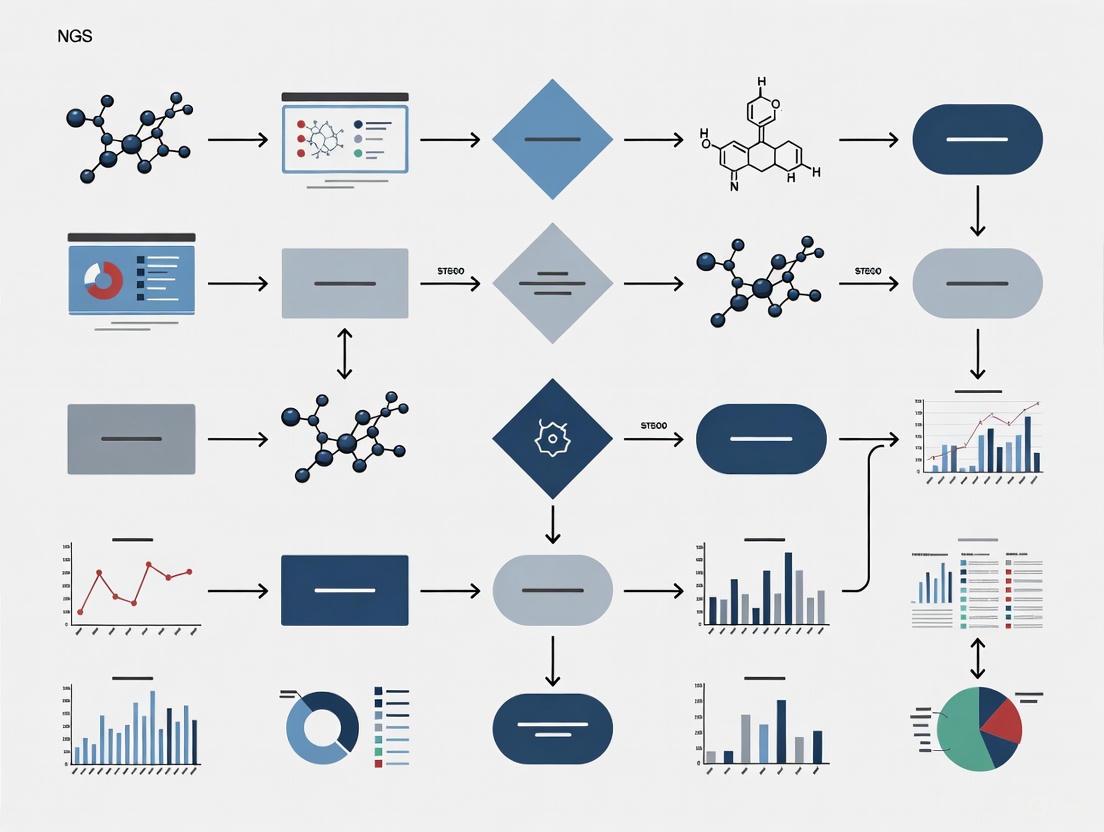
This article provides a comprehensive guide for researchers and drug development professionals on implementing next-generation sequencing (NGS) to enhance clinical trial enrollment.
Optimizing Oncology Trials: A Strategic Guide to NGS-Guided Patient Enrollment
Abstract
This article provides a comprehensive guide for researchers and drug development professionals on implementing next-generation sequencing (NGS) to enhance clinical trial enrollment. It explores the foundational role of NGS in precision oncology, details methodological approaches for integrating genomic data into trial workflows, addresses key implementation barriers and optimization strategies, and examines the evidence validating this approach. The content synthesizes current data, including real-world implementation studies and systematic reviews, to offer a actionable framework for leveraging comprehensive genomic profiling to accelerate patient matching, improve trial efficiency, and advance the development of targeted cancer therapies.
The Foundation of Precision Enrollment: How NGS is Reshaping Oncology Trial Design
Defining NGS's Role in Modern Oncology Trials
Next-generation sequencing (NGS) has fundamentally transformed the framework of oncology clinical trials, shifting enrollment from a tissue-of-origin model to a biomarker-driven paradigm. This technology enables massive parallel sequencing of millions of DNA fragments simultaneously, providing comprehensive genomic profiling that identifies actionable mutations across the entire genome [1]. The integration of NGS into trial workflows allows researchers to match cancer patients with targeted therapies based on the specific molecular alterations driving their disease, rather than solely on cancer type or histology [2]. This application note details the quantitative impact, procedural protocols, and essential resources for implementing NGS to enhance patient stratification and accelerate enrollment in modern oncology trials.
Quantitative Impact of NGS on Trial Accrual and Outcomes
Actionable Mutation Detection and Trial Enrollment Rates
Table 1: Impact of NGS Panel Size on Actionable Mutation Detection and Clinical Trial Enrollment
| Metric | Routine NGS Panel | Broad Panel (FoundationOne CDx) |
|---|---|---|
| Patient Cohort Size | 1,456 patients | Not Specified |
| Actionable Alterations Detected | 34.0% | 64.0% |
| Key Mutations Identified | KRAS (43.6%), BRAF (19.0%), PIK3CA (10.8%) | Not Specified |
| Eligible Patients Enrolled in Trials | 10.6% (19/179 eligible) | 16.0% |
| Primary Enrollment Barrier | Undocumented reasons (78.8% of non-included) | Not Specified |
Data from a retrospective cohort analysis demonstrates that comprehensive genomic profiling significantly increases the detection of targetable alterations, nearly doubling the proportion of patients with actionable findings from 34.0% to 64.0% when using a broader panel compared to routine testing [3]. This directly translates to improved trial enrollment rates, which rose from 12.0% to 16.0% with more extensive sequencing [3].
Operational Efficiency Gains with Rapid NGS
Table 2: Operational Impact of Traditional vs. Rapid On-Site NGS Testing
| Parameter | Centralized/Traditional Testing | Rapid On-Site NGS |
|---|---|---|
| Average Turnaround Time | Weeks | As little as 24 hours [2] |
| Clinical Trial Delays | Up to 12.2 months longer than planned [2] | Significant reduction |
| Patient Access Impact | Limited to urban/academic centers | Enables community and rural hospital enrollment [2] |
| Sample Integrity Risk | Higher during transport | Minimal (processed on-site) [2] |
| Therapy Decision Context | Patients often start standard treatment while waiting | Enables treatment hold for trial eligibility assessment [2] |
Decentralizing genomic testing with rapid NGS solutions directly addresses critical bottlenecks in clinical trial enrollment. Traditional pathways suffer from significant delays, with trials extending an average of 12.2 months beyond original timelines [2]. Implementing on-site NGS testing slashes turnaround times to as little as 24 hours, allowing patients to hold treatment while determining trial eligibility rather than defaulting to standard care during prolonged waiting periods [2].
Experimental Protocols for NGS-Guided Patient Stratification
Comprehensive Genomic Profiling (CGP) Protocol for Trial Screening
Objective: To identify actionable genomic alterations in tumor samples for precision oncology trial enrollment.
Sample Requirements:
- Tumor Tissue: FFPE blocks with ≥20% tumor content or core biopsies with sufficient cellularity
- Blood Samples: Circulating tumor DNA (ctDNA) collection tubes for liquid biopsy
- Quality Control: DNA/RNA quantification via fluorometry, integrity assessment via fragment analyzer
Library Preparation Workflow:
- Nucleic Acid Extraction: Isolate DNA and RNA using silica-membrane or magnetic bead-based methods.
- Fragmentatio: Shear DNA to 300bp fragments via acoustic shearing or enzymatic digestion.
- Adapter Ligation: Add platform-specific adapters with unique molecular identifiers (UMIs) to mitigate PCR duplicates.
- Target Enrichment: Hybridize with biotinylated probes targeting cancer-relevant genes (e.g., 500-gene panel).
- Library Amplification: Perform limited-cycle PCR to amplify captured libraries.
- Quality Control: Validate library size distribution and quantity via capillary electrophoresis and qPCR.
Sequencing Parameters:
- Platform: Illumina NovaSeq 6000 (or equivalent)
- Configuration: Paired-end 2x150bp sequencing
- Coverage: ≥500x mean coverage for tumor DNA, ≥1000x for ctDNA
- Controls: Include positive and negative control samples in each run
Bioinformatics Analysis Pipeline
Data Processing Steps:
- Base Calling and Demultiplexing: Generate FASTQ files and assign reads to samples.
- Quality Assessment: Evaluate sequence quality with FastQC.
- Alignment: Map reads to reference genome (GRCh38) using optimized aligners (BWA-MEM).
- Variant Calling:
- Single Nucleotide Variants (SNVs): Use MuTect2 for tumor-normal pairs or VarScan2 for tumor-only.
- Insertions/Deletions (Indels): Apply Pindel or Scalpel.
- Copy Number Variations (CNVs): Implement CONTRA or CNVkit.
- Gene Fusions: Analyze with STAR-Fusion or Arriba from RNA-seq data.
- Annotation: Annotate variants using databases (ClinVar, COSMIC, OncoKB, CIViC).
- Actionability Assessment: Interpret variants against ESMO Scale for Clinical Actionability of Molecular Targets (ESCAT) and clinical trial eligibility.
Validation and Reporting:
- Technical Validation: Confirm variants with orthogonal methods (ddPCR, Sanger sequencing) for low-frequency alterations.
- Clinical Report: Generate structured report indicating:
- Tier I/II actionable alterations with associated clinical trials
- Investigational biomarkers with preclinical evidence
- Germline findings relevant to hereditary cancer syndromes
NGS Clinical Trial Screening Workflow
Essential Research Reagent Solutions for NGS-Based Trial Screening
Table 3: Essential Research Reagents for NGS-Based Clinical Trial Screening
| Category | Specific Product/Kit | Application in NGS Workflow |
|---|---|---|
| Nucleic Acid Extraction | QIAamp DNA FFPE Tissue Kit, MagMAX Cell-Free DNA Isolation Kit | Isolation of high-quality DNA from FFPE tissue and plasma ctDNA samples |
| Library Preparation | Illumina TruSight Oncology 500, Thermo Fisher Oncomine Comprehensive Assay | Target enrichment and library construction for comprehensive genomic profiling |
| Target Capture | IDT xGen Pan-Cancer Panel, Roche NimbleGen SeqCap EZ Choice | Hybridization-based capture of cancer-relevant genes |
| Sequencing Reagents | Illumina NovaSeq 6000 S-Prime Reagent Kit, Thermo Fisher Ion 540 Kit | Template preparation and sequencing chemistry |
| Quality Control | Agilent High Sensitivity DNA Kit, KAPA Library Quantification Kit | Assessment of nucleic acid quality and library quantification |
| Bioinformatics | Illumina DRAGEN Bio-IT Platform, Partek Flow Software | Secondary and tertiary analysis of NGS data |
Molecular Pathways in Patient Stratification for Targeted Trials
NGS Biomarker-Driven Trial Matching
Implementation Challenges and Future Directions
Despite its transformative potential, implementing NGS in clinical trials faces several challenges. The transition from single-gene testing to comprehensive genomic profiling requires significant infrastructure investment, bioinformatics expertise, and multidisciplinary molecular tumor boards for data interpretation [1]. Evidence shows that even with detectable actionable alterations, trial enrollment remains suboptimal at 10.6-16.0%, highlighting needs for improved physician awareness of available trials and streamlined enrollment mechanisms [3].
Future innovations focus on integrating multiomics data (genomic, transcriptomic, proteomic) to refine patient stratification beyond DNA sequencing alone [4]. Liquid biopsy approaches using ctDNA enable dynamic monitoring of treatment response and resistance mechanisms, creating opportunities for adaptive trial designs. The recent FDA approval of distributable comprehensive genomic profiling tests, such as TruSight Oncology Comprehensive, promises to expand access to standardized NGS testing across diverse clinical settings [4]. As the field advances, the synergy between NGS technology and clinical trial design will continue to accelerate the development of personalized cancer therapies and improve patient outcomes through precision oncology.
The paradigm of cancer diagnosis and treatment has undergone a fundamental transformation, moving from histopathological classification toward molecular characterization. This shift has been driven by the evolution of biomarker testing from single-gene assays to comprehensive multi-gene panels, enabling unprecedented precision in oncology. Next-generation sequencing (NGS) technologies now form the cornerstone of this approach, providing researchers and clinicians with powerful tools to uncover the complex genetic alterations driving tumorigenesis [5]. The clinical implementation of these advanced profiling techniques has created new opportunities for guiding patient enrollment in clinical trials, ensuring that targeted therapies reach the patients most likely to benefit from them [6].
This evolution reflects our growing understanding of cancer as a genetically heterogeneous disease, where multiple molecular pathways can drive progression within and across cancer types. Where traditional methods examined individual genes sequentially, consuming valuable tissue samples and time, NGS-based panels now facilitate simultaneous assessment of hundreds of genes from minimal tissue input [7]. For researchers designing clinical trials and enrollment strategies, this comprehensive profiling approach provides the molecular data necessary to match patients with targeted therapies and immunotherapies based on their tumor's unique genetic signature, ultimately accelerating drug development and improving patient outcomes [8].
The Trajectory of Biomarker Testing in Oncology
Limitations of Single-Gene Testing Approaches
Traditional single-gene biomarker testing dominated oncology for decades, focusing on individual mutations such as KRAS in colorectal cancer or EGFR in non-small cell lung cancer (NSCLC) [5]. These approaches, while valuable for specific clinical decisions, presented significant limitations for comprehensive tumor profiling:
- Tissue exhaustion: Sequential single-gene tests consumed precious tissue samples from biopsies, often leaving insufficient material for additional testing [9]
- Incomplete genomic picture: Focusing on individual genes failed to capture the complex interplay of co-mutations and resistance mechanisms that influence treatment response
- Limited clinical trial matching: With information on only a handful of biomarkers, many potential therapeutic options remained unidentified for individual patients
The Rise of Comprehensive Genomic Profiling
The advent of NGS technologies enabled a fundamental shift toward multi-gene panels that assess hundreds of cancer-related genes simultaneously. This comprehensive approach has transformed biomarker testing from a targeted interrogation to a broad discovery tool [6]. The advantages of multi-gene panels include:
- Maximized tissue utilization: Comprehensive data from limited tissue specimens, particularly critical for difficult-to-biopsy tumors
- Identification of rare alterations: Detection of low-frequency mutations and novel biomarkers across diverse cancer types
- Co-mutation analysis: Ability to understand mutation patterns and their implications for therapeutic response and resistance
- Efficiency in clinical workflows: Reduced turnaround time from biopsy to treatment decision compared to sequential single-gene testing
Table 1: Comparative Analysis of Single-Gene vs. Multi-Gene Testing Approaches
| Parameter | Single-Gene Testing | Multi-Gene NGS Panels |
|---|---|---|
| Genes Interrogated | 1-3 genes | Hundreds of genes simultaneously [6] |
| Tissue Consumption | High (with sequential testing) | Minimal (maximizes tissue utility) [9] |
| Turnaround Time | Variable (weeks for multiple tests) | 1-2 weeks for comprehensive profile [9] |
| Therapeutic Targets Identified | Limited to known biomarkers | Broad range including rare alterations [6] |
| Clinical Trial Matching Potential | Restricted | Extensive across multiple biomarkers [8] |
NGS-Based Multi-Gene Panel Testing: Protocols and Methodologies
Sample Preparation and Quality Control
Robust sample preparation is fundamental to successful NGS-based biomarker testing. The following protocol outlines critical steps for processing formalin-fixed paraffin-embedded (FFPE) tissue specimens, the most common sample type in clinical cancer research [6] [7]:
FFPE Tissue Processing:
- Sectioning: Cut FFPE tissue blocks at 10μm thickness using a rotary microtome [7]
- Macrodissection: Manually dissect representative tumor areas with sufficient tumor cellularity (>20% tumor content recommended) [6]
- DNA Extraction: Isolate genomic DNA using commercial FFPE-specific extraction kits (e.g., QIAamp DNA FFPE Tissue kit) [6]
- Quality Assessment:
Library Preparation:
- Library Construction: Use hybrid capture-based methods (e.g., Illumina AmpliSeq focus panel or Agilent SureSelectXT) for target enrichment [6] [7]
- Quality Control: Assess library size distribution (150-400 base pairs) using microfluidics-based systems (e.g., Agilent High Sensitivity DNA Kit) [6] [7]
- Sequencing: Process qualified libraries on NGS platforms (e.g., Illumina NextSeq 550Dx) with minimum coverage of 500x and Phred quality score ≥30 [6] [7]
Bioinformatic Analysis and Interpretation
The computational pipeline for processing NGS data requires multiple validation steps to ensure accurate variant calling:
Primary Analysis:
- Alignment: Map sequencing reads to reference genome (hg19/GRCh37) using optimized aligners [6]
- Variant Calling:
- Identify single nucleotide variants (SNVs) and small insertions/deletions (INDELs) using Mutect2 with variant allele frequency (VAF) threshold ≥2% [6]
- Detect copy number variations (CNVs) using CNVkit (amplification threshold: average CN ≥5) [6]
- Identify gene fusions using structural variant callers (e.g., LUMPY) [6]
- Annotation: Annotate variants using SnpEff and cross-reference with population databases (gnomAD) and clinical databases (ClinVar) [6]
Clinical Interpretation:
- Variant Classification: Categorize variants according to Association for Molecular Pathology (AMP) guidelines [6]:
- Tier I: Variants of strong clinical significance
- Tier II: Variants of potential clinical significance
- Tier III: Variants of unknown significance
- Tier IV: Benign or likely benign variants
- Actionability Assessment: Interpret variants for clinical trial eligibility based on their functional and predictive implications
NGS Analysis Workflow for Clinical Trial Enrollment
Application in Clinical Trial Enrollment and Precision Oncology
Biomarker-Driven Patient Stratification
The implementation of NGS-based multi-gene panels has revolutionized clinical trial enrollment by enabling sophisticated patient stratification based on comprehensive molecular profiles rather than traditional histology-based classifications. This approach aligns with the growing recognition that molecular alterations often transcend organ-based cancer classification [8]. Real-world evidence demonstrates the substantial impact of this approach:
In a study of 990 patients with advanced solid tumors who underwent NGS testing using a 544-gene panel, 26.0% (257/990) harbored Tier I variants with strong clinical significance, and 86.8% (859/990) carried Tier II variants with potential clinical significance [6]. Among patients with Tier I variants, 13.7% received NGS-based therapy based on these findings, with particularly high rates in thyroid cancer (28.6%), skin cancer (25.0%), gynecologic cancer (10.8%), and lung cancer (10.7%) [6].
Table 2: Frequency of Actionable Genetic Alterations Identified by NGS in Solid Tumors
| Gene Alteration | Frequency in Solid Tumors | Common Cancer Types | Clinical Trial Implications |
|---|---|---|---|
| KRAS | 10.7% [6] | Colorectal, lung, pancreatic | KRAS G12C inhibitors, downstream pathway targeting |
| EGFR | 2.7% [6] | NSCLC, glioblastoma | EGFR inhibitors, combination therapies |
| BRAF | 1.7% [6] | Melanoma, colorectal, NSCLC | BRAF/MEK inhibitor combinations |
| PIK3CA | 2.4% [7] | Breast, colorectal, endometrial | PI3K inhibitors, AKT inhibitors |
| KIT | 12.3% [7] | GIST, melanoma | KIT inhibitors, immunotherapy combinations |
Biomarker Testing Operational Framework for Clinical Trials
Implementing NGS-based biomarker testing for clinical trial programs requires careful operational planning:
Pre-analytical Phase:
- Establish specimen eligibility criteria (tumor content, necrosis, decalcification status)
- Define optimal biopsy procedures to ensure sufficient material for NGS testing
- Implement standardized tissue handling protocols to preserve nucleic acid integrity
Analytical Phase:
- Select appropriate NGS panels based on trial objectives (targeted vs. comprehensive)
- Validate testing protocols in CAP/CLIA-certified laboratories
- Establish quality metrics (coverage depth, quality scores, validation parameters)
Post-analytical Phase:
- Develop molecular tumor boards for complex interpretation
- Create standardized reporting templates highlighting trial-relevant alterations
- Implement data integration systems for matching patients to appropriate trial arms
Emerging Technologies and Future Directions
Artificial Intelligence and Advanced Computational Methods
The integration of artificial intelligence (AI) and machine learning (ML) is poised to further transform biomarker discovery and clinical trial enrollment [5] [8] [10]. These technologies enable:
- Predictive modeling of treatment responses based on complex multi-omic biomarker profiles [10]
- Automated interpretation of NGS data, reducing turnaround time and increasing accessibility [5]
- Image analysis of histopathology slides to infer transcriptomic profiles and identify potential biomarkers [8]
- Pattern recognition in large datasets to identify novel biomarker signatures for patient stratification [10]
The ARPA-H ADAPT program exemplifies this direction, developing AI-powered platforms that integrate diverse data types to recommend optimal therapy strategies and dynamically track tumor evolution throughout treatment [11].
Liquid Biopsy and Dynamic Monitoring
Liquid biopsy approaches analyzing circulating tumor DNA (ctDNA) are emerging as complementary tools for clinical trial enrollment and monitoring [5] [10]. These technologies offer:
- Non-invasive assessment of tumor biomarkers, enabling repeated sampling throughout trial participation
- Real-time monitoring of treatment response and emerging resistance mechanisms [10]
- Detection of molecular residual disease for adjuvant trial enrollment [8]
- Insight into tumor heterogeneity beyond what is possible with single-site biopsies
Ongoing research is focused on enhancing the sensitivity and specificity of these assays, with the Galleri multi-cancer early detection test representing one such advancement currently in clinical trials [5].
Multi-Omics Integration
The future of biomarker testing lies in integrating multiple data types beyond genomic sequencing alone [5] [10]. Multi-omics approaches combine:
- Genomics: DNA-level alterations (mutations, CNVs, fusions)
- Transcriptomics: Gene expression patterns and splicing variants
- Proteomics: Protein expression and post-translational modifications
- Epigenomics: DNA methylation and chromatin accessibility states
This comprehensive profiling enables deeper understanding of disease mechanisms and more precise patient stratification for clinical trials [10]. The convergence of these technologies with NGS-based DNA analysis will create increasingly sophisticated biomarkers for trial enrollment in the coming years.
Future Biomarker-Driven Clinical Trial Framework
Essential Research Reagent Solutions
Successful implementation of NGS-based biomarker testing requires carefully selected reagents and platforms. The following solutions represent critical components for research and clinical applications:
Table 3: Essential Research Reagents for NGS-Based Biomarker Testing
| Reagent Category | Specific Examples | Research Application |
|---|---|---|
| Nucleic Acid Extraction | QIAamp DNA FFPE Tissue kit [6] | Isolation of high-quality DNA from challenging FFPE specimens |
| Library Preparation | Illumina AmpliSeq focus panel [7], Agilent SureSelectXT [6] | Target enrichment for specific gene panels |
| Targeted Sequencing Panels | SNUBH Pan-Cancer v2.0 (544 genes) [6] | Comprehensive genomic profiling across cancer types |
| Quality Control | Qubit dsDNA HS Assay [6], Agilent High Sensitivity DNA Kit [6] | Quantification and qualification of nucleic acids throughout workflow |
| NGS Platforms | Illumina NextSeq 550Dx [6], Illumina MiniSeq [7] | Sequencing execution with required throughput and quality |
The evolution from single-gene to multi-gene panel testing represents a fundamental advancement in cancer research and clinical trial design. NGS-based comprehensive genomic profiling has enabled more precise patient stratification, accelerated enrollment in biomarker-driven clinical trials, and facilitated the development of targeted therapies for previously untreatable malignancies. As technologies continue to advance—with AI-driven analysis, liquid biopsy applications, and multi-omics integration—the potential for increasingly sophisticated biomarker-driven trial designs grows exponentially. For researchers and drug development professionals, embracing these evolving technologies and methodologies is essential for advancing precision oncology and delivering more effective, personalized cancer treatments to patients.
Key Biomarkers and Actionable Mutations for Trial Stratification
The paradigm of oncology drug development has fundamentally shifted with the integration of molecular biomarkers into clinical trial design. Next-generation sequencing (NGS) technologies now enable comprehensive genomic profiling that identifies actionable mutations, allowing for precise patient stratification in oncology trials [12]. Biomarkers, defined as measurable indicators of biological processes, serve two primary functions in this context: prognostic biomarkers predict disease aggressiveness regardless of treatment, while predictive biomarkers identify patients likely to benefit from specific therapeutic interventions [12]. The European Society for Medical Oncology Scale for Clinical Actionability of Molecular Targets (ESCAT) provides a standardized framework for categorizing molecular targets into evidence-based tiers, enabling clinicians and researchers to prioritize targets according to the strength of clinical evidence [13].
The clinical utility of this approach is demonstrated by real-world evidence from institutional precision medicine programs. At the Vall d'Hebron Institute of Oncology (VHIO), the detection rate of actionable alterations increased substantially from 10.1% in 2014 to 53.1% in 2024, paralleling advances in sequencing technology, expanded biomarker knowledge, and broader assay utilization [13]. Similarly, access to molecularly matched therapies rose from 1% to 14.2% over the same period, with 23.5% of patients with actionable alterations ultimately receiving biomarker-guided therapies, primarily through clinical trials [13]. These findings underscore the critical importance of robust biomarker stratification strategies in modern oncology research and drug development.
Key Biomarkers and Their Prevalence Across Cancers
Established and Emerging Biomarkers
The landscape of actionable biomarkers continues to expand, with certain molecular alterations now recognized as pan-cancer predictors of treatment response. Tumor-agnostic biomarkers represent particularly valuable targets for clinical trial stratification as they transcend traditional histology-based classifications. A comprehensive Asian pan-cancer study of 1,166 tissue samples across 29 cancer types found that 8.4% of samples harbored at least one established tumor-agnostic biomarker, including high tumor mutation burden (TMB-high), microsatellite instability (MSI-high), NTRK fusions, RET fusions, and BRAF V600E mutations [14]. These biomarkers were distributed across 26 different cancer types, highlighting their broad relevance for basket trial designs that enroll patients based on molecular rather than histological characteristics.
Several emerging tumor-agnostic biomarkers show significant promise for future trial stratification. Homologous recombination deficiency (HRD) was observed in 34.9% of samples in the Asian cohort, with particularly high prevalence in breast (50%), colon (49.0%), lung (44.2%), ovarian (42.2%), and gastric (39.5%) cancers [14]. ERBB2 amplification was identified in 3.6% of samples overall, with highest frequency in breast (15.0%), endometrial (11.8%), and ovarian tumors (8.9%) [14]. Other emerging biomarkers include FGFR fusions/mutations, NRG1 fusions, MTAP loss, ALK fusions, KRAS G12C, and TP53 Y220C, all of which are expected to further transform the drug development landscape [14].
The ESCAT classification system provides a critical framework for prioritizing biomarkers based on clinical evidence levels. In the VHIO precision medicine program, 12.7% of samples harbored Tier I alterations (targets linked to approved standard-of-care therapies), while 6.0% contained Tier II alterations (targets with clinical trial evidence but without established standard-of-care status) [13]. This tiered approach enables researchers to stratify patients according to the strength of evidence supporting biomarker-therapy matching, optimizing trial designs for both established and investigational targets.
Cancer-Type Specific Biomarker Landscapes
Lung Cancer
Lung cancer represents a paradigm for precision medicine, with numerous biomarkers guiding treatment decisions and trial enrollment. The ATLAS study, which performed comprehensive molecular profiling on 455 patients with advanced non-small cell lung cancer (NSCLC), demonstrated that centralized NGS testing increased the detection of druggable mutations from 7.9% by local pathology assessments to 25.9% [15]. KRAS G12C was the most prevalent druggable alteration (53.6% of druggable mutations), followed by MET amplification (8.1%) and MET exon 14 skipping (7.3%) [15]. Importantly, 34.5% of patients had molecular alterations matching clinical trials available within the same country, highlighting the critical role of biomarker testing in connecting patients with investigational therapies [15].
In EGFR-mutant NSCLC, understanding resistance mechanisms is essential for trial stratification in the post-osimertinib setting. Resistance mechanisms include on-target mutations (e.g., C797S), bypass signaling (e.g., MET amplification, which occurs in approximately 15-20% of cases), histological transformation (e.g., small cell lung cancer transformation), and downstream pathway activation [16]. The SACHI study demonstrated that combining the MET inhibitor savolitinib with osimertinib in patients with MET-amplified, EGFR-mutant NSCLC after third-generation EGFR-TKI failure significantly improved progression-free survival compared to chemotherapy (8.2 months vs. 4.5 months, HR=0.34) [16]. These findings underscore the importance of repeat biopsy and comprehensive genomic profiling at disease progression to identify resistance mechanisms and guide subsequent trial enrollment.
Brain Tumors
Brain tumors exhibit distinct molecular landscapes that vary significantly across the lifespan, necessitating age-stratified biomarker approaches. In pediatric low-grade gliomas, MAPK/ERK pathway alterations are predominant, with BRAF V600E mutations present in 20-25% of cases and KIAA1549-BRAF fusions in 30-40% [17]. These alterations predict response to BRAF inhibitors (dabrafenib, vemurafenib) and MEK inhibitors (trametinib), which have received regulatory approval for BRAF V600E-mutant pediatric low-grade gliomas [17]. In contrast, adult gliomas more frequently feature IDH mutations, TERT promoter mutations, and EGFR amplifications [17]. The recent FDA accelerated approval of ONC201 (dordaviprone) for recurrent H3 K27M-mutant diffuse midline glioma in August 2025 represents a significant advancement for this previously untreatable malignancy [17].
Table 1: Key Biomarkers and Their Clinical Implications Across Major Cancer Types
| Cancer Type | Key Biomarkers | Prevalence | Clinical Actionability | Trials/Agents |
|---|---|---|---|---|
| NSCLC | KRAS G12C | 53.6% of druggable mutations [15] | Tier I (approved therapies) | Sotorasib, Adagrasib |
| MET amplification | 8.1% of druggable mutations [15] | Tier I/II | Savolitinib combinations [16] | |
| MET exon 14 skipping | 7.3% of druggable mutations [15] | Tier I | Capmatinib, Tepotinib | |
| EGFR C797S | ~7-15% post-osimertinib [16] | Investigational | Fourth-generation EGFR TKIs | |
| Breast Cancer | PIK3CA mutations | 39% [14] | Tier I | Alpelisib + Fulvestrant |
| ERBB2 amplification | 15% [14] | Tier I | Trastuzumab, ADC's | |
| BRCA1/2 somatic | Varies | Tier I/II | PARP inhibitors | |
| Brain Tumors (Pediatric) | BRAF V600E | 20-25% of pLGG [17] | Tier I | Dabrafenib, Vemurafenib |
| KIAA1549-BRAF fusion | 30-40% of pLGG [17] | Tier I | Trametinib, Tovorafenib | |
| H3 K27M | 70-80% of DMG [17] | Tier II | ONC201 (dordaviprone) [17] | |
| Multiple Solid Tumors | MSI-High | 1.4% overall (up to 5.9% in endometrial) [14] | Tier I (tumor-agnostic) | Pembrolizumab, Nivolumab |
| TMB-High | 6.6% overall [14] | Tier I (tumor-agnostic) | Immune checkpoint inhibitors | |
| NTRK fusions | ~0.2-0.3% overall [14] | Tier I (tumor-agnostic) | Larotrectinib, Entrectinib |
Quantitative Data on Biomarker Actionability
Understanding the prevalence and actionability of molecular alterations across different cancer types is essential for designing adequately powered clinical trials. Recent large-scale studies provide comprehensive data on biomarker frequencies and their potential for matching to targeted therapies.
The VHIO precision medicine program, which enrolled 12,168 unique patients between 2014 and 2024, demonstrated a steady increase in both actionable alteration detection and access to matched therapies over time [13]. The rate of patients receiving molecularly matched therapies rose from 1% in 2014 to 14.2% in 2024, with annual rates ranging from 19.5% to 32.7% among patients with actionable alterations [13]. These findings highlight both the progress and persistent challenges in translating biomarker identification to treatment access.
A pan-cancer Asian study utilizing comprehensive genomic profiling on 1,166 samples found that 62.3% contained actionable biomarkers, including 4.7% of somatic variants potentially targetable by regulatory-approved therapies [14]. The likelihood of identifying at least one actionable molecular alteration varied significantly by cancer type, with highest rates in CNS tumors (83.6%), lung cancer (81.2%), and breast cancer (79.0%) [14]. These data underscore the importance of cancer-type specific approaches to biomarker testing and trial stratification.
Table 2: Actionability Rates Across Major Cancer Types Based on Real-World Evidence
| Cancer Type | Samples with Actionable Alterations | ESCAT Tier I Alterations | ESCAT Tier II Alterations | Tumor-Agnostic Biomarkers |
|---|---|---|---|---|
| All Cancers | 62.3% [14] | 12.7% [13] | 6.0% [13] | 8.4% [14] |
| CNS Tumors | 83.6% [14] | Varies by age and subtype [17] | Varies by age and subtype [17] | ~2-5% (including BRAF V600E) [17] |
| Lung Cancer | 81.2% [14] | 25.9% with druggable mutations [15] | 34.5% matching clinical trials [15] | 16.8% [14] |
| Breast Cancer | 79.0% [14] | 39% with PIK3CA mutations [14] | Varies (e.g., ERBB2 mutations) [14] | Varies (e.g., MSI-H, TMB-H) [14] |
| Colorectal Cancer | Data not available in search results | Data not available in search results | Data not available in search results | 12% with tumor-agnostic biomarkers [14] |
| Prostate Cancer | Data not available in search results | 22 with BRCA1/2 alterations [14] | 17 with PTEN alterations [14] | 5 with MSI-H [14] |
The ATLAS study in NSCLC provides particularly compelling evidence for the value of comprehensive NGS testing in clinical trial matching. Beyond the increased detection of druggable mutations (from 7.9% to 25.9%), the study found that a remarkable 34.5% of patients had molecular alterations matching clinical trials available within Spain [15]. This finding highlights the critical role of biomarker testing in identifying patients for targeted therapy trials, especially in malignancies like NSCLC where multiple biomarker-directed therapeutic options exist.
Experimental Protocols for Biomarker Identification
Comprehensive Genomic Profiling Workflow
Implementing robust NGS-based biomarker testing requires standardized protocols from sample collection through data interpretation. The following workflow, adapted from established precision medicine programs, outlines key steps for comprehensive genomic profiling in clinical trial contexts:
Sample Acquisition and Processing: The VHIO precision medicine program utilizes both archived formalin-fixed paraffin-embedded (FFPE) tumor tissues and circulating tumor DNA (ctDNA) from liquid biopsies, without matched germline sequencing [13]. Sample quality control is critical, with pathologist review ensuring adequate tumor content (>20% typically required) and DNA/RNA quality metrics (e.g., DIN >4 for DNA, RIN >6 for RNA). For liquid biopsies, accurate blood sample collection, handling, and storage procedures are essential for reliable ctDNA extraction, with plasma separation within specified timeframes to prevent cell lysis and genomic DNA contamination [12].
Library Preparation and Sequencing: The VHIO program employs multiple NGS assays tailored to specific applications. Their ISO 15189-certified Broad NGS tissue v2.0 panel (Agilent) covers 431 genes and assesses genomic signatures including microsatellite instability (MSI) and tumor mutational burden (TMB) [13]. For liquid biopsies, the Guardant360 CDx assay (Guardant Health) enables ctDNA analysis through technology transfer and subsequent ISO certification [13]. Library preparation follows manufacturer protocols with unique molecular identifiers (UMIs) to enable error correction and more accurate variant calling. Sequencing is typically performed to achieve minimum coverage of 500x for tissue and 10,000x for liquid biopsies, with higher coverage for low-frequency variants.
Bioinformatic Analysis and Interpretation: Data analysis pipelines include quality control metrics (sequencing depth, uniformity, base quality), alignment to reference genome (GRCh38), variant calling (SNVs, indels, CNVs, fusions), and annotation using curated databases (e.g., COSMIC, ClinVar, OncoKB). The VHIO program standardizes interpretation and therapy prioritization through regular multidisciplinary molecular tumor boards, classifying alterations according to ESCAT tiers [13]. Actionability is determined based on evidence levels ranging from standard-of-care biomarkers to exploratory targets suitable for clinical trial enrollment.
Specialized Assays for Specific Biomarker Classes
Different biomarker classes require specialized methodological approaches for optimal detection:
DNA-based Alterations: Single nucleotide variants (SNVs), small insertions/deletions (indels), and copy number variations (CNVs) are detected through DNA sequencing. The Asian pan-cancer study used a comprehensive DNA/RNA panel (UNITED DNA/RNA multigene panel) that identified 4.6% of targetable variants through DNA analysis alone [14]. Copy number analysis requires careful normalization to control samples and accounting for tumor purity and ploidy.
RNA-based Alterations: Gene fusions and alternative splicing events require RNA sequencing for optimal detection. The same Asian study found that 0.1% of targetable variants were identified exclusively through RNA analysis [14]. The VHIO program employs targeted fusion panels (Fusion v2.0, Agilent) in addition to comprehensive NGS assays to ensure sensitive fusion detection [13].
Genomic Signatures: MSI status is determined by analyzing mononucleotide repeats compared to reference samples, while TMB is calculated as the number of somatic mutations per megabase of sequenced genome. The Asian study defined TMB-high as ≥10 mutations/Mb, identifying 6.6% of samples as TMB-high [14]. HRD status can be assessed through genomic scar analysis (loss of heterozygosity, telomeric allelic imbalance, large-scale transitions) or by specific mutational signatures.
NGS Biomarker Testing Workflow: This diagram illustrates the comprehensive pathway from sample collection through clinical interpretation for biomarker-guided trial stratification.
Signaling Pathways and Resistance Mechanisms
Key Oncogenic Signaling Pathways
Understanding the molecular pathways driving oncogenesis is fundamental to effective biomarker stratification. Several key pathways frequently altered in cancer represent prime targets for therapeutic intervention:
MAPK/ERK Pathway: This pathway is frequently activated in multiple cancer types, particularly in pediatric low-grade gliomas where BRAF alterations (V600E mutations or KIAA1549-BRAF fusions) occur in up to 60% of cases [17]. In the Asian pan-cancer cohort, BRAF V600E mutations were identified across multiple cancer types including colorectal cancer, melanoma, thyroid cancer, CNS tumors, and cancers of unknown primary [14]. These alterations constitutively activate the MAPK signaling cascade, driving uncontrolled cell proliferation and representing prime targets for BRAF and MEK inhibitors.
Receptor Tyrosine Kinase Signaling: Multiple receptor tyrosine kinases (RTKs) including EGFR, MET, HER2, and ALK play critical roles in oncogenic signaling. In NSCLC, EGFR mutations occur in 30-60% of Asian populations and drive sensitivity to EGFR tyrosine kinase inhibitors [16]. MET amplification serves as both a primary oncogenic driver and a resistance mechanism to EGFR inhibitors, with the SACHI study demonstrating that combined MET and EGFR inhibition can overcome this resistance [16]. ERBB2 (HER2) amplification, identified in 3.6% of the Asian pan-cancer cohort, activates downstream PI3K/AKT and MAPK pathways, driving sensitivity to HER2-targeted therapies [14].
DNA Damage Response Pathway: Homologous recombination deficiency (HRD), observed in 34.9% of the Asian pan-cancer cohort, represents a therapeutic vulnerability to PARP inhibitors and platinum-based chemotherapy [14]. HRD is particularly prevalent in ovarian, breast, pancreatic, and prostate cancers, creating synthetic lethality opportunities when DNA repair pathways are compromised.
Oncogenic Signaling Pathways: This diagram illustrates key signaling pathways frequently altered in cancer, with associated biomarkers that guide targeted therapy selection.
Resistance Mechanism Networks
Understanding resistance networks is essential for designing sequential trial strategies and combination therapies. In EGFR-mutant NSCLC, four primary resistance mechanisms have been characterized:
On-target Resistance: Secondary mutations within the EGFR kinase domain, most commonly C797S, prevent binding of third-generation EGFR inhibitors like osimertinib while maintaining downstream signaling competence [16]. The spatial relationship between resistance mutations (e.g., cis vs. trans configuration of T790M and C797S) determines sensitivity to next-generation inhibitors and combination approaches.
Bypass Signaling: Activation of alternative signaling pathways compensates for inhibited EGFR signaling. MET amplification represents the most common bypass mechanism, occurring in approximately 15-20% of osimertinib-resistant cases [16]. Other bypass mechanisms include HER2 amplification, BRAF V600E mutation, KRAS mutations, and RET or ALK fusions, each requiring specific targeted approaches.
Histological Transformation: Lineage switching from adenocarcinoma to small cell lung cancer (SCLC) or squamous cell carcinoma occurs in 3-15% of EGFR-TKI resistant cases, typically accompanied by loss of EGFR dependency and acquisition of new therapeutic vulnerabilities [16]. SCLC transformation is strongly associated with concurrent TP53 and RB1 inactivation, requiring platinum-etoposide chemotherapy rather than continued EGFR inhibition.
Downstream Pathway Activation: Mutations in downstream effectors, particularly in the MAPK and PI3K-AKT pathways, can maintain oncogenic signaling despite effective EGFR inhibition. These alterations may coexist with other resistance mechanisms, creating complex molecular landscapes that necessitate comprehensive genomic profiling at progression.
The Scientist's Toolkit: Essential Research Reagents and Platforms
Successful implementation of biomarker-driven trial stratification requires access to specialized reagents, platforms, and analytical tools. The following table outlines essential components of the modern cancer biomarker research toolkit:
Table 3: Essential Research Reagents and Platforms for Biomarker Discovery and Validation
| Category | Specific Tools/Platforms | Key Features | Application in Trial Stratification |
|---|---|---|---|
| NGS Platforms | Illumina NovaSeq, NextSeq; Ion Torrent Genexus | High-throughput sequencing, automated workflows | Comprehensive genomic profiling, variant detection [13] [14] |
| Targeted Panels | VHIO Broad NGS panels (59-431 genes); Oncomine Focus Assay | Focused content, optimized coverage, ISO certification | Targeted biomarker detection, clinical trial eligibility [13] [15] |
| Liquid Biopsy Assays | Guardant360 CDx; In-house ctDNA assays | Non-invasive monitoring, dynamic biomarker assessment | Resistance mechanism detection, therapy response monitoring [13] [12] |
| Bioinformatic Tools | Variant callers (GATK, VarScan); Annotation tools (OncoKB, CIViC) | Variant prioritization, clinical interpretation | ESCAT classification, actionability assessment [13] |
| Cell Line Models | Patient-derived organoids, CRISPR-modified lines | Physiological relevance, genetic manipulability | Functional validation of biomarkers, drug screening [18] |
| Immunoassay Platforms | IHC, FISH, RAD51 foci immunofluorescence | Protein expression, chromosomal rearrangements, functional HRD | Complementary to NGS, biomarker confirmation [13] [17] |
The selection of appropriate testing platforms depends on the specific trial context, including the biomarkers of interest, sample type and quantity, turnaround time requirements, and regulatory considerations. The VHIO program exemplifies how integrated diagnostic platforms evolve over time, expanding from focused NGS panels to comprehensive genomic profiling encompassing DNA and RNA sequencing, with ISO certification enabling their use as in-house alternatives to companion diagnostics for approved drugs and clinical trials [13].
Liquid biopsy technologies represent particularly valuable tools for clinical trial contexts, enabling non-invasive assessment of tumor genomics and monitoring of resistance emergence. The VHIO program introduced a liquid biopsy assay (Broad NGS liquid v1.0) through technology transfer from Guardant Health, subsequently obtaining ISO certification in 2024 [13]. Liquid biopsies are especially useful for assessing dynamic changes in mutation profiles during treatment and capturing spatial heterogeneity, although limitations remain in detecting certain alteration types such as copy number changes and gene fusions in low ctDNA fraction samples [12].
The strategic integration of biomarker-driven approaches into clinical trial design has fundamentally transformed oncology drug development. The systematic classification of molecular alterations using frameworks like ESCAT, combined with comprehensive genomic profiling technologies, enables precise patient stratification that maximizes therapeutic benefit while accelerating drug development timelines. Real-world evidence from large precision medicine programs demonstrates both the substantial progress achieved and the ongoing challenges in matching patients to targeted therapies, with current rates of matched therapy access approaching 14-24% among comprehensively profiled patients [13].
Future directions in biomarker-guided trial stratification will likely include increased incorporation of liquid biopsy technologies for dynamic biomarker monitoring, expanded use of complex biomarker signatures beyond single-gene alterations, and the development of innovative trial designs that accommodate multiple biomarker-defined subgroups within unified master protocols. Additionally, the integration of artificial intelligence and machine learning approaches for biomarker discovery and interpretation holds promise for identifying novel predictive signatures beyond currently established biomarkers. As the field continues to evolve, the systematic application of comprehensive biomarker assessment will remain essential for realizing the full potential of precision oncology in clinical trial contexts and ultimately improving outcomes for cancer patients.
The Growing Market and Adoption Trends for NGS in Clinical Oncology
The integration of next-generation sequencing (NGS) into clinical oncology represents a paradigm shift toward molecularly driven cancer care. This transformation is particularly pivotal within the context of clinical trials, where NGS serves as a fundamental technology for enabling precision oncology by identifying eligible patients based on their tumor's genomic profile. The global clinical oncology NGS market is experiencing robust growth, projected to expand from an estimated $744.4 million in 2025 to over $3.13 billion by 2034, reflecting a compound annual growth rate (CAGR) of 17.3% [19]. This expansion is fueled by the critical need to align the right targeted therapy with the right patient at the right moment, a challenge that remains central to accelerating clinical trial breakthroughs in oncology [20]. As the industry confronts rising cancer incidence rates and the paradox of low clinical trial enrollment, NGS technologies are evolving to democratize genomic testing, reduce turnaround times, and create more efficient patient-trial matching systems that ultimately serve the broader goal of personalized cancer treatment.
The clinical oncology NGS market demonstrates vigorous growth dynamics across all segments, driven by technological advancements, increasing cancer prevalence, and the expanding application of precision medicine principles. The market's trajectory reflects its evolving role from a specialized research tool to an indispensable clinical asset for therapy selection and trial enrollment.
Table 1: Global Clinical Oncology NGS Market Size Projections
| Source | 2024/2025 Base Value | 2034 Projection | CAGR |
|---|---|---|---|
| Future Market Insights [19] | USD 744.4 million (2025) | USD 3.13 billion | 17.3% |
| Market.us [21] | USD 0.7 billion (2024) | USD 3.4 billion | 17.2% |
| Nova One Advisor [22] | USD 551.43 million (2025) | USD 2,129.82 million | 16.2% |
This growth is structurally supported by several key drivers: the rising global cancer burden with an estimated 20 million new cases diagnosed in 2022 [22], the continuous innovation in sequencing technologies, and the expanding clinical utility of NGS in guiding treatment decisions and clinical trial enrollment [21]. The International Agency for Research on Cancer anticipates approximately 27.5 million new cancer cases by 2040, further underscoring the growing need for advanced molecular diagnostics [21].
Table 2: Clinical Oncology NGS Market Share by Segment (2024)
| Segment | Leading Sub-category | Market Share | High-Growth Sub-category |
|---|---|---|---|
| Technology | Targeted Sequencing & Resequencing | 48.6% [21] | Whole Genome Sequencing |
| Workflow | NGS Sequencing | 45.8% [21] | NGS Data Analysis |
| Application | Screening | 52.3% [21] | Companion Diagnostics |
| End-use | Laboratories | 57.4% [21] | Clinics |
| Component | Kits and Reagents | 60.9% [19] | - |
Targeted sequencing maintains dominance due to its clinical utility, faster turnaround times, and lower cost per reportable finding, which aligns well with therapy selection and reimbursement realities [21]. However, whole genome and whole exome sequencing are gaining traction in complex cases and research-driven centers as cost curves continue to fall [21]. The kits and reagents segment remains indispensable, holding approximately 60.9% market share in 2024, as each application requires specialized consumables designed to meet precise assay needs [19].
Geographically, North America leads the market with a 41.3% share in 2023, supported by high cancer incidence, advanced infrastructure, and established precision medicine programs [21]. Europe is advancing through national genomics strategies, while the Asia Pacific region is expected to register the fastest growth, driven by investments in genomics infrastructure, rising healthcare expenditure, and growing awareness [21] [22]. Country-specific projections highlight France as a particularly high-growth market with a anticipated CAGR of 21.6% through 2035, followed by the United States (19.4%) and Germany (19.2%) [19].
Key Adoption Trends and Innovation Drivers
Liquid Biopsy and Minimal Residual Disease Monitoring
Liquid biopsy represents one of the most transformative applications of NGS in clinical oncology, enabling non-invasive cancer detection and monitoring through analysis of circulating tumor DNA (ctDNA) [19]. This technology enables clinicians to track tumor dynamics and treatment responses through a simple blood draw, bypassing the need for invasive tissue biopsies [19]. The clinical value of liquid biopsy is particularly evident in its application for minimal residual disease (MRD) monitoring, which offers a sensitive method to detect cancer recurrence at earlier stages than conventional imaging [1]. The adoption momentum is reflected in recent market developments, such as the May 2025 launch of liquid biopsy testing services by Florida Cancer Specialists & Research Institute for common cancers including breast, lung, colorectal, and prostate cancers [22]. The development of specialized library preparation kits, such as the cfDNA Library Preparation Kit launched by Twist Bioscience in February 2024, further supports this trend by maximizing the capture of unique cfDNA molecules [19].
Artificial Intelligence and Bioinformatics Integration
The integration of artificial intelligence (AI) and machine learning into NGS data analysis represents a paradigm shift in clinical oncology applications [19]. AI algorithms are increasingly embedded throughout the NGS workflow, enhancing variant calling, annotation, and interpretation to detect medically relevant mutations and predict therapeutic responses [19]. Leading companies are actively deploying AI-powered solutions; Illumina utilizes AI-powered software for variant interpretation and machine learning algorithms for tumor-only and tumor-normal analysis [19]. Thermo Fisher Scientific employs AI-driven classifiers to identify rare mutations in liquid biopsy samples [19]. F. Hoffmann-La Roche has developed the NAVIFY digital ecosystem, which combines sequencing data, electronic health records, and AI to create personalized insights for cancer treatment planning [19]. The May 2025 launch of Illumina's DRAGEN version 4.4 software exemplifies this trend, providing groundbreaking oncology applications to simplify NGS analysis and expand multiomics capabilities [22].
Decentralization of Testing and Workflow Automation
A significant trend transforming the clinical trial landscape is the decentralization of NGS testing from large academic centers to community hospitals and local laboratories [20]. This shift is crucial for addressing the clinical trial enrollment bottleneck by expanding access to genomic testing where most patients receive care [20]. Automation plays a pivotal role in this transition, with modern NGS solutions incorporating streamlined library preparation, sequencing, and data analysis workflows that minimize manual intervention and reduce turnaround times [20]. Thermo Fisher Scientific's Ion Torrent Genexus System exemplifies this trend with its end-to-end automation and real-time data analysis capabilities [19]. The practical impact of these advancements is profound – they democratize precision medicine by making rapid NGS testing viable in broader clinical settings, thereby expanding patient access to clinical trials and targeted therapies [20].
Companion Diagnostic Expansion and Regulatory Evolution
The development of NGS-based companion diagnostics (CDx) is accelerating in tandem with targeted therapy approvals [19] [22]. Pharmaceutical companies are increasingly integrating CDx into their drug development workflows to enhance clinical trial success rates and secure regulatory approvals [22]. The regulatory landscape is simultaneously evolving to accommodate these advances, with the FDA classifying certain NGS-based oncology diagnostics as Class II or III medical devices requiring premarket approval or 510(k) clearance [19]. A landmark development occurred in May 2025 when Illumina introduced the TruSight Comprehensive test, the first FDA-approved distributable genomic profiling kit with pan-cancer companion diagnostic claims [19]. This test evaluates both DNA and RNA, enabling rapid tumor profiling and personalized therapy matching, and represents the convergence of several trends: regulatory maturation, assay comprehensiveness, and clinical utility [19]. Similar regulatory frameworks are being implemented globally, with the European Union's In Vitro Diagnostic Regulation (IVDR) and China's NMPA mandates for NGS platform approvals [19].
Experimental Protocols for NGS in Clinical Trial Enrollment
Sample Processing and Library Preparation Protocol
The initial phase of NGS testing requires meticulous sample handling and preparation to ensure reliable results for clinical trial eligibility assessment. The protocol varies based on sample type (tissue or blood) but follows consistent principles for preserving nucleic acid integrity and enabling comprehensive genomic analysis.
Tissue Sample Processing:
- DNA Extraction: Extract genomic DNA from formalin-fixed paraffin-embedded (FFPE) tissue sections or fresh frozen tissue using commercially available kits designed for clinical samples [1]. Assess DNA quality and quantity through spectrophotometry (A260/A280 ratio) and fluorometric methods, with minimum requirements of 50-100 ng DNA for targeted panels.
- RNA Extraction (when required): Isolate total RNA using silica-membrane or magnetic bead-based methods, followed by reverse transcription to generate complementary DNA (cDNA) for expression analysis or fusion detection [1].
- Tumor Content Assessment: Review hematoxylin and eosin (H&E) stained sections by a qualified pathologist to ensure adequate tumor cellularity (typically >20%) and circle areas for macrodissection if needed to enrich tumor content [1].
Liquid Biotype Processing:
- Blood Collection and Plasma Separation: Collect blood in cell-stabilizing tubes (e.g., Streck Cell-Free DNA BCT) and process within 6 hours of collection. Centrifuge at 1600-2000 × g for 10 minutes to separate plasma, followed by a second centrifugation at 16,000 × g for 10 minutes to remove residual cells [19].
- Cell-Free DNA Extraction: Isolate cfDNA from 4-10 mL of plasma using magnetic bead-based kits specifically validated for low-abundance DNA recovery. Elute in 20-50 μL of TE buffer or molecular grade water [19].
- cfDNA Quality Control: Quantify cfDNA using fluorometric methods sensitive to low DNA concentrations (e.g., Qubit dsDNA HS Assay). Assess fragment size distribution using microfluidic electrophoresis (e.g., Bioanalyzer, TapeStation) to confirm expected cfDNA peak at ~166 bp [19].
Library Construction:
- DNA Fragmentation: For high molecular weight DNA (from tissue), fragment to ~300 bp using acoustic shearing or enzymatic fragmentation methods [1]. cfDNA typically does not require additional fragmentation.
- Adapter Ligation: Attach platform-specific adapters containing unique molecular identifiers (UMIs) to DNA fragments using ligase-based methods. UMIs are essential for distinguishing true low-frequency variants from PCR and sequencing errors, particularly critical for liquid biopsy applications [19] [1].
- Library Amplification: Amplify adapter-ligated fragments using limited-cycle PCR (typically 4-10 cycles) to generate sufficient material for sequencing. Use polymerase systems with high fidelity and minimal GC bias [1].
- Library Quality Control: Quantify the final library using fluorometric methods and assess size distribution via microfluidic electrophoresis. For targeted sequencing, proceed to hybridization capture [1].
Target Enrichment (for Targeted Panels):
- Hybridization Capture: Incubate library with biotinylated oligonucleotide probes targeting specific genomic regions of clinical relevance. Use thermal cycler programs with precise temperature control to ensure specific hybridization [1].
- Magnetic Bead Capture: Bind probe-library hybrids to streptavidin-coated magnetic beads, followed by stringent washes to remove non-specifically bound DNA [1].
- Post-Capture Amplification: Amplify captured libraries with limited-cycle PCR (typically 8-12 cycles) to enrich for target regions while maintaining representation of original fragments [1].
- Final Library QC: Confirm library concentration and size distribution before sequencing. Pool libraries at appropriate molar ratios for multiplexed sequencing [1].
Sequencing and Data Analysis Protocol
The sequencing and analysis phase transforms prepared libraries into clinically interpretable data for trial matching, requiring robust bioinformatics pipelines and quality control measures throughout the process.
Sequencing Operation:
- Platform Selection: Choose appropriate sequencing platform based on clinical application: Illumina systems for high-depth targeted sequencing, Ion Torrent for rapid turnaround, or Pacific Biosciences for structural variant detection [1].
- Cluster Generation (Illumina Platforms): Load libraries onto flow cells for bridge amplification, creating millions of clonal clusters to enable detection of incorporated nucleotides [1].
- Sequencing Chemistry: Perform sequencing-by-synthesis with fluorescently labeled nucleotides (Illumina) or semiconductor-based detection of hydrogen ions released during DNA polymerization (Ion Torrent) [1].
- Read Length Configuration: Program instrument for appropriate read lengths (typically 2×75 bp to 2×150 bp for targeted panels) to ensure adequate overlap for paired-end alignment and accurate variant calling [1].
Primary Data Analysis:
- Base Calling: Convert raw signal data (images or voltage changes) into nucleotide sequences with quality scores using platform-specific algorithms (e.g., Illumina's RTA) [1].
- Demultiplexing: Assign sequences to individual samples based on unique barcode sequences incorporated during library preparation [1].
- Quality Control Metrics: Generate quality reports including Q-score distributions, percent bases above quality thresholds, and cluster density statistics to identify potential issues early in the workflow [1].
Secondary Analysis - Sequence Alignment and Variant Calling:
- Read Alignment: Map sequenced reads to reference genome (GRCh38) using optimized aligners such as BWA-MEM or STAR, with duplicate marking to identify PCR artifacts [1].
- Variant Calling: Identify somatic mutations using specialized callers:
- Single Nucleotide Variants (SNVs): Use MuTect2, VarScan2, or similar tools with parameters optimized for clinical sensitivity and specificity [1].
- Insertions/Deletions (Indels): Apply callers with local assembly capabilities such as Pindel or Scalpel, particularly important for frameshift mutations in genes like BRCA1/2 [1].
- Copy Number Variations (CNVs): Implement read-depth based methods (e.g., CNVkit, ADTEx) with GC-content correction and normalization to matched normal or pooled controls [1].
- Structural Variants (SVs): Use split-read and discordant read-pair approaches (e.g., Manta, Delly) for detecting gene fusions and chromosomal rearrangements [1].
- Variant Annotation: Annotate variants using databases such as dbSNP, ClinVar, COSMIC, and OncoKB to determine functional impact and clinical relevance [1].
Tertiary Analysis - Clinical Interpretation and Trial Matching:
- Variant Filtering and Prioritization: Filter variants based on population frequency (<1% in gnomAD), functional impact (missense, nonsense, splice-site), and clinical evidence (OncoKB levels) [19].
- Actionability Assessment: Compare molecular profile against clinical trial databases (e.g., ClinicalTrials.gov) and drug label indications to identify potential therapeutic options [20].
- AI-Enhanced Interpretation: Apply machine learning algorithms to integrate genomic data with clinical variables (tumor type, prior therapies, performance status) for optimized trial matching [19].
- Report Generation: Create clinician-friendly reports highlighting actionable biomarkers, matched therapeutic options (including clinical trials), and evidence levels supporting each recommendation [19].
The Scientist's Toolkit: Essential Research Reagent Solutions
Table 3: Essential Research Reagents for NGS-Based Clinical Trial Screening
| Reagent Category | Specific Examples | Function in Workflow | Clinical Trial Application |
|---|---|---|---|
| Nucleic Acid Extraction Kits | QIAamp DNA FFPE Tissue Kit, Qubit dsDNA HS Assay, Circulating Nucleic Acid Kit | Isolation and quantification of high-quality DNA/RNA from diverse sample types | Ensures input material meets quality thresholds for reliable variant detection in trial eligibility assessment |
| Library Preparation Kits | Illumina DNA Prep Kit, Twist cfDNA Library Preparation Kit, KAPA HyperPrep Kit | Fragmentation, adapter ligation, and amplification of DNA for sequencing | Standardizes pre-sequencing workflow; UMI incorporation enables sensitive variant detection in liquid biopsies |
| Hybridization Capture Reagents | Illumina TruSight Oncology 500, Thermo Fisher Oncomine Comprehensive Assay, IDT xGen Pan-Cancer Panel | Target enrichment for specific genomic regions of clinical interest | Focuses sequencing resources on clinically actionable genes; reduces sequencing costs and data burden |
| Sequencing Consumables | Illumina MiSeq/NextSeq Reagent Kits, Ion Torrent Ion 540/550 Chips, SMRT Cells | Platform-specific reagents for cluster generation and sequencing | Generates raw sequencing data; different platforms offer trade-offs in throughput, speed, and read length |
| Bioinformatics Tools | Illumina DRAGEN Platform, GATK, GEMINI, GENEIA, QCI Interpret | Secondary and tertiary analysis of sequencing data | Converts raw sequencing data to clinically actionable information; AI-enhanced tools improve trial matching accuracy |
The integration of NGS into clinical oncology represents a transformative shift in cancer research and treatment, particularly within the context of clinical trial enrollment. The technology's growing adoption, driven by liquid biopsy applications, AI-enhanced interpretation, and decentralized testing models, is rapidly addressing the critical challenge of matching eligible patients with appropriate targeted therapy trials. As the market continues its robust growth trajectory, expanding from approximately $0.7-0.74 billion in 2024/2025 to an anticipated $3.13-3.4 billion by 2034, the ecosystem is evolving toward more accessible, efficient, and comprehensive genomic profiling solutions [19] [21]. For researchers, scientists, and drug development professionals, understanding these trends and implementing standardized protocols for NGS-based patient screening is becoming increasingly essential for accelerating clinical trial enrollment and advancing precision oncology. The continued innovation in reagent systems, sequencing platforms, and analytical frameworks promises to further enhance the role of NGS in connecting cancer patients with potentially life-extending clinical trials, ultimately fulfilling the promise of personalized cancer medicine.
Clinical Guidelines and Evidence Supporting NGS for Trial Eligibility
Next-generation sequencing (NGS) has revolutionized oncology by enabling comprehensive molecular profiling of tumors, which is increasingly critical for determining eligibility for clinical trials. This application note details the clinical evidence and provides structured protocols for implementing NGS to enhance precision oncology and clinical trial enrollment. The content is framed within a broader research thesis on NGS-guided clinical trial enrollment for cancer patients, addressing the needs of researchers, scientists, and drug development professionals. We summarize quantitative evidence of clinical utility, outline validated methodological workflows, and provide resources to facilitate the integration of NGS into clinical trial screening pipelines.
Clinical Evidence for NGS-Guided Trial Enrollment
A comprehensive literature review analyzing 31 publications demonstrated that NGS-informed treatment selection significantly improves patient survival outcomes across various cancer types [23]. The evidence confirms that patients receiving genomically matched therapy based on NGS results experience statistically significant improvements in both progression-free survival (PFS) and overall survival (OS).
Table 1: Survival Outcomes with NGS-Informed Therapy Based on Pan-Cancer Analysis
| Outcome Measure | Number of Publications Reporting Significant Improvement | Range of Hazard Ratios (HR) Reported | Mean HR Reported |
|---|---|---|---|
| Progression-Free Survival (PFS) | 11 publications | 0.24-0.67 | 0.47 |
| Overall Survival (OS) | 16 publications | Not consistently reported | Not consistently reported |
The quantitative evidence demonstrates that NGS-based therapy matching reduces the risk of disease progression or death by approximately half (HR 0.47) compared to non-matched therapy [23].
Real-World Clinical Implementation Data
A large-scale real-world study at Seoul National University Bundang Hospital (SNUBH) involving 990 patients with advanced solid tumors demonstrated successful implementation of NGS testing in routine practice [6]. This study utilized the SNUBH Pan-Cancer v2.0 panel targeting 544 genes and reported microsatellite instability (MSI) status and tumor mutational burden (TMB).
Table 2: NGS Detection Rates and Therapy Matching in Real-World Practice (n=990)
| Parameter | Result | Clinical Implications |
|---|---|---|
| Patients with Tier I variants (strong clinical significance) | 26.0% (257/990) | Potential for FDA-approved or guideline-recommended therapies |
| Patients with Tier II variants (potential clinical significance) | 86.8% (859/990) | Eligibility for investigational therapies or off-label use |
| Most frequently altered Tier I genes | KRAS (10.7%), EGFR (2.7%), BRAF (1.7%) | Common therapeutic targets across multiple cancer types |
| Patients receiving NGS-based therapy | 13.7% of those with Tier I variants | Direct impact on treatment selection |
| Objective response rate in NGS-matched therapy | 37.5% (12/32 with measurable lesions) | Demonstrated clinical efficacy |
Among patients with measurable lesions who received NGS-based therapy, 37.5% achieved partial response and 34.4% achieved stable disease, demonstrating meaningful clinical benefit from precision oncology approaches [6].
Experimental Protocols for NGS Implementation
Sample Preparation and Quality Control
Protocol: Tumor Sample Assessment and Nucleic Acid Extraction
- Specimen Review: For solid tumors, microscopic review by a qualified pathologist is essential to confirm tumor presence, mark areas for macrodissection/microdissection, and estimate tumor cell fraction [24].
- Nucleic Acid Extraction: Extract genomic DNA from formalin-fixed paraffin-embedded (FFPE) tumor specimens using commercial kits (e.g., QIAamp DNA FFPE Tissue kit) [6].
- Quality Assessment: Quantify DNA concentration using fluorometric methods (e.g., Qubit dsDNA HS Assay) and assess purity via spectrophotometry (A260/A280 ratio between 1.7-2.2) [6].
- Minimum Requirements: Use at least 20 ng of DNA input for library preparation, with proper quality control metrics established during validation [6] [24].
Critical Validation Parameters: Establish minimum tumor cellularity requirements (typically >20%), minimum DNA input, and maximum degradation thresholds during assay validation [24].
Library Preparation and Sequencing
Protocol: Hybrid Capture-Based Library Preparation
Two major approaches exist for targeted NGS: hybrid capture-based and amplification-based methods. The following protocol focuses on hybrid capture, which offers advantages in detecting diverse variant types:
- Library Preparation: Fragment DNA and ligate with sample-specific indexing adapters to enable sample multiplexing [6] [25].
- Target Enrichment: Use biotinylated oligonucleotide probes complementary to regions of interest (e.g., Agilent SureSelectXT Target Enrichment System) [6].
- Quality Assessment: Evaluate final library size (250-400 bp) and quantity using automated electrophoresis systems (e.g., Agilent 2100 Bioanalyzer) [6].
- Sequencing: Perform massive parallel sequencing on platforms such as Illumina NextSeq 550Dx with a minimum mean depth of coverage of 500-1000× [6] [24].
Bioinformatics Analysis: Implement pipelines for base calling, read alignment (to hg19 reference genome), variant identification (using tools like Mutect2 for SNVs/indels, CNVkit for copy number variations, and LUMPY for structural variants), and annotation [6].
Analytical Validation Requirements
Protocol: Assay Validation Following Professional Guidelines
The Association for Molecular Pathology (AMP) and College of American Pathologists (CAP) provide joint recommendations for validating NGS panels:
- Performance Establishment: Determine positive percentage agreement and positive predictive value for each variant type (SNVs, indels, CNVs, fusions) using validated reference materials [24].
- Sample Requirements: Use a minimum number of samples to establish test performance characteristics, with recommendations varying by variant type [24].
- Quality Control: Implement an error-based approach that identifies potential sources of errors throughout the analytical process and addresses them through test design and quality controls [24].
- Variant Classification: Report variants using standardized guidelines such as the AMP/ASCO/CAP tier system [6]:
- Tier I: Variants of strong clinical significance
- Tier II: Variants of potential clinical significance
- Tier III: Variants of unknown significance
- Tier IV: Benign or likely benign variants
Visualization of NGS Clinical Trial Matching Workflow
Figure 1: End-to-End NGS Clinical Trial Matching Workflow. This diagram illustrates the complete pathway from patient identification through to improved survival outcomes, highlighting the critical role of comprehensive genomic profiling and automated trial matching technologies.
Technical Methodology for NGS Analysis
Figure 2: NGS Technical Workflow from Sample to Report. This diagram details the key technical steps in NGS testing, from initial nucleic acid extraction through to final clinical reporting of actionable genomic alterations.
The Scientist's Toolkit: Essential Research Reagents
Table 3: Key Research Reagent Solutions for NGS Implementation
| Reagent/Resource | Function | Example Products/Platforms |
|---|---|---|
| Nucleic Acid Extraction Kits | Isolation of high-quality DNA from FFPE tissue | QIAamp DNA FFPE Tissue Kit (Qiagen) [6] |
| Target Enrichment Systems | Capture of genomic regions of interest | Agilent SureSelectXT (hybrid capture) [6] |
| Library Preparation Kits | Fragmentation and adapter ligation for sequencing | Illumina DNA Prep kits [26] |
| NGS Sequencers | Massive parallel sequencing platform | Illumina NextSeq 550Dx [6] |
| Bioinformatics Tools | Variant calling and annotation | Mutect2 (SNVs/indels), CNVkit (CNVs), LUMPY (fusions) [6] |
| Reference Materials | Assay validation and quality control | Cell lines with known mutations [24] |
| Clinical Trial Matching AI | Automated patient-to-trial matching | Massive Bio, Lifebit platforms [27] [28] |
The integration of NGS testing into oncology practice provides substantial benefits for clinical trial enrollment and patient outcomes. Evidence from both large-scale studies and comprehensive literature reviews demonstrates that NGS-informed treatment matching significantly improves progression-free and overall survival across multiple cancer types. Implementation of standardized protocols for sample processing, sequencing, and bioinformatic analysis—following established professional guidelines—ensures reliable identification of actionable genomic alterations. When combined with AI-powered trial matching platforms, NGS testing dramatically increases patient eligibility for biomarker-directed clinical trials, accelerating precision oncology research and expanding treatment options for patients with advanced cancer.
From Sequence to Strategy: Implementing NGS in the Clinical Trial Workflow
Next-generation sequencing (NGS) has revolutionized cancer research and treatment by enabling the simultaneous analysis of numerous genetic alterations. The selection of an appropriate gene panel size—ranging from limited panels targeting a few genes to large panels encompassing hundreds of genes—represents a critical strategic decision in precision oncology. This decision directly impacts the comprehensiveness of biomarker detection, which is fundamental for identifying eligible patients for targeted therapies and clinical trials [25] [29].
The evolution from single-gene tests to massive parallel sequencing technologies has addressed the growing understanding of cancer as a complex genetic disease characterized by multiple molecular alterations and clonal evolution [25]. In the context of clinical trial enrollment, comprehensive biomarker capture is particularly crucial, as it enables researchers to identify patient subgroups most likely to respond to investigational therapies based on their molecular profiles [30].
Comparative Analysis: Large vs. Small Targeted Panels
Technical and Clinical Performance Characteristics
Targeted NGS panels can be broadly categorized by size and application. Small panels (typically <50 genes) focus on established biomarkers with proven clinical utility, while large panels (>50 genes, often hundreds) provide a more comprehensive genomic profile [29] [31].
Table 1: Comparative Performance of Large vs. Small NGS Panels
| Parameter | Large Panels (>50 genes) | Small Panels (<50 genes) |
|---|---|---|
| Biomarker Detection Rate | 51.6% (F1CDX, 324 genes) [30] | 36.9% (CTL, 87 genes) [30] |
| Therapeutic Targets Identified | 14.8 percentage points increase [30] | Baseline reference |
| Tumor Mutational Burden (TMB) | Can be assessed [30] | Generally not assessed |
| Gene Rearrangements | Comprehensive detection [30] | Limited detection |
| Sample Requirements | Higher input requirements [29] | Suitable for limited samples [29] |
| Cost-Effectiveness | Dominant strategy for aNSCLC [31] | Higher long-term costs [31] |
| Turnaround Time | Potentially longer [31] | Typically faster [29] |
| Data Interpretation Complexity | High, more variants of unknown significance [29] | More straightforward [29] |
Impact on Clinical Trial Enrollment and Targeted Therapy
The ProfiLER-02 randomized controlled trial (2025) directly compared the performance of large versus limited gene panels in identifying molecular-based recommended therapies (MBRTs) for patients with advanced solid tumors. This study demonstrated that a 324-gene panel (Foundation OneCDX) identified MBRTs in 51.6% of patients, compared to 36.9% with an 87-gene panel—a statistically significant increase of 14.8 percentage points [30]. This enhanced detection capability directly translates to increased opportunities for clinical trial enrollment, as more patients are identified with actionable genomic alterations.
Large panels particularly excel at identifying eligibility for biomarker-driven clinical trials by detecting less common genomic alterations, tumor mutational burden (a biomarker for immunotherapy response), and complex biomarkers such as homologous recombination deficiency [30]. Furthermore, cost-effectiveness analyses in advanced non-small cell lung cancer (aNSCLC) have demonstrated that large-panel NGS represents a dominant strategy compared to single-gene testing patterns, providing better outcomes at lower costs over a 5-year period [31].
Decision Framework for NGS Panel Selection
Figure 1: Decision Framework for NGS Panel Selection in Cancer Research
Application-Specific Considerations
The decision framework for NGS panel selection must align with specific research objectives and practical constraints:
Clinical Trial Screening: Large panels (>100 genes) are preferable for comprehensive biomarker assessment, especially for trials involving novel targets or basket trial designs [30]. The increased detection rate of 14.8% for MBRTs with larger panels directly enhances patient screening efficiency.
Therapeutic Monitoring: Smaller panels focusing on specific resistance mechanisms may be sufficient for tracking known mutations during treatment, offering faster turnaround and lower costs [29].
Biomarker Discovery: Large panels provide broader genomic context for identifying novel associations between genetic alterations and treatment response, supporting the development of new clinical trial hypotheses [30].
Sample Quality and Technical Considerations
The feasibility of molecular profiling depends heavily on sample quality and quantity. Formalin-fixed paraffin-embedded (FFPE) tumor tissues often yield degraded DNA, which can be particularly challenging for larger panels that require more input material [29]. For samples with limited tumor content (5-10%) or low DNA input (10 ng), small- to medium-sized panels demonstrate better performance [29].
Experimental Protocols for Panel Comparison Studies
Protocol: Comparative Performance Validation of NGS Panels
Objective: To systematically compare the biomarker detection rates and clinical utility of large versus small NGS panels in the context of clinical trial screening.
Materials and Methods:
Sample Selection and Preparation
- Collect matched tumor and normal samples from patients with advanced solid tumors
- Ensure sample quality meets minimum requirements (≥20% tumor cellularity, DNA integrity number ≥5.0)
- Process samples using standard FFPE protocols or fresh frozen tissue extraction
Library Preparation and Sequencing
- Utilize both hybridization capture (for large panels) and amplicon-based (for small panels) approaches
- For large panels: Implement 324-gene FoundationOneCDx panel or equivalent
- For small panels: Implement 87-gene custom panel or equivalent
- Sequence to appropriate depth: ≥500x for large panels, ≥1000x for small panels
Data Analysis Pipeline
- Alignment to reference genome (GRCh38) using optimized algorithms
- Variant calling with duplicate marking and base quality recalibration
- Actionable variant annotation using OncoKB or similar databases
- Tumor mutational burden calculation (for large panels)
- Microsatellite instability assessment
Clinical Actionability Assessment
- Constitute multidisciplinary molecular tumor board for blinded review
- Classify alterations using ESMO Scale for Clinical Actionability of molecular Targets (ESCAT)
- Document molecular-based recommended therapies (MBRTs) for each panel
Validation Metrics: Compare detection rates for actionable alterations, TMB status, fusion genes, and clinical trial matching rates between panel sizes [30].
Protocol: Cost-Effectiveness Analysis of NGS Testing Strategies
Objective: To evaluate the long-term economic and clinical outcomes of large-panel NGS versus sequential single-gene testing approaches.
Study Design: Discrete-event simulation modeling incorporating real-world testing patterns and outcomes [31].
Key Parameters:
- Testing pathways and turnaround times
- Proportion of patients receiving targeted therapies
- Clinical trial participation rates
- Progression-free survival and overall survival
- Health care costs (testing, treatments, supportive care)
Analysis: Compare quality-adjusted life years (QALYs) and total costs over 5-year time horizon from healthcare system perspective [31].
Essential Research Reagent Solutions
Table 2: Key Research Reagents for NGS Panel Implementation
| Reagent Category | Specific Examples | Research Application |
|---|---|---|
| Nucleic Acid Extraction Kits | FFPE DNA/RNA isolation kits | Optimal recovery from archival clinical samples [29] |
| Library Preparation Systems | Hybridization capture vs. Amplicon-based kits | Target enrichment for different panel sizes [25] [29] |
| Sequence Capture Baits | Comprehensive cancer gene panels (300+ genes) | Maximizing genomic coverage for large panels [30] |
| Targeted Panels | Focused gene panels (50-100 genes) | Cost-effective testing for established biomarkers [29] |
| Quality Control Assays | DNA/RNA QC kits, fragmentation analyzers | Ensuring input material quality [29] |
| Bioinformatics Tools | Variant callers, annotation databases | Interpreting complex genomic data [25] [29] |
Molecular Pathways in Cancer Biomarker Detection
Figure 2: Molecular Pathways and Biomarker Detection Capabilities by Panel Size
Large NGS panels provide comprehensive coverage of core cancer signaling pathways while also detecting complex biomarkers such as tumor mutational burden and homologous recombination deficiency that are typically missed by smaller panels [30]. This expanded detection capability is particularly valuable for identifying patients eligible for innovative clinical trials targeting these complex biomarkers.
The selection between large and small NGS panels represents a strategic trade-off between comprehensiveness and practicality. Large panels (>50 genes) demonstrate superior performance in identifying actionable biomarkers, detecting complex genomic signatures, and matching patients to targeted therapies and clinical trials [31] [30]. The 14.8 percentage point increase in molecular-based recommended therapy identification with larger panels directly enhances clinical trial enrollment opportunities [30].
For research applications focused on clinical trial screening and biomarker discovery, large panels provide clear advantages in comprehensive genomic profiling. Smaller panels retain utility for focused applications where rapid turnaround, limited sample availability, or cost constraints are primary considerations [29]. Future directions in NGS panel development should focus on optimizing content for specific cancer types, integrating transcriptomic analysis, and improving bioinformatics pipelines for more accurate interpretation of complex genomic data.
As precision oncology continues to evolve, the strategic selection of NGS panel size will remain critical for maximizing clinical trial opportunities and advancing personalized cancer treatment approaches.
Integrating NGS Data with Clinical Trials Management Systems (CTMS)
The adoption of precision medicine in oncology has transformed clinical trial design, shifting from a one-size-fits-all approach to biomarker-driven patient stratification. Next-Generation Sequencing (NGS) provides comprehensive genomic profiling essential for identifying eligible patients, but its full potential remains unrealized without seamless integration with Clinical Trials Management Systems (CTMS). This integration is crucial for addressing critical bottlenecks in trial enrollment, with studies indicating that delays extend trials by an average of 12.2 months – approximately 66.7% longer than originally planned [2]. The growing precision oncology market, projected to soar from $130 billion in 2023 to approximately $350 billion by 2035, further underscores the urgent need for efficient data integration frameworks to accelerate therapeutic development [20].
A CTMS is a comprehensive software solution that streamlines the management of clinical trial processes, including planning, performance, financial management, and reporting [32]. When integrated with NGS data, it creates a powerful synergy that enables research teams to rapidly identify and enroll patients based on molecular biomarkers rather than just clinical criteria alone. This integration is particularly vital for modern trial designs, including umbrella trials (which require patient stratification through efficient genomic profiling) and basket trials [33]. The following sections provide a detailed examination of integration methodologies, protocols, and practical implementations for bridging NGS data with clinical trial management systems.
Technical Integration Frameworks and Data Standards
Data Integration Architectures and Approaches
Successfully integrating NGS data with CTMS requires robust technical architectures that maintain data integrity while enabling interoperability. Multiple approaches exist, ranging from API-based integrations to unified platform solutions, each with distinct advantages for different operational environments.
API-Based Integration represents the most common approach, where NGS systems and CTMS communicate through standardized application programming interfaces. This method allows for real-time or near-real-time data exchange, enabling automatic patient eligibility checks based on genomic biomarkers. For instance, when an NGS analysis identifies a specific mutation, the system can automatically trigger a query against the CTMS patient registry to identify potential matches for ongoing trials [34]. The key advantage of this approach is its ability to maintain existing systems while enabling bidirectional data flow, though it requires robust data mapping and validation procedures.
Unified Platform Solutions offer an alternative approach, with platforms like DNAnexus providing a consolidated environment that spans from research and development to regulated clinical environments. These platforms are specifically designed to handle the scale and complexity of NGS data while maintaining compliance with regulatory standards such as 21 CFR Part 11, GCP, GLP, and GMP [35]. Such unified systems eliminate interoperability challenges by providing native support for NGS data types alongside clinical trial management functionalities, creating a single source of truth for both genomic and clinical operational data.
Data Warehouse Integration involves extracting and transforming NGS data into structured formats compatible with clinical data warehouses. This approach typically utilizes standardized file formats such as VCF (Variant Call Format) for variant data and BAM (Binary Alignment Map) for alignment data, with metadata following GA4GH (Global Alliance for Genomics and Health) standards for interoperability [36] [37]. The structured data can then be linked to clinical trial management modules through predefined data models, enabling comprehensive reporting and analytics across genomic and clinical domains.
Table 1: Comparison of NGS-CTMS Integration Approaches
| Integration Approach | Key Features | Advantages | Implementation Considerations |
|---|---|---|---|
| API-Based Integration | Real-time data exchange through web services | Maintains existing systems; enables bidirectional data flow | Requires robust data mapping; dependent on API stability |
| Unified Platform | Single environment for NGS data and CTMS | Eliminates interoperability issues; built-in compliance | Platform migration required; potentially higher initial cost |
| Data Warehouse | ETL processes with standardized formats | Powerful analytics capabilities; historical data analysis | Complex implementation; potential data latency issues |
Essential Data Standards and Quality Control
Standardization is fundamental to successful NGS and CTMS integration, ensuring data consistency, accuracy, and regulatory compliance across multiple systems and sites. The field has seen significant progress in establishing standardized protocols for NGS data flows and robust quality management systems [36].
Bioinformatics Standards must be rigorously implemented, with consensus recommendations including adoption of the hg38 genome build as reference, containerized software environments for reproducibility, and standardized file formats with strict version control [37]. Variant calling should encompass a comprehensive set of analyses including single nucleotide variants (SNVs), small insertions and deletions (indels), copy number variants (CNVs), structural variants (SVs), and short tandem repeats (STRs). Data integrity must be verified using file hashing, while sample identity should be confirmed through fingerprinting and genetically inferred identification markers such as sex and relatedness [37].
Quality Control Metrics for NGS must be systematically implemented throughout the workflow. Key parameters include depth of coverage, base quality (e.g., Q30 scores), DNA/RNA integrity, and library quality control metrics such as insert size distribution [36]. These quality measures must be comparable across sites, requiring calculation based on standardized practices. Organizations such as the College of American Pathologists (CAP), Clinical Laboratory Improvement Amendments (CLIA), and the Association for Molecular Pathology (AMP) provide guidelines for quality control, though differences in specific requirements necessitate careful harmonization for multi-site trials [36].
Regulatory and Compliance Standards form a critical framework for integration. Clinical laboratories must comply with region-specific regulations, with many countries aligning requirements with International Standards Organization (ISO) standards, particularly ISO 15189 for medical laboratories [36] [37]. In the European Union, the In Vitro Diagnostic Regulation (IVDR) establishes a robust regulatory framework for NGS-based tests, while in the United States, FDA guidelines provide recommendations for analytical validation and bioinformatics pipelines [36]. Adherence to these standards is essential for ensuring that integrated NGS-CTMS data meets regulatory requirements for trial submissions.
Experimental Protocols and Workflow Implementation
Protocol: Integration of NGS Data with CTMS
This protocol outlines a comprehensive methodology for integrating genomic data from next-generation sequencing into Clinical Trial Management Systems, enabling biomarker-driven patient enrollment and trial management.
Sample Processing and NGS Analysis
Step 1: Sample Preparation and Quality Control
- Extract DNA/RNA from patient tumor samples, typically from FFPE (formalin-fixed, paraffin-embedded) tissue blocks or fresh frozen specimens [33].
- Assess nucleic acid quality and quantity using appropriate methods (e.g., fluorometry, spectrophotometry). For FFPE samples, ensure DNA fragmentation patterns are suitable for NGS library preparation (typically 100-500 bp fragments).
- Determine tumor content and neoplastic cell percentage through pathological review. Samples with at least 20-30% tumor content are generally recommended for reliable variant detection, though higher sensitivity methods can work with lower percentages [33].
Step 2: Library Preparation and Sequencing
- Select appropriate targeted panels based on trial requirements. Common approaches include:
- Consider automated library preparation systems (e.g., Biomek i3 Benchtop Liquid Handler) to improve reproducibility and reduce hands-on time by up to 50% compared to manual methods [38].
- Perform sequencing on appropriate NGS platforms, ensuring sufficient coverage depth. For somatic variant detection in tumors, recommended minimum coverage is 500x for tumor DNA and 200x for matched normal DNA to reliably detect low-frequency variants [33].
Step 3: Bioinformatic Analysis and Variant Calling
- Process raw sequencing data through a standardized bioinformatics pipeline:
- Demultiplex raw sequencing output (BCL to FASTQ conversion).
- Align sequencing reads to reference genome (hg38 recommended) [37].
- Perform variant calling for SNVs, indels, CNVs, and structural variants.
- Annotate variants using current databases (e.g., ClinVar, COSMIC, gnomAD).
- Implement quality control metrics throughout the pipeline, including:
- Minimum Q30 score > 80% for base quality.
- >95% of target regions covered at 100x minimum.
- Contamination checks using genetic fingerprinting [37].
Data Transformation and CTMS Integration
Step 4: Variant Data Harmonization and Interpretation
- Transform variant call format (VCF) files into structured clinical interpretations:
- Categorize variants by clinical significance (tiering): Tier I (FDA-recognized biomarkers), Tier II (clinical evidence), Tier III (preclinical evidence), Tier IV (unknown significance).
- Apply standardized terminology using MedDRA for adverse events and WHODrug for medications [34].
- Interpret biomarkers against trial eligibility criteria, flagging potential matches.
- Generate a structured report containing:
- Patient identifiers
- Sample information (collection date, type, tumor content)
- Biomarker results with clinical interpretation
- Quality metrics and limitations
Step 5: CTMS Data Mapping and Transfer
- Map NGS data elements to corresponding CTMS fields:
- Patient demographic data → CTMS subject management module
- Biomarker results → CTMS eligibility and enrollment tracking
- Sample information → CTMS biospecimen management module [39]
- Implement data transfer through approved methods:
- API integration for real-time data exchange
- Batch processing for larger datasets with secure file transfer
- Manual entry through structured interfaces for low-volume scenarios
- Validate data transfer integrity through audit trails and reconciliation reports
Step 6: Patient-Trial Matching and Enrollment Tracking
- Configure CTMS to automatically flag potential patient-trial matches based on biomarker profiles:
- Program trial eligibility criteria into CTMS using structured formats.
- Establish automated alerts for coordinator review when biomarker matches occur.
- Track match rates and enrollment success through customized CTMS reports.
- Monitor enrollment progress with real-time dashboards showing:
- Screening numbers by biomarker status
- Enrollment rates by molecular subset
- Screen failure reasons related to biomarker discrepancies
Workflow Visualization: NGS-CTMS Integration Process
The following diagram illustrates the complete workflow for integrating NGS data with CTMS, from sample collection to patient enrollment:
Diagram Title: NGS-CTMS Integration Workflow
Implementation Considerations and Technical Specifications
Key Research Reagent Solutions and Platforms
Successful implementation of NGS-CTMS integration requires carefully selected reagent systems, platforms, and computational resources. The following table details essential components for establishing this integrated workflow.
Table 2: Essential Research Reagents and Platforms for NGS-CTMS Integration
| Category | Specific Products/Platforms | Key Function | Implementation Notes |
|---|---|---|---|
| NGS Assay Kits | Archer FUSIONPlex (IDT) [38] | Targeted RNA sequencing for fusion detection | Ideal for FFPE samples; focuses on fusion genes in cancer |
| VARIANTPlex (IDT) [38] | DNA-based targeted sequencing for variants | Detects SNVs, indels; optimized for challenging samples | |
| xGen Hybrid Capture (IDT) [38] | Comprehensive genomic profiling | Broader coverage; suitable for discovery and validation | |
| Automation Systems | Biomek i3 Benchtop Liquid Handler [38] | Automated library preparation | Reduces hands-on time by ~50%; improves reproducibility |
| Computational Platforms | DNAnexus [35] | Cloud-based NGS data management | 21 CFR Part 11 compliant; integrates with clinical systems |
| CTMS Solutions | OnCore CTMS [39] | Comprehensive trial management | Supports protocol, subject, and biospecimen management |
| Bioinformatics Tools | GA4GH-standard pipelines [36] [37] | Variant calling and annotation | Ensures interoperability; containerized for reproducibility |
Data Mapping Specifications for CTMS Integration
Precise data mapping between NGS outputs and CTMS fields is essential for maintaining data integrity and enabling automated patient-trial matching. The following table outlines critical data elements and their corresponding CTMS destinations based on implementations such as the OnCore CTMS system [39].
Table 3: NGS to CTMS Data Mapping Specifications
| NGS Data Element | Data Format | CTMS Module | CTMS Field/Function |
|---|---|---|---|
| Patient Identifier | Text (Protected Health Information) | Subject Management | Subject MRN, Demographics |
| Biomarker Results | Structured text (JSON/XML recommended) | Eligibility & Enrollment | Molecular eligibility criteria |
| Gene-Variant Pairs | Standardized nomenclature (HGVS) | Protocol Management | Stratification arms |
| Tumor Mutational Burden | Numerical (mutations/megabase) | Subject Management | Biomarker values |
| Microsatellite Instability | Categorical (MSI-High, MSS) | Subject Management | Biomarker status |
| Sample Collection Date | Date format | Biospecimen Management | Specimen collection date |
| DNA Quality Metrics | Numerical (e.g., Q30 score, coverage) | Biospecimen Management | Quality control fields |
| Variant Allele Frequency | Numerical (percentage) | Subject Management | Quantitative biomarker data |
Quality Assurance and Validation Protocols
Rigorous quality assurance is essential for maintaining data integrity throughout the NGS-CTMS integration pipeline. Implementation should include both technical validation and ongoing quality monitoring.
Assay Validation Requirements must establish performance characteristics for each integrated NGS test. This includes determining analytical sensitivity (minimum variant allele frequency detection), analytical specificity (false positive rate), and precision (reproducibility) [33] [36]. Validation should utilize well-characterized reference materials such as those from the Genome in a Bottle (GIAB) consortium and SEQC2 for somatic variant calling [37]. For clinical trial contexts, tests should reliably detect variants at ≤5% allele frequency for critical biomarkers, with precision demonstrating >99% concordance across replicates [33].
Data Integrity Controls must be implemented throughout the data lifecycle. This includes sample identity verification through genetic fingerprinting, file integrity checks using cryptographic hashing, and comprehensive audit trails for all data transformations and transfers [37]. The CTMS should maintain immutable logs of all NGS data integrations, including timestamp, user, and source system information, particularly important for regulated trials under 21 CFR Part 11 compliance [34] [35].
Ongoing Quality Monitoring should track key performance indicators including turnaround time from sample to report, data transfer success rates, and patient-match-to-enrollment conversion rates. Quality metrics should be visualized through real-time dashboards accessible to both laboratory and clinical operations staff, enabling rapid response to any process deviations [34] [2].
The integration of NGS data with Clinical Trials Management Systems represents a transformative advancement in precision oncology research. By creating a seamless pipeline from molecular profiling to patient enrollment, this integration addresses critical bottlenecks that have traditionally delayed trial completion and therapeutic development. The protocols and frameworks outlined herein provide a practical roadmap for implementation, emphasizing standardized data formats, rigorous quality control, and automated workflows.
As precision medicine continues to evolve, future developments will likely focus on even more sophisticated integration approaches, including artificial intelligence-assisted patient-trial matching, real-world evidence incorporation, and decentralized clinical trial models supported by rapid point-of-care NGS technologies [2] [20]. The ongoing standardization efforts led by organizations such as GA4GH, CAP, and CLIA will further enhance interoperability across systems and sites [36]. By adopting these integrated approaches now, research organizations can position themselves to efficiently leverage continuing advancements in genomic medicine, ultimately accelerating the delivery of targeted therapies to cancer patients who need them most.
Liquid Biopsies for Non-Invasive Monitoring and Dynamic Trial Enrollment
Liquid biopsy is a minimally invasive technique that analyzes tumor-derived biomarkers in bodily fluids, primarily blood, to obtain crucial genomic information about a patient's cancer. [40] [41] This approach is transforming oncology clinical trials by enabling dynamic patient enrollment and real-time monitoring of treatment response. [40] [42] In the context of Next-Generation Sequencing (NGS)-guided clinical trials, liquid biopsies provide a powerful tool for matching cancer patients to targeted therapies based on the genetic alterations identified in their tumors, overcoming the significant limitations associated with traditional tissue biopsies. [42] [6]
The following workflow outlines the core process of utilizing liquid biopsy for clinical trial enrollment and monitoring:
Clinical Applications and Quantitative Evidence
Liquid biopsies analyze various tumor-derived components, each offering unique insights. [40] [43] The primary analytes include circulating tumor DNA (ctDNA), circulating tumor cells (CTCs), and extracellular vesicles (EVs) or exosomes. [41] [43] Among these, ctDNA has seen the most rapid integration into clinical trials due to factors like well-established detection protocols and the development of highly sensitive NGS technologies. [42] [44]
Key Applications in Clinical Trials
- Patient Pre-Screening and Enrollment: Liquid biopsy allows for rapid genomic profiling to identify patients with specific actionable mutations for trial eligibility. [42] The NCI-MATCH trial demonstrated that liquid biopsy could identify 85.5% of the cancer-driving mutations found via tissue sequencing, making it a viable screening tool. [42]
- Monitoring Treatment Response: Dynamic changes in ctDNA levels or CTC counts can indicate treatment effectiveness much earlier than traditional imaging. [41] A reduction in these biomarkers often correlates with positive response, while an increase may signal resistance. [40] [41]
- Minimal Residual Disease (MRD) Detection and Early Relapse: Liquid biopsy can detect molecular relapse by identifying ctDNA months before clinical or radiographic recurrence. [40] [41] Trials like TRAK-ER (for ER+ breast cancer) are leveraging this to detect relapse early and alter treatment plans. [44]
- Understanding Resistance Mechanisms: Serial liquid biopsies can uncover the genomic evolution of tumors under therapeutic pressure, identifying new mutations that confer resistance to targeted therapies. [40] [43]
Quantitative Evidence of Utility
The table below summarizes key quantitative findings from recent studies and trials highlighting the performance of liquid biopsy.
Table 1: Quantitative Evidence Supporting Liquid Biopsy in Clinical Trials
| Trial / Study | Key Finding | Implication for Trial Enrollment |
|---|---|---|
| NCI-MATCH (Retrospective Analysis) [42] | 85.5% concordance between tissue and ctDNA-based CGP for oncogenic mutations; assay success rate of 96%. | Provides high confidence for using liquid biopsy as a primary screening method when tissue is limited. |
| ACCELERATE (NSCLC) [44] | Plasma ctDNA testing was "significantly faster" than standard diagnostic methods and identified actionable targets missed by tissue biopsy. | Reduces time-to-treatment, a critical factor in aggressive cancers, and improves matching accuracy. |
| PATHFINDER (MCED) [44] | 48% of true-positive cancers were detected at an early stage (I-II); 74% were cancer types without recommended screening tests. | Enables earlier intervention and expands the pool of eligible patients for early-stage interventional trials. |
| SNUBH Real-World Study [6] | 26.0% of 990 patients harbored Tier I (strong clinical significance) variants; 13.7% of those received NGS-based therapy. | Demonstrates the feasibility of implementing NGS profiling in clinical practice to guide therapy. |
The high concordance between tissue and plasma genotyping is further illustrated by data from the NCI-MATCH trial for specific rare cancers, reinforcing the reliability of liquid biopsy for patient stratification.
Table 2: Tumor Variant Concordance Between Tissue and Plasma in NCI-MATCH (Rare Cancers) [42]
| Cancer Type | Concordance Rate for Oncogenic Mutations |
|---|---|
| Small Cell Lung Cancer | 98.1% |
| Esophageal Carcinoma | 96.0% |
| Cholangiocarcinoma | 94.6% |
Detailed Experimental Protocols
This section provides a detailed methodology for implementing liquid biopsy analysis in the context of clinical trials, focusing on the two most prominent biomarkers: ctDNA and CTCs.
Protocol for ctDNA Analysis and NGS Sequencing
Principle: Circulating tumor DNA (ctDNA) consists of short, fragmented DNA shed into the bloodstream by tumor cells through apoptosis or necrosis. [43] It typically constitutes 0.01% to 5.0% of the total cell-free DNA (cfDNA) in cancer patients. [41] [43] This protocol covers the isolation and comprehensive genomic profiling of ctDNA from patient blood samples to identify actionable mutations for trial enrollment.
Workflow:
Materials and Reagents:
- Blood Collection Tubes: Streck Cell-Free DNA BCT or K2-EDTA tubes. [40]
- Nucleic Acid Extraction: QIAamp DNA Blood Mini Kit (Qiagen) or similar. [6]
- Library Preparation: Agilent SureSelectXT Target Enrichment Kit. [6]
- NGS Panel: Commercially available comprehensive genomic profiling (CGP) panels such as Illumina's TruSight Oncology 500 ctDNA v2 (for research) or FDA-approved tests like FoundationOne Liquid CDx. [45] [42]
- Sequencing Instrument: Illumina NextSeq 550Dx or similar platform. [6]
Step-by-Step Procedure:
Blood Collection and Processing:
- Collect 10-20 mL of peripheral blood into cell-stabilizing tubes.
- Process within 2-6 hours of collection to prevent genomic DNA contamination from white blood cell lysis. [40]
- Centrifuge at 1,600-2,000 x g for 10-20 minutes at 4°C to separate plasma from blood cells.
- Transfer the supernatant (plasma) to a new tube and perform a second, higher-speed centrifugation (16,000 x g for 10 minutes) to remove any remaining cellular debris. [43]
cfDNA Extraction:
Library Preparation and Target Enrichment:
- Use at least 20-50 ng of cfDNA for library preparation. A hybrid-capture-based method is recommended for its efficiency and ability to target a wide genomic region. [6]
- Prepare sequencing libraries according to the kit protocol (e.g., Agilent SureSelectXT). This involves end-repair, adapter ligation, and PCR amplification.
- Perform target enrichment by hybridizing the library to biotinylated probes designed to capture the genes of interest (e.g., a 500+ gene panel).
Next-Generation Sequencing:
Bioinformatic Analysis:
- Align sequencing reads to the human reference genome (e.g., hg19/GRCh37). [6]
- Use specialized algorithms for variant calling:
- SNVs/Indels: Mutect2. Report variants with a Variant Allele Frequency (VAF) ≥ 2%. [6]
- Copy Number Variations (CNVs): CNVkit. Report an average copy number ≥ 5 as amplification. [6]
- Gene Fusions: LUMPY. [6]
- Tumor Mutational Burden (TMB) and Microsatellite Instability (MSI): Calculate using established pipelines. [6]
- Classify variants into tiers based on clinical significance (e.g., AMP/ASCO/CAP guidelines). [6] Tier I variants have strong clinical significance (FDA-approved or guideline-endorsed), while Tier II variants have potential clinical significance. [6]
Protocol for Circulating Tumor Cell (CTC) Enumeration and Analysis
Principle: CTCs are rare cells (as few as 1-10 per mL of blood among millions of hematologic cells) shed from primary or metastatic tumors. [41] [43] Their enumeration and molecular characterization can provide prognostic information and insights into metastasis. [41]
Workflow:
Materials and Reagents:
- Blood Collection Tubes: CellSave Preservative Tubes or similar.
- Enrichment System: The CellSearch System (FDA-cleared for prognostic use in breast, prostate, and colorectal cancer) or microfluidic devices (e.g., CTC-Chip, ISET). [41] [43]
- Antibodies: Anti-EpCAM (Epithelial Cell Adhesion Molecule) for immunomagnetic enrichment; anti-cytokeratin (CK), anti-CD45, and DAPI for staining. [41] [43]
Step-by-Step Procedure (CellSearch System):
- Blood Collection: Draw 7.5 mL of blood into a CellSave Tube.
- Immunomagnetic Enrichment:
- Incubate the blood sample with ferromagnetic particles coated with anti-EpCAM antibodies. [41]
- Place the tube in a magnetic field to separate and concentrate EpCAM-positive CTCs.
- CTC Staining and Identification:
- Stain the enriched cells with fluorescent antibodies: PE-conjugated anti-cytokeratin (marks epithelial cells), APC-conjugated anti-CD45 (marks leukocytes; a negative selector), and DAPI (stains nuclei). [41]
- A CTC is defined as a DAPI+/CK+/CD45- cell. [41]
- The system automatically captures images for technologist review and final enumeration.
The Scientist's Toolkit: Research Reagent Solutions
The table below details essential reagents and kits used in liquid biopsy workflows, as cited in recent literature.
Table 3: Essential Research Reagents for Liquid Biopsy Analysis
| Reagent / Kit | Primary Function | Specific Application & Notes |
|---|---|---|
| Streck Cell-Free DNA BCT Tubes [40] | Blood Sample Stabilization | Preserves cfDNA integrity by preventing white blood cell lysis and genomic DNA release for up to 14 days, critical for multi-site trials. |
| QIAamp DNA FFPE Tissue Kit / Blood Mini Kit [6] | Nucleic Acid Extraction | Isolates high-quality DNA from formalin-fixed paraffin-embedded (FFPE) tissue or blood/plasma for downstream NGS. |
| Agilent SureSelectXT Target Enrichment [6] | NGS Library Preparation | Hybrid capture-based system for preparing targeted sequencing libraries from input DNA; used in the SNUBH Pan-Cancer study. |
| Illumina TruSight Oncology 500 ctDNA (v2) [42] | Comprehensive Genomic Profiling | Research-use-only NGS assay to detect variants in 500+ genes from ctDNA; used in the NCI-MATCH retrospective study. |
| FoundationOneLiquid CDx [45] | FDA-Approved CDx Test | FDA-approved companion diagnostic that analyzes 300+ genes from ctDNA to identify patients for matched therapies. |
| CellSearch System [41] [43] | CTC Enumeration | Only FDA-cleared system for prognostic CTC enumeration in breast, colorectal, and prostate cancer. |
Leveraging AI and Data Clouds for NGS Data Analysis and Patient Matching
The integration of next-generation sequencing (NGS) into oncology has unveiled vast opportunities for precision medicine, yet it simultaneously presents substantial challenges in data management and patient stratification. Clinical trial recruitment remains a critical bottleneck, with approximately 80% of trials facing delays and 11% of sites failing to enroll a single patient, costing sponsors up to $8 million per delayed trial [46]. NGS technologies generate terabytes of complex genomic data that require sophisticated computational infrastructure for meaningful interpretation, particularly in the context of matching cancer patients to appropriate clinical trials [47] [48].
Artificial intelligence (AI) and cloud-based data platforms are now transforming this landscape by enabling fine-grained patient matching that goes beyond traditional high-level structured data. Modern approaches leverage machine learning (ML) and natural language processing (NLP) to extract and analyze both structured and unstructured clinical data, addressing the substantial variability and structural complexity of clinical trial eligibility criteria [49] [50]. The emergence of federated data clouds allows researchers to access and analyze massive genomic datasets without moving sensitive patient information, thereby accelerating precision oncology while maintaining data security and privacy [51].
This Application Note details practical frameworks and protocols for implementing AI-driven solutions that enhance NGS data analysis and patient matching within clinical trial workflows, with a specific focus on overcoming recruitment barriers in oncology research.
Current Landscape and Quantitative Data
NGS Testing and Actionable Findings in Clinical Practice
Real-world evidence demonstrates the growing impact of comprehensive genomic profiling in clinical oncology. A 2024 study of 990 advanced cancer patients undergoing NGS testing revealed that 26.0% harbored Tier I variants (strong clinical significance), while 86.8% carried Tier II variants (potential clinical significance) [6]. Among patients with Tier I alterations, 13.7% received NGS-based therapy, with particularly high rates observed in thyroid cancer (28.6%) and skin cancer (25.0%) [6].
Long-term data from the Vall d'Hebron Institute of Oncology (VHIO) precision medicine program (2014-2024) shows substantial improvement over time, with actionable alteration detection rates increasing from 10.1% in 2014 to 53.1% in 2024 [13]. Similarly, the proportion of patients receiving molecularly matched therapies rose from 1% in 2014 to 14.2% in 2024, demonstrating the evolving success of precision oncology approaches [13].
Table 1: Real-World Performance of NGS Testing in Advanced Cancers
| Metric | SNUBH Study (2019-2020) | VHIO Program (2014-2024) |
|---|---|---|
| Patients with Tier I Alterations | 26.0% | Not Reported |
| Patients Receiving Matched Therapy | 13.7% (of Tier I) | 14.2% (overall) |
| Actionable Alteration Detection | Not Reported | 53.1% (2024 rate) |
| Therapy Response Rate (PR) | 37.5% | Not Reported |
| Median Treatment Duration | 6.4 months | Not Reported |
Complexity of Clinical Trial Eligibility Criteria
The structural complexity of clinical trial protocols presents significant challenges for automated patient matching. Analysis of three real-world trial protocols reveals they contain between 22-160 individual eligibility variables, with 4-22% showing interdependence [49]. This complexity can be quantified using a novel formula that incorporates the number of independent and dependent variables, with trial criteria reading grade levels ranging from sixth grade to first-year college, indicating varying cognitive burdens for research coordinators [49].
Table 2: Clinical Trial Eligibility Criteria Complexity Analysis
| Trial Characteristics | Trial A | Trial B | Trial C |
|---|---|---|---|
| Number of Criteria | 39 | 14 | 8 |
| Total Word Count | 1,605 | 203 | 82 |
| Median Reading Grade Level | 13.1 | 12.0 | 5.9 |
| Total Number of Variables | 159 | 44 | 22 |
| Dependent Variables | ~22% | ~15% | ~4% |
Framework for AI-Enhanced Patient Matching
Computational Framework for Eligibility Criteria Decomposition
A robust computational framework for patient matching requires decomposing complex eligibility criteria into structured, computable components:
- Variable Definition: Protocol criteria are decomposed into discrete data units categorized as independent variables (extracted directly from clinical text) or dependent variables (computed from other variables using logical operations) [49].
- Data Typing and Scoping: Each variable is classified by data type (boolean, integer, timestamp, text) and scope (many-values-per-note, one-value-per-note, one-value-per-patient) to determine appropriate data extraction and aggregation methods [49].
- Complexity Scoring: Trial complexity is quantified using an algorithm that considers the number of independent variables multiplied by 2 to the power of dependent variables, providing a standardized approach to measuring computational challenges in automated screening [49].
Implementation Science Considerations
Successful implementation of AI-enabled screening tools requires attention to user-centered design principles identified through research coordinator focus groups [50]:
- Workflow Integration: AI tools must accommodate existing screening strategies, such as "gatekeeper" criteria that research teams use to quickly exclude ineligible patients [50].
- Customizability: Tools should allow prioritization of different screening approaches based on study needs—recall of rare inclusion criteria versus precision across multiple exclusion criteria [50].
- Transparency: Line of sight into where eligibility criteria were identified in source documents builds trust in AI recommendations and addresses the "black box" problem [50].
Experimental Protocols and Workflows
Protocol 1: Structured Decomposition of Trial Eligibility Criteria
Purpose: To transform narrative clinical trial eligibility criteria into structured, computable formats for AI-driven patient matching.
Materials:
- Clinical trial protocol document
- Variable mapping spreadsheet
- Access to clinical data warehouse or electronic health record system
Methodology:
- Criteria Extraction: Identify all inclusion and exclusion criteria from the trial protocol.
- Variable Identification: Decompose each criterion into discrete data elements:
- Independent Variables: Directly extracted from clinical text (e.g., diagnosis date, treatment history)
- Dependent Variables: Computed from other variables (e.g., time between treatment and recurrence)
- Data Typing: Classify each variable by data type (boolean, integer, float, timestamp, text) and scope (per-note, per-patient).
- Logic Mapping: Document relationships and dependencies between variables using logical operators (AND, OR, NOT).
- Validation: Conduct iterative reviews with clinical research coordinators to ensure accurate interpretation of criteria.
Example Implementation: For the criterion "At least 12 months elapsed between last curative treatment and disease recurrence":
- Independent Variables: Date of last curative treatment, Date of disease recurrence
- Dependent Variable: Time elapsed between treatment and recurrence
- Logic: IF (Date of recurrence - Date of treatment ≥ 365 days) THEN TRUE ELSE FALSE
Protocol 2: AI-Powered Patient Matching Using NGS and EHR Data
Purpose: To identify potentially eligible clinical trial participants through integrated analysis of NGS data and electronic health records.
Materials:
- NGS genomic profiling data (e.g., from tissue or liquid biopsy)
- Structured EHR data (diagnoses, medications, lab results)
- Unstructured clinical notes
- AI-powered patient matching platform
Methodology:
- Data Integration:
- Harmonize NGS data with EHR data using common data models
- Annotate genomic variants according to clinical actionability frameworks (e.g., ESCAT, AMP tiers)
- Structured Data Processing:
- Apply rule-based algorithms to structured eligibility criteria (age, diagnosis, lab values)
- Generate initial patient cohort based on structured data matches
- Unstructured Data Extraction:
- Implement NLP pipelines to extract clinical concepts from narrative notes
- Identify symptom histories, prior treatment responses, family history
- Temporal Reasoning:
- Apply temporal logic to assess time-dependent criteria
- Model disease trajectories and treatment sequences
- Matching Algorithm Execution:
- Execute fine-grained matching using decomposed eligibility variables
- Generate matching scores with explanation capabilities
- Result Validation:
- Conduct chart reviews for top-matched patients
- Calculate precision/recall metrics against manual screening
AI-Powered Patient Matching Workflow: This diagram illustrates the sequential process for identifying eligible clinical trial participants through integrated analysis of genomic and clinical data.
Protocol 3: Federated NGS Data Analysis for Multi-Site Trials
Purpose: To enable collaborative NGS data analysis across multiple institutions while maintaining data privacy and security.
Materials:
- Federated data analysis platform (e.g., Lifebit, Bioloop)
- Institutional NGS data repositories
- Secure data access controls
- Common data models and ontologies
Methodology:
- Platform Setup:
- Deploy federated analysis nodes at each participating site
- Establish secure authentication and authorization protocols
- Data Standardization:
- Implement common data models for NGS data (e.g., BAM, VCF files)
- Harmonize clinical data using standardized ontologies (e.g., OncoTree, SNOMED CT)
- Federated Query Execution:
- Distribute queries to each participating site
- Execute analysis against local data repositories
- Return aggregated, anonymized results to central research team
- Collaborative Analysis:
- Conduct cross-site cohort identification using privacy-preserving algorithms
- Perform meta-analysis of genomic variants and clinical outcomes
- Result Interpretation:
- Convene molecular tumor boards for matched therapy recommendations
- Document actionability assessments using standardized frameworks
The Scientist's Toolkit: Essential Research Reagents and Materials
Table 3: Essential Research Reagent Solutions for NGS Data Analysis and Patient Matching
| Category | Specific Tools/Platforms | Function | Application Context |
|---|---|---|---|
| NGS Data Analysis | Burrows-Wheeler Aligner (BWA), ANNOVAR, GATK | Sequence alignment, variant calling, and annotation | Processing raw NGS data into interpretable genomic variants [47] |
| Variant Databases | COSMIC, dbSNP, ClinVar, The Cancer Genome Atlas | Classifying and interpreting clinical significance of genomic variants | Determining actionability of identified mutations [47] |
| Federated Platforms | Bioloop, Lifebit, REDCap | Secure data sharing and analysis across institutions | Multi-site research collaborations without data transfer [51] |
| AI/ML Frameworks | Natural Language Processing (NLP), Retrieval-Augmented Generation (RAG) | Extracting concepts from clinical text, enhancing matching accuracy | Processing unstructured clinical notes for eligibility determination [49] [46] |
| Clinical Decision Support | Molecular Tumor Board Portal (MTBP), ESMO Scale (ESCAT) | Standardizing interpretation of genomic results for therapy matching | Multidisciplinary review of NGS findings for clinical actionability [13] [52] |
Implementation Workflow and Data Pipeline
NGS Data Analysis and Patient Matching Pipeline: This workflow illustrates the complete process from raw NGS data to identified clinical trial candidates, highlighting key computational and decision points.
The integration of AI and data cloud technologies with NGS data analysis represents a transformative approach to addressing critical bottlenecks in oncology clinical trial enrollment. Frameworks that structure complex eligibility criteria into computable formats enable more accurate and efficient patient matching, while federated data platforms facilitate multi-site collaboration without compromising data security [49] [51].
The field continues to evolve rapidly, with emerging trends including increased integration of liquid biopsy data, adaptive algorithms for site selection, and real-time feasibility monitoring enhancing the precision and efficiency of clinical trial operations [13] [53]. Furthermore, the application of implementation science principles to AI tool design ensures that these technologies effectively integrate into existing research workflows, addressing key user needs for customizability, transparency, and trust [50].
As precision oncology advances, with over 100 approved targeted agents now available for 62 different gene biomarkers, robust computational frameworks for NGS data analysis and patient matching will become increasingly essential for translating genomic discoveries into clinical benefits for cancer patients [13] [52].
The integration of Next-Generation Sequencing (NGS) into clinical workflows represents a transformative approach for identifying eligible cancer patients for clinical trials. In the era of precision oncology, molecular profiling has become indispensable for matching patients with targeted therapies and clinical trials based on their tumor's genetic alterations [54] [1]. This application note details the implementation of a comprehensive genomic profiling (CGP) platform for patient pre-screening within a tertiary hospital setting, framed within broader research on NGS-guided clinical trial enrollment.
The pressing need for such systems is underscored by the significant gaps in current clinical trial recruitment processes. Traditional pathways to clinical trial enrollment face persistent challenges with under-enrollment, with approximately 80% of clinical trials delayed or closed due to issues including narrow eligibility criteria, geographic limitations, and insufficient technology infrastructure [2]. Furthermore, molecular profiling is often conducted late in the disease course after multiple treatment regimens have failed, potentially missing opportunities for earlier intervention with more effective, targeted treatments [54] [2]. Implementing systematic NGS-based pre-screening addresses these limitations by enabling rapid biomarker identification and facilitating earlier patient matching to appropriate clinical trials.
Global Real-World Evidence and Case Studies
Recent large-scale studies demonstrate the substantial impact of integrating comprehensive genomic profiling into routine cancer care. The following table synthesizes key quantitative outcomes from major real-world implementations:
Table 1: Outcomes from Real-World NGS Implementation Studies in Advanced Cancers
| Study & Location | Patient Cohort | Actionable Findings Rate | Therapy Matching Rate | Key Survival Outcomes |
|---|---|---|---|---|
| BALLETT Study (Belgium) [55] | 872 patients, 12 hospitals | 81% with actionable markers | 23% received matched therapy | Significant improvement in progression-free survival with matched therapy |
| AUBMC Study (Lebanon) [54] | 180 patients | 98% with detectable mutations | 22.2% received NGS-based treatment adjustments | Median OS: 59 mo (NBTA) vs 23 mo (non-NBTA); PFS: 5.32 vs 3.28 mo (p=0.023) |
| SNUBH Study (South Korea) [6] | 990 patients | 26.0% with Tier I variants | 13.7% received NGS-based therapy | 37.5% partial response rate; median treatment duration: 6.4 months |
Analysis of Key Case Studies
The BALLETT (Belgian Approach for Local Laboratory Extensive Tumor Testing) study exemplifies a successful nationwide implementation across 12 hospitals [55]. This decentralized model utilized a standardized 523-gene CGP panel across nine laboratories, achieving a 93% success rate in profiling with a median turnaround time of 29 days. Crucially, CGP identified actionable markers in 81% of patients—substantially higher than the 21% detectable through standard small panels reimbursed in Belgium. The study established a national molecular tumor board (nMTB) that provided treatment recommendations for 69% of patients, with 23% ultimately receiving matched therapies [55].
In a South Korean implementation at Seoul National University Bundang Hospital (SNUBH), researchers analyzed 990 patients with advanced solid tumors using a 544-gene panel [6]. The program demonstrated a remarkably low test failure rate of 2.4%, with 26.0% of patients harboring Tier I variants (strong clinical significance) and 86.8% carrying Tier II variants (potential clinical significance). Among patients with Tier I variants, 13.7% received NGS-based therapy, with the highest rates observed in thyroid cancer (28.6%), skin cancer (25.0%), gynecologic cancer (10.8%), and lung cancer (10.7%) [6].
A study from the American University of Beirut Medical Centre (AUBMC) highlighted the potential for NGS implementation in regions where such technology adoption has lagged [54]. This research compared outcomes between 40 patients who received NGS-based treatment adjustments (NBTAs) and 140 who did not. The NBTA group showed markedly improved survival outcomes, with median overall survival of 59 months versus 23 months for non-NBTA patients, and significantly improved progression-free survival (5.32 vs. 3.28 months, p = 0.023) [54].
Experimental Protocols and Workflows
Sample Processing and Library Preparation
The foundational step in NGS-based pre-screening involves proper sample handling and library construction. The following protocol outlines the standardized workflow:
Table 2: Essential Research Reagent Solutions for NGS Library Preparation
| Reagent Category | Specific Products | Function in Workflow |
|---|---|---|
| Nucleic Acid Extraction | QIAamp DNA FFPE Tissue Kit (Qiagen) [6] | Extracts high-quality DNA from formalin-fixed paraffin-embedded (FFPE) tumor specimens |
| DNA Quantification | Qubit dsDNA HS Assay Kit (Invitrogen) [6] | Precisely measures DNA concentration using fluorometric methods |
| Library Preparation | Agilent SureSelectXT Target Enrichment Kit [6] | Facilitates library construction and target enrichment via hybrid capture |
| Library Quality Control | Agilent High Sensitivity DNA Kit [6] | Assesses library size and quantity using bioanalyzer systems |
| Sequencing Platforms | Illumina NextSeq 550Dx [6] | Performs high-throughput sequencing with proven clinical reliability |
Protocol Steps:
Sample Selection and DNA Extraction: Select FFPE tumor blocks with sufficient tumor cellularity (typically >20-30%). Using manual microdissection, isolate representative tumor areas. Extract genomic DNA using the QIAamp DNA FFPE Tissue Kit, with DNA quantity and purity assessed via Qubit fluorometer and NanoDrop spectrophotometer (target A260/A280 ratio: 1.7-2.2) [6].
Library Preparation and Target Enrichment: Using a minimum of 20ng DNA, perform library construction with the Agilent SureSelectXT Target Enrichment System following manufacturer protocols. This process fragments DNA, attaches adapters, and performs hybrid capture-based enrichment for target genes [1] [6].
Library Quality Control and Quantification: Evaluate the final library using the Agilent 2100 Bioanalyzer system with the High Sensitivity DNA Kit. Accept libraries within the size range of 250-400bp with minimum concentration of 2nM. Libraries failing quality metrics should be repeated [6].
Sequencing: Dilute qualified libraries to appropriate concentrations and load onto the Illumina NextSeq 550Dx system. Utilize a minimum of 80% of bases at 100x coverage as a quality threshold, with a target mean depth of >500x for reliable variant detection [6].
Bioinformatic Analysis and Variant Interpretation
Variant Calling Pipeline:
- Alignment: Map sequencing reads to the human reference genome (hg19) using established alignment algorithms [6].
- Variant Identification: Utilize Mutect2 for detecting single nucleotide variants (SNVs) and small insertions/deletions (indels). Employ CNVkit for copy number variations (CNV) with amplification defined as average copy number ≥5. Use LUMPY for gene fusion identification with ≥3 supporting reads considered positive [6].
- Variant Filtering: Apply population frequency filters (e.g., gnomAD East Asian >1% excluded), remove known benign polymorphisms, and implement minimum depth thresholds (e.g., 200x) [6].
Variant Classification and Actionability Assessment:
- Utilize the Association for Molecular Pathology (AMP) guidelines for tier-based variant classification [6]:
- Tier I: Variants of strong clinical significance (FDA-approved drugs, professional guidelines)
- Tier II: Variants of potential clinical significance (investigational therapies, different tumor type indications)
- Tier III: Variants of unknown clinical significance
- Tier IV: Benign or likely benign variants
- Assess genome-wide biomarkers including:
- Tumor Mutational Burden (TMB): Calculate as number of eligible variants per megabase, with thresholds varying by cancer type [55]
- Microsatellite Instability (MSI): Determine using specialized algorithms (e.g., mSINGs) or panel-based methods [6]
- Homologous Recombination Deficiency (HRD): Evaluate using genomic scar analysis or associated gene mutations [55]
Implementation Framework and Clinical Integration
Molecular Tumor Board Structure and Function
The establishment of a multidisciplinary Molecular Tumor Board (MTB) is critical for translating NGS findings into clinical action. The Belgian BALLETT study implemented a national MTB (nMTB) comprising medical oncologists, pathologists, molecular biologists, geneticists, and bioinformaticians [55]. This collaborative structure serves as the decision-making hub for interpreting complex genomic data and generating patient-specific recommendations. The nMTB provided treatment recommendations for 69% of profiled patients, demonstrating the substantial added value of expert interpretation beyond standalone genomic reports [55].
Clinical Trial Matching Process
The integration of NGS results with clinical trial eligibility requires systematic approaches:
- Annotate variants according to their level of clinical evidence and match to targeted therapies
- Maintain an updated database of active clinical trials with biomarker-specific eligibility criteria
- Prioritize recommendations based on level of evidence (on-label use in specific cancer type > on-label in different cancer type > off-label use > clinical trial option)
- Facilitate enrollment through dedicated clinical research coordinators who assist with trial navigation and consent processes
Discussion and Implementation Considerations
Addressing Key Challenges
Successful implementation of NGS-based pre-screening requires strategic approaches to overcome several barriers:
Turnaround Time Optimization: The median turnaround time of 29 days achieved in the BALLETT study demonstrates the feasibility of delivering clinically actionable results within a timeframe suitable for treatment decision-making [55]. Streamlining workflows through automation and process optimization can further reduce this timeframe.
Variant Interpretation Complexities: The high proportion of variants of uncertain significance (VUS) presents interpretation challenges, particularly in populations underrepresented in genomic databases [56]. Establishing clear institutional guidelines for VUS reporting and actionability is essential.
Regulatory and Reimbursement Frameworks: Navigating the complex landscape of test validation, regulatory approval, and reimbursement requires engagement with institutional review boards, regulatory agencies, and payers [57]. The successful integration of NGS testing into South Korea's National Health Insurance Service provides a model for sustainable implementation [6].
Bioinformatics Infrastructure: Robust computational resources and expertise are fundamental requirements, including secure data storage, high-performance computing capabilities, and specialized bioinformatics personnel [6].
Future Directions
The field of NGS-based patient pre-screening continues to evolve with several promising developments:
Liquid Biopsy Integration: Circulating tumor DNA (ctDNA) analysis offers a less invasive alternative for genomic profiling, particularly when tissue is limited or sequential monitoring is required [54] [1].
Artificial Intelligence Enhancement: Machine learning algorithms are increasingly being applied to improve variant calling, interpretation, and clinical trial matching efficiency [58] [59].
Standardization Efforts: Initiatives to harmonize bioinformatic pipelines, variant classification, and reporting formats across institutions will facilitate multi-center collaborations and data sharing [55] [57].
The implementation of systematic NGS-based pre-screening represents a paradigm shift in clinical research enrollment, moving from traditional clinicopathologic criteria to molecularly-driven patient selection. This approach ultimately enhances clinical trial efficiency, accelerates drug development, and improves patient outcomes through precision oncology.
Navigating Implementation Hurdles: Solutions for NGS Testing Barriers in Trial Enrollment
Addressing Reimbursement Challenges and Complex Payer Policies
The integration of Next-Generation Sequencing (NGS) into oncology clinical trials represents a paradigm shift in patient enrollment strategies, enabling precision matching based on tumor genomic profiles. However, complex and evolving reimbursement policies for NGS testing create significant operational and financial barriers that can impede trial accrual and sustainability. For researchers and drug development professionals, navigating this landscape requires sophisticated understanding of both molecular technology and payer policy frameworks. Evidence from real-world implementation indicates that while NGS tumor profiling successfully enables molecularly-guided therapy, reimbursement challenges remain a critical obstacle in the research pipeline [6]. This application note provides a structured approach to addressing these reimbursement challenges within the context of NGS-guided clinical trial enrollment, featuring actionable protocols and analytical frameworks.
Policy Landscape and Quantitative Reimbursement Analysis
Current Policy Environment
Reimbursement policies for NGS testing vary substantially across payers and geographic regions, with particular scrutiny applied to technical components including sequencing methodology, gene content, and clinical utility documentation. The College of American Pathologists (CAP) and the Association for Molecular Pathologists (AMP) have established structured worksheets to guide test validation and implementation, yet payer policies often lag behind technological advancements [60]. Key challenges include:
- Medical Necessity Requirements: Payers increasingly demand detailed documentation linking specific genetic alterations to therapeutic implications and trial protocols [61].
- Code Selection Complexity: Distinctions between genomic sequencing procedure (GSP) codes, molecular pathology tiers, and multianalyte algorithms require precise application to ensure appropriate reimbursement [61].
- Coverage Limitations: Many policies restrict NGS testing to specific cancer types, stages, or prior therapy requirements, potentially excluding otherwise eligible trial candidates [6].
Quantitative Reimbursement Metrics
Analysis of NGS implementation in clinical practice reveals critical metrics for research planning. The following table summarizes reimbursement-related findings from a recent study of 990 patients with advanced solid tumors:
Table 1: Reimbursement-Related Outcomes from NGS Implementation Study
| Metric | Finding | Research Implication |
|---|---|---|
| Test Failure Rate | 2.4% (24/1014 tests) due to insufficient tissue/DNA quality [6] | Impacts trial screening efficiency and cost forecasting |
| Actionable Findings | 26.0% (257/990) harbored tier I variants [6] | Informs business case for NGS-supported trials |
| NGS-Therapy Implementation | 13.7% of tier I patients received NGS-guided therapy [6] | Highlights translation gap between findings and treatment |
| Response to NGS-Guided Therapy | 37.5% (12/32) partial response rate [6] | Demonstrates potential clinical value for payers |
Strategic coding approaches can significantly impact reimbursement outcomes. The following table outlines key genetic testing CPT code considerations for 2025:
Table 2: Strategic Approaches to 2025 Genetic Testing CPT Codes
| Coding Strategy | Application in NGS-Guided Trials | Financial Impact |
|---|---|---|
| Panel vs. Component Coding | Comprehensive panel codes (e.g., 81432) when all components medically necessary; individual gene analysis when only specific genes required [61] | Hereditary cancer panel: $825 (panel) vs. $1,250 (components) in some scenarios [61] |
| Modifier Application | 59 modifier for distinct genetic tests same day; 91 modifier for repeated monitoring tests [61] | Prevents denials for multiple tests; enables proper payment for serial monitoring |
| GSP Code Selection | Precose matching of code to genes/exons analyzed; 81479 for novel methodologies [61] | Ensures accurate reimbursement matching test complexity |
| Z-Code Alignment | Proper pairing with CPT codes for specific test identification [61] | Prevents 45-90 day payment delays from mismatches [61] |
Experimental Protocols for Reimbursement Optimization
Protocol 1: Pre-Test Medical Necessity Documentation
Objective: Establish comprehensive documentation supporting medical necessity of NGS testing for clinical trial screening.
Materials:
- Electronic health record (EHR) with family history documentation capabilities
- Standardized genetic counseling consent forms
- Payer-specific medical policy databases
- NGS test requisition forms with clinical indication fields
Methodology:
- Patient Eligibility Assessment:
- Document specific cancer diagnosis, stage, and prior therapies
- Record detailed family history using standardized pedigrees
- Note previous molecular testing results and limitations
Test Selection Justification:
- Specify why NGS methodology is required over single-gene assays
- Align gene content with clinical presentation and potential trial options
- Reference relevant clinical guidelines or evidence supporting comprehensive profiling
Pre-Test Counseling Documentation:
- Perform and document genetic counseling discussing test limitations, potential outcomes, and implications
- Obtain informed consent specifically addressing NGS components
- Record counselor credentials and patient understanding
Clinical Utility Statement:
- Explicitly state how results will inform clinical trial eligibility
- Connect potential genomic alterations to specific trial protocols
- Document how results may alter therapeutic pathway regardless of trial enrollment
Validation: Implement tracking for claim denials and appeals success rates, targeting <10% initial denial rate for adequately documented tests [61].
Protocol 2: Strategic Billing and Appeals Management
Objective: Maximize reimbursement through optimized coding, claims management, and denial appeals.
Materials:
- Current CPT, ICD-10, and Z-code code sets
- Payer-specific coverage policies
- Template appeal letters with supporting literature
- Automated medical necessity screening software
Methodology:
- Test-Specific Coverage Verification:
- Create checklists capturing all payer-specific requirements
- Develop prior authorization templates for common NGS tests
- Implement system to track payer policy updates
Claim Submission Optimization:
- Perform regular reimbursement analyses comparing panel versus component coding
- Create modifier decision trees for common genetic testing scenarios
- Establish documentation requirements for each modifier application
Strategic Appeal Process:
- Create templated appeal letters for common denial reasons
- Compile supportive literature for clinical utility of NGS in trial matching
- Develop relationships with payer medical directors for complex cases
Advance Beneficiary Notice (ABN) Implementation:
- Develop test-specific ABNs clearly stating coverage limitations
- Implement electronic ABNs to streamline process
- Document patient understanding and financial responsibility acceptance
Validation: Target 20-30% recovery rate for initially denied claims through systematic appeals process [61].
Visualization Framework for Reimbursement Optimization
Reimbursement Optimization Workflow
Diagram 1: NGS Test Reimbursement Workflow
NGS Validation Protocol Framework
Diagram 2: NGS Test Validation Protocol
The Scientist's Toolkit: Essential Research Reagents and Materials
Table 3: Essential Research Reagents for NGS-Based Trial Enrollment
| Reagent/Material | Function in NGS-Guided Trials | Implementation Considerations |
|---|---|---|
| Formalin-Fixed Paraffin-Embedded (FFPE) Tumor Specimens | Primary source material for DNA extraction and NGS analysis [6] | Minimum 20ng DNA required; A260/A280 ratio 1.7-2.2; address decalcification issues [6] |
| QIAamp DNA FFPE Tissue Kit | DNA extraction from archival tissue specimens [6] | Integration with quality control measures including fluorometer quantification [6] |
| Agilent SureSelectXT Target Enrichment | Library preparation and target enrichment for hybrid capture-based NGS [6] | Compatible with Illumina sequencing platforms; enables customized gene content [6] |
| Illumina NextSeq 550Dx System | NGS sequencing platform for clinical-grade sequencing [6] | Supports 544-gene panels; average mean depth ~678×; >80% coverage threshold [6] |
| CAP/AMP NGS Worksheets | Structured guidance for test development and validation [60] | Provides framework for analytical validation; addresses regulatory requirements [60] |
| MatchMiner or Similar Trial Matching Tools | Computational platform linking genomic alterations to trial options [62] | Requires integration with EHR and genomic data; AI enhancements for progression detection [62] |
Addressing reimbursement challenges in NGS-guided clinical trial enrollment requires systematic approach spanning documentation protocols, coding strategy, and appeals management. By implementing the structured frameworks presented in this application note, research organizations can enhance the financial sustainability of precision oncology trials while accelerating patient access to innovative therapies. The integration of robust NGS methodologies with sophisticated reimbursement strategies creates a foundation for scalable, economically viable precision medicine research programs that can successfully navigate complex payer policies. Future developments in artificial intelligence for patient-trial matching and continued refinement of value-based payment models will further transform this landscape, creating new opportunities for efficient trial enrollment [62] [63].
Overcoming Sample Quality and Tumor Purity Issues in Solid Tumors
Molecular profiling of solid tumors by next-generation sequencing (NGS) has become integral to precision oncology, enabling improved diagnosis, prognosis, and clinical management [64]. However, two significant preanalytical challenges consistently hamper reliable genomic analysis: tumor sample quality and tumor purity. Tumor purity, defined as the proportion of malignant cells in a specimen, directly influences mutation detection sensitivity and the clinical interpretation of NGS results [65] [66]. Sample quality issues, often arising from suboptimal fixation or low DNA yield, further contribute to assay failure rates [6] [67]. Within the context of NGS-guided clinical trial enrollment, these variables are critical; inaccurate molecular profiles can lead to incorrect patient stratification or missed therapeutic opportunities. This Application Note details standardized protocols and analytical frameworks to overcome these challenges, ensuring reliable genomic data for clinical trial applications.
The Impact of Sample Quality and Tumor Purity on NGS
Tumor Purity and its Effect on Analytic Sensitivity
Tumor purity is a fundamental parameter affecting the detection limit of somatic variants. The variant allele fraction (VAF), representing the proportion of reads harboring a mutation, is a direct function of tumor purity and the zygosity of the mutation. In a sample with 100% tumor purity, a heterozygous mutation is theoretically expected at a 50% VAF. However, as non-malignant stromal and inflammatory cells dilute the sample, the observed VAF decreases proportionally [65]. Traditional sequencing methods like Sanger sequencing require high tumor purity (>40%) for reliable detection, whereas NGS techniques with deeper coverage can detect variants at lower VAFs (e.g., 5% or less) [65]. When tumor purity is inadequately assessed, false-negative results may be misinterpreted as true negatives, potentially excluding patients from eligible targeted therapies or clinical trials [65].
Sample Quality Challenges in Clinical Workflows
The implementation of NGS in clinical practice reveals significant preanalytical hurdles. One large-scale study reported a sample failure rate of 2.4% (24/1014 tests) due to reasons including insufficient tissue specimen, failure to extract DNA, and failure of library preparation [6]. Formalin-fixed, paraffin-embedded (FFPE) tissues, the most common source of clinical tumor samples, are particularly prone to DNA degradation and cross-linking, which can introduce sequencing artifacts and reduce library complexity [68] [67]. For advanced clinical trials that increasingly rely on fresh biopsies or complex genomic endpoints like tumor mutational burden, these quality issues present a substantial barrier to successful trial execution and patient enrollment.
Table 1: Common Sample Quality Failures and Their Impact on NGS
| Failure Mode | Frequency (%) | Primary Impact on NGS | Potential Remedy |
|---|---|---|---|
| Insufficient Tissue | ~0.7% [6] | Inability to perform test | Pre-biopsy assessment of tissue requirements |
| DNA Extraction Failure | ~1.0% [6] | No DNA for library prep | Optimized extraction kits for FFPE |
| Library Prep Failure | ~0.4% [6] | No sequencer-ready library | Use of specialized repair enzymes |
| Poor Sequencing Quality | ~0.1% [6] | Uninterpretable data | Improved QC metrics post-sequencing |
Methodologies for Tumor Purity Assessment
Pathologist Review by Light Microscopy
The conventional method for estimating tumor purity involves a pathological review of hematoxylin and eosin (H&E)-stained tissue sections. A pathologist estimates the percentage of viable malignant nuclei relative to the total nuclei, disregarding areas of necrosis and stromal infiltration [65]. While this method is integrated into standard diagnostic workflows, it suffers from limited reproducibility and inter-observer variability [65] [69]. One study directly compared pathologist estimates with molecularly derived purity and found a poor correlation (R² = 0.01 in colorectal cancers and R² = 0.35 in a broader cancer dataset) [66]. Despite its limitations, microscopic review remains a necessary first step for sample selection and guiding macrodissection to enrich tumor content.
Computational Purity Estimation from Genomic Data
Computational methods leverage the genetic data from NGS itself to derive a more objective purity estimate, overcoming the subjectivity of microscopic assessment.
- Copy Number-Based Calculation: One robust method calculates tumor purity using pathologist-guided copy number analysis from sequencing data. This approach showed a strong linear correlation (R² = 0.79) with purity derived from driver KRAS or BRAF VAFs in colorectal cancers [66]. This framework can be integrated into clinical interpretation pipelines to quantitatively assess sample adequacy.
- Machine Learning from Gene Expression: PUREE is a recently developed tool that uses a weakly supervised learning approach to estimate tumor purity from a tumor's gene expression profile [69]. Trained on gene expression data and consensus genomic purity estimates from 7,864 solid tumors, PUREE accurately predicts purity across diverse cancer types and outperforms existing transcriptome-based methods like ESTIMATE and CIBERSORTx, achieving a median Pearson correlation of 0.78 with genomic consensus values [69].
Table 2: Comparison of Tumor Purity Estimation Methods
| Method | Principle | Advantages | Limitations |
|---|---|---|---|
| H&E Microscopy | Visual estimation of tumor cell nuclei by pathologist | Fast, inexpensive, integrated into workflow | Subjective; limited reproducibility [65] [66] |
| VAF of Driver Mutations | Calculation based on allele frequency of known clonal mutations | Simple if a known clonal mutation is present | Requires a priori knowledge of a clonal mutation [66] |
| Copy Number Analysis | Computational inference from somatic copy-number alteration data | Objective, uses standard NGS data | May be confounded by complex aneuploidy [66] |
| Gene Expression (PUREE) | Machine learning model trained on genomic consensus purity | High accuracy, uses RNA-seq data, pan-cancer | Requires high-quality RNA [69] |
Integrated Workflow for Purity Assessment
The following workflow diagram illustrates a recommended integrated approach for tumor purity assessment in a clinical trial setting, combining both pathological and computational techniques.
Figure 1: Integrated Tumor Purity Assessment Workflow. This diagram outlines a combined pathological and computational approach to ensure accurate tumor purity estimation before NGS data analysis. LOD: Limit of Detection.
Protocols for Managing Challenging Samples
Sample Preparation and QC for Low-Quality Inputs
For challenging samples with low tumor purity, poor-quality DNA, or low-input DNA, specialized protocols can significantly improve success rates.
- SLIMamp Technology: The Stem-loop Inhibition Mediated Amplification (SLIMamp) technology, incorporated into certain commercial NGS kits (e.g., Pillar Biosciences oncoReveal Solid Tumor Panel), is designed to work with degraded FFPE DNA and low-input samples. In a validation study, this technology enabled the generation of clinical reports for 77% (37/48) of samples that had previously failed standard whole-exome sequencing QC. Among these, 60% (29/48) contained clinically actionable variants that would have otherwise been missed [67].
- Protocol for SLIMamp-Based NGS:
- DNA Extraction: Extract DNA from FFPE tissue sections using a dedicated FFPE DNA extraction kit (e.g., QIAamp DNA FFPE Tissue Kit).
- DNA Quantification: Quantify DNA using a fluorescence-based method (e.g., Qubit dsDNA HS Assay). A minimum of 20 ng of DNA is typically required.
- Library Preparation: Perform library preparation using the SLIMamp-based kit according to the manufacturer's instructions. This technology uses specially designed stem-loop primers to improve amplification efficiency of damaged DNA.
- Target Enrichment & Sequencing: Proceed with hybrid capture-based target enrichment and sequencing on an Illumina platform.
- Post-sequencing QC: Implement a novel post-sequencing QC metric, as developed in [67], to discriminate between clinically reportable and unreportable data dominated by artifacts.
Purity-Adjusted Genomic Analysis
Once tumor purity is accurately determined, this information must be used to calibrate the interpretation of genomic findings, which is crucial for clinical trial eligibility.
- Quantitative ERBB2 (HER2) Copy Number Analysis: In breast cancer cases with equivocal immunohistochemical staining, using calculated tumor purity to adjust copy number analysis allows for more precise quantification. This method has demonstrated a strong correlation (R² = 0.88) with fluorescence in situ hybridization (FISH) results, refining patient selection for HER2-targeted therapies [66].
- Inferring Germline vs. Somatic Status: In tumor-only NGS panels, calculated tumor purity can help infer the germline status of identified variants. For example, a high VAF (e.g., approaching 50% or 100% in a diploid genome) in a context of lower tumor purity suggests a possible germline origin. One study demonstrated that this approach correctly predicted the somatic versus germline nature of 100% (26/26) of pathogenic TP53, BRCA1, and BRCA2 variants when compared with concurrent germline testing [66]. This is vital for ensuring that patients with germline findings are referred for genetic counseling and for accurate interpretation of somatic biomarkers for trial enrollment.
The Scientist's Toolkit: Research Reagent Solutions
Table 3: Essential Reagents and Kits for Challenging Tumor Samples
| Reagent/Kits | Primary Function | Key Feature/Benefit |
|---|---|---|
| QIAamp DNA FFPE Tissue Kit (Qiagen) | DNA extraction from FFPE tissue | Optimized for fragmented, cross-linked DNA from archived samples [6]. |
| AllPrep DNA/RNA FFPE Kit (Qiagen) | Concurrent DNA & RNA extraction from FFPE | Allows multi-omic profiling from a single scarce sample [68]. |
| TruSeq DNA PCR-Free Library Prep (Illumina) | Library preparation for high-quality DNA | Minimizes PCR bias in fresh frozen samples [68]. |
| TruSeq DNA Nano Library Prep (Illumina) | Library preparation for low-quality/input DNA | Designed for degraded samples or inputs as low as 50-100 ng [68]. |
| oncoReveal Solid Tumor Panel (Pillar Biosciences) | Targeted NGS panel | Incorporates SLIMamp technology for high success rates with poor samples [67]. |
| Agilent SureSelectXT Target Enrichment (Agilent) | Target enrichment for NGS libraries | Efficient hybridization-based capture for custom gene panels [6]. |
Overcoming sample quality and tumor purity issues is not merely a technical exercise but a fundamental requirement for the success of modern precision oncology and the clinical trials that drive it. The integration of robust pre-analytical protocols, advanced computational methods for purity estimation, and purity-aware bioinformatic pipelines creates a rigorous framework for reliable NGS analysis. By adopting the standardized application notes and protocols detailed herein, researchers and clinicians can significantly improve the quality of genomic data, ensure accurate patient stratification, and ultimately enhance the efficacy of NGS-guided clinical trial enrollment for cancer patients.
Ensuring Bioinformatics Pipeline Validation and Data Reproducibility
In the evolving landscape of precision oncology, next-generation sequencing (NGS) has become an indispensable tool for guiding clinical trial enrollment and therapeutic decision-making. The clinical application of NGS enables the identification of tumor-specific genomic alterations, facilitating the use of matched targeted therapies (MTTs) tailored to individual patients [70]. For patients with advanced cancers that have progressed after prior systemic therapy, NGS-guided MTTs have demonstrated a significant 30-40% reduction in the risk of disease progression, particularly when combined with standard of care treatments [70]. However, the reliability of these advanced molecular approaches hinges entirely on one critical component: the rigorous validation of bioinformatics pipelines that process raw NGS data into clinically actionable results.
Bioinformatics pipelines serve as the fundamental interpretive engine of NGS technologies, processing raw sequence data to detect genomic alterations with significant implications for disease management and patient care [71]. The Association for Molecular Pathology (AMP) and the College of American Pathologists (CAP) have emphasized that improperly developed, validated, or monitored pipelines may generate inaccurate results that can lead to negative consequences for patient care [71] [72]. In the context of clinical trial enrollment, where biomarker-driven patient selection can determine trial success or failure, ensuring pipeline validation and data reproducibility becomes paramount. As recent studies implementing NGS panels for advanced solid tumors have demonstrated, the successful identification of actionable tier I variants (found in 26.0% of patients) directly enables molecular profiling-guided therapy, with 13.7% of these patients subsequently receiving NGS-based treatments [6].
Bioinformatics Pipeline Validation Standards and Guidelines
Regulatory Framework and Professional Recommendations
The validation of NGS bioinformatics pipelines requires adherence to established professional guidelines to ensure analytical accuracy and clinical utility. The Joint Recommendation of the Association for Molecular Pathology and the College of American Pathologists outlines 17 best practice consensus recommendations specifically addressing NGS bioinformatics pipeline validation [71] [72]. These recommendations provide practical guidance for clinical laboratories regarding NGS bioinformatics pipeline design, development, and operation, with additional emphasis on the role of a properly trained and qualified molecular professional to achieve optimal NGS testing quality [71].
These guidelines emphasize an error-based approach that identifies potential sources of errors throughout the analytical process and addresses these potential errors through test design, method validation, or quality controls to ensure no harm comes to the patient [24]. The recommendations cover all aspects of pipeline validation, including data acquisition, sequence alignment, variant calling, annotation, and interpretation, with particular attention to the different types of variants encountered in cancer genomics, including single-nucleotide variants (SNVs), small insertions and deletions (indels), copy number alterations (CNAs), and structural variants (SVs) or gene fusions [24].
Key Performance Metrics for Pipeline Validation
Table 1: Essential Performance Metrics for Bioinformatics Pipeline Validation
| Performance Metric | Target Performance | Validation Requirement |
|---|---|---|
| Positive Percentage Agreement (PPA) | Determined for each variant type | Establish against reference methods or materials |
| Positive Predictive Value (PPV) | Determined for each variant type | Establish against reference methods or materials |
| Depth of Coverage | Sufficient to ensure variant detection accuracy | Minimum coverage established based on panel design |
| Analytical Sensitivity | Appropriate for intended clinical use | Determine lower limits of detection for variant types |
| Analytical Specificity | Appropriate for intended clinical use | Evaluate false positive rates across variant types |
| Reproducibility | High concordance across replicates | Assess through inter-run and inter-operator testing |
The validation process must establish performance characteristics for each variant type detected by the pipeline, including SNVs, indels, CNAs, and gene fusions [24]. The guidelines recommend determining positive percentage agreement and positive predictive value for each variant type, with requirements for minimal depth of coverage and a minimum number of samples that should be used to establish test performance characteristics [24].
Experimental Protocols for Pipeline Validation
Reference Materials and Validation Study Design
A critical component of bioinformatics pipeline validation involves the use of well-characterized reference materials to establish analytical performance. The validation should utilize reference cell lines and reference materials for comprehensive evaluation of assay performance [24]. These materials should encompass the range of variant types the pipeline is designed to detect, including SNVs, indels, CNAs, and fusions at various allele frequencies representative of clinical samples.
The validation study design should include:
- Precision studies: Assessing reproducibility, repeatability, and inter-run variability
- Accuracy studies: Comparing variant calls to orthogonal methods or reference truths
- Analytical sensitivity studies: Determining limit of detection for different variant types
- Robustness studies: Evaluating performance under varying sequencing conditions and sample qualities
For clinical trial applications where tests may be performed across multiple laboratories, additional global laboratory-to-laboratory comparisons are essential, with established acceptance criteria such as average percentage difference ≤20% [73].
Bioinformatics Pipeline Components and Validation Targets
Table 2: Essential Research Reagent Solutions for NGS Bioinformatics Pipeline Validation
| Reagent Category | Specific Examples | Function in Validation |
|---|---|---|
| Reference Materials | Cell line DNA, synthetic controls, characterized clinical samples | Provides ground truth for accuracy assessment across variant types |
| Alignment Tools | BWA-MEM, Novoalign, Bowtie2 | Maps sequence reads to reference genome; requires validation of alignment accuracy |
| Variant Callers | Mutect2, FreeBayes, VarDict, GATK | Identifies sequence variations; requires validation of sensitivity/specificity |
| Annotation Tools | SnpEff, VEP, ANNOVAR | Predicts functional impact of variants; requires validation of annotation accuracy |
| Visualization Tools | IGV, Savant, BamView | Enables manual review of variant calls; requires validation of display accuracy |
| Quality Control Metrics | FastQC, MultiQC, Picard | Assesses sequence quality; requires validation of QC threshold appropriateness |
The bioinformatics pipeline consists of multiple interconnected components, each requiring systematic validation. The major steps include:
- Base calling: Translating raw signal data to nucleotide sequences
- Read alignment: Mapping sequences to reference genomes
- Variant identification: Detecting deviations from reference sequence
- Variant annotation: Interpreting biological and clinical significance [25]
Each of these components must be validated using appropriate reference materials and statistical approaches to ensure the final clinical results are accurate and reproducible.
Analytical Validation for Clinical Trial Applications
Tumor Purity and Sample Quality Assessment
In the context of cancer clinical trials, special consideration must be given to tumor purity and sample quality assessment before NGS testing. For solid tumor samples, microscopic review by a certified pathologist is essential before being accepted for NGS analysis [24]. This review ensures that the expected tumor type has been received and that there is sufficient, nonnecrotic tumor for NGS analysis. Pathologists may mark areas for macrodissection or microdissection to enrich the tumor fraction and increase sensitivity for gene alterations [24].
Estimation of tumor cell fraction is critical information when interpreting mutant allele frequencies and CNAs. However, it's important to recognize that estimation of tumor percentages based purely on review of hematoxylin and eosin-stained slides can be affected by many factors and experience significant interobserver variability [24]. Non-neoplastic cells, such as inflammatory infiltrates and endothelial cells, may remain inconspicuous and lead to gross underestimation of tumor proportion. In cases with more abundant inflammation and necrosis, it is important to remain conservative in the estimations and further correlate with the sequencing results [24].
Validation for Different Variant Types
The bioinformatics pipeline must be specifically validated for each type of genomic alteration it claims to detect:
Single Nucleotide Variants (SNVs) and Small Insertions/Deletions (Indels)
- Validation must establish sensitivity and specificity across different genomic contexts
- Determine limit of detection at various allele frequencies
- Assess performance in repetitive regions and homopolymer stretches
Copy Number Alterations (CNAs)
- Validation should establish detection thresholds for gains and losses
- Assess performance dependence on tumor purity and ploidy
- Determine accuracy for different levels of amplification
Structural Variants (SVs) and Gene Fusions
- Validation must establish detection capability for different fusion types
- Determine sensitivity for various breakpoint locations
- Assess performance for both DNA-based and RNA-based fusion detection
The following workflow diagram illustrates the comprehensive validation approach for NGS bioinformatics pipelines in clinical trial settings:
Diagram 1: Bioinformatics Pipeline Validation Workflow. This diagram illustrates the comprehensive validation approach for NGS bioinformatics pipelines, highlighting key stages from reference material selection through clinical implementation.
Implementing Validated Pipelines in Clinical Trial Enrollment
Integration with Clinical Trial Protocols
The successful implementation of validated NGS bioinformatics pipelines enables biomarker-driven enrollment in modern oncology trials, as demonstrated by recent studies. For example, in a Phase 2 trial for Adenoid Cystic Carcinoma (ACC) with activating Notch mutations, the sponsor implemented a comprehensive NGS testing strategy that included site selection for NGS capability, pre-screening informed consent, and centralized review of NGS results prior to patient enrollment [74]. This approach resulted in enrollment rates that exceeded expectations, demonstrating that with proper validation and implementation, biomarker-driven studies can successfully accelerate patient recruitment while ensuring appropriate patient selection.
Key operational considerations for implementing validated pipelines in clinical trials include:
- Site selection: Identifying sites with NGS testing capabilities, either internally or through vendors
- Sample coordination: Standardizing sample collection, processing, and data flow
- Regulatory compliance: Navigating significant risk determinations and regulatory submissions
- Data management: Establishing systems for result review and trial enrollment decisions
Clinical Impact and Outcome Assessment
The ultimate validation of any bioinformatics pipeline comes from its successful application in clinical settings. Recent real-world evidence demonstrates that NGS-based therapy selected through validated bioinformatics approaches can yield substantial patient benefits. In one study of patients with advanced solid tumors, 37.5% of patients with measurable lesions who received NGS-based therapy achieved partial response, with an additional 34.4% achieving stable disease [6]. The median treatment duration was 6.4 months (95% CI, 4.4–8.4), demonstrating meaningful clinical benefit derived from properly validated and implemented NGS testing methodologies [6].
The following diagram illustrates how validated bioinformatics pipelines integrate into the clinical trial enrollment pathway:
Diagram 2: Clinical Trial Enrollment Pathway. This diagram illustrates the integration of validated bioinformatics pipelines into the clinical trial enrollment process, highlighting critical validation points that ensure reliable patient selection.
The validation of NGS bioinformatics pipelines represents a foundational requirement for reliable clinical trial enrollment and precision oncology implementation. Through adherence to established guidelines from professional organizations such as AMP and CAP, laboratories can establish robust, reproducible bioinformatics processes that generate clinically actionable results [71] [24] [72]. The comprehensive validation approach must address all aspects of the analytical process, from wet-lab procedures through computational analysis and clinical interpretation.
As precision medicine continues to evolve, with expanding recognition of molecular targets and development of novel targeted therapies, the importance of validated bioinformatics pipelines will only increase. Properly validated systems enable the identification of patients who may benefit from biomarker-matched therapies, ultimately supporting drug development while ensuring patient safety. The integration of these validated approaches into clinical trial workflows has demonstrated tangible benefits, including improved enrollment efficiency and better patient outcomes [6] [74]. Through continued refinement of validation standards and implementation of robust bioinformatics processes, the field can advance toward more effective, personalized cancer treatments.
Optimizing Turnaround Time for Rapid Enrollment Decisions
The integration of Next-Generation Sequencing (NGS) into oncology clinical trials represents a paradigm shift toward precision medicine. For patients with advanced cancer, particularly those who have exhausted standard therapies, clinical trials offer access to promising targeted treatments. However, the traditional patient enrollment pathway is often hampered by slow, centralized genomic testing, creating significant bottlenecks. Delays in receiving testing results can extend clinical trials by an average of 12.2 months – 66.7% longer than originally planned [2]. Such delays not only impede research but directly impact patient access to potentially life-saving interventions. Optimizing the turnaround time (TAT) from biomarker testing to enrollment decision is therefore critical for the success of modern, biomarker-driven trials. This document outlines detailed protocols and data-driven strategies to accelerate enrollment decisions through rapid, decentralized NGS testing.
Performance Data & Clinical Impact
The quantitative benefits of implementing rapid NGS workflows are demonstrated by both real-world clinical data and meta-analyses.
Table 1: Key Performance Metrics from NGS-Guided Therapy Studies
| Metric | Reported Value | Context / Source |
|---|---|---|
| Risk Reduction in Disease Progression | 30-40% | Meta-analysis of 30 RCTs (n=7,393) with NGS-guided matched targeted therapies (MTTs) [70] |
| Clinical Trial Delays | ~12.2 months | Average extension due to slow patient enrollment and testing [2] |
| Actionable Genetic Alterations | 26.0% (Tier I variants) | Real-world study (n=990); patients harboring variants of strong clinical significance [6] |
| NGS-Based Therapy Response Rate (Partial Response) | 37.5% | In patients with measurable lesions who received NGS-based therapy [6] |
| Rapid On-Site NGS TAT | ~24 hours | From sample to results, enabling faster screening [2] |
A large meta-analysis of 30 randomized controlled trials demonstrated that NGS-guided matched targeted therapies (MTTs), particularly when combined with standard of care, are associated with a significant reduction in the risk of disease progression [70]. Furthermore, a real-world implementation study in South Korea successfully integrated NGS into routine practice, with 13.7% of patients with Tier I actionable variants receiving NGS-guided therapy, resulting in a 37.5% partial response rate [6]. These figures underscore the dual benefit of rapid NGS: accelerating trial logistics while simultaneously improving patient outcomes through better therapy matching.
Experimental Protocols for Rapid NGS
The following section details the core methodologies for implementing a rapid NGS workflow suitable for clinical trial screening.
Protocol 1: Rapid DNA Extraction and Library Preparation from FFPE Tissue
This protocol is optimized for speed and reliability using formalin-fixed, paraffin-embedded (FFPE) tumor specimens, which are commonly available in clinical settings [6].
- Aim: To rapidly obtain high-quality, sequencing-ready DNA libraries from FFPE tissue samples.
- Materials and Reagents:
- FFPE tumor tissue sections
- QIAamp DNA FFPE Tissue Kit (Qiagen) or equivalent
- Agilent SureSelectXT Target Enrichment Kit (or similar hybridization capture system)
- Qubit dsDNA HS Assay Kit and Fluorometer (Invitrogen; Thermo Fisher Scientific)
- NanoDrop Spectrophotometer
- Illumina NextSeq 550Dx or equivalent sequencer
- Methodology:
- Manual Microdissection and DNA Extraction: Using hematoxylin and eosin (H&E) stained sections as a guide, manually microdissect representative tumor areas with sufficient tumor cellularity (e.g., >20%) to ensure adequate tumor content for variant detection. Extract genomic DNA using the QIAamp kit.
- Quality and Quantity Control: Quantify DNA concentration using the Qubit dsDNA HS Assay Kit. Assess DNA purity via NanoDrop, accepting A260/A280 ratios between 1.7 and 2.2. A minimum of 20 ng of DNA is required to proceed.
- Library Preparation and Target Enrichment: Using the hybrid capture method per Illumina's standard protocol, generate sequencing libraries. This process entails shearing DNA, attaching sample-specific indices and sequencing adaptors, and enriching for target genes using biotinylated probes.
- Final Library QC: Determine the average library size (target: 250–400 bp) and quantity using an Agilent Bioanalyzer system with a High Sensitivity DNA Kit. Libraries must meet pre-defined thresholds for concentration and size distribution to proceed to sequencing.
Protocol 2: Ultra-Fast Sequencing and Bioinformatic Analysis
This protocol focuses on maximizing throughput and minimizing analysis time while maintaining high accuracy.
- Aim: To perform massive parallel sequencing and rapid bioinformatic analysis of the prepared libraries.
- Materials and Reagents:
- Prepared DNA libraries
- Illumina NextSeq 550Dx System
- High-performance computing cluster with bioinformatics software (e.g., MuTect2 for SNVs/INDELs, CNVkit for copy number variations, LUMPY for gene fusions)
- Methodology:
- Sequencing: Load the pooled, indexed libraries onto the Illumina NextSeq flow cell. Perform sequencing with a configuration that yields an average mean depth of over 650x, ensuring high confidence in variant calling. A minimum of 80% of targets covered at 100x is a typical quality threshold [6].
- Bioinformatic Analysis:
- Base Calling and Alignment: Convert raw sequencing data (BCL files) to FASTQ format and align reads to the human reference genome (e.g., hg19).
- Variant Calling: Use specialized tools to identify different variant types:
- Single Nucleotide Variants (SNVs) and small Insertions/Deletions (INDELs): MuTect2, with a minimum Variant Allele Frequency (VAF) threshold of 2%.
- Copy Number Variations (CNVs): CNVkit; an average copy number ≥ 5 is considered an amplification.
- Gene Fusions: LUMPY; a read count ≥ 3 is interpreted as positive.
- Variant Annotation and Tiering: Annotate variants using a tool like SnpEff and classify them according to guidelines (e.g., Association for Molecular Pathology). Tier I denotes variants of strong clinical significance (FDA-approved, professional guidelines) [6].
- Reporting: Generate a clinical report highlighting Tier I and II alterations, which is then returned to the attending physician for enrollment consideration.
Workflow Visualization
The following diagram illustrates the integrated, rapid workflow from sample receipt to enrollment decision, highlighting parallel processing and key decision points that minimize turnaround time.
Figure 1: Rapid NGS Workflow for Trial Enrollment. This streamlined process enables a turnaround time of approximately 24 hours from sample to report, facilitating quick enrollment decisions.
The Scientist's Toolkit
Successful implementation of a rapid NGS workflow for clinical trial enrollment relies on specific reagent and software solutions.
Table 2: Essential Research Reagent Solutions for Rapid NGS
| Item | Function/Description | Example Product/Category |
|---|---|---|
| NGS Pan-Cancer Panel | A targeted gene panel used to simultaneously interrogate dozens to hundreds of cancer-related genes for mutations, CNVs, and fusions. | SNUBH Pan-Cancer v2.0 (544 genes) [6] |
| Hybrid Capture Kit | A reagent system that uses biotinylated probes to selectively enrich sequencing libraries for the targeted genomic regions. | Agilent SureSelectXT Target Enrichment Kit [6] |
| NGS Sequencer | Instrumentation that performs massive parallel sequencing of the prepared libraries. | Illumina NextSeq 550Dx System [6] |
| Variant Calling Software | Bioinformatics tools specifically designed to identify different types of genetic alterations from NGS data with high accuracy. | MuTect2 (SNVs/INDELs), CNVkit (CNVs), LUMPY (Fusions) [6] |
| Variant Interpretation Database | Curated knowledgebases that provide evidence-based classifications for the clinical significance of identified genetic variants. | Association for Molecular Pathology (AMP) Tier System [6] |
Strategies for Staff Training and Building Cross-Functional Expertise
The integration of Next-Generation Sequencing (NGS) into clinical trial enrollment represents a paradigm shift in oncology, moving from a tissue-of-origin approach to a biomarker-driven strategy. This evolution demands a corresponding transformation in staff expertise and operational protocols. Clinical trials have become increasingly complex, with protocols containing between 22-160 eligibility variables and 4-22% of these variables showing interdependence [49]. This structural complexity, combined with a reading grade level that can range from sixth grade to first-year college, creates substantial cognitive and logical burdens for research staff [49]. Effective training must therefore address both the technical aspects of NGS interpretation and the analytical skills required to navigate this complex logical landscape.
The challenge is particularly acute in oncology, where trials dominate the clinical landscape yet face unique obstacles including innovative trial designs, enrollment barriers that hinder diversity, intense competition for qualified sites and patients, higher data volume requirements, rapidly changing medical standards, and regulatory demands for long-term follow-up [75]. In this environment, cross-functional expertise becomes not merely beneficial but essential for translating complex genomic data into actionable clinical trial opportunities.
Quantitative Analysis of Clinical Trial Complexity
A standardized framework for analyzing clinical trial eligibility criteria reveals significant variability across protocols, which directly informs training priorities and resource allocation. The complexity of automated patient screening can be quantified using a novel formula that incorporates the number of independent variables (discrete data points extracted from clinical text) and dependent variables (data points computed from other variables using logical operations) [49].
Table 1: Clinical Trial Complexity Analysis Across Therapeutic Areas
| Trial Protocol | Number of Criteria | Total Word Count | Median Reading Grade Level | Total Number of Variables | Percentage of Dependent Variables |
|---|---|---|---|---|---|
| Trial A (Oncology) | 39 | 1605 | 13.1 | 159 | 22% |
| Trial B (Precision Medicine) | 14 | 203 | 12.0 | Not specified | Not specified |
| Trial C (Observational Cardiology) | 8 | 82 | 5.9 | 22 | 4% |
The data reveals that oncology trials (Trial A) exhibit particularly high complexity across all measured parameters, requiring more advanced analytical capabilities from research staff [49]. This complexity stems from the recursive and hierarchical structures prevalent in high-complexity protocols, where determining eligibility requires multi-stage analyses across numerous clinical notes of different formats and hundreds of extracted variables [49].
Core Competency Framework for NGS-Guided Trial Enrollment
Foundational Knowledge Domains
Building cross-functional expertise requires structured training across three interconnected domains:
- Molecular Biology Fundamentals: Staff must understand the scientific principles underlying NGS, including library preparation, sequencing chemistry, and bioinformatic analysis pipelines. Training should cover the technical details of NGS protocols, such as the Ion AmpliSeq library preparation and Personal Genome Machine guidelines used in one validated chimerism quantification protocol [76].
- Clinical Trial Methodology: Team members need comprehensive knowledge of master protocols, adaptive designs, and biomarker-driven eligibility criteria that are increasingly common in precision oncology [75]. This includes understanding different phases of development and the distinct challenges of early-phase oncology trials.
- Data Science and Informatics: Cross-training in basic computational concepts is essential, including understanding how clinical trial criteria can be decomposed into independent and dependent variables with specific data types (integer, float, boolean, timestamp, text) and scope categories (many-values-per-note, one-value-per-note, one-value-per-patient) [49].
Cross-Functional Collaboration Models
Successful implementation requires breaking down traditional silos through structured collaboration frameworks:
- Molecular Tumor Boards: Establish regular multidisciplinary meetings where molecular pathologists, bioinformaticians, oncologists, and clinical research coordinators jointly review NGS results and discuss clinical trial options. These forums serve as both clinical decision-making venues and ongoing training opportunities.
- Bioinformatician-Clinical Research Coordinator Pairing: Create formal partnerships where bioinformaticians train clinical staff in data interpretation principles while clinical staff educate bioinformaticians on practical patient care considerations and trial logistics.
- Rotational Shadowing Programs: Implement structured opportunities for clinical staff to spend time in the molecular pathology laboratory and for laboratory staff to accompany clinical teams during patient consultations where trial options are discussed.
Experimental Protocols for NGS-Based Patient Screening
Comprehensive NGS Testing Protocol for Solid Tumors
The following protocol outlines a standardized approach for implementing NGS-based biomarker testing in solid tumors, a critical first step in the clinical trial matching process.
Table 2: Key Research Reagent Solutions for NGS-Based Biomarker Testing
| Reagent/Equipment | Function | Application Notes |
|---|---|---|
| NGS Gene Panel | Simultaneous analysis of multiple cancer-related genes | Select panels based on evidence for solid tumors; should include companion diagnostic genes [77] |
| DNA Extraction Kit (e.g., QIAamp DNA Blood kit) | Isolation of high-quality DNA from specimens | Ensure compatibility with formalin-fixed paraffin-embedded (FFPE) tissue samples [76] |
| Library Preparation System (e.g., Ion AmpliSeq) | Target enrichment and sequencing library construction | Custom panels can be designed to target specific biomarkers; follow manufacturer's guidelines [76] |
| Next-Generation Sequencer | High-throughput DNA sequencing | Platforms vary in throughput, read length, and cost considerations; validate for clinical use [77] |
| Bioinformatic Analysis Pipeline | Variant calling, annotation, and interpretation | Requires customized algorithms for different alteration types (SNVs, indels, CNVs, fusions) [77] |
Protocol Steps:
Patient Selection and Timing
- Identify patients with advanced solid tumors who have exhausted standard treatment options or for whom no standard therapy exists [77].
- Consider testing at diagnosis for cancer types with numerous biomarker-driven therapy options (e.g., non-small cell lung cancer) [78].
- Ensure patients have adequate organ function and performance status to tolerate potential therapies identified through testing.
Specimen Collection and Processing
- Obtain tumor tissue through biopsy or surgical resection, prioritizing recent specimens when available.
- For patients without accessible tissue, consider liquid biopsy approaches using circulating tumor DNA.
- Process specimens according to standardized protocols to ensure DNA quality and quantity suitable for NGS analysis.
DNA Extraction and Quality Control
- Extract DNA using validated kits, such as the QIAamp DNA Blood kit [76].
- Quantify DNA using fluorometric methods (e.g., Qubit dsDNA HS Assay) and assess quality through spectrophotometric measurement of absorbance ratios [76].
- Ensure DNA integrity meets minimum requirements for the selected NGS platform.
Library Preparation and Sequencing
- Prepare sequencing libraries using targeted capture approaches (e.g., AmpliSeq custom panels) [76].
- For a 44-amplicon custom panel, follow standard Ion AmpliSeq library preparation guidelines [76].
- Perform sequencing on an appropriate NGS platform following manufacturer specifications for template preparation and sequencing runs.
Bioinformatic Analysis
- Process raw sequencing data through a custom bioinformatics pipeline dedicated to genotyping and quantification [76].
- Identify sequence variants (single nucleotide variants, insertions/deletions), copy number alterations, and gene fusions.
- Annotate variants for clinical significance using current databases and literature.
Result Interpretation and Reporting
- Interpret genomic findings in the context of the patient specific cancer type and clinical history.
- Identify potentially actionable alterations matched to approved therapies or clinical trials.
- Generate a comprehensive report documenting all findings with levels of evidence for actionability.
Computational Framework for Eligibility Assessment
The following protocol enables research staff to structure and analyze complex clinical trial eligibility criteria for implementation in AI-assisted matching systems.
Computational Framework for Eligibility Determination
Protocol Steps:
Criteria Decomposition
- Break down each eligibility criterion from trial protocols into discrete computational units.
- Identify independent variables: discrete units of data extracted directly from clinical text based on logical instructions (e.g., date of primary tumor surgery, date of last chemotherapy) [49].
- Identify dependent variables: discrete units of data computed from independent or other dependent variables using logical operations without direct text extraction (e.g., time between definitive treatment and first cancer recurrence) [49].
Variable Categorization
- Classify each variable by data type: integer, float, boolean, timestamp, text, or indeterminate for non-standard cases [49].
- Define variable scope: many-values-per-note (appears multiple times within a single note), one-value-per-note (aggregated to single value within note), or one-value-per-patient (aggregated across multiple notes) [49].
- Establish aggregation strategies for one-value-per-patient variables: most frequent value, first value, last value, earliest date, latest date, etc.
Complexity Assessment
- Calculate trial complexity using established formulas: number of unique independent variables × 2^(number of dependent variables) [49].
- Evaluate Flesch-Kincaid reading grade level to estimate human comprehension difficulty [49].
- Use complexity metrics to prioritize staff training needs and resource allocation for specific trials.
Implementation and Validation
- Map structured variables to clinical data sources in electronic health records.
- Validate variable extraction and computation through manual review of test cases.
- Establish ongoing quality assurance processes to maintain accuracy as clinical documentation practices evolve.
Training Implementation Strategy
Progressive Learning Pathways
Staff training should follow a structured pathway that builds expertise incrementally:
Phase 1: Foundation (Weeks 1-4)
- Focus on NGS technology fundamentals and interpretation of common biomarkers in specific cancer types.
- Introduce basic concepts of clinical trial design and eligibility criteria complexity.
- Utilize case-based learning with simplified examples.
Phase 2: Application (Weeks 5-8)
- Develop skills in decomposing complex eligibility criteria into computational variables.
- Practice matching simulated NGS results to appropriate clinical trials using structured frameworks.
- Implement guided exercises using the variable categorization system.
Phase 3: Integration (Weeks 9-12)
- Facilitate participation in molecular tumor boards and cross-functional team meetings.
- Assign mentored responsibility for actual patient cases in clinical trial matching.
- Develop quality improvement projects to refine institutional processes.
Competency Assessment and Maintenance
Ensure staff proficiency through regular evaluation:
- Knowledge Assessments: Quarterly testing of NGS interpretation skills and trial matching accuracy using validated assessment tools.
- Practical Skills Evaluation: Direct observation of staff performance in molecular tumor boards and patient review sessions.
- Process Metrics Tracking: Monitor key performance indicators including trial screening time, enrollment rates, and screening accuracy.
- Continuing Education: Require ongoing training to maintain competency as NGS technologies and trial designs evolve.
Implementing comprehensive staff training and building cross-functional expertise is fundamental to realizing the promise of NGS-guided clinical trial enrollment. The structured approaches outlined in this document—incorporating both wet-lab protocols for NGS testing and computational frameworks for eligibility assessment—provide a roadmap for institutions to develop the specialized capabilities required for modern precision oncology. As one study notes, "A standardized approach to measuring trial complexity can enhance algorithm transparency, scalability, and interpretability" [49], and this same principle applies to human expertise development. Through intentional investment in cross-functional training programs, research institutions can overcome the substantial variability and structural complexity of contemporary clinical trials, ultimately improving equity and efficiency in clinical trial recruitment and accelerating the delivery of innovative therapies to cancer patients.
Measuring Impact: Clinical Utility and Cost-Effectiveness of NGS-Driven Enrollment
Comparative Analysis of NGS Assay Performance and Concordance
Next-generation sequencing (NGS) has transformed oncology by enabling comprehensive molecular profiling of tumors, which is crucial for guiding targeted therapies and clinical trial enrollment [79] [80]. The integration of NGS into clinical workflows allows for the simultaneous detection of multiple genomic alterations from a single patient sample, providing a more complete view of the tumor's molecular landscape than traditional single-gene tests [79]. For researchers and drug development professionals, understanding the performance characteristics and concordance between different NGS assays is fundamental to reliable data interpretation and subsequent clinical decision-making.
This application note provides a detailed comparative analysis of NGS assay performance across multiple platforms and settings. We summarize key quantitative concordance data, present validated experimental protocols for implementation, and visualize the operational workflow that connects NGS testing to clinical trial enrollment. The information presented herein aims to support laboratories in validating and implementing robust NGS assays suitable for precision oncology applications.
Performance Comparison of NGS Assays
Analytical Concordance Across Platforms
Table 1: Comparative Analytical Performance of NGS Assays Across Studies
| Comparison | Variant Type | Concordance Rate | Sample Size (n) | Notes | Reference |
|---|---|---|---|---|---|
| PGDx elio vs. FoundationOne | SNVs/Indels (Actionable Genes) | >95% PPA | 147 specimens | >20 tumor types; >95% Positive Percentage Agreement (PPA) | [79] |
| PGDx elio vs. FoundationOne | Copy Number Alterations | 80%-83% PPA | 147 specimens | PPA = Positive Percentage Agreement | [79] |
| PGDx elio vs. FoundationOne | Gene Translocations | 80%-83% PPA | 147 specimens | PPA = Positive Percentage Agreement | [79] |
| TTSH-Oncopanel (In-house) | SNVs/Indels | 99.99% Accuracy | 43 samples | Sensitivity: 98.23%; Specificity: 99.99% | [81] |
| TTSH-Oncopanel (In-house) | All Variants | 99.99% Repeatability | 43 samples | Intra-run precision | [81] |
| TTSH-Oncopanel (In-house) | All Variants | 99.98% Reproducibility | 43 samples | Inter-run precision | [81] |
PPA: Positive Percentage Agreement; SNVs: Single-Nucleotide Variants; Indels: Insertions/Deletions.
Clinical Utility and Turnaround Time
Table 2: Clinical Implementation and Turnaround Times of NGS Assays
| Assay / Study | Setting | Key Genes with Actionable Mutations | Average Turnaround Time | Clinical Action Rate | Reference |
|---|---|---|---|---|---|
| SNUBH Pan-Cancer v2.0 | Real-world Clinical Practice | KRAS (10.7%), EGFR (2.7%), BRAF (1.7%) | Not Specified | 13.7% of Tier I patients received NGS-based therapy | [6] |
| KOSMOS Nationwide Study | Central Molecular Tumor Board | Actionable alterations found in 75.1% of patients | 7 days (cMTB discussion); 28 days (treatment start) | 51.3% received molecularly-guided therapy | [82] |
| TTSH-Oncopanel | In-house Clinical Testing | KRAS, EGFR, ERBB2, PIK3CA, TP53, BRCA1 | 4 days | Demonstrated for routine clinical use | [81] |
| FoundationOne / PGDx elio | Centralized / Distributed Kits | N/A | 3 weeks (centralized) vs. 4-5 days (in-house kit) | Allows more labs to offer local testing | [79] |
cMTB: central Molecular Tumor Board.
Experimental Protocols for NGS Assay Validation
Sample Preparation and Library Construction
The following protocol is adapted from validated methods described in the search results, ensuring high-quality results for solid tumor samples [79] [81] [6].
Protocol 1: DNA Extraction and Library Preparation from FFPE Tissue
Sample Selection and Microdissection:
- Select formalin-fixed, paraffin-embedded (FFPE) tissue blocks with representative tumor areas.
- Using hematoxylin and eosin (H&E) stained sections as a guide, manually microdissect areas with sufficient tumor cellularity (typically >20%) to ensure adequate tumor content for variant detection [6].
Nucleic Acid Extraction:
- Extract genomic DNA using a commercially available kit, such as the QIAamp DNA FFPE Tissue kit (Qiagen) [6].
- Quantify DNA concentration using a fluorescence-based method (e.g., Qubit dsDNA HS Assay Kit). Assess DNA purity by measuring A260/A280 ratio with a spectrophotometer (e.g., NanoDrop). Acceptable purity ratios are between 1.7 and 2.2 [6].
- Minimum Input: Use a minimum of 50 ng of DNA for library preparation. Titration experiments have shown that inputs below 25 ng can lead to significant dropout of mutations [81].
Library Preparation and Target Enrichment:
- Prepare sequencing libraries using a hybrid capture-based method, such as the Agilent SureSelectXT Target Enrichment System, following the manufacturer's protocol [81] [6].
- Automation: For higher throughput and consistency, library preparation can be performed using automated systems like the MGI SP-100RS, which reduces human error and contamination risk [81].
- Assess the final library's size and quantity using an Agilent 2100 Bioanalyzer system with a High Sensitivity DNA Kit. The typical acceptable size range is 250–400 bp, with a concentration cutoff of 2 nM [6].
Sequencing and Bioinformatic Analysis
Protocol 2: Sequencing, Variant Calling, and Interpretation
Sequencing:
Bioinformatic Processing:
- Alignment: Align sequence reads to the human reference genome (e.g., hg19/GRCh37).
- Variant Calling:
- SNVs and Indels: Use tools like Mutect2 to call single nucleotide variants and small insertions/deletions. Set a variant allele frequency (VAF) threshold of ≥2% for initial calling [6].
- Copy Number Variations (CNVs): Use tools like CNVkit. An average copy number ≥ 5 is often considered a gain (amplification) [6].
- Gene Fusions: Use structural variant callers like LUMPY, with a supporting read count threshold of ≥ 3 [6].
- Annotation: Annotate variants using tools like SnpEff, incorporating population frequency databases (e.g., gnomAD) and clinical databases (e.g., ClinVar) [6].
Quality Control and Reporting:
- Tiered Classification: Classify variants according to established guidelines (e.g., Association for Molecular Pathology guidelines) [6]:
- Tier I: Variants of strong clinical significance (FDA-approved, professional guidelines).
- Tier II: Variants of potential clinical significance (e.g., FDA-approved for other tumors).
- Tier III: Variants of unknown clinical significance.
- Tier IV: Benign or likely benign variants.
- Genomic Signatures:
- Tumor Mutational Burden (TMB): Calculate as the number of eligible missense mutations per megabase of genomic sequence sequenced. Exclude common driver mutations and germline variants found in population databases [79] [6].
- Microsatellite Instability (MSI): Determine status by evaluating the length of multiple homopolymer tracts or using a tool like mSINGs [6].
- Tiered Classification: Classify variants according to established guidelines (e.g., Association for Molecular Pathology guidelines) [6]:
Workflow Visualization: From NGS Testing to Clinical Trial Enrollment
The following diagram illustrates the integrated pathway from sample processing to potential clinical trial enrollment, highlighting key decision points and data interpretation steps.
NGS to Clinical Trial Workflow
The Researcher's Toolkit: Essential Reagents and Platforms
Table 3: Key Research Reagent Solutions for Targeted NGS Oncology Testing
| Item | Function | Specific Example (from search results) |
|---|---|---|
| Nucleic Acid Extraction Kit | Isolation of high-quality genomic DNA from FFPE tissue samples. | QIAamp DNA FFPE Tissue Kit (Qiagen) [6] |
| Target Enrichment System | Preparation of sequencing libraries and capture of target genes. | Agilent SureSelectXT (Hybrid Capture) [6]; Sophia Genetics (Hybrid Capture) [81] |
| Automated Library Prep System | Standardizes and increases throughput of library construction. | MGI SP-100RS [81] |
| NGS Sequencer | Platform for high-throughput sequencing of prepared libraries. | Illumina NextSeq 550Dx [6]; MGI DNBSEQ-G50RS [81] |
| Bioinformatic Pipelines | For alignment, variant calling, and annotation of sequencing data. | Sophia DDM with OncoPortal Plus [81]; In-house pipelines (e.g., MuTect2, CNVkit, LUMPY) [6] |
| Control Materials | Validated reference standards for assay development and QC. | HD701 Reference Standard (used in TTSH-Oncopanel validation) [81] |
The comparative data and protocols presented here demonstrate that well-validated NGS assays, whether distributed kits or laboratory-developed tests, show high concordance for SNVs and indels, which is critical for reliable identification of actionable mutations [79] [81]. The implementation of in-house NGS testing significantly reduces turnaround time from several weeks to just 4-5 days, which is a crucial factor for timely clinical decision-making and patient enrollment in trials [79] [81].
Successful integration of NGS into the clinical trial ecosystem requires more than just technical accuracy. It demands a structured workflow involving robust bioinformatics, multidisciplinary interpretation via Molecular Tumor Boards, and efficient pathways to match patients with appropriate therapies or trials [82] [6]. The KOSMOS study exemplifies this integration, achieving a 51.3% rate of molecularly-guided therapy in a real-world setting by leveraging a centralized MTB [82].
For drug development professionals, these findings underscore the importance of collaborating with laboratories that employ rigorously validated NGS assays and structured interpretation processes. This ensures that patient selection for clinical trials is based on reliable and comprehensive genomic data, ultimately accelerating the development of novel targeted therapies.
Next-Generation Sequencing (NGS) has fundamentally transformed oncology by enabling comprehensive genomic profiling of tumors, thereby unlocking the potential for precision medicine [83]. The technology's capacity to analyze millions of DNA fragments simultaneously provides unprecedented insight into the molecular drivers of cancer [84]. In the context of clinical trial enrollment, NGS serves as a critical tool for identifying eligible patients based on specific biomarker signatures, potentially accelerating the development of novel therapies [2]. This application note examines the real-world evidence (RWE) regarding match rates between NGS findings and appropriate therapies, along with the subsequent impact on patient survival outcomes, providing researchers and drug developers with validated protocols and quantitative benchmarks for trial design and implementation.
Real-World Evidence on NGS Match Rates and Survival Outcomes
Recent studies across diverse geographic populations provide compelling data on the clinical utility of NGS profiling. The consistent demonstration of survival benefits underscores its value in clinical research and trial design.
Table 1: Real-World Evidence of NGS-Guided Therapy Outcomes
| Study Reference | Patient Population | Key Findings on Match Rates & Survival |
|---|---|---|
| Advanced NSCLC (2025) [85] | 322 participants (NGS vs. non-NGS groups) | • Significantly improved OS in NGS group (P = 0.0038)• Significantly improved PFS (P = 0.0016) and OS (P < 0.0001) in NGS-targetable vs. non-targetable groups• Significant PFS (P < 0.00011) and OS (P < 0.0001) benefits for NGS-matched vs. non-matched therapy |
| MENA Region (2025) [86] | 180 cancer patients; 40 received NGS-Based Treatment Adjustment (NBTA) | • 22.2% (40/180) received NGS-based treatment adjustment• NBTA group: Median OS of 59 months vs. 23 months for non-NBTA (p = 0.096)• Significantly improved PFS in NBTA group: 5.32 vs. 3.28 months (p = 0.023) |
| South Korea (2024) [6] | 990 patients with advanced solid tumors | • 26.0% (257/990) harbored Tier I (strong clinical significance) variants• 13.7% of Tier I patients received NGS-based therapy• Of 32 response-evaluable patients, 37.5% achieved partial response and 34.4% achieved stable disease |
The data demonstrates that while the proportion of patients who receive genomically-matched therapy based on NGS findings varies (13.7%-22.2% across studies), those who do receive matched therapy consistently experience significantly improved survival outcomes [85] [86] [6]. This reinforces the critical importance of NGS profiling for identifying eligible patients in biomarker-driven clinical trials.
Experimental Protocols for NGS-Based Patient Stratification
Protocol: NGS Tumor Profiling for Clinical Trial Screening
This protocol details the workflow from sample preparation to data analysis for identifying potential clinical trial participants through NGS profiling.
3.1.1. Sample Preparation and Quality Control
- Sample Type: The preferred sample is Formalin-Fixed, Paraffin-Embedded (FFPE) tumor tissue specimens [6]. Liquid biopsy using circulating tumor DNA (ctDNA) from blood samples is a valid alternative when tissue re-biopsy is not feasible [86].
- DNA Extraction: Use commercial kits such as the QIAamp DNA FFPE Tissue kit (Qiagen). Assess DNA concentration using fluorometric methods (e.g., Qubit dsDNA HS Assay Kit) and purity via spectrophotometry (A260/A280 ratio between 1.7 and 2.2) [6].
- Quality Control: A minimum of 20 ng of input DNA is required. Specimens with insufficient tumor cellularity, failed DNA extraction, or poor sequencing quality must be excluded, with a typical failure rate of approximately 2.4% [6].
3.1.2. Library Preparation and Sequencing
- Library Generation: Use hybrid capture-based target enrichment (e.g., Agilent SureSelectXT Target Enrichment Kit) for library preparation [6]. During this step, attach adapter sequences with unique molecular barcodes to enable sample multiplexing [84].
- Sequencing Platform: Perform sequencing on established platforms such as the Illumina NextSeq 550Dx, which utilizes sequencing-by-synthesis chemistry [6]. This method involves massive parallel sequencing of millions of DNA fragments on a flow cell [84] [83].
3.1.3. Data Analysis and Variant Interpretation
- Primary & Secondary Analysis:
- Base Calling: Convert raw sequencing image data into FASTQ files containing sequence reads and quality scores [84].
- Alignment: Map sequence reads to a human reference genome (e.g., hg19) to create BAM files [84] [6].
- Variant Calling: Use bioinformatics tools (e.g., Mutect2 for SNVs/indels, CNVkit for copy number variations, LUMPY for gene fusions) to identify genomic alterations. Set a variant allele frequency (VAF) threshold (e.g., ≥2%) [6].
- Tertiary Analysis & Annotation:
- Variant Annotation: Annotate identified variants using databases such as dbSNP, gnomAD, and ClinVar [84] [6].
- Variant Classification: Classify variants into tiers based on clinical significance (e.g., AMP/ASCO/CAP guidelines). Tier I includes variants of strong clinical significance with FDA-approved or guideline-recommended therapies [6].
- Biomarker Assessment: Determine key immunotherapy biomarkers, including Tumor Mutational Burden (TMB) and Microsatellite Instability (MSI) status [6].
Protocol: Real-World Data (RWD) Integration for Outcome Analysis
This protocol outlines the methodology for generating real-world evidence on therapy outcomes by integrating NGS data with clinical data.
3.2.1. Data Sourcing and Harmonization
- Data Sources: Aggregate structured and unstructured data from Electronic Health Records (EHRs), including clinical notes, pathology reports, treatment histories, and tumor registry data [87] [88].
- Natural Language Processing (NLP): Implement transformer-based NLP models to automatically annotate key features from unstructured text, such as radiology reports and clinician notes. Target features include cancer progression, tumor sites, and receptor status. These models can achieve high precision and recall (>0.9 AUC) [88].
- Data Harmonization: Map and integrate disparate data sources into a Common Data Model (CDM), such as the OMOP CDM, to enable large-scale, multi-institutional analysis [87].
3.2.2. Survival Analysis
- Endpoint Definition: Define primary endpoints, typically Progression-Free Survival (PFS; time from treatment start to progression/death) and Overall Survival (OS; time from treatment start to death from any cause) [85] [86].
- Statistical Analysis: Use Kaplan-Meier curves to estimate survival probabilities. Compare groups (e.g., NGS-matched vs. non-matched) using the log-rank test. A p-value of <0.05 is typically considered statistically significant [85] [86] [6].
The Scientist's Toolkit: Essential Research Reagent Solutions
Successful implementation of NGS in clinical research requires a suite of reliable reagents and platforms.
Table 2: Essential Research Reagents and Platforms for NGS Profiling
| Item | Function/Application | Example Products/Citations |
|---|---|---|
| Nucleic Acid Extraction Kits | Isolation of high-quality DNA from FFPE tissue or liquid biopsy samples. | QIAamp DNA FFPE Tissue Kit (Qiagen) [6] |
| Target Enrichment & Library Prep Kits | Preparation of sequencing libraries and capture of target genes. | Agilent SureSelectXT Target Enrichment System [6] |
| NGS Sequencing Platforms | High-throughput sequencing of prepared libraries. | Illumina NextSeq 550Dx [6], Thermo Fisher Scientific platforms [2] |
| Bioinformatics Pipelines | Secondary analysis: alignment and variant calling. | BWA (alignment), GATK, Mutect2 (SNVs/Indels), CNVkit (CNVs) [83] [6] |
| Variant Annotation Databases | Tertiary analysis: interpreting the clinical and functional impact of variants. | dbSNP, gnomAD, ClinVar [84] [6] |
Analysis & Discussion
The collective evidence confirms the significant impact of NGS-guided therapy on improving patient outcomes in real-world settings. Survival benefits are consistently observed across different cancer types and geographic regions, reinforcing NGS as a cornerstone of modern oncology research and clinical trial design [85] [86] [6]. However, challenges remain in maximizing the potential of this technology. A notable gap exists between the identification of actionable mutations and the subsequent administration of matched therapy, with a substantial proportion of eligible patients not receiving NGS-guided treatment [86] [6]. This highlights systemic and logistical barriers within the clinical research ecosystem.
The integration of Real-World Data (RWD) through advanced methods like Natural Language Processing (NLP) is pivotal for generating robust external control arms and predicting patient outcomes, thereby enriching clinical trial evidence [87] [88]. Future efforts must focus on standardizing NGS workflows, reducing turnaround times, and decentralizing testing capabilities to broaden access to clinical trials [2]. Overcoming these hurdles is essential for fully realizing the promise of precision oncology and accelerating the development of new cancer therapies.
The adoption of next-generation sequencing (NGS) has become a cornerstone of precision oncology, fundamentally changing how patients are matched to clinical trials. While targeted gene panels are widely used, the move towards large, comprehensive genomic panels (>500 genes) offers a significant advantage by simultaneously assessing a broad spectrum of actionable genomic alterations. This application note provides a detailed quantitative and methodological framework demonstrating the clear superiority of large panels in increasing patient eligibility for genomically-matched clinical trials. We present structured data and standardized protocols to guide researchers and drug development professionals in leveraging these panels to optimize trial screening and enrollment strategies.
The following tables summarize key quantitative findings from real-world studies implementing large NGS panels, highlighting their impact on variant detection and therapy matching.
Table 1: Diagnostic Yield and Actionable Alterations from a Large Pan-Cancer Panel (N=990) [6]
| Metric | Value | Details |
|---|---|---|
| Patients with Tier I Alterations | 26.0% (257/990) | Variants of strong clinical significance (FDA-approved or guideline-endorsed) |
| Patients with Tier II Alterations | 86.8% (859/990) | Variants of potential clinical significance (e.g., investigational therapies) |
| Most Frequent Tier I Genes | KRAS (10.7%), EGFR (2.7%), BRAF (1.7%) | - |
| Patients Receiving NGS-Based Therapy | 13.7% (of Tier I patients) | Therapy selected based on novel NGS findings |
| Objective Response Rate (ORR) | 37.5% (12/32) | Partial response in patients with measurable lesions |
| Disease Control Rate (DCR) | 71.9% (23/32) | Partial response + stable disease |
Table 2: Impact of Comprehensive Genomic Profiling (CGP) on Diagnostic Reclassification [89]
| Category | Number of Cases | Outcome and Impact |
|---|---|---|
| Disease Reclassification | 7 | Initial diagnosis changed to a different tumor type based on CGP findings. |
| Disease Refinement | 21 | Ambiguous diagnoses (e.g., Cancer of Unknown Primary) were refined to a specific diagnosis. |
| Key Biomarkers Driving Change | Various | Included RET M918T, TMB-High, TMPRSS2-ERG fusions, FGFR2 fusions, BRAF V600E, and others. |
| Therapeutic Implication | - | Reclassification provided more accurate treatment recommendations and access to targeted therapies. |
Experimental Protocols
Protocol 1: Implementation of a Large NGS Panel for Clinical Trial Screening
This protocol details the wet-lab and bioinformatics steps for using a large panel, such as the 544-gene SNUBH Pan-Cancer panel, to identify patients for clinical trials [6].
1. Sample Preparation and Quality Control
- Tumor Specimen: Use Formalin-Fixed Paraffin-Embedded (FFPE) tumor tissue blocks or slides.
- Macrodissection: Identify and manually microdissect areas with sufficient tumor cellularity from stained slides.
- DNA Extraction: Use a commercial kit (e.g., QIAamp DNA FFPE Tissue kit).
- QC Metrics:
- DNA Concentration: Quantify using fluorometry (e.g., Qubit dsDNA HS Assay).
- DNA Purity: Ensure A260/A280 ratio is between 1.7 and 2.2 via spectrophotometry (e.g., NanoDrop).
- Minimum Input: 20 ng of DNA.
2. Library Preparation and Sequencing
- Library Prep: Use a hybrid capture-based method (e.g., Agilent SureSelectXT Target Enrichment Kit) following the manufacturer's protocol.
- Library QC:
- Fragment Size: Analyze on a Bioanalyzer system (e.g., Agilent 2100); target 250-400 bp.
- Library Concentration: Minimum of 2 nM.
- Sequencing: Perform on a platform such as the Illumina NextSeq 550Dx.
3. Bioinformatic Analysis and Variant Calling
- Alignment: Map reads to the human reference genome (e.g., hg19).
- Variant Calling:
- SNVs/Indels: Use Mutect2; set a Variant Allele Frequency (VAF) threshold of ≥2%.
- Copy Number Variations (CNVs): Use CNVkit; define amplification as an average copy number ≥5.
- Gene Fusions: Use LUMPY; consider read counts ≥3 as positive.
- Tumor Mutational Burden (TMB): Calculate as the number of eligible missense variants per megabase of the panel size.
- Microsatellite Instability (MSI): Determine using a tool like mSINGs.
4. Clinical Interpretation and Reporting
- Variant Annotation: Classify variants into tiers according to guidelines (e.g., Association for Molecular Pathology) [6].
- Tier I: Variants of strong clinical significance.
- Tier II: Variants of potential clinical significance.
- Actionability Assessment: Cross-reference Tier I/II alterations with clinical trial eligibility criteria.
Protocol 2: Confirmatory Diagnostic Review for Trial Eligibility
This protocol outlines the steps for a secondary clinicopathological review when NGS results are discordant with the initial diagnosis, a process that can unveil further trial opportunities [89].
1. Case Selection
- Identify cases where CGP results (e.g., specific mutations, fusions, or high TMB) are inconsistent with the initial pathological diagnosis and clinical presentation.
2. Integrated Multidisciplinary Review
- Pathology Review: Re-examine original histology slides, immunohistochemistry (IHC) stains, and other standard diagnostic tests in the context of the genomic findings.
- Molecular Review: Re-assess the NGS data for diagnostically informative biomarkers (e.g., TMPRSS2-ERG fusion for prostate cancer, IDH1 mutations for cholangiocarcinoma).
- Clinical Correlation: Integrate the patient's radiological imaging and clinical history with the new pathological and molecular data.
3. Diagnostic Recharacterization and Trial Matching
- Reclassification/Refinement: Formulate a final, updated diagnosis.
- Therapeutic Re-assessment: Based on the new diagnosis, re-evaluate the patient for:
- FDA-approved therapies linked to both the new diagnosis and the biomarkers.
- Clinical trials for which the patient is now eligible.
Visualizations
Workflow for NGS-Guided Trial Enrollment
The diagram below illustrates the integrated workflow from sample processing to clinical trial enrollment, highlighting the critical role of large panels and diagnostic review.
Diagnostic Reclassification Impact
This diagram visualizes how comprehensive genomic profiling can lead to diagnostic changes that directly impact therapeutic strategy and trial access.
The Scientist's Toolkit: Research Reagent Solutions
Table 3: Essential Materials for Large Panel NGS Implementation
| Item | Function / Application | Example Product / Assay |
|---|---|---|
| FFPE DNA Extraction Kit | High-quality DNA extraction from challenging formalin-fixed tissue. | QIAamp DNA FFPE Tissue Kit (Qiagen) [6] |
| DNA QC Instruments | Accurate quantification and purity assessment of low-input DNA. | Qubit Fluorometer, NanoDrop Spectrophotometer [6] |
| Hybrid-Capture Library Prep Kit | Target enrichment for large gene panels prior to sequencing. | Agilent SureSelectXT Target Enrichment Kit [6] |
| NGS Sequencer | High-throughput sequencing of enriched libraries. | Illumina NextSeq 550Dx [6] |
| Bioinformatics Pipelines | Variant calling, annotation, and classification from raw sequencing data. | Mutect2 (SNVs/Indels), CNVkit (CNVs), LUMPY (Fusions) [6] |
| Variant Interpretation Database | Curated knowledgebase for determining clinical actionability of variants. | Association for Molecular Pathology (AMP) Guidelines [6] |
| AI-Based Classification Tool | 辅助肿瘤分类和原发灶不明癌(CUP)的组织溯源。 | OncoChat (LLM for tumor-type classification) [90] |
The advancement of precision oncology hinges on the rapid and accurate identification of actionable genomic alterations to guide targeted therapies and clinical trial enrollment. While sequential single-gene testing (SgT) has been a traditional approach, next-generation sequencing (NGS) provides a comprehensive molecular profiling alternative. This application note examines the economic and clinical value of NGS compared to SgT, with particular focus on implications for clinical trial enrollment and drug development strategies. Economic analyses across healthcare systems consistently demonstrate that NGS represents a cost-effective testing strategy that optimizes resource utilization while improving patient access to biomarker-driven therapies and clinical trials [91] [92].
Economic Evidence: Comparative Cost-Analysis
Extensive research across multiple oncology indications and healthcare systems has established the superior cost-effectiveness profile of NGS compared to sequential single-gene testing approaches. The evidence spans various economic methodologies, including direct testing cost comparisons, holistic healthcare cost analyses, and long-term outcome evaluations.
Table 1: Comprehensive Cost-Benefit Comparison of NGS vs. Single-Gene Testing
| Metric | NGS Approach | Single-Gene Testing | Context | Source |
|---|---|---|---|---|
| Incremental Cost-Utility Ratio | €25,895 per QALY gained | Reference | Spanish reference centers for NSCLC | [91] |
| Total Cost Savings per Patient | -$14,602 (USD) | Reference | US healthcare system, WES/WTS for NSCLC | [93] |
| Cost per Correctly Identified Patient (NSCLC) | €658 | €1,983 | European healthcare systems | [94] |
| Cost per Correctly Identified Patient (Squamous NSCLC) | €21,637 | €35,259 | European healthcare systems | [94] |
| Annual Budget Impact per Patient | -$8,809 (USD) | No testing | US healthcare system | [93] |
| Economic Advantage Threshold | Cost-effective when 4+ genes tested | Reference | Systematic review across oncology indications | [92] |
Holistic Economic Benefits
Beyond direct testing costs, NGS provides substantial savings throughout the diagnostic and treatment pathway. The streamlined workflow reduces administrative burden, minimizes tissue exhaustion and repeat biopsy requirements, and decreases turnaround times from sample to treatment decision [92]. Comprehensive genomic profiling through NGS also identifies more patients eligible for targeted therapies and clinical trials, reducing subsequent healthcare utilization through improved disease control [91] [93].
Clinical Value and Trial Enrollment Outcomes
Enhanced Biomarker Detection and Trial Matching
The comprehensive nature of NGS profiling significantly increases the detection of actionable biomarkers, directly impacting clinical trial enrollment opportunities.
Table 2: Clinical Trial Enrollment and Biomarker Detection Outcomes
| Outcome Metric | NGS Testing | Single-Gene Testing | Population | Source |
|---|---|---|---|---|
| Additional Alterations Detected | +1,873 alterations | Reference | 9,734 advanced NSCLC patients | [91] |
| Potential Clinical Trial Enrollment | +82 patients | Reference | 9,734 advanced NSCLC patients | [91] |
| Real-world NGS-Based Therapy Rate | 13.7% of tier I alterations | Not reported | 990 advanced solid tumors | [6] |
| Therapy Response with NGS-Guided Treatment | 37.5% partial response | Not reported | 32 patients with measurable lesions | [6] |
| Turnaround Time Impact | 24 hours (on-site) | Weeks (send-out) | Clinical trial enrollment | [2] |
Strategic Advantages for Clinical Trial Operations
From a drug development perspective, NGS addresses critical bottlenecks in clinical trial execution. Traditional patient recruitment consumes approximately 30% of a drug's development timeline at an average cost of $1.2 billion [2]. Decentralized NGS testing at local trial sites eliminates the delays and sample degradation risks associated with send-out testing, which typically extends trials by up to 12.2 months [2]. This acceleration in biomarker identification and patient matching significantly short development timelines and reduces operational costs.
Experimental Protocols and Methodologies
Protocol 1: Cost-Effectiveness Analysis for NSCLC Molecular Testing
Objective: To compare the long-term costs and health outcomes of NGS versus sequential single-gene testing for advanced non-small cell lung cancer (NSCLC) from the perspective of healthcare systems [91].
Methodology:
- Model Structure: Joint model combining decision tree for diagnostic phase with partitioned survival models for long-term outcomes
- Population: 9,734 patients with advanced NSCLC (stage IIIB-IV), nonsquamous histology or never-smokers with squamous histology
- Testing Strategies:
- NGS panel: Comprehensive parallel testing
- SgT: EGFR, ALK, and ROS1 tested in parallel, followed by sequential testing of remaining biomarkers
- PD-L1 immunohistochemistry performed in both arms
- Data Collection:
- Two-round Delphi panel with 12 Spanish clinical experts
- Testing rates, alteration prevalence, turnaround times
- Treatment pathways based on molecular results
- Economic Parameters:
- Direct medical costs (2022 euros)
- Lifetime horizon with 3% discount rate for costs and outcomes
- Quality-adjusted life-years (QALYs) as effectiveness measure
- Sensitivity Analysis: Deterministic and probabilistic sensitivity analyses to assess parameter uncertainty
Outcome Measures:
- Incremental cost-utility ratio (ICUR)
- Alterations detected
- Clinical trial enrollment
- Quality-adjusted life-years
Protocol 2: Real-World Clinical Utility Assessment of NGS Panels
Objective: To evaluate the real-world impact of NGS testing on progression-free survival and clinical decision-making in advanced solid tumors [95].
Methodology:
- Study Design: Observational cohort study
- Population: 139 patients with various advanced cancers undergoing NGS testing
- Testing Platform: Targeted NGS panels (50-500 cancer-relevant genes)
- Data Collection:
- Patient demographics and clinical characteristics
- ESCAT (ESMO Scale for Clinical Actionability of molecular Targets) categorization
- Treatment recommendations based on NGS results
- Progression-free survival (PFS) monitoring
- Analysis Groups:
- Clinical judgement categories: Recommended vs. non-recommended scenarios
- Drug-based criteria: Druggable alterations, receipt of recommended drug, ESCAT category
- Statistical Analysis:
- Kaplan-Meier survival analysis with log-rank test
- Cox proportional hazards models for PFS
Key Variables:
- Recommended scenarios: Advanced cancers requiring multiple markers, rare cancers, clinical trial screening
- Non-recommended scenarios: Poor performance status, rapidly progressing cancer, short expected survival
Implementation Workflow and Signaling Pathways
The pathway from biomarker testing to clinical trial enrollment involves multiple decision points where NGS creates efficiency advantages over sequential testing approaches.
The Scientist's Toolkit: Essential Research Reagents and Platforms
Table 3: Key Research Reagents and Platforms for NGS Implementation
| Category | Specific Examples/Requirements | Function in NGS Testing |
|---|---|---|
| NGS Panels | SNUBH Pan-Cancer v2.0 (544 genes); Targeted panels (2-52 genes) | Simultaneous detection of multiple biomarker classes including SNVs, INDELs, CNVs, fusions [92] [6] |
| Sample Preparation | QIAamp DNA FFPE Tissue Kit; Agilent SureSelectXT Target Enrichment | Nucleic acid extraction from FFPE specimens; library preparation and target enrichment [6] |
| Sequencing Platforms | Illumina NextSeq 550Dx; Various NGS systems | High-throughput sequencing with adequate coverage (>80% at 100x) and mean depth (~678x) [6] |
| Bioinformatics Tools | MuTect2 (SNVs/INDELs); CNVkit (CNVs); LUMPY (fusions); mSINGs (MSI) | Variant calling, annotation, and interpretation; TMB and MSI calculation [6] |
| Variant Classification | AMP/ACMG guidelines; ESCAT framework | Clinical interpretation and actionability assessment of genomic findings [95] [6] |
| Quality Control Metrics | Tumor cellularity; DNA quantity/quality; Library size/concentration | Ensuring reliable and reproducible NGS results [6] |
The economic evidence overwhelmingly supports NGS as a cost-effective biomarker testing strategy compared to sequential single-gene approaches in oncology. The comprehensive genomic profiling provided by NGS enables more precise therapy selection, increases clinical trial enrollment opportunities, and ultimately improves patient outcomes while optimizing healthcare resource utilization. For drug development professionals and researchers, implementing NGS-based biomarker testing strategies can significantly accelerate clinical trial timelines and enhance patient matching efficiency. Future efforts should focus on standardizing testing protocols, expanding access to decentralized NGS capabilities, and developing integrated bioinformatics solutions to maximize the economic and clinical benefits of comprehensive genomic profiling in oncology.
The convergence of multi-omics data integration and decentralized clinical trial (DCT) models is poised to redefine the landscape of precision oncology. Next-generation sequencing (NGS) is the cornerstone of this transformation, with its market anticipated to reach USD 42.25 billion by 2033, driven significantly by clinical oncology applications [96]. This growth is catalyzing a shift from traditional, site-centric trials towards patient-centric, decentralized models that leverage comprehensive molecular profiling. Integrated multi-omics analyses move beyond single-layer data, combining genomics, transcriptomics, proteomics, and metabolomics to reveal causal relationships across biological layers and uncover novel disease mechanisms and therapeutic opportunities [97] [98]. This Application Note details the protocols and frameworks for implementing these advanced strategies to enhance patient stratification, trial efficiency, and the development of personalized cancer therapies.
Quantitative Data and Market Landscape
The adoption of NGS and multi-omics is supported by strong market trends and demonstrated clinical utility, summarized in the table below.
Table 1: Key Quantitative Data for NGS and Multi-Omics Adoption
| Metric | Value / Trend | Context / Significance |
|---|---|---|
| Global NGS Market (Projected 2033) | USD 42.25 Billion [96] | Reflects expansive growth (18.0% CAGR from 2025), underpinning broader access to genomic technologies. |
| Leading NGS Technology Segment | Targeted Sequencing & Resequencing (48.46% share in 2024) [96] | Highlights focus on cost-effective, deep sequencing of disease-relevant gene panels for clinical application. |
| Fastest-Growing NGS End Use | Clinical Research [96] | Signals rapid integration of NGS into therapeutic development and clinical trial workflows. |
| Multi-omics Classifier Performance | AUC 0.81–0.87 for early-detection tasks [98] | Demonstrates superior diagnostic accuracy achieved through integrated analysis compared to single-omics approaches. |
| Centralized vs. Decentralized CGP | Tissue-based CGP dominant, but push for in-house testing is growing [99] | Captures the ongoing evolution in testing logistics, balancing resource constraints with the desire for faster, localized results. |
Integrated Multi-Omics Data Analysis Protocol
Objective
To provide a standardized protocol for the integration of multiple omics data types (genomics, transcriptomics, proteomics) to identify molecularly defined patient subgroups and predictive biomarkers for clinical trial enrollment.
Experimental Workflow
The following diagram outlines the core computational workflow for multi-omics data integration.
Detailed Methodologies
Step 1: Data Preprocessing and Harmonization
- Data Input: Begin with raw data from diverse platforms: DNA/RNA sequencing (FASTQ), proteomics (mass spectrometry raw spectra), and clinical records (EHRs) [97] [98] [100].
- Normalization: Apply platform-specific normalization. For RNA-seq data, use DESeq2 or similar tools for variance stabilization. For proteomics data, perform quantile normalization and log2 transformation [98] [100].
- Batch Effect Correction: Employ methods like ComBat to remove technical variation introduced by different processing dates, laboratories, or reagent batches [98] [100].
- Missing Data Imputation: Use advanced imputation strategies such as k-Nearest Neighbors (k-NN) or matrix factorization to handle missing data points, which are common in proteomic and metabolomic datasets [98] [100].
Step 2: Integration and Dimensionality Reduction
Select an integration strategy based on the biological question and data structure [100]:
- Early Integration (Feature-level): Merge all normalized features from different omics into a single matrix before analysis. This is computationally intensive but captures all potential interactions [100].
- Intermediate Integration: Use methods that transform each dataset before combining them.
- Joint Non-negative Matrix Factorization (jNMF): Decomposes multiple omics matrices to derive a set of common metagenes, identifying co-regulated features across data types [97].
- Similarity Network Fusion (SNF): Constructs patient similarity networks for each omics type and then fuses them into a single network to reveal robust patient clusters [100].
- Late Integration (Model-level): Build separate models for each data type (e.g., a classifier from genomics and another from transcriptomics) and combine their predictions in a final meta-model [100].
Step 3: Patient Stratification and Biomarker Discovery
- Unsupervised Clustering: Apply clustering algorithms (e.g., iCluster+, iClusterBayes) to the integrated data or fused similarity network to identify novel molecular subtypes with distinct clinical outcomes [97].
- Supervised Machine Learning: Train classifiers (e.g., Graph Convolutional Networks, Random Forests) using the integrated features to predict therapy response or prognosis. Use SHapley Additive exPlanations (SHAP) for model interpretability [98].
- Pathway and Network Analysis: Use tools like PARADIGM to infer pathway-level activities from multi-omics data, helping to identify dysregulated biological processes that can serve as therapeutic targets [97].
Protocol for Decentralized NGS-Guided Clinical Trials
Objective
To outline the operational framework for a hybrid decentralized clinical trial that incorporates remote NGS testing and multi-omics profiling for patient enrollment and monitoring.
Operational Workflow
The decentralized trial model re-engineers traditional workflows to be more patient-centric, as shown below.
Detailed Methodologies
Step 1: Remote Patient Prescreening and eConsent
- Digital Enrollment Portals: Implement online platforms with integrated Electronic Data Capture (EDC) systems to host prescreening questionnaires and automate initial eligibility checks [101].
- eConsent Platforms: Use FDA-compliant eConsent tools that provide identity verification, comprehension assessments, and real-time video capability for consent discussions, creating a full audit trail [101].
- Medical Records Integration: Leverage platforms with automated medical records retrieval to electronically gather patient history, eliminating weeks of manual document collection [101].
Step 2: At-Home/Local Sample Collection
- Liquid Biopsy Kits: For genomic and transcriptomic profiling, deploy standardized blood collection kits for circulating tumor DNA (ctDNA) and RNA. These are used by home health providers or local phlebotomy centers [102].
- Tissue Samples: For initial tumor characterization, prior archival tissue samples are requested from original diagnostic procedures. If a new biopsy is required, it is coordinated through a local surgical center or hospital.
- Longitudinal Sampling: The Gemini-NSCLC study protocol involves collecting blood and tissue at study entry and at serial time points during treatment to monitor molecular response and resistance [102].
Step 3: NGS and Multi-Omics Profiling in a Central Lab
Samples are shipped to a centralized, CLIA/CAP-certified laboratory for processing.
- DNA/RNA Sequencing: Perform targeted NGS panels or whole-exome/transcriptome sequencing to identify somatic mutations, copy number alterations, and gene fusions [103] [102].
- Additional Omics Assays: As per study protocol, conduct spatial transcriptomics on baseline tissue, single-cell RNA sequencing on liquid biopsies, and proteomic profiling via mass spectrometry [102].
- ctDNA Analysis: Implement tumor-informed ctDNA assays for minimal residual disease (MRD) monitoring and therapy response assessment [102].
Step 4: Centralized Data Integration and Analysis
- Data Streaming: Multi-omics data from the central lab, along with remote monitoring data from wearables and ePRO/eCOA platforms, are streamed into a unified EDC system [101].
- AI-Powered Analysis: Execute the multi-omics integration protocol (Section 3) to generate a comprehensive molecular profile for each patient.
- Enrollment Decision Support: The integrated molecular report, which may include ctDNA status, mutational signatures, and immune contexture, is used to confirm final patient eligibility for specific trial arms [102].
Step 5: Remote Treatment Assignment and Monitoring
- Telemedicine Visit: The investigator reviews the integrated molecular report with the patient via a secure telemedicine platform to discuss treatment assignment.
- Direct-to-Patient Drug Shipment: For oral therapies, the investigational product is shipped directly to the patient's home [101] [104].
- Remote Monitoring: Patients use connected devices and eCOA platforms to report symptoms and vital signs. Longitudinal ctDNA testing is used as a pharmacodynamic biomarker to track treatment response objectively [102].
The Scientist's Toolkit: Essential Research Reagents and Platforms
Table 2: Key Solutions for Multi-Omics and Decentralized Trial Research
| Category / Item | Function / Application | Examples / Notes |
|---|---|---|
| NGS Platforms | High-throughput sequencing of DNA and RNA for genomic profiling. | Illumina, Roche, Oxford Nanopore (for portable sequencing) [96]. |
| Spatial Biology Tools | Mapping RNA and protein expression within intact tissue architecture to study tumor microenvironment. | Spatial transcriptomics, multiplex immunohistochemistry (mIHC) [103]. |
| Liquid Biopsy Technologies | Non-invasive isolation and analysis of circulating tumor biomarkers (ctDNA, CTCs). | ApoStream for isolating viable circulating tumor cells (CTCs) [105]. |
| AI/ML Analysis Platforms | Integrating and analyzing complex, high-dimensional multi-omics datasets. | IntegrAO (for incomplete datasets), AI-powered bioinformatic pipelines (e.g., Lifebit, SOPHiA GENETICS) [105] [103] [100]. |
| Integrated DCT Platforms | Unified software for managing remote consent, data capture, patient reporting, and device integration. | Castor, Medable (consolidates EDC, eCOA, eConsent to reduce vendor management) [101]. |
| Patient-Derived Models | Preclinical validation of biomarkers and therapeutic strategies. | Patient-Derived Xenografts (PDX), Patient-Derived Organoids (PDOs) [103]. |
The synergistic application of multi-omics integration and decentralized NGS models represents a paradigm shift in oncology clinical trials. These approaches enable a more profound, dynamic understanding of tumor biology and facilitate a more accessible, efficient, and patient-centric research framework. While challenges remain—including data harmonization, regulatory navigation across regions, and ensuring equitable access to technology—the protocols and tools detailed herein provide a actionable roadmap for implementation. By adopting these strategies, researchers and drug developers can accelerate the enrollment of optimally matched patients into clinical trials, ultimately advancing the era of precision oncology and improving patient outcomes.
Conclusion
The integration of NGS into clinical trial enrollment is no longer a future prospect but a present-day necessity for advancing precision oncology. Evidence confirms that comprehensive NGS panels significantly increase the identification of patients eligible for biomarker-driven trials, directly addressing the critical challenge of low enrollment rates. Success hinges on overcoming key implementation barriers—such as reimbursement, sample quality, and data integration—through strategic planning and investment in robust bioinformatics. Looking ahead, the convergence of NGS with AI-driven analytics, liquid biopsies, and decentralized testing models promises to further democratize access and refine patient matching. For researchers and drug developers, adopting a systematic, NGS-first strategy is imperative to accelerate therapeutic development, improve patient outcomes, and fully realize the potential of precision medicine.
References
- 1. Next-generation sequencing in cancer diagnosis and ... [https://pmc.ncbi.nlm.nih.gov/articles/PMC12009796/]
- 2. Bridging the clinical trials gap in cancer [https://www.ddw-online.com/bridging-the-clinical-trials-gap-in-cancer-35797-202507/]
- 3. Impact of next-generation sequencing on routine clinical ... [https://pubmed.ncbi.nlm.nih.gov/41160368/?utm_source=FeedFetcher&utm_medium=rss&utm_campaign=None&utm_content=10MSL6XygFtCE0XpaQpog-pEt8342fXkY9lzrR7q6H0wVRyEa2&fc=None&ff=20251030072222&v=2.18.0.post22+67771e2]
- 4. Celebrating milestones and the future of oncology in China [https://www.illumina.com/company/news-center/feature-articles/CSCO-2025.html]
- 5. Cancer Biomarkers: Reflection on Recent Progress, Emerging ... [https://pmc.ncbi.nlm.nih.gov/articles/PMC12468363/]
- 6. Clinical implementation of next-generation sequencing ... [https://www.nature.com/articles/s41598-024-84909-9]
- 7. Molecular characterization of colorectal cancer (CRC) ... [https://link.springer.com/article/10.1007/s12672-025-01960-2]
- 8. Experts Forecast Cancer Research and Treatment ... [https://www.aacr.org/blog/2025/01/10/experts-forecast-cancer-research-and-treatment-advances-in-2025/]
- 9. Optimization of oncology biomarker testing in managed care [https://pmc.ncbi.nlm.nih.gov/articles/PMC12123195/]
- 10. Challenges and Future Trends in Biomarker Analysis for ... [https://blog.crownbio.com/challenges-and-future-trends-in-biomarker-analysis-for-clinical-research-whats-ahead-in-2025]
- 11. ARPA-H pioneers game-changing cancer care designed to ... [https://arpa-h.gov/news-and-events/arpa-h-pioneers-game-changing-cancer-care-designed-adapt-throughout-treatment]
- 12. Biomarkers and Precision Medicine in Oncology Practice and ... [https://www.ncbi.nlm.nih.gov/books/NBK573223/]
- 13. Genomic actionability and matched targeted therapy in a ... [https://pmc.ncbi.nlm.nih.gov/articles/PMC12639418/]
- 14. High clinical actionability of a pan-cancer tissue-based ... [https://www.nature.com/articles/s41698-025-01126-x]
- 15. Prevalence of druggable mutations and clinical trial ... [https://www.sciencedirect.com/science/article/pii/S0169500225004428]
- 16. 2025 ESMO | EGFR突变非小细胞肺癌的耐药机制及治疗策略进展 [https://bydrug.pharmcube.com/news/detail/e494958496fa706878056a3495535f04]
- 17. 跨生命周期的脑肿瘤诊断和预测性分子生物标志物 [https://www.ebiotrade.com/newsf/2025-11/20251124234244714.htm]
- 18. CRISPR 临床试验:2025 年更新- 创新基因组学研究所(IGI) [https://innovativegenomics.org/zh-CN/%E6%96%B0%E9%97%BB/Crispr-%E4%B8%B4%E5%BA%8A%E8%AF%95%E9%AA%8C-2025/]
- 19. Clinical Oncology Next-Generation Sequencing Market, 2034 [https://www.futuremarketinsights.com/reports/clinical-oncology-next-generation-sequencing-market]
- 20. Rapid NGS Technology Accelerates Clinical Trial ... [https://clpmag.com/diagnostic-technologies/molecular-diagnostics/rapid-ngs-technology-accelerates-clinical-trial-breakthroughs-in-oncology/]
- 21. Global Clinical Oncology NGS: Poised for a Decade of ... [https://www.linkedin.com/pulse/global-clinical-oncology-ngs-poised-decade-double-digit-growth-l2llf]
- 22. Clinical Oncology Next Generation Sequencing Market ... [https://www.novaoneadvisor.com/report/clinical-oncology-next-generation-sequencing-market]
- 23. Comprehensive Review on the Clinical Impact of Next ... [https://pmc.ncbi.nlm.nih.gov/articles/PMC10309568/]
- 24. Guidelines for Validation of Next-Generation Sequencing– ... [https://pmc.ncbi.nlm.nih.gov/articles/PMC6941185/]
- 25. Next-generation sequencing and its clinical application [https://pmc.ncbi.nlm.nih.gov/articles/PMC6528456/]
- 26. NGS for Beginners | Learn the basics of NGS [https://www.illumina.com/science/technology/next-generation-sequencing/beginners.html]
- 27. Clinical trial data analytics: Revolution in 2025 [https://lifebit.ai/blog/clinical-trial-data-analytics/]
- 28. Clinical trial matching initiative increases patient eligibility ... [https://www.precisioncancerconsortium.com/unique-clinical-trial-matching-initiative-increases-patient-eligibility-for-trials/]
- 29. Demystifying the Discussion of Sequencing Panel Size in ... [https://www.emjreviews.com/flagship-journal/article/demystifying-the-discussion-of-sequencing-panel-size-in-oncology-genetic-testing-j190222/]
- 30. Broad versus limited gene panels to guide treatment in ... [https://www.nature.com/articles/s41591-025-03613-x]
- 31. Cost-effectiveness of large-panel next-generation ... [https://pmc.ncbi.nlm.nih.gov/articles/PMC11217867/]
- 32. Clinical Trial Management System Development : Aalpha [https://www.aalpha.net/blog/clinical-trial-management-system-development/]
- 33. Integration of next-generation sequencing in clinical ... [https://pmc.ncbi.nlm.nih.gov/articles/PMC5243883/]
- 34. Clinical data management system: Future 2025 [https://lifebit.ai/blog/clinical-data-management-system/]
- 35. Precision Health Data Cloud for Clinical Trials [https://www.dnanexus.com/use-cases/clinical-trials]
- 36. Evolving Standards in Clinical NGS (updated) [https://www.euformatics.com/blog-post/evolving-standards-in-clinical-ngs]
- 37. Recommendations for bioinformatics in clinical practice [https://genomemedicine.biomedcentral.com/articles/10.1186/s13073-025-01543-4]
- 38. Integrated DNA Technologies and Beckman Coulter Life ... [https://www.bio-itworld.com/news/2025/11/13/integrated-dna-technologies-and-beckman-coulter-life-sciences-partner-to-advance-cancer-research-through-automated-ngs-workflows]
- 39. OnCore Clinical Trials Management System (CTMS) [https://research.ouhsc.edu/research-support/office-of-clinical-research-informatics/research-clinical-informatics-resources/oncore-clinical-trials-management-system-ctms]
- 40. Liquid biopsy – a narrative review with an update on current ... [https://pmc.ncbi.nlm.nih.gov/articles/PMC12333414/]
- 41. Liquid biopsies in cancer - PMC [https://pmc.ncbi.nlm.nih.gov/articles/PMC11923355/]
- 42. Liquid-based CGP is critical for matching cancer patients to ... [https://www.illumina.com/content/illumina-marketing/amr/en_US/company/news-center/feature-articles/asco-2025-abstract-ctdna.html]
- 43. Liquid biopsy in cancer: current status, challenges and ... [https://www.nature.com/articles/s41392-024-02021-w]
- 44. Clinical Trials - What is holding liquid biopsy back? [https://frontlinegenomics.com/clinical-trials-what-is-holding-liquid-biopsy-back/]
- 45. Biomarker Discovery & Translational Research [https://www.foundationmedicine.com/service/discovery-and-translational-research]
- 46. AI clinical trial recruitment: Transform 2025 [https://lifebit.ai/blog/ai-clinical-trial-recruitment-complete-guide/]
- 47. Next generation DNA Sequencing data analysis and its ... [https://www.sciencedirect.com/science/article/abs/pii/S034403382500473X]
- 48. Next-generation sequencing: 2025 Revolution [https://lifebit.ai/blog/next-generation-sequencing/]
- 49. Computational Framework for Structuring and Analyzing ... [https://pmc.ncbi.nlm.nih.gov/articles/PMC12640310/]
- 50. Leveraging Artificial Intelligence for Clinical Study Matching [https://pmc.ncbi.nlm.nih.gov/articles/PMC12574745/]
- 51. Research Technologies collaborates to advance cancer ... [https://news.iu.edu/it/live/news/47892-research-technologies-collaborates-to-advance]
- 52. New clinical study will provide more cancer patients with ... [https://genomicmedicine.se/en/2025/09/24/new-clinical-study-will-provide-more-cancer-patients-with-targeted-treatment/]
- 53. Artificial Intelligence Clinical Trial Protocol Feasibility Tool ... [https://finance.yahoo.com/news/artificial-intelligence-clinical-trial-protocol-155300844.html]
- 54. Real-World Data: Implementation and Outcomes of Next- ... [https://pmc.ncbi.nlm.nih.gov/articles/PMC12110402/]
- 55. A nationwide comprehensive genomic profiling and ... [https://www.nature.com/articles/s41698-025-00858-0]
- 56. Challenges for the implementation of next generation ... [https://www.nature.com/articles/s41431-022-01267-8]
- 57. Tackling the implementation gap for the uptake of NGS and ... [https://www.sciencedirect.com/science/article/pii/S2405844023111224]
- 58. North America Next Generation Sequencing Market Trends ... [https://www.towardshealthcare.com/insights/north-america-next-generation-sequencing-market-sizing]
- 59. Top 5 Trends Shaping the Next-Generation Sequencing ... [https://www.linkedin.com/pulse/top-5-trends-shaping-next-generation-sequencing-gae5f]
- 60. Next Generation Sequencing (NGS) Worksheets [https://www.cap.org/member-resources/precision-medicine/next-generation-sequencing-ngs-worksheets]
- 61. Maximize Reimbursement: 2025 Genetic Testing CPT Codes [https://medwave.io/2025/04/maximize-reimbursement-2025-genetic-testing-cpt-codes/]
- 62. Clinical Trial Notifications Triggered by Artificial Intelligence ... [https://pmc.ncbi.nlm.nih.gov/articles/PMC12013351/]
- 63. How AI-powered site networks are powering clinical research [https://www.tempus.com/resources/content/articles/from-fragmentation-to-integration-how-ai-powered-site-networks-are-powering-clinical-research/?srsltid=AfmBOooV8mlXz2kJBBOc0ZW2bAVeiBIAvWqciP0J-QnxSuULscS_qIJR]
- 64. Molecular profiling of solid tumors by next-generation ... [https://pmc.ncbi.nlm.nih.gov/articles/PMC10359709/]
- 65. Improved Tumor Purity Metrics in Next-generation ... [https://pmc.ncbi.nlm.nih.gov/articles/PMC6887630/]
- 66. Deriving tumor purity from cancer next generation ... [https://www.sciencedirect.com/science/article/pii/S0893395222002617]
- 67. Minimizing Sample Failure Rates for Challenging Clinical ... [https://www.sciencedirect.com/science/article/pii/S1525157823000247]
- 68. Clinical application of whole-genome sequencing of solid ... [https://www.nature.com/articles/s12276-024-01288-x]
- 69. PUREE: accurate pan-cancer tumor purity estimation from ... [https://www.nature.com/articles/s42003-023-04764-8]
- 70. Clinical Impact of Next-Generation Sequencing-Guided ... [https://pubmed.ncbi.nlm.nih.gov/41101085/]
- 71. Standards and Guidelines for Validating Next-Generation ... [https://pubmed.ncbi.nlm.nih.gov/29154853/]
- 72. Standards and Guidelines for Validating Next-Generation ... [https://www.sciencedirect.com/science/article/pii/S1525157817303732]
- 73. A flow cytometric assay for HLA-DR expression on monocytes... [https://pubmed.ncbi.nlm.nih.gov/33432735/]
- 74. Case Study: Biomarker -Driven Enrollment Using Notch Mutation... [https://www.precisionformedicine.com/blog/case-study-biomarker-driven-enrollment-using-notch-mutation-targeting]
- 75. Oncology and Hematology Clinical Expertise [https://www.ppd.com/therapeutic-expertise/oncology-and-hematology-cro/]
- 76. A technical application of quantitative next generation ... [https://pmc.ncbi.nlm.nih.gov/articles/PMC5042788/]
- 77. Clinical practice guidance for next-generation sequencing in ... [https://pmc.ncbi.nlm.nih.gov/articles/PMC7819967/]
- 78. NGS Streamlines Biomarker Testing in Solid Tumors [https://www.oncnursingnews.com/view/ngs-streamlines-biomarker-testing-in-solid-tumors]
- 79. Next-Generation Sequencing Concordance Analysis of ... [https://pmc.ncbi.nlm.nih.gov/articles/PMC8567158/]
- 80. Next-Generation Sequencing Technology: Current Trends ... [https://pmc.ncbi.nlm.nih.gov/articles/PMC10376292/]
- 81. A targeted next-generation sequencing panel for ... [https://www.nature.com/articles/s41598-025-08039-6]
- 82. Nationwide precision oncology pilot study - PubMed Central [https://pmc.ncbi.nlm.nih.gov/articles/PMC11440300/]
- 83. Next-Generation Sequencing: A Review of Its Transformative ... [https://pmc.ncbi.nlm.nih.gov/articles/PMC12523276/]
- 84. Next Generation Sequence Testing: Essential 2025 Guide [https://lifebit.ai/blog/next-generation-sequence-testing/]
- 85. Utility and real-world clinical outcomes of next-generation ... [https://pmc.ncbi.nlm.nih.gov/articles/PMC12311926/]
- 86. Real-World Data: Implementation and Outcomes of Next- ... [https://www.mdpi.com/2075-4418/15/10/1183]
- 87. RWD for Clinical Evidence in Oncology: Top 2025 Gains [https://lifebit.ai/blog/real-world-data-for-clinical-evidence-generation-in-oncology/]
- 88. Automated real-world data integration improves cancer ... [https://www.nature.com/articles/s41586-024-08167-5]
- 89. Tumor diagnosis recharacterization enabled by ... [https://www.nature.com/articles/s41698-025-00942-5]
- 90. Large language models enable tumor-type classification ... [https://pmc.ncbi.nlm.nih.gov/articles/PMC12490231/]
- 91. Cost-Effectiveness of Next-Generation Sequencing Versus ... [https://pmc.ncbi.nlm.nih.gov/articles/PMC10309530/]
- 92. Assessing the Cost-Effectiveness of Next-Generation ... [https://www.sciencedirect.com/science/article/pii/S109830152402357X]
- 93. Costs and Benefits of Whole-Exome, Whole-Transcriptome ... [https://pmc.ncbi.nlm.nih.gov/articles/PMC12184969/]
- 94. NGS Testing More Cost-Effective Than SGT in Oncology [https://www.jons-online.com/web-exclusives/ngs-testing-more-cost-effective-than-sgt-in-oncology]
- 95. Usefulness and real-world outcomes of next generation ... [https://pmc.ncbi.nlm.nih.gov/articles/PMC10248077/]
- 96. Next Generation Sequencing (NGS) Market Poised to Hit ... [https://www.prnewswire.com/news-releases/next-generation-sequencing-ngs-market-poised-to-hit-42-25-billion-by-2033-key-drivers-behind-the-surge--latest-study-by-grand-view-research-inc-302614298.html]
- 97. - Multi approaches in omics research with applications in tumor... cancer [https://pmc.ncbi.nlm.nih.gov/articles/PMC7868685/]
- 98. AI-driven multi-omics integration in precision oncology [https://pmc.ncbi.nlm.nih.gov/articles/PMC12634751/]
- 99. Tracking NGS Adoption in Oncology: Insights from ... [https://www.decibio.com/insights/tracking-ngs-adoption-in-oncology-insights-from-oncologists-pathologists-and-industry-leaders-webinar]
- 100. Integrating Multi-Omics for Precision Medicine: 2025 Guide [https://lifebit.ai/blog/integrating-multi-modal-genomic-and-multi-omics-data-for-precision-medicine/]
- 101. Decentralized Clinical Trial Platforms in 2025 - Castor EDC [https://www.castoredc.com/insight-briefs/decentralized-clinical-trial-platforms-in-2025-a-practical-guide-for-clinical-operations/]
- 102. GEMINI-NSCLC Study – Integrated Longitudinal Multi - Omic ... - Tempus [https://www.tempus.com/publications/gemini-nsclc-study-integrated-longitudinal-multi-omic-biomarker-profiling-study-of-non-small-cell-lung-cancer-nsclc-patients/]
- 103. The Future of Clinical Trials: Incorporating 'Omics for ... [https://blog.crownbio.com/the-future-of-clinical-trials-incorporating-omics-for-enhanced-stratification]
- 104. Decentralized Clinical Trials (DCTs): How They Work & ... [https://intuitionlabs.ai/articles/decentralized-clinical-trials-guide]
- 105. Lost in Translation: Turning Multi-omic Chaos into Clinical ... [https://www.precisionformedicine.com/blog/lost-in-translation-turning-multi-omics-chaos-into-clinical-clarity]