NGS vs. Sanger Sequencing: A 2025 Guide to Validation, Performance, and Clinical Application in Cancer Genomics
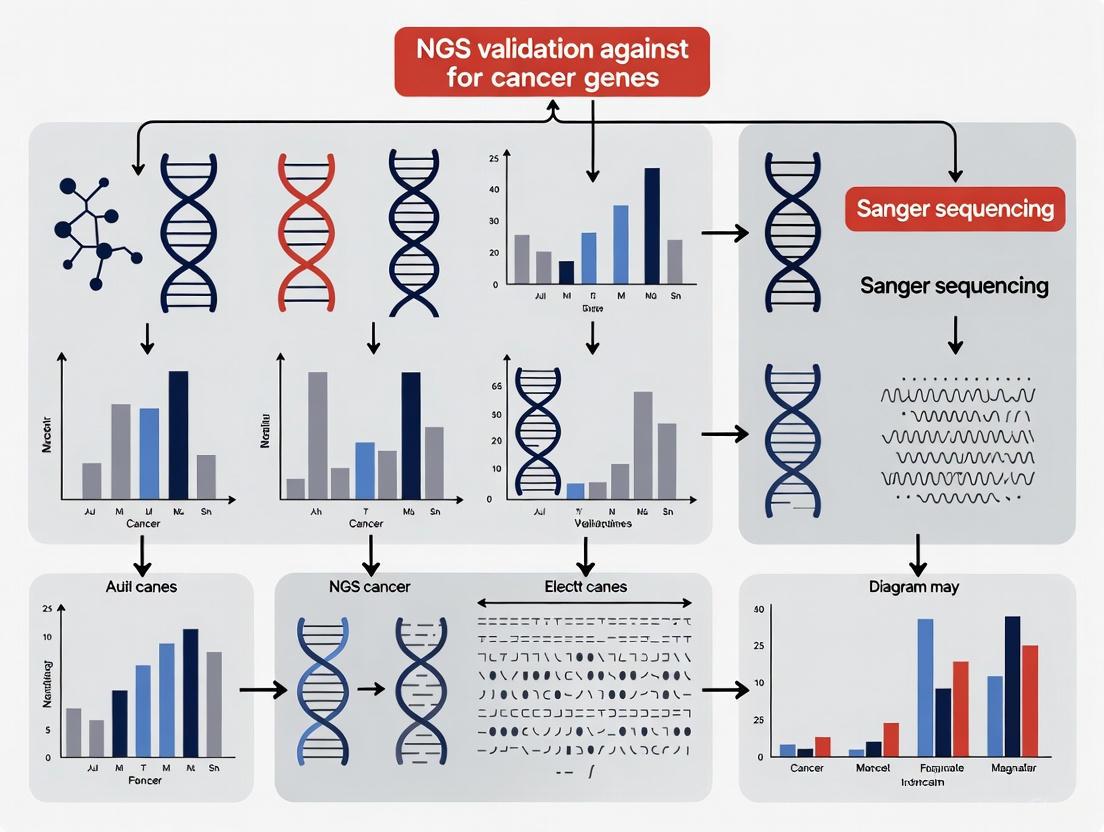
This article provides a comprehensive analysis of next-generation sequencing (NGS) validation against the traditional gold standard, Sanger sequencing, for profiling cancer genes.
NGS vs. Sanger Sequencing: A 2025 Guide to Validation, Performance, and Clinical Application in Cancer Genomics
Abstract
This article provides a comprehensive analysis of next-generation sequencing (NGS) validation against the traditional gold standard, Sanger sequencing, for profiling cancer genes. Tailored for researchers, scientists, and drug development professionals, it explores the foundational principles of both technologies, details modern NGS methodology and its clinical applications, addresses common troubleshooting and optimization challenges, and presents extensive validation data and comparative performance metrics from recent studies. The synthesis of current evidence demonstrates that rigorously validated NGS panels are not only highly concordant with Sanger sequencing but also offer superior throughput, sensitivity for low-frequency variants, and faster turnaround times, supporting their integration into routine clinical diagnostics and precision oncology workflows.
From Sanger to NGS: Understanding the Technological Revolution in Cancer Genomics
The evolution of DNA sequencing technology from the sequential approach of first-generation methods to the massively parallel architecture of Next-Generation Sequencing (NGS) represents a fundamental paradigm shift in molecular biology and oncology research. This transition has fundamentally transformed our capacity to interrogate cancer genomes, enabling comprehensive genomic profiling that informs personalized treatment strategies. While Sanger sequencing, developed in 1977, long served as the gold standard for genetic analysis, its linear, single-fragment-at-a-time methodology inherently limited its throughput and sensitivity [1] [2]. The emergence of NGS technologies in the mid-2000s introduced a radically different core principle: massively parallel sequencing, whereby millions to billions of DNA fragments are simultaneously sequenced in a single run [1] [3]. This architectural shift has not only dramatically reduced the cost and time required for genomic analyses but has also unlocked new research applications previously considered impossible, particularly in the complex landscape of cancer genomics where tumor heterogeneity, low-frequency somatic variants, and multifaceted resistance mechanisms demand exceptional analytical sensitivity and breadth [1] [3].
In the specific context of cancer genes research, this technological evolution has necessitated rigorous validation protocols to ensure the analytical validity of NGS findings. The research community has traditionally relied on Sanger sequencing as an orthogonal validation method for NGS-detected variants, creating a dynamic interplay between established and emerging technologies [4]. This guide objectively compares the performance of these sequencing approaches through experimental data, detailed methodologies, and practical implementation frameworks relevant to researchers, scientists, and drug development professionals working in oncology.
Fundamental Technological Differences
The core distinction between Sanger sequencing and NGS lies not merely in their contemporary applications but in their fundamental biochemical approaches to determining DNA sequences. Sanger sequencing, also known as chain-termination or dideoxy sequencing, relies on the random incorporation of fluorescently-labeled dideoxynucleotides (ddNTPs) during DNA polymerase-mediated replication [2] [3]. These ddNTPs lack the 3'-hydroxyl group necessary for chain elongation, causing termination of DNA synthesis at specific base positions. The resulting DNA fragments of varying lengths are separated by capillary gel electrophoresis, and the sequence is determined by detecting the fluorescent signal of the terminal nucleotide in each fragment [2]. While modern capillary electrophoresis has streamlined this process, the method remains inherently limited to sequencing one DNA fragment per reaction, creating a natural throughput bottleneck [5].
In contrast, NGS technologies employ diverse biochemical approaches united by their implementation of massively parallel sequencing [1] [3]. One prominent method, Sequencing by Synthesis (SBS), utilizes fluorescently-labeled reversible terminators that allow for the sequential addition of single nucleotides across millions of DNA clusters immobilized on a flow cell surface [3]. After each incorporation cycle, imaging captures the fluorescent signal identifying the base at each cluster, followed by terminator cleavage to enable subsequent cycles. This parallel architecture enables NGS to simultaneously sequence millions to billions of DNA fragments in a single run, generating unprecedented volumes of data that provide both breadth of coverage and depth of sampling for confident variant detection [5] [1].
Table 1: Core Technological Principles Comparison
| Technological Aspect | Sanger Sequencing | Next-Generation Sequencing |
|---|---|---|
| Fundamental Method | Chain termination using ddNTPs | Massively parallel sequencing (e.g., Sequencing by Synthesis) |
| Sequencing Scale | Single DNA fragment per reaction | Millions to billions of fragments simultaneously |
| Read Structure | Long, contiguous reads (500-1000 bp) | Short reads (50-300 bp for Illumina; longer for third-gen) |
| Detection System | Capillary electrophoresis with fluorescent detection | High-resolution optical imaging of clustered fragments |
| Throughput Capacity | Low to medium throughput | Extremely high throughput |
| Data Output Volume | Small data per run (single sequence chromatograms) | Massive datasets (gigabases to terabases per run) |
Performance Comparison in Cancer Genomics
Empirical studies directly comparing Sanger sequencing and NGS in cancer research settings consistently demonstrate distinct performance characteristics that inform their optimal applications. A critical performance differentiator lies in analytical sensitivity – the minimum variant allele frequency (VAF) detectable by each method. Sanger sequencing typically has a detection limit of approximately 15-20% allele frequency, meaning subclonal mutations present in minor tumor cell populations may remain undetected [5] [1]. This limitation proves particularly problematic in analyzing heterogeneous tumor samples or detecting minimal residual disease where cancer-associated mutations may exist at very low frequencies.
NGS platforms significantly surpass this sensitivity threshold through their deep sequencing capabilities. Depending on sequencing depth, NGS can reliably detect variants at frequencies as low as 1-5% [5] [1]. In a 2015 study focused on PIK3CA mutations in breast cancer, NGS identified mutations with variant frequencies below 10% that were missed by Sanger sequencing [6]. This enhanced sensitivity enables researchers to identify subclonal populations within tumors, track evolving mutation patterns during therapy, and detect emerging resistance mechanisms at earlier timepoints.
The throughput and multiplexing capacity of each method also differs substantially. Sanger sequencing operates most efficiently when interrogating a small number of genomic targets (typically 1-20 targets) across limited sample numbers [5] [2]. In contrast, NGS can simultaneously evaluate hundreds to thousands of genes in a single assay, making it uniquely suited for comprehensive genomic profiling [1]. This capability proves invaluable in oncology research, where multiple driver mutations across numerous genes may contribute to tumor pathogenesis and treatment response.
Table 2: Analytical Performance Comparison in Cancer Research
| Performance Metric | Sanger Sequencing | Next-Generation Sequencing | Experimental Evidence |
|---|---|---|---|
| Sensitivity (Limit of Detection) | ~15-20% variant allele frequency | As low as 1% variant allele frequency | NGS detected PIK3CA mutations with <10% VAF missed by Sanger [6] |
| Variant Concordance | Gold standard for single variants | >99.9% concordance for high-quality variants | 99.965% validation rate for NGS variants in ClinSeq study (5,800+ variants) [7] |
| Multiplexing Capacity | Limited; cost-effective for 1-20 targets | High; simultaneous analysis of hundreds to thousands of targets | Custom panels with 57-97 genes enable comprehensive profiling [4] |
| Cost Efficiency | Lower cost for limited targets; high cost per base | Higher initial cost; lower cost per base for large regions | More cost-effective for sequencing multiple genes [6] [5] |
| Discovery Power | Limited to known targets in amplified regions | High; detects novel variants, structural variants, CNVs | Identifies mutations outside traditional hotspots (exons 1, 4, 7, 13 of PIK3CA) [6] |
Experimental Validation and Methodologies
Validation Studies and Concordance Metrics
Rigorous validation studies have quantified the analytical performance and concordance between NGS and Sanger sequencing in cancer gene research. A landmark analysis from the ClinSeq project systematically evaluated Sanger-based validation of NGS variants across 684 exomes [7]. From over 5,800 NGS-derived variants subjected to orthogonal Sanger confirmation, only 19 were not initially validated by Sanger sequencing. Upon further investigation using newly designed sequencing primers, 17 of these 19 variants were confirmed by Sanger, while the remaining two exhibited low quality scores in the exome sequencing data [7]. This resulted in an overall validation rate of 99.965% for NGS variants using Sanger sequencing, leading researchers to question the utility of routine orthogonal validation for NGS variants that meet established quality thresholds [7].
Similar findings emerged from a 2015 breast cancer study focusing on PIK3CA mutation status [6]. In this analysis of 186 breast carcinomas, 55 PIK3CA mutations occurred in exons 9 and 20, with 52 successfully detected by both NGS and Sanger sequencing, yielding a 98.4% concordance between the platforms [6]. Notably, the three mutations missed by Sanger sequencing all had low variant frequencies below 10%, highlighting the sensitivity advantage of NGS for detecting subclonal mutations in heterogeneous tumor samples [6]. Additionally, NGS identified mutations in exons 1, 4, 7, and 13 of PIK3CA that would have been missed by conventional Sanger approaches targeting only known hotspot regions [6].
Detailed Experimental Protocol
For researchers seeking to implement similar validation studies, the following methodology from published literature provides a robust framework:
DNA Extraction and Quality Control
- Extract genomic DNA from tumor samples (e.g., using QIAamp DNA Mini Kit) [6]
- Quantify DNA concentration using fluorometric methods (e.g., Qubit fluorometer) [6]
- Assess DNA quality and ensure absence of degradation
- For tumor samples, ensure representative tumor content (typically ≥30% tumor cells) [6]
Library Preparation for Targeted NGS
- Utilize 10-50 ng of genomic DNA as input [6] [4]
- Employ targeted enrichment approaches:
- Incorporate molecular barcodes (unique identifiers) for sample multiplexing [6]
- Validate library quality and quantity before sequencing (e.g., using Qubit instrument) [6]
NGS Sequencing and Data Analysis
- Perform sequencing on appropriate platform (e.g., Illumina MiSeq, Ion PGM) with sufficient coverage [6] [4]
- Ensure minimum coverage depth of 30×, with recommended 100× or higher for sensitive variant detection [4]
- Implement bioinformatic pipeline:
Sanger Sequencing Validation
- Design PCR primers flanking variant regions using Primer3 algorithm [7] [4]
- Verify primer specificity and absence of polymorphisms in binding sites [4]
- Perform PCR amplification and purify products
- Conduct Sanger sequencing using fluorescent terminator chemistry
- Analyze chromatograms and confirm variants through bidirectional sequencing [7]
Visualization of Sequencing Workflows
Sanger Sequencing Workflow
Next-Generation Sequencing Workflow
Research Reagent Solutions for Sequencing Experiments
Table 3: Essential Research Reagents for Sequencing Studies
| Reagent/Kit | Function | Application Notes |
|---|---|---|
| QIAamp DNA Mini Kit (Qiagen) | DNA extraction from blood or tissue | Provides high-quality DNA for downstream sequencing; suitable for FFPE samples with modifications [6] |
| Ion AmpliSeq Library Kit (Thermo Fisher) | Targeted library preparation for NGS | Enables multiplex PCR-based target enrichment; optimal for small amplicons (<175 bp) [6] |
| SureSelect Target Enrichment (Agilent) | Hybrid capture-based library preparation | Uses biotinylated RNA baits for target capture; suitable for custom gene panels [4] |
| FastStart Taq DNA Polymerase (Roche) | PCR amplification for Sanger sequencing | Provides high fidelity amplification for validation studies [4] |
| BigDye Terminator v3.1 (Thermo Fisher) | Cycle sequencing for Sanger method | Fluorescent dye terminators for capillary electrophoresis [7] |
| MiSeq Reagent Kits (Illumina) | Sequencing chemistry for NGS | Provides cluster generation and sequencing-by-synthesis reagents for Illumina platforms [4] |
The shift from sequential to massively parallel sequencing represents more than a technological upgrade; it constitutes a fundamental transformation in how researchers approach cancer genomics. The core principles of NGS – massive parallelism, deep sequencing, and multiplexing capacity – provide distinct advantages for comprehensive genomic profiling in oncology research, particularly for detecting low-frequency variants, identifying novel cancer-associated mutations outside traditional hotspots, and analyzing complex, heterogeneous tumor samples [6] [1].
While Sanger sequencing maintains its role as a gold standard for validating specific variants and for projects requiring limited targeted sequencing [2] [3], the overwhelming evidence from validation studies demonstrates that NGS technologies deliver exceptional accuracy (>99.9% concordance) when appropriate quality metrics are maintained [7]. The research community is increasingly questioning the necessity of routine orthogonal Sanger validation for all NGS-detected variants, particularly as NGS platforms continue to improve in accuracy and reliability [7] [4].
For cancer researchers and drug development professionals, strategic implementation of both technologies involves matching the sequencing approach to the specific research question. Sanger sequencing remains optimal for simple validation studies and low-target-number projects, while NGS provides unparalleled power for discovery-based research, comprehensive genomic profiling, and studies requiring detection of low-frequency variants in complex cancer genomes. As NGS technologies continue to evolve and integrate with emerging analytical approaches like artificial intelligence and single-cell sequencing, their central role in advancing precision oncology will only intensify, further solidifying the paradigm shift from sequential to massively parallel sequencing.
Within cancer genomics, the accurate detection of somatic and germline variants is paramount for driving research and therapeutic development. For decades, Sanger sequencing has served as the undisputed gold standard for DNA sequencing, providing the foundational data for the Human Genome Project and countless clinical assays. However, the rise of next-generation sequencing (NGS) has transformed the scale of genomic inquiry, enabling the parallel interrogation of hundreds of cancer-related genes. This guide objectively compares the performance of Sanger sequencing against NGS technologies, with a specific focus on the critical practice of using Sanger to validate NGS-derived variants in cancer gene research. We summarize comparative performance data, detail experimental protocols from key studies, and provide a toolkit for researchers navigating the integration of these complementary technologies.
Sanger Sequencing as a Gold Standard
Sanger sequencing, developed in 1977, operates on the principle of chain-termination. It utilizes fluorescently labeled dideoxynucleotides (ddNTPs) that, when incorporated by DNA polymerase, halt DNA strand elongation. The resulting fragments are separated by capillary electrophoresis, generating a chromatogram that reveals the DNA sequence [8] [9]. Its status as a gold standard is anchored on two pillars: exceptional accuracy and widespread application in clinical validation.
Unmatched Accuracy and Reliability
Sanger sequencing is renowned for its high base-calling accuracy, typically cited at 99.99%, with an error rate as low as 0.001% [10] [8]. This precision stems from its robust biochemistry, which is less susceptible to context-specific errors (e.g., in homopolymer regions) that can plague some NGS technologies. The output—a clear chromatogram—allows for direct visual verification of variants, including heterozygous calls, by human experts [11] [10].
The Traditional Role in Orthogonal Validation
Orthogonal validation—confirming a result with a different methodological principle—is a cornerstone of clinical and research genomics. For years, guidelines from bodies like the American College of Medical Genetics (ACMG) have recommended Sanger sequencing as the orthogonal method to confirm variants identified by NGS before reporting [12] [13]. This practice was born from the early need to verify findings from nascent, high-throughput but potentially error-prone NGS platforms.
Performance Comparison: Sanger Sequencing vs. NGS
The following tables provide a quantitative and qualitative comparison of Sanger sequencing and NGS, synthesizing data from multiple studies to offer a clear performance overview.
Table 1: Key Technical and Operational Specifications
| Aspect | Sanger Sequencing | Next-Generation Sequencing (NGS) |
|---|---|---|
| Principle | Chain-termination, capillary electrophoresis [8] | Massively parallel sequencing (e.g., reversible terminators, semiconductor) [5] [9] |
| Throughput | Low (one fragment per reaction) [14] | Very High (millions to billions of fragments per run) [5] [9] |
| Read Length | Long (500–1000 bp) [8] [14] | Short to Long (Illumina: 150-600 bp; PacBio/Nanopore: >10,000 bp) [14] |
| Typical Accuracy | ~99.99% [10] [8] | >99.9% (varies by platform and base position) [14] |
| Detection Limit (VAF) | ~15–20% [5] [9] | ~1–5% (with sufficient depth) [5] [14] |
| Best Applications | Single gene testing, known variant confirmation, validation [11] [9] | Large gene panels, whole exome/genome, novel discovery, low-frequency variant detection [5] [9] |
Table 2: Experimental Validation Data from Comparative Studies
| Study Description | Total NGS Variants | Variants Not Validated by Initial Sanger | Final Concordance Rate | Key Findings |
|---|---|---|---|---|
| ClinSeq Exome Study (2016) [7] | ~5,800 | 19 | 99.97% | 17 of 19 discrepancies were due to Sanger primer issues, not NGS errors. |
| Whole Genome Sequencing Study (2025) [12] [13] | 1,756 | 5 | 99.72% | Proposed quality filters (QUAL≥100, DP≥15, AF≥0.25) could reduce needed Sanger validation to 1.2% of variants. |
| Targeted NGS Panels (Various) [12] | Varies | Varies | 91.29%–98.7% | Concordance is highly dependent on the enrichment panel and specific quality filters applied. |
Key Performance Insights from Data
- Extremely High Concordance: When NGS variants are of high quality, Sanger validation confirms them at a rate exceeding 99.9%, challenging the universal necessity of orthogonal confirmation [7].
- The Source of Discrepancies: A significant portion of initial validation failures can be attributed not to NGS errors but to limitations in Sanger sequencing itself, such as primer binding issues that prevent the variant from being amplified and sequenced [7].
- Shifting Validation Paradigm: Recent large-scale studies conclude that a single round of Sanger sequencing is statistically more likely to incorrectly refute a true NGS variant than to correctly identify a false positive. The field is moving towards using quality thresholds (read depth, allele frequency, quality scores) to define a subset of "high-quality" NGS variants that do not require Sanger validation [7] [12].
Inherent Limitations of Sanger Sequencing
Despite its gold-standard status, Sanger sequencing possesses several inherent limitations that become apparent when compared to NGS, especially in a cancer research context.
Low Throughput and Scalability
Sanger sequencing processes a single DNA fragment per reaction. Sequencing a large gene or multiple genes requires numerous individual reactions, making it cost-prohibitive and inefficient for projects larger than a handful of targets [5] [10] [14]. This is fundamentally incompatible with the scale of modern cancer panel, exome, or genome sequencing.
Poor Sensitivity for Low-Frequency Variants
Sanger sequencing's detection limit for a variant allele in a mixed sample is typically 15–20% [5] [9]. The method generates a composite chromatogram, where a minor allele must be present in a high proportion to be distinguishable from background noise. This makes it ineffective for detecting somatic mutations in heterogeneous tumor samples, minimal residual disease, or subclonal populations—a critical application in cancer genomics where NGS excels with its ability to detect variants at frequencies of 1% or even lower [5] [14].
Limited Discovery Power
Sanger sequencing is a targeted method, ideal for confirming known or suspected variants. It offers minimal power for novel discovery, such as identifying new fusion genes, non-coding drivers, or complex structural variations across the genome [5]. NGS, with its hypothesis-free and comprehensive genomic coverage, is uniquely suited for these discovery applications.
Experimental Protocols for NGS Validation
The standard protocol for validating NGS variants using Sanger sequencing involves a multi-step process to ensure robustness. The following diagram outlines the core workflow and decision-making pathway based on current best practices.
Detailed Methodology for Sanger Validation
The following protocol is adapted from large-scale validation studies [7] [12].
Variant Selection and Prioritization:
- Select NGS variants for confirmation based on clinical or biological significance.
- Apply quality filters (e.g., depth of coverage (DP) ≥ 15, allele frequency (AF) ≥ 0.25, quality score (QUAL) ≥ 100) to identify variants that may not require validation [12].
Primer Design:
PCR Amplification:
- Perform PCR using the original genomic DNA as template.
- Use high-fidelity DNA polymerase to minimize PCR errors.
Sequencing Reaction and Cleanup:
- Perform the cycle-sequencing PCR using fluorescent dye-terminator chemistry (e.g., BigDye).
- Clean up the sequencing reaction to remove unincorporated terminators.
Capillary Electrophoresis:
- Load the purified product onto a capillary sequencer.
Data Analysis:
- Manually inspect the chromatogram files using software such as Sequencher.
- For heterozygous variants, confirm the presence of double peaks (overlapping A/C/G/T) at the variant position. A single, clean peak indicates a homozygous call.
The Scientist's Toolkit: Essential Research Reagents
Table 3: Key Reagent Solutions for Sanger Sequencing Validation
| Item | Function | Example/Note |
|---|---|---|
| High-Fidelity DNA Polymerase | Amplifies the target region from genomic DNA with minimal errors. | Enzymes with proofreading activity (e.g., Pfu) are preferred. |
| Dye-Terminator Kit | Fluorescently labels DNA fragments during the chain-termination sequencing reaction. | BigDye Terminator v3.1 is a common commercial kit. |
| Capillary Sequencer | Separates fluorescently labeled DNA fragments by size and detects the fluorescence. | Applied Biosystems 3130xl or 3500xl Series. |
| Primer Design Software | Designs specific oligonucleotide primers that flank the variant of interest. | Primer3, PrimerBlast. |
| Sequence Analysis Software | Aligns sequencing traces to a reference sequence and facilitates manual variant review. | Sequencher, GeneCodes; manual review is critical. |
The Evolving Role of Sanger in the NGS Era
The relationship between Sanger sequencing and NGS is best described as complementary, not competitive [9]. While NGS is unequivocally superior for discovery and high-throughput screening, Sanger sequencing retains a vital, albeit more focused, role in the modern genomics laboratory.
Its primary applications are now:
- Validation of Critical Variants: Providing an extra layer of confidence for key findings before publication or clinical reporting, especially when NGS quality metrics are borderline.
- Filling in Gaps: Sequencing regions with poor or no coverage in NGS data due to high GC-content or other technical challenges.
- Rapid, Targeted Sequencing: For projects where only one or a few known loci need to be interrogated, Sanger remains the most cost-effective and rapid technology [11] [9].
As NGS technology continues to mature and quality metrics become more reliable, the mandatory use of Sanger validation is expected to further decline. The future of Sanger sequencing lies not as a universal validator, but as a specialized tool within a broader genomic toolkit, its use dictated by specific project needs rather than blanket policy [7] [12].
Next-generation sequencing (NGS) has revolutionized genomic analysis in cancer research, presenting a paradigm shift from traditional Sanger sequencing. While Sanger sequencing has served as the gold standard for decades, providing high accuracy for interrogating single genes, its limitations in throughput and scalability have become increasingly apparent in oncology, where tumor heterogeneity and complex mutational profiles are the norm [15]. In contrast, NGS technologies leverage massively parallel sequencing, enabling researchers to process millions of DNA fragments simultaneously [5]. This fundamental difference in approach has profound implications for throughput, scale, and cost-effectiveness in cancer gene research. The transition from single-gene analysis to comprehensive genomic profiling represents a critical evolution in molecular diagnostics, allowing scientists to uncover novel biomarkers, identify rare variants, and develop more personalized treatment strategies for cancer patients [16] [15]. This guide objectively compares these technologies within the context of validating NGS for cancer gene research, providing researchers with the analytical framework needed to select the appropriate sequencing method for their specific experimental requirements.
Technology Comparison: Fundamental Differences and Capabilities
The core distinction between Sanger and next-generation sequencing lies in their underlying methodologies and resulting capabilities. Sanger sequencing, also known as dideoxy or capillary electrophoresis sequencing, employs a chain-termination method that generates DNA fragments of varying lengths which are separated by capillary gel electrophoresis [17]. This process sequences a single DNA fragment at a time, making it reliable for small-scale applications but inherently limited for comprehensive genomic studies [5]. The technology requires a homogeneous template for optimal results and provides data in the form of chromatograms (trace or AB1 files) from which DNA sequences are determined [18].
In contrast, NGS technologies utilize massively parallel sequencing, processing millions of fragments simultaneously per run [5]. This high-throughput approach enables the sequencing of hundreds to thousands of genes concurrently, providing unprecedented discovery power to detect novel or rare variants through deep sequencing [5]. The NGS workflow typically involves DNA fragmentation, adapter ligation for library preparation, massive parallel sequencing, and sophisticated bioinformatic analysis to align sequences and identify variants [15]. The output consists of raw data in FASTQ format, which requires specialized computational pipelines for processing and interpretation [18].
Table 1: Core Technology Comparison Between Sanger and Next-Generation Sequencing
| Feature | Sanger Sequencing | Next-Generation Sequencing |
|---|---|---|
| Sequencing Principle | Chain termination with dideoxynucleotides | Massively parallel sequencing |
| Throughput | Single DNA fragment per run | Millions of fragments simultaneously |
| Target Discovery | Limited to known, predefined targets | Unbiased sequence discovery possible |
| Data Output | Limited data output | Large amount of data |
| Multiplexing Capability | Not possible | High capacity with sample multiplexing |
| Quantitative Analysis | Not quantitative; limited heterogeneity detection | Quantitative capability |
| Applications in Cancer Research | Ideal for sequencing single known cancer genes | Detects mutations, structural variants across multiple genes |
Throughput and Scale: A Quantitative Analysis
The throughput advantage of NGS over Sanger sequencing is not merely incremental but represents an exponential improvement that fundamentally transforms research capabilities in cancer genomics. While Sanger sequencing typically processes one gene per reaction, requiring separate reactions for each target, NGS can sequence hundreds to thousands of genes simultaneously in a single run [5] [18]. This massive parallelization enables comprehensive genomic profiling that would be practically impossible with Sanger technology alone.
The scale of data generation highlights this dramatic difference. A single NGS run can generate gigabases to terabases of sequence data, whereas Sanger sequencing produces limited data output in comparison [15]. This high-throughput capability makes NGS particularly valuable for analyzing complex cancer genomes, where multiple genes and regulatory regions must be interrogated to understand tumorigenesis fully. The technology can identify various genomic alterations—including single nucleotide variants (SNVs), insertions and deletions (Indels), copy number variations (CNVs), and structural variants—from a single assay [19].
In practical terms, this throughput advantage translates directly to research efficiency. A 2025 study validating a 61-gene oncopanel demonstrated that NGS successfully detected 794 mutations across 43 unique samples, including all 92 known variants previously identified by orthogonal methods [16]. The assay achieved 98.23% sensitivity for detecting unique variants with 99.99% specificity, performance metrics that would require an impractical number of Sanger reactions to replicate [16]. This comprehensive profiling capability is further enhanced by the ability to multiplex numerous samples in a single sequencing run, dramatically increasing throughput while reducing per-sample costs for large-scale studies [5].
Cost-Effectiveness Analysis: Beyond Per-Base Calculations
When evaluating the cost-effectiveness of sequencing technologies, it is essential to consider both direct costs and holistic economic factors within the research context. While Sanger sequencing remains cost-effective for interrogating fewer than 20 targets, its cost structure becomes prohibitive for larger-scale projects, with expenses reaching approximately $500 per megabase [20]. In contrast, NGS costs have decreased dramatically to less than $0.50 per megabase for platforms like Illumina HiSeq2000, making it significantly more economical for comprehensive genomic studies [20].
A systematic review of cost-effectiveness evidence found that targeted NGS panels (2-52 genes) become cost-effective when 4 or more genes require analysis [21]. This economic advantage extends beyond direct sequencing costs to encompass holistic factors including reduced turnaround time, decreased personnel requirements, fewer hospital visits, and lower overall institutional costs [21]. The economic model shifts from a per-reaction to a per-information basis, with NGS providing substantially more genomic data per dollar invested.
Table 2: Cost and Operational Efficiency Comparison
| Cost Factor | Sanger Sequencing | Next-Generation Sequencing |
|---|---|---|
| Cost per Megabase | ~$500/Mb [20] | <$0.50/Mb (Illumina HiSeq2000) [20] |
| Cost-Effectiveness Threshold | Economical for 1-20 targets [5] | Cost-effective when ≥4 genes require testing [21] |
| Personnel Requirements | Higher per-gene personnel time | Reduced staffing needs through automation |
| Turnaround Time | Faster for single genes; slower for multiple genes | ~4 days for comprehensive 61-gene panel [16] |
| Sample Requirements | Increasing sample amount needed for more targets | More information per sample amount [17] |
| Multiplexing Capability | Not possible | Significant cost savings through sample multiplexing |
The implementation of in-house NGS testing has demonstrated substantial operational efficiencies. A 2025 study reported reducing turnaround time from approximately 3 weeks with external testing to just 4 days with an in-house NGS workflow, while also lowering costs associated with shipping and service fees [16]. This accelerated timeline can be critical in cancer research programs where rapid genomic characterization directly impacts project timelines and therapeutic development.
Experimental Validation: Protocols and Performance Metrics
Validation Protocols for NGS in Cancer Research
Robust experimental validation is crucial for implementing NGS in cancer gene research. A comprehensive protocol for validating targeted NGS panels should include:
Panel Design and Target Enrichment: The TTSH-oncopanel study targeted 61 cancer-associated genes using a hybridization-capture-based DNA target enrichment method with library kits compatible with an automated library preparation system [16]. This approach reduces human error, contamination risk, and improves consistency compared to manual methods.
Sequencing and Quality Control: Researchers performed sequencing using the MGI DNBSEQ-G50RS sequencer with combinatorial Probe-Anchor Synthesis (cPAS) technology [16]. Quality metrics should include assessment of base call quality (percentage of bases ≥ Q30), coverage uniformity (>99%), and percentage of target regions with sufficient coverage (>98% at ≥100× unique molecules) [16].
Variant Calling and Annotation: The protocol should utilize validated bioinformatics pipelines, such as the Sophia DDM software which employs machine learning for variant analysis and connects molecular profiles to clinical insights through OncoPortal Plus, classifying somatic variations by clinical significance [16].
Analytical Validation: Determine the limit of detection (LOD) by titrating DNA input and variant allele frequencies. The TTSH-oncopanel established ≥50 ng DNA input as requisite and minimum detectable VAF of 2.9% for both SNVs and INDELs [16].
NGS Cancer Gene Research Workflow
Performance Metrics and Validation Against Sanger
Recent large-scale studies have systematically evaluated NGS accuracy compared to Sanger sequencing. A landmark analysis from the ClinSeq project compared over 5,800 NGS-derived variants against Sanger sequencing data, measuring a validation rate of 99.965% for NGS variants using Sanger sequencing as the reference [7]. Notably, when discrepancies occurred, a single round of Sanger sequencing was more likely to incorrectly refute a true positive variant from NGS than to correctly identify a false positive variant from NGS [7].
In another comparative study of HIV-1 gp160 amplicons, NGS consensus sequences were either identical or nearly identical to Sanger sequences when available, and in cases of mismatches, the nucleotide in the NGS sequence matched all other sequences from that patient, suggesting potential errors in the Sanger sequence [22]. These findings challenge the conventional wisdom that Sanger sequencing should routinely validate NGS results.
Performance metrics from a 2025 pan-cancer validation study demonstrate the robust analytical performance achievable with NGS: sensitivity of 98.23%, specificity of 99.99%, precision of 97.14%, and accuracy of 99.99% at 95% confidence intervals [16]. The assay also showed 99.99% repeatability and 99.98% reproducibility across technical replicates [16].
Essential Research Toolkit for NGS Implementation
Successful implementation of NGS in cancer gene research requires specific reagents, instruments, and computational resources. The following toolkit outlines essential components for establishing a robust NGS workflow:
Table 3: Research Reagent Solutions for NGS Cancer Gene Studies
| Component | Function | Implementation Example |
|---|---|---|
| Library Preparation Kit | Fragments DNA and adds adapters for sequencing | Sophia Genetics library kits with automated MGI SP-100RS system [16] |
| Target Enrichment System | Captures genomic regions of interest | Hybridization-capture with custom biotinylated oligonucleotides for 61-gene panel [16] |
| Sequencing Platform | Performs massively parallel sequencing | MGI DNBSEQ-G50RS sequencer with cPAS technology [16] |
| Bioinformatics Software | Analyzes sequencing data, calls variants | Sophia DDM with machine learning for variant analysis [16] |
| Reference Standards | Validates assay performance | HD701 positive control with 13 known mutations [16] |
| Quality Control Tools | Assesses DNA quality and quantity | Quantitative PCR for library quantification [16] |
NGS Workflow Component Relationships
In addition to these core components, successful NGS implementation requires appropriate computational infrastructure for data storage and analysis, as a single whole-genome sequencing run can generate 2.5 terabytes of data [20]. The bioinformatics pipeline must include tools for read alignment, variant calling, annotation, and prioritization of clinically actionable mutations in cancer genes such as KRAS, EGFR, ERBB2, PIK3CA, TP53, and BRCA1 [16].
The comparative analysis of NGS and Sanger sequencing reveals a clear technological evolution in cancer genomics research. NGS provides overwhelming advantages in throughput, scale, and cost-effectiveness for comprehensive genomic studies requiring analysis of multiple gene targets. The validation data demonstrates that NGS achieves exceptional accuracy (99.99%) that challenges the necessity of routine Sanger confirmation [16] [7]. For research focused on interrogating a small number of targets (≤3 genes), Sanger sequencing remains a cost-effective and efficient option [5] [21]. However, for comprehensive cancer gene profiling, targeted NGS panels offer superior discovery power, better mutation resolution, and greater overall value when considering holistic research costs [21].
The decision framework for technology selection should consider project scope, target number, available budget, and required turnaround time. As NGS technologies continue to evolve with emerging applications in liquid biopsy, single-cell sequencing, and spatial transcriptomics, their central role in advancing cancer research will undoubtedly expand [19] [15]. Research institutions should prioritize developing the infrastructure and expertise needed to leverage these transformative technologies, ensuring that cancer patients benefit from the most comprehensive genomic insights available.
In the landscape of modern genomics, next-generation sequencing (NGS) has undeniably transformed cancer research with its massively parallel architecture, enabling the comprehensive profiling of tumors across hundreds of genes simultaneously [1] [15]. Despite this revolutionary capability, a critical dependency remains: the validation of NGS-derived findings by Sanger sequencing, the established gold standard for accuracy [3] [23]. First developed by Frederick Sanger in 1977, this method's enduring role is not a relic of tradition but a testament to its unparalleled precision for confirming critical genetic variants [23]. Within oncology research and drug development, where a single-nucleotide error can alter therapeutic decisions or trial outcomes, Sanger sequencing provides the definitive benchmark against which NGS results are verified [24]. This article delineates the technical and methodological reasons for this hierarchical relationship, providing researchers with a clear framework for integrating both technologies into robust, reliable genomic workflows.
Technical Comparison: Throughput Versus Precision
The fundamental distinction between NGS and Sanger sequencing lies in their underlying approach. Sanger sequencing, a capillary electrophoresis-based method, processes a single DNA fragment per reaction, generating a long, contiguous read with exceptional per-base accuracy [3] [24]. In contrast, NGS employs massively parallel sequencing, simultaneously analyzing millions of DNA fragments to deliver immense throughput but yielding shorter reads [1] [25]. This core difference dictates their respective roles in the research pipeline.
Table 1: Fundamental Technical Characteristics Compared
| Feature | Sanger Sequencing | Next-Generation Sequencing (NGS) |
|---|---|---|
| Fundamental Method | Chain termination with dideoxynucleotides (ddNTPs) and capillary electrophoresis [3] | Massively parallel sequencing (e.g., Sequencing by Synthesis) [1] [3] |
| Throughput | Low; one fragment per reaction [24] | Extremely high; millions to billions of fragments simultaneously [1] [25] |
| Read Length | Long (500–1000 base pairs) [3] [24] | Short (typically 50-600 base pairs) [25] |
| Detection Sensitivity | Low (~15-20% variant allele frequency) [1] | High (down to ~1% variant allele frequency) [1] |
| Primary Clinical Utility | Ideal for sequencing single genes and validating specific variants [15] [24] | Comprehensive genomic profiling, detecting novel variants, and analyzing complex structural rearrangements [1] [15] |
The critical advantage of Sanger sequencing is its high per-base accuracy, typically exceeding 99.999% (Phred score > Q50) for the central portion of the read, making it the industry standard for definitive sequence verification [3]. While the per-read accuracy of NGS is lower, its power derives from depth of coverage; by sequencing the same genomic location dozens to thousands of times, statistical models can correct for random errors, achieving high consensus accuracy [3]. However, for confirming a single, defined locus—such as an actionable cancer mutation in EGFR or KRAS—the operational simplicity and definitive result of Sanger are preferred [3].
The Validation Workflow: From NGS Discovery to Sanger Confirmation
A standard genomic workflow in cancer research leverages the respective strengths of each technology: NGS for high-throughput discovery and Sanger for confirmatory validation. This two-tiered approach ensures that key findings, particularly those with clinical or therapeutic implications, are verified with the highest possible accuracy before being reported or acted upon.
The process begins with DNA extraction from patient samples, such as tumor biopsies. The DNA is prepared for NGS through library construction, where it is fragmented and adapter-ligated before undergoing massively parallel sequencing [15]. Bioinformatics pipelines then analyze the millions of short reads, aligning them to a reference genome and calling variants [15]. Variants of high interest—including potential driver mutations, those qualifying patients for clinical trials, or unexpected findings—are flagged for confirmation. For this critical step, specific primers are designed to flank the variant site. The region is amplified via PCR, and the product is sequenced using the Sanger method. The resulting chromatogram provides a clear, visual representation of the base sequence at that locus, allowing for unambiguous confirmation or rejection of the NGS-called variant [23].
Diagram 1: The NGS Discovery and Sanger Validation Workflow. This flowchart outlines the standard practice of using NGS for broad screening and Sanger sequencing for confirming critical genetic variants.
Key Metrics and Experimental Data
The rationale for using Sanger as a validation benchmark is rooted in quantifiable performance metrics. The most significant differentiator is detection sensitivity, which defines the lowest level of a genetic variant that a method can reliably identify. This is particularly crucial in cancer genomics, where tumor heterogeneity means that driver mutations may not be present in all cells.
Table 2: Comparative Performance Metrics for Cancer Genomics
| Metric | Sanger Sequencing | NGS |
|---|---|---|
| Variant Detection Sensitivity | ~15-20% Variant Allele Frequency (VAF) [1] | ~1-5% VAF (can be lower with ultra-deep sequencing) [1] [3] |
| Typical Read Depth | Not applicable (single reaction) | 100x - 1000x+ (depending on application) [3] |
| Optimal Use Case | Confirmatory testing of known or suspected variants [24] | Discovery-based screening for novel and low-frequency variants [1] |
| Ability to Detect Structural Variants | Limited | High (across multiple genes) [1] |
| Cost Model | Cost-effective for low numbers of targets [24] | Cost-effective for high numbers of targets/samples [24] |
Experimental protocols for cross-platform validation are methodical. In a typical experiment, a set of samples with variants identified by NGS is re-analyzed by Sanger sequencing. The methodology for Sanger validation involves:
- Primer Design: Designing specific primers to amplify a 500-1000 bp region encompassing the variant.
- PCR Amplification: Amplifying the target region from the original DNA sample.
- Purification: Cleaning the PCR product to remove excess primers and nucleotides.
- Sequencing Reaction: Performing the cycle sequencing reaction with fluorescently-labeled ddNTPs.
- Capillary Electrophoresis: Running the reaction on an automated sequencer to generate the chromatogram [3] [23].
The results are then compared. A study evaluating a pan-cancer NGS liquid biopsy assay demonstrated this process, using orthogonal methods (including Sanger) to validate its findings and reporting a high concordance of 94% for clinically actionable variants [19]. This experimental paradigm underscores Sanger's role in ensuring the veracity of NGS results before they impact clinical decision-making or drug development pathways.
Essential Research Reagent Solutions
A reliable validation workflow depends on consistent performance from key laboratory reagents. The following table details essential materials and their critical functions in the Sanger sequencing process.
Table 3: Key Research Reagent Solutions for Sanger Sequencing Validation
| Item | Function in the Workflow |
|---|---|
| High-Fidelity DNA Polymerase | Ensures accurate amplification of the target DNA region during PCR, minimizing introduction of replication errors that could be misinterpreted as variants [23]. |
| Fluorescently-Labeled ddNTPs | The chain-terminating nucleotides used in the sequencing reaction; each base (A, T, C, G) is tagged with a distinct fluorescent dye for detection [3]. |
| Capillary Electillation Sequencer | The automated instrument that separates DNA fragments by size via capillary electrophoresis and detects the fluorescent signal to determine the base sequence [3] [23]. |
| Sequence Analysis Software | Specialized software that translates the fluorescent trace data into a sequence chromatogram, facilitating base calling and variant interpretation [23]. |
In conclusion, the narrative of Sanger sequencing versus NGS is not one of obsolescence but of symbiosis. While NGS provides the powerful, wide-angle lens for genomic discovery, Sanger sequencing remains the indispensable magnifying glass for detailed, definitive inspection. Its status as the validation benchmark is anchored in its proven, uncompromising accuracy for targeted sequencing, a quality that continues to be indispensable in cancer research and diagnostic development [3] [24]. As NGS technologies evolve towards greater precision and new methods like nanopore sequencing emerge, the fundamental principle of independent validation will persist [26] [23]. For the foreseeable future, a robust genomic workflow in oncology will continue to rely on the parallel use of both technologies, leveraging the high-throughput capacity of NGS for screening while deferring to the gold-standard accuracy of Sanger sequencing for final confirmation.
Implementing Modern NGS Panels: From Workflow to Clinical Decision-Making
Next-generation sequencing (NGS), also known as massively parallel sequencing (MPS), is a high-throughput technology that enables the simultaneous sequencing of millions to billions of short DNA or RNA fragments in a single run [27]. This core principle of massive parallelization stands in stark contrast to traditional Sanger sequencing, which processes only a single DNA fragment at a time [5] [24]. In the context of cancer research, this transformative capability allows researchers to move beyond examining single genes to performing comprehensive genomic analyses, including whole genomes, exomes, and transcriptomes, providing a systems-level view of the genetic alterations driving cancer progression [28] [29].
The standard NGS workflow consists of four integrated steps: nucleic acid extraction, library preparation, sequencing, and data analysis [30] [31] [32]. This structured pipeline transforms raw biological samples into interpretable genetic data, enabling the discovery of a wide spectrum of genomic variants—from single nucleotide changes to large structural rearrangements—all of which are crucial for understanding tumorigenesis, heterogeneity, and therapeutic resistance [29] [33].
The NGS Workflow: A Step-by-Step Guide
Step 1: Nucleic Acid Extraction
The NGS workflow begins with the isolation of genetic material from samples such as tissue, cells, or biofluids. The quality of this starting material fundamentally impacts all subsequent steps and the reliability of the final data [31] [32]. In cancer research, sample types are diverse, ranging from fresh-frozen tissue and formalin-fixed paraffin-embedded (FFPE) blocks to liquid biopsies containing circulating tumor DNA (ctDNA). Each sample type presents unique challenges; FFPE-derived DNA is often fragmented and cross-linked, while ctDNA is typically very low in abundance within a background of normal cell-free DNA [28].
Three critical metrics must be assessed before proceeding:
- Yield: Sufficient quantity (nanograms to micrograms) must be obtained, especially for limited samples like biopsies [31] [32].
- Purity: Isolated nucleic acids must be free of contaminants like phenol or heparin that can inhibit enzymatic reactions in later steps [31] [32].
- Quality: DNA and RNA integrity is vital. This is often assessed via metrics like the RNA Integrity Number (RIN) for RNA or gel electrophoresis for DNA fragment size [31].
Step 2: Library Preparation
Library preparation converts the isolated nucleic acids into a format compatible with the sequencing platform. This process involves fragmenting the DNA or RNA into smaller pieces and ligating specialized adapter sequences onto them [31] [32]. These adapters serve as universal handles that allow the fragments to bind to the sequencing flow cell and be amplified. Barcodes (or indexes)—short, unique DNA sequences—can also be added during this stage, enabling the pooling (multiplexing) of dozens of samples in a single sequencing run, which dramatically increases throughput and reduces per-sample costs [32].
For targeted sequencing approaches, which are common in cancer research, an enrichment step is included to isolate specific genomic regions of interest, such as known cancer genes [32]. This can be achieved either through amplicon sequencing (using PCR to amplify targets) or hybridization capture (using probe-based pulldown). Targeted panels allow for deeper sequencing of relevant genes, making them ideal for detecting low-frequency variants in heterogeneous tumor samples or liquid biopsies [28] [33].
Step 3: Clonal Amplification and Sequencing
Prior to sequencing, the adapter-ligated DNA fragments are amplified clonally on a flow cell to create millions of clusters, each representing a single original fragment. This intense local amplification is necessary for the sequencer's optical sensor to detect the fluorescence signal during the sequencing reaction [31].
The core of NGS technology is sequencing by synthesis (SBS), a process where DNA polymerase incorporates fluorescently labeled nucleotides into the growing complementary strand one base at a time [5] [31]. Illumina platforms, the most widely used systems, employ a "reversible terminator" method. Each nucleotide is chemically blocked after incorporation, allowing only a single base to be added per cluster per cycle. After imaging to determine the base identity, the terminator is cleaved, and the cycle repeats for the next base [31]. This process generates hundreds of millions of short reads (typically 50-300 base pairs) in a massively parallel fashion.
Step 4: Data Analysis and Interpretation
The final and most computationally intensive step is bioinformatic analysis of the raw sequencing data [30] [29]. This multi-stage process converts raw signal data into biological insights, which is particularly complex in cancer genomics due to tumor heterogeneity and the need to distinguish somatic (tumor-specific) mutations from germline variants.
Table 1: Key Stages in NGS Data Analysis for Cancer Research
| Stage | Key Processes | Common Tools & Applications |
|---|---|---|
| Read Processing | Base calling, adapter trimming, quality filtering, and demultiplexing [32]. | Removes low-quality data and prepares clean reads for analysis. |
| Alignment & Variant Calling | Mapping reads to a reference genome; identifying variants like SNVs and indels [29]. | SAMtools, GATK, VarScan, SomaticSniper; discovers tumor mutations [29]. |
| Interpretation | Pathway analysis, identifying biomarkers/drug targets, correlating variants with clinical data [31] [33]. | PathScan, NetBox; derives biological meaning and clinical relevance [29]. |
The following diagram illustrates the logical progression and key decision points within the core NGS workflow:
Diagram 1: The Core NGS Workflow. This diagram outlines the four major steps, from sample to insight, with detailed sub-processes for library preparation and data analysis.
NGS vs. Sanger Sequencing: A Comparative Analysis for Cancer Research
While both NGS and Sanger sequencing determine the order of nucleotides, their underlying technologies and applications differ substantially [5] [24]. Sanger sequencing, the historical gold standard, is a targeted method best suited for analyzing a single gene or a few amplicons. Its superior accuracy for short reads and simple workflow make it ideal for confirming known mutations. NGS, with its massively parallel nature, provides a panoramic view of the genome, making it the superior tool for discovery and comprehensive profiling [5] [34].
Table 2: Comparative Analysis: NGS vs. Sanger Sequencing in Cancer Research
| Factor | NGS | Sanger Sequencing |
|---|---|---|
| Throughput | High: Millions of reads per run [5] [24]. | Low: Single fragment per run [24]. |
| Genomic Scope | Whole genomes, exomes, transcriptomes, targeted panels [28] [33]. | Single genes or short amplicons [5] [34]. |
| Cost-Effectiveness | Cost-effective for large projects/genes; higher upfront cost [5] [24]. | Cost-effective for interrogating ≤20 targets [5] [24]. |
| Variant Detection | Comprehensive: SNVs, indels, CNVs, fusions, low-frequency variants [5] [28]. | Limited: Best for SNVs/small indels; low sensitivity for variants <15-20% allele frequency [5]. |
| Workflow & Data Analysis | Complex; requires bioinformatics expertise [24] [33]. | Simple workflow; minimal bioinformatics needed [24]. |
Application in Cancer Research: A Hybrid Approach
In modern cancer research, NGS and Sanger are often used synergistically in a hybrid approach [24]. NGS is used for primary discovery—simultaneously screening hundreds of cancer-related genes in a tumor sample to build a comprehensive genetic profile. Subsequently, Sanger sequencing is employed to validate key NGS-identified mutations, especially those with potential clinical significance or those that will be used as biomarkers in downstream assays [24] [29]. This combination leverages the high-throughput discovery power of NGS with the proven accuracy and ease of Sanger for confirmation.
The following decision tree aids in selecting the appropriate method based on project goals:
Diagram 2: Selecting a Sequencing Method for Cancer Research. This decision tree guides the choice between NGS and Sanger based on project scope, objectives, and resources.
Essential Research Reagent Solutions
A successful NGS experiment in cancer research relies on a suite of specialized reagents and tools. The following table details key components of the research toolkit.
Table 3: Essential Research Reagent Solutions for the NGS Workflow
| Item | Function in the NGS Workflow |
|---|---|
| Nucleic Acid Isolation Kits | Extract DNA/RNA from complex sample types (e.g., FFPE, liquid biopsies); critical for yield, purity, and quality [28] [31]. |
| Library Preparation Kits | Fragment nucleic acids and ligate platform-specific adapters and indexes for sequencing [31] [32]. |
| Target Enrichment Panels | Probe sets (e.g., hybrid capture or amplicon) to isolate specific cancer-related genes for targeted sequencing [28] [33]. |
| Sequence Adapters & Barcodes | Oligonucleotides that enable fragment binding to the flow cell and sample multiplexing [31] [32]. |
| Quality Control Assays | Fluorometric and electrophoretic tools (e.g., Qubit, Bioanalyzer) to quantify and qualify samples and libraries pre-sequencing [30] [31]. |
| Bioinformatics Software | Computational tools for base calling, alignment, variant calling, and annotation (e.g., GATK, VarScan, IGV) [29]. |
The NGS workflow—from meticulous library preparation to sophisticated data analysis—provides an unparalleled platform for deciphering the complex genomic landscape of cancer. While Sanger sequencing retains its value for focused applications, the comprehensive nature of NGS has made it the cornerstone of modern oncology research. It enables the discovery of novel driver mutations, the characterization of tumor heterogeneity, and the identification of biomarkers for precision medicine. The choice between these technologies is not a matter of superiority but of strategic alignment with the research objective, whether it is the deep, focused verification of a known variant or the broad, hypothesis-free exploration of the entire cancer genome.
Hybrid-Capture vs. Amplicon-Based Targeted Panels for Solid Tumors
Next-generation sequencing (NGS) has revolutionized genomic profiling in oncology, enabling comprehensive molecular characterization of solid tumors. Two principal methodologies—hybridization capture and amplicon sequencing—dominate targeted NGS approaches for detecting somatic alterations in cancer genomes [35] [36]. The selection between these techniques involves critical trade-offs in performance characteristics, including sensitivity, specificity, workflow efficiency, and genomic coverage [35]. As precision medicine increasingly relies on accurate molecular diagnostics, understanding the technical and performance distinctions between these platforms becomes essential for clinical researchers and drug development professionals.
This comparison guide evaluates hybrid-capture and amplicon-based panels within the context of NGS validation against traditional Sanger sequencing for cancer gene research. While Sanger sequencing previously served as the gold standard for mutation detection, its limitations in throughput, sensitivity, and cost-effectiveness for analyzing multiple genomic regions have led to widespread adoption of NGS technologies [15] [36]. Targeted NGS panels provide a balanced approach, focusing on clinically relevant genomic regions with deeper sequencing coverage and simpler data analysis compared to whole-genome or whole-exome sequencing [36].
Technical Comparison of NGS Methodologies
Fundamental Workflow Differences
Hybridization capture employs biotinylated oligonucleotide probes (baits) designed with homology to genes of interest. These probes selectively hybridize with fragmented DNA libraries, which are then captured using streptavidin-coated magnetic beads to enrich target regions before sequencing [16] [36]. This solution-based capture method provides flexibility in panel design and efficiently covers large genomic regions, including exonic areas with complex architecture [36].
Amplicon sequencing utilizes polymerase chain reaction (PCR) with primers specifically designed to flank target regions of interest. This method directly amplifies target sequences through multiple PCR cycles, creating overlapping amplicons that collectively cover the targeted genes [37] [38]. The amplification-based approach provides inherent target enrichment through primer specificity, resulting in high on-target rates [35].
Table 1: Core Technological Differences Between Hybrid-Capture and Amplicon-Based NGS
| Feature | Hybridization Capture | Amplicon Sequencing |
|---|---|---|
| Enrichment Mechanism | Solution-based probe hybridization | PCR amplification with target-specific primers |
| Number of Workflow Steps | More extensive protocol [35] | Fewer steps, streamlined process [35] |
| Panel Design Flexibility | Virtually unlimited by panel size [35] | Flexible, usually fewer than 10,000 amplicons [35] |
| Input DNA Requirements | Generally higher input requirements | Effective with limited DNA input [36] |
| Optimal Application Scope | Larger target regions, exome sequencing [36] | Smaller, focused gene panels [36] |
Performance Characteristics and Analytical Metrics
The technical differences between these methodologies translate directly into distinct performance profiles that influence their suitability for specific research applications.
Hybrid-capture panels demonstrate superior uniformity of coverage across targeted regions, which is critical for reliable detection of copy number variations (CNVs) and structural variants [38] [36]. These panels also generate lower background noise and fewer false positives due to reduced amplification artifacts and more efficient removal of duplicate reads [35]. The method's solution-phase hybridization allows for more comprehensive coverage of difficult genomic regions, including those with high guanine-cytosine content [36].
Amplicon-based panels typically achieve higher on-target rates because primer-directed amplification provides more specific enrichment of targeted regions [35]. These panels require less input DNA, making them particularly suitable for precious clinical samples with limited material [37] [36]. The streamlined workflow enables shorter turnaround times, a significant advantage in clinical research settings requiring rapid results [35].
Table 2: Performance Comparison of Hybrid-Capture vs. Amplicon-Based NGS
| Performance Metric | Hybridization Capture | Amplicon Sequencing |
|---|---|---|
| On-Target Rate | Moderate due to off-target hybridization [35] | Naturally higher due to primer specificity [35] |
| Coverage Uniformity | Greater uniformity across targets [35] | Variable coverage between amplicons [35] |
| Variant Detection Sensitivity | High sensitivity for SNVs, indels, and CNVs [16] [39] | High for SNVs and indels; variable for CNVs [38] |
| False Positive Rate | Lower noise levels, fewer false positives [35] | Higher potential for amplification artifacts [35] |
| Turnaround Time | More time-intensive process [35] | Less time required from sample to results [35] |
| Multiplexing Capacity | Higher plexity achievable [35] | Limited by primer compatibility [35] |
Experimental Data and Validation Studies
Validation of Hybrid-Capture Panels for Clinical Applications
A 2025 study comprehensively validated a hybridization capture-based panel targeting 61 cancer-associated genes for solid tumor profiling [16]. The researchers developed and optimized the TTSH-oncopanel using a hybridization-capture target enrichment method with library kits from Sophia Genetics, compatible with the automated MGI SP-100RS library preparation system. Sequencing was performed on the MGI DNBSEQ-G50RS platform with cPAS sequencing technology [16].
The validation study demonstrated exceptional analytical performance, with the assay detecting 794 mutations including all 92 known variants from orthogonal methods. Overall performance metrics showed 99.99% repeatability and 99.98% reproducibility across multiple runs. The assay achieved 98.23% sensitivity for detecting unique variants, with 99.99% specificity, 97.14% precision, and 99.99% accuracy at 95% confidence intervals [16]. The study established a minimum detection threshold of 2.9% variant allele frequency (VAF) for both single nucleotide variants (SNVs) and insertion-deletion mutations (indels), with optimal DNA input determined to be ≥50ng [16].
Notably, this hybridization capture approach detected clinically actionable mutations in key cancer genes including KRAS, EGFR, ERBB2, PIK3CA, TP53, and BRCA1. The average turnaround time from sample processing to results was reduced to 4 days, significantly improving upon the 3-week timeframe typically associated with outsourced testing [16].
Performance Evaluation of Amplicon-Based Panels
A 2024 study evaluated the performance of an amplicon-based large panel NGS assay (Oncomine Comprehensive Assay Plus) for detecting MET and HER2 amplification in lung and breast cancers compared to conventional testing methods [38]. This multicenter analysis demonstrated the assay's capability to detect various biomarker types—including single nucleotide variants/indels, copy number variants, fusions, microsatellite instability, tumor mutational burden, and homologous recombination deficiency—in a single workflow [37].
For MET amplification detection in lung cancers, the amplicon-based assay demonstrated 80% sensitivity (4 of 5 FISH-positive cases) and 97.7% specificity (42 of 43 FISH-negative cases), with an overall concordance of 95.8% with fluorescence in situ hybridization (FISH) [38]. For HER2 amplification in breast cancers, the assay showed 66.7% sensitivity (6 of 9 IHC/FISH-positive cases) and 100% specificity (all HER2-negative cases were negative on NGS), with an overall concordance of 93.5% [38].
A critical finding was that all false-negative cases occurred in samples with low-level gene amplification (MET:CEP7 or HER2:CEP17 FISH ratio <3). This limitation highlights a significant challenge for amplicon-based approaches in detecting subtle copy number alterations, potentially due to factors such as inadequate tumor purity, suboptimal DNA quality, or technical limitations in CNV calling from amplicon-based data [38].
Comparative Performance in Detection Efficiency
Hybrid-capture panels demonstrate robust performance across variant types, with particular strength in detecting copy number variations and structural variants. The deeper, more uniform coverage enables more accurate allele frequency quantification and improved detection of subclonal mutations [16] [36].
Amplicon-based panels excel in detecting single nucleotide variants and small indels with high sensitivity, especially when tumor content is limited. However, their performance in copy number variant detection can be inconsistent, particularly for low-level amplifications [38]. The 2024 study revealed that while the overall concordance with conventional methods was high (95.8% for MET and 93.5% for HER2), the reduced sensitivity for amplified targets necessitates careful interpretation of negative results [38].
Figure 1: Comparative Workflows for Hybrid-Capture and Amplicon-Based NGS. The diagram illustrates the fundamental procedural differences between the two target enrichment approaches, highlighting key advantages of each method.
The Scientist's Toolkit: Essential Research Reagents and Platforms
Successful implementation of targeted NGS panels requires carefully selected reagents, platforms, and analytical tools. The following table summarizes key solutions utilized in the cited studies:
Table 3: Essential Research Reagents and Platforms for Targeted NGS
| Category | Specific Products/Platforms | Application/Function |
|---|---|---|
| Hybrid-Capture Panels | TTSH-oncopanel (61 genes) [16] | Comprehensive solid tumor profiling with high sensitivity and specificity |
| Amplicon Panels | Oncomine Comprehensive Assay Plus (501 genes) [37] [38] | Detection of SNVs, indels, CNVs, fusions, and complex biomarkers |
| Library Prep Systems | MGI SP-100RS [16], Ion Chef System [37] | Automated library preparation to reduce human error and increase consistency |
| Sequencing Platforms | MGI DNBSEQ-G50RS [16], Ion GeneStudio S5 Plus [37], Illumina MiSeq [40] | Massively parallel sequencing with platform-specific chemistry approaches |
| Analytical Software | Sophia DDM with OncoPortal Plus [16], Ion Reporter [37] | Variant calling, annotation, and clinical interpretation using bioinformatics pipelines |
| Reference Standards | HD701, HD789, HD827 (Horizon) [16] [37] | Quality control, assay validation, and limit of detection studies |
The choice between hybrid-capture and amplicon-based targeted panels for solid tumor profiling depends primarily on research objectives, sample characteristics, and desired performance metrics. Hybrid-capture panels offer advantages for comprehensive genomic profiling, demonstrating superior performance in detecting copy number variations and structural variants, with higher reproducibility and lower false-positive rates [16] [35]. Amplicon-based panels provide a streamlined workflow with faster turnaround times, higher on-target rates, and better performance with limited DNA input, making them suitable for focused mutation profiling [35] [37] [38].
Both technologies have demonstrated robust validation against orthogonal methods including Sanger sequencing, with hybrid-capture panels achieving >99.99% accuracy and amplicon-based panels showing >94% concordance for most variant types [16] [37]. The emerging trend toward automated library preparation and integrated bioinformatics solutions continues to enhance the reproducibility and standardization of both approaches across research laboratories [16] [37].
For cancer gene research requiring maximal sensitivity for diverse variant types including CNVs, hybrid-capture panels represent the optimal choice. For projects prioritizing rapid turnaround, cost-efficiency, and focused interrogation of known mutational hotspots, amplicon-based panels provide an effective solution. As NGS technologies continue to evolve, both methodologies will maintain important roles in advancing precision oncology research.
The analysis of circulating tumor DNA (ctDNA) represents a cornerstone of precision oncology, offering a minimally invasive method for tumor genotyping, monitoring treatment response, and detecting residual disease. The accurate detection of somatic mutations in ctDNA is technically challenging due to the low abundance of tumor-derived DNA in a high background of normal cell-free DNA. For years, Sanger sequencing (SGS) was the standard for DNA sequencing; however, its low sensitivity (limit of detection ~15–20%) and limited throughput make it unsuitable for detecting low-frequency variants typical in ctDNA [6] [5]. The advent of Next-Generation Sequencing (NGS) has fundamentally transformed this landscape. NGS provides massively parallel sequencing, enabling high-depth coverage that confers a significantly lower limit of detection (down to 0.1–0.5% variant allele frequency) and the ability to interrogate hundreds of genes simultaneously from a limited quantity of input material [41] [42] [5]. This guide provides an objective comparison of validated NGS-based ctDNA assays against traditional Sanger sequencing, framing the discussion within the broader thesis that NGS is an indispensable tool for modern cancer genomics research.
Performance Comparison: NGS vs. Sanger Sequencing
The following tables summarize key performance metrics from recent studies, highlighting the superior capabilities of NGS for ctDNA analysis.
Table 1: Comparative Analytical Performance of NGS ctDNA Assays vs. Sanger Sequencing
| Metric | Sanger Sequencing (SGS) | Targeted NGS for ctDNA | Key Evidence from Validation Studies |
|---|---|---|---|
| Limit of Detection (LoD) | ~15-20% VAF [5] | 0.1% to 0.5% VAF [43] [42] | The PAN100 panel demonstrated an LoD of 0.3% VAF [41]. Northstar Select achieved a 95% LoD of 0.15% VAF for SNVs/Indels [42]. |
| Sensitivity for Low-Frequency Variants | Low; misses subclonal mutations [6] | High; enables detection of rare variants [6] [5] | A multi-site evaluation found mutations above 0.5% VAF were detected with high sensitivity, but performance declined below this threshold [43]. |
| Multiplexing Capability | Single DNA fragment per reaction [5] | Millions of fragments simultaneously; hundreds to thousands of genes [5] | Targeted panels (e.g., 32 to 101 genes) allow parallel detection of SNVs, Indels, CNVs, and fusions from a single assay [41] [19]. |
| Concordance with Tissue NGS | Not routinely used for ctDNA due to low sensitivity | High concordance | The PAN100 panel showed 74.2% overall positive percent agreement (PPA) with tissue NGS [41]. The HP2 assay showed 94% concordance for actionable variants [19]. |
| Variant Types Detected | SNVs, small Indels | SNVs, Indels, CNVs, fusions, MSI [42] [19] | Comprehensive panels like Northstar Select (84 genes) and HP2 (32 genes) report on multiple variant classes from a DNA-only workflow [42] [19]. |
Table 2: Performance of Specific NGS ctDNA Assays from Validation Studies
| Assay Name | Genes Covered | Key Variant Types | Reported Analytical Sensitivity (LoD) | Specificity/PPA |
|---|---|---|---|---|
| PAN100 Panel [41] | 101 | SNVs, Indels | 0.3% VAF | 73.1% PPA (SNVs), 80.0% PPA (Indels) vs. tissue |
| Northstar Select [42] | 84 | SNVs, Indels, CNVs, Fusions, MSI | 0.15% VAF (SNVs/Indels) | Outperformed on-market assays, finding 51% more pathogenic SNVs/Indels |
| Hedera Profiling 2 (HP2) [19] | 32 | SNVs, Indels, CNVs, Fusions, MSI | 0.5% VAF (for reference standards) | 96.92% Sensitivity, 99.67% Specificity (SNVs/Indels) |
Experimental Protocols for ctDNA NGS Validation
Robust validation is critical for implementing NGS-based ctDNA tests. The following protocols are synthesized from published validation studies and best-practice guidelines [44] [45].
Sample Preparation and DNA Extraction
- Sample Collection: Blood samples are collected in cell-stabilizing tubes (e.g., Streck, EDTA) to prevent leukocyte lysis and dilution of ctDNA.
- Plasma Isolation: Centrifugation is performed to separate plasma from cellular components within a few hours of collection.
- Cell-free DNA Extraction: cfDNA is isolated from plasma using commercial silica-membrane or magnetic bead-based kits. The extracted cfDNA is quantified using fluorescence-based assays (e.g., Qubit) and quality-checked using fragment analyzers to confirm a peak at ~160-170 bp [43] [46].
Library Preparation and Target Enrichment
Two primary methods are used for target enrichment in ctDNA NGS assays:
- Hybrid Capture-Based: Following library construction with adapter ligation, biotinylated probes complementary to the target genomic regions (e.g., 101-gene panel) are used to capture the sequences of interest. This method is less prone to allele dropout and can cover larger genomic regions, including introns for fusion detection [41] [44].
- Amplicon-Based: Multiplex PCR primers are used to amplify specific target regions directly from the cfDNA. This method is highly efficient for small target regions but can be susceptible to artifacts from PCR errors or allele dropout if a primer binding site is mutated [6] [44].
To mitigate sequencing errors and enable the detection of very low-frequency variants, Unique Molecular Identifiers (UMIs) are incorporated during library preparation. Each original DNA molecule is tagged with a unique barcode, allowing bioinformatics tools to group duplicate reads and correct for errors introduced during PCR and sequencing [43].
Sequencing and Bioinformatic Analysis
- Sequencing: Libraries are sequenced on a high-throughput NGS platform (e.g., Illumina, Ion Torrent) to achieve a high depth of coverage, often >10,000x, to confidently identify low-frequency variants [43].
- Variant Calling: The bioinformatics pipeline involves:
- Alignment: Reads are aligned to a reference genome (e.g., hg19).
- Consensus Building: Reads with identical UMIs are grouped to generate a consensus sequence, correcting for random errors.
- Variant Calling: Somatic variants (SNVs, Indels) are called against a matched normal sample or a process control. Specialized algorithms are used for calling CNVs and fusions from ctDNA data [43] [44].
The workflow for ctDNA analysis is summarized in the diagram below.
Critical Challenges and Technical Considerations in ctDNA NGS
Despite its advantages, NGS-based ctDNA analysis faces several inherent challenges that validation must address.
- Random Sampling and Low VAF: The fundamental challenge is the random sampling of rare ctDNA fragments from a vast background of normal cfDNA. Even with high coverage, the stochastic sampling of fragments containing a mutation at a very low VAF (<0.1–0.5%) poses a significant statistical hurdle for reliable detection [43].
- Input Material Limitations: The total quantity of cfDNA obtainable from a blood draw is often limited (typically <10 ng/mL of plasma). Low input material can restrict achievable sequencing depth and thus sensitivity. Assays must be optimized for low-input workflows [43].
- Sequence Context and Coverage Heterogeneity: The sensitivity of mutation detection can be reduced in genomic regions with high or low GC content, low sequence complexity, or poor alignability. Furthermore, in hybrid-capture assays, coverage is often lower at the edges of exons ("exon edge-effect"), which can impact variant detection in those regions [43].
The diagram below illustrates the primary factors influencing sensitivity in ctDNA sequencing.
The Scientist's Toolkit: Essential Reagents and Materials
Successful implementation of a validated ctDNA NGS assay relies on specific reagents and materials. The following table details key components.
Table 3: Essential Research Reagent Solutions for ctDNA NGS
| Reagent/Material | Function | Examples & Notes |
|---|---|---|
| Cell-Free DNA Blood Collection Tubes | Preserves blood sample integrity | Streck Cell-Free DNA BCT, PAXgene Blood cDNA Tube; prevents white blood cell lysis. |
| cfDNA Extraction Kits | Isolves cell-free DNA from plasma | QIAamp Circulating Nucleic Acid Kit (Qiagen), MagMAX Cell-Free DNA Isolation Kit (Thermo Fisher). |
| NGS Library Prep Kit | Prepares cfDNA for sequencing | Kits compatible with low input (e.g., 1-30 ng) and UMI integration are essential. |
| Target Enrichment Panels | Enriches for cancer-associated genes | Commercially available (e.g., Illumina TSO 500, Thermo Fisher Oncomine) or custom-designed panels. |
| Reference Standards | Validates assay performance | Seraseq ctDNA Reference Materials (SeraCare); contrived samples with known VAFs. |
| Bioinformatic Pipelines | Analyzes NGS data for variants | Open-source (e.g., BWA, GATK) or commercial software; must support UMI consensus. |
The comprehensive validation data from multiple independent studies firmly establishes that NGS-based ctDNA assays outperform Sanger sequencing for the analysis of circulating tumor DNA. The key differentiators are the dramatically superior sensitivity (LoD of 0.15–0.5% vs. 15–20%) and the ability to perform multiplexed profiling of diverse variant types from a single, minimally invasive sample. While challenges remain in the reliable detection of variants below 0.5% VAF, ongoing advancements in UMI-based error correction, library preparation methods, and bioinformatics continue to push the boundaries of sensitivity and reproducibility. For researchers and clinicians in oncology, the adoption of rigorously validated NGS ctDNA assays is no longer an alternative but a necessity for advancing precision medicine and drug development.
The identification of actionable mutations—genomic alterations with clinical implications for targeted therapy—has fundamentally transformed the diagnosis and treatment of non-small cell lung cancer (NSCLC), colorectal cancer (CRC), and breast cancer. Next-generation sequencing (NGS) has emerged as a powerful tool in clinical oncology, enabling comprehensive genomic profiling that surpasses the limitations of traditional Sanger sequencing. While Sanger sequencing was instrumental in early cancer genomics, its low throughput and sensitivity restrict its utility in contemporary molecular profiling, where analyzing dozens to hundreds of genes simultaneously is often necessary [1].
NGS provides unprecedented resolution for detecting driver mutations, copy number variations, gene fusions, and emerging biomarkers such as tumor mutational burden (TMB) and microsatellite instability (MSI). This capability allows clinicians to match patients with targeted therapies and immunotherapies based on the molecular characteristics of their tumors [1] [47]. This review examines the clinical application of NGS for identifying actionable mutations across three major malignancies, providing performance data, experimental protocols, and molecular pathways central to modern precision oncology.
Technical Comparison: NGS vs. Sanger Sequencing
The transition from Sanger sequencing to NGS represents a paradigm shift in cancer genomic profiling. Massively parallel sequencing, the foundational technology of NGS, enables concurrent analysis of millions of DNA fragments, providing substantial advantages in throughput, sensitivity, and cost-effectiveness for large-scale genomic studies [1].
Table 1: Performance Comparison of NGS versus Sanger Sequencing
| Aspect | Sanger Sequencing | Next-Generation Sequencing (NGS) |
|---|---|---|
| Throughput | Single DNA fragment at a time | Massively parallel; millions of fragments simultaneously |
| Sensitivity (Detection Limit) | Low (~15–20%) | High (down to 1% for low-frequency variants) |
| Cost-effectiveness | Cost-effective for 1–20 targets | Cost-effective for high sample volumes/many targets |
| Discovery Power | Limited; interrogates a gene of interest | High; detects novel or rare variants with deep sequencing |
| Variant Detection Capability | Limited to specific regions | Single-base resolution; detects SNPs, indels, CNVs, and SVs |
| Primary Use | Validation of NGS results, single gene analysis | Comprehensive genomic profiling, discovery, and large-scale studies [1] |
The critical advantage of NGS in clinical practice is its ability to detect low-frequency variants down to ~1% variant allele frequency, compared to Sanger's 15-20% detection limit. This enhanced sensitivity is crucial for identifying heterogeneous subclones within tumors and detecting minimal residual disease [1]. Furthermore, NGS provides comprehensive genomic coverage beyond single-nucleotide variants, including insertions/deletions (indels), copy number variations (CNVs), and structural variants (SVs) at single-nucleotide resolution—capabilities largely absent from Sanger sequencing [1].
Actionable Mutations in Non-Small Cell Lung Cancer (NSCLC)
In NSCLC, molecular profiling has identified numerous actionable targets that predict response to targeted therapies. A prospective study of 50 NSCLC patients with malignant pleural effusion demonstrated the power of NGS testing, where 90% of patients (45/50) harbored actionable mutations. The most common alterations included EGFR L858R mutations (36%), EGFR exon 19 deletions (24%), and HER2 exon 20 insertions (10%) [48]. Pleural effusion cfDNA NGS testing achieved an 88% detection rate for actionable mutations, significantly outperforming clinical tissue genetic testing (66%) [48].
A study of 350 Vietnamese NSCLC patients revealed distinct population-specific patterns, with EGFR mutations in 35.4% and KRAS mutations in 22.6% of cases. Other clinically relevant alterations included ALK rearrangements (6.6%), ROS1 rearrangements (3.1%), and BRAF mutations (2.3%) [49]. Interestingly, this cohort showed a higher prevalence of EGFR mutations than Caucasian populations but lower than other East Asian cohorts, highlighting the importance of population-specific genomic studies [49].
Table 2: Actionable Mutation Profiles in NSCLC
| Gene | Mutation Prevalence | Key Alterations | Therapeutic Implications |
|---|---|---|---|
| EGFR | 32.3-35.4% | L858R, exon 19 deletions, T790M | EGFR tyrosine kinase inhibitors (gefitinib, osimertinib) |
| KRAS | 20-22.6% | G12, G13, Q61 | No direct targeted therapy; impacts response to other agents |
| ALK | 5.4-6.6% | EML4-ALK rearrangements | ALK inhibitors (crizotinib, alectinib) |
| ROS1 | 2.9-3.1% | CD74-ROS1 rearrangements | ROS1 inhibitors (crizotinib, entrectinib) |
| BRAF | 1.1-2.3% | V600E | BRAF/MEK inhibitor combinations [49] |
| HER2 | 10% (in study cohort) | Exon 20 insertions | HER2-targeted therapies [48] |
NSCLC: Experimental Protocols for Mutation Detection
The NSCLC studies utilized targeted capture sequencing of formalin-fixed paraffin-embedded (FFPE) tissue biopsy specimens or liquid biopsy samples. The validation study comparing NGS with droplet digital PCR (ddPCR) for EGFR mutations followed this workflow:
- DNA Extraction: Genomic DNA was extracted from FFPE tissue sections using commercial kits (QIAamp DNA FFPE Tissue kit) [49] [50].
- Library Preparation: DNA libraries were prepared using hybrid capture-based target enrichment (Agilent SureSelectXT Target Enrichment Kit) [50].
- Sequencing: Libraries were sequenced on Illumina platforms (NextSeq 550Dx) with a mean depth of coverage >500x [49] [50].
- Variant Calling: Reads were aligned to the reference genome (hg19), and variants were called using MuTect2 with a variant allele frequency threshold of ≥2% [50].
- Validation: For liquid biopsy samples, the Hedera Profiling 2 ctDNA test demonstrated 96.92% sensitivity and 99.67% specificity for single-nucleotide variants and indels in reference standards with variants at 0.5% allele frequency [19].
Actionable Mutations in Colorectal Cancer (CRC)
Comprehensive genomic profiling of 575 primary CRC tumors revealed a complex landscape of actionable alterations. Among microsatellite stable (MSS) CRCs, driver mutations included APC (74%), TP53 (67%), KRAS (47%), PIK3CA (21%), and BRAF (13%) [47]. A critical finding was that 51% of late-stage CRC patients were eligible for standard care targeted therapies, while the remaining 49% could be enrolled in clinical trials with investigational drugs based on their genomic profiles [47].
The MSI status represents a crucial biomarker in CRC. The study identified 18% of patients as MSI-High, with a median TMB of 37.8 mutations per megabase compared to 3.9 mut/Mb in MSS tumors [47]. Additionally, among MSS RAS/RAF wild-type CRCs, 59% harbored at least one actionable mutation that could compromise the efficacy of anti-EGFR therapy, highlighting the importance of comprehensive profiling beyond standard RAS/BRAF testing [47].
A smaller study of 24 Egyptian CRC patients further demonstrated heterogeneity, identifying non-synonymous variants in TP53, PIK3CA, KDR, KIT, APC, FGFR3, and MET. MSI status distribution showed 50% MSI-Low, 25% MSI-High, and 20.8% MSS [51].
Table 3: Actionable Genomic Alterations in Colorectal Cancer
| Biomarker Category | Prevalence | Key Alterations | Clinical Implications |
|---|---|---|---|
| MSI-High | 18% | MMR deficiency | Immune checkpoint inhibitors (pembrolizumab, nivolumab) |
| KRAS mutations | 47% (MSS) | G12, G13, Q61 | Resistance to anti-EGFR therapy |
| PIK3CA mutations | 21% (MSS) | H1047R, E545K | Potential sensitivity to PI3K inhibitors |
| BRAF mutations | 13% (MSS) | V600E | Poor prognosis; BRAF/MEK inhibitor combinations |
| APC mutations | 74% (MSS) | Truncating mutations | Prognostic significance [47] |
| TMB-High | 18% (associated with MSI-H) | ≥37.8 mut/Mb (median in MSI-H) | Response to immunotherapy [47] |
Actionable Mutations in Breast Cancer
Breast cancer represents a genetically heterogeneous disease with distinct molecular subtypes and corresponding therapeutic targets. A comprehensive study of 1,134 Chinese breast cancer patients revealed TP53 (53%) and PIK3CA (32%) as the most frequently mutated genes [52]. Notably, compared to Western populations, Chinese patients with hormone receptor-positive (HR+), HER2-negative breast cancer showed significant differences in mutation patterns, with increased prevalence of mutations in the p53 and Hippo signaling pathways [52].
A prospective study of 275 Indian breast cancer patients identified a spectrum of actionable alterations, with the most altered genes being TP53, PIK3CA, AKT1, PTEN, ERBB2, ATM, CDH1, APC, KRAS, and NRAS [53]. The PIK3CA gene was mutated in approximately 26.4% of cases, consistent with the COSMIC database, making it a critical therapeutic target [53].
Comparative analysis of digital PCR and NGS for detecting mutations in plasma circulating tumor DNA from metastatic breast cancer patients demonstrated 95% concordance between the two methodologies for ERBB2, ESR1, and PIK3CA mutations, validating NGS as a reliable tool for liquid biopsy applications [54].
Table 4: Actionable Mutation Profiles in Breast Cancer
| Gene | Mutation Prevalence | Key Alterations | Therapeutic Implications |
|---|---|---|---|
| TP53 | 30-53% | R248Q, R282W, R175H | Prognostic marker; potential target for experimental therapies |
| PIK3CA | 26.4-32% | H1047R, E545K | PI3K inhibitors (alpelisib) |
| AKT1 | 2.8-4% | E17K | AKT inhibitors in development |
| ERBB2 (HER2) | 10-25% (amplification) | Amplification, somatic mutations | HER2-targeted therapies (trastuzumab, ado-trastuzumab emtansine) |
| ESR1 | Varies in advanced disease | D538G, Y537S | Aromatase inhibitor resistance; SERDs |
| BRCA1/2 | Varies (germline and somatic) | Loss-of-function mutations | PARP inhibitors (olaparib, talazoparib) [53] [52] |
Breast Cancer: Experimental Protocols for Mutation Detection
The breast cancer genomic studies utilized targeted deep sequencing approaches with rigorous validation:
- Sample Preparation: Tumor samples and matched peripheral blood controls were collected. DNA was extracted with a minimum of 20 ng input and quality control metrics including A260/A280 ratio between 1.7-2.2 [52] [50].
- Library Preparation: Libraries were prepared using either hybrid capture-based enrichment (Agilent SureSelectXT) or amplicon-based approaches (Illumina TruSeq Amplicon/Swift Accel-Amplicon) [53] [52].
- Sequencing: Sequencing was performed on Illumina platforms (MiSeq or NextSeq) with deep coverage (mean depth of 1000× for tumor samples, 400× for normal samples) [52].
- Variant Calling: Somatic mutations were identified using paired tumor-normal analysis. Only variants with variant allele frequency ≥2% and minimum depth thresholds were considered [50].
- Actionability Assessment: Mutations were classified according to evidence levels (OncoKB) or AMP/ASCO/CAP guidelines to determine clinical actionability [47] [50].
Key Signaling Pathways and Workflows
Oncogenic Signaling Pathways in Solid Tumors
The following diagram illustrates major signaling pathways containing frequently actionable mutations across NSCLC, CRC, and breast cancer:
This pathway diagram shows that actionable mutations (highlighted in yellow and red) frequently occur in receptor tyrosine kinase pathways (EGFR, HER2, KRAS, BRAF), making them prime targets for therapeutic inhibition. The PI3K-AKT-mTOR pathway (green) represents another critical signaling cascade with multiple actionable components, while tumor suppressor genes (blue) like TP53 and APC present ongoing challenges for targeted therapy development [48] [53] [47].
NGS Workflow for Actionable Mutation Detection
The standard workflow for identifying actionable mutations in cancer specimens involves multiple critical steps:
This workflow highlights the integrated process from sample collection to clinical reporting. Sample quality is paramount, particularly for FFPE tissues, with strict QC metrics for DNA quantity and purity. Library preparation methods (hybrid capture or amplicon-based) impact the scope of genomic regions analyzed. Bioinformatic analysis converts raw sequencing data into clinically interpretable variants, with final classification based on established guidelines such as OncoKB or AMP/ASCO/CAP tiers [1] [47] [50].
The Scientist's Toolkit: Essential Research Reagents
Table 5: Essential Research Reagents for NGS-Based Mutation Detection
| Reagent/Kit | Manufacturer | Function | Application Context |
|---|---|---|---|
| QIAamp DNA FFPE Tissue Kit | Qiagen | DNA extraction from formalin-fixed paraffin-embedded tissue | Standardized DNA extraction from challenging clinical samples [51] [50] |
| Ion AmpliSeq Library Kit | Thermo Fisher Scientific | Library preparation for targeted sequencing | Enables amplification of target regions with low DNA input [47] |
| Agilent SureSelectXT Target Enrichment | Agilent Technologies | Hybrid capture-based target enrichment | Comprehensive genomic profiling with uniform coverage [50] |
| Qubit dsDNA HS Assay Kit | Invitrogen | Accurate DNA quantification | Essential for quality control and input normalization [51] [50] |
| AmpliSeq for Illumina Cancer Hotspot Panel v2 | Illumina | Targeted sequencing of hotspot regions in 50 genes | Detection of known cancer-associated mutations [51] |
| Agilent 2100 Bioanalyzer | Agilent Technologies | Quality assessment of DNA and libraries | Critical for evaluating DNA integrity and library preparation success [51] [50] |
The comprehensive genomic profiling enabled by NGS technologies has revolutionized the identification of actionable mutations in NSCLC, colorectal cancer, and breast cancer. The high sensitivity and multiplex capability of NGS surpass traditional Sanger sequencing, allowing simultaneous assessment of single-nucleotide variants, insertions/deletions, copy number alterations, gene fusions, and emerging biomarkers like TMB and MSI [1]. The clinical utility of this approach is evidenced by the high percentage of patients (90% in NSCLC, 51% in CRC) with identifiable actionable alterations that can guide targeted therapy selection [48] [47].
As NGS technologies continue to evolve with improved sensitivity, reduced costs, and streamlined workflows, their integration into routine clinical practice will expand. Future directions include the standardization of liquid biopsy applications, resolution of variants of uncertain significance through expanded databases, and the implementation of artificial intelligence for enhanced variant interpretation. The continued refinement of NGS-based diagnostic approaches promises to further advance precision oncology, ultimately improving outcomes for cancer patients across diverse malignancies and populations.
Navigating Technical Challenges and Optimizing NGS Assay Performance
Next-generation sequencing (NGS) has revolutionized cancer genomics, enabling comprehensive molecular profiling that guides diagnosis, prognostication, and therapeutic selection [1]. However, the reliability of any NGS result is fundamentally dependent on pre-analytical variables, with DNA input, quality, and library complexity serving as critical determinants of success. In the context of cancer research, where samples are often limited and heterogeneous, rigorous assessment of these parameters is essential for generating clinically actionable data.
The validation of NGS methods against the historical gold standard of Sanger sequencing remains a crucial exercise in establishing analytical robustness [44] [7]. While Sanger sequencing offers high accuracy for single DNA fragments, its low sensitivity (approximately 15-20% variant detection limit) and poor scalability make it impractical for analyzing large gene panels [2] [1]. NGS, with its massively parallel architecture, provides vastly superior throughput and sensitivity, detecting low-frequency variants down to ~1% variant allele frequency [1]. This comparison underpins a broader thesis: that understanding and controlling pre-analytical parameters enables NGS to achieve a level of accuracy that may eventually minimize the need for routine orthogonal Sanger validation, especially as quality thresholds for "high-quality" NGS variants become better defined [12].
Core Parameter I: DNA Input Quantity and Quality
The Impact of DNA Input on Library Complexity and Variant Detection
The quantity of DNA used to create an NGS library is not merely a technical detail but a primary factor determining the assay's ultimate sensitivity. PCR amplification during library preparation can generate unlimited product from limited input but cannot create more unique information than was present in the original template [55]. Consequently, reducing DNA input compromises library complexity—defined as the number of unique DNA molecules represented—which in turn impacts variant detection accuracy.
Table 1: Impact of DNA Input on NGS Library Performance
| DNA Input | Effect on Library Complexity | Impact on Variant Detection | Recommendations for Cancer Research |
|---|---|---|---|
| High Input | High number of unique molecules; low duplicate read rate | High sensitivity for low-frequency variants; reliable variant allele fraction (VAF) estimation | Ideal for heterogeneous tumor samples; enables detection of subclonal populations |
| Reduced Input | Significant loss of unique molecules; high duplicate read rate due to over-amplification | Fluctuating VAFs; potential false negatives/low sensitivity | Problematic for liquid biopsies and minimal residual disease monitoring; requires Unique Molecular Identifiers (UMIs) |
| Very Low Input | Severely compromised complexity; dominated by PCR duplicates | Unreliable detection; technical replicates show vastly different VAFs | Should be avoided for clinical cancer genomics; if unavoidable, must track unique read coverage |
At high sequencing depths, unique and total (unique plus duplicate) read coverage are not well correlated, meaning that simply sequencing more reads does not improve sensitivity when the library originates from inadequate input material [55]. Fluctuations in library complexity from low-input samples lead to technical replicates with vastly different estimates of variant allelic fraction, directly threatening the accuracy of somatic variant calling in cancer genomics [55].
Assessing DNA Quality and Purity
The quality of DNA is equally critical. Standard quality control metrics include:
- Purity: Assessed via spectrophotometry (NanoDrop) with optimal A260/A280 ratios of 1.8-2.0, indicating minimal protein or other contamination [56].
- Integrity: Evaluated using gel electrophoresis or fragment analyzers to ensure high molecular weight DNA without degradation.
- Tumor Enrichment: For solid tumors, microscopic review by a certified pathologist is mandatory to ensure sufficient non-necrotic tumor content and to guide macrodissection or microdissection for tumor enrichment [44]. Estimation of tumor cell fraction is critical for interpreting mutant allele frequencies and copy number alterations.
Core Parameter II: Library Complexity and Quality Control
Measuring and Interpreting Library Complexity
Library complexity can be quantitatively assessed during bioinformatic analysis by evaluating the duplication rate—the percentage of sequenced reads that are exact PCR duplicates of original DNA fragments. High-complexity libraries typically exhibit duplication rates below 20-30%, while low-complexity libraries may show rates exceeding 50-70%.
For clinical NGS applications, particularly in oncology, tracking coverage depth with unique reads (non-duplicate reads) is essential to ensure maintained sensitivity and accuracy [55]. The integration of Unique Molecular Identifiers (UMIs)—random oligonucleotide tags added to each original DNA molecule before amplification—enables precise tracking of unique molecules, allowing bioinformatic correction for PCR amplification biases and providing truly quantitative variant allele frequency measurements.
NGS Library Preparation Workflows
The following diagram illustrates the key decision points in the NGS library preparation workflow where input DNA parameters critically influence outcomes:
NGS Library Preparation and QC Workflow
Two primary approaches exist for targeted NGS library preparation:
- Hybrid Capture-Based: Uses sequence-specific biotinylated probes to capture regions of interest. This method tolerates some mismatches in probe binding sites, circumventing issues of allele dropout, and is well-suited for detecting structural variants and fusions when designed to cover intronic regions [44].
- Amplicon-Based: Utilizes PCR primers to directly amplify targeted regions. While generally more efficient for small target regions, this approach is susceptible to allele dropout if polymorphisms occur in primer binding sites [44].
Experimental Validation: Protocols and Case Studies
Establishing Validation Protocols for NGS Assays
Robust validation of NGS assays for cancer research requires a systematic, error-based approach that addresses potential sources of inaccuracy throughout the analytical process [44]. Key components include:
Reference Materials and Performance Metrics
- Utilize well-characterized reference cell lines and DNA samples with known variants [44] [57].
- Establish positive percentage agreement (sensitivity) and positive predictive value (specificity) for each variant type (SNVs, indels, CNAs, fusions).
- For the 35-gene hereditary cancer panel validation, researchers achieved 99.9% sensitivity and 100% specificity across 4820 variants using Coriell Institute reference materials [57].
Coverage and Sensitivity Requirements
- Determine minimal depth of coverage based on intended clinical or research application.
- Establish minimum number of samples for validating test performance characteristics.
- For somatic variant detection in tumors, sufficient coverage must be achieved to detect low-frequency variants relevant to tumor heterogeneity.
Case Study: DNA Input and Library Complexity Experiment
A systematic investigation into the impact of reducing DNA input revealed critical limitations of low-input NGS libraries [55]. The experimental protocol and findings provide a template for evaluating input requirements:
Experimental Protocol:
- Library Preparation: Create NGS libraries from a series of DNA input amounts (e.g., from 1 ng to 200 ng) using an amplicon-based approach.
- UMI Integration: Incorporate Unique Molecular Identifiers during library construction to enable precise tracking of unique versus duplicate reads.
- Sequencing: Sequence all libraries to high depth (>1000x) on an Illumina platform.
- Bioinformatic Analysis: Calculate unique coverage depth, total coverage depth, and duplicate rates for each input level.
- Variant Detection: Assess sensitivity and accuracy for detecting known variants across input levels.
Key Findings:
- At high sequencing depths, unique and total read coverage became decoupled in low-input libraries.
- Increasing sequenced reads did not improve sensitivity when library complexity was low.
- Fluctuations in library complexity led to highly variable variant allelic fraction estimates in technical replicates.
- The study concluded that depth of coverage with unique reads must be tracked in clinical NGS to ensure maintained sensitivity and accuracy [55].
Sanger Validation of NGS Variants: Evolving Standards
Establishing Quality Thresholds to Minimize Sanger Validation
The paradigm for Sanger sequencing validation of NGS variants is evolving as NGS technology matures. A 2025 study analyzing 1756 WGS variants established quality thresholds to identify "high-quality" NGS variants that may not require orthogonal Sanger confirmation [12].
Table 2: Quality Thresholds for NGS Variant Validation
| Quality Parameter | Traditional Threshold | Optimized WGS Threshold [12] | Impact on Validation |
|---|---|---|---|
| Coverage Depth (DP) | ≥ 20x | ≥ 15x | Reduces need for Sanger confirmation while maintaining 100% sensitivity |
| Allele Frequency (AF) | ≥ 0.20 | ≥ 0.25 | Filters false positives while retaining true variants |
| Variant Quality (QUAL) | ≥ 100 | ≥ 100 (caller-specific) | Effectively identifies false positives; 23.8% precision for QUAL <100 |
| FILTER Status | PASS | PASS | Basic quality indicator |
The implementation of these caller-agnostic thresholds (DP ≥ 15, AF ≥ 0.25) reduced the number of variants requiring Sanger validation to just 4.8% of the initial set, while caller-dependent thresholds (QUAL ≥ 100) further reduced this to 1.2% [12]. This demonstrates that with appropriate quality control, the need for costly and time-consuming Sanger validation can be dramatically minimized without compromising accuracy.
Comparative Analysis: Sanger Sequencing vs. NGS
Table 3: Technical Comparison of Sanger and NGS Platforms
| Parameter | Sanger Sequencing | Next-Generation Sequencing |
|---|---|---|
| Throughput | Single DNA fragment at a time [2] | Millions of fragments simultaneously (massively parallel) [2] [1] |
| Read Length | Long (500-1000 base pairs) [2] [25] | Short (50-600 bp) to long (>10,000 bp) [25] [58] |
| Sensitivity | Low (~15-20% detection limit) [2] [1] | High (down to ~1% for low-frequency variants) [1] |
| Cost-Effectiveness | Cost-effective for 1-20 targets [2] | Cost-effective for high sample volumes/many targets [2] |
| Variant Discovery | Limited; interrogates specific regions [1] | High; detects novel variants, CNVs, and structural variants [1] |
| Primary Clinical Use | Validation of NGS results, single gene analysis [2] [1] | Comprehensive genomic profiling, large-scale studies [1] |
The Scientist's Toolkit: Essential Research Reagent Solutions
Table 4: Essential Research Reagents for NGS Library Preparation and Validation
| Reagent/Category | Function | Examples/Considerations |
|---|---|---|
| DNA Extraction Kits | Isolate high-quality genomic DNA from various sample types | Qiagen kits, phenol-chloroform extraction; must preserve high molecular weight DNA |
| Library Prep Kits | Fragment DNA, add adapters, and amplify libraries | KAPA Hyper Preparation kit; Illumina kits; choice depends on input amount and application |
| Target Enrichment | Capture genomic regions of interest | NimbleGen EZ choice enrichment kit; custom biotinylated oligonucleotide probes |
| Quality Control Tools | Assess DNA/RNA quality, quantity, and fragment size | Fluorometric quantitation (Qubit), fragment analyzers (Bioanalyzer), spectrophotometry |
| Unique Molecular Identifiers (UMIs) | Tag individual DNA molecules to track uniqueness | Random oligonucleotide barcodes; enable accurate quantification and duplicate removal |
| Reference Materials | Validate assay performance and accuracy | Coriell Institute samples; NIST reference materials; characterized cell lines |
| Enzymes & Buffers | Catalyze key reactions: fragmentation, ligation, amplification | DNA polymerases, ligases; buffer optimization critical for challenging sequences (e.g., high GC%) |
The critical parameters of DNA input, quality, and library complexity form an interdependent framework that underpins the success of any NGS-based cancer research. As the technology continues to mature, with emerging platforms offering improved accuracy and longer reads, the fundamental importance of these pre-analytical factors remains constant.
The relationship between NGS and Sanger sequencing is progressively shifting from one of dependency to verification. Through rigorous assessment of DNA input requirements, implementation of quality metrics, and monitoring of library complexity, NGS assays can achieve a level of accuracy that minimizes the need for routine Sanger validation [7] [12]. This transition is particularly crucial in oncology, where the rapid turnaround of comprehensive genomic data directly impacts patient care decisions.
Future directions will likely focus on standardizing these quality parameters across platforms, developing more robust bioinformatic tools for assessing library complexity, and establishing consensus guidelines for variant calling thresholds that ensure reliability without unnecessary confirmation steps. By mastering these critical parameters, researchers and clinicians can fully leverage the transformative potential of NGS in the ongoing battle against cancer.
In the pursuit of personalized cancer therapies, next-generation sequencing (NGS) has become an indispensable tool for deciphering the mutational landscapes of tumors. However, the transition from traditional Sanger sequencing to NGS in clinical and research settings necessitates rigorous validation to ensure analytical accuracy and reliability. This validation process encounters several persistent technical hurdles: primer design complexities, amplification of GC-rich regions, and the effects of sample contaminants. These challenges can introduce biases, reduce sensitivity, and potentially lead to false positives or negatives in critical cancer gene analyses.
This guide objectively compares the performance of Sanger sequencing and NGS platforms in overcoming these hurdles, drawing on experimental data and established protocols. The focus is placed on practical solutions that ensure the high-quality data required for confident mutation profiling in genes such as EGFR, KRAS, PIK3CA, and BRAF, which are vital in lung cancer and other malignancies.
Technical Hurdles and Comparative Performance Data
Primer Design and Its Impact on Assay Performance
The initial enrichment of target genomic regions is a fundamental step that can dictate the success of a sequencing assay. The two predominant methods—amplicon-based (PCR) and hybridization-based capture—differ significantly in their approach to primer and probe design, with direct consequences for data quality [59].
- Amplicon-Based Approaches: These methods rely on primers that flank the region of interest. While fast and cost-effective for small targets, they are prone to primer competition and amplification bias, especially in highly multiplexed reactions. A critical limitation is their susceptibility to allelic dropout caused by single nucleotide variants (SNVs) within the primer-binding site, which can lead to false negatives [59]. Furthermore, all amplification products from a single primer set are identical, making it impossible to distinguish genuine fragments from PCR duplicates, which can inflate variant allele frequencies.
- Hybridization-Based Approaches: These methods use long oligonucleotide "baits" to capture randomly sheared, overlapping DNA fragments. This design offers superior flexibility, as baits can be strategically tiled to cover challenging regions. The use of randomly sheared fragments means that each sequenced read is unique, allowing PCR duplicates to be identified and removed computationally, resulting in cleaner, more quantitative data [59]. Hybridization is also more tolerant of sequence variation within the probe-binding region, minimizing the risk of allelic dropout.
Table 1: Comparison of Amplicon vs. Hybridization Enrichment Methods
| Feature | Amplicon-Based | Hybridization-Based |
|---|---|---|
| Principle | PCR primers flank targets; targeted amplification | Biotinylated probes (baits) hybridize to randomly sheared DNA fragments |
| Best For | Small, well-defined panels; fast turnaround | Larger panels (whole exome); complex regions |
| Variant in Primer/Probe Site | High risk of allelic bias/dropout [59] | Tolerant of sequence variation; low dropout risk [59] |
| Duplicate Reads | Cannot be distinguished from unique fragments | Can be identified and removed bioinformatically |
| Uniformity of Coverage | Lower; affected by amplicon length and GC content [59] | Higher; more uniform across targets [59] |
| Handling of GC-Rich Regions | Challenging; often results in low or no coverage [59] | Good; specialized bait design can improve coverage [59] |
The GC-Rich Challenge and Solutions
GC-rich regions (≥60% GC content) present a formidable challenge in DNA amplification and sequencing due to their high thermal stability and tendency to form secondary structures, such as hairpin loops, which impede polymerase progression [60]. These regions are common in promoter elements and key cancer genes, making their accurate sequencing paramount.
Experimental data demonstrates a clear performance difference between enrichment technologies. Hybridization-based capture consistently provides more uniform coverage across GC-rich regions compared to amplicon methods. For example, in the GC-rich exons 4 and 5 of the TP53 tumor suppressor gene, hybridization delivers robust coverage, whereas amplicon-based enrichment often fails [59]. Similarly, with optimized bait design, even notoriously difficult genes like CEBPA (with GC content up to 90%) can be sequenced with excellent depth and uniformity using hybridization [59].
For Sanger sequencing and amplicon-based NGS, several wet-lab strategies can improve success with GC-rich templates [60]:
- PCR Additives: Agents like DMSO, glycerol, or betaine can help denature stable secondary structures.
- Specialized Polymerases and Buffers: Using enzymes designed for high GC content (e.g., AccuPrime GC-Rich DNA Polymerase) or specialized buffers (e.g., OneTaq GC Buffer) enhances processivity.
- Optimized Thermal Cycling: A "slow-down PCR" protocol, incorporating slower temperature ramp rates and a dGTP analog (7-deaza-2'-deoxyguanosine), can improve amplification efficiency [60].
- Increased Denaturation Temperature: Briefly using a higher denaturation temperature (up to 95°C) for the first few cycles can help melt stubborn structures, though this may reduce enzyme longevity.
Contamination and Sample Quality
Sample contamination and degradation are critical sources of error that can compromise any sequencing assay. Contaminants can be chemical, such as salts, ethanol, or EDTA from the DNA extraction process, or biological, such as foreign DNA or RNA [61] [62]. For FFPE-derived DNA, which is common in cancer research, additional damage like nicks, cross-links, and base deamination is a major concern [59].
- Sanger Sequencing Troubleshooting: For Sanger sequencing, poor-quality data often stems from contaminants. Key steps include checking the 260/230 ratio via spectrophotometry (a low ratio <1.6 suggests organic contaminants), ensuring the elution buffer does not contain EDTA, and performing thorough ethanol washes if precipitation is used [61].
- NGS Quality Control (QC): The first line of defense in NGS is rigorous pre-sequencing QC. This includes quantifying DNA concentration and assessing purity (e.g., A260/A280 ~1.8 for DNA) using instruments like a NanoDrop. For RNA sequencing, tools like the Agilent TapeStation provide an RNA Integrity Number (RIN) to detect degradation [63]. For FFPE samples, pre-treatment with a dedicated FFPE repair mix has been shown to significantly improve mean target coverage and variant calling confidence [59].
- Bioinformatic Cleaning: After sequencing, bioinformatic tools are essential for cleaning data. Pipelines like ClinQC can filter out contaminants, trim adapter sequences, and remove low-quality reads and PCR duplicates, producing high-quality FASTQ files for downstream analysis [64]. For metagenomic samples or cases with unknown contaminants, tools like QC-Blind can remove contamination without a reference genome, using only marker genes of the target species [62].
Experimental Data: NGS vs. Sanger Validation
Large-scale studies have systematically evaluated the necessity of orthogonal Sanger validation for NGS-derived variants. One such analysis using data from the ClinSeq project compared NGS variants in five genes across 684 participants against high-throughput Sanger sequencing data [7].
- High Concordance Rate: Out of over 5,800 NGS-derived variants, only 19 were not initially validated by Sanger data. Upon re-testing with newly designed primers, 17 of these 19 variants were confirmed by Sanger, while the remaining two had low-quality scores in the exome sequencing data. This resulted in a measured validation rate of 99.965% for NGS variants [7].
- Conclusion on Validation Practice: The study concluded that a single round of Sanger sequencing is more likely to incorrectly refute a true positive NGS variant than to correctly identify a false positive. It suggested that routine orthogonal Sanger validation of NGS variants has limited utility and may not be a necessary best practice [7].
Further evidence from clinical oncology highlights the technical advantages of NGS. A study comparing NGS, quantitative PCR (qPCR), and Sanger for profiling mutations in EGFR, KRAS, PIK3CA, and BRAF in 138 non-small cell lung cancer (NSCLC) samples found that Sanger sequencing failed to detect variants with mutation rates below 15% [65]. In contrast, both NGS and qPCR showed higher sensitivity and concordance. The NGS assay additionally provided accurate allele sequence context and mutation frequency, demonstrating its superiority as a comprehensive molecular diagnostic tool [65].
Table 2: Comparative Performance in Clinical Lung Tumor Mutation Profiling [65]
| Metric | Sanger Sequencing | qPCR | NGS (NextDaySeq-Lung) |
|---|---|---|---|
| Sensitivity | Lower (failed under 15% allele frequency) | High | High |
| Specificity | High | High | High |
| Concordance with other methods | - | High | High |
| Ability to detect non-hotspot mutations | Yes | Limited to predefined targets | Yes |
| Information on allele sequence & frequency | Basic sequence | Mutation presence/absence | Accurate sequence and frequency |
Successful sequencing validation requires a suite of trusted reagents and bioinformatic tools.
Table 3: Research Reagent Solutions for Sequencing Hurdles
| Item | Function | Example Use Case |
|---|---|---|
| Specialized Polymerases | Enzymes engineered for robust amplification of GC-rich or complex templates. | AccuPrime GC-Rich DNA Polymerase [60] |
| PCR Additives | Chemicals that destabilize secondary structures and improve amplification efficiency. | DMSO, glycerol, betaine, or commercial GC enhancers [60] |
| FFPE DNA Repair Mix | Enzyme mix that reverses damage from formalin fixation, restoring sequencability. | SureSeq FFPE DNA Repair Mix [59] |
| Hybridization Capture Kits | Optimized reagents and baits for target enrichment via hybridization. | SureSeq myPanel custom panels [59] |
| Quality Control Software | Tools for initial assessment of raw read quality and adapter content. | FastQC [63] [64] |
| Data Cleaning Pipelines | Integrated software for trimming, filtering, and format conversion of sequencing data. | ClinQC [64] |
The journey from raw sample to confident variant call in cancer genomics is fraught with technical challenges. Primer design choices directly impact the risk of allelic dropout and coverage uniformity. The stubborn nature of GC-rich regions demands specialized enzymatic and chemical solutions. And from sample preparation to data analysis, vigilance against contaminants is essential.
The experimental data reveals that modern NGS technologies, particularly those utilizing well-designed hybridization capture, are highly accurate and can surpass Sanger sequencing in sensitivity for detecting low-frequency variants. While Sanger sequencing remains a valuable tool for specific tasks, the practice of its routine use for orthogonal validation of all NGS variants is of diminishing value. Instead, leveraging robust laboratory protocols, specialized reagents, and comprehensive bioinformatic QC pipelines provides a more efficient and reliable path to generating the high-quality data required to drive cancer research and drug development forward.
The implementation of next-generation sequencing (NGS) in clinical oncology has revolutionized cancer diagnostics by enabling the simultaneous assessment of multiple genetic alterations. However, this powerful technology introduces significant challenges in standardization, particularly for detecting somatic variants at low allele frequencies in heterogeneous tumor samples. Establishing precise sensitivity, specificity, and variant allele frequency (VAF) thresholds is not merely a technical formality but a fundamental requirement for accurate clinical interpretation. The limit of detection (LOD) for an NGS assay defines the lowest VAF at which a variant can be reliably detected, balancing the risk of false negatives against false positives. This guide examines the evidence-based approaches for setting these critical analytical parameters, with a specific focus on validation against the traditional gold standard of Sanger sequencing.
Performance Comparison: NGS Versus Sanger Sequencing
Multiple studies have systematically compared the performance of NGS panels against Sanger sequencing across various metrics. The table below summarizes key quantitative findings from published validations.
Table 1: Analytical Performance of NGS Versus Sanger Sequencing
| Study and Panel Type | Concordance with Sanger | Key Strengths of NGS | Key Limitations of Sanger |
|---|---|---|---|
| Targeted Panel (Breast Cancer, PIK3CA) [6] | 98.4% for exons 9 & 20 | Detected additional mutations in exons 1, 4, 7, 13; identified low VAF (<10%) subclonal mutations missed by Sanger | Limited sensitivity (∼10-20% VAF); inability to perform parallel multi-gene analysis |
| Multi-Gene Solid Panels [44] | Varies by variant type and platform | Capable of detecting SNVs, Indels, CNAs, and fusions from a single test; cost-effective for multi-gene analysis | Not suitable for copy number or fusion detection without specialized design |
| Liquid Biopsy Panel (32-gene) [19] | 94% for ESMO Level I variants (Orthogonal method) | High sensitivity (96.92%) and specificity (99.67%) for SNVs/Indels at 0.5% AF in ctDNA | Not a direct Sanger comparison; Sanger is insufficiently sensitive for liquid biopsy |
| Whole Genome Sequencing [12] | 99.72% (1756 variants) | Caller-agnostic thresholds (DP≥15, AF≥0.25) achieved 100% concordance for high-quality variants | High cost and time investment for validating low-quality variants |
Establishing VAF and Coverage Thresholds: Experimental Evidence
The establishment of robust VAF thresholds is intrinsically linked to sequencing depth, as the probability of detecting a variant follows a binomial distribution [66].
Table 2: Recommended Minimum Coverage and VAF Thresholds for Clinical NGS Assays
| Intended LOD (VAF) | Recommended Minimum Coverage | Minimum Supporting Reads | Theoretical Confidence | Applicable Context |
|---|---|---|---|---|
| 1-3% [66] | ~1,650x | 30 | High (based on binomial probability) | Detection of small subclones (e.g., TP53 in CLL) |
| 5% [44] | 250-500x | 5-10 | Moderate to High | General solid tumor profiling with adequate purity |
| 10% [66] | 100x (not recommended), >250x (preferred) | 10 | Low with 100x (45% false negative rate), High with >250x | Standard testing where Sanger was historically used |
| 0.5% [19] | Very high (specific depth not stated) | Varies | 96.92% Sensitivity | Liquid biopsy applications |
Experimental Protocol for Threshold Determination
The following methodology, derived from published guidelines and studies, provides a framework for establishing and validating these thresholds [66] [44]:
Assay Design and Sample Selection: Define the intended use of the panel (e.g., solid tumor vs. hematology, tissue vs. liquid biopsy). Select a set of well-characterized reference samples, including commercially available reference cell lines (e.g., from Coriell Institute) and clinical samples with variants previously confirmed by orthogonal methods.
Sample Preparation and Sequencing: For tissue samples, a pathologist must review and macro-dissect or micro-dissect the specimen to enrich tumor content, carefully estimating tumor cell fraction. Extract DNA and proceed with library preparation using either hybrid capture-based or amplicon-based approaches. For a validation study, sequence each sample across multiple runs to assess inter-run reproducibility.
Data Analysis and Variant Calling: Align sequencing reads to a reference genome (e.g., hg19/GRCh37) using aligners like BWA-MEM. Perform variant calling with established tools such as GATK HaplotypeCaller. Apply quality filters, including minimum depth of coverage (DP), variant allele frequency (AF), and quality (QUAL) scores.
Calculation of Analytical Sensitivity and Specificity: Analyze the results from reference samples to calculate:
- Positive Percentage Agreement (PPA, analogous to sensitivity): (True Positives / (True Positives + False Negatives)) * 100
- Positive Predictive Value (PPV): (True Positives / (True Positives + False Positives)) * 100
- Analytical Specificity: (True Negatives / (True Negatives + False Positives)) * 100 A well-validated clinical NGS assay should aim for PPA and PPV of ≥99% for established variant types [44].
LOD Determination: Perform a dilution series of positive control samples (e.g., cell line DNA with known mutations) into wild-type DNA. The LOD is defined as the lowest VAF at which the variant is detected with ≥95% reproducibility. This empirical data should confirm the theoretical coverage calculations [66].
Visualizing the NGS Validation Workflow
The following diagram illustrates the comprehensive workflow for establishing and validating sensitivity, specificity, and VAF thresholds for an NGS assay, from initial design to final implementation.
The Scientist's Toolkit: Essential Reagents and Materials
Successful NGS validation relies on a foundation of high-quality materials and reagents. The following table details key components required for the process.
Table 3: Essential Research Reagent Solutions for NGS Assay Validation
| Reagent/Material | Function | Examples & Notes |
|---|---|---|
| Reference Cell Lines | Provides genetically defined positive and negative controls for variant calling. | Coriell Institute samples; Horizon Discovery multiplex reference standards. |
| Targeted Enrichment Kits | Enriches genomic regions of interest for sequencing. | Agilent SureSelect (hybrid capture), Illumina Amplicon (amplicon-based). |
| Library Preparation Kits | Prepares fragmented DNA for sequencing by adding platform-specific adapters. | Illumina Nextera, Ion Torrent Oncomine. |
| Sequencing Platforms | Instruments that perform massively parallel sequencing. | Illumina MiSeq/NovaSeq, Ion Torrent PGM/GeneStudio S5. |
| Variant Calling Software | Bioinformatics tools that identify genetic variants from sequence data. | GATK HaplotypeCaller, Ion Torrent Suite, Dragen. |
| Orthogonal Validation Methods | Independent technology used to confirm NGS findings. | Sanger Sequencing, Digital PCR (for ultra-sensitive validation). |
Establishing rigorous sensitivity, specificity, and VAF thresholds is a cornerstone of clinical NGS validation. The evidence demonstrates that while Sanger sequencing was an appropriate gold standard for its time, modern NGS panels, when properly validated, offer superior sensitivity, multiplexing capability, and quantitative precision. The optimal thresholds are not universal; they must be determined by the assay's intended clinical use, the biological context of the tumor, and the technical limits of the sequencing platform. By adhering to a structured validation protocol that incorporates theoretical calculations, empirical dilution experiments, and orthogonal confirmation, laboratories can deploy robust NGS assays that reliably detect the critical low-frequency variants driving cancer progression and therapy resistance.
Next-generation sequencing (NGS) has fundamentally transformed oncology research and clinical practice, enabling comprehensive genomic profiling that guides precision medicine approaches [15] [67]. The massive data volumes generated by NGS technologies necessitate robust, accurate bioinformatics pipelines for variant calling and filtering, forming the critical link between raw sequencing data and clinically actionable findings [15] [68]. In cancer research, where identifying true somatic variants against a background of normal genetic variation is paramount, the performance of these bioinformatics workflows directly impacts diagnostic accuracy and treatment decisions [50].
The validation of NGS variants against the traditional gold standard, Sanger sequencing, represents a fundamental practice in establishing pipeline reliability [7] [69]. As the field evolves, researchers are increasingly questioning the necessity of blanket Sanger validation for all NGS-derived variants, instead advocating for quality threshold-based approaches that can significantly reduce unnecessary confirmation while maintaining diagnostic accuracy [12] [69]. This comparison guide examines the performance characteristics of various bioinformatics pipelines in accurately calling and filtering genetic variants, with particular emphasis on their validation against Sanger sequencing in cancer gene research.
Performance Comparison of Bioinformatics Pipelines
Key Performance Metrics for Pipeline Evaluation
Bioinformatics pipelines for variant calling must balance multiple performance characteristics, including accuracy, sensitivity, specificity, computational efficiency, and usability. Accuracy is typically measured through concordance with established validation methods like Sanger sequencing, while sensitivity and specificity calculations identify false positives and false negatives [68] [69]. Computational efficiency encompasses runtime and resource requirements, particularly important for large-scale cancer genomics studies. Usability factors include installation complexity, documentation quality, and configuration flexibility [68].
Recent benchmarking studies have demonstrated that pipeline performance varies significantly based on the genomic context, with some tools excelling in detecting single nucleotide variants (SNVs) while others perform better for insertions/deletions (indels) or structural variants [68]. The choice of reference genome, read alignment algorithms, variant calling parameters, and filtering strategies collectively determine the final variant quality [12].
Comparative Performance of Selected Pipelines
A systematic evaluation of open-source bioinformatics pipelines for viral genome assembly provides insights applicable to cancer genomics [68]. When performance was assessed using both simulated and real-world datasets, key differences emerged:
Table 1: Performance Comparison of Bioinformatics Pipelines
| Pipeline | Accuracy with Matched Reference | Performance with Divergent Samples | Runtime | Key Strengths |
|---|---|---|---|---|
| shiver/dshiver | High quality metrics | Robust performance | Longer runtime | Accuracy and robustness with divergent samples |
| SmaltAlign | High quality metrics | Robust performance | Order of magnitude shorter than V-Pipe/shiver | User-friendliness combined with robustness |
| viral-ngs | High quality metrics | Performance declines with non-matching subtypes | Order of magnitude shorter than V-Pipe/shiver | Lower computational resource requirements |
| V-Pipe | High quality metrics | Performance issues with divergent samples | Longest runtime | Broadest functionality |
The study concluded that when a closely matched reference sequence is available, all pipelines can reliably reconstruct consensus genomes [68]. However, with more divergent samples (analogous to heterogeneous tumor samples), shiver and SmaltAlign demonstrated more robust performance. This finding is particularly relevant for cancer research, where tumor samples often exhibit significant heterogeneity and divergence from reference genomes.
NGS-Sanger Concordance: Establishing Quality Thresholds
Large-Scale Validation Studies
The relationship between NGS-derived variants and Sanger validation has been extensively studied to determine optimal quality thresholds. A large-scale, systematic evaluation using data from the ClinSeq project compared NGS variants in five genes from 684 participants against Sanger sequencing data [7]. From over 5,800 NGS-derived variants, only 19 were not initially validated by Sanger data. Upon further investigation using newly-designed sequencing primers, Sanger sequencing confirmed 17 of these NGS variants, while the remaining two variants had low quality scores from exome sequencing [7]. This resulted in a measured validation rate of 99.965% for NGS variants using Sanger sequencing, leading the authors to conclude that routine orthogonal Sanger validation of NGS variants has limited utility [7].
A 2025 study specifically addressed Sanger validation of whole-genome sequencing (WGS) variants, analyzing 1,756 variants from 1,150 patients [12]. The researchers established that only 5 (0.28%) WGS calls did not match Sanger data, demonstrating 99.72% concordance. More importantly, they identified that variants with quality (QUAL) parameters ≥100 and allele frequency (AF) ≥0.2 demonstrated 100% concordance with Sanger data [12]. This finding enables researchers to strategically focus Sanger validation efforts on variants falling below these quality thresholds, significantly reducing unnecessary confirmation workflows.
Case Studies in Discrepancy Resolution
While high concordance rates are encouraging, understanding discordant cases provides valuable insights for pipeline optimization. One study analyzing 945 rare genetic variants in 218 patients identified three cases of discrepancy between NGS and Sanger sequencing [69]. In all three cases, deep evaluation of the discrepant results and methodological approaches confirmed the NGS data, with allelic dropout (ADO) during polymerase chain or sequencing reaction identified as the primary cause [69]. This phenomenon, often related to incorrect variant zygosity calls, highlights that Sanger sequencing is not infallible and that apparent discrepancies may actually reflect limitations of the validation method rather than NGS errors.
Table 2: Quality Thresholds for Reducing Sanger Validation
| Quality Parameter | Threshold Value | Concordance Rate with Sanger | Recommended Application |
|---|---|---|---|
| Coverage Depth (DP) | ≥15-20 | 100% [12] | Caller-agnostic filtering |
| Allele Frequency (AF) | ≥0.2-0.25 | 100% [12] | Caller-agnostic filtering |
| Quality Score (QUAL) | ≥100 | 100% [12] | Caller-dependent filtering (HaplotypeCaller) |
| MPG Score | ≥10 | High confidence [7] | Bayesian genotype calling |
Experimental Protocols for Pipeline Validation
DNA Extraction and Sample Preparation
Robust variant calling begins with high-quality nucleic acid extraction. For formalin-fixed paraffin-embedded (FFPE) tumor specimens—common in cancer research—manual microdissection of representative tumor areas with sufficient tumor cellularity is recommended [50]. DNA extraction typically uses specialized kits such as the QIAamp DNA FFPE Tissue kit (Qiagen), with DNA concentration quantified via fluorometric methods (Qubit dsDNA HS Assay) and purity assessed using spectrophotometry (NanoDrop) [50]. A minimum of 20 ng DNA with A260/A280 ratio between 1.7 and 2.2 is generally required for library generation [50].
For blood samples, protocols such as the salting-out method (Qiagen) followed by phenol-chloroform extraction using a Manual Phase Lock Gel extraction kit have been employed in large-scale sequencing studies [7]. These meticulous extraction protocols ensure high-quality starting material, reducing artifacts that could complicate subsequent variant calling.
Library Preparation and Sequencing
Library preparation typically employs hybrid capture methods for target enrichment. The SureSelectQXT and HaloPlexHS Amplicon protocols (Illumina) represent commonly used approaches [69]. For targeted sequencing panels, such as the 544-gene SNUBH Pan-Cancer v2.0 Panel, libraries are sequenced on platforms like the NextSeq 550Dx (Illumina) with a mean coverage depth of approximately 678× [50]. Quality control checkpoints include assessing average library size (250-400 bp) and concentration (≥2 nM) using an Agilent 2100 Bioanalyzer system [50].
Bioinformatics processing typically begins with quality checks on FASTQ files using tools like FASTQC, followed by adapter and quality trimming [69]. Reads are then aligned to the human reference genome (e.g., GRCh37/hg19) using aligners such as BWA-MEM, with BAM file quality evaluated using QualiMap [69]. The critical variant calling step often employs GATK4 HaplotypeCaller in GVCF mode, with joint genotyping performed using GenotypeGVCFs [69]. Variant annotation utilizes tools like SnpEff or VEP, enabling subsequent filtering and prioritization.
Validation Methodology
Sanger validation of NGS variants requires careful experimental design. Specific flanking intronic primer pairs for selected NGS variants are typically designed using the Primer3 algorithm, with subsequent checks for single-nucleotide polymorphisms in binding regions [69]. PCR amplification employs systems such as FastStart Taq DNA Polymerase, with purification of products using Exonuclease I/Thermosensitive Alkaline Phosphatase mixtures [69]. Sequencing reactions utilize BigDye Terminator kits with analysis on instruments such as the ABI 3500Dx Sequencer [69].
For targeted NGS panels, validation frameworks include sensitivity studies with limits of detection, stability assessments, reproducibility measurements, mixture analysis, and concordance testing with established methods [70]. These comprehensive validation protocols ensure that bioinformatics pipelines generate clinically reliable variant calls suitable for cancer research and diagnostic applications.
The Scientist's Toolkit: Essential Research Reagents and Solutions
Table 3: Essential Research Reagents for NGS Validation Studies
| Reagent/Solution | Manufacturer | Function in Workflow |
|---|---|---|
| QIAamp DNA FFPE Tissue Kit | Qiagen | High-quality DNA extraction from FFPE specimens |
| SureSelect Target Enrichment | Agilent Technologies | Library preparation and target enrichment for focused sequencing |
| TruSeq Nano DNA Library Prep | Illumina | High-throughput library preparation for whole genome approaches |
| BigDye Terminator v1.1 | Thermo Fisher Scientific | Fluorescent labeling for Sanger sequencing validation |
| FastStart Taq DNA Polymerase | Roche | Robust PCR amplification for validation assays |
| NextSeq 500/550 High Output Kit | Illumina | High-throughput sequencing on NextSeq platforms |
The evolving landscape of NGS validation reveals that high-quality bioinformatics pipelines can generate variant calls with exceptional accuracy, challenging the historical requirement for blanket Sanger confirmation [7] [12]. By implementing quality threshold-based approaches—such as coverage depth ≥15-20×, allele frequency ≥0.2-0.25, and quality scores ≥100—researchers can strategically focus validation efforts while maintaining confidence in their results [12]. This optimized workflow significantly reduces time and cost expenditures, accelerating cancer genomics research without compromising data quality.
The selection of appropriate bioinformatics pipelines should consider the specific research context, with factors including sample heterogeneity, reference genome compatibility, and computational resources guiding the decision [68]. As NGS technologies continue to advance, with innovations in single-cell sequencing, liquid biopsies, and artificial intelligence-enhanced analysis, bioinformatics pipelines will undoubtedly evolve in parallel [15] [67]. However, the fundamental principles of rigorous validation against established standards will remain essential for ensuring the accuracy and reliability of variant calling in cancer research.
Data-Driven Validation: Concordance Studies and Performance Metrics for NGS in Oncology
Next-generation sequencing (NGS) has become the cornerstone of precision oncology, enabling comprehensive genomic profiling of tumors to guide diagnosis, prognosis, and treatment selection. However, the transition from traditional sequencing methods to NGS platforms necessitates rigorous validation to ensure analytical accuracy and clinical reliability. This comparison guide examines the concordance between NGS and orthogonal methods, including Sanger sequencing and other verification approaches, through analysis of real-world evidence and analytical validation studies. We synthesize data from multiple clinical studies to quantify agreement rates, identify sources of discrepancy, and evaluate emerging methodologies that may redefine validation paradigms in molecular diagnostics.
The implementation of next-generation sequencing in clinical oncology represents one of the most significant advancements in cancer diagnostics over the past decade. Unlike traditional single-gene testing approaches, NGS enables simultaneous detection of diverse genomic alterations—including single-nucleotide variants (SNVs), insertions and deletions (indels), copy number variations (CNVs), gene fusions, and microsatellite instability—from a single assay [15]. This comprehensive profiling capability is particularly valuable as personalized cancer treatment increasingly depends on identifying multiple biomarkers across different genomic contexts.
As NGS technologies have evolved from research tools to clinical diagnostics, the question of analytical validation has gained prominence. Regulatory bodies and professional societies have historically mandated orthogonal confirmation of NGS-derived variants, typically using Sanger sequencing, to ensure result accuracy before reporting patient results [4]. This requirement stems from recognition that NGS, while powerful, remains susceptible to various error sources throughout its complex workflow, including library preparation artifacts, sequencing errors, and bioinformatic misinterpretations.
The validation paradigm is now shifting as evidence accumulates regarding NGS performance characteristics across different platforms and applications. This guide systematically evaluates the concordance between NGS and orthogonal methods through analysis of real-world evidence, with particular focus on implications for clinical laboratory practice and patient care in oncology.
Quantitative Concordance Analysis: NGS Versus Orthogonal Methods
Multiple studies have quantified the agreement between NGS and various orthogonal methods, revealing generally high concordance rates that support NGS reliability in clinical settings. The table below summarizes key performance metrics from recent investigations across different NGS applications.
Table 1: Concordance Metrics Between NGS and Orthogonal Methods Across Studies
| Study & Application | Sample Size | Concordance Rate | Sensitivity | Specificity | Key Variant Types Assessed |
|---|---|---|---|---|---|
| ClinSeq Study (Sanger validation) [7] | 684 exomes | 99.965% | N/R | N/R | SNVs, Indels |
| Liquid Biopsy (HP2 Assay) [19] | Reference standards | N/R | 96.92% (SNVs/Indels), 100% (fusions) | 99.67% (SNVs/Indels) | SNVs, Indels, Fusions |
| CONCORDANCE (EGFR in NSCLC) [71] | 245 patients | 82.9% (plasma vs tissue) | 68.4% | 90.1% | EGFR mutations |
| Orthogonal NGS Platform Study [72] | NA12878 reference | N/R | 99.88% (SNVs, combined platforms) | N/R | SNVs, Indels |
| Northstar Select Validation [73] | Analytical samples | N/R | LOD: 0.15% VAF (SNVs/Indels) | >99.9999% | SNVs, Indels, CNVs, Fusions, MSI |
Abbreviations: N/R = Not Reported; VAF = Variant Allele Frequency; LOD = Limit of Detection
The exceptionally high validation rate (99.965%) observed in the large-scale ClinSeq study, which evaluated over 5,800 NGS-derived variants against Sanger sequencing, challenges the necessity of routine orthogonal confirmation for all NGS variants [7]. Similarly, analytical validation of the Hedera Profiling 2 liquid biopsy assay demonstrated high sensitivity and specificity for detecting multiple variant types in reference standards, with 100% sensitivity for fusion detection [19].
Concordance by Variant Type and Technical Approach
Concordance rates vary substantially depending on variant type and the specific NGS methodology employed. The following table breaks down performance characteristics by these critical parameters.
Table 2: Performance Characteristics by Variant Type and NGS Methodology
| Variant Type | NGS Methodology | Key Performance Metrics | Factors Influencing Concordance |
|---|---|---|---|
| SNVs/Indels | Hybrid capture-based NGS [19] | Sensitivity: 96.92%, Specificity: 99.67% at 0.5% AF | Allele frequency, coverage depth, capture efficiency |
| SNVs/Indels | Amplification-based NGS [72] | Sensitivity: 96.9% (SNVs), 51.0% (Indels) | Primer design, amplification bias, allelic dropout |
| Gene Fusions | RNA-based NGS [44] | Sensitivity: 100% in reference standards [19] | Breakpoint location, expression level, read alignment |
| Gene Fusions | DNA-based NGS (hybrid capture) [44] | Varies with intronic coverage | Breakpoint location, probe design, intronic coverage |
| Copy Number Variations | Hybrid capture NGS [73] | LOD: 2.11 copies (amplifications), 1.80 copies (losses) | Tumor fraction, coverage uniformity, normalization |
| Microsatellite Instability | Liquid biopsy NGS [73] | LOD: 0.07% tumor fraction | Panel content, genomic positions, threshold setting |
The data reveal particular challenges for indel detection, especially with amplification-based methods that showed only 51.0% sensitivity compared to orthogonal methods [72]. Similarly, CNV detection in liquid biopsy remains technically demanding, though newer assays like Northstar Select have achieved improved sensitivity down to 2.11 copies for amplifications and 1.80 copies for losses [73].
Experimental Protocols and Methodologies
Standard NGS Wet-Lab Procedures
The typical NGS workflow for oncology applications involves multiple standardized steps, each contributing to the ultimate concordance with orthogonal methods:
Sample Preparation and Quality Control
- Solid tumor samples require pathological review to assess tumor cellularity, necrosis, and sample adequacy before nucleic acid extraction [44]. This review often includes macrodis-section or microdissection to enrich tumor content, critically influencing variant detection sensitivity, particularly for CNAs.
- Nucleic acid extraction follows standardized protocols using automated platforms (e.g., Tecan Freedom EVO) with quality assessment via spectrophotometry or fluorometry [4]. For liquid biopsy applications, specialized cfDNA extraction kits are employed to optimize recovery of short fragments.
Library Preparation Methods
- Hybrid Capture-Based: Utilizes biotinylated oligonucleotide probes complementary to targeted genomic regions to enrich sequences of interest. This approach tolerates minor mismatches in probe binding sites, reducing allelic dropout compared to amplification methods [44].
- Amplicon-Based: employs PCR primers to amplify targeted regions directly. While generally more efficient for small genomic regions, this approach is susceptible to amplification bias and allelic dropout when sequence variations interfere with primer binding [44] [4].
Sequencing and Primary Analysis
- Platform-specific sequencing protocols (Illumina, Ion Torrent) generate raw data that undergoes quality assessment, including evaluation of base call quality, coverage uniformity, and duplicate rates [72].
- Alignment to reference genomes (e.g., hg19/GRCh37, GRCh38) using optimized algorithms (BWA-MEM, NovoAlign) produces BAM files for variant calling [7] [4].
Orthogonal Validation Methodologies
Sanger Sequencing Protocol
- Traditional dideoxy sequencing remains the most common orthogonal method for NGS validation. Specific primer pairs are designed to flank NGS-identified variants using tools like Primer3, with careful attention to avoid polymorphisms in primer binding sites that could cause allelic dropout [4].
- PCR amplification followed by capillary electrophoresis generates sequencing chromatograms that undergo manual review for variant confirmation. This labor-intensive process typically requires 24-48 hours per variant and contributes significantly to testing costs [7].
Orthogonal NGS Approaches
- Dual-platform strategies employ complementary NGS technologies (e.g., hybridization capture with Illumina sequencing combined with amplification-based Ion Torrent sequencing) to achieve confirmation without Sanger validation. This approach provides confirmation for approximately 95% of exome variants while improving overall coverage [72].
- The combinatorial algorithm developed by Claritas Genomics integrates variant calls from multiple platforms, classifying variants based on call consistency, zygosity concordance, and coverage metrics to assign confidence scores [72].
Digital PCR Methods
- Techniques like digital droplet PCR (ddPCR) provide ultrasensitive quantification for specific variants, serving as orthogonal confirmation particularly for low-VAF variants in liquid biopsy applications [73].
- ddPCR demonstrates superior quantification accuracy for variant allele frequency assessment, making it valuable for validating NGS detection limits in analytical validation studies.
Figure 1: Experimental Workflow for NGS and Orthogonal Method Comparison. This diagram illustrates the parallel pathways for NGS testing and orthogonal validation, culminating in concordance assessment between the methodologies.
Technical Artifacts and Platform-Specific Error Modes
Despite high overall concordance, specific scenarios produce discrepancies between NGS and orthogonal methods:
Allelic Dropout (ADO)
- ADO occurs when one allele fails to amplify or capture during library preparation, leading to incorrect zygosity assignment. This phenomenon disproportionately affects amplification-based NGS methods when sequence variations interfere with primer binding [4].
- In one detailed analysis of 945 validated variants, three discrepancies with Sanger sequencing all resulted from ADO during Sanger PCR rather than NGS errors, highlighting that Sanger sequencing is not immune to technical artifacts [4].
Coverage Gaps and Problematic Genomic Regions
- Certain genomic regions with extreme GC-content, repetitive sequences, or secondary structures challenge both NGS and orthogonal methods. Hybrid capture and amplicon-based NGS show complementary coverage patterns, with each method covering thousands of exons missed by the other [72].
- Regions with high sequence homology (e.g., pseudogenes) require special design considerations to avoid misalignment and false positive calls.
Bioinformatic Limitations
- Variant calling algorithms demonstrate varying performance across different variant types, with indels presenting particular challenges due to alignment ambiguities [72].
- Stringent quality filtering (e.g., Phred quality scores ≥30, minimum coverage depth of 30×) improves specificity but may reduce sensitivity for legitimate variants [4].
Sample-Related Factors Influencing Concordance
Tumor Purity and Heterogeneity
- Accurate estimation of tumor cellularity is critical for interpreting variant allele frequencies and CNV results. Pathologist estimation from H&E-stained slides shows significant interobserver variability, potentially leading to misinterpretation of NGS results [44].
- Spatial and temporal heterogeneity may produce legitimate discrepancies between different tumor samples (e.g., primary vs. metastatic lesions) or between tissue and liquid biopsies [71].
Sample Quality and Preanalytical Variables
- DNA degradation in FFPE samples or cfDNA fragmentation in liquid biopsies affects library complexity and coverage uniformity [73].
- Inhibitors co-purified during nucleic acid extraction may differentially impact NGS and orthogonal methods due to their distinct biochemical requirements.
Figure 2: Discrepancy Sources Between NGS and Orthogonal Methods. This diagram categorizes and connects the primary technical, biological, and bioinformatic factors that contribute to discordant results between NGS and validation methods.
The Scientist's Toolkit: Research Reagent Solutions
Table 3: Essential Research Reagents and Platforms for NGS Validation Studies
| Category | Specific Products/Platforms | Primary Function | Key Considerations |
|---|---|---|---|
| NGS Platforms | Illumina NextSeq/MiSeq, Ion Torrent Proton | Massive parallel sequencing | Different error profiles, read lengths, throughput capabilities |
| Target Enrichment | Agilent SureSelect, Illumina TruSeq, AmpliSeq Exome | Target region selection | Hybrid capture vs. amplicon-based approaches with different bias profiles |
| Orthogonal Platforms | Applied Biosystems Sanger Sequencers, Digital PCR Systems | Variant confirmation | Sanger for comprehensive validation, dPCR for ultrasensitive quantification |
| Reference Materials | NIST GM12878, Seraseq ctDNA, Horizon Dx | Analytical validation | Well-characterized controls for assay performance assessment |
| Bioinformatic Tools | GATK, BWA-MEM, NovoAlign, Custom Pipelines | Data analysis and variant calling | Critical parameter optimization affects sensitivity/specificity balance |
The selection of appropriate research reagents and platforms significantly influences concordance study outcomes. Well-characterized reference materials, such as the NIST GM12878 genome, provide essential ground truth for evaluating assay performance [72]. Similarly, bioinformatic pipelines must be optimized for specific applications, with parameters tuned to balance sensitivity and specificity based on clinical requirements.
The accumulating evidence from real-world studies demonstrates generally high concordance between NGS and orthogonal validation methods, particularly for high-quality variants meeting established quality thresholds. The traditional requirement for universal Sanger validation of NGS results deserves reconsideration in light of this evidence, which suggests that restricted, targeted validation approaches may provide equivalent analytical assurance with improved efficiency.
Future developments will likely shift the validation paradigm further through several key advancements:
- Integrated multi-platform NGS approaches that provide built-in orthogonal confirmation through complementary technologies [72]
- Advanced bioinformatic solutions incorporating machine learning to distinguish technical artifacts from true variants with increasing accuracy
- Reference standard expansion with more comprehensive characterized materials covering diverse variant types and genomic contexts
- Streamlined validation requirements for variants meeting strict quality metrics, potentially reserving orthogonal confirmation for borderline cases or critical clinical decisions
As NGS technologies continue to evolve and demonstrate their reliability through accumulated evidence, the validation framework must similarly progress toward more efficient, data-driven approaches that maintain rigorous quality standards while accelerating the delivery of precision oncology solutions.
In cancer research and drug development, the ability to accurately detect low-frequency genetic variants is not merely a technical consideration—it is a fundamental prerequisite for advancing personalized medicine. Somatic mutations driving cancer evolution or conferring drug resistance often reside in minor subclonal populations, present at variant allele frequencies (VAF) well below the detection threshold of conventional Sanger sequencing [74] [75]. This limitation has profound implications for understanding tumor heterogeneity, monitoring minimal residual disease, and identifying resistance mechanisms early in treatment. The emergence of next-generation sequencing (NGS) technologies has fundamentally transformed this landscape by offering unprecedented sensitivity for variant detection, enabling researchers to uncover genetic alterations that were previously invisible to standard sequencing approaches [5].
The clinical significance of low-frequency variants is particularly evident in oncology, where subclonal populations harboring mutations in genes like TP53 can significantly impact patient outcomes even at frequencies below 10% [75]. Similarly, in infectious disease applications such as HIV management, detecting minor drug-resistant viral variants is crucial for effective therapeutic intervention [76]. This comparison guide objectively evaluates the performance differential between NGS and Sanger sequencing for detecting low-frequency variants, providing researchers and drug development professionals with experimental data and methodological insights to inform their genomic analysis strategies.
Fundamental Technology Comparison: Throughput and Sensitivity
The core difference between Sanger sequencing and NGS lies not in their basic biochemistry—both utilize DNA polymerase to incorporate nucleotides—but in their scale and parallelization. Sanger sequencing operates as a single-reaction system, sequencing one DNA fragment per run, while NGS employs massively parallel sequencing, simultaneously processing millions of fragments [5]. This architectural difference creates a dramatic divergence in detection capabilities, with NGS achieving sensitivities down to 1% VAF and even lower with specialized approaches, compared to Sanger's 15-20% limit of detection [5] [2].
Table 1: Fundamental Characteristics of Sanger Sequencing vs. Next-Generation Sequencing
| Parameter | Sanger Sequencing | Targeted NGS |
|---|---|---|
| Sequencing Principle | Chain termination with fluorescent ddNTPs | Massively parallel sequencing of millions of fragments |
| Detection Limit (VAF) | ~15-20% [5] [2] | 1% routinely; down to 0.1% with UMI [5] [77] |
| Throughput | Single DNA fragment per run [5] | Hundreds to thousands of genes simultaneously [5] |
| Read Length | 500-700 bases [2] | 150-300 bases (Illumina) [2] |
| Optimal Use Case | Interrogating small regions (<20 targets) [5] | Screening large gene panels; detecting rare variants [5] |
| Variant Discovery Power | Limited to known or high-frequency variants [5] | High power for novel variant discovery [5] |
| Mutation Resolution | Limited to high-frequency variants | Single nucleotide variants to large chromosomal rearrangements [5] |
The sensitivity advantage of NGS translates directly into practical research benefits. While Sanger sequencing provides a limited "snapshot" of the most abundant variants in a sample (typically obtaining 50-100 reads), NGS enables researchers to examine "tens to hundreds of thousands of reads per sample," revealing a comprehensive picture of genetic heterogeneity [5]. This capability is particularly valuable in cancer genomics, where tumor samples frequently contain admixtures of malignant cells, normal stromal cells, and multiple subclonal populations, effectively diluting mutation signatures below Sanger's detection threshold.
Experimental Validation: Direct Performance Comparison in Chronic Lymphocytic Leukemia
A European multicenter study provides compelling experimental evidence of NGS superiority for low-frequency variant detection. This comprehensive evaluation assessed three amplicon-based NGS assays across six laboratories using 48 well-characterized chronic lymphocytic leukemia (CLL) samples [75]. The study design enabled both technical performance assessment and inter-laboratory reproducibility analysis, offering robust insights into real-world performance characteristics.
Table 2: Performance Metrics from CLL Multicenter NGS Validation Study [75]
| Performance Metric | Multiplicom Assay | TruSeq Assay | HaloPlex Assay |
|---|---|---|---|
| Median Coverage | 1,540x - 3,834x | 1,062x - 1,953x | 334x - 7,496x |
| Target Reads ≥100x | 94.2% - 99.8% | 94.2% - 99.8% | 94.2% - 99.8% |
| Concordance (VAF >0.5%) | 96.2% | 97.7% | 90% |
| Reproducibility Across Centers | 93% concordance for 115 mutations | 93% concordance for 115 mutations | 93% concordance for 115 mutations |
| Low-Frequency Variant Detection | 6 of 8 discordant variants had VAF <5% | 6 of 8 discordant variants had VAF <5% | 6 of 8 discordant variants had VAF <5% |
The CLL study revealed that while amplicon-based NGS approaches achieved excellent concordance (93%) across all six centers for variants with VAF >5%, detection consistency decreased for subclonal mutations present at lower frequencies. Specifically, 6 of 8 variants that were undetected by a single center concerned "minor subclonal mutations (VAF <5%)" [75]. This finding underscores both the capability of NGS to detect low-frequency variants and the technical challenges associated with their consistent identification across different platforms.
Further investigation using a high-sensitivity assay incorporating unique molecular identifiers (UMIs) confirmed the presence of several minor subclonal mutations that standard amplicon-based approaches had variably detected [75]. This validation approach highlights the importance of orthogonal confirmation for ultra-rare variants and demonstrates that "the use of unique molecular identifiers may be necessary to reach a higher sensitivity and ensure consistent and accurate detection of low-frequency variants" [75].
Experimental Protocol: Multicenter NGS Validation
The methodology employed in the CLL study provides a robust template for evaluating NGS performance:
Sample Selection and Preparation: 48 pre-characterized CLL samples were selected with 45 containing previously identified somatic variants. Germline controls (buccal swabs or CD19-depleted PBMCs) were obtained for each case [75].
Target Enrichment and Library Construction: Three amplicon-based targeted NGS assays (HaloPlex, TruSeq, and Multiplicom) were used, targeting 11 genes recurrently mutated in CLL. Each assay was performed by two different centers to assess technical reproducibility [75].
Sequencing and Data Analysis: All libraries were sequenced on Illumina MiSeq instruments with centralized bioinformatics analysis. Reads were aligned to hg19/GRCh37 using BWA mem, and variants were called using VarScan2 with minimum quality score of 30 [75].
Sensitivity Validation: A HaloPlexHS capture-based assay incorporating UMIs was used as a high-sensitivity validation method to confirm and accurately quantify low-frequency variants [75].
Advanced Approaches for Ultra-Sensitive Detection
Unique Molecular Identifiers: Pushing Detection Limits
For applications requiring detection of variants below 1% VAF, standard NGS approaches encounter limitations due to background error rates introduced during library preparation and sequencing. To address this challenge, unique molecular identifier (UMI) technologies have been developed, enabling detection limits as low as 0.025% [77]. UMIs are short random nucleotide sequences that uniquely tag individual DNA molecules before amplification, allowing bioinformatic correction of PCR and sequencing errors by generating consensus sequences from reads sharing the same UMI [77].
A systematic evaluation of low-frequency variant calling tools compared four raw-reads-based callers (SiNVICT, outLyzer, Pisces, and LoFreq) against four UMI-based callers (DeepSNVMiner, MAGERI, smCounter2, and UMI-VarCal) [77]. The study analyzed simulated data with VAFs as low as 0.025% and reference datasets, revealing that "UMI-based callers, except smCounter2, outperformed the raw-reads-based callers regarding detection limit" [77]. Sequencing depth had minimal effect on UMI-based callers but significantly influenced raw-reads-based callers. Among UMI-based callers, DeepSNVMiner and UMI-VarCal demonstrated the best performance with sensitivity and precision of 88%/100% and 84%/100%, respectively [77].
Diagram 1: UMI-enhanced NGS workflow for ultra-sensitive variant detection. Unique molecular identifiers enable error correction, dramatically lowering detection limits compared to standard NGS and Sanger sequencing [77].
Specialized Methods for Challenging Samples
In clinical cancer research, sample quality and quantity often present significant challenges. Formalin-fixed, paraffin-embedded (FFPE) tissue samples, while invaluable resources, contain damaged DNA that complicates low-frequency variant detection. Studies have demonstrated that combining hybridization-based target enrichment (superior for fragmented DNA) with dedicated FFPE DNA repair mixes significantly improves sensitivity in these challenging samples [78].
One investigation using formalin-compromised DNA samples with varying damage levels found that DNA repair treatment increased mean target coverage by 20-50% and enabled reliable detection of variants with VAFs as low as 3% even from just 10ng of severely compromised DNA [78]. Of 240 variants analyzed across samples with different damage levels, 99.6% were successfully detected, with 91.25% of measured VAFs lying within 5 percentage points of their expected values [78]. This performance highlights the importance of specialized sample preparation protocols for maximizing NGS sensitivity with real-world clinical specimens.
Clinical Applications: HIV Drug Resistance Monitoring
The superior sensitivity of NGS has demonstrated particular utility in monitoring viral evolution and drug resistance. A study comparing Sanger sequencing and NGS for HIV-1 drug resistance testing in 132 treatment-experienced Kenyan children and adolescents revealed significant added value for NGS, even in this population with already high levels of drug resistance detected by Sanger [76].
Depending on the NGS threshold (1-20%), agreement between the two technologies ranged from 62% to 88% for any drug resistance mutation (DRM), with NGS identifying progressively more DRMs at lower thresholds [76]. Critically, "NGS identified 96% to 100% of DRMs detected by Sanger sequencing, while Sanger identified 83% to 99% of DRMs detected by NGS" [76]. The higher discrepancy between technologies was associated with higher DRM prevalence, and even in this resistance-saturated cohort, 12% of participants had higher, potentially clinically relevant predicted resistance detected only by NGS [76].
Table 3: HIV Drug Resistance Mutation Detection: Sanger vs. NGS at Different Thresholds [76]
| Detection Threshold | Any DRM Agreement | NRTI DRM Agreement | NNRTI DRM Agreement | Participants with DRMs Detected by NGS Only |
|---|---|---|---|---|
| 1% | 62% | 83% | 73% | 36% |
| 5% | 78% | 88% | 86% | 15% |
| 10% | 84% | 90% | 91% | 9% |
| 20% | 88% | 92% | 94% | 5% |
This HIV application demonstrates that the enhanced sensitivity of NGS provides tangible clinical benefits, potentially impacting treatment decisions and outcomes. The ability to detect minority resistant variants present at low frequencies enables earlier intervention before these populations expand and dominate the viral quasispecies.
The Scientist's Toolkit: Essential Reagents and Technologies
Successful detection of low-frequency variants requires careful selection of reagents and technologies throughout the NGS workflow. Based on the experimental data cited in this review, the following key solutions have demonstrated utility for sensitive variant detection:
Table 4: Essential Research Reagent Solutions for Low-Frequency Variant Detection
| Reagent/Technology | Function | Application Context |
|---|---|---|
| Unique Molecular Identifiers (UMIs) | Unique barcoding of original DNA molecules to enable error correction | Ultra-sensitive detection (down to 0.025% VAF); distinguishing true variants from artifacts [77] |
| Hybridization-Based Capture Panels | Target enrichment using probe hybridization; superior for fragmented DNA | FFPE samples; uniform coverage; reduced false positives compared to amplicon-based [78] |
| FFPE DNA Repair Mix | Enzyme mixture repairing cytosine deamination, nicks, gaps, oxidized bases | Restoration of sequencing quality from compromised archival tissue samples [78] |
| Amplicon-Based Panels | PCR-based target enrichment for specific gene regions | High-depth sequencing of focused gene sets; cost-effective design [75] |
| Low-Frequency Variant Callers | Specialized algorithms (DeepSNVMiner, UMI-VarCal) for rare variant identification | Accurate detection of variants with VAF <1%; UMI-based error correction [77] |
The experimental evidence comprehensively demonstrates that NGS technologies provide substantially superior sensitivity for low-frequency variant detection compared to Sanger sequencing. While Sanger remains suitable for interrogating small genomic regions where variants are present at high frequency (>20%), NGS enables reliable detection down to 1% VAF routinely and as low as 0.025% with UMI-enhanced methods [5] [77]. This 20- to 800-fold improvement in sensitivity reveals genetic heterogeneity that was previously undetectable, with significant implications for cancer research, drug development, and infectious disease monitoring.
The multicenter CLL validation study confirmed that targeted NGS approaches achieve excellent reproducibility across laboratories for variants above 5% VAF, while highlighting the need for UMI technologies when consistent detection of lower-frequency variants is required [75]. In real-world clinical applications such as HIV drug resistance monitoring, NGS detects clinically relevant mutations missed by Sanger sequencing, potentially impacting treatment decisions [76]. As genomic medicine continues to advance, the superior sensitivity of NGS will be increasingly essential for unlocking the diagnostic and therapeutic potential of low-frequency variants across research and clinical applications.
In precision oncology, the accurate detection of somatic variants is foundational to diagnosis, prognosis, and treatment selection. Next-generation sequencing (NGS) has revolutionized this field by enabling comprehensive genomic profiling across a wide spectrum of cancer types—an approach central to pan-cancer studies [1]. However, the clinical utility of these analyses depends entirely on the reliability of their results, which is quantitatively expressed through key performance metrics including sensitivity, specificity, precision, and accuracy [79].
These metrics provide the statistical framework for validating NGS against established sequencing methods, most notably Sanger sequencing. As the field moves toward liquid biopsy applications and larger genomic panels, understanding these parameters becomes crucial for evaluating test performance, particularly for detecting low-frequency variants in circulating tumor DNA (ctDNA) where allele fractions can be exceptionally low [19]. This guide provides a comparative analysis of these essential metrics within the context of validating NGS for cancer gene research, offering researchers a structured approach to analytical validation.
Defining the Core Analytical Metrics
The performance of any diagnostic test, including NGS assays, is characterized by four fundamental metrics. These are derived from a 2x2 contingency table comparing test results against a reference standard (e.g., Sanger sequencing or validated reference samples) [79] [80].
Sensitivity (True Positive Rate): The proportion of individuals with a condition (e.g., a genetic variant) who are correctly identified as positive by the test. A highly sensitive test minimizes false negatives, which is critical when failing to detect a variant could lead to missed treatment opportunities [79] [80]. It is calculated as: Sensitivity = True Positives / (True Positives + False Negatives)
Specificity (True Negative Rate): The proportion of individuals without a condition who are correctly identified as negative by the test. A highly specific test minimizes false positives, which is crucial when an incorrect identification could lead to unnecessary further testing, expense, or anxiety [79] [80]. It is calculated as: Specificity = True Negatives / (True Negatives + False Positives)
Precision (Positive Predictive Value - PPV): The probability that a positive test result truly indicates the presence of the condition. Unlike sensitivity and specificity, precision is influenced by the prevalence of the condition in the population being tested [79] [81]. It is calculated as: Precision (PPV) = True Positives / (True Positives + False Positives)
Accuracy: The overall ability of a test to correctly identify both positive and negative cases. It represents the proportion of all true results (both true positives and true negatives) in the population [79]. It is calculated as: Accuracy = (True Positives + True Negatives) / Total Population
The relationships between these concepts and the flow of test results are summarized in the following diagnostic pathway:
Experimental Protocols for NGS Validation Studies
Orthogonal Validation with Sanger Sequencing
The established protocol for validating NGS variants involves orthogonal confirmation using Sanger sequencing, historically considered the gold standard for DNA sequencing [7]. In a typical study design, a set of samples (e.g., from a pan-cancer cohort) undergoes NGS testing using a targeted panel or whole exome/genome sequencing. The same samples are then subjected to Sanger sequencing for specific genomic regions where variants were detected.
Key Methodological Steps [7]:
- DNA Isolation: High-quality DNA is extracted from patient samples (e.g., from whole blood or tumor tissue) using standardized methods such as salting-out protocols followed by phenol-chloroform extraction.
- NGS Library Preparation: Target enrichment is performed using solution-hybridization exome capture systems (e.g., Agilent SureSelect or Illumina TruSeq). Libraries are sequenced on platforms such as Illumina GAIIx or HiSeq 2000.
- NGS Data Analysis: Reads are aligned to a reference genome (e.g., hg19) using tools like NovoAlign. Variant calling is performed with genotype callers that calculate probability scores for each variant (e.g., Most Probable Genotype score).
- Sanger Sequencing Validation: PCR and sequencing primers are designed for specific regions of interest using automated tools like PrimerTile or Primer3. Amplification products are sequenced using instruments such as ABI 3130xl Genetic Analyzers with BigDye Terminator chemistry.
- Variant Comparison: Variants identified by NGS are compared to Sanger sequencing results. Discrepant variants may be re-tested with newly designed primers to resolve differences.
Analytical Validation Using Reference Standards
For liquid biopsy assays and standardized performance evaluation, reference materials with known variant allele frequencies are increasingly used [19]. This approach involves:
- Reference Material Preparation: Commercially available or laboratory-developed reference standards containing specific variants at predetermined allele frequencies.
- Testing in Replicate: Multiple replicates of reference standards are tested across different batches to assess reproducibility.
- Limit of Detection Determination: Variants at decreasing allele frequencies (e.g., from 5% down to 0.1%) are tested to establish the lowest detectable variant allele frequency with high confidence.
- Cross-Platform Comparison: Results are compared across different NGS platforms and against orthogonal methods where applicable.
The following workflow diagram illustrates the key steps in the orthogonal validation process:
Comparative Performance Data: NGS vs. Sanger Sequencing
Multiple studies have systematically compared the performance of NGS against Sanger sequencing for cancer gene analysis. The data reveal that well-validated NGS assays demonstrate exceptional concordance with Sanger sequencing, often exceeding 99% for most variant types [7].
Table 1: Overall Technical Performance of NGS vs. Sanger Sequencing
| Study | Sample Size | Genes/Variants Compared | Concordance Rate | False Positive Rate | False Negative Rate |
|---|---|---|---|---|---|
| ClinSeq (2016) [7] | 684 participants | 5 genes (APOA5, LDLRAP1, MMP9, PDGFRB, VEGFA) | 99.97% (5,800+ variants) | 0.035% | 0% |
| BRCA1/2 Comparison Study (2015) [82] | 7 HBOC patients | Full coding regions of BRCA1 and BRCA2 | 100% (all confirmed variants) | Not reported | Not reported |
| Ion Torrent PGM Validation [82] | Not specified | Multiple cancer genes | High concordance (specific values not provided) | Low (with optimized parameters) | Low (with optimized parameters) |
Performance by Variant Type and Context
The performance of NGS varies depending on the specific variant type being detected and the genomic context. Single nucleotide variants (SNVs) in coding regions with high coverage typically show the highest concordance with Sanger sequencing, while insertion-deletion mutations (indels), particularly in homopolymer regions, may present greater challenges for some NGS platforms [82].
Table 2: NGS Performance in Liquid Biopsy vs. Tissue Context
| Metric | Liquid Biopsy NGS (HP2 Assay) [19] | Tumor Tissue NGS [7] | Factors Influencing Performance |
|---|---|---|---|
| Sensitivity | 96.92% (for SNVs/Indels at 0.5% AF) | >99.9% (for common SNVs) | Variant allele frequency, sequencing depth, sample quality |
| Specificity | 99.67% (for SNVs/Indels) | >99.9% (for common SNVs) | Background error rate, bioinformatic filtering |
| Precision (PPV) | Not explicitly reported | 99.97% | Prevalence of variants, false positive rate |
| Key Strengths | Detection of low-AF variants; non-invasive monitoring | Comprehensive variant detection; established validation protocols | Application context, clinical need |
| Key Limitations | Lower tumor DNA fraction; technical artifacts | Tumor heterogeneity; DNA quality issues | Sample type, preparation methods |
Impact of Technical Parameters on Metrics
The sensitivity and specificity of NGS assays can be optimized by adjusting key technical parameters during variant calling. Lowering thresholds generally increases sensitivity but decreases specificity, and vice versa [82].
Table 3: Effect of Variant Calling Parameters on NGS Performance Metrics
| Parameter | Effect on Sensitivity | Effect on Specificity | Recommended Setting [82] | Purpose |
|---|---|---|---|---|
| Minimum Allele Frequency | Increases when lowered | Decreases when lowered | SNPs: 0.1 (10%); Indels: 0.1 (10%) | Minimum observed allele frequency for variant call |
| Minimum Coverage | Increases when lowered | Decreases when lowered | SNPs: 6x; Indels: 15x | Minimum total coverage on both strands |
| Minimum Strand Bias | Increases when lowered | Decreases when lowered | SNPs: 0.95; Indels: 0.85 | Proportion of variant alleles from one strand |
The Scientist's Toolkit: Essential Research Reagent Solutions
Successful implementation of NGS validation studies requires specific reagents and tools optimized for genomic analysis. The following table details essential solutions for researchers designing such studies:
Table 4: Essential Research Reagent Solutions for NGS Validation Studies
| Category | Specific Examples | Function & Importance | Technical Considerations |
|---|---|---|---|
| NGS Library Prep | Agilent SureSelect, Illumina TruSeq | Target enrichment for exome or gene panels; determines coverage uniformity | Compatibility with sequencing platform; target region specificity |
| NGS Sequencing Platforms | Illumina HiSeq/Novaseq, Ion Torrent PGM | Massively parallel sequencing; platform choice affects error profiles | Throughput, read length, error rates, cost per sample |
| Sanger Sequencing Kits | BigDye Terminator v3.1 Cycle Sequencing Kit | Fluorescent dideoxy terminator sequencing for orthogonal validation | Read length, quality scores, compatibility with capillary systems |
| Variant Callers | Most Probable Genotype (MPG), Torrent Variant Caller | Bioinformatic identification of sequence variants from raw data | Parameters for sensitivity/specificity balance; false positive filtering |
| Reference Materials | Seraseq ctDNA Reference Materials, Horizon Discovery standards | Analytical controls with known variant allele frequencies | Assay calibration, limit of detection studies, quality control |
The comprehensive comparison of key metrics demonstrates that well-validated NGS assays now perform at a level comparable to, and in some cases superior to, Sanger sequencing for cancer gene analysis [7]. The massive throughput and increasing accuracy of NGS platforms have established them as reliable tools for comprehensive genomic profiling in pan-cancer studies.
As evidenced by the data, NGS assays can achieve sensitivity and specificity rates exceeding 99% for most variant types, with the caveat that performance is influenced by multiple factors including variant allele frequency, sequencing depth, and bioinformatic analysis parameters [82] [19]. The traditional requirement for orthogonal Sanger validation of all NGS variants is being reconsidered, as studies demonstrate that Sanger validation may be more likely to incorrectly refute true positive variants than to correctly identify false positives from modern NGS workflows [7].
Future developments in the field will likely focus on standardizing validation approaches across laboratories, improving bioinformatic pipelines to enhance specificity without compromising sensitivity, and establishing robust protocols for validating liquid biopsy assays that detect variants at very low allele frequencies [19] [1]. As NGS continues to evolve, these key metrics will remain essential for ensuring the reliability and clinical utility of genomic data in cancer research and precision oncology.
Next-generation sequencing (NGS) has fundamentally transformed oncogenomics, enabling the simultaneous analysis of millions of DNA fragments compared to the single-fragment approach of Sanger sequencing [5] [83]. This technological shift has created a persistent debate within the cancer research community: in an era dominated by massively parallel sequencing, does traditional Sanger sequencing still hold value as a mandatory validation tool? The resolution of this debate is not merely academic; it has direct implications for research efficiency, cost management, and the reliability of genomic findings that inform drug development and therapeutic strategies.
This guide objectively examines the technical and practical considerations surrounding Sanger re-validation of NGS results. We present comparative performance data, detailed experimental protocols, and evidence-based recommendations to help researchers and drug development professionals establish scientifically sound and cost-effective validation policies for their cancer genomics workflows.
Technology Comparison: Sanger Sequencing vs. Next-Generation Sequencing
Fundamental Technical Differences
The core distinction between these methodologies lies in their scale of operation. Sanger sequencing utilizes the chain-termination method with dideoxynucleotides (ddNTPs) to generate DNA fragments of varying lengths, which are then separated by capillary gel electrophoresis [2]. This process sequences a single DNA fragment per run, making it ideal for interrogating specific, short genomic regions. In contrast, NGS employs massively parallel sequencing, where millions of DNA fragments are simultaneously sequenced, creating enormous datasets for hundreds to thousands of genes in a single experiment [5] [83]. While both methods rely on DNA polymerase-driven incorporation of nucleotides, this difference in throughput represents the most significant practical divergence.
Performance and Application Comparison
The following table summarizes the key characteristics of each method, highlighting their respective advantages in a research context.
Table 1: Comparative Analysis of Sanger Sequencing and Next-Generation Sequencing
| Parameter | Sanger Sequencing | Targeted NGS |
|---|---|---|
| Sequencing Volume | Single DNA fragment per run [5] | Millions of fragments simultaneously (massively parallel) [5] |
| Primary Advantage | Fast, cost-effective for low target number; simple data analysis; longer reads (500-700 bp) [2] | Higher throughput; greater discovery power; higher sensitivity for low-frequency variants [5] [2] |
| Typical Read Length | 500-700 base pairs [2] | 150-300 base pairs (Illumina) [2] |
| Limit of Detection | ~15-20% variant allele frequency [5] [2] | Down to 1% with sufficient sequencing depth [5] |
| Ideal Use Case | Interrogating a small genomic region (≤ 20 targets) [5]; validating NGS-identified variants [84] | Screening large gene panels; detecting novel/rare variants; analyzing complex samples (e.g., tumor tissue) [5] [2] |
| Data Analysis | Relatively simple; visual inspection of chromatograms [2] | Complex bioinformatics pipeline requiring specialized software and expertise [44] |
The Evidence: Quantifying NGS Accuracy and the Role of Sanger Validation
Key Studies and Conflicting Findings
The central question of whether Sanger validation is necessary has been investigated in multiple large-scale studies, which have produced seemingly conflicting results. These differences often stem from the specific NGS methodologies, bioinformatics pipelines, and genomic contexts studied.
Table 2: Summary of Key Research Findings on NGS and Sanger Concordance
| Study Context | Findings on NGS-Sanger Concordance | Implications for Sanger Validation |
|---|---|---|
| ClinSeq Cohort (2016) [7] | 99.965% validation rate for over 5,800 NGS-derived variants; Sanger was more likely to incorrectly refute a true NGS variant. | Suggests Sanger validation has limited utility and may be unnecessary for high-quality NGS data. |
| Hereditary Cancer Panels (2016) [84] | 98.7% concordance; 1.3% of variants were NGS false-positives, often in complex genomic regions (homopolymers, pseudogenes). | Supports Sanger confirmation to maintain maximal sensitivity and specificity, especially in difficult-to-sequence regions. |
| Whole Genome Sequencing (2025) [12] | 99.72% concordance for 1,756 variants; established quality thresholds (DP≥15, AF≥0.25, QUAL≥100) to define "high-quality" variants not needing validation. | Proposes a refined policy: Sanger validation can be restricted to variants failing quality filters, drastically reducing the need for orthogonal confirmation. |
Resolving the Contradictions: Context is Key
The evidence indicates that the necessity of Sanger validation is not a binary yes/no question but depends heavily on context. The high accuracy (≥99.7%) demonstrated in several studies suggests that routine Sanger confirmation of all NGS findings is an inefficient use of resources [7] [12]. However, specific scenarios still warrant orthogonal verification:
- Variants in Complex Genomic Regions: A/T-rich or G/C-rich regions, homopolymer stretches, and areas with pseudogenes or high homology are prone to mapping errors and are the most common source of NGS false positives [84].
- Variants with Low Quality Scores: Variants that do not meet predefined quality thresholds for depth (DP), allele frequency (AF), or caller-specific quality (QUAL) are more likely to be false positives and require confirmation [12].
- Critical Research Findings: Variants that constitute primary endpoints or are destined for clinical reporting (e.g., in clinical trials) may still benefit from the additional confidence provided by Sanger sequencing.
- Mosaic Variants: Detection of low-level mosaicism remains a challenge for standard-depth NGS, and Sanger may sometimes be used, though it also has limited sensitivity for very low allele fractions [85].
Decision Framework and Best Practices for the Modern Lab
Implementing a Data-Driven Validation Policy
The contemporary approach moves away from blanket Sanger validation towards a targeted, quality-based strategy. The following workflow diagram provides a logical pathway for making efficient re-validation decisions based on the latest evidence.
Establishing Laboratory Thresholds
As reflected in the workflow, defining "high-quality" variants is central to an efficient validation policy. Laboratories should establish their own quality thresholds based on their specific NGS platform and bioinformatics pipeline. The 2025 WGS study provides an excellent reference point, suggesting that variants with a depth of coverage (DP) ≥ 15, an allele frequency (AF) ≥ 0.25, and a quality score (QUAL) ≥ 100 can be considered for reporting without Sanger validation, as they demonstrated 100% concordance in their dataset [12]. It is critical to note that QUAL thresholds are often caller-specific and must be calibrated internally.
Experimental Protocols for Orthogonal Validation
Protocol: Sanger Sequencing Validation of NGS-Detected Variants
This protocol is adapted from established methods used in comparative studies [7] [84].
Primer Design:
- Design primers to amplify a 500-700 bp product surrounding the variant of interest.
- Ensure primers are placed in unique genomic sequences, avoiding regions of high homology or repetitive elements. Tools like Primer3 are commonly used [7].
- Verify primer specificity using in silico PCR against the reference genome.
PCR Amplification:
- Use a high-fidelity DNA polymerase to minimize amplification errors.
- Standard reaction: 20-50 ng genomic DNA, 0.5 µM each primer, 200 µM dNTPs, 1x reaction buffer, and 0.5-1.0 U polymerase in a 25 µL reaction.
- Cycling Conditions: Initial denaturation: 95°C for 2 min; 35 cycles of: 95°C for 30 sec, primer-specific Tm for 30 sec, 72°C for 1 min; final extension: 72°C for 5 min.
PCR Product Purification: Treat amplification products with exonuclease I and shrimp alkaline phosphatase (ExoSAP) to remove unused primers and dNTPs.
Sanger Sequencing Reaction:
Capillary Electrophoresis: Purify the sequencing reaction products and run them on a capillary electrophoresis sequencer (e.g., ABI 3730).
Data Analysis:
- Analyze chromatograms using software such as Sequencher or SnapGene Viewer.
- Manually inspect peaks for clarity and the absence of overlapping signals. Overlapping peaks may indicate a false positive NGS call or a complex variant [2].
- Confirm the presence or absence of the specific variant identified by NGS.
Protocol: In silico Validation Using a Second NGS Caller
An emerging alternative to wet-lab Sanger validation is the use of a second, orthogonal bioinformatics variant caller on the same NGS data [12]. This approach can be faster and more cost-effective.
- Data Selection: Isolate the BAM file alignment data for samples and genomic regions containing the variants in question.
- Secondary Variant Calling: Process the BAM files through a second, mathematically distinct variant calling algorithm (e.g., using DeepVariant if GATK was used initially).
- Concordance Analysis: Compare the variant calls from the primary and secondary pipelines.
- Interpretation: Variants called by both independent methods have a very high probability of being true positives. This method's efficacy must be validated for each specific pair of callers [12].
The Scientist's Toolkit: Essential Research Reagents and Materials
Table 3: Key Research Reagent Solutions for Sequencing and Validation Workflows
| Item | Function/Application | Examples / Key Characteristics |
|---|---|---|
| High-Fidelity DNA Polymerase | Accurate amplification of target regions for Sanger validation to prevent introduction of polymerase errors. | Enzymes with proofreading activity (e.g., Q5, Phusion). |
| Sanger Sequencing Kit | Provides reagents for the dideoxy chain-termination sequencing reaction. | BigDye Terminator v3.1 Cycle Sequencing Kit (Applied Biosystems) [7]. |
| NGS Library Prep Kit | Prepares DNA fragments for massively parallel sequencing; choice depends on application (amplicon vs. hybrid-capture). | Illumina TruSeq, Agilent SureSelect [44] [7]. |
| Bioinformatics Software | For base calling, alignment, variant calling, and annotation of NGS data; and for analyzing Sanger chromatograms. | GATK, DeepVariant, NovoAlign for NGS [7] [12]; Sequencher, SnapGene for Sanger [7] [2]. |
| Reference Standard DNA | Genomic DNA with known variants, used as a positive control during assay validation and quality monitoring. | Cell line-derived standards (e.g., Coriell Institute samples) or synthetic controls [44]. |
The debate over Sanger re-validation is resolving into a consensus grounded in data and practicality. The body of evidence clearly indicates that blanket Sanger confirmation of all NGS findings is no longer a scientifically or economically justified best practice [7] [12]. Instead, researchers should adopt a refined, quality-focused policy where Sanger sequencing is reserved for specific scenarios: validating variants that fail pre-defined quality metrics, confirming findings in genomically complex regions, and verifying results of critical importance.
The future of NGS validation lies in continued improvements in sequencing chemistry, more sophisticated bioinformatics tools, and the growing use of artificial intelligence to improve variant calling accuracy [86]. As these technologies mature, the need for any orthogonal confirmation will likely further diminish. For now, leveraging a risk-based, data-driven decision framework allows the research community to maintain the highest standards of genomic data integrity while embracing the efficiency and scale of next-generation sequencing.
Conclusion
The collective evidence firmly establishes that rigorously validated NGS panels meet or exceed the performance of Sanger sequencing for cancer gene profiling, demonstrating exceptional concordance, sensitivity, and specificity. The transition to NGS is justified by its unparalleled throughput, ability to detect low-frequency variants critical for therapy selection, and significantly reduced turnaround times, as evidenced by modern panels delivering results in just 4 days. For clinical and research applications, the focus must shift from routine orthogonal Sanger validation of all NGS findings to leveraging its use for targeted troubleshooting or confirming critical low-quality variants. Future directions will be shaped by the integration of liquid biopsies, the adoption of long-read sequencing to resolve complex genomic regions, and the continued refinement of bioinformatics tools, solidifying NGS as the cornerstone of molecularly driven cancer care and drug development.
References
- 1. Next-Generation Sequencing: A Review of Its Transformative ... [https://pmc.ncbi.nlm.nih.gov/articles/PMC12523276/]
- 2. Sanger Sequencing vs. Next-Generation Sequencing (NGS) [https://www.genscript.com/gene-news/sanger-sequencing-vs-next-generation-sequencing.html]
- 3. Next-Generation Sequencers vs. Sanger ... [https://www.labx.com/resources/next-generation-sequencers-vs-sanger-sequencers-key-differences/5597]
- 4. Sanger Validation of High-Throughput Sequencing in ... [https://www.frontiersin.org/journals/genetics/articles/10.3389/fgene.2020.592588/full]
- 5. NGS vs Sanger Sequencing [https://www.illumina.com/science/technology/next-generation-sequencing/beginners/advantages/ngs-vs-sanger.html]
- 6. Comparison of targeted next-generation sequencing and ... [https://pmc.ncbi.nlm.nih.gov/articles/PMC4652376/]
- 7. Systematic Evaluation of Sanger Validation of NextGen ... [https://pmc.ncbi.nlm.nih.gov/articles/PMC4878677/]
- 8. Sanger sequencing [https://en.wikipedia.org/wiki/Sanger_sequencing]
- 9. NGS versus Sanger Sequencing for Clinical Decisions [https://www.clinicallab.com/ngs-versus-sanger-sequencing-for-clinical-decisions-23214]
- 10. Advantages and Limitations of Sanger Sequencing [https://geneticeducation.co.in/advantages-and-limitations-of-sanger-sequencing/]
- 11. Sanger sequencing — Knowledge Hub [https://www.genomicseducation.hee.nhs.uk/genotes/knowledge-hub/sanger-sequencing/]
- 12. Sanger validation of WGS variants | Scientific Reports [https://www.nature.com/articles/s41598-025-87814-x]
- 13. Sanger validation of WGS variants [https://pubmed.ncbi.nlm.nih.gov/39881150/]
- 14. Sanger Sequencing vs. Next-Generation Sequencing (NGS) [https://www.cd-genomics.com/resource-sanger-sequencing-vs-next-generation-sequencing.html]
- 15. Next-generation sequencing in cancer diagnosis and ... [https://pmc.ncbi.nlm.nih.gov/articles/PMC12009796/]
- 16. A targeted next-generation sequencing panel for ... [https://www.nature.com/articles/s41598-025-08039-6]
- 17. NGS vs Sanger Sequencing [https://sourcebioscience.com/ngs-v-sanger-sequencing/]
- 18. NGS, qPCR, or Sanger Sequencing: An Assay Selection ... [https://blog.genewiz.com/ngs-qpcr-or-sanger-sequencing-an-assay-selection-guide]
- 19. Analytical Validation of a Pan-Cancer NGS Assay for In- ... [https://www.sciencedirect.com/science/article/pii/S152515782500220X]
- 20. cost-effectiveness of next generation sequencing - NCBI - NIH [https://www.ncbi.nlm.nih.gov/books/NBK274079/]
- 21. Assessing the Cost-Effectiveness of Next-Generation ... [https://www.sciencedirect.com/science/article/pii/S109830152402357X]
- 22. Comparing Gold-Standard Sanger Sequencing with Two Next ... [https://pubmed.ncbi.nlm.nih.gov/38940749/]
- 23. The Future of Sanger Sequencing: Technical Development ... [https://www.cd-genomics.com/blog/sanger-sequencing-technology-innovation/]
- 24. Next-Generation Sequencing (NGS) vs. Sanger ... [https://www.labmanager.com/next-generation-sequencing-ngs-vs-sanger-sequencing-which-dna-sequencing-method-is-right-for-you-33659]
- 25. Next-generation sequencing: 2025 Revolution [https://lifebit.ai/blog/next-generation-sequencing/]
- 26. Refined DNA sequencing tool reveals hidden mutations ... [https://www.news-medical.net/news/20251008/Refined-DNA-sequencing-tool-reveals-hidden-mutations-behind-aging-and-cancer.aspx]
- 27. Massively parallel sequencing [https://grokipedia.com/page/Massive_parallel_sequencing]
- 28. NGS Basics for Cancer Research [https://www.thermofisher.com/de/en/home/life-science/sequencing/sequencing-learning-center/next-generation-sequencing-information/cancer-research/basics.html]
- 29. Analysis of next-generation genomic data in cancer [https://pmc.ncbi.nlm.nih.gov/articles/PMC2953747/]
- 30. NGS Workflow Steps - Next-Generation Sequencing [https://www.illumina.com/science/technology/next-generation-sequencing/beginners/ngs-workflow.html]
- 31. Next-Generation Sequencing Illumina Workflow–4 Key Steps [https://www.thermofisher.com/us/en/home/life-science/cloning/cloning-learning-center/invitrogen-school-of-molecular-biology/next-generation-sequencing/illumina-workflow.html]
- 32. NGS Workflow Steps | IDT [https://eu.idtdna.com/pages/technology/next-generation-sequencing/workflow]
- 33. Tools for Next-generation Sequencing in Cancer Research [https://bitesizebio.com/83250/ngs-sequencing-in-cancer-research/]
- 34. NGS vs Sanger Sequencing | Macrogen Europe [https://www.macrogen-europe.com/learn-with-us/sanger-sequencing-vs-ngs]
- 35. Hybridization capture vs amplicon sequencing | IDT [https://www.idtdna.com/page/support-and-education/decoded-plus/targeted-sequencing-hybridization-capture-or-amplicon-sequencing/]
- 36. Next-Generation Sequencing Testing in Oncology [https://www.jons-online.com/special-issues-and-supplements/2020/faculty-perspectives-next-generation-sequencing-testing-in-oncology-part-4-of-a-4-part-series/next-generation-sequencing-testing-in-oncology]
- 37. Multicenter In-House Evaluation of an Amplicon-Based Next ... [https://pmc.ncbi.nlm.nih.gov/articles/PMC11860996/]
- 38. Comparison of an amplicon-based large panel next ... [https://www.sciencedirect.com/science/article/abs/pii/S0031302523003082]
- 39. Clinical Validation of a Targeted Next-Generation ... [https://www.sciencedirect.com/science/article/pii/S1525157824000771?ref=pdf_download&fr=RR-2&rr=8e5110440ef11068]
- 40. Pillar Biosciences to Showcase NGS Research Insights at ... [https://www.prnewswire.com/news-releases/pillar-biosciences-to-showcase-ngs-research-insights-at-2025-amp-meeting-302591939.html]
- 41. Development and Performance Validation of a ... [https://pubmed.ncbi.nlm.nih.gov/40888113/]
- 42. Validation of a liquid biopsy assay with increased ... [https://www.sciencedirect.com/science/article/pii/S2950195425000384]
- 43. Evaluating the analytical validity of circulating tumor DNA ... [https://pmc.ncbi.nlm.nih.gov/articles/PMC8434938/]
- 44. Guidelines for Validation of Next-Generation Sequencing– ... [https://pmc.ncbi.nlm.nih.gov/articles/PMC6941185/]
- 45. FDA-Reviewed Validation Protocols for Liquid Biopsy [https://www.bloodpac.org/publications/press-release-bloodpac-publishes-fda-reviewed-validation-protocols-for-liquid-biopsy]
- 46. Liquid biopsy in cancer: current status, challenges and ... [https://www.nature.com/articles/s41392-024-02021-w]
- 47. Comprehensive assessment of actionable genomic ... [https://www.nature.com/articles/s41416-022-01913-4]
- 48. Enhanced detection of actionable in mutations through... NSCLC [https://pubmed.ncbi.nlm.nih.gov/39799785/]
- 49. Profiles of Actionable - Mutation ... Non Small Cell Lung Cancer [https://www.nature.com/articles/s41598-020-59744-3?error=cookies_not_supported]
- 50. Clinical implementation of next-generation sequencing ... [https://www.nature.com/articles/s41598-024-84909-9]
- 51. Identifying actionable genetic mutations and microsatellite ... [https://pmc.ncbi.nlm.nih.gov/articles/PMC12552952/]
- 52. Characterization of the genomic landscape and actionable ... [https://www.nature.com/articles/s41467-020-19342-3]
- 53. Landscape of clinically actionable mutations in breast cancer ... [https://pmc.ncbi.nlm.nih.gov/articles/PMC7581976/]
- 54. Comparative performance of a targeted next-generation ... [https://www.sciencedirect.com/science/article/abs/pii/S1525157825002375]
- 55. Impact of Reducing DNA Input on Next-Generation ... [https://www.sciencedirect.com/science/article/pii/S1525157820300428]
- 56. Sanger Sequencing: Experimental Design and Sample ... [https://www.cd-genomics.com/blog/sanger-sequencing-sample-prepation-experimental-design/]
- 57. Development and validation of next generation sequencing ... [https://hccpjournal.biomedcentral.com/articles/10.1186/s13053-020-00141-2]
- 58. Next-Generation Sequencing Technology: Current Trends ... [https://pmc.ncbi.nlm.nih.gov/articles/PMC10376292/]
- 59. Selecting the best NGS enrichment assay for your needs [https://www.ogt.com/us/resources/ngs-resources-and-support/ngs-resources/selecting-the-best-ngs-enrichment-assay-for-your-needs/]
- 60. 5 easy tips to address problems amplifying GC-rich regions [https://bitesizebio.com/24002/problems-amplifying-gc-rich-regions-problem-solved/]
- 61. Troubleshooting DNA Templates with Sanger Sequencing [https://blog.genewiz.com/troubleshooting-dna-templates-with-sanger-sequencing]
- 62. Using QC-Blind for Quality Control and Contamination ... [https://pmc.ncbi.nlm.nih.gov/articles/PMC6637319/]
- 63. How-to: NGS Quality Control [https://frontlinegenomics.com/how-to-ngs-quality-control/]
- 64. ClinQC: a tool for quality control and cleaning of Sanger and ... [https://bmcbioinformatics.biomedcentral.com/articles/10.1186/s12859-016-0915-y]
- 65. Comparison of Next-Generation Sequencing, Quantitative PCR, and Sanger Sequencing for Mutation Profiling of EGFR, KRAS, PIK3CA and BRAF in Clinical Lung Tumors - PubMed [https://pubmed.ncbi.nlm.nih.gov/27215089/]
- 66. Standardization of Sequencing Coverage Depth in NGS [https://pmc.ncbi.nlm.nih.gov/articles/PMC6738196/]
- 67. Next-Generation Sequencing: A Review of Its ... [https://www.mdpi.com/2075-4418/15/19/2425]
- 68. Comparative Evaluation of Open-Source Bioinformatics ... [https://pubmed.ncbi.nlm.nih.gov/39772134/]
- 69. Sanger Validation of High-Throughput Sequencing in ... [https://pmc.ncbi.nlm.nih.gov/articles/PMC7738558/]
- 70. Internal validation of the Precision ID GlobalFiler NGS STR ... [https://www.sciencedirect.com/science/article/pii/S1872497324001558]
- 71. A real-world evidence study to evaluate the concordance of ... [https://pubmed.ncbi.nlm.nih.gov/35343188/]
- 72. Orthogonal NGS for High Throughput Clinical Diagnostics [https://www.nature.com/articles/srep24650]
- 73. Validation of a liquid biopsy assay with increased sensitivity ... [https://pmc.ncbi.nlm.nih.gov/articles/PMC12447423/]
- 74. Next-Generation Sequencing Methodologies To Detect ... [https://pmc.ncbi.nlm.nih.gov/articles/PMC10843083/]
- 75. Comparative analysis of targeted next-generation sequencing ... [https://pmc.ncbi.nlm.nih.gov/articles/PMC7927885/]
- 76. Added Value of Next Generation over Sanger Sequencing ... [https://pmc.ncbi.nlm.nih.gov/articles/PMC9769539/]
- 77. Evaluating the performance of low-frequency variant ... [https://www.nature.com/articles/s41598-023-47135-3]
- 78. Greater confidence in calling low-frequency variants [https://www.ogt.com/us/resources/ngs-resources-and-support/ngs-resources/greater-confidence-in-calling-low-frequency-variants-from-as-little-as-10ng-of-severely-formalin-compromised-dna/]
- 79. Diagnostic Testing Accuracy: Sensitivity, Specificity, Predictive ... [https://www.ncbi.nlm.nih.gov/books/NBK557491/]
- 80. Sensitivity and specificity [https://en.wikipedia.org/wiki/Sensitivity_and_specificity]
- 81. Disease Screening - Statistics Teaching Tools [https://www.health.ny.gov/diseases/chronic/discreen.htm]
- 82. Comparison of Targeted Next-Generation and Sanger ... [https://pmc.ncbi.nlm.nih.gov/articles/PMC4713861/]
- 83. Current and emerging sequencing-based tools for ... [https://www.sciencedirect.com/science/article/abs/pii/S0098299724000098]
- 84. Sanger Confirmation Is Required to Achieve Optimal ... [https://pubmed.ncbi.nlm.nih.gov/27720647/]
- 85. Best practices for the analytical validation of clinical whole ... [https://www.nature.com/articles/s41525-020-00154-9]
- 86. Integrating next-generation sequencing and artificial ... [https://pmc.ncbi.nlm.nih.gov/articles/PMC12127813/]