Liquid Biopsy and ctDNA Analysis: A Comprehensive Guide for Researchers and Drug Developers
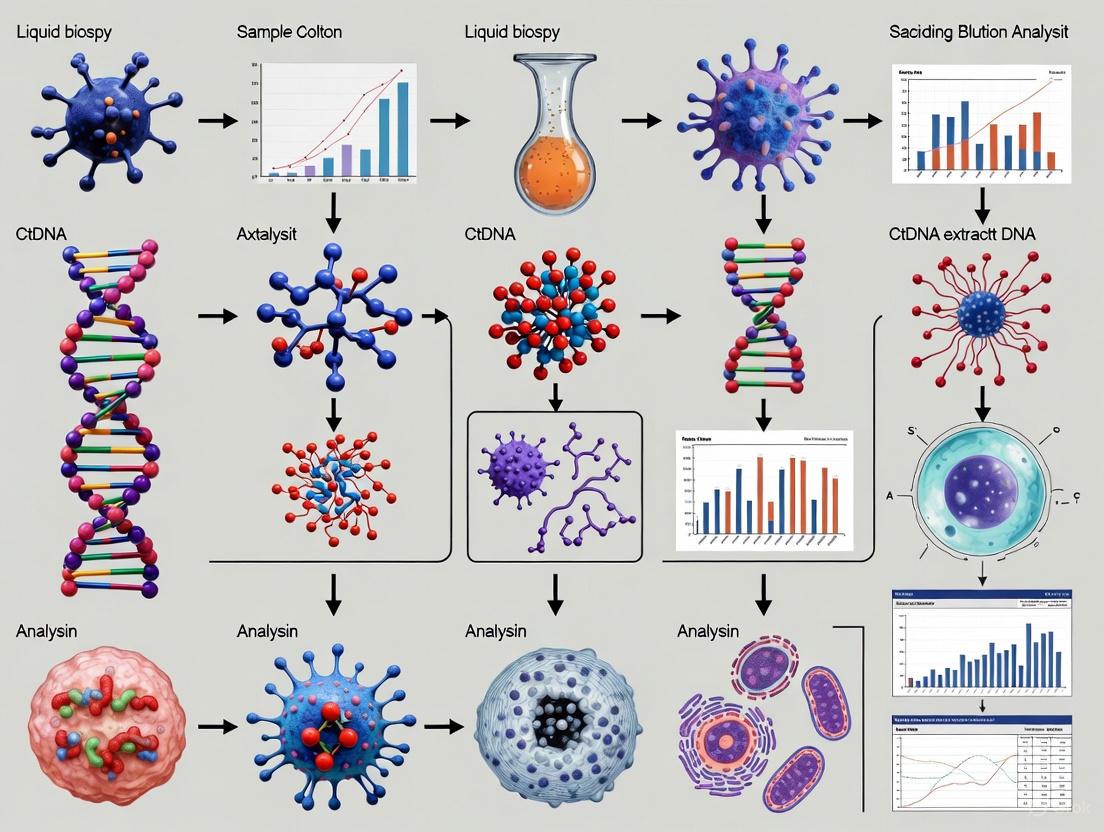
This article provides a comprehensive overview of liquid biopsy and circulating tumor DNA (ctDNA) analysis, tailored for researchers, scientists, and drug development professionals.
Liquid Biopsy and ctDNA Analysis: A Comprehensive Guide for Researchers and Drug Developers
Abstract
This article provides a comprehensive overview of liquid biopsy and circulating tumor DNA (ctDNA) analysis, tailored for researchers, scientists, and drug development professionals. It explores the foundational biology of ctDNA and its advantages over traditional tissue biopsies. The scope covers the latest methodological approaches, including next-generation sequencing (NGS) and digital PCR, and their clinical applications in minimal residual disease (MRD) monitoring, treatment response assessment, and early cancer detection. The article also addresses key technical challenges and optimization strategies, and synthesizes validation data from recent clinical trials and real-world evidence, offering insights into the future of ctDNA in precision oncology and regulatory science.
The Biology of ctDNA and Its Role in Modern Oncology
Core Characteristics of Circulating Tumor DNA
Circulating Tumor DNA (ctDNA) is a specific fraction of cell-free DNA (cfDNA) that is shed into the bloodstream by tumor cells. It carries tumor-specific genetic and epigenetic alterations, enabling non-invasive access to the tumor's molecular landscape [1] [2]. Its key defining characteristics are summarized in the table below.
Table 1: Core Characteristics of Circulating Tumor DNA (ctDNA)
| Characteristic | Description |
|---|---|
| Origin | Apoptosis or necrosis of tumor cells; active release from viable tumor cells [3] [1] [2]. |
| Relationship to cfDNA | A small, tumor-derived subset of total cell-free DNA (cfDNA) [1] [2]. |
| Primary Location | Bloodstream (plasma), and other biofluids such as urine, cerebrospinal fluid (CSF), and pleural effusions [4] [5] [2]. |
| Typical Fragment Size | Approximately 166 base pairs, corresponding to DNA wrapped around a nucleosome plus a linker, often shorter than non-tumor cfDNA [1] [2]. |
| Half-Life in Circulation | Approximately 2 hours, enabling real-time monitoring of tumor dynamics [3] [6] [5]. |
Quantitative Prognostic Value of ctDNA Detection
The presence of ctDNA at critical clinical timepoints is a powerful prognostic biomarker, with its predictive strength increasing throughout the treatment journey. The quantitative hazard ratios (HR) for poorer survival outcomes based on ctDNA positivity are summarized below.
Table 2: Prognostic Value of ctDNA Detection at Different Treatment Timepoints (Meta-Analysis Data) Data derived from a meta-analysis of 22 studies involving 1,519 esophageal cancer patients, demonstrating consistent prognostic value across cancer types [3].
| Treatment Timepoint | Association with Progression-Free Survival (PFS)Hazard Ratio (HR) & 95% CI | Association with Overall Survival (OS)Hazard Ratio (HR) & 95% CI |
|---|---|---|
| Baseline(After diagnosis, before treatment) | HR = 1.64(95% CI: 1.30 - 2.07) [3] | HR = 2.02(95% CI: 1.36 - 2.99) [3] |
| After Neoadjuvant Therapy(Post-therapy, pre-surgery) | HR = 3.97(95% CI: 2.68 - 5.88) [3] | HR = 3.41(95% CI: 2.08 - 5.59) [3] |
| During Follow-up(Post-treatment surveillance) | HR = 5.42(95% CI: 3.97 - 7.38) [3] | HR = 4.93(95% CI: 3.31 - 7.34) [3] |
Experimental Protocols for ctDNA Analysis
Pre-Analytical Plasma Processing Protocol
Proper sample collection and processing is critical to prevent contamination by genomic DNA from white blood cells, which can drastically reduce assay sensitivity [1].
- Blood Collection: Draw blood into cell-stabilizing tubes (e.g., Streck BCT) or EDTA-coated tubes. Avoid heparinized tubes, as heparin inhibits PCR [1].
- Plasma Separation: Process sample to plasma within 2-4 hours of collection if using EDTA tubes. Centrifuge blood at a low speed (e.g., 800-1600 RCF for 10 minutes) to separate plasma from blood cells [1].
- Secondary Centrifugation: Transfer the supernatant (plasma) to a new tube and perform a second, higher-speed centrifugation (e.g., 16,000 RCF for 10 minutes) to remove any remaining cellular debris [1].
- Plasma Storage: Aliquot the cleared plasma and store at -80°C. Never freeze whole blood before plasma extraction [1].
- ctDNA Extraction: Extract ctDNA from plasma using commercially available cfDNA/ctDNA isolation kits [1].
Protocol for ctDNA Detection via Droplet Digital PCR (ddPCR)
Droplet Digital PCR (ddPCR) is a highly sensitive and quantitative targeted method for detecting specific mutations in ctDNA [1] [5].
- Assay Design: Design fluorescent probe-based assays (e.g., using minor groove binders - MGB, or locked nucleic acids - LNA) for the mutant and wild-type alleles of the target gene[s] [1].
- Partitioning: Combine the extracted ctDNA sample with the PCR assay master mix and load it into a droplet generator. This creates an oil/water emulsion, partitioning the DNA into thousands of individual droplets [1].
- Endpoint PCR: Perform a standard polymerase chain reaction to amplify the target sequence within each droplet [1].
- Droplet Reading: Analyze the droplets using a droplet reader. Droplets are classified as mutant-positive, wild-type-positive, or both based on fluorescence [1].
- Quantification: Use Poisson statistics to calculate the original concentration of the mutant and wild-type DNA molecules in the input sample, providing an absolute quantification of the mutant allele fraction [1]. The sensitivity of this assay can be as high as 1 mutant molecule in 10,000 wild-type molecules [1].
Workflow Diagram: From Blood Draw to ctDNA Analysis
The following diagram illustrates the complete workflow for ctDNA analysis, from sample collection to clinical application.
Diagram Title: Complete Workflow for ctDNA Analysis in Clinical Research
The Scientist's Toolkit: Essential Research Reagent Solutions
Table 3: Key Reagents and Materials for ctDNA Research
| Reagent / Material | Function / Application in ctDNA Research |
|---|---|
| Cell-Stabilizing Blood Collection Tubes (e.g., Streck BCT) | Preserves blood sample integrity by preventing white blood cell lysis and release of wild-type genomic DNA during transport and storage, crucial for maintaining mutant allele fraction [1]. |
| cfDNA/ctDNA Extraction Kits | Silica-membrane or magnetic bead-based kits optimized for isolation of short, low-concentration DNA fragments from plasma [1]. |
| ddPCR Supermix & Assays | Specialized buffers, fluorescent probes (FAM/HEX), and primers for highly sensitive and absolute quantification of low-frequency mutations in partitioned samples [1] [5]. |
| Unique Molecular Identifiers (UMIs) | Short DNA barcodes ligated to individual DNA fragments prior to PCR amplification in NGS workflows. Enable bioinformatic correction of PCR and sequencing errors, dramatically improving detection sensitivity and accuracy [5]. |
| Targeted NGS Panels | Pre-designed gene panels (e.g., Oncomine Precision Assay) for simultaneous interrogation of multiple cancer-associated genes and hotspot mutations from low-input ctDNA samples [5] [7]. |
| Methylation-Specific Assays | Primers and probes or enrichment kits designed to detect cancer-specific DNA methylation patterns (e.g., in HOXD8, POU4F1 promoters), providing an alternative mutation-agnostic method for ctDNA quantification and cancer detection [8]. |
Liquid biopsy represents a paradigm shift in oncological diagnostics, offering a minimally invasive alternative to traditional tissue biopsy by analyzing tumor-derived biomarkers in bodily fluids. Within the context of circulating tumor DNA (ctDNA) research, its value proposition is twofold: the minimal invasiveness of the sampling procedure itself and the unparalleled capacity for real-time, longitudinal monitoring of disease dynamics. These advantages directly address the limitations of tissue biopsy, including its invasive nature, inability to repeatedly sample, and failure to capture tumor heterogeneity comprehensively [4] [2]. This document outlines the quantitative evidence supporting these advantages and provides detailed application protocols for researchers and drug development professionals engaged in ctDNA analysis.
Quantitative Comparison of Biopsy Modalities
The benefits of liquid biopsy can be quantified across several operational and clinical parameters. The following tables summarize key comparative data.
Table 1: Complication and Diagnostic Yield Rates in Pediatric Solid Tumors [9]
| Biopsy Technique | Average Complication Rate | Rate of Bleeding Complications | Diagnostic Yield |
|---|---|---|---|
| Core Needle Biopsy (CNB) | 2.9% | 2.3% | 90.8% |
| Surgical Biopsy (SB) | 21.4% | 22.1% | 98.8% |
Table 2: Key Operational Advantages of Liquid Biopsy [4] [2] [10]
| Parameter | Tissue Biopsy | Liquid Biopsy |
|---|---|---|
| Invasiveness | High (surgical procedure or needle) | Low (simple blood draw) |
| Sampling Frequency | Limited due to invasiveness and risk | Enables high-frequency, serial sampling |
| Tumor Heterogeneity | Limited to the sampled site | Captures a more comprehensive, systemic profile |
| Turnaround Time | Days to weeks for results | Faster results, enabling quicker treatment decisions |
| Risk of Complications | Higher (infection, bleeding, pain) [10] | Lower, primarily related to phlebotomy |
Application Notes & Experimental Protocols
Application Note: Early Detection of Minimal Residual Disease (MRD) and Recurrence
Background: Detecting Minimal Residual Disease (MRD) after curative-intent surgery is critical, as it is a precursor to overt radiographic recurrence. Traditional imaging lacks the sensitivity to detect microscopic disease. Liquid biopsy-based ctDNA analysis offers a highly sensitive tool for MRD assessment, allowing for intervention much earlier than standard methods [11].
Key Findings from the VICTORI Study (2025): An interim analysis of the VICTORI study demonstrated that an ultrasensitive, personalized ctDNA assay could detect recurrence in resectable colorectal cancer patients significantly earlier than imaging. Key results included:
- 87% of patients with clinical recurrence were ctDNA-positive within the 8-week post-surgical landmark period.
- ctDNA detection preceded clinical recurrence detected by imaging by a median of 198 days.
- ctDNA was detected at sensitivities as low as 2 parts per million (ppm).
- Higher ctDNA levels at first detection were correlated with a shorter time to clinical relapse [11].
Protocol 1: Post-Operative MRD Monitoring via ctDNA
Objective: To monitor for the emergence of MRD in patients following resection of colorectal cancer using a personalized, tumor-informed ctDNA assay.
Materials:
- Patient Samples: Formalin-fixed, paraffin-embedded (FFPE) tumor tissue from primary resection; Peripheral blood collected in CellSave Preservative Tubes or Streck cfDNA BCT tubes.
- Reagents: DNA extraction kits for FFPE and plasma, library preparation kit, hybridization capture reagents, sequencing platform (e.g., Illumina).
- Equipment: Centrifuge, Qubit fluorometer, bioanalyzer (e.g., Agilent TapeStation), thermocycler, next-generation sequencer.
Workflow Diagram: Post-Operative ctDNA Monitoring for MRD
Methodology:
- Pre-Surgical Baseline: Extract genomic DNA from the patient's FFPE tumor tissue and perform whole-genome sequencing to identify somatic single-nucleotide variants (SNVs) and indels.
- Personalized Panel Design: Select up to 1,800 somatic variants unique to the patient's tumor to create a personalized, tumor-informed multiplex PCR or hybridization capture panel [11].
- Post-Surgical Blood Collection: Collect peripheral blood from the patient at defined intervals:
- Pre-operatively
- Every two weeks for the first eight weeks post-surgery
- Every three months thereafter for up to three years.
- Plasma Processing: Centrifuge blood samples within specified timeframes to isolate plasma, followed by a second high-speed centrifugation to remove cellular debris. Store plasma at -80°C.
- cfDNA Extraction: Isolve cell-free DNA from plasma using a silica-membrane or magnetic bead-based commercial kit. Quantify yield using a fluorometric method.
- Library Preparation & Sequencing: Prepare sequencing libraries from the extracted cfDNA. Enrich for the patient-specific variants using the customized panel. Sequence on a high-throughput platform (e.g., Illumina NovaSeq) to achieve high coverage (>100,000X).
- Bioinformatic Analysis: Map sequencing reads to the reference genome. Use a specialized algorithm (e.g., based on a binomial distribution model) to detect the patient-specific variants in the cfDNA and calculate the ctDNA concentration in parts per million (ppm) [11].
- Interpretation: A sample is classified as ctDNA-positive if the variant allele fraction is statistically significantly above the background error rate. Detection of ctDNA at any post-operative time point indicates the presence of MRD and high risk for recurrence.
Application Note: Dynamic Monitoring of Therapeutic Response
Background: Tumors evolve under selective pressure from therapies, leading to resistance. Tissue biopsy provides a static snapshot and is ill-suited for tracking these dynamic changes. Liquid biopsy allows for non-invasive, repeated assessments of ctDNA levels and mutation profiles, enabling real-time evaluation of treatment efficacy and the emergence of resistance mechanisms [4] [2].
Key Findings: Studies have demonstrated that ctDNA levels dynamically change in correlation with tumor burden. A decrease in ctDNA levels correlates with a positive response to therapy, while a resurgence or change in the mutational profile (e.g., emergence of a KRAS mutation in a colorectal cancer patient on anti-EGFR therapy) indicates acquired resistance [2].
Protocol 2: Longitudinal Therapy Monitoring via ctDNA
Objective: To track tumor burden and clonal evolution during systemic therapy through serial measurement of ctDNA variant allele frequency (VAF).
Materials:
- Patient Samples: Peripheral blood collected in cfDNA BCT tubes at baseline and at regular intervals during treatment (e.g., every 2-4 cycles).
- Reagents: Cell-free DNA extraction kit, digital PCR (ddPCR) or NGS assay kits for relevant mutations (e.g., EGFR, KRAS, BRAF).
- Equipment: Centrifuge, ddPCR system or NGS sequencer.
Workflow Diagram: Longitudinal Therapy Monitoring via ctDNA
Methodology:
- Baseline Sample: Collect a pre-treatment blood sample. Isolate plasma and extract cfDNA.
- Baseline Profiling: Analyze the baseline cfDNA using either a targeted NGS panel for a broad mutation profile or a ddPCR assay for specific known mutations to establish the initial ctDNA VAF.
- Initiate Treatment: The patient begins the planned systemic therapy.
- Serial Sampling: Collect blood at predetermined intervals during therapy.
- Analysis of Serial Samples: For each time point, isolate cfDNA and analyze it using the same method (NGS or ddPCR) as the baseline sample to ensure consistency.
- Data Analysis & Interpretation: Plot the VAF of key driver mutations over time.
- A rapid decline in VAF suggests a positive treatment response.
- A persistent, low, or undetectable VAF suggests sustained response.
- A rising VAF indicates possible progression or resistance.
- The appearance of new mutations not present at baseline indicates clonal evolution and identifies potential mechanisms of resistance [2].
The Scientist's Toolkit: Research Reagent Solutions
Table 3: Essential Materials for ctDNA-Based Liquid Biopsy Research
| Item | Function & Application | Examples / Notes |
|---|---|---|
| cfDNA Blood Collection Tubes | Stabilizes nucleated blood cells to prevent genomic DNA contamination and preserve cfDNA profile for up to 14 days. Essential for multi-center trials. | Streck cfDNA BCT, CellSave Preservative Tubes [11] [12] |
| cfDNA Extraction Kits | Isolation of high-quality, pure cfDNA from plasma samples for downstream molecular analysis. | Silica-membrane or magnetic bead-based kits (e.g., from QIAGEN, Roche) |
| Digital PCR (ddPCR) Assays | Absolute quantification of specific mutations with high sensitivity and precision. Ideal for tracking known mutations during therapy. | Bio-Rad ddPCR EGFR Mutation Test [13] |
| Targeted NGS Panels | Simultaneous analysis of dozens to hundreds of genes from a small amount of cfDNA. Used for comprehensive profiling and MRD detection. | Guardant360, FoundationOne Liquid, Personalized tumor-informed panels [11] [12] |
| Ultrasensitive NGS Platform | Provides the deep sequencing coverage required to detect ctDNA at very low frequencies (e.g., <0.01%) for MRD applications. | Illumina NovaSeq, PacBio Sequel [13] [11] |
The integration of liquid biopsy into oncological research and drug development provides a powerful tool that transcends the capabilities of tissue biopsy. The minimally invasive nature of blood-based sampling facilitates the dense longitudinal data collection necessary to decipher the dynamic landscape of cancer. As evidenced by clinical studies, the ability to detect MRD months before radiographic recurrence and to monitor therapy response and resistance in real-time positions ctDNA analysis as a cornerstone of modern precision oncology. Continued refinement of assays, standardization of protocols, and validation in large-scale clinical trials will further cement its role in improving patient outcomes.
Tumor heterogeneity presents a significant challenge in oncology, as distinct cell populations within a tumor can exhibit diverse molecular profiles, leading to varied responses to treatment and potential for resistance. Circulating tumor DNA (ctDNA)—fragments of DNA shed by tumor cells into the bloodstream—has emerged as a powerful, non-invasive tool that can capture a comprehensive snapshot of this heterogeneity. Unlike traditional tissue biopsies, which provide a limited view from a single site, ctDNA analysis offers a dynamic, real-time systemic view of the entire tumor burden, including primary and metastatic lesions [5] [14].
The fundamental principle underlying ctDNA analysis is that DNA fragments released from tumor cells carry the same genetic and epigenetic alterations found in the parent tumor tissue. These alterations can include somatic mutations, copy number variations, structural rearrangements, and methylation pattern changes [15] [5]. Since ctDNA is released from all tumor sites throughout the body, its analysis can overcome the sampling bias inherent in single-site tissue biopsies, providing a more representative picture of the overall disease landscape.
How ctDNA Overcomes Limitations of Tissue Biopsies
Tissue biopsies have long been the gold standard for tumor genotyping; however, they present several limitations in capturing heterogeneity. They are invasive, often impractical to repeat, and may not fully represent the spatial and temporal genomic diversity of the disease [5] [14]. In contrast, liquid biopsy via ctDNA analysis offers a minimally invasive alternative that can be performed serially, enabling clinicians and researchers to monitor tumor evolution over time and in response to therapeutic pressures.
Evidence of Superior Heterogeneity Capture
A seminal study in gastric cancer directly compared the mutation profiles detected in ctDNA with those from single and multiple tumor tissue biopsies. The study found that while a single tissue biopsy shared only about 50% of its mutations with paired ctDNA, most mutations (83%) found in the ctDNA were also present in at least one of the multiple tissue biopsies taken from the same patient [14]. This demonstrates that ctDNA effectively integrates genetic material from different tumor subclones across various locations, providing a more complete mutational profile.
Table 1: Comparison of Mutation Detection in ctDNA vs. Single-Site Tissue Biopsy in Gastric Cancer
| Analysis Method | Number of Mutations Detected | Concordance with Multiple Biopsies | Advantages |
|---|---|---|---|
| Single-Site Tissue Biopsy | 138 mutations (baseline) | Limited, spatially restricted view | Gold standard for histology |
| ctDNA Analysis | 275 mutations (≈100% increase) | 83% of ctDNA mutations found in multiple biopsies | Captures spatially distinct subclones |
| Combined Approach | Most comprehensive profile | Overcomes intra-tumor heterogeneity | Integrates spatial and systemic data |
Furthermore, the short half-life of ctDNA (estimated between 16 minutes and several hours) means that changes in tumor burden or composition are quickly reflected in the blood, allowing for real-time monitoring of disease dynamics [5]. This is particularly valuable for tracking the emergence of resistance mutations during targeted therapy, often weeks before clinical or radiographic progression becomes evident [15].
Quantitative Applications and Clinical Evidence
The ability of ctDNA to provide a systemic view of disease has been quantitatively demonstrated across various cancer types, influencing clinical decision-making in areas such as minimal residual disease (MRD) monitoring and assessment of treatment response.
Monitoring Treatment Response and Minimal Residual Disease
In cancer types such as breast, colorectal, and lung cancer, longitudinal ctDNA monitoring has proven to be a more sensitive indicator of treatment response and recurrence than traditional methods like imaging and protein biomarkers (e.g., CEA) [15] [5]. For instance, in early-stage breast cancer, structural variant-based ctDNA assays detected molecular recurrence long before clinical relapse, with a median lead time of over one year in some cases [15]. Similarly, in colorectal cancer, the DYNAMIC trial showed that a ctDNA-guided approach for managing stage II colon cancer was non-inferior to standard management, effectively identifying patients who would benefit from adjuvant chemotherapy and sparing those who would not [16].
Table 2: Clinical Utility of ctDNA in Monitoring Treatment Response Across Cancers
| Cancer Type | Clinical Application | Performance/Outcome | Supporting Evidence |
|---|---|---|---|
| Non-Small Cell Lung Cancer (NSCLC) | Early prediction of radiographic response | More accurate than follow-up imaging [15] | Decline in ctDNA levels predicts therapy response [15] |
| Colorectal Cancer | Guiding adjuvant chemotherapy in stage II disease | ctDNA-guided management is non-inferior to standard care [16] | DYNAMIC trial; identifies patients at high risk of recurrence [16] |
| B-cell Lymphoma | Detection of Minimal Residual Disease (MRD) | More sensitive than standard PET/CT imaging [15] | Identifies subclinical disease not visible on imaging [15] |
| Epithelial Ovarian Cancer (EOC) | Assessing microscopic residual disease post-treatment | Detection significantly associated with relapse (HR=9.44) [17] | Tumor-type informed (methylation) approach outperforms tumor-informed [17] |
Genotyping and Tracking Resistance
In advanced disease, ctDNA analysis enables non-invasive genotyping to identify actionable driver mutations and monitor the emergence of resistance. For example, in EGFR-mutant NSCLC, the appearance of the T790M resistance mutation in plasma can be detected, prompting a switch to third-generation EGFR inhibitors without the need for a repeat tissue biopsy [15] [18]. Studies have shown high concordance between ctDNA and tissue genotyping for specific alterations, such as 91.4% for HER2 amplification in gastric cancer [14] and reliable detection of mutations in genes like EGFR, KRAS, and TP53 in real-world settings [7].
Methodologies and Protocols for ctDNA Analysis
Capturing tumor heterogeneity via ctDNA requires highly sensitive and specific analytical techniques due to the often low abundance of ctDNA in a high background of wild-type cell-free DNA.
Pre-analytical and Analytical Workflow
A standard workflow for ctDNA analysis involves blood collection in cell-stabilizing tubes (e.g., Streck cfDNA BCT), plasma separation via double centrifugation, ctDNA extraction using specialized kits (e.g., QIAamp Circulating Nucleic Acid Kit), library preparation, and sequencing followed by bioinformatic analysis [14].
Key techniques include:
- Tumor-Informed Approaches: These involve sequencing the tumor tissue (e.g., via Whole Exome Sequencing or WES) to identify patient-specific mutations, which are then tracked in plasma using personalized panels. This method offers high sensitivity and specificity [17].
- Tumor-Type Informed Approaches: This strategy leverages recurrent alterations in a specific cancer type, such as DNA methylation patterns, to detect ctDNA without the need for prior tissue sequencing. A study in epithelial ovarian cancer found that a methylation-based classifier outperformed a mutation-based, tumor-informed approach in detecting MRD after treatment [17].
- Structural Variant (SV) Analysis: Assays focusing on tumor-specific chromosomal rearrangements (translocations, insertions, deletions) can achieve high sensitivity (parts-per-million level) as these breakpoints are unique to the tumor and absent in normal DNA [15].
Critical Protocol Steps for a Tumor-Informed ctDNA Assay
Step 1: Tumor and Matched Normal Sequencing
- Isolate genomic DNA from tumor tissue (e.g., FFPE) and matched peripheral blood mononuclear cells (PBMCs) using a commercial kit (e.g., QIAamp DNA Mini Kit).
- Perform Whole Exome Sequencing (WES) on both samples. An average of 72 somatic mutations per patient can be expected [17].
- Use bioinformatic pipelines (e.g., BWA for alignment, Samtools/Mutect for variant calling) to identify tumor-specific somatic mutations, filtering out germline variants and sequencing artifacts.
Step 2: Personalized Panel Design and ctDNA Sequencing
- Design a custom targeted sequencing panel (e.g., using hybrid-capture probes) targeting 10-50 selected patient-specific mutations.
- Extract ctDNA from patient plasma. A typical input is 10-20 mL of blood, yielding variable amounts of cfDNA.
- Prepare sequencing libraries and enrich for the target regions. Sequence to a high depth of coverage (often >30,000x) to detect variants at very low allele frequencies (<0.01%).
Step 3: Bioinformatic Analysis and Variant Calling
- Process sequencing data with a pipeline incorporating Unique Molecular Identifiers (UMIs) to correct for PCR amplification errors and duplicates.
- Call variants using a sensitive caller optimized for low-frequency variants. A supporting read count of n≥3 may be used for low VAF detection [18].
- Quantify ctDNA levels by aggregating the VAFs of all tracked mutations.
The following diagram illustrates the logical workflow and decision points in a tumor-informed ctDNA analysis protocol:
The Scientist's Toolkit: Essential Reagents and Solutions
Successful ctDNA analysis relies on a suite of specialized reagents and platforms. The following table details key research solutions used in the field.
Table 3: Essential Research Reagent Solutions for ctDNA Analysis
| Product/Kit Name | Manufacturer/Provider | Primary Function in Workflow | Key Features/Benefits |
|---|---|---|---|
| cfDNA BCT Tubes | Streck | Blood Collection & Stabilization | Preserves cfDNA by preventing leukocyte lysis and genomic DNA release for up to 72h [14] |
| QIAamp Circulating Nucleic Acid Kit | Qiagen | ctDNA Extraction | Efficient isolation of short-fragment cfDNA/ctDNA from plasma [14] |
| KAPA Hyper Prep Kit | KAPA Biosystems | NGS Library Preparation | High-efficiency library construction from low-input DNA [14] |
| SureSelectXT Target Enrichment | Agilent | Hybrid-Capture Enrichment | Enriches for custom or commercial gene panels; used in tumor-informed approaches [14] |
| NEBNext Enzymatic Methyl-seq Kit | New England Biolabs | Methylation Library Prep | Enzymatic conversion for methylation analysis, less damaging than bisulfite [17] |
| Oncomine Precision Assay | Thermo Fisher Scientific | Targeted NGS | Integrated workflow for mutation detection on Ion Torrent platform [7] |
| Custom Solid Tumor Panel | SOPHiA Genetics | Targeted NGS | Pan-cancer panel for multi-biomarker analysis on Illumina platforms [7] |
The analysis of circulating tumor DNA has fundamentally advanced our ability to capture and understand tumor heterogeneity. By providing a comprehensive, systemic, and dynamic view of the disease, ctDNA profiling overcomes the critical limitations of traditional tissue biopsies. As technologies like structural variant analysis, methylation profiling, and error-corrected NGS continue to improve sensitivity and specificity, the role of ctDNA in clinical research and practice will expand further. This non-invasive tool empowers researchers and clinicians to make more informed decisions regarding disease monitoring, treatment selection, and the early detection of resistance, ultimately paving the way for more personalized and effective cancer management.
Liquid biopsy, particularly the analysis of circulating tumor DNA (ctDNA), has transitioned from a research tool to a cornerstone of precision oncology. This minimally invasive approach provides a real-time snapshot of tumor dynamics, overcoming the limitations of traditional tissue biopsy, including invasiveness, spatial heterogeneity, and inability for serial monitoring [19] [2]. The clinical utility of ctDNA has rapidly expanded, now encompassing roles in early cancer detection, molecular profiling for targeted therapy, minimal residual disease (MRD) assessment, and longitudinal monitoring of treatment response [19] [7]. This article details the experimental protocols and application notes that underpin these advancing clinical applications, providing a resource for researchers and drug development professionals.
Clinical Applications and Accompanying Data
The analysis of ctDNA provides critical quantitative data that informs clinical decision-making across the cancer care continuum. The tables below summarize key performance and application data from recent studies.
Table 1: Clinical Performance of ctDNA Analysis in Selected Solid Tumors
| Cancer Type | Clinical Application | Key Genetic Alterations Detected | Reported Performance / Findings |
|---|---|---|---|
| Lung Cancer [7] | Molecular profiling for therapy selection | EGFR (44%), TP53 (43%), CDKN2A (9%), PIK3CA (9%), BRAF (6%) |
33-54% Tier I/II alterations identified via ctDNA NGS |
| Gastrointestinal Cancers [7] | Molecular profiling & monitoring | TP53 (51%), KRAS (25%), BRAF (13%), PIK3CA (13%) |
High concordance with tissue NGS and MSKCC datasets |
| Colorectal Cancer [19] | Monitoring treatment response | APC, KRAS, TP53, PIK3CA |
ctDNA mutation rates correlated with CEA and tumor volume |
| Prostate Cancer [20] | Prognostication & resistance monitoring | AR alterations, genomic instability features |
ctDNA and CTC yields are significantly higher in metastatic disease |
Table 2: Analytical Techniques for ctDNA Interrogation
| Method Category | Specific Techniques | Primary Applications | Key Considerations |
|---|---|---|---|
| PCR-based [19] | ddPCR, BEAMing, qPCR | Detection of single or few known mutations; therapy monitoring | High sensitivity, rapid turnaround, limited to targeted mutations |
| Next-Generation Sequencing [19] [7] | Targeted Panels (e.g., Oncomine Precision Assay), WES, WGS, CAPP-Seq, TEC-Seq | Comprehensive genomic profiling, identification of novel alterations | Broad genomic coverage, can detect low-frequency variants, higher cost |
| Methylomics [19] | Whole Genome Bisulfite Sequencing (WGBS), Targeted Bisulfite Sequencing | Tumor origin identification, early detection, monitoring | Overcomes limitations of genomic heterogeneity; bisulfite degrades DNA |
| Fragmentomics [19] | DELFI | Genome-wide analysis of fragmentation patterns for early interception | Machine learning model with reported 91% sensitivity for cancer detection |
Experimental Protocols
Protocol: ctDNA Isolation and Quality Control from Blood Samples
Principle: ctDNA is isolated from plasma derived from peripheral blood draw. Standardized pre-analytical procedures are critical to ensure sample quality and prevent contamination by genomic DNA from lysed white blood cells [7] [20].
Materials:
- Blood collection tubes (e.g., K₂EDTA or dedicated cell-free DNA tubes)
- Low-speed centrifuge and high-speed centrifuge
- Plasma preparation tubes
- Commercial cfDNA/ctDNA isolation kit (e.g., QIAamp Circulating Nucleic Acid Kit)
- Agilent Bioanalyzer 2100, TapeStation, or similar instrument for QC
- Fluorometric quantitation assay (e.g., Qubit dsDNA HS Assay)
Procedure:
- Blood Collection and Processing: Draw 10-20 mL of peripheral blood into appropriate collection tubes. Invert gently to mix. Process within 2 hours of draw to prevent cell lysis.
- Centrifuge at 800-1600 × g for 10-20 minutes at 4°C to separate plasma from cellular components.
- Carefully transfer the supernatant (plasma) to a new tube without disturbing the buffy coat.
- Perform a second centrifugation at 16,000 × g for 10 minutes at 4°C to remove any residual cells.
- Transfer the clarified plasma to a new tube for immediate use or storage at -80°C.
- ctDNA Extraction: Isolate ctDNA from the plasma using a commercially available kit, following the manufacturer's instructions. This typically involves:
- Enzymatic digestion of proteins.
- Binding of cfDNA to a silica membrane/bead.
- Washing with appropriate buffers.
- Elution in a low-volume, low-EDTA TE buffer or nuclease-free water.
- Quality Control:
- Quantification: Use a fluorometric assay to determine the concentration of double-stranded DNA.
- Fragment Size Analysis: Use a Bioanalyzer or TapeStation to confirm the presence of the characteristic cfDNA peak at ~167 bp. A significant peak at higher molecular weights indicates genomic DNA contamination.
Protocol: Targeted Next-Generation Sequencing for Somatic Variant Detection
Principle: Targeted panels (e.g., Oncomine Precision Assay, Custom Solid Tumor Panel) enrich for and sequence specific genomic regions of clinical relevance in cancer, enabling high-sensitivity detection of mutations, insertions/deletions, and copy number alterations from low-input ctDNA [7].
Materials:
- Qualified ctDNA sample (from Protocol 3.1)
- Targeted NGS library preparation kit (e.g., Illumina, Thermo Fisher)
- Platform-specific sequencer (e.g., Illumina NovaSeq, Thermo Fisher Ion GeneStudio S5)
- Bioinformatic analysis pipeline for alignment, variant calling, and annotation
Procedure:
- Library Preparation:
- Perform end-repair and adenylation of the isolated ctDNA fragments.
- Ligate platform-specific adapter sequences, including unique molecular identifiers (UMIs) or sample barcodes to correct for amplification errors and enable multiplexing.
- Amplify the adapter-ligated library via PCR for a limited number of cycles.
- Hybridize the library to biotinylated probes targeting the genes/regions of interest.
- Capture the probe-bound fragments using streptavidin-coated magnetic beads.
- Wash away non-specifically bound DNA.
- Amplify the captured library via PCR.
- Sequencing: Pool the final, indexed libraries in equimolar amounts. Load onto the sequencer and perform high-depth sequencing (e.g., >10,000x coverage) as per the manufacturer's protocol.
- Bioinformatic Analysis:
- Demultiplexing: Assign sequenced reads to individual samples based on their barcodes.
- Alignment: Map sequencing reads to the reference human genome (e.g., GRCh37/hg19).
- Variant Calling: Use specialized algorithms (e.g., MuTect, VarScan) to identify somatic mutations against a matched normal control or a panel of normals. Utilize UMI information to distinguish true low-frequency variants from sequencing artifacts.
- Annotation and Reporting: Annotate variants for functional impact and clinical actionability using databases such as COSMIC, ClinVar, and OncoKB. Classify variants according to guidelines (e.g., AMP/ASCO/CAP tiers) [7].
Workflow and Pathway Visualizations
The Scientist's Toolkit: Research Reagent Solutions
Table 3: Essential Reagents and Kits for ctDNA Research
| Item | Function/Application | Example Products / Targets |
|---|---|---|
| cfDNA Stabilization Tubes | Prevents degradation of cfDNA and release of genomic DNA from blood cells during storage/transport. | Streck Cell-Free DNA BCT tubes, Roche Cell-Free DNA Collection Tubes |
| cfDNA Extraction Kits | Isolation of high-purity, short-fragment cfDNA from plasma; critical for downstream analytical success. | QIAamp Circulating Nucleic Acid Kit (Qiagen), MagMAX Cell-Free DNA Isolation Kit (Thermo Fisher) |
| Targeted NGS Panels | Multi-gene panels for sensitive and cost-effective sequencing of clinically relevant cancer mutations from ctDNA. | Oncomine Precision Assay (Thermo Fisher), AVENIO ctDNA Analysis Kits (Roche), Custom Panels (e.g., SOPHiA Genetics) [7] |
| Digital PCR Master Mixes | Ultra-sensitive detection and absolute quantification of known, low-frequency mutations in ctDNA. | ddPCR Supermix for Probes (Bio-Rad), QuantStudio Absolute Q Digital PCR Master Mix (Thermo Fisher) |
| Methylation Conversion Kits | Treatment of DNA with bisulfite to convert unmethylated cytosine to uracil, enabling methylation analysis. | EZ DNA Methylation kits (Zymo Research), MethylCode Bisulfite Conversion Kit (Thermo Fisher) |
| Library Prep Kits | Preparation of sequencing libraries from low-input, fragmented cfDNA, often with UMI incorporation. | KAPA HyperPrep Kit (Roche), ThruPLEX Plasma-seq Kit (Takara Bio) |
Advanced Technologies and Clinical Applications in ctDNA Analysis
The analysis of circulating tumor DNA (ctDNA) via liquid biopsy represents a paradigm shift in oncology, enabling minimally invasive cancer genotyping, therapy selection, and disease monitoring. Three core technologies have emerged as foundational for ctDNA analysis: next-generation sequencing (NGS), droplet digital PCR (ddPCR), and BEAMing (beads, emulsion, amplification, and magnetics). These techniques enable the detection and quantification of rare tumor-derived mutations within a vast background of wild-type cell-free DNA, a critical capability given that ctDNA can constitute as little as 0.01% of total cell-free DNA in early-stage cancer patients [19] [2]. Each platform offers distinct advantages in sensitivity, multiplexing capability, and analytical breadth, making them suited for complementary applications in clinical research and drug development. This article provides a detailed technical comparison, experimental protocols, and practical implementation guidelines for these transformative technologies.
Fundamental Principles and Workflows
Next-Generation Sequencing (NGS) enables broad, hypothesis-free profiling of ctDNA across multiple genomic regions simultaneously. NGS methods for ctDNA analysis include targeted panels (e.g., CAPP-Seq, TAm-Seq), whole-exome, and whole-genome sequencing, which can detect single nucleotide variants, insertions/deletions, copy number alterations, and fusions in a single assay [19] [21]. These methods typically involve library preparation from cell-free DNA, target enrichment (for panel-based approaches), massively parallel sequencing, and sophisticated bioinformatics analysis to distinguish true low-frequency variants from sequencing artifacts [22].
Droplet Digital PCR (ddPCR) provides absolute quantification of specific known mutations by partitioning a PCR reaction into thousands of nanoliter-sized water-in-oil droplets. The sample is randomly distributed across these partitions such that each contains zero, one, or a few target molecules. Following end-point PCR amplification with target-specific fluorescent probes, the fraction of positive partitions is counted, allowing absolute quantification of the target sequence without the need for standard curves using Poisson statistics [23] [24].
BEAMing (Beads, Emulsion, Amplification, and Magnetics) combines droplet-based digital PCR with flow cytometry to detect rare mutations. In this method, individual DNA molecules are attached to magnetic beads and co-compartmentalized with PCR reagents within water-in-oil emulsions. Each bead captures the amplification product from a single molecule, which is then hybridized with fluorescent probes and analyzed via flow cytometry to enumerate mutant and wild-type alleles [23] [25].
Comparative Analytical Performance
The table below summarizes key performance characteristics of these three core technologies based on current literature and empirical validation studies.
Table 1: Analytical Performance Comparison of NGS, ddPCR, and BEAMing
| Parameter | NGS | ddPCR | BEAMing |
|---|---|---|---|
| Limit of Detection (LOD) | ~0.1% VAF (standard)>0.01% VAF (enhanced) [26] [24] | ~0.001-0.01% VAF [24] | ~0.01-0.03% VAF [25] [21] |
| Quantification | Semi-quantitative (relative) | Absolute | Absolute |
| Multiplexing Capacity | High (dozens to hundreds of targets) | Low (typically 1-4 targets) | Moderate (multiple targets with color coding) |
| Analytical Breadth | Comprehensive (SNVs, indels, CNVs, fusions) | Targeted (known point mutations) | Targeted (known point mutations) |
| Throughput | High (multiple samples, multiple targets) | Medium (multiple samples, few targets) | Low to medium |
| Turnaround Time | 3-7 days | 1-2 days | 1-2 days |
| Cost per Sample | High | Medium | Medium to High |
| DNA Input Requirement | Moderate to High (10-30 ng) | Low (1-10 ng) | Low (1-10 ng) |
Clinical and Research Applications
The appropriate selection of a detection platform depends heavily on the specific research or clinical question. The following table outlines the recommended technology based on common application scenarios in oncology research.
Table 2: Technology Selection Guide for Common Research Applications
| Research Application | Recommended Technology | Rationale | Supporting Evidence |
|---|---|---|---|
| Discovery Screening | NGS | Unbiased detection of novel variants and comprehensive genomic profiling [19] [27] | Identifies SNVs, indels, CNVs, and fusions across multiple gene targets simultaneously [22] |
| Treatment Response Monitoring | ddPCR | High sensitivity, precision, and cost-effectiveness for tracking known mutations [26] | High quantitative accuracy for serial monitoring of mutant allele frequency [28] |
| Minimal Residual Disease (MRD) | BEAMing or enhanced NGS | Ultra-sensitive detection required for low tumor fraction [21] | BEAMing demonstrated LOD of 0.03%, enabling MRD detection [25] |
| Targeted Therapy Selection | NGS or ddPCR | NGS for comprehensive profiling; ddPCR for rapid assessment of common mutations [27] | NGS identifies all actionable targets; ddPCR provides rapid results for key drivers [26] |
| Resistance Mechanism Analysis | NGS | Ability to detect novel and heterogeneous resistance mutations [27] | Broad genomic coverage captures diverse resistance pathways emerging under therapy [22] |
Experimental Protocols
Sample Collection and Processing Protocol
Proper pre-analytical sample handling is critical for reliable ctDNA analysis across all platforms.
Materials:
- Streck Cell-Free DNA BCT tubes or equivalent cfDNA preservative blood collection tubes
- Standard phlebotomy equipment
- Refrigerated centrifuge capable of 1600 × g and 16,000 × g
- Plasma separation equipment (pipettes, sterile tubes)
- DNA extraction kit validated for cell-free DNA (e.g., QIAamp Circulating Nucleic Acid Kit)
- Spectrophotometer or fluorometer for DNA quantification (e.g., Qubit dsDNA HS Assay)
Procedure:
- Blood Collection: Draw 10-20 mL of whole blood into cell-free DNA BCT tubes via standard venipuncture. Invert tubes 8-10 times gently to mix preservative.
- Transport and Storage: Store blood tubes at 4-10°C if processing within 6 hours. For delayed processing (up to 72 hours), maintain at 4-10°C. Avoid freeze-thaw cycles.
- Plasma Separation: Centrifuge blood tubes at 1600 × g for 20 minutes at 4°C within 72 hours of collection. Carefully transfer supernatant plasma to a fresh tube without disturbing the buffy coat.
- Secondary Centrifugation: Centrifuge the transferred plasma at 16,000 × g for 10 minutes at 4°C to remove residual cells and debris. Transfer cleared plasma to a new tube.
- cfDNA Extraction: Extract cfDNA from plasma using a specialized circulating nucleic acid kit according to manufacturer's instructions. Elute in a low-EDTA or EDTA-free buffer.
- Quality Control: Quantify cfDNA using fluorometric methods (e.g., Qubit). Assess fragment size distribution using Bioanalyzer or TapeStation if required by application.
- Storage: Store extracted cfDNA at -20°C to -80°C until analysis. Avoid repeated freeze-thaw cycles [19] [26] [2].
Protocol: ddPCR for Mutation Detection
This protocol details the detection of known point mutations in ctDNA using droplet digital PCR.
Materials:
- Bio-Rad QX200 Droplet Digital PCR System or equivalent
- ddPCR Supermix for Probes (no dUTP)
- Target-specific FAM-labeled mutant probe and HEX/VIC-labeled wild-type probe
- Droplet generation oil and DG8 cartridges
- PCR plate and foil seals
- Thermal cycler
Procedure:
- Reaction Setup: Prepare a 20 μL reaction mix containing:
- 10 μL of 2× ddPCR Supermix for Probes
- 1 μL of 20× primer/probe assay (final 1×)
- 2-5 μL of template cfDNA (1-10 ng total)
- Nuclease-free water to 20 μL
- Droplet Generation: Transfer 20 μL of reaction mix to a DG8 cartridge well. Add 70 μL of droplet generation oil to the appropriate well. Place the rubber gasket and droplet generator cartridge into the QX200 Droplet Generator. Generate droplets following manufacturer's instructions.
- PCR Amplification: Carefully transfer 40 μL of generated droplets to a 96-well PCR plate. Seal the plate with a foil heat seal. Perform PCR amplification with the following cycling conditions:
- 95°C for 10 minutes (enzyme activation)
- 40 cycles of: 94°C for 30 seconds (denaturation) and 55-60°C for 60 seconds (annealing/extension)
- 98°C for 10 minutes (enzyme deactivation)
- 4°C hold (optional)
- Droplet Reading: Place the PCR plate in the QX200 Droplet Reader. The reader will automatically flow droplets in a stream past a two-color optical detection system.
- Data Analysis: Analyze data using QuantaSoft software. Set amplitude thresholds based on negative controls and no-template controls. The software will automatically calculate the concentration of mutant and wild-type sequences (copies/μL) and variant allele frequency based on Poisson statistics [23] [26] [24].
Protocol: BEAMing for Ultra-Sensitive Mutation Detection
This protocol outlines the BEAMing workflow for detecting very low-frequency mutations in ctDNA.
Materials:
- Magnetic beads coated with streptavidin
- Biotinylated primers specific to target region
- Water-in-oil emulsion system
- Emulsion break solution
- Flow cytometer with sorting capability
- Fluorescently labeled allele-specific probes
Procedure:
- DNA Capture: Incubate biotinylated PCR primers with streptavidin-coated magnetic beads to allow binding.
- Emulsion PCR: Mix the primer-bound beads with template cfDNA, PCR reagents, and oil to create a water-in-oil emulsion. Each aqueous droplet in the emulsion functions as a separate microreactor.
- Amplification: Perform PCR amplification on the emulsion. Each bead captures the amplification product from a single DNA molecule within its droplet.
- Emulsion Breaking: After amplification, break the emulsion and recover the magnetic beads now covered with amplified DNA products.
- Hybridization: Incubate the beads with fluorescently labeled, allele-specific probes designed to distinguish mutant from wild-type sequences.
- Flow Cytometry Analysis: Analyze the beads by flow cytometry. Mutant and wild-type alleles are distinguished based on their fluorescence signals.
- Enumeration: Count the number of beads carrying mutant sequences and wild-type sequences to calculate the mutant allele frequency [23] [25].
Technology Selection Workflow
The following diagram illustrates the decision-making process for selecting the appropriate detection technology based on research objectives and sample characteristics:
The Scientist's Toolkit: Essential Research Reagents and Materials
Successful implementation of ctDNA analysis requires carefully selected reagents and materials optimized for each technology platform.
Table 3: Essential Research Reagents and Materials for ctDNA Analysis
| Category | Specific Product Examples | Critical Function | Technology Application |
|---|---|---|---|
| Blood Collection Tubes | Streck Cell-Free DNA BCTRoche Cell-Free DNA Collection Tubes | Preserves cfDNA profile by preventingwhite blood cell lysis and genomic DNA release | All platforms |
| cfDNA Extraction Kits | QIAamp Circulating Nucleic Acid KitMaxwell RSC ccfDNA Plasma Kit | Isolve short, fragmented cfDNA withhigh efficiency and purity | All platforms |
| Library Prep Kits | KAPA HyperPrep KitSwift Accel Amplification Kit | Prepare sequencing libraries whilemaintaining molecular complexity | NGS |
| Target Enrichment | IDT xGen Lockdown ProbesRoche NimbleGen SeqCap EZ | Enrich specific genomic regionsfor targeted sequencing | NGS (Targeted) |
| Digital PCR Master Mix | Bio-Rad ddPCR Supermix for ProbesQX200 Droplet Generation Oil | Enable precise partitioning andabsolute quantification | ddPCR |
| Sequence-Specific Probes | TaqMan Mutation Detection AssaysCustom ddPCR assays | Specifically detect and distinguishmutant from wild-type alleles | ddPCR, BEAMing |
| Emulsion PCR Reagents | BEAMing kit componentsWater-in-oil emulsion supplies | Create millions of separateamplification compartments | BEAMing |
| Bioinformatics Tools | GATK Mutect2VarScan2Custom ddPCR analysis scripts | Distinguish true low-frequency variantsfrom technical artifacts | NGS, ddPCR |
The analysis of circulating tumor DNA (ctDNA) via liquid biopsy has emerged as a transformative approach in precision oncology. This non-invasive method enables real-time monitoring of tumor dynamics, assessment of treatment response, and detection of minimal residual disease (MRD) [5] [29]. A significant technical challenge in this field is the detection of rare mutant alleles amidst a high background of wild-type cell-free DNA (cfDNA), as the ctDNA fraction can be extremely low, particularly in early-stage cancers or low-shedding tumors [5] [29]. Next-generation sequencing (NGS) technologies have risen to meet this challenge, with several innovative approaches now enabling the highly sensitive and specific detection of somatic mutations in ctDNA.
Among the most impactful advancements are two core sequencing methodologies: CAPP-Seq (CAncer Personalized Profiling by deep Sequencing) and TAm-Seq (Tagged-Amplicon deep Sequencing) [5]. Both are targeted sequencing approaches designed to profile ctDNA with high sensitivity. Furthermore, the integration of Unique Molecular Identifiers (UMIs) has revolutionized error correction in NGS, allowing for the distinction of true low-frequency variants from technical artifacts such as PCR amplification errors and sequencing mistakes [30] [31] [32]. This article details the application, protocols, and key reagents for these innovative NGS approaches, providing a structured resource for researchers and drug development professionals working in the field of liquid biopsy.
The following table summarizes the core characteristics of the key NGS technologies used in ctDNA analysis.
Table 1: Comparison of Key NGS Approaches for ctDNA Analysis
| Feature | TAm-Seq | CAPP-Seq | UMI-Based Methods |
|---|---|---|---|
| Core Principle | Highly multiplexed PCR amplicon sequencing [33] | Hybridization-based capture of selector regions [5] | Molecular barcoding of individual DNA fragments pre-amplification [30] [34] |
| Typical Panel Size | Flexible; demonstrated with 377 amplicons across 20 genes [33] | Comprehensive; can cover hundreds of exons [5] | Can be applied to either amplicon or capture-based libraries |
| Sensitivity | >1% mutant allele frequency (MAF) demonstrated [33] | Designed for very high sensitivity; can detect MAFs <0.1% [5] | Enables detection of ultralow-frequency variants (<<0.1%) [30] [32] |
| Primary Application | Profiling and monitoring in metastatic cancer [33] | Ultrasensitive detection and monitoring [5] | Error suppression for accurate quantification and variant calling [30] [31] |
| Key Advantage | Cost-effective; optimized for low input [33] | Broad genomic coverage [5] | Dramatically reduces false positive calls from PCR/sequencing errors [30] [32] |
The selection of an appropriate NGS approach depends on the specific research or clinical question. TAm-Seq and its evolution, NG-TAS (Next Generation-Targeted Amplicon Sequencing), offer a highly flexible and cost-effective solution for profiling a defined set of genes in scenarios where input DNA is limited [33]. In contrast, CAPP-Seq provides a more comprehensive view of the mutational landscape by using hybridization capture to target a larger genomic territory, which is beneficial for heterogeneous cancers [5]. The use of UMIs is not mutually exclusive with these methods but is rather an enhancing layer. UMIs are incorporated during library preparation and are critical for applications requiring the utmost sensitivity and specificity, such as detecting minimal residual disease or ultra-rare resistance mutations [30] [5].
Detailed Experimental Protocols
Next Generation-Targeted Amplicon Sequencing (NG-TAS) Protocol
The NG-TAS protocol is an optimized and highly multiplexed amplicon sequencing method for ctDNA profiling [33].
- Primer Design and Pooling: Design primers targeting regions of interest (e.g., cancer-associated genes). Add universal primer sequences (CS1 and CS2) to the 5' end of all forward and reverse primers. Test primer pairs for specificity and performance. Group optimized primers into multiplex pools of 7-8 primer pairs, ensuring primers within a pool target different genes to minimize non-specific amplification [33].
- Library Preparation: Extract cfDNA from 2-4 mL of plasma using a silica-membrane or magnetic bead-based kit. Use 3-5 ng of cfDNA for library preparation. On a microfluidic system (e.g., Fluidigm Access Array), load multiplexed primer pools into primer inlets. In a separate reservoir, load a master mix containing the cfDNA sample, PCR master mix, and additives. Perform the first PCR on the microfluidic chip to generate amplicons [33].
- Library Completion and Sequencing: Harvest the amplicons from the chip. Perform a second, limited-cycle PCR to add full Illumina adapter sequences, including sample indices, using primers complementary to the CS1 and CS2 sites. Quantify the final library by qPCR and analyze the fragment size distribution. Sequence on an Illumina platform to a depth sufficient for the desired sensitivity (e.g., >10,000x coverage) [33].
UMI-Based Error-Suppressed Sequencing Protocol
This protocol outlines the key steps for incorporating UMIs into a hybrid-capture based NGS workflow for ultra-sensitive variant detection [30].
- UMI Adapter Ligation: Fragment 60-100 ng of genomic DNA to a median size of 180-250 bp. Construct Illumina-compatible libraries using a kit such as the KAPA Hyper Prep kit. During library construction, use custom adapters that contain duplex UMIs (e.g., a 2 bp UMI on each end of the fragment, resulting in a 4 bp composite UMI). Perform adapter ligation overnight with a 100-fold molar excess of UMI-adapters. Clean up the ligated fragments and amplify with a low number of PCR cycles (4-8 cycles) [30].
- Target Capture and Sequencing: Pool indexed libraries for a single capture hybridization. Hybridize with biotinylated probes (e.g., xGen Lockdown Probes) targeting the genes of interest overnight. Capture hybridized targets using streptavidin-coated magnetic beads. Amplify the captured DNA fragments with 10-15 PCR cycles. Sequence the pooled libraries on an Illumina platform using paired-end reads (100-125 bp) [30].
- Wet-Lab Reagent Solutions: The following table lists essential materials for implementing this protocol.
Table 2: Research Reagent Solutions for UMI-Based ctDNA Sequencing
Reagent / Material Function Example Product DNA Fragmentation Shears genomic DNA to desired fragment size Covaris M220 sonicator Library Prep Kit End-repair, A-tailing, adapter ligation KAPA Hyper Prep Kit UMI Adapters Labels each DNA molecule with a unique barcode Custom duplex UMI adapters Capture Probes Enriches for targeted genomic regions xGen Lockdown Probes Beads Library clean-up and target capture Agencourt AMPure XP beads
Protocol for UMI-Based Error Correction: Singleton Correction
The "Singleton Correction" methodology is a bioinformatic strategy that enhances the efficiency of UMI-based error suppression by utilizing reads that are typically discarded.
- Data Preprocessing: Demultiplex sequencing data using sample-specific indices. Extract the UMI sequences from the read headers or the initial bases of each read and append them to the FASTQ header. Map reads to the reference genome (e.g., hg19) using an aligner like BWA. Process the aligned BAM files with tools for indel realignment and sort by genomic coordinate [30].
- Single-Strand Consensus Sequence (SSCS) Generation: Group reads into families based on their genomic mapping coordinates, CIGAR string, orientation, and UMI sequence. For read families with 2 or more members, generate an SSCS. At each position, enforce a Phred quality threshold (e.g., Q30). The consensus base is called if it appears in a high proportion (e.g., ≥70%) of the reads in the family; otherwise, an 'N' is assigned [30].
- Singleton Correction and Duplex Consensus: For singleton reads (no other read shares their UMI), do not discard them. Instead, use reads from the complementary strand that maps to the same genomic location to perform error correction, effectively creating a synthetic duplex. Combine the SSCS and corrected singletons. For true duplex sequences (where both strands were redundantly sequenced), generate a Duplex Consensus Sequence (DCS) by requiring variants to be present on both complementary strands, which eliminates artefacts from DNA damage [30].
The following diagram illustrates the core concepts of UMI-based consensus building and the Singleton Correction method.
Computational Processing and Data Analysis
The accurate interpretation of UMI-based sequencing data requires specialized bioinformatic pipelines for error correction and variant calling.
UMI Grouping and Consensus Building
A critical first step is the correct grouping of reads that originated from the same original molecule. Sequencing errors within the UMI sequences themselves can create artifactual UMIs, leading to overestimation of molecule counts. Network-based methods, as implemented in tools like UMI-tools, account for these errors by grouping UMIs that are within a small edit distance (e.g., 1 nucleotide difference) of each other, assuming they likely arose from the same original UMI [31]. Following grouping, consensus sequences are built for each read family. This can be done using tools like fgbio, which generates a consensus read by assigning the most frequent base at each position, often requiring a minimum quality and frequency threshold (e.g., Q30 and 70%) [30] [35].
Somatic Variant Calling for ctDNA
After UMI consensus generation, specialized somatic variant callers are needed to identify low-frequency mutations. A recent benchmarking study evaluated several callers on deep targeted UMI-seq data from colorectal cancer patients [35].
Table 3: Performance of Somatic Variant Callers on ctDNA Data
| Variant Caller | Core Methodology | Recommended Context | Key Finding |
|---|---|---|---|
| shearwater-AND | Models background error rates using beta-binomial distribution; requires variant on both strands [35] | Tumor-informed; mutation-level classification | Highest precision for detecting tumor-derived mutations [35] |
| DREAMS-vc | Deep learning model trained on read-level features from control samples [35] | Tumor-agnostic; sample-level classification | Highest AUC for sample classification in tumor-agnostic studies [35] |
| Mutect2 | Haplotype-based caller that realigns reads to a de Bruijn graph [35] | General somatic calling | Performance improved significantly with deep sequenced PBMC for filtering [35] |
| VarScan2 | Compares allele counts in tumor-normal pairs using Fisher's exact test [35] | General somatic calling | Prone to false positives without deeply sequenced normal controls [35] |
The choice of variant caller depends on the study design. For tumor-informed analyses where specific mutations are tracked, shearwater demonstrates superior precision. For tumor-agnostic screening applications where the goal is to classify samples as positive or negative for ctDNA, DREAMS-vc is a powerful option [35]. Using deeply sequenced peripheral blood mononuclear cells (PBMCs) as a normal control is crucial for all callers to filter out variants stemming from clonal hematopoiesis (CHIP) [35].
Advanced UMI Designs and Future Directions
While standard UMI approaches are effective, PCR errors remain a significant source of inaccuracy. Innovative UMI designs are being developed to address this. The use of homotrimeric nucleotide blocks to synthesize UMIs provides intrinsic error correction. In this design, each nucleotide position in the UMI is represented by a block of three identical nucleotides (e.g., 'AAA' or 'CCC'). Sequencing errors can be corrected via a "majority vote" within each trimer block, dramatically improving UMI recovery rates compared to traditional monomeric UMIs and tools like UMI-tools [32].
The field continues to evolve rapidly. At recent conferences like ASCO 2025, studies highlighted the growing clinical evidence for ctDNA assays, particularly in monitoring treatment response in advanced breast cancer (e.g., SERENA-6 trial) and in predicting relapse in early-stage disease [36] [37]. However, challenges remain in standardizing assays, validating their clinical utility in prospective trials, and improving sensitivity for early cancer detection [5] [36]. The integration of multi-omic liquid biopsy approaches, combining ctDNA with other analytes like circulating tumor cells or extracellular vesicles, represents the next frontier in non-invasive cancer monitoring [5].
Monitoring Treatment Response and Minimal Residual Disease (MRD)
Minimal Residual Disease (MRD) refers to the small number of cancer cells that persist in patients after treatment who have achieved clinical and hematological remission [38]. These residual cells represent a latent reservoir of disease that can lead to relapse if not properly addressed. The detection of circulating tumor DNA (ctDNA) in liquid biopsy material shows significant promise due to advances in DNA technologies that have made detection and sample screening possible [19]. Liquid biopsy describes the analysis of circulating tumor cells (CTCs) or smaller pieces of cancer cells such as ctDNA that have been released into body fluids [39]. This approach allows for serial sampling that enables profiling of genetic and molecular changes in a tumor at different time points during treatment or disease monitoring [39].
Current MRD Detection Methods
Technical Approaches
Various techniques are employed for MRD detection, each offering distinct advantages and limitations [38]:
Flow Cytometry (FCM): Widely used for MRD detection with sensitivity up to 10⁻⁴ to 10⁻⁶ depending on the number of colors used (3-4 colors: 10⁻³-10⁻⁴; 6-8 colors: 10⁻⁴; ≥8 colors: 10⁻⁴-10⁻⁶). Advantages include wide applicability, relatively fast report time, and relatively low cost. Limitations include lack of standardization, requirement for fresh cells, and changes in immunophenotype [38].
Next-Generation Sequencing (NGS): Offers sensitivity up to 10⁻⁶ and allows comprehensive detection of clonal rearrangements, somatic mutations, and MRD across a broad spectrum of genetic alterations. Limitations include complexity, requirement for sophisticated data analysis, slower report time, higher cost, and lack of standardization [38].
Quantitative Real-Time PCR (qPCR): Provides sensitivity of 10⁻⁴ to 10⁻⁶ and includes fusion gene qPCR (for targeting BCR–ABL1) and immunoglobulin heavy chain (IgH)/T-cell receptor (TCR) rearrangement qPCR. Advantages include widespread use, standardization, and lower costs. Limitations include assessment of only one gene per assay and potential oversight of mutations outside the region spanned by the gene primer [38].
Digital Droplet PCR (ddPCR): A PCR-based method that can rapidly detect mutations with high sensitivity and rapid turnaround, suitable for monitoring commonly mutated genes in specific cancers [19].
The following workflow outlines the decision process for selecting and implementing the appropriate MRD detection method:
Comparison of MRD Detection Methods
Table 1: Comparison of Major MRD Detection Methods
| Method | Applicability | Sensitivity | Advantages | Limitations |
|---|---|---|---|---|
| Flow Cytometry | ~100% | 10⁻⁴ to 10⁻⁶ | Wide application, fast results, relatively inexpensive | Lack of standardization, requires professional knowledge, fresh cells needed [38] |
| Next-Generation Sequencing (NGS) | >95% | 10⁻² to 10⁻⁶ | Multiple genes analyzed simultaneously, broad applicability, detects various alterations | High cost, complex data analysis, not yet standardized, slower turnaround [38] |
| qPCR | ~40-50% | 10⁻⁴ to 10⁻⁶ | Widely used, standardized, lower costs | Only one gene assessed per assay, mutations outside primer region easily overlooked [38] |
| Digital Droplet PCR | Target-dependent | High for known mutations | High sensitivity, quantitative, rapid turnaround | Limited to known mutations, lower multiplexing capability [19] |
Clinical Applications and Trial Evidence
Hematologic Malignancies
In B-lymphoblastic leukemia (B-ALL), MRD testing represents the standard-of-care for monitoring treatment response [40]. The College of American Pathologists (CAP) is currently developing evidence-based guidelines on optimal MRD testing methodologies and specimen considerations for pediatric and adult B-ALL, addressing key questions regarding method selection and specimen requirements [40].
In acute myeloid leukemia (AML), studies demonstrate a close relationship between detected MRD levels and overall survival (OS) and progression-free survival (PFS) [38]. Berry et al. found higher disease incidence and lower survival rates in MRD-positive children compared with MRD-negative counterparts [38].
Solid Tumors
The SERENA-6 clinical trial, presented at ASCO 2025, demonstrated that switching therapies based on ctDNA findings has clinical utility [36]. This prospective randomized double-blind study enrolled patients with advanced Hormone Receptor (HR) positive HER2 negative breast cancer following 6 months or longer of first-line CDK4/6 inhibitor (CDKi) and Aromatase Inhibition [36]. Patients with detectable ESR1 mutations without concomitant clinical or radiological progression were randomized to switch to camizestrant or continue receiving an aromatase inhibitor [36]. The study demonstrated improvement in Progression Free Survival (PFS) and Quality of Life (QoL) for those patients switching upon molecular progression [36].
The DYNAMIC-III clinical trial, the first prospective randomized study of ctDNA-informed management in resected stage III colon cancer, assigned patients to ctDNA-informed or standard of care management [36]. However, treatment escalation strategies for ctDNA-positive patients did not improve Recurrence Free Survival (RFS), suggesting limitations of current treatment modalities rather than the ctDNA assay's ability to accurately select patients for escalation [36].
Clinical Applications Table
Table 2: Clinical Applications of MRD and ctDNA Monitoring
| Application | Clinical Context | Impact | Evidence |
|---|---|---|---|
| Risk Stratification | Post-treatment remission assessment | Identifies patients at high and low recurrence risk, guides treatment adjustments [38] | Established in hematologic malignancies; emerging in solid tumors [38] [36] |
| Treatment Response Monitoring | During and after therapy | ctDNA clearance correlates with treatment response; early detection of resistance [19] | SERENA-6 trial showing PFS improvement with therapy switch based on ctDNA [36] |
| Early Relapse Detection | Surveillance after curative therapy | Detection of molecular relapse before clinical/radiographic recurrence [38] [36] | Studies show ctDNA detection post-therapy strongly prognostic for relapse [36] |
| Therapy Selection | Advanced cancers with targetable mutations | Identifies emerging mutations guiding subsequent therapy choices [39] [36] | VERITAC-2 confirming benefit restricted to ESR1 mutation-positive patients [36] |
Experimental Protocols
ctDNA Analysis Workflow
The following protocol outlines the complete process for ctDNA analysis from sample collection to data interpretation:
Detailed Protocol Steps
Sample Collection and Processing
- Collect 10-20 mL of whole blood into cell-stabilizing tubes (e.g., Streck, PAXgene)
- Process within 4-6 hours of collection with double centrifugation: first at 1600×g for 10 minutes, then plasma at 16,000×g for 10 minutes [19]
- Aliquot plasma and store at -80°C until extraction
- Extract cfDNA using silica-membrane or magnetic bead-based methods with elution volumes of 20-50 μL [19]
Quality Control and Quantification
- Assess DNA concentration using fluorometric methods (Qubit)
- Evaluate fragment size distribution using Bioanalyzer or TapeStation (expected peak ~167 bp)
- Ensure minimum input of 10-50 ng cfDNA for downstream applications [19]
Analysis Method Selection and Execution
- For known mutations: Use ddPCR with mutation-specific assays; includes partitioning into 20,000 droplets, endpoint PCR, and droplet reading [19]
- For broader profiling: Use targeted NGS panels with unique molecular identifiers (UMIs); includes library preparation, target capture, and sequencing to minimum 10,000x coverage [38] [19]
- For methylation analysis: Use bisulfite conversion followed by sequencing or array-based methods [19]
MRD Detection by Flow Cytometry
High-Sensitivity Flow Cytometry Protocol
Sample Preparation
- Collect bone marrow aspirate in heparin or EDTA tubes
- Process within 24 hours; density gradient centrifugation for mononuclear cell isolation
- Cell count adjustment to 10-20×10⁶ cells per tube [38]
Antibody Staining
- Design 8-10 color antibody panels including backbone markers (CD45, CD19 for B-ALL) and leukemia-associated immunophenotypes (LAIPs)
- Include viability dye to exclude dead cells
- Stain 2-5×10⁶ cells per tube with antibody cocktail
- Incubate 15-20 minutes at room temperature, protected from light
- Lyse red blood cells using ammonium chloride solution [38]
Data Acquisition and Analysis
- Acquire data on high-sensitivity flow cytometer (minimum 3-laser configuration)
- Collect 1-5×10⁶ events per sample
- Analyze using sequential gating strategy: viability → singlets → lineage → LAIPs
- Define positivity using isotype controls and normal regenerating marrow controls [38]
The Scientist's Toolkit: Research Reagent Solutions
Table 3: Essential Research Reagents for MRD Detection
| Reagent/Category | Function | Examples/Specifications |
|---|---|---|
| Cell-Free DNA Collection Tubes | Stabilize blood samples for ctDNA analysis | Streck Cell-Free DNA BCT, PAXgene Blood cDNA Tube [19] |
| Nucleic Acid Extraction Kits | Isolve high-quality cfDNA from plasma | Silica-membrane kits (QIAamp Circulating Nucleic Acid Kit), magnetic bead-based kits [19] |
| PCR/Digital PCR Reagents | Detect and quantify specific mutations | ddPCR Supermix, mutation-specific assays, BEAMing reagents [19] |
| NGS Library Preparation Kits | Prepare sequencing libraries from low-input cfDNA | Hybridization-capture kits, amplicon-based kits, UMI adapters [38] [19] |
| Flow Cytometry Antibody Panels | Identify aberrant immunophenotypes | LAIP-specific antibodies, backbone markers (CD45, CD34, CD19), viability dyes [38] |
| Bisulfite Conversion Kits | Convert unmethylated cytosines for methylation analysis | EZ DNA Methylation kits, bisulfite-free alternatives [19] |
| Quality Control Assays | Assess DNA quality and quantity | Fluorometric quantitation, fragment analyzers, qPCR-based QC [19] |
Emerging Technologies and Future Directions
Novel Approaches
Emerging technologies are addressing current limitations in MRD detection:
- Fragmentomics: Analysis of cfDNA fragmentation patterns, end motifs, and genomic organization using machine learning approaches such as DELFI (DNA evaluation of fragments for early interception) [19]
- Methylation Profiling: Genome-wide or targeted methylation analysis to improve cancer detection sensitivity and tissue-of-origin identification [19]
- Multimodal Analysis: Integration of genomic, fragmentomic, and epigenomic signatures increases sensitivity for detection of recurrence by 25-36% compared with genomic alterations alone [19]
- Novel Biofluids: Expansion beyond plasma to include urine, saliva, cerebrospinal fluid, and uterine lavage fluid for cancer detection [19]
Clinical Implementation Challenges
Despite promising advances, several challenges remain in the widespread clinical implementation of MRD monitoring:
- Lack of standardized protocols for sample collection, processing, and analysis [19]
- Uncertainty regarding optimal sampling timepoints after cancer treatment [19]
- Potential confounding from patient comorbidities, particularly chronic inflammatory diseases [19]
- Validation of clinical utility in prospective trials for treatment guidance [36]
The field continues to evolve rapidly, with ongoing research focused on standardizing methodologies, validating clinical utility, and integrating multimodal approaches to improve sensitivity and specificity for residual disease detection across cancer types.
Application in Multi-Cancer Early Detection (MCED) and Screening
Multi-Cancer Early Detection (MCED) tests represent a transformative approach in oncology, enabling the simultaneous screening for multiple cancers from a single, minimally invasive liquid biopsy [41]. These tests primarily analyze circulating tumor DNA (ctDNA), which consists of small fragments of DNA released by tumor cells into the bloodstream and other bodily fluids [19]. The clinical imperative for MCED technologies is starkly highlighted by global cancer statistics, which reported 19 million new cases and 20 million deaths in 2020 alone [42]. The limitation of current organ-specific screening methods is evident, as approximately 71% of cancer deaths are caused by cancers without recommended screening protocols [42]. MCED assays aim to overcome these limitations by detecting molecular changes before symptom onset, assessing biomarkers such as DNA mutations, abnormal DNA methylation patterns, and fragmented DNA to indicate both the presence of cancer and its predicted tissue of origin (TOO) [41].
Performance Characteristics of MCED Tests
The clinical validity of an MCED test is determined by its sensitivity, specificity, positive predictive value (PPV), and negative predictive value (NPV). Recent studies and trials of various MCED assays have demonstrated promising performance metrics, though their characteristics vary based on the underlying technological approach.
Table 1: Performance Metrics of Selected MCED Tests
| Test Name | Sensitivity | Specificity | PPV | NPV | TOO Accuracy | Detectable Cancer Types |
|---|---|---|---|---|---|---|
| SPOT-MAS [42] | 78.1% | 99.8% | 58.1% | 99.9% | 84.0% | 5 common types |
| Galleri [42] | 51.5% | 99.5% | 38.0% | 98.6% | 87.0-100.0% | >50 types |
| CancerSEEK [41] | 62% | >99% | - | - | - | 8 types |
| DEEPGENTM [41] | 43% | 99% | - | - | - | 7 types |
| DELFI [41] | 73% | 98% | - | - | - | 7 types |
It is critical to recognize that test performance is intrinsically linked to cancer stage. MCED tests generally exhibit considerably poorer sensitivities for early-stage tumors compared with advanced-stage tumors due to lower amounts and high heterogeneity of ctDNA [42] [43]. Furthermore, the specificity of a multi-cancer test is defined as the probability the test returns a "no cancer" signature when none of the targeted cancers is present. Even high specificities like 99.5% can generate a substantial number of false positives when deployed in large-scale population screening, necessitating careful confirmatory diagnostic pathways [43].
Key Analytical Methodologies for ctDNA Analysis
The detection of tumor-specific signals from the vast background of normal cell-free DNA (cfDNA) requires highly sensitive and specific analytical methods. These technologies leverage different molecular features of ctDNA to distinguish it from non-tumor derived cfDNA.
Table 2: Core Methodologies for ctDNA Analysis in MCED
| Method Category | Specific Techniques | Key Principle | Application in MCED |
|---|---|---|---|
| Next-Generation Sequencing (NGS) [19] | Targeted-amplicon sequencing (TAm-Seq), CAPP-Seq, Whole-Genome Sequencing (WGS) | Identifies somatic mutations and genomic alterations through deep sequencing. | Profiling of driver mutations (e.g., EGFR, KRAS, TP53) for therapy selection and monitoring. |
| Methylomics [42] [19] | Whole-genome bisulfite sequencing (WGBS), Targeted bisulfite sequencing | Detects cancer-specific DNA methylation patterns, which are highly abundant and early markers in oncogenesis. | Primary signal for many MCED tests (e.g., SPOT-MAS, Galleri) for cancer detection and TOO prediction. |
| Fragmentomics [19] | DELFI (DNA evaluation of fragments for early interception) | Analyzes cfDNA fragmentation patterns, sizes, and end characteristics, which are altered in cancer. | Genome-wide fragmentation profiles analyzed via machine learning to distinguish cancer from non-cancer. |
| Multimodal Analysis [42] [41] | Integration of methylation, fragmentomics, and mutations | Combines multiple analytic approaches to improve overall sensitivity and specificity. | Used by tests like SPOT-MAS and Guardant Health Shield to overcome limitations of single-method assays. |
The SPOT-MAS Assay: A Multimodal Workflow
The SPOT-MAS (Screening for the Presence Of Tumor by Methylation And Size) assay exemplifies a sophisticated, multimodal methodology. Its workflow involves a structured, multi-step process [42]:
- cfDNA Isolation: Cell-free DNA is isolated from 10 mL of peripheral blood.
- Library Preparation: The cfDNA undergoes bisulfite conversion and adapter ligation to generate a whole-genome bisulfite library.
- Target Capture: The library is hybridized with probes targeting 450 specific genomic regions. The target fraction is captured, while the whole-genome fraction is collected from the 'flow-through'.
- Massive Parallel Sequencing: Both fractions are sequenced.
- Multi-Feature Data Preprocessing: The sequencing data is processed into five distinct cfDNA features:
- Target Methylation
- Genome-wide Methylation
- Fragment Length Profile
- DNA Copy Number
- End Motif
- Predictive Modeling: The features are input into a two-stage model:
- Stage 1: A stacked ensemble machine learning model performs binary classification (cancer vs. healthy).
- Stage 2: For samples predicted as cancer, a Graph Convolutional Neural Network (GCNN) predicts the tissue of origin.
Figure 1: SPOT-MAS Multimodal Assay Workflow. The diagram illustrates the key steps from blood draw to result generation, highlighting the integration of multiple cfDNA features and a two-stage machine learning model (GCNN: Graph Convolutional Neural Network).
Standardized Diagnostic Protocol for Positive MCED Results
A critical component for the successful clinical integration of MCED tests is the establishment of a standardized diagnostic work-up protocol for positive results. Since MCED is a screening and not a diagnostic tool, a positive test must be confirmed through recommended cancer diagnostic imaging modalities and, if indicated, tissue biopsy [42]. The following protocol, inspired by the SOP developed for the SPOT-MAS test, outlines a structured pathway to diagnostic resolution.
Figure 2: Post-MCED Positive Result Work-up Protocol. This flowchart outlines the standardized patient management pathway following a positive MCED test, emphasizing specialist consultation and confirmatory imaging and biopsy.
This standard operating procedure ensures that appropriate steps are taken to achieve diagnostic resolution within a specified timeframe while providing comprehensive support and consultation for the patient [42]. The protocol mandates consultation with an oncologist or genetic specialist to guide the subsequent work-up. The diagnostic imaging tests are selected based on the predicted tissue of origin (TOO) from the MCED test, alongside clinical assessment. If imaging reveals a suspicious lesion, a confirmatory tissue biopsy is performed for definitive diagnosis and histopathological characterization. In cases where initial imaging is negative or benign, the protocol recommends ongoing clinical follow-up, typically at 6 and 12 months, to monitor for any late-developing malignancies [42].
Quantitative Framework for Evaluating Population Impact
Assessing the potential population-level benefits and harms of MCED testing requires a quantitative framework that extends beyond simple performance metrics. Key outcome metrics include the Expected number of individuals exposed to unnecessary confirmation (EUC), the number of Cancers Detected (CD), and the number of Lives Saved (LS) [43].
For a test targeting k cancers, these metrics can be formulated as:
Cancers Detected (CD): ( CD = N \cdot \sum{i=1}^{k} (\rhoi \cdot MSi) ) Where (N) is the number tested, (\rhoi) is the prevalence of cancer i, and (MS_i) is the marginal sensitivity for cancer i.
Expected Unnecessary Confirmations (EUC): ( EUC = N \cdot \left[ \sum{i=1}^{k} \rhoi \cdot Pi(T+) \cdot (1 - Li(T+)) + (1 - \sum{i=1}^{k} \rhoi)(1 - Sp) \right] ) Where (Pi(T+)) is test sensitivity given cancer *i* is present, (Li(T+)) is correct localization probability, and (Sp) is specificity. The first term represents incorrect localizations in true positives, and the second term represents false positives in cancer-free individuals.
Lives Saved (LS): ( LS = N \cdot \sum{i=1}^{k} (mi \cdot MSi \cdot Ri) ) Where (mi) is the probability of cancer-specific death without screening, and (Ri) is the mortality reduction from early detection and treatment.
Table 3: Illustrative Harm-Benefit Trade-off for Hypothetical Two-Cancer Tests
| Cancer Pair | Test Specificity | EUC / CD | Key Determining Factor |
|---|---|---|---|
| Breast + Lung [43] | 99% | 1.1 | Higher combined prevalence leads to a more favorable ratio. |
| Breast + Liver [43] | 99% | 1.3 | Lower prevalence of liver cancer worsens the ratio. |
| Breast + Lung [43] | 99% | 19.9* | More favorable when including higher-mortality cancers, assuming a common mortality reduction. |
| Breast + Liver [43] | 99% | 30.4* | Less favorable due to differences in underlying mortality. |
Note: *These EUC/CD ratios incorporate assumptions about mortality reduction and are calculated based on a common 10% reduction. They represent the number of unnecessary confirmations per life saved, rather than per cancer detected.
This framework highlights that the harm-benefit tradeoff is overwhelmingly determined by test specificity, especially given the low prevalence of any single cancer [43]. The full burden of unnecessary confirmations depends heavily on the post-test work-up protocol. Furthermore, the population impact is improved if MCED tests prioritize more prevalent and/or lethal cancers for which curative treatments exist [43].
Essential Research Reagent Solutions
The development and execution of MCED assays rely on a suite of specialized research reagents and platforms. The following table details key materials and their functions in a typical ctDNA-based MCED workflow.
Table 4: Research Reagent Solutions for MCED Assay Development
| Reagent / Material | Function in MCED Workflow | Example Kits / Platforms |
|---|---|---|
| cfDNA Isolation Kits | Extraction of high-quality, intact cell-free DNA from blood plasma samples; critical pre-analytical step. | QIAamp Circulating Nucleic Acid Kit, MagMAX Cell-Free DNA Isolation Kit |
| Bisulfite Conversion Reagents | Chemical treatment of DNA that converts unmethylated cytosines to uracils, allowing for subsequent methylation analysis. | EZ DNA Methylation-Gold Kit, CpGenome Turbo Bisulfite Modification Kit |
| Hybridization Capture Probes | Biotinylated oligonucleotide probes designed to enrich for specific genomic regions of interest (e.g., methylated targets, gene panels) from complex libraries. | IDT xGen Lockdown Probes, Twist Bioscience Target Enrichment Panels |
| NGS Library Prep Kits | Preparation of cfDNA fragments for sequencing, including end-repair, adapter ligation, and PCR amplification. | Illumina DNA Prep Kit, KAPA HyperPrep Kit, Swift Biosciences Accel-NGS Methyl-Seq Kit |
| Targeted Sequencing Panels | Pre-designed panels focusing on cancer-related genes, methylation sites, or fragmentation profiles for efficient and deep sequencing. | Oncomine Precision Assay (Thermo Fisher), Custom Solid Tumor Panel (SOPHiA Genetics) [7] |
| MSI & Fragment Analysis Kits | Analysis of microsatellite instability and cfDNA fragment size distribution for genomic instability and fragmentomic profiling. | Promega MSI Analysis System, Agilent Bioanalyzer High Sensitivity DNA Kit |
MCED tests, powered by advanced ctDNA analysis, are poised to redefine the paradigm of cancer screening. The integration of multiple analytical approaches—methylation, fragmentomics, and genomic alterations—into a single multimodal assay significantly enhances the sensitivity and specificity for detecting multiple cancers at early, intervenable stages [42] [41]. The clinical utility of these tests, however, is contingent not only on their analytical performance but also on the implementation of robust, standardized diagnostic work-up protocols for positive results [42]. Furthermore, the evaluation of their population-level impact must carefully consider the trade-off between benefits (cancers detected, lives saved) and potential harms (unnecessary confirmation tests) [43]. As ongoing large-scale prospective trials continue to validate the clinical benefits across diverse populations, MCED tests hold the potential to integrate into healthcare systems, ultimately reducing the global burden of late-stage cancer diagnosis.
Liquid biopsy, the analysis of tumor-derived material from blood and other biofluids, has emerged as a transformative tool in the era of personalized cancer medicine. This minimally invasive approach provides a real-time snapshot of tumor genomics, enabling dynamic monitoring of treatment response and resistance mechanisms that traditional tissue biopsies cannot capture due to their invasive nature and limited ability to represent spatial and temporal tumor heterogeneity [44]. The core analytes of liquid biopsy include circulating tumor DNA (ctDNA), circulating tumor cells (CTCs), and extracellular vesicles, with ctDNA analysis becoming increasingly integrated into clinical practice for guiding targeted therapies [44] [45].
The clinical utility of liquid biopsy spans the entire cancer care continuum, from early detection and diagnosis to monitoring minimal residual disease (MRD) and guiding therapy in advanced settings. This application note provides a detailed examination of evidence-based liquid biopsy implementations through specific case studies in non-small cell lung cancer (NSCLC), breast cancer, and colorectal cancer (CRC), offering structured protocols and analytical frameworks for researchers and drug development professionals.
Non-Small Cell Lung Cancer (NSCLC): ctDNA for EGFR Mutation Monitoring
Clinical Context and Workflow
In NSCLC, liquid biopsy has become particularly valuable for identifying actionable epidermal growth factor receptor (EGFR) mutations and monitoring acquired resistance to tyrosine kinase inhibitors (TKIs). The short half-life of ctDNA (approximately 15 minutes to 2.5 hours) enables real-time assessment of tumor dynamics, providing critical insights for treatment decisions [44] [46]. The following workflow outlines the standard process for EGFR mutation analysis in advanced NSCLC:
Case Study: Monitoring Osimertinib Resistance
Background: The phase II RAMOSE trial assessed ramucirumab plus osimertinib versus osimertinib alone in EGFR-mutant NSCLC. Baseline detection of EGFR mutations in plasma, particularly at a variant allele frequency (VAF) greater than 0.5%, was prognostic for significantly shorter progression-free survival (PFS) and overall survival (OS) in patients treated with osimertinib [47].
Experimental Protocol:
- Sample Collection: Collect 10-20 mL of peripheral blood in cell-stabilizing tubes (e.g., Streck Cell-Free DNA BCT or PAXgene Blood cDNA tubes) at baseline and every 4-8 weeks during treatment.
- Plasma Processing: Process within 6 hours using double centrifugation (1,600 × g for 20 minutes followed by 16,000 × g for 20 minutes) to obtain platelet-poor plasma.
- cfDNA Extraction: Use commercial cfDNA extraction kits (e.g., QIAamp Circulating Nucleic Acid Kit) with elution in 20-50 µL of TE buffer.
- Mutation Analysis: Employ droplet digital PCR (ddPCR) with EGFR mutation assays (including T790M, C797S) or hybrid capture-based next-generation sequencing (NGS) panels (e.g., Guardant360 CDx, FoundationOne Liquid CDx) with minimum sequencing depth of 10,000X for ddPCR and 5,000-30,000X for NGS.
- Data Analysis: For ddPCR, calculate mutant allele frequency as (mutant droplets/total droplets) × 100%. For NGS, establish a minimum VAF threshold of 0.1-0.5% after accounting for clonal hematopoiesis of indeterminate potential (CHIP) through matched white blood cell sequencing [44] [46].
Key Findings: The RAMOSE trial demonstrated that combining tissue and liquid biopsy increased overall detection of actionable alterations and led to improved survival outcomes in patients receiving tailored therapy, despite only 49% concordance between tissue and liquid biopsies in detecting actionable alterations [47].
Research Reagent Solutions for NSCLC Liquid Biopsy
Table 1: Essential Research Reagents for NSCLC ctDNA Analysis
| Reagent/Method | Function | Example Products |
|---|---|---|
| Blood Collection Tubes | Preserve ctDNA integrity | Streck Cell-Free DNA BCT, PAXgene Blood cDNA tubes |
| cfDNA Extraction Kits | Isolate high-quality cfDNA | QIAamp Circulating Nucleic Acid Kit, MagMAX Cell-Free DNA Isolation Kit |
| Targeted PCR Assays | Detect specific EGFR mutations | Bio-Rad ddPCR EGFR Mutation Assays, Roche cobas EGFR Mutation Test v2 |
| NGS Panels | Comprehensive mutation profiling | Guardant360 CDx, FoundationOne Liquid CDx, Therascreen EGFR Plasma RGQ PCR Kit |
| UMI Adapters | Reduce sequencing errors | IDT Unique Dual Indexes, Twist Unique Molecular Identifiers |
Breast Cancer: ctDNA for MRD Detection and Therapy Guidance
Clinical Context and Workflow
In breast cancer, ctDNA analysis provides critical insights for detecting minimal residual disease (MRD) and monitoring treatment response, particularly in triple-negative and HER2-positive subtypes that exhibit higher ctDNA shedding compared to luminal cancers [46]. The AGITG DYNAMIC-Rectal trial demonstrated that a ctDNA-guided approach to adjuvant therapy can substantially reduce chemotherapy administration (46% vs 76%) while maintaining oncologic outcomes [48]. The following workflow illustrates the tumor-informed approach for MRD detection:
Case Study: Monitoring Neoadjuvant Therapy Response
Background: In triple-negative breast cancer (TNBC), ctDNA analysis provides real-time assessment of treatment response and identifies patients with residual disease who may benefit from treatment escalation. The BRE12-158 trial demonstrated that combining ctDNA and CTC analysis significantly increased sensitivity for recurrence detection compared to either analyte alone [45].
Experimental Protocol:
- Tumor-Informed Assay Design:
- Sequence tumor tissue and matched normal DNA using whole exome sequencing (WES) or whole genome sequencing (WGS) to identify 16-50 clonal single nucleotide variants (SNVs).
- Design a patient-specific multiplex PCR panel targeting identified variants.
- Sample Collection: Collect blood at diagnosis, during neoadjuvant therapy, pre-surgery, and post-operatively every 3-6 months for surveillance.
- ctDNA Analysis: Amplify target regions using patient-specific primers with unique molecular identifiers (UMIs). Sequence with minimum depth of 50,000-100,000X coverage.
- MRD Calling: Use combinatorial benchmarking approaches for error suppression. Define MRD positivity based on detection of ≥2 tumor-informed variants with statistical significance (p<0.0001) [46].
- Complementary CTC Analysis: Isulate CTCs using the CellSearch system or size-based isolation methods. Count CTCs and perform phenotypic characterization.
Key Findings: In the BRE12-158 trial, combined ctDNA and CTC analysis increased sensitivity for recurrence detection to 90%, compared to 79% with ctDNA alone and 62% with CTCs alone. Patients positive for both ctDNA and CTCs had significantly reduced distant disease-free survival (median 32.5 months) compared to those negative for both markers [45].
Quantitative Clinical Validity of ctDNA in Breast Cancer
Table 2: Analytical Performance of ctDNA in Breast Cancer Applications
| Application | Cancer Subtype | Sensitivity | Specificity | Lead Time to Imaging | Key Findings |
|---|---|---|---|---|---|
| Early Detection | All subtypes | 39.1% (overall) | >99% | N/A | PIK3CA mutations most prevalent; 100% sensitivity in HER2+ and TNBC, 88% in HR+/HER2- [49] |
| MRD Detection | TNBC | 79% (ctDNA alone) | >99% | 2-3 months | Combined with CTCs: 90% sensitivity for recurrence [45] |
| Therapy Monitoring | HR+ metastatic | 60-80% | 94% | N/A | ESR1 mutation detection guides endocrine therapy switches [46] |
| Breast Milk Detection | Pregnancy-associated | >90% | >95% | 6-18 months | 90-fold higher cfDNA concentration vs. plasma [49] |
Colorectal Cancer: ctDNA for MRD-Guided Adjuvant Therapy
Clinical Context and Workflow
In colorectal cancer, ctDNA analysis following curative-intent surgery enables risk stratification and guides adjuvant chemotherapy decisions. The VICTORI study demonstrated that 87% of recurrences were preceded by ctDNA positivity, while no ctDNA-negative patients relapsed [47]. The DYNAMIC trial showed that ctDNA-guided management of stage II colon cancer reduced adjuvant chemotherapy use without compromising recurrence-free survival [48]. The following conceptual framework illustrates the clinical decision pathway:
Case Study: DYNAMIC Trial Protocol for Stage II Colon Cancer
Background: The phase II DYNAMIC trial randomized patients with stage II colon cancer to either standard management or ctDNA-guided adjuvant therapy, demonstrating that ctDNA-negative patients could safely avoid chemotherapy without increased recurrence risk [48].
Experimental Protocol:
- Sample Collection Timeline:
- Pre-operative: 10 mL blood collected before surgical resection
- Post-operative: 10 mL blood at 4-6 weeks after surgery
- Surveillance: Every 3 months for first year, every 6 months for years 2-3
- ctDNA Analysis Method:
- Use a tumor-informed, multiplex PCR-based assay targeting 16-28 patient-specific somatic variants
- Perform deep sequencing (≥100,000X coverage) with unique molecular identifiers for error correction
- Analytical sensitivity: 0.01% variant allele frequency (1 mutant molecule in 10,000 wild-type)
- Clinical Action Algorithm:
- ctDNA-positive at 4-6 weeks post-op: Offer adjuvant chemotherapy (typically CAPOX or FOLFOX)
- ctDNA-negative: Observe without chemotherapy
- During surveillance: ctDNA conversion from negative to positive triggers radiographic restaging
Key Findings: The ctDNA-guided approach reduced adjuvant chemotherapy use from 28% in the standard management group to 15%, without compromising 2-year recurrence-free survival. This demonstrates the strong negative predictive value of post-operative ctDNA testing [48].
Advanced Applications in Metastatic CRC
Case Study: Anti-EGFR Rechallenge Therapy Liquid biopsy enables targeted rechallenge with anti-EGFR therapies in metastatic CRC by monitoring resistance mutations in real-time. The LIBImAb trial (NCT04776655) is investigating ctDNA-guided selection between anti-EGFR and anti-VEGF therapies alongside first-line chemotherapy [48].
Experimental Protocol for Anti-EGFR Rechallenge:
- Baseline Analysis: Comprehensive NGS profiling of plasma ctDNA to identify all RAS/BRAF mutations
- Monitoring During Treatment: Monthly ctDNA analysis using ddPCR or NGS to track resistance mutation VAF
- Rechallenge Criteria: Anti-EGFR rechallenge considered when resistance mutations (KRAS/NRAS/BRAF) become undetectable in ctDNA after intervening lines of therapy
- Response Assessment: Concurrent radiographic assessment and ctDNA monitoring every 8-12 weeks
Analytical Considerations and Technical Standards
Pre-Analytical and Analytical Validation
Successful implementation of liquid biopsy requires stringent quality control throughout the workflow. Key considerations include:
Pre-Analytical Factors:
- Blood collection tube selection and storage conditions (e.g., Streck tubes stable at room temperature for up to 14 days)
- Processing timelines (within 6 hours for EDTA tubes, up to 72-96 hours for cell-stabilizing tubes)
- Plasma volume requirements (minimum 4-5 mL for MRD detection, 8-10 mL for comprehensive profiling)
- Extraction method optimization for short fragment enrichment (ctDNA typically 130-170 bp) [44] [46]
Analytical Validation Parameters:
- Limit of Detection (LOD): Determine for each assay using dilution series of reference standards
- Analytical Sensitivity: Minimum 0.01% VAF for MRD applications, 0.1% VAF for therapy selection
- Specificity: >99.5% to minimize false positives
- Reproducibility: Inter-assay and intra-assay precision testing
- Reference Materials: Incorporate commercially available ctDNA reference standards with known mutations at defined VAFs
Multi-Analyte Approaches
Emerging evidence supports combining multiple liquid biopsy analytes for enhanced sensitivity. In breast cancer, simultaneous analysis of ctDNA and CTCs provides complementary information:
- CTC enumeration reflects tumor dissemination potential and metastatic biology
- ctDNA dynamics more closely correlate with tumor burden and treatment response
- Combined analysis increases sensitivity for MRD detection from 79% (ctDNA alone) to 90% (ctDNA + CTCs) [45]
Liquid biopsy has evolved from a research tool to an essential component of precision oncology, providing non-invasive, real-time insights into tumor dynamics. The case studies presented demonstrate its clinical utility across NSCLC, breast, and colorectal cancers for guiding targeted therapies, monitoring treatment response, and detecting minimal residual disease. As technology continues to advance with more sensitive detection methods and multi-analyte approaches, liquid biopsy is poised to further transform cancer management through increasingly personalized treatment strategies.
Navigating Technical Challenges and Optimizing ctDNA Assays
The detection of low-abundance biomarkers is one of the most significant challenges in modern diagnostic research, particularly for early-stage disease identification. In the context of liquid biopsy and circulating tumor DNA (ctDNA) analysis, this challenge is amplified by the vanishingly low concentration of tumor-derived fragments in bloodstream—often less than 1-100 copies per milliliter of plasma in early-stage tumors [50]. The dynamic concentration range of biological samples can span over 12-15 orders of magnitude, where high-abundance proteins or genetic materials mask the signals of low-abundance targets, rendering them undetectable by conventional analytical methods [51]. This application note outlines proven strategies and detailed protocols to enhance assay sensitivity for detecting low-abundance biomarkers, enabling researchers to advance early cancer diagnosis, minimal residual disease monitoring, and therapeutic response assessment.
Critical Challenges in Low-Abundance Biomarker Detection
Biological and Technical Limitations
The reliable detection of low-abundance biomarkers in early-stage diseases faces multiple fundamental challenges. The extreme rarity of targets such as circulating tumor DNA (ctDNA) and circulating tumor cells (CTCs) presents a primary obstacle, with fewer than 1 CTC potentially present per 10 mL of blood in early-stage cancer, equivalent to finding one rare cell among billions of blood cells [52]. Additionally, the rapid in vivo elimination of ctDNA by liver macrophages and circulating nucleases further reduces already low concentrations, while tumor heterogeneity and variations in biomarker release rates complicate detection strategies [50]. Technically, the performance limits of current instrumentation, typically restricted to 4-5 orders of magnitude, are insufficient against biological concentration ranges that can exceed 12 orders of magnitude [51]. Background interference from high-abundance molecules like albumin in serum or wild-type DNA in plasma substantially obscures target signals, and pre-analytical variables in sample collection and processing can introduce significant artifacts [51] [50].
Strategic Approaches for Sensitivity Enhancement
Pre-Analytical Sample Processing Techniques
Biomarker Enrichment Methodologies Effective pre-analytical processing is crucial for enhancing the detection of low-abundance targets. Enrichment strategies specifically designed to reduce sample complexity while concentrating rare biomarkers include:
Combinatorial Peptide Ligand Libraries (CPLLs): This mixed-bed affinity sorbent technology utilizes millions of unique hexapeptide structures to bind proteins, effectively reducing the dynamic concentration range by saturating high-abundance protein binding sites while concentrating low-abundance proteins through repeated sample loading [51]. The process involves binding proteins under physiological conditions, followed by elution using disrupting agents that annihilate molecular interactions.
Immunoaffinity Capture: This method employs antibodies immobilized on solid supports such as magnetic beads to specifically isolate target biomarkers. For example, biotinylated polyclonal antibodies immobilized on streptavidin-coupled Dynabeads have been successfully used to capture ricin toxin for subsequent detection, significantly enhancing sensitivity by concentrating the target while removing background interferents [53].
Physical Enrichment Methods: For cellular targets like CTCs, techniques leveraging physical properties including size, density, deformability, and electrical characteristics enable separation from abundant blood cells. Chip-based microfluidic systems have shown particular promise for the gentle and efficient isolation of rare cells while maintaining viability for downstream analysis [52].
Table 1: Comparison of Biomarker Enrichment Techniques
| Method | Principle | Advantages | Limitations |
|---|---|---|---|
| CPLL | Multiple affinity-like overloading | Concentrates LAPs, reduces HAPs, no sample restriction | Requires large samples, expensive, single-use [51] |
| Immunoaffinity Capture | Antibody-antigen binding | High specificity, easy handling, works with small samples | Restricted to known targets, co-depletion issues, expensive [51] [53] |
| Physical Enrichment | Size, density, charge differences | Label-free, maintains cell viability, group separation | Limited specificity, requires optimization [52] |
| Fractionation | Chromatographic separation | High binding capacity, various conditions | Fraction overlapping, non-specific, large dilution [51] |
Analytical Sensitivity Enhancement
Advanced Assay and Technology Platforms Innovations in assay design and detection methodologies are pushing the boundaries of sensitivity for low-abundance targets:
Next-Generation Sequencing (NGS) Optimization: Targeted NGS panels specifically engineered for sensitivity enhancement can now detect ctDNA fractions below 1%. The eSENSES panel, for example, incorporates 15,000 genome-wide SNPs and 500 focal SNPs in breast cancer driver regions, coupled with a custom computational approach that enables detection of ctDNA levels as low as 0.5% through analysis of somatic copy number alterations [54].
Digital PCR Technologies: Droplet digital PCR (ddPCR) provides absolute quantification of rare DNA sequences by partitioning samples into thousands of individual reactions, demonstrating higher sensitivity in samples with low tumor fraction compared to whole-genome sequencing approaches [47].
Enhanced Signal Detection Systems: Optimization of substrate chemistry, reaction conditions, and detection methodologies can dramatically improve sensitivity. For instance, switching from a 12-mer DNA substrate to a 14-mer RNA substrate in a MALDI-TOF mass spectrometry-based activity assay for ricin detection improved the peak area ratio of product versus unreacted substrate from 0.4 to 15.5, enabling detection limits of 0.2 ng/mL [53].
Cell-Based Assay (CBA) Optimization: For protein biomarkers requiring native conformation recognition, CBAs can be enhanced through optimal protein isoform selection (e.g., AQP4-M23 for neuromyelitis optica), improved vector construction with appropriate fluorescent tags, and stable transfection approaches that increase antigen density and assay reproducibility [55].
3In VivoandIn VitroSignal Amplification
Novel Approaches to Increase Target Availability
- In Vivo Biomarker Release Stimulation: Transient increases in ctDNA concentration can be achieved through external stimulation of tumor cells. Studies have demonstrated that irradiation, ultrasound (sonobiopsy for brain tumors), and mechanical stress (such as mammography for breast cancer) can induce a temporary spike in ctDNA release, typically occurring 6-24 hours after the procedure [50].
- In Vitro Enzymatic and Nucleic Acid Amplification: Enzymatic amplification techniques, including ligation chain reaction and cascade amplification strategies, can significantly enhance signals from low-abundance targets. Additionally, engineered methods like MUTE-Seq (Mutation tagging by CRISPR-based Ultra-precise Targeted Elimination in Sequencing) utilize highly precise FnCas9 variants to selectively eliminate wild-type DNA, enabling highly sensitive detection of low-frequency cancer-associated mutations for minimal residual disease monitoring [47].
Experimental Protocols
Protocol 1: High-Sensitivity ctDNA Analysis Using Targeted NGS
Principle: This protocol utilizes a custom targeted sequencing panel enriched for genome-wide and gene-specific SNPs with high global minor allele frequency to maximize sensitivity for somatic copy number alteration detection and ctDNA quantification at low fractions [54].
Workflow:
- Sample Collection and Plasma Processing:
- Collect 2×10 mL of blood into cfDNA preservation tubes (e.g., Streck cfDNA BCT).
- Process within 2-6 hours if using EDTA tubes, or within 3-7 days if using preservation tubes.
- Centrifuge at 380-3,000 × g for 10 minutes at room temperature to separate plasma.
- Transfer supernatant and perform a second centrifugation at 12,000-20,000 × g for 10 minutes at 4°C.
- Store plasma at -80°C in small aliquots to minimize freeze-thaw cycles.
ctDNA Extraction:
- Use silica membrane-based kits (e.g., QIAamp Circulating Nucleic Acids Kit) for optimal yield.
- Quantify using fluorometric methods suitable for low-concentration samples.
Library Preparation and Sequencing:
- Utilize the eSENSES panel (2.3 Mbp) containing:
- 15,000 genome-wide SNPs (5 SNPs/Mb density)
- 500 focal SNPs in breast cancer driver regions
- Exonic regions of 81 frequently altered genes in breast cancer
- Perform targeted capture and sequence to an average depth of 800-2500×.
- Utilize the eSENSES panel (2.3 Mbp) containing:
Computational Analysis:
- Implement a custom algorithm integrating:
- Read-depth estimation with local and global coverage noise modeling
- SNP-based estimation detecting allelic imbalance
- Tumor ploidy estimation and data correction
- ctDNA level detection and estimation using a pre-computed control panel
- Implement a custom algorithm integrating:
Validation: Assess limit of detection using synthetic controls with known ctDNA fractions from 0.1% to 80%. Expected sensitivity: >90% at 3% ctDNA, with detection possible as low as 0.5% [54].
Protocol 2: Enhanced MALDI-TOF MS-Based Detection of Low-Abundance Proteins
Principle: This protocol enhances sensitivity through optimized substrate selection, reaction conditions, and sample preparation to detect low-abundance proteins via their enzymatic activities [53].
Workflow:
- Immunoaffinity Capture of Target:
- Biotinylate specific polyclonal antibodies using EZ-link Sulfo-NHS-Biotin.
- Immobilize to streptavidin-coupled magnetic Dynabeads (M280).
- Incubate 0.5 mL of sample (buffer or biological fluid) with 20 μL antibody-coated beads for 1 hour with agitation.
- Wash beads twice with 1 mL PBST, twice with 0.5 mL PBST, and once with 100 μL water.
Enzymatic Reaction with Optimized Conditions:
- Prepare reaction buffer: 5 mM ammonium citrate with 1 mM EDTA, pH 4.1.
- Use 14-mer RNA substrate (CGCGCGAGAGCGCG) at final concentration of 100 μM.
- Incubate toxin-bound beads in 18 μL reaction buffer with 2 μL substrate at 37°C for 30 minutes to 4 hours.
Enhanced MALDI-TOF MS Analysis:
- Prepare optimized matrix solution: 250 mM 3-hydroxypicolinic acid, 40 mM ammonium citrate, 5 mM ammonium tartrate in 50/50 acetonitrile/water.
- Mix 2 μL reaction supernatant with 18 μL matrix solution.
- Spot 0.7 μL onto μFocus MALDI plate and dry under vacuum at -25 psi for 5 minutes.
- Analyze by MALDI-TOF MS in positive ion linear mode from 1000-5000 m/z.
- Use 2400 laser shots per spectrum and process using substrate and depurinated product as internal calibrants.
Validation: Calculate peak area ratio of product versus unreacted substrate. The optimized protocol achieves detection limits of 0.2 ng/mL for ricin in buffer and milk, representing a 100-fold improvement in sensitivity compared to non-optimized conditions [53].
Table 2: Key Research Reagent Solutions for Sensitivity Enhancement
| Reagent/Category | Specific Examples | Function in Sensitivity Enhancement |
|---|---|---|
| Blood Collection Tubes | cfDNA BCT (Streck), PAXgene Blood ccfDNA (Qiagen) | Preserve sample integrity, prevent wild-type DNA release, enable room-temperature transport [50] |
| Nucleic Acid Extraction | QIAamp Circulating Nucleic Acids Kit (Qiagen), Cobas ccfDNA Sample Preparation Kit | Maximize yield and purity of low-abundance targets, reduce inhibitors [50] |
| Targeted Capture Panels | eSENSES panel, Oncomine Precision Assay | Enrich for disease-specific genomic regions, enable low-frequency variant detection [54] [7] |
| Affinity Beads | Streptavidin-coupled Dynabeads (M280) | Immunocapture and concentrate target analytes from complex mixtures [53] |
| Optimized Substrates | 14-mer RNA substrate (CGCGCGAGAGCGCG) | Higher catalytic turnover and ionization efficiency for enhanced detection [53] |
| Specialized Matrices | 3-HPA with ammonium citrate and tartrate | Improved crystallization and ionization in MALDI-TOF MS [53] |
Integrated Strategies and Future Directions
The most effective approaches for detecting low-abundance biomarkers in early-stage disease combine multiple enhancement strategies. Integrated workflows that address both pre-analytical and analytical challenges demonstrate superior performance. For instance, combining optimized sample collection using specialized blood collection tubes with targeted NGS panels and sophisticated computational algorithms has enabled detection of ctDNA at fractions as low as 0.5% [54]. Similarly, in protein-based assays, integrating immunoaffinity capture with optimized substrate chemistry and detection methodologies can improve sensitivity by several orders of magnitude [53].
Future directions focus on novel in vivo enhancement techniques, including stimulation of biomarker release through external stimuli and interference with physiological clearance mechanisms to extend biomarker half-life [50]. Additionally, the development of multi-omic approaches that combine various analyte types (ctDNA, CTCs, extracellular vesicles, proteins) provides complementary signals that may collectively detect disease even when individual biomarkers remain below detection thresholds [47]. Advances in computational methods, particularly machine learning algorithms that can distinguish true low-abundance signals from technical artifacts, will further push the boundaries of detection sensitivity.
As research continues to overcome the challenges of low-abundance biomarker detection, these enhanced sensitivity strategies will play an increasingly critical role in enabling earlier disease diagnosis, more precise monitoring of minimal residual disease, and improved personalization of therapeutic interventions.
The analysis of circulating cell-free DNA (cfDNA), and particularly circulating tumor DNA (ctDNA), represents a transformative approach in liquid biopsy for cancer detection, therapeutic monitoring, and precision oncology [56] [4]. Unlike traditional tissue biopsies, liquid biopsy offers a minimally invasive, systemic view of tumor dynamics, enabling serial sampling to track tumor evolution and treatment response in real-time [4] [57]. However, the technical success of cfDNA analysis is critically dependent on pre-analytical variables, which encompass all procedures from blood collection to the isolation of nucleic acids [56]. Pre-analytical factors including sample collection, tube selection, processing conditions, and extraction methodologies significantly impact cfDNA yield, integrity, and the accuracy of subsequent molecular analyses [56] [58] [59]. Standardizing these workflows is therefore paramount for ensuring reproducible, reliable, and clinically actionable results in both research and diagnostic settings.
Standardizing Blood Collection
The initial step of blood collection sets the foundation for cfDNA analysis. The choice of blood collection tube and adherence to proper phlebotomy procedures are critical to prevent sample degradation and contamination.
Blood Collection Tube Selection
The selection of blood collection tubes involves a trade-off between logistical practicality and sample purity. K2EDTA tubes are a standard choice but require rapid plasma processing (ideally within 60 minutes) to prevent leukocyte lysis and the consequent contamination of cfDNA with genomic DNA [59]. In contrast, preservative tubes (e.g., Streck, PAXgene) chemically stabilize blood cells, allowing for extended sample storage at room temperature for up to several days before processing without significant gDNA contamination [59]. A recent 2025 study evaluating four different tube types found that cfDNA yield and stability varied significantly between them. At the time of plasma isolation (0 hours), Streck tubes provided the highest average cfDNA concentration, followed by K2EDTA tubes [59].
Table 1: Comparison of Blood Collection Tubes for cfDNA Analysis
| Tube Type | Additive / Principle | Recommended Plasma Processing Time | Key Advantages | Key Limitations |
|---|---|---|---|---|
| K2EDTA | Anticoagulant | < 60 minutes [59] | Suitable for multi-analyte testing; cost-effective [59] | Risk of genomic DNA contamination with delayed processing [59] |
| Streck | Cell-Stabilizing (Crosslinking) | Up to 168 hours (7 days) [59] | High cfDNA yield; stability allows for shipping [59] | Higher cost per tube |
| PAXgene | Cell-Stabilizing (Inhibits Apoptosis) | Up to 168 hours (7 days) [59] | Stabilizes cellular morphology | Moderate increase in cfDNA yield over time [59] |
| Norgen | Cell-Stabilizing (Osmotic) | Up to 168 hours (7 days) [59] | Stable cfDNA yield over time | Lower initial cfDNA yield compared to others [59] |
Phlebotomy and Order of Draw
Adherence to established phlebotomy best practices is essential for patient safety and sample quality [60]. This includes using a quiet, clean, well-lit location, employing single-use, safety-engineered devices to prevent cross-contamination and needlestick injuries, and performing proper patient identification [60]. To avoid cross-contamination of additives between tubes, blood samples must be drawn in a specific sequence [61]. The Clinical and Laboratory Standards Institute (CLSI) recommends the following order of draw:
- Blood culture tubes or bottles
- Sodium citrate tubes (e.g., blue closure)
- Serum tubes (e.g., red, red-speckled, gold closures)
- Heparin tubes (e.g., dark or light green closures)
- EDTA tubes (e.g., lavender, pink closures)
- Sodium fluoride/potassium oxalate tubes (e.g., gray closure) [61]
Plasma Processing and Stability
Following blood collection, standardized centrifugation protocols are required to isolate plasma while minimizing contamination from cellular components.
Centrifugation Protocols
A two-step centrifugation protocol is widely recommended to ensure the harvest of cell-free plasma [59]. The first, slower-speed step pellets intact cells, while the second, higher-speed step removes any remaining platelets and cellular debris.
- Initial Spin: Centrifuge at 800 - 1,600 × g for 10-20 minutes at room temperature to separate plasma from blood cells [56] [59].
- Second Spin: Carefully transfer the supernatant (plasma) to a new tube without disturbing the buffy coat layer. Centrifuge a second time at 16,000 × g for 10-15 minutes to remove residual platelets and debris [56] [59].
- Plasma Storage: Aliquot the cleared plasma into cryotubes to avoid freeze-thaw cycles and store at -80°C until cfDNA extraction [56].
Sample Stability
Plasma isolated from K2EDTA tubes should be frozen immediately if cfDNA extraction cannot be performed promptly. For plasma separated from preservative tubes (e.g., Streck), studies indicate that cfDNA remains stable for at least a week when stored at 4°C, though freezing at -80°C is still recommended for long-term storage [59]. It is also crucial to avoid hemolyzed samples, as hemoglobin and other cellular components can inhibit downstream enzymatic reactions in PCR-based assays [60].
cfDNA Extraction and Quality Control
The extraction of cfDNA is a critical pre-analytical step where efficiency and reproducibility directly impact downstream analytical sensitivity, particularly for detecting rare ctDNA variants.
Extraction Methodologies
Multiple cfDNA extraction chemistries exist, each with distinct performance characteristics regarding yield, fragment size selectivity, and suitability for automation.
- Magnetic Bead-Based Methods: These methods use silica-coated magnetic beads to bind nucleic acids in the presence of a chaotropic salt. They are highly suited for automation, high-throughput processing, and demonstrate high recovery rates for cfDNA. A 2025 validation study confirmed that a magnetic bead-based system provided high cfDNA recovery, consistent fragment size distribution, and minimal genomic DNA contamination [56].
- Silica-Membrane Column-Based Methods: These methods utilize a silica membrane in a spin column format to bind DNA. While effective, they can present challenges for processing large sample volumes (>5 mL), often requiring tedious aliquot loading, eluate re-elution, or pooling, which can lead to analyte loss and increased hands-on time [62].
- Anion-Exchange Resin Methods: In-house protocols like the Q Sepharose (Qseph) method use a quaternary ammonium functional group to bind DNA. This method has been shown to be particularly effective at recovering shorter cfDNA fragments (<90 bp), which can be lost with other methods, making it potentially valuable for analyzing urinary cfDNA or specific fragmentomic profiles [58].
Table 2: Comparison of cfDNA Extraction Methods
| Extraction Method | Principle | Recommended Input Volume | Relative Efficiency | Key Characteristics |
|---|---|---|---|---|
| Magnetic Beads | Silica-coated paramagnetic beads [56] | High (up to 20 mL with some kits) | 84.1% (± 8.17) [58] | Automatable, high-throughput, high recovery [56] |
| Silica Column | Silica membrane binding [62] | Often limited (~5 mL) [62] | 30.2% (± 13.2) [58] | Can be limited by input volume; manual workflow [62] |
| Q Sepharose | Anion-exchange chromatography [58] | High (e.g., 10-50 mL urine) [58] | N/A (in-house protocol) | Enhanced recovery of short fragments [58] |
Quality Control of Extracted cfDNA
Rigorous quality control of the extracted cfDNA is essential before proceeding to downstream assays like next-generation sequencing (NGS) or digital PCR.
- Quantification: Fluorometric methods (e.g., Qubit) provide a highly sensitive and DNA-specific concentration measurement, which is more reliable for dilute cfDNA samples than spectrophotometry [59].
- Fragment Size Analysis: Platforms like the Agilent TapeStation or capillary electrophoresis are used to confirm the characteristic cfDNA fragment distribution. A sharp peak at ~167 bp (mononucleosomal DNA) indicates high-quality cfDNA with minimal gDNA contamination, which appears as a smear of high molecular weight fragments [56] [58].
- Spike-In Controls: To control for technical variability in extraction efficiency, non-human synthetic DNA spike-ins like CEREBIS can be added to the sample prior to extraction [58]. These controls help account for molecule loss during extraction and bisulphite conversion, allowing for more accurate absolute quantification [58].
Research Reagent Solutions
The following table details key reagents and kits used in standardized cfDNA workflows, as identified from recent literature.
Table 3: Research Reagent Solutions for cfDNA Workflows
| Reagent / Kit | Vendor Examples | Function in Workflow |
|---|---|---|
| cfDNA Reference Standards | nRichDX, Seraseq (SeraCare), AcroMetrix (Thermo Fisher) [56] | Validate extraction performance; assess recovery, linearity, and variant detection accuracy [56] |
| Magnetic Bead cfDNA Kits | QIAsymphony SP kits, nRichDX Revolution kits [56] [59] [62] | Automated, high-throughput cfDNA extraction from plasma and other body fluids [56] [59] |
| Cell-Free DNA Blood Tubes | Streck, PAXgene (Qiagen), Norgen [59] | Preserve blood samples for delayed processing; prevent gDNA contamination and cfDNA degradation [59] |
| Extraction Spike-In Control | CEREBIS synthetic DNA [58] | Monitor and normalize for cfDNA extraction efficiency and bisulphite conversion recovery [58] |
| Size Analysis Kits | Agilent TapeStation, Fragment Analyzer | Assess cfDNA fragment size profile and detect gDNA contamination [56] [58] |
Workflow Diagram
The following diagram summarizes the complete standardized workflow from blood collection to analysis, highlighting key decision points and quality control steps.
The standardization of pre-analytical variables is not merely a procedural formality but a fundamental prerequisite for robust and clinically meaningful liquid biopsy research and application. The implementation of standardized protocols for blood collection, plasma processing, and cfDNA extraction significantly reduces technical variability, thereby enhancing the reliability of downstream molecular analyses [56] [59]. As the field advances, the adoption of automated systems, validated reference materials, and spike-in controls for normalization will further improve reproducibility across laboratories [56] [58]. By meticulously controlling these pre-analytical factors, researchers and clinicians can fully leverage the potential of cfDNA and ctDNA analysis to drive innovations in cancer detection, monitoring, and personalized therapeutics, ultimately improving patient outcomes [56] [57].
The analysis of circulating tumor DNA (ctDNA) from liquid biopsies holds immense promise for non-invasive cancer diagnosis, treatment monitoring, and early detection [19]. A significant challenge in this field, however, is achieving high specificity to avoid false-positive results. A major biological source of such false positives is clonal hematopoiesis of indeterminate potential (CHIP) [63]. CHIP describes the age-related accumulation of somatic mutations in hematopoietic stem cells, leading to clonal expansions in the blood cell population without a clinical diagnosis of hematologic malignancy. Since over 80% of cell-free DNA (cfDNA) in healthy individuals originates from hematopoietic cells [63], somatic mutations from CHIP can be detected in cfDNA and mistakenly interpreted as a cancer-derived signal, thus confounding ctDNA analyses.
This Application Note provides a structured overview of the CHIP challenge and details experimental protocols to differentiate true tumor-derived signal from CHIP-related noise and technical sequencing artifacts.
Understanding the prevalence and characteristics of CHIP is the first step in mitigating its effects. The following table summarizes key quantitative data from studies analyzing cfDNA in healthy individuals.
Table 1: Prevalence and Characteristics of CHIP in Healthy Cohort Studies
| Study Parameter | Findings from Liu et al. (as cited in [63]) |
|---|---|
| Cohort Size | 259 healthy individuals |
| Samples with ≥1 Mutation | 60% (164 of 259 samples) |
| Total Mutations Identified | 329 mutations |
| Most Frequently Mutated Gene | DNMT3A (52 independent samples) |
| Mutations in COSMIC Database | 125 of 329 mutations |
| Notable Oncogene Finding | No oncogene activating mutations identified |
| Correlation with Age | Frequency of alterations increased with age |
Experimental Protocols for CHIP Management
A robust strategy to manage CHIP involves both wet-lab techniques to generate high-fidelity data and dry-lab computational methods to filter results.
Protocol: Matched White Blood Cell (WBC) Sequencing and CHIP Filtering
This is the gold-standard protocol for identifying and filtering CHIP variants.
- Sample Collection: Collect peripheral blood in Streck Cell-Free DNA BCT or PAXgene Blood DNA tubes from each patient.
- Sample Processing: Centrifuge blood to separate plasma from the buffy coat.
- Nucleic Acid Extraction:
- cfDNA: Isolate from plasma using a silica-membrane or bead-based kit (e.g., QIAamp Circulating Nucleic Acid Kit). Quantify by fluorometry (e.g., Qubit dsDNA HS Assay).
- gDNA: Extract genomic DNA from the buffy coat containing white blood cells (e.g., DNeasy Blood & Tissue Kit).
- Library Preparation and Sequencing:
- Prepare sequencing libraries from both cfDNA and matched WBC gDNA using identical kits and conditions.
- Utilize error-corrected sequencing methods that employ unique molecular identifiers (UMIs) to tag original DNA molecules. This is critical for reducing background artefactual noise.
- Sequence both libraries to a minimum unique coverage of 3,000x. For detecting variants at 0.1% frequency with 95% sensitivity, an original sequencing depth of ~3,000x is required [63].
- Bioinformatic Analysis and CHIP Filtering:
- Call somatic variants from the cfDNA sequencing data.
- Filter this list against the variant calls from the matched WBC sequencing data. Any variant present in the WBC data is considered a potential CHIP mutation and should be removed from the final ctDNA call set.
Protocol: Computational and Annotation-Based Filtering
This protocol supplements matched WBC sequencing, especially when WBC sequencing depth is insufficient.
- Database Filtering: Create a curated "CHIP gene list" containing genes commonly mutated in CHIP (e.g.,
DNMT3A,TET2,ASXL1). Filter out any variants found in these genes, though this should be done cautiously as these genes can also be mutated in solid tumors. - Functional Annotation Filtering: Annotate variants for their functional impact. Prioritize and retain variants known as oncogene activating mutations (e.g., specific
KRAS,EGFR), as these are less common in CHIP [63]. - Variant Allele Frequency (VAF) Context: Consider the VAF in the context of the sample. CHIP variants often have a correlated VAF between cfDNA and WBC DNA [63].
The Scientist's Toolkit: Essential Research Reagents and Materials
Table 2: Key Reagents and Materials for CHIP-Managed ctDNA Analysis
| Item | Function/Benefit |
|---|---|
| Streck Cell-Free DNA BCT Tubes | Stabilizes blood samples to prevent release of genomic DNA from white blood cells post-collection, preserving the native cfDNA profile. |
| Endogenous Duplex Barcoding Kits (e.g., Illumina Duplex Sequencing) | Uses both strands of the original DNA molecule to create consensus reads, achieving ultra-low error rates (~2×10^-7 errors per base) to distinguish true variants from artifacts [63]. |
| Targeted Hybridization Capture Panels (e.g., GRAIL's 508-gene panel) | Focuses sequencing power on cancer-associated genomic regions, allowing for deeper, more cost-effective sequencing compared to whole-genome approaches [63]. |
| Curated CHIP Gene List | A bioinformatic filter containing genes most frequently associated with CHIP (e.g., DNMT3A, TET2, ASXL1), used to flag potential false positives. |
| Matched WBC gDNA | The critical experimental control required to perform the definitive CHIP-filtering protocol. |
Workflow Visualization: Differentiating ctDNA from CHIP
The following diagram illustrates the logical decision process for analyzing variants in a cfDNA sequencing experiment.
Liquid biopsy represents a transformative approach in oncology, moving beyond traditional tissue biopsy by analyzing circulating biomarkers in blood and other biofluids. The concept is based on the knowledge that blood or secretions contain tumor cells, nucleic acids, and cellular components [19]. While circulating tumor DNA (ctDNA) has shown significant promise, its integration with other analytes—fragmentomics, methylation patterns, and circulating tumor cells (CTCs)—creates a powerful multi-omic approach that provides a more comprehensive view of tumor biology. This multi-analyte strategy overcomes the limitations of single-analyte tests by capturing complementary information across different biological layers, enabling more sensitive cancer detection, improved monitoring of treatment response, and better assessment of minimal residual disease [19] [64].
The clinical need for such integration is particularly pressing in cancers like colorectal cancer (CRC), which remains the second leading cause of cancer-related deaths in the United States [65]. With the limitations of single-analyte approaches becoming increasingly apparent—including false negatives in low-shedding tumors and limited insight into tumor heterogeneity—the field is rapidly advancing toward multi-omic integration. This protocol details standardized methods for combining four key liquid biopsy analytes, providing researchers with a framework to implement this comprehensive approach in preclinical and clinical studies.
Analytical Techniques and Performance Characteristics
Comparative Analysis of Liquid Biopsy Components
Table 1: Key characteristics and clinical applications of liquid biopsy components
| Analyte | Composition/Definition | Primary Detection Methods | Key Clinical Applications | Strengths | Limitations |
|---|---|---|---|---|---|
| ctDNA | Tumor-derived DNA fragments released into circulation via apoptosis/necrosis [19] | ddPCR, NGS, BEAMing [19] | Treatment response monitoring, MRD detection, identifying therapeutic targets [19] [65] | Short half-life (~2 hrs) enables real-time monitoring, high specificity for tumor mutations [6] [65] | Low abundance in early-stage disease, affected by tumor shedding [19] |
| Fragmentomics | Analysis of cfDNA fragmentation patterns, sizes, and end characteristics [19] | Low-coverage WGS (e.g., DELFI), computational analysis [19] | Early cancer detection, distinguishing cancer from non-cancer cfDNA [19] | Genome-wide profiling, machine learning compatible, does not require prior knowledge of mutations [19] | Requires specialized bioinformatics, emerging validation |
| Methylation Analysis | DNA methylation patterns in gene promoters | Bisulfite sequencing (WGBS), bisulfite-free methods (MeDIP-Seq) [19] | Cancer subtype classification, tracking tumor origin, early detection [19] [8] | Tissue-of-origin identification, stable epigenetic markers, high sensitivity for detection [8] | DNA degradation from bisulfite conversion, complex data analysis |
| CTCs | Intact tumor cells shed into bloodstream from primary or metastatic sites [19] | Immunocapture, microfluidic isolation, biochemical properties [65] | Prognostic stratification, metastasis research, drug target identification | Functional cells available for culture, provide whole-cell analysis | Very rare population, technical challenges in isolation |
Performance Characteristics of Detection Methods
Table 2: Technical performance of analytical methods across integrated omics
| Method Category | Specific Techniques | Sensitivity | Specificity | Multiplexing Capacity | Turnaround Time | Cost Considerations |
|---|---|---|---|---|---|---|
| PCR-based | ddPCR, BEAMing, qPCR [19] | High for known mutations | High (88.66-98.15%) [65] | Low (single/few mutations) | Rapid (hours to days) | Low to moderate |
| NGS-based | Targeted panels (CAPP-Seq, TAm-Seq), WES, WGS [19] | Variable (38-89%); improved with advanced methods [65] | Very high (up to 99.9%) [65] | High (dozens to hundreds of genes) | Longer (days to weeks) | Moderate to high |
| Methylation-specific | Bisulfite sequencing, MeDIP-Seq [19] | High for methylated markers (e.g., HOXD8, POU4F1) [8] | High (validated in prospective cohorts) [8] | Moderate to high | Moderate to long | Moderate to high |
| Fragmentomics | DELFI, other WGS-based approaches [19] | 91% (when combined with mutation analysis) [19] | High (cancer vs. non-cancer discrimination) | Genome-wide | Moderate (depends on computational workflow) | Moderate (requires sequencing) |
| CTC isolation | Immunocapture, size-based filtration [65] | Variable (depends on tumor type and stage) | High (with multiple markers) | Low to moderate | Rapid isolation, longer analysis | High (specialized equipment) |
Integrated Experimental Workflow
Multi-Omic Liquid Biopsy Workflow
Sample Collection and Processing Protocol
Blood Collection and Plasma Separation
- Collect 10-20 mL peripheral blood into cell-stabilizing tubes (Streck Cell-Free DNA BCT or equivalent EDTA tubes)
- Process within 2-6 hours of collection to prevent genomic DNA contamination
- Perform double centrifugation: initial centrifugation at 800-1,600×g for 10 minutes at 4°C to separate plasma from blood cells, followed by secondary centrifugation of plasma at 16,000×g for 10 minutes to remove residual cells [19] [65]
- Aliquot plasma into nuclease-free tubes and store at -80°C until extraction
- Record time from collection to processing and freezing for quality control metrics
cfDNA Extraction and Quality Control
- Extract cfDNA from 2-5 mL plasma using the QIAamp Circulating Nucleic Acid Kit (Qiagen) or similar silica-membrane based methods
- Quantify cfDNA yield using fluorometric methods (Qubit dsDNA HS Assay)
- Assess fragment size distribution using Bioanalyzer 2100 or TapeStation (expect peak at ~167 bp)
- Minimum quality thresholds: cfDNA concentration ≥0.5 ng/μL, fragment size distribution showing nucleosomal pattern, absence of high molecular weight genomic DNA contamination
CTC Enrichment and Isolation
- Isolate CTCs from the cellular fraction using immunomagnetic separation (CD45 depletion for negative selection or EpCAM-based positive selection)
- Alternative approaches include size-based filtration (ISET platform) or microfluidic technologies (CTC-iChip)
- Count and characterize CTCs using immunocytochemistry (pan-cytokeratin positive, CD45 negative, DAPI positive)
- For molecular analysis, isolate RNA/DNA from CTCs using single-cell whole transcriptome amplification or whole genome amplification
Analytical Methodologies for Each Omics Layer
ctDNA Mutation Analysis Protocol
Digital Droplet PCR (ddPCR) for Known Mutations
- Prepare reaction mixture: 20 μL containing 10 μL ddPCR Supermix, 1× mutation assay primers/probes, and 5-10 ng cfDNA
- Generate droplets using QX200 Droplet Generator (20 μL reaction converted to ~40,000 droplets)
- Perform PCR amplification: 95°C for 10 min (enzyme activation), 40 cycles of 94°C for 30 s (denaturation) and 55-60°C for 60 s (annealing/extension), 98°C for 10 min (enzyme deactivation)
- Read droplets using QX200 Droplet Reader and analyze with QuantaSoft software
- Calculate mutant allele frequency (MAF) = (number of mutant-positive droplets / total number of droplets) × 100
- Report limit of detection: 0.1% MAF with 95% confidence when analyzing ≥10,000 droplets
Next-Generation Sequencing for Comprehensive Profiling
- Use targeted NGS panels (Oncomine Precision Assay, Custom Solid Tumor Panels) covering 50-200 cancer-associated genes [7]
- Library preparation: 10-30 ng cfDNA input, end-repair, A-tailing, adapter ligation, and sample indexing
- Hybridization-based target capture or amplicon-based approach
- Sequencing on Illumina platforms (MiSeq, NextSeq) with minimum 10,000x coverage
- Bioinformatic analysis: alignment to reference genome (hg38), duplicate removal, variant calling (GATK, VarScan), annotation (ANNOVAR)
- For tumor-informed approaches: first sequence tumor tissue to identify patient-specific mutations, then design personalized assays for ctDNA monitoring [65]
DNA Methylation Analysis Protocol
Bisulfite Conversion and Sequencing
- Treat 20-50 ng cfDNA with sodium bisulfite using EZ DNA Methylation-Lightning Kit (Zymo Research)
- Conversion conditions: 98°C for 8 min, 54°C for 60 min (protected from light)
- Purify bisulfite-converted DNA and elute in 10-20 μL elution buffer
- For targeted methylation analysis: amplify regions of interest (e.g., HOXD8, POU4F1 for PDAC [8]) with methylation-specific primers
- Perform library preparation and sequencing with minimum 50,000x coverage
- Analyze methylation status: calculate percentage methylation at each CpG site, compare to reference standards
Alternative: Whole Genome Bisulfite Sequencing (WGBS)
- Higher input requirement: 50-100 ng cfDNA
- Library preparation with bisulfite conversion prior to sequencing
- Bioinformatics pipeline: Bismark for alignment, MethylKit for differential methylation analysis
- Identify differentially methylated regions (DMRs) between cancer and normal samples
Fragmentomics Analysis Protocol
Low-Coverage Whole Genome Sequencing (DELFI Approach) [19]
- Library preparation from 1-10 ng cfDNA without size selection
- Sequence to low coverage (0.1-1x coverage of genome)
- Analyze fragmentation patterns: fragment size distribution, end motifs, genomic distribution
- Calculate windowed protection score (WPS) to identify nucleosome positioning
- Compare fragment profiles to reference database of cancer and non-cancer samples
- Apply machine learning classifiers (random forest, neural networks) to distinguish cancer from non-cancer samples
Key Fragmentomic Features to Extract:
- Fragment size distribution (peak at 167 bp indicative of nucleosomal protection)
- Proportion of short fragments (<150 bp) vs. long fragments (>200 bp)
- Genomic distribution of fragment ends (preferred ends in open chromatin)
- Nucleosome positioning patterns around transcription start sites
CTC Analysis Protocol
Functional CTC Analysis
- Culture isolated CTCs in 3D matrices or co-culture systems for drug sensitivity testing
- Perform single-cell RNA sequencing to characterize heterogeneity and identify therapeutic targets
- Analyze protein expression using immunofluorescence for clinical markers (ER, PR, HER2, etc.)
- Investigate metastatic potential through invasion and migration assays
Data Integration and Computational Analysis
Multi-Omic Data Integration Framework
Computational Integration Using Flexynesis
The Flexynesis deep learning framework provides a flexible approach for integrating multi-omic data for various predictive tasks in precision oncology [66].
Implementation for Multi-Omic Liquid Biopsy:
- Install Flexynesis via Bioconda, PyPi, or Galaxy Server
- Prepare input data matrices for each omics type (ctDNA mutations, methylation beta values, fragmentomic features, CTC counts)
- Configure model architecture based on specific task:
- Classification: cancer detection, cancer subtype classification
- Regression: tumor volume prediction, drug response prediction
- Survival modeling: recurrence risk prediction, overall survival
- Train model with appropriate validation strategy (cross-validation, hold-out test set)
- Interpret results using embedded feature importance and biomarker discovery modules
Example Configuration for Cancer Detection:
Knowledge Graphs for Biological Context
Structure multi-omics data using knowledge graphs to represent biological relationships [64]:
- Nodes: genes, proteins, mutations, methylation sites, biological pathways
- Edges: biological relationships (protein-protein interactions, pathway membership, regulatory relationships)
- Implement Graph Retrieval-Augmented Generation (GraphRAG) to enhance AI interpretation
- Connect ctDNA findings to therapeutic implications through structured knowledge bases
The Scientist's Toolkit: Essential Research Reagents and Materials
Table 3: Essential research reagents and materials for multi-omic liquid biopsy
| Category | Specific Product/Kit | Manufacturer | Key Applications | Critical Performance Parameters |
|---|---|---|---|---|
| Blood Collection Tubes | Cell-Free DNA BCT Tubes | Streck | Blood collection for ctDNA analysis | Preserves cfDNA for up to 7 days at room temperature |
| cfDNA Extraction | QIAamp Circulating Nucleic Acid Kit | Qiagen | Isolation of high-quality cfDNA | Yield, fragment size preservation, minimal gDNA contamination |
| CTC Isolation | CD45 Depletion Kit | Miltenyi Biotec | Negative selection of CTCs | Purity, viability, recovery rate |
| ddPCR | ddPCR Supermix for Probes | Bio-Rad | Absolute quantification of mutations | Sensitivity (0.1% MAF), dynamic range, reproducibility |
| NGS Library Prep | Oncomine Precision Assay | Thermo Fisher | Targeted NGS for ctDNA | Coverage uniformity, sensitivity, input requirements |
| Bisulfite Conversion | EZ DNA Methylation-Lightning Kit | Zymo Research | Conversion for methylation analysis | Conversion efficiency, DNA recovery, degradation minimization |
| Whole Genome Amplification | REPLI-g Single Cell Kit | Qiagen | Whole genome amplification from CTCs | Coverage uniformity, amplification bias, artifact generation |
| Fragmentomics | KAPA HyperPrep Kit | Roche | Library prep for WGS-based fragmentomics | Minimal size selection bias, library complexity |
| Data Analysis | Flexynesis Package | BIMSBbioinfo | Multi-omics data integration [66] | Model flexibility, interpretability, performance metrics |
Validation and Quality Control Framework
Analytical Validation Parameters
Establish comprehensive validation protocols for each analytical component:
- Pre-analytical variables: Time to processing, storage conditions, freeze-thaw cycles
- Analytical sensitivity: Limit of detection (LOD), limit of quantification (LOQ) for each assay
- Precision: Intra-assay and inter-assay reproducibility
- Specificity: Analysis of normal controls to establish false positive rates
- Linearity: Dynamic range of quantification for each analyte
Integrated Performance Metrics
For the multi-omic approach overall, establish:
- Overall sensitivity and specificity for intended use (e.g., cancer detection, MRD assessment)
- Concordance with established clinical standards (tissue biopsy, imaging)
- Clinical validity through association with clinical outcomes (recurrence, survival)
- Turnaround time for integrated analysis workflow
Clinical Applications and Interpretation Guidelines
Integrated Result Interpretation
Develop standardized reporting frameworks that incorporate findings from all omics layers:
- Positive result: Consistent findings across ≥2 omics platforms with supporting clinical context
- Negative result: Consider tumor shedding characteristics and analytical limitations
- Discordant results: Implement hierarchical weighting based on clinical context and assay performance
Clinical Implementation Pathways
Based on current evidence, the following implementation pathways are recommended:
Minimal Residual Disease Assessment
- Primary biomarkers: ctDNA for mutation tracking, fragmentomics for enhanced sensitivity
- Sampling timeline: Baseline (pre-treatment), post-treatment (2-4 weeks after therapy completion), surveillance (every 3-6 months for 2 years)
- Positive MRD: Consider additional treatment or intensified surveillance
- Negative MRD: Favorable prognosis, may enable de-escalation of therapy
Treatment Response Monitoring
- Multi-omic biomarkers: ctDNA clearance, methylation changes, CTC reduction
- Early response assessment: 2-4 weeks after treatment initiation
- Progressive disease: Rising ctDNA, emergence of new mutations, increasing CTC counts
The integration of ctDNA with fragmentomics, methylation analysis, and CTCs represents the cutting edge of liquid biopsy research. This multi-omic approach leverages the complementary strengths of each analyte to overcome the limitations of single-analyte tests, providing unprecedented insights into tumor biology. The protocols detailed in this document provide a standardized framework for implementing this comprehensive approach, with rigorous quality control and validation procedures to ensure reliable results. As the field continues to evolve, this multi-omic integration is poised to transform cancer detection, monitoring, and treatment selection, ultimately advancing the goal of personalized cancer care.
Liquid biopsy, particularly the analysis of circulating tumor DNA (ctDNA), has emerged as a transformative, non-invasive approach for cancer detection, monitoring, and therapy selection. The analysis of ctDNA provides a dynamic snapshot of the tumor's genetic landscape, enabling applications from early cancer screening to monitoring of minimal residual disease (MRD). However, a central challenge confounds this promise: the reliable detection of low-frequency variants [2].
In patients with early-stage disease or small tumor burden, ctDNA can be vanishingly scarce, often constituting less than 0.1% of the total cell-free DNA in the bloodstream [67] [2] [68]. This low variant allele frequency (VAF) pushes bioinformatic pipelines to their limits, as true somatic mutations must be distinguished from a background of errors introduced during sequencing, library preparation, and alignment [69] [70]. The ability to accurately identify these low-frequency variants is paramount, as high levels of ctDNA are associated with poor prognosis, while treatment-related ctDNA clearance indicates a favorable outcome [68]. This application note details the primary hurdles in bioinformatic analysis of low-frequency variants and provides structured protocols and resource guidance to enhance the accuracy and reliability of ctDNA-based research.
Key Technical Hurdles in Bioinformatics Analysis
The journey from raw sequencing data to confident variant calling is fraught with technical challenges that are exacerbated at low allele frequencies. Three major hurdles stand out.
Differentiating True Variants from Technical Noise
The fundamental challenge in low-frequency variant analysis is the similarity between true low-VAF mutations and technical artifacts. Next-generation sequencing (NGS) platforms have inherent error rates that can approach 1%, which is on the same order of magnitude as the variants of interest in many liquid biopsy applications [69] [70]. Without sophisticated error-suppression methods, this noise can generate thousands of false positive calls, completely obscuring the true biological signal. Errors can arise from multiple sources, including DNA damage during sample extraction, PCR amplification artifacts, and phasing errors during sequencing [70].
Limitations of Conventional Variant Callers
Many widely used variant callers, such as SAMtools, were originally designed for detecting germline variants, which are expected at ~50% (heterozygous) or ~100% (homozygous) VAF [69]. These tools often incorporate prior probabilities that filter out calls falling far outside these expected ranges, deeming them more likely to be false positives. One study demonstrated that SAMtools detected only 49% of variants with VAFs of approximately 25%, a performance level wholly inadequate for ctDNA analysis [69]. This highlights the critical need for specialized tools engineered for the unique demands of somatic, low-frequency variant detection.
Pre-analytical Variables and Tumor Biological Factors
Bioinformatic sensitivity is constrained by pre-analytical and biological factors. The concentration of ctDNA in plasma is not only low but also highly variable, influenced by:
- Tumor Burden: Smaller, early-stage tumors shed less DNA [68].
- Clearance Rate: ctDNA is rapidly eliminated from the bloodstream by liver macrophages and nucleases, with a half-life of minutes to hours [68].
- Sample Collection and Processing: The use of standard EDTA tubes requires rapid processing (within 2-6 hours), while specialized blood collection tubes (e.g., from Streck or Qiagen) contain cell-stabilizing preservatives that allow for longer storage but may not be compatible with all analytes [68].
- Clonal Hematopoiesis: Somatic mutations originating from blood cells can be a significant source of false-positive variants that are not tumor-derived [2].
Performance Comparison of Variant Calling Tools
Selecting an appropriate variant caller is one of the most critical decisions in a low-frequency variant analysis pipeline. These tools can be broadly categorized into raw-reads-based and Unique Molecular Identifier (UMI)-based callers.
Table 1: Comparison of Raw-Reads-Based Low-Frequency Variant Callers
| Tool | Underlying Method | Reported Detection Limit | Key Strengths | Key Limitations |
|---|---|---|---|---|
| VarScan2 [69] | Statistical analysis of read counts and base quality | ~5% VAF with high sensitivity | High sensitivity (97%) for VAFs 1-8%; good performance in coding regions | Higher false positives at very high coverage |
| LoFreq [citation:] | Models each base call as a Bernoulli trial using base quality scores | <0.05% VAF | Very low theoretical detection limit | High number of false positives at its detection limit [70] |
| SiNVICT [70] | Poisson model for variant identification | 0.5% VAF | Capable of time-series analysis; detects SNVs and indels | High number of false positives [70] |
| outLyzer [70] | Thompson Tau test to measure background noise level | 1% for SNVs | Good reported sensitivity and specificity | Fixed limit of detection is relatively high |
UMI-based callers represent a more advanced approach. UMIs are short random barcodes added to each original DNA molecule before amplification. Reads sharing the same UMI are grouped into "read families," allowing bioinformatic correction of PCR and sequencing errors that occur in only a subset of reads within a family.
Table 2: Comparison of UMI-Based Low-Frequency Variant Callers
| Tool | Underlying Method | Reported Detection Limit | Key Strengths | Key Limitations |
|---|---|---|---|---|
| UMI-VarCal [70] | Poisson statistical test at every position to determine background error rates | 0.1% VAF | High sensitivity (84%) and precision (100%) in evaluations | - |
| DeepSNVMiner [70] | Generates initial variant list, then filters for high-confidence variants with strong UMI support | 0.1% VAF | High sensitivity (88%) and precision (100%) in evaluations | May lack a strand bias or homopolymer filter [70] |
| MAGERI [70] | Builds consensus for each UMI group; uses Beta-binomial modeling | 0.1% VAF | Fast analysis speed | High memory consumption [70] |
| smCounter2 [70] | Models background error rates with Beta distribution and non-reference UMIs with Beta-binomial distribution | 0.5-1% VAF | Good performance within its detection range | Longest analysis time among UMI callers; higher detection limit [70] |
A comprehensive performance evaluation using simulated datasets revealed that UMI-based callers generally outperform raw-reads-based callers in both sensitivity and precision at very low VAFs (≤1%) [70]. Sequencing depth had a significant impact on the performance of raw-reads-based callers but minimal effect on UMI-based callers. Among the UMI tools, DeepSNVMiner and UMI-VarCal performed the best, with a robust balance of high sensitivity (88% and 84%, respectively) and perfect precision (100%) in benchmarking studies [70].
Recommended Experimental Protocols
Protocol 1: UMI-Based Variant Calling for ctDNA Analysis
This protocol is designed for the detection of single nucleotide variants (SNVs) with VAFs as low as 0.1% from plasma-derived ctDNA.
Materials & Reagents:
- Blood Collection Tubes: Cell-stabilizing tubes (e.g., Streck cfDNA, PAXgene Blood ccfDNA) for room temperature storage and shipping.
- NGS Library Prep Kit: A kit that incorporates UMIs (e.g., through adaptor design).
- Target Enrichment: Panels for hybrid capture or amplicon-based sequencing.
- Sequencing Platform: Illumina sequencer capable of high-depth sequencing (>10,000x recommended coverage).
- Bioinformatics Tools: FastQC, BWA-MEM, SAMtools, and a UMI-aware variant caller (e.g., DeepSNVMiner or UMI-VarCal).
Step-by-Step Procedure:
- Wet Lab - Library Preparation and Sequencing
- Plasma Isolation: Collect blood in preservative tubes. Perform double centrifugation (e.g., 1,600 x g for 10 min, then 16,000 x g for 10 min) to isolate plasma from cellular components.
- Nucleic Acid Extraction: Extract cfDNA from plasma using a silica-membrane or bead-based kit optimized for low-concentration samples.
- Library Construction: Construct sequencing libraries using a kit that incorporates UMIs. The UMIs must be added before any PCR amplification steps to correctly label original molecules.
- Target Enrichment: Enrich for target regions of interest using a hybrid-capture panel or amplicon-based approach.
- Sequencing: Sequence on an Illumina platform to a minimum depth of 10,000x. The required depth may be higher (e.g., 20,000x) for applications requiring detection below 0.5% VAF [70].
- Bioinformatics - Data Processing and Variant Calling
- Demultiplexing and UMI Extraction: Convert BCL files to FASTQ and demultiplex by sample index. Extract UMIs from read headers and attach them to the read names for downstream processing.
- Read Alignment: Map reads to the reference genome (e.g., hg38) using an aligner like BWA-MEM. Generate a coordinate-sorted BAM file.
- Read Grouping and Consensus Building: Group reads by their UMI and genomic coordinates. Generate a consensus sequence for each read family to correct for amplification and sequencing errors.
- Variant Calling: Run a UMI-based variant caller (e.g., DeepSNVMiner or UMI-VarCal) on the processed BAM file. A recommended threshold for low-frequency variants is 0.1% VAF.
- Annotation and Filtering: Annotate called variants with databases (e.g., COSMIC, gnomAD) and filter based on quality scores, strand bias, and presence in homopolymer regions.
The following workflow diagram summarizes this multi-step process:
Figure 1: UMI-Enhanced Variant Calling Workflow. The process integrates wet-lab steps (yellow/green) to incorporate molecular barcodes with computational steps (blue) for error-corrected, high-confidence variant detection.
Protocol 2: Analytical Validation Using Reference Standards
Before deploying a pipeline in a research setting, it is crucial to validate its performance using commercially available reference standards with known, validated variants at low frequencies.
Materials & Reagents:
- Reference Standards: Commercially available DNA standards such as Horizon Discovery's OncoSpan (variants from 1-97% VAF) and Tru-Q7 (variants at 1% and 1.3% VAF) [71].
- NGS Panel & Analysis Software: A targeted panel and its associated analysis software (e.g., OGT's SureSeq myPanel and Interpret software).
Step-by-Step Procedure:
- Sample Preparation: Process the reference standard materials in triplicate at different input amounts (e.g., 100 ng, 250 ng, 500 ng) following the NGS library preparation protocol.
- Sequencing and Data Generation: Sequence the libraries and generate FASTQ files.
- Data Analysis: Analyze the data using the chosen bioinformatics pipeline (e.g., Interpret software with a low-frequency somatic analysis protocol, setting a VAF threshold of ≥1% or lower).
- Performance Assessment:
- Accuracy: Compare observed VAFs to expected VAFs using linear regression. A high coefficient of determination (R² > 0.97, as achieved in one study [71]) indicates excellent accuracy.
- Sensitivity and Specificity: Calculate sensitivity (TP/[TP+FN]) and specificity (TN/[TN+FP]). Well-validated pipelines can achieve scores > 99.5% and > 99.9%, respectively [71].
- Reproducibility: Assess the coefficient of variation (CV) of VAFs for each variant across technical replicates. Low CVs indicate robust and reproducible detection.
The Scientist's Toolkit: Essential Research Reagents and Materials
Table 3: Key Reagents and Materials for Low-Frequency Variant Analysis
| Item | Function/Purpose | Example Products/Brands |
|---|---|---|
| Cell-Free DNA Blood Collection Tubes | Stabilizes nucleated blood cells to prevent release of genomic DNA, allowing room-temperature transport. | Streck cfDNA BCT, PAXgene Blood ccfDNA Tubes (Qiagen) [68] |
| cfDNA Extraction Kits | Isolate and purify low-concentration cfDNA from plasma with high efficiency and minimal contamination. | QIAamp DNA Micro Kit (Qiagen) [69] |
| UMI-Compatible NGS Library Prep Kits | Prepares sequencing libraries while incorporating unique molecular identifiers for error correction. | Various commercial kits |
| Reference Standard Materials | Validated controls with known low-frequency variants for assay calibration and performance validation. | OncoSpan, Tru-Q (Horizon Discovery) [71] |
| Targeted Enrichment Panels | Hybrid-capture or amplicon panels to enrich for specific cancer-related genes prior to sequencing. | SureSeq myPanel (OGT), custom panels [71] |
The accurate detection of low-frequency variants in ctDNA is a cornerstone of modern liquid biopsy applications but presents significant bioinformatic hurdles. These challenges are best overcome by moving beyond conventional germline-focused variant callers and adopting UMI-based methodologies coupled with rigorous experimental and analytical protocols. The integration of UMIs provides a powerful mechanism to suppress technical noise, enabling the confident detection of variants at frequencies of 0.1% and below [70].
The future of this field lies in the continued refinement of error-suppression algorithms, the standardization and harmonization of wet-lab and computational protocols across laboratories, and the systematic aggregation of evidence to validate ctDNA-based biomarkers for clinical use, as seen in initiatives like the Friends of Cancer Research ctMoniTR project [72]. As these technical and collaborative efforts mature, the analysis of low-frequency variants will undoubtedly unlock the full potential of liquid biopsy in precision oncology.
Clinical Validation, Trial Data, and Comparative Performance
Circulating tumor DNA (ctDNA) analysis has emerged as a transformative tool in precision oncology, enabling real-time monitoring of tumor dynamics through minimally invasive liquid biopsies. This paradigm shift allows clinicians to detect molecular residual disease (MRD), identify emerging resistance mutations, and guide therapeutic decisions beyond the capabilities of traditional imaging and tissue biopsies. The technology's clinical utility is being solidified through several pivotal randomized controlled trials that validate its application across different cancer types and clinical scenarios. This article examines three landmark studies—SERENA-6, DYNAMIC-III, and TOMBOLA—that demonstrate the diverse applications of ctDNA analysis in breast cancer, colon cancer, and bladder cancer, respectively. Together, they provide a comprehensive evidence base for using liquid biopsy to personalize therapy, optimize treatment intensity, and improve patient outcomes [5].
Trial Summaries and Key Quantitative Findings
Table 1: Overview of Pivotal Liquid Biopsy Trials
| Trial Feature | SERENA-6 | DYNAMIC-III | TOMBOLA |
|---|---|---|---|
| Cancer Type | HR-positive, HER2-negative advanced breast cancer | Stage III colon cancer | Muscle-invasive bladder cancer (MIBC) |
| Phase | Phase III | Phase II/III | Phase IV |
| Patient Population | Patients with emergent ESR1 mutations during 1st-line AI + CDK4/6i therapy | Patients post-resection of stage III colon cancer | Patients with biochemical relapse (ctDNA+) post-radical cystectomy |
| Primary Objective | Assess PFS benefit of switching to camizestrant + CDK4/6i upon ESR1 mutation detection | Evaluate non-inferiority of ctDNA-guided adjuvant chemotherapy de-escalation | Investigate response to immunotherapy (atezolizumab) initiated based on ctDNA positivity |
| ctDNA Application | Detection of resistance mutations to guide therapy switch | MRD assessment to guide adjuvant therapy intensity | MRD monitoring to trigger early intervention |
| Key Endpoint Results | Median PFS: 16.0 vs 9.2 months (HR 0.44; P<0.00001) [73] | 3-year RFS: 85.3% vs 88.1% (ctDNA-guided vs standard) [74] | ctDNA-guided intervention enabled early treatment before radiological progression [75] |
Table 2: Patient-Reported Outcomes and Toxicity Profiles
| Outcome Measure | SERENA-6 Camizestrant Arm | SERENA-6 Control Arm | DYNAMIC-III ctDNA-Guided | DYNAMIC-III Standard Management |
|---|---|---|---|---|
| Time to Deterioration in GHS/QoL (months) | 23.0 [76] | 6.4 [76] | Not reported | Not reported |
| Grade ≥3 Adverse Events | 60% [73] | 46% [73] | 6.2% [77] | 10.6% [77] |
| Treatment-Related Hospitalizations | Not reported | Not reported | 8.5% [74] | 13.2% [74] |
| Oxaliplatin Use | Not applicable | Not applicable | 34.8% [74] | 88.6% [74] |
Detailed Experimental Protocols
SERENA-6 Trial Protocol
Objective: To evaluate whether switching to camizestrant upon detection of emergent ESR1 mutations during first-line aromatase inhibitor (AI) plus CDK4/6 inhibitor therapy improves progression-free survival.
Patient Population and Screening:
- Patients with HR-positive, HER2-negative advanced breast cancer
- Ongoing first-line treatment with AI (anastrozole or letrozole) + CDK4/6 inhibitor (palbociclib, ribociclib, or abemaciclib)
- No radiological disease progression at enrollment
- Serial ctDNA monitoring performed at routine tumor assessment timepoints
Intervention Protocol:
- ctDNA Analysis: Plasma samples collected every 8-12 weeks alongside routine imaging
- ESR1 Mutation Detection: Using targeted next-generation sequencing assays specifically designed to detect ESR1 mutations at low variant allele frequencies
- Randomization: Upon detection of ESR1 mutation without radiological progression, patients randomized 1:1
- Experimental arm: Switch AI to camizestrant while continuing the same CDK4/6 inhibitor
- Control arm: Continue current AI + CDK4/6 inhibitor regimen
- Treatment Continuation: Until disease progression or unacceptable toxicity
Endpoint Assessment:
- Primary endpoint: Progression-free survival per RECIST v1.1
- Secondary endpoints: Overall survival, time to second progression, safety, quality of life (EORTC QLQ-C30 and QLQ-BR23)
- ctDNA dynamics: Serial monitoring for changes in ESR1 mutation variant allele frequency [73] [76]
DYNAMIC-III Trial Protocol
Objective: To determine whether ctDNA-guided adjuvant chemotherapy can reduce overtreatment without compromising recurrence-free survival in stage III colon cancer.
Patient Population and Timing:
- Patients with surgically resected stage III colon cancer
- ctDNA testing 5-6 weeks post-operatively
- No evidence of residual disease on standard imaging
Randomization and Treatment Arms:
- ctDNA-Guided Management Arm:
- ctDNA-negative: De-escalated therapy options including (1) shortened duration (3 vs 6 months), (2) reduced intensity (fluoropyrimidine alone vs FOLFOX/CAPOX), or (3) observation
- ctDNA-positive: Standard or escalated therapy per clinician choice
- Standard Management Arm:
- Adjuvant chemotherapy per clinician choice, disregarding ctDNA results
ctDNA Testing Methodology:
- Tumor-informed, personalized ctDNA assay
- Multiplex PCR targeting up to 16 patient-specific somatic mutations
- Plasma processed from 10mL blood samples
- DNA extraction, library preparation, and sequencing
- Variant calling with threshold for positivity predefined [74] [78]
Endpoint Assessment:
- Primary endpoint: 3-year recurrence-free survival for ctDNA-negative patients with non-inferiority margin of 7.5%
- Secondary endpoints: 2-year RFS for ctDNA-positive patients, treatment-related toxicity, hospitalization rates, ctDNA clearance with therapy [74] [77]
TOMBOLA Trial Protocol
Objective: To assess whether early intervention with immunotherapy upon ctDNA detection after radical cystectomy improves outcomes in muscle-invasive bladder cancer.
Patient Population:
- Patients with MIBC undergoing neoadjuvant chemotherapy (if eligible) followed by radical cystectomy with extended lymph node dissection
- No evidence of metastatic disease on FDG-PET/CT pre-operatively
Intervention Protocol:
- Baseline Assessment: Tumor tissue collected during transurethral resection or cystectomy for mutation identification
- Surveillance Phase: Plasma collection for ctDNA analysis every 3-4 months post-operatively
- Intervention Trigger: ctDNA positivity in consecutive samples without radiological evidence of recurrence
- Treatment: Atezolizumab (anti-PD-L1) administered until disease progression or unacceptable toxicity
ctDNA Monitoring Methodology:
- Comparison of ddPCR and whole-genome sequencing methods in 1,282 paired plasma samples
- Tumor-informed approach using patient-specific mutations
- 82.9% concordance between ddPCR and WGS methods
- ddPCR demonstrated higher sensitivity in low tumor fraction samples [47] [75]
Endpoint Assessment:
- Primary endpoint: Complete response defined as ctDNA clearance plus negative imaging
- Secondary endpoints: Recurrence-free survival, overall survival, lead time between ctDNA positivity and radiological recurrence [75]
Signaling Pathways and Experimental Workflows
The Scientist's Toolkit: Research Reagent Solutions
Table 3: Essential Research Reagents and Platforms for Liquid Biopsy
| Reagent/Platform | Function | Application in Featured Trials |
|---|---|---|
| Tumor-informed ctDNA Assays | Patient-specific mutation tracking using primers against 16+ somatic variants | DYNAMIC-III: Personalized MRD detection post-resection [74] |
| ddPCR Platforms | Absolute quantification of target mutations without standard curves | TOMBOLA: Higher sensitivity detection in low tumor fraction samples [47] |
| NGS Panels (Targeted) | Parallel analysis of multiple cancer-associated genes (ESR1, KRAS, etc.) | SERENA-6: ESR1 mutation detection during therapy monitoring [73] |
| Whole Genome Sequencing | Comprehensive genomic analysis without pre-specified targets | TOMBOLA: Comparison with ddPCR for ctDNA detection [47] |
| Unique Molecular Identifiers (UMIs) | Error correction to distinguish true mutations from sequencing artifacts | Various: Enhancing detection specificity in low VAF samples [5] |
| Cell-free DNA Extraction Kits | Isolation of high-quality cfDNA from plasma samples | All trials: Standardized pre-analytical processing [5] |
| Methylation Enrichment Tools | Detection of cancer-specific methylation patterns | Emerging: CSO prediction in multi-cancer detection [47] |
Discussion and Future Directions
The collective evidence from SERENA-6, DYNAMIC-III, and TOMBOLA trials demonstrates three distinct but complementary applications of liquid biopsy in oncology: monitoring therapy resistance, guiding adjuvant treatment de-escalation, and enabling early intervention upon molecular recurrence. SERENA-6 establishes the paradigm of "molecular progression" preceding radiological progression, allowing for proactive therapy modifications that significantly improve outcomes. DYNAMIC-III, while not meeting its non-inferiority endpoint for de-escalation, provides robust validation of ctDNA as a prognostic biomarker and demonstrates the feasibility of reducing overtreatment, particularly in lower-risk subgroups. TOMBOLA explores the potential of ctDNA as an early intervention trigger, potentially revolutionizing cancer surveillance strategies.
Technical considerations across these trials highlight the importance of methodological standardization. The TOMBOLA trial's direct comparison of ddPCR and WGS methods revealed 82.9% concordance, with ddPCR showing advantages in low tumor fraction samples while WGS provided a more comprehensive genomic view [47]. Future developments will likely focus on multi-omic approaches that combine mutation analysis with fragmentomics, methylation patterns, and other molecular features to enhance sensitivity and specificity.
The integration of liquid biopsy into routine clinical practice still faces challenges, including standardization of pre-analytical procedures, determination of optimal sampling intervals, and establishment of clinically validated thresholds for actionability. However, these pivotal trials mark significant progress toward realizing the full potential of precision oncology through ctDNA analysis, paving the way for more personalized, dynamic, and effective cancer management strategies.
The integration of real-world data (RWD) and real-world evidence (RWE) from large-scale genomic databases is transforming precision oncology. RWD, defined as data relating to patient health status and/or healthcare delivery routinely collected from various sources, provides a rich resource for generating RWE when analyzed [79]. In oncology, circulating tumor DNA (ctDNA) analysis has emerged as a pivotal tool for non-invasive molecular profiling, enabling dynamic monitoring of clonal evolution and treatment response in real-world settings [80] [7]. This application note details methodologies and insights from large-scale genomic databases, providing a framework for leveraging RWE in cancer research and drug development.
Key Findings from Large-Scale Genomic Databases
Recent studies utilizing large-scale ctDNA databases have demonstrated significant clinical utilities, from identifying emergent resistance mechanisms to guiding therapy selection. The tables below summarize quantitative findings from key real-world studies.
Table 1: Findings from a Real-World Serial ctDNA Analysis in Advanced Prostate Cancer (n=479) [80]
| Parameter | Result | Clinical Significance |
|---|---|---|
| Patients with new actionable alterations on subsequent test | 57.8% (277/479) | Highlights frequency of genomic evolution and need for repeated testing |
| Median interval between first and second test | 207 days (IQR 114-346) | Suggests optimal retesting timeframe in clinical practice |
| Patients with potential on-label therapy targets | 16.7% (80/479) | Demonstrates potential for direct clinical impact on treatment |
| Patients with potential off-label therapy targets | 16.5% (79/479) | Reveals opportunities for drug repurposing |
| Patients with potential clinical trial targets | 55.7% (267/479) | Supports clinical trial recruitment and precision oncology |
| Patients with TMB increase from low to high | 11% | Indicates evolution toward more immunogenic phenotype |
Table 2: Implementation of ctDNA Testing in Solid Tumors: Four-Year Experience [7]
| Characteristic | Finding | Implication |
|---|---|---|
| Sample Size | 236 ctDNA samples | Demonstrates substantial adoption in real-world setting |
| Tumor Distribution | Lung (47%), Gastric (43%), Head & Neck (2%), Other (8%) | Reflects utility across diverse solid malignancies |
| Clinically Relevant Alterations | 250 genomic alterations reported | Confirms rich mutational landscape detectable via liquid biopsy |
| Tier I Alterations (Illumina) | 19.8% | High-actionability variants in significant minority of cases |
| Tier I Alterations (Thermo Fisher) | 33% | Platform-specific differences in variant classification |
| Most Frequently Mutated Genes (GI) | TP53 (51%), KRAS (25%), BRAF (13%), PIK3CA (13%) | Informs on common genomic drivers in gastrointestinal cancers |
| Most Frequently Mutated Genes (Lung) | EGFR (44%), TP53 (43%), CDKN2A (9%), PIK3CA (9%) | Guides panel design and biomarker selection for lung cancer |
Experimental Protocols for ctDNA Analysis and RWE Generation
Protocol 1: Serial ctDNA Analysis for Tracking Genomic Evolution
Objective: To monitor emergence of new genomic alterations during disease progression or treatment in advanced cancers [80].
Materials:
- Guardant360 ctDNA test (or equivalent large-panel NGS assay)
- Blood collection tubes (cell-stabilizing tubes preferred)
- Centrifuge capable of plasma separation
- DNA extraction kit optimized for cell-free DNA
- Next-generation sequencing platform
- Bioinformatics pipeline for variant calling
Methodology:
- Patient Selection: Identify patients with advanced cancer requiring longitudinal monitoring.
- Baseline Testing: Perform initial ctDNA testing at diagnosis or before starting new therapy.
- Serial Testing: Schedule subsequent tests at clinical progression or predetermined intervals (e.g., every 3-6 months).
- Blood Collection: Draw 10-20mL blood into appropriate collection tubes.
- Plasma Separation: Centrifuge within specified time window (typically <48 hours); transfer plasma to clean tubes.
- cfDNA Extraction: Isolate cell-free DNA using validated extraction methods.
- Library Preparation: Prepare sequencing libraries using targeted panels (e.g., 83-gene panel).
- Sequencing: Perform next-generation sequencing to appropriate depth (>10,000x recommended).
- Variant Analysis: Identify somatic alterations including SNVs, indels, fusions, and CNVs.
- Actionability Assessment: Annotate alterations for therapeutic implications using databases like OncoKB.
Quality Control:
- Monitor ctDNA fraction (tumor fraction >0.5% recommended for reliable detection)
- Implement controls for extraction and amplification efficiency
- Validate variant calls with orthogonal methods when possible
Protocol 2: RWE Generation from Retrospective ctDNA Databases
Objective: To generate real-world evidence on genomic alterations and treatment patterns from large-scale ctDNA databases [80] [7].
Materials:
- De-identified ctDNA database with clinical annotations
- Statistical analysis software (R, Python with appropriate packages)
- Clinical trial matching algorithms
- Real-world outcomes data (when available)
Methodology:
- Cohort Definition: Define patient population based on cancer type, stage, or molecular alterations.
- Data Extraction: Extract genomic alterations, variant allele frequencies, and co-alteration patterns.
- Actionability Classification: Categorize alterations as:
- Primary actionability: Associated with therapies approved in that cancer type
- Expanded actionability: Associated with therapies approved in other cancers or investigational
- Temporal Analysis: Compare alterations between serial tests to identify emergent changes.
- Outcomes Correlation: Link genomic findings with clinical outcomes when available.
- Comparative Analysis: Compare mutational landscapes with other datasets (e.g., TCGA, MSK-IMPACT).
Analytical Considerations:
- Account for potential clonal hematopoiesis when interpreting variants
- Adjust for multiple testing in statistical analyses
- Consider tumor fraction when assessing absence of alterations
Visualization of RWE Generation Workflow from Genomic Databases
The following diagram illustrates the integrated workflow for generating real-world evidence from large-scale genomic databases, from data collection through clinical application.
The Scientist's Toolkit: Essential Research Reagents and Platforms
Table 3: Key Research Reagent Solutions for ctDNA-Based RWE Studies
| Tool/Reagent | Function/Application | Examples/Specifications |
|---|---|---|
| Guardant360 Test | Comprehensive ctDNA profiling for therapy selection | 83-gene panel covering SNVs, indels, fusions, CNVs; reports TMB and MSI [80] |
| Guardant Reveal | Molecular residual disease detection | Epigenomic-based MRD detection in early-stage cancer [81] |
| GuardantINFORM | Real-world database for outcomes research | Contains genomic and clinical data from de-identified tests [81] |
| Oncomine Precision Assay | Targeted NGS for solid tumors | Multi-biomarker panel on Thermo Fisher platform [7] |
| Custom Solid Tumor Panel | Institution-specific genomic profiling | Flexible design for specific research questions (e.g., SOPHiA Genetics on Illumina) [7] |
| Cell-free DNA Collection Tubes | Blood sample stabilization | Preserves ctDNA integrity during transport and storage |
| DNA Extraction Kits | Isolation of high-quality cfDNA | Optimized for low-input, fragmented DNA from plasma |
| Bioinformatic Pipelines | Variant calling and interpretation | Algorithms for detecting low-frequency variants in NGS data |
Regulatory and Methodological Considerations
The generation of regulatory-grade RWE requires careful attention to methodological rigor. Regulatory agencies like the FDA and EMA acknowledge the value of RWE but apply somewhat different criteria for what constitutes RWE in regulatory submissions [79]. Key considerations include:
- Data Quality: Ensure RWD suitability through rigorous quality control measures and standardized protocols [82].
- Study Design: Employ appropriate observational study designs that minimize confounding and bias.
- Transparent Reporting: Document all analytical decisions and potential limitations explicitly.
- Validation: Where possible, validate ctDNA findings against tissue-based results to establish concordance [7].
The NICE RWE Framework provides valuable guidance on best practices for planning, conducting, and reporting real-world evidence studies to ensure quality and transparency [82].
Large-scale genomic databases derived from ctDNA analysis represent a powerful resource for generating real-world evidence in oncology. The protocols and methodologies outlined herein provide researchers with practical frameworks for leveraging these databases to understand cancer evolution, identify therapeutic targets, and inform clinical practice. As the field advances, standardized approaches to serial ctDNA monitoring and RWE generation will be crucial for realizing the full potential of liquid biopsy in precision oncology.
Within the field of liquid biopsy and circulating tumor DNA (ctDNA) analysis, the selection of an appropriate detection methodology is paramount for research and clinical decision-making. Droplet Digital PCR (ddPCR) and Next-Generation Sequencing (NGS) represent two cornerstone technologies for analyzing ctDNA, each with distinct strengths and limitations. ddPCR offers ultra-sensitive, absolute quantification of known mutations, while NGS provides a broader, untargeted exploration of the genomic landscape. This application note provides a structured comparison of the sensitivity, specificity, and practical applications of ddPCR and NGS, supported by quantitative data and detailed experimental protocols, to guide researchers and drug development professionals in their experimental design.
The following tables summarize key performance metrics and cost-benefit analyses for ddPCR and NGS based on current literature.
Table 1: Analytical Performance of ddPCR vs. NGS
| Performance Metric | ddPCR | NGS | Context / Notes |
|---|---|---|---|
| Limit of Detection (LOD) | 0.01% VAF [26] | 0.2% VAF [83] | Variant Allele Frequency in ctDNA analysis. |
| Limit of Quantification (LOQ) | 0.1% VAF [24] | 1% VAF [24] | For KRAS mutation detection. |
| Sensitivity in Rectal Cancer | 58.5% (24/41) [26] | 36.6% (15/41) [26] | Detection in baseline plasma. |
| Sensitivity in HPV-OPC (Plasma) | 70% [84] | 70% [84] | HPV16-positive oropharyngeal cancer. |
| Sensitivity in HPV-OPC (Oral Rinse) | 8.3% [84] | 75.0% [84] | Highlights sample-type dependency. |
| Concordance with ddPCR (NGS) | - | >80% PPA, >95% NPA [83] | PPA: Positive Percentage Agreement; NPA: Negative Percentage Agreement. |
Table 2: Operational and Practical Considerations
| Characteristic | ddPCR | NGS (Targeted Panel) |
|---|---|---|
| Mutation Scope | Known, predefined mutations [85] | Broad, multiple genes/somatic alterations [26] |
| Quantification | Absolute, without standard curves [85] | Relative Variant Allele Frequency (VAF) [26] |
| Multiplexing Capacity | Low to Moderate (up to 4-plex) [85] | High (dozens to hundreds of targets) |
| Turnaround Time | Fast (hours) [86] | Longer (days, including data analysis) [87] |
| Relative Cost | Low (5-8.5x lower than NGS for ctDNA) [26] | High |
| Informed Approach | Tumor-informed (requires prior NGS) [26] | Tumor-uninformed (can be used without prior data) [26] |
Experimental Protocols
Protocol A: Tumor-Informed ctDNA Detection using ddPCR
This protocol is adapted from studies on rectal cancer and hematologic malignancies [26] [85].
1. Primary Tumor Mutation Screening (Prerequisite):
- DNA Extraction: Isolate genomic DNA from tumor tissue (FFPE or fresh frozen) using a commercial kit.
- NGS Library Prep & Sequencing: Perform targeted NGS using a panel (e.g., Ion AmpliSeq Cancer Hotspot Panel v2) to identify somatic mutations with high variant allele frequency (VAF) in the primary tumor. This identifies the targets for the patient-specific ddPCR assay.
2. Plasma Collection and cfDNA Isolation:
- Blood Collection: Collect patient peripheral blood (e.g., 3 x 9 mL) in cell-free DNA BCT tubes (e.g., Streck). Process within one week.
- Plasma Separation: Centrifuge blood twice (e.g., 1600 x g for 20 min, then 16,000 x g for 10 min) to obtain platelet-poor plasma.
- cfDNA Extraction: Extract cfDNA from 2-4 mL plasma using a commercial nucleic acid extraction kit. Elute in a small volume (e.g., 50-100 µL).
3. Droplet Digital PCR (ddPCR) Assay:
- Reaction Setup:
- Prepare a 20-22 µL reaction mix per sample:
- 10 µL of 2x ddPCR Supermix for Probes (Bio-Rad).
- 1 µL of custom-designed, mutation-specific primer/probe mix (e.g., 900 nM primers, 250 nM probe each).
- 2-9 µL of extracted cfDNA (typically 10-100 ng).
- Nuclease-free water to volume.
- Include no-template controls (NTC) and positive controls for both wild-type and mutant alleles.
- Prepare a 20-22 µL reaction mix per sample:
- Droplet Generation: Load the reaction mix into a droplet generator (e.g., Bio-Rad QX200) to create ~20,000 nanoliter-sized droplets.
- PCR Amplification: Transfer the emulsion to a 96-well plate and run endpoint PCR on a thermal cycler. A typical cycling program is: 95°C for 10 min; 40 cycles of 94°C for 30 sec and 55-60°C (assay-specific) for 60 sec; 98°C for 10 min for enzyme deactivation.
- Droplet Reading and Analysis: Read the droplets on a droplet reader (e.g., QX200). Use analysis software (e.g., QuantaSoft) to count the number of positive (mutant and wild-type) and negative droplets. The mutant allele concentration (copies/µL) and VAF are calculated automatically using Poisson statistics.
Protocol B: Tumor-Uninformed ctDNA Profiling using NGS
This protocol is adapted from real-world studies in NSCLC [83].
1. Plasma Collection and cfDNA Isolation:
- Follow the same steps as in Protocol A, Section 2.
2. NGS Library Preparation and Target Enrichment:
- Library Construction: Use ≥20 ng of cfDNA with a commercial NGS library prep kit (e.g., USCI UgenDX Lung Cancer kit). This step involves end-repair, adapter ligation, and PCR-based indexing to create a sequencing-ready library.
- Target Capture: Hybridize the library to a targeted gene panel (e.g., a 21-gene panel for NSCLC). Wash away non-specific fragments.
- Library Amplification: Perform a final PCR amplification to enrich for the captured targets.
3. Sequencing and Bioinformatic Analysis:
- Sequencing: Sequence the libraries on a high-throughput sequencer (e.g., USCISEQ-200) to achieve a mean effective depth of >1400x.
- Bioinformatic Analysis:
- Alignment: Map raw sequencing reads to the human reference genome (e.g., GRCh37) using an aligner like BWA.
- Variant Calling: Call somatic variants (SNVs, InDels) using tools like VarScan and GATK.
- Filtering: Apply stringent filters:
- Set a VAF threshold of 0.2% [83].
- Require a local depth >1000x.
- Filter out variants with a population frequency >0.1% in public databases (e.g., gnomAD).
Workflow and Decision Pathway
The following diagram illustrates the key procedural steps for both ddPCR and NGS, highlighting their fundamental differences in workflow and application.
The Scientist's Toolkit: Essential Research Reagents and Materials
The following table lists key reagents and materials essential for executing the protocols described in this note.
Table 3: Essential Research Reagents and Materials
| Item | Function / Application | Example Product / Note |
|---|---|---|
| Cell-Free DNA BCT Tubes | Stabilizes nucleated blood cells to prevent genomic DNA contamination during sample transport and storage. | Streck Cell-Free DNA BCT Tubes [26] [83] |
| Nucleic Acid Extraction Kit | Isulates high-quality, pure cfDNA from plasma samples. | QIAamp Circulating Nucleic Acid Kit (Qiagen) or equivalent [83] |
| ddPCR Supermix for Probes | Optimized reaction mix for probe-based digital PCR, providing high sensitivity and specificity. | Bio-Rad ddPCR Supermix for Probes [85] [24] |
| Custom TaqMan Assays | Primer-probe sets designed to specifically detect a known point mutation or small indel. | Life Technologies TaqMan Assays [24] |
| Targeted NGS Gene Panel | A predefined set of probes to capture and sequence genes of interest from a cfDNA library. | Ion AmpliSeq Cancer Hotspot Panel v2 [26] or custom panels [83] |
| NGS Library Prep Kit | Prepares fragmented cfDNA for sequencing by adding platform-specific adapters and indexes. | Kits from manufacturers like Thermo Fisher, Illumina, or USCI [83] |
| Restriction Enzyme (Optional) | Digests genomic DNA into smaller fragments to improve PCR amplification efficiency in some ddPCR assays. | EcoRI [24] or HindIII [88] |
The ctDNA for Monitoring Treatment Response (ctMoniTR) Project, led by Friends of Cancer Research, represents a pivotal multi-stakeholder initiative designed to address a fundamental challenge in modern oncology drug development: the increasing time required to demonstrate overall survival (OS) benefits as cancer treatments improve [89] [72]. This project aims to generate robust evidence supporting the use of circulating tumor DNA (ctDNA) dynamics as an early endpoint predictive of long-term clinical benefit, which could significantly accelerate regulatory approval of effective therapies through the FDA's Accelerated Approval pathway [89] [90]. ctDNA, consisting of tumor-derived DNA fragments circulating in the bloodstream, offers a minimally invasive method for monitoring treatment response through liquid biopsy, potentially providing earlier and more frequent assessments than traditional radiographic imaging [89] [91].
The ctMoniTR project emerged from the recognition that while individual studies had suggested associations between ctDNA reduction and improved outcomes, these studies were typically small and methodologically heterogeneous, limiting their utility for regulatory decision-making [89]. By aggregating patient-level data across multiple clinical trials and standardizing analytical approaches, the project seeks to establish a unified evidence base characterizing ctDNA as a validated intermediate endpoint across different cancer types, treatment modalities, and assay technologies [89] [90] [72].
Project Methodology and Analytical Framework
The ctMoniTR project employs a collaborative, multi-phase approach that brings together pharmaceutical companies, diagnostic developers, government health officials, patient advocates, and academic researchers [89]. Cancer Research And Biostatistics (CRAB) serves as the independent data aggregator and statistical analysis center, ensuring rigorous and unbiased evaluation of the pooled datasets [90]. The project collects and harmonizes data from previously completed clinical trials that incorporated ctDNA monitoring, with sponsors anonymizing patient-level data and mapping it to a universal data dictionary before submission [90]. This retrospective, exploratory analysis is considered hypothesis-generating, with working groups comprising expert representatives from various stakeholders guiding the analysis plan and interpreting findings [90].
ctDNA Assessment and Molecular Response Definitions
The project utilizes standardized ctDNA metrics derived from variant allele frequency (VAF) measurements to ensure consistency across different studies and assay platforms. The primary measurement under investigation is the percent change in maximum VAF from baseline to on-treatment timepoints, calculated as: [90]
Percent change = (Max VAFOn-treatment - Max VAFBaseline) / Max VAFBaseline
The ctMoniTR working group predetermined three * molecular response (MR) thresholds* based on prior evidence and clinical relevance: [90]
- ≥50% decrease in ctDNA levels
- ≥90% decrease in ctDNA levels
- 100% clearance (change from detected to non-detected ctDNA)
The project has established specific time windows for ctDNA collection to evaluate the optimal timing for response assessment: [90]
- Early window (T1): Up to 7 weeks post-treatment initiation
- Later window (T2): 7-13 weeks post-treatment initiation
Table 1: Key Methodological Parameters in the ctMoniTR Project
| Parameter | Specification | Rationale |
|---|---|---|
| Data Source | Aggregated patient-level data from multiple clinical trials | Enables robust, cross-trial analysis with increased statistical power |
| ctDNA Metric | Maximum variant allele frequency (VAF) | Standardized approach accounting for tumor heterogeneity |
| Molecular Response Thresholds | ≥50% decrease, ≥90% decrease, 100% clearance | Enables evaluation of different stringency levels for response classification |
| Timing Windows | T1 (0-7 weeks), T2 (7-13 weeks) | Assesses optimal collection timepoints across treatment modalities |
| Statistical Analysis | Multivariable Cox models, time-dependent analyses | Evaluates association between ctDNA changes and overall survival |
Key Findings and Clinical Evidence
Advanced Non-Small Cell Lung Cancer (aNSCLC) Findings
The ctMoniTR project has generated substantial evidence regarding ctDNA dynamics in aNSCLC across different treatment modalities. Step 1 of the project aggregated five studies in patients with aNSCLC treated with immunotherapy, demonstrating "robust and consistent associations between changes in ctDNA levels and overall survival" [89]. This initial phase proved the feasibility of harmonizing ctDNA measurements across different clinical trials.
Step 2 of the project expanded this research to evaluate ctDNA in relation to clinical outcomes across various clinical settings, drug classes, and cancer types [89]. Key findings from Step 2 include:
- In an analysis of 8 clinical trials of patients with aNSCLC treated with tyrosine kinase inhibitors (TKIs), ctDNA clearance on treatment was significantly associated with improved overall survival and progression-free survival [89].
- In an analysis of 4 clinical trials of patients with aNSCLC treated with anti-PD(L)1 and/or chemotherapy, reductions in ctDNA levels were associated with improved survival at both early (0-7 weeks) and later timepoints (8-13 weeks) [89].
A recent comprehensive analysis of 918 patients from four randomized clinical trials further elucidated the relationship between ctDNA dynamics and clinical outcomes [90]. This study revealed that:
- In the anti-PD(L)1 group, ctDNA reductions at both T1 and T2 were significantly associated with improved OS across all MR thresholds (≥50%, ≥90%, and 100% clearance).
- In the chemotherapy group, associations were weaker at T1 but became more pronounced at T2.
- Patients demonstrating molecular response at both T1 and T2 timepoints showed the strongest associations with overall survival.
- Overall, T2 measurements showed marginally stronger association with OS than T1 measurements.
Table 2: Association Between Molecular Response and Overall Survival in aNSCLC
| Treatment Modality | Timepoint | MR Threshold | Hazard Ratio | Statistical Significance |
|---|---|---|---|---|
| Anti-PD(L)1 ± Chemotherapy | T1 (0-7 weeks) | ≥50% decrease | Significant improvement | p<0.05 |
| Anti-PD(L)1 ± Chemotherapy | T1 (0-7 weeks) | ≥90% decrease | Significant improvement | p<0.05 |
| Anti-PD(L)1 ± Chemotherapy | T1 (0-7 weeks) | 100% clearance | Significant improvement | p<0.05 |
| Anti-PD(L)1 ± Chemotherapy | T2 (7-13 weeks) | All thresholds | Significant improvement | p<0.05 |
| Chemotherapy Alone | T1 (0-7 weeks) | All thresholds | Weaker association | Not specified |
| Chemotherapy Alone | T2 (7-13 weeks) | All thresholds | Stronger association | p<0.05 |
Comparative Assay Performance and Methodological Advances
While the ctMoniTR project has focused primarily on establishing clinical associations, other studies have provided important insights into ctDNA assay technologies relevant to treatment response monitoring. Research has demonstrated that personalized multimutation sequencing assays can provide clinically important improvements in sensitivity compared to digital PCR (dPCR) methods [92]. One study found that personalized sequencing detected molecular residual disease (MRD) first in 47.9% of patients, with dPCR detecting first in 0% of patients, and both assays simultaneously detecting in 52.1% of cases (P < 0.001) [92]. The median lead time from ctDNA detection to relapse was 6.1 months with personalized sequencing compared to 3.9 months with dPCR (P = 0.004) [92].
Novel analytical approaches continue to emerge that enhance the quantification of ctDNA dynamics. The MinerVa-Delta method, for instance, represents an innovative approach that calculates weighted mutation changes in samples with multiple tracked variants, accounting for sequencing depth and variance of VAF measurements [93]. This method has demonstrated significant utility in classifying molecular responders in lung squamous cell carcinoma, with patients classified as molecular responders (MinerVa-Delta <30%) exhibiting significantly improved progression-free survival (HR = 0.19, p < 0.001) and overall survival (HR = 0.24, p < 0.001) compared to non-responders [93].
Experimental Protocols and Technical Implementation
Standardized ctDNA Monitoring Protocol
The following protocol outlines the standardized approach for ctDNA monitoring and response assessment as implemented in the ctMoniTR project and related studies:
Pre-Analytical Phase
- Blood Collection: Collect 10-20 mL of peripheral blood into cell-free DNA collection tubes (e.g., Streck Cell-Free DNA BCT or PAXgene Blood cDNA tubes)
- Sample Processing: Process samples within 48-72 hours of collection (if using stabilized tubes) or within 2-4 hours (if using conventional EDTA tubes)
- Centrifuge at 1600-2000 × g for 10-20 minutes at 4°C to separate plasma
- Transfer plasma to microcentrifuge tubes and centrifuge at 16,000 × g for 10 minutes to remove residual cells
- Plasma Storage: Store plasma at -80°C until DNA extraction
Analytical Phase
- cfDNA Extraction: Extract cell-free DNA from 2-5 mL of plasma using commercially available kits (e.g., QIAamp Circulating Nucleic Acid Kit)
- Quantify DNA yield using fluorometric methods (e.g., Qubit dsDNA HS Assay)
- Library Preparation: Prepare sequencing libraries using methods appropriate for the selected assay platform
- For targeted NGS: Use hybrid capture or amplicon-based approaches targeting cancer-relevant genes
- For dPCR: Design patient-specific assays based on tumor mutation profile
- Sequencing and Analysis:
- For NGS: Sequence to appropriate depth (typically 10,000-50,000× coverage for ctDNA detection)
- Process data through bioinformatics pipelines for variant calling and VAF calculation
Post-Analytical Phase
- Variant Annotation: Filter variants to remove potential clonal hematopoiesis of indeterminate potential (CHIP) and germline mutations using paired white blood cell DNA or bioinformatic filtering
- Calculate Maximum VAF: Determine the maximum VAF among all reported variants for each sample
- Determine Molecular Response: Calculate percent change from baseline using the formula:
Percent change = (Max VAFOn-treatment - Max VAFBaseline) / Max VAFBaseline
- Apply predefined molecular response thresholds (≥50%, ≥90%, or 100% decrease)
Workflow Visualization
Diagram 1: Comprehensive workflow for ctDNA-based treatment response monitoring, spanning pre-analytical, analytical, and post-analytical phases.
Molecular Response Assessment Algorithm
Diagram 2: Algorithm for molecular response classification using predefined ctDNA reduction thresholds.
The Scientist's Toolkit: Essential Research Reagents and Materials
Table 3: Essential Research Reagents for ctDNA-Based Treatment Response Monitoring
| Category | Specific Product/Technology | Application Notes |
|---|---|---|
| Blood Collection Tubes | Streck Cell-Free DNA BCTPAXgene Blood cDNA TubeCellSave Preservative Tube | Maintain cfDNA stability for up to 14 days at room temperature; crucial for multi-center trials |
| DNA Extraction Kits | QIAamp Circulating Nucleic Acid Kit (Qiagen)Maxwell RSC ccfDNA Plasma Kit (Promega)MagMAX Cell-Free DNA Isolation Kit (Thermo Fisher) | Optimized for low-concentration cfDNA; typically yield 5-30 ng DNA per 4 mL plasma |
| Library Prep Technologies | AVENIO ctDNA Targeted Kit (Roche)Guardant360 Liquid Biopsy KitFoundationOne Liquid CDx AssayTruSight Oncology 500 ctDNA (Illumina) | Hybrid capture or amplicon-based approaches; target specific cancer-associated genes |
| Sequencing Platforms | Illumina NovaSeq 6000Illumina NextSeq 550Ion GeneStudio S5 System (Thermo Fisher) | Require high sequencing depth (10,000-50,000×) for sensitive variant detection |
| Digital PCR Systems | Bio-Rad ddPCR SystemQuantStudio 3D Digital PCR System (Thermo Fisher) | Ideal for tracking known mutations; lower limit of detection ~0.01% VAF |
| Bioinformatics Tools | Archer Analysis (Illumina)BaseSpace ctDNA App (Illumina)CLC Genomics Workbench (Qiagen)Custom analysis pipelines | Must include CHIP filtering algorithms and molecular barcode processing |
Regulatory Considerations and Future Directions
The ctMoniTR project operates within a rigorous regulatory framework that recognizes the potential of ctDNA as an early surrogate marker "reasonably likely to predict clinical benefit" in solid tumor drug development [91]. For ctDNA to be used as an early endpoint supporting regulatory approval, the FDA expects patient- and trial-level meta-analyses demonstrating the association between decreases in ctDNA levels and improved overall survival [89]. The project directly addresses this requirement through its aggregated analysis approach.
Key regulatory considerations identified through the project include: [90] [72]
- Timing and frequency of blood collection for ctDNA assessment
- Standardized definition of molecular response across treatment modalities and cancer types
- Assay standardization and performance characteristics
- Prospective validation in clinical trials specifically designed for endpoint qualification
Future directions for the ctMoniTR project and the broader field of ctDNA response monitoring include: [89] [90] [72]
- Expansion to additional cancer types and treatment modalities beyond aNSCLC
- Prospective clinical trials specifically designed to validate ctDNA as an early endpoint
- Trial-level meta-analyses to complement patient-level data
- Refinement of molecular response definitions based on treatment mechanism of action
- Development of integrated response criteria combining ctDNA with radiographic assessment
The evidence generated by the ctMoniTR project demonstrates that ctDNA dynamics show significant promise as an early endpoint for predicting overall survival in advanced non-small cell lung cancer and potentially other solid tumors. As data continue to accumulate across diverse clinical contexts, ctDNA-based response assessment may transform oncology drug development by enabling earlier readouts of treatment efficacy and accelerating patient access to effective therapies.
Circulating tumor DNA (ctDNA) analysis, a key form of liquid biopsy, has transitioned from a research tool to a clinically relevant biomarker, prompting the development of a structured regulatory framework. The U.S. Food and Drug Administration (FDA) has formalized pathways to guide the use of ctDNA in drug development and clinical management, particularly for solid tumors in the early-stage, curative-intent setting [94]. This framework reflects the FDA's current thinking on clinical trial design and the necessary analytical validation of ctDNA assays to ensure they are fit for their intended purpose.
A core concept in this landscape is Context of Use (CoU), which dictates the level of validation required. The regulatory approach for biomarker assays, including those for ctDNA, has evolved to recognize that while validation parameters of interest are similar to those for drug assays, the technical approaches must be adapted to demonstrate suitability for measuring endogenous analytes [95]. This principle is central to the FDA's "Guidance for Industry: Use of Circulating Tumor Deoxyribonucleic Acid for Early-Stage Solid Tumor Drug Development" and other relevant documents.
FDA Guidance and Qualification Pathways
Key Guidance Documents
The table below summarizes the primary FDA guidance documents and regulatory pathways relevant to ctDNA assay development.
Table 1: Key FDA Guidance and Pathways for ctDNA Assays
| Document/Program | Focus Area | Key Emphasis | Status/Date |
|---|---|---|---|
| Guidance for ctDNA in Early-Stage Solid Tumors [94] | Drug development & clinical trials | Use of ctDNA as a biomarker; trial design issues; standardization of assays for Molecular Residual Disease (MRD) | Final Guidance (November 2024) |
| Biomarker Qualification Program (BQP) [96] | Qualification of biomarkers for broader use | A pathway for groups to submit prospective biomarkers for FDA verification, creating publicly available tools for drug development. | Formalized by 21st Century Cures Act (2016) |
| Biomarker Assay Validation Guidance [95] | Bioanalytical method validation | Validation parameters (accuracy, precision, etc.) for biomarker assays, using ICH M10 as a starting point but adapting for endogenous analytes. | 2025 |
The Biomarker Qualification Program (BQP)
The BQP offers a structured, multi-stage pathway for qualifying biomarkers for specific contexts of use. However, this program has faced challenges. An analysis by the Friends of Cancer Research found the program to be slow-moving, with review timelines often exceeding the FDA's targets and median sponsor development times for qualification plans stretching over two-and-a-half years [96]. This has limited the number of qualified biomarkers, particularly for complex uses like surrogate endpoints. The analysis suggested that aligning the BQP with user fee resources could improve its efficiency and impact [96].
Analytical Validation: Protocols and Challenges
Robust analytical validation is the foundation for regulatory acceptance and clinical adoption of any ctDNA assay.
Core Performance Metrics
The following table outlines the essential analytical performance characteristics that must be validated for a ctDNA assay, reflecting parameters highlighted in both FDA guidance and consortium recommendations [95] [97].
Table 2: Essential Analytical Validation Parameters for ctDNA Assays
| Validation Parameter | Definition | Considerations for ctDNA Assays |
|---|---|---|
| Accuracy | Closeness of agreement between measured value and true value. | Challenging due to low variant allele frequency (VAF); requires well-characterized reference materials. |
| Precision | Closeness of agreement between a series of measurements. | Includes repeatability (same operator, same day) and reproducibility (different labs, days, operators). |
| Sensitivity (LOD) | Lowest concentration an assay can reliably detect. | Critical for MRD; the SEQC2 study found reliable detection above 0.5% VAF, with performance dropping below this limit [98]. |
| Specificity | Ability to correctly detect the absence of a variant. | Must distinguish true ctDNA from background cfDNA and sequencing artifacts; false-negatives can be more common than false-positives [98]. |
| Selectivity | Ability to measure analyte in the presence of interfering substances. | Assess impact of factors like genomic DNA contamination, hemoglobin, lipids, and medications. |
| Range | Interval between upper and lower concentrations with suitable accuracy, precision, and linearity. | Must cover the clinical range of interest, from high VAF in advanced cancer to very low VAF for MRD. |
| Reproducibility | Precision under varied conditions (lab, operator, instrument). | Essential for clinical adoption; multi-site studies show ctDNA assays can be robust to inter-lab variation [98]. |
BLOODPAC Analytical Validation Protocols
The BLOODPAC consortium has developed a set of generic protocols for validating NGS-based ctDNA assays for late-stage solid tumors, created in consultation with the FDA [97]. These protocols address the unique challenges of ctDNA, such as its low concentration in plasma and the limited availability of validation materials. They provide standardized methods for key validation studies, including:
- Limit of Detection (LOD): Determining the lowest VAF that can be reliably detected.
- Analytical Sensitivity and Specificity: Measuring the assay's true positive and true negative rates.
- Precision and Reproducibility: Evaluating consistency within and between runs, operators, and sites.
- Reference Materials: Using contrived samples with known mutations spiked into human plasma to simulate patient samples [97].
It is important to note that these protocols are intended for late-stage cancer assays and are not directly applicable to more challenging applications like Multi-Cancer Early Detection (MCED) or MRD, for which BLOODPAC is developing separate, specific protocols [97].
The Path to Clinical Adoption: Applications and Evidence
The integration of ctDNA into clinical practice is driven by evidence generated from large-scale clinical trials demonstrating its utility across the cancer care continuum.
Key Clinical Applications and Supporting Evidence
Table 3: Clinical Applications of ctDNA and Supporting Trial Evidence
| Clinical Application | Description | Representative Trial Evidence |
|---|---|---|
| Multi-Cancer Early Detection (MCED) | Screening asymptomatic individuals for multiple cancer types. | PATHFINDER 2 (GRAIL): Adding Galleri test to standard screening increased cancer detection >7-fold; >50% of detected cancers were early-stage [99]. |
| Minimal Residual Disease (MRD) & Adjuvant Therapy Guidance | Detecting molecular relapse after curative-intent therapy to guide adjuvant treatment. | IMvigor011 (Natera/Genentech): Signatera test-guided adjuvant atezolizumab in bladder cancer showed 41% improvement in overall survival [99]. CIRCULATE-Japan: In CRC, ctDNA positivity post-resection was the strongest prognostic factor for recurrence [65]. |
| Treatment Monitoring | Serially monitoring tumor burden and genomic evolution during therapy. | ACCELERATE (NSCLC): Plasma ctDNA testing identified actionable targets faster than standard tissue biopsy and found some missed by tissue [100]. |
| Predictive Biomarker | Identifying targetable mutations to inform therapy selection. | Used in trials like TAPUR, where liquid biopsy findings are part of eligibility criteria for matched targeted therapies [101]. |
Remaining Barriers to Widespread Adoption
Despite promising evidence, several barriers hinder the full clinical integration of liquid biopsy:
- Lack of Standardization: Absence of gold-standard protocols across pre-analytical, analytical, and post-analytical phases limits reproducibility and comparability between different assays and labs [100].
- Analytical Limitations: Reliable detection of mutations below 0.5% VAF remains a key challenge, as sensitivity and reproducibility become highly variable at these low levels, especially with limited input DNA [98].
- Clinical Utility and Cost-Effectiveness: For many proposed uses, conclusive evidence that ctDNA testing improves patient outcomes (e.g., overall survival) in a cost-effective manner is still being generated [100].
Experimental Protocols for ctDNA Analysis
Protocol: Analytical Validation of Limit of Detection (LOD)
This protocol is adapted from BLOODPAC and SEQC2 consortium recommendations [98] [97].
1. Objective: To determine the lowest variant allele frequency (VAF) that an NGS-based ctDNA assay can reliably detect.
2. Materials:
- Reference Standard: DNA from cell lines with known mutations or synthetic cfDNA reference standards.
- Wild-Type Background: Cell-free DNA from healthy donor plasma pools.
- Nucleic Acid Extraction Kit: For purifying DNA from plasma.
- NGS Library Preparation Kit: For constructing sequencing libraries.
- Target Enrichment Reagents: Hybrid-capture or amplicon-based panels.
- Next-Generation Sequencer: e.g., Illumina NovaSeq, PacBio Sequel.
- Bioinformatics Pipeline: Software for alignment, variant calling, and filtering.
3. Procedure:
- Step 1: Sample Preparation. Create a dilution series of the reference standard (with known mutations) into the wild-type background DNA. The series should cover a VAF range from well above to well below the expected LOD (e.g., 2%, 1%, 0.5%, 0.2%, 0.1%).
- Step 2: Replication. Prepare a minimum of 5 replicates for each VAF level to allow for robust statistical analysis.
- Step 3: Process Samples. Subject all dilution samples and negative controls (wild-type only) to the entire analytical workflow, including DNA extraction (if simulated plasma), library preparation, target enrichment, sequencing, and bioinformatics analysis.
- Step 4: Data Analysis. For each mutation at each VAF level, record the number of replicates in which the mutation was detected.
4. Data Analysis:
- Calculate the detection rate (proportion of positive calls) for each mutation at each VAF level.
- The LOD is typically defined as the lowest VAF at which the mutation is detected with ≥95% detection rate.
Workflow Diagram: ctDNA Analysis from Blood Draw to Report
The following diagram illustrates the key steps in a typical ctDNA analysis workflow, from sample collection to clinical reporting.
The Scientist's Toolkit: Key Reagents and Materials
Table 4: Essential Research Reagent Solutions for ctDNA Analysis
| Item | Function | Example Types/Brands |
|---|---|---|
| Stabilization Blood Collection Tubes | Preserves cell-free DNA and prevents release of genomic DNA from white blood cells. | Streck cfDNA BCT, PAXgene Blood ccfDNA Tubes. |
| cfDNA Extraction Kits | Isolate and purify cell-free DNA from plasma. | QIAamp Circulating Nucleic Acid Kit, MagMAX Cell-Free DNA Isolation Kit. |
| DNA Quantitation Assays | Precisely measure low concentrations of fragmented DNA. | Fluorometric assays (Qubit dsDNA HS Assay), qPCR assays for specific genes. |
| NGS Library Prep Kits | Prepare fragmented cfDNA for sequencing by adding adapters and indexing. | Kapa HyperPrep, Illumina DNA Prep. |
| Target Enrichment Panels | Capture genomic regions of interest from the complex background. | Hybrid-capture panels (IDT xGen, Roche SeqCap), Amplicon panels (Illumina TruSight). |
| Unique Molecular Identifiers (UMI) | Short random nucleotide sequences used to tag unique DNA molecules to correct for PCR and sequencing errors. | Commercially incorporated in many library prep kits (e.g., Kapa UDI Adapters). |
| Reference Standard Materials | Contrived samples with known mutation VAFs for assay validation and quality control. | Seraseq ctDNA, Horizon Multiplex I cfDNA Reference Standard. |
The regulatory landscape for ctDNA is maturing, with clear FDA pathways emphasizing rigorous analytical validation and context-specific clinical evidence. The path to full clinical adoption relies on continued collaboration between developers, regulatory bodies, and clinical researchers to standardize methodologies, demonstrate definitive clinical utility, and overcome technical barriers, particularly for detecting minimal residual disease and enabling early cancer detection.
Conclusion
Liquid biopsy and ctDNA analysis have firmly established their value in the oncologist's toolkit, transitioning from a research tool to a clinically actionable asset. The foundational science confirms its biological rationale, while advanced methodologies now allow for highly sensitive detection of minimal residual disease and real-time monitoring of treatment efficacy. Despite persistent challenges in sensitivity for early-stage cancer and a need for greater standardization, the convergence of technological innovation and robust clinical validation—as seen in trials like SERENA-6—is paving the way for broader adoption. For researchers and drug developers, the future lies in refining multi-omic approaches, validating ctDNA as a surrogate endpoint to accelerate drug development, and integrating this dynamic biomarker into routine clinical workflows to truly realize the promise of precision oncology.
References
- 1. Circulating tumor DNA - Wikipedia [https://en.wikipedia.org/wiki/Circulating_tumor_DNA]
- 2. Liquid biopsy in cancer: current status, challenges and ... [https://www.nature.com/articles/s41392-024-02021-w]
- 3. Circulating tumor DNA predicts prognosis at different time ... [https://pmc.ncbi.nlm.nih.gov/articles/PMC12507613/]
- 4. Liquid biopsy – a narrative review with an update on current ... [https://pmc.ncbi.nlm.nih.gov/articles/PMC12333414/]
- 5. Circulating tumor DNA to monitor treatment response in ... [https://www.nature.com/articles/s41698-025-00876-y]
- 6. Research trends and prospects of Circulating tumor DNA ... [https://pmc.ncbi.nlm.nih.gov/articles/PMC12360996/]
- 7. Implementation of Circulating Tumor DNA (ctDNA) Testing ... [https://www.sciencedirect.com/science/article/pii/S2950195425000359]
- 8. Correlation between circulating tumor DNA quantity ... [https://www.nature.com/articles/s41598-025-13160-7]
- 9. A Comparison of Commonly Utilized Diagnostic Biopsy ... [https://www.sciencedirect.com/science/article/pii/S0022346824007954]
- 10. Liquid Biopsy vs. Tissue Biopsy: Pros & Cons [https://superiorbiodx.com/blog/liquid-biopsy-vs-tissue-biopsy/]
- 11. A Liquid Biopsy-based Assay Could Detect Recurrence ... [https://www.aacr.org/about-the-aacr/newsroom/news-releases/a-liquid-biopsy-based-assay-could-detect-recurrence-prior-to-imaging-in-patients-with-resectable-colorectal-cancer/]
- 12. Microfluidic Liquid Biopsy Minimally Invasive Cancer ... [https://pmc.ncbi.nlm.nih.gov/articles/PMC12250058/]
- 13. Enhancing detection and monitoring of circulating tumor cells [https://www.sciencedirect.com/science/article/pii/S295019542500013X]
- 14. Circulating tumor DNA functions as an alternative for tissue ... [https://pmc.ncbi.nlm.nih.gov/articles/PMC5581520/]
- 15. Monitoring and Assessment of Circulating Tumor DNA in ... [https://pmc.ncbi.nlm.nih.gov/articles/PMC12550271/]
- 16. Circulating Tumor DNA: One of Our Newest Tools for ... [https://www.nrgoncology.org/Home/News/Post/circulating-tumor-dna-one-of-our-newest-tools-for-managing-solid-tumors/]
- 17. Improved tumor-type informed compared to tumor-informed ... [https://jeccr.biomedcentral.com/articles/10.1186/s13046-025-03433-4]
- 18. Real-World Technical Hurdles of ctDNA NGS Analysis [https://pmc.ncbi.nlm.nih.gov/articles/PMC12564474/]
- 19. A Review of Circulating Tumor DNA (ctDNA) and the Liquid ... [https://pmc.ncbi.nlm.nih.gov/articles/PMC12032849/]
- 20. Quantitative and Qualitative Analysis of Blood-based Liquid ... [https://pmc.ncbi.nlm.nih.gov/articles/PMC8941682/]
- 21. Circulating tumor DNA detection in MRD assessment and ... [https://pmc.ncbi.nlm.nih.gov/articles/PMC9646858/]
- 22. Next-Generation Sequencing in High-Sensitive Detection ... [https://www.sciencedirect.com/science/article/pii/S1525157820303305]
- 23. Digital PCR: from early developments to its future application ... [https://pubs.rsc.org/en/content/articlehtml/2025/lc/d5lc00055f]
- 24. Evaluation of droplet digital PCR and next generation ... [https://www.nature.com/articles/s41598-018-27368-3]
- 25. Cross-platform comparison for the detection of RAS ... [https://www.oncotarget.com/article/24950/text/]
- 26. Performance Comparison of Droplet Digital PCR and Next ... [https://pmc.ncbi.nlm.nih.gov/articles/PMC12062871/]
- 27. Clinical applications of cell-free DNA-based liquid biopsy ... [https://www.sciencedirect.com/science/article/pii/S1936523325002505]
- 28. Comparison of BEAMing and Droplet Digital PCR for ... [https://pubmed.ncbi.nlm.nih.gov/31551314/]
- 29. Techniques of using circulating tumor DNA as a liquid ... [https://pmc.ncbi.nlm.nih.gov/articles/PMC6197739/]
- 30. High efficiency error suppression for accurate detection of ... [https://pmc.ncbi.nlm.nih.gov/articles/PMC6735726/]
- 31. UMI-tools: modeling sequencing errors in Unique Molecular ... [https://pmc.ncbi.nlm.nih.gov/articles/PMC5340976/]
- 32. Correcting PCR amplification errors in unique molecular ... [https://www.nature.com/articles/s41592-024-02168-y]
- 33. Next Generation-Targeted Amplicon Sequencing (NG-TAS) [https://genomemedicine.biomedcentral.com/articles/10.1186/s13073-018-0611-9]
- 34. What are UMIs and why are they used in high-throughput ... [https://dnatech.ucdavis.edu/faqs/what-are-umis-and-why-are-they-used-in-high-throughput-sequencing]
- 35. Evaluating Bioinformatics Processing of Somatic Variant ... [https://www.mdpi.com/1422-0067/25/21/11439]
- 36. Circulating tumour DNA assays in focus - Nature [https://www.nature.com/articles/s44276-025-00181-y]
- 37. ESMO 2025: ctDNA blood test could change how cancer is ... [https://www.statnews.com/2025/10/21/ctdna-blood-test-cancer-esmo-study-natera-signatera/]
- 38. Minimal Residual Disease Detection: Implications for ... [https://pmc.ncbi.nlm.nih.gov/articles/PMC12079024/]
- 39. Liquid Biopsy of Circulating Tumor Cells and DNA in the ... [https://jnm.snmjournals.org/content/early/2025/11/13/jnumed.125.270651]
- 40. Evaluation of MRD Testing in B-ALL [https://www.cap.org/protocols-and-guidelines/cap-guidelines/current-cap-guidelines/evaluation-of-mrd-testing-in-all]
- 41. the potential of multi-cancer early detection (MCED) ... [https://pmc.ncbi.nlm.nih.gov/articles/PMC11785667/]
- 42. A consultation and work-up diagnosis protocol for a ... [https://pmc.ncbi.nlm.nih.gov/articles/PMC11389743/]
- 43. A Quantitative Framework to Study Potential Benefits and ... [https://pmc.ncbi.nlm.nih.gov/articles/PMC8755582/]
- 44. Clinical Applications of Liquid Biopsy in Non-Small Cell ... [https://pmc.ncbi.nlm.nih.gov/articles/PMC8196764/]
- 45. Circulating tumor cells et al.: towards a comprehensive liquid ... [https://tbcr.amegroups.org/article/view/85637/html]
- 46. Use of ctDNA in early breast cancer: analytical validity and ... [https://www.nature.com/articles/s41523-024-00653-3]
- 47. Cancer in a Drop: Liquid biopsy insights from AACR 2025 [https://pmc.ncbi.nlm.nih.gov/articles/PMC12223554/]
- 48. Clinical utility and future perspectives of liquid biopsy in ... [https://www.nature.com/articles/s43856-025-00852-4]
- 49. Clinical Management of Circulating Tumor DNA in Breast ... [https://pmc.ncbi.nlm.nih.gov/articles/PMC12479222/]
- 50. Improvement of the sensitivity of circulating tumor DNA-based ... [https://pmc.ncbi.nlm.nih.gov/articles/PMC12332530/]
- 51. Low-Abundance Protein Enrichment for Medical Applications [https://pmc.ncbi.nlm.nih.gov/articles/PMC10299117/]
- 52. Circulating tumor cells: overcoming challenges of detecting ... [https://pmc.ncbi.nlm.nih.gov/articles/PMC12123222/]
- 53. Improved Sensitivity for the Qualitative and Quantitative ... [https://pmc.ncbi.nlm.nih.gov/articles/PMC5665012/]
- 54. Enabling sensitive and precise detection of ctDNA through ... [https://www.nature.com/articles/s41523-025-00739-6]
- 55. How to improve the sensitivity and specificity of cell-based ... [https://pmc.ncbi.nlm.nih.gov/articles/PMC10116424/]
- 56. Standardized Workflow and Analytical Validation of Cell ... [https://pmc.ncbi.nlm.nih.gov/articles/PMC12293894/]
- 57. Liquid biopsy- A pivotal test to help navigate clinical ... [https://www.sciencedirect.com/science/article/pii/S2950195425000396]
- 58. Evaluation of variability in cell-free DNA extraction ... [https://www.nature.com/articles/s41598-025-06563-z]
- 59. Evaluation of automatic cell free DNA extraction metrics ... [https://www.nature.com/articles/s41598-025-03508-4]
- 60. Best practices in phlebotomy - NCBI [https://www.ncbi.nlm.nih.gov/books/NBK138665/]
- 61. Order of Blood Draw Tubes and Additives [https://clsi.org/resources/insights/order-of-blood-draw-tubes-and-additives/]
- 62. nRichDX_Revolution vs. QIAamp_QIAvac [https://www.nrichdx.com/revolution_v_qiaamp_qiavac]
- 63. Clonal haematopoiesis: a source of biological noise in cell-free DNA analyses - PMC [https://pmc.ncbi.nlm.nih.gov/articles/PMC6442654/]
- 64. How to Structure Your Multi-Omics Data: Knowledge Graph + ... [https://blackthorn.ai/blog/how-to-structure-your-multi-omics-data/]
- 65. Integrating Circulating Tumor DNA into Clinical Management ... [https://pmc.ncbi.nlm.nih.gov/articles/PMC12346868/]
- 66. Flexynesis: A deep learning toolkit for bulk multi-omics data ... [https://www.nature.com/articles/s41467-025-63688-5]
- 67. Advances and challenges in circulating tumor DNA-based ... [https://pubmed.ncbi.nlm.nih.gov/41234819/]
- 68. Improvement of the sensitivity of circulating tumor DNA- ... [https://www.explorationpub.com/Journals/etat/Article/1002333]
- 69. Performance of Common Analysis Methods for Detecting ... [https://pmc.ncbi.nlm.nih.gov/articles/PMC3873500/]
- 70. Evaluating the performance of low-frequency variant ... [https://www.nature.com/articles/s41598-023-47135-3]
- 71. Analysis of Interpret NGS software on low-frequency variants [https://www.ogt.com/resources/ngs-resources-and-support/ngs-resources/assessment-of-interpret-software-on-low-frequency-variants-using-reference-standards/]
- 72. Friends study points to ctDNA's potential to serve as an ... [https://cancerletter.com/regulatory-news/20251024_1/]
- 73. Camizestrant reduced the risk of disease progression or ... [https://www.astrazeneca.com/content/astraz/media-centre/press-releases/2025/camizestrant-reduced-the-risk-of-disease-progression-or-death-by-56-in-patients-with-advanced-hr-positive-breast-cancer-with-an-emergent-esr1-tumour-mutation-in-serena-6-phase-iii-trial.html]
- 74. Circulating tumor DNA-guided adjuvant therapy in locally ... [https://www.nature.com/articles/s41591-025-04030-w]
- 75. TOMBOLA [https://clin.au.dk/urology/projects/tombola]
- 76. Patient-reported outcomes in the SERENA-6 trial of ... [https://pubmed.ncbi.nlm.nih.gov/41125211/?utm_source=FeedFetcher&utm_medium=rss&utm_campaign=pubmed-2&utm_content=1hymIO_L1ro4Fp1_6DWbRvDPQtuaU_BWnMZkQfgzI4TSYVoYCv&fc=20240221052540&ff=20251023185522&v=2.18.0.post22+67771e2]
- 77. DYNAMIC-III trial results: ctDNA blood test is a powerful tool to ... [https://www.ctg.queensu.ca/cctg_media_releases/dynamic-iii-trial-results-ctdna-blood-test-powerful-tool-guide-treatment]
- 78. DYNAMIC-III: ctDNA-Guided Chemotherapy in Stage III CC [https://oncodaily.com/oncolibrary/dynamic-iii-ctdna-colon-cancer]
- 79. Comparison of two assessments of real‐world data and ... [https://pmc.ncbi.nlm.nih.gov/articles/PMC10766019/]
- 80. A Real-World Analysis of Serial Circulating Tumor DNA ... [https://pmc.ncbi.nlm.nih.gov/articles/PMC12468080/]
- 81. Press Release [https://investors.guardanthealth.com/press-releases/press-releases/2025/Guardant-Health-and-Collaborators-to-Present-Over-19-Studies-Demonstrating-Role-of-Liquid-Biopsy-in-Advancing-Precision-Oncology-at-2025-ASCO-Annual-Meeting/default.aspx]
- 82. Overview of the NICE Real World Evidence Framework [https://www.dht.health/post/overview-of-the-nice-real-world-evidence-framework-methodologies-and-implications]
- 83. Implementing liquid in stage III/IV NSCLC: clinical utility... biopsy NGS [https://bmccancer.biomedcentral.com/articles/10.1186/s12885-025-15227-0]
- 84. Comparison of next generation sequencing, droplet ... - PubMed [https://pubmed.ncbi.nlm.nih.gov/35334415/]
- 85. Digital Droplet PCR in Hematologic Malignancies [https://pmc.ncbi.nlm.nih.gov/articles/PMC9221914/]
- 86. Comparison of digital PCR methods [https://www.qiagen.com/us/knowledge-and-support/knowledge-hub/bench-guide/pcr/digital-pcr/comparison-of-digital-pcr-methods]
- 87. Application of droplet digital PCR in minimal residual ... [https://www.nature.com/articles/s41598-024-57016-y]
- 88. Multiplexed Digital PCR Reference Gene Measurement for ... [https://pmc.ncbi.nlm.nih.gov/articles/PMC12523864/]
- 89. ctMoniTR Project [https://friendsofcancerresearch.org/ctdna/]
- 90. Molecular response cutoffs and ctDNA collection ... [https://pmc.ncbi.nlm.nih.gov/articles/PMC12458711/]
- 91. Drug Discovery News — ctDNA monitoring is providing a ... [https://friendsofcancerresearch.org/news/drug-discovery-news-ctdna-monitoring-is-providing-a-smarter-way-to-track-and-treat-cancer/]
- 92. Comparison of Circulating Tumor DNA Assays for Molecular ... [https://pmc.ncbi.nlm.nih.gov/articles/PMC10870111/]
- 93. Quantitative and Dynamic ctDNA as a Biomarker of ... [https://www.sciencedirect.com/science/article/pii/S1556086425007518]
- 94. Use of Circulating Tumor Deoxyribonucleic Acid for Early- ... [https://www.fda.gov/regulatory-information/search-fda-guidance-documents/use-circulating-tumor-deoxyribonucleic-acid-early-stage-solid-tumor-drug-development-guidance]
- 95. The 2025 FDA Biomarker Guidance: Understanding ... [https://www.linkedin.com/pulse/2025-fda-biomarker-guidance-understanding-lxoke]
- 96. Sluggish biomarker program offers FDA opportunity for ... [https://www.agencyiq.com/blog/sluggish-biomarker-program-offers-fda-opportunity-for-reform/]
- 97. Understanding BLOODPAC's Analytical Validation Protocols [https://www.bloodpac.org/bloodpac-blog/understanding-bloodpacs-analytical-validation-protocols-for-ctdna-assays]
- 98. Evaluating the analytical validity of circulating tumor DNA ... [https://pmc.ncbi.nlm.nih.gov/articles/PMC8434938/]
- 99. Liquid Biopsy | October Round-Up 2025 [https://www.decibio.com/insights/liquid-biopsy-october-round-up-2025]
- 100. Clinical Trials - What is holding liquid biopsy back? [https://frontlinegenomics.com/clinical-trials-what-is-holding-liquid-biopsy-back/]
- 101. Implementing liquid biopsies in clinical trials [https://pmc.ncbi.nlm.nih.gov/articles/PMC5880324/]