Integrating Multi-Omics Data for Precision Cancer Classification: Methods, Applications, and Future Directions
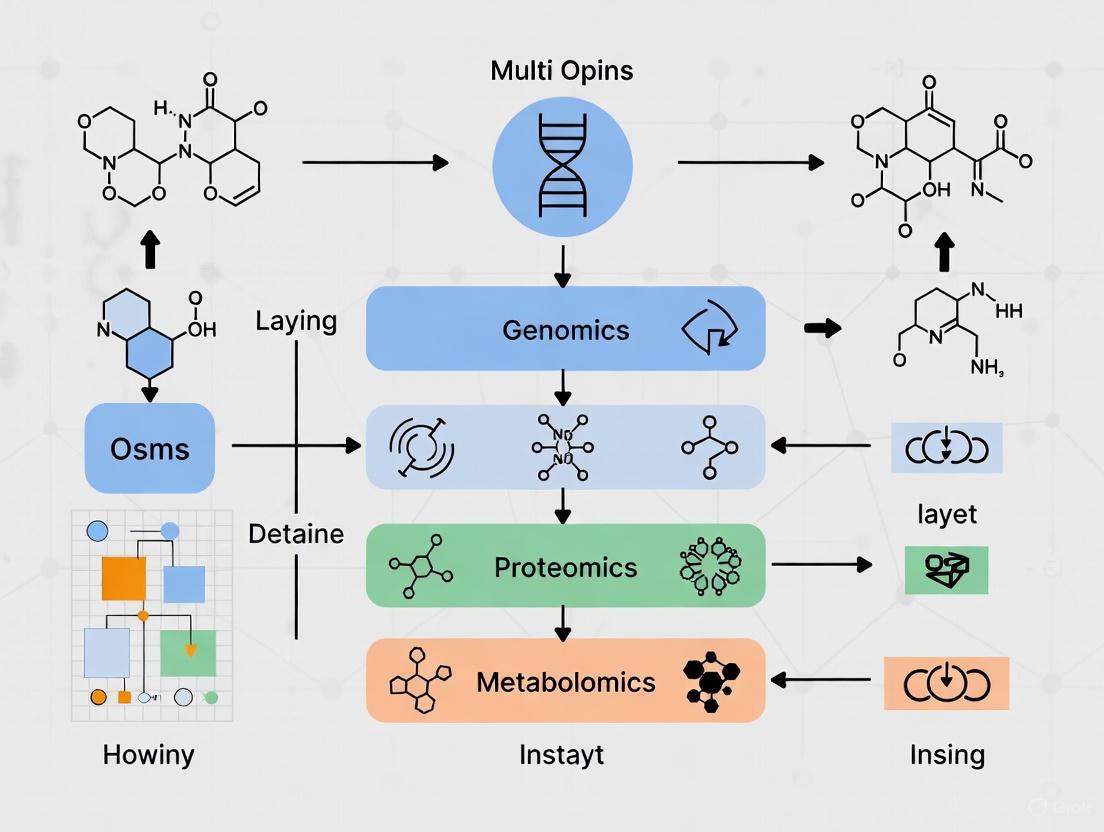
The integration of multi-omics data is revolutionizing cancer research by providing a holistic view of tumor biology, moving beyond the limitations of single-omics approaches.
Integrating Multi-Omics Data for Precision Cancer Classification: Methods, Applications, and Future Directions
Abstract
The integration of multi-omics data is revolutionizing cancer research by providing a holistic view of tumor biology, moving beyond the limitations of single-omics approaches. This article offers a comprehensive resource for researchers and drug development professionals, detailing the foundational principles of multi-omics layers—genomics, transcriptomics, proteomics, and epigenomics. It explores advanced computational methodologies for data integration, from statistical models to deep learning, and provides a practical guide for navigating common challenges like data heterogeneity and dimensionality. Through comparative analysis of tools and validation frameworks, the article equips scientists with the knowledge to enhance cancer subtype classification, identify novel biomarkers, and accelerate the development of personalized therapeutic strategies.
The Multi-Omics Landscape in Oncology: Building a Comprehensive Molecular Portrait of Cancer
Multi-omics approaches represent a transformative paradigm in biological research, particularly in complex disease fields like oncology. These technologies enable a comprehensive understanding of disease mechanisms by integrating data across multiple molecular layers. In cancer research, multi-omics integration has revolutionized our understanding of tumor biology by providing unprecedented insights into the molecular intricacies of various cancers, including breast, lung, gastric, pancreatic, and glioblastoma [1]. The core omics technologies—genomics, transcriptomics, proteomics, and metabolomics—form the foundational pillars of this approach, each contributing unique insights into cancer biology while overcoming the limitations of single-marker analyses [2]. By harmonizing multi-dimensional data, researchers can now reveal driver mutations, dynamic signaling pathways, and metabolic-immune crosstalk, offering systemic solutions to critical bottlenecks in gastrointestinal tumor research and beyond [2].
The technological advances in these fields have been dramatic, especially in DNA sequencing where costs have decreased from billions to under $1,000 per genome while speed has increased exponentially [3]. This progress has created a virtual flood of completely sequenced genomes being deposited in public databases—over 2,000 eukaryotic genomes, 600 archaeal genomes, and nearly 12,000 bacterial genomes to date, with tens of thousands more projects in progress [3]. This explosion of data provides the raw material for multi-omics integration, enabling researchers to ask fundamental questions about patterns common to all genomes, gene organization, feature types, and evolutionary evidence [3].
Table 1: Core Omics Technologies: Overview and Applications in Cancer Research
| Omics Technology | Analytical Focus | Key Applications in Cancer | Common Technologies |
|---|---|---|---|
| Genomics | DNA sequence and structure | Identifying driver mutations, copy number variations, SNPs | WGS, WES, targeted panels, liquid biopsy |
| Transcriptomics | RNA expression profiles | Gene expression profiling, molecular subtyping, immune microenvironment | RNA-seq, scRNA-seq, microarrays |
| Proteomics | Protein structure and function | Biomarker discovery, drug target identification, signaling pathways | Mass spectrometry, protein arrays |
| Metabolomics | Metabolic pathways and regulation | Early diagnosis, metabolic reprogramming, therapeutic response | LC-MS, GC-MS, NMR spectroscopy |
Detailed Technology Analysis
Genomics
Genomics involves the detailed analysis of the complete set of DNA, including all genes, with focus on sequencing, structure, function, and evolution [1]. Through comprehensive analysis of DNA sequences and structural changes in cancers—using methods like whole-genome sequencing (WGS) and whole-exome sequencing (WES)—genomics reveals critical correlations between tumor heterogeneity and genetic complexity [2]. The higher the tumor heterogeneity, the greater its genetic complexity, providing fundamental insights into the molecular mechanisms of tumorigenesis [2].
Cancer mutations are broadly categorized into driver mutations and passenger mutations. Driver mutations provide growth advantage to cells and are directly involved in the oncogenic process, typically occurring in genes involved in key cellular processes like cell growth regulation, apoptosis, and DNA repair [1]. For example, mutations in the TP53 gene are found in approximately 50% of all human cancers, highlighting its crucial role in maintaining cellular integrity [1]. Next-generation sequencing (NGS) technologies have revolutionized cancer research by enabling comprehensive analysis of entire genomes, exomes, or transcriptomes with high accuracy, allowing scientists to identify numerous cancer-associated mutations [1].
Copy number variations (CNVs) represent another critical genomic alteration, involving duplications or deletions of large DNA regions leading to variations in gene copies [1]. These variations significantly influence cancer development by altering gene dosage, potentially leading to overexpression of oncogenes or underexpression of tumor suppressor genes [1]. A well-established example is HER2 gene amplification in approximately 20% of breast cancers, leading to HER2 protein overexpression associated with aggressive tumor behavior and poor prognosis [1]. This discovery led to targeted therapies like trastuzumab, significantly improving patient outcomes [1].
Single-nucleotide polymorphisms (SNPs), the most common genetic variation among people, also play crucial roles in cancer susceptibility and treatment response [1]. While most SNPs have no health effect, some significantly impact cancer development or drug responses—for example, SNPs in BRCA1 and BRCA2 genes increase breast and ovarian cancer risk [1]. Pharmacogenomics studies using SNP data can predict patient responses to cancer therapies, improving treatment efficacy and reducing toxicity [1].
Table 2: Genomic Variations in Cancer Biology
| Variation Type | Description | Cancer Examples | Clinical Implications |
|---|---|---|---|
| Driver Mutations | Provide growth advantage to cancer cells | TP53 mutations (50% of cancers) | Critical for cancer development and progression; potential therapeutic targets |
| Copy Number Variations (CNVs) | Duplications/deletions of DNA regions | HER2 amplification (20% of breast cancers) | Altered gene dosage; leads to oncogene overexpression or tumor suppressor underexpression |
| Single-Nucleotide Polymorphisms (SNPs) | Single-base genetic variations | BRCA1/BRCA2 SNPs (breast/ovarian cancer) | Affect cancer susceptibility and drug response; enable personalized treatment approaches |
Transcriptomics
Transcriptomics provides a unique approach for studying dynamic molecular characteristics of cancers by evaluating RNA expression profiles and regulatory networks [2]. Unlike genomics, which focuses on static DNA variations, transcriptomics captures dynamic changes in gene expression, revealing complex interactions between tumor cells and their microenvironment [2]. RNA sequencing (RNA-seq), the principal transcriptomics technology, comprehensively detects expression levels of mRNA, lncRNA, and microRNA, systematically mapping gene expression profiles in various gastrointestinal tumors and identifying abnormal activation patterns of critical signaling pathways like TGF-β and PI3K-Akt [2].
In colorectal cancer, overexpression of WNT pathway target genes (e.g., MYC and AXIN2) is strongly linked to the adenoma-carcinoma sequence progression [2]. Similarly, high Claudin 18.2 expression in gastric cancer has emerged as a target for antibody-drug conjugate development [2]. Transcriptomics also serves as a key component of tumor immune microenvironment research, enabling characterization of immune cell subsets (e.g., T cells and macrophages) by examining RNA expression in tumor tissues [2]. In esophageal cancer, high PD-L1 mRNA expression often indicates an immunosuppressive microenvironment, while CD8+ T cell-related gene expression correlates with immunotherapy response [2].
Transcriptomics-based immune scoring systems (e.g., CIBERSORT) have been developed to predict patient responses to checkpoint inhibitors, supporting precision immunotherapy [2]. Additionally, transcriptomics reveals gene expression patterns associated with cancer-associated fibroblasts (CAF) and matrix remodeling, strongly correlated with tumor invasion and metastasis [2]. For instance, TGF-β signaling pathway activation in gastric cancer through high expression of CAF markers (e.g., FAP and ACTA2) suggests matrix remodeling as a potential therapeutic target [2].
Transcriptomics Workflow from Sample to Analysis
Proteomics
Proteomics focuses on the study of the structure and function of proteins, the main functional products of gene expression [1]. This field directly measures protein levels and modifications, providing critical links between genotype and phenotype [1]. Proteomics offers several advantages, including the ability to identify post-translational modifications that dramatically alter protein function, but also faces challenges due to proteins' complex structures, dynamic ranges, and the much larger proteome compared to the genome [1].
Applications in cancer research include biomarker discovery, drug target identification, and functional studies of cellular processes [1]. In gastrointestinal tumors, proteomics provides important information on core proteins and the immune microenvironment [2]. Advancements in mass spectrometry have been particularly transformative, enhancing the correlation between molecular profiles and clinical features and refining the prediction of therapeutic responses [1]. These technological improvements have enabled more comprehensive profiling of protein expression patterns, phosphorylation states, and other modifications that drive cancer progression.
The integration of proteomics with genomics—termed proteogenomics—has created particularly powerful insights for cancer research [1]. This approach helps validate genomic findings at the protein level and identifies instances where mRNA expression does not correlate with protein abundance due to post-transcriptional regulation. For example, in breast cancer, proteogenomic analyses have revealed novel protein isoforms and phosphorylation events that would not be detectable through genomic or transcriptomic approaches alone, opening new avenues for therapeutic intervention.
Metabolomics
Metabolomics involves the comprehensive analysis of metabolites within a biological sample, reflecting the biochemical activity and physiological state of cells or tissues [1]. This field provides unique insights into metabolic pathways and their regulation, offering a direct link to phenotype and capturing real-time physiological status [1]. In cancer research, metabolomics has emerged as a promising approach for early diagnosis, with applications in disease diagnosis, nutritional studies, and toxicology/drug metabolism [1].
Cancer cells undergo metabolic reprogramming to support their rapid growth and proliferation, a hallmark known as the Warburg effect where cancer cells preferentially utilize glycolysis even under oxygen-rich conditions [2]. Metabolomics can clarify mutation-induced metabolic phenotypes, such as how KRAS mutations drive specific metabolic alterations that support tumor growth [2]. In colorectal cancer, integrated multi-omics approaches have demonstrated how APC gene deletion activates the Wnt/β-catenin pathway, which subsequently drives glutamine metabolic reprogramming through upregulation of glutamine synthetase [2].
Metabolomics faces technical challenges including the highly dynamic nature of the metabolome influenced by numerous factors, limited reference databases, and technical variability/sensitivity issues [1]. However, advances in analytical technologies like liquid chromatography-mass spectrometry (LC-MS), gas chromatography-mass spectrometry (GC-MS), and nuclear magnetic resonance (NMR) spectroscopy have significantly improved metabolite coverage and quantification accuracy. Recent application notes highlight optimized systems for assessing mitochondrial respiration and glycolysis in complex biological samples, enabling real-time, high-sensitivity metabolic profiling with consistent, reproducible results [4].
Experimental Protocols
Integrated Multi-Omics Sample Processing Protocol
Objective: To obtain comprehensive molecular profiles from a single tumor specimen through coordinated genomics, transcriptomics, proteomics, and metabolomics analyses.
Materials:
- Fresh frozen tumor tissue specimens (snap-frozen in liquid nitrogen within 30 minutes of resection)
- RNA stabilization reagents (e.g., RNAlater)
- Tissue homogenization equipment (e.g., bead mill homogenizer)
- DNA, RNA, protein, and metabolite extraction kits
- Quality control instruments (e.g., Bioanalyzer, spectrophotometer)
Procedure:
- Tissue Partitioning:
- Cryopreserved tissue is cryosectioned into sequential slices (10-20μm thickness)
- Alternate sections are allocated for DNA/RNA, protein, and metabolite extraction
- Adjacent sections are H&E stained for histological validation
Nucleic Acids Co-Extraction:
- Homogenize tissue slices in TRIzol reagent (100mg tissue/mL)
- Separate organic and aqueous phases by centrifugation
- Recover RNA from aqueous phase, DNA from interphase
- Purify RNA using silica membrane columns
- Digest RNA with DNase I (30 minutes, 37°C)
- precipitate DNA from organic phase and wash extensively
Protein Extraction:
- Homogenize tissue in RIPA buffer with protease/phosphatase inhibitors
- Centrifuge at 14,000×g for 15 minutes at 4°C
- Collect supernatant for proteomic analysis
- Quantify protein concentration by BCA assay
Metabolite Extraction:
- Homogenize tissue in 80% methanol (pre-chilled to -80°C)
- Vortex vigorously for 30 seconds
- Incubate at -20°C for 1 hour
- Centrifuge at 14,000×g for 15 minutes at 4°C
- Collect supernatant for metabolomic analysis
Quality Control:
- DNA: A260/A280 ratio ≥1.8, fragment analysis
- RNA: RIN ≥7.0 on Bioanalyzer
- Protein: Clear of degradation on SDS-PAGE
- Metabolites: Stable intensity values in QC samples
LC-MS/MS Metabolomics Profiling Protocol
Objective: To identify and quantify polar and non-polar metabolites from tumor tissue extracts.
Materials:
- UHPLC system with C18 and HILIC columns
- High-resolution mass spectrometer (e.g., Q-Exactive)
- Solvents: LC-MS grade water, acetonitrile, methanol
- Ammonium acetate and ammonium hydroxide for mobile phase
- Internal standards: 13C-labeled amino acid mix
Chromatography Conditions:
- Reverse Phase (C18):
- Column: 2.1 × 100 mm, 1.7μm
- Mobile phase A: Water with 0.1% formic acid
- Mobile phase B: Acetonitrile with 0.1% formic acid
- Gradient: 1% B to 99% B over 15 minutes
- Flow rate: 0.4 mL/min
- Column temperature: 45°C
- HILIC:
- Column: 2.1 × 100 mm, 1.7μm
- Mobile phase A: 95:5 water:acetonitrile with 10mM ammonium acetate
- Mobile phase B: acetonitrile
- Gradient: 85% B to 30% B over 12 minutes
- Flow rate: 0.5 mL/min
- Column temperature: 40°C
Mass Spectrometry Parameters:
- Ionization: ESI positive and negative modes
- Spray voltage: ±3.5 kV
- Capillary temperature: 320°C
- Resolution: 70,000
- Scan range: m/z 70-1050
- Collision energy: Stepped (20, 40, 60 eV)
Data Processing:
- Convert raw files to mzML format
- Feature detection and alignment (XCMS, OpenMS)
- Compound identification against databases (HMDB, METLIN)
- Statistical analysis (MetaboAnalyst)
- Pathway enrichment analysis (KEGG, Reactome)
Multi-Omics Integration Pathway for Cancer Research
The Scientist's Toolkit: Essential Research Reagents
Table 3: Essential Research Reagents for Multi-Omics Cancer Studies
| Reagent Category | Specific Products | Application | Technical Considerations |
|---|---|---|---|
| Nucleic Acid Extraction | TRIzol, AllPrep kits, QIAamp DNA FFPE | Co-extraction of DNA/RNA from limited specimens | Maintain RNA integrity (RIN >7.0); assess DNA fragmentation |
| Library Preparation | Illumina TruSeq, KAPA HyperPrep, SMARTer | NGS library construction for genomic/transcriptomic analysis | Optimize for input amount; incorporate unique molecular identifiers |
| Protein Digestion | Trypsin/Lys-C mix, RIPA buffer, protease inhibitors | Mass spectrometry sample preparation | Control digestion time/temperature; prevent modifications |
| Metabolite Extraction | 80% methanol, acetonitrile:water (1:1) | Polar/non-polar metabolite recovery | Maintain cold chain; process rapidly to preserve labile metabolites |
| Quality Control | Bioanalyzer/RIN, Qubit/BioRad, Standard reference materials | Assessment of sample quality across omics | Implement pre-analytical scoring system; establish acceptance criteria |
| Internal Standards | SIS peptides, 13C-labeled metabolites, ERCC RNA spikes | Quantification normalization across platforms | Use early in extraction to correct for technical variability |
The integration of core omics technologies represents a paradigm shift in cancer research, moving beyond single-marker analyses to comprehensive molecular portraits of tumors. As these technologies continue to advance—with improvements in third-generation sequencing, mass spectrometry sensitivity, and computational integration methods—their impact on cancer classification and personalized treatment will only intensify [1] [2]. The future of multi-omics research lies in addressing current challenges related to data heterogeneity, algorithm generalization, and clinical translation costs while leveraging emerging opportunities in single-cell multi-omics, artificial intelligence, and spatial molecular profiling [2].
The promise of multi-omics approaches extends beyond basic research to clinical applications, where integrated molecular profiling could revolutionize cancer diagnosis, prognosis, and treatment selection. As standardization improves and costs decrease, multi-omics profiling may become routine in oncology practice, enabling truly personalized cancer therapy based on the complete molecular landscape of each patient's tumor [1]. This comprehensive approach holds the potential to significantly improve patient outcomes through more effective and targeted treatment strategies, ultimately fulfilling the promise of precision oncology [1].
Cancer is a genetic disease characterized by the accumulation of molecular variations that confer a growth advantage to cells. The integration of multi-omics data—spanning genomics, epigenomics, transcriptomics, and proteomics—has become crucial for deciphering the complex molecular mechanisms underlying carcinogenesis [5]. Driver mutations, copy number variations (CNVs), and single nucleotide polymorphisms (SNPs) represent three fundamental classes of molecular alterations that collectively contribute to cancer development, progression, and therapeutic resistance [6] [7] [8]. The identification and characterization of these variations provide not only deeper insights into cancer biology but also valuable biomarkers for diagnosis, prognosis, and personalized treatment strategies.
This application note outlines the key molecular variations in cancer, detailing experimental protocols for their detection and analysis within an integrated multi-omics framework. We present standardized methodologies for identifying driver mutations, CNVs, and SNPs, along with practical guidance for data integration and interpretation to advance cancer classification research.
Driver Mutations
Driver mutations are genomic alterations that provide a selective growth advantage to cancer cells and are positively selected during tumor evolution [6]. These mutations occur more frequently than expected from genome-wide mutation rates and are enriched in hallmark cancer pathways and driver genes. Traditionally, driver mutation detection focused on protein-coding regions; however, increasing evidence underscores the significance of non-coding variants in cancer development, with highly recurrent mutations observed in promoters (e.g., TERT), 3'UTRs (e.g., NOTCH1), and 5'UTRs (e.g., TAOK2, BCL2, CXCL14) [6].
Table 1: Classes of Driver Mutations and Their Functional Impacts
| Mutation Class | Genomic Location | Functional Impact | Example Genes | Cancer Association |
|---|---|---|---|---|
| Coding Mutations | CDS (Coding Sequence) | Alters amino acid sequence, protein function | TTN, TP53, KRAS | Disrupts protein function (e.g., TTN domain folding in LUAD) [6] |
| Promoter Mutations | Promoter regions | Alters transcription factor binding, gene expression | TERT | Upregulates expression in melanoma, CNS, bladder, thyroid cancers [6] |
| 3'UTR Mutations | 3' Untranslated Region | Affects mRNA stability, translation, splicing | NOTCH1 | Enhances activity in chronic lymphocytic leukemia [6] |
| 5'UTR Mutations | 5' Untranslated Region | Modifies mRNA translation efficiency | TAOK2, BCL2, CXCL14 | Alters translation in various cancers [6] |
| Splice Site Mutations | Exon-intron boundaries | Disrupts normal RNA splicing | Multiple genes | Generates aberrant protein isoforms |
Computational tools like geMER (genome-wide Mutation Enrichment Region) identify candidate driver genes by detecting mutation enrichment regions within both coding and non-coding elements, demonstrating that 94.3% of mutations align with functional genomic elements [6]. The Core Driver Gene Set (CDGS) concept has emerged, comprising genes that broadly promote carcinogenesis across multiple cancers, with one study identifying a CDGS of 25 genes for 25 cancer types [6].
Copy Number Variations (CNVs)
CNVs are structural alterations involving gains or losses of DNA segments larger than 1 kilobase, affecting a greater fraction of the genome than SNPs [7]. In cancer, CNVs can range from focal amplifications or deletions to whole-genome doubling events and chromothripsis (massive chromosomal rearrangements) [9]. CNVs contribute to oncogenesis by altering gene dosage, disrupting regulatory regions, and creating genomic instability.
Table 2: Types and Clinical Significance of CNVs in Cancer
| CNV Category | Genomic Scale | Biological Significance | Detection Methods | Clinical Association |
|---|---|---|---|---|
| Focal CNVs | < Several Mb | Amplifies oncogenes or deletes tumor suppressors | WGS, WES, SNP arrays | EGFR amplification in glioblastoma, MYCN in neuroblastoma |
| Arm-Level CNVs | Whole chromosome arms | Indicates chromosomal instability | WGS, SNP arrays | 1q gain in various cancers [9] |
| Whole-Genome Doubling (WGD) | Entire genome | Promotes tumor evolution, therapeutic resistance | Ploidy analysis | Poor prognosis across multiple cancers [9] |
| Chromothripsis | Multiple chromosomes | "Genomic catastrophe" with clustered rearrangements | WGS | Associated with aggressive disease [9] |
| Extrachromosomal DNA (ecDNA) | Circular DNA molecules | Amplifies oncogenes, promotes heterogeneity | WGS, single-cell methods | Oncogene amplification, drug resistance [10] |
Pan-cancer analyses have identified 21 copy number signatures that explain copy number patterns in 97% of TCGA samples, with 17 signatures linked to biological phenomena including whole-genome doubling, aneuploidy, loss of heterozygosity, homologous recombination deficiency, and chromothripsis [9]. These signatures reflect the activity of diverse mutational processes and have clinical implications for prognosis and treatment response.
Single Nucleotide Polymorphisms (SNPs)
SNPs are single base pair substitutions that represent the most frequent form of genetic variation. In cancer, SNPs can occur as either germline variations (constitutional DNA) that predispose to cancer or somatic mutations (acquired in tumor cells) that drive oncogenesis. While early cancer genetics focused on SNPs as risk factors, contemporary research emphasizes their integrated analysis with other variation types.
Advanced detection methods like Uni-C (Uniform Chromosome Conformation Capture) enable comprehensive profiling of SNPs and INDELs (insertions-deletions) at the single-cell level, achieving 86.4% genomic coverage in individual cells [10]. This approach facilitates the identification of driver gene mutations and neoantigen prediction in circulating tumor cells (CTCs), advancing early detection and treatment strategies [10].
Experimental Protocols for Multi-Omics Integration
Protocol 1: Identification of Driver Mutations Using geMER
Purpose: To identify candidate driver genes by detecting mutation enrichment regions within coding and non-coding genomic elements.
Materials:
- Input Data: Whole-genome or whole-exome sequencing data (BAM/VCF formats)
- Software: geMER pipeline
- Reference Databases: COSMIC CGC, TCGA mutation data
Procedure:
- Data Preprocessing: Process somatic mutations from WGS/WES data across cancer types
- Genomic Element Mapping: Align mutations to five genomic elements: CDS (41.2%), promoters (10.3%), splice sites (32.9%), 3'UTRs (11.3%), and 5'UTRs (4.3%)
- Mutation Enrichment Analysis: Apply modified Kolmogorov-Smirnov test to detect mutation enrichment patterns along gene transcripts
- Candidate Driver Identification: Identify genes with significant mutation enrichment (adj. p < 0.05)
- Validation: Compare against COSMIC CGC database; evaluate using F1 score and CGC enrichment metrics
Performance Metrics: geMER outperforms other methods (ActiveDriverWGS, OncodriveFML, DriverPower) across most cancer types, particularly in PRAD, READ, and OV, with higher proportion of CGC genes in results [6].
Protocol 2: Pan-Cancer CNV Signature Analysis
Purpose: To decipher copy number signatures across multiple cancer types and experimental platforms.
Materials:
- Input Data: Copy number profiles from WGS, WES, or SNP6 microarray data
- Software: Copy number signature framework
- Reference Data: TCGA cohort (9,873 cancers, 33 cancer types)
Procedure:
- Copy Number Profiling: Generate allele-specific copy number profiles using platform-optimized calling strategies
- Feature Encoding: Encode copy number profiles into 48-dimensional vectors based on:
- Total copy number (TCN)
- Heterozygosity status (LOH)
- Segment size
- Matrix Construction: Create copy number matrices for all samples
- Signature Decomposition: Apply non-negative matrix factorization to identify shared patterns
- Signature Attribution: Quantify the number of segments attributed to each signature per sample
- Biological Interpretation: Categorize signatures into six groups based on prevalent features
Output: 21 distinct pan-cancer copy number signatures (CN1-CN21) that accurately reconstruct 97% of TCGA samples, with strong concordance across platforms (median cosine similarity >0.8) [9].
Protocol 3: Single-Cell Multi-Omics Integration for Genomic Alteration Detection
Purpose: To comprehensively detect genomic alterations (SNPs, INDELs, CNVs, structural variants) at single-cell resolution.
Materials:
- Technology: Uni-C (Uniform Chromosome Conformation Capture)
- Reagents: Ethylene glycol bis (succinimidyl succinate) (EGS), formaldehyde, phi29 DNA polymerase, α-thiol-modified ddNTPs, exonuclease-resistant random primers
- Equipment: High-throughput sequencer
Procedure:
- Dual Crosslinking: Treat cells with EGS and formaldehyde to preserve chromatin spatial conformation
- Chromatin Fragmentation: Use 4-base cutter restriction endonuclease
- Proximity Ligation: Perform end-repair and proximity ligation in same reaction mixture
- Single-Nucleus Amplification:
- Employ phi29 DNA polymerase with dNTPs and α-thiol-modified ddNTPs
- Control product size (<2 kb) to prevent over-amplification
- Reduce amplification time to ~2 hours
- Library Preparation & Sequencing: Size selection, library preparation, high-throughput sequencing
- Data Integration: Combine 3D chromatin interaction data with whole-genome sequencing data
Performance: Achieves 86.4% genomic coverage at 14.6× sequencing depth per cell; identifies an average of 1.82 million SNPs and 0.28 million INDELs per cell with 86.2% true positive rate after filtering [10].
Data Integration and Analytical Workflows
Multi-Omics Integration Strategies
Integrating molecular variation data with other omics layers requires sophisticated computational approaches. Three primary integration strategies are employed:
- Early Integration: Simple concatenation of features from each omics layer into a single matrix
- Middle Integration: Using machine learning models to consolidate data without concatenating features
- Late Integration: Performing analysis on each omics layer separately, then merging results
Middle integration approaches, particularly those utilizing machine learning and deep learning, have demonstrated superior performance for cancer subtype classification and biomarker discovery [8].
Machine Learning Approaches for Multi-Omics Integration
Table 3: Comparison of Multi-Omics Integration Methods
| Method | Category | Primary Use | Advantages | Limitations |
|---|---|---|---|---|
| MOFA+ | Statistical-based | Dimensionality reduction, feature selection | Identifies latent factors explaining variation across omics; outperforms in BC subtyping (F1=0.75) [11] | Unsupervised, may miss subtype-specific signals |
| MOGCN | Deep learning (Graph CNN) | Cancer subtyping, biomarker identification | Captures non-linear relationships; integrates biological networks | Lower performance in BC subtyping vs. MOFA+ [11] |
| Autoencoder-based | Deep learning | Dimension reduction, latent feature extraction | Learns compressed representations; enables integration of heterogeneous data | Requires careful tuning; black box interpretation |
| Similarity Network Fusion (SNF) | Network-based | Cancer subtyping | Effectively integrates different data types using sample similarity networks | Computationally intensive for large datasets [12] |
Table 4: Key Research Reagent Solutions for Multi-Omics Cancer Studies
| Resource | Type | Function | Access |
|---|---|---|---|
| TCGA (The Cancer Genome Atlas) | Data Portal | Multi-omics data for >20,000 tumors across 33 cancers | https://portal.gdc.cancer.gov/ [8] |
| MLOmics | Database | Preprocessed multi-omics data for machine learning (8,314 samples, 32 cancers) | Open database with Original, Aligned, and Top feature versions [13] |
| COSMIC | Database | Curated multi-omics data for cell lines and tumors, focus on genomics | https://cancer.sanger.ac.uk/cosmic [8] |
| DepMap | Portal | CRISPR screens with multi-omics characterization of cell lines and drug screens | https://depmap.org/portal/ [8] |
| Uni-C | Technology | Single-cell 3D chromatin and genomic alteration profiling | Protocol described in [10] |
| geMER | Algorithm | Identifies candidate driver genes in coding and non-coding regions | http://bio-bigdata.hrbmu.edu.cn/geMER/ [6] |
Workflow Visualization
Multi-Omics Integration and Analysis Workflow
Copy Number Signature Analysis Pipeline
The comprehensive characterization of driver mutations, CNVs, and SNPs through integrated multi-omics approaches provides unprecedented insights into cancer biology and creates new opportunities for precision oncology. The experimental protocols and analytical frameworks outlined in this application note offer researchers standardized methodologies for detecting and interpreting these key molecular variations. As single-cell technologies and artificial intelligence approaches continue to advance, they will further enhance our ability to decipher cancer complexity and develop more effective classification systems and targeted therapies.
The integration of these molecular variation data with other omics layers—including transcriptomics, epigenomics, and proteomics—will be essential for developing a holistic understanding of cancer mechanisms and advancing personalized treatment strategies for cancer patients.
Cancer is fundamentally a complex and heterogeneous disease, characterized by uncontrolled cell growth that can invade surrounding tissues and spread to distant organs. Traditional methods of diagnosis, often relying on single-omics data such as gene expression, DNA methylation, or miRNA profiles, frequently fail to capture the full molecular landscape of a tumor [14] [15]. This limitation is particularly evident in challenging clinical scenarios, such as identifying the tissue of origin when cancer has metastasized to other organs [14]. An analysis limited to a single molecular level is insufficient for understanding the complex pathogenesis of cancer and struggles to meet the need for precise molecular subtyping, treatment selection, and prognosis [16]. The inherent shortcomings of single-omics approaches have catalyzed a paradigm shift toward multi-omics integration, which provides a more comprehensive and holistic perspective by concurrently analyzing multiple strata of biological data [17]. This document outlines the quantitative evidence against single-omics approaches, provides detailed protocols for multi-omics integration, and equips researchers with the necessary tools to advance cancer classification research.
Quantitative Evidence: The Performance Gap Between Single and Multi-Omics
Robust experimental evidence consistently demonstrates that multi-omics integration significantly outperforms single-omics approaches in key cancer research tasks, including classification, subtyping, and clustering. The following tables summarize comparative performance data from recent studies.
Table 1: Comparative Accuracy in Cancer Type and Subtype Classification
| Data Type | Task | Reported Accuracy | Citation |
|---|---|---|---|
| Multi-omics (mRNA, miRNA, Methylation) | Classifying 30 cancer types by tissue of origin | 96.67% (± 0.07) | [14] |
| Multi-omics (mRNA, miRNA, Methylation) | Identifying cancer stages | 83.33% to 93.64% | [14] |
| Multi-omics (mRNA, miRNA, Methylation) | Identifying cancer subtypes | 87.31% to 94.0% | [14] |
| Gene Expression (mRNA) only | Classifying 31 tumor types | 90% | [18] |
| miRNA only | Classifying 32 tumor types | 92% sensitivity | [18] |
Table 2: Clustering Performance for Cancer Subtyping Using Multi-omics Data
| Cancer Type | Subtypes | Metric | Performance | Citation |
|---|---|---|---|---|
| BRCA (Breast) | 5 | NMI | Refer to source study | [16] |
| GBM (Glioblastoma) | 4 | ARI | Refer to source study | [16] |
| LUAD (Lung Adenocarcinoma) | 3 | ACC | Refer to source study | [16] |
The superiority of multi-omics data is visually apparent in clustering analyses. For instance, a t-distributed stochastic neighbor embedding (t-SNE) analysis using cancer-associated multi-omics latent variables showed clear separation between 30 different cancer types. In contrast, t-SNE plots generated from single-omics data—gene expression, miRNA, and methylation separately—showed significant intermingling and co-clustering of distinct cancer types, demonstrating that single-omics data fails to adequately distinguish between them due to intra-tumor heterogeneity [14].
Experimental Protocols for Multi-Omics Integration
Protocol 1: Biologically Informed Deep Learning for Pan-Cancer Classification
This protocol details a hybrid feature selection and deep learning framework for classifying cancer by tissue of origin, stage, and subtype [14].
1. Sample and Data Collection
- Source: Obtain data from public repositories such as The Cancer Genome Atlas (TCGA) or use pre-processed databases like MLOmics [13].
- Omic Types: Collect mRNA expression, miRNA expression, and DNA methylation data.
- Sample Size: The referenced study used 7,632 samples from 30 different cancer types [14].
2. Biologically Informed Feature Selection
- Gene Set Enrichment Analysis (GSEA): Preprocess the gene expression data and perform GSEA to identify genes involved in molecular functions, biological processes, and cellular components (p < 0.05) [14].
- Univariate Cox Regression: Subject the enriched genes to univariate Cox regression analysis using clinical and gene expression data to identify genes linked with patient survival (p < 0.05) [14].
- Multi-Omics Linking:
- Identify miRNA molecules that target the survival-associated genes.
- Screen for CpG sites located in the promoter regions of these survival-associated genes.
- Output: Generate three distinct data matrices: an expression matrix of prognostic genes, a miRNA expression matrix, and a DNA methylation matrix.
3. Data Integration and Dimensionality Reduction with an Autoencoder
- Framework: Construct a deep learning autoencoder (e.g., CNC-AE).
- Input: Concatenate the three processed matrices (mRNA, miRNA, methylation) into a single input.
- Encoding: The encoder network transforms the multi-omics data into latent vectors. Fine-tune the dimensions of the bottleneck layer (e.g., 64 latent variables for each cancer type) [14].
- Training: Train the autoencoder to minimize the reconstruction loss (e.g., Mean Squared Error). A low MSE (0.03-0.29) indicates the model has successfully learned the cancer-specific patterns [14].
- Output: Use the latent variables, termed Cancer-associated Multi-omics Latent Variables (CMLV), for downstream classification tasks.
4. Classification
- Model: Construct an Artificial Neural Network (ANN) classifier.
- Input: The CMLV from the autoencoder.
- Output: Classify tissue of origin, cancer stage, and subtype.
Protocol 2: Multi-Omics Clustering for Cancer Subtyping (MOCSS)
This protocol describes an unsupervised method for cancer subtyping by learning shared and specific information from multi-omics data [16].
1. Data Preprocessing
- Data Types: Collect mRNA expression, miRNA expression, and DNA methylation data for the cancer type of interest.
- Normalization: Normalize the original data for each omics type using Min-Max Normalization to map all values to a [0, 1] range using the formula:
X∗ = (X - min) / (max - min)[16].
2. Shared and Specific Representation Learning
- Model Architecture: For each omics data type, employ two separate autoencoders: one to extract shared (consistent) information and another to extract specific (unique) information.
- Orthogonality Constraint: Apply an orthogonality constraint to the learned representations to reduce redundancy and mutual interference between the shared and specific information.
- Contrastive Learning: Use contrastive learning to align the shared information extracted from the different omics data in a common subspace, thereby strengthening their consistency.
3. Clustering and Subtype Identification
- Feature Fusion: For each sample, combine the learned shared and specific representations into a unified feature vector.
- Clustering Algorithm: Apply the K-means clustering algorithm to the unified representation matrix of all samples to obtain cluster labels.
- Validation: Evaluate the clustering performance using metrics such as Normalized Mutual Information (NMI), Adjusted Rand Index (ARI), and Accuracy (ACC) against known ground-truth labels if available.
Visualization of Multi-Omics Workflows
Multi-Omics Integration and Classification Workflow
Multi-Omics Integration and Classification Workflow
Shared and Specific Information Learning for Subtyping
Shared and Specific Information Learning for Subtyping
The Scientist's Toolkit: Research Reagent Solutions
Table 3: Essential Resources for Multi-Omics Cancer Research
| Resource Type | Name / Example | Function and Application |
|---|---|---|
| Public Data Repositories | The Cancer Genome Atlas (TCGA) | Primary source for raw, multi-omics cancer data from patient samples [18] [16]. |
| Preprocessed ML-Ready Databases | MLOmics | Provides off-the-shelf, preprocessed multi-omics data (mRNA, miRNA, methylation, CNV) with aligned features and significance filters, ready for machine learning models [13]. |
| Computational Frameworks & Tools | Autoencoders (e.g., CNC-AE), MOCSS, Subtype-GAN, XOmiVAE | Enable dimensionality reduction, data integration, and model training for classification and subtyping tasks [14] [13] [16]. |
| Bioinformatics Programming Languages | R, Python | Core languages for data preprocessing, statistical analysis (e.g., Cox regression, ANOVA), and implementing machine learning models [19]. |
| Analysis Packages & Platforms | Seurat, Scanpy, MindWalk HYFT Platform | Support comprehensive analysis workflows, including normalization, integration, clustering, and visualization of multi-omics data [20] [19]. |
| Biological Knowledge Bases | STRING, KEGG | Used for functional enrichment analysis, pathway mapping, and validating the biological relevance of identified features [13]. |
The integration of multi-omics data represents a transformative approach in cancer research, enabling a holistic view of the complex molecular interactions that drive oncogenesis. Large-scale public data resources have become indispensable for systematically mapping the genetic, epigenetic, transcriptomic, and proteomic alterations across cancer types. These resources provide the foundational data necessary for developing machine learning models that can classify cancer types, identify novel subtypes, and predict therapeutic vulnerabilities. This application note details the experimental and computational protocols for leveraging four pivotal resources—TCGA, ICGC, CPTAC, and DepMap—within a multi-omics cancer classification framework.
Table 1: Core Characteristics of Major Public Cancer Data Resources
| Resource | Primary Data Types | Sample Focus | Key Applications | Access Portal |
|---|---|---|---|---|
| TCGA (The Cancer Genome Atlas) | Genomics, Epigenomics, Transcriptomics [21] | >20,000 primary tumors across 33 cancer types [21] | Cancer classification, driver gene identification, molecular subtyping | Genomic Data Commons (GDC) Data Portal [21] |
| CPTAC (Clinical Proteomic Tumor Analysis Consortium) | Proteomics, Phosphoproteomics, Genomics, Transcriptomics [22] [23] | >1,000 tumors across 10 cancer types [22] | Proteogenomic analysis, connecting genomic alterations to protein-level phenotypes [23] | Proteomic Data Commons (PDC) [23] |
| DepMap (Cancer Dependency Map) | CRISPR screens, Omics data, Drug response [24] | Cancer cell lines [8] | Identifying cancer vulnerabilities and therapeutic targets [24] | DepMap Portal [24] |
| ICGC (International Cancer Genome Consortium) | Genomics, Transcriptomics [8] | Tumor data [8] | International collaborative genomics, cross-population analyses | ICGC Data Portal [8] |
Data Access and Preprocessing Protocols
Data Retrieval and Harmonization
Efficient access to multi-omics data requires specialized portals and Application Programming Interfaces (APIs). The TCGA data is accessible through the Genomic Data Commons (GDC) Data Portal, which provides web-based analysis and visualization tools [21]. For programmatic access, the CPTAC program has developed a Python API that streams quantitative data directly into pandas dataframes, facilitating integration with machine learning packages like SciKit-learn and PyTorch [23]. Similarly, the R/Bioconductor tool TCGAbiolinks has been expanded to stream CPTAC pan-cancer data [23].
Data harmonization presents significant challenges due to differing sample collection protocols, experimental platforms, and data processing pipelines. CPTAC has addressed this by creating a harmonized dataset where all proteogenomic data has been reprocessed using standardized computational workflows [23]. For transcriptomics data from TCGA, crucial steps include platform identification (e.g., "Illumina Hi-Seq"), conversion of RSEM estimates to FPKM values, and logarithmic transformation [13].
Multi-Omics Data Processing Workflow
The following diagram illustrates the standardized workflow for processing multi-omics data from major resources for cancer classification research:
Diagram 1: Multi-omics Data Processing Workflow. This workflow outlines the standardized pipeline for preparing heterogeneous omics data for machine learning applications.
For genomic data processing, the key steps include identifying copy-number variations (CNVs), filtering somatic mutations, identifying recurrent genomic alterations using tools like the GAIA package, and annotating genomic regions with BiomaRt [13]. DNA methylation data processing requires identifying methylation regions from metadata, performing median-centering normalization with the limma R package, and selecting promoters with minimum methylation levels in normal tissues [13].
Feature Processing for Machine Learning
MLOmics provides a structured approach for creating machine learning-ready datasets with three feature versions [13]:
- Original: Contains the full set of genes directly extracted from collected omics files.
- Aligned: Filters non-overlapping genes and selects genes shared across different cancer types, with z-score normalization.
- Top: Identifies the most significant features using multi-class ANOVA with Benjamini-Hochberg correction (FDR < 0.05), followed by z-score normalization.
This stratified approach enables researchers to select the appropriate feature set complexity for their specific classification task, balancing biological comprehensiveness with computational efficiency.
Experimental Protocols for Multi-Omics Integration
Pan-Cancer Classification Protocol
Pan-cancer classification aims to distinguish different cancer types based on their molecular profiles, providing crucial insights for diagnosis and treatment. The following protocol outlines a standardized workflow for developing and validating classification models:
Table 2: Experimental Protocol for Pan-Cancer Classification
| Step | Procedure | Tools & Techniques | Quality Control |
|---|---|---|---|
| Data Collection | Retrieve multi-omics data from TCGA, CPTAC, or ICGC portals | GDC Data Portal, PDC, TCGAbiolinks R package [21] [23] | Verify sample metadata completeness and experimental platform consistency |
| Feature Selection | Apply ANOVA-based feature selection (p<0.05 with BH correction) [13] | MLOmics Top feature set, SCikit-learn SelectKBest | Control false discovery rate; ensure features present across cancer types |
| Model Training | Implement ensemble classifiers with cross-validation | XGBoost, Random Forest, SVM [13] | 10-fold cross-validation; hyperparameter tuning via grid search |
| Validation | Assess performance on independent test sets | Precision, Recall, F1-score, NMI, ARI [13] | Compare against established baselines; compute confidence intervals |
The computational workflow for pan-cancer classification integrates multiple data types and machine learning approaches as shown below:
Diagram 2: Pan-Cancer Multi-Omics Classification Pipeline. This workflow demonstrates the integration of multiple omics data types through different strategies for cancer classification.
For transcriptomics data, the protocol includes converting scaled gene-level RSEM estimates to FPKM values using the edgeR package, removing non-human miRNA expressions using species annotations from miRBase, and applying logarithmic transformations [13]. For DNA methylation data, median-centering normalization is performed to adjust for systematic biases and technical variations across samples [13].
Translational Dependency Mapping Protocol
The integration of TCGA with DepMap enables the creation of translational dependency maps that predict gene essentiality in patient tumors. This protocol adapts cancer cell line dependencies to patient tumors through machine learning:
Step 1: Model Training on DepMap Data
- Retrieve genome-wide CRISPR-Cas9 knockout screens and multi-omics characterization of cancer cell lines from DepMap [25].
- Train elastic-net regression models to predict gene essentiality scores using gene expression features [25].
- Apply tenfold cross-validation to select models with minimum error (Pearson's r > 0.2; FDR < 1×10^(-3)) [25].
Step 2: Transcriptional Alignment
- Perform quantile normalization of expression data from both DepMap and TCGA.
- Apply contrastive Principal Component Analysis (cPCA) to remove top principal components (cPC1-4) that represent technical variations between cell lines and tumors [25].
- Validate alignment by assessing reduced correlation between predicted essentialities and tumor purity.
Step 3: Dependency Prediction in Patient Tumors
- Apply the trained models to TCGA transcriptomic profiles to predict gene essentiality in patient tumors [25].
- Validate predictions by confirming known lineage dependencies and oncogene associations (e.g., KRAS essentiality in pancreatic adenocarcinoma) [25].
This approach successfully identified patient-translatable synthetic lethalities, including PAPSS1/PAPSS12 and CNOT7/CNOT8, which were subsequently validated in vitro and in vivo [25].
Table 3: Essential Research Reagents and Computational Resources for Multi-Omics Cancer Research
| Resource | Type | Function | Application Example |
|---|---|---|---|
| CPTAC Python API [23] | Computational Tool | Streams processed proteogenomic data directly into pandas dataframes | Enables seamless integration with Scikit-learn and PyTorch for machine learning |
| TCGAbiolinks [23] | R/Bioconductor Package | Accesses and analyzes TCGA and CPTAC data within R environment | Facilitates comprehensive bioinformatic analysis and visualization |
| DepMap Data Explorer [24] | Web-based Tool | Interactive exploration of cancer dependencies and omics data | Identification of candidate therapeutic targets based on genetic dependencies |
| MLOmics Database [13] | Processed Dataset | Provides off-the-shelf multi-omics data for machine learning | Benchmarking classification algorithms on standardized pan-cancer datasets |
| OmicsEV [23] | Quality Control Tool | Evaluates multi-omics data quality using multiple metrics | Assessing data depth, normalization effectiveness, and batch effects |
| FragPipe Pipeline [23] | Proteomics Processing | Provides high-depth proteomic and phosphoproteomic quantification | Processing mass spectrometry data for proteogenomic integration |
Concluding Remarks
The integration of multi-omics data from TCGA, CPTAC, DepMap, and ICGC provides unprecedented opportunities for advancing cancer classification and therapeutic development. The experimental protocols outlined in this application note provide a structured framework for leveraging these resources through standardized computational workflows, validated machine learning approaches, and rigorous analytical techniques. As these data resources continue to expand and evolve, they will undoubtedly yield novel insights into cancer biology and accelerate the development of precision oncology approaches.
Computational Strategies for Multi-Omics Integration: From Statistics to Deep Learning
Multi-omics data integration has emerged as a cornerstone of modern cancer research, providing a powerful framework to address the profound molecular heterogeneity of tumors. By combining information from various molecular layers—such as genomics, transcriptomics, epigenomics, and proteomics—researchers can achieve a more comprehensive understanding of cancer biology than is possible with any single data type. The computational integration of these diverse datasets is primarily accomplished through three strategic paradigms: early, late, and intermediate (middle) fusion. Each paradigm offers distinct advantages and limitations for specific research scenarios in cancer classification, biomarker discovery, and therapeutic development. This article delineates these integration strategies, providing structured comparisons, detailed experimental protocols, and practical toolkits to guide their application in cancer research.
Fusion Paradigms: Core Concepts and Workflows
The integration of multi-omics data involves combining datasets from different molecular levels (e.g., genome, transcriptome, epigenome) to achieve a holistic view of a biological system. The choice of integration strategy significantly impacts the analysis outcome, influencing everything from data preprocessing to model interpretability. The three primary fusion paradigms—early, late, and intermediate—differ fundamentally in the stage at which data from different omics layers are combined.
Early Fusion
Early fusion, also known as data-level integration, involves concatenating raw or pre-processed features from multiple omics datasets into a single, unified matrix before analysis [26]. This approach allows machine learning models to directly learn from the combined feature space and capture potential interactions between different molecular layers from the outset.
Workflow Diagram: Early Fusion
Late Fusion
Late fusion, or decision-level integration, involves building separate models for each omics data type and combining their predictions at the final stage [26] [27]. This approach preserves the unique characteristics of each data modality and mitigates the challenges of heterogeneous data distributions.
Workflow Diagram: Late Fusion
Intermediate Fusion
Intermediate fusion (or middle fusion) represents a hybrid approach that integrates concepts from both early and late fusion. In this strategy, separate feature extractors or encoders are used for each omics type, but integration occurs through shared representation learning before the final prediction layer [28] [14]. This enables the model to capture both modality-specific patterns and cross-modal interactions.
Workflow Diagram: Intermediate Fusion
Comparative Analysis of Fusion Strategies
Table 1: Comparative Analysis of Multi-Omics Fusion Strategies for Cancer Classification
| Feature | Early Fusion | Late Fusion | Intermediate Fusion |
|---|---|---|---|
| Integration Stage | Data level (raw/preprocessed features) | Decision level (model predictions) | Feature level (latent representations) |
| Technical Implementation | Feature concatenation before model training | Separate models with prediction aggregation | Joint representation learning |
| Handling of Data Heterogeneity | Poor (requires extensive normalization) | Excellent (models tailored to each modality) | Good (modality-specific encoders) |
| Capture of Cross-Modal Interactions | High (direct access to all features) | Low (independent modeling) | High (explicit interaction modeling) |
| Model Complexity | Single, potentially large model | Multiple, potentially simpler models | Multiple interconnected components |
| Robustness to Missing Modalities | Poor (requires complete data) | Good (can omit modalities) | Moderate (architecture-dependent) |
| Interpretability Challenges | High (difficult to trace modality contributions) | Low (clear modality-specific contributions) | Moderate (requires specialized techniques) |
| Representative Cancer Study | MLOmics pan-cancer classification [13] | NSCLC subtype classification [29] | ELSM (cfDNA fragmentation) [28], Autoencoder integration [14] |
Table 2: Performance Comparison of Fusion Strategies in Published Cancer Studies
| Study | Cancer Type | Omics Types | Fusion Strategy | Reported Performance |
|---|---|---|---|---|
| ELSM [28] | Pan-cancer (10 types) | 13 cfDNA fragmentomic features | Intermediate (hybrid) | AUC: 0.972 (pan-cancer), 0.922 (gastric cancer) |
| Autoencoder Framework [14] | Pan-cancer (30 types) | mRNA, miRNA, methylation | Intermediate (autoencoder) | Accuracy: 96.67% (tissue of origin) |
| NSCLC Study [29] | Non-small cell lung cancer | mRNA, miRNA, DNA methylation | Late (weighted average) | Superior to single-omics baselines |
| AMOGEL [30] | BRCA, KIPAN | mRNA, miRNA, DNA methylation | Intermediate (graph-based) | Outperformed state-of-the-art models |
| MLOmics [13] | Pan-cancer (32 types) | mRNA, miRNA, methylation, CNV | Early (feature concatenation) | Baseline for comparison studies |
Experimental Protocols and Implementation
Protocol 1: Implementing Early Fusion for Pan-Cancer Classification
Objective: Classify cancer types using concatenated multi-omics features.
Materials and Reagents:
- Multi-omics dataset (e.g., MLOmics [13] with mRNA, miRNA, methylation, CNV)
- Computing environment with Python/R and necessary libraries (scikit-learn, pandas, numpy)
- Feature selection tools (ANOVA, LASSO)
Procedure:
- Data Preprocessing: Normalize each omics dataset independently using z-score normalization or platform-specific methods [13].
- Feature Selection: Apply ANOVA-based feature selection to identify top differentially expressed features across cancer types. Apply Benjamini-Hochberg correction to control false discovery rate [13].
- Feature Concatenation: Combine selected features from all omics types into a unified feature matrix, ensuring sample alignment.
- Model Training: Implement classifiers (XGBoost, SVM, Random Forest) on the concatenated dataset using cross-validation [13].
- Performance Evaluation: Assess using precision, recall, F1-score, and AUC-ROC metrics.
Technical Notes: Early fusion often faces the "curse of dimensionality," requiring robust feature selection to avoid overfitting, particularly with limited samples [26].
Protocol 2: Implementing Late Fusion for NSCLC Subtyping
Objective: Classify NSCLC subtypes using separate omics models with decision-level integration.
Materials and Reagents:
- NSCLC multi-omics dataset (e.g., TCGA NSCLC with mRNA, miRNA, methylation)
- Machine learning libraries supporting ensemble methods
- Weighted averaging algorithm for prediction fusion
Procedure:
- Modality-Specific Modeling: Train separate classification models (e.g., SVM, Random Forest) for each omics type[masked].
- Prediction Generation: Obtain probability estimates for each class from all modality-specific models.
- Decision Fusion: Apply weighted average fusion, assigning weights based on individual model performance on validation data[masked].
- Model Evaluation: Compare fused predictions against ground truth using accuracy and AUC metrics.
- Gene Discovery: Identify top features from each modality-specific model and integrate findings.
Technical Notes: Late fusion is particularly valuable when omics data have different statistical properties or when dealing with missing modalities for some samples [27].
Protocol 3: Implementing Intermediate Fusion Using Autoencoders
Objective: Integrate multi-omics data through latent space representation for cancer classification.
Materials and Reagents:
- Multi-omics dataset (mRNA, miRNA, methylation)
- Deep learning framework (TensorFlow, PyTorch)
- Autoencoder architecture with modality-specific encoders
Procedure:
- Biologically Informed Feature Selection: Apply gene set enrichment analysis and Cox regression to identify survival-associated features [14].
- Modality-Specific Encoding: Process each omics type through separate encoder networks to generate latent representations.
- Feature Fusion: Concatenate latent representations from all modalities in the bottleneck layer [14].
- Joint Representation Learning: Train the autoencoder to minimize reconstruction loss while maintaining biological relevance.
- Classification: Use the latent representations (CMLVs) to train a classifier (ANN) for cancer type, stage, and subtype prediction [14].
Technical Notes: The autoencoder architecture in [14] used bottleneck layers of size 64 for each cancer type, with reconstruction loss (MSE) ranging from 0.03 to 0.29, indicating effective representation learning.
Protocol 4: Implementing ELSM Framework for cfDNA-Based Cancer Detection
Objective: Detect cancer using cell-free DNA fragmentation patterns via hybrid early-late fusion.
Materials and Reagents:
- cfDNA whole-genome sequencing data from plasma
- 13 fragmentomic feature spaces (size distribution, end motifs, etc.)
- Neural network framework with attention mechanisms
Procedure:
- Fragmentomic Feature Extraction: Compute 13 different fragmentation patterns from cfDNA WGS data [28].
- Sample-Level Modality Evaluation: Quantify modality-specific contributions per sample by comparing predictions with individual modalities added/removed [28].
- Projection Layer Processing: Process each modality through configurable projection layers with residual connections.
- Attention-Based Fusion: Apply attention mechanisms to weight modality contributions dynamically.
- Model Output: Generate cancer probability scores through a fully connected layer with Softmax/Sigmoid activation [28].
Technical Notes: ELSM's innovation lies in its sample-level modality evaluation, which precisely captures modality-specific differences across individual samples, enhancing fusion effectiveness [28].
Table 3: Essential Resources for Multi-Omics Fusion Research
| Resource Category | Specific Tools/Databases | Function and Application |
|---|---|---|
| Multi-Omics Databases | MLOmics [13], TCGA, UCSC Genome Browser [18] | Provide integrated multi-omics datasets for model training and validation |
| Bioinformatics Platforms | STRING, KEGG [13] [30] | Offer prior biological knowledge for network-based integration and validation |
| Machine Learning Libraries | scikit-learn, XGBoost [13] | Implement classical ML algorithms for early and late fusion approaches |
| Deep Learning Frameworks | TensorFlow, PyTorch | Enable implementation of complex intermediate fusion architectures |
| Specialized Algorithms | Autoencoders [14], Graph Neural Networks [30], ELSM [28] | Provide specialized architectures for intermediate fusion implementation |
| Evaluation Metrics | AUC-ROC, Precision, Recall, F1-Score [13] | Quantify model performance for cancer classification tasks |
The strategic selection of integration paradigms—early, late, or intermediate fusion—represents a critical decision point in multi-omics cancer research. While early fusion offers simplicity and direct feature interaction, it struggles with data heterogeneity. Late fusion provides robustness but may miss important cross-modal relationships. Intermediate fusion strikes a balance, leveraging the strengths of both approaches through sophisticated representation learning. The ELSM framework [28] and autoencoder approaches [14] demonstrate how hybrid strategies can achieve superior performance in real-world cancer classification tasks. As multi-omics technologies continue to evolve, these integration paradigms will play an increasingly vital role in translating complex molecular measurements into clinically actionable insights for cancer diagnosis, prognosis, and treatment selection.
Cancer is a complex and heterogeneous disease, characterized by molecular alterations across multiple biological layers. The integration of multi-omics data—including genomics, transcriptomics, epigenomics, and proteomics—has emerged as a crucial strategy for unraveling this complexity, enabling improved cancer classification, biomarker discovery, and personalized treatment strategies [31]. Among the computational methods developed for this purpose, statistical and unsupervised models, particularly Multi-Omics Factor Analysis (MOFA+) and various matrix factorization approaches, have demonstrated significant utility in capturing the shared and specific variations across different omics modalities [32] [33].
These unsupervised methods are essential for reducing high-dimensional multi-omics data into lower-dimensional latent representations, which can reveal underlying biological structures without requiring prior label information. This capability is particularly valuable for cancer subtyping, where the objective is to discover novel molecular subtypes rather than predict predefined classes [32]. The application of these models has led to ground-breaking discoveries in cancer biology, providing insights into disease mechanisms and potential therapeutic targets [34].
Theoretical Foundations of MOFA+ and Matrix Factorization
Multi-Omics Factor Analysis (MOFA+)
MOFA+ is an unsupervised Bayesian framework that extends Factor Analysis to multi-omics settings. It models multiple omics datasets as linear combinations of latent factors that capture shared sources of variation across different data modalities [35] [32]. The model assumes that each omics data matrix ( Xi ) of dimensions ( ni \times m ) (with ( n_i ) features and ( m ) samples) can be decomposed as:
[ Xi = Z Wi^T + \epsilon_i ]
Where ( Z ) represents the latent factor matrix (( k \times m )) shared across all omics, ( Wi ) is the omics-specific weight matrix (( ni \times k )), and ( \epsilon_i ) represents noise. The Bayesian framework incorporates sparsity-promoting priors to automatically select relevant features and distinguish between shared and modality-specific signals [36] [37]. This formulation allows MOFA+ to effectively handle different data types and account for technological noise while identifying factors that represent key biological processes.
Matrix Factorization Approaches
Matrix factorization methods for multi-omics data decompose multiple omics matrices into lower-dimensional representations that capture essential biological information. Several variants have been developed:
- Integrative Non-negative Matrix Factorization (intNMF): Extends NMF to the multi-omics setting, producing non-negative factors that often yield more interpretable biological representations [32].
- Multi-Layer Matrix Factorization (MLMF): Processes multi-omics feature matrices through multi-layer linear or nonlinear factorization, decomposing original data into latent feature representations unique to each omics type before fusing them into a consensus form [38].
- Joint and Individual Variation Explained (JIVE): Decomposes omics data into two parts: a joint structure shared across all omics and individual structures specific to each omics layer [32].
These methods differ in their mathematical formulations, constraints, and assumptions about factor distributions, leading to variations in their performance and applicability across different biological contexts [32].
Comparative Performance Analysis
Benchmarking Studies
Comprehensive benchmarking studies have evaluated various multi-omics integration methods to establish their relative strengths and weaknesses. A notable large-scale benchmark compared nine joint dimensionality reduction (jDR) approaches using simulated data, TCGA cancer data, and single-cell multi-omics data [32]. The results demonstrated that methods perform differently depending on the application context, with intNMF excelling in clustering tasks, while Multiple Co-Inertia Analysis (MCIA) offered effective behavior across multiple contexts.
MOFA+ vs. Deep Learning Approaches
A direct comparison between MOFA+ and deep learning-based approaches provides insights into the relative strengths of statistical versus neural methods. A 2025 study comparing MOFA+ with MoGCN (a graph convolutional network approach) for breast cancer subtyping revealed that MOFA+ outperformed MoGCN in feature selection, achieving a higher F1 score (0.75) in nonlinear classification models [35]. MOFA+ also identified 121 biologically relevant pathways compared to 100 pathways identified by MoGCN, with key pathways including Fc gamma R-mediated phagocytosis and the SNARE pathway, both implicated in immune responses and tumor progression [35].
Table 1: Performance Comparison Between MOFA+ and MOGCN for Breast Cancer Subtyping
| Evaluation Metric | MOFA+ | MOGCN |
|---|---|---|
| F1 Score (Nonlinear Model) | 0.75 | Lower than MOFA+ |
| Relevant Pathways Identified | 121 | 100 |
| Key Pathways | Fc gamma R-mediated phagocytosis, SNARE pathway | Not Specified |
| Clustering Quality | Higher Calinski-Harabasz index, Lower Davies-Bouldin index | Inferior to MOFA+ |
Multi-Method Comparative Analysis
Research comparing ten different factorization algorithms applied to a TCGA breast cancer dataset comprising transcriptomics, proteomics, and microRNA profiles revealed that methods with similar mathematical foundations tend to produce correlated results [39]. Specifically, PCA, MOFA, and NMF showed high similarity, while CCA-based methods (SGCCA, RGCCA) formed a separate cluster. MCIA diverged significantly from other methods, highlighting how different algorithmic assumptions can lead to varying biological interpretations [39].
Table 2: Characteristics of Major Multi-Omics Integration Methods
| Method | Category | Key Features | Strengths | Limitations |
|---|---|---|---|---|
| MOFA+ | Factor Analysis | Bayesian framework, latent factors | Handles missing data, interpretable | Requires large sample size for optimal performance |
| intNMF | Matrix Factorization | Non-negative constraints | Effective clustering, interpretable parts | Linear decomposition |
| DIABLO | Supervised Integration | Sparse generalized CCA | Excellent classification performance | Requires predefined classes |
| MCIA | Dimensionality Reduction | Co-inertia analysis | Effective across diverse contexts | Omics-specific factors |
| JIVE | Matrix Factorization | Joint + individual variation | Separates shared/unique variation | Complex implementation |
Experimental Protocols and Application Notes
Standard Protocol for MOFA+ Application in Cancer Subtyping
Objective: To identify breast cancer subtypes through unsupervised integration of transcriptomics, epigenomics, and microbiome data using MOFA+.
Dataset: 960 invasive breast carcinoma samples from TCGA with the following subtype distribution: 168 Basal, 485 Luminal A, 196 Luminal B, 76 HER2-enriched, and 35 Normal-like [35].
Step-by-Step Protocol:
Data Preprocessing
- Download normalized host transcriptomics, epigenomics, and microbiomics data from cBioPortal.
- Apply batch effect correction using unsupervised ComBat for transcriptomics and microbiomics data.
- Apply Harman method for methylation data batch effect correction.
- Filter out features with zero expression in 50% of samples.
- Retain features: D = 20,531 for transcriptome, D = 1,406 for microbiome, D = 22,601 for epigenome.
MOFA+ Model Training
- Implement MOFA+ using R package (v 4.3.2).
- Set training parameters: 400,000 iterations with convergence threshold.
- Select Latent Factors (LFs) explaining minimum 5% variance in at least one data type.
- Extract feature loading scores from the latent factor explaining highest shared variance.
Feature Selection
- Select top 100 features per omics layer based on absolute loadings from the most informative latent factor.
- Combine selected features into a unified input of 300 features per sample.
Downstream Analysis
- Apply t-SNE for visualization and cluster quality assessment.
- Calculate Calinski-Harabasz index (higher values indicate better clustering) and Davies-Bouldin index (lower values indicate better clustering).
- Evaluate biological relevance through pathway enrichment analysis of selected transcriptomic features.
Protocol for Matrix Factorization with Transfer Learning (MOTL)
Objective: Enhance matrix factorization for limited-sample multi-omics datasets using transfer learning.
Rationale: Traditional matrix factorization requires large sample sizes for meaningful representation. MOTL addresses this limitation by transferring knowledge from large, heterogeneous learning datasets to small target datasets [36].
Step-by-Step Protocol:
Learning Dataset Preparation
- Curate a large, heterogeneous multi-omics dataset (e.g., Recount2 compendium with 70,000+ human samples).
- Apply MOFA to learning dataset to infer reference weight matrices.
Target Dataset Processing
- Preprocess small target multi-omics dataset (e.g., glioblastoma samples).
- Align feature spaces between learning and target datasets.
Transfer Learning Implementation
- Apply MOTL framework to factorize target dataset with respect to reference weight matrices.
- Use Bayesian transfer learning to infer latent factors for target dataset.
Validation
- Compare clustering performance with and without transfer learning.
- Assess cancer status and subtype delineation using domain-specific metrics.
Signaling Pathways and Biological Insights
MOFA+ application in breast cancer has revealed enrichment in several key pathways that offer insights into tumor biology. The identification of Fc gamma R-mediated phagocytosis is particularly significant as this pathway plays a crucial role in immune response, connecting antibody-mediated recognition to phagocytic clearance of target cells [35]. This suggests potential mechanisms by which tumors might evade immune surveillance. The SNARE pathway, also identified through MOFA+ analysis, is involved in intracellular membrane trafficking and vesicle fusion, processes that are frequently dysregulated in cancer and contribute to tumor progression and metastasis [35].
The following diagram illustrates the multi-omics integration workflow using MOFA+ and the key biological pathways identified in breast cancer subtyping:
Research Reagent Solutions
Table 3: Essential Computational Tools for Multi-Omics Integration
| Tool/Resource | Type | Primary Function | Application Context |
|---|---|---|---|
| MOFA+ | R Package | Unsupervised multi-omics integration | Bayesian factor analysis for capturing shared variation |
| intNMF | R Package | Non-negative matrix factorization | Cancer subtyping with non-negative constraints |
| DIABLO | R Package (mixOmics) | Supervised multi-omics integration | Classification and biomarker discovery |
| TCGA Data | Database | Multi-omics cancer datasets | Source of validated cancer omics data |
| cBioPortal | Web Resource | Cancer genomics data portal | Data access and preliminary analysis |
| ComBat | R Package | Batch effect correction | Removing technical variability |
| MOTL | Computational Framework | Transfer learning for multi-omics | Matrix factorization with limited samples |
| Omics Playground | Analytics Platform | Multi-omics analysis suite | Method comparison and visualization |
MOFA+ and matrix factorization methods represent powerful unsupervised approaches for multi-omics integration in cancer research. The comparative analyses demonstrate that MOFA+ excels in feature selection and biological interpretability for cancer subtyping, particularly in breast cancer where it has identified novel pathway associations [35]. Matrix factorization methods more broadly offer flexible frameworks for decomposing complex multi-omics data into interpretable latent components.
Future methodological developments are likely to focus on several key areas. Transfer learning approaches, such as MOTL, address the critical challenge of analyzing limited-sample datasets by leveraging information from larger heterogeneous learning datasets [36]. Adaptive integration frameworks that use evolutionary algorithms like genetic programming show promise for optimizing feature selection and integration strategies [37]. Furthermore, methods capable of handling missing omics data, such as MLMF, will expand the applicability of these approaches to real-world clinical datasets where complete multi-omics profiling may not always be feasible [38].
As the field advances, the combination of multiple integration methods through consensus approaches may help identify more robust biomarkers and subtypes, ultimately accelerating the translation of multi-omics discoveries into clinical applications for cancer diagnosis, prognosis, and treatment selection.
The integration of multi-omics data has revolutionized cancer research by providing a comprehensive view of the molecular landscape of tumors. Multi-omics approaches simultaneously analyze various molecular layers, including genomics, transcriptomics, epigenomics, and proteomics, to uncover complex biological interactions that drive cancer progression [1]. These integrative strategies have demonstrated significant potential for improving cancer classification accuracy, identifying novel biomarkers, and enabling personalized treatment approaches [40] [31]. The advent of high-throughput sequencing technologies has enabled the generation of extensive multi-omics datasets, with large-scale archives like The Cancer Genome Atlas (TCGA) providing comprehensive molecular profiling across numerous cancer types [41].
Machine and deep learning methodologies have become indispensable for analyzing these complex, high-dimensional datasets. Traditional statistical models often struggle to capture the non-linear relationships and intricate patterns within multi-omics data, leading to the adoption of more sophisticated approaches including autoencoders, graph convolutional networks (GCNs), and tensor analysis methods [42]. These techniques have shown remarkable success in various oncology applications, including cancer subtype classification, patient stratification, survival prediction, and biomarker identification [40] [43]. By effectively integrating complementary information from multiple omics layers, these methods provide a more holistic understanding of cancer biology and pave the way for more precise diagnostic and therapeutic strategies.
Core Methodologies and Theoretical Foundations
Autoencoders for Non-Linear Dimensionality Reduction
Autoencoders are neural network architectures designed for unsupervised learning of efficient data representations. In multi-omics analysis, they address the challenge of high dimensionality by learning compressed, non-linear features that capture the essential biological information from each omics layer. A standard autoencoder consists of an encoder that maps input data to a latent space representation, and a decoder that reconstructs the input from this compressed representation [44].
Variational Autoencoders (VAEs) represent a significant advancement over traditional autoencoders by introducing probabilistic latent variables. VAEs learn the parameters of a probability distribution representing the input data, enabling the generation of new samples and providing a continuous, smooth latent space that preserves data similarity after dimensionality reduction [43]. This characteristic is particularly beneficial for downstream classification tasks in cancer research, as VAEs effectively capture the nonlinear structures and latent distributions of complex biological data. Studies have demonstrated that autoencoders can extract meaningful latent variables from fused multi-omics data that significantly stratify patients into distinct risk groups based on survival outcomes [44].
In practice, multi-omics integration often employs multiple autoencoders—either separate autoencoders for each omics type or a shared architecture with omics-specific encoders. For instance, the DEGCN framework utilizes a three-channel VAE for multi-omics dimensionality reduction before classification with graph convolutional networks [43]. This approach has achieved remarkable performance, with cross-validated classification accuracy of 97.06% for renal cancer subtypes, demonstrating the power of combining non-linear feature extraction with graph-based relational learning.
Graph Convolutional Networks (GCNs) for Relational Learning
Graph Convolutional Networks (GCNs) have emerged as powerful tools for analyzing structured data represented as graphs. In multi-omics cancer research, GCNs leverage patient similarity networks (PSNs) to model relationships between samples based on their molecular profiles [40] [43]. Unlike traditional fully-connected neural networks, GCNs incorporate both node features (omics measurements) and graph structure (sample similarities) during learning, enabling more informed predictions.
The fundamental operation of a GCN layer involves feature propagation and transformation based on the graph structure. Each layer aggregates information from a node's neighbors, allowing features to diffuse through the network. This mechanism enables GCNs to capture complex relational patterns between patients that might be missed when analyzing samples in isolation [40]. MOGONET, one of the first supervised multi-omics integration methods utilizing GCNs, constructs weighted sample similarity networks for each omics type using cosine similarity and then employs omics-specific GCNs to generate initial predictions [40].
More advanced GCN architectures have been developed to address challenges in deep graph learning. The DEGCN model incorporates dense connections between GCN layers, where each layer receives inputs from all preceding layers [43]. This design promotes feature reuse, mitigates gradient vanishing, and enables the training of deeper networks, ultimately improving classification performance for cancer subtyping. GCN-based approaches have demonstrated superior performance compared to traditional methods across various cancer types, including renal carcinoma, breast cancer, and gliomas [40] [43].
Tensor Methods for Multi-Dimensional Data Integration
Tensor analysis provides a mathematical framework for representing and analyzing multi-dimensional data, making it particularly suitable for multi-omics integration where data naturally exists in multiple dimensions (e.g., patients × features × omics types). Tensor methods can capture complex interactions between different omics layers that might be overlooked by simpler concatenation-based approaches [44].
In multi-omics cancer research, tensor factorization techniques decompose the data tensor into lower-dimensional factors that represent latent patterns across each dimension. These latent factors can reveal molecular signatures that span multiple omics types and provide insights into coordinated biological processes. Some approaches combine tensor analysis with autoencoders, using the autoencoder to learn non-linear representations of each omics type and then applying tensor factorization to integrate these representations [44].
The cross-omics discovery tensor in MOGONET represents another application of tensor methods, where initial predictions from omics-specific GCNs are combined into a tensor that captures cross-omics label correlations [40]. This tensor is then processed through a View Correlation Discovery Network (VCDN) to generate final predictions, effectively leveraging label-space correlations across different omics types. Tensor methods have shown promise in various cancer applications, including risk stratification, subtype identification, and biomarker discovery [44].
Robust multi-omics analysis relies on comprehensive, well-curated datasets with matched samples across different molecular profiling technologies. Several large-scale consortia have generated extensive multi-omics resources for cancer research, providing invaluable foundations for developing and validating machine learning approaches.
The Cancer Genome Atlas (TCGA) represents the most widely utilized resource in cancer multi-omics research, containing molecular profiling data for over 20,000 primary cancers across 33 cancer types [41] [42]. TCGA includes comprehensive genomic, epigenomic, transcriptomic, and proteomic characterizations, with matched clinical information. Key omics data types available include gene expression (RNA-seq), DNA methylation, copy number variations (CNV), microRNA expression, and protein expression (RPPA) data [41]. The Genomic Data Commons (GDC) Data Portal serves as the primary repository for accessing and downloading TCGA data using standardized pipelines and quality control metrics [13].
MLOmics is a recently developed database specifically designed for machine learning applications in multi-omics cancer analysis [13]. This resource contains 8,314 patient samples covering all 32 TCGA cancer types with four omics types: mRNA expression, microRNA expression, DNA methylation, and copy number variations. MLOmics provides three feature versions (Original, Aligned, and Top) with different preprocessing levels to support various analytical needs. The Top version contains the most significant features selected via ANOVA testing across all samples to filter out potentially noisy genes, making it particularly suitable for biomarker studies [13].
Additional resources include the International Cancer Genome Consortium (ICGC), Cancer Cell Line Encyclopedia (CCLE), and Clinical Proteomic Tumor Analysis Consortium (CPTAC), which provide complementary data for validation and extended analyses [41].
Table 1: Key Multi-Omics Data Resources for Cancer Research
| Resource | Sample Size | Cancer Types | Omics Data Types | Special Features |
|---|---|---|---|---|
| TCGA | >20,000 samples | 33 cancer types | mRNA, miRNA, methylation, CNV, protein | Clinical annotations, treatment history |
| MLOmics | 8,314 patients | 32 TCGA cancer types | mRNA, miRNA, methylation, CNV | ML-ready formats, precomputed features |
| ICGC | >25,000 tumors | 50+ cancer types | Whole genome sequencing, transcriptomics | International consortium, multiple populations |
| CCLE | >1,000 cell lines | 20+ cancer types | Genomics, transcriptomics, proteomics | Drug response data, model systems |
| CPTAC | ~1,000 tumors | 10+ cancer types | Proteomics, phosphoproteomics, genomics | Deep proteomic profiling, post-translational modifications |
Data Preprocessing and Quality Control
Proper preprocessing is critical for ensuring data quality and analytical robustness in multi-omics studies. Standardized protocols have been established for different omics data types to address technology-specific artifacts and biases.
Transcriptomics Data (mRNA and miRNA) preprocessing involves several key steps: (1) identifying transcriptomics data using metadata fields like "experimental_strategy" marked as "mRNA-Seq" or "miRNA-Seq"; (2) determining the experimental platform from metadata; (3) converting gene-level estimates using appropriate methods (e.g., edgeR package to convert RSEM estimates to FPKM values); (4) filtering non-human miRNAs using species annotations from miRBase; (5) eliminating noise by removing features with zero expression in >10% of samples or undefined values; and (6) applying logarithmic transformations to obtain log-converted expression data [13].
DNA Methylation Data requires specific processing approaches: (1) identifying methylation regions using metadata descriptions; (2) performing normalization (typically median-centering) to adjust for systematic biases using packages like limma; and (3) selecting promoters with minimum methylation for genes with multiple promoters [13].
Copy Number Variation (CNV) Data processing includes: (1) identifying CNV alterations from metadata; (2) filtering somatic mutations by retaining entries marked as "somatic" and removing germline mutations; (3) identifying recurrent alterations using packages like GAIA; and (4) annotating genomic regions using BiomaRt [13].
After processing individual omics types, data integration requires additional steps: (1) annotation with unified gene IDs to resolve naming convention variations; (2) alignment across multiple sources based on sample IDs; and (3) organization by cancer type for downstream analysis [13]. MLOmics provides three feature processing levels: Original (full gene set), Aligned (genes shared across cancer types with z-score normalization), and Top (most significant features identified via multi-class ANOVA with Benjamini-Hochberg correction and z-score normalization) [13].
Experimental Protocols and Implementation
Multi-Omics Integration with Graph Convolutional Networks (MOGONET)
MOGONET provides a comprehensive framework for supervised multi-omics integration using graph convolutional networks, specifically designed for biomedical classification tasks including cancer subtype prediction [40].
Protocol Steps:
Data Preprocessing and Feature Preselection
- Perform individual preprocessing for each omics type (mRNA expression, DNA methylation, miRNA expression)
- Apply feature preselection to remove noise and redundant features
- Normalize data using appropriate methods for each omics type
Similarity Network Construction
- Construct a weighted sample similarity network for each omics data type using cosine similarity
- For each omics type, compute pairwise cosine similarity between all samples
- Threshold similarities to create adjacency matrices for graph construction
Omics-Specific GCN Training
- Implement separate GCNs for each omics type
- Architecture: Two-layer graph convolutional networks with hidden layer dimension 64
- Activation function: Exponential Linear Unit (ELU)
- Training: 300 epochs with early stopping (patience 30 epochs)
- Optimization: Adam optimizer with learning rate 0.001
- Input: Omics features + corresponding similarity network
- Output: Initial class predictions for each omics type
Cross-Omics Integration with VCDN
- Construct cross-omics discovery tensor from initial GCN predictions
- Reshape tensor into vector and process through View Correlation Discovery Network (VCDN)
- VCDN architecture: Two fully-connected layers (256 and 128 neurons) with ReLU activation
- Output: Final integrated predictions
Model Training and Evaluation
- Train omics-specific GCNs and VCDN alternatively until convergence
- Evaluate using stratified cross-validation (70% training, 30% testing)
- Metrics: Accuracy, F1-score, AUC for binary classification; Accuracy, weighted F1-score for multi-class
Implementation Considerations:
- Framework: Python with PyTorch or TensorFlow
- Key libraries: PyTorch Geometric for GCN implementation
- Computational requirements: GPU acceleration recommended for large datasets
- Hyperparameter tuning: Grid search for optimal architecture parameters
This protocol has been validated across multiple cancer types including breast invasive carcinoma (BRCA), low-grade glioma (LGG), and kidney cancer (KIPAN), demonstrating superior performance compared to other multi-omics integration methods [40].
Autoencoder and Tensor Analysis for Risk Stratification
This protocol details the integration of autoencoders and tensor analysis for cancer risk group identification through multi-omics integration [44].
Protocol Steps:
Data Preparation and Normalization
- Collect multi-omics data (methylation, CNV, miRNA, RNA-seq) for patient cohort
- Apply appropriate normalization for each omics type
- Handle missing data using imputation or complete-case analysis
Non-Linear Feature Extraction with Autoencoders
- Implement separate variational autoencoders for each omics type
- Encoder architecture: 3 fully-connected layers with decreasing dimensions (e.g., 1000, 500, 100)
- Latent space dimension: 50 features per omics type
- Decoder architecture: Symmetric to encoder
- Loss function: Combination of reconstruction loss and KL divergence
- Training: Adam optimizer with learning rate 0.001 for 500 epochs
Multi-Omics Integration via Tensor Analysis
- Construct multi-omics tensor from latent representations (samples × latent features × omics types)
- Apply tensor factorization to identify cross-omics patterns
- Use Canonical Polyadic (CP) decomposition or Tucker decomposition
- Extract integrated patient representations from factor matrices
Patient Clustering and Risk Stratification
- Apply clustering algorithms (k-means, hierarchical clustering) to integrated representations
- Determine optimal cluster number using elbow method or silhouette analysis
- Validate clusters through survival analysis (Kaplan-Meier curves, log-rank test)
- Compare clinical and molecular characteristics across clusters
Biomarker Identification
- Analyze factor matrices to identify important features contributing to each cluster
- Perform differential expression analysis between risk groups
- Validate biomarkers in independent datasets when available
Implementation Considerations:
- Programming: Python with TensorFlow/ PyTorch for autoencoders
- Tensor operations: Use TensorLy library for tensor factorization
- Visualization: Uniform Manifold Approximation and Projection (UMAP) for cluster visualization
- Statistical analysis: Survival package for time-to-event analysis
This approach has successfully identified significant risk groups in Glioma and Breast Invasive Carcinoma with distinct survival patterns, enabling personalized risk assessment [44].
Densely Connected GCN with Multi-Omics Integration (DEGCN)
DEGCN represents an advanced framework that combines variational autoencoders with densely connected graph convolutional networks for cancer subtype classification [43].
Protocol Steps:
Multi-Omics Data Preparation
- Collect matched multi-omics data (CNV, RNA-seq, protein expression)
- Preprocess each omics type individually (normalization, quality control)
- Select samples with complete data across all omics types
Dimensionality Reduction with Variational Autoencoder
- Implement three-channel VAE (one for each omics type)
- Encoder architecture: Two hidden layers (256 and 128 neurons) with ReLU activation
- Latent space dimension: 64 features per omics type
- Decoder architecture: Symmetric to encoder
- Loss function: Reconstruction loss + KL divergence weight (β=0.01)
Patient Similarity Network Construction
- Compute individual similarity networks for each omics latent representation
- Use cosine similarity to construct adjacency matrices
- Apply Similarity Network Fusion (SNF) to integrate multiple similarity networks
- SNF parameters: 20 neighbors, 20 iterations for convergence
Densely Connected GCN Classification
- Implement 4-layer GCN with dense connections between layers
- Each GCN layer: 64 hidden units with ELU activation
- Dense connections: Concatenate features from all previous layers
- Dropout: 0.5 for regularization
- Final layer: Softmax activation for classification
Model Training and Evaluation
- Training: 300 epochs with early stopping (patience=50)
- Optimization: Adam optimizer (lr=0.001, weight decay=5e-4)
- Evaluation: 10-fold cross-validation with stratified sampling
- Metrics: Accuracy, F1-score, precision, recall, AUC
Implementation Considerations:
- Framework: Python with PyTorch and PyTorch Geometric
- SNF implementation: Use snfpy library
- Computational requirements: GPU memory >8GB recommended
- Hyperparameter optimization: Bayesian optimization for architecture parameters
DEGCN has demonstrated state-of-the-art performance for renal cancer subtype classification with 97.06% accuracy, and maintains strong performance on breast and gastric cancer datasets [43].
Performance Benchmarks and Comparative Analysis
Rigorous evaluation of multi-omics integration methods is essential for assessing their clinical applicability and comparative advantages. Standardized benchmarking across multiple cancer types and omics combinations provides insights into methodological strengths and limitations.
Table 2: Performance Comparison of Multi-Omics Integration Methods for Cancer Classification
| Method | Core Approach | Cancer Types Tested | Best Performance | Key Advantages |
|---|---|---|---|---|
| MOGONET | GCN + VCDN | BRCA, LGG, KIPAN | 94.2% ACC (KIPAN) | Explores cross-omics correlations, strong multi-class performance |
| DEGCN | VAE + Dense GCN | KICH/KIRC/KIRP, BRCA, STAD | 97.1% ACC (Renal) | Feature reuse, mitigates gradient vanishing |
| Autoencoder + Tensor | VAE + Tensor Factorization | Glioma, BRCA | Significant risk stratification (p<0.05) | Identifies non-linear patterns, robust risk groups |
| Feature Concatenation | Early integration | Various | Varies by dataset | Simple implementation, standard baseline |
| Ensemble Methods | Late integration | Various | Moderate performance | Leverages omics-specific strengths |
MOGONET has demonstrated superior performance across multiple classification tasks, achieving accuracy of 94.2% for kidney cancer type classification (KIPAN), 91.3% for low-grade glioma grade classification, and 90.7% for breast cancer subtype classification [40]. Comprehensive ablation studies confirmed the necessity of both GCN components and VCDN integration, with the complete framework outperforming variants without cross-omics correlation learning.
DEGCN exhibits remarkable performance for renal cancer subtype classification, achieving 97.06% ± 2.04% accuracy through 10-fold cross-validation [43]. The model maintains strong generalizability with 89.82% ± 2.29% accuracy on breast cancer and 88.64% ± 5.24% on gastric cancer datasets. The densely connected architecture significantly outperforms standard GCNs and traditional machine learning methods, with approximately 5-10% improvement in accuracy across cancer types.
Autoencoder-based approaches have shown particular strength in risk stratification, successfully dividing patients into significantly different risk groups (p-value <0.05) based on survival analysis [44]. These methods extract biologically meaningful latent variables that capture coordinated patterns across omics types, enabling identification of distinct molecular subtypes with clinical relevance.
Beyond accuracy metrics, practical considerations include computational efficiency, interpretability, and robustness to data heterogeneity. GCN-based methods generally require more computational resources but provide better utilization of sample relationships. Autoencoder approaches offer smoother latent spaces that facilitate visualization and biological interpretation. Ensemble and tensor methods demonstrate particular robustness to missing data and technical variations.
Visualization and Workflow Diagrams
MOGONET Architecture and Workflow
MOGONET Multi-Omics Integration Workflow
Autoencoder and Tensor Integration for Risk Stratification
Autoencoder-Tensor Fusion Pipeline
Table 3: Essential Computational Tools and Databases for Multi-Omics Cancer Research
| Resource | Type | Purpose | Key Features | Access |
|---|---|---|---|---|
| MLOmics | Database | ML-ready multi-omics data | Preprocessed features, 32 cancer types, 4 omics types | [13] |
| TCGA | Data Repository | Comprehensive cancer genomics | Clinical annotations, multiple omics types, large sample size | [41] |
| PyTorch Geometric | Library | Graph Neural Networks | GCN implementations, scalable graph operations | https://pytorch-geometric.readthedocs.io |
| TensorLy | Library | Tensor Operations | Tensor factorization, multi-dimensional analysis | https://tensorly.org/ |
| SNFpy | Library | Similarity Network Fusion | Multi-omics network integration, patient similarity | https://github.com/rmarkello/snfpy |
| MOGONET | Framework | Multi-omics classification | GCN + VCDN integration, biomarker identification | [40] |
| DEGCN | Framework | Cancer subtyping | Dense GCN + VAE, high accuracy classification | [43] |
Challenges and Future Directions
Despite significant advances in machine and deep learning approaches for multi-omics cancer analysis, several challenges remain that require continued methodological development and optimization.
Data Quality and Heterogeneity: Multi-omics datasets exhibit substantial technical variability, batch effects, and platform-specific artifacts that can confound analytical results [41] [42]. Future methods need to incorporate more robust normalization approaches and batch correction techniques that preserve biological signals while removing technical noise. The development of benchmark datasets with known ground truth, such as MLOmics, provides important resources for method validation and comparison [13].
Interpretability and Biological Insight: While deep learning models often achieve high prediction accuracy, their "black box" nature can limit biological interpretability and clinical translation [42]. Approaches that integrate prior biological knowledge, such as pathway information or protein-protein interaction networks, can enhance interpretability and provide mechanistic insights. Methods like MOGONET that identify important biomarkers from different omics types represent important steps toward more interpretable models [40].
Clinical Implementation and Validation: Most current multi-omics models remain at the proof-of-concept stage, with limited validation in clinical settings or on prospective cohorts [42]. Future work should focus on external validation across diverse populations, integration with electronic health records, and development of clinical decision support systems that can operationalize these complex models in healthcare settings.
Ethical Considerations and Fairness: As these models move closer to clinical application, considerations of privacy, fairness, and equitable performance across demographic groups become increasingly important [42]. Federated learning approaches that enable model training without data sharing and fairness-aware algorithms that mitigate bias represent promising directions for ethical AI in multi-omics cancer research.
The integration of autoencoders, GCNs, and tensor methods provides a powerful foundation for multi-omics cancer analysis. Continued development along these directions promises to enhance our understanding of cancer biology and improve patient outcomes through more precise diagnosis, prognosis, and treatment selection.
Multi-omics data integration represents a transformative approach in oncology research, enabling refined classification of cancer types and subtypes beyond traditional histopathological methods. By simultaneously analyzing molecular data from multiple genomic layers—including transcriptomics, epigenomics, genomics, and microbiomics—researchers can address the profound heterogeneity inherent in cancer [18] [45]. This capability is critical for advancing precision oncology, as accurate molecular subtyping informs therapeutic selection, predicts treatment response, and reveals novel biological insights into disease mechanisms [14] [11]. The integration of these diverse data types presents both computational challenges and opportunities, driving the development of sophisticated machine learning and deep learning frameworks that can extract meaningful patterns from high-dimensional biological datasets [18] [46]. This document outlines the current methodologies, protocols, and resources for implementing multi-omics classification in both pan-cancer and single-cancer contexts, providing a structured guide for researchers and clinicians in the field.
Current Methodologies and Performance Landscape
Multi-omics integration for cancer classification employs diverse computational strategies, which can be broadly categorized into early, late, and mixed integration approaches. The selection of an appropriate methodology depends on the specific research question, data types available, and desired level of biological interpretability.
Table 1: Performance Metrics of Representative Multi-omics Classification Studies
| Study Description | Cancer Types/Subtypes | Omics Data Types | Methodology | Reported Performance |
|---|---|---|---|---|
| Pan-Cancer Tissue of Origin Classification [14] | 30 cancer types | mRNA, miRNA, Methylation | Hybrid Feature Selection + Autoencoder + ANN | Accuracy: 96.67% (external validation) |
| Breast Cancer Subtype Classification [11] | 5 BC subtypes (PAM50) | Transcriptomics, Microbiome, Epigenomics | MOFA+ (Statistical) | F1 Score: 0.75 (non-linear model) |
| Breast Cancer Subtype Classification [11] | 5 BC subtypes (PAM50) | Transcriptomics, Microbiome, Epigenomics | MoGCN (Deep Learning) | Lower performance vs. MOFA+ |
| Five-Cancer Type Classification [46] | 5 common types in Saudi Arabia | RNA-seq, Somatic Mutation, Methylation | Stacked Deep Learning Ensemble | Accuracy: 98% (multi-omics) |
| Cancer Subtype Identification [45] | LGG and KIRC | mRNA, miRNA, DNA Methylation | DAE-MKL (Denoising Autoencoder + Multi-Kernel Learning) | Significant survival difference (log-rank ( p ) = 3.33 × 10⁻⁸ for KIRC) |
The comparative analysis between statistical and deep learning models reveals context-dependent advantages. For instance, in breast cancer subtyping, the statistical-based MOFA+ model demonstrated superior feature selection and a higher F1 score (0.75) compared to the deep learning-based MoGCN approach [11]. In contrast, for complex pan-cancer classification tasks, deep learning frameworks like autoencoders and stacked ensembles have achieved exceptional accuracy, exceeding 96% [14] [46]. The DAE-MKL framework, which combines the non-linear feature extraction power of denoising autoencoders with the multi-view learning capability of multiple kernel learning, has shown remarkable robustness in identifying subtypes with significant prognostic differences in gliomas and renal carcinomas [45].
Experimental Protocols
Protocol 1: Biologically Informed Pan-Cancer Classification
This protocol details a hybrid feature selection and deep learning framework for classifying the tissue of origin across 30 cancer types [14].
Workflow Diagram: Biologically Informed Pan-Cancer Classification
Step-by-Step Procedure:
- Data Acquisition and Preprocessing: Obtain multi-omics data (mRNA expression, miRNA expression, and DNA methylation) for 7,632 samples across 30 cancer types from sources like TCGA. Perform standard preprocessing: normalization, batch effect correction, and removal of features with excessive missing values or zero expression [14] [13].
- Biologically-Driven Feature Selection:
- Gene Set Enrichment Analysis (GSEA): Subject the gene expression data to GSEA to identify genes involved in key molecular functions, biological processes, and cellular components (significance threshold: p < 0.05) [14].
- Survival Association Analysis: Perform univariate Cox regression analysis using clinical and gene expression data to filter the GSEA-derived genes, retaining only those significantly associated with patient survival (p < 0.05) [14].
- Multi-omics Feature Linking: For the final list of prognostic genes, identify targeting miRNA molecules and CpG sites located in the promoter regions, creating linked feature sets across transcriptomic and epigenomic layers [14].
- Data Integration and Dimension Reduction:
- Construct three finalized data matrices: (i) expression of prognostic genes, (ii) miRNA expression, and (iii) methylation levels of linked CpG sites.
- Implement a custom autoencoder (CNC-AE) for early integration. Concatenate the three matrices as input. The encoder network transforms the data into a lower-dimensional latent space (bottleneck layer dimension: 64). Train the model to minimize reconstruction loss (Mean Squared Error between input and decoder output) [14].
- Classification Model Training and Validation:
- Extract the latent variables (CMLVs) from the trained autoencoder's bottleneck layer.
- Use these CMLVs as features to train an Artificial Neural Network (ANN) classifier for predicting the tissue of origin, cancer stage, and molecular subtype.
- Validate the model's performance using external datasets, reporting accuracy, stability, and biological interpretability of the selected features [14].
Protocol 2: Comparative Analysis for Single-Cancer Subtyping
This protocol outlines a method for evaluating different multi-omics integration approaches to identify the optimal strategy for classifying subtypes of a specific cancer, using Breast Cancer (BC) as an example [11].
Workflow Diagram: Comparative Multi-omics Analysis
Step-by-Step Procedure:
- Data Collection and Preprocessing:
- Obtain multi-omics data (e.g., host transcriptomics, epigenomics, and shotgun microbiome) for a specific cancer type (e.g., 960 Breast Cancer samples from TCGA) [11].
- Perform batch effect correction using appropriate tools (e.g., ComBat for transcriptomics/microbiomics, Harman for methylation). Filter out features with zero expression in more than 50% of samples [11].
- Parallel Model Training and Feature Selection:
- Statistical Approach (MOFA+): Apply MOFA+, an unsupervised factor analysis model, to the integrated multi-omics data. Train the model over a high number of iterations (e.g., 400,000) and select the top 100 features from each omics layer based on the absolute loadings from the latent factor that explains the highest shared variance [11].
- Deep Learning Approach (MoGCN): Apply the MoGCN framework, which uses autoencoders for dimensionality reduction. Select the top 100 features per omics layer based on an importance score calculated by multiplying the absolute encoder weights by the standard deviation of each input feature [11].
- Comprehensive Model Evaluation:
- Unsupervised Clustering Quality: Apply t-SNE for visualization and calculate internal clustering metrics like the Calinski-Harabasz Index (higher is better) and Davies-Bouldin Index (lower is better) on the selected features [11].
- Supervised Classification Performance: Use the selected features to train and evaluate supervised classifiers (e.g., Support Vector Classifier with linear kernel and Logistic Regression). Employ a five-fold cross-validation and use the F1 score to account for class imbalance [11].
- Biological Relevance Assessment: Perform pathway enrichment analysis (e.g., using IntAct database) on the selected transcriptomic features. Conduct clinical association analysis to link features with patient survival and other clinical variables (e.g., via OncoDB) [11].
- Model Selection: Synthesize results from all evaluation criteria to determine the most effective integration method (e.g., MOFA+ or MoGCN) for the specific cancer subtyping task.
Successful implementation of multi-omics cancer classification requires leveraging a suite of curated data resources, computational tools, and analytical packages.
Table 2: Essential Resources for Multi-Omics Cancer Classification Research
| Resource Category | Specific Resource | Description and Function |
|---|---|---|
| Public Data Repositories | The Cancer Genome Atlas (TCGA) [18] [13] | A foundational source of multi-omics data from over 20,000 primary cancer samples across 33 cancer types, essential for model training and validation. |
| MLOmics [13] | A preprocessed, machine-learning-ready database providing multi-omics data (mRNA, miRNA, methylation, CNV) for 8,314 samples across 32 cancers, with stratified features and baselines. | |
| Gene Expression Omnibus (GEO) [18] [47] | A public repository for functional genomics data, useful for accessing independent validation datasets. | |
| Computational Frameworks & Tools | MOFA+ [11] | A statistical, unsupervised multi-omics integration tool that uses factor analysis to capture variation across data types and extract interpretable latent factors. |
| Autoencoders (e.g., CNC-AE, DAE) [14] [45] [46] | Deep learning models used for non-linear dimensionality reduction and denoising of high-dimensional omics data, facilitating downstream integration and classification. | |
| Stacking Ensemble Models [46] | A machine learning technique that combines multiple base models (e.g., SVM, RF, ANN) via a meta-learner to improve overall classification accuracy and robustness. | |
| Analysis & Visualization Support | OncoDB [11] | A curated database used to perform clinical association analysis, linking gene expression profiles with clinical variables like tumor stage and survival outcomes. |
| OmicsNet 2.0 [11] | A tool for constructing and visualizing biological networks, and for performing pathway enrichment analysis to interpret the functional relevance of selected molecular features. | |
| cBioPortal [11] | A web resource for visualizing, analyzing, and downloading large-scale cancer genomics data sets, often used for initial data exploration. |
The integration of multi-omics data represents a paradigm shift in cancer classification, moving beyond organ-based categorization to a molecularly-driven taxonomy. The protocols and resources outlined here provide a roadmap for researchers to implement these advanced analytical techniques. The choice between pan-cancer and single-cancer frameworks, as well as between statistical and deep learning models, depends heavily on the specific clinical or research objective. As the field evolves, the emphasis on biologically explainable models, robust validation across diverse datasets, and the development of user-friendly computational resources will be crucial for translating these sophisticated algorithms into clinically actionable tools that can ultimately guide personalized therapy and improve patient outcomes.
Biomarker Discovery and Therapeutic Target Identification
The integration of multi-omics data has revolutionized the approach to biomarker discovery and therapeutic target identification in oncology. Moving beyond single-omics analyses, multi-omics strategies provide a holistic, systems-level view of cancer biology, enabling the deciphering of complex molecular interactions and dysregulations that drive tumorigenesis, progression, and therapeutic resistance [48] [8]. This paradigm shift is propelled by advancements in high-throughput technologies and sophisticated computational methods that collectively facilitate the integration of diverse molecular datasets—including genomics, transcriptomics, proteomics, and metabolomics—into a unified analytical framework [49]. The application of these integrative approaches is particularly crucial in cancer research, where heterogeneity and dynamic evolution present significant challenges for accurate classification, prognosis prediction, and treatment selection [50]. By simultaneously interrogating multiple layers of biological information, researchers can identify robust, clinically actionable biomarkers and therapeutic targets that would remain obscured in single-dimensional analyses, thereby accelerating the development of personalized cancer therapies and improving patient outcomes [48] [51].
The establishment of large-scale, publicly available multi-omics databases has been instrumental in advancing cancer research. These resources provide comprehensive molecular characterization of diverse cancer types, serving as foundational datasets for biomarker discovery and machine learning applications. The following table summarizes key multi-omics databases frequently utilized in oncology research.
Table 1: Key Multi-Omics Databases for Cancer Research
| Database Name | Primary Focus | Omic Data Types | Notable Features |
|---|---|---|---|
| The Cancer Genome Atlas (TCGA) [48] [8] | Pan-cancer tumor atlas | Genomics, Epigenomics, Transcriptomics | Molecular data for >20,000 tumors across 33 cancer types |
| MLOmics [13] | Machine-learning ready data | mRNA, miRNA, DNA Methylation, Copy Number Variation | 8,314 patient samples; 32 cancer types; Pre-processed feature versions |
| Clinical Proteomic Tumor Analysis Consortium (CPTAC) [48] [8] | Tumor proteomics | Proteomics, Genomics, Transcriptomics | Largest proteomic data portal; Functional protein signatures |
| Cancer Cell Line Encyclopedia (CCLE) [8] | Cancer cell line characterization | Genomics, Transcriptomics, Proteomics, Drug response | Drug sensitivity data; CRISPR screens; Preclinical modeling |
| DriverDBv4 [48] | Driver gene identification | Genomics, Epigenomics, Transcriptomics, Proteomics | Integrates 70 cancer cohorts; Employs multiple integration algorithms |
| COSMIC [8] | Somatic mutations | Genomics, Epigenomics, Transcriptomics | Manually curated; Focus on genomic variations |
These databases employ varied organizational structures reflective of their specific research objectives, cancer types, and temporal characteristics. For instance, TCGA data is organized by cancer type, with individual patient omics data scattered across multiple repositories, requiring sample linking with metadata and application of different preprocessing protocols [13]. Specialized databases like MLOmics address the need for machine learning-ready data by providing uniformly processed datasets with multiple feature versions (Original, Aligned, Top) to support diverse analytical tasks [13].
Multi-Omics Integration Strategies and Computational Methodologies
Integration Strategies
Multi-omics data integration can be conceptualized through three primary strategies, each with distinct advantages and applications in cancer research:
Early Integration: This approach involves concatenating features from different omics layers (e.g., genomic, transcriptomic, and proteomic measurements) into a single matrix at the beginning of the analysis pipeline [37] [8]. While simple to implement, early integration can present challenges due to the high dimensionality and heterogeneity of the combined dataset, potentially leading to information loss and biases if not properly normalized [37].
Intermediate Integration: This strategy integrates data at the feature selection, extraction, or model development stages, allowing greater flexibility and control over the integration process [37]. Methods include dimensionality reduction techniques, multi-omics factor analysis, and adaptive algorithms that identify cross-omic patterns while preserving dataset-specific characteristics [37] [8].
Late Integration: Also known as "vertical integration," this approach involves analyzing each omics dataset separately and combining the results at the final stage [37]. This preserves unique characteristics of each omics layer but may complicate the identification of relationships between different molecular levels [37].
Computational Methods and Workflows
The analysis of integrated multi-omics data employs a diverse array of computational methods, ranging from classical statistical models to advanced machine learning algorithms:
Machine Learning and Deep Learning: Supervised and unsupervised learning methods have shown significant promise in multi-omics cancer classification. Benchmarking studies using datasets like CCLE have demonstrated the utility of methods including XGBoost, Support Vector Machines, Random Forest, and deep learning architectures like Subtype-GAN, XOmiVAE, and CustOmics for classification and subtyping tasks [13] [8].
Adaptive Integration Frameworks: Advanced frameworks utilize evolutionary algorithms like genetic programming to optimize feature selection and integration processes. For example, in breast cancer survival analysis, genetic programming has been employed to evolve optimal combinations of molecular features, achieving a concordance index of 78.31 during cross-validation [37].
Single-Cell and Spatial Multi-Omics: Emerging technologies enable integration at cellular resolution, combining single-cell genomics, transcriptomics, and proteomics with spatial context. Analytical workflows for these data often employ tools like Seurat v5, Cell2location, Muon, and iCluster to resolve cellular heterogeneity and spatial organization within the tumor microenvironment [48] [50].
The following diagram illustrates a generalized workflow for multi-omics data integration and analysis in cancer research:
Multi-Omics Data Integration Workflow
Experimental Protocols for Multi-Omics Biomarker Discovery
Protocol 1: Pan-Cancer and Cancer Subtype Classification
Objective: To develop a machine learning model for accurate cancer type and subtype classification using integrated multi-omics data.
Materials and Reagents:
- Data Source: MLOmics database or TCGA data portal access [13]
- Computational Environment: Python or R programming environment with necessary libraries
- Software Tools: Scikit-learn, XGBoost, TensorFlow/PyTorch for deep learning implementations
Procedure:
- Data Acquisition and Selection:
- Download multi-omics data encompassing mRNA expression, miRNA expression, DNA methylation, and copy number variation for desired cancer types [13].
- Select appropriate feature version (Original, Aligned, or Top) based on analysis goals. The Top version provides pre-selected significant features via ANOVA testing [13].
Data Preprocessing:
- For transcriptomics data: Convert RSEM estimates to FPKM values using edgeR package, remove non-human miRNAs, apply logarithmic transformation, and eliminate features with zero expression in >10% of samples [13].
- For genomic data: Filter somatic variants, identify recurrent alterations using GAIA package, and annotate genomic regions with BiomaRt [13].
- For epigenomic data: Perform median-centering normalization with limma package and select promoters with minimum methylation in normal tissues [13].
Feature Engineering and Integration:
- For Aligned features: Identify intersection of feature lists across datasets, resolve gene naming format mismatches, and conduct z-score normalization [13].
- For Top features: Perform multi-class ANOVA to identify genes with significant variance across cancer types, apply Benjamini-Hochberg correction for multiple testing (FDR <0.05), rank features by adjusted p-values, and conduct z-score normalization [13].
Model Training and Validation:
- Implement baseline classifiers including XGBoost, Support Vector Machines, Random Forest, and Logistic Regression [13].
- For deep learning approaches, implement models such as Subtype-GAN, DCAP, XOmiVAE, or CustOmics [13].
- Evaluate performance using precision, recall, F1-score, normalized mutual information (NMI), and adjusted rand index (ARI) [13].
- Perform 5-fold cross-validation and external validation on held-out test sets.
Protocol 2: Survival Analysis Using Multi-Omics Integration
Objective: To predict patient survival outcomes through integrated analysis of genomics, transcriptomics, and epigenomics data.
Materials and Reagents:
- Data Source: TCGA breast cancer dataset or comparable multi-omics dataset with clinical annotations [37]
- Computational Environment: Python with scikit-survival, R with survival package
- Software Tools: Genetic programming framework for adaptive integration
Procedure:
- Data Preprocessing:
- Acquire genomic (CNV), transcriptomic (mRNA), and epigenomic (DNA methylation) data with corresponding clinical survival information [37].
- Perform quality control, normalization, and batch effect correction appropriate for each data type.
- Merge multi-omics datasets using patient identifiers.
Adaptive Integration and Feature Selection:
- Implement genetic programming to evolve optimal combinations of molecular features across omics layers [37].
- Utilize evolutionary principles to search for feature combinations that maximize survival prediction accuracy.
- Select robust biomarkers through iterative optimization processes.
Survival Model Development:
- Train survival prediction models using Cox proportional hazards framework enhanced with multi-omics features.
- Incorporate multi-task learning approaches that integrate Cox and ordinal loss for survival analysis [37].
- Validate model performance using concordance index (C-index) with 5-fold cross-validation on training set and independent testing on holdout data [37].
Model Interpretation:
- Identify key molecular features contributing to survival predictions across omics layers.
- Perform pathway enrichment analysis on significant features to interpret biological mechanisms.
- Validate identified biomarkers in external datasets or through experimental approaches.
Protocol 3: Drug Target Identification and Validation
Objective: To identify and validate novel therapeutic targets through integrated multi-omics analysis.
Materials and Reagents:
- Data Sources: DepMap, COSMIC, CCLE databases for multi-omics and drug response data [8]
- Computational Tools: Pluto platform or similar multi-omics analysis environment [51]
- Validation Assays: CRISPR-Cas9 screening tools, RNA interference reagents [49]
Procedure:
- Target Identification:
- Integrate transcriptomic and proteomic data to bridge gap between RNA expression and protein activity [49] [51].
- Combine ChIP-seq data on protein-DNA interactions with RNA-seq expression changes to identify regulatory targets [51].
- Implement AI-assisted analytical approaches to prioritize candidate targets from multi-omics datasets [51].
Functional Validation:
- Employ CRISPR-Cas9 knockout technology to quantitatively screen identified target genes [49].
- Utilize RNA interference, small interfering RNA, or short hairpin RNA approaches for target validation [49].
- Integrate functional genomics data to confirm essentiality of candidate targets in relevant cancer models.
Therapeutic Assessment:
- Correlate target expression or mutation status with drug response data from cell line screens.
- Analyze target druggability using structural information and chemical tractability assessments.
- Develop companion diagnostic strategies based on multi-omics biomarkers predictive of drug response.
The Scientist's Toolkit: Essential Research Reagents and Materials
Table 2: Essential Research Reagents and Computational Tools for Multi-Omics Research
| Category | Item | Function/Application |
|---|---|---|
| Wet-Lab Reagents | RNA-seq library preparation kits | Transcriptome profiling for gene expression analysis |
| Whole-genome bisulfite sequencing reagents | Epigenomic profiling of DNA methylation patterns | |
| LC-MS/MS equipment and reagents | Proteomic and metabolomic quantification | |
| CRISPR-Cas9 gene editing systems | Functional validation of candidate targets [49] | |
| RNA interference reagents (siRNA, shRNA) | Target validation and functional screening [49] | |
| Computational Tools | Multi-omics platforms (Pluto, MOFA+) | Integrated analysis across omics data types [51] |
| Machine learning libraries (Scikit-learn, TensorFlow) | Implementation of classification and prediction models | |
| Single-cell analysis tools (Seurat v5, Cell2location) | Analysis of cellular heterogeneity and spatial organization [50] | |
| Survival analysis packages (scikit-survival, R survival) | Development of prognostic models [37] | |
| Data Resources | TCGA, ICGC, CPTAC data portals | Access to curated multi-omics tumor data [48] [8] |
| MLOmics database | Machine-learning ready multi-omics datasets [13] | |
| DepMap, COSMIC databases | Cell line multi-omics and drug response data [8] |
Advanced Integrative Approaches and Emerging Technologies
Single-Cell and Spatial Multi-Omics
The integration of single-cell technologies with spatial resolution represents a cutting-edge approach in cancer research. These methods enable the characterization of cellular heterogeneity and spatial organization within the tumor microenvironment, providing unprecedented insights into cancer biology:
Horizontal Integration: Combining single-cell RNA sequencing with spatial transcriptomics addresses the limitations of each method when used independently. While scRNA-seq provides high-resolution cellular profiles but loses spatial context, spatial transcriptomics retains spatial information but with mixed-cell signals and resolution constraints. Together, they enable precise mapping of subcellular populations, revealing molecular states, spatial organization, migratory behavior, and pathway activity at single-cell resolution [50].
Application in Lung Cancer: In lung adenocarcinoma research, the combined application of scRNA-seq and spatial transcriptomics has identified KRT8+ alveolar intermediate cells located near tumor regions, representing an intermediate state in the transformation of alveolar type II cells into tumor cells during early-stage cancer development [50].
Radiomics Integration
The integration of radiomics with molecular multi-omics data provides a non-invasive approach to assess whole-tumor characteristics:
- Multimodal Integration: Radiomics data can be integrated with genomics, transcriptomics, and metabolomics through joint analyses using machine learning or deep learning frameworks such as multimodal neural networks and iCluster [50].
- Clinical Applications: This multidimensional integration compensates for limitations of single omics approaches by linking non-invasive imaging phenotypes with molecular mechanisms, significantly improving the accuracy of early diagnosis, prognostic stratification, and therapeutic response prediction [50].
The following diagram illustrates the vertical integration approach that connects multiple biological layers from genomics to metabolomics:
Vertical Multi-Omics Integration
Multi-omics integration has fundamentally transformed the landscape of biomarker discovery and therapeutic target identification in cancer research. The synergistic analysis of genomic, transcriptomic, proteomic, and epigenomic data provides unprecedented insights into the complex molecular networks driving tumorigenesis and treatment resistance. While significant challenges remain in data heterogeneity, analytical complexity, and clinical validation, continued advancements in computational methods, single-cell technologies, and spatial multi-omics promise to further enhance the precision and clinical applicability of these approaches. The protocols and methodologies outlined in this application note provide a framework for researchers to implement robust multi-omics strategies in their cancer classification and therapeutic development pipelines, ultimately contributing to the advancement of personalized oncology and improved patient outcomes.
Navigating the Challenges: Data Heterogeneity, Dimensionality, and Analytical Pitfalls
In the context of multi-omics data integration for cancer classification research, the imperative to synthesize information from disparate molecular levels—such as genomics, transcriptomics, proteomics, and metabolomics—is paramount for generating a comprehensive molecular portrait of tumours [52]. However, this integrative approach faces a substantial hurdle: the inherent platform-specific noise and heterogeneity of the data generated by different high-throughput technologies [53]. Multi-omics data typically involve large amounts of measurements, with different units, dynamic ranges, and are not necessarily synchronous [53]. This complexity demands specialized statistical tools to manage the disparities, as the raw data from various omics platforms are not directly comparable. Effective data preprocessing and normalization are therefore critical first steps to mitigate these technical variations, thereby allowing researchers to discern true biological signals from noise and ultimately achieve a more robust and accurate classification of cancer subtypes [53] [1].
The Nature of Platform-Specific Noise in Multi-Omics Data
The challenges in multi-omics integration stem from the fundamental differences in the technologies used to measure each molecular layer. Each omics platform operates with its own specific assumptions, dynamic ranges, and sources of technical noise [53]. The table below summarizes the characteristics, including primary sources of noise, for major omics types used in cancer research.
Table 1: Sources of Platform-Specific Noise Across Different Omic Layers
| Omic Layer | Description | Primary Sources of Noise & Technical Variability |
|---|---|---|
| Genomics [1] | Study of the complete set of DNA, including genes and genetic variations. | Library preparation biases, sequencing depth variations, batch effects during sequencing runs, and alignment artifacts. |
| Transcriptomics [1] | Analysis of RNA transcripts to understand gene expression patterns. | RNA degradation, reverse transcription efficiency, amplification biases, and the unstable nature of RNA molecules. |
| Proteomics [1] | Study of protein structure, function, and interaction. | Complex protein structures, vast dynamic range of protein abundance, post-translational modifications, and efficiency of mass spectrometry detection. |
| Metabolomics [1] | Comprehensive analysis of small-molecule metabolites. | High dynamism of the metabolome, sensitivity to sample collection conditions, and technical variability from instrumentation (e.g., mass spectrometry, NMR). |
| Epigenomics [1] | Study of heritable changes in gene expression not involving DNA sequence changes. | Tissue-specific and highly dynamic nature of epigenetic marks, such as methylation, which can be influenced by external factors. |
Beyond the individual platform noise, the integration process itself is complicated by the "dimensionality" problem, where the number of variables (e.g., genes, proteins) vastly exceeds the sample size, and by the challenge of model interpretability as more variables are added [53].
Normalization Methods for Data Integration
The primary objective of normalization in multi-omics studies is to remove non-biological, platform-induced technical variations so that meaningful biological comparisons and integrations can be performed. Several strategies have been developed, which can be categorized based on the stage of integration and the methodological approach.
Integration-Based Frameworks
Multi-omics integration strategies are often conceptualized based on the timing of the integration and the object being integrated [53]:
- Early Integration: This involves the concatenation of raw or pre-processed measurements from different omics platforms from the beginning, before any downstream analysis. While straightforward, this method can disregard heterogeneity between platforms [53].
- Late Integration: This approach involves building separate predictive models for each omic data type and then combining the results. While useful, it ignores potential interactions between different molecular levels [53].
- Intermediate Integration: This is a hybrid approach where data from each omics platform is transformed or modeled separately before being integrated into a unified model. This respects the diversity of platforms better than early integration [53].
Technical Normalization Techniques
To resolve compatibility issues between platforms, different normalization techniques are applied after platform-specific pre-processing. The choice of method is critical for the success of subsequent integration analyses [53].
Table 2: Common Normalization Techniques for Multi-Omic Data
| Normalization Method | Mechanism | Advantages | Limitations | Suitability for Omic Types |
|---|---|---|---|---|
| Standardization (Z-score) [53] | Transforms data to a mean of zero and a variance of one. | Simple, fast, and allows for direct comparison of features on different scales. | Assumes data is normally distributed; can be sensitive to outliers. | Universal; applicable to all omic types post-preprocessing. |
| Matrix Factorization Analysis (MFA) Normalization [53] | Divides the data block for each omic by the square root of its first eigenvalue. | Gives equal weight to each platform, preventing one data type from dominating the analysis. | More computationally complex than simple standardization. | Ideal for vertical integration (N-integration) of different omics from the same samples. |
| Total Variance or Feature Number Normalization [53] | Divides each omics data block by the square root of its total variance or number of variables. | Mitigates the dominance of high-variance or high-feature-count omics in the integrated analysis. | May not always be the optimal weighting scheme for a given biological question. | Useful when one omic dataset has significantly more features or higher variance than others. |
Experimental Protocols for Normalization
Protocol: Standardization (Z-score) Normalization for Early Integration
This protocol is designed for integrating multiple omics data types (e.g., gene expression, protein abundance) from the same set of cancer samples, aiming to classify cancer subtypes.
1. Sample Preparation & Data Generation:
- Isolate and prepare samples (e.g., tissue, blood) from well-characterized cancer patient cohorts.
- Perform multi-omics profiling using respective high-throughput technologies (e.g., NGS for genomics/transcriptomics, mass spectrometry for proteomics/metabolomics) [1].
- Export raw or pre-processed (platform-specific) data matrices for each omic type. Rows typically represent features (e.g., genes), and columns represent samples.
2. Platform-Specific Pre-processing:
- Genomics/Transcriptomics: Perform quality control (e.g., FastQC), read alignment, and generate count tables or normalized expression values (e.g., TPM, FPKM).
- Proteomics: Process raw mass spectrometry data for peptide identification, quantification, and normalize within runs to correct for technical variance.
- Metabolomics: Pre-process data to perform peak picking, alignment, and integration to obtain a quantified metabolite list.
3. Data Concatenation:
- Merge the pre-processed data matrices from different omics platforms by sample identifiers to create a combined feature matrix. Ensure sample order is consistent across all matrices.
4. Standardization (Z-score) Normalization:
- For each feature (row) in the combined matrix, apply the Z-score transformation.
- Calculation:
Z = (X - μ) / σ- Where
Xis the original value of the feature in a sample,μis the mean of that feature across all samples, andσis the standard deviation of that feature across all samples.
- Where
- This results in a new matrix where every feature has a mean of 0 and a standard deviation of 1 [53].
5. Output and Storage:
- The resulting normalized and concatenated matrix is now ready for downstream integrative analysis, such as clustering or machine learning-based classification [34].
- Store the final matrix in a standardized format (e.g., CSV, HDF5) for reproducibility.
Protocol: MFA Normalization for Intermediate Integration
This protocol uses MFA normalization to balance the influence of different omics blocks before integration, which is crucial when data types have different scales and variances.
1. Steps 1-2: Identical to the protocol above (Sample Preparation & Data Generation, and Platform-Specific Pre-processing). The output is separate, pre-processed data matrices for each omic type.
2. Data Block Scaling (MFA Normalization):
- Instead of concatenating first, keep the omics data as separate blocks (e.g., one block for transcriptomics, one for proteomics).
- For each omics data block, perform a singular value decomposition (SVD) or PCA.
- Identify the first eigenvalue (λ₁) from the decomposition of each block.
- Normalize each entire data block by dividing all values within it by the square root of its first eigenvalue (√λ₁) [53]. This scaling gives each omics platform equal weight in the subsequent integrated analysis.
3. Integrated Analysis:
- The normalized data blocks can now be integrated using multivariate methods like Multiple Factor Analysis (MFA) or other matrix factorization techniques that can handle multiple tables.
- The analysis will produce a unified representation of samples that incorporates balanced information from all omics layers.
4. Output and Storage:
- Save the normalized data blocks and the resulting integrated sample coordinates for downstream tasks like cancer subtype clustering or biomarker identification.
The Scientist's Toolkit: Research Reagent Solutions
Table 3: Essential Reagents and Technologies for Multi-Omic Profiling
| Research Reagent / Technology | Function in Multi-Omic Workflow |
|---|---|
| Next-Generation Sequencing (NGS) Kits [1] | Enable comprehensive profiling of the genome (DNA sequencing) and transcriptome (RNA sequencing) for detecting mutations, copy number variations (CNVs), and gene expression patterns. |
| Mass Spectrometry Instruments and Reagents [1] | Facilitate the high-throughput identification and quantification of proteins (proteomics) and metabolites (metabolomics), linking genetic information to functional phenotypes. |
| Immunoassay Kits (e.g., ELISA) | Allow for targeted validation of specific protein biomarkers identified in proteomic screens, often using antibody-based detection. |
| CRISPR Screening Libraries | Enable functional genomics studies to validate the role of genes identified through genomic analyses in cancer pathways and therapeutic responses. |
| Bioinformatics Software Suites (e.g., for NGS analysis) | Provide the computational tools necessary for the initial pre-processing, quality control, and normalization of raw data from each omics platform before integration. |
Dimensionality Reduction and Feature Selection Techniques
Cancer classification using multi-omics data presents significant computational challenges due to the high-dimensional nature of molecular measurements. Gene expression data typically contains tens of thousands of features, while sample sizes often remain limited, creating the "curse of dimensionality" phenomenon that can severely impact classification accuracy [54] [55]. This dimensionality problem is compounded in multi-omics studies where researchers integrate data from multiple molecular layers including transcriptomics (mRNA expression), epigenomics (DNA methylation), genomics (copy number variations), and microRNA expression [53] [13]. The simultaneous analysis of these diverse data types enables a more comprehensive understanding of cancer biology but introduces additional complexities related to data heterogeneity, platform compatibility, and computational scalability [53].
Dimensionality reduction and feature selection techniques have emerged as essential preprocessing steps to address these challenges. These methods transform high-dimensional omics data into lower-dimensional representations while preserving biologically relevant information critical for accurate cancer classification [56] [54]. Proper implementation of these techniques not only improves computational efficiency but also enhances model performance by reducing noise and mitigating overfitting, ultimately leading to more robust and clinically applicable classification models [55].
Technical Approaches and Comparative Performance
Dimensionality Reduction Techniques
Table 1: Comparison of Dimensionality Reduction Techniques for Cancer Classification
| Technique | Type | Key Characteristics | Reported Performance | Applications in Cancer Research |
|---|---|---|---|---|
| Random Projection (RP) | Linear dimensionality reduction | Fast computation, preserves pairwise distances, random subspace creation | 14.77% improvement when combined with feature selection [56] [54] | Real-time analysis of massive genomics data [54] |
| Principal Component Analysis (PCA) | Linear dimensionality reduction | Unsupervised, maximum variance projection, orthogonal components | Lower performance when combined with RP compared to FS+RP [54] | General-purpose gene expression data reduction [55] |
| Autoencoders | Non-linear neural network | Learns compressed representations, encoder-decoder architecture, non-linear transformations | Reconstruction loss of 0.03-0.29 MSE in multi-omics integration [57] [14] | Multi-omics data integration, latent feature extraction [57] [14] |
| t-SNE | Manifold learning | Non-linear, preserves local structure, effective visualization | Clear separation of 30 cancer types using latent features [14] | Visualization of high-dimensional cancer data [55] |
| Linear Discriminant Analysis (LDA) | Supervised linear projection | Maximizes class separability, supervised approach | 13.65% accuracy improvement when combined with RP [54] | Classification-focused dimensionality reduction [54] |
Feature Selection Methods
Table 2: Feature Selection Methods for Multi-Omics Cancer Data
| Method | Selection Approach | Key Advantages | Implementation Examples | Performance in Cancer Classification |
|---|---|---|---|---|
| Hybrid Biological & Statistical Selection | Combines gene set enrichment analysis with Cox regression | Biologically explainable features, clinical relevance | Integration of mRNA, miRNA, and methylation data [57] [14] | 96.67% accuracy for tissue of origin classification [14] |
| Wrapper Methods | Feature subset evaluation using specific classifier | Optimized for target classifier, accounts for feature interactions | Evolutionary algorithms, particle swarm optimization [55] | Improved Naïve Bayes classifier performance [55] |
| Filter Methods (ANOVA) | Statistical significance testing | Fast computation, classifier-independent | ANOVA with Benjamini-Hochberg FDR correction [13] | Identification of most significant features across cancers [13] |
| Regularization Techniques (LASSO) | Embedded feature selection with penalty term | Simultaneous feature selection and classification, handles multicollinearity | Logistic regression with L1 regularization [53] | Effective for high-dimensional datasets [55] |
| Ensemble Feature Selection | Combines multiple selection strategies | Robustness, reduces variance, comprehensive feature evaluation | Fisher's test with Wilcoxon signed rank sum [58] | Enhanced biomarker discovery [58] |
Integrated Protocols for Multi-Omics Data Processing
Protocol 1: Biologically-Informed Feature Selection and Early Integration
This protocol implements a hybrid feature selection approach combining biological relevance with statistical filtering, followed by deep learning-based dimensionality reduction [57] [14].
Step 1: Data Collection and Preprocessing
- Collect multi-omics data including mRNA expression, miRNA expression, and DNA methylation from 7,632 samples across 30 cancer types [14]
- Perform platform-specific normalization: min-max normalization for gene expression data, median-centering for methylation data [55] [13]
- Apply log transformation to mRNA and miRNA expression data [13]
- Remove features with zero expression in >10% of samples or undefined values [13]
Step 2: Biologically-Informed Feature Selection
- Conduct gene set enrichment analysis to identify genes involved in molecular functions, biological processes, and cellular components (p < 0.05) [14]
- Perform univariate Cox regression analysis using clinical and gene expression data to identify survival-associated genes (p < 0.05) [57] [14]
- Identify miRNA molecules targeting the survival-associated genes using validated miRNA-target databases [14]
- Screen CpG sites in promoter regions of survival-associated genes for methylation analysis [14]
- Generate three data matrices: (1) expression matrix of prognostic genes, (2) miRNA expression matrix, (3) methylation matrix of CpG sites [14]
Step 3: Early Integration and Dimensionality Reduction
- Concatenate the three data matrices into a unified multi-omics dataset [14]
- Implement a custom autoencoder (CNC-AE) with symmetric encoder-decoder architecture [14]
- Set bottleneck layer dimensions to 64 for each cancer type [14]
- Train the autoencoder using mean squared error (MSE) reconstruction loss [14]
- Validate integration quality by achieving reconstruction loss between 0.03-0.29 MSE [14]
- Extract cancer-associated multi-omics latent variables (CMLV) from the bottleneck layer for classification tasks [14]
Step 4: Classification Model Implementation
- Construct an artificial neural network classifier using the 64-dimensional CMLV [14]
- Implement a multi-task learning framework for simultaneous classification of tissue of origin, cancer stage, and molecular subtypes [14]
- Train with stratified k-fold cross-validation to ensure representative sampling of all cancer types [14]
Figure 1: Workflow for Biologically-Informed Multi-Omics Data Processing
Protocol 2: Optimized Feature Selection with Ensemble Classification
This protocol emphasizes computational efficiency through optimized feature selection followed by ensemble classification, particularly suitable for high-dimensional microarray data [58] [55].
Step 1: Data Preprocessing and Balancing
- Apply min-max normalization using the formula: x' = (x - xmin)/(xmax - x_min) [55]
- Handle missing values using k-nearest neighbors imputation (k=5) [55]
- Address class imbalance using SVMSMOTE oversampling technique [55]
- Encode target labels using one-hot encoding for multi-class classification [58]
- Split dataset into training and testing sets with stratified sampling (70-30 ratio) [58]
Step 2: Coati Optimization Algorithm (COA) for Feature Selection
- Initialize population of coati agents with random positions in feature space [58]
- Define fitness function using classification accuracy with k-nearest neighbors classifier [58]
- Implement exploration phase: agents move toward best solutions while considering random walks [58]
- Implement exploitation phase: local search around promising solutions [58]
- Set termination criteria: maximum 100 iterations or fitness convergence threshold of 0.001 [58]
- Select optimal feature subset based on highest fitness value [58]
Step 3: Ensemble Classification with Multiple Deep Learning Models
- Implement Deep Belief Network (DBN) with 3 hidden layers (500, 300, 100 units) [58]
- Configure Temporal Convolutional Network (TCN) with dilation factors [1, 2, 4, 8] and 64 filters [58]
- Build Variational Stacked Autoencoder (VSAE) with 3 encoding layers (500, 300, 100 units) and symmetric decoder [58]
- Train each model independently using the selected feature subset [58]
- Combine model predictions using weighted averaging based on individual model accuracy [58]
Step 4: Model Validation and Interpretation
- Evaluate performance using repeated 5-fold cross-validation [55]
- Calculate precision, recall, F1-score, and accuracy metrics [58]
- Perform feature importance analysis using permutation importance [58]
- Conduct biological validation through pathway enrichment analysis of selected features [13]
The Scientist's Toolkit: Research Reagent Solutions
Table 3: Essential Research Resources for Multi-Omics Cancer Classification
| Resource Category | Specific Tools/Databases | Function and Application | Access Information |
|---|---|---|---|
| Multi-Omics Databases | MLOmics [13] | Provides preprocessed, machine learning-ready multi-omics data for 32 cancer types with four omics modalities | Open access: https://www.nature.com/articles/s41597-025-05235-x |
| Cancer Genomics Data | The Cancer Genome Atlas (TCGA) [18] | Comprehensive pan-cancer dataset with molecular characterizations of 11,000+ tumor samples | Public access: https://portal.gdc.cancer.gov |
| Gene Expression Data | Gene Expression Omnibus (GEO) [18] | Public repository for microarray and next-generation sequencing data | Public access: https://www.ncbi.nlm.nih.gov/geo/ |
| Pathway Analysis | KEGG Database [13] | Resource for biological pathway mapping and functional annotation of selected features | License required: https://www.genome.jp/kegg/ |
| Protein Networks | STRING Database [13] | Tool for protein-protein interaction network analysis and functional enrichment | Open access: https://string-db.org |
| Bioinformatics Tools | edgeR Package [13] | Bioconductor package for processing RNA-seq data and converting to FPKM values | Open source: https://bioconductor.org/packages/edgeR |
| Methylation Analysis | limma Package [13] | R package for normalization and differential analysis of methylation microarray data | Open source: https://bioconductor.org/packages/limma |
| Feature Selection | GAIA Package [13] | Tool for identifying recurrent genomic alterations in cancer from CNV segmentation data | Open source: https://bioconductor.org/packages/GAIA |
Figure 2: Logical Relationships in Multi-Omics Analysis Workflow
Performance Benchmarks and Applications
The implemented dimensionality reduction and feature selection techniques have demonstrated significant improvements in cancer classification accuracy across multiple studies. The biologically-informed autoencoder approach achieved 96.67% accuracy for tissue of origin classification on external validation datasets, substantially outperforming existing deep learning-based classifiers [14]. The model additionally identified cancer stages with 83.33-93.64% accuracy and molecular subtypes with 87.31-94.0% accuracy, demonstrating robust multi-task classification capability [14].
For computational approaches focusing on feature selection optimization, the Coati Optimization Algorithm combined with ensemble classification achieved accuracy values of 97.06%, 99.07%, and 98.55% across three distinct cancer genomics datasets [58]. The combination of feature selection followed by Random Projection demonstrated a 14.77% improvement in classification accuracy compared to Random Projection alone on breast cancer TCGA datasets [54]. Similarly, Linear Discriminant Analysis combined with Random Projection yielded a 13.65% increase in classification accuracy on the same dataset [54].
These performance improvements highlight the critical importance of appropriate dimensionality reduction and feature selection techniques in processing multi-omics data for cancer classification. The demonstrated protocols provide researchers with standardized methodologies for implementing these approaches in their own multi-omics studies, facilitating reproducible and clinically relevant cancer classification models.
Overcoming Batch Effects and Biological Variability
In multi-omics data integration for cancer classification, batch effects—technical variations introduced during experimental processes—and biological variability represent significant challenges that can compromise data integrity and lead to misleading conclusions [59]. Batch effects arise from differences in laboratory conditions, reagent lots, instrumentation, personnel, and measurement platforms, creating non-biological variations that can obscure true biological signals and reduce statistical power [59] [60]. Simultaneously, biological variability stemming from tumor heterogeneity, clonal evolution, and dynamic disease progression adds further complexity to data interpretation [61] [62]. Effectively addressing these dual challenges is paramount for developing robust, clinically applicable cancer classification models and advancing precision oncology.
Batch effects manifest differently across omics layers but share common technical origins. In transcriptomics, platform differences between microarray and RNA-seq technologies, library preparation protocols, and sequencing depths introduce substantial technical variations [59]. Proteomics datasets exhibit batch effects from mass spectrometer calibration differences, variable reagent lots, and sample preparation protocols [63]. Metabolomics studies face challenges from instrument drift, column degradation in liquid chromatography, and extraction efficiency variations [59]. Even emerging technologies like image-based profiling using Cell Painting assays encounter batch effects from microscope variations, staining concentration differences, and cell seeding density fluctuations [60]. These technical variations often occur simultaneously across multiple experimental batches, creating complex confounding patterns that complicate data integration.
Impact on Cancer Classification and Clinical Translation
The presence of uncorrected batch effects severely compromises multi-omics cancer studies by introducing false-positive and false-negative findings [59]. In cancer classification tasks, batch effects can mimic or obscure true molecular subtypes, leading to misclassification of tumor tissues of origin [61]. For drug development applications, technical variations can skew the assessment of treatment responses and resistance mechanisms, potentially误导 clinical trial outcomes [64]. The problem becomes particularly acute in longitudinal studies and multi-center cohorts where biological factors of interest are often completely confounded with batch factors [59]. Without proper correction, batch effects undermine the reproducibility and clinical translatability of multi-omics cancer classifiers, limiting their utility in precision oncology.
Batch Effect Correction Strategies and Performance
Algorithmic Approaches for Batch Effect Correction
Table 1: Comparison of Batch Effect Correction Methods for Multi-Omics Data
| Method | Underlying Approach | Strengths | Limitations | Best-Suited Scenarios |
|---|---|---|---|---|
| Ratio-based Scaling | Scales feature values relative to common reference materials | Highly effective in confounded designs; broadly applicable across omics types | Requires concurrent profiling of reference materials | All scenarios, especially when batch and biology are confounded [59] |
| Harmony | Mixture model-based integration using PCA and soft clustering | High performance in multiple benchmarks; computationally efficient; preserves biological variation | May require parameter tuning | Single-cell and image-based data; multiple batches from different sources [60] |
| ComBat | Empirical Bayes framework with linear model adjustment | Effective for known batch effects; established track record | Assumes linear, additive effects; can remove biological signal in confounded designs | Balanced designs where batches contain similar biological groups [59] [63] |
| BERT | Tree-based application of ComBat/limma to batch pairs | Handles incomplete data; efficient for large-scale integration; considers covariates | Complex implementation; newer method with less extensive validation | Large-scale integration with missing values; computational efficiency priorities [65] |
| Seurat RPCA | Reciprocal PCA with mutual nearest neighbors | Handles dataset heterogeneity; fast for large datasets | Primarily developed for single-cell data | Integrating datasets with varying cell type compositions [60] |
| Autoencoder-based | Neural network latent space integration with reconstruction | Captures non-linear relationships; enables deep integration of omics layers | Computationally intensive; requires substantial data for training | Complex multi-omics integration; non-linear batch effects [61] [63] |
Experimental Design Strategies: Ratio-Based Scaling with Reference Materials
The ratio-based approach has demonstrated particular effectiveness in challenging scenarios where biological factors are completely confounded with batch factors [59]. This method involves concurrently profiling one or more reference materials alongside study samples in each batch, then transforming expression profiles to ratio-based values using the reference sample data as denominators.
Protocol: Ratio-Based Batch Effect Correction Using Reference Materials
- Materials: Certified multi-omics reference materials (e.g., Quartet Project reference materials), study samples, appropriate profiling platforms
- Procedure:
- Select Appropriate Reference Materials: Choose well-characterized reference materials that are compatible with your multi-omics assays. The Quartet Project provides matched DNA, RNA, protein, and metabolite reference materials derived from B-lymphoblastoid cell lines [59].
- Concurrent Profiling: In each experimental batch, process both study samples and reference materials under identical conditions using the same reagents and protocols.
- Data Generation: Generate multi-omics data (transcriptomics, proteomics, metabolomics) for both reference and study samples following standard protocols for your platform.
- Ratio Calculation: For each feature in each study sample, calculate ratio values relative to the corresponding feature in the reference material:
Ratio_sample = Feature_value_sample / Feature_value_reference. - Data Integration: Use the ratio-scaled values for downstream multi-omics integration and cancer classification analyses.
This approach effectively removes batch-specific technical variations while preserving biological signals, making it particularly valuable for multi-center cancer studies where different institutions process different patient groups [59].
Computational Protocols for Batch Effect Correction
Protocol: BERT for Large-Scale Integration of Incomplete Omic Profiles
Batch-Effect Reduction Trees (BERT) addresses two major challenges in contemporary multi-omics integration: computational efficiency and handling of incomplete data commonly encountered in large-scale cancer studies [65].
- Input Requirements: Data matrices from multiple batches, optional categorical covariates, potential reference samples
- Implementation Steps:
- Data Preprocessing: Remove singular numerical values from individual batches (typically affecting <1% of available values) to satisfy ComBat/limma requirements of at least two numerical values per feature per batch [65].
- Tree Construction: Decompose the integration task into a binary tree structure where pairs of batches are selected at each level for batch-effect correction.
- Pairwise Correction: Apply ComBat or limma to features with sufficient numerical data (≥2 values per batch). Features with values from only one batch are propagated without changes.
- Covariate Integration: Specify categorical covariates (e.g., cancer stage, molecular subtype) to be preserved during batch correction through modification of design matrices.
- Reference-Based Correction: For samples with unknown covariate levels, use samples with known covariates as references to estimate and correct batch effects.
- Parallel Processing: Utilize multi-core and distributed-memory systems by decomposing the binary tree into independent sub-trees processed simultaneously.
- Quality Assessment: Evaluate integration quality using average silhouette width (ASW) scores for both biological conditions and batch of origin.
BERT has demonstrated 11× runtime improvement and retained up to five orders of magnitude more numeric values compared to HarmonizR, the only other method handling arbitrarily incomplete omic data [65].
The Scientist's Toolkit: Essential Research Reagents and Computational Tools
Table 2: Key Research Reagent Solutions for Multi-Omics Studies
| Resource/Tool | Type | Function in Batch Effect Management | Application Context |
|---|---|---|---|
| Quartet Reference Materials | Matched multi-omics reference materials | Provides benchmark for ratio-based batch correction; enables quality control across batches | Cross-batch transcriptomics, proteomics, and metabolomics studies [59] |
| GoT-Multi Platform | Single-cell multi-omics platform | Enables simultaneous transcriptome and genotype profiling in FFPE-compatible format | Resolving clonal heterogeneity in cancer evolution studies [62] |
| JUMP Cell Painting Dataset | Public image-based profiling dataset | Serves as benchmark for morphological profiling batch correction | Image-based drug discovery and mechanism of action studies [60] |
| Harmony Algorithm | Computational batch correction tool | Integrates datasets using PCA and mixture modeling; maintains computational efficiency | Single-cell RNA-seq, image-based profiling, and multi-omics data integration [60] |
| OmicsTweezer | Cell deconvolution model | Mitigates batch effects between bulk and single-cell reference data using optimal transport | Estimating cell type proportions from bulk RNA-seq, proteomics, and spatial transcriptomics [66] |
| Autoencoder Frameworks | Deep learning architecture | Integrates multi-omics layers into unified latent space while reducing technical variations | Cancer classification using transcriptomics, methylomics, and miRNA data [61] |
Case Study: Multi-Omics Cancer Classification with Batch Effect Correction
Experimental Protocol for Cancer Classification
Protocol: Biologically Informed Deep Learning for Multi-Omics Cancer Classification
This protocol outlines the methodology for developing a cancer classifier that simultaneously identifies tissue of origin, stage, and subtypes while addressing batch effects and biological variability [61].
Sample Preparation and Data Generation:
- Collect samples from multiple cancer types (30 cancers in the original study) across multiple batches.
- Generate transcriptomics (mRNA), epigenomics (DNA methylation), and regulomics (miRNA) data using appropriate platforms.
- Implement quality control measures including read quality assessment, mapping statistics, and detection of platform-specific artifacts.
Biologically Informed Feature Selection:
- Perform gene set enrichment analysis to identify genes involved in relevant molecular functions, biological processes, and cellular components (p < 0.05).
- Apply univariate Cox regression analysis to identify survival-associated genes using clinical and gene expression data.
- Identify miRNA molecules targeting survival-associated genes and CpG sites in promoter regions of these genes.
- Construct three data matrices: expression matrix of prognostic genes, miRNA expression matrix, and methylation matrix of relevant CpG sites.
Batch Effect Correction and Data Integration:
- Apply appropriate batch correction method (e.g., ratio-based, BERT, or Harmony) based on experimental design.
- Implement autoencoder framework (CNC-AE) to integrate the three processed data matrices.
- Train the autoencoder to minimize reconstruction loss while learning cancer-associated multi-omics latent variables (CMLVs).
- Validate integration quality using clustering metrics and silhouette scores.
Classification Model Development:
- Utilize extracted CMLVs as features for artificial neural network classifier.
- Train separate output heads for tissue of origin, cancer stage, and molecular subtypes.
- Implement rigorous cross-validation using external datasets to assess generalizability.
- Apply explainable AI techniques to interpret feature contributions to classification decisions.
This approach has demonstrated 96.67% accuracy for tissue of origin classification and 83.33-93.64% accuracy for stage identification in external validation [61].
Effectively overcoming batch effects and biological variability is not merely a preprocessing step but a fundamental requirement for robust multi-omics cancer classification. The integration of experimental strategies like ratio-based scaling with reference materials and computational approaches such as BERT and autoencoder-based integration provides a powerful framework for handling technical variations while preserving biologically relevant signals. As multi-omics technologies continue to evolve and find broader applications in precision oncology, maintaining rigorous approaches to batch effect management will be essential for developing clinically actionable cancer classifiers that can reliably guide diagnosis, prognosis, and therapeutic decision-making.
Optimizing Model Performance and Computational Efficiency
In the field of multi-omics cancer classification, a fundamental challenge is balancing high model performance with computational efficiency to ensure clinical applicability. High-dimensional multi-omics data can capture complex biological patterns but often requires sophisticated, resource-intensive models that are impractical in real-world healthcare settings where computational resources may be constrained [14] [67]. This protocol details methodologies for developing cancer classification models that maintain high accuracy while optimizing computational footprint, focusing on strategic feature selection, dimensionality reduction, and model architecture optimization.
Performance and Efficiency Benchmarks
Table 1: Performance Benchmarks of Cancer Classification Models
| Cancer Type | Model Architecture | Accuracy (%) | Parameters (Millions) | Computational Requirements | Reference |
|---|---|---|---|---|---|
| Pan-Cancer (30 types) | Biologically-informed Autoencoder + ANN | 87.31–96.67 | Not Specified | Standard Workstation | [14] |
| Lung Cancer | Optimized CNN | 94.00 | 4.2 | 18 ms inference time, 4-8 GB GPU | [67] |
| Skin Cancer | EfficientNetV2L | 99.22 | Not Specified | Adaptive Early Stopping | [68] |
| Skin Cancer | Custom Lightweight CNN | 96.70 | 0.692 | 30.04 M FLOPs | [69] |
| Lung Cancer | DCNN + LSTM with HHO-LOA | 98.75 | Not Specified | Hybrid Optimization | [70] |
Table 2: Impact of Optimization Strategies on Model Performance
| Optimization Strategy | Performance Gain | Computational Benefit | Application Context | |
|---|---|---|---|---|
| Biologically-informed Feature Selection | Improved generalizability | Reduced feature dimensionality | Multi-omics integration | [14] |
| Hybrid Horse Herd + Lion Optimization | Enhanced feature extraction | Improved parameter tuning | Lung CT classification | [70] |
| Adaptive Early Stopping | Prevents overfitting (≈2-3% gain) | Reduces unnecessary training cycles | Skin lesion classification | [68] |
| Systematic Architecture Optimization | 6-9% vs. baseline models | 6× fewer parameters vs. ResNet-50 | Clinical deployment | [67] |
| Autoencoder Dimensionality Reduction | Latent representation (64 features) | Compresses multi-omics data | Pan-cancer classification | [14] [71] |
Experimental Protocols
Protocol 1: Biologically-Informed Multi-omics Feature Selection and Integration
Purpose: To identify and integrate biologically relevant features from multiple omics layers while reducing dimensionality for efficient model training.
Materials:
- Multi-omics datasets (mRNA expression, miRNA expression, DNA methylation)
- Computational environment (Python/R, deep learning frameworks)
- High-performance computing workstation (4-8 GB GPU recommended)
Procedure:
- Preprocessing and Quality Control
Biologically-Informed Feature Selection
- Conduct Gene Set Enrichment Analysis (GSEA) to identify genes involved in molecular functions, biological processes, and cellular components (p < 0.05) [14]
- Perform univariate Cox regression analysis using clinical and gene expression data to identify survival-associated genes (p < 0.05)
- Identify miRNA molecules targeting survival-associated genes and CpG sites in promoter regions of these genes
- Generate three distinct data matrices: expression matrix of prognostic genes, miRNA expression matrix, and methylation matrix of CpG sites
Multi-omics Integration and Dimensionality Reduction
- Concatenate the three matrices into a unified multi-omics dataset
- Implement autoencoder (CNC-AE) with encoder network to transform multi-omics data into latent representations
- Set bottleneck layer dimensions to 64 for each cancer type to extract Cancer-associated Multi-omics Latent Variables (CMLV)
- Train autoencoder using mean squared error (MSE) loss function until reconstruction loss reaches 0.03-0.29
- Validate latent space quality using t-SNE visualization to confirm cancer-type separation
Classifier Construction and Validation
- Build Artificial Neural Network (ANN) classifier using the 64-dimensional CMLV
- Train with patient-level data splitting to prevent data leakage
- Evaluate using 5-fold cross-validation on external datasets
- Assess performance metrics: accuracy, precision, recall, F1-score for tissue of origin, stages, and subtypes classification
Protocol 2: Computational Efficiency Optimization for Clinical Deployment
Purpose: To systematically optimize model architecture for deployment in resource-constrained clinical environments while maintaining diagnostic accuracy.
Materials:
- Medical imaging datasets (CT, histopathology images)
- Computational environment with GPU support
- Model optimization libraries (TensorFlow, PyTorch)
Procedure:
- Data Preprocessing and Augmentation
- Apply adaptive filters to eliminate noise in medical images [70]
- Implement strategic data augmentation (rotation, translation) to address class imbalance
- Use patient-level data splitting to prevent data leakage
- Apply hybrid augmentation and oversampling for imbalanced datasets
Architecture Optimization
- Design custom CNN architecture with systematic parameter reduction
- Implement compound scaling to balance network depth, width, and resolution [68]
- Incorporate attention mechanisms to enhance feature extraction without significant parameter increase
- Apply Hybrid Horse Herd Optimization (HHO) and Lion Optimization Algorithm (LOA) for feature selection and hyperparameter tuning [70]
Training Optimization
- Implement adaptive early stopping callbacks to prevent overfitting
- Utilize focal loss functions to address class imbalance
- Apply learning rate scheduling for training stability
- Monitor reconstruction loss (MSE 0.03-0.29) and accuracy metrics simultaneously
Model Compression and Deployment
- Prune redundant neurons and connections
- Quantize model parameters to reduced precision (FP16)
- Optimize inference engine for target deployment hardware
- Validate performance maintenance on clinical workstations with 4-8 GB GPU memory
Workflow Visualization
Multi-omics Optimization Workflow - This diagram illustrates the integrated process for optimizing multi-omics models, from data preprocessing through clinical deployment.
Efficiency Optimization Framework - This diagram shows the strategic approach to balancing computational efficiency with model performance.
The Scientist's Toolkit: Research Reagent Solutions
Table 3: Essential Computational Tools for Multi-omics Cancer Classification
| Tool/Resource | Function | Application Context | Key Features | |
|---|---|---|---|---|
| Autoencoder (CNC-AE) | Non-linear dimensionality reduction | Multi-omics data integration | Learns latent representations (64 features), MSE reconstruction loss 0.03-0.29 | [14] [71] |
| Hybrid HHO-LOA Optimization | Feature selection and parameter tuning | Lung cancer classification | Balances global search and local optimization | [70] |
| Adaptive Early Stopping | Training optimization | Prevents overfitting | Automated stopping based on validation performance | [68] |
| t-SNE Visualization | Cluster validation | Model interpretation | Verifies cancer-type separation in latent space | [14] |
| EfficientNetV2L Architecture | Image classification | Skin cancer diagnosis | Compound scaling for efficiency | [68] |
| Custom Lightweight CNN | Resource-constrained deployment | Mobile/edge diagnostics | 692K parameters vs. 23.9M in ResNet50 | [69] |
| SHAP (SHapley Additive exPlanations) | Model interpretability | Biomarker identification | Quantifies feature contributions to predictions | [71] |
| 5-fold Cross-Validation | Model evaluation | Performance assessment | Robust validation against overfitting | [67] |
Ensuring Biological Interpretability of Complex Models
The integration of multi-omics data—encompassing genomics, transcriptomics, epigenomics, proteomics, and metabolomics—is transforming cancer classification research by providing a holistic view of the molecular landscape of tumors [1] [72]. However, the increasing complexity of computational models used to analyze these data presents a significant challenge: the "black box" problem, where model predictions lack transparent connections to biological mechanisms [27]. For multi-omics cancer classification models to gain trust and achieve clinical adoption, they must not only demonstrate high accuracy but also provide biologically interpretable insights that researchers and clinicians can understand and validate [14].
Biological interpretability ensures that computational findings translate into meaningful biological knowledge, enabling the identification of clinically actionable biomarkers, therapeutic targets, and mechanistic insights into cancer biology [50]. This Application Note provides detailed protocols and frameworks for designing multi-omics cancer classification studies that prioritize biological interpretability at every stage, from feature selection to model validation.
Foundational Principles for Interpretable Multi-Omics Models
Core Definitions and Significance
Biological interpretability in multi-omics models refers to the ability to trace computational predictions back to specific, biologically meaningful features and mechanisms, such as known molecular pathways, regulatory networks, or clinical associations. This contrasts with purely correlative approaches that may identify patterns without revealing their biological basis [27].
Explainable Artificial Intelligence (XAI) encompasses computational techniques that make transparent the reasoning behind complex model predictions, bridging the gap between statistical patterns and biological understanding [27]. In cancer research, XAI transforms opaque models into interpretable frameworks that can generate testable biological hypotheses.
The significance of biological interpretability extends beyond technical accuracy to encompass clinical translation, regulatory compliance, and scientific discovery. Regulatory bodies like the FDA increasingly emphasize transparent evaluation for AI-enabled medical devices, making interpretability essential for clinical adoption [27].
Multi-Omics Data Landscape in Cancer Research
Table 1: Key Omics Data Types in Cancer Classification
| Omics Layer | Biological Significance | Common Assays | Interpretability Considerations |
|---|---|---|---|
| Genomics | Provides foundation of genetic variations including driver mutations, CNVs, and SNPs [1] | Whole Genome/Exome Sequencing, SNP arrays | Distinguishing driver from passenger mutations; connecting variants to functional consequences |
| Transcriptomics | Reveals dynamic gene expression patterns and regulatory states [1] | RNA-Seq, scRNA-Seq, Microarrays | Pathway enrichment analysis; cell-type specific expression patterns |
| Epigenomics | Captures heritable regulatory information beyond DNA sequence [1] | DNA Methylation arrays, ChIP-Seq, ATAC-Seq | Connecting methylation to gene silencing; histone modifications to enhancer activity |
| Proteomics | Directly measures functional effectors and drug targets [1] | Mass Spectrometry, RPPA | Post-translational modifications; protein-protein interactions |
| Metabolomics | Reflects biochemical activity and functional phenotype [1] | LC-MS/MS, GC-MS | Metabolic pathway analysis; integration with transcriptomic data |
Experiment 1: Biologically-Informed Feature Selection Protocol
Experimental Workflow and Rationale
This protocol describes a hybrid feature selection method that combines prior biological knowledge with data-driven approaches to identify cancer-relevant features with clear biological significance, enhancing model interpretability without sacrificing predictive power [14].
Step-by-Step Methodology
Gene Set Enrichment Analysis for Biological Relevance Screening
Purpose: To filter features based on established biological knowledge and pathways rather than relying solely on statistical associations [14].
Procedure:
- Input Preparation: Start with preprocessed mRNA expression data from cancer samples (e.g., TCGA dataset encompassing 30 different cancer types).
- Gene Set Selection: Utilize curated gene sets from established databases:
- Molecular Functions (Gene Ontology)
- Biological Processes (Gene Ontology)
- Cellular Components (Gene Ontology)
- Canonical Pathways (KEGG, Reactome)
- Enrichment Analysis: Perform overrepresentation analysis using Fisher's exact test or gene set enrichment analysis (GSEA) against selected gene sets.
- Significance Filtering: Retain genes significantly associated with biological processes (p < 0.05 after multiple testing correction).
- Output: Generate a candidate gene list with documented biological relevance.
Technical Notes: This step reduces feature space while ensuring selected features have established biological context, providing foundational interpretability [14].
Survival-Associated Feature Identification Using Cox Regression
Purpose: To further refine features based on clinical relevance by identifying molecular features associated with patient survival outcomes [14].
Procedure:
- Data Integration: Merge clinical survival data (overall survival, progression-free interval) with expression data for candidate genes from Step 3.2.1.
- Univariate Cox Modeling: For each candidate gene, fit a univariate Cox proportional hazards model:
- Model: h(t) = h₀(t) × exp(β × gene_expression)
- Where h(t) is the hazard at time t, h₀(t) is the baseline hazard, and β is the log hazard ratio
- Significance Assessment: Calculate p-values for each gene using the Wald test or likelihood ratio test.
- Feature Selection: Retain genes significantly associated with survival (p < 0.05).
- Output: Generate a refined list of survival-associated, biologically relevant genes.
Technical Notes: This dual filtering approach ensures features have both biological plausibility and clinical relevance, enhancing translational potential [14].
Multi-Omic Feature Linking
Purpose: To extend biological interpretability across omics layers by connecting features through established regulatory relationships [14].
Procedure:
- miRNA-mRNA Integration:
- For each survival-associated gene, identify targeting miRNAs using miRBase, TargetScan, or miRTarBase
- Include miRNA expression features that regulate the selected mRNA features
- Methylation-mRNA Integration:
- Identify CpG sites in promoter regions (TSS1500, TSS200, 5'UTR, 1st Exon) of survival-associated genes
- Include methylation features that potentially regulate selected mRNA features
- Matrix Construction: Create three integrated data matrices:
- mRNA expression matrix of survival-associated genes
- miRNA expression matrix targeting these genes
- Methylation matrix of promoter CpG sites for these genes
- Output: Generate biologically-linked multi-omics feature set for model input.
Technical Notes: This approach captures cross-layer regulatory relationships, providing mechanistic hypotheses for model predictions [14].
Validation and Quality Control
- Biological Plausibility Check: Verify selected features against known cancer pathways and mechanisms
- Technical Reproducibility: Assess consistency of feature selection across data splits or bootstrap samples
- Cross-Platform Validation: Confirm detectability of selected features across different measurement platforms
Experiment 2: Interpretable Deep Learning Framework with Autoencoder Integration
Experimental Workflow and Rationale
This protocol describes the construction of a deep learning framework that maintains interpretability through biologically-informed architecture design and explainable AI techniques, enabling accurate cancer classification while revealing the biological basis of predictions [14] [27].
Step-by-Step Methodology
Multi-Omics Integration Using Autoencoders
Purpose: To compress and integrate high-dimensional multi-omics data while preserving biologically relevant patterns in an interpretable latent space [14].
Procedure:
- Architecture Design: Implement a customized autoencoder (CNC-AE) with:
- Input Layer: Concatenated features from mRNA, miRNA, and methylation matrices
- Encoder Structure: Separate hidden layers for each omics type, followed by bottleneck layer
- Bottleneck Layer: 64-dimensional cancer-associated multi-omics latent variables (CMLV)
- Decoder Structure: Mirror architecture of encoder for reconstruction
- Training Configuration:
- Loss Function: Mean Squared Error (MSE) reconstruction loss
- Optimization: Adam optimizer with learning rate 0.001
- Batch Size: 32-128 depending on dataset size
- Early Stopping: Based on validation reconstruction loss
- Latent Feature Extraction: After training, extract CMLV representations for all samples
- Quality Assessment: Validate integration by measuring reconstruction loss (target: MSE 0.03-0.29) and visualizing latent space separation [14]
Technical Notes: The separate encoding pathways respect platform-specific technical variations while enabling cross-omics integration in the latent space [14].
Interpretable Classification Architecture
Purpose: To build a classification model that maintains connections to biologically meaningful latent representations.
Procedure:
- Classifier Design: Implement an Artificial Neural Network (ANN) with:
- Input Layer: 64-dimensional CMLV features from autoencoder
- Hidden Layers: 1-2 fully connected layers with ReLU activation
- Output Layer: Softmax activation for multi-class prediction (30 cancer types)
- Regularization: Dropout (0.2-0.5) and L2 regularization to prevent overfitting
- Training Configuration:
- Loss Function: Categorical cross-entropy
- Optimization: Adam optimizer
- Validation: Stratified k-fold cross-validation (k=5)
- Performance Targets:
- Tissue of origin classification: >90% accuracy
- Cancer stage identification: 83-94% accuracy
- Cancer subtype discrimination: 87-94% accuracy [14]
Explainable AI (XAI) Implementation
Purpose: To decompose model predictions into biologically interpretable feature contributions [27].
Procedure:
- SHAP (SHapley Additive exPlanations):
- Calculate Shapley values for each CMLV feature to quantify contribution to predictions
- Generate summary plots showing global feature importance
- Create force plots for individual prediction explanations
- LIME (Local Interpretable Model-agnostic Explanations):
- Train local surrogate models around specific predictions
- Identify top features driving individual classifications
- Validate biological plausibility of explanatory features
- Grad-CAM for Visualization:
- Adapt Grad-CAM for ANN visualization
- Generate heatmaps highlighting influential latent dimensions
- Map influential latent dimensions back to original biological features
Technical Notes: XAI techniques transform the "black box" into transparent decision processes that can be validated against biological knowledge [27].
Validation and Interpretation Framework
- Biological Validation: Correlate important features with known cancer biomarkers and pathways
- Clinical Correlation: Assess whether feature importance aligns with clinical outcomes and survival
- Cross-Dataset Validation: Test model interpretability on external datasets to ensure generalizability
Performance Benchmarking and Validation
Quantitative Performance Metrics
Table 2: Multi-Omics Classification Performance Benchmarks
| Classification Task | Reported Accuracy | Sample Size | Cancer Types | Key Interpretable Features |
|---|---|---|---|---|
| Tissue of Origin | 96.67% (± 0.07) [14] | 7,632 samples | 30 cancer types | Survival-associated genes with promoter methylation and miRNA regulation |
| Cancer Stages | 83.33% - 93.64% [14] | Multiple cohorts | Pan-cancer | Stage-dependent metabolic and proliferation pathways |
| Cancer Subtypes | 87.31% - 94.0% [14] | Type-specific cohorts | Breast, GBM, OV, etc. | Subtype-specific signaling and immune evasion mechanisms |
| External Validation | Superior to existing models [14] | Independent datasets | Multiple cancers | Consistent biological feature importance across cohorts |
Biological Validation Protocols
Purpose: To ensure computational predictions align with established biological knowledge and generate testable hypotheses.
Procedure:
- Pathway Enrichment Analysis:
- Input: Top contributing features from XAI analysis
- Method: Overrepresentation analysis using Fisher's exact test against KEGG, Reactome, GO
- Validation: Significant enrichment (FDR < 0.05) in cancer-relevant pathways
- Network Analysis:
- Construct protein-protein interaction networks using STRING database
- Identify densely connected modules among important features
- Validate module association with cancer hallmarks
- Literature Validation:
- Systematic review of top features in cancer context
- Assessment of prior evidence supporting biological role
- Identification of novel associations requiring experimental validation
Computational Tools and Platforms
Table 3: Essential Research Reagents and Computational Tools
| Resource Category | Specific Tools/Platforms | Function | Access |
|---|---|---|---|
| Multi-Omics Databases | TCGA, CPTAC, ICGC, CCLE [73] | Source of curated cancer multi-omics data | Public portals |
| Preprocessed Datasets | MLOmics [13] | Machine-learning ready multi-omics datasets | Public database |
| Biological Networks | STRING, KEGG [13] | Pathway and network analysis for interpretability | Public databases |
| XAI Libraries | SHAP, LIME, Captum [27] | Model interpretability and explanation | Open-source Python packages |
| Deep Learning Frameworks | PyTorch, TensorFlow with Keras | Model development and training | Open-source |
| Multi-Omics Integration | MOFA+, Seurat, Muon [74] [50] | Vertical integration of matched multi-omics data | Open-source R/Python packages |
Experimental Validation Reagents
Purpose: To translate computational findings into biological insights through experimental validation.
Essential Resources:
- Cell Line Models: Cancer cell lines from CCLE with multi-omics characterization [73]
- CRISPR Screening Libraries: For functional validation of identified biomarkers
- Spatial Transcriptomics Platforms: To validate spatial patterns predicted by models
- Multiplex Immunofluorescence: For protein-level validation of identified biomarkers
Troubleshooting and Optimization Guidelines
Common Challenges and Solutions
- Feature Instability: Implement bootstrap aggregation of feature selection to ensure robustness
- Batch Effects: Use ComBat or other harmonization methods before integration [27]
- Model Overfitting: Employ rigorous cross-validation and regularization specific to each omics type
- Biological Implausibility: Incorporate stronger biological constraints in feature selection
Scalability and Implementation Considerations
- Computational Requirements: GPU acceleration recommended for deep learning components
- Data Storage: Plan for large-scale multi-omics data management (TB-scale for pan-cancer analyses)
- Reproducibility: Containerize analysis pipelines using Docker or Singularity
- Collaborative Frameworks: Implement version control and computational notebooks for team science
This framework provides researchers with a comprehensive methodology for developing biologically interpretable multi-omics classification models, enabling both accurate cancer classification and meaningful biological insights that can drive therapeutic discovery and clinical translation.
Benchmarking Multi-Omics Integration Methods: Performance, Validation, and Clinical Translation
The integration of multi-omics data is revolutionizing cancer research by providing a comprehensive view of the complex molecular interactions that drive tumorigenesis. Empowering these advances are sophisticated computational frameworks designed to handle the high dimensionality and heterogeneity of datasets encompassing genomics, transcriptomics, epigenomics, and proteomics. This application note details two standardized frameworks—MLOmics and MOVICS—that address the critical need for reproducible and biologically interpretable multi-omics analysis in cancer classification research. These frameworks provide researchers with structured pipelines for data processing, integration, and validation, enabling more reliable biomarker discovery and patient stratification of cancer types and subtypes.
Framework Specifications and Database Characteristics
MLOmics: A Machine Learning-Ready Database
MLOmics is an open cancer multi-omics database specifically designed to serve the development and evaluation of bioinformatics and machine learning models. This framework addresses the significant bottleneck that occurs when powerful machine learning models face an absence of well-prepared public data. While resources like The Cancer Genome Atlas (TCGA) exist, they are not "off-the-shelf" ready for machine learning applications, requiring laborious, task-specific processing steps that demand substantial domain knowledge [13] [75].
Key Characteristics of MLOmics:
- Data Volume and Coverage: Contains 8,314 patient samples covering all 32 cancer types from the TCGA project [13]
- Omics Types: Provides four complementary omics data types: mRNA expression, microRNA expression, DNA methylation, and copy number variations [13] [75]
- Feature Processing: Offers three feature versions for flexible analysis:
- Original: Full gene set with variations
- Aligned: Filtered non-overlapping genes shared across cancer types with z-score normalization
- Top: Most significant features selected via multi-class ANOVA test with Benjamini-Hochberg correction for false discovery rate [13]
MOVICS: Multi-Omics Integration Framework
MOVICS provides a comprehensive pipeline for multi-omics-based cancer subtype identification and characterization. While specific technical details of MOVICS were not covered in the search results, it represents the class of tools designed to overcome challenges in multi-omics integration, including technological variability, data complexity, and the absence of ground truth for validation [76].
Table 1: Comparative Framework Characteristics
| Characteristic | MLOmics | MOVICS |
|---|---|---|
| Primary Function | Machine learning-ready database | Multi-omics integration and subtyping |
| Data Sources | TCGA (32 cancer types) | Multiple public repositories |
| Omics Types | mRNA, miRNA, DNA methylation, CNV | Genomic, transcriptomic, epigenomic |
| Preprocessing | Unified pipeline with quality control | Customizable preprocessing modules |
| Feature Selection | Original, Aligned, and Top feature sets | Multiple algorithm options |
| Implementation | Open database | R package |
Experimental Protocols and Workflows
MLOmics Data Processing Protocol
Step 1: Data Collection and Identification
- Source data from TCGA via the Genomic Data Commons (GDC) Data Portal
- Trace transcriptomics data using "experimental_strategy" field in metadata marked as "mRNA-Seq" or "miRNA-Seq"
- Verify "data_category" is labeled as "Transcriptome Profiling"
- Identify experimental platform from metadata (e.g., "platform: Illumina") [13]
Step 2: Omics-Specific Processing
- Transcriptomics: Convert scaled gene-level RSEM estimates to FPKM using edgeR package; remove non-human miRNA expressions; apply logarithmic transformations [13]
- Genomics (CNV): Capture somatic variants by retaining entries marked as "somatic"; identify recurrent genomic alterations using GAIA package; annotate regions using BiomaRt [13]
- Epigenomics (Methylation): Perform median-centering normalization using limma R package; select promoters with minimum methylation in normal tissues for genes with multiple promoters [13]
Step 3: Data Integration and Annotation
- Annotate data with unified gene IDs to resolve naming convention variations
- Align omics data across multiple sources based on corresponding sample IDs
- Organize data files by cancer type for dataset construction [13]
Diagram 1: MLOmics Data Processing and Feature Generation Workflow
Multi-Omics Integration Protocol for Cancer Classification
Step 1: Biologically Informed Feature Selection
- Perform gene set enrichment analysis to identify genes involved in molecular functions, biological processes, and cellular components (p < 0.05)
- Conduct univariate Cox regression analysis to identify survival-associated genes (p < 0.05)
- Link mRNA, miRNA, and methylation data by identifying miRNAs that target survival-associated genes and screening CpG sites in promoter regions of these genes [14]
Step 2: Dimension Reduction and Data Integration
- Implement autoencoder framework to integrate gene expression, miRNA, and methylation profiles
- Transform omics profiles into separate vectors through corresponding hidden layers
- Set bottleneck layer dimensions to 64 for each cancer type to extract latent variables
- Calculate reconstruction loss using mean squared error (target range: 0.03-0.29) to validate integration quality [14]
Step 3: Model Training and Validation
- Utilize latent variables (cancer-associated multi-omics latent variables) for classifier construction
- Train artificial neural network (ANN) classifiers for tissue of origin, stage, and subtype classification
- Apply rigorous cross-validation and external validation to ensure model robustness [14]
Performance Benchmarks and Evaluation Metrics
Classification Performance
Both frameworks have demonstrated robust performance in cancer classification tasks. MLOmics provides extensive baselines with both classical machine learning and deep learning methods, while the biologically informed approach demonstrates high accuracy across multiple classification challenges.
Table 2: Multi-Omics Classification Performance
| Classification Task | Cancer Types/Subtypes | Framework | Performance |
|---|---|---|---|
| Tissue of Origin | 30 cancer types | Biologically Informed AE | 96.67% (± 0.07) accuracy on external datasets [14] |
| Cancer Subtypes | Breast cancer (PAM50) | Biologically Informed AE | 87.31-94.0% accuracy [14] |
| Cancer Stages | Multiple cancers | Biologically Informed AE | 83.33-93.64% accuracy [14] |
| Pan-cancer | 32 cancer types | MLOmics Baselines | Multiple metrics (Precision, Recall, F1, NMI, ARI) [13] |
Integration Method Comparison
A comparative analysis of multi-omics integration methods for breast cancer subtype classification provides insights into the relative strengths of different approaches. Researchers evaluated statistical-based (MOFA+) and deep learning-based (MOGCN) integration methods using complementary criteria [11].
Evaluation Criteria:
- Feature selection quality measured by F1 score in linear and nonlinear classification models
- Biological relevance through pathway enrichment analysis
- Clustering performance using Calinski-Harabasz index and Davies-Bouldin index
- Clinical association through correlation with tumor stage, lymph node involvement, and metastasis [11]
Key Findings:
- MOFA+ outperformed MOGCN in feature selection, achieving highest F1 score (0.75) in nonlinear classification
- MOFA+ identified 121 relevant pathways compared to 100 from MOGCN
- Both methods revealed key pathways including Fc gamma R-mediated phagocytosis and SNARE pathway, offering insights into immune responses and tumor progression [11]
Table 3: Multi-Omics Research Reagent Solutions
| Resource | Type | Function | Access |
|---|---|---|---|
| TCGA | Data Repository | Provides raw multi-omics data for 33+ cancer types including RNA-Seq, DNA-Seq, miRNA-Seq, SNV, CNV, DNA methylation [73] | https://cancergenome.nih.gov/ |
| MLOmics | Processed Database | Machine learning-ready datasets with multiple feature versions and baseline implementations [13] | Open access |
| Quartet Project | Reference Materials | Multi-omics reference materials (DNA, RNA, protein, metabolites) with built-in truth for data integration QC [76] | https://chinese-quartet.org/ |
| MOFA+ | Analysis Tool | Statistical-based multi-omics integration using latent factors to capture variation across omics modalities [11] | R package |
| MOGCN | Analysis Tool | Deep learning-based integration using graph convolutional networks and autoencoders [11] | Python implementation |
| cBioPortal | Data Portal | Visualization and analysis of cancer genomics datasets, including TCGA data [11] | https://www.cbioportal.org/ |
| OmicsDI | Data Index | Consolidated datasets from 11 repositories in a uniform framework [73] | https://www.omicsdi.org/ |
Diagram 2: Multi-Omics Data Integration and Analysis Workflow
Implementation Guidelines and Best Practices
Data Quality Control and Validation
Implement rigorous quality control measures throughout the multi-omics analysis pipeline:
- Batch Effect Correction: Use ComBat for transcriptomics and microbiomics data; Harman method for methylation data [11]
- Feature Filtering: Discard features with zero expression in >50% of samples [11]
- Integration Quality Assessment: Evaluate reconstruction loss in autoencoder-based integration (target MSE: 0.03-0.29) [14]
- Biological Validation: Perform pathway enrichment analysis and clinical association testing to validate biological relevance [11]
Method Selection Considerations
Choose integration methods based on research objectives and data characteristics:
- MOFA+ Advantages: Superior feature selection for subtype classification; better identification of biologically relevant pathways; more interpretable latent factors [11]
- Deep Learning Advantages: Potential to capture complex nonlinear relationships; integration of graph-based data structures; automated feature extraction [11]
- Biologically Informed Approaches: Enhanced interpretability through incorporation of domain knowledge; improved clinical translation potential [14]
MLOmics and MOVICS represent significant advancements in standardized frameworks for multi-omics data integration in cancer research. MLOmics addresses the critical bottleneck between powerful machine learning models and the absence of well-prepared public data by providing meticulously processed, machine learning-ready datasets. The multi-omics integration protocols demonstrate how biologically informed feature selection combined with sophisticated integration methods enables accurate classification of cancer tissue of origin, stages, and subtypes. As the field evolves, these frameworks will play an increasingly vital role in translating multi-omics data into clinically actionable insights, ultimately advancing personalized cancer medicine through more precise diagnosis and treatment stratification.
Multi-omics data integration has emerged as a pivotal approach for unraveling the complex molecular underpinnings of cancer, enabling enhanced subtype classification, biomarker discovery, and prognostic assessment [18]. The integration of diverse omics layers—including genomics, transcriptomics, epigenomics, and proteomics—provides a more comprehensive understanding of tumor biology than any single data modality can offer [37]. However, the choice of computational methods for integrating these heterogeneous datasets remains a significant challenge in bioinformatics.
Two predominant paradigms have emerged for multi-omics integration: statistical-based approaches and deep learning-based methods [35] [77]. Statistical models such as MOFA+ (Multi-Omics Factor Analysis+) employ structured mathematical frameworks to capture shared variation across omics modalities, offering interpretability and stability [35] [78]. In contrast, deep learning approaches like MOGCN (Multi-omics Graph Convolutional Network) leverage neural networks to learn complex, non-linear relationships from the data, potentially capturing more intricate patterns at the cost of increased computational complexity and reduced interpretability [79] [77].
This application note provides a systematic comparison between these methodological paradigms, focusing on their application to cancer classification research. We present quantitative performance comparisons, detailed experimental protocols for implementation, pathway visualizations of biological insights, and essential research reagents to facilitate method selection and implementation for researchers and drug development professionals.
Results and Comparative Performance
Quantitative Performance Metrics
A direct comparative analysis of MOFA+ and MOGCN was conducted using identical multi-omics data from 960 breast cancer patient samples, incorporating transcriptomics, epigenomics, and microbiomics data from TCGA (The Cancer Genome Atlas) [35]. The evaluation employed complementary criteria including feature selection quality, subtype classification accuracy, and biological relevance of identified features.
Table 1: Performance Comparison Between MOFA+ and MOGCN in Breast Cancer Subtyping
| Evaluation Metric | MOFA+ | MOGCN | Experimental Notes |
|---|---|---|---|
| F1 Score (Nonlinear Model) | 0.75 | Not Reported | Logistic Regression with 5-fold CV [35] |
| Relevant Pathways Identified | 121 | 100 | Transcriptomics-driven pathway enrichment [35] |
| Key Pathways | Fc gamma R-mediated phagocytosis, SNARE pathway | Not Specified | Offers immune response and tumor progression insights [35] |
| Clustering Quality (CHI) | Higher | Lower | Higher Calinski-Harabasz index indicates better clustering [35] |
| Clustering Quality (DBI) | Lower | Higher | Lower Davies-Bouldin index indicates better clustering [35] |
| Model Type | Statistical, unsupervised | Deep learning, graph-based | MOFA+ uses latent factors; MOGCN uses graph convolutional networks [35] [79] |
The comparative analysis demonstrated that MOFA+ outperformed MOGCN in feature selection capability, achieving superior F1 scores in nonlinear classification models and identifying a greater number of biologically relevant pathways [35]. MOFA+ also exhibited better clustering performance based on standard clustering metrics, with a higher Calinski-Harabasz index and lower Davies-Bouldin index [35].
Biological Relevance and Interpretability
Beyond quantitative metrics, the biological interpretability of results is crucial for translational cancer research. MOFA+ identified 121 relevant pathways compared to 100 for MOGCN, with key pathways including Fc gamma R-mediated phagocytosis and the SNARE pathway, which provide insights into immune responses and tumor progression mechanisms [35]. The strong performance of MOFA+ in identifying biologically meaningful pathways highlights the value of its interpretable latent factor structure for hypothesis generation in oncological research.
Experimental Protocols
Data Preprocessing and Setup
Materials:
- Multi-omics datasets (e.g., from TCGA cBioPortal)
- Computational environment: R (v4.3.2+) and Python (v3.11.5+)
- Required packages: MOFA+ (R), Scikit-learn (Python), Surrogate Variable Analysis (SVA) package (v3.50.0)
Procedure:
- Data Collection: Download normalized multi-omics data for 960 breast cancer patient samples from TCGA-PanCanAtlas 2018 via cBioPortal, including host transcriptomics, epigenomics, and shotgun microbiomics data [35].
- Batch Effect Correction: Apply unsupervised ComBat through the SVA package for transcriptomics and microbiomics data. Use Harman method for methylation data to remove batch effects [35].
- Feature Filtering: Discard features with zero expression in 50% of samples. Retain approximately 20,531 transcriptomic features, 1,406 microbiome features, and 22,601 epigenomic features post-filtering [35].
- Data Partitioning: For supervised evaluation, implement five-fold cross-validation, ensuring balanced representation of breast cancer subtypes (Basal, LumA, LumB, Her2, Normal-like) in each fold [35].
MOFA+ Implementation Protocol
Materials:
- R environment with MOFA+ package installed
- Preprocessed multi-omics data from Section 3.1
Procedure:
- Model Initialization: Load preprocessed multi-omics data into MOFA+ framework using the
create_mofafunction [35]. - Model Training: Train the MOFA+ model over 400,000 iterations with a convergence threshold. Set the model to automatically determine the number of factors that explain a minimum of 5% variance in at least one data type [35].
- Feature Selection: Extract feature loading scores from the latent factor explaining the highest shared variance across all omics layers (typically Factor 1). Select the top 100 features per omics layer based on absolute loadings, resulting in 300 total features per sample [35].
- Downstream Analysis: Use the selected features for subtype classification with Support Vector Classifier (SVC) with linear kernel and Logistic Regression (LR) models, implementing grid search with five-fold cross-validation and using F1 score as the evaluation metric [35].
MOGCN Implementation Protocol
Materials:
- Python environment with PyTorch and deep learning libraries
- Preprocessed multi-omics data from Section 3.1
Procedure:
- Autoencoder Setup: Implement a multi-modal autoencoder with separate encoder-decoder pathways for each omics type. Configure each encoder/decoder step with a hidden layer of 100 neurons and a learning rate of 0.001 [35].
- Similarity Network Construction: Apply Similarity Network Fusion (SNF) to construct a patient similarity network (PSN) integrating information from all omics modalities [79].
- Model Training: Train the MOGCN model using the vector features from the autoencoder and the adjacency matrix from the PSN. Implement a 10-fold cross-validation scheme for robust evaluation [79].
- Feature Selection: Calculate feature importance scores by multiplying the absolute encoder weights by the standard deviation of each input feature. Select the top 100 features per omics layer based on these importance scores [35].
- Model Evaluation: Apply the selected features to the same evaluation pipeline as MOFA+ (SVC and LR models with five-fold cross-validation) for direct comparison [35].
Signaling Pathways and Workflow Visualization
Key Signaling Pathways in Breast Cancer Subtyping
The comparative analysis revealed several key pathways significantly associated with breast cancer subtypes. Fc gamma R-mediated phagocytosis emerged as a crucial pathway, highlighting the importance of immune response mechanisms in breast cancer progression [35]. The SNARE pathway, involved in vesicle trafficking and cell communication, was also identified as relevant to tumor development [35].
Multi-Omics Integration Workflow
The following diagram illustrates the comprehensive workflow for multi-omics data integration, encompassing both statistical and deep learning approaches:
The Scientist's Toolkit
Research Reagent Solutions
Table 2: Essential Research Reagents and Computational Tools for Multi-Omics Integration
| Resource | Type | Function | Access |
|---|---|---|---|
| TCGA Breast Cancer Datasets | Data Resource | Provides multi-omics data for 960 patients with transcriptomics, epigenomics, and microbiomics | cBioPortal [35] |
| MOFA+ Package | Software Tool | Statistical framework for unsupervised multi-omics integration using factor analysis | R package [35] |
| MOGCN Implementation | Software Tool | Deep learning framework integrating autoencoders with graph convolutional networks | GitHub Repository [79] |
| Scikit-learn | Software Library | Machine learning models for evaluation (SVC, Logistic Regression) | Python package [35] |
| Surrogate Variable Analysis (SVA) | Software Package | Batch effect correction for high-throughput genomic data | R Bioconductor package [35] |
| Graph Convolutional Network Libraries | Software Framework | Deep learning implementation for graph-structured data | PyTorch Geometric/DGL [79] |
| OncoDB | Database | Clinical association analysis linking gene expression to clinical features | Web resource [35] |
This comparative analysis demonstrates that statistical approaches like MOFA+ show particular strength in feature selection and biological interpretability for breast cancer subtyping, while deep learning methods like MOGCN offer alternative architectures for capturing complex non-linear relationships in multi-omics data. The choice between these methodologies should be guided by specific research objectives, data characteristics, and interpretability requirements.
For research focused on biomarker discovery and biological mechanism elucidation, MOFA+ provides a robust framework with strong performance and interpretability. For problems requiring capture of complex feature interactions across omics modalities, deep learning approaches like MOGCN offer promising alternatives, though they may require additional strategies for biological validation.
The protocols and resources provided in this application note offer researchers a foundation for implementing these multi-omics integration methods in cancer classification research, with potential applications extending to drug discovery and personalized treatment strategies.
The integration of multi-omics data represents a transformative approach in cancer research, enabling a holistic view of the molecular landscape of tumors. However, the high-dimensionality and heterogeneity of data from genomics, transcriptomics, epigenomics, and proteomics present significant analytical challenges. Robust validation metrics are therefore paramount to ensure that computational models derived from these data yield biologically meaningful and clinically actionable insights. This application note provides a structured framework for the validation of models in multi-omics cancer studies, focusing on three critical analytical domains: survival analysis, classification accuracy, and cluster quality. We summarize key metrics, detail experimental protocols, and visualize standard workflows to support researchers in generating reliable, reproducible results.
Survival Analysis Validation
Key Metrics and Quantitative Comparison
Survival analysis evaluates the time until an event of interest occurs, such as patient death or disease recurrence. It must account for censored data, where the event is not observed for all subjects within the study period. The table below summarizes the core metrics for validating survival models.
Table 1: Key Validation Metrics for Survival Analysis
| Metric | Interpretation | Value Range | Best Value | Application Context |
|---|---|---|---|---|
| Concordance Index (C-index) [80] [81] | Measures model's discriminative ability; probability that for a random pair of patients, the one with higher predicted risk experiences the event first. | 0.5 - 1.0 | 1.0 | Overall model discrimination, often the primary reported metric. |
| Antolini's C-index [82] | A generalization of the C-index that does not rely on the Proportional Hazards (PH) assumption. | 0.5 - 1.0 | 1.0 | Preferred when the PH assumption is violated. |
| Integrated Brier Score (IBS) [80] | Measures overall model performance across all time points, assessing both discrimination and calibration. | 0 - 1 | 0 | Lower values indicate better predictive accuracy. |
| Calibration Plots [83] | Visualizes the agreement between predicted probabilities and observed event rates (e.g., 3-year or 5-year survival). | N/A | Perfect diagonal line | Assesses the reliability of absolute risk estimates, crucial for clinical application. |
The C-index is the most widely used metric, but it has a critical limitation: it only assesses the ranking of risks (discrimination) and is insensitive to the accuracy of the predicted survival times or probabilities [84]. A model can have a high C-index yet produce poorly calibrated survival estimates. Therefore, a comprehensive evaluation should combine the C-index (or Antolini's C-index for non-PH models) with the Integrated Brier Score and calibration plots to get a complete picture of model performance [82].
Experimental Protocol for Survival Model Validation
Procedure: Comprehensive Evaluation of a Survival Model
- Data Preparation: Split the dataset into a training set (e.g., 70%) and a hold-out test set (e.g., 30%). Ensure that the event rate is similar in both splits.
- Model Training: Train the survival model (e.g., Cox Proportional Hazards, Random Survival Forests, or a deep learning model) on the training set.
- Generate Predictions: Use the trained model to generate predictions on the test set. The required output depends on the metric:
- For the C-index, a risk score for each patient is sufficient.
- For the IBS and calibration plots, an Individual Survival Distribution (ISD) is required, which provides the predicted survival probability over time for each patient [84].
- Calculate Metrics:
- Compute the C-index (or Antolini's C-index if the PH assumption is questionable) on the test set.
- Compute the Integrated Brier Score (IBS) at pre-defined time points on the test set.
- Assess Calibration:
- Group patients from the test set into quantiles based on their predicted risk (e.g., low, medium, high).
- For each group, calculate the average predicted survival probability at a specific time (e.g., 3 years).
- Plot the average predicted probability against the observed survival rate (calculated via Kaplan-Meier) for each group to create a calibration curve [83].
- Interpretation: A robust model will have a high C-index, a low IBS, and a calibration curve that closely follows the diagonal line of perfect agreement.
The following workflow diagram illustrates this validation pipeline.
Diagram 1: Survival model validation workflow.
Classification Accuracy Validation
Key Metrics and Quantitative Comparison
In multi-omics cancer research, classification tasks are prevalent, such as pinpointing a patient's specific cancer type (pan-cancer classification) or identifying a known molecular subtype. The table below outlines the standard metrics for evaluating classification models.
Table 2: Key Validation Metrics for Classification Models
| Metric | Formula | Interpretation | Application Context |
|---|---|---|---|
| Accuracy | (TP+TN)/(TP+TN+FP+FN) | Overall proportion of correct predictions. | Best for balanced datasets where all classes are equally important. |
| Precision (Positive Predictive Value) [13] | TP/(TP+FP) | Proportion of positive predictions that are correct. | Critical when the cost of a false positive is high (e.g., false diagnosis). |
| Recall (Sensitivity) [13] [81] | TP/(TP+FN) | Proportion of actual positives correctly identified. | Crucial when missing a positive case is dangerous (e.g., cancer screening). |
| F1-Score [13] | 2(PrecisionRecall)/(Precision+Recall) | Harmonic mean of precision and recall. | Preferred single metric when class balance is skewed. |
| Area Under the ROC Curve (AUC) | Area under ROC curve | Measures the model's ability to distinguish between classes across all thresholds. | Overall assessment of discriminative performance, threshold-invariant. |
These metrics should be reported not in isolation, but as a suite. For instance, a model predicting breast cancer recurrence achieved an accuracy of 92% with a LightGBM model, but its high recall was particularly emphasized, as it is vital not to miss actual recurrence cases [81].
Experimental Protocol for Classification Model Validation
Procedure: Evaluation of a Multi-Omics Classifier
- Data Preprocessing and Feature Selection:
- Model Training and Tuning:
- Split data into training and test sets. Consider using stratified splitting to maintain class proportions.
- Train multiple classifiers (e.g., XGBoost, Support Vector Machines, Random Forest) on the training set [13].
- Optimize hyperparameters for each model using cross-validation on the training set.
- Generate Predictions and Calculate Metrics:
- Use the tuned models to predict labels for the held-out test set.
- For each model, compute the confusion matrix and derive all metrics in Table 2.
- Report Performance:
- Report the performance of all models to allow for comparison.
- The primary model should be selected based on the metric most relevant to the clinical or biological question (e.g., maximizing recall for a screening test).
Cluster Quality Validation
Key Metrics and Quantitative Comparison
Unsupervised clustering is widely used in multi-omics studies to discover novel cancer subtypes without prior labels. Validating the quality and stability of these clusters is essential.
Table 3: Key Validation Metrics for Clustering Results
| Metric | Type | Interpretation | Value Range | Best Value |
|---|---|---|---|---|
| Adjusted Rand Index (ARI) [13] [41] | External Validation | Measures similarity between clustering result and ground truth labels, adjusted for chance. | -1 - 1 | 1 |
| Normalized Mutual Information (NMI) [13] | External Validation | Measures the mutual information between clusters and true labels, normalized by entropy. | 0 - 1 | 1 |
| Silhouette Score | Internal Validation | Measures how similar an object is to its own cluster compared to other clusters. | -1 - 1 | 1 |
| Survival Log-Rank Test [41] | Biological Validation | Tests if the identified clusters show statistically significant differences in patient survival. | N/A | p-value < 0.05 |
Internal validation metrics (like the Silhouette Score) assess cluster cohesion and separation based on the data itself. External validation metrics (like ARI and NMI) require known ground truth labels, which may not be available for novel subtypes. In such cases, the Survival Log-Rank Test becomes a critical biological validation to ensure the clusters have clinical relevance [41].
Experimental Protocol for Cluster Validation
Procedure: Validation of Multi-Omics Clustering
- Data Integration and Clustering:
- Integrate the selected multi-omics layers (e.g., GE, MI, CNV, ME) using a chosen method.
- Apply a clustering algorithm (e.g., k-means, hierarchical clustering) to the integrated data to identify patient subgroups.
- Internal Validation:
- Calculate the Silhouette Score for the clustering result.
- External Validation (if applicable):
- If "gold-standard" subtypes exist, calculate the Adjusted Rand Index (ARI) and Normalized Mutual Information (NMI) to compare the new clusters against these known labels [13].
- Biological and Clinical Validation:
- Perform a Kaplan-Meier survival analysis for each cluster. Conduct a log-rank test to determine if the survival curves between clusters are statistically significantly different (p < 0.05) [41].
- Correlate clusters with other available clinical features (e.g., tumor stage, age) using statistical tests like chi-square to assess clinical relevance.
The logical relationship between different validation tiers is shown below.
Diagram 2: Multi-omics clustering validation logic.
The Scientist's Toolkit
Table 4: Essential Research Reagent Solutions for Multi-Omics Validation
| Item Name | Function / Application | Example / Note |
|---|---|---|
| TCGA & MLOmics Database [13] | Provides curated, off-the-shelf multi-omics data for model training and benchmarking. | "MLOmics" offers 8,314 samples across 32 cancer types with four omics types, pre-processed into "Original," "Aligned," and "Top" feature versions [13]. |
Python scikit-survival Library |
Implements machine learning models for survival analysis. | Contains Random Survival Forests, Cox models with regularization, and evaluation metrics like the C-index and IBS. |
R survival & randomForestSRC Packages |
Comprehensive statistical toolkit for survival and multivariate analysis. | Used for fitting Cox models, performing log-rank tests, and building random survival forests [80] [83]. |
| SHAP (SHapley Additive exPlanations) [80] | Explains the output of any machine learning model, providing feature importance. | Critical for model interpretability; used in survival analysis to identify key prognostic biomarkers (e.g., cognitive scores in Alzheimer's progression) [80]. |
| ANOVA Feature Selector [13] [41] | Statistically selects the most significant features from high-dimensional omics data to improve model performance and reduce noise. | Selecting less than 10% of omics features via ANOVA has been shown to improve clustering performance by up to 34% [41]. |
Linking Molecular Subtypes to Clinical Outcomes and Therapy Response
Multi-omics integration represents a transformative approach in precision oncology, moving beyond single-layer molecular analysis to combine genomic, transcriptomic, epigenomic, and proteomic data. This integrated methodology enables researchers to uncover molecular subtypes with distinct clinical outcomes and therapeutic vulnerabilities that remain invisible to single-platform analyses [52] [1]. The complex interplay between genetic alterations, epigenetic regulation, and transcriptional programs drives the profound heterogeneity observed in cancer progression and treatment response [85]. By establishing comprehensive molecular classification systems, multi-omics profiling directly addresses clinical challenges in patient stratification, prognostic assessment, and therapy selection, ultimately bridging the gap between tumor biology and clinical decision-making [86] [1].
This Application Note provides detailed protocols and analytical frameworks for researchers investigating molecular subtypes across cancer types, with specific methodological considerations for study design, data integration, and clinical validation. We focus particularly on establishing robust associations between molecular classifications and clinical endpoints, including survival outcomes and response to conventional and immune-based therapies.
Multi-Omics Data Integration and Subtype Discovery
Computational Integration Methodologies
Multi-omics data integration strategies are broadly categorized by their timing and approach in combining disparate molecular datasets. The selection of an appropriate integration method directly impacts the biological validity and clinical applicability of resulting molecular subtypes [26].
Table 1: Multi-Omics Data Integration Approaches
| Integration Type | Description | Advantages | Limitations | Common Applications |
|---|---|---|---|---|
| Early Integration | Concatenating raw or preprocessed data from multiple omics layers before analysis | Captures cross-omics interactions; single analysis framework | Susceptible to technical batch effects; requires data harmonization | Clustering analysis; dimensionality reduction |
| Late Integration | Analyzing each omics dataset separately then combining results | Respects platform-specific characteristics; flexible approach | May miss subtle cross-layer interactions | Classifier ensembles; multi-model prediction |
| Intermediate Integration | Transforming omics data separately before joint modeling | Balances technical and biological considerations; enables dimension reduction | Complex implementation; may lose some biological signals | Matrix factorization; network analysis |
Intermediate integration approaches have demonstrated particular utility in cancer subtyping applications. Methods such as Multi-Omics Factor Analysis (MOFA) and Similarity Network Fusion (SNF) effectively model shared and unique variation across omics platforms while addressing high-dimensionality challenges [26]. The MOVICS (Multi-Omics Integration and Clustering in Cancer Subtyping) R package implements ten distinct clustering algorithms specifically designed for cancer subtyping applications, providing a standardized framework for robust molecular classification [87] [41].
Experimental Design Considerations
Robust multi-omics study design requires careful consideration of both computational and biological factors to ensure reproducible and clinically meaningful results. Based on comprehensive benchmarking across multiple cancer types from The Cancer Genome Atlas, key design parameters include [41]:
- Sample Size: Minimum of 26 samples per class to maintain clustering stability and statistical power
- Feature Selection: Selection of less than 10% of omics features based on variance or survival association to reduce dimensionality while preserving biological signal
- Class Balance: Maintenance of sample balance under a 3:1 ratio between largest and smallest class to prevent algorithmic bias
- Noise Management: Implementation of preprocessing strategies to maintain noise levels below 30% through careful quality control and normalization
The integration of clinical features—including molecular subtypes, pathological staging, and treatment history—during the analytical phase significantly enhances the biological interpretability of resulting classifications and strengthens correlation with clinical outcomes [41].
Molecular Subtypes Across Cancers: Clinical Implications
Multi-omics subtyping approaches have revealed conserved molecular classifications across diverse cancer types with direct implications for prognosis and therapy selection. The tables below summarize key subtype characteristics and their clinical associations.
Table 2: Molecular Subtypes and Clinical Correlations in Solid Tumors
| Cancer Type | Molecular Subtypes | Key Molecular Features | Clinical Outcomes | Therapeutic Implications |
|---|---|---|---|---|
| Lung Adenocarcinoma [88] [86] | C1 (High-Risk) | High TMB, aneuploidy, HLA-LOH, global hypomethylation | Worst prognosis (p=0.024), high recurrence | Reduced immune infiltration; potential resistance to immunotherapy |
| C2/C3 (Lower-Risk) | Lower aneuploidy, varied methylation patterns | Better recurrence-free survival | Variable immune microenvironment | |
| Colorectal Cancer [89] | CS1 | High TMB, fibroblast infiltration, enriched cell adhesion pathways | Poorer survival | MCMLS high-score; potentially resistant to immunotherapy |
| CS2 | High immune cell infiltration, metabolic pathway activity | Better survival | MCMLS low-score; potentially responsive to immunotherapy | |
| Pancreatic Cancer [87] | Basal-like | Epithelial-mesenchymal transition (EMT) signature, A2ML1 overexpression | Aggressive behavior, poor survival | KRAS/MAPK pathway activation |
| Classical | Glandular differentiation, metabolic pathways | Better prognosis | Potential sensitivity to conventional chemotherapy |
Protocol: Multi-Omics Subtype Discovery and Validation
Objective: To identify molecular subtypes through integrated multi-omics analysis and validate their association with clinical outcomes.
Experimental Workflow:
Procedure:
Data Acquisition and Preprocessing
- Obtain multi-omics data (whole exome sequencing, RNA sequencing, DNA methylation) from 100+ patient samples with matched clinical annotations [88]
- Process raw data using platform-specific pipelines: Trimmomatic for read quality control, Sentieon for alignment, GATK Mutect2 for somatic variant calling [88]
- Annotate variants with ANNOVAR and perform quality filtering (depth ≥40X, VAF ≥0.05) [88]
- Normalize data using ComBat algorithm to remove batch effects while preserving biological variation [86]
Feature Selection
- Apply median absolute deviation (MAD) filtering to select top 1500-3000 most variable features per omics layer [86] [87]
- Perform additional survival-based filtering using Cox regression (p<0.05) to retain features with prognostic significance [86]
- For mutation data, apply frequency cutoff (≥5-15%) to select recurrently mutated genes [86]
Multi-Omics Clustering
- Determine optimal cluster number (k=2-8) using cluster prediction index (CPI) and gap statistics [87]
- Apply multiple clustering algorithms (SNF, PINSPlus, NEMO, COCA, iClusterBayes) using the MOVICS package [87]
- Generate consensus clusters across methods and evaluate clustering quality with silhouette analysis [87]
Subtype Characterization
- Identify differentially expressed genes, mutated genes, and methylated regions between subtypes using edgeR (FDR<0.05) [87]
- Perform pathway enrichment analysis (GSEA, GSVA) to identify subtype-specific biological processes [87]
- Quantify immune cell infiltration using deconvolution algorithms (CIBERSORT, EPIC, MCP-counter) [89] [87]
Clinical Correlation and Validation
- Associate molecular subtypes with survival outcomes using Kaplan-Meier analysis and log-rank tests [88]
- Validate subtypes in independent cohorts using Nearest Template Prediction (NTP) or Prediction Analysis for Microarrays (PAM) [89]
- Evaluate classifier performance using Cohen's kappa coefficient (>0.6 indicates substantial agreement) [89]
Therapeutic Implications and Biomarker Discovery
Linking Subtypes to Treatment Response
Molecular subtypes identified through multi-omics integration demonstrate distinct patterns of therapeutic vulnerability, informing personalized treatment strategies:
Immunotherapy Response: In lung adenocarcinoma, epigenetic-based classification identifies subtypes with differential immune microenvironment composition. CS1 subtypes exhibit enhanced CD8+ T cell and M1 macrophage infiltration, correlating with improved response to immune checkpoint inhibitors [86]. Conversely, C1 subtypes in poorly differentiated LUAD show HLA loss of heterozygosity and reduced immune infiltration, potentially explaining immunotherapy resistance [88].
Targeted Therapy Vulnerabilities: Subtype-specific pathway activation reveals potential therapeutic targets. In pancreatic cancer, the basal-like subtype demonstrates KRAS/MAPK pathway activation through A2ML1-mediated regulation, suggesting potential sensitivity to MEK inhibitors [87]. Similarly, epigenetic subtypes in LUAD show differential drug sensitivity to conventional chemotherapy agents and targeted therapies [86].
Prognostic Biomarker Development: Multi-omics approaches facilitate the identification of robust prognostic biomarkers transcending individual molecular layers. In prostate cancer, integrative analysis identifies CCNB1, FOXM1, and RAD51 as promising prognostic biomarkers validated through immunohistochemistry [90]. For poorly differentiated LUAD, GINS1 and CPT1C promote tumor progression and correlate with poor prognosis [88].
Protocol: Therapy Response Prediction Using Multi-Omics Data
Objective: To predict treatment response and identify subtype-specific therapeutic vulnerabilities using multi-omics profiles.
Experimental Workflow:
Procedure:
Data Integration
- Compile molecular subtype classifications from multi-omics clustering
- Annotate samples with drug response data (IC50 values from cell lines or clinical response from patient cohorts)
- Incorporate additional features: tumor mutation burden, aneuploidy score, HLA-LOH status, and immune cell infiltration scores [88]
Predictive Modeling
- Train multiple machine learning models (101 algorithm combinations) using the caret R package [89]
- Employ ridge regression, random survival forests, or PLSRcox models for censored survival data [89] [87]
- Evaluate model performance using concordance index (C-index) and time-dependent AUC analysis [89]
- Compare performance against clinical variables alone (TNM stage, histologic grade)
Biomarker Identification
- Extract feature importance metrics from trained models to identify key predictors of treatment response
- Validate candidate biomarkers in independent cohorts using ROC analysis (AUC>0.7 indicates good discrimination) [89]
- Perform experimental validation through immunohistochemistry, RT-qPCR, or functional assays [87] [90]
Clinical Translation
- Develop simplified clinical classifiers (e.g., multi-omics integrative clustering and machine learning score - MCMLS) [89]
- Establish risk stratification thresholds based on outcome analysis
- Validate predictive value in prospective cohorts with specific treatment interventions
The Scientist's Toolkit
Table 3: Essential Research Reagents and Computational Tools for Multi-Omics Subtyping
| Category | Item | Specification/Version | Function | Application Notes |
|---|---|---|---|---|
| Wet-Lab Reagents | AllPrep DNA/RNA Mini Kit | Qiagen 80204 | Simultaneous nucleic acid extraction | Maintains integrity for both DNA and RNA from same specimen [88] |
| Twist Human Core Exome Kit | - | Whole exome capture | Comprehensive coverage of coding regions [88] | |
| KAPA Hyper Prep Kit | - | Library construction | Compatible with Illumina platforms [88] | |
| Sequencing Platforms | Illumina NovaSeq 6000 | - | High-throughput sequencing | 100bp paired-end reads recommended [88] |
| Computational Tools | MOVICS | R package 0.99.17 | Multi-omics integration | Implements 10 clustering algorithms; requires R 4.3.0+ [87] |
| Trimmomatic | Version 0.36 | Read quality control | Remove adapters, trim low-quality bases [88] | |
| GATK Mutect2 | Version 4.1.9.0 | Somatic variant calling | Paired tumor-normal mode recommended [88] | |
| CIBERSORT | - | Immune cell deconvolution | Requires signature matrix file; web or local implementation [89] | |
| Data Resources | TCGA-LUAD | - | Multi-omics reference dataset | 432 patients with clinical annotations [86] |
| GEO Datasets | GSE31210, GSE72094 | Validation cohorts | Independent patient cohorts for subtype validation [88] [86] |
Integrative multi-omics analysis provides a powerful framework for uncovering molecular subtypes with distinct clinical trajectories and therapeutic vulnerabilities. The protocols outlined in this Application Note establish standardized methodologies for robust subtype discovery, characterization, and clinical validation across cancer types. By linking molecular classifications to clinical outcomes and treatment response, these approaches enable more precise patient stratification and inform targeted therapeutic strategies.
Future directions in the field include the incorporation of single-cell multi-omics to resolve intra-tumoral heterogeneity, longitudinal sampling to track subtype evolution during treatment, and the development of clinically implementable classifiers for routine diagnostic application. As multi-omics technologies continue to mature and computational methods advance, molecular subtyping promises to become an increasingly integral component of precision oncology, transforming cancer classification from histology-based to molecular-driven paradigms.
Breast Cancer: Single-Cell Multi-Omics Identifies CPS1 as a Metabolic Oncogene and Therapeutic Target
Breast cancer (BRCA) remains the most frequently diagnosed malignancy and leading cause of cancer-related deaths among women globally. High intratumoral heterogeneity often leads to drug resistance and poor prognosis, necessitating improved prognostic assessment and therapeutic targeting. Mitochondrial pathway abnormalities and metabolic disorders facilitate cancer development, progression, and immune evasion, making them promising therapeutic targets. This case study details how an integrated approach combining single-cell multi-omics analysis with machine learning identified carbamoyl-phosphate synthetase 1 (CPS1) as a novel metabolism-related oncogene, providing a new target for personalized breast cancer therapy [91].
Key Quantitative Findings
Table 1: Key Quantitative Findings from the Breast Cancer MitoScore Study
| Metric | Finding | Significance |
|---|---|---|
| Model Performance | C-index = 0.94 (StepCox+RSF); AUC > 0.97 | Superior predictive performance for patient survival [91] |
| Patient Stratification | High MitoScore → Poorer prognosis | Successful risk classification using median MitoScore cutoff [91] |
| Immune Infiltration | High-risk group → ↓ CD8+ T cells | Correlation with immunosuppressive tumor microenvironment [91] |
| Key Gene Identification | CPS1 as top factor in MitoScore model | Upregulated in malignant BRCA cells; linked to aggressiveness [91] |
| Therapeutic Validation | CPS1 knockdown → ↑ anti-PD-1 efficacy | Improved survival and ameliorated immunosuppressive TME in mice [91] |
Experimental Protocol & Workflow
1.3.1 Data Acquisition and Preprocessing
- Data Sources: Collected single-cell transcriptomic data from public repository (GSE176078) and seven bulk transcriptomic clinical cohorts (GSE86347, GSE21653, GSE58812, GSE123845, GSE42568, GSE10886, TCGA-BRCA) [91].
- Mitochondrial Gene Screening: Identified mitochondrial genes (MGs) with abnormal expression in tumor epithelial compartments versus normal counterparts using single-cell RNA sequencing data.
- Pathway Enrichment: Performed KEGG pathway enrichment analysis on dysregulated MGs, confirming enrichment in TCA cycle, oxidative phosphorylation, and glycolysis/pyruvate metabolism pathways [91].
1.3.2 Machine Learning Model Development
- Algorithm Integration: Integrated ten machine learning algorithms to develop a prognostic mitochondrial gene risk-stratification model (MitoScore) [91].
- Model Optimization: The StepCox (forward) + Random Survival Forest (RSF) combination demonstrated superior predictive performance (C-index = 0.94) during model optimization [91].
- Validation: Validated the finalized MitoScore model across all seven independent clinical cohorts, achieving an average C-index approaching 0.7 [91].
1.3.3 Tumor Microenvironment and Immune Analysis
- Immune Infiltration: Analy immune cell infiltration patterns using deconvolution algorithms, revealing immunosuppressive microenvironment in high-MitoScore patients [91].
- Cell-Cell Communication: Performed cell-cell communication analysis on single-cell dataset, identifying dysregulated MIF-CXCR4 and MIF-(CD74+CD44) signaling axes in high-risk patients [91].
1.3.4 Functional Validation
- In vitro and in vivo experiments confirmed CPS1's role in enhancing glycolysis and mediating immune evasion in breast cancer cells [91].
- CPS1 knockdown combined with anti-PD-1 therapy significantly improved treatment efficacy in immunocompetent mouse models [91].
Signaling Pathways and Mechanisms
The study revealed that CPS1 functions as a metabolism-related oncogene that enhances glycolysis and mediates immune evasion in breast cancer cells. High MitoScore patients exhibited an immunosuppressive tumor microenvironment characterized by decreased CD8+ T cells and abnormal activation of the MIF-CXCR4 signaling axis. The MIF-CXCR4 signaling maintains CD8+ T cell exhaustion through the JAK2/STAT3/TOX pathway, weakening immunotherapy efficacy. CPS1 knockdown improved anti-PD-1 therapy response by normalizing mitochondrial metabolism and reprogramming the immunosuppressive tumor microenvironment [91].
Research Reagent Solutions
Table 2: Essential Research Reagents for Mitochondrial Multi-Omics in Breast Cancer
| Reagent/Category | Specific Examples | Function/Application |
|---|---|---|
| Single-Cell RNA-seq | 10X Genomics Platform | Transcriptomic profiling of tumor heterogeneity [91] |
| Machine Learning | StepCox, Random Survival Forest | Prognostic model development and validation [91] |
| Cell Culture | Serum-free media, extracellular matrix | Glioma stem-like cell (GSC) culture maintenance [92] |
| Immunofluorescence | Anti-Sox2, Anti-GFAP antibodies | Stemness and differentiation marker validation [92] |
| Animal Models | Immunocompetent mice | Preclinical therapeutic validation (CPS1 knockdown + anti-PD-1) [91] |
Glioma: Integrative Multi-Omics Identifies TGFA as a Novel Susceptibility Gene
Gliomas are among the most aggressive brain tumors, representing over 20% of primary brain and central nervous system tumors with high mortality and limited treatment efficacy. Despite genetic advances, their molecular mechanisms remain unclear, hindering diagnostic biomarkers and targeted therapies. This case study demonstrates how an integrative multi-omics approach identified Transforming Growth Factor Alpha (TGFA) as a novel glioma susceptibility gene with subtype-specific expression, revealing new opportunities for precision therapy in glioma clinical management [93].
Key Quantitative Findings
Table 3: Key Quantitative Findings from the Glioma TGFA Study
| Metric | Finding | Significance |
|---|---|---|
| Cross-Tissue TWAS | Significant glioma associations across brain tissues | Identified TGFA as strongest candidate gene [93] |
| Mendelian Randomization | OR: 1.27-1.39 for glioma risk | Supported causal relationship between TGFA and glioma [93] |
| Expression Pattern | Elevated in WHO grade 2/3 gliomas and 1p/19q co-deleted tumors | Subtype-specific expression pattern [93] |
| Drug Repurposing | 40 FDA-approved TGFA-targeting drugs identified | Potential for rapid clinical translation [93] |
| Molecular Docking | Irinotecan binding affinity: -62.0 kcal/mol | High-affinity interaction suggests therapeutic potential [93] |
Experimental Protocol & Workflow
2.3.1 Multi-Omics Data Acquisition
- GWAS Data: Acquired summary statistics from a 2017 glioma genome-wide association study encompassing 12,496 glioma cases and 18,190 controls [93].
- eQTL Data: Obtained expression quantitative trait loci (eQTL) data from GTEx V8 dataset across 49 tissues from 838 deceased donors [93].
- Tissue Samples: Collected 26 glioma tissue specimens from patients undergoing neurosurgical procedures at Beijing Tiantan Hospital (IRB approval: KY2024-346-03) [93].
2.3.2 Transcriptome-Wide Association Study (TWAS)
- Cross-Tissue Analysis: Applied UTMOST (Unified Test for Molecular Signature) methodology for transcriptome-wide analysis across multiple tissues, enhancing detection of tissue-specific and shared genetic effects [93].
- Single-Tissue Analysis: Employed FUSION framework to conduct TWAS by combining glioma GWAS summary statistics with eQTL profiles from 49 GTEx V8 tissues [93].
- Gene-Level Analysis: Performed gene-level analyses using MAGMA (v1.08) to consolidate SNP-based association data into gene-level scores [93].
- Statistical Significance: Applied false discovery rate (FDR) adjustment, with results considered significant at FDR < 0.05 [93].
2.3.3 Validation and Causal Inference
- Mendelian Randomization: Implemented "TwoSampleMR" package in R using cis-eQTL SNPs as instrumental variables to establish causal relationships [93].
- Bayesian Colocalization: Conducted using the "coloc" R package to assess whether GWAS and eQTL signals shared common causal variants [93].
- Phenome-Wide Association: Performed phenome-wide association studies (PheWAS) to evaluate specificity of TGFA associations [93].
2.3.4 Therapeutic Exploration
- Drug Repurposing: Screened the Comparative Toxicogenomics Database (CTD) to identify FDA-approved drugs targeting TGFA [93].
- Molecular Docking: Used CB-Dock2 for molecular docking studies to evaluate binding affinities between identified drugs and TGFA [93].
Signaling Pathways and Mechanisms
TGFA encodes Transforming Growth Factor Alpha, a ligand for the epidermal growth factor receptor (EGFR) which belongs to the receptor tyrosine kinase (RTK) family. The TGF-α/EGFR signaling plays a pivotal role in tumor cell proliferation, differentiation, and survival. TGFA showed significant glioma associations across brain tissues with causal relationships supported by Mendelian randomization. Elevated TGFA expression occurs specifically in WHO grade 2/3 gliomas and 1p/19q co-deleted tumors, indicating subtype-specific functions in gliomagenesis. The identification of 40 FDA-approved TGFA-targeting drugs, with irinotecan exhibiting the highest binding affinity, provides immediate therapeutic translation opportunities [93].
Research Reagent Solutions
Table 4: Essential Research Reagents for Glioma Multi-Omics Analysis
| Reagent/Category | Specific Examples | Function/Application |
|---|---|---|
| Computational Tools | UTMOST, FUSION, MAGMA | Cross-tissue and gene-level association analysis [93] |
| Statistical Packages | TwoSampleMR, coloc R packages | Mendelian randomization and Bayesian colocalization [93] |
| Drug Screening | Comparative Toxicogenomics Database | Drug repurposing for identified targets [93] |
| Molecular Docking | CB-Dock2 | Binding affinity prediction for drug-target interactions [93] |
| Cell Culture | Ultrasonic aspiration-derived samples | Enhanced culture success rates (92%) for HGG models [92] |
Comparative Analysis and Future Directions
Integration of Multi-Omics Data Types
Both case studies demonstrate the power of integrating diverse omics data types. The breast cancer study leveraged single-cell transcriptomics alongside bulk transcriptomic data, enabling resolution of cellular heterogeneity while maintaining clinical correlative power [91]. The glioma study integrated genomics (GWAS), transcriptomics (eQTL), and epigenomics through a sophisticated computational pipeline, enabling causal inference rather than mere association [93]. These approaches exemplify how horizontal integration of complementary omics layers provides more robust biological insights than single-omics approaches.
Methodological Innovations
The breast cancer study showcased innovative machine learning integration by combining ten different algorithms to optimize predictive modeling, with the StepCox + Random Survival Forest combination demonstrating superior performance (C-index = 0.94) [91]. The glioma study employed advanced statistical genetics methods including cross-tissue TWAS, Mendelian randomization, and Bayesian colocalization to establish causal relationships rather than mere associations [93]. Both studies successfully bridged computational discovery with experimental validation, creating a robust framework for translational research.
Clinical Implications and Translational Potential
These case studies highlight the growing clinical impact of multi-omics approaches in oncology. The MitoScore model provides clinicians with a precise risk stratification tool for breast cancer patients, enabling personalized treatment approaches based on mitochondrial metabolic profiles [91]. The identification of TGFA as a novel glioma susceptibility gene with immediately actionable therapeutic candidates (including irinotecan) demonstrates how multi-omics discovery can rapidly transition to clinical application [93]. Both studies exemplify the promise of multi-omics integration for advancing personalized oncology through improved diagnostics, prognostics, and therapeutic targeting.
Conclusion
Multi-omics data integration represents a paradigm shift in cancer research, successfully moving the field toward a more nuanced and systems-level understanding of tumor biology. The convergence of diverse computational methodologies—from robust statistical frameworks to sophisticated deep learning models—has enabled refined cancer classification, prognostication, and the discovery of novel therapeutic vulnerabilities. Future progress hinges on the development of standardized, reproducible pipelines and robust validation frameworks that can bridge the gap between computational discovery and clinical application. Overcoming challenges related to data harmonization, model interpretability, and integration into clinical workflows will be crucial. The ongoing development of powerful databases and AI-driven analytical tools promises to further unlock the potential of multi-omics, ultimately paving the way for truly personalized oncology and improved patient outcomes.
References
- 1. Navigating Cancer Complexity: Integrative Multi-Omics ... [https://pmc.ncbi.nlm.nih.gov/articles/PMC12553891/]
- 2. Applications and advances of multi-omics technologies in ... [https://www.frontiersin.org/journals/medicine/articles/10.3389/fmed.2025.1630788/full]
- 3. Lecture 23: Genomics, Proteomics, and Metabolomics [https://bio.libretexts.org/Courses/University_of_California_Davis/BIS_2A%3A_Introductory_Biology_-_Molecules_to_Cell/BIS_2A%3A_Introductory_Biology_(Singer)/Bis2A_Winter_2019/Lecture_23%3A_Genomics_Proteomics_and_Metabolomics]
- 4. Proteomics & Metabolomics Science Application Notes [https://www.technologynetworks.com/proteomics/application-notes]
- 5. AI-driven multi-omics integration in precision oncology [https://pmc.ncbi.nlm.nih.gov/articles/PMC12634751/]
- 6. A core driver gene set identified based on geMER reveals its ... [https://pmc.ncbi.nlm.nih.gov/articles/PMC12335558/]
- 7. Copy number variations and cancer - PMC - PubMed Central [https://pmc.ncbi.nlm.nih.gov/articles/PMC2703871/]
- 8. Machine learning for multi-omics data integration in cancer [https://pmc.ncbi.nlm.nih.gov/articles/PMC8829812/]
- 9. Signatures of copy number alterations in human cancer [https://www.nature.com/articles/s41586-022-04738-6]
- 10. Identification of multiple genomic alterations and prediction ... [https://www.nature.com/articles/s41467-025-62215-w]
- 11. Comparative analysis of statistical and deep learning-based ... [https://translational-medicine.biomedcentral.com/articles/10.1186/s12967-025-06662-5]
- 12. Evaluation and comparison of multi-omics data integration ... [https://pmc.ncbi.nlm.nih.gov/articles/PMC8384175/]
- 13. Cancer Multi-Omics Database for Machine Learning [https://www.nature.com/articles/s41597-025-05235-x]
- 14. Biologically explainable multi-omics feature demonstrates ... [https://www.nature.com/articles/s41598-025-24352-6]
- 15. A survey on single and multi omics data mining methods in ... [https://www.sciencedirect.com/science/article/pii/S1532046420300939]
- 16. MOCSS: Multi-omics data clustering and cancer subtyping ... [https://pmc.ncbi.nlm.nih.gov/articles/PMC10407241/]
- 17. Navigating Challenges and Opportunities in Multi-Omics ... [https://pmc.ncbi.nlm.nih.gov/articles/PMC11274472/]
- 18. Computational models for pan-cancer classification based on ... [https://pmc.ncbi.nlm.nih.gov/articles/PMC12599994/]
- 19. Single-cell sequencing to multi-omics - Biomarker Research [https://biomarkerres.biomedcentral.com/articles/10.1186/s40364-024-00643-4]
- 20. Challenges in multi-omics data integration [https://www.mindwalkai.com/blog/challenges-in-multi-omics-data-integration]
- 21. The Cancer Genome Atlas Program (TCGA) - NCI [https://www.cancer.gov/ccg/research/genome-sequencing/tcga]
- 22. CPTAC's Pan-Cancer Multi-omic Papers: Data Accessible ... [https://datacommons.cancer.gov/news/cptacs-pan-cancer-multi-omic-papers-data-accessible-through-crdc]
- 23. Proteogenomic Data and Resources for Pan-Cancer Analysis [https://pmc.ncbi.nlm.nih.gov/articles/PMC10506762/]
- 24. DepMap: The Cancer Dependency Map Project at Broad ... [https://depmap.org/]
- 25. Building a translational cancer dependency map for The ... [https://www.nature.com/articles/s43018-024-00789-y]
- 26. Methods for multi-omic data integration in cancer research [https://www.frontiersin.org/journals/genetics/articles/10.3389/fgene.2024.1425456/full]
- 27. Explainable Artificial Intelligence for Multi-Modal Cancer ... [https://www.sciencedirect.com/science/article/pii/S1040842825004287]
- 28. Early cancer detection via multi-omics cfDNA fragmentation ... [https://pmc.ncbi.nlm.nih.gov/articles/PMC12597089/]
- 29. A Fusion-Based Multiomics Classification Approach for ... [https://www.medrxiv.org/content/10.1101/2025.05.02.25326847v1]
- 30. Amogel: a multi-omics classification framework using ... [https://bmcbioinformatics.biomedcentral.com/articles/10.1186/s12859-025-06111-6]
- 31. Integrating Multi-Omics Data: Methods and Applications in ... [https://www.sciencedirect.com/science/article/pii/S2215017X25000657]
- 32. Benchmarking joint multi-omics dimensionality reduction ... [https://www.nature.com/articles/s41467-020-20430-7]
- 33. A technical review of multi-omics data integration methods [https://pubmed.ncbi.nlm.nih.gov/40748323/]
- 34. Machine learning for multi-omics data integration in cancer [https://www.sciencedirect.com/science/article/pii/S2589004222000682]
- 35. Comparative analysis of statistical and deep learning-based ... [https://pmc.ncbi.nlm.nih.gov/articles/PMC12210783/]
- 36. MOTL: enhancing multi-omics matrix factorization with transfer ... [https://genomebiology.biomedcentral.com/articles/10.1186/s13059-025-03675-7]
- 37. Adaptive multi-omics integration framework for breast ... [https://www.nature.com/articles/s41598-025-22202-z]
- 38. Multi-layer matrix factorization for cancer subtyping using ... [https://pubmed.ncbi.nlm.nih.gov/40924404/]
- 39. Multi-Omics Factorization Methods for Biomarker ... [https://bigomics.ch/blog/combining-multi-omics-factorization-methods-for-robust-biomarker-identification/]
- 40. MOGONET integrates multi-omics data using graph ... [https://www.nature.com/articles/s41467-021-23774-w]
- 41. A review on multi-omics integration for aiding study design of ... [https://bmcgenomics.biomedcentral.com/articles/10.1186/s12864-025-11925-y]
- 42. Challenges in AI-driven multi-omics data analysis for ... [https://www.sciencedirect.com/science/article/pii/S2352914825000681]
- 43. A densely connected framework for cancer subtype classification [https://bmcbioinformatics.biomedcentral.com/articles/10.1186/s12859-025-06230-0]
- 44. Identification of cancer risk groups through multi-omics ... [https://pubmed.ncbi.nlm.nih.gov/38760420/]
- 45. Multi-Omics Data Integration for Improved Cancer ... [https://pmc.ncbi.nlm.nih.gov/articles/PMC12652543/]
- 46. Stacked Deep Learning Ensemble for Multiomics Cancer Type ... [https://bioinform.jmir.org/2025/1/e70709]
- 47. Global Pan-cancer serum miRNA classifier across 13 ... [https://www.medrxiv.org/content/10.1101/2025.02.07.25321821v1]
- 48. Multi-omics strategies for biomarker discovery and application ... [https://pmc.ncbi.nlm.nih.gov/articles/PMC12638490/]
- 49. Advances in Integrated Multi-omics Analysis for Drug-Target ... [https://pmc.ncbi.nlm.nih.gov/articles/PMC11201992/]
- 50. Harnessing multi-omics approaches to decipher tumor ... [https://biomarkerres.biomedcentral.com/articles/10.1186/s40364-025-00859-y]
- 51. Multi-Omics Target Validation: Building an Eff... [https://pluto.bio/resources/Learning%20Series/multi-omics-target-validation-building-an-effective-drug-discovery-pipeline]
- 52. Multi-Omics Data Integration in Cancer Research [https://www.nature.com/research-intelligence/nri-topic-summaries/multi-omics-data-integration-in-cancer-research-micro-62206]
- 53. Methods for multi-omic data integration in cancer research [https://pmc.ncbi.nlm.nih.gov/articles/PMC11446849/]
- 54. Comparison among dimensionality reduction techniques ... [https://www.sciencedirect.com/science/article/abs/pii/S1476927116304108]
- 55. Dimension Reduction and Classifier-Based Feature ... [https://www.mdpi.com/2227-9717/11/7/1940]
- 56. Comparison among dimensionality reduction techniques ... [https://pubmed.ncbi.nlm.nih.gov/27687329/]
- 57. Biologically explainable multi-omics feature demonstrates ... [https://pubmed.ncbi.nlm.nih.gov/41253994/?dopt=abstract]
- 58. Multimodal feature-optimized approaches for cancer ... [https://www.nature.com/articles/s41598-025-23195-5]
- 59. Correcting batch effects in large-scale multiomics studies ... [https://pmc.ncbi.nlm.nih.gov/articles/PMC10483871/]
- 60. Evaluating batch correction methods for image-based cell ... [https://www.nature.com/articles/s41467-024-50613-5]
- 61. Biologically explainable multi-omics feature demonstrates ... [https://pmc.ncbi.nlm.nih.gov/articles/PMC12627835/]
- 62. 兼容FFPE样本!新型高通量单细胞多组学平台GoT-Multi [https://www.medsci.cn/article/show_article.do?id=3f66900e706b]
- 63. [论文评述] A Novel Algorithm for the Harmonization of Pan- ... [https://www.themoonlight.io/zh/review/biorxiv/a-novel-algorithm-for-the-harmonization-of-pan-cancer-proteomics]
- 64. 综述:AI驱动的多组学整合在精准肿瘤学中的应用 [https://www.ebiotrade.com/newsf/2025-11/20251121181236131.htm]
- 65. High performance data integration for large-scale analyses ... [https://www.nature.com/articles/s41467-025-62237-4]
- 66. A distribution-independent cell deconvolution model for ... [https://www.sciencedirect.com/science/article/pii/S2666979X2500206X]
- 67. Clinical-ready CNN framework for lung cancer classification [https://www.sciencedirect.com/science/article/pii/S2666521225000961]
- 68. Enhanced skin cancer classification using modified ... [https://www.nature.com/articles/s41598-025-22228-3]
- 69. Optimizing Deep Learning for Skin Cancer Classification [https://arxiv.org/abs/2505.21597]
- 70. Enriched lung cancer classification approach using an ... [https://pmc.ncbi.nlm.nih.gov/articles/PMC12569064/]
- 71. Identification of cancer risk groups through multi-omics ... [https://www.nature.com/articles/s41598-024-59670-8]
- 72. Genomics and multiomics in the age of precision medicine [https://www.nature.com/articles/s41390-025-04021-0]
- 73. Multi-omics Data Integration, Interpretation, and Its Application [https://pmc.ncbi.nlm.nih.gov/articles/PMC7003173/]
- 74. A Guide to Multi-omics Integration Strategies [https://frontlinegenomics.com/a-guide-to-multi-omics-integration-strategies/]
- 75. MLOmics: Cancer Multi-Omics Database for Machine ... [https://arxiv.org/html/2409.02143v3]
- 76. Multi-omics data integration using ratio-based quantitative ... [https://www.nature.com/articles/s41587-023-01934-1]
- 77. Deep learning-based approaches for multi-omics data ... [https://biodatamining.biomedcentral.com/articles/10.1186/s13040-024-00391-z]
- 78. Effective integration of multi-omics with prior knowledge to ... [https://www.nature.com/articles/s41540-025-00519-9]
- 79. MoGCN: A Multi-Omics Integration Method Based on ... [https://www.frontiersin.org/journals/genetics/articles/10.3389/fgene.2022.806842/full]
- 80. Assessing the accuracy of survival machine learning and ... [https://pmc.ncbi.nlm.nih.gov/articles/PMC12587511/]
- 81. Leveraging survival analysis and machine learning for ... [https://www.nature.com/articles/s41598-025-87622-3]
- 82. Beyond Cox models: Assessing the performance of ... [https://www.sciencedirect.com/science/article/pii/S001048252501529X]
- 83. Development and validation of nomograms to forecast ... [https://www.frontiersin.org/journals/surgery/articles/10.3389/fsurg.2025.1443605/full]
- 84. This Is How We Should Evaluate Our Survival Models [https://arxiv.org/html/2506.02075v1]
- 85. Integration of multi-omics approaches in exploring intra ... [https://pmc.ncbi.nlm.nih.gov/articles/PMC12395700/]
- 86. Integration of multi-omics profiling reveals an epigenetic ... [https://www.frontiersin.org/journals/pharmacology/articles/10.3389/fphar.2025.1540477/full]
- 87. Multi-omics integration and machine learning uncover ... [https://translational-medicine.biomedcentral.com/articles/10.1186/s12967-025-06711-z]
- 88. Multi‑omics analysis identifies different molecular subtypes ... [https://pmc.ncbi.nlm.nih.gov/articles/PMC12044723/]
- 89. Integrative analysis of multi-omics data and gut microbiota ... [https://www.nature.com/articles/s41598-025-08915-1]
- 90. Integrative multi-omics analysis enables a comprehensive ... [https://www.sciencedirect.com/science/article/pii/S240584402501919X]
- 91. Single-cell multi-omics uncovers CPS1 as a breast cancer ... [https://www.nature.com/articles/s41598-025-19890-y]
- 92. Optimized culturing yields high success rates and ... [https://www.nature.com/articles/s41698-025-00946-1]
- 93. Integrative multi-omics analysis identifies TGFA as a novel ... [https://pmc.ncbi.nlm.nih.gov/articles/PMC12626838/]