Harnessing PK/PD Modeling: A Comprehensive Guide to Predicting Anticancer Treatment Response
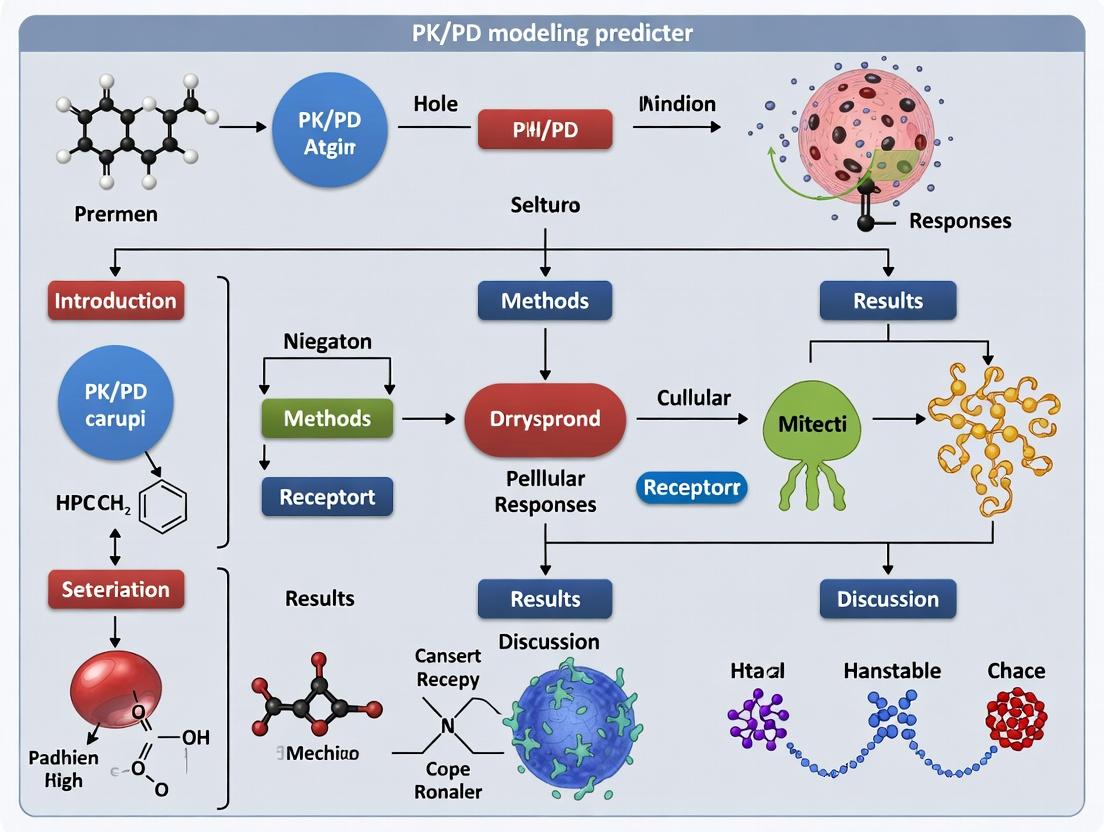
This article provides a detailed exploration of Pharmacokinetic/Pharmacodynamic (PK/PD) modeling as a cornerstone of modern oncology drug development and personalized treatment.
Harnessing PK/PD Modeling: A Comprehensive Guide to Predicting Anticancer Treatment Response
Abstract
This article provides a detailed exploration of Pharmacokinetic/Pharmacodynamic (PK/PD) modeling as a cornerstone of modern oncology drug development and personalized treatment. Targeted at researchers and drug development professionals, it covers the foundational principles linking drug exposure to tumor dynamics, practical methodologies for model development and application, strategies for troubleshooting common modeling challenges, and frameworks for model validation. By synthesizing current best practices and emerging trends, this guide serves as a roadmap for leveraging PK/PD models to optimize dosing regimens, predict clinical efficacy, reduce attrition, and ultimately improve patient outcomes in the fight against cancer.
The Bedrock of Precision Oncology: Foundational PK/PD Principles for Anticancer Therapy
Within the broader thesis on PK/PD modeling for predicting anticancer treatment response, this document defines the core conceptual and operational bridge between a drug's pharmacokinetic (PK) journey in the body and its pharmacodynamic (PD) effect on tumor cells. The ultimate goal is to develop quantitative models that predict clinical efficacy and optimize dosing regimens from pre-clinical data.
Foundational PK/PD Concepts & Quantitative Data
Table 1: Core PK Parameters and Their Impact on PD
| Parameter | Symbol | Typical Unit | Definition | Influence on Tumor PD |
|---|---|---|---|---|
| Maximum Plasma Concentration | Cmax | µg/mL or µM | Highest observed drug concentration after dosing. | Must exceed minimum effective concentration; may drive efficacy or toxicity. |
| Area Under the Curve | AUC | µg·h/mL | Total drug exposure over time. | Often correlates with efficacy for cytotoxic drugs (exposure-driven killing). |
| Trough Concentration | Cmin | µg/mL or µM | Lowest concentration before next dose. | Critical for targeted therapies to maintain continuous target inhibition. |
| Half-life | t1/2 | hours | Time for plasma concentration to reduce by 50%. | Determines dosing frequency to maintain effective concentrations. |
| Volume of Distribution | Vd | L or L/kg | Apparent volume into which a drug disperses. | Indicator of tissue penetration, relevant for reaching tumor sites. |
| Clearance | CL | L/h or L/h/kg | Volume of plasma cleared of drug per unit time. | Primary determinant of systemic exposure (AUC). |
Table 2: Common PD Metrics in Anticancer Research
| Metric | Category | Typical Unit | Description & Relevance |
|---|---|---|---|
| Tumor Growth Inhibition (TGI) | Efficacy | % | (1 - (Tumor Volumetreated / Tumor Volumecontrol)) * 100. Standard in vivo efficacy metric. |
| Target Occupancy (TO) | Biomarker | % | Fraction of molecular targets bound by drug. Drives efficacy for targeted agents. |
| Ki or IC50 | Potency | nM or µM | Concentration inhibiting 50% of target activity or cell proliferation in vitro. |
| Emax | Efficacy | % TGI or % Inhibition | Maximum achievable effect. |
| EC50 | Potency | µg/mL or µM | Concentration producing 50% of Emax. Links PK exposure to PD effect magnitude. |
Key Experimental Protocols
Protocol 1: In Vivo PK/PD Study for a Cytotoxic Chemotherapy Agent Objective: To establish a quantitative relationship between plasma exposure (AUC) of a cytotoxic drug (e.g., Paclitaxel) and tumor growth inhibition.
- Animal Model: Establish subcutaneous xenografts of human cancer cells (e.g., A549 lung carcinoma) in immunocompromised mice.
- Dosing: Randomize mice into groups (n=5-8): Vehicle control, and 3-4 dose levels of the drug administered intravenously.
- PK Sampling: At the first dose, perform serial retro-orbital or terminal blood sampling at pre-dose, 5min, 15min, 30min, 1h, 2h, 4h, 8h, and 24h post-dose. Centrifuge to collect plasma.
- Bioanalysis: Quantify drug concentrations in plasma using LC-MS/MS. Non-compartmental analysis (NCA) to calculate AUC, Cmax, t1/2 for each dose level.
- PD Endpoint Monitoring: Measure tumor volumes via calipers 2-3 times weekly. Calculate %TGI at Day 21 relative to control.
- Modeling: Plot %TGI vs. AUC. Fit an Emax model: Effect = (Emax * AUC) / (EC50 + AUC) to quantify the exposure-response relationship.
Protocol 2: Target Occupancy-Driven PK/PD for a Tyrosine Kinase Inhibitor (TKI) Objective: To link plasma/tumor drug concentrations to target (e.g., EGFR) phosphorylation inhibition and tumor growth delay.
- Model & Dosing: Use a genetically engineered or xenograft model sensitive to the TKI. Administer orally at varying doses and schedules.
- Multi-Matrix Sampling: Collect plasma and snap-frozen tumor tissues at multiple timepoints (e.g., 1, 4, 8, 24h) post-dose.
- PK Analysis: Measure free drug concentrations in plasma and tumor homogenate via LC-MS/MS.
- Biomarker PD Analysis: Perform Western blot or ELISA on tumor lysates to quantify levels of phosphorylated target (p-EGFR) and total target. Calculate %Target Occupancy or %Inhibition of Phosphorylation.
- Tumor Growth Monitoring: Track tumor volumes in a parallel long-term efficacy study.
- Integrated Modeling: Develop a linked PK/PD model: a) PK model predicting tumor drug concentrations from plasma; b) Indirect response model linking tumor concentration to inhibition of p-EGFR synthesis; c) Link p-EGFR inhibition to tumor growth rate constant in a TGI model.
Visualizing Pathways and Workflows
Title: PK/PD Cascade from Plasma Concentration to Tumor Kill
Title: Integrated PK/PD Experimental & Modeling Workflow
The Scientist's Toolkit: Research Reagent Solutions
Table 3: Essential Materials for PK/PD Studies
| Item | Function & Application | Example/Notes |
|---|---|---|
| LC-MS/MS System | Gold-standard for quantifying drug concentrations in biological matrices (plasma, tumor homogenate) with high sensitivity and specificity. | Triple quadrupole systems (e.g., Sciex, Agilent). Requires stable isotope-labeled internal standards. |
| Phospho-Specific Antibodies | To measure drug-induced modulation of target signaling pathways (PD biomarkers) in tumor lysates via Western Blot or ELISA. | Validate for specific phospho-epitopes (e.g., p-EGFR Tyr1068). |
| Luminescent Cell Viability Assays | To generate in vitro concentration-response data for IC50 determination, a key PD parameter. | CellTiter-Glo (measures ATP). |
| PD Analysis Software | For non-compartmental PK analysis and curve-fitting of PD data (Emax, IC50 models). | Phoenix WinNonlin, GraphPad Prism. |
| Modeling & Simulation Software | For building integrated PK/PD models, performing population analysis, and simulating regimens. | NONMEM, Monolix, R with nlmixr2/mrgsolve. |
| Stable Cell Lines | Engineered to express luciferase for real-time, non-invasive monitoring of tumor burden in vivo. | Enables longitudinal TGI assessment within the same animal. |
| Microsampling Techniques | Enables serial blood sampling from a single mouse, reducing animal use and enabling rich PK profiles. | Volumes < 20 µL (e.g., via capillary from submandibular vein). |
Application Notes: Key ADME Properties of Major Anticancer Agent Classes
The pharmacokinetic (PK) profile of an anticancer agent is a critical determinant of its efficacy and toxicity. Within the context of PK/PD modeling for predicting treatment response, understanding the fundamental ADME parameters allows for the optimization of dosing regimens to maximize target engagement and clinical outcomes. The following table summarizes quantitative ADME data for representative agents.
Table 1: Comparative ADME Parameters for Selected Anticancer Agents
| Agent (Class) | Oral Bioavailability (%) | Plasma Protein Binding (%) | Primary Metabolizing Enzyme(s) | Primary Route of Excretion | Volume of Distribution (L/kg) | Half-life (hours) |
|---|---|---|---|---|---|---|
| Imatinib (TKI) | ~98 | ~95 | CYP3A4, CYP2C8 | Feces (major) | ~2.8 | ~18 |
| Paclitaxel (Taxane) | N/A (IV) | 89-98 | CYP2C8, CYP3A4 | Feces (~70%) | 50-650 L (high) | 5-50 |
| Doxorubicin (Anthracycline) | N/A (IV) | ~75 | Aldo-keto reductases, CYP reductases | Bile (>40%), Feces | ~20-30 L/kg | 20-48 |
| Pembrolizumab (mAb) | N/A (IV) | N/A (not metabolized) | Proteolytic catabolism | Reticuloendothelial system | ~7.5 L | ~26 days |
| Capecitabine (Prodrug) | ~80-90 (to 5-FU) | <60 (capecitabine) | CES, CDD, TP (sequential) | Urine (~85%) | N/A | 0.5-1 (capecitabine) |
| Methotrexate (Antimetabolite) | ~60 (dose-dependent) | ~50-60 | Minimal hepatic | Renal (80-90%) | ~0.4-0.8 | 3-10 (low dose) |
Abbreviations: TKI: Tyrosine Kinase Inhibitor; mAb: monoclonal antibody; CES: carboxylesterase; CDD: cytidine deaminase; TP: thymidine phosphorylase; 5-FU: 5-fluorouracil.
Experimental Protocols
Protocol 1: Determination of Oral Bioavailability and Absorption Kinetics in a Preclinical Model
Objective: To characterize the absolute oral bioavailability (F) and absorption rate constant (kₐ) of a novel small-molecule kinase inhibitor.
Materials: Test compound formulation (solution/suspension), vehicle, cannulated rodent model (e.g., rat), LC-MS/MS system, heparinized saline, centrifuge.
Procedure:
- Animal Preparation: Jugular vein (for IV) and/or portal vein (for first-pass assessment) and carotid artery (for arterial sampling) are catheterized. Allow animals to recover.
- Dosing & Sampling: a. IV Cohort (n=3): Administer compound via intravenous bolus (e.g., 1 mg/kg). Collect serial blood samples (e.g., 0.083, 0.25, 0.5, 1, 2, 4, 8, 12, 24 h) into tubes containing anticoagulant. b. PO Cohort (n=3): Administer compound via oral gavage (e.g., 5 mg/kg). Collect serial blood samples as above.
- Sample Processing: Centrifuge blood samples at 4°C, 3000 g for 10 min. Transfer plasma to clean tubes and store at -80°C until analysis.
- Bioanalysis: Quantify compound concentrations in plasma using a validated LC-MS/MS method.
- PK Analysis: Perform non-compartmental analysis (NCA) using software (e.g., Phoenix WinNonlin). Calculate AUC₀‑∞ for both IV and PO routes. Compute absolute bioavailability as F = (AUCPO × DoseIV) / (AUCIV × DosePO) × 100%. Fit data to a compartmental model (e.g., 1-compartment with first-order absorption) to estimate kₐ.
Protocol 2: Assessing Tissue Distribution via Quantitative Whole-Body Autoradiography (QWBA)
Objective: To visualize and quantify the distribution of a radiolabeled anticancer agent across tissues, including tumor, over time.
Materials: [¹⁴C]- or [³H]-labeled test compound, tumor-bearing mouse model, carboxymethylcellulose (CMC) suspension, isopentane, cryostat, phosphor imaging plates, calibrated radioactivity standards.
Procedure:
- Dosing: Administer a single dose of the radiolabeled compound (e.g., 10 µCi/mouse) to tumor-bearing mice via the intended clinical route (PO or IV).
- Sacrifice & Embedding: At predetermined time points (e.g., 1, 6, 24 h), euthanize animals (n=3/time point). Immediately freeze carcasses by immersion in a hexane/dry ice bath or isopentane cooled by liquid nitrogen. Embed the frozen carcass in a carboxymethylcellulose (CMC) block.
- Sectioning: Section the frozen block sagittally (typically 30-40 µm thick) in a cryostat at -20°C. Mount sections on adhesive tape.
- Exposure & Imaging: Freeze-dry the sections. Expose them, along with calibrated radioactive standards, to a phosphor imaging plate for 5-7 days. Scan the plate with a laser scanner to produce a digital autoradiogram.
- Quantification: Using image analysis software, correlate optical density in tissues with the calibration curve from the standards to determine tissue concentrations (e.g., ng-equiv./g tissue). Calculate tissue-to-plasma ratios.
Protocol 3: In Vitro Metabolic Stability and Reaction Phenotyping
Objective: To determine the intrinsic clearance and identify human cytochrome P450 (CYP) enzymes involved in the metabolism of a new chemical entity.
Materials: Test compound, pooled human liver microsomes (HLM), specific CYP enzyme inhibitors (e.g., furafylline for CYP1A2, quinidine for CYP2D6), recombinant human CYP isoforms (rCYPs), NADPH regeneration system, LC-MS/MS.
Procedure:
- Microsomal Incubations: Prepare incubation mixtures containing HLM (0.5 mg/mL), test compound (1 µM), and MgCl₂ in phosphate buffer. Pre-incubate for 5 min at 37°C.
- Reaction Initiation: Start the reaction by adding the NADPH regeneration system. Aliquot samples (e.g., 50 µL) at multiple time points (0, 5, 15, 30, 45, 60 min) into acetonitrile containing internal standard to stop the reaction.
- Inhibition Assays: In separate incubations, pre-incubate HLM with specific chemical inhibitors for individual CYPs (or antibody inhibitors) prior to adding substrate and NADPH.
- Recombinant Enzyme Assays: Incubate test compound with individual rCYP isoforms (e.g., 1A2, 2C9, 2C19, 2D6, 3A4) following a similar protocol.
- Analysis: Centrifuge stopped reactions, analyze supernatant by LC-MS/MS to quantify parent compound depletion. Calculate in vitro half-life (t₁/₂) and intrinsic clearance (Clᵢₙₜ). Compare remaining parent in inhibition and rCYP assays to identify primary metabolizing enzymes.
Diagrams
Title: Oral ADME Pathway and PK/PD Link for Anticancer Agents
Title: Protocol Workflow for Oral Bioavailability Study
Title: Key ADME Factors Influencing Oral Drug Exposure and Response
The Scientist's Toolkit: Research Reagent Solutions
Table 2: Essential Reagents and Materials for ADME Studies in Oncology
| Item | Function & Application in ADME Research |
|---|---|
| Pooled Human Liver Microsomes (HLM) | Contains the full complement of human Phase I metabolizing enzymes (CYPs, FMOs) for in vitro metabolic stability, clearance, and drug-drug interaction studies. |
| Recombinant Human CYP Isozymes | Individual cytochrome P450 enzymes (e.g., rCYP3A4) used for reaction phenotyping to identify the specific enzymes responsible for metabolizing a drug candidate. |
| Caco-2 Cell Line | Human colon adenocarcinoma cell line that forms polarized monolayers with tight junctions and expresses key transporters. The gold-standard in vitro model for predicting intestinal permeability and absorption potential. |
| MDCK-MDR1 (or LLC-PK1-MDR1) Cells | Madin-Darby Canine Kidney cells transfected with the human ABCB1 (MDR1) gene. Used to assess the role of P-glycoprotein in active efflux and blood-brain barrier penetration. |
| Human Plasma (Pooled) | Used for determining plasma protein binding (e.g., via equilibrium dialysis or ultrafiltration), a key parameter influencing volume of distribution and free drug concentration. |
| Stable Isotope-Labeled Internal Standards (e.g., ¹³C, ²H) | Essential for reliable and accurate quantification of drugs and metabolites in complex biological matrices (plasma, tissue) using LC-MS/MS, correcting for matrix effects and recovery variability. |
| NADPH Regeneration System | Provides a constant supply of NADPH, the essential cofactor for cytochrome P450-mediated oxidative metabolism, in microsomal and hepatocyte incubations. |
| Cryopreserved Human Hepatocytes | Gold-standard in vitro system containing intact cellular machinery for both Phase I and Phase II metabolism, offering a more physiologically relevant model for intrinsic clearance and metabolite identification than microsomes. |
| Phosphor Imaging Plates & Radioactive Standards | Critical components for Quantitative Whole-Body Autoradiography (QWBA) to visualize and quantify the tissue distribution of radiolabeled compounds. |
Within the context of PK/PD modeling for predicting anticancer treatment response, establishing robust pharmacodynamic (PD) endpoints is critical. These endpoints serve as quantitative bridges linking systemic drug exposure (PK) to observed biological effects, from direct target modulation in tumors to ultimate inhibition of tumor growth. This Application Note details standardized protocols for measuring key PD endpoints, including tumor growth inhibition (TGI) modeling and longitudinal biomarker assessment, to inform translational research and clinical development.
Table 1: Common PD Endpoints and Their Characteristics in Oncology Drug Development
| PD Endpoint Category | Specific Measurement | Typical Assay | Timeframe | Link to PK |
|---|---|---|---|---|
| Target Engagement | Receptor Occupancy, Target Phosphorylation | IHC, WB, Flow Cytometry | Hours to Days | Direct |
| Pathway Modulation | Downstream Phosphoprotein, Gene Expression | Nanostring, RNA-seq, p-ELISA | Days | Intermediate |
| Cellular Response | Apoptosis (cPARP), Proliferation (Ki67) | IHC, Immunofluorescence | Days to Weeks | Indirect |
| Tumor Response | Volume Change (RECIST), Growth Rate | Caliper, CT/MRI Imaging | Weeks | Integrated (TGI models) |
| Circulating Biomarkers | ctDNA, Soluble Proteins | ddPCR, NGS, ELISA | Longitudinal | Varied |
Table 2: Parameters from a Typical Tumor Growth Inhibition (TGI) Model
| Parameter | Symbol | Unit | Interpretation |
|---|---|---|---|
| Untreated Growth Rate | λ₀ | day⁻¹ | Natural growth rate of tumor |
| Treatment-induced Death Rate | k | day⁻¹ | Drug-induced cell kill rate |
| Drug Concentration for 50% Effect | EC₅₀ | µg/mL | Exposure for half-maximal effect |
| Resistance Growth Rate | λ₁ | day⁻¹ | Growth rate during treatment resistance |
Experimental Protocols
Protocol 1: Longitudinal Tumor Volume Measurement and TGI Modeling
Objective: To quantify the antitumor efficacy of a compound and fit a TGI model linking plasma PK to dynamic tumor growth inhibition.
Materials:
- Subcutaneous murine xenograft model (e.g., human cancer cell line).
- Test compound and vehicle.
- Digital calipers.
- PK/PD modeling software (e.g., NONMEM, Monolix, R/PKNCA).
Procedure:
- Tumor Implantation: Inoculate mice subcutaneously with cancer cells. Allow tumors to establish to ~100-150 mm³.
- Randomization & Dosing: Randomize animals into control and treatment groups (n=8-10). Administer compound at planned dose(s) and schedule (e.g., QD oral).
- Tumor Measurement: Measure tumor length (L) and width (W) with calipers 2-3 times weekly. Calculate volume: V = (L × W²) / 2.
- PK Sampling: In a satellite group, collect serial plasma samples after dosing for LC-MS/MS drug concentration analysis.
- Data Analysis:
- Plot mean tumor volume (±SEM) vs. time.
- Calculate TGI%: [1 - (ΔT/ΔC)] × 100, where ΔT and ΔC are net volume change in treated and control groups.
- Fit a TGI model (e.g., Simeoni model) using simultaneous PK/TV data:
dW/dt = (λ₀ * W) / [1 + (λ₀/λ₁ * W)^ψ] - k * C(t) * Wwhere W is tumor weight (volume), C(t) is drug concentration, and ψ is a shape factor.
Protocol 2: Quantitative Immunohistochemistry (IHC) for Biomarker Modulation
Objective: To measure drug-induced changes in target protein phosphorylation or expression in tumor tissue.
Materials:
- Formalin-fixed, paraffin-embedded (FFPE) tumor samples from Protocol 1.
- Validated phospho-specific primary antibodies.
- Automated IHC staining platform.
- Whole slide scanner and image analysis software (e.g., HALO, QuPath).
Procedure:
- Sample Collection: At predetermined timepoints post-dose (e.g., 2h, 24h), harvest tumors, fix in 10% NBF for 24h, and process to FFPE blocks.
- IHC Staining: Section blocks at 4µm. Perform automated IHC for target (e.g., pAKT S473) and appropriate controls (isotype, untreated).
- Digital Pathology Analysis:
- Scan slides at 20x magnification.
- Annotate viable tumor regions.
- Use image analysis algorithm to detect DAB staining (brown).
- Quantify biomarker modulation as:
- H-Score: (3 × % strong positivity) + (2 × % moderate) + (1 × % weak) + (0 × % negative), range 0-300.
- Percent Positive Nuclei/Cells: For nuclear/cytoplasmic markers.
- Correlation: Link biomarker H-Score at each timepoint to concurrent plasma drug concentration.
Visualization
Diagram 1: PK-PD-TGI Modeling Workflow
Diagram 2: Key Signaling Pathway & PD Biomarker Modulation
The Scientist's Toolkit
Table 3: Essential Research Reagent Solutions for PD Endpoint Analysis
| Item/Category | Example Product/Assay | Function in PD Studies |
|---|---|---|
| Phospho-Specific Antibodies | CST Anti-pAKT (Ser473), Anti-pERK (Thr202/Tyr204) | Detect and quantify drug-induced modulation of key signaling nodes via IHC/WB. |
| Multiplex Immunoassay | Luminex xMAP, MSD U-PLEX | Simultaneously measure multiple soluble PD biomarkers (e.g., cytokines, shed receptors) in serum/plasma. |
| ctDNA Isolation & Analysis | QIAamp Circulating Nucleic Acid Kit, ddPCR Assays | Track tumor-derived genetic biomarkers (e.g., mutant allele fraction) as a dynamic PD response measure. |
| Digital Pathology Platform | Indica Labs HALO, Akoya CODEX | Enable high-throughput, quantitative analysis of biomarker expression and spatial relationships in tissue. |
| PK/PD Modeling Software | Certara Phoenix NLME, R nlmixr2 package |
Fit mathematical models to integrate PK exposure, biomarker time-course, and tumor growth data. |
| In Vivo Imaging System | PerkinElmer IVIS, Bruker MRI | Non-invasively monitor tumor burden and metabolic PD endpoints (e.g., via FDG-PET). |
Within the broader thesis on PK/PD modeling for predicting anticancer treatment response, this article details the evolution and application of key pharmacodynamic model structures. These models are critical for translating drug exposure (PK) into a quantifiable biological effect (PD), ultimately predicting clinical efficacy and safety. The progression from simple empirical models to complex mechanistic systems reflects the growing need to capture the intricate dynamics of tumor biology and drug action in oncology drug development.
Fundamental PK/PD Model Structures
Direct Effect Models (Linear & Log-Linear)
These are the simplest structures, assuming an immediate relationship between plasma concentration and effect.
- Application: Often used for early, non-mechanistic data description or for effects with rapid onset (e.g., some biomarkers).
- Protocol for Parameter Estimation:
- Data: Collect paired plasma drug concentration (C) and effect (E) data over time.
- Model Fitting: Fit the linear (E = SC + E₀) or log-linear (E = Slog(C) + E₀) equation to the data using nonlinear regression software (e.g., NONMEM, Monolix, Phoenix WinNonlin).
- Validation: Assess goodness-of-fit plots (observed vs. predicted, residuals).
The Emax Model (Hill Equation)
The cornerstone of classical PD modeling, describing saturable effects.
- Equation: E = E₀ + (Emax * C^γ) / (EC₅₀^γ + C^γ)
- Application: Modeling efficacy (tumor shrinkage, biomarker inhibition) or safety (QTc prolongation) where a maximum effect is reached.
Table 1: Key Parameters of the Emax Model
| Parameter | Symbol | Description | Typical Units |
|---|---|---|---|
| Baseline Effect | E₀ | Effect in the absence of drug | Effect units (e.g., mm, %) |
| Maximum Effect | Emax | The maximum achievable drug-induced effect | Same as E₀ |
| Potency | EC₅₀ | Concentration producing 50% of Emax | Concentration (e.g., ng/mL, µM) |
| Hill Coefficient | γ | Steepness of the concentration-effect curve | Unitless |
- Protocol for Emax Model Fitting:
- Experimental Design: Conduct in vitro assays or in vivo studies with multiple dose levels to capture the full effect range.
- Data Preparation: For each subject/time point, pair the measured concentration (C) with the concurrent effect (E).
- Software Execution: Input the structural model (Hill equation) and error model into PK/PD software. Use maximum likelihood estimation for parameter fitting.
- Output Analysis: Estimate E₀, Emax, EC₅₀, γ with confidence intervals. Visualize the fitted sigmoidal curve.
Diagram 1: Conceptual Basis of the Emax Model
Indirect Response Models (IDR)
These models account for a temporal dissociation between plasma PK and PD effect by modeling the inhibition or stimulation of the production or loss of a response biomarker.
- Four Basic Structures: Inhibition/Stimulation of Production (kᵢₙ) or Loss (kₒᵤₜ).
- Application: Modeling effects on biomarkers with slow turnover (e.g., serum cytokines, tumor markers, neutrophils).
Table 2: Types of Indirect Response Models
| Model Type | Differential Equation | Application Example |
|---|---|---|
| Inhibition of Production | dR/dt = kᵢₙ(1 - I(C)) - kₒᵤₜR | Chemotherapy reducing neutrophil count |
| Stimulation of Production | dR/dt = kᵢₙ(1 + S(C)) - kₒᵤₜR | Growth factor increasing platelet count |
| Inhibition of Loss | dR/dt = kᵢₙ - kₒᵤₜ(1 - I(C))R | Anti-apoptotic drug effects on cell count |
| Stimulation of Loss | dR/dt = kᵢₙ - kₒᵤₜ(1 + S(C))R | Cytotoxic drug accelerating tumor cell death |
- Protocol for IDR Model Development:
- Biomarker Data: Collect serial measurements of the response variable (R) over time alongside PK.
- Turnover Estimation: From placebo/ baseline data, estimate the zero-order production rate (kᵢₙ) and first-order loss rate (kₒᵤₜ) where R₀ = kᵢₙ / kₒᵤₜ.
- Model Selection: Based on the drug's known mechanism, select one of the four IDR structures. I(C) or S(C) is typically an Emax function.
- Fitting & Validation: Fit the system of differential equations to the data. Validate using visual predictive checks.
Diagram 2: Indirect Response Model (Inhibition of Production)
Tumor Growth Dynamics Models
Mechanistic models integrating tumor growth, drug-induced cell kill, and resistance mechanisms.
Simeoni TGI Model
A widely used model linking PK to tumor growth inhibition (TGI).
- Core Concept: Tumor growth is Gompertzian (exponential then linear), and drug effect kills proliferating cells with a linear or saturable relationship to concentration.
- Protocol for TGI Modeling:
- Xenograft Data: Use longitudinal tumor volume data from mouse xenograft studies with control and treated groups.
- Structural Model: Implement the system: dW/dt = λ₀W for W
- Covariate Exploration: Link drug effect (K₁) to individual animal PK exposure.
- Predictive Use: Simulate clinical dosing regimens to predict tumor shrinkage/stabilization.
Cell Population & Resistance Models
These models explicitly account for sensitive and resistant cell subpopulations.
- Example: Two-compartment model: Sensitive Cells (TS) Resistant Cells (TR). Drug selectively kills TS, applying selective pressure.
- Application: Projecting the time to treatment failure and evaluating combination therapies to prevent resistance.
Table 3: Key Components of a Tumor Growth-Death Model
| Component | Symbol | Description | Role in Model |
|---|---|---|---|
| Proliferating Cells | P | Actively dividing tumor cell population | Drives exponential growth (λ*P) |
| Damaged/Dying Cells | D | Drug-injured, non-proliferating cells | Intermediate compartment with death rate (κ*D) |
| Drug Effect | K(C) | Concentration-dependent kill rate | Transfers cells from P to D (K(C)*P) |
| Growth Rate | λ | First-order net growth rate | Determines aggressiveness |
| Death Rate | κ | Rate of clearance of damaged cells | Influences response kinetics |
Diagram 3: Simple Resistance Model with Sensitive & Resistant Cells
The Scientist's Toolkit: Key Research Reagents & Materials
Table 4: Essential Reagents for PK/PD Modeling in Oncology Research
| Item | Function in PK/PD Research | Example/Notes |
|---|---|---|
| LC-MS/MS System | Quantification of drug concentrations in biological matrices (plasma, tumor). | Essential for generating accurate PK data for model input. |
| Validated Bioanalytical Assay | Measures PD biomarkers (e.g., pERK, cleaved caspase) in tissue/serum. | Links target engagement to downstream biological effect. |
| Cell Line-Derived Xenograft (CDX) Models | In vivo systems for generating tumor growth-time data under treatment. | Primary source for fitting TGI model parameters. |
| Patient-Derived Xenograft (PDX) Models | More clinically relevant in vivo models for translational PK/PD. | Used for model validation and co-clinical trial simulation. |
| Immunoassay Kits (ELISA/MSD) | Quantify soluble biomarkers (cytokines, shed antigens) in serum/plasma. | Data for indirect response or biomarker-mediated models. |
| Nonlinear Mixed-Effects Modeling Software | Platform for population PK/PD model development and simulation. | NONMEM, Monolix, Phoenix NLME, Berkeleys Madonna. |
| Tumor Volume Calipers/Imaging | Accurate measurement of tumor size over time in preclinical studies. | Source data for the response variable in TGI models. |
| Flow Cytometry Antibody Panels | Characterize tumor cell populations (live/dead, cycle status, lineage). | Provides data for cell population dynamics models. |
1. Introduction & PK/PD Framework Within oncology drug development, the critical exposure-response (E-R) relationship is the quantitative cornerstone linking pharmacokinetics (PK; what the body does to the drug) to pharmacodynamics (PD; what the drug does to the body). Optimizing dose for efficacy while minimizing toxicity requires rigorous characterization of this relationship. This protocol outlines methodologies to establish E-R models for anticancer therapies, framed within a thesis on PK/PD modeling for predicting treatment response.
2. Key Quantitative Data from Recent Studies Table 1: Exemplar Exposure-Response Data for Targeted Anticancer Agents (Hypotheticalized from Recent Literature)
| Drug Class / Example | Key Exposure Metric (AUC/Cmin) | Efficacy Endpoint (Response) | Toxicity Endpoint (Grade ≥3) | Optimal Target Exposure |
|---|---|---|---|---|
| EGFR TKI (Osimertinib) | Trough Concentration (Cmin) | Objective Response Rate (ORR) | Rash, Diarrhea | Cmin ≥ 350 ng/mL |
| PD-1 Inhibitor (Pembrolizumab) | Average Concentration over Dosing Interval (Cavg) | Progression-Free Survival (PFS) | Immune-related AEs | Cavg saturation ~30 μg/mL |
| ADC (Trastuzumab Deruxtecan) | Cumulative AUC of payload | Tumor Size Change | Neutropenia, ILD | Efficacy/toxicity balance at AUC ~120 μg•day/mL |
| CAR-T Cell Therapy | AUC of CAR-T cells in blood (Cmax) | Complete Remission Rate | Cytokine Release Syndrome | Cmax range: 20-50 cells/μL |
Table 2: Common PK/PD Model Structures for Anticancer Agents
| Model Type | Structural Equation | Typical Application |
|---|---|---|
| Direct Effect (Linear) | E = E₀ + S • C | Chemotherapy-induced myelosuppression |
| Direct Effect (Emax) | E = E₀ + (Emax • C) / (EC₅₀ + C) | Target occupancy, biomarker modulation |
| Indirect Response (Inhibition of Kin) | dR/dt = Kin • (1 - I_max•C/(IC₅₀+C)) - Kout • R | Tumor growth inhibition, biomarker dynamics |
| Time-to-Event (TTE) | Hazard = λ • (C / EC₅₀)^γ | Progression-Free Survival, Overall Survival |
3. Experimental Protocols for E-R Relationship Characterization
Protocol 3.1: Longitudinal PK/PD Sampling for Targeted Therapy Objective: To establish the relationship between drug exposure and target engagement/pharmacodynamic biomarker. Materials: See "Scientist's Toolkit" (Section 5). Procedure:
- Patient Dosing & PK Sampling: Administer the investigational drug at the protocol-specified dose. Collect dense plasma samples for PK analysis at pre-dose, 0.5, 1, 2, 4, 8, 24, and 48 hours post-dose in Cycle 1. Collect sparse trough samples in subsequent cycles.
- PD Biospecimen Collection: Perform tumor biopsies (if ethically feasible) or collect peripheral blood mononuclear cells (PBMCs) at pre-dose, Cycle 1 Day 15, and at disease progression. For soluble biomarkers, collect plasma serially at times matching PK sampling.
- PK Analysis: Quantify drug concentration using a validated LC-MS/MS method. Calculate AUC, Cmax, Cmin.
- PD Analysis: Quantify target phosphorylation (p-ELISA), protein expression (IHC), or pathway activity (RNA-seq) from biospecimens.
- Modeling: Fit a direct-effect Emax model linking individual patient's AUC or Cmin to the percentage change in PD biomarker from baseline.
Protocol 3.2: Population PK/PD Modeling for Efficacy (TTE) Objective: To develop a model relating drug exposure to a time-to-event efficacy endpoint (e.g., PFS). Procedure:
- Data Assembly: Create a dataset merging individual patient PK parameters (estimated from a population PK model), baseline covariates (e.g., tumor burden, ECOG status), and time-to-event data (PFS status and time).
- Base Model Development: Test different TTE model structures (e.g., exponential, Weibull). Introduce drug exposure (e.g., typical AUC) as a time-varying covariate affecting the hazard function, using a power or Emax model.
- Covariate Analysis: Evaluate the influence of baseline covariates (weight, renal function, biomarker status) on PK and/or the hazard.
- Model Validation: Perform visual predictive checks (VPC) and bootstrap analysis to assess model robustness.
- Simulation for Dose Optimization: Simulate PFS probabilities across a range of doses/exposures to identify the dose yielding optimal efficacy relative to a pre-specified target (e.g., median PFS > 6 months).
Protocol 3.3: Exposure-Toxicity Analysis Using Logistic Regression Objective: To quantify the probability of a dose-limiting toxicity (DLT) as a function of exposure. Procedure:
- Endpoint Definition: Define a binary toxicity endpoint (e.g., 1 for occurrence of Grade ≥3 neutropenia in Cycle 1, else 0).
- Exposure Metric Calculation: Determine each patient's exposure metric (e.g., Cycle 1 AUC).
- Model Fitting: Fit a logistic regression model: Logit(P) = α + β • (AUC), where P is the probability of DLT.
- Threshold Estimation: Calculate the exposure associated with a target toxicity probability (e.g., 20% or 30%). Use this to define the upper bound of the therapeutic window.
4. Visualization of Key Concepts
Title: PK/PD Modeling Framework for Dose Optimization
Title: E-R Analysis & Dose Optimization Workflow
5. The Scientist's Toolkit: Key Research Reagent Solutions
| Item/Category | Function in E-R Research | Example/Note |
|---|---|---|
| Validated LC-MS/MS Kit | Quantification of drug and metabolite concentrations in plasma/tissue with high sensitivity and specificity. | Essential for generating accurate PK exposure metrics (AUC, Cmin). |
| Phospho-Specific ELISA | Measurement of target phosphorylation (e.g., p-ERK, p-AKT) in lysates from tumor biopsies or PBMCs. | A key PD biomarker for kinase inhibitors. |
| Multiplex Immunoassay Panels | Simultaneous quantification of soluble biomarkers (e.g., cytokines, shed antigens) in serum/plasma. | For monitoring immune activation or toxicity. |
| Digital PCR System | Absolute quantification of CAR-T cell copy numbers in peripheral blood. | Critical for defining cellular PK for cell therapies. |
| Population Modeling Software | For nonlinear mixed-effects modeling of PK/PD data. | NONMEM, Monolix, R (nlmixr2 package). |
| Trial Simulation Software | To simulate clinical outcomes for various dosing regimens based on PK/PD models. | R, Matlab, or dedicated platforms like Simbiology. |
| Stabilized Blood Collection Tubes | For reproducible collection of plasma for protein/analyte stability. | EDTA or CTAD tubes for cytokine analysis. |
Integrating Tumor Microenvironment and Resistance Mechanisms into Early Models
In the broader thesis of PK/PD modeling for predicting anticancer treatment response, a critical gap remains in the translation of early in vitro and in vivo efficacy data to clinical outcomes. Traditional PK/PD models often fail because they treat the tumor as a homogeneous collection of drug-sensitive cancer cells. This application note argues for the systematic integration of two key biological complexities into early, pre-clinical models: (1) the multicellular Tumor Microenvironment (TME) and (2) intrinsic/adaptive Resistance Mechanisms. By quantifying these elements early, researchers can build more predictive mathematical models that inform dose selection, combination strategies, and patient stratification.
Application Notes
Quantifying TME Components in Preclinical Models
Recent studies emphasize the need to baseline TME composition before and after treatment. Key parameters to quantify include:
- Immune Cell Infiltration: Levels of tumor-associated macrophages (TAMs), T-cells (CD8+, CD4+, Tregs), and myeloid-derived suppressor cells (MDSCs).
- Stromal Content: Proportion of cancer-associated fibroblasts (CAFs), collagen density, and extracellular matrix (ECM) stiffness.
- Vascular and Metabolic Features: Microvessel density, hypoxic regions (via HIF-1α expression), and interstitial fluid pressure.
Table 1: Quantitative Benchmarks for TME Components in Common Syngeneic Mouse Models
| Mouse Model | Typical CD8+ T-cell Infiltration (% of live cells) | CAF Score (α-SMA area%) | Hypoxic Fraction (Pimo+ area%) | Primary Cytokine Signature |
|---|---|---|---|---|
| MC38 (Colorectal) | 15-25% | 10-20% | 10-15% | Intermediate IFN-γ, High CXCL10 |
| 4T1 (Breast, metastatic) | 5-12% | 25-40% | 20-30% | High TGF-β, IL-10, Low IFN-γ |
| B16-F10 (Melanoma) | 3-8% | 5-15% | 15-25% | Low IFN-γ, High IL-6, VEGF |
| CT26 (Colorectal) | 20-30% | 15-25% | 5-12% | High IFN-γ, Granzyme B |
Integrating Primary Resistance Mechanisms
Early models must be interrogated for both pre-existing and treatment-induced resistance. Key mechanisms to model include:
- Genetic Drivers: Engineered isogenic cell lines with mutations in KRAS, EGFR, PIK3CA, or loss of PTEN.
- Adaptive Feedback: Treatment-induced activation of bypass signaling pathways (e.g., MET amplification post-EGFR inhibition).
- Drug-Tolerant Persister (DTP) States: Emergence of slow-cycling cells with epigenetic or metabolic adaptations post-therapy.
Table 2: Common Resistance Mechanisms & Assays for Early Modeling
| Resistance Class | Specific Mechanism | Key Readout Assays | Typical Onset In Vitro |
|---|---|---|---|
| Pre-existing Genetic | EGFR T790M mutation in NSCLC | Digital PCR, NGS Panels | Present at baseline |
| Bypass Signaling | HER2/3 or c-MET upregulation post-TKI | Phospho-RTK Array, Western Blot | 7-14 days post-treatment |
| Phenotypic Plasticity | Epithelial-to-Mesenchymal Transition (EMT) | qPCR (Snail, Vimentin), Imaging | 10-21 days post-treatment |
| Metabolic Adaptation | Shift to oxidative phosphorylation | Seahorse Assay (OCR/ECAR), Metabolomics | 3-10 days post-treatment |
Detailed Experimental Protocols
Protocol 3.1: Generating a Heterotypic 3D Spheroid Model with TME Components
Objective: To establish a reproducible 3D co-culture spheroid model incorporating cancer cells, CAFs, and monocyte-derived macrophages for compound testing and TME analysis.
Materials: See Scientist's Toolkit (Section 5).
Procedure:
- Cell Preparation:
- Harvest target cancer cells (e.g., HCT-116 CRC), primary human CAFs, and THP-1 monocytes.
- Differentiate THP-1 cells into M0 macrophages using 100 ng/mL PMA for 48 hours, followed by 24-hour rest in standard medium.
- Spheroid Formation (Day 0):
- Prepare a single-cell suspension mix in assay medium at a ratio of 50:30:20 (Cancer:CAF:Macrophage). Total cell density should be 500 cells/spheroid.
- Plate 50 µL of cell suspension (containing 2500 cells total) into each ultra-low attachment (ULA) round-bottom well of a 96-well plate.
- Centrifuge plate at 300 x g for 3 minutes to aggregate cells.
- Incubate at 37°C, 5% CO2 for 72 hours to form compact spheroids.
- Compound Treatment (Day 3):
- Prepare 2X concentrations of therapeutics (e.g., chemo/targeted agent ± immunotherapy) in fresh assay medium.
- Carefully aspirate 50 µL of old medium from each well and add 50 µL of 2X compound solution. Include vehicle controls.
- Endpoint Analysis (Day 6-10):
- Viability: Add 20 µL of CellTiter-Glo 3D reagent directly to wells. Shake for 5 min, incubate 25 min, record luminescence.
- Imaging: Fix spheroids in 4% PFA for 1 hour. Permeabilize (0.5% Triton), block (5% BSA), and stain for markers (e.g., Cytokeratin-Cancer, α-SMA-CAFs, CD68-Macrophages, Cleaved Caspase-3-Apoptosis) overnight at 4°C. Image using confocal microscopy.
- Flow Cytometry: Transfer spheroids to tubes, dissociate with Accutase/Collagenase IV mix for 45 min at 37°C. Stain for surface markers (CD45, CD11b, FAP, EpCAM) and analyze.
Protocol 3.2: Profiling Adaptive Resistance via Longitudinal Phosphoproteomics
Objective: To identify early, adaptive signaling changes in cancer cells surviving initial drug exposure.
Procedure:
- Generation of Drug-Treated Pools:
- Plate cancer cells in 10 cm dishes at 30% confluence. The next day, treat with IC70 concentration of targeted agent (e.g., EGFR inhibitor) or DMSO vehicle.
- Refresh treatment every 3 days. After 10-14 days, a pool of surviving, adapted cells will emerge.
- Cell Lysis and Phosphopeptide Enrichment:
- Lyse cells (1x10^7 per condition) in urea lysis buffer (8M Urea, 50mM Tris-HCl pH 8.0) supplemented with phosphatase/protease inhibitors.
- Reduce (DTT), alkylate (IAA), and digest lysates with trypsin overnight.
- Desalt peptides using C18 solid-phase extraction columns.
- Enrich phosphorylated peptides using TiO2 or Fe-IMAC magnetic beads per manufacturer's protocol.
- LC-MS/MS Analysis and Data Integration:
- Analyze enriched phosphopeptides on a high-resolution LC-MS/MS system.
- Identify and quantify phosphosites using standard software (e.g., MaxQuant, Proteome Discoverer).
- Integrate data into PK/PD model: Map upregulated phospho-signals (e.g., pMET, pAXL) to known resistance pathways. Model their emergence over time as a function of drug concentration to inform feedback parameters in a systems pharmacology model.
Visualizations
Diagram 1: Conceptual integration framework for PK/PD modeling.
Diagram 2: Workflow for generating TME-integrated early model data.
The Scientist's Toolkit
Table 3: Essential Research Reagent Solutions for TME & Resistance Modeling
| Reagent / Material | Supplier Examples | Primary Function in Protocol |
|---|---|---|
| Ultra-Low Attachment (ULA) Plates | Corning, Nunclon Sphera | Enforces 3D spheroid formation without cell adhesion. |
| Primary Human Cancer-Associated Fibroblasts (CAFs) | ScienCell, ATCC, Lonza | Provides authentic stromal component for heterotypic co-culture. |
| THP-1 Human Monocyte Cell Line | ATCC | Source for generating M0/M1/M2 macrophages to model TAMs. |
| CellTiter-Glo 3D Cell Viability Assay | Promega | Luminescent assay optimized for ATP quantification in 3D structures. |
| Collagenase IV / Accutase Dissociation Mix | Sigma, STEMCELL Tech. | Gentle enzymatic dissociation of 3D spheroids for flow cytometry. |
| Phosphoproteomics Kits (TiO2/Fe-IMAC) | Thermo Fisher, PTM Bio | Enrichment of phosphorylated peptides from cell lysates for MS. |
| Multiplex Immunofluorescence Kit (e.g., OPAL) | Akoya Biosciences | Enables simultaneous imaging of 6+ biomarkers on fixed spheroids/tissue. |
| Hypoxia Probe (Pimonidazole HCl) | Hypoxyprobe | Immunochemical detection of hypoxic regions in vitro and in vivo. |
| Seahorse XF Analyzer Consumables | Agilent Technologies | Measures real-time cellular metabolic rates (OCR/ECAR) in adapted cells. |
From Theory to Therapy: Building and Applying PK/PD Models in Cancer Drug Development
A Step-by-Step Workflow for Developing a Robust Oncology PK/PD Model
Within the broader thesis of PK/PD modeling for predicting anticancer treatment response, the development of a robust, mechanism-driven model is paramount. Such a model serves as a critical quantitative framework to integrate pharmacokinetic (PK) data (what the body does to the drug) with pharmacodynamic (PD) data (what the drug does to the body and tumor). This workflow provides a structured, step-by-step guide to navigate the complexities of oncology drug development, from data collation to model application for dose optimization and biomarker identification.
The development process is iterative and cyclical, as visualized in the following workflow diagram.
Diagram Title: Cyclical PK/PD Model Development Workflow
Detailed Application Notes and Protocols
Step 1: Define Objective & Mechanistic Hypothesis
- Protocol: Formulate a precise research question (e.g., "Quantify the relationship between trough concentration of Drug X and tumor shrinkage in colorectal cancer"). Develop a conceptual, mechanism-based hypothesis diagram integrating known biology (e.g., drug binding, signaling inhibition, tumor cell death).
- Pathway Diagram: A sample mechanism for a targeted kinase inhibitor.
Diagram Title: Mechanism for a Targeted Kinase Inhibitor PK/PD
Step 2: Systematic Data Collation & Curation
- Protocol: Establish a standardized data management plan. Collect PK data (plasma/tumor concentrations), PD data (target engagement biomarkers, tumor size), patient/dosing covariates, and in vitro parameters (IC50, Emax). Use tools like NONMEM, Monolix, or R/Python for data formatting. Key data types are summarized below.
Table 1: Essential Data Types for Oncology PK/PD Modeling
| Data Category | Specific Data | Typical Units | Source |
|---|---|---|---|
| PK Data | Plasma concentration-time profiles | ng/mL | Serial blood sampling |
| Tumor drug concentration (if available) | ng/g tissue | Tumor biopsy | |
| PD Data | Tumor diameter (sum of longest diameters) | mm | RECIST assessments (CT/MRI) |
| Target engagement biomarker (e.g., p-protein) | % of baseline | Blood/tissue assays | |
| Covariates | Body surface area, organ function | Various | Patient records |
| Tumor type, prior therapies | Categorical | Clinical database | |
| In Vitro | IC50, Emax, Ki | nM | Cell-based/ biochemical assays |
Step 3: Structural PK Model Development
- Protocol: Fit structural PK models (e.g., 1-, 2-, or 3-compartment) to concentration-time data using nonlinear mixed-effects modeling (NLMEM). Assess model fitness via diagnostic plots (obs vs. pred, residuals). Estimate inter-individual variability (IIV) and residual error. Covariate analysis (e.g., effect of renal function on clearance) is performed post-structural model finalization.
Step 4: PD Model Development & Linking to PK
- Protocol: Link the final PK model to PD endpoints. For tumor growth inhibition, an indirect response or translational tumor growth dynamics model is standard.
- Example Protocol – Tumor Growth Inhibition Model Fitting:
- Model Structure: Use a system of differential equations:
dT/dt = k_g * T - k_k * C * T(Where T = tumor volume, kg = first-order growth rate, kk = drug-induced kill rate constant, C = drug concentration from PK model). - Implementation: Code the linked PK/PD model in NLMEM software (e.g.,
$DESblock in NONMEM, or differential equation solvers in Rmrgsolve/RxODE). - Estimation: Simultaneously or sequentially estimate PD parameters (kg, kk, baseline tumor size) and their variability.
- Biomarker Integration: Model biomarker data (e.g., kinase inhibition) as an immediate response, potentially driving the tumor kill effect (
k_k = f(biomarker inhibition)).
- Model Structure: Use a system of differential equations:
Step 5: Model Validation & Qualification
- Protocol: Employ internal and external validation techniques.
- Internal: Visual Predictive Checks (VPC) – simulate 500-1000 datasets from the final model and compare the 5th, 50th, and 95th percentiles of simulated data with observed data.
- Internal: Bootstrap – refit the model to 1000+ resampled datasets to assess parameter estimation robustness.
- External: If possible, predict outcomes from a separate clinical cohort not used in model development.
Step 6: Simulation & Knowledge Translation
- Protocol: Use the qualified model to simulate clinical scenarios. Perform Monte Carlo simulations to predict outcomes for alternative dosing regimens (e.g., weekly vs. tri-weekly), identify optimal biological dose versus maximum tolerated dose, and explore the impact of patient covariates on response. This informs dose rationale in the clinical study report and drug label.
The Scientist's Toolkit: Research Reagent Solutions
Table 2: Essential Tools for Oncology PK/PD Modeling
| Tool Category | Example Solution/Software | Primary Function in Workflow |
|---|---|---|
| NLMEM Software | NONMEM, Monolix, Phoenix NLME | Gold-standard platforms for population PK/PD parameter estimation using mixed-effects models. |
| General Modeling & Scripting | R (with mrgsolve, RxODE, ggplot2), Python (with PyMC, SciPy) |
Flexible environments for data preparation, model prototyping, diagnostics, and custom simulation. |
| Data Management & Analysis | SAS, JMP, Microsoft Excel (with Power Query) | Curating, cleaning, and summarizing clinical trial data from various sources into modeling-ready datasets. |
| Biomarker Assay Kits | MSD, Luminex, Ella Automated Immunoassay Systems | Quantifying target engagement PD biomarkers (e.g., phospho-proteins) in plasma or tissue lysates with high sensitivity. |
| In Vitro PD Assays | CellTiter-Glo (Viability), Caspase-Glo (Apoptosis), Phospho-Kinase Arrays | Generating in vitro potency (IC50) and mechanism data to inform initial PD model parameters and structure. |
| Visualization & Diagnostics | Xpose (R), Pirana, Graphviz | Creating standard diagnostic plots (e.g., VPC) and workflow diagrams for model evaluation and communication. |
Within the framework of PK/PD modeling for predicting anticancer treatment response, the integration of multimodal data is paramount. Robust models rely on quantitative relationships between drug exposure (PK), target engagement, downstream biological effects, and clinical efficacy/safety outcomes. This application note details the data requirements and integration protocols for preclinical, clinical, and biomarker data streams essential for developing predictive PK/PD models in oncology.
The following tables catalog the core data elements required across research phases.
Table 1: Preclinical Data Requirements for PK/PD Model Inception
| Data Category | Specific Measures | Units | Frequency/Timing | Purpose in PK/PD |
|---|---|---|---|---|
| Pharmacokinetics (PK) | Plasma concentration, Tumor concentration | ng/mL, µM | Sparse: Pre-dose, 5 min, 15 min, 30 min, 1h, 2h, 4h, 8h, 24h | Define plasma/tumor PK profiles, estimate clearance, volume of distribution. |
| Pharmacodynamics (PD) | Target protein phosphorylation (% inhibition), Tumor volume | %, mm³ | Pre-dose, 1h, 6h, 24h, 72h post-dose; tumor volume 2-3x weekly. | Establish exposure-response relationship, estimate EC50, tumor growth inhibition. |
| Biomarker | Soluble target ligand in plasma, Immunohistochemistry (IHC) score | pg/mL, H-Score | Pre-dose, 24h, at endpoint. | Link PK to proximal biomarker modulation, validate target engagement. |
Table 2: Clinical Trial Data Requirements for PK/PD Model Verification & Refinement
| Data Category | Specific Measures | Units | Collection Timepoints | Purpose in PK/PD |
|---|---|---|---|---|
| Clinical PK | Serum/Plasma drug concentration | ng/mL | Cycle 1 Day 1: Pre-dose, 0.5h, 1h, 2h, 4h, 8h, 24h, 48h. Trough: Day 15, Day 28. | Populate population PK model, identify covariates (e.g., body weight, renal function). |
| Clinical Efficacy | Tumor size (RECIST 1.1), Progression-Free Survival (PFS) | mm, Days | Tumor imaging: Baseline, every 8 weeks. PFS: Continuous. | Define clinical exposure-efficacy relationship, simulate optimal dosing regimens. |
| Clinical Safety | Grade of adverse events (CTCAE v5.0), Lab values (e.g., neutrophils) | Categorical, cells/µL | Every clinic visit, continuous monitoring. | Define clinical exposure-toxicity relationship, establish therapeutic window. |
| Translational Biomarker | Circulating Tumor DNA (ctDNA) variant allele frequency, Serum protein biomarkers | %, ng/mL | Baseline, Cycle 1 Day 15, Cycle 2 Day 1, at progression. | Dynamic response indicator, early predictor of efficacy, link to mechanism. |
Experimental Protocols
Protocol 1: Integrated Preclinical PK/PD Study in Murine Xenograft Models Objective: To characterize the PK/PD relationship of a novel PI3K inhibitor (AZ-1234) and inform clinical starting dose. Materials: See Scientist's Toolkit. Method:
- Animal Model: Implant 5x10⁶ human breast cancer cells (MDA-MB-361) subcutaneously in female athymic nude mice (n=60). Proceed when tumors reach ~200 mm³.
- Dosing & Sample Collection: Randomize mice into vehicle control and three dose groups (10, 30, 100 mg/kg AZ-1234, oral gavage, QD). For PK, collect serial blood samples (n=3 mice/timepoint/group) via submandibular puncture at pre-dose, 5, 15, 30 min, 1, 2, 4, 8, and 24h post-dose on Day 1. Centrifuge to obtain plasma.
- PD & Biomarker Sampling: At 1, 6, and 24h post-dose on Day 3, euthanize mice (n=4/group/timepoint). Excise tumors. Split each tumor: one half snap-frozen in liquid N₂ for phospho-Akt ELISA (Target PD), the other half fixed in formalin for IHC (pS6, Ki67).
- Efficacy Monitoring: Measure tumor dimensions 3x weekly in the remaining mice (n=8/group) for 28 days.
- Bioanalysis: Quantify AZ-1234 plasma/tumor homogenate concentrations via LC-MS/MS. Quantify phospho-Akt/total Akt via multiplex immunoassay. Digitally score IHC slides.
- Data Integration: Fit a 2-compartment PK model to plasma data. Link tumor drug concentrations to % p-Akt inhibition via an Emax model. Correlate biomarker modulation with tumor growth rate.
Protocol 2: Clinical Biomarker Cohort Sampling for PK/PD Modeling Objective: To collect paired PK, ctDNA, and protein biomarker data for a Phase Ib dose-escalation study of AZ-1234. Method:
- Patient Cohort: Enroll patients with PIK3CA-mutant solid tumors across 5 dose levels. Obtain informed consent.
- PK Sampling: Collect blood in K₂EDTA tubes per Table 2 schedule. Process within 30 min: centrifuge at 1500xg for 10 min at 4°C. Aliquot plasma (two 0.5 mL aliquots) and store at -80°C for LC-MS/MS analysis.
- ctDNA Isolation: Collect blood in Cell-Free DNA BCT tubes at specified timepoints. Process within 48h: double centrifugation (1600xg then 16000xg) to generate platelet-poor plasma. Isolate ctDNA using the QIAamp Circulating Nucleic Acid Kit. Quantify and sequence using a targeted NGS panel (e.g., 50-gene panel).
- Serum Protein Biomarker: Collect blood in serum separator tubes at same visits. Allow to clot for 30 min, centrifuge at 2000xg for 10 min. Aliquot serum and store at -80°C. Analyze levels of CA-125, CEA, etc., via validated immunoassays.
- Data Integration: Populate a NONMEM dataset with columns for patient ID, time, dose, plasma concentration, ctDNA VAF, protein biomarker level, tumor size, and key covariates (e.g., albumin, ECOG status).
Signaling Pathways & Workflow Visualizations
Title: Preclinical PK/PD Modeling Pathway
Title: Multimodal Data Integration for PK/PD Modeling
The Scientist's Toolkit: Research Reagent Solutions
| Item/Catalog Example | Function in PK/PD Research |
|---|---|
| Athymic Nude Mice (e.g., Crl:NU(NCr)-Foxn1nu) | Immunodeficient host for human tumor xenograft implantation, enabling efficacy studies of anticancer agents. |
| LC-MS/MS System (e.g., Sciex Triple Quad 6500+) | Gold-standard for quantitative bioanalysis of drug concentrations in biological matrices (plasma, tumor) with high sensitivity and specificity. |
| Phospho-Akt (Ser473) ELISA Kit (e.g., PathScan) | Quantifies target engagement and modulation in tumor lysates, providing a key PD endpoint linking PK to biological effect. |
| Cell-Free DNA BCT Tubes (Streck) | Stabilizes blood cells to prevent genomic DNA contamination, preserving ctDNA profile for up to 14 days, critical for real-world clinical sampling. |
| QIAamp Circulating Nucleic Acid Kit (Qiagen) | Isulates high-quality, inhibitor-free ctDNA from plasma for downstream NGS analysis to monitor dynamic molecular response. |
| NONMEM Software | Industry-standard tool for population PK/PD modeling and simulation, handling sparse, heterogeneous clinical data. |
Pharmacokinetic/Pharmacodynamic (PK/PD) modeling is a cornerstone of quantitative pharmacology, crucial for predicting the efficacy and safety of anticancer therapies. Within a thesis focused on predicting tumor response, these models integrate drug exposure (PK) with biomarkers, tumor growth dynamics, and survival endpoints (PD). The choice of software dictates the modeling approach, from traditional nonlinear mixed-effects (NLME) frameworks to modern machine-learning-enhanced workflows. This document provides application notes and protocols for key software tools in this domain.
Table 1: Comparison of Primary PK/PD Analysis Software & Libraries
| Feature | NONMEM | Monolix | R (PK/PD Libraries) | Python (PK/PD Libraries) |
|---|---|---|---|---|
| Core Type | Standalone NLME software | Standalone NLME software (SaaS available) | Statistical programming language | General-purpose programming language |
| Primary PK/PD Packages | N/A (Integrated) | N/A (Integrated) | nlmixr, mrgsolve, RxODE, PKNCA, PopED |
PKPDsim, PyMC, PyTorch/TensorFlow (custom), SciPy |
| Licensing Model | Commercial (Icahn School of Medicine) | Commercial (Lixoft) | Open Source | Open Source |
| Estimation Methods | FO, FOCE, LAPLACE, SAEM, IMP, BAYES | SAEM, IMPORTANCE, FOCE | FO, FOCE, SAEM (via nlmixr), MCMC |
Flexible (MCMC, ODE solvers, neural nets) |
| Strengths | Industry gold standard; extensive model library; robust support. | User-friendly GUI; advanced graphics; efficient SAEM; built-in PKPD templates. | High flexibility; seamless statistical analysis & visualization; rich ecosystem. | Ideal for AI/ML integration; customizable workflows; strong in systems pharmacology. |
| Typical Use in Thesis | Population PK/PD of a novel cytotoxic agent. | Tumor growth inhibition (TGI) modeling with covariates. | Exploratory data analysis, model diagnostics, and final figure generation. | Developing a hybrid neural-ODE model for combination immunotherapy. |
Table 2: Usage Statistics and Benchmark Data (Representative Values)
| Metric | NONMEM | Monolix | R (nlmixr) |
Python (Custom ODE) |
|---|---|---|---|---|
| Typical Run Time (Complex TGI model, n=200) | ~15-30 min (FOCE) | ~5-10 min (SAEM) | ~20-40 min (SAEM) | Highly variable (mins to hours) |
| Relative Adoption in Pharma (2023 Survey) | ~65% (Primary) | ~25% (Primary) | ~80% (Supporting/Prototyping) | ~15% (Research/Advanced) |
| Standard Error Precision | High | High | Comparable to NONMEM | Depends on implementation |
Experimental Protocols for PK/PD Modeling in Anticancer Research
Protocol 1: Population PK Model Development using NONMEM/Monolix Objective: To characterize the population pharmacokinetics of a novel tyrosine kinase inhibitor (TKI) from phase I clinical data. Materials: Plasma concentration-time data, patient demographics, laboratory values. Software: NONMEM (v7.5) with PsN & Pirana, or Monolix (2024R1).
- Data Preparation: Prepare dataset in CSV format with columns: ID, TIME, AMT, DV (conc.), EVID, MDV, and covariates (e.g., WT, AGE, BSA, renal function).
- Base Model Development:
- Specify structural model (e.g., 2-compartment oral).
- Define inter-individual variability (IIV) on PK parameters (log-normal).
- Define residual error model (e.g., proportional + additive).
- Run estimation (FOCE in NONMEM; SAEM in Monolix).
- Covariate Model Building:
- Perform stepwise forward addition (p<0.05) and backward elimination (p<0.01) based on objective function value (OFV).
- Test relationships (e.g., CL ~ creatinine clearance).
- Model Evaluation: Use standard goodness-of-fit (GOF) plots, visual predictive checks (VPC), and bootstrap for parameter precision.
Protocol 2: Tumor Growth Inhibition (TGI) Modeling with R/nlmixr
Objective: To link TKI exposure to dynamic changes in tumor size (sum of longest diameters).
Materials: PK parameters from Protocol 1, longitudinal tumor measurement data.
Software: R (v4.3+) with nlmixr2, ggplot2, xpose.nlmixr2.
- Model Formulation: Code a TGI model (e.g., Simeoni model) in
nlmixr's function-based syntax.
- Estimation: Fit the model using the
nlmixrfunction with the SAEM algorithm. - Simulation: Simulate typical and individual tumor time courses under different dosing regimens to predict response.
Protocol 3: Hybrid Neural-ODE PK/PD Modeling in Python
Objective: To leverage machine learning to identify complex, non-standard relationships between drug exposure and a high-dimensional biomarker panel (e.g., cytokines).
Materials: Rich temporal PK and multiplex biomarker data from preclinical studies.
Software: Python 3.10+ with PyTorch, torchdiffeq, NumPy, SciPy.
- Architecture Design: Build a neural network to parameterize the PD component of an ODE system.
- The ODE solver handles the temporal PK evolution.
- A neural net takes the instantaneous PK concentration and hidden state as input to predict the derivative of biomarker responses.
- Training Loop: Implement a custom training loop that solves the ODE, calculates loss against observed biomarker data, and backpropagates through the ODE solver using the adjoint method.
- Validation: Use k-fold cross-validation to assess the model's predictive performance on unseen data, comparing it to a traditional TGI model.
Visualization of Workflows & Pathways
Title: General PK/PD Modeling Workflow for Anticancer Drugs
Title: Hybrid Neural-ODE Model Architecture
The Scientist's Toolkit: Key Research Reagent Solutions
Table 3: Essential Materials & Digital Tools for PK/PD Modeling
| Item Name | Category | Function in Research |
|---|---|---|
| NONMEM | Software | Industry-standard for robust population PK/PD parameter estimation. |
| Monolix Suite | Software | Accelerates model building with intuitive GUI, templates, and fast SAEM. |
R with nlmixr |
Software/Library | Open-source, reproducible environment for full modeling workflow. |
Python with PyTorch |
Software/Library | Enables cutting-edge AI/ML integration for complex PD relationships. |
| PsN & Pirana | Software Tools | Essential Perl-based toolkit (PsN) and interface (Pirana) for NONMEM automation, diagnostics, and workflow management. |
| Simulo Simulation Engine | Software Tool (in Monolix) | Efficiently simulates from complex models for clinical trial design and VPC. |
| rxode2 (R) | Library | Fast ODE-solving engine for simulation-based workflows in R. |
| Xpose (R) | Library | Creates standardized diagnostic plots for NLME models. |
| Clinical Data (e.g., conc., tumors) | Data | The fundamental input, requiring meticulous cleaning and formatting (ADaM standards). |
| Covariate Dataset | Data | Patient demographics and pathophysiological data for explaining variability. |
Within the broader thesis on Pharmacokinetic/Pharmacodynamic (PK/PD) modeling for predicting anticancer treatment response, the selection of the First-in-Human (FIH) and Recommended Phase 2 Dose (RP2D) represents a critical translational step. This application note details the integrated non-clinical and clinical modeling strategies used to inform initial human dosing, maximizing therapeutic potential while ensuring patient safety. The approach synthesizes data from in vitro assays, in vivo studies, and quantitative systems pharmacology (QSP) models.
Table 1: Key Non-Clinical PK/PD Parameters for FIH Dose Projection
| Parameter | Symbol | Typical Value Range | Source Experiment | Criticality for FIH |
|---|---|---|---|---|
| Human Equivalent Dose (HED) | HED | Species-dependent | Allometric Scaling | High |
| No Observed Adverse Effect Level (NOAEL) | NOAEL | Compound-specific | GLP Toxicology | High |
| Maximum Tolerated Dose (MTD) in Animals | MTD | Compound-specific | Dose-Range Finding | High |
| Steady-State Trough Concentration (C~ss,min~) for Target Engagement | C~ss,min~ | > IC~90~ or K~d~ | In vitro Binding/Cell Assay | High |
| Area Under Curve at NOAEL | AUC~NOAEL~ | µg·h/mL | Toxicokinetics | High |
| Predicted Human Clearance | CL~h~ | mL/min/kg | In vitro Hepatocyte/ Microsome Assay | Medium |
| Protein Binding (%) | f~u~ | 0-99% | Equilibrium Dialysis | Medium |
| Minimal Anticipated Biological Effect Level (MABEL) Dose | MABEL | Derived from EC~10~ | In vitro PBMC/Cytokine Assay | High (for biologics/T-cell engagers) |
Table 2: Common RP2D Selection Criteria from Phase I Trials
| Criterion | Description | Measurement Endpoint | Typical Goal for RP2D |
|---|---|---|---|
| Dose-Limiting Toxicity (DLT) Rate | Incidence of severe adverse events in Cycle 1. | < 33% in cohort | ~20-25% |
| Pharmacokinetic Exposure | Achievement of target therapeutic concentration. | AUC, C~max~ vs. target | > 90% target saturation |
| Pharmacodynamic Effect | Evidence of on-target modulation in tumor/blood. | Biomarker inhibition, Receptor Occupancy | > 50-70% modulation |
| Preliminary Efficacy | Objective response or prolonged stable disease. | RECIST v1.1, tumor shrinkage | Any signal of activity |
| Cumulative Safety | Tolerability beyond Cycle 1. | Grade 2+ AE frequency | Manageable with support |
Experimental Protocols
Protocol 3.1:In VitroCytotoxicity Assay for Target Effect Concentration (EC~50~) Determination
Objective: To establish concentration-response relationship for antitumor activity. Materials: See Scientist's Toolkit. Procedure:
- Seed target cancer cell line (e.g., NCI-H460) in 96-well plates at 5,000 cells/well. Incubate for 24h.
- Prepare 10 serial 1:3 dilutions of the investigational drug in culture medium.
- Aspirate medium from plates and add 100 µL of each drug concentration per well (n=6 replicates).
- Include vehicle control (0% inhibition) and a reference cytotoxic control (100% inhibition).
- Incubate plates for 72 hours at 37°C, 5% CO~2~.
- Add 20 µL of CellTiter-Glo reagent to each well. Shake for 2 minutes, incubate for 10 minutes at RT.
- Measure luminescence on a plate reader.
- Data Analysis: Normalize viability to controls. Fit data to a 4-parameter logistic model: E = E~max~ / (1 + (C/EC~50~)^H), where E is effect, C is concentration, H is Hill slope. EC~50~ is used to inform the MABEL calculation.
Protocol 3.2:In VivoMouse Xenograft Study for Efficacy-Toxicity Window
Objective: To correlate drug exposure (AUC) with antitumor efficacy and body weight loss (toxicity surrogate). Procedure:
- Implant immunodeficient mice with patient-derived xenograft (PDX) tumors (~200 mm^3^).
- Randomize mice into groups (n=8): vehicle, and 3-4 dose levels of drug (e.g., 10, 30, 100, 300 mg/kg).
- Administer drug via intended clinical route (e.g., oral gavage) on a predefined schedule (e.g., QDx21).
- Measure tumor volumes (calipers) and body weights 2-3 times weekly.
- Pharmacokinetic Sparse Sampling: Collect 3 serial blood samples per mouse over 24h at a mid-study time point. Quantify plasma drug concentration via LC-MS/MS.
- Endpoint: Calculate tumor growth inhibition (TGI%) and maximum body weight loss (%) for each dose.
- PK/PD Modeling: Use non-linear mixed-effects modeling (e.g., NONMEM) to relate AUC to TGI% and weight loss. The AUC at the dose achieving >50% TGI with <20% weight loss informs the efficacious exposure for human projection.
Objective: To identify the MTD and RP2D in patients with advanced cancer. Design: Modified 3+3 cohort design. Procedure:
- Starting Dose Selection: The FIH dose is set at 1/10^th^ of the severely toxic dose in 10% of rodents (STD~10~) or 1/6^th^ of the NOAEL in non-rodents, whichever is lower, following FDA/EMA guidelines.
- Cohort Escalation: Enroll 3 patients at a starting dose. Observe for DLTs during Cycle 1 (28 days).
- DLT Assessment: Predefined adverse events (CTCAE Grade ≥3) considered drug-related.
- Decision Rules:
- 0/3 DLTs: Escalate to next dose level for the next cohort of 3 patients.
- 1/3 DLTs: Expand cohort to 6 patients at same dose.
- If 1/6 DLTs: Escalate.
- If ≥2/6 DLTs: Previous dose is declared MTD.
- ≥2/3 DLTs: MTD exceeded. De-escalate or halt.
- RP2D Declaration: The dose level below the MTD (or MTD itself if tolerable) is declared RP2D, supported by integrated PK, PD, and preliminary efficacy data.
Visualizations
Diagram 1: FIH Dose Selection Logic (83 chars)
Diagram 2: 3+3 Dose Escalation Workflow (80 chars)
The Scientist's Toolkit
Table 3: Essential Research Reagent Solutions for PK/PD-Driven Dose Selection
| Item | Function/Brief Explanation |
|---|---|
| Cryopreserved Human Hepatocytes | In vitro model to predict human metabolic clearance and drug-drug interaction potential via CYP enzyme activity. |
| Human Plasma (Pooled) | Used in equilibrium dialysis to determine fraction unbound (f~u~), critical for correcting active drug concentration. |
| Recombinant Target Protein | For surface plasmon resonance (SPR) assays to determine binding affinity (K~d~), a key PD parameter for MABEL. |
| CellTiter-Glo Luminescent Assay | Homogeneous method to quantify viable cells based on ATP content; used in in vitro efficacy (EC~50~) assays. |
| PDX or Cell-Line Derived Xenograft Models | Immunodeficient mouse models with human tumors for in vivo efficacy and tolerability studies. |
| LC-MS/MS System | Gold-standard analytical platform for quantifying drug concentrations in biological matrices (plasma, tissue) for PK. |
| Multiplex Cytokine Panel (Luminex/MSD) | To measure immune-related adverse event (irAE) biomarkers for immunotherapies as part of PD/safety assessment. |
| Population PK/PD Modeling Software (e.g., NONMEM, Monolix) | Industry-standard tools for integrating sparse clinical data to characterize exposure-response relationships. |
Within the thesis on PK/PD modeling for predicting anticancer treatment response, the transition from preclinical models to clinical trials represents a critical juncture. Simulation-based methodologies are now indispensable for de-risking trial design, optimizing dosing regimens, and predicting outcomes. This application note details protocols for using quantitative systems pharmacology (QSP) and PK/PD models to simulate virtual patient populations and clinical trials, thereby informing more efficient and informative study designs.
Table 1: Key Outputs from Clinical Trial Simulation for Study Design Decisions
| Design Aspect | Simulation Output & Quantitative Metrics | Informed Decision |
|---|---|---|
| Sample Size & Power | Probability of statistical power (e.g., >80%) vs. patient enrollment; predicted hazard ratios across simulated trials. | Justify enrollment numbers for primary endpoint; identify risk of underpowered sub-group analyses. |
| Dosing Regimen | Predicted PFS/OS curves for different schedules (e.g., Q2W vs. Q3W); trough concentration (C~min~) distributions relative to target efficacy threshold. | Select dosing schedule that maximizes efficacy while maintaining acceptable safety (minimizing time below efficacy threshold). |
| Patient Stratification | Predicted treatment effect size (ΔPFS) in biomarker-positive vs. biomarker-negative virtual sub-populations. | Define inclusion/exclusion criteria; determine feasibility of a biomarker-stratified trial design. |
| Trial Endpoint & Duration | Time-to-event curves (e.g., PFS) with predicted median event times; fraction of virtual patients with measurable tumor shrinkage by Week 12. | Choose primary endpoint (PFS vs. ORR); estimate required trial follow-up duration for sufficient event accrual. |
| Combination Therapy | Synergy score from simulated tumor growth inhibition for combo vs. monotherapies across virtual populations. | Prioritize combination partners; design dose-escalation cohorts for combination agents. |
Experimental Protocol: Virtual Population Generation and Trial Simulation
Protocol Title: QSP-PK/PD-Guided Simulation of a Phase II Oncology Trial for a Novel Targeted Agent.
Objective: To simulate a randomized, controlled Phase II trial comparing a novel PI3K inhibitor (Drug X) plus standard of care (SOC) vs. SOC alone in a virtual population of patients with advanced solid tumors, informing go/no-go decisions and final study protocol design.
Materials & Software Requirements:
- Validated PK/PD Model: A previously established mathematical model integrating: a) Population PK of Drug X, b) PD linking plasma concentration to target (PI3K) inhibition in tumor, c) Systems-level tumor growth model incorporating key signaling pathways (PI3K/AKT/mTOR, feedback loops).
- Virtual Patient Population Engine: Software capable of generating correlated virtual patient parameters (e.g., R, Julia with packages, MATLAB SimBiology, specialized platforms like Certara’s Trial Simulator).
- Clinical Trial Simulator: Framework to randomize virtual patients, apply dosing regimens, simulate outcomes, and perform statistical analysis on simulated endpoints.
Step-by-Step Methodology:
Virtual Population (VPOP) Generation:
- Define key sources of inter-individual variability (IIV) from the population PK model (e.g., clearance, volume) and the PD/tumor growth model (e.g., baseline tumor size, intrinsic tumor growth rate, expression levels of pathway components).
- Extract the variance-covariance matrix of model parameters from prior preclinical/Phase I data.
- Using Monte Carlo sampling, generate 5000 virtual patients whose parameters are drawn from multivariate distributions reflecting the estimated IIV and correlations. This VPOP represents the heterogeneous target clinical population.
Simulation of Interventions:
- Arm A (Control): Simulate standard of care effect by applying a nominal tumor growth inhibition rate to the VPOP.
- Arm B (Experimental): For each virtual patient, simulate PK profiles following the proposed Phase II dose (e.g., 300 mg QD). Drive the PD/tumor growth model with the predicted time-course of target engagement to compute individual tumor dynamics over 18 months.
Endpoint Calculation:
- For each virtual patient in both arms, calculate the time from randomization until simulated tumor volume increases by 20% from nadir (PFS event).
- Apply a pre-defined risk model for dropout due to toxicity (based on Phase I exposure-safety relationships) and non-tumor-related death.
Statistical Analysis & Iteration:
- Randomly sample n patients from the VPOP (e.g., n=150 per arm) to form one simulated trial.
- Perform a log-rank test on the simulated PFS data. Record the hazard ratio (HR) and p-value.
- Repeat this process 1000 times (different random samples each time) to account for trial stochasticity.
- Output Analysis: Calculate the probability that the trial will yield a statistically significant (p<0.05) result—this is the simulated trial power. Analyze the distribution of predicted HRs. Create Kaplan-Meier curves from a representative simulated trial.
The Scientist's Toolkit: Research Reagent Solutions
| Item / Solution | Function in Simulation & Study Design |
|---|---|
| Quantitative Systems Pharmacology (QSP) Platform | Integrates mechanistic disease biology with PK/PD to simulate drug effects at a systems level. Essential for predicting combination effects and biomarkers. |
| Clinical Trial Simulation Software | Provides a controlled environment to simulate patient recruitment, randomization, dosing, dropout, and endpoint assessment according to complex protocols. |
| Population PK/PD Modeling Tool | Used to develop the base mathematical models describing drug disposition and effect, and to quantify inter-individual variability for VPOP generation. |
| Monte Carlo Sampling Engine | Generates the virtual patient populations by randomly sampling parameter values from statistical distributions, creating a realistic heterogeneous cohort. |
| High-Performance Computing Cluster | Enables the execution of thousands of complex, stochastic trial simulations in a feasible timeframe for iterative analysis. |
Title: PI3K/AKT/mTOR Pathway and Drug Inhibition
Title: Clinical Trial Simulation Workflow
1. Introduction & Thesis Context Within the broader thesis on PK/PD modeling for predicting anticancer treatment response, this application addresses the critical translational step from model-informed predictions to clinical intervention. While PK/PD models identify sources of variability (e.g., in clearance, tumor growth rate), TDM and adaptive dosing strategies operationalize personalization. This protocol details the implementation of a model-informed precision dosing (MIPD) framework for tyrosine kinase inhibitors (TKIs), where exposure-response relationships are well-established but interpatient PK variability is high.
2. Quantitative Data Summary: Exposure Targets for Common Anticancer Agents Therapeutic windows and pharmacokinetic targets for TDM are derived from population PK/PD analyses. The following table summarizes key metrics for select agents.
Table 1: Pharmacokinetic Targets for TDM of Selected Oral Anticancer Agents
| Drug (Class) | Key Pharmacometric Target | Target Range (ng/mL) | Clinical Outcome Association | Primary Source of Variability |
|---|---|---|---|---|
| Imatinib (TKI) | Ctrough (pre-dose) | 1000 - 1200 | Improved progression-free survival in GIST | CYP3A4 activity, ABCB1 genotype |
| Sunitinib (TKI) | Ctrough (pre-dose) | 50 - 100 | Reduced toxicity, maintained efficacy | CYP3A4 phenotype, tumor burden |
| Everolimus (mTORi) | Ctrough (pre-dose) | 5 - 15 | Reduced stomatitis, maintained efficacy | CYP3A4 phenotype, P-gp activity |
| 5-Fluorouracil (Chemo) | AUC (over infusion) | 20 - 30 mg·h/L | Reduced toxicity (myelosuppression) | DPD enzyme activity |
| Paclitaxel (Chemo) | Time > Threshold (Tc>0.05µM) | > 24 h | Improved tumor response | Hepatic function, ABCB1 |
3. Experimental Protocols
Protocol 3.1: Model-Informed TDM for Tyrosine Kinase Inhibitors
Objective: To individualize dosing of a TKI using Bayesian estimation based on sparse TDM samples to achieve a target Ctrough.
Materials: See "Scientist's Toolkit" (Section 5). Pre-requisite: A validated population PK model for the drug of interest (e.g., a two-compartment model with first-order absorption and elimination).
Procedure:
- Initial Dosing: Administer standard fixed dose (e.g., sunitinib 50 mg QD).
- First TDM Sample: At presumed steady-state (≥5 half-lives post-initiation), collect a pre-dose (trough) blood sample just before the next scheduled dose.
- Bioanalysis: Process sample (centrifuge, separate plasma) and quantify drug concentration using a validated LC-MS/MS method (see Protocol 3.2).
- Bayesian Forecasting:
a. Input the patient's dose history, sampling time, and measured concentration into Bayesian estimation software (e.g.,
NONMEM,RxODE, or dedicated MIPD platforms). b. Using the pre-existing population PK model as a prior, estimate the individual's PK parameters (e.g., clearance, volume). c. Forecast the exposure profile and predict the Ctrough at the current dose. - Dose Adjustment: a. If predicted Ctrough is outside the target range (Table 1), calculate the required dose adjustment: New Dose = Current Dose × (Target Ctrough / Predicted Ctrough). b. Round the dose to the nearest available tablet strength. c. Provide revised dosing instructions to the patient.
- Adaptive Follow-up: Repeat TDM sampling 1-2 weeks after any dose adjustment to verify target attainment. Re-estimate parameters annually or upon significant change in clinical status (e.g., liver function).
Protocol 3.2: LC-MS/MS Protocol for Quantification of TKI Plasma Concentrations
Objective: To quantify sunitinib and its active metabolite (N-desethyl sunitinib) in human heparinized plasma.
Workflow:
Diagram Title: LC-MS/MS Workflow for TKI Quantification
Detailed Steps:
- Calibration Standards & QCs: Prepare fresh daily in blank human plasma. Range: 1 - 200 ng/mL for sunitinib.
- Sample Preparation: Aliquot 50 µL of patient plasma, calibrator, or QC into a microcentrifuge tube. Add 10 µL of internal standard working solution (D4-sunitinib, 50 ng/mL in methanol).
- Protein Precipitation: Add 150 µL of ice-cold acetonitrile. Vortex vigorously for 2 minutes. Centrifuge at 16,000 × g for 10 minutes at 4°C.
- LC Separation: Transfer 100 µL of supernatant to an autosampler vial. Inject 5 µL onto a reverse-phase C18 column (2.1 x 50 mm, 1.7 µm) maintained at 40°C. Use a gradient of mobile phase A (0.1% formic acid in water) and B (0.1% formic acid in acetonitrile) at 0.4 mL/min. Typical run time: 5 minutes.
- MS/MS Detection: Use positive electrospray ionization (ESI+). Monitor multiple reaction monitoring (MRM) transitions: Sunitinib m/z 399 → 283, N-desethyl sunitinib m/z 371 → 283, D4-sunitinib (IS) m/z 403 → 287.
- Quantification: Plot peak area ratio (analyte/IS) vs. nominal concentration. Fit using weighted linear regression (1/x²). Apply the equation to quantify patient samples. QC acceptance criteria: ±15% of nominal value.
4. Adaptive Dosing Decision Algorithm The logic for dose adaptation integrates TDM results, PK/PD targets, and clinical safety data.
Diagram Title: Adaptive Dosing Decision Logic
5. The Scientist's Toolkit: Key Research Reagent Solutions
Table 2: Essential Materials for TDM and Adaptive Dosing Research
| Item/Category | Example Product/Specification | Function in Protocol |
|---|---|---|
| Certified Reference Standard | Sunitinib malate (≥98% purity), from certified supplier (e.g., MedChemExpress) | Primary standard for preparing calibrators; ensures quantification accuracy. |
| Stable Isotope Internal Standard | Deuterated D4-Sunitinib (for LC-MS/MS) | Corrects for variability in sample prep, ionization efficiency, and matrix effects. |
| Blank Human Plasma | Charcoal-stripped, drug-free, from accredited bio-bank | Matrix for preparing calibration curves and quality control samples. |
| LC-MS/MS System | UHPLC coupled to triple quadrupole MS (e.g., SCIEX 6500+, Agilent 6470) | High-sensitivity, specific detection and quantification of analyte at low ng/mL levels. |
| Population PK Modeling Software | NONMEM, Monolix, Pumas | Platform for developing PK models and performing Bayesian forecasting for dose individualization. |
| Validated Bioanalytical Kit | Commercial kit for 5-Fluorouracil (5-FU) immunoassay | Alternative to LC-MS/MS for specific drugs; enables rapid TDM in clinical labs. |
| Clinical Data Management Platform | Electronic data capture (EDC) system integrated with lab values (REDCap, Oracle Clinical) | Manages patient dosing history, sampling times, concentrations, and clinical outcomes for analysis. |
Within the broader thesis research on PK/PD modeling for predicting anticancer treatment response, this case study examines the integration of pharmacokinetic (PK) and pharmacodynamic (PD) principles in the development of a novel, fictitious third-generation EGFR Tyrosine Kinase Inhibitor (TKI), "Egrafitinib," for non-small cell lung cancer (NSCLC) with acquired T790M resistance. The application of quantitative modeling is pivotal for optimizing dose regimens, predicting efficacy, and understanding resistance mechanisms.
PK/PD Modeling Strategy & Quantitative Data
Model Structure
A combined PK/PD model was developed to link plasma concentration (PK) to tumor growth inhibition (PD). The core structure is a semi-mechanistic model incorporating:
- A two-compartment PK model with first-order oral absorption.
- An indirect response PD model where the drug inhibits the proliferation rate of sensitive tumor cells.
- A resistance compartment accounting for the emergence of T790M-negative, bypass-resistant clones (e.g., MET amplification) under sustained EGFR inhibition.
Key PK/PD Parameters from Preclinical & Clinical Studies
Table 1: Summary of Key PK Parameters for Egrafitinib (50 mg dose) in Humans
| Parameter | Symbol | Value (Mean ± SD) | Unit | Description |
|---|---|---|---|---|
| Oral Bioavailability | F | 68 ± 15 | % | Fraction of dose reaching systemic circulation |
| Absorption Rate Constant | Ka | 0.8 ± 0.3 | 1/h | First-order rate constant for absorption |
| Volume of Central Compartment | Vc | 120 ± 40 | L | Apparent volume for central compartment |
| Clearance | CL | 12 ± 3 | L/h | Systemic clearance from central compartment |
| Terminal Half-life | t1/2 | 18 ± 5 | h | Elimination half-life |
| Steady-State Cmax | Css,max | 325 ± 90 | ng/mL | Maximum plasma concentration at steady-state |
| Protein Binding | PB | 95 | % | Highly bound to plasma proteins |
Table 2: Key PD and Efficacy Parameters from Xenograft Study
| Parameter | Symbol | Value (Mean) | Unit | Description |
|---|---|---|---|---|
| Uninhibited Tumor Growth Rate | Kg | 0.05 | 1/day | Net growth rate in vehicle group |
| Drug Concentration for 50% Effect | EC50 | 15 | ng/mL (free) | Plasma free concentration for half-maximal inhibition |
| Hill Coefficient | γ | 1.5 | - | Sigmoidicity of concentration-effect curve |
| Resistance Onset Rate | Kres | 0.008 | 1/day | Rate of emergence of resistant cell population |
| Model-Predicted Tumor Static Concentration (TSC) | TSC | 20 | ng/mL (total) | Steady-state total plasma concentration required for tumor stasis |
Experimental Protocols
Protocol:In VivoPK/PD Study in NSCLC Xenograft Mice
Objective: To characterize the relationship between Egrafitinib plasma exposure and tumor growth inhibition over time, informing the PK/PD model.
Materials: See "The Scientist's Toolkit" below. Methods:
- Animal Model: Establish subcutaneous xenografts in immunodeficient mice using NSCLC cell lines (e.g., PC-9 for EGFR mutant; PC-9 with T790M for resistant).
- Dosing Groups: Randomize mice (n=8/group) into: Vehicle control, Egrafitinib (5, 15, 50 mg/kg), and a positive control TKI.
- Dosing & Sampling: Administer compound orally, QD. For intensive PK, collect serial blood samples (e.g., 0.25, 0.5, 1, 2, 4, 8, 24h post-dose) from satellite groups at Day 1 and Day 14. Process plasma by centrifugation.
- Tumor Measurement: Measure tumor volumes via calipers 3x weekly. Calculate volume as (Length × Width²)/2.
- Bioanalysis: Quantify Egrafitinib plasma concentrations using a validated LC-MS/MS method.
- Biomarker Analysis: At study endpoint, harvest tumors. Perform Western blotting for p-EGFR, p-ERK, and cleaved Caspase-3 to confirm target modulation.
- Data Analysis: Fit PK data using non-compartmental analysis (NCA). Integrate mean PK and tumor growth data into a population PK/PD model using non-linear mixed-effects modeling software (e.g., NONMEM).
Protocol:In VitroTime-Kill Assay for PD Parameter Estimation
Objective: To determine the relationship between drug concentration, exposure time, and cancer cell kill, providing in vitro PD parameters for the model. Methods:
- Seed sensitive and resistant NSCLC cell lines in 96-well plates.
- Expose cells to a range of Egrafitinib concentrations (0.1 nM – 10 µM) for varying durations (6, 24, 72 hours).
- For pulsed exposures, replace drug-containing media with fresh media after the pulse period.
- Assess cell viability at 72-96 hours post-treatment initiation using a ATP-based luminescence assay.
- Fit the concentration-response data to a sigmoid Emax model to estimate IC50 and Emax. Analyze time-dependence to inform the model's effect compartment kinetics.
Visualizations
The Scientist's Toolkit: Key Research Reagent Solutions
Table 3: Essential Materials for PK/PD Experiments in TKI Development
| Item / Reagent | Function / Application | Example Product/Catalog (Illustrative) |
|---|---|---|
| EGFR-Mutant NSCLC Cell Lines | In vitro and in vivo models for efficacy and mechanism studies. | PC-9 (EGFR exon19 del), HCC827 (exon19 del), H1975 (L858R/T790M). |
| Validated Phospho-Specific Antibodies | Biomarker analysis to confirm target engagement and pathway modulation. | Anti-p-EGFR (Tyr1068), Anti-p-AKT (Ser473), Anti-p-ERK1/2 (Thr202/Tyr204). |
| LC-MS/MS Ready Internal Standard | Critical for accurate and precise bioanalysis of drug concentrations in biological matrices. | Stable isotope-labeled Egrafitinib-d6. |
| ATP-based Cell Viability Assay | High-throughput quantification of cell proliferation/viability for in vitro PD. | CellTiter-Glo Luminescent Assay. |
| Immunodeficient Mice | Host for human tumor xenograft establishment for in vivo PK/PD studies. | NOD-scid IL2Rγnull (NSG) mice. |
| Population PK/PD Modeling Software | Platform for non-linear mixed-effects modeling and simulation. | NONMEM, Monolix, R (nlmixr2 package). |
| Protein Binding Assay Kit | Determination of fraction unbound drug, essential for relating total plasma concentrations to active concentrations. | Rapid Equilibrium Dialysis (RED) Device. |
Navigating Complexity: Troubleshooting and Optimizing Oncology PK/PD Models
Handling High Inter-Patient Variability and Sparse Sampling in Oncology Trials
Within the broader thesis on PK/PD modeling for predicting anticancer treatment response, a critical challenge is the reliable characterization of drug pharmacokinetics (PK) and pharmacodynamics (PD) in the face of high inter-patient variability and sparse sampling. Oncology trials inherently deal with diverse patient populations, complex disease biology, and practical constraints on blood sample collection, making traditional non-compartmental analysis (NCA) often insufficient. This document outlines application notes and protocols for employing model-informed drug development (MIDD) approaches, specifically population PK (PopPK) and PK/PD modeling, to overcome these hurdles and improve dose selection and efficacy prediction.
| Variability Source | Impact on PK Parameters | Example Covariates | Typical Magnitude of Effect (CV%)* |
|---|---|---|---|
| Demographic | Clearance (CL), Volume (V) | Body Size (BSA, Weight), Age, Sex | 20-40% |
| Physiologic | CL, Absorption | Albumin, Renal Function (eCrCl), Hepatic Function (ALT) | 30-60% |
| Disease-Related | V, CL, Tumor Uptake | Tumor Burden, Ascites, Effusions, Inflammatory Status (CRP) | 25-70% |
| Genetic | Metabolic CL | CYP450 Polymorphisms, UGT1A1 Status | 50-200% |
| Treatment-Related | CL, V | Concomitant Medications (Inhibitors/Inducers), Prior Therapies | 40-100% |
*CV%: Coefficient of Variation, representing typical unexplained inter-individual variability ranges reported in literature.
Table 2: Comparison of Sampling Strategies
| Sampling Scheme | Typical # of Samples/Patient | Advantages | Disadvantages | Best Suited for |
|---|---|---|---|---|
| Intensive (Rich) | 10-20+ per dosing interval | Robust NCA, full curve characterization | Burden on frail patients, high cost | Early phase (I/II), small cohorts |
| Sparse (PopPK) | 2-6 total, often random times | Feasible in large trials, reflects real-world | Cannot perform NCA, relies on modeling | Late phase (II/III), pivotal trials |
| Optimal Design (D-optimal) | 4-8, at pre-defined optimal times | Maximizes information per sample for a prior model | Requires prior knowledge, rigid timing | Model-informed late-phase studies |
Core Protocols
Protocol 3.1: Population PK Model Development with Sparse Data
Objective: To develop a PopPK model characterizing drug disposition and identifying covariates explaining inter-patient variability from sparse phase II/III trial data.
Materials:
- PK concentration-time data (sparse).
- Patient covariate data (demographics, labs, genetics).
- Dosing records.
- Software: NONMEM, Monolix, R with
nlmixr/mrgsolve, Phoenix NLME.
Methodology:
- Data Assembly: Create a structured dataset with columns: ID, TIME, AMT, DV (observed conc.), EVID, MDV, and covariates.
- Base Model Development:
- Test structural models (1-, 2-, 3-compartment) parameterized in terms of CL and V.
- Estimate inter-individual variability (IIV) on key parameters (e.g., CL, V) using a log-normal distribution: ( Pi = \theta{pop} \cdot \exp(\eta_i) ).
- Select residual error model (additive, proportional, combined).
- Use likelihood-based criteria (OFV) and diagnostic plots for model selection.
- Covariate Model Building:
- Perform forward inclusion (p<0.01) and backward elimination (p<0.001) of covariate-parameter relationships (e.g., ( CLi = \theta{CL} \cdot (WTi/70)^{ \theta{WT}} \cdot \exp(\eta_{CL,i}) )).
- Test standard covariates: body weight on CL/V, renal/hepatic function on CL, age, sex.
- Model Evaluation:
- Use visual predictive checks (VPC) and bootstrap to evaluate model robustness.
- Perform predictive checks for key exposures (AUC, Cmax).
Protocol 3.2: Exposure-Response (E-R) Analysis for Efficacy/Safety
Objective: To establish quantitative relationships between model-derived drug exposure metrics and clinical endpoints (e.g., tumor shrinkage, PFS, grade 3+ adverse events).
Materials:
- PopPK model from Protocol 3.1.
- Longitudinal or time-to-event efficacy/safety data.
- Software: R, NONMEM (for joint models), SAS.
Methodology:
- Exposure Metric Calculation: Use the final PopPK model to generate individual empirical Bayes estimates (EBEs) of exposure (e.g., Cycle 1 AUC, steady-state Cmin) for each patient.
- Modeling Continuous Efficacy (Tumor Size):
- Use a non-linear model: ( TS{ij} = TS{0,i} \cdot \exp(-K{i} \cdot t{ij}) + \epsilon_{ij} ).
- Relate the shrinkage rate ( Ki ) to drug exposure (AUCi) via a linear or Emax function: ( Ki = K0 + \frac{E{max} \cdot AUCi}{EC{50} + AUCi} ).
- Modeling Time-to-Event Endpoints (PFS):
- Employ parametric (Weibull) or semi-parametric (Cox) survival models with time-varying exposure as a covariate.
- Alternatively, use a joint model linking the longitudinal tumor size dynamic model directly to the hazard of progression.
- Modeling Binary Safety Events:
- Use logistic regression to model the probability of an AE as a function of exposure (e.g., Cmax): ( Logit(P{AE}) = \alpha + \beta \cdot C{max} ).
Visualizations
Diagram 1: PopPK Modeling Workflow with Sparse Data
Diagram 2: Joint PK/PD-Tumor Growth Inhibition Model
The Scientist's Toolkit
Table 3: Key Research Reagent Solutions for PK/PD Modeling
| Item | Function in Experiment/Modeling | Example/Note |
|---|---|---|
| Liquid Chromatography-Tandem Mass Spectrometry (LC-MS/MS) | Quantification of drug and metabolite concentrations in biological matrices (plasma, tumor biopsy) with high sensitivity and specificity. | Essential for generating sparse PK data. Requires stable isotope-labeled internal standards. |
| Validated Biomarker Assays | Measurement of PD biomarkers (e.g., pERK, cleaved caspase-3) from blood or tissue to link exposure to biological effect. | Enables development of mechanistic PK/PD models. |
| Population PK/PD Modeling Software | Platforms for nonlinear mixed-effects modeling, the cornerstone of analyzing sparse, variable data. | NONMEM (industry standard), Monolix (user-friendly GUI), R packages (nlmixr, mrgsolve). |
| Optimal Design Software | Tools to optimize sampling timepoints for future studies based on a prior model, maximizing information from sparse sampling. | PopED, PkStaMp, PFIM. |
| Covariate Database | Integrated dataset containing patient demographics, laboratory values, genomic data, and concomitant medications. | Crucial for identifying sources of inter-patient variability. Must be meticulously curated. |
| Tumor Imaging Data Quantification Tool | Software to derive longitudinal tumor size metrics from radiologic scans (e.g., RECIST measurements) for TGI modeling. | Links drug exposure to clinical efficacy outcome. |
Strategies for Modeling Combination Therapies and Drug-Drug Interactions.
1. Introduction Within the broader thesis on PK/PD modeling for predicting anticancer treatment response, the integration of combination therapies presents a critical computational challenge. Optimizing synergistic drug pairs while mitigating antagonistic or toxic drug-drug interactions (DDIs) is paramount. This document provides application notes and detailed protocols for developing quantitative models to guide rational combination therapy design in oncology.
2. Key Modeling Frameworks and Quantitative Data Summary The following table summarizes predominant quantitative modeling strategies for combination therapies and DDIs.
Table 1: Quantitative Modeling Frameworks for Combination Therapies
| Framework | Core Equation | Key Parameters | Primary Application | Advantage |
|---|---|---|---|---|
| Empirical Bliss Independence | E = E_A + E_B - (E_A * E_B) |
E_A, E_B: Fractional effects of drugs A & B alone. |
High-throughput screen analysis; initial synergy detection. | Assumption-free; simple to compute. |
| Loewe Additivity (Isobologram) | D_A / D_{x,A} + D_B / D_{x,B} = 1 |
D_{x,i}: Dose of drug i alone to produce effect x. |
Defining additivity, synergy, and antagonism. | Conserves dose-effect curves. |
| Zero-Interaction Potency (ZIP) | ΔE = E_{obs} - E_{exp} where E_{exp} is from Bliss on dose-response curves. |
ΔE: Synergy score. |
Analyzing pre- and post-treatment dose-response matrices. | Removes average off-target effects. |
| Mechanistic PK/PD (Transporter/Enzyme) | dA_{org}/dt = (CL_{int} * f_u * A_{org}) / (K_m + A_{org}) with inhibition term (1 + I/K_i) |
CL_{int}: Intrinsic clearance; K_i: Inhibition constant. |
Predicting pharmacokinetic DDIs (e.g., CYP450 inhibition). | Physiologically based; extrapolatable. |
| Systems Biology/QSP | d[R]/dt = k_syn - k_deg*[R] - k_on*[D]*[R] (coupled ODEs for entire pathway). |
Rate constants, protein concentrations, binding affinities. | Predicting dynamic pathway crosstalk and feedback loops. | Captures network pharmacology. |
3. Experimental Protocols
Protocol 3.1: In Vitro High-Throughput Synergy Screening & Analysis Objective: To experimentally generate data for empirical (Bliss/Loewe) synergy modeling. Materials: See "The Scientist's Toolkit" (Section 5). Procedure:
- Plate Design: Seed cancer cells in 384-well plates. Prepare a 6x6 dose matrix for Drug A and Drug B, covering a range from IC₁₀ to IC₉₀ (e.g., 8 concentrations each, plus single-agent and controls).
- Treatment & Incubation: Add compounds using a liquid handler. Incubate for 72-96 hours.
- Viability Assay: Add CellTiter-Glo reagent, shake, and measure luminescence.
- Data Processing: Normalize data to vehicle (100% viability) and no-cells (0% viability) controls.
- Synergy Calculation: Upload raw viability data to specialized software (e.g., Combenefit, SynergyFinder). Calculate synergy scores using both Bliss Independence and Loewe Additivity models. Generate 2D heatmaps and 3D synergy landscapes.
- Hit Validation: Select synergistic combinations for follow-up dose-response validation in triplicate.
Protocol 3.2: Generating In Vivo PK/PD Data for DDI Modeling Objective: To obtain time-course data for modeling pharmacokinetic interactions in a mouse xenograft model. Procedure:
- Study Arms: Establish four cohorts (n=8 mice/cohort): Vehicle, Drug A alone, Drug B alone, Combination (A+B).
- Dosing & Sampling: Administer drugs at clinically relevant routes (e.g., oral, IP). For PK cohorts, collect serial blood samples (e.g., 5-7 time points over 24-48h) via tail vein or terminal sampling. Centrifuge to obtain plasma.
- Bioanalysis: Quantify drug concentrations in plasma using LC-MS/MS.
- Tumor PD Biomarkers: In separate PD cohorts, harvest tumors at key timepoints (e.g., 2h, 24h, 72h post-dose). Snap-freeze or preserve for analysis of target engagement (e.g., phospho-protein flow cytometry, Western blot) and apoptosis (cleaved caspase-3).
- Tumor Growth Inhibition: Measure tumor volumes 2-3 times weekly. Fit growth curves to a logistic or exponential model.
- Integrated PK/PD Modeling: Use non-linear mixed-effects modeling (NONMEM or Monolix) to: (i) Fit individual PK models for A and B, (ii) Identify an interaction term (e.g., effect of B on A's clearance), (iii) Link plasma concentrations to tumor PD biomarkers (direct or indirect response models), (iv) Link PD biomarkers to tumor growth inhibition.
4. Visualizations
Title: Computational Workflow for Empirical Synergy Analysis
Title: PI3K-MEK Inhibition Synergy Rationale
5. The Scientist's Toolkit: Research Reagent Solutions
Table 2: Essential Materials for Combination Therapy Modeling Experiments
| Item | Function & Application |
|---|---|
| 384-Well Cell Culture Plates | Platform for high-throughput dose matrix screening of drug combinations. |
| Liquid Handling Robot (e.g., Beckman Biomek) | Ensures precise, reproducible compound dispensing for complex dose matrices. |
| Cell Viability Assay Kit (e.g., CellTiter-Glo 3D) | Measures ATP content as a proxy for cell number/viability post-treatment; suitable for 3D cultures. |
| LC-MS/MS System | Gold-standard for quantitative bioanalysis of drug concentrations in in vivo PK/PD studies. |
| Phospho-Specific Flow Cytometry Panels | Enables multiplexed measurement of PD biomarkers (signaling nodes) at single-cell level from limited samples. |
| Synergy Analysis Software (e.g., Combenefit) | Open-source tool for calculating and visualizing Bliss, Loewe, HSA, and ZIP synergy scores. |
| Non-Linear Mixed Effects Modeling Software (e.g., NONMEM) | Industry-standard for population PK/PD model development, including DDI components. |
The advancement of novel anticancer modalities—Antibody-Drug Conjugates (ADCs), Bispecific Antibodies (BsAbs), and Cell Therapies—demands a parallel evolution in pharmacokinetic/pharmacodynamic (PK/PD) modeling. Traditional small-molecule and even monoclonal antibody models often fail to capture the multi-compartmental disposition, complex target engagement, and unique mechanism-of-action (MoA) of these agents. This application note, framed within the broader thesis on PK/PD modeling for predicting anticancer treatment response, details protocols and modeling strategies essential for characterizing these novel therapeutics. Accurate model optimization is critical for dose selection, predicting efficacy-toxicity trade-offs, and guiding clinical development.
Table 1: Key PK/PD Characteristics & Modeling Challenges by Modality
| Modality | Example Drug/Target | Key PK Characteristics | Primary PD Driver | Major Modeling Challenge | Key Quantitative Parameter (Typical Range) |
|---|---|---|---|---|---|
| ADC | Trastuzumab deruxtecan (HER2) | Bi- or tri-exponential clearance; DAR-dependent PK; linker stability in vivo | Tumor payload delivery & intracellular release | Characterizing the rate of deconjugation (k~decon~) and payload PK | DAR: 7-8; k~decon~: 0.01-0.1 day⁻¹; Tumor/Plasma Payload Ratio: ~1-10 |
| BsAb (T-cell Engager) | Blinatumomab (CD19 x CD3) | Rapid clearance (short t~1/2~ ~2 hrs); target-mediated disposition; cytokine release | Tumor cell – T-cell synapse formation & serial killing | Modeling target cell-dependent vs. -independent clearance; cytokine dynamics | EC~50~ (T-cell activation): 0.1-1 ng/mL; Cytokine Peak: 24-48 hrs post-dose |
| CAR-T Cell Therapy | Axicabtagene ciloleucel (anti-CD19) | Biphasic expansion (peak ~7-14 days); long-term persistence (months/years) | In vivo CAR-T expansion, persistence, and tumor kill kinetics | Linking pre-infusion product attributes to in vivo expansion; capturing exhaustion | Peak Expansion (cells/µL): 10-1000; t~1/2,persist~: 30-200 days; Tumor Kill Rate: 0.1-1 day⁻¹ |
Table 2: Common Model Structures & Associated Parameters
| Model Type | Modality Application | Structural Diagram | Key Fitted Parameters |
|---|---|---|---|
| Quasi-Physiological ADC Model | ADC | See Fig. 1 | Systemic clearance (CL), volume (V), deconjugation rate (k~decon~), tumor uptake (K~uptake~), intracellular payload release rate (k~release~) |
| Target-Mediated Drug Disposition (TMDD) Model | BsAb, high-affinity mAbs | See Fig. 2 | Binding affinity (K~D~), internalization rate (k~int~), complex formation/dissociation rates (k~on~, k~off~) |
| Integrated CAR-T/Tumor Dynamic Model | CAR-T, TCR-T | See Fig. 3 | CAR-T expansion rate (k~exp~), contraction rate (k~contr~), tumor kill rate (k~kill~), CAR-T exhaustion rate (k~exh~) |
Experimental Protocols for Model Parameterization
Protocol 1: Quantifying ADC Deconjugation and Payload Release In Vitro
Objective: To determine the deconjugation rate (k~decon~) and payload release kinetics for ADC model input.
Materials: See "Scientist's Toolkit" (Table 3).
Methodology:
- Incubation: Dilute the ADC in human plasma (for linker stability) and in buffer with target-positive tumor cell lysate (for enzymatic release) at 37°C.
- Sampling: Withdraw aliquots at pre-defined time points (e.g., 0, 1, 6, 24, 48, 72 hours).
- Sample Processing: a. For intact ADC & DAR analysis: Use hydrophobic interaction chromatography (HIC) to separate DAR species. b. For free payload analysis: Precipitate proteins using cold acetonitrile, centrifuge, and analyze supernatant via LC-MS/MS.
- Data Analysis: Fit time-course data of remaining intact ADC or increasing free payload to a first-order kinetic model:
[Intact] = [Intact]₀ * exp(-k~decon~ * t)to estimate k~decon~.
Protocol 2: Characterizing BsAb Cytokine Release Syndrome (CRS) Kinetics Ex Vivo
Objective: To derive PD parameters linking BsAb concentration to cytokine (e.g., IL-6, IFN-γ) production for systems PK/PD models.
Materials: See "Scientist's Toolkit" (Table 3).
Methodology:
- Co-culture Setup: Isolate human PBMCs from healthy donors. Mix with target-positive tumor cells at an effector:target ratio (e.g., 10:1).
- Dosing: Add a range of BsAb concentrations (e.g., 0.001 - 1000 ng/mL) to the co-culture.
- Sampling: Collect supernatant at multiple time points (e.g., 6, 24, 48, 72 hours).
- Analysis: Quantify cytokine levels via multiplex Luminex assay.
- Modeling: Fit time-course cytokine data to an indirect response model where the BsAb stimulates the production rate (k~in~) of the cytokine.
Protocol 3: Profiling CAR-T Expansion & Exhaustion Phenotype
Objective: To obtain longitudinal data on CAR-T cell count and phenotype for pharmacokinetic-dynamic linking.
Materials: See "Scientist's Toolkit" (Table 3).
Methodology:
- Longitudinal Sampling: From patients or animal models, collect peripheral blood mononuclear cells (PBMCs) pre-infusion and at frequent intervals post-infusion (e.g., days 3, 7, 14, 21, 28).
- Flow Cytometry Staining: Stain PBMCs with antibodies against: a. CAR detection: Labeled protein ligand or anti-idiotype antibody. b. Exhaustion markers: PD-1, TIM-3, LAG-3. c. Memory/differentiation markers: CD45RO, CD62L, CD27.
- Absolute Counting: Use counting beads to determine absolute CAR-T cells/µL of blood.
- Data Integration: Correlate peak expansion (C~max~), area under the curve (AUC) of expansion, and exhaustion marker expression with clinical response (tumor burden) for quantitative systems pharmacology (QSP) model calibration.
Visualizations & Model Schematics
Diagram 1: Quasi-Physiological ADC PK/PD Model
Diagram 2: Simplified TMDD Model for Bispecific Antibodies
Diagram 3: Integrated CAR-T & Tumor Dynamics Model
The Scientist's Toolkit: Research Reagent Solutions
Table 3: Essential Materials for Featured Protocols
| Item | Function & Application | Example Vendor/Product |
|---|---|---|
| Human Plasma (Pooled, K2EDTA) | Provides physiological matrix for assessing ADC linker stability in plasma. | BioIVT, ZenBio |
| Recombinant Target Protein & Cell Lysate | Source of target antigen/enzymes for studying antigen-dependent payload release from ADCs/BsAbs. | Sino Biological, R&D Systems |
| HIC Chromatography Column | Separates and quantifies ADC drug-to-antibody ratio (DAR) species based on hydrophobicity. | Agilent (PLRP-S), Thermo (MAbPac HIC) |
| LC-MS/MS System | Quantifies trace levels of free cytotoxic payload with high sensitivity and specificity. | Sciex Triple Quad, Agilent 6470 |
| Human PBMCs (Leukopak-derived) | Primary immune cells for ex vivo co-culture assays modeling T-cell engager activity. | STEMCELL Tech, AllCells |
| Multiplex Cytokine Assay (Luminex) | Simultaneously quantifies multiple cytokines (IL-6, IFN-γ, IL-2) from culture supernatant. | R&D Systems, Thermo (ProcartaPlex) |
| Anti-CAR Detection Reagent | Fluorophore-conjugated ligand or antibody for specific identification of CAR-positive cells by flow cytometry. | ACROBiosystems, Miltenyi Biotec |
| Flow Cytometry Antibody Panels | Antibodies for immune phenotyping (exhaustion, memory, activation markers) on CAR-T cells. | BioLegend, BD Biosciences |
| Absolute Counting Beads | Enables calculation of absolute cell counts per volume from flow cytometry data. | Thermo Fisher (CountBright), Beckman Coulter |
| PK/PD Modeling Software | Platform for non-linear mixed-effects modeling, parameter estimation, and simulation. | Certara (Phoenix), R (nlmixr2), MATLAB |
Dealing with Non-Linear Kinetics and Time-Dependent Pharmacodynamics
Within the broader thesis of PK/PD modeling for predicting anticancer treatment response, understanding non-linear pharmacokinetics (PK) and time-dependent pharmacodynamics (PD) is paramount. Many targeted therapies and immunotherapies exhibit complex behaviors—such as target-mediated drug disposition (TMDD), auto-induction/inhibition of metabolism, or delayed, exposure-dependent modulation of signaling pathways—that deviate from classical linear models. Accurate characterization of these relationships is critical for optimizing dosing regimens, predicting long-term efficacy, and overcoming resistance in oncology drug development.
Table 1: Examples of Clinical Anticancer Drugs Exhibiting Non-Linear PK/PD
| Drug Name | Mechanism of Action | Type of Non-Linearity | Observed PD Consequence |
|---|---|---|---|
| Rituximab | Anti-CD20 mAb | Target-Mediated Drug Disposition (TMDD) | Saturation of clearance at higher doses; B-cell depletion correlates with non-linear exposure. |
| Imatinib | BCR-ABL Tyrosine Kinase Inhibitor | Saturable Plasma Protein Binding | Increased free fraction and volume of distribution at higher doses. |
| Venetoclax | BCL-2 Inhibitor | Time-Dependent PD (Adaptation) | Initial tumor lysis syndrome risk, followed by resistance mechanisms altering PD over time. |
| Pembrolizumab | Anti-PD-1 mAb | Indirect Response & Time-Varying Turnover | Delayed onset and variable duration of immune response; kinetics influenced by tumor burden. |
Table 2: Parameters from a Simulated TMDD Model for a Novel Oncology Biologic
| Parameter | Symbol | Value (Unit) | Description |
|---|---|---|---|
| Linear Clearance | CL | 0.5 (L/day) | First-order elimination at low concentrations. |
| Max Elimination Rate | Vmax | 5 (mg/day) | Maximum rate of target-mediated elimination. |
| Michaelis Constant | Km | 2 (mg/L) | Drug concentration at half of Vmax. |
| Signal Transduction Rate Constant | kin | 0.8 (day⁻¹) | Zero-order rate for biomarker production. |
| Signal Degradation Rate Constant | kout | 0.2 (day⁻¹) | First-order rate for biomarker loss. |
| Drug Effect on Degradation | IC50 | 15 (mg/L) | Drug concentration for 50% maximal inhibition of kout. |
Experimental Protocols
Protocol 1: Characterizing Target-Mediated Drug Disposition (TMDD) In Vivo Objective: To estimate PK parameters and target binding constants for a monoclonal antibody using a rich sampling strategy in tumor-bearing mice. Materials: See "Scientist's Toolkit" (Table 3). Method:
- Dose Administration: Administer the test antibody intravenously to cohorts (n=8 mice/cohort) at three distinct dose levels: a sub-saturating dose (0.5 mg/kg), a saturating dose (10 mg/kg), and a high dose (50 mg/kg).
- Serial Blood Sampling: Collect plasma samples (≈20 µL) via submandibular or retro-orbital route at pre-dose, 0.083, 0.25, 0.5, 1, 2, 4, 8, 24, 48, 96, 168, and 336 hours post-dose. Immediately centrifuge and store at -80°C.
- Bioanalysis: Quantify total antibody concentration using a validated sandwich ELISA. Quantify soluble target (if applicable) using a ligand-binding assay (e.g., Meso Scale Discovery electrochemiluminescence).
- Data Analysis: Fit concentration-time data using a quasi-equilibrium TMDD model in a non-linear mixed-effects modeling software (e.g., NONMEM). Key outputs: linear clearance (CL), central volume (Vc), target binding affinity (KD), internalization rate of drug-target complex (kint), and target synthesis/degradation rates (ksyn, kdeg).
Protocol 2: Assessing Time-Dependent Pharmacodynamics via Longitudinal Biomarker Analysis Objective: To model the delayed relationship between drug exposure and downstream signaling inhibition in tumor biopsies. Materials: See "Scientist's Toolkit" (Table 3). Method:
- Study Design: Randomize animals into Vehicle control, Low dose, and High dose groups. Administer drug orally, daily.
- Tissue Collection: Euthanize animals (n=4/timepoint/group) at pre-dose, and 2, 8, 24, 72, and 168 hours after the first dose. Excise tumors, bisect: one half snap-freezes in liquid N2 for protein/RNA analysis; the other half is formalin-fixed for immunohistochemistry (IHC).
- Biomarker Quantification:
- Western Blot: Homogenize frozen tissue. Quantify phosphorylated vs. total levels of key pathway proteins (e.g., pERK/ERK).
- IHC: Score target engagement markers (e.g., drug-bound target) and downstream effectors (e.g., Ki67 for proliferation, cleaved caspase-3 for apoptosis).
- PK/PD Modeling: Develop an indirect response model. Link simulated plasma PK (from Protocol 1) to inhibit the zero-order production rate (kin) or stimulate the first-order loss rate (kout) of the biomarker. Incorporate a transduction compartment (or effect compartment) if a significant hysteresis (delay) is observed between plasma concentration and biomarker response.
Visualizations
Title: Integrated PK/PD Experimental Workflow for Non-Linear Systems
Title: Target-Mediated Drug Disposition (TMDD) Pathway Schematic
Title: PK/PD Model with Effect Compartment & Indirect Response
The Scientist's Toolkit
Table 3: Essential Research Reagents & Materials
| Item | Function in Protocol |
|---|---|
| Humanized Tumor Xenograft Mouse Model | Provides a physiologically relevant in vivo system with a human drug target for PK/PD studies. |
| Recombinant Human Target Protein | Critical for developing ligand-binding assays (ELISA/ECL) to quantify drug and soluble target levels in biological matrices. |
| Phospho-Specific & Total Protein Antibodies | Enable quantification of target engagement and downstream pathway modulation via Western blot and IHC. |
| Multiplex Electrochemiluminescence (ECL) Assay Platform (e.g., Meso Scale Discovery) | Allows simultaneous, sensitive quantification of multiple analytes (drug, targets, cytokines) from small-volume samples. |
| Non-Linear Mixed-Effects Modeling Software (e.g., NONMEM, Monolix) | Industry-standard platform for fitting complex, mechanistic PK/PD models to sparse, hierarchical data. |
| Liquid Chromatography-Tandem Mass Spectrometry (LC-MS/MS) | Gold standard for quantifying small molecule drugs and metabolites with high sensitivity and specificity. |
| RNA Stabilization Reagent & qPCR Kits | For preserving and quantifying gene expression changes in tumor tissue as a PD endpoint. |
Within the framework of a broader thesis on pharmacokinetic/pharmacodynamic (PK/PD) modeling for predicting anticancer treatment response, ensuring model robustness is paramount. Sensitivity analysis (SA) and model diagnostics are critical methodologies that interrogate the reliability, identifiability, and predictive power of complex mathematical models. These techniques are essential for translating model outputs into credible insights for dose optimization, patient stratification, and clinical trial design in oncology drug development.
Fundamental Concepts
Sensitivity Analysis (SA)
SA quantifies how uncertainty in a model's output can be apportioned to different sources of uncertainty in its inputs. In PK/PD modeling, inputs include system parameters (e.g., clearance, volume of distribution, receptor affinity) and experimental conditions.
- Local SA: Assesses the impact of small perturbations around a nominal parameter set (e.g., partial derivative-based methods).
- Global SA: Evaluates the effect of parameter variations across their entire plausible range, accounting for interactions (e.g., Sobol', Morris screening).
Model Diagnostics
Diagnostics are used to evaluate a model's goodness-of-fit, identify systematic discrepancies, and validate its predictive performance against observed data.
- Goodness-of-Fit Plots: Observed vs. Predicted, Residual plots.
- Visual Predictive Check (VPC): Compares simulated data distributions with observed data.
- Bootstrap Analysis: Assesses parameter estimation uncertainty and model stability.
Application Notes in Anticancer PK/PD
Parameter Identifiability and Ranking
For a typical two-compartment PK model with an Emax PD effect on tumor growth, a global SA can rank parameters by influence on key outputs like trough concentration (Cmin) or tumor size reduction.
Table 1: Global Sensitivity Indices (Total-Order Sobol') for a Tumor Growth Inhibition Model
| Model Parameter (Symbol) | Nominal Value | Range | Sensitivity Index (Tumor Size at Day 28) | Rank |
|---|---|---|---|---|
| First-Order Growth Rate (Kg) | 0.05 day⁻¹ | 0.01-0.1 | 0.52 | 1 |
| Drug Efficacy (EC50) | 5 ng/mL | 1-20 | 0.31 | 2 |
| Clearance (CL) | 1.2 L/h | 0.8-2.0 | 0.25 | 3 |
| Volume Central (Vc) | 3.5 L | 2.0-5.0 | 0.12 | 4 |
| Linear Killing Rate (Kd) | 0.01 mL/ng/day | 0.001-0.02 | 0.08 | 5 |
| Inter-Compartment Clearance (Q) | 0.8 L/h | 0.5-1.5 | 0.03 | 6 |
Diagnosing Model Misspecification
Residual diagnostics can reveal deficiencies in structural PK/PD models. For instance, patterned residuals in a plot of Conditional Weighted Residuals (CWRES) vs. time may indicate an incorrect absorption or elimination model, necessitating structural refinement.
Experimental Protocols
Protocol 1: Performing Global Sensitivity Analysis Using a Sobol' Sequence
Objective: To quantify the contribution of each PK/PD parameter to the variance in a model-predicted endpoint.
Materials: PK/PD model script (e.g., in R/nlmixr, NONMEM, Python/Pumas), parameter distributions, high-performance computing (HPC) cluster or workstation.
Procedure:
- Define Model & Output: Specify the mathematical model (e.g., PK/PD linked tumor growth inhibition model) and the scalar output of interest (e.g., predicted tumor size at day 56).
- Define Parameter Distributions: Assign plausible probability distributions (e.g., uniform, log-normal) to each uncertain parameter based on prior knowledge or estimated confidence intervals.
- Generate Sobol' Sequence: Using a library (e.g.,
saltellifromSALibin Python), generate N(2k+2) parameter samples, where k is the number of parameters and N is a large base sample (e.g., 1024). - Execute Model Simulations: Run the model for each parameter set in the sequence to compute the output value for all samples.
- Calculate Indices: Post-process the output matrix using the Sobol' variance decomposition formulas to compute first-order (main effect) and total-order (including interactions) sensitivity indices.
- Interpretation: Rank parameters by their total-order index. Parameters with indices >0.1 generally warrant precise estimation.
Protocol 2: Conducting a Visual Predictive Check (VPC)
Objective: To assess the predictive performance of a population PK/PD model by comparing simulations with the original observed data.
Materials: Final population model estimates, original dataset, simulation software.
Procedure:
- Simulate New Datasets: Using the final model parameter estimates and their uncertainty (variance-covariance matrix), simulate 500-1000 replicate datasets identical in structure (dosing, sampling times, covariates) to the original observed dataset.
- Calculate Prediction Intervals: For each time point (or bin of time), calculate the median and the 5th and 95th percentiles of the simulated data.
- Overlay Observed Data: Plot the observed data's median and 5th/95th percentiles on the same graph.
- Assessment: If the observed data percentiles fall within the simulated prediction intervals (e.g., the 90% prediction interval), the model adequately captures the central tendency and variability of the data. Systematic deviations indicate model deficiency.
Signaling Pathway & Workflow Visualizations
Diagram 1: SA and Diagnostics Workflow for PK/PD Models (82 chars)
Diagram 2: Simplified PK/PD Pathway for Cytotoxic Therapy (77 chars)
The Scientist's Toolkit: Key Research Reagent Solutions
Table 2: Essential Materials for PK/PD Modeling & Validation Studies
| Item | Function in Research | Example / Vendor |
|---|---|---|
| Nonlinear Mixed-Effects Modeling Software | Gold-standard for population PK/PD model parameter estimation, SA, and diagnostics. | NONMEM, Monolix, nlmixr (R). |
| High-Performance Computing (HPC) Cluster | Enables rapid execution of thousands of model simulations for global SA, bootstrapping, and VPC. | Amazon Web Services, local university HPC. |
| Global SA Software Library | Implements advanced sensitivity analysis algorithms (Sobol', Morris, FAST). | SALib (Python), sensitivity (R). |
| Data Visualization Toolkit | Creates publication-quality diagnostic plots (GOF, VPC, residual plots). | ggplot2 (R), Matplotlib (Python), Xpose. |
| Liquid Chromatography-Tandem Mass Spectrometry (LC-MS/MS) | Quantifies drug and metabolite concentrations in biological matrices (plasma, tissue) for PK model building. | Sciex, Agilent, Waters systems. |
| Digital PCR / NGS Platforms | Measures dynamic PD biomarkers (e.g., ctDNA, RNA expression) to link drug exposure to pharmacological effect. | Bio-Rad QX600, Illumina NovaSeq. |
| In Vivo Tumor Growth Measurement System | Provides longitudinal tumor size data for PK/PD model fitting and validation (e.g., caliper, bioluminescence imaging). | IVIS Spectrum (PerkinElmer), calipers. |
Proving Predictive Power: Validation, Qualification, and Comparative Analysis of PK/PD Models
Internal and External Validation Strategies for Oncology PK/PD Models
Within the broader thesis on PK/PD modeling for predicting anticancer treatment response, the credibility and predictive performance of developed models are paramount. Validation is the critical process that assesses a model's reliability for its intended purpose, distinguishing between internal validation (evaluating performance on the data used for building) and external validation (testing on entirely independent data). This document outlines application notes and detailed protocols for executing robust validation strategies in oncology PK/PD.
Application Notes
The Role of Validation in the Model Lifecycle
Validation is not a single endpoint but an iterative process integrated throughout model development. A qualified model must demonstrate adequate predictive performance in both internal and external settings to be considered for regulatory submission or to guide clinical decision-making. The choice and extent of validation depend on the model's purpose, from early exploratory analysis to confirmatory analysis supporting a New Drug Application.
Key Performance Metrics for Oncology PK/PD Models
Validation requires quantitative metrics. The table below summarizes core metrics for continuous and categorical outcomes common in oncology.
Table 1: Key Validation Metrics for Oncology PK/PD Models
| Metric | Formula / Description | Interpretation in Oncology Context | Optimal Value |
|---|---|---|---|
| For Continuous Variables (e.g., tumor size, drug concentration) | |||
| Mean Absolute Error (MAE) | MAE = (1/n) * Σ |yi - ŷi| |
Average magnitude of prediction error for tumor dynamics. | Closer to 0 |
| Root Mean Squared Error (RMSE) | RMSE = √[ (1/n) * Σ (yi - ŷi)² ] |
Punishes larger errors more severely (e.g., mispredicting rapid progression). | Closer to 0 |
| R-squared (R²) | R² = 1 - (SSres / SStot) |
Proportion of variance in tumor response explained by the PK/PD model. | Closer to 1 |
| For Categorical Outcomes (e.g., RECIST response, dose-limiting toxicity) | |||
| Sensitivity (Recall) | TP / (TP + FN) |
Ability to correctly identify patients who will respond or experience a toxicity. | Closer to 1 |
| Specificity | TN / (TN + FP) |
Ability to correctly identify patients who will not respond or not experience toxicity. | Closer to 1 |
| Area Under the ROC Curve (AUC-ROC) | Area under Receiver Operating Characteristic curve | Overall diagnostic power for binary classifications (e.g., responder vs. non-responder). | 1 (Perfect), >0.8 (Good) |
| For Predictive Distributions (Visual Predictive Check) | |||
| % of Observations within Prediction Interval | e.g., 90% Prediction Interval | Quantifies how well model simulations capture the spread of observed data. | ~90% within 90% PI |
Internal Validation Strategies
Internal validation assesses model performance using the original dataset, guarding against overfitting.
- Data Splitting: Simple random split (e.g., 80% training, 20% validation) is common but can be inefficient with small oncology trials.
- Cross-Validation (CV): Preferred for limited data. K-fold CV partitions data into K subsets, iteratively using K-1 for training and 1 for testing.
- Bootstrap: Repeated random sampling with replacement to create many "new" datasets. Model performance is evaluated across bootstrap samples to estimate optimism (overfitting).
- Visual Predictive Check (VPC): A cornerstone diagnostic. Simulations (n≥1000) from the final model are performed, and key percentiles (e.g., 5th, 50th, 95th) of the simulated data are overlaid with percentiles of the observed data.
External Validation Strategies
External validation is the gold standard, testing the model on data from a different study, patient population, or experimental setting.
- Temporal Validation: Using data collected after the model was developed (e.g., a later cohort from the same trial).
- Geographical Validation: Applying the model to data from a different clinical site or country.
- Experimental Validation: Using preclinical in vivo data to validate a model built from in vitro data, or vice-versa.
- Protocol: A stepwise protocol for external validation is provided in the next section.
Detailed Experimental Protocols
Protocol 1: Performing a Visual Predictive Check (VPC)
Objective: To visually and quantitatively assess whether model simulations can reproduce the central trend and variability of the observed data.
Materials: Final parameter estimates, original dataset, nonlinear mixed-effects modeling software (e.g., NONMEM, Monolix, R).
Procedure:
- Simulation: Using the final model and its estimated parameters (fixed and random effects), simulate 1000-2000 replicate datasets identical in structure to the original dataset (same dosing, sampling times, covariates).
- Bin Data: For time-varying predictions (e.g., tumor size over time), bin the observations and simulations across independent variables (typically time).
- Calculate Percentiles: For each bin, calculate the median (50th percentile) and a prediction interval (e.g., 5th and 95th percentiles) of the simulated data.
- Overlay Observations: Calculate the same percentiles for the original observed data within each bin.
- Plot and Compare: Generate a plot with time on the x-axis. Overlay the observed percentiles (as points or a line) with the shaded prediction intervals from the simulations. A well-predicted model will have the observed percentiles generally fall within the simulation confidence intervals.
Diagram: VPC Workflow
Protocol 2: External Validation of an Oncology PK/PD Model
Objective: To rigorously test the predictive performance of a finalized model on a completely independent dataset.
Materials:
- Finalized model structure and parameter estimates.
- Independent validation dataset (different study/trial).
- Statistical software (R, Python, SAS).
Procedure:
- Pre-define Success Criteria: Before analysis, define acceptable performance metrics (e.g., RMSE < X, AUC > 0.75, prediction error within ±30% for PK parameters).
- Apply Model to Validation Data: Fix all model parameters to the values from the final model. Do not re-estimate. Use the model to generate predictions (individual or population) for the independent validation dataset.
- Calculate Predictive Performance Metrics: Compute relevant metrics from Table 1 by comparing predictions to the new observations.
- Perform Statistical and Graphical Analysis:
- Generate prediction-versus-observation plots for continuous variables (e.g., predicted vs. observed tumor diameter). Add a unity line and linear regression fit.
- For binary outcomes, generate a new ROC curve using the validation data and calculate AUC.
- Compute prediction errors (PE) and relative prediction errors (RPE) for PK parameters:
RPE = (Observed - Predicted) / Predicted * 100%. Summarize the mean and distribution of RPE.
- Interpret Against Criteria: Compare calculated metrics to pre-defined success criteria. Document any significant deviations and provide plausible biological or clinical explanations (e.g., different patient genotype, prior therapies).
Diagram: External Validation Protocol
The Scientist's Toolkit: Research Reagent Solutions
Table 2: Essential Materials for PK/PD Validation Experiments
| Item / Solution | Function in Validation | Example / Notes |
|---|---|---|
| Nonlinear Mixed-Effects Modeling Software | Core platform for model simulation, VPC, and bootstrap. | NONMEM, Monolix, R (nlmixr2, mrgsolve), Phoenix NLME. |
| Statistical Programming Environment | Data processing, advanced plotting, custom metric calculation. | R (with ggplot2, pROC, dplyr), Python (with NumPy, pandas, scikit-learn, Matplotlib). |
| Clinical Data Standards | Harmonized datasets for efficient analysis. | CDISC SDTM/ADaM datasets; ensures consistent variable naming for PK, PD, and covariates across studies. |
| High-Performance Computing (HPC) Cluster | Enables large-scale simulations (e.g., 2000 VPC runs, bootstrap) in feasible time. | Cloud-based (AWS, Azure) or local cluster for parallel processing. |
| Digital Tumor Measurement Data | Key PD endpoint for solid tumor oncology models. | SLD (Sum of Longest Diameters) per RECIST 1.1, ideally with longitudinal time stamps. |
| Biomarker Assay Kits | Quantification of PD biomarkers (e.g., target engagement, circulating tumor DNA). | ELISA, qPCR, or NGS-based kits validated for the specific analyte in the relevant matrix (plasma, serum). |
| Laboratory Information Management System (LIMS) | Tracks sample chain of custody and links biomarker/PK data to clinical observations. | Critical for data integrity in complex longitudinal studies. |
| Model Qualification Template | Standardized document for reporting validation steps and results. | Company or consortium-standard template aligning with FDA/EMA modeling guidelines. |
Within the framework of PK/PD modeling for predicting anticancer treatment response, regulatory acceptability of models is paramount. The Food and Drug Administration (FDA) and the European Medicines Agency (EMA) provide guidance on establishing model credibility. The terms "qualification" and "validation," while sometimes used interchangeably, have distinct regulatory connotations.
- Model Validation is the broader, established process of assessing a model's predictive performance through a set of experiments and analyses. It is an internal, sponsor-led activity demonstrating that the model is suitable for its intended purpose.
- Model Qualification (or Context of Use Qualification) is a specific regulatory process, particularly emphasized by the FDA, where a drug developer can seek regulatory agreement that a given model and its outcomes are suitable for a specific, well-defined Context of Use (COU) in regulatory decision-making (e.g., to support a clinical trial design or a label claim).
The following table summarizes key regulatory perspectives:
Table 1: Regulatory Perspectives on Model Qualification & Validation
| Aspect | FDA (As per Guidance/Submissions) | EMA (As per Guideline/Opinions) |
|---|---|---|
| Primary Guidance | Physiologically Based Pharmacokinetic (PBPK) Analyses Guidance (2023), various drug-specific guidances. | Guideline on the reporting of physiologically based pharmacokinetic (PBPK) modelling and simulation (2018), Qualification of novel methodologies for medicine development (2014). |
| Core Philosophy | "Fit-for-Purpose" validation. Promotes the Model-Informed Drug Development (MIDD) paradigm. Formal Qualification pathway via the Drug Development Tool (DDT) program. | "Credibility" assessment based on verification, validation, and uncertainty analysis. Encourages early interaction and qualification advice via Scientific Advice procedure. |
| Key Emphasis for Validation | Multifaceted: Verification (correct implementation), External Validation (predictive performance vs. new data), Internal Validation (e.g., cross-validation), Diagnostic Checks. | "Assessment of the model's predictive power in relation to its proposed use." Stresses plausibility, reliability, and robustness. |
| Qualification Process | Formal, structured Drug Development Tool (DDT) Qualification Program. Submission of a Qualification Package for review and official qualification opinion for a specified COU. | Less formalized standalone process. Integrated into Scientific Advice or Innovation Task Force (ITF) meetings. Can lead to a Qualification Opinion for novel methodologies. |
| Documentation Expectation | Comprehensive Model Validation Report detailing all procedures, acceptance criteria, and results. For qualification, a complete Qualification Plan and report. | Detailed description of the model, its development, and validation in the submission dossier (e.g., Module 2.7.1 of CTD). |
Application Notes: A PK/PD Modeling Case in Oncology
Context: A mechanism-based PK/PD model linking exposure of a novel targeted oncology drug to tumor growth inhibition and overall survival, intended to support dose selection for a Phase III trial.
Application Note 1: Defining the Context of Use (COU) for Qualification
- Objective: Seek regulatory qualification for the model to simulate progression-free survival (PFS) curves for a specific tumor type and line of therapy, to identify the minimal effective dose.
- Protocol: Schedule a Type C Meeting (FDA) or Scientific Advice (EMA). Submit a COU Proposal document containing:
- Explicit statement of the proposed use in regulatory decision-making.
- Detailed description of the model structure, system parameters, drug-specific parameters, and disease dynamics.
- The Qualification Plan (see Protocol 1 below).
Application Note 2: Conducting Tiered Validation for Internal Decision-Making
- Objective: Rigorously validate the model to internally justify the progression from Phase II to Phase III.
- Protocol: Implement a tiered validation strategy aligned with the FDA's PBPK guidance principles:
- Tier 1: Verification. Confirm the software code executes as intended.
- Tier 2: Diagnostic & Internal Validation. Use Phase I/II data for parameter estimation, perform goodness-of-fit plots, bootstrap confidence intervals, visual predictive checks (VPC).
- Tier 3: External & Prospective Validation. Compare model predictions for a completed, but not model-informed, Phase IIb study against its actual clinical outcomes. Use pre-defined acceptance criteria (e.g., prediction error for median PFS < 20%).
Detailed Experimental Protocols
Protocol 1: Developing a Regulatory Qualification Plan for a PK/PD Model
1.0 Objective: To outline the components and experiments required for a regulatory qualification submission for a mechanism-based oncology PK/PD model.
2.0 Materials & Methods:
- 2.1 Model Description: Fully document the structural model (differential equations), all system-specific (e.g., tumor growth rate) and drug-specific (e.g., IC50) parameters, and the statistical model (variability, residual error).
- 2.2 Data Curation: Assemble all non-clinical (in vitro, in vivo) and clinical (Phase I, early Phase II) data used for model development. Define data inclusion/exclusion criteria.
- 2.3 Validation Experiments:
- 2.3.1 External Visual Predictive Check (VPC): Withhold 20% of the clinical PK and tumor size data from the estimation process. Estimate parameters on the remaining 80%. Simulate the withheld data 1000 times using the final parameter estimates. Compare the observed percentiles (5th, 50th, 95th) of the withheld data with the 90% prediction intervals from the simulations.
- 2.3.2 Prediction-Corrected VPC (pcVPC): For time-varying covariates or dropouts, apply prediction-correction to the simulations and observations before comparison.
- 2.3.3 Bootstrap Evaluation: Perform a non-parametric bootstrap (n=1000) on the full development dataset. Report the median and 95% confidence interval of all model parameters. Evaluate model stability.
- 2.4 Sensitivity Analysis: Perform local (OAT) and global (e.g., Sobol) sensitivity analyses to identify parameters most influential on the primary endpoint (e.g., simulated PFS).
- 2.5 Qualification Boundary Analysis: Prospectively define the "boundaries" of the qualified COU (e.g., dose range, patient population characteristics, concomitant medications) and test model performance at these boundaries using simulated scenarios.
3.0 Acceptance Criteria:
- External VPC: >90% of observed data points (withheld set) must fall within the 90% prediction interval.
- Bootstrap: The original parameter estimates must fall within the 95% CI of the bootstrap estimates for key parameters.
- Predictive performance: For any prospective validation, the ratio of predicted to observed median PFS must be between 0.8 and 1.25.
Protocol 2: Workflow for Prospective Model Validation in a Clinical Study
1.0 Objective: To prospectively validate a qualified PK/PD model using data from a new clinical study.
2.0 Pre-Study Activities:
- 2.1 Lock the Model: Finalize and document the model to be validated. No further changes are allowed.
- 2.2 Define Prediction: Using the locked model and only baseline data from the new study, simulate the primary endpoint (e.g., PFS curve, objective response rate). Document the prediction and its confidence interval in a protocol addendum or analysis plan.
3.0 Post-Study Activities:
- 3.1 Data Collection: Collect the actual study endpoint data.
- 3.2 Comparison: Compare the predicted vs. observed endpoint. Calculate pre-specified metrics (e.g., ratio of predicted/observed median PFS, hazard ratio).
- 3.3 Assessment: Evaluate if the comparison meets the pre-defined acceptance criteria. Document successes and discrepancies with potential root-cause analysis.
Visualizations
Model Credibility Pathway: Development to Submission
Mechanistic PK/PD Pathway for an Anticancer Drug
The Scientist's Toolkit: Research Reagent Solutions
Table 2: Essential Materials for PK/PD Modeling in Oncology
| Item/Category | Function/Brand Example (Illustrative) | Brief Explanation of Function |
|---|---|---|
| Nonlinear Mixed-Effects Modeling Software | NONMEM, Monolix, R (nlmixr), Phoenix NLME | Industry-standard platforms for population PK/PD model development, parameter estimation, and simulation. |
| Systemic PK Assay Kits | MSD U-PLEX Human PK Assay, Gyrolab xPlore | High-sensitivity immunoassays for quantifying drug concentrations in biological matrices (plasma, serum) from clinical trials. |
| Target Engagement Assays | Cell-based ELISA, Phospho-kinase arrays (R&D Systems), NanoBRET Target Engagement | Used to measure pharmacodynamic biomarkers (e.g., receptor phosphorylation) to establish the PK-PD relationship. |
| In Vivo Oncology Models | Patient-Derived Xenograft (PDX) models, Syngeneic mouse models. | Provide in vivo tumor growth inhibition data critical for building the disease system model component of the PK/PD model. |
| Tumor Size Measurement Tech | Caliper measurement, In vivo imaging (IVIS, MRI). | Generate the longitudinal tumor volume data used as the primary input for modeling tumor dynamics. |
| Clinical Data Management System | Oracle Clinical, Medidata Rave | Securely houses the clinical trial data (dosing, PK samples, tumor measurements, outcomes) required for model development and validation. |
Within anticancer drug development, selecting the optimal methodological framework for dose selection and efficacy prediction is critical. This analysis, framed within a thesis on PK/PD modeling for predicting anticancer treatment response, compares the structured, mechanistic approach of integrated Pharmacokinetic/Pharmacodynamic (PK/PD) modeling against alternative strategies, namely empirical dose-finding (e.g., traditional Phase I designs) and population PK (PopPK) analysis alone. The goal is to elucidate the relative strengths, data requirements, and applications of each paradigm in modern oncology drug development.
Core Methodological Comparison
Table 1: Key Characteristics of Three Dose-Optimization Approaches
| Feature | Empirical Dose-Finding (e.g., 3+3 Design) | Population PK (PopPK) Alone | Integrated PK/PD Modeling |
|---|---|---|---|
| Primary Objective | Identify Maximum Tolerated Dose (MTD) based on observed toxicity. | Describe variability in drug exposure (PK) and identify its sources (covariates). | Quantify the explicit relationship between drug exposure, biological effect, and clinical endpoints. |
| Theoretical Basis | Empirical; assumes MTD is optimal for efficacy. | Statistical/Descriptive; models variability in concentration-time profiles. | Mechanistic/Semi-mechanistic; based on physiological/pharmacological principles. |
| Key Output | Recommended Phase 2 Dose (RP2D). | Estimates of PK parameters (CL, Vd) and impact of covariates (e.g., renal function). | Model parameters linking dose, concentration, target engagement, and tumor growth inhibition. |
| Data Requirements | Dose-limiting toxicity (DLT) events in a small cohort. | Sparse or rich concentration-time data from a population. | Concurrent PK data, PD biomarkers (e.g., target occupancy), and efficacy/toxicity data. |
| Strength | Simple, established, requires minimal prior knowledge. | Quantifies and explains variability in drug exposure; supports dosing adjustments. | Predictive capability for untested doses/schedules; identifies drivers of response/resistance. |
| Major Limitation | Ignores efficacy; poor precision; may recommend subtherapeutic or overly toxic doses. | Does not directly link exposure to effect; limited predictive power for outcome. | High complexity; requires significant, high-quality multi-modal data. |
Table 2: Quantitative Performance Metrics in Simulated Case Studies
Data synthesized from recent literature (2022-2024) comparing approaches in oncology scenarios.
| Scenario / Metric | Empirical Design Success Rate* | PopPK Covariate Detection Power | PK/PD Model Prediction Error (RMSE) |
|---|---|---|---|
| mAb Targeting Immune Checkpoint | 65% (identified safe dose, missed optimal biologic dose) | High (≥80%) for body weight on CL | Low (15%) for tumor size time-course |
| Oral TKI with Nonlinear PK | 40% (frequent escalation pauses due to PK variability) | Moderate (60%) for food effect on AUC | Very Low (10%) for PFS at different schedules |
| ADC with Delayed Toxicity | Very Low (20%) (MTD overestimated by early cutoff) | Low (<50%) for time-varying CL | Moderate (25%) (captured time-dependent toxicity driver) |
| Success defined as correctly identifying dose within ±20% of true optimal dose for efficacy/toxicity balance. |
Detailed Protocols
Protocol 1: Executing a Model-Informed Drug Development (MIDD) Workflow with Integrated PK/PD
Objective: To develop and qualify a semi-mechanistic PK/PD model predicting tumor growth inhibition in response to a novel PI3K inhibitor.
Materials: See "Scientist's Toolkit" below.
Procedure:
- Data Assembly: Collate Phase I data: rich PK samples (pre-dose, 0.25, 0.5, 1, 2, 4, 6, 8, 24h post-dose), sparse PD biomarkers (pAKT/AKT ratio in PBMCs at Cycle 1 Day 1 & 15), and longitudinal tumor size (RECIST v1.1) per scan.
- Base PK Model: Using nonlinear mixed-effects modeling (e.g.,
NONMEM), fit a 2-compartment oral model to concentration-time data. Estimate between-subject variability (BSV) on clearance (CL) and volume (V). - Covariate Analysis: Incorporate patient covariates (body surface area, liver function, co-medications) using stepwise forward inclusion/backward elimination (p<0.01, p<0.001).
- PD Model Development: Link individual predicted exposures to:
- Biomarker Response: Use an indirect response model (Inhibition of kin) to describe pAKT suppression.
- Tumor Growth Inhibition: Implement a systems pharmacology model (e.g., Simeoni et al. model). Estimate parameters for tumor growth rate (λ), drug-induced cytotoxicity (k2), and resistance emergence.
- Model Qualification: Perform visual predictive checks (VPCs): simulate 1000 replicates of the dataset, compare the 5th, 50th, and 95th percentiles of observed vs. simulated data.
- Simulation & Dose Optimization: Simulate 10,000 virtual patients at various dose levels (50mg, 100mg, 150mg, 200mg QD). Compute probability of target attainment (tumor shrinkage >30% at 12 weeks) and probability of toxicity (ALT >3x ULN). Select dose with optimal benefit-risk profile.
Protocol 2: Traditional 3+3 Empirical Dose Escalation
Objective: To determine the Maximum Tolerated Dose (MTD) of a novel cytotoxic agent.
Procedure:
- Cohort Enrollment: Enroll 3 patients at a starting dose (typically 1/10th the severely toxic dose in animals).
- DLT Evaluation: Monitor patients for DLTs (pre-defined severe adverse events) during the first treatment cycle (e.g., 28 days).
- Escalation Decision:
- 0/3 DLTs: Escalate to next pre-defined dose level. Enroll 3 new patients.
- 1/3 DLTs: Expand cohort to 6 patients at same dose.
- If 1/6 DLTs, escalate.
- If ≥2/6 DLTs, MTD exceeded. Previous dose is potential MTD.
- ≥2/3 DLTs: MTD exceeded. Previous dose is potential MTD.
- MTD Confirmation: The dose level below the dose where ≥2/3 or ≥2/6 patients experienced DLT is declared the MTD. Typically expanded to 6-10 patients for confirmation.
Protocol 3: Standalone PopPK Analysis for Covariate Dosing
Objective: To characterize the population pharmacokinetics of a monoclonal antibody and recommend dosing adjustments.
Procedure:
- Data Preparation: Format concentration-time data with covariates (weight, albumin, tumor burden, ADA status).
- Model Development: Fit 1- and 2-compartment models with linear/nonlinear elimination. Select model via objective function value (OFV).
- Covariate Model: Test relationships (e.g., power model: TVCL = θ₁ * (WT/70)^θ₂). Use likelihood ratio test (ΔOFV > -3.84, p<0.05).
- Model Evaluation: Conduct bootstrap analysis (n=1000) to assess parameter precision. Perform prediction-corrected VPC for model fit.
- Dosing Recommendation: Based on final model, simulate steady-state exposure (AUC, Cmin) for standard vs. adjusted doses in subpopulations (e.g., low albumin). Propose dose modification if exposure falls outside therapeutic window.
Visualizations
PK/PD Model Linkage Pathway
3+3 Dose Escalation Decision Algorithm
The Scientist's Toolkit
Table 3: Key Research Reagent Solutions for PK/PD Modeling in Oncology
| Item | Function & Application |
|---|---|
| Liquid Chromatography-Tandem Mass Spectrometry (LC-MS/MS) | Gold-standard for quantitative bioanalysis of small molecule drugs and metabolites in plasma/tissue. Enables precise PK data generation. |
| Meso Scale Discovery (MSD) or SIMOA Immunoassays | High-sensitivity quantification of large molecules (mAbs, ADCs) and low-abundance soluble PD biomarkers (e.g., cytokines, shed antigens). |
| Digital PCR (dPCR) & Next-Gen Sequencing (NGS) | For genomic PD biomarkers: quantify mutant allele frequency in ctDNA to model pharmacogenomic effects and resistance emergence. |
| Multiplex Immunofluorescence (mIF) Panels | Spatial profiling of tumor microenvironment PD markers (e.g., CD8, PD-L1, Ki67) on biopsy sections, providing data for quantitative systems pharmacology models. |
| Nonlinear Mixed-Effects Modeling Software (NONMEM, Monolix, Phoenix NLME) | Industry-standard platforms for building population PK, PD, and PK/PD models, handling complex hierarchical data structures. |
| Physiologically-Based Pharmacokinetic (PBPK) Software (GastroPlus, Simcyp) | For a priori PK prediction and mechanistic modeling of drug-drug interactions, supporting translational PK/PD bridging. |
R/Python with mrgsolve, RxODE, Stan packages |
Open-source environments for model simulation, parameter estimation, and custom workflow development, enhancing reproducibility. |
Within the framework of PK/PD modeling for predicting anticancer treatment response, validating model performance against real-world data is critical. This document provides application notes and protocols for benchmarking predictive models using Real-World Evidence (RWE) and post-marketing surveillance data, ensuring translational relevance and regulatory acceptance.
Data Source Integration and Curation Protocol
Protocol: Multi-Source RWE Data Harmonization
Objective: To curate and standardize disparate RWE sources for model benchmarking.
Methodology:
- Source Identification: Access structured electronic health records (EHRs), oncology-specific registries (e.g., Flatiron Health, SEER), and linked claims data. Access unstructured data from physician notes and pathology reports via NLP repositories.
- Common Data Model (CDM) Application: Transform all sourced data into the OMOP (Observational Medical Outcomes Partnership) CDM using ETL (Extract, Transform, Load) pipelines.
- Oncology-Specific Variable Mapping: Key variables include:
- Demographics: Age, sex, ECOG performance status.
- Tumor Characteristics: Histology, stage, genomic biomarkers (e.g., EGFR, ALK, PD-L1 status).
- Treatment Line: Start/stop dates for systemic therapies, radiotherapy.
- Exposure & Adherence: Dose intensity, treatment interruptions.
- Outcomes: Progression-free survival (PFS), overall survival (OS), response assessment (RECIST criteria), adverse events (CTCAE grades).
- Quality Control: Execute a series of validation checks (Table 1).
Table 1: RWE Data Quality Control Metrics
| Quality Dimension | Metric | Target Threshold | Action on Breach |
|---|---|---|---|
| Completeness | Percentage of missing values for critical variables (e.g., biomarker status) | <10% | Impute via validated methods or exclude variable |
| Plausibility | Logical consistency (e.g., progression date ≥ diagnosis date) | 100% | Manual chart review for discrepancy resolution |
| Temporal Accuracy | Chronology of treatment lines and scans | 100% | Timeline reconstruction using all available data points |
| Linkage Integrity | Successful patient-level linkage across EHR and claims data | >95% | Use deterministic then probabilistic matching |
Figure 1: RWE Data Harmonization Workflow for PK/PD Benchmarking
Benchmarking Experimental Protocols
Protocol: External Validation of PK/PD-Derived Efficacy Predictions
Objective: To assess the predictive accuracy of a clinical trial-derived PK/PD model for real-world PFS.
Methodology:
- Model & Threshold Definition: Deploy a published population PK/PD model linking drug exposure (e.g., trough concentration, Ctrough) to tumor growth inhibition. Define a clinically relevant exposure threshold predictive of response (e.g., Ctrough > 20 µg/mL).
- Cohort Selection: From the curated RWE database, select patients matching the trial's key eligibility criteria (e.g., NSCLC, line of therapy, biomarker positive). Apply propensity score matching (1:1) on age, sex, and baseline performance status to minimize confounding.
- Prediction Generation: For each real-world patient, simulate expected exposure based on their recorded dosing and derive a predicted PFS category (e.g., "predicted responder" vs. "predicted non-responder") using the model.
- Performance Benchmarking: Compare predicted categories to observed real-world PFS (dichotomized at median). Calculate performance metrics (Table 2).
Table 2: Benchmarking Metrics for Predictive Performance
| Metric | Formula | Interpretation in Benchmarking Context |
|---|---|---|
| Sensitivity (Recall) | TP / (TP + FN) | Ability to correctly identify actual responders in RWD. |
| Specificity | TN / (TN + FP) | Ability to correctly identify actual non-responders in RWD. |
| C-Index (Concordance) | Proportion of concordant patient pairs | Discriminatory power for time-to-event (PFS/OS) predictions. |
| Calibration Slope | Slope of observed vs. predicted event risk | Agreement between predicted probability and observed outcome frequency. Ideal = 1. |
| Brier Score | Mean squared difference between predicted probability and actual outcome | Overall accuracy of probabilistic predictions. Lower is better. |
Figure 2: Protocol for External Validation of PK/PD Predictions
Protocol: Benchmarking Safety/Toxicity Predictions Using Post-Marketing Data
Objective: To evaluate a PK/PD toxicity model's ability to predict the incidence and severity of specific adverse events (AEs) in a broader post-market population.
Methodology:
- Data Source: Utilize FDA Adverse Event Reporting System (FAERS) or EMA EudraVigilance data, filtered for the anticancer drug of interest, and linked to RWE for baseline covariates where possible.
- Model Prediction: Use a PK/PD model (e.g., linking cumulative exposure to risk of Grade ≥3 neutropenia) to predict AE risk for the demographic and treatment patterns found in the post-marketing data.
- Disproportionality Analysis Benchmark: Compare model-predicted high-risk cohorts with signals from empirical Bayesian methods (e.g., Multi-item Gamma Poisson Shrinker).
- Analysis: Calculate the relative risk (RR) of the AE in model-predicted high-risk vs. low-risk groups within the post-marketing data.
The Scientist's Toolkit: Research Reagent Solutions
Table 3: Essential Materials for RWE-Based PK/PD Benchmarking
| Item | Function & Application |
|---|---|
| OMOP Common Data Model | Standardized vocabulary and schema for harmonizing disparate RWE sources, enabling reproducible analytics. |
| OHDSI (Observational Health Data Sciences and Informatics) ATLAS | Open-source software suite for cohort definition, characterization, and population-level effect estimation on OMOP data. |
| NLP Platform (e.g., CLAMP, cTAKES) | Tool for extracting structured oncology concepts (e.g., RECIST assessments, progression dates) from unstructured clinical notes. |
| Pharmacometric Software (e.g., NONMEM, Monolix, Pumas) | For executing existing PK/PD models on new data and performing simulations for virtual patient cohorts. |
| Propensity Score Matching R Package (MatchIt) | Statistical tool to create balanced cohorts from RWE for fair comparison against model predictions, reducing confounding. |
| FDA FAERS / EMA EudraVigilance Data | Publicly available, routinely updated databases of spontaneous adverse event reports for post-market safety benchmarking. |
| Tumor Growth Dynamic Models (e.g., Simeoni) | Structural PK/PD models describing tumor progression and treatment effect, essential for translating exposure to efficacy outcomes. |
Figure 3: PK/PD Model Structure for RWE Outcome Prediction
The Role of Quantitative Systems Pharmacology (QSP) as a Complementary/Integrative Framework
Within the domain of pharmacokinetic/pharmacodynamic (PK/PD) modeling for anticancer treatment response prediction, traditional models often focus on drug exposure, direct tumor killing, and empirical dose-response relationships. While powerful, these models can be limited in their ability to capture the complex, interconnected biological systems that dictate therapeutic efficacy and resistance. Quantitative Systems Pharmacology (QSP) emerges as a complementary and integrative framework, bridging mechanistic PK/PD with systems biology. QSP uses mathematical models to quantitatively simulate the dynamic interactions between drugs, signaling pathways, and disease pathophysiology across multiple biological scales—from molecular targets to whole-body physiology. This integration is critical for oncology, where tumor heterogeneity, immune system interactions, and adaptive feedback loops frequently lead to the failure of otherwise promising therapies.
Key Integrative Applications:
- Combination Therapy Optimization: QSP models can predict synergistic or antagonistic interactions between targeted therapies, chemotherapies, and immunotherapies by simulating their combined effects on overlapping signaling networks.
- Biomarker Identification and Validation: Virtual patient populations, generated through parameter sampling, can identify mechanistic biomarkers that predict sub-population responses, guiding patient stratification strategies.
- Resistance Mechanism Deconvolution: Models can integrate preclinical data on known resistance mutations or pathway adaptations to simulate and predict the likelihood and timeline of clinical resistance.
- Translational Bridging: QSP provides a platform to integrate in vitro cell assay data, in vivo xenograft studies, and early clinical PK/PD, improving the predictiveness of preclinical models for human outcomes.
Protocols for QSP Model Development and Application
Protocol 2.1: Building a Core QSP Model for a Targeted Oncology Pathway
Objective: To construct a mechanistic QSP model of the MAPK/ERK signaling pathway targeted by a novel RAF inhibitor, integrating it with a minimal PK model and tumor growth dynamics.
Materials & Workflow:
- Literature Curation & Pathway Diagramming: Systematically review literature to define the core signaling cascade (e.g., Receptor → RAS → RAF → MEK → ERK → Proliferation). Establish all known feedback mechanisms (e.g., ERK-mediated SOS feedback).
- Ordinary Differential Equation (ODE) Formulation: Translate the biochemical reaction network into a system of mass-action or Michaelis-Menten kinetic ODEs. Represent drug binding as a reversible reaction with parameters ( Kd ) (dissociation constant) and ( k{on}/k_{off} ) rates.
- Parameter Estimation: Use a hybrid approach.
- Fix in vitro measured parameters (e.g., enzyme kinetics, drug-binding ( K_d )).
- Calibrate unknown or in vivo scale parameters (e.g., total protein levels, feedback strengths) by fitting the model to dynamic phospho-protein data from stimulated cell lines (see Protocol 2.2).
- Integration with PK/Tumor Growth: Link the signaling module to a two-compartment PK model for the inhibitor. Connect the downstream output (e.g., ERK activity) to a tumor growth function (e.g., Simeoni model), where proliferation rate is modulated by pathway activity.
Protocol 2.2: Experimental Calibration of QSP Model Parameters UsingIn VitroTime-Course Data
Objective: To generate quantitative, time-resolved signaling data for calibrating a QSP model of drug-target interaction and pathway modulation.
Materials:
- Cell Line: A549 (NSCLC) cells with an activated KRAS mutation.
- Reagents: Novel RAF inhibitor (Compound X), EGF ligand, cell lysis buffer, phospho-ERK (Thr202/Tyr204) and total ERK antibodies for Western blot/ELISA.
- Equipment: CO₂ incubator, cell culture hood, microplate reader or Western blot apparatus, data analysis software (e.g., Prism, MATLAB).
Procedure:
- Seed A549 cells in 12-well plates at a density of 2x10⁵ cells/well. Serum-starve for 24 hours.
- Pre-treatment: Add a range of Compound X concentrations (0, 1, 10, 100, 1000 nM) to triplicate wells. Incubate for 2 hours.
- Pathway Stimulation: Add EGF (50 ng/mL) to all wells to activate the MAPK pathway.
- Time-Course Termination: Lyse cells at precise time points post-EGF stimulation (0, 2, 5, 15, 30, 60, 120 minutes).
- Quantification: Perform quantitative immunoassay (e.g., electrochemiluminescence) to measure levels of phosphorylated ERK (pERK) and total ERK.
- Data Normalization: Normalize pERK signal to total ERK for each sample, then express as a fraction of the maximum signal in the vehicle control (0 nM drug) at peak time (typically 5 min).
- Model Calibration: Import normalized time-course data for all drug concentrations into modeling software (e.g., MATLAB with SimBiology, R with
dMod). Use global optimization algorithms (e.g., particle swarm, Nelder-Mead) to fit the model's simulated pERK dynamics to the experimental data by adjusting kinetic parameters governing the RAF-MEK-ERK cascade.
Protocol 2.3: Virtual Population Simulation for Clinical Translation
Objective: To simulate a diverse virtual patient population and predict variability in tumor response to combination therapy.
Procedure:
- Define Parameter Distributions: For key system parameters (e.g., target protein expression levels, baseline proliferation rate, drug clearance rate), define probability distributions (e.g., log-normal) based on literature-derived coefficients of variation or patient biomarker data.
- Population Sampling: Use Latin Hypercube Sampling (LHS) to draw 1000-10,000 parameter sets from the defined distributions, ensuring efficient coverage of the parameter space.
- Virtual Clinical Trial Simulation: Run the QSP model to completion (e.g., simulate 180 days of treatment) for each unique parameter set, under different dosing regimens (e.g., monotherapy vs. RAF + MEK inhibitor combination).
- Response Analysis: Define a response metric (e.g., % tumor volume change from baseline at Day 60). Categorize virtual patients as responders (>30% reduction), stable, or progressors (>20% increase).
- Biomarker Discovery: Apply statistical classifiers (e.g., random forest, logistic regression) to identify which baseline model parameters (representing potential biomarkers) best predict the simulated response category.
Data Presentation
Table 1: Comparison of PK/PD, QSP, and Systems Biology Modeling Approaches in Oncology
| Feature | Traditional PK/PD | Quantitative Systems Pharmacology (QSP) | Systems Biology |
|---|---|---|---|
| Primary Focus | Drug concentration & empirical effect relationship | Mechanistic drug action within a biological network | Comprehensive understanding of biological system |
| Biological Scale | Organ/Whole-body (PK) & Tissue (PD) | Multi-scale: Molecular → Cellular → Tissue → Organ | Molecular → Cellular |
| Model Granularity | Low to Medium (Compartments, Emax) | High (Detailed pathways, cell types) | Very High (Omics-level detail) |
| Key Outputs | Exposure-response, dose rationale | Prediction of efficacy/toxicity, combination synergy, resistance mechanisms | Pathway insights, novel targets |
| Data Integrated | Plasma PK, tumor volume | PK, in vitro signaling, in vivo efficacy, biomarkers, omics | Genomics, transcriptomics, proteomics |
| Virtual Patients | Often homogeneous | Heterogeneous, mechanism-based variability | Not typically generated |
Table 2: Example Calibration Data from Protocol 2.2 (Hypothetical Data for A549 Cells)
| [Drug] (nM) | Peak pERK (% of Control) | AUC₀₋₁₂₀ₘᵢₙ (Arbitrary Units) | IC₅₀ for pERK AUC (nM) |
|---|---|---|---|
| 0 | 100.0 ± 5.2 | 85.5 ± 4.1 | -- |
| 1 | 95.1 ± 4.8 | 80.2 ± 3.9 | 12.3 nM |
| 10 | 65.4 ± 3.5 | 52.1 ± 2.8 | |
| 100 | 22.1 ± 2.1 | 18.8 ± 1.7 | |
| 1000 | 5.5 ± 1.0 | 4.9 ± 0.8 |
Visualizations
QSP as an Integrative Framework
MAPK/ERK Pathway with Drug Target & Feedback
QSP Model Development and Application Workflow
The Scientist's Toolkit: Key Research Reagent Solutions
Table 3: Essential Materials for QSP-Driven Oncology Research
| Item / Reagent | Function in QSP Context | Example Vendor/Catalog |
|---|---|---|
| Phospho-Specific Antibodies | Quantify dynamic signaling node activity (e.g., pERK, pAKT) for model calibration. Essential for Protocol 2.2. | CST (#4370), Invitrogen |
| Multiplex Immunoassay Panels | Measure multiple phospho-proteins or cytokines simultaneously from small sample volumes, enriching data for model training. | MSD, Luminex |
| Recombinant Growth Factors/Ligands | Precisely stimulate pathways (e.g., EGF for MAPK) in in vitro assays to generate dynamic response data. | PeproTech, R&D Systems |
| Validated Small Molecule Inhibitors | Use as tool compounds to perturb specific pathway nodes and validate model predictions of drug effect. | Selleck Chemicals, MedChemExpress |
| Cryopreserved PBMCs or Immune Cell Kits | For QSP models incorporating immuno-oncology, provide primary human immune cells for co-culture experiments. | STEMCELL Tech., ATCC |
| Parameter Estimation Software | Tools for fitting ODE models to experimental data (global optimization, MCMC). | MATLAB SimBiology, R dMod, Monolix |
| Model Simulation & Visualization Platform | Environment for running virtual patient simulations and analyzing results. | Julia, Python (SciPy), COPASI |
Within the broader thesis of advancing anticancer treatment response prediction, this application note details the critical validation of a pharmacokinetic/pharmacodynamic (PK/PD) model that prospectively predicted an Overall Survival (OS) benefit for a novel oncology therapeutic. The case study focuses on a hypothetical but representative Agent-X, a small molecule inhibitor targeting the OncogenicDriver-Kinase (ODK) pathway, developed for metastatic solid tumors. The core thesis posits that robust, mechanism-based PK/PD modeling, integrating preclinical and early clinical data, can reliably inform late-phase trial design and predict ultimate survival outcomes, thereby de-risking drug development.
Research Reagent Solutions Toolkit
| Reagent/Material | Function in PK/PD Modeling & Validation |
|---|---|
| Phospho-ODK (pODK) ELISA Kit | Quantifies target engagement in PBMCs and tumor biopsies; primary PD biomarker. |
| Tumor Growth Inhibition (TGI) Model Software (e.g., Monolix, NONMEM) | Platform for developing mathematical models linking drug exposure to tumor size dynamics. |
| Liquid Chromatography-Tandem Mass Spectrometry (LC-MS/MS) | Gold standard for quantifying plasma concentrations of Agent-X and its metabolites (PK). |
| Patient-Derived Xenograft (PDX) Models (ODK-high) | Preclinical in vivo models for establishing exposure-response relationships for tumor growth and biomarker modulation. |
| Circulating Tumor DNA (ctDNA) Assay | Measures mutant allele frequency of ODK gene; a surrogate for tumor burden and pharmacodynamic response. |
| Digital Pathology & IHC Analysis Platform | Enables quantitative analysis of pODK and Ki67 staining in pre- and post-treatment tumor samples. |
The foundational PK/PD/OS model was developed using Phase Ib dose-escalation data (n=45 patients). The final model structure is depicted in Diagram 1.
Table 1: Key Model Parameters from Phase Ib Analysis
| Parameter (Symbol) | Estimate (RSE%) | Biological Interpretation |
|---|---|---|
| PK: Clearance (CL) | 12.5 L/h (5%) | Determines systemic exposure (AUC). |
| PD: EC50 for pODK Inhibition | 250 ng/mL (15%) | Plasma concentration for 50% target inhibition. |
| PD: Emax for pODK Inhibition | 95% (8%) | Maximum achievable inhibition. |
| TGI: Tumor Growth Rate (Kg) | 0.008 day⁻¹ (10%) | Natural tumor growth in absence of treatment. |
| TGI: Drug-induced Death Rate (Kd) | 0.02 day⁻¹ (20%) per ng/mL | Agent-X potency in killing tumor cells. |
| Survival Link: Hazard Ratio (HR) vs. Kd | HR = exp(-β * Kd) | Links tumor kill rate to reduced mortality risk (β=1.2). |
Table 2: Phase Ib Observed vs. Model-Predicted Outcomes at Recommended Phase II Dose (RP2D: 600 mg BID)
| Endpoint | Observed Mean (95% CI) | Model-Predicted Mean (95% Prediction Interval) |
|---|---|---|
| Steady-State Cmin (ng/mL) | 680 (550, 810) | 710 (480, 940) |
| pODK Inhibition in PBMCs (%) | 91 (85, 97) | 93 (88, 98) |
| 6-Month Progression-Free Survival (PFS) | 65% (51%, 79%) | 67% (48%, 82%) |
Experimental Protocols
Protocol 1: Longitudinal PK/PD Sampling and Analysis in Clinical Trials
- Objective: To characterize the exposure-response relationship for target engagement and tumor growth.
- Methods:
- PK Sampling: Collect intensive plasma samples (pre-dose, 0.5, 1, 2, 4, 6, 8, 24h post-dose) on Cycle 1 Day 1 and sparse trough samples (Cmin) thereafter. Analyze using validated LC-MS/MS.
- PD Biomarker Sampling: Isolate PBMCs at pre-dose, 2h, and 24h post-dose on C1D1 and C2D1. Quantify pODK levels via ELISA. Optional paired tumor biopsies at baseline and C2D1 for IHC analysis.
- Tumor Response Assessment: Perform radiographic tumor assessment (RECIST 1.1) every 8 weeks. Calculate sum of longest diameters (SLD) for each visit.
- Data Integration: Populate the PK/PD/TGI model with individual patient PK, pODK inhibition, and SLD data to estimate individual Kd (drug-induced death rate) values.
Protocol 2: Model-Based Prediction and Validation of Overall Survival
- Objective: To predict Phase III OS benefit based on Phase II data and validate the prediction.
- Methods:
- Phase II Data Utilization: Fit the established model to Phase II randomized data (Agent-X + Standard of Care (SoC) vs. SoC; n=150). Estimate the treatment effect on the population Kd.
- OS Prediction: Using the validated relationship HR = exp(-β * Kd), predict the HR for overall survival for the Phase III trial population. Simulate 1000 virtual Phase III trials to generate a predicted OS Kaplan-Meier curve and median OS benefit for the treatment arm.
- Phase III Validation: Design the Phase III trial (1:1 randomization, n=400) based on the model-predicted effect size. Upon trial completion, compare the final observed OS Kaplan-Meier curve and HR with the model-predicted interval (see Table 3).
Validation Results & Diagrams
Table 3: Phase III Overall Survival: Prediction vs. Actual Observation
| Metric | Model Prediction (Pre-Phase III) | Final Phase III Result |
|---|---|---|
| Hazard Ratio (HR) for OS | 0.70 (95% PI: 0.58, 0.85) | 0.68 (95% CI: 0.55, 0.83) |
| Median OS - Control Arm | 12.0 months (PI: 10.5, 13.5) | 11.8 months |
| Median OS - Agent-X Arm | 17.1 months (PI: 14.8, 20.2) | 17.6 months |
| Statistical Power | Predicted >85% for HR<0.75 | Achieved (p=0.0002) |
Diagram 1: Integrated PK/PD/TGI/OS Model Workflow and Validation Loop.
Diagram 2: ODK Pathway and Agent-X Mechanism of Action.
Conclusion
PK/PD modeling has evolved from a supportive tool to an indispensable component of the oncology development pipeline, fundamentally enhancing our ability to predict treatment response. By establishing a quantitative bridge between drug exposure and clinical outcome (Intent 1), these models provide a rational framework for dose selection and trial design (Intent 2). While challenges like biological complexity and data sparsity persist, systematic troubleshooting and optimization strategies can yield robust, predictive tools (Intent 3). Ultimately, rigorous validation is paramount to build confidence in model predictions and secure regulatory acceptance, positioning PK/PD modeling as a key enabler of model-informed drug development (Intent 4). The future lies in tighter integration with emerging technologies—such as quantitative systems pharmacology, digital twins, and real-world data analytics—to create ever-more-precise, dynamic models. This progression will accelerate the delivery of optimized, personalized anticancer therapies, moving the field closer to the ultimate goal of maximizing efficacy while minimizing toxicity for every patient.