Ensuring Reproducible Results: A Deep Dive into Inter-laboratory Variability of Digital PCR ctDNA Assays
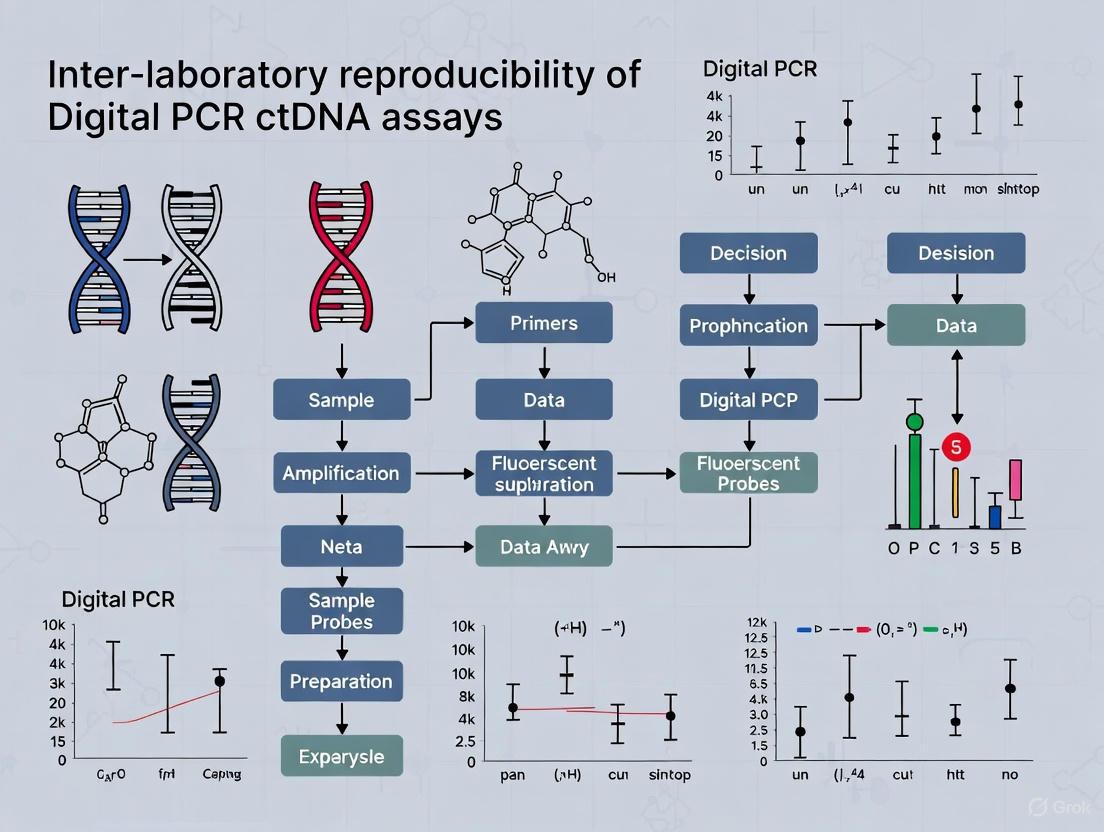
The analysis of circulating tumor DNA (ctDNA) using digital PCR (dPCR) is transforming cancer management through non-invasive monitoring of minimal residual disease and treatment response.
Ensuring Reproducible Results: A Deep Dive into Inter-laboratory Variability of Digital PCR ctDNA Assays
Abstract
The analysis of circulating tumor DNA (ctDNA) using digital PCR (dPCR) is transforming cancer management through non-invasive monitoring of minimal residual disease and treatment response. However, the transition of these assays from research to clinical practice is contingent upon demonstrating robust inter-laboratory reproducibility. This article provides a comprehensive analysis for researchers and drug development professionals on the factors affecting the consistency of dPCR-based ctDNA testing. We explore the foundational principles of dPCR technology, methodological workflows and their clinical applications, key sources of pre-analytical and analytical variability, and strategies for analytical validation and cross-platform comparison. Synthesizing evidence from recent clinical trials and multi-laboratory studies, this review outlines the critical pathway toward standardizing dPCR ctDNA assays to ensure reliable, reproducible results across different laboratories and platforms.
The Digital PCR Revolution: Core Principles and the Critical Need for Reproducibility in ctDNA Analysis
Introduction to dPCR: Partitioning, End-point Analysis, and Absolute Quantification
Digital PCR (dPCR) represents the third generation of Polymerase Chain Reaction technology, enabling the direct, absolute, and precise quantification of nucleic acids without the need for standard curves. By partitioning a sample into thousands of individual reactions, dPCR allows for single-molecule detection and counting using Poisson statistics. This guide explores the core principles of dPCR, objectively compares its performance to quantitative PCR (qPCR), and provides supporting experimental data within the context of circulating tumor DNA (ctDNA) assay reproducibility.
Core Principles of Digital PCR
The fundamental workflow of dPCR involves four key steps, which transform the measurement of nucleic acids from an analog to a digital process.
Partitioning
The PCR mixture containing the sample is partitioned into tens of thousands of individual micro-reactions. This is achieved either through water-in-oil droplet emulsification (Droplet Digital PCR, or ddPCR) or by loading the mixture into fixed microchambers or nanowells on a chip (chip-based dPCR). This step effectively dilutes the target molecules across the partitions so that each contains zero, one, or a few target sequences [1] [2].
End-point PCR Amplification
Each partition undergoes a traditional PCR amplification to the endpoint, meaning the reaction runs for a fixed number of cycles regardless of the initial starting concentration. In positive partitions (those containing at least one target molecule), the amplified target generates a strong fluorescent signal. Partitions without the target remain dim [1].
End-point Fluorescence Analysis
After amplification is complete, a detector reads the fluorescence of each partition. Unlike qPCR, which monitors fluorescence in real-time, dPCR makes a single, end-point measurement to classify each partition as positive or negative based on its fluorescence intensity [1] [2].
Absolute Quantification via Poisson Statistics
The ratio of positive to total partitions is used to calculate the absolute concentration of the target molecule in the original sample, applying Poisson statistics. This calculation accounts for the fact that some positive partitions may have contained more than one target molecule at the outset, and provides a precise, copy-per-volume count without reference to external standards [1] [3] [2].
The following diagram illustrates this core workflow and the underlying logical process for quantification.
dPCR vs. qPCR: A Technical Performance Comparison
The key differences between dPCR and qPCR stem from their fundamental approaches to measurement. The following table summarizes their comparative performance based on recent studies.
Table 1: Comprehensive Comparison of dPCR and qPCR Performance Characteristics
| Performance Characteristic | Digital PCR (dPCR) | Quantitative PCR (qPCR) | Supporting Experimental Evidence |
|---|---|---|---|
| Quantification Method | Absolute, via Poisson statistics [1] | Relative, requires a standard curve [1] | |
| Precision & Reproducibility | Higher precision; lower coefficient of variation; superior inter-laboratory reproducibility [1] [4] | Lower precision; more susceptible to inter-assay variability [5] [4] | dPCR demonstrated superior consistency and precision in quantifying respiratory viruses compared to RT-qPCR [5]. |
| Sensitivity | Higher sensitivity for low-abundance targets; can detect rare mutations at frequencies as low as 0.1% to 0.001% [6] [3] | Lower sensitivity for rare targets; performance affected by inhibitors and background DNA [1] | In a study of early-stage breast cancer, dPCR detected ctDNA representing ≤ 0.1% of cell-free DNA [7]. |
| Tolerance to Inhibitors | High; partitioning reduces the effective concentration of inhibitors in each reaction [1] [8] | Low; presence of inhibitors can significantly reduce amplification efficiency [1] | A study on cyanobacteria found ddPCR provided more precise and accurate analysis for environmental samples with PCR inhibitors [8]. |
| Dynamic Range | Narrower; limited by the number of partitions [1] | Wider; suitable for measuring large concentration differences [1] [4] | A study on Infectious Bronchitis Virus found qPCR had a wider quantification range than dPCR [4]. |
| Throughput & Workflow | Moderate; requires partitioning step. However, less need for replicates [1] | High; faster cycling and no partitioning step. May require replicates for precision [1] | |
| Cost Considerations | Higher instrument cost [5] [1] | Lower instrument cost, but requires costs for calibration standards [1] | Noted as a current limitation for the routine implementation of dPCR [5]. |
Experimental Data in ctDNA Research
The application of dPCR in detecting circulating tumor DNA (ctDNA) for minimal residual disease (MRD) monitoring and cancer prognosis highlights its clinical value. The following experiments demonstrate its performance in real-world oncological studies.
TRICIA Trial: Prognostic Risk Stratification in TNBC
This trial evaluated the use of a tumor-informed ddPCR assay for risk stratification in triple-negative breast cancer (TNBC) patients with residual disease after neoadjuvant chemotherapy [9].
- Objective: To determine if ctDNA detection could identify patients at high and low risk of recurrence, thereby guiding adjuvant therapy.
- Methods: Plasma from 92 patients was collected at multiple timepoints: post-NAC/pre-surgery (T1), post-surgery (T2), during adjuvant capecitabine (T3), and post-treatment (T4). ctDNA was analyzed using droplet digital PCR (ddPCR) assays.
- Key Findings: The lack of ctDNA detection at the post-chemotherapy, pre-operative timepoint was highly prognostic, with 95% distant-disease relapse-free survival. Conversely, ctDNA detection was associated with a high risk of recurrence. Furthermore, capecitabine treatment was associated with clearance of ctDNA in 41% of cases, which correlated with a better prognosis [9].
COMBI-AD Trial: Predicting Melanoma Recurrence
This biomarker analysis from a phase 3 trial validated ddPCR for detecting BRAF-mutant ctDNA as a prognostic biomarker in resected stage III melanoma [10].
- Objective: To investigate whether baseline and longitudinal ctDNA measurements could predict survival outcomes in patients receiving adjuvant therapy.
- Methods: Analytically validated, mutation-specific ddPCR assays were used to measure BRAFV600E or BRAFV600K ctDNA in 597 baseline plasma samples from the COMBI-AD trial.
- Key Findings: ctDNA was detectable in 13% (79/597) of baseline samples. Detection was strongly associated with worse recurrence-free survival and overall survival in both placebo and combination therapy groups. Patients with adverse longitudinal ctDNA kinetics had markedly shorter median recurrence-free survival (8.31 and 5.32 months) compared to those with favorable kinetics (19.25 months and "not reached") [10].
Table 2: Summary of Key Experimental Findings from Recent ctDNA Studies Using dPCR
| Study (Trial Name) | Cancer Type | dPCR Platform | Key Clinical Utility Finding | Sensitivity/Concordance |
|---|---|---|---|---|
| TRICIA Trial [9] | Triple-Negative Breast Cancer | Droplet Digital PCR (ddPCR) | ctDNA negativity post-therapy predicted 95% relapse-free survival. | ctDNA detected in 97% of patients before clinical relapse. |
| COMBI-AD Trial [10] | Stage III Melanoma | Droplet Digital PCR (ddPCR) | Baseline ctDNA detection was a strong prognostic biomarker for worse RFS and OS. | ctDNA detected in 13% of baseline patients; strong association with outcomes. |
| Sánchez-Martín et al. [7] | Early-Stage Breast Cancer | ddPCR & Absolute Q pdPCR | Both systems were effective for ctDNA analysis in early-stage disease. | Concordance > 90% in ctDNA positivity between the two dPCR platforms. |
Essential Research Reagent Solutions
The successful implementation of dPCR assays, particularly for ctDNA analysis, relies on a suite of specialized reagents and platforms.
Table 3: Key Research Reagent Solutions for dPCR-based ctDNA Analysis
| Item Category | Specific Examples | Function in the Workflow |
|---|---|---|
| dPCR Platforms | QIAcuity (Qiagen), QX200 ddPCR System (Bio-Rad), QuantStudio Absolute Q (Thermo Fisher) [7] [2] | Instrumentation for sample partitioning, thermal cycling, and fluorescence reading. |
| Nucleic Acid Extraction Kits | MagMax Viral/Pathogen Kit (Thermo Fisher) [5] | Isolation of high-quality cell-free DNA (including ctDNA) from plasma samples. |
| Liquid Biopsy dPCR Assays | Absolute Q Liquid Biopsy dPCR Assays (Thermo Fisher) [6] | Pre-designed, validated assays for reproducible detection of known somatic mutations. |
| Master Mixes | dPCR Master Mixes (various vendors) | Optimized buffers, nucleotides, and enzymes for efficient amplification in partitioned reactions. |
| Partitioning Consumables | DG8 Cartridges & Droplet Generation Oil (Bio-Rad), QIAcuity Nanoplate (Qiagen) | Microfluidic chips, cartridges, and oils required to create the thousands of individual partitions. |
Digital PCR, with its core principles of partitioning, end-point analysis, and absolute quantification, offers a robust tool for applications requiring high precision and sensitivity. As the summarized data shows, dPCR demonstrates superior performance over qPCR in detecting rare targets and providing reproducible data, which is paramount for inter-laboratory studies, especially in the ctDNA field for cancer monitoring. While factors like dynamic range and initial cost may favor qPCR for some applications, the proven ability of dPCR to generate reliable, calibration-free quantitative data makes it an indispensable technology in modern molecular diagnostics and life science research.
In the field of precision oncology, the analysis of circulating tumor DNA (ctDNA) has emerged as a powerful, non-invasive tool for cancer monitoring and treatment selection. Among the various detection technologies, digital PCR (dPCR) has established itself as a cornerstone for sensitive and reproducible ctDNA analysis. This guide objectively compares the performance of dPCR with alternative methods, focusing on its exceptional sensitivity for rare alleles and its role in promoting inter-laboratory reproducibility in ctDNA research.
Circulating tumor DNA (ctDNA) refers to small fragments of tumor-derived DNA found in the bloodstream, carrying tumor-specific genetic alterations. A significant challenge in its analysis is its vanishingly low concentration, especially in early-stage cancers or minimal residual disease (MRD), where it can constitute less than 0.1% of the total cell-free DNA (cfDNA) and be present at fewer than 100 copies per milliliter of plasma [11]. This low abundance demands techniques with exceptional sensitivity and specificity. Digital PCR (dPCR) and next-generation sequencing (NGS) are the two primary methods used, each with distinct advantages and limitations. This article will demonstrate how dPCR's unique approach makes it ideally suited for applications requiring the detection of rare alleles and low-copy targets.
Head-to-Head Technology Comparison
The following table summarizes the core characteristics of dPCR against other common nucleic acid detection technologies in the context of ctDNA analysis.
Table 1: Comparison of Key Technologies for ctDNA Analysis
| Feature | Digital PCR (dPCR) | Quantitative PCR (qPCR) | Next-Generation Sequencing (NGS) |
|---|---|---|---|
| Principle | Absolute quantification via end-point fluorescence of partitioned samples [2] | Relative quantification based on amplification cycle threshold (Ct) [2] | Massively parallel sequencing, often with error-correction methods [12] |
| Sensitivity (VAF) | High (0.1% - 0.5%) [13] [14] | Low (~1-10%) [15] | Variable (Very High <0.1% to ~1%) with advanced error correction [15] [12] |
| Quantification | Absolute, without a standard curve [16] [2] | Relative, requires a standard curve [17] | Semi-quantitative (VAF); quantitative NGS (qNGS) emerging [16] |
| Multiplexing Capability | Low to moderate (typically 2-4 plex) [15] | Low (typically 1-2 plex) | Very High (dozens to hundreds of targets) [12] |
| Throughput & Turnaround | Fast (hours); ideal for rapid, targeted results [15] | Fast (hours) | Slow (days); complex data analysis [18] |
| Tumor Genotype Knowledge | Required | Required | Not required for tumor-agnostic panels [16] |
| Inter-lab Reproducibility | High, as demonstrated in multi-center validations [13] | Moderate, dependent on standard curve | Variable; can be improved with standardized controls [11] [19] |
VAF: Variant Allele Frequency
The Digital PCR Workflow and Principle
dPCR's sensitivity stems from its fundamental workflow, which partitions a sample into thousands of individual reactions. The following diagram illustrates this core principle.
Diagram 1: The dPCR Workflow. The sample is partitioned, amplified, and analyzed to provide an absolute count of target molecules.
This partitioning step is crucial. By diluting the target molecules across thousands of nanoliter-sized droplets or microchambers, dPCR effectively enriches rare mutant alleles by separating them from the abundant wild-type DNA background. This eliminates PCR competition and allows for the detection of a single mutant molecule in a background of thousands of wild-type sequences [2]. The absolute quantification is achieved by counting the positive partitions and applying a Poisson statistical correction, which eliminates the need for a standard curve and reduces a potential source of inter-assay variability [16] [2].
Experimental Validation: Protocol and Data from a Reproducibility Study
Robust validation is key to clinical adoption. The following details a methodology and results from a study that validated a dPCR assay for BRAF mutations, demonstrating high inter-laboratory reproducibility.
- Objective: To clinically validate and assess the inter-laboratory reproducibility of droplet digital PCR (ddPCR) assays for detecting BRAF V600E and V600K mutations in plasma ctDNA.
- Sample Preparation: Blood samples were collected in EDTA tubes or specialized blood collection tubes (BCTs) containing cell-stabilizing preservatives. Plasma was obtained through a double centrifugation protocol:
- First step: 380–3,000 g for 10 minutes at room temperature.
- Second step: 12,000–20,000 g for 10 minutes at 4°C [11]. Cell-free DNA (cfDNA) was then extracted from the plasma using a silica membrane column kit (e.g., QIAamp Circulating Nucleic Acid Kit) and eluted in a defined buffer volume [11] [13].
- Assay Configuration: The ddPCR reaction mixture was prepared using:
- Extracted cfDNA template.
- BRAF V600E or V600K-specific primer/probe assays (FAM-labeled).
- A reference assay for a wild-type genomic locus (HEX-labeled).
- ddPCR Supermix for Probes.
- Partitioning and Amplification: The reaction mixture was partitioned into ~20,000 nanoliter-sized droplets using a droplet generator. The emulsified sample was then transferred to a 96-well plate and PCR-amplified on a conventional thermal cycler using a standardized protocol.
- Data Analysis: The plate was loaded into a droplet reader, which measured the fluorescence (FAM and HEX) in each droplet. Using Poisson statistics, the instrument software calculated the absolute concentration (copies/μL) and variant allele frequency (VAF) of the BRAF mutation in the original sample [13].
Key Validation Data and Performance Metrics
The validation study yielded the following performance characteristics, summarized in the table below.
Table 2: Performance Metrics from a Clinical ddPCR Validation Study for BRAF Mutations [13]
| Performance Metric | Result for BRAF V600E | Result for BRAF V600K |
|---|---|---|
| Limit of Detection (LOD) | 0.5% VAF | 0.5% VAF |
| Accuracy (Concordance with tumor tissue) | 100% (n=36) | 100% (n=30) |
| Inter-laboratory Reproducibility | 100% concordance across 12 plasma samples | 100% concordance across 12 plasma samples |
| Precision | High, with low inter-assay coefficient of variation | High, with low inter-assay coefficient of variation |
This study underscores that dPCR assays can be rigorously validated to achieve a 0.5% VAF sensitivity with perfect inter-laboratory reproducibility, a critical benchmark for reliable MRD detection and therapy monitoring [13].
The Researcher's Toolkit: Essential Reagents for dPCR ctDNA Analysis
Successful dPCR analysis relies on a set of core reagents and materials. The table below details these essential components.
Table 3: Research Reagent Solutions for dPCR-based ctDNA Analysis
| Item | Function | Example Products / Notes |
|---|---|---|
| Blood Collection Tubes (BCTs) | Preserves blood sample integrity by preventing leukocyte lysis and release of wild-type DNA during transport/storage [11]. | cfDNA BCT (Streck), PAXgene Blood ccfDNA (Qiagen) [11]. |
| Nucleic Acid Extraction Kit | Isolves cell-free DNA from plasma with high efficiency and purity. | QIAamp Circulating Nucleic Acid Kit (Qiagen), Maxwell RSC ccfDNA LV Plasma Kit (Promega) [11] [16]. |
| dPCR Supermix | Optimized buffer containing polymerase, dNTPs, and MgCl₂ for robust amplification in partitioned formats. | ddPCR Supermix for Probes (Bio-Rad) [13]. |
| Target-Specific Assays | Fluorescently-labeled probes and primers for specific detection of mutant and reference wild-type sequences. | TaqMan SNP Genotyping Assays [13]. |
| Quantification Standards (QS) | Synthetic DNA molecules spiked into samples to enable absolute quantification and control for extraction/amplification losses, used in quantitative NGS (qNGS) [16]. | Custom-designed synthetic DNA fragments [16]. |
In conclusion, digital PCR stands out as an ideal platform for ctDNA applications where high sensitivity for predefined, low-frequency mutations is paramount. Its strengths in absolute quantification, high reproducibility, and operational simplicity make it a powerful tool for monitoring treatment response, detecting minimal residual disease, and tracking the emergence of resistance mutations in a clinical research setting. While NGS offers unparalleled multiplexing for discovery and broad profiling, dPCR provides a robust, reproducible, and highly sensitive solution for targeted liquid biopsy assays, firmly establishing its role in the advancing field of precision oncology.
Circulating tumor DNA (ctDNA) sequencing has been rapidly adopted in precision oncology, offering a minimally invasive alternative to tissue biopsies for molecular stratification, therapeutic monitoring, and post-treatment surveillance [20]. However, the detection of ctDNA presents significant technical challenges due to its low abundance in plasma (typically <1% of total cell-free DNA) and the limited input material available from standard blood draws [20] [21]. These factors create substantial hurdles for achieving reproducible results across different testing platforms and laboratories.
Inter-laboratory reproducibility represents a fundamental challenge for the clinical implementation of ctDNA assays. Discordant results between alternative assays or parallel ctDNA and tumor-biopsy tests have been reported, highlighting the pressing need for standardized proficiency testing [20]. Understanding the variables that impact analytical performance across different technology platforms and laboratories is essential for establishing confidence in ctDNA testing results, particularly as these assays are increasingly incorporated into clinical trial endpoints and treatment decision-making [22] [23].
Evaluating the Scope of Variability: Key Multi-Center Studies
The SEQC2 Consortium: Cross-Platform Performance Assessment
The Sequencing Quality Control Phase 2 (SEQC2) project conducted a comprehensive multi-site, cross-platform evaluation of five industry-leading ctDNA assays across twelve participating clinical and research facilities [20]. This rigorous proficiency testing utilized standardized cell line-derived reference samples to measure the impact of variables at each step of the ctDNA sequencing workflow. The study revealed that while mutations above 0.5% variant allele frequency (VAF) were detected with high sensitivity, precision, and reproducibility by all assays, performance below this threshold became unreliable and varied widely between assays, especially when input material was limited [20].
A critical finding from this research was that missed mutations (false negatives) were more common than erroneous candidates (false positives), indicating that reliable sampling of rare ctDNA fragments represents the key challenge for ctDNA assays [20]. The study also found that participating assays were generally robust to technical variables between test labs—from plasma extraction to sequencing workflow stages—and were impacted largely by random, rather than systematic variation [20].
Comparative Performance of ctDNA Detection Technologies
Recent studies have directly compared different technological approaches to ctDNA detection, revealing substantial variability in performance characteristics. A 2025 study comparing droplet digital PCR (ddPCR) and next-generation sequencing (NGS) in localized rectal cancer demonstrated significantly different detection rates between the two platforms [24]. In the development cohort, ddPCR detected ctDNA in 24/41 (58.5%) patients while the NGS panel detected ctDNA in only 15/41 (36.6%) of the same baseline plasma samples (p = 0.00075) [24].
This performance disparity highlights how technological approach contributes to inter-assay variability. The authors noted that ddPCR allows for absolute quantification of targeted DNA mutations with high specificity and lower operational costs compared to NGS, though its application is limited to known mutations [24]. This tradeoff between the sensitivity of targeted approaches and the comprehensive profiling capability of NGS panels represents a key consideration for laboratories selecting ctDNA testing methodologies.
Table 1: Key Multi-Center Studies Evaluating ctDNA Assay Reproducibility
| Study | Number of Platforms/Labs | Key Findings on Reproducibility | Major Variability Factors Identified |
|---|---|---|---|
| SEQC2 Consortium [20] | 5 assays across 12 facilities | High reproducibility for variants >0.5% VAF; significant variability below 0.5% VAF | Input material quantity, coverage depth, random sampling |
| Chinese Platform Comparison [25] | 9 commercial assays | Variations in extraction efficiency, sensitivity, and reproducibility, particularly at lower inputs | DNA extraction efficiency, quantification methods, sequencing depth |
| ddPCR vs. NGS in Rectal Cancer [24] | 2 detection platforms | ddPCR detected ctDNA in 58.5% vs. NGS 36.6% of same samples (p=0.00075) | Technology platform, detection thresholds, panel design |
Methodological Approaches for Assessing Reproducibility
Standardized Reference Materials and Study Designs
Well-designed reproducibility studies employ carefully controlled reference materials to enable direct comparison between platforms while eliminating biological variability as a confounding factor. The 2024 analytical evaluation of nine ctDNA sequencing assays used 23 contrived reference samples comprising two sample types (diluted cell-free DNA and synthetic plasma) with precisely defined variant allele frequencies (0.1%, 0.5%, 1%, and 2.5%) and input amounts (10 ng, 30 ng, and 50 ng) [25]. This design allowed systematic evaluation of sensitivity, specificity, and reproducibility across different VAF and input conditions for multiple variant types, including single nucleotide variants (SNVs), insertions/deletions (InDels), structural variants (SVs), and copy number variants (CNVs) [25].
These reference samples contained 45 hotspot alterations in 25 genes, enabling assessment of both intra-lab and inter-lab reproducibility through replicate testing [25]. The use of such standardized materials provides a critical foundation for meaningful cross-platform comparisons, as they eliminate the tumor heterogeneity and pre-analytical variables that complicate patient-derived samples.
Analytical Metrics for Quantifying Reproducibility
Comprehensive reproducibility assessment requires evaluation of multiple performance metrics across different experimental conditions:
Sensitivity and Variant Allele Frequency: Studies consistently demonstrate that reproducibility is highly dependent on VAF, with significantly better concordance at higher allele frequencies. The SEQC2 project found that while mutations above 0.5% VAF were detected with high reproducibility, performance below this threshold declined substantially and varied widely between assays [20]. Similarly, the multi-platform evaluation in China found a substantial increase in sensitivity for ctDNA samples from VAF 0.1% to 0.5% for all assays, with minimal improvements from 0.5% to 2.5% VAF [25].
Impact of Input Material: The quantity of input DNA significantly affects reproducibility, particularly for low-frequency variants. Research has shown that increasing DNA input quantity generally improves fragment depth, sensitivity, and reproducibility [20]. Lower cfDNA inputs tend to result in lower deduplicated mean depth and reduced on-target rates, directly impacting detection capability [25].
Coverage Depth and Uniformity: Fragment depth represents a critical variable in ctDNA assays, with high coverage essential for sensitive detection of low-frequency mutations [20]. Beyond total depth, even coverage across target regions proves important for ensuring high sensitivity and reproducibility [20]. Studies have observed wide variation in sequencing depth across different assays, with some platforms achieving >10,000× coverage while others remained below 5,000×, significantly impacting their ability to detect low-frequency variants [25].
Diagram 1: Comprehensive ctDNA testing workflow highlighting key stages where variability can impact reproducibility. The diagram incorporates critical quality control elements (in green) and error-correction steps (in red) essential for reliable results.
Critical Variables Impacting Inter-laboratory Reproducibility
Technical Factors Contributing to Variability
Multiple technical variables throughout the ctDNA testing workflow contribute to inter-laboratory variability:
DNA Extraction and Quantification Efficiency: Significant variation has been observed in ctDNA extraction efficiency and quantification accuracy across different platforms. In comparative studies, extraction efficiency for plasma samples ranged from 16% to much higher values depending on the assay, directly impacting downstream sensitivity [25]. Accurate quantification is particularly crucial as samples with lower input tend to have lower deduplicated mean depth and reduced on-target rates [25].
Unique Molecular Identifiers (UMIs): The implementation of UMIs represents a critical factor in reducing false positives and improving reproducibility. Studies have demonstrated that UMIs enable effective consensus error correction, minimizing the detection of false positives arising from PCR and sequencing errors [20]. The SEQC2 project recommended that wherever possible, UMIs should be employed for consensus error correction in ctDNA sequencing assays [20].
Target Enrichment Methods: Both amplicon and hybrid-capture enrichment methods are used in ctDNA testing, with studies showing broadly comparable performance between the two approaches when fragment depth is equivalent [20]. However, each method has distinct characteristics—amplicon methods can enable sensitive, cost-effective detection of ctDNA mutations in single genes or mutation hotspots, while hybrid-capture panels offer more comprehensive coverage suitable for unbiased surveillance [20].
Table 2: Critical Technical Variables Affecting ctDNA Assay Reproducibility
| Variable Category | Specific Factors | Impact on Reproducibility | Recommended Best Practices |
|---|---|---|---|
| Pre-Analytical | Blood collection tubes, plasma processing time, cfDNA extraction method | High impact; affects DNA yield and quality | Standardize protocols, use validated extraction kits |
| Input Material | DNA quantity, DNA quality, variant allele frequency | Critical for low VAF variants (<0.5%) | Minimum 20 ng input, higher for low VAF detection |
| Workflow | Enrichment method (amplicon vs. capture), UMI implementation, sequencing depth | Moderate to high impact; UMIs significantly reduce false positives | Implement UMIs, ensure adequate coverage (>5000×) |
| Bioinformatic | Variant calling algorithms, quality thresholds, error correction | High impact for low-frequency variants | Standardize pipelines, use duplex sequencing methods |
Analytical Challenges in Low-Frequency Variant Detection
The reliable detection of mutations below 0.5% VAF remains a key challenge for ctDNA sequencing assays and represents a major source of inter-laboratory variability [20]. Several factors contribute to this technical challenge:
Random Sampling Limitations: The detection of ctDNA fragments occurs by random sampling from a background of non-cancerous cell-free DNA. For low-frequency mutations (VAF < 0.5%), coverage has a pronounced impact on detection sensitivity, with this relationship modeled by a sigmoidal function [20]. The number of sequence fragments containing a given mutation follows a Poisson distribution, with a median fragment count proportional to the product of VAF and global fragment-depth [20].
Coverage Requirements: Simulation studies have demonstrated that at maximum depth, >99% of mutations can be detected by at least two independent fragments. However, any decrease in coverage or increase in detection stringency (i.e., requiring >2 supporting fragments) causes a reduction in sensitivity, particularly for variants below 0.5% VAF [20].
Sequence-Specific Effects: Mutations in challenging genomic contexts, such as regions with high or low GC-content, low sequence complexity, or suboptimal alignability, are detected with lower sensitivity [20]. Additionally, in hybrid-capture sequencing, mutations in exon edge regions are detected with lower sensitivity than central regions due to lower coverage, creating an "exon edge-effect" that can contribute to variability [20].
Essential Research Reagents and Solutions for Reproducible ctDNA Testing
Achieving reproducible ctDNA testing results requires careful selection and implementation of specialized research reagents and solutions throughout the testing workflow. The following table details key components essential for reliable inter-laboratory performance.
Table 3: Essential Research Reagent Solutions for Reproducible ctDNA Testing
| Reagent Category | Specific Examples | Function in Workflow | Impact on Reproducibility |
|---|---|---|---|
| Blood Collection Tubes | Streck Cell-Free DNA BCT tubes [24] | Stabilize nucleated blood cells during transport and storage | Critical for preventing genomic DNA contamination and preserving ctDNA integrity |
| Reference Standards | Cell line-derived reference materials [20], contrived cfDNA/plasma samples [25] | Provide standardized materials with known variants at defined VAFs | Enable cross-platform performance comparison and proficiency testing |
| UMI Adapters | Unique Molecular Identifiers [20] | Tag individual DNA molecules before amplification | Enable consensus error correction to distinguish true mutations from technical artifacts |
| Target Enrichment | Hybrid-capture probes [20], amplicon panels [24] | Enrich cancer-relevant genomic regions from total cfDNA | Impact coverage uniformity and sensitivity for variant detection |
| Size Selection | Bead-based or enzymatic size selection [21] | Enrich shorter DNA fragments (90-150 bp) characteristic of ctDNA | Improve signal-to-noise ratio by leveraging fragmentomic properties |
Strategies for Improving Reproducibility and Standardization
Methodological Enhancements for Reduced Variability
Several methodological approaches can significantly improve the reproducibility of ctDNA testing across laboratories:
Fragment Size Selection: Utilizing the distinct size profile of tumor-derived cfDNA (typically 90-150 bp) compared to non-tumor DNA (which tends to be longer) provides an opportunity to improve sensitivity and reproducibility [21]. Bead-based or enzymatic size selection methods specifically designed to enrich shorter fragments can increase the fractional abundance of ctDNA in sequencing libraries by several folds, particularly enhancing the detection of low-frequency variants when combined with error-corrected next-generation sequencing [21].
Error-Corrected Sequencing Methods: Advanced sequencing approaches that improve error correction can significantly enhance reproducibility. Duplex Sequencing, which tags and sequences each of the two strands of a DNA duplex, represents the gold standard for high-accuracy sequencing [12]. Newer methods including SaferSeqS, NanoSeq, Singleton Correction, and Concatenating Original Duplex for Error Correction (CODEC) offer improved efficiency while maintaining high accuracy [12]. These approaches can achieve 1000-fold higher accuracy than conventional NGS while using up to 100-fold fewer reads than duplex sequencing [12].
Alternative Detection Approaches: Structural variant (SV)-based ctDNA assays can mitigate many challenges associated with single nucleotide variant detection by identifying tumor-specific rearrangements with breakpoint sequences unique to the tumor [21]. These approaches can achieve parts-per-million sensitivity with high specificity, as normal cells lack these specific rearrangement combinations [21]. Similarly, phased variant approaches, such as PhasED-Seq, improve sensitivity by targeting multiple single-nucleotide variants on the same DNA fragment [21].
Quality Framework and Standardization Initiatives
Establishing robust quality frameworks and standardization initiatives is essential for improving inter-laboratory reproducibility:
Regulatory Guidance and Standards Development: The FDA has issued guidance on the use of ctDNA in early-stage solid tumor drug development, focusing on standardization and harmonization of ctDNA assays and methodologies with particular attention to assay considerations for assessing molecular residual disease (MRD) [22]. Such regulatory frameworks provide essential direction for assay validation and implementation.
Coordinated Research Consortia: Initiatives like the Friends of Cancer Research ctDNA for Monitoring Treatment Response (ctMoniTR) project represent coordinated efforts to synchronize data generation across multiple stakeholders, including pharmaceutical companies, diagnostic labs, government health officials, patient advocates, and academic researchers [23]. By aggregating data from multiple clinical trials early in the endpoint development process, these consortia aim to establish standardized evidence generation more efficiently than individual organizations working in isolation [23].
Analytical Validation Guidelines: Comprehensive analytical validation should include assessment of sensitivity, specificity, and reproducibility across the entire range of intended use, with particular attention to low VAF detection. The SEQC2 project recommendations emphasize that well-characterized reference standards can directly measure analytic performance characteristics in the absence of confounding biological variables and serve as valuable tools for comparing ctDNA assays [20].
Diagram 2: Comprehensive framework for assessing and improving ctDNA testing reproducibility, incorporating technical assessment, quality standards, and harmonization initiatives.
The reproducibility of ctDNA testing across laboratories remains challenged by multiple technical factors, particularly at variant allele frequencies below 0.5%. The limited input material, random sampling constraints, and methodological variations contribute significantly to inter-laboratory variability. However, coordinated efforts through research consortia, standardized reference materials, and advanced methodological approaches offer promising pathways toward improved harmonization.
Future progress will depend on continued development and implementation of standardized protocols, reference materials, and proficiency testing programs. Methodological advances including error-corrected sequencing approaches, fragmentomic analyses, and structural variant-based detection hold promise for enhancing reproducibility, particularly for minimal residual disease detection where sensitivity demands are highest. As the field moves toward greater standardization, the establishment of consensus guidelines and quality metrics will be essential for ensuring that ctDNA testing can reliably inform clinical decision-making and drug development programs across different testing environments.
The reproducibility of circulating tumor DNA (ctDNA) assays, particularly digital PCR (dPCR) applications, is a critical challenge in molecular diagnostics and drug development. Pre-analytical variables—those factors affecting the sample before it is analyzed—introduce significant variability that can compromise data integrity and cross-study comparisons. This guide objectively compares the impact of key pre-analytical factors, including blood collection tubes, processing delays, and storage conditions, on sample stability, providing a foundation for standardizing protocols in ctDNA research.
Blood Collection Tubes: A Comparative Analysis
The choice of blood collection tube is the first critical decision in the ctDNA workflow. Different tubes contain specific additives designed to either stabilize blood cells or preserve the cell-free DNA fraction, directly influencing the yield and quality of extracted ctDNA.
Table 1: Comparison of Common Blood Collection Tubes for ctDNA Analysis
| Tube Cap Color | Additive | Primary Mechanism | Key Advantages | Key Limitations & Considerations |
|---|---|---|---|---|
| EDTA (e.g., Lavender/Purple) | EDTA (Chelator) | Binds calcium ions to prevent coagulation [26] [27]. | - Inexpensive and widely available.- Suitable for a wide range of molecular tests [26]. | - Requires rapid processing (typically within 2-6 hours at 4°C) to prevent white blood cell lysis and background wild-type DNA release [11] [28]. |
| Streck-type (White) | Cell-Stabilizing Agents | Cross-links cells to inhibit lysis and nuclease activity [11]. | - Allows room temperature transport/storage for up to 7 days [11].- Excellent for preserving ctDNA integrity during shipping. | - Higher cost than conventional tubes.- May not be compatible with multi-analyte liquid biopsy panels that include circulating tumor cells [11]. |
| Citrate (Light Blue) | Sodium Citrate | Weak calcium chelator [27]. | - Standard for coagulation studies. | - Less common for primary ctDNA analysis. |
| Heparin (Green) | Heparin | Antithrombin effect [26] [27]. | - Can be used for various plasma-based tests. | - Heparin can inhibit PCR and is generally not recommended for PCR-based ctDNA assays [26]. |
| Serum Tubes (Red/Gold) | Clot Activator & Gel | Accelerates clotting and separates serum [26] [27]. | - Ideal for serology and many chemistry tests. | - The clotting process can entrap tumor cells and release genomic DNA, diluting the ctDNA fraction. Not recommended for ctDNA analysis [11]. |
Experimental Protocols for Key Pre-analytical Studies
Protocol: Evaluating Processing Delay and Holding Temperature
A seminal study investigating the impact of pre-processing delays and holding temperatures on protein biomarkers provides a robust methodological template applicable to ctDNA research [29].
- Sample Collection: Venous blood was drawn from healthy subjects and ICU patients into citrate and EDTA tubes [29].
- Experimental Conditions: Samples were subjected to different pre-processing conditions [29]:
- Reference Protocol: 1 hour at room temperature (RT) before processing.
- Immediate Cooling: Placed immediately on ice for 1 hour.
- Delayed Processing: Held for 3 hours at either RT or 4°C.
- Processing: All tubes were centrifuged (2,500 x g for 15 minutes), and plasma was aliquoted and frozen at -80°C [29].
- Analysis: Analytes were measured using multiplex assays (Luminex) and statistical analysis, including Receiver-Operating Characteristic (ROC) curves, was performed to assess the impact on data classification [29].
Protocol: Impact of Extended Processing Delays on Plasma Markers
This protocol assesses the stability of biomarkers relevant to critical illness, including cell-free DNA (cfDNA), under extended delays, mimicking real-world shipping conditions [30].
- Sample Collection: Blood was collected from ICU patients and healthy volunteers into citrate and EDTA tubes [30].
- Delay Simulation: Blood from each tube was aliquoted and stored under various conditions [30]:
- Temperatures: Room temperature (23°C) vs. 4°C.
- Delay Durations: 0, 24, 48, and 72 hours.
- Processing and Storage: After the delay, tubes were centrifuged at 2,500 x g for 15 minutes. Plasma was aliquoted and frozen at -80°C for batch analysis [30].
- Downstream Analysis:
- cfDNA Quantification: Using the Picogreen dsDNA Assay Kit.
- Cytokine/Chemokine Analysis: Using multiplex immunoassays (Meso Scale Discovery).
- Thrombin Generation: Measured with a Technothrombin TGA reagent kit to assess clotting potential [30].
Quantitative Data on Processing Delays and Temperature
The following tables synthesize experimental data on how processing delays and storage temperatures affect sample integrity.
Table 2: Impact of Processing Delay and Temperature on Sample Integrity
| Analyte Category | Delay Duration | Holding Temperature | Observed Effect | Experimental Context |
|---|---|---|---|---|
| Cytokines (e.g., IL-8, IL-9, RANTES, PAI-1) | 1 hour | Ice (4°C) | Significant decrease in serum levels compared to RT; creates viscous, hard-to-handle serum [29]. | Blood from healthy subjects [29]. |
| Various Cytokines & Diabetes Proteins | 3 hours | RT vs. 4°C | Effect was analyte-specific; no single optimal temperature for all. Some showed little change (leptin, insulin), while others were significantly altered [29]. | Blood from healthy subjects [29]. |
| Cell-free DNA (cfDNA), Cytokines, Clotting Factors | Up to 72 hours | RT vs. 4°C | Most biomarkers were significantly affected by delays, with effects varying by analyte. Citrate and EDTA plasma showed different stability profiles [30]. | Blood from ICU patients and healthy volunteers [30]. |
| General cfDNA Integrity | >6 hours (EDTA tubes) | RT | Risk of increased wild-type DNA background from white blood cell lysis, diluting the ctDNA fraction [11] [28]. | Standard protocol for liquid biopsy [11]. |
Pre-analytical Impact on ctDNA Testing
The Scientist's Toolkit: Essential Research Reagents & Materials
Table 3: Key Materials and Reagents for Pre-analytical ctDNA Workflows
| Item | Function | Considerations for Inter-laboratory Reproducibility |
|---|---|---|
| Cell-Stabilizing Blood Tubes (e.g., Streck, PAXgene) | Preserves nucleated blood cell integrity, preventing release of genomic DNA and stabilizing ctDNA during transport [11]. | Critical for multi-center studies to minimize variability from shipping delays. Allows room temperature storage for up to 7 days [11]. |
| EDTA Blood Collection Tubes | Prevents coagulation by chelating calcium ions; standard for many molecular assays [11] [27]. | Requires strict adherence to a short processing window (2-6h) and consistent temperature (4°C) to prevent sample degradation [11] [28]. |
| Double-Spin Centrifugation Protocol | 1st slow spin (e.g., 380-3,000 g) to separate cells; 2nd high-speed spin (e.g., 12,000-20,000 g) to clear residual platelets and debris from plasma [11]. | Detailed protocol must be harmonized across labs. Variations in g-force and time can affect platelet contamination and cfDNA yield [11] [28]. |
| Specialized cfDNA Extraction Kits | Isolate and purify the low-concentration cfDNA fraction from plasma. Methods include silica membrane columns and magnetic beads [11]. | Kits from different manufacturers have varying efficiencies and propensities to lose short DNA fragments. Using the same kit and lot across a study improves reproducibility [11] [28]. |
| Ultra-Low Temperature Freezers (-80°C) | For long-term storage of extracted cfDNA and plasma samples. | Freeze-thaw cycles must be minimized by storing plasma in small, single-use aliquots. Thawing should be done slowly on ice [11] [28]. |
Strategies for Mitigating Pre-analytical Variability
To enhance the inter-laboratory reproducibility of dPCR-based ctDNA assays, proactive mitigation strategies are essential.
- Adopt Cell-Stabilizing Tubes for Multi-Center Trials: For studies involving sample shipment from multiple clinical sites, the use of cell-stabilizing blood collection tubes is the most effective strategy to control for variability introduced by transportation logistics [11].
- Implement Standardized SOPs with Narrow Tolerances: Laboratory protocols must be highly detailed, specifying exact parameters for centrifugation (g-force, time, temperature), plasma volume for extraction, and acceptance criteria for DNA quality [11] [31].
- Harmonize Pre-analytical Protocols Across Networks: As called for by the Association for Molecular Pathology, consistent reporting and adoption of best practices for pre-analytical variables are needed to ensure high-quality, comparable data across the industry [31].
- Monitor Environmental Transport Conditions: External specimen transport is susceptible to climate variations that can cause pre-analytical errors. Monitoring or controlling temperature and agitation during transport is necessary for sample integrity [32].
Circulating tumor DNA (ctDNA) analysis has emerged as a transformative paradigm in oncology, enabling non-invasive assessment of tumor burden, genetic heterogeneity, and therapeutic response in a real-time manner [21]. This liquid biopsy approach provides a less invasive alternative to tissue biopsies with lower sampling bias and procedural risk [21]. However, the clinical utility of ctDNA analysis depends critically on the reproducibility of detection technologies, particularly for applications involving low variant allele frequencies (VAF) below 0.1% in early-stage disease and minimal residual disease (MRD) monitoring [21] [12].
The fundamental challenge stems from the biologically low abundance of ctDNA, which can represent less than 0.1% of total circulating cell-free DNA (cfDNA) [21] [25]. This technical challenge is compounded by pre-analytical variability, analytical platform differences, and bioinformatic processing inconsistencies that collectively impact the reliability of results across laboratories [21] [25]. As ctDNA analysis becomes increasingly integrated into clinical decision-making for treatment selection and patient risk stratification, ensuring reproducible measurements across platforms and institutions has become a clinical imperative with direct consequences for patient outcomes.
Technology Landscape: dPCR Versus NGS Platforms
Digital PCR Platforms and Principles
Digital PCR (dPCR) represents the third generation of PCR technology, following conventional PCR and real-time quantitative PCR (qPCR) [2]. The fundamental principle involves partitioning a PCR mixture into thousands of individual reactions so that each partition contains zero, one, or a few nucleic acid targets according to a Poisson distribution [2]. Following PCR amplification, the fraction of positive partitions is counted via endpoint measurement, allowing absolute quantification of target concentration without calibration curves [2]. This partitioning enables single-molecule detection with high sensitivity, absolute quantification, and exceptional reproducibility [2].
Two primary partitioning methods have emerged: water-in-oil droplet emulsification (droplet digital PCR or ddPCR) and microchamber-based systems [2]. The ddPCR approach disperses samples into picoliter to nanoliter droplets within an immiscible oil phase, while microchamber systems use arrays of microscopic wells embedded in solid chips [2]. The commercialization of dPCR platforms has accelerated since Fluidigm introduced the first nanofluidic system in 2006, with major platforms now available from Bio-Rad, Qiagen, Thermo Fisher, and Roche [2].
Next-Generation Sequencing Approaches
Next-generation sequencing (NGS) platforms for ctDNA analysis employ targeted panels, whole-exome, or whole-genome sequencing approaches to detect a broader spectrum of genomic alterations without requiring prior knowledge of specific mutations [12]. These methods include tagged-amplicon deep sequencing (TAm-Seq), Safe-Sequencing System (Safe-SeqS), CAncer Personalized Profiling by deep Sequencing (CAPP-Seq), and targeted error correction sequencing (TEC-Seq) [12]. A critical advancement in NGS methodology involves unique molecular identifiers (UMIs), which are molecular barcodes tagged onto DNA fragments before PCR amplification to distinguish true mutations from sequencing artifacts [12]. Techniques such as Duplex Sequencing, which tags and sequences both strands of DNA duplexes, provide gold-standard error correction but with reduced efficiency [12].
Comparative Performance Data
Direct comparisons between dPCR and NGS platforms reveal significant differences in detection capabilities and reproducibility. A 2025 study in rectal cancer patients demonstrated that ddPCR detected ctDNA in 58.5% (24/41) of baseline plasma samples compared to 36.6% (15/41) for targeted NGS panels (p = 0.00075) [24]. This superior detection sensitivity came with the additional advantage of 5-8.5-fold lower operational costs compared to NGS [24].
Table 1: Performance Comparison of ddPCR versus NGS for ctDNA Detection in Localized Rectal Cancer
| Parameter | ddPCR | NGS Panel | Statistical Significance |
|---|---|---|---|
| Detection rate in development cohort (n=41) | 58.5% (24/41) | 36.6% (15/41) | p = 0.00075 |
| Detection rate in validation cohort (n=26) | 80.8% (21/26) | Not reported | Not applicable |
| Cost comparison | Reference (1×) | 5-8.5× higher | Not applicable |
| Optimal variant allele frequency range | 0.01% and above | Generally >0.1% | Methodologically dependent |
The performance differential becomes particularly pronounced at very low variant allele frequencies. A comprehensive 2024 evaluation of nine ctDNA sequencing assays revealed substantial variability in sensitivity, particularly with low DNA inputs (<20 ng) and VAFs below 0.5% [25]. While some NGS assays achieved sensitivity above 95% for single nucleotide variants (SNVs) at VAFs of 0.5%, performance dropped significantly at 0.1% VAF across all platforms [25]. Assays with larger panel sizes (>1 Mb) generally demonstrated lower sensitivity at these challenging thresholds, highlighting the fundamental tradeoff between breadth of genomic coverage and detection sensitivity [25].
Experimental Protocols: Assessing Reproducibility
Sample Collection and Processing
Standardized pre-analytical protocols are critical for reproducible ctDNA analysis. Recommended protocols involve collecting 3×9 mL of blood into specialized cell-free DNA collection tubes (e.g., Streck Cell Free DNA BCT) [24]. Plasma separation should occur within specified timeframes, followed by cfDNA extraction using validated kits [24] [25]. Extraction efficiency varies significantly between platforms, with studies reporting extraction efficiencies as low as 16% for some methods, directly impacting downstream sensitivity and reproducibility [25].
The quantity and quality of extracted cfDNA must be rigorously quantified before analysis, with fluorometric methods (e.g., Qubit) preferred over spectrophotometric approaches for accuracy [25]. Input DNA amounts significantly affect assay performance, with thresholds generally set at <20 ng (low), 20-50 ng (medium), and >50 ng (high) [25]. Studies demonstrate that samples with low cfDNA inputs tend to have lower sequencing depth and on-target rates, directly impacting sensitivity and reproducibility [25].
dPCR Workflow and Analysis
The following diagram illustrates the core dPCR workflow that enables highly reproducible ctDNA detection:
Diagram 1: dPCR Workflow for Reproducible ctDNA Detection
The dPCR process begins with partitioning of the PCR mixture containing the sample into thousands of individual reactions [2]. Following amplification, endpoint fluorescence analysis distinguishes positive from negative partitions [2]. Absolute quantification is calculated using Poisson statistics based on the fraction of positive partitions, providing calibration-free measurement that enhances reproducibility across laboratories [2].
For tumor-informed dPCR assays, the process typically involves initial sequencing of primary tumor tissue to identify mutations, followed by design of custom probes for the highest frequency mutations [24]. This approach allows detection of somatic alterations at frequencies as low as 0.01% VAF by dividing 2-9 μL of extracted DNA into 20,000 droplets and calculating absolute quantities based on PCR-positive and negative droplets [24].
Analytical Validation Standards
Comprehensive validation of ctDNA assays requires assessment of multiple performance parameters across different variant types and allele frequencies. The international multicenter validation of the Hedera Profiling 2 ctDNA test panel exemplifies this approach, evaluating sensitivity, specificity, and reproducibility for single-nucleotide variants (SNVs), insertions and deletions (Indels), fusions, copy number variations, and microsatellite instability status [33]. Using reference standards with variants at 0.5% allele frequency, the assay demonstrated sensitivity of 96.92% and specificity of 99.67% for SNVs/Indels, with 100% sensitivity for fusion detection [33].
Table 2: Analytical Performance Metrics for Reproducible ctDNA Detection
| Performance Metric | Target Threshold | Impact on Reproducibility |
|---|---|---|
| Sensitivity for SNVs/Indels (0.5% VAF) | >95% | Reduces false negatives in MRD detection |
| Specificity | >99.5% | Prevents false positives in treatment selection |
| Limit of Detection | 0.01%-0.1% VAF | Enables early-stage cancer applications |
| Intra-assay reproducibility | CV < 10% | Ensures consistent results across repeated measurements |
| Inter-laboratory concordance | >90% | Supports decentralized testing models |
| Extraction efficiency | >80% | Maintains assay sensitivity with limited samples |
For dPCR platforms, key validation parameters include intra-assay precision (typically CV < 10%), inter-laboratory concordance (>90%), and minimal detectable allele frequency (0.01% for many applications) [24] [2]. These metrics collectively determine the reliability of ctDNA measurements for clinical decision-making, particularly when monitoring molecular response through quantitative changes in ctDNA levels [12].
Clinical Implications of Reproducibility
Risk Stratification in Solid Tumors
Reproducible ctDNA detection directly impacts risk stratification across multiple cancer types. In breast cancer, structural variant-based ctDNA assays can assess residual disease months to years after resection and adjuvant therapy, with detectable ctDNA after treatment completion associated with significantly higher rates of clinical recurrence [21]. Similarly, in colorectal cancer, longitudinal ctDNA monitoring during and after adjuvant chemotherapy provides more reliable recurrence risk assessment than carcinoembryonic antigen (CEA) and imaging, enabling precision treatment intensification or de-escalation [21].
The consequences of poor reproducibility are particularly significant in the minimal residual disease (MRD) setting, where false-negative results may provide false reassurance, while false-positive findings could lead to unnecessary adjuvant therapy [21] [12]. Studies demonstrate that patients with stage II-III colorectal cancers with detectable ctDNA after curative-intent therapy have recurrence risks of 80-100%, underscoring the critical importance of reproducible detection [24].
Treatment Response Monitoring
Reproducible ctDNA quantification enables more accurate treatment response assessment than traditional imaging modalities. In non-small cell lung cancer (NSCLC), declines in ctDNA levels predict radiographic response to therapy more accurately than follow-up imaging [21]. Additionally, resistance mutations often appear in plasma weeks before clinical or radiographic evidence of disease progression, providing a critical window for treatment modification [21].
For B-cell lymphoma, ctDNA-based MRD assays demonstrate superior sensitivity and informativeness compared to standard PET or CT imaging, detecting subclinical disease not visible on imaging [21]. The reproducibility of these measurements across laboratories determines their utility for guiding immunochemotherapy decisions in aggressive disease variants [21].
Essential Research Reagent Solutions
The following reagent solutions are critical for ensuring reproducible ctDNA analysis in research and clinical settings:
Table 3: Essential Research Reagent Solutions for Reproducible ctDNA Analysis
| Reagent/Category | Function | Examples/Specifications |
|---|---|---|
| Cell-free DNA Blood Collection Tubes | Preserves blood samples for ctDNA analysis | Streck Cell Free DNA BCT; prevents white blood cell lysis and background DNA release |
| cfDNA Extraction Kits | Isolate cell-free DNA from plasma | Magnetic bead-based systems; silica membrane columns; evaluate by extraction efficiency |
| dPCR Master Mixes | Enable partitioned amplification | Probe-based chemistry (e.g., TaqMan); EvaGreen dye-based; optimized for partition stability |
| Mutation-Specific Assays | Detect tumor-derived mutations | Custom TaqMan assays; primer-probe sets for hotspot mutations; tumor-informed designs |
| Reference Standards | Validate assay performance | Seraseq ctDNA Reference Materials; Horizon Multiplex I gDNA; characterized variants at known VAF |
| Unique Molecular Identifiers (UMIs) | Reduce sequencing errors | Molecular barcodes ligated to DNA fragments; enable error correction in NGS workflows |
| Bioinformatics Pipelines | Analyze sequencing data | Variant calling algorithms; Poisson statistics for dPCR; error suppression methods |
Future Directions and Standardization Initiatives
Emerging technologies promise to further enhance the reproducibility and clinical utility of ctDNA analysis. Structural variant-based ctDNA assays, nanomaterial-based electrochemical sensors, magnetic nano-electrode platforms, and fragment-enriched library preparation methods have improved sensitivity to attomolar concentrations [21]. Approaches leveraging phased variants (multiple SNVs on the same DNA fragment), such as PhasED-Seq, demonstrate enhanced sensitivity for ctDNA detection [21].
The integration of artificial intelligence-based error suppression methods and microfluidic point-of-care devices may represent the next horizon for ctDNA liquid biopsy technology, potentially reducing inter-laboratory variability [21]. Additionally, multiplexed CRISPR-based ctDNA assays offer promising approaches to enhance specificity while maintaining sensitivity [21].
Standardization initiatives focusing on pre-analytical variables, analytical validation standards, and bioinformatic pipelines are essential for improving reproducibility across platforms and laboratories [25]. The development of well-characterized reference materials and standardized reporting metrics will enable more meaningful comparisons between studies and facilitate the integration of ctDNA analysis into routine clinical practice [33] [25].
As these technologies evolve, the fundamental imperative remains ensuring that reproducibility keeps pace with sensitivity, enabling clinicians to make critical patient management decisions with confidence in the reliability of ctDNA results across testing locations and over time.
From Blood Draw to Data: Standardized dPCR Workflows and Clinical Applications
The analysis of circulating tumor DNA (ctDNA) via liquid biopsy has revolutionized oncological diagnostics and treatment monitoring, offering a minimally invasive window into tumor genetics [34]. The pre-analytical phase—encompassing blood collection, transport, and plasma processing—is a critical determinant of data quality and reliability. Variations in this phase significantly impact the inter-laboratory reproducibility of sensitive downstream applications like digital PCR (dPCR) [35] [31]. Among pre-analytical variables, the choice of blood collection tube is paramount. This guide objectively compares the performance of two primary tube types: the traditional K2EDTA tube and modern cell-stabilizing tubes (e.g., Streck Cell-Free DNA BCT), providing researchers with experimental data and protocols to inform their study designs.
Technical Comparison of Blood Collection Tubes
Mechanism of Action and Primary Applications
- EDTA Tubes: K2EDTA tubes function as an anticoagulant by chelating calcium ions, which are essential cofactors in the coagulation cascade. This effectively prevents blood from clotting, preserving cellular components for analysis [36] [37]. They are the gold standard for routine hematology tests like the complete blood count (CBC) [36].
- Cell-Stabilizing Tubes (e.g., Streck cfDNA BCT): These tubes contain a proprietary preservative that not only prevents coagulation but also actively stabilizes white blood cell membranes. This dual action minimizes cell lysis and the subsequent release of wild-type genomic DNA into the plasma, thereby preserving the native cell-free DNA (cfDNA) profile. They also contain nuclease inhibitors to minimize cfDNA degradation [38] [39].
Direct Performance Comparison for ctDNA Analysis
The most significant operational difference lies in the allowable time between blood draw and plasma processing. The table below summarizes key performance characteristics based on clinical studies.
Table 1: Performance Comparison of EDTA and Cell-Stabilizing Tubes for ctDNA Analysis
| Characteristic | K2EDTA Tubes | Cell-Stabilizing Tubes (Streck cfDNA BCT) |
|---|---|---|
| Mechanism of Action | Calcium chelation to prevent clotting [36] [37] | Cell membrane stabilization and nuclease inhibition [38] [39] |
| Max Storage Time (Room Temperature) | 4-6 hours to prevent genomic DNA contamination [40] [34] | Up to 3-7 days (studied in cancer patients) [40]; up to 14 days per manufacturer [39] |
| Genomic DNA Contamination | Significant increase after 6 hours due to cell lysis [38] [34] | No significant increase in gDNA after 3 days [40] |
| Impact on ctDNA Mutation Detection | Reliable if processed within 4-6 hours; risk of false negatives due to dilution after lysis [34] | Highly comparable mutation allele frequencies to EDTA baselines after 3-day storage [40] |
| Ideal Use Case | Single-site studies with immediate processing capabilities [34] | Multi-center clinical trials; biobanking; shipping samples to central labs [38] [39] |
Supporting Experimental Data and Protocols
Key Experimental Findings
Research consistently demonstrates the superiority of cell-stabilizing tubes for extended sample storage.
- Prevention of Cellular Lysis: A pivotal study comparing Streck BCT and PAXgene tubes in metastatic breast cancer patients measured plasma DNA concentration using droplet digital PCR (ddPCR). Blood stored in BCT tubes for 7 days showed no evidence of cell lysis. In contrast, PAXgene tubes showed an order of magnitude increase in genome equivalents, indicating substantial cellular lysis and genomic DNA contamination [38].
- Reliable Mutation Detection after Storage: A 2023 study with colorectal, pancreatic, and non-small cell lung cancer patients found that cfDNA yield, gDNA contamination levels, and mutational load were highly comparable between samples collected in K2EDTA tubes (processed within 6 hours) and those collected in Streck cfDNA BCTs and stored for 3 days at room temperature. This confirms that BCTs maintain sample integrity for reliable ctDNA analysis [40].
Detailed Experimental Protocol for Method Comparison
The following workflow, derived from the methodologies of the cited studies, provides a template for comparing tube performance in a validation study [38] [40].
Workflow Summary: Tube Comparison Protocol
- Patient Cohort & Blood Draw: Enroll patients (e.g., with metastatic breast cancer). Collect venous blood using a standard phlebotomy technique [38].
- Tube Allocation: Distribute blood into different tube types, including K2EDTA (as a baseline control), PAXgene, and Streck cfDNA BCTs [38].
- Storage Conditions: Process a subset of all tube types within 2 hours of collection. Store the remaining PAXgene and BCT tubes at room temperature for a defined period (e.g., 3-7 days) [38] [40].
- Plasma Processing: Isolate plasma using a double-centrifugation protocol to ensure a cell-free sample. An example protocol is:
- cfDNA Extraction & Analysis: Extract cfDNA from plasma using a dedicated kit (e.g., QIAamp Circulating Nucleic Acid Kit). Analyze the eluted DNA using ddPCR to quantify total wild-type DNA (a measure of contamination) and specific mutations (e.g., PIK3CA E545K and H1047R in breast cancer) [38].
The Scientist's Toolkit: Essential Research Reagents
The table below lists key materials and their functions for conducting studies on blood collection tubes, as derived from the experimental protocols.
Table 2: Essential Reagents and Kits for Blood Collection Tube Research
| Item | Function/Application | Example Product/Brand |
|---|---|---|
| Blood Collection Tubes | Sample acquisition and initial preservation. | K2EDTA tubes [36]; Streck Cell-Free DNA BCT [39]; PAXgene Blood ccfDNA tubes [38] |
| cfDNA Extraction Kit | Isolation and purification of cell-free DNA from plasma. | QIAamp Circulating Nucleic Acid Kit (Qiagen) [38] [40] |
| Digital PCR System | Absolute quantification of DNA molecules and low-frequency mutations. | Bio-Rad QX200 Droplet Digital PCR System [38] |
| qPCR Assay Reagents | Quantification of total cfDNA and assessment of genomic DNA contamination. | LINE-1 qPCR assays (short and long amplicons) [40] |
| Plasma Storage Tubes | Long-term preservation of processed plasma at ultra-low temperatures. | Cryotubes for storage at -80°C [40] [34] |
The choice between EDTA and cell-stabilizing blood collection tubes is fundamentally dictated by the logistical needs of the study and the requirement for inter-laboratory reproducibility.
- For single-site research where plasma can be reliably processed within a narrow 4-6 hour window, K2EDTA tubes remain a cost-effective and valid option [34].
- For multi-center clinical trials, biobanking, or any study involving sample shipment, cell-stabilizing tubes (Streck cfDNA BCT) are strongly recommended. Their ability to maintain sample integrity at room temperature for several days minimizes pre-analytical variability introduced by transport delays, directly enhancing the reliability and reproducibility of ctDNA data across different laboratories [38] [40].
Standardizing blood collection protocols using cell-stabilizing tubes is a critical step toward achieving robust and comparable liquid biopsy results in global research efforts.
The analysis of circulating tumor DNA (ctDNA) from liquid biopsies has become integral to modern precision oncology, enabling non-invasive cancer diagnosis, treatment selection, and disease monitoring [35] [41]. However, the diagnostic accuracy of these assays is significantly impacted by sample quality and pre-analytical variables, with circulating cell-free DNA (cfDNA) extraction representing a critical source of inter-laboratory variability [35] [42]. Circulating tumor DNA typically constitutes less than 1% of total cfDNA in plasma, and this fraction can be even lower in early-stage cancers or minimal residual disease [42] [25]. Efficient and standardized extraction of these low-abundance, fragmented molecules is therefore paramount for obtaining reliable and reproducible results across different laboratories [43] [42].
This guide objectively compares the performance of various cfDNA extraction methods, provides supporting experimental data, and outlines quality control approaches that can enhance inter-laboratory reproducibility for digital PCR-based ctDNA assays.
Comparative Performance of cfDNA Extraction Methods
Extraction Efficiency and DNA Yield
Multiple studies have systematically evaluated the efficiency of commercially available cfDNA extraction kits, revealing significant differences in performance characteristics.
Table 1: Comparison of cfDNA Extraction Kit Performance from Plasma Samples
| Extraction Method | Type | Reported Yield | Recovery Efficiency | Key Characteristics | Primary Reference |
|---|---|---|---|---|---|
| QIAamp Circulating Nucleic Acid Kit (CNA) | Manual/Semi-automated | Consistently highest | ~84% (for 180 bp spike-in) | High yield of short fragments; superior for low VAF detection | [43] [42] [44] |
| QIAamp MinElute ccfDNA Kit (ME) | Automated (QIAcube) | Lower than CNA | Information Missing | Enables high-volume plasma input (8 mL); higher VAF in some cases | [42] |
| Maxwell RSC ccfDNA Plasma Kit (RSC) | Automated | Lower than CNA | Information Missing | Higher variant allelic frequency in some mutations; reproducible | [35] [42] |
| QIAsymphony DSP Circulating DNA Kit (SYM) | Automated | Lower than CNA | Information Missing | Fully automated; good reproducibility but lower yield | [43] |
| Zymo Quick ccfDNA Serum & Plasma Kit | Manual | Lower than CNA | ~59% (for 180 bp spike-in) | Information Missing | [42] [44] |
A comprehensive evaluation of extraction methods using samples from 18 healthy donors revealed that the QIAamp Circulating Nucleic Acid Kit (manual and semi-automated) outperformed other methods, showing significantly higher recovery rates and cfDNA quantity without compromising quality or introducing high-molecular-weight DNA contamination [43]. This study also found all methods to be reproducible with no significant day-to-day variability.
When evaluating cancer patient-derived plasma, the CNA kit consistently demonstrated the highest yield of total ccfDNA and short-sized fragments across 21 samples from patients with gastrointestinal stromal tumors or non-small cell lung carcinoma [42]. However, the Maxwell RSC kit occasionally showed higher variant allelic frequencies for specific mutations, suggesting that yield alone does not fully represent extraction performance for ctDNA analysis [42].
Impact on Downstream Mutation Detection
The choice of extraction method directly influences the sensitivity of subsequent mutation detection assays. In a comparison study, while the CNA kit generally yielded more mutant copies per mL of plasma, the Maxwell RSC kit demonstrated superior mutant detection in some cases, highlighting that the optimal extraction method may be mutation-dependent [42].
For high-volume plasma processing, the QIAamp MinElute ccfDNA kit, which processes 8 mL of plasma, showed higher variant allelic frequencies compared to the CNA kit using 2 mL of plasma, despite lower total yields [42]. This finding is particularly relevant for clinical applications where detecting low-frequency mutations is critical.
Table 2: Impact of Extraction Method on Mutation Detection in Patient-Derived Plasma
| Performance Metric | QIAamp CNA Kit | Maxwell RSC Kit | QIAamp MinElute Kit |
|---|---|---|---|
| Total ccfDNA yield | Highest | Lower | Lower (but from 8 mL input) |
| Short fragment (137 bp) recovery | Highest | Lower | Information Missing |
| Mutant copies detection | Higher in 2/4 cases | Higher in 2/4 cases | Information Missing |
| Variant Allelic Frequency | Lower in 3/4 cases | Higher in 3/4 cases | Higher than CNA |
| Best suited for | Maximizing total yield for multi-analyte tests | Detecting higher VAF mutations | Processing large plasma volumes |
Standardization Through Quality Control and Spike-In Materials
Spike-In Controls for Process Monitoring
The implementation of standardized quality control materials represents a promising approach to monitoring extraction efficiency across laboratories. An interlaboratory study demonstrated that adding exogenous spike-in materials to plasma samples before cfDNA extraction effectively monitors process performance without deleteriously interfering with endogenous ccfDNA recovery [35] [45].
The recommended approach uses spike-in materials containing exogenous sequences with fragment lengths approximating ccfDNA. For example, a spike-in containing an Arabidopsis sequence can be added to plasma before extraction, with its recovery quantified by digital PCR [35]. This method performed consistently across different extraction protocols and blood collection devices, with dPCR quantification demonstrating good repeatability (generally CV <5%) [35] [45].
The CEREBIS spike-in control was specifically designed to evaluate recovery efficiency for both cfDNA extraction and bisulfite modification. This synthetic, non-human DNA fragment mimics mononucleosomal cfDNA size and contains cytosine-free regions to assess bisulfite conversion efficiency [44]. Studies using this control have established reproducible extraction efficiencies specific for each method: 84.1% (± 8.17) for the QIAamp kit in plasma, and 58.7% (± 11.1) for the Zymo kit in urine [44].
Reference Materials for Assay Validation
For validating detection of low-frequency mutations, novel reference materials have been developed. One approach created an SI-traceable "ctDNA" reference material by gravimetrically mixing a 152 bp BRAF V600E PCR amplicon with sonicated wild-type genomic DNA [46] [47]. This material demonstrated high concordance between ddPCR measurements and gravimetrical values across a mutant frequency range from 53.9% to 0.1%, with a limit of quantification of 0.1% [46].
Interlaboratory assessments using such reference materials have identified potential sources of systematic error, such as uncorrected droplet volume in certain ddPCR platforms [46] [47]. Correcting these technical variables significantly improved between-laboratory consistency in copy number measurements [47].
Experimental Protocols for Extraction Efficiency Evaluation
Protocol: Interlaboratory QC Assessment Using Spike-In Controls
Principle: Add exogenous DNA spike-in to plasma samples before extraction to monitor and compare extraction efficiency across laboratories [35] [45].
Materials:
- Spike-in material (e.g., plasmid-derived with Arabidopsis sequence or CEREBIS)
- Plasma samples (healthy donor or patient-derived)
- cfDNA extraction kits for comparison
- Digital PCR system for quantification
Procedure:
- Spike-in Addition: Add a standardized amount of spike-in material (e.g., CEREBIS with 180 bp fragment) to each plasma sample before extraction.
- cfDNA Extraction: Perform extraction according to manufacturer's protocols for each kit being evaluated.
- Quantification: Measure spike-in recovery using target-specific dPCR assays.
- Data Analysis: Calculate extraction efficiency as (measured spike-in concentration / expected spike-in concentration) × 100%.
Validation: This protocol was validated in a five-laboratory study using various blood collection devices (PAXgene, Streck) and extraction methods, demonstrating consistency across platforms and the ability to highlight efficiency differences between methods [35].
Protocol: Comprehensive Extraction Method Comparison
Principle: Systematically compare multiple extraction methods using patient-derived plasma samples with comprehensive downstream analysis [42].
Materials:
- Patient-derived plasma samples (e.g., cancer patients)
- Extraction kits for comparison (e.g., CNA, RSC, MinElute, Zymo)
- Quantification methods (Qubit, Fragment Analyzer, TapeStation)
- ddPCR system for mutation detection and fragment size analysis
Procedure:
- Sample Preparation: Aliquot identical plasma samples for each extraction method.
- Parallel Extraction: Perform extractions according to each manufacturer's protocol.
- Quantity Assessment: Measure total DNA yield using fluorometric methods.
- Quality Assessment: Analyze fragment size distribution using Fragment Analyzer or similar.
- Functional Assessment: Perform ddPCR for:
- Multi-size amplicon targets (e.g., β-actin 137 bp, 420 bp, 1950 bp) to assess size-dependent recovery
- Tumor-specific mutations to evaluate ctDNA recovery
- Data Analysis: Compare total yield, fragment distribution, and mutant detection across methods.
Validation: This approach was used to evaluate three extraction methods across 21 cancer patient samples, revealing significant differences in both total yield and mutation detection capability [42].
Essential Research Reagent Solutions
Table 3: Key Reagents for cfDNA Extraction and QC in Inter-laboratory Studies
| Reagent Category | Specific Examples | Function in Workflow | Considerations for Standardization |
|---|---|---|---|
| cfDNA Extraction Kits | QIAamp CNA, Maxwell RSC, QIAsymphony DSP | Isolation of cfDNA from plasma with varying efficiency | Input volume, elution volume, size selectivity |
| Spike-In Controls | Arabidopsis sequence, CEREBIS (180 bp, 89 bp) | Monitoring extraction efficiency and bisulfite conversion | Fragment length should match native cfDNA |
| Reference Materials | SI-traceable ctDNA (BRAF V600E), contrived plasma | Validating detection assays and quantifying performance | Gravimetric preparation ensures traceability |
| Blood Collection Tubes | Streck cfDNA BCT, PAXgene Blood ccfDNA | Sample stabilization for transportation | Different stabilizers affect multi-analyte use |
| Digital PCR Assays | Target-specific probes, multi-copy reference genes | Absolute quantification of targets and controls | Droplet volume calibration critical for accuracy |
Workflow Diagram for Extraction Efficiency Evaluation
The following diagram illustrates the comprehensive workflow for evaluating cfDNA extraction efficiency, incorporating spike-in controls and multi-parameter assessment:
Diagram Title: cfDNA Extraction Efficiency Workflow
The evidence consistently demonstrates that cfDNA extraction efficiency represents a critical variable significantly impacting inter-laboratory consistency in ctDNA analysis. The QIAamp Circulating Nucleic Acid Kit generally provides the highest yield, but method selection should be guided by specific application requirements, as alternative kits may offer advantages in particular scenarios, such as processing larger plasma volumes or detecting specific mutations at higher variant allelic frequencies.
Implementing standardized quality control approaches, particularly using spike-in materials to monitor extraction efficiency, provides a practical path toward improved inter-laboratory reproducibility. As ctDNA analysis continues to integrate into clinical practice, establishing consensus protocols for extraction and quality control will be essential for ensuring reliable and comparable results across different laboratories and platforms. Future efforts should focus on developing internationally recognized reference materials and standardized protocols that can be widely adopted across the liquid biopsy community.
The detection of Minimal Residual Disease (MRD) using circulating tumor DNA (ctDNA) represents a paradigm shift in oncology, enabling the identification of patients at high risk of relapse after definitive treatment. Circulating tumor DNA (ctDNA), a subset of cell-free DNA derived from tumor tissue, has emerged as an essential biomarker for real-time, noninvasive assessment of cancer burden and therapeutic response [21]. MRD detection is particularly challenging as ctDNA levels can be extremely low (sometimes < 0.1% of total circulating cell-free DNA), especially in early-stage disease following treatment [21]. Digital PCR (dPCR) technologies have become instrumental in this field due to their exceptional sensitivity and absolute quantification capabilities without the need for standard curves [2]. This guide compares two fundamental approaches to ctDNA assay design—tumor-informed and tumor-agnostic—focusing on their technical specifications, performance characteristics, and suitability for different clinical and research contexts.
Core Technological Principles and Workflows
Digital PCR Technology Fundamentals
Digital PCR (dPCR) represents the third generation of PCR technology, succeeding conventional PCR and real-time quantitative PCR (qPCR). Its core principle involves partitioning a PCR reaction mixture into thousands to millions of nanoliter-sized reactions, so that each partition contains zero, one, or a few nucleic acid targets according to Poisson distribution [2]. Following PCR amplification, the fraction of positive partitions is counted via endpoint fluorescence measurement, and the absolute concentration of the target molecule is calculated using Poisson statistics [2]. This partitioning enables single-molecule detection, giving dPCR high sensitivity, absolute quantification, and improved resistance to PCR inhibitors compared to qPCR [2] [48]. The two main dPCR partitioning methods are water-in-oil droplet emulsification (droplet digital PCR or ddPCR) and microchamber-based systems using chips with fixed wells [2].
Tumor-Informed vs. Tumor-Agnostic Assay Designs
Tumor-Informed Assays (also called patient-specific assays) require prior analysis of the patient's tumor tissue, typically via next-generation sequencing (NGS) or whole-exome sequencing, to identify unique somatic mutations [49] [50]. These mutations are then used to design a customized, highly sensitive test to track these specific alterations in the patient's blood [49]. The workflow involves tumor tissue acquisition, DNA extraction, sequencing and mutation identification, bioinformatic selection of optimal tracking mutations, and finally, the design of patient-specific dPCR assays for longitudinal ctDNA monitoring [50] [51].
Tumor-Agnostic Assays (also called computational or universal assays) do not require primary tumor tissue analysis [49]. Instead, they use fixed panels targeting common cancer mutations or alternative approaches such as fragmentomic analysis, epigenetic profiling, or metabolic signatures to estimate the proportion of ctDNA within total cell-free DNA using computational algorithms [49] [21]. For example, some tumor-agnostic approaches analyze DNA methylation patterns of hypermethylated gene promoter panels to detect and quantify tumor DNA [21].
The diagram below illustrates the fundamental workflow differences between these two approaches:
Performance Comparison and Experimental Data
Direct Comparative Studies
Head-to-head comparisons in clinical cohorts demonstrate significant performance differences between tumor-informed and tumor-agnostic approaches. In a study of resected colorectal cancer patients, the tumor-informed approach identified monitorable mutations in 84% (32/38) of patients, while the tumor-agnostic approach detected monitorable alterations in only 37% (14/38) of patients after excluding clonal hematopoiesis mutations [52]. This study also found that 80% (8/10) of ctDNA mutations detected during surveillance had variant allele frequencies (VAF) below 0.1%, which was the detection limit of the tumor-agnostic assay used [52].
The enhanced sensitivity of tumor-informed approaches directly translates to improved clinical performance. In the same colorectal cancer study, longitudinal monitoring using tumor-informed testing achieved 100% sensitivity for recurrence detection, while the tumor-agnostic approach only reached 67% sensitivity [52]. The median lead time from ctDNA detection to clinical recurrence was 5 months with tumor-informed testing [52].
Similar findings were reported in breast cancer. The cTRAK-TN trial prospectively used tumor-informed dPCR assays for MRD detection in early-stage triple-negative breast cancer [51]. A comparative analysis found that personalized multimutation sequencing assays (a form of tumor-informed testing) detected MRD earlier than dPCR—in 47.9% of patients, MRD was first detected by personalized sequencing, 0% first by dPCR, and 52.1% with both assays simultaneously (P < 0.001) [51]. The median lead time from ctDNA detection to relapse was 6.1 months with personalized sequencing compared to 3.9 months with dPCR (P = 0.004) [51].
Table 1: Direct Performance Comparison in Clinical Studies
| Cancer Type | Study Reference | Tumor-Informed Sensitivity | Tumor-Agnostic Sensitivity | Lead Time Advantage |
|---|---|---|---|---|
| Colorectal Cancer | Chan et al. [52] | 100% | 67% | 5 months |
| Triple-Negative Breast Cancer | cTRAK-TN [51] | 47.9% first detection rate | 0% first detection rate | 6.1 vs 3.9 months |
Analytical Performance Characteristics
The fundamental technical differences between tumor-informed and tumor-agnostic assays result in distinct performance profiles, making each approach suitable for different scenarios.
Table 2: Analytical Performance Comparison of dPCR Assay Designs
| Parameter | Tumor-Informed Assays | Tumor-Agnostic Assays |
|---|---|---|
| Sensitivity | Ultra-sensitive (detection to 0.001% VAF) [21] | Moderate (~0.1% VAF) [49] [52] |
| Specificity | High (reduced false positives from CH) [52] | Variable (susceptible to CH interference) [52] |
| Tissue Requirement | Mandatory tumor tissue sample [49] | No tumor tissue required [49] |
| Turnaround Time | Longer (weeks for sequencing + assay design) [50] | Shorter (hours to days) [49] |
| Personalization | Patient-specific [49] | Universal/fixed panel [49] |
| Optimal Use Case | MRD detection in early-stage cancer [49] | Treatment response in advanced disease [49] |
| Cost Structure | Higher initial investment | Lower per-test cost |
Tumor-informed assays demonstrate superior sensitivity because they target multiple patient-specific mutations, increasing the likelihood of detecting scarce ctDNA molecules [51]. New-generation tumor-informed assays can track thousands of alterations and achieve very low limits of detection, making them preferable in early-stage settings where ctDNA levels are minimal [49]. The personalization process also allows these assays to avoid mutations associated with clonal hematopoiesis, reducing false positives [52].
Conversely, tumor-agnostic assays are more practical for rapid deployment and dynamic monitoring in advanced disease where ctDNA levels are higher and treatment decisions need to be made quickly [49]. Their fixed-panel nature makes them suitable for population-level screening and applications where tumor tissue is unavailable [21].
Experimental Protocols and Methodologies
Tumor-Informed dPCR Assay Protocol
The development and implementation of a tumor-informed dPCR assay follows a multi-step process with specific technical requirements at each stage:
Tumor Tissue Processing: DNA is extracted from formalin-fixed, paraffin-embedded (FFPE) tumor tissue after microdissection using kits such as the QIAamp DNA Investigator Kit (Qiagen) [51]. Quality control measures include DNA quantification using fluorometric methods (e.g., Qubit Fluorometer) and fragmentation analysis via systems like Agilent TapeStation [51].
Tumor Sequencing and Mutation Identification: Sequencing libraries are prepared using kits such as KAPA HyperPlus with unique dual index adaptors [51]. Two main sequencing approaches are used:
- Targeted Panels: Hybridization-based capture using panels like ABC-Bio or RMH-200 gene panels [51].
- Whole-Exome Sequencing (WES): Using kits such as SureSelectXT Human All Exon V6 (Agilent) followed by sequencing on platforms like NovaSeq6000 (Illumina) [51]. Bioinformatic analysis identifies somatic mutations by comparing tumor sequences to matched normal DNA (from buffy coat) to exclude germline variants.
dPCR Assay Design: For each patient, one to two optimal mutations are selected, and custom TaqMan assays are designed using tools like the Thermo Scientific Custom TaqMan SNP Genotyping Assay design tool [51].
Plasma Processing and ctDNA Analysis: Blood samples are collected in cell-free DNA blood collection tubes and processed within a specified timeframe. Plasma is separated via centrifugation, and cell-free DNA is extracted using specialized kits such as the QIAamp Circulating Nucleic Acid Kit (Qiagen) [51].
dPCR Analysis: The extracted DNA is partitioned using automated droplet generators (e.g., Bio-Rad Automated Droplet Generator), followed by PCR amplification on thermal cyclers [51]. Droplets are read using droplet readers, and data analysis determines mutant allele frequency based on Poisson statistics. Typically, two or more FAM-positive droplets are required for a sample to be called positive, with confirmation on a separate sample aliquot [51].
Tumor-Agnostic dPCR Protocol
Tumor-agnostic ctDNA detection methodologies vary significantly based on the technological approach:
Fixed-Panel dPCR Approach:
- Blood collection and plasma separation follow similar protocols to tumor-informed approaches.
- Commercially available dPCR assays targeting recurrent mutations in specific cancer types are used.
- The process includes DNA extraction, dPCR reaction setup with predefined mutation assays, partitioning, amplification, and signal detection.
- Results are interpreted based on established cutoff values for mutation detection.
Methylation-Based Approaches:
- After cfDNA extraction, bisulfite conversion is performed to distinguish methylated from unmethylated cytosines.
- dPCR assays specifically target methylated regions of gene promoters known to be hypermethylated in specific cancers.
- The percentage of methylated molecules is calculated and used for tumor detection and quantification [21].
Fragmentomics-Based Approaches:
- These methods exploit size differences between tumor-derived and non-tumor cfDNA fragments.
- cfDNA is size-selected using bead-based or enzymatic methods to enrich for shorter fragments (90-150 bp) that are characteristic of ctDNA [21].
- dPCR can then be applied to this size-selected material to improve detection sensitivity.
Essential Research Reagents and Materials
Successful implementation of dPCR-based ctDNA analysis requires specific reagents and instrumentation throughout the workflow. The table below details key solutions and their functions:
Table 3: Essential Research Reagent Solutions for dPCR ctDNA Analysis
| Reagent/Material | Manufacturer Examples | Primary Function | Application Notes |
|---|---|---|---|
| cfDNA Extraction Kit | QIAamp Circulating Nucleic Acid Kit (Qiagen) | Isolation of high-quality cfDNA from plasma | Critical for yield and purity; minimizes wild-type DNA contamination [51] |
| Tissue DNA Extraction Kit | QIAamp DNA Investigator Kit (Qiagen) | DNA extraction from FFPE tumor tissue | Includes microdissection for tumor-enrichment [51] |
| Blood DNA Extraction Kit | QIAamp DNA Blood Mini Kit (Qiagen) | Germline DNA isolation from buffy coat | Provides matched normal DNA for mutation identification [51] |
| Library Preparation Kit | KAPA HyperPlus Kit (Roche) | NGS library construction | Used with IDT adaptors for tumor sequencing [51] |
| Target Capture Kit | SureSelectXT Human All Exon V6 (Agilent) | Whole exome sequencing | For comprehensive mutation identification [51] |
| Custom TaqMan Assays | Thermo Fisher Scientific | Patient-specific mutation detection | Designed using custom SNP Genotyping Assay tools [51] |
| Droplet Generation Oil | Bio-Rad | Emulsion formation for ddPCR | Requires specific surfactants for droplet stability during thermal cycling [2] |
| dPCR Supermix | Bio-Rad | PCR amplification in droplets | Optimized for emulsion compatibility and sensitivity |
Inter-Laboratory Reproducibility Considerations
Standardization of pre-analytical, analytical, and post-analytical phases is crucial for reliable inter-laboratory reproducibility of dPCR ctDNA assays. The International Society of Liquid Biopsy (ISLB) has highlighted minimal requirements for ctDNA testing to address these challenges [53]. Key considerations include:
Pre-analytical Variables: Standardized blood collection tubes, centrifugation protocols, plasma processing time, and storage conditions significantly impact ctDNA yield and quality [53]. Consistent cfDNA extraction methods and quantification approaches are essential for reproducible results across laboratories.
Analytical Standardization: dPCR platform-specific differences in partition numbers, volume, and chemistry can affect sensitivity and quantification [2]. Establishing uniform quality control metrics, including input DNA quality checks, droplet/partition quality thresholds, and limit of detection/quantification determinations, is critical [53].
Data Interpretation Guidelines: Consistent approaches for setting positivity thresholds (e.g., minimum number of positive partitions), handling technical outliers, and normalizing results are necessary for comparable outcomes across testing sites [51] [53].
Reference Materials: Commutability of reference materials and standardized reporting metrics (e.g., mutant copies per mL of plasma vs. variant allele frequency) would enhance inter-laboratory comparisons [53].
The following diagram illustrates the critical control points for ensuring reproducibility across the entire testing workflow:
The choice between tumor-informed and tumor-agnostic dPCR assay designs represents a fundamental trade-off between analytical sensitivity and practical implementation. Tumor-informed approaches offer superior sensitivity and specificity for MRD detection in early-stage cancers, where ctDNA levels are minimal [49] [51] [52]. Conversely, tumor-agnostic assays provide practical advantages in settings requiring rapid turnaround and broader accessibility, particularly in advanced disease [49].
For clinical trial design, the selection criterion is straightforward: trials investigating therapy de-escalation should prioritize ultra-sensitive, new-generation tumor-informed assays to confidently detect low levels of MRD, while studies focused on treatment escalation might be adequately served by less sensitive assays [49]. It is crucial to note that regardless of assay type, MRD tests currently have no proven clinical utility in early-stage breast cancer and should not be used routinely in standard clinical practice, with their main role confined to clinical trials designed to establish this utility [49].
Future developments in dPCR technology, including improved multiplexing capabilities, incorporation of epigenetic markers, and integration with artificial intelligence for error suppression, will further enhance both tumor-informed and tumor-agnostic approaches [21]. The ongoing standardization efforts led by organizations like the International Society of Liquid Biopsy will be critical for ensuring that these advanced assays can be reliably implemented across different laboratories and ultimately fulfill their promise in personalized cancer care [53].
The detection of circulating tumor DNA (ctDNA) has emerged as a transformative paradigm in oncology, enabling non-invasive assessment of tumor burden, genetic heterogeneity, and therapeutic response in a real-time manner [21]. ctDNA represents a fraction of total cell-free DNA shed by tumors into the bloodstream, but presents significant detection challenges, especially in early-stage disease where it may constitute less than 0.1% of total circulating cell-free DNA [21] [54]. Digital PCR (dPCR) technology has positioned itself as a cornerstone in this field due to its exceptional sensitivity for detecting rare genetic mutations within a background of wild-type sequences [2].
dPCR achieves this sensitivity through partitioning a PCR mixture into thousands of individual reactions, allowing absolute quantification of target sequences without need for calibration curves [2]. This review examines the integration of dPCR-based ctDNA analysis into clinical workflows across three malignancies—breast cancer, melanoma, and colorectal cancer—with particular emphasis on inter-laboratory reproducibility and comparative performance of leading dPCR platforms.
dPCR Technology Platform Comparison
Historical Development and Core Principles
dPCR represents the third generation of PCR technology, following conventional PCR and real-time quantitative PCR (qPCR) [2]. The fundamental principle involves partitioning samples into numerous individual reactions so that each partition contains zero, one, or a few nucleic acid targets according to Poisson distribution. After endpoint amplification, the fraction of positive partitions enables absolute quantification of target concentration using Poisson statistics [2]. This approach provides superior sensitivity, absolute quantification without standards, high accuracy, and reproducibility compared to earlier PCR generations.
The technology has evolved through several partitioning methods, primarily water-in-oil droplet emulsification (ddPCR) and microchamber-based systems (pdPCR) [2]. Each platform offers distinct advantages: ddPCR provides greater scalability and cost-effectiveness, while pdPCR offers higher reproducibility and ease of automation [2] [54].
Commercial dPCR Platform Specifications
Table 1: Comparison of Commercial Digital PCR Platforms
| Brand | Instrument | Partitioning Method | Partition Number | Analysis Channels | Key Applications in ctDNA |
|---|---|---|---|---|---|
| Bio-Rad | QX200 ddPCR | Droplet | ~20,000 | 2 (FAM, HEX) | Rare allele detection, copy number variation |
| Thermo Fisher | Absolute Q | Plate-based | ~20,000-30,000 | 4-6 channels | Mutation detection, liquid biopsy |
| Qiagen | QIAcuity | Nano-well chip | ~26,000-30,000 | 4-5 channels | Gene expression, mutation detection |
| Stilla | Naica | Droplet (crystal) | ~25,000-30,000 | 3-6 channels | Multiplex detection, rare event detection |
| Roche | Digital LightCycler | Plate-based | ~30,000 | 6 channels | Clinical diagnostics, mutation screening |
Comparative Performance Metrics
Table 2: Analytical Performance Comparison of dPCR Platforms in ctDNA Detection
| Parameter | QX200 ddPCR | Absolute Q pdPCR | QIAcuity | Naica |
|---|---|---|---|---|
| Sensitivity (LOD) | 0.01%-0.001% VAF | 0.01%-0.001% VAF | 0.01%-0.001% VAF | 0.01%-0.001% VAF |
| Dynamic Range | 1-100,000 copies | 1-100,000 copies | 1-100,000 copies | 1-100,000 copies |
| Precision (CV) | <10% | <10% | <10% | <10% |
| Hands-on Time | Moderate | Lower | Lower | Moderate |
| Partition Consistency | Variable | More stable | More stable | Variable |
| Multiplexing Capacity | 2-plex | Up to 6-plex | Up to 5-plex | Up to 6-plex |
A 2024 comparative study directly evaluated the QX200 droplet digital PCR (ddPCR) system from Bio-Rad against the Absolute Q plate-based digital PCR (pdPCR) system from Thermo Fisher Scientific for ctDNA analysis in early-stage breast cancer [54]. Both systems displayed comparable sensitivity with no significant differences in mutant allele frequency detection, demonstrating >90% concordance in ctDNA positivity calls [54]. However, the pdPCR system exhibited higher partition stability and required less hands-on time, potentially offering advantages in standardized clinical workflows [54].
dPCR Workflow for ctDNA Analysis
Breast Cancer Case Study
Clinical Context and Technical Challenges
In early-stage breast cancer, ctDNA analysis presents particular challenges due to relatively low levels of ctDNA shedding compared to metastatic disease [55]. The detection sensitivity required is exceptionally high, with variant allele frequencies (VAF) often below 0.01% [55]. Additionally, ctDNA shedding varies by molecular subtype, with HER2-positive and triple-negative breast cancers demonstrating higher levels compared to luminal subtypes [55] [54].
Experimental Protocol: dPCR Comparison Study
A 2024 study directly compared ddPCR and pdPCR performance in 46 samples from patients with early-stage breast cancer using 5 mL of baseline plasma samples collected prior to treatment [54]. The experimental methodology followed these key steps:
Blood Collection and Processing: Peripheral blood samples were collected in Streck Cell-Free DNA BCT tubes followed by double centrifugation (1,600 × g for 10 min, then 16,000 × g for 10 min) to isolate plasma [54].
cfDNA Extraction: Cell-free DNA was extracted from 2-4 mL plasma using the QIAamp Circulating Nucleic Acid Kit (Qiagen) according to manufacturer's instructions [54].
Assay Design: Tumor-informed assays were designed based on prior sequencing of tumor tissue to identify patient-specific mutations for tracking in plasma [55].
dPCR Setup: For ddPCR, 20μL reactions were partitioned into approximately 20,000 droplets using the QX200 system. For pdPCR, similar volume reactions were partitioned into 24,000-30,000 partitions using the Absolute Q system [54].
Thermal Cycling: Standard PCR amplification was performed with annealing/extension temperatures optimized for each mutation assay [54].
Data Analysis: Mutant allele frequency (MAF) was calculated using the respective manufacturer's software, with positivity thresholds established using healthy donor plasma controls [54].
Key Findings and Clinical Correlation
The study demonstrated that both dPCR platforms effectively detected ctDNA, with levels correlating with specific clinicopathological features [54]. Significantly higher ctDNA levels were present in patients with Ki67 score >20% or with estrogen receptor-negative or triple-negative breast cancer subtypes [54]. This highlights the potential of dPCR-based ctDNA analysis not only for disease monitoring but also for understanding tumor biology across different breast cancer subtypes.
Melanoma Case Study
Uveal Melanoma and Tebentafusp Therapy Context
Uveal melanoma (UM) presents a compelling model for ctDNA detection due to consistent presence of clonal hotspot mutations, predominantly in GNAQ, GNA11, SF3B1, or PLCB4 genes [56]. In metastatic UM (MUM), tebentafusp—a bispecific immune therapy—has demonstrated overall survival benefit, but radiographic responses occur in only approximately 10% of patients, creating a need for better response monitoring tools [56].
Experimental Protocol: Prospective ctDNA Monitoring
A 2024 prospective study evaluated ctDNA using ddPCR in 69 MUM patients treated with tebentafusp [56]. The experimental approach included:
Mutation Identification: Archival tumor tissue from primary tumor or resected metastases was sequenced to identify trackable somatic mutations in GNAQ (n=37), GNA11 (n=29), or SF3B1 (n=1) [56].
Blood Collection: Plasma samples were collected at baseline before tebentafusp initiation, at 3 weeks, 12 weeks, and at progression [56].
ddPCR Analysis: Custom ddPCR assays were designed for each patient's specific mutation. The QX200 system was used with 5-10μL cfDNA input per reaction [56].
Quantification: ctDNA levels were quantified as copies per mL of plasma, with positivity thresholds established using no-template controls and pre-treatment samples from long-term survivors [56].
Key Findings and Clinical Utility
Baseline ctDNA was detectable in 61% (39/64) of patients with a median of 31 copies/mL plasma [56]. Patients with detectable baseline ctDNA showed significantly shorter overall survival (median 12.9 months versus 40.5 months for undetectable ctDNA; p<0.001) [56]. Early ctDNA dynamics predicted therapeutic outcome: patients with ≥90% reduction in ctDNA at 12 weeks demonstrated significantly prolonged overall survival (median 21.2 months versus 12.9 months; p=0.02) [56].
UM Mutations and ctDNA Release Pathway
Colorectal Cancer Case Study
Minimal Residual Disease Detection Context
In stage 2-3 colon cancer, postsurgical ctDNA assessment guides adjuvant chemotherapy decisions, with detection indicating minimal residual disease (MRD) and high recurrence risk [57]. Current commercial assays show remarkable specificity but limited sensitivity, particularly immediately after surgery when ACT decisions are required [57].
Experimental Protocol: Whole-Exome Sequencing Comparison
A 2025 study evaluated a whole-exome tumor-agnostic (WES-TA) approach against standard dPCR methods in participants with relapsed colorectal cancer [57]. The methodology included:
Patient Cohorts: Discovery cohort (n=25) with stage 2-3 CC recurrence and validation cohort (n=15) from multiple centers [57].
Sample Collection: Longitudinal plasma samples collected at diagnosis, post-surgery, during/after ACT, and at recurrence [57].
WES-TA Protocol:
- Whole-exome sequencing of primary tumor tissue
- Plasma cfDNA extraction and WES sequencing
- Identification of somatic mutations (SNVs, indels, CNVs)
- Tumor-agnostic analysis focusing on highest VAF mutations in plasma [57]
Comparison Method: Standard tumor-informed dPCR assays tracking 16 pre-identified mutations [57].
Key Findings and Technological Advantage
The WES-TA approach demonstrated superior sensitivity for MRD detection compared to standard tumor-informed dPCR assays [57]. When standard methods required positivity for two variants, sensitivity was 67% in the discovery cohort and 57% in the validation cohort, while the WES-TA approach detecting a single variant achieved 89% and 100% sensitivity, respectively, while maintaining 95% specificity [57]. This highlights both the power of dPCR and its limitations compared to emerging more comprehensive approaches.
The Scientist's Toolkit: Essential Research Reagents
Table 3: Key Research Reagent Solutions for dPCR-based ctDNA Analysis
| Reagent/Kit | Manufacturer | Function | Application Notes |
|---|---|---|---|
| Streck Cell-Free DNA BCT Tubes | Streck | Blood collection tube that stabilizes nucleated blood cells | Prevents genomic DNA contamination; critical for reproducible results |
| QIAamp Circulating Nucleic Acid Kit | Qiagen | cfDNA extraction from plasma | High recovery efficiency for low-abundance ctDNA |
| ddPCR Supermix for Probes | Bio-Rad | PCR reaction mixture for droplet-based systems | Optimized for partition stability and amplification efficiency |
| Absolute Q Master Mix | Thermo Fisher | PCR reaction mixture for plate-based systems | Designed for homogeneous reaction distribution |
| Tumor DNA Extraction Kits | Multiple | Isolation of DNA from tumor tissue | Required for tumor-informed assay design |
| Custom Probe-Based Assays | Multiple | Mutation-specific detection | FAM/HEX-labeled probes with optimized annealing temperatures |
The integration of dPCR-based ctDNA analysis into clinical workflows for breast cancer, melanoma, and colorectal cancer demonstrates significant potential for improving disease monitoring, treatment response assessment, and recurrence detection. Comparative studies indicate that both droplet-based and plate-based dPCR platforms offer similar analytical sensitivity, with choice dependent on specific laboratory needs for throughput, multiplexing, and workflow integration [54].
Key challenges remain in standardizing pre-analytical variables, establishing uniform reporting standards, and determining clinically validated thresholds for actionability [21] [55]. The high reproducibility and absolute quantification capabilities of dPCR position it favorably for addressing inter-laboratory variability concerns, particularly as ctDNA analysis transitions from research settings to routine clinical practice.
Future directions will likely involve increased automation, more sophisticated multiplexing approaches, and integration with complementary technologies like methylation analysis and fragmentomics to enhance sensitivity and clinical utility across cancer types [21] [57]. As standardization improves and evidence from prospective clinical trials accumulates, dPCR-based ctDNA analysis is poised to become an indispensable tool in precision oncology.
Digital PCR (dPCR) has emerged as a transformative technology in oncology, enabling unprecedented precision in tracking molecular relapse and treatment response through liquid biopsy. As a calibration-free method that provides absolute quantification of nucleic acids, dPCR addresses critical limitations of traditional quantitative PCR (qPCR), particularly for detecting rare targets like circulating tumor DNA (ctDNA) in minimal residual disease (MRD) monitoring [2] [58]. The technology's foundation in sample partitioning and Poisson statistics allows for single-molecule detection, making it uniquely suited for quantifying low-abundance mutations that precede clinical cancer recurrence [2]. Within the context of inter-laboratory reproducibility research, dPCR's standardized counting approach offers a promising path toward harmonized ctDNA assessment across institutions, though challenges in pre-analytical variables and platform differences remain active areas of investigation [21].
The clinical significance of longitudinal dPCR monitoring is profound, with studies demonstrating that ctDNA detection can predict cancer recurrence more than one year before clinical evidence emerges using traditional metrics [21]. This extended lead time creates critical opportunities for treatment intervention and adjustment. Furthermore, dPCR enables real-time assessment of emerging resistance mechanisms during targeted therapy, allowing clinicians to modify treatment strategies before clinical progression occurs [59]. This capability positions dPCR as an essential tool in the shift toward personalized oncology, where treatment decisions are increasingly guided by the dynamic genetic landscape of tumors as revealed through serial liquid biopsies.
Technology Comparison: dPCR Versus Competing Platforms
Fundamental Principles and Performance Characteristics
Digital PCR operates through massive partitioning of PCR reactions into thousands of individual compartments, enabling absolute quantification through binary endpoint detection and Poisson statistical analysis [2]. This fundamental approach contrasts with qPCR's reliance on amplification kinetics and standard curves, giving dPCR distinct advantages for low-abundance target detection [60]. The partitioning process also naturally dilutes PCR inhibitors present in samples, enhancing robustness for challenging clinical specimens like plasma-derived cell-free DNA [58].
Table 1: Performance Comparison of dPCR, qPCR, and NGS for ctDNA Analysis
| Parameter | Digital PCR (dPCR) | Quantitative PCR (qPCR) | Next-Generation Sequencing (NGS) |
|---|---|---|---|
| Quantification Method | Absolute (direct counting) | Relative (standard curve) | Relative (sequence counting) |
| Limit of Detection | 0.001%-0.01% VAF [21] [24] | 0.1%-1% VAF [21] | 0.1%-1% VAF (targeted); 0.01%-0.1% VAF (error-corrected) [21] [24] |
| Dynamic Range | Narrower (limited by partition count) | Wide (6-7 orders of magnitude) [58] | Widest (theoretically unlimited with depth) |
| Multiplexing Capacity | Limited (typically 2-6 plex) [60] | Moderate (typically 2-5 plex with optimization) | Extensive (dozens to hundreds of targets) |
| Cost per Sample | $5-$10 [58] | $1-$3 [58] | $100-$1000 (depending on panel size) |
| Throughput | Lower (fewer samples per run) [58] | High (96-384 well plates) [58] | Highest (dozens to thousands of samples) |
| Tolerance to Inhibitors | High (partitioning dilutes effect) [58] | Moderate to low [58] | Variable (depends on library prep) |
| Best Applications | Rare allele detection, absolute quantification, low-input samples [61] [58] | Gene expression, pathogen detection, high-throughput screening [61] [60] | Comprehensive profiling, novel mutation discovery, tumor heterogeneity |
Experimental Evidence Supporting dPCR Superiority for ctDNA Monitoring
Direct comparative studies demonstrate dPCR's enhanced sensitivity for ctDNA detection in clinical settings. In localized rectal cancer, dPCR detected ctDNA in 58.5% (24/41) of baseline plasma samples compared to 36.6% (15/41) for targeted NGS panels (p = 0.00075) [24]. This significant performance advantage highlights dPCR's utility in non-metastatic cancers where ctDNA fractions are frequently below 0.1%. The technology's precision also proves valuable for copy number variation analysis, with one study showing 95% concordance between ddPCR and pulsed-field gel electrophoresis (the gold standard) compared to only 60% concordance for qPCR [62].
For longitudinal monitoring, dPCR's reproducibility across institutions is particularly valuable. The absolute quantification provided by partition counting eliminates variability associated with standard curve preparation in qPCR, potentially reducing inter-laboratory variation [62] [58]. This characteristic makes dPCR especially suitable for multi-center clinical trials where consistent MRD assessment is critical for evaluating treatment efficacy. Furthermore, dPCR's resistance to amplification efficiency variations caused by inhibitors or sample quality issues enhances reliability across diverse sample types and collection conditions [58].
Experimental Protocols for dPCR-Based ctDNA Monitoring
Sample Collection and Processing Workflow
Proper pre-analytical processing is crucial for reliable ctDNA detection. The recommended protocol begins with blood collection in specialized tubes like Streck Cell-Free DNA BCT (9mL tubes, typically 3-4 tubes per time point) [24]. Plasma separation should occur within 4 hours of collection through sequential centrifugation: first at 2,000 × g for 10 minutes to isolate plasma from blood cells, followed by 10,000 × g for 10 minutes to remove remaining debris [63]. The purified plasma can then be stored at -80°C or immediately processed for cell-free DNA extraction using commercially available kits like the QIAsymphony DSP Circulating DNA Kit [63].
For the extraction process, adding an exogenous spike-in DNA fragment (approximately 9,000 copies/mL) before extraction enables quality control by assessing extraction efficiency [63]. The extracted cfDNA should be eluted in 50-60μL of appropriate elution buffer, with concentration measured using fluorescent assays rather than UV spectrophotometry to improve accuracy with low-concentration samples. For maximal recovery of low-abundance ctDNA, some protocols recommend concentrating the eluted DNA using centrifugal filter units like Amicon Ultra-0.5 before proceeding to bisulfite conversion or library preparation [63].
dPCR Assay Design and Optimization
For mutation-based ctDNA detection, tumor-informed approaches yield superior sensitivity. This method involves first sequencing the tumor tissue (using panels like Ion AmpliSeq Cancer Hotspot Panel v2) to identify patient-specific mutations, then designing custom probes for dPCR monitoring [24]. For tumor-agnostic approaches, methylation markers provide an alternative strategy. One validated protocol for lung cancer utilizes a five-marker panel identified through bioinformatics analysis of Illumina 450K methylation arrays, including HOXA9 and four additional targets selected through recursive feature elimination with cross-validation [63].
The dPCR reaction setup follows manufacturer specifications for the chosen platform, with optimization of primer and probe concentrations through checkerboard titration. For Bio-Rad's QX200 system, reaction mixtures typically contain 20μL of 1× ddPCR Supermix, 900nM primers, 250nM probes, and up to 8μL of template cfDNA [62]. Droplet generation uses appropriate cartridges, followed by PCR amplification with touch-down protocols (e.g., 95°C for 10 minutes, then 45 cycles of 94°C for 30 seconds and 55-60°C for 60 seconds, with a final 98°C enzyme deactivation step) [63]. Post-amplification, droplets are analyzed on droplet readers, with threshold determination based on negative controls and no-template controls.
Table 2: Essential Research Reagents for dPCR ctDNA Analysis
| Reagent Category | Specific Examples | Function | Quality Control Measures |
|---|---|---|---|
| Blood Collection Tubes | Streck Cell-Free DNA BCT [24] | Preserves blood cells, prevents genomic DNA contamination | Process within 4 hours of collection [63] |
| DNA Extraction Kits | QIAsymphony DSP Circulating DNA Kit [63] | Isolves cell-free DNA from plasma | Add spike-in DNA (CPP1) to assess efficiency [63] |
| Bisulfite Conversion Kits | EZ DNA Methylation-Lightning Kit [63] | Converts unmethylated cytosines for methylation analysis | Include control DNA with known methylation status |
| dPCR Master Mixes | ddPCR Supermix for Probes [62] | Provides enzymes, dNTPs, buffer for amplification | Test with reference DNA of known concentration |
| Assay Reagents | Custom TaqMan assays, Primer-Probe mixes [24] [63] | Target-specific amplification | Validate with control templates before patient use |
| Droplet Generation Oil | DG8 Cartridges, Droplet Generation Oil [62] | Creates water-in-oil emulsion for partitioning | Monitor droplet count and uniformity |
| Quality Control Assays | EMC7 65bp/250bp assays, PBC assay [63] | Assesses cfDNA quality, gDNA contamination | Establish pass/fail criteria for sample quality |
Analytical Validation and Reproducibility Considerations
Establishing Assay Performance Metrics
Robust validation of dPCR ctDNA assays requires demonstration of several key performance parameters. Sensitivity and specificity should be established using contrived samples with known mutation percentages, with limits of detection (LOD) determined through serial dilution studies. For MRD applications, LODs of 0.01% variant allele frequency (VAF) are typically achievable, with some SV-based assays reaching parts-per-million sensitivity [21]. Precision, including both repeatability (within-run) and reproducibility (between-run, between-operator, between-laboratory), must be evaluated with multiple replicates at various VAFs across different days [64].
The linearity and dynamic range of dPCR assays should be verified using reference materials with known mutation concentrations across the clinically relevant range (0.01% to 10% VAF). While dPCR has a narrower dynamic range than qPCR, it provides superior accuracy at low concentrations where ctDNA monitoring is most challenging [58]. For multiplex assays, validation should include assessment of cross-talk between channels and verification that partitioning efficiency remains consistent across different target combinations [60].
Factors Influencing Inter-Laboratory Reproducibility
Despite dPCR's theoretical advantages for standardized quantification, multiple factors can impact reproducibility across laboratories. Pre-analytical variables, including blood collection tube types, processing delays, centrifugation protocols, and DNA extraction methods, introduce significant variability that can affect ctDNA recovery and fragment profile [21]. Platform-specific differences in partition volume, number, and chemistry between dPCR systems (e.g., Bio-Rad QX200, Qiagen QIAcuity, Thermo Fisher Absolute Q) may also contribute to inter-laboratory variation, though studies show good concordance when protocols are carefully controlled [64] [2].
Data analysis and interpretation methods represent another source of variability. Threshold setting strategies for positive/negative partition calling, methods for handling failed partitions or low-quality samples, and approaches for calculating uncertainty based on Poisson statistics can differ between laboratories [62]. Establishing standardized guidelines for these analytical parameters, along with shared reference materials and proficiency testing programs, will be essential for improving inter-laboratory reproducibility in dPCR-based ctDNA monitoring.
Clinical Applications and Data Interpretation
Longitudinal Monitoring for Molecular Relapse
The most established application of dPCR in oncology is detecting molecular relapse earlier than standard radiographic methods. In breast cancer, structural variant-based ctDNA assays can identify residual disease months to years after resection and adjuvant therapy, with clinical relapse typically following ctDNA detection [21]. Similar utility has been demonstrated in colorectal cancer, where longitudinal ctDNA monitoring during and after adjuvant chemotherapy provides significantly faster relapse identification than carcinoembryonic antigen (CEA) testing and imaging [21].
For effective monitoring, clinicians should establish a patient-specific baseline using pre-surgical plasma and primary tumor sequencing to inform target selection [24]. Post-treatment surveillance should include frequent sampling (e.g., every 3-6 months for high-risk patients), with consistent analytical methods throughout the monitoring period. The appearance of ctDNA in previously negative samples, or a sustained rising trend in ctDNA concentration, should trigger more intensive investigation even in asymptomatic patients [59]. This approach enables potential intervention at the earliest evidence of recurrence, when tumor burden is lowest and treatment options may be most effective.
Assessing Treatment Response and Resistance Mechanisms
Beyond relapse monitoring, dPCR provides valuable insights into treatment response and emerging resistance. Studies in non-small cell lung cancer show that ctDNA levels decline more rapidly than radiographic changes in patients responding to targeted therapies, with ctDNA dynamics often predicting imaging response several weeks in advance [21] [59]. Similarly, in lymphoma, ctDNA-based MRD assessment proves more sensitive and informative than standard PET or CT imaging for guiding immunochemotherapy [21].
Perhaps most importantly, dPCR enables detection of resistance mutations weeks before clinical progression. For example, in EGFR-mutant NSCLC, the T790M resistance mutation can be identified in plasma months before symptomatic deterioration, allowing timely transition to third-generation EGFR inhibitors without repeated tissue sampling [21]. This capability for real-time resistance monitoring is transforming oncology practice, facilitating truly adaptive treatment strategies tailored to the evolving molecular profile of each patient's cancer.
Digital PCR represents a paradigm shift in cancer monitoring, providing unprecedented sensitivity for detecting molecular relapse and tracking treatment response through liquid biopsy. The technology's absolute quantification capability, resistance to inhibitors, and superior performance for rare allele detection make it ideally suited for ctDNA analysis in minimal residual disease settings. While challenges in standardization and pre-analytical variables remain active areas of investigation, dPCR's potential to harmonize ctDNA measurement across laboratories positions it as a cornerstone technology for precision oncology.
As clinical adoption expands, dPCR is poised to transform cancer management through earlier relapse detection, more rapid response assessment, and proactive identification of treatment resistance. Continued refinement of experimental protocols, validation standards, and reference materials will further enhance inter-laboratory reproducibility, ultimately supporting the integration of dPCR-based liquid biopsy into routine oncology practice and clinical trial methodologies.
Identifying and Mitigating Sources of Variability in dPCR ctDNA Testing
The inter-laboratory reproducibility of circulating tumor DNA (ctDNA) assays using digital PCR (dPCR) is a cornerstone for translating liquid biopsy into routine clinical practice. While significant efforts have focused on standardizing analytical protocols, the pre-analytical phase remains a substantial source of variability that can compromise data comparability across studies and laboratories. This guide objectively compares the effects of three critical pre-analytical confounders—hemolysis, circadian rhythms, and surgical trauma—on ctDNA analysis, framing the discussion within the broader context of ensuring reproducible dPCR results. The quantification of ctDNA is technically challenging, as it often constitutes less than 0.1% of total cell-free DNA (cfDNA), making assays highly susceptible to pre-analytical noise [20] [41]. A thorough understanding and mitigation of these confounders are therefore prerequisites for reliable molecular monitoring in oncology drug development.
The Impact of Surgical Trauma on ctDNA Analysis
Surgical resection is a common intervention in cancer care, but the associated tissue trauma can significantly alter the landscape of circulating nucleic acids, thereby confounding ctDNA detection.
Experimental Evidence and Magnitude of Effect
A pivotal study investigating the effect of surgical trauma monitored cfDNA levels in 436 colorectal cancer and 47 bladder cancer patients before and after curative-intent surgery [65]. The researchers quantified cfDNA concentrations in paired plasma samples collected pre-operatively and for up to six weeks post-operatively. To characterize the nature of trauma-induced cfDNA, they separated it into short (<1 kb) and long (>1 kb) fragments using dual-sided SPRI bead selection and profiled them on a LabChip GX system.
Key Findings:
- Magnitude of Increase: The study reported a mean threefold increase in total cfDNA levels in colorectal cancer patients and an eightfold increase in bladder cancer patients post-surgery [65].
- Duration of Effect: The elevated cfDNA levels were statistically significant for up to four weeks after surgery in both patient cohorts (p ≤ 0.0001) [65].
- Fragment Size Analysis: The concentration of short cfDNA fragments (which include tumor-derived nucleosomal DNA) increased post-operatively, while long fragments did not. This indicates that trauma-induced cfDNA is of similar size to ordinary cfDNA, making physical size selection an ineffective strategy for its removal [65].
- Impact on ctDNA Detection: The surge of wild-type cfDNA can mask the presence of ctDNA. In a subset of 25 patients with confirmed radiological relapse, 17 were ctDNA-negative in samples collected during the period of trauma-induced cfDNA elevation. Longitudinal analysis revealed that five of these initially negative patients became ctDNA-positive shortly after the trauma-induced cfDNA surge subsided [65].
Recommended Mitigation Strategies and Protocols
To ensure analytical reproducibility, blood sampling protocols must account for the transient increase in background cfDNA following tissue injury.
Table 1: Experimental Data on Surgical Trauma-Induced cfDNA
| Cancer Type | Mean Fold Increase in cfDNA | Significant Elevation Duration | Key Experimental Method |
|---|---|---|---|
| Colorectal Cancer | 3x | Up to 4 weeks | ddPCR quantification of highly conserved genomic regions (Chr3/Chr7) [65] |
| Muscle-Invasive Bladder Cancer | 8x | Up to 4 weeks | Quant-iT High-Sensitivity dsDNA Assay Kit [65] |
The recommended mitigation strategy is to adjust the timing of blood collection [34] [65]. For the identification of actionable mutations at diagnosis, blood should be drawn before surgery or at disease progression. To detect minimal residual disease (MRD) post-surgery, blood collection should be avoided immediately after the procedure. The clinical practice guideline recommends a waiting period of at least 1–2 weeks after surgery [34], while the experimental data suggests that for some patients, this period may need to be extended to four weeks or more to avoid false-negative results [65]. For patients who test negative for ctDNA within the first four post-operative weeks, a second blood sample analyzed after this period is strongly recommended [65].
Circadian Rhythms and ctDNA Dynamics
The potential for diurnal variation in ctDNA release is an emerging area of investigation, with implications for the optimal timing of blood draws.
Current Evidence from Clinical Studies
The evidence regarding a circadian effect on ctDNA release is currently limited and somewhat conflicting.
- Study in Healthy Subjects: A 2023 study specifically designed to evaluate the circadian rhythm's influence on cfDNA release in 30 healthy subjects found no detectable diurnal variation in total cfDNA concentration or fragmentation profile when measured using ddPCR across a 24-hour period [66].
- Observation in Cancer Patients: In contrast, a review on improving ctDNA assay sensitivity noted that some studies have reported an increase in ctDNA and circulating tumor cell (CTC) content at night, suggesting that tumor shedding may not be constant [41]. This is supported by research on breast cancer, which indicated that the metastatic spread of circulating tumor cells accelerates during sleep, governed by hormones like melatonin, testosterone, and glucocorticoids [66].
Analysis of Confounding Factors and Recommendations
The discrepancy in findings may be related to the population studied (healthy vs. cancerous) or the presence of confounding variables. The study on healthy subjects identified a potential post-prandial effect, with a decrease in cfDNA concentration observed after meal ingestion [66]. This highlights a critical pre-analytical factor that could be mistaken for or interact with a true circadian rhythm.
Table 2: Comparison of Circadian Rhythm Study Findings
| Study Cohort | Key Finding on cfDNA/ctDNA | Method Used | Potential Confounder Identified |
|---|---|---|---|
| Healthy Subjects (n=30) [66] | No circadian influence detected | ddPCR (KRAS targets), capillary electrophoresis | Post-prandial decrease after meals |
| Cancer Patients (Review) [41] | Increased CTC & ctDNA at night reported | N/A (review of other studies) | Hormonal regulation during sleep |
Given the current state of evidence, a conservative approach to ensure inter-laboratory consistency is to standardize the time of blood collection within and across studies. Until more robust data in cancer patients becomes available, drawing blood at a consistent time of day (e.g., morning) under fasting conditions is a prudent strategy to minimize pre-analytical variability [66].
Hemolysis and Sample Quality Control
Hemolysis, the rupture of red blood cells, is a major pre-analytical artifact that can severely compromise ctDNA analysis by releasing high amounts of wild-type genomic DNA.
Impact on Assay Performance
Hemolysis directly increases the background of wild-type cfDNA, which dilutes the variant allele frequency (VAF) of ctDNA and can lead to false-negative results, particularly in assays detecting low-frequency mutations [34] [41]. The release of cellular DNA also introduces nucleases that can further degrade the already scarce ctDNA molecules.
Standardized QC Protocols and Visual Inspection
A critical and recommended step in the pre-analytical workflow is the visual inspection of plasma after separation [34].
- QC Criteria: Plasma should be inspected for a clear, straw-colored appearance. An orange or red hue is indicative of hemolysis [34].
- Action: Hemolyzed samples should be noted and, if possible, rejected for ctDNA testing, as the results may be unreliable. This simple quality control measure is essential for maintaining assay integrity.
To prevent hemolysis, agitation and temperature fluctuations during blood transport must be avoided [34]. The use of blood collection tubes containing cell preservatives can also stabilize nucleated blood cells, preventing lysis and the release of wild-type DNA during storage and transport [41].
The Scientist's Toolkit: Essential Research Reagent Solutions
The following table details key materials and their functions for managing pre-analytical variables in ctDNA research.
Table 3: Research Reagent Solutions for Pre-analytical Workflows
| Reagent Solution | Function | Consideration for Reproducibility |
|---|---|---|
| K₂/K₃-EDTA Tubes [34] | Standard anticoagulant that inhibits DNase and does not inhibit PCR. | Plasma must be separated within 2-6 hours of draw to prevent leukocyte lysis and background DNA increase [34] [41]. |
| Cell-Free DNA BCTs (e.g., Streck, Roche) [34] [41] | Contain preservatives that stabilize blood cells, preventing lysis and release of wild-type DNA. | Enable room temperature storage and transport for up to 5-7 days, standardizing processing timelines across sites [34] [41]. |
| QIAamp Circulating Nucleic Acid Kit [65] | Solid-phase extraction method optimized for purifying short-fragment cfDNA from large plasma volumes. | High and reproducible recovery of ctDNA is critical for low VAF detection. |
| Digital PCR Assays (e.g., Bio-Rad ddPCR) [13] | Absolute quantification of mutant alleles without the need for standard curves; high sensitivity for low-VAF targets. | Essential for monitoring MRD. Validation must establish a limit of detection (LOD), e.g., 0.5% VAF, and 100% concordance with reference materials [13]. |
Integrated Experimental Workflow for Mitigating Pre-analytical Confounders
The following diagram synthesizes the experimental protocols and recommendations into a cohesive workflow for managing pre-analytical confounders in ctDNA studies.
Diagram 1: Integrated workflow for mitigating pre-analytical confounders in ctDNA analysis. This protocol outlines key decision points (red path) and standardized procedures (green text) to enhance inter-laboratory reproducibility.
The journey towards robust inter-laboratory reproducibility of dPCR-based ctDNA assays is inextricably linked to the rigorous control of the pre-analytical phase. As objectively compared in this guide, surgical trauma, circadian rhythms, and hemolysis are not merely nuisances but significant confounders that can determine the success or failure of a liquid biopsy test. The experimental data underscores that surgical trauma can elevate background cfDNA for weeks, while evidence on circadian effects, though nascent, warrants standardized sampling protocols. Simple, cost-effective measures like visual inspection for hemolysis are vital. By adopting the standardized methodologies and reagent solutions outlined here, researchers and drug developers can significantly reduce pre-analytical noise, thereby ensuring that the signal detected by a dPCR assay in one laboratory is directly comparable to that in another, ultimately accelerating the reliable use of ctDNA in precision oncology.
The analysis of circulating tumor DNA (ctDNA) represents a paradigm shift in precision oncology, enabling non-invasive cancer diagnosis, monitoring of treatment response, and detection of minimal residual disease. However, this promising biomarker presents significant analytical challenges due to its extremely low concentration in blood, often constituting ≤ 0.1% of total cell-free DNA (cfDNA) in early-stage tumors [21] [54]. This minimal signal-to-noise ratio means that analytical noise—arising from pre-analytical variables, PCR artifacts, and stochastic effects—can profoundly impact assay sensitivity and reproducibility, particularly in inter-laboratory settings.
The fundamental challenge in ctDNA analysis lies in distinguishing true tumor-derived mutations from background noise generated during sample processing and analysis. Next-generation sequencing (NGS) artifacts alone can limit variant searches to established solid tumor mutations, constraining the broader applications of ctDNA analysis [67]. As the field moves toward detecting ctDNA at variant allele frequencies (VAFs) below 0.01% for applications like minimal residual disease detection [21], managing analytical noise becomes increasingly critical for reliable clinical implementation.
This review systematically examines the primary sources of analytical noise in ctDNA analysis, with particular focus on input DNA quantity, PCR-derived artifacts, and stochastic sampling effects. We evaluate strategies to mitigate these noise sources and present experimental data comparing performance across platforms and methodologies, providing a framework for optimizing analytical validity in ctDNA assay development and implementation.
Input DNA Quantity and Quality
The quantity and quality of input DNA represent fundamental variables influencing the sensitivity and reproducibility of ctDNA assays. In digital PCR (dPCR) and NGS-based approaches, insufficient input material can severely limit detection capability, particularly for low-frequency variants.
Impact of DNA Input on Assay Performance
Comprehensive evaluations have demonstrated that input DNA quantity directly impacts fragment depth, sensitivity, and reproducibility in ctDNA assays [20]. One multi-site, cross-platform evaluation of five industry-leading ctDNA assays revealed that increasing DNA input quantity generally improved fragment-depth, sensitivity, and reproducibility across platforms [20]. The limited availability of cell-free DNA in clinical samples thus presents a significant challenge for clinical translation, with typical yields of <10 ng cfDNA per mL of plasma in cancer patients [20].
A systematic evaluation of nine ctDNA assays further highlighted the impact of input quantity on performance metrics [25]. This study categorized cfDNA input as low (<20 ng), medium (20-50 ng), and high (>50 ng), finding that samples with lower inputs tended to achieve lower deduplicated mean depth and lower on-target rates in NGS-based assays [25]. The effect was particularly pronounced for variant types beyond single nucleotide variants (SNVs), including insertions/deletions (InDels), structural variants (SVs), and copy number variants (CNVs) [25].
Table 1: Impact of Input DNA Quantity on Sequencing Metrics Across ctDNA Assays
| Input Category | Deduplicated Mean Depth | On-Target Rate | Sensitivity for VAF <0.5% |
|---|---|---|---|
| Low (<20 ng) | Substantially reduced | Lowered | Significantly compromised |
| Medium (20-50 ng) | Moderate depth | Acceptable | Moderate for SNVs, variable for others |
| High (>50 ng) | Achieved expected depth | ≥50% | Highest across variant types |
Strategies for Input Optimization
To address input limitations, several strategies have emerged. Improvements to plasma-DNA extraction efficiency can increase yields from patient samples [20]. When feasible, increasing the volume of patient blood draws provides more starting material, though practical and clinical considerations often limit this approach. Alternative sources of cell-free DNA, such as urine, stool, or cerebrospinal fluid, may offer additional material for relevant cancers [20].
Specialized library preparation methods that enrich for short cfDNA fragments (90-150 bp) characteristic of tumor-derived DNA can also effectively increase the fractional abundance of ctDNA in sequencing libraries [21]. This fragment size selection approach takes advantage of the distinct biological property that tumor-derived cfDNA tends to be more fragmented than non-tumor cfDNA [21]. Several studies have demonstrated that enrichment of short fragments can increase the detection yield of low-frequency variants when combined with error-corrected NGS, potentially reducing the required sequencing depth for minimal residual disease detection [21].
PCR Artifacts and Error Correction Strategies
PCR amplification is essential for both dPCR and NGS-based ctDNA assays but introduces artifacts that contribute significantly to analytical noise. These artifacts include early PCR errors, amplification biases, and platform-specific technical variations.
In dPCR systems, comparative studies have identified platform-specific variations that impact analytical performance. A 2024 comparative study of droplet-digital PCR (ddPCR) and absolute Q digital PCR (pdPCR) for ctDNA detection in early-stage breast cancer patients found that while both systems displayed comparable sensitivity with >90% concordance in ctDNA positivity, ddPCR exhibited higher variability and a longer workflow [54]. Such inter-platform differences highlight how PCR methodology and instrument-specific implementation contribute to analytical noise.
For NGS-based ctDNA assays, PCR errors occurring during library amplification represent a principal source of noise that persists despite molecular barcoding strategies [67]. One study demonstrated that early and random PCR errors remain problematic even with duplex molecular barcoding, removal of artifacts due to clonal hematopoiesis of indeterminate potential (CHIP), and suppression of patterned errors [67]. These errors are particularly problematic when attempting to detect ctDNA without a priori knowledge of solid tumor mutations, as distinguishing true low-frequency variants from amplification artifacts becomes increasingly challenging.
Molecular Barcoding and Error Correction
Unique molecular identifiers (UMIs) have emerged as a powerful strategy for mitigating PCR-derived errors in ctDNA assays [67] [20]. UMIs involve labeling each original template DNA molecule with a unique barcode prior to PCR amplification, allowing bioinformatic consensus generation from PCR duplicates (reads sharing the same UMI) to reduce both PCR errors and sequencing artifacts [67].
The design of UMI systems continues to evolve, with significant differences in error correction efficacy. Early "singleton" adapters using a single UMI to track DNA strands were vulnerable to early PCR errors [67]. Subsequent designs integrated dual UMIs to label double-stranded DNA, theoretically reducing the background error rate to less than one error per billion nucleotides sequenced [67]. In one comparative study, duplex adapters (dual UMIs) reduced error significantly more than singleton adapters at family size ≥2 (77.5±4.2% vs. 67.5±2.7% error reduction, respectively) [67]. The same study found that duplex adapters had the additional advantage of higher ligation efficiency (~74% vs. ~58% for singleton adapters), reducing sample loss—a critical consideration in ctDNA applications where input material is inherently limited [67].
Table 2: Comparison of Error Correction Strategies for PCR Artifacts in ctDNA Analysis
| Strategy | Mechanism | Advantages | Limitations |
|---|---|---|---|
| Unique Molecular Identifiers (UMIs) | Labels template molecules before amplification; enables consensus generation | Effective reduction of PCR errors and sequencing artifacts | Variable ligation efficiency; sample loss concerns |
| Duplex Adapters | Dual UMI system labeling both DNA strands | Theoretical error rate <1 per billion nucleotides; better ligation efficiency | More complex implementation |
| Sample Duplicates | Independent library preparation and sequencing from same sample | Eliminates stochastic noise; 59.4±4.4% error reduction for duplex adapters | Doubles sequencing costs and processing time |
| Bioinformatic Filtering | Removes artifacts using computational algorithms | No additional wet-lab costs; can target specific error patterns | Risk of removing true positive variants |
Experimental Protocols for Error Correction
The implementation of UMI-based error correction typically follows a standardized workflow. For duplex adapters, the protocol involves: (1) ligating adapters containing dual UMIs to cfDNA fragments, (2) PCR amplification to create families of reads sharing the same UMI, (3) sequencing, and (4) bioinformatic consensus generation from read families [67]. The effectiveness of this approach depends on achieving sufficient family size (the number of PCR duplicates per initial molecule), with larger family sizes (≥4) providing more robust error correction [67].
For dPCR platforms, protocol optimization focuses on minimizing pre-amplification steps and leveraging the natural partitioning of samples to reduce PCR artifacts. The QIAcuity nanoplate dPCR system, for example, integrates partitioning, thermocycling, and imaging into a single fully automated instrument, potentially reducing hands-on time and technical variability [68]. Such integrated systems may enhance inter-laboratory reproducibility by standardizing the PCR workflow across different operators and facilities.
Stochastic Effects and Sampling Limitations
Stochastic sampling effects represent a fundamental limitation in ctDNA analysis, particularly for low-frequency variants. These effects arise from the random sampling of rare ctDNA fragments from a vast background of non-tumor cfDNA.
The Statistical Challenge of Low-Frequency Variants
The detection of ctDNA fragments occurs by random sampling from a background of non-cancerous cell-free DNA. Simulation studies have demonstrated that for low-frequency mutations (VAF <0.5%), coverage depth has a pronounced impact on detection sensitivity, with this relationship following a sigmoidal function [20]. Due to random sampling, the number of sequence fragments containing a given mutation follows a Poisson distribution, with a median fragment count proportional to the product of VAF and global fragment-depth [20].
This statistical challenge means that even at high fragment-depth, reliable detection of variants below 0.1% VAF remains problematic. One multi-site evaluation found that above 0.5% VAF, ctDNA mutations were detected with high sensitivity, precision and reproducibility by all five participating assays, whereas below this limit detection became unreliable and varied widely between assays, especially when input material was limited [20]. In this evaluation, false negatives were more common than false positives, indicating that reliable sampling of rare ctDNA fragments represents the key challenge for ctDNA assays [20].
Technical Replicates to Overcome Stochasticity
Technical replication has emerged as a powerful strategy to address stochastic noise in ctDNA analysis. One study demonstrated that sample duplicates (full library duplicates) were necessary to eliminate the stochastic noise associated with NGS, reducing error by 59.4±4.4% for duplex adapters at family size ≥2 [67]. Notably, simply sequencing the same library twice provided significantly less benefit (only 19.2±1.3% error reduction at family size ≥2), indicating that independent library preparation is essential to address pre-sequencing stochastic effects [67].
The same study found that leveraging technical replicates allowed detection of ctDNA without a priori knowledge of solid tumor mutations, broadening potential ctDNA applications [67]. In pancreatic ductal adenocarcinoma patients, this approach enabled detection of PDAC-derived ctDNA during a broad and untargeted survey of cfDNA with NGS, with pre-operative detection associated with significantly shorter survival (312 vs. 826 days) [69].
Diagram 1: Stochastic noise in ctDNA analysis arises from random sampling of low-VAF fragments, follows Poisson statistics, and can be mitigated through technical replication.
Comparative Performance Across Platforms and Methodologies
Understanding the relative strengths and limitations of different ctDNA detection platforms is essential for method selection, particularly in the context of inter-laboratory reproducibility.
dPCR vs. NGS-Based Approaches
Digital PCR and NGS represent the two primary technological approaches for ctDNA analysis, each with distinct advantages for specific applications. dPCR systems excel in applications requiring absolute quantification and high sensitivity for known mutations, while NGS platforms offer the advantage of broader genomic coverage without requiring prior knowledge of specific mutations.
Table 3: Platform Comparison for ctDNA Analysis Across Critical Parameters
| Parameter | dPCR | NGS with UMIs | NGS without UMIs |
|---|---|---|---|
| Sensitivity Limit | ~0.1% VAF [68] | ~0.1% VAF with sufficient input [25] | ~1% VAF [68] |
| Variant Types | Known mutations only | Multiple variant types (SNVs, InDels, CNVs, SVs) | Multiple variant types but with higher noise |
| Input DNA Requirements | Tolerant of moderate input | High input needed for low VAFs [20] | High input needed for low VAFs |
| Multiplexing Capability | Limited | Extensive | Extensive |
| Inter-laboratory Reproducibility | High for validated assays [54] | Variable; depends on protocol standardization [20] | Lower due to uncorrected artifacts |
| Best Applications | Tracking known mutations; validation | Discovery; comprehensive profiling; untargeted searches [67] [69] | Higher VAF detection; screening |
A 2024 comparative study of ddPCR and absolute Q digital PCR specifically highlighted that both systems can achieve >90% concordance in ctDNA positivity for early-stage breast cancer patients, though ddPCR exhibited higher variability and longer workflow [54]. This suggests that newer dPCR platforms may offer advantages in standardization and reproducibility for validated assays.
Inter-laboratory Reproducibility Evidence
Multi-site evaluations provide the most compelling evidence regarding inter-laboratory reproducibility. The SEQC2 consortium evaluation of five leading ctDNA assays across twelve facilities found that participating assays were generally robust to technical variables between test labs—from plasma extraction to sequencing workflow stages—and were impacted largely by random, rather than systematic variation [20]. This represents encouraging evidence that well-validated ctDNA assays can maintain performance across different laboratory environments.
A separate systematic evaluation of nine ctDNA assays further highlighted that variations in cfDNA extraction and quantification efficiency, sensitivity, and reproducibility were particularly observed at lower inputs [25]. This suggests that standardizing input requirements represents a critical factor in achieving reproducible results across laboratories.
The Scientist's Toolkit: Essential Research Reagents and Materials
Successful ctDNA analysis requires careful selection of reagents and materials optimized for low-input, high-sensitivity applications. The following table details key solutions and their functions in managing analytical noise.
Table 4: Essential Research Reagent Solutions for ctDNA Analysis
| Reagent/Material | Function | Considerations for Noise Reduction |
|---|---|---|
| Duplex UMI Adapters | Labels both strands of DNA molecules for error correction | Provides theoretical error rate <1 per billion nucleotides; superior to singleton adapters [67] |
| Magnetic Beads for Size Selection | Enriches shorter cfDNA fragments (90-150 bp) | Increases tumor fraction; several-fold enrichment of ctDNA [21] |
| Hybrid-Capture or Amplicon Panels | Target enrichment for NGS | Hybrid-capture shows exon edge effects; amplicon more efficient for small panels [20] |
| Plasma Preparation Tubes | Stabilizes blood during transport and processing | Reduces pre-analytical noise from white blood cell lysis |
| Digital PCR Reagents | Partitioned amplification for absolute quantification | Higher tolerance to PCR inhibitors; endpoint detection avoids efficiency artifacts [68] |
| Reference Standard Materials | Controls for assay validation and normalization | Enables cross-platform performance comparison; identifies technical variability [20] [25] |
Effective management of analytical noise from input DNA limitations, PCR artifacts, and stochastic effects is fundamental to realizing the full potential of ctDNA analysis in clinical oncology. The evidence reviewed demonstrates that each noise source requires specific mitigation strategies: adequate input material and fragment size selection for input limitations; UMI-based error correction and technical replicates for PCR artifacts; and sufficient coverage depth with replication for stochastic effects.
As the field advances, several emerging strategies show promise for further noise reduction. Integrated analysis of fragmentomic features—including fragment size, end motifs, and nucleosomal positioning—may provide orthogonal approaches to enrich ctDNA signals independent of genetic alterations [70]. For instance, one study demonstrated that ctDNA is enriched not only in fragments shorter than mono-nucleosomes (~167 bp) but also in those shorter than di-nucleosomes (~240-330 bp), with 28-159% enrichment observed across patients [70]. The integrated analysis of multiple fragmentation features resulted in higher ctDNA enrichment compared to using fragment size alone (additional 7-25% enrichment after fragment size selection) [70].
Additionally, emerging technologies including electrochemical biosensors based on nanomaterials, magnetic nano-electrode platforms, and CRISPR-based detection systems offer alternative pathways to overcome current limitations [21]. These technologies may eventually supplant both dPCR and NGS for specific applications, particularly if they can achieve the attomolar sensitivity reported in preliminary studies while maintaining robustness across laboratory environments [21].
For the present, however, the choice between dPCR and NGS platforms depends heavily on the specific application, with dPCR offering advantages for tracking known mutations at low VAFs with high reproducibility, and NGS providing the broader coverage needed for discovery applications and untargeted mutation searches. Regardless of platform selection, the principles of adequate input material, molecular barcoding, technical replication, and standardization remain essential for managing analytical noise and achieving reliable, reproducible ctDNA detection across laboratories.
The analysis of circulating tumor DNA (ctDNA) presents a significant challenge in liquid biopsy applications, primarily due to its low abundance in the bloodstream. In patients with cancer, tumor-derived DNA fragments are often vastly outnumbered by cell-free DNA (cfDNA) from non-cancerous cells, with ctDNA sometimes representing less than 0.1% of the total circulating DNA pool [21]. This biological limitation is further compounded by technical errors introduced during laboratory processing and sequencing. Two complementary technological approaches have emerged to address these sensitivity limitations: fragment size selection, which exploits biological differences in DNA fragmentation patterns, and error suppression methods, which mitigate technical artifacts through molecular and computational means. This guide provides a comparative analysis of these strategies, their experimental protocols, and their performance in enhancing the sensitivity and reproducibility of ctDNA assays—a critical consideration for inter-laboratory standardization in digital PCR and next-generation sequencing (NGS) applications.
Fragment Size Selection Strategies
Biological Basis and Principles
Fragment size selection leverages a fundamental biological observation: ctDNA fragments exhibit distinct size distributions compared to non-tumor cfDNA. Multiple studies have consistently demonstrated that circulating tumor DNA is generally more fragmented than DNA derived from healthy cells [71] [72] [73]. Apoptotic cells, including tumor cells, release DNA fragments with a characteristic nucleosomal pattern, but ctDNA fragments are typically shorter, with enrichment observed in the 90-150 base pair (bp) range compared to the predominant ~167 bp peak of mononucleosomal DNA from non-malignant cells [71] [72]. This size difference appears to be consistent across multiple cancer types, providing a universal physical property that can be exploited for enrichment.
The underlying mechanisms for this size discrepancy are believed to relate to differences in chromatin organization and nuclease activity in tumor cells. Nucleosome positioning varies between different tissues and in malignant neoplasms, affecting the fragmentation pattern of released DNA [74]. Additionally, the process of caspase-activated DNA cleavage during apoptosis in cancer cells may produce different fragment lengths compared to normal cellular apoptosis [73]. Understanding these biological principles has enabled researchers to develop technical methods to selectively isolate these shorter fragments, thereby enriching the tumor-derived fraction of total cfDNA.
Experimental Protocols and Methodologies
In Vitro Size Selection Methods: Physical size selection can be performed using automated gel electrophoresis systems or microfluidic devices that separate DNA fragments based on molecular weight. These systems allow precise extraction of DNA fragments from specific size ranges, typically targeting the 90-150 bp region where ctDNA is enriched [71] [72]. The procedure involves loading purified cfDNA samples onto agarose or polyacrylamide gels, separating fragments by electrophoresis, and excising the region corresponding to the desired size range. Following extraction from the gel matrix, the size-selected DNA is purified and concentrated for downstream applications. Commercial systems such as the Pippin Prep (Sage Science) and similar automated platforms have standardized this process, enabling high-throughput size selection with minimal manual intervention and improved reproducibility between laboratories [72].
In Silico Size Selection Methods: Computational size selection utilizes paired-end sequencing data to digitally filter reads based on fragment length after sequencing [71]. During library preparation for next-generation sequencing, DNA fragments are prepared such that both ends of each molecule are sequenced. The distance between these paired-end reads corresponds to the original fragment length. Bioinformatic tools can then be used to selectively analyze reads originating from fragments falling within the 90-150 bp range, effectively enriching the ctDNA signal without additional physical manipulation. This approach offers the advantage of being applicable to existing sequencing data without requiring additional sample consumption, though it provides less enrichment than physical size selection methods performed prior to amplification [71].
Table 1: Comparison of Fragment Size Selection Methods
| Method Type | Key Principle | Target Size Range | Implementation Level | Enrichment Factor |
|---|---|---|---|---|
| In Vitro | Physical separation via gel electrophoresis or microfluidics | 90-150 bp | Pre-sequencing | 2-6 fold [71] [72] |
| In Silico | Bioinformatic filtering based on paired-end read data | 90-150 bp | Post-sequencing | Up to 2-fold [71] |
| Bead-Based | Selective binding or exclusion based on size | 90-150 bp | Pre-sequencing | 2-4 fold [21] |
Performance and Applications
Size selection methods consistently demonstrate significant enrichment of tumor-derived DNA fragments. Research shows median enrichment factors of 2-fold or more in over 95% of cases, with some cases showing greater than 4-fold enrichment [71]. In specific applications, such as monitoring patients with high-grade serous ovarian cancer (HGSOC), in vitro size selection resulted in a 6.4-fold increase in the amplitude of detectable somatic copy number alterations (SCNAs) in post-treatment plasma samples [71]. This enhancement enabled detection of clinically actionable mutations and copy number alterations that were otherwise undetectable in non-size-selected samples.
The diagnostic sensitivity improvements are particularly notable in cancer types known for low ctDNA shedding. In patients with glioma, renal, and pancreatic cancers, size selection combined with copy number analysis achieved area under the curve (AUC) values greater than 0.91 for cancer identification, compared to AUC values below 0.5 without fragmentation features [71]. This dramatic improvement highlights the clinical potential of size selection methods, particularly for challenging cancer types where conventional ctDNA analysis has limited utility.
Figure 1: Fragment Size Selection Workflow. The diagram illustrates the two main approaches to size selection and their convergence in enhanced variant detection.
Error Suppression Methods
Biological and Technical Basis
Error suppression methods address the critical challenge of distinguishing true low-frequency mutations from artifacts introduced during sample processing and sequencing. The extremely low variant allele frequencies (VAFs) required for sensitive ctDNA detection—often less than 0.1%—exist in the same range as technical errors from PCR amplification, DNA damage, and sequencing inaccuracies [75] [25]. These errors include oxidative damage leading to G>T transversions, cytosine deamination causing C>T transitions, and polymerase incorporation errors during amplification [75]. Without effective error suppression, these technical artifacts can be misinterpreted as true variants, leading to false positives that compromise assay specificity, particularly in minimal residual disease (MRD) detection and early cancer diagnosis.
The background error rate of conventional NGS protocols typically ranges between 0.1% and 1%, which fundamentally limits the detection of low-frequency variants without additional error correction strategies [75] [76]. This challenge is exacerbated by the limited quantity of input cfDNA often available from clinical blood samples, which restricts the number of molecules available for analysis and increases the impact of stochastic errors. Error suppression methods therefore aim to maximize the recovery of true molecules while implementing strategies to identify and eliminate technical artifacts through molecular barcoding, enzymatic repair, and computational correction.
Experimental Protocols and Methodologies
Molecular Barcoding Strategies: Unique molecular identifiers (UMIs), also known as molecular barcodes, are short random nucleotide sequences added to individual DNA molecules during library preparation [75] [72]. Each original DNA molecule receives a unique barcode, and all PCR amplicons derived from that original molecule inherit the same barcode. This allows bioinformatic grouping of sequencing reads into "read families" that represent amplification products of a single original molecule. Consensus sequencing is then applied to these read families, effectively canceling out random errors introduced during amplification and sequencing.
Advanced barcoding strategies include:
- Single-stranded barcoding: Individual DNA strands receive unique barcodes during adapter ligation [75]
- Duplex barcoding: Both strands of the original DNA duplex receive complementary barcodes, enabling more accurate family grouping and error suppression [75]
- Hybrid approaches: Combining elements of both single-stranded and duplex barcoding to balance efficiency and performance with limited cfDNA inputs [75]
Integrated Digital Error Suppression (iDES) combines molecular barcoding with a background polishing model that estimates position-specific error rates from healthy control samples [75]. This dual approach addresses both random errors (through barcoding) and systematic errors (through background modeling), achieving approximately 15-fold improvements in detection sensitivity compared to conventional sequencing [75].
Computational Error Suppression Methods: Bioinformatics tools complement molecular barcoding by addressing errors that are not eliminated through consensus sequencing. The TNER (Tri-Nucleotide Error Reducer) algorithm employs a Bayesian approach to model background errors based on tri-nucleotide context, effectively leveraging information from bases with shared sequence contexts to improve error estimation, particularly with small control sample sizes [76]. This method recognizes that certain sequence contexts are more prone to specific types of errors, allowing for more accurate discrimination between true mutations and technical artifacts.
Table 2: Comparison of Error Suppression Methods
| Method | Key Principle | Implementation | Error Reduction | Key Advantage |
|---|---|---|---|---|
| Molecular Barcoding | Unique tagging of original molecules for consensus calling | Wet-lab + Bioinformatics | ~2.5-15 fold [75] | Effective against PCR/sequencing errors |
| iDES | Combines barcoding with background error modeling | Integrated workflow | ~15 fold [75] | Addresses both random and systematic errors |
| TNER | Bayesian modeling using tri-nucleotide context | Bioinformatics | Enhanced specificity with small control cohorts [76] | Robust with limited control samples |
| Enzymatic Repair | Damage reversal pre-treatment | Wet-lab | Limited benefit for ex vivo damage [75] | Targets specific damage types |
Performance and Applications
Error suppression methods significantly enhance the specificity of ctDNA detection, which is particularly critical for applications requiring high confidence in variant calling. Molecular barcoding alone can improve error rates by approximately 2.5-fold, while more comprehensive approaches like iDES can achieve error rates as low as 9×10⁻⁵ errors per base [75]. In clinical applications for non-small cell lung cancer (NSCLC), iDES-enhanced sequencing enabled noninvasive profiling of EGFR kinase domain mutations with 92% sensitivity and 96% specificity, detecting ctDNA down to 4 mutant molecules in 10⁵ cfDNA molecules [75].
The TNER algorithm demonstrates particular utility when limited control samples are available for background estimation, consistently outperforming position-specific error polishing models, especially with small sample sizes of healthy subjects [76]. This approach significantly enhances specificity without sacrificing sensitivity, making it valuable for clinical settings where large control cohorts may be impractical. For research requiring the highest possible sensitivity, such as minimal residual disease monitoring, the combination of molecular barcoding with advanced computational error suppression provides the most robust solution, though considerations of cost, sample input, and throughput must be balanced against performance needs.
Figure 2: Error Suppression Workflow. The diagram illustrates the sequential process of molecular barcoding and computational filtering to achieve high-confidence variant calling.
Comparative Performance Analysis
Sensitivity and Specificity Metrics
Direct comparisons of fragment size selection and error suppression methods reveal their complementary strengths in enhancing ctDNA detection. Size selection primarily improves sensitivity by increasing the relative abundance of tumor-derived molecules in the analyzed sample, while error suppression methods primarily enhance specificity by reducing false positive calls. When evaluated using standardized reference samples with known variant allele frequencies (VAFs), assays incorporating both strategies demonstrate significantly improved performance, particularly at low VAFs (0.1-0.5%) and with limited cfDNA inputs (<20 ng) [25].
In systematic evaluations of ctDNA sequencing assays, those incorporating molecular barcoding and computational error suppression achieved sensitivity exceeding 95% for single nucleotide variant (SNV) detection at VAFs of 0.5%, with some assays maintaining high sensitivity down to 0.1% VAF [25]. The integration of size selection further enhanced performance, particularly for cancer types with traditionally low ctDNA shedding, such as gliomas and renal cancers, where size selection improved cancer identification from AUC <0.5 to AUC >0.91 [71]. This dramatic improvement highlights the potential of combining multiple enhancement strategies for challenging clinical scenarios.
Impact on Reproducibility
For inter-laboratory reproducibility—a critical factor in multicenter clinical trials and clinical implementation—both approaches offer distinct benefits. Molecular barcoding with unique molecular identifiers standardizes molecule counting and reduces laboratory-specific amplification artifacts, thereby improving quantitative consistency across platforms [75] [25]. Size selection methods, particularly automated platforms for fragment isolation, reduce variability introduced by differences in fragment population composition between samples and operators [72].
Recent multi-platform comparisons reveal that variability in ctDNA extraction efficiency, quantification methods, and sequencing depth remain significant sources of inter-assay discrepancy, particularly with low cfDNA inputs [25]. Standardized implementation of error suppression and size selection methods can mitigate these variations, with assays incorporating both strategies demonstrating lower variability in detection limits across different input amounts and sample types. This improved reproducibility is essential for establishing clinically validated cutoffs for minimal residual disease detection and therapy response monitoring.
Table 3: Overall Method Comparison for Reproducibility and Sensitivity
| Parameter | Size Selection | Error Suppression | Combined Approach |
|---|---|---|---|
| Primary Benefit | Enriches tumor fraction | Reduces false positives | Maximizes both sensitivity and specificity |
| Impact on Sensitivity | 2-6 fold enrichment [71] [72] | Enables detection down to 0.02% VAF [75] | Detects variants <0.1% VAF [25] |
| Impact on Reproducibility | Standardizes fragment populations | Standardizes variant calling | Highest inter-lab consistency |
| Optimal Use Case | Low-shedding cancers, early detection | MRD monitoring, low-VAF variants | Clinical applications requiring maximum sensitivity |
| Implementation Complexity | Medium (adds pre-sequencing step) | Medium to High (wet-lab + bioinformatics) | High (multiple workflow additions) |
The Scientist's Toolkit: Essential Research Reagents
Successful implementation of fragment size selection and error suppression requires specific reagents and platforms designed to address the unique challenges of ctDNA analysis. The following essential tools form the foundation of robust, sensitive ctDNA detection workflows:
Table 4: Essential Research Reagents and Platforms
| Reagent/Platform | Function | Key Features | Representative Examples |
|---|---|---|---|
| Stabilizing Blood Collection Tubes | Preserves blood sample integrity | Prevents leukocyte lysis and gDNA release during transport | cfDNA BCT (Streck), PAXgene Blood ccfDNA (Qiagen) [41] |
| Automated Size Selection Systems | Physical isolation of short cfDNA fragments | High-resolution gel-based separation for 90-150 bp fragments | Pippin Prep (Sage Science) [72] |
| Molecular Barcoding Kits | Unique tagging of individual DNA molecules | Unique dual-indexed adapters with random molecular barcodes | Commercial NGS library prep kits with UMIs [75] |
| Error-Corrected Sequencing Panels | Targeted sequencing with built-in error suppression | Integrated molecular barcoding and bioinformatic pipelines | iDES-enhanced CAPP-Seq [75] |
| Digital PCR Platforms | Absolute quantification of rare variants | Partition-based detection without amplification bias | Droplet digital PCR (ddPCR) [74] |
| Reference Standard Materials | Assay validation and quality control | Synthetic ctDNA spikes with known mutation concentrations | Commercial reference standards with certified VAFs [25] |
Fragment size selection and error suppression methods represent complementary, powerful approaches to overcoming the fundamental sensitivity limitations in ctDNA analysis. Size selection capitalizes on biological differences in DNA fragmentation, typically providing 2-6 fold enrichment of tumor-derived fragments by targeting the 90-150 bp size range where ctDNA is preferentially located. Error suppression methods address technical artifacts through molecular barcoding and computational approaches, reducing error rates by up to 15-fold and enabling reliable detection of variants at frequencies as low as 0.02%.
For researchers and clinicians focused on inter-laboratory reproducibility in digital PCR ctDNA assays, the implementation of these enhancement strategies offers a path toward more standardized and reliable results. Automated size selection platforms reduce operator-dependent variability, while molecular barcoding with unique identifiers standardizes molecule counting across platforms. The combination of both approaches provides the most robust solution for challenging applications such as minimal residual disease monitoring and early cancer detection, where maximum sensitivity and specificity are required.
As ctDNA analysis continues to transition into clinical practice, the systematic integration of these enhancement strategies will be essential for establishing validated, reproducible assays that can guide clinical decision-making across diverse patient populations and healthcare settings.
The analysis of circulating tumor DNA (ctDNA) from liquid biopsies presents a powerful, non-invasive method for cancer monitoring, treatment selection, and detection of minimal residual disease [77] [78]. A significant challenge in this field is the accurate detection and quantification of rare mutant alleles, which often represent less than 0.1% of the total cell-free DNA (cfDNA) in early-stage cancers [54]. Digital PCR (dPCR) technologies have emerged as leading platforms for this application due to their exceptional sensitivity and absolute quantification capabilities without the need for standard curves [6] [79].
Establishing robust thresholds for positivity and quantification is fundamental to the analytical validity of dPCR-based ctDNA assays. This process involves understanding platform-specific limits of detection (LOD), limits of blank (LOB), and factors affecting inter-laboratory reproducibility [47] [79]. The following sections provide a comprehensive comparison of dPCR platforms, detailed experimental protocols for establishing these critical thresholds, and analytical frameworks to guide researchers in developing clinically reliable ctDNA assays.
Comparative Performance of Digital PCR Platforms
Technical Specifications and Workflow Comparison
Digital PCR platforms partition samples into thousands of individual reactions, enabling absolute quantification of mutant DNA molecules through Poisson statistical analysis [79] [80]. The two primary dPCR architectures are droplet-based systems (ddPCR) and chip-based or plate-based systems (pdPCR). Each offers distinct advantages in workflow, partitioning efficiency, and data analysis approaches.
Table 1: Comparison of Digital PCR Platform Characteristics
| Feature | Droplet Digital PCR (ddPCR) | Plate-Based Digital PCR (pdPCR) |
|---|---|---|
| Partitioning Mechanism | Water-in-oil droplets (~20,000) | Microchambers or wells (~20,000) |
| Example Systems | Bio-Rad QX200 [79] | QuantStudio Absolute Q [6] [54] |
| Hands-on Time | Longer workflow [54] | Minimal hands-on time [6] |
| Signal Detection | Endpoint fluorescence [80] | Endpoint or real-time fluorescence [80] |
| Multiplexing Capability | Possible with optimization [79] | Possible with optimization |
| Absolute Quantification | Yes, based on Poisson statistics [79] | Yes, based on Poisson statistics [54] |
Analytical Performance in ctDNA Detection
Recent comparative studies have systematically evaluated the performance of dPCR platforms in detecting ctDNA at low variant allele frequencies (VAF). A 2024 study comparing the QX200 ddPCR system and Absolute Q pdPCR system in early-stage breast cancer patients demonstrated comparable sensitivity between platforms, with concordance exceeding 90% in ctDNA positivity calls [54]. Both systems successfully detected mutant allele frequencies at levels as low as 0.1%, which is critical for early cancer detection and monitoring [6] [54].
Table 2: Performance Metrics for ctDNA Detection Using Digital PCR
| Parameter | ddPCR (QX200) | pdPCR (Absolute Q) | Experimental Context |
|---|---|---|---|
| Sensitivity | High for VAF ≥ 0.1% [81] | High for VAF ≥ 0.1% [54] | Early-stage breast cancer [54] |
| Limit of Detection | 0.02%-0.1% VAF [47] | Comparable to ddPCR [54] | BRAF V600E mutation [47] |
| Limit of Blank | 0.01% VAF [47] | Not explicitly reported | Defined using wild-type only samples [47] |
| Reproducibility | Higher variability observed [54] | More stable compartments [54] | Interlaboratory assessment [47] [54] |
| False Positive Rate | Can be minimized with optimization [79] | Can be minimized with optimization | Using wild-type controls and NTCs [79] [81] |
Real-time dPCR represents a technological advancement that provides additional quality control by monitoring amplification curves in individual partitions, enabling identification and removal of false positive signals based on atypical amplification profiles [80]. This approach has demonstrated improved sensitivity and quantification accuracy, particularly at very low mutant allele frequencies below 0.5% [80].
Experimental Protocols for Threshold Establishment
Determining Limits of Blank and Detection
Establishing accurate thresholds begins with characterizing the assay's background signal. The limit of blank (LOB) represents the highest apparent mutant concentration expected to be found in replicates of a wild-type sample [47].
Protocol: LOB Determination
- Wild-type Control Preparation: Isolate cfDNA from plasma of healthy donors or use commercially sourced wild-type genomic DNA [79] [81].
- Replicate Analysis: Process at least 5 replicates of wild-type samples using the complete dPCR workflow, including DNA extraction if evaluating the entire process [81].
- Mutation Detection: Analyze wild-type replicates using the same mutation-specific assay conditions intended for patient samples.
- Statistical Analysis: Calculate LOB as the 95th percentile of the mutant concentrations observed in wild-type replicates [47]. For count-based data, establish a threshold number of mutant-positive partitions above which samples are considered truly positive [79].
Protocol: LOD Determination
- Reference Material Preparation: Create diluted samples with known mutant allele frequencies using synthetic DNA fragments or cell line DNA mixed with wild-type DNA at VAFs spanning the expected detection limit (e.g., 0.1%, 0.25%, 0.5%, 1%) [47] [80].
- Replicate Measurements: Analyze each dilution level with multiple replicates (typically ≥5).
- Probit Analysis: Determine the VAF at which 95% of replicates test positive, establishing the LOD with appropriate statistical confidence [47].
Optimization of Assay Conditions
Robust dPCR assays require careful optimization of thermal cycling conditions and fluorescence thresholds to ensure clear separation between positive and negative partitions [79] [81].
Protocol: Thermal Gradient Optimization
- Temperature Gradient Setup: Perform dPCR amplification across a range of annealing temperatures (typically 55-65°C) using control materials containing both mutant and wild-type alleles [81].
- Cluster Separation Assessment: Analyze the resulting data to identify the annealing temperature that provides optimal separation between positive and negative droplet clusters while maintaining amplification efficiency [79].
- Validation: Confirm optimal conditions using independent control samples with known VAFs.
Protocol: Threshold Setting for Mutation Calling
- Control Analysis: Include no-template controls (NTCs), wild-type controls, and positive controls with known low VAF in each run [79].
- 2D Amplitude Plot Examination: Establish fluorescence thresholds that clearly distinguish mutant-positive, wild-type-positive, and double-negative partitions [79].
- Multiplex Assay Optimization: For multiplex assays, verify minimal cross-talk between fluorescence channels and clear separation of all cluster populations [79].
Critical Reagents and Research Solutions
Successful implementation of dPCR-based ctDNA assays requires careful selection of reagents and controls. The following table outlines essential materials and their functions in establishing robust thresholds for positivity and quantification.
Table 3: Essential Research Reagents for dPCR ctDNA Assay Development
| Reagent/Category | Function | Examples & Specifications |
|---|---|---|
| Blood Collection Tubes | Preserve cell-free DNA in blood samples | Streck Cell-Free DNA BCT, K2EDTA tubes [79] |
| cfDNA Extraction Kits | Isolve cell-free DNA from plasma | Silica membrane-based (QIAamp CNA kit), magnetic bead-based (MagBind cfDNA Kit) [79] [78] |
| dPCR Master Mixes | Provide optimized reagents for amplification | ddPCR Supermix for Probes (no dUTP), QuantStudio 3D Digital PCR Master Mix v2 [79] [80] |
| Mutation-Specific Assays | Detect and quantify target mutations | TaqMan assays, Custom LNA-containing probes [6] [79] |
| Reference Materials | Validate assay performance and establish thresholds | Horizon Discovery reference standards, gBlock synthetic DNA fragments [47] [79] |
| Wild-Type Control DNA | Determine background signal and LOB | Commercially sourced human genomic DNA (e.g., Promega G1521) [79] [80] |
| Positive Control Templates | Verify assay sensitivity and LOD | gBlocks, genomic DNA from mutant cell lines [79] [80] |
Factors Affecting Inter-laboratory Reproducibility
Technical Variables in dPCR Analysis
Multiple technical factors contribute to variability in dPCR results across laboratories. Understanding and controlling these variables is essential for establishing consistent thresholds and reliable ctDNA quantification.
Partitioning Efficiency and Volume Correction: Inconsistent droplet generation or inaccurate partition volume assignment can introduce systematic errors in absolute quantification [47]. Studies have demonstrated that between-laboratory consistency improves significantly when droplet volumes are properly calibrated and applied to copy number calculations [47].
Sample Quality and Input Material: The quantity and quality of input cfDNA significantly impact assay sensitivity and reproducibility [25]. Low cfDNA inputs (<20 ng) generally result in reduced sequencing depth and higher variability in mutation detection [25]. Extraction efficiency also varies between methods, with some assays demonstrating extraction efficiencies as low as 16% for plasma samples, directly affecting downstream quantification [25].
Background Signal Management: The rate of false positive signals varies depending on the specific base change and sequence context [79]. Assay-specific optimization is required to minimize false positives while maintaining sensitivity for true low-frequency mutations [79] [81]. This includes careful determination of fluorescence thresholds and implementation of methods to identify and exclude partitions with atypical amplification profiles [80].
Standardization Through Reference Materials
Well-characterized reference materials are critical for harmonizing dPCR measurements across laboratories [47]. Recent efforts have developed SI-traceable "ctDNA" reference materials by gravimetrically mixing mutant PCR amplicons with wild-type genomic DNA [47]. These materials enable:
- Validation of dPCR system performance for ctDNA quantification
- Direct comparison of results between different laboratories and platforms
- Correction of systematic errors in partition volume determination
- Establishment of universally comparable thresholds for positivity [47]
Interlaboratory studies using such reference materials have demonstrated that participating laboratories can achieve appropriate technical competency for accurate ratio measurements of low-level mutations, supporting the translation of dPCR-based ctDNA tests into routine clinical use [47].
The adoption of circulating tumor DNA (ctDNA) analysis using digital PCR (dPCR) and next-generation sequencing (NGS) has revolutionized non-invasive cancer genotyping, enabling applications from therapy selection to minimal residual disease (MRD) monitoring. However, this promise is tempered by a critical challenge: ensuring that test results are comparable and reproducible across different laboratories and technology platforms. Studies have revealed that despite individual laboratories maintaining rigorous internal quality controls, significant inter-laboratory discordance can occur, particularly at the low variant allele frequencies (VAFs) characteristic of ctDNA in early-stage cancer or MRD detection. For instance, a comparative study of four commercial ctDNA testing laboratories found that while variant-level concordance was high for plasma samples above 1% VAF, overall positive predictive value ranged disconcertingly from 36% to 80%, with performance dropping considerably below 1% VAF [82].
This variability stems from numerous sources throughout the testing workflow, including pre-analytical factors (blood collection tube types, processing protocols, DNA extraction methods), analytical considerations (assay design, platform selection, bioinformatic pipelines), and post-analytical reporting. Such discordance has direct clinical implications, potentially affecting patient enrollment in biomarker-driven clinical trials, therapeutic decision-making, and the accuracy of disease monitoring. Inter-laboratory harmonization—the process of aligning protocols, materials, and interpretations across testing sites—has therefore emerged as an essential prerequisite for realizing the full potential of liquid biopsy in precision oncology. This guide examines the current state of harmonization efforts, focusing specifically on the role of standardized reference materials and experimental protocols in achieving reproducible ctDNA analysis across laboratories.
The Critical Role of Reference Materials
Definition and Utility in Harmonization
Reference materials, also termed quality control materials (QCMs), are biologically relevant specimens with precisely characterized genetic alterations that serve as benchmarks for validating and monitoring assay performance. These materials fulfill a critical need in analytical validation, as they can be manufactured in large quantities at precise variant allele frequencies, overcoming the scarcity and heterogeneity of clinical specimens [19]. In the context of inter-laboratory harmonization, well-characterized reference materials provide several key benefits: they enable cross-platform performance comparisons, facilitate proficiency testing, allow for calibration of laboratory-developed tests, and support quality assurance programs. National Metrology Institutes are increasingly using digital PCR for characterizing and certifying nucleic acid-based reference materials, recognizing its ability to provide absolute quantification of specific sequences [83].
Ideal reference materials for ctDNA testing should closely mimic native ctDNA in critical physical characteristics, particularly size distribution (160-170 base pairs) and molecular behavior, to ensure commutability—the property that a reference material behaves similarly to clinical samples across different measurement procedures [82]. The design requirements for multiplex ctDNA reference materials are complex, requiring incorporation of clinically relevant variant types (SNVs, insertions, deletions, copy number variations, and fusions) at concentrations reflective of clinical reality, including the challenging ≤0.1% VAF range needed for early cancer detection and MRD monitoring [82] [41].
Experimental Characterization of Reference Materials
A comprehensive understanding of reference material performance requires rigorous experimental characterization across multiple parameters. The Foundation for the National Institutes of Health (FNIH) spearheaded a functional characterization study comparing QCMs from three manufacturers (Horizon Discovery, SeraCare, and Thermo Fisher Scientific) against clinical samples across EGFR L858R (SNV) and EGFR exon 19 deletions (indels) at VAFs ranging from 0.5% to 5.0% [19]. The study employed multiple detection platforms, including droplet digital PCR (ddPCR), targeted-amplicon sequencing (Tag-seq), and hybrid capture-based NGS (TruSight Oncology 500 ctDNA), to evaluate quantitative accuracy and limit of detection.
The experimental protocol involved several critical steps. First, clinical samples with mutations confirmed by ddPCR at the National Institute of Standards and Technology (NIST) were diluted in pooled healthy donor cell-free DNA to achieve target VAFs (0.5%, 1.0%, 2.5%, 5.0%). Similarly, QCMs were diluted in wild-type materials provided by respective vendors. For the near-LOD evaluation, both clinical samples and QCMs were diluted to approximately 0.25% VAF (LOD~95~), with additional dilutions to LOD~70~, LOD~50~, and LOD~20~ [19]. Samples were distributed to participating laboratories (Dana-Farber Cancer Institute, NIST, and Frederick National Laboratory) following standardized processing protocols, including extraction using QIAsymphony DSP Circulating DNA Kit to minimize pre-analytical variability.
Table 1: Key Performance Characteristics of Commercially Available Reference Materials
| Manufacturer | Variant Types Available | Size Profile | Matrix | Key Performance Attributes |
|---|---|---|---|---|
| Horizon Discovery | SNVs, indels, CNVs, fusions | ~160-170 bp | Synthetic plasma or buffer | VAFs similar to ddPCR for EGFR L858R by hybrid capture NGS |
| SeraCare | SNVs, indels, CNVs, fusions | ~160-170 bp | Synthetic plasma or buffer | Strong precision and sensitivity down to 0.125% VAF |
| Thermo Fisher Scientific | SNVs, indels, CNVs | Information missing | Healthy donor plasma | Slightly lower VAFs compared to ddPCR in some evaluations |
The results revealed important manufacturer- and assay-specific patterns. For EGFR L858R, QCM VAFs measured by hybrid capture NGS were generally similar to ddPCR-derived values for Horizon Discovery and SeraCare materials, while Thermo Fisher Scientific QCMs trended slightly lower [19]. In contrast, hybrid capture results for clinical samples showed a positive trend compared to ddPCR. For the more challenging EGFR exon 19 deletions, amplicon-based NGS demonstrated similar performance between QCMs and clinical samples for both variants, highlighting platform-specific differences. These findings underscore the necessity of characterizing reference materials against clinical samples across multiple assay technologies before implementing them for harmonization programs.
Standardized Experimental Protocols for ctDNA Analysis
Pre-analytical Considerations
The pre-analytical phase represents perhaps the most variable component of the ctDNA testing workflow, with significant implications for inter-laboratory comparability. Standardized protocols must address blood collection, processing, and DNA extraction to minimize technical variability. Evidence indicates that conventional EDTA tubes require processing within 2-6 hours at 4°C, while specialized blood collection tubes containing cell-stabilizing preservatives (e.g., cfDNA BCT by Streck, PAXgene Blood ccfDNA by Qiagen) maintain sample integrity for up to 7 days at room temperature, preventing leukocyte lysis and the consequent dilution of tumor-derived DNA with wild-type genomic DNA [41]. Additional pre-analytical considerations include needle gauge selection (butterfly needles recommended), avoidance of prolonged tourniquet use, and standardized sample volume (typically 2×10 mL of blood for single-analyte liquid biopsy) [41].
Biological factors also introduce pre-analytical variability that harmonization efforts must address. Physical activity, chronic diseases (e.g., diabetes, kidney disease, inflammation), surgical trauma, and even circadian rhythms have been associated with fluctuations in total cell-free DNA levels, potentially affecting ctDNA detection [41]. Some studies have reported increased ctDNA content at night, while surgical interventions can elevate background wild-type DNA for several weeks post-procedure [41]. Protocol standardization should include guidelines for documenting and controlling for these variables where possible, such as establishing standardized patient preparation and blood draw timing.
Analytical Method Standards
Digital PCR Platforms
Digital PCR has emerged as a gold standard for ctDNA detection due to its absolute quantification capability without need for standard curves, high sensitivity, and robustness for low-VAF detection. dPCR works by partitioning a sample into thousands of individual reactions, with each partition containing either 0 or 1+ target molecules; after amplification, counting positive partitions allows for absolute quantification using Poisson statistics [83]. The technology is particularly valuable for characterizing reference materials and establishing "ground truth" measurements for variant allele frequencies [82].
Recent advancements in dPCR assay design have improved the efficiency of mutation detection in ctDNA. Drop-off assays represent one significant innovation, designed to span entire mutational hotspots and detect any mutated allele within the covered region, overcoming a major limitation of mutation-specific assays. For example, a novel KRAS codon 12/13 ddPCR drop-off assay demonstrated a limit of detection of 0.57 copies/µL, with high inter-assay precision (r² = 0.9096) and accurate identification of single nucleotide variants in 97.2% of circulating tumor DNA-positive samples from a validation cohort [84]. This approach outperformed a commercially available KRAS multiplex assay in terms of specificity and proved suitable for multiplexing with mutation-specific probes, highlighting how assay design standardization can enhance harmonization.
Next-Generation Sequencing Methods
For NGS-based ctDNA analysis, harmonization must address both wet-lab procedures and bioinformatic analysis. Key wet-lab protocol elements requiring standardization include input DNA quantity, library preparation method (hybrid capture vs. amplicon-based), sequencing depth, and unique molecular identifier (UMI) implementation to correct for amplification biases and sequencing errors. Ultra-deep sequencing (≥20,000x coverage) is often necessary for reliable detection of low-VAF variants, with clonal hematopoiesis filtering becoming increasingly important to reduce false positives [82].
Emerging approaches continue to push sensitivity boundaries. Phased Variant Enrichment and Detection Sequencing (PhasED-Seq) leverages multiple somatic mutations in close proximity (phased variants) on individual DNA molecules to improve detection sensitivity. This approach demonstrates exceptionally low background error rates (1.95×10^-8) and can achieve detection limits of 0.7 parts per million (6.61×10^-7 VAF) with 120 ng input DNA, significantly surpassing conventional SNV-based methods [85]. Such technological advances highlight the need for harmonization frameworks that can accommodate evolving methodologies while maintaining inter-laboratory comparability.
Multi-Laboratory Assessment Data
Comprehensive inter-laboratory studies provide the most compelling evidence regarding the real-world performance of harmonization approaches. The FNIH-led clinical pilot evaluated QCMs across 11 laboratories spanning four continents, analyzing pre-diluted 0.5% and 1.0% VAF materials for EGFR L858R and EGFR exon 19 deletions alongside clinical samples [19]. Laboratories were blinded to sample identity and VAF, used their established extraction protocols and assays, and returned data for centralized analysis.
Table 2: Multi-laboratory Performance Comparison of ctDNA Detection Methods
| Methodology | Variant Type | Sensitivity (LOD) | Specificity | Inter-lab CV | Key Applications |
|---|---|---|---|---|---|
| ddPCR | SNVs, indels | 0.1-0.5% VAF | High (with specific assays) | 5-15% | Target-specific detection, reference material characterization |
| ddPCR Drop-off | Hotspot regions | 0.57 copies/µL [84] | Superior to multiplex assays | ~10% | Pan-hotspot screening, multiplexing |
| Hybrid Capture NGS | Multiple classes | 0.1-0.5% VAF | Moderate to high | 15-30% | Comprehensive profiling, unknown variant detection |
| Amplicon NGS | SNVs, indels | 0.1-0.25% VAF | High with UMI | 10-20% | Focused panels, high-sensitivity applications |
| PhasED-Seq | Phased variants | 0.7 parts per million [85] | Very high (FPR 0.24%) | Information missing | Ultra-sensitive MRD detection |
The results revealed both the promises and challenges of harmonization. For EGFR exon 19 deletions, median VAF was higher for Tag-seq than hybrid capture across both 1.0% and 0.5% QCM formulations, while median L858R VAFs were similar between sequencing methodologies [19]. Perhaps most importantly, the greatest inter-laboratory differences were observed for specific QCM manufacturers rather than assay types, with Thermo Fisher Scientific materials showing increased variability across testing sites. For non-EGFR variants, assay- and QCM-dependent trends emerged, with no single QCM or assay technology consistently driving performance across all variants. These findings highlight that harmonization requires a holistic approach addressing materials, methods, and data interpretation simultaneously.
Implementation Framework
The Scientist's Toolkit: Essential Research Reagent Solutions
Successful implementation of harmonized ctDNA testing requires specific reagent systems and materials validated for performance characteristics. The table below details essential components of a standardized liquid biopsy workflow.
Table 3: Essential Research Reagent Solutions for ctDNA Analysis
| Reagent Category | Specific Product Examples | Function in Workflow | Performance Considerations |
|---|---|---|---|
| Stabilizing Blood Collection Tubes | cfDNA BCT (Streck), PAXgene Blood ccfDNA (Qiagen) | Preserve blood sample integrity during transport/storage | Enable room temperature stability for up to 7 days, prevent wild-type DNA release |
| cfDNA Extraction Kits | QIAsymphony DSP Circulating DNA Kit (Qiagen) | Isolation of high-quality cfDNA from plasma | Yield maximization, compatibility with carrier RNA, minimal fragmentation |
| Reference Materials/QCMs | FNIH QCMs (Horizon, SeraCare, Thermo Fisher) | Assay calibration, quality control, proficiency testing | Commutability with clinical samples, size profile (160-170 bp), precise VAF assignment |
| dPCR Master Mixes | ddPCR Supermix (Bio-Rad) | Partitioned amplification of target sequences | Compatibility with probe chemistry, low inhibition susceptibility, uniform amplification |
| NGS Library Preparation | TruSight Oncology 500 ctDNA (Illumina) | Target enrichment and sequencing library construction | Hybrid capture efficiency, UMI incorporation, minimal PCR duplicates |
| Bioinformatic Tools | PhasED-Seq analysis pipeline | Variant calling, error correction, VAF calculation | Background error modeling, clonal hematopoiesis filtering, sensitivity thresholds |
Strategic Pathway to Harmonization
Achieving meaningful harmonization across laboratories requires a systematic approach encompassing multiple complementary strategies. The following diagram illustrates a comprehensive framework integrating the key elements discussed throughout this guide.
First, institutional commitment to standardized protocols is fundamental, encompassing pre-analytical through post-analytical phases. This includes adoption of validated blood collection systems, standardized processing methods, and consistent DNA extraction techniques that maximize yield while preserving fragment integrity [41]. Second, regular participation in proficiency testing programs using commutable reference materials provides objective assessment of analytical performance and identifies potential drifts in assay characteristics. Third, cross-platform validation exercises, such as those conducted through the NCI's Designated Laboratory Network—which requires 80% concordance with a central reference assay for participation—establish performance benchmarks and facilitate continuous quality improvement [86]. Finally, bioinformatic pipeline harmonization addresses the "hidden" variability in data processing, including standardized quality metrics, variant calling parameters, and validation of computational error-suppression methods, particularly for ultra-sensitive detection of low-frequency variants.
Inter-laboratory harmonization of ctDNA testing represents a critical enabling step for realizing the full potential of liquid biopsy in clinical oncology and research. The evidence presented in this guide demonstrates that while significant variability exists across testing platforms and laboratories, systematic implementation of standardized reference materials, experimental protocols, and data analysis frameworks can substantially improve reproducibility. Multi-laboratory studies have validated the utility of commercially available quality control materials, while also revealing unexpected performance differences that merit consideration when selecting and implementing these tools. Emerging technologies, including advanced dPCR assays and ultra-sensitive sequencing methods like PhasED-Seq, continue to push detection boundaries while introducing new harmonization challenges.
The path forward requires collaborative efforts among academic researchers, commercial developers, regulatory agencies, and standards organizations to establish and maintain the rigorous quality systems necessary for reliable cross-site comparability. Initiatives such as the NCI's Assay Harmonization efforts, the SPOT/Dx Working Group, and public-private partnerships like the FNIH biomarker consortium provide essential infrastructure for these collaborations [86]. As ctDNA analysis expands into new clinical applications—particularly minimal residual disease detection and early cancer screening—the foundational work of harmonization will prove increasingly vital for generating clinically actionable results that can be trusted across healthcare systems and geographic boundaries.
Benchmarking Performance: Analytical Validation and Cross-Platform Comparison of dPCR Assays
This guide objectively compares the performance of digital PCR (dPCR) and Next-Generation Sequencing (NGS) assays for circulating tumor DNA (ctDNA) analysis, with a focus on the critical metrics of Limit of Detection (LOD), sensitivity, and specificity. Supporting experimental data from recent studies are provided to facilitate informed decision-making for research and clinical development.
The accurate detection of circulating tumor DNA (ctDNA) is paramount for applications in liquid biopsy, including cancer monitoring, molecular residual disease (MRD) detection, and therapy selection. The performance of an assay directly dictates its reliability for these applications. Three metrics are fundamental:
- Limit of Detection (LOD): The lowest concentration of an analyte that can be reliably detected by an assay. It is often defined as the concentration at which an assay achieves a 95% detection rate (LOD₉₅).
- Sensitivity: The ability of an assay to correctly identify true positive samples. It is calculated as the proportion of actual positives that are correctly identified.
- Specificity: The ability of an assay to correctly identify true negative samples. It is calculated as the proportion of actual negatives that are correctly identified.
For ctDNA analysis, the LOD is frequently expressed as a Variant Allele Frequency (VAF)—the fraction of mutant alleles in a background of wild-type DNA. The central challenge is that ctDNA can be present at very low VAFs, necessitating exceptionally sensitive and specific technologies like dPCR and NGS.
Technology Comparison: dPCR vs. NGS Assays
The following table summarizes the performance of various dPCR and NGS assays as reported in recent studies, highlighting the trade-offs between sensitivity, specificity, and the scope of genomic profiling.
Table 1: Performance Comparison of dPCR and NGS ctDNA Assays
| Technology | Assay / Platform | Reported LOD (VAF) | Key Performance Metrics | Best Application Context |
|---|---|---|---|---|
| Digital PCR (dPCR) | EGFR p.T790M (Chip-based) [87] | 0.1% | Sensitivity: 79.6%; Specificity: 94.0% (vs. ARMS-PCR) | Detecting single, known actionable mutations (e.g., EGFR T790M) with high specificity. |
| EGFR L858R (Droplet-based) [88] | 0.00025% (1 in 400,000) | Theoretical LOD; False-positive rate: 1 in 14 million | Ultra-sensitive detection of very low-frequency mutations when analyzing large DNA inputs. | |
| Multi-target Y. pestis (ddPCR) [89] | ~6.8 copies/μL (for plasmid) | Sensitivity: 92.3%; Specificity: 100% (vs. qPCR) | Pathogen detection in complex sample matrices; demonstrates ddPCR's tolerance to inhibitors. | |
| Next-Generation Sequencing (NGS) | AlphaLiquid100[ citation:3] | 0.06% - 0.21% (for SNVs/Indels/Fusions) | Per-base Specificity: ~100%; Positive Percent Agreement (PPA) with tissue: 85.3% | Comprehensive profiling of a broad gene panel (118 genes) while maintaining high sensitivity. |
| Northstar Select[ citation:6] | 0.15% (for SNVs/Indels) | Detected 51% more pathogenic variants than on-market CGP assays | Tumor-naive comprehensive genomic profiling to identify more actionable variants. | |
| NeXT Personal[ citation:10] | 0.0003% (3.45 parts per million) | Specificity: 99.9%; Precision (CV): 12.8% - 3.6% | Ultra-sensitive, tumor-informed MRD detection and recurrence monitoring. |
Experimental Protocols and Workflows
The high sensitivity and specificity of modern assays are achieved through rigorous and optimized experimental workflows.
Digital PCR Workflow for Single Mutation Detection
dPCR is characterized by its partitioning step, which enables absolute quantification of nucleic acids. The following diagram illustrates the core workflow for a dPCR assay, such as for detecting the EGFR T790M mutation [87].
Detailed Protocol (EGFR p.T790M dPCR Assay) [87]:
- Sample Collection & DNA Purification: Collect peripheral blood in cfDNA collection tubes. Centrifuge twice (1,600 × g, 10 min each) to obtain platelet-free plasma. Purify cfDNA using a kit such as the QIAamp Circulating Nucleic Acid Kit. Elute DNA and concentrate it. Quantify DNA using a fluorescence-based method like the Qubit dsDNA HS Assay.
- dPCR Reaction Setup: Prepare a 14.5 μL reaction mixture containing:
- 7.25 μL of a commercial dPCR reaction mix.
- 0.72 μL of a mutation detection assay containing sequence-specific primers and TaqMan probes (e.g., FAM-labeled for mutant sequence, VIC-labeled for wild-type).
- 6.53 μL of purified cfDNA sample (typically 20-80 ng).
- Partitioning and Amplification: Load the reaction mixture onto a silicon chip to create thousands of individual partitions. Perform PCR amplification on a thermal cycler with the following example conditions: 96°C for 10 min; 60°C for 2 min; 39 cycles of 98°C for 30 s and 60°C for 2 min; final hold at 10°C.
- Data Analysis: Read the chip on a digital PCR instrument. The software counts the fluorescence in each partition to determine the number of mutant and wild-type molecules. Apply Poisson statistics to correct for the possibility of multiple targets per partition and calculate the absolute concentration and VAF.
NGS Workflow for Comprehensive Genomic Profiling
NGS-based ctDNA assays leverage deep sequencing and sophisticated bioinformatics to detect multiple variant types across many genes. The workflow for a tumor-informed MRD assay like NeXT Personal is detailed below [90].
Detailed Protocol (AlphaLiquid100 NGS Assay) [91]:
- cfDNA Extraction and Library Preparation: Extract cfDNA from 2-4 mL of plasma using a Maxwell RSC cfDNA Plasma Kit. Quantify the extracted DNA. Construct NGS libraries by adding Unique Molecular Identifiers (UMIs) to both ends of the cfDNA fragments. This step is critical for distinguishing true low-frequency variants from errors introduced during PCR amplification and sequencing.
- Target Enrichment and Sequencing: Perform solution-based hybridization capture using a panel targeting the genes of interest (e.g., 118 genes). Sequence the captured libraries on a platform such as an Illumina NovaSeq to achieve a high deduplicated mean depth (e.g., >50,000x).
- Bioinformatic Analysis:
- Alignment and UMI Consensus: Demultiplex sequencing reads and align them to a reference genome (e.g., GRCh38). Group reads by their UMI and genomic position to generate a consensus sequence for each original DNA molecule, suppressing PCR and sequencing errors.
- Variant Calling: Use specialized software (e.g., deepblood) to detect single nucleotide variants (SNVs) and insertions/deletions (Indels) by comparing against a pre-computed background error model. This context-based background error suppression is key to achieving high specificity at low VAFs.
- Filtering: Filter out variants frequently associated with clonal hematopoiesis (e.g., in ATM, CHEK2) if their VAF is below 0.1% to minimize false positives.
The Scientist's Toolkit: Essential Reagents and Materials
The following table lists key reagents and materials used in the featured experiments that are crucial for achieving high-performance results.
Table 2: Key Research Reagent Solutions for ctDNA Assays
| Item Name | Specific Function / Example | Critical Role in Assay Performance |
|---|---|---|
| cfDNA Blood Collection Tubes | PAXgene Blood cfDNA Tube [87] | Stabilizes nucleases in blood to prevent cfDNA degradation before processing, preserving analyte integrity. |
| Nucleic Acid Extraction Kits | QIAamp Circulating Nucleic Acid Kit [87], Maxwell RSC cfDNA Plasma Kit [91] | Efficiently isolates short, low-concentration cfDNA fragments from plasma with high purity and minimal contamination. |
| Digital PCR Master Mixes | Supermix for Probes (No dUTP) [89] | Optimized chemistry for efficient amplification within partitions; "No dUTP" formulations are often required for certain DNA polymerases. |
| TaqMan Probes & Primers | LNA-ZEN probes [88], MGB probes [88] | Enhance hybridization specificity and allelic discrimination, reducing false positives, especially for single-nucleotide variants. |
| NGS Library Prep Kits | IMBdx NGS DNA Library Prep Kit [91] | Facilitates the attachment of UMIs and sequencing adapters to cfDNA, a foundational step for error-suppressed sequencing. |
| Reference Standard Materials | Seraseq ctDNA Complete Mutation Mix [91] [90] | Provides a standardized, multiplexed control with known VAFs for assay development, validation, and quality control. |
The choice between dPCR and NGS for ctDNA analysis involves a direct trade-off between ultimate sensitivity and genomic breadth.
- Digital PCR remains the gold standard for detecting single, pre-defined mutations with the highest possible sensitivity and specificity, as evidenced by its ability to detect mutations at VAFs below 0.001% [88]. Its robustness and lower susceptibility to inhibitors also make it suitable for challenging sample matrices [89].
- Next-Generation Sequencing platforms, particularly tumor-informed assays, provide a comprehensive genomic profile while still achieving exceptional sensitivity, down to a few parts per million [90]. This makes NGS indispensable for MRD detection and discovering resistance mechanisms where the specific mutations are not known in advance.
The inter-laboratory reproducibility of these assays hinges on strict adherence to validated protocols, the use of standardized reference materials, and a deep understanding of the core performance metrics that define their capabilities.
Reproducibility stands as a cornerstone of reliable clinical science, particularly in the evolving field of liquid biopsy. For circulating tumor DNA (ctDNA) assays using digital PCR (dPCR), demonstrating consistent performance within a single lab (intra-laboratory) and across different testing sites (inter-laboratory) is paramount for clinical adoption and trust. The unique challenges of ctDNA analysis—including low analyte concentration, sample pre-analytical variability, and the need to detect genetic variants at very low frequencies—make robust validation frameworks not just beneficial, but essential [21] [92]. This guide examines the frameworks and experimental designs that ensure these advanced molecular assays yield reproducible and reliable data, thereby supporting their critical role in precision oncology.
The Critical Need for Standardization in ctDNA Analysis
The analysis of ctDNA is fraught with technical hurdles that can significantly impact reproducibility. ctDNA often constitutes less than 0.1% of the total cell-free DNA in circulation, pushing detection technologies to their limits [21]. This low variant allele frequency (VAF) increases the risk of both false-positive and false-negative results, especially when protocols vary.
Furthermore, the pre-analytical phase—including blood collection, plasma processing, and cfDNA extraction—is a major source of variability. Studies have shown that the type of blood collection tube, processing delays, and DNA extraction efficiency can dramatically alter results [93] [35]. The short half-life of ctDNA (as little as 16 minutes to 2.5 hours) further complicates standardization across sites with different logistics [92]. Professional societies like the Association for Molecular Pathology (AMP), in collaboration with the American Society of Clinical Oncology (ASCO) and the College of American Pathologists (CAP), have therefore developed evidence-based recommendations to promote standardization and quality improvement among laboratories implementing these tests [94].
Frameworks for Intra-laboratory Validation
Intra-laboratory validation ensures that a single lab can produce consistent, reliable results over time. A comprehensive framework encompasses all phases of testing.
Key Components and Experimental Protocols
A robust internal validation must define and test key analytical performance metrics.
- Sensitivity and Specificity: Determine the assay's detection limits and its ability to distinguish true variants from background noise. This involves testing contrived reference samples with known mutation concentrations across a range of VAFs (e.g., from 2.5% down to 0.1%) and input amounts (e.g., 10 ng to 50 ng of cfDNA) [25]. The limit of detection (LOD) for dPCR assays is typically established around 0.1% VAF [92].
- Precision and Reproducibility: Assess the assay's consistency through replicate testing. This includes:
- Repeatability: Running the same sample multiple times in the same batch (within-run).
- Intermediate Precision: Testing the same sample across different days, operators, or instruments within the same lab.
- A study on dPCR for advanced breast cancer demonstrated high correlation (r2 = 0.98) in mutant copies per ml of plasma between replicate measurements, indicating excellent repeatability [93].
- Quality Control (QC) Metrics: Implement a suite of QC measures. The use of spike-in controls—exogenous DNA fragments added to the sample—has been validated as a "fit-for-purpose" method to monitor the efficiency and variability of the cfDNA extraction process, a critical pre-analytical step [35].
Reagent and Material Solutions
The following toolkit is essential for executing a thorough intra-laboratory validation.
Table 1: Research Reagent Solutions for Intra-laboratory Validation
| Item | Function in Validation | Example Use Case |
|---|---|---|
| Contrived Reference Samples | Provides a ground truth for assessing sensitivity, specificity, and LOD. Contains known mutations at defined VAFs. | Commercially available cfDNA or synthetic plasma spiked with hotspot mutations in genes like PIK3CA, ESR1, and ERBB2 [25]. |
| Digital PCR Assays | Target-specific reagents for mutant allele detection and quantification. | Multiplex dPCR (mdPCR) assays for simultaneous detection of multiple hotspot mutations [93]. |
| Spike-in Control Materials | Monitors pre-analytical variability and extraction efficiency during cfDNA isolation. | Plasmid-derived exogenous sequences (e.g., Arabidopsis thaliana DNA) added to plasma samples pre-extraction [35]. |
| Preservative Blood Collection Tubes | Stabilizes cfDNA for delayed processing, enabling centralized testing. | Tubes that allow processing 48-72 hours post-collection while maintaining high agreement (94.8%) with immediately processed samples [93]. |
Frameworks for Inter-laboratory Validation
Inter-laboratory studies are the gold standard for demonstrating that an assay can be transferred and implemented reliably across multiple locations, a key requirement for decentralized testing models.
Designing a Collaborative Study
A well-designed inter-laboratory study requires careful planning and coordination.
- Centralized Material Preparation: The use of identical, well-characterized reference samples distributed to all participating laboratories is non-negotiable. These can include cell line-derived DNA, synthetic cfDNA, or contrived plasma samples with pre-defined mutations and VAFs [25] [35].
- Standardized and Custom Protocols: Laboratories may follow a common protocol or use their own established methods. The latter approach is valuable for assessing the real-world robustness of a test across different platforms and workflows [35].
- Blinded Analysis: To prevent bias, samples should be blinded, and their identities revealed only after all labs have reported their results.
- Centralized Data Analysis: A central committee typically collects results from all sites and performs a unified analysis of concordance, sensitivity, and specificity.
Key Metrics and Outcomes
The analysis of inter-laboratory data focuses on consensus and variability.
- Concordance: This measures the percentage of agreement between laboratories on mutation calls (e.g., mutant vs. wild-type). A study on dPCR assays reported a high overall agreement of 94.8% (kappa 0.88) between immediate and delayed processing, indicating strong inter-site reliability [93].
- Quantitative Correlation: For quantitative assays, the correlation in the absolute measurement (e.g., mutant copies/mL) is critical. The same study found a very high correlation (r2 = 0.98) for mutant concentration between different processing conditions [93].
- Identification of Error Sources: These studies pinpoint major sources of variability. For example, an inter-laboratory evaluation of cfDNA extraction highlighted that extraction efficiency and quantification were significant variables between different methods and labs [35]. Another large study found that sensitivity could vary substantially at very low VAFs (<0.5%) and with low cfDNA inputs [25].
The workflow below illustrates the structured process of an inter-laboratory study, from design to final analysis.
Figure 1: Inter-laboratory Study Workflow.
Comparative Data from Key Studies
Recent systematic evaluations provide concrete data on the performance and reproducibility of various ctDNA assays. The table below synthesizes findings from major studies, highlighting how different technologies and designs perform against key metrics.
Table 2: Comparative Performance Data from ctDNA Assay Validation Studies
| Study Focus / Assay Type | Key Findings on Reproducibility & Sensitivity | Implications for Validation |
|---|---|---|
| dPCR for Advanced Breast Cancer [93] | 94.8% agreement in mutation calling between processing methods. High correlation (r² = 0.98) in mutant copies/mL. Discordance mainly at low allele frequency. | Demonstrates dPCR is highly reproducible for centralized testing. Highlights that VAF is a critical factor for concordance. |
| Multi-Vendor NGS Assay Evaluation [25] | Sensitivity varied widely at VAF < 0.5%. Sensitivity for SNVs at VAF 0.5% was ~0.95 for most assays. Low cfDNA input led to lower sequencing depth and on-target rates. | Input amount and VAF are key drivers of variability. Assay choice involves trade-offs; validation must cover low VAF/input conditions. |
| Interlaboratory QC for cfDNA Extraction [35] | Spike-in controls measured with high precision (CV <5%). Recovery rates reflected extraction performance and highlighted efficiency differences between methods. | Supports spike-in controls as a standard for monitoring pre-analytical variability in inter-lab studies. |
| International Multicenter NGS Validation [33] | For SNVs/Indels at 0.5% VAF: 96.92% sensitivity, 99.67% specificity. High concordance (94%) for actionable variants in clinical samples. | Shows that decentralized NGS testing can achieve high, reproducible performance across international sites when properly validated. |
A Standardized Validation Framework
Drawing from consensus recommendations and empirical studies, a standardized framework for validating dPCR-based ctDNA assays is emerging.
- Adherence to Professional Guidelines: Laboratories should follow joint consensus recommendations, such as those from AMP, ASCO, and CAP, which provide best practices for validating and reporting clinical ctDNA assays [94]. Furthermore, frameworks like the New York State Clinical Laboratory Evaluation Program (CLEP) offer a model for the rigorous analytical validation required for clinical approval [95].
- Comprehensive Pre-analytical QC: Implement a suite of quality controls, including standardized blood collection tubes, and use spike-in materials to actively monitor cfDNA extraction efficiency and isolate it as a variable [35].
- Tiered Validation of Analytical Sensitivity: Establish assay sensitivity across a range of clinically relevant VAFs and cfDNA input amounts, with particular focus on establishing a robust LOD, especially for variants below 0.5% VAF [25].
- Rigorous Precision Testing: Conduct extensive intra-laboratory precision studies, including repeatability and intermediate precision. Participate in or conduct inter-laboratory studies to demonstrate assay robustness and transferability [93] [35].
The journey toward robust and reproducible ctDNA analysis is underpinned by rigorous, structured validation frameworks. Intra-laboratory studies ensure internal consistency, while inter-laboratory collaborations demonstrate real-world reliability. As the field advances with technologies like personalized structural variant assays, nanomaterials, and AI-enhanced bioinformatics, the principles of validation remain constant [21]. By adhering to evolving best practices and proactively engaging in reproducibility studies, researchers and drug developers can confidently deploy dPCR-based ctDNA assays, solidifying the role of liquid biopsy in precision oncology and ultimately improving patient care.
In the era of precision medicine, the analysis of circulating tumor DNA (ctDNA) has emerged as a transformative tool for cancer management. ctDNA consists of fragmented, tumor-derived DNA circulating in the bloodstream, offering a minimally invasive "liquid biopsy" for tumor genotyping [96] [97]. The reliable detection of ctDNA is technically challenging, as it often represents a very small fraction (0.01% to <10%) of the total cell-free DNA (cfDNA) in plasma, especially in early-stage cancers [24] [54]. Two primary technologies have risen to the forefront for ctDNA analysis: next-generation sequencing (NGS) and digital PCR (dPCR). This review provides a comparative analysis of these two methods, focusing on their sensitivity, reproducibility, and clinical utility, with a specific emphasis on inter-laboratory reproducibility in ctDNA assay research.
Next-Generation Sequencing (NGS)
NGS is a high-throughput technology that enables the parallel sequencing of millions of DNA molecules. The workflow involves three key steps: (1) library preparation, where DNA is fragmented and adapters are ligated; (2) amplification, using bridge PCR or emulsion PCR to generate clonal clusters; and (3) sequencing-by-synthesis with fluorescently labeled nucleotides for base detection [98]. NGS can be performed using either a tumor-informed approach (which requires prior knowledge of tumor tissue mutations to create a personalized assay) or a tumor-agnostic approach (which uses a preselected mutation panel across all patients) [97]. The main advantages of NGS are its broad coverage and ability to detect novel mutations, but it requires complex data analysis and has higher sample input requirements [98].
Digital PCR (dPCR)
dPCR, the third generation of PCR technology, enables absolute nucleic acid quantification without the need for standard curves. The core principle involves partitioning a PCR reaction into thousands to millions of individual compartments (water-in-oil droplets or microchambers) so that each contains zero, one, or a few target molecules. After end-point amplification, the fraction of positive partitions is counted, and the target concentration is calculated using Poisson statistics [2]. The two main dPCR types are droplet digital PCR (ddPCR) and chip-based dPCR (cdPCR). dPCR excels at detecting rare genetic mutations with high sensitivity and precision, offering a rapid turnaround time and lower relative cost for targeted analysis [2] [24].
The diagram below illustrates the core workflows and fundamental differences between NGS and dPCR.
Direct Performance Comparison in Clinical Studies
Direct comparative studies provide the most insightful data on the performance of dPCR versus NGS. Key findings from recent clinical investigations are summarized below.
Table 1: Direct Performance Comparison of dPCR vs. NGS in Cancer Studies
| Cancer Type | Study Focus | dPCR Performance | NGS Performance | Key Findings & p-value | Citation |
|---|---|---|---|---|---|
| Localized Rectal Cancer (n=41) | Detection rate in pre-therapy plasma | 24/41 (58.5%) | 15/41 (36.6%) | ddPCR demonstrated a significantly higher detection rate (p = 0.00075). | [24] [99] |
| Early-Stage Breast Cancer (n=46) | Comparison of ddPCR vs. plate-based dPCR | >90% concordance between dPCR systems | Not Applicable | Both dPCR systems showed comparable sensitivity and high agreement. | [54] |
| Colorectal Cancer (CRC) | Mutation detection sensitivity & specificity | Sensitivity: 98.15%, Specificity: 88.66% | Specificity: up to 99.9%, Sensitivity: 38-89%* | dPCR offers higher sensitivity; NGS offers supreme specificity and broader scope. | [97] |
| Advanced Breast Cancer (n=96 paired samples) | Inter-assay reproducibility | 94.8% agreement (kappa = 0.88) | Not Assessed | Demonstrated high reproducibility of dPCR assays across different processing conditions. | [100] |
*Sensitivity of NGS is variable and highly dependent on the specific gene examined, sequencing depth, and panel size [97].
Analysis of Key Performance Metrics
Sensitivity and Limit of Detection
For detecting low-frequency mutations in a background of wild-type DNA, dPCR generally holds an advantage in sensitivity. dPCR can reliably detect mutant allele frequencies (MAFs) as low as 0.001% to 0.01% [24] [98]. This exquisite sensitivity stems from its ability to physically separate and individually amplify target molecules, effectively enriching the mutant signal.
In contrast, the sensitivity of NGS is more variable, typically ranging from 0.1% to 1% for large panels without unique molecular identifiers (UMIs), though it can be improved to approach dPCR levels with very high sequencing depths (e.g., >50,000x) and UMI incorporation, albeit at a significantly increased cost [97] [98]. The direct comparative study in rectal cancer underscores this point, where ddPCR detected nearly 60% of cases compared to 37% for a hotspot NGS panel [24].
Reproducibility and Inter-Laboratory Concordance
Reproducibility is a critical factor for the clinical adoption of any assay, particularly for multi-center trials. dPCR has demonstrated excellent performance in this regard. A landmark study on advanced breast cancer tested the reproducibility of multiplex dPCR assays for PIK3CA, ESR1, and ERBB2 mutations across 96 paired samples processed under different conditions (immediate vs. delayed processing in preservative tubes) [100]. The results showed 94.8% agreement in mutation calling, with a high kappa statistic of 0.88 (95% CI 0.77–0.98) [100]. Furthermore, in concordant samples, there was a high correlation in mutant copies per ml of plasma (r² = 0.98; p<0.0001) [100]. This demonstrates that dPCR assays can maintain robust performance even with variations in pre-analytical sample handling, a key consideration for inter-laboratory reproducibility.
Throughput, Cost, and Workflow Considerations
While NGS is unparalleled in its breadth of detection, this comes with trade-offs in cost, turnaround time, and workflow complexity.
Table 2: Comparative Analysis of Workflow, Cost, and Application
| Parameter | Digital PCR (dPCR) | Next-Generation Sequencing (NGS) |
|---|---|---|
| Throughput | Low to medium throughput. Ideal for tracking a few known mutations. | High throughput. Can sequence hundreds of genes simultaneously. |
| Cost per Sample | Lower cost for targeted analysis. Operational costs are 5–8.5-fold lower than NGS for ctDNA detection [24]. | Higher cost, especially for deep sequencing to achieve high sensitivity. |
| Turnaround Time | Rapid (hours to a day), simpler workflow with less hands-on time [54]. | Longer (several days), involves complex library prep and bioinformatic analysis. |
| Mutation Discovery | Limited to known, pre-defined mutations. | Ideal for discovery. Detects point mutations, indels, CNVs, fusions, and unknown variants. |
| Quantification | Absolute quantification, does not require standard curves. | Relative quantification, requires complex normalization and bioinformatics. |
| Ease of Use | simpler workflow, less specialized bioinformatics expertise required. | Complex workflow requiring significant bioinformatics expertise and infrastructure. |
Detailed Experimental Protocols for ctDNA Analysis
To ensure inter-laboratory reproducibility, standardized protocols are essential. Below is a synthesis of key methodologies from the cited literature.
Sample Collection and Pre-analytical Processing
The reliability of ctDNA analysis is highly dependent on pre-analytical conditions.
- Blood Collection: Blood is collected into cell-stabilizing tubes (e.g., Streck Cell-Free DNA BCT tubes) to prevent leukocyte lysis and preserve cfDNA profile. This allows for sample stability at room temperature for up to 48-72 hours, facilitating shipment to central labs [24] [100] [101].
- Plasma Separation: A two-step centrifugation protocol is recommended:
- cfDNA Extraction: cfDNA is extracted from plasma (typically 2-4 mL) using specialized kits such as the QIAamp Circulating Nucleic Acid Kit (Qiagen), eluting the DNA in a small volume (e.g., 50 μL) to maximize concentration [100].
Tumor-Informed dPCR Assay Protocol
The following workflow, based on the rectal cancer study [24], outlines a robust tumor-informed dPCR approach:
- Primary Tumor Sequencing: First, identify somatic mutations in the patient's primary tumor tissue using a targeted NGS panel (e.g., Ion AmpliSeq Cancer Hotspot Panel v2).
- Probe and Assay Design: Select one or two mutations with the highest variant allele frequency (VAF) in the tumor tissue. Design or purchase mutation-specific TaqMan probes for ddPCR.
- Partitioning and PCR: Combine the extracted plasma cfDNA with the ddPCR supermix and probes. Generate thousands of droplets using a droplet generator (e.g., Bio-Rad QX200).
- Endpoint PCR Amplification: Perform PCR amplification on the droplet emulsion with a standard thermal cycling protocol.
- Droplet Reading and Analysis: Read the droplets on a droplet reader, which counts the number of positive (mutant) and negative (wild-type) droplets. The mutant allele frequency is calculated automatically by the analysis software using Poisson statistics.
The schematic below visualizes this multi-step protocol for a tumor-informed dPCR assay.
Essential Research Reagent Solutions
The following table details key reagents and tools critical for conducting reproducible dPCR and NGS experiments in ctDNA analysis.
Table 3: Essential Research Reagent Solutions for ctDNA Analysis
| Reagent / Tool | Function / Description | Example Products / Kits |
|---|---|---|
| Cell-Stabilizing Blood Tubes | Prevents white blood cell lysis during transport, preserving the original cfDNA profile and preventing contamination. | Streck Cell-Free DNA BCT Tubes [24] [100] |
| cfDNA Extraction Kits | Specialized kits for isolating short, low-concentration cfDNA from large-volume plasma samples. | QIAamp Circulating Nucleic Acid Kit (Qiagen) [100] |
| dPCR Supermix & Systems | Chemical mixture and platforms for partitioning and amplifying digital PCR reactions. | ddPCR Supermix for Probes (Bio-Rad), QIAcuity (Qiagen) [54] [100] |
| Targeted NGS Panels | Pre-designed gene panels for focused sequencing of cancer hotspot mutations. | Ion AmpliSeq Cancer Hotspot Panel v2 (Thermo Fisher) [24] |
| TaqMan Mutation Probes | Fluorescently labeled probes designed to specifically bind and detect a known mutant sequence. | Bio-Rad ddPCR Mutation Assays [24] |
Both dPCR and NGS are powerful technologies for ctDNA analysis, each with distinct strengths that suit different clinical and research applications. dPCR is the superior choice for the ultra-sensitive detection and absolute quantification of known mutations, offering exceptional reproducibility, rapid turnaround time, and lower cost for targeted applications such as monitoring minimal residual disease (MRD) and treatment response [24] [100]. In contrast, NGS provides an unmatched breadth of discovery, enabling comprehensive genomic profiling, detection of novel variants, and analysis of complex alterations across hundreds of genes simultaneously, making it ideal for initial patient stratification and discovering resistance mechanisms [97] [98].
The choice between them is not mutually exclusive but rather complementary. An emerging paradigm is the use of a tumor-informed approach, where NGS is first used to identify patient-specific mutations in the tumor tissue, followed by the use of highly sensitive and reproducible dPCR assays for longitudinal monitoring of those specific mutations in blood [24]. As the field moves toward standardizing ctDNA assays for multi-center clinical trials and eventual routine clinical use, the demonstrated inter-laboratory reproducibility of dPCR makes it a robust and reliable tool for quantifying ctDNA, solidifying its role in the precise management of cancer patients.
The integration of circulating tumor DNA (ctDNA) analysis into clinical oncology represents a paradigm shift toward liquid biopsies for cancer management. However, the transition from research tool to clinical routine hinges on demonstrating robust inter-laboratory reproducibility, particularly for digital PCR (dPCR) methodologies. This analytical consistency is fundamental for reliable minimal residual disease (MRD) detection, risk stratification, and treatment monitoring across diverse clinical settings. The TRICIA trial in triple-negative breast cancer and the COMBI-AD trial in stage III melanoma provide critical multi-center evidence for the reproducibility and clinical validity of dPCR-based ctDNA detection. These studies demonstrate that properly validated dPCR assays can deliver consistent, reliable results across different laboratories—a prerequisite for widespread clinical adoption and meaningful comparison of data in multi-center trials and clinical practice. The reproducibility of dPCR has been demonstrated in international interlaboratory studies, where it showed high reproducibility for measuring rare sequence variants across disparate laboratories without requiring calibration [102].
Methodological Approaches: Experimental Protocols in TRICIA and COMBI-AD
TRICIA Trial Experimental Protocol
The TRICIA trial employed a tumor-informed, droplet digital PCR (ddPCR) approach for ctDNA detection in patients with residual triple-negative breast cancer after neoadjuvant chemotherapy. The study design involved prospective collection of plasma samples at multiple predefined timepoints: after neoadjuvant chemotherapy but before surgery (T1), after surgery (T2), during adjuvant capecitabine therapy (T3), and late after surgery following completion of adjuvant treatment (T4) [9]. This longitudinal sampling strategy enabled comprehensive assessment of ctDNA dynamics throughout the treatment continuum. The assay validation followed rigorous methodology, though the specific laboratory protocols for DNA extraction, library preparation, and ddPCR setup were standardized across participating sites to ensure consistency. The primary analytical validation focused on sensitivity, specificity, and predictive values for distant-disease relapse, with statistical analyses accounting for potential inter-laboratory variations [9].
COMBI-AD Trial Experimental Protocol
The COMBI-AD biomarker analysis utilized analytically validated mutation-specific droplet digital PCR assays to detect BRAF V600E or BRAF V600K mutant ctDNA in patients with resected stage III melanoma [10] [103]. The protocol specified blood collection at baseline (post-resection but before adjuvant therapy initiation) and at predetermined follow-up intervals (3, 6, 9, and 12 months). Baseline plasma samples were obtained from 597 of 870 enrolled patients, representing a comprehensive sample availability of 69% [10]. The ddPCR assays were specifically designed and validated for BRAF V600 mutations, with pre-specified analytical performance characteristics including limits of detection and quantification. The study implemented stringent quality control measures across participating laboratories to ensure reproducible ctDNA measurement, with all assays undergoing formal analytical validation prior to implementation in the clinical trial context [10].
Table 1: Core Experimental Protocol Parameters in TRICIA and COMBI-AD Trials
| Parameter | TRICIA Trial (TNBC) | COMBI-AD Trial (Melanoma) |
|---|---|---|
| Study Population | 92 patients with non-pCR TNBC after NAC | 597 patients with resected stage III BRAF V600-mutant melanoma |
| Sample Timing | T1 (post-NAC, pre-op), T2 (post-op), T3 (during capecitabine), T4 (post-treatment) | Baseline (post-resection, pre-treatment), 3, 6, 9, 12 months during follow-up |
| Analytical Method | Tumor-informed ddPCR assay | Mutation-specific ddPCR assays for BRAF V600E/V600K |
| Primary Biomarker Endpoint | ctDNA detection status and fractional abundance of variants | ctDNA copies per mL plasma |
| Statistical Analysis | Sensitivity, specificity, predictive values for relapse | Association with RFS and OS using Cox proportional hazards models |
Comparative Performance and Reproducibility Data
Key Findings from the TRICIA Trial
The TRICIA trial demonstrated exceptional performance of ddPCR-based ctDNA detection, with ctDNA identified in 97% of patients before clinical relapse [9]. The absence of detectable ctDNA at the post-neoadjuvant chemotherapy, pre-operative timepoint (T1) proved highly prognostic, associated with 95% distant-disease relapse-free survival. The assay achieved 100% sensitivity and 100% specificity in patients with Residual Cancer Burden (RCB) class 3, representing the highest tumor burden [9]. The study also revealed that capecitabine treatment was associated with ctDNA clearance in 41% of cases, with this clearance correlating with improved prognosis. These findings underscore the robust prognostic value of ddPCR-based ctDNA monitoring in TNBC, with consistent performance across participating institutions.
Key Findings from the COMBI-AD Trial
In the COMBI-AD trial, ctDNA was detectable in 13% (79/597) of baseline samples, with positivity rates and mutant copies per mL plasma significantly higher in patients with advanced disease substages [10] [103]. Baseline ctDNA detection strongly predicted worse recurrence-free survival in both placebo and combination therapy groups, with hazard ratios of 2.91 and 2.98, respectively [10]. Similarly, overall survival was significantly worse for ctDNA-positive patients in both treatment groups. The study further established that ctDNA concentration provided more robust prognostic information than tumor substage, interferon-gamma gene expression, or tumor mutational burden in multivariable models [10]. Longitudinal ctDNA monitoring revealed that patients with adverse ctDNA kinetics had markedly shorter median recurrence-free survival compared to those with favorable kinetics.
Table 2: Performance Metrics of ddPCR-based ctDNA Detection in TRICIA and COMBI-AD
| Performance Metric | TRICIA Trial Results | COMBI-AD Trial Results |
|---|---|---|
| Sensitivity for Relapse Prediction | 97% of patients positive before clinical relapse | 13% baseline positivity; strong association with early recurrence |
| Specificity | 100% in RCB 3 patients | Nearly 100% specificity in longitudinal monitoring |
| Prognostic Value | 95% DDFS with undetectable post-NAC ctDNA | HR for RFS: 2.91 (placebo) and 2.98 (combination therapy) |
| Impact of Tumor Burden | Correlation between RCB and fractional abundance of variants | Significantly higher ctDNA in advanced substages |
| Longitudinal Monitoring Value | ctDNA clearance during capecitabine associated with better prognosis | Adverse ctDNA kinetics associated with markedly shorter RFS |
Research Reagent Solutions for ddPCR-based ctDNA Analysis
Table 3: Essential Research Reagents and Platforms for ddPCR-based ctDNA Detection
| Reagent/Platform | Function/Application | Examples from Cited Studies |
|---|---|---|
| Mutation-Specific ddPCR Assays | Detection of tumor-specific mutations in plasma | BRAF V600E/V600K assays in COMBI-AD [10] |
| Tumor-Informed ddPCR Panels | Personalized monitoring based on patient's tumor mutations | Tumor-informed assay in TRICIA trial [9] |
| DNA Extraction Kits | Isolation of cell-free DNA from plasma samples | Standardized extraction protocols across sites [9] [10] |
| Reference Gene Assays | Quantification of total cell-free DNA | Species-specific reference genes for normalization [104] |
| Quality Control Assays | Assessment of sample quality and potential contamination | Exogenous spike-in controls for extraction efficiency [63] |
Visualizing Experimental Workflows
The following diagrams illustrate the core experimental workflows and relationships derived from the TRICIA and COMBI-AD trials, providing visual representations of the methodologies and their clinical applications.
Diagram 1: COMBI-AD Trial ddPCR Workflow for Melanoma
Diagram 2: TRICIA Trial ctDNA Monitoring Strategy in TNBC
The collective evidence from TRICIA and COMBI-AD trials substantiates the inter-laboratory reproducibility and clinical validity of ddPCR-based ctDNA detection across different cancer types. The consistency of results across these multi-center studies highlights the maturity of dPCR technology for standardized implementation in clinical trials and eventual routine practice. The demonstrated reproducibility across laboratories, as further supported by independent interlaboratory studies [102], provides a solid foundation for incorporating these assays into molecular-guided therapy approaches. Future research directions should focus on further standardizing pre-analytical procedures, establishing universal quality control metrics, and validating clinical utility in prospective interventional trials where ctDNA results directly guide therapeutic decisions.
Digital PCR (dPCR) represents the third generation of PCR technology, enabling absolute quantification of nucleic acids by partitioning samples into thousands of individual reactions and applying Poisson statistics to count target molecules [2]. This calibration-free technology offers powerful advantages for circulating tumor DNA (ctDNA) analysis, including high sensitivity, absolute quantification, and exceptional reproducibility [2]. As liquid biopsies assume an increasingly prominent role in oncology, the detection of ctDNA—fragments of tumor DNA shed into the bloodstream—faces significant technical challenges. ctDNA often comprises less than 0.1% of total circulating cell-free DNA, creating substantial hurdles for reliable detection, particularly in early-stage disease and minimal residual disease (MRD) monitoring [21].
The clinical adoption of dPCR-based ctDNA assays necessitates robust regulatory frameworks and quality control systems to ensure analytical validity and inter-laboratory reproducibility. Currently, significant variability exists across testing platforms and laboratories. A seven-year public-private partnership study found that quality control materials for liquid biopsies performed differently depending on the assay platform utilized and showed uneven results across laboratories [105]. Similarly, an interlaboratory validation of certified reference materials revealed notable discrepancies of up to 10.5% across different dPCR platforms, potentially leading to substantial overestimation in nucleic acid quantification [106]. This comprehensive guide examines the current landscape of dPCR ctDNA testing, comparing performance across platforms, detailing experimental protocols, and outlining essential quality control frameworks to advance toward clinically grade assays.
Historical Development and Technical Foundations
Digital PCR evolved from limiting dilution PCR combined with Poisson statistics, with the term formally coined by Bert Vogelstein and collaborators in 1999 [2]. The fundamental principle involves partitioning a PCR mixture into thousands to millions of compartments so that each partition contains either zero, one, or a few nucleic acid targets according to a Poisson distribution [2]. Following PCR amplification, the fraction of positive partitions is analyzed through endpoint measurement, enabling computation of the target concentration without requiring calibration curves [2].
Modern dPCR implementations utilize two primary partitioning methods: water-in-oil droplet emulsification (droplet digital PCR or ddPCR) and microchamber-based systems [2]. DDPCR offers greater scalability and cost-effectiveness but requires precise emulsification and droplet stability, while microchamber dPCR provides higher reproducibility and ease of automation but is limited by fixed partition numbers and typically higher costs [2]. Readout methods include in-line detection (where droplets are flowed through a microfluidic channel) and planar imaging (where microchambers or microdroplets are imaged using fluorescence microscopy) [2].
Commercial dPCR Platforms
The dPCR landscape has evolved significantly with multiple commercial platforms now available:
Table 1: Commercial dPCR Platforms and Key Characteristics
| Brand | Instrument | Launch Date | Type of Analysis | Number of Partitions |
|---|---|---|---|---|
| Fluidigm | Biomark/EP1 | 2006 | Microchamber-based | 12,000-24,000 |
| Applied Biosystems | Quantstudio 3D | 2013 | Microchamber-based | 20,000 |
| Bio-Rad | QX200 | 2011 | Droplet-based | 20,000 |
| Qiagen | QIAcuity | 2020 | Microchamber-based | 24,000-100,000 |
| Roche | Digital LightCycler | 2022 | Microchamber-based | 30,000-100,000 |
Data compiled from multiple sources [2]
Figure 1: Digital PCR Workflow. The process involves sample partitioning, amplification, and absolute quantification using Poisson statistics.
Performance Comparison: dPCR vs. Alternative Technologies
Analytical Sensitivity and Specificity
Multiple studies have directly compared the performance of dPCR with next-generation sequencing (NGS) for ctDNA detection. In a study of localized rectal cancer patients, ddPCR demonstrated significantly higher detection rates compared to NGS panel sequencing (58.5% vs. 36.6%, p = 0.00075) in baseline plasma samples [24]. The superior sensitivity of ddPCR enabled detection of ctDNA in 80.8% of validation cohort patients, with positive ctDNA status associated with higher clinical tumor stage and lymph node positivity on MRI [24].
The analytical advantages of dPCR become particularly evident at low variant allele frequencies (VAF). While NGS panels typically achieve limits of detection around 0.1% VAF, ddPCR can reliably detect mutations at VAFs as low as 0.01% [24]. This enhanced sensitivity stems from dPCR's ability to detect rare genetic mutations within a background of wild-type genes through massive sample partitioning and statistical analysis of positive partitions [2].
Table 2: Performance Comparison of ctDNA Detection Technologies
| Parameter | ddPCR | NGS Panels | Structural Variant NGS |
|---|---|---|---|
| Limit of Detection (VAF) | 0.01% | 0.1% | 0.001% |
| Sensitivity in Rectal Cancer | 58.5% | 36.6% | Not reported |
| Turnaround Time | 4-6 hours | 7-10 days | 10-14 days |
| Cost per Sample | $50-$100 | $500-$800 | $800-$1200 |
| Multiplexing Capacity | Low (1-4 targets) | High (10-100+ targets) | Medium (Customized) |
| Absolute Quantification | Yes | No | No |
| Operational Cost Factor | 1x | 5-8.5x | Not reported |
Data compiled from multiple sources [2] [24] [21]
Concordance Analysis and Clinical Utility
Studies evaluating concordance between dPCR and tissue-based genotyping demonstrate promising results. A pan-cancer study of a 33-gene NGS-based ctDNA assay found 76% sensitivity for Tier I variants compared with matched tissue [107]. Importantly, ctDNA testing identified actionable variants unique to liquid biopsy in 19% of patients with concurrent testing, increasing the detection of actionable variants by 14.3% compared to tissue testing alone [107]. The testing failure rate was 0% for ctDNA versus significant failure rates for tissue biopsies due to insufficient material [107].
The clinical utility of dPCR extends across multiple cancer types. In breast cancer, ctDNA detection provides evidence of residual disease months to years after resection and adjuvant therapy [21]. In colorectal cancer, longitudinal ctDNA monitoring during adjuvant chemotherapy identifies molecular relapse more rapidly and reliably than carcinoembryonic antigen (CEA) and imaging assessment [21]. For non-small cell lung cancer (NSCLC), declining ctDNA levels predict radiographic response more accurately than follow-up imaging [21].
Quality Control Frameworks and Reference Materials
Standardized Reference Materials
The development of certified reference materials (CRMs) is critical for improving comparability of dPCR results. Recent advances include the creation of linearized plasmid DNA reference materials with SI-traceable certified values through international collaboration of national measurement institutes [106]. These CRMs enable validation of dPCR quantification results and ensure comparability across different measurement systems [106].
The Foundation for the National Institutes of Health's Biomarker Consortium has developed and validated liquid biopsy quality control materials through a seven-year project [105]. These materials include 14 common variants and are now commercially available, representing the most well-vetted set of quality control materials currently available for liquid biopsies [105]. However, performance characteristics vary across assay platforms, emphasizing the need for platform-specific validation [105].
Interlaboratory Reproducibility Challenges
Significant variability exists across testing platforms and laboratories. An international interlaboratory study revealed that quality control materials behaved differently depending on the assay platform utilized, with results varying across laboratories [105]. Similarly, a comprehensive validation of linearized plasmid DNA CRMs across four distinct dPCR platforms revealed measurement discrepancies of up to 10.5% among platforms [106].
Preanalytical variables represent another significant source of variability. Factors including blood collection tubes, processing time, centrifugation protocols, cfDNA extraction methods, and storage conditions can substantially impact ctDNA measurement accuracy [21]. Standardization of these preanalytical factors is essential for achieving interlaboratory reproducibility.
Experimental Protocols for dPCR ctDNA Analysis
Sample Collection and Processing Protocol
Materials Required:
- Streck Cell-Free DNA BCT collection tubes
- Double-spin plasma separation protocol (1,600-3,000 x g)
- cfDNA extraction kit (magnetic bead-based or silica membrane)
- Qubit fluorometer or spectrophotometer for quantification
- Tris-EDTA buffer for elution
Methodology:
- Collect 3 × 9 mL of blood into Streck Cell-Free DNA BCT tubes [24]
- Process within 6 hours of collection with double centrifugation
- Extract cfDNA using validated protocols, ensuring elution in low-EDTA TE buffer
- Quantify cfDNA using fluorometric methods
- Aliquot and store at -80°C if not testing immediately
ddPCR Mutation Detection Protocol
Reaction Setup:
- Prepare ddPCR reaction mix containing:
- 10-20 ng cfDNA template
- ddPCR Supermix for Probes
- Target-specific primers and fluorescent probes (FAM/HEX)
- Restriction enzyme (optional, for complex genomes)
- Generate droplets using automated droplet generator
- Transfer droplets to 96-well PCR plate and seal
- Perform PCR amplification with optimized cycling conditions
Thermal Cycling Conditions:
- Enzyme activation: 95°C for 10 minutes
- 40 cycles of:
- Denaturation: 94°C for 30 seconds
- Annealing/Extension: 55-60°C for 60 seconds
- Enzyme deactivation: 98°C for 10 minutes
- Hold at 4°C
Droplet Reading and Analysis:
- Read plate on droplet reader using appropriate gain settings
- Analyze using vendor software with manual threshold adjustment
- Apply Poisson statistics for absolute quantification
- Report copies/μL and variant allele frequency
Figure 2: Comprehensive Quality Control Framework for clinical dPCR ctDNA assays
Regulatory Considerations for Clinical Implementation
Evolving Regulatory Landscape
The regulatory environment for laboratory-developed tests (LDTs) is undergoing significant transformation. The FDA has published a final rule on LDTs with a phased implementation approach over four years with five stages [108]. Key compliance dates include:
- May 6, 2025: Medical device reporting, correction and removal reporting, and complaint file requirements
- May 6, 2026: Establishment registration, device listing, labeling, and investigational use requirements
- May 6, 2027: Quality system regulation compliance
- November 6, 2027: Premarket review requirements for high-risk IVDs
- May 6, 2028: Premarket review requirements for moderate-risk and low-risk IVDs [108]
The College of American Pathologists (CAP) has updated its checklist requirements to align with revised CMS guidance, including modifications to personnel qualifications and competency assessment provisions [109]. Laboratories must maintain documentation of interim self-inspections and corrective actions, though submission of verification forms is no longer required unless specifically requested [109].
Compliance Strategies for Diagnostic Laboratories
Laboratories developing dPCR ctDNA assays should implement comprehensive compliance strategies:
- Perform gap assessments between current practices and FDA requirements
- Develop detailed implementation plans for each marketed product
- Establish robust quality management systems with design controls
- Implement comprehensive validation protocols addressing:
- Analytical sensitivity and specificity
- Limits of detection and quantification
- Precision (repeatability and reproducibility)
- Accuracy using certified reference materials
- Clinical validity where applicable
For dPCR platforms specifically, laboratories should:
- Utilize SI-traceable certified reference materials for calibration [106]
- Participate in external quality assessment programs
- Implement lot-to-lot reagent validation
- Maintain instrument performance qualification records
- Establish criteria for test interpretation and reporting
Essential Research Reagent Solutions
Table 3: Key Research Reagents for dPCR ctDNA Assays
| Reagent Category | Specific Examples | Function | Quality Requirements |
|---|---|---|---|
| Blood Collection Tubes | Streck Cell-Free DNA BCT | Preserve nucleated blood cells and stabilize cfDNA | Certified for cfDNA stability up to 7 days |
| cfDNA Extraction Kits | Magnetic bead-based systems | Isolation of high-quality cfDNA from plasma | High recovery efficiency for short fragments |
| dPCR Master Mixes | ddPCR Supermix for Probes | Enable partitioned amplification | Low inhibitor sensitivity, optimized for probe chemistry |
| Assay Formulations | Custom primer-probe sets | Target-specific mutation detection | Verified specificity and efficiency |
| Reference Materials | Linearized plasmid CRMs | Quantification calibration and quality control | SI-traceable certified values |
| Quality Controls | Multiplex positive controls | Process monitoring and validation | Commutable with clinical samples |
The evolution of dPCR ctDNA assays toward clinical grade implementation requires meticulous attention to regulatory requirements and quality control frameworks. While dPCR offers superior sensitivity and reproducibility compared to alternative technologies, significant challenges remain in achieving interlaboratory reproducibility. The availability of certified reference materials and standardized protocols will be crucial for validating assay performance and ensuring result comparability across platforms. As regulatory oversight of LDTs intensifies, laboratories must implement comprehensive quality systems and validation strategies to ensure the analytical validity of dPCR-based ctDNA assays. Through adherence to these frameworks, dPCR technology can realize its potential as a robust clinical tool for liquid biopsy applications in oncology.
Conclusion
The establishment of inter-laboratory reproducibility is the final hurdle for the widespread clinical adoption of dPCR-based ctDNA assays. Evidence confirms that dPCR is a robust technology capable of detecting minimal residual disease and predicting relapse with high prognostic value across multiple cancer types. However, achieving consistent results requires rigorous standardization across the entire workflow, from blood collection and plasma processing to cfDNA extraction and data analysis. Pre-analytical variables remain a predominant source of variability that must be controlled through standardized protocols. Future efforts must focus on the development of universal reference materials, international harmonization of validation protocols, and the integration of novel approaches like multiplexing and AI-based error suppression. By addressing these challenges, the field can fully leverage the potential of dPCR to deliver precise, reproducible, and clinically actionable liquid biopsy results, ultimately paving the way for personalized cancer management strategies on a global scale.
References
- 1. dPCR vs qPCR vs end-point PCR [https://www.qiagen.com/us/knowledge-and-support/knowledge-hub/bench-guide/pcr/digital-pcr/digital-pcr-vs-quantitative-pcr-vs-end-point-pcr]
- 2. Digital PCR: from early developments to its future application ... [https://pubs.rsc.org/en/content/articlehtml/2025/lc/d5lc00055f]
- 3. Digital PCR: A Reliable Tool for Analyzing and Monitoring ... [https://pmc.ncbi.nlm.nih.gov/articles/PMC7247671/]
- 4. Comparison of quantitative PCR and digital PCR assays ... [https://www.sciencedirect.com/science/article/pii/S0166093423001842]
- 5. Comparative Performance of Digital PCR and Real-Time RT ... [https://pmc.ncbi.nlm.nih.gov/articles/PMC12474457/]
- 6. Digital PCR for Rare Mutation Detection [https://www.thermofisher.com/us/en/home/life-science/pcr/digital-pcr/mutation-detection.html]
- 7. Comparative study of droplet-digital PCR and absolute Q ... [https://pubmed.ncbi.nlm.nih.gov/38007055/]
- 8. Comparison of Quantitative PCR and Droplet Digital PCR ... [https://pmc.ncbi.nlm.nih.gov/articles/PMC4495218/]
- 9. Clinical Validation of Digital PCR-based ctDNA detection ... [https://www.medrxiv.org/content/10.1101/2025.07.02.25330747v1]
- 10. Clinical validation of droplet digital PCR assays in ... [https://pubmed.ncbi.nlm.nih.gov/40250457/]
- 11. Improvement of the sensitivity of circulating tumor DNA-based ... [https://pmc.ncbi.nlm.nih.gov/articles/PMC12332530/]
- 12. Circulating tumor DNA to monitor treatment response in ... [https://www.nature.com/articles/s41698-025-00876-y]
- 13. Clinical validation and implementation of droplet digital ... [https://www.sciencedirect.com/science/article/abs/pii/S0031302522001350]
- 14. Comparing the Diagnostic Performance of Quantitative ... [https://www.sciencedirect.com/science/article/pii/S1525157823002921]
- 15. Fast, sensitive, and specific multiplexed single-molecule ... [https://www.sciencedirect.com/science/article/abs/pii/S095656632300636X]
- 16. Absolute Quantification of Nucleotide Variants in Cell-Free ... [https://pmc.ncbi.nlm.nih.gov/articles/PMC11898635/]
- 17. Comparison of quantitative PCR and digital PCR assays ... [https://pubmed.ncbi.nlm.nih.gov/38061673/]
- 18. Correcting errors in PCR-derived libraries for rare allele ... [https://www.nature.com/articles/s42003-025-08537-3]
- 19. Functional Characterization and a Real-World Clinical ... [https://pmc.ncbi.nlm.nih.gov/articles/PMC12614329/]
- 20. Evaluating the analytical validity of circulating tumor DNA ... [https://pmc.ncbi.nlm.nih.gov/articles/PMC8434938/]
- 21. Monitoring and Assessment of Circulating Tumor DNA in ... [https://pmc.ncbi.nlm.nih.gov/articles/PMC12550271/]
- 22. Use of Circulating Tumor Deoxyribonucleic Acid for Early- ... [https://www.fda.gov/regulatory-information/search-fda-guidance-documents/use-circulating-tumor-deoxyribonucleic-acid-early-stage-solid-tumor-drug-development-guidance]
- 23. Friends study points to ctDNA's potential to serve as an ... [https://cancerletter.com/regulatory-news/20251024_1/]
- 24. Performance Comparison of Droplet Digital PCR and Next ... [https://pmc.ncbi.nlm.nih.gov/articles/PMC12062871/]
- 25. Analytical evaluation of circulating tumor DNA sequencing ... [https://www.nature.com/articles/s41598-024-54361-w]
- 26. Understanding Blood : Collection , Tubes , and Best... Types Functions [https://www.linkedin.com/pulse/understanding-blood-collection-tubes-myz5c]
- 27. Vacutainer - Wikipedia [https://en.wikipedia.org/wiki/Vacutainer]
- 28. The impact of preanalytical variables on the analysis of cell ... [https://www.frontiersin.org/journals/cell-and-developmental-biology/articles/10.3389/fcell.2024.1385041/full]
- 29. The holding temperature of blood during a delay to ... [https://www.nature.com/articles/s41598-021-85052-5]
- 30. Impact of sample processing delays on plasma markers of ... [https://journals.plos.org/plosone/article?id=10.1371/journal.pone.0311921]
- 31. Recommendations for Cell-Free DNA Assay Validations [https://www.sciencedirect.com/science/article/pii/S1525157823002192]
- 32. The impact of environmental factors on external and ... [https://www.sciencedirect.com/science/article/abs/pii/S0009912022002429]
- 33. Analytical Validation of a Pan-Cancer NGS Assay for In- ... [https://www.sciencedirect.com/science/article/pii/S152515782500220X]
- 34. Clinical Practice Guideline for Blood-based Circulating Tumor ... [https://pmc.ncbi.nlm.nih.gov/articles/PMC10813828/]
- 35. Interlaboratory evaluation of quality control methods for ... [https://www.sciencedirect.com/science/article/pii/S1871678423000481]
- 36. EDTA Blood Tests: Importance in Hematology [https://www.kdlnc.com/edta-blood-tests-in-hematology/]
- 37. EDTA Tubes vs. Other Blood Collection Tubes | Detailed Lab [https://www.edtatube.com/edta-tubes-vs-other-blood-collection-tubes-a-comparison/]
- 38. Comparison of cell stabilizing blood collection tubes for ... [https://pmc.ncbi.nlm.nih.gov/articles/PMC4600652/]
- 39. Cell-Free DNA BCT RUO & CE - Streck [https://www.streck.com/products/stabilization/cell-free-dna-bct/]
- 40. Pre-Analytical Evaluation of Streck Cell-Free DNA Blood ... [https://pmc.ncbi.nlm.nih.gov/articles/PMC10093569/]
- 41. Improvement of the sensitivity of circulating tumor DNA- ... [https://www.explorationpub.com/Journals/etat/Article/1002333]
- 42. Comparison of Circulating Cell-Free DNA Extraction ... [https://pmc.ncbi.nlm.nih.gov/articles/PMC7281769/]
- 43. Extraction of Cell-Free DNA: Evaluation of Efficiency, ... [https://www.sciencedirect.com/science/article/pii/S152515782400014X]
- 44. Evaluation of variability in cell-free DNA extraction ... [https://www.nature.com/articles/s41598-025-06563-z]
- 45. Interlaboratory evaluation of quality control methods for ... [https://pubmed.ncbi.nlm.nih.gov/37730172/]
- 46. Interlaboratory assessment of droplet digital PCR for ... [https://pubmed.ncbi.nlm.nih.gov/31594564/]
- 47. Interlaboratory assessment of droplet digital PCR for ... [https://www.sciencedirect.com/science/article/abs/pii/S0039914019309269]
- 48. In pursuit of sensitivity: Lessons learned from viral nucleic acid ... [https://pmc.ncbi.nlm.nih.gov/articles/PMC8501152/]
- 49. Tumor-Informed vs Tumor-Agnostic ctDNA: A Deep Dive into MRD Assay Selection | Targeted Oncology - Immunotherapy, Biomarkers, and Cancer Pathways [https://www.targetedonc.com/view/tumor-informed-vs-tumor-agnostic-ctdna-a-deep-dive-into-mrd-assay-selection]
- 50. Tumor-informed circulating tumor DNA detection for ... [https://pubmed.ncbi.nlm.nih.gov/40994830/]
- 51. Comparison of Circulating Tumor DNA Assays for Molecular Residual Disease Detection in Early-Stage Triple-Negative Breast Cancer - PMC [https://pmc.ncbi.nlm.nih.gov/articles/PMC10870111/]
- 52. Tumor-informed or tumor-agnostic circulating tumor DNA as a biomarker for risk of recurrence in resected colorectal cancer patients - PubMed [https://pubmed.ncbi.nlm.nih.gov/36776372/]
- 53. International society of liquid biopsy (ISLB) perspective on ... [https://www.sciencedirect.com/science/article/pii/S2950195425000177]
- 54. Comparative study of droplet-digital PCR and absolute Q ... [https://www.sciencedirect.com/science/article/pii/S0009898123004758]
- 55. Use of ctDNA in early breast cancer: analytical validity and ... [https://www.nature.com/articles/s41523-024-00653-3]
- 56. Prospective assessment of circulating tumor DNA in ... [https://www.nature.com/articles/s41467-024-53145-0]
- 57. Whole-exome tumor-agnostic ctDNA analysis enhances ... [https://www.nature.com/articles/s43018-025-00960-z]
- 58. Digital PCR vs. Real-Time PCR: Understanding the Key ... [https://www.labmanager.com/digital-pcr-vs-real-time-pcr-understanding-the-key-differences-33665]
- 59. Longitudinal Plasma: A Game Changer in Oncology ... [https://blog.crownbio.com/longitudinal-plasma-a-game-changer-in-oncology-research-and-biomarker-discovery]
- 60. qPCR vs. ddPCR: Which Is Best for You? [https://www.bioradiations.com/qpcr-vs-ddpcr-assays-select-the-best-gene-expression-analysis-method-for-your-application1125/]
- 61. Digital PCR (dPCR) vs Real-Time PCR (qPCR) [https://firalismolecularprecision.com/2025/04/09/dpcr-qpcr-differences/]
- 62. Digital droplet PCR is an accurate and precise method to ... [https://www.nature.com/articles/s41598-025-20944-4]
- 63. Development and validation of a methylation-specific ... [https://www.nature.com/articles/s41598-025-15228-w]
- 64. Comparison of two digital PCR platforms for quantification ... [https://pmc.ncbi.nlm.nih.gov/articles/PMC12622311/]
- 65. The effect of surgical trauma on circulating free DNA levels in ... [https://pmc.ncbi.nlm.nih.gov/articles/PMC7400779/]
- 66. Circadian rhythm and circulating cell-free DNA release on ... [https://www.nature.com/articles/s41598-023-47851-w]
- 67. The stochastic nature of errors in next-generation ... [https://pmc.ncbi.nlm.nih.gov/articles/PMC7034809/]
- 68. dPCR vs qPCR [https://www.qiagen.com/us/applications/digital-pcr/beginners/dpcr-vs-qpcr]
- 69. Detection of circulating tumor DNA without a ... [https://www.sciencedirect.com/science/article/pii/S1476558621000452]
- 70. Refined characterization of circulating tumor DNA through ... [https://www.nature.com/articles/s41598-022-05606-z]
- 71. Enhanced detection of circulating tumor DNA by fragment size ... [https://pmc.ncbi.nlm.nih.gov/articles/PMC6483061/]
- 72. Automated size selection for short cell-free DNA fragments ... [https://journals.plos.org/plosone/article?id=10.1371/journal.pone.0197333]
- 73. Clinical relevance of size selection of circulating DNA - Grunt [https://tcr.amegroups.org/article/view/17051/html]
- 74. Evaluating the quantity, quality and size distribution of cell ... [https://www.nature.com/articles/s41598-020-69432-x]
- 75. Integrated digital error suppression for improved detection ... [https://pmc.ncbi.nlm.nih.gov/articles/PMC4907374/]
- 76. TNER: a novel background error suppression method for ... [https://bmcbioinformatics.biomedcentral.com/articles/10.1186/s12859-018-2428-3]
- 77. Circulating Tumor DNA Detection by Digital-Droplet PCR in ... [https://pmc.ncbi.nlm.nih.gov/articles/PMC7956845/]
- 78. Techniques of using circulating tumor DNA as a liquid ... [https://pmc.ncbi.nlm.nih.gov/articles/PMC6197739/]
- 79. Optimisation of robust singleplex and multiplex droplet ... [https://www.nature.com/articles/s41598-019-49043-x]
- 80. Real-time digital polymerase chain reaction (PCR) as a novel ... [https://pmc.ncbi.nlm.nih.gov/articles/PMC8743530/]
- 81. Droplet digital PCR for detection and quantification of ... [https://bmccancer.biomedcentral.com/articles/10.1186/s12885-017-3424-0]
- 82. Newly Published Multi-Laboratory Study Provides Utility ... [https://blog.seracare.com/ngs/newly-published-inter-laboratory-study-provides-utility-and-validation-of-the-use-of-ctdna-reference-standards]
- 83. Digital PCR for the characterization of reference materials [https://www.sciencedirect.com/science/article/pii/S0098299724000153]
- 84. A novel KRAS exon 2 drop-off digital PCR assay for ... [https://pubmed.ncbi.nlm.nih.gov/40413426/]
- 85. Analytical validation of a circulating tumor DNA assay ... [https://www.oncotarget.com/article/28719/text/]
- 86. Assay Harmonization Activities and Resources - NCI [https://dctd.cancer.gov/drug-discovery-development/assays/harmonization]
- 87. A large-scale, multicentered trial evaluating the sensitivity and ... [https://tlcr.amegroups.org/article/view/57174/html]
- 88. Determining lower limits of detection of digital PCR assays ... [https://pmc.ncbi.nlm.nih.gov/articles/PMC5129438/]
- 89. Development and evaluation of a multi-target droplet digital ... [https://journals.plos.org/plosntds/article?id=10.1371/journal.pntd.0012167]
- 90. Analytical validation of NeXT Personal ® , an ultra ... [https://www.oncotarget.com/article/28565/text/]
- 91. Analytical and Clinical Validation of a Highly Sensitive ... [https://pmc.ncbi.nlm.nih.gov/articles/PMC11261189/]
- 92. Clinical Circulating Tumor DNA Testing for Precision Oncology [https://pmc.ncbi.nlm.nih.gov/articles/PMC10101787/]
- 93. Reproducibility of Digital PCR Assays for Circulating Tumor ... [https://pubmed.ncbi.nlm.nih.gov/27760227/]
- 94. AMP Releases Liquid Biopsy Assay Validation ... [https://www.clinicallab.com/amp-releases-liquid-biopsy-assay-validation-recommendations-27520]
- 95. A Comprehensive Guide to Achieving New York State ... [https://www.sciencedirect.com/science/article/pii/S1525157825000674]
- 96. The Clinical Utility of Droplet Digital PCR for Profiling ... [https://pmc.ncbi.nlm.nih.gov/articles/PMC9776872/]
- 97. Integrating Circulating Tumor DNA into Clinical Management ... [https://pmc.ncbi.nlm.nih.gov/articles/PMC12346868/]
- 98. Revolution of Circulating Tumor DNA: From Bench ... [https://www.mdpi.com/1467-3045/47/6/428]
- 99. Performance Comparison of Droplet Digital PCR and Next- ... [https://pubmed.ncbi.nlm.nih.gov/40346007/]
- 100. Reproducibility of Digital PCR Assays for Circulating Tumor ... [https://journals.plos.org/plosone/article?id=10.1371/journal.pone.0165023]
- 101. Application of Digital Polymerase Chain Reaction (dPCR) ... [https://www.mdpi.com/2218-273X/15/3/360]
- 102. International Interlaboratory Digital PCR Study ... [https://pubmed.ncbi.nlm.nih.gov/27935690/]
- 103. Articles Clinical validation of droplet digital PCR assays ... [https://www.sciencedirect.com/science/article/abs/pii/S1470204525001391]
- 104. Development and inter-laboratory assessment of droplet ... [https://www.nature.com/articles/s41598-017-09377-w]
- 105. International study results show need for universal set of ... [https://frederick.cancer.gov/node/9987]
- 106. Development and interlaboratory validation of a linearized ... [https://www.sciencedirect.com/science/article/abs/pii/S0039914025012536]
- 107. Validation and Clinical Utility of a Pan-Cancer Circulating ... [https://www.sciencedirect.com/science/article/pii/S1525157825002211]
- 108. Four Years, Five Stages: the FDA's Final Rule on LDTs [https://velsera.com/four-years-five-stages-the-fdas-final-rule-on-ldts/]
- 109. Regulatory News and Updates for Laboratories [https://www.cap.org/laboratory-improvement/regulatory-news-and-updates-for-laboratories]