Digital PCR for Rare Allele Detection in Oncology: Principles, Applications, and Advanced Methodologies
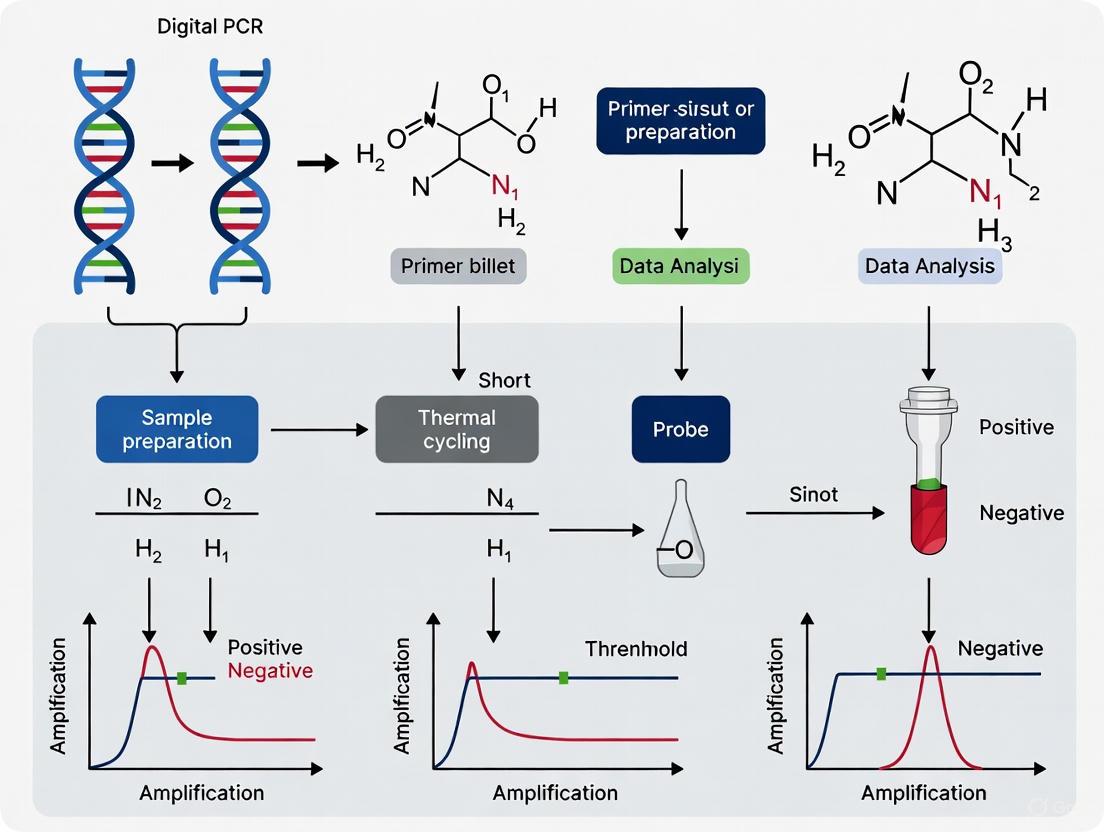
This article provides a comprehensive overview of digital PCR (dPCR) and its transformative role in detecting rare alleles for oncology research and diagnostics.
Digital PCR for Rare Allele Detection in Oncology: Principles, Applications, and Advanced Methodologies
Abstract
This article provides a comprehensive overview of digital PCR (dPCR) and its transformative role in detecting rare alleles for oncology research and diagnostics. We explore the foundational principles of dPCR, including its evolution from conventional PCR, core partitioning technology, and Poisson statistics for absolute quantification. The article details cutting-edge methodological applications in liquid biopsy, circulating tumor DNA (ctDNA) analysis, and multi-cancer detection, supported by recent clinical studies. Practical guidance on troubleshooting common experimental challenges and a comparative analysis of leading dPCR platforms are presented. Aimed at researchers, scientists, and drug development professionals, this review synthesizes technical knowledge with clinical applications to empower the development of sensitive, non-invasive cancer diagnostics and monitoring tools.
The Foundation of Digital PCR: From Basic Principles to Single-Molecule Sensitivity
The development of the polymerase chain reaction (PCR) stands as one of the most transformative advancements in modern molecular biology, revolutionizing everything from basic research to clinical diagnostics. This foundational technique, which allows for the exponential amplification of specific DNA sequences, has undergone remarkable evolution since its inception in 1983 [1] [2]. The journey from conventional PCR to the sophisticated digital PCR (dPCR) platforms available today represents a paradigm shift in nucleic acid quantification, particularly impacting fields requiring ultra-sensitive detection such as oncology research [3]. The evolution of PCR technology has been characterized by continuous innovation, beginning with the groundbreaking work of Kary Mullis, who conceptualized PCR while working at Cetus Corporation [2]. His insight to utilize temperature cycling with a DNA polymerase enabled researchers to amplify specific DNA sequences from minimal starting material—a capability that was previously unimaginable. This breakthrough fundamentally changed molecular biology, providing scientists with a powerful tool to detect, quantify, and manipulate genetic material with unprecedented precision and efficiency [1]. Within oncology research, the need for precise molecular tools to detect rare genetic mutations has driven much of the recent innovation in PCR technologies. The emergence of dPCR, with its ability to provide absolute quantification of nucleic acids without standard curves and its superior sensitivity for rare mutation detection, represents the current pinnacle of this evolutionary journey [4] [3]. This technical guide will explore the historical development, methodological principles, and practical applications of PCR technologies, with particular emphasis on the role of dPCR in advancing cancer research through rare allele detection.
Historical Development of PCR Technologies
The polymerase chain reaction was conceptualized and developed by Kary Mullis in 1983, with the first seminal publication appearing in Science in 1985 [1] [2]. Mullis's fundamental insight was that through repeated cycles of DNA denaturation, primer annealing, and polymerase-mediated extension, a specific DNA sequence could be amplified exponentially rather than linearly [5]. The original PCR process suffered from a significant limitation: the DNA polymerase had to be replenished after each denaturation cycle because the high temperatures (94°C) required to separate DNA strands would denature the enzyme [1]. This practical constraint made the early PCR process tedious and inefficient until the discovery and implementation of thermostable polymerases, specifically Taq polymerase isolated from Thermus aquaticus, a bacterium native to hot spring environments [1] [2]. This critical advancement eliminated the need to add fresh enzyme during each cycle, facilitating the automation of PCR through thermal cycling instruments [1].
The initial applications of PCR demonstrated its remarkable utility across various fields. Early work focused on detecting mutations in the HBB gene responsible for sickle cell anemia and analyzing alleles of the HLA-DQ locus for genotyping in transplantology and forensic science [1]. The technology quickly expanded into clinical genetics and microbiology for detecting viral and bacterial infections [1]. Another significant milestone was the development of multiplex PCR, which enabled the simultaneous amplification of multiple targets in a single reaction, dramatically increasing throughput and efficiency [1]. This approach was particularly valuable for detecting deletions in large genes such as DMD, responsible for Duchenne–Becker muscular dystrophy, and remains fundamental to many contemporary diagnostic applications [1].
The evolution of PCR continued with several critical modifications that expanded its applications:
- Reverse Transcription PCR (RT-PCR): Enabled the amplification of RNA sequences by first converting them to complementary DNA (cDNA), opening up gene expression analysis and viral RNA detection [1] [2].
- Real-time quantitative PCR (qPCR): Developed in the early 1990s, this innovation allowed researchers to monitor amplification progress in real-time using fluorescent detection systems, transforming PCR from a qualitative to a robust quantitative tool [1] [5].
- Digital PCR (dPCR): Represented the next major evolutionary leap by enabling absolute nucleic acid quantification without standard curves through limiting dilution and endpoint PCR [1] [3].
The historical progression of PCR technologies demonstrates a consistent trajectory toward greater sensitivity, precision, quantification capability, and application specificity, culminating in the powerful dPCR platforms used in contemporary research and clinical applications [1].
Technical Principles of PCR Generations
Conventional PCR
Conventional PCR, also known as end-point PCR, forms the foundation upon which all subsequent PCR technologies have been built. The core principle involves cyclic temperature variations that facilitate three essential steps: denaturation (separating DNA strands at high temperatures, typically 94-95°C), annealing (allowing primers to bind to complementary sequences at 50-65°C), and extension (synthesizing new DNA strands at 72°C) [5] [6]. This process relies on thermostable DNA polymerases, with Taq polymerase being the most widely used, to withstand the repeated high-temperature cycles [1] [2]. The products of conventional PCR are typically analyzed post-amplification using gel electrophoresis, which provides qualitative or semi-quantitative assessment of amplification success but lacks reliable quantification capabilities [5]. Despite its limitations in quantification, conventional PCR remains invaluable for applications such as genotyping, cloning, and mutation detection where presence or absence of a specific sequence is the primary concern [5].
The effectiveness of conventional PCR depends heavily on proper primer design, which follows specific parameters to ensure efficient and specific amplification. Optimal primers generally have a length of 18-30 bases, GC content of 40-60%, and melting temperature (Tm) of 50-60°C [7] [6]. Primer pairs should have closely matched Tm values (within 5°C) to ensure both primers anneal efficiently at the selected temperature [7]. Additionally, primers must be designed to avoid secondary structures such as hairpins, self-dimers, or heterodimers that can significantly reduce amplification efficiency [7] [6].
Quantitative Real-Time PCR (qPCR)
Quantitative real-time PCR (qPCR) represents a significant advancement over conventional PCR by enabling monitoring of amplification as it occurs rather than just endpoint analysis [1] [5]. This real-time detection is achieved through fluorescent signaling systems that correlate with DNA accumulation during each PCR cycle. The two primary detection chemistries are: (1) DNA-binding dyes like SYBR Green that intercalate with double-stranded DNA and fluoresce, and (2) sequence-specific probes such as TaqMan probes that utilize fluorescence resonance energy transfer (FRET) with reporter and quencher molecules [5] [8]. The fundamental quantitative parameter in qPCR is the cycle threshold (Ct), which represents the PCR cycle at which fluorescence exceeds a predetermined background threshold [5]. The Ct value is inversely proportional to the starting quantity of the target nucleic acid, enabling relative quantification when compared to standards of known concentration [9].
qPCR probe design requires additional considerations beyond basic primer design. Probes should have a Tm 5-10°C higher than the associated primers to ensure they anneal before the primers during each cycle [7]. For TaqMan probes, they should not contain a guanine base at the 5' end, as this can quench the fluorophore signal, and should be positioned as close to the corresponding primer as possible without overlapping [7]. Double-quenched probes, incorporating secondary internal quenchers such as ZEN or TAO, provide lower background fluorescence and are particularly beneficial for longer probes [7].
Digital PCR (dPCR)
Digital PCR represents the most significant technological evolution in PCR methodology, introducing a fundamentally different approach to quantification. Rather than relying on relative quantification against standard curves as in qPCR, dPCR provides absolute quantification of target nucleic acids [1] [3]. The core principle involves partitioning a PCR reaction into thousands to millions of individual reactions, such that each partition contains either zero, one, or a few target molecules [1]. After endpoint PCR amplification, each partition is analyzed for fluorescence, and the number of positive partitions is counted [1] [3]. The absolute quantity of the target sequence is then calculated using Poisson statistical analysis to determine the original concentration based on the ratio of positive to negative partitions [1].
This partitioning approach provides dPCR with several advantages over qPCR, including enhanced sensitivity for rare allele detection, greater precision at low target concentrations, and reduced susceptibility to PCR inhibition [4] [9]. dPCR platforms primarily fall into two categories: droplet-based dPCR (ddPCR), where the reaction is partitioned into water-in-oil emulsion droplets [1] [3], and chip-based dPCR (cdPCR), where the reaction is partitioned into microfabricated wells on a silicon chip [1]. Both approaches achieve the fundamental goal of limiting dilution but differ in their implementation and specific applications.
Table 1: Comparative Analysis of PCR Technologies
| Parameter | Conventional PCR | Quantitative PCR (qPCR) | Digital PCR (dPCR) |
|---|---|---|---|
| Quantification Capability | Qualitative/Semi-quantitative | Relative quantification | Absolute quantification |
| Detection Method | End-point (gel electrophoresis) | Real-time fluorescence | End-point fluorescence of partitions |
| Sensitivity | Moderate | High (capable of detecting rare targets) | Very high (detection as low as 0.1% mutant allele frequency) [4] |
| Dynamic Range | Limited | Wide (up to 7-8 log decades) | Moderate (up to 4-5 log decades) [9] |
| Precision at Low Concentrations | Low | Moderate | High (lower coefficient of variation) [9] |
| Dependence on Standards | No | Yes (requires standard curve) | No |
| Throughput | Low to moderate | High | Moderate to high |
| Primary Applications | Cloning, genotyping, mutation screening | Gene expression, viral load quantification | Rare mutation detection, liquid biopsy, copy number variation [3] |
Digital PCR in Oncology Research
Principles of Rare Allele Detection
The application of dPCR in oncology research has been particularly transformative for the detection of rare somatic mutations present in complex biological samples [4] [3]. The exceptional capability of dPCR to detect mutant allele frequencies as low as 0.1% makes it uniquely suited for identifying cancer-associated mutations in liquid biopsies, where circulating tumor DNA (ctDNA) typically represents a small fraction of total cell-free DNA (cfDNA) [4]. This sensitivity threshold is crucial for oncology applications, as early-stage cancers often release minimal ctDNA into circulation, and resistance mutations during targeted therapy typically emerge initially at very low frequencies [3].
The partitioning principle underlying dPCR provides a fundamental advantage for rare allele detection through two complementary mechanisms. First, by separating the total reaction into thousands of individual partitions, dPCR effectively enriches rare targets against a background of wild-type sequences, as each partition can be individually assessed for the presence of the mutant allele [4]. Second, the digital nature of the readout (positive versus negative) eliminates the quantitative ambiguity that can occur in qPCR when distinguishing very low levels of mutant signal from background noise [3]. This binary detection system, combined with appropriate statistical analysis, enables researchers to achieve confidence in detecting mutations that would be indistinguishable from technical artifacts using other methods [4] [3].
Applications in Liquid Biopsies
Liquid biopsy analysis represents one of the most significant clinical applications of dPCR in oncology [4] [3]. Liquid biopsies involve the isolation and analysis of circulating tumor DNA (ctDNA) from blood samples, providing a non-invasive alternative to traditional tissue biopsies [4]. The ctDNA fragments released from apoptotic and necrotic tumor cells are typically short (∼170 bp) and exist in very low concentrations, especially in early-stage disease or minimal residual disease settings [4] [3]. dPCR's exceptional sensitivity makes it ideally suited for detecting and quantifying these rare ctDNA molecules against the background of wild-type cfDNA from normal cells [4].
The applications of dPCR in liquid biopsy analysis include:
- Early cancer detection: Identifying oncogenic mutations in ctDNA from individuals with early-stage or asymptomatic cancers [3].
- Therapeutic monitoring: Tracking changes in mutation abundance during treatment to assess therapeutic response [4] [3].
- Resistance mutation detection: Identifying emerging mutations that confer resistance to targeted therapies, often when they are present only in minor subclones [3].
- Minimal residual disease (MRD) assessment: Detecting residual tumor DNA after curative-intent treatment to identify patients at risk of recurrence [3].
The quantitative precision of dPCR enables researchers not only to detect the presence of ctDNA but also to monitor dynamic changes in mutation abundance over time, providing valuable insights into tumor evolution and treatment response [4] [3].
Table 2: Key Mutations Detectable by dPCR in Oncology Research
| Gene/Mutation | Cancer Type | Clinical Significance | Detection Sensitivity |
|---|---|---|---|
| KRAS mutations | Colorectal, pancreatic, lung | Resistance to EGFR inhibitors, prognostic marker | ≤0.1% mutant allele frequency [3] |
| BRAF V600E | Melanoma, colorectal, thyroid | Predicts response to BRAF/MEK inhibitors | ≤0.1% mutant allele frequency [3] |
| EGFR T790M | Non-small cell lung cancer | Resistance mechanism to first-generation EGFR TKIs | ≤0.1% mutant allele frequency [3] |
| PIK3CA mutations | Breast, colorectal, other solid tumors | Potential predictor for PI3K pathway inhibitors | ≤0.1% mutant allele frequency [3] |
| JAK2 V617F | Myeloproliferative neoplasms | Diagnostic and therapeutic marker | ≤0.1% mutant allele frequency [4] |
Experimental Protocols for dPCR in Rare Mutation Detection
Sample Preparation and dPCR Workflow
The reliable detection of rare mutations using dPCR requires careful attention to sample preparation and workflow optimization. For liquid biopsy applications, the process begins with blood sample collection in tubes containing stabilizers to prevent cfDNA degradation, followed by plasma separation through centrifugation [4]. The cfDNA is then extracted from plasma using specialized kits designed for low-abundance nucleic acids, with typical yields of 5-50 ng/mL of plasma depending on tumor burden and disease stage [4]. The quality and quantity of extracted cfDNA should be assessed using sensitive fluorometric methods before proceeding to dPCR analysis [4].
The dPCR workflow for rare mutation detection involves several critical steps:
Reaction Mixture Preparation: The dPCR reaction typically includes a probe-based master mix (such as TaqMan chemistry), mutation-specific primers and probes, and the extracted cfDNA sample [4]. The reaction mixture should be prepared with precise pipetting to ensure accurate partitioning in subsequent steps.
Partitioning: Depending on the dPCR system, the reaction mixture is partitioned into either water-in-oil droplets (ddPCR) or microfabricated wells (cdPCR) [1] [4]. This step is critical for achieving the limiting dilution necessary for digital quantification.
Amplification: The partitioned reactions undergo endpoint PCR amplification using thermal cycling conditions optimized for the specific assay [4]. Standard cycling parameters typically include an initial activation step (95°C for 10 minutes), followed by 40-45 cycles of denaturation (94°C for 30 seconds) and annealing/extension (55-60°C for 60 seconds) [4].
Fluorescence Reading and Analysis: After amplification, each partition is analyzed for fluorescence using a droplet reader (ddPCR) or chip scanner (cdPCR) [1] [4]. The results are processed using Poisson statistics to determine the absolute concentration of both mutant and wild-type alleles in the original sample [4].
Assay Design and Optimization
The success of rare mutation detection using dPCR depends heavily on careful assay design and meticulous optimization. For mutation detection, the design typically involves allele-specific primers or probes that can distinguish between wild-type and mutant sequences with high specificity [4] [8]. Several strategies can enhance this discrimination:
- Competitive allele-specific dPCR: Uses wild-type blocking reagents to suppress amplification of wild-type sequences, thereby improving mutant detection sensitivity [4].
- TaqMan probe-based assays: Utilize dual-labeled probes with different fluorophores for wild-type and mutant alleles, enabling simultaneous detection in multiplex reactions [4] [8].
- Asymmetric primer ratios: Can be employed to favor amplification of the mutant allele when it is present in very low abundance relative to wild-type [4].
Assay validation should include testing against reference standards with known mutation frequencies to establish the limit of detection (LOD) and limit of quantification (LOQ) for each assay [4]. For clinical research applications, the LOD should ideally reach 0.1% mutant allele frequency or lower, with demonstrated reproducibility across multiple runs and operators [4].
Table 3: Essential Research Reagents for dPCR-Based Rare Mutation Detection
| Reagent Category | Specific Examples | Function in Workflow | Key Considerations |
|---|---|---|---|
| dPCR Master Mix | TaqMan dPCR Master Mix, QX200 ddPCR Supermix | Provides DNA polymerase, dNTPs, and optimized buffer for amplification | Should be validated for partitioning efficiency and compatible with probe chemistry |
| Assays | Absolute Q Liquid Biopsy dPCR Assays, Custom TaqMan Assays [4] | Sequence-specific detection of mutations | Pre-designed assays provide convenience; custom assays offer flexibility for novel targets |
| Partitioning Oil/Consumables | DG8 Cartridges, Droplet Generation Oil [4] | Creates individual reaction partitions | System-specific; critical for consistent partition formation |
| Reference Standards | Synthetic oligonucleotides, commercially available reference standards | Assay validation and quality control | Should span expected mutation frequencies (0.1%-5%) |
| DNA Extraction Kits | cfDNA-specific extraction kits | Isolation of high-quality DNA from liquid biopsy samples | Optimized for low-concentration, fragmented DNA typical of ctDNA |
Comparative Performance Data
Multiple studies have directly compared the performance of dPCR with established qPCR methods for detecting and quantifying nucleic acid targets. A 2024 study comparing qPCR and dPCR for detection of infectious bronchitis virus (IBV) genome demonstrated that while qPCR had a wider quantification range, dPCR exhibited higher sensitivity and improved precision, particularly in terms of repeatability and reproducibility of results [9]. The precision advantage of dPCR was most pronounced at low target concentrations, where qPCR typically shows higher coefficients of variation [9]. These findings have direct relevance to oncology applications, where detecting low-frequency mutations requires both sensitivity and reproducibility.
In the context of rare mutation detection, dPCR consistently demonstrates superior performance compared to qPCR. The partitioning approach enables dPCR to overcome the fundamental limitation of qPCR in distinguishing very rare mutant sequences from background wild-type DNA [4] [3]. Studies have shown that dPCR can reliably detect mutant alleles at frequencies as low as 0.1%, while qPCR typically achieves reliable detection only at frequencies of 1-5% depending on the specific mutation and background [4] [3]. This order-of-magnitude improvement in sensitivity makes dPCR particularly valuable for detecting minimal residual disease and emerging resistance mutations in oncology settings [3].
Another significant advantage of dPCR is its resistance to PCR inhibitors present in clinical samples. Because dPCR is an endpoint measurement rather than a kinetic measurement like qPCR, it is less affected by factors that reduce amplification efficiency but don't completely inhibit amplification [9]. This property makes dPCR more robust when analyzing challenging clinical samples such as liquid biopsies, which may contain various substances that interfere with PCR amplification [4] [9].
Diagram 1: Evolution of PCR Technologies showing the progression from conventional to digital PCR with key innovations at each stage.
Diagram 2: Digital PCR Workflow for Rare Mutation Detection illustrating the key steps in liquid biopsy analysis.
The evolution of PCR technology from its conventional format to sophisticated dPCR platforms has fundamentally transformed molecular biology research, with particularly profound implications for oncology. The unparalleled sensitivity and precision of dPCR in detecting rare mutations has enabled new approaches to cancer detection, monitoring, and treatment selection, especially through liquid biopsy applications [4] [3]. As these technologies continue to evolve, several emerging trends are likely to shape their future development and application.
Integration with downstream analysis represents a significant frontier for dPCR technology. While current dPCR platforms primarily focus on targeted detection of known mutations, there is growing interest in combining the quantitative power of dPCR with next-generation sequencing (NGS) [1]. This hybrid approach could use dPCR to precisely quantify total tumor DNA burden while using NGS to characterize mutation spectrum and heterogeneity, providing a more comprehensive molecular profile from limited liquid biopsy samples [1] [3]. Additionally, single-cell dPCR applications are emerging as powerful tools for understanding tumor heterogeneity at the cellular level, enabling researchers to correlate genetic information with individual cell characteristics [1].
The miniaturization and automation of dPCR systems will likely continue, making these technologies more accessible and suitable for clinical settings [1]. Microfluidics-based platforms that integrate sample preparation, partitioning, amplification, and detection into self-contained systems are already in development, promising simplified workflows with minimal hands-on time [1]. These integrated systems could eventually enable point-of-care applications for cancer monitoring, potentially transforming how cancer patients are managed during treatment and follow-up [1].
In conclusion, the evolution from conventional PCR to digital PCR represents a remarkable journey of technological innovation that has consistently expanded the boundaries of what is possible in molecular analysis. For oncology researchers and drug development professionals, dPCR provides an indispensable tool for detecting and quantifying rare genetic alterations that drive cancer progression and treatment resistance. As these technologies continue to advance, they will undoubtedly uncover new biological insights and enable increasingly sophisticated approaches to cancer diagnosis and management, ultimately contributing to more personalized and effective cancer care.
Digital PCR (dPCR) represents a transformative methodology for the absolute quantification of nucleic acids, achieving unparalleled precision by leveraging sample partitioning, end-point amplification, and binary readout. This technique eliminates the reliance on standard curves, a significant limitation of quantitative real-time PCR (qPCR), thereby enabling the detection and quantification of rare genetic mutations with high confidence. Within oncology research, this capability is paramount for applications such as liquid biopsy analysis and monitoring of minimal residual disease. This whitepaper delineates the core principles of dPCR, details an experimental protocol for rare allele detection, and synthesizes key performance data, providing researchers and drug development professionals with a foundational guide to this powerful technology.
The fundamental power of digital PCR stems from a paradigm shift from analog measurement to digital enumeration. The core process can be deconstructed into three interdependent principles: partitioning, end-point amplification, and binary readout.
- Partitioning: A PCR reaction mixture containing the nucleic acid sample is randomly distributed into thousands to millions of discrete, independent partitions [10] [11]. Each partition acts as an individual microreactor. This step is critical as it effectively dilutes the template molecules so that many partitions contain either zero or a small number of target sequences [11].
- End-Point Amplification: Each partition undergoes a conventional PCR amplification to its endpoint, or plateau phase [10]. Unlike qPCR, which monitors fluorescence in real-time during the exponential phase, dPCR only measures the final fluorescent signal after all cycles are complete [10].
- Binary Readout: Following amplification, each partition is analyzed for fluorescence. Partitions that contain the target sequence fluoresce (a positive readout, or "1"), while those without the target do not (a negative readout, or "0") [11]. This binary outcome converts a complex analog signal into a simple digital count [10].
The proportion of positive to total partitions is then used to absolutely quantify the target concentration using Poisson statistics, without the need for a standard curve [10] [11]. For oncology research, this principle is particularly powerful. Partitioning effectively concentrates rare mutant alleles (e.g., circulating tumor DNA) within their isolated microreactors, reducing competition from abundant wild-type DNA and enabling the detection of mutations present at frequencies as low as 0.1% [4].
Experimental Protocol: Drop-Off Assay for KRAS Mutation Detection
The following detailed protocol exemplifies the application of dPCR principles for detecting multiple proximal mutations in a defined genomic interval, a common requirement in oncology biomarker analysis.
Assay Definition and Workflow
A drop-off assay uses two probes to detect a range of mutations within a hotspot (e.g., KRAS G12 in colorectal cancer) in a single reaction [12].
- Wild-Type (Drop-off) Probe: A probe complementary to the wild-type sequence spanning the mutation hotspot, labeled with a fluorophore (e.g., Cy5).
- Reference Probe: A probe binding to a stable, adjacent region not affected by the mutations, labeled with a different fluorophore (e.g., FAM).
In a wild-type template, both probes bind, yielding a double-positive signal. If a mutation (deletion, insertion, substitution) is present in the hotspot, the binding of the wild-type probe is destabilized, and it "drops off," resulting in a signal only from the reference probe [12].
The workflow for this experiment is summarized in the following diagram:
Detailed Materials and Methods
Research Reagent Solutions
| Item | Function/Benefit in the Assay |
|---|---|
| dPCR System | Equipment capable of generating thousands of partitions and detecting at least two fluorescence channels (e.g., FAM, Cy5) [12]. |
| PCR MasterMix | Contains DNA polymerase, dNTPs, reaction buffer, and MgCl₂ [12]. |
| Hydrolysis Probes | FAM-labeled reference probe and Cy5-labeled wild-type (drop-off) probe [12]. |
| Sequence-Specific Primers | Amplify a region of the KRAS gene containing the G12 hotspot. The amplicon should be <120 bp for optimal analysis of fragmented ctDNA [12]. |
| Restriction Enzyme (e.g., Tru1L) | Fragments high molecular weight DNA to ensure optimal partitioning and population separability. Must be verified not to cut within the amplicon [12]. |
Step-by-Step Procedure
PCR Mix Preparation: In a nuclease-free environment, combine the following reagents for a single reaction [12]:
- DNA Template (e.g., ctDNA from liquid biopsy): Variable volume to reach desired input.
- dPCR MasterMix: As per manufacturer's instructions.
- Forward and Reverse Primers: Optimized concentrations.
- FAM-labeled Reference Probe: Optimized concentration.
- Cy5-labeled Wild-Type Probe: Optimized concentration.
- Nuclease-free Water: To final volume.
- Always prepare a master mix for n+1 samples to account for pipetting loss.
Partitioning and Amplification:
- Load the reaction mix into a dPCR nanoplate or chip according to the manufacturer's protocol (e.g., QIAcuity, Naica System) [11] [12]. The instrument will automatically partition the sample.
- Seal the plate and perform end-point PCR on a thermal cycler. Standard cycling conditions are used, typically consisting of an initial denaturation, followed by 40-50 cycles of denaturation, annealing, and extension [12].
Data Acquisition:
Analysis and Quality Control:
- Threshold Setting: The analysis software (e.g., Crystal Miner) automatically or manually sets fluorescence thresholds for each channel to distinguish positive from negative partitions [12].
- Population Identification: The data is displayed on a 2D scatter plot, revealing three key populations [12]:
- Double Positive (FAM+/Cy5+): Partitions containing only wild-type DNA.
- FAM Positive Only (FAM+/Cy5-): Partitions containing mutant DNA (the "drop-off" population).
- Double Negative (FAM-/Cy5-): Partitions with no target DNA.
- Quality Control: Ensure a high total number of partitions (e.g., >20,000) to reduce measurement uncertainty [12].
Data Analysis and Performance Metrics
Absolute Quantification via Poisson Statistics
The binary readout enables absolute quantification without a standard curve. The average number of target molecules per partition (λ) is calculated using the Poisson distribution formula, which accounts for the probability that a partition contains zero, one, or more target molecules [10] [11].
The concentration of the target in the reaction is derived as follows [11]: [ \lambda = -ln(1 - \frac{p}{n}) ] [ \text{Concentration (copies/µL)} = \frac{\lambda}{\text{Partition Volume (µL)}} ] Where ( p ) is the number of positive partitions and ( n ) is the total number of valid partitions.
For the drop-off assay, the concentrations of mutant and wild-type DNA are calculated separately [12]:
- Mutant Concentration (( C{mut} )) = ( - \frac{1}{v} \times \ln(1 - \frac{P{10}}{P{10} + P{00}}) )
- Wild-Type Concentration (( C{wt} )) = ( - \frac{1}{v} \times \ln(1 - \frac{P{11}}{P{11} + P{00} + P_{10}}) )
- Mutant Allelic Fraction (MAF) = ( \frac{C{mut}}{C{wt} + C_{mut}} )
Where ( v ) is the partition volume, ( P{11} ) is the double-positive count, ( P{10} ) is the FAM-positive-only count, and ( P_{00} ) is the double-negative count.
dPCR Performance and Comparison with qPCR
The following table summarizes key quantitative performance metrics for dPCR, particularly in the context of rare allele detection.
dPCR Performance and Comparative Metrics
| Parameter | Description/Value in dPCR | Implication for Rare Allele Detection |
|---|---|---|
| Detection Sensitivity | Can detect Mutant Allele Frequencies (MAF) as low as 0.1% [4]. | Essential for identifying rare mutant sequences in a high background of wild-type DNA, as in liquid biopsies. |
| Limit of Blank (LOB) | Must be determined empirically with ≥30 no-mutant control replicates [12]. | Critical for establishing a statistically valid cutoff to distinguish true low-level mutations from false positives. |
| Optimal Precision (λ) | Maximal confidence in quantification at λ = 1.6 (≈20% positive partitions) [10]. | Guides optimal sample dilution to achieve the most precise measurement of target concentration. |
| Dynamic Range | Narrower than qPCR due to a finite number of partitions [11]. | Requires careful experimental design and potential sample dilution for high-concentration targets. |
| Tolerance to Inhibitors | High, due to sample partitioning [10] [11]. | Enables robust analysis of complex clinical samples (e.g., FFPE, blood) without extensive purification. |
The statistical logic for determining the presence of a rare mutant is illustrated below:
The core principles of partitioning, end-point amplification, and binary readout establish digital PCR as a uniquely powerful tool for absolute nucleic acid quantification. By converting a continuous measurement problem into a discrete counting exercise, dPCR achieves a level of precision and sensitivity that is ideally suited for the demanding requirements of modern oncology research. The ability to reliably detect and quantify rare mutant alleles, as demonstrated in the drop-off assay protocol, opens avenues for non-invasive cancer monitoring, therapy response assessment, and early detection. As dPCR technologies continue to evolve, their integration into translational research and clinical development pipelines is poised to deepen, driven by the unambiguous data generated from its foundational digital logic.
The Role of Poisson Statistics in Achieving Absolute Quantification
Digital PCR (dPCR) represents a paradigm shift in nucleic acid quantification by enabling absolute measurement of target molecules without requiring standard curves. This capability is fundamentally grounded in Poisson statistics, which models the random distribution of DNA molecules across thousands of partitions. In oncology research, this statistical framework provides the mathematical foundation for detecting rare cancer-associated mutations in liquid biopsies, monitoring minimal residual disease, and identifying emerging treatment-resistance mechanisms long before clinical symptom manifestation. This technical guide explores the mathematical principles, experimental validation, and practical implementation of Poisson statistics in dPCR systems, with specific application to rare allele detection in cancer research.
Digital PCR (dPCR) constitutes the third generation of PCR technology, succeeding conventional PCR and real-time quantitative PCR (qPCR) [13]. Unlike qPCR, which relies on relative quantification against reference standards, dPCR provides absolute quantification of nucleic acid targets through a simple yet powerful principle: sample partitioning [14]. The technique works by dividing a PCR reaction mixture into thousands to millions of nanoliter-scale partitions so that each compartment contains zero, one, or a few target molecules [15]. Following endpoint amplification, the proportion of positive partitions is counted, and this binary data is processed using Poisson distribution statistics to calculate the exact target concentration in the original sample [14] [13].
This calibration-free approach presents significant advantages for rare event detection, particularly in oncology research where minute quantities of mutant DNA must be identified within a vast background of wild-type sequences [15]. The technology's exceptional sensitivity allows researchers to detect variant alleles at frequencies below 0.1%, enabling applications such as liquid biopsy analysis, tumor heterogeneity studies, and monitoring treatment response through circulating tumor DNA (ctDNA) [16]. As research into cancer diagnostics moves toward greater precision, dPCR is emerging as a pivotal tool that bridges research and routine clinical care by capturing early molecular changes sometimes at the stem cell level [15].
Mathematical Foundation of Poisson Statistics
Principles of Poisson Distribution in dPCR
The Poisson distribution is a probability model that describes the likelihood of a given number of events occurring in a fixed interval of time or space, provided these events happen with a known constant rate and independently of the time since the last event. In dPCR, this statistical framework applies directly to the random distribution of DNA molecules across partitions [14]. When a sample is partitioned into numerous individual reactions, nucleic acid molecules distribute randomly according to Poisson statistics, meaning some partitions contain zero molecules, some contain one, and some may contain multiple molecules [13].
The fundamental Poisson equation used in dPCR is:
λ = -ln(1 - p)
Where:
- λ represents the average number of target molecules per partition
- p is the proportion of positive partitions (those containing at least one target molecule)
- ln is the natural logarithm
This calculation provides the average concentration of target molecules per partition, which can then be extrapolated to determine the absolute concentration in the original sample based on partition volume and sample dilution factors [14]. The accuracy of this quantification depends on having a sufficient number of partitions and ensuring appropriate sample dilution to avoid saturation effects where too many partitions contain multiple molecules [17].
Key Assumptions and Limitations
The application of Poisson statistics in dPCR relies on several critical assumptions that researchers must recognize for accurate data interpretation. First, the random distribution of target molecules across all partitions is essential; any systematic bias in distribution violates core Poisson assumptions [13]. Second, the reaction must demonstrate efficient amplification where partitions containing at least one target molecule reliably produce a positive signal [17]. Third, the sample must be properly diluted to prevent overloading partitions, as excessive target concentration leads to multiple molecules per partition and compromises accurate counting [14].
The dynamic range of dPCR is directly dependent on the total number of partitions generated, with more partitions enabling more precise quantification across a wider concentration range [14]. This relationship means that systems generating higher partition counts (typically droplet-based systems with millions of partitions) generally provide superior sensitivity and precision compared to chip-based systems with fewer partitions [13]. When these assumptions are met, Poisson statistics enables dPCR to achieve precise absolute quantification, with studies demonstrating high accuracy, sensitivity, and robustness across various experimental conditions [17].
Experimental Validation of Poisson-Based Quantification
Systematic Validation Approaches
Robust validation of dPCR systems requires multifactorial experimental designs that test the technology's performance across various parameters. A comprehensive validation study of the Bio-Rad QX200 Droplet Digital PCR system employed such an approach, examining factors including operator variability, primer/probe systems, restriction enzyme addition, and master mix composition [17]. The research developed a specific validation and statistical modeling approach for dPCR systems that reflects the Poisson process governing the measurement mechanism.
The findings demonstrated that most experimental factors – including different operators, primer/probe systems, and addition of restriction enzymes – had no relevant effect on DNA copy number quantification, confirming system robustness [17]. However, two critical factors emerged as significantly impacting quantification accuracy: the choice of ddPCR master mix and the droplet volume used for concentration calculations. These results highlight that while Poisson statistics provide the mathematical foundation for dPCR, analytical performance remains dependent on reaction chemistry and precise volume measurements.
Performance Metrics in Rare Allele Detection
Table 1: Validation Metrics for Poisson-Based Quantification in Rare Allele Detection
| Performance Metric | Experimental Result | Impact on Rare Allele Detection |
|---|---|---|
| Accuracy/Trueness | Confirmed with appropriate master mix across working range | Ensures reliable mutation quantification |
| Precision | High reproducibility across technical replicates | Enables confident tracking of minimal residual disease |
| Sensitivity | Detection of variants at 0.1% allelic frequency | Identifies rare cancer mutations in background of wild-type DNA |
| Robustness | Unaffected by operator, primer/probe system, or restriction enzymes | Consistent performance across laboratories and experimental conditions |
| Dynamic Range | Linear response from <10 to >100,000 copies | Accommodates varying tumor DNA concentrations in clinical samples |
The exceptional sensitivity of Poisson-based dPCR quantification enables detection of rare mutant alleles at frequencies as low as 0.1% in both synthetic reference standards and clinical samples [16]. In one study utilizing urine-derived circulating free DNA (cfDNA), researchers successfully detected NRAS and EGFR gene variants at different allelic frequencies with high concordance between observed and expected variant frequencies [16]. This performance makes dPCR particularly valuable for liquid biopsy applications in oncology, where rare tumor-derived DNA fragments must be identified within a predominance of wild-type DNA from normal cells.
Application in Oncology Research: Rare Allele Detection
Liquid Biopsy and Minimal Residual Disease Monitoring
The application of Poisson-based dPCR quantification has revolutionized liquid biopsy approaches in oncology by enabling highly sensitive detection of circulating tumor DNA (ctDNA). In longitudinal monitoring studies, dPCR has demonstrated the capability to detect molecular recurrence months before radiologic relapse in solid tumors [15]. For example, in breast cancer, emergent ESR1 mutations can be tracked during endocrine therapy, where residual ctDNA after curative treatment has the potential to predict early relapse [15]. Similarly, in chronic myeloid leukemia (CML), dPCR has been widely explored for quantifying BCR-ABL1 transcripts for analyzing response to therapies, minimal residual disease (MRD) detection, and identifying potential candidates for treatment discontinuation [15].
The absolute quantification capability provided by Poisson statistics allows researchers to plot true molecular trajectories rather than relying on isolated snapshots [15]. As noted by Dr. Mayur Parihar of Tata Medical Center: "When we see a clear upward trend in the transcript, it can indicate an impending relapse, which helps us intervene much earlier, before overt disease returns" [15]. This precise tracking is particularly valuable for detecting subtle molecular changes that arise at the stem-cell level, where malignant clones first re-emerge before clinical manifestations become apparent [15].
Technical Workflow for Rare Mutation Detection
Table 2: Essential Research Reagent Solutions for dPCR Rare Allele Detection
| Reagent/Component | Function | Example Products |
|---|---|---|
| ddPCR Master Mix | Provides optimized reagents for amplification in partitions | Bio-Rad ddPCR Supermix for Probes |
| Mutation-Specific Probes | Fluorescently-labeled probes detect wild-type vs. mutant alleles | FAM-labeled mutant probes, HEX-labeled wild-type probes |
| Partitioning Oil/Surfactant | Generates stable water-in-oil emulsion for droplet formation | Bio-Rad Droplet Generation Oil |
| Reference Standards | Validate assay performance with known variant allele frequencies | Horizon Discovery Mimix Multiplex cfDNA Reference Standards |
| cfDNA Extraction Kits | Isolate high-quality circulating DNA from liquid biopsies | Omega Bio-tek Mag-Bind cfDNA Kit |
| Sample Preservation | Maintain nucleic acid integrity in liquid biopsies | DNA Genotek Colli-Pee UAS preservative |
The experimental workflow for rare variant detection begins with sample preservation to maintain nucleic acid integrity, particularly crucial for liquid biopsies like urine or blood [16]. Following cfDNA extraction using specialized kits optimized for fragmented DNA, the target region is amplified using mutation-specific primers and probes in a ddPCR reaction [16]. The reaction mixture is partitioned into thousands of droplets, amplified to endpoint, and then analyzed using a droplet reader that counts positive and negative partitions [13]. The resulting binary data is processed through Poisson algorithms to determine the absolute concentration of mutant alleles in the original sample, enabling quantification of variant allele frequencies as low as 0.1% [16].
Advanced Applications and Future Directions
The statistical power of Poisson-based dPCR quantification continues to expand with technological advancements. Newer multiplexing strategies in dPCR, including multi-channel readouts and melt-curve-based target discrimination, address the traditional limitation of detecting only one target per color [15]. This allows several clinically relevant variants to be tracked in the same reaction from the same small sample, enhancing the efficiency and information content of rare allele detection assays [15]. Additionally, 3D imaging and analysis techniques have been developed to assay larger numbers of droplets in shorter timeframes, further improving the statistical robustness of Poisson-based quantification [13].
Future applications in oncology research include refining treatment-free remission strategies in leukemia by achieving more sensitive assessment of deep molecular response [15]. The technology also shows promise for prenatal diagnosis through detection of aneuploidy or inherited mutations, pathogen identification via detection of virus-specific genes, and monitoring of antibiotic-resistance genes in bacteria [13]. As dPCR platforms continue to evolve, the fundamental application of Poisson statistics remains central to their ability to provide absolute quantification across these diverse applications.
Poisson statistics provides the mathematical foundation that enables digital PCR to achieve absolute quantification of nucleic acid targets without external calibration. This statistical approach, combined with microfluidic partitioning technologies, allows researchers to detect and quantify rare genetic mutations with unprecedented sensitivity – a capability that has transformed oncology research, particularly in liquid biopsy applications and minimal residual disease monitoring. As the technology continues to evolve with improved multiplexing capabilities and higher throughput systems, Poisson-based quantification will remain essential for extracting precise molecular information from complex biological samples, advancing both research and clinical applications in precision oncology.
Droplet Digital PCR (ddPCR) vs. Microchamber-Based dPCR
Digital PCR (dPCR) represents a transformative approach in molecular quantification, enabling the absolute measurement of nucleic acids without the need for standard curves. This third-generation PCR technology operates by partitioning a sample into thousands of individual reactions, each acting as a discrete binary event—either positive or negative for the target nucleic acid [18] [19]. The precise concentration of the target is then statistically calculated using Poisson distribution models [20] [19]. In the field of oncology research, particularly for rare allele detection, dPCR has emerged as a technology of choice due to its exceptional sensitivity and precision [4]. The ability to detect very low fractions of mutant targets in a background of abundant wild-type DNA makes it indispensable for applications such as liquid biopsy analysis, where researchers can identify and track oncogenic mutations through non-invasive means [4] [21].
The fundamental principle underlying dPCR's power for rare mutation detection lies in its partitioning process. By effectively enriching low-level targets through physical separation of the sample, dPCR can detect mutation allele frequencies (MAFs) as low as 0.1% or even lower, significantly surpassing the sensitivity of conventional quantitative PCR methods [4] [19]. This capability is particularly crucial for monitoring minimal residual disease, assessing therapeutic response, and detecting emerging resistance mutations in cancer patients [4]. As liquid biopsy approaches gain traction in clinical research, the technological differences between dPCR platforms become increasingly relevant for researchers seeking to optimize their analytical workflows for sensitivity, reproducibility, and practical implementation in drug development pipelines.
Fundamental Technological Principles
Core dPCR Mechanism and Poisson Statistics
The underlying principle of digital PCR centers on sample partitioning and statistical analysis. In dPCR, the PCR reaction mixture is distributed across thousands to millions of individual partitions, ideally containing zero, one, or a few target molecules [19]. Following end-point PCR amplification, each partition is analyzed for fluorescence signals indicating the presence (positive) or absence (negative) of the target sequence [18]. The absolute quantification of target molecules is achieved through Poisson statistical modeling, which accounts for the random distribution of molecules across partitions [20]. The Poisson distribution model becomes increasingly valid with higher numbers of microreactions, as stated by the "Law of Large Numbers" [20]. This statistical framework enables researchers to achieve high confidence in quantification, enhanced sensitivity, and better representation of the original sample composition [20].
The accuracy of Poisson-based quantification depends heavily on several experimental parameters. According to the dMIQE (Minimum Information for Publication of Quantitative Digital PCR Experiments) guidelines, having sufficient microreactions is critical for minimizing statistical uncertainty [20]. Modeling of 95% confidence limits demonstrates drastic improvement in relative uncertainty at the 10,000 microreaction point, with diminishing returns beyond this threshold [20]. Additionally, consistent partition volume is essential for accurate quantification, as deviations can introduce biases in molecule distribution and compromise Poisson statistical assumptions [20]. The requirement for clear discrimination between positive and negative reactions is equally important, as ambiguous classifications can lead to false positives or negatives, particularly problematic in rare mutation detection where signal-to-noise ratios are challenging [20].
Partitioning Methodologies: Droplet vs. Microchamber Systems
The two primary dPCR platforms differ fundamentally in their partitioning mechanisms. Droplet Digital PCR (ddPCR) employs water-oil emulsion technology to create nanoliter-sized droplets, typically generating 20,000 or more partitions per sample [18]. In contrast, microchamber-based dPCR (also called chip-based dPCR) distributes the sample across a fixed array of micro-wells or nanopores, with systems typically containing approximately 20,000 fixed partitions [18]. This fundamental distinction in partitioning approach creates cascading differences in workflow, performance characteristics, and practical application.
The partitioning mechanism directly influences several key technical parameters. Droplet-based systems generally offer higher partition numbers; for instance, the RainDrop system can generate 1,000,000 to 10,000,000 droplets per reaction [22], while the QX200 system from Bio-Rad creates approximately 20,000 droplets [22]. Microchamber systems like the QuantStudio Absolute Q utilize microfluidic array plate (MAP) technology with fixed partitioning [4], and the OpenArray system used in QuantStudio 12k platforms contains 3,072 partitions [22]. The volume of individual partitions also varies significantly, with droplet systems typically creating smaller nanoliter-sized partitions compared to the larger volumes in some chip-based systems [22]. These differences in partition number and volume directly impact the dynamic range, sensitivity, and DNA input requirements for each platform.
Table 1: Fundamental Characteristics of dPCR Partitioning Methods
| Parameter | Droplet Digital PCR (ddPCR) | Microchamber-Based dPCR |
|---|---|---|
| Partitioning Mechanism | Water-oil emulsion droplets [18] | Fixed array or nanoplate [18] |
| Typical Partition Numbers | 20,000 (QX200) [22] to 10,000,000 (RainDrop) [22] | 3,072 (OpenArray) [22] to 20,000 (Absolute Q) [4] |
| Partition Volume | Nanoliter-sized [18] | Typically larger volumes; ~33 nL for OpenArray [22] |
| Partition Uniformity | Requires volume standardization [22] | Fixed, consistent volumes [20] |
| Statistical Principle | Poisson distribution with correction [19] | Poisson distribution [20] |
Technical Comparison of ddPCR and Microchamber dPCR
Performance Metrics and Analytical Sensitivity
Direct comparisons of ddPCR and microchamber dPCR platforms reveal nuanced performance differences. Both technologies demonstrate excellent capabilities for rare allele detection, with studies showing comparable performance in sensitivity and precision for most applications [23]. A 2025 comparative study evaluating the QX200 ddPCR system and QIAcuity One nanoplate dPCR system found both platforms demonstrated similar detection and quantification limits, with high precision across most analyses [23]. The limit of detection (LOD) for ddPCR was approximately 0.17 copies/μL input, while the nanoplate dPCR system showed an LOD of approximately 0.39 copies/μL input [23]. Both systems exhibited high accuracy in quantifying synthetic oligonucleotides, with adjusted R² values of 0.99 for ddPCR and 0.98 for nanoplate dPCR [23].
The sensitivity for rare mutation detection represents a critical performance metric for oncology applications. The Applied Biosystems QuantStudio Absolute Q microchamber system can detect rare targets with mutation allele frequencies as low as 0.1% [4]. Similarly, ddPCR platforms have demonstrated sensitivity of 0.10% for detecting BRAF V600E and KRAS G12D mutations in circulating tumor DNA [21]. This comparable sensitivity highlights that both technologies are capable of meeting the demanding requirements for liquid biopsy applications in cancer research. However, factors beyond raw sensitivity, including workflow efficiency, multiplexing capability, and compatibility with regulated environments, often influence platform selection for specific research contexts [18].
Practical Workflow Considerations
Workflow efficiency and practical implementation differ significantly between droplet and microchamber systems. ddPCR workflows typically involve multiple instruments and manual steps, with total hands-on time extending to 6-8 hours for complete processing [18]. The requirement for droplet generation, thermal cycling, and droplet reading across different instruments creates opportunities for variability and technical error. In contrast, microchamber-based systems like the QuantStudio Absolute Q offer integrated automated workflows with minimal hands-on time, generating results in approximately 90 minutes [4] [18]. This streamlined "sample-in, results-out" process significantly reduces hands-on time and minimizes potential for human error [18].
The workflow differences extend to data analysis and interpretation. Both technologies require clear discrimination between positive and negative partitions, but the methods for establishing thresholds vary [20]. Microchamber systems typically use imaging-based detection with software-based thresholding, while droplet systems employ flow-based detection similar to cytometry [24]. Multiplexing capabilities also differ, with some microchamber systems offering superior multiplexing efficiency, allowing simultaneous measurement of multiple critical quality attributes in a single run [18]. This enhanced multiplexing capability conserves precious samples, reduces processing time, and decreases reagent consumption—significant advantages in resource-intensive oncology research and drug development.
Table 2: Performance and Workflow Comparison of dPCR Platforms
| Parameter | Droplet Digital PCR (ddPCR) | Microchamber-Based dPCR |
|---|---|---|
| Typical Workflow Time | 6-8 hours [18] | <90 minutes [4] |
| Hands-on Time | Extensive [18] | Minimal [18] |
| Mutation Detection Sensitivity | 0.10% MAF [21] | 0.1% MAF [4] |
| Limit of Detection | 0.17 copies/μL [23] | 0.39 copies/μL [23] |
| Multiplexing Capability | Limited to moderate (up to 12 targets in newer models) [18] | Available in 4-12 targets [18] |
| Automation Level | Multiple steps and instruments [18] | Integrated automated system [18] |
| Risk of Contamination | Higher due to multiple transfers [18] | Lower with closed systems [18] |
Experimental Design and Protocols for Rare Mutation Detection
Assay Design Considerations
The detection of rare mutations in oncology research requires meticulous assay design to maximize specificity and sensitivity. A standard approach utilizes two different hydrolysis probes (TaqMan) with a single set of primers amplifying the region of interest [24]. One probe targets the wild-type sequence, while the other targets the mutant allele, each labeled with distinct fluorophores compatible with the dPCR system's detection capabilities [24]. For the Naica system and Sapphire chip, recommended final concentrations are 500 nM for primers and 250 nM for each probe in a 25 μL total reaction volume [24]. This dual-probe strategy enables simultaneous quantification of both wild-type and mutant sequences, allowing precise calculation of mutation allele frequency.
Proper DNA input calculation is critical for rare mutation detection sensitivity. For human genomic DNA, the conversion formula: Number of copies in reaction volume = mass of DNA in reaction volume (in ng)/0.003 accounts for the approximately 3 pg mass per haploid genome [24]. The theoretical limit of detection with 95% confidence level depends on both the system's sensitivity and the total target concentration in the sample. For example, with 10 ng of human genomic DNA input and a system with 0.2 copies/μL theoretical LOD, the detectable mutated allelic fraction reaches approximately 0.15% [24]. This mathematical relationship enables researchers to optimize DNA input based on their desired sensitivity threshold, a crucial consideration when analyzing circulating tumor DNA where mutant fractions may be extremely low.
Step-by-Step Experimental Protocol
The following protocol for EGFR T790M mutation detection exemplifies a standardized approach for rare allele quantification in oncology research:
PCR Mix Preparation:
- Prepare master mix containing: 1X PCR mastermix, manufacturer-recommended reference dye concentration, 500 nM forward and reverse primers, 250 nM EGFR T790WT probe (FAM-labeled), and 250 nM EGFR T790M probe (Cy3-labeled) [24]
- Add human genomic DNA template (optimized concentration, typically 10-20 ng total)
- Adjust volume to 25 μL with nuclease-free water
- Include necessary controls: non-template control (NTC), monocolor controls for each probe to correct fluorescence spillover [24]
Partitioning and Thermal Cycling:
- Load PCR mix into appropriate partitioning device following manufacturer instructions
- For the Naica System using Sapphire chips: 25 μL total volume [24]
- Thermal cycling conditions: initial denaturation at 95°C for 10 minutes, followed by 45 cycles of 95°C for 30 seconds and 62°C for 15 seconds [24]
Data Acquisition and Analysis:
- Acquire partition fluorescence data using platform-appropriate method (imaging for chip-based systems, droplet reading for ddPCR) [24]
- Apply compensation matrix for multicolor experiments to correct fluorescence spillover [24]
- Analyze using 2D scatter plots to distinguish wild-type, mutant, and negative partitions [24]
- Verify quality controls: NTC with minimal positive partitions, sufficient total analyzed partitions (typically >10,000 for rare mutation detection) [24]
Quality Control and Validation
Rigorous quality control measures are essential for reliable rare mutation detection. The dMIQE guidelines provide a comprehensive framework for ensuring dPCR experiment quality and reproducibility [20]. Key quality considerations include clear discrimination between positive and negative partitions, with instruments requiring reliable and adjustable thresholding capabilities to account for possible sub-optimal amplification efficiencies [20]. Additionally, verification of partition uniformity and number is critical, as deviations can introduce quantification errors [20]. For multicolor experiments, proper compensation controls are necessary to correct for fluorescence spillover between channels, which could otherwise lead to misinterpretation of results [24].
Validation of rare mutation assays should include determination of limit of detection (LOD) and limit of quantification (LOQ) using well-characterized reference materials. A 2025 study demonstrated that LOQ determination requires appropriate model fitting, with a 3rd degree polynomial model providing the best fit for both ddPCR and nanoplate dPCR platforms [23]. For the nanoplate system, LOQ was determined at 1.35 copies/μL input (54 copies/reaction), while ddPCR showed LOQ at 4.26 copies/μL input (85.2 copies/reaction) [23]. These validation parameters ensure that rare mutation detection assays provide clinically relevant sensitivity for monitoring tumor dynamics in cancer research.
Applications in Oncology Research
Liquid Biopsy and Circulating Tumor DNA Analysis
Liquid biopsy applications represent a transformative use case for dPCR technologies in oncology research. dPCR enables precise quantification of circulating tumor DNA (ctDNA) from liquid biopsies, facilitating non-invasive cancer detection, therapeutic response monitoring, residual disease quantification, and tracking of emerging therapy resistance [4]. The exceptional sensitivity of dPCR makes it ideally suited for ctDNA studies, as ctDNA fragments are typically short and present in very low concentrations amidst abundant wild-type DNA [4]. The Absolute Q Liquid Biopsy dPCR assays demonstrate the clinical utility of this approach, enabling reproducible, specific detection of known somatic mutations with sensitivity down to 0.1% variant allele frequency in cancer-relevant genes [4].
The quantification of rare mutations in liquid biopsies highlights the technological advantages of dPCR platforms. A study detecting cancer mutations directly from circulating cell-free DNA demonstrated a sensitivity of 0.10% for BRAF V600E and KRAS G12D mutations using a single-color ddPCR approach [21]. This method utilized as little as 1 ng of non-amplified DNA (approximately 300 genome equivalents) and achieved a molecular limit of detection of three mutation-bearing DNA molecules per reaction [21]. The ability to detect these ultra-rare events without preamplification avoids polymerase-based errors and PCR bias that could compromise accurate mutation quantification [21], making dPCR an indispensable tool for longitudinal monitoring of cancer patients.
Emerging Applications and Technological Innovations
Beyond established liquid biopsy applications, dPCR platforms continue to enable novel approaches in oncology research. Real-time dPCR represents an emerging technological innovation that combines absolute quantification with real-time amplification curve analysis [25]. This approach improves upon endpoint dPCR by using real-time data to identify and remove false positive partitions based on atypical amplification profiles, thereby lowering the limit of detection and reducing false negative rates [25]. Studies comparing real-time dPCR with endpoint dPCR for EGFR mutations (T790M, L858R, and exon 19 deletions) demonstrated improved sensitivity and quantification accuracy at extremely low mutation allele frequencies [25].
dPCR platforms also play increasingly important roles in cell and gene therapy development and manufacturing. Applications include vector copy number (VCN) quantification in gene-modified cells, residual plasmid DNA detection, transgene expression quantification, and genome edit detection assays for CRISPR-Cas9 editing events [18]. In these regulated environments, microchamber-based systems offer distinct advantages with their streamlined workflows, enhanced multiplexing capabilities, and GMP-ready features supporting 21 CFR Part 11 compliance [18]. The robust, automated nature of these systems makes them particularly suitable for quality control release assays in advanced therapy medicinal product (ATMP) manufacturing [18].
The Scientist's Toolkit: Essential Reagents and Materials
Table 3: Essential Research Reagents for dPCR Experiments
| Reagent/Material | Function | Application Notes |
|---|---|---|
| Digital PCR Master Mix | Contains DNA polymerase, dNTPs, reaction buffer, MgCl₂ [24] | Use manufacturer-recommended formulations; QuantStudio 3D Digital PCR master mix v2 provides optimal results [25] |
| Hydrolysis Probes (TaqMan) | Sequence-specific detection with fluorescent reporters [24] | Design mutant and wild-type probes with different fluorophores (e.g., FAM, Cy3); standard concentration: 250 nM [24] |
| Primers | Target sequence amplification [24] | One set typically sufficient for both wild-type and mutant detection; standard concentration: 500 nM [24] |
| Reference Dye | Normalization for partition volume variations | Follow manufacturer-specific recommendations for each platform [24] |
| Restriction Enzymes | Improve DNA accessibility for tandemly repeated genes [23] | Enzyme choice affects precision; HaeIII demonstrated superior performance over EcoRI in precision estimates [23] |
| Partitioning Consumables | Generate microreactions | Chip (microchamber) or cartridge (droplet) specific to each platform [4] [24] |
| Positive Controls | Validate assay performance | Mutant cell line DNA (e.g., NCI-H1975 for EGFR T790M) [25] |
| Negative Controls | Detect contamination | Non-template controls (NTC) with no DNA template [24] |
The comparison between Droplet Digital PCR and Microchamber-Based dPCR reveals a nuanced technological landscape where platform selection depends heavily on specific research requirements. Both technologies provide exceptional sensitivity for rare mutation detection, with capabilities to detect mutation allele frequencies of 0.1% or lower, making them indispensable for modern oncology research and liquid biopsy applications [4] [21]. The fundamental differences in partitioning mechanisms—water-oil emulsion droplets versus fixed microchambers—create distinct workflow and performance characteristics that influence their suitability for different research contexts [18].
Microchamber-based systems offer advantages in streamlined workflows, reduced hands-on time, and enhanced compatibility with regulated environments, making them particularly suitable for quality control applications and high-throughput settings [18]. Droplet-based systems provide flexibility in partition numbers and established protocols with extensive literature support [22] [23]. As dPCR technologies continue to evolve, innovations such as real-time dPCR [25] and enhanced multiplexing capabilities [18] promise to further expand their utility in oncology research. Regardless of platform selection, adherence to dMIQE guidelines [20] and rigorous validation protocols [23] remains essential for generating reliable, reproducible data that advances our understanding of cancer biology and therapeutic response.
Digital PCR (dPCR) represents a transformative advancement in nucleic acid quantification, offering unparalleled capabilities for detecting rare alleles essential to modern oncology research. As the third generation of PCR technology, dPCR achieves absolute, calibration-free quantification by partitioning a sample into thousands of individual reactions, enabling single-molecule detection through Poisson statistical analysis. This technical guide explores the core advantages of dPCR methodology, focusing on its exceptional sensitivity for mutant allele detection, superior specificity through optimized assay design, and remarkable resilience to PCR inhibitors. For researchers and drug development professionals, understanding these principles is critical for applications in liquid biopsy, tumor heterogeneity analysis, and therapy response monitoring, where detecting rare genetic variants below 0.1% allele frequency is often required for meaningful clinical insights.
Digital PCR (dPCR) constitutes the third generation of PCR technology, evolving from conventional PCR and real-time quantitative PCR (qPCR) to address critical limitations in sensitivity and quantification [13] [26]. The fundamental principle involves partitioning a PCR mixture containing the sample into thousands to millions of parallel nanoscale reactions, resulting in compartments containing either zero, one, or a few nucleic acid targets according to Poisson distribution [13]. Following end-point PCR amplification, the fraction of positive partitions is measured, enabling absolute target concentration calculation without standard curves [26]. This single-molecule detection approach provides significant advantages for rare allele detection, including exceptional sensitivity, absolute quantification, high accuracy, reproducibility, and rapid turnaround time [13].
The historical development of dPCR began with limiting dilution approaches in the early 1990s, with Morley and Sykes combining dilution PCR with Poisson statistics to detect mutated genes in leukemia patients [13]. The term "digital PCR" was formally coined in 1999 by Bert Vogelstein and colleagues, who developed a method to detect RAS oncogene mutations in colorectal cancer patients [13] [26]. Technological evolution introduced microfluidics, leading to two primary partitioning methods: water-in-oil droplet emulsification (ddPCR) and microchamber-based systems [13]. The commercial landscape has expanded significantly since Fluidigm's first commercial system in 2006, with current platforms including Bio-Rad's QX200, Qiagen's QIAcuity, and Thermo Fisher's QuantStudio Absolute Q [13] [23].
Unparalleled Sensitivity in Rare Mutation Detection
Theoretical Foundations of dPCR Sensitivity
The exceptional sensitivity of dPCR stems from its partitioning process, which creates an artificial enrichment of low-abundance sequences by separating them from dominant background DNA [14]. When partitions contain approximately one or fewer target molecules on average, rare alleles become concentrated in individual partitions, overcoming the masking effect that occurs in bulk PCR reactions [24]. This compartmentalization enables detection of mutant alleles present at frequencies as low as 0.1% in a background of wild-type sequences [24], a capability particularly valuable in oncology for detecting minimal residual disease or early resistance mutations.
The statistical power of dPCR increases with partition count, enhancing sensitivity and precision [20]. According to the dMIQE guidelines, approximately 10,000 partitions represent a threshold where significant improvements in relative uncertainty are observed [20]. The theoretical limit of detection (LOD) can be calculated based on DNA input and partition characteristics. For example, with 10ng of human genomic DNA and a system possessing a theoretical LOD of 0.2 copies/μL, detection sensitivity for a mutated allelic fraction can reach 0.15% with 95% confidence [24]. This exquisite sensitivity makes dPCR particularly suited for liquid biopsy applications, where tumor-derived DNA fragments represent a minute fraction of total cell-free DNA.
Experimental Validation of Sensitivity
Recent studies directly comparing dPCR platforms demonstrate remarkable sensitivity across systems. A 2025 study comparing the QX200 droplet digital PCR (ddPCR) and QIAcuity One nanoplate digital PCR (ndPCR) systems found LOD values of approximately 0.17 copies/μL input for ddPCR and 0.39 copies/μL input for ndPCR using synthetic oligonucleotides [23]. The limit of quantification (LOQ) was determined at 4.26 copies/μL input for ddPCR and 1.35 copies/μL input for ndPCR [23]. Both platforms showed high precision across dilution series, with coefficients of variation (CV) ranging between 6-13% for ddPCR and 7-11% for ndPCR for concentrations above the LOQ [23].
Table 1: Sensitivity Comparison Across dPCR Platforms
| Parameter | QX200 ddPCR | QIAcuity ndPCR |
|---|---|---|
| Limit of Detection | 0.17 copies/μL | 0.39 copies/μL |
| Limit of Quantification | 4.26 copies/μL | 1.35 copies/μL |
| Precision (CV Range) | 6-13% | 7-11% |
| Optimal Precision Range | ~270 copies/μL | ~31-3000 copies/μL |
In cancer research, this sensitivity enables monitoring of emerging resistance mutations, such as EGFR T790M in non-small cell lung cancer (NSCLC) patients undergoing tyrosine kinase inhibitor therapy [24]. The T790M mutation rarely appears during initial tumor characterization but typically emerges during treatment, necessitating highly sensitive detection methods for timely therapeutic intervention [24].
Enhanced Specificity Through Optimal Assay Design
Allele-Specific Assay Strategies
The specificity of dPCR for rare allele detection relies heavily on careful assay design, particularly through allele-specific probes that distinguish wild-type from mutant sequences with single-nucleotide resolution [24]. A common approach utilizes two different hydrolysis probes (TaqMan) with a single primer set amplifying the region of interest [24]. One probe targets the wild-type sequence, while another targets the mutant allele, each labeled with distinct fluorophores compatible with the dPCR system's excitation and emission spectra [24].
A 2025 study demonstrated that allele-specific dPCR significantly enhances precision and sensitivity for detecting copy number alterations in heterogeneous DNA samples [27]. The SNP-based approach showed superior performance compared to the classic reference-based method, particularly for copy number values below 4.6 [27]. For instance, a copy number value of 2.1 was detected in approximately 75% of experiments using the SNP-based approach versus only 40% with the classic method [27]. This enhanced performance is especially valuable for analyzing formalin-fixed paraffin-embedded (FFPE) specimens, where DNA quality may be compromised [27].
Optimization Techniques for Maximum Specificity
Achieving optimal specificity in dPCR requires addressing several technical considerations. Fluorescence spillover compensation is critical in multicolor experiments to prevent aberrant results [24]. This involves creating a compensation matrix using monocolor controls to correct for fluorescence spillover between channels [24]. Additionally, partition uniformity is essential for precise quantification, as variations in partition volume can introduce biases in target molecule distribution, violating the Poisson statistical assumptions [20].
The dMIQE guidelines emphasize the importance of clear discrimination between positive and negative partitions, requiring reliable and adjustable thresholding capabilities to account for potential suboptimal amplification efficiencies [20]. Reducing "rain" - partitions with intermediate fluorescence levels - through optimized thermal cycling conditions and probe design is crucial for accurate binary classification [20]. For EGFR T790M detection, an optimized protocol using the QuantaBio PerfeCTa Multiplex mastermix employs 45 cycles of 95°C for 30 seconds and 62°C for 15 seconds following initial denaturation at 95°C for 10 minutes [24].
Exceptional Tolerance to PCR Inhibitors
Mechanisms of Inhibitor Resistance
dPCR demonstrates superior tolerance to PCR inhibitors compared to qPCR, maintaining accuracy in samples with substantial impurity loads [23]. This resilience stems from the partitioning process itself, which effectively dilutes inhibitors across thousands of individual reactions [23]. In each partition, the inhibitor concentration becomes sufficiently low to not interfere with amplification, whereas in bulk reactions like qPCR, inhibitors affect the entire sample [23]. This characteristic is particularly valuable for clinical samples that may contain heme, heparin, or other substances that inhibit polymerase activity.
Environmental monitoring studies have confirmed that dPCR is less susceptible to inhibition caused by humic acids in complex environmental samples [23]. This advantage extends to various sample types relevant to oncology research, including FFPE tissues, which may contain cross-linking artifacts and other contaminants that compromise PCR efficiency [27]. The preservation of accuracy in compromised samples makes dPCR particularly valuable for analyzing archived clinical specimens in retrospective studies.
Experimental Evidence of Inhibitor Tolerance
A comprehensive 2025 study evaluating restriction enzyme efficacy in dPCR applications demonstrated that platform performance could be optimized through sample preparation techniques that address potential inhibition [23]. The research showed that restriction enzyme selection significantly impacts precision, particularly for the QX200 system, where using HaeIII instead of EcoRI dramatically improved CV values from as high as 62.1% to below 5% across various cell numbers [23]. This finding highlights how strategic sample processing can further enhance dPCR's innate resistance to amplification challenges.
Table 2: Impact of Restriction Enzyme Selection on dPCR Precision
| Cell Numbers | ddPCR with EcoRI (%CV) | ddPCR with HaeIII (%CV) | ndPCR with EcoRI (%CV) | ndPCR with HaeIII (%CV) |
|---|---|---|---|---|
| 10 cells | 12.5% | <5% | 7.3% | <5% |
| 50 cells | 62.1% | <5% | 27.7% | <5% |
| 100 cells | 2.5% | <5% | 0.6% | 1.6% |
| 500 cells | 7.5% | <5% | 3.2% | 3.8% |
The study also confirmed that both ddPCR and ndPCR platforms maintain linear quantification across increasing target concentrations despite potential inhibitor presence, supporting their reliability for absolute quantification in complex samples [23].
Experimental Framework for Rare Allele Detection
Comprehensive Protocol for EGFR T790M Detection
Assay Design: For detecting EGFR T790M mutations, use one primer set amplifying the EGFR T790 locus with two hydrolysis probes: FAM-labeled for wild-type sequence detection and Cy3-labeled for T790M mutation detection [24]. Verify fluorophore compatibility with your dPCR system's optical capabilities.
PCR Mix Preparation: Assemble reactions containing 1X PCR mastermix, reference dye (if required), 500nM each forward and reverse primer, 250nM each probe, and template DNA [24]. Calculate DNA input using the conversion: Number of copies = mass of DNA (ng)/0.003 (for human genomic DNA) [24]. Include necessary controls: non-template control (NTC), and monocolor controls for each probe for spillover compensation [24].
Partitioning and Thermal Cycling: Load samples into appropriate partitioning devices following manufacturer instructions. Perform amplification with initial denaturation at 95°C for 10 minutes, followed by 45 cycles of 95°C for 30 seconds and 62°C for 15 seconds [24].
Data Acquisition and Analysis: Acquire partition fluorescence using platform-appropriate methods (imaging or flow-based). Apply compensation matrix to correct fluorescence spillover. Analyze data using 2D scatter plots to distinguish wild-type, mutant, and heterozygote clusters [24]. Validate based on quality controls: NTC with minimal positive partitions and sufficient total analyzed partitions (>10,000 recommended) [24].
Essential Research Reagent Solutions
Table 3: Key Reagents for dPCR Rare Mutation Detection
| Reagent | Function | Application Notes |
|---|---|---|
| Partitioning Oil/Surfactant | Creates stable emulsion for ddPCR | Prevents droplet coalescence during thermal cycling [13] |
| Hydrolysis Probes | Sequence-specific detection | Design with distinct fluorophores for wild-type and mutant alleles [24] |
| PCR Mastermix | Contains essential amplification components | Optimized for dPCR efficiency; select based on platform requirements [24] |
| Restriction Enzymes | Enhance DNA accessibility | Critical for tandem repeats; HaeIII shows superior performance for some applications [23] |
| Reference Dye | Normalization control | Corrects for partition volume variations [20] |
Visualization of dPCR Workflow
The following diagram illustrates the complete digital PCR workflow for rare allele detection, from sample partitioning through final quantification:
dPCR Rare Allele Detection Workflow
Digital PCR technology represents a significant advancement in molecular detection capabilities, offering researchers in oncology and drug development powerful tools for identifying rare genetic variants with exceptional sensitivity, specificity, and robustness. The partitioning principle underlying dPCR enables absolute quantification of nucleic acids without standard curves while providing resistance to PCR inhibitors that frequently compromise traditional amplification methods. As technological innovations continue to enhance partition densities, multiplexing capabilities, and workflow automation, dPCR applications in liquid biopsy, minimal residual disease monitoring, and personalized medicine treatment selection are poised for substantial growth. Adherence to dMIQE guidelines and thoughtful experimental design ensures that researchers can fully leverage the potential of this transformative technology in their pursuit of precise genetic measurement for clinical research applications.
Methodology and Clinical Applications: Implementing dPCR in Oncology Workflows
Liquid Biopsy and Circulating Tumor DNA (ctDNA) Analysis
Liquid biopsy is a minimally invasive technique for detecting and analyzing tumor-derived components in biofluids such as blood, urine, and saliva [28]. Among these components, circulating tumor DNA (ctDNA)—small fragments of DNA released into the bloodstream by tumor cells—has emerged as a particularly promising biomarker for cancer detection and monitoring [28] [29]. The analysis of ctDNA provides a dynamic window into tumor genetics, enabling real-time monitoring of tumor heterogeneity and treatment response without the need for repeated invasive tissue biopsies [29]. The clinical utility of ctDNA is especially valuable for assessing treatment response and detecting minimal residual disease (MRD), which refers to the small number of cancer cells that may remain after treatment and can lead to recurrence [28] [29].
The half-life of ctDNA in circulation is short, estimated between 16 minutes and several hours, which allows it to reflect real-time tumor dynamics within approximately a week [29]. This rapid turnover enables clinicians to monitor disease progression and treatment response dynamically, offering a significant advantage over traditional imaging methods that detect anatomical changes over longer timeframes [29]. In advanced cancer, ctDNA can constitute upwards of 90% of total cell-free DNA (cfDNA), though in early-stage disease, it often falls below 1%, presenting significant detection challenges [29]. Digital PCR (dPCR) has emerged as a powerful tool for detecting these rare alleles in oncology research, providing the sensitivity and precision required for ctDNA analysis even at low frequencies [30] [15].
Principles of Digital PCR for Rare Allele Detection
Fundamental Technology
Digital PCR (dPCR) represents a significant advancement over traditional PCR methods by enabling absolute quantification of nucleic acids without the need for standard curves [31] [32]. This third-generation PCR technique works by partitioning a sample into thousands to millions of individual microreactions, with each partition containing zero, one, or a few target molecules [32]. Following end-point PCR amplification, partitions are analyzed to count those that contain the target sequence (positive) and those that do not (negative) [31]. The absolute concentration of the target molecule is then calculated using Poisson statistics based on the ratio of positive to negative partitions [31] [32].
This partitioning step is crucial for rare allele detection, as it effectively enriches low-abundance targets by separating them from the background of wild-type sequences [30]. When detecting rare mutations in ctDNA, dPCR can achieve variant allele frequency detection limits as low as 0.2% or better, far surpassing the capabilities of traditional quantitative PCR (qPCR) [15]. The high sensitivity, precision, and ability to provide absolute quantification without reference standards make dPCR particularly suitable for analyzing complex mixtures and detecting rare events, which are hallmarks of ctDNA analysis in oncology research [32].
Comparative Analysis of PCR Technologies
Table 1: Comparison of Traditional PCR, Quantitative PCR (qPCR), and Digital PCR (dPCR)
| Feature | Traditional PCR | Quantitative PCR (qPCR) | Digital PCR (dPCR) |
|---|---|---|---|
| Quantitation Capability | Semi-quantitative at best | Relative quantification | Absolute quantification |
| Detection Principle | Measures accumulated product at end-point | Measures amplification during exponential phase | Counts positive/negative partitions post-amplification |
| Sensitivity & Precision | Low sensitivity, poor precision | Good sensitivity, capable of detecting ~2-fold changes | High sensitivity and precision, capable of detecting rare alleles |
| Dependence on Standards | Requires standards for comparison | Requires standard curves and references | No need for standards or references |
| Data Output | Band intensity on gel | Cycle threshold (Ct) value | Absolute copy number concentration |
| Suitability for Complex Mixtures | Limited | Moderate | Excellent |
| Key Applications | DNA amplification for sequencing, cloning, genotyping | Gene expression, pathogen detection, SNP genotyping | Rare allele detection, copy number variation, liquid biopsy, MRD monitoring |
Advanced dPCR Methodologies
Recent technological innovations have further enhanced dPCR capabilities for ctDNA analysis. Real-time dPCR represents a novel advancement that combines the absolute quantification of endpoint dPCR with the benefits of real-time amplification curve analysis [30]. This approach eliminates a key limitation of traditional dPCR by using real-time amplification data to identify and remove false positive partitions based on their atypical amplification profiles [30]. Studies have demonstrated that real-time dPCR can improve sensitivity by lowering the baseline for wildtype samples, with samples requiring as few as 2 positive partitions to be determined positive compared to a minimum of 5 required by endpoint dPCR [30]. This enhanced sensitivity is particularly valuable for liquid biopsy applications where few copies of mutant alleles are expected [30].
Multiplex dPCR strategies have also evolved, incorporating multi-channel readouts and melt-curve-based target discrimination to overcome the traditional limitation of detecting only one target per color channel [15]. This allows several clinically relevant variants to be tracked simultaneously from the same small sample, maximizing the information obtained from limited ctDNA material [15]. For example, one study combining multiplex dPCR with melting-curve analysis improved ctDNA detection efficiency and accurately genotyped KRAS mutations in pancreatic cancer, detecting mutations in 82.3% of patients with liver or lung metastases [15].
Experimental Protocols for ctDNA Analysis Using dPCR
Sample Collection and Processing
Proper sample collection and processing are critical for successful ctDNA analysis, as pre-analytical variables can significantly impact results [28]. Blood samples should be collected in cell-stabilizing tubes (e.g., Streck Cell-Free DNA BCT or PAXgene Blood cDNA tubes) to prevent leukocyte lysis and contamination of circulating DNA with genomic DNA [28]. Plasma is the preferred biofluid for ctDNA analysis, and it should be separated from whole blood within 2-6 hours of collection through a two-step centrifugation process: first at 1,600×g for 10 minutes to separate plasma from blood cells, followed by a second centrifugation at 16,000×g for 10 minutes to remove remaining cellular debris [28]. Processed plasma can be stored at -80°C if not used immediately for DNA extraction.
Cell-free DNA extraction should be performed using commercially available kits specifically validated for low-abundance DNA recovery, such as the QIAamp Circulating Nucleic Acid Kit (Qiagen) or the Maxwell RSC ccfDNA Plasma Kit (Promega) [28]. Extraction from 4-10 mL of plasma is typically recommended to obtain sufficient DNA for analysis, with average yields ranging from 5-50 ng of total cfDNA per mL of plasma, depending on the tumor burden [28]. Extracted cfDNA should be quantified using fluorometric methods (e.g., Qubit dsDNA HS Assay) rather than spectrophotometric approaches, which are less accurate for low-concentration samples [28].
dPCR Assay Design and Optimization
Well-designed assays are essential for reliable ctDNA detection. For mutation detection, TaqMan probe-based assays are commonly employed, with specific probes targeting mutant and wild-type sequences [30]. These assays should be rigorously optimized and validated using contrived samples with known mutation concentrations to establish analytical sensitivity, specificity, and limit of detection (LoD) [30].
A standard 15-40 μL dPCR reaction mixture typically includes 1× dPCR master mix, 1× primer-probe assay, and 2-20 ng of extracted cfDNA [30]. The optimal amount of input cfDNA should be determined during assay validation to ensure sufficient sensitivity while avoiding reaction inhibition. For partition-based dPCR systems (e.g., chip-based or droplet-based), the reaction mixture is partitioned according to the manufacturer's protocols, typically generating 10,000-20,000 partitions per sample [30].
Thermal cycling conditions must be optimized for each assay, but generally follow this profile: initial denaturation at 95°C for 10 minutes, followed by 40-50 cycles of denaturation at 95°C for 15-30 seconds, and combined annealing/extension at 56-60°C for 1-2 minutes [30]. For real-time dPCR systems, fluorescence data is collected during each cycle, while endpoint dPCR systems perform fluorescence reading after amplification is complete [30].
Data Analysis and Interpretation
Following amplification, dPCR data analysis involves several key steps. First, fluorescence amplitude thresholds are established to distinguish positive from negative partitions, typically using no-template controls and wild-type-only samples to set baselines [30]. In real-time dPCR, amplification curves are additionally analyzed to identify and exclude false positive signals resulting from non-specific amplification [30].
The concentration of the target molecule is calculated from the fraction of positive partitions using Poisson statistics: λ = -ln(1-p), where λ is the average number of target molecules per partition and p is the fraction of positive partitions [32]. This calculation provides an absolute measurement of the target concentration in the original sample without reference to standards [32].
For ctDNA analysis, the variant allele frequency (VAF) is calculated as: VAF = [mutant concentration / (mutant concentration + wild-type concentration)] × 100% [30]. The limit of blank (LoB) should be established using healthy donor plasma samples, while the LoD should be determined using contrived samples with known low VAFs [30]. Longitudinal monitoring of VAFs is particularly valuable for tracking treatment response and disease progression, with rising VAFs often indicating recurrence or resistance months before clinical manifestation [15].
Table 2: Key Performance Metrics for dPCR in ctDNA Analysis
| Metric | Typical Range | Clinical/Research Significance |
|---|---|---|
| Limit of Detection (LoD) | 0.02% - 0.1% VAF | Lower LoD enables earlier cancer detection and MRD assessment |
| Linear Dynamic Range | 5-6 orders of magnitude | Allows quantification across varying tumor burdens |
| Analytical Sensitivity | 1-2 mutant copies in background of wild-type | Critical for detecting low-shedding tumors |
| Precision (Coefficient of Variation) | <10% for VAF >0.5% | Ensures reliable longitudinal monitoring |
| Input DNA Requirement | 1-20 ng per reaction | Adaptable to samples with limited cfDNA |
| Turnaround Time | 6-8 hours from extracted DNA | Enables rapid clinical decision-making |
Research Reagent Solutions for ctDNA Analysis
Table 3: Essential Research Reagents for ctDNA Analysis Using dPCR
| Reagent Category | Specific Examples | Function in ctDNA Analysis |
|---|---|---|
| Blood Collection Tubes | Streck Cell-Free DNA BCT, PAXgene Blood cDNA tubes | Preserves blood sample integrity by preventing leukocyte lysis and genomic DNA contamination |
| cfDNA Extraction Kits | QIAamp Circulating Nucleic Acid Kit, Maxwell RSC ccfDNA Plasma Kit | Isolates and purifies cell-free DNA from plasma with high efficiency and low contamination |
| dPCR Master Mixes | QuantStudio 3D Digital PCR Master Mix v2, ddPCR Supermix | Provides optimized buffers, enzymes, and nucleotides for partitioned amplification |
| Assay Chemistry | TaqMan Mutation Detection Assays, Evagreen assays | Enables specific detection of mutant alleles through probe-based or dye-based detection |
| Reference Assays | Reference genes (e.g., RNase P, ALB) | Normalizes for total cfDNA input and extraction efficiency |
| Control Materials | Synthetic mutant DNA, cell line gDNA, contrived samples | Validates assay performance and establishes limits of detection |
| Partitioning Media | Droplet generation oil, dPCR chips | Creates independent reaction chambers for digital amplification |
Clinical Validation and Emerging Applications
Clinical Validation Studies
Robust clinical validation is essential for establishing the utility of dPCR-based ctDNA assays. The Beta-CORRECT study, a subset of the GALAXY cohort presented at ASCO 2025, validated the performance of Exact Sciences' tumor-informed MRD test, Oncodetect, in predicting recurrence in stage II–IV colorectal cancer [33]. This study demonstrated that patients with ctDNA-positive results after therapy and during surveillance showed a 24- and 37-fold increased risk of recurrence, respectively [33]. By quantifying ctDNA levels across multiple timepoints, this test enables physicians to more effectively guide treatment decisions and surveillance strategies in clinical practice [33].
In lung cancer, a 2021 study comparing a novel real-time dPCR instrument to an endpoint dPCR system showed improved sensitivity and quantification accuracy for EGFR mutations (T790M, L858R, and exon 19 deletions) at extremely low allele frequencies [30]. The real-time dPCR technology demonstrated improved limit of detection for EGFR 19del mutation and better quantification accuracy, resulting in mutant allele frequencies being closer to the expected values for all EGFR mutations, especially at very low allele frequencies [30]. This enhanced sensitivity addresses current limitations with liquid biopsy tests and could potentially reduce false negative rates [30].
Emerging Trends and Future Directions
The field of ctDNA analysis is rapidly evolving, with several emerging trends poised to enhance clinical applications. Multi-omics approaches that integrate genomics, proteomics, metabolomics, and transcriptomics are expected to gain momentum, enabling the identification of comprehensive biomarker signatures that reflect disease complexity [34]. In 2021, Parikh and colleagues demonstrated that integrating epigenomic signatures increased sensitivity for detection of recurrence by 25–36% compared with genomic alterations alone [28].
Machine learning and artificial intelligence are playing an increasingly important role in ctDNA analysis. In early 2025, an Oxford University research team identified a new blood test, TriOx, developed using machine learning to detect multiple types of cancer at an early stage [28]. Similarly, the DELFI (DNA evaluation of fragments for early interception) method uses a machine learning model incorporating genome-wide fragmentation profiles and can be combined with mutation-based cfDNA analyses, resulting in a sensitivity of cancer detection of 91% [28]. Another deep-learning model named Fragle was shown to accurately quantify ctDNA from the density distribution of cell-free DNA-fragment lengths, achieving higher accuracy and lower detection limits than tumor-naive methods [35].
Next-generation sequencing methodologies continue to advance, with Exact Sciences announcing a next-generation MRD test leveraging the Broad Institute's MAESTRO technology that tracks up to 5,000 patient-specific variants and detects ctDNA levels below 1 part per million [33]. This whole-genome sequencing approach, scheduled to launch in 2026, represents a significant step forward in sensitivity and scalability for MRD monitoring [33].
Digital PCR has established itself as an indispensable technology for ctDNA analysis in oncology research, offering the sensitivity, precision, and absolute quantification required to detect rare tumor-derived alleles in circulation. The continuing evolution of dPCR methodologies, including real-time dPCR and advanced multiplexing strategies, addresses the fundamental challenges of low ctDNA abundance in early-stage cancers and low-shedding tumors. When integrated with proper sample collection, processing protocols, and rigorous assay validation, dPCR provides researchers with a powerful tool for monitoring treatment response, detecting minimal residual disease, and tracking the emergence of resistance mutations.
The future of ctDNA analysis lies in the integration of dPCR with emerging technologies such as machine learning, fragmentomics, and multi-omics approaches. These advances, combined with the development of ultra-sensitive sequencing methods like the MAESTRO technology, promise to further enhance the clinical utility of liquid biopsy. As standardization improves and large-scale clinical validation studies continue to demonstrate utility, dPCR-based ctDNA analysis is poised to become an increasingly central component of precision oncology, enabling more dynamic monitoring of cancer progression and more personalized therapeutic interventions.
Multiplex dPCR Assays for Multi-Cancer Detection
Digital PCR (dPCR) represents a transformative technology in molecular diagnostics, enabling the absolute quantification of nucleic acids with a precision and sensitivity that traditional quantitative PCR (qPCR) cannot achieve. This is accomplished by partitioning a sample into thousands of individual reactions, such that a single reaction contains either zero or one (or a few) target molecules. Following end-point amplification, the fraction of positive reactions is used to calculate the absolute concentration of the target sequence using Poisson statistics [36]. In the context of oncology, this partitioning allows for the detection of rare mutant alleles in a vast background of wild-type DNA, such as circulating tumor DNA (ctDNA) present in liquid biopsies, where mutant allele fractions can be as low as 0.1% or less [24] [37]. The core advantages of dPCR for rare allele detection include its exceptional sensitivity, high resistance to PCR inhibitors, and its capability for calibration-free absolute quantification [36].
Multiplexing within dPCR—the simultaneous detection of multiple targets in a single reaction—dramatically increases the informational yield from precious clinical samples. This is particularly vital for cancer detection, where tumor DNA is characterized by a heterogeneous and patient-specific set of genomic and epigenomic alterations. While next-generation sequencing (NGS) offers broad profiling, dPCR provides a highly sensitive, rapid, and cost-effective alternative for validating and tracking specific biomarkers [38] [37]. The emergence of DNA methylation biomarkers for cancer detection has further propelled the need for multiplex dPCR. Methylation changes occur early in carcinogenesis and display common patterns across different tumor types, making them ideal targets for multi-cancer early detection tests [39] [40]. This technical guide explores the principles, development, and application of multiplex dPCR assays, with a specific focus on their burgeoning role in detecting multiple cancer types through the analysis of rare epigenetic alleles.
Current Research and Key Developments in Multi-Cancer Detection
Recent advancements have successfully translated the principles of multiplex dPCR into robust assays capable of detecting multiple cancers from a single sample. These developments highlight a strategic shift from single-analyte tests to multi-target panels that significantly improve diagnostic performance.
A landmark 2024 study developed a multiplex ddPCR assay for the simultaneous detection of eight frequent cancer types (lung, breast, colorectal, prostate, pancreatic, head and neck, liver, and esophageal cancer) [39]. The assay was based on three differentially methylated targets selected from in-silico analyses of The Cancer Genome Atlas (TCGA) data. The researchers created two distinct ddPCR assays, the results of which were combined to generate a final read-out. This approach achieved a remarkable cross-validated Area Under the Curve (cvAUC) of 0.948, indicating excellent accuracy in distinguishing tumor from normal tissue. The performance across the eight cancer types varied, with sensitivities ranging from 53.8% to 100% and specificities from 80% to 100%. Crucially, the study demonstrated that combining multiple targets drastically increased both sensitivity and specificity compared to single-target methods, while also reducing the required DNA input [39].
Parallel developments have focused on individual, high-mortality cancers. A 2025 study validated a methylation-specific ddPCR multiplex assay for lung cancer detection using five methylation markers. In clinical cohorts, the assay demonstrated ctDNA-positive rates of 38.7% and 46.8% in non-metastatic disease (depending on the cut-off method used), which increased to 70.2% and 83.0% in metastatic cases [40]. Another 2023 study described a multiplex digital Methylation-Specific PCR (mdMSP) platform for non-small cell lung cancer (NSCLC) that simultaneously analyzed four methylation biomarkers, demonstrating high sensitivity in patients with indeterminate pulmonary nodules [41]. Beyond methylation, highly multiplexed dPCR assays have been developed for genotyping. A proof-of-concept assay utilizing amplitude modulation was capable of detecting 12 single-nucleotide and indel variants in genes like EGFR and KRAS, as well as 14 gene fusions, achieving 100% Positive Percent Agreement (PPA) and 98.5% Negative Percent Agreement (NPA) compared to an NGS-based test [38].
Table 1: Performance Metrics of Recent Multiplex dPCR Assays in Cancer Detection
| Cancer Type/Focus | Number of Targets/Markers | Key Performance Metrics | Sample Type | Reference |
|---|---|---|---|---|
| Multi-Cancer (8 types) | 3 methylation targets | cvAUC: 0.948; Sensitivity: 53.8-100%; Specificity: 80-100% | Fresh Frozen Tissue | [39] |
| Lung Cancer | 5 methylation markers | Sensitivity: 38.7-46.8% (non-metastatic), 70.2-83.0% (metastatic) | Plasma (Liquid Biopsy) | [40] |
| Non-Small Cell Lung Cancer (NSCLC) | 4 methylation biomarkers | Superior clinical performance vs. traditional MSP | Low-volume Liquid Biopsy | [41] |
| NSCLC Genotyping | 12 DNA variants, 14 RNA fusions | PPA: 100%; NPA: 98.5% | FFPE Tissue | [38] |
Principles and Workflows for Multiplex dPCR Assay Development
Core Principles of Assay Design
The development of a successful multiplex dPCR assay rests on several foundational principles. For rare mutation detection, a common design employs a single set of primers that amplify the region of interest, paired with two differentially labeled hydrolysis probes: one targeting the wild-type allele and the other targeting the mutant allele [24]. This design is efficient and minimizes competition for reagents. When moving beyond duplexing to higher levels of multiplexing, advanced techniques such as amplitude modulation are employed. This method leverages the wide dynamic range of modern dPCR instruments by assigning each target a unique fluorescent intensity within a single color channel, thereby exponentially increasing the information content of a single reaction [38]. Another strategy to enhance specificity in multiplex assays is multi-spectral signal encoding, which creates a form of error detection code to reduce background noise [38].
For methylation-based detection, the workflow must incorporate an initial bisulfite conversion step. This treatment converts unmethylated cytosines to uracils, while methylated cytosines remain unchanged, creating sequence differences that can be detected by PCR with primers and probes designed specifically for the converted methylated sequence [39] [40]. A critical, often overlooked, aspect of multiplex dPCR is data analysis and partition classification. The fluorescence data from a multiplex reaction is multi-dimensional, and accurately classifying partitions into the correct clusters (e.g., negative, target A-positive, target B-positive, double-positive) is paramount for precise quantification. This can be challenging due to factors like "rain" (partitions with intermediate fluorescence) and variable cluster shapes. Automated clustering methods—ranging from general-purpose algorithms like k-means to specialized tools developed for dPCR or flow cytometry—are essential for robust, unbiased analysis [36].
Experimental Workflow for a Multi-Cancer Methylation ddPCR Assay
The following diagram illustrates a generalized workflow for developing and running a multiplex dPCR assay for multi-cancer detection, from sample collection to data analysis.
Detailed Experimental Protocol
The following protocol is adapted from recent publications on multi-cancer and lung-cancer methylation ddPCR assays [39] [40].
Sample Collection and DNA Extraction:
- Tissue: Collect fresh frozen or FFPE tumor and normal adjacent tissue samples. Verify tissue type and tumor cell percentage via pathological review. Extract genomic DNA using a commercial kit (e.g., QIAamp DNA Micro kit). Elute DNA in TE buffer or nuclease-free water.
- Liquid Biopsy: Draw whole blood into EDTA tubes. Centrifuge within 4 hours of venepuncture (e.g., 2,000 g for 10 minutes) to isolate plasma. Extract cell-free DNA (cfDNA) from plasma using a dedicated kit (e.g., DSP Circulating DNA Kit on QIAsymphony SP). Include an exogenous spike-in DNA (e.g., CPP1) to monitor extraction efficiency [40].
Bisulfite Conversion:
- Use 20 ng of extracted DNA as input for bisulfite conversion.
- Perform conversion using a commercial kit (e.g., EZ DNA Methylation-Lightning Kit or EZ DNA Methylation kit) according to the manufacturer's instructions.
- Elute the converted DNA in a small volume (e.g., 15-25 µL) of the provided elution buffer. Store at -20°C and use within 10 days.
Multiplex ddPCR Reaction Setup:
- Concentrate the bisulfite-converted DNA to a suitable volume using a centrifugal filter unit (e.g., Amicon Ultra-0.5) [40].
- Prepare the PCR master mix on ice in a PCR hood to prevent contamination. A sample reaction setup for a 25 µL volume is shown below.
- Thermal Cycling: Run the PCR with an endpoint protocol. An example program is:
Table 2: Example ddPCR Reaction Mix for a Methylation Multiplex Assay
| Reagent | Final Concentration | Function/Purpose |
|---|---|---|
| ddPCR Supermix (2X) | 1X | Provides optimized buffer, dNTPs, and hot-start DNA polymerase. |
| Forward/Reverse Primer Mix | 500 nM (each) | Amplifies the target regions of interest. |
| FAM-labeled Probe (Target 1) | 250 nM | Detects the first methylated target. |
| HEX/VIC-labeled Probe (Target 2) | 250 nM | Detects the second methylated target. |
| Bisulfite-converted DNA | e.g., 5-20 ng equivalent | The template containing the methylation biomarkers. |
| Nuclease-free Water | To final volume (25 µL) | Adjusts reaction volume. |
Partitioning and Data Acquisition:
- Load the PCR mix into the appropriate consumable for your dPCR system (e.g., a droplet generator chip) to create thousands of individual partitions.
- After thermal cycling, transfer the plate or chip to a droplet reader for end-point fluorescence measurement in each channel.
Data Analysis and Clustering:
- Use the instrument's software or external analysis packages (e.g., in R) to classify the positive and negative droplets.
- Apply automated clustering methods (e.g.,
dpcp,flowClust,flowPeaks) to objectively assign partitions to clusters, especially important for distinguishing multiple targets and handling "rain" [36]. - The software applies Poisson statistics to the fraction of positive droplets to calculate the absolute concentration (copies/µL) of each methylated target in the original sample.
The Scientist's Toolkit: Essential Reagents and Materials
Table 3: Key Research Reagent Solutions for Multiplex dPCR Assays
| Item | Specific Example(s) | Function in the Workflow |
|---|---|---|
| Nucleic Acid Extraction Kits | QIAamp DNA Micro Kit (tissue), DSP Circulating DNA Kit (cfDNA), AllPrep DNA/RNA FFPE Kit (FFPE) | Isolate high-quality genomic DNA or cfDNA from various complex biological starting materials. |
| Bisulfite Conversion Kits | EZ DNA Methylation-Lightning Kit, EZ DNA Methylation Kit | Chemically convert unmethylated cytosine to uracil, enabling sequence-based discrimination of methylation status. |
| ddPCR Supermix | ddPCR Supermix for Probes (No dUTP), PerfeCTa Multiplex qPCR ToughMix | Provides the core components (polymerase, dNTPs, buffer) for robust amplification within partitions. |
| Hydrolysis Probes & Primers | TaqMan MGB probes, FAM/HEX/Cy3-labeled probes | Sequence-specific detection of wild-type, mutant, or methylated alleles. Primers define the amplicon. |
| Partitioning Consumables | DG8 Cartridges & Gaskets (Bio-Rad), Sapphire Chips (Stilla) | Microfluidic devices used to generate the nanodroplets or nanowells that form the foundation of the digital PCR reaction. |
| Reference & Control Materials | Human Methylated & Non-methylated DNA Controls, Cancer Cell Lines (e.g., HCT116, Cal27) | Essential for assay validation, determining limits of blank (LOB) and detection (LOD), and monitoring assay performance [39]. |
Critical Data Analysis: Partition Classification and Quantification
Accurate classification of partitions based on their end-point fluorescence is the final, critical step that determines the reliability of dPCR quantification. For a single-plex experiment, a simple threshold can separate positive from negative partitions. However, multiplex experiments generate multi-dimensional data (e.g., fluorescence in FAM vs. HEX channels), making classification more complex. Challenges include:
- Cluster Proximity: When targets have similar sequences, their fluorescence clusters may be close together.
- Rain: Partitions with intermediate fluorescence that fall between clear clusters, often due to incomplete amplification or non-specific products.
- Variable Cluster Sizes: Differences in target concentration and amplification efficiency can lead to clusters of different densities.
A 2024 benchmarking study evaluated 11 different clustering methods for duplex dPCR data, including general-purpose (k-means, DBSCAN), flow cytometry-specific (flowClust, flowPeaks), and dPCR-specific (dpcp, calico) algorithms [36]. The study concluded that the performance of a method is highly dependent on the specific data characteristics. For instance, dpcp, a two-step method using DBSCAN and c-means, performed well on clean data with all lower-order clusters present. flowClust, a model-based method, was robust for well-separated clusters, while density-based methods like flowPeaks can handle data without a pre-specified number of clusters [36]. The selection of an appropriate, automated method is crucial to avoid the bias and low precision associated with manual gating, especially in high-throughput settings.
The following diagram illustrates the logical process of analyzing data from a duplex dPCR assay, leading to the absolute quantification of the target.
Multiplex dPCR assays have firmly established their value as a highly sensitive and precise tool for multi-cancer detection. By leveraging multiple DNA methylation biomarkers or genetic variants in a single reaction, these assays overcome the limitations of single-analyte tests, providing a comprehensive molecular snapshot that enhances both sensitivity and specificity [39]. The technology is particularly well-suited for analyzing liquid biopsy samples, where it can detect the scant ctDNA shed by early-stage tumors, offering a promising pathway for non-invasive cancer screening, monitoring of minimal residual disease (MRD), and tracking treatment response [40].
Future development in this field will be driven by technological and biological innovations. Technologically, there is a clear trend towards higher-plexing using amplitude modulation [38] and multi-spectral encoding to pack more information into each reaction. Concurrently, the development of robust, automated clustering algorithms will be essential for ensuring the accuracy and reproducibility of these complex multiplex assays [36]. Biologically, the discovery and validation of novel, highly specific methylation biomarkers will further improve the accuracy of tissue-of-origin determination in multi-cancer detection tests. As the multiplex dPCR landscape evolves, it is poised to become an indispensable technology in oncology research and clinical diagnostics, bridging the gap between broad, discovery-oriented NGS and highly focused, ultra-sensitive clinical validation.
DNA Methylation Analysis for Cancer Detection and Monitoring
DNA methylation, the addition of a methyl group to the 5' position of cytosine typically at CpG dinucleotides, is a fundamental epigenetic mechanism that regulates gene expression without altering the underlying DNA sequence [42]. In cancer, this process becomes profoundly dysregulated, with tumors typically displaying both genome-wide hypomethylation and site-specific hypermethylation of CpG-rich gene promoters [42] [43]. Promoter hypermethylation of tumor suppressor genes leads to transcriptional silencing, while global hypomethylation can induce genomic instability, together driving malignant transformation [42]. These methylation alterations often emerge early in tumorigenesis and remain stable throughout tumor evolution, making them exceptionally valuable biomarkers for cancer detection and monitoring [42] [44].
The analysis of DNA methylation patterns in circulating tumor DNA (ctDNA) from liquid biopsies represents a transformative approach for non-invasive cancer management. Liquid biopsies—including blood, urine, saliva, and other bodily fluids—capture tumor-derived material shed into circulation, offering a minimally invasive window into tumor biology [42] [43]. Unlike tissue biopsies, which provide a limited snapshot of a single tumor region, liquid biopsies reflect the entire tumor burden and capture molecular heterogeneity [42]. The exceptional stability of DNA methylation patterns, combined with the protective effect of nucleosomes on methylated DNA fragments in circulation, makes methylation biomarkers particularly robust for liquid biopsy applications [42].
DNA Methylation Biomarkers in Clinical Oncology
Tissue-Specific Methylation Biomarkers
DNA methylation biomarkers demonstrate remarkable cancer-type specificity, enabling precise diagnostic applications across numerous malignancies. These biomarkers can be detected in various sample types, including tumor tissue, blood, urine, and other bodily fluids, with selection guided by anatomical proximity to the cancer origin [43]. The following table summarizes prominent DNA methylation biomarkers currently employed in cancer detection and their associated clinical performance characteristics.
Table 1: DNA Methylation Biomarkers for Cancer Detection and Monitoring
| Cancer Type | Methylation Biomarkers | Sample Type | Detection Method | Performance Characteristics |
|---|---|---|---|---|
| Lung Cancer | SHOX2, RASSF1A, PTGER4 [43] | Tissue, Blood, Bronchoalveolar lavage fluid [43] | Methylight, NGS [43] | High sensitivity in bronchial lavage [43] |
| Colorectal Cancer | SDC2, SFRP2, SEPT9 [43] | Tissue, Feces, Blood [43] | Real-time PCR with fluorescent probe [43] | 86.4% sensitivity, 90.7% specificity (ColonSecure study) [43] |
| Breast Cancer | TRDJ3, PLXNA4, KLRD1, KLRK1 [43] | PBMC, Tissue, Blood [43] | Pyrosequencing, Targeted bisulfite sequencing [43] | 93.2% sensitivity, 90.4% specificity (4-marker panel) [43] |
| Bladder Cancer | CFTR, SALL3, TWIST1 [43] | Urine [43] | Pyrosequencing [43] | Superior sensitivity versus blood-based detection [42] |
| Hepatocellular Carcinoma | SEPT9, BMPR1A, PLAC8 [43] | Tissue, Blood [43] | BSP [43] | Early detection potential in high-risk populations |
| Esophageal Cancer | OTOP2, KCNA3 [43] | Tissue, Blood [43] | Real-time PCR with fluorescent probe, WGBS [43] | AUC 96.6% (12-CpG panel) [43] |
Source Considerations for Liquid Biopsies
The selection of appropriate liquid biopsy sources significantly impacts biomarker performance. Local fluids often provide superior sensitivity for cancers with direct anatomical connections:
Blood/Plasma: As a universal reservoir reaching virtually all tissues, blood is the most frequently used liquid biopsy source. Plasma is generally preferred over serum due to higher ctDNA enrichment and less contamination from genomic DNA of lysed cells [42]. Key challenges include the high dilution of tumor-derived signals and low ctDNA fractions in early-stage disease [42].
Urine: For urological cancers, urine offers exceptional diagnostic performance. The sensitivity for detecting TERT mutations in bladder cancer was 87% in urine compared to only 7% in plasma, demonstrating the profound advantage of local fluid analysis [42].
Other Local Fluids: Bile outperforms plasma for biliary tract cancers [42], cerebrospinal fluid for central nervous system malignancies [42], and stool for early-stage colorectal cancer detection [42] [43].
Digital PCR for Rare Methylation Biomarker Detection
Principles of Rare Allele Detection
Digital PCR (dPCR) represents a transformative technology for detecting and quantifying rare methylation biomarkers in liquid biopsies. By partitioning samples into thousands of individual reactions, dPCR enables absolute quantification of target sequences without need for standard curves and dramatically improves detection sensitivity for rare targets [24] [4]. This approach is particularly powerful for analyzing ctDNA, where tumor-derived fragments may represent less than 0.1% of total cell-free DNA [4]. dPCR achieves this exceptional sensitivity through statistical enrichment, allowing detection of mutant allele frequencies as low as 0.1% with high confidence [24] [4].
The application of dPCR to methylation analysis typically involves bisulfite conversion of DNA, which deaminates unmethylated cytosines to uracils while leaving methylated cytosines unchanged. Following this conversion, targeted amplification with methylation-specific probes enables precise quantification of methylated alleles. The partitioning step is crucial for rare allele detection, as it effectively concentrates the target molecules against a background of wild-type sequences, overcoming the limitations of traditional quantitative PCR [24].
Experimental Design and Workflow
The core workflow for dPCR-based methylation analysis involves careful assay design, optimized sample preparation, partitioning, amplification, and statistical analysis. The following diagram illustrates the complete experimental process:
Detailed dPCR Protocol for Methylation Analysis
Protocol: Detection of Rare Methylated Alleles Using Digital PCR
Principle: This protocol enables sensitive detection and absolute quantification of rare methylated DNA alleles following bisulfite conversion using a probe-based dPCR approach [24].
Research Reagent Solutions and Essential Materials:
Table 2: Essential Research Reagents for dPCR Methylation Analysis
| Reagent/Material | Specification | Function |
|---|---|---|
| Digital PCR System | QuantStudio Absolute Q, Naica System, or QX200 Droplet Digital PCR System [24] [4] | Sample partitioning, thermal cycling, and fluorescence detection |
| PCR Mastermix | 2X or 5X concentration, contains DNA polymerase, dNTPs, reaction buffer, MgCl₂ [24] | Provides essential components for amplification |
| Bisulfite-Converted DNA | 1-10 ng input from plasma, urine, or other sources [24] | Sample material containing methylation targets |
| Hydrolysis Probes | FAM-labeled wild-type probe, Cy3-labeled methylation-specific probe [24] | Sequence-specific detection of unconverted (methylated) vs. converted (unmethylated) DNA |
| Primer Set | Designed for bisulfite-converted sequence of interest [24] | Amplifies target region regardless of methylation status |
| Reference Dye | As recommended by instrument manufacturer [24] | Normalization for fluorescence variations |
| Microfluidic Array Plates/Consumables | System-specific partitions (Sapphire chip, droplet generator, etc.) [24] [4] | Enables sample partitioning into individual reactions |
Step-by-Step Procedure:
DNA Preparation and Bisulfite Conversion:
- Extract DNA from liquid biopsy sample (plasma, urine, etc.) using appropriate methods.
- Perform bisulfite conversion using commercial kits according to manufacturer's protocols.
- Calculate DNA input using the formula: Copies = DNA mass (ng) / 0.003 (for human genomic DNA) [24].
- For 10ng DNA input: 10/0.003 = 3,333 haploid genomes.
dPCR Reaction Mix Preparation:
- Prepare master mix according to Table 3 in a PCR-free environment to prevent contamination.
- Include monocolor controls for each fluorophore and non-template controls for contamination assessment [24].
Table 3: dPCR Reaction Setup for Methylation Analysis
| Reagent | Final Concentration | Volume per Reaction (µL) |
|---|---|---|
| PCR Mastermix (2X) | 1X | 12.5 |
| Reference Dye | As manufacturer recommends | Variable |
| Forward/Reverse Primers | 500 nM each | 1.0 |
| Wild-Type Probe (FAM) | 250 nM | 0.5 |
| Methylation-Specific Probe (Cy3) | 250 nM | 0.5 |
| Bisulfite-Converted DNA | 1-10 ng total | Variable |
| Nuclease-Free Water | To final volume | To 25 µL |
Partitioning and Amplification:
- Load reaction mix into appropriate partitioning device.
- Perform thermal cycling using optimized conditions:
- Initial denaturation: 95°C for 10 minutes
- 45 cycles of: 95°C for 30 seconds, 62°C for 15 seconds [24]
- Final hold: 4-10°C
Data Acquisition and Analysis:
- Acquire fluorescence data using system-specific methods (imaging or flow-based).
- Apply spillover compensation matrix for multicolor experiments [24].
- Analyze data using 2D scatter plots to distinguish methylated vs. unmethylated populations.
- Calculate methylation percentage using Poisson statistics.
Sensitivity Calculation: Theoretical Limit of Detection (LOD) = System LOD (e.g., 0.2 copies/µL) / Sample concentration (copies/µL) [24]. For 10ng input with 133 copies/µL concentration: Sensitivity = 0.2/133 = 0.15% with 95% confidence.
Advanced Methylation Detection Technologies
Comparison of Detection Methodologies
Beyond dPCR, numerous technologies enable comprehensive DNA methylation analysis, each with distinct advantages and limitations. The selection of appropriate methodology depends on research objectives, required sensitivity, coverage, and resource constraints.
Table 4: DNA Methylation Detection Technologies and Applications
| Technology | Resolution | Throughput | Advantages | Limitations | Suitability for Liquid Biopsy |
|---|---|---|---|---|---|
| Whole-Genome Bisulfite Sequencing (WGBS) [42] [44] | Single-base | Low | Comprehensive coverage, gold standard | High cost, computational complexity, DNA damage from bisulfite | Moderate (improved with low-input protocols) [44] |
| Reduced Representation Bisulfite Sequencing (RRBS) [42] [44] | Single-base | Medium | Cost-effective for CpG-rich regions | Incomplete genome coverage | Good (cfDNA-adapted methods available) [44] |
| Methylation Arrays (Infinium) [44] | Single CpG site | High | Cost-effective for large cohorts, well-established | Limited to predefined CpG sites | Excellent for biomarker validation |
| Enzymatic Methyl-Sequencing (EM-seq) [42] [44] | Single-base | Medium | Preserves DNA integrity, no bisulfite damage | Emerging technology, optimization required | Promising for fragmented DNA |
| Nanopore Sequencing [42] [44] | Single-base | Medium | Long reads, direct detection, real-time | Higher error rate, specialized equipment | Excellent for fragmentation patterns |
| Targeted Methylation Sequencing [44] | Single-base | High | Cost-effective for focused regions, high sensitivity | Limited to targeted regions | Excellent for liquid biopsy applications |
| Methylation-Specific dPCR [24] [4] [44] | Locus-specific | Medium | Ultra-sensitive, absolute quantification, rare allele detection | Limited multiplexing, predefined targets | Excellent for validation and monitoring |
Emerging Approaches and Multi-Omics Integration
Advanced computational methods and multi-omics approaches are revolutionizing methylation-based cancer detection. Machine learning algorithms applied to methylation data can identify complex patterns distinguishing cancer types and stages with superior accuracy compared to single-marker approaches [44]. Integration of methylation data with genomic, transcriptomic, and proteomic information provides a more comprehensive view of tumor biology and enables development of multimodal diagnostic models [44].
Single-cell methylome analysis represents another frontier, resolving epigenetic heterogeneity within tumors that is obscured in bulk analyses [45]. This approach enables identification of rare cell populations, reconstruction of cellular lineage relationships, and understanding of tumor evolution [45]. However, single-cell methylation analysis presents substantial computational challenges due to data sparsity and technical artifacts, requiring specialized bioinformatic tools [45].
The following diagram illustrates the integrated workflow for advanced methylation analysis in cancer research:
DNA methylation analysis represents a powerful approach for cancer detection and monitoring, with particular utility in liquid biopsy applications. The stability of methylation patterns, their early emergence in tumorigenesis, and cancer-specific profiles make them ideal biomarkers for clinical translation. Digital PCR provides an exceptionally sensitive method for validating and quantifying rare methylation events in liquid biopsies, enabling detection of minimal residual disease and early treatment response assessment. As detection technologies continue to advance and computational methods become more sophisticated, methylation-based diagnostics are poised to play an increasingly central role in precision oncology, ultimately improving early detection rates and patient outcomes through minimally invasive monitoring approaches.
Monitoring Minimal Residual Disease (MRD) and Treatment Response
Minimal Residual Disease (MRD), also referred to as Measurable Residual Disease, represents the small population of cancer cells that persist in a patient after treatment, at levels undetectable by conventional imaging or microscopic methods [46] [47]. In hematological malignancies, MRD refers to residual cancer cells in the bone marrow following therapy, while in solid tumors, the concept is often extended to molecular residual disease detected via circulating tumor DNA (ctDNA) in liquid biopsies [48] [49]. The detection and monitoring of MRD have emerged as critical components in assessing treatment efficacy, predicting relapse risk, and guiding personalized treatment strategies in oncology [46] [47]. The clinical significance of MRD is profound; MRD positivity consistently correlates with increased relapse risk and poorer survival outcomes across numerous cancer types, while MRD negativity indicates a more favorable prognosis [47] [49] [50].
Within this context, digital PCR (dPCR) has established itself as a leading technology for rare mutation detection, offering the precision and sensitivity required for MRD monitoring [4] [51] [24]. By enabling the absolute quantification of rare mutant alleles in a background of wild-type DNA, dPCR provides researchers with a powerful tool to detect and monitor MRD with exceptional accuracy, making it particularly valuable for assessing treatment response and detecting early signs of resistance [4] [21].
Core Principles of MRD Detection
Biological and Clinical Significance
MRD represents the reservoir of cancer cells responsible for disease recurrence [46]. These residual cells often possess molecular characteristics that confer treatment resistance, making their detection crucial for understanding disease persistence and evolution under therapeutic pressure [47]. In clinical practice, MRD status provides a more sensitive measure of treatment response than traditional radiological or morphological assessments, which can only detect macrometastatic disease comprising millions of cancer cells [47] [48]. The prognostic value of MRD has been firmly established across hematological malignancies and is increasingly validated in solid tumors [47] [49].
The clinical utility of MRD monitoring extends beyond prognosis to direct therapeutic decision-making [47] [50]. MRD assessment enables risk-adapted treatment strategies, where patients with persistent MRD may benefit from treatment intensification, while MRD-negative patients might be candidates for therapy de-escalation to reduce toxicity [47]. In diseases like chronic myeloid leukemia (CML) and acute promyelocytic leukemia (APL), MRD monitoring using reverse transcription polymerase chain reaction (RT-PCR) for disease-specific fusion genes (BCR::ABL1 and PML::RARA, respectively) has become standard practice for guiding therapy duration and detecting molecular relapse [47] [49]. Furthermore, MRD status is increasingly used as a surrogate endpoint in clinical trials, accelerating drug development by providing earlier readouts of treatment efficacy [47].
Established MRD Detection Methodologies
Multiple technologies are employed for MRD detection, each with distinct advantages, limitations, and optimal applications. The choice of methodology depends on disease context, available resources, required sensitivity, and the specific genetic characteristics of the malignancy.
Table 1: Comparison of Major MRD Detection Technologies
| Method | Sensitivity | Applications | Key Advantages | Major Limitations |
|---|---|---|---|---|
| Multiparameter Flow Cytometry (MFC) | 10-3 to 10-5 [46] | Hematological malignancies [46] [47] | Rapid, widely available, applicable to most patients [46] | Phenotypic shifts may cause false negatives; requires fresh cells [46] [52] |
| Next-Generation Sequencing (NGS) | 10-5 to 10-6 [46] [52] | Hematological and solid tumors [46] [48] | Comprehensive mutation profiling, no prior target knowledge needed [46] [48] | High cost, complex data analysis, longer turnaround time [46] |
| Quantitative PCR (qPCR) | 10-4 to 10-6 [46] | Diseases with known genetic markers (e.g., CML, APL) [47] | Highly sensitive for known targets, standardized protocols [46] [47] | Limited to single predefined targets per assay [46] |
| Digital PCR (dPCR) | ≤0.1% mutant allele frequency; can detect 3 mutant molecules/reaction [4] [21] | Rare mutation detection in ctDNA; target-specific MRD monitoring [4] [48] | Absolute quantification without standard curves, high sensitivity, robust to inhibitors [4] [51] [21] | Limited multiplexing capability, predefined targets required [4] [48] |
The fundamental difference between these methodologies lies in their underlying approach. Signal-based methods like qPCR rely on standard curves for quantification, while counting-based methods like dPCR enable absolute quantification by partitioning samples into thousands of individual reactions [51]. This partitioning approach gives dPCR superior sensitivity for detecting rare mutations in complex biological samples like ctDNA, where tumor-derived DNA may represent less than 0.1% of total cell-free DNA [4] [48] [21].
Digital PCR: Principles and Workflow
Technological Foundations
Digital PCR operates through a simple yet powerful principle: limiting dilution and sample partitioning [51]. The technique involves distributing a DNA sample across thousands of individual partitions (microchambers or droplets), such that each contains zero, one, or a few target DNA molecules [51]. Following PCR amplification, each partition is analyzed for fluorescence signal to determine the presence or absence of the target sequence [51] [24]. The absolute concentration of the target molecule in the original sample is then calculated using Poisson statistics based on the ratio of positive to negative partitions [51].
This partitioning methodology provides dPCR with several key advantages over traditional qPCR for MRD detection. It enables absolute quantification without the need for standard curves, eliminating concerns about calibration curve variability and improving reproducibility between laboratories [51] [52]. The massive sample partitioning also provides enhanced sensitivity for rare allele detection by effectively enriching low-abundance targets against a background of wild-type sequences [4] [21]. Additionally, dPCR demonstrates greater tolerance to PCR inhibitors, as these inhibitors are typically diluted into individual partitions, reducing their impact on amplification efficiency [51].
dPCR Workflow Visualization
The following diagram illustrates the complete droplet digital PCR (ddPCR) workflow for MRD detection, from sample preparation to data analysis:
The Scientist's Toolkit: Essential Reagents and Materials
Successful MRD detection using dPCR requires carefully selected reagents and optimized experimental conditions. The following table details essential components for establishing a robust dPCR workflow for rare mutation detection in oncology research.
Table 2: Essential Research Reagent Solutions for dPCR-based MRD Detection
| Reagent/Material | Function | Considerations for MRD Detection |
|---|---|---|
| dPCR Master Mix | Provides DNA polymerase, dNTPs, buffer, and MgCl2 optimized for partitioning [24] | Select inhibitor-resistant formulations for cell-free DNA applications [21] |
| Sequence-Specific Primers | Amplify target genomic region containing mutation of interest [24] | Design for short amplicons (<150 bp) compatible with fragmented ctDNA [48] [21] |
| Hydrolysis Probes (TaqMan) | Detect and distinguish wild-type and mutant alleles [24] | Use different fluorophores with minimal spectral overlap; optimize concentration [24] |
| Reference Dye | Normalize fluorescence signals and identify failed reactions [24] | Essential for partition quality control and threshold determination [24] |
| Digital PCR System | Generate partitions, perform thermal cycling, and detect fluorescence [4] [51] | Consider partition density, dynamic range, and throughput requirements [4] |
| Cell-Free DNA Collection Tubes | Stabilize blood samples before plasma processing [21] | Critical for preventing genomic DNA contamination and preserving ctDNA integrity [21] |
| DNA Extraction Kits | Purify cell-free DNA from plasma samples [21] | Select systems optimized for low-abundance, fragmented DNA recovery [21] |
Experimental Design and Protocol Implementation
Tumor-Informed versus Tumor-Naïve Approaches
A critical consideration in MRD assay design is the choice between tumor-informed and tumor-naïve (tumor-agnostic) approaches, each with distinct advantages for different research applications.
The tumor-informed approach involves first sequencing the patient's tumor tissue (using whole exome sequencing or large panels) to identify patient-specific mutations, then designing custom dPCR assays to track these mutations in longitudinal plasma samples [48]. This method offers higher specificity and sensitivity while minimizing false positives from clonal hematopoiesis of indeterminate potential (CHIP) [48]. However, it requires tumor tissue availability and has longer turnaround times due to the need for custom assay development [48].
In contrast, tumor-naïve approaches use fixed dPCR panels targeting recurrent cancer mutations without prior knowledge of the patient's tumor genetics [48]. While offering faster turnaround and broader applicability, these methods may have reduced sensitivity if patient-specific mutations are not represented on the panel, and increased risk of false positives from CHIP variants [48].
Detailed Experimental Protocol: EGFR T790M Detection in NSCLC
The following protocol provides a detailed methodology for detecting the EGFR T790M resistance mutation in non-small cell lung cancer (NSCLC) using dPCR, adaptable to other cancer-specific mutations [24].
Assay Design and Optimization
- Primer and Probe Design: Design one set of primers to amplify the region containing the EGFR T790M locus. Create two allele-specific hydrolysis probes: one labeled with FAM to detect the mutant allele (T790M) and another labeled with a different fluorophore (e.g., Cy3) to detect the wild-type sequence [24]. Ensure the fluorophores are compatible with your dPCR detection system.
- DNA Input Calculation: For human genomic DNA, use approximately 3 pg per haploid genome equivalent. Calculate input using: Number of copies = mass of DNA (ng) / 0.003. For example, 10 ng input represents ~3,333 genome equivalents, enabling detection sensitivity of ~0.15% mutant allele frequency with 95% confidence [24].
- Reaction Setup: Prepare dPCR reaction mix according to Table 3, including appropriate monocolor controls for fluorescence compensation [24].
Table 3: dPCR Reaction Setup for EGFR T790M Detection
| Component | Final Concentration | Volume per Reaction |
|---|---|---|
| dPCR Master Mix (2X) | 1X | 12.5 µL |
| Reference Dye | As manufacturer recommends | Variable |
| Forward Primer | 500 nM | 2.5 µL |
| Reverse Primer | 500 nM | 2.5 µL |
| EGFR T790WT Probe | 250 nM | 1.25 µL |
| EGFR T790M Probe | 250 nM | 1.25 µL |
| Template DNA | 1-10 ng total | Variable |
| Nuclease-Free Water | To final volume | To 25 µL |
Thermal Cycling Conditions
- Initial Denaturation: 95°C for 10 minutes
- Amplification (45 cycles):
- Denaturation: 95°C for 30 seconds
- Annealing/Extension: 62°C for 15 seconds
- Signal Stabilization: 98°C for 10 minutes (if required by detection system)
- Hold: 4°C indefinitely [24]
Data Analysis and Interpretation
- Partition Quality Control: Verify sufficient numbers of analyzable partitions (>10,000 recommended for rare allele detection) and check negative controls for contamination [24].
- Fluorescence Compensation: Apply compensation matrix to correct for spectral overlap between fluorophores when using multiple probes [24].
- Mutation Quantification: Calculate mutant allele frequency using the formula: (Mutant copies/µL) / (Wild-type copies/µL + Mutant copies/µL) [24].
- Confidence Assessment: Determine limit of detection based on input DNA and partition count. With 10 ng input and >15,000 partitions, sensitivity of 0.1% is typically achievable [4] [24].
Clinical Validation and Applications
Analytical Validation Parameters
For MRD assays to provide clinically actionable data, rigorous analytical validation is essential. Key performance characteristics must be established before implementation in research settings that may inform clinical decisions.
Table 4: Essential Analytical Validation Parameters for dPCR MRD Assays
| Parameter | Target Performance | Assessment Method |
|---|---|---|
| Limit of Detection (LoD) | 0.1% mutant allele frequency or better [4] [21] | Serial dilutions of mutant DNA in wild-type background |
| Analytical Sensitivity | Detection of 3 mutant molecules per reaction [21] | Dilution series near detection limit |
| Precision | <15% coefficient of variation for replicate measurements [21] | Inter-run and intra-run replicates |
| Specificity | >99% for single-nucleotide variants [24] [21] | Testing against samples with known mutation status |
| Dynamic Range | 0.1% to 100% mutant allele frequency [4] | Linearity across serial dilutions |
| Robustness | Consistent performance with 1-20 ng DNA input [21] | Variation of input DNA quantity and quality |
Clinical Applications Across Malignancies
The implementation of dPCR for MRD monitoring has demonstrated significant utility across diverse hematological and solid tumors:
- Chronic Myeloid Leukemia (CML): dPCR detection of BCR::ABL1 transcripts enables highly sensitive monitoring of treatment response and guides decisions regarding tyrosine kinase inhibitor therapy duration or cessation in patients with deep molecular response [47] [49].
- Acute Lymphoblastic Leukemia (ALL): MRD status detected by dPCR or other sensitive methods is the strongest predictor of relapse risk and guides intensification of therapy or hematopoietic stem cell transplantation [47] [50].
- Multiple Myeloma: Both dPCR and NGS-based MRD assessment provide prognostic stratification beyond conventional response criteria, with MRD negativity correlating with significantly improved progression-free and overall survival [47] [52].
- Non-Small Cell Lung Cancer (NSCLC): dPCR detection of EGFR T790M and other resistance mutations in ctDNA allows for non-invasive monitoring of treatment response and early detection of resistance to targeted therapies [48] [24].
- Colorectal Cancer: MRD assessment via dPCR detection of KRAS, NRAS, and BRAF mutations in ctDNA after curative-intent surgery identifies patients at high risk of recurrence who may benefit from additional therapy [49] [21].
Digital PCR has established itself as a powerful methodology for MRD detection in oncology research, offering the sensitivity, specificity, and quantitative precision required for monitoring treatment response and detecting residual disease. The technology's ability to absolutely quantify rare mutant alleles in complex biological samples makes it particularly valuable for assessing MRD in both hematological malignancies and solid tumors [4] [48] [21]. As therapeutic options continue to expand across cancer types, sensitive MRD monitoring will play an increasingly critical role in personalizing treatment approaches and improving patient outcomes.
Future developments in dPCR technology will likely focus on increasing multiplexing capabilities to track multiple mutations simultaneously, enhancing throughput for high-volume applications, and improving integration with automated bioinformatics pipelines for streamlined data analysis [48] [21]. Additionally, standardization of dPCR protocols and analytical frameworks across laboratories will be essential for establishing reproducible MRD assessment criteria that can be consistently applied in multi-center clinical trials [47] [49]. As these technological advances mature, dPCR-based MRD monitoring is poised to become an increasingly indispensable tool in oncology research and clinical practice, enabling more precise assessment of treatment response and ultimately contributing to more personalized, effective cancer care.
The management of early-stage breast cancer (EBC) is increasingly focused on personalized medicine, driven by the need to accurately assess recurrence risk and guide adjuvant therapy decisions. Circulating tumor DNA (ctDNA), consisting of short, tumor-derived DNA fragments released into the bloodstream, has emerged as a powerful, non-invasive biomarker for monitoring disease burden [53]. In non-metastatic breast cancer, ctDNA analysis offers several potential applications: detecting minimal residual disease (MRD) after curative-intent treatment, assessing treatment response to neoadjuvant chemotherapy (NAC), and enabling early recurrence detection often months to years before clinical or radiographic manifestation [53] [54]. The key challenge in this setting is the typically very low concentration of ctDNA, which often constitutes less than 0.1% of the total cell-free DNA (cfDNA) in circulation, demanding exceptionally sensitive detection technologies [4] [21].
Digital PCR (dPCR) has established itself as a leading platform for this demanding application. By partitioning a sample into thousands of individual reactions, dPCR enables the absolute quantification of nucleic acids without the need for a standard curve and allows for the detection of rare mutations with variant allele frequencies as low as 0.1% [4] [55]. This technical capability makes it particularly suited for tracking tumor-specific mutations in the background of wild-type DNA, providing researchers and clinicians with a robust tool for longitudinal disease monitoring.
Technical Principles of Digital PCR for Rare Allele Detection
Fundamental Workflow and Quantification
The core principle of dPCR involves the partitioning of a PCR reaction into a large number of individual compartments, such that each contains zero, one, or a few target DNA molecules [56] [14]. Following end-point PCR amplification, each partition is analyzed for fluorescence. Partitions containing the target sequence (positive) are counted against those without it (negative). The absolute concentration of the target molecule in the original sample is then calculated using Poisson statistics based on the ratio of positive to negative partitions [55] [14].
This partitioning effectively enriches the target molecule, overcoming the suppression effect that abundant wild-type sequences have on the amplification of rare mutants in conventional bulk PCR [14]. The sensitivity and dynamic range of a dPCR assay are directly influenced by the total number of partitions generated; systems creating millions of partitions enable the detection of mutant allele frequencies down to 0.1% and lower [4] [21].
dPCR vs. qPCR: A Comparative Analysis
While quantitative real-time PCR (qPCR) is a well-established method for nucleic acid quantification, dPCR offers distinct advantages for rare allele detection, as summarized in the table below.
Table 1: Key Technical Comparisons Between qPCR and dPCR
| Feature | Quantitative PCR (qPCR) | Digital PCR (dPCR) |
|---|---|---|
| Quantification Method | Relative (requires standard curve) | Absolute (no standard curve) [55] |
| Sensitivity for Rare Mutations | >1% variant allele frequency [55] | ≥0.1% variant allele frequency [4] [55] |
| Primary Data Output | Cq value (exponential phase) | Count of positive/negative partitions (end-point) [55] |
| Tolerance to PCR Inhibitors | Lower | Higher due to sample partitioning [55] |
| Impact of PCR Efficiency | Data collection during exponential phase is impacted | End-point measurement is less affected [55] |
| Best Suited Applications | Gene expression, pathogen detection with broad dynamic range | Rare mutation detection, copy number variation, absolute quantification [55] |
For ctDNA analysis, the superior sensitivity and robustness of dPCR are critical. A 2024 meta-analysis on detecting circulating tumor HPV DNA (ctHPVDNA) across various cancers confirmed that dPCR offers significantly higher sensitivity than qPCR, though next-generation sequencing (NGS) platforms may offer even higher sensitivity in some contexts [57].
Application in Early-Stage Breast Cancer: Monitoring Treatment Response and MRD
The utility of dPCR-based ctDNA analysis has been robustly demonstrated in two key clinical scenarios for early-stage breast cancer: assessing response to neoadjuvant chemotherapy and detecting minimal residual disease post-treatment.
Predicting Response to Neoadjuvant Chemotherapy
In patients receiving NAC, ctDNA dynamics provide a real-time, molecular measure of treatment efficacy. The I-SPY2 trial demonstrated that patients with HER2-negative EBC who had persistent ctDNA detected after three weeks of NAC were significantly less likely to achieve a pathological complete response (pCR) [53]. Conversely, early ctDNA clearance was a strong predictor of pCR, particularly in patients with triple-negative breast cancer (TNBC) [53].
Recent results from the TRICIA trial, a study focused on TNBC patients with residual disease after NAC (non-pCR), further validates this approach. Using a tumor-informed droplet digital PCR (ddPCR) assay, the study found that the lack of detectable ctDNA after NAC and before surgery (time point T1) was highly prognostic, with 95% of these patients remaining distant-disease relapse-free at a median follow-up of 38 months [54]. This suggests that patients with undetectable ctDNA post-NAC may be candidates for de-escalation strategies.
Detection of Minimal Residual Disease and Recurrence
The most established application of ctDNA in EBC is the detection of MRD after definitive treatment to identify patients at high risk of recurrence. Multiple studies using tumor-informed dPCR assays have consistently shown that the presence of ctDNA after surgery is associated with a very high risk of clinical relapse [53] [54].
Table 2: Clinical Performance of dPCR-based ctDNA Assays in Predicting Breast Cancer Recurrence
| Study / Assay | Sensitivity for Relapse | Specificity | Median Lead Time |
|---|---|---|---|
| TRICIA Trial (ddPCR) | 97% | Not specified | Not specified [54] |
| EBLIS Study (Signatera) | 88% (30 of 34 patients) | High (precise value not given) | 10.5 months (up to 38 months) [53] |
| ChemoNEAR (NeXT Personal) | 100% | 100% | 12.5 months [53] |
The data from these studies highlight key strengths of dPCR-based ctDNA testing: high predictive value for imminent relapse and a substantial lead time over standard imaging, providing a potential window for early therapeutic intervention [53]. The TRICIA trial also provided insights into monitoring adjuvant therapy, showing that clearance of ctDNA during capecitabine treatment was associated with a better prognosis [54].
Experimental Protocol: A Template for dPCR-based ctDNA Detection
The following section details a generalized workflow for detecting tumor-specific mutations in plasma cfDNA using dPCR, synthesizing methodologies from cited literature [54] [21].
Pre-Analytical Phase: Blood Collection and cfDNA Extraction
- Blood Collection: Draw blood into EDTA or dedicated cell-free DNA blood collection tubes (e.g., Streck Cell-Free DNA BCT). Stabilize tubes by gentle inversion.
- Plasma Separation: Process samples within 2 hours of collection. Centrifuge at 2500 rpm for 15 minutes at room temperature to separate plasma from cellular components.
- Plasma Clarification: Transfer the supernatant (plasma) to a fresh tube without disturbing the buffy coat. Perform a second, high-speed centrifugation (e.g., 10,000 rpm for 10 minutes) to remove any residual cells or debris.
- cfDNA Extraction: Extract cfDNA from the clarified plasma using a commercial circulating nucleic acid kit (e.g., Promega Maxwell RSC ccfDNA Plasma Kit, QIAamp Circulating Nucleic Acid Kit). The recommended input plasma volume is 2-4 mL, but assays can be adapted for smaller volumes.
- DNA Quantification: Quantify the extracted cfDNA using a fluorescence-based method (e.g., Qubit dsDNA HS Assay). The expected yield is highly variable but is typically in the range of 1-20 ng/mL of plasma.
Assay Setup: Tumor-Informed vs. Tumor-Agnostic Approach
- Tumor-Informed dPCR (Used in TRICIA trial [54]): This is the gold-standard for sensitivity.
- Step 1: Sequence the primary tumor tissue (e.g., via whole-exome or targeted-panel sequencing) to identify patient-specific somatic mutations (e.g., single nucleotide variants, indels).
- Step 2: Select 1-16 high-confidence, clonal mutations for assay design.
- Step 3: Design and validate custom dPCR assays (e.g., TaqMan assays, primer-probe sets) for each selected mutation.
- Tumor-Agnostic dPCR: For known, recurrent hotspot mutations (e.g., PIK3CA H1047R, TP53 R175H), commercially available, predesigned dPCR assays can be used without prior tumor sequencing, though this approach may be less sensitive for MRD detection [4].
dPCR Reaction Setup and Thermal Cycling
- Prepare Reaction Mix: Assemble the dPCR reaction according to the manufacturer's instructions for the specific platform (e.g., Bio-Rad QX200, Thermo Fisher QuantStudio Absolute Q). A typical 20 µL reaction contains:
- 1X dPCR Master Mix
- 1X Assay Mix (primers and probe for the mutant allele; a separate wild-type assay may be run in parallel)
- 1-10 ng of cfDNA template
- Partitioning: Load the reaction mix into the dPCR instrument for partitioning. This generates thousands to millions of discrete partitions (droplets or nanowells).
- PCR Amplification: Run the PCR protocol with optimized cycling conditions. A typical program includes:
- Enzyme activation: 95°C for 10 minutes
- 40-50 cycles of:
- Denaturation: 95°C for 30 seconds
- Annealing/Extension: 55-60°C for 1-2 minutes
- Enzyme deactivation: 98°C for 10 minutes (optional)
- Hold at 4-12°C
Data Acquisition and Analysis
- Post-Amplification Reading: After thermocycling, read each partition's fluorescence on the dPCR analyzer.
- Threshold Setting: Use the instrument's software to set fluorescence thresholds that clearly distinguish positive partitions (containing the mutant sequence) from negative partitions.
- Poisson Correction and Quantification: The software automatically applies Poisson statistics to calculate the absolute concentration of the mutant target (copies/µL) and the variant allele frequency (VAF) in the original sample, correcting for partitions with more than one molecule.
Diagram 1: dPCR ctDNA Analysis Workflow. This diagram outlines the key stages from blood draw to final quantification of circulating tumor DNA (ctDNA). VAF: Variant Allele Frequency.
The Scientist's Toolkit: Essential Reagents and Materials
Successful implementation of dPCR for ctDNA detection requires a suite of specialized reagents and instruments.
Table 3: Essential Research Reagent Solutions for dPCR-based ctDNA Detection
| Item | Function / Description | Example Products / Comments |
|---|---|---|
| Cell-Free DNA Blood Collection Tube | Stabilizes blood samples to prevent genomic DNA release from white blood cells, preserving the true ctDNA profile. | Streck Cell-Free DNA BCT [58] |
| cfDNA Extraction Kit | Isolves short-fragment, low-concentration cfDNA from plasma with high efficiency and purity. | Promega Maxwell RSC ccfDNA Plasma Kit; QIAamp Circulating Nucleic Acid Kit [21] |
| dPCR Master Mix | Provides optimized buffers, enzymes, and dNTPs for efficient amplification in partitioned reactions. | Bio-Rad ddPCR Supermix for Probes; Thermo Fisher Absolute Q Master Mix |
| Tumor-Informed dPCR Assays | Custom-designed primers and probes targeting patient-specific mutations identified from tumor sequencing. | Designed in-house or via service providers; Thermo Fisher Absolute Q Liquid Biopsy Assays [4] |
| Droplet or Partition Generation Oil/Plates | Creates the nanoscale partitions essential for the digital quantification principle. | Bio-Rad Droplet Generation Oil for Probes; QIAGEN QIAcuity nanoplate [55] [14] |
| Quantitative DNA Standard | For validating assay performance and determining the limit of detection (LOD). | Serially diluted synthetic oligonucleotides or characterized cell-line DNA [21] |
Clinical Validation and Interpretation of Results
The clinical validity of dPCR for ctDNA detection in breast cancer is well-supported by recent studies. The TRICIA trial demonstrated that a negative ctDNA test result post-NAC is a powerful negative predictor, identifying a patient population with a >95% chance of remaining relapse-free [54]. This "negative predictive value" is crucial for de-escalation trials. Conversely, a positive ctDNA result is a strong indicator of MRD and high risk of recurrence, as shown in multiple studies where ctDNA positivity was associated with a hazard ratio (HR) for recurrence of 12.8 in one trial [53].
When interpreting results, researchers must consider the limit of detection (LOD) and limit of blank (LOB) of their specific dPCR assay. The LOD is typically defined as the lowest mutant allele concentration detected with ≥95% confidence, which for many dPCR assays is around 0.1% VAF or lower [4] [21]. A result below the LOD should be reported as "undetectable" rather than "negative," as it indicates the ctDNA level is below the assay's sensitivity threshold. The analytical and clinical performance of dPCR is now being directly compared to other technologies like NGS. A 2024 meta-analysis found that while NGS showed the highest pooled sensitivity (94%) for detecting ctHPVDNA, dPCR (81%) significantly outperformed qPCR (51%), with all three methods showing similarly high specificity [57].
Diagram 2: Interpreting dPCR ctDNA Results. Clinical implications of detectable versus undetectable ctDNA levels in early-stage breast cancer. RFS: Relapse-Free Survival; LOD: Limit of Detection.
dPCR has firmly established itself as a robust, sensitive, and clinically actionable technology for detecting ctDNA in early-stage breast cancer. Its ability to absolutely quantify rare mutant alleles in a background of wild-type DNA makes it ideally suited for monitoring treatment response and detecting MRD, providing a real-time molecular snapshot of disease status. As evidenced by recent clinical trials like TRICIA, the integration of tumor-informed dPCR assays into clinical management pathways can effectively risk-stratify patients, potentially guiding decisions on treatment escalation or de-escalation. For researchers and drug developers, dPCR offers a reliable tool for patient selection and efficacy monitoring in clinical trials, accelerating the development of novel therapies for breast cancer.
Digital PCR (dPCR) represents a transformative advancement in molecular detection, enabling the absolute quantification of nucleic acids with single-molecule sensitivity. This third-generation PCR technology operates by partitioning a single PCR reaction into thousands to millions of discrete nanoliter reactions, allowing individual amplification events to be detected and counted [26]. For rare allele detection in oncology, this partitioning principle provides a critical advantage: it effectively enriches low-abundance targets by separating them from a background of wild-type sequences, thereby overcoming the limitation of PCR competition and enabling detection of mutant alleles at frequencies as low as 0.001% [19].
The application of dPCR for detecting circulating tumor DNA (ctDNA) has created unprecedented opportunities in cancer management, particularly for lung cancer where tissue biopsies present significant clinical challenges [59]. Methylation-specific dPCR further enhances this capability by targeting epigenetic alterations that occur early in carcinogenesis. Unlike mutation-based approaches that must account for highly divergent genetic profiles across tumors, DNA methylation patterns are recurrent and tissue-specific, making them ideal biomarkers for cancer detection [40]. The combination of droplet digital PCR (ddPCR) with methylation-specific assays creates a powerful platform for non-invasive lung cancer detection, treatment monitoring, and minimal residual disease assessment.
Assay Development: Multiplex Methylation-Specific ddPCR
Biomarker Selection and Bioinformatics Strategy
The development of a robust multiplex methylation-specific ddPCR assay begins with the identification of lung cancer-specific methylation markers through comprehensive bioinformatics analysis. In one approach, researchers analyzed Illumina 450K methylation array data from The Cancer Genome Atlas (TCGA), comprising 841 lung tumor samples and 207 normal samples (including normal lung tissue and peripheral blood monocytes) [40]. The selection pipeline involved:
- Differential Methylation Analysis: Identification of CpG sites with mean beta-value differences >0.5 between tumor and normal samples.
- Genomic Context Filtering: Selection of differentially methylated CpGs (DMCs) mapping specifically to CpG islands.
- Feature Selection: Application of recursive feature elimination (RFE) with 10-fold cross-validation (repeated 5 times) to identify the DMCs that best separate lung tumors from non-cancerous tissue and blood normal samples [40].
This bioinformatics pipeline initially identified 26 DMCs, which was refined to a panel of five tumor-specific methylation markers through experimental validation. Four novel markers were discovered through this analysis, while the fifth (HOXA9) was identified from previous research demonstrating its value as a prognostic biomarker in stage III-IV lung cancer [40].
Multiplex Assay Design Considerations
Designing a methylation-specific multiplex ddPCR assay presents unique technical challenges, particularly in avoiding primer-dimers and PCR competition in complex reaction mixtures [60]. The inclusion of multiple markers is essential for increasing sensitivity, as no single methylation marker is universally present across all lung cancer subtypes [40]. Key design considerations include:
- Primer and Probe Specificity: Hydrolysis probes must target bisulfite-converted sequences specific to methylated alleles while avoiding cross-reactivity with unmethylated sequences.
- Fluorophore Configuration: Multiplexing capacity is limited by the number of available fluorescence channels. Advanced platforms like the QX600 system enable detection of up to 6 colors, allowing simultaneous analysis of multiple methylation markers [59].
- Thermodynamic Compatibility: All primer sets must function efficiently at a universal annealing temperature despite high GC content in CpG island regions.
Table 1: Methylation Markers for Lung Cancer Detection
| Marker | Discovery Method | Methylation Status in Cancer | Clinical Utility |
|---|---|---|---|
| HOXA9 | Previous studies | Hypermethylation | Prognostic biomarker in stage III-IV [40] |
| SOX17 | TCGA bioinformatics | Hypermethylation | Early-stage detection [60] |
| TAC1 | TCGA bioinformatics | Hypermethylation | Early-stage detection [60] |
| CDO1 | TCGA bioinformatics | Hypermethylation | Early-stage detection [60] |
| Additional markers (undisclosed) | TCGA bioinformatics | Hypermethylation | Lung cancer detection [40] |
Experimental Methodology
Sample Collection and Processing
Tissue Samples: Formalin-fixed paraffin-embedded (FFPE) tissue samples from primary lung tumors (n=20), normal lung tissue from healthy donors (n=19), and benign lung disease tissues (n=20) were collected. DNA was extracted using the Maxwell RSC system with the Maxwell FFPE Plus DNA Kit, eluted in 50μL nuclease-free water [40].
Plasma Samples: Whole blood samples were collected in 9mL EDTA tubes from healthy controls, patients with benign lung nodules, and lung cancer patients across different stages. Processing occurred within 4 hours of venepuncture:
- Centrifugation at 2,000g for 10 minutes to separate plasma
- Storage of plasma at -80°C until analysis
- Thawing at 5°C followed by centrifugation at 10,000g for 10 minutes
- Addition of ~9,000 copies/mL exogenous spike-in DNA (CPP1) for extraction efficiency monitoring [40]
Cell-free DNA Extraction: cfDNA was extracted from 4mL plasma using the DSP Circulating DNA Kit on QIAsymphony SP, eluted in 60μL elution buffer [40].
Bisulfite Conversion and ddPCR Setup
The extracted DNA was concentrated to 20μL using Amicon Ultra-0.5 Centrifugal Filter units and bisulfite converted using the EZ DNA Methylation-Lightning Kit, with elution in 15μL M-Elution Buffer [40]. Bisulfite conversion is critical for methylation analysis as it deaminates unmethylated cytosines to uracils while leaving methylated cytosines intact, thereby translating methylation status into sequence differences.
The ddPCR reaction mixture was prepared with the following components:
- Concentrated bisulfite-converted DNA
- PCR mastermix (2X)
- Multiplex primer/probe mixtures (500nM primers, 250nM probes for each assay)
- Nuclease-free water to adjust volume
The reaction mixture was partitioned into nanoliter droplets using a droplet generator. Following partitioning, PCR amplification was performed with the following cycling conditions:
- Initial denaturation: 95°C for 10 minutes
- 45 cycles of: 95°C for 30 seconds, 62°C for 15 seconds
- Enzyme deactivation: 98°C for 10 minutes
- Hold at 4°C [40]
Data Acquisition and Analysis
Following amplification, droplets were analyzed using a droplet reader measuring fluorescence in each channel. Positive and negative droplets were discriminated based on fluorescence amplitude, and target concentrations were calculated using Poisson statistics to account for multiple targets per droplet [19].
Two different cut-off methods to determine ctDNA status were evaluated for their effects on sensitivity and specificity [40]. Quality control measures included:
- Extraction efficiency assessment using the CPP1 spike-in
- Contamination monitoring with an immunoglobulin gene-specific ddPCR assay (PBC)
- Total cfDNA quantification using EMC7 65bp and 250bp assays to detect high-molecular-weight DNA contamination [40]
Figure 1: Experimental Workflow for Multiplex Methylation-Specific ddPCR
Performance and Validation
Analytical Sensitivity and Specificity
The multiplex methylation-specific ddPCR assay demonstrated robust performance characteristics in validation studies. In non-metastatic lung cancer, the assay showed ctDNA-positive rates of 38.7% and 46.8% with two different cut-off methods, while in metastatic cases, these rates increased significantly to 70.2% and 83.0% respectively [40]. Higher sensitivity was observed for specific histological subtypes, with small cell lung cancer and squamous cell carcinoma showing improved detection rates compared to adenocarcinoma.
The analytical specificity of the assay was validated against healthy controls and patients with benign lung diseases, confirming minimal false-positive signals. This high specificity is critical for clinical application, particularly in early cancer detection where false positives can lead to unnecessary invasive procedures [40].
Comparison to Existing Technologies
When compared to next-generation sequencing (NGS) approaches, methylation-specific ddPCR offers several advantages for ctDNA analysis. While NGS provides untargeted screening capable of assessing multiple biomarkers simultaneously, it struggles with the exceptionally low ctDNA fractions (often <0.1%) characteristic of early-stage tumors [60]. ddPCR provides a more direct measurement without sophisticated bioinformatics overhead, offering faster turnaround times and lower costs [59].
Table 2: Performance Comparison of Lung Cancer Detection Methods
| Technology | Sensitivity in Early-Stage | Turnaround Time | Multiplexing Capacity | Cost Considerations |
|---|---|---|---|---|
| Multiplex Methylation ddPCR | 38.7-46.8% (non-metastatic) [40] | 3-6 hours | 5-12 targets per reaction [59] | Low to moderate |
| CT Screening | High (but with specificity limitations) | Immediate | N/A | High (follow-up costs) |
| NGS-Based Approaches | Limited at <0.1% VAF [60] | Days to weeks | Hundreds to thousands of targets | High (instrumentation and bioinformatics) |
| Singleplex Methylation PCR | Lower than multiplex | 3-6 hours | 1-2 targets per reaction | Low |
Research Reagent Solutions
The successful implementation of a multiplex methylation-specific ddPCR assay requires several critical reagents and systems, each serving specific functions in the experimental workflow.
Table 3: Essential Research Reagents and Systems
| Reagent/System | Function | Example Products |
|---|---|---|
| Nucleic Acid Extraction Kit | Isolation of high-quality cfDNA from plasma | DSP Circulating DNA Kit (Qiagen) [40] |
| Bisulfite Conversion Kit | Chemical conversion of unmethylated cytosine to uracil | EZ DNA Methylation-Lightning Kit (Zymo Research) [40] |
| ddPCR Mastermix | Provides optimal environment for amplification with bisulfite-converted DNA | PerfeCTa Multiplex qPCR Supermix [24] |
| Fluorescent Hydrolysis Probes | Target-specific detection with different fluorophores for multiplexing | FAM, HEX, Texas Red, Cy5-labeled probes [60] |
| Droplet Generation Oil | Creates stable water-in-oil emulsion for partitioning | DG8 Cartridge and Gasket (Bio-Rad) |
| Quality Control Assays | Monitor extraction efficiency and contamination | CPP1 spike-in, PBC assay, EMC7 assays [40] |
| ddPCR System | Instrumentation for droplet generation, amplification, and reading | QX600 Droplet Digital PCR System (Bio-Rad) [59] |
Applications in Lung Cancer Management
The multiplex methylation-specific ddPCR assay has broad applications across the continuum of lung cancer care:
Early Cancer Detection: In patients with indeterminate pulmonary nodules identified by CT screening, the assay can provide additional molecular evidence to guide management decisions. The high specificity helps reduce false positives associated with CT screening alone [60].
Minimal Residual Disease (MRD) Monitoring: Following curative-intent treatment, the assay can detect molecular recurrence months before radiologic relapse. Longitudinal monitoring of ctDNA enables earlier intervention when disease burden is lowest [15].
Treatment Response Assessment: Dynamic changes in methylation marker levels can provide early indication of treatment efficacy. In metastatic disease undergoing therapy, marker dynamics showed potential for prognostication and treatment guidance [40].
Liquid Biopsy for Targetable Mutations: For patients with insufficient tissue for molecular profiling, the assay can identify actionable biomarkers from blood, enabling personalized therapy selection [59].
Figure 2: Clinical Applications in Lung Cancer Management
Multiplex methylation-specific ddPCR represents a significant advancement in liquid biopsy technology for lung cancer. By combining the analytical sensitivity of digital PCR with the biological relevance of DNA methylation markers, this approach addresses critical challenges in early detection, monitoring, and personalized treatment. The capacity to simultaneously quantify multiple methylation markers in a single reaction enhances both sensitivity and specificity while maintaining practical turnaround times and cost-effectiveness.
Future development will focus on expanding marker panels to cover additional molecular subtypes, integrating with other analyte types (including mutation and protein markers), and standardizing analytical and clinical validation frameworks. As the technology continues to evolve, multiplex methylation-specific ddPCR is poised to become an indispensable tool in precision oncology, potentially enabling a shift from reactive to proactive cancer management through molecular-level monitoring.
Troubleshooting and Optimization: Maximizing dPCR Assay Performance
Ensuring Optimal Template Concentration and Partition Quality
In the field of oncology research, the accurate detection of rare genetic mutations is paramount for understanding tumor heterogeneity, monitoring minimal residual disease, and guiding targeted therapies. Digital PCR (dPCR) has emerged as a powerful third-generation PCR technology that enables the absolute quantification of nucleic acids with single-molecule sensitivity [13]. This capability is critically dependent on two fundamental parameters: optimal template concentration and high-quality sample partitioning. The principle underpinning dPCR is the partitioning of a PCR mixture into thousands of individual reactions, such that each partition contains either zero or a few nucleic acid targets according to a Poisson distribution [13]. Following PCR amplification, the fraction of positive partitions is counted via endpoint measurement, allowing for the calculation of the absolute target concentration without the need for a standard curve [13] [61]. For researchers focusing on rare allele detection in oncology, such as identifying cancer-associated mutations like those in the EGFR gene (e.g., T790M, L858R) within a background of wild-type sequences, meticulous optimization of these parameters is not merely beneficial—it is essential for generating reliable, reproducible, and clinically meaningful data [62].
The Critical Interplay of Template Concentration and Partitioning
The reliability of any dPCR experiment is governed by the statistical principles of the Poisson distribution. This model describes the probability of a template molecule being distributed into any given partition during the partitioning process. The goal is to achieve a dilution where a significant proportion of partitions contain either one molecule (positive) or zero molecules (negative), thereby enabling precise binary counting.
The Role of Poisson Statistics in Concentration Optimization
The Poisson distribution is used to correct for the possibility of multiple templates being partitioned together and to accurately estimate the absolute concentration of the target nucleic acid [63]. The relationship is defined by the equation: ( C = -ln(1-p)/V ), where ( C ) is the concentration of the target molecule, ( p ) is the fraction of positive partitions, and ( V ) is the volume of each partition. This calibration-free technology provides powerful advantages including high sensitivity, absolute quantification, and high accuracy and reproducibility [13].
An ideal dPCR reaction should be optimized so that the fraction of positive partitions (( p )) is within a range that minimizes stochastic sampling error. A ( p ) value that is too high leads to a high probability of multiple targets per partition ("poisson overload"), while a ( p ) that is too low results in an inefficient use of partitions and reduced precision. The following table summarizes the key implications of different rates of positive partitions.
Table 1: Implications of Positive Partition Rate in dPCR
| Positive Partitions (p) | Statistical Implication | Impact on Rare Allele Detection |
|---|---|---|
| Too Low (<5%) | High statistical uncertainty; inefficient use of platform | Reduced confidence in quantifying very rare variants |
| Optimal (10-20%) | Minimal multiple occupancy; highest precision | Ideal for accurate absolute quantification of rare mutations [61] |
| Too High (>40%) | High probability of multiple molecules per partition | Underestimation of concentration due to Poisson bias; reduced sensitivity for rare variants |
For the detection of rare alleles, the total number of partitions is equally critical. A higher number of partitions increases the dynamic range and the probability of capturing low-abundance targets, thereby enhancing the sensitivity and reliability of the assay [61].
Partition Quality and Its Impact on Data Integrity
The physical process of partitioning is a key differentiator between dPCR platforms and a major determinant of data quality. Two primary partitioning methods are widely used: water-in-oil droplet digital PCR (ddPCR) and chip-based microchamber dPCR [13] [18].
In ddPCR, the sample is dispersed into nanoliter-sized droplets (e.g., ~20,000 droplets for the QX200 system) within an immiscible oil phase [61] [18]. The quality of this emulsion is paramount; droplets must be monodisperse (uniform in size) and stable throughout the thermal cycling process to prevent coalescence or degradation [13]. Chip-based dPCR, used by systems like the QIAcuity or Absolute Q, distributes the sample across a fixed array of microscopic wells [13] [18]. This method offers high reproducibility and ease of automation but is limited by a fixed number of partitions [13].
Regardless of the platform, key metrics for partition quality include:
- Monodispersity: Variation in partition volume directly introduces errors into the concentration calculation, as the volume ( V ) in the Poisson equation is no longer constant.
- Stability: Partitions must remain physically separate and intact during thermal cycling. The use of appropriate surfactants in ddPCR is critical to prevent droplet coalescence [13].
- Optimal Volume: The volume of each partition influences the sensitivity of the assay. Smaller volumes (picoliters) can increase the number of partitions for a given sample volume, enhancing the statistical power for rare variant detection [13].
Table 2: Comparison of Partitioning Methods in Commercial dPCR Systems
| Platform (Example) | Partitioning Method | Typical Number of Partitions | Key Considerations for Quality |
|---|---|---|---|
| QX200 (Bio-Rad) | Droplet (ddPCR) | ~20,000 | Droplet uniformity and emulsion stability are critical [18]. |
| Naica (Stilla) | Crystal Digital PCR | N/A | Combines 2D droplet arrays with imaging; relies on monodisperse droplets [62]. |
| QIAcuity (Qiagen) | Chip-based (Nanoplates) | Fixed array (varies by plate) | High reproducibility; fixed partition count [18]. |
| Absolute Q (Thermo) | Chip-based (Array) | Fixed array | Integrated automated system; minimal manual steps [18]. |
Practical Optimization: Protocols and Procedures
Determining Optimal Template Concentration
A prerequisite for a successful dPCR assay is defining the optimal input template concentration. The following protocol outlines a standard procedure for this determination.
Experimental Protocol: Titration for Optimal Input Concentration
- Sample Preparation: Begin with a known concentration of the target nucleic acid (gDNA or cDNA). Serially dilute the sample to create a concentration series spanning a range expected to be around the ideal Poisson distribution (e.g., from 0.1 to 100 copies/µL in the final reaction mix) [61].
- Reaction Setup: For each dilution, prepare a dPCR master mix containing all necessary components: DNA polymerase, dNTPs, buffers, target-specific primers, and fluorescent probes (e.g., TaqMan probes) [61]. It is critical to maintain the same reaction volume and composition across all dilutions.
- Partitioning and Amplification: Load the reactions onto your dPCR platform (e.g., droplet generator or chip-based system) and run the PCR amplification with a user-defined thermal cycling protocol [62].
- Data Analysis: After amplification, analyze the data to determine the fraction of positive partitions (( p )) for each dilution.
- Calculate the observed concentration for each dilution using the platform's software, which applies Poisson statistics.
- The optimal input concentration is the one that yields a ( p ) between 0.1 and 0.2 (10%-20% positive partitions) for the abundant (wild-type) target. This ensures the most precise quantification while avoiding saturation.
- For rare allele detection, ensure the expected number of mutant targets in the total reaction volume is sufficient to be captured. For instance, to reliably detect a variant at 0.1% allele frequency, the total number of genome equivalents analyzed should be high enough to expect several mutant copies.
Assessing and Ensuring Partition Quality
The quality of partitions must be empirically verified, especially when establishing a new assay or using a new reagent batch.
Experimental Protocol: Evaluating Partition Integrity
- Visual Inspection (ddPCR): After droplet generation, examine the emulsion. It should appear milky and homogeneous, without visible phase separation or large, irregular droplets.
- Droplet Size Measurement: For ddPCR, droplet size can be measured by optical microscopy to ensure monodispersity. For example, the Sapphire chips used in the Naica system are designed to produce droplets with a diameter of 94 µm, equating to a mean volume of 0.43 nL [62]. Significant deviations from the expected size indicate a problem with the droplet generation process.
- Cluster Separation in 1D/2D Amplitude Plots: Analyze the fluorescence amplitude plots from your dPCR run. Well-defined, tight clusters of positive and negative partitions indicate uniform amplification efficiency and high-quality partitions. Poor cluster separation can be a sign of partition volume variability, the presence of PCR inhibitors, or suboptimal amplification conditions [62].
- Test for Contamination and Inhibitors: Always include a no-template control (NTC) to check for contamination. A significant number of positive partitions in the NTC invalidates the run. Furthermore, a reduction in the expected number of positive partitions in a sample compared to a standard can indicate the presence of inhibitors, which can be addressed by diluting the sample or purifying the nucleic acid extract further [63].
The following workflow diagram illustrates the key steps and decision points in optimizing a dPCR experiment for rare allele detection.
Figure 1: dPCR Optimization Workflow. This flowchart outlines the key experimental steps (white), critical optimization points (red), and the final outcome (green) for a digital PCR assay designed for rare allele detection.
The Scientist's Toolkit: Essential Reagents and Materials
The following table details key reagents and materials essential for performing a robust dPCR experiment, along with their specific functions.
Table 3: Essential Research Reagent Solutions for dPCR
| Reagent/Material | Function | Key Considerations |
|---|---|---|
| Primers & Probes | Sequence-specific amplification and detection. | Hydrolysis probes (e.g., TaqMan) offer high specificity. Design for high efficiency (90-110%). Multiplexing requires fluorophores with non-overlapping spectra (e.g., FAM, VIC, Cy5) [62] [61]. |
| DNA Polymerase | Enzyme for PCR amplification. | Must be a thermostable enzyme with 5'→3' nuclease activity for probe-based assays [61]. |
| dNTPs | Building blocks for new DNA strands. | Quality and concentration are critical for efficient amplification. |
| Partitioning Oil/Surfactant | Creates stable, monodisperse droplets (ddPCR). | Surfactant composition is crucial to prevent droplet coalescence during thermal cycling [13]. |
| Microfluidic Chips/Cartridges | Solid substrate for generating partitions. | Platform-specific consumables (e.g., Sapphire chips for Naica, nanoplates for QIAcuity) [62] [18]. |
| Nucleic Acid Template | The target of interest (e.g., gDNA, cDNA). | Purity and quality affect amplification efficiency. Inhibitors can lead to false negatives [63]. |
In the pursuit of detecting rare oncogenic mutations, the precision of digital PCR is inextricably linked to the meticulous optimization of template concentration and partition quality. Adherence to the principles of Poisson statistics during sample dilution ensures accurate absolute quantification, while rigorous attention to the physical properties of partitions guarantees the integrity of the data. By following the detailed protocols and guidelines outlined in this whitepaper, researchers and drug development professionals can robustly implement dPCR technologies, thereby advancing oncology research and the development of targeted therapies through the reliable analysis of rare genetic events.
Addressing Low Fluorescence Amplitude and Threshold Setting
This technical guide examines the challenge of low fluorescence amplitude in digital PCR (dPCR) and its critical impact on threshold setting for rare allele detection in oncology research. Precise analysis is foundational for applications like liquid biopsy, where accurately quantifying circulating tumor DNA (ctDNA) is essential for cancer diagnosis, monitoring treatment response, and tracking emerging resistance [13] [4].
The Critical Link Between Fluorescence Amplitude and Assay Performance
In dPCR, the sample is partitioned into thousands of individual reactions, and the fluorescence amplitude of each partition is measured after amplification. A clear fluorescence signal is vital for accurate binary classification (positive/negative) of partitions. Low fluorescence amplitude compresses the signal difference between positive and negative populations, increasing the risk of misclassification and leading to inaccurate absolute quantification [64].
This issue is particularly critical in rare event detection, such as identifying a mutant allele present at a variant allele frequency of 0.1% or less against a high background of wild-type sequences [4]. Signal misclassification at low concentrations directly impacts the limit of detection (LOD) and the reliability of data used for clinical decision-making in drug development.
Troubleshooting Low Fluorescence Amplitude: A Systematic Experimental Approach
A systematic approach is required to diagnose and resolve the root causes of low fluorescence amplitude. The following workflow outlines the key investigative and optimization steps.
Experimental Protocol 1: Titration of Primer and Probe Concentrations
A primary cause of low signal is suboptimal concentration of primers and probes, which this protocol addresses through systematic titration.
- Objective: To determine the optimal primer and probe concentrations that maximize fluorescence amplitude and specificity for your dPCR assay.
- Materials: dPCR master mix, template DNA (a control plasmid or synthetic oligonucleotide with known target sequence), primers and probes (e.g., TaqMan), nuclease-free water, partitioning consumables (chips or droplet generation cartridges).
- Method:
- Prepare a series of dPCR reaction mixes with a constant amount of template DNA and master mix.
- Vary the primer concentrations across a range (e.g., 50 nM, 100 nM, 250 nM, 500 nM, 900 nM) while keeping the probe concentration constant.
- In a parallel experiment, vary the probe concentrations (e.g., 50 nM, 100 nM, 250 nM, 500 nM) while keeping the primer concentration at the previously identified optimal value.
- Partition the reactions according to your platform's protocol (e.g., generate droplets or load chips).
- Run the amplification protocol using a standardized thermal cycling profile.
- Read the plates and analyze the fluorescence data.
- Data Analysis: The optimal concentration is identified by the combination that yields the greatest separation (ΔF) between positive and negative cluster means without increasing the background fluorescence or causing non-specific amplification [65]. Record the number of positive partitions and the calculated concentration to ensure quantification remains accurate.
Experimental Protocol 2: Assessment of PCR Inhibition
PCR inhibitors in complex biological samples can reduce amplification efficiency, leading to lower fluorescence in positive partitions.
- Objective: To determine if sample-derived PCR inhibitors are causing reduced fluorescence amplitude.
- Materials: Test sample (e.g., extracted DNA from plasma, tissue, or environmental source), inhibitor-free control DNA (e.g., a purified plasmid), dPCR master mix, assay reagents.
- Method:
- Set up two sets of dPCR reactions.
- The first set uses a serial dilution of the inhibitor-free control DNA in water to establish a standard curve of expected performance.
- The second set uses the test sample DNA, but also includes the inhibitor-free control DNA at a known, constant concentration (a process known as "spiking").
- Run both sets through dPCR simultaneously.
- Data Analysis: Compare the measured concentration of the "spiked" control DNA in the test sample to its expected concentration. A significant reduction in the measured concentration or a drop in fluorescence amplitude of the positive cluster in the test sample indicates the presence of PCR inhibitors [64]. Digital PCR is generally more tolerant of inhibitors than qPCR due to partitioning, which isolates inhibitors in a subset of reactions [65] [64]. If inhibition is detected, additional sample purification steps, such as re-purification using a silica-column based kit or increasing dilution factors, may be necessary.
Strategies for Robust Threshold Setting with Low-Amplitude Signals
When fluorescence amplitude is low, setting the threshold between positive and negative populations becomes challenging. Relying on manual or fixed thresholds can introduce significant bias.
- Automated Thresholding Algorithms: Use the instrument's software algorithms as a baseline. These typically define the threshold based on the statistical properties of the negative population [66].
- Cluster Identification via 2D Plots: For probe-based multiplex assays, use two-dimensional plots to distinguish populations based on their fluorescence in different channels. This is particularly useful for identifying rare events, as the mutant target will form a distinct cluster separate from the abundant wild-type cluster [4] [39].
- Leveraging Replicate Data: For very low-abundance targets near the limit of detection, statistical modeling that pools data from multiple technical replicates can improve confidence in calling positive partitions [4].
Quantitative Benchmarks from Recent Research
The table below summarizes key performance metrics from recent studies, providing benchmarks for sensitivity and precision in optimized dPCR assays.
Table 1: Performance Metrics of Digital PCR in Recent Applications
| Application Area | Specific Target | Reported Sensitivity/LOD | Key Factor for Performance | Source |
|---|---|---|---|---|
| Rare Mutation Detection | Somatic mutations in ctDNA | 0.1% Variant Allele Frequency | Effective partitioning & specific TaqMan assays | [4] |
| Antibiotic Resistance Gene Quantification | sul1, sul2, sul3, sul4 genes |
3.98 - 6.16 copies/reaction | Meticulous primer/probe design and concentration optimization | [65] |
| Plant Pathogen Detection | 'Candidatus Phytoplasma solani' | 10x more sensitive than qPCR | Use of SYBR Green chemistry; superior tolerance to PCR inhibitors in plant tissues | [64] |
| Multi-Cancer Detection | DNA Methylation Biomarkers | Cross-validated AUC of 0.948 | Multiplexing three targets to increase sensitivity/specificity | [39] |
The Scientist's Toolkit: Essential Research Reagent Solutions
Selecting the right reagents and tools is fundamental to overcoming fluorescence challenges.
Table 2: Key Reagent Solutions for Optimizing dPCR Fluorescence
| Item | Function/Description | Consideration for Low Fluorescence |
|---|---|---|
| TaqMan Probe-based Assays | Hydrolysis probes that provide a fluorescent signal upon amplification. | Predesigned, validated assays (e.g., Absolute Q Liquid Biopsy assays) ensure high specificity and robust signal generation [4]. |
| High-Quality dPCR Master Mix | A chemical formulation optimized for the partitioning environment. | Use master mixes designed for your specific dPCR platform to ensure efficient amplification and strong signal in partitions [4]. |
| Restriction Enzymes (e.g., HaeIII) | Enzymes that cut DNA at specific sequences. | Can be used to digest long genomic DNA, improving access to the target sequence and enhancing amplification efficiency and signal, as shown in a platform comparison study [67]. |
| Validated Control DNA | Synthetic oligonucleotides or plasmids with a known copy number of the target. | Essential for assay development, optimizing concentrations, and regularly verifying instrument and reagent performance [67]. |
| Multiplexing Probe Strategy | Using a ratio-based probe mixing strategy in a dual-channel system. | Allows for simultaneous quantification of up to four targets in one reaction by creating amplitude differences for targets in the same channel, maximizing data from limited sample [65]. |
Addressing low fluorescence amplitude is not a single-step fix but a comprehensive process involving rigorous assay optimization, systematic troubleshooting of sample and instrument variables, and intelligent application of data analysis strategies. By adhering to the detailed protocols and principles outlined in this guide, oncology researchers and drug development professionals can achieve the high levels of precision and sensitivity required for robust rare allele detection, thereby generating reliable data to advance cancer research and therapeutic development.
Mitigating Contamination and PCR Inhibition Effects
Digital PCR (dPCR) has emerged as a transformative technology in molecular diagnostics, particularly for rare allele detection in oncology research, enabling absolute quantification of nucleic acids with single-molecule sensitivity [13] [68]. This partitioning-based approach provides significant advantages over quantitative real-time PCR (qPCR) for detecting low-frequency mutations, such as those occurring in cancer biomarkers, by dividing the reaction into thousands of nanoliter-scale partitions and applying Poisson statistics to determine target concentration [13] [69]. Despite its enhanced robustness, dPCR remains susceptible to pre-analytical errors and analytical interference from contamination and PCR inhibition, which can critically impact assay sensitivity and specificity, especially when detecting rare variants present at frequencies below 0.1% [24] [16].
The clinical implications of these technical challenges are substantial in oncology research, where false-positive or false-negative results can misdirect therapeutic decisions and patient management strategies [13] [24]. Effective contamination control and inhibition mitigation are therefore essential components of robust dPCR workflows for applications such as liquid biopsy monitoring, treatment response assessment, and minimal residual disease detection [13] [16]. This technical guide examines the principles underlying these challenges within the context of rare allele detection and provides evidence-based strategies to optimize dPCR performance for reliable results in oncological research and drug development.
Fundamental Principles of Digital PCR Relevant to Contamination and Inhibition
Partitioning Technology and Poisson Statistics
The core principle of dPCR involves sample partitioning, where the reaction mixture is distributed across thousands to millions of discrete compartments, each functioning as an individual PCR reactor [13] [68]. This partitioning enables single-molecule detection through a binary readout (positive/negative) for each partition after amplification, with target concentration calculated using Poisson statistics based on the ratio of positive to negative partitions [13] [20]. The statistical power of this approach directly depends on the number of partitions analyzed, with higher partition counts yielding greater precision and lower detection limits – a critical factor for rare variant detection [20].
The partitioning process itself provides inherent advantages against PCR inhibitors compared to bulk PCR methods. By distributing potential inhibitors across many partitions, their effective concentration in any single reaction is dramatically reduced, preventing the global amplification failure that can occur in qPCR [69] [68]. As noted in comparative studies, "dPCR does not require the generation of a calibration curve for quantification, allowing for higher tolerances to inhibitors and greater robustness to changes in amplification" [69]. This property makes dPCR particularly valuable for analyzing challenging clinical samples common in oncology research, such as formalin-fixed paraffin-embedded (FFPE) tissues and circulating cell-free DNA (cfDNA) from liquid biopsies, which often contain PCR inhibitors [70] [16].
dMIQE Guidelines and Quality Assessment
The dMIQE guidelines (Minimum Information for Publication of Quantitative Digital PCR Experiments) establish a comprehensive framework for ensuring the validity and reproducibility of dPCR experiments [20]. These guidelines emphasize critical quality metrics including clear discrimination between positive and negative partitions, partition number validation, and proper threshold setting to minimize "rain" (partitions with intermediate fluorescence) [20]. Adherence to dMIQE recommendations is particularly crucial for rare allele detection, where subtle effects of contamination or inhibition can significantly impact results.
For reliable quantification, the dMIQE guidelines highlight the importance of equal partition volumes to maintain the statistical integrity of the Poisson model [20]. Volume inconsistencies can introduce biases in target molecule distribution, potentially leading to inaccurate quantification – especially problematic when detecting low-frequency mutations. The guidelines also stress the necessity of appropriate controls to monitor both contamination and inhibition, including no-template controls (NTCs) and internal amplification controls [20].
Figure 1: Digital PCR Workflow with Critical Control Points for Contamination and Inhibition
Contamination in dPCR workflows can originate from multiple sources, with varying implications for rare variant detection. Amplicon contamination from previous PCR reactions represents the most significant risk, as these products can be present at extremely high concentrations relative to the rare targets being detected [24]. In oncology applications, cross-contamination between patient samples is another critical concern, particularly when analyzing large sample batches in clinical research settings [70] [16]. Additional contamination sources include laboratory environments, reagents, and consumables that may harbor nucleic acids or nucleases [24].
The impact of contamination is magnified in rare allele detection due to the disproportionate effect of even minute contamination levels on low-frequency mutations. For example, when detecting oncogenic mutations like EGFR T790M in non-small cell lung cancer at frequencies below 0.1%, a few contaminating molecules can dramatically alter variant allele frequency measurements and subsequent clinical interpretations [24]. This sensitivity necessitates stringent contamination control measures that exceed those required for conventional PCR applications.
Contamination Identification and Monitoring
Effective contamination monitoring requires a systematic approach incorporating multiple control types. No-template controls (NTCs) are essential for detecting reagent or environmental contamination and should be included in every dPCR run [24] [16]. As specified in the dMIQE guidelines, NTCs should demonstrate "any or very few positive partitions are accepted" to validate the absence of significant contamination [24]. For rare mutation detection, establishing threshold criteria for maximum acceptable positive partitions in NTCs is crucial, typically based on the expected false positive rate given the total number of partitions analyzed.
In multiplex dPCR assays, monocolor controls (reactions containing only a single fluorescent probe) help identify fluorescence spillover between channels and verify specific probe binding [24]. These controls are particularly important when distinguishing between wild-type and mutant sequences in rare allele detection, as spillover compensation errors could generate false positive calls for rare variants. Additionally, negative biological controls (samples known to lack the target mutation) provide further verification of assay specificity [16].
PCR Inhibition: Mechanisms and Effects on dPCR Performance
Inhibition Mechanisms in Digital PCR
PCR inhibitors disrupt amplification through various mechanisms, including polymerase inactivation, nucleic acid degradation, or interference with nucleic acid denaturation [69]. Common inhibitors encountered in oncology samples include hemoglobin from blood, melanin in tissue specimens, formalins from fixation processes, and urea in urinary cfDNA samples [16] [69]. The impact of these inhibitors differs between dPCR and qPCR due to fundamental technological differences.
In dPCR, inhibitors are distributed across partitions according to Poisson principles, resulting in a heterogeneous impact where only a subset of partitions experiences inhibition sufficient to prevent amplification [69] [68]. This manifests as a reduction in positive partitions rather than complete amplification failure, potentially leading to underestimation of target concentration if not properly recognized. Partitions containing both target molecules and inhibitors may exhibit failed amplification or reduced amplification efficiency, potentially contributing to the "rain" phenomenon (partitions with intermediate fluorescence between clearly positive and negative populations) [20].
Impact of Inhibition on Rare Allele Detection Quantification
The effects of inhibition on dPCR quantification can be subtle yet significant, particularly for rare allele detection. Inhibition typically produces a dose-dependent reduction in apparent target concentration, with more pronounced effects at lower target concentrations [17] [69]. This nonlinear response can disproportionately affect rare variant quantification, as the minority mutant population may be more impacted than the abundant wild-type background.
Comparative studies have demonstrated that "dPCR showed superior sensitivity, detecting lower bacterial loads, particularly for P. gingivalis and A. actinomycetemcomitans" compared to qPCR when analyzing complex clinical samples containing inhibitors [69]. The same principle applies to rare mutation detection in oncology, where dPCR maintains better accuracy in inhibited samples. However, the 2020 dMIQE guidelines emphasize that any loss of volume during the partitioning process or factors leading to "molecular dropout" can bias target calculations, potentially exacerbating the effects of inhibition on rare variant detection [20].
Table 1: Common PCR Inhibitors in Oncology Samples and Their Effects on dPCR
| Inhibitor Source | Common Inhibitors | Impact on dPCR | Recommended Mitigation Strategies |
|---|---|---|---|
| Blood/Plasma | Hemoglobin, IgG, Lactoferrin | Reduced amplification efficiency, increased "rain" | Increased dilution, addition of BSA, specialized DNA extraction methods |
| FFPE Tissues | Formalin, pigments, cross-linked proteins | DNA fragmentation, polymerase inhibition | Proteinase K digestion, specialized FFPE DNA extraction kits, increased extraction time |
| Urine | Urea, salts, metabolic byproducts | Enzyme inhibition, nucleic acid degradation | Fresh preservation, centrifugal filtration, desalting columns |
| Tissue Biopsies | Collagen, polysaccharides, lipids | Polymerase binding site competition | Gel filtration, silica-based purification, organic extraction |
Strategic Approaches to Contamination Control
Laboratory Workflow and Physical Separation
Implementing strict physical separation of pre- and post-amplification areas is the cornerstone of effective contamination control for dPCR workflows [24]. This separation should include dedicated equipment, airflow control, and unidirectional workflow from clean pre-amplification areas to potentially contaminated post-amplification zones. For rare allele detection, where extreme sensitivity is required, some laboratories implement a three-room system with distinct areas for sample preparation, reaction setup, and amplification/analysis.
Spatial segregation should be complemented by temporal separation through batch testing strategies that process control samples and low-prevalence samples at different times or in separate batches to minimize cross-contamination risk [70]. Additionally, dedicated consumables and equipment, including pipettes, centrifuges, and vortexers, should be maintained for pre-amplification work and never transferred to post-amplification areas.
Biochemical and Procedural Controls
Several biochemical methods can effectively reduce contamination risks in dPCR workflows. Uracil-DNA Glycosylase (UDG) treatment provides powerful protection against amplicon contamination by incorporating dUTP in place of dTTP during amplification, enabling enzymatic degradation of carryover amplicons in subsequent reactions [17]. However, this approach requires careful validation as some dPCR master mixes may not be compatible with UDG systems.
Robust extraction controls and process blanks should be incorporated throughout the sample preparation workflow to monitor contamination at each stage [16]. For rare mutation detection, synthetic competitive internal controls can be added during DNA extraction to monitor both extraction efficiency and potential contamination. Additionally, ultraviolet irradiation of workstations and reagents (excluding fluorescent probes) can help degrade contaminating DNA before reaction setup.
Experimental Design Considerations
Strategic experimental design significantly reduces contamination risks in rare allele detection assays. Randomized sample placement across dPCR plates minimizes systematic contamination effects and helps distinguish true signals from contamination [70] [17]. Including replicate reactions at different sample dilutions provides additional validation of rare variant calls, as true mutations should show consistent variant allele frequencies across dilutions while contamination may demonstrate irregular patterns.
For droplet-based dPCR systems, establishing rigorous droplet acceptance criteria is essential. Studies recommend that "the acceptance criteria for the sample were over 7000 valid partitions and at least 100 positive partitions" to ensure statistical validity [70]. Partitions counts significantly below expected values may indicate technical issues including contamination or inhibition that warrant investigation.
Figure 2: Comprehensive Contamination Control Strategy for Digital PCR Workflows
Comprehensive Strategies for Mitigating PCR Inhibition
Sample Preparation and Purification Optimization
Effective sample preparation represents the first line of defense against PCR inhibition in dPCR workflows. Sample-specific extraction methods optimized for particular sample types can significantly reduce inhibitor co-purification [16]. For example, when extracting cfDNA from urine samples for oncology applications, specialized protocols using preservation buffers and centrifugal filters can remove urea and salts that inhibit amplification [16]. Similarly, extended proteinase K digestion and specialized FFPE DNA extraction kits improve DNA yield and purity from formalin-fixed tissues [70].
The selection of extraction methodology significantly impacts inhibitor removal efficiency. Silica-membrane columns effectively remove many common inhibitors, while magnetic bead-based systems offer advantages for automated high-throughput processing [16]. For particularly challenging samples, secondary purification methods such as gel filtration or organic extraction may be necessary. Validation studies should include assessment of extraction efficiency using spike-in controls, especially when working with limited sample material common in oncology research.
Reaction Optimization and Additives
Strategic reaction optimization can overcome moderate inhibition without additional sample processing. Sample dilution remains the simplest approach, as it reduces inhibitor concentration while potentially maintaining sufficient target molecules for detection [69]. However, for rare allele detection, dilution must be carefully optimized to preserve sensitivity for low-frequency variants.
The choice of dPCR master mix significantly impacts inhibition tolerance, as different polymerase formulations exhibit varying resistance to common inhibitors [17]. Systematic validation of the Bio-Rad QX200 ddPCR system demonstrated that "the choice of the ddPCR master mix" was a critical factor for accurate quantification, with "Supermix for Probes (no dUTP)" confirming accuracy across the entire working range [17]. Additionally, reaction additives such as BSA, betaine, and formamide can enhance amplification efficiency in inhibited samples by stabilizing polymerase activity or modifying DNA melting behavior.
Inhibition Detection and Quality Control
Implementing robust inhibition detection methods is essential for validating dPCR results, particularly in clinical research applications. Internal control sequences spiked into samples prior to DNA extraction monitor both extraction efficiency and amplification inhibition [16]. Alternatively, multiplex assays that co-amplify a reference gene alongside targets of interest can identify inhibition through reduced amplification of the abundant reference target.
The dMIQE guidelines emphasize quality metrics for identifying potential inhibition, including partition number, amplification efficiency, and the presence of "rain" between positive and negative clusters [20]. Significant deviation from expected partition counts or abnormal cluster patterns may indicate inhibition requiring investigation. For quantitative applications, standard curves using spike-in controls across expected concentration ranges help verify assay linearity and identify inhibition-related quantification bias.
Table 2: Comparison of Inhibition Mitigation Strategies for Digital PCR
| Strategy | Mechanism | Advantages | Limitations | Recommended Applications |
|---|---|---|---|---|
| Sample Dilution | Reduces inhibitor concentration | Simple, cost-effective, no specialized reagents required | May reduce sensitivity for rare targets, requires sufficient sample | Initial approach for mildly inhibited samples |
| Alternative Extraction | Improved inhibitor removal during purification | Addresses root cause, compatible with downstream applications | Time-consuming, may reduce DNA yield, additional cost | Severely inhibited samples, challenging matrices |
| Master Mix Selection | Polymerase formulations resistant to inhibitors | No additional processing, maintains workflow efficiency | Platform-specific options, requires validation | Routine implementation for known inhibitor types |
| Reaction Additives | Stabilize polymerase or modify DNA melting | Inexpensive, easy implementation, broad compatibility | May interfere with probe binding, requires optimization | Moderate inhibition, complex sample types |
| Digital Panning | Statistical correction based on positive partitions | No wet-lab modifications, works with existing data | Requires specialized analysis, limited validation | Post-hoc correction when resampling not possible |
Experimental Protocols for Validation and Troubleshooting
Systematic Validation Using Multifactorial Experimental Design
A multifactorial validation approach provides comprehensive assessment of contamination and inhibition effects on dPCR performance [17]. This methodology systematically evaluates multiple factors simultaneously, including operator variability, reagent lots, instrument performance, and sample types, to determine their impact on quantification accuracy. Such designs efficiently identify significant factors affecting dPCR robustness while quantifying interaction effects that might be missed in single-variable studies.
The validation procedure should include spike-recovery experiments using reference materials with known mutation frequencies to establish accuracy across the working range [16]. For example, Horizon Discovery's Mimix Multiplex cfDNA Reference Standards containing oncogenic mutations at defined allelic frequencies (5%, 1%, 0.1%) enable systematic evaluation of detection sensitivity and accuracy [16]. These experiments should incorporate challenging matrices such as preserved urine or FFPE extracts to assess performance under realistic conditions.
Protocol for Inhibition Assessment and Compensation
A standardized protocol for inhibition assessment includes the following steps:
- Sample splitting with and without spike-in controls at known concentrations
- Parallel processing through extraction and purification methods
- dPCR analysis with appropriate controls and replication
- Recocalculation of expected versus observed concentrations
- Statistical analysis using Poisson-based models to determine significance of inhibition
For confirmed inhibition, compensation approaches include mathematical correction based on internal control amplification efficiency, reanalysis with modified conditions, or sample reprocessing with enhanced purification [17]. When utilizing mathematical correction, the underlying statistical model should reflect the Poisson process governing the dPCR measurement mechanism to maintain validity [17].
Quality Control Procedures for Rare Allele Detection
Implementing rigorous quality control procedures specific to rare allele detection ensures reliable mutation identification. Threshold determination should be based on positive control samples and validated against negative controls to maximize separation between true positive partitions and background [70] [24]. For example, in methylation-specific dPCR assays, "the threshold was manually set at a value of 45, taking into account the signal amplitude of positive controls in the optimal concentration, the overall count of positive droplets, and binding specificity" [70].
Run acceptance criteria must be established prior to analysis and should include metrics for partition number, positive control performance, negative control results, and replicate consistency [70] [20]. Samples failing these criteria should be repeated with appropriate troubleshooting. Additionally, limit of detection and limit of quantification should be determined using dilution series of reference materials to establish reliable working ranges for rare variant detection.
Essential Research Reagent Solutions
Table 3: Essential Research Reagents for Contamination and Inhibition Control in Digital PCR
| Reagent Category | Specific Examples | Function | Application Notes |
|---|---|---|---|
| Nucleic Acid Extraction Kits | Mag-Bind cfDNA Kit, QIAamp DNA Mini Kit | Isolation of high-purity DNA, removal of inhibitors | Selection should be based on sample type (e.g., urine, FFPE, plasma) and expected inhibitor profile [70] [16] [69] |
| Digital PCR Master Mixes | ddPCR Supermix for Probes (no dUTP), QIAcuity Probe PCR Kit | Provides optimized enzyme formulation, buffers, nucleotides | Critical for inhibition tolerance; requires validation for specific applications [70] [17] [16] |
| Reference Standards | Mimix Multiplex cfDNA Set, Horizon Discovery standards | Quality control, quantification standards, inhibition assessment | Essential for validating rare allele detection sensitivity and quantifying inhibition effects [16] |
| Preservation Reagents | Colli-Pee UAS preservative | Sample stabilization, inhibition prevention | Particularly important for labile samples like urine cfDNA; prevents degradation during storage [16] |
| Enzyme Additives | Uracil-DNA Glycosylase (UDG), Proteinase K | Contamination prevention, sample digestion | UDG critical for amplicon degradation; Proteinase K enhances extraction from difficult samples [17] |
| Reaction Enhancers | BSA, betaine, formamide | Polymerase stabilization, reduction of secondary structures | Improve amplification efficiency in inhibited samples; require concentration optimization [69] |
Contamination control and inhibition mitigation represent critical components of robust dPCR workflows for rare allele detection in oncology research. The partioning technology underlying dPCR provides inherent advantages against these challenges, but requires complementary strategic approaches to ensure reliable results. Through implementation of systematic validation protocols, rigorous quality control measures, and sample-specific optimization, researchers can overcome the technical limitations imposed by contamination and inhibition.
The expanding applications of dPCR in clinical oncology research, particularly for liquid biopsy analysis and treatment response monitoring, underscore the importance of addressing these fundamental technical challenges [13] [16]. As the technology continues to evolve with improvements in partition density, multiplexing capability, and workflow automation, the principles outlined in this guide will remain essential for maximizing the analytical validity of dPCR-based rare variant detection. By adhering to these evidence-based practices, researchers and drug development professionals can leverage the full potential of dPCR to advance oncology research and precision medicine applications.
Correcting for Overestimation and Undercounting Errors
Digital PCR (dPCR) has emerged as a transformative technology for rare allele detection in oncology research, enabling absolute quantification of nucleic acids without standard curves by partitioning samples into thousands of individual reactions [13] [15]. This partitioning allows for the detection of rare genetic mutations present at frequencies as low as 0.1% variant allele frequency, a sensitivity crucial for applications like liquid biopsy, minimal residual disease (MRD) monitoring, and early cancer detection [15] [71]. However, the accuracy of dPCR is compromised by multiple sources of overestimation and undercounting errors that, if uncorrected, can lead to false positives, inaccurate quantification, and ultimately flawed clinical interpretations.
The binary readout of dPCR (positive vs. negative partitions) theoretically follows Poisson distribution statistics, but this assumption is frequently violated in practice due to pre-analytical, analytical, and post-analytical error sources [72]. Partition volume variation, pipetting inaccuracies, and partition misclassification introduce technical variability, while molecular-level errors including PCR artifacts, polymerase errors, and sampling limitations create molecular variability [72] [73]. In rare allele detection, where the signal from true mutations can be dwarfed by technical artifacts, robust error correction is not merely beneficial but essential for generating clinically actionable data.
This technical guide examines the principles and practices for identifying, quantifying, and correcting these errors within the context of oncology research, providing researchers with frameworks to enhance the reliability of their dPCR data for drug development and clinical applications.
Statistical Frameworks for Variance Estimation and Error Correction
Accurate variance estimation provides the foundation for distinguishing true biological signals from technical artifacts in dPCR data. Classical approaches that assume pure binomial or Poisson distributions often fail because they do not account for multiple sources of technical variability present in real-world laboratory settings [72].
Advanced Statistical Methods for dPCR Data
Recent methodological developments have produced more flexible approaches to variance estimation that better accommodate the complex error structures in dPCR data:
NonPVar Method: This non-parametric approach estimates variance directly from experimental replicates without assuming an underlying distribution. It demonstrates particular strength in scenarios with pipetting errors, where classical methods exhibit coverage probabilities below 50% at higher target concentrations (λ > 0.5) [72]. The method maintains low relative bias (absolute value <5%) across diverse experimental conditions but produces less precise variance estimates with higher variability between replicates, a characteristic of its empirical nature [72].
BinomVar Method: This approach incorporates additional sources of variability while maintaining some distributional assumptions. It performs comparably to NonPVar in scenarios dominated by sampling variability but demonstrates limitations when significant pipetting errors or partition misclassification are present [72]. For DNA integrity assessments, where pipetting errors cancel out, BinomVar achieves empirical coverage close to 95% [72].
Delta Method: A traditional approach for estimating the variance of non-linear functions of counts, the delta method uses linear approximation to propagate error from input to output variables. While effective for logarithmic and exponential functions, it performs poorly for ratios (such as copy number variation) and requires complex mathematical operations for each new quantity of interest [72].
Table 1: Performance Characteristics of Statistical Methods for dPCR Variance Estimation
| Method | Key Principle | Optimal Use Cases | Limitations |
|---|---|---|---|
| NonPVar | Non-parametric, replicate-based estimation | Pipetting errors, complex functions (CNV, fractional abundance) | Less precise estimates, requires multiple replicates [72] |
| BinomVar | Incorporates additional variability sources | DNA integrity, low concentration scenarios with sampling variability | Underestimates variance with pipetting errors [72] |
| Delta Method | Linear approximation of non-linear functions | Logarithmic, exponential functions | Poor performance for ratios, mathematically complex [72] |
| GLMM | Generalized linear mixed models | Multiple sources of variability | Computational complexity, implementation challenges [72] |
Implementation Considerations for Statistical Correction
The selection of an appropriate variance estimation method depends on multiple experimental factors. NonPVar should be prioritized when significant pipetting errors are anticipated or when analyzing complex functions like copy number variations. In contrast, BinomVar may be sufficient for low-concentration targets where sampling variability dominates. For copy number variation analysis in singleplex experiments, where target and reference molecules are quantified separately, pipetting errors cannot cancel out, making robust methods like NonPVar essential [72].
An R Shiny application is available to facilitate method selection and implementation, providing researchers with accessible tools for applying these advanced statistical approaches without requiring extensive programming expertise [72].
Molecular Barcoding Strategies for PCR Error Correction
While statistical approaches address technical variability at the partition level, molecular barcoding strategies target errors originating during amplification, enabling distinction between true biological variants and polymerase-introduced artifacts.
SPIDER-seq: A Novel Approach for Amplicon Sequencing
The SPIDER-seq (Sensitive genotyping method based on a peer-to-peer network-derived identifier for error reduction in amplicon sequencing) methodology addresses a critical limitation in conventional PCR-based barcoding: the overwriting of unique identifiers (UIDs) during amplification cycles [73]. This innovative approach reconstructs molecular lineages without restricting amplification cycles, enabling both error correction and characterization of error patterns.
The method employs a peer-to-peer network strategy to cluster daughter molecules derived from individual original molecules, creating a Cluster Identifier (CID) that serves as an integrated molecular signature [73]. By linking strands through shared UIDs across amplification generations, SPIDER-seq constructs lineage relationships similar to phylogenetic trees, allowing differentiation between sporadic sequencing errors (appearing at single nodes) and polymerase errors (conserved along branches) [73].
Table 2: Comparison of Molecular Barcoding Approaches for Error Correction
| Method | UID Incorporation | Amplification Limitations | Error Correction Capabilities |
|---|---|---|---|
| SPIDER-seq | PCR primers with overwritten UIDs | No cycle restrictions | Sequencing errors, some polymerase errors [73] |
| Limited Cycle PCR | PCR primers with UIDs | 2-3 cycles to prevent overwriting | Limited by reduced amplification [73] |
| Linear Amplification + Ligation | Single-stranded ligation | No cycle restrictions | High sensitivity (<0.01% AF) [73] |
| Hybridization Capture | Ligation prior to capture | No PCR limitations | High sensitivity but time-consuming [73] |
SPIDER-seq has demonstrated detection of mutations at frequencies as low as 0.125% after only two consecutive general PCR cycles, with systematic analysis of error patterns within the peer-to-peer network [73]. Implementation requires filtering of UIDs with high GC content (≥80%), which can lead to over-collapsing and false consensus due to preferential reattachment [73].
Practical Implementation of Molecular Barcoding
For molecular barcoding to effectively correct errors, several practical considerations must be addressed. The number of paired-UIDs should be monitored, with thresholds set based on amplification cycles to prevent over-collapsing. For SPIDER-seq, clusters with more than five paired-UIDs (in a 6-cycle experiment) may indicate high-GC sequences requiring filtration [73]. The method's applicability to multiple targets via multiplex PCR enhances its utility for monitoring multiple mutations in minimal residual disease settings [73].
Experimental Design and Validation Frameworks
Robust experimental design and systematic validation are prerequisites for reliable dPCR data, particularly when targeting rare alleles where technical artifacts can easily obscure true biological signals.
Multifactorial Validation of dPCR Systems
Comprehensive validation of dPCR systems requires a multifactorial approach that assesses multiple potential sources of variability simultaneously. A recent systematic validation of the Bio-Rad QX200 Droplet Digital PCR system employed factorial experimental design to evaluate factors including operator, primer/probe systems, restriction enzyme addition, and master mix composition [17].
This validation demonstrated the system's robustness to most factors but identified master mix selection as critical for accurate DNA copy number quantification [17]. Only the "Supermix for Probes (no dUTP)" confirmed accuracy across the entire working range, highlighting how reagent selection directly impacts error profiles [17]. The study also established that overnight cooling of droplets increases statistical power for analysis, providing a simple methodological adjustment to enhance data quality [17].
Reference Materials and Controls for Error Quantification
Incorporating appropriate controls and reference materials is essential for quantifying and correcting systematic errors:
Reference Standards: Commercially available reference standards with predetermined allelic frequencies (e.g., Horizon Discovery's Mimix Multiplex I cfDNA Set) enable determination of false positive rates and measurement accuracy across the dynamic range [71]. These should be included in every run to monitor system performance.
No-Template Controls (NTCs): NTCs identify contamination and reagent-derived false positives, with complete absence of positive droplets indicating no non-specific amplification [71].
Wild-Type Controls: 100% wild-type samples establish baseline signals and threshold settings to ensure clear separation between positive and negative populations [71].
For copy number variation studies, comparison with established gold standard methods like pulsed field gel electrophoresis (PFGE) validates accuracy. Recent research demonstrates 95% concordance between ddPCR and PFGE for DEFA1A3 copy number measurement, compared to only 60% concordance for qPCR [74].
Field-Specific Applications and Error Profiles
Different dPCR applications exhibit distinct error profiles requiring specialized correction approaches.
Copy Number Variation (CNV) Analysis
In CNV analysis, the configuration of experiments significantly impacts error propagation. In singleplex designs, where target and reference molecules are quantified separately, pipetting errors affect target and reference differently and cannot cancel out [72]. In contrast, duplex designs, where both targets are quantified in the same reaction, allow pipetting errors to cancel out, similarly to DNA integrity and fractional abundance measurements [72].
Partition size variation and misclassification have substantial impacts on CNV accuracy, with all methods failing to cover true values when partitions are misclassified and errors are consistent across replicates [72]. For clinical CNV applications, such as MET amplification detection in non-small cell lung cancer, dPCR has demonstrated 96.0% sensitivity and 96.7% specificity compared to FISH and NGS, with 100% concordance in distinguishing focal MET amplification from polysomy [75].
Circulating Tumor DNA (ctDNA) Analysis
For ctDNA analysis, pre-analytical factors introduce significant variability. Sample preservation methods directly impact cfDNA yield and quality, with preservatives like Colli-Pee UAS maintaining DNA integrity but potentially introducing genomic DNA contamination [71]. Extraction efficiency must be quantified, with recovery rates of 46-53% reported for different preservation conditions [71].
The combination of urine sample preservation, high-sensitivity cfDNA purification, and ddPCR detection enables reliable detection of mutant alleles at frequencies as low as 0.1% [71]. Longitudinal monitoring of ctDNA using highly sensitive dPCR methods can detect molecular recurrence months before radiologic relapse in solid tumors, with emergent ESR1 mutations trackable during endocrine therapy for breast cancer [15].
The Scientist's Toolkit: Essential Research Reagent Solutions
Table 3: Key Research Reagent Solutions for Error-Corrected dPCR
| Reagent/Kit | Primary Function | Role in Error Correction |
|---|---|---|
| Mag-Bind cfDNA Kit | Extracts cfDNA from body fluids | Maximizes cfDNA yield while minimizing gDNA contamination [71] |
| Colli-Pee UAS preservative | Preserves urine samples post-collection | Prevents cfDNA degradation, maintaining target integrity [71] |
| ddPCR Supermix for Probes | PCR reaction mixture | Critical for accurate quantification; "no dUTP" version validated for accuracy [17] [71] |
| EZ2 AllPrep DNA/RNA FFPE Kit | Extracts nucleic acids from FFPE tissue | Ensures high-quality input material from challenging samples [75] |
| MET/CCP7 Dual Color FISH Probe | Detects MET amplification via FISH | Provides gold standard validation for dPCR CNV assays [75] |
| Seraseq Lung & Brain CNV Mix | Quantitative reference standard | Validates linearity and precision of copy number quantification [75] |
Workflow Visualization: Error-Corrected Rare Allele Detection
The following workflow diagram illustrates the integrated process for rare allele detection with integrated error correction, combining elements from SPIDER-seq molecular barcoding and statistical correction approaches:
Diagram 1: Integrated workflow for error-corrected rare allele detection, combining molecular barcoding approaches like SPIDER-seq with statistical correction methods.
The following diagram illustrates the SPIDER-seq molecular barcoding process and cluster formation for distinguishing true mutations from polymerase errors:
Diagram 2: SPIDER-seq workflow showing molecular barcoding with overwritten UIDs and subsequent cluster formation for error correction.
Accurate rare allele detection by dPCR requires a multifaceted approach to error correction that addresses both technical and molecular sources of variability. No single method suffices for all error types; rather, researchers must implement integrated correction strategies combining statistical approaches for partition-level variability with molecular barcoding methods for amplification artifacts.
The most robust framework employs NonPVar or similar replicate-based variance estimation to address technical variability, while implementing molecular barcoding approaches like SPIDER-seq to correct polymerase and sequencing errors. This combined approach should be validated using reference standards and controlled experiments that quantify residual error rates. As dPCR continues to advance clinical applications in oncology, from liquid biopsy to minimal residual disease monitoring, rigorous error correction will remain fundamental to generating reliable, actionable data for precision medicine.
Advanced Error-Correction Techniques and Molecular Barcoding
Digital PCR (dPCR) represents the third generation of polymerase chain reaction technology, enabling the absolute quantification of nucleic acids with single-molecule sensitivity. This calibration-free technology partitions a PCR mixture into thousands to millions of parallel reactions, allowing individual amplification of target molecules within separate compartments. Following amplification, the fraction of positive partitions is analyzed using Poisson statistics to compute target concentration with high accuracy and reproducibility, making it particularly valuable for detecting rare genetic mutations in complex biological samples [13].
In oncology research, the ability to detect rare alleles is crucial for understanding tumor heterogeneity, monitoring minimal residual disease, and tracking the emergence of therapy-resistant clones. Tumor-derived DNA fragments often circulate in the bloodstream at extremely low concentrations, sometimes representing less than 0.1% of total cell-free DNA. Conventional sequencing methods struggle to distinguish these rare variants from background noise introduced during library preparation and amplification [76]. Molecular barcoding with advanced error-correction techniques has emerged as a powerful solution to this limitation, bridging the gap between the highly sensitive but target-limited digital PCR and the broad-target capability but noise-prone next-generation sequencing (NGS) [76].
Principles of Digital PCR for Rare Allele Detection
Fundamental Workflow and Partitioning
The dPCR process follows four critical steps: (1) partitioning of the PCR mixture containing the sample into thousands to millions of individual compartments, (2) amplification of target molecules within each partition through thermal cycling, (3) endpoint fluorescence analysis of each partition, and (4) calculation of target concentration based on the fraction of positive and negative partitions using Poisson statistics [13]. This partitioning enables the detection of rare mutations by physically separating them from the abundant wild-type sequences, allowing individual amplification and detection without competitive inhibition.
Two major partitioning methodologies have been developed: water-in-oil droplet emulsification (droplet digital PCR or ddPCR) and microchamber-based systems. ddPCR disperses samples into picoliter to nanoliter droplets within an immiscible oil phase, while microchamber systems use arrays of microscopic wells embedded in a solid chip. The readout can be performed either through in-line detection, where droplets flow through a microfluidic channel for individual fluorescence measurement, or planar imaging, where static arrays are visualized using fluorescence microscopy or scanning [13].
Detection Limits and Clinical Relevance
The theoretical detection limit of dPCR is defined by the number of partitions available for analysis. With modern systems generating up to millions of partitions, dPCR can reliably detect variant allele frequencies as low as 0.001% in optimal conditions, far exceeding the capabilities of conventional qPCR. This exceptional sensitivity makes dPCR particularly suitable for liquid biopsy applications in oncology, where it enables non-invasive monitoring of treatment response through the detection of tumor-specific mutations in blood samples [13].
The first clinically relevant applications of dPCR capitalized on its ability to detect rare genetic mutations within a background of wild-type genes, paving the way for tumor heterogeneity analysis and liquid biopsy applications. dPCR has since expanded to include prenatal diagnosis through detection of aneuploidy or inherited mutations, as well as pathogen identification via detection of virus-specific genes or antibiotic-resistance genes in bacteria [13].
Molecular Barcoding Fundamentals
Unique Molecular Identifiers (UMIs)
Unique Molecular Identifiers (UMIs) are short, random oligonucleotide sequences used to uniquely tag individual DNA or RNA molecules in a sample library before PCR amplification. These molecular barcodes typically range from 4-12 random nucleotides, generating sufficient diversity to label millions of original molecules uniquely. The fundamental principle involves attaching a UMI to each molecule during library preparation, which is then amplified and sequenced along with the target fragment. Bioinformatic analysis groups reads sharing the same UMI into families, enabling the generation of consensus sequences that eliminate errors introduced during amplification and sequencing [77].
The key benefit of UMIs lies in their ability to distinguish true biological variants from errors introduced during library preparation, target enrichment, or sequencing. By comparing reads within the same UMI family, bioinformatics pipelines can identify and eliminate random errors, significantly reducing false-positive variant calls while increasing detection sensitivity. This error correction capability is particularly valuable for detecting ultra-rare variants in liquid biopsies, where variant alleles may be present at frequencies below 0.1% [77].
Table 1: Comparison of Molecular Barcoding Approaches
| Approach | Key Features | Applications | Detection Limit |
|---|---|---|---|
| Standard UMIs | Random N-mer sequences; Error correction through consensus building | RNA-seq, ctDNA detection, quantitative sequencing | ~0.1% variant frequency |
| Error-Correcting Barcodes | Structured codes with parity bits; Single-error correction capability | High-plex sample multiplexing, microbial community analysis | Improved signal-to-noise ratio |
| Hairpin-Protected Barcodes | Hairpin structure prevents mis-priming; Enables high-level multiplexing | SiMSen-Seq; Low-input DNA samples | <0.1% variant frequency |
Barcoding Methodologies and Innovations
Several advanced barcoding methodologies have been developed to address specific technical challenges. The SiMSen-Seq (Simple, Multiplexed, PCR-based barcoding of DNA for Sensitive mutation detection using Sequencing) approach incorporates hairpin-protected barcode primers designed with a temperature-dependent secondary structure. This hairpin protects the molecular barcodes during the initial PCR cycles, preventing them from participating in mis-priming events that lead to non-specific amplification products. The hairpin structure consists of a target-specific primer sequence, a randomized barcode region, an adaptor sequence, and a stem sequence that forms the protective hairpin [76].
Error-correcting barcodes represent another significant innovation, applying principles from information theory to molecular biology. Based on Hamming codes, these barcodes incorporate redundant parity bits that enable the detection and correction of single-base errors in barcode sequences. By encoding sample identifiers as DNA translations of binary codewords using 2 bits per base, these systems can generate 2048 possible 8-base codewords while maintaining error-correction capabilities. This approach successfully corrected 92% of sample assignment errors in a study analyzing 286 microbial communities [78].
Advanced Error-Correction Techniques
Error-Correcting DNA Barcodes
Error-correcting DNA barcodes utilize mathematical principles to create redundancy that enables identification and correction of sequencing errors. The Hamming code system employs 8-base barcodes representing 16-bit binary codewords, with 11 bits dedicated to sample identification and 5 bits for redundancy. The minimum Hamming distance (the number of differing bits between codewords) is set to 3, allowing correction of single-bit errors. When a sequencing error occurs within a barcode sequence, the error-correcting algorithm identifies the nearest valid codeword within the multidimensional binary space, effectively correcting the error and ensuring accurate sample assignment [78].
In practical application, these error-correcting barcodes are filtered to optimize PCR and sequencing performance by maintaining GC content between 40-60%, eliminating consecutive triples of the same base, and avoiding self-complementarity or complementarity to primer sequences. This optimization ensures that the barcodes perform reliably in experimental conditions while maintaining their error-correction capabilities. In one large-scale study, this approach enabled the processing of 1544 samples simultaneously in a single pyrosequencing run, with error correction nearly doubling the known 16S rRNA sequences at the time [78].
Consensus Building and Bioinformatics Pipelines
The computational aspect of error correction involves sophisticated bioinformatics pipelines that process sequencing data to generate accurate consensus sequences. For UMI-based approaches, the pipeline typically involves: (1) demultiplexing sequences by sample barcodes, (2) grouping reads by their unique molecular identifiers, (3) aligning reads within each UMI family, and (4) generating consensus sequences based on majority rule or quality-weighted algorithms. In the SiMSen-Seq protocol, non-reference sequences are reported in consensus sequences if they compose 100% of reads in families with 10-20 reads, or at least 90% of reads in families with more than 20 reads [76].
These bioinformatics approaches effectively reduce background sequencing noise by requiring multiple independent observations of the same original molecule to call a variant. This process eliminates random errors introduced during early PCR cycles, library preparation, or sequencing, while retaining true biological variants present in the original sample. The effectiveness of this approach depends on several factors, including sequencing depth, family size distribution, and the quality threshold settings for consensus calling [76].
Table 2: Error-Correction Performance Metrics
| Technique | Error Correction Rate | Multiplexing Capacity | Input DNA Requirements |
|---|---|---|---|
| Hamming Code Barcodes | 92% of sample assignment errors | Up to 1544 samples per run | 10-100 ng template DNA |
| SiMSen-Seq with Hairpin Barcodes | Detection of variants ≤0.1% allele frequency | 1-, 5-, 13-, and 31-plex libraries demonstrated | Works with <50 ng input DNA |
| UMI Deduplication | Significant reduction in false positives; Increased variant detection sensitivity | Limited only by barcode diversity | Flexible, compatible with low inputs |
Experimental Protocols and Methodologies
SiMSen-Seq Library Preparation Protocol
The SiMSen-Seq protocol involves a two-step PCR process with hairpin-protected barcoding primers. For the initial barcoding reaction, prepare a 10 μL mixture containing 1× AccuPrime PCR Buffer II, 0.2 U AccuPrime Taq DNA Polymerase High Fidelity, 40 nM of each hairpin-protected primer, and 5-100 ng of input DNA. The thermal cycling conditions are: 98°C for 3 minutes followed by three cycles of amplification (98°C for 10 seconds, 62°C for 6 minutes, and 72°C for 30 seconds), then 65°C for 15 minutes and 95°C for 15 minutes. After this initial amplification, add 20 μL TE buffer with 30 ng/μL protease to inactivate the Taq DNA polymerase [76].
For the second PCR round, prepare a 40 μL reaction using 1× Q5 Hot Start High-Fidelity Master Mix, 400 nM of each Illumina adaptor primer, and 10 μL of the first-round PCR products. The thermal profile consists of 95°C for 3 minutes followed by 18-30 cycles of amplification (98°C for 10 seconds, with a ramping annealing from 80°C down to 72°C and up to 76°C at 0.2°C per second increments, then 76°C for 30 seconds). Purify 36 μL of the PCR products using Agencourt AMPure XP beads at a 0.83-1.0 bead-to-product ratio, then elute in 20 μL TE buffer. Validate the library size distribution using a Fragment Analyzer before sequencing on Illumina platforms [76].
Error-Correcting Barcode Implementation
For implementing error-correcting barcodes in microbial community analysis, amplify the target region (e.g., 16S rRNA gene) using composite primers containing the error-correcting barcode sequences. Prepare a 20 μL PCR reaction with 8 μL of 2.5X HotMaster PCR Mix, 0.3 μM of each barcoded primer, and 10-100 ng of template DNA. Perform amplification with the following conditions: 2 minutes at 95°C, followed by 30 cycles of 20 seconds at 95°C (denaturing), 20 seconds at 52°C (annealing), and 60 seconds at 65°C (elongation). Include no-template negative controls for each barcoded primer set [78].
After amplification, purify the products using Ampure magnetic purification beads, quantify with the Quant-iT PicoGreen dsDNA Assay Kit and a fluorospectrometer, then combine equimolar amounts of each sample to create a master DNA pool for sequencing. Following sequencing, process the data through a bioinformatics pipeline that includes quality filtering, barcode error correction, sample assignment, and phylogenetic analysis. This approach has successfully been used to process 681,688 16S rRNA gene sequences from 286 environmental samples in a single sequencing run [78].
Integration with Digital PCR Workflows
Complementary Strengths for Rare Variant Detection
The integration of molecular barcoding with digital PCR creates a powerful synergy for rare allele detection in oncology research. While dPCR provides physical partitioning that enables absolute quantification of nucleic acids, molecular barcoding adds a layer of sequence verification that further enhances specificity and reduces false positives. This combination is particularly valuable for liquid biopsy applications, where the accurate detection of cancer-derived mutations in cell-free DNA requires both the sensitivity to detect rare molecules and the specificity to distinguish true mutations from technical artifacts [13] [76].
Digital PCR excels at quantifying known mutations with extreme sensitivity, while molecular barcoding with NGS enables the detection of unknown variants across multiple genomic loci. By combining these approaches, researchers can design comprehensive liquid biopsy assays that both quantify known therapeutic targets and discover novel resistance mutations. For example, a combined workflow might use dPCR for frequent monitoring of key driver mutations during treatment, while employing UMI-based NGS panels for comprehensive genomic analysis at baseline or disease progression [13] [76].
Quantitative Analysis and Uncertainty Estimation
Accurate quantification in dPCR requires proper application of Poisson statistics to account for the random distribution of molecules among partitions. The fundamental equation for calculating target concentration is: λ = -ln(1-p), where λ represents the average number of target molecules per partition and p is the proportion of positive partitions. For rare allele detection, the fractional abundance is calculated as: FA = λmutant / (λmutant + λ_wildtype). Advanced statistical methods like NonPVar and BinomVar have been developed to improve variance estimation for complex dPCR applications, addressing limitations of traditional binomial-assumption methods [79].
The uncertainty in dPCR measurements depends on several factors, including total partition count, partition volume, and the dynamic range of target concentration. For optimal performance, sample concentration should be adjusted to maximize the information obtained from partitions, typically aiming for an average of 0.5-1.5 target molecules per partition. This optimization ensures efficient use of partitions while minimizing the impact of Poisson noise on quantification accuracy. Free computational tools like R Shiny apps are available to facilitate proper experimental design and data analysis for dPCR experiments [79].
Research Reagent Solutions
Table 3: Essential Research Reagents for Advanced Barcoding Applications
| Reagent/Category | Function | Examples/Specifications |
|---|---|---|
| High-Fidelity DNA Polymerases | Reduces errors during amplification; Essential for consensus building | AccuPrime Taq DNA Polymerase High Fidelity; Q5 Hot Start High-Fidelity Master Mix |
| Hairpin-Protected Barcoding Primers | Enables multiplexed barcoding while preventing mis-priming | Custom designs with target sequence, 12nt barcode, adaptor, and 14nt stem sequence |
| Magnetic Purification Beads | Size selection and cleanup of barcoded libraries | Agencourt AMPure XP beads; 0.83-1.0 bead-to-product ratio |
| DNA Quantification Kits | Accurate measurement of library concentration for pooling | Quant-iT PicoGreen dsDNA Assay Kit |
| Error-Correcting Barcode Primers | Sample multiplexing with built-in error correction | 8-base barcodes based on Hamming codes; 40-60% GC content |
Workflow Visualization
Digital PCR with Molecular Barcoding Workflow
The integration of advanced error-correction techniques and molecular barcoding with digital PCR methodologies has created unprecedented opportunities for rare allele detection in oncology research. These technologies provide the sensitivity and specificity necessary to identify and quantify cancer-associated mutations in liquid biopsies, enabling non-invasive monitoring of tumor dynamics and treatment response. As these approaches continue to evolve, they promise to further enhance our understanding of cancer biology and improve patient outcomes through more precise molecular diagnostics.
The future development of these technologies will likely focus on increasing multiplexing capabilities, improving quantification accuracy through advanced statistical methods, and streamlining workflows for clinical implementation. With ongoing innovations in both molecular chemistry and computational analysis, error-corrected molecular barcoding combined with digital PCR will continue to push the boundaries of detection sensitivity, ultimately enabling earlier cancer detection and more personalized therapeutic interventions.
Platform Validation and Comparative Analysis: Choosing the Right dPCR Tool
Digital PCR (dPCR) represents a transformative advancement in nucleic acid quantification, operating on the principle of limiting dilution and end-point detection without requiring standard curves. This technology partitions a single PCR sample into thousands of nanoliter-scale reactions, effectively creating a digital readout of positive (target-containing) and negative (target-lacking) partitions. The absolute quantification is then statistically calculated using Poisson distribution, enabling unparalleled precision for detecting minor sequence variations in a predominant wild-type background [18] [80]. In oncology research, this capability proves indispensable for identifying rare somatic mutations, monitoring minimal residual disease (MRD), and tracking emerging treatment-resistance mutations in circulating tumor DNA (ctDNA) with sensitivity down to 0.001% mutant allele frequency under optimal conditions [81] [3].
The dPCR landscape is dominated by two primary partitioning methodologies: droplet digital PCR (ddPCR) and plate-based dPCR systems. ddPCR employs water-oil emulsion technology to generate thousands of uniform droplets, typically 20,000 or more per sample, creating isolated reaction chambers [18]. Conversely, plate-based systems (also called chip-based dPCR) utilize microfluidic chips containing fixed arrays of microwells or nanoplanes with predefined partition counts. Both approaches maintain the fundamental principles of digital quantification but differ significantly in workflow integration, multiplexing capabilities, and operational efficiency—factors critically influencing their deployment in research and clinical settings [18] [82].
Technical Comparison of ddPCR and Plate-Based dPCR Platforms
Fundamental Partitioning Mechanisms and System Architectures
The core differentiation between ddPCR and plate-based dPCR systems lies in their partitioning mechanisms. ddPCR systems, exemplified by Bio-Rad's QX series, utilize microfluidic cartridges to create water-in-oil emulsion droplets, typically generating 20,000 nanoliter-sized droplets per reaction. This emulsion-based partitioning provides a high number of independent reactions but requires multiple instrumentation steps for droplet generation, thermal cycling, and droplet reading [18]. The process involves several manual transfers between specialized instruments, potentially increasing hands-on time and contamination risk—a significant consideration for clinical applications requiring robust workflows.
Plate-based systems, such as the Applied Biosystems QuantStudio Absolute Q and QIAGEN QIAcuity, employ microfluidic chips with fixed arrays of microwells or nanoplanes. The QuantStudio Absolute Q system contains approximately 20,000 fixed microwells, while the QIAcuity systems utilize nanoplates with approximately 26,000 partitions per well [18] [69]. These systems integrate partitioning, thermocycling, and imaging within a single instrument, creating a "sample-in, results-out" workflow that minimizes manual intervention. The enclosed nature of these systems significantly reduces contamination risk by eliminating sample transfer between partitioning and analysis phases [18] [82].
Performance Comparison and Analytical Specifications
Table 1: Comparative Performance Metrics of Leading dPCR Platforms
| Performance Parameter | ddPCR Systems (Bio-Rad QX200/600) | Plate-Based Systems (QIAGEN QIAcuity) | Plate-Based Systems (Applied Biosystems Absolute Q) |
|---|---|---|---|
| Partitioning Mechanism | Water-oil emulsion droplets | Microfluidic nanoplate | Microfluidic array plate (MAP) |
| Typical Partition Count | 20,000 (QX200) | ~26,000 (24-well nanoplate) [69] | ~20,000 fixed microwells [18] |
| Time to Results | 6-8 hours (multiple steps) [18] | ~2 hours (integrated workflow) [82] | <90 minutes (fully automated) [18] |
| Multiplexing Capability | Limited (up to 4-plex conventionally) | Advanced (up to 12-plex with amplitude multiplexing) [82] | Standard (4-plex typically) |
| Theoretical Sensitivity | 0.001%-0.1% [81] [3] | 0.001%-0.1% | 0.1% for rare mutations [4] |
| Hands-on Time | Significant (multiple instruments) | Minimal (single instrument) | Minimal (fully integrated system) |
| Throughput (samples/8-hour shift) | ~96 (manual workflow dependent) | Up to 1,536 (96-well), 384 (24-well) [82] | Platform dependent |
| Detection Channels | 2 (QX200) | Up to 8 (6 standard + 2 hybrid for LSS dyes) [82] | Platform dependent |
Both platform types demonstrate exceptional sensitivity for rare allele detection, with documented capabilities to identify mutant alleles at frequencies as low as 0.001% in optimized assays, particularly valuable for liquid biopsy applications in oncology [81]. This sensitivity enables researchers to monitor emerging resistance mutations—such as EGFR T790M in non-small cell lung cancer—and track minimal residual disease with precision unattainable through quantitative PCR methods [3] [24]. The partitioning efficiency directly influences detection sensitivity, as higher partition numbers increase the probability of capturing and detecting rare targets within a complex background [80].
Workflow Efficiency and Operational Considerations
Workflow integration represents a critical differentiator between ddPCR and plate-based systems, particularly for laboratories processing high sample volumes. ddPCR workflows typically involve multiple discrete steps—sample preparation, droplet generation, PCR amplification in a conventional thermocycler, and droplet reading using a separate instrument. This multi-step process requires approximately 6-8 hours from sample to results and demands significant technical expertise to ensure droplet integrity throughout the process [18].
In contrast, plate-based systems offer fully integrated workflows where partitioning, thermocycling, and imaging occur within a single instrument. The QIAcuity system, for example, delivers results in approximately 2 hours with minimal hands-on time, as researchers simply pipette samples into specialized nanoplates, seal the plate, and load it into the instrument [82] [69]. The Applied Biosystems QuantStudio Absolute Q requires less than 90 minutes for a complete run, significantly enhancing laboratory efficiency, particularly for quality control applications in cell and gene therapy manufacturing [18] [4].
This workflow advantage extends to data analysis and software capabilities. Modern plate-based systems typically include comprehensive software suites that automate data analysis, provide quality control metrics, and offer advanced multiplexing analysis tools. The QIAcuity Software Suite, for instance, enables remote data analysis via local area network (LAN) connections, facilitating collaboration across research teams [82].
Experimental Design for Rare Mutation Detection in Oncology Research
Assay Design Strategies for Rare Oncogenic Mutations
Effective detection of rare somatic mutations in oncology requires meticulous assay design to maximize specificity and sensitivity. The fundamental approach involves using two differentially labeled hydrolysis probes (TaqMan chemistry)—one targeting the wild-type allele and another targeting the mutant allele—with a single primer set amplifying the region of interest [24]. This strategy ensures efficient amplification while enabling precise discrimination between variant populations. For EGFR T790M mutation detection, a common resistance mechanism in non-small cell lung cancer, the wild-type-specific probe might be labeled with FAM, while the T790M mutation probe employs Cy3 or similar fluorophores compatible with standard dPCR detection systems [24].
Probe and primer design follows standard qPCR principles but requires enhanced stringency to distinguish single-nucleotide variants. The mutant-specific probe should have the variant nucleotide positioned centrally within the probe sequence to maximize hybridization discrimination. Primer design should focus on generating amplicons of 70-150 bp, optimal for diffusion through partitioning barriers and efficient amplification in nanoliter volumes. Crucially, researchers must verify that selected fluorophores align with their dPCR system's excitation and emission spectra, particularly for multiplex assays detecting multiple mutations simultaneously [24].
Sample Preparation and DNA Input Optimization
Table 2: Research Reagent Solutions for dPCR Experiments
| Reagent/Consumable | Function | Application Notes |
|---|---|---|
| Digital PCR Mastermix | Provides essential components for amplification (DNA polymerase, dNTPs, buffer, MgCl₂) | Use manufacturer-recommended formulations; QIAcuity Probe PCR Kit optimized for plate-based systems [69] |
| Hydrolysis Probes (TaqMan) | Sequence-specific detection with fluorescent reporters | Design mutant and wild-type probes with different fluorophores; final concentration typically 250 nM each [24] |
| Primer Sets | Amplify target region of interest | Final concentration typically 500 nM each; optimize annealing temperature for specific mutations [24] |
| Restriction Enzymes | Reduce background from non-specific amplification | Anza 52 PvuII used at 0.025 U/μL in QIAcuity assays to improve specificity [69] |
| Reference Dye | Normalization for partition identification | Concentration varies by system; follow manufacturer recommendations [24] |
| Digital PCR Plates/Cartridges | Create nanoscale partitions | System-specific: QIAcuity Nanoplate 26k (plate-based) or DG8 Cartridges (ddPCR) |
Proper DNA quantification and quality assessment are paramount for rare mutation detection. The sensitivity of a dPCR assay directly correlates with input DNA quantity, as higher DNA mass increases the probability of capturing rare mutant molecules. For human genomic DNA applications, the following conversion guides input optimization: Number of copies = mass of DNA (in ng) / 0.003, where 0.003 represents the approximate mass in nanograms of a single haploid human genome [24]. This calculation ensures researchers can determine the theoretical detection limit based on their specific input mass.
For example, with 10ng of human genomic DNA in a 25μL reaction, the total input equals approximately 3,333 haploid genomes (10/0.003). For a system with a theoretical limit of detection of 0.2 copies/μL, the minimum detectable mutant allele frequency would be 0.15% (0.2/133) with 95% confidence [24]. This mathematical relationship enables researchers to tailor input DNA based on their desired sensitivity threshold, with higher inputs (20-50ng) recommended for detecting variants below 0.1% allele frequency. DNA quality remains equally critical, with absorbance ratios (A260/280) of 1.8-2.0 indicating optimal purity for dPCR applications [69].
Experimental Workflow and Quality Control Measures
The following diagram illustrates the critical decision points in establishing a robust dPCR workflow for rare mutation detection:
A comprehensive quality control framework ensures reliable mutation detection. Essential controls include:
- Non-Template Controls (NTC): Contain all reaction components except template DNA to identify contamination or non-specific amplification [24]
- Monochromatic Controls: Individual samples containing only one fluorescent probe to establish compensation matrices and correct for fluorescence spillover between channels [24]
- Partition Count Verification: Ensure sufficient partitions (>10,000, ideally >20,000) for statistical significance in rare event detection [24]
- Reference Materials: DNA with known mutation status (wild-type and mutant) to verify assay performance and quantification accuracy
Thermal cycling conditions typically follow a standard amplification protocol with slight modifications for partition-based chemistry. For EGFR T790M detection, conditions might include: initial denaturation at 95°C for 10 minutes, followed by 45 cycles of denaturation at 95°C for 30 seconds and combined annealing/extension at 62°C for 15-60 seconds [24]. Annealing temperature optimization through gradient PCR is recommended when establishing new assays, as precise temperature control significantly impacts amplification efficiency and specificity in partitioned reactions.
Application in Oncology Research: Case Studies and Data Interpretation
Minimal Residual Disease Monitoring in Hematologic Malignancies
dPCR has revolutionized minimal residual disease (MRD) monitoring in hematologic cancers by enabling precise quantification of residual malignant clones following treatment. In acute myeloid leukemia (AML), dPCR assays targeting recurrent mutations in genes like DNMT3A, TET2, ASXL1, RUNX1, and IDH1/2 can detect residual mutant clones at frequencies as low as 0.002%, corresponding to approximately 1 malignant cell in 50,000 normal cells [81]. This exceptional sensitivity provides earlier relapse detection than conventional methods, enabling therapeutic interventions before clinical manifestation. Studies have demonstrated that mutant allele burden measured by dPCR correlates with overall survival, establishing dPCR as a powerful prognostic tool in AML management [81].
In Philadelphia chromosome-negative chronic myeloproliferative neoplasms (MPNs), dPCR enables precise quantification of JAK2V617F mutation burden with sensitivity exceeding conventional qPCR by half a log, achieving detection thresholds of 0.01% [81]. This enhanced sensitivity facilitates accurate disease monitoring and treatment response assessment. Similarly, for CALR mutations present in approximately 20-35% of essential thrombocythemia and primary myelofibrosis patients, dPCR assays demonstrate sensitivity of 0.01-0.02%, enabling reliable MRD monitoring where traditional methods prove insufficient [81]. The absolute quantification provided by dPCR further permits standardized tracking of mutation burden across institutions, addressing a critical need in MPN clinical management.
Liquid Biopsy Applications for Solid Tumors
Liquid biopsy represents a transformative application of dPCR technology in solid tumor management, enabling non-invasive detection and monitoring of oncogenic mutations in circulating tumor DNA (ctDNA). dPCR platforms can detect known somatic mutations in plasma-derived ctDNA at variant allele frequencies as low as 0.1%, sufficient for identifying emerging resistance mutations during targeted therapy [4] [3]. For example, in non-small cell lung cancer patients receiving EGFR tyrosine kinase inhibitors, dPCR detection of EGFR T790M mutations in plasma ctDNA often precedes clinical evidence of disease progression by several months, enabling timely transition to next-generation therapeutics [3] [24].
The precision of dPCR quantification further supports therapy response monitoring, with serial measurements of mutant allele fractions in ctDNA correlating with treatment efficacy. Studies across multiple solid tumors have demonstrated that decreasing mutant allele frequencies following treatment initiation predict radiographic response, while rising levels indicate emerging resistance [3]. This dynamic monitoring capability provides clinicians with real-time insights into tumor evolution, representing a significant advance over conventional imaging-based assessment. The exceptional sensitivity of dPCR proves particularly valuable in early-stage disease, where ctDNA fractions may be extremely low (<0.01%) yet clinically significant for recurrence risk stratification [81].
Platform Selection Guidelines for Specific Research Applications
Decision Framework for Technology Adoption
Selecting between ddPCR and plate-based dPCR systems requires careful consideration of research objectives, operational constraints, and application requirements. The following diagram outlines the key decision criteria for platform selection:
Plate-based dPCR systems demonstrate distinct advantages for laboratories prioritizing workflow efficiency, high-throughput screening, and regulatory compliance. The integrated nature of these systems significantly reduces hands-on time—from approximately 6-8 hours for ddPCR to less than 30 minutes active technician time—making them ideal for clinical laboratories with high testing volumes [18] [82]. The automated "sample-in, results-out" workflow minimizes technical variability and contamination risk, particularly beneficial for quality control applications in cell and gene therapy manufacturing [18]. Furthermore, advanced multiplexing capabilities (up to 12-plex in some systems) enable simultaneous assessment of multiple biomarkers from limited specimen volumes, a critical advantage for precious clinical samples [82].
Droplet dPCR systems maintain important applications in research settings requiring maximum flexibility and established validation protocols. The extensive publication history and widespread adoption of ddPCR technology provide substantial methodological support for researchers developing novel assays [3]. The modular nature of ddPCR workflows permits individual optimization of droplet generation, amplification, and reading steps—particularly valuable for method development and troubleshooting. Additionally, the established regulatory precedent for ddPCR in clinical submissions may influence platform selection for translational research programs anticipating regulatory review [18].
Emerging Trends and Future Directions in dPCR Technology
The dPCR landscape continues evolving with several emerging trends influencing platform development and application. Multiplexing capabilities are expanding significantly, with next-generation systems supporting detection of up to 12 targets simultaneously through advanced fluorescence coding strategies [82]. This enhancement addresses a critical need in comprehensive mutation profiling, particularly for heterogeneous tumors with multiple resistance mechanisms. Workflow automation represents another advancement frontier, with integrated systems now combining sample preparation, partitioning, amplification, and analysis in fully automated platforms [83]. These developments promise further reduction in technical variability while increasing laboratory efficiency.
Portable, point-of-care dPCR systems are emerging as transformative tools for decentralized testing applications. Compact benchtop instruments with rapid thermal cycling capabilities (40-cycle runs in under 35 minutes) are making dPCR technology accessible to smaller laboratories and clinical settings [83]. These systems maintain analytical sensitivity while offering simplified operation through artificial intelligence-assisted protocol optimization. As these platforms mature, they hold potential to democratize ultra-sensitive mutation detection, expanding access to precision oncology applications beyond specialized reference laboratories [83].
The comparative analysis of ddPCR versus plate-based dPCR systems reveals a technology landscape where platform selection depends fundamentally on application-specific requirements rather than absolute performance superiority. Both technologies provide exceptional sensitivity for rare mutation detection in oncology research, capable of identifying mutant alleles at 0.001-0.1% frequencies—performance unattainable with conventional qPCR. Plate-based systems offer compelling advantages in workflow efficiency, throughput, and operational simplicity, with integrated instruments reducing hands-on time and contamination risk. These characteristics make plate-based platforms particularly suitable for clinical laboratories, quality control environments, and high-volume screening applications.
Droplet dPCR systems maintain important roles in research settings where methodological flexibility, extensive validation literature, and established regulatory precedents provide significant value. The modular workflow, while more labor-intensive, enables individual optimization of process steps—an advantage for novel assay development. As both technologies continue evolving, convergence in capabilities is likely, with each platform incorporating the most valuable features of the other. For oncology researchers, this competitive landscape ensures continued innovation in sensitive mutation detection, ultimately advancing capabilities in liquid biopsy analysis, minimal residual disease monitoring, and precision oncology implementation.
Assessing Sensitivity, Specificity, and Concordance in Clinical Validation Studies
This technical guide provides a comprehensive framework for assessing sensitivity, specificity, and concordance in clinical validation studies of digital PCR (dPCR) applications for rare allele detection in oncology research. We examine key performance metrics through the lens of a large-scale multicenter trial evaluating EGFR T790M detection in non-small cell lung cancer (NSCLC), detail experimental protocols for optimal assay validation, and visualize critical workflows and relationships. The principles outlined herein provide drug development professionals and researchers with standardized methodologies for robust clinical validation of dPCR assays, with particular emphasis on liquid biopsy applications in oncology where detection sensitivity and specificity are paramount for reliable companion diagnostic development.
Digital PCR represents the third generation of PCR technology, enabling absolute quantification of nucleic acids through partitioning of PCR reactions into thousands of individual compartments, followed by end-point detection and Poisson statistical analysis [13]. This calibration-free technology provides significant advantages for rare allele detection in oncology, including superior sensitivity, accuracy, and reproducibility compared to quantitative PCR (qPCR) methods [84]. The fundamental principle of dPCR involves distributing individual DNA molecules across numerous partitions such that each contains zero, one, or a few target molecules, amplifying them, and then counting the positive partitions to determine the initial target concentration [13].
For clinical applications, particularly in oncology where detecting rare mutations can determine therapeutic choices, rigorous validation of dPCR methods is essential. The identification of epidermal growth factor receptor (EGFR) mutations has dramatically changed treatment paradigms for NSCLC, with EGFR T790M mutation accounting for 50-65% of resistance to first-generation EGFR tyrosine kinase inhibitors (TKIs) [85]. The ability to reliably detect this mutation in circulating tumor DNA (ctDNA) using dPCR enables non-invasive monitoring of treatment resistance and timely intervention with third-generation TKIs like osimertinib [85]. This guide examines the core validation metrics—sensitivity, specificity, and concordance—within the context of dPCR clinical validation, providing researchers with standardized frameworks for assay evaluation.
Core Principles of dPCR and Rare Allele Detection
Technological Fundamentals
Digital PCR technology operates on four key principles: (1) partitioning of the PCR mixture containing the sample into thousands to millions of discrete compartments; (2) amplification of target sequences within these partitions through endpoint PCR; (3) fluorescence-based detection of positive partitions containing amplified targets; and (4) absolute quantification of target concentration using Poisson statistics based on the ratio of positive to negative partitions [13]. This partitioning enables single-molecule detection, making dPCR particularly suitable for identifying rare mutations in complex backgrounds like ctDNA, where mutant alleles may represent only a small fraction of total DNA [84].
Two major partitioning methodologies have emerged: water-in-oil droplet emulsification (droplet digital PCR or ddPCR) and microchamber-based systems (chip-based dPCR). The ddPCR approach disperses samples into picoliter to nanoliter droplets within an immiscible oil phase, while microchamber systems use arrays of microscopic wells embedded in a solid chip [13]. While ddPCR offers greater scalability and cost-effectiveness, microchamber dPCR provides higher reproducibility and ease of automation, albeit typically at higher cost with fixed partition numbers.
Advantages for Rare Allele Detection in Oncology
The detection of rare mutant alleles in ctDNA presents significant technical challenges due to the low abundance of mutant molecules within a high background of wild-type DNA. dPCR addresses these challenges through several key advantages. It enables absolute quantification without standard curves, providing direct measurement of mutant allele frequency [85]. The technology demonstrates exceptional sensitivity, with limits of detection (LOD) as low as 0.1% mutant allele frequency, crucial for detecting residual disease or emerging resistance mutations [85] [84]. Additionally, dPCR exhibits reduced susceptibility to PCR inhibitors compared to qPCR, enhancing reliability with clinical samples that may contain interfering substances [86]. The platform also offers high precision and reproducibility across different laboratories and platforms, making it suitable for standardized clinical testing [86].
Key Performance Metrics in Clinical Validation
Defining Sensitivity, Specificity, and Concordance
In clinical validation studies, sensitivity measures a test's ability to correctly identify positive cases (true positive rate), while specificity measures its ability to correctly identify negative cases (true negative rate) [85]. Concordance, often reported as overall agreement or Cohen's kappa, reflects the total agreement between the new test and a reference method across all samples. For dPCR applications in oncology, these metrics are typically evaluated against established reference methods such as ARMS-PCR or next-generation sequencing (NGS), using both clinical samples and standardized reference materials.
Performance Data from Large-Scale Validation Studies
Table 1: Performance Metrics of dPCR for EGFR T790M Detection in NSCLC [85]
| Metric | Value | Comparator | Sample Size |
|---|---|---|---|
| Sensitivity | 98.15% | ADx-ARMS PCR | 1,026 plasma samples |
| Specificity | 88.66% | ADx-ARMS PCR | 1,026 plasma samples |
| Overall Concordance | 90.16% | ADx-ARMS PCR | 1,026 plasma samples |
| Additional Positives Detected | 9.26% | ADx-ARMS PCR | 1,026 plasma samples |
| Sensitivity in Paired Tissue/Plasma | 53.85% | Tissue reference | 45 paired samples |
| Specificity in Paired Tissue/Plasma | >90% | Tissue reference | 45 paired samples |
Table 2: Comparison of dPCR Performance Across Applications
| Application | Sensitivity | Specificity | LOD | Reference |
|---|---|---|---|---|
| EGFR T790M detection (NSCLC) | 98.15% | 88.66% | 0.1% | [85] |
| GMO screening | N/A | N/A | 0.1% | [86] |
| Nipah virus detection | N/A | 100% | 6.91 copies/reaction | [87] |
| Copy number alterations | ~75% (for CN 2.1) | N/A | N/A | [27] |
The large-scale multicenter trial evaluating dPCR for EGFR T790M detection demonstrated that dPCR identified an additional 9.26% of positive patients missed by ARMS-PCR, with the majority of these samples having mutation allele frequencies between 0.1% and 1% [85]. This enhanced detection capability has direct clinical implications, as patients positive for T790M by dPCR but negative by ARMS-PCR showed favorable response to osimertinib treatment, with an overall response rate of 44.59% and disease control rate of 90.54% [85].
Experimental Protocols and Methodologies
Sample Collection and Processing
Proper sample collection and processing are critical for reliable dPCR results, particularly for liquid biopsy applications where ctDNA represents a small fraction of total cell-free DNA. In the large-scale NSCLC validation study, researchers collected 20 mL peripheral blood samples in PAXgene Blood cfDNA Tubes, followed by centrifugation at 1,600 g for 10 minutes to obtain plasma, with a second centrifugation step to remove residual cells [85]. This two-step centrifugation protocol is essential to eliminate cellular contamination that could compromise ctDNA analysis. For DNA extraction, the study used the QIAamp Circulating Nucleic Acid Kit, which is optimized for recovering short-fragment ctDNA from plasma samples.
For validation studies, the use of certified reference materials with predetermined mutation concentrations is recommended to establish accuracy and precision. One validation approach utilized ERM-AD623 reference materials, which consist of linearized plasmid solutions with certified copy number concentrations ranging from 10 to 1.08×10^6 copies/μL [88]. These materials allow for standardized evaluation of dPCR performance across different laboratories and platforms.
dPCR Assay Design and Optimization
Optimal dPCR performance requires careful assay design and optimization. For EGFR mutation detection, studies have evaluated various probe technologies including competitive allele-specific TaqMan PCR (castPCR), standard TaqMan assays, and ZEN probes [84]. Assay optimization should include:
- Thermal cycling conditions: Evaluation of pre-denaturation time (e.g., 120s vs. 300s) and annealing temperature gradients (typically 55°C to 62°C) [86] [87].
- Primer and probe concentrations: Testing different primer-to-probe ratios (e.g., 2:2:1 vs. 9:9:2 for forward primer:reverse primer:probe) to optimize signal separation and cost-efficiency [86].
- Partitioning efficiency: Ensuring uniform droplet or chamber generation with appropriate surfactants to prevent coalescence during thermal cycling [13].
- Threshold setting: Establishing appropriate fluorescence thresholds to distinguish positive and negative partitions, typically using negative controls and low-positive samples [88].
Multiplex dPCR assays enable simultaneous detection of multiple mutations, such as various EGFR mutations (L858R, T790M, L861Q, Del19), providing comprehensive mutation profiling from limited sample material [84]. These multiplex panels should be validated for each individual target and for potential interference between assays.
Validation Study Design
Comprehensive validation of dPCR assays should include multiple experimental approaches to establish clinical utility:
Comparative method analysis: Direct comparison against validated reference methods using clinically characterized samples. The NSCLC study compared dPCR against ADx-ARMS PCR and Cobas EGFR Mutation Test v2 in over 1,000 patient samples, with the third method used as a tiebreaker for discordant results [85].
Limit of detection (LOD) determination: Serial dilution of reference materials or characterized samples to establish the lowest mutation allele frequency that can be reliably detected. For EGFR T790M detection, the LOD was established at 0.1% with at least 5 mutant positive signals [85]. Similar LOD of 0.1% has been demonstrated for GMO detection using dPCR [86].
Precision studies: Evaluation of repeatability (within-run precision), intermediate precision (between-run, different operators, instruments), and reproducibility (between laboratories) [88]. One study demonstrated a coefficient of variation below 10% across different concentrations for NiV detection [87].
Clinical correlation: Assessment of how dPCR results correlate with clinical outcomes. In the NSCLC study, patients with T790M mutations detected by dPCR but not by ARMS-PCR showed favorable response to osimertinib, validating the clinical relevance of the additional mutations detected [85].
The Scientist's Toolkit: Essential Research Reagents and Materials
Table 3: Essential Research Reagent Solutions for dPCR Validation Studies
| Category | Specific Product/Kit | Function/Application | Validation Context |
|---|---|---|---|
| Sample Collection | PAXgene Blood cfDNA Tube (QIAGEN) | Preservation of cell-free DNA in blood samples | Large-scale NSCLC trial [85] |
| Nucleic Acid Extraction | QIAamp Circulating Nucleic Acid Kit | Optimized recovery of short-fragment ctDNA | ctDNA extraction from plasma [85] |
| dPCR Master Mix | ddPCR Supermix for Probes (Bio-Rad) | Provides enzymes, dNTPs, and buffer for dPCR | EGFR mutation detection [84] |
| Reference Materials | ERM-AD623 certified plasmids | Certified reference materials with known copy numbers | Method validation and standardization [88] |
| Assay Reagents | TaqMan assays (castPCR, ZEN probes) | Sequence-specific detection of mutant alleles | EGFR L858R, T790M, L861Q, Del19 [84] |
| Droplet Generation | Droplet Generation Oil (Bio-Rad) | Creates stable water-in-oil emulsion for ddPCR | Partitioning in droplet-based systems [88] |
| Digital PCR Systems | QX200/QX600 (Bio-Rad), QIAcuity (Qiagen) | Instrument platforms for dPCR partitioning and reading | Various clinical applications [13] [87] |
Advanced Applications and Future Directions
The application of dPCR in oncology research continues to expand beyond single mutation detection. Multiplex dPCR panels enable simultaneous detection of multiple mutations from limited sample material, providing comprehensive mutation profiling [84]. For copy number alteration analysis, allele-specific dPCR using heterozygous germline single-nucleotide polymorphisms (SNPs) demonstrates higher precision and sensitivity for copy number values <4.6 compared to classic approaches [27]. This SNP-based approach detected a copy number value of 2.1 in approximately 75% of experiments, compared to only 40% with the classic approach [27].
The evolution of dPCR platforms continues to enhance their clinical utility. Recent developments include the Slip Chip system, which uses a microfabricated chip with microchambers filled with PCR solution, and spinning disk technologies that employ centrifugation to separate samples into nanoliter wells [13]. Commercial platforms like the QIAcuity (Qiagen) and Digital LightCycler (Roche) offer integrated solutions with improved workflow efficiency [13]. These advancements, coupled with rigorous validation approaches, position dPCR as an essential technology for liquid biopsy applications, minimal residual disease monitoring, and comprehensive genomic profiling in oncology research and drug development.
Robust assessment of sensitivity, specificity, and concordance is fundamental to the clinical validation of dPCR assays for rare allele detection in oncology. The large-scale multicenter trial of EGFR T790M detection in NSCLC demonstrates that properly validated dPCR methods can achieve sensitivity exceeding 98% while maintaining specificity over 88%, identifying additional positive patients who benefit from targeted therapies [85]. Through careful experimental design, standardized protocols, and comprehensive performance evaluation, researchers can establish dPCR assays that meet the rigorous requirements of clinical research and companion diagnostic development. As dPCR technology continues to evolve, these validation frameworks will ensure that new applications maintain the precision, accuracy, and reliability required for informed clinical decision-making in oncology.
Evaluating Workflow Efficiency, Throughput, and Reproducibility
Digital PCR (dPCR) represents the third generation of polymerase chain reaction technology, enabling absolute quantification of nucleic acids without the need for standard curves [13]. This calibration-free approach is particularly powerful for detecting rare genetic mutations, a critical requirement in oncology research for applications such as liquid biopsy and minimal residual disease monitoring [13] [89]. The fundamental principle of dPCR involves partitioning a PCR reaction into thousands to millions of individual reactions so that each partition contains either 0, 1, or a few nucleic acid targets according to a Poisson distribution [13]. Following amplification, the fraction of positive partitions is counted via endpoint measurement, allowing absolute quantification of the target concentration through Poisson statistics [13]. This partitioning approach provides dPCR with significantly enhanced sensitivity and reproducibility compared to conventional quantitative PCR (qPCR), enabling detection of rare mutant alleles with frequencies as low as 0.1% and even lower in optimized systems [89] [90].
The workflow efficiency, throughput, and reproducibility of dPCR systems have become critical evaluation parameters as this technology transitions from specialized research applications to mainstream clinical diagnostics [90]. Modern dPCR platforms have evolved along two primary technological pathways: droplet-based systems (ddPCR) that generate water-in-oil emulsions, and chip-based systems that utilize microchambers or nanowells [13] [91]. Each approach presents distinct advantages and limitations in terms of partitioning efficiency, automation capability, and operational workflow. This technical evaluation examines these parameters across current dPCR platforms, providing researchers with structured data for informed technology selection in oncology research applications, particularly for rare allele detection in circulating tumor DNA (ctDNA).
Comparative Analysis of dPCR Platform Workflows
Workflow Architecture and Process Efficiency
The core dPCR workflow consists of four fundamental steps: reaction mixture preparation, partitioning, thermal cycling, and fluorescence reading/analysis [13]. Significant workflow differences emerge between platform types primarily during the partitioning and reading stages. Droplet-based systems typically require a separate droplet generation step using specialized cartridges, followed by transfer of droplets to a standard 96-well plate for thermal cycling, and finally individual droplet reading in a flow-based detector [92]. In contrast, integrated nanoplate systems perform partitioning, thermocycling, and imaging within a single, self-contained instrument [92] [91].
Table 1: Comparative Workflow Steps Across dPCR Platforms
| Workflow Step | Droplet-based Systems (e.g., Bio-Rad QX200) | Integrated Nanowell Systems (e.g., Qiagen QIAcuity) |
|---|---|---|
| Sample Preparation | Manual preparation of reaction mix in tubes | Manual preparation of reaction mix in tubes |
| Partitioning | Separate droplet generation cartridge and instrument | Integrated partitioning via microfluidic nanoplate |
| Thermal Cycling | Standard 96-well plate thermocycler | Integrated thermocycler within instrument |
| Signal Detection | Flow-based droplet reader | Imaging-based plate reader |
| Hands-on Time | Higher due to multiple transfer steps | Reduced due to integrated workflow |
| Total Time to Results | Approximately 3-5 hours | Under 2 hours [91] |
The integrated workflow of nanoplate systems significantly reduces hands-on time and operator intervention. As demonstrated in recent GMO detection studies, the QIAcuity system "integrates partitioning, thermocycling, and imaging into a single dPCR instrument," eliminating the need for sample transfer between partitioning and analysis [92]. This streamlined approach decreases total time from sample loading to results to under two hours [91], compared to approximately three to five hours for droplet-based systems that require multiple instrument interactions [92].
Throughput and Partitioning Capacity
Throughput in dPCR systems encompasses both sample processing capacity and partitioning density, with the latter directly impacting quantification accuracy and rare allele detection sensitivity. Higher partition numbers improve the statistical power for detecting low-frequency mutations by providing more discrete data points for Poisson analysis [13].
Table 2: Throughput and Partitioning Characteristics of Commercial dPCR Platforms
| Platform | Partitioning Technology | Partitions per Reaction | Samples per Run | Absolute Quantification Range |
|---|---|---|---|---|
| Bio-Rad QX200 | Droplet-based | 20,000 [92] | 96 | 1-100,000 copies [74] |
| Qiagen QIAcuity | Nanowell chip | 26,000-40,000 (varies by plate) [92] [93] | 24-96 (varies by plate) | Wide dynamic range [91] |
| Thermo Fisher Absolute Q | Microfluidic Array Plate (MAP) | 20,000 [89] | 16-32 | 0.1-100,000 copies [89] |
Partition number directly impacts rare allele detection sensitivity. Systems generating 26,000 partitions (QIAcuity 26k plates) can reliably detect variant allele frequencies down to 0.1% with appropriate template concentrations [92] [93]. Higher density plates (up to 40,000 partitions) further enhance sensitivity for detecting extremely rare mutations below 0.1% [90], which is particularly valuable in oncology applications like early cancer detection and minimal residual disease monitoring.
Recent technological innovations have focused on increasing partition density while maintaining practical workflow requirements. For oncology research requiring maximal sensitivity, platforms offering higher partition numbers provide superior statistical confidence for rare variant detection, though researchers must balance this benefit against potentially reduced sample throughput and increased reagent costs [13] [90].
Reproducibility and Data Quality
Reproducibility in dPCR systems is influenced by multiple factors including partition uniformity, thermal cycling consistency, and detection accuracy. Chip-based nanowell systems typically demonstrate superior partition uniformity compared to droplet-based systems, as they utilize fixed, monodisperse chambers rather than dynamically generated droplets [13]. This structural consistency minimizes partition volume variability, a key factor in quantification reproducibility.
Recent comparative studies evaluating dPCR performance for GMO quantification demonstrated excellent reproducibility across platforms. Both Bio-Rad QX200 and Qiagen QIAcuity systems showed strong agreement with acceptance criteria for validation performance parameters, with observed variances well within acceptable limits for diagnostic applications [92]. The data revealed that "all evaluated data and the validation parameters agree with the acceptance criteria validation performance parameters according to the JRC Guidance documents and technical reports in both platforms" [92].
In copy number variation (CNV) analysis, ddPCR has demonstrated remarkable reproducibility compared to established techniques. A 2025 study comparing ddPCR with pulsed-field gel electrophoresis (PFGE) – considered a gold standard for CNV identification – found 95% concordance (38/40 samples) between the methods, with ddPCR copy numbers differing only 5% on average from PFGE [74]. This high reproducibility, combined with ddPCR's higher throughput and lower cost, positions it as an ideal technology for clinical CNV testing [74].
For rare mutation detection in oncology, the Absolute Q dPCR system demonstrates high reproducibility with a sensitivity guarantee of 0.1% variant allele frequency, enabled by precise partition control and TaqMan probe chemistry [89]. This level of reproducibility is essential for reliable monitoring of treatment response and disease progression through liquid biopsy approaches.
Figure 1: dPCR Workflow Comparison. Diagram illustrates the core steps in digital PCR analysis, highlighting the distinct pathways for droplet-based versus integrated nanoplate systems. The nanoplate approach demonstrates superior integration with reduced transfer steps [92] [91].
Experimental Protocols for Rare Allele Detection
Sample Preparation and DNA Quality Control
Robust rare allele detection begins with optimized sample preparation. For liquid biopsy applications in oncology, cell-free DNA (cfDNA) is typically extracted from plasma samples using specialized kits designed for low-concentration, fragmented DNA. The MagMax Viral/Pathogen kit (Thermo Fisher) has been successfully used in conjunction with KingFisher Flex extraction systems for dPCR-based respiratory virus detection, demonstrating applicability to cfDNA extraction [93]. For tissue DNA extracts, the RSC PureFood GMO kit with Maxwell RSC Instruments (Promega) provides high-quality DNA suitable for rare mutation detection [92].
DNA concentration measurement should be performed via dPCR rather than spectrophotometric methods to accurately evaluate the copy number of reference genes [92]. An inhibition test is recommended using three serial dilution levels measured in duplicate. The test is considered valid when "the average of the absolute copies per reaction measured in the diluted samples multiplied by the dilution factor did not differ more than 25% from the average of the absolute copies per reaction measured at the highest concentration" [92]. This quality control step is particularly crucial for clinical samples that may contain PCR inhibitors.
For formalin-fixed paraffin-embedded (FFPE) tissue samples, additional DNA repair steps may be necessary. While not explicitly detailed in the search results, recent advances in dPCR have improved compatibility with suboptimal sample types, enhancing the technology's applicability to diverse oncology specimens [90].
dPCR Assay Design and Optimization
Effective rare allele detection requires carefully optimized assays with high specificity. For known somatic mutations, pre-designed assays such as the Absolute Q Liquid Biopsy dPCR assays provide validated solutions with sensitivity down to 0.1% variant allele frequency [89]. These pre-formulated assays offer minimal hands-on time with results in approximately 90 minutes when used with the QuantStudio Absolute Q system [89].
For custom targets, TaqMan probe-based assays represent the gold standard for dPCR applications. Assay optimization should include empirical adjustment of primer and probe concentrations to minimize cross-reactivity and ensure optimal amplification efficiency [93]. Multiplexing capabilities vary by platform, with systems like the QIAcuity offering five-color detection for simultaneous analysis of multiple targets [93]. When designing multiplex assays, careful selection of fluorophores with non-overlapping emission spectra is essential, and validation should include testing for cross-talk between channels [92].
Recent innovations in barcoding strategies, such as the SPIDER-seq method, enable enhanced error correction for ultra-rare variant detection. This approach uses "a peer-to-peer network-derived identifier for error reduction in amplicon sequencing" to generate consensus sequences and correct errors introduced during amplification [73]. While more complex to implement, such methods can detect mutations at frequencies as low as 0.125% after only two consecutive general PCR cycles [73].
Platform-Specific Protocol Implementation
Droplet Digital PCR (QX200 System)
- Prepare 20μL reaction mixture containing DNA template, primers/probes, and ddPCR supermix
- Generate droplets using DG8 cartridges and QX200 Droplet Generator
- Transfer emulsified samples to a 96-well PCR plate and seal
- Perform thermal cycling with endpoint amplification
- Read droplets using QX200 Droplet Reader
- Analyze data with QX Manager software, applying quality thresholds to exclude poorly amplified partitions [92] [74]
Nanoplate Digital PCR (QIAcuity System)
- Prepare PCR reaction mix according to manufacturer recommendations
- Load mixture into designated wells of QIAcuity Nanoplate (26k, 40k, or 96k partitions depending on plate type)
- Seal plate and load into QIAcuity instrument
- Run integrated protocol (partitioning, thermocycling, and imaging automated within system)
- Analyze results using QIAcuity Software Suite which automatically calculates target concentration in copies/μL [92] [91]
Microfluidic Array PCR (Absolute Q System)
- Prepare reaction mix using pre-formulated Absolute Q master mix or custom formulations
- Load into Microfluidic Array Plate (MAP)
- Insert MAP into QuantStudio Absolute Q instrument
- Run optimized thermal cycling protocol with integrated imaging
- Review data with Absolute Q analysis software utilizing TaqMan assay chemistry [89]
Figure 2: dPCR Partitioning Principle. Visual representation of the fundamental dPCR process where sample partitioning enables absolute quantification through Poisson statistics. This approach provides the foundation for rare allele detection sensitivity [13].
The Scientist's Toolkit: Essential Research Reagent Solutions
Table 3: Key Research Reagent Solutions for dPCR Workflows
| Reagent/Consumable | Function | Example Products |
|---|---|---|
| Digital PCR Master Mix | Provides optimized enzyme, buffer, and dNTPs for partitioned amplification | ddPCR Supermix (Bio-Rad), QIAcuity Probe PCR Master Mix (Qiagen) |
| TaqMan Assays | Sequence-specific detection with fluorogenic probes for target quantification | Absolute Q Liquid Biopsy Assays (Thermo Fisher) [89] |
| DNA Extraction Kits | Isolation of high-quality nucleic acids from diverse sample types | MagMax Viral/Pathogen Kit (Thermo Fisher) [93], RSC PureFood GMO Kit (Promega) [92] |
| Partitioning Consumables | Platform-specific materials for reaction compartmentalization | DG8 Cartridges (Bio-Rad), QIAcuity Nanoplates (Qiagen) [92] [91] |
| Reference Assays | Detection of reference genes for normalization and quality control | Lectin gene assays for GMO detection [92] |
| Internal Controls | Monitoring of extraction efficiency and inhibition | RNase P detection, synthetic spike-in controls [93] |
The selection of appropriate master mix is critical for robust dPCR performance, particularly for rare allele detection where amplification efficiency must be maximized. Probe-based master mixes are preferred for applications requiring high specificity, while evaGreen-based chemistries may be suitable for screening applications. For liquid biopsy workflows, specialized master mixes optimized for fragmented DNA can enhance detection sensitivity [89].
Assay design represents another crucial consideration. While pre-designed assays offer convenience and guaranteed performance, custom assays provide flexibility for researcher-defined targets. Thermo Fisher's self-service design tools and custom design services support this flexibility while maintaining the performance benefits of TaqMan chemistry [89]. For multiplexing applications, careful fluorophore selection is essential to minimize spectral overlap and ensure accurate partition classification.
Recent technical advances have introduced innovative reagents and consumables that enhance workflow efficiency. For example, pre-plated assays and stabilized master mixes reduce preparation time and variability, while higher density nanoplates increase partitioning efficiency without proportionally increasing reagent costs [91] [90].
Digital PCR technology has matured into a robust platform that delivers exceptional workflow efficiency, throughput, and reproducibility for rare allele detection in oncology research. Integrated nanoplate systems significantly reduce hands-on time and streamline processes through consolidated workflows, while droplet-based systems offer established protocols with proven performance. The reproducibility of dPCR measurements, evidenced by 95% concordance with gold standard methods in copy number variation analysis [74], positions this technology as a reliable tool for sensitive applications including liquid biopsy, minimal residual disease monitoring, and cancer genotyping.
Future developments in dPCR will likely focus on further workflow integration, increased automation, and enhanced data analytics capabilities. The growing integration of artificial intelligence with dPCR data analysis promises to improve amplification efficiency, particularly for challenging samples with trace DNA material [94]. Additionally, ongoing innovation in partitioning technologies and chemistry formulations will continue to push the boundaries of detection sensitivity, potentially enabling routine detection of variant alleles below 0.1% frequency. As these technological advances converge with decreasing costs, dPCR is poised to transition from specialized research applications to mainstream clinical diagnostics, ultimately expanding its impact on cancer patient management and treatment outcomes [90].
dPCR vs. qPCR and Next-Generation Sequencing
The accurate detection of rare alleles, such as somatic mutations present in a small fraction of cells, is a central challenge in modern oncology research. These mutations can drive tumorigenesis, influence disease progression, and determine therapeutic response. The ability to identify and quantify these genetic variants with high sensitivity and specificity is crucial for advancing our understanding of cancer biology and developing personalized treatment strategies. Technologies for nucleic acid analysis have evolved significantly, offering researchers a powerful toolkit. Among these, digital PCR (dPCR), quantitative PCR (qPCR), and Next-Generation Sequencing (NGS) represent three cornerstone methodologies, each with distinct principles, capabilities, and applications. Within the context of a broader thesis on the principles of digital PCR, this guide provides an in-depth technical comparison of these technologies, focusing on their utility for rare allele detection in oncology.
Digital PCR (dPCR)
Digital PCR is a method for the absolute quantification of nucleic acid concentrations without the need for a standard curve. Its principle relies on limiting dilution, end-point PCR, and Poisson statistics [11].
- Workflow: A PCR reaction mixture containing template nucleic acids, primers, probes, and enzymes is partitioned into thousands to millions of microreactions [11]. These partitions can be on microfluidic chips, in water-oil emulsion droplets (droplet digital PCR or ddPCR), or in nanoplates [11]. After end-point PCR amplification, each partition is analyzed for fluorescence. Partitions containing the target sequence fluoresce ("on"), while those without it remain dark ("off") [11].
- Quantification: The absolute number of target molecules in the original sample is calculated based on the proportion of positive partitions using Poisson statistics, which accounts for the random distribution of molecules and the fact that some partitions may contain more than one target [11]. This allows for a precise count of the target copies present.
Quantitative PCR (qPCR)
Quantitative PCR, also known as real-time PCR, combines the amplification of DNA with the simultaneous quantification of the amplified product in real-time [95] [96].
- Workflow: The process involves amplifying DNA in the presence of a fluorescent reporter. As the PCR product accumulates with each cycle, the fluorescence signal increases proportionally [95]. Two common chemistries are used: SYBR Green dye, which intercalates into any double-stranded DNA, and sequence-specific probes (e.g., TaqMan), which provide higher specificity through a fluorophore-quencher system [95] [97].
- Quantification: The primary data output is the quantification cycle (Cq), which is the PCR cycle at which the sample's fluorescence crosses a predefined threshold [95] [96]. The Cq value is inversely proportional to the starting quantity of the target. Quantification is typically relative (comparing Cq values between a target gene and a reference gene) or absolute through the use of a standard curve [95] [97].
Next-Generation Sequencing (NGS)
Next-Generation Sequencing represents a paradigm shift from Sanger sequencing, enabling the massively parallel sequencing of millions of DNA fragments [98] [99].
- Workflow: The core steps include:
- Library Preparation: DNA is fragmented, and adapters are ligated to the ends. For RNA sequencing, RNA is first reverse-transcribed to cDNA [98].
- Sequencing: The library is loaded onto a sequencer where fragments are simultaneously sequenced in a high-throughput manner. Platforms like Illumina use sequencing-by-synthesis, while PacBio and Oxford Nanopore offer long-read sequencing technologies [99].
- Data Analysis: The generated short reads are aligned to a reference genome, and bioinformatics tools are used to identify genetic variations, such as single nucleotide variants (SNVs), insertions/deletions (indels), and copy number variations (CNVs) [98].
- Scope: NGS provides a comprehensive, hypothesis-free approach to discovering unknown genetic variants across the entire genome, exome, or targeted gene panels [100] [99].
The following diagram illustrates the core logical relationship and primary output of each technology.
Head-to-Head Technical Comparison
The selection of an appropriate technology depends on the specific research question, as each method offers a unique combination of strengths and limitations. The table below provides a direct comparison of key performance metrics and characteristics.
Table 1: Technical Comparison of dPCR, qPCR, and NGS for Rare Allele Detection
| Parameter | Digital PCR (dPCR) | Quantitative PCR (qPCR) | Next-Generation Sequencing (NGS) |
|---|---|---|---|
| Quantification Type | Absolute (no standard curve) [11] | Relative or absolute (requires standard curve) [95] [97] | Relative or absolute (requires complex bioinformatic calibration) |
| Sensitivity (VAF) | Very High (can detect as low as 0.1% mutant allele frequency) [4] [21] | Moderate (typically 1-5%) | Variable; typically 1-5% for targeted panels; lower for WGS [100] |
| Precision | Superior due to high number of data points and Poisson statistics [11] | High for moderate-abundance targets | High for high-abundance targets; lower for rare variants due to sequencing depth and error rates [100] |
| Tolerance to PCR Inhibitors | High (partitioning dilutes inhibitors) [11] | Moderate to Low | Variable (can be affected during library prep) |
| Throughput | Medium (multiplexing possible but limited) | High (well-suited for 96/384-well plates) | Extremely High (millions of sequences per run) [98] |
| Multiplexing Capability | Low to Medium (typically 2-6 plex) | Medium (typically 2-4 plex with probes) | Extremely High (can assay thousands of targets simultaneously) [99] |
| Dynamic Range | Narrower (limited by number of partitions) [11] | Wider (up to 10^7-fold) [96] | Very Wide |
| Primary Application | Rare variant detection, absolute quantification, liquid biopsy [11] [4] | Gene expression, pathogen quantification, genotyping known variants [95] [96] | Variant discovery, genome-wide analysis, mutational signature analysis [100] [99] |
| Data Complexity | Low (simple count-based result) | Low to Medium (requires analysis of amplification curves) | High (requires sophisticated bioinformatics) [98] |
| Cost per Sample | Medium | Low | High (instrumentation, reagents, and data analysis) |
Experimental Protocols for Rare Mutation Detection
Detailed dPCR Protocol for Circulating Tumor DNA (ctDNA) Analysis
The following protocol, adapted from published studies, outlines a method for detecting rare cancer mutations directly from plasma-derived cell-free DNA using a single-color ddPCR approach [21].
Sample Collection and DNA Extraction:
- Collect blood into EDTA tubes and process within 2 hours to prevent cell lysis.
- Centrifuge at 2000 × g for 10 minutes to separate plasma. Transfer the plasma and perform a second centrifugation step under the same conditions to remove residual cells.
- Extract cell-free DNA from 0.5-1.0 mL of plasma using a commercially available circulating DNA extraction kit.
- Quantify DNA using a fluorescence-based assay (e.g., Qubit dsDNA HS Assay). Given the low concentration, a ddPCR assay targeting a reference gene (e.g., RPP30) can be used for precise quantification [21].
Assay Design:
- Design primer sets to detect a specific single-nucleotide variant. Use a mutation-specific reverse primer paired with a common forward primer.
- For a paired-allele assay (quantifying both mutant and wild-type in the same well), add a configurable extension tail (e.g., 20-40 bases) to the mutation-specific primer. This creates a size difference between the mutant and wild-type amplicons, allowing separation by fluorescence amplitude in the final analysis [21].
- Design primers to produce small amplicons (<150 bp) to accommodate the fragmented nature of ctDNA.
dPCR Reaction Setup and Partitioning:
- Prepare a reaction mix containing: 1 ng of extracted cell-free DNA (approximately 300 genome equivalents), DNA polymerase master mix, EvaGreen or similar intercalating dye, and the forward and reverse (wild-type and mutant-specific) primers.
- Load the reaction mix into a droplet generator to create thousands of nanoliter-sized water-in-oil emulsion droplets. According to research, this protocol can achieve a sensitivity of 0.10% for mutations like BRAF V600E and KRAS G12D, with a molecular limit of detection of three mutant genome-equivalent molecules per reaction [21].
Thermal Cycling and Data Analysis:
- Amplify the partitioned DNA in a thermal cycler using a standard PCR protocol optimized for the primers and amplicon.
- After cycling, read the plate in a droplet reader. The reader measures the fluorescence of each droplet.
- Using the instrument's software, set thresholds to distinguish positive droplets (containing the amplified target) from negative droplets. For the paired-allele assay, two positive clusters (mutant and wild-type) will be visible.
- The software applies Poisson statistics to the count of positive and negative droplets to provide an absolute concentration of the mutant and wild-type targets in copies/μL.
Representative NGS Protocol for Mutational Signature Analysis
This protocol describes a typical workflow for identifying mutational patterns and signatures from cancer genomes, a key application of NGS [100].
Sample Preparation and Library Construction:
- Extract high-quality DNA from tumor tissue and matched normal tissue (e.g., blood or adjacent healthy tissue).
- Shear the DNA to a desired fragment size (e.g., 200-300 bp). Prepare a sequencing library by repairing ends, adding 'A' tails, and ligating platform-specific adapters. For whole-genome sequencing, no enrichment is needed. For targeted or exome sequencing, hybrid capture with biotinylated probes is performed.
Sequencing and Primary Data Analysis:
- Load the library onto an NGS platform (e.g., Illumina) for cluster generation and sequencing-by-synthesis.
- Perform base calling to generate raw sequence reads (in FASTQ format).
Bioinformatic Processing and Signature Extraction:
- Alignment: Align the sequencing reads to a reference human genome (e.g., GRCh38) using an aligner like BWA-MEM.
- Variant Calling: Identify somatic mutations (SBSs, indels) by comparing the tumor and normal BAM files using callers like MuTect2. The result is a list of mutations (VCF file).
- Pattern Deconvolution: The list of mutations is categorized into a 96-channel context (6 substitution types × 4 flanking 5' bases × 4 flanking 3' bases). Using computational frameworks like non-negative matrix factorization (NMF), the observed mutational pattern is deconvoluted into a set of known mutational signatures (e.g., from the COSMIC database) and their respective contributions (exposures) [100].
The Scientist's Toolkit: Essential Research Reagents
Successful implementation of these technologies relies on a suite of specialized reagents and tools.
Table 2: Key Research Reagent Solutions for Nucleic Acid Analysis
| Item | Function | Technology |
|---|---|---|
| Hot-Start DNA Polymerase | Reduces non-specific amplification by inhibiting polymerase activity at low temperatures, improving assay specificity and sensitivity [97]. | PCR, qPCR, dPCR |
| TaqMan Probe Assays | Sequence-specific hydrolysis probes that provide high specificity through FRET. Predesigned assays for known mutations are available [95] [4]. | qPCR, dPCR |
| EvaGreen / SYBR Green Dye | Intercalating dyes that fluoresce when bound to double-stranded DNA. EvaGreen is often preferred for dPCR due to its stability at high temperatures [21]. | qPCR, dPCR |
| Microfluidic Array Plates (MAP) / Droplet Generation Oil | Consumables for partitioning samples into nanoliter-scale reactions. MAPs are used in chip-based dPCR systems, while oil is used for droplet-based systems [11] [4]. | dPCR |
| Circulating DNA Extraction Kits | Optimized for purifying short, fragmented DNA from biofluids like plasma with high efficiency and purity, critical for ctDNA analysis [21]. | dPCR, qPCR, NGS |
| Library Preparation Kits | Kits containing enzymes and buffers for converting a sample of DNA or RNA into a sequencing-ready library with the appropriate adapters [98]. | NGS |
| Bioinformatic Pipelines (e.g., GATK, SigProfiler) | Software suites for analyzing sequencing data, from quality control and variant calling (GATK) to extracting mutational signatures (SigProfiler) [100]. | NGS |
The choice between dPCR, qPCR, and NGS is not a matter of which technology is superior, but which is most fit-for-purpose for a given research application in oncology.
Digital PCR is the undisputed champion for the absolute quantification of known, low-abundance mutations. Its robustness, sensitivity, and precision make it ideal for applications like liquid biopsy, minimal residual disease monitoring, and validation of rare variants discovered by NGS. When the question is "How many copies of this specific mutation are in my sample?" dPCR provides the most direct and reliable answer [11] [4] [21].
Quantitative PCR remains the workhorse for high-throughput, relative quantification of nucleic acids. It is perfectly suited for profiling gene expression, screening for known common mutations, and quantifying pathogen load where extreme sensitivity is not the primary requirement. Its lower cost and operational simplicity ensure its continued relevance [95] [96].
Next-Generation Sequencing offers an unparalleled hypothesis-free, discovery-oriented approach. It is essential for comprehensive genomic profiling, identifying novel mutations, deciphering mutational signatures, and analyzing complex structural variations across the genome [100] [99]. Its main limitations in rare variant detection are cost and the inherent error rates that can obscure very low-frequency mutations.
In practice, these technologies are often used synergistically. For instance, NGS can be employed for broad-scale discovery of potential biomarker mutations in a tumor cohort, followed by the development of highly sensitive and specific dPCR assays to validate and longitudinally monitor those specific mutations in larger patient populations or in liquid biopsies. By understanding the core principles, performance boundaries, and optimal applications of dPCR, qPCR, and NGS, oncology researchers can strategically deploy these powerful tools to advance cancer diagnostics and therapeutic development.
Guidelines for Method Validation and Quality Control in Oncology Testing
Digital PCR (dPCR) represents a transformative technology in oncology research, enabling the absolute quantification of nucleic acids with exceptional precision. As a third-generation PCR technology, dPCR operates by partitioning a sample into thousands of nanoliter-scale reactions, allowing for the detection and quantification of rare target sequences through end-point PCR and Poisson statistics [32] [19]. This capability is particularly valuable in oncology for applications such as circulating tumor DNA (ctDNA) analysis, minimal residual disease (MRD) monitoring, and rare mutation detection [81] [4]. The accurate detection of mutations present at frequencies as low as 0.001% in a background of wild-type DNA necessitates rigorous method validation and quality control protocols [81] [19]. Without comprehensive validation, results from these highly sensitive assays may lack the reliability required for research that informs clinical decision-making in cancer patient management.
The fundamental principle underlying dPCR's superior sensitivity for rare allele detection lies in its partitioning process. By distributing the sample across numerous individual reactions, dPCR effectively enriches the target molecule, allowing for the detection of rare mutations that would be obscured in bulk PCR reactions [4]. This partitioning, combined with Poisson statistical analysis, enables absolute quantification without the need for standard curves, providing a significant advantage over quantitative PCR (qPCR) for low-abundance targets [101] [19]. The following diagram illustrates the core dPCR workflow for rare mutation detection in oncology research:
Core Validation Parameters for dPCR Assays in Oncology
Establishing robust validation parameters is essential for ensuring the reliability of dPCR assays in oncology research. The sensitivity and specificity requirements for detecting rare oncogenic mutations demand thorough characterization of assay performance using appropriate controls and reference materials. The following parameters represent the fundamental metrics that must be established during validation of dPCR methods for rare allele detection in oncology applications.
Limit of Blank (LoB), Limit of Detection (LoD), and Limit of Quantification (LoQ)
For rare mutation detection, establishing sensitivity parameters is crucial. The Limit of Blank (LoB) represents the highest apparent target concentration likely to be found when replicates of a blank sample (containing no target) are analyzed. The Limit of Detection (LoD) is the lowest target concentration that can be reliably distinguished from the LoB, while the Limit of Quantification (LoQ) is the lowest concentration at which the target can be accurately quantified [81]. These parameters are typically established through replicate analysis of negative controls (for LoB) and serially diluted positive samples with known mutation concentrations (for LoD and LoQ). In oncology research, dPCR assays have demonstrated exceptional sensitivity, with LoDs reported as low as 0.01% for mutations such as JAK2V617F in myeloproliferative neoplasms and 0.02% for CALR mutations [81].
Precision and Accuracy
Precision, encompassing both repeatability (within-run) and reproducibility (between-run, between-operator, between-instrument), must be established through replicate testing of control materials with known mutation frequencies. dPCR inherently provides high precision due to its absolute quantification approach and partitioning mechanism [19]. Accuracy is typically validated through comparison with orthogonal methods (e.g., next-generation sequencing or ARMS-PCR) and/or using certified reference materials when available. The high partitioning efficiency of dPCR (up to millions of droplets in systems like RainDance) contributes to its exceptional accuracy for rare mutation detection [81] [19].
Dynamic Range and Linearity
The dynamic range of a dPCR assay defines the interval between the LoQ and the upper limit of quantification. This parameter must be validated using serial dilutions of target mutations in appropriate wild-type backgrounds. While dPCR has a more limited dynamic range compared to qPCR, it offers superior sensitivity for low-frequency mutations [19]. Linearity demonstrates the ability of the assay to provide results that are directly proportional to the true concentration of the target mutation across the validated range.
Specificity and Selectivity
Assay specificity must be rigorously validated for rare mutation detection, particularly for single-nucleotide variants where probe discrimination is critical. This includes testing against closely related sequences and evaluating potential cross-reactivity with wild-type DNA. Selectivity should be assessed by challenging the assay with samples containing potential interferents, such as hemoglobin, lipids, or genomic DNA contaminants [40]. Digital PCR exhibits high tolerance to PCR inhibitors due to the massive partitioning of reactions, which effectively dilutes inhibitors across thousands of compartments [101].
Table 1: Core Validation Parameters for Oncology dPCR Assays
| Parameter | Definition | Validation Approach | Acceptance Criteria |
|---|---|---|---|
| Limit of Detection (LoD) | Lowest mutation concentration detectable with 95% confidence | Serial dilution of mutation in wild-type background; ≥20 replicates per concentration | Detection in ≥95% of replicates at LoD |
| Limit of Quantification (LoQ) | Lowest mutation concentration quantifiable with defined precision and accuracy | Analysis of replicates with known mutation frequencies | CV < 25% and bias < 25% at LoQ |
| Precision | Agreement between independent measurements | Repeated testing of quality control materials with low mutation frequencies | CV < 25% for rare mutations (<1% VAF) |
| Specificity | Ability to distinguish target mutation from similar sequences | Testing against wild-type DNA and related mutations | ≤0.01% false positive rate in wild-type |
| Dynamic Range | Interval between LoQ and upper limit of quantification | Serial dilutions across expected concentration range | R² > 0.98 across validated range |
Experimental Protocol: Validation of a Rare Mutation Detection Assay
This section provides a detailed methodology for validating a dPCR assay to detect the EGFR T790M mutation in non-small cell lung cancer (NSCLC), applicable to both droplet-based and chip-based dPCR systems.
Reagent Preparation and PCR Mix Assembly
The assay utilizes a duplex probe approach with two different hydrolysis probes (TaqMan) and a single primer set amplifying the region of interest. One probe targets the wild-type sequence, while the other targets the mutant allele, each labeled with different fluorophores (e.g., FAM for wild-type and Cy3 for mutant) [24].
Prepare the PCR master mix according to Table 2, ensuring thorough homogenization of all components before partitioning. The total reaction volume should be adjusted according to the specific dPCR system requirements (typically 20-25 μL).
Table 2: PCR Master Mix Formulation for EGFR T790M Detection
| Component | Final Concentration | Volume per Reaction (μL) | Function |
|---|---|---|---|
| PCR Mastermix (2X) | 1X | 12.5 | Provides DNA polymerase, dNTPs, buffer, MgCl₂ |
| Reference Dye | As manufacturer recommends | Variable | Internal fluorescence reference |
| Forward/Reverse Primers | 500 nM each | 1.25 each | Amplify EGFR T790 locus |
| EGFR T790WT Probe (FAM) | 250 nM | 1.25 | Detects wild-type sequence |
| EGFR T790M Probe (Cy3) | 250 nM | 1.25 | Detects mutant sequence |
| DNA Template | Calculated based on sensitivity | Variable (typically 1-5 μL) | Sample nucleic acids |
| Nuclease-free Water | - | To final volume | Adjust total volume |
DNA Input and Sensitivity Calculation
The DNA input is critical for determining assay sensitivity. For human genomic DNA, use the following calculation to determine the number of copies in the reaction volume:
- Number of copies = mass of DNA in reaction volume (in ng) / 0.003 [24]
The 0.003 factor represents the approximate mass (in ng) of a single haploid human genome. For example, with 10 ng of DNA input: 10 / 0.003 = 3,333 copies of the EGFR gene. To calculate the theoretical sensitivity for rare mutation detection:
- Sensitivity = Theoretical LOD of dPCR system / Total concentration of target copies [24]
For a system with a theoretical LOD of 0.2 copies/μL and a final concentration of 133 copies/μL (from 10 ng input), the sensitivity would be 0.2/133 = 0.15% with 95% confidence.
Quality Control Measures
Implement the following quality controls in each run:
- Non-Template Control (NTC): Contains all components except DNA template to assess contamination.
- Wild-Type Control: Confirms specific detection of wild-type sequence.
- Mutation-positive Control: Confirms mutant detection capability.
- Monocolor Controls: For fluorescence compensation in multiplex assays [24].
Partitioning and Thermal Cycling
Partition the reaction mix according to manufacturer's instructions for your specific dPCR system. For the EGFR T790M assay, use the thermal cycling conditions in Table 3:
Table 3: Thermal Cycling Conditions for EGFR T790M Assay
| Cycles | Temperature | Time | Purpose |
|---|---|---|---|
| 1 | 95°C | 10 min | Initial denaturation and enzyme activation |
| 45 | 95°C | 30 s | Denaturation |
| 45 | 62°C | 15 s | Annealing/Extension |
Data Acquisition and Analysis
Following thermal cycling, acquire fluorescence data according to manufacturer's protocols. For chip-based systems, this typically involves imaging the entire chip, while droplet-based systems read partitions similarly to flow cytometry [24]. Apply fluorescence compensation if necessary to correct for spillover between channels. Analyze data using appropriate threshold settings to distinguish positive and negative partitions. The following diagram illustrates the rare mutation assay design and detection principle:
Quality Control in Routine dPCR Analysis
Implementing robust quality control measures is essential for maintaining assay performance throughout the lifecycle of oncology dPCR testing. The following QC parameters should be monitored during routine analysis of rare mutation detection assays.
Partition Quality Control
Assess the quality of partitioning for each sample by evaluating:
- Total number of analyzed partitions: Higher partition counts increase sensitivity for rare mutation detection. For the Naica System, acceptable partitions typically range between 19,000-22,000 [24].
- Partition uniformity: Variations in partition volume can affect quantification accuracy. Monitor for consistent droplet/chamber size and morphology.
- Partition failure rate: Excessive numbers of failed partitions may indicate issues with sample preparation or partitioning efficiency.
Signal-to-Noise Ratio and Cluster Separation
Evaluate fluorescence data for clear separation between positive and negative populations:
- Cluster resolution: Distinct clusters should be visible for wild-type-only, mutant-only, and double-positive partitions in 2D plots.
- Signal-to-noise ratio: Fluorescence intensity of positive partitions should significantly exceed background fluorescence.
- NTC validation: Negative template controls should show minimal positive partitions (typically <5-10 total positive partitions across all channels) [24].
Sample-Specific Quality Metrics
Implement sample-specific QC parameters to ensure reliable results:
- Extraction efficiency: Monitor using exogenous spike-in controls as described in recent methylation-specific ddPCR assays [40].
- cfDNA quality: Assess fragment size distribution using assays targeting different amplicon lengths (e.g., 65 bp vs. 250 bp regions) [40].
- Genomic DNA contamination: Evaluate using an immunoglobulin gene-specific ddPCR assay to detect high molecular weight DNA contamination [40].
Case Study: Validation of a Methylation-Specific ddPCR Multiplex Assay for Lung Cancer
A recent study demonstrated comprehensive validation of a methylation-specific droplet digital PCR (ddPCR) multiplex assay for lung cancer detection, providing an exemplary model for assay validation in oncology [40]. The assay targeted five tumor-specific methylation markers identified through bioinformatics analysis of Illumina 450K methylation arrays.
Validation Approach and Performance
The validation cohort included tissue and plasma samples from healthy controls and patients with both non-metastatic and metastatic disease. Sensitivity and specificity were examined across different disease stages, with ctDNA-positive rates of 38.7-46.8% in non-metastatic disease and 70.2-83.0% in metastatic cases, demonstrating the assay's utility across the disease spectrum [40]. Higher sensitivities were observed for small cell lung cancer and squamous cell carcinoma histologies.
Quality Control Implementation
The study implemented four quality control parameters for all plasma samples:
- Extraction efficiency evaluated with a ddPCR assay targeting an exogenous spike-in DNA fragment (CPP1)
- Lymphocyte DNA contamination assessed using an immunoglobulin gene-specific ddPCR assay (PBC)
- Total cfDNA concentration measured with ddPCR assays amplifying 65 bp region of EMC7 gene
- High-molecular-weight DNA contamination evaluated using a 250 bp region of the EMC7 gene [40]
Longitudinal Monitoring Applications
The validated assay was further applied to longitudinal samples from patients with metastatic disease undergoing treatment, demonstrating its potential for prognostication and treatment guidance. This approach highlights the importance of validating dPCR assays not only for initial detection but also for monitoring applications in oncology research [40].
The Scientist's Toolkit: Essential Research Reagent Solutions
Successful implementation of validated dPCR assays in oncology research requires specific reagents and materials. The following table details essential components for rare mutation detection assays.
Table 4: Essential Research Reagents for Oncology dPCR Validation
| Reagent/Material | Function | Application Notes |
|---|---|---|
| Digital PCR System | Partitioning, thermal cycling, fluorescence detection | Choose based on throughput needs: chip-based (QuantStudio 3D, Naica) or droplet-based (QX200, RainDrop) [81] [19] |
| PCR Mastermix | Provides enzyme, dNTPs, buffer, MgCl₂ | Use manufacturer-recommended formulations; some optimized for multiplex dPCR (e.g., PerfeCTa Multiplex) [24] |
| Hydrolysis Probes (TaqMan) | Sequence-specific detection | Design mutant and wild-type probes with different fluorophores (FAM, Cy3, VIC, HEX); check instrument compatibility [24] |
| Reference Dye | Internal fluorescence reference | Normalize for partition volume variations; use manufacturer-recommended concentrations [24] |
| Quality Control Materials | Validation of assay performance | Include wild-type, mutant, and mixed samples at known variant allele frequencies [81] |
| Bisulfite Conversion Kit | DNA modification for methylation assays | Essential for methylation-specific dPCR; critical for conversion efficiency QC [40] |
| cfDNA Extraction Kit | Isolation of cell-free DNA from plasma | Optimized for low-concentration, fragmented DNA; include spike-in controls for extraction efficiency [40] |
Conclusion
Digital PCR has firmly established itself as a critical technology for rare allele detection in oncology, offering unparalleled sensitivity and absolute quantification without the need for standard curves. Its application in liquid biopsies, particularly for ctDNA analysis and minimal residual disease monitoring, is revolutionizing non-invasive cancer management. While platform-specific considerations regarding dynamic range and workflow exist, recent comparative studies confirm high concordance between leading systems for clinical applications like early-stage breast cancer. Future directions point toward increased multiplexing capabilities, integration with novel error-correction methods like SPIDER-seq, and the development of robust, cost-effective assays for early cancer detection and personalized treatment monitoring. As validation studies in larger patient cohorts progress, dPCR is poised to become an indispensable tool in both clinical research and routine diagnostics, ultimately improving patient outcomes through precision oncology.
References
- 1. PCR past, present and future - PMC - PubMed Central [https://pmc.ncbi.nlm.nih.gov/articles/PMC7439763/]
- 2. Revolutionizing Molecular Biology: The Evolution of PCR ... [https://newbioworld.org/HTMLPaper.aspx?Journal=NewBioWorld;PID=2020-2-1-3]
- 3. Current and Emerging Applications of Droplet Digital PCR ... [https://pubmed.ncbi.nlm.nih.gov/28477149/]
- 4. Digital PCR for Rare Mutation Detection [https://www.thermofisher.com/us/en/home/life-science/pcr/digital-pcr/mutation-detection.html]
- 5. Methods: Molecular and qPCR Biology Experimental PCR [https://www.linkedin.com/pulse/molecular-biology-experimental-methods-pcr-qpcr-huang-md-phd-bxtqe]
- 6. Protocol - How to Design Primers [https://www.addgene.org/protocols/primer-design/]
- 7. Rules and Tips for PCR & qPCR Primer Design | IDT [https://www.idtdna.com/page/support-and-education/decoded-plus/how-to-design-primers-and-probes-for-pcr-and-qpcr/]
- 8. Multiplex quantitative PCR using self-quenched primers ... [https://pmc.ncbi.nlm.nih.gov/articles/PMC113860/]
- 9. Comparison of quantitative PCR and digital PCR assays ... [https://pubmed.ncbi.nlm.nih.gov/38061673/]
- 10. dPCR: A Technology Review - PMC - PubMed Central [https://pmc.ncbi.nlm.nih.gov/articles/PMC5948698/]
- 11. Fundamentals of digital PCR [https://www.qiagen.com/us/knowledge-and-support/knowledge-hub/bench-guide/pcr/digital-pcr/what-is-digital-pcr]
- 12. Detection of Mutations using Drop-off Assay Design [https://www.stillatechnologies.com/digital-pcr/primer-design/drop-off-assay-design/]
- 13. Digital PCR: from early developments to its future application ... [https://pubs.rsc.org/en/content/articlehtml/2025/lc/d5lc00055f]
- 14. Digital PCR Principle, techniques and applications [https://www.stillatechnologies.com/digital-pcr/principle/]
- 15. How Digital PCR Enables Early Molecular Relapse Detection [https://www.thermofisher.com/blog/behindthebench/early-molecular-relapse-detection-dpcr/]
- 16. Rare Variant Allele Detection from Urinary cfDNA by ... [https://omegabiotek.com/rare-variant-allele-detection-from-urinary-cfdna-by-droplet-digital-pcr/]
- 17. In-house validation of a droplet digital PCR system using ... [https://www.sciencedirect.com/science/article/pii/S0003267025005665]
- 18. dPCR vs. ddPCR: Why Precision Matters in Cell and Gene ... [https://www.roslinct.com/insights/dpcr-vs-ddpcr/]
- 19. Principles of digital PCR and its applications in current ... [https://pmc.ncbi.nlm.nih.gov/articles/PMC6943456/]
- 20. Mastering dMIQE Guidelines for the Publication of dPCR ... [https://www.thermofisher.com/us/en/home/life-science/pcr/digital-pcr/education/basic-research/mastering-dmiqe-guidelines.html]
- 21. Single-Color Digital PCR Provides High-Performance ... [https://pmc.ncbi.nlm.nih.gov/articles/PMC6593258/]
- 22. Comparison of four digital PCR platforms for accurate ... [https://www.nature.com/articles/srep13174]
- 23. Comparing the precision of two digital PCR applications for ... [https://www.nature.com/articles/s41598-025-13143-8]
- 24. Rare Mutation Detection Digital PCR Tutorial [https://www.stillatechnologies.com/digital-pcr/primer-design/rare-mutation-detection/]
- 25. Real-time digital polymerase chain reaction (PCR) as a novel ... [https://tlcr.amegroups.org/article/view/59179/html]
- 26. Digital PCR: from early developments to its future application ... [https://pmc.ncbi.nlm.nih.gov/articles/PMC12278255/]
- 27. Allele-Specific Digital PCR Enhances Precision and ... [https://pubmed.ncbi.nlm.nih.gov/40577549/]
- 28. A Review of Circulating Tumor DNA ( ctDNA ) and the Liquid in... Biopsy [https://pmc.ncbi.nlm.nih.gov/articles/PMC12032849/]
- 29. Circulating tumor DNA to monitor treatment response in ... [https://www.nature.com/articles/s41698-025-00876-y]
- 30. Real-time digital polymerase chain reaction (PCR) as a novel ... [https://pmc.ncbi.nlm.nih.gov/articles/PMC8743530/]
- 31. Real-Time vs Digital vs Traditional PCR [https://www.thermofisher.com/lc/en/home/life-science/pcr/real-time-pcr/qpcr-education/qpcr-vs-digital-pcr-vs-traditional-pcr.html]
- 32. Digital PCR and Traditional PCR: What's the Difference? [https://www.news-medical.net/life-sciences/Digital-PCR-and-Traditional-PCR-Whats-the-Difference.aspx]
- 33. Exact Sciences Announces Expanded Clinical of the... Validation [https://www.businesswire.com/news/home/20250528855786/en/Exact-Sciences-Announces-Expanded-Clinical-Validation-of-the-Oncodetect-Test-and-Molecular-Residual-Disease-Innovation-Roadmap]
- 34. Challenges and Future Trends in Biomarker Analysis for ... [https://blog.crownbio.com/challenges-and-future-trends-in-biomarker-analysis-for-clinical-research-whats-ahead-in-2025]
- 35. A deep-learning model for quantifying circulating tumour DNA from the... [https://pubmed.ncbi.nlm.nih.gov/40055581/]
- 36. Benchmarking digital PCR partition classification methods ... [https://pmc.ncbi.nlm.nih.gov/articles/PMC10981767/]
- 37. The Role of BEAMing and Digital for PCR Analysis in... Multiplexed [https://link.springer.com/article/10.1007/s40291-017-0287-7]
- 38. A rapid, multiplex digital PCR assay to detect gene variants and fusions in non‐small cell lung cancer - PMC [https://pmc.ncbi.nlm.nih.gov/articles/PMC10620117/]
- 39. Simultaneous detection of eight cancer types using a ... [https://pmc.ncbi.nlm.nih.gov/articles/PMC11705734/]
- 40. Development and validation of a methylation-specific ... [https://www.nature.com/articles/s41598-025-15228-w]
- 41. Methylation-Specific Multiplex for Noninvasive Screening... Digital PCR [https://pubmed.ncbi.nlm.nih.gov/37039321/]
- 42. a roadmap for DNA methylation biomarkers in liquid biopsies [https://www.nature.com/articles/s41388-025-03624-5]
- 43. Advancements in DNA methylation technologies and their ... [https://pmc.ncbi.nlm.nih.gov/articles/PMC12309559/]
- 44. DNA methylation in breast cancer: early detection and ... [https://translational-medicine.biomedcentral.com/articles/10.1186/s12967-025-06495-2]
- 45. Computational Methods for Single-cell DNA Methylome Analysis - PMC [https://pmc.ncbi.nlm.nih.gov/articles/PMC10372927/]
- 46. Minimal Residual Disease Detection: Implications for ... [https://pmc.ncbi.nlm.nih.gov/articles/PMC12079024/]
- 47. Measurable residual disease in hematologic malignancies [https://pmc.ncbi.nlm.nih.gov/articles/PMC12257026/]
- 48. A comprehensive overview of minimal residual disease in ... [https://www.nature.com/articles/s41698-025-00984-9]
- 49. testing in haematological and solid cancers | Leukemia [https://www.nature.com/articles/s41375-024-02252-4]
- 50. Testing for Measurable/Minimal Residual Disease (MRD) [https://www.oncolink.org/cancer-treatment/procedures-diagnostic-tests/blood-tests-tumor-diagnostic-tests/testing-for-measurable-minimal-residual-disease-mrd]
- 51. Droplet digital PCR of viral DNA/RNA, current progress ... [https://pmc.ncbi.nlm.nih.gov/articles/PMC8013307/]
- 52. Comparison of Minimal Residual Disease Detection ... [https://pmc.ncbi.nlm.nih.gov/articles/PMC5664006/]
- 53. Liquid clues: tracking early-stage breast cancer with ctDNA [https://pmc.ncbi.nlm.nih.gov/articles/PMC12420329/]
- 54. Clinical Validation of Digital PCR-based ctDNA detection ... [https://www.medrxiv.org/content/10.1101/2025.07.02.25330747v1.full-text]
- 55. dPCR vs qPCR [https://www.qiagen.com/us/applications/digital-pcr/beginners/dpcr-vs-qpcr]
- 56. Principle and applications of digital PCR [https://pubmed.ncbi.nlm.nih.gov/14711348/]
- 57. Comparing the Diagnostic Performance of Quantitative ... [https://pmc.ncbi.nlm.nih.gov/articles/PMC10918646/]
- 58. Nucleic Acid Based Tests [https://www.fda.gov/medical-devices/in-vitro-diagnostics/nucleic-acid-based-tests]
- 59. Digital PCR technology drives progress in early lung ... [https://friendsofcancerresearch.org/news/select-science-editorial-article-digital-pcr-technology-drives-progress-in-early-lung-cancer-diagnosis-and-personalized-therapy/]
- 60. Multiplex Digital Methylation‐Specific PCR for Noninvasive ... [https://pmc.ncbi.nlm.nih.gov/articles/PMC10238189/]
- 61. Digital PCR | IDT [https://www.idtdna.com/pages/technology/qpcr-and-pcr/digital-pcr]
- 62. Three-color crystal digital PCR - PMC [https://pmc.ncbi.nlm.nih.gov/articles/PMC5154636/]
- 63. Droplet Digital PCR: A Powerful Tool for Accurate ... [https://pmc.ncbi.nlm.nih.gov/articles/PMC12080313/]
- 64. Droplet Digital PCR Assay for Detection and Quantification ... [https://pmc.ncbi.nlm.nih.gov/articles/PMC12467802/]
- 65. Development and application of a highly sensitive ... [https://www.frontiersin.org/journals/microbiology/articles/10.3389/fmicb.2025.1612740/full]
- 66. From droplets to diagnosis: AI-driven imaging and system ... [https://www.sciencedirect.com/science/article/pii/S0956566325006177]
- 67. Comparing the precision of two digital PCR applications for ... [https://pmc.ncbi.nlm.nih.gov/articles/PMC12297429/]
- 68. The Role of Digital PCR in Enhancing Diagnostic Power ... [https://www.mdpi.com/2075-4418/14/15/1598]
- 69. Digital PCR outperforms quantitative real-time PCR for the ... [https://pmc.ncbi.nlm.nih.gov/articles/PMC12288185/]
- 70. Comparative Analysis of Two Digital PCR Platforms for ... [https://pmc.ncbi.nlm.nih.gov/articles/PMC12361875/]
- 71. Rare Variant Allele Detection from Urinary cfDNA by ... [https://omegabiotek.com/application-notes/rare-variant-allele-detection-from-urinary-cfdna-by-droplet-digital-pcr/]
- 72. Flexible methods for uncertainty estimation of digital PCR data [https://pmc.ncbi.nlm.nih.gov/articles/PMC11914197/]
- 73. Correcting errors in PCR-derived libraries for rare allele ... [https://www.nature.com/articles/s42003-025-08537-3]
- 74. Digital droplet PCR is an accurate and precise method to ... [https://www.nature.com/articles/s41598-025-20944-4]
- 75. A Novel Digital PCR Assay for Accurate Detection and ... [https://www.mdpi.com/2072-6694/17/5/811]
- 76. Simple, multiplexed, PCR-based barcoding of DNA ... [https://pmc.ncbi.nlm.nih.gov/articles/PMC4914102/]
- 77. Unique Molecular Identifiers (UMIs) - Sequencing [https://www.illumina.com/techniques/sequencing/ngs-library-prep/multiplexing/unique-molecular-identifiers.html]
- 78. Error-correcting barcoded primers allow hundreds of ... [https://pmc.ncbi.nlm.nih.gov/articles/PMC3439997/]
- 79. Flexible methods for uncertainty estimation of digital PCR ... [https://www.sciencedirect.com/science/article/pii/S2589004225000318]
- 80. Measuring Digital PCR Quality: Performance Parameters ... [https://pmc.ncbi.nlm.nih.gov/articles/PMC4858304/]
- 81. Digital PCR: A Reliable Tool for Analyzing and Monitoring ... [https://pmc.ncbi.nlm.nih.gov/articles/PMC7247671/]
- 82. QIAcuity Digital PCR System [https://www.qiagen.com/us/products/instruments-and-automation/pcr-instruments/qiacuity-digital-pcr-system]
- 83. Digital PCR Market Size, Forecast Report [https://www.mordorintelligence.com/industry-reports/digital-pcr-market]
- 84. Multiplex Detection of Rare Mutations by Picoliter Droplet... | PLOS One [https://journals.plos.org/plosone/article?id=10.1371/journal.pone.0159094]
- 85. A large-scale, multicentered trial evaluating the sensitivity and... [https://pmc.ncbi.nlm.nih.gov/articles/PMC8577974/]
- 86. A highly sensitive and specific method for the screening detection of... [https://www.nature.com/articles/srep12715?error=cookies_not_supported&code=60628472-0907-49ba-a4c2-7a38e7c38d67]
- 87. Development and validation of a droplet digital PCR assay for ... [https://bmcvetres.biomedcentral.com/articles/10.1186/s12917-024-04245-y]
- 88. Validation of a digital PCR method for quantification ... [https://pmc.ncbi.nlm.nih.gov/articles/PMC5007884/]
- 89. Digital PCR for Rare Mutation Detection [https://www.thermofisher.com/sa/en/home/life-science/pcr/digital-pcr/mutation-detection.html]
- 90. Digital PCR Breaks Into the Mainstream in 2025 - Vocal Media [https://vocal.media/feast/digital-pcr-breaks-into-the-mainstream-in-2025]
- 91. Digital PCR workflow and products [https://www.qiagen.com/us/applications/digital-pcr/workflow-and-products]
- 92. Comparison of two digital PCR platforms for quantification ... [https://pmc.ncbi.nlm.nih.gov/articles/PMC12622311/]
- 93. Comparative Performance of Digital PCR and Real-Time RT ... [https://pmc.ncbi.nlm.nih.gov/articles/PMC12474457/]
- 94. Digital PCR (dPCR) and Real-time PCR (qPCR) Market to ... [https://www.towardshealthcare.com/insights/digital-pcr-dcpr-and-real-time-pcr-qpcr-market-sizing]
- 95. Introduction to Quantitative PCR (qPCR) Gene Expression ... [https://www.thermofisher.com/us/en/home/life-science/pcr/real-time-pcr/real-time-pcr-learning-center/gene-expression-analysis-real-time-pcr-information/introduction-gene-expression.html]
- 96. How Does qPCR Work? (Technology Basics) [https://biosistemika.com/blog/qpcr-technology-basics/]
- 97. What are the differences between PCR, RT-PCR, qPCR ... [https://www.enzo.com/note/what-are-the-differences-between-pcr-rt-pcr-qpcr-and-rt-qpcr/]
- 98. Next-Generation Sequencing: Principles, Applications, & ... [https://www.excedr.com/blog/next-generation-sequencing-101]
- 99. Next-Generation Sequencing Technology: Current Trends ... [https://pmc.ncbi.nlm.nih.gov/articles/PMC10376292/]
- 100. Significance and limitations of the use of next-generation ... [https://pmc.ncbi.nlm.nih.gov/articles/PMC9478565/]
- 101. When to Choose Digital PCR vs. Real-Time PCR? [https://www.thermofisher.com/blog/behindthebench/when-to-choose-digital-pcr-vs-real-time-pcr/]