ctDNA for Minimal Residual Disease Detection: A Comprehensive Guide for Cancer Researchers and Drug Developers
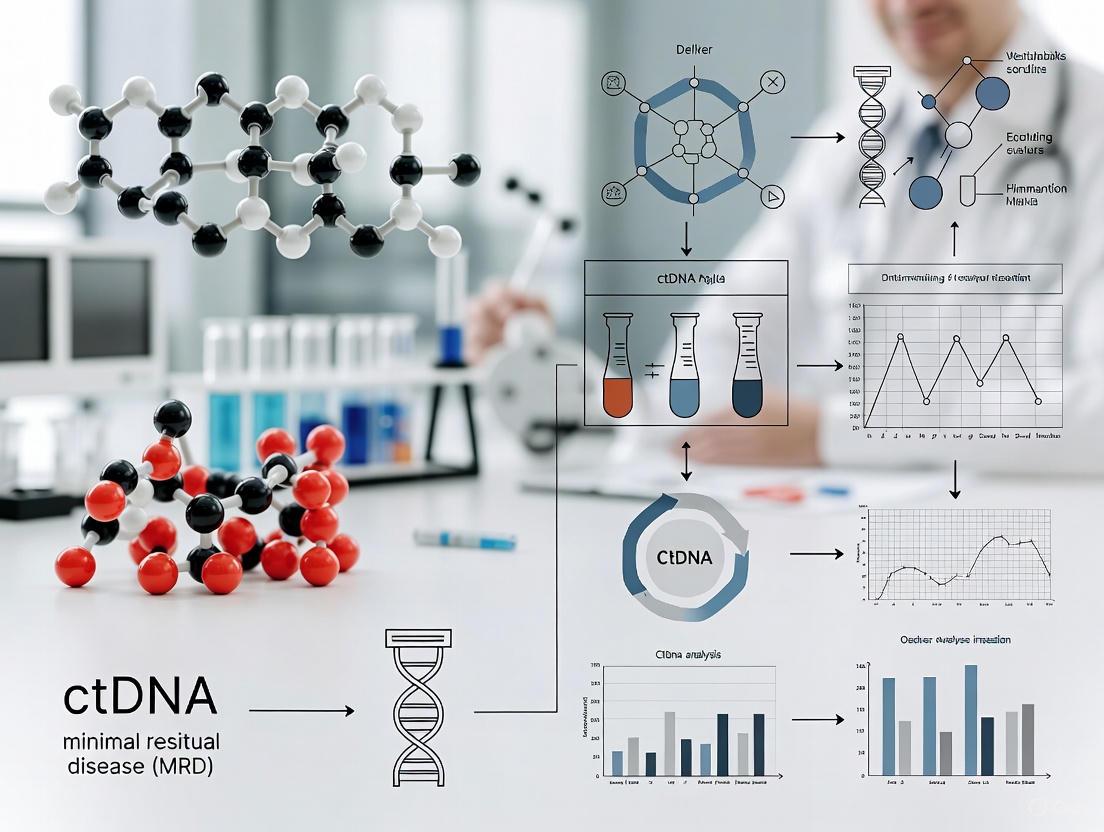
This article provides a comprehensive overview of circulating tumor DNA (ctDNA) for minimal residual disease (MRD) detection, a transformative approach in oncology.
ctDNA for Minimal Residual Disease Detection: A Comprehensive Guide for Cancer Researchers and Drug Developers
Abstract
This article provides a comprehensive overview of circulating tumor DNA (ctDNA) for minimal residual disease (MRD) detection, a transformative approach in oncology. It explores the foundational biology of ctDNA and its clinical significance in predicting recurrence. The review delves into the technical methodologies of tumor-informed and tumor-agnostic assays, comparing their applications across NSCLC, colorectal, and breast cancers. Critical challenges including false negatives, biological limitations, and pre-analytical variables are addressed. Finally, the article examines clinical validation data, comparative assay performance, and the integration of ctDNA MRD into clinical trial frameworks and future precision oncology paradigms, offering vital insights for researchers and drug development professionals.
The Biology and Clinical Significance of ctDNA in MRD Detection
Minimal Residual Disease (MRD) refers to the small number of cancer cells that can persist in a patient's body after curative-intent treatment, potentially leading to relapse [1] [2]. While this concept was first established and successfully translated into clinical practice for hematological malignancies such as acute lymphoblastic leukemia and chronic lymphocytic leukemia, its application to solid tumors has historically presented significant challenges [1]. The fundamental biological differences between these cancer types necessitated a redefinition of MRD detection approaches. In solid tumors, MRD is detected indirectly, typically through the analysis of circulating tumor DNA (ctDNA) - tumor-derived DNA fragments released into the bloodstream via apoptosis or necrosis of tumor cells [1] [3]. These assays can detect tumor-specific genetic or epigenetic signatures in blood with remarkable sensitivity, down to variant allele frequencies of 0.01% or lower [1].
The translation of MRD from hematology to solid tumors represents a critical step forward in personalized oncology, enabling ultra-sensitive detection of recurrence and shaping treatment decisions to improve patient outcomes [1]. This paradigm shift has been facilitated by technological advances in ctDNA analysis, which provides a non-invasive source of real-time tumor information accessible via a simple blood draw, with ctDNA having a short half-life ranging from 16 minutes to 2.5 hours [3]. The integration of MRD testing into solid tumor management bridges key gaps in recurrence surveillance and enables earlier, more targeted interventions, positioning MRD as a future-defining advancement in oncology diagnostics [1].
Technical Foundations: MRD Detection Methodologies
The detection of MRD in solid tumors requires ultrasensitive methods capable of identifying tumor-specific genetic or epigenetic alterations in cell-free DNA, given the low abundance of ctDNA in the bloodstream, particularly in early-stage disease or following surgical intervention [2]. These methodologies can be broadly categorized into tumor-informed and tumor-agnostic approaches, each with distinct advantages and limitations for MRD detection [3].
Tumor-Informed vs. Tumor-Agnostic Approaches
Tumor-informed approaches require initial sequencing of tumor tissue to identify patient-specific mutations, followed by the development of a personalized assay to monitor these variants in blood samples [3]. This method generally offers higher sensitivity for detecting low tumoral variant allele frequencies but is more time-consuming as it requires prior sequencing of the tumor and development of a personalized assay for each patient [3]. A significant limitation is its inability to identify emerging mutations not present in the initial tissue biopsy [3].
Tumor-agnostic approaches do not require prior knowledge of existing tumor mutations and use the same assay across all patients [3]. While less sensitive than tumor-informed methods, these approaches can be applied without tumor tissue and are therefore suitable for scenarios where tissue is unavailable [3]. Common techniques include next-generation sequencing (NGS) panels for genomic variants and methylation analysis [3].
Table 1: Comparison of MRD Detection Methodologies
| Method | Key Features | Sensitivity | Applications | Limitations |
|---|---|---|---|---|
| Tumor-Informed NGS | Requires tumor tissue sequencing; patient-specific assay | High (can detect VAF ~0.01%) | MRD monitoring in colorectal, breast, bladder cancer [3] [4] | Time-consuming; cannot detect emerging mutations [3] |
| Tumor-Agnostic NGS | Fixed panel; no tumor tissue required | Moderate | Metastatic setting, treatment monitoring [3] | Lower sensitivity for MRD; CHIP interference [3] |
| ddPCR | Absolute quantification; targeted mutation detection | High for known mutations | Tracking specific mutations (e.g., EGFR, KRAS) [5] [6] | Limited to known mutations; low multiplex capability [5] |
| Methylation Analysis | Epigenetic patterns; tissue-of-origin identification | Varies by assay | Cancer early detection, subtyping [3] | Evolving evidence for MRD [3] |
Analytical Considerations for MRD Assays
The analytical validity of ctDNA assays depends on several key parameters, including the limit of detection (LoD), which is the lowest tumoral variant allele frequency an assay can reliably detect at a certain confidence interval; clinical sensitivity and specificity, which inform about false negative and false-positive rates; and robustness [3]. Factors such as clonal hematopoiesis of indeterminate potential (CHIP) can be a source of false-positive results, as age-dependent acquired mutations in hematopoietic progenitor cells can be mistaken for tumor mutations [3]. Recent recommendations highlight the need to perform synchronous profiling of plasma DNA and white blood cell DNA to rule out CHIP if necessary [3].
Technological advances have progressively enhanced the sensitivity of MRD detection. Droplet digital PCR (ddPCR) partitions samples into thousands of nanoliter-sized droplets, performing individual PCR reactions in each droplet and using fluorescence-based detection with Poisson statistics to determine the absolute number of target DNA molecules [2]. Next-generation sequencing approaches include amplicon-based targeted NGS, which adds unique molecular identifiers to each original DNA fragment before PCR amplification to suppress false-positive signals, and hybridization capture targeted NGS, which utilizes biotinylated probes to enrich the library for genomic regions of interest [3]. These methods can detect mutant alleles at frequencies ranging from 0.1% down to 0.02% [3].
MRD Detection in Solid Tumors: Clinical Evidence and Applications
The clinical application of MRD detection in solid tumors has gained substantial momentum, with growing evidence supporting its prognostic value across multiple cancer types. The presence of ctDNA after curative-intent therapy is consistently associated with a high risk of clinical relapse, with detection often preceding radiographic recurrence by several months [7] [8].
Disease-Specific Clinical Evidence
In colorectal cancer, multiple studies have demonstrated that post-treatment MRD positivity confers markedly worse recurrence-free and overall survival [4]. The DYNAMIC trial demonstrated that MRD-guided treatment could reduce chemotherapy use in stage II colon cancer without compromising recurrence-free survival [1]. Importantly, the DYNAMIC-III clinical trial, the first prospective randomized study of ctDNA-informed management in resected stage III colon cancer, recently demonstrated that treatment escalation strategies for ctDNA-positive patients did not improve recurrence-free survival, potentially indicating limitations of available treatment strategies rather than the assay's predictive capability [7].
For non-small cell lung cancer (NSCLC), ctDNA testing has shown an overall acceptable diagnostic accuracy, though sensitivity varies considerably by driver gene, ranging from 0.29 for ROS1 to 0.77 for KRAS [9]. Studies have confirmed that detection of ctDNA after definitive therapy is strongly prognostic for patient outcomes [4], with MRD positivity conferring markedly worse recurrence-free and overall survival [4].
In breast cancer, application has been more challenging due to relatively lower sensitivity of available tests in early-stage disease, mainly related to lower ctDNA concentration compared with metastatic disease or other early-stage solid tumors [3]. Differences in ctDNA detection rates are also observed according to subtype, with human epidermal growth factor receptor 2 (HER2) positive and triple-negative breast cancer having higher levels of shed ctDNA compared to luminal breast cancer [3]. Despite these challenges, multiple prospective clinical trials are exploring ctDNA analysis in early breast cancer, from screening to curative treatment evaluation and MRD detection [3].
The 2148 MRD Study represents a significant milestone in head and neck squamous cell carcinoma (HNSCC), particularly for HPV-negative cancers of the oral cavity, larynx, hypopharynx, and oropharynx [10]. This international study investigates whether a simple blood test can detect early signs of cancer returning after treatment, with the goal of identifying recurrence before it becomes visible on scans or causes symptoms [10]. Study coordinators note that evaluating ctDNA dynamics may aid in risk-stratification and treatment selection, potentially guiding future therapeutic escalation or de-escalation strategies [10].
Table 2: Clinical Performance of MRD Detection Across Solid Tumors
| Cancer Type | Prognostic Value | Lead Time | Key Clinical Trials | Sensitivity/Specificity |
|---|---|---|---|---|
| Colorectal Cancer | High; ctDNA positivity post-surgery predicts recurrence with high risk [8] [4] | 8.7 months median lead time [8] | DYNAMIC, DYNAMIC-III [1] [7] | >90% sensitivity for recurrence prediction in multiple studies [8] |
| Non-Small Cell Lung Cancer | Strong prognostic for RFS and OS; detection post-treatment predicts recurrence [4] | 5.2 months median lead time [8] | 2148 MRD, MERMAID-1 [10] [1] | Pooled sensitivity: 0.69 (95% CI 0.63-0.74); Specificity: 0.99 (95% CI 0.97-1.00) [9] |
| Breast Cancer | ctDNA detection post-treatment predicts metastatic recurrence [3] [4] | 9.5 months median lead time [8] | SERENA-6, PADA-1 [7] [3] | Varies by subtype; higher in HER2+ and TNBC vs. luminal [3] |
| Bladder/Urothelial Cancer | Post-cystectomy ctDNA detection predicts recurrence with high risk [8] [4] | 2.8 months median lead time [8] | IMvigor011, Protocol in [8] | High sensitivity (>80%) and specificity (>90%) for recurrence [8] |
| Head and Neck Cancer | Under investigation for HPV-negative HNSCC [10] | Data emerging | 2148 MRD Study [10] | Study ongoing; focused on prognostic and predictive value [10] |
Clinical Utility and Trial Designs
The clinical utility of MRD detection is being evaluated in various contexts, including adjuvant therapy guidance, recurrence monitoring, and treatment escalation or de-escalation strategies [1]. The SERENA-6 clinical trial represents a significant advancement, demonstrating that switching therapies based on ctDNA findings can improve clinical outcomes [7]. This prospective randomized double-blind study enrolled patients with advanced Hormone Receptor-positive HER2-negative breast cancer who had been on first-line CDK4/6 inhibitor and aromatase inhibition for 6 months or longer [7]. Patients with detectable ESR1 mutations in ctDNA without radiological progression were randomized to switch to camizestrant or continue aromatase inhibition, with both arms maintaining CDK4/6 inhibitor therapy [7]. The study demonstrated an improvement in progression-free survival and quality of life for those switching upon molecular progression [7].
In urothelial carcinoma, a pilot randomized controlled trial protocol has been developed to evaluate the feasibility and preliminary effects of a ctDNA-based sequencing approach for detecting MRD and guiding adjuvant chemotherapy in postoperative patients [8]. This study will involve patients with urothelial carcinomas undergoing radical resection, with stratification according to MRD status before randomization [8]. Patients in each stratum will be randomly allocated to either chemotherapy or standard management, with the goal of assessing the predictive value of ctDNA-guided MRD profiling for postoperative adjuvant chemotherapy [8].
Experimental Protocols: MRD Detection Workflows
Tumor-Informed MRD Detection Protocol
The following protocol outlines a comprehensive approach for tumor-informed MRD detection, suitable for research applications in solid tumors:
Step 1: Tumor Tissue Sequencing and Panel Design
- Obtain formalin-fixed paraffin-embedded (FFPE) tumor tissue and matched normal blood sample
- Perform whole exome sequencing (WES) or comprehensive genomic profiling of tumor and normal DNA to identify somatic mutations
- Select 16-50 tumor-specific somatic variants (SNVs, indels) for inclusion in patient-specific panel
- Design custom hybridization capture probes or multiplex PCR primers targeting selected variants [3] [8]
Step 2: Blood Collection and Plasma Processing
- Collect 20-30mL of blood in cell-free DNA collection tubes (e.g., Streck, PAXgene)
- Process within 6-24 hours of collection: centrifuge at 1600×g for 10 minutes at 4°C to separate plasma
- Transfer plasma to fresh tubes and perform second centrifugation at 16,000×g for 10 minutes to remove residual cells
- Aliquot and store plasma at -80°C until DNA extraction [3]
Step 3: Cell-free DNA Extraction and Library Preparation
- Extract cell-free DNA from 4-10mL plasma using commercial kits (e.g., QIAamp Circulating Nucleic Acid Kit)
- Quantify DNA yield using fluorometric methods (e.g., Qubit dsDNA HS Assay)
- Prepare sequencing libraries with unique molecular identifiers (UMIs) to minimize PCR errors
- Enrich for target regions using custom hybridization capture or multiplex PCR amplification [3]
Step 4: Sequencing and Data Analysis
- Sequence to high depth (>50,000x raw coverage) on Illumina platform
- Process sequencing data: demultiplex, align to reference genome, group UMI families
- Call variants using specialized algorithms for low-frequency detection
- Report ctDNA status as positive if ≥2 tumor-informed variants are detected above background noise [3] [8]
Step 5: Monitoring and Interpretation
- Schedule serial blood draws: post-operatively (2-4 weeks), during adjuvant therapy, and every 3-6 months during surveillance
- Track variant allele frequencies over time; rising levels indicate molecular progression
- Correlate ctDNA status with clinical and radiological findings [8]
Quality Control and Validation
Robust MRD testing requires stringent quality control measures:
- Include negative controls (water, plasma from healthy donors) in each extraction batch
- Monitor extraction efficiency using spike-in synthetic DNA controls
- Establish limit of detection for each assay using dilution series of tumor DNA in normal plasma
- Validate variant calls with orthogonal methods (ddPCR) for borderline results [3] [4]
The Scientist's Toolkit: Essential Research Reagents and Platforms
Successful MRD detection requires specialized reagents and platforms optimized for low-frequency variant detection. The following table summarizes key solutions for establishing MRD assays in research settings:
Table 3: Research Reagent Solutions for MRD Detection
| Category | Product/Technology | Key Features | Application in MRD Research |
|---|---|---|---|
| ctDNA Extraction Kits | QIAamp Circulating Nucleic Acid Kit (Qiagen) | High sensitivity for low-concentration DNA; efficient recovery from small volumes | Isolation of cell-free DNA from plasma samples; critical first step in MRD workflow [3] |
| Library Preparation | KAPA HyperPrep Kit (Roche) | Compatibility with UMIs; low input DNA requirements | Preparation of sequencing libraries from limited ctDNA input [3] |
| Unique Molecular Identifiers (UMIs) | Safe-SeqS, SiMSen-seq | Molecular barcoding of original DNA molecules; error suppression | Distinguishing true low-frequency variants from PCR/sequencing errors [3] |
| Target Enrichment | IDT xGen Lockdown Probes | Custom panel design; high hybridization efficiency | Tumor-informed panel creation for patient-specific mutation tracking [3] [8] |
| Sequencing Platforms | Illumina NovaSeq, MiSeq | High-depth sequencing capability; low error rates | Ultra-sensitive detection of rare ctDNA fragments [3] [2] |
| ddPCR Systems | Bio-Rad QX200 Droplet Digital PCR | Absolute quantification; high sensitivity for known mutations | Orthogonal validation of NGS findings; tracking specific mutations [5] [6] |
| Methylation Analysis | Whole-genome bisulfite sequencing | Genome-wide methylation profiling; tissue-of-origin identification | Epigenetic-based MRD detection; complementary to mutational approaches [3] |
Challenges and Future Directions
Despite significant progress, several challenges remain in the widespread implementation of MRD detection in solid tumors. Biological barriers include tumor heterogeneity, as solid tumors exhibit greater genetic variability than blood cancers, meaning mutations can vary widely within different regions of the same tumor [2]. This heterogeneity complicates the identification and tracking of tumor-specific mutations, making MRD detection more challenging [2]. Additionally, ctDNA release dynamics present obstacles, as solid tumors are confined to specific organs and typically do not release intact tumor cells into the bloodstream, instead depending on tumor cell death for ctDNA release [2]. Furthermore, residual cancer cells can enter a dormant state with altered metabolic activity, further hindering accurate MRD detection [2].
Technical and analytical challenges include the need for ultrasensitive detection methods capable of identifying very low variant allele frequencies amidst high background noise [2]. The analytical validity of ctDNA assays must be thoroughly established, with careful determination of limit of detection, clinical sensitivity and specificity, and robustness [3]. Standardization across platforms and laboratories remains challenging, with ongoing efforts to establish consensus guidelines for assay validation and reporting [4].
From a clinical implementation perspective, generating robust evidence through global, harmonized trials with standardized endpoints is essential for regulatory approval and clinical adoption [1]. Payer engagement requires the development of market-specific cost-effectiveness models and pursuit of outcome-based reimbursement agreements [1]. Additionally, clinician and patient engagement must be addressed through education, decision support tools, and clear communication about the benefits and limitations of MRD testing [1].
The future of MRD detection will likely see continued technological refinement with emerging technologies such as phased variant sequencing and epigenetic profiling potentially enhancing sensitivity and specificity [4]. Integration with other modalities including imaging, protein biomarkers, and clinical assessment will provide a more comprehensive approach to recurrence risk assessment [1]. Furthermore, expansion into early cancer detection and therapy guidance across multiple cancer types will solidify the role of MRD testing in precision oncology [5] [3].
As the field evolves, MRD detection is poised to transform cancer management by enabling earlier intervention, reducing overtreatment, and ultimately improving patient outcomes. The ongoing collaboration between researchers, clinicians, diagnostic companies, and patients will be essential to realizing the full potential of this promising technology in both hematological malignancies and solid tumors.
The Origin and Nature of Circulating Tumor DNA
Circulating tumor DNA (ctDNA) refers to fragmented, tumor-derived DNA present in the bloodstream and other bodily fluids of cancer patients. As a component of cell-free DNA (cfDNA), ctDNA carries tumor-specific genomic alterations that enable non-invasive access to the tumor's molecular landscape. The investigation of ctDNA has emerged as a cornerstone of liquid biopsy approaches, providing critical insights for cancer management, particularly in the detection of Minimal Residual Disease (MRD) following curative-intent therapy. Understanding the biological properties and technological requirements for ctDNA analysis is fundamental to advancing its application in precision oncology [11] [12] [13].
This document outlines the biological origin of ctDNA, its defining characteristics, and the detailed experimental protocols required for its detection in MRD research settings.
Biological Genesis and Fundamental Characteristics
Mechanisms of Release and Clearance
CtDNA originates from tumor cells through passive and active mechanisms, with its concentration in plasma reflecting tumor burden and cellular turnover.
- Primary Release Mechanisms: The dominant sources of ctDNA are apoptosis and necrosis of tumor cells. Apoptosis produces short, uniform DNA fragments, while necrosis results in longer, more variable fragments [12] [13]. Other contributing processes include phagocytosis, active secretion via extracellular vesicles, and neutrophil release [12] [13].
- Clearance Dynamics: CtDNA is rapidly cleared from the circulation, with a short half-life ranging from 16 minutes to 2.5 hours [11] [12] [13]. Clearance occurs mainly via nuclease activity in the liver and spleen, and through renal excretion [12]. This rapid turnover allows ctDNA levels to represent the real-time tumor burden.
Physical and Molecular Properties
CtDNA possesses distinct physical properties that differentiate it from normal cfDNA.
- Fragment Size: CtDNA is typically more fragmented than non-tumor cfDNA. Studies show maximum enrichment of ctDNA fragments between 90 and 150 base pairs (bp), whereas non-mutant cfDNA tends to be longer, around 166 bp, corresponding to DNA wrapped around a nucleosome [12] [14] [13].
- Tumor-Specific Alterations: CtDNA carries the same genetic alterations as the tumor of origin, including:
Table 1: Key Characteristics of Circulating Tumor DNA
| Property | Description | Research/Clinical Implication |
|---|---|---|
| Half-Life | 16 min to 2.5 hours [11] [12] | Enables real-time monitoring of tumor dynamics and treatment response. |
| Typical Fragment Size | 90-150 bp [12] [14] | Size selection can enrich ctDNA fraction, improving assay sensitivity. |
| Variant Allele Frequency (VAF) | Can be < 0.1% in early-stage cancer or MRD settings [12] [14] | Necessitates highly sensitive detection technologies (e.g., PCR, NGS with UMI). |
| Origin | Apoptosis, necrosis, active secretion from tumor cells [12] [13] | Represents a composite of tumor heterogeneity, including metastatic sites. |
Experimental Protocols for ctDNA Analysis in MRD
Detecting ctDNA for MRD presents a significant technical challenge due to its very low VAF, often below 0.01% [14] [15]. The following protocols describe a standardized workflow and two common NGS-based approaches.
Universal Pre-Analytical Workflow
Proper sample handling is critical for the success of downstream assays.
- Blood Collection: Collect whole blood (typically 5-10 mL per tube) into collection tubes containing K2 EDTA or specialized cell-free DNA preservatives [16].
- Plasma Separation: Process samples within 2 hours of collection. Perform two-step centrifugation:
- First, centrifuge at 1,200 × g for 10 minutes at 4°C to separate cellular components.
- Transfer the supernatant to a new tube and centrifuge a second time at 16,000 × g for 10 minutes at 4°C to remove any remaining cells and debris [16].
- Plasma Storage: Aliquot the resulting pure plasma and store at -80°C until cfDNA extraction.
- cfDNA Extraction: Use commercial kits (e.g., QIAamp Circulating Nucleic Acid Kit) optimized for low-abundance cfDNA from 2-5 mL of plasma. Elute in a low-volume elution buffer.
- cfDNA Quantification and QC: Quantify using fluorescent assays (e.g., Qubit dsDNA HS Assay). Quality can be assessed using a Bioanalyzer or Tapestation to confirm the expected fragment size distribution.
The following workflow diagram illustrates the two main pathways for ctDNA-based MRD detection:
Protocol 1: Tumor-Informed MRD Assay (e.g., Safe-SeqS)
This approach requires prior sequencing of tumor tissue to create a patient-specific assay, enabling极高灵敏度.
- Principle: Tumor tissue is sequenced to identify somatic mutations. A custom panel is designed to track these mutations in plasma with high sensitivity using Unique Molecular Identifiers (UMIs) for error correction [12] [15].
- Procedure:
- Tumor Sequencing: Perform Whole Exome Sequencing (WES) or Whole Genome Sequencing (WGS) on matched tumor tissue and normal DNA to identify patient-specific somatic mutations (e.g., SNVs, indels).
- Panel Design: Select a set of top-ranking mutations (e.g., 16 variants) with high allele frequency in the tumor and reliable measurability for designing a personalized sequencing panel [15].
- Library Preparation with UMI:
- Tag each original cfDNA fragment with a unique molecular identifier (UMI) during the initial amplification step. This barcodes individual DNA templates.
- Amplify target regions using a multiplex PCR approach with primers specific to the selected mutations.
- Sequencing and Data Analysis:
- Sequence the amplified libraries to high coverage (>50,000x).
- Bioinformatically group sequencing reads by their UMI to generate consensus sequences, filtering out errors introduced during PCR or sequencing.
- MRD Positivity Call: The detection of a predefined number of tumor-derived mutations (e.g., ≥2) in the plasma is classified as MRD-positive [15].
Protocol 2: Tumor-Agnostic MRD Assay (e.g., CAPP-Seq)
This approach does not require prior tissue sequencing and uses a fixed panel to interrogate plasma cfDNA.
- Principle: A fixed panel targeting recurrently mutated regions in a cancer type is used to hybrid-capture and sequence cfDNA. Bioinformatic methods are then applied to distinguish tumor-derived signals from noise and clonal hematopoiesis [14] [15].
- Procedure:
- Panel Selection: Use a predefined panel (e.g., CAPP-Seq) that includes hybridization probes for common mutations, SNVs, indels, and fusions relevant to the cancer type.
- Library Preparation and Target Enrichment:
- Prepare a sequencing library from plasma cfDNA.
- Use the biotinylated probes to perform hybrid capture, enriching for genomic regions of interest.
- Include UMIs to minimize technical artifacts.
- Sequencing: Perform ultra-deep sequencing (>100,000x coverage) to detect low-frequency variants.
- Bioinformatic Analysis:
- Call variants and calculate VAFs.
- Apply error-suppression models and filters to remove technical errors and mutations associated with Clonal Hematopoiesis of Indeterminate Potential (CHIP).
- Incorporate additional features like fragmentomics (ctDNA size selection) or methylation profiling to improve signal-to-noise ratio [14].
- A statistical model is used to determine if the detected molecular profile is consistent with the presence of MRD.
Table 2: Key Research Reagent Solutions for ctDNA MRD Detection
| Reagent / Material | Function | Example Products / Notes |
|---|---|---|
| cfDNA Preservation Tubes | Stabilizes nucleated cells in blood to prevent genomic DNA contamination and cfDNA degradation during transport. | Streck Cell-Free DNA BCT tubes, PAXgene Blood ccfDNA Tubes. |
| cfDNA Extraction Kits | Isolate and purify short-fragment cfDNA from plasma with high yield and purity. | QIAamp Circulating Nucleic Acid Kit (Qiagen), MagMAX Cell-Free DNA Isolation Kit (Thermo Fisher). |
| Unique Molecular Identifiers (UMIs) | Short random nucleotide barcodes added to each DNA fragment pre-amplification to enable bioinformatic error correction. | Integrated into many NGS library prep kits (e.g., TruSight Oncology UMI Reagents [17]). |
| Targeted NGS Panels | Enrich for genomic regions of interest for sensitive mutation detection. | Signatera (custom), CAPP-Seq fixed panel, Oncomine Lung cfTNA Assay [16]. |
| Hybrid Capture Probes | Biotinylated oligonucleotide probes used to capture DNA fragments from a target region for sequencing. | Used in CAPP-Seq and other hybrid-capture based NGS assays [15]. |
Critical Considerations for MRD Detection
Analytical Challenges
Researchers must account for several key challenges:
- Low Abundance: The core challenge is detecting ctDNA at VAFs as low as 0.001% - 0.01% in MRD settings, requiring extreme sensitivity [14].
- Clonal Hematopoiesis (CHIP): Age-related mutations in blood cells can be detected in plasma and mistaken for ctDNA, leading to false positives. Bioinformatic filtering against databases of CHIP-associated genes (e.g., DNMT3A, TET2, ASXL1) is essential [12] [15].
- Lack of Standardization: Variations in pre-analytical methods, platforms, and bioinformatic pipelines complicate result comparison across studies [11] [15].
Emerging Technologies
Novel approaches are pushing the boundaries of sensitivity:
- Structural Variant (SV)-Based Assays: Targeting patient-specific chromosomal rearrangements can achieve parts-per-million sensitivity, as these are virtually absent in normal DNA [14].
- Phased Variant Sequencing: Methods like PhasED-seq target multiple SNVs on the same DNA fragment, significantly enhancing detection capability [14].
- Methylation Profiling: Analyzing tumor-specific cfDNA methylation patterns provides an orthogonal layer of information for sensitive detection and cancer origin determination [14].
- Nanomaterial-Based Sensors: Electrochemical biosensors using graphene or magnetic nanoparticles are in development for rapid, ultra-sensitive POC detection, with some achieving attomolar sensitivity [14].
CtDNA is a dynamic and informative biomarker whose nature is defined by its specific biological origin and physical characteristics. Its application in MRD research demands rigorous experimental protocols, primarily utilizing tumor-informed or tumor-agnostic NGS approaches with sophisticated error-correction techniques. As technologies evolve towards ever-greater sensitivity and integration of multi-omic data, ctDNA analysis is poised to become an indispensable tool for guiding adjuvant therapy and improving cancer outcomes.
In modern oncology, the detection of Minimal Residual Disease (MRD) has redefined our understanding of cancer recurrence. MRD refers to the small number of cancer cells that persist after definitive therapy, often at levels undetectable by standard imaging modalities [1]. The emergence of circulating tumor DNA (ctDNA) analysis through liquid biopsies has enabled the identification of this molecular residual disease, providing a critical window into tumor dynamics long before clinical manifestation [18]. This paradigm shift is encapsulated in the concept of "molecular relapse," where ctDNA detection in blood samples precedes radiographic evidence of disease by months, creating a clinical urgency for intervention during this precursory phase [19] [8].
The biological foundation of this approach lies in the continuous shedding of tumor-derived DNA fragments into the bloodstream. ctDNA comprises short, double-stranded DNA fragments released by tumor cells through apoptosis, necrosis, or secretion, carrying the unique genetic alterations of their tissue of origin [18]. Following curative-intent treatment, the persistence or reappearance of these tumor-specific genomic signatures in plasma indicates the presence of residual micrometastatic disease, serving as a direct biomarker of ongoing disease activity despite radiographic absence [18] [1].
Clinical Evidence: Quantifying the Lead Time of MRD Detection
Evidence Across Solid Tumors
Robust clinical evidence demonstrates that ctDNA-based MRD detection consistently anticipates radiologically confirmed recurrence across multiple cancer types. The lead time between molecular and radiological relapse represents a critical therapeutic window.
Table 1: Lead Time of MRD Detection Before Radiological Relapse Across Cancers
| Cancer Type | Lead Time (Months) | Study Details | Citation |
|---|---|---|---|
| Non-Small Cell Lung Cancer (NSCLC) | Several months | RESIDUAL study (n=48); MRD anticipated radiological relapse | [19] |
| Colon Cancer | 8.7 months | Meta-analysis of multiple studies | [8] |
| Breast Cancer | 9.5 months | Meta-analysis of multiple studies | [8] |
| Pancreatic Cancer | 4.2 months | Meta-analysis of multiple studies | [8] |
| Bladder Cancer | 2.8 months | Meta-analysis of multiple studies | [8] |
| Urothelial Carcinoma | Several months | MRD detection preceded radiographic progression | [8] |
Prognostic Value of MRD Status
The presence of ctDNA post-treatment is strongly correlated with significantly worse clinical outcomes, underscoring its prognostic power for risk stratification.
Table 2: Prognostic Value of Post-Treatment MRD Status
| Cancer Type | Study | MRD Positive Recurrence | MRD Negative Recurrence | Hazard Ratio / Risk |
|---|---|---|---|---|
| Stage III Colon Cancer | Guardant Reveal (N=2,000) | 62.6% at 3 years | 15.4% at 3 years | Significantly higher risk [20] |
| Resected NSCLC | RESIDUAL Study | 39.6% of patients recurred; MRD+ associated with worse outcome | MRD- associated with better outcome | MRD anticipated relapse [19] |
| Multiple Myeloma | iTIMM WB-MRI Study | Median PFS: 24 months | Median PFS: 42 months | HR 2.09 for PFS [21] |
The RESIDUAL study in resected NSCLC also demonstrated that combining ctDNA measurement with radiological tumor volume created a composite tool that better identified high-risk patients compared to either metric alone [19].
Experimental Protocols for ctDNA-Based MRD Detection
Core Methodological Approaches
The two primary methodological frameworks for ctDNA MRD analysis are tumor-informed and tumor-agnostic approaches, each with distinct advantages and limitations.
Tumor-Informed Analysis (Tumor-Informed MRD Assay) requires prior sequencing of tumor tissue to identify patient-specific mutations for tracking. This approach offers higher sensitivity and is currently the dominant methodology in clinical research [18]. Key steps include:
- Tumor Whole Exome Sequencing (WES): DNA from tumor tissue and matched normal blood are sequenced to identify somatic single nucleotide variants (SNVs), insertions/deletions (indels), and structural variants unique to the tumor [8].
- Personalized Panel Design: A custom NGS panel is designed to target 16-50 selected patient-specific variants.
- ctDNA Extraction and Sequencing: Plasma is isolated from peripheral blood draws. Cell-free DNA is extracted, and libraries are prepared for sequencing using the personalized panel.
- Bioinformatic Analysis: Sequencing data are processed using specialized algorithms (e.g., based on SAFE-SeqS or similar techniques) to detect and quantify the patient-specific variants in plasma with high sensitivity down to variant allele frequencies of 0.01% [18].
Tumor-Agnostic Analysis does not require prior tissue sequencing and instead leverages epigenetic features such as DNA methylation patterns or fragmentomics (size patterns of cfDNA) to detect abnormal cancer signals [18] [1]. For example, the Guardant Reveal test uses epigenomic (methylation) analysis to detect ctDNA [20]. While less sensitive than tumor-informed methods, this approach is more practical for screening applications.
Standardized Blood Collection and Processing Protocol
For the RESIDUAL study in NSCLC, the following sampling protocol was implemented [19]:
- Collection Timepoints:
- T0 (Pre-surgery): Baseline plasma sample.
- T1 (Landmark): 10 days after surgery.
- T2/T3 (Surveillance): 20 days, 1 month post-surgery, then every 3 months for the first year, and annually through the second year.
- TRel (Relapse): Additional sample if radiological relapse occurred.
- Processing: Blood samples are collected in cell-stabilizing tubes (e.g., Streck or EDTA), followed by plasma separation via double centrifugation within hours of collection. Plasma is aliquoted and stored at -80°C until DNA extraction.
Essential Research Reagents and Platforms
Table 3: Essential Research Toolkit for ctDNA MRD Detection
| Reagent / Platform | Function / Application | Examples / Notes |
|---|---|---|
| Cell-Free DNA Blood Collection Tubes | Stabilizes nucleated blood cells to prevent genomic DNA contamination | Streck Cell-Free DNA BCT, PAXgene Blood ccfDNA Tubes |
| Nucleic Acid Extraction Kits | Isolation of high-integrity cell-free DNA from plasma | QIAamp Circulating Nucleic Acid Kit, MagMAX Cell-Free DNA Isolation Kit |
| NGS Library Preparation Kits | Preparation of sequencing libraries from low-input cfDNA | Oncomine Pan-Cancer Cell-Free Assay, KAPA HyperPrep Kit |
| Targeted Sequencing Panels | Enrichment of cancer-associated genomic regions | Custom tumor-informed panels, Fixed pan-cancer panels (e.g., covering 50-100 genes) |
| Bioinformatic Analysis Pipelines | Distinguishing true low-frequency variants from sequencing noise | Unique Molecular Identifier (UMI)-based error correction; Signal decomposition algorithms for methylation/fragmentomics |
Visualizing the MRD Detection Workflow and Clinical Trajectory
The following diagram illustrates the core workflow for tumor-informed ctDNA MRD detection and the resulting clinical timeline that establishes MRD as a precursor to radiological relapse.
The evidence is compelling: MRD detection via ctDNA analysis provides a critical window for intervention months before radiological confirmation of relapse [19] [8]. This establishes a new clinical urgency centered on the molecular relapse phase. The consistent lead time across diverse solid tumors underscores the transformative potential of MRD monitoring to shift cancer management from reactive to proactive.
Future research must focus on validating MRD-guided therapeutic strategies in randomized controlled trials. Promisingly, studies in colon cancer have already demonstrated that ctDNA-guided adjuvant therapy can reduce chemotherapy use without compromising recurrence-free survival [8]. Similar intervention trials are underway for NSCLC (e.g., MERMAID-1) and bladder cancer (IMvigor011) [1]. The ultimate goal is to establish MRD status as a standardized biomarker that enables personalized adjuvant therapy—escalating treatment for MRD-positive patients at the earliest sign of molecular relapse while allowing MRD-negative patients to avoid unnecessary therapy toxicity.
The detection of Minimal Residual Disease (MRD)—clinically occult disease that remains after curative-intent treatment—is a critical challenge in oncology. Circulating tumor DNA (ctDNA), which consists of tumor-derived DNA fragments in the bloodstream, has emerged as a powerful, minimally invasive biomarker for MRD detection [22]. The presence of ctDNA post-treatment consistently demonstrates a strong correlation with significantly worse recurrence-free survival (RFS) and overall survival (OS) across multiple solid tumors, including colorectal cancer (CRC) and non-small cell lung cancer (NSCLC) [23] [24]. Unlike traditional imaging, which can only detect macroscopic disease, ctDNA analysis can identify molecular relapse months earlier, providing a critical window for therapeutic intervention [24]. This Application Note details the quantitative evidence, standardized protocols, and analytical frameworks for correlating post-treatment ctDNA status with RFS.
Quantitative Evidence: Post-Treatment ctDNA and Clinical Outcomes
Table 1 summarizes the quantitative evidence from pivotal studies demonstrating the prognostic power of post-treatment ctDNA across different cancer types and timepoints.
Table 1: Prognostic Value of Post-Treatment ctDNA for Recurrence-Free Survival
| Cancer Type | Post-Treatment ctDNA Timepoint | Hazard Ratio (HR) for Recurrence | Recurrence-Free Survival (RFS) Difference | Source |
|---|---|---|---|---|
| Colorectal Cancer (Stages II-III) | 4-10 weeks post-surgery | Not reported | 5-year RFS: 38.6% (ctDNA+) vs 85.5% (ctDNA-); P < 0.001 | [23] |
| Colorectal Cancer (Stages II-III) | 3-7 days post-surgery | HR = 10.98 (95% CI: 5.31-22.72) | - | [24] |
| Colorectal Cancer (Stages II-III) | After adjuvant chemotherapy | HR = 12.76 (95% CI: 5.39-30.19) | - | [24] |
| Non-Small Cell Lung Cancer (NSCLC) | 4.5-7.5 months post-curative treatment | Significant association (HR not specified) | Shorter RFS in ctDNA+ patients | [25] |
| Lung Squamous Cell Carcinoma (LUSC) | After 2 cycles of therapy (MinerVa-Delta metric) | HR = 0.19 for PFS | Improved PFS in molecular responders | [26] |
Quantitative Risk Stratification
The prognostic value of ctDNA is not merely binary. Quantitative measures, such as Mutant Allele Frequency (MAF) or Variant Allele Frequency (VAF)—the percentage of mutant DNA molecules in total cell-free DNA—provide further risk stratification. In a pooled analysis of 485 non-metastatic CRC patients, recurrence risk increased exponentially with rising ctDNA MAF, with hazard ratios of 1.2, 2.5, and 5.8 for MAF values of 0.1%, 0.5%, and 1%, respectively [23]. Similarly, in advanced solid tumors, a maximum VAF (maxVAF) threshold of 4% was optimal for prognostication, with an overall survival of 5.9 months versus 12.1 months for patients with maxVAF above and below this threshold, respectively [27].
Experimental Protocols for ctDNA-Based MRD Detection
Core Workflow for Tumor-Informed MRD Analysis
The most sensitive approach for MRD detection is the tumor-informed workflow, which involves sequencing the primary tumor to identify patient-specific mutations that are then tracked with high sensitivity in plasma. The following protocol, adapted from large cohort studies, outlines the key steps.
Protocol: Tumor-Informed ctDNA Analysis for MRD
Step 1: Primary Tumor Tissue Analysis
- DNA Extraction: Isect high-quality genomic DNA from Formalin-Fixed Paraffin-Embedded (FFPE) tumor tissue sections and matched peripheral blood leukocytes (germline control).
- Tumor Sequencing & Variant Calling: Perform next-generation sequencing (NGS) of tumor and germline DNA using a targeted gene panel (e.g., 425 genes), whole exome, or whole genome sequencing. Somatic variant calling identifies tumor-specific mutations (SNVs, indels) present in the tumor but not the germline.
- Variant Selection: For each patient, select the top 1-16 somatic mutations (typically those with the highest allele frequency in the tumor) to create a patient-specific tracking panel [22].
Step 2: Plasma Collection and Processing
- Blood Draw: Collect 30-40 mL of peripheral blood into Streck or EDTA tubes at predefined post-treatment timepoints (e.g., 3-7 days post-op, 4-10 weeks post-op, post-adjuvant therapy) [23] [24].
- Plasma Separation: Process blood within 2-6 hours of collection. Centrifuge twice (e.g., 1200g followed by 1800g) to isolate plasma from cellular components.
- cfDNA Extraction: Extract cell-free DNA (cfDNA) from plasma using commercial kits (e.g., QIAamp Circulating Nucleic Acid Kit). Quantify and qualify the extracted cfDNA (e.g., using Bioanalyzer).
Step 3: High-Sensitivity ctDNA Detection
- Library Preparation & Sequencing: Prepare NGS libraries from plasma cfDNA. Utilize Unique Molecular Identifiers (UMIs) to tag original DNA molecules, enabling error correction and accurate quantification [11].
- Personalized Assay: Use a custom, patient-specific panel (e.g., via PCR-based amplicon sequencing like SafeSeqS) to target the selected mutations with ultra-high sensitivity [23].
- Sequencing: Perform deep sequencing (often >50,000x coverage) to detect rare mutant molecules.
Step 4: Bioinformatic Analysis and MRD Calling
- Variant Calling & Error Correction: Use UMI consensus calling to eliminate sequencing artifacts and generate a high-confidence list of variant-supporting reads.
- ctDNA Quantification: Calculate the VAF for each tracked mutation. The sample is typically classified as "ctDNA-positive" (MRD-positive) if a predefined number of mutations are detected above a background noise threshold [24]. For example, a sample may be called positive if the number of true variants detected is more than 5% of the total tracking variants for that patient [24].
The following diagram illustrates this multi-stage workflow and its clinical application for risk stratification.
Tumor-Agnostic (Tumor-Uninformed) Approach
An alternative method is the tumor-agnostic approach, which does not require prior tumor tissue sequencing.
Protocol: Tumor-Agnostic ctDNA Analysis for MRD
- Plasma Collection and cfDNA Extraction: Follow the same procedures as in Step 2 of the tumor-informed protocol.
- Targeted Sequencing with Fixed Panel: Sequence plasma cfDNA using a predefined, fixed panel of frequently mutated genes in the cancer type of interest (e.g., a 70-gene panel for NSCLC).
- Bioinformatic Analysis: Identify somatic mutations present in the plasma above a defined VAF threshold, filtering out common germline polymorphisms and clonal hematopoiesis-associated mutations using population databases.
- MRD Calling: A sample is classified as MRD-positive if one or more high-confidence tumor-derived mutations are detected.
While this approach has a faster turnaround time and does not require tumor tissue, it is generally less sensitive than tumor-informed methods due to the lack of patient-specific mutation tracking [22] [25].
The Scientist's Toolkit: Essential Reagents and Technologies
Successful MRD detection relies on a suite of specialized reagents and platforms designed for high-sensitivity analysis.
Table 2: Essential Research Reagent Solutions for ctDNA MRD Detection
| Reagent / Solution | Primary Function | Key Considerations & Examples |
|---|---|---|
| Cell-Free DNA Blood Collection Tubes | Stabilizes nucleated blood cells to prevent genomic DNA contamination during sample transport. | Streck Cell-Free DNA BCT, PAXgene Blood ccfDNA Tubes. |
| cfDNA Extraction Kits | Isolate high-integrity, short-fragment cfDNA from plasma. | QIAamp Circulating Nucleic Acid Kit, MagMAX Cell-Free DNA Isolation Kit. |
| NGS Library Prep Kits with UMI | Prepare sequencing libraries from low-input cfDNA and incorporate Unique Molecular Identifiers for error correction. | Kits supporting UMI tagging (e.g., from Swift Biosciences, Illumina). |
| Targeted Sequencing Panels | Enrich for cancer-associated genomic regions for deep sequencing. | Tumor-Informed: Custom panels (e.g., Signatera, RaDaR). Tumor-Agnostic: Fixed panels (e.g., Guardian Reveal, CAPP-Seq). |
| Ultra-Sensitive Sequencing Platforms | Perform deep sequencing to detect rare mutant molecules in a background of wild-type DNA. | Illumina NovaSeq, HiSeq. Systems supporting high sequencing depth (>50,000x). |
Dynamic Monitoring and Advanced Analytical Frameworks
Beyond single-timepoint detection, serial ctDNA monitoring provides a dynamic view of treatment response and disease trajectory. The following diagram illustrates the clinical course and ctDNA dynamics in a patient with MRD leading to relapse.
Novel Metrics for Response Monitoring
For advanced disease or when monitoring the efficacy of systemic therapy, simple detection is insufficient. Novel quantitative metrics are being developed:
- MinerVa-Delta: A novel approach that calculates a weighted change in VAF across multiple tracked variants between baseline and on-treatment samples. In a study on lung squamous cell carcinoma, patients classified as molecular responders (MinerVa-Delta <30%) had significantly improved PFS and OS compared to non-responders [26].
- ctDNA Clearance: The disappearance of previously detected ctDNA after adjuvant therapy is a favorable prognostic sign. In one study, ctDNA clearance after adjuvant chemotherapy was associated with recurrence-free status in 5 out of 17 initially ctDNA-positive CRC patients [24].
The correlation between post-treatment ctDNA and RFS is robust and consistently demonstrated across numerous studies. The protocols and frameworks outlined here provide researchers and drug developers with the tools to implement ctDNA-based MRD detection in clinical trials and translational research. Future efforts will focus on standardizing assays across platforms, validating ctDNA-guided intervention strategies in randomized trials, and integrating ctDNA monitoring with other modalities to fully realize the promise of personalized cancer medicine.
Circulating tumor DNA (ctDNA) refers to small fragments of DNA released into the bloodstream by tumor cells through processes including apoptosis, necrosis, and active secretion [28]. As a cornerstone of liquid biopsy technologies, ctDNA carries tumor-specific genomic alterations such as mutations, methylation changes, and microsatellite instability, providing a non-invasive means to access tumor-derived genetic material [28]. The half-life of ctDNA is remarkably short—approximately 2 hours—making it an optimal biomarker for real-time monitoring of tumor dynamics and treatment response [8].
Minimal residual disease (MRD) describes the presence of subclinical tumor burden after curative-intent treatment that eventually leads to clinical recurrence [8]. Traditional imaging techniques like CT and MRI, while fundamental to current response assessment protocols, lack the sensitivity to detect microscopic disease states. The critical innovation of ctDNA analysis lies in its ability to detect molecular relapse significantly earlier than radiographic methods can identify anatomical recurrence [8] [11]. This lead time, often spanning several months, creates a potential therapeutic window for early intervention before macroscopic disease becomes established.
Quantitative Evidence of Lead Time
Multiple validation studies across various cancer types have consistently demonstrated that ctDNA detection predicts clinical recurrence with high sensitivity (>80%) and specificity (>90%) [8]. The following table summarizes the documented lead times between ctDNA detection and radiographic confirmation of recurrence across different malignancies.
Table 1: Documented Lead Times of ctDNA Detection Before Radiographic Recurrence
| Cancer Type | Reported Lead Time (Months) | Clinical Context | Source |
|---|---|---|---|
| Breast Cancer | 9.5 months (median) | Disease recurrence | [8] |
| Colorectal Cancer | 8.7 months (median) | Disease recurrence | [8] |
| Lung Cancer | 5.2 months (median) | Post-treatment recurrence | [8] |
| Pancreatic Carcinoma | 4.2 months (median) | Disease recurrence | [8] |
| Bladder Carcinoma | 2.8 months (median) | Disease recurrence | [8] |
| Urothelial Carcinoma | Several months (reported) | Post-radical resection MRD | [8] |
Beyond simple detection, ctDNA dynamics provide profound prognostic insights. In the COMBI-AD trial for resected stage III melanoma, patients with detectable BRAFV600-mutant ctDNA at baseline had significantly worse recurrence-free survival (median 3.71 months on placebo vs. 24.41 months for ctDNA-negative patients) [29]. Similarly, longitudinal monitoring revealed that patients with adverse ctDNA kinetics (molecular relapse or persistently positive) had markedly shorter median recurrence-free survival (8.31 and 5.32 months, respectively) compared to those with favorable kinetics (not reached) [29].
Core Methodologies and Experimental Protocols
The detection of low-abundance ctDNA against a background of normal cell-free DNA requires highly sensitive and specific methodological approaches. The following workflow illustrates the generalized process for ctDNA-based MRD detection:
Pre-Analytical Phase: Sample Collection and Processing
Sample Collection: Blood samples should be collected in specialized cell-free DNA blood collection tubes (e.g., Streck Cell-Free DNA BCT or PAXgene Blood ccfDNA tubes) containing additives that stabilize blood cells and prevent lysis [30]. This step is critical because lysis of healthy blood cells generates background DNA that dilutes the tumor-derived signal. Approximately 10 mL of peripheral blood is typically collected per time point [31].
Plasma Separation and DNA Extraction: Within 2-6 hours of collection (if using standard EDTA tubes) or up to several days (if using specialized tubes), samples are centrifuged at 1600 × g for 10 minutes at 4°C to separate plasma from cellular components [31]. The plasma is then subjected to a second centrifugation at 16,000 × g for 10 minutes to remove remaining cell debris [31]. Cell-free DNA is extracted using magnetic bead-based kits (e.g., GeneOn Biotech blood/tissue DNA magnetic bead extraction kit), with quality and concentration assessed using fluorescence-based quantification methods like Qubit dsDNA HS Assay [31].
Analytical Phase: ctDNA Detection Technologies
Tumor-Informed Next-Generation Sequencing (NGS): This approach involves first performing whole-exome sequencing (WES) of the patient's tumor tissue and matched normal sample to identify patient-specific somatic mutations [8]. A custom NGS panel is then designed to track these specific mutations in plasma cfDNA. This method significantly enhances detection sensitivity by focusing sequencing resources on truly informative genomic regions. In a pilot RCT for urothelial carcinoma, this tumor-informed NGS approach achieved a lead time of several months before radiological relapse [8].
Droplet Digital PCR (ddPCR): For known hotspot mutations (e.g., BRAFV600 in melanoma), analytically validated mutation-specific ddPCR assays provide highly sensitive and absolute quantification of mutant allele concentration [29]. In the COMBI-AD trial, ddPCR assays could detect BRAFV600E or BRAFV600K ctDNA with sensitivity sufficient to stratify patient risk, with ctDNA positivity (defined as ≥1 mutant copy/mL of plasma) predicting significantly worse outcomes [29].
Methylation-Based Detection: Enzymatic methyl sequencing (e.g., NEEM-Seq) offers an alternative to traditional bisulfite treatment, which causes DNA fragmentation and loss [31]. This method uses enzymes to detect methylation patterns without DNA damage, particularly beneficial in high GC-content regions. Differentially methylated regions (DMRs) between tumor and normal tissue are identified, and a neural network classifier (e.g., BCNN - hybrid of BERT and CNN) can be applied to identify ctDNA robustly, achieving high accuracy (AUC = 0.970) even at ultralow sequencing depths [31].
Molecular Response Assessment
For quantitative monitoring of treatment response, the MinerVa-Delta algorithm represents a novel approach that calculates weighted mutation changes in samples with multiple tracked variants, accounting for sequencing depth and variance of variant allele frequencies at each position [26]. This method classifies patients as molecular responders (MinerVa-Delta <30%) or non-responders (MinerVa-Delta ≥30%), with responders showing significantly improved progression-free survival (HR = 0.19) and overall survival (HR = 0.24) in advanced lung squamous cell carcinoma [26].
The Scientist's Toolkit: Essential Research Reagents
Successful implementation of ctDNA MRD detection requires carefully selected reagents and platforms throughout the workflow. The following table details key research solutions and their specific functions.
Table 2: Essential Research Reagents and Platforms for ctDNA MRD Detection
| Reagent/Platform | Function | Application Note |
|---|---|---|
| Streck Cell-Free DNA BCT Tubes | Stabilizes blood cells during transport/storage; prevents genomic DNA contamination | Critical for preserving sample integrity; enables longer sample stability [31] |
| Enzymatic Methyl-seq Conversion Module (NEB) | Enzyme-based DNA conversion for methylation detection; alternative to bisulfite | Preserves DNA integrity; better for high GC-content regions [31] |
| Accel-NGS Methyl-Seq DNA Library Kit (IDT) | Preparation of sequencing libraries from converted DNA | Compatible with enzymatic conversion; maintains library complexity [31] |
| Tumor-Informed NGS Panels | Custom panels tracking patient-specific mutations identified via WES | Increases MRD detection sensitivity; requires tumor-normal sequencing [8] |
| ddPCR Mutation Assays | Absolute quantification of specific mutant alleles (e.g., BRAFV600) | Highly sensitive for known mutations; does not require tumor tissue [29] |
| Unique Molecular Identifiers (UMIs) | Molecular barcodes to correct for PCR errors and sequencing artifacts | Essential for distinguishing low-frequency mutations from technical artifacts [11] |
Critical Timing Considerations
The optimal timing for ctDNA analysis is crucial for reliable MRD assessment. A 2025 study in colorectal cancer investigated ctDNA detection at postoperative day 14 versus day 30 [32]. Despite elevated cfDNA levels in 85% of day 14 samples, assay performance was comparable between timepoints (sensitivity 31% vs. 32%; specificity 98% for both) [32]. Critically, ctDNA detection was highly prognostic of recurrence at both timepoints (day 14: HR=9.0; day 30: HR=12.5) [32]. The study concluded that combining both timepoints would increase sensitivity to 36% while allowing early adjuvant therapy initiation for 80% of ctDNA-positive patients [32].
The following diagram illustrates the temporal relationship between clinical milestones and ctDNA detection in the MRD context:
The critical lead time afforded by ctDNA detection—typically months before radiographic recurrence becomes apparent—represents a fundamental shift in cancer management. This window creates unprecedented opportunities for early therapeutic intervention when tumor burden is lowest. Tumor-informed NGS, ddPCR, and emerging methylation-based approaches provide increasingly sensitive methods for MRD detection, while standardized protocols for blood collection, processing, and analysis ensure reliable results. As ongoing clinical trials continue to validate the clinical utility of ctDNA-guided interventions, this technology is poised to become an indispensable component of precision oncology, transforming patient outcomes through earlier detection and more personalized treatment strategies.
Methodological Approaches and Clinical Applications of ctDNA-MRD Assays
In the field of minimal residual disease (MRD) detection, the analysis of circulating tumor DNA (ctDNA) has emerged as a transformative, non-invasive biomarker. The two predominant methodological paradigms—tumor-informed and tumor-agnostic (also known as tumor-naïve) assays—offer distinct strategic approaches, each with unique advantages and limitations [33]. Tumor-informed assays are customized for each patient based on mutations identified in their tumor tissue, thereby offering a highly personalized tracking system. In contrast, tumor-agnostic assays utilize a fixed, pre-designed panel of genomic or epigenomic targets intended for use across all patients, providing a more immediate but less personalized option [34] [35]. The choice between these approaches has significant implications for sensitivity, specificity, logistical complexity, and clinical utility in both research and drug development settings. This application note provides a structured comparison of these strategies, supported by quantitative data, detailed protocols, and analytical workflows, to guide researchers and scientists in their experimental designs.
Comparative Performance Data
The clinical performance of tumor-informed and tumor-agnostic assays has been evaluated across multiple cancer types. The table below summarizes key quantitative findings from recent studies, illustrating differences in sensitivity, specificity, and predictive power.
Table 1: Comparative Clinical Performance of Tumor-Informed and Tumor-Agnostic Assays
| Cancer Type | Assay Type | Clinical Context | Sensitivity | Specificity | Hazard Ratio (HR) for Recurrence | Source/Study |
|---|---|---|---|---|---|---|
| Breast Cancer | Tumor-Naïve (Multimodal) | Post-treatment surveillance | 54.5% | 98.8% | HR = 23.3, p < 0.0001 | [34] |
| Colorectal Cancer | Tumor-Naïve (Multimodal) | Post-treatment surveillance | 80.0% | 100% | HR = 35.6, p < 0.0001 | [34] |
| Triple-Negative Breast Cancer | Tumor-Informed (dPCR) | MRD detection in cTRAK-TN trial | Not separately reported | Not separately reported | Informative for relapse | [36] |
| Triple-Negative Breast Cancer | Tumor-Informed (RaDaR Sequencing) | MRD detection in cTRAK-TN trial | 47.9% first detected by sequencing | Not separately reported | Median lead time to relapse: 6.1 months (vs. 3.9 mos for dPCR) | [36] |
| Head and Neck Cancer (SCCHN) | Tumor-Informed (Signatera) | Post-treatment (within 12 weeks) | Association with recurrence | Association with recurrence | Significantly inferior RFS and OS (P ≤ 0.05) | [37] |
| Epithelial Ovarian Cancer | Tumor-Type Informed (Methylation) | End-of-treatment MRD detection | Detected in 16/22 samples | High specificity | HR = 9.44 for relapse (p=0.009) | [38] |
The data indicates that while tumor-informed assays generally offer superior sensitivity, tumor-agnostic assays can achieve high performance, particularly in cancers with high ctDNA-shedding rates like colorectal cancer [34]. The predictive power for recurrence, as denoted by high Hazard Ratios, is strong for both approaches but can vary significantly by cancer type and stage.
Experimental Protocols for MRD Assay Evaluation
Protocol: Tumor-Informed ctDNA Assay Workflow
This protocol outlines the steps for developing and deploying a personalized, tumor-informed ctDNA assay, based on methodologies used in studies of breast, colorectal, and head and neck cancers [36] [37].
1. Sample Preparation and Sequencing:
- Tumor and Germline DNA Extraction: Extract high-quality DNA from Formalin-Fixed Paraffin-Embedded (FFPE) tumor tissue and matched white blood cells (buffy coat) using a kit such as the QIAamp DNA Investigator Kit or Promega Maxwell RSC. For FFPE tissue, ensure tumor cellularity exceeds 20%; macro-dissection may be required [36] [37].
- Whole Exome Sequencing (WES): Perform WES on tumor and germline DNA. For library preparation, use a kit such as the KAPA HyperPlus kit with IDT adaptors. Hybrid-capture enrichment can be performed using the SureSelectXT Human All Exon V6 Kit. Sequence on an Illumina NovaSeq 6000 platform [36].
2. Bioinformatic Analysis and Panel Design:
- Somatic Variant Calling: Analyze WES data to identify somatic single nucleotide variants (SNVs) by comparing tumor and germline sequences.
- Personalized Panel Selection: Select up to 16-48 patient-specific somatic mutations, prioritizing clonal, high-confidence variants. Exclude variants associated with clonal hematopoiesis (CHIP) by checking their presence in the white blood cell DNA [36] [37].
3. Plasma ctDNA Analysis:
- Plasma Collection and cfDNA Extraction: Collect blood in Streck or EDTA tubes. Isolate plasma via centrifugation and extract cell-free DNA (cfDNA) using a dedicated kit such as the QIAamp Circulating Nucleic Acid Kit or the Maxwell RSC ccfDNA Plasma Kit [39] [36].
- Library Preparation and Targeted Sequencing: Construct sequencing libraries from cfDNA (typically 2-8 mL of plasma input). Use the personalized panel to enrich for the selected mutations via hybrid capture or multiplex PCR. Sequence to a high depth (e.g., 100,000x on-target coverage) on an Illumina platform [39] [36].
- Variant Calling and MRD Assessment: Using a customized bioinformatic pipeline, identify tumor-derived mutations in the plasma. A sample is typically classified as MRD-positive if two or more tumor-specific mutations are detected. The tumor fraction can be estimated from the mean variant allele frequency (VAF) of the detected mutations [37].
Protocol: Tumor-Agnostic Multimodal ctDNA Assay
This protocol describes a tumor-agnostic approach that integrates mutation detection with copy number and fragmentomics analysis, as validated in a large cohort study [34].
1. Plasma Processing and Library Preparation:
- cfDNA Extraction: Isolate cfDNA from patient plasma as described in section 3.1.
- Barcoded Library Preparation: Prepare cfDNA libraries using a kit such as the xGen cfDNA Library Prep v2 with unique molecular identifiers (UMIs) to correct for sequencing errors [34].
2. Multimodal Sequencing:
- Hybridization Capture for Mutations: Hybridize the libraries with a custom probe panel targeting a fixed set of frequently mutated genes (e.g., 22 genes). Perform sequencing at an average depth of 500x [34].
- Ultra-Deep Amplicon Sequencing: In parallel, perform multiplex PCR (mPCR) to amplify a panel of approximately 500 known hotspot mutations. Sequence the amplicons to an ultra-deep depth of ~100,000x [34].
- Shallow Whole-Genome Sequencing (sWGS): Subject a portion of the pre-captured libraries to low-pass (0.5x) whole-genome sequencing to generate data for copy number and fragmentomics analyses [34].
3. Multimodal Data Integration and Analysis:
- Variant Calling and CHIP Filtering: Call variants from both hybridization and amplicon sequencing data. Critically, amplify all variant-positive positions from matched white blood cell gDNA and sequence to exclude germline and CHIP-related variants (defined by VAF between 0.1%-10% in WBC) [34].
- Copy Number Alteration (CNA) Analysis: Analyze sWGS data using the ichorCNA workflow to estimate tumor fraction (TF) from genome-wide copy number profiles [34].
- Fragmentomics Profiling: From sWGS data, extract DNA fragment length information (e.g., 50-350 bp) to create a fragment length profile (FLEN). Also, calculate the frequency of fragment end motifs (EM). Use non-negative matrix factorization (NMF) to transform FLEN data into a quantitative score (NMF_FLEN) that distinguishes cancer from non-cancer [34].
- Final MRD Call: Integrate evidence from mutation detection, CNA, and fragmentomics (NMF_FLEN and EM scores). If mutations are detected, TF is calculated as their mean VAF. If mutations are absent, TF is derived from the CNA or fragmentomics signal. A sample is classified as ctDNA-positive if any of the features surpass pre-defined thresholds established using training datasets [34].
Essential Research Reagent Solutions
The following table details key reagents and kits used in the protocols above, which are essential for implementing these MRD detection assays.
Table 2: Key Research Reagents and Materials for ctDNA MRD Assays
| Reagent/Material | Function | Example Product(s) |
|---|---|---|
| cfDNA Extraction Kit | Isolation of high-quality cell-free DNA from plasma samples. | QIAamp Circulating Nucleic Acid Kit (Qiagen), Maxwell RSC ccfDNA Plasma Kit (Promega) |
| FFPE DNA Extraction Kit | Extraction of DNA from formalin-fixed, paraffin-embedded tumor tissue. | QIAamp DNA Investigator Kit (Qiagen) |
| Library Preparation Kit | Construction of sequencing libraries from cfDNA; often includes UMI incorporation. | xGen cfDNA Library Prep v2 (IDT), KAPA HyperPlus Kit (Roche) |
| Hybrid Capture Panels | Enrichment of specific genomic regions of interest for targeted sequencing. | Custom Panels (Twist Bioscience, IDT), SureSelectXT (Agilent) |
| Methylation Sequencing Kit | For tumor-type informed assays; enables conversion and sequencing of methylated DNA. | NEBNext Enzymatic Methyl-seq Kit (NEB) |
| Reference Materials | Analytical validation, determining limit of detection, and controlling for technical variability. | Seraseq ctDNA MRD Panel Mix (LGC SeraCare), Cell line gDNA (e.g., from Coriell Institute) |
Strategic Workflow and Decision Pathways
The following diagrams illustrate the core workflows for tumor-informed and tumor-agnostic assays, as well as a strategic decision framework for selecting the appropriate method.
Tumor-Informed Assay Workflow
Tumor-Agnostic Multimodal Workflow
Assay Selection Strategy
The strategic choice between tumor-informed and tumor-agnostic assays for ctDNA-based MRD detection is multifaceted. Tumor-informed assays currently offer superior sensitivity and specificity, making them the gold standard for clinical scenarios where the earliest possible detection of relapse is critical and high-quality tissue is accessible [36] [35]. Conversely, tumor-agnostic assays provide a practical and efficient alternative, especially in contexts where tissue is unavailable, a faster initial result is needed, or for monitoring cancers known to shed DNA robustly [34]. The emergence of multimodal tumor-agnostic assays that integrate mutation detection with fragmentomics and copy number analysis is narrowing the performance gap, demonstrating that a one-size-fits-all approach may not be optimal. Researchers and drug developers must weigh factors such as cancer type, clinical context, and logistical constraints against the performance characteristics of each assay to select the most appropriate tool for their specific application in the evolving landscape of MRD research.
Tumor-informed circulating tumor DNA (ctDNA) assays represent a paradigm shift in minimal residual disease (MRD) detection, offering a highly sensitive and personalized approach for monitoring cancer recurrence. These assays leverage prior knowledge of a patient's unique tumor mutational profile to create a custom-built test for tracking specific genetic alterations in blood plasma [22] [40]. This methodology stands in contrast to tumor-naïve (or tumor-agnostic) approaches, which utilize fixed panels of recurrent cancer-associated alterations without requiring tumor tissue sequencing [22].
The fundamental principle underlying tumor-informed approaches involves identifying somatic mutations from a patient's tumor tissue through techniques such as whole-exome sequencing (WES) or whole-genome sequencing (WGS). This information is then used to design a personalized assay that tracks multiple mutations specific to that patient's cancer, significantly enhancing detection sensitivity for the low variant allele fractions (VAFs) characteristic of MRD [36] [40]. This technical advantage is critical in the post-treatment setting, where ctDNA levels can be vanishingly low, often constituting less than 0.1% of total cell-free DNA [22] [41].
Table 1: Core Characteristics of Major Tumor-Informed ctDNA Platforms
| Feature | Signatera (Natera) | RaDaR (Inivata/NeoGenomics) | CAPP-Seq (Originally Described) |
|---|---|---|---|
| Core Technology | WES + Multiplex PCR-based NGS [40] | WES + Multiplex PCR-based NGS [40] | Hybrid Capture-Based NGS [42] [40] |
| Variant Types Detected | SNVs, Indels [43] [40] | SNVs, Indels, CNAs [40] | SNVs, Indels, Translocations, CNAs [42] |
| Tissue Requirement | Tumor tissue and matched normal [43] | Tumor tissue [40] | Varies; can be tumor-informed or tumor-naïve |
| Reported Limit of Detection (LOD) | 0.01% VAF [40] | 0.001% VAF [40] | ~0.02% VAF [22] |
| Typical Turnaround Time | 3-5 weeks total [40] | Information Missing | Information Missing |
| Key Differentiating Feature | CMS-covered for multiple cancers [43] | High sensitivity (LOD); demonstrated lead time in clinical studies [36] | Ability to detect structural variants (fusions) and CNAs [42] |
The clinical significance of these platforms is profound. Detection of ctDNA after curative-intent therapy is strongly correlated with future clinical recurrence, with the Signatera test demonstrating a positive predictive value exceeding 98% across multiple solid tumors [43]. Furthermore, tumor-informed assays have shown a significant lead time advantage, detecting recurrence months before radiographic evidence appears. A 2023 study comparing RaDaR with digital PCR (dPCR) in triple-negative breast cancer reported a median lead time of 6.1 months for the personalized sequencing assay compared to 3.9 months for dPCR [36].
Experimental Workflows and Protocols
The implementation of tumor-informed ctDNA assays follows a multi-stage process, from initial sample collection through final data analysis. The protocols below synthesize common methodologies across platforms, noting key distinctions.
Sample Collection and Preprocessing
Proper biospecimen collection and handling are critical for maintaining ctDNA integrity and ensuring assay sensitivity [41].
- Blood Collection: A minimum of 20 mL of peripheral blood is typically collected into specialized blood collection tubes (BCTs) containing cell-stabilizing preservatives, such as cfDNA BCTs (Streck) or PAXgene Blood ccfDNA Tubes (Qiagen) [41]. These tubes prevent the release of genomic DNA from nucleated blood cells, allowing for sample stability at room temperature for up to 7 days.
- Plasma Processing: Plasma is isolated through a double-centrifugation protocol within the recommended stability window. An initial centrifugation at 380–3,000 × g for 10 minutes separates plasma from blood cells. The supernatant is then transferred and subjected to a second, higher-speed centrifugation at 12,000–20,000 × g for 10 minutes at 4°C to remove any remaining cellular debris [41]. The resulting cell-free plasma is aliquoted and stored at –80°C until DNA extraction.
- Cell-free DNA (cfDNA) Extraction: cfDNA is extracted from plasma using silica membrane-based kits, such as the QIAamp Circulating Nucleic Acid Kit (Qiagen), which have been shown to yield higher quantities of ctDNA compared to magnetic bead-based methods [44] [41]. The extracted cfDNA is quantified using fluorescent assays (e.g., Qubit dsDNA HS Assay).
Tumor Tissue Sequencing and Assay Design
This phase involves identifying patient-specific mutations to create the personalized tracking panel.
- Tissue and Germline DNA Extraction: DNA is extracted from formalin-fixed, paraffin-embedded (FFPE) tumor tissue sections with high tumor cellularity (typically >70%) and from a matched normal sample (e.g., buffy coat from blood) [36] [44].
- Tumor Sequencing: The tumor and normal DNA undergo Whole Exome Sequencing (WES). For example, the Signatera and RaDaR protocols use WES on the Illumina NovaSeq 6000 platform [36] [40]. Alternatively, some approaches use targeted NGS panels covering several hundred cancer-related genes [44].
- Bioinformatic Analysis and Panel Design: Somatic variants (SNVs and indels) are identified by comparing tumor and normal sequencing data. Proprietary algorithms then select 16-48 somatic, clonal variants (depending on the platform) that are optimal for tracking in plasma, prioritizing high allele frequency and assay designability [36]. This list of variants forms the blueprint for the patient-specific multiplex assay.
ctDNA Detection and Longitudinal Monitoring
Once the personalized assay is designed, it is used for all subsequent liquid biopsy analyses.
- Library Preparation and Sequencing: For platforms like Signatera and RaDaR, the patient's cfDNA is amplified using multiplex PCR with primers specific to the selected mutations. These assays incorporate Unique Molecular Identifiers (UMIs) to tag individual DNA molecules, enabling bioinformatic correction of PCR and sequencing errors [36] [11]. Other platforms, like CAPP-Seq, use a hybrid-capture approach to enrich for genomic regions of interest [42] [40].
- Sequencing and Analysis: Libraries are sequenced to very high depth (often >100,000x) on platforms like Illumina NovaSeq to detect ultra-low VAFs [36]. A proprietary statistical model analyzes the sequenced UMI families, integrating evidence across all tracked variants to determine whether the sample is positive or negative for ctDNA at a predefined significance threshold [36]. The tumor fraction is then estimated and reported.
Figure 1: Generalized Workflow for Tumor-Informed ctDNA MRD Testing. The process is biphasic, beginning with a one-time assay design informed by tumor and normal tissue sequencing, followed by repeated, less invasive blood-based monitoring.
Technical Specifications and Performance Metrics
Understanding the analytical performance of each platform is essential for researchers selecting an appropriate technology for clinical trials or biomarker studies.
Table 2: Analytical Performance and Clinical Validation
| Parameter | Signatera | RaDaR | CAPP-Seq |
|---|---|---|---|
| Sensitivity (Analytical) | Information Missing | Information Missing | Information Missing |
| Clinical Sensitivity (for Recurrence) | High (varies by cancer type) [43] | 47.9% first detection in cTRAK-TN trial [36] | Correlated with metastatic status & response [42] |
| Specificity | > 98% PPV reported [43] | High (CHIP filtering) [36] | High (utilizes fragmentomics & UMIs) [11] |
| Variant Types Tracked | Somatic SNVs & Indels [43] | Somatic SNVs & Indels [36] | SNVs, Indels, Translocations, CNAs [42] |
| Key Clinical Evidence | Multiple solid tumors [43] | Lead time advantage in TNBC [36] | Pediatric sarcomas (translocations) [42] |
A critical differentiator among these platforms is their underlying technology, which directly influences their capabilities. Signatera and RaDaR employ a multiplex PCR-based NGS approach following WES. This method is highly efficient for tracking a defined set of point mutations and small indels [40]. In contrast, the CAPP-Seq platform utilizes a hybrid-capture-based NGS approach. This allows it to cover a broader genomic territory more efficiently, making it particularly suited for detecting structural variants like translocations and copy-number alterations, which are hallmark alterations in certain cancers like pediatric sarcomas [42]. The CAPP-Seq selector is designed as an "off-the-shelf" panel that targets intronic regions involved in recurrent translocation breakpoints, enabling it to detect fusions without always requiring a tumor sample for breakpoint identification [42].
The Scientist's Toolkit: Essential Research Reagents
Successful implementation of ctDNA MRD assays relies on a suite of specialized reagents and tools. The following table details key components used in the featured workflows.
Table 3: Key Research Reagents and Materials
| Reagent/Material | Function/Application | Example Products |
|---|---|---|
| Cell-Free DNA Blood Collection Tubes | Stabilizes nucleated blood cells to prevent genomic DNA contamination during sample transport. | cfDNA BCT (Streck), PAXgene Blood ccfDNA (Qiagen) [41] |
| cfDNA Extraction Kits | Isolate and purify short-fragment cfDNA from plasma samples. | QIAamp Circulating Nucleic Acid Kit (Qiagen) [36] [44] [41] |
| NGS Library Prep Kits | Prepare sequencing libraries from low-input cfDNA. | KAPA HyperPlus Kit (Roche), SureSelectXT (Agilent) [36] |
| Unique Molecular Identifiers (UMIs) | Short DNA barcodes to tag unique molecules for error correction. | Integrated into platform-specific kits [11] |
| Hybrid Capture or Multiplex PCR Probes | Enrich for patient-specific or pan-cancer genomic targets. | Custom SeqCap EZ Choice (Roche) for CAPP-Seq [42]; Custom primers for Signatera/RaDaR [43] [36] |
| Targeted NGS Panels | For tumor sequencing when WES is not used. | OncoPanel AMC v3 (383 genes) [44] |
Figure 2: Key Factors Enabling High-Sensitivity ctDNA Detection. Achieving a low limit of detection requires optimization at every step, from blood collection to final sequencing and bioinformatic analysis.
Minimal residual disease (MRD) represents the subclinical presence of cancer cells that remain after curative-intent treatment, serving as the primary source for clinical recurrence. The detection of circulating tumor DNA (ctDNA) has emerged as a powerful tool for identifying MRD, offering a non-invasive window into tumor dynamics. Among various analytical approaches, tumor-agnostic platforms that leverage DNA methylation signatures are demonstrating transformative potential in precision oncology. Unlike tumor-informed methods that require prior sequencing of tumor tissue, tumor-agnostic assays analyze plasma samples directly, utilizing stable, cancer-specific epigenetic alterations to detect molecular residual disease. The Guardant Reveal platform exemplifies this technological advancement, combining genomic and epigenomic signals to overcome the limitations of mutation-only approaches, thereby enabling more sensitive MRD detection across multiple cancer types without the need for tissue sequencing [45] [46].
The clinical imperative for robust MRD detection is underscored by cancer recurrence statistics. In stage III colon cancer, for instance, approximately 30% of patients relapse after surgery despite standard adjuvant chemotherapy [20]. Similarly, in early-stage breast cancer, accurate identification of residual disease could guide post-neoadjuvant therapy decisions to prevent distant metastasis. Methylation-based MRD detection addresses critical gaps in current approaches by leveraging the fundamental biology of cancer epigenetics, where aberrant DNA methylation patterns emerge early in tumorigenesis and remain stable throughout tumor evolution, making them ideal biomarkers for sensitive ctDNA detection [47] [48].
Technological Foundations of Methylation-Based Detection
Advantages of DNA Methylation Biomarkers
DNA methylation involves the addition of a methyl group to the 5' position of cytosine bases, primarily at CpG dinucleotides, resulting in epigenetic regulation of gene expression without altering the underlying DNA sequence. In cancer, this process becomes dysregulated, with tumors typically displaying both genome-wide hypomethylation and promoter-specific hypermethylation of tumor suppressor genes [47]. These methylation alterations offer several advantages as biomarkers for MRD detection: they occur early in carcinogenesis, exhibit tissue-specific patterns, remain stable through tumor progression, and demonstrate cancer-type specificity [47] [49].
From an analytical perspective, DNA methylation biomarkers provide enhanced resistance to degradation during sample processing compared to more labile molecules like RNA. The DNA double helix's inherent stability, combined with evidence suggesting methylated DNA fragments may be relatively enriched in circulating cell-free DNA due to nucleosome protection mechanisms, makes methylation markers particularly suitable for liquid biopsy applications where analyte concentration is often limited [47]. Furthermore, the multiplexing capacity of methylation markers enables detection of multiple independent epigenetic signals from a single sample, dramatically improving assay sensitivity compared to tracking a limited number of somatic mutations [50].
Limitations of Genomic-Only Approaches
Traditional genomic-based MRD detection methods face several fundamental limitations that methylation-based approaches effectively address. Clonal hematopoiesis of indeterminate potential (CHIP) represents a significant challenge for mutation-based, tumor-agnostic assays, as somatic mutations in hematopoietic cells can mimic ctDNA variants, leading to false-positive results [46]. Studies have demonstrated that even with sophisticated filtering algorithms, genomic-MRD (gMRD) detection specificity remains compromised by CHIP-related variants in common cancer driver genes [46].
Additionally, low ctDNA tumor fraction in early-stage disease and MRD settings often falls below the detection limit of genomic-only approaches, particularly for tumors with few trackable mutations [50]. The Guardant Infinity platform has demonstrated that methylation-based sequencing features a lower limit of detection compared to genomic-only methods, enabling identification of tumor signal in 15% to 50% more cancer patients with low circulating tumor fraction [50]. This enhanced sensitivity is particularly crucial in the adjuvant setting where early intervention could prevent overt metastasis.
Table 1: Comparison of Genomic vs. Methylation-Based MRD Detection Approaches
| Feature | Genomic-Only Approach | Methylation-Based Approach |
|---|---|---|
| Basis of Detection | Somatic mutations | DNA methylation patterns |
| CHIP Interference | Significant | Minimal |
| Tissue Requirement | Required for tumor-informed approaches | Not required (tissue-free) |
| Number of Trackable Signals | Limited to patient-specific mutations | Hundreds to thousands of methylation markers |
| Detection Sensitivity | Limited in low tumor fraction cases | Enhanced sensitivity in low tumor fraction |
| Turnaround Time | Longer for tumor-informed approaches | Shorter (tissue-free) |
The Guardant Reveal Platform: Architecture and Workflow
Assay Design and Multi-Omic Approach
Guardant Reveal is a tissue-free, multi-omic next-generation sequencing platform designed for MRD detection and recurrence monitoring in solid tumors. The assay runs on the Guardant Infinity platform and simultaneously analyzes both genomic and epigenomic signals from plasma-derived cell-free DNA [20] [45]. This integrated approach leverages the strengths of both analytical dimensions: genomic variants provide specific mutation information, while methylation patterns offer enhanced sensitivity and specificity through the evaluation of hundreds to thousands of cancer-associated epigenetic markers.
The platform utilizes a targeted sequencing approach that covers a pre-defined panel of genomic regions relevant to cancer, combined with a comprehensive methylation signature database. By combining both signal types, the assay achieves superior performance compared to either method alone, effectively overcoming biological noise including CH variants that plague genomic-only approaches [50] [46]. The tissue-free nature of the test eliminates the need for tumor tissue sequencing, streamlining the workflow and reducing turnaround time to as little as 7-10 days, which is critical for adjuvant therapy decision-making [45].
Experimental Protocol and Workflow
The standard operating procedure for Guardant Reveal testing follows a meticulously optimized protocol:
Sample Collection and Processing:
- Blood Collection: Two 10mL Streck Cell-Free DNA BCT tubes are collected per time point [50]. Tubes are inverted 8-10 times immediately after collection to mix blood with preservative.
- Transportation: Samples are transferred at room temperature to the processing laboratory within 96 hours of collection [45].
- Plasma Isolation: Double centrifugation is performed - both spins at 1,600 × g for 10 minutes - to separate plasma from cellular components [45].
- Plasma Storage: Isolated plasma is aliquoted into 2mL cryovials and stored at -80°C until cfDNA extraction.
cfDNA Extraction and Quantification:
- Extraction Method: Circulating free DNA is extracted from 4-10mL plasma using the QIAsymphony SP Circulating DNA kit on the fully automated QIAsymphony SP Instrument [45].
- Quantification: Extracted cfDNA is quantified using the Qubit dsDNA HS Assay Kit. A minimum input of 10ng cfDNA is recommended, with median yields of approximately 31ng (range: 0.2-109ng) from 4mL plasma [45].
Library Preparation and Sequencing:
- Library Construction: Extracted cfDNA undergoes library preparation using the Guardant Reveal assay (version 1.2) targeting both genomic and methylation markers [45] [46].
- Sequencing Parameters: Libraries are sequenced on next-generation sequencing platforms with a minimum recommended sequencing depth of 10,000X for optimal methylation variant detection [46].
Bioinformatic Analysis:
- Alignment and Processing: Raw sequencing data is aligned to the reference genome, followed by duplicate removal and quality filtering.
- Variant Calling: Genomic alterations are identified using proprietary algorithms with filters to reduce technical artifacts.
- Methylation Analysis: Methylation patterns are deconvoluted using a proprietary bioinformatics pipeline that compares observed patterns against a database of cancer-specific methylation signatures.
- Tumor Fraction Estimation: The platform provides quantitative estimation of tumor fraction based on the combined genomic and epigenomic signals [50].
Figure 1: Guardant Reveal MRD Detection Workflow
Clinical Validation and Performance Metrics
Colorectal Cancer Applications
The clinical utility of Guardant Reveal for MRD detection has been extensively validated in colorectal cancer, representing the largest MRD study in this population to date. The TRACC study (tracking mutations in cell-free tumor DNA to predict relapse in early colorectal cancer), a prospective multicenter trial involving 1,203 patients with stage I-III CRC, demonstrated compelling performance metrics [45]. In this cohort, postoperative ctDNA detection using Guardant Reveal provided robust risk stratification, with 2-year recurrence-free survival of 91.1% in patients with undetectable ctDNA compared to only 50.4% in those with detectable ctDNA (HR, 6.5; P < 0.0001) [45].
The negative predictive value of postoperative ctDNA testing was 91.2%, indicating a low likelihood of residual disease when ctDNA was undetectable [45]. This high NPV is particularly relevant for clinical decision-making regarding adjuvant chemotherapy, as it identifies patients who may be spared unnecessary treatment. Additionally, the study demonstrated a median lead time of 7.3 months from ctDNA detection to radiological recurrence, providing a substantial window for therapeutic intervention [45]. Further validation comes from the PEGASUS trial, which reported 80% sensitivity and 98% specificity for MRD detection in early-stage colon cancer using the Guardant Infinity platform [50].
Table 2: Clinical Performance of Guardant Reveal in Colorectal Cancer
| Performance Metric | TRACC Study Results | PEGASUS Trial Results |
|---|---|---|
| Patients Analyzed | 214 (143 for primary endpoint) | Not specified |
| 2-Year RFS (ctDNA-) | 91.1% | Not specified |
| 2-Year RFS (ctDNA+) | 50.4% | Not specified |
| Hazard Ratio | 6.5 (2.96-14.5) | Not specified |
| Negative Predictive Value | 91.2% | Not specified |
| Sensitivity | 62.1% (longitudinal) | 80% |
| Specificity | 85.9% (longitudinal) | 98% |
| Lead Time to Recurrence | 7.3 months | Not specified |
Breast Cancer and Other Malignancies
In early-stage breast cancer, methylation-based MRD detection has demonstrated superior performance compared to genomic-only approaches. A comprehensive analysis of 290 longitudinal plasma samples from 95 patients with ER-positive and triple-negative breast cancer revealed that baseline ctDNA detection using the methylation-based approach was associated with a 9.4-fold higher risk of recurrence (P = 0.03) [46]. The baseline detection rate was 72.5% across all participants, with similar rates observed in both ER-positive (69%) and TNBC (77%) subtypes [46].
Notably, post-operative ctDNA detection was prognostic of worse event-free survival (HR 17.0, P < 0.0001) with 100% specificity for recurrence and a positive predictive value of 100% [46]. The median lead time from mMRD detection to clinical recurrence was 152 days (range 15-748 days), highlighting the potential for early intervention [46]. Importantly, this study directly compared methylation-MRD (mMRD) with genomic-MRD (gMRD) and found that gMRD remained inferior to mMRD even after sophisticated variant filtering, and a combination of both approaches did not outperform mMRD alone [46].
Beyond colorectal and breast cancers, Guardant Reveal has demonstrated utility across multiple tumor types, including lung, head and neck, and cancers of unknown primary [51]. Studies presented at ESMO 2025 highlighted applications in therapy monitoring for ALK+ lung cancer (CROWN study), recurrence monitoring in head and neck cancers (CAPTION study), and molecular subtyping in cancers of unknown primary (CUPIDO study) [51].
Research Reagent Solutions and Technical Requirements
Successful implementation of methylation-based MRD detection requires specific reagents and technical components optimized for liquid biopsy applications. The following table details essential research solutions for laboratories developing or implementing these assays:
Table 3: Essential Research Reagents for Methylation-Based MRD Detection
| Reagent Category | Specific Products | Function & Importance |
|---|---|---|
| Blood Collection Tubes | Streck Cell-Free DNA BCT Tubes | Preserves cell-free DNA by stabilizing nucleated blood cells, preventing genomic DNA contamination during shipment |
| DNA Extraction Kits | QIAsymphony SP Circulating DNA Kit | Automated extraction of high-quality cfDNA from plasma with optimized yield from limited samples |
| Quantification Assays | Qubit dsDNA HS Assay Kit | Accurate quantification of low-concentration cfDNA without contamination from single-stranded DNA or RNA |
| Bisulfite Conversion Kits | EZ DNA Methylation-Lightning Kit | Efficient chemical conversion of unmethylated cytosines to uracils while preserving methylated cytosines |
| Target Enrichment Systems | Guardant Reveal Target Capture Panel | Hybridization-based capture of genomic regions and methylation markers of interest |
| Sequencing Platforms | Illumina NextSeq 550Dx | High-throughput sequencing with sufficient depth for rare variant detection in complex backgrounds |
| Bioinformatics Tools | Proprietary Methylation Analysis Pipeline | Deconvolution of methylation patterns and quantification of tumor-derived signals |
Clinical Integration Pathway
The integration of tumor-agnostic methylation testing into clinical practice requires careful consideration of testing timelines and decision points. The following diagram illustrates a representative clinical pathway for MRD detection in solid tumors:
Figure 2: Clinical Integration Pathway for MRD Testing
This clinical pathway highlights key decision points where ctDNA testing provides actionable information. The post-treatment blood draw window of 3-12 weeks after curative-intent therapy represents a critical timeframe for baseline MRD assessment [45]. For patients with detectable ctDNA, indicating high recurrence risk, consideration of treatment intensification may be warranted. Conversely, patients with undetectable ctDNA may be candidates for standard follow-up or potential de-escalation of adjuvant therapy in clinical trial settings [20] [45].
Longitudinal monitoring every 3-6 months enables dynamic assessment of treatment response and early detection of molecular recurrence, often months before radiographic evidence of disease [45] [46]. This lead time provides a potential window for therapeutic intervention while tumor burden remains low. The UK TRACC Part C study is currently investigating the potential for adjuvant chemotherapy de-escalation in patients with undetectable postoperative ctDNA, representing a critical step toward routine clinical implementation of this biomarker [45].
Tumor-agnostic methylation-based platforms like Guardant Reveal represent a paradigm shift in MRD detection, offering enhanced sensitivity and specificity through multi-omic approaches that overcome limitations of genomic-only methods. The integration of epigenomic signals with traditional variant analysis provides a more comprehensive view of residual disease, enabling improved risk stratification across multiple cancer types. With demonstrated clinical utility in large prospective studies and practical advantages including tissue-free testing and rapid turnaround times, these platforms are poised to transform adjuvant therapy decision-making and post-treatment monitoring. As ongoing clinical trials continue to validate the utility of ctDNA-guided treatment approaches, methylation-based MRD detection is establishing a new standard for personalized cancer management in the minimal residual disease setting.
The detection of Minimal Residual Disease (MRD) represents a critical challenge in clinical oncology, as it identifies patients at high risk of recurrence following curative-intent therapy. Circulating tumor DNA (ctDNA) has emerged as a powerful, non-invasive biomarker for MRD detection. ctDNA are fragmented DNA molecules in the bloodstream that originate from tumor cells, carrying tumor-specific genetic alterations. In the post-operative setting, the presence of ctDNA indicates residual disease that often precedes clinical recurrence. The analytical sensitivity required for MRD detection is extreme, as ctDNA can represent as little as 0.01% of total cell-free DNA in early-stage cancers, necessitating highly sensitive detection technologies [52].
Two primary technological approaches have dominated this field: digital PCR (dPCR) and Next-Generation Sequencing (NGS). Each platform offers distinct advantages and limitations for ctDNA-based MRD detection, creating a significant technology selection dilemma for researchers and drug development professionals. This application note provides a detailed comparison of these methodologies, supported by experimental data and protocols, to guide their application in MRD research.
Technology Comparison: Performance Characteristics and Applications
Key Performance Metrics in MRD Detection
The selection between dPCR and NGS requires careful consideration of multiple performance and practicality metrics, particularly in the context of MRD study design.
Table 1: Core Technology Comparison for MRD Detection
| Parameter | dPCR | NGS |
|---|---|---|
| Sensitivity | High (VAF 0.001%-0.01%) [52] | Moderate to High (VAF 0.02%-0.1%) [52] |
| Multiplexing Capacity | Limited (1-5 mutations per reaction) | High (10s-100s of mutations per panel) |
| Throughput | Medium | High |
| Turnaround Time | Short (typically < 72 hours) [52] | Longer (typically 1-2 weeks) [52] |
| Cost per Sample | Lower for limited targets [53] | Higher, but cost-effective for multiple targets |
| Target Discovery | Requires prior knowledge of mutations | Can detect novel/unknown variants |
| Data Output | Absolute quantification | Relative variant frequency |
| Ideal Application | Tracking known mutations in longitudinal studies | Broad screening without prior tumor sequencing |
Clinical Performance Data in Cancer Studies
Recent comparative studies across multiple cancer types have provided quantitative performance data informing technology selection for MRD research.
Table 2: Clinical Performance Across Cancer Types
| Cancer Type | Detection Rate (dPCR) | Detection Rate (NGS) | Study Details |
|---|---|---|---|
| Localized Rectal Cancer (Baseline) | 24/41 (58.5%) [54] [53] | 15/41 (36.6%; p=0.00075) [54] [53] | Development cohort (n=41); pre-therapy plasma |
| Localized Rectal Cancer (Validation) | 21/26 (80.8%) [54] [53] | Not reported | Validation cohort (n=26); pre-therapy plasma |
| Early-Stage Breast Cancer | >90% concordance between dPCR systems [55] | Not directly compared | Plate-based vs droplet dPCR systems (n=46) |
| HPV-Associated Cancers | Intermediate sensitivity | Highest sensitivity [6] | Meta-analysis (36 studies, n=2986) |
Experimental Protocols for MRD Detection
Tumor-Informed dPCR Workflow for MRD
The tumor-informed approach first identifies tumor-specific mutations through sequencing, then designs patient-specific dPCR assays for highly sensitive longitudinal monitoring.
Protocol: Tumor-Informed dPCR for MRD Detection
Sample Collection and Processing
- Blood Collection: Collect 3 × 9 mL of blood into Streck Cell-Free DNA BCT tubes [53]
- Plasma Isolation: Centrifuge at 1600 × g for 20 minutes within 4 hours of collection
- cfDNA Extraction: Isolate cell-free DNA using the QIAamp Circulating Nucleic Acid Kit (Qiagen) or similar
- Quality Control: Quantify cfDNA using Qubit dsDNA HS Assay; ensure fragment size of 160-180 bp
Tumor Sequencing and Assay Design
- Tumor DNA Extraction: Isect DNA from formalin-fixed paraffin-embedded (FFPE) tumor tissue sections
- Mutation Identification: Sequence tumor DNA using a targeted NGS panel (e.g., Ion AmpliSeq Cancer Hotspot Panel v2 covering 50 genes) [53]
- Assay Selection: Select 1-2 mutations with the highest variant allele frequency (VAF) in the tumor
- dPCR Assay Design: Design custom TaqMan assays for selected mutations
dPCR Setup and Analysis
- Reaction Preparation: Partition 2-9 μL extracted DNA into 20,000 droplets using the QX200 ddPCR System [53]
- Thermal Cycling:
- 95°C for 10 minutes (enzyme activation)
- 40 cycles of: 94°C for 30 seconds, 55-60°C (assay-specific) for 60 seconds
- 98°C for 10 minutes (enzyme deactivation)
- Droplet Reading: Analyze using the QX200 Droplet Reader
- Data Analysis: Calculate absolute mutant copies/μL using QuantaSoft software; apply threshold of 0.01% VAF for positivity [53]
Tumor-Uninformed NGS Approach for MRD
This approach uses fixed NGS panels to monitor ctDNA without prior tumor sequencing, suitable for broader screening applications.
Protocol: Hybrid Capture-Based NGS for MRD
Library Preparation and Target Enrichment
- Library Construction: Convert 10-30 ng cfDNA to sequencing library using KAPA HyperPrep Kit
- Unique Molecular Indexing: Add dual-indexed adapters to enable error correction
- Target Enrichment: Hybridize with biotinylated probes targeting cancer-associated genes (e.g., CAPP-Seq selector) [52]
- Post-Capture Amplification: Enrich captured libraries with 10-12 PCR cycles
Sequencing and Bioinformatics
- Sequencing: Run on Illumina platform (NovaSeq 6000) to achieve >10,000x raw coverage
- Variant Calling:
- Align sequences to reference genome (hg38)
- Use duplex sequencing for error suppression
- Apply threshold of 0.02% VAF for variant calling [52]
- MRD Assessment: Report ctDNA positivity if ≥1 tumor-derived mutation detected
Workflow Visualization and Decision Pathways
Technology Selection Pathway
The following diagram illustrates the decision-making process for selecting between dPCR and NGS based on research objectives and available resources:
Experimental Workflow Comparison
This diagram contrasts the procedural workflows for dPCR and NGS approaches in MRD detection:
Research Reagent Solutions for MRD Detection
Successful implementation of ctDNA detection workflows requires specific reagent systems optimized for low-abundance variant detection.
Table 3: Essential Research Reagents and Platforms
| Category | Product Examples | Specifications | Application Notes |
|---|---|---|---|
| Blood Collection Tubes | Streck Cell-Free DNA BCT [53] | Preserves cfDNA for up to 7 days | Critical for multi-center trials; prevents genomic DNA contamination |
| dPCR Systems | Bio-Rad QX200 Droplet Digital PCR [55] | Partitions into 20,000 droplets; sensitivity to 0.001% VAF | Gold standard for absolute quantification of known variants |
| dPCR Systems | Thermo Fisher Absolute Q Digital PCR [55] | Plate-based system; automated workflow | Comparable sensitivity to ddPCR with less hands-on time |
| NGS Library Prep | KAPA HyperPrep Kit | Low-input DNA compatibility; minimal bias | Optimized for fragmented cfDNA |
| Targeted Panels | Ion AmpliSeq Cancer Hotspot Panel v2 [53] | Covers 50 genes; >2800 COSMIC variants | Suitable for tumor mutation profiling |
| Targeted Panels | FoundationOneMonitor [56] | Tissue-naïve ctDNA monitoring | Detects ctDNA tumor fraction without prior tumor tissue |
| Bioinformatics | CAPP-Seq [52] | Hybridization-based capture; error suppression | Sensitivity to 0.02% VAF; broad coverage |
The choice between dPCR and NGS for MRD detection involves trade-offs between sensitivity, multiplexing capacity, and practicality. dPCR offers superior sensitivity for tracking known mutations (detection to 0.01% VAF) with faster turnaround and lower operational costs, making it ideal for tumor-informed longitudinal monitoring in clinical trials [54] [53]. In contrast, NGS provides broader mutation screening without requiring prior tumor tissue, enabled by hybrid capture panels and advanced error-correction methods, though with generally lower sensitivity (≥0.02% VAF) [52].
Emerging research indicates that serial ctDNA monitoring using these technologies can identify MRD before clinical recurrence, with significant implications for adjuvant therapy guidance. The ctDNA tumor fraction metric is gaining recognition as an independent prognostic biomarker, with elevated levels correlating with worse clinical outcomes across multiple cancer types [56]. Furthermore, molecular response definitions based on ctDNA dynamics (e.g., ≥90% decrease or 100% clearance) are showing strong association with overall survival in advanced cancers, supporting ctDNA's potential as a surrogate endpoint in oncology drug development [57].
Future directions will likely see increased integration of both technologies in MRD studies, leveraging NGS for initial mutation discovery and dPCR for high-sensitivity longitudinal tracking. Standardization of collection timing, analytical cutoffs, and reporting metrics will be essential for translating these research applications into validated clinical tools.
Minimal residual disease (MRD) refers to the presence of trace amounts of cancer cells or their derivatives that persist after curative-intent therapy and are undetectable by conventional imaging methods [58] [59]. These residual tumor elements represent the primary source of subsequent clinical recurrence and metastasis. The detection of circulating tumor DNA (ctDNA), tumor-derived fragmented DNA in the bloodstream, has emerged as a powerful tool for MRD assessment across solid tumors [58] [22]. ctDNA analysis provides a non-invasive approach to monitor tumor dynamics, with a half-life of approximately 16 minutes to 2.5 hours, enabling near real-time tracking of disease status [58]. This application note details the clinical utility, detection methodologies, and implementation protocols for ctDNA-based MRD detection in non-small cell lung cancer (NSCLC), colorectal cancer (CRC), and breast cancer, addressing the needs of researchers and drug development professionals working in precision oncology.
Clinical Utility of ctDNA-MRD Across Cancer Types
Prognostic Value and Recurrence Monitoring
Table 1: Clinical Performance of ctDNA-MRD Detection Across Major Cancers
| Cancer Type | Lead Time Over Imaging (Median) | Sensitivity for Recurrence | Specificity for Recurrence | Key Supporting Evidence |
|---|---|---|---|---|
| NSCLC | 5.2-151 days | 91.3% PPV (landmark) | 93.2% NPV (longitudinal) | Zhang et al. (2025): 261 stage I-III patients post-resection [60] |
| Colorectal Cancer | 8.7 months (range: 0.8-16.5) | 79% recurrence in MRD+ untreated | 90.2% RFS in MRD- untreated | Tie et al.: 230 stage II patients; Signatera assay [15] |
| Breast Cancer | 10.5-38 months | 85-90% (Signatera assay) | 100% (NeXT Personal) | EBLIS study: 30/34 relapses detected early; ChemoNEAR study [61] |
In NSCLC, ctDNA-MRD detection provides significant prognostic value. A 2025 study demonstrated that ctDNA-based MRD detection could identify recurrence with a median lead time of 5.2 months before radiographic imaging, with positive predictive values (PPV) of 91.3% for landmark testing and 92.8% for longitudinal monitoring [60]. The TRACERx study further revealed that tracking NSCLC subclones through ctDNA could predict recurrence and metastasis, with MRD positivity detected in 13 out of 14 patients who eventually recurred [58].
In colorectal cancer, ctDNA-MRD status strongly correlates with recurrence-free survival (RFS). A landmark study of 230 stage II colon cancer patients showed that among those who did not receive adjuvant chemotherapy, postoperative MRD-positive patients had a 79% recurrence rate during follow-up, compared to only 9.8% in MRD-negative patients [15]. For stage III CRC, patients with detectable ctDNA after chemotherapy demonstrated a 3-year RFS rate of only 30%, compared to 77% for those with undetectable ctDNA [15].
In breast cancer, multiple assays have demonstrated high sensitivity and specificity for MRD detection. The Signatera tumor-informed assay shows 85-90% sensitivity in detecting MRD in early-stage breast cancer [61]. The NeXT Personal platform, capable of detecting ultra-low ctDNA levels (threshold of 1 part per million), demonstrated 100% sensitivity and specificity in the ChemoNEAR study, with a median lead time of 12.5 months before clinical recurrence [61].
Therapeutic Guidance and Adjuvant Treatment Stratification
Table 2: ctDNA-MRD for Adjuvant Therapy Guidance Across Cancers
| Cancer Type | MRD-Positive Patients | MRD-Negative Patients | Clinical Implications |
|---|---|---|---|
| NSCLC | Benefit from ACT: median RFS 18.5 vs 12.3 months without ACT [58] | No significant benefit from ACT (P=0.53) [60] | Avoids overtreatment; reduces toxicity |
| Colorectal Cancer | ACT benefit: 3-year RFS 30% vs 77% with ACT [15] | >50% cured with surgery alone [15] | Prevents undertreatment in high-risk patients |
| Breast Cancer | 12x higher recurrence risk despite pCR [61] | Excellent outcomes even with residual disease [61] | Enables de-escalation strategies |
The dynamic monitoring of MRD changes provides valuable insights for treatment efficacy assessment across all three cancer types. In NSCLC, MRD-positive patients who received adjuvant chemotherapy (ACT) achieved longer RFS compared to those who did not (median RFS 18.5 vs. 12.3 months, HR=0.63), while MRD-negative patients who did not receive ACT achieved longer RFS than those who did (median RFS 32.2 vs. 64.8 months, HR=0.09, P=0.028) [58]. This suggests that ctDNA-MRD status can identify patients most likely to benefit from adjuvant therapy while sparing others unnecessary treatment.
In colorectal cancer, MRD status after surgery and adjuvant chemotherapy provides critical prognostic information. Patients who test MRD-positive after chemotherapy have a 17.5-fold increased risk of recurrence compared to those who test negative [15]. This strong predictive value supports the use of ctDNA-MRD for risk stratification and treatment decision-making in the adjuvant setting.
In breast cancer, ctDNA dynamics during neoadjuvant chemotherapy correlate strongly with treatment response and long-term outcomes. In the I-SPY2 trial, persistent ctDNA positivity after neoadjuvant chemotherapy was significantly associated with lack of pathological complete response (82% vs 52% non-pCR; OR=4.33, P=0.012) [61]. Conversely, patients with undetectable ctDNA following neoadjuvant therapy had excellent long-term outcomes, even when residual disease was present at surgery [61].
Detection Methodologies and Technical Approaches
ctDNA-MRD Assay Platforms
Table 3: Comparison of ctDNA-MRD Detection Technologies
| Assay Type | Representative Platforms | Sensitivity (LoD) | Key Advantages | Key Limitations |
|---|---|---|---|---|
| Tumor-Informed | Signatera, RaDaR, NeXT Personal | 0.001%-0.02% VAF (Signatera) [22] | High sensitivity and specificity; reduced false positives from CHIP [22] | Requires tumor tissue; longer turnaround (3-4 weeks); higher cost [22] [15] |
| Tumor-Agnostic | Guardant Reveal, CAPP-seq, InVisionFirst-Lung | 0.07%-0.33% MAF [22] | No tissue required; faster results; lower cost [22] | Lower sensitivity; higher false positive risk; may miss patient-specific variants [22] [15] |
| PCR-Based | ddPCR, SafeSeqS | 0.001% MAF (ddPCR) [22] | Absolute quantification; high sensitivity for known mutations [22] | Limited to predefined mutations; restricted genomic coverage [22] |
Two primary technical approaches dominate ctDNA-MRD detection: tumor-informed and tumor-agnostic assays. Tumor-informed methods require prior sequencing of tumor tissue to identify patient-specific mutations, which are then tracked in plasma using bespoke assays [22]. This approach offers higher specificity by minimizing false positives from clonal hematopoiesis of indeterminate potential (CHIP) [22]. Key platforms include Signatera, which performs whole exome sequencing on tumor tissue to select 16 somatic variants for personalized panel design [15], and RaDaR, which uses amplicon-based targeted NGS [22].
Tumor-agnostic (or tumor-naïve) methods detect MRD without prior tumor sequencing, using predefined panels of recurrent cancer-associated genomic or epigenomic alterations [22]. These include Guardant Reveal, which analyzes over 1000 genomic regions and more than 2000 methylation sites [15], and CAPP-seq (Cancer Personalized Profiling by Deep Sequencing), which utilizes unique molecular identifiers to improve sensitivity and specificity [15].
Experimental Workflow for ctDNA-MRD Detection
The following diagram illustrates the comprehensive workflow for ctDNA-based MRD detection, encompassing both tumor-informed and tumor-agnostic approaches:
Figure 1: Comprehensive Workflow for ctDNA-MRD Detection
Key Decision Pathway for ctDNA-MRD Implementation
The following decision pathway guides researchers and clinicians in selecting appropriate ctDNA-MRD testing strategies based on clinical scenarios and available resources:
Figure 2: Decision Pathway for ctDNA-MRD Testing Selection
The Scientist's Toolkit: Essential Research Reagents and Platforms
Table 4: Essential Research Reagents and Platforms for ctDNA-MRD Studies
| Category | Specific Products/Platforms | Primary Function | Key Considerations |
|---|---|---|---|
| Blood Collection Tubes | Streck Cell-Free DNA BCT | Preserves cfDNA quality | Prevents genomic DNA release from white blood cells [62] |
| cfDNA Extraction Kits | QIAamp Circulating Nucleic Acid Kit | Isolates cfDNA from plasma | High recovery efficiency for low-concentration samples [60] |
| Tumor Sequencing | Illumina NovaSeq, PacBio | WES/WGS for variant identification | Coverage uniformity for challenging genomic regions [22] |
| Targeted Sequencing | Signatera, RaDaR, Guardant Reveal | MRD-specific variant detection | Custom panels require 3-4 weeks development [62] [22] |
| Digital PCR Platforms | Bio-Rad ddPCR, QIAGEN dPCR | Absolute quantification of known variants | Limited to predefined mutations [22] |
| Bioinformatic Tools | ECLIPSE, UMI correction algorithms | Distinguishes true variants from artifacts | Critical for subclonal evolution tracking [60] |
Standardized Protocols for ctDNA-MRD Detection
Pre-analytical Phase: Sample Collection and Processing
Protocol 5.1.1: Blood Collection and Plasma Preparation
- Blood Collection: Collect 20-30ml peripheral blood into Streck Cell-Free DNA BCT tubes or equivalent cfDNA-preserving collection tubes. Invert gently 8-10 times for proper mixing with preservative.
- Transport Conditions: Process samples within 6 hours of collection when stored at room temperature, or within 24-72 hours if refrigerated (4°C).
- Plasma Separation: Perform initial centrifugation at 1,600-2,000 × g for 20 minutes at 4°C. Transfer supernatant to sterile tubes without disturbing buffy coat.
- Secondary Centrifugation: Perform high-speed centrifugation at 16,000 × g for 20 minutes at 4°C to remove residual cells and debris.
- Plasma Storage: Aliquot cleared plasma into cryovials and store at -80°C until cfDNA extraction.
Protocol 5.1.2: cfDNA Extraction and Quality Control
- Extraction Method: Use the QIAamp Circulating Nucleic Acid Kit or equivalent, following manufacturer's instructions with optimized elution volumes (20-40μL).
- Quality Assessment: Quantify cfDNA using Qubit dsDNA HS Assay Kit. Assess fragment size distribution using Bioanalyzer or TapeStation (expected peak at 160-170bp).
- Sample Inclusion Criteria: Proceed with samples containing ≥1ng/mL cfDNA with minimal genomic DNA contamination (≤5% of fragments >1,000bp).
Analytical Phase: Library Preparation and Sequencing
Protocol 5.2.1: Tumor-Informed Assay Workflow
- Tumor Tissue Sequencing: Perform whole exome sequencing (WES) or comprehensive genomic profiling on FFPE tumor tissue with matched normal (white blood cells) at minimum 100x coverage.
- Variant Selection: Identify 16-50 somatic single nucleotide variants (SNVs) with high allele frequency (preferably clonal) using bioinformatic pipelines.
- Custom Panel Design: Design patient-specific multiplex PCR primers targeting selected variants using manufacturer's proprietary algorithms (e.g., Natera's Signatera workflow).
- Library Preparation: Construct sequencing libraries from plasma cfDNA using unique molecular identifiers (UMIs) to distinguish true variants from PCR errors.
- Sequencing: Perform ultra-deep sequencing (≥100,000x raw coverage) on Illumina platforms to achieve sufficient sensitivity for low VAF variants (0.01%).
Protocol 5.2.2: Tumor-Agnostic Assay Workflow
- Panel Selection: Choose appropriate fixed panel covering cancer-associated mutations (e.g., Guardant Reveal covering 100+ genes or CAPP-seq selector).
- Library Preparation: Use hybrid capture-based or multiplex PCR-based approach with UMIs for error correction.
- Sequencing Parameters: Sequence to sufficient depth (typically 10,000-30,000x) to achieve desired sensitivity (0.1% VAF).
Post-analytical Phase: Data Analysis and Interpretation
Protocol 5.3.1: Bioinformatic Processing
- Sequence Alignment: Map sequencing reads to reference genome (GRCh38) using optimized aligners (BWA-MEM, Bowtie2).
- UMI Processing: Group reads by UMI families to generate consensus sequences and eliminate PCR errors and sequencing artifacts.
- Variant Calling: Use specialized ctDNA variant callers (e.g., VarScan2, MuTect) with parameters optimized for low VAF detection.
- Clonal Hematopoiesis Filtering: Compare variants against databases of CHIP mutations and remove variants present in matched white blood cells.
Protocol 5.3.2: MRD Status Determination
- Variant Thresholding: For tumor-informed assays, require detection of ≥2 tumor-specific variants above background noise threshold.
- Quantitative Reporting: Calculate mean variant allele frequency across detected variants; report as tumor fraction when possible.
- Clinical Correlation: Integrate with clinical data including timing relative to therapy, tumor stage, and histology for comprehensive interpretation.
Challenges and Future Directions
Despite significant advances, several challenges remain in the widespread implementation of ctDNA-MRD detection across cancer types. Biological factors such as low tumor shedding in certain malignancies (particularly early-stage disease) and the blood-brain barrier limiting detection of CNS metastases can lead to false-negative results [60]. Technical limitations include the potential for false positives from clonal hematopoiesis and the lack of standardized assays across laboratories [22] [15]. Additionally, equitable access to these advanced technologies remains a concern, with disparities observed across racial, ethnic, and socioeconomic groups [63].
Future directions include the development of ultra-sensitive assays capable of detecting ctDNA at single-digit parts per million levels [61], integration of multi-analyte approaches combining ctDNA with other biomarkers such as circulating tumor cells [60], and the validation of ctDNA-MRD in prospective interventional trials to establish its value in guiding treatment decisions. As the field evolves, standardization of pre-analytical procedures, analytical platforms, and reporting criteria will be essential for widespread clinical adoption across NSCLC, colorectal, and breast cancer.
The management of solid tumors is undergoing a transformative shift with the integration of minimal residual disease (MRD) detection into clinical decision-making. The presence of MRD, defined as the state in which cancer cells persist at levels undetectable by conventional imaging but identifiable through highly sensitive molecular assays, represents a primary cause of relapse in patients who have undergone curative-intent treatment [22] [64]. Circulating tumor DNA (ctDNA), a tumor-derived fraction of cell-free DNA (cfDNA), has emerged as a pivotal biomarker for MRD detection, enabling real-time monitoring of tumor dynamics and subclonal evolution [11]. This application note delineates protocols and frameworks for utilizing ctDNA-based MRD assessment to guide adjuvant therapy, with a specific focus on de-escalation strategies for low-risk patients and treatment intensification for those at high risk of recurrence, thereby advancing the core thesis of precision oncology in MRD research.
Table 1: Key Characteristics of Circulating Tumor DNA (ctDNA) in MRD Detection
| Property | Clinical Significance in MRD | Technical Implication |
|---|---|---|
| Short Half-life (16 min to several hours) [11] | Enables real-time assessment of tumor burden and rapid response evaluation. | Requires optimized blood collection and processing to prevent pre-analytical degradation. |
| Low Abundance (Can be ≤0.01% of total cfDNA) [22] | High-sensitivity assays are critical for detecting MRD in early-stage or low-shedding tumors. | Necessitates use of error-corrected NGS, UMIs, and personalized assays. |
| Tumor-Specific Alterations (Mutations, Methylation) [11] | Provides a highly specific signal for cancer cells amidst background cfDNA. | Allows for tumor-informed and tumor-naïve assay design approaches. |
Clinical Workflow and Decision Pathways
The successful implementation of a ctDNA-guided adjuvant strategy requires a standardized clinical workflow, from patient identification through therapeutic action. The logical pathway for clinical decision-making is outlined in the diagram below.
Core Experimental Protocols for ctDNA-Based MRD Detection
Protocol: Tumor-Informed, Personalized MRD Assay
This protocol, optimized from recent studies in esophageal and colorectal cancers, details a highly sensitive method for MRD detection [65] [66]. The enhanced sensitivity is achieved by tracking a larger number of mutations (e.g., 40 per patient) and implementing rigorous error-correction.
Workflow Diagram: Tumor-Informed MRD Assay
Step-by-Step Procedure:
- Pre-Analytical Phase:
- Tumor Sequencing: Perform Whole Exome Sequencing (WES) or Whole Genome Sequencing (WGS) on DNA from a formalin-fixed paraffin-embedded (FFPE) tumor biopsy with matched germline DNA (e.g., from buffy coat).
- Mutation Selection: Bioinformatically identify 40 somatic single nucleotide variants (SNVs) specific to the patient's tumor. Prioritize clonal, high-confidence mutations.
- Panel Design: Synthesize a custom, patient-specific primer panel for the selected 40 mutations.
- Blood Collection: Collect longitudinal blood samples (e.g., 2x10 mL) in cell-free DNA BCT tubes (Streck). Critical: Process plasma within 96 hours of collection for optimal cfDNA yield [67].
- Plasma Separation: Centrifuge blood at 300 × g for 20 min at room temperature. Transfer the supernatant (plasma) to a new tube without disturbing the buffy coat. Perform a second centrifugation at 5,000 × g for 10 min to remove residual cells. Store plasma at -80°C if not processed immediately.
- cfDNA Extraction: Extract cfDNA from 3-5 mL of plasma using the Zymo Quick-cfDNA Serum and Plasma Kit (or equivalent), eluting in 60 μL ddH2O. Quantify cfDNA using a β-globin-specific qPCR assay [67].
Library Preparation and Sequencing:
- Amplification: For each plasma cfDNA sample, perform triplicate PCRs (40 cycles) using the patient-specific primer panel and a high-fidelity proofreading polymerase (e.g., Q5 Hot Start High-Fidelity DNA Polymerase, NEB).
- Unique Molecular Identifiers (UMIs): Use a library preparation protocol that incorporates UMIs to tag individual DNA molecules before PCR amplification. This allows for the bioinformatic collapse of PCR duplicates and filtering of sequencing errors [11].
- Sequencing: Sequence the amplified libraries on a high-throughput platform (e.g., Illumina NovaSeq) to achieve a minimum depth of 100,000X per amplicon.
Bioinformatic Analysis and MRD Calling:
- Data Processing: Align sequencing reads to the reference genome. Process UMI families to generate a consensus sequence for each original DNA molecule, significantly reducing background error rates.
- Noise Filtering: Compare mutation signals in the patient's plasma cfDNA against the background noise level determined from a panel of 10 healthy control cfDNA samples analyzed with the same patient-specific panel. A mutation is considered valid only if its allele frequency significantly exceeds the background noise [65].
- MRD Positivity Rule: A sample is classified as MRD-positive (ctDNA detected) if two or more of the 40 tracked mutations are confidently detected above the background threshold. This multi-mutation approach enhances sensitivity and specificity.
Protocol: Tumor-Naïve MRD Detection Assay
For situations where tumor tissue is unavailable, a tumor-naïve (or "tumor-agnostic") approach can be employed, utilizing a fixed panel of recurrently mutated genes or epigenetic markers.
Step-by-Step Procedure:
- Panel Selection: Select a commercially available or laboratory-developed NGS panel targeting frequently mutated genes in the cancer type of interest (e.g., a panel covering KRAS, NRAS, TP53, PIK3CA, BRAF for colorectal cancer) [11].
- Blood Collection & cfDNA Extraction: Follow the same pre-analytical steps as in the tumor-informed protocol (Sections 3.1.1, steps 4-6).
- Library Preparation and Sequencing: Prepare libraries from plasma cfDNA using the selected fixed panel. Incorporate UMIs and sequence to high depth (typically >10,000X coverage).
- Analysis and Reporting: Identify somatic mutations present in the plasma above a predefined variant allele frequency threshold (e.g., 0.1% after error correction). The presence of one or more high-confidence mutations classifies the sample as MRD-positive.
Table 2: Comparison of Tumor-Informed vs. Tumor-Naïve MRD Detection Approaches
| Parameter | Tumor-Informed Approach | Tumor-Naïve Approach |
|---|---|---|
| Principle | Patient-specific mutations from tumor WES/WGS are tracked in plasma. | A predefined panel of cancer-associated genes is used for all patients. |
| Sensitivity | High (0.001% - 0.01% VAF) [22] | Moderate (0.02% - 0.1% VAF) [22] |
| Specificity | Very High (reduces false positives from CHIP) [22] | Lower (risk of false positives from CHIP) |
| Tumor Tissue Requirement | Mandatory | Not required |
| Turnaround Time | Longer (weeks) | Shorter (days) |
| Key Platforms/Assays | Signatera, RaDaR [22] | Guardant Reveal, InVisionFirst-Lung [22] |
The Scientist's Toolkit: Essential Research Reagents and Materials
Table 3: Key Research Reagent Solutions for ctDNA-MRD Workflows
| Item | Function/Application | Example Products & Notes |
|---|---|---|
| Blood Collection Tubes | Preserves cfDNA and prevents release of genomic DNA from white blood cells during storage/transport. | Streck Cell-Free DNA BCT Tubes [67]. Demonstrated superior cfDNA yield and stability vs. conventional EDTA tubes. |
| cfDNA Extraction Kits | Isolation of high-quality, high-molecular-weight cfDNA from plasma. | Zymo Quick-cfDNA Serum and Plasma Kit (spin-based). QIAamp Circulating Nucleic Acid Kit (vacuum-based). Zymo kit showed superior yield and stability in comparative studies [67]. |
| High-Fidelity Polymerase | Accurate amplification of low-abundance ctDNA targets with minimal introduction of errors during PCR. | Q5 High-Fidelity DNA Polymerase (NEB) [67]. Proofreading activity is critical for maintaining sequence fidelity in low-template reactions. |
| Unique Molecular Identifiers (UMIs) | Molecular barcodes that tag original DNA molecules to correct for PCR and sequencing errors. | Integrated into library prep kits (e.g., Safe-SeqS, Duplex Sequencing) [11]. Essential for distinguishing true low-frequency variants from technical artifacts. |
| Targeted NGS Panels | Enrichment and sequencing of genomic regions of interest for mutation detection. | Custom Tumor-Informed Panels (e.g., Signatera). Fixed Tumor-Naïve Panels (e.g., Oncomine cfDNA Assay). Choice depends on assay strategy [22] [11]. |
| Reference Standard | Validation and quality control of assay sensitivity and limit of detection. | Seraseq ctDNA Reference Materials. Comprises synthetic cfDNA with known mutations at defined allele frequencies to validate assay performance. |
Data Interpretation and Clinical Application
Quantitative Framework for Risk Stratification
The ctDNA results must be integrated with clinical and pathological data to guide therapeutic decisions. The table below summarizes key quantitative findings from recent practice-changing trials.
Table 4: Clinical Trial Evidence for ctDNA-Guided Adjuvant Therapy
| Trial (Cancer Type) | Intervention | Key Quantitative Findings | Clinical Implication |
|---|---|---|---|
| DYNAMIC-III (Stage III Colon Cancer) [66] | ctDNA-guided vs. standard management. | • 3-yr RFS in ctDNA-: 87% (guided) vs 88.1% (standard).• 3-yr RFS in ctDNA+: 49%.• Oxaliplatin use reduced by 53.8% in ctDNA- guided arm. | ctDNA status is a strong prognostic classifier. De-escalation in ctDNA- patients reduces chemotherapy exposure without significantly compromising survival. |
| NAT Cohort (Esophageal SCC) [65] | Presurgical MRD status to predict pCR. | • Sensitivity: 100% (27/27 non-pCR cases MRD+).• Specificity: 91% (10/11 pCR cases MRD-).• All MRD- patients (10/10) were confirmed pCR. | Presurgical MRD negativity can accurately identify patients who achieved a pathological complete response (pCR), potentially sparing them from radical surgery. |
| ECOG 3311 (HPV+ OPSCC) [68] [69] | Dose-reduced adjuvant RT (50 Gy) for intermediate-risk patients. | • 2-yr PFS: 95% (50 Gy) vs 96% (60 Gy).• 54-mo PFS: 95% (50 Gy) vs 90% (60 Gy). | In surgically resected HPV+ OPC, adjuvant radiation dose can be successfully de-escalated to 50 Gy in selected intermediate-risk patients, maintaining excellent oncologic outcomes. |
| MC1273 / DART (HPV+ OPSCC) [69] | Ultra-low dose adjuvant chemoradiation (30-36 Gy). | • 2-yr Locoregional Control: 96.2%.• 2-yr PFS: 91.1%.• Minimal grade 3 toxicity. | Further dose reduction below 50 Gy appears feasible in carefully selected patient cohorts, with promising functional outcomes. |
Application in Therapy De-Escalation and Intensification
De-escalation Strategies: The core principle is to mitigate treatment-related toxicity for patients unlikely to benefit from intensive therapy. As evidenced in the DYNAMIC-III and ECOG 3311 trials, patients who are ctDNA-negative following curative-intent surgery are at a low absolute risk of recurrence. For these patients, options include omitting adjuvant chemotherapy entirely [66], reducing the dose or volume of adjuvant radiotherapy [68] [69], or in the case of esophageal cancer after neoadjuvant therapy, considering a "watch-and-wait" non-operative management strategy if presurgical MRD is negative and pCR is suspected [65].
Intensification Strategies: Conversely, the detection of post-treatment ctDNA (MRD-positivity) identifies patients with persistent molecular disease and a very high risk of radiographic recurrence [65] [66]. This cohort should be prioritized for treatment intensification. Strategies include:
- Standard Adjuvant Therapy: For patients who have not yet received it.
- Escalated Chemotherapy: Intensifying the regimen, though the DYNAMIC-III trial showed no clear RFS benefit with this approach, suggesting a need for novel strategies [66].
- Novel Agents: Enrollment in clinical trials investigating targeted therapies, immunotherapies, or other novel interventions in the MRD-positive setting is a critical pathway.
Longitudinal monitoring of ctDNA levels during and after adjuvant therapy provides a dynamic measure of treatment efficacy. Clearance of ctDNA is associated with improved outcomes, while persistent or rising ctDNA indicates treatment failure and the need for further intervention [11] [66].
Overcoming Technical and Biological Challenges in ctDNA-MRD Testing
The detection of minimal residual disease (MRD) using circulating tumor DNA (ctDNA) is a transformative approach in oncology, enabling the identification of patients at risk of relapse after curative-intent therapy. However, the analytical sensitivity of ctDNA assays is critically limited by the biological constraint of tumor DNA shedding. A tumor may be present yet not release sufficient quantities of ctDNA into the bloodstream to be detected, resulting in a false-negative result [14] [70]. This challenge is most pronounced in early-stage cancers and low-shedding tumors, where ctDNA can constitute less than 0.1% of the total cell-free DNA (cfDNA), sometimes present at only 1-100 copies per milliliter of plasma [14] [70]. This application note examines the sources of the false-negative challenge and details structured protocols and novel methodologies designed to enhance the sensitivity and reliability of ctDNA-based MRD detection for research and drug development.
Understanding the False-Negative Challenge
The probability of detecting ctDNA is a function of both the assay's technical performance and the underlying biology of the tumor. False negatives primarily arise from two interconnected factors:
- Low Tumor Shedding: The concentration of ctDNA in plasma is directly correlated with tumor burden [11]. In the context of MRD, the total body tumor volume is minimal, leading to proportionally low ctDNA shed. Furthermore, shedding is influenced by tumor location, vascularity, and underlying biology; for instance, some histological subtypes, such as lung adenocarcinoma, are associated with lower ctDNA shedding compared to squamous cell carcinomas [18] [70].
- Technical Limitations of Detection: Even with advanced technologies, detecting a single mutant DNA molecule amidst a vast excess of wild-type cfDNA is challenging. The variant allele frequency (VAF)—the fraction of DNA fragments harboring a mutation—can fall below 0.01% in MRD settings, pushing against the limits of detection (LOD) of many assays [14]. Background errors from PCR amplification and sequencing further confound reliable detection [11].
Table 1: Key Factors Contributing to False-Negative ctDNA Results
| Factor Category | Specific Factor | Impact on ctDNA Detection |
|---|---|---|
| Biological & Pre-Analytical | Low Tumor Burden (MRD) | Directly reduces the absolute concentration of ctDNA in blood [11]. |
| Tumor Vascularity & Location | Impacts the efficiency of DNA release into the circulation [70]. | |
| Circadian Dynamics | ctDNA concentration has been reported to fluctuate throughout the 24-hour cycle [70]. | |
| Post-Surgical Inflammation | Surgical trauma causes a transient increase in background wild-type cfDNA, diluting VAF [70]. | |
| Rapid ctDNA Clearance | ctDNA half-life is short (16 min to several hours), leading to rapid clearance from blood by liver macrophages and nucleases [11] [70]. | |
| Technical & Analytical | Assay Limit of Detection (LOD) | Insufficient sensitivity fails to identify mutations at very low VAF (<0.01%) [14]. |
| Input Plasma Volume | Low plasma volume reduces the total number of mutant DNA molecules available for analysis [70]. | |
| Sequencing/PCR Errors | Artifacts can be misidentified as low-frequency variants, requiring sophisticated error-correction [11]. | |
| Blood Collection & Processing | Improper handling can lead to leukocyte lysis, increasing background wild-type DNA and degrading sample quality [70]. |
Quantitative Landscape of ctDNA Sensitivity
A clear understanding of current sensitivity metrics and the factors that influence them is paramount for experimental design. The data below, synthesized from recent studies, provides a benchmark for the performance of various technological approaches.
Table 2: Analytical Performance of ctDNA Detection Methodologies
| Technology / Approach | Reported Sensitivity | Reported Specificity | Key Features and Limitations |
|---|---|---|---|
| Digital Droplet PCR (ddPCR) | ~98.15% (for specific mutations) [71] | ~88.66% [71] | Excellent for tracking known, predefined mutations; limited multiplexing capability. |
| Next-Generation Sequencing (NGS) Panels | 38% - 89% (varies by gene) [71] | Up to 99.9% [71] | Allows for multiplexed analysis of many genes; sensitivity can be variable. |
| Tumor-Informed NGS (e.g., Safe-SeqS, CAPP-Seq) | Significantly higher than standard NGS; can detect VAF <0.01% [18] [11] | >99% [18] | High sensitivity and specificity by targeting patient-specific mutations; requires tumor tissue and has a longer turnaround time. |
| Structural Variant (SV)-Based Assays | Can achieve parts-per-million sensitivity [14] | Very high (unique to tumor) [14] | Identifies tumor-specific chromosomal rearrangements; avoids sequencing artifacts from single nucleotide variants. |
| Phased Variant Approaches (PhasED-Seq) | Higher than single mutation detection [14] | High [14] | Targets multiple single-nucleotide variants on the same DNA fragment for enhanced signal. |
| Nanomaterial-Based Electrochemical Sensors | Attomolar (aM) concentration [14] | Data not specified in source | Rapid results (~20 minutes); potential for point-of-care use. |
Experimental Protocols for Enhanced Sensitivity
Protocol: Tumor-Informed, Error-Corrected NGS for MRD
This protocol leverages prior knowledge of a patient's tumor genome to create a highly sensitive and specific assay for tracking MRD [18] [11] [8].
Tumor Whole Exome Sequencing (WES):
- Extract DNA from fresh-frozen or FFPE tumor tissue and matched normal blood.
- Perform WES (minimum 100x coverage) to identify patient-specific somatic mutations (single nucleotide variants, SNVs, and small indels).
- Bioinformatic Analysis: Use a standardized pipeline (e.g., GATK) for variant calling. Select 16-50 high-confidence, clonal mutations for the personalized panel.
Custom Panel Design & Assay Development:
- Design hybrid-capture probes or PCR primers targeting the selected mutations.
- Incorporate Unique Molecular Identifiers (UMIs) during library preparation to tag individual DNA molecules, enabling bioinformatic correction of PCR and sequencing errors [11].
Plasma Processing & Library Preparation:
- Collect blood in cell-stabilizing tubes (e.g., Streck cfDNA BCT) to prevent leukocyte lysis. Process within 3-7 days at room temperature [70].
- Isolate plasma via double centrifugation (e.g., 1,600 x g for 10 min, then 16,000 x g for 10 min).
- Extract cfDNA from 4-10 mL of plasma using a commercial kit (e.g., QIAamp Circulating Nucleic Acid Kit).
- Prepare sequencing libraries with size selection to enrich for the 90-150 bp fragment fraction, which is enriched for tumor-derived DNA [14].
Ultra-Deep Sequencing & Analysis:
- Sequence the libraries to a minimum coverage of 50,000x - 100,000x per locus.
- Bioinformatic Pipeline:
- Group reads by their UMI to generate consensus sequences.
- Apply error-suppression algorithms (e.g., SaferSeqS, CODEC) to distinguish true mutations from artifacts [11].
- Call a sample positive for MRD if ≥2 patient-specific mutations are detected with a statistically significant VAF above the assay's background noise floor.
Protocol: Stimulation of ctDNA Shedding via Targeted Irradiation
This exploratory protocol aims to transiently increase ctDNA concentration before blood draw, thereby improving the signal-to-noise ratio for low-shedding tumors [70].
Pre-Irradiation Baseline:
- Collect a 10 mL blood sample (Baseline, B0) for ctDNA analysis prior to any intervention.
Stimulation Procedure:
- Administer a single, low-dose fraction of radiation (e.g., 2-4 Gy) to the primary tumor bed or site of suspected recurrence. Note: This is an experimental procedure and must be conducted under an approved regulatory and ethical framework.
Post-Irradiation Blood Collection:
- Collect serial blood samples at defined time points post-irradiation (e.g., 6, 12, 24, and 48 hours) to capture the predicted spike in ctDNA release.
Analysis:
- Process all blood samples identically using the sensitive tumor-informed NGS protocol described in 4.1.
- Compare ctDNA levels (VAF and mutant molecules per mL) across the time series to the baseline sample to identify the optimal post-stimulation window for detection.
The Scientist's Toolkit: Research Reagent Solutions
Table 3: Essential Materials and Reagents for High-Sensitivity ctDNA Research
| Category | Item / Reagent | Specific Function | Key Consideration |
|---|---|---|---|
| Blood Collection | Cell-Free DNA BCT Tubes (e.g., Streck) | Preserves blood sample by stabilizing nucleated cells, preventing release of wild-type genomic DNA during transport/storage [70]. | Enables room-temperature storage for up to 7 days. |
| Nucleic Acid Extraction | Circulating Nucleic Acid Extraction Kits (e.g., Qiagen, Roche) | Isolves cfDNA from plasma with high efficiency and minimal contamination. | Optimized for low-concentration, fragmented DNA. |
| Library Preparation | Unique Molecular Identifiers (UMIs) | Molecular barcodes ligated to individual DNA fragments pre-amplification to enable bioinformatic error correction [11]. | Critical for distinguishing true low-frequency mutations from PCR/sequencing errors. |
| Target Enrichment | Custom Hybrid-Capture Probes / PCR Primers | Enrich for patient-specific mutations identified from prior tumor sequencing (tumor-informed approach) [18]. | Multiplexing capacity directly impacts the number of tracked mutations and thus, assay sensitivity. |
| Sequencing | High-Fidelity DNA Polymerases | Reduces base incorporation errors during PCR amplification steps in library prep. | Lower error rates contribute to a lower background noise floor. |
| Bioinformatics | Error-Correction Algorithms (e.g., SaferSeqS, CODEC) | Computational tools that use UMI information to generate consensus sequences and suppress technical artifacts [11]. | Essential for achieving reliable detection at VAFs below 0.01%. |
Overcoming the false-negative challenge in ctDNA-based MRD detection requires a concerted strategy that addresses both biological shedding and analytical sensitivity. The integration of tumor-informed assay design, ultra-deep sequencing with robust error correction, and careful attention to pre-analytical variables provides a powerful foundation. Emerging methods, such as fragmentomics, methylation analysis, and shedding stimulation, offer promising avenues to further augment detection capabilities. For researchers and drug developers, the consistent application of the detailed protocols and reagents outlined here will be crucial for generating robust, reproducible data, ultimately accelerating the development of more effective therapies and personalized management strategies for cancer patients.
The detection of minimal residual disease (MRD) in central nervous system (CNS) malignancies represents a significant diagnostic challenge in clinical oncology. The blood-brain barrier (BBB) functions as a highly selective interface that severely restricts the passage of tumor-derived biomarkers, notably circulating tumor DNA (ctDNA), from the CNS into the peripheral circulation [72] [73]. This biological barrier results in substantially lower concentrations of ctDNA in the plasma of brain tumor patients compared to those with peripheral cancers, thereby limiting the sensitivity of blood-based liquid biopsies [72] [73].
In contrast to peripheral blood, cerebrospinal fluid (CSF) has emerged as a superior biofluid for biomarker detection in CNS malignancies due to its direct contact with the CNS compartment [73]. CSF contains significantly higher concentrations of tumor-specific markers, including ctDNA, providing a more accurate representation of the tumor's genetic landscape [72] [73]. This application note details standardized protocols for CSF collection, processing, and ctDNA analysis to overcome the BBB conundrum in CNS MRD detection.
Table 1: Comparison of Biofluid Sources for CNS Tumor Biomarker Detection
| Parameter | CSF | Peripheral Plasma |
|---|---|---|
| ctDNA Concentration | High | Low (≤0.1% of total cfDNA in early-stage cancers) [72] [22] |
| BBB Permeability Limitation | No | Yes |
| Biomarker Specificity | Primarily CNS-derived | Whole-body derived |
| Background Noise | Low | High |
| Invasiveness of Collection | Moderate (lumbar puncture) | Low (venipuncture) |
| Reported Sensitivity for CNS Genomic Alterations | Significantly higher [73] | Limited [72] |
CSF as a Reservoir for CNS-Derived ctDNA
Cerebrospinal fluid's unique anatomical position makes it an ideal reservoir for CNS-derived biomarkers. Research demonstrates that CSF ctDNA more accurately reflects the genomic alterations of brain tumors compared to plasma ctDNA, with superior detection of key actionable mutations including EGFR, PTEN, IDH1, ERBB2, and FGFR2 [73]. The proximity of CSF to CNS tumors enables the detection of tumor-specific genetic alterations that are frequently undetectable in plasma due to BBB restriction and dilution effects [73].
The implementation of CSF liquid biopsy is particularly valuable for monitoring tumor dynamics, assessing therapeutic response, and detecting emergent resistance mutations during treatment [72]. Studies have confirmed that CSF-derived ctDNA strongly correlates with tumor heterogeneity, providing a comprehensive alternative to single-site tissue biopsies that may miss spatially distinct subclones [72].
Materials and Methodologies
Research Reagent Solutions
Table 2: Essential Research Reagents for CSF ctDNA Analysis
| Reagent/Material | Function | Application Notes |
|---|---|---|
| Cell-Free DNA Collection Tubes | Stabilizes cfDNA in CSF | Prevents degradation during sample transport |
| DNA Extraction Kits (cfDNA optimized) | Isolation of ctDNA from CSF | Higher recovery rates for low-concentration samples |
| Digital PCR Master Mixes | Absolute quantification of mutant alleles | Enables detection of MAFs as low as 0.001% [22] |
| Hybrid Capture-based NGS Panels | Target enrichment for sequencing | CAPP-Seq achieves sensitivity to 0.02% MAF [22] |
| Unique Molecular Identifiers (UMIs) | Error correction for NGS | Reduces false positives from sequencing errors [22] |
| Pre-designed Mutation-specific Probes | Tumor-naïve ctDNA detection | For recurrent cancer-associated genomic alterations |
CSF Collection and Processing Protocol
Patient Preparation and Contraindications
- Exclude patients with significantly elevated intracranial pressure due to risk of cerebral herniation [73]
- Verify cessation of anticoagulant therapy when clinically appropriate
- Obtain informed consent detailing procedure risks including post-dural puncture headache, infection, and spinal hematoma
Lumbar Puncture and CSF Collection
- Perform lumbar puncture at L3-L4 or L4-L5 interspace using standard aseptic technique
- Collect 3-5 mL of CSF into sterile tubes provided in lumbar puncture kit [74]
- Immediately transfer samples to laboratory for processing (ideally within 30 minutes of collection)
- Document sample appearance (clear, bloody, xanthochromic) and processing time
CSF Processing and Storage
- Centrifuge CSF at 4°C for 15 minutes at 2200 × g to remove cells and debris [74]
- Aliquot supernatant into 0.5-1 mL portions in low-protein-binding tubes
- Freeze aliquots at -80°C until analysis to prevent biomarker degradation
- Avoid multiple freeze-thaw cycles to maintain nucleic acid integrity
ctDNA Analysis Methodologies
Tumor-Informed Approach (High Sensitivity)
The tumor-informed approach requires prior knowledge of tumor-specific mutations from tissue sequencing [22].
Workflow Diagram: Tumor-Informed CSF ctDNA Analysis
Procedure:
- Tissue Sequencing: Perform whole-exome sequencing (WES) or whole-genome sequencing (WGS) on tumor tissue to identify patient-specific mutations [22]
- Custom Panel Design: Select 16-50 tumor-specific mutations for tracking using a bespoke NGS panel [22]
- CSF ctDNA Extraction: Isolate ctDNA from 1-3 mL of CSF using commercial cfDNA extraction kits with carrier RNA to improve low-concentration recovery
- Library Preparation: Construct sequencing libraries incorporating unique molecular identifiers (UMIs) to distinguish true mutations from PCR errors [22]
- Sequencing and Analysis: Sequence using high-depth coverage (≥10,000X) and bioinformatic pipelines to detect selected mutations with sensitivity to 0.001% mutant allele frequency (MAF) [22]
Tumor-Naïve Approach (Broad Applicability)
The tumor-naïve approach uses predetermined panels of common cancer-associated mutations without requiring prior tissue sequencing [22].
Procedure:
- Panel Selection: Choose commercially available or custom panels targeting recurrent mutations in CNS tumors (e.g., IDH1, EGFR, BRAF)
- CSF ctDNA Extraction: Follow same extraction protocol as tumor-informed approach
- Library Preparation: Prepare libraries using targeted amplification or hybrid capture methods
- Sequencing: Perform NGS at appropriate depth based on expected variant frequencies
- Bioinformatic Analysis: Use specialized algorithms to distinguish true somatic mutations from background noise and clonal hematopoiesis
Table 3: Comparison of ctDNA Analysis Approaches for CNS MRD Detection
| Characteristic | Tumor-Informed Approach | Tumor-Naïve Approach |
|---|---|---|
| Sensitivity | High (0.001% MAF) [22] | Moderate (0.07-0.33% MAF) [22] |
| Tissue Requirement | Required | Not required |
| Turnaround Time | Longer (includes custom assay development) | Shorter |
| Cost | Higher | Lower |
| Ability to Detect Novel Mutations | Limited to predefined variants | Can detect any mutation in panel |
| Specificity | High (minimizes CHIP interference) | Moderate (potential CHIP interference) |
Analytical Considerations for CSF ctDNA
Detection Platforms and Technical Specifications
Digital PCR (dPCR): Partitioning-based method ideal for detecting and quantifying low-frequency mutations with sensitivity to 0.001% MAF. Best suited when tracking a limited number of known mutations [22].
Next-Generation Sequencing (NGS): Provides comprehensive mutation profiling with two primary methodologies:
- Hybrid Capture-based NGS (e.g., CAPP-Seq): Broad genomic coverage with sensitivity to 0.02% MAF [22]
- PCR Amplicon-based NGS (e.g., Safe-SeqS): Focused coverage with comparable sensitivity for targeted regions [22]
CSF-Specific Preanalytical Variables
Several CSF-specific factors critically impact ctDNA analysis:
- Sample Volume: Minimum 2 mL required for cytology, 3-5 mL optimal for ctDNA analysis [74]
- Blood Contamination: Traumatic taps can introduce peripheral blood DNA, diluting tumor-specific signals
- Sample Stability: Immediate processing or refrigeration at 2-8°C within 72 hours is essential [75]
- Reference Proteins: Recent evidence suggests normalization to CSF reference proteins (e.g., Aβ40) can improve diagnostic accuracy by accounting for inter-individual variability in CSF protein levels [76]
Complementary CSF Biomarkers in CNS Malignancies
Beyond ctDNA, several additional CSF biomarkers provide valuable clinical information for CNS malignancy management:
β2-Microglobulin: Elevated levels (cut-off >1.85 mg/L) demonstrate 85.7% sensitivity and 89.7% specificity for central nervous system lymphoma detection [75]. Serial monitoring correlates with therapeutic response and relapse risk [75].
Cytokeratin 19 Fragment (CYFRA21-1): Significantly elevated in CSF compared to serum in meningeal carcinomatosis, particularly with primary lung cancer [74].
Cerebrospinal Fluid Cytology: Remains the gold standard for meningeal carcinomatosis diagnosis with first-detection sensitivity of 95.22% when performed by experienced cytotechnologists [74].
Interleukin-10 (IL-10): Valuable adjunct biomarker for CNS lymphoma, though limited by variable diagnostic thresholds across institutions [75].
Clinical Implementation and Protocol Adaptation
Implementation of CSF ctDNA analysis requires careful consideration of clinical context and available resources. The tumor-informed approach is recommended for clinical trials and MRD monitoring where maximum sensitivity is required and tumor tissue is available. The tumor-naïve approach offers practical utility for initial diagnosis and centers without access to tumor sequencing capabilities.
For optimal clinical integration, establish standardized operating procedures for CSF collection, processing, and analysis to minimize preanalytical variability. Implement quality control measures including periodic assessment of ctDNA recovery rates and limit of detection validation. Consider multiplexed biomarker approaches combining ctDNA with protein biomarkers and cytology to maximize diagnostic sensitivity and clinical utility.
The protocols outlined herein provide a framework for overcoming the BBB conundrum through CSF-based liquid biopsy, enabling sensitive detection of CNS MRD and facilitating personalized treatment approaches for patients with CNS malignancies.
The detection of Minimal Residual Disease (MRD) using circulating tumor DNA (ctDNA) represents a paradigm shift in oncology, enabling the identification of molecular relapse long before clinical or radiographic progression. However, the ultra-sensitive assays required to detect trace amounts of ctDNA are profoundly vulnerable to false positive results, which can stem from two primary sources: sequencing artifacts introduced during library preparation and sequencing, and clonal hematopoiesis (CH), an age-related biological phenomenon where hematopoietic stem cells acquire mutations that are subsequently detected in cell-free DNA (cfDNA) but are not of tumor origin [77] [78]. The presence of CH variants in plasma can comprise over 50% of detected variants in cancer patients and over 75% in individuals without cancer, posing a significant risk of misdiagnosis and inappropriate treatment decisions if misclassified as tumor-derived [78]. This Application Note provides a detailed framework of experimental protocols and analytical strategies to mitigate these false positives, ensuring the reliability of ctDNA-based MRD detection for research and clinical drug development.
Clonal Hematopoiesis (CH) as a Biological Confounder
Clonal hematopoiesis of indeterminate potential (CHIP) is defined by the acquisition of somatic mutations in leukemia-associated genes in peripheral blood, with a variant allele frequency (VAF) of ≥ 2% [79]. Its prevalence is age-related, affecting over 25% of individuals older than 75 years [79]. These mutations, originating from hematopoietic cells, are released into the bloodstream and constitute a component of cfDNA. During liquid biopsy, CH-derived mutations can be erroneously reported as tumor-derived, leading to false-positive MRD calls.
Common CH-Associated Genes: CHIP mutations most frequently occur in genes such as DNMT3A, TET2, and ASXL1 (collectively known as DTA genes), as well as splicing factor genes (SF3B1, SRSF2, U2AF1) and DNA damage response genes (TP53, PPM1D) [77] [79]. The DTA genes are particularly common and are often considered a hallmark of CH. Studies have shown that in metastatic castration-resistant prostate cancer, a substantial proportion of ATM and CHEK2 mutations detected in plasma but not in matched tumor tissue are attributable to CH, complicating the interpretation of PARP inhibitor efficacy [77].
Table 1: Characteristics of Common Clonal Hematopoiesis Genes
| Gene Category | Key Genes | Prevalence in CH | Notes and Clinical Considerations |
|---|---|---|---|
| Epigenetic Regulators | DNMT3A, TET2, ASXL1 |
High (DTA genes) | DNMT3A is the most frequently mutated gene. R882 mutations in DNMT3A are associated with faster clonal growth [79]. |
| Splicing Factors | SF3B1, SRSF2, U2AF1 |
Moderate | These clones, along with TET2, exhibit significantly faster growth rates compared to other types [79]. |
| DNA Damage Response | TP53, PPM1D |
Moderate | Associated with prior chemotherapy exposure and may confer a higher risk of progression to hematologic malignancy [79]. |
Technical Artifacts from Sequencing
Next-generation sequencing (NGS) of ctDNA is susceptible to errors that can mimic true low-frequency variants. Key sources include:
- PCR Amplification Errors: Polymerase mistakes during library amplification, especially in early cycles, can become fixed in the sequencing library [80].
- Cytosine Deamination: This is a particular problem with DNA from formalin-fixed paraffin-embedded (FFPE) tissue, but can also occur in cfDNA, leading to C>T/G>A artifacts [80].
- Low-Quality Sequencing: Degraded DNA or issues during cluster generation on the sequencer can produce erroneous base calls.
- Insufficient Sequencing Depth: The low abundance of tumor-derived DNA necessitates ultra-deep sequencing. The relationship between sequencing depth and detection probability is critical; for a 99% probability of detecting a variant at a 0.1% VAF, a coverage of approximately 10,000x is required [80]. After accounting for duplicate reads from PCR amplification, the required raw sequencing depth is even higher.
Table 2: Sequencing Depth Requirements for Reliable ctDNA Detection
| Target VAF (%) | Required Coverage for 99% Detection Probability | Notes on Practical Application |
|---|---|---|
| 1.0% | ~1,000x | Achievable with many commercial panels post-deduplication. |
| 0.5% | ~2,000x | Similar to the effective depth of commercial panels like Guardant360 CDx [80]. |
| 0.1% | ~10,000x | Requires ultra-deep sequencing; input DNA quantity becomes a critical limiting factor [80]. |
| < 0.1% | >10,000x | May require specialized methods like phased variant or structural variant detection [14]. |
Experimental Protocols for False Positive Mitigation
Pre-Analytical and Wet-Lab Procedures
Protocol 1: Optimized Blood Collection and Plasma Processing The pre-analytical phase is critical for preserving sample integrity and minimizing background noise.
- Blood Collection: Draw a minimum of 10 mL of blood (preferably 18 mL) into cell-stabilizing collection tubes (e.g., Streck cfDNA BCT or PAXgene Blood ccfDNA Tubes) [81]. These tubes prevent leukocyte lysis and the release of genomic DNA, which dilutes the ctDNA fraction.
- Plasma Separation: Process samples within the tube manufacturer's recommended timeframe (e.g., up to 7 days for Streck tubes). Perform a double centrifugation protocol:
- First, centrifuge at 800-1600 x g for 10-20 minutes at 4°C to separate plasma from cellular components.
- Transfer the supernatant to a new tube and centrifuge a second time at 16,000 x g for 10 minutes to remove any residual cells [81].
- cfDNA Extraction: Isolate cfDNA from plasma using silica membrane or bead-based kits optimized for short-fragment DNA recovery (e.g., QIAamp Circulating Nucleic Acid Kit). Quantify yield using fluorescent assays (e.g., Qubit Fluorometer) [82].
Protocol 2: Library Preparation with Unique Molecular Identifiers (UMIs) UMIs are short random nucleotide sequences added to each original DNA fragment prior to PCR amplification. This is the single most important technique for mitigating sequencing artifacts.
- UMI Ligation/Attachment: During library preparation, incorporate UMIs (typically 8-12 base pairs in length) onto both ends of each cfDNA fragment. This tags every original molecule with a unique barcode.
- PCR Amplification: Amplify the library for sequencing. Errors introduced during PCR will be tagged with the same UMI as the original molecule.
- Bioinformatic Deduplication: After sequencing, bioinformatics pipelines group reads that share the same UMI sequence and genomic coordinates into "read families." A consensus sequence is generated for each family, effectively canceling out random PCR and sequencing errors [80]. This process typically reduces the final, usable read depth by approximately 90%, meaning a raw depth of 20,000x yields an effective depth of ~2,000x, which must be factored into experimental design [80].
Protocol 3: Matched White Blood Cell (WBC) Sequencing To definitively identify variants originating from CH, sequencing of matched WBCs is the gold standard protocol.
- WBC Isolation: From the same blood draw, isolate the buffy coat (containing leukocytes) during plasma separation. Alternatively, collect a separate tube for WBC DNA extraction.
- WBC DNA Extraction: Extract genomic DNA from the WBCs using standard methods.
- Deep Sequencing: Sequence the WBC DNA using the same NGS panel and a comparable depth of sequencing as the plasma cfDNA.
- Variant Filtering: Any variant detected in the plasma cfDNA that is also present in the WBC DNA at a comparable or higher VAF should be filtered out as clonal hematopoiesis [78] [77]. While this is the most effective method, it is cost-prohibitive and impractical for large-scale or routine clinical application [78].
Bioinformatic and Computational Procedures
Protocol 4: Bioinformatic Pipeline with Advanced Filtering A robust bioinformatics pipeline is essential for distinguishing true ctDNA signals from noise.
- UMI Processing: Use tools like
fgbioor custom pipelines to group reads by UMI and generate consensus reads. - Variant Calling: Call variants from the consensus BAM file using sensitive callers.
- Variant Filtering:
- Allowed/Blocked Lists: Implement bioinformatics pipelines that use "allowed" and "blocked" lists of genomic positions to enhance accuracy. An "allowed" list may include known cancer hotspots, while a "blocked" list should contain common CH-associated loci and sequencing artifact-prone regions [80].
- CH-Specific Filters: Filter variants based on gene context. Variants in strong CH-associated genes (e.g.,
DNMT3A,TET2,ASXL1) that are not established drivers in the solid tumor type of interest should be treated with high suspicion. - VAF and Fragmentomics: Leverage features like VAF and fragment length. CH variants can sometimes be distinguished by their fragment size profile, as ctDNA fragments are often shorter than wild-type cfDNA [14]. Enriching for short fragments (90-150 bp) can increase the tumor fraction and improve the signal-to-noise ratio [14].
Protocol 5: Machine Learning Classification of Variant Origin When matched WBC sequencing is unavailable, machine learning models offer a powerful alternative for classifying variant origin.
- Model Framework: Employ a framework like MetaCH, an open-source machine learning tool designed to classify variants in cfDNA as CH- or tumor-derived [78].
- Feature Extraction: The model processes variants through multiple stages, extracting features such as:
- Variant Embeddings (
E_v): Numerical representations of the variant based on sequence context and associated gene. - Gene Embeddings (
E_g): Representations that capture patterns of genes with variants within patients. - Functional Prediction Scores (
E_f): Impact scores of the variant on gene function. - Variant Allele Frequency (VAF) and Cancer Type.
- Variant Embeddings (
- Classification: MetaCH uses a meta-classifier that combines scores from multiple base classifiers trained on different datasets (cfDNA with matched WBCs, and large public tumor and CH variant databases) to output a final CH-likelihood score (
S_Meta) for each variant [78]. This model has been shown to surpass state-of-the-art classification rates, providing a practical solution for plasma-only samples.
The Scientist's Toolkit: Essential Research Reagents and Materials
Table 3: Key Reagents and Materials for ctDNA-MRD Assay Development
| Item | Specific Example(s) | Critical Function | Considerations for MRD |
|---|---|---|---|
| Cell-Stabilizing Blood Collection Tubes | Streck cfDNA BCT; PAXgene Blood ccfDNA Tubes | Preserves leukocyte integrity, prevents gDNA release, and stabilizes cfDNA for transport. | Essential for preventing false VAF inflation due to white blood cell lysis. Enables standardized multi-site studies [81]. |
| cfDNA Extraction Kit | QIAamp Circulating Nucleic Acid Kit (Qiagen) | Efficiently isolates short-fragment cfDNA from plasma. | Kit selection impacts cfDNA yield and fragment representation. Bead-based methods can offer better size selection [82]. |
| UMI-Adopted NGS Library Prep Kit | Commercial kits supporting UMI integration (e.g., ArcherDx VariantPlex) | Tags each original DNA molecule with a unique barcode for error correction. | The cornerstone of artifact removal. UMI length and complexity affect its error-correction power [80] [82]. |
| Hybrid-Capture or Multiplex PCR Panels | ArcherDx Core Panels; IDT xGen Panels; Custom-designed panels | Enriches for genomic regions of interest prior to sequencing. | Panel size and design must balance comprehensiveness with the need for ultra-deep sequencing. |
| Bioinformatics Software for UMI Processing | fgbio; Picard Tools; Custom scripts |
Performs read deduplication and consensus sequence generation. | Critical for translating raw UMI-tagged data into a high-fidelity dataset for variant calling. |
| CH & Artifact Database | COSMIC; dbSNP; In-house curated "blocked" lists | Provides a reference for filtering common CH variants and technical artifacts. | "Blocked" lists for common CH genes and "allowed" lists for cancer hotspots improve specificity [80] [78]. |
| Machine Learning Classification Tool | MetaCH Framework | Classifies variant origin (CH vs. Tumor) in the absence of matched WBC sequencing. | A cost-effective and scalable solution for large cohort studies where WBC sequencing is not feasible [78]. |
Concluding Remarks
The accurate detection of ctDNA for MRD assessment hinges on a multi-faceted strategy that rigorously addresses both biological and technical false positives. No single method is sufficient; rather, an integrated approach is required. This entails meticulous pre-analytical practices to preserve sample quality, wet-lab incorporation of UMIs to control for sequencing artifacts, and, where possible, definitive experimental design using matched WBC sequencing. When WBC sequencing is impractical, advanced bioinformatic filtering coupled with machine learning models like MetaCH provides a powerful and validated alternative. As the field advances towards detecting ever-smower VAFs, the implementation of these comprehensive protocols will be paramount for generating reliable, actionable data in oncology research and drug development.
In the context of minimal residual disease (MRD) detection research, the analysis of circulating tumor DNA (ctDNA) pushes diagnostic sensitivity to its limits. The pre-analytical phase—encompassing specimen collection, processing, and storage—is a critical determinant of assay success, as errors during this stage can irrevocably compromise specimen integrity and analytical validity [41]. The vanishingly low concentration of ctDNA in early-stage cancer patients, often constituting less than 0.1% of total cell-free DNA, means that pre-analytical variables such as leukocyte lysis or sample hemolysis can dramatically increase background noise and obscure the tumor-derived signal [41] [15]. This application note provides detailed protocols and evidence-based guidance to standardize pre-analytical workflows, ensuring the reliable specimen quality required for sensitive ctDNA-based MRD research.
Blood Collection Tubes for ctDNA Analysis
Selecting the appropriate blood collection tube is the first critical step in stabilizing the cellular and cell-free components of blood for downstream ctDNA analysis. The choice dictates specimen stability, processing timelines, and compatibility with various analytical platforms.
Table 1: Blood Collection Tubes for ctDNA and Plasma Processing
| Tube Type | Additive / Mechanism | Key Applications | Stability / Processing Timeline | Considerations for ctDNA Research |
|---|---|---|---|---|
| K2EDTA [83] | Liquid K2EDTA; inhibits clotting by binding calcium. | Routine hematology, immunohematology [83]. | Requires fast processing (within 2–6 hours at 4°C) [41]. | Conventional choice for multi-analyte liquid biopsy; risk of wild-type genomic DNA release from leukocytes if processing is delayed [41]. |
| Cell-Stabilizing BCTs (e.g., cfDNA BCT by Streck, PAXgene Blood ccfDNA) [41] | Preservatives that stabilize nucleated blood cell integrity, preventing lysis and release of genomic DNA. | Dedicated ctDNA and cell-free DNA analysis [41]. | Allows storage and transport of blood samples for up to 7 days at room temperature [41]. | Preserves ctDNA profile by minimizing background wild-type DNA; ideal for multi-center trials and batch testing. May not be compatible with all liquid biopsy analytes (e.g., CTCs) [41]. |
| Serum Separation Tubes (SST) [84] | Clot activator and gel separator. | Routine clinical chemistry and serology [84]. | Clot formation requires ~30 minutes prior to centrifugation [84]. | Not recommended for ctDNA. The clotting process entraps DNA and can release genomic DNA from cells, compromising ctDNA analysis. |
| Heparin Plasma Tubes (e.g., PST) [84] | Lithium heparin anticoagulant with gel separator. | Plasma chemistry determinations; rapid turnaround testing [84]. | Can be centrifuged immediately after collection [84]. | Use with caution. Heparin can inhibit downstream enzymatic reactions like PCR and should be validated for NGS workflows [84]. |
Specimen Collection and Handling Protocols
Adherence to a standardized collection protocol is paramount to minimize in vitro artifacts and ensure the analytical quality of the specimen.
Patient Preparation and Phlebotomy
- Patient Factors: Control for physiological and pathological status prior to blood collection, as conditions like inflammation, recent surgery, or physical exercise can elevate total cell-free DNA levels [41]. Note that circadian dynamics may influence ctDNA content [41].
- Phlebotomy Technique: Use butterfly needles and avoid excessively thin needles to minimize shear forces [41]. Tourniquet time should be minimal to prevent hemolysis, and the skin should be allowed to dry after alcohol disinfection to avoid sample contamination [85].
- Order of Draw: Adhere to a strict order of draw to prevent cross-contamination from tube additives. A typical sequence is: 1) sterile medium (blood cultures), 2) sodium citrate, 3) serum/gel tubes, 4) lithium heparin, 5) EDTA tubes [85]. Always consult local laboratory protocols.
- Tube Mixing: Invert all tubes gently 8-10 times immediately after collection to ensure proper mixing of blood with additives. Violent shaking must be avoided, as it causes hemolysis, which renders a specimen unsuitable for most analyses [83] [85].
Plasma Processing Protocol
The following double-centrifugation protocol is designed to generate platelet-poor plasma, which is essential for accurate ctDNA analysis.
Table 2: Step-by-Step Plasma Processing Protocol for ctDNA Analysis
| Step | Procedure | Parameters & Quality Control |
|---|---|---|
| 1. Initial Centrifugation | Centrifuge collection tube soon after draw. | Force: 380–3,000 gDuration: 10 minutesTemperature: Room Temperature [41]. |
| 2. Plasma Transfer | Carefully transfer the supernatant (plasma) to a sterile polypropylene tube using a pipette. | QC: Avoid disturbing the buffy coat (layer of white blood cells) or the red blood cell pellet. Even a small transfer of cells can contaminate the plasma with genomic DNA [41]. |
| 3. Second Centrifugation | Centrifuge the transferred plasma. | Force: 12,000–20,000 gDuration: 10 minutesTemperature: 4°C [41]. |
| 4. Aliquotting | Transfer the clarified plasma into cryovials for storage. | QC: Avoid the pellet from the second spin, which contains platelets and cellular debris. Aliquot into multiple volumes to avoid freeze-thaw cycles [41]. |
The workflow for specimen processing is summarized in the diagram below:
Specimen Storage and ctDNA Extraction
Storage Conditions
- Temperature: Processed plasma should be stored at -80°C immediately after aliquotting. For mutation detection, plasma can be stored for up to 10 years, though quantitative analysis is best performed within 9 months [41].
- Freeze-Thaw Cycles: Minimize freeze-thaw cycles, as they can fragment DNA and impact ctDNA quality. Always thaw stored plasma slowly on ice [41].
ctDNA Extraction
The extraction method significantly impacts ctDNA yield and quality. Solid-phase extraction using silica membrane columns (e.g., QIAamp Circulating Nucleic Acids Kit) generally yields more ctDNA than methods utilizing magnetic beads [41]. The extracted ctDNA is then suitable for analysis with ultra-deep next-generation sequencing (NGS) or droplet digital PCR (ddPCR) [15].
The Scientist's Toolkit: Essential Research Reagents and Materials
Table 3: Key Research Reagent Solutions for ctDNA MRD Studies
| Item / Solution | Function / Application | Examples / Key Features |
|---|---|---|
| Cell-Free DNA BCTs [41] | Stabilizes blood cells during transport/storage, preventing release of genomic DNA and preserving the original ctDNA profile. | cfDNA BCT (Streck), PAXgene Blood ccfDNA (Qiagen), cfDNA/cfRNA Preservative (Norgene). |
| ctDNA Extraction Kits [41] | Isolate high-purity, short-fragment ctDNA from plasma. | Silica-membrane columns (QIAamp Circulating Nucleic Acids Kit, Cobas ccfDNA Kit); Magnetic beads (Maxwell RSC LV ccfDNA Kit). |
| Tumor-Informed MRD Assays [86] [15] | Ultra-sensitive detection of patient-specific mutations for MRD monitoring and recurrence risk stratification. | Signatera (NGS, personalized panel), FoundationOneTracker (CGP-informed), Safe-SeqS (UMI-based). |
| Tumor-Agnostic MRD Assays [15] | Detect MRD without prior tumor tissue sequencing, using fixed panels of mutations and methylation sites. | Guardant Reveal (Shield platform), CAPP-seq (UMI-based, hybrid-capture). |
| Unique Molecular Identifiers (UMIs) [15] | Tag individual DNA molecules before amplification to distinguish true low-frequency mutations from PCR/sequencing errors. | A core component of Safe-SeqS and CAPP-seq technologies, enabling high-specificity detection. |
The integrity of ctDNA-based MRD research is fundamentally rooted in rigorous pre-analytical practices. The selection of specialized blood collection tubes, strict adherence to plasma processing protocols, and proper specimen storage are non-negotiable steps to ensure the low background and high sample quality required for discriminating ultra-low frequency ctDNA variants. Standardizing these procedures across research institutions and clinical trials is essential for generating reliable, reproducible, and clinically actionable data in the pursuit of transforming cancer patient management.
The sensitive detection of Minimal Residual Disease (MRD) via circulating tumor DNA (ctDNA) is revolutionizing the management of solid tumors. This paradigm shift allows for the identification of molecular recurrence months before radiological relapse becomes apparent, creating a critical window for therapeutic intervention [22] [87]. The clinical utility of ctDNA-MRD testing is profoundly influenced by the timing of blood sample collection, as the concentration of ctDNA in plasma is dynamic and reflects the changing tumor burden in response to therapy [11]. Establishing optimized, evidence-based sampling timelines is therefore paramount for researchers and drug development professionals aiming to integrate MRD assessment into clinical trials and future standard of care. This document outlines structured protocols for post-surgical and post-treatment ctDNA sampling, synthesizing recent clinical evidence to guide robust study design.
Establishing the Post-Surgical Baseline and Landmark Time Points
Following curative-intent surgery, the primary goal of MRD detection is to identify whether any tumor cells remain, a state termed Molecular Residual Disease. The period immediately after surgery presents a unique challenge, as the inflammatory environment and cellular breakdown can lead to the release of non-tumor DNA, potentially confounding results. The consensus from recent studies is to avoid very early post-operative sampling and instead focus on well-defined "landmark" time points.
Key Post-Surgical Sampling Windows
The table below summarizes the recommended post-surgical sampling time points and their clinical rationale, derived from recent trials and observational studies.
Table 1: Recommended Post-Surgical ctDNA Sampling Time Points
| Time Point Post-Surgery | Designation | Primary Rationale & Utility | Supporting Evidence |
|---|---|---|---|
| >3-4 weeks (≥21-28 days) | Landmark MRD Assessment | Allows clearance of background cfDNA from surgical inflammation; defines baseline MRD status. | Standard in trials like CIRCULATE-Japan; avoids false positives from non-tumor DNA [71]. |
| Post-adjuvant therapy completion | End-of-Therapy MRD Assessment | Determines whether adjuvant therapy has successfully eradicated ctDNA; highly prognostic for long-term outcomes. | DYNAMIC-III trial in colon cancer; post-therapy ctDNA status guides further management [7]. |
The analysis by Zhang et al. in NSCLC patients undergoing radical resection highlighted the high predictive value of MRD assessment at a post-surgical "landmark" time point, with positive and negative predictive values of 91.3% and 76.5%, respectively [60]. This landmark time provides a definitive baseline; a positive result indicates incomplete resection or the presence of micrometastases, while a negative result suggests a significantly lower risk of imminent recurrence.
Experimental Protocol: Post-Surgical Landmark MRD Assessment
Objective: To determine the presence of ctDNA indicative of MRD after definitive surgery and before the start of adjuvant therapy.
Workflow Summary:
- Pre-Surgical Phase: Obtain informed consent. Collect tumor tissue (formalin-fixed paraffin-embedded, FFPE, or fresh frozen) and a pre-operative blood sample (10-20 mL in cell-free DNA blood collection tubes).
- Sample Processing: Isolate tumor DNA and perform whole-exome or deep-panel sequencing to identify patient-specific somatic mutations (single nucleotide variants, insertions/deletions). Use the pre-operative plasma as a reference.
- Post-Surgical Blood Draw: Collect a blood sample (10-20 mL) at the defined landmark time point (>3-4 weeks post-surgery).
- ctDNA Analysis: Extract plasma cfDNA. Using a tumor-informed, personalized assay (e.g., based on SafeSeqS, CAPP-Seq, or TEC-Seq technologies), track the previously identified somatic mutations in the post-surgical plasma sample.
- Data Interpretation: A sample is classified as MRD-positive if tumor-derived mutations are detected above the assay's limit of detection (e.g., ≥0.01% variant allele frequency). The absence of detectable mutations classifies the sample as MRD-negative.
The following diagram illustrates this multi-step protocol:
Diagram 1: Post-surgical landmark MRD assessment workflow.
Longitudinal Monitoring During and After Active Treatment
While a single landmark test is informative, longitudinal monitoring provides a dynamic view of the disease trajectory, capturing the impact of adjuvant therapy and enabling the earliest possible detection of molecular relapse. This approach is crucial for assessing treatment response and understanding tumor evolution.
Key Longitudinal Sampling Windows
Longitudinal sampling should follow a structured schedule aligned with treatment cycles and subsequent surveillance periods.
Table 2: Recommended Longitudinal ctDNA Monitoring Time Points
| Treatment Phase | Sampling Frequency | Primary Rationale & Utility | Supporting Evidence |
|---|---|---|---|
| During Adjuvant Therapy | Every 2-3 cycles; at completion | Monitor molecular response (ctDNA clearance) and identify emergent resistance. | SERENA-6 trial monitored ESR1 mutations every 2-3 months during therapy [7]. |
| Surveillance (Post-Therapy) | Every 3-4 months for first 2-3 years | Early detection of molecular relapse, providing a lead time over imaging. | Zhang et al. showed median lead time of 5.2 months over radiological recurrence [60]. |
| At Suspected Recurrence | Concurrent with scheduled imaging | Correlate ctDNA status with new radiographic findings to confirm relapse. | Standard practice in ongoing trials to validate ctDNA as a surrogate endpoint [88]. |
The GALAXY study (part of the CIRCULATE-Japan trial) in colorectal cancer demonstrated the power of longitudinal monitoring, showing that 78% of patients with a positive ctDNA test post-operatively or during follow-up eventually experienced recurrence, compared to only 13% of those who remained ctDNA-negative [71]. Furthermore, the SERENA-6 trial in breast cancer established that switching therapies based on the emergence of ESR1 mutations in ctDNA—detected during routine monitoring—improved progression-free survival, showcasing the predictive utility of longitudinal liquid biopsy [7].
Experimental Protocol: Longitudinal MRD Monitoring
Objective: To dynamically monitor ctDNA levels during adjuvant therapy and surveillance to assess molecular response and detect recurrence.
Workflow Summary:
- Baseline Definition: Establish the patient-specific mutation panel as described in Section 2.2.
- Scheduling: Create a sample collection calendar aligned with the patient's treatment (e.g., day 1 of every other cycle) and surveillance schedule (e.g., every 3 months for year 1).
- Serial Blood Collection: At each scheduled time point, collect 10-20 mL of blood in cell-free DNA blood collection tubes.
- ctDNA Analysis & Quantification: Process all serial samples using the same tumor-informed assay. Quantify the variant allele frequency (VAF) or the mean tumor molecules per milliliter of plasma for each time point.
- Trend Analysis: Plot ctDNA levels over time. Molecular response is defined as a significant decrease or clearance of ctDNA. Molecular progression is defined as a sustained increase in ctDNA levels or conversion from negative to positive.
The logic of interpreting ctDNA dynamics over time is summarized below:
Diagram 2: Logic flow for interpreting longitudinal ctDNA results.
The Scientist's Toolkit: Essential Reagents and Materials
The successful implementation of ctDNA-MRD protocols relies on a suite of specialized reagents and tools designed to handle the low-abundance, fragmented nature of ctDNA.
Table 3: Key Research Reagent Solutions for ctDNA-MRD Detection
| Reagent / Material | Function & Critical Features | Example Products / Methods |
|---|---|---|
| cfDNA Blood Collection Tubes | Stabilizes nucleated blood cells to prevent genomic DNA contamination and preserve cfDNA profile for up to several days at room temperature. | Streck Cell-Free DNA BCT, Roche Cell-Free DNA Collection Tubes |
| cfDNA Extraction Kits | Isolate high-purity, short-fragment cfDNA from plasma with high recovery efficiency. | QIAamp Circulating Nucleic Acid Kit (Qiagen), MagMax Cell-Free DNA Isolation Kit (Thermo Fisher) |
| Tumor-Informed Assay Kits | Platforms for designing and executing patient-specific mutation tracking with ultra-high sensitivity. | Signatera (Nesta), RaDaR (Inivata), ArcherDX PCM |
| Library Prep & NGS Kits | Prepare cfDNA libraries for sequencing, often incorporating Unique Molecular Identifiers (UMIs) for error correction. | Safe-SeqS, CAPP-Seq, TEC-Seq kits; Duplex Sequencing methods |
| Bioinformatics Pipelines | Specialized software for identifying true low-frequency variants, filtering sequencing errors and CHIP variants. | ECLIPSE, other custom pipelines for variant calling and MRD reporting |
A critical technical consideration is the choice of sample preparation kits. Studies like TRACERx in NSCLC have utilized the MagMax Cell-Free DNA Isolation Kit, while other studies use the QIAamp Circulating Nucleic Acid Kit [60]. Optimization of this pre-analytical step is a key area for improving assay performance, as there is currently no universal consensus on the best method.
Optimizing sampling timelines is not an ancillary concern but a foundational element of successful ctDNA-MRD research. The integration of a defined post-surgical landmark sample (>3-4 weeks) with a structured plan for longitudinal monitoring (during therapy and surveillance) creates a comprehensive framework for detecting MRD. Adhering to these protocols, supported by robust reagent systems and analytical tools, will enable researchers to reliably capture the dynamic landscape of residual disease. This approach is essential for validating MRD as a surrogate endpoint in clinical trials and, ultimately, for guiding time-sensitive interventions to improve patient outcomes.
Circulating tumor DNA (ctDNA) analysis has emerged as a transformative paradigm for non-invasive cancer monitoring and minimal residual disease (MRD) detection. However, the extremely low variant allele frequencies (VAFs) in MRD scenarios present significant challenges for reliable detection. This application note explores two pivotal technological advances addressing these limitations: sophisticated error-correction methods and phased-variant detection. We provide detailed protocols for implementing PhasED-Seq (Phased Variant Enrichment and Detection Sequencing), which enables ctDNA detection in the parts-per-million range by tracking multiple mutations on single DNA fragments. Additionally, we present comprehensive experimental workflows, reagent solutions, and validation data supporting the integration of these innovations into clinical research for enhanced MRD assessment across multiple cancer types.
The detection of minimal residual disease (MRD) through circulating tumor DNA (ctDNA) represents one of the most promising applications of liquid biopsy in oncology. MRD refers to the presence of subclinical tumor burden after curative-intent treatment, which invariably leads to disease recurrence [14]. Traditional ctDNA detection methods face fundamental limitations in MRD settings where tumor DNA may constitute less than 0.01% of total cell-free DNA (cfDNA), sometimes dropping to parts-per-million levels [14] [89]. This challenging landscape has driven innovation in two complementary domains: error-correction bioinformatics to distinguish true tumor-derived mutations from technical artifacts, and phased-variant detection to improve signal-to-noise ratios by tracking multiple mutations on individual DNA molecules.
The clinical imperative for these innovations is substantial. In large B-cell lymphoma, for instance, conventional PET-CT imaging at end-of-therapy has a positive predictive value of only approximately 50%, while ctDNA-based MRD assessment demonstrates significantly higher prognostic accuracy [90]. Similar advantages have been observed in breast, colorectal, lung, and gastroesophageal cancers, where ctDNA detection often precedes radiographic recurrence by months to years [14].
Error-Correction Fundamentals in ctDNA Bioinformatics
Error-correction strategies address the fundamental limitation that sequencing technologies and sample preparation introduce errors at rates that can exceed the true biological signal in MRD contexts. The "garbage in, garbage out" (GIGO) principle is particularly pertinent here, as poor data quality at any stage—from sample collection through data analysis—can irrevocably compromise results [91]. Effective error correction employs multiple complementary approaches:
- Molecular barcoding: Tagging individual DNA molecules with unique molecular identifiers (UMIs) to distinguish true mutations from PCR or sequencing errors
- Duplex sequencing: Requiring mutation confirmation on both strands of DNA duplexes, dramatically reducing false-positive rates but with lower efficiency [89]
- Bioinformatic filtering: Implementing quality thresholds, base call quality scores (Phred scores), and artifact recognition algorithms
- Experimental validation: Cross-verification using orthogonal methods like targeted PCR or independent sequencing platforms [91]
Phased-Variant Detection: Principles and Advantages
Phased variants (PVs), defined as two or more somatic mutations occurring in cis on the same DNA molecule, provide a powerful alternative approach for enhancing detection specificity [89] [92]. The statistical probability of technical errors coinciding on a single DNA fragment at multiple specific positions is exceedingly low, making PVs highly specific markers for true tumor-derived DNA.
Table 1: Comparison of ctDNA Detection Approaches
| Method Feature | Traditional SNV-based | Duplex Sequencing | Phased-Variant Detection |
|---|---|---|---|
| Detection Principle | Single nucleotide variants | Complementary strand confirmation | Multiple mutations on same DNA strand |
| Theoretical LOD | ~0.1% VAF | ~0.001% VAF | <0.0001% VAF (parts-per-million) |
| Molecular Efficiency | High | Low (20-25% recovery) | High |
| Background Error Rate | High | Very low | Extremely low |
| Best Application | Baseline tumor profiling | High-specificity needs | Ultrasensitive MRD detection |
PhasED-Seq leverages this principle by targeting genomic regions enriched for phased variants, particularly in cancers with known hypermutation patterns such as B-cell lymphomas where aberrant somatic hypermutation (aSHM) creates characteristic PV clusters in genes like BCL2, BCL6, MYC, and immunoglobulin loci [89].
Figure 1: Phased Variant Detection Principle. Multiple mutations on a single DNA fragment from tumor cells create a highly specific biomarker distinguishable from single technical errors.
Experimental Protocols and Workflows
PhasED-Seq Wet-Lab Protocol
Principle: Enrich and sequence genomic regions with high phased variant density to maximize detection sensitivity for MRD applications.
Sample Requirements:
- Patient-specific phased variants identified from pretreatment tumor tissue or plasma
- 4-10 mL blood collected in cell-free DNA blood collection tubes
- Minimum 10 ng cfDNA for library preparation (recommended 30-50 ng)
Reagents and Equipment:
- PhasED-Seq hybridization capture panel (~115kb targeting PV-rich regions + ~200kb for recurrently mutated genes)
- Hybridization capture reagents (streptavidin beads, biotinylated oligonucleotides)
- Library preparation kit (end-repair, A-tailing, ligation modules)
- Size selection beads (SPRIselect or equivalent)
- Sequencing platform (Illumina NovaSeq or equivalent)
Procedure:
- cfDNA Extraction and Quantification
- Extract cfDNA from plasma using silica-membrane or magnetic bead-based methods
- Quantify using fluorometric methods (Qubit dsDNA HS Assay)
- Assess fragment size distribution (Bioanalyzer or TapeStation)
Library Preparation
- Perform end-repair and A-tailing on 10-50 ng cfDNA
- Ligate unique dual-indexed adapters with the following cycling conditions:
- 20°C for 15 minutes
- 65°C for 15 minutes
- Hold at 4°C
- Clean up with size selection beads (0.8x ratio)
Hybridization Capture
- Denature library at 95°C for 5 minutes
- Hybridize with PhasED-Seq panel at 65°C for 16 hours with the following mix:
- 250 ng library DNA
- 500 ng PhasED-Seq biotinylated probes
- 5 μL blocking oligonucleotides
- 7.5 μL 2× hybridization buffer
- Capture with streptavidin beads (45 minutes at 65°C)
- Wash twice with wash buffer I (10 minutes at room temperature)
- Wash twice with wash buffer II (10 minutes at 65°C)
Amplification and Sequencing
- Amplify captured libraries with 12-14 PCR cycles
- Quality control check (fragment analyzer, qPCR quantification)
- Sequence on appropriate platform (minimum 50,000x raw coverage)
Bioinformatics Analysis Pipeline for PhasED-Seq
Principle: Identify and track phased variants with ultra-low error rates using specialized bioinformatics algorithms.
Software Requirements:
- FastQC (v0.11.9) for quality control
- BWA-MEM (v0.7.17) for alignment
- SAMtools (v1.15) for BAM processing
- Custom PhasED-Seq analysis package (available at https://github.com/foresight-dx/PhasED-Seq)
Analysis Workflow:
- Data Preprocessing and Quality Control
- Assess sequencing quality (Phred scores >Q30 for >80% bases)
- Verify expected insert size distribution (peak ~90-150 bp for ctDNA)
- Check for contamination or sample mix-ups
Variant Calling and Phasing
- Align reads to reference genome (hg38)
- Identify single nucleotide variants with minimum 3 supporting reads
- Detect phased variants (≥2 SNVs within 170 bp on same fragment)
- Calculate mutation enrichment scores (MES) using the formula: [ MES = \max MAS - \min MAS ] where MAS (Mutation Accumulation Score) represents cumulative mutation density along genomic elements [93]
Error Correction and Validation
- Filter against background error models
- Apply molecular barcode-based error suppression
- Cross-validate with orthogonal methods when possible
MRD Assessment
- Calculate variant allele frequencies for personalized mutations
- Apply threshold of 0.7 parts per million for MRD positivity [90]
- Generate clinical reports with limit of detection estimates
Figure 2: Complete PhasED-Seq Workflow. Integrated experimental and computational pipeline for ultrasensitive MRD detection.
Research Reagent Solutions and Materials
Table 2: Essential Research Reagents for Phased-Variant Detection
| Reagent/Category | Specific Product Examples | Function in Workflow | Key Performance Metrics |
|---|---|---|---|
| cfDNA Extraction Kits | QIAamp Circulating Nucleic Acid Kit, MagMAX Cell-Free DNA Isolation Kit | Isolation of high-integrity cfDNA from plasma | Yield, fragment size profile, inhibitor removal |
| Library Preparation | KAPA HyperPrep Kit, Illumina DNA Prep | Fragment end-repair, A-tailing, adapter ligation | Library complexity, conversion efficiency |
| Hybridization Capture | IDT xGen Lockdown Probes, Twist Target Enrichment | Enrichment of PV-rich genomic regions | On-target rate, uniformity, coverage depth |
| Targeted Panels | Custom PhasED-Seq panel (~315kb), Foresight CLARITY | Specific capture of recurrent PV regions | Phased variant yield, analytical sensitivity |
| Quality Control | Agilent Bioanalyzer, Qubit fluorometer, qPCR | Quantification and quality assessment of input and library | Sensitivity, accuracy, precision |
| Sequencing Platforms | Illumina NovaSeq 6000, Illumina NextSeq 1000/2000 | High-throughput sequencing | Read length, output, error profiles |
Performance Validation and Clinical Applications
Analytical Validation Data
The performance of phased-variant detection has been rigorously evaluated across multiple cancer types. In B-cell lymphomas, PhasED-Seq demonstrated significant improvements over conventional methods:
Table 3: Performance Comparison of ctDNA Detection Methods in Large B-Cell Lymphoma
| Performance Metric | CAPP-Seq | PhasED-Seq | Clinical Impact |
|---|---|---|---|
| Analytical LOD | 2-10 parts per 100,000 | 0.7 parts per million | 100-fold improvement in sensitivity |
| Molecular Recovery | Standard | High (both DNA strands not required) | Better utility with limited input |
| MRD Detection at EOT | Limited sensitivity | 78% patients achieve undetectable MRD | Better prognostic stratification |
| 2-year PFS for MRD- EOT | Not reliably predictive | 97% vs 29% for MRD- vs MRD+ | Superior outcome prediction |
| Interim Monitoring (C2D1) | 70% sensitivity for relapse | Additional 25% relapse detection | Earlier identification of treatment failure |
In a multicenter study of 137 patients with large B-cell lymphoma, PhasED-Seq analysis of 409 plasma specimens demonstrated that detectable ctDNA after two treatment cycles was associated with significantly worse 2-year progression-free survival (67% vs 96%, HR=6.9), while detection at end-of-therapy was even more prognostic (29% vs 97%, HR=28.7) [90]. These results significantly outperformed conventional PET-CT imaging, where the hazard ratio for positive scans was only 3.6 [90].
Applications Across Cancer Types
The utility of phased-variant detection extends beyond lymphoid malignancies:
- Breast Cancer: Structural variant-based ctDNA assays can detect molecular recurrence months to years before clinical evidence, with 96% detection rate at baseline and median VAF of 0.15% (range: 0.0011%-38.7%) [14]
- Colorectal Cancer: Longitudinal ctDNA monitoring during and after adjuvant chemotherapy provides more reliable recurrence assessment than carcinoembryonic antigen (CEA) and imaging [14]
- Non-Small Cell Lung Cancer (NSCLC): Declining ctDNA levels predict radiographic response more accurately than follow-up imaging, with resistance mutations detectable weeks before clinical progression [14]
Troubleshooting and Quality Control
Effective implementation of error-correction and phased-variant detection requires meticulous attention to potential pitfalls:
Common Issues and Solutions:
- Low Library Complexity: Increase input cfDNA mass; optimize amplification cycles; verify fragment size selection
- High Background Noise: Include negative control samples; implement more stringent bioinformatic filters; verify hybridization conditions
- Insufficient Coverage: Increase sequencing depth; optimize probe design; check capture efficiency
- Batch Effects: Randomize sample processing; include control samples across batches; implement batch correction algorithms [91]
Quality Control Metrics:
- Sample-level: cfDNA concentration >0.5 ng/μL, fragment size peak ~160-170 bp
- Library-level: >80% fragments with adapters, amplification efficiency within 80-120%
- Sequencing-level: >80% bases ≥Q30, >50,000x raw coverage, >80% on-target rate
- Analysis-level: Phased variants detected in positive controls, negative controls clean
Error-correction and phased-variant detection represent significant advancements in the bioinformatics toolkit for ctDNA-based MRD assessment. The PhasED-Seq protocol detailed herein enables detection limits in the parts-per-million range, dramatically improving early recurrence detection and therapeutic monitoring across multiple cancer types. As these technologies evolve, integration with additional orthogonal approaches—including fragmentomics, methylation analysis, and machine learning-based error suppression—will further enhance their clinical utility. Researchers should consider these methodologies when designing studies requiring maximum sensitivity for minimal residual disease detection, particularly in curative-intent treatment settings where early intervention could alter disease trajectory.
Clinical Validation, Comparative Performance, and Future Trial Design
In the field of minimal residual disease (MRD) detection, circulating tumor DNA (ctDNA) has emerged as a transformative biomarker that enables non-invasive monitoring of tumor dynamics after curative-intent therapy. The clinical utility of ctDNA-based MRD testing hinges on its ability to accurately identify patients at risk of relapse, a capability quantified by four fundamental performance metrics: sensitivity, specificity, positive predictive value (PPV), and negative predictive value (NPV). These metrics provide researchers and clinicians with essential tools to evaluate assay performance, interpret clinical validity, and inform therapeutic decision-making [94].
The quantification of these metrics is particularly challenging in the MRD setting due to the exceptionally low concentrations of tumor-derived DNA in circulation. Following curative-intent treatment, ctDNA levels can plummet to ≤0.01–0.1% of total cell-free DNA, necessitating ultra-sensitive detection technologies [22]. Furthermore, the dynamic nature of ctDNA clearance and reappearance during therapy and surveillance requires longitudinal assessment strategies that complicate traditional binary classification of test results. This protocol outlines standardized approaches for calculating, interpreting, and applying these pivotal performance metrics within the context of ctDNA-MRD research, with a specific focus on non-small cell lung cancer (NSCLC) and other solid tumors [95] [94].
Performance Metrics: Definitions and Computational Framework
Conceptual Definitions and Formulas
In ctDNA-MRD detection, performance metrics evaluate an assay's ability to correctly identify patients who will experience recurrence (true positives) and those who will remain disease-free (true negatives). These metrics are derived from a 2x2 contingency table comparing ctDNA results against the reference standard of clinical/radiographic recurrence.
Sensitivity measures the proportion of patients who experience recurrence and test positive for ctDNA-MRD. Also called the "true positive rate," it reflects the assay's ability to detect molecular relapse [94]. Formula: Sensitivity = True Positives / (True Positives + False Negatives)
Specificity measures the proportion of patients who remain disease-free and test negative for ctDNA-MRD. This "true negative rate" indicates the assay's ability to correctly identify cured patients [94]. Formula: Specificity = True Negatives / (True Negatives + False Positives)
Positive Predictive Value (PPV) represents the probability that a patient with detectable ctDNA-MRD will experience clinical recurrence. This metric is particularly valuable for identifying candidates for treatment escalation [95] [94]. Formula: PPV = True Positives / (True Positives + False Positives)
Negative Predictive Value (NPV) represents the probability that a patient with undetectable ctDNA-MRD will remain disease-free. This metric supports de-escalation strategies in clinical trials [95] [94]. Formula: NPV = True Negatives / (True Negatives + False Negatives)
Performance Metrics Across Clinical Studies
Table 1: Reported Performance Metrics for ctDNA-MRD Detection in NSCLC
| Study (Population) | Sensitivity (%) | Specificity (%) | PPV (%) | NPV (%) | Timing of Assessment |
|---|---|---|---|---|---|
| Chaudhuri et al. (Stage I-III NSCLC) [94] | 100 | 100 | 100 | 100 | Surveillance (longitudinal) |
| Chaudhuri et al. (Stage I-III NSCLC) [94] | 94 | 100 | 100 | 93 | First post-treatment timepoint |
| Aggregated NSCLC Studies [94] | 36-100 | 71-100 | NR | NR | First post-treatment timepoint |
| Aggregated NSCLC Studies [94] | 82-100 | 70-100 | NR | NR | Surveillance (longitudinal) |
| LUNGCA-1 (Stage I-III NSCLC) [95] | NR | NR | High | High | 1-month postoperative |
Table 2: Factors Influencing Performance Metrics in MRD Detection
| Factor | Impact on Sensitivity | Impact on Specificity | Mitigation Strategies |
|---|---|---|---|
| Tumor shedding volume | Lower in low-shedding tumors | Minimal impact | Tumor-informed approaches; fragment size analysis |
| Assay limit of detection | Decreases with higher LoD | Increases with higher LoD | Optimize to ~0.001% VAF; phased variant sequencing |
| Sampling timepoint | Higher in longitudinal vs single timepoint | Variable | Multiple post-treatment timepoints (e.g., 3-4 weeks, 3-6 months) |
| Clonal hematopoiesis (CHIP) | Minimal impact | Significant decrease without correction | Paired white blood cell sequencing; tumor-informed approaches |
| Pre-analytical variables | Decreased with poor sample quality | Decreased with poor sample quality | Standardized blood collection tubes; rapid processing |
Experimental Protocols for Metric Validation
Sample Collection and Processing Workflow
Principle: Optimal pre-analytical procedures are essential for preserving low-frequency ctDNA molecules and ensuring accurate performance metric calculation. Standardized protocols minimize technical variability that could adversely affect sensitivity and specificity measurements [80] [14].
Materials:
- Blood collection tubes (streck cell-free DNA BCT or K₂EDTA tubes)
- Refrigerated centrifuge capable of 1600-3000 × g
- DNA extraction kit optimized for cell-free DNA (e.g., QIAamp Circulating Nucleic Acid Kit)
- Fluorometric quantification system (e.g., Qubit dsDNA HS Assay)
- Agilent Bioanalyzer or TapeStation for fragment size analysis
Procedure:
- Blood Collection: Draw 10-20 mL peripheral blood into appropriate collection tubes. Invert gently 8-10 times for mixing.
- Transport and Storage: Process within 4-6 hours for K₂EDTA tubes or 72 hours for BCT tubes at room temperature (15-30°C).
- Plasma Separation: Centrifuge at 1600-3000 × g for 10-20 minutes at 4°C. Transfer supernatant to microcentrifuge tubes.
- Secondary Centrifugation: Centrifuge at 16,000 × g for 10 minutes at 4°C to remove residual cells.
- cfDNA Extraction: Follow manufacturer protocols for cfDNA isolation. Elute in 20-50 µL TE buffer or nuclease-free water.
- Quality Control: Quantify cfDNA yield (ng/mL plasma). Assess fragment size distribution (expected peak ~167 bp).
Technical Notes: Consistent plasma volume is critical for assay sensitivity. A minimum of 3-5 mL plasma is recommended for MRD detection. Document hemolysis visually or by spectrophotometry, as it compromises cfDNA quality [80].
Tumor-Informed vs. Tumor-Naïve Approaches for MRD Detection
Principle: The selection between tumor-informed and tumor-naïve (agnostic) approaches significantly impacts assay performance characteristics, particularly sensitivity and specificity, due to differences in background error rates and personalization [22].
Table 3: Comparison of MRD Detection Approaches
| Parameter | Tumor-Informed Approach | Tumor-Naïve Approach |
|---|---|---|
| Principle | Patient-specific mutations identified from tumor tissue are tracked in plasma | Predefined panels of recurrent cancer-associated alterations |
| Sensitivity | High (LoD 0.001-0.02% VAF) | Moderate (LoD 0.07-0.33% VAF) |
| Specificity | High (reduces CHIP false positives) | Moderate (requires UMIs/bioinformatics) |
| Tissue Requirement | Mandatory (WES/WGS or large NGS panel) | Not required |
| Turnaround Time | Longer (2-4 weeks for assay development) | Shorter (1-2 weeks) |
| Key Platforms | Signatera, RaDaR, MRDetect | Guardant Reveal, InVisionFirst-Lung |
Tumor-Informed Protocol (e.g., Signatera):
- Tumor Sequencing: Perform whole exome sequencing (WES) on FFPE tumor tissue with matched normal DNA (minimum 50x coverage).
- Variant Identification: Identify 16-50 clonal, somatic single nucleotide variants (SNVs) using proprietary bioinformatics pipelines.
- Custom Panel Design: Synthesize patient-specific multiplex PCR panel targeting identified variants.
- ctDNA Analysis: Amplify target regions from plasma cfDNA using custom panel with unique molecular identifiers (UMIs).
- Variant Calling: Implement error-suppression algorithms to distinguish true mutations from amplification/sequencing artifacts.
Tumor-Naïve Protocol (e.g., Guardant Reveal):
- Panel Design: Utilize fixed panels of frequently mutated genomic regions in cancer (e.g., 500+ genes).
- Hybrid Capture: Capture targeted regions from plasma cfDNA using biotinylated probes.
- Library Preparation: Incorporate UMIs during library construction to enable error correction.
- Sequencing: Perform deep sequencing (≥15,000x raw coverage, ~2,000x after deduplication).
- Bioinformatic Analysis: Apply proprietary algorithms to distinguish tumor-derived mutations from CHIP and sequencing errors.
Bioinformatics Processing and Error Suppression
Principle: Advanced bioinformatics pipelines are essential for achieving the ultra-high specificity required in MRD detection, where false positives from sequencing errors or clonal hematopoiesis can significantly impact PPV [80] [14].
Materials:
- High-performance computing cluster
- Bioinformatics pipelines (e.g., BWA-MEM, GATK, custom error-suppression tools)
- Unique molecular identifier (UMI) processing algorithms
- Database of clonal hematopoiesis-associated mutations (e.g., ARCHES database)
Procedure:
- Sequence Alignment: Map sequencing reads to reference genome (hg38) using optimized aligners (BWA-MEM).
- UMI Processing: Group reads sharing the same UMI and genomic coordinates to generate consensus sequences.
- Error Suppression: Apply duplex sequencing principles where both strands of DNA duplex are sequenced independently.
- Variant Calling: Identify somatic mutations using dual-strand consensus with minimum 3 supporting molecules.
- CHIP Filtering: Compare identified variants against CHIP databases and remove hematopoietic-associated mutations.
- Tumor Fraction Quantification: Estimate variant allele frequencies (VAFs) adjusting for background error rates.
Technical Notes: For MRD detection, the optimal balance between sensitivity and specificity typically requires a minimum of 3 unique supporting molecules for variant calling and VAF thresholds customized to assay LoD [80].
Workflow Visualization: ctDNA-MRD Detection and Analysis
Diagram Title: ctDNA-MRD Detection and Validation Workflow
The Scientist's Toolkit: Essential Research Reagents and Platforms
Table 4: Essential Research Tools for ctDNA-MRD Detection
| Category | Product/Platform | Key Features | Application in MRD Research |
|---|---|---|---|
| Blood Collection Tubes | Streck Cell-Free DNA BCT | Preserves nucleated blood cells, stabilizes cfDNA | Maintains cfDNA integrity during transport |
| cfDNA Extraction Kits | QIAamp Circulating Nucleic Acid Kit | Optimized for low-abundance cfDNA | Maximizes yield from limited plasma volumes |
| Library Preparation | AVENIO ctDNA Library Prep Kit | Integrated UMIs, optimized for hyb-capture | Standardized workflow for NGS-based MRD |
| Tumor-Informed Platforms | Signatera (Natera) | Custom PCR panel, LOD ~0.001% | Longitudinal MRD monitoring in clinical trials |
| Tumor-Informed Platforms | RaDaR (Inivata) | tumor-informed, 28-plex PCR assay | MRD detection in early-stage cancers |
| Tumor-Naïve Platforms | Guardant Reveal (Guardant Health) | 500+ gene panel, methylation | Fixed-panel MRD detection without tissue |
| Ultra-Sensitive Methods | PhasED-Seq (Foresight Diagnostics) | Phased variant detection, LOD <0.0001% | Detection at ultra-low tumor fractions |
| Bioinformatic Tools | UMI error correction algorithms | Deduplication, consensus calling | Reduces false positives from sequencing errors |
The rigorous assessment of sensitivity, specificity, PPV, and NPV provides the fundamental framework for validating ctDNA-based MRD assays in translational research. As evidenced by clinical studies in NSCLC, these metrics demonstrate the strong prognostic value of ctDNA detection, with sensitivity values ranging from 36-100% at initial post-treatment timepoints improving to 82-100% during longitudinal surveillance [94]. The high PPV of ctDNA-MRD testing underscores its potential for identifying patients who would benefit from treatment escalation, while the substantial NPV supports its utility in de-escalation strategies [95] [94].
Successful implementation requires careful consideration of multiple factors, including assay selection (tumor-informed versus tumor-naïve), timing of sample collection, and bioinformatic optimization to address technical challenges such as clonal hematopoiesis and sequencing artifacts [80] [22]. Furthermore, researchers should recognize that these performance metrics are influenced by disease context, tumor shedding characteristics, and the prevalence of recurrence in the studied population. As ctDNA technologies continue to evolve toward increasingly sensitive detection limits, these performance metrics will remain essential for translating MRD assessment from research applications to clinical practice, ultimately enabling more personalized and effective cancer management strategies.
The detection of Minimal Residual Disease (MRD) using circulating tumor DNA (ctDNA) has emerged as a transformative paradigm in oncology, enabling the identification of patients at high risk of recurrence after curative-intent therapy. However, the clinical utility of this approach is fundamentally dependent on the analytical performance of the ctDNA assay employed. Prospective interventional trials like c-TRAK TN provide the most robust evidence for understanding how assay characteristics impact real-world clinical outcomes. In early-stage cancer settings, ctDNA constitutes only a tiny fraction (often <0.01%) of the total cell-free DNA, making its detection a significant technical challenge. This application note synthesizes evidence from c-TRAK TN and other key studies to guide researchers and drug development professionals in selecting and optimizing ctDNA assays for MRD detection, emphasizing that assay sensitivity is not merely a technical specification but a critical determinant of clinical feasibility.
The c-TRAK TN Trial: A Case Study in Assay Comparison
The c-TRAK TN prospective phase II trial (NCT03145961) represents a seminal study in triple-negative breast cancer (TNBC) that utilized prospective ctDNA surveillance to guide therapeutic intervention. The trial design involved monitoring patients with moderate- to high-risk early-stage TNBC for molecular relapse using a tumor-informed digital PCR (dPCR) assay. Patients with detected ctDNA (ctDNA+) were randomized to intervention with pembrolizumab or observation [96]. A critical subsequent analysis compared the trial's original dPCR assay with a more sensitive tumor-informed personalized multimutation sequencing assay (RaDaR) in 141 patients from the c-TRAK TN cohort [36].
Table 1: Key Performance Findings from c-TRAK TN Assay Comparison
| Performance Metric | Tumor-Informed dPCR Assay | Personalized Multimutation Sequencing (RaDaR) | P-value |
|---|---|---|---|
| Patients with MRD first detected by this method | 0% | 47.9% | <0.001 |
| Patients with simultaneous detection by both assays | 52.1% | 52.1% | N/A |
| Median lead time from ctDNA detection to clinical relapse | 3.9 months | 6.1 months | 0.004 |
| ctDNA detection rate by 12 months | 27.3% [96] | Not separately reported | N/A |
This direct comparison revealed that the personalized sequencing assay provided a clinically meaningful improvement in lead time, detecting molecular relapse a median of 2.2 months earlier than dPCR [36]. This extended window could create a critical opportunity for earlier therapeutic intervention before the establishment of macroscopic metastatic disease, which was a significant challenge in c-TRAK TN where 72% of patients allocated to intervention already had radiographically visible metastases at the time of ctDNA+ detection with dPCR [96].
Quantitative Cross-Assay Performance Data
Beyond the c-TRAK TN trial, broader comparisons of ctDNA assays highlight substantial variability in technical performance. A systematic evaluation of nine different ctDNA assays using contrived reference samples demonstrated that performance is highly dependent on variant allele frequency (VAF) and ctDNA input [97].
Table 2: Analytical Performance of Various ctDNA Assay Types
| Assay Type | Representative Examples | Typical Sensitivity at VAF 0.5% | Typical Sensitivity at VAF 0.1% | Key Advantages | Key Limitations |
|---|---|---|---|---|---|
| Tumor-Informed dPCR | Custom TaqMan assays | High (but varies) | Lower | High specificity; quantitative; well-established | Limited multiplexing; monitors few variants |
| Personalized Multimutation Sequencing | RaDaR (NeoGenomics), Signatera | ~95% [36] | Significantly higher than dPCR | High sensitivity via multi-variant tracking; broad dynamic range | Requires tumor sequencing; complex workflow |
| Hybrid Capture-Based NGS Panels | AlphaLiquidDetect, FoundationOne Liquid CDx | High | Moderate to High (depends on depth) | Can target hundreds of variants; captures diverse alteration types | Bioinformatically complex |
| Tumor-Agnostic Methylation-Based Assays | Guardant360 (epigenomic module) | Under investigation | Under investigation | No tumor tissue required; detects tissue of origin | Clinical utility for MRD still being validated |
The data shows that for SNV detection at a VAF of 0.5%, most advanced assays can achieve sensitivities around 0.95, but performance drops substantially at a VAF of 0.1% [97]. Assays with higher analytical sensitivity, such as those tracking multiple mutations, consistently demonstrate superior clinical performance in the MRD setting, where ctDNA concentrations are miniscule [36] [98].
Detailed Experimental Protocols for Key Assays
Protocol: Tumor-Informed dPCR Assay (as used in c-TRAK TN)
The dPCR workflow utilized in the c-TRAK TN trial exemplifies a targeted approach for MRD detection [36].
- Step 1: Tumor Sequencing and Variant Selection. Isolate DNA from FFPE tumor tissue after microdissection using a kit such as the QIAamp DNA Investigator Kit. Perform targeted sequencing using a multi-gene panel (e.g., ABC-Bio or RMH-200 panel). Select one to two high-confidence somatic variants for tracking.
- Step 2: dPCR Assay Design. Design custom TaqMan SNP Genotyping Assays for the selected variants using the Thermo Scientific Custom TaqMan Assay design tool.
- Step 3: Plasma Processing and DNA Extraction. Collect blood in EDTA or CellSave tubes. Isolate ctDNA from 3-10 mL of plasma using the QIAamp Circulating Nucleic Acid Kit. Quantify the extracted DNA.
- Step 4: Droplet Digital PCR. Perform assay optimization on a ProFlex Thermal Cycler. Generate droplets using an Automated Droplet Generator. Amplify the target DNA and read the droplets on a Droplet Reader. A sample is called positive if it contains two or more FAM-positive droplets. Any positive result must be independently confirmed on a second aliquot of the same plasma sample.
Protocol: Tumor-Informed Personalized Sequencing (RaDaR Assay)
This protocol describes the workflow for a multi-mutation sequencing assay, which was compared against dPCR in c-TRAK TN [36] [98].
- Step 1: Whole Exome Sequencing (WES) of Tumor. Extract DNA from fresh frozen or FFPE tumor tissue. Prepare sequencing libraries (e.g., using KAPA HyperPlus kit). Perform hybrid capture-based WES (e.g., with SureSelectXT Human All Exon V6 Kit) on a platform such as Illumina NovaSeq 6000 to a minimum depth of 200x.
- Step 2: Bioinformatic Analysis and Variant Selection. Align sequences to a reference genome (e.g., hg38) using BWA. Call somatic variants using specialized tools (e.g., Mutect2). Filter variants against germline databases (e.g., gnomAD) and clonal hematopoiesis databases. Prioritize variants based on functional potential and VAF. Select up to 48 variants per patient to create a patient-specific primer panel.
- Step 3: Plasma Collection and Library Preparation. Extract ctDNA from a minimum of 2 mL of plasma. Prepare sequencing libraries incorporating Unique Molecular Identifiers (UMIs).
- Step 4: Hybrid Capture and Sequencing. Perform hybrid capture using the patient-specific panel. Sequence to an ultra-high depth (e.g., >100,000x on-target coverage) on a NovaSeq 6000 system.
- Step 5: MRD Calling. Process sequencing data with a specialized pipeline to correct errors using UMIs. A statistical model integrates mutant counts across all personalized variants. A sample is deemed MRD-positive if the cumulative statistical score exceeds a pre-set threshold, typically corresponding to the detection of two or more variant-bearing fragments above background noise [98].
Diagram 1: Workflow for a tumor-informed, personalized ctDNA sequencing assay for MRD detection, as used in studies like c-TRAK TN.
The Scientist's Toolkit: Essential Research Reagents and Materials
Table 3: Key Reagents and Kits for ctDNA MRD Research
| Product Category | Example Products | Critical Function | Considerations for Selection |
|---|---|---|---|
| Blood Collection Tubes for ctDNA | CellSave Tubes, Streck cfDNA BCT, PAXgene Blood cDNA Tubes | Preserve blood sample integrity, prevent leukocyte lysis and genomic DNA contamination | Choice affects ctDNA yield and background noise; must be validated for the intended assay. |
| ctDNA Extraction Kits | QIAamp Circulating Nucleic Acid Kit, Maxwell RSC cfDNA Plasma Kit | Isolate high-quality, short-fragment ctDNA from plasma | Efficiency and reproducibility of extraction directly impact downstream sensitivity [97]. |
| Library Preparation Kits | KAPA HyperPlus Kit, IDT UDI Adaptors | Prepare sequencing libraries from low-input, fragmented ctDNA | Compatibility with UMIs is essential for error correction in sensitive assays. |
| Target Enrichment | SureSelectXT Custom Panels, IDT xGen Lockdown Probes | Enrich for patient-specific or cancer-specific genomic regions | Customization allows for tumor-informed approaches; panel design is crucial for sensitivity [98]. |
| dPCR Master Mixes & Assays | Bio-Rad ddPCR Supermix, Custom TaqMan Assays | Enable absolute quantification of rare variants in ctDNA | Specificity and signal-to-noise ratio are paramount for low-VAF detection. |
| NGS Sequencers | Illumina NovaSeq 6000 | Generate ultra-high-depth sequencing data required for MRD detection | Capacity and cost-effectiveness for deep sequencing are key factors. |
Implications for Clinical Trial Design and Future Directions
The evidence from c-TRAK TN and other comparative studies has profound implications for the design of future MRD-guided clinical trials. The finding that a significant proportion of patients already had radiologically evident metastases at the time of ctDNA detection with a dPCR assay underscores the necessity of employing maximally sensitive assays in trials where the goal is to intervene on subclinical disease [96]. The lead time afforded by an assay is a critical determinant of a trial's potential success. Furthermore, the longitudinal monitoring strategy has been shown in a large meta-analysis to yield significantly higher sensitivity (0.74 vs. 0.50), area under the SROC curve (0.88 vs. 0.80), and diagnostic odds ratio (25.70 vs. 9.90) compared to single "landmark" testing after treatment [99]. Future research should focus on standardizing these more sensitive assays, validating their clinical utility across diverse cancer types, and integrating other biomarkers such as methylation patterns or fragmentomics to further enhance the early detection of recurrence.
Minimal residual disease (MRD) refers to the presence of circulating tumor DNA (ctDNA) in patients after curative-intent therapy, which is strongly associated with a high risk of clinical relapse [7] [100]. The detection of MRD requires highly sensitive technologies capable of identifying trace amounts of ctDNA that can constitute as little as 0.0001% of total cell-free DNA [22]. This application note provides a detailed comparative analysis of two leading approaches for MRD detection: next-generation sequencing (NGS)-based personalized sequencing and droplet digital PCR (dPCR), with a specific focus on lead time analysis and experimental protocols for researchers and drug development professionals.
The management of non-small cell lung cancer (NSCLC) and other solid tumors is increasingly focused on preventing recurrence through early detection of MRD [22]. Liquid biopsy techniques that analyze ctDNA have emerged as transformative tools for monitoring tumor activity at the molecular level before clinical and radiologic progression becomes apparent [22]. Current evidence demonstrates that detectable ctDNA post-treatment is significantly associated with increased risk of tumor recurrence and shorter recurrence-free survival (RFS) [25]. The lead time advantage—the interval between molecular recurrence detection via ctDNA analysis and radiographic or clinical recurrence—is a critical metric for evaluating these technologies.
Technology Comparison
Fundamental Technical Principles
dPCR partitions samples into thousands of nanoliter-sized droplets, allowing absolute quantification of target DNA molecules through endpoint amplification. This technology provides exceptional sensitivity for detecting predefined mutations, with capabilities to identify mutant allele frequencies (MAF) as low as 0.001% [22]. Its strength lies in monitoring known mutations with high precision, but it cannot detect novel or unexpected variants that may emerge during clonal evolution.
Personalized NGS approaches for MRD detection include tumor-informed and tumor-agnostic strategies. Tumor-informed methods (e.g., Signatera, RaDaR) first identify patient-specific mutations through whole-exome or whole-genome sequencing of tumor tissue, then design custom panels to track these variants in plasma [22]. These assays employ techniques such as unique molecular identifiers (UMIs) and error-suppression algorithms to achieve detection limits approaching 0.001% MAF [22]. Tumor-agnostic methods use predefined panels of cancer-associated genomic or epigenomic alterations, offering faster turnaround but potentially lower sensitivity for patient-specific mutations [25].
Advanced NGS platforms utilizing hybrid capture-based approaches (e.g., PhasED-Seq) leverage phased variants to achieve exceptional sensitivity below 0.0001% tumor fraction [22]. The CAPP-Seq (Cancer Personalized Profiling by Deep Sequencing) method enables monitoring of ctDNA using a tumor-agnostic approach while maintaining high sensitivity and specificity [25].
Comparative Performance Metrics
Table 1: Technical Comparison of dPCR and Personalized Sequencing for MRD Detection
| Parameter | dPCR | Personalized Sequencing (Tumor-Informed) |
|---|---|---|
| Detection Sensitivity | 0.001% MAF [22] | 0.001–0.02% MAF (amplicon-based); <0.0001% (hybrid capture) [22] |
| Genomic Coverage | Limited to predefined mutations | Comprehensive; hundreds to thousands of variants [22] |
| Variant Discovery | None; requires prior knowledge | Capable of detecting novel/emerging variants [101] [22] |
| Sample Throughput | Moderate | High [102] |
| Hands-on Time | Lower | Higher [22] |
| Assay Development Time | Days | Weeks (tumor-informed); days (tumor-agnostic) [22] |
| Multiplexing Capacity | Limited (<5-plex typically) | Extensive (dozens to hundreds of targets) [102] |
| Lead Time Advantage | Limited to known targets | Comprehensive monitoring may provide longer lead time [22] |
Table 2: Clinical Performance Characteristics in Solid Tumors
| Characteristic | dPCR | Personalized Sequencing |
|---|---|---|
| Sensitivity for Recurrence | High for known variants | Higher for comprehensive monitoring [22] |
| Specificity | High (>95%) [22] | High (>95%) with UMI and error correction [22] |
| RFS Prediction Accuracy | Limited to tracked mutations | Comprehensive; HR 5.6–19.1 in NSCLC studies [22] |
| Clinical Validation Status | Extensive for known drivers | Growing evidence base; included in NCCN Guidelines for DLBCL [103] |
Experimental Protocols
Sample Collection and Processing
Blood Collection and Plasma Separation
- Collect 20-30 mL of peripheral blood into cell-stabilization tubes (e.g., Streck, PAXgene)
- Process within 4-6 hours of collection to prevent leukocyte lysis and background DNA release
- Centrifuge at 800-1600 × g for 10-20 minutes at room temperature to separate plasma
- Transfer supernatant to microcentrifuge tubes and centrifuge at 16,000 × g for 10 minutes to remove residual cells
- Aliquot plasma and store at -80°C until DNA extraction
Cell-free DNA Extraction
- Use commercial cfDNA extraction kits (e.g., QIAamp Circulating Nucleic Acid Kit, MagMax Cell-Free DNA Isolation Kit)
- Process 3-5 mL of plasma per extraction to obtain sufficient cfDNA
- Elute in 20-50 μL of low-EDTA TE buffer or manufacturer's elution buffer
- Quantify using fluorescence-based methods (e.g., Qubit dsDNA HS Assay)
- Assess fragment size distribution (Bioanalyzer, TapeStation) - expected peak at ~167 bp
Personalized Sequencing Workflow (Tumor-Informed)
Tumor Tissue Sequencing and Variant Identification
- Extract DNA from FFPE or fresh frozen tumor tissue (minimum 20% tumor content)
- Perform whole-exome sequencing (WES) at >100x coverage or comprehensive NGS panel
- Identify 16-50 clonal single nucleotide variants (SNVs) with high allele frequency
- Select variants avoiding clonal hematopoiesis-related genes
Custom Panel Design and ctDNA Sequencing
- Design patient-specific multiplex PCR primers for selected variants
- Include unique molecular identifiers (UMIs) to distinguish true variants from PCR/sequencing errors
- Amplify target regions from 10-30 ng cfDNA
- Sequence using Illumina or similar platforms with minimum 100,000x raw coverage
- Process data through custom bioinformatics pipeline for UMI consensus and variant calling
dPCR Workflow for MRD Detection
Assay Design and Validation
- Design TaqMan probe-based assays for known tumor-specific mutations
- Include wild-type control assays for reference
- Validate assay specificity and sensitivity using synthetic controls and cell line DNA
Droplet Generation and Amplification
- Partition ~20 μL reaction mixture containing DNA, primers, probes, and master mix into ~20,000 droplets
- Perform endpoint PCR amplification with optimized thermal cycling conditions
- Read droplets using droplet reader to classify as positive or negative for target mutation
Data Analysis and Interpretation
- Calculate mutant allele frequency = (mutant droplets / total droplets) × 100
- Apply Poisson correction for precise quantification
- Establish limit of detection (LOD) and limit of blank (LOB) using negative controls
Lead Time Analysis
Clinical Evidence for Lead Time Advantage
Multiple studies have demonstrated the significant lead time advantage of ctDNA-based MRD detection over conventional imaging techniques. In NSCLC, detectable post-treatment ctDNA is strongly prognostic for recurrence, with studies showing that molecular relapse can be detected months before radiographic evidence appears [22] [25].
The DYNAMIC-III clinical trial in resected stage III colon cancer represents the first prospective randomized study of ctDNA-informed management, demonstrating that ctDNA detection post-surgery identifies high-risk patients who might benefit from treatment escalation [7]. Similarly, the SERENA-6 trial in advanced HR-positive HER2-negative breast cancer showed that switching therapies upon ctDNA findings (detection of ESR1 mutations) improved progression-free survival and quality of life [7].
A key study using a tumor-agnostic CAPP-seq approach in NSCLC found that a single post-treatment blood sample correctly identified MRD in 50% of patients who later experienced recurrence [25]. The optimal timing for blood sampling to detect MRD appears to depend on the type of curative treatment received, with different lead times observed for surgically treated patients versus those receiving radiotherapy or chemoradiotherapy [25].
Quantitative Lead Time Comparison
Table 3: Lead Time Analysis in Solid Tumors
| Cancer Type | Detection Method | Median Lead Time | Sensitivity for Recurrence | Specificity |
|---|---|---|---|---|
| NSCLC [25] | Tumor-agnostic NGS (CAPP-seq) | Not specified (detected 50% of recurrences) | 50% | High (significant association with RFS) |
| NSCLC [22] | Tumor-informed NGS | 2.8-5.2 months | 89-93% | 96-100% |
| Colorectal Cancer [7] | Tumor-informed NGS (DYNAMIC-III) | Not specified | High (prognostic for RFS) | High |
| Breast Cancer [7] | Tumor-informed NGS (SERENA-6) | Not specified (improved PFS with ctDNA-guided switch) | High for ESR1 mutations | High |
The Scientist's Toolkit
Table 4: Essential Research Reagent Solutions for MRD Detection
| Reagent/Category | Specific Examples | Function/Application |
|---|---|---|
| Blood Collection Tubes | Streck Cell-Free DNA BCT, PAXgene Blood cDNA Tube | Preserves nucleated blood cells, prevents genomic DNA contamination of plasma |
| cfDNA Extraction Kits | QIAamp Circulating Nucleic Acid Kit, MagMax Cell-Free DNA Isolation Kit | Isolation of high-quality, fragment-size preserved cfDNA from plasma |
| Library Prep Kits | Illumina DNA Prep, KAPA HyperPrep, xGen cfDNA & FFPE DNA Library Prep | Preparation of sequencing libraries from low-input cfDNA |
| Target Enrichment | IDT xGen Lockdown Probes, Twist Human Core Exome, Archer FusionPlex | Hybrid capture or amplicon-based enrichment of target regions |
| dPCR Master Mixes | Bio-Rad ddPCR Supermix, QIAGEN dPCR Master Mix | Partitioned PCR reactions for absolute quantification of mutant alleles |
| UMI Adapters | IDT UMI Adapters, Thermo Fisher Scientific NEXTflex UDI | Unique Molecular Identifiers for error correction and accurate variant calling |
| NGS Automation | Beckman Coulter Biomek i7, Hamilton NGS STAR | Automated liquid handling for library prep, improving reproducibility [104] |
| Bioinformatics Tools | IchorCNA, MuTect, VarScan, custom UMI consensus pipelines | Analysis of sequencing data, variant calling, and MRD detection |
The lead time advantage provided by ctDNA-based MRD detection technologies represents a paradigm shift in cancer management, enabling earlier intervention before radiographic recurrence becomes apparent. Both dPCR and personalized NGS offer distinct advantages for specific clinical and research applications.
dPCR provides exceptional sensitivity for tracking known mutations with simpler workflow and faster turnaround, making it ideal for monitoring specific therapeutic targets or resistance mutations. Its limitations include inability to detect novel variants and limited multiplexing capacity.
Personalized NGS approaches offer comprehensive genomic coverage, ability to detect emerging mutations, and higher multiplexing capacity, providing potentially longer lead times through more complete molecular surveillance. The trade-offs include longer assay development time, higher costs, and greater computational requirements.
The emerging consensus suggests a complementary role for these technologies in MRD detection, with dPCR offering a practical solution for high-sensitivity tracking of known variants, while personalized NGS provides a more comprehensive approach for discovery and monitoring of heterogeneous tumors. The recent inclusion of ctDNA testing in NCCN Guidelines for diffuse large B-cell lymphoma marks an important milestone in clinical adoption [103].
Future directions include standardization of detection protocols, determination of optimal sampling timepoints, and development of clinical interventions for MRD-positive patients. As evidence from prospective trials accumulates, ctDNA-based MRD detection is poised to become integral to cancer management across multiple solid tumors, enabling truly personalized adjuvant therapy approaches.
Circulating tumor DNA (ctDNA) has emerged as a transformative biomarker in precision oncology, offering a minimally invasive method for detecting Minimal Residual Disease (MRD) after curative-intent therapy [105]. MRD refers to the presence of trace amounts of tumor DNA fragments that remain in the body after treatment and represent the primary source of subsequent recurrence and metastasis [106]. The clinical utility of ctDNA-based MRD detection lies in its ability to identify patients at highest risk of recurrence, monitor treatment response, and guide adjuvant therapy decisions with greater precision than conventional imaging and histopathological methods [11] [107]. This application note synthesizes evidence from landmark trials in Colorectal Cancer (CRC) and Non-Small Cell Lung Cancer (NSCLC), providing structured data and methodological protocols to support research and clinical development activities.
Clinical Evidence from Landmark Trials
Colorectal Cancer: The GALAXY/CIRCULATE-Japan Trial
The GALAXY study, part of the CIRCULATE-Japan platform, represents one of the largest prospective investigations of ctDNA-based MRD detection in resectable colorectal cancer [108]. This observational study monitored ctDNA status in patients with stage II–IV or relapsed CRC after curative-intent surgery.
Key Findings: The updated analysis with a 23-month median follow-up included 2,240 patients. ctDNA positivity during the MRD window (4-8 weeks post-surgery) was significantly associated with inferior Disease-Free Survival (DFS) (Hazard Ratio [HR]: 11.99, P < 0.0001) and Overall Survival (OS) (HR: 9.68, P < 0.0001) [108]. Multivariate analysis confirmed ctDNA positivity as the single most significant prognostic factor, surpassing other clinicopathological risk factors including BRAF V600E mutation, lymph node positivity, and RAS mutations [108].
Table 1: Key Outcomes from the GALAXY Study (23-Month Median Follow-Up)
| Parameter | MRD-Positive Patients | MRD-Negative Patients | Hazard Ratio (HR) |
|---|---|---|---|
| 24-Month DFS | 20.57% | 85.10% | 11.99 |
| 36-Month DFS | 16.7% | 83.5% | - |
| 24-Month OS | 83.65% | 98.50% | 9.68 |
| 36-Month OS | 71.80% | 96.0% | - |
| Recurrence Rate | 78.27% (263/336) | 13.14% (233/1773) | - |
The study further demonstrated the dynamic monitoring capability of ctDNA, where patients with sustained ctDNA clearance in response to adjuvant chemotherapy showed significantly more favorable DFS and OS compared to those with transient clearance (24-month DFS: 89.0% versus 3.3%; 24-month OS: 100.0% versus 82.3%) [108]. True spontaneous clearance of ctDNA without clinical recurrence was a rare event, occurring in only 1.9% (2/105) of cases [108].
Non-Small Cell Lung Cancer: Emerging Evidence
While the user's search results primarily focus on CRC, emerging evidence supports ctDNA utility in NSCLC. A 2024 study evaluating ctDNA by amplicon-based Next Generation Sequencing (NGS) in advanced non-squamous NSCLC demonstrated that early changes in mutant allelic frequency (MAF) predicted radiologic responses and survival outcomes [109].
Key Findings: The study, which compared tissue single-gene testing with plasma multiplexed testing in 12 treatment-naïve patients, found that early ctDNA MAF reduction predicted radiologic responses and longer survival. Conversely, increasing MAF values with emergence of co-mutations (BRAF V600E, KRAS G12V, or TP53 M237I) served as early indicators of molecular and radiologic progression [109]. Concordance for EGFR and BRAF mutations between plasma ctDNA and archival tissue was 85%, though discordance was observed for ALK alterations, underscoring the complementary value of both approaches [109].
Table 2: ctDNA Monitoring in NSCLC Treatment Response
| Parameter | Responders | Non-Responders | Clinical Implications |
|---|---|---|---|
| Early ctDNA Trajectory | MAF reduction | MAF increase or persistence | Predicts radiologic response and survival outcomes |
| Molecular Progression | - | Emergence of co-mutations (e.g., BRAF V600E, KRAS G12V, TP53 M237I) | Early indicator of treatment resistance |
| Tissue-Plasma Concordance | 85% for EGFR/BRAF mutations | ALK alterations detected more frequently in tissue | Supports complementary use of tissue and liquid biopsy |
Experimental Protocols for ctDNA-Based MRD Detection
Standardized Workflow for ctDNA Analysis
A robust protocol for ctDNA-based MRD detection involves multiple critical steps from sample collection to data analysis. The following workflow represents the consensus methodology from reviewed studies:
1. Sample Collection and Processing:
- Collect peripheral blood in cfDNA-stabilizing tubes (e.g., Streck cfDNA BCT) [110]
- Process samples within 24 hours of collection using a two-step centrifugation protocol:
- First spin: 1600×g for 10 minutes at 4°C to separate plasma
- Second spin: 16,000×g for 10 minutes at 4°C to remove residual cellular debris [110]
- Aliquot plasma and store at -80°C until cfDNA extraction
2. cfDNA Extraction and Quantification:
- Extract cfDNA from 2-4 mL plasma using commercial kits (e.g., COBAS cfDNA Sample Preparation Kit, QIAamp Circulating Nucleic Acid Kit) [110] [109]
- Quantify cfDNA using fluorescence-based methods (e.g., Qubit dsDNA High Sensitivity Assay)
- Assess fragment size distribution using microfluidic electrophoresis (e.g., Agilent TapeStation 4200 with Cell-Free DNA ScreenTape) [110]
- Quality control: Accept samples with cfDNA fraction >10% based on internal laboratory cutoffs [110]
3. Library Preparation and Sequencing: Two primary approaches are used in the field:
A. Tumor-Informed Assay (e.g., Signatera)
- Perform Whole Exome Sequencing (WES) on tumor tissue to identify 16 somatic variants
- Design patient-specific primers for these variants
- Create sequencing libraries with Unique Molecular Identifiers (UMIs) for error correction
- Sequence with a detection limit of 0.01% variant allele frequency (VAF) [106]
B. Tumor-Agnostic Assay (e.g., CAPP-Seq, Guardant Reveal)
- Use fixed panels covering frequently mutated regions (CAPP-Seq: ~1000 genomic regions)
- Incorporate methylation analysis (Guardant Reveal: >2000 methylation sites) [106] [71]
- Apply UMIs and barcoding systems to enhance sensitivity and specificity
4. Data Analysis and Variant Calling:
- Use bioinformatics pipelines with UMI-based error correction
- Apply minimum molecular coverage thresholds (typically >2500 molecules) [109]
- Implement variant calling at specific detection thresholds (as low as 0.035% VAF) [109]
- For tumor-informed approaches: define MRD positivity as detection of ≥2 variants in plasma [106]
Figure 1: ctDNA MRD Detection Workflow. This diagram outlines the key steps in ctDNA analysis, from sample collection to clinical interpretation, highlighting the two main assay approaches.
Technical Comparison of ctDNA Assay Approaches
Table 3: Comparison of Tumor-Informed vs. Tumor-Agnostic Assay Approaches
| Characteristic | Tumor-Informed Assay | Tumor-Agnostic Assay |
|---|---|---|
| Representative Products | Signatera, Safe-SeqS, FoundationOne Tracker | Guardant Reveal, CAPP-Seq, MRDetect |
| Target Alterations | 16 somatic variants identified from tumor WES | Fixed panel of mutations/methylation sites (e.g., 1000+ regions) |
| Tissue Requirement | Required for initial sequencing | Not required |
| Turnaround Time | Longer (includes tumor sequencing) | Shorter |
| Sensitivity | Higher (detection limit: 0.01% VAF) | Lower |
| Specificity | Higher (reduced false positives) | Lower (risk of CHIP-related false positives) |
| Key Advantages | Patient-specific, reduced false positives | Faster, operable without tissue, detects evolving variants |
| Key Limitations | Requires tumor tissue, longer detection time, higher cost | Lower sensitivity, higher false positive risk from CHIP |
The Scientist's Toolkit: Essential Research Reagents and Materials
Table 4: Essential Research Reagents for ctDNA-Based MRD Detection
| Reagent/Material | Function | Examples/Specifications |
|---|---|---|
| cfDNA Stabilization Tubes | Preserves blood samples during transport | Streck cfDNA BCT tubes |
| Nucleic Acid Extraction Kits | Isolates high-quality cfDNA from plasma | QIAamp Circulating Nucleic Acid Kit, COBAS cfDNA Sample Preparation Kit |
| DNA Quantification Assays | Precisely measures cfDNA concentration | Qubit dsDNA HS Assay Kit |
| Fragment Size Analyzers | Assesses cfDNA quality and tumor origin | Agilent TapeStation 4200 with Cell-Free DNA ScreenTape |
| Library Preparation Kits | Prepares sequencing libraries from low-input cfDNA | Oncomine Precision Assay, SOPHiA Solid Tumor Solution Plus kit |
| Unique Molecular Identifiers (UMIs) | Enables error correction and distinguishes true mutations from artifacts | Molecular barcodes tagged onto DNA fragments before amplification |
| Targeted Sequencing Panels | Captures tumor-specific mutations | Customized panels (e.g., 55-gene panel for somatic variants) |
| Positive Controls | Monitors assay performance and batch quality | Contrived analytic positive controls for each sequencing run |
Analytical Considerations and Challenges
The implementation of ctDNA-based MRD detection presents several analytical challenges that require careful consideration:
Pre-analytical Variables: Sample collection, processing time, and storage conditions significantly impact ctDNA integrity and assay performance. Standardized protocols using cfDNA-stabilizing tubes and processing within 24 hours are critical [110].
Clonal Hematopoiesis: More than 50% of cell-free DNA mutations may originate from clonal hematopoiesis (CH) rather than tumor cells, potentially leading to false-positive results [106]. Advanced bioinformatic approaches and methylation patterns can help distinguish CH-derived mutations from true tumor signals.
Sensitivity Limitations: The exceptionally low ctDNA levels in early-stage cancers (median ctDNA fraction <0.1%) and post-resection settings demand highly sensitive detection methods capable of identifying mutant alleles at frequencies as low as 0.01% [106] [105].
Tumor Heterogeneity: The genomic profile of primary tumors may change with disease progression and treatment, potentially leading to false negatives in tumor-informed approaches if the selected variants are not representative of resistant clones [106].
Figure 2: Clinical Decision Pathway. This diagram illustrates the clinical decision-making process based on post-operative ctDNA MRD status, highlighting treatment intensification for MRD-positive patients and de-escalation for MRD-negative patients.
The evidence from landmark trials in CRC and emerging data in NSCLC firmly establishes the clinical utility of ctDNA-based MRD detection for risk stratification and treatment guidance. The strong prognostic value of ctDNA status demonstrated in the GALAXY study, with HRs exceeding 10 for both DFS and OS, underscores its potential to transform adjuvant therapy decisions [108]. Ongoing interventional trials are further evaluating the value of ctDNA in optimizing adjuvant treatment, with the goal of personalizing therapeutic approaches to minimize both overtreatment and undertreatment [106] [105].
Future directions in ctDNA MRD research include the standardization of detection methodologies, validation of ctDNA clearance as a surrogate endpoint for treatment efficacy, and integration of multi-omic approaches combining mutational analysis with methylation and fragmentomic patterns [11]. As evidence continues to accumulate, ctDNA-based MRD assessment is poised to become an integral component of cancer management across solid tumors, enabling truly personalized treatment approaches based on real-time assessment of residual disease.
Regulatory Landscape and Path to Clinical Guideline Adoption
The integration of circulating tumor DNA (ctDNA) analysis for minimal residual disease (MRD) detection represents a paradigm shift in cancer management, moving oncology diagnostics from traditional imaging and histopathology toward molecular-based, ultra-sensitive monitoring. This technological transition necessitates parallel evolution in regulatory frameworks and clinical guidelines to ensure safe, effective, and standardized implementation across healthcare systems. The path from clinical validation to guideline adoption requires substantial evidence generation across multiple domains, including analytical validation, clinical utility demonstration, health economic benefits, and development of standardized reporting frameworks. Currently, the regulatory landscape for ctDNA-MRD assays is characterized by asynchronous global development, with varying levels of adoption and reimbursement across different regions, reflecting both the promise and challenges of this emerging field [1].
The clinical imperative for ctDNA-MRD integration stems from its demonstrated ability to detect molecular recurrence months before radiographic evidence becomes apparent, with studies showing lead times ranging from 2.8 to 16.5 months across different cancer types [8] [15]. This early detection window creates opportunities for therapeutic intervention at lower disease volumes, potentially improving patient outcomes. However, this promise must be balanced against the need for robust evidence demonstrating that acting on MRD findings actually improves survival outcomes and quality of life, which remains the ultimate bar for regulatory and guideline endorsement [7] [111].
Current Regulatory and Reimbursement Landscape
The global regulatory environment for ctDNA-MRD assays is characterized by significant regional variation, with the United States currently leading in formal adoption and reimbursement, while other regions maintain more cautious positions pending additional evidence generation.
Table 1: Global Regulatory and Reimbursement Landscape for ctDNA-MRD Assays
| Region | Regulatory Status | Reimbursement Environment | Key Guidelines | Notable Developments |
|---|---|---|---|---|
| United States | FDA Breakthrough Device Designations for multiple assays; CMS coverage for specific indications | Medicare coverage for MRD testing in multiple cancers (colorectal, breast, lung, bladder, ovarian) | NCCN recognizes ctDNA as post-surgery high-risk marker in colorectal cancer | Quest Diagnostics Haystack MRD test FDA Breakthrough Device Designation (2025); Expanded Medicare coverage for Signatera assay |
| Europe | CE marks for various assays; cautious regulatory approach | Limited reimbursement; variable by country | ESMO acknowledges potential but guidelines remain cautious | Dependent on national health technology assessments; evidence generation ongoing |
| Asia-Pacific | Variable approval pathways; Japan leading with clinical trials | Limited reimbursement; mostly self-pay | China: expert consensus on ctDNA-MRD in colorectal and lung cancers | Japan: CIRCULATE-Japan trial (>2,000 colorectal cancer patients); Australia: DYNAMIC trial demonstrated MRD-guided treatment reduces chemotherapy |
| Global Research Initiatives | Investigational use in clinical trials | Trial-funded | Emerging clinical trial evidence shaping future guidelines | MERMAID-1 (NSCLC); IMvigor011 (Bladder Cancer); COBRA/NRG-GI005 (Colon Cancer) |
In the United States, the regulatory pathway has accelerated through combinations of FDA Breakthrough Device Designations and Medicare coverage determinations. The Centers for Medicare & Medicaid Services (CMS) now reimburses MRD testing across multiple cancers, including colorectal, breast, lung, bladder, and ovarian, creating a foundation for broader clinical adoption [1]. This reimbursement landscape is further supported by the National Comprehensive Cancer Network (NCCN) guidelines, which have begun incorporating ctDNA testing for specific indications, such as recognizing ctDNA as a post-surgery high-risk marker in colorectal cancer and for surveillance in Merkel cell carcinoma [1].
In contrast, European guidelines through the European Society for Medical Oncology (ESMO) remain more cautious, acknowledging the potential of ctDNA while emphasizing the need for more robust evidence before full recommendation [1]. The Asian-Pacific region demonstrates a mixed landscape, with Japan emerging as a leader through large-scale clinical trials like CIRCULATE-Japan, which enrolled over 2,000 colorectal cancer patients and confirmed ctDNA as a strong prognostic factor [1]. Australia has contributed pivotal evidence through the DYNAMIC trial, which demonstrated that MRD-guided treatment can reduce chemotherapy use in stage II colon cancer without compromising recurrence-free survival [1].
Clinical Evidence Base for Guideline Consideration
The path to clinical guideline adoption requires demonstration of both analytical validity and clinical utility across multiple cancer types and clinical scenarios. The evidence base has expanded significantly in recent years, with key studies demonstrating the prognostic value of ctDNA-MRD detection and initial forays into its predictive value for treatment guidance.
Table 2: Key Prospective Clinical Trials Informing ctDNA-MRD Guideline Development
| Trial Name | Cancer Type | Design | Key Findings | Guideline Implications |
|---|---|---|---|---|
| DYNAMIC-III | Stage III Colon Cancer | Randomized controlled: ctDNA-informed vs standard management | Treatment escalation in ctDNA+ patients did not improve RFS; limitations of current treatments highlighted | Demonstrated need for novel escalation strategies beyond current chemotherapies |
| SERENA-6 | HR+/HER2- Advanced Breast Cancer | Randomized double-blind: switch to camizestrant vs continue AI upon ESR1 mutation detection | Improvement in PFS and QoL for switching arm; first registrational study showing clinical utility of switching therapies based on ctDNA | Potential new paradigm for treatment switching upon molecular progression in advanced disease |
| CIRCULATE-Japan | Colorectal Cancer | Observational/MRD detection | Confirmed ctDNA as strong prognostic factor | Large-scale evidence supporting prognostic value |
| IMvigor011 | Bladder Cancer | Randomized: atezolizumab vs observation in MRD+ patients post-cystectomy | Building on subgroup analysis showing targeted benefit in MRD+ cases | Potential for MRD-directed adjuvant immunotherapy trials |
| Urothelial Carcinoma Pilot RCT | Urothelial Carcinoma | Pilot randomized: GC chemotherapy vs standard management based on MRD status | Protocol published; results expected late 2025 | May inform future MRD-directed adjuvant therapy in urothelial cancers |
The DYNAMIC-III clinical trial represents a landmark study as the first prospective randomized trial of ctDNA-informed management in resected stage III colon cancer. Importantly, the primary analysis demonstrated that treatment escalation strategies for ctDNA-positive patients did not improve recurrence-free survival (RFS) compared to standard management [7]. This finding highlights a crucial distinction between prognostic and predictive biomarkers – while ctDNA status is clearly prognostic for recurrence risk, its utility for predicting response to currently available escalated therapies remains unproven. Trial limitations including small sample size and potential imbalance in higher-risk patients in the escalation arm may have contributed to these neutral findings, underscoring the need for both better therapies and optimized trial designs [7].
In advanced disease, the SERENA-6 trial presented a more promising picture of ctDNA utility. This prospective randomized double-blind study enrolled patients with advanced HR-positive, HER2-negative breast cancer following first-line CDK4/6 inhibitor and aromatase inhibition. Patients with detectable ESR1 mutations without radiographic progression were randomized to switch to camizestrant (an oral SERD) or continue aromatase inhibitor, with both arms maintaining CDK4/6 inhibition. The study demonstrated improved progression-free survival and quality of life for those switching upon molecular progression, establishing a potential new paradigm for treatment switching based on ctDNA findings in advanced disease [7].
Analytical Considerations and Validation Requirements
The path to regulatory approval and guideline adoption requires rigorous analytical validation to ensure reliability, reproducibility, and accuracy across different testing platforms and patient populations. ctDNA-MRD detection presents unique analytical challenges due to the extremely low variant allele frequencies (VAFs) required for detection, often needing sensitivity down to 0.01% or lower [1] [14].
Technical Approaches and Methodologies
Two primary technical paradigms dominate the ctDNA-MRD landscape: tumor-informed and tumor-agnostic approaches. Each methodology presents distinct advantages and limitations that influence their suitability for different clinical scenarios and regulatory considerations.
Table 3: Comparison of ctDNA-MRD Testing Methodologies
| Parameter | Tumor-Informed Assays | Tumor-Agnostic Assays |
|---|---|---|
| Definition | Require prior whole profiling of matched tumor tissue to design patient-specific mutational tracking assays | Utilize fixed genomic panels or epigenetic signatures for hypothesis-free screening without prior tumor profiling |
| Sensitivity | Enhanced analytical sensitivity for detecting low-frequency variants (down to 0.001% VAF in some cases) | Lower sensitivity compared to tumor-informed approaches; generally >0.01% VAF |
| Specificity | High specificity through tracking of patient-specific mutations | Moderate specificity; potential for false positives from clonal hematopoiesis |
| Turnaround Time | Longer (typically 2-4 weeks) due to need for tumor sequencing and custom panel design | Shorter (often <2 weeks) with ready-to-use fixed panels |
| Tissue Requirement | Dependent on sufficient tumor tissue availability and quality | No tumor tissue requirement |
| Cost Considerations | Higher cost due to dual sequencing (tumor and plasma) | Lower cost with standardized panels |
| Examples | Signatera, FoundationOneTracker, Safe-SeqS | Guardant Reveal, CAPP-seq, methylation-based panels |
Tumor-informed methodologies, such as Signatera and Safe-SeqS, demonstrate enhanced analytical sensitivity for detecting low-frequency tumor-derived variants through personalized mutation panels derived from individual tumor sequencing [59] [15]. These assays typically select 16-20 somatic variants from whole exome or whole genome sequencing of tumor tissue, then design patient-specific panels to track these mutations in plasma samples. The detection of multiple mutations (typically ≥2) is required to declare MRD positivity, significantly reducing false positive rates [15]. However, this approach imposes significant logistical constraints due to its prerequisite sequential workflow: initial tumor sequencing, computationally intensive bioinformatic clonal selection, and patient-specific multiplex panel design. This multistep process typically creates operational bottlenecks of 2-4 weeks in time-sensitive clinical contexts compared to tumor-agnostic fixed panels [59].
Tumor-agnostic approaches, including Guardant Reveal and CAPP-seq, utilize fixed panels that cover hundreds to thousands of genomic regions or epigenetic signatures without requiring prior tumor tissue analysis [15]. These assays employ unique molecular identifiers (UMIs) and error-suppression bioinformatic techniques to distinguish rare mutant fragments from amplification and sequencing artifacts. More recently, fragmentomics approaches that analyze ctDNA fragmentation patterns and methylation signatures have emerged as promising tumor-agnostic methods, though their sensitivity for MRD detection currently remains inferior to tumor-informed approaches [18] [15].
Emerging Technologies and Sensitivity Enhancements
Novel technological approaches are continually emerging to address the fundamental challenge of detecting extremely low VAFs in ctDNA-MRD applications. Structural variant (SV)-based ctDNA assays represent a promising alternative to traditional mutation-based approaches, as they can identify karyotype-specific rearrangements with breakpoint sequences unique to the tumor, potentially achieving parts-per-million sensitivity [14]. Nanomaterial-based electrochemical sensors utilizing graphene or molybdenum disulfide (MoS₂) can facilitate label-free sensing methods, with some platforms demonstrating attomolar sensitivity (10⁻¹⁸ M) within 20 minutes of processing time [14].
Fragment enrichment techniques leverage the distinct size profile of tumor-derived cfDNA (typically 90-150 base pairs) compared to non-tumor derived cfDNA, with specialized library preparation methods selectively enriching for these shorter fragments to increase the fractional abundance of tumor-derived signals [14]. When combined with error-corrected next-generation sequencing, this approach can significantly enhance detection sensitivity while reducing required sequencing depth, making MRD detection more efficient and cost-effective.
Experimental Protocols for ctDNA-MRD Detection
Tumor-Informed ctDNA-MRD Detection Protocol
The following detailed protocol outlines the standardized methodology for tumor-informed ctDNA-MRD detection, based on approaches used in recent clinical trials and validation studies [8] [15].
Sample Collection and Processing
Materials Required:
- Cell-free DNA Blood Collection Tubes: Streck Cell-Free DNA BCT or equivalent EDTA tubes with preservatives
- Centrifuge: Capable of maintained temperature control (4°C)
- cfDNA Extraction Kit: QIAamp Circulating Nucleic Acid Kit (Qiagen) or similar
- Quantification Instrument: Qubit Fluorometer with dsDNA HS Assay Kit
- Fragment Analyzer: Agilent 2100 Bioanalyzer with High Sensitivity DNA Kit
Procedure:
- Blood Collection: Collect 20-30mL peripheral blood into cell-free DNA blood collection tubes. Invert gently 8-10 times immediately after collection.
- Transport and Storage: Maintain tubes at 4-25°C if processing within 72 hours. For longer storage, freeze plasma at -80°C.
- Plasma Separation: Centrifuge tubes at 2000g for 10 minutes at 4°C. Transfer supernatant to microcentrifuge tubes without disturbing buffy coat.
- Secondary Centrifugation: Centrifuge plasma at 16,000g for 10 minutes at 4°C to remove residual cells and debris.
- cfDNA Extraction: Extract cfDNA from 5-10mL plasma using manufacturer's protocol. Elute in 20-50μL elution buffer.
- Quality Control: Quantify cfDNA using Qubit Fluorometer. Assess fragment size distribution using Fragment Analyzer (expected peak at ~167bp).
Tumor Sequencing and Personalized Panel Design
Materials Required:
- DNA Extraction Kit for Tissue: AllPrep DNA/RNA FFPE Kit (Qiagen) or similar
- Library Preparation Kit: KAPA HyperPrep Kit (Roche) or Illumina DNA Prep
- Whole Exome Capture: Illumina Nexome, IDT xGen Exome Research Panel, or similar
- Sequencing Platform: Illumina NovaSeq 6000
Procedure:
- Tumor DNA Extraction: Extract genomic DNA from FFPE tissue sections (minimum 5-10 sections at 5-10μm thickness) or frozen tissue using manufacturer's protocol.
- Quality Assessment: Assess DNA quality via DV200 metric for FFPE samples (target >30%).
- Whole Exome Sequencing:
- Library Preparation: Fragment DNA, repair ends, add A-tailing, and ligate adapters
- Hybridization Capture: Incubate with biotinylated probes targeting exonic regions
- Amplification: Enrich captured libraries with 8-12 PCR cycles
- Sequencing: Sequence to minimum 100x coverage on Illumina platform
- Variant Calling:
- Align sequences to reference genome (GRCh38) using BWA-mem
- Call somatic variants using Mutect2, VarScan2, or similar algorithms
- Filter variants against population databases (gnomAD) to exclude germline polymorphisms
- Personalized Panel Design: Select 16-20 high-confidence somatic single nucleotide variants (SNVs) with high allele frequency in tumor and absence in matched normal.
ctDNA Library Preparation and Sequencing
Materials Required:
- Library Preparation Kit: KAPA HyperPrep Kit with UDI adapters
- Custom Hybridization Probes: Designed against selected SNVs (Integrated DNA Technologies)
- Sequencing Platform: Illumina NovaSeq 6000 with S4 flow cell
Procedure:
- Library Preparation:
- End Repair and A-Tailing: Repair cfDNA ends and add single A-overhang
- Adapter Ligation: Ligate unique dual index (UDI) adapters to prevent index hopping
- Cleanup: Perform bead-based cleanup (0.8x ratio) to remove excess adapters
- Limited Amplification: Amplify with 12-14 cycles of PCR
- Target Enrichment:
- Hybridization: Incubate libraries with biotinylated DNA probes targeting selected variants
- Capture: Bind probe-library hybrids to streptavidin beads, wash stringently
- Amplification: Perform 12-14 cycles of PCR to enrich captured fragments
- Sequencing:
- Pool Libraries: Equimolar pool of up to 24 samples per lane
- Sequence: Run on Illumina NovaSeq 6000 with 2x100bp paired-end sequencing
- Target Coverage: Minimum 50,000x raw coverage per sample
Bioinformatic Analysis and MRD Calling
Materials Required:
- Computational Resources: High-performance computing cluster with minimum 32GB RAM, 8 cores
- Bioinformatic Tools: BWA-mem, SAMtools, GATK, custom UMI-aware pipeline
Procedure:
- Sequence Processing:
- Demultiplexing: Assign reads to samples based on UDI combinations
- Quality Control: FastQC for read quality, verify insert size distribution
- Alignment: Map to GRCh38 using BWA-mem with optimized parameters
- UMI Processing:
- Group reads by UMI families requiring ≥3 identical reads
- Consensus calling to eliminate PCR and sequencing errors
- Variant Calling:
- Count supporting reads for each personalized variant
- Calculate variant allele frequency (VAF) for each position
- Apply background error model to distinguish true variants from noise
- MRD Calling:
- Positive call: ≥2 variants detected with VAF ≥0.01% and statistically significant above background
- Negative call: <2 variants meeting threshold criteria
- Report limit of detection (LOD) and limit of blank (LOB) for each assay
The Scientist's Toolkit: Essential Research Reagents and Platforms
Table 4: Essential Research Reagents and Platforms for ctDNA-MRD Detection
| Category | Specific Products/Platforms | Key Function | Application Notes |
|---|---|---|---|
| Blood Collection Tubes | Streck Cell-Free DNA BCT, PAXgene Blood cDNA Tube | Stabilize nucleated cells to prevent genomic DNA contamination | Critical for pre-analytical standardization; maintain integrity for up to 72 hours at 4-25°C |
| cfDNA Extraction Kits | QIAamp Circulating Nucleic Acid Kit, MagMAX Cell-Free DNA Isolation Kit | Isolation of high-quality cfDNA from plasma | Process 5-10mL plasma for optimal yield; avoid carrier RNA to prevent interference |
| Library Prep Kits | KAPA HyperPrep Kit, Illumina DNA Prep | Fragment end-repair, A-tailing, adapter ligation | Incorporate unique molecular identifiers (UMIs) for error correction |
| Target Enrichment | IDT xGen Hybridization Capture, Twist Target Enrichment | Selective capture of genomic regions of interest | Custom panels for tumor-informed approaches; standardized panels for tumor-agnostic |
| Sequencing Platforms | Illumina NovaSeq 6000, Illumina NextSeq 550 | High-throughput sequencing | Ultra-deep sequencing (>50,000x coverage) required for MRD detection |
| QC Instruments | Agilent 2100 Bioanalyzer, Qubit Fluorometer | Quality and quantity assessment of nucleic acids | Fragment analyzer essential for cfDNA size distribution (peak ~167bp) |
| Bioinformatic Tools | BWA-mem, GATK Mutect2, VarScan2 | Sequence alignment, variant calling, error suppression | Custom pipelines for UMI processing and background error modeling |
Path to Clinical Guideline Adoption: Remaining Challenges
The integration of ctDNA-MRD testing into clinical guidelines faces several significant challenges that must be addressed through ongoing research, standardization efforts, and evidence generation.
Evidence Gaps and Trial Endpoints
A primary challenge in guideline development is the distinction between prognostic versus predictive utility of ctDNA-MRD testing. While substantial evidence confirms the prognostic value of ctDNA detection for recurrence risk stratification across multiple cancer types, evidence demonstrating that acting on these results improves patient outcomes remains limited [7] [111]. The DYNAMIC-III trial highlights this challenge, showing that simply escalating chemotherapy based on ctDNA positivity did not improve recurrence-free survival in stage III colon cancer [7]. This suggests that future trials may need to focus on more targeted escalation strategies, including novel agents or immunotherapies, rather than simply intensifying conventional chemotherapy.
Trial endpoints for ctDNA-directed studies also require careful consideration. Traditional overall survival endpoints may require large sample sizes and extended follow-up, creating practical challenges for trial conduct. Alternative endpoints such as ctDNA clearance rate or molecular response are increasingly being explored as potential surrogate endpoints that could accelerate trial readouts [7]. The SERENA-6 trial utilized progression-free survival as its primary endpoint and demonstrated quality of life benefits, which may be sufficient to establish clinical utility even in the absence of overall survival data [7].
Standardization and Quality Assurance
The lack of assay standardization presents a significant barrier to guideline development. Current ctDNA-MRD assays utilize different technologies, analytical thresholds, and reporting criteria, making cross-trial comparisons and meta-analyses challenging [14] [15]. Guideline development will require establishment of:
- Analytical validation standards: Minimum sensitivity requirements, verification of limit of detection, and reproducibility across institutions
- Reporting standards: Consistent terminology for MRD positivity, quantification of tumor fraction, and confidence metrics
- Quality assurance programs: Interlaboratory proficiency testing to ensure consistent performance
The variability in ctDNA shedding between different tumor types and individual patients further complicates standardization efforts. Tumors with low proliferative activity or specific histological subtypes (e.g., adenocarcinoma vs. squamous cell carcinoma) may release less ctDNA, potentially reducing assay sensitivity in these contexts [18]. Additionally, non-malignant conditions such as clonal hematopoiesis can contribute somatic mutations to plasma, creating potential sources of false-positive results if not properly accounted for in bioinformatic pipelines [15].
Equity and Access Considerations
The equitable implementation of ctDNA-MRD technologies presents both challenges and opportunities for reducing disparities in cancer outcomes. Current research indicates that biological variability in ctDNA dynamics may exist across different racial and ethnic populations, potentially affecting test performance [63]. For example, patients of African ancestry have been shown to have significantly higher ctDNA positivity rates and ctDNA levels compared to patients of other ancestries, even after adjusting for disease stage [63]. Additionally, differences in mutational profiles have been observed, with Black patients with breast cancer showing higher frequencies of TP53 mutations and lower rates of PIK3CA mutations compared to White patients [63].
Beyond biological considerations, structural barriers including cost, inconsistent insurance coverage, and limited geographic access to advanced molecular diagnostics disproportionately affect racial and ethnic minoritized populations and those in resource-constrained settings [63]. Real-world studies have demonstrated disparities in ctDNA testing utilization, with Hispanic patients with breast cancer showing lower-than-expected rates of testing compared to non-Hispanic White patients [63]. Addressing these disparities will require deliberate efforts in assay validation across diverse populations, development of resource-appropriate testing strategies, and policy initiatives to ensure equitable access to these emerging technologies.
The regulatory landscape and path to clinical guideline adoption for ctDNA-MRD testing is evolving rapidly, with significant progress in analytical validation and demonstration of prognostic utility. The current challenge lies in generating robust evidence that acting on MRD findings improves patient outcomes, which represents the final barrier to widespread guideline recommendation and routine clinical implementation.
Future directions include the completion of ongoing prospective interventional trials, development of novel therapeutic approaches specifically targeting MRD-positive disease, establishment of standardized regulatory frameworks across global regions, and deliberate attention to equitable implementation across diverse patient populations. As the evidence base matures, ctDNA-MRD testing is poised to transform cancer management by enabling truly personalized, dynamic treatment approaches based on real-time assessment of molecular disease status.
The successful integration of ctDNA-MRD testing into clinical guidelines will require collaboration across multiple stakeholders, including researchers, clinicians, regulatory agencies, payers, and patients. Through these collaborative efforts, ctDNA-MRD testing has the potential to fulfill its promise as a transformative tool in precision oncology, enabling earlier interventions, more personalized treatment approaches, and ultimately improved outcomes for cancer patients across the disease spectrum.
ctDNA-MRD as a Novel Endpoint in Clinical Trial Design
The detection of Minimal Residual Disease (MRD) through circulating tumor DNA (ctDNA) analysis has emerged as a transformative biomarker in oncology clinical trials. This paradigm shift allows researchers to identify patients with residual disease following curative-intent therapy at a point when tumor burden is microscopically low, often months before radiographic recurrence becomes apparent [7] [71]. The integration of ctDNA-MRD as a novel endpoint is accelerating drug development by enabling more sensitive assessment of treatment efficacy, facilitating patient stratification for adjuvant therapy escalation or de-escalation strategies, and potentially supporting accelerated approval pathways [7] [112]. The application of ctDNA-MRD detection spans solid tumors and hematologic malignancies, creating a unified framework for assessing treatment response across cancer types [7] [82] [113].
This paradigm is supported by compelling clinical evidence. In colorectal cancer, postoperative ctDNA positivity identifies patients with dramatically worse outcomes, with 3-year disease-free survival (DFS) as low as 30% compared to 83% for ctDNA-negative patients [71] [112]. Similarly, in Acute Myeloid Leukemia (AML), patients with mutation-positive cfDNA after allogeneic stem cell transplantation showed significantly different progression-free survival (64% versus 100%) compared to those with undetectable MRD [82]. This prognostic capacity makes ctDNA-MRD an attractive endpoint for clinical trials aiming to evaluate novel therapeutic strategies in high-risk populations.
Clinical Validation: Quantitative Evidence for ctDNA-MRD Utility
Table 1: Key Clinical Trial Evidence Supporting ctDNA-MRD as a Predictive Biomarker
| Cancer Type | Trial/Study Name | Sample Size | Key Findings | Clinical Implications |
|---|---|---|---|---|
| Stage II-III Colon Cancer | DYNAMIC-III [7] | Randomized trial | Treatment escalation in ctDNA+ patients did not improve RFS; ctDNA clearance associated with favorable outcomes | Highlights limitation of current escalation therapies despite accurate risk prediction |
| Locally Advanced Rectal Cancer (LARC) | Single-institution series [62] | 28 patients | 67% (6/9) ctDNA+ patients required surgery vs. 21% (4/19) ctDNA- patients (p=0.035) | ctDNA can identify patients unlikely to benefit from non-operative management |
| Resectable Stage II-IV CRC | GALAXY/CIRCULATE-Japan [71] | >2000 patients | 78% recurrence in MRD+ vs. 13% in MRD-; 36-month DFS: 16% (MRD+) vs. 83% (MRD-) | ctDNA positivity strongest prognostic factor for recurrence |
| Advanced HR+/HER2- Breast Cancer | SERENA-6 [7] | Randomized, double-blind | Switch to camizestrant upon ESR1 mutation detection improved PFS and QoL | First registrational study showing clinical utility of therapy switching based on ctDNA findings |
| Acute Myeloid Leukemia (AML) | Single-center pilot [82] | 29 patients | Mutation detection in 55.1% samples with donor chimerism ≥90%; PFS difference (64% vs. 100%) | cfDNA-based MRD more sensitive than chimerism analysis post-transplant |
| Peripheral T-cell Lymphoma (PTCL) | Single-center cohort [113] | 64 patients | Only 25.9% achieved MRD negativity at end of therapy, associated with superior prognosis | MRD status critical for predicting disease progression and recurrence |
Table 2: Performance Characteristics of ctDNA-MRD Assays Across Studies
| Study Context | Assay Type | Key Genes/Panels | Reported Sensitivity | Specificity |
|---|---|---|---|---|
| Solid Tumors (Various) | Tumor-informed (Signatera) | Up to 16 patient-specific variants | >95% sensitivity at 0.01% VAF [62] | 99.7% [62] |
| AML Monitoring [82] | Tumor-agnostic (ArcherDx) | 10- or 37-gene hotspot panels (VariantPlex Core) | VAF detection as low as 0.08% | High specificity for known mutations |
| CRC Monitoring [112] | Tumor-informed, hybrid-capture | Up to 100 patient-specific variants | High sensitivity for MRD detection | Not specified |
| PTCL Monitoring [113] | Targeted NGS (Hemasalus) | 475-gene panel for hematopoietic neoplasms | VAF detection ≥0.3% | CHIP variants excluded via matched germline |
Experimental Protocols for ctDNA-MRD Assessment
Tumor-Informed ctDNA-MRD Detection Workflow
The tumor-informed approach represents the current gold standard for ctDNA-MRD detection due to its enhanced sensitivity. The following protocol outlines the key steps:
Step 1: Tumor Whole Exome Sequencing
- Obtain formalin-fixed paraffin-embedded (FFPE) tumor tissue with ≥20% tumor content
- Extract genomic DNA using commercially available kits (e.g., QIAamp DNA FFPE Tissue Kit)
- Perform whole exome sequencing at minimum 100x coverage to identify patient-specific somatic variants
- Select up to 16-100 clonal somatic variants for patient-specific panel design [62] [112]
Step 2: Patient-Specific Assay Design
- Design multiplex PCR primers to target selected variants
- Validate assay sensitivity and specificity using synthetic controls
- Average turnaround time: 3-4 weeks for initial assay design [62]
Step 3: Plasma Collection and Processing
- Collect patient blood in cell-free DNA preservation tubes (e.g., Streck Cell-Free DNA BCT)
- Process within 48-72 hours to prevent background DNA release
- Isolate cfDNA using specialized kits (e.g., QIAamp Circulating Nucleic Acid Kit)
- Quantify yield using fluorometric methods (e.g., Qubit Fluorometer) [62] [82] [113]
Step 4: Library Preparation and Sequencing
- Prepare sequencing libraries using targeted approach (e.g., multiplex PCR-based)
- Sequence to high depth (typically >50,000x coverage) to detect low VAF variants
- Platforms: Illumina MiSeq/NextSeq for targeted sequencing [82]
Step 5: Bioinformatic Analysis
- Align sequences to reference genome (hg19/GRCh37)
- Identify variants using customized pipelines (e.g., Archer Analysis)
- Apply unique molecular identifiers to correct for PCR errors
- Define ctDNA positivity based on detection of ≥2 tumor-specific variants above background threshold [62] [113]
Tumor-Agnostic Approach for MRD Detection
For hematologic malignancies and scenarios where tumor tissue is unavailable, tumor-agnostic approaches provide an alternative:
Step 1: Preselected Gene Panel Design
- Curate disease-specific gene panels based on common mutations (e.g., 475-gene panel for hematopoietic neoplasms) [113]
- Include genes frequently mutated in specific cancer types (e.g., TET2, DNMT3A, RHOA for PTCL) [113]
Step 2: Plasma Collection and cfDNA Extraction
- Follow identical plasma collection protocol as tumor-informed approach
- Extract cfDNA with attention to yield and fragment size distribution
Step 3: Targeted Sequencing and Analysis
- Prepare sequencing libraries with panel-based enrichment
- Sequence to sufficient depth (typically >3,000x) for variant detection
- Filter variants against germline DNA (from buccal swabs or peripheral blood) to exclude constitutional polymorphisms [113]
- Cross-reference with clonal hematopoiesis databases to exclude CHIP-related variants [113]
Step 4: MRD Assessment
- Define MRD positivity based on detection of driver mutations present at baseline
- Calculate ctDNA burden using formula: (mean VAF × cfDNA concentration) / 3.3 pg, expressed as log hGE/mL [113]
The Scientist's Toolkit: Essential Research Reagents and Platforms
Table 3: Key Research Reagent Solutions for ctDNA-MRD Detection
| Category | Product/Technology | Manufacturer | Key Application | Performance Notes |
|---|---|---|---|---|
| Blood Collection Tubes | Cell-Free DNA BCT | Streck | Sample stabilization | Preserves cfDNA for up to 72h at room temperature [62] [82] [113] |
| cfDNA Extraction Kit | QIAamp Circulating Nucleic Acid Kit | Qiagen | High-quality cfDNA isolation | Compatible with low-abundance ctDNA [62] [82] [113] |
| Tumor-Informed MRD Assay | Signatera | Natera | Custom MRD detection | Tracks 16 patient-specific variants; >95% sens at 0.01% VAF [62] |
| Tumor-Agnostic Panels | VariantPlex Core AML/Myeloid | ArcherDx | Hematologic malignancy MRD | 10- or 37-gene panels; detects VAF as low as 0.08% [82] |
| Targeted Panels | Hemasalus | Geneseeq | 475-gene hematologic panel | Comprehensive coverage; requires germline control [113] |
| Library Prep | KAPA HyperPrep Kit | KAPA Biosystems | NGS library construction | Compatible with low-input cfDNA [113] |
| Sequencing Platform | NextSeq/MiSeq | Illumina | Targeted sequencing | Suitable for high-depth applications [82] [113] |
Integration of ctDNA-MRD in Clinical Trial Endpoints
The compelling clinical evidence supporting ctDNA-MRD has led to its incorporation as an endpoint in various trial designs. The most significant applications include:
MRD-Directed Adjuvant Therapy Trials
Platform trials like CLAUDIA Colon Cancer (NCT05534087) exemplify the modern approach to ctDNA-MRD directed therapy [112]. This study design includes:
- Part 1: Prospective observational cohort screening approximately 1,200 patients for MRD status 3-6 weeks postoperatively
- Part 2: Randomized controlled trial for MRD-positive patients comparing standard chemotherapy (FOLFOX/CAPOX) versus intensified regimen (mFOLFIRINOX)
- Primary endpoint: 3-year disease-free survival in MRD-positive population [112]
This design directly tests the hypothesis that ctDNA-MRD can identify patients who may benefit from treatment intensification.
Therapy Switching Based on Molecular Progression
The SERENA-6 trial establishes a new paradigm for using ctDNA to direct therapy in advanced disease [7]. Key elements include:
- Regular ctDNA monitoring (every 2-3 months) for ESR1 mutations in advanced HR+/HER2- breast cancer
- Randomization to switch therapies or continue current treatment upon mutation detection without radiographic progression
- Demonstrated improvement in progression-free survival and quality of life with therapy switch [7]
Response-Adapted Design in Hematologic Malignancies
In PTCL, the demonstrated association between end-of-treatment MRD status and outcomes supports trial designs that use MRD clearance as:
- Stratification factor for consolidation therapy decisions
- Endpoint for novel agent evaluation in MRD-positive patients
- Predictive biomarker for therapies targeting specific mutations (TET2/DNMT3A/RHOA) [113]
ctDNA-MRD has firmly established itself as a novel and powerful endpoint in clinical trial design across multiple cancer types. The accumulating evidence demonstrates its robust prognostic value, ability to identify patients most likely to benefit from treatment intensification, and potential to guide therapy switching in advanced disease. Current challenges include optimizing assay sensitivity for early-stage disease, standardizing testing methodologies across platforms, and demonstrating that MRD-directed interventions ultimately improve overall survival. Future research directions should focus on expanding ctDNA-MRD applications to additional cancer types, integrating multi-analyte liquid biopsy approaches, and developing standardized endpoints for regulatory approval. As these technologies continue to evolve, ctDNA-MRD assessment is poised to become a fundamental component of oncology clinical trial design, enabling more precise and efficient evaluation of novel therapeutic strategies.
Conclusion
The integration of ctDNA-based MRD detection marks a paradigm shift in the management of solid tumors, moving the field towards a more proactive and personalized approach. The synthesis of evidence confirms that ctDNA status is a potent prognostic biomarker, capable of identifying patients at high risk of recurrence months before radiological confirmation. While methodological choices between tumor-informed and tumor-agnostic assays present trade-offs between sensitivity and practicality, technological advancements continue to enhance detection limits. Overcoming persistent challenges—such as false negatives from low-shedding tumors, CNS relapse, and rigorous standardization of pre-analytical steps—is critical for widespread adoption. Future directions must focus on validating ctDNA-MRD as a surrogate endpoint for survival in large-scale randomized trials, refining its utility in guiding adjuvant therapy de-escalation and intensification, and exploring its integration with multimodal data to fully realize the promise of precision oncology and improve patient outcomes.
References
- 1. MRD in solid tumors: The future of oncology sequencing [https://www.simon-kucher.com/en/insights/minimal-residual-disease-solid-tumors-next-big-thing-oncology-diagnostics]
- 2. Advances in MRD for Solid Tumors [https://liqomics.com/en/challenges-and-advances-in-determining-mrd-in-solid-tumors-en/]
- 3. Use of ctDNA in early breast cancer: analytical validity and ... [https://www.nature.com/articles/s41523-024-00653-3]
- 4. Tumor-informed minimal residual disease testing in select ... [https://accscience.com/journal/TD/articles/online_first/5818]
- 5. Droplet-based digital PCR and next generation ... [https://pubmed.ncbi.nlm.nih.gov/29115895/]
- 6. Comparing the Diagnostic Performance of Quantitative ... [https://www.sciencedirect.com/science/article/pii/S1525157823002921]
- 7. Circulating tumour DNA assays in focus - Nature [https://www.nature.com/articles/s44276-025-00181-y]
- 8. Surveillance of the Genetic Signature in Circulating Tumor ... [https://www.researchprotocols.org/2025/1/e72597]
- 9. Clinical Validity and Utility of Circulating Tumor DNA (ctDNA ... [https://pmc.ncbi.nlm.nih.gov/articles/PMC11349784/]
- 10. 2148 MRD Study Reaches Milestone With First Patient In ... [https://www.eortc.org/blog/2025/08/04/2148-mrd-study-first-patient-in/]
- 11. Circulating tumor DNA to monitor treatment response in ... [https://www.nature.com/articles/s41698-025-00876-y]
- 12. Detection of Solid Tumor Molecular Residual Disease ... [https://pmc.ncbi.nlm.nih.gov/articles/PMC6561896/]
- 13. Liquid Biopsy, ctDNA Diagnosis through NGS - PMC [https://pmc.ncbi.nlm.nih.gov/articles/PMC8468354/]
- 14. Monitoring and Assessment of Circulating Tumor DNA in ... [https://pmc.ncbi.nlm.nih.gov/articles/PMC12550271/]
- 15. Circulating tumor DNA for MRD detection in colorectal cancer [https://biomarkerres.biomedcentral.com/articles/10.1186/s40364-025-00796-w]
- 16. Clinical utility of ctDNA by amplicon based next generation ... [https://www.nature.com/articles/s41598-024-73046-y]
- 17. ctDNA Sequencing | NGS for ctDNA analysis [https://www.illumina.com/areas-of-interest/cancer/clinical-cancer-research/somatic-mutations/ctdna-sequencing.html]
- 18. Circulating Tumor DNA as a Prognostic and Predictive ... [https://pmc.ncbi.nlm.nih.gov/articles/PMC12564818/]
- 19. P1.07.04 MRD Combined With Radiological Tumor ... [https://www.sciencedirect.com/science/article/abs/pii/S1556086425012985]
- 20. In Largest Molecular Residual Disease (MRD) Study ... [https://investors.guardanthealth.com/press-releases/press-releases/2025/In-Largest-Molecular-Residual-Disease-MRD-Study-in-Colon-Cancer-Guardant-Reveal-Testing-Prior-to-Chemotherapy-Provides-Robust-Stratification-for-Risk-of-Disease-Recurrence-and-Survival-to-Enable-Timely-Treatment-Decisions/default.aspx]
- 21. Whole body MRI by MY-RADS for imaging response ... [https://www.nature.com/articles/s41408-025-01327-4]
- 22. A comprehensive overview of minimal residual disease in ... [https://www.nature.com/articles/s41698-025-00984-9]
- 23. Individual patient pooled analysis of three cohort studies [https://pmc.ncbi.nlm.nih.gov/articles/PMC8818130/]
- 24. Postoperative circulating tumor DNA as markers of recurrence ... [https://jhoonline.biomedcentral.com/articles/10.1186/s13045-021-01089-z]
- 25. ctDNA can detect minimal residual disease in curative ... [https://www.sciencedirect.com/science/article/pii/S0169500225004209]
- 26. Quantitative and Dynamic ctDNA as a Biomarker of ... [https://www.sciencedirect.com/science/article/pii/S1556086425007518]
- 27. Circulating Tumor DNA as a Prognostic Biomarker for ... [https://pmc.ncbi.nlm.nih.gov/articles/PMC12416488/]
- 28. Circulating Tumor DNA—A Novel Biomarker of Tumor ... [https://pmc.ncbi.nlm.nih.gov/articles/PMC9775401/]
- 29. Clinical validation of droplet digital PCR assays in ... [https://pubmed.ncbi.nlm.nih.gov/40250457/]
- 30. A clinician's handbook for using ctDNA throughout the patient ... [https://pmc.ncbi.nlm.nih.gov/articles/PMC8935823/]
- 31. Improved circulating tumor DNA identification for detection ... [https://www.nature.com/articles/s41598-025-18278-2]
- 32. Timing of ctDNA Analysis Aimed at Guiding Adjuvant ... [https://pubmed.ncbi.nlm.nih.gov/39976513/]
- 33. Understanding MRD in Clinical Trials [https://www.bloodpac.org/bloodpac-blog/mrd-clinical-trials]
- 34. Tumor-naïve multimodal profiling of circulating tumor DNA ... [https://pmc.ncbi.nlm.nih.gov/articles/PMC12627382/]
- 35. Tumor-naive versus tumor-informed approaches to ... [https://haystackmrd.com/tumor-naive-versus-tumor-informed-approaches-to-mrd-testing/]
- 36. Comparison of Circulating Tumor DNA Assays for Molecular ... [https://pmc.ncbi.nlm.nih.gov/articles/PMC10870111/]
- 37. Tumor-informed ctDNA assay to predict recurrence in ... [https://pmc.ncbi.nlm.nih.gov/articles/PMC12245435/]
- 38. Improved tumor-type informed compared to ... [https://pmc.ncbi.nlm.nih.gov/articles/PMC12160408/]
- 39. Analytical validation of a hybrid-approach combining tumor ... [https://pmc.ncbi.nlm.nih.gov/articles/PMC12599964/]
- 40. Commercial ctDNA assays for minimal residual disease ... [https://pmc.ncbi.nlm.nih.gov/articles/PMC9016631/]
- 41. Improvement of the sensitivity of circulating tumor DNA-based ... [https://pmc.ncbi.nlm.nih.gov/articles/PMC12332530/]
- 42. A Comprehensive Circulating Tumor DNA Assay for ... [https://pmc.ncbi.nlm.nih.gov/articles/PMC9307079/]
- 43. Signatera™ Indications - Circulating Tumor DNA Blood Test [https://www.natera.com/oncology/signatera-advanced-cancer-detection/]
- 44. Tumor-informed circulating tumor DNA detection for ... [https://pmc.ncbi.nlm.nih.gov/articles/PMC12454446/]
- 45. Tissue-Free Liquid Biopsies Combining Genomic and ... [https://pmc.ncbi.nlm.nih.gov/articles/PMC11325146/]
- 46. Comprehensive tumor-agnostic evaluation of genomic and ... [https://pmc.ncbi.nlm.nih.gov/articles/PMC12172975/]
- 47. a roadmap for DNA methylation biomarkers in liquid biopsies [https://www.nature.com/articles/s41388-025-03624-5]
- 48. Decoding the epigenetic landscape: ctDNA methylation as ... [https://www.sciencedirect.com/science/article/abs/pii/S0304419X25002392]
- 49. Advancements in DNA methylation technologies and their ... [https://pmc.ncbi.nlm.nih.gov/articles/PMC12309559/]
- 50. Guardant Infinity™ – MRD & Response Monitoring [https://guardanthealth.com/guardant-infinity/mrd-response-monitoring/]
- 51. October 15, 2025 [https://investors.guardanthealth.com/press-releases/press-releases/2025/Guardant-Health-and-Collaborators-to-Present-New-Data-Across-the-Cancer-Care-Continuum-at-ESMO-2025/default.aspx]
- 52. Circulating Tumor DNA and Minimal Residual Disease (MRD ... [https://pmc.ncbi.nlm.nih.gov/articles/PMC8637327/]
- 53. Performance Comparison of Droplet Digital PCR and Next ... [https://pmc.ncbi.nlm.nih.gov/articles/PMC12062871/]
- 54. Performance Comparison of Droplet Digital PCR and Next- ... [https://pubmed.ncbi.nlm.nih.gov/40346007/]
- 55. Comparative study of droplet-digital PCR and absolute Q ... [https://www.sciencedirect.com/science/article/pii/S0009898123004758]
- 56. Demonstrating the Clinical Utility of Foundation Medicine's ... [https://www.foundationmedicine.com/blog/q3-research-recap-blog?utm_source=linkedin&utm_medium=organic-social&utm_campaign=q3-research-recap&utm_content=corporate]
- 57. Molecular response cutoffs and ctDNA collection ... [https://pmc.ncbi.nlm.nih.gov/articles/PMC12458711/]
- 58. Clinical application of minimal residual disease detection by ... [https://tlcr.amegroups.org/article/view/98188/html]
- 59. Clinical Management of Circulating Tumor DNA in Breast ... [https://pmc.ncbi.nlm.nih.gov/articles/PMC12479222/]
- 60. Utility of ctDNA-molecular residual disease in predicting ... [https://pmc.ncbi.nlm.nih.gov/articles/PMC12541828/]
- 61. Liquid clues: tracking early-stage breast cancer with ctDNA [https://pmc.ncbi.nlm.nih.gov/articles/PMC12420329/]
- 62. Circulating Tumor DNA Detects Minimal Residual Disease ... [https://pmc.ncbi.nlm.nih.gov/articles/PMC12346188/]
- 63. ctDNA, genomics, and equity in breast cancer care [https://www.nature.com/articles/s41523-025-00811-1]
- 64. Minimal Residual Disease Detection: Implications for ... [https://pmc.ncbi.nlm.nih.gov/articles/PMC12079024/]
- 65. Minimal residual disease profiling predicts pathological ... [https://molecular-cancer.biomedcentral.com/articles/10.1186/s12943-024-02006-x]
- 66. Circulating tumor DNA-guided adjuvant therapy in locally advanced colon cancer: the randomized phase 2/3 DYNAMIC-III trial | Nature Medicine [https://www.nature.com/articles/s41591-025-04030-w]
- 67. Sensitive Quantification of Cell-Free Tumor DNA for Early ... [https://pmc.ncbi.nlm.nih.gov/articles/PMC8766716/]
- 68. Role of TORS as De-Escalation Strategy in HPV-Related Oropharyngeal Cancer, What We Need to Know [https://www.mdpi.com/2227-9032/12/10/1014]
- 69. De-escalation of Adjuvant Therapy in Operatively Managed HPV Associated Oropharyngeal Carcinoma: Current Status and Future Directions - ScienceDirect [https://www.sciencedirect.com/science/article/abs/pii/S1053429625000062]
- 70. Improvement of the sensitivity of circulating tumor DNA- ... [https://www.explorationpub.com/Journals/etat/Article/1002333]
- 71. Integrating Circulating Tumor DNA into Clinical Management ... [https://pmc.ncbi.nlm.nih.gov/articles/PMC12346868/]
- 72. The emerging role of circulating tumor DNA in brain tumor ... [https://pmc.ncbi.nlm.nih.gov/articles/PMC12203871/]
- 73. Targeted liquid biopsy for brain tumors - PMC - PubMed Central [https://pmc.ncbi.nlm.nih.gov/articles/PMC11863980/]
- 74. Clinical characteristics and analysis of cerebrospinal fluid ... [https://www.frontiersin.org/journals/oncology/articles/10.3389/fonc.2025.1594662/full]
- 75. Cerebrospinal fluid β2-microglobulin as a diagnostic ... [https://link.springer.com/article/10.1007/s00277-025-06719-x]
- 76. Cerebrospinal fluid reference proteins increase accuracy ... [https://www.nature.com/articles/s41467-024-47971-5]
- 77. False Positive ctDNA Results Do Not Explain Lack of Efficacy ... [https://pmc.ncbi.nlm.nih.gov/articles/PMC11371381/]
- 78. An artificial intelligence-based model for prediction of ... [https://www.nature.com/articles/s41698-025-00921-w]
- 79. Long-term longitudinal analysis of 4187 participants ... [https://www.nature.com/articles/s41467-024-52302-9]
- 80. Real-World Technical Hurdles of ctDNA NGS Analysis [https://pmc.ncbi.nlm.nih.gov/articles/PMC12564474/]
- 81. Exploring the Role of Circulating Tumor DNA (ctDNA) ... [https://www.mdpi.com/1422-0067/23/16/9006]
- 82. Detection of minimal residual disease in circulating cell ... [https://www.nature.com/articles/s41598-025-20589-3]
- 83. Blood Collection Tubes [https://clevelandcliniclabs.com/laboratory-resources/specimen-collection-transport/collection/blood-collection-tubes/]
- 84. Not All Blood Collection Tubes are Created Equal [https://myadlm.org/cln/cln-industry-insights/2025/not-all-blood-collection-tubes-are-created-equal-choosing-the-right-tube-for-the-right-test]
- 85. Preparation for blood tests: what can go wrong before the ... [https://pmc.ncbi.nlm.nih.gov/articles/PMC12377977/]
- 86. Foundation Medicine Launches Molecular Residual ... [https://www.foundationmedicine.com/press-release/mrd-test-ruo]
- 87. Looking Ahead: The Future of MRD Testing and Breast ... [https://www.onclive.com/view/looking-ahead-the-future-of-mrd-testing-and-breast-cancer-management-and-insights-from-asco-2025]
- 88. Mass General Brigham Launches Two Clinical Trials ... [https://newsroom.questdiagnostics.com/2025-08-07-Mass-General-Brigham-Launches-Two-Clinical-Trials-to-Study-Haystack-MRD-ctDNA-as-Guide-for-Post-surgical-Treatment-for-Two-Cancer-Types]
- 89. Enhanced detection of minimal residual disease by ... [https://pmc.ncbi.nlm.nih.gov/articles/PMC8678141/]
- 90. Remission Assessment by Circulating Tumor DNA in Large B ... [https://pmc.ncbi.nlm.nih.gov/articles/PMC12363663/]
- 91. Garbage In, Garbage Out: Dealing with Data Errors ... [https://blog.omni-inc.com/blog/garbage-in-garbage-out-dealing-with-data-errors-bioinformatics]
- 92. Our PhasED-Seq™ ctDNA Technology [https://foresight-dx.com/our-technology/]
- 93. A comprehensive database for identifying and interpreting ... [https://www.nature.com/articles/s41597-025-05550-3]
- 94. Circulating Tumor DNA Minimal Residual Disease Detection of Non–Small-Cell Lung Cancer Treated With Curative Intent - PMC [https://pmc.ncbi.nlm.nih.gov/articles/PMC8853615/]
- 95. Liquid biopsy for minimal residual disease and monitoring in early-stage non-small cell lung cancer: current clinical utility and implementation challenges [https://www.explorationpub.com/Journals/em/Article/1001349]
- 96. Results of the c-TRAK TN trial: a clinical trial utilising ctDNA ... [https://pubmed.ncbi.nlm.nih.gov/36423745/]
- 97. Analytical evaluation of circulating tumor DNA sequencing ... [https://www.nature.com/articles/s41598-024-54361-w]
- 98. Personalised circulating tumour DNA assay with large ... [https://www.nature.com/articles/s41416-023-02300-3]
- 99. Circulating tumour DNA-Based molecular residual disease ... [https://www.sciencedirect.com/science/article/pii/S2352396424001440]
- 100. Clinical application of minimal residual disease detection ... [https://pubmed.ncbi.nlm.nih.gov/40248720/]
- 101. The Growing Demand for Personalized Diagnostics [https://www.meridianbioscience.com/lifescience-blog/the-growing-demand-for-personalized-diagnostics-navigating-the-benefits-and-limits-of-qpcr-vs-ngs/]
- 102. Next-Generation Sequencing Technology: Current Trends ... [https://pmc.ncbi.nlm.nih.gov/articles/PMC10376292/]
- 103. ctDNA Testing Joins NCCN Guidelines for MRD ... - OncLive [https://www.onclive.com/view/ctdna-testing-joins-nccn-guidelines-for-mrd-assessment-in-dlbcl]
- 104. NGS is evolving: collaboration and tech lead the way [https://www.drugtargetreview.com/article/168383/ngs-is-evolving-collaboration-and-tech-lead-the-way/]
- 105. Circulating Tumor DNA Testing for Minimal Residual ... [https://www.mdpi.com/2073-4409/14/3/161]
- 106. Circulating tumor DNA for MRD detection in colorectal cancer [https://pmc.ncbi.nlm.nih.gov/articles/PMC12186373/]
- 107. Clinical impact of circulating tumor DNA to track minimal ... [https://www.sciencedirect.com/science/article/pii/S2949819824000293]
- 108. ctDNA-based molecular residual disease and survival in ... [https://www.nature.com/articles/s41591-024-03254-6]
- 109. Clinical utility of ctDNA by amplicon based next generation ... [https://pmc.ncbi.nlm.nih.gov/articles/PMC11436775/]
- 110. Implementation of circulating tumor DNA (ctDNA) testing in ... [https://pmc.ncbi.nlm.nih.gov/articles/PMC12356032/]
- 111. The future of ctDNA in cancer care: real-world signals, ... [https://resources.flatiron.com/real-world-evidence/the-future-of-ctdna-in-cancer-care-real-world-signals-real-clinical-impact]
- 112. Platform study of circulating tumor DNA directed adjuvant ... [https://pmc.ncbi.nlm.nih.gov/articles/PMC12376412/]
- 113. Clinical implications of ctDNA-based minimal residual disease ... [https://biosignaling.biomedcentral.com/articles/10.1186/s12964-025-02438-y]