Beyond Static Structures: A 2025 Guide to Mastering Protein Flexibility in Molecular Dynamics Simulations
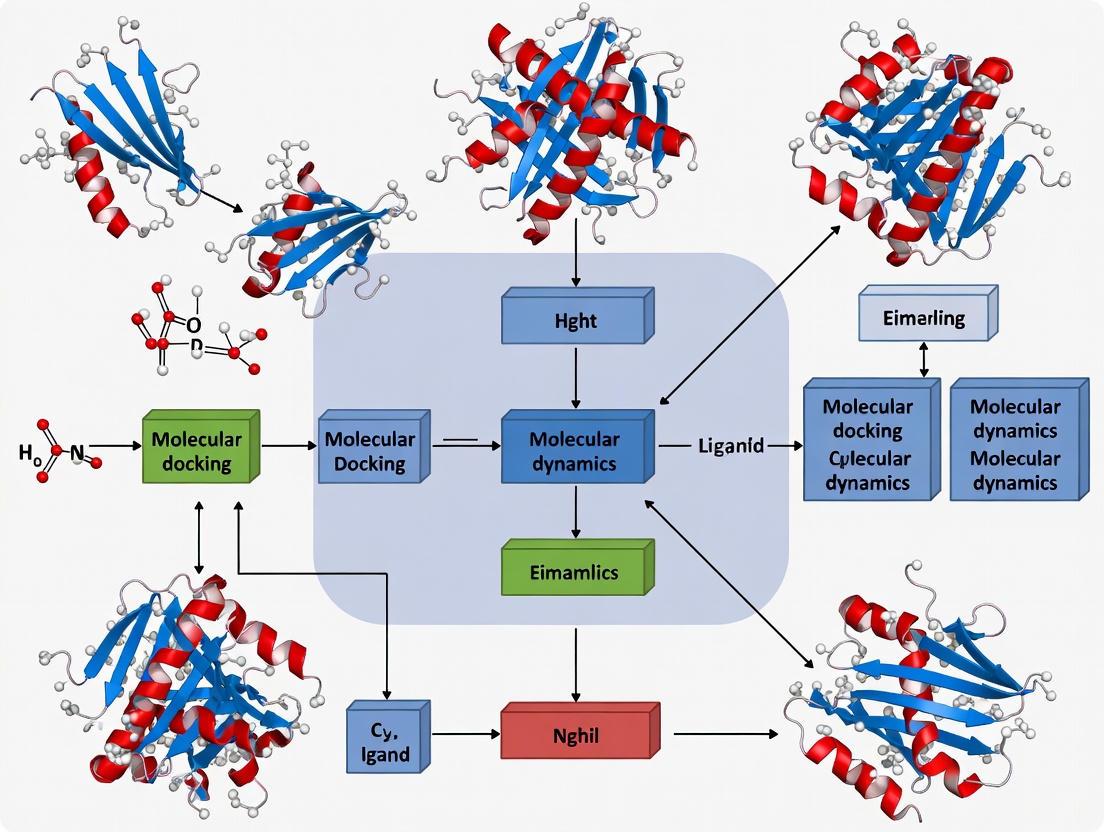
Protein function is governed by dynamic conformational changes, not static structures, making the accurate handling of flexibility a central challenge in molecular dynamics (MD).
Beyond Static Structures: A 2025 Guide to Mastering Protein Flexibility in Molecular Dynamics Simulations
Abstract
Protein function is governed by dynamic conformational changes, not static structures, making the accurate handling of flexibility a central challenge in molecular dynamics (MD). This article provides a comprehensive guide for researchers and drug development professionals, covering the foundational principles of protein dynamics, the latest AI-enhanced and machine learning methods for simulating flexibility, strategies for troubleshooting and optimizing simulations, and rigorous techniques for validating results against experimental data. By synthesizing cutting-edge developments from 2024-2025, we offer a practical roadmap for leveraging dynamic simulations to drive discoveries in structural biology and therapeutic design.
Why Motion Matters: The Fundamental Principles of Protein Dynamics
The traditional view of proteins as static, rigid structures has been fundamentally overturned. Modern structural biology now recognizes that protein function arises from the intricate interplay of structure, dynamics, and biomolecular interactions [1] [2]. While advances in cryo-EM and AI-based structure prediction have provided high-resolution snapshots, capturing the dynamic and energetic features that govern protein function remains a significant challenge [1] [2]. This paradigm shift from analyzing single structures to characterizing dynamic ensembles is crucial for understanding biological mechanisms and accelerating drug discovery.
Frequently Asked Questions (FAQs)
1. Why is considering protein flexibility critical in modern drug design? Protein flexibility is fundamental because a protein's function is directly linked to its motion. Ligands often bind to transient, low-population states rather than the average structure seen in a single crystal. By studying dynamic ensembles, researchers can identify these functionally important intermediates, leading to more effective drugs that target specific conformational states [1] [2].
2. What experimental techniques provide data on protein dynamics? Several biophysical methods yield valuable, though often indirect, information on dynamics. Key techniques include:
- NMR: Provides atomic-resolution information on dynamics across various timescales.
- HDX-MS: Probes protein mobility by measuring hydrogen-deuterium exchange.
- SAXS: Offers low-resolution information on overall shape and flexibility in solution.
- cryo-EM: Can sometimes capture multiple conformational states.
- EPR: Used to study dynamics and distances in proteins [1] [2].
3. How do simulations integrate with experimental data to study flexibility? Integrative modeling approaches combine data from the techniques above with physics-based molecular dynamics (MD) simulations. A key method uses the maximum entropy principle to build dynamic ensembles that are consistent with all available experimental data while addressing uncertainty and bias. This reveals both stable structures and transient, functionally important intermediates [1] [2].
4. What is a common challenge when simulating ligand unbinding, and how can it be addressed? A major challenge is preventing the entire protein-ligand complex from drifting under force while allowing natural flexibility for the unbinding process. A study on Steered Molecular Dynamics (SMD) proposed an effective solution: applying a restrained potential only to the Cα atoms of the protein located more than 1.2 nm from the ligand. This method offers a more natural release of the ligand compared to fully rigid or overly flexible restraints [3].
Troubleshooting Guide: Protein Flexibility in Simulations
Problem: Unphysical Results in Ligand Unbinding Simulations
Symptoms: The ligand fails to exit the binding site, the protein structure deforms unnaturally, or the entire complex drifts in the water solvent.
| Possible Cause | Recommendation | Rationale |
|---|---|---|
| Overly rigid protein backbone | Avoid restraining all heavy atoms or all Cα atoms. Instead, restrain only Cα atoms beyond a specific distance (e.g., >1.2 nm) from the ligand [3]. | Allows necessary local flexibility in the binding site for a natural unbinding pathway while preventing global drift. |
| Excessively flexible protein backbone | Apply a harmonic restraint to a sufficient number of Cα atoms to anchor the protein. A too-weak restraint cannot counter the pulling force [3]. | Prevents the external force from translating the entire complex, ensuring it focuses on breaking ligand-protein interactions. |
| Suboptimal pulling direction | Choose a pulling direction based on structural analysis, such as the center of the protein's binding pocket exit tunnel [3]. | Mimics a more physiologically relevant unbinding pathway and increases simulation success. |
Problem: Difficulty in Reconciling Simulation Data with Experiments
Symptoms: Your computational ensemble does not match or explain data from biophysical experiments like HDX-MS or NMR.
| Possible Cause | Recommendation | Rationale |
|---|---|---|
| Sampling is insufficient | Use enhanced sampling methods to overcome energy barriers and explore a wider conformational space [1] [2]. | Captures rare events and transient states that are critical for function but poorly sampled in standard simulations. |
| Experimental data is not integrated | Employ integrative modeling and the maximum entropy principle to bias simulations toward ensembles that agree with experimental data [1] [2]. | Ensures the computational model is not only physically plausible but also consistent with real-world observational data. |
| Bias from a single static structure | Initiate simulations from multiple different conformations (if available) rather than a single PDB structure. | Helps avoid getting trapped in the local energy minimum of the starting crystal form and explores ensemble diversity. |
Essential Experimental Protocols
Protocol 1: Integrative Modeling for Dynamic Ensembles
Objective: To construct a dynamic ensemble of protein conformations that integrates data from multiple biophysical experiments and physics-based simulations.
- Data Collection: Gather experimental data from techniques such as NMR (chemical shifts, J-couplings, NOEs), HDX-MS (protection factors), SAXS (scattering curves), and/or cryo-EM (density maps) [1] [2].
- Simulation Setup: Initialize molecular dynamics (MD) simulations using a starting structure (e.g., from AlphaFold2 or a crystal structure).
- Ensemble Refinement: Use the maximum entropy principle to reweight the simulation trajectories. This method applies minimal bias to the simulation so that the final ensemble's averaged properties match the experimental data [1] [2].
- Validation and Analysis: Validate the ensemble against experimental data not used in the refinement. Analyze the ensemble to identify metastable states, conformational heterogeneity, and functional mechanisms.
Protocol 2: SMD for Ligand Unbinding with Optimized Restraints
Objective: To simulate the unbinding pathway of a ligand from its protein target using a rationally restrained protein backbone [3].
System Preparation:
- Obtain the protein-ligand complex structure (e.g., from PDB).
- Add hydrogen atoms, solvate the system in a water box, and add ions to neutralize the charge.
- Use an appropriate force field (e.g., Amber ff99SB-ILDN for the protein and GAFF for the ligand).
Define Restraints:
- Identify all Cα atoms in the protein.
- Calculate the distance from each Cα atom to the ligand.
- Apply a harmonic restraint potential only to those Cα atoms that are more than 1.2 nm away from the ligand [3].
SMD Simulation:
- Attach a virtual spring to the ligand.
- Pull the spring along a chosen vector (e.g., the center of the binding pocket exit tunnel) at a constant velocity.
- Record the force and displacement profiles over time.
Analysis:
- Analyze the rupture force and work profile.
- Identify key residues and interactions along the unbinding pathway.
- Monitor the protein's conformational changes during ligand release.
| Item | Function / Application |
|---|---|
| GROMACS | A versatile software package for performing molecular dynamics simulations; used for system preparation, simulation, and analysis [3]. |
| Amber ff99SB-ILDN Force Field | A highly regarded force field parameter set for proteins, providing accurate descriptions of bonded and non-bonded interactions in MD simulations [3]. |
| General Amber Force Field (GAFF) | A force field designed for parameterizing small organic molecules, like drug ligands, for use in simulations with the Amber suite [3]. |
| PyMOL | A molecular visualization system used for repairing missing residues in protein structures and for generating publication-quality images [3]. |
| NMR Spectroscopy | An experimental technique used to obtain atomic-level information on protein dynamics and structure in solution [1] [2]. |
| HDX-MS | An experimental technique that measures hydrogen-deuterium exchange to probe protein mobility and solvent accessibility [1] [2]. |
| Maximum Entropy Reweighting | A computational algorithm used to integrate experimental data with simulations, generating a statistically sound dynamic ensemble [1] [2]. |
Workflow Visualizations
Diagram 1: Integrative Workflow for Dynamic Ensemble Determination.
Diagram 2: Decision Flow for Protein Restraint in SMD.
Frequently Asked Questions & Troubleshooting Guides
This technical support center addresses common challenges researchers face when handling protein flexibility in molecular dynamics simulations, providing practical solutions and methodologies.
FAQ 1: How can I account for large-scale backbone flexibility during steered molecular dynamics (SMD) simulations?
Challenge: A researcher is unable to achieve a natural ligand release pathway during SMD simulations. The ligand either gets stuck in the binding site or the entire protein-ligand complex drifts under the influence of the water bulk layer.
Solution: The restraint strategy applied to the protein backbone must balance preventing overall drift while permitting necessary local flexibility. Avoid restraining all heavy atoms or all Cα atoms, as this oversimplifies the system and fails to capture biologically relevant dynamics [3]. Instead, apply harmonic restraints only to the Cα atoms of residues located more than 1.2 nm from the ligand [3]. This method prevents global rotation and drift while allowing the protein backbone around the binding site to adapt flexibly during the ligand's egress.
Experimental Protocol: SMD with Optimized Backbone Restraints [3]
System Preparation:
- Obtain the protein-ligand complex structure (e.g., from the PDB Bank).
- Add hydrogen atoms using GROMACS (version 2020 and above) or similar software.
- Repair any missing residues using a tool like PyMol.
- Optimize the ligand's geometry and derive its electrostatic potential map using the Gaussian 16 package at the B3LYP/6-31+G(d,p) level.
- Assign atomic net charges using the RESP method and generate additional parameters with the Antechamber module of AMBER Tools and the General Amber Force Field (GAFF).
Simulation Setup:
- Solvate the system in a cubic box, ensuring a minimum distance of 0.6 nm between the protein surface and the box boundaries.
- Neutralize the system by adding Na+ or Cl− ions.
- Employ the Particle Mesh Ewald (PME) method for long-range electrostatic interactions and set periodic boundary conditions.
- Apply the SHAKE algorithm to constrain covalent bonds involving hydrogen atoms.
Defining Restraints:
- Calculate the distance between every protein Cα atom and the ligand.
- Apply a harmonic restraint potential only to Cα atoms located more than 1.2 nm from the ligand. This creates a flexible but stable simulation environment.
SMD Production:
- Apply the external pulling force to the ligand.
- Record the force-time and displacement-time profiles for analysis.
FAQ 2: My simulations are computationally expensive. Are there efficient alternatives to all-atom MD for initial flexibility screening?
Challenge: A research group needs to study the flexibility of a large protein or multiple mutants but lacks the computational resources for extensive all-atom MD.
Solution: Utilize efficient, coarse-grained simulation tools for initial screening and to gain a rapid overview of protein dynamics.
Comparison of Computational Methods for Protein Flexibility Analysis
| Method | Key Features | Typical Application | Computational Cost | Example Tools |
|---|---|---|---|---|
| All-Atom MD | High accuracy, atomistic detail, uses explicit solvent [4] | Studying specific molecular interactions, ligand unbinding [3] | Very High | GROMACS [4], AMBER |
| Coarse-Grained MD | Faster than all-atom MD, simplified residue representation [5] | Rapid simulation of large systems, near-native dynamics, loop flexibility [5] | Medium | CABS-flex 3.0 [5] |
| Elastic Network Models (ENMs) | Very fast, models protein as beads and springs [6] | Predicting large-scale collective motions and low-frequency modes [6] | Low | ProDy [6] |
| Machine Learning Predictors | Fast prediction from sequence or structure, no simulation required [6] | High-throughput screening, guiding protein design [6] | Very Low | Flexpert-Seq, Flexpert-3D [6] |
Experimental Protocol: Rapid Flexibility Profiling with CABS-flex [5]
CABS-flex is a coarse-grained simulation tool useful for modeling the flexibility of globular proteins, proteins with disordered regions, and loop dynamics.
- Input Preparation: Prepare the protein structure in PDB format. The server can handle structures with missing residues.
- Job Submission: Access the CABS-flex 3.0 web server (https://lcbio.pl/cabsflex3/) and upload your structure.
- Configuration (Optional): Define the degree of flexibility for specific fragments using distance restraints if needed.
- Simulation Execution: Run the simulation. CABS-flex typically completes trajectories much faster than all-atom MD.
- Analysis: Download the resulting trajectory and analyze it for Root Mean Square Fluctuation (RMSF) and other flexibility metrics to identify dynamic regions.
FAQ 3: How can I integrate AI-predicted structures to study the energy landscapes of flexible regions?
Challenge: A scientist has used AlphaFold2 to model a protein, but the model contains unresolved flexible regions critical for function. They need to explore the conformational energy landscape of these regions.
Solution: Combine AI-based structural models with physics-based simulation methods to explore the energy landscape of flexible regions.
Experimental Protocol: Exploring Energy Landscapes with Metadynamics and AI [7]
This protocol uses metadynamics simulations to sample the energy landscape based on initial AI-generated models.
- Initial Model Generation: Use AI tools (AlphaFold2, RosettaFold, etc.) or traditional modeling (MODELER, SwissModel) to generate initial structural approximations for the flexible regions.
- System Setup: Prepare the full protein system for molecular dynamics, incorporating the AI-generated models.
- Metadynamics in Latent Space:
- Define Collective Variables (CVs) that describe the conformational changes of interest in the flexible regions.
- Perform metadynamics simulations to deliberately "fill" the energy basins with a history-dependent potential. This encourages the system to escape local minima and explore a wider conformational space.
- Landscape Reconstruction: Use the data from the metadynamics simulation to reconstruct the underlying free energy landscape as a function of the defined CVs.
- Conformation Prioritization: Identify the low-energy minima on the reconstructed landscape. These represent the stable, functionally relevant conformations of the previously unresolved region [7].
FAQ 4: How does protein flexibility influence evolution and the risk of aggregation?
Challenge: Understanding why certain functional proteins are prone to aggregation and how evolution balances function with stability.
Solution: Evolutionary pressure selects for sequences that can sample multiple conformational sub-states to enable function, not just for stability. This functional necessity inherently creates a risk of aggregation, as some of these sub-states may expose hydrophobic surfaces or aggregation-prone sequences [8].
Key Concepts Table
| Concept | Description | Implication for MD Research |
|---|---|---|
| Functional Sub-states | Distinct conformational states within a protein's ensemble that are relevant to its biological function [9]. | Simulations should be long enough to sample these rare but critical states. |
| Rough Energy Landscape | A landscape with multiple energy minima, allowing a protein to sample various conformations [8]. | Explains conformational heterogeneity observed in long-timescale simulations. |
| Aggregation Risk | The inherent danger that functionally required conformational states may expose aggregation-prone motifs [8]. | Simulations can help identify these risky states by analyzing surface exposure of hydrophobic residues. |
| Conformational Ensemble | The collection of all structures a protein adopts under specific conditions [9]. | Analysis should focus on the ensemble, not just a single static structure. |
The Scientist's Toolkit: Research Reagent Solutions
Table: Essential Resources for Studying Protein Flexibility
| Item | Function | Example Use Case |
|---|---|---|
| ATLAS Database | A database of standardized all-atom MD simulations for a representative set of proteins [4]. | Benchmarking your simulation results against a standardized dataset. |
| Flexpert Predictors | Machine learning tools (Flexpert-Seq, Flexpert-3D) that predict protein flexibility from sequence or structure [6]. | Quickly estimating flexibility for high-throughput design projects. |
| LoopGrafter | A web tool for in silico transplantation of dynamic loops between proteins to engineer flexibility [6]. | Designing chimeric proteins to test the role of specific flexible loops. |
| AGGRESCAN3D (A3D) | A server that predicts aggregation properties of protein structures, which can incorporate flexibility data from CABS-flex [5]. | Assessing how protein dynamics might influence aggregation propensity. |
Appendix: Conceptual Diagrams
Energy Landscape Diagram
SMD Restraint Methodology
Conceptual Foundations: Understanding Flexibility Drivers
Protein flexibility is not a single entity but a spectrum of dynamic behaviors driven by a protein's innate sequence and modulated by its external environment. Understanding this distinction is crucial for designing accurate simulations.
What are the fundamental differences between intrinsic and extrinsic flexibility?
- Intrinsic Flexibility is encoded within the protein's amino acid sequence. Certain sequences have a natural propensity for disorder or high mobility, often because they lack the hydrophobic residues needed to form a stable core and are enriched in charged and polar amino acids [10]. This includes Intrinsically Disordered Regions (IDRs) and flexible loops or linkers that remain dynamic even in the protein's native, folded state.
- Extrinsic Flexibility arises from a protein's interactions with its environment. This includes:
- Ligand Binding: The presence of a small molecule, substrate, or inhibitor can induce structural changes, a phenomenon known as "induced fit" [11].
- Protein-Protein Interactions: Binding to another biomolecule can stabilize or destabilize certain conformations, altering flexibility.
- Solvent and Ions: The composition of the surrounding solution (e.g., pH, ion concentration) can affect electrostatic interactions and protein dynamics [4].
How do B-factors from crystallography relate to MD-derived flexibility metrics?
Both measure flexibility but in different contexts. The B-factor (or temperature factor) from X-ray crystallography reflects the smearing of electron density around an atom's average position, reporting on uncertainty that can stem from thermal vibration or static disorder [10]. In contrast, Root Mean Square Fluctuation (RMSF) from Molecular Dynamics (MD) simulations is a direct measure of the deviation of an atom's position from its average over time, providing a explicit, atomistic view of dynamics [4]. While often correlated, they are not identical. A 2025 study notes that AlphaFold's pLDDT can sometimes correlate better with MD-derived RMSF than with B-factors from isolated crystal structures [11].
Can AlphaFold2's pLDDT score reliably predict protein flexibility?
This is an area of active research and requires careful interpretation. The pLDDT score is primarily a confidence metric indicating how well the predicted structure agrees with co-evolutionary and structural data. While very low pLDDT scores (<50-70) are strong indicators of intrinsic disorder or high flexibility, the score's utility for assessing flexibility in well-folded, globular regions is more limited [11]. A key limitation is that standard AlphaFold2 predictions often do not capture the flexibility changes induced by extrinsic factors like ligand binding, as they are typically generated for the protein in isolation [11]. Therefore, pLDDT should be used as a preliminary guide, not a definitive measure of flexibility.
Why do different experimental structures of the same protein show conformational variation?
This variation is a direct observation of protein flexibility and can be driven by both intrinsic and extrinsic factors. Different crystallization conditions (e.g., pH, ligands, crystal packing) can trap the protein in distinct conformational states. A 2024 analysis found that for 27.7% of distinct protein folds, at least one experimental structure deviated from the AlphaFold2 prediction by over 2.5Å RMSD, demonstrating that this flexibility is widespread and biologically relevant, especially in proteins regulating immune response and metabolism [12].
Troubleshooting Guide: Common Scenarios and Solutions
My simulation system becomes unstable shortly after energy minimization. What could be wrong?
Instability often stems from problems in the initial system setup.
- Problem: Missing atoms in the initial structure. GROMACS's
pdb2gmxwill fail with errors like "atom X in residue Y not found" or "long bonds and/or missing atoms" [13]. Running a simulation with missing atoms is not recommended and will lead to crashes. - Solution: Use external modeling software like Chimera with MODELLER, Swiss PDB Viewer, or AlphaFold2 to reconstruct any missing atoms or loops in your protein structure before proceeding with topology generation [13] [14].
- Problem: Incorrect parameters for non-standard residues. Using parameters from one force field for a molecule parametrized in another will cause unphysical behavior [14].
- Solution: Parametrize the non-standard residue (e.g., a ligand) yourself according to the methodology of your chosen force field, or find a topology file that is specifically designed for it [14].
My protein's flexible regions are not sampling the correct conformational space during MD. How can I improve this?
This indicates a sampling problem, which is common for slow-moving loops or domain motions.
- Problem: Insufficient simulation time. The timescale of the motion you wish to observe may be longer than your simulation.
- Solution: Consider using enhanced sampling methods. Tools like GENESIS support advanced algorithms such as Replica-Exchange MD (REMD) and Gaussian accelerated MD (GaMD) which can greatly improve the sampling of conformational states [15].
- Problem: Over-restraining the system. Applying overly tight position restraints can artificially suppress the natural flexibility you are trying to study.
- Solution: Use position restraints judiciously, typically only during initial equilibration, and release them for the production simulation. Ensure restraint files are included in the correct order in your topology [13].
AlphaFold2 predicts my protein with a high-confidence (pLDDT) rigid structure, but experimental data suggests a flexible region. Who should I trust?
Trust the experimental data. AlphaFold2 has a known tendency to predict a single, static conformation.
- Problem: AF2 does not ensemble functional states. It often predicts one high-accuracy conformation but may miss alternative biologically relevant states captured by experiments [12].
- Solution: Use the AF2 model as a starting point. If experimental data (like NMR, HDX-MS, or cryo-EM) indicates flexibility, use MD simulations to explore the conformational landscape around the AF2-predicted structure. The ATLAS database provides standardized MD trajectories for many proteins, which can serve as a useful reference for expected dynamic behavior [4].
I see "bonds" appearing and disappearing when I visualize my simulation trajectory. Is this an error?
This is almost always a visualization artifact, not a problem with your simulation data.
- Problem: Visualization software uses distance-based bonding. Most visualization tools determine bonds based on predefined distances between atoms, which can change as the protein moves.
- Solution: The true bonding information is defined in your topology file. If your visualization software can read the GROMACS
.tprfile, it will display the correct, unchanging bonding pattern [14].
Experimental Protocols for Flexibility Analysis
Protocol 1: Quantifying Flexibility from Molecular Dynamics Simulations
This protocol outlines how to derive protein flexibility metrics from an all-atom MD simulation, based on methodologies used in large-scale datasets like ATLAS [4].
1. System Preparation and Simulation
- Force Field: Use the CHARMM36m force field, which provides balanced sampling for both folded and disordered states [4].
- Solvation: Solvate the protein in a triclinic box with TIP3P water molecules.
- Neutralization: Add Na⁺/Cl⁻ ions to a physiological concentration of 150 mM.
- Equilibration: Perform step-wise equilibration:
- Energy minimization using the steepest descent algorithm.
- NVT ensemble equilibration for 200 ps.
- NPT ensemble equilibration for 1 ns with position restraints on protein heavy atoms.
- Production Run: Run multiple (e.g., 3) independent replicates of unrestrained production simulation for at least 100 ns each, saving coordinates every 10 ps [4].
2. Trajectory Analysis
- RMSF Calculation: After aligning the trajectory to a reference structure to remove global rotation/translation, calculate the RMSF for each Cα atom using the formula:
RMSFᵢ = √( (1/T) * Σₜ₌₁ᵀ (rᵢ(t) - ⟨rᵢ⟩)² )
where
rᵢ(t)is the position of Cα atom i at time t,⟨rᵢ⟩is its average position, and T is the total number of frames [4] [11]. - Other Metrics: Analyze the trajectory for other flexibility indicators, such as the variation in solvent accessible surface area (SASA) or the number of distinct protein blocks (a structural alphabet) sampled per residue [11].
Protocol 2: Correlating AF2 Prediction with Experimental Flexibility
This protocol provides a framework for critically evaluating AlphaFold2 outputs against experimental flexibility data [12] [11].
1. Generate the AF2 Model
- Use ColabFold (a streamlined version of AF2) or the local AlphaFold2 software to generate a structural model of your protein of interest.
- Extract the per-residue pLDDT scores from the output.
2. Acquire Experimental Flexibility Data
- B-factors: If available, download B-factors from the Protein Data Bank (PDB) for crystallographic structures of your protein or homologs.
- NMR Ensembles: For proteins with NMR structures, use the ensemble of models to calculate per-residue RMSF.
- HDX-MS Data: If available, Hydrogen-Deuterium Exchange Mass Spectrometry data can serve as a proxy for backbone flexibility and solvent exposure.
3. Comparative Analysis
- Plot the pLDDT score, experimental B-factors (or NMR RMSF), and any MD-derived RMSF on the same graph for visual comparison.
- Calculate correlation coefficients (e.g., Pearson's) between pLDDT and the experimental metrics.
- Key Interpretation: A strong correlation suggests the predicted flexibility is reliable. A weak correlation, especially in regions known to interact with partners, indicates that extrinsic factors may be dominating the flexibility profile, and MD simulations may be necessary for a fuller picture [11].
Reference Tables and Data
Table 1: Amino Acid Propensities in Flexible and Ordered Regions
This table summarizes the enrichment and depletion of amino acids in different flexibility categories, based on a comparative analysis of crystal structures [10]. Positive values indicate enrichment in that category, negative values indicate depletion.
| Amino Acid | Low B-factor (Ordered) | High B-factor (Flexible Ordered) | Short Disordered Regions | Long Disordered Regions |
|---|---|---|---|---|
| Tryptophan (W) | Enriched | Depleted | Depleted | Depleted |
| Phenylalanine (F) | Enriched | Depleted | Depleted | Depleted |
| Glutamic Acid (E) | Depleted | Enriched | Enriched | Enriched |
| Lysine (K) | Depleted | Enriched | Enriched | Enriched |
| Asparagine (N) | Slightly Depleted | Highly Enriched | Slightly Enriched | Depleted |
| Glycine (G) | - | Enriched | Enriched | Not Enriched |
| Proline (P) | - | Not Enriched | Not Enriched | Enriched |
Table 2: Comparison of Methods for Assessing Protein Flexibility
This table provides a high-level comparison of common techniques used in the field.
| Method | Type | What It Measures | Key Advantages | Key Limitations |
|---|---|---|---|---|
| X-ray B-factor | Experimental | Uncertainty in atom position from crystal lattice. | Direct experimental readout; high resolution. | Confounds thermal motion and static disorder; crystal packing can suppress dynamics [10] [11]. |
| NMR Ensemble | Experimental | Ensemble of conformations in solution. | Directly visualizes an ensemble of states in near-native conditions. | Limited to smaller proteins; can be cost and time-prohibitive. |
| HDX-MS | Experimental | Rate of hydrogen/deuterium exchange on backbone amides. | Probes solvent exposure and dynamics; works on large complexes. | Indirect measure of flexibility; lower resolution. |
| Molecular Dynamics (MD) | Computational | Time-based fluctuation of atomic positions (e.g., RMSF). | Provides atomistic detail and time evolution; can simulate any condition. | Computationally expensive; sampling and force field accuracy are concerns [4] [16]. |
| AlphaFold2 pLDDT | Computational | Confidence in local structure prediction. | Very fast; no simulation required. | A confidence metric, not a direct flexibility measure; poor at capturing extrinsic flexibility [11]. |
| Elastic Network Models (ENM) | Computational | Low-frequency collective motions of a structure. | Extremely fast; good for large-scale motions. | Coarse-grained; lacks atomic detail and chemical specificity [6]. |
Visualization of Concepts and Workflows
Protein Flexibility Analysis Workflow
This diagram outlines a logical workflow for integrating computational and experimental data to analyze protein flexibility.
Relationship Between Flexibility Drivers and Metrics
This diagram illustrates how intrinsic and extrinsic factors influence different flexibility metrics.
| Resource Name | Type | Function / Utility |
|---|---|---|
| GROMACS | MD Software Suite | A versatile package for performing MD simulations, energy minimization, and trajectory analysis. Highly optimized for performance [4] [13]. |
| CHARMM36m Force Field | Force Field Parameters | A set of parameters for MD simulations optimized for a balanced description of folded and disordered protein states [4]. |
| ATLAS Database | Database | A resource of standardized, all-atom MD simulations for a large, representative set of proteins, providing pre-computed flexibility metrics for comparison [4]. |
| AlphaFold2 / ColabFold | Structure Prediction Tool | Provides high-accuracy protein structure models and pLDDT confidence scores, useful for generating starting structures and initial flexibility estimates [12] [11]. |
| GENESIS | MD Software Suite | A simulation package specializing in enhanced sampling methods like REMD and GaMD, which are critical for studying complex conformational changes [15]. |
| Modeller / Chimera | Modeling Software | Tools for homology modeling and filling in missing atoms or loops in experimental protein structures, a critical step in preparing simulation inputs [4] [14]. |
The Direct Link Between Dynamics, Misfolding Diseases, and Drug Action
Troubleshooting Guides
Guide 1: Addressing Unphysical Ligand Unbinding in Steered Molecular Dynamics (SMD)
Problem: During SMD simulations, the ligand fails to exit the binding site cleanly or the entire protein-ligand complex drifts in the water solvent.
Explanation: A perfectly rigid protein backbone can force the ligand along an unnatural exit path, while an overly flexible protein allows the system to drift, preventing proper study of the unbinding event [3]. The goal is to apply restraints that mimic the natural context where the protein is embedded in a cellular environment.
Solution: Apply a harmonic restraint potential to the Cα atoms of the protein backbone that are more than 1.2 nm from the ligand [3]. This method provides a balance between a fully rigid protein and one that is too flexible.
- Steps:
- Identify Restraint Atoms: Calculate the distance from the ligand's center of mass to each Cα atom in the protein.
- Apply Restraints: Apply a harmonic restraint potential (e.g., using a force constant of 1000 kJ/mol/nm², as commonly used in equilibration protocols [4]) to all Cα atoms located more than 1.2 nm from the ligand.
- Run Simulation: Proceed with the SMD simulation. This setup is expected to lead to a more natural release of the ligand [3].
Guide 2: Handling System Instability During Molecular Dynamics Equilibration
Problem: The molecular system experiences large forces, crashes, or exhibits unnatural geometry during the initial equilibration phase of a simulation.
Explanation: Initial structures, especially those from modeling where side chains or loops have been added, can have atomic clashes or strained bonds. The equilibration phase allows the system to relax into a stable, energetically favorable state before data collection (production run).
Solution: A phased equilibration approach with positional restraints on the protein heavy atoms, which are gradually relaxed [4].
- Steps:
- Energy Minimization: Run an energy minimization (e.g., using the steepest descent algorithm for 5000 steps) to remove any bad van der Waals contacts [4].
- NVT Equilibration with Restraints: Equilibrate the system at constant volume and temperature (NVT ensemble) for 200 ps. During this phase, apply strong positional restraints (e.g., 1000 kJ/mol/nm²) on the protein's heavy atoms to allow the solvent to settle around the protein without the protein structure collapsing [4].
- NPT Equilibration with Restraints: Equilibrate the system at constant pressure and temperature (NPT ensemble) for 1 ns. Maintain the heavy atom restraints to allow the solvent density to stabilize [4].
- Production without Restraints: Release all positional restraints on the protein and run the production simulation.
Frequently Asked Questions (FAQs)
FAQ 1: Why is protein flexibility so important in molecular dynamics studies related to drug design?
Protein flexibility is crucial because proteins are dynamic entities whose function often depends on conformational changes. For drug design, understanding how a ligand unbinds from its target, the residence time, and the dissociation rate is critical information that static structures cannot fully provide [3]. Flexibility allows for induced-fit binding, allosteric regulation, and is a key factor in diseases like misfolding disorders, where improper dynamics can lead to aggregation [6].
FAQ 2: My SMD simulation shows the ligand "smacking" into the wall of the binding site. What is the likely cause?
This is a known issue that can occur when the protein backbone is made too rigid, typically by restraining all heavy atoms or all Cα atoms. This excessive restraint prevents the protein from undergoing the natural, small-scale conformational adjustments that accompany ligand unbinding, forcing the ligand into an unnatural pathway [3].
FAQ 3: What are some reliable methods for quantifying protein flexibility from a simulation trajectory?
The most common metric is the Root Mean Square Fluctuation (RMSF) per residue, calculated from a Molecular Dynamics (MD) trajectory [6]. Other computational methods include Elastic Network Models (ENMs) like ProDy, which are faster than full MD and can predict large-scale collective motions [6]. Experimentally, X-ray crystallography B-factors can provide information on atomic mobility [4] [6].
FAQ 4: Where can I find standardized MD simulation data for a broad set of proteins to compare against my work?
The ATLAS database is a resource that provides standardized all-atom molecular dynamics simulations for a large, representative set of proteins [4]. It contains trajectories and analyses for over 1390 non-redundant protein domains, allowing for systematic comparison of protein dynamic properties [4].
Quantitative Data for Simulation Planning
The following table summarizes key parameters from established simulation protocols to assist in experimental design.
Table 1: Standardized Equilibration and Production MD Parameters
| Parameter | Equilibration (NVT) | Equilibration (NPT) | Production (NPT) |
|---|---|---|---|
| Ensemble | Constant Volume, Temperature | Constant Pressure, Temperature | Constant Pressure, Temperature |
| Duration | 200 ps [4] | 1 ns [4] | 100 ns (per replicate) [4] |
| Time Step | 1 fs [4] | 2 fs [4] | 2 fs [4] |
| Temperature Coupling | Nosé-Hoover thermostat (300 K, τT = 1 ps) [4] | Nosé-Hoover thermostat (300 K, τT = 1 ps) [4] | Nosé-Hoover thermostat (300 K, τT = 1 ps) [4] |
| Pressure Coupling | Not Applicable | Parrinello-Rahman barostat (1 bar, τp = 5 ps) [4] | Parrinello-Rahman barostat (1 bar, τp = 5 ps) [4] |
| Positional Restraints | Heavy atoms (1000 kJ/mol/nm²) [4] | Heavy atoms (1000 kJ/mol/nm²) [4] | None [4] |
Experimental Protocol: Standard All-Atom MD Simulation
This protocol outlines the steps for setting up and running a standard all-atom molecular dynamics simulation, based on the methodology used for the ATLAS database [4].
Objective: To generate a trajectory of a protein's motion in a solvated, neutralized environment for analysis of its flexibility and dynamics.
Workflow:
Methodology:
System Preparation
- Protein Setup: Remove crystallographic water and ligands. Add missing hydrogen atoms and model any missing loops (using tools like MODELLER or AlphaFold2) [4].
- Force Field: Assign parameters using a force field like CHARMM36m or Amber ff99SB-ILDN [4] [3].
- Solvation: Place the protein in a periodic box (e.g., triclinic) with a minimum distance of 1.0 nm between the protein and box edge. Solvate with water molecules (e.g., TIP3P model) [4].
- Neutralization: Add ions (e.g., Na⁺/Cl⁻) to neutralize the system's net charge and then additional ions to achieve a physiological concentration (e.g., 150 mM) [4].
Energy Minimization
- Algorithm: Use the steepest descent algorithm for 5000 steps [4].
- Goal: Relieve any atomic clashes and high-energy configurations introduced during the setup process.
NVT Equilibration
NPT Equilibration
Production MD
The Scientist's Toolkit: Research Reagent Solutions
| Reagent / Resource | Category | Function / Application |
|---|---|---|
| GROMACS [3] [4] | Software | A versatile and high-performance package for performing MD simulations. |
| CHARMM36m [4] | Force Field | A force field providing balanced sampling for folded and disordered proteins. |
| Amber ff99SB-ILDN [3] | Force Field | A widely used force field for protein simulations, particularly with the AMBER software. |
| GAFF (General Amber Force Field) [3] | Force Field | Used to derive parameters for small molecules (ligands) in simulations. |
| ATLAS [4] | Database | A database of standardized MD simulations for a large set of proteins, useful for comparison and benchmarking. |
| ProDy [6] | Software | An API and toolkit for performing Elastic Network Models and Normal Mode Analysis to predict protein dynamics. |
| Particle Mesh Ewald (PME) [3] | Algorithm | A standard method for handling long-range electrostatic interactions in MD simulations. |
| SHAKE [3] | Algorithm | A constraint algorithm used to "freeze" the bonds of hydrogen atoms, allowing for a longer simulation time step (e.g., 2 fs). |
The Modern Simulation Toolkit: AI, ML, and Advanced Sampling Techniques
The study of protein flexibility is fundamental to understanding biological functions, yet capturing these dynamic conformational changes computationally has remained a formidable challenge. Classical molecular dynamics (MD) simulations, while efficient, lack the chemical accuracy needed for precise mechanistic insights, while quantum mechanical methods like Density Functional Theory (DFT) provide accuracy but are computationally prohibitive for large biomolecules [17] [18]. The AI2BMD (AI-based ab initio biomolecular dynamics) system bridges this critical gap, enabling efficient simulation of full-atom large biomolecules with ab initio accuracy [17].
AI2BMD addresses the fundamental generalization problem in machine learning force fields (MLFFs) through a novel protein fragmentation scheme, breaking down proteins into manageable dipeptide units. This approach, combined with the ViSNet machine learning potential trained on 20.88 million DFT-level samples, allows the system to achieve accurate energy and force calculations for proteins exceeding 10,000 atoms while reducing computational time by several orders of magnitude compared to traditional DFT methods [17] [19]. For researchers investigating protein flexibility, this technological advancement enables the precise characterization of folding and unfolding processes, accurate free-energy calculations, and exploration of conformational spaces that were previously inaccessible [17] [18].
Core Architecture and Workflow
The AI2BMD framework employs a sophisticated computational pipeline that integrates physical fragmentation principles with deep learning architectures. The system's core innovation lies in its generalizable approach to handling proteins of varying sizes and complexities while maintaining quantum-mechanical accuracy.
Table: AI2BMD System Components and Functions
| Component | Function | Technical Implementation |
|---|---|---|
| Protein Fragmentation | Divides proteins into manageable units | Sliding window dipeptide fragmentation with ACE/NME capping |
| Machine Learning Potential (ViSNet) | Calculates energy and atomic forces | Geometry-enhanced graph neural network with linear time complexity |
| Solvent Handling | Models explicit solvent environment | Polarizable AMOEBA force field integration |
| Simulation Engine | Performs molecular dynamics simulations | Cloud-compatible AI-driven simulation program with GPU acceleration |
AI2BMD Simulation Workflow
Performance Metrics & Validation
Accuracy Assessment Against Reference Methods
AI2BMD demonstrates remarkable accuracy in both energy and force calculations when validated against DFT reference methods. The system substantially outperforms conventional molecular mechanics approaches across diverse protein systems.
Table: Accuracy Comparison of AI2BMD vs. Molecular Mechanics (MM)
| Protein System | Atoms | Method | Energy MAE (kcal/mol/atom) | Force MAE (kcal/mol/Å) |
|---|---|---|---|---|
| Chignolin | 175 | AI2BMD | 0.038 | 1.974 |
| MM | 0.200 | 8.094 | ||
| Trp-cage | 281 | AI2BMD | 0.038 | 1.974 |
| MM | 0.200 | 8.094 | ||
| Albumin-binding domain | 746 | AI2BMD | 0.038 | 1.974 |
| MM | 0.200 | 8.094 | ||
| PACSIN3 | 1,040 | AI2BMD | 0.038 | 1.974 |
| MM | 0.200 | 8.094 | ||
| SSO0941 | 2,450 | AI2BMD | 0.0072 | 1.056 |
| MM | 0.214 | 8.392 |
Computational Efficiency Benchmarks
The computational efficiency of AI2BMD represents one of its most significant advantages, enabling previously impossible simulations of large biomolecular systems.
Table: Simulation Speed Comparison: AI2BMD vs. DFT
| Protein | Atoms | AI2BMD Time/Step (s) | DFT Time/Step | Speedup Factor |
|---|---|---|---|---|
| Trp-cage | 281 | 0.072 | 21 minutes | ~17,500x |
| Albumin-binding domain | 746 | 0.125 | 92 minutes | ~44,160x |
| Aminopeptidase N | 13,728 | 2.610 | >254 days | >8,000,000x |
Table: Essential Research Reagents and Computational Resources for AI2BMD
| Resource/Reagent | Function/Purpose | Specifications/Requirements |
|---|---|---|
| Protein Unit Dataset | Training data for ML potential | 20.88 million dipeptide conformations with DFT-level energies/forces |
| ViSNet Model | Machine learning force field | Geometry-enhanced graph neural network for energy/force prediction |
| AIMD-Chig Dataset | Validation dataset | 2 million Chignolin conformations with DFT reference calculations |
| GPU Acceleration | Computational hardware | CUDA-enabled GPU (A100, V100, RTX A6000, Titan RTX) with 8+ GB memory |
| Docker Environment | Software containerization | Pre-configured runtime environment for consistent execution |
| AMOEBA Force Field | Polarizable solvent model | Explicit solvent handling for biomolecular simulations |
Experimental Protocols & Methodologies
Protein Preparation Protocol
Objective: Prepare protein structures compatible with AI2BMD simulation requirements.
Step-by-Step Procedure:
- Initial Structure Loading: Load your protein PDB file into PyMOL using command:
cmd.load("your_protein.pdb", "molecule") - Hydrogen Addition: Add missing hydrogen atoms with command:
cmd.h_add("molecule") - N-terminal Capping: Utilize PyMOL's mutagenesis wizard for ACE capping:
- C-terminal Capping: Apply NME capping similarly:
- Atom Name Standardization: Process with AmberTools' pdb4amber utility:
pdb4amber -i your_protein.pdb -o processed_protein.pdb - Structure Validation: Ensure the final PDB file:
- Contains no TER separators within the protein chain
- Has residue numbering starting from 1 without gaps
- Includes properly named ACE (C, O, CH3, H1, H2, H3) and NME (N, CH3, H, HH31, HH32, HH33) atoms [20]
Critical Notes: Currently, the machine learning potential does not optimally support proteins with disulfide bonds. Avoid structures with intrachain disulfide bridges until this limitation is addressed in future updates [20].
System Setup and Preprocessing Workflow
Objective: Establish solvated simulation system with proper equilibration.
Implementation Notes:
- FF19SB Method: Comprehensive protocol requiring AMBER software packages for optimal parallel CPU/GPU performance
- AMOEBA Method: Simplified approach with recommendation for additional pre-equilibrium simulations to ensure proper system relaxation
- Method Selection: Choose based on available computational resources and desired level of system preparation
Production Simulation Execution
Objective: Execute ab initio accuracy molecular dynamics simulations.
Command Line Implementation:
Critical Parameters:
--sim-steps: Number of simulation steps (adjust based on system size and simulation goals)--record-per-steps: Trajectory recording frequency--preprocess-dir: Directory containing preprocessed and solvated structure files
Simulation Modes:
- Fragment Mode (Default): Proteins fragmented into dipeptides with ML potential calculation at each step
- ViSNet Mode: Whole-protein energy/force calculation using custom-trained ViSNet models (requires
--ckpt-typeargument)
Technical Support Center
Frequently Asked Questions (FAQs)
Q1: What are the specific terminal cap requirements for protein structures in AI2BMD?
AI2BMD requires neutral terminal caps with specific atom naming conventions. The N-terminus must be capped with an ACE (acetyl) group containing atoms named: C, O, CH3, H1, H2, H3. The C-terminus requires an NME (N-methyl) group with atoms named: N, CH3, H, HH31, HH32, HH33. These specifications ensure compatibility with the fragmentation algorithm and force field parameters. Use AmberTools' pdb4amber utility for atom name standardization after capping in PyMOL [20].
Q2: What hardware resources are essential for running AI2BMD simulations effectively?
The system requires x86-64 GNU/Linux systems with CUDA-enabled GPUs (8+ GB memory). Recommended GPUs include A100, V100, RTX A6000, or Titan RTX. For optimal performance, systems should have 8+ CPU cores and 32+ GB RAM. The program has been tested on Ubuntu 20.04 (Docker 27.1+) and ArchLinux (Docker 26.1+) environments. GPU memory requirements scale with protein size, with 13,728-atom systems successfully demonstrated on RTX A6000 (48 GB memory) [20].
Q3: How does AI2BMD handle proteins with disulfide bonds or non-standard residues?
Currently, the machine learning potential does not optimally support proteins with disulfide bonds. Researchers working with such proteins should await future updates addressing this limitation. For non-standard residues or modifications, the ViSNet mode with custom-trained models may offer a solution, though this requires generating appropriate training data and model retraining [20].
Q4: What is the significance of the fragmentation approach in achieving generalizability?
The protein fragmentation strategy decomposes proteins into 21 types of dipeptide units, creating a universal representation that applies to all proteins regardless of size or sequence. This approach enables the ML potential to learn local interactions comprehensively while avoiding the need for protein-specific training. The fragmentation handles inter-unit interactions through overlapping regions and systematic reassembly, ensuring accurate whole-protein energy and force calculations [17] [19].
Troubleshooting Guide
Table: Common AI2BMD Issues and Resolution Strategies
| Issue | Possible Causes | Resolution Steps |
|---|---|---|
| Simulation Collapse | Incorrect atom naming in terminal caps | Verify ACE/NME atom names using pdb4amber utility |
| GPU Memory Errors | Protein size exceeding available memory | Reduce system size or upgrade to higher memory GPU |
| Poor Performance | Insufficient CPU cores or outdated Docker | Ensure 8+ CPU cores and update Docker to latest version |
| Preprocess Failure | Missing hydrogen atoms or chain breaks | Use PyMOL to add hydrogens and ensure continuous chain |
| Generalization Errors | Unsupported residues or modifications | Stick to standard amino acids or train custom ViSNet model |
Installation Verification Protocol:
- Validate Docker installation:
docker --versionanddocker run hello-world - Confirm GPU accessibility within Docker environment
- Test with provided Chignolin example before moving to custom systems
- Verify output trajectory files in
Logs-[protein_name]directory
Applications in Protein Flexibility Research
AI2BMD enables unprecedented investigation of protein dynamic conformations, which are crucial for understanding biological function and dysfunction. The system can simulate folding and unfolding processes, capture intermediate states, and accurately compute thermodynamic properties that match experimental data [17] [18]. For drug discovery researchers, this capability is particularly valuable for studying conformational changes during drug-target binding, enzyme catalysis, and allosteric regulation [18].
The system's ability to explore diverse conformational spaces beyond what conventional MD can detect opens new opportunities for investigating intrinsically disordered proteins, multi-state proteins, and functional conformational transitions. Validation studies demonstrate AI2BMD's superior agreement with experimental measurements including J-coupling constants, folding free energies, melting temperatures, and pKa values [17] [18] [19]. This accuracy profile makes it particularly suitable for research requiring precise characterization of protein energy landscapes and dynamic behavior.
TECHNICAL SUPPORT CENTER: CGSchNet TROUBLESHOOTING
Frequently Asked Questions (FAQs)
Q1: My CGSchNet simulation fails to fold proteins to their native state. What could be wrong? A: This issue often stems from an under-trained model or insufficient conformational sampling. CGSchNet relies on a diverse training set of all-atom protein simulations to learn effective interactions. If the model was trained on an insufficient dataset or for too few epochs, it may not have learned the complex multi-body terms necessary for correct folding. Furthermore, for larger proteins, enhanced sampling techniques may be required to overcome free energy barriers. We recommend:
- Validate Training Data: Ensure the model was trained on a diverse set of proteins, including those with similar secondary structure elements to your target.
- Extended Sampling: Use advanced sampling techniques like parallel-tempering or the Weighted Ensemble (WE) method to improve exploration of conformational space [21] [22].
- Check Prior Energy: Control simulations with only the prior energy term should visit the unfolded state; if not, there may be an issue with the prior energy formulation [21].
Q2: How transferable is the CGSchNet force field, and can I use it on a protein with low sequence similarity to my training set? A: CGSchNet is designed for chemical transferability, meaning it can extrapolate to new sequences not used during parameterization. The model has been demonstrated to successfully simulate proteins with low (16–40%) sequence similarity to those in its training and validation datasets [21]. For example, it correctly predicted metastable states for proteins like chignolin, TRPcage, and the villin headpiece, which were not part of the initial training [21]. However, performance may vary for proteins with very distinct topological features. It is advisable to start with a benchmark on a known system to validate the model's performance for your specific protein class.
Q3: The fluctuations in my intrinsically disordered protein (IDP) simulation do not match experimental data. How can I improve this? A: Accurately simulating IDPs is a stringent test for any force field. CGSchNet has shown promise in predicting the fluctuations of intrinsically disordered proteins [23]. If discrepancies arise, consider:
- Training Set Composition: The model's accuracy for IDPs depends on the representation of disordered states in its training data. Ensure the original training set included sufficient conformational diversity, including unfolded and disordered states.
- Comparison Metric: Use multiple metrics for validation. Beyond root-mean-square fluctuation (r.m.s.f.), compare against experimental data from techniques like NMR or SAXS that are sensitive to disordered ensembles.
- Force-Matching Objective: The bottom-up training via force-matching aims to reproduce the all-atom equilibrium distribution; any systematic error in the reference atomistic data will be learned by the CG model [24].
Q4: My simulation is running slower than expected. What factors affect the computational performance of CGSchNet? A: While CGSchNet is several orders of magnitude faster than all-atom molecular dynamics [21], its performance is influenced by:
- Network Architecture: The underlying graph neural network (GNN) has a computational cost that scales with the number of particles and interactions.
- System Size: The efficiency gain over all-atom simulations becomes more pronounced for larger systems, as the cost of evaluating the neural network is amortized.
- Hardware: Utilizing GPUs that accelerate deep learning operations is crucial for optimal performance. The specialized SchNet architecture, with its continuous-filter convolutions, is designed for efficient evaluation [25].
Q5: How does CGSchNet ensure physical meaningfulness in its forces and prevent unphysical simulations? A: CGSchNet incorporates physics into its architecture and training in several ways:
- Equivariance: The network is built to be E(3)-equivariant, meaning its force predictions transform correctly under translation and rotation, a fundamental physical law [26].
- Prior Energy: A "regularized CGnet" includes a prior energy term based on physical knowledge (e.g., harmonic bonds, repulsive non-bonded terms). This ensures that for configurations far from the training data, the energy approaches infinity, producing a restoring force toward physical states and preventing catastrophic failures [24].
- Force-Matching: The model is trained using a variational force-matching objective, which ensures it learns a thermodynamically consistent potential of mean force (PMF) that reproduces the equilibrium distribution of the reference all-atom system [24] [25].
Troubleshooting Guides
Issue: Inaccurate Free Energy Differences for Protein Mutants
Problem: The model predicts incorrect relative folding free energies (ΔΔG) for mutants, a key metric in protein engineering and drug discovery.
Investigation & Solutions:
| Potential Cause | Diagnostic Steps | Recommended Solution |
|---|---|---|
| Insufficient sampling of folded and unfolded states. | Calculate the free energy landscape as a function of RMSD and fraction of native contacts (Q). Check for convergence. | Employ enhanced sampling (e.g., Parallel Tempering, WE) to ensure adequate sampling of all relevant basins [21] [22]. |
| Systematic error in the learned multi-body interactions for specific residue types. | Compare per-residue root-mean-square fluctuations (RMSF) against a reference all-atom simulation or experimental data (e.g., NMR). | Fine-tune the model on a small set of high-quality, target-specific all-atom simulations, if available. |
| Limitation of the CG representation in capturing atomic-level details of a mutation. | This is an inherent challenge of a Cα-based model. | Interpret results with caution for mutations that involve subtle changes in side-chain packing or electrostatic interactions. |
Issue: Simulation Instability (Energy Blow-Up)
Problem: The simulation crashes due to unphysically high energies, often manifested as atoms flying apart.
Investigation & Solutions:
| Potential Cause | Diagnostic Steps | Recommended Solution |
|---|---|---|
| Extrapolation into unphysical regions of conformational space not seen during training. | Analyze the trajectory leading to the crash. Look for highly distorted bonds, angles, or steric clashes. | Utilize the regularized CGnet framework, which includes a physics-based prior energy that dominates and provides restoring forces for unphysical states [24]. |
| Numerical instabilities in the neural network or integrator. | Check for NaN or infinite values in force outputs. Validate the integration time step. | Reduce the simulation time step. Ensure stable training of the neural network force field by monitoring the loss function on a validation set. |
Issue: Poor Reproduction of Experimental Metastable States
Problem: The simulation fails to identify a known intermediate or misfolded state (e.g., a state relevant to amyloid formation).
Investigation & Solutions:
| Potential Cause | Diagnostic Steps | Recommended Solution |
|---|---|---|
| The free energy barrier to the metastable state is too high for spontaneous transitions in simulation time. | Use a collective variable (CV) that describes the transition to monitor sampling. | Integrate with Weighted Ensemble (WE) sampling. Define a progress coordinate (e.g., from TICA) and use WESTPA to efficiently sample rare transitions [22]. |
| The reference all-atom data used for training did not adequately sample these states. | Inspect the training data and the model's force-matching error in regions corresponding to the metastable state. | Retrain or fine-tune the model using a training set that includes enhanced sampling of the relevant intermediate states. |
QUANTITATIVE PERFORMANCE DATA
Table 1: CGSchNet Performance on Benchmark Protein Systems
This table summarizes key quantitative results from CGSchNet simulations, demonstrating its ability to predict folded states and dynamics across a range of proteins [21] [22].
| Protein (PDB ID) | Residues | Fold Type | CG Folded State Cα RMSD (nm) | CG Fraction of Native Contacts (Q) | Comparison to Reference |
|---|---|---|---|---|---|
| Chignolin (2RVD) | 10 | β-hairpin | Low (~0.1-0.2) | ~1.0 | Correctly predicts folded basin and a misfolded state. |
| TRP-cage (2JOF) | 20 | α-helix | Low | ~1.0 | Folding/unfolding transitions match all-atom MD. |
| BBA (1FME) | 28 | ββα | ~0.3-0.5 | ~0.7-0.8 | Native state is a local minimum, performance less accurate. |
| Villin Headpiece (1ENH) | 35 | 3-helix | ~0.5 | ~0.75 | Similar terminal flexibility to all-atom MD; slightly higher fluctuations. |
| Homeodomain (1ENH) | 54 | 3-helix bundle | ~0.5 | ~0.75 | Similar folded state and terminal flexibility to all-atom MD. |
| alpha3D (2A3D) | 73 | 3-helix bundle | - | - | Folds to native structure; captures flexibility at termini and between helices. |
Table 2: Key Metrics for Benchmarking Machine-Learned Coarse-Grained Models
A standardized benchmark proposes over 19 metrics for rigorous evaluation. The following are critical for assessing performance [22].
| Metric Category | Specific Metrics | Description and Purpose |
|---|---|---|
| Structural Fidelity | Contact Map Differences, Radius of Gyration (RoG) Distribution | Measures how well the model's equilibrium structures match the reference data. |
| Slow-Mode Accuracy | Time-lagged Independent Component Analysis (TICA) landscape, Markov State Model (MSM) timescales | Evaluates if the model captures the correct long-timescale dynamics and state-to-state transitions. |
| Statistical Consistency | Wasserstein-1 Distance, Kullback-Leibler (KL) Divergence for bonds, angles, dihedrals | Quantifies the statistical difference between the simulated and reference distributions of structural elements. |
| Thermodynamic Accuracy | Relative Folding Free Energy (ΔΔG) of mutants | A key test for applications in protein engineering and drug discovery. |
EXPERIMENTAL PROTOCOLS & METHODOLOGIES
Protocol 1: Bottom-Up Training of a CGSchNet Force Field
Objective: To learn a transferable coarse-grained force field from all-atom molecular dynamics data.
Methodology:
- Generate Reference Data: Run a large and diverse set of all-atom, explicit-solvent MD simulations of proteins. This dataset should include folded, unfolded, and intermediate states to ensure a representative sample of the free energy landscape [21] [24].
- Define Coarse-Grained Mapping: Map the all-atom configurations to a lower-resolution representation. A common choice is a Cα-only model, where each amino acid is represented by a single bead located at its Cα atom [24].
- Instantaneous Force Projection: For each all-atom configuration, project the instantaneous forces acting on all atoms onto the CG beads using a linear mapping operator, Ξ. This produces the "instantaneous coarse-grained force" or local mean force [25].
- Neural Network Training: Train a SchNet-based graph neural network (CGSchNet) to predict the CG forces. The network takes the CG coordinates as input and outputs a potential energy. The forces are derived as the negative gradient of this energy.
- Loss Function: The network is trained by minimizing the force-matching loss (mean squared error) between the forces predicted by the network and the instantaneous coarse-grained forces from the reference all-atom simulation [25]. This procedure variationally approximates the thermodynamically consistent potential of mean force (PMF).
Protocol 2: Enhanced Sampling with the Weighted Ensemble (WE) Method
Objective: To efficiently sample rare events (like folding/unfolding) and converge free energy estimates when using CGSchNet or other simulation engines [22].
Methodology:
- Define Progress Coordinate: Identify one or more collective variables (CVs) that describe the transition of interest (e.g., fraction of native contacts Q, Cα RMSD, or a TICA component).
- Initialize Walkers: Start multiple simulation trajectories ("walkers") from different regions of the conformational space. Each walker is assigned a statistical weight.
- Run Propagation Cycles:
- Propagate: Run each walker for a fixed, short simulation time using your dynamics engine (e.g., CGSchNet integrator).
- Checkpoint and Resample: Periodically, the progress of all walkers is assessed. Walkers in undersampled regions are split into multiple copies, while those in oversampled regions are pruned. Their weights are adjusted accordingly to maintain a unbiased representation.
- Continue: Repeat the propagation and resampling steps. This process adaptively allocates computational resources to regions that are difficult to sample, leading to rapid exploration of conformational space.
- Analysis: Analyze the entire ensemble of weighted trajectories to compute observables like free energies, transition rates, and pathways.
THE SCIENTIST'S TOOLKIT
Table 3: Essential Research Reagents & Computational Tools
| Item Name | Function / Relevance in CGSchNet Research |
|---|---|
| All-Atom MD Dataset | A diverse set of protein simulation data used as the ground truth for training the CG model via force-matching [21]. |
| CGSchNet Software | The graph neural network architecture that learns the many-body CG force field; provides E(3)-equivariance and transferability [21] [25]. |
| Weighted Ensemble Software (WESTPA) | An open-source package for performing WE simulations, crucial for benchmarking and enhancing sampling of rare events [22]. |
| OpenMM | A high-performance toolkit for molecular simulation, often used to generate reference all-atom data and sometimes as a backend propagator [22]. |
| Benchmark Protein Set | A standardized set of proteins (e.g., Chignolin, BBA, WW domain, λ-repressor) for consistent evaluation of simulation methods [22]. |
WORKFLOW DIAGRAMS
Figure 1: CGSchNet Development and Simulation Workflow
Figure 2: Weighted Ensemble Enhanced Sampling Cycle
Understanding protein dynamics is crucial for modern drug development, as proteins exist as ensembles of interconverting conformers, not single static structures [27]. Molecular dynamics (MD) simulation serves as a "computational microscope" for observing these dynamic processes, but its effectiveness depends on both accuracy and efficiency [17]. Enhanced sampling techniques like metadynamics address a fundamental challenge: simulating rare biological events that occur on timescales beyond what conventional MD can practically achieve. These methods rely on identifying collective variables (CVs)—low-dimensional representations of complex system dynamics—to accelerate sampling of important conformational changes [28]. The integration of artificial intelligence has revolutionized this field by automating CV discovery and improving the efficiency of free energy calculations, particularly for studying protein flexibility and conformational plasticity [29].
Frequently Asked Questions
Q1: What are the most common signs of poorly chosen collective variables in metadynamics simulations?
Poor CV selection manifests through several observable symptoms in your simulations:
- Lack of convergence: The free energy estimate continues to drift significantly even after extended simulation time without stabilizing [30].
- Incomplete state sampling: The simulation fails to visit all relevant conformational states known from experimental data or previous simulations [29].
- Low reproducibility: Independent simulations using the same CVs produce substantially different free energy surfaces [31].
- High variance in CV space: The system exhibits unusually large fluctuations along the biased CVs without transitioning between states [28].
Q2: How can researchers validate that AI-discovered collective variables are physically meaningful?
Validation of AI-discovered CVs requires multiple complementary approaches:
- Experimental correlation: Compare simulation results with experimental observables such as NMR chemical shifts or J-couplings [17].
- Committor analysis: Test if the CV effectively predicts transition states by analyzing the probability of reaching different basins [32].
- Physical interpretability: Ensure the CV correlates with physically understandable features like dihedral angles, contact distances, or solvation parameters [29].
- Predictive performance: Validate that the CV can guide simulations to discover new conformational states that align with experimental evidence [29].
Q3: What troubleshooting steps should be taken when metadynamics simulations show poor convergence?
When facing convergence issues, systematically address these potential causes:
- Adjust metadynamics parameters: Reduce Gaussian height or increase pace (deposition frequency) to ensure slower, more adiabatic bias deposition [30].
- Extend simulation time: Some systems require significantly longer sampling, particularly for proteins with complex energy landscapes [31].
- Check CV suitability: Reevaluate whether your CVs adequately capture the true reaction coordinate using committor analysis or other validation methods [30].
- Implement well-tempered metadynamics: This variant reduces the bias deposition over time, improving convergence properties compared to standard metadynamics [30].
- Use multiple walkers: Parallel independent simulations can improve sampling efficiency and provide better error estimation [28].
Q4: How can researchers handle high-dimensional CV spaces without overwhelming computational cost?
Several strategies manage dimensionality in CV spaces:
- Dimensionality reduction: Employ techniques like variational autoencoders, principal component analysis, or deep learning encoders to project structural data into lower-dimensional latent spaces [29].
- Multi-step protocols: First identify important features through unbiased MD or short exploratory metadynamics, then focus enhanced sampling on the most relevant degrees of freedom [32].
- Sparse sampling: Use algorithms that automatically identify the most informative regions of CV space to prioritize sampling efforts [29].
- Linear combinations: Construct CVs as optimized linear combinations of simpler descriptors to reduce dimensionality while maintaining physical relevance [28].
Q5: What are the best practices for integrating AI-predicted protein structures with enhanced sampling methods?
When combining AI predictions with enhanced sampling:
- Treat as initial models: Use AI-generated structures (from AlphaFold, RosettaFold, etc.) as starting points, not final conformations [29].
- Account for uncertainty: Focus enhanced sampling on regions with low prediction confidence scores, as these often correspond to flexible, functionally important regions [29].
- Validate with physics: Use physics-based simulations to refine and validate AI-generated structures, particularly for flexible loops and active sites [29].
- Transfer learning: Fine-tune AI models on simulation data to improve predictions for specific protein families or conformational states [17].
Experimental Protocols & Methodologies
Protocol 1: Implementing Well-Tempered Metadynamics for Protein Conformational Sampling
This protocol provides a framework for applying well-tempered metadynamics to study protein conformational changes using commonly available MD software with PLUMED integration [30]:
Step 1: CV Selection and Definition
- Identify relevant collective variables through preliminary unbiased simulations and literature review
- Define CVs in the PLUMED input file, commonly using backbone dihedrals for protein folding studies:
Step 2: Metadynamics Parameters Setup
- Configure well-tempered metadynamics with appropriate parameters:
Step 3: Production Simulation
- Run extended simulation (typically 100-1000 ns depending on system complexity)
- Monitor convergence through free energy estimate stability
- Use multiple walkers for improved sampling and error estimation [28]
Step 4: Free Energy Analysis
- Reconstruct free energy surface from deposited Gaussians
- Perform block analysis to estimate statistical errors [31]
- Validate with experimental data where available
Table 1: Recommended Metadynamics Parameters for Different Protein Systems
| System Type | PACE (steps) | Initial HEIGHT (kJ/mol) | BIASFACTOR | Typical Simulation Length |
|---|---|---|---|---|
| Small peptide (e.g., dipeptide) | 500 | 1.2 | 8 | 50-100 ns |
| Medium protein domain | 500-1000 | 0.5-1.0 | 10-15 | 100-500 ns |
| Protein-ligand complex | 500-1000 | 0.5-1.0 | 10-15 | 200-1000 ns |
| Multi-domain protein | 1000-2000 | 0.3-0.8 | 15-20 | 500-2000 ns |
Protocol 2: Automated Collective Variable Discovery Using Variational Autoencoders
This methodology describes how to implement AI-driven CV discovery using neural networks, particularly useful when little prior knowledge exists about the system's dynamics [29]:
Step 1: Data Generation and Feature Selection
- Run short unbiased MD simulations (50-200 ns) to generate diverse conformational samples
- Extract relevant structural features (dihedral angles, distances, contacts) as input features
- Standardize and preprocess features for neural network training
Step 2: Neural Network Architecture Setup
- Implement a variational autoencoder with hyperspherical latent space
- Use appropriate architecture sizes based on input feature dimension:
Step 3: Model Training and Validation
- Train using combined reconstruction loss and KL-divergence regularization
- Validate through reconstruction accuracy and latent space interpretability
- Monitor training to prevent overfitting through early stopping
Step 4: CV Extraction and Implementation
- Use the latent space dimensions as collective variables in metadynamics
- Map latent space coordinates back to structural features for interpretation
- Validate CV quality through committor analysis and state discrimination
Table 2: Hyperparameter Recommendations for CV Discovery Networks
| Hyperparameter | Small System (<100 atoms) | Medium System (100-1000 atoms) | Large System (>1000 atoms) |
|---|---|---|---|
| Training Data Size | 10-50 ns trajectory | 50-200 ns trajectory | 200-500 ns trajectory |
| Input Features | 50-200 features | 200-1000 features | 1000-5000 features |
| Latent Space Dimension | 2-5 dimensions | 3-10 dimensions | 5-15 dimensions |
| Training Epochs | 100-500 | 200-1000 | 500-2000 |
| Batch Size | 64-128 | 128-512 | 256-1024 |
Workflow Visualization
AI-Enhanced Metadynamics Workflow for Protein Flexibility Studies
Table 3: Essential Software Tools for AI-Enhanced Metadynamics
| Tool Name | Primary Function | Application Context | Key Features |
|---|---|---|---|
| PLUMED | Enhanced sampling & CV analysis | General biomolecular systems | Metadynamics, ABF, path metadynamics, extensive CV library [30] |
| Colvars Module | Collective variables & biasing | GROMACS-integrated simulations | Distance, angles, coordination numbers, RMSD, custom functions [28] |
| VAMPNet | Deep learning for molecular kinetics | Markov state model construction | Neural networks for slow CV discovery, state identification [29] |
| Deep-TICA | Nonlinear CV discovery | Rare event acceleration | Time-lagged autoencoders, slow feature analysis [29] |
| AI2BMD | AI-driven ab initio MD | Quantum-accurate protein simulations | Machine learning force fields, fragmentation approach [17] |
| MDAnalysis | Trajectory analysis & processing | Python-based analysis pipeline | Feature extraction, measurements, visualization [33] |
| VMD | Molecular visualization & analysis | Trajectory inspection & scripting | TCL scripting, structural alignment, measurement tools [33] |
Table 4: Key Machine Learning Frameworks for CV Discovery
| Framework/Method | ML Approach | Best For | Implementation Complexity |
|---|---|---|---|
| Variational Autoencoder (VAE) | Unsupervised dimensionality reduction | Learning low-dimensional manifolds from structural data [29] | Medium |
| Time-Lagged Autoencoder (TLAE) | Temporal feature extraction | Identifying slow molecular processes [29] | High |
| Deep-TICA | Time-structured independent components | Nonlinear slow mode discovery [29] | High |
| State Predictive Information Bottleneck | Information theory-based | Identifying kinetically relevant features [29] | High |
| Markov State Models (MSM) | Kinetic modeling | State decomposition and transition analysis [29] | Medium |
| Hyperspherical VAE | Constrained latent space | Preventing latent space dispersion [29] | Medium-High |
Technical Specifications & Parameters
Table 5: Critical Parameters for Metadynamics Convergence Assessment
| Parameter | Optimal Range | Monitoring Method | Convergence Criteria |
|---|---|---|---|
| Free energy difference | System-dependent | Block averaging [31] | Variation < 1 kBT between blocks |
| Gaussian height | 0.5-1.5 kJ/mol | Well-tempered scaling | Effective height decreases over time [30] |
| Bias deposition rate | 500-2000 steps | Hills file analysis | Filling of minima occurs adiabatically [30] |
| CV fluctuations | Comparable to unbiased | Standard deviation analysis | System transitions between states multiple times [28] |
| Statistical error | < 1 kBT | Block analysis & bootstrap [31] | Error estimate stabilizes with simulation time |
Troubleshooting Poor Convergence in Enhanced Sampling
Simulating Ligand Unbinding, Allostery, and Protein Folding
Troubleshooting Guides
Troubleshooting Persistent Protein Misfolding in Simulations
Problem: Simulated proteins consistently misfold into non-native, metastable states that persist throughout the simulation trajectory, despite using correct initial sequences.
Diagnosis and Solutions:
Root Cause Analysis: Persistent misfolding often involves a recently identified class of "entanglement misfolding" where protein sections form incorrect loops or knots, creating stable but non-functional states that evade computational quality control. These states are particularly stable because correcting them requires extensive backtracking and unfolding, and the misfolded region can be buried deep within the protein structure [34].
Resolution Strategy:
- Increase Simulation Resolution: Shift from coarse-grained models to all-atom molecular dynamics (MD) simulations. While coarse-grained models can identify potential misfolding, all-atom simulations provide higher fidelity by modeling chemical properties and bonding of individual atoms, which critically influence folding [34].
- Validate with Experimental Data: Correlate simulation data with experimental structural techniques. For instance, use mass spectrometry data to check if structural changes inferred from experiments occur in the same locations where misfolds are observed in your simulations [34].
- Implement Enhanced Sampling: Utilize advanced sampling techniques like metadynamics (MetaD) or accelerated MD (aMD) to help the system escape from deep energy minima representing misfolded states and explore a broader conformational space [35].
Troubleshooting Inaccessible Cryptic Allosteric Sites
Problem: Standard MD simulations fail to reveal transient or cryptic allosteric sites, limiting the identification of novel drug targets.
Diagnosis and Solutions:
Root Cause Analysis: Cryptic allosteric sites are often hidden in high-energy conformations that are not sampled in conventional MD simulations due to insufficient simulation timescales (microseconds) and energy barriers that prevent spontaneous exploration of these states [35] [36].
Resolution Strategy:
- Apply Enhanced Sampling Methods: Integrate MD simulations with techniques designed to overcome energy barriers:
- Collective Variable-Based Methods: Use Metadynamics (MetaD) or Umbrella Sampling to bias sampling along specific reaction coordinates (e.g., distances, angles) relevant to allosteric transitions, revealing hidden conformational states [35].
- Temperature-Based Methods: Employ Replica Exchange MD (REMD), which simulates multiple copies of the system at different temperatures, allowing periodic exchanges to facilitate conformational transitions and escape from local energy minima [35].
- Leverage Machine Learning and Specialized Tools: Utilize advanced computational tools like PASSer, AlloReverse, and AlphaFold to predict potential allosteric pockets and understand allosteric mechanisms [35] [36].
- Incorporate Co-evolutionary Information: For AI-based structure prediction methods, techniques such as Multiple Sequence Alignment (MSA) masking, subsampling, and clustering can capture diverse co-evolutionary relationships, helping to generate an ensemble of conformations that may include allosteric states [37].
- Apply Enhanced Sampling Methods: Integrate MD simulations with techniques designed to overcome energy barriers:
Troubleshooting Inaccurate Ligand Unbinding Kinetics
Problem: Predictions of drug-target unbinding kinetics (k_off) are inaccurate or fail to correlate with experimental drug efficacy data.
Diagnosis and Solutions:
Root Cause Analysis: Unbinding events can occur on timescales (hours) far exceeding the practical limits of standard MD simulations (microseconds). This timescale gap leads to inadequate sampling of the unbinding pathway and intermediate states, resulting in poor predictions [38].
Resolution Strategy:
- Implement Biased Sampling for (Un)Binding: Apply methods like Steered MD (SMD) or other biased/enhanced sampling MD approaches to accelerate the binding and unbinding processes. These methods apply an external force or bias potential to drive the ligand along a pathway, enabling the investigation of mechanisms and scoring of compounds based on their kinetic properties within feasible simulation times [38].
- Combine Multiple Computational Approaches:
- Establish Benchmarking Systems: Use well-characterized protein-ligand systems with reliable experimental kinetic data for benchmarking and validating computational predictions. Engaging with collaborative initiatives like the "Kinetics for Drug Discovery" IMI can provide access to standardized datasets [38].
Frequently Asked Questions (FAQs)
Q1: What are the key advantages of allosteric drugs over traditional orthosteric drugs?
A1: Allosteric modulators offer several distinct advantages: Enhanced Specificity because allosteric sites are typically less conserved across protein families than active sites, allowing for selective targeting of specific subtypes. Reduced Off-Target Effects due to this higher specificity. Synergistic Potential as they can be used in combination with orthosteric drugs to enhance treatment efficacy, exemplified by the combination of GNF-2 and imatinib for chronic myelogenous leukemia [35].
Q2: My resources are limited. Should I prioritize all-atom or coarse-grained simulations for studying protein folding?
A2: The choice involves a trade-off between resolution and computational cost. Coarse-grained simulations are valuable for initial screening and identifying potential phenomena (like entanglement misfolding) because they are less computationally expensive and can simulate larger proteins for longer times. However, all-atom simulations are crucial for validation and obtaining high-fidelity, atomic-scale insights into folding mechanisms and misfolding stability. A common strategy is to use coarse-grained simulations to identify targets and then apply all-atom simulations for detailed investigation [34].
Q3: How can I generate an ensemble of protein conformations, not just a single static structure?
A3: Multiple computational approaches can model conformational ensembles:
- Molecular Dynamics (MD) Simulations: Directly simulate physical movements over time, capturing transitions. Enhanced sampling (e.g., aMD, REMD) broadens the explored conformational space [35] [37].
- AI-Based Sampling: Build on tools like AlphaFold2 by manipulating inputs, such as using MSA masking or subsampling, to generate diverse predicted conformations from different co-evolutionary signals [37].
- Generative Models: Use emerging diffusion models or flow matching techniques that treat structure prediction as a generation task, capable of sampling equilibrium distributions and producing diverse, functionally relevant structures [37].
Q4: Where can I find pre-computed MD trajectories to validate my methods or for initial analysis?
A4: Several specialized databases provide access to MD trajectories: Table: Databases of Protein Molecular Dynamics Trajectories
| Database Name | Focus Area | Key Application | Database Link |
|---|---|---|---|
| ATLAS (2023) | General proteins | Protein dynamics analysis | https://www.dsimb.inserm.fr/ATLAS |
| GPCRmd (2020) | G Protein-Coupled Receptors (GPCRs) | GPCR functionality and drug discovery | https://www.gpcrmd.org/ |
| SARS-COV-2 (2024) | SARS-CoV-2 proteins | SARS-CoV-2 drug discovery | https://epimedlab.org/trajectories |
| MemProtMD (2015) | Membrane proteins | Membrane protein folding and stability | https://memprotmd.bioch.ox.ac.uk/ |
Experimental Protocols & Workflows
Workflow: Identifying and Validating a Cryptic Allosteric Site
This protocol details a combined computational and experimental workflow for discovering cryptic allosteric sites, adapted from recent research on enzymes like BCKDK and thrombin [35].
Title: Cryptic Allosteric Site Identification Workflow
Detailed Methodology:
System Setup:
- Obtain a high-resolution crystal structure of the target enzyme from the PDB.
- Prepare the protein structure using a tool like PDBfixer or the Protein Preparation Wizard (Schrödinger) to add missing hydrogens, residues, and side chains.
- Solvate the system in an explicit water box (e.g., TIP3P water model) and add ions (e.g., NaCl) to neutralize the system and achieve a physiological concentration of 0.15 M.
Enhanced Sampling MD Simulation:
- Perform energy minimization and equilibration using standard protocols (e.g., with AMBER, GROMACS, or OpenMM).
- Run an initial, unbiased MD simulation (≥100 ns) to observe baseline dynamics.
- To probe for cryptic sites, initiate an accelerated MD (aMD) simulation. This involves:
- Calculating the average dihedral and total potential energies from the unbiased trajectory.
- Applying a boost potential to lower energy barriers, using parameters like
alphaD=0.2andEdualD=4.0for dihedral boosting, andalphaP=0.2andEdualP=4.0for total potential boosting (values are examples and need optimization). - Run aMD for several hundred nanoseconds to microseconds, depending on system size and resources.
Trajectory Analysis for Allosteric Sites:
- Use the MDpocket algorithm to analyze the entire simulation trajectory for the formation of transient cavities and pockets.
- Perform Statistical Coupling Analysis (SCA) or similar evolutionary analysis to identify residues with correlated motions that may form an allosteric network.
- Calculate a druggability score for identified pockets based on properties like volume, hydrophobicity, and enclosure.
Ligand Design and Experimental Validation:
- Design or select small molecule candidates that fit the predicted cryptic pocket using molecular docking.
- Validate the allosteric effect experimentally. For example:
- Use NMR spectroscopy to monitor chemical shift perturbations upon ligand binding at the predicted allosteric site.
- Employ cryo-EM to resolve structural changes if the ligand induces large conformational shifts.
- Conduct enzyme activity assays to demonstrate modulation of catalytic rate (V-type allostery) or substrate binding affinity (K-type allostery) upon addition of the candidate modulator [35] [36].
Table: Enhanced Sampling Methods for Studying Protein Flexibility
| Method | Primary Mechanism | Typical Time Scale Accessible | Key Application in Protein Flexibility |
|---|---|---|---|
| Metadynamics (MetaD) | Adds bias potential along pre-defined Collective Variables (CVs) | Nanoseconds to Milliseconds | Exploring allosteric transitions, reconstructing Free Energy Surfaces (FES) |
| Accelerated MD (aMD) | Applies a continuous boost potential to the entire system | Nanoseconds to Milliseconds | Revealing transient cryptic allosteric pockets and large-scale conformational changes |
| Replica Exchange MD (REMD) | Simultaneously runs multiple replicas at different temperatures with exchanges | Nanoseconds to Microseconds | Overcoming energy barriers, sampling conformational states for folding and allostery |
| Steered MD (SMD) | Applies external force to "pull" a ligand or protein domain | Nanoseconds | Probing ligand unbinding pathways and forced protein unfolding |
The Scientist's Toolkit
Table: Essential Research Reagents and Computational Resources
| Tool/Resource | Type | Function/Biological Role | Example Source/Link |
|---|---|---|---|
| GROMACS | MD Simulation Software | High-performance package for MD simulation of proteins, lipids, and nucleic acids. | https://www.gromacs.org/ |
| AMBER | MD Simulation Software | Suite of programs for simulating biomolecules, known for its force fields. | https://ambermd.org/ |
| OpenMM | MD Simulation Toolkit | A library for high-performance MD simulation, often used as an engine in other tools. | https://openmm.org/ |
| AlphaFold | AI Structure Prediction | Predicts highly accurate static protein structures; can be adapted for conformational ensembles. | https://alphafold.ebi.ac.uk/ |
| PLUMED | Enhanced Sampling Plugin | A library for enhanced sampling and free-energy calculations, integrates with many MD codes. | https://www.plumed.org/ |
| GPCRmd | Specialized Database | Provides MD trajectories and related data specifically for G Protein-Coupled Receptors. | https://www.gpcrmd.org/ |
| ATLAS | General MD Database | A large database of MD simulations for general proteins, useful for dynamics analysis. | https://www.dsimb.inserm.fr/ATLAS |
Troubleshooting Guides & FAQs
Frequently Asked Questions
Q1: Why does my AlphaFold2 (AF2) run only produce one protein conformation, and how can AFsample2 help? Standard AF2 is trained to predict a single, high-confidence structure, which is a major limitation for studying protein dynamics and mechanisms [39]. AFsample2 addresses this by introducing random noise directly into the Multiple Sequence Alignment (MSA) used by AF2. It randomly masks MSA columns with an "X" (denoting an unknown residue) to reduce the constraints from co-evolutionary signals. This allows the neural network to explore alternative structural solutions, thereby generating a diverse ensemble of conformations for a given protein sequence [39].
Q2: What is the key parameter in AFsample2, and how do I choose its value? The most important parameter is the MSA masking percentage, which controls the fraction of randomized positions in the MSA [39].
- Optimal Range: A masking level of 15% is recommended as a starting point, as it performed well in aggregate tests [39].
- Target-Specific Tuning: The optimal masking level can vary between proteins. For some targets, 5% or 20% masking may yield the best results. It is advised to test different masking levels (e.g., 5%, 10%, 15%, 20%) for your specific protein to find the optimum [39].
- Performance Trade-off: While model confidence (pLDDT) decreases linearly with increased masking up to about 35%, this does not necessarily correlate with lower model quality for the alternative states. However, performance for both preferred and alternate states deteriorates significantly beyond 30-35% masking [39].
Q3: My AFsample2 models have lower pLDDT scores than standard AF2 models. Does this mean they are worse? Not necessarily. The decrease in pLDDT is an expected effect of introducing uncertainty into the system via MSA masking [39]. A lower confidence score can sometimes accompany a higher-quality model for an alternative conformational state. It is crucial to evaluate the models based on their structural quality and diversity relative to your biological question, rather than relying solely on pLDDT.
Q4: How does AFsample2 compare to other methods for predicting multiple conformations, like AF-Cluster? AFsample2 employs a general, unbiased strategy of random MSA column masking. In contrast, methods like AF-Cluster use MSA clustering, and others like SPEACH_AF rely on in-silico mutagenesis which may require prior knowledge of interacting residues [39]. A comparison on an open-closed conformations dataset (OC23) showed that while standard AF2 and AF2 with dropout (AFdropout) produced narrow conformational distributions, AFsample2 generated a wider distribution of models, effectively sampling both open and closed states [40].
Q5: How many models do I need to generate with AFsample2? Substantial sampling is critical for success. Generating more models increases the probability of capturing high-quality alternative and intermediate states [39]. The original AFsample2 study involved generating a large number of models (e.g., ~6000 for multimer targets in CASP15) [41]. For practical applications, generating several hundred to a thousand models is a reasonable starting point to ensure adequate coverage of the conformational landscape.
Common Experimental Issues & Solutions
| Problem | Possible Cause | Solution |
|---|---|---|
| Lack of conformational diversity | Insufficient MSA masking or insufficient sampling. | Increase the MSA masking percentage (try 15-20%) and generate more models [39]. |
| Low quality models for all states | Excessively high MSA masking, destroying critical evolutionary information. | Reduce the MSA masking percentage (try 5-10%) and check the quality of your input MSA [39]. |
| Cannot distinguish between states | No clear protocol for analyzing the ensemble of predicted structures. | Use clustering algorithms (e.g., on Cα RMSD) on the entire ensemble. Subsequently, select model representatives from major clusters based on confidence scores and structural extremity [39]. |
Experimental Protocols & Data
Detailed Methodology for AFsample2
The following workflow outlines the core steps of the AFsample2 method for predicting multiple conformational states [39].
Step 1: Input Preparation
- Provide the target protein's amino acid sequence.
- Query standard sequence databases (e.g., with HMMER or Jackhmmer) to generate the Multiple Sequence Alignment (MSA), identical to the first step in standard AF2.
Step 2: MSA Manipulation (The Key Innovation)
- For each model to be generated, create a uniquely modified version of the original MSA.
- Randomly select a predefined percentage (e.g., 15%) of columns in the MSA and mask all residues in those columns to "X", which denotes an unknown residue.
- Critical Note: The first row of the MSA, which contains the target sequence, is never masked. This ensures the integrity of the sequence to be folded.
Step 3: Model Generation with AlphaFold2
- Run the modified AF2 inference system using the randomly masked MSA from Step 2 as input.
- Ensure that dropout layers in the neural network are activated at inference time to introduce additional stochasticity.
- Repeat Steps 2 and 3 hundreds or thousands of times, each time with a newly generated random MSA mask, to build a large ensemble of models.
Step 4: Ensemble Analysis and State Identification
- Cluster the entire ensemble of generated models based on structural similarity (e.g., using TM-score or Cα-RMSD).
- Analyze the confidence metrics (pLDDT) of models within clusters.
- Select representative models for different conformational states from the major clusters. These can be chosen based on high confidence, centrality within a cluster, or extremity to represent end-states.
Performance Benchmarking
AFsample2 has been rigorously tested on several datasets. The table below summarizes its performance in predicting alternative conformational states compared to standard AF2 (AFvanilla).
Table 1: Performance of AFsample2 on Different Protein Datasets
| Dataset | Description | Key Performance Metric | AFsample2 Result | AFvanilla Result (Baseline) |
|---|---|---|---|---|
| OC23 [39] | 23 proteins with known open and closed states | Number of targets with improved alternate state (ΔTM > 0.05) | 9 out of 23 targets | Baseline |
| Membrane Transporters [39] | 16 membrane protein transporters | Number of targets with improved alternate state | 11 out of 16 targets | Baseline |
| Case Study Example [39] | Individual protein targets | Maximum TM-score improvement to experimental end state | Improved from 0.58 to 0.98 (∼50% improvement) | - |
| Conformational Diversity [39] | Diversity of sampled intermediate states | Increase in conformational diversity | 70% more diverse than standard AF2 | Baseline |
Table 2: Recommended AFsample2 Parameters Based on Empirical Data
| Parameter | Recommended Value | Rationale & Considerations |
|---|---|---|
| MSA Masking Percentage | 15% (Default) | Balances alternate state quality and model confidence; optimal for many targets [39]. |
| 5% - 20% (Tuning range) | Target-dependent performance; recommend testing this range for new proteins [39]. | |
| Number of Models | Hundreds to Thousands | Increased sampling directly improves the chance of discovering high-quality alternate and intermediate states [39] [41]. |
| Dropout at Inference | On | Introduces additional noise in the neural network, working synergistically with MSA masking [39]. |
Visualizations
AFsample2 Workflow
MSA Masking Effect
The Scientist's Toolkit
Key Research Reagent Solutions
The following table lists essential computational tools and resources for researchers studying protein conformational states using extended AlphaFold methods.
Table 3: Essential Resources for Predicting Multiple Conformational States
| Tool/Resource Name | Type | Primary Function in Research | Relevance to Protein Flexibility |
|---|---|---|---|
| AFsample2 [39] [41] | Software / Web Server | Extends AF2 to predict multiple conformations via random MSA masking. | Core method for generating diverse structural ensembles from a single sequence. |
| AlphaFold2 [42] | Software (Base Model) | Provides the foundational neural network for protein structure prediction. | Base platform that methods like AFsample2 modify to enable ensemble prediction. |
| ATLAS [4] | Database | Provides standardized, all-atom molecular dynamics (MD) simulations for a representative set of proteins. | Offers complementary, physics-based data on protein dynamics for validation and comparison. |
| VizFold [43] | Visualization & Analysis Tool | Aims to provide interpretability and visualization for AlphaFold's internal workings. | Helps understand how AI models like AF2 encode folding processes and dynamics. |
| GROMACS [4] [3] | Molecular Dynamics Software | Performs high-performance MD simulations to study protein motion over time. | Used for simulating conformational changes and pathways (e.g., in SMD studies). |
Solving Flexibility Challenges: A Practical Guide to Simulation Setup and Analysis
Frequently Asked Questions
1. Why is it necessary to restrain the protein backbone in SMD simulations? In SMD, an external force is applied to pull a ligand away from its protein binding site. Without restraining the protein backbone, this force could cause the entire protein-ligand complex to drift in the water solution rather than specifically breaking the ligand-protein interactions. Proper restraint ensures the external force works effectively to induce unbinding [3].
2. What are the common mistakes when applying restraints? The two most common pitfalls are:
- Over-restraining: Using excessive restraints, such as fixing all heavy atoms or all Cα atoms, can make the protein backbone too rigid. This neglects the natural contribution of protein motion to the unbinding process and may lead to unrealistic pathways [3].
- Under-restraining: Applying too few or too weak restraints cannot prevent the rotation or drift of the protein under the influence of the surrounding water layer. This can cause the pulled ligand to collide with the wall of the active site ("smack into the wall") and fail to achieve a natural release [3].
3. Is there a recommended strategy for applying restraints? Yes, recent research suggests a balanced approach. Instead of restraining all atoms, a more effective method is to apply harmonic restraints only to the Cα atoms of residues that are more than 1.2 nm away from the ligand. This strategy creates a sufficiently flexible environment near the active site for a natural ligand release while preventing the global drift of the protein complex [3].
4. How does protein flexibility impact drug design studies? Protein flexibility is a fundamental property that influences ligand binding and unbinding pathways. In rational drug design, understanding these pathways, residence times, and dissociation rates is crucial. SMD simulations that appropriately handle backbone flexibility can provide more accurate insights into these dynamic processes, which are key for developing effective therapeutics [3] [44].
Troubleshooting Guides
Problem: Unphysical Drift of the Entire Protein-Ligand Complex
- Symptoms: The entire system moves uniformly in the simulation box; the ligand does not cleanly separate from the protein; a steady increase in system momentum is observed.
- Causes: Insufficient or too weak restraints applied to the protein backbone, failing to counteract the bulk motion induced by the water solvent and the pulling force [3].
- Solutions:
- Apply a harmonic restraint potential to a selected set of the protein's atoms.
- Do not use zero restraints. Ensure that the restrained atoms are distributed to anchor the protein structure effectively.
- As a best practice, restrain the Cα atoms of residues located at a distance greater than 1.2 nm from the ligand [3].
Problem: Unrealistically High Rupture Forces or Ligand Getting Stuck
- Symptoms: The calculated rupture forces are anomalously high; the ligand's path out of the binding site appears obstructed; the ligand repeatedly collides with the protein gorge.
- Causes: The protein backbone is over-restrained (e.g., all heavy atoms are fixed), making the active site too rigid and not allowing for the natural conformational adjustments needed for ligand egress [3].
- Solutions:
- Avoid restraining all heavy atoms or all Cα atoms.
- Implement a more selective restraint strategy to allow flexibility in the protein regions surrounding the binding pocket.
- The "distance-based Cα restraint" method (restraining Cα atoms >1.2 nm from the ligand) is designed to prevent this issue [3].
Comparison of Common Restraint Strategies in SMD
The table below summarizes different restraint methodologies, their implications, and recommendations based on recent findings.
| Restraint Strategy | Description | Potential Pitfalls | Recommendation |
|---|---|---|---|
| Fix All Heavy Atoms | Restraining all C, N, O, S atoms of the protein backbone [3]. | Overly rigid, neglects protein motion, may yield unrealistic unbinding pathways and high forces [3]. | Not recommended. |
| Fix All Cα Atoms | Restraining only the alpha-carbon of every amino acid [3]. | Can still be too rigid, limiting the natural flexibility of the protein during ligand release [3]. | Use with caution; not optimal for most cases. |
| Fix Select Cα Atoms | Restraining a small, manually chosen set of Cα atoms (e.g., distant from the active site) [3]. | Risk of under-restraining if too few atoms are selected, leading to system drift [3]. | A viable strategy if the selection is well-justified. |
| Distance-Based Cα Restraint | Restraining only Cα atoms located >1.2 nm from the ligand [3]. | Balances the need to prevent global drift while allowing local flexibility for a more natural ligand release [3]. | Recommended as a balanced and rational approach. |
Experimental Protocol: Distance-Based Restraint for SMD
This protocol outlines the steps for setting up a steered molecular dynamics simulation using the recommended distance-based Cα restraint method [3].
1. System Preparation
- Structure Source: Obtain the protein-ligand complex structure from the PDB Bank.
- Preprocessing: Use software like Pymol to repair any missing residues in the protein structure [3].
- Parameterization:
- Assign a force field to the protein (e.g., Amber ff99SB-ILDN) [3].
- For the ligand, optimize its geometry and calculate electrostatic potential maps using quantum chemistry software (e.g., Gaussian 16 at the B3LYP/6-31 + G(d,p) level). Derive atomic charges with the RESP method and generate parameters with GAFF [3].
- Solvation and Ions: Place the complex in a cubic simulation box with a minimum distance of 1.0 nm from the protein to the box edges. Solvate with water molecules and add ions (e.g., Na⁺ or Cl⁻) to neutralize the system's charge [3].
2. Defining the Restraint Group
- Calculate the distance between every Cα atom in the protein and the ligand atoms.
- Identify and create an index group containing all Cα atoms where this distance is greater than 1.2 nm [3].
- This group of distant Cα atoms will be the target for the harmonic restraints.
3. Applying Harmonic Restraints
- Apply a harmonic restraint potential (e.g., with a force constant of 1000 kJ/mol/nm²) to the positions of the Cα atoms in the defined index group.
- No restraints are applied to the ligand or the protein backbone near the binding site (within 1.2 nm of the ligand).
4. Equilibration and Pulling
- Energy minimization and equilibration of the system should be performed with these restraints in place.
- For the SMD production run, apply a constant velocity pulling force to the ligand along a chosen direction, while the distance-based Cα restraints remain active.
Workflow for Implementing Distance-Based Backbone Restraints
The Scientist's Toolkit: Essential Research Reagents & Software
The table below lists key computational tools and their functions relevant to setting up and running SMD simulations with proper backbone restraints.
| Tool/Reagent | Function in the Protocol | Key Feature / Note |
|---|---|---|
| GROMACS | Molecular dynamics simulation package used for running SMD simulations, applying restraints, and analyzing trajectories [3]. | Open-source, high performance. Commonly used for SMD studies. |
| AMBER ff99SB-ILDN | A force field providing the potential energy functions and parameters for the protein atoms [3]. | Includes improved side-chain torsion potentials for more accurate dynamics. |
| GAFF (General Amber Force Field) | A force field used to assign parameters for small molecule ligands [3]. | Compatible with AMBER force fields for proteins and nucleic acids. |
| Gaussian 16 | Quantum chemistry software used to optimize the ligand's geometry and calculate its electrostatic potential for charge derivation [3]. | Enables accurate parameterization of non-standard ligands. |
| PyMOL | Molecular visualization system used for structural analysis, repairing missing residues, and preparing the initial structure [3]. | Essential for visual inspection of the complex and pulling vector. |
| ANTECHAMBER | A toolkit part of AMBER Tools, used to assign GAFF parameters and RESP charges to the ligand [3]. | Automates the parameterization process for small molecules. |
Frequently Asked Questions
1. What is the fundamental trade-off when selecting a force field? The core trade-off is between physical accuracy and computational cost. Classical force fields are fast but can lack chemical accuracy, while ab initio methods like Density Functional Theory (DFT) are highly accurate but computationally prohibitive for large proteins, scaling with a time complexity of approximately O(N³), where N is the number of atoms [17].
2. My research focuses on protein conformational changes. Are standard force fields sufficient? Proteins are dynamic ensembles, not static structures, and their functions are governed by transitions between conformational states [37]. While classical Molecular Dynamics (MD) is valuable for exploring dynamics, its accuracy is limited. For characterizing specific conformational states and their energy landscapes, more advanced methods that integrate AI with molecular modeling, such as metadynamics, may be necessary to achieve sufficient accuracy [29].
3. What are the emerging solutions that better balance this trade-off? AI-driven force fields are revolutionizing this field. For instance, systems like AI2BMD use a machine learning force field trained on ab initio data to achieve near-DFT accuracy while reducing computational time by several orders of magnitude, making ab initio-level simulation of large proteins feasible [17].
4. I have a protein sequence but no crystal structure. Can I predict its flexibility? Yes, tools like PEGASUS leverage Protein Language Models to predict MD-derived flexibility metrics (such as residue-wise backbone fluctuations) directly from the amino acid sequence, providing insights into dynamic behavior even without an experimental structure [45].
Troubleshooting Guide
| Common Problem | Possible Cause | Solution |
|---|---|---|
| Simulation instability (e.g., atom clashes, system explosion) | Incorrect parameters for non-standard residues (e.g., post-translational modifications, ligands). | Carefully parameterize non-standard molecules using tools from force field suites (e.g., AMBER's tleap, CHARMM's CGenFF). Double-check charges and bond assignments. |
| Protein does not sample relevant conformational states | Insufficient simulation time; limitations of the force field in capturing specific interactions. | Consider enhanced sampling techniques (e.g., metadynamics [29]) or using a polarizable force field if electronic polarization effects are critical. |
| Large difference between simulation results and experimental data (e.g., NMR couplings) | Lack of chemical accuracy in the classical force field. | Validate with a different, more accurate force field. If resources allow, benchmark against an AI-accelerated ab initio method like AI2BMD [17]. |
| Uncertain which force field is best for my specific protein system | The "best" force field often depends on the system (e.g., membrane protein, intrinsically disordered region) and the research question. | Consult the latest literature on force field performance for systems similar to yours. When possible, test a few force fields on a smaller, representative system and validate against any available experimental data. |
Comparative Analysis of Force Field Methodologies
The table below summarizes key methodologies for simulating protein dynamics, helping you understand the landscape of available tools.
| Method / Tool | Core Methodology | Key Application / Output | Key Advantage | Key Limitation / Cost |
|---|---|---|---|---|
| Classical MD (e.g., AMBER, CHARMM, GROMACS) [37] [45] | Pre-defined empirical potential functions. | Nanosecond-to-microsecond scale trajectories; global and local flexibility [45]. | High speed allows for long timescale sampling of large systems. | Lacks chemical accuracy; potential error in force can be >8 kcal/mol/Å compared to DFT [17]. |
| AI2BMD [17] | Machine Learning Force Field (MLFF) trained on ab initio data from fragmented protein units. | Accurate large-biomolecule simulation with ab initio fidelity; protein folding/unfolding [17]. | Near-DFT accuracy (force MAE ~1.9 kcal/mol/Å) with orders-of-magnitude speed increase [17]. | Computational cost higher than classical MD; requires specialized AI potential. |
| PEGASUS [45] | Protein Language Model (pLM) predicting MD-derived metrics from sequence. | Instantaneous prediction of residue-wise flexibility (RMSF, dihedral angles) from sequence alone [45]. | No simulation required; fast prediction for proteome-scale studies [45]. | Prediction is based on learned patterns from existing MD data, not a physical simulation. |
| AI-Metadynamics Integration [29] | AI-derived Collective Variables (CVs) guide enhanced sampling simulations. | Exploration of energy landscapes; identification of metastable states and transition paths [29]. | Automates CV discovery and efficiently samples rare conformational events [29]. | Computationally expensive; requires expertise in both AI and molecular simulation. |
| Item | Function / Description |
|---|---|
| MD Simulation Software (GROMACS, AMBER, OpenMM) [37] | High-performance software packages to run classical MD simulations. |
| ATLAS Database [37] [45] | A comprehensive database of MD simulations for approximately 2,000 representative proteins, useful for benchmarking and analysis. |
| PEGASUS Web Server [45] | A tool for predicting protein flexibility (e.g., RMSF, dihedral fluctuations) directly from a protein sequence. |
| Hyperspherical Variational Autoencoder (VAE) [29] | An AI tool used to reduce the high dimensionality of protein conformational data into a low-dimensional latent space that can be used as collective variables in metadynamics. |
| AI2BMD Potential [17] | A machine learning force field that provides energy and force calculations with ab initio accuracy for scalable biomolecular simulation. |
Experimental Protocol: Workflow for Force Field Selection and Validation
This workflow provides a structured approach for choosing and validating a force field for a study on protein flexibility.
Step-by-Step Protocol:
Define Research Objective: Clearly state the biological question. Are you studying large-scale domain movements, local loop flexibility, or protein folding? This determines the required accuracy and sampling [37].
Assess Available Input Data: Do you have a high-resolution experimental structure, or only a sequence? If only a sequence is available, tools like PEGASUS can provide initial flexibility profiles [45].
Evaluate Computational Resources: This is critical for decision-making.
- For quick screening or if you only have a sequence, use PEGASUS for instantaneous flexibility predictions [45].
- For large systems or long timescales with standard computational resources, proceed with Classical MD using a well-established force field (e.g., AMBER, CHARMM).
- If high chemical accuracy is paramount and resources allow, consider advanced methods like AI2BMD for ab initio accuracy or AI-Metadynamics for efficient exploration of complex energy landscapes [17] [29].
Run Simulation/Prediction: Execute the chosen method. For MD simulations, ensure proper equilibration protocols are followed.
Validate Results: Always compare your results with available experimental data where possible. This could include NMR-derived order parameters, crystallographic B-factors, or data from hydrogen-deuterium exchange mass spectrometry [45]. For AI2BMD, validation includes comparing 3J couplings to NMR experiments and assessing thermodynamic properties like folding free energy [17].
Analyze Protein Dynamics: Upon successful validation, analyze the trajectories or predictions to extract insights into conformational states, flexibility, and the mechanisms underlying protein function [37] [29].
Frequently Asked Questions (FAQs)
FAQ 1: How do I determine the correct number of detergent molecules for simulating a membrane protein in a micelle?
Determining the correct number is challenging because the experimental molar ratio does not always match the ratio of protein-associated detergents. A robust strategy is to build and simulate multiple systems with varying detergent numbers. Simulations demonstrate that once the detergent count exceeds a specific threshold, protein-detergent interactions stabilize and become consistent with experimental data. For instance, the aggregation number for a DHPC-only micelle is 35, but protein-micelle complexes require more due to increased hydrophobic surface area. Test systems have been successfully built with 40, 60, 80, and 100 DHPC molecules to identify this threshold [46].
FAQ 2: My simulation of an antimicrobial peptide shows it moving to the micelle surface. Is this an error?
No, this is likely a correct and biologically relevant outcome. Some peptides, like the antimicrobial peptide papiliocin, are known to bind to the surface of micelles rather than being fully engulfed. If your simulation started with the peptide buried in the micelle and it migrated to the surface, this is consistent with experimental observations and validates your simulation approach [46].
FAQ 3: Why does my intrinsically disordered protein (IDP) ensemble appear too compact or have incorrect secondary structure in simulations?
This is a common force field challenge. Older force fields parameterized for folded proteins often over-stabilize protein-protein interactions and can lead to overly compact IDP conformations. The solution is to use a modern, state-of-the-art force field that has been rebalanced for disordered proteins. Force fields like CHARMM36m/TIP3P* are specifically improved for this purpose, leading to more accurate descriptions of secondary structure propensity and chain dimensions for IDPs [47].
FAQ 4: How can I improve the conformational sampling of a flexible peptide or an IDP?
Standard molecular dynamics (MD) simulations are often insufficient for sampling the diverse conformational space of flexible peptides. Advanced sampling methods are crucial. One effective approach is the Amplified-Collective-Motion (ACM) method, which uses a coarse-grained model to identify slow collective modes. These modes are then coupled to a higher temperature bath in the simulation, amplifying large-scale motions while keeping local interactions at a normal temperature, thus enabling more efficient exploration of conformational space [48].
FAQ 5: In GROMACS, I get an error that a residue is not found in the topology database. What should I do?
This error means the force field you selected does not contain a definition for the residue 'XXX' in its residue topology database (.rtp). This is common for non-standard molecules or ligands. Solutions include:
- Checking if the residue exists under a different name in the database and renaming your coordinate file accordingly.
- Manually parameterizing the residue (a complex task) or finding a pre-existing topology file compatible with your force field.
- You cannot use
pdb2gmxfor arbitrary molecules unless you build the.rtpentry yourself [49].
Troubleshooting Guides
Issue 1: Instability or Unphysical Conformations in Peptide Simulations
Problem: During a simulation of a short peptide, bonds break, or the structure becomes unphysical.
Diagnosis: This can stem from several sources, including incorrect initial topology, poor initial structure, or insufficient equilibration.
Solutions:
- Verify Topology: The visualization software might misrepresent bonds based on distance. Always check the
[ bonds ]section of your topology file—this is the definitive source for bonding information in the simulation [50]. - Use Multiple Modeling Algorithms: The stability of a predicted peptide structure can vary significantly depending on the algorithm used. A comparative study suggests that for more hydrophobic peptides, AlphaFold and Threading models complement each other, while for more hydrophilic peptides, PEP-FOLD and Homology Modeling are more effective. Using an integrated approach can yield a more stable starting structure [51].
- Apply Restraints: If the peptide is placed in a non-native environment (e.g., buried in a micelle when it belongs at the surface), apply backbone position restraints initially. This allows the environment to relax while maintaining the protein's secondary structure. These restraints can be removed after equilibration to allow the system to find its correct configuration [46].
Issue 2: Inadequate Sampling for Intrinsically Disordered Proteins (IDPs)
Problem: Standard MD simulations fail to generate a representative conformational ensemble for an IDP, getting trapped in local energy minima.
Diagnosis: The flatter energy landscape of IDPs, with many minima separated by modest barriers, makes comprehensive sampling computationally prohibitive for conventional MD [47].
Solutions:
- Employ Enhanced Sampling Techniques: Utilize advanced methods like replica exchange, metadynamics, or the Amplified-Collective-Motion (ACM) method. These techniques accelerate the crossing of energy barriers and provide a more thorough exploration of the conformational space [48] [47].
- Use IDP-Optimized Force Fields: Ensure you are using a modern force field like CHARMM36m, AMBER ff99SB-ILDN, or similar variants that have been corrected for IDPs. These force fields provide a better balance of protein-protein and protein-water interactions, preventing over-stabilization of secondary structures and overly compact chains [47].
- Adopt a Multi-Scale Approach: For large systems or very long timescales, consider coarse-grained (CG) models. These models reduce the number of degrees of freedom, allowing you to access much longer simulation times and larger length scales, which is particularly useful for studying IDP interactions and phase separation [47].
Issue 3: Incorrect Detergent Arrangement Around a Membrane Protein
Problem: The micelle does not form a stable, realistic shell around the transmembrane domain of a protein.
Diagnosis: The initial placement of the protein within the micelle or an incorrect detergent-to-protein ratio can cause this issue.
Solutions:
- Optimal Initial Placement: For proteins with defined transmembrane segments, insert these segments in the center of the initial micelle. For peptides with undefined transmembrane regions, place the entire structure in the center to ensure all residues have an opportunity to interact with the detergents [46].
- Systematic Titration of Detergent Count: Build multiple systems with increasing numbers of detergent molecules (e.g., 40, 60, 80, 100). Run simulations for each and analyze protein-detergent interactions. The minimal number that yields stable, consistent interactions is the correct one to use for production runs [46].
Experimental Protocols
Protocol 1: Building and Simulating a Protein-Micelle Complex
This protocol outlines a strategy for constructing and testing a protein-micelle system, as described in [46].
1. System Construction using CHARMM-GUI Micelle Builder:
- Input: Provide the protein's atomic coordinates (e.g., from a PDB file).
- Detergent Selection: Choose the appropriate detergent (e.g., DHPC, DPC).
- Determine Detergent Count: Start with a number above the detergent's pure micelle aggregation number (e.g., 35 for DHPC). Build several systems with different counts (e.g., 40, 60, 80) to identify the saturation point.
- Placement: Place the transmembrane domain of the protein in the center of the micelle. For peptides without a defined TM domain, center the entire peptide.
2. Simulation Setup:
- Force Field: Use an appropriate force field like CHARMM36 [46].
- Water Model: Use a compatible water model, such as TIP3P [46].
- Solvation and Ions: Solvate the complex in a water box and add ions to neutralize the system and achieve the desired ionic concentration (e.g., 150 mM KCl).
- Equilibration: Perform stepwise energy minimization and equilibration in NVT and NPT ensembles.
3. Production Simulation and Analysis:
- Run Production MD: Perform multiple independent simulation replicates (e.g., 5x 100 ns) for each detergent count system.
- Analysis: Monitor the number of detergents stably associated with the protein, protein-detergent interaction fingerprints, and protein stability. The correct detergent number is identified when these properties converge and match experimental data [46].
Workflow for determining the optimal number of detergent molecules in a micelle simulation.
Protocol 2: Refolding a Peptide using Amplified-Collective-Motion (ACM) MD
This protocol is based on the method described in [48] for enhancing conformational sampling.
1. Initial Setup:
- Obtain a starting structure for the denatured peptide.
- Set up a standard molecular dynamics simulation system (solvation, ionization, etc.).
2. ACM Simulation Execution:
- Identify Collective Modes: For a given protein configuration, use the Anisotropic Network Model (ANM) to rapidly compute the slowest collective modes of motion. These modes are updated frequently during the simulation.
- Project Velocities: At each simulation step, project the atomic velocities into two subspaces: the essential subspace (spanned by the slow collective modes) and the remaining subspace.
- Differential Temperature Coupling: Couple the essential subspace to a thermal bath at a higher temperature to amplify the large-scale motions. The remaining degrees of freedom are coupled to a bath at the normal simulation temperature to maintain local structural integrity.
- Run Simulation: Conduct the ACM simulation. In test cases, this method enabled the refolding of a denatured S-peptide analog in 8 out of 10 simulations [48].
3. Analysis:
- Compare the final folded state to the known native structure.
- Analyze the trajectory to study the folding pathway.
The Scientist's Toolkit: Research Reagent Solutions
Table 1: Key reagents and software for molecular dynamics simulations of complex protein systems.
| Item | Function/Description | Example Use Case |
|---|---|---|
| CHARMM-GUI Micelle Builder | A web-based tool that simplifies and automates the process of building protein-micelle complexes for MD simulations [46]. | Rapid construction of a KvAP VSD domain in a DHPC micelle for studying protein-detergent interactions. |
| DHPC Detergent (Diheptanoylphosphatidylcholine) | A short-chain lipid used to form micelles that solubilize membrane proteins for NMR and simulation studies [46]. | Creating a membrane-mimetic environment for the simulation of the voltage-sensor domain (VSD) of a potassium channel. |
| DPC Detergent (Dodecylphosphocholine) | A detergent commonly used for solubilizing membrane proteins and antimicrobial peptides in micellar solutions [46]. | Studying the binding and orientation of the antimicrobial peptide papiliocin on a micelle surface. |
| CHARMM36m Force Field | An optimized all-atom force field for proteins, with improvements for more accurately simulating intrinsically disordered proteins and regions [47]. | Generating a realistic conformational ensemble of an intrinsically disordered protein in explicit solvent. |
| Anisotropic Network Model (ANM) | A coarse-grained elastic network model used to rapidly compute the collective dynamics of a protein structure based on a single configuration [48]. | Identifying slow collective modes to guide the ACM molecular dynamics simulation for enhanced sampling. |
Common Simulation Errors and Fixes
Table 2: Common GROMACS errors and their solutions, particularly relevant for non-standard systems.
| Error Message | Possible Cause | Solution |
|---|---|---|
| "Residue 'XXX' not found in residue topology database" [49] | The force field does not contain parameters for the residue/molecule 'XXX'. | Find a compatible topology file, parameterize the residue manually, or check for an alternative residue name in the database. |
| "Atom X in residue YYY not found in rtp entry" [49] | Atom names in the input structure do not match the names defined in the force field's residue template (.rtp). | Rename the atoms in your coordinate file to match the force field's expected nomenclature. |
"Invalid order for directive" (e.g., defaults, atomtypes) [49] |
The directives in the topology (.top/.itp) files are in an incorrect sequence. | Reorder the directives and #include statements in your topology files to follow the rules specified in the GROMACS manual. |
| Bonds appear broken in visualization [50] | Visualization software guesses bonds based on distance; initial bond lengths in the structure may be too long. | This is often a visualization artifact. Check the [ bonds ] section of your topology and load an energy-minimized frame for visualization. |
Frequently Asked Questions (FAQs)
Q1: What are the primary metrics to quantify global and local protein flexibility from an MD trajectory? The most common metrics for quantifying protein flexibility are the Root Mean Square Fluctuation (RMSF) and contact frequency analysis. RMSF measures the average deviation of each atom (or residue) from its reference position over the simulation, effectively highlighting rigid and flexible regions [52]. Contact frequency analysis quantifies how often residues interact, providing insights into stable structural motifs and dynamic interaction networks [52]. Furthermore, novel approaches like the ProFlex alphabet convert continuous RMSF profiles into a discrete, linguistic-like representation, which allows for easier comparison and analysis of flexibility across massive datasets of protein structures [53].
Table: Key Metrics for Analyzing Protein Flexibility
| Metric | Description | What It Reveals | Common Tools |
|---|---|---|---|
| Root Mean Square Fluctuation (RMSF) | Measures the average deviation of an atom/residue from its mean position. | Identifies rigid secondary structures (low RMSF) and flexible loops/termini (high RMSF) [53]. | GROMACS [4], mdciao [52], MDTraj [52] |
| Contact Frequency Maps | Calculates the frequency of proximity between residue pairs within a cutoff distance. | Reveals stable contact networks, domain interactions, and allosteric pathways [52]. | mdciao [52], GetContacts [52] |
| ProFlex Alphabet | A discrete representation (single letters) of relative residue flexibility derived from large-scale Normal Mode Analysis. | Enables compression of flexibility data for easy comparison and pattern recognition across many proteins [53]. | ProFlex Toolkit [53] |
Q2: My simulation seems unstable. How can I diagnose if it has converged and sampled the relevant conformational space? Convergence is critical for reliable results. Key diagnostics include monitoring the potential energy of the system for stability and ensuring sufficient sampling of the collective variables (CVs) that describe your process of interest [29]. Advanced methods integrate AI, such as variational autoencoders, to learn a low-dimensional latent space that captures the essential dynamics. Convergence is indicated when the free energy landscape constructed in this space, often via metadynamics, shows stable, well-defined minima (conformational states) without significant shifts [29].
Table: Essential Checks for Simulation Convergence
| Checkpoint | Methodology | Interpretation of a Converged Simulation |
|---|---|---|
| Potential Energy Stability | Plot the total potential energy over time. | The energy should fluctuate around a stable average without drifts after equilibration. |
| Collective Variable (CV) Sampling | Monitor the history and distribution of key CVs (e.g., dihedrals, distances). | The CV should explore its accessible range and exhibit a stationary distribution. |
| Free Energy Landscape | Apply enhanced sampling (e.g., metadynamics) to map the landscape in CV or AI-learned latent space [29]. | The landscape should show reproducible, deep minima separated by barriers, and the relative weights of states remain constant. |
Q3: How can I efficiently analyze and visualize residue-residue contacts from my trajectory?
The mdciao Python package is designed for accessible, one-shot analysis of contact frequencies [52]. Its basic principle involves calculating the distance between residue pairs across the trajectory and determining the fraction of frames where they are within a cutoff distance (e.g., 4.5 Å) [52]. It can generate production-ready, annotated contact maps with minimal user input, and allows users to select residues of interest using domain-specific nomenclature [52].
Basic Protocol with mdciao:
- Install the package via Pip:
pip install mdciao. - Run a basic contact analysis from the command line:
mdciao contact_map -t your_trajectory.xtc -g your_topology.gro -o results. - Customize the analysis by specifying residue groups, cutoffs, and distance schemes (e.g., side-chain heavy atoms) through the command line or its Python API [52].
Q4: Are there standardized resources for validating my flexibility results against known protein dynamics? Yes, the ATLAS database provides a valuable resource for validation [4]. It offers a large set of standardized, all-atom molecular dynamics simulations for a representative group of proteins. You can directly compare your RMSF profiles, observed conformational states, and dynamic patterns against the curated and analyzed trajectories in ATLAS, which provides interactive diagrams and trajectory visualizations [4].
Experimental Protocols
Protocol 1: Standardized MD Simulation for Reproducible Flexibility Analysis This protocol, based on the ATLAS database methodology, ensures production of high-quality, comparable MD trajectories [4].
- System Preparation:
- Obtain a high-resolution protein structure (< 2.0 Å resolution is preferred).
- Software: Use
MODELLERorAlphaFoldto model any short, missing loops. - Solvation: Place the protein in a triclinic box with a water model (e.g., TIP3P).
- Neutralization: Add ions (e.g., Na+/Cl−) to a physiological concentration (150 mM).
- Simulation Run:
- Software: GROMACS [4].
- Force Field: CHARMM36m [4].
- Steps:
- Energy Minimization: Use the steepest descent algorithm (~5000 steps).
- NVT Equilibration: 200 ps while restraining heavy atom positions.
- NPT Equilibration: 1 ns while restraining heavy atom positions.
- Production Simulation: Run multiple replicates (e.g., 3x 100 ns) with different initial velocities, saving coordinates every 10 ps [4].
Protocol 2: Integrating AI with Metadynamics to Explore Conformational Landscapes This advanced protocol combines AI-driven dimensionality reduction with enhanced sampling to efficiently characterize complex flexibility [29].
- Initial Conformational Sampling: Generate a diverse set of candidate structures for the flexible protein region using tools like AlphaFold, RosettaFold, or MODELLER [29].
- Train a Hyperspherical Variational Autoencoder (VAE):
- Input: Use a feature set describing the conformation (e.g., protein dihedral angles or pairwise distances) from a preliminary MD trajectory.
- Goal: The VAE learns to compress the high-dimensional structural data into a low-dimensional, continuous latent space [29].
- Define Collective Variables (CVs): Use the coordinates of the hyperspherical latent space as the CVs for metadynamics [29].
- Run Metadynamics in Latent Space: Perform well-tempered metadynamics simulations, biasing the learned CVs to explore the free energy landscape and identify metastable conformational states [29].
Workflow and Relationship Diagrams
The Scientist's Toolkit
Table: Essential Research Reagents and Resources
| Tool / Resource | Type | Function in Analysis |
|---|---|---|
| GROMACS [54] | Software Suite | A versatile package for running MD simulations and performing fundamental trajectory analysis (e.g., RMSD, RMSF). |
| VMD [55] [54] | Visualization Software | Used for visually inspecting trajectories, rendering molecular structures, and serving as a front-end for analysis. |
| mdciao [52] | Python Package | Provides accessible, one-shot analysis and visualization of residue-residue contact frequencies from MD data. |
| ATLAS Database [4] | Data Repository | A database of standardized MD simulations for validating and comparing protein flexibility results against a reference set. |
| ProFlex Alphabet [53] | Analytical Method | Converts continuous flexibility metrics (RMSF) into a discrete alphabet, enabling large-scale comparison of protein dynamics. |
| Hyperspherical VAE [29] | AI Method | A deep learning model used to reduce the high dimensionality of protein conformational data for efficient sampling and analysis. |
| Metadynamics [29] | Enhanced Sampling Algorithm | Used to accelerate the exploration of conformational space and reconstruct free energy landscapes by biasing collective variables. |
Benchmarking Your Simulations: Validation Against Experiments and Cross-Method Comparisons
Troubleshooting Guide: Common Issues and Solutions
My MD ensemble does not agree with my NMR relaxation data. What is wrong?
Problem: Back-calculated NMR relaxation parameters (e.g., order parameters S²) from your Molecular Dynamics (MD) trajectory do not match the experimental values.
Solutions:
- Check the Force Field and Water Model: The choice of force field and water model can significantly bias the compactness and dynamics of your simulated ensemble. For example, simulations of the N-terminal tail of histone H4 showed that the TIP4P-Ew water model produced an overly compact ensemble, while TIP4P-D and OPC models agreed with experimental NMR diffusion data [56] [57].
- Validate with Multiple Observables: Do not rely on a single type of NMR data. Cross-validate your ensemble against multiple parameters such as longitudinal (R1) and transverse (R2) relaxation rates, heteronuclear NOEs, and cross-correlated relaxation (ηxy) rates [58]. Discrepancies in R2 rates, for instance, can indicate the presence of slow conformational exchange not captured in the simulation.
- Analyze Trajectory Segments: Instead of using the entire MD trajectory, try selecting specific trajectory segments with stable Root-Mean-Square Deviation (RMSD) plateaus that are consistent with your experimental observables. This "discrete selection" approach can help identify biologically relevant conformational sub-states [58].
- Refine the Ensemble: Use integrative methods like Bayesian or Maximum Entropy (MaxEnt) reweighting to adjust the weights of your MD ensemble to better match the experimental relaxation data without drastically altering the underlying simulation [58].
How do I know if my cryo-EM map is of sufficient quality to validate or refine my MD model?
Problem: The resolution or quality of your cryo-EM map is uncertain, leading to ambiguous interpretation when fitting or validating your atomic model.
Solutions:
- Consult Tiered Validation Metrics: Use the EMDB Validation Analysis (VA) resource, which organizes validation metrics into three tiers [59]:
- Tier 1: An extensive set of metrics for specialists.
- Tier 2: A tested subset of metrics useful for most researchers, accessible via the EMDB entry page.
- Tier 3: Metrics incorporated into the wwPDB validation pipeline for a wider audience.
- Use a Control Particle Set: Employ an independent particle set that was not used during the 3D refinement. For a high-quality map, its posterior probability when compared to this control set should increase with higher refinement iterations and with the inclusion of higher-frequency data (lower low-pass frequency cutoff) [60]. A lack of such increase can indicate overfitting or a low-quality reconstruction.
- Check for Overfitting: Monitor the Fourier Shell Correlation (FSC) between two independent reconstructions. Be wary of resolution estimates that are highly dependent on the mask used. Phase randomization beyond the claimed resolution can also test for overfitting; the FSC should drop to zero after this frequency if the map is not overfitted [60].
My system is large and flexible. How can I combine sparse NMR and cryo-EM data to restrain MD?
Problem: For large molecular complexes, neither NMR nor cryo-EM alone may provide sufficient data for a high-resolution dynamic model.
Solutions:
- Integrate Data in a Joint Refinement: Follow an approach successfully used for the 468 kDa dodecameric TET2 complex [61]:
- Use cryo-EM to obtain the molecular envelope and identify structural features in 3D space.
- Use MAS NMR to achieve near-complete resonance assignments, identifying secondary structure elements along the protein sequence.
- Use NMR-derived distance restraints (e.g., from backbone amides and ILV methyl groups) to unambiguously assign the sequence stretches to the 3D features in the EM map.
- Perform a joint refinement of the protein structure against both the NMR data and the electron potential map.
- Leverage Methyl Group Labeling: For very large systems in solution, use specific isotope labeling of Ile, Leu, and Val methyl groups. While this does not provide direct backbone information, it offers valuable long-range distance restraints that can be integrated with a cryo-EM envelope [61].
- Utilize Solid-State NMR: If your large complex cannot be studied in solution, Magic-Angle Spinning (MAS) solid-state NMR can overcome size limitations. It allows for the collection of backbone conformation and distance information even for immobilized large assemblies [61] [62].
How can I validate the conformational ensemble of an Intrinsically Disordered Protein (IDP)?
Problem: IDPs lack a stable structure, making traditional validation methods challenging.
Solutions:
- Measure Translational Diffusion (Dtr): Use Pulsed Field Gradient NMR to measure the coefficient of translational diffusion, which reports on the global compactness of the IDP's conformational ensemble [56] [57].
- Calculate Dtr from First Principles: Directly calculate the Dtr value from your MD simulation trajectory using the mean-square displacement of the peptide. This first-principles calculation is more reliable for IDPs than empirical methods like HYDROPRO, which are not designed for highly flexible polymers [57].
- Cross-validate with Spin Relaxation: Support your findings with analysis of ¹⁵N spin relaxation rates, which provide additional information on local dynamics and can confirm whether your MD ensemble reproduces both local and global experimental observables [56].
Frequently Asked Questions (FAQs)
What are the key experimental observables from NMR that can be used to validate MD simulations?
NMR provides multiple quantitative parameters that can be back-calculated from an MD trajectory for validation.
Table: Key NMR Observables for MD Validation
| Observable | Timescale Sensitivity | Structural/Dynamic Insight |
|---|---|---|
| S² Order Parameter | Picoseconds to nanoseconds | Amplitude of bond vector motions (e.g., N-H) [58]. |
| Relaxation Rates (R1, R2) | Picoseconds to nanoseconds | Rates of longitudinal and transverse relaxation, sensitive to local dynamics [58] [63]. |
| Heteronuclear NOE | Picoseconds to nanoseconds | Indicates rigidity/flexibility of bond vectors [58]. |
| Cross-Correlated Relaxation (ηxy) | Picoseconds to nanoseconds | Complementary to R2, less biased by slow exchange [58]. |
| Residual Dipolar Couplings (RDCs) | Milliseconds (ensemble average) | Long-range orientational restraints [58]. |
| Translational Diffusion (Dtr) | - | Global compactness of a molecule, especially useful for IDPs [56] [57]. |
Can I use an AlphaFold2-predicted structure as a starting point for MD simulations?
Yes, AlphaFold2-predicted structures are increasingly used as starting points for MD simulations. Recent studies show that AlphaFold2 can generate models that serve as excellent initial coordinates for MD [58]. Furthermore, AlphaFold2 itself can be used to generate multiple models that resemble an NMR ensemble, providing a starting point for exploring conformational heterogeneity. It is crucial, however, to validate the resulting dynamics from such simulations with experimental data [58].
My cryo-EM map is at medium-to-low resolution (>4 Å). Can it still be useful for integrative modeling with MD?
Absolutely. Integrated approaches are particularly powerful when only medium-resolution cryo-EM data is available. The structure of the TET2 complex was determined to a precision below 1 Å by combining a 4.1 Å resolution EM map with NMR-derived secondary structure and distance restraints [61]. The methodology was successful even when the EM map was truncated to 8 Å resolution, demonstrating that the integration of NMR data can overcome the limitations of lower-resolution EM maps [61].
What are some common pitfalls when back-calculating NMR data from MD trajectories?
- Ignoring Conformational Exchange: Transverse relaxation rates (R2) can be enhanced by slow microsecond-to-millisecond conformational exchange processes that may not be fully sampled in a standard MD simulation. Using cross-correlated relaxation (ηxy) can be a more robust validation metric as it is less affected by such exchange [58].
- Insufficient Sampling: The MD simulation may not have sampled all the relevant conformational states, leading to a poor representation of the true ensemble. Using advanced sampling techniques or analyzing multiple independent trajectories can help mitigate this [58].
- Inaccurate Water Models: As highlighted in IDP studies, the choice of water model can significantly impact the predicted compactness of a simulated ensemble and thus the back-calculated NMR diffusion constant [56] [57].
Experimental Protocols
Protocol 1: Selecting MD Trajectory Segments Using NMR Relaxation Data
This protocol is based on the method described by [58] for identifying biologically relevant segments of a long, unconstrained MD simulation that agree with NMR data.
- Run a Long, Unconstrained MD Simulation: Start from an experimental structure or an AlphaFold2-predicted model. Ensure the simulation is long enough to capture relevant fluctuations (often hundreds of nanoseconds to microseconds).
- Calculate Block-Averaged Relaxation Parameters: Divide the MD trajectory into consecutive blocks (e.g., segments of 1-10 ns). For each block, back-calculate the NMR relaxation parameters (e.g., R1, R2, NOE, ηxy) for each residue.
- Compare with Experiment: For each trajectory block, compute the difference (e.g., RMSD) between the back-calculated parameters and the experimental values.
- Identify Consistent Segments: Select only those trajectory blocks where the back-calculated parameters are within an acceptable error margin of the experimental data. These selected blocks form your validated 4D conformational ensemble.
- Analyze the Selected Ensemble: Analyze the structural and dynamic features of the selected ensemble to draw biological conclusions about flexible regions and their functional roles.
Protocol 2: Integrative Structure Determination of a Large Complex using Cryo-EM and NMR
This protocol, adapted from [61], outlines how to determine a high-resolution structure of a large complex by combining cryo-EM and NMR data.
- Cryo-EM Data Collection and Processing: Collect single-particle cryo-EM data of your complex. Reconstruct a 3D density map. Even a medium-resolution map (4-8 Å) is sufficient.
- NMR Sample Preparation and Assignment: Prepare a sample for Magic-Angle Spinning (MAS) NMR with uniform or amino-acid-specific isotope labeling. Record multi-dimensional NMR spectra to achieve near-complete backbone and side-chain resonance assignments.
- Secondary Structure Identification: Use the assigned chemical shifts to identify secondary structure elements (α-helices, β-strands) along the protein sequence.
- Distance Restraint Collection: From NMR spectra, collect distance restraints involving backbone amides and side-chain methyl groups.
- Integrative Modeling:
- Use the cryo-EM map to define the global molecular envelope.
- Use the NMR-derived secondary structure information to define local structural elements.
- Use the NMR-derived distance restraints to unambiguously position and connect these secondary structure elements within the EM envelope.
- Joint Refinement: Refine the atomic model simultaneously against both the cryo-EM map and all NMR restraints (chemical shifts, distances) to obtain a final, high-precision structure.
The Scientist's Toolkit: Research Reagent Solutions
Table: Essential Computational and Experimental Resources
| Tool/Reagent | Function/Purpose | Examples & Notes |
|---|---|---|
| MD Software | Simulates atomistic dynamics of biomolecules. | GROMACS, AMBER, DESMOND. Force field choice is critical [64]. |
| Coarse-Grained MD | Accelerates simulation of larger systems and longer timescales. | CGSchNet (a machine-learned model); good for folding and large-scale dynamics [23]. |
| NMR Relaxation Analysis | Extracts dynamics parameters from experimental data. | Model-free analysis for order parameters (S²) and correlation times [58]. |
| Integrative Modeling Software | Combines data from multiple sources for structure determination. | HADDOCK, CS-RosettaCM; used for NMR-driven modeling [58]. |
| Cryo-EM Validation Tools | Assesses the quality and resolution of 3D reconstructions. | EMDB Validation Analysis (VA), BioEM for control-set validation [59] [60]. |
| Specialized NMR Labeling | Enables study of high molecular weight systems. | ILV methyl labeling for solution NMR; uniform ¹³C, ¹⁵N labeling for MAS NMR [61]. |
Workflow Diagrams
Integrative MD Validation Workflow
Troubleshooting MD-NMR Discrepancies
Frequently Asked Questions (FAQs)
FAQ 1: What are the key advantages of AI-based predictors like PEGASUS over traditional tools for analyzing protein flexibility?
AI-based predictors offer several major advantages. They leverage protein Language Models (pLMs) that provide between 768 and 2560 learned features per residue position, capturing long-range sequence patterns that implicitly contain structural and functional information [45]. This richer representation allows PEGASUS to outperform traditional tools like MEDUSA and PredyFlexy despite being trained on a smaller dataset [45]. Furthermore, AI predictors utilize Molecular Dynamics (MD)-derived metrics from comprehensive databases like ATLAS, providing a more uniform and detailed description of protein flexibility compared to experimentally derived B-factors, which are often limited by experimental variability [45] [65].
FAQ 2: My PEGASUS predictions show unexpected flexibility in a specific protein region. How should I validate these results?
Unexpected results should be systematically validated. First, cross-reference the prediction with other computational methods; tools like CABS-flex 3.0 offer different flexibility modes (Flexible, Rigid, Rigid-pLDDT) that can provide complementary insights [66]. Second, compare against experimental data if available, such as B-factors from crystallographic structures or NMR order parameters. Third, utilize ensemble analysis tools like EnsembleFlex to examine conformational heterogeneity from existing PDB ensembles, which can confirm or challenge the prediction through experimental evidence [67]. Finally, consider running targeted short MD simulations if resources allow, as this can provide direct validation of the flexible regions.
FAQ 3: What input formats and data preparation are required for running flexibility predictions with PEGASUS?
PEGASUS is designed for accessibility and accepts multiple input formats [68]:
- Individual amino acid sequence in text or FASTA format
- Batch of protein sequences in text or multiFASTA format (up to 100 sequences of 1k residues each)
- Multiple sequence alignment in text or multiFASTA format The web server is optimized for instantaneous predictions for individual sequences, while batch submissions are ideal for high-throughput analysis. For advanced usage, a standalone Docker image is available that offers more configuration options [45] [68].
FAQ 4: How do I interpret the different flexibility metrics provided by PEGASUS (RMSF, Std Phi/Psi, Mean LDDT)?
Each metric quantifies flexibility from a different perspective [68]:
- RMSF (Root Mean Square Fluctuation): Measures the overall flexibility of atomic positions, with higher values indicating greater movement during simulations.
- Std Phi/Std Psi: Represent standard deviations of backbone torsion angles, reflecting local deformability and conformational variability at the dihedral level.
- Mean LDDT (Local Distance Difference Test): Provides insights into atomic neighborhood stability, with higher values indicating more rigid, well-defined regions. For comprehensive analysis, examine these metrics collectively rather than in isolation, as they capture complementary aspects of protein dynamics that together provide a complete flexibility profile.
Troubleshooting Guides
Issue: Low Correlation Between Predicted and Experimental Flexibility Profiles
Problem: Your PEGASUS predictions show poor agreement with experimental B-factors or NMR data.
Solution:
- Verify Input Sequence Quality: Ensure your input sequence matches the experimental construct exactly, including any tags or mutations.
- Check for Intrinsic Disorder: AI predictors trained on MD simulations of folded domains may underestimate flexibility in intrinsically disordered regions. Cross-reference with disorder predictors like IUPred or AlphaFold's pLDDT scores.
- Consider Experimental Artifacts: Crystallographic B-factors can be influenced by crystal packing contacts. Identify surface residues involved in crystal contacts that might artificially appear rigid.
- Utilize Complementary Tools: Run parallel analyses with CABS-flex 3.0 in different restraint modes (particularly Rigid-pLDDT if AlphaFold models are available) to identify consistent patterns across methods [66].
- Examine Conservation Patterns: Check if flexible regions correspond to evolutionarily variable sites, which might support the biological relevance of the predicted flexibility.
Resolution Workflow:
Issue: Handling Large-Scale or Multi-Domain Protein Flexibility Predictions
Problem: PEGASUS predictions for large, multi-domain proteins show inconsistent results or the web server times out.
Solution:
- Utilize Batch Processing: For proteins approaching the 1,000 residue limit, submit different domains as separate sequences in batch mode to maintain performance [68].
- Leverage Standalone Version: For complex queries or very large proteins, download the PEGASUS standalone utility from GitHub, which offers more control over computational resources [45] [68].
- Domain-Based Analysis Strategy: Process individual domains separately, then integrate results while paying special attention to inter-domain linker regions, which often show elevated flexibility.
- Comparative Flexibility Mapping: Use the "Compare selected proteins" feature when submitting batches to directly visualize flexibility differences between domains or homologous proteins [68].
Issue: Integrating PEGASUS Predictions with Molecular Dynamics Simulation Workflows
Problem: You want to use PEGASUS predictions to inform or validate your MD simulation protocols.
Solution:
- Identify Flexible Regions for Enhanced Sampling: Use high RMSF and Std Phi/Psi regions identified by PEGASUS to target accelerated MD or metadynamics simulations.
- Validate Simulation Convergence: Compare your MD-derived RMSF values (after sufficient sampling) against PEGASUS predictions as a convergence check, particularly for systems where extensive sampling is challenging.
- Inform Restraint Selection: Utilize predicted rigid regions (low RMSF, high Mean LDDT) to apply positional restraints in early equilibration phases, potentially improving stability.
- Mutation Impact Assessment: Compare PEGASUS predictions for wild-type and mutant sequences to anticipate flexibility changes before running costly MD simulations [45].
Performance Comparison Tables
Table 1: Quantitative Performance Metrics Across Flexibility Prediction Tools
| Tool | Methodology | Training Data | Pearson Correlation (RMSF) | Spearman Correlation (RMSF) | Key Advantages |
|---|---|---|---|---|---|
| PEGASUS | pLMs + Deep Learning | ATLAS MD (1,369 proteins) [45] | 0.75 ± 0.02 [45] | 0.66 ± 0.02 [45] | State-of-the-art accuracy, rapid predictions, multiple flexibility metrics |
| PredyFlexy | Machine Learning + MD | Limited MD data (2012) | ~0.5 [45] | N/R | Historical significance, combines B-factors with RMSF |
| MEDUSA | Evolutionary + Physico-chemical features | Large PDB set (9,880 proteins) [45] | Lower than PEGASUS [45] | Lower than PEGASUS [45] | Extensive training on experimental data |
| CABS-flex 3.0 | Coarse-grained + All-atom reconstruction | Various experimental & MD data [66] | Competitive with MD [66] | Competitive with MD [66] | Computational efficiency, multiple restraint modes |
| BackFlip/FliPS | Equivariant Neural Networks | Structural ensembles | MD-verified [69] | MD-verified [69] | Flexibility-conditioned structure generation |
N/R = Not Reported in Available Literature
Table 2: Practical Implementation Considerations for Research Workflows
| Tool | Access Method | Input Requirements | Output Metrics | Computational Demand | Best Use Cases |
|---|---|---|---|---|---|
| PEGASUS | Web server [68] or Standalone [45] | Protein sequence (FASTA) | RMSF, Std Phi/Psi, Mean LDDT [68] | Low (web) to Medium (local) | High-throughput screening, mutation impact studies |
| CABS-flex 3.0 | Web server [66] | PDB structure or sequence (peptides) | Flexibility profiles, Structural ensembles | Medium | Loop flexibility, peptide modeling, restraint exploration |
| EnsembleFlex | Software suite [67] | Multiple PDB structures | RMSD/RMSF, PCA/UMAP, clustering | Medium to High | Experimental ensemble analysis, conformational state identification |
| BackFlip/FliPS | Standalone [69] | Protein structure or flexibility profile | Designed structures with target flexibility | High | De novo protein design, flexibility-optimized engineering |
Experimental Protocols & Methodologies
Protocol 1: Benchmarking Flexibility Predictions Against Experimental Data
Purpose: Validate and compare performance of AI-based and traditional flexibility predictors using experimental data.
Materials:
- Target protein with available experimental flexibility data (B-factors from crystal structure or NMR order parameters)
- Protein sequence in FASTA format
- Structural coordinates (PDB format)
- Access to PEGASUS web server [68]
- Access to CABS-flex 3.0 web server [66]
- Statistical analysis software (R, Python, or similar)
Procedure:
- Data Preparation:
- Obtain experimental flexibility data and convert to consistent scale (e.g., normalized B-factors)
- Ensure sequence alignment between experimental structure and prediction inputs
Run Predictions:
- Submit target sequence to PEGASUS web server via "Individual sequence" option
- Download all four flexibility metrics (RMSF, Std Phi, Std Psi, Mean LDDT)
- Submit structural coordinates to CABS-flex 3.0 using multiple restraint modes (Flexible, Rigid, Rigid-pLDDT)
Comparative Analysis:
- Calculate correlation coefficients (Pearson, Spearman) between predictions and experimental data
- Identify regions of consistent agreement/disagreement across methods
- Perform residue-wise analysis focusing on secondary structure elements and loops
Interpretation:
- Consistent patterns across multiple predictors strengthen confidence
- AI-based tools typically outperform traditional methods on MD-derived metrics [45]
- Experimental artifacts may explain certain discrepancies
Protocol 2: Assessing Mutation Impact on Protein Flexibility
Purpose: Evaluate how mutations affect protein flexibility using AI predictors.
Materials:
- Wild-type protein sequence
- Mutant protein sequence(s)
- Access to PEGASUS batch submission interface [68]
- Visualization software for comparing flexibility profiles
Procedure:
- Sequence Preparation:
- Prepare wild-type and mutant sequences in FASTA format
- Ensure proper alignment for position-specific comparison
Batch Submission:
- Submit all sequences to PEGASUS using "Batch submission" option
- Select "Compare selected proteins" feature when configuring submission
Differential Analysis:
- Download averaged prediction values with standard deviations
- Calculate difference profiles (mutant - wild-type) for each flexibility metric
- Identify statistically significant changes (e.g., beyond 2 standard deviations)
Functional Interpretation:
- Map significant flexibility changes to protein structure/functional domains
- Correlate increased/decreased flexibility with known functional consequences
- Validate predictions with experimental data or MD simulations when available
Methodology Relationship Diagram:
Research Reagent Solutions
Table 3: Essential Computational Tools for Protein Flexibility Research
| Tool/Resource | Type | Function | Access |
|---|---|---|---|
| PEGASUS Web Server | AI-Based Predictor | Predicts MD-derived flexibility metrics from sequence alone [68] | https://dsimb.inserm.fr/PEGASUS/ |
| CABS-flex 3.0 | Coarse-Grained Simulator | Rapid flexibility simulations with multiple restraint modes [66] | https://lcbio.pl/cabsflex3 |
| EnsembleFlex | Ensemble Analyzer | Quantifies conformational heterogeneity from experimental ensembles [67] | Standalone Software |
| BackFlip/FliPS | Generative Model | Predicts flexibility from structure & designs flexibility-conditioned structures [69] | https://github.com/graeter-group/flips |
| ATLAS Database | MD Database | Source of uniform MD simulations for training and validation [45] | Public Database |
| GROMACS | MD Engine | Production molecular dynamics simulations [70] | Open Source Software |
| AlphaFold DB | Structure Database | Source of high-confidence structures and pLDDT confidence metrics | Public Database |
Frequently Asked Questions (FAQs)
Q1: What are the primary computational challenges when simulating Short Peptides versus GPCRs?
A1: The core challenges differ significantly due to the distinct structural nature of these protein classes.
- Short Peptides are characterized by their high conformational flexibility. They lack a stable folded core and can adopt many distinct conformations, making exhaustive sampling of their conformational space computationally demanding [71]. Marginal changes in their amino acid sequences can also drastically alter their structure and dynamics [71].
- GPCRs are large, complex membrane proteins. Their main challenge is structural complexity and metastability. They undergo large-scale conformational transitions during activation, and their interactions with ligands or G proteins are often transient and difficult to capture [72] [73]. Their inherent flexibility is essential for function but makes them challenging to study experimentally and computationally [73].
Q2: My molecular dynamics simulations of peptide binding are not converging. How can I improve the sampling?
A2: Inadequate sampling is a common issue with flexible peptides. You can employ the following advanced sampling protocol:
- Protocol: MD-Based Scoring for Protein-Peptide Complexes
- Coarse-Grained Docking: First, perform global, unrestrained docking using a coarse-grained method like CABS-dock to generate a large ensemble (e.g., 1000 models) of plausible protein-peptide complexes. This method efficiently explores the peptide's conformational space and receptor surface [71].
- All-Atom Reconstruction: Reconstruct the top models from CABS-dock into all-atom structures using a tool like Modeller [71].
- MD Refinement & Scoring: Submerge each all-atom model in an explicit water solvent and run short MD simulations (e.g., using CHARMM or AMBER force fields) with positional restraints on the C-alpha atoms. This optimizes side-chain packing without losing the initial backbone pose [71].
- Interaction Energy Ranking: Score the refined models based on the protein-peptide interaction energy calculated from the MD trajectories. This energy-based ranking can identify high-accuracy solutions more effectively than the original coarse-grained scoring [71].
Q3: Standard MD fails to capture GPCR activation pathways. What advanced methods are suitable?
A3: Capturing rare events like GPCR activation is beyond the reach of classic MD. Use adaptive sampling algorithms designed for complex transitions:
- Protocol: Multiple Walker Supervised MD (mwSuMD) for GPCR Activation
- Method Selection: Employ mwSuMD, an enhanced adaptive sampling technique. It uses multiple simultaneous simulations ("walkers") to explore pathways without introducing energy bias, allowing the system to transition naturally [72] [73].
- System Setup: Prepare the simulation system with the GPCR (in an inactive state), membrane, solvent, and ions. Include the agonist and, if studying downstream effects, the G protein.
- Simulation Supervision: The simulation is "supervised" by monitoring a collective variable, such as the distance between the receptor and ligand or the RMSD to a target structure. Short simulation windows (e.g., 100 ps) are iteratively run and analyzed [73].
- Pathway Analysis: This method can simulate the entire sequence of events, from agonist binding and receptor activation to G protein coupling and GDP release, revealing intermediate states and the complete activation pathway [73].
Q4: How do I choose an appropriate force field for these simulations?
A4: The choice depends on the balance between accuracy and computational cost.
- All-Atom Force Fields (e.g., CHARMM, AMBER): These are the gold standard for refining structures and estimating interaction energies with high accuracy, as used in the peptide docking protocol above [71]. They are essential for studying specific atomic interactions but are computationally expensive.
- Coarse-Grained Force Fields (e.g., MARTINI, CABS): These are highly efficient for initial, large-scale conformational sampling, such as global peptide docking or long-timescale GPCR dynamics [71]. They reduce computational cost by grouping atoms into "beads" but lose atomic detail.
Q5: What are key performance metrics for evaluating these algorithms?
A5: The metrics vary by application, as shown in the table below.
Table 1: Key Performance Metrics for Computational Protocols
| Protein Class | Protocol | Key Performance Metrics |
|---|---|---|
| Short Peptides | MD-based scoring of docking models [71] | Root Mean Square Deviation (RMSD) of the bound peptide ligand (success: < 4 Å); Protein-peptide interaction energy. |
| GPCRs | mwSuMD for activation pathways [73] | Ability to recapitulate full activation pathway (inactive→active→G protein-coupled→GDP release); RMSD of key structural motifs (e.g., TM6 outward movement). |
The Scientist's Toolkit: Research Reagent Solutions
Table 2: Essential Computational Tools and Resources
| Item | Function | Relevance to Protein Class |
|---|---|---|
| CABS-dock | A coarse-grained docking tool for global protein-peptide docking. | Short Peptides: Efficiently handles full peptide flexibility and samples docking poses over the entire receptor surface [71]. |
| mwSuMD Algorithm | An unbiased adaptive sampling method for complex structural transitions. | GPCRs: Addresses GPCR activation, ligand (un)binding, and protein-protein association without energy bias [72] [73]. |
| All-Atom Force Fields (CHARMM/AMBER) | Physics-based models for simulating biomolecular systems at atomic resolution. | General Use: Used for final refinement and scoring of models, and for studying detailed atomic interactions in both peptides and GPCRs [71]. |
| Modeller | Software for homology modeling of protein structures. | General Use: Critical for reconstructing all-atom structures from coarse-grained models or for building missing loops in receptor structures [71]. |
| Cryo-EM & X-ray Structures | Experimental high-resolution structures of proteins and complexes. | General Use: Serve as essential starting points and reference states for simulations and validation (e.g., PDB IDs for V2R:AVP, GLP-1R) [73]. |
Experimental Workflow and Signaling Pathways
The following diagram illustrates the integrated computational workflow for studying short peptides and GPCRs, highlighting the distinct algorithmic paths for each protein class.
The diagram below summarizes the classic GPCR signaling pathway, a key process that advanced simulations aim to elucidate.
Frequently Asked Questions (FAQs)
Q1: What is the core advantage of combining AI with physics-based simulations over using either method alone? The hybrid approach achieves a previously inaccessible balance, offering significantly higher accuracy than classical simulations at a computational cost several orders of magnitude lower than pure quantum mechanical methods like Density Functional Theory (DFT). This enables accurate, large-scale biomolecular simulations that were previously impossible [17] [18].
Q2: My AI-driven simulation collapsed when applied to a new protein system. How can I improve its generalizability? Simulation collapse often indicates poor model generalization. A proven strategy is to employ a generalizable protein fragmentation scheme. This involves splitting diverse proteins into smaller, overlapping units (e.g., dipeptides), generating a comprehensive training dataset that covers these universal building blocks. Training a Machine Learning Force Field (MLFF) on this dataset ensures robust performance across various proteins, as demonstrated by the AI2BMD system [17] [18].
Q3: How can I validate that my hybrid simulation is producing physically sound and accurate results? You should implement a multi-faceted validation strategy:
- Compare against ab initio benchmarks: Quantify the Mean Absolute Error (MAE) of your model's energy and force predictions against DFT calculations on a test set [17].
- Reproduce experimental observables: Validate your simulation dynamics by calculating experimental metrics like 3J couplings from NMR and ensure they match wet-lab data [17].
- Check thermodynamic consistency: Perform free-energy calculations for processes like protein folding and compare the estimated properties (e.g., melting temperature, folding free energy) with experimental results [17] [18].
Q4: What are the best practices for integrating a custom AI potential into a mainstream molecular dynamics (MD) package like LAMMPS?
For LAMMPS, use the ML-IAP-Kokkos interface. The key steps involve implementing the MLIAPUnified abstract class in Python, which requires defining a compute_forces function to infer pairwise forces and energies using data (atom indices, types, displacements) passed from LAMMPS. This interface uses Cython to bridge Python and C++, ensuring end-to-end GPU acceleration for scalable simulations [74].
Q5: How can I efficiently prioritize a handful of high-confidence binder designs from thousands of AI-generated candidates? Implement a tiered, multi-filter prioritization pipeline:
- First-pass AI filter: Use AlphaFold2 or similar tools to predict structures and retain only candidates with high-confidence scores (e.g., pAE < 10) [75].
- AI-based affinity ranking: Apply a method like the AF-based Competitive Binding Assay (AF-CBA) to rank candidates by predicted relative binding affinity [75].
- Structure-based criteria: Filter for compactness (e.g., Radius of Gyration < 14 Å) and minimal structural rearrangement upon binding (e.g., RMSD < 2 Å between bound and unbound states) [75].
- Physics-based validation: Finally, use enhanced sampling simulations (e.g., MELD) to orthogonally test the folding stability and binding fidelity of the shortlisted candidates [75].
Troubleshooting Guides
Issue 1: Simulation Instability or Energy Drift in AI-Driven MD
Problem: The simulation becomes unstable, with energy drifting to infinity, or the protein structure collapses unrealistically.
| Possible Cause | Diagnostic Steps | Solution |
|---|---|---|
| Inaccurate Force Predictions | Check the MAE of force predictions against a DFT benchmark on a held-out test set. Compare error distributions between stable and unstable simulation segments. | Retrain the ML potential on a more diverse dataset that covers a broader conformational space, including near-transition states. Use a physics-informed model architecture like ViSNet that better captures many-body interactions [17] [18]. |
| Poor Generalization | Verify if the error occurs with a protein type not well-represented in the training data. | Use a universal fragmentation approach to build a more generalizable ML force field. Avoid overfitting to a single protein's conformations [17]. |
| Insufficient Data for Rare Events | Analyze if instability occurs during specific conformational changes (e.g., bond breaking). | Augment the training dataset with targeted simulations (e.g., using enhanced sampling) to include configurations from these rare but critical events [76]. |
Issue 2: Inaccurate Binding Affinity or Free Energy Predictions
Problem: The predicted binding strengths or free energies do not align with experimental measurements.
| Possible Cause | Diagnostic Steps | Solution |
|---|---|---|
| Inadequate Sampling | Check if the simulation length is sufficient for the binding/unbinding event. Monitor RMSD and root mean square fluctuation over time to see if the system is equilibrated. | Extend simulation time significantly. Employ enhanced sampling techniques (e.g., MELD) to accelerate the exploration of conformational space and barrier crossing [75]. |
| Ignoring Protein Flexibility | Compare the bound and unbound protein conformations. If the protein is too rigid, key induced-fit mechanisms may be missed. | Use a hybrid AI/MD sampling approach. First, run MD simulations to sample flexible protein structures, then use machine learning to rank receptor-ligand binding strength based on this ensemble of structures [77]. |
| Implicit Solvent Model | Test if results change significantly with different solvent models or explicit solvent. | Switch to an explicit solvent model modeled by a polarizable force field (like AMOEBA) for more accurate electrostatic interactions, as used in advanced pipelines [17]. |
Issue 3: Poor Performance or Scalability in Large Systems
Problem: The simulation is too slow, cannot handle large proteins, or does not scale efficiently across multiple GPUs.
| Possible Cause | Diagnostic Steps | Solution |
|---|---|---|
| Inefficient Force Calculation | Profile the code to identify bottlenecks. Check if the ML potential evaluation is the dominant cost. | Utilize optimized software libraries and interfaces. For LAMMPS, ensure you are using the ML-IAP-Kokkos interface for end-to-end GPU acceleration and efficient multi-GPU communication [74]. |
| Suboptimal Hardware Utilization | Monitor GPU and CPU usage during a simulation run. | Ensure the ML model and MD engine are both configured to run on the GPU. Use a modern AI potential with linear time complexity, such as ViSNet, for larger systems [17] [74]. |
| Large System Overhead | Note the simulation time per step as the number of atoms increases dramatically (e.g., beyond 10,000 atoms). | For very large systems, verify that the ML potential is designed for scalability. Systems like AI2BMD have been demonstrated to handle over 10,000 atoms with a near-linear increase in computation time [17] [18]. |
Experimental Protocols & Workflows
Protocol 1: Setting Up a Hybrid AI-Physics Simulation with LAMMPS
This protocol details integrating a custom ML potential into LAMMPS for scalable MD simulations [74].
1. Environment Setup
- Install LAMMPS (September 2025 release or later) with support for Kokkos, MPI, ML-IAP, and Python.
- Ensure a Python environment with PyTorch and your trained ML model is available.
2. Develop the ML-IAP Interface
- Create a Python class that inherits from
MLIAPUnified. - In the
__init__function, specify parameters likeelement_typesandrcutfac(half the radial cutoff). - Implement the
compute_forcesfunction. This function receives data from LAMMPS (e.g.,data.ntotal,data.nlocal,data.pair_i,data.pair_j,data.rij) and must return forces and energies using your PyTorch model.
- Save your model object:
torch.save(mymodel, "my_model.pt")
3. Run the Simulation
- Create a LAMMPS input script that loads the potential using the
mliap unifiedpair style.
- Execute LAMMPS with Kokkos support for GPU acceleration.
Protocol 2: Workflow for Miniprotein Binder Prioritization
This hybrid pipeline filters thousands of AI-generated designs down to a handful of high-confidence candidates [75].
1. AI-Based Design and First-Pass Filtering
- Input: Known peptide interaction motifs.
- Design: Use RFDiffusion (with
Complex_betaweights for globular folds) to generate miniprotein backbones that scaffold the peptide motif. Use ProteinMPNN to design sequences for these backbones. - Filter 1 (Folding Confidence): Run AlphaFold2 on all designs. Retain only candidates with a predicted Aligned Error (pAE) < 10, indicating high structural self-confidence.
2. AI-Based Affinity and Structural Filtering
- Filter 2 (Binding Affinity): Apply AF-CBA to rank the retained candidates by their predicted ability to outcompete a native peptide binder.
- Filter 3 (Structural Quality): Apply two structural criteria:
- Radius of Gyration (RoG): Keep designs with RoG < 14 Å to ensure compact, globular folds.
- RMSD upon Binding: Keep designs where the RMSD between the predicted unbound and bound conformation is < 2 Å, minimizing the conformational entropy penalty upon binding.
3. Physics-Based Validation
- Folding Validation: For each shortlisted candidate, run MELD folding simulations using only sequence and secondary structure as input. Confirm that the dominant cluster matches the AI-predicted model (RMSD < 5 Å).
- Binding Validation: Run MELD binding simulations for the folded designs against the target. Confirm the dominant binding mode matches the AI-predicted complex.
- Final Competitive Assay: Run a MELD Competitive Binding Assay (MELD-CBA) where the top designs compete against the native peptide. Select designs that consistently outcompete the peptide at the lowest temperature replicas.
Diagram: Miniprotein Binder Prioritization Workflow. A multi-stage hybrid pipeline for filtering AI-generated designs.
Performance Data and Benchmarks
Table 1: Accuracy and Performance of AI2BMD vs. Benchmark Methods
This table summarizes the quantitative performance of the AI2BMD system compared to Density Functional Theory (DFT) and classical Molecular Mechanics (MM) force fields, demonstrating its ab initio accuracy and superior speed [17].
| Metric / Property | AI2BMD | Classical MM (Reference) | Density Functional Theory (DFT) |
|---|---|---|---|
| Energy MAE (per atom) | 0.038 kcal mol⁻¹ (avg. for 5 proteins) | ~0.2 kcal mol⁻¹ (avg. for 5 proteins) | Used as reference (0) |
| Force MAE | 1.974 kcal mol⁻¹ Å⁻¹ (avg. for 5 proteins) | 8.094 kcal mol⁻¹ Å⁻¹ (avg. for 5 proteins) | Used as reference (0) |
| Computational Time (Chignolin, 281 atoms) | 0.072 seconds/simulation step | Fastest | 21 minutes/simulation step |
| Computational Time (Aminopeptidase N, 13,728 atoms) | 2.610 seconds/simulation step | Fastest | Infeasible (>254 days estimated) |
| Experimental Agreement | High consistency with NMR 3J couplings, folding free energy, melting temperature | Shows different phenomena than experiments | High accuracy but not scalable |
Table 2: Key Research Reagents and Computational Tools
This table lists essential software, datasets, and models referenced in the search results that form the "scientist's toolkit" for hybrid AI-physics simulations.
| Item Name | Type | Primary Function / Application | Key Feature / Note |
|---|---|---|---|
| AI2BMD [17] [18] | Software Platform | Ab initio accuracy biomolecular MD simulation | Uses universal fragmentation and ViSNet-based MLFF; handles >10,000 atoms. |
| ViSNet [17] [18] | ML Model Architecture | A machine learning force field for molecular modeling. | Encodes physics-informed representations; calculates four-body interactions with linear time complexity. |
| Open Molecules 2025 (OMol25) [76] | Dataset | Training ML Interatomic Potentials (MLIPs). | >100 million 3D molecular snapshots with DFT-level properties; vastly improves MLIP generalizability. |
| LAMMPS with ML-IAP-Kokkos [74] | Software Interface / MD Engine | Integrating custom PyTorch ML potentials into LAMMPS MD. | Enables end-to-end GPU acceleration and scalable multi-GPU simulations. |
| MELD [75] | Simulation Method | Enhanced sampling MD with Bayesian inference. | Uses ambiguous restraints to study folding and binding; effective for validating designed proteins. |
| AlphaFold2 [75] | ML Model | Protein structure prediction and initial design validation. | Provides pAE metric for structural confidence; used in competitive binding assays (AF-CBA). |
| RFDiffusion & ProteinMPNN [75] | ML Software | De novo protein design and sequence optimization. | Generates novel protein backbones and sequences conditioned on functional motifs. |
Diagram: AI2BMD Core Workflow. The generalizable pipeline for achieving ab initio accuracy in protein simulations.
Conclusion
The field of molecular dynamics is undergoing a revolutionary transformation, moving beyond static structures to embrace the intrinsic dynamism of proteins. The integration of artificial intelligence and machine learning, exemplified by tools like AI2BMD, CGSchNet, and Boltz-2, is providing unprecedented accuracy and efficiency in simulating flexibility. These advances are not merely technical; they are fundamentally enhancing our ability to understand biological function, model disease mechanisms, and accelerate drug discovery by revealing cryptic pockets and allosteric pathways. The future lies in continued development of generalizable, multi-scale models and the deeper integration of experimental data with simulation, promising a new era where computational microscopy can reliably capture the full spectrum of protein motion to drive biomedical innovation.
References
- 1. Integrating experimental data and dynamics [https://www.sciencedirect.com/science/article/pii/S0959440X25001733]
- 2. Integrating experimental data and dynamics [https://pubmed.ncbi.nlm.nih.gov/40957196/]
- 3. Treatment of flexibility of protein backbone in simulations ... [https://www.nature.com/articles/s41598-024-59899-3]
- 4. ATLAS: protein flexibility description from atomistic ... [https://pmc.ncbi.nlm.nih.gov/articles/PMC10767941/]
- 5. CABS-flex 2.0 [https://biocomp.chem.uw.edu.pl/CABSflex2]
- 6. Learning to engineer protein flexibility [https://arxiv.org/html/2412.18275v1]
- 7. Characterization of conformational flexibility in protein ... [https://pubmed.ncbi.nlm.nih.gov/40287075/]
- 8. Energy landscapes of functional proteins are inherently risky [https://pmc.ncbi.nlm.nih.gov/articles/PMC4416114/]
- 9. Functional sub-states link conformational landscapes and ... [https://www.sciencedirect.com/science/article/pii/S0959440X25001526]
- 10. Protein flexibility and intrinsic disorder - PMC [https://pmc.ncbi.nlm.nih.gov/articles/PMC2286519/]
- 11. Flexibility or uncertainty? A critical assessment of ... [https://www.sciencedirect.com/science/article/abs/pii/S0969212625003442]
- 12. Systematic analysis of the relationship between fold ... [https://journals.plos.org/plosone/article?id=10.1371/journal.pone.0313308]
- 13. Common errors when using GROMACS [https://manual.gromacs.org/2025.1/user-guide/run-time-errors.html]
- 14. Answers to frequently asked questions (FAQs) [https://manual.gromacs.org/2025.1/user-guide/faq.html]
- 15. Frequently Asked Questions - GENESIS [http://mdgenesis.org/docs/FAQ/]
- 16. Protein Flexibility - ORNL – Center for Molecular Biophysics [https://cmb.ornl.gov/protein-flexibility/]
- 17. Ab initio characterization of protein molecular dynamics ... [https://www.nature.com/articles/s41586-024-08127-z]
- 18. From static prediction to dynamic characterization: AI advances... 2 BMD [https://www.microsoft.com/en-us/research/blog/from-static-prediction-to-dynamic-characterization-ai2bmd-advances-protein-dynamics-with-ab-initio-accuracy/]
- 19. : A Quantum-Accurate Machine Learning... - MarkTechPost AI 2 BMD [https://www.marktechpost.com/2024/11/08/ai2bmd-a-quantum-accurate-machine-learning-approach-for-large-scale-biomolecular-dynamics/]
- 20. GitHub - microsoft/ AI : AI-powered ab initio biomolecular... 2 BMD [https://github.com/microsoft/AI2BMD]
- 21. Navigating protein landscapes with a machine-learned ... [https://www.nature.com/articles/s41557-025-01874-0]
- 22. A Standardized Benchmark for Machine-Learned ... [https://arxiv.org/html/2510.17187v1]
- 23. Advancing Protein Simulation with Machine Learning [https://www.fu-berlin.de/en/presse/informationen/fup/2025/fup_25_124_clementi-nature/index.html]
- 24. Machine Learning of Coarse-Grained Molecular Dynamics ... [https://pmc.ncbi.nlm.nih.gov/articles/PMC6535777/]
- 25. Coarse graining molecular dynamics with graph neural networks [https://pmc.ncbi.nlm.nih.gov/articles/PMC7671749/]
- 26. Coarse-Graining with Equivariant Neural Networks: A Path ... [https://pmc.ncbi.nlm.nih.gov/articles/PMC10726966/]
- 27. The key role of the dynamics and flexibility of proteins in ... [https://pubmed.ncbi.nlm.nih.gov/41101376/]
- 28. Collective Variables Module - Reference Manual - Colvars [https://colvars.github.io/gromacs-2025/colvars-refman-gromacs.html]
- 29. Characterization of conformational flexibility in protein ... [https://www.sciencedirect.com/science/article/abs/pii/S1047847725000395]
- 30. PLUMED Masterclass 21.4: Metadynamics [https://www.plumed-tutorials.org/lessons/21/004/data/INSTRUCTIONS.html]
- 31. plumed/masterclass-21-2 [https://github.com/plumed/masterclass-21-2]
- 32. Learning Collective Variables and Coarse Grained Models [https://www.imsi.institute/activities/data-driven-materials-informatics/learning-collective-variables-and-coarse-grained-models/]
- 33. Computational BioPhysics Tutorials - 2025/2026 [https://cbp-unitn.gitlab.io/qcb23-24/QCB/tutorial3_analysis]
- 34. New class of protein misfolding simulated in high definition [https://science.psu.edu/news/Obrien8-2025]
- 35. Decoding allosteric landscapes: computational methodologies ... [https://pubs.rsc.org/en/content/articlehtml/2025/cb/d4cb00282b]
- 36. The Evolving Landscape of Protein Allostery - PubMed - NIH [https://pubmed.ncbi.nlm.nih.gov/40043838/]
- 37. Beyond static structures: protein dynamic conformations ... [https://pmc.ncbi.nlm.nih.gov/articles/PMC12262120/]
- 38. Predicting and understanding drug-target binding kinetics ... [https://www.cecam.org/workshop-details/predicting-and-understanding-drug-target-binding-kinetics-via-molecular-simulations-1292]
- 39. AFsample2 predicts multiple conformations and ensembles ... [https://www.nature.com/articles/s42003-025-07791-9]
- 40. Predicting Multiple Conformations and Ensembles with ... [https://cbirt.net/predicting-multiple-conformations-and-ensembles-with-afsample2-an-alphafold2-extension/]
- 41. How to use AFSample2 online [https://www.tamarind.bio/tools/afsample]
- 42. Highly accurate protein structure prediction with AlphaFold [https://www.nature.com/articles/s41586-021-03819-2]
- 43. VizFold: Visualizing & Interpretable Protein Folding in ... [https://nairrpilot.org/projects/demo/vizfold]
- 44. Understanding the challenges of protein flexibility in drug design [https://pubmed.ncbi.nlm.nih.gov/26414598/]
- 45. Prediction of MD‐derived protein flexibility from sequence [https://pmc.ncbi.nlm.nih.gov/articles/PMC12267886/]
- 46. Molecular Dynamics Simulation Strategies for Protein-Micelle ... [https://pmc.ncbi.nlm.nih.gov/articles/PMC4877248/]
- 47. Advanced Sampling Methods for Multiscale Simulation of ... [https://pmc.ncbi.nlm.nih.gov/articles/PMC8533332/]
- 48. Molecular Dynamics Simulations of Peptides and Proteins ... [https://pmc.ncbi.nlm.nih.gov/articles/PMC1302944/]
- 49. Common errors when using GROMACS [https://manual.gromacs.org/2024.4/user-guide/run-time-errors.html]
- 50. DNA molecular dynamic trouble - GROMACS forums [https://gromacs.bioexcel.eu/t/dna-molecular-dynamic-trouble/7557]
- 51. A comparative study of computational modeling ... [https://www.nature.com/articles/s41598-025-16866-w]
- 52. mdciao: Accessible Analysis and Visualization of Molecular ... [https://journals.plos.org/ploscompbiol/article?id=10.1371/journal.pcbi.1012837]
- 53. ProFlex as a linguistic bridge for decoding protein ... [https://www.nature.com/articles/s41467-025-64103-9]
- 54. Visualization Software - GROMACS 2025.3 documentation [https://manual.gromacs.org/current/how-to/visualize.html]
- 55. VMD - KBbox: Tools [https://kbbox.h-its.org/toolbox/tools/data-analysis-tools/vmd/]
- 56. Using NMR diffusion data to validate MD models of ... [https://pubmed.ncbi.nlm.nih.gov/37990496/]
- 57. Article Using NMR diffusion data to validate MD models of ... [https://www.sciencedirect.com/science/article/pii/S0006349523007208]
- 58. Accurate Protein Dynamic Conformational Ensembles [https://pmc.ncbi.nlm.nih.gov/articles/PMC12469643/]
- 59. EMDB Validation Analysis Home [https://www.ebi.ac.uk/emdb/va/]
- 60. Validation tests for cryo-EM maps using an independent ... [https://pmc.ncbi.nlm.nih.gov/articles/PMC7385033/]
- 61. Integrated NMR and cryo-EM atomic-resolution structure ... [https://pmc.ncbi.nlm.nih.gov/articles/PMC6584647/]
- 62. Integrative approaches for characterizing protein dynamics [https://www.sciencedirect.com/science/article/abs/pii/S0959440X23002105]
- 63. Utilizing Molecular Dynamics Simulations, Machine ... [https://www.mdpi.com/1422-0067/25/17/9725]
- 64. Molecular dynamics simulations of proteins: an in-depth ... [https://pubmed.ncbi.nlm.nih.gov/41003729/]
- 65. Prediction of MD-derived protein flexibility from sequence [https://pubmed.ncbi.nlm.nih.gov/40671366/]
- 66. CABS-flex 3.0: an online tool for simulating protein ... [https://pmc.ncbi.nlm.nih.gov/articles/PMC12230700/]
- 67. EnsembleFlex: Protein structure ensemble analysis made ... [https://www.sciencedirect.com/science/article/pii/S0969212625002497]
- 68. PEGASUS | About [https://dsimb.inserm.fr/PEGASUS/about.html]
- 69. Flexibility-conditioned protein structure design with flow ... [https://arxiv.org/html/2508.18211v1]
- 70. Answers to frequently asked questions (FAQs) [https://manual.gromacs.org/2025.0/user-guide/faq.html]
- 71. Molecular Dynamics Scoring of Protein–Peptide Models ... [https://pmc.ncbi.nlm.nih.gov/articles/PMC8197827/]
- 72. Hidden GPCR structural transitions addressed by multiple ... [https://elifesciences.org/reviewed-preprints/96513v3]
- 73. Hidden GPCR structural transitions addressed by multiple ... [https://elifesciences.org/articles/96513]
- 74. Enabling Scalable AI-Driven Molecular Dynamics ... [https://developer.nvidia.com/blog/enabling-scalable-ai-driven-molecular-dynamics-simulations/]
- 75. Hybrid AI/physics pipeline for miniprotein binder prioritization [https://pmc.ncbi.nlm.nih.gov/articles/PMC12598730/]
- 76. A Record-Breaking Dataset to Train AI Models has Launched [https://newscenter.lbl.gov/2025/05/14/computational-chemistry-unlocked-a-record-breaking-dataset-to-train-ai-models-has-launched/]
- 77. AI, molecular simulations get to the root of better plants [https://www.ornl.gov/news/ai-molecular-simulations-get-root-better-plants]