Automating Digital PCR Workflows: A 2025 Guide to Enhanced Precision, Efficiency, and Scalability
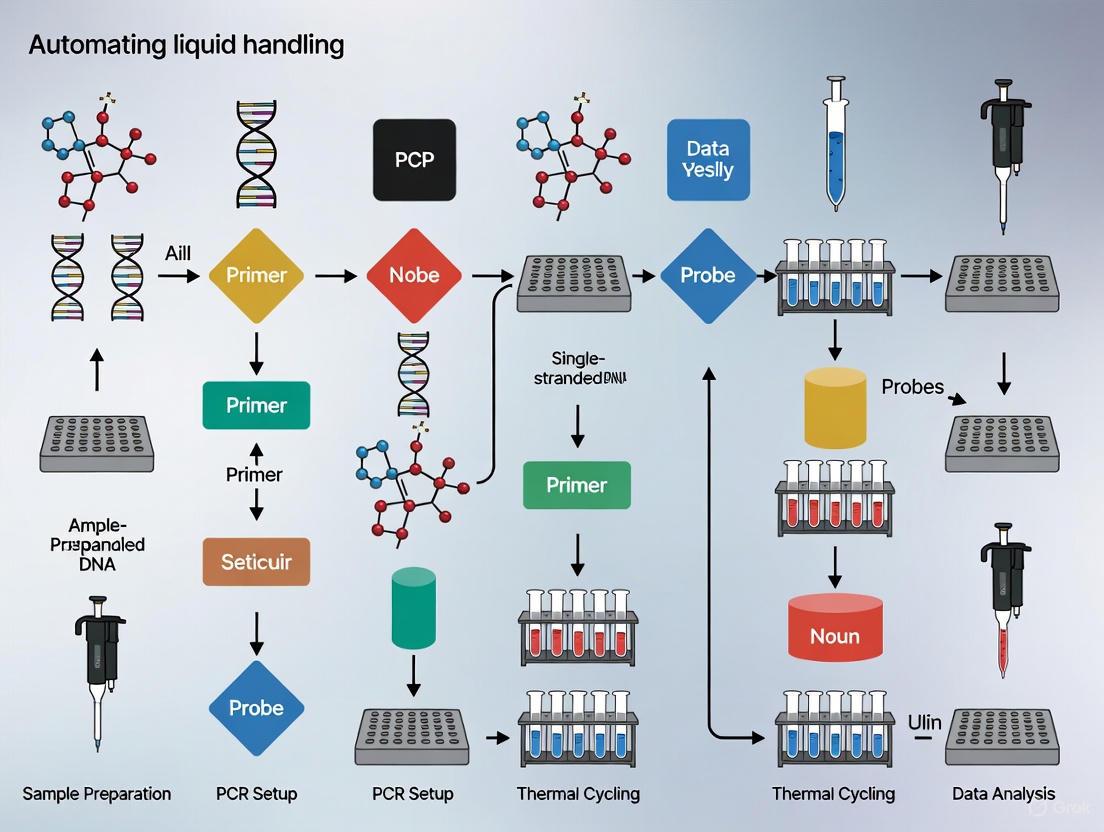
This article provides a comprehensive guide for researchers and drug development professionals on integrating automated liquid handling (ALH) into digital PCR (dPCR) workflows.
Automating Digital PCR Workflows: A 2025 Guide to Enhanced Precision, Efficiency, and Scalability
Abstract
This article provides a comprehensive guide for researchers and drug development professionals on integrating automated liquid handling (ALH) into digital PCR (dPCR) workflows. It explores the foundational benefits of automation in overcoming the limitations of manual pipetting, details methodological approaches for implementation across various applications from oncology to environmental monitoring, and offers practical troubleshooting and optimization strategies. Furthermore, it presents a comparative analysis of different dPCR platforms and automation technologies, validating their performance and guiding the selection process to achieve robust, reproducible, and cost-effective results in both research and clinical diagnostics.
Why Automate? Overcoming Manual PCR Limitations with Smart Liquid Handling
Troubleshooting Guides
Pipetting Performance and Accuracy
Problem: Inconsistent experimental results, suspected to be due to pipetting variation.
Explanation: Manual pipetting is a known source of inaccuracy and imprecision, often referred to as a "known unknown" in the laboratory. Variations can arise from the operator, technique, environment, consumables, and the pipette itself [1]. These errors become compounded in multi-step protocols like digital PCR (dPCR), potentially compromising data quality and leading to skewed research findings or misdiagnoses in clinical settings [1].
Solution: Systematically assess and improve pipetting technique using established methodologies.
- Quantify Your Pipetting Error: Determine the accuracy and precision of your pipetting using one of two common methods. The table below compares these approaches [1].
| Method | Readout | Principle | Key Applications | Throughput & Considerations |
|---|---|---|---|---|
| Gravimetry [1] | Mass (using an analytical balance) | Measures the mass of a dispensed liquid (e.g., water) and compares it to the expected volume. | Ideal for training, competency checks, and testing performance with diverse liquids (e.g., viscous, volatile). | Lower throughput; sensitive to environmental factors (temperature, humidity); tedious for multi-channel pipettes. |
| Spectrophotometry [1] | Absorbance/Fluorescence | Uses a dye solution to measure the absorbance or fluorescence of dispensed volumes. | Higher-throughput assessment; suitable for single- and multi-channel pipettes. | Requires specific dye reagents; less suited for testing different liquid types. |
Follow a Step-by-Step Gravimetric Assessment Protocol: This protocol helps establish baseline performance [1].
- Environment Setup: Allow the pipette, tips, and liquid (typically high-purity water) to equilibrate to a stable ambient temperature to minimize evaporation and thermal effects [2].
- Balance Preparation: Ensure the analytical balance is calibrated and on a stable, vibration-free surface.
- Pre-wet the Tip: Aspirate and fully expel the liquid at least three times before taking the measurement. This pre-wetting step increases humidity within the tip air space, reducing evaporation and significantly improving accuracy [2].
- Aspirate the Liquid: Depress the plunger smoothly to the first stop. Immerse the tip 2-3 mm into the liquid, and then release the plunger steadily to aspirate. Hold the pipette vertically and pull it straight out of the liquid [2].
- Pause Consistently: After aspirating, pause for one second while the tip is still immersed. This allows the liquid to finish flowing into the tip and balances effects of evaporation [2].
- Dispense the Liquid: Place the tip against the wall of the weigh boat at a slight angle. Depress the plunger smoothly to the first stop, pause, and then press to the second stop to expel any residual liquid [2].
- Record and Analyze: Record the mass. Repeat this process at least 10 times per volume. Calculate accuracy (mean measured value vs. expected value) and precision (Coefficient of Variation, or CV, of the readings) [1].
Implement Routine Practices:
- Regular Calibration: Schedule professional pipette calibration at least twice per year [3].
- Proper Cleaning: Wipe down pipettes daily with an appropriate disinfectant to prevent contamination and maintain performance [3].
- Use High-Quality, Matched Tips: Always use tips designed for your specific pipette model. Mismatched tips can cause inaccuracy and imprecision [2].
Diagram: Factors Contributing to Pipetting Variation
The following diagram illustrates the interconnected sources of error that can affect manual pipetting, leading to bottlenecks in data quality and workflow efficiency.
Contamination and Sample Integrity
Problem: Contamination between samples, or sample loss due to improper handling.
Explanation: Contamination, particularly in sensitive applications like dPCR, can lead to false positives and unreliable quantification. Common sources include "double-dipping" (using the same tip for different samples), liquid splash-back, or forcing volatile liquids out of the tip, which can cause dripping [3] [1].
Solution:
- Eliminate Double-Dipping: Make it a non-negotiable practice to discard the pipette tip after dispensing a unique sample and before pipetting another. While tips are inexpensive, redoing experiments is not [3].
- Handle Volatile Liquids Correctly: For volatile liquids like chloroform or ethanol, which have a high evaporation rate and tendency to drip, use a pre-wetting technique (aspirating and dispensing several times) to saturate the air cushion. Consider using positive displacement pipettes, which are better suited for these applications [1].
- Avoid Splashing and Bubbles: Dispense liquids slowly and steadily. Do not forcefully eject the liquid into the bottom of the tube; instead, dispense against the wall. This prevents backsplash and bubble formation [3] [2].
- Maintain Pipette Cleanliness: Regularly clean and decontaminate pipettes, especially if liquid is accidentally drawn into the barrel [3].
Frequently Asked Questions (FAQs)
Q1: My pipette was just calibrated. Why are my results still inconsistent? A1: Calibration ensures the pipette's hardware is functioning correctly. Post-calibration inconsistencies are often due to operator technique. Factors like pipetting speed and angle, immersion depth, pause time, and how consistently the plunger is depressed can all introduce significant variation [1] [2]. Regular technique assessment using gravimetry or spectrophotometry is recommended to maintain personal competency [1].
Q2: How do the physical properties of my sample affect pipetting accuracy? A2: Liquid properties are a major, often overlooked, source of error.
- Viscous Samples (e.g., glycerol): These liquids cling to the tip surface and are dispensed slowly, leading to under-delivery. Using the reverse pipetting mode or positive displacement systems can improve accuracy [3] [1] [2].
- Volatile Samples (e.g., ethanol, chloroform): These evaporate quickly, which can lead to bubble formation and over-delivery due to the expansion of vapor in the tip air cushion. Pre-wetting the tip and using positive displacement pipettes are effective countermeasures [1] [3].
Q3: What are the specific implications of manual pipetting errors for digital PCR workflows? A3: dPCR relies on the absolute quantification of nucleic acids by partitioning samples into thousands of nanoliter-sized droplets [4]. Manual pipetting errors directly threaten this process:
- Inaccurate Quantification: Volume inaccuracies during the preparation of the master mix or sample transfer lead to incorrect reagent concentrations, which can bias the absolute copy number calculation [5] [6].
- Reduced Precision and Reproducibility: Imprecision increases the variation between replicate reactions, undermining the statistical power of the Poisson algorithm used for quantification [1] [7].
- Increased "Rain": Improper mixtures or contaminants from pipetting can cause incomplete or inefficient amplification within droplets, leading to a phenomenon called "rain"—droplets with intermediate fluorescence that are difficult to classify as positive or negative, complicating data analysis [7].
- Cross-Contamination: A single contamination event during sample or reagent pipetting can lead to widespread false positives across many droplets [5] [3].
Q4: How can automation address the key bottlenecks of manual pipetting? A4: Automated Liquid Handlers (ALHs) are designed to overcome the fundamental limitations of manual pipetting, as summarized in the table below.
| Bottleneck | Manual Pipetting Issue | Automated Solution |
|---|---|---|
| Error & Inconsistency | Operator-dependent variability in technique; fatigue [5] [8] | Precision volume transfers with very low coefficients of variation (e.g., <2%), ensuring consistent results [6] [8]. |
| Contamination | High risk of cross-contamination from "double-dipping" or aerosol generation [3] | Contamination-free dispensing; some systems use non-contact dispensing, eliminating tips and sample contact [5]. |
| Throughput & Efficiency | Slow, monotonous, and not scalable for large sample batches; wastes valuable researcher time [5] [8] | Rapid, parallel processing of samples; seamless scaling to 384- and 1536-well plates for high-throughput workflows [6] [8]. |
| Repetitive Strain | Can lead to Repetitive Strain Injury (RSI) [5] | Eliminates repetitive manual tasks, creating a safer working environment [5] [8]. |
Diagram: Manual vs. Automated Pipetting Workflow
This workflow contrasts the steps and decision points in manual and automated pipetting, highlighting where bottlenecks and errors typically occur in the manual process.
The Scientist's Toolkit: Research Reagent Solutions
The following table details key equipment and consumables essential for assessing and ensuring accurate liquid handling.
| Item | Function & Importance in Liquid Handling |
|---|---|
| Analytical Balance | The core instrument for the gravimetric method of assessing pipette accuracy and precision. Sensitivity and calibration are critical for low-volume measurements [1]. |
| Air Displacement Pipettes | The standard, general-purpose pipette for aqueous solutions. Performance is highly dependent on user technique and environmental conditions [1]. |
| Positive Displacement Pipettes | Recommended for viscous, volatile, or hot/cold liquids. The liquid is in direct contact with the piston, eliminating the air cushion and reducing errors caused by liquid properties [1]. |
| High-Quality Matched Tips | Tips designed for specific pipette models ensure an airtight seal, which is fundamental for accuracy. Low-retention tips are advised for precious or viscous samples [2] [3]. |
| Spectrophotometry Dye Kits | Dye solutions used in the spectrophotometric method for higher-throughput assessment of pipetting precision, especially for multi-channel pipettes [1]. |
| Automated Liquid Handler (ALH) | A system that automates the pipetting process to eliminate user variability, increase throughput, reduce contamination risk, and enable miniaturization of reactions (e.g., for dPCR in 384-well plates) [6] [8]. |
Digital PCR (dPCR) represents a third-generation PCR technology that enables absolute quantification of nucleic acids without the need for standard curves by partitioning a sample into thousands of individual reactions [9] [10]. This technique has become pivotal in fields requiring ultra-sensitive detection, including cancer diagnostics, minimal residual disease monitoring, and genetically modified organism (GMO) quantification [11] [12]. However, the precision and reproducibility of dPCR results are heavily dependent on the initial liquid handling steps, where manual pipetting of low-volume reagents introduces significant variability, errors, and contamination risks [5] [6].
Automating liquid handling addresses these critical bottlenecks by transforming a traditionally manual, error-prone process into a streamlined, reliable workflow. For researchers and drug development professionals, this translates to three core benefits: enhanced precision through reduced human error, improved reproducibility via standardized processes, and significant time savings that accelerate research timelines and increase throughput [13] [14]. This technical guide explores these benefits through practical troubleshooting and FAQs, providing a framework for optimizing automated dPCR workflows within your research operations.
Core Benefits: A Data-Driven Perspective
Quantitative Advantages of Automation
Automated liquid handling systems deliver measurable improvements across key performance metrics essential for high-quality dPCR experiments. The following table summarizes the quantifiable benefits observed in operational workflows:
Table 1: Quantitative Benefits of Automated Liquid Handling in PCR Workflows
| Performance Metric | Manual Workflow | Automated Workflow | Improvement |
|---|---|---|---|
| Liquid Handling Precision | Variable, user-dependent | CV < 2% for volumes as low as 100 nL [6] | High consistency in reagent dispensing |
| Process Time | Multiple hours (6-8 hours for some ddPCR setups) [9] | Less than 90 minutes for integrated dPCR [9] | Up to 80% reduction in hands-on time |
| Throughput | Limited by user stamina and speed | Compatible with 384- and 1536-well plates [6] | Simultaneous processing of numerous samples |
| Error Rate & Contamination | Higher risk of pipetting errors and cross-contamination [5] | Minimized through non-contact dispensing and closed systems [14] | Fewer failed experiments and reagent savings |
| Repetitive Strain Injury (RSI) Risk | Significant due to repetitive pipetting [5] [13] | Effectively eliminated [13] | Safer work environment |
The Scientist's Toolkit: Essential Research Reagent Solutions
Successful dPCR automation relies on a foundation of specialized reagents and consumables. The table below details key materials and their functions within the automated workflow.
Table 2: Essential Reagents and Materials for Automated dPCR Workflows
| Item | Function | Key Considerations |
|---|---|---|
| dPCR Master Mix | Contains DNA polymerase, dNTPs, and buffer for amplification. | Compatibility with automated dispensers and probe-based chemistry (e.g., TaqMan) is crucial. |
| Primers & Probes | Target-specific oligonucleotides for amplification and detection. | Optimized concentrations for multiplexing on automated platforms [9]. |
| Partitioning Oil/Stabilizer | Creates stable water-in-oil emulsion for droplet-based dPCR (ddPCR). | Prevents droplet coalescence during thermal cycling [10]. |
| Microplates/Nanoplates | Reaction vessels compatible with the automated system and dPCR instrument. | Format (96-well, 384-well) and material must be approved for use to maintain instrument warranties [15]. |
| Liquid Handler Tips | Disposable tips for reagent and sample transfer. | Low-retention tips are essential for accuracy with viscous liquids and small volumes. |
| Calibration Standards | Solutions of known concentration for periodic instrument calibration. | Required to maintain pipetting accuracy and ensure data integrity [15]. |
Technical Guide: Troubleshooting Automated dPCR Workflows
Frequently Asked Questions (FAQs)
FAQ 1: Our automated dPCR results show high variation between replicates. What are the primary causes?
- Potential Cause A: Improper System Calibration. An out-of-calibration liquid handler will dispense inaccurate volumes, directly impacting reaction efficiency and quantification [15].
- Solution: Implement a strict calibration schedule as per the manufacturer's guidelines. Use certified calibration standards to verify performance for the specific volumes used in your dPCR protocol.
- Potential Cause B: Inadequate Reagent Mixing. If reagents are not properly mixed before dispensing, the composition of each partition will be inconsistent.
- Solution: Ensure your automated protocol includes a mixing step for master mix and sample. For certain systems, pre-mixing reagents in a source plate before loading them onto the handler is recommended.
FAQ 2: How can we minimize the risk of cross-contamination in a high-throughput automated setup?
- Solution: Utilize non-contact liquid handling dispensers where possible, as these eliminate the risk of carryover contamination from pipette tips [14] [6]. For systems that use tips, ensure the protocol includes a robust tip-washing step or uses fresh tips for every transfer. Regular decontamination of the work surface and using sealed source plates further reduce contamination risks.
FAQ 3: Our lab wants to fabricate custom plate fixtures to save cost. What is the risk?
- Solution: This is a high-risk practice. Using non-approved fixtures or consumables can void the manufacturer's warranty and service contract. If the custom part causes a malfunction, your lab may be liable for the entire cost of repair [15]. Always use manufacturer-approved materials to ensure instrument integrity and protect your service agreement.
Experimental Protocol: Transferring a Manual dPCR Assay to an Automated Workflow
This protocol provides a step-by-step methodology for validating an automated liquid handling process for a pre-existing dPCR assay.
1. System Preparation:
- Liquid Handler Calibration: Verify the calibration of the automated liquid handler, focusing on the specific volume range required for your assay (e.g., 1-20 µL) [15].
- Consumable Setup: Load manufacturer-approved microplates and low-retention tips into the system.
2. Assay Formulation & Dead Volume Optimization:
- Master Mix Preparation: Prepare a bulk master mix containing all reaction components except the DNA template. Centrifuge briefly to collect liquid at the bottom of the tube.
- Dead Volume Determination: Consult the liquid handler manual to understand the system's dead volume. Scale up the total master mix volume accordingly to ensure sufficient volume for all planned reactions.
3. Automated Dispensing:
- Protocol Programming: Program the liquid handler to dispense the master mix into the destination dPCR plate. For a 20 µL reaction, the handler might dispense 18 µL of master mix.
- Template Addition: Program the subsequent step to transfer 2 µL of DNA template sample into each well, mixing by aspiration-dispersion if the system allows.
4. Post-Processing and dPCR Run:
- Sealing and Centrifugation: Once dispensing is complete, manually seal the plate with a optical seal and centrifuge briefly to ensure all liquid is at the bottom of the wells and partitions form correctly.
- dPCR Amplification: Place the plate into the dPCR thermocycler (e.g., QIAcuity, QX200) and run the appropriate amplification protocol.
5. Data Analysis and Validation:
- Concentration Calculation: Use the dPCR instrument's software to analyze the data and calculate the absolute concentration of the target (copies/µL).
- Comparison to Manual Control: Statistically compare the concentration, precision (CV%), and detected copy number from the automated run against historical data from your manual protocol to validate performance.
Workflow Visualization: Manual vs. Automated dPCR
The following diagram illustrates the logical relationship and key differences between manual and automated dPCR workflows, highlighting where automation introduces major benefits in precision, reproducibility, and time savings.
Integrating automation into digital PCR workflows is no longer a luxury but a necessity for laboratories aiming to achieve the highest standards of data quality, operational efficiency, and reproducible science. The core benefits of enhanced precision, unwavering reproducibility, and significant time savings directly address the most pressing challenges in molecular quantification [13] [6]. As dPCR continues to cement its role in clinical diagnostics, biopharmaceutical development, and food safety testing, automated liquid handling provides the robust, scalable foundation required to meet stringent regulatory standards and accelerate the pace of discovery [9] [12]. By adopting the troubleshooting guides and protocols outlined in this document, researchers can fully leverage these benefits, transforming their dPCR operations from a technical bottleneck into a reliable engine for scientific advancement.
Automated liquid handling (ALH) systems are engineered to perform precise liquid transfers without human intervention, forming the technological backbone of efficient and reproducible digital PCR (dPCR) workflows [16] [17]. These systems replace the manual, repetitive pipetting steps that are prone to error and variability, thereby enhancing the reliability of your results [5] [8].
At the core of robotic pipetting is a programmable pipetting head equipped with single-channel or multi-channel actuators [16]. Guided by software, the system moves this head precisely over labware on its deck to perform aspirating, dispensing, mixing, and tip handling functions. Most modern systems use either air-displacement or positive-displacement mechanisms to handle liquids and are often integrated with advanced features like liquid-level detection (LLD) to ensure correct tip immersion depth and prevent aspiration errors [16]. For dPCR workflows, which require partitioning samples into thousands of individual reactions, this level of precision is not just beneficial—it is essential for achieving accurate nucleic acid quantification.
The transition from manual to automated liquid handling offers several critical advantages for dPCR research:
- Accuracy and Reproducibility: Minimizes human error and operator-to-operator variability, ensuring consistent reagent volumes across all partitions [5] [8] [17].
- Increased Efficiency and Throughput: Processes multiple samples simultaneously and performs pipetting tasks faster than manual methods, enabling high-volume processing [5] [8].
- Contamination Control: Reduces the risk of aerosol carry-over and cross-contamination, which is crucial for the sensitivity of PCR-based methods [16] [17].
- Scalability: Easily adapts to fluctuating sample numbers and different protocol demands without requiring additional personnel [5] [8].
Troubleshooting Guides
Robotic Pipettor Performance Issues
| Problem Symptom | Potential Cause | Solution | Preventive Measures |
|---|---|---|---|
| Inconsistent volume delivery [16] | Poor seal between tip and pipetting head. | Ensure use of compatible, high-quality tips. Check pipetting head for wear and tear. | Use manufacturer-recommended robotic tips [16]. |
| Inconsistent volume delivery [16] | Suboptimal liquid handling parameters for reagent viscosity. | Adjust aspiration/dispense speed and dwell times in the method. Use positive displacement for viscous liquids. | Pre-define and test liquid classes for common reagents [16] [17]. |
| Liquid drips from tip [16] | Tip contamination or damage. | Replace tip. Check for partial clogs. | Use filter tips to protect the pipetting channel [16]. |
| High CV in partition counts | Inconsistent mixing of dPCR master mix. | Incorporate mixing steps in the protocol. Ensure homogeneous reagent thawing. | Program mixing steps after each reagent addition. |
| "Cannot find liquid level" error [16] | Dirty LLD sensor or use of non-conductive tips with capacitive LLD. | Clean the sensor. Verify tip type (conductive for capacitive LLD). | Use conductive tips and clean sensors regularly [16]. |
Figure 1: Troubleshooting workflow for inconsistent liquid delivery from a robotic pipettor.
Workflow Setup and Optimization Challenges
| Challenge | Problem Description | Solution Approach |
|---|---|---|
| Software Knowledge Gap [18] | Difficulty in creating or adapting custom scripts for dPCR workflow without programming expertise. | Use platforms with intuitive, modular software (e.g., Tecan FluentControl). Leverage pre-developed, validated protocols from vendors [18]. |
| Workdeck Configuration [18] | Choosing incorrect hardware or deck layout, limiting throughput and efficiency. | Invest in a flexible platform with a universal worktable. Use software with a graphical interface that visually guides deck setup [18]. |
| Method Optimization [18] | Script errors or suboptimal parameters (e.g., in mixing or incubation) compromise data quality and require lengthy troubleshooting. | Use pre-optimized commercial solutions (e.g., DreamPrep NAP). Rigorously test and validate all script parameters before full implementation [18]. |
| Partition Quality Issues | Poor droplet/partition quality during dPCR plate setup leading to failed runs. | Calibrate droplet generation parameters. Ensure reagents are at the correct temperature and are properly mixed. |
Figure 2: Logical relationship between common automation setup challenges and their solutions.
Digital PCR Data Analysis Problems
| Question | Answer |
|---|---|
| How do I convert copies/µL to ng/µL? | You need to know the amount of nanograms per copy of your DNA sample. For example, with human gDNA at 2,500 copies/µL: 2,500 copies/µL x 0.0033 ng/copy = 8.25 ng/µL [19]. |
| How does the software calculate the concentration in my stock solution? | The analysis software uses the dilution factors you provide. It accounts for both the dilution of the sample in the reaction mix and any pre-dilution of the stock. For example: adding 1 µL of a 1:10 pre-diluted sample to a 16 µL reaction gives a total dilution factor of (1/16) * 0.1 = 0.00625 (1:160). Entering this lets the software calculate the stock concentration [19]. |
| Why is my data not analyzing properly? | Ensure your samples are in the "digital range." The template must be sufficiently diluted so that some partitions contain a molecule and others do not. Running a chip with no sample can cause analysis errors. You may need to manually adjust the threshold in the analysis software [19]. |
| What are the software requirements for data analysis? | AnalysisSuite Software is optimized for Google Chrome v4.0 or later. Firefox is also compatible, but Internet Explorer is not recommended [19]. |
Frequently Asked Questions (FAQs)
General Automation
Q1: What are the main differences between manual, semi-automated, and fully automated pipetting? Manual pipetting is suitable for a small number of non-hazardous samples. Semi-automation uses motor-driven pipettors moved by hand and is ideal for a few dozen samples. Fully automated liquid handlers with robotic arms are necessary for processing hundreds to thousands of samples, as they provide the highest consistency and protect users from hazardous materials [17].
Q2: How do I select the correct robotic pipette tip for my system? Selection is critical and based on:
- Platform Compatibility: Tips are engineered for specific manufacturers (e.g., Hamilton, Tecan, Beckman Coulter) to ensure a secure fit [16].
- Liquid-Level Detection (LLD): Use conductive tips (containing carbon/graphite) for systems with capacitive LLD. Use non-conductive tips (standard polypropylene) for pressure-based sensing or fixed-depth aspiration [16].
- Application Needs: Filter tips prevent aerosol contamination, and low-retention tips are optimal for viscous or precious samples [16].
Q3: My automated liquid handler is giving "liquid level detection" errors. What should I check? First, verify you are using the correct tip type (conductive vs. non-conductive) for your system's LLD technology [16]. Then, clean the sensor carefully with a soft, damp cloth to remove any dust or soap residue that could be interfering with its function [20] [21].
PCR and Digital PCR Specifics
Q4: How does automation specifically improve dPCR workflows? Automation directly enhances dPCR by ensuring the precise volumes required for successful and consistent droplet or partition generation. It reduces pipetting errors that lead to variation in partition counts, minimizes cross-contamination between samples, and allows for the high-throughput setup needed to process many samples reliably [5] [8] [17].
Q5: Why is there amplification in my No Template Control (NTC) well? Amplification in an NTC indicates contamination. In a dPCR workflow, this is a serious concern. The source is often contaminated reagents or aerosol carry-over during manual pre-processing steps. Automation significantly reduces this risk by using filter tips and minimizing human interaction with the samples [16] [22].
Q6: I am targeting a low-abundance target. How can I improve the sensitivity of my dPCR assay? To increase sensitivity you can:
- Increase the amount of RNA/DNA input into your reaction, if possible.
- Increase the amount of cDNA in your reaction (up to 20% of the reaction volume by volume).
- Ensure your reverse transcription step is highly efficient [22].
- Verify that your automated system is dispensing with high accuracy at the low volumes used.
The Scientist's Toolkit: Research Reagent Solutions
| Item | Function in Automated dPCR Workflow |
|---|---|
| Conductive Filter Tips | Enable liquid-level detection and prevent aerosol contamination, protecting both the sample and the expensive instrumentation [16]. |
| Low-Retention Tips | Made with specialized polymers to reduce liquid adhesion, improving accuracy and recovery of precious or viscous samples [16]. |
| dPCR Supermix | The core chemical reagent containing DNA polymerase, dNTPs, and buffers, optimized for droplet formation and stability. |
| EVO / Droplet Generation Oil | Used in droplet-based dPCR systems to create the water-in-oil emulsion that partitions the sample into thousands of nanoreactors. |
| Pre-validated NGS/NA Purification Kits | Kits with pre-programmed, optimized protocols on compatible automated systems streamline and standardize sample preparation [18]. |
| Automation-Compatible Plate | Microplates with precise well dimensions and clear sealing films designed for use on automated deck platforms. |
The Synergy Between Automated Liquid Handling and Digital PCR Partitioning
Core Concepts: The Automated dPCR Workflow
Digital PCR (dPCR) represents a significant advancement in nucleic acid quantification by providing absolute counting of target molecules without the need for standard curves [23] [24]. The synergy with Automated Liquid Handling (ALH) systems transforms this powerful technology into a robust, high-throughput process suitable for demanding clinical and research environments.
The fundamental dPCR process begins with reaction assembly, where the sample is combined with primers, probes, and master mix. Automated liquid handling brings critical advantages to this step through precision dispensing with CV <2% at volumes as low as 100 nL, miniaturization of reactions to conserve valuable samples and reagents, and walkaway operation that reduces hands-on time and contamination risk [6] [24].
Following reaction assembly, the mixture undergoes partitioning, where it is divided into thousands of individual reactions—either through droplet generation (ddPCR) or nanowell plates (cdPCR) [25] [26]. This step is followed by endpoint PCR amplification and fluorescence reading, with data analysis providing absolute quantification of target molecules [23] [27].
Troubleshooting Guide: Common Issues and Solutions
FAQ 1: How can I achieve consistent droplet sizes in droplet digital PCR (ddPCR)?
Problem: Heterogeneous droplet populations causing measurement bias in copy number concentration calculations.
Root Cause: Flow rate instability during droplet generation. Syringe pumps, commonly used for this application, often show limited flow control, leading to droplet size variability proportional to flow rate fluctuations [25].
Solutions:
- Implement pressure-based flow controllers: Studies demonstrate that pressure controllers achieve desired droplet size quickly (<6 seconds) and maintain monodisperse droplet generation over time [25].
- Monitor flow equilibrium: Unlike syringe pumps that display set-point values without monitoring actual flow, pressure-based systems provide real-time flow monitoring to ensure stability [25].
- Validate droplet uniformity: Regularly check droplet size distribution using microscope imaging or dedicated quality control assays.
FAQ 2: Why does my automated liquid handler retract tips between dispensing and mixing steps?
Problem: Inefficient mixing during automated protocols on systems like the JANUS G3 Varispan, where tips retract and re-enter wells between dispense and mix cycles.
Root Cause: Default engineering controls in automation software (e.g., WinPrep) treat dispensing and mixing as separate steps with mandatory tip retraction [28].
Solutions:
- Utilize post-dispense mix functions: Employ the transfer group's integrated "post-dispense mix" option rather than standalone mix steps [28].
- Modify MSL scripting: Implement custom scripts in pre-/post-step functions to temporarily adjust the rack's "safe travel height," preventing tip retraction between dispense and mix operations [28].
- Adjust labware file parameters: Set aspirate and dispense heights directly in labware configuration files, as these values are referenced by custom mixing functions [28].
FAQ 3: How can I minimize variability in nanowell-based dPCR systems?
Problem: Inconsistent results across samples processed in nanowell plates (e.g., QIAcuity systems).
Root Cause: Incomplete mixing before partitioning or imprecise reagent dispensing.
Solutions:
- Optimize pre-partition mixing: Ensure thorough homogenous mixing after reaction assembly and before partitioning [24].
- Validate liquid handling precision: Confirm volume accuracy at the nanoliter scale using colorimetric assays or quality control checks [6].
- Standardize cDNA input: For multiplex applications, optimize cDNA input ratios (e.g., 30% cDNA input was optimal in a 6-plex Crystal Digital PCR assay) [26].
FAQ 4: What are the key considerations when transitioning from manual to automated dPCR workflows?
Problem: Implementation challenges when automating previously manual dPCR protocols.
Root Cause: Differences in precision, dead volumes, and potential contamination points between manual and automated processes.
Solutions:
- Gradually implement automation: Begin with single steps (e.g., just master mix addition) before progressing to full workflow automation.
- Leverage software wizards: Use built-in automation tools like TouchTools PCR Wizard or PCR setup wizards that guide users through instrument setup and reduce training requirements [24].
- Validate with control materials: Compare manual vs. automated results using standardized reference materials to establish performance benchmarks.
Experimental Protocols & Performance Data
Quantitative Comparison: dPCR vs. qPCR Performance
Recent studies directly comparing dPCR with traditional quantitative PCR reveal distinct performance advantages across multiple applications:
Table 1: Performance comparison of dPCR versus qPCR across applications
| Application Area | Metric | dPCR Performance | qPCR Performance | Reference |
|---|---|---|---|---|
| Respiratory Virus Detection (n=123 samples) | Accuracy for high viral loads (Ct ≤25) | Superior for Influenza A, B, & SARS-CoV-2 | Lower accuracy | [23] |
| Periodontal Pathobiont Detection (n=40 samples) | Intra-assay variability (CV%) | Median: 4.5% | Higher variability (p=0.020) | [27] |
| Periodontal Pathobiont Detection | Sensitivity for low bacterial loads | Superior detection | 5-fold underestimation of A. actinomycetemcomitans | [27] |
| Wastewater Surveillance (6-plex assay) | Optimal cDNA input | 30% of total reaction | Not applicable | [26] |
Detailed Methodology: Automated Multiplex dPCR for Pathogen Detection
Based on the optimized 6-plex Crystal Digital PCR assay for simultaneous surveillance of enteric and respiratory viruses [26]:
Sample Preparation:
- Use the AllPrep PowerViral DNA/RNA Kit (Qiagen) for nucleic acid extraction
- Convert RNA to cDNA using reverse transcriptase with standardized input amounts
Reaction Setup:
- Reaction Volume: 40μL total volume
- cDNA Input: 30% of total reaction volume (optimized from testing 20%-70% range)
- Master Mix: 10μL of 4× Probe PCR Master Mix
- Primers/Probes: 0.4μM of each specific primer, 0.2μM of each specific probe
- Additional Components: 0.025 U/μL restriction enzyme (Anza 52 PvuII) and nuclease-free water
Partitioning and Amplification:
- Use QIAcuity Nanoplate 26k 24-well plates (approximately 26,000 partitions/well)
- Thermal cycling conditions: 2 min at 95°C, followed by 45 cycles of 15 sec at 95°C and 1 min at 58°C
Data Analysis:
- Apply Volume Precision Factor v9.0 (Qiagen) for accurate concentration calculation
- Consider a reaction positive if at least three partitions show positive signal
Liquid Handling Performance Metrics
Table 2: Automated liquid handling system capabilities for dPCR workflows
| System Feature | Performance Requirement | Example Systems | Impact on dPCR Results |
|---|---|---|---|
| Dispensing Precision | CV <2% at 100 nL volumes | Formulatrix Mantis, Tecan D300e | Consistent partition occupancy [6] |
| Dead Volume | As low as 6 μL | Formulatrix ALH systems | Enables reaction miniaturization [6] |
| Flow Rate Control | Pressure-based for stability | Fluigent pressure controllers | Monodisperse droplet generation [25] |
| Throughput Capacity | 384- and 1536-well plates | Tecan Fluent, Freedom EVO | High-throughput processing [24] |
The Scientist's Toolkit: Essential Research Reagents & Materials
Table 3: Key research reagent solutions for automated dPCR workflows
| Reagent/Material | Function | Example Products | Optimization Notes |
|---|---|---|---|
| Digital PCR Master Mix | Provides enzymes, dNTPs, and optimized buffer for partitioning | QIAcuity Probe PCR Kit [27] | Formulated for specific partition chemistry |
| Nucleic Acid Extraction Kits | Isolation of high-quality DNA/RNA from complex samples | AllPrep PowerViral DNA/RNA Kit [26], QIAamp DNA Mini Kit [27] | Critical for inhibitor removal |
| Partitioning Plates/Oil | Creates nanoliter-scale reaction chambers | QIAcuity Nanoplate 26k [27], droplet generation oil [25] | System-specific compatibility |
| Primer/Probe Sets | Target-specific amplification and detection | Double-quenched hydrolysis probes [27] | Optimize concentrations to minimize cross-talk |
| Restriction Enzymes | Reduces background from complex DNA | Anza 52 PvuII [27] | Particularly valuable for microbial targets |
Implementing Automated dPCR: From Core Setup to Advanced Applications
Digital PCR (dPCR) represents a third generation of PCR technology, enabling the absolute quantification of nucleic acids without the need for a standard curve [29]. The core principle involves partitioning a PCR reaction mixture into thousands to millions of individual micro-reactions so that each contains zero, one, or a few target molecules. After end-point PCR amplification, the fraction of positive partitions is counted, and the original target concentration is calculated using Poisson statistics [4] [29]. This process, while powerful, introduces a critical bottleneck: the workflow is dominated by numerous, repetitive liquid handling steps for sample preparation, master mix dispensing, and plate setup. These manual steps are not only time-consuming but also prone to errors that can compromise the exquisite sensitivity and accuracy of dPCR.
The transition to automated liquid handling is a strategic imperative for laboratories seeking to enhance the reliability and throughput of their dPCR workflows. Manual pipetting of microliter volumes is a significant source of variability, impacting data integrity through volume inaccuracies and cross-contamination [8] [14]. Automation addresses these challenges directly by improving precision, ensuring consistency across runs and operators, and dramatically reducing the risk of contamination [8] [5]. Furthermore, automation liberates highly skilled scientists from monotonous tasks, freeing them for higher-value data analysis and experimental design, while also reducing the physical strain associated with repetitive pipetting [14] [5]. This guide will explore the key stages of the dPCR workflow, provide actionable troubleshooting advice, and demonstrate how automation is transforming this critical field of research.
Optimizing the dPCR Workflow
A streamlined dPCR workflow encompasses all steps from sample and reagent preparation to the final setup of the partitioning plate or chip. Optimizing each stage is crucial for success.
The following diagram illustrates a generalized dPCR workflow, highlighting key stages where automation can be integrated for maximum benefit.
Key Workflow Stages and Strategies
Sample and Reagent Preparation
This foundational stage demands rigorous quality control. DNA samples should be of high purity and quantified accurately. Reagents, including primers, dNTPs, and enzymes, must be properly thawed, mixed, and maintained on ice to preserve stability [30] [31]. Contamination control is paramount; wearing gloves and using filter pipette tips are essential practices [31]. Automated systems excel here by minimizing human interaction with samples and reagents, thereby reducing the risk of contamination and ensuring consistent handling [8].
Master Mix Assembly and Dispensing
The master mix typically contains the DNA polymerase, dNTPs, reaction buffer, primers/probes, and the template DNA [30]. For consistent partitioning, the mixture must be homogeneous. Manual pipetting of multiple reagents is a major source of error and inconsistency. Automation is highly recommended for this step. Automated liquid handlers can mix multiple reagents in a sterile tube to create a homogenous master mix with superior precision [30] [8]. Systems like the I.DOT Non-Contact Dispenser or BRAND Liquid Handling Station can then accurately dispense the master mix into the target plates, eliminating volume variations and the risk of carryover contamination [14] [5].
Partitioning and Plate Setup
The method of partitioning depends on the commercial dPCR system in use. Droplet-based systems (ddPCR) generate thousands of nanoliter-sized water-in-oil emulsions using microfluidic cartridges [4] [29]. Chip-based systems, such as the QuantStudio Absolute Q, use microfluidic array plates (MAPs) containing fixed networks of micro-wells [29]. Automation-compatible systems are now available that integrate partitioning, thermocycling, and data acquisition into a single instrument, significantly simplifying the workflow and reducing hands-on time [29] [32]. For example, preparing a MAP16 dPCR plate for a run can take as little as five minutes [32].
Troubleshooting Guides and FAQs
Common challenges in the dPCR workflow often stem from material, equipment, or technique errors. The following table addresses frequent issues related to sample preparation and dispensing.
Table 1: Troubleshooting Common dPCR Workflow Issues
| Problem Area | Common Issue | Potential Cause | Solution | Automation Advantage |
|---|---|---|---|---|
| Sample & Reagents | Weak or no amplification [31] | Poor DNA quality, reagent degradation, or contaminants. | Use highly purified DNA, ensure proper reagent storage, and make fresh aliquots to avoid freeze-thaw cycles. [31] | Reduces contamination risk; ensures consistent reagent handling. [8] |
| Master Mix | Inconsistent results between replicates [14] | Inaccurate pipetting, improper mixing, or human error in repetitive tasks. | Create a master mix for multiple samples, use high-quality calibrated pipettes, and mix reagents thoroughly. [30] [31] | Eliminates pipetting variability and ensures homogeneous mixing. [8] [5] |
| Dispensing & Setup | Variation in Ct values or partition counts [14] | Non-uniform dispensing of master mix into wells. | Use precise pipetting techniques, ensure proper calibration, and dispense slowly and consistently. [31] | Provides nanoliter precision and uniformity across all wells. [14] |
Frequently Asked Questions (FAQs)
Q1: How does automation specifically improve data quality in dPCR? Automation enhances data quality by minimizing the two main sources of manual error: pipetting inaccuracies and cross-contamination. Automated systems deliver superior volume precision, which is critical for the accurate partitioning that dPCR relies upon. Furthermore, non-contact dispensers and closed systems drastically reduce the risk of cross-contamination between samples, ensuring the integrity of your results [14] [5].
Q2: We have a low-to-mid sample throughput. Is automation still worthwhile? Yes. Modern automated systems are designed for flexibility and can be cost-effective for a wide range of lab sizes. Benchtop systems like the BRAND LHS or I.DOT Liquid Handler offer a compact footprint and can be easily adapted to different batch sizes. The return on investment comes not only from increased throughput but also from improved data quality, reduced reagent waste from failed experiments, and freeing up valuable researcher time [8] [14].
Q3: What is the most common technical error in manual PCR setup, and how does automation fix it? The most common errors are related to pipetting. These include using improperly calibrated pipettes, incorrect pipetting technique (e.g., not pre-wetting tips, dispensing at an angle), and fatigue from repetitive tasks. These lead to volume inaccuracies that directly impact amplification efficiency and quantification [31]. Automation completely standardizes the pipetting process, performing every transfer with the same speed, angle, and precision, thereby eliminating this major variable [5].
Essential Research Reagent Solutions
A successful dPCR experiment depends on the quality and precise formulation of its core components. The following table details the essential reagents required.
Table 2: Key Reagents for Digital PCR Workflows
| Reagent | Function | Key Considerations |
|---|---|---|
| DNA Polymerase | Enzyme that replicates the target DNA sequence during thermal cycling. [30] | Thermostable enzymes (e.g., Taq) are standard. Use 0.5-2.5 units per 50 µL reaction. [30] |
| Primers & Probes | Short, single-stranded DNA sequences that define the target region for amplification. | Should be specific, with optimal G-C content (40-60%) and Tm of 52-58°C. Avoid self-complementarity. [30] |
| dNTPs | Deoxynucleoside triphosphates (dATP, dCTP, dGTP, dTTP); the building blocks for new DNA strands. | Use a balanced mixture, typically at 200 µM of each dNTP in the final reaction. [30] |
| Reaction Buffer | Provides the optimal chemical environment (pH, salts) for the polymerase to function. | Often contains MgCl2 (1.5-5.0 mM final conc.). If not, it must be added separately. [30] |
| Additives/Enhancers | Optional components to improve reaction efficiency and specificity for difficult targets. | DMSO (1-10%), BSA (10-100 µg/mL), or Betaine (0.5-2.5 M) can help reduce secondary structures or inhibit PCR inhibitors. [30] |
Technological Foundations: Droplet Generation in ddPCR
A key innovation behind digital PCR is the technology used for partitioning. The following diagram illustrates the core mechanism of droplet generation in droplet-based digital PCR (ddPCR) systems, which use microfluidics to create monodisperse reaction chambers.
In this process, the aqueous PCR mixture (containing sample and reagents) and an immiscible oil are forced through a microfluidic chip. The chip's geometry, often a flow-focusing design, breaks the aqueous stream into millions of uniform, picoliter-to-nanoliter-sized droplets [4]. The oil phase, supplemented with surfactants for stability, prevents the droplets from coalescing, ensuring each one functions as an independent PCR micro-reactor [29]. This partitioning allows for the clonal amplification of single DNA molecules, which is the fundamental principle enabling absolute quantification in dPCR.
Enabling Reaction Miniaturization for Significant Cost and Reagent Savings
Reaction miniaturization in digital PCR (dPCR) represents a paradigm shift in molecular biology, enabling researchers to achieve substantial cost savings and reagent reduction while maintaining or even enhancing data quality. This approach leverages advanced liquid handling technologies to dramatically reduce reaction volumes from traditional microliter scales to nanoliter or even picoliter levels. For laboratories engaged in automated liquid handling for digital PCR workflows, miniaturization transforms economic and experimental efficiency, allowing for the same experiments to be conducted in significantly less time using far fewer resources. This technical support center provides comprehensive guidance to help researchers overcome implementation challenges and optimize their miniaturized dPCR workflows for maximum benefit.
Core Concepts of PCR Miniaturization
What is Reaction Miniaturization?
Reaction miniaturization involves scaling down traditional PCR reaction volumes from standard 10-25 µL volumes to the microliter or nanoliter range using specialized liquid handling systems. This process leverages digital dispensing technology capable of delivering picoliter droplets, enabling the preparation of reactions as small as 2 µL with no loss in fidelity [33]. The fundamental principle involves partitioning samples into thousands of nanoscale reactions, either through droplet-based systems or nanoplate technologies, allowing for precise absolute quantification of nucleic acids without standard curves.
Key Benefits of Miniaturized dPCR
- Reagent Cost Reduction: Miniaturization to 5µL reactions can reduce reagent and primer usage by 5-fold compared to manual 25µL setups [33]
- Sample Conservation: Automated miniaturization can reduce sample DNA requirements by 200-fold, translating to significant savings in precious biological samples [33]
- Throughput Enhancement: Miniaturized platforms enable massive parallel processing, with some systems capable of processing up to 1,536 samples in a single run [34]
- Data Quality Maintenance: Properly optimized miniaturized reactions maintain equivalent precision and sensitivity to conventional volumes while reducing consumable costs [33] [25]
Technical Specifications of Miniaturized dPCR Systems
Table 1: Comparison of Miniaturized dPCR Platforms and Their Capabilities
| System Feature | Traditional dPCR | Nanoplate-based dPCR | Droplet-based dPCR | Miniaturized Automated Systems |
|---|---|---|---|---|
| Typical Reaction Volume | 20-40 µL | 5-20 µL | 1-10 µL | 2-10 µL |
| Partitioning Method | Manual partitioning | Integrated nanoplate generation | Microfluidic droplet generation | Automated digital dispensing |
| Partition Count | Varies by system | ~8,500-26,000/well | ~20,000 droplets/reaction | Programmable based on needs |
| Throughput | 96 samples/run | 96-768 samples/run | 96 samples/run | Customizable based on platform |
| Hands-on Time | High | Moderate | High | Minimal after setup |
| Reagent Consumption | High | Reduced | Reduced | Dramatically reduced |
Table 2: Economic Impact Analysis of PCR Miniaturization
| Cost Factor | Traditional Manual PCR | Miniaturized Automated PCR | Percent Reduction |
|---|---|---|---|
| Reagent Usage | 25 µL/reaction | 5 µL/reaction | 80% |
| Sample Usage | High volume required | Minimal volume required | Up to 99.5% |
| Labor Time | ~4 hours for 96 samples | ~1 hour for 96 samples | 75% |
| Total Cost/Sample | Baseline | 29% of baseline | 71% |
Troubleshooting Guide: Frequently Asked Questions
Sample Preparation and Quality Issues
Question: How does sample purity requirement differ in miniaturized dPCR compared to conventional PCR?
Answer: While dPCR is generally less prone to inhibition than qPCR, miniaturized reactions have heightened sensitivity to impurities due to the concentrated nature of reactions. Common contaminants and their effects include:
- Alcohols and salts: Impair primer and probe annealing properties, reducing amplification efficiency [35]
- Humic acids: Quench fluorescence of dsDNA-binding dyes like EvaGreen [35]
- Urea and phenol: Denature Taq polymerase, leading to complete reaction failure [35]
- Acidic polysaccharides: Form dead-end complexes with Taq polymerase [35]
Solution: Implement rigorous purification protocols using specialized kits matched to your sample type (e.g., AllPrep PowerViral DNA/RNA Kit for wastewater samples [36] [26]). Include pre-amplification quality checks and consider dilution factors when contaminants cannot be completely eliminated.
Question: What are the specific sample integrity concerns for miniaturized dPCR applications?
Answer: Sample integrity critically impacts partition efficiency and quantification accuracy. Key considerations include:
- Template degradation: Strongly degraded DNA/RNA shows discrepancy between OD-quantified amount and amplified copies [35]
- Complex structures: High-molecular-weight templates with complex structures require restriction digestion for uniform distribution [35]
- Viscosity: Highly viscous solutions decrease partitioning accuracy, especially with larger DNA amounts in small volumes [35]
Solution: For difficult samples, employ restriction digestion prior to dPCR to:
- Reduce viscosity for more accurate measurement
- Physically separate linked gene copies for accurate quantification
- Linearize supercoiled plasmids to improve primer/probe accessibility
- Fragment large DNA molecules (>30 kb) for even distribution [35]
Workflow Optimization Challenges
Question: How can I optimize cDNA input for multiplex miniaturized dPCR assays?
Answer: Multiplex assays require careful optimization of cDNA input ratios to maintain balanced amplification across targets. Based on wastewater surveillance optimization studies:
- Test a range of cDNA input ratios (20%-70%) to determine optimal conditions [26]
- For 6-plex respiratory and enteric virus detection, 30% cDNA input demonstrated optimal performance [26]
- Balance sufficient template for detection with avoidance of competition effects in multiplex reactions [36]
Solution: Perform titration experiments with your specific targets to identify the ideal cDNA input that maintains amplification efficiency across all channels while maximizing sensitivity.
Question: What are the key considerations for primer and probe design in miniaturized dPCR?
Answer: Effective primer and probe design follows qPCR principles with specific enhancements for dPCR:
- Higher concentrations: Use primer sets at 0.5-0.9 µM and probes at 0.25 µM per reaction to increase fluorescence intensity [35]
- Amplicon length: Keep amplicons as short as possible, especially for degraded samples (FFPE DNA, cfDNA) [35]
- Storage conditions: Store lyophilized primers and probes in low-salt buffers (e.g., TE buffer, pH 8.0) [35]
- Avoid water dissolution: Some primers/probes have lower solubility and stability in water compared to TE buffer [35]
Technical Implementation Issues
Question: How can I prevent droplet size variability in miniaturized ddPCR workflows?
Answer: Droplet volume variability significantly impacts quantification accuracy due to Poisson distribution assumptions. Research demonstrates:
- Syringe pumps show limited flow control, resulting in droplet size variability [25]
- Pressure-based flow controllers achieve desired droplet size rapidly (<6 seconds) with sustained monodisperse generation [25]
- Flow rate stability is critical for repeatable reactor volumes and reproducible results [25]
Solution: Implement pressure-based flow control systems rather than traditional syringe pumps for more consistent droplet generation. Regularly validate droplet uniformity using microscopy or dedicated quality control measures.
Question: What are the common pitfalls in transitioning from qPCR to miniaturized dPCR workflows?
Answer: Successful transition requires addressing several key differences:
- Partitioning efficiency: Ensure optimal template concentration (0.5-3 copies/partition) to avoid over-partitioning [35]
- Volume accuracy: Implement precision liquid handling capable of nanoliter dispensing [33]
- Inhibition sensitivity: While dPCR is generally more tolerant, miniaturization may concentrate inhibitors [35]
- Data interpretation: Shift from Ct-based quantification to absolute copy number counting [37]
Experimental Protocols for Miniaturized dPCR
Protocol 1: Miniaturized Multiplex dPCR Setup for Wastewater Surveillance
Based on optimization research for simultaneous detection of 5-6 pathogens [36] [26]
Sample Preparation:
- Concentration Method: Implement PEG precipitation for improved viral recovery compared to centrifugation methods [36]
- Nucleic Acid Extraction: Use AllPrep PowerViral DNA/RNA Kit for optimal performance with complex matrices [36] [26]
- Reverse Transcription: Employ two-step RT-dPCR rather than one-step approach for enhanced sensitivity [36]
Reaction Setup:
- Prepare master mix with final primer concentration of 0.5-0.9 µM and probe at 0.25 µM [35]
- Implement 30% cDNA input for multiplex reactions balancing sensitivity and specificity [26]
- Partition samples using appropriate nanoplates or droplet generators based on target partition count requirements
Amplification and Analysis:
- Run thermal cycling with conditions optimized for your specific target assays
- Analyze using Poisson correction for absolute quantification
- Validate with positive controls and standard curves during initial optimization
Protocol 2: Low-Volume Dispensing for Reaction Miniaturization
Based on automated liquid handling approaches [33]
System Setup:
- Utilize digital dispensing technology capable of delivering picoliter droplets (e.g., 11-13 pL minimum drop size) [33]
- Program dispensing patterns for 96- to 1536-well plates based on throughput requirements
- Implement dead volume optimization to minimize reagent waste
Volume Optimization:
- Test reaction scalability from 25 µL down to 2 µL with no loss in fidelity [33]
- Validate efficiency and sensitivity at each volume reduction step
- Implement evaporation control measures for low-volume reactions
Quality Control:
- Include precision testing using replicate samples across the plate
- Validate with standardized reference materials
- Implement droplet volume verification systems where available [14]
Workflow Visualization
Diagram 1: Automated Miniaturized dPCR Workflow. This workflow highlights the integration of automated miniaturization as a key cost-saving phase in the digital PCR process.
Essential Research Reagent Solutions
Table 3: Key Reagents for Miniaturized dPCR Workflows
| Reagent Category | Specific Product Examples | Function in Miniaturized Workflows | Optimization Tips |
|---|---|---|---|
| Nucleic Acid Purification Kits | AllPrep PowerViral DNA/RNA Kit [36] [26] | Optimal recovery of viral nucleic acids from complex samples | Outperforms QIAamp Viral RNA Mini Kit for wastewater samples [36] |
| Reverse Transcription Kits | Two-step RT-dPCR systems [36] | Improved sensitivity over one-step approaches | Implement two-step protocol for low-abundance targets [36] |
| dPCR Master Mixes | QIAcuity High Multiplex Probe PCR Kit [34] | Enables advanced multiplexing (up to 12-plex) | Required for multiplexing beyond 5-plex on some systems [34] |
| Partitioning Reagents | EvaGreen dye [35], Specific surfactant oils | Create stable partitions for nucleic acid amplification | EvaGreen requires high PCR specificity to avoid non-specific signals [35] |
| Reference Materials | gBlocks, standardized plasmids | Quantification standards and assay validation | Use for initial system validation and periodic quality control |
Advanced Implementation Strategies
System Selection Guide
When choosing a miniaturization platform, consider these critical factors based on published research and technical specifications:
- Throughput Requirements: QIAcuity Eight processes up to 1,536 samples in 8 hours, while the One model handles 480 samples [34]
- Multiplexing Capability: Advanced systems support up to 12-plex detection using amplitude multiplexing [34]
- Integration Potential: Select systems that interface with existing laboratory automation for streamlined workflows [33]
- Volume Flexibility: Platforms like the Tecan D300e digital dispenser enable volume optimization from microliters to picoliters [33]
Troubleshooting Advanced Technical Challenges
Low Amplification Efficiency in Miniaturized Reactions
Problem: Reduced amplification efficiency despite proper template quality.
Investigation Steps:
- Verify primer and probe concentrations are optimized for dPCR (typically higher than qPCR) [35]
- Assess partition quality and uniformity using visualization methods
- Evaluate master mix composition compatibility with miniaturized volumes
Solutions:
- Increase primer concentration to 0.5-0.9 µM and probes to 0.25 µM [35]
- Add stabilizers for enzyme protection in low-volume reactions
- Optimize thermal cycling conditions specifically for partition-based amplification
Inconsistent Results Across Multiplex Channels
Problem: Variable performance between targets in multiplex miniaturized reactions.
Investigation Steps:
- Evaluate cDNA input ratio optimization (typically 20-70% range) [26]
- Assess potential primer-primer interactions in multiplex assays
- Verify fluorescence channel compatibility and crosstalk compensation
Solutions:
- Implement 30% cDNA input as starting point for optimization [26]
- Redesign primers with minimal inter-target complementarity
- Utilize high multiplex master mixes designed for complex assays [34]
Reaction miniaturization represents a fundamental advancement in digital PCR workflows, offering dramatic reductions in reagent costs and sample requirements while maintaining data quality. Successful implementation requires careful attention to sample quality, system optimization, and workflow validation. By addressing the specific troubleshooting challenges outlined in this guide and leveraging the detailed experimental protocols, researchers can effectively transition to miniaturized approaches that maximize laboratory efficiency and research output. The continued evolution of automated liquid handling technologies promises even greater miniaturization potential, further enhancing the accessibility and scalability of digital PCR applications across diverse research fields.
Troubleshooting Guides
Table 1: Common Liquid Biopsy Workflow Challenges and Solutions
| Problem Area | Specific Issue | Potential Causes | Recommended Solutions |
|---|---|---|---|
| Pre-Analytical & Sample Quality | Low analyte abundance (e.g., ctDNA) | Early-stage cancer, small tumor size, low tumor fraction [38] [39] | Increase blood sample volume; optimize DNA extraction; use high-sensitivity assays [38]. |
| Incomplete genomic profile | Tumor heterogeneity; clonal evolution; analyte not representative of all tumor sites [39] | Employ multimodal approaches (e.g., combine ctDNA, CTCs, EVs); sequential sampling to monitor evolution [38]. | |
| Analytical & Assay Performance | False-positive results | Clonal hematopoiesis; non-specific amplification [39] | Use paired white blood cell sequencing to distinguish tumor mutations; optimize primer design and annealing temperatures [39] [14]. |
| False-negative results | Analyte concentration below assay's limit of detection [38] [39] | Implement more sensitive techniques (e.g., dPCR); use assays designed for low-abundance targets [38]. | |
| Automated Liquid Handling | Inconsistent Ct values in dPCR | Pipetting inaccuracies; reagent concentration errors; cross-contamination [5] [14] | Regular liquid handler calibration; use non-contact dispensers; implement droplet volume verification [5] [14]. |
| Poor assay reproducibility | Technical variability across platforms; lack of standardized protocols [39] | Automate liquid handling to reduce human error; establish and adhere to standardized operating procedures (SOPs) [5] [40]. |
Table 2: Troubleshooting Automated Liquid Handler (ALH) Issues
| Symptom | Root Cause | Troubleshooting Action |
|---|---|---|
| Unexpected or failed assay results | Liquid handling error; problematic experimental design; reagent variability [41] | Verify ALH performance with a dye-based calibration test; check reagent integrity and stability [41] [40]. |
| Low throughput and workflow bottlenecks | Manual, repetitive pipetting tasks; system not optimized for workflow [5] | Implement a flexible, reconfigurable automated system to handle multiple samples simultaneously [5] [40]. |
| System downtime or failure | Lack of regular maintenance; difficult service access [40] | Establish a routine maintenance schedule; ensure serviceability by technicians to minimize downtime [40]. |
Frequently Asked Questions (FAQs)
Q1: What are the key advantages of using liquid biopsy for Minimal Residual Disease (MRD) detection?
Liquid biopsy allows for non-invasive, real-time monitoring of tumor dynamics. Serial sampling of blood enables clinicians to detect MRD and predict relapse before it becomes clinically apparent, allowing for timely intervention. This is a significant advantage over repeated tissue biopsies, which are invasive and cannot be performed as frequently [38].
Q2: Why is low analyte abundance a major challenge in MRD detection, and how can it be addressed?
In early-stage cancers or MRD, the amount of tumor-derived material (like ctDNA) in the blood is very low, leading to reduced sensitivity and potential false negatives [38] [39]. Solutions include:
- Increasing blood collection volume to obtain more starting material.
- Utilizing advanced sequencing technologies and high-sensitivity assays like dPCR.
- Adopting multimodal approaches that combine several biomarkers (ctDNA, CTCs, EVs) to increase the chance of detection [38].
Q3: How does automation improve the reproducibility of digital PCR workflows?
Automation with precise liquid handlers significantly reduces human error inherent in manual pipetting. It ensures consistent reagent volumes and dispatching across all samples, which is critical for accurate quantification in dPCR. This enhances data integrity and makes results more reproducible across different runs and operators [5] [14].
Q4: What should a lab consider before automating a liquid biopsy workflow?
Key considerations include:
- Robust Manual Process: Ensure your assay works reliably manually before automating it [40].
- Future Needs: Choose a reconfigurable and flexible system that can adapt to new applications and increased workloads [40].
- Walkaway Time: Determine the level of unattended operation you require to improve efficiency [40].
- Space and Service: Assess available lab space and prioritize systems with easy maintenance access to reduce downtime [40].
The Scientist's Toolkit: Essential Research Reagent Solutions
Table 3: Key Analytes and Reagents for Liquid Biopsy and MRD
| Item | Function/Description | Application in Liquid Biopsy |
|---|---|---|
| Circulating Tumor DNA (ctDNA) | Fragmented DNA released into the bloodstream by tumor cells [38] | The most common analyte; used for mutation detection, treatment monitoring, and MRD assessment [38] [39]. |
| Circulating Tumor Cells (CTCs) | Intact tumor cells shed into the circulation [38] | Can be enumerated or molecularly characterized; CTC clusters are highly metastatic; useful for prognostic information [38]. |
| Extracellular Vesicles (EVs) | Membrane-bound vesicles carrying proteins, lipids, and nucleic acids from tumor cells [38] | Provide a comprehensive snapshot of tumor content; potential for early detection and monitoring [38]. |
| Tumor-Educated Platelets (TEPs) | Platelets that have taken up tumor-derived biomolecules [38] | An emerging biomarker source; used for RNA-based cancer diagnostics and typing [38]. |
| dPCR Master Mix | Optimized buffer containing polymerase, nucleotides, and salts for digital PCR amplification [14] | Essential reagent for the amplification of target DNA sequences in partitioned reactions; critical for sensitivity and specificity. |
| Nucleic Acid Stabilization Tubes | Blood collection tubes containing reagents that prevent degradation of cfDNA/ctDNA. | Preserves sample integrity from the moment of blood draw, ensuring accurate pre-analytical results. |
Experimental Workflow Visualization
This technical support center provides troubleshooting and guidance for researchers applying automated digital PCR (dPCR) workflows to wastewater-based epidemiology (WBE), supporting a broader thesis on liquid handling automation.
Troubleshooting Guide: dPCR in Wastewater Surveillance
Wastewater samples present unique challenges for dPCR. The table below outlines common issues, their causes, and recommended solutions.
| Problem | Possible Causes | Recommendations |
|---|---|---|
| Low Amplification Yield | PCR inhibitors (phenol, EDTA) from wastewater sample [42]; Poor template DNA integrity [42]; Insufficient input DNA [42] | Use DNA polymerases with high tolerance to inhibitors [42]; Re-purify DNA with 70% ethanol precipitation [42]; Increase number of PCR cycles if DNA input is low [42] |
| Nonspecific Amplification | Excess DNA input [42]; High primer concentrations [42]; Excess Mg2+ concentration [42] | Optimize primer concentrations (0.1–1 μM) [42]; Use hot-start DNA polymerases [42]; Review and lower Mg2+ concentration [42]; Increase annealing temperature [42] |
| Inconsistent Results Between Replicates | Manual liquid handling errors [5]; Nonhomogeneous reagents [42]; Aerosol contamination [43] | Implement automated liquid handling for precision [5] [44]; Mix reagent stocks thoroughly before use [42]; Use high-quality filtered pipette tips [43]; Establish separate pre- and post-PCR workspaces [43] |
| Results Not in "Digital Range" | Sample insufficiently diluted [19]; Incorrect threshold setting in analysis software [19] | Ensure sufficient dilution so some partitions are positive and some negative [19]; Manually adjust threshold in analysis software if needed [19] |
Frequently Asked Questions (FAQs)
Q1: How can automation improve my high-throughput wastewater dPCR workflow? Automation significantly enhances throughput, reduces human error, and improves reproducibility. Automated liquid handling systems ensure precise reagent dispensing, while integrated platforms can fully automate the entire process from sample pre-treatment to result analysis, enabling 24/7 operation [5] [45].
Q2: What are the key steps in the wastewater surveillance pathway? The core pathway involves: (1) Systematic Sampling: Using composite or grab sampling at strategic locations in the sewage network [46]; (2) Sample Pre-treatment & Nucleic Acid Extraction: Often the most burdensome step, now amenable to full automation [45]; (3) Pathogen Detection: Using dPCR for absolute quantification of target pathogens [46] [47]; (4) Data Analysis & Modeling: Leveraging software and machine learning to correlate wastewater data with public health trends [46] [48].
Q3: Which pathogens of concern can be monitored in wastewater using dPCR? Wastewater surveillance can track a wide range of pathogens, including:
- Enteric Viruses: Norovirus, Adenoviruses, Rotavirus, Hepatitis A and E [49].
- Bacterial Pathogens: Salmonella enterica, E. coli O157:H7, Campylobacter jejuni/coli [49].
- Respiratory Viruses: SARS-CoV-2 and influenza viruses [46] [49].
- Parasitic Protozoa: Cryptosporidium and Giardia [49].
Q4: How do I calculate the target concentration in my original wastewater sample from dPCR results? The analysis software can calculate this if all dilution factors are entered correctly. You must account for both the dilution of the stock sample and its dilution in the dPCR reaction mix. For example, adding 1 µL of a 1:10 diluted sample to a 16 µL reaction gives a total dilution factor of 1/16 * 1/10 = 1:160. Entering this into the software will provide the copies/µL in your original stock [19].
Q5: What is the role of machine learning in wastewater-based epidemiology? Machine learning models can leverage wastewater data and contextual information (e.g., flow rates, population data) to normalize measurements, account for uncertainties, and correlate viral loads in wastewater with clinical case numbers for early outbreak detection and improved public health surveillance [46] [48].
Experimental Protocol: Automated dPCR Workflow for Wastewater Samples
This protocol outlines a standardized method for detecting pathogen levels in wastewater using an automated dPCR workflow.
Sample Collection and Storage
- Sampling Method: Prefer composite sampling over grab sampling to account for diurnal fluctuations in wastewater flow and composition [46].
- Storage: Preserve samples on ice or refrigerate during transport and store at 4°C. Analyze as quickly as possible to minimize nucleic acid degradation [46].
Automated Sample Pre-treatment
- Use a fully automated prep module (e.g., CURECA system) to handle diverse and complex sample types like stool, which are viscous and particulate [45].
- This step is critical for removing PCR inhibitors and preparing a clean sample for nucleic acid extraction.
Nucleic Acid Extraction
- While automated systems can integrate this step, the choice of extraction kit (e.g., magnetic bead-based) should be optimized for the target pathogen (viral RNA, bacterial DNA) and wastewater matrix.
Automated dPCR Reaction Setup
- Liquid Handler: Use an automated non-contact dispenser (e.g., I.DOT Liquid Handler) to assemble dPCR reactions. This ensures precision, reduces cross-contamination risk, and minimizes repetitive strain for researchers [5].
- Reaction Composition: Follow the manufacturer's instructions for your selected dPCR master mix. Use polymerases with high processivity and inhibitor tolerance for complex wastewater templates [42].
Partitioning, Amplification, and Imaging
- Perform according to the specifications of your dPCR instrument (e.g., Bio-Rad's QX200, Thermo Fisher's QuantStudio, or QIAGEN's QIAcuity).
Data Analysis and Normalization
- Use the instrument's integrated software (e.g., AnalysisSuite Software) for initial absolute quantification [19].
- Normalize the measured target concentration (copies/µL) against wastewater flow rates and population biomarkers to estimate community-level infection prevalence [46] [48].
The Scientist's Toolkit: Key Research Reagent Solutions
Essential materials and instruments for establishing a robust, automated dPCR workflow for wastewater surveillance.
| Item | Function & Application |
|---|---|
| High-Tolerance DNA Polymerase | Enzymes with high processivity and resilience to common PCR inhibitors found in wastewater (e.g., from soil, organic matter) [42]. |
| Automated Liquid Handler | Platform (e.g., I.DOT, Formulatrix F.A.S.T.) for precise, high-throughput dispensing of reagents and samples, critical for reproducibility [5] [44]. |
| dPCR Consumables & Reagents | Kits and master mixes optimized for specific dPCR systems and applications (e.g., oncology, infectious disease) [47]. |
| Nucleic Acid Extraction Kits | Reagents for automated extraction of high-purity DNA/RNA from complex wastewater matrices, crucial for removing inhibitors. |
| Integrated Data Analytics Platform | Software (e.g., STAgora) that collects and analyzes real-time PCR data, providing insights into regional infection trends and co-infection patterns [45]. |
Automated dPCR Workflow for Wastewater
The diagram below illustrates the integrated automated workflow for pathogen detection in wastewater, from sample arrival to public health reporting.
High-Throughput NGS Library Preparation and Quality Control
This technical support center provides troubleshooting guides and FAQs to address common challenges in high-throughput Next-Generation Sequencing (NGS) library preparation, with a specific focus on methodologies relevant to automated liquid handling for digital PCR workflows research.
Troubleshooting Common NGS Library Preparation Issues
FAQ: Frequent Library Preparation Challenges
What are the primary causes of low library yield and how can I fix them? Low library yield can result from several issues related to sample quality, quantification, and reaction efficiency. The table below summarizes the root causes and corrective actions [50].
| Cause of Low Yield | Mechanism of Yield Loss | Corrective Action |
|---|---|---|
| Poor Input Quality / Contaminants | Enzyme inhibition from salts, phenol, or EDTA. | Re-purify input sample; ensure 260/230 > 1.8, 260/280 ~1.8; use fresh wash buffers [50]. |
| Inaccurate Quantification / Pipetting Error | Suboptimal enzyme stoichiometry due to concentration errors. | Use fluorometric methods (Qubit) over UV; calibrate pipettes; use master mixes [50] [51]. |
| Fragmentation/Tagmentation Inefficiency | Over/under-fragmentation reduces adapter ligation efficiency. | Optimize fragmentation time/energy; verify fragment distribution before proceeding [50]. |
| Suboptimal Adapter Ligation | Poor ligase performance or incorrect molar ratios. | Titrate adapter:insert ratios; ensure fresh ligase and buffer; maintain optimal temperature [50]. |
| Overly Aggressive Purification | Desired fragment loss during cleanup or size selection. | Optimize bead-to-sample ratios; avoid bead over-drying; ensure adequate washing [50]. |
How can I prevent adapter dimers in my library? Adapter dimers (a sharp peak at ~70-90 bp on an electropherogram) form due to excess adapters or inefficient ligation. To prevent them [50]:
- Precisely titrate the adapter-to-insert molar ratio to find the optimal balance.
- Use effective purification and size selection methods, such as optimizing bead-based cleanup ratios, to remove excess adapters and dimer products before sequencing.
- Consider two-step indexing PCR instead of one-step, as it can reduce artifact formation [50].
Why is my library complexity low, and how can I improve it? Low library complexity (high duplicate rates) is often caused by over-amplification or insufficient starting material [50] [52].
- Minimize PCR cycles: Use the minimum number of PCR cycles necessary for sufficient amplification.
- Ensure adequate and high-quality input: Use fluorometric quantification to ensure sufficient starting material that is not degraded.
- Check for enzyme inhibitors in your sample, as these can cause biased amplification [50].
What are the most critical quality control checkpoints in the NGS workflow? Implementing QC at multiple stages prevents wasted resources. Key checkpoints are [51]:
- Starting Material: Assess quantity, purity (A260/A280 ~1.8, A260/A230 ~2.0), and integrity (e.g., RIN for RNA) before beginning.
- Fragmentation: Confirm successful fragmentation and desired size distribution.
- Final Library: Quantify the library and check for adapter dimers using methods like BioAnalyzer/TapeStation and Qubit/qPCR.
Workflow and Quality Control Diagram
The following diagram illustrates the key stages of the NGS library preparation workflow and its integrated quality control checkpoints.
Automation and Error Prevention
FAQ: Leveraging Automation
How does automated liquid handling specifically improve NGS library prep? Automation directly addresses key failure points in manual workflows [5] [53] [6]:
- Improves Precision and Reproducibility: Automated systems dispense sub-microliter volumes with high precision (CV <2%), ensuring consistent reagent concentrations and reducing human pipetting errors [6].
- Increases Throughput and Efficiency: Robots can process hundreds of samples simultaneously, drastically reducing hands-on time. One NGS kit can prepare 96 samples with just 30 minutes of hands-on time [53].
- Reduces Contamination and Human Error: Non-contact dispensing and minimized manual intervention lower cross-contamination risks. Automation also prevents procedural mistakes like accidentally discarding beads [50] [5].
- Enables Scalability and Assay Miniaturization: Automated systems easily scale to accommodate 384- and 1536-well plates, allowing for reaction miniaturization and significant reagent cost savings [6].
My lab is considering automation. What are the key factors for successful implementation?
- Start with a Clear Need: Focus on automating repetitive, error-prone, or high-volume steps like PCR setup, normalization, or library pooling [54].
- Choose Flexible Systems: Look for systems compatible with standard labware (e.g., 96-well plates) and those that allow easy protocol changes without requiring coding knowledge [54].
- Use Master Mixes: Where possible, use master mixes to reduce the number of pipetting steps and associated errors, a practice beneficial for both manual and automated workflows [50].
Troubleshooting Path Diagram
This decision tree helps diagnose common NGS library preparation problems based on observed symptoms.
Research Reagent Solutions
This table lists essential materials and their functions in high-throughput NGS library preparation, with considerations for automated workflows.
| Item | Function in NGS Library Prep | Key Considerations for Automation |
|---|---|---|
| Fluorometric Assays (Qubit) | Accurately quantifies nucleic acid concentration without measuring contaminants [50] [51]. | Essential for obtaining reliable input concentrations for automated normalization steps. |
| Automated Pipetting System | Precisely dispenses reagents and samples in sub-microliter volumes [6]. | Look for systems with low dead volumes, disposable tips to prevent carryover, and compatibility with your labware [6]. |
| Bead-Based Cleanup Kits | Purifies and size-selects nucleic acids after enzymatic reactions (e.g., post-ligation) [50]. | Optimize and consistently apply bead-to-sample ratios for automated protocols to ensure reproducibility [50]. |
| Multiplexed Library Prep Kits | Allows barcoding and pooling of many samples in a single sequencing run [53]. | Ideal for automation; seek kits that minimize hands-on steps and offer auto-normalization features [53]. |
| Nuclease-Free Water | Diluent and control in reactions. | A consistent, contaminant-free water source is critical for all molecular biology reactions, including automated setups. |
| High-Fidelity DNA Polymerase | Amplifies the library with low error rates during PCR [50]. | Robust enzymes are less susceptible to inhibitors that may be present in automated master mixes. |
Integrating Cloud-Based Control and Remote Protocol Execution
Troubleshooting Guides
Guide 1: Resolving Remote Connection Failures to Automated Liquid Handlers
Problem: Inability to establish a remote desktop connection to a computer controlling a liquid handling robot, preventing protocol initiation.
Explanation: Remote connection failures commonly stem from network configuration issues, authentication problems, or incorrect client settings. Cloud-based instruments rely on stable remote access protocols for operation.
Solution:
- Step 1: Verify the host computer is powered on, network-connected, and not in sleep mode
- Step 2: Confirm remote access software is running on both local and host computers
- Step 3: Check firewall settings to ensure necessary ports are open
- Step 4: Validate user credentials and permissions for remote access
- Step 5: For persistent issues, utilize alternative connection methods like VPN + RDP
Guide 2: Troubleshooting Liquid Handling Inconsistencies in Remote dPCR Protocols
Problem: Inconsistent results between runs when executing digital PCR protocols remotely, potentially due to volume dispensing variations.
Explanation: Remote protocol execution can mask subtle equipment issues. Variations in droplet counts or concentration measurements in systems like the naica or QIAcuity often trace to pipetting consistency, with environmental factors and reagent stability also contributing [55] [56].
Solution:
- Step 1: Perform liquid handler calibration checks, focusing on volume accuracy at low volumes [6]
- Step 2: Visually inspect tips for damage or debris if using an automated system with tips [55]
- Step 3: Verify reagent temperatures and stability; ensure master mix is properly mixed [55]
- Step 4: Check for environmental factors: temperature fluctuations and excessive vibration
- Step 5: Run a control sample to isolate whether the issue is with the liquid handler or reagents
Table: Performance Comparison of Manual vs. Automated Liquid Handling for dPCR
| Parameter | Manual Loading | Automated Loading (Opentrons OT-2) |
|---|---|---|
| Mean Droplet Count | 17,142 [55] | 17,680 [55] |
| Coefficient of Variation (Droplet Count) | 8.31% [55] | 5.48% [55] |
| Chambers >17,000 Droplets | 67.06% [55] | 82.19% [55] |
| Loading Time (3 chips) | 12 minutes [55] | 4 minutes [55] |
| Concentration CV% (Example Assay) | 3.56-4.15% [55] | 2.64-3.62% [55] |
Guide 3: Addressing Cloud Management Gateway (CMG) Remote Control Limitations
Problem: Inability to use native remote control tools for devices managed through a Cloud Management Gateway (CMG) in SCCM [57].
Explanation: Some management systems, like SCCM, do not support remote control for clients connected via CMG due to technical and security constraints. This requires alternative approaches for remote assistance [57].
Solution:
- Alternative 1: Deploy Microsoft Intune Remote Help for internet-based devices [57]
- Alternative 2: Use third-party cloud-based remote tools (TeamViewer, AnyDesk, BeyondTrust) [57]
- Alternative 3: Establish VPN connection first, then use traditional RDP or Remote Assistance [57]
- Alternative 4: Utilize PowerShell scripting through CMG for command-line management [57]
Frequently Asked Questions (FAQs)
FAQ 1: What are the most secure remote access protocols for controlling laboratory instruments?
Secure remote access protocols govern connection security and include several options with different strengths [58]:
- Remote Desktop Protocol (RDP): Microsoft-developed system that encrypts connections between terminal server and client within TCP [58]
- Virtual Private Network (VPN): Creates private access tunnels connecting devices to the same network regardless of location; includes OpenVPN and L2TP [58]
- Secure Shell (SSH): Cryptographic system enabling secure remote connections over unsecured networks, particularly useful for command-line execution [58]
- Transport Layer Security (TLS): Browser-based encryption using a "handshake" to verify both parties' identity [58]
FAQ 2: How can I ensure the precision and accuracy of automated liquid handling when running protocols remotely?
Precision in remote liquid handling requires:
- Regular Calibration: Automated systems like the I.DOT Non-Contact Dispenser can achieve precise volume transfers as low as 100 nL with CV <2% [6]
- Proper Tip Selection: Use appropriate tips for volume ranges and ensure secure seating [55]
- Liquid Class Optimization: Adjust aspirate/dispense parameters for different reagent viscosities
- Regular Maintenance: Follow manufacturer schedules for cleaning and preventive maintenance
- Quality Control Checks: Perform periodic verification with dye-based or gravimetric methods
FAQ 3: What are the common points of failure in integrated dPCR workflows, and how can I address them proactively?
Common failure points and proactive solutions include:
- Droplet Generation Issues: Ensure proper chip priming and check for microfluidic blockages [55]
- Evaporation: Minimize time between plate preparation and run initiation; use sealing films properly
- Cross-Contamination: Implement adequate wash protocols and use filter tips when appropriate [8]
- Data Transfer Problems: Verify network connectivity and storage capacity before initiating long runs
- Thermal Cycler Errors: Monitor cycle times and temperature consistency remotely
FAQ 4: What security considerations are specific to cloud-based control of laboratory equipment?
Key security considerations include:
- Multi-Factor Authentication (MFA): Requires at least two verification methods to prevent unauthorized access [58]
- Zero Trust Architecture: Prioritizes restriction and monitoring across all accounts rather than assuming "trusted" users [58]
- Encryption: All data should be encrypted end-to-end to safeguard it in case of theft or compromise [58]
- Session Monitoring: Maintain logs of all remote access sessions for forensic analysis [58]
- Regular Updates: Install security patches promptly to address emerging vulnerabilities [58]
Research Reagent Solutions for Automated Digital PCR
Table: Essential Materials for Automated dPCR Workflows
| Reagent/Material | Function | Implementation Notes |
|---|---|---|
| dPCR Master Mix | Provides enzymes, nucleotides, and buffer for amplification | Ensure compatibility with automation; viscosity affects dispensing [55] |
| Primers/Probes | Target-specific amplification and detection | Pre-dilute to working concentrations to improve volumetric accuracy [6] |
| Partitioning Oil/Reagent | Creates nanodroplets or microfluidic partitions | Stability critical; lot-to-lot consistency impacts droplet uniformity [56] |
| Liquid Handler Tips | Reagent transfer | Filter tips reduce contamination; compatibility with handler is essential [55] |
| dPCR Plates/Chips | Reaction vessels with microfluidic architecture | Ensure automated compatibility (e.g., Stilla Ruby Chip, QIAcuity nanoplates) [55] [56] |
| Control Templates | Quality assessment of runs | Include positive, negative, and sensitivity controls for process validation |
Maximizing Performance: Troubleshooting Common Automated dPCR Challenges
Addressing Low Partition Counts and Blocked Microchannels
This guide provides troubleshooting protocols for digital PCR (dPCR) workflows, with a focus on resolving issues related to low partition counts and blocked microchannels within the context of automated liquid handling systems.
Frequently Asked Questions (FAQs)
What are the primary causes of low partition counts in droplet digital PCR?
Low partition counts occur when the total number of droplets generated is insufficient for a statistically robust analysis. The most common causes are blocked microchannels in the droplet generator, the use of incompatible or contaminated reagents, or suboptimal instrument operation. In automated systems, imprecise liquid handling can also contribute by delivering inconsistent sample or oil volumes [59] [25].
How does automated liquid handling improve partition consistency?
Automation significantly enhances reproducibility. A study comparing manual and automated loading of Ruby Chips for Crystal Digital PCR found that automated pipetting produced 3.1% more droplets on average and demonstrated greater repeatability, with a coefficient of variation (CV) for droplet count of 5.48% compared to 8.31% for manual loading [55]. This precision minimizes pipetting-induced variability, bringing the experimental CV closer to the theoretical minimum [55].
Can I recover a microfluidic chip that is already clogged?
Yes, certain clogging events can be reversed. One established method involves flushing the chip with a solvent (like ethanol or acetone for hydrophobic polymer clogs), followed by brief heating in a microwave oven (e.g., 5 minutes at 500-700 watts). It is critical to remove all metal components, such as needles, before microwaving. For clogs caused by particles or cells, applying high pressure with a hand-held syringe can be effective [60].
What is an active method to prevent clogging in microchannels?
Recent research demonstrates that 3D microbubble streaming is an effective active anti-clogging technique. By integrating a microbubble cavity near channel constrictions and activating it with a piezotransducer, counter-rotating vortices are generated. This microstreaming creates shear stress that inhibits particle arch formation and disintegrates clusters, preventing blockages in real-time [61].
Troubleshooting Guides
Protocol 1: Resolving Blocked Microchannels
Blocked microchannels are a common failure point that directly lead to low partition counts. This protocol outlines steps to clear and prevent clogs.
Materials Needed:
- Solvents: Filtered distilled water, ethanol, isopropanol, or acetone.
- Equipment: Syringe (e.g., 50 mL), appropriate tubing (e.g., FEP, 0.75 mm ID), microwave oven.
Step-by-Step Procedure:
- Flush with Solvent: Identify the clog location via microscopy. Connect a syringe via tubing to the microfluidic port farthest from the clog. Flush the chip with a suitable solvent, applying as much hand pressure as possible. Use water for general clogs, or ethanol/acetone for hydrophobic materials [60].
- Microwave Treatment: Before proceeding, remove all metal fittings from the chip. Place the chip in a standard kitchen microwave oven and heat for 5 minutes at 500-700 watts. This heating can help dislodge stubborn precipitates [60].
- Post-Treatment Flush: Immediately after microwaving, re-install the ports and flush the chip with solvent again. If one treatment is insufficient, the entire procedure can be repeated [60].
Preventive Strategy: For systems prone to clogging by particles or cells, consider integrating an active anti-clogging system. This involves designing a microfluidic device with lateral cavities to trap microbubbles. When a clog risk is detected, a piezotransducer can be activated to induce 3D microbubble streaming, which generates shear forces to break up particle clusters before they form a stable clog [61].
Protocol 2: Optimizing Partition Count and Uniformity
This protocol addresses the root causes of low and variable partition counts, with an emphasis on automated workflow optimization.
Key Optimization Steps:
- Assess Flow Control: A primary cause of droplet size variability is unstable flow rates during droplet generation. Syringe pumps can cause oscillations, whereas pressure-based flow controllers provide superior stability, enabling highly monodisperse droplet populations [25].
- Validate Reagent Quality: Ensure all reagents are fresh, filtered, and compatible. Contaminants or precipitates can easily block narrow microchannels. For blood-derived samples, a two-step centrifugation protocol (e.g., 1100 g for 10 min, then 18,000 g for 10 min) is recommended to efficiently remove cellular debris from plasma and prevent clogs [62].
- Verify Automated Liquid Handling: Calibrate and maintain automated liquid handlers to ensure they deliver precise volumes. Even minor inaccuracies can impact droplet generation. Integrated systems, like the Opentrons OT-2 configured for Ruby Chip loading, can pierce protective foils and inject sample mix with high reproducibility, reducing pipetting-related errors [55].
Quantitative Performance of Manual vs. Automated Chip Loading
The following table summarizes data comparing manual and automated methods for loading a digital PCR chip, demonstrating the tangible benefits of automation for partition consistency [55].
| Performance Metric | Manual Loading | Automated Loading (Opentrons OT-2) |
|---|---|---|
| Mean Number of Droplets | 17,142 | 17,680 |
| Coefficient of Variation (Droplet Count) | 8.31% | 5.48% |
| Chambers > 17,000 Droplets | 67.06% | 82.19% |
| Loading Time for 3 Chips | 12 minutes | 4 minutes |
Workflow Visualization: From Clogging to Resolution
The following diagram illustrates the logical workflow for diagnosing and addressing the core issues of blocked microchannels and low partition counts.
Research Reagent Solutions for dPCR Workflows
The table below lists essential materials and their functions for establishing robust and automated dPCR workflows.
| Item | Function/Benefit |
|---|---|
| PrimeTime qPCR Probes | 5' nuclease (TaqMan) probes with double-quenchers (ZEN/TAO) to reduce background signal; HPLC-purified for high performance in dPCR [63]. |
| Pressure-based Flow Controller | Provides superior flow rate stability over syringe pumps for generating monodisperse droplets, crucial for accurate ddPCR quantitation [25]. |
| Opentrons OT-2 Lab Robot | An automated liquid handling system capable of piercing and loading chip consumables (e.g., Ruby Chips), increasing throughput and reproducibility [55]. |
| Anti-Static Treatment | A preparation step for certain dPCR chips to prevent static interference that can disrupt droplet formation [55]. |
| Locked Nucleic Acid (LNA) Probes | Increases probe binding specificity, enhancing the ability to detect rare mutant alleles against a high wild-type background [62]. |
Troubleshooting Guides
Restriction Enzyme Digestion Issues
Problem: Incomplete DNA Digestion Incomplete digestion occurs when restriction enzymes do not fully cut all recognition sites, resulting in a mixture of DNA fragments and compromising downstream experiments. [64]
Troubleshooting Steps:
| Possible Cause | Diagnostic Method | Corrective Action |
|---|---|---|
| Insufficient enzyme or excessive DNA [64] | Check DNA-to-enzyme ratio and unit definition. | Use 1 unit of enzyme per µg DNA; for complete digestion, use a 5-20 fold excess or 1 µL of enzyme per reaction. [64] |
| DNA contaminants (e.g., nucleases, salts, solvents like phenol/chloroform, detergents) [64] | Assess DNA purity. | Purify DNA sample to remove contaminants that inhibit enzyme activity. [64] |
| Suboptimal reaction conditions (buffer, time, temperature) [64] | Verify protocol against manufacturer's recommendations. | Follow supplier's instructions for buffer, incubation time (e.g., 1 hour standard, 5-15 min for "fast" enzymes), and temperature. [64] |
| Enzyme requires cofactors (e.g., DTT, S-adenosylmethionine) or specific DNA structure [64] | Review enzyme specifications. | Add required cofactors. For enzymes needing two recognition sites, add an oligonucleotide with the site to the reaction. [64] |
| Methylated DNA resistant to cleavage [64] | Check methylation status of DNA. | Use a restriction enzyme insensitive to the specific methylation or use non-methylated DNA. [64] |
Problem: Star Activity (Unexpected Cleavage) Star activity is an inherent enzyme property where, under non-optimal conditions, the enzyme cleaves at sequences similar to, but different from, its canonical recognition site. [64]
Troubleshooting Steps:
| Possible Cause | Corrective Action |
|---|---|
| Excess enzyme relative to DNA amount [64] | Use the recommended amount of enzyme; avoid significant excess. [64] |
| Prolonged incubation time (over-digestion) [64] | Adhere to the recommended incubation duration. [64] |
| High glycerol concentration (>5%) from enzyme storage buffer [64] | Ensure the final glycerol concentration in the reaction is ≤5%. [64] |
| Suboptimal salt concentration or pH [64] | Use the manufacturer's recommended buffer system. [64] |
| Presence of organic solvents (e.g., ethanol, DMSO, isopropanol) [64] | Avoid introducing organic solvents into the reaction mixture. [64] |
Differentiating Incomplete Digestion from Star Activity on a Gel
The diagram below illustrates the logical process for diagnosing the cause of unexpected bands in gel electrophoresis.
Automated Liquid Handling for Digital PCR (ddPCR) Optimization
Problem: Inaccurate Quantitation in Droplet Digital PCR In ddPCR, the sample is partitioned into thousands of nanoliter-sized droplets, each acting as an individual PCR reactor. Accurate absolute quantitation relies on counting fluorescent positive droplets, assuming a monodisperse (uniform) droplet population. [25]
Troubleshooting Steps:
| Possible Cause | Diagnostic Method | Corrective Action |
|---|---|---|
| Droplet volume variability causing bias in Poisson model calculations [25] | Analyze droplet size distribution using microscopy or specialized instruments. | Use a high-precision flow control system (e.g., pressure-based controllers) instead of standard syringe pumps to ensure stable flow rates and monodisperse droplet generation. [25] |
| Unstable flow rates during droplet generation [25] | Monitor flow rate stability over time. | Implement pressure-based flow controllers that offer <0.5% stability, fast reaction times (<6s), and real-time flow monitoring. [25] |
| Imprecise liquid handling during reagent transfer [6] | Check volume transfer precision (Coefficient of Variation - CV). | Use an Automated Liquid Handler (ALH) designed for precision at low volumes (e.g., CV <2% at 100 nL) to ensure consistent reagent dispensing. [6] |
Automated Liquid Handling Performance for PCR Workflows
| Parameter | Manual Pipetting | Automated Liquid Handler (Example Specifications) |
|---|---|---|
| Volume Precision (CV) | Variable, user-dependent [5] | <2% at 100 nL [6] |
| Throughput | Low, limited by human speed [5] | High, compatible with 384- and 1536-well plates [6] |
| Contamination Risk | Higher (aerosols, contact) [43] | Lower (non-contact dispensing, closed systems) [6] [44] |
| Miniaturization Capability | Limited precision at sub-μL volumes [6] | Excellent (dead volumes as low as 6 μL) [6] |
| Reproducibility | Subject to operator variability [8] | High, eliminates user bias [5] [8] |
Frequently Asked Questions (FAQs)
Q1: What are the primary benefits of automating liquid handling in PCR workflows? Automation transforms PCR workflows by significantly improving accuracy, efficiency, and reproducibility. [5] [8] Key benefits include:
- Enhanced Accuracy and Reproducibility: Automated pipetting systems ensure precise liquid handling, drastically reducing human error and enhancing the reproducibility of results, which is crucial for reliable data. [5]
- Increased Efficiency and Throughput: Automation streamlines workflows by handling multiple samples simultaneously and performing pipetting tasks faster than manual processes, enabling high-volume processing. [5]
- Reduced Contamination: Non-contact dispensing and closed systems minimize the risk of aerosol and cross-contamination. [43] [6]
- Scalability and Flexibility: Automated systems can be easily scaled to accommodate varying sample numbers and adapted to different PCR protocols. [5]
- Reduced Physical Strain: Automating repetitive pipetting tasks reduces the risk of Repetitive Strain Injury (RSI) among scientists. [5]
Q2: How can I prevent star activity in my restriction enzyme digests? The most effective way to prevent star activity is to strictly follow the protocol and buffers recommended by the enzyme manufacturer. [64] Specifically:
- Avoid using an excessive amount of enzyme.
- Do not extend the incubation time beyond what is recommended.
- Ensure the final concentration of glycerol in the reaction is ≤5%.
- Use the correct buffer to maintain optimal salt concentration and pH.
- Avoid the presence of organic solvents like DMSO or ethanol in the reaction mix. Some modern restriction enzymes are specifically optimized to show no star activity, even after overnight digestion, when used with their proprietary buffers. [64]
Q3: Why is flow rate stability critical for droplet digital PCR (ddPCR)? In ddPCR, the sample is partitioned into thousands of droplets, and the quantitation is based on a Poisson model that assumes the droplets are of uniform volume. [25] If the flow rate during droplet generation is unstable, it leads to a heterogeneous population of droplet sizes (varied volume). This volume variability introduces a bias in the copy number concentration measurements, reducing the accuracy of the assay. [25] Therefore, high-precision flow control is essential for generating monodisperse droplets and obtaining reliable quantitative results.
Q4: What should I consider when choosing a restriction enzyme supplier? The quality of restriction enzymes can vary between suppliers. For reliable results and minimal batch-to-batch variation, consider: [64]
- Manufacturer's Reputation and Experience: Choose a trusted source with a long-standing history in the field.
- Quality Assurance: Ensure the manufacturer follows international quality standards (e.g., ISO 9001) and provides detailed quality control documentation.
- Production Capabilities: For large-scale studies, check if the supplier can provide consistent batch production and custom packaging.
- Technical Support: Opt for suppliers that offer prompt and helpful technical support for troubleshooting.
Q5: How does automation integrate with complex experimental designs like Design of Experiments (DoE) for assay optimization? Manual pipetting is poorly suited for implementing complex DoE protocols due to low precision, throughput, and reproducibility, especially with small volumes. [44] Automated Liquid Handling (ALH) systems are indispensable for this purpose. They provide the precise control over experimental variables necessary for setting up the multiple reagent combinations required by DoE. [44] User-friendly programming interfaces and API integration allow researchers to easily define and execute these complex protocols, saving significant time and resources while providing deeper insights into variable interactions. [44]
The Scientist's Toolkit: Key Research Reagent Solutions
| Item | Function | Key Considerations for Automated Workflows |
|---|---|---|
| Restriction Enzymes | Cleave DNA at specific recognition sequences for cloning, genotyping, etc. [64] [65] | Select high-quality enzymes from reputable suppliers for consistent activity and minimal batch-to-batch variation. Use enzymes validated for performance in single buffers for double digests. [64] |
| PCR Master Mix | A pre-mixed solution containing buffer, dNTPs, polymerase, and Mg²⁺ for PCR amplification. [5] | Formulate mixes for consistency and compatibility with automated dispensers. Low viscosity is crucial for accurate aspiration and dispensing by ALH systems. |
| Primers & Probes | Short nucleic acid sequences that define the target region to be amplified in PCR. [5] | Prepare stock solutions at uniform concentrations to simplify volume calculations and liquid handling steps during automated setup. |
| ddPCR Droplet Generation Oil | The oil phase used to create the water-in-oil emulsion for partitioning the PCR reaction. [25] | Ensure consistent viscosity and composition to guarantee stable flow rates and uniform droplet size during automated droplet generation. |
| Nuclease-Free Water | A certified contaminant-free solvent for diluting reagents and samples. | Essential for preventing degradation of sensitive reagents like primers and enzymes, which is critical for assay integrity in high-throughput settings. [43] |
Integrated Automated Workflow for Restriction Digestion and ddPCR
The following diagram outlines a streamlined workflow that integrates restriction enzyme digestion and droplet digital PCR preparation using automated liquid handling.
Mitigating Contamination and False Positives in Automated Setups
This technical support center provides targeted troubleshooting guides and FAQs to help researchers identify and resolve common issues that lead to contamination and false positives in automated digital PCR (dPCR) workflows.
Troubleshooting FAQs
1. What are the most common causes of false positives in automated dPCR? False positives can arise from several sources in an automated setup. Carryover contamination from amplicons or previous samples is a primary concern, often due to aerosol formation during liquid handling [66]. Cross-contamination between wells or samples can occur if the liquid handler's tips or probes are not properly cleaned or changed [67]. Additionally, non-specific amplification may result from suboptimal assay conditions, such as imperfect primer design or annealing temperatures, which can be exacerbated by inaccurate liquid handling [14]. Finally, signal misinterpretation from fluorescent dyes or issues with partition analysis can also lead to false calls [10].
2. How does automated liquid handling specifically help reduce contamination? Automation reduces human intervention, which is a significant source of variability and contamination [67]. Non-contact dispensing systems, which use technologies like acoustic droplet ejection or solenoid valves, eliminate the risk of carryover contamination by ensuring the dispenser never touches the sample or reagent [66] [68]. Furthermore, automated systems enable workflow standardization, ensuring that every sample is processed identically, thereby minimizing the random errors introduced by manual pipetting [69] [14]. Many automated platforms also operate within enclosed environments, such as hoods or cabinets, which physically protect the samples from environmental contaminants [67].
3. My automated dPCR shows high well-to-well variation. What should I check? High variation often points to issues with liquid handling precision. First, inspect and calibrate the liquid handler, as inaccurate dispensing of small volumes will directly impact reaction efficiency and quantification [6] [68]. Second, ensure you are using the correct liquid class or dispensing parameters for your specific reagents (e.g., viscosity of oil or master mix), as these settings affect dispensing accuracy [68]. Third, verify the homogeneity of your samples and reagents before dispensing; clogs or particles in the lines can cause inconsistent volumes [6].
4. We are seeing inconsistent results between manual and automated dPCR runs. Why? Discrepancies often stem from the miniaturization of reaction volumes when moving to automation. Assays optimized for manual 20 µL volumes may perform differently when automated at 10 µL or less, potentially affecting efficiency [66] [14]. It is also critical to re-validate and re-optimize assay parameters like primer concentration and cycling conditions for the automated platform, as the reaction dynamics can change [14]. Finally, confirm that your data analysis settings (e.g., thresholding for positive/negative partitions) are appropriately adjusted for the new baseline fluorescence levels that may be produced by the automated system [70].
5. What specific maintenance routines are critical for preventing contamination in automated liquid handlers? A rigorous maintenance schedule is essential. This includes regular decontamination of work surfaces, robotic arms, and deck components with a DNA-degrading solution like 10% bleach or commercially available reagents [67]. For systems with tips, running cleaning and priming protocols with appropriate solvents between runs is necessary to prevent reagent carryover [68]. It is also important to periodically check for and clear clogged nozzles or tips, as these can lead to mistargeted liquid dispensing and cross-contamination [6].
Troubleshooting Guide: A Step-by-Step Protocol
Follow this systematic protocol to investigate and resolve issues of contamination and false positives.
Workflow for Diagnosis and Resolution
The following diagram outlines the logical sequence for diagnosing and resolving contamination and false positives.
Step 1: Execute a Negative Control Test
- Objective: Determine if the contamination is systemic.
- Methodology:
- Prepare a dPCR reaction plate where all wells contain only molecular biology-grade water and the dPCR master mix, but no template DNA.
- Process this plate using your standard automated workflow, including partitioning and amplification.
- Interpretation: If a significant number of partitions in the negative control wells show positive signals, this confirms a contamination issue exists within your reagents or workflow [66].
Step 2: Assess Liquid Handler Performance
- Objective: Verify that the instrument is dispensing accurately and consistently.
- Methodology:
- Perform a gravimetric analysis: Use an analytical balance to weigh the liquid dispensed into a plate across multiple wells and cycles. Calculate the coefficient of variation (CV) for the dispensed volumes.
- Alternatively, use a fluorescent dye-based volume verification kit if compatible with your system.
- Acceptance Criteria: For dPCR, precise nanoliter dispensing is critical. Aim for a CV of less than 2-5% for the volumes you are using [6] [14]. A higher CV indicates a hardware or method parameter issue.
Step 3: System Decontamination
- Objective: Eliminate nucleic acid contaminants from the automated system.
- Methodology:
- Surface Decontamination: Wipe down the robot deck, tip holders, and other surfaces with a 10% sodium hypochlorite (bleach) solution, followed by 70% ethanol to remove residual bleach [67].
- Liquid Line Flushing: If using a non-contact dispenser with fluidic paths, run a series of wash steps with DNA decontamination solutions (e.g., 0.1% Diethyl pyrocarbonate (DEPC)-treated water or commercial RNAse/DNAse decontamination reagents) through all lines and nozzles.
- UV Irradiation: If your system is housed in an enclosure, irradiate the deck and consumables with UV light for 20-30 minutes before starting a new run.
Step 4: Reagent and Assay Verification
- Objective: Rule out reagent degradation and fundamental assay problems.
- Methodology:
- Test New Reagent Aliquots: Use fresh, never-opened aliquots of all critical reagents, especially enzymes (polymerase) and primers/probes.
- Run a Manual Comparison: Prepare a small set of reactions manually (including positive and negative controls) and run them alongside the automated preparations. If the manual preps are clean but the automated ones are not, the problem is almost certainly in the automated workflow [14].
Step 5: Assay Re-optimization for Automation
- Objective: Fine-tune the assay for the specific conditions of the automated platform.
- Methodology:
- Volume Scaling: If you have miniaturized the reaction, perform a titration of key reagents like primers, probes, and MgCl₂ at the new, smaller volume to find the optimal concentration [66] [14].
- Thermal Cycling Verification: Use a thermal gradient block to confirm that the optimal annealing temperature determined manually is still ideal in the plates used by the automated thermocycler, as heat transfer can vary.
The table below summarizes common contamination sources and how to address them in an automated context.
| Contamination Source | Impact on Results | Mitigation Strategy |
|---|---|---|
| Aerosols from Manual Handling [66] [67] | False positives from amplicon or sample carryover | Implement full workflow automation; use enclosed systems; maintain separate pre- and post-PCR areas. |
| Liquid Handler Hardware [6] [68] | Well-to-well cross-contamination; inaccurate quantification | Use non-contact dispensing; implement rigorous wash protocols; regularly clean and calibrate. |
| Degraded or Contaminated Reagents | High background fluorescence; non-specific amplification | Use fresh, high-quality reagent aliquots; validate all new reagent lots. |
| Sub-optimal Assay Conditions [14] | Primer-dimer formation; off-target amplification | Re-optimize primer design and annealing temperatures specifically for the automated, miniaturized assay. |
The Scientist's Toolkit: Essential Research Reagent Solutions
This table lists key materials and reagents critical for maintaining integrity in automated dPCR workflows.
| Item | Function in Workflow | Technical Notes |
|---|---|---|
| Non-Contact Dispensing Liquid Handler [66] [68] | Precisely transfers nl- to µl-volumes of samples and reagents without physical contact, eliminating a major source of carryover contamination. | Look for systems with low dead volume to conserve precious samples and integrated volume verification for quality control. |
| DNA Decontamination Solution [67] | Degrades contaminating DNA and RNA on work surfaces and instrument parts. | A 10% bleach solution is effective. Neutralize with ethanol or DEPC-water after use to protect metal components. |
| dPCR Master Mix with Uracil-DNA Glycosylase (UDG) | Enzymatically degrades carryover contaminants from previous PCR amplifications (containing dUTP) before the thermal cycling starts. | A critical pre-emptive measure for labs running high-throughput assays frequently. |
| Molecular Biology Grade Water | Serves as the diluent for reagents and the critical negative control to monitor for contamination. | Must be nuclease-free to prevent degradation of primers, probes, and templates. |
| Fluorescent Dye-Based Verification Kit | Allows for quantitative assessment of the volume and accuracy of dispensed reagents by the liquid handler. | Essential for periodic performance qualification (PQ) of the automated system. |
Advanced Techniques: Leveraging AI and Integrated Systems
Emerging technologies are providing new tools to combat these classic problems. AI-driven image analysis is now being applied to fluorescence data from dPCR partitions. These algorithms can improve the accuracy of distinguishing between true positive signals, negative signals, and artifacts like non-specific amplification or debris, thereby reducing false positive calls [71]. Furthermore, the move towards fully integrated "sample-to-answer" systems minimizes the number of open liquid handling steps, reducing the total number of opportunities for contamination to occur from sample preparation through to final analysis [71] [69].
Calibration and Maintenance Schedules for Consistent Liquid Handling
Troubleshooting Guides
Gravimetric Calibration: Unexpected Volume Variations
Problem: Liquid handler dispenses inconsistent volumes, detected during a routine gravimetric check.
Investigation & Solutions:
- Confirm the Pattern: Check if the error is consistent and repeatable. Isolate the issue to specific channels or a particular type of movement [72].
- Inspect for Leaks & Obstructions: For air displacement systems, check pressure settings and inspect fluid lines for leaks. For positive displacement systems, examine tubing for kinks, bubbles, or loose connections [72].
- Evaluate Liquid Properties: Assess if the liquid's viscosity or vapor pressure differs significantly from water. Adjust pipetting parameters accordingly, such as using a lower flow rate for viscous liquids or adding an air gap to prevent dripping [73] [72].
- Control the Environment: Verify that environmental factors like evaporation, static electricity, and vibration are minimized, as these significantly impact gravimetric results, especially for small volumes [74].
Photometric Calibration: Inconsistent Fluorescence Readings
Problem: During a photometric calibration check, fluorescence or absorbance readings are erratic, making volume determination unreliable.
Investigation & Solutions:
- Verify Dye Integrity: Check the age and storage conditions of the dye. Fluorescent and photometric dyes can degrade over time and are sensitive to factors like temperature and pH [74].
- Inspect Labware: Ensure that the microtiter plates or cuvettes used are clean and have consistent optical qualities, as these can affect the accuracy of the photometric measurement [74].
- Check for Contaminants: Confirm that the system is free of contaminating residues that could quench fluorescence or alter absorbance. Implement a rigorous cleaning protocol for reusable tips and lines [73].
dPCR Workflow: Irregular Partitioning or Amplification
Problem: After automated liquid handling setup for digital PCR, data analysis shows poor cluster separation or uneven amplification across the plate.
Investigation & Solutions:
- Assess Sample Purity: Check for PCR inhibitors in the sample, such as salts, alcohols, or proteins, which can reduce amplification efficiency and fluorescence intensity [35].
- Review Liquid Handling Parameters: For viscous samples (e.g., genomic DNA), ensure the liquid handler is programmed with appropriate aspirate and dispense speeds to avoid air bubbles and ensure accuracy. Consider pre-treating samples with restriction digestion to reduce viscosity [35].
- Confirm Mixing Efficiency: If performing serial dilutions, ensure the liquid handler's mixing steps are sufficient. Insufficient mixing can lead to concentrations that deviate from theoretical values [72].
Frequently Asked Questions (FAQs)
1. How often should I calibrate my automated liquid handler? Regular calibration is essential. The exact frequency depends on usage, application criticality, and manufacturer recommendations. A general guideline is to perform it every 3-6 months, but more frequent checks are advisable for high-precision work or if data irregularities are observed [75].
2. What is the best calibration method for my application? The choice depends on volume range, required precision, and whether you need to test multiple channels simultaneously.
- Gravimetry is best for single-channel devices handling larger volumes (above 200 µL) and is well-recognized by regulatory bodies [74].
- Photometry (including single-dye and ratiometric) is suitable for a wider volume range and allows simultaneous testing of all channels in a multichannel device [74] [73].
- Fluorometry offers high sensitivity for very small volumes (down to nanoliters) but is primarily used for assessing precision, not traceable accuracy [74].
3. My tips are dripping. What could be the cause? Dripping can occur due to a difference between the vapor pressure of your sample and the water used for system adjustment, or due to the liquid's characteristics.
- Solutions: Pre-wet the tips sufficiently, add an air gap after aspiration, or adjust the aspirate and dispense speeds to accommodate the liquid's viscosity [72].
4. Why is regular maintenance critical for automated liquid handlers? Over time, wear and tear on moving parts, tubing, and seals will lower the instrument's accuracy and precision. Routine maintenance prevents errors from propagating into your data, saving time and resources by avoiding costly reagent waste and failed experiments [73].
5. What are the key sample considerations for a robust dPCR workflow?
- Purity: Samples must be free of contaminants that inhibit PCR or quench fluorescence [35].
- Integrity: For complex templates like high-molecular-weight DNA or supercoiled plasmids, restriction digestion is recommended before the assay to ensure even partitioning [35].
- Input Amount: The average number of copies per partition should ideally be between 0.5 and 3 to ensure accurate quantification [35].
Data Presentation
Comparison of Liquid Handling Calibration Technologies
| Technology | Optimal Volume Range | Key Advantages | Key Limitations | Best Applications |
|---|---|---|---|---|
| Gravimetry [74] | > 200 µL | Widely available, regulatory recognition (ASTM, ISO), traceable to national standards. | Challenging for small volumes, sensitive to environment (evaporation, static), slow for multichannel devices. | Calibrating single-channel devices with larger volumes where regulatory compliance is key. |
| Photometry [74] | Broad range | Good precision, less sensitive to environment, tests all channels of multichannel devices simultaneously. | Dye stability can be a factor; optical quality of labware influences results. | General calibration of single and multichannel devices; suitable for accuracy determinations. |
| Fluorometry [74] | 5 nL - 50 µL | Very high sensitivity for minute volumes. | Difficult to establish traceability, signal affected by chemical environment (pH, solvents). | Measuring precision for small volumes under nearly identical conditions. |
Recommended Maintenance Schedule for Automated Liquid Handlers
Table based on general best practices; always consult your specific manufacturer's manual. [73] [75] [72]
| Task | Frequency | Purpose & Notes |
|---|---|---|
| Performance Verification (Calibration) [75] | Every 3-6 months | Verify and adjust volumetric accuracy. Frequency should increase with usage. |
| Visual Inspection (tips, tubing, fittings) [73] | Daily / Before each run | Check for bends, kinks, loose parts, or visible wear that could affect performance. |
| Cleaning & Decontamination [73] | After each run or as needed | Prevent carryover contamination and reagent buildup. Use appropriate detergents. |
| Preventive Maintenance (PM) by qualified personnel [72] | Annually or per manufacturer's schedule | Comprehensive check of internal components, pumps, seals, and software. |
Experimental Protocols
Detailed Methodology: Gravimetric Calibration of a Pipette
This protocol outlines the steps to verify and adjust the volume of a single-channel pipette using a precision balance [74] [75].
Key Materials:
- Pipette to be calibrated
- High-precision analytical balance (microgram balance for volumes ≤ 10 µL)
- Distilled water
- Disposable tips
- Weighing vessel
- Temperature and humidity monitor
Procedure:
- Preparation: Place the balance and water in the calibration environment at least 2 hours prior to allow for temperature equilibrium. Record the water temperature.
- System Setup: Clean the pipette and weighing vessel. Attach a clean tip to the pipette.
- Weighing Cycle:
- Tare the balance with the weighing vessel.
- Aspirate the target volume with the pipette, ensuring no air bubbles are present.
- Dispense the water into the weighing vessel. Note that the dispense mode can affect results; a "wet dispense" (dispensing into liquid) can improve accuracy.
- Record the weight.
- Repetition: Repeat the weighing cycle at least 10 times for statistical significance.
- Calculation & Adjustment:
- Calculate the average delivered mass. Convert mass to volume using the density of water at the recorded temperature.
- Compare the average volume to the target volume. If a significant deviation is found, adjust the pipette according to the manufacturer's instructions.
- Documentation: Record all data, including environmental conditions, all weights, calculated volumes, and any adjustments made.
Detailed Methodology: Verifying Liquid Handler Performance with Photometry
This method uses a stable dye to verify the volume dispensed into each well of a microtiter plate [74] [73].
Key Materials:
- Automated Liquid Handler
- Photometer or plate reader
- Clear-bottomed microtiter plate
- Stable absorbance dye (e.g., tartrazine or potassium dichromate)
- Dilution fluid
Procedure:
- Dye Preparation: Prepare a solution of the absorbance dye at a known concentration.
- Instrument Calibration: Follow the photometer's instructions to zero the instrument with a blank (dilution fluid only).
- Plate Dispensing:
- Program the liquid handler to dispense the target volume of dye solution into each well of the microtiter plate.
- For multichannel devices, this tests all channels simultaneously.
- Measurement: Place the plate in the photometer and measure the absorbance for each well.
- Data Analysis:
- The absorbance value is proportional to the amount of dye, and thus the volume, in each well.
- Calculate the volume in each well based on a standard curve or known extinction coefficient.
- Analyze the data for accuracy (closeness to target volume) and precision (consistency across all wells and channels).
Workflow Visualization
Liquid Handler QA Workflow
The Scientist's Toolkit
Key Research Reagent Solutions for dPCR and Liquid Handling QA
| Item | Function | Application Notes |
|---|---|---|
| High-Precision Balance [74] | Converts the mass of dispensed liquid to a volume for gravimetric calibration. | A six-decimal place (microgram) balance is required for volumes ≤ 10 µL. Must be placed on a stable, vibration-free surface. |
| Stable Absorbance Dyes (e.g., Tartrazine) [74] | Allows volume determination via photometry; absorbance is proportional to dye amount. | More stable than fluorescent dyes. The optical quality of the labware (plates/cuvettes) must be accounted for. |
| Fluorescent Dyes [74] | Enables highly sensitive volume measurement for very small volumes via fluorometry. | Sensitive to environmental conditions (pH, temperature). Best for precision checks, not absolute accuracy. |
| Nuclease-Free TE Buffer [35] | Used to reconstitute and store lyophilized primers and probes for dPCR assays. | Maintains stability of oligonucleotides. Avoids degradation that occurs when stored in water. |
| DNA-Binding Dyes (e.g., EvaGreen) [35] | Fluorescently labels all double-stranded DNA in a dPCR reaction for detection. | Requires high PCR specificity, as it will bind to any dsDNA, including non-specific products. |
| Hydrolysis Probes (TaqMan) [35] | Sequence-specific probes for target detection in dPCR; provide high specificity. | Fluorophore and quencher combinations must be chosen carefully to avoid background signal. |
Digital PCR (dPCR) represents a significant advancement in nucleic acid quantification by enabling absolute target measurement without external calibration. This technology partitions samples into thousands of individual reactions, allowing precise quantification via Poisson statistics [10]. The Minimum Information for Publication of Quantitative Digital PCR Experiments (dMIQE) guidelines establish a standardized framework for ensuring experimental rigor, transparency, and reproducibility in dPCR experiments [76].
Integrating automated liquid handling with dMIQE compliance creates a powerful synergy. Automation addresses key dMIQE requirements through enhanced precision, reduced human error, and improved reproducibility [6] [77] [78]. This technical support center provides targeted guidance for researchers navigating this intersection, offering troubleshooting and best practices for generating robust, publication-quality dPCR data through automated workflows.
dMIQE Guidelines: Essential Checklist for Automated dPCR
The dMIQE guidelines provide critical reporting requirements for all dPCR experiments. The following table summarizes how automated workflows specifically address these requirements.
| dMIQE Requirement Category | Key Documentation Requirements | Automation-Enabled Compliance |
|---|---|---|
| Sample & Assay Details | Nucleic acid quality, extraction method, sequence information | Automated sample tracking, standardized extraction protocols |
| Partitioning Characteristics | Partition volume, number, total volume partitioned | Precise volume transfer, reduced variability in partition formation [10] |
| Technical Replication | Number of replicates, data consistency | High-precision liquid handling (<2% CV) enables reproducible replicates [6] |
| Data Analysis | Threshold setting, negative/positive control results | Standardized analysis workflows, reduced contamination risk [77] [78] |
| Results Interpretation | Absolute target quantification, confidence intervals | Miniaturized reactions conserve samples, enable more technical replicates [6] |
Troubleshooting Guides for Automated dPCR Workflows
Problem 1: Inconsistent Results Between Replicates
Potential Cause: Inaccurate liquid dispensing during reaction setup, leading to varying partition volumes or compositions [78].
Solution Strategy:
- Liquid Class Optimization: Adjust aspiration and dispense parameters for specific reagent viscosity
- System Calibration: Perform regular validations using dye-based volume verification tests
- Tip Management: Use low-retention or positive-displacement tips for viscous reagents; implement mandatory tip changes between reagent additions
- Mixing Protocol: Incorporate automated mixing steps post-dispensing to ensure homogeneity
Problem 2: Cross-Contamination Between Wells
Potential Cause: Aerosol formation during high-speed pipetting or insufficient tip changing [78] [43].
Solution Strategy:
- Tip Changing Policy: Program automatic tip changes for all sample-to-sample transfers
- Physical Segregation: Maintain separate pre- and post-PCR workspaces with dedicated equipment
- Barrier Tips: Implement filtered tips as standard practice for all sensitive applications
- Deck Decontamination: Schedule regular UV decontamination of automated system work surfaces
Problem 3: Evaporation and Edge Effects
Potential Cause: Improper plate sealing or delays between setup and thermal cycling, particularly affecting outer wells [78].
Solution Strategy:
- Sealing Protocol: Use high-quality optical adhesive seals with automated applicators
- Process Timing: Minimize wait time between plate sealing and thermal cycling initiation
- Temperature Control: Maintain cooled deck during setup (4-8°C) for temperature-sensitive reactions
- Plate Layout: Program systems to avoid using edge wells for critical samples or controls
Problem 4: Reaction Degradation During Setup
Potential Cause: Extended exposure to room temperature causing premature primer binding or enzyme activity [78].
Solution Strategy:
- Workflow Optimization: Program systems to add enzymes immediately before thermal cycling
- Temperature Management: Integrate cooled storage modules for reagent stability
- Stable Reagents: Implement benchtop-stable master mixes to minimize degradation risk
- Scheduling: Sequence reagent additions to minimize reaction mixture residence time on deck
Automated dPCR Workflow Diagram
The following diagram illustrates a dMIQE-compliant automated digital PCR workflow, highlighting key stages where automation improves reproducibility and data quality.
Frequently Asked Questions (FAQs)
Q1: How does automation specifically help meet dMIQE requirements for partition characteristics? Automated liquid handlers provide exceptional volume precision with coefficients of variation (CV) below 2%, even at nanoliter volumes [6]. This ensures consistent partition volumes across replicates and experiments, directly supporting dMIQE requirements for documenting partition uniformity—a critical factor for accurate absolute quantification using Poisson statistics [10].
Q2: What are the most critical dMIQE checklist items that automation addresses in clinical dPCR applications? For clinical applications, automation particularly enhances:
- Technical replication consistency: Automated systems eliminate user variability, providing reproducible results across multiple runs [77]
- Contamination control: Enclosed systems and reduced human intervention minimize cross-contamination risks [77] [78]
- Documentation traceability: Automated systems generate electronic records of volumes, timings, and sample handling, supporting dMIQE's detailed reporting requirements [78]
Q3: Can I use acoustic liquid handlers for dPCR assay setup while maintaining dMIQE compliance? Yes, acoustic liquid handling is particularly well-suited for dMIQE-compliant workflows. These systems offer tip-less operation that eliminates tip-based contamination and enables miniaturization of reactions (nanoliter volumes), which conserves valuable samples and reagents while maintaining data quality [78]. The precise non-contact dispensing also reduces dead volume to as low as 1μL, supporting dMIQE's emphasis on accurate volume reporting [77].
Q4: How does automation help with the dMIQE requirement for appropriate negative controls? Automated systems can be programmed to systematically include negative controls (no-template controls) at specified intervals across the plate, eliminating the risk of accidental omission. The reduced contamination risk in automated systems also helps ensure that negative controls remain truly negative, providing more reliable contamination monitoring [78] [43].
Q5: What validation steps are necessary when implementing a new automated dPCR workflow? Comprehensive validation should include:
- Volume verification: Using dye-based absorbance measurements to confirm dispensing accuracy
- Cross-contamination testing: Alternating positive and negative samples to detect carryover
- Precision assessment: Running replicate samples to calculate inter-assay CV
- Linearity experiments: Testing serial dilutions to confirm expected quantitative response
- Comparison to manual methods: Establishing correlation with existing validated workflows [78]
Essential Research Reagent Solutions for Automated dPCR
The following table details key reagents and materials essential for implementing robust, automated dPCR workflows, with specific considerations for automation compatibility.
| Reagent/Material | Function in dPCR Workflow | Automation-Specific Considerations |
|---|---|---|
| dPCR Master Mix | Provides enzymes, dNTPs, buffers for amplification | Benchtop stability, low viscosity, compatibility with non-contact dispensing [78] |
| Primers/Probes | Target-specific amplification and detection | Pre-aliquoted in source plates, standardized concentrations [43] |
| Partitioning Oil/Stabilizer | Creates stable water-in-oil emulsion | Optimized viscosity for consistent droplet generation, surfactant stability [10] |
| Reference Standard | Assay validation and run quality control | Traceable to international standards, compatible with automated dilution schemes |
| Nucleic Acid Extraction Kits | Sample purification and preparation | Magnetic bead-based for automated processing, high-purity yields [78] |
| Optical Sealing Films | Prevents evaporation during thermal cycling | Automated applicator compatibility, uniform adhesion [78] |
Troubleshooting Decision Framework
When encountering issues with automated dPCR workflows, this structured approach helps identify and resolve problems efficiently.
Benchmarking Success: Platform Comparisons and Performance Validation
Digital PCR (dPCR) is a powerful molecular technique that enables the absolute quantification of nucleic acids without the need for a standard curve. The core principle involves partitioning a PCR reaction into thousands of individual reactions, each acting as a separate amplification event. After endpoint PCR, the number of positive and negative partitions is counted, and the absolute concentration of the target molecule is calculated using Poisson statistics. This method offers superior precision and sensitivity compared to traditional quantitative PCR (qPCR), particularly for low-abundance targets and in complex sample matrices [79] [80].
Two primary dPCR platforms dominate the current market: droplet-based digital PCR (ddPCR) and nanoplate-based digital PCR (ndPCR). The ddPCR system, exemplified by the Bio-Rad QX200, uses a water-oil emulsion to generate thousands of nanoliter-sized droplets. In contrast, ndPCR systems, such as the QIAGEN QIAcuity, distribute the sample into a fixed array of nanowells on a microfluidic chip. While both platforms aim to achieve highly accurate and precise copy number estimations, they differ significantly in their partitioning mechanisms, workflow requirements, and operational parameters, leading to distinct advantages and challenges for each [79] [9]. This technical analysis provides a detailed comparison of these two systems, focusing on their performance, experimental protocols, and integration into automated workflows, to support researchers in selecting and troubleshooting the appropriate platform for their needs.
Technical Performance Comparison
Quantitative Performance Metrics
Direct comparisons of the QX200 ddPCR and QIAcuity ndPCR systems reveal key differences in their operational limits and precision. A 2025 study comparing these platforms for copy number analysis in protists provides critical quantitative data [79].
Table 1: Comparison of Detection and Quantification Limits
| Performance Metric | QIAcuity ndPCR | QX200 ddPCR |
|---|---|---|
| Limit of Detection (LOD) | ~0.39 copies/µL input | ~0.17 copies/µL input |
| Limit of Quantification (LOQ) | 1.35 copies/µL input | 4.26 copies/µL input |
| Typical Reaction Volume | 40 µL | 20 µL |
| LOQ (per reaction) | 54 copies/reaction | 85.2 copies/reaction |
| Best Model Fit for LOQ | 3rd degree polynomial | 3rd degree polynomial |
Both platforms demonstrated high precision across most analyses, with coefficients of variation (CV) ranging between 6% and 13% for synthetic oligonucleotide dilutions above the LOQ. The precision for biological samples, however, was significantly influenced by the choice of restriction enzyme. For the QX200 ddPCR system, using HaeIII instead of EcoRI drastically improved precision, reducing all CV values to below 5%. The ndPCR system showed less variability due to enzyme choice, with CV values ranging from 0.6% to 27.7% for EcoRI and 1.6% to 14.6% for HaeIII [79]. This underscores the importance of sample preparation optimization for achieving reproducible results, especially with ddPCR.
Platform Workflow and Practical Considerations
Beyond pure performance metrics, practical aspects such as workflow, throughput, and ease of use are critical for laboratory implementation.
Table 2: Platform Workflow and Practical Comparison
| Parameter | Nanoplate-based dPCR (QIAcuity) | Droplet-based ddPCR (QX200) |
|---|---|---|
| Partitioning Mechanism | Fixed nanowells on a microfluidic chip | Water-oil emulsion droplets |
| Multiplexing Capability | Available for 4-12 targets | Limited, though newer models can detect up to 12 targets |
| Workflow Time | Less than 90 minutes | Multiple steps, 6-8 hours |
| Ease of Use | Integrated, automated system | Generally involves multiple steps and instruments |
| Throughput | High, suitable for QC environments | Ideal for development labs |
| Contamination Risk | Lower (closed system) | Higher due to manual transfers |
The ndPCR system offers a streamlined, "sample-in, results-out" process on a single instrument, which significantly reduces hands-on time and the potential for human error. Its closed-system design minimizes the risk of contamination. The ddPCR workflow is more complex and time-consuming, often requiring multiple instruments, which can introduce variability and is less suited for high-throughput quality control (QC) environments [9]. For critical QC release assays in fields like cell and gene therapy, the robustness and streamlined workflows of ndPCR platforms present distinct advantages [9].
Essential Protocols for dPCR Experiments
Sample Preparation and Restriction Digestion Protocol
Proper sample preparation is a critical first step for achieving high PCR efficiency and accurate quantification. Sample purity, integrity, and structure directly impact dPCR results [35].
Key Steps:
- Assess Sample Purity: Contaminants such as salts, EDTA, alcohols, humic acids, and polysaccharides can inhibit polymerase activity or interfere with fluorescence detection. Use appropriate purification kits for your sample type (e.g., gDNA, plasmid DNA, total RNA) to ensure high nucleic acid purity [35].
- Evaluate Sample Integrity: For degraded samples (e.g., FFPE DNA, cfDNA), use shorter amplicon lengths to improve amplification efficiency. A larger-than-expected DNA input may be required to achieve desired sensitivity [35].
- Perform Restriction Digestion: This step is crucial for accurate quantification of complex DNA templates. Restriction digestion reduces viscosity, prevents linked gene copies from being counted as a single molecule, and linearizes supercoiled plasmids for improved primer/probe accessibility [35].
- Procedure:
- Select an Enzyme: Choose a restriction enzyme that does not cut within the amplicon sequence itself.
- Digest DNA: Incubate the DNA sample with the selected restriction enzyme and its appropriate buffer prior to preparing the dPCR reaction mix.
- Inactivate Enzyme: Follow the manufacturer's instructions to inactivate the enzyme after digestion, if required by the downstream dPCR chemistry.
- Evidence: A comparative study showed that using HaeIII instead of EcoRI dramatically increased precision for the QX200 ddPCR system, reducing CV values from over 60% to below 5% for some samples [79].
- Procedure:
dPCR Assay Setup and Optimization
Effective primer and probe design, along with optimal reagent concentrations, are essential for a successful dPCR run [35].
Primer and Probe Design:
- Follow standard qPCR design rules: focus on target matching, base composition, amplicon length, melting temperature, and the absence of secondary structures or self-complementarity.
- For dPCR, use higher primer and probe concentrations than in qPCR to increase fluorescence intensity and improve cluster separation. Optimal final concentrations are typically 0.5–0.9 µM for primers and 0.25 µM for probes [35].
- Store lyophilized primers and probes in small aliquots in nuclease-free TE buffer (pH 8.0 for most probes, pH 7.0 for Cy5/Cy5.5 labeled probes) at -20°C. Avoid repeated freeze-thaw cycles [35].
Loading and Run Conditions:
- For ndPCR, the PCR mix is loaded into a nanoplate, which is then sealed and placed in the instrument for partitioning, amplification, and analysis [35].
- For ddPCR, the PCR mix is loaded into a cartridge where droplets are generated, followed by transfer to a PCR plate for amplification, and then to a droplet reader for analysis [9].
- Template Input: The average number of target copies per partition should ideally be between 0.5 and 3 to ensure accurate Poisson statistics. Avoid excessive template concentration, which can lead to oversaturation and non-quantitative results [35] [81].
Troubleshooting Common dPCR Issues
FAQ 1: How do I improve poor separation between positive and negative clusters?
- Cause: This is often due to low fluorescence amplitude, which can be caused by suboptimal primer/probe concentrations, inefficient PCR, or the presence of inhibitors.
- Solution:
- Optimize Primer/Probe Concentrations: Increase the final concentration of primers to 0.5–0.9 µM and probes to 0.25 µM to boost fluorescence signal [35].
- Check Probe Integrity: Ensure probes are fresh, stored correctly in TE buffer, and protected from light. Degraded probes result in weak signals [35].
- Assay Re-optimization: If transferring a qPCR assay to dPCR, re-titrate primer and probe concentrations. Conditions that work well in qPCR may not provide sufficient signal in dPCR.
- Verify Sample Purity: Re-purify the sample to remove potential inhibitors like salts, alcohols, or humic acids that can quench fluorescence [35].
FAQ 2: Why are my copy number measurements imprecise or inaccurate?
- Cause: Inconsistent measurements can stem from uneven template partitioning, especially with high-molecular-weight DNA, or from pipetting errors.
- Solution:
- Perform Restriction Digestion: This is critical for large DNA molecules (>30 kb), linked gene copies, or supercoiled plasmids. Digestion ensures even distribution and prevents multiple copies from being counted as one [35]. The choice of enzyme matters, as demonstrated by the improved precision with HaeIII over EcoRI [79].
- Use Automated Liquid Handling: Manual pipetting of small volumes introduces significant variability. Automated pipetting systems improve precision and reproducibility by minimizing human error [8] [5] [54].
- Check Template Input: Ensure the copy number per partition is within the optimal 0.5-3 range. Too many copies can lead to oversaturation, while too few reduce precision [35].
FAQ 3: How does automation specifically enhance dPCR workflows?
- Increased Accuracy and Reproducibility: Automated pipetting systems eliminate the variability of manual pipetting, ensuring consistent reagent volumes across all samples. This is crucial for the precision required in dPCR [5] [54].
- Enhanced Efficiency and Throughput: Automation streamlines PCR setup by handling multiple samples simultaneously, drastically reducing hands-on time and increasing daily processing capacity [8] [54].
- Reduced Contamination and Error: A closed, automated system minimizes the number of tube openings and manual transfers, thereby lowering the risk of cross-contamination and procedural errors [8] [9].
- Scalability and Flexibility: Automated systems can be easily programmed to accommodate varying sample numbers and different PCR protocols, making them ideal for both research and high-throughput QC environments [8] [54].
Research Reagent Solutions
The following reagents and materials are essential for robust dPCR experiments. Proper selection and use of these components are fundamental to success.
Table 3: Essential Reagents and Materials for dPCR
| Reagent/Material | Function | Key Considerations |
|---|---|---|
| Restriction Enzymes | Fragments large DNA to ensure even partitioning and accurate quantification. | Must not cut within the amplicon sequence. HaeIII may offer precision advantages over EcoRI in some systems [79]. |
| High-Purity Nucleic Acids | Serves as the template for amplification. | Purity is critical; contaminants inhibit polymerase and quench fluorescence. Use dedicated kits for gDNA, FFPE DNA, cfDNA, etc. [35]. |
| dPCR-Optimized Primers & Probes | Drives specific target amplification and detection. | Use higher concentrations than in qPCR (e.g., 0.5-0.9 µM primers, 0.25 µM probe). Store in TE buffer, avoid freeze-thaw cycles [35]. |
| DNA-Binding Dyes (e.g., EvaGreen) | Detects amplified double-stranded DNA. | Cost-effective for many targets, but requires high PCR specificity to avoid signal from non-specific products [35]. |
| Hydrolysis Probes (TaqMan) | Provides sequence-specific detection. | Fluorophore and quencher combinations must be chosen to avoid emission overlap, which creates background noise [35]. |
| Automated Liquid Handler | Ensures precise and reproducible dispensing of reagents. | Reduces human error, improves data integrity, and increases throughput. Ideal for master mix preparation and plate setup [5] [54]. |
Workflow and Decision-Making Diagrams
dPCR System Workflow Comparison
dPCR Platform Selection Guide
Evaluating Limits of Detection and Quantification Across Platforms
Core Concepts: Understanding LoB, LoD, and LoQ in dPCR
What are the key analytical sensitivity metrics in digital PCR?
In digital PCR (dPCR), three metrics are fundamental for characterizing the sensitivity and reliability of an assay: the Limit of Blank (LoB), the Limit of Detection (LoD), and the Limit of Quantification (LoQ). Properly determining these values is critical to the robustness of a dPCR assay, especially when detecting targets present at low concentrations [82].
- Limit of Blank (LoB): The LoB is defined as the highest apparent target concentration expected to be found in a replicate of a blank sample (containing no target) [82]. In practice, it is the false-positive cutoff for the assay. A target is considered "detected" in a test sample only when its measured concentration is strictly higher than the LoB [82].
- Limit of Detection (LoD): The LoD is the lowest target concentration at which the detection is reliable. It is the minimum concentration that can be distinguished from the LoB and declared positive with a stated probability, typically 95% [83] [82]. Formally, it is the concentration at which the target can be detected in a well with a probability of 1 – β (where β is the probability of a false negative, usually set at 5%) [82].
- Limit of Quantification (LoQ): The LoQ is the lowest target concentration that can be quantified with acceptable precision, often defined by a coefficient of variation (CV) of less than 25% [83].
The following decision table summarizes how to use the LoB and LoD when analyzing sample results [82]:
| Condition | Conclusion |
|---|---|
| Measured concentration ≤ LoB | Target not detected |
| LoB < Measured concentration < LoD | Target detected, but not quantifiable |
| Measured concentration ≥ LoD | Target detected and quantifiable |
Experimental Protocols
How do I experimentally determine the LoB and LoD for my dPCR assay?
The following protocol for determining the LoB and LoD is based on the Clinical and Laboratory Standards Institute (CLSI) EP17-A2 standard and is widely applicable to dPCR platforms [82].
Protocol: Determination of LoB and LoD
Define Blank and Low-Level Samples:
- Blank Sample: This should be a representative sample that does not contain the target sequence. For example, if testing for a tumor mutation in cell-free DNA (cfDNA), the blank should be wild-type cfDNA extracted from plasma [82].
- Low-Level (LL) Samples: These are representative samples spiked with a low concentration of the target. The concentration should be between one and five times the expected LoB [82].
Calculate the Limit of Blank (LoB):
- Perform dPCR analysis on at least N=30 replicate blank samples to achieve a 95% confidence level [82].
- Export the measured concentrations (in copies/µL) and order them from lowest to highest.
- Calculate the rank position
X = 0.5 + (N * 0.95), where 0.95 corresponds to the 95% confidence (1 - α, with α=0.05). - The LoB is calculated by interpolating between the concentrations at the ranks flanking
X. Automated online tools are available to perform this non-parametric calculation [82].
Calculate the Limit of Detection (LoD):
- Prepare a minimum of five independently prepared Low-Level (LL) samples.
- For each LL sample, perform at least six replicate dPCR measurements.
- Calculate the global standard deviation (SDL) across all measurements from all LL samples.
- Calculate the LoD using the formula: LoD = LoB + Cp * SDL, where Cp is a coefficient based on the percentiles of the normal distribution and the total number of replicates. For a typical setup with 95% confidence, Cp is approximately 1.645 [82].
This workflow for establishing assay sensitivity can be visualized as follows:
How do I validate the performance of my dPCR assay against qPCR?
A standard approach is to conduct a comparative study using a large set of field samples, which allows you to evaluate diagnostic sensitivity and accuracy in a real-world context [84] [83].
Protocol: Comparative Performance Validation (dPCR vs. qPCR)
- Sample Collection: Collect a statistically relevant number of samples from the intended matrix (e.g., plant tissue, soil, clinical specimens). The study detecting Phytophthora nicotianae used 213 field samples [83].
- DNA Extraction: Extract DNA using a kit appropriate for the sample type (e.g., DNeasy Plant Mini Kit for root tissue, DNeasy PowerSoil Kit for soil) [83].
- Parallel Testing: Run all samples in parallel using both your optimized dPCR and qPCR assays. The qPCR assay should be well-established for the target.
- Data Analysis:
- Calculate the positive detection rate for each method. For example, in one study, ddPCR showed a 96.4% positive rate for a pathogen versus 83.9% for qPCR [83].
- Perform Receiver Operating Characteristic (ROC) analysis. This generates an Area Under the Curve (AUC) value, which quantifies the overall diagnostic accuracy. A perfect test has an AUC of 1.0. Studies have shown dPCR can achieve an AUC of 0.913, compared to 0.885 for qPCR [83].
- Assess the correlation of quantification between the two methods for samples above the LoQ, especially at low target concentrations.
Troubleshooting FAQs
Why is my dPCR assay showing a high LoB, and how can I reduce it?
A high LoB indicates a high level of false-positive signals. The LoB decision tree should be followed to systematically identify and address the root cause [82].
My dPCR results are inconsistent between replicates. What could be the cause?
Inconsistent replicates are often traced to issues with sample preparation and handling.
- Pipetting Errors: Manual pipetting of small volumes is a major source of variation. Solution: Implement automated liquid handling to improve accuracy and reproducibility [14].
- Sample Purity: Contaminants like salts, alcohols, or acidic polysaccharides can inhibit the PCR reaction, leading to reduced amplification efficiency and variable results [35]. Solution: Use high-quality nucleic acid extraction kits and ensure the absorbance ratios (A260/280 and A260/230) are within the optimal range [84] [35].
- Sample Integrity: Using degraded DNA or RNA can lead to a discrepancy between the expected and actual number of amplifiable copies. Solution: Keep amplicon length short (especially for FFPE or cfDNA) and use dedicated kits for degraded sample types [35].
When should I use restriction digestion prior to a dPCR assay?
Restriction digestion is recommended in the following scenarios to ensure uniform template distribution, which is crucial for accurate absolute quantification [35]:
- Highly viscous DNA solutions: Digestion reduces viscosity, allowing for more accurate pipetting and partitioning.
- Linked or tandem gene copies: If multiple target copies are physically linked, they will be counted as a single positive partition. Digestion separates them for independent quantification.
- Supercoiled plasmids: Linearizing plasmid DNA improves primer/probe accessibility and quantification accuracy.
- Large DNA molecules (>30 kb): Large templates can partition unevenly, leading to over-quantification. Fragmentation creates more uniformly sized molecules.
Note: The restriction enzyme must not cut within the amplicon sequence itself [35].
Integration with Automated Liquid Handling
How does automation improve the determination of LoB and LoD?
Automating dPCR workflows directly enhances the reliability of analytical sensitivity metrics by addressing key sources of human error.
- Improved Precision and Reproducibility: Automated liquid handlers dispense nanoliter volumes with high accuracy, minimizing the pipetting errors that cause variation between replicates. This leads to more consistent data, which is essential for accurately calculating the standard deviation (SDL) used in the LoD formula [14].
- Reduced Contamination Risk: Closed, tipless liquid handling systems significantly lower the risk of cross-contamination, which is a primary cause of false positives and an elevated LoB [14].
- Enhanced Workflow Efficiency: Automation allows for the rapid setup of the large number of replicates required for robust LoB/LoD determination (e.g., 30+ blank and 30+ low-level sample replicates), making the process less tedious and more scalable [14].
Research Reagent Solutions
The following table lists key reagents and materials essential for robust dPCR assay development and validation.
| Item | Function & Importance in dPCR |
|---|---|
| High-Purity Nucleic Acid Kits | Critical for obtaining template free of inhibitors (e.g., salts, alcohols, polysaccharides) that reduce PCR efficiency, increase false negatives, and affect LoD [35] [83]. |
| ddPCR Supermix for Probes | A specialized PCR mastermix containing DNA polymerase, dNTPs, and stabilizers optimized for droplet generation and stability during thermal cycling [83]. |
| Sequence-Specific Primers & Probes | Primers: Final concentration typically 0.5-0.9 µM. Probes (e.g., TaqMan): Final concentration typically 0.25 µM. Higher concentrations than in qPCR are often used to increase fluorescence amplitude [35]. |
| Restriction Enzymes | Used to digest high-molecular-weight DNA to ensure even distribution of targets across partitions, preventing over-quantification and ensuring accurate results [35]. |
| Nuclease-Free TE Buffer | The recommended storage buffer for primers and probes. Water should be avoided as it can lower the solubility and stability of oligonucleotides [35]. |
| Negative Control Templates | Wild-type DNA or no-target matrix (e.g., wild-type plasma cfDNA) used to create blank samples for the experimental determination of the LoB [82]. |
Performance Data Across Platforms
The superior sensitivity of dPCR, particularly in complex samples, is well-documented when compared to qPCR. The table below summarizes key performance metrics from recent studies.
| Platform / Assay | Target | Sample Matrix | Key Performance Finding |
|---|---|---|---|
| ddPCR (SYBR Green) [84] | 'Candidatus Phytoplasma solani' | Grapevine roots | 10x higher sensitivity than qPCR. Detection in 75% of symptomatic plant roots (vs. 41.6% for qPCR). Less affected by PCR inhibitors. |
| ddPCR (TaqMan Probe) [83] | Phytophthora nicotianae | Tobacco roots & soil | Higher positive rate: 96.4% vs. 83.9% for qPCR. Better accuracy (AUC=0.913 vs. 0.885). Better tolerance to soil inhibitors. |
| Crystal Digital PCR [26] | Multiple enteric/respiratory viruses | Wastewater | Successfully applied a 6-plex assay for simultaneous pathogen detection in a complex matrix, demonstrating utility for environmental surveillance. |
Copy Number Variations (CNVs) are deletions (copy number <2) or duplications (copy number >2) of DNA segments at specific chromosomal locations in the genome. Their accurate detection is crucial for understanding genetic causes of diseases, including cancer, autoimmune, and neurological disorders [85]. Digital PCR (dPCR) has emerged as a powerful third-generation PCR technology that enables absolute quantification of nucleic acids, making it particularly valuable for CNV analysis [10].
The integration of automated liquid handling systems has transformed dPCR workflows by addressing critical challenges in manual pipetting, including volumetric errors, cross-contamination, and operator variability [5] [8]. This case study examines how automation enhances precision and accuracy in CNV analysis through dPCR, providing troubleshooting guidance and methodological frameworks for researchers and drug development professionals working with genetic variation studies.
Technical Foundations
Digital PCR Principle and Workflow
Digital PCR operates through a fundamental workflow involving sample partitioning, amplification, and statistical analysis [10]. The sample is diluted and partitioned into thousands of individual reactions so that each partition contains zero, one, or a few nucleic acid targets according to Poisson distribution. Following PCR amplification, the fraction of positive partitions is counted through endpoint measurement, and the target concentration is computed using Poisson statistics, enabling absolute quantification without standard curves [10].
Partitioning Methods:
- Droplet-based dPCR (ddPCR): Generates monodisperse water-in-oil droplets at high speeds (1-100 kHz) using microfluidic chips [10].
- Microchamber-based dPCR: Utilizes arrays of thousands of microscopic wells or chambers embedded in a solid chip [10].
Readout Technologies:
- In-line detection: Droplets flow through microfluidic channels with individual fluorescence measurement [10].
- Planar imaging: Microchambers or microdroplets are imaged using fluorescence microscopy or scanning [10].
CNV Detection Methodologies
CNV detection methodologies have evolved significantly, with change-point based methods representing a powerful statistical approach. The modSaRa2 algorithm exemplifies advanced CNV detection by integrating multiple genetic sources, including relative allelic intensity (B-allele frequency) with empirical statistics, to improve sensitivity and specificity [85]. This method employs a local diagnostic statistic to screen entire chromosomal sequences for change points, indicating potential CNV breakpoints, and uses Gaussian mixture model-based clustering to optimize specificity by removing false positives [85].
Experimental Protocols
Sample Preparation for CNV Analysis
Materials and Reagents:
- DNA samples (concentration ≥10 ng/μL, purity A260/A280 ratio 1.8-2.0)
- Restriction enzymes (HaeIII or EcoRI for fragmentation)
- dPCR master mix with fluorescence probes
- Partitioning oil (for droplet-based systems) or nanoplate chips
Automated Liquid Handling Protocol:
- DNA Quantification and Quality Control: Use spectrophotometric or fluorometric methods to verify DNA concentration and purity.
- Restriction Digestion: Digest 100-200 ng genomic DNA with appropriate restriction enzymes (HaeIII recommended for improved precision) in 20 μL reaction volume [79].
- Reaction Mixture Preparation: Combine digested DNA with dPCR master mix, primers, and probes according to manufacturer recommendations.
- Automated Partitioning: Transfer reaction mixture to partitioning device using automated liquid handling systems.
- PCR Amplification: Perform thermal cycling with platform-specific protocols.
- Endpoint Fluorescence Reading: Analyze partitions using appropriate detection method (in-line flow detection or planar imaging).
Platform-Specific Protocols
QX200 Droplet Digital PCR (Bio-Rad):
- Prepare 20 μL reaction mixture containing 1X ddPCR Supermix, primers/probes, and DNA template.
- Generate droplets using Automated Droplet Generator.
- Perform PCR amplification: 95°C for 10 minutes, followed by 40 cycles of 94°C for 30 seconds and 60°C for 60 seconds, with a final 98°C for 10 minutes.
- Read droplets using QX200 Droplet Reader.
- Analyze data using QuantaSoft software with Poisson correction.
QIAcuity Nanoplate Digital PCR (QIAGEN):
- Prepare 40 μL reaction mixture containing 1X QIAcuity Probe PCR Master Mix, primers/probes, and DNA template.
- Load mixture into nanoplates (26k or 96k partitions depending on required sensitivity).
- Perform PCR amplification and imaging in integrated instrument: 95°C for 2 minutes, followed by 45 cycles of 95°C for 15 seconds and 60°C for 30 seconds.
- Analyze data using QIAcuity Software Suite with integrated Poisson statistics.
Quantitative Data Analysis
Platform Performance Comparison
Table 1: Performance Metrics of dPCR Platforms for CNV Analysis
| Parameter | QX200 ddPCR | QIAcuity ndPCR |
|---|---|---|
| Reaction Volume | 20 μL | 40 μL |
| Limit of Detection (LOD) | 0.17 copies/μL input (3.31 copies/reaction) | 0.39 copies/μL input (15.60 copies/reaction) |
| Limit of Quantification (LOQ) | 4.26 copies/μL input (85.2 copies/reaction) | 1.35 copies/μL input (54 copies/reaction) |
| Optimal Precision Range | ~270 copies/μL input | ~31-534 copies/μL input |
| Partition Number | ~20,000 droplets | 26,000 or 96,000 nanoplate partitions |
| CV Range with HaeIII Enzyme | <5% | 1.6%-14.6% |
Data adapted from comparative platform study [79]
Statistical Analysis Methods
Absolute Quantification: The fundamental quantification in dPCR uses Poisson statistics: [ \lambda = -\ln(1 - \frac{p}{N}) ] Where λ is the average number of copies per partition, p is the number of positive partitions, and N is the total number of partitions [10].
Uncertainty Estimation: For CNV analysis, advanced statistical methods like NonPVar and BinomVar provide improved variance estimation for complex functions of partition counts, addressing limitations of traditional binomial-assumption methods [86].
CNV Calling: The modSaRa2 algorithm employs a local diagnostic function for change-point detection: [ Dh(j) = \frac{(\sum{l=1}^h y{j+1-l} - \sum{l=1}^h y_{j+l})}{h} ] Where h is bandwidth and y represents genetic intensities at marker positions [85].
Troubleshooting Guides
Common Experimental Issues and Solutions
Table 2: Troubleshooting Guide for dPCR CNV Analysis
| Problem | Potential Causes | Solutions |
|---|---|---|
| Low Partition Count | Inefficient partitioning, viscous samples, improper oil-to-sample ratio | Include restriction digestion, adjust DNA concentration, verify reagent volumes with automated liquid handler |
| High CV Values | Inconsistent pipetting, inhibitor presence, suboptimal partitioning | Implement automated liquid handling, add restriction enzymes (HaeIII recommended), use precision pipettes for reagent distribution |
| False Positive CNV Calls | Inadequate statistical thresholds, poor DNA quality, amplification artifacts | Apply modSaRa2 clustering, implement Gaussian mixture models, integrate B-allele frequency data [85] |
| Poor Inter-platform Reproducibility | Different partitioning efficiencies, variable reaction volumes, platform-specific biases | Standardize DNA input, use consistent restriction enzymes, validate with synthetic controls |
| Inhibition Effects | Carryover of contaminants, insufficient purification, high sample concentration | Implement purification steps, dilute samples, use inhibition-resistant polymerases |
Automation-Specific Troubleshooting
Liquid Handling Accuracy Issues:
- Problem: Inconsistent results between plates or runs.
- Solution: Implement regular calibration of automated liquid handlers, verify tip integrity, use liquid level detection, and perform gravimetric validation of dispensed volumes [8].
Cross-Contamination:
- Problem: Carryover between samples causing false positives.
- Solution: Implement adequate wash cycles, use filter tips, include no-template controls, and design workflow with unidirectional sample processing [5].
Volume Variability:
- Problem: Inaccurate dispensing of small volumes.
- Solution: Utilize non-contact dispensers for nanoliter volumes, optimize dispensing parameters, and use reagent-specific liquid class adjustments [8].
Frequently Asked Questions
Q1: What are the key advantages of dPCR over qPCR for CNV analysis? dPCR provides absolute quantification without standard curves, demonstrates higher tolerance to inhibitors, offers improved precision especially at low target concentrations, and enables sensitive detection of rare variants [10] [79]. For CNV analysis specifically, dPCR's ability to directly quantify copy numbers without reference samples makes it particularly valuable [79].
Q2: How does automated liquid handling improve precision in dPCR workflows? Automation reduces pipetting errors, decreases cross-contamination risks, improves reproducibility between operators and runs, enables consistent handling of microliter volumes, and increases throughput while reducing repetitive strain injuries for laboratory personnel [5] [8]. Studies demonstrate that automated systems can significantly improve coefficient of variation values in dPCR experiments [8].
Q3: What restriction enzyme is recommended for CNV analysis and why? HaeIII is generally recommended over EcoRI based on comparative studies showing higher precision, particularly with the QX200 system [79]. Enzyme selection impacts DNA accessibility, especially for tandemly repeated genes commonly encountered in CNV regions.
Q4: How many partitions are necessary for reliable CNV detection? Partition numbers exceeding 10,000 are generally recommended, with higher partition counts improving sensitivity for low-level CNVs [79]. Modern systems provide 20,000-100,000 partitions, with nanoplate systems typically offering higher partition densities than droplet-based systems [10].
Q5: What statistical methods are recommended for CNV calling from dPCR data? Advanced change-point detection methods like modSaRa2 that integrate multiple information sources (LRR, BAF) provide improved sensitivity and specificity [85]. For variance estimation, flexible methods like NonPVar and BinomVar offer improved accuracy over traditional binomial-assumption methods [86].
Q6: How can laboratories validate dPCR platforms for CNV analysis? Cross-platform comparisons using standardized reference materials, determination of platform-specific LOD/LOQ values, replication studies with known CNV samples, and participation in proficiency testing programs are recommended [79]. Synthetic oligonucleotides with predetermined copy numbers provide excellent validation materials [79].
Research Reagent Solutions
Table 3: Essential Reagents and Materials for dPCR CNV Analysis
| Reagent/Material | Function | Recommendations |
|---|---|---|
| Restriction Enzymes | DNA fragmentation for improved partitioning | HaeIII for higher precision, especially with ddPCR [79] |
| Probe-Based Master Mix | Specific target amplification | FAM/HEX dual-labeled probes for multiplex CNV detection |
| Partitioning Oil/Stabilizer | Stable droplet formation (ddPCR) | Manufacturer-recommended oils with appropriate surfactants |
| Nanoplate Chips | Microchamber partitioning (ndPCR) | 26k or 96k partitions depending on sensitivity requirements |
| Quantification Standards | Absolute quantification reference | Synthetic oligonucleotides with predetermined copy numbers |
| Automated Liquid Handler | Precise reagent dispensing | Non-contact dispensers for nanoliter volumes [8] |
Workflow Diagrams
Diagram 1: Automated dPCR Workflow for CNV Analysis
Diagram 2: Troubleshooting Pathway for Precision Issues
Cross-Platform Reproducibility for Multi-Center Clinical Studies
Troubleshooting Guides
Guide 1: Addressing Liquid Handling Errors in Automated Systems
Problem: Inconsistent or inaccurate results across different automated liquid handling platforms in a multi-center digital PCR study.
Explanation: Automated liquid handlers, while reducing human error, are complex instruments with multiple internal actions that must work within specification. Their flexibility means more variables can introduce error into the system [87] [88]. In digital PCR workflows, where results depend on precise volume delivery, even slight inaccuracies can significantly impact quantification and reproducibility across sites [87].
Solution: Implement a systematic troubleshooting approach focusing on the most common error sources.
- Check Tip Performance and Quality: Ensure you are using vendor-approved tips. Cheaper, bulk tips may have manufacturing imperfections like variable inner diameter, residual plastic residue ("flash"), or poor fit that affect delivery accuracy and precision [87].
- Verify Pipetting Technique and Liquid Class Settings: Confirm that the correct pipetting mode (forward or reverse) is selected for your reagents. Forward mode is suitable for aqueous solutions, while reverse mode is better for viscous or foaming liquids [87] [88]. Validate that software parameters like aspirate/dispense rates, speeds, and liquid class settings are correctly defined [87].
- Assess Tip Washer Effectiveness (for fixed tips): If using fixed tips or pin tools, validate that washing protocols are rigorous and effective. Inefficient washing can lead to carry-over contamination, affecting downstream results [87].
- Evaluate Sequential Dispensing Uniformity: When a large volume is aspirated and sequentially dispensed across a plate, the first and last dispenses often deliver different volumes. Validate that the same volume is dispensed in each transfer [87] [88].
- Confirm Serial Dilution Mixing: In serial dilution assays, ensure wells are mixed thoroughly and are homogeneous before the next transfer. Inefficient mixing leads to incorrect concentrations and flawed experimental results [87].
Guide 2: Ensuring Computational Reproducibility of EHR-Based Studies
Problem: Inability to reproduce the cohort or findings of a multi-center study that uses Electronic Health Record (EHR) data.
Explanation: Reproducing studies that use clinical practice data from EHRs is fundamental for evidence-based decision-making [89]. A study is reproducible when a second analysis arrives at the same conclusion [90]. Challenges arise from incomplete reporting of key study parameters, ambiguous definitions for data extraction, and changes in data processing over time [90] [89].
Solution: Enhance methodological transparency and implement robust data governance.
- Define and Share Critical Study Parameters: Clearly document and report the algorithms and codes used to define the cohort entry date, inclusion/exclusion criteria, exposures, outcomes, and covariates [89]. Providing design diagrams and attrition flowcharts significantly improves reproducibility [89].
- Preserve Raw Data and Processing Logic: Maintain the state of the data as it was originally received. Keep a history of all data transformations, mappings, and algorithmic computations to support traceability and allow the study to be reconstructed [90].
- Clarify Temporal Relationships: Ambiguity about when inclusion/exclusion criteria are applied relative to the study entry date (e.g., before, after, or spanning) is a major source of irreproducible cohort size. Specify the temporality of all criteria precisely [89].
- Provide Analysis Code with Version Information: While sharing code is useful, also document the exact software versions and options used to run the code. This ensures the computational environment can be recreated [89].
Frequently Asked Questions (FAQs)
Q1: What are the most critical factors for ensuring cross-platform reproducibility in automated liquid handling? The most critical factors are: 1) Standardization: Using the same vendor-approved consumables (especially tips) and calibrated instruments across all sites [87]. 2) Protocol Validation: Implementing and sharing regular volume verification checks using a standardized method to ensure all liquid handlers are dispensing accurately [87]. 3) Documentation: Maintaining detailed, shared records of all liquid class settings, pipetting modes (forward/reverse), and deck layout configurations [87].
Q2: How can we minimize contamination risks in automated digital PCR workflows? To minimize contamination: 1) Use disposable tips to prevent carry-over [87]. 2) Plan tip ejection locations carefully to avoid reagent splatter on the deck workspace [87]. 3) For non-contact dispensers, take advantage of their ability to dispense without touching the liquid in the wells, which prevents contamination and dilution [5] [14]. 4) Establish dedicated pre- and post-PCR workspaces with separate equipment in the lab [43].
Q3: Our multi-center study shows inconsistent baselines in patient demographics. What could be the cause? Inconsistent baseline characteristics in studies using EHR data are often caused by ambiguous definitions. For example, if the algorithm for calculating a comorbidity score (e.g., Charlson score) is modified but not fully reported, different sites may operationalize it differently, leading to vastly different baseline prevalence [89]. The solution is to provide exhaustive detail on the operational definition of all covariates, including specific clinical codes, care settings, and the assessment window [90] [89].
Q4: What is the economic impact of liquid handling errors in high-throughput screening? Errors can have severe economic consequences. For a lab screening 1.5 million wells 25 times a year at $0.10/well, a 20% over-dispensing error increases reagent costs by $750,000 annually. Over-dispensing can also deplete rare compounds and cause false positives, wasting resources on follow-up. Under-dispensing can cause false negatives, potentially causing a blockbuster drug candidate to be missed, costing billions in future revenue [87] [88].
The tables below consolidate key quantitative findings from the search results related to error impact and reproducibility.
Table 1: Economic Impact of Liquid Handling Error in High-Throughput Screening
| Parameter | Value | Context / Assumption |
|---|---|---|
| Typical Annual Screening Volume | 25 screenings of 1.5 million wells | Represents a typical laboratory workload [87]. |
| Base Cost Per Well | $0.10 | Cost for reagents in a standard scenario [87]. |
| Annual Reagent Cost (Baseline) | $3.75 million | Calculated as (1.5 million wells × 25 screenings × $0.10/well) [87]. |
| Increased Cost Per Well (20% Over-dispense) | $0.12 | Example of a 20% increase due to over-dispensing [87]. |
| Additional Annual Cost | $750,000 | The financial impact of continuous over-dispensing [87]. |
Table 2: Reproducibility Metrics for Real-World Evidence (RWE) Studies
| Metric | Finding | Implication |
|---|---|---|
| Correlation of Effect Sizes | Pearson’s correlation = 0.85 (Original vs. Reproduction) [89] | Indicates a strong positive relationship with room for improvement. |
| Relative Magnitude of Effect | Median: 1.0; IQR: [0.9, 1.1]; Range: [0.3, 2.1] (e.g., HR~original~/HR~reproduction~) [89] | The majority of results are closely reproduced, but a subset shows significant divergence. |
| Relative Sample Size (Comparative Studies) | Median: 0.9; IQR: [0.7, 1.3] (Original/Reproduction) [89] | Reproduced cohort sizes are generally close to but slightly smaller than originals. |
| Difference in Baseline Characteristic Prevalence | Median: 0.0%; IQR: [ -1.7%, 2.6%] (Original - Reproduction) [89] | For most characteristics, prevalence is reproduced very closely. |
| Studies with Major Sample Size Differences | 21% of studies had a reproduction size < half or > 2x the original [89] | Highlights a significant challenge in reproducibly defining study cohorts for a subset of studies. |
Experimental Protocols
Protocol 1: Volume Verification for Automated Liquid Handlers
Objective: To regularly verify the accuracy and precision of volume transfers by an automated liquid handler, a critical requirement for maintaining cross-platform reproducibility in quantitative assays like digital PCR [87].
Materials:
- Automated liquid handler to be tested.
- Vendor-approved disposable tips [87].
- Commercially available, standardized volume verification platform (e.g., based on spectrophotometry or ratiometric photometry) [87].
- Appropriate reagent solutions as defined by the verification platform.
Methodology:
- Calibration and Setup: Follow the manufacturer's instructions to calibrate the volume verification platform.
- Protocol Programming: Program the liquid handler with a test method that includes a range of volumes relevant to your digital PCR workflow (e.g., 1 µL, 5 µL, 10 µL).
- Liquid Transfer: Using the automated system, dispense the test volumes into the plates or cuvettes provided by the verification kit. Ensure each volume is tested with multiple tips (e.g., n=8 or 16) to assess precision.
- Measurement and Analysis: Use the verification platform to measure the actual volumes dispensed.
- Data Interpretation: Calculate the accuracy (% of target volume) and precision (% coefficient of variation) for each volume and tip. Compare results to the manufacturer's specifications and pre-defined acceptance criteria (e.g., ±5% accuracy).
- Cross-Platform Comparison: If multiple instruments across different sites perform the same task, compare the verification results for all devices using this standardized procedure [87].
Protocol 2: Independent Reproduction of an EHR-Based Cohort Study
Objective: To independently reproduce the study population and primary outcome findings of a published observational study using the same healthcare database, assessing the clarity of reporting and reproducibility [89].
Materials:
- Access to the same healthcare database (e.g., Clinical Data Warehouse) as the original study [90].
- The original publication, appendices, and any other public material.
- Statistical analysis software (e.g., R, SAS, Python).
Methodology:
- Blinded Protocol Development: Without looking at the original study's results, extract the study protocol from the publication. Document all explicitly reported parameters for defining the index date, inclusion/exclusion criteria, exposure, outcome, follow-up, and covariates.
- Assumption Logging: For any parameter not fully reported, make an informed assumption based on standard clinical practice or common algorithms. Log every assumption made.
- Data Extraction and Transformation: Write and execute code to extract data from the source database, applying the protocol (with logged assumptions). Preserve the raw data as received and keep a history of all data transformation steps [90].
- Criterion Application: Apply the inclusion/exclusion criteria in the specified order to create the final analytic cohort. Generate an attrition table.
- Analysis: Conduct the statistical analysis as described in the original paper to calculate the primary outcome effect size (e.g., Hazard Ratio).
- Comparison: Compare the reproduced cohort size, baseline characteristics, and primary outcome effect size to those reported in the original publication [89].
Workflow and Relationship Visualizations
Automated Workflow Troubleshooting
The Scientist's Toolkit: Essential Research Reagent Solutions
This table details key materials and solutions critical for ensuring reproducibility in automated liquid handling and multi-center studies.
| Item | Function / Rationale | Key Consideration for Reproducibility |
|---|---|---|
| Vendor-Approved Tips | Ensure precise liquid uptake and dispensing. Performance is tied to material, shape, fit, and wettability [87]. | Using cheaper, non-approved tips can introduce variability due to "flash" (residual plastic), poor fit, and inconsistent wetting properties, directly impacting accuracy [87]. |
| Standardized Volume Verification Platform | A commercially available system to regularly check volume transfer accuracy and precision of liquid handlers [87]. | Provides a standardized, fast method to compare performance across all instruments in a process, quickly identifying systems that are failing specifications [87]. |
| Liquid Class Libraries | Pre-defined software settings that optimize pipetting parameters (e.g., speeds, delays) for specific reagent types [87]. | Ensuring identical liquid class settings are used across all platforms and sites standardizes how different reagents (aqueous, viscous, foaming) are handled [87]. |
| DNA-Degrading Solutions | Cleaning agents used to decontaminate work surfaces and equipment in PCR workflows [43]. | Critical for minimizing cross-contamination from amplicons, which is a major source of false positives and irreproducible results in molecular assays [43]. |
| Ratiometric Dye-Based Solutions | Used in some volume verification systems to provide a highly precise and accurate measurement of dispensed volumes via photometry [87]. | Offers a robust method for quantifying volume errors, which is essential for interpreting data and maintaining process integrity in volume-sensitive assays like dPCR [87]. |
FAQs: Calculating ROI for Lab Automation
1. What costs should I include when calculating the investment for lab automation?
The investment calculation should encompass both direct and ongoing costs. Key components include:
- Initial Investment: This covers the capital expenditure for the automated system itself (e.g., liquid handlers, dispensers) and any necessary infrastructure setup [91].
- Maintenance Costs: Factor in the ongoing time and money required to maintain test scripts, update protocols, and handle any system failures or flaky tests [92].
- Setup and Training: Include the initial time spent on framework setup, environment configuration, and training personnel to use the new system [92].
2. What are the most significant financial benefits or "savings" from automation?
Savings are realized through several key efficiencies:
- Labor Cost Reduction: Automation reduces manual, repetitive tasks, allowing highly-paid staff to focus on higher-value work. This manages growing sample volumes without proportional increases in headcount or overtime [93] [91].
- Error Reduction: Automated systems minimize human error, leading to fewer failed experiments, less reagent waste, and a reduction in costs associated with re-running tests [93] [14].
- Reagent and Consumable Savings: Automated systems enable precise, low-volume dispensing (e.g., down to 100 nL), significantly reducing reagent consumption [6] [94]. Miniaturization of reactions and reduced dead volume further conserve valuable samples and reagents [6].
3. Beyond direct financial returns, what other benefits contribute to ROI?
The full value of automation includes strategic and operational benefits that, while sometimes harder to quantify, significantly impact a lab's effectiveness:
- Increased Reproducibility and Data Quality: Automation ensures every sample is processed identically, dramatically improving data consistency and reliability [93] [91].
- Time Compression and Faster Turnaround: Automated systems operate faster than manual processes and can run 24/7, accelerating experimental cycles and reducing time-to-results [91]. This is critical in drug development, where each week saved can translate to substantial long-term value [91].
- Improved Staff Morale and Safety: Freeing skilled scientists from monotonous pipetting tasks reduces the risk of repetitive strain injuries (RSI) and increases job satisfaction by allowing them to focus on more engaging, analytical work [5] [93].
- Enhanced Throughput and Scalability: Automation allows labs to process large sample batches simultaneously and easily scale operations to meet fluctuating demands without a linear increase in resources [5] [14].
4. What is a simple formula to calculate the ROI of lab automation?
A standard formula to calculate ROI is [92]: Automation ROI (%) = ((Benefits from Automation - Automation Costs) / Automation Costs) × 100
Here, "Benefits from Automation" is the monetary value of all savings and benefits, and "Automation Costs" is the total investment.
5. What are common mistakes to avoid when measuring automation ROI?
Common gaps that lead to inaccurate ROI conclusions include [92]:
- Ignoring ongoing maintenance costs.
- Overestimating the reusability of test scripts across projects.
- Neglecting the initial setup and training time.
- Focusing only on short-term gains instead of long-term accumulated benefits.
- Failing to account for the indirect benefits of improved quality and faster feedback cycles.
Troubleshooting Guide: Maximizing Your Automation ROI
Challenge: The projected ROI for our automated liquid handler seems low.
| Potential Cause | Investigation Questions | Recommended Solutions |
|---|---|---|
| High Maintenance Effort [92] | Are scripts frequently breaking due to protocol changes? Is there a high rate of false positives? | • Prioritize automating stable, high-value workflows first [92].• Invest in building robust, well-designed scripts. |
| Underutilized System | Is the system often idle? Are we only using it for one specific, low-volume application? | • Scale up use by applying automation to more workflows (e.g., NGS library prep, serial dilutions, sample pooling) [94].• Use the system's full capabilities, such as compatibility with 384- and 1536-well plates for higher throughput [6]. |
| Ignoring "Soft" Benefits [92] | Are we only counting direct cost savings and ignoring factors like improved data quality? | • Quantify the value of faster turnaround times (TAT) and reduced error rates [93].• Factor in the cost of not automating, such as falling behind competitors who can push products and updates faster [92]. |
Quantitative Data for ROI Calculation
The tables below summarize key quantitative metrics to use in your cost-benefit analysis.
Table 1: Common Cost Components of Lab Automation
| Cost Category | Examples | Notes for Calculation |
|---|---|---|
| Initial Investment [91] | Liquid handling robot (e.g., \$25,000 - \$200,000+), system installation, initial training. | A significant upfront capital expenditure. |
| Consumables [6] [94] | Reagents, pipette tips (unless using a tipless system). | Automated systems can reduce consumable use via miniaturization. |
| Maintenance [92] | Software updates, script maintenance, hardware service contracts, troubleshooting failed tests. | An often-underestimated ongoing cost. |
Table 2: Quantifiable Benefits and Efficiency Gains
| Benefit Category | Typical Metrics | Impact |
|---|---|---|
| Time Savings [91] | Walk-away time created; overall process time compression. | Enables staff to focus on other tasks; accelerates research timelines. |
| Error Reduction [93] [14] | Reduction in re-runs; decreased reagent waste. | Directly saves on reagent costs and staff time for repetition. |
| Throughput Increase [5] [6] | Number of samples processed per day/week; 24/7 operation. | Allows the lab to handle more work with the same resources. |
| Reagent Savings [6] | Volume dispensed per reaction (e.g., miniaturization to 100 nL). | Conserves expensive reagents, especially in high-throughput screens. |
The Scientist's Toolkit: Essential Reagents & Materials for Automated dPCR
Table 3: Key Research Reagent Solutions for Digital PCR Workflows
| Item | Function in dPCR Workflow | Key Considerations |
|---|---|---|
| High-Purity Nucleic Acids [35] | The template for amplification. Essential for achieving high PCR efficiency. | Contaminants (salts, alcohols, phenol) can inhibit polymerase activity and quench fluorescence, leading to inaccurate quantification [35]. |
| Restriction Enzymes [35] | Digests complex DNA structures (e.g., high-molecular-weight DNA, supercoiled plasmids) to ensure uniform partitioning. | Critical for accurate quantification of complex templates. The enzyme must not cut within the amplicon sequence itself [35]. |
| Hydrolysis Probes (TaqMan) [35] | Sequence-specific detection chemistry that provides a fluorescent signal upon amplification. | Provides high specificity. Avoid reporter-quencher combinations with overlapping emissions to prevent background noise [35]. |
| DNA-Binding Dyes (e.g., EvaGreen) [35] | Binds to all double-stranded DNA, emitting fluorescence to detect amplification. | Requires high PCR specificity, as non-specific products and primer dimers will generate a false signal [35]. |
| Primers & Probes [35] | Primers initiate amplification; probes enable specific detection. | Store in TE buffer (pH 8.0; pH 7.0 for Cy5-labeled probes) at -20°C in aliquots to avoid freeze-thaw degradation. Concentrations are typically higher in dPCR than in qPCR [35]. |
Automated Digital PCR Workflow
This diagram illustrates the key stages of an automated digital PCR workflow, from sample preparation to final analysis, highlighting where automation and precise liquid handling are most critical.
Conclusion
The integration of automated liquid handling is pivotal for unlocking the full potential of digital PCR, transforming it from a specialized technique into a robust, mainstream tool for precision medicine and research. By addressing foundational challenges, providing methodological clarity, and offering rigorous validation, labs can achieve unprecedented levels of accuracy, efficiency, and scalability. The future of automated dPCR workflows points toward deeper integration with AI-driven analytics, seamless connectivity with laboratory information systems, and expanded point-of-care applications, ultimately accelerating drug development and enhancing clinical diagnostic capabilities.
References
- 1. Assessing variations in manual pipetting: An under-investigated requirement of good laboratory practice - PMC [https://pmc.ncbi.nlm.nih.gov/articles/PMC10569977/]
- 2. 10 Steps to Improve Pipetting Accuracy [https://www.thermofisher.com/us/en/home/life-science/lab-plasticware-supplies/lab-plasticware-supplies-learning-center/lab-plasticware-supplies-resource-library/fundamentals-of-pipetting/proper-pipetting-techniques/10-steps-to-improve-pipetting-accuracy.html]
- 3. Top 5 Errors in Pipetting [https://bitesizebio.com/37880/top-5-errors-in-pipetting/]
- 4. Droplet digital PCR of viral DNA/RNA, current progress ... [https://pmc.ncbi.nlm.nih.gov/articles/PMC8013307/]
- 5. PCR Workflow Optimization: Mastering Liquid Handling ... [https://dispendix.com/blog/pcr-workflow-optimization-mastering-liquid-handling-techniques-how-automation-helps]
- 6. Automated Liquid Handling for Polymerase Chain Reaction [https://formulatrix.com/automated-liquid-handling-for-polymerase-chain-reaction/]
- 7. Challenges Using Droplet Digital PCR for Environmental ... [https://www.mdpi.com/2673-8007/1/1/7]
- 8. How Automation is Transforming PCR Accuracy, Efficiency, ... [https://www.brandtech.com/about-us/news-and-events/how-automation-is-transforming-pcr-accuracy-efficiency-and-scalability]
- 9. dPCR vs. ddPCR: Why Precision Matters in Cell and Gene ... [https://www.roslinct.com/insights/dpcr-vs-ddpcr/]
- 10. Digital PCR: from early developments to its future application ... [https://pubs.rsc.org/en/content/articlehtml/2025/lc/d5lc00055f]
- 11. Digital PCR: A Reliable Tool for Analyzing and Monitoring ... [https://pmc.ncbi.nlm.nih.gov/articles/PMC7247671/]
- 12. Comparison of two digital PCR platforms for quantification ... [https://pmc.ncbi.nlm.nih.gov/articles/PMC12622311/]
- 13. Investing in qPCR Automation: Time & Money Saved is ... [https://dispendix.com/blog/investing-in-qpcr-automation-time-money-saved-is-research-gained]
- 14. From Manual to Mastermind: Guide to PCR Automation ... [https://dispendix.com/blog/guide-to-pcr-automation-solutions]
- 15. Basic Care for Your Liquid Handler [https://bitesizebio.com/28023/basic-care-liquid-handler/]
- 16. Fast Guide to Robotic Pipetting and Robotic Pipette Tips [https://www.genfollower.com/fast-guide-to-robotic-pipetting-and-robotic-pipette-tips/]
- 17. Your Guide to Liquid Handling Equipment [https://hudsonlabautomation.com/your-guide-to-liquid-handling-equipment/]
- 18. How to tackle 3 common challenges when automating ... [https://www.tecan.com/blog/3-common-challenges-when-automating-sample-prep-in-genomics]
- 19. Digital PCR Support—Troubleshooting [https://www.thermofisher.com/us/en/home/technical-resources/technical-reference-library/real-time-digital-PCR-applications-support-center/digital-pcr-support/digital-pcr-support-troubleshooting.html]
- 20. Automatic Soap Dispenser Not Working? Here's How to Fix ... [https://www.interhasa.net/blog/soap-dispenser/automatic-soap-dispenser-not-working/]
- 21. Why Is My Touchless Soap Dispenser Not Working? ... [https://www.uahpet.com/blogs/post/why-is-my-touchless-soap-dispenser-not-working-troubleshooting-guide?srsltid=AfmBOoov2OpUVwBM1QbVSoeqgozku_wb3H1gaKimzM_8flwj7aUFjs5-]
- 22. Real-Time PCR Basics Support—Troubleshooting [https://www.thermofisher.com/tr/en/home/technical-resources/technical-reference-library/real-time-digital-PCR-applications-support-center/real-time-pcr-basics-support/real-time-pcr-basics-support-troubleshooting.html]
- 23. Comparative Performance of Digital PCR and Real-Time RT ... [https://pmc.ncbi.nlm.nih.gov/articles/PMC12474457/]
- 24. Applications & Solutions - Genomics - PCR set-up [https://lifesciences.tecan.com/applications_and_solutions/genomics/pcr_set-up]
- 25. Fluid handling for droplet digital PCR applications [https://www.fluigent.com/microfluidic-oem/applications/digital-pcr/]
- 26. Optimization of a 6-plex Crystal Digital PCR® assay and its ... [https://www.sciencedirect.com/science/article/pii/S0048969725005741]
- 27. Digital PCR outperforms quantitative real-time PCR for the ... [https://pmc.ncbi.nlm.nih.gov/articles/PMC12288185/]
- 28. JANUS liquid handler workflow writing / troubleshooting [https://labautomation.io/t/janus-liquid-handler-workflow-writing-troubleshooting/3259]
- 29. Digital PCR: from early developments to its future application ... [https://pmc.ncbi.nlm.nih.gov/articles/PMC12278255/]
- 30. Polymerase Chain Reaction: Basic Protocol Plus ... [https://pmc.ncbi.nlm.nih.gov/articles/PMC4846334/]
- 31. “Pipette, Cry, Repeat” - Advice on Material/Technical Errors ... [https://www.goldbio.com/blogs/articles/pipette-cry-repeat-advice-on-materialtechnical-errors-in-polymerase-chain-reaction?srsltid=AfmBOoqGfDkjxGc4evwNmLUXJBLx9SkeLLvy166mjWvGCU9EUhUnwYrR]
- 32. Digital PCR Resources | Thermo Fisher Scientific - ES [https://www.thermofisher.com/us/en/home/life-science/pcr/digital-pcr/resources.html]
- 33. Miniaturize your PCR set-up - The Blog [https://www.tecan.com/blog/miniaturize-your-pcr-set-up]
- 34. QIAcuity Digital PCR System [https://www.qiagen.com/us/products/instruments-and-automation/pcr-instruments/qiacuity-digital-pcr-system]
- 35. dPCR assay development | Digital PCR troubleshooting [https://www.qiagen.com/us/applications/digital-pcr/beginners/dpcr-guide/setup-and-troubleshooting]
- 36. Optimization of the 5-plex digital PCR workflow for ... [https://pubmed.ncbi.nlm.nih.gov/38159741/]
- 37. Miniaturized Continuous-Flow Digital PCR for Clinical- ... [https://pmc.ncbi.nlm.nih.gov/articles/PMC7250024/]
- 38. Liquid Biopsy: The Challenges of a Revolutionary ... [https://pmc.ncbi.nlm.nih.gov/articles/PMC12154446/]
- 39. Challenges and limitations of liquid biopsy in precision ... [https://www.sciencedirect.com/science/article/pii/B9780443274961000038]
- 40. Seven essential questions when automating your liquid ... [https://www.tecan.com/blog/seven-essential-questions-when-automating-your-liquid-handling]
- 41. Having An Issue With Your Liquid Handler? Troubleshoot ... [https://www.clinicallab.com/having-an-issue-with-your-liquid-handler-troubleshoot-your-alh-26928]
- 42. PCR Troubleshooting Guide | Thermo Fisher Scientific - US [https://www.thermofisher.com/us/en/home/life-science/cloning/cloning-learning-center/invitrogen-school-of-molecular-biology/pcr-education/pcr-reagents-enzymes/pcr-troubleshooting.html]
- 43. Optimizing PCR Workflows: 4 Strategies for Lab Managers [https://www.labmanager.com/optimizing-pcr-workflows-4-strategies-for-lab-managers-33688]
- 44. Automated Liquid Handling for Assay Development and ... [https://formulatrix.com/automated-liquid-handling-for-assay-development-and-optimization/]
- 45. Fully Automated PCR Platform and Analytics Tool Unveiled [https://clpmag.com/lab-essentials/lab-automation/fully-automated-pcr-platform-analytics-tool-unveiled/]
- 46. Advances in Wastewater-Based Epidemiology for Pandemic Surveillance: Methodological Frameworks and Future Perspectives - PMC [https://pmc.ncbi.nlm.nih.gov/articles/PMC12113820/]
- 47. Top Companies Shaping the Digital PCR dPCR Industry ... [https://www.intellectualmarketinsights.com/blogs/top-companies-shaping-the-digital-pcr-dpcr-industry-in-2025]
- 48. Augmentation of wastewater-based epidemiology with machine learning to support global health surveillance | Nature Water [https://www.nature.com/articles/s44221-025-00444-5]
- 49. Frontiers | A narrative review of wastewater surveillance: pathogens of concern, applications, detection methods, and challenges [https://www.frontiersin.org/journals/public-health/articles/10.3389/fpubh.2024.1445961/full]
- 50. How to Troubleshoot Sequencing Preparation Errors (NGS ... [https://www.cd-genomics.com/resource-sequencing-preparation-troubleshooting.html]
- 51. Quality Control in NGS Library Preparation Workflow [https://www.cd-genomics.com/resource-ngs-library-preparation-quality-control.html]
- 52. Where Did It All Go Wrong?! Quality Control For Your NGS ... [https://bitesizebio.com/13573/where-did-it-all-go-wrong-quality-control-for-your-ngs-data/]
- 53. Avoid Costly Errors in NGS Sample Handling and Library ... [https://seqwell.com/avoid-costly-errors-in-ngs-sample-handling-and-library-prep/]
- 54. Why Clinical Labs Rely More than Ever on Liquid Handling ... [https://www.clinicallab.com/why-clinical-labs-rely-more-than-ever-on-liquid-handling-automation-28196]
- 55. integration of automated liquid handling of the Ruby Chip ... [https://www.stillatechnologies.com/digital-pcr/naica-system-analysis/product-demonstration-integration-of-automated-liquid-handling-of-the-ruby-chip-enables-a-fully-integrated-workflow-solution-for-high-throughput-crystal-digital/]
- 56. Digital PCR workflow and products [https://www.qiagen.com/us/applications/digital-pcr/workflow-and-products]
- 57. Remote control for the remote devices - Microsoft Q&A [https://learn.microsoft.com/en-us/answers/questions/2243731/remote-control-for-the-remote-devices]
- 58. Secure Remote Access Protocols Complete Guide | ScreenConnect [https://www.screenconnect.com/blog/secure-remote-access-protocols]
- 59. Understand and Troubleshoot PCR with The BitesizeBio ... [https://bitesizebio.com/21840/understand-and-troubleshoot-pcr-with-the-bitesizebio-guide-to-pcr/]
- 60. A simple trick to open up clogged microfluidic chip [https://blogs.rsc.org/chipsandtips/2013/07/18/a-simple-trick-to-open-up-clogged-microfluidic-chip/]
- 61. A method to prevent clogging and clustering in microfluidic ... [https://pmc.ncbi.nlm.nih.gov/articles/PMC11232117/]
- 62. An improved digital polymerase chain reaction protocol to ... [https://pmc.ncbi.nlm.nih.gov/articles/PMC5623814/]
- 63. Digital PCR - a simple guide, tips & tricks [https://www.lubio.ch/blog/dpcr-guide]
- 64. Restriction Enzyme Digestion Key Considerations [https://www.thermofisher.com/us/en/home/life-science/cloning/cloning-learning-center/invitrogen-school-of-molecular-biology/molecular-cloning/restriction-enzymes/restriction-enzyme-key-considerations.html]
- 65. How to Use Restriction Enzymes: A Resource Guide [https://www.promega.com/resources/guides/nucleic-acid-analysis/restriction-enzyme-resource/]
- 66. 5 Key Challenges of Molecular Assay Development & How ... [https://dispendix.com/blog/5-key-challenges-of-molecular-assay-development-how-to-overcome-them]
- 67. Automation Including Liquid Handling for Microbiology Labs [https://www.rapidmicrobiology.com/news/automation-including-liquid-handling-for-microbiology-labs-a-rapidmicrobiology-special-focus]
- 68. Automated Liquid Handling Resource Guide [https://www.labmanager.com/automated-liquid-handling-resource-guide-28935]
- 69. From sample to insight: harnessing automation ... [https://www.tecan.com/tecan-journal/from-sample-to-insight-harnessing-automation-to-streamline-molecular-testing]
- 70. How Real-Time PCR And Digital PCR Works [https://www.linkedin.com/pulse/how-real-time-pcr-digital-works-one-simple-flow-2025-phzge]
- 71. From droplets to diagnosis: AI-driven imaging and system ... [https://www.sciencedirect.com/science/article/pii/S0956566325006177]
- 72. Your liquid handling robot is broken. Or is it? (Part 2) [https://www.aicompanies.com/education-training/knowledge-center/your-liquid-handling-robot-is-broken-or-is-it-part-2/]
- 73. Successfully Maintaining Automated Liquid Handlers [https://www.labmanager.com/successfully-maintaining-automated-liquid-handlers-32504]
- 74. Comparing Calibration Technologies for Liquid Handling ... [https://www.aicompanies.com/education-training/knowledge-center/comparing-calibration-technologies-for-liquid-handling-quality-assurance/]
- 75. A Step-by-Step Guide to Calibrating Pipettes [https://labproinc.com/blogs/lab-equipment-calibration/a-step-by-step-guide-to-calibrating-pipettes?srsltid=AfmBOop6_ozgsdv1sx7rcJ7QyRbv-MFkxTQaojdkO3t-76j8svORHJ-u]
- 76. The digital MIQE guidelines: Minimum Information for ... [https://pubmed.ncbi.nlm.nih.gov/23570709/]
- 77. How Liquid Handler Automation Streamlines Workflows & ... [https://dispendix.com/blog/how-liquid-handler-automation-streamlines-workflows-boosts-accuracy]
- 78. Quantitative Polymerase Chain Reaction (qPCR) on a ... [https://www.bostonind.com/blog/quantitative-polymerase-chain-reaction-qpcr-on-a-liquid-handler?srsltid=AfmBOoqi-MPqhtzfipxRgVIkzFWWJQTHBAZXHFj2nn5RVCRJa9-E-DzV]
- 79. Comparing the precision of two digital PCR applications for ... [https://www.nature.com/articles/s41598-025-13143-8]
- 80. Comparison of quantitative PCR and digital PCR assays ... [https://www.sciencedirect.com/science/article/pii/S0166093423001842]
- 81. Development of a Nanoplate-Based Digital PCR Test ... [https://www.idcmjournal.org/quantitative-detection-of-hadv-using-nanoplate-based-dpcr-system]
- 82. How to characterize the Limit of Blank and ... [https://www.stillatechnologies.com/digital-pcr/naica-system-analysis/how-to-characterize-the-limit-of-blank-and-the-limit-of-detection-in-crystal-digital-pcr/]
- 83. Development and validation of a droplet digital PCR assay ... [https://www.frontiersin.org/journals/plant-science/articles/10.3389/fpls.2025.1573949/full]
- 84. Droplet Digital PCR Assay for Detection and Quantification ... [https://pmc.ncbi.nlm.nih.gov/articles/PMC12467802/]
- 85. An accurate and powerful method for copy number ... [https://pmc.ncbi.nlm.nih.gov/articles/PMC6735918/]
- 86. Flexible methods for uncertainty estimation of digital PCR ... [https://www.sciencedirect.com/science/article/pii/S2589004225000318]
- 87. Automated Liquid Handlers as Sources of Error [https://www.aicompanies.com/education-training/knowledge-center/automated-liquid-handlers-as-sources-of-error/]
- 88. Automated Liquid Handlers As Sources of Error [https://www.bioprocessintl.com/assays/automated-liquid-handlers-as-sources-of-error]
- 89. Reproducibility of real-world evidence studies using ... [https://www.nature.com/articles/s41467-022-32310-3]
- 90. Research Reproducibility in Longitudinal Multi-Center ... [https://pmc.ncbi.nlm.nih.gov/articles/PMC5001777/]
- 91. Where is the return on investment ( ROI ) from lab automation ? [https://www.synthace.com/blog/where-is-the-return-on-investment-roi-from-lab-automation]
- 92. How to Calculate Test Automation ROI [https://www.browserstack.com/guide/calculate-test-automation-roi]
- 93. The return on investment of lab automation [https://diagnostics.roche.com/global/en/article-listing/lab-leaders/article/roi-of-automation-lab.html]
- 94. - FORMULATRIX Liquid Handling [https://formulatrix.com/liquid-handling-systems/]