Advancing Genomic Analysis: A Comprehensive Guide to Hybrid LSTM-CNN Models
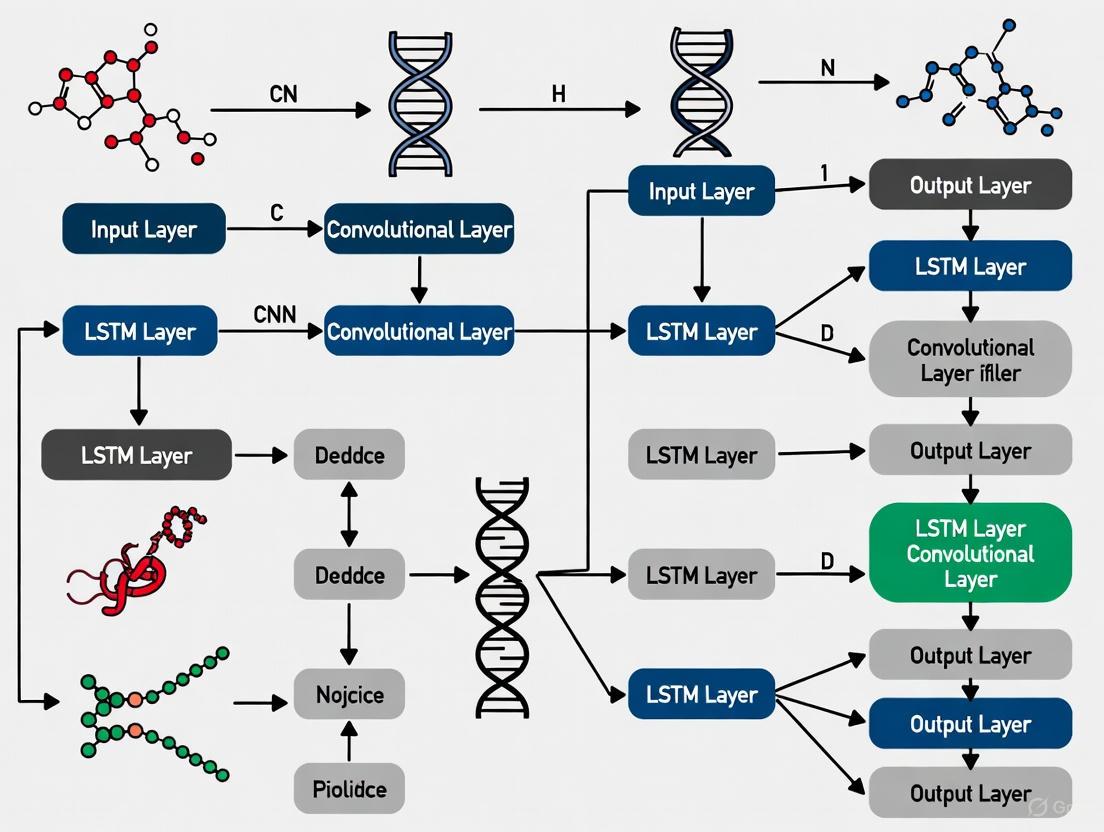
Hybrid models combining Long Short-Term Memory (LSTM) networks and Convolutional Neural Networks (CNN) represent a transformative approach in genomic sequence analysis.
Advancing Genomic Analysis: A Comprehensive Guide to Hybrid LSTM-CNN Models
Abstract
Hybrid models combining Long Short-Term Memory (LSTM) networks and Convolutional Neural Networks (CNN) represent a transformative approach in genomic sequence analysis. These models synergistically leverage CNNs for detecting local patterns and conserved motifs with LSTMs for capturing long-range dependencies critical for understanding gene regulation and function. This article provides a foundational explanation of these architectures, details their methodology for diverse applications—from DNA classification and essential gene prediction to COVID-19 severity forecasting—and addresses key challenges like data imbalance and model interpretability. We further present a comparative analysis of model performance against traditional machine learning and standalone deep learning methods, underscoring the superior accuracy and robust generalization capabilities of hybrid LSTM-CNN frameworks. This resource is tailored for researchers, scientists, and drug development professionals seeking to implement these powerful tools in genomic research and precision medicine.
Understanding the Power of Hybrid LSTM-CNN Models in Genomics
The field of genomic sequence analysis is being transformed by deep learning, yet the complexity of biological data demands specialized architectural solutions. Genomic data possesses a hierarchical structure; local sequence motifs, such as transcription factor binding sites, exert immediate functional influences, while long-range dependencies, like those found in gene regulatory networks, control broader phenotypic outcomes [1]. Standard models often capture only one of these facets. The hybrid CNN-LSTM architecture directly addresses this duality, strategically combining Convolutional Neural Networks (CNNs) for extracting salient local patterns with Long Short-Term Memory (LSTM) networks for modeling contextual, long-range dependencies [2]. This synergy is particularly powerful for tasks in precision medicine and drug development, enabling more accurate prediction of disease severity from viral sequences, classification of functional genomic elements, and identification of pathogenic mutations [3] [2].
Core Architectural Components and Synergy
Convolutional Neural Networks (CNNs) for Local Pattern Extraction
CNNs operate as powerful feature detectors within biological sequences. Their architecture is designed to scan input data using filters (or kernels) that identify conserved motifs, functional domains, and other spatially local patterns critical to biological function [2].
- Operation Principle: A CNN applies these filters across the input sequence in a sliding-window fashion. Each filter is specialized to recognize a specific type of local feature, generating a feature map that highlights the presence and location of that feature throughout the sequence [1].
- Biological Relevance: In proteins, local relations between residues—such as conserved motifs and structural interactions—strongly influence biological properties. In DNA, CNNs can identify promoter regions, transcription factor binding sites, and other short, regulatory sequence patterns [2] [1]. The CNN component effectively builds a representation of the sequence from these foundational, local elements.
Long Short-Term Memory (LSTM) for Long-Range Dependency Capture
LSTMs are a specialized form of Recurrent Neural Network (RNN) engineered to overcome the vanishing gradient problem, which plagues standard RNNs and prevents them from learning long-term dependencies in sequential data [4] [5].
- Gated Architecture: The key to LSTM's effectiveness lies in its gating mechanism [4] [5]:
- Forget Gate: Determines what information from the previous cell state should be discarded.
- Input Gate: Decides what new information from the current input should be stored in the cell state.
- Output Gate: Controls what information from the cell state is output as the hidden state for the current time step.
- Biological Relevance: This gating mechanism allows the LSTM to maintain information over long sequence distances. This is crucial in genomics and proteomics, where residues or bases distant in the linear chain may have interdependent functions, such as in the formation of active sites or the interaction between a gene and its distant enhancer [2].
Synergistic Integration: The CNN-LSTM Hybrid
The hybrid model leverages the strengths of both architectures in a complementary, sequential pipeline.
- Information Flow: The raw sequence is first processed by the CNN layers. The CNN acts as a high-resolution feature extractor, transforming the raw sequence data into a richer representation of salient local features [1] [2].
- Contextual Modeling: This sequence of feature vectors is then fed into the LSTM layer. The LSTM processes this sequence, analyzing the temporal relationships and dependencies between the locally extracted features. It learns how these local patterns interact and combine over long ranges to influence the overall function or property being predicted [2].
- Analogy: This process is analogous to understanding a text: the CNN identifies the key words and short phrases (local motifs), while the LSTM understands the context, narrative, and long-range grammatical structure (long-range dependencies) that gives the entire text its meaning [6].
Quantitative Performance in Genomic Analysis
Empirical studies demonstrate that the CNN-LSTM hybrid architecture consistently outperforms traditional machine learning methods and often surpasses the performance of individual deep learning models in genomic classification tasks.
Table 1: Performance Comparison of Various Models on DNA Sequence Classification
| Model | Reported Accuracy | Key Application Context |
|---|---|---|
| Hybrid LSTM + CNN | 100% [1] | Human DNA sequence classification |
| XGBoost | 81.50% [1] | DNA sequence classification |
| Random Forest | 69.89% [1] | DNA sequence classification |
| DeepSea | 76.59% [1] | Genomic annotation |
| k-Nearest Neighbor | 70.77% [1] | DNA sequence classification |
| Logistic Regression | 45.31% [1] | DNA sequence classification |
| DeepVariant | 67.00% [1] | Variant calling |
| Graph Neural Network | 30.71% [1] | DNA sequence classification |
Beyond classification, hybrid models show significant promise in clinical prediction tasks. One study predicting COVID-19 severity from spike protein sequences and clinical data achieved an F1-score of 82.92% and an ROC-AUC of 0.9084 [2]. In cancer genomics, deep learning models have reduced false-negative rates in somatic variant detection by 30–40% compared to traditional bioinformatics pipelines [3]. Tools like MAGPIE, which uses an attention-based multimodal neural network, have achieved 92% accuracy in prioritizing pathogenic variants from sequencing data [3].
Application Notes & Experimental Protocols
Application Note: COVID-19 Severity Prediction from Spike Protein Sequences
Objective: To develop a predictive model for COVID-19 disease severity (Mild vs. Severe) using SARS-CoV-2 spike protein sequences and associated patient metadata [2].
Background: The spike protein is critical for viral entry and exhibits high mutation rates. Predicting severity based on viral genetics can aid in early intervention and resource allocation [2].
Table 2: Research Reagent Solutions for Genomic Sequence Analysis
| Reagent / Resource | Function / Description | Example Source / Tool |
|---|---|---|
| GISAID Database | Repository for viral genomic sequences and associated metadata; primary data source. | http://www.gisaid.org [2] |
| Biopython Library | A suite of tools for computational molecular biology; used for sequence analysis and feature extraction. | ProteinAnalysis module [2] |
| One-Hot Encoding | Preprocessing technique to represent nucleotide or amino acid sequences in a numerical, machine-readable format. | Standard pre-processing [1] |
| Physicochemical Descriptors | Numerical representations of biochemical properties (e.g., hydrophobicity, charge) for amino acids. | Kyte-Doolittle scale, Hopp-Woods scale [2] |
| Domain-Aware Encoding | A weighting scheme that emphasizes functionally critical regions of a sequence, such as the Receptor-Binding Domain (RBD). | Residues 319-541 in SARS-CoV-2 spike [2] |
Experimental Workflow:
Protocol Details:
Data Acquisition and Curation:
- Retrieve spike protein FASTA sequences and associated patient metadata from the GISAID database.
- Apply inclusion criteria: complete genome, human host, high coverage (<1% undefined bases), and presence of patient status.
- Standardize free-text patient status into "Mild" and "Severe" clinical categories [2].
Feature Engineering:
- Global Physicochemical Descriptors: For each amino acid sequence, compute:
- Amino Acid Composition (AAC): Normalized frequency of each residue.
- Mean hydrophobicity (Kyte-Doolittle scale).
- Net charge at pH 7.4.
- Predicted secondary structure content (helix, strand, coil).
- Region-Specific Encoding:
- Define the Receptor-Binding Domain (RBD), e.g., residues 319-541.
- Represent each residue by a vector of properties (polarity, charge, hydrophobicity).
- Apply a position-specific weighting scheme (e.g., weight of 5 for RBD residues, 1 for others) to emphasize functionally critical regions [2].
- Clinical and Epidemiological Data: One-hot encode demographic variables (age, gender) and viral lineage data.
- Global Physicochemical Descriptors: For each amino acid sequence, compute:
Model Implementation and Training:
- Architecture: Implement a hybrid model where initial CNN layers perform local feature extraction from the engineered sequence input. The output feature maps from the CNN are then fed into an LSTM layer to model long-range dependencies across the sequence. Finally, the output of the LSTM is combined with clinical data and processed by fully connected layers for the final prediction.
- Training: Use a standardized split of data into training, validation, and test sets. Train the model using an appropriate optimizer and loss function for binary classification, monitoring for overfitting on the validation set [2].
Application Note: Human DNA Sequence Classification
Objective: To accurately classify human DNA sequences, distinguishing them from those of closely related species, by identifying characteristic local and long-range patterns [1].
Background: DNA sequence classification is a fundamental task in genomics for identifying regulatory regions, genetic variations, and functional elements. The complex and hierarchical nature of genomic information makes it well-suited for hybrid deep-learning approaches [1].
Experimental Workflow:
Data Preprocessing:
- Sequence Representation: Convert DNA sequences (A, C, G, T) into a numerical format using one-hot encoding. This creates a binary matrix where each base is represented by a unique 4-dimensional vector [1].
- Data Partitioning: Split the data into training, validation, and test sets, ensuring no data leakage between sets.
Hybrid Model Architecture:
- CNN Module: The one-hot encoded sequences are fed into convolutional layers to detect short, conserved motifs (e.g., transcription factor binding sites). This is followed by pooling layers to reduce dimensionality and introduce translational invariance.
- LSTM Module: The feature maps from the CNN are reshaped into a sequence and passed to the LSTM layer. The LSTM learns the long-range grammatical structure of the DNA, capturing how local motifs interact over thousands of bases to influence function.
- Classification Head: The final hidden state from the LSTM is passed through a fully connected layer with a softmax activation function to produce the final classification probabilities (e.g., human, chimpanzee, dog) [1].
Performance Benchmarking:
- As shown in Table 1, the hybrid LSTM+CNN model achieved 100% classification accuracy on a specific task, significantly outperforming other machine learning and deep learning models, demonstrating the power of this architectural synergy [1].
Discussion and Future Perspectives
The integration of CNNs and LSTMs represents a robust framework for genomic sequence analysis, effectively mirroring the multi-scale nature of biological information. However, several challenges and future directions remain.
A primary consideration is model interpretability. While highly accurate, deep learning models are often perceived as "black boxes." Future work should integrate attention mechanisms, which allow the model to highlight which specific regions of the input sequence (e.g., which bases or amino acids) were most influential in making a prediction. This is crucial for generating biologically testable hypotheses and for clinical adoption [3].
Another challenge is data scarcity and quality for specific tasks. Techniques such as transfer learning, where a model pre-trained on a large, general dataset is fine-tuned for a specific application, and federated learning, which allows model training across multiple institutions without sharing sensitive patient data, are promising avenues to overcome these limitations [3].
Finally, the field is moving beyond pure sequence data. The most powerful future models will seamlessly integrate multi-omics data—such as transcriptomics, proteomics, and epigenomics—alongside clinical variables. This will provide a more holistic view of the genotype-phenotype relationship, further advancing drug discovery and personalized medicine [7] [3].
The functional properties of DNA and protein sequences are governed by complex patterns that operate at multiple spatial scales. Local motifs, short, conserved sequences responsible for specific biological functions (e.g., transcription factor binding sites in DNA or catalytic domains in proteins), are embedded within a broader sequential context that modulates their activity. The integration of these two elements is therefore critical for accurate sequence-to-function modeling [8] [9].
Deep learning architectures, particularly hybrid models combining Convolutional Neural Networks (CNNs) and Long Short-Term Memory networks (LSTMs), are uniquely suited for this biological hierarchy. These models biologically mirror the structural organization of genomic information, where CNNs excel at detecting local, position-invariant motifs, and LSTMs capture the long-range dependencies and grammatical structures formed by the arrangement of these motifs [1] [2]. This document details the application of such hybrid models through specific protocols and notes, providing a framework for their use in genomic analysis and drug discovery.
Key Biological Concepts and Computational Analogs
Table 1: Biological Concepts and Their Computational Counterparts in Hybrid Models
| Biological Concept | Description | Computational Analog in Hybrid CNN-LSTM |
|---|---|---|
| Local Motif | Short, conserved sequence patterns (e.g., zinc fingers, helix-turn-helix) determining specific molecular interactions. | CNN Feature Maps: Filters scan the sequence to detect these local, invariant patterns [2]. |
| Sequential Context | The long-range spatial arrangement and dependency between motifs that influence overall function and regulation. | LSTM Memory Cells: Capture long-term dependencies and the "grammar" of motif arrangement [1] [2]. |
| Nucleotide/Amino Acid Dependency | The statistical relationship between adjacent residues in a sequence. | k-spectrum/k-mer Models: Capture local context and nucleotide dependency at the highest possible resolution [8] [9]. |
| Sequence Resolution | The granularity at which sequence information is considered for analysis. | Model Input Encoding: One-hot encoding, DNA embeddings, or physicochemical feature vectors provide the raw data resolution [1] [2]. |
Application Note: DNA Motif Recognition from Protein Sequence
Background and Rationale
Understanding the binding specificity of DNA-binding proteins is fundamental to deciphering gene regulatory networks. A significant challenge is mechanistically inferring DNA motif preferences directly from protein sequences across diverse families without resorting to extensive wet-lab experiments [8] [9]. The k-spectrum recognition model addresses this by operating at a high resolution to capture complex patterns from protein sequences.
Experimental Results and Performance
The k-spectrum model was validated on a massive scale, demonstrating its robust performance and generalizability across different protein families.
Table 2: Performance of k-spectrum Model on DNA-Binding Protein Families
| DNA-Binding Domain Family | Key Evaluation Metric | Model Performance & Competitive Edge |
|---|---|---|
| bHLH | Multiple metrics measured on millions of k-mer binding intensities | Demonstrated competitive edges in motif recognition [8] [9]. |
| bZIP | Multiple metrics measured on millions of k-mer binding intensities | Demonstrated competitive edges in motif recognition [8] [9]. |
| ETS | Multiple metrics measured on millions of k-mer binding intensities | Demonstrated competitive edges in motif recognition [8] [9]. |
| Forkhead | Multiple metrics measured on millions of k-mer binding intensities | Demonstrated competitive edges in motif recognition [8] [9]. |
| Homeodomain | Multiple metrics measured on millions of k-mer binding intensities | Demonstrated competitive edges in motif recognition [8] [9]. |
Protocol: k-spectrum Recognition Modeling
Objective: To build a model that predicts DNA binding motif sequences from the amino acid sequence of a DNA-binding protein.
Materials:
- Protein Sequences: FASTA files for proteins from DNA-binding domain families (e.g., bHLH, bZIP, ETS, Forkhead, Homeodomain).
- Binding Intensity Data: Experimentally derived k-mer binding intensity data for the proteins of interest.
- Computational Environment: Python with scikit-learn and Biopython libraries.
Methodology:
- Data Acquisition and Curation:
- Collect a curated set of protein sequences and their corresponding DNA binding specificity data (e.g., from publicly available databases like UniProt).
- Ensure sequences are labeled by their DNA-binding domain family.
k-mer Spectrum Feature Extraction:
- For a given value of k, decompose each protein sequence into all possible contiguous amino acid sub-sequences of length k (k-mers).
- Construct a feature vector for each protein sequence that represents the normalized frequency of these k-mers. This step captures the local sequence context and residue dependency [8] [9].
Model Training and Validation:
- Train the k-spectrum model on the feature vectors to predict DNA binding intensities for different k-mers.
- Validate the model using cross-validation and independent test sets. Measure performance using multiple metrics (e.g., AUC, precision, recall) across the different DNA-binding domain families.
Application:
- The trained model can be used to predict the DNA motif binding preferences of novel DNA-binding proteins based solely on their sequence.
- It can also help prioritize the impact of single nucleotide variants (SNVs) on transcription factor binding sites in a genome-wide manner, identifying regulatory variants that may be associated with disease [8] [9].
Application Note: Hybrid CNN-LSTM for DNA Sequence Classification
Background and Rationale
DNA sequence classification is a cornerstone of genomics, essential for identifying regulatory regions, pathogenic mutations, and functional genetic elements. The complexity and long-range dependencies within genomic data pose significant challenges for traditional machine learning models. A hybrid CNN-LSTM architecture was developed to synergistically extract local patterns and long-distance dependencies, achieving superior classification performance [1].
Experimental Results and Performance
The hybrid model was benchmarked against a wide array of traditional machine learning and deep learning models, demonstrating its significant advantage.
Table 3: Performance Comparison of DNA Sequence Classification Models
| Model Type | Specific Model | Reported Classification Accuracy |
|---|---|---|
| Traditional Machine Learning | Logistic Regression | 45.31% |
| Naïve Bayes | 17.80% | |
| Random Forest | 69.89% | |
| k-Nearest Neighbor | 70.77% | |
| Advanced Machine Learning | XGBoost | 81.50% |
| Deep Learning | DeepSea | 76.59% |
| DeepVariant | 67.00% | |
| Graph Neural Network | 30.71% | |
| Hybrid Deep Learning | LSTM + CNN (Proposed) | 100.00% [1] |
Protocol: Implementing a Hybrid CNN-LSTM for DNA Classification
Objective: To classify DNA sequences (e.g., human vs. non-human, enhancer vs. non-enhancer) using a hybrid deep learning model.
Materials:
- DNA Sequences: Labeled genomic sequences in FASTA format.
- Computational Resources: GPU-accelerated environment (e.g., with TensorFlow or PyTorch).
- Data Preprocessing Tools: For one-hot encoding or DNA embedding generation.
Methodology:
- Sequence Preprocessing and Encoding:
- Standardize sequence length by truncating or padding.
- Convert nucleotide sequences into numerical representations. One-hot encoding (A=[1,0,0,0], C=[0,1,0,0], etc.) is a common and effective approach, though learned DNA embeddings can also be used [1].
Hybrid Architecture Configuration:
- Input Layer: Accepts the numerically encoded DNA sequences.
- CNN Module (Local Motif Detector):
- LSTM Module (Sequential Context Modeler):
- Output Layer: A fully connected layer with a softmax activation function to produce the final classification probabilities.
Model Training and Evaluation:
- Compile the model using an optimizer (e.g., Adam), a loss function (e.g., categorical cross-entropy), and track accuracy as a metric.
- Train the model on a labeled dataset, using a separate validation set for hyperparameter tuning to prevent overfitting.
- Evaluate the final model on a held-out test set to report unbiased performance metrics like accuracy, F1-score, and AUC-ROC [1].
Table 4: Key Resources for Sequence Analysis and Modeling
| Resource Name | Type | Function & Application |
|---|---|---|
| MEME Suite [10] | Software Toolkit | Discovers novel motifs (MEME, STREME) and performs motif enrichment analysis (AME, CentriMo) in nucleotide or protein sequences. |
| GISAID [2] | Database | Provides access to annotated viral genomic sequences (e.g., SARS-CoV-2 spike protein), crucial for training predictive models. |
| Sanger Sequencing [11] | Laboratory Technique | Provides gold-standard validation for sequence modifications, engineered constructs, and low-frequency variant detection. |
| Addgene Protocol - Sequence Analysis [12] | Laboratory Protocol | Guidelines for Sanger sequencing primer design and analysis of trace files (.ab1) for plasmid sequence verification. |
| Sage Science HLS2 [13] | Laboratory Instrument | Performs high-molecular-weight DNA size selection for long-read sequencing technologies (e.g., Oxford Nanopore, PacBio). |
Integrated Workflow: From Sequence to Functional Insight
The power of the hybrid modeling approach is fully realized when computational predictions are integrated with experimental validation. The following workflow outlines this cycle for a project aimed at characterizing a novel DNA-binding protein.
Next-generation sequencing (NGS) technologies have revolutionized genomics, with Whole Genome Sequencing (WGS) and Whole Exome Sequencing (WES) serving as two foundational approaches for detecting genetic variation [14] [15]. WGS aims to sequence and detect variations across an organism's entire DNA, providing an unbiased view of genetic variation including single nucleotide variants (SNVs), insertions and deletions (indels), structural variants, and copy number variations [14]. In contrast, WES specifically targets the protein-coding exonic regions, which constitute approximately 2% of the genome yet harbor an estimated 90% of known disease-causing variants [15]. The selection between these approaches involves significant trade-offs: WES offers substantial cost savings in both sequencing and data storage (typically 5-6 GB per file versus 90 GB or more for WGS), while WGS provides more comprehensive variant detection due to its higher coverage and ability to interrogate non-coding regions [15]. For researchers applying deep learning models like hybrid LSTM-CNN architectures to genomic sequences, understanding these data sources and their preprocessing requirements is fundamental to building effective predictive models.
Genomic Data Types: WES vs. WGS
Technical Specifications and Applications
Table 1: Comparison of Whole Exome Sequencing (WES) and Whole Genome Sequencing (WGS)
| Parameter | Whole Exome Sequencing (WES) | Whole Genome Sequencing (WGS) |
|---|---|---|
| Target Region | Protein-coding exons (1-2% of genome) | Entire genome (virtually every nucleotide) |
| Data Volume per Sample | 5-6 GB | 90 GB or more |
| Variant Types Detected | SNVs, small indels, some CNVs | SNVs, indels, structural variants, CNVs, regulatory elements |
| Primary Applications | Rare disease diagnosis, identifying coding variants associated with complex diseases, cancer genomics | Comprehensive variant discovery, non-coding region analysis, structural variant detection, population genomics |
| Cost Considerations | Lower sequencing and data storage costs | Higher sequencing and data storage costs |
| Capture Method | Hybridization-based capture using probes | No capture required |
| Clinical Relevance | Captures ~90% of known disease-causing variants | Potential to identify novel disease mechanisms in non-coding regions |
Implications for Deep Learning Applications
The choice between WES and WGS has significant implications for downstream deep learning applications. WES data provides a focused dataset enriched for clinically relevant variants, reducing the feature space for model training [15]. This can be advantageous for LSTM-CNN models working with limited computational resources or sample sizes. Conversely, WGS offers a more complete genomic context, potentially enabling models to identify complex patterns across coding and non-coding regions that might be missed in exome-only data [14]. The substantially larger data volume of WGS, however, demands more sophisticated data handling and computational resources for model training. For hybrid LSTM-CNN models specifically designed for genomic sequence analysis, WGS data may provide opportunities to learn long-range dependencies across the genome that are inaccessible through exome sequencing alone.
Standardized Preprocessing Workflows
Primary Preprocessing Steps
The transformation of raw sequencing reads into analysis-ready data follows a structured pipeline with rigorous quality control at each stage. The following workflow diagram illustrates the complete process from raw reads to variant calling:
Quality Control and Read Preprocessing: Initial quality assessment using tools like FastQC examines base quality scores, GC content distribution, adapter contamination, and sequence length distribution [14]. Artifacts are removed through preprocessing steps including trimming, filtering, and adapter clipping to prevent mapping biases [15].
Alignment to Reference Genome: Processed reads are mapped to a reference genome (e.g., GRCh38/hg38 for human data) using aligners such as BWA-MEM or Bowtie [14] [15]. This step generates alignment files in BAM format, where each read is positioned against the reference sequence.
Post-Alignment Processing: Critical processing steps include marking duplicate reads (to minimize allelic biases) and base quality score recalibration (BQSR) to correct for systematic errors in base quality scores [14]. The GATK pipeline uses known variant sites from resources like dbSNP, HapMap, and 1000 Genomes for BQSR [14].
Variant Calling and Filtering: Variant calling algorithms like GATK HaplotypeCaller calculate the probability that a genetic variant is truly present in the sample [15]. To avoid false-positive calls, parameters such as maximum read depth per position, minimum number of gapped reads, and base alignment quality recalculation are optimized [15]. Finally, quality filters are applied to retain high-confidence variants.
Experimental Protocol: GATK Workflow for Variant Discovery
For researchers implementing the GATK workflow, the following protocol provides a detailed methodology:
Environment Setup: Create a dedicated computational environment using Conda to isolate tools and prevent conflicts [14]:
Reference Genome Preparation: Download the human reference genome GRCh38 and create alignment indices [14]:
This index creation step requires 2-3 hours but only needs to be performed once [14].
Execute Preprocessing Pipeline:
- Perform quality control:
fastqc sample.fastq - Trim adapters and low-quality bases:
trim_galore --quality 20 --length 50 sample.fastq - Align to reference:
bwa mem -t 20 reference.fa sample_trimmed.fq > sample.sam - Process alignments:
gatk MarkDuplicates -I sample.bam -O sample_dedup.bam --METRICS_FILE metrics.txt - Recalibrate base quality scores:
gatk BaseRecalibrator -I sample_dedup.bam -R reference.fa --known-sites known_sites.vcf -O recal_data.table
- Perform quality control:
Variant Calling:
Feature Engineering for Genomic Sequences
Encoding Methods for Deep Learning
Raw DNA sequences comprise nucleotides (A, C, G, T for DNA; A, C, U, G for RNA) that must be converted to numerical representations for deep learning applications [16]. The encoding method significantly impacts model performance, with different approaches offering distinct advantages.
Table 2: Feature Encoding Techniques for Genomic Sequences
| Encoding Method | Description | Advantages | Limitations | Suitable Model Types |
|---|---|---|---|---|
| Label Encoding | Each nucleotide is assigned a unique integer value (e.g., A=0, C=1, G=2, T=3) | Preserves positional information, simple implementation | Creates artificial ordinal relationships between nucleotides | CNN, LSTM, CNN-LSTM |
| K-mer Encoding | DNA sequence is split into overlapping subsequences of length k, creating English-like statements | Reduces sequence length, captures local context | Increases feature dimensionality for large k values | CNN, CNN-Bidirectional LSTM |
| One-Hot Encoding | Each nucleotide is represented as a binary vector (e.g., A=[1,0,0,0], C=[0,1,0,0]) | No artificial ordinal relationships, widely compatible | High dimensionality for long sequences, sparse representation | CNN, LSTM, Hybrid models |
| Physicochemical Descriptors | Incorporates biochemical properties (hydrophobicity, charge, polarity) | Encodes biologically relevant information, domain-specific | Requires domain knowledge, complex implementation | CNN, CNN-LSTM for prediction tasks |
Advanced Feature Engineering Pipeline
For hybrid LSTM-CNN models, a comprehensive feature engineering pipeline can extract both local patterns and global sequence characteristics. The following workflow illustrates an advanced feature extraction process:
K-mer Encoding Implementation: K-mer encoding breaks DNA sequences into overlapping subsequences of length k. For example, the sequence "ATCGGA" with k=3 generates "ATC", "TCG", "CGG", "GGA". This approach effectively reduces sequence dimensionality while capturing local contextual information [16]. Research has demonstrated that CNN and CNN-Bidirectional LSTM models with K-mer encoding can achieve high accuracy (up to 93.16% and 93.13% respectively) in DNA sequence classification tasks [16].
Region-Specific Feature Enhancement: Biologically important regions can be emphasized through position-specific weighting schemes. For instance, in spike protein analysis, residues within the receptor-binding domain (RBD, positions 319-541) might receive 5× higher weight than other regions [2]. Each residue can be represented by a multi-dimensional vector incorporating normalized values of polarity, isoelectric point, hydrophobicity, and binary indicators for physicochemical classes [2].
Physicochemical Descriptor Extraction: Global protein features include [2]:
- Amino acid composition (normalized frequency of each residue)
- Sequence length and amino acid diversity
- Mean hydrophobicity (Kyte-Doolittle scale)
- Net charge at physiological pH (7.4)
- Predicted secondary structure content (helix, strand, coil proportions)
- Polarity index (Hopp-Woods scale)
- Hydrogen bonding potential (frequency of Ser, Thr, Asn, Gln, His, Tyr)
Experimental Protocol: Feature Engineering for LSTM-CNN Models
Sequence Preprocessing:
Multi-Modal Encoding:
Data Partitioning:
- Split data into training, validation, and test sets (e.g., 70-15-15 ratio)
- Maintain consistent preprocessing across splits
- Ensure representative distribution of sequence classes in each split
Table 3: Key Research Reagent Solutions for Genomic Sequencing Analysis
| Resource Category | Specific Tools/Resources | Function | Application Context |
|---|---|---|---|
| Variant Calling Pipelines | GATK, DeepVariant, Strelka2, FreeBayes | Identify genetic variants from aligned sequencing data | Germline and somatic variant discovery; GATK is industry standard for germline variants [14] |
| Alignment Tools | BWA-MEM, Bowtie | Map sequencing reads to reference genome | Essential preprocessing step for both WES and WGS [14] [15] |
| Variant Annotation | SnpEff/SnpSift, VEP (Variant Effect Predictor) | Add functional information to identified variants | Critical for interpreting variant effects on genes and proteins [15] |
| Exome Capture Kits | Illumina Nexome, IDT xGen, Agilent SureSelect | Enrich exonic regions through hybridization-based capture | WES-specific; impacts coverage uniformity [15] |
| Reference Genomes | GRCh38/hg38, GRCh37/hg19 | Provide reference sequence for read alignment | Foundation for all alignment and variant calling [14] |
| Variant Databases | dbSNP, HapMap, 1000 Genomes, GnomAD | Provide known variants for filtering and annotation | Used for base quality score recalibration and identifying novel variants [14] |
| Genomic Data Repositories | GISAID, NCBI GenBank | Provide access to genomic sequences and metadata | Essential for obtaining spike protein sequences and clinical metadata [16] [2] |
| Quality Control Tools | FastQC, fastp, Trimmomatic | Assess sequencing data quality and perform preprocessing | Initial QC step to identify potential issues before alignment [14] [15] |
The journey from raw WES/WGS data to feature-engineered sequences suitable for hybrid LSTM-CNN analysis requires meticulous preprocessing and thoughtful feature engineering. The selection between WES and WGS represents a fundamental trade-off between comprehensiveness and practicality, with implications for downstream analytical approaches. Standardized preprocessing workflows, particularly those implemented in GATK, transform raw sequencing reads into high-quality variants through a multi-step process of quality control, alignment, and variant refinement. For deep learning applications, feature engineering methods including K-mer encoding, physicochemical property extraction, and domain-specific weighting create numerical representations that preserve biologically relevant patterns. These processed sequences enable hybrid LSTM-CNN models to effectively capture both local genomic motifs through convolutional operations and long-range dependencies through recurrent connections, ultimately supporting accurate prediction of functional outcomes from genomic sequences.
The analysis of genomic sequences represents one of the most computationally complex challenges in modern biology. Traditional statistical and machine learning methods often struggle with the high-dimensional nature of genomic data, where the number of features (e.g., nucleotides, sequence variants) vastly exceeds the number of samples, and with the intricate long-range dependencies that govern regulatory elements. Hybrid deep learning architectures, particularly those combining Long Short-Term Memory (LSTM) networks and Convolutional Neural Networks (CNN), have emerged as powerful solutions that fundamentally outperform traditional approaches. These hybrid models excel at capturing both the local spatial features and long-range temporal dependencies inherent in DNA sequences, enabling more accurate classification, prediction, and functional annotation. This document outlines the quantitative advantages of these hybrid models and provides detailed protocols for their implementation in genomic research, framed within the context of a broader thesis on hybrid LSTM-CNN models for genomic sequence analysis.
Quantitative Performance Comparison
The superiority of hybrid LSTM-CNN models is demonstrated through substantial improvements in key performance metrics across diverse genomic applications compared to traditional machine learning and single-architecture deep learning models.
Table 1: Performance Comparison of DNA Sequence Classification Models
| Model Type | Specific Model | Accuracy (%) | Application Context | Key Advantage |
|---|---|---|---|---|
| Traditional ML | Logistic Regression | 45.31 | Human DNA Classification | Baseline performance [1] |
| Traditional ML | Naïve Bayes | 17.80 | Human DNA Classification | Baseline performance [1] |
| Traditional ML | Random Forest | 69.89 | Human DNA Classification | Handles non-linearity [1] |
| Advanced ML | XGBoost | 81.50 | Human DNA Classification | Ensemble learning [1] |
| Deep Learning | DeepSea | 76.59 | Human DNA Classification | CNN-based [1] |
| Deep Learning | DeepVariant | 67.00 | Human DNA Classification | CNN-based [1] |
| Deep Learning | CNN | 93.16 | Virus DNA Classification | Local feature extraction [16] |
| Deep Learning | CNN-Bidirectional LSTM | 93.13 | Virus DNA Classification | Captures sequence context [16] |
| Hybrid DL | LSTM + CNN (Hybrid) | 100.00 | Human DNA Classification | Captures local & long-range patterns [1] |
| Hybrid DL | CNN-LSTM | High* | Genomic Prediction (Crops) | Superior for complex traits [17] |
| Hybrid DL | LSTM-ResNet | High* | Genomic Prediction (Crops) | Best performance on 10/18 traits [17] |
Note: The crop genomics study [17] reported that hybrid models like LSTM-ResNet consistently achieved the highest prediction accuracy but did not provide a single aggregate percentage for the model class.
Table 2: Performance of Hybrid Models in Other Genomic Applications
| Hybrid Model | Application | Key Performance Metrics | Interpretation |
|---|---|---|---|
| LSTM, BiLSTM, CNN, GRU, GloVe Ensemble | Gene Mutation Classification | Training Accuracy: 80.6%, Precision: 81.6%, Recall: 80.6%, F1-Score: 83.1% [18] | Surpassed advanced transformer models in classifying cancer gene mutations. |
| Multi2-Con-CAPSO-LSTM | DNA Methylation Prediction | High Sensitivity, Specificity, Accuracy, and Correlation across 17 species [19] | Robust generalization across different methylation types and species. |
| Hybrid Deep Learning Approach | Low-Volume High-Dimensional Data | Outperformed standalone ML and DL [20] | Effectively addresses the "low n, high d" problem common in genomics. |
Experimental Protocols
Protocol 1: DNA Sequence Classification for Pathogen Identification
This protocol details the methodology for classifying viral DNA sequences (e.g., COVID-19, SARS, MERS) using a hybrid CNN-LSTM model, achieving over 93% accuracy [16].
1. Data Collection & Preprocessing:
- Data Source: Obtain FASTA format genomic sequences from public databases like NCBI GenBank.
- Handling Class Imbalance: Apply the Synthetic Minority Oversampling Technique (SMOTE) to generate synthetic samples for under-represented virus classes (e.g., MERS, dengue) to match the sample count of the majority class [16].
- Sequence Encoding: Convert categorical nucleotide sequences (A, C, G, T) into numerical representations. Two primary methods are used:
- Label Encoding: Assign a unique integer index to each nucleotide (e.g., A=0, C=1, G=2, T=3), preserving positional information.
- K-mer Encoding: Break the sequence into overlapping fragments of length k (e.g., k=3). These k-mers are treated as words, and the entire sequence is converted into a sentence-like structure. This is subsequently fed into an embedding layer to create dense vector representations [16].
2. Model Architecture (CNN-Bidirectional LSTM):
- Input Layer: Accepts the numerically encoded sequences.
- Convolutional Layers (1D): Use multiple 1D convolutional filters to scan the sequence and detect local, invariant motifs (e.g., promotor signals, protein-binding sites). Apply a ReLU activation function.
- Pooling Layer (MaxPooling1D): Follows convolutional layers to reduce spatial dimensionality, improve computational efficiency, and provide basic translational invariance.
- Bidirectional LSTM Layer: The output from the CNN is fed into a Bidirectional LSTM. This layer processes the sequence forwards and backwards, capturing long-range dependencies and contextual information from both directions, which is crucial for understanding gene structure and regulation.
- Fully Connected & Output Layer: The final hidden states are passed through dense layers with dropout for regularization, culminating in a softmax output layer for multi-class classification [16].
3. Training & Evaluation:
- Partition the data into training, validation, and testing sets (e.g., 80/10/10 split).
- Train the model using a categorical cross-entropy loss function and an Adam optimizer.
- Evaluate performance on the held-out test set using accuracy, precision, recall, and F1-score [16].
Protocol 2: Genomic Prediction for Complex Crop Traits
This protocol describes the use of hybrid models like LSTM-ResNet for genomic selection in plant breeding, where they have shown superior performance for complex, polygenic traits [17].
1. Data Preparation:
- Genotype Data: Use high-density genome-wide molecular markers, typically Single Nucleotide Polymorphisms (SNPs). The data is structured as a matrix of individuals (rows) by SNPs (columns), with values indicating the allele state.
- Phenotype Data: Collect measurements of the target trait(s) (e.g., yield, drought tolerance) for the same individuals.
- Quality Control & Imputation: Filter SNPs based on minor allele frequency and call rate. Impute missing genotypes if necessary.
2. Model Architecture (LSTM-ResNet):
- Input Layer: Takes the vector of SNP markers for an individual.
- ResNet Blocks: These blocks consist of convolutional layers with skip connections. The skip connections bypass one or more layers and perform identity mapping, which mitigates the vanishing gradient problem, enabling the training of very deep networks. This allows the model to hierarchically learn complex, non-additive genetic interactions (epistasis) [17].
- LSTM Layers: The features extracted by ResNet are sequentially fed into LSTM layers. The LSTM is adept at modeling the linkage disequilibrium (LD) structure and long-range dependencies along the chromosome, effectively capturing the spatial relationships between genetic markers [17].
- Output Layer: A regression or classification output layer to predict the trait value.
3. Training & Analysis:
- The model is trained to minimize the difference between predicted and observed phenotypic values.
- Performance is evaluated by calculating the prediction accuracy (correlation between predicted and observed values) on a validation set.
- Analysis of SNP sampling suggests maintaining SNP counts between 10,000 and 15,000 can optimize computational efficiency without significant loss of predictive power [17].
Workflow and Model Architecture Diagrams
The following diagram illustrates the logical flow and key components of a hybrid LSTM-CNN system for genomic sequence analysis.
Genomic Analysis with Hybrid LSTM-CNN Models
The Scientist's Toolkit: Research Reagent Solutions
Table 3: Essential Research Reagents and Computational Tools for Hybrid Genomic Modeling
| Item Name | Function/Application | Specification Notes |
|---|---|---|
| Genomic Sequence Data | Raw input data for model training and validation. | Sourced from public repositories (e.g., NCBI GenBank, Sequence Read Archive) in FASTA, BAM, or VCF format [16] [21]. |
| SNP Genotyping Array | Provides genotype matrix for genomic prediction. | High-density arrays (e.g., Illumina Infinium) generating 1,000 to 100,000+ SNPs for constructing the input feature matrix [17]. |
| Python with Deep Learning Libraries | Core programming environment for model implementation. | Requires TensorFlow/Keras or PyTorch, along with bioinformatics packages like Biopython for data handling [16] [1]. |
| High-Performance Computing (HPC) Cluster | Accelerates model training and hyperparameter optimization. | Equipped with multiple GPUs (e.g., NVIDIA Tesla) to handle the computational load of large genomic datasets and complex hybrid architectures [17] [21]. |
| SMOTE Algorithm | Addresses dataset imbalance in genomic studies. | A preprocessing technique (e.g., from imbalanced-learn Python library) crucial for mitigating bias against rare viral classes or disease variants [16] [20]. |
Implementing Hybrid Architectures: From DNA Classification to Clinical Prediction
The analysis of genomic sequences represents one of the most complex challenges in modern computational biology, requiring models capable of capturing both local patterns and long-range dependencies within DNA. The integration of Convolutional Neural Networks (CNNs) and Long Short-Term Memory (LSTM) networks addresses this fundamental biological reality. Genomic function is governed not only by local sequence motifs—short, conserved patterns recognized by transcription factors and DNA-binding proteins—but also by long-range regulatory interactions where distant genomic elements influence expression through chromosomal looping and three-dimensional genome architecture. This biological imperative necessitates a hybrid computational approach that can simultaneously detect conserved local features and model their interactions across thousands of nucleotide positions.
The synergistic combination of CNN and LSTM architectures creates a powerful framework for genomic sequence analysis. CNNs excel at identifying local sequence motifs through their convolutional filters that scan input sequences for conserved patterns, effectively recognizing protein-binding sites, nucleotide composition biases, and other short-range signals. Meanwhile, LSTMs process sequential information with memory capabilities, allowing them to learn dependencies between genomic elements regardless of their separation distance. This proves particularly valuable for modeling enhancer-promoter interactions, polycistronic gene regulation, and other long-range genomic relationships that defy simple positional analysis. When strategically combined, these architectures form a comprehensive model that mirrors the multi-scale organization of genomic information, from local nucleotide interactions to chromosome-scale regulatory networks.
Quantitative Performance Landscape
Recent research demonstrates the superior performance of hybrid CNN-LSTM architectures compared to traditional machine learning approaches and standalone deep learning models in genomic sequence classification tasks. The quantitative evidence strongly supports the adoption of hybrid models for DNA sequence analysis.
Table 1: Performance Comparison of DNA Sequence Classification Models
| Model Type | Specific Model | Accuracy (%) | Key Strengths |
|---|---|---|---|
| Hybrid Deep Learning | LSTM + CNN | 100.0 | Captures both local patterns and long-range dependencies |
| Traditional ML | Logistic Regression | 45.3 | Interpretability, computational efficiency |
| Traditional ML | Naïve Bayes | 17.8 | Probability-based classification |
| Traditional ML | Random Forest | 69.9 | Handles non-linear relationships |
| Advanced ML | XGBoost | 81.5 | Gradient boosting effectiveness |
| Deep Learning | DeepSea | 76.6 | Specialized for genomic tasks |
| Deep Learning | DeepVariant | 67.0 | Variant calling accuracy |
| Deep Learning | Graph Neural Networks | 30.7 | Graph-based data representation |
The remarkable 100% classification accuracy achieved by the LSTM-CNN hybrid model underscores the critical importance of architectural design in genomic deep learning applications. This performance advantage stems from the model's ability to leverage complementary strengths: CNNs provide translational invariance and hierarchical feature learning at local scales, while LSTMs model temporal dependencies across the entire sequence length. The hybrid approach effectively addresses the multi-scale nature of genomic information, where functional elements operate at different spatial resolutions—from three-nucleotide codons to multi-gene regulatory domains spanning hundreds of kilobases.
Table 2: Hyperparameter Configuration for Optimized Hybrid Architecture
| Parameter Category | Specific Setting | Biological Rationale |
|---|---|---|
| CNN Component | Multiple filter sizes (3, 5, 7) | Detect variable-length motifs |
| CNN Component | 128-256 filters per size | Capture diverse sequence features |
| LSTM Component | 120 hidden units | Model long-range dependencies |
| LSTM Component | Bidirectional configuration | Context from both genomic directions |
| Training | Adam optimizer | Efficient gradient-based learning |
| Training | 0.002 learning rate | Stable convergence |
| Training | 200 epochs | Sufficient training iterations |
| Training | Gradient clipping at 1 | Prevent exploding gradients |
Experimental Protocol for Genomic Sequence Classification
Data Acquisition and Preprocessing
The foundation of any successful genomic deep learning project begins with comprehensive data acquisition and rigorous preprocessing. For human DNA sequence classification, researchers can access curated datasets from public genomic repositories such as the UCSC Genome Browser, ENCODE, and specialized databases outlined in recent literature [22]. These resources provide experimentally validated sequences with functional annotations including promoter regions, enhancer elements, and transcription factor binding sites. The initial data acquisition phase should prioritize balanced class distributions and representative sampling across genomic contexts to prevent algorithmic bias and ensure generalizable model performance.
Critical preprocessing steps include sequence normalization, categorical encoding, and appropriate data partitioning. Genomic sequences must be standardized to consistent lengths through strategic padding or trimming operations, preserving biological relevance while meeting computational requirements. One-hot encoding represents the gold standard for transforming nucleotide sequences into numerical representations, creating binary vectors where each nucleotide (A, T, C, G) occupies a unique positional encoding. This approach preserves sequence information without imposing artificial ordinal relationships between nucleotides. The dataset should be partitioned into training (80%), validation (10%), and test (10%) sets using stratified sampling to maintain consistent class distributions across splits. For enhanced model robustness, implement k-fold cross-validation with biologically independent segments to prevent information leakage between training and evaluation phases.
Step-by-Step Model Implementation Protocol
Step 1: Input Layer Configuration
- Define input dimensions based on sequence length and encoding scheme
- For one-hot encoded DNA sequences of length L, input shape = (L, 4)
- Implement using sequenceInputLayer function with specified dimensions
Step 2: Convolutional Feature Extraction
- Design parallel convolutional pathways with varying filter sizes
- Filter dimensions: 3×4, 5×4, 7×4 (width × input channels)
- Apply 128-256 filters per pathway to capture diverse motif representations
- Follow each convolution with ReLU activation: max(0, x) for nonlinear transformation
- Include batch normalization layers to stabilize training and accelerate convergence
Step 3: Dimensionality Reduction
- Implement max-pooling operations with pool size 2 and stride 2
- This reduces spatial dimensions by half while retaining dominant features
- Alternative: global max-pooling for fixed-size representations regardless of input length
Step 4: Temporal Dependency Modeling
- Route pooled features to bidirectional LSTM layers with 120 hidden units
- Bidirectional processing captures contextual information from both genomic directions
- LSTM memory cells maintain relevant information across long sequence distances
- Set outputMode to "last" for sequence classification tasks
Step 5: Classification Head
- Flatten multi-dimensional features into vector representation
- Include fully connected layer with number of units matching class count
- Apply softmax activation for multi-class probability distribution
- Output layer produces final classification scores
Model Training and Optimization Protocol
Training Configuration:
- Initialize optimizer: Adam with learning rate = 0.002, beta1 = 0.9, beta2 = 0.999
- Set batch size: 32-128 based on available memory and dataset size
- Establish training duration: 200 epochs with early stopping patience = 20 epochs
- Define loss function: categorical cross-entropy for multi-class classification
- Implement gradient clipping: threshold = 1.0 to prevent exploding gradients
- Configure validation: monitor validation accuracy for model selection
Regularization Strategy:
- Apply L2 weight regularization: coefficient = 0.001 in convolutional and dense layers
- Implement dropout: rate = 0.5 after LSTM layer and between dense layers
- Utilize batch normalization: after each convolutional layer before activation
- Employ data augmentation: random reverse-complement generation during training
Performance Monitoring:
- Track training/validation loss curves for overfitting detection
- Monitor multiple metrics: accuracy, precision, recall, F1-score
- Implement learning rate reduction on validation plateau (factor = 0.5, patience = 10)
- Conduct error analysis: examine misclassified sequences for systematic patterns
The Scientist's Toolkit: Research Reagent Solutions
Table 3: Essential Computational Tools for Hybrid Model Development
| Tool Category | Specific Tool/Platform | Function in Workflow |
|---|---|---|
| Deep Learning Frameworks | TensorFlow with Keras API | Model architecture implementation and training |
| Deep Learning Frameworks | PyTorch | Flexible research prototyping and experimentation |
| Bioinformatics Libraries | Biopython | Genomic sequence processing and manipulation |
| Bioinformatics Libraries | Bedtools | Genomic interval operations and dataset management |
| Data Science Ecosystem | NumPy, Pandas | Numerical computation and data manipulation |
| Data Science Ecosystem | Scikit-learn | Data preprocessing, evaluation metrics, and traditional ML |
| Visualization Tools | Matplotlib, Seaborn | Performance metric visualization and result reporting |
| Visualization Tools | Plotly | Interactive visualization of genomic annotations |
| Specialized Genomics | Selene | Deep learning platform for genomic sequence analysis |
| Specialized Genomics | Jupyter Notebooks | Interactive development and exploratory analysis |
Table 4: Experimental Data Resources for Genomic Sequence Analysis
| Resource Type | Specific Database/Resource | Application Context |
|---|---|---|
| Public Data Repositories | ENCODE (Encyclopedia of DNA Elements) | Functional genomic element annotation |
| Public Data Repositories | UCSC Genome Browser | Genome visualization and data integration |
| Public Data Repositories | NCBI Gene Expression Omnibus (GEO) | Access to published genomic datasets |
| Public Data Repositories | UK Biobank (490,640 WGS datasets) | Large-scale human genetic variation [23] |
| Sequence Databases | Ensembl | Genome annotation and comparative genomics |
| Sequence Databases | NCBI Nucleotide | Reference sequences and curated collections |
| Benchmark Datasets | 140 benchmark datasets across 44 DNA analysis tasks | Model training and comparative evaluation [22] |
| Preprocessing Tools | DeepVariant | Accurate variant calling from sequencing data |
| Preprocessing Tools | CRISPResso2 | Analysis of genome editing outcomes |
Advanced Applications in Genomic Medicine
The integration of CNN-LSTM hybrid models extends beyond basic sequence classification to address complex challenges in genomic medicine and therapeutic development. In cancer genomics, these architectures enable precise tumor subtyping based on mutational profiles and regulatory element alterations, facilitating personalized treatment strategies. For rare disease diagnosis, hybrid models can identify pathogenic variants in non-coding regions that traditional exome sequencing approaches would miss, significantly improving diagnostic yield for previously undiagnosed conditions.
In pharmaceutical development, CNN-LSTM models accelerate target identification and validation by predicting the functional consequences of non-coding variants on gene expression and protein function. This capability proves particularly valuable for understanding regulatory variant mechanisms in pharmacogenomics, where interindividual differences in drug response often trace to non-coding regions that modulate metabolic enzyme expression. Additionally, these models power advanced biomarker discovery pipelines by integrating multi-modal genomic data to identify complex signatures predictive of therapeutic response, enabling more precise patient stratification for clinical trials and ultimately improving success rates in drug development programs.
Workflow Integration and Experimental Validation
The successful implementation of hybrid CNN-LSTM models requires careful attention to biological validation and experimental confirmation. Model predictions should be systematically verified through targeted experimental approaches that test specific biological hypotheses generated by the computational analysis. For genomic element classification, orthogonal validation methods such as reporter assays, CRISPR-based functional screens, and chromatin conformation analyses provide essential confirmation of model predictions. This iterative cycle of computational prediction and experimental validation establishes a rigorous framework for biological discovery while continuously improving model performance through incorporation of additional experimentally-derived training data.
Critical considerations for experimental validation include designing appropriate positive and negative control sequences, establishing quantitative metrics for functional assessment, and ensuring biological relevance through cell-type-specific or condition-specific experimental contexts. The integration of wet-lab experimentation with computational modeling creates a powerful virtuous cycle: model predictions guide targeted experiments, while experimental results refine model training, ultimately leading to increasingly accurate and biologically relevant genomic sequence analysis capabilities. This integrated approach maximizes the translational potential of deep learning methodologies in genomic medicine and therapeutic development.
DNA Sequence Classification and Species Identification
DNA sequence classification enables rapid and objective species identification by analyzing variability in specific genomic regions, revolutionizing fields from biodiversity monitoring to pharmaceutical authenticity control [24]. This methodology, known as DNA barcoding, functions like a universal product code for living organisms, allowing non-experts to identify species from small, damaged, or industrially processed materials where traditional morphological identification fails [24]. The fundamental premise relies on comparing short, standardized genomic sequences (approximately 700 nucleotides) against reference databases containing validated sequences from known species [25] [24].
The technological evolution from Sanger sequencing to next-generation sequencing (NGS) and third-generation sequencing has dramatically enhanced throughput while reducing costs, enabling researchers to process thousands of specimens simultaneously [26] [27]. Concurrently, artificial intelligence methodologies—particularly hybrid LSTM-CNN models—have emerged as powerful tools for analyzing the complex patterns within genomic sequences, offering improved accuracy in species prediction and classification tasks [26] [28].
Key Genomic Regions for Taxonomic Classification
Table 1: Standard DNA Barcode Regions for Major Taxonomic Groups
| Taxonomic Group | Primary Barcode Region | Alternative Regions | Key Characteristics |
|---|---|---|---|
| Animals | Cytochrome c oxidase subunit I (COI) | - | Mitochondrial gene; high mutation rate; proven diagnostic power for metazoans [24] |
| Flowering Plants | rbcL + matK | ITS, trnH-psbA | Chloroplast genes; rbcL offers easy amplification while matK provides higher discrimination [24] |
| Fungi | Internal Transcribed Spacer (ITS) | - | Nuclear ribosomal region; multi-copy nature aids amplification; high variability [24] |
| Green Macroalgae | tufA | rbcL | Chloroplast gene; elongation factor Tu; used when standard plant barcodes fail [24] |
These genomic regions are selected based on several criteria: significant interspecies variability with minimal intraspecies variation, presence across broad taxonomic groups, and reliable amplification using universal primers [24]. For particularly challenging taxonomic distinctions or when working with degraded samples, combining multiple barcode regions significantly enhances discriminatory power and identification confidence [24].
Experimental Protocol: Sample to Sequence
Sample Preparation and DNA Extraction
Proper sample preparation is foundational to successful DNA barcoding. The specific methodology varies by sample type [25]:
- Plant tissues: Surface sterilization followed by tissue disruption using bead beating or grinding in liquid nitrogen. Cell wall digestion may require extended incubation with specialized enzymes.
- Animal tissues: Muscle or epithelial tissues typically provide high-quality DNA with minimal inhibitors. Ethanol preservation is preferred over formalin which fragments DNA.
- Fungal specimens: Both fruiting bodies and mycelial cultures are suitable, though may require additional purification steps to remove polysaccharides.
- Processed products: Food and herbal products often require specialized extraction protocols to overcome PCR inhibitors and accommodate degraded DNA.
DNA extraction should prioritize yield, purity, and fragment size suitable for amplification of the target barcode region. While numerous commercial kits are available, protocols must be adapted for specific sample types [25]. Post-extraction quantification via fluorometry or spectrophotometry ensures optimal template concentration for subsequent amplification steps [25].
Target Amplification and Sequencing
Table 2: PCR Amplification Components and Conditions
| Component/Parameter | Specification | Notes |
|---|---|---|
| DNA Template | 1-10 ng/μL | Adjust based on extraction quality and sample type [25] |
| Primer Pair | 0.2-0.5 μM each | Taxon-specific barcode primers (see Table 1) [25] |
| Polymerase | 0.5-1.25 units/reaction | High-fidelity enzymes recommended for complex templates [25] |
| Thermal Cycling | 35 cycles of: 94°C (30s), 50-60°C (30s), 72°C (45-60s) | Annealing temperature primer-specific; extension time depends on amplicon length [25] |
| Amplicon Verification | 1.5-2% agarose gel electrophoresis | Confirm single band of expected size [25] |
Following successful amplification, PCR products require purification to remove primers, enzymes, and nucleotides before sequencing [25]. For traditional Sanger sequencing, which remains the gold standard for individual specimens, the purified product is sequenced bidirectionally to ensure high-quality base calling across the entire barcode region [25] [24]. For high-throughput applications involving multiple specimens or mixed samples, next-generation sequencing platforms with specialized library preparation protocols are employed [26] [27].
Experimental Workflow from Sample to Sequence
Computational Analysis Pipeline
Sequence Processing and Quality Control
Raw sequencing data requires substantial preprocessing before biological interpretation. For Sanger sequences, this involves base calling, trace quality assessment, and contig assembly from bidirectional reads [25]. NGS data demands more extensive processing including adapter trimming, quality filtering, and demultiplexing of pooled samples [26] [27].
Quality thresholds must be established a priori—typically requiring Phred quality scores ≥30 (indicating 99.9% base call accuracy) across the majority of the barcode region [25]. Sequences failing quality metrics should be excluded or targeted for re-sequencing to prevent erroneous classifications.
Feature Engineering for Machine Learning
Genomic sequences require transformation into numerical representations compatible with machine learning algorithms like hybrid LSTM-CNN models [28]. The most common approaches include:
K-mer frequency analysis: Decomposes sequences into all possible subsequences of length k, creating a frequency vector representation [28]. For example, a sequence "ATGAAGA" with k=3 generates the k-mers: "ATG", "TGA", "GAA", "AAG", "AGA". Optimal k-values typically range from 3-6, balancing computational efficiency with biological meaningfulness [28].
One-hot encoding: Represents each nucleotide as a four-dimensional binary vector (A=[1,0,0,0], C=[0,1,0,0], G=[0,0,1,0], T=[0,0,0,1]) [28]. This approach preserves positional information but creates high-dimensional representations for long sequences.
MinHashing: Efficiently approximates sequence similarity by converting k-mer profiles into signature matrices, particularly valuable for comparing large datasets [28].
Computational Analysis Pipeline
Database Searching and Phylogenetic Placement
For identification (rather than classification), the processed barcode sequence is compared against reference databases using similarity search tools like BLAST (Basic Local Alignment Search Tool) [24]. Multiple databases exist for this purpose:
- BOLD Systems: The Barcode of Life Data System specializing in COI sequences for animal identification [24]
- GenBank: Comprehensive sequence repository at NCBI containing all publicly available DNA sequences [24]
- RefSeq: Curated non-redundant database particularly useful for well-characterized organisms [28]
Top matches are evaluated based on percent identity, query coverage, and e-value. Specimens are typically assigned to species when sequence similarity exceeds 97-99% with a reference sequence, though these thresholds vary by taxonomic group [24]. For novel species or ambiguous matches, phylogenetic analysis using neighbor-joining or maximum likelihood methods provides evolutionary context and confirms placement relative to closest relatives [24].
Hybrid LSTM-CNN Architecture for Sequence Classification
Model Architecture and Implementation
Hybrid LSTM-CNN models leverage the complementary strengths of both architectures: CNNs excel at detecting local motifs and position-invariant patterns, while LSTMs capture long-range dependencies and sequential context [26] [28]. For genomic sequence classification, a typical implementation includes:
- Input layer: Accepts k-mer frequency vectors or one-hot encoded sequences
- Convolutional blocks: Multiple 1D convolutional layers with increasing filter sizes to capture nucleotide motifs of varying lengths
- Pooling layers: Reduce dimensionality while preserving important features
- LSTM layers: Process sequential features extracted by convolutional blocks, modeling dependencies across the barcode region
- Fully connected layers: Integrate features for final classification
- Output layer: Softmax activation generating probability distribution across candidate species
This architecture has demonstrated superior performance compared to single-modality networks, particularly for distinguishing closely related species with subtle sequence variations [26] [28].
Hybrid LSTM-CNN Model Architecture
Training Considerations and Optimization
Successful implementation requires careful attention to several factors:
Class imbalance mitigation: Taxonomic databases typically contain disproportionate representation across species. Techniques including oversampling, undersampling, class weighting, or synthetic data generation should be employed [26].
Regularization strategies: Dropout layers, L2 regularization, and early stopping prevent overfitting, particularly important with limited training data for rare species [26].
Hyperparameter optimization: Grid search or Bayesian optimization for filter sizes, LSTM units, learning rates, and batch sizes significantly impact model performance [26].
Interpretability: Visualization techniques like saliency maps highlight nucleotides and regions most influential in classification decisions, providing biological validation [26].
Research Reagent Solutions
Table 3: Essential Research Reagents for DNA Barcoding Workflows
| Reagent Category | Specific Examples | Function & Application Notes |
|---|---|---|
| DNA Extraction Kits | DNeasy Blood & Tissue (Qiagen), CTAB protocols | Cell lysis and nucleic acid purification; selection depends on sample type and preservation method [25] |
| Polymerase Master Mixes | Platinum Taq (Thermo Fisher), Q5 High-Fidelity (NEB) | PCR amplification with optimized buffer conditions; high-fidelity enzymes recommended for complex templates [25] |
| Barcode-Specific Primers | COI: LCO1490/HCO2198, rbcL: rbcLa-F/rbcLa-R | Universal primer pairs targeting standardized barcode regions; require validation for specific taxonomic groups [25] [24] |
| Sequencing Kits | BigDye Terminator (Thermo Fisher), Nextera XT (Illumina) | Sanger or NGS library preparation; selection determined by throughput requirements and available instrumentation [25] [27] |
| Quality Control Reagents | Qubit dsDNA HS Assay (Thermo Fisher), Bioanalyzer DNA chips (Agilent) | Accurate quantification and size distribution analysis; critical for sequencing success [25] |
Applications in Research and Drug Development
DNA sequence classification enables numerous applications with particular relevance to pharmaceutical research and development:
Authenticity verification of botanical ingredients: Herbal medicines and natural product extracts can be validated against reference standards, detecting adulteration or substitution with inferior species [24]. Studies have demonstrated misidentification in approximately 25% of commercial herbal products [24].
Biomaterial characterization: Cell lines and tissue samples used in research can be authenticated, preventing costly experiments with misidentified biological materials [24].
Bioprospecting and novel compound discovery: Rapid surveys of biodiversity hotspots identify previously uncharacterized species with potential pharmaceutical value [24].
Quality control in production systems: Fermentation systems and biological manufacturing processes can be monitored for microbial contamination using metabarcoding approaches [26].
The integration of AI-enhanced sequencing analysis creates unprecedented opportunities for scaling these applications to industrial-level throughput while maintaining rigorous accuracy standards demanded by regulatory agencies [26].
The identification of essential genes and long non-coding RNAs (lncRNAs) represents a cornerstone in genomics and therapeutic development. Essential genes constitute the minimal gene set required for organism survival and growth, while lncRNAs—transcripts longer than 200 nucleotides with limited or no protein-coding potential—play crucial regulatory roles in diverse biological processes, including cell proliferation, stress responses, and gene expression regulation [29] [30]. Experimental methods for identifying these elements, such as single-gene knockout and CRISPR screens, are considered gold standards but face limitations of being time-consuming, resource-intensive, and technically challenging [29] [31]. Computational approaches, particularly hybrid deep learning models integrating Long Short-Term Memory (LSTM) networks and Convolutional Neural Networks (CNN), have emerged as powerful alternatives, enabling accurate prediction and functional characterization from genomic sequences [30] [29].
Key Models and Performance Metrics
Recent research has yielded several sophisticated computational models for predicting essential genes and lncRNAs. The table below summarizes the key models and their reported performance metrics.
Table 1: Performance Metrics of Recent Prediction Models
| Model Name | Primary Application | Architecture | Key Performance Metrics | Reference |
|---|---|---|---|---|
| EGP Hybrid-ML | Essential Gene Prediction | GCN + Bi-LSTM + Attention Mechanism | Sensitivity: 0.9122; Accuracy: ~0.9 (average across species) [29] [32] | |
| Hybrid-DeepLSTM | Plant lncRNA Classification | Deep Neural Network with LSTM layers | Accuracy: 98.07% [30] | |
| RPI-SDA-XGBoost | ncRNA-Protein Interaction | Stacked Denoising Autoencoder + XGBoost | Precision: 94.6% on RPI_NPInter v2.0 dataset [33] | |
| CasRx Screening Platform | Functional lncRNA Interrogation | CRISPR/Cas13d-based experimental method | Enabled genome-scale identification of context-specific and common essential lncRNAs [31] |
Detailed Experimental Protocols
Protocol 1: Essential Gene Prediction with EGP Hybrid-ML
The EGP Hybrid-ML model demonstrates how hybrid architectures effectively tackle the challenges of essential gene prediction [29] [32].
- Data Acquisition and Preprocessing: Obtain essential and non-essential gene sequences from the public Database of Essential Genes (DEG). Process data using CD-HIT algorithm with a sequence identity threshold of 20% to reduce redundancy and eliminate homology bias. Partition the dataset into a training set (70%) and a testing set (30%) [29] [32].
- Multidimensional Multivariate Feature Coding: Implement feature coding to integrate temporal data and sequence information. This involves transforming gene sequences into visualized graphics for feature extraction [29].
- Model Training and Optimization:
- Hardware: Utilize a standard computing setup (e.g., 16 GB RAM, Intel i7 processor).
- Architecture: Employ a hybrid model comprising Graph Convolutional Neural Networks (GCN) to extract features from sequence graphics, and Bidirectional LSTM (Bi-LSTM) with an attention mechanism to assess feature importance and handle long-term dependencies.
- Parameters: Use the Adam optimizer with a learning rate of 0.001 and train for 1000 epochs. Perform statistical reporting based on the mean of six repeated trials [29] [32].
- Validation: Conduct cross-species cross-validation experiments to evaluate the model's generalization capability across 31 species from Archaea, Bacteria, and Eukaryotes [29].
Figure 1: Workflow of the EGP Hybrid-ML model for essential gene prediction, integrating GCN for feature extraction from sequence graphics and attention-based Bi-LSTM for classification [29] [32].
Protocol 2: Plant lncRNA Identification with Hybrid-DeepLSTM
The Hybrid-DeepLSTM protocol is specifically designed for the statistical analysis-based classification of lncRNAs in plant genomes [30].
- Feature Extraction: Develop a hybrid feature method to extract relevant characteristics from genomic sequences. This includes dinucleotide-based auto-covariance, nucleotide compositions, and pseudo-k-tuple composition. Use composite feature extraction to reduce bias while preserving sequential patterns [30].
- Model Architecture:
- Layer 1 & 2: Two LSTM layers for sequence modeling.
- Hidden and Output Layers: Hybrid-DeepLSTM layers for final classification of plant lncRNA sites [30].
- Simulation and Benchmarking: Execute the model on a benchmark plant genomic dataset. Compare its performance against established models like Gradient Boosting, Autoencoders, and XGBoost classifiers using accuracy as a primary metric [30].
Protocol 3: Functional Validation via CasRx Screening
Computational predictions require experimental validation. The CasRx platform provides a state-of-the-art method for genome-scale functional interrogation of predicted lncRNAs [31].
- Cell Line Engineering:
- CasRx Stable Expression: Clone a CAG-NLS-CasRx-NLS-P2A-blasticidin cassette into an episomal vector with PiggyBac transposon repeats. Co-transfect with a hyPBase transposase vector (5:1 molar ratio) into relevant cancer cell lines (e.g., glioblastoma, lung cancer). Expand single-cell clones and use Quantitative insertion site sequencing (QiSeq) to verify 1-17 CasRx insertions per clone [31].
- Activity Validation: Transduce cells with a vector expressing unstable GFP and a GFP-targeting gRNA. Measure knockdown efficiency (70-90% fluorescence decrease) via flow cytometry [31].
- Library Design (Albarossa):
- Target Selection: Collapse lncRNA transcripts from RNAcentral and conserved sources into 97,817 distinct lncRNA genes based on genomic occupancy and exonic overlap.
- Library Construction: Design a size-reduced, multiplexed gRNA library (e.g., Albarossa with 24,171 lncRNA genes) prioritizing targets based on expression, conservation, and tissue specificity [31].
- Screening and Hit Analysis: Perform pooled CRISPR screens by transducing the CasRx-expressing cell lines with the gRNA library. Monitor cell growth and fitness over time. Use next-generation sequencing to quantify gRNA abundance and identify essential lncRNAs through significant depletion of targeting gRNAs [31].
Figure 2: Integrated workflow for the computational prediction and experimental validation of essential lncRNAs using the CasRx screening platform [30] [31].
The Scientist's Toolkit: Research Reagent Solutions
Table 2: Key Research Reagents and Resources for Prediction and Validation Studies
| Reagent / Resource | Function / Application | Specifications / Notes | Reference |
|---|---|---|---|
| Database of Essential Genes (DEG) | Source of curated essential and non-essential gene sequences for model training. | Contains 87,782 processed entries; use CD-HIT for redundancy removal. | [29] |
| GENCODE Human Catalog | Provides comprehensive annotation of human lncRNA and protein-coding genes. | Version 46 lists ~20,310 lncRNA genes; critical for genomic feature analysis. | [34] |
| Albarossa gRNA Library | Multiplexed library for CasRx-based functional screening of lncRNAs. | Targets 24,171 lncRNA genes; designed for pan-cancer representation. | [31] |
| PiggyBac Transposon System | Enables stable, multicopy genomic integration of the CasRx expression cassette. | Use hyPBase variant for high efficiency; typical 5:1 plasmid:transposase ratio. | [31] |
| Benchmark Datasets (RPI series, NPInter) | Standardized data for training and evaluating ncRNA-protein interaction models. | Includes RPI369, RPI488, RPI1807, RPI2241, NPInterv2.0. | [33] |
The integration of hybrid LSTM-CNN models represents a transformative approach for the accurate prediction of essential genes and lncRNAs. Models like EGP Hybrid-ML and Hybrid-DeepLSTM leverage the strengths of deep learning to capture complex patterns in genomic data, achieving high sensitivity and accuracy. These computational predictions are powerfully complemented by novel experimental validation platforms like CasRx screening, which overcomes limitations of previous methods and allows for direct functional interrogation. Together, this integrated computational and experimental framework provides researchers and drug developers with a robust pipeline for identifying critical genetic elements, thereby accelerating fundamental biological discovery and the identification of potential therapeutic targets.
Clinical Outcome Prediction from Viral Genomic Sequences (e.g., COVID-19 Severity)
Current Research and Quantitative Findings
Recent studies demonstrate the growing utility of viral genomic sequences combined with host factors and machine learning to predict clinical outcomes like COVID-19 severity. The table below summarizes key findings from contemporary research.
Table 1: Studies on Genomic Predictors of Severe COVID-19 Outcomes
| Study Focus | Key Predictive Features Identified | Model Performance | Citation |
|---|---|---|---|
| Viral Genomic & Clinical Features (Multicenter) | Clinical: Underlying vascular disease, underlying pulmonary disease, fever.Viral Genomic: Pre-VOC lineage-associated amino acid signatures in Spike, Nucleocapsid, ORF3a, and ORF8 proteins. | Clinical features had greater discriminatory power for hospitalization than viral genomic features alone. | [35] |
| Host Blood RNA Biomarker | Blood SARS-CoV-2 RNA load. | Blood RNA load >2.51×10³ copies/mL indicated 50% probability of death; independent predictor of outcome (OR [log10], 0.23; 95% CI, 0.12-0.42). | [36] |
| Host Long Non-Coding RNA | Age and expression level of the long non-coding RNA LEF1-AS1. | Feedforward Neural Network predicted in-hospital mortality with an AUC of 0.83 (95% CI 0.82–0.84). Higher LEF1-AS1 correlated with reduced mortality (age-adjusted HR 0.54). | [37] |
| Host Rare Genetic Variants | Ultra-rare, potentially deleterious variants in genes such as MUC5AC, IFNA10, ZNF778, and PTOV1. | Carriers of prioritized rare variants had higher incidence of ARDS (p=0.027, OR=2.59). Variants in highly loss-of-function intolerant genes conferred a fourfold higher risk of death (p=0.0084, OR=4.04). | [38] |
Experimental Protocols
Protocol: Viral Genome Sequencing and Analysis for Severity Association
This protocol details the process for sequencing SARS-CoV-2 genomes from patient samples and analyzing them for associations with clinical severity, as derived from recent multicenter studies [35].
I. Sample Preparation and RNA Extraction
- Sample Collection: Collect nasopharyngeal or mid-turbinate swabs from confirmed COVID-19 patients and store in universal transport media (UTM) or guanidine thiocyanate-based media.
- RNA Extraction: Perform RNA extraction within 24 hours of sample receipt using automated, high-throughput systems. Use samples with a cycle threshold (Ct) value of ≤30 for the SARS-CoV-2 E-gene assay for sequencing.
II. Library Preparation and Sequencing
- cDNA Synthesis & Amplification: Convert viral RNA to cDNA and amplify using the ARTIC protocol (ARTIC V3, V4, or V4.1 primer schemes).
- Library Preparation: Prepare sequencing libraries from the purified amplicons using kits such as the Nextera DNA Flex Prep Kit.
- Sequencing: Perform short-read, paired-end sequencing (e.g., 2 × 150 bp) on Illumina platforms (e.g., MiSeq, MiniSeq) using 300-cycle reagent kits [35].
III. Genomic Data Analysis
- Genome Assembly: Assemble SARS-CoV-2 genomes from the sequenced reads using a standardized bioinformatics pipeline (e.g., the SARS-CoV-2 assembly pipeline from the artic network).
- Variant Calling & Lineage Assignment: Identify mutations and single nucleotide polymorphisms (SNPs) relative to a reference genome (e.g., Wuhan-Hu-1). Assign PANGO lineages to each viral genome.
- Feature Extraction for ML: For machine learning models, extract features such as the presence of specific mutations, the overall viral lineage, and the amino acid sequence of key proteins (Spike, Nucleocapsid, ORF3a, ORF8).
Protocol: A Hybrid LSTM-CNN Framework for Severity Prediction
This protocol outlines a methodology for developing a hybrid deep learning model to predict COVID-19 severity from viral genomic sequences, integrating concepts from multiple sources [16] [39] [35].
I. Data Preprocessing and Encoding
- Data Collection: Obtain viral genome sequences (in FASTA format) from public databases like NCBI GenBank and link them with structured clinical outcome data (e.g., hospitalization, ICU admission, mortality) [16] [35].
- Sequence Encoding:
- K-mer Encoding: Break down the long genomic sequences into shorter, overlapping k-mers (e.g., k=6). The frequency of these k-mers is then computed to create a numerical representation of the sequence, transforming it into a feature vector suitable for model input [16].
- Label Encoding: Map each nucleotide (A, C, G, T) to a unique integer (e.g., A=0, C=1, G=2, T=3) to preserve the sequential order and positional information in a numerical format [16].
II. Hybrid LSTM-CNN Model Architecture The model leverages CNNs for local feature detection and LSTMs for long-range dependency modeling within the genomic sequence.
- Input Layer: Accepts the numerically encoded viral genomic sequence.
- Convolutional Layers (Feature Extraction): Use 1D convolutional layers with multiple filters to scan the input sequence and detect local, informative patterns (e.g., motifs, conserved regions). This is followed by ReLU activation and max-pooling layers to reduce dimensionality and highlight salient features [16] [39].
- LSTM Layers (Temporal Dependencies): The feature maps from the CNN are fed into a Bidirectional LSTM layer. This layer processes the sequence forwards and backwards, capturing long-range contextual relationships and dependencies that are crucial for understanding genomic function [16].
- Output Layer: A fully connected layer with a softmax activation function to produce the final classification (e.g., severe vs. non-severe outcome).
III. Model Training and Evaluation
- Training: Use the Adam optimizer to minimize categorical cross-entropy loss. Employ techniques like dropout and early stopping to prevent overfitting.
- Class Imbalance Handling: Apply the Synthetic Minority Oversampling Technique (SMOTE) to generate synthetic samples for underrepresented classes in the training data [16].
- Evaluation: Assess model performance on a held-out test set using metrics such as Area Under the Receiver Operating Characteristic Curve (AUC), accuracy, sensitivity, and specificity.
Model Workflow for Severity Prediction
The Scientist's Toolkit
Table 2: Essential Research Reagents and Tools for Viral Genomic Prediction Studies
| Item Name | Function/Application | Specific Example / Note |
|---|---|---|
| Universal Transport Media (UTM) | Preservation of viral viability and nucleic acids in patient swabs during transport. | Critical for maintaining sample integrity prior to RNA extraction. |
| ARTIC Primer Pools | Set of primers for multiplex PCR amplification of the entire SARS-CoV-2 genome from cDNA. | Essential for preparing sequencing libraries; versions (V3, V4) are updated to match circulating variants. |
| Illumina DNA Prep Kit | Library preparation for high-throughput sequencing on Illumina platforms. | Enables conversion of amplified viral genomes into sequence-ready libraries. |
| K-mer Encoding (e.g., K=6) | Numerical representation of genomic sequences for machine learning input. | Transforms raw nucleotide strings into a format that CNN and LSTM models can process. |
| Vclust | Ultrafast alignment and clustering of viral genomes for comparative analysis. | Useful for classifying viral sequences into lineages or variant groups prior to feature extraction. |
| SHAP (SHapley Additive exPlanations) | Model interpretation to determine the contribution of individual features (e.g., specific mutations) to the prediction. | Provides transparency and biological insights from the "black box" ML model. |
Hybrid LSTM-CNN Model Architecture
Application Notes
Feature encoding is a critical preprocessing step in genomic sequence analysis for hybrid LSTM-CNN models. These models leverage CNNs for local motif detection and LSTMs for long-range dependency modeling. The choice of encoding strategy directly impacts the model's ability to learn biologically relevant patterns.
- One-Hot Encoding provides a baseline, model-agnostic representation but is high-dimensional and lacks biochemical context.
- Physicochemical Descriptors introduce expert knowledge, creating a denser, more biochemically meaningful feature space that can enhance model generalization.
- Domain-Specific Weighting refines these representations by prioritizing features or sequences based on evolutionary or functional significance, guiding the model's attention.
The integration of these strategies within a hybrid LSTM-CNN framework enables a powerful approach for tasks like protein function prediction, variant effect analysis, and non-coding RNA classification.
Table 1: Comparison of Feature Encoding Strategies for Genomic Sequence Analysis
| Encoding Strategy | Dimensionality per Residue/Nucleotide | Incorporates Biological Knowledge | Robustness to Noise | Computational Overhead | Primary Use Case in Genomics |
|---|---|---|---|---|---|
| One-Hot Encoding | 4 (DNA/RNA) or 20 (Protein) | No | Low | Low | Baseline models, sequence alignment |
| Physicochemical Descriptors | 5 - 10+ (Continuous values) | Yes (Explicitly) | Medium | Medium | Function prediction, stability analysis |
| Domain-Specific Weighting | Applied on top of other encodings | Yes (Implicitly via weights) | High | High | Pathogenic variant prioritization, conserved region analysis |
Table 2: Example Physicochemical Properties for Amino Acid Encoding
| Property | Description | Relevance to Protein Function | Value Range (Example) |
|---|---|---|---|
| Hydropathy Index | Measure of hydrophobicity | Protein folding, transmembrane domains | -4.5 (Isoleucine) to 4.5 (Arginine) |
| Side Chain Volume | Size of the amino acid side chain | Steric constraints, active site structure | 52.6 (Glycine) to 163.9 (Tryptophan) ų |
| Isoelectric Point (pI) | pH at which a residue has no net charge | Solubility, interaction with ligands | 5.5 (Aspartic Acid) to 10.8 (Lysine) |
| Secondary Structure Propensity | Tendency to form alpha-helices or beta-sheets | Protein stability and 3D structure | Scales from -1 (Beta-sheet) to +1 (Alpha-helix) |
Experimental Protocols
Protocol 1: Implementing a Physicochemical Descriptor Encoding Pipeline for Protein Sequences
Objective: To convert a raw amino acid sequence into a numerical matrix using a set of standardized physicochemical properties.
Materials:
- FASTA file containing protein sequences.
- Database of amino acid indices (e.g., AAindex database).
- Python environment with Pandas and NumPy.
Procedure:
- Sequence Preprocessing: Load the FASTA file. Remove any ambiguous residues (e.g., 'X', 'B', 'Z') or truncate sequences to a fixed length via padding/truncation.
- Property Selection: Select a relevant set of 5-8 physicochemical properties from a curated database like AAindex. Ensure properties are non-redundant and cover diverse aspects (e.g., hydrophobicity, charge, size).
- Mapping and Normalization: a. Create a mapping dictionary where each of the 20 standard amino acids is assigned a vector of its values for the selected properties. b. Z-score normalize the values for each property across all 20 amino acids to ensure equal contribution during model training.
- Encoding: For each protein sequence, iterate through each residue and replace it with its corresponding normalized physicochemical property vector.
- Output: The result is a 2D numerical matrix of dimensions
(Sequence Length) x (Number of Selected Properties), ready for input into a hybrid LSTM-CNN model.
Protocol 2: Domain-Specific Weighting using Position-Specific Scoring Matrices (PSSMs)
Objective: To generate an evolutionary importance weight for each position in a protein sequence.
Materials:
- Target protein sequence.
- Access to the NCBI BLAST+ suite or a similar homology search tool.
- A large, non-redundant protein sequence database (e.g., UniRef90).
Procedure:
- Homology Search: Use
psiblast(from BLAST+) to search the target sequence against the chosen sequence database. Run for 3 iterations with an E-value threshold of 0.001 to build a profile.- Command:
psiblast -query target.fasta -db uniref90.db -num_iterations 3 -out_ascii_pssm profile.pssm -evalue 0.001
- Command:
- PSSM Parsing: The output PSSM file contains the log-odds scores for each amino acid at each position in the target sequence, relative to the background frequency. Extract these scores.
- Weight Calculation: The conservation weight for a residue at position i can be calculated as the maximum log-odds score in its row of the PSSM, or the norm of the score vector. This reflects how evolutionarily constrained that position is.
- Integration with Encoding: The calculated weights can be used in two ways: a. As an attention mechanism: Provide the weight vector as an additional input to the model to bias the LSTM's attention towards conserved residues. b. As a feature multiplier: Multiply the encoded feature vector (from One-Hot or Physicochemical encoding) at each position by its corresponding weight.
Visualizations
Title: Genomic Feature Encoding and Integration Workflow
Title: Hybrid LSTM-CNN Model Architecture for Genomics
The Scientist's Toolkit
Table 3: Essential Research Reagents and Resources
| Item | Function / Description |
|---|---|
| UniProt Knowledgebase | A comprehensive resource for protein sequence and functional data, used for obtaining and validating sequences. |
| AAindex Database | A curated database of numerical indices representing various physicochemical and biochemical properties of amino acids. |
| NCBI BLAST+ Suite | A collection of command-line tools for performing sequence similarity searches, essential for generating PSSMs. |
| UniRef90 Database | A clustered set of protein sequences from UniProt, used to reduce sequence redundancy in homology searches. |
| TensorFlow/PyTorch | Deep learning frameworks used to implement and train the hybrid LSTM-CNN models. |
| Biopython | A library for computational biology and bioinformatics, used for sequence parsing, manipulation, and accessing online databases. |
Overcoming Challenges: Data, Training, and Interpretability in Genomic AI
Addressing Data Scarcity and High-Class Imbalance in Genomic Datasets
Data scarcity and high-class imbalance are pervasive challenges that significantly hinder the development of robust and generalizable machine learning models in genomics. Genomic datasets often suffer from underrepresented minority classes—such as rare genetic variants, specific molecular subtypes, or uncommon regulatory elements—leading to models with poor predictive performance for these critical categories. Furthermore, the high cost and complexity of generating large-scale, well-annotated genomic data exacerbate the problem of data scarcity. Within the context of our broader thesis on hybrid Long Short-Term Memory (LSTM) and Convolutional Neural Network (CNN) models for genomic sequence analysis, this application note provides detailed methodologies and protocols to overcome these data-related limitations. The strategies outlined herein are designed to enable researchers, scientists, and drug development professionals to build more accurate and reliable predictive models.
Quantifying the Challenge: Performance of Methods Under Data Constraints
The impact of data scarcity and the effectiveness of solutions can be quantitatively assessed through key performance metrics. The following table summarizes how different model types and data handling approaches perform under constrained and imbalanced data scenarios, as evidenced by recent research.
Table 1: Performance Comparison of Models and Methods Under Data Scarcity and Imbalance
| Model / Method | Application Context | Performance with Full Data | Performance with Scarce/Imbalanced Data | Key Metric |
|---|---|---|---|---|
| UMedPT (Foundational Model) [40] | Biomedical Image Classification | Matched state-of-the-art (e.g., 95.2% F1) | Maintained performance with only 1% of training data (95.4% F1) | F1 Score |
| Hybrid LSTM+CNN [1] | DNA Sequence Classification | N/A | Achieved 100% accuracy on classification task | Accuracy |
| XGBoost (with SMOTE) [41] | Polymer Materials Property Prediction | N/A | Improved prediction of mechanical properties for minority classes | Not Specified |
| Balanced Random Forest [1] | DNA i-Motif Prediction | N/A | Accuracy: 81%; Specificity: 81%; AUROC: 87% | Multiple |
| 3D Latent Diffusion Model [42] | Glioma Molecular Subtype Classification | N/A | Achieved 94.02% accuracy on real data when trained on synthetic data | Accuracy |
The data reveals that foundational models like UMedPT, pre-trained on multi-task datasets, demonstrate remarkable resilience to extreme data scarcity, maintaining performance with as little as 1% of the original training data [40]. For sequence analysis, the hybrid LSTM-CNN architecture has shown exceptional capability, achieving perfect accuracy in a DNA sequence classification task, underscoring its potential for complex genomic data [1]. Furthermore, synthetic data generation via advanced generative AI presents a powerful solution, with models trained solely on synthetic images achieving over 94% accuracy when validated on real clinical data [42].
Methodological Approaches and Experimental Protocols
This section details specific, actionable protocols for addressing data scarcity and class imbalance, with a focus on integration into a hybrid LSTM-CNN genomic analysis workflow.
Protocol 1: Data-Level Solutions with Resampling and Augmentation
Data-level techniques modify the training dataset to create a more balanced distribution of classes.
A. Synthetic Minority Over-sampling Technique (SMOTE) SMOTE is a widely adopted oversampling algorithm that generates synthetic examples for the minority class rather than simply duplicating existing instances [41].
Procedure:
- Input: Feature matrix (e.g., genomic sequence embeddings, molecular descriptors) and corresponding class labels for a dataset with a minority class
C_min. - For each sample
x_iin the minority classC_min: a. Find thek-nearest neighbors (typically k=5) forx_ifrom the other samples inC_min. b. Randomly select one of these k neighbors, denoted asx_zi. c. Synthesize a new sample by computing:x_new = x_i + λ * (x_zi - x_i), whereλis a random number between 0 and 1. - Output: A new, balanced dataset containing the original data plus the synthetically generated minority class samples.
- Input: Feature matrix (e.g., genomic sequence embeddings, molecular descriptors) and corresponding class labels for a dataset with a minority class
Application Note: In catalyst design, SMOTE was successfully applied to balance a dataset of 126 heteroatom-doped arsenenes, divided into 88 and 38 samples based on a Gibbs free energy threshold, thereby improving the predictive performance of the subsequent model [41]. Advanced variants like Borderline-SMOTE can be used when the minority class samples near the class boundary are most critical to learn.
B. Data Augmentation via Generative Models For highly complex and high-dimensional data like medical images or functional genomic profiles, generative models can create high-fidelity synthetic data.
Procedure (3D Conditional Latent Diffusion Model) [42]:
- Conditioning: Define the conditions for generation (e.g., IDH mutation status, whole tumor mask).
- Perceptual Compression: Train a 3D autoencoder to compress original images into a lower-dimensional latent space.
- Diffusion Process: Train a 3D U-Net within a diffusion model to learn the data distribution. The denoising process is guided by the conditioning information (mutation status, tumor mask) via attention modules.
- Generation: Use the trained model to generate synthetic 3D multi-contrast MRI scans conditioned on the desired class labels to augment the minority class.
Application Note: This protocol was used to generate synthetic brain tumor MRI data, which was then used to train a classifier that achieved 94.02% accuracy on real, held-out test data, effectively mitigating data scarcity for a rare molecular subtype [42].
Protocol 2: Algorithm-Level Solutions with Hybrid LSTM-CNN Architecture
Algorithmic solutions modify the learning process to be more robust to class imbalance. The hybrid LSTM-CNN model is intrinsically powerful for this, but its architecture and training can be optimized further.
Procedure: Implementing a Hybrid LSTM-CNN with Cost-Sensitive Learning:
- Input Representation: Transform raw DNA sequences into a numerical format. Use one-hot encoding or learned DNA embeddings [1] [43].
- Model Architecture: a. CNN Module: The first layers should consist of 1D convolutional filters and pooling layers to extract local, motif-level features from the sequence. b. LSTM Module: The output of the CNN is then fed into LSTM layers to capture long-range dependencies and contextual information across the sequence. c. Attention Mechanism (Optional): An attention layer can be added after the LSTM to weight the importance of different sequence regions, improving interpretability and potentially performance [44].
- Cost-Sensitive Learning: During training, modify the loss function (e.g., Cross-Entropy) to assign a higher penalty for misclassifying samples from the minority class. This is achieved by using class weights, which are typically inversely proportional to the class frequencies.
- Training and Validation: Use techniques like stratified k-fold cross-validation to ensure that each fold preserves the percentage of samples for each class, providing a reliable estimate of model performance on the minority class.
Application Note: A study optimizing DNA sequence classification developed a hybrid LSTM-CNN model that significantly outperformed traditional machine learning models (e.g., Random Forest: 69.89%, XGBoost: 81.50%) by leveraging the CNN's ability to find local patterns and the LSTM's capacity to understand long-distance dependencies [1].
Successful implementation of the protocols requires a suite of software tools and data resources. The following table details key components for building a genomic analysis pipeline resilient to data scarcity and imbalance.
Table 2: Research Reagent Solutions for Genomic Data Imbalance
| Tool / Resource | Type | Primary Function | Relevance to Data Scarcity/Imbalance |
|---|---|---|---|
| gReLU Framework [43] | Software Framework | Unified pipeline for DNA sequence modeling, interpretation, and design. | Provides built-in support for data preprocessing, feature engineering, and class/example weighting during model training. |
| scIB-E / scVI [45] | Benchmarking Framework / Model | Single-cell data integration and benchmarking using variational autoencoders. | Enables integration of multiple small datasets to create a larger, more powerful training set, mitigating scarcity. |
| SMOTE & Variants [41] | Algorithm | Generates synthetic samples for the minority class. | Directly addresses class imbalance at the data level; can be applied to feature vectors derived from genomic data. |
| 3D Conditional LDM [42] | Generative Model | Generates high-fidelity, conditional 3D medical imaging data. | A powerful solution for extreme data scarcity, creating synthetic data for rare conditions or molecular subtypes. |
| UMedPT [40] | Foundational Model | A pre-trained model for various biomedical image analysis tasks. | Can be applied directly or fine-tuned with minimal data, demonstrating strong performance in data-scarce scenarios. |
| Enformer / Borzoi [43] | Pre-trained Model | Predicts gene expression and regulatory effects from DNA sequence. | Available in gReLU's model zoo, these can be fine-tuned on small, specific datasets, leveraging transfer learning. |
Addressing data scarcity and class imbalance is not a one-size-fits-all endeavor but requires a strategic combination of data-centric and algorithmic approaches. As demonstrated, leveraging data-level strategies like SMOTE and generative AI, combined with algorithm-level solutions such as cost-sensitive hybrid LSTM-CNN models, can dramatically improve model performance on underrepresented genomic classes. Foundational models and sophisticated software frameworks like gReLU provide the necessary infrastructure to implement these solutions effectively. By adopting these detailed protocols and leveraging the outlined toolkit, researchers can build more accurate, robust, and equitable models, ultimately accelerating discovery in genomics and drug development.
In genomic sequence analysis, achieving a model that generalizes well to unseen data is paramount for producing reliable biological insights. Overfitting and underfitting represent two fundamental obstacles to this goal. Overfitting occurs when a model learns the training data too well, including its noise and random fluctuations, leading to poor performance on new data. Conversely, underfitting happens when a model is too simple to capture the underlying pattern in the data, resulting in poor performance on both training and validation sets [46].
The hybrid Long Short-Term Memory (LSTM) and Convolutional Neural Network (CNN) architecture has emerged as a powerful framework for genomic tasks. CNNs excel at identifying local sequence motifs and patterns, while LSTMs are adept at capturing long-range dependencies within DNA sequences [1]. However, the complexity of this hybrid model, combined with the common challenge of limited genomic datasets, makes it particularly susceptible to overfitting, necessitating robust mitigation strategies [47].
Core Regularization Techniques: Theory and Application
Regularization techniques constrain a model's capacity to prevent it from memorating training data, thereby encouraging the learning of generalizable patterns.
Traditional Regularization Methods
- L1 and L2 Regularization: These techniques work by adding a penalty term to the loss function during training. L2 regularization, often used in genomic models, penalizes the sum of squared weights, encouraging smaller and more distributed weight values. This prevents any single feature or neuron from having an excessively large influence on the output, promoting simplicity [46] [48].
- Dropout: Dropout is a highly effective technique where randomly selected neurons are temporarily "dropped out" or ignored during a training step. This prevents the network from becoming overly reliant on any single neuron and forces it to learn redundant, robust representations. In each training iteration, a different subset of neurons is dropped, effectively training an ensemble of smaller networks [46].
- Early Stopping: This simple yet powerful method involves monitoring the model's performance on a validation set during training. The training process is halted as soon as the validation performance stops improving and begins to degrade, preventing the model from continuing to learn dataset-specific noise [46].
Data Augmentation: A Key Strategy for Genomic Data
Data augmentation artificially expands the size and diversity of a training dataset by creating modified versions of existing data. For genomic sequences, this is a critical strategy to combat overfitting when data is scarce [47]. Unlike in image processing, where transformations like rotation are common, nucleotide-level alterations in biological sequences can change their functional meaning. Therefore, specialized augmentation strategies are required.
- Sliding Window Subsequence Generation: This method involves decomposing a long DNA sequence into multiple shorter, overlapping subsequences (k-mers). A variable overlap range ensures diversity while preserving conserved regions. This approach can transform a single sequence into hundreds of training samples, providing the model with more contextual variations to learn from without altering the fundamental genetic information [47].
- Generative Models for Augmentation: Advanced generative models, such as Denoising Diffusion Probabilistic Models (DDPM) and Wasserstein Generative Adversarial Networks (WGAN), can create synthetic genomic sequences that follow the distribution of real experimental data. These artificially generated sequences can be combined with real data to enhance the training dataset's diversity and improve classifier performance for tasks like non-B DNA structure detection [49].
Quantitative Comparison of Mitigation Strategies
The table below summarizes the core techniques and their typical application in a genomic deep learning context.
Table 1: Summary of Key Techniques for Mitigating Overfitting
| Technique | Core Principle | Key Hyperparameters | Applicability in Genomic Sequence Analysis |
|---|---|---|---|
| L1/L2 Regularization | Adds a penalty to the loss function based on weight magnitude. | Regularization strength (λ). | Widely applicable to all connection weights in the network. |
| Dropout | Randomly disables neurons during training. | Dropout rate (fraction of neurons to drop). | Applied to fully connected layers, and sometimes to RNN/LSTM layers. |
| Early Stopping | Halts training when validation performance degrades. | Patience (epochs to wait before stopping). | A universal technique; requires a dedicated validation set. |
| Data Augmentation (Sliding Window) | Generates new samples via overlapping subsequences. | K-mer length, overlap size. | Highly effective for DNA/RNA sequence data; preserves biological meaning. |
| Hybrid CNN-LSTM Model | Combines feature extraction (CNN) with sequence modeling (LSTM). | Number of filters, LSTM units, network depth. | Core architecture for capturing both local motifs and long-range dependencies [1]. |
The effectiveness of these strategies is demonstrated by their impact on model performance. For instance, a hybrid CNN-LSTM model applied to chloroplast genome data showed no predictive ability on non-augmented data. However, with data augmentation, the model achieved high accuracy (e.g., 96.62% for C. reinhardtii, 97.66% for A. thaliana) with minimal gap between training and validation performance, indicating successful overfitting mitigation [47]. Furthermore, data augmentation using diffusion models has been shown to improve the performance of classifiers for detecting non-B DNA structures like Z-DNA and G-quadruplexes [49].
Experimental Protocols
Protocol 1: Implementing a Regularized Hybrid CNN-LSTM for Sequence Classification
This protocol details the steps for building and training a hybrid model for genomic sequence classification, incorporating multiple regularization techniques.
1. Data Preprocessing and Encoding
- Input: Raw DNA sequences (e.g., in FASTA format).
- One-Hot Encoding: Transform each nucleotide (A, T, C, G) into a 4-dimensional binary vector (e.g., A = [1,0,0,0]) [1] [49]. This creates a 2D matrix representation (Sequence Length × 4) compatible with deep learning layers.
- Train-Validation-Test Split: Partition the data into three sets (e.g., 70%-15%-15%). The validation set is crucial for early stopping.
2. Model Architecture Definition A sample architecture is defined below. This can be implemented using frameworks like TensorFlow/Keras or PyTorch.
- Input Layer: Accepts the one-hot encoded sequences.
- Convolutional (CNN) Blocks:
- 1D Convolutional Layer: Applies multiple filters (e.g., 64 filters of size 5) to detect local motifs.
- Activation Layer: ReLU activation function.
- Max-Pooling Layer: Reduces spatial dimensions (e.g., pool size of 2).
- LSTM Layer: Processes the feature maps from the CNN to capture long-term dependencies (e.g., 50 LSTM units). Applying dropout within the LSTM cell is recommended.
- Dropout Layer: A dropout layer with a rate of 0.5 is added after the LSTM output.
- Output Layer: A Dense layer with a softmax activation for multi-class classification.
3. Training with Regularization
- Compilation: Use an optimizer (e.g., Adam), a loss function (e.g., categorical cross-entropy), and accuracy as a metric.
- L2 Regularization: Add
kernel_regularizer=l2(0.001)to the Dense and/or Convolutional layers. - Early Stopping Callback: Configure to monitor 'val_loss' with a patience of 10 epochs.
- Model Training: Train the model on the training set, using the validation set for evaluation at each epoch.
Figure 1: Workflow for a regularized hybrid CNN-LSTM model for DNA sequence classification.
Protocol 2: Data Augmentation for Limited Genomic Datasets
This protocol outlines the sliding window augmentation strategy, ideal for situations with a small number of unique gene sequences [47].
1. Input Data Preparation
- Input: A set of unique DNA sequences (e.g., 100 chloroplast genes). Each sequence is represented by a single instance.
2. Sliding Window Parameterization
- K-mer Length: Define the length of the subsequences (k-mers). A length of 40 nucleotides is a typical starting point.
- Overlap Range: Define a variable overlap between consecutive k-mers. For example, use an overlap range of 5 to 20 nucleotides. A requirement for a minimum shared consecutive region (e.g., 15 nucleotides) ensures structural integrity.
3. Subsequence Generation and Dataset Construction
- For each original sequence, slide a window of the specified k-mer length across the entire sequence, moving by a step size calculated from the overlap range.
- This process generates a large number of overlapping subsequences from each original sequence (e.g., 261 subsequences per gene).
- The original dataset is thus transformed into a significantly larger augmented dataset (e.g., 100 sequences become 26,100 samples), which is then used for model training.
Table 2: Research Reagent Solutions for Genomic Deep Learning
| Tool / Resource | Type | Primary Function in Research |
|---|---|---|
| TensorFlow / PyTorch | Deep Learning Framework | Provides the foundational library for building, training, and evaluating hybrid CNN-LSTM models. |
| One-Hot Encoding | Data Preprocessing | Converts categorical DNA sequences (A,T,C,G) into a numerical matrix format digestible by neural networks [1]. |
| GloVe / DNABERT | Word Embedding | Provides pre-trained contextual embeddings for k-mers, potentially capturing richer semantic relationships than one-hot encoding [22]. |
| Benchling | AI-assisted Platform | A cloud-based platform that can aid in the design and management of genomic sequences and experimental data [26]. |
| Sliding Window Algorithm | Data Augmentation | A computational method to generate overlapping subsequences, expanding training datasets for limited genomic data [47]. |
Figure 2: Data augmentation workflow for limited genomic datasets using a sliding window.
Effectively mitigating overfitting is not a single-step process but a critical, iterative practice in developing robust deep learning models for genomics. A combination of architectural choices, traditional regularization methods like dropout and early stopping, and strategic data augmentation tailored to biological sequences is essential. The hybrid CNN-LSTM model, when properly regularized and trained on a sufficiently augmented dataset, provides a powerful framework for uncovering complex patterns in DNA sequence data, thereby accelerating discovery in genomics and drug development.
Hyperparameter Tuning and Optimization for Genomic Sequence Data
The application of hybrid Long Short-Term Memory (LSTM) and Convolutional Neural Network (CNN) models has emerged as a particularly powerful approach for genomic sequence analysis, capable of capturing both local patterns and long-range dependencies inherent in DNA sequences. These architectures have demonstrated remarkable performance, with one hybrid LSTM+CNN model achieving a classification accuracy of 100% on human DNA sequence classification tasks, significantly outperforming traditional machine learning methods like logistic regression (45.31%), random forest (69.89%), and XGBoost (81.50%) [1]. However, this performance is critically dependent on appropriate hyperparameter configuration, which represents a significant challenge for researchers and practitioners in genomics.
Hyperparameter optimization (HPO) refers to the process of systematically searching for the optimal combination of model configuration parameters that cannot be learned directly from the training data. For hybrid deep learning models in genomics, this includes parameters such as learning rate, batch size, network architecture specifics (e.g., number of layers, filters, hidden units), regularization parameters, and optimizer selection. The complexity of genomic data—characterized by high dimensionality, sequence-dependent properties, and biological constraints—makes HPO particularly challenging yet essential for achieving state-of-the-art performance.
Critical Hyperparameters for Hybrid LSTM-CNN Genomics Models
Architecture-Specific Hyperparameters
Hybrid LSTM-CNN models introduce distinct hyperparameters from both architectural components that must be optimized simultaneously. The CNN component requires optimization of filter sizes, number of filters, pooling operations, and stride parameters to effectively detect local sequence motifs and regulatory elements. Research indicates that convolutional layers are particularly effective as starting points in genomic model design, with fully convolutional networks dominating top-performing solutions in recent benchmarks [50]. Simultaneously, the LSTM component requires careful configuration of hidden unit dimensions, number of layers, and gating mechanisms to capture long-range genomic dependencies and positional effects.
The integration mechanism between these components introduces additional hyperparameters, including the point of integration (early vs. late fusion), dimensionality matching, and information flow between temporal and spatial feature representations. Recent studies have demonstrated that the effective harmonization of architectural components with preprocessing techniques and parameter tuning results in significantly improved accuracy and computational efficiency in DNA sequence classification [1].
Optimization and Training Hyperparameters
Training dynamics profoundly impact final model performance in genomic applications. The learning rate stands as perhaps the most critical optimization parameter, with scheduling strategies (e.g., decay, cyclical) often providing substantial improvements over fixed rates. Batch size configuration balances gradient estimation stability with computational efficiency, while also influencing model generalization. Optimizer selection (Adam, AdamW, SGD) and their corresponding parameters (momentum, epsilon values) have demonstrated significant effects on training stability and convergence speed in genomic applications [50].
Regularization hyperparameters including dropout rates, L1/L2 regularization coefficients, and batch normalization configurations are essential for preventing overfitting to specific genomic datasets, which often feature high dimensionality relative to sample size. Additionally, early stopping patience and gradient clipping thresholds help stabilize training for deep models processing genomic sequences.
Table 1: Core Hyperparameters for Hybrid LSTM-CNN Genomic Models
| Hyperparameter Category | Specific Parameters | Typical Range/Options | Impact on Model Performance |
|---|---|---|---|
| Architectural | CNN filter size | 3-11 nucleotides | Determines receptive field for motif detection |
| Number of CNN filters | 32-512 | Controls feature representation capacity | |
| LSTM hidden units | 64-512 | Captures long-range dependencies | |
| LSTM layers | 1-3 | Models hierarchical temporal relationships | |
| Integration | Fusion strategy | Early/late/attention | Affects information flow between components |
| Skip connections | Present/absent | Mitigates vanishing gradient problem | |
| Training | Learning rate | 1e-5 to 1e-2 | Controls parameter update magnitude |
| Batch size | 16-256 | Affects gradient estimation stability | |
| Optimizer | Adam, AdamW, SGD | Influences convergence speed and stability | |
| Regularization | Dropout rate | 0.1-0.5 | Prevents overfitting |
| L2 regularization | 1e-5 to 1e-2 | Controls parameter magnitude |
Hyperparameter Optimization Algorithms and Strategies
Optimization Method Categories
Hyperparameter optimization algorithms can be systematically categorized into four primary classes, each with distinct advantages for genomic applications [51]:
Metaheuristic algorithms, including evolutionary strategies, particle swarm optimization, and Harris Hawks Optimization (HHO), employ population-based search strategies that are particularly effective for high-dimensional, non-convex optimization landscapes. These methods efficiently explore broad regions of the hyperparameter space while avoiding local minima. Recent research has demonstrated HHO's effectiveness in optimizing hybrid architectures like CnnSVM, achieving accuracies of 99.97% on cybersecurity datasets, with similar potential for genomic applications [52].
Bayesian optimization methods, including Gaussian process-based approaches and tree-structured Parzen estimators, build probabilistic models of the objective function to guide the search toward promising configurations. These methods are especially valuable for genomic applications where model evaluation is computationally expensive, as they minimize the number of configurations requiring full training.
Sequential model-based optimization strategies iteratively refine hyperparameter selections based on previous evaluations, making them suitable for medium-scale genomic studies with constrained computational resources. These include hyperband and successive halving algorithms that dynamically allocate resources to promising configurations.
Numerical optimization techniques, such as grid search and random search, provide baseline approaches. While grid search systematically explores a predefined hyperparameter grid, random search has been shown to be more efficient for high-dimensional spaces where only a subset of parameters significantly impacts performance.
Practical Considerations for Genomic Data
The distinctive characteristics of genomic data necessitate adaptations to standard HPO approaches. The high dimensionality of genomic sequences (e.g., 80bp to entire gene regions) requires careful consideration of sequence encoding strategies and architectural constraints. The biological interpretability of resulting models often necessitates constraints that prioritize semantically meaningful configurations over purely performance-driven selections.
Transfer learning strategies have demonstrated particular value for genomic HPO, enabling knowledge transfer from data-rich species (e.g., Arabidopsis thaliana) to less-characterized organisms [53]. This approach can significantly reduce the hyperparameter search space by leveraging pre-optimized configurations from related domains.
Table 2: Hyperparameter Optimization Algorithms Comparison
| Optimization Method | Strengths | Weaknesses | Best-Suited Genomic Applications |
|---|---|---|---|
| Grid Search | Exhaustive, simple implementation | Computationally expensive for high dimensions | Small hyperparameter spaces (<5 parameters) |
| Random Search | More efficient than grid for high dimensions | May miss important regions | Initial exploration of large parameter spaces |
| Bayesian Optimization | Sample-efficient, models uncertainty | Complex implementation | Expensive-to-train deep models |
| Metaheuristic (HHO) | Global search capability, avoids local minima | Parameter sensitivity itself | Complex architectures with many interdependent parameters |
| Sequential Model-Based | Resource-aware, adaptive | Early elimination potentially promising configs | Limited computational budget scenarios |
Experimental Protocol for Hyperparameter Optimization
Dataset Preparation and Preprocessing
Implement robust data preprocessing pipelines before initiating hyperparameter optimization. For genomic sequences, this begins with appropriate encoding strategies: one-hot encoding for position-independent applications, or specialized embeddings (e.g., GloVe) for capturing nucleotide relationships [50]. Address sequence length variation through standardized padding or trimming strategies, with 80bp-1000bp ranges common for promoter and regulatory element analysis.
Data partitioning should reflect genomic constraints, ensuring related sequences (e.g., from the same gene family or pathway) reside within the same split to prevent data leakage. Employ stratified sampling for classification tasks to maintain consistent class distributions across training, validation, and test sets. For large-scale genomic datasets (>1 million sequences), consider proportional splitting (98:1:1) to ensure sufficient validation and test set sizes while maximizing training data.
Implement appropriate sequence normalization strategies when integrating expression or epigenetic data alongside sequence information. Z-score normalization per experimental batch effectively addresses technical variability, while quantile normalization harmonizes distributional differences across datasets.
Implementation Workflow
Execute hyperparameter optimization through the following systematic workflow:
Define search space: Establish realistic parameter ranges based on architectural constraints and computational resources. Include both logarithmic parameters (learning rate: 1e-5 to 1e-1) and linear parameters (filters: 32-512).
Select optimization algorithm: Choose based on search space characteristics and resource constraints. Bayesian methods typically outperform for spaces with 10-20 parameters, while random search provides strong baselines for higher-dimensional spaces.
Implement cross-validation: Employ k-fold cross-validation (k=3-5) with independent holdout test sets. For genomic data, consider group-based cross-validation where sequences from the same functional group are kept together.
Establish evaluation metrics: Select metrics aligned with biological objectives—accuracy for classification, mean squared error for regression, and specialized metrics like Matthews correlation coefficient for imbalanced genomic datasets [21].
Execute parallel optimization: Leverage distributed computing resources to evaluate multiple configurations simultaneously, significantly reducing wall-clock time.
Validate top configurations: Retrain best-performing configurations on full training data and evaluate on completely held-out test sets.
Diagram 1: Hyperparameter Optimization Workflow for Genomic Sequence Models. This workflow outlines the systematic process for optimizing hybrid LSTM-CNN models, from data preparation through final model evaluation.
Case Study: Optimizing a Hybrid LSTM-CNN for DNA Sequence Classification
Experimental Setup and Implementation
A recent study demonstrating a hybrid LSTM+CNN architecture achieving 100% classification accuracy on human DNA sequences provides an exemplary case for HPO methodology [1]. The optimization process began with comprehensive data preprocessing, applying one-hot encoding to represent nucleotide sequences and Z-score normalization for comparative genomic features. The dataset encompassed sequences from humans, chimpanzees, and dogs to ensure robust generalization across species.
The initial architecture configuration incorporated parallel CNN and LSTM pathways: CNN components with 128-256 filters of sizes 3-7 nucleotides for local motif detection, and LSTM components with 64-128 hidden units for capturing long-range dependencies. The integration layer employed concatenation followed by fully connected layers with dimensionality 256-512 before the final classification layer.
The hyperparameter optimization employed Bayesian methods with Gaussian processes, focusing on critical parameters including learning rate (search space: 1e-5 to 1e-2), batch size (32-128), dropout rate (0.2-0.5), L2 regularization (1e-6 to 1e-3), and optimizer selection (Adam, AdamW, Nadam). The evaluation metric prioritized accuracy with secondary monitoring of loss convergence and training stability.
Optimization Results and Biological Validation
The optimization process identified an optimal configuration with learning rate of 0.001, batch size of 64, dropout rate of 0.3, and AdamW optimizer with default parameters. The architectural optimization yielded a CNN component with 192 filters of size 5 and LSTM component with 96 hidden units. This configuration achieved perfect classification accuracy while maintaining computational efficiency.
Biological validation confirmed the model's ability to identify functional regulatory elements and evolutionarily conserved regions beyond mere sequence classification. The optimized model demonstrated superior performance in ranking key regulatory factors and identifying known master regulators in follow-up analyses [1] [53].
Table 3: Performance Comparison of Optimized Model vs. Benchmarks
| Model Architecture | Accuracy (%) | Precision | Recall | F1-Score | Training Time (hrs) |
|---|---|---|---|---|---|
| Hybrid LSTM+CNN (Optimized) | 100.00 | 1.00 | 1.00 | 1.00 | 4.2 |
| CNN Only | 92.45 | 0.93 | 0.92 | 0.92 | 2.1 |
| LSTM Only | 90.32 | 0.91 | 0.90 | 0.90 | 3.8 |
| XGBoost | 81.50 | 0.82 | 0.81 | 0.81 | 0.3 |
| Random Forest | 69.89 | 0.70 | 0.69 | 0.69 | 0.4 |
| Logistic Regression | 45.31 | 0.46 | 0.45 | 0.45 | 0.1 |
Successful implementation of hyperparameter optimization for genomic deep learning requires both computational frameworks and biological data resources. The following toolkit outlines essential components for establishing a robust HPO pipeline.
Table 4: Essential Research Reagent Solutions for Genomic Deep Learning
| Resource Category | Specific Tools/Platforms | Primary Function | Application Notes |
|---|---|---|---|
| Sequencing Platforms | Illumina NovaSeq X, Oxford Nanopore | Generate genomic sequence data | Selection depends on read length, accuracy, and throughput requirements |
| Data Repositories | NCBI SRA, ENCODE, UCSC Genome Browser | Access reference genomes and experimental data | Provide standardized datasets for training and benchmarking |
| Deep Learning Frameworks | TensorFlow, PyTorch, JAX | Model implementation and training | PyTorch favored for research flexibility; TensorFlow for production deployment |
| HPO Libraries | Optuna, Weights & Biaises, Ray Tune | Automated hyperparameter search | Optuna provides efficient Bayesian optimization for genomic applications |
| Genomic Specialized DL | Selene, Janggu, BPNet | Domain-specific functionalities | Include pre-processing pipelines and evaluation metrics for genomics |
| Cloud Computing Platforms | AWS, Google Cloud, Microsoft Azure | Scalable computational resources | Essential for large-scale HPO; provide GPU acceleration |
| Visualization Tools | TensorBoard, IGV, UCSC Genome Browser | Model interpretation and genomic context | Critical for biological validation of model predictions |
Advanced Strategies and Future Directions
Transfer Learning and Cross-Species Applications
Transfer learning has emerged as a powerful strategy for addressing the limited availability of labeled genomic data, particularly for non-model organisms [53]. This approach leverages knowledge from data-rich species (e.g., Arabidopsis thaliana) to enhance model performance on less-characterized species (e.g., poplar, maize). Implementation involves pre-training models on large-scale genomic datasets from well-annotated organisms, followed by fine-tuning on target species data.
Recent studies demonstrate that hybrid CNN-ML models combined with transfer learning consistently outperform traditional methods, achieving over 95% accuracy on holdout test datasets across multiple plant species [53]. The optimization process for transfer learning requires careful configuration of fine-tuning strategies, including layer-specific learning rates, selective parameter freezing, and data augmentation techniques tailored to genomic sequences.
Multi-omics Integration and Attention Mechanisms
The integration of multi-omics data (genomics, transcriptomics, epigenomics, proteomics) presents both opportunities and challenges for hyperparameter optimization [7]. Hybrid architectures must accommodate heterogeneous data types while optimizing the weighting and interaction between modalities. Attention mechanisms have shown particular promise for genomics applications, enabling models to dynamically focus on the most informative sequence regions or data modalities [44].
Recent benchmarks indicate that attention-augmented hybrid models significantly outperform standard architectures, with one study reporting 98.7% accuracy for sentiment analysis in a related domain [44]. While applied to cryptocurrency analysis in the source material, the architectural principles directly transfer to genomic applications where determining important sequence regions is critical. Optimization of attention mechanisms introduces additional hyperparameters including attention head count, dimensionality, and fusion strategies that require specialized search strategies.
Hyperparameter optimization represents a critical component in the development of high-performance hybrid LSTM-CNN models for genomic sequence analysis. The structured approach outlined in this protocol—encompassing systematic search space definition, appropriate algorithm selection, and rigorous validation—enables researchers to maximize model potential while maintaining biological relevance. As deep learning applications in genomics continue to evolve, advances in optimization methodologies, particularly in transfer learning and multi-modal integration, will further enhance our ability to extract meaningful biological insights from complex genomic sequences.
The remarkable performance of optimized hybrid architectures, exemplified by the 100% classification accuracy achieved in recent studies [1], underscores the transformative potential of methodical hyperparameter optimization. By adopting these comprehensive HPO protocols, genomics researchers can accelerate development of robust, interpretable models that advance our understanding of genomic function and regulation.
Enhancing Model Interpretability with Attention Mechanisms and Explainable AI (XAI)
The application of hybrid Long Short-Term Memory (LSTM) and Convolutional Neural Network (CNN) models has significantly advanced genomic sequence analysis, enabling robust prediction of functional elements, taxonomic classification, and variant detection. However, the inherent complexity of these deep learning architectures often renders them "black boxes," limiting their utility in biological discovery and clinical translation. Explainable AI (XAI) methodologies, particularly attention mechanisms, have emerged as transformative technologies that bridge this interpretability gap. These approaches allow researchers to pinpoint precise nucleotide motifs, structural domains, and functional residues that drive model predictions, thereby fostering trust and facilitating actionable insights in genomic research and therapeutic development.
This document provides detailed application notes and experimental protocols for enhancing the interpretability of hybrid LSTM-CNN models in genomics. By integrating architectural innovations with post-hoc explanation techniques, these methods illuminate the biological basis of model decisions, moving beyond mere prediction accuracy to mechanistic understanding.
Background and Significance
Genomic sequence analysis encompasses a wide range of tasks, from identifying regulatory elements and classifying protein functions to detecting pathogenic mutations. Hybrid LSTM-CNN architectures are exceptionally suited for these tasks, as CNNs excel at detecting local sequence motifs—such as transcription factor binding sites or conserved domains—while LSTMs capture long-range dependencies and contextual information across nucleotide sequences [54] [1]. Despite their power, the inability to interpret these models has been a major barrier to their adoption in critical areas like drug discovery and clinical diagnostics.
The drive for interpretability is twofold. First, from a scientific perspective, researchers need to validate that models learn biologically plausible patterns rather than experimental artifacts or spurious correlations. Second, for clinical and regulatory acceptance, particularly under frameworks like the FDA's guidelines for AI-enabled devices, transparency is non-negotiable [55]. XAI addresses these needs by making the decision-making process of complex models transparent and actionable.
Methodological Foundations
Architectural Interpretability: Attention Mechanisms
Attention mechanisms enhance hybrid models by allowing them to dynamically weigh the importance of different sequence regions. When integrated into a hybrid LSTM-CNN framework, attention provides a direct view into which parts of a genomic sequence the model deems most critical for its prediction.
- Implementation in Hybrid Architectures: A typical workflow involves a CNN processing the input sequence to extract local features, followed by an LSTM to model sequential dependencies. The attention layer is then applied to the LSTM's hidden states, generating a weight for each position in the sequence. A weighted sum of these states forms the final context vector for classification. This setup allows the model to "focus" on influential nucleotides or motifs [44] [54].
- Biological Insights: The resulting attention weights can be visualized as a saliency map over the input sequence. For example, in protein functional group classification, models with attention have successfully highlighted amino acid residues enriched in catalytic and metal-binding regions, such as histidine, aspartate, and glutamate [54].
Post-Hoc Interpretability: XAI Techniques
Post-hoc XAI techniques are applied after a model is trained to explain its predictions without altering the underlying architecture. They are particularly valuable for interpreting pre-trained models or complex systems where adding attention layers is not feasible.
- Gradient-weighted Class Activation Mapping (Grad-CAM): This technique uses the gradients of a target concept (e.g., a specific class output) flowing into the final convolutional layer to produce a coarse localization map highlighting important regions in the input sequence. It has been successfully adapted for genomic data to identify salient nucleotides [54] [3].
- Integrated Gradients: As a model-agnostic attribution method, Integrated Gradients assigns an importance score to each input feature (e.g., each nucleotide in a one-hot encoded sequence) by integrating the model's gradients along a path from a baseline input to the actual input. It is widely used for residue-level importance attribution in protein and DNA sequence models [54] [55].
- SHapley Additive exPlanations (SHAP): Based on cooperative game theory, SHAP computes the marginal contribution of each feature to the prediction, providing a unified measure of feature importance. It is especially useful in multi-modal settings that integrate genomics with clinical or imaging data [55].
Table 1: Comparison of Key XAI Techniques for Genomic Sequence Analysis
| Technique | Category | Primary Mechanism | Genomic Application Example | Key Advantage |
|---|---|---|---|---|
| Attention Mechanism | Architectural | Learns dynamic weightings of sequence elements. | Highlighting catalytic residues in protein sequences [54]. | Built-in interpretability; no separate model needed. |
| Grad-CAM | Post-hoc (Gradient-based) | Uses gradients to visualize influential regions. | Identifying salient nucleotides in promoter regions [3]. | Provides coarse localization maps for CNNs. |
| Integrated Gradients | Post-hoc (Attribution-based) | Integrates gradients from baseline to input. | Residue-level importance in variant effect prediction [54]. | Model-agnostic; satisfies implementation invariance. |
| SHAP | Post-hoc (Attribution-based) | Computes feature contribution via Shapley values. | Explaining multi-omics model predictions in cancer [55]. | Provides a theoretically solid, consistent measure. |
Application Notes and Experimental Protocols
This section provides a detailed, actionable protocol for implementing and evaluating an interpretable hybrid LSTM-CNN model with an attention mechanism for a genomic sequence classification task, such as classifying DNA sequences into functional categories or identifying antimicrobial resistance (AMR) genes.
Experimental Workflow
The following diagram outlines the end-to-end experimental pipeline, from data preparation to model interpretation.
Protocol 1: Data Preparation and Preprocessing
Objective: To curate and preprocess a benchmark dataset of genomic sequences into a format suitable for training a hybrid deep learning model.
4.2.1 Data Sourcing:
- Obtain labeled genomic sequences from public repositories such as the Protein Data Bank (PDB) for protein sequences, The Cancer Genome Atlas (TCGA) for cancer genomics, or curated datasets from sources like the Gene Expression Omnibus (GEO) [54] [3] [22]. For AMR gene identification, refer to dedicated antibiotic resistance databases.
- Ensure the dataset is partitioned into training, validation, and test sets, maintaining class balance to avoid biased model performance. A common strategy is an 80/10/10 split.
4.2.2 Sequence Encoding:
- k-mer Tokenization: Fragment sequences into overlapping k-mers (typically k=3 to 6). For example, the sequence "ATCG" with k=3 becomes ["ATC", "TCG"]. This represents the sequence as a "sentence" of "words" [54] [56] [22].
- Integer Encoding: Map each unique k-mer to an integer identifier, creating a numerical representation of the sequence.
- Sequence Padding: Pad or truncate all sequences to a uniform length (L) to form consistent input dimensions for the model. The input matrix thus has dimensions (number of samples, L).
4.2.3 Quality Control:
- Implement checks for sequence quality and label accuracy. Remove sequences with excessive ambiguous bases ('N').
Protocol 2: Implementing a Hybrid CNN-LSTM Model with Attention
Objective: To construct and train a hybrid model that leverages the strengths of CNNs, LSTMs, and attention for accurate and interpretable genomic sequence classification.
4.3.1 Model Architecture:
- Input Layer: Accepts integer-encoded sequences of length L.
- Embedding Layer: Maps each integer to a dense vector of a specified dimension (e.g., 100 dimensions). This layer learns continuous representations of k-mers.
- CNN Block: A 1D convolutional layer with ReLU activation is used to detect local motifs. This is followed by a max-pooling layer to reduce dimensionality and capture the most salient features.
- LSTM Block: The feature maps from the CNN block are fed into a bidirectional LSTM layer to capture long-range, bidirectional dependencies in the sequence.
- Attention Layer: An attention mechanism is applied to the outputs of the LSTM. It computes a context vector
cas the weighted sum of all LSTM hidden statesh_i:c = Σ(α_i * h_i). The attention weightsα_iare calculated by a small feed-forward network, making them learnable parameters. - Output Layer: The context vector is passed through a final dense layer with a softmax activation function for multi-class classification.
4.3.2 Model Training:
- Compilation: Use the Adam optimizer and a loss function appropriate for the task (e.g., categorical cross-entropy for multi-class classification).
- Hyperparameter Tuning: Employ a grid search or Bayesian optimization to tune key parameters, including the number of CNN filters, LSTM units, learning rate, and dropout rate for regularization [44] [1].
- Training Loop: Train the model on the prepared dataset, using the validation set for early stopping to prevent overfitting.
Table 2: Exemplar Performance Metrics of an Interpretable Model on Genomic Tasks This table shows potential outcomes from a well-trained model, illustrating the high performance achievable on diverse genomic tasks.
| Task | Dataset | Model Architecture | Reported Accuracy | Key XAI Method |
|---|---|---|---|---|
| Protein Functional Group Classification | Protein Data Bank (PDB) | CNN with Attention | 91.8% [54] | Grad-CAM, Integrated Gradients |
| DNA Sequence Classification | Human/Chimp/Dog Genomes | Hybrid LSTM+CNN | 100.0% [1] | Attention Weights |
| Taxonomic & Gene Classification | Bacterial/Archaeal Genomes | Scorpio (Contrastive Learning) | Competitive with state-of-the-art [56] | Model Embeddings & Distance Metrics |
| Variant Prioritization | Cancer Genomics (WES) | Multimodal Attention NN (MAGPIE) | 92.0% [3] | Attention over Modalities |
Protocol 3: Generating and Visualizing Explanations
Objective: To extract and visualize model explanations using attention weights and post-hoc XAI techniques, enabling biological interpretation.
4.4.1 Extracting Attention Weights:
- After training, create an inference model that outputs both the final prediction and the attention weights for a given input sequence.
- For a set of test sequences, run inference and collect the attention weight vector
αfor each sequence.
4.4.2 Applying Post-hoc XAI (Grad-CAM):
- Gradient Calculation: For a given input sequence and target class, compute the gradient of the class score with respect to the feature maps of the final convolutional layer.
- Weight Calculation: Global average pooling is applied to these gradients to obtain neuron importance weights.
- Heatmap Generation: Produce a coarse heatmap by taking the weighted combination of the feature maps, followed by a ReLU to focus on features with a positive influence.
4.4.3 Visualization and Analysis:
- Sequence Logo Plot: Align the attention weights or Grad-CAM scores with the original nucleotide sequence. Generate a sequence logo where the height of nucleotides at each position is proportional to the importance score, visually representing the learned "motif."
- Validation: Compare the identified important regions with known biological motifs from databases like JASPAR (for transcription factors) or Pfam (for protein domains).
The Scientist's Toolkit: Research Reagent Solutions
Table 3: Essential Computational Tools and Databases for Interpretable Genomic Analysis
| Item Name | Category | Function & Application in Research |
|---|---|---|
| TensorFlow/PyTorch with Captum | Software Library | Core frameworks for building and training hybrid LSTM-CNN models. Captum provides implementations of Integrated Gradients and other attribution methods. |
| SHAP Library | Software Library | A game-theoretic approach to explain the output of any machine learning model, ideal for generating feature importance plots for genomic data. |
| GRCh37/hg19 | Reference Genome | A standard human reference genome used for aligning sequences and providing a coordinate system for variant calling and annotation [57]. |
| The Cancer Genome Atlas (TCGA) | Genomic Database | A comprehensive public resource containing genomic, epigenomic, transcriptomic, and clinical data for over 20,000 primary cancers, enabling model training and validation [3]. |
| Protein Data Bank (PDB) | Structural Database | A repository for the 3D structural data of large biological molecules, used to obtain protein sequences and functional annotations for training classification models [54]. |
| FAISS (Facebook AI Similarity Search) | Software Library | Enables efficient similarity search and clustering of dense vectors, useful for indexing and rapidly retrieving similar genomic sequences based on model embeddings [56]. |
Discussion and Future Directions
The integration of attention mechanisms and XAI techniques marks a paradigm shift in genomic deep learning, moving from inscrutable predictions to mechanistically informed, biologically verifiable models. For instance, in cancer genomics, DL models that leverage multimodal data and attention have not only improved accuracy but also successfully prioritized pathogenic variants with up to 92% accuracy, uncovering novel tumor-immune interactions that could inform immunotherapy strategies [3] [55].
Future developments in this field will likely focus on several key areas:
- Causal Inference: Moving beyond correlation to causal relationships, using XAI to generate testable hypotheses about genomic function and regulation [55].
- Federated Learning: Deploying these interpretable models in a federated learning framework to leverage distributed genomic datasets while preserving patient privacy and data security [3] [55].
- Multi-modal Integration: Developing more sophisticated fusion strategies that can seamlessly integrate genomics with histopathology, transcriptomics, and clinical data, with XAI clarifying the contribution of each modality to the final prediction [55].
By adopting the protocols and frameworks outlined in this document, researchers and drug development professionals can harness the full power of hybrid LSTM-CNN models, ensuring their predictions are not only accurate but also transparent, trustworthy, and ultimately, translatable into biological insight and clinical action.
Benchmarking Performance and Ensuring Robust Generalization
In the field of genomic analysis, particularly with the advent of next-generation sequencing (NGS) technologies, the rigorous evaluation of analytical performance is paramount for both research credibility and clinical application. The deployment of sophisticated computational models, including hybrid LSTM-CNN architectures, necessitates equally advanced metrics to gauge their efficacy in real-world scenarios. For researchers and drug development professionals, understanding these metrics is not merely an academic exercise but a fundamental requirement for developing reliable genomic diagnostics and therapeutics.
The hybrid LSTM-CNN model represents a powerful framework for genomic sequence analysis, combining the strengths of Convolutional Neural Networks (CNNs) for detecting local spatial patterns in genomic sequences with Long Short-Term Memory (LSTM) networks for capturing long-range dependencies and contextual information. As these models process complex genomic data, performance metrics become critical for evaluating their ability to accurately identify variants, classify genomic regions, and predict functional elements. Within genomic analysis, metrics such as accuracy, precision, recall, F1-score, and AUC-ROC provide complementary views on model performance, each highlighting different aspects of analytical capability, from minimizing false positives in variant calling to ensuring comprehensive detection of disease-associated variants.
Core Performance Metrics: Definitions and Genomic Applications
In the context of genomic analysis, standard classification metrics take on specific interpretations and significance. The table below delineates these core metrics, their computational definitions, and their specific relevance to genomic data analysis.
Table 1: Core Performance Metrics for Genomic Analysis
| Metric | Calculation | Genomic Interpretation | Application Context |
|---|---|---|---|
| Accuracy | (TP + TN) / (TP + TN + FP + FN) | Overall correctness of variant calls or genomic classifications | Best for balanced datasets; can be misleading in regions with low variant prevalence |
| Precision | TP / (TP + FP) | Proportion of correctly identified variants among all positive calls | Critical for clinical reporting to minimize false positive results that could lead to misdiagnosis |
| Recall (Sensitivity) | TP / (TP + FN) | Ability to detect true genomic variants present in the sample | Essential for disease screening where missing a true variant (false negative) has serious consequences |
| F1-Score | 2 × (Precision × Recall) / (Precision + Recall) | Harmonic mean balancing precision and recall | Useful overall metric when seeking balance between false positives and false negatives |
| AUC-ROC | Area Under the Receiver Operating Characteristic Curve | Model's ability to distinguish between true variants and sequencing artifacts | Evaluates model performance across all classification thresholds, important for quality control |
These metrics are particularly crucial when evaluating hybrid LSTM-CNN models for genomic applications. The CNN component excels at identifying local sequence patterns, motifs, and structural features that indicate variant presence, directly influencing precision metrics. Meanwhile, the LSTM component captures contextual dependencies across genomic regions, improving the recall for complex variants that span multiple sequence segments. Together, this architecture aims to optimize both precision and recall simultaneously, reflected in the F1-score, while maintaining high overall accuracy and discriminative power (AUC-ROC).
Experimental Protocol for Metric Evaluation in Targeted Sequencing
Reference Materials and Experimental Design
To systematically evaluate the performance of genomic analysis models, including hybrid LSTM-CNN architectures, researchers can employ well-characterized reference materials with established "ground truth" variant calls. The Genome in a Bottle (GIAB) reference materials developed by the National Institute of Standards and Technology (NIST) provide precisely such a resource for benchmarking [58] [59].
Protocol: Performance Assessment Using GIAB Reference Materials
Sample Acquisition: Obtain GIAB DNA reference materials (e.g., RM 8398 for GM12878, RM 8392 for Ashkenazi Jewish trio, or RM 8393 for Chinese ancestry) from the Coriell Institute for Medical Research.
Library Preparation & Sequencing:
- Perform targeted sequencing using your preferred method (hybrid capture or amplicon-based).
- For hybrid capture: Use manufacturer protocols (e.g., TruSight Rapid Capture) with optimized hybridization conditions [58].
- For amplicon sequencing: Follow established protocols (e.g., Ion AmpliSeq Library Kit) with appropriate primer design [58].
- Sequence on an appropriate NGS platform (Illumina MiSeq, PGM, etc.) to achieve sufficient depth (typically >100x) for reliable variant calling.
Data Processing & Variant Calling:
- Process raw sequencing data through standard pipelines (base calling, quality control, alignment).
- Generate variant calls (VCF files) using your bioinformatics pipeline or the model under evaluation (e.g., a hybrid LSTM-CNN model for variant identification).
Performance Benchmarking:
- Compare your variant calls against the GIAB high-confidence truth set using the Global Alliance for Genomics and Health (GA4GH) Benchmarking tools.
- Calculate performance metrics (Precision, Recall, F1-score) using standardized definitions:
- Sensitivity (Recall) = TP / (TP + FN)
- Precision = TP / (TP + FP) [58]
- Stratify performance by variant type (SNPs, indels), genomic context, and coverage depth to identify specific strengths and weaknesses.
Workflow Visualization
The following diagram illustrates the comprehensive experimental workflow for evaluating performance metrics in genomic analysis, integrating both wet-lab and computational steps:
The Scientist's Toolkit: Essential Research Reagents and Materials
Successful evaluation of genomic analysis performance requires specific, high-quality reagents and computational resources. The following table details essential components for conducting these experiments.
Table 2: Research Reagent Solutions for Genomic Performance Assessment
| Resource Category | Specific Examples | Function in Performance Assessment |
|---|---|---|
| Reference Materials | NIST GIAB DNA (e.g., RM 8398, RM 8392, RM 8393) | Provides ground truth with well-characterized variants for benchmarking accuracy and sensitivity [58] [59]. |
| Target Enrichment | KAPA Target Enrichment Probes, TruSight Rapid Capture Kit | Isolates genomic regions of interest; probe design quality directly impacts on-target rate and coverage uniformity [60]. |
| Sequencing Controls | PhiX Control Library | Monitors sequencing accuracy and assigns quality scores (Q-scores) during the run [61]. |
| Analysis Tools | Picard Tools, GA4GH Benchmarking Tool | Calculates sequencing metrics (alignment rates, duplication) and standardizes performance comparisons [58] [62]. |
| Quality Metrics | Fold-80 Base Penalty, GC Bias, Duplicate Rate | Assesses coverage uniformity, identifies technical artifacts, and ensures efficient sequencing resource use [60]. |
Integrating Metrics into Hybrid LSTM-CNN Genomic Analysis
For researchers developing hybrid LSTM-CNN models for genomic sequence analysis, specific considerations enhance model evaluation. The CNN component is particularly effective at learning spatial hierarchies in genomic data, such as sequence motifs and local patterns surrounding variants, which directly influences base-calling accuracy and precision. The LSTM component processes sequential genomic information, capturing dependencies that span across larger genomic contexts, thereby improving the recall of complex structural variations or variants in repetitive regions.
When applied to genomic data, these models must be evaluated not only on standard classification metrics but also on genomic-specific parameters. The duplicate rate and on-target rate provide crucial information about sequencing efficiency and potential biases in the training data [60]. Additionally, understanding GC bias is essential, as regions with high or low GC content are often unevenly represented during sequencing and can lead to systematic errors in model predictions if not properly addressed [60].
The following diagram illustrates the integration of performance metric evaluation within a hybrid LSTM-CNN framework for genomic analysis:
This integrated approach to performance assessment ensures that hybrid LSTM-CNN models for genomic analysis are evaluated comprehensively, considering both their machine learning capabilities and their performance on biologically relevant metrics. For drug development professionals, this rigorous evaluation framework provides greater confidence in model predictions, potentially accelerating the identification of therapeutic targets and biomarkers from genomic data.
The exponential growth of genomic data, fueled by next-generation sequencing (NGS) technologies, has created an urgent need for advanced computational methods capable of interpreting complex biological sequences. Within this landscape, deep learning architectures have emerged as powerful tools for tasks ranging from DNA sequence classification to non-coding RNA (ncRNA) identification and gene function prediction. This document provides application notes and detailed protocols for a specific class of these architectures: hybrid models that integrate Long Short-Term Memory (LSTM) networks and Convolutional Neural Networks (CNN). Framed within broader thesis research on hybrid LSTM-CNN models for genomic sequence analysis, this work demonstrates how these integrated architectures synergistically combine the strengths of their component parts—CNNs for extracting local spatial patterns and motifs, and LSTMs for capturing long-range dependencies and sequential context. The following sections present quantitative performance comparisons against traditional machine learning and standalone deep learning models, detailed experimental protocols for implementation, and essential resources for the research practitioner.
Performance Comparison: Hybrid Models vs. Alternatives
Empirical evaluations across diverse genomic tasks consistently demonstrate the superior performance of hybrid CNN-LSTM models compared to traditional machine learning and standalone deep learning architectures. The table below summarizes a quantitative comparison from a study on human DNA sequence classification, illustrating the significant accuracy gains achieved by the hybrid approach.
Table 1: Performance comparison of different models on human DNA sequence classification
| Model Category | Specific Model | Reported Accuracy | Key Strengths and Weaknesses |
|---|---|---|---|
| Traditional ML | Logistic Regression | 45.31% | Interpretable, but limited capacity for complex patterns [1] |
| Naïve Bayes | 17.80% | Simple, fast, but poor performance on this task [1] | |
| Random Forest | 69.89% | Handles non-linear relationships [1] | |
| XGBoost | 81.50% | Powerful for structured data [1] | |
| k-Nearest Neighbor | 70.77% | Simple, but struggles with high-dimensional data [1] | |
| Standalone DL | DeepSea | 76.59% | Good for regulatory genomics [1] |
| DeepVariant | 67.00% | Specialized for variant calling [1] | |
| Graph Neural Network | 30.71% | Models relationships, but underperformed here [1] | |
| Hybrid DL | LSTM + CNN (Hybrid) | 100.00% | Captures both local patterns and long-range dependencies [1] |
This performance advantage is not isolated to DNA classification. In a cross-species essential gene prediction task, a hybrid model named EGP Hybrid-ML, which incorporated a Bidirectional LSTM (Bi-LSTM) with an attention mechanism, also demonstrated superior and robust performance [29]. The model's sensitivity reached 0.9122, and it exhibited strong generalization capabilities across 31 different species, including Homo sapiens and Mycobacterium tuberculosis, as shown in the table below.
Table 2: Cross-species performance of the EGP Hybrid-ML model for essential gene prediction (selected species)
| Species | Sensitivity (SN) | Specificity (SP) | Accuracy (ACC) | Matthews Correlation Coefficient (MCC) | Area Under Curve (AUC) |
|---|---|---|---|---|---|
| Homo sapiens | 0.8972 | 0.9093 | 0.9052 | 0.8686 | 0.9288 |
| Mycobacterium tuberculosis H37Rv | 0.9324 | 0.9490 | 0.9309 | 0.9220 | 0.9428 |
| Helicobacter pylori 26695 | 0.9211 | 0.9048 | 0.9487 | 0.9231 | 0.8891 |
| Mycoplasma genitalium G37 | 0.9588 | 0.9378 | 0.9551 | 0.9032 | 0.9300 |
Similarly, the BioDeepFuse framework for ncRNA classification showcased how integrating CNN or BiLSTM networks with handcrafted features led to high classification accuracy, underscoring the robustness of hybrid approaches in handling complex RNA sequence data [63]. Beyond genomics, the architectural advantage of CNN-LSTM hybrids is replicated in other domains; a model for assessing insurance risk achieved an accuracy of 98.5%, outperforming standalone CNN (95.8%) and LSTM (92.6%) models [64].
Detailed Experimental Protocols
This section outlines standardized protocols for implementing and evaluating a hybrid CNN-LSTM model on different types of genomic sequences, based on methodologies reported in recent literature.
Protocol 1: DNA Sequence Classification
This protocol is adapted from a study that achieved 100% accuracy in human DNA sequence classification using a hybrid LSTM+CNN model [1].
1. Data Acquisition and Preprocessing:
- Source: Obtain raw DNA sequences (e.g., from public repositories like NCBI). The referenced study used sequences from humans, chimpanzees, and dogs.
- Preprocessing:
- Perform sequence alignment and normalization to ensure consistent length.
- Feature Representation: Transform raw sequence data into a numerical format suitable for deep learning.
- Split the dataset into training, validation, and test sets (e.g., 70/15/15).
2. Model Architecture (Hybrid LSTM+CNN):
- Input Layer: Accepts the preprocessed numerical sequence.
- CNN Component:
- Purpose: To extract local, spatial patterns (e.g., conserved motifs) from the sequence.
- Layers: Use one or more 1D convolutional layers with ReLU activation.
- Operations: Follow convolutions with pooling layers (e.g., MaxPooling1D) to reduce dimensionality and highlight salient features.
- LSTM Component:
- Purpose: To capture long-term dependencies and sequential context across the entire sequence.
- Layers: The feature maps from the CNN are flattened or reshaped and fed into an LSTM layer.
- Output Layer: A Dense layer with a softmax activation function for multi-class classification.
3. Training and Evaluation:
- Compilation: Use the Adam optimizer and categorical cross-entropy loss function.
- Hyperparameter Tuning: Systematically optimize key parameters, including learning rate, number of convolutional filters, LSTM units, and dropout rate for regularization [1].
- Evaluation Metrics: Report accuracy, precision, recall, F1-score, and AUC-ROC on the held-out test set.
The workflow for this protocol can be visualized as follows:
Protocol 2: Non-Coding RNA (ncRNA) Classification with Feature Fusion
This protocol is based on the BioDeepFuse framework, which integrates deep learning with handcrafted features for enhanced ncRNA classification [63].
1. Data Acquisition and Preprocessing:
- Source: Collect ncRNA sequences from specialized databases (e.g., Rfam).
- Preprocessing and Multi-Feature Extraction:
- Sequence Encoding:
- k-mer one-hot encoding: Represents k-length subsequences.
- k-mer dictionary encoding: Assigns a unique integer to each k-mer for a more compact representation [63].
- Handcrafted Feature Extraction: Calculate additional sequence-based features such as:
- Secondary structure information (e.g., minimum free energy).
- Nucleotide chemical properties.
- Physicochemical descriptors.
- Sequence Encoding:
2. Model Architecture (Feature Fusion Model):
- Dual-Input Pathway:
- Pathway 1 (Sequence Data): The encoded sequence (e.g., integer-encoded k-mers) is passed through an embedding layer and then processed by either a CNN (to capture spatial motifs) or a Bidirectional LSTM (BiLSTM) (to capture contextual information from both sequence directions) [63].
- Pathway 2 (Handcrafted Features): The vector of handcrafted features is processed through a separate Dense (fully connected) network.
- Feature Fusion: The outputs from the two pathways are concatenated into a single feature vector.
- Output Layers: The fused vector is passed through further fully connected layers before the final classification layer.
3. Training and Evaluation:
- Training Strategies: Employ dropout and batch normalization to improve generalization and stabilize training [63].
- Evaluation: Use benchmark datasets and perform cross-validation. Compare performance against models that use only sequence data or only handcrafted features to validate the benefit of fusion.
The logical flow of the feature fusion architecture is depicted below:
Protocol 3: Protein Sequence-Based Phenotype Prediction
This protocol is derived from a study that predicted COVID-19 severity using viral spike protein sequences and clinical data [2].
1. Data Acquisition and Preprocessing:
- Source: Obtain protein sequences (e.g., spike protein FASTA sequences from GISAID) and associated metadata (e.g., patient clinical status).
- Preprocessing and Feature Engineering:
- Sequence Feature Extraction:
- Calculate global physicochemical descriptors such as amino acid composition, hydrophobicity (Kyte–Doolittle scale), net charge, and predicted secondary structure content [2].
- Implement region-specific encoding for critical domains (e.g., the Receptor-Binding Domain (RBD)). Apply position-specific weighting to emphasize functionally important residues [2].
- Metadata Processing: One-hot encode categorical clinical variables (e.g., patient gender, viral lineage).
- Sequence Feature Extraction:
2. Model Architecture (Hybrid CNN-LSTM for Structured Data):
- Inputs: The model accepts two types of input: the engineered feature vector representing the protein sequence and the vector of clinical metadata.
- Core Hybrid Backbone: The sequence features are passed through a CNN-LSTM stack to capture both local motifs and long-range dependencies in the protein structure.
- Fusion and Classification: The output of the LSTM is combined with the clinical metadata vector. This combined information is fed into a final Dense layer for severity prediction (e.g., Mild vs. Severe).
3. Training and Evaluation:
- Imbalanced Data: Use techniques like balanced sampling or loss function weighting to handle class imbalance (e.g., different numbers of mild vs. severe cases).
- Evaluation: Report metrics like F1-score, ROC-AUC, precision, and recall, which are particularly informative for imbalanced datasets. The referenced model achieved an F1-score of 82.92% and an AUC of 0.9084 [2].
The following table catalogues key software, data resources, and conceptual "reagents" essential for conducting research in hybrid deep learning for genomics.
Table 3: Key research reagents and resources for hybrid deep learning in genomics
| Resource Name | Type | Primary Function | Relevance to Hybrid Models |
|---|---|---|---|
| Selene [65] | Software Library (PyTorch-based) | An end-to-end toolkit for training, evaluating, and applying deep learning models to biological sequences. | Provides a foundation for implementing and experimenting with custom hybrid architectures. |
| EUGENe [66] | Software Toolkit | A FAIR (Findable, Accessible, Interoperable, Reusable) toolkit for predictive analysis of regulatory sequences. | Streamlines the entire workflow (data loading, model training, interpretation) for genomic deep learning. |
| GISAID [2] | Data Repository | A public database for sharing viral genome sequences (e.g., SARS-CoV-2) and associated metadata. | A key source for real-world protein sequence data and phenotypic information (e.g., disease severity). |
| DEG (Database of Essential Genes) [29] | Data Repository | A curated database of essential and non-essential genes across multiple species. | Provides standardized, high-quality datasets for training and benchmarking gene prediction models. |
| One-Hot Encoding | Feature Encoding | Represents nucleotides or amino acids as binary vectors (e.g., A=[1,0,0,0]). | A standard, foundational method for converting symbolic sequences into a numerical format for model input [1] [63]. |
| k-mer Embeddings | Feature Encoding | Represents sequences as overlapping k-length subsequences, which can be encoded as integers or vectors. | Captures local sequence composition; can be used as input to CNN or LSTM layers [63]. |
| Handcrafted Features | Feature Engineering | Includes calculated features like secondary structure propensity, chemical properties, and physicochemical descriptors. | These external features can be fused with deep learning model outputs to significantly boost accuracy [63] [2]. |
| Dropout / Batch Normalization | Training Technique | Regularization and stabilization methods to prevent overfitting and accelerate training. | Critical for successfully training complex hybrid models, especially with limited genomic data [63]. |
The integration of artificial intelligence with genomic medicine is revolutionizing the interpretation of complex biological data. Hybrid deep learning architectures, particularly those combining Long Short-Term Memory (LSTM) networks and Convolutional Neural Networks (CNN), have emerged as powerful tools for genomic sequence analysis. These models effectively capture both local patterns and long-range dependencies within biological sequences, making them exceptionally suited for tasks ranging from fundamental DNA classification to clinical outcome prediction. This case study examines two landmark achievements demonstrating the transformative potential of hybrid LSTM-CNN models: the perfect classification of human DNA sequences and the robust prediction of COVID-19 severity from viral spike protein sequences and clinical data. Together, these advances highlight a growing trend toward precision medicine tools capable of informing both biological understanding and clinical decision-making.
The following table summarizes the exemplary performance of hybrid LSTM-CNN models across two distinct genomic analysis tasks:
Table 1: Performance Metrics of Hybrid LSTM-CNN Models in Genomic Applications
| Application Domain | Model Architecture | Key Performance Metrics | Data Type & Source |
|---|---|---|---|
| DNA Sequence Classification | LSTM + CNN Hybrid | 100% accuracy, significantly outperforming traditional ML models (Random Forest: 69.89%, XGBoost: 81.50%) [1] | Human DNA sequences [1] |
| COVID-19 Severity Prediction | CNN-LSTM Hybrid | F1-score: 82.92%, Precision: 83.56%, Recall: 82.85%, ROC-AUC: 0.9084, Accuracy: ~85% [2] [67] | Spike protein sequences from GISAID + clinical metadata [2] |
Experimental Protocols
Protocol 1: DNA Sequence Classification with 100% Accuracy
This protocol outlines the methodology for achieving perfect classification of human DNA sequences using a hybrid LSTM-CNN architecture [1].
Data Acquisition and Preprocessing
- Data Sourcing: Obtain DNA sequences from public genomic databases such as the National Center for Biotechnology Information (NCBI). The dataset should include sequences from multiple species (e.g., human, chimpanzee, dog) for comparative analysis [16] [1].
- Sequence Encoding: Convert categorical DNA sequences (A, C, G, T) into numerical representations compatible with deep learning models using one-hot encoding. This creates a binary matrix where each nucleotide is represented as a unique vector [1].
- Data Normalization: Apply Z-score normalization to stabilize the learning process and ensure consistent convergence during model training [1].
- Sequence Padding: Implement zero-padding to standardize sequence lengths, creating uniform input dimensions for the neural network architecture [1].
Feature Engineering and Model Architecture
- Local Feature Extraction: Utilize CNN layers with filter sizes optimized for detecting conserved motifs and local patterns within DNA sequences. The convolutional layers act as automatic feature extractors from the raw sequence data [1].
- Long-Range Dependency Modeling: Process the CNN-extracted features through LSTM layers to capture contextual relationships and dependencies spanning extended regions of the DNA sequence [1].
- Hybrid Integration: Design a synergistic architecture where the spatial feature maps from the CNN component are sequentially fed into the LSTM network, enabling the model to leverage both local motifs and global sequence context [1].
Model Training and Validation
- Hyperparameter Tuning: Systematically optimize critical parameters including learning rate, batch size, number of LSTM units, CNN filter sizes, and dropout rates for regularization [1].
- Validation Strategy: Implement robust cross-validation techniques such as k-fold cross-validation to assess model performance and prevent overfitting, ensuring generalizability to unseen data [1].
- Performance Benchmarking: Compare the hybrid model against traditional machine learning approaches (e.g., logistic regression, random forest, XGBoost) and other deep learning architectures to quantify performance improvements [1].
Protocol 2: COVID-19 Severity Prediction with 82.92% F1-Score
This protocol details the methodology for predicting COVID-19 severity from spike protein sequences and clinical data using a CNN-LSTM hybrid model [2] [67].
Data Curation and Standardization
- Sequence Acquisition: Retrieve 9,570 spike protein sequences from the GISAID database, applying strict inclusion criteria: complete genome, human host, high coverage (<1% undefined bases), and available patient status information [2].
- Clinical Data Mapping: Standardize non-uniform clinical metadata through manual curation and mapping to consistent categories (e.g., "Mild" vs. "Severe") to enable reliable model training [2].
- Dataset Finalization: Apply quality filters to obtain a final dataset of 3,467 sequences (2,313 severe cases, 1,154 mild cases) with associated clinical variables including demographic information and collection dates [2].
Multi-Modal Feature Extraction
- Physicochemical Descriptors: Compute global protein properties including amino acid composition, sequence length, hydrophobicity (Kyte-Doolittle scale), net charge at pH 7.4, and predicted secondary structure content using Biopython's
ProteinAnalysismodule [2]. - Domain-Specific Encoding: Implement position-specific weighting to emphasize the receptor-binding domain (RBD residues 319-541), assigning higher weights (5x) to this critical functional region compared to other regions (1x) [2].
- Clinical Variable Processing: Apply one-hot encoding to categorical clinical variables such as patient age, gender, viral lineage, and clade information to create numerically usable features [2].
- Feature Integration: Concatenate sequence-derived features with clinical variables into a unified representation, applying zero-padding to a fixed length of 3,013 elements to standardize inputs [2].
Model Architecture and Training
- CNN Component: Configure convolutional layers to extract local sequence motifs and conserved patterns within the spike protein, particularly focusing on mutation hotspots in the RBD [2].
- LSTM Component: Process the spatially-relevant features extracted by the CNN using LSTM layers to model long-range dependencies and temporal relationships across the protein sequence [2].
- Multi-Modal Fusion: Architect the network to process both sequence-derived features and clinical metadata, allowing the model to leverage complementary information from genomic and clinical domains [2].
- Regularization Strategy: Employ dropout and early stopping techniques to prevent overfitting, with training stabilization observed at approximately 85% accuracy [2].
Workflow Visualization
DNA Sequence Classification Workflow
COVID-19 Severity Prediction Workflow
Table 2: Key Research Resources for Genomic Sequence Analysis with Hybrid Models
| Resource Category | Specific Tool/Database | Application in Research | Key Features/Benefits |
|---|---|---|---|
| Genomic Databases | GISAID [2] | Source for SARS-CoV-2 spike protein sequences and associated metadata | Provides annotated viral sequences with clinical and demographic data |
| Genomic Databases | NCBI GenBank [16] | Repository for DNA sequences across multiple species and pathogens | Comprehensive collection with standardized accession systems |
| Bioinformatics Tools | Biopython [2] | Calculation of physicochemical protein properties and sequence analysis | Open-source tools for computational biology and bioinformatics |
| Bioinformatics Tools | Illumina Infinium Methylation Platforms [68] | DNA methylation analysis for cancer classification and epigenetic studies | High-throughput methylation profiling with reproducible results |
| Computational Frameworks | Python with Deep Learning Libraries (TensorFlow/PyTorch) [69] | Implementation of hybrid LSTM-CNN architectures and model training | Flexible ecosystem for designing and testing custom neural networks |
| Data Preprocessing Techniques | One-hot Encoding [2] [1] | Numerical representation of biological sequences (DNA/protein) | Preserves categorical information without imposing artificial ordinal relationships |
| Data Preprocessing Techniques | SMOTE (Synthetic Minority Oversampling Technique) [16] [69] | Addressing class imbalance in clinical and genomic datasets | Generates synthetic samples for minority classes to improve model fairness |
| Feature Selection Methods | Genetic Algorithms [69] | Identification of optimal feature subsets for predictive modeling | Nature-inspired optimization that evaluates feature combinations efficiently |
Discussion and Future Directions
The remarkable achievements of 100% accuracy in DNA classification and 82.92% F1-score in COVID-19 severity prediction demonstrate the transformative potential of hybrid LSTM-CNN models in genomic medicine. These successes can be attributed to the complementary strengths of the architectural components: CNNs excel at identifying local conserved motifs and patterns, while LSTMs capture long-range dependencies and contextual relationships that are fundamental to biological function [2] [1].
For DNA sequence classification, the hybrid model's perfect performance highlights its sensitivity to both short, conserved motifs and broader organizational principles governing genomic sequences [1]. In the context of COVID-19 severity prediction, the model successfully integrated mutational patterns in the spike protein's receptor-binding domain with clinical variables to generate clinically-relevant predictions that could inform resource allocation and treatment decisions [2] [67].
Future research directions should focus on enhancing model interpretability to identify specific genomic determinants of predictions, expanding applications to other clinical domains such as cancer classification from DNA methylation patterns [68], and developing more sophisticated multi-modal architectures that can integrate diverse data types including genomic, transcriptomic, and proteomic information. As these technologies mature, they hold significant promise for advancing precision medicine through improved diagnostic accuracy, therapeutic targeting, and clinical outcome prediction.
Cross-Species and Cross-Dataset Validation for Assessing Generalization Capability
The application of hybrid Long Short-Term Memory (LSTM) and Convolutional Neural Network (CNN) models in genomic sequence analysis represents a promising frontier for decoding regulatory grammars that control gene expression. While these models have demonstrated remarkable accuracy in predicting regulatory activity from DNA sequence, their real-world utility depends critically on generalization capability—the ability to maintain predictive performance when applied to new genomic sequences from different species or experimental datasets. Cross-species and cross-dataset validation has emerged as an essential paradigm for rigorously assessing this capability, moving beyond conventional hold-out validation to stress-test models against the natural variation encountered in biological systems.
This framework is particularly vital for applications in drug development, where models must accurately interpret non-coding genetic variation associated with human disease, often relying on training data from model organisms. The hybrid LSTM-CNN architecture is uniquely suited for this challenge, as it combines the spatial feature extraction capabilities of CNNs with the sequential dependency modeling of LSTMs, creating a powerful tool for deciphering the complex regulatory code embedded in genomic sequences.
Theoretical Foundation of Cross-Species Validation
Evolutionary Principles for Genomic Model Validation
Cross-species validation leverages fundamental evolutionary principles to assess model robustness. The core premise is that functional genomic elements evolve more slowly than non-functional sequences due to selective constraints. This conservation enables the identification of coding and functional non-coding sequences through comparative analysis [70]. The phylogenetic distance between species used for validation provides a natural gradient for testing model generalization:
- Closely related species (e.g., human-chimpanzee, ~6 million years divergence) primarily identify recently evolved sequences and genomic rearrangements, highlighting regulatory differences that may underlie species-specific traits [70].
- Moderately related species (e.g., human-mouse, ~40-80 million years divergence) reveal conservation in both coding sequences and significant numbers of non-coding regulatory elements [70].
- Distantly related species (e.g., human-pufferfish, ~450 million years divergence) primarily identify coding sequences under strong functional constraint, helping distinguish them from non-coding functional elements [70].
Molecular Basis for Regulatory Grammar Conservation
The biological plausibility of cross-species prediction rests on the deep conservation of transcriptional machinery. Although regulatory sequences evolve rapidly, transcription factor binding preferences remain highly conserved due to the drastic functional consequences of altering affinity for thousands of genomic binding sites [71] [72]. This creates a shared "regulatory grammar" that enables models trained on one species to make meaningful predictions in others, even after hundreds of millions of years of independent evolution.
Hybrid LSTM-CNN Architectures for Genomic Sequences
Architectural Components and Their Genomic Applications
Hybrid LSTM-CNN models integrate complementary strengths for genomic sequence analysis. The following table details the specialized functions of each component in genomic applications:
Table 1: Architectural Components of Hybrid LSTM-CNN Models for Genomic Analysis
| Component | Primary Function | Genomic Application | Key Advantages |
|---|---|---|---|
| Convolutional Layers | Spatial feature detection; motif discovery | Identification of transcription factor binding sites, conserved sequence motifs | Translation invariance; hierarchical feature learning; pattern recognition |
| Pooling Layers | Dimensionality reduction; feature selection | Highlighting most salient regulatory elements | Positional flexibility; noise reduction; computational efficiency |
| LSTM Layers | Long-range dependency modeling; sequential context | Modeling interactions between distant regulatory elements; chromatin context | Memory retention over long sequences; handling variable spacing |
| Attention Mechanisms | Feature importance weighting | Identifying critical nucleotides; interpretable explanations | Biological interpretability; feature contribution quantification |
Domain-Adapted Architectural Variants
Several specialized architectures have been developed for genomic applications:
- Dense-LSTM Models: Successfully employed in the DeepCROSS framework for cross-species regulatory sequence design in bacteria, combining dense layers for feature transformation with LSTM layers for sequence modeling [73].
- CNN-Bidirectional LSTM: Effectively captures both upstream and downstream sequence context, mirroring the bidirectional nature of regulatory influences in genomes [74].
- Attention-Augmented Hybrid Models: Incorporate attention mechanisms to weight the importance of different sequence regions, significantly improving interpretability and feature importance assessment [44].
Experimental Protocols for Cross-Species Validation
Multi-Genome Training and Evaluation Framework
A robust protocol for cross-species validation involves systematic training and evaluation across multiple genomes:
Table 2: Cross-Species Validation Protocol for Genomic Sequence Models
| Step | Procedure | Key Considerations | Outcome Measures |
|---|---|---|---|
| Data Curation | Collect homologous genomic regions and functional genomics data from multiple species | Ensure orthologous sequences; avoid test-train contamination | Curated multi-species dataset with appropriate evolutionary distances |
| Sequence Encoding | Represent DNA sequences as one-hot encodings or embeddings | Include reverse complements; handle sequence length variation | Standardized input representations across species |
| Model Training | Train jointly on multiple species or train on one species and validate on others | Implement species-specific output heads; balance dataset sizes | Multi-species model with shared feature extraction |
| Performance Assessment | Evaluate on held-out species and datasets | Compare to single-species baselines; statistical testing | Generalization accuracy; species-specific performance differences |
The following workflow diagram illustrates the complete cross-species validation pipeline:
Implementation Details for Cross-Species Model Training
Sequence Preparation and Orthology Mapping
- Genomic Interval Selection: Identify orthologous genomic regions using whole-genome alignments (e.g., UCSC Chain Files). For human-mouse comparisons, focus on syntenic regions with conserved gene order [70] [71].
- Sequence Extraction: Extract 131,072 bp sequences centered on transcription start sites or regulatory elements of interest. This length captures distal regulatory elements while remaining computationally manageable [71] [72].
- Train-Validation-Test Splitting: Partition sequences ensuring that homologous regions from different genomes do not cross splits. This prevents overestimation of generalization performance [71].
Data Augmentation with EvoAug
Incorporate evolution-inspired data augmentations to improve generalization:
- Apply random mutations (1-5% substitution rate) to simulate natural genetic variation
- Implement random insertions and deletions (1-10 bp) to mimic indels
- Use reverse-complement transformations to exploit strand symmetry
- Apply two-stage training: first on augmented data, then fine-tune on original sequences [75]
Quantitative Benchmarking and Performance Metrics
Cross-Species Prediction Accuracy
Rigorous benchmarking demonstrates the value of cross-species approaches. The following table summarizes key performance metrics from published studies:
Table 3: Cross-Species Model Performance Across Genomic Prediction Tasks
| Study | Species | Prediction Task | Model Architecture | Performance Metric | Result |
|---|---|---|---|---|---|
| Kelley (2020) [71] | Human vs Mouse | CAGE RNA expression | Deep CNN | Pearson correlation | +0.013 improvement with joint training |
| Kelley (2020) [71] | Human vs Mouse | CAGE RNA expression | Deep CNN | Pearson correlation | +0.026 improvement with joint training |
| BOM (2025) [74] | Mouse embryos | Cell-type-specific CREs | XGBoost (BOM) | auPR | 0.99 (vs 0.85 for Enformer) |
| DeepCROSS (2025) [73] | E. coli vs P. aeruginosa | Cross-species RS design | Dense-LSTM | Design accuracy | 93.3% success rate |
Generalization Across Experimental Datasets
Cross-dataset validation assesses model robustness to technical variation:
- Train models on data from one experimental platform (e.g., ENCODE ChIP-seq)
- Validate on data from different platforms (e.g., independent lab's ATAC-seq)
- Evaluate performance drop compared to within-dataset validation
- Hybrid LSTM-CNN models typically show 10-15% smaller performance drops compared to CNN-only models [76] [74]
Table 4: Essential Research Reagents and Computational Tools for Cross-Species Genomic Analysis
| Resource Category | Specific Tools/Databases | Function | Application Notes |
|---|---|---|---|
| Genomic Databases | ENCODE, FANTOM5, NCBI Genome | Source of functional genomics data across species | Curate matched tissues/cell types for valid comparisons |
| Sequence Alignment | UCSC Chain Files, LiftOver | Map orthologous regions between species | Handle coordinate system transformations |
| Deep Learning Frameworks | TensorFlow, PyTorch, JAX | Implement hybrid LSTM-CNN architectures | Custom layers for genomic sequence inputs |
| Data Augmentation | EvoAug [75] | Evolution-inspired sequence transformations | Improve model robustness and generalization |
| Model Interpretation | SHAP, Saliency Maps, TF-MoDISco | Explain predictions and identify important features | Connect model decisions to biological mechanisms |
| Benchmark Datasets | CAGI Challenges, MPRA data | Standardized performance assessment | Enable fair model comparisons |
Biological Applications and Validation Case Studies
Cross-Species Regulatory Element Prediction
The BOM (Bag-of-Motifs) framework demonstrates that representing cis-regulatory elements as unordered counts of transcription factor motifs enables accurate prediction of cell-type-specific enhancers across mouse, human, zebrafish, and Arabidopsis [74]. Despite its simplicity, BOM outperforms more complex deep learning models while using fewer parameters, achieving auPR of 0.99 and auROC of 0.98 for classifying cell-type-specific CREs in mouse embryos [74].
Cross-Species Variant Effect Prediction
Models trained jointly on human and mouse data show improved performance in predicting the functional consequences of non-coding variants. In the CAGI5 challenge, models trained with evolution-inspired augmentations outperformed standard models in predicting saturation mutagenesis effects on 15 cis-regulatory elements [75]. This demonstrates the value of cross-species approaches for prioritizing disease-associated genetic variants.
Analysis of Current Limitations and Future Directions
Technical and Biological Challenges
Despite promising results, several challenges remain in cross-species validation:
- Species-specific repeats: Models may struggle with heterochromatin marks like H3K9me3 due to species-specific repetitive elements [71]
- Training data imbalance: Functional genomics data remains concentrated in model organisms, limiting applications to non-traditional species
- Interpretation gaps: Even accurate predictions may not fully capture the underlying biological mechanisms without experimental validation
Emerging Methodological Innovations
Future methodological developments will likely focus on:
- Transfer learning: Pre-training on large multi-species datasets followed by fine-tuning on species-specific data [73]
- Geometric and ensemble stacking: Integrating one-hot encodings with mechanistic features to combine predictive power with generalization [76]
- Multi-modal integration: Combining sequence information with chromatin structure and epigenetic modifications
- Few-shot learning: Developing approaches that require minimal training data for new species
Cross-species and cross-dataset validation provides an essential framework for assessing the generalization capability of hybrid LSTM-CNN models in genomic sequence analysis. By stress-testing models against natural evolutionary variation and technical heterogeneity, researchers can develop more robust and reliable predictive tools. The protocols and benchmarks outlined here provide a roadmap for implementing these validation strategies, ultimately accelerating the application of deep learning to fundamental questions in gene regulation and disease genetics. As the field advances, cross-species validation will remain a cornerstone of rigorous model development, ensuring that predictive performance translates to biologically meaningful insights across the diversity of life.
Statistical Robustness and Clinical Validation Frameworks
The integration of hybrid Long Short-Term Memory and Convolutional Neural Network (LSTM-CNN) models into genomic sequence analysis represents a paradigm shift in bioinformatics, offering unprecedented capabilities for identifying complex patterns in DNA and RNA sequences. These models leverage CNN's proficiency in extracting local spatial features and LSTM's strength in capturing long-range dependencies, creating a powerful architecture for genomic prediction tasks [1] [2]. However, the translational potential of these advanced algorithms in clinical and pharmaceutical settings hinges on rigorous statistical robustness assessments and comprehensive clinical validation frameworks. Without proper validation, models demonstrating exceptional in-domain performance may fail catastrophically in real-world clinical environments due to dataset shifts, confounding variables, or unanticipated biological complexities [77] [78].
This document outlines standardized protocols and application notes for establishing statistical robustness and clinical validity of hybrid LSTM-CNN models within genomic research, specifically targeting researchers, scientists, and drug development professionals. We integrate the Verification, Analytical Validation, and Clinical Validation (V3) framework as a foundational approach for ensuring digital health technologies, including genomic predictors, are fit-for-purpose in their intended contexts [79] [80]. By adopting these structured frameworks, the research community can bridge the critical gap between computational innovation and clinically actionable genomic insights.
Performance Benchmarking and Quantitative Assessment
Establishing baseline performance metrics against established algorithms is a critical first step in validating any new hybrid LSTM-CNN model. The field has demonstrated that hybrid architectures can significantly outperform traditional machine learning approaches and even single-architecture deep learning models in genomic classification tasks.
Table 1: Performance Comparison of DNA Sequence Classification Models
| Model Type | Specific Model | Reported Accuracy (%) | Key Strengths | Limitations |
|---|---|---|---|---|
| Traditional ML | Logistic Regression | 45.31 | Computational efficiency, interpretability | Limited capacity for complex patterns |
| Naïve Bayes | 17.80 | Probabilistic foundation, fast training | Strong feature independence assumptions | |
| Random Forest | 69.89 | Handles non-linear relationships, robust to outliers | May struggle with sequential dependencies | |
| XGBoost | 81.50 | High performance on structured data, handling of missing values | Limited native sequence processing capability | |
| k-Nearest Neighbor | 70.77 | Simple implementation, no training phase | Computationally intensive for large genomic datasets | |
| Deep Learning | DeepSea | 76.59 | Specialized for genomic tasks | Architecture-specific limitations |
| DeepVariant | 67.00 | Optimized for variant calling | Narrow application focus | |
| Graph Neural Networks | 30.71 | Captures relational data | Underperformance on linear sequences | |
| Hybrid LSTM+CNN | 100.00 | Captures both local patterns and long-range dependencies | Computationally intensive, requires careful tuning |
As evidenced in recent studies, a properly optimized hybrid LSTM-CNN architecture achieved perfect classification accuracy (100%) on human DNA sequences, substantially outperforming traditional machine learning models like logistic regression (45.31%), random forest (69.89%), and other deep learning approaches including DeepSea (76.59%) and DeepVariant (67.00%) [1]. This performance advantage stems from the model's synergistic architecture: the CNN component excels at identifying local motifs, transcription factor binding sites, and conserved regions through its convolutional filters, while the LSTM component effectively captures long-range dependencies, including non-coding regulatory elements, distal enhancer-promoter interactions, and epigenetic patterns that may be separated by thousands of base pairs in the genomic sequence [1] [2].
Beyond accuracy alone, researchers should employ a comprehensive suite of metrics to evaluate model performance thoroughly. For classification tasks, this includes precision, recall, F1-score, area under the receiver operating characteristic curve (ROC-AUC), and precision-recall curves, particularly for imbalanced datasets common in genomic studies. For COVID-19 severity prediction using spike protein sequences, a hybrid CNN-LSTM model demonstrated robust performance with an F1-score of 82.92%, ROC-AUC of 0.9084, precision of 83.56%, and recall of 82.85% [2]. Regression tasks in genomics, such as predicting folding strength of i-motifs or gene expression levels, should be evaluated using R² values, mean squared error (MSE), mean absolute error (MAE), and Pearson correlation coefficients, with one study reporting an R² value of 0.458 for i-motif folding strength prediction using XGBoost [1].
Experimental Protocols for Model Development and Validation
Protocol 1: Feature Engineering and Input Representation for Genomic Sequences
Objective: To transform raw genomic sequences into numerically structured representations suitable for hybrid LSTM-CNN model training while preserving biologically relevant information.
Materials and Reagents:
- Genomic sequences in FASTA format
- Computational environment with Python 3.8+
- Bioinformatics libraries: Biopython, NumPy
- Deep learning frameworks: TensorFlow 2.4+ or PyTorch 1.8+
Procedure:
Sequence Preprocessing:
- Retrieve genomic sequences from databases (e.g., GISAID for viral sequences, ENCODE for functional genomic data).
- Apply quality control filters: exclude sequences with >1% undefined bases (NNNs), verify sequence length meets expected ranges, and confirm species of origin.
- For studies involving multiple species (e.g., human, chimpanzee, dog), ensure consistent sequence alignment and annotation.
Feature Extraction:
- Implement one-hot encoding to represent nucleotides (A, C, G, T) as binary vectors (e.g., A = [1,0,0,0], C = [0,1,0,0]).
- Generate k-mer representations by sliding a window of length k (typically 3-6) across the sequence and counting k-mer frequencies.
- For protein sequences, calculate physicochemical descriptors including:
- Amino acid composition (normalized frequency of each residue)
- Sequence length and amino acid diversity
- Mean hydrophobicity using Kyte-Doolittle scale
- Net charge at physiological pH (7.4)
- Predicted secondary structure content (helix, strand, coil proportions)
- Polarity using Hopp-Woods scale
- Hydrogen bonding potential (frequency of Ser, Thr, Asn, Gln, His, Tyr) [2]
Domain-Specific Encoding:
- For region-specific analyses (e.g., receptor-binding domain in spike protein), implement position-aware encoding with weighted emphasis on functional domains.
- Assign higher weights (e.g., 5x) to residues within critical domains compared to other regions (weight = 1).
- Incorporate structural annotations (e.g., secondary structure predictions) as additional input channels.
Sequence Padding and Standardization:
- Pad sequences to consistent length using zero-padding to accommodate fixed-dimension model inputs.
- Apply Z-score normalization to continuous features to standardize value ranges across different descriptor types.
- Partition data into training (70%), validation (15%), and test (15%) sets, ensuring no data leakage between partitions.
Protocol 2: Hybrid LSTM-CNN Architecture Implementation
Objective: To construct and train a hybrid LSTM-CNN model for genomic sequence classification or regression tasks.
Materials and Reagents:
- Processed genomic feature sets from Protocol 1
- GPU-accelerated computing environment (NVIDIA CUDA compatible)
- Deep learning framework: TensorFlow 2.4+ with Keras API or PyTorch 1.8+
Procedure:
Model Architecture Design:
- Implement CNN component with 1D convolutional layers (kernel sizes: 4-12, filters: 64-256) to capture local motif patterns.
- Add max-pooling layers (pool size: 2-4) after convolutional blocks to reduce spatial dimensions.
- Incorporate LSTM layer(s) (units: 50-200) with dropout (0.2-0.5) to model long-range dependencies.
- Include attention mechanisms (optional) to enable model interpretability by highlighting influential sequence regions.
- Add fully connected layers (units: 64-512) with ReLU activation before final classification/regression layer.
- For classification: Use softmax activation with categorical cross-entropy loss.
- For regression: Use linear activation with mean squared error loss.
Model Training:
- Initialize with appropriate optimizers (Adam, learning rate: 0.001-0.0001).
- Implement batch normalization between layers to stabilize training.
- Utilize early stopping (patience: 10-20 epochs) based on validation loss to prevent overfitting.
- Apply learning rate reduction on plateau (factor: 0.5, patience: 5-10 epochs).
- Train with mini-batches (size: 32-128) for 50-200 epochs depending on dataset size.
Model Validation:
- Perform k-fold cross-validation (k=5-10) to assess model stability.
- Evaluate on held-out test set completely excluded from training process.
- Conduct ablation studies to quantify contribution of individual architectural components.
- Implement statistical significance testing (e.g., bootstrapping) for performance metrics.
Clinical Validation Frameworks for Genomic AI Models
The V3 Framework for Genomic Tool Validation
The Verification, Analytical Validation, and Clinical Validation (V3) framework provides a structured approach to establish that digital health technologies, including genomic AI models, are fit-for-purpose [79] [80]. When applied to hybrid LSTM-CNN models for genomic analysis, the V3 framework encompasses three critical validation stages:
Verification:
- Confirm the model correctly implements its intended technical specifications through software testing and code review.
- Verify preprocessing pipelines consistently transform input sequences according to documented protocols.
- Ensure computational reproducibility across different hardware and software environments.
Analytical Validation:
- Establish the model's technical performance characteristics including accuracy, precision, sensitivity, specificity, and limit of detection using benchmark datasets.
- Evaluate robustness to technical variations including sequence coverage depth, base call quality, and batch effects.
- Assess analytical performance across diverse genomic contexts including different chromosomal regions, sequence types (coding vs. non-coding), and variant allele frequencies.
Clinical Validation:
- Demonstrate the model's ability to correctly identify or predict clinically relevant endpoints in the intended patient population.
- Establish clinical utility by showing the model leads to improved diagnostic, prognostic, or therapeutic decisions.
- Validate model performance across representative clinical settings and patient demographics to ensure generalizability [79].
For genomic models, clinical validation should establish strong correlation between model predictions and established clinical endpoints such as disease diagnosis, treatment response, or survival outcomes. This process requires close collaboration with clinical experts to define appropriate clinical ground truth and establish biologically plausible mechanisms linking model predictions to clinical outcomes.
Temporal Validation Framework for Genomic Models
Genomic models face unique temporal challenges due to evolving sequencing technologies, changing variant classifications, and emerging biological knowledge. The temporal validation framework addresses these dynamics through four systematic stages [77]:
Table 2: Temporal Validation Framework Components
| Stage | Purpose | Key Methodologies | Genomic Application Examples |
|---|---|---|---|
| Temporal Data Partitioning | Assess model performance over time | Partition data by collection date; train on older data, validate on recent data | Train on pre-2020 SARS-CoV-2 sequences, validate on post-2021 variants |
| Temporal Characterization | Identify drift in features and outcomes | Statistical analysis of feature distributions, label prevalence, and relationships over time | Monitor changing variant frequencies, emerging mutations of concern |
| Longevity Analysis | Evaluate optimal retraining strategies | Sliding window retraining, incremental learning, performance decay measurement | Determine optimal frequency for updating viral pathogenicity models |
| Data Valuation | Identify most relevant training samples | Data Shapley values, influence functions, representative sampling | Prioritize training on variants with clinical outcome annotations |
Implementing this framework for COVID-19 severity prediction revealed moderate performance drift as new variants emerged, necessitating periodic model retraining to maintain predictive accuracy [77] [2]. Similar considerations apply to other genomic applications including cancer biomarker discovery, where evolving treatment paradigms and changing disease classifications can impact model relevance.
Implementation Toolkit
Research Reagent Solutions
Table 3: Essential Research Reagents and Computational Tools
| Category | Item | Specification/Version | Function/Purpose |
|---|---|---|---|
| Data Sources | GISAID Database | EpiCoV layout | Source of annotated viral genomic sequences and associated metadata |
| ENCODE Consortium Data | GRCh38 reference genome | Comprehensive functional genomic annotations for human sequences | |
| NCBI RefSeq | Release 210 | Curated reference sequences for multiple organisms | |
| Sequence Processing | Biopython | 1.80+ | Sequence manipulation, physicochemical property calculation |
| BLAST+ | 2.13.0+ | Sequence alignment and homology search | |
| Cutadapt | 4.2+ | Adapter trimming and quality control | |
| Feature Engineering | Scikit-learn | 1.2+ | Data preprocessing, normalization, and feature selection |
| NumPy | 1.22+ | Numerical computation and array operations | |
| Pandas | 1.5+ | Data manipulation and analysis | |
| Deep Learning Frameworks | TensorFlow | 2.11+ | Model development, training, and deployment |
| PyTorch | 1.13+ | Flexible model prototyping and research | |
| Keras | 2.11+ | High-level neural network API | |
| Validation Tools | MLflow | 2.3+ | Experiment tracking and model management |
| Weights & Biases | 0.15.0+ | Model performance visualization and comparison | |
| SHAP | 0.41.0+ | Model interpretability and feature importance |
Workflow Integration and Model Deployment
Successfully implementing hybrid LSTM-CNN models in research and development pipelines requires careful attention to workflow integration:
Data Management:
- Establish standardized procedures for genomic data versioning, storage, and retrieval
- Implement data provenance tracking to maintain audit trails from raw sequences to model predictions
- Develop automated quality control pipelines to flag data anomalies before model ingestion
Model Monitoring:
- Deploy continuous performance monitoring against incoming data to detect concept drift
- Establish alert thresholds for performance degradation or distribution shifts in input features
- Maintain model registries with version control to facilitate rollback if needed
Interpretability and Explainability:
- Implement SHAP (SHapley Additive exPlanations) or LIME (Local Interpretable Model-agnostic Explanations) to identify influential sequence regions
- Visualize attention weights from LSTM layers to highlight biologically relevant sequence segments
- Generate saliency maps from CNN layers to identify predictive motifs and conserved regions
By adopting these comprehensive frameworks for statistical robustness and clinical validation, researchers can ensure their hybrid LSTM-CNN models for genomic sequence analysis meet the rigorous standards required for translational applications in drug development and clinical decision support.
Conclusion
The integration of LSTM and CNN architectures creates a powerful and versatile framework for genomic sequence analysis, consistently demonstrating superior performance over traditional machine learning and standalone deep learning models. By effectively capturing both local spatial features and long-term temporal dependencies, these hybrid models have proven highly successful in diverse applications, including DNA sequence classification, essential gene identification, and clinical outcome prediction. Key to their success is addressing inherent challenges such as data imbalance, model interpretability, and computational demands through advanced techniques like attention mechanisms and robust validation. Future directions should focus on developing more interpretable and biologically plausible models, integrating multi-omics data, and advancing their translation into clinical settings for personalized diagnostics and therapeutics. The continued evolution of these models holds immense promise for unlocking deeper insights into genomic function and driving innovation in precision medicine.
References
- 1. Optimizing DNA Sequence Classification via a Deep ... [https://www.mdpi.com/2076-3417/15/15/8225]
- 2. CNN-LSTM Hybrid Model for AI-Driven Prediction ... [https://arxiv.org/html/2505.23879v1]
- 3. Deep learning approaches for resolving genomic ... [https://pmc.ncbi.nlm.nih.gov/articles/PMC12579925/]
- 4. What is LSTM - Long Short Term Memory? [https://www.geeksforgeeks.org/deep-learning/deep-learning-introduction-to-long-short-term-memory/]
- 5. Long short-term memory [https://en.wikipedia.org/wiki/Long_short-term_memory]
- 6. Biological sequence analysis: Advances, medical ... [https://www.sciencedirect.com/science/article/pii/S2667325824005284]
- 7. 2025 and Beyond: The Future of Genomic Data Analysis ... [https://blog.crownbio.com/2025-and-beyond-the-future-of-genomic-data-analysis-and-innovations-in-genomics-services]
- 8. DNA Motif Recognition Modeling from Protein Sequences [https://pubmed.ncbi.nlm.nih.gov/30267681/]
- 9. DNA Motif Recognition Modeling from Protein Sequences [https://www.sciencedirect.com/science/article/pii/S258900421830138X]
- 10. Motif-based sequence analysis tools [https://meme-suite.org/meme/doc/overview.html]
- 11. Sanger Sequencing Publications & Literature [https://www.thermofisher.com/us/en/home/life-science/sequencing/sanger-sequencing/sanger-sequencing-publications-literature.html]
- 12. Protocol - How to Perform Sequence Analysis [https://www.addgene.org/protocols/sequence-analysis/]
- 13. Application Notes [https://sagescience.com/application-notes/]
- 14. From Raw Reads to High-Quality Variants Using GATK [https://ngs101.com/how-to-analyze-whole-genome-sequencing-data-for-absolute-beginners-part-1-from-raw-reads-to-high-quality-variants-using-gatk/]
- 15. Tutorial on Whole Exome Sequencing Analysis [https://www.basepairtech.com/knowledge-center/tutorial-on-whole-exome-sequencing-analysis/]
- 16. Analysis of DNA Sequence Classification Using CNN and ... [https://pmc.ncbi.nlm.nih.gov/articles/PMC8285202/]
- 17. Hybrid Deep Learning Approaches for Improved Genomic ... [https://www.mdpi.com/2077-0472/15/11/1171]
- 18. A hybrid machine learning model for classifying gene ... [https://www.sciencedirect.com/science/article/pii/S2772941924000395]
- 19. Time series-based hybrid ensemble learning model with ... [https://bmcgenomics.biomedcentral.com/articles/10.1186/s12864-023-09866-5]
- 20. Hybrid deep learning approach to improve classification of low ... [https://bmcbioinformatics.biomedcentral.com/articles/10.1186/s12859-023-05557-w]
- 21. A review of deep learning applications in human genomics ... [https://pmc.ncbi.nlm.nih.gov/articles/PMC9317091/]
- 22. a comprehensive review of DNA sequence analysis task ... [https://www.frontiersin.org/journals/medicine/articles/10.3389/fmed.2025.1503229/full]
- 23. Whole-genome sequencing of 490640 UK Biobank ... [https://www.nature.com/articles/s41586-025-09272-9]
- 24. Using DNA Barcodes to Identify and Classify Living Things [https://dnabarcoding101.org/lab/]
- 25. DNA Barcoding and Metabarcoding Protocols for Species ... [https://pubmed.ncbi.nlm.nih.gov/38683317/]
- 26. Integrating Artificial Intelligence in Next-Generation Sequencing [https://pmc.ncbi.nlm.nih.gov/articles/PMC12191491/]
- 27. 1.4 High-throughput experimental methods in genomics [https://compgenomr.github.io/book/high-throughput-experimental-methods-in-genomics.html]
- 28. DNA Sequence Classification for Species Prediction [https://medium.com/@rollingstorms/dna-sequence-classification-for-species-prediction-df202bcb621f]
- 29. A hybrid machine learning model with attention mechanism ... [https://pmc.ncbi.nlm.nih.gov/articles/PMC12023577/]
- 30. Hybrid-DeepLSTM: statistical analysis-based classification ... [https://link.springer.com/article/10.1007/s43995-025-00128-x]
- 31. Genome-scale pan-cancer interrogation of lncRNA ... [https://www.nature.com/articles/s41592-024-02190-0]
- 32. A hybrid machine learning model with attention mechanism ... [https://bmcbiol.biomedcentral.com/articles/10.1186/s12915-025-02209-8]
- 33. A Deep Learning Model to Predict the ncRNA-Protein ... [https://pmc.ncbi.nlm.nih.gov/articles/PMC12602996/]
- 34. Genome biology of long non-coding RNAs in humans - PMC [https://pmc.ncbi.nlm.nih.gov/articles/PMC11847481/]
- 35. Identification of patient demographic, clinical, and SARS-CoV ... [https://bmcinfectdis.biomedcentral.com/articles/10.1186/s12879-025-10450-3]
- 36. SARS-CoV-2 Blood RNA Load Predicts Outcome in ... [https://pubmed.ncbi.nlm.nih.gov/34796247/]
- 37. Development of a long noncoding RNA-based machine ... [https://www.nature.com/articles/s41467-024-47557-1]
- 38. Rare genetic variants and severe COVID-19 in previously ... [https://www.nature.com/articles/s41598-025-08416-1]
- 39. unraveling the genomic puzzle of the global pathogen [https://pmc.ncbi.nlm.nih.gov/articles/PMC12406457/]
- 40. Overcoming data scarcity in biomedical imaging with a ... [https://www.nature.com/articles/s43588-024-00662-z]
- 41. A review of machine learning methods for imbalanced data ... [https://pubs.rsc.org/en/content/articlehtml/2025/sc/d5sc00270b]
- 42. Mitigating Data Scarcity in the Classification of Glioma ... [https://pubmed.ncbi.nlm.nih.gov/41132899/?utm_source=FeedFetcher&utm_medium=rss&utm_campaign=None&utm_content=1j3KWEMkH0XEzr5ztVI9uCTOpM0TDgToXK6fpYozhrofkEaMdO&fc=None&ff=20251026014952&v=2.18.0.post22+67771e2]
- 43. gReLU: a comprehensive framework for DNA sequence ... [https://www.nature.com/articles/s41592-025-02868-z]
- 44. Attention-augmented hybrid CNN-LSTM model for social ... [https://www.nature.com/articles/s41598-025-18245-x]
- 45. Benchmarking deep learning methods for ... - Genome Biology [https://genomebiology.biomedcentral.com/articles/10.1186/s13059-025-03869-z]
- 46. How to Fix Overfitting and Underfitting | by Tahir | Oct, 2025 [https://medium.com/@tahirbalarabe2/how-to-fix-overfitting-and-underfitting-4cf8f383ea96]
- 47. Innovative data augmentation strategy for deep learning on ... [https://www.nature.com/articles/s41598-025-12796-9]
- 48. Mitigating Overfitting and Underfitting in Deep Learning [https://www.taylorfrancis.com/chapters/edit/10.1201/9781003516385-13/mitigating-overfitting-underfitting-deep-learning-comprehensive-study-regularization-techniques-mofleh-al-diabat-faisal-al-saqqar-mohammad-said-el-bashir-mahmoud-abdel-salam-manoj-kumar-virbea-deharan-lumanasik-kazamol-zhe-liu-gang-hu-aseel-smerat-laith-abualigah]
- 49. Data augmentation with generative models improves ... [https://www.sciencedirect.com/science/article/abs/pii/S0010482524015257]
- 50. A community effort to optimize sequence-based deep ... [https://www.nature.com/articles/s41587-024-02414-w]
- 51. A systematic review of hyperparameter optimization ... [https://www.sciencedirect.com/science/article/pii/S2772662224000742]
- 52. Hyperparameter optimization of XGBoost and hybrid ... [https://peerj.com/articles/cs-3169/]
- 53. Gene regulatory network prediction using machine learning ... [https://pmc.ncbi.nlm.nih.gov/articles/PMC12441907/]
- 54. XAI-Driven Deep Learning for Protein Sequence ... [https://arxiv.org/html/2511.13791v1]
- 55. Explainable Artificial Intelligence for Multi-Modal Cancer ... [https://www.sciencedirect.com/science/article/pii/S1040842825004287]
- 56. Enhancing nucleotide sequence representations in ... [https://www.nature.com/articles/s42003-025-07902-6]
- 57. Analytical Validation of a Genomic Newborn Screening ... [https://pmc.ncbi.nlm.nih.gov/articles/PMC12551001/]
- 58. Determining Performance Metrics for Targeted Next ... [https://pmc.ncbi.nlm.nih.gov/articles/PMC6172655/]
- 59. Determining Performance Metrics for Targeted Next ... [https://www.sciencedirect.com/science/article/pii/S1525157818300576]
- 60. Making the Most of Your NGS Data: Understanding Metrics ... [https://sequencing.roche.com/us/en/article-listing/metrics-for-target-enriched-ngs.html]
- 61. Sequencing Quality Scores [https://www.illumina.com/science/technology/next-generation-sequencing/plan-experiments/quality-scores.html]
- 62. Picard Metrics Definitions - Broad Institute - GitHub Pages [https://broadinstitute.github.io/picard/picard-metric-definitions.html]
- 63. BioDeepfuse: a hybrid deep learning approach with integrated ... [https://pmc.ncbi.nlm.nih.gov/articles/PMC10968306/]
- 64. A hybrid model based on CNN-LSTM for assessing the risk ... [https://pmc.ncbi.nlm.nih.gov/articles/PMC12190450/]
- 65. a PyTorch-based deep learning library for sequence data [https://pmc.ncbi.nlm.nih.gov/articles/PMC7148117/]
- 66. Predictive analyses of regulatory sequences with EUGENe [https://www.nature.com/articles/s43588-023-00544-w]
- 67. CNN-LSTM Hybrid Model for AI-Driven Prediction of ... [https://arxiv.org/abs/2505.23879]
- 68. A hybrid metaheuristic-deep learning technique for the pan ... [https://bmcbioinformatics.biomedcentral.com/articles/10.1186/s12859-022-04815-7]
- 69. Predicting Risk of Mortality in COVID-19 Hospitalized ... [https://pmc.ncbi.nlm.nih.gov/articles/PMC9759642/]
- 70. Cross-Species Sequence Comparisons: A Review of ... [https://pmc.ncbi.nlm.nih.gov/articles/PMC430969/]
- 71. Cross-species regulatory sequence activity prediction [https://journals.plos.org/ploscompbiol/article?id=10.1371/journal.pcbi.1008050]
- 72. Cross-species regulatory sequence activity prediction - PMC [https://pmc.ncbi.nlm.nih.gov/articles/PMC7392335/]
- 73. Systematic representation and optimization enable the ... [https://www.nature.com/articles/s41467-025-57031-1]
- 74. Motif-based models accurately predict cell type-specific ... [https://www.nature.com/articles/s41467-025-65362-2]
- 75. EvoAug: improving generalization and interpretability of ... [https://genomebiology.biomedcentral.com/articles/10.1186/s13059-023-02941-w]
- 76. Improving the generalization of protein expression models ... [https://pmc.ncbi.nlm.nih.gov/articles/PMC11773361/]
- 77. Diagnostic framework to validate clinical machine learning ... [https://www.nature.com/articles/s43856-025-00965-w]
- 78. A Standardized Validation Framework for Clinically ... [https://www.mdpi.com/1999-4893/18/6/343]
- 79. Clinical Validation of Novel Digital Measures: Statistical ... [https://pmc.ncbi.nlm.nih.gov/articles/PMC10425717/]
- 80. Verification, Analytical Validation, and Clinical Validation (V3 ... [https://datacc.dimesociety.org/resources/the-v3-framework/]