Advanced Feature Selection Methods for High-Dimensional Oncology Data: From Foundations to Clinical Applications
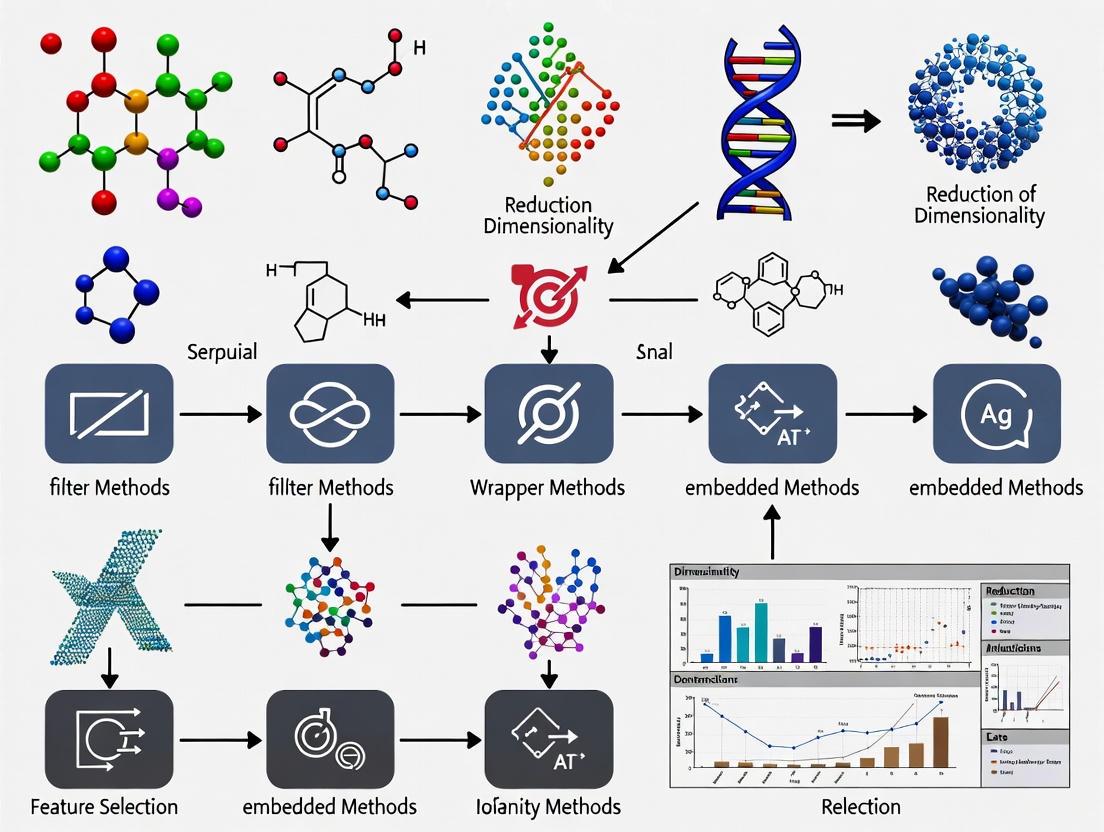
This article provides a comprehensive guide to feature selection techniques tailored for high-dimensional oncology data, such as gene expression, DNA methylation, and multi-omics datasets.
Advanced Feature Selection Methods for High-Dimensional Oncology Data: From Foundations to Clinical Applications
Abstract
This article provides a comprehensive guide to feature selection techniques tailored for high-dimensional oncology data, such as gene expression, DNA methylation, and multi-omics datasets. Aimed at researchers, scientists, and drug development professionals, it covers the foundational challenges of data sparsity and the curse of dimensionality, explores a suite of methodological approaches from filter to advanced hybrid and AI-driven methods, addresses critical troubleshooting and optimization strategies to mitigate overfitting and enhance scalability, and concludes with robust validation and comparative frameworks to ensure biological relevance and clinical translatability. The content synthesizes the latest research to empower the development of precise, interpretable, and robust models for cancer classification and biomarker discovery.
Navigating the High-Dimensional Landscape: Core Challenges and Concepts in Oncology Data
Understanding the 'Curse of Dimensionality' in Genomics and Transcriptomics
FAQs
What is the 'Curse of Dimensionality' in the context of genomics? In genomics, the "Curse of Dimensionality" (COD) refers to the statistical and analytical problems that arise when working with data where the number of features (e.g., genes, variants) is vastly larger than the number of samples (e.g., patients, cells) [1]. Whole-genome sequencing and transcriptomics technologies routinely generate data with tens of thousands of genes for only hundreds or thousands of samples, creating high-dimensional data that complicates robust analysis [1] [2].
Why is it a significant problem in cancer research? The Curse of Dimensionality is particularly problematic in cancer research for several reasons. It can obscure the true differences between cancer subtypes, making it difficult to cluster patients accurately for diagnosis or treatment selection [3]. Furthermore, the accumulation of technical noise across thousands of genes can lead to inconsistent statistical results and impair the ability of machine learning models to identify genuine biological signals, such as interacting genetic variants that contribute to complex diseases like cancer [2] [4].
What are the common types of COD encountered in genomic data analysis? Research identifies several specific types of COD that affect single-cell RNA sequencing (scRNA-seq) and other genomic data [2]:
- COD1: Loss of Closeness: Distances between samples (like Euclidean distance) become inflated and unreliable, impairing clustering.
- COD2: Inconsistency of Statistics: Key statistics, such as PCA contribution rates, become unstable and untrustworthy.
- COD3: Inconsistency of Principal Components: The principal components themselves can be distorted by technical factors like sequencing depth rather than biology.
How can I tell if my dataset is suffering from the Curse of Dimensionality? Potential signs include hierarchical clustering dendrograms with very long "legs" (distances) between clusters, principal components that are strongly correlated with technical variables (e.g., sequencing depth), and statistics like Silhouette scores that behave inconsistently as you analyze more features [2].
Troubleshooting Guides
Problem: Poor Clustering of Patient Samples
Symptoms: Unsupervised clustering methods (e.g., hierarchical clustering, k-means) fail to group known cancer subtypes accurately. The resulting clusters do not align with established clinical or molecular classifications.
Solutions:
- Apply Feature Selection: Prior to clustering, use feature selection to reduce dimensionality. Do not rely solely on genes with the highest standard deviation, as this has been shown to be suboptimal [3]. Instead, consider bimodality measures like the dip-test or the bimodality index (BI), which can help identify genes with expression patterns suggestive of distinct subgroups [3].
- Utilize Specialized Algorithms: For datasets with millions of features (e.g., genomic variants), use machine learning methods designed for high-dimensional data, such as VariantSpark's Random Forest [4]. These algorithms are better equipped to handle the "wide" data and can identify interacting sets of variants associated with a phenotype.
Table: Comparison of Feature Selection Methods for Clustering Cancer Subtypes [3]
| Method Category | Example Methods | Key Idea | Reported Performance Note |
|---|---|---|---|
| Variability-based | Standard Deviation (SD), Interquartile Range (IQR) | Selects genes with the most variable expression across samples. | Commonly used but did not perform well in a comparative study. |
| Bimodality-based | Dip-test, Bimodality Index (BI), Bimodality Coefficient (BC) | Selects genes whose expression distribution suggests two or more distinct groups. | The dip-test (selecting 1000 genes) was overall a good performer. |
| Correlation-based | VRS, Hellwig | Searches for large sets of genes that are highly correlated across samples. | Performance varies; can be effective. |
Problem: Technical Noise is Obscuring Biological Signals
Symptoms: Principal Component Analysis (PCA) results are dominated by technical artifacts (e.g., batch effects, sequencing depth) rather than biological conditions of interest. Analysis results are not reproducible.
Solutions:
- Leverage Mutual Information: Use a method like Component Selection using Mutual Information (CSUMI) to systematically determine which principal components (PCs) are actually related to your biological covariates (e.g., tissue type, disease status) [5]. This moves beyond simply selecting the first few PCs and helps you focus on the most biologically relevant dimensions.
- Employ Noise Reduction: For single-cell RNA-seq data with unique molecular identifiers (UMIs), use a noise-reduction method like RECODE (Resolution of the Curse of Dimensionality) [2]. RECODE is designed to resolve COD by separating technical noise from true biological expression without reducing the number of genes, allowing for recovery of signals even from lowly expressed genes.
Problem: Inefficient or Failed Machine Learning Analysis
Symptoms: Standard machine learning libraries (e.g., Spark MLlib) run out of memory or fail to complete analysis on genomic-scale data. The model cannot identify known disease-associated variants.
Solutions:
- Scale with Optimized Algorithms: Use tools specifically engineered for genomic data dimensions. For example, VariantSpark implements a novel parallelization of Random Forest on Apache Spark that can handle thousands of samples with millions of features, a task where standard implementations fail [4].
- Validate with Synthetic Data: Test your analysis pipeline on a synthetic dataset with a known ground truth. For instance, create a synthetic phenotype where the outcome is based on a known, non-additive combination of a few genomic loci. A robust tool should be able to identify these key features in the correct order of importance [4].
Experimental Protocols
Protocol: Evaluating Feature Selection Methods for Subtype Identification
This protocol is based on a study that compared 13 feature selection methods on RNA-seq data from The Cancer Genome Atlas (TCGA) [3].
- Data Acquisition and Pre-processing:
- Obtain raw RNA-seq count data (e.g., from the TCGA database).
- Perform initial filtration, between-sample normalization, and a variance-stabilizing transformation on the raw count data.
- Application of Feature Selection:
- Apply the various feature selection methods (e.g., dip-test, highest SD, BI) to the pre-processed data.
- For each method, select a pre-defined number of top-ranked genes (e.g., 1000 genes).
- Clustering and Evaluation:
- Perform hierarchical clustering (e.g., using Ward's linkage and Euclidean distance) on the dataset that includes only the selected genes.
- Compare the resulting binary sample partition to a known gold standard partition (e.g., established cancer subtypes) using the Adjusted Rand Index (ARI) to quantify clustering accuracy.
Protocol: Using CSUMI to Interpret Principal Components
This protocol describes how to use the CSUMI method to link Principal Components (PCs) to biological and technical covariates [5].
- Perform PCA: Run a standard Principal Component Analysis on your high-dimensional gene expression dataset.
- Prepare Covariate Data: Compile metadata for your samples, including both biological (e.g., tissue type, patient age) and technical (e.g., sequencing batch, RIN score) covariates.
- Calculate Mutual Information:
- For each principal component (PC) and each covariate, calculate the mutual information (MI). MI measures the amount of information shared between the PC and the covariate.
- The CSUMI statistic is calculated, which represents the percentage of information in a covariate that is contained in a given PC.
- Interpret Results:
- Identify which covariates have high CSUMI values for each PC. This reveals whether a PC captures biological signal of interest or technical noise.
- Use this information to select the most relevant PCs for downstream analysis and visualization, rather than defaulting to only the first two PCs.
Workflow and Pathway Diagrams
Feature Selection Workflow for Clustering
CSUMI Analysis for Interpreting PCs
Research Reagent Solutions
Table: Key Computational Tools for Addressing Dimensionality
| Tool / Method Name | Type | Primary Function | Key Application in Genomics |
|---|---|---|---|
| Dip-test [3] | Feature Selection Filter | Identifies genes with multimodal expression distributions. | Selecting features for cancer subtype identification via clustering. |
| RECODE [2] | Noise Reduction Algorithm | Resolves the Curse of Dimensionality by reducing technical noise in high-dim data. | Preprocessing scRNA-seq data with UMIs to recover true expression values. |
| CSUMI [5] | Dimensionality Analysis Statistic | Uses mutual information to link Principal Components to biological/technical covariates. | Interpreting PCA results and selecting relevant PCs for further analysis. |
| VariantSpark [4] | Machine Learning Library | Scalable Random Forest implementation for ultra-high-dimensional data. | Genome-wide association studies on WGS data; identifying interacting variants. |
Troubleshooting Guides
Guide 1: Addressing Data Sparsity in High-Dimensional Oncology Datasets
Problem: My predictive model for drug sensitivity is performing poorly. The dataset, built from cancer cell line screens, has many molecular features but most have zero values for any given sample.
Explanation: Data sparsity occurs when a large percentage of data points in a dataset are missing or zero [6]. In oncology, this is common with genomic features—a cell line will have mutations in only a small subset of genes. This sparsity can cause models to ignore informative but sparse features, increase storage and computational time, and lead to overfitting, where a model performs well on training data but fails to generalize to new data [7] [8].
Solution: Apply techniques to transform or reduce the sparse feature space.
- Action 1: Apply Dimensionality Reduction. Use methods like Principal Component Analysis (PCA) to project the original high-dimensional, sparse data onto a lower-dimensional, dense space of principal components [7].
from sklearn.decomposition import PCA
- Action 2: Utilize Feature Hashing. Bin a large number of categorical features (e.g., gene IDs) into a predetermined number of dimensions, effectively reducing feature space sparsity [7].
- Action 3: Employ Robust Algorithms. Consider algorithms less sensitive to sparsity. For example, an entropy-weighted k-means algorithm can weight sparse but informative features more effectively than standard models [8]. The Lasso algorithm (L1 regularization) is also useful as it performs feature selection by driving some feature coefficients to zero [8].
Guide 2: Mitigating the Impact of Noisy Data in Molecular Profiling
Problem: My model for predicting breast cancer metastasis is inaccurate and unstable. I suspect noise from technical variability in the lab equipment and inconsistent sample processing is to blame.
Explanation: Noisy data contains errors, outliers, or inconsistencies that obscure underlying patterns [9]. In molecular data, noise can stem from measurement errors, sensor malfunctions, or inherent biological variability [10]. This noise can lead to misinterpretation of trends, reduced predictive accuracy, and poor generalization [10].
Solution: Implement a pipeline to identify and clean noisy data.
- Action 1: Identify Noise with Visualization and Statistics.
- Action 2: Apply Data Cleaning and Smoothing.
- Action 3: Use Automated Anomaly Detection. For large datasets, employ algorithms like Isolation Forests or DBSCAN to automatically detect and flag anomalous samples [10].
Guide 3: Preventing Model Overfitting in Prognostic Classifier Development
Problem: The prognostic classifier I developed for patient stratification shows 95% accuracy on the training data but only 60% on the validation set.
Explanation: Overfitting occurs when a model learns the detail and noise in the training data to the extent that it negatively impacts its performance on new data [11]. This is a critical risk in high-dimensional, low-sample-size (HDLSS) settings common in oncology, where you may have thousands of gene expression features but only hundreds of patient samples [12]. An overfitted model will fail to generalize to real-world clinical data.
Solution: Use regularization, cross-validation, and adjust model architecture.
- Action 1: Implement Regularization. Add a penalty to the model's loss function to discourage complexity.
- L1 (Lasso) Regularization: Adds a penalty equal to the absolute value of coefficients. This can drive some feature coefficients to zero, performing feature selection [11].
- L2 (Ridge) Regularization: Adds a penalty equal to the square of the magnitude of coefficients. This shrinks coefficients but does not zero them out [11].
- Action 2: Tune Key Hyperparameters. As identified in empirical studies, adjusting the following can significantly reduce overfitting [11]:
- Increase learning rate, decay, and batch size.
- Decrease momentum and number of training epochs.
- Action 3: Apply Rigorous Validation. Never rely on training set (apparent) accuracy [12]. Always use a held-out test set or, even better, k-fold cross-validation to get a realistic estimate of your model's performance on unseen data [9] [12].
The following workflow summarizes a robust experimental process that incorporates the solutions to these key challenges:
Frequently Asked Questions (FAQs)
Q1: What is the fundamental difference between data sparsity and noisy data? A1: Data sparsity refers to a dataset where most of the values are zero or missing, which is a characteristic of the data structure common in high-dimensional biology [6]. In contrast, noisy data contains errors, outliers, or inconsistencies that deviate from the true values, often introduced during data collection or measurement [10]. Sparsity is about the absence of data, while noise is about incorrect data.
Q2: For drug sensitivity prediction, should I use a data-driven or knowledge-driven feature selection approach? A2: The best approach depends on the drug's mechanism. One systematic study found that for drugs targeting specific genes and pathways, small feature sets selected using prior knowledge of the drug's targets (a knowledge-driven approach) were highly predictive and more interpretable [13]. For drugs affecting general cellular mechanisms, models with wider, data-driven feature sets (e.g., using stability selection) often performed better [13].
Q3: I have a low-dimensional dataset (p < n). Can I still ignore the risk of overfitting? A3: No. Overfitting is not exclusive to high-dimensional data. Simulation studies have demonstrated that overfitting can be a serious problem even when the number of candidate variables (p) is much smaller than the number of observations (n), especially if the relationship between the outcome and predictors is not strong. You should always use a separate test set or cross-validation to evaluate model accuracy [12].
Q4: Are there any feature selection methods designed specifically for ultra high-dimensional, low-sample-size data? A4: Yes, novel methods are being developed to address this challenge. For example, Deep Feature Screening (DeepFS) is a two-step, non-parametric approach that uses deep neural networks to extract a low-dimensional data representation and then performs feature screening on the original input space. This method is model-free, can capture non-linear relationships, and is effective for data with a very small number of samples [14].
Experimental Protocol & Reagents
Detailed Methodology: Evaluating Hyperparameter Impact on Overfitting
This protocol is based on an empirical study of overfitting in deep learning models for breast cancer metastasis prediction using an Electronic Health Records (EHR) dataset [11].
1. Objective: To systematically quantify how each of 11 key hyperparameters influences overfitting and model performance in a Feedforward Neural Network (FNN).
2. Experimental Setup:
- Dataset: EHR data concerning breast cancer metastasis.
- Model: Deep Feedforward Neural Network (FNN).
- Evaluation Metric: Area Under the Curve (AUC) for both training and test sets. The gap between train and test AUC is a measure of overfitting.
3. Procedure:
- Grid Search: Conduct a comprehensive grid search over the 11 hyperparameters.
- Define Ranges: For each hyperparameter, define a wide range of values to test (see table below).
- Train and Evaluate: For each combination of hyperparameters in the grid, train the FNN and record the training and test AUC.
- Analyze Correlation: Calculate the correlation between each hyperparameter value and the degree of overfitting (measured by the train-test AUC gap).
4. Key Hyperparameters Analyzed [11]:
| Hyperparameter | Role & Function | Impact on Overfitting (Based on Findings) |
|---|---|---|
| Learning Rate | Controls the step size during weight updates. | Negative Correlation: Increasing it can reduce overfitting. |
| Decay | Iteration-based decay that reduces the learning rate over time. | Negative Correlation: Increasing it can reduce overfitting. |
| Batch Size | Number of samples per gradient update. | Negative Correlation: Increasing it can reduce overfitting. |
| L2 Regularization | Penalizes large weights (weight decay). | Negative Correlation: Increasing it can reduce overfitting. |
| L1 Regularization | Promotes sparsity by driving some weights to zero. | Positive Correlation: Increasing it can increase overfitting. |
| Momentum | Accelerates convergence by considering past gradients. | Positive Correlation: Increasing it can increase overfitting. |
| Training Epochs | Number of complete passes through the training data. | Positive Correlation: Increasing it drastically increases overfitting. |
| Dropout Rate | Randomly drops neurons during training to prevent co-adaptation. | Designed to reduce overfitting; optimal value must be found. |
| Number of Hidden Layers | Controls the depth and complexity of the network. | Too many layers can increase overfitting risk. |
The Scientist's Toolkit: Research Reagent Solutions
| Item | Function in the Context of Feature Selection & Modeling |
|---|---|
| Elastic Net | A hybrid linear regression model that combines both L1 and L2 regularization penalties. It is particularly useful for feature selection in scenarios where features are correlated, common in biological data [13]. |
| Stability Selection | A resampling-based method used in conjunction with feature selectors (like Lasso). It improves the stability and reliability of the selected features by looking at features that are consistently chosen across different data subsamples [13]. |
| Random Forest | An ensemble learning algorithm that can be used for both regression and classification. It provides a built-in measure of feature importance, which can be used for data-driven feature selection [13]. |
| Supervised Autoencoder | A type of neural network that learns to compress data (encode) and then reconstruct it (decode), with the addition of a task-specific loss (e.g., prediction error). It can be used for non-linear feature extraction and dimensionality reduction [14]. |
| Multivariate Rank Distance Correlation | A distribution-free statistical measure used in methods like DeepFS to test the dependence between a high-dimensional feature and a low-dimensional representation. It is powerful for detecting non-linear relationships during feature screening [14]. |
The Critical Role of Feature Selection in Biomarker Discovery and Cancer Subtype Identification
FAQs: Feature Selection in High-Dimensional Oncology Data
Q1: Why is feature selection critical for biomarker discovery from high-dimensional omics data? Feature selection (FS) is a preprocessing technique that identifies the most relevant molecular features while discarding irrelevant and redundant ones. In oncology, high-dimensional data often has thousands of features (e.g., genes, proteins) but only a small number of patient samples. FS mitigates the "curse of dimensionality," reducing model complexity, decreasing training time, and enhancing the generalization capability of models to prevent overfitting. Crucially, it helps identify the most biologically informative features, which can represent candidate therapeutic targets, molecular mechanisms of disease, or biomarkers for diagnosis or surveillance of a particular cancer [15] [16] [17].
Q2: What are the main categories of feature selection methods? Feature selection methods are broadly categorized into three types [15] [17]:
- Filter Methods: These methods select features based on statistical measures (like correlation or mutual information) without involving any machine learning algorithm. They are computationally efficient and scalable but may ignore feature dependencies.
- Wrapper Methods: These methods use a specific machine learning model to evaluate the quality of feature subsets. They often yield high-performing feature sets but are computationally intensive, especially with high-dimensional data.
- Embedded Methods: These methods integrate the feature selection process directly into the model training algorithm. Examples include feature importance from Random Forests or regularization techniques like Lasso. They are computationally efficient and model-specific.
Q3: What are common challenges when performing feature selection on genomic data? Researchers often face several challenges [17] [18]:
- High Dimensionality and Small Sample Sizes: The number of features (e.g., SNPs, genes) vastly exceeds the number of samples, increasing the risk of overfitting.
- Feature Redundancy: Genomic features are often highly correlated due to linkage disequilibrium, where nearby genetic variants are inherited together.
- Feature Interaction: The effect of a feature on a phenotype may depend on interactions with other features (epistasis), which simple univariate methods can miss.
- Technical Noise: Data can contain artifacts from experimental protocols or instrumentation that must be corrected during pre-processing to avoid spurious findings [16].
Q4: How can I validate the biological relevance of selected features? After computational selection, putative biomarkers should be validated through [19]:
- Pathway Analysis: Mapping the selected molecules (e.g., genes, proteins) to known biological pathways to understand their functional context and interactions.
- Independent Cohort Validation: Evaluating the performance of the selected feature panel on a larger, independent set of patient samples to ensure robustness.
- Comparison to Known Biomarkers: Assessing how the new features relate to existing clinical biomarkers.
Troubleshooting Guides
Issue 1: Model Overfitting Despite Applying Feature Selection
Problem: Your classification model performs well on training data but poorly on unseen validation data, even after reducing the number of features.
Solution:
- Cause: The feature selection process itself may have overfitted the training data, or the selected feature set is too large for the number of available samples.
- Actions:
- Nested Cross-Validation: Implement a nested cross-validation scheme where the feature selection is performed within each training fold of the outer loop. This prevents information from the validation set from leaking into the feature selection process [17].
- Apply Regularization: Use embedded FS methods like Lasso (L1 regularization) that inherently perform feature selection while penalizing model complexity [15].
- Aggregate Feature Importance: Run the feature selection method multiple times (e.g., on bootstrapped samples of the data) and aggregate the results to create a more stable list of robust features [16].
- Simplify the Model: Reduce the complexity of the final classifier and ensure the number of selected features is significantly smaller than the number of samples [18].
Issue 2: Inconsistent Feature Selection Across Repeated Experiments
Problem: The list of selected features varies greatly when the analysis is repeated on different splits of the same dataset.
Solution:
- Cause: High instability can occur when many features are weakly correlated with the outcome or highly correlated with each other (redundant).
- Actions:
- Increase Sample Size: If possible, increase the number of biological replicates to improve the statistical power.
- Use Robust FS Methods: Employ methods specifically designed for stability or ensemble FS techniques that combine results from multiple algorithms [20].
- Address Redundancy: Use FS methods that explicitly account for feature redundancy, for instance, by selecting one representative feature from a cluster of highly correlated features [17].
- Leverage Hybrid Techniques: Implement hybrid methods like the Signal-to-Noise Ratio (SNR) combined with the robust Mood median test, which is beneficial for reducing the impact of outliers in non-normal or skewed data [21].
Issue 3: Integrating Multi-Omics Data for Subtype Identification
Problem: Difficulty in integrating heterogeneous data types (e.g., transcriptomics, proteomics, metabolomics) to discover coherent cancer subtypes.
Solution:
- Cause: Different omics layers have distinct scales, distributions, and levels of noise, making integration non-trivial.
- Actions:
- Apply Data-Specific Normalization: Normalize each omics dataset individually to correct for technical variation before integration [19] [16].
- Use Multi-Omics Integration Tools: Employ computational frameworks designed for multi-omics integration, such as:
- Adopt Advanced Deep Learning: Explore transformer-based deep learning models, such as those used in a 2025 HCC study, which used recursive feature selection in conjunction with a transformer model to identify key molecules like leucine, isoleucine, and SERPINA1 more effectively than sequential methods [19].
Experimental Protocols & Data
Protocol 1: A Basic Workflow for Biomarker Discovery Using Filter-Based Feature Selection
This protocol outlines a standard pipeline for identifying potential biomarkers from gene expression data.
1. Data Pre-processing & Quality Control:
- Input: Raw gene expression matrix (e.g., from RNA-seq or microarrays).
- Steps:
- Normalization: Apply appropriate normalization (e.g., TPM for RNA-seq, RMA for microarrays).
- Filtering: Remove genes with low expression or low variance across samples.
- Quality Control: Check for outliers and batch effects. Use principal component analysis (PCA) to visualize sample groupings.
2. Feature Selection:
- Method: A combination of univariate statistical filters.
- Steps:
- Significance Testing: Perform a statistical test (e.g., t-test for two groups, ANOVA for multiple groups) between sample classes (e.g., tumor vs. normal) for each gene.
- Multiple Testing Correction: Apply a correction method (e.g., Benjamini-Hochberg) to control the False Discovery Rate (FDR). Retain genes with an adjusted p-value < 0.05.
- Effect Size Calculation: Calculate the fold-change in expression for each significant gene to prioritize biomarkers with large biological effects.
3. Model Building & Validation:
- Classifier Training: Train a classifier (e.g., Support Vector Machine, Random Forest) using only the selected features.
- Performance Assessment: Evaluate the model using cross-validation or an independent test set. Report metrics like accuracy, AUC, and F1-score.
4. Biological Validation:
- Pathway Enrichment: Use tools like Enrichr or GSEA to determine if the selected genes are enriched in known cancer-related pathways.
- Literature Mining: Cross-reference the top biomarkers with existing scientific literature to support their biological plausibility.
Protocol 2: Hybrid Evolutionary Algorithm for Robust Feature Selection
This protocol uses advanced optimization techniques to find a compact, discriminative set of features [20] [18].
1. Data Preparation:
- Follow the pre-processing steps from Protocol 1.
2. Feature Selection with a Hybrid Algorithm:
- Method: Two-phase Mutation Grey Wolf Optimization (TMGWO) or similar (e.g., BBPSO, ISSA).
- Steps:
- Initialization: Represent a potential feature subset as a binary vector (1=feature included, 0=excluded). Initialize a population of such vectors.
- Fitness Evaluation: Evaluate each feature subset using a fitness function that balances classification accuracy (e.g., from a KNN classifier) and the number of features selected.
- Population Update: Apply the TMGWO algorithm to update the population. The "two-phase mutation" helps balance exploration of new feature combinations and exploitation of promising ones to avoid local optima.
- Termination: Repeat for a fixed number of generations or until convergence. The best feature subset is the one with the optimal fitness score.
3. Validation:
- Use nested cross-validation to fairly assess the performance of the model built on features selected by the hybrid algorithm.
- Compare against other FS methods to demonstrate improvement.
Performance Comparison of Feature Selection Methods
Table 1: Comparative performance of different classifiers with and without hybrid feature selection (FS) on cancer datasets (adapted from [18]). Accuracy values are illustrative.
| Dataset | Classifier | Without FS (Accuracy %) | With Hybrid FS (Accuracy %) | Number of Selected Features |
|---|---|---|---|---|
| Breast Cancer (Wisconsin) | SVM | 92.5 | 96.0 | 4 |
| Breast Cancer (Wisconsin) | Random Forest | 90.1 | 94.2 | 5 |
| Differentiated Thyroid Cancer | KNN | 85.8 | 91.5 | 7 |
| Sonar | Logistic Regression | 78.3 | 86.7 | 10 |
Key Biomarkers and Pathways in Hepatocellular Carcinoma (HCC)
Table 2: Key molecules and pathways identified through multi-omics feature selection in a 2025 HCC study [19].
| Molecule / Pathway | Type | Biological Significance / Function |
|---|---|---|
| Leucine / Isoleucine | Metabolite | Branched-chain amino acids associated with liver function and metabolism. |
| SERPINA1 | Protein | Involved in LXR/RXR Activation and Acute Phase Response signaling pathways. |
| LXR/RXR Activation | Pathway | Regulates lipid metabolism and inflammation; linked to cancer progression. |
| Acute Phase Response | Pathway | A rapid inflammatory response; chronic activation is a hallmark of cancer microenvironment. |
Visualization: Workflows and Relationships
FSS Workflow
FS Methods Taxonomy
The Scientist's Toolkit: Research Reagent Solutions
Table 3: Essential materials and tools for feature selection experiments in oncology research.
| Item / Tool Name | Type | Function / Application |
|---|---|---|
| LC-MS/MS System | Instrumentation | Used for untargeted and targeted mass spectrometric analysis of serum/tissue samples to generate proteomics, metabolomics, and lipidomics data [19]. |
| Compound Discoverer | Software | Processes raw LC-MS/MS data for peak alignment, detection, and annotation of analytes in metabolomics and lipidomics studies [19]. |
| ColorBrewer | Tool | Provides a classic set of color palettes (qualitative, sequential, diverging) for creating accessible and effective data visualizations [22] [23]. |
| Coblis / Viz Palette | Tool | Color blindness simulators used to check that color choices in charts and diagrams are distinguishable by users with color vision deficiencies [22] [23]. |
| Multi-Omics Integration Tools (e.g., MOFA+, MOGONET) | Software/Algorithm | Computational frameworks designed to harmonize and find patterns across heterogeneous data types (e.g., transcriptomics, proteomics) for a unified analysis [19]. |
| Hybrid Evolutionary Algorithms (e.g., TMGWO, BBPSO) | Algorithm | Advanced optimization techniques used to search for an optimal subset of features by balancing model accuracy and feature set size [20] [18]. |
Core Concepts and Data Types
This section outlines the fundamental data types used in modern high-dimensional oncology research, explaining their biological significance and role in multi-omics integration.
Gene Expression Data: This data type captures the transcriptome—the complete set of RNA transcripts in a cell at a specific time. It reflects active genes and provides a dynamic view of cellular function. In oncology, analyzing gene expression helps identify differentially expressed genes in tumors, uncover novel cancer subtypes through clustering, and understand disease mechanisms. High-throughput technologies like RNA-sequencing (RNA-seq) generate this data, though the high dimensionality (thousands of genes) necessitates robust feature selection to focus on biologically relevant information. [3] [24]
DNA Methylation Data: DNA methylation is an epigenetic mechanism involving the addition of a methyl group to DNA, typically to cytosine bases in CpG islands, which can regulate gene expression without altering the DNA sequence. This data type provides insights into the epigenome, revealing how gene expression is modulated. In complex diseases like cancer, aberrant DNA methylation patterns can silence tumor suppressor genes or activate oncogenes. Integrating this data with gene expression helps elucidate regulatory mechanisms and identify epigenetic drivers of disease. [25] [26]
Multi-Omic Integration: Multi-omics integration harmonizes data from various molecular layers—including genomics, transcriptomics, proteomics, metabolomics, and epigenomics—to provide a comprehensive, systems-level view of biological processes. This approach is particularly powerful for studying multifactorial diseases like cancer, cardiovascular, and neurodegenerative disorders. It addresses the limitations of single-omics analyses by uncovering interactions and patterns across different biological layers, thereby enhancing biomarker discovery, improving patient stratification, and guiding targeted therapies. [27] [26]
Frequently Asked Questions (FAQs) and Troubleshooting
Q1: Why is feature selection critical when working with high-dimensional gene expression data, and what are the pitfalls of common selection methods?
Feature selection is essential because high-dimensional genomic data often contains many genes that are uninformative for the specific biological question. Using all features can introduce noise, reduce clustering performance, and obscure meaningful patterns. Analysis should be based on a carefully selected set of features rather than all measured genes. [3]
- Troubleshooting Guide:
- Problem: Clustering results are poor or do not align with known biological subtypes.
- Potential Cause: Use of uninformative genes or genes affected by technical artifacts or non-biological factors (e.g., age, diet).
- Solution: Apply a robust feature selection method prior to clustering. Avoid relying solely on common but suboptimal methods like selecting genes with the highest standard deviation (SD). Consider using a method based on the dip-test statistic, which has been shown to be a good overall choice for identifying genes with multimodal distributions indicative of underlying subtypes. [3]
Q2: What are the primary challenges when integrating multiple omics data types, and how can they be addressed?
Integrating multi-omics data presents significant challenges due to the heterogeneity of the data. Key issues include: [27] [28] [26]
- Lack of Pre-processing Standards: Each omics data type has a unique structure, statistical distribution, measurement error, and batch effects.
- Data Heterogeneity: Different measurement units, scales, and noise profiles make data harmonization difficult.
- Bioinformatics Expertise: Handling and analyzing large, heterogeneous data matrices requires cross-disciplinary skills.
Choice of Integration Method: Selecting the most appropriate algorithm from the many available (e.g., MOFA, DIABLO, SNF) can be challenging.
Troubleshooting Guide:
- Problem: Integrated data yields misleading conclusions or poor model performance.
- Potential Causes:
- Cause 1: Inadequate data standardization and harmonization.
- Solution: Preprocess your data rigorously. This includes normalizing for differences in sample size and concentration, converting to a common scale, removing technical biases and batch effects, and filtering outliers. Use domain-specific ontologies and standardized formats to align data from different sources. Always document the preprocessing steps used. [28]
- Cause 2: Use of an inappropriate integration method for the biological question and data structure.
- Solution: Choose an integration method aligned with your goal. Consider whether your analysis is supervised (uses a known phenotype) or unsupervised. For example, DIABLO is a supervised method for biomarker discovery, while MOFA is an unsupervised method for discovering latent factors of variation. [26]
Q3: How can we improve the identification of causal genes in complex traits beyond standard transcriptome-wide association studies (TWAS)?
Standard TWAS methods often rely solely on gene expression and overlook other regulatory mechanisms, such as DNA methylation and splicing, which contribute to the genetic basis of complex traits and diseases. [25]
- Troubleshooting Guide:
- Problem: TWAS fails to identify or validate causal genes for a complex trait.
- Solution: Adopt a multi-omics integration approach. Develop models that incorporate complementary data types like gene expression, DNA methylation, and splicing data. Simulations and analyses of complex traits have shown that integrated methods achieve higher statistical power and improve the accuracy of causal gene identification compared to single-omics approaches. [25]
Experimental Protocols for Key Analyses
Protocol 1: Identifying Cancer Subtypes via Feature Selection and Clustering
This protocol outlines a workflow for detecting novel disease subtypes from high-dimensional RNA-seq data, a common task in oncology research. [3]
- Data Acquisition: Obtain raw gene-level count data from a source like The Cancer Genome Atlas (TCGA) database.
- Pre-processing: Perform initial filtration, between-sample normalization, and apply a variance-stabilizing transformation to the raw count data.
- Feature Selection: Apply a feature selection method to identify genes informative for subtype discrimination. The dip-test statistic is recommended as a robust choice. Alternative methods include bimodality measures (Bimodality Index, Bimodality Coefficient) or variability scores (Interquartile Range).
- Clustering: Perform hierarchical clustering using Ward's linkage and Euclidean distance on the selected gene set. Alternatively, k-means clustering (with k=2 for binary subtypes) can be used.
- Validation: Compare the computed cluster partition against a known gold standard partition (e.g., established clinical subtypes) using the Adjusted Rand Index (ARI) to evaluate performance.
The workflow for this analysis can be visualized as follows:
Protocol 2: Integrative Bioinformatics Analysis for Key Gene Discovery
This protocol describes a method to identify key genes and signaling pathways by integrating gene expression data with a specific biological process, such as ferroptosis in obesity. [29]
- Data Collection:
- Download RNA-Seq data from a public repository like the Gene Expression Omnibus (GEO).
- Obtain a relevant gene set (e.g., Ferroptosis-Related Genes (FRGs) from the FerrDb database).
- Screening of Candidate Genes:
- Use Weighted Gene Co-expression Network Analysis (WGCNA) to identify modules of highly correlated genes associated with the trait (e.g., obesity).
- Identify Differentially Expressed Genes (DEGs) between case and control samples.
- Cross-reference the WGCNA module genes, DEGs, and the FRGs to obtain a candidate gene list for further analysis.
- Key Gene Identification:
- Construct a Protein-Protein Interaction (PPI) network using the candidate genes.
- Analyze the PPI network to identify hub nodes (key genes) with high connectivity, such as STAT3, IL6, PTGS2, and VEGFA.
- Advanced Integrative Analysis:
- Perform immune infiltration analysis to explore relationships between key genes and immune cell populations.
- Construct miRNA-mRNA and Transcription Factor (TF)-mRNA regulatory networks to understand the post-transcriptional and transcriptional regulation of the key genes.
The logical flow of this integrative screening process is shown below:
Essential Research Reagent Solutions
The following table catalogs key computational tools and resources essential for conducting multi-omics analyses in oncology research.
| Tool/Resource Name | Primary Function | Application Context |
|---|---|---|
| mixOmics [28] | Data integration | R package for multivariate analysis and integration of multi-omics datasets. |
| INTEGRATE [28] | Data integration | Python-based tool for multi-omics data integration. |
| MOFA [26] | Data integration | Unsupervised Bayesian method to infer latent factors from multi-omics data. |
| DIABLO [26] | Data integration | Supervised method for biomarker discovery and multi-omics integration. |
| SNF [26] | Data integration | Network-based fusion of multiple data types into a single sample-similarity network. |
| SIMO [30] | Spatial integration | Probabilistic alignment for spatial integration of multi-omics single-cell data. |
| DAVID [31] | Functional annotation | Tool for understanding biological meaning behind large gene lists. |
| MSigDB [31] | Gene set repository | Database of annotated gene sets for enrichment analysis. |
| WebGestalt [31] | Gene set analysis | Toolkit for functional genomic, proteomic, and genetic study data. |
| TCGA [3] [26] | Data repository | Publicly available cancer genomics dataset for robust analysis. |
A Practical Toolkit: Filter, Wrapper, Embedded, and Advanced Hybrid Methods
Why are filter methods a crucial first step in high-dimensional oncology data analysis?
High-dimensional oncology data, such as genomics datasets with thousands of genes for a few hundred patients, presents the "curse of dimensionality" [32] [33]. In this context, where the number of features (p) far exceeds the number of observations (n), data becomes sparse, and models face a high risk of overfitting—learning noise instead of true biological patterns [32] [34]. Filter methods provide a fast and computationally efficient pre-screening step to mitigate these issues by drastically reducing the number of features before applying more complex models [34] [33]. This initial reduction helps to improve model performance, reduce training time, and enhance the interpretability of results, which is critical for identifying biologically relevant biomarkers [32] [35].
How do filter methods work?
Filter methods assess the relevance of features by looking at their intrinsic statistical properties, without involving a machine learning algorithm [34]. They operate by scoring each feature based on its statistical relationship with the target variable (e.g., drug sensitivity). Features are then ranked by their scores, and the top-k features are selected for the next stage of analysis. The general workflow is:
The core of this process relies on statistical measures. The table below summarizes common ones used in bioinformatics:
| Statistical Measure | Data Type (Feature → Target) | Brief Description & Application |
|---|---|---|
| t-test / ANOVA [33] | Continuous → Categorical | Tests if the mean values of a continuous feature are significantly different across groups (e.g., drug-sensitive vs. resistant cell lines). |
| Mutual Information (MI) [35] | Any → Any | Measures the mutual dependence between two variables. Captures non-linear relationships, useful for complex genomic interactions [35]. |
| Chi-square Test [33] | Categorical → Categorical | Assesses the independence between two categorical variables (e.g., mutation presence/absence and treatment outcome). |
| Correlation Coefficient [33] | Continuous → Continuous | Measures the linear relationship between a feature and a continuous target (e.g., gene expression and IC50 value). |
A sample experimental protocol
The following protocol is inspired by methodologies used in systematic assessments of feature selection for drug sensitivity prediction [35].
Objective: To identify a panel of transcriptomic features predictive of anti-cancer drug response using a filter method for pre-screening.
1. Data Preparation
- Dataset: Use a publicly available resource like the Genomics of Drug Sensitivity in Cancer (GDSC) or NCI-DREAM Challenge [36] [35].
- Input Features: Gather molecular data from cancer cell lines. This typically includes:
- Target Variable: Obtain a quantitative measure of drug response, such as IC50 or AUC (Area Under the dose-response curve), for a specific compound of interest [35].
2. Feature Pre-screening with a Filter Method
- Choose a Statistical Measure: For a continuous target like IC50, use the correlation coefficient. For a categorical target (e.g., sensitive/resistant, binarized from IC50), use a t-test or Mutual Information.
- Apply the Filter: Calculate the statistical score for every feature (gene) in the dataset against the drug response.
- Rank and Select: Rank all features based on their scores in descending order (higher score = more relevant). Select the top k features (e.g., 500-1000) for the next step. This number can be based on a pre-defined p-value threshold or a fixed percentage.
3. Model Building and Validation
- Use Reduced Feature Set: Train a predictive model (e.g., Elastic Net, Random Forest, or SVR) using only the pre-screened features [35].
- Validate Performance: Evaluate the model's performance using robust cross-validation techniques. The primary metric could be the correlation between observed and predicted drug response or the Relative Root Mean Squared Error (RelRMSE) on a held-out test set [35].
- Compare to Baseline: Compare the performance against a baseline model that uses all genome-wide features or features selected by other methods (e.g., wrapper or knowledge-driven) [35].
4. Interpretation and Biological Validation
- Analyze Selected Features: The final list of features from the model (which may be further reduced by the model's own selection, like in Lasso) constitutes the candidate predictive biomarkers.
- Pathway Enrichment Analysis: Use bioinformatics tools to investigate if the selected genes are enriched in specific biological pathways, which can provide mechanistic insights into the drug's action and resistance [33].
- External Validation: The ultimate test is to validate the biomarker panel on an independent patient cohort or clinical trial data.
The scientist's toolkit: Research reagents & solutions
| Item / Solution | Function in the Experiment |
|---|---|
| GDSC / NCI-DREAM Dataset | Provides the foundational data linking molecular profiles of cancer cell lines to quantitative drug response measurements for model training and testing [36] [35]. |
| Statistical Software (R, Python) | The computational environment for performing statistical calculations (t-test, MI), data manipulation, and implementation of the feature selection workflow [35]. |
| Scikit-learn (Python Library) | Offers built-in functions for various statistical tests, feature selection algorithms, and machine learning models, streamlining the entire analysis pipeline [34]. |
| Bioinformatics Databases (e.g., KEGG, GO) | Used for the biological interpretation of the final selected feature set via pathway and gene ontology enrichment analysis [33]. |
Troubleshooting common issues
Problem: My final model is overfitting, even after pre-screening.
- Cause: The pre-screened feature set might still be too large relative to the sample size, or it may contain correlated features that together inflate model complexity.
- Solution: Consider a hybrid approach. Use the filter method for aggressive initial pre-screening (e.g., select only the top 100 features), then apply a second-stage feature selection method like Lasso (L1 regularization) or Recursive Feature Elimination (RFE) that is embedded within the model training process to further reduce redundancy [34] [33].
Problem: The selected features are biologically implausible or fail to validate.
- Cause: Purely data-driven filter methods can select spurious correlations, especially in high-dimensional settings where chance correlations are likely.
- Solution: Integrate prior biological knowledge. Before or after pre-screening, restrict your feature set to genes known to be in the drug's target pathway or related to cancer hallmarks. This creates a more interpretable and biologically grounded model [35].
Problem: The filter method selects different features when using a slightly different dataset.
- Cause: Instability in feature selection is common in high-dimensional data due to data sparsity and noise.
- Solution: Implement stability selection. Repeat the pre-screening process on multiple bootstrapped samples of your data. The most robust and important features are those that are consistently selected across the majority of these iterations [35].
Key considerations for a robust analysis
The following diagram summarizes the core principles for designing an effective filtering strategy:
- Combine with Other Methods: Filter methods are best used as a pre-processing step. For a highly refined and optimal feature set, combine them with wrapper or embedded methods in a hybrid workflow [34].
- Stability is Key: A good feature set is not just predictive but also stable. Assess the reliability of your selected features across different data subsamples [35].
- Interpretability Matters: The goal in translational research is often to generate testable hypotheses. A smaller, biologically interpretable set of features is frequently more valuable than a slightly more accurate "black box" model with thousands of features [35].
Frequently Asked Questions (FAQs)
Q1: What is the primary advantage of using a wrapper method over a filter method for high-dimensional oncology data?
Wrapper methods evaluate feature subsets based on their actual performance with a specific classification model, unlike filter methods that use general statistical metrics. This often leads to superior predictive accuracy because the feature selection is tailored to the learning algorithm. For instance, in breast cancer classification, a hybrid wrapper method combining scatter search with SVM (SSHSVMFS) demonstrated better performance than other contemporary approaches [18].
Q2: My wrapper method is consistently getting stuck in local optima. What strategies can help?
This is a common challenge with wrapper methods like sequential searches or basic evolutionary algorithms. A highly effective strategy is to implement a heuristic tribrid search (HTS) that combines multiple phases. This involves a forward search to add features, a "consolation match" phase that attempts to swap single features between selected and unselected pools to escape local optima, and a final backward elimination to remove redundant features [38]. This approach balances exploration and exploitation in the search space.
Q3: How can I manage the extreme computational cost of wrapper methods on high-dimensional, low-sample-size (HDLSS) genomic data?
A proven methodology is to adopt a two-stage hybrid approach. The first stage uses a fast filter method for pre-processing to drastically reduce the feature space. The second stage employs a wrapper method on this reduced subset. For example, one can use Gradual Permutation Filtering (GPF) to remove irrelevant features based on their importance scores before applying a more computationally intensive wrapper search [38]. This balances efficiency with performance.
Q4: Are there wrapper techniques that provide more stable feature subsets?
Yes, techniques like Recursive Feature Elimination (RFE) can be stabilized by using robust algorithms as the core estimator. In esophageal cancer grading research, XGBoost with RFE was successfully used and identified as a top-performing model, demonstrating the practical application and stability of this wrapper method in a high-dimensional clinical data context [39].
Troubleshooting Common Experimental Issues
Problem: Model Performance Decreases After Feature Selection
Potential Causes and Solutions:
- Cause: Overfitting to the Training Set. Wrapper methods can overfit, especially with small sample sizes.
- Cause: Elimination of Informative but Weakly Relevant Features. Some features may contribute predictive power only in combination with others.
- Solution: Implement ensemble or hybrid methods that consider feature interactions. Methods like the heuristic tribrid search (HTS) are designed to capture these interactions during the search process [38].
Problem: Inconsistent Feature Subsets Across Different Runs
Potential Causes and Solutions:
- Cause: High Variance in the Search Algorithm.
- Solution: For stochastic algorithms like Evolutionary Algorithms (EA), increase the number of iterations or the population size. Use a fixed random seed for reproducibility during development. For deterministic methods like RFE, ensure the underlying model (e.g., SVM, Random Forest) is properly regularized [18].
- Cause: High Correlation Between Features (Multicollinearity). The algorithm might see multiple, equally good subsets.
- Solution: Introduce a penalty for the number of features in the performance metric used to guide the wrapper. For example, the Log Comprehensive Metric (LCM) balances classification performance with the number of selected features, favoring smaller, more robust subsets [38].
Performance Comparison of Wrapper and Hybrid Methods
The following table summarizes the performance of various wrapper and hybrid feature selection methods as reported in recent studies on biomedical datasets.
Table 1: Performance of Wrapper and Hybrid Feature Selection Methods in Oncology Data Classification
| Feature Selection Method | Core Search Strategy | Classifier Used | Dataset(s) | Key Performance Metric (Result) |
|---|---|---|---|---|
| TMGWO (Two-phase Mutation Grey Wolf Optimization) [18] | Hybrid (Evolutionary Algorithm) | Support Vector Machine (SVM) | Wisconsin Breast Cancer | Accuracy: 96% (using only 4 features) |
| SSHSVMFS (Scatter Search Hybrid SVM with FS) [18] | Hybrid (Scatter Search) | Support Vector Machine (SVM) | Colon, Leukemia, Lymphoma | Outperformed other existing methods |
| XGBoost with RFE [39] | Wrapper (Recursive Feature Elimination) | XGBoost | Esophageal Cancer (CT Radiomics) | AUC: 91.36% |
| Heuristic Tribrid Search (HTS) [38] | Hybrid (Forward Search, Consolation, Backward Elimination) | Not Specified | High-Dimensional & Low Sample Size | Prediction model performance improved from 0.855 to 0.927 |
| BBPSO (Binary Black Particle Swarm Optimization) [18] | Hybrid (Evolutionary Algorithm) | Multiple Classifiers | Multiple Datasets | Superior discriminative feature selection and classification performance |
Detailed Experimental Protocols
Protocol 1: Implementing Recursive Feature Elimination (RFE) with a Tree-Based Classifier
This protocol is ideal for high-dimensional data where non-linear relationships are suspected.
- Data Preparation: Split data into training, validation, and test sets. Preprocess (normalize, handle missing values) the training set and apply the same transformations to the validation and test sets.
- Model and RFE Setup: Select a base estimator capable of providing feature importance scores (e.g., Random Forest, XGBoost). Initialize the RFE object, specifying the estimator and the number of features to select. Alternatively, use
RFECVfor automatic selection of the optimal number of features via cross-validation. - Feature Selection: Fit the RFE model on the training data only. The RFE algorithm will:
- Train the model and rank features by importance.
- Prune the least important feature(s).
- Repeat the process with the reduced subset until the desired number of features is reached.
- Model Training & Evaluation: Train a final model on the training data, using only the features selected by RFE. Evaluate its performance on the held-out test set [39].
Protocol 2: A Hybrid Permutation Importance and Heuristic Search Workflow
This protocol is designed for HDLSS datasets to improve robustness and avoid local optima.
- Phase 1: Gradual Permutation Filtering (GPF)
- Aim: Filter out obviously irrelevant features.
- Steps: Calculate permutation importance for each feature multiple times (e.g., 50 trials) on the training set. Iteratively remove features with importance scores near or below zero, recalculating importance after each removal to account for dependencies. This results in a ranked list of candidate features [38].
- Phase 2: Heuristic Tribrid Search (HTS)
- Aim: Find a near-optimal subset from the candidate list.
- Steps:
- Forward Search: Start with a "first-choice feature" from the GPF ranking. Iteratively add the next feature that most improves the model's performance (evaluated via cross-validation).
- Consolation Match: When performance plateaus, try swapping a single feature from the selected set with one from the unselected pool. If performance improves, return to the forward search phase.
- Backward Elimination: Finally, iteratively remove features one-by-one if their exclusion does not harm performance.
- Performance Metric: Use a metric like the Log Comprehensive Metric (LCM) that balances model accuracy with the number of selected features [38].
Workflow Visualization
Hybrid Feature Selection for HDLSS Data
Recursive Feature Elimination (RFE) Process
The Scientist's Toolkit: Research Reagent Solutions
Table 2: Essential Computational Tools for Wrapper-Based Feature Selection
| Tool / Algorithm | Type / Function | Brief Explanation & Application Context |
|---|---|---|
| Recursive Feature Elimination (RFE) | Wrapper Method | Iteratively removes the least important features based on a model's coefficients or feature importance. Highly effective with linear models (SVM) and tree-based classifiers (Random Forest, XGBoost) [39]. |
| Evolutionary Algorithms (EA)(e.g., TMGWO, BBPSO) | Metaheuristic Wrapper | Uses population-based search inspired by natural evolution. Excellent for exploring large, complex feature spaces and avoiding local optima, though computationally intensive [18]. |
| Scatter Search | Metaheuristic Wrapper | A deterministic-evolutionary algorithm that combines solution subsets to generate new ones. Effective for generating high-quality solutions, as demonstrated in SSHSVMFS for medical datasets [18]. |
| Permutation Importance | Filter-based Evaluator | Used to score features by randomly shuffling each feature and measuring the drop in model performance. Often used as a pre-processing step (filter) in hybrid frameworks to reduce the search space for a subsequent wrapper method [38]. |
| Heuristic Tribrid Search (HTS) | Hybrid Search Strategy | A custom search strategy combining forward selection, feature swapping ("consolation match"), and backward elimination. Designed specifically for HDLSS data to find small, high-performing feature subsets [38]. |
| Log Comprehensive Metric (LCM) | Performance Metric | A custom evaluation function that balances classification performance with the number of selected features. Crucial for guiding wrapper methods in HDLSS contexts to prevent overfitting and favor parsimonious models [38]. |
In high-dimensional oncology data research, such as genomic profiling and transcriptomic analysis, feature selection is not a luxury but a necessity. The curse of dimensionality, where the number of features (e.g., genes) vastly exceeds the number of samples (e.g., patients), can severely compromise the performance and interpretability of predictive models for cancer subtype classification or drug response prediction [40]. Embedded feature selection methods offer a powerful solution by integrating the selection process directly into the model training algorithm. This approach efficiently identifies the most biologically relevant features while building a predictive model, ensuring both computational efficiency and robust performance [41] [42]. This guide provides practical troubleshooting advice for implementing these methods in your research.
Frequently Asked Questions (FAQs)
1. What are embedded feature selection methods and why are they preferred for high-dimensional oncology data? Embedded methods perform feature selection as an integral part of the model training process [41] [43]. They are particularly suited for oncology data because they are computationally more efficient than wrapper methods and often achieve better predictive accuracy than simple filter methods by accounting for feature interactions [42]. For instance, tree-based models like Random Forests naturally rank features by their importance during training [41].
2. My Lasso regression model is returning a null model with zero features. How can I fix this? This occurs when the regularization strength (alpha) is set too high, forcing all feature coefficients to zero.
- Solution: Systematically decrease the value of the
alpha(orC=1/alpha) parameter. Use a cross-validated grid search (e.g.,LassoCVin scikit-learn) to find the optimal value that minimizes the prediction error without overshrinking the coefficients. Ensure your target variable is appropriately scaled.
3. Why does my Elastic Net model fail to select a sparse feature set, even with high regularization? Elastic Net combines L1 (Lasso) and L2 (Ridge) penalties. If the L1 ratio is set too low, the model behaves more like Ridge regression, which never shrinks coefficients to zero.
- Solution: Increase the
l1_ratioparameter closer to 1.0 to enforce a stronger L1 penalty for sparsity. A grid search over bothalphaandl1_ratiois recommended for optimal performance [40].
4. How can I stabilize the feature importance scores from a tree-based model like Random Forest? Feature importance from tree-based models can be unstable due to randomness in the bootstrapping and feature splitting.
- Solution:
- Increase the number of trees (
n_estimators). - Use a fixed random seed (
random_state) for reproducibility. - Employ a technique like the TreeEM model, which uses an ensemble of trees combined with feature selection to enhance stability and prediction ability [44].
- Run the model multiple times with different seeds and average the importance scores.
- Increase the number of trees (
5. How do I validate that the selected features are biologically relevant and not spurious correlations? This is a critical step for translational research.
- Solution: Perform robustness checks and causal analysis. A promising approach is to use causal feature selection algorithms like CausalDRIFT, which estimate the Average Treatment Effect (ATE) of each feature on the outcome, helping to prioritize causally relevant variables over merely correlated ones [40]. Furthermore, always validate your findings against known biological pathways and literature.
Troubleshooting Guides
Issue 1: Poor Model Generalization After Feature Selection
Symptoms: High performance on training data but significantly lower performance on validation or test sets.
| Potential Cause | Diagnostic Steps | Corrective Action |
|---|---|---|
| Data Leakage | Ensure the feature selection process is fitted only on the training data. | Use a pipeline (e.g., sklearn.pipeline.Pipeline) to encapsulate feature selection and model training. |
| Overfitting to Noise | Plot the model's performance vs. the number of features selected. | Use stricter regularization (higher alpha for Lasso) or a lower number of selected features (max_features in trees). |
| Ignoring Feature Interactions | Check if your model can capture non-linear relationships. | Switch to or add tree-based models (e.g., Random Forest, XGBoost) that naturally handle interactions [44] [43]. |
Issue 2: Inconsistent Selected Feature Subsets
Symptoms: Different runs of the feature selection algorithm on the same dataset yield different feature subsets.
| Potential Cause | Diagnostic Steps | Corrective Action |
|---|---|---|
| High Model Variance | Assess the stability of feature importance scores across multiple runs with different random seeds. | For tree-based models, increase n_estimators. For all models, use more data if possible. |
| Highly Correlated Features | Calculate the correlation matrix of the top features. | Use Elastic Net, which can handle correlated features better than Lasso, or apply a clustering step before selection [40]. |
| Unstable Algorithm | N/A | Use algorithms designed for stability. For example, the CEFS+ method uses a rank technique to overcome instability on some datasets [43]. |
Experimental Protocols & Workflows
Protocol 1: Benchmarking Embedded Feature Selection Methods
This protocol outlines how to compare the performance of different embedded methods on a high-dimensional oncology dataset (e.g., RNA-seq data from TCGA).
1. Objective: To evaluate and compare the performance of Lasso, Elastic Net, and Tree-based models for feature selection and cancer subtype classification.
2. Materials/Reagents:
- Dataset: A labeled high-dimensional oncology dataset (e.g., TCGA-BRCA [44]).
- Computing Environment: Python with scikit-learn, XGBoost, and pandas libraries.
- Evaluation Metrics: Accuracy, Precision, Recall, F1-Score [40].
3. Methodology:
1. Data Preprocessing: Handle missing values, standardize continuous features (crucial for Lasso/Elastic Net), and partition data into training (70%), validation (15%), and test (15%) sets.
2. Model Training & Selection:
* For Lasso, perform a cross-validated grid search on the alpha parameter.
* For Elastic Net, perform a cross-validated grid search over alpha and l1_ratio.
* For Tree-based (e.g., Random Forest), perform a search on n_estimators and max_depth.
3. Feature Extraction: Extract the non-zero coefficients from Lasso/Elastic Net or the top-k features based on Gini importance from the tree-based model.
4. Validation: Train a final classifier (e.g., XGBoost [40]) on the training set using only the selected features and evaluate its performance on the held-out test set.
4. Expected Output: A table comparing the performance metrics and the number of features selected by each method.
Protocol 2: A Causal Feature Selection Workflow for Robust Biomarker Discovery
This protocol uses a causal inference approach to move beyond correlation and identify features with potential causal influence.
1. Objective: To identify causally relevant biomarkers from high-dimensional genetic data using the CausalDRIFT algorithm [40].
2. Materials/Reagents:
- Dataset: A clinical dataset with genetic features and a clear outcome (e.g., survival, treatment response).
- Computing Environment: Python with the CausalDRIFT package and Double Machine Learning libraries.
- Evaluation Metrics: Average Treatment Effect (ATE), model consistency (standard deviation of metrics) [40].
3. Methodology: 1. Data Preparation: Prepare the feature matrix and outcome vector. Define potential confounders. 2. ATE Estimation: For each feature, CausalDRIFT uses Double Machine Learning to estimate its ATE on the outcome, adjusting for all other features as potential confounders. 3. Feature Ranking: Rank features based on the absolute value of their estimated ATEs. 4. Validation: Assess the robustness and generalizability of the selected feature set by examining the consistency of the ATE estimates and the model's performance across different data splits.
4. Expected Output: A ranked list of features based on their ATE, providing a more interpretable and potentially clinically actionable set of biomarkers.
Workflow Visualization
The following diagram illustrates the logical workflow for selecting and applying an embedded feature selection method, as described in the experimental protocols.
Research Reagent Solutions
The table below summarizes key computational "reagents" – algorithms and tools – essential for experiments in embedded feature selection.
| Research Reagent | Function & Application in Oncology Research |
|---|---|
| Lasso (L1 Regularization) | Linear model that performs feature selection by shrinking less important feature coefficients to zero. Useful for creating sparse, interpretable models from thousands of genomic features [41] [42]. |
| Elastic Net | A hybrid of Lasso and Ridge regression that can handle groups of correlated features, which is common in genetic data due to co-expression [40]. |
| Tree-Based Models (Random Forest, XGBoost) | Provide native feature importance scores based on how much a feature decreases impurity across all trees. Effective at capturing complex, non-linear interactions between biomarkers [44] [41]. |
| CausalDRIFT Algorithm | A causal dimensionality reduction tool that estimates the Average Treatment Effect of each feature, helping to distinguish causally relevant biomarkers from spurious correlations in observational clinical data [40]. |
| Max-Relevance and Min-Redundancy (MRMR) | A feature selection criterion often used in conjunction with ensemble models (e.g., TreeEM) to select features that are highly relevant to the target while being minimally redundant with each other [44]. |
Swarm and Evolutionary Algorithms (bABER, HybridGWOSPEA2ABC) for Complex Optimization
Frequently Asked Questions (FAQs)
Q1: What is the fundamental principle behind the bABER method for root-finding in high-dimensional data analysis? The bABER (presumably based on the Aberth method) is a root-finding algorithm designed for the simultaneous approximation of all roots of a univariate polynomial. It uses an electrostatic analogy, modeling approximated zeros as negative point charges that repel each other while being attracted to the true, fixed positive roots. This prevents multiple starting points from incorrectly converging to the same root, a common issue with naive Newton-type methods. The method is known for its cubic convergence rate, which is faster than the quadratic convergence of methods like Durand–Kerner, though it converges linearly at multiple zeros [45].
Q2: How does the HybridGWOSPEA2ABC algorithm enhance feature selection for cancer classification? The HybridGWOSPEA2ABC algorithm integrates the Grey Wolf Optimizer (GWO), Strength Pareto Evolutionary Algorithm 2 (SPEA2), and Artificial Bee Colony (ABC) to enhance feature selection. This hybrid approach leverages swarm intelligence and evolutionary computation to maintain solution diversity, improve convergence efficiency, and balance exploration and exploitation within the high-dimensional search space of gene expression data. It has demonstrated superior performance in identifying relevant cancer biomarkers compared to conventional bio-inspired algorithms [46].
Q3: My bABER iteration is not converging. What could be the cause? Non-convergence in bABER can stem from several sources:
- Poor Initial Approximations: The choice of starting points is critical. Initial approximations should be selected within known bounds of the roots, which can be computed from the polynomial's coefficients [45].
- Ill-Conditioned Polynomials: Polynomials with multiple or closely clustered roots can cause linear convergence or instability [45].
- Numerical Precision Issues: The computation of
p(z_k)andp'(z_k)can be prone to floating-point errors, especially for high-degree polynomials. Using higher precision arithmetic can mitigate this.
Q4: When using HybridGWOSPEA2ABC, the algorithm gets stuck in local optima. How can this be improved? The ABC component is primarily responsible for exploration. If the algorithm is getting stuck, consider adjusting the parameters controlling the ABC phase, specifically those related to the "scout bee" behavior, which is designed to abandon poor solutions and search for new ones. Ensuring a proper balance between the intensification (exploitation) driven by GWO and the diversification (exploration) from ABC and SPEA2 is key [46].
Q5: How do I handle very high-degree polynomials with the bABER method to avoid computational bottlenecks?
For high-degree polynomials, the simultaneous update of all roots can be computationally expensive. Implement an efficient method to compute p(z_k) and p'(z_k) for all approximations simultaneously, such as Horner's method or leveraging polynomial evaluation techniques. The iteration can be performed in a Jacobi-like (all updates simultaneous) or Gauss–Seidel-like (using new approximations immediately) manner, with the latter sometimes offering faster convergence [45].
Troubleshooting Guides
Issue 1: Slow or Non-Convergence in bABER Method
Symptoms: The root approximations oscillate, diverge, or the change between iterations remains unacceptably high after many steps.
Diagnosis and Resolution:
| Step | Action | Description |
|---|---|---|
| 1 | Verify Initial Points | Ensure initial approximations are not clustered. Use known root bounds derived from polynomial coefficients to generate well-spread starting values [45]. |
| 2 | Check for Multiple Roots | The method converges linearly at multiple zeros. If suspected, consider implementing a deflation technique or shifting to a method better suited for multiple roots [45]. |
| 3 | Profile Computational Load | The calculation of the sum over j≠k 1/(z_k - z_j) is O(n²). For large n, verify this is the performance bottleneck and optimize the code, potentially using parallelization [45]. |
Issue 2: Poor Feature Selection Performance with HybridGWOSPEA2ABC
Symptoms: The selected gene subsets yield consistently low classification accuracy across multiple classifiers, or the algorithm fails to reduce the feature set meaningfully.
Diagnosis and Resolution:
| Step | Action | Description |
|---|---|---|
| 1 | Tune Hyperparameters | The performance is highly sensitive to parameters like population size and the balance between GWO, SPEA2, and ABC operators. Use a systematic approach like grid search for optimization [46]. |
| 2 | Validate Fitness Function | The fitness function must balance two objectives: classification accuracy and the number of selected features. Review the multi-objective selection mechanism from SPEA2 to ensure it is not biased [46]. |
| 3 | Compare with Benchmarks | Test the algorithm on standard cancer datasets and compare its performance with other bio-inspired algorithms to isolate if the issue is with the implementation or the method itself [46]. |
Issue 3: Numerical Instability in Polynomial Evaluation
Symptoms: Unusual jumps in root approximations, or NaN/Inf values appearing during the bABER iteration.
Diagnosis and Resolution:
| Step | Action | Description |
|---|---|---|
| 1 | Use Robust Evaluation | Employ numerically stable algorithms for polynomial and derivative evaluation to prevent catastrophic cancellation or overflow, especially with large coefficients [45]. |
| 2 | Implement Safeguards | Add code to check for exceptionally small denominators or large corrections w_k that could lead to instability and trigger a restart with different initial points if necessary. |
| 3 | Increase Precision | Switch from single to double or arbitrary-precision arithmetic to manage rounding errors inherent in the calculations [45]. |
Experimental Protocols & Methodologies
Protocol 1: Simultaneous Root-Finding with the bABER Method
This protocol details the steps for approximating all roots of a univariate polynomial simultaneously, which can be applied to characteristic equations in oncology data modeling.
1. Input Preparation:
- Polynomial:
p(x) = p_n*x^n + p_{n-1}*x^{n-1} + ... + p_1*x + p_0 - Initial Guesses: Select
ninitial approximationsz_1, ..., z_n. A common method is to place them on a circle in the complex plane with a radius based on coefficient bounds [45]. - Tolerance: Set a convergence tolerance
ε(e.g.,1e-10). - Maximum Iterations: Define a maximum iteration count
N_maxto prevent infinite loops.
2. Iterative Process:
For each iteration until convergence or N_max is reached:
a. For each root approximation k = 1 to n:
i. Compute p(z_k) and p'(z_k).
ii. Calculate the correction term w_k using the Aberth formula:
w_k = [ p(z_k) / p'(z_k) ] / [ 1 - (p(z_k) / p'(z_k)) * Σ_{j≠k} (1 / (z_k - z_j)) ] [45].
b. Update all approximations simultaneously: z_k = z_k - w_k for all k.
3. Convergence Check:
Convergence is achieved when |w_k| < ε for all k, or the maximum change in approximations is below ε.
4. Output:
The final set of approximations z_1, ..., z_n for all roots of the polynomial.
Protocol 2: HybridGWOSPEA2ABC for Gene Selection
This protocol outlines the application of the hybrid algorithm for selecting optimal gene subsets from high-dimensional oncology data.
1. Data Preprocessing:
- Obtain normalized gene expression data.
- Split data into training and validation sets.
2. Algorithm Configuration:
- Population: Initialize a population of candidate solutions (gene subsets).
- Fitness Function: Define a function that combines classification accuracy (e.g., from an SVM or Random Forest classifier) and a penalty for the number of genes selected [46].
- Hybrid Strategy: Configure the interaction between GWO (for social hierarchy-based search), SPEA2 (for Pareto-based multi-objective selection), and ABC (for neighborhood search and scout phases) [46].
3. Evolutionary Process: Iterate for a predefined number of generations: a. GWO Phase: Update solutions by simulating the hunting behavior of grey wolves (encircling, hunting, attacking). b. SPEA2 Phase: Calculate the fitness of each individual based on Pareto dominance and density. Select non-dominated solutions for an archive. c. ABC Phase: i. Employed Bees Phase: Modify solutions locally. ii. Onlooker Bees Phase: Select solutions based on fitness and perform further local search. iii. Scout Bees Phase: Replace abandoned solutions with new random ones. d. Elitism: Combine populations from all phases and select the best individuals for the next generation using the SPEA2 selection mechanism.
4. Validation:
- The output is a set of non-dominated gene subsets.
- The best subset is chosen based on the highest validation accuracy or a specific balance between accuracy and model complexity.
- Perform final evaluation on a held-out test set.
The Scientist's Toolkit: Research Reagent Solutions
The following table details key computational "reagents" and their functions in the featured algorithms.
| Research Reagent | Function & Purpose |
|---|---|
| Univariate Polynomial | The core mathematical object for the bABER method; represents a characteristic equation whose roots may correspond to system states or model parameters in simplified biological models [45]. |
| Grey Wolf Optimizer (GWO) | A swarm intelligence metaheuristic that mimics the social hierarchy and hunting behavior of grey wolves; responsible for guiding the population towards promising regions in the search space with a strong exploitation tendency [46]. |
| Strength Pareto Evolutionary Algorithm 2 (SPEA2) | An evolutionary multi-objective optimization algorithm; used to manage the trade-off between maximizing classification accuracy and minimizing the number of selected genes, maintaining a diverse archive of non-dominated solutions [46]. |
| Artificial Bee Colony (ABC) | A swarm intelligence algorithm based on the foraging behavior of honey bees; enhances exploration through employed, onlooker, and scout bees, helping the hybrid algorithm escape local optima [46]. |
| High-Dimensional Gene Expression Dataset | The primary input data for the HybridGWOSPEA2ABC algorithm; typically a matrix with rows representing patient samples and columns representing gene expression levels [46]. |
| Classifier Model (e.g., SVM) | A machine learning model used within the fitness function of the hybrid algorithm to evaluate the quality of a selected gene subset based on its classification accuracy on cancer samples [46]. |
Workflow and Algorithm Diagrams
HybridGWOSPEA2ABC Gene Selection Workflow
bABER Method Root-Finding Process
Frequently Asked Questions (FAQs)
Fundamental Concepts
Q1: What makes feature selection particularly critical for high-dimensional oncology data? High-dimensional oncology data, such as genomics, transcriptomics, and proteomics, often contains thousands to millions of features (e.g., gene expression levels) but a relatively small number of patient samples. This creates several challenges that feature selection directly addresses [34] [47]:
- Curse of Dimensionality: As dimensions increase, data becomes sparse, reducing the effectiveness of many algorithms [34].
- Overfitting: Models risk learning noise instead of genuine biological patterns, which harms their ability to generalize to new data [34] [47].
- Interpretability: Models become harder to interpret, which is a significant barrier to clinical adoption. Feature selection identifies a compact set of biologically relevant features, aiding in the discovery of biomarkers [47].
- Computational Efficiency: Reducing features decreases model training time and resource requirements [34].
Q2: What are the main types of feature selection methods, and when should I use each? The primary methods are filter, wrapper, embedded, and the emerging category of hybrid and swarm intelligence methods [34] [47]. The table below summarizes their characteristics and ideal use cases.
Table 1: Comparison of Feature Selection Method Types
| Method Type | Core Principle | Advantages | Disadvantages | Ideal Use Cases |
|---|---|---|---|---|
| Filter Methods [47] | Selects features based on statistical scores (e.g., correlation, mutual information) independent of a model. | Fast computation; scalable to very high dimensions; less prone to overfitting. | Ignores feature interactions; may select redundant features. | Pre-processing for initial feature screening; very high-dimensional datasets (e.g., >10k features). |
| Wrapper Methods [34] [47] | Selects features based on their impact on a specific model's performance. | Model-specific; can capture feature interactions. | Computationally expensive; high risk of overfitting. | Small to medium-sized feature sets where model performance is the absolute priority. |
| Embedded Methods [34] [47] | Performs feature selection as an integral part of the model training process. | Balances speed and performance; less overfitting than wrappers. | Tied to the specific learning algorithm. | Most general-purpose applications; high-dimensional data where model performance is key. |
| Hybrid/Swarm Intelligence [48] [47] | Uses optimization algorithms (e.g., GWO, PSO) to search for optimal feature subsets, often combining filter and wrapper ideas. | Effective global search; can handle complex, non-linear relationships. | Complex to implement; parameter tuning can be difficult. | Complex datasets where traditional methods fail; seeking a robust and high-performing subset. |
Q3: How do deep learning models contribute to feature selection? Deep learning (DL) models can perform implicit or explicit feature selection:
- Implicit Selection: Techniques like Dropout randomly deactivate neurons during training, forcing the network to learn robust, redundant features and not rely on any single input [49].
- Explicit Selection: Attention Mechanisms in transformers dynamically weigh the importance of input features (e.g., words in a report, regions in an image), providing a powerful, context-aware form of feature selection [49]. Deep learning-based feature selection algorithms, such as Deep Dropout Neural Networks (DDN), can be designed to dynamically and automatically select the best feature sets for specific outcomes [50] [51].
Implementation & Workflow
Q4: What does a typical workflow for a hybrid feature selection pipeline look like? A robust hybrid pipeline often involves multiple stages to combine efficiency and model-specific performance. The following diagram illustrates a common and effective workflow integrating filter and wrapper methods.
Q5: What are some proven hybrid approaches from recent literature? Recent studies have demonstrated the success of hybrid models:
- Two-Stage Deep Learning Filter: One study devised a hybrid using a multi-metric, majority-voting filter followed by a Deep Dropout Neural Network (DDN). This approach dynamically selected features for predicting behavioral outcomes in cancer survivors and outperformed traditional statistical and computational methods [50] [51].
- Three-Layer Hybrid Filter-Wrapper: Another study achieved 100% accuracy on benchmark cancer datasets using a 3-stage process: 1) A greedy stepwise search to remove redundant features, 2) A best-first search with Logistic Regression for further refinement, and 3) A stacked generalization model for final classification [52].
- Optimization-Driven Hybrids: Algorithms like Two-phase Mutation Grey Wolf Optimization (TMGWO) and Hybridized Genghis Khan Shark with Snow Ablation Optimization (HyGKS-SAO) have been used to select optimal features, which were then classified with models like SVM, achieving high accuracy (e.g., 98%) on medical datasets [18] [48].
Troubleshooting Guides
Problem 1: Model is Overfitting on High-Dimensional Oncology Data
Symptoms:
- Performance is excellent on training data but drops significantly on validation/test data.
- The model is highly complex and does not generalize.
Solution: Implement a hybrid feature selection pipeline with regularization.
- Step 1: Apply a Filter Method for Pre-screening. Use a fast filter method like Maximum Relevance Minimum Redundancy (MRMR) or Correlation-based Feature Selection (CFS) to reduce the feature space to a manageable size (e.g., top 10-15% of features). This removes obviously irrelevant features [51] [52].
- Step 2: Use an Embedded Method with Strong Regularization. Apply Lasso (L1) Regression or Elastic Net (combining L1 and L2). These methods shrink the coefficients of less important features to zero, performing feature selection as part of the training process. This directly counters overfitting [34] [49] [47].
- Step 3: Validate with Rigorous Cross-Validation. Use 10-fold cross-validation not just for the model, but to assess the stability of the selected features across different data splits. This ensures the selected features are robust and not just fitting the noise of one particular training set [52] [49].
Problem 2: Computational Time is Prohibitive with Wrapper Methods
Symptoms:
- The feature selection process takes days or weeks to complete.
- You cannot evaluate a sufficient number of feature subsets.
Solution: Adopt strategies to improve computational efficiency.
- Strategy 1: Leverage Hybrid Filter-Wrapper Approach. Drastically reduce the initial feature set with a fast filter method (see Problem 1, Step 1). This reduces the search space the wrapper method must explore, leading to massive time savings [34] [52].
- Strategy 2: Use Randomized Search and Metaheuristics. Instead of exhaustive search methods like Sequential Forward Selection, use optimization algorithms like Grey Wolf Optimization (GWO) or Particle Swarm Optimization (PSO). These are more efficient at exploring the feature space for a near-optimal subset [18] [48].
- Strategy 3: Employ Dimensionality Reduction as a Pre-processing Step. For extremely high-dimensional data (e.g., >50k features), use Principal Component Analysis (PCA) or an Autoencoder to create a lower-dimensional representation of the data first. You can then apply feature selection to these transformed features [34] [49].
Problem 3: Results are Not Biologically Interpretable
Symptoms:
- The model's predictions are accurate, but you cannot explain which features drove the decision.
- Clinicians and biologists are skeptical of the "black box" model.
Solution: Integrate explainable AI (XAI) techniques into the workflow.
- Step 1: Use Inherently Interpretable Models for Selection. Pair feature selection with models that provide native feature importance scores, such as Random Forests or LASSO. These provide a straightforward ranking of feature relevance [49] [18].
- Step 2: Apply Post-hoc Explainability Tools. Use tools like SHAP (SHapley Additive exPlanations) or LIME (Local Interpretable Model-agnostic Explanations) on your final model. SHAP can show the contribution of each selected feature to individual predictions, providing both global and local interpretability [52] [49].
- Step 3: Incorporate Domain Knowledge. Validate your selected features against known biological pathways and published literature. Use visualization tools like radial charts to illustrate the significance of selected clinical and socio-environmental factors to domain experts [50] [51].
Experimental Protocols & Methodologies
Protocol: Implementing a Two-Stage Hybrid Deep Learning Feature Selector
This protocol is based on a study that successfully predicted long-term behavioral outcomes in cancer survivors [50] [51].
1. Objective: To dynamically select the most predictive features from cancer treatments, chronic conditions, and socioenvironmental factors.
2. Materials & Reagents: Table 2: Key Research Reagents & Computational Tools
| Item Name | Function/Description | Specifications / Notes |
|---|---|---|
| Python/R Platform | Core programming environment for implementing the feature selection pipeline. | Libraries: Scikit-learn, TensorFlow/PyTorch, NumPy, Pandas. |
| Multi-metric Filter | First-stage feature filter using majority voting. | Combines metrics like Information Gain (IG), MRMR, and Correlation-based (CFS) scores. |
| Deep Dropout Neural Network (DDN) | Second-stage, non-linear feature selector and classifier. | Architecture includes Dropout layers for implicit feature selection and regularization. |
| Radial Chart Visualization | Tool to illustrate the significance of selected features for clinical professionals. | Aids in interpretability and communication of results. |
3. Experimental Workflow: The following diagram details the two-stage algorithm for feature selection.
4. Step-by-Step Procedure:
- Data Preprocessing: Clean the dataset, handle missing values, and normalize continuous features.
- Stage 1 - Multi-metric Filter:
- Apply at least three different filter methods (e.g., Information Gain, MRMR, CFS) to the training data.
- Aggregate the results using a majority voting scheme. For example, rank features by each method and select the top K features that consistently appear across all methods.
- Stage 2 - Deep Dropout Network:
- Design a neural network with multiple hidden layers and incorporate Dropout layers.
- Train this DDN using the feature subset from Stage 1.
- After training, analyze the network's weights (e.g., weights from the input layer) to identify the features that the DDN found most influential. This generates the final, refined feature subset.
- Validation & Interpretation:
- Train a final classifier (which could be the DDN itself) using the selected features and evaluate its performance using metrics like F1-score, precision, and recall.
- Generate radial charts to visually communicate the impact of each selected feature on the prediction outcome for clinical stakeholders.
Performance Benchmarking
The table below summarizes quantitative results from recent studies employing advanced feature selection and modeling techniques on cancer-related datasets. This provides a benchmark for expected performance.
Table 3: Performance Benchmarks of Advanced FS & ML Models in Oncology
| Study Focus | Dataset(s) Used | Key Methodology | Reported Performance |
|---|---|---|---|
| Multi-disease Prognosis [48] | Six public medical datasets (e.g., Breast Cancer, Lung Cancer) | HyGKS-SAO (Hybridized Genghis Khan Shark with Snow Ablation Optimization) for FS + Multi-kernel SVM | 98% Accuracy, 97.99% MCC, 96.31% PPV |
| Cancer Detection [52] | WBC (Breast Cancer), LCP (Lung Cancer) datasets | 3-stage Hybrid Filter-Wrapper FS + Stacked Generalization Model (LR, NB, DT as base; MLP as meta) | 100% Accuracy, Sensitivity, Specificity, and AUC |
| Behavioral Outcome Prediction [50] [51] | 102 survivors of Acute Lymphoblastic Leukemia (ALL) | 2-stage Hybrid DL (Majority-Voting Filter + Deep Dropout Network) | Outperformed traditional methods in F1, Precision, and Recall |
| High-Dim Data Classification [18] | Wisconsin Breast Cancer, Sonar, Thyroid Cancer | TMGWO (Two-phase Mutation Grey Wolf Optimization) for FS + SVM | 96% Accuracy with only 4 selected features |
Troubleshooting Guides & FAQs
Q1: My model for classifying cancer types from RNA-seq data is overfitting. What feature selection methods are most effective for high-dimensional gene expression data?
A: Overfitting is a common challenge in genomics due to the high number of genes (p) relative to a small number of samples (n). Employing robust feature selection methods during preprocessing is crucial.
- Recommended Techniques:
- LASSO (L1 Regularization): An embedded method that performs feature selection during model training by applying a penalty that drives the coefficients of less important features to exactly zero. It is highly effective for identifying a sparse set of relevant genes and has been successfully used to identify a subset of 101 genes for distinguishing AML patients from controls [53] [54].
- Ridge Regression (L2 Regularization): Applies a penalty to shrink the coefficients of features, reducing model complexity and combating multicollinearity without necessarily eliminating features. It is well-suited for genomic datasets where many genes may have small but non-zero effects [55].
- Ensemble-Based Feature Selection (e.g., SEQENS): This advanced method performs multiple Sequential Feature Selections across different dataset partitions and using multiple inductors (algorithms). It explores variable interactions and provides a more stable and robust ranking of relevant features, as demonstrated in a study predicting AML complications [56].
Q2: Which machine learning classifiers typically yield the highest accuracy for cancer type classification based on RNA-seq data?
A: Model performance can vary by dataset, but recent studies on pan-cancer RNA-seq classification provide strong benchmarks.
Table 1: Classifier Performance on PANCAN RNA-seq Data
| Classifier | Reported Accuracy (5-fold CV) | Key Strengths |
|---|---|---|
| Support Vector Machine (SVM) | 99.87% [55] | Excels in high-dimensional spaces; effective for complex but clear margins of separation. |
| Random Forest | Evaluated, high performance [55] | Reduces overfitting through ensemble learning; provides feature importance. |
| Artificial Neural Network | Evaluated, high performance [55] | Can model complex, non-linear relationships in data. |
| K-Nearest Neighbors | Evaluated [55] | Simple, instance-based learning. |
| Decision Tree | Evaluated [55] | Highly interpretable but can be prone to overfitting without ensembling. |
Q3: How can I validate that my selected gene features are biologically relevant and not just statistical artifacts?
A: Validating the biological plausibility of your findings is a critical step.
- Functional Annotation: Use bioinformatics databases like DAVID to perform Gene Ontology (GO) enrichment and pathway analysis (e.g., Reactome) on your candidate gene list. This can reveal if the genes are involved in biological processes or pathways known to be associated with the cancer type. For example, genes selected for AML classification were found to be involved in RNA-related pathways [54].
- Benchmarking Against Known Markers: Compare your identified genes with established knowledge. One study on AML found that their feature selection method identified variables (e.g., Age, TP53, EZH2) that aligned with the European LeukemiaNet (ELN) 2022 risk classification, lending credibility to the results [56].
- Survival Analysis: Perform Kaplan-Meier or Cox proportional hazards analysis to check if the expression levels of your identified genes are correlated with patient overall survival, which can indicate prognostic relevance [54].
Q4: We want to predict drug response for AML patients. What is the state-of-the-art approach and how is prediction uncertainty handled?
A: Predicting drug response is a key goal of personalized medicine, and new models are addressing its inherent challenges.
- State-of-the-Art Approach: The MDREAM model is an ensemble-based (stacking) framework that integrates omics data (mutations and gene expression) with large-scale drug testing data. It uses 122 ensemble models, each corresponding to a different drug, and was trained on the BeatAML cohort. Validated Spearman correlations between predicted and observed drug response were 0.68 (BeatAML cohort) and 0.59 (relapsed/refractory cohort) [57].
- Handling Uncertainty: MDREAM introduces a Confidence Score (CS) for each prediction. This score reflects the consistency of the prediction across bootstrap replicates of the training data. Predictions with high CS (>0.75) are more reliable, with a validated proportion of good responders at 77% [57]. This metric is crucial for clinicians to gauge which predictions to trust for decision-making.
Experimental Protocols
Protocol 1: Feature Selection and Classification of AML using LASSO
This protocol is adapted from studies that successfully classified AML and its subtypes [53] [54].
- Data Acquisition: Download RNA-seq data for AML patients and normal controls from the TCGA-LAML project and GTEx database via the UCSC Xena browser.
- Preprocessing: Filter for protein-coding genes. Remove genes with excessive missing values. Normalize the expression data.
- Feature Selection with LASSO:
- Apply LASSO regression with L1 penalty to the preprocessed gene expression matrix. The objective is:
argmin(w) ||y - wT*x||^2 + λ||w||1 - Use 10-fold cross-validation to find the optimal regularization parameter (λ) that minimizes the cross-validation error.
- Genes with non-zero coefficients after the LASSO shrinkage are selected as the optimal feature subset.
- Apply LASSO regression with L1 penalty to the preprocessed gene expression matrix. The objective is:
- Model Training & Validation: Use the selected gene subset to train a classifier (e.g., SVM, Random Forest). Validate performance using a separate test set or cross-validation, reporting metrics like accuracy, precision, and AUC.
- Biological Validation: Conduct functional annotation and survival analysis on the selected gene subset to confirm biological relevance.
AML Classification via LASSO Feature Selection
Protocol 2: Building an Ensemble Model for AML Drug Response Prediction (MDREAM Framework)
This protocol outlines the key steps for developing a robust drug response prediction model [57].
- Data Integration: Compile a dataset integrating patient-specific omics data (gene expression, mutations) and ex-vivo drug sensitivity metrics (e.g., IC50, AUC) from a cohort like BeatAML.
- Feature Engineering: Extract biologically relevant features from the omics data. These could include mutation status of key driver genes, expression levels of drug targets, and pathway activity scores.
- Build Base Models: For each drug, train multiple base machine learning models (e.g., SVM) using the engineered features to predict the drug response.
- Construct Ensemble Model (Stacking): Use a stacking approach where the predictions from the base models are used as input features for a final meta-learner model. This creates a robust ensemble model for each drug.
- Generate Confidence Scores: For a new patient's prediction, generate a confidence score based on the consistency of predictions across bootstrap replicates of the training model.
- External Validation: Rigorously test the final model on one or more completely independent external patient cohorts to assess its generalizability.
Ensemble Drug Response Prediction Workflow
The Scientist's Toolkit: Research Reagent Solutions
Table 2: Essential Resources for High-Dimensional Oncology Data Analysis
| Resource / Reagent | Type | Function / Application | Example Source |
|---|---|---|---|
| TCGA-BRCA & TCGA-LAML | Dataset | Provides comprehensive, publicly available genomic, transcriptomic, and clinical data for breast cancer and acute myeloid leukemia patients. | NCI Genomic Data Commons (GDC) |
| GTEx Database | Dataset | Provides gene expression data from normal, healthy tissues, serving as crucial controls for cancer studies. | GTEx Portal |
| LASSO Regression | Algorithm | Performs simultaneous feature selection and regularization to handle high-dimensional data and prevent overfitting. | Standard in ML libraries (e.g., scikit-learn) |
| SEQENS Algorithm | Algorithm | An ensemble feature selection method that provides robust and stable variable rankings by exploring interactions. | [56] |
| XGBoost | Algorithm | A powerful gradient-boosting algorithm often used for structured data, achieving high performance in prediction tasks like AML complication risk. | [56] |
| DAVID | Software Tool | A comprehensive functional annotation database for extracting biological meaning from large gene lists. | DAVID Bioinformatics Resources |
| BeatAML Dataset | Dataset | A valuable resource containing genomic data linked to ex-vivo drug response data for a wide array of compounds on primary AML samples. | Vizome.org / Nature Data Portal |
Overcoming Practical Hurdles: Strategies for Robust and Scalable Feature Selection
FAQs: Fundamental Concepts of Missing Data
Q1: Why is properly handling missing data critical in high-dimensional oncology research? Missing data is a pervasive problem in almost all clinical and epidemiological research [58]. In high-dimensional oncology studies, such as those using gene expression data, missing values can significantly reduce statistical power, lead to biased estimates of treatment effects, decrease sample size, and compromise the precision of confidence intervals, ultimately resulting in an underestimation of variability [58] [59]. This can distort the results of downstream analyses, including the critical task of feature selection, which is essential for identifying the most relevant genes or biomarkers from thousands of candidates [3] [60]. Proper handling ensures the reliability and validity of your findings.
Q2: What are the different mechanisms of missing data, and why does the mechanism matter? The mechanism describes why the data is missing. Choosing the correct handling method depends heavily on correctly identifying this mechanism [59] [61]. The three primary types are:
- MCAR (Missing Completely at Random): The probability of data being missing is unrelated to any observed or unobserved variables. Example: A laboratory sample is dropped, so its measurement is lost [62] [58]. Analysis of complete cases remains unbiased under MCAR.
- MAR (Missing at Random): The probability of missingness is related to other observed variables but not the missing value itself. Example: The likelihood of a missing tumor size measurement might depend on the patient's age group, which is fully recorded [62] [58]. Many advanced imputation methods rely on the MAR assumption.
- MNAR (Missing Not at Random): The missingness is related to the value that would have been observed. Example: A patient with very high stress levels may be more likely to skip a psychological assessment [62] [58]. MNAR is the most challenging scenario to handle and often requires specialized statistical modeling.
Q3: What is the fundamental difference between simple and advanced imputation methods? Simple methods, like mean imputation or listwise deletion, are easy to implement but come with significant drawbacks. Mean imputation, for instance, does not add new information and can distort the true distribution of the data and underestimate variability [58] [63]. Advanced methods, such as Multiple Imputation by Chained Equations (MICE) or K-Nearest Neighbors (KNN) imputation, aim to preserve the relationships between variables and account for the uncertainty inherent in estimating missing values, leading to more accurate and reliable results [62] [61].
Troubleshooting Guide: Common Imputation Problems and Solutions
Problem 1: Your model's performance degraded after using a simple imputation method (e.g., mean imputation).
- Symptoms: Reduced model accuracy, biased parameter estimates, and poor generalizability to new data.
- Cause: Simple imputation does not capture the relationships between variables and ignores the uncertainty of the imputed values. It can artificially reduce the variance in your data [58] [64].
- Solutions:
- Switch to a multivariate imputation method: Use techniques like MICE or KNN Imputation [62]. These methods use the information from all other variables to create a more plausible estimate for the missing value.
- Consider the data structure: For time-series or longitudinal data, methods like Last Observation Carried Forward (LOCF) or interpolation might be considered, though they have limitations and should be used with caution [58].
- Evaluate with sensitivity analysis: Test how your results change under different imputation methods or different assumptions about the missing data mechanism (e.g., under MNAR) [61].
Problem 2: The computational time for imputation is too high for your large genomic dataset.
- Symptoms: Imputation algorithms run for an unacceptably long time or exhaust system memory.
- Cause: High-dimensional data (many features, few samples) poses a computational challenge for some iterative imputation algorithms.
- Solutions:
- Perform initial feature selection: Before imputation, use a fast filter-based feature selection method (e.g., based on variance, correlation, or mutual information) to reduce the dataset to the most informative genes [3] [60]. This reduces the dimensionality for the imputation algorithm.
- Optimize hyperparameters: For methods like KNN, reducing the number of neighbors (
k) can speed up computation. - Leverage robust algorithms: Some machine learning algorithms, like Random Forests, can inherently handle missing data internally using surrogate splits, potentially bypassing the need for a separate imputation step [61].
Problem 3: You have a mix of continuous and categorical variables with missing values.
- Symptoms: Errors when running imputation functions, or continuous methods being incorrectly applied to categorical data.
- Cause: Many imputation methods are designed for a specific data type.
- Solutions:
- Use a flexible framework: The MICE algorithm is particularly well-suited for this, as it allows you to specify different imputation models (e.g., linear regression for continuous, logistic regression for binary) for each variable [62] [64].
- Encode data appropriately: Ensure your categorical variables are properly encoded as factors or strings in your programming environment before imputation.
- For categorical data, consider imputing with the mode (most frequent category) or creating a new "Missing" category to signal that the value was not recorded [62] [63].
Experimental Protocols & Data Presentation
Protocol: Multiple Imputation by Chained Equations (MICE)
Multiple Imputation is a robust technique that creates several complete datasets, analyzes them separately, and then pools the results [61]. The following workflow outlines the MICE procedure.
Title: MICE Imputation Workflow
Detailed Methodology:
- Preparation: Identify variables with missing values and specify their types (continuous, binary, etc.).
- Imputation Phase: The MICE algorithm runs multiple cycles (chains). For each variable with missing data, it uses all other variables in the dataset to build a predictive model. It then imputes the missing values based on this model. This process is repeated for all incomplete variables, creating one complete dataset. The process is repeated
mtimes (typicallym=5tom=20) to generatemcomplete datasets, each with slightly different imputed values that reflect the uncertainty of the prediction [59] [61]. - Analysis Phase: The desired statistical analysis (e.g., linear regression, feature selection algorithm) is performed separately on each of the
mdatasets. - Pooling Phase: The results from the
manalyses are combined into a single set of estimates. The final estimate for a parameter (e.g., a regression coefficient) is the average of the estimates from themanalyses. The standard error is calculated using Rubin's rules, which incorporate the within-imputation variance and the between-imputation variance, providing a valid measure of uncertainty [61].
Comparison of Common Imputation Methods
The table below summarizes key imputation techniques to help you select an appropriate method. Note that MICE and KNN are generally preferred over simple methods for research purposes [59].
| Method | Typical Use Case | Advantages | Disadvantages & Cautions |
|---|---|---|---|
| Listwise Deletion [58] [63] | MCAR data with a small percentage of missingness. | Simple to implement; unbiased for MCAR. | Can discard large amounts of data; inefficient and can introduce bias if not MCAR. |
| Mean/Median/Mode [62] [63] | Simple baseline for MCAR numerical data. | Very fast and simple. | Distorts data distribution; underestimates variance and ignores correlations; not recommended for final analysis. |
| K-Nearest Neighbors (KNN) [62] | MAR data, both numerical and categorical. | Non-parametric; can capture complex relationships. | Computational cost for large datasets; sensitive to choice of k and distance metric. |
| Multiple Imputation (MICE) [62] [61] | MAR data, mixed data types. | Gold standard; accounts for imputation uncertainty; flexible model specification. | Computationally intensive; more complex to implement and interpret. |
| Regression Imputation [62] [58] | MAR data, when relationships between variables are clear. | More accurate than mean imputation. | Overstates model strength as imputed values are perfectly predicted; underestimates variance. |
The Scientist's Toolkit: Research Reagent Solutions
This table lists essential computational tools and their functions for handling missing data in a bioinformatics pipeline.
| Item / Software Package | Function in the Experimental Process |
|---|---|
| R Programming Language | A statistical computing environment with extensive packages for data imputation and analysis [64]. |
mice R Package |
A comprehensive package for performing Multiple Imputation by Chained Equations (MICE), supporting a wide range of variable types and models [64]. |
Scikit-learn SimpleImputer (Python) |
A tool for basic imputation strategies (mean, median, mode, constant), useful for creating initial pipelines in Python [63]. |
Missingpy Library (Python) |
A Python library that provides advanced imputation methods, including KNN and MissForest (a Random Forest-based imputation) [62]. |
VIM R Package |
A package for visualizing missing data patterns, which is crucial for understanding the structure of missingness before selecting a handling method [64]. |
Troubleshooting Guide: FAQs on Overfitting in High-Dimensional Data Analysis
This section addresses common challenges researchers face when working with high-dimensional oncology data, such as genomic sequences and gene expression profiles.
FAQ 1: My model achieves 99% accuracy on training data but performs poorly on validation data. What is happening?
This is a classic sign of overfitting [65] [66]. Your model has likely memorized the training data, including its noise and random fluctuations, rather than learning the underlying biological patterns. This is a significant risk in oncology research where datasets often have thousands of features (e.g., genes) but a limited number of patient samples [51] [67].
FAQ 2: Why is high-dimensional data particularly prone to overfitting?
High-dimensional data, common with gene expression and RNA-seq data, creates a "curse of dimensionality" [68] [67]. This occurs when the number of features (p) is large compared to the number of observations (n). In this setting, the model has excessive capacity to learn spurious correlations, making it difficult to find the true signal relevant to cancer classification or outcome prediction [51].
FAQ 3: What is the practical difference between regularization and dimensionality reduction for preventing overfitting?
Both techniques combat overfitting but through different mechanisms:
- Regularization works by adding a penalty term to the model's loss function during training, which discourages complex models by constraining the size of the coefficients [69]. It is an embedded method that performs feature selection or shrinkage as part of the model-building process.
- Dimensionality Reduction transforms the original high-dimensional space into a lower-dimensional space, either by creating new composite features (e.g., PCA) or selecting a subset of the original features (e.g., filter methods) [68] [67]. This often happens as a pre-processing step before model training.
FAQ 4: How can I visually diagnose overfitting and check if my corrective measures are working?
The most straightforward method is to plot the model's performance metrics (e.g., loss, accuracy) over time (epochs) for both training and validation sets.
- Diagnosing Overfitting: A clear and growing gap between the training and validation performance curves indicates overfitting [65].
- Checking Solutions: Techniques like early stopping work by halting training when the validation performance stops improving, which would be visible as the point where the validation curve begins to degrade while the training curve continues to improve [65] [66].
Experimental Protocols & Methodologies
This section details specific, implementable methods cited in recent literature for combating overfitting in high-dimensional oncology data.
Protocol: Implementing Regularization with Lasso (L1) and Ridge (L2)
Lasso and Ridge regression are two of the most common regularization techniques used to constrain linear models [69].
Detailed Methodology:
- Preprocessing: Standardize the data by centering (subtracting the mean) and scaling (dividing by the standard deviation) each feature. This ensures the regularization penalty is applied uniformly [70].
- Model Definition: The regularized loss function is minimized.
- Ridge Regression (L2):
Loss = MSE + α * Σ|w|²- Effect: Shrinks coefficients towards zero but rarely makes them exactly zero. It is useful when you believe many features are relevant.
- Lasso Regression (L1):
Loss = MSE + α * Σ|w|- Effect: Can drive some coefficients to exactly zero, performing automatic feature selection. This is highly valuable for interpretability in biological research, as it identifies a sparse set of predictors [69].
- Ridge Regression (L2):
- Hyperparameter Tuning (α): The regularization strength
αis a critical hyperparameter. Use techniques like k-fold cross-validation on the training set to find the optimal value that minimizes validation error [66]. - Validation: Finally, evaluate the model with the chosen
αon a held-out test set to estimate its generalization performance.
Protocol: A Hybrid Feature Selection Approach for Cancer Detection
A 2025 study on cancer detection detailed a multistage, hybrid feature selection approach that combines filter and wrapper methods to achieve high accuracy with a minimal feature set [52].
Detailed Workflow:
- Phase 1: Hybrid Filter-Wrapper. Apply a Greedy stepwise search algorithm to select features that are highly correlated with the class label but not among themselves. This reduces redundancy.
- Phase 2: Wrapper-based Refinement. Use a Best First Search combined with a Logistic Regression model to further refine and reduce the feature subset.
- Phase 3: Stacked Generalization (Ensemble Model). Use the selected features to train a stacked classifier. This model used Logistic Regression (LR), Naïve Bayes (NB), and Decision Trees (DT) as base classifiers, with a Multilayer Perceptron (MLP) as the meta-classifier. This ensemble leverages the strengths of diverse algorithms to improve generalization [52].
The following diagram visualizes this multi-stage workflow:
Protocol: Using Explainable AI (XAI) for Feature Selection
For research requiring high model interpretability, using Explainable AI (XAI) for feature selection is a powerful approach. A 2024 study used SHAP (Shapley Additive Explanations) to identify influential genes for classifying five cancer types in women [71].
Detailed Methodology:
- Train a Complex Model: First, train a high-performing, but potentially "black-box" model (e.g., XGBoost, Random Forest) on the full high-dimensional dataset (e.g., all 21,480 genes).
- Calculate SHAP Values: Use the SHAP library to explain the model's predictions. SHAP values quantify the contribution of each feature to the prediction for every single sample.
- Feature Importance Ranking: Aggregate the absolute SHAP values across the entire dataset to generate a global ranking of feature importance.
- Feature Subset Selection: Select the top-k most important features based on this ranking. In the cited study, this reduced 21,480 features to just 172 unique genes (0.8% of the original set) while maintaining high accuracy [71].
- Build Final Model: Train a new model (which can be a simpler, more interpretable one) using only this selected subset of features. This model is inherently more transparent and easier to validate biologically.
The Scientist's Toolkit: Research Reagent Solutions
The following table catalogues key computational and data handling "reagents" essential for building robust models in high-dimensional oncology research.
Table 1: Essential Tools for Combating Overfitting
| Tool / Technique | Category | Primary Function in Research | Key Application in Oncology |
|---|---|---|---|
| Lasso (L1) Regression [69] | Regularization | Performs automatic feature selection by driving coefficients of irrelevant features to zero. | Identifying a minimal set of biomarker genes from thousands of candidates in gene expression data. |
| Ridge (L2) Regression [69] | Regularization | Shrinks coefficients to reduce model variance without eliminating features. | Stabilizing predictions in prognostic models where many clinical variables may have weak, but non-zero, effects. |
| Principal Component Analysis (PCA) [68] [67] | Dimensionality Reduction | Creates a new, smaller set of uncorrelated features (principal components) that capture maximum variance. | Visualizing sample clusters and compressing high-dimensional flow cytometry or proteomics data before classification. |
| t-SNE & UMAP [68] | Dimensionality Reduction | Non-linear techniques for visualizing high-dimensional data in 2D/3D by preserving local structures/clusters. | Exploring and validating the existence of novel cancer subtypes based on single-cell RNA-seq data. |
| SHAP (SHapley Additive exPlanations) [71] | Explainable AI | Explains the output of any ML model by quantifying each feature's contribution to the prediction. | Interpreting model decisions and identifying the most influential genes in a cancer classification model. |
| k-Fold Cross-Validation [66] | Model Validation | Robustly estimates model performance by repeatedly splitting data into k folds for training and validation. | Providing a reliable performance metric for a drug response prediction model when patient data is limited. |
| Dropout [65] | Regularization | Randomly "drops out" neurons during neural network training, preventing over-reliance on any single node. | Training deep learning models on medical images (e.g., histopathology) to improve generalization to new datasets. |
| ElasticNet | Regularization | A hybrid of L1 and L2 regularization, useful when there are correlated features [51]. | - |
Comparison of Dimensionality Reduction & Regularization Techniques
Selecting the right technique depends on the research goal, data type, and need for interpretability. The table below provides a structured comparison.
Table 2: Comparison of Techniques to Combat Overfitting
| Technique | Primary Mechanism | Best For | Advantages | Disadvantages / Considerations | ||
|---|---|---|---|---|---|---|
| L1 Regularization (Lasso) [69] | Adds penalty based on absolute coefficient values (`Σ | w | `). | Creating sparse, interpretable models. Feature selection is the goal. | Produces simpler models; results in a clear feature set. | Tends to select one feature from a group of correlated features arbitrarily. |
| L2 Regularization (Ridge) [69] | Adds penalty based on squared coefficient values (`Σ | w | ²`). | Handling datasets with many, potentially correlated, features. | More stable than Lasso with correlated features. | Does not perform feature selection; all features remain in the model. |
| Principal Component Analysis (PCA) [68] [67] | Transforms data to a new, lower-dimensional space of linear composites. | Linear dimensionality reduction for visualization and as a pre-processing step. | Fast, effective for linear data, and maximizes variance retained. | New components are often uninterpretable, losing the original feature meaning. | ||
| t-SNE [68] | Non-linear projection preserving local pairwise similarities. | Visualizing high-dimensional clusters in 2D/3D. | Excellent for revealing local cluster structure and patterns. | Computationally slow; results can vary per run; global structure may be lost. | ||
| UMAP [68] | Constructs a high-dimensional graph and optimizes a low-dimensional equivalent. | Visualizing large datasets while preserving more global structure than t-SNE. | Faster than t-SNE; better at preserving both local and global structure. | Hyperparameter tuning (e.g., n_neighbors) can significantly impact results. |
||
| Hybrid Feature Selection [52] [51] | Combines filter (statistical) and wrapper (model-based) methods. | Selecting an optimal feature subset when both performance and interpretability are critical. | Leverages strengths of different methods; often yields highly optimized feature sets. | Computationally intensive; process can be complex to implement and validate. |
The following diagram summarizes the decision-making logic for choosing a technique based on research objectives:
Frequently Asked Questions (FAQs)
FAQ 1: Why should I use a hybrid filter-wrapper method instead of a pure wrapper method for high-dimensional data?
Pure wrapper methods use a learning algorithm to evaluate feature subsets and, while accurate, are computationally very intensive and often infeasible for datasets with thousands of features [72] [73]. Filter methods are fast and use statistical measures to select features, but they may not always select the subset that is optimal for the specific classifier you plan to use [74]. Hybrid methods combine the best of both: the filter phase quickly reduces the feature space to a manageable number of candidate features, and the wrapper phase then performs an in-depth search on this reduced set to find the optimal subset for your classifier. This two-stage approach significantly lowers computational cost while maintaining high classification accuracy [72] [73] [74].
FAQ 2: My dataset has many more features than samples (e.g., genomic data). How can I prevent overfitting during feature selection?
Overfitting is a critical risk with high-dimensional data. To mitigate this:
- Use Robust Error Estimation: When a wrapper method uses classification error to guide its search, the choice of error estimator is crucial. For small samples, bolstered resubstitution and bootstrap error estimators have been shown to outperform others in this context [75].
- Employ a Hybrid Framework: The initial filter stage in a hybrid method inherently removes many irrelevant and redundant features, which are a primary cause of overfitting [72] [74]. This creates a simpler, more robust feature set for the wrapper stage to evaluate.
- Validate on Hold-Out Sets: Always evaluate the final model, built on the selected features, on a completely independent validation set or through rigorous cross-validation that was not used in the feature selection process.
FAQ 3: Which dimensionality reduction technique is best for visualizing drug response data in transcriptomics?
The "best" method depends on whether you need to preserve local or global data structures. A recent benchmark study on drug-induced transcriptomic data found that PaCMAP, TRIMAP, t-SNE, and UMAP consistently outperformed other methods in separating distinct drug responses and grouping drugs with similar molecular targets [76]. However, for detecting subtle, dose-dependent changes, Spectral, PHATE, and t-SNE showed stronger performance [76]. PCA, while widely used, performed relatively poorly in preserving the biological similarity of these profiles [76].
FAQ 4: What is the practical impact of choosing an error estimator for my wrapper method?
The choice of error estimator can have a greater impact on the final performance of your feature selector than the choice of search algorithm itself, especially with small sample sizes. Using a suboptimal error estimator can lead to the selection of feature sets whose true classification error is far higher than the optimal set [75]. It is recommended to test estimators like bolstered resubstitution and bootstrap, which have demonstrated more robust performance in feature selection tasks [75].
Troubleshooting Guides
Issue 1: Unstable Feature Selection Results
Problem: Different runs of the same feature selection algorithm on the same dataset yield different subsets of features.
Solution: This instability is common in stochastic algorithms, particularly metaheuristics used in wrapper methods.
- Increase Iterations: For metaheuristics like Genetic Algorithms (GA) or Shuffled Frog Leaping Algorithm (SFLA), increase the number of iterations and the population size to allow the algorithm to converge more reliably on a global solution [72].
- Hybrid Stabilization: Combine a metaheuristic with a deterministic local search. For example, after a stochastic algorithm like SFLA finds a promising region, apply a deterministic procedure like the Incremental Wrapper Subset Selection with Replacement (IWSSr) to refine the solution [72].
- Feature Ranking: Run the algorithm multiple times and aggregate results by ranking features based on how frequently they appear in the final subsets, rather than relying on a single run.
Issue 2: Dimensionality Reduction Method Fails to Separate Classes
Problem: After applying a dimensionality reduction technique like PCA, the resulting low-dimensional projection shows poor separation between known classes.
Solution:
- Method Re-assessment: PCA is a linear technique that maximizes variance but may not be suitable for data with complex, non-linear class boundaries [77] [78]. Try non-linear methods like UMAP, t-SNE, or PaCMAP, which are designed to preserve local neighborhood structures and often achieve better class separation [76].
- Hyperparameter Tuning: Methods like UMAP and t-SNE have key hyperparameters (e.g.,
n_neighbors,min_dist). Experiment with these values, as standard settings are not optimal for all datasets. A lowern_neighborsvalue can help preserve more local structure [76]. - Pre-filter with Feature Selection: Before projection, use a filter method (e.g., ReliefF, MRMD) to remove noisy and irrelevant features. This can enhance the signal-to-noise ratio, allowing the dimensionality reduction algorithm to work more effectively [72] [74].
Issue 3: Computationally Expensive Wrapper Phase
Problem: The wrapper phase of the hybrid method is taking too long, even on the reduced feature set.
Solution:
- Aggressive Filtering: Make the initial filter stage more stringent. Select a smaller candidate feature set for the wrapper to process. The trade-off between computational gain and potential loss of optimal features should be validated empirically [73].
- Faster Classifiers: In the wrapper, use a computationally efficient classifier for the evaluation step, such as a Linear SVM or k-Nearest Neighbors (KNN), instead of more complex models like Random Forests or non-linear SVMs [74].
- Optimized Metaheuristics: Use modern or improved metaheuristics that converge faster. For instance, an enhanced Harris Hawks Optimization (HHO) algorithm augmented with genetic operators can find optimal solutions more efficiently than basic implementations [74].
Protocol 1: Standard Hybrid Filter-Wrapper Pipeline
This protocol outlines a proven two-stage hybrid method for feature selection on high-dimensional gene expression data [72] [74].
1. Filter Phase: Feature Ranking and Pre-selection
- Objective: Rapidly reduce the feature space by removing irrelevant and redundant features.
- Method: Use the ReliefF algorithm to assign a relevance weight to each feature [72]. The weight reflects the feature's ability to distinguish between classes based on the distance between neighboring samples.
- Action: Retain the top N highest-weighted features (e.g., the top 200) to form a candidate feature subset for the next phase. The value of N can be set based on computational resources or preliminary experiments.
2. Wrapper Phase: Metaheuristic Search
- Objective: Find the optimal feature subset from the candidate set for a specific classifier.
- Method: Apply a population-based metaheuristic. The Shuffled Frog Leaping Algorithm (SFLA) is a suitable choice [72].
- Initialization: Generate a population of "frogs," where each frog represents a random subset of the candidate features.
- Fitness Evaluation: Evaluate each frog's fitness using the performance (e.g., accuracy) of a classifier like a Support Vector Machine (SVM) on the selected feature subset. Use a robust error estimation technique like 10-fold cross-validation [75].
- Evolution: Partition frogs into memeplexes. Allow frogs within each memeplex to evolve through local search (using the IWSSr algorithm) and shuffle memeplexes periodically for global exchange of information [72].
- Termination: The algorithm terminates after a fixed number of iterations or when convergence is reached. The frog with the highest fitness value represents the final selected feature subset.
Protocol 2: Benchmarking Dimensionality Reduction Techniques
This protocol is derived from a systematic benchmarking study on drug-induced transcriptomic data [76].
1. Data Preparation
- Obtain a dataset with known biological groupings (e.g., different cell lines, drug mechanisms of action). The Connectivity Map (CMap) dataset is a standard resource for this purpose [76].
- Pre-process the data (e.g., normalization, log-transformation for RNA-seq data) to ensure quality.
2. Applying Dimensionality Reduction
- Select a range of DR methods to evaluate. The benchmark should include:
- Linear Methods: Principal Component Analysis (PCA), Linear Discriminant Analysis (LDA).
- Non-linear Manifold Learning: t-SNE, UMAP, PaCMAP, PHATE, TRIMAP.
- Generate lower-dimensional embeddings (e.g., 2D for visualization, higher dimensions for clustering) for all methods using the same dataset.
3. Performance Evaluation
- Internal Validation: Assess the quality of the embeddings without using label information.
- Metrics: Calculate Silhouette Score, Davies-Bouldin Index (DBI), and Variance Ratio Criterion (VRC). These measure cluster compactness and separation [76].
- External Validation: Assess how well the embeddings align with known biological labels.
- Procedure: Perform hierarchical clustering on the reduced-dimensional data.
- Metrics: Compute Adjusted Rand Index (ARI) and Normalized Mutual Information (NMI) by comparing the clustering results to the known labels [76].
4. Interpretation
- Rank the DR methods based on their internal and external validation scores.
- Visualize the 2D embeddings to qualitatively assess cluster separation and structure.
- Select the best-performing method(s) for your specific analytical goal (e.g., UMAP/t-SNE for cluster separation, PHATE for trajectory inference).
Table 1: Comparison of Common Dimensionality Reduction Techniques on Transcriptomic Data (Based on [76])
| Method | Type | Key Strength | Performance on Drug Response Data | Key Hyperparameters |
|---|---|---|---|---|
| PCA | Linear | Global structure, computational speed | Poor at preserving biological similarity | Number of components |
| t-SNE | Non-linear | Excellent local structure preservation | Top performer for separating cell lines/drugs | Perplexity, Learning rate |
| UMAP | Non-linear | Balances local and global structure | Top performer for clustering by MOA | nneighbors, mindist |
| PaCMAP | Non-linear | Preserves local & global, mid-neighbor pairs | Highest ranks in internal validation metrics | |
| PHATE | Non-linear | Captures gradual transitions, trajectories | Strong for dose-dependent changes | |
| Spectral | Non-linear | Based on graph theory | Strong for dose-dependent changes |
Table 2: Key Research Reagent Solutions for Feature Selection Experiments
| Item / Algorithm | Category | Primary Function | Example Use Case |
|---|---|---|---|
| Relief / ReliefF | Filter Method | Weights features based on nearest-neighbor distances. | Initial ranking of genes in expression data [72]. |
| Shuffled Frog Leaping (SFLA) | Wrapper Metaheuristic | Searches feature space via memeplex evolution. | Finding optimal gene subset post-filtering [72]. |
| Incremental Wrapper (IWSSr) | Wrapper Local Search | Greedily adds/removes features to improve accuracy. | Refining solutions within SFLA memeplexes [72]. |
| Harris Hawks Optimization (HHO) | Wrapper Metaheuristic | Simulates hunting patterns of Harris Hawks. | Modern alternative to SFLA for feature search [74]. |
| Support Vector Machine (SVM) | Classifier | Finds optimal hyperplane for classification. | Fitness evaluation in wrapper methods [72] [73]. |
| Connectivity Map (CMap) | Dataset | Public repository of drug-induced gene expression. | Benchmarking DR/FS methods in drug discovery [76]. |
Managing Class Imbalance and Data Bias in Patient Cohort Studies
Fundamental Concepts: FAQs
FAQ 1: What are class imbalance and data bias, and why are they critical issues in oncology research?
In oncology cohort studies, class imbalance occurs when the number of samples in one class (e.g., healthy patients) significantly outweighs the number in another class (e.g., rare cancer subtypes or severe toxicity cases) [79]. This is the rule, not the exception, in medical data [79]. Concurrently, data bias refers to data that are not a true reflection of what is being measured, often due to omitted variables, human bias, or systematic errors in data collection [80]. These issues are critical because they can cause machine learning models to be biased toward the majority class, treating minority classes as noise and misclassifying them [79]. In a clinical context, this poses significant risks; for example, failing to detect rare but severe patient-reported outcomes (PROs) like acute pain or depression can delay vital interventions [81].
FAQ 2: What are the common sources of data bias in oncologic datasets?
Bias in oncologic data can originate from multiple levels [79]:
- Clinical and Demographic Bias: Underrepresentation or overrepresentation of certain demographics (e.g., gender, race, age) or socioeconomic conditions [79]. For instance, genetic tests for cancer treatment efficacy have been found to be less effective for people of African or Asian ancestry compared to those of European ancestry [80].
- Data Collection and Management Bias: Heterogeneity arising from different practice settings (academic vs. private), geographical locations (urban vs. rural), and data acquisition methods (manual vs. automated from electronic records) [79].
- Trial vs. Real-World Data Bias: Patient demographics and management can differ drastically between highly curated clinical trial populations and real-world settings, leading to data sets that are not transferable [79].
- Procedural Bias: Systematic errors introduced during data generation, such as using default camera settings that perform better with lighter skin tones in imaging applications [80].
Troubleshooting Guides
Problem 1: My predictive model has good overall accuracy but fails to identify critical minority classes (e.g., severe toxicities, rare cancers).
Solution: This is a classic sign of a model biased toward the majority class. Implement strategies to rebalance the class influence during training.
- Data-Level Strategies: Resample the dataset to modify class distributions.
- Oversampling: Augment the minority class by synthesizing new instances. The Synthetic Minority Oversampling Technique (SMOTE) generates synthetic samples by interpolating between feature-space neighbors [81]. A more advanced approach uses Generative Models (GANs, VAEs) to create synthetic minority-class samples [82]. Caution: Oversampling risks overfitting to noise if not carefully applied [81].
- Undersampling: Randomly discard majority-class examples to prevent model bias. Caution: Over-aggressive undersampling may discard informative patterns [81].
- Algorithm-Level Strategies: Adapt the learning algorithm to counteract imbalance-induced bias.
- Cost-Sensitive Learning: Assign higher misclassification penalties (costs) to minority classes. This shifts decision boundaries to improve sensitivity for critical, rare cases [81].
- Class Weighting: A simple form of cost-sensitive learning where the loss function is weighted by the inverse of the class proportions, balancing the contribution of each class [83].
Table 1: Comparison of Class Imbalance Remediation Techniques
| Technique | Mechanism | Best For | Advantages | Limitations |
|---|---|---|---|---|
| Oversampling (e.g., SMOTE) | Synthesizes new minority-class instances. | Small to moderately sized datasets. | Increases exposure to minority class patterns. | Risk of overfitting to noise and synthetic data [81]. |
| Cost-Sensitive Learning | Adjusts loss function with higher weights for minority classes. | Scenarios where misclassification costs for minority classes are known and high. | Directly incorporates clinical priorities; no change to data [81]. | Efficacy depends on accurate cost assignment [81]. |
| Ensemble Methods (e.g., RF, XGBoost) | Combines multiple base classifiers. | Complex, heterogeneous datasets (e.g., PROs) [81]. | Enhances robustness and generalizability by reducing variance [81]. | Can be computationally intensive. |
| Synthetic Lesion Generation | Uses generative AI to create realistic minority-class images/data. | Highly imbalanced medical imaging data (e.g., mammography) [83]. | Can improve model performance and generalization to new data [83]. | Complexity of training stable generative models. |
Problem 2: My high-dimensional dataset contains many irrelevant features, which is exacerbating the model's overfitting to the majority class.
Solution: Implement a robust, multi-stage feature selection process to reduce dimensionality and retain the most biologically relevant features.
- Integrated Feature Selection: Combine filter (statistical-based), wrapper (model-based), and embedded (regularization-based) methods to identify a robust set of predictive features [84]. For example, one study used a hybrid filter-wrapper strategy to reduce a 30-feature breast cancer dataset down to 6 key features while maintaining 100% accuracy [52].
- Protocol: Multi-Stage Feature Selection
- Phase 1 - Filter Method: Apply a greedy stepwise search algorithm to select features highly correlated with the target class but not among themselves. This reduces feature space dimensionality [52].
- Phase 2 - Wrapper/Embedded Method: Use a best-first search combined with a logistic regression model to further refine the feature set based on model performance [52].
- Validation: Train your final model (e.g., a stacked ensemble) using only the selected optimal feature subset and validate performance using cross-validation [52].
Problem 3: My model performs well on internal validation but fails when applied to data from a different hospital or demographic group.
Solution: This indicates overfitting to spurious correlations in your training set and a lack of generalizability due to underlying data bias.
- Evaluate for Subgroup Performance: Proactively assess your model's performance with subgroup-specific metrics across different demographics, prior health conditions, or institution types [80]. A model trained on predominantly White populations may not be robust for Hispanic women or those with a prior history of breast cancer [80].
- Employ Bias Correction and Data Integration: Use computational methods like MANCIE (Matrix Analysis and Normalization by Concordant Information Enhancement) to correct hidden technical biases in one data matrix (e.g., gene expression) by leveraging information from a column-matched associated matrix (e.g., copy number variation) [85]. This improves the consistency of sample-wise distances across different data platforms.
- Adopt Privacy-Preserving, Federated Learning: To naturally incorporate data from diverse populations and settings, use hybrid, privacy-preserving frameworks like federated transformers. This allows training across multiple institutions without sharing raw data, improving model robustness and enabling real-world deployment [82].
Experimental Protocols
Protocol 1: Implementing a Stacking Ensemble Classifier for Imbalanced Multi-Omics Data
This protocol outlines the development of a stacking ensemble model, which has been shown to achieve high accuracy (e.g., 98%) in classifying cancer types from multi-omics data [86].
- Objective: To integrate multiple data types (e.g., RNA sequencing, DNA methylation, somatic mutations) for robust cancer classification, effectively handling class imbalance and high dimensionality.
- Workflow:
Diagram 1: Stacking Ensemble Workflow
- Detailed Methodology:
- Data Preprocessing:
- Normalization: For RNA-seq data, use transcripts per million (TPM) normalization to eliminate technical variation [86].
- Address Missing Data: Identify and remove cases with missing or duplicate values.
- Feature Extraction: To handle high dimensionality, use an autoencoder to compress the input features (e.g., from thousands of genes to a lower-dimensional code) before passing them to the classifiers [86].
- Base Layer Training: Train multiple diverse base classifiers (e.g., Support Vector Machine (SVM), k-Nearest Neighbors (KNN), Random Forest (RF), Artificial Neural Network (ANN), Convolutional Neural Network (CNN)) on the preprocessed data [86].
- Meta-Feature Generation: Use predictions from the base classifiers as input features (meta-features) for the final classifier.
- Meta-Classifier Training: Train a meta-classifier (e.g., a Multi-layer Perceptron (MLP)) on the meta-features to produce the final prediction [86].
- Data Preprocessing:
- Key Considerations:
- The ensemble's diversity helps mitigate overfitting to the majority class.
- This approach can be combined with the feature selection protocol above for enhanced performance.
Protocol 2: A Three-Stage Pipeline for PRO Data with Multi-Class Imbalance
This protocol is designed for analyzing Patient-Reported Outcomes (PROs), which often feature skewed distributions of symptom severity [81].
- Objective: To predict multi-class outcomes (e.g., pain severity levels) from sparse and imbalanced PRO data.
- Workflow:
Diagram 2: PRO Data Preprocessing Pipeline
- Detailed Methodology:
- Stage 1: Iterative Imputation: Address missing data (a common issue in PROs) using conditional distribution learning to impute values while preserving dataset structure [81].
- Stage 2: Normalization and Encoding: Apply label encoding to categorical variables and standard scaling to continuous features to harmonize heterogeneous feature ranges [81].
- Stage 3: Strategic Oversampling: Apply oversampling techniques (e.g., SMOTE) to adjust class representation. This is done while preserving the original, clinically relevant skewed class ratios to ensure minority classes are amplified without distorting inherent data patterns [81].
- Model Training and Evaluation: Train robust classifiers like Random Forest (RF) or XGBoost, which have demonstrated strong generalization on such tasks. Evaluate performance specifically on the ability to categorize post-therapy severity levels for all classes, especially the minority ones [81].
The Scientist's Toolkit: Research Reagent Solutions
Table 2: Essential Computational Tools for Addressing Imbalance and Bias
| Tool / Technique | Function | Application Context |
|---|---|---|
| SMOTE | Data-level method for generating synthetic minority class samples. | Preprocessing step for imbalanced tabular data (e.g., PROs, clinical features) [81]. |
| Cost-Sensitive Logistic Regression/XGBoost | Algorithm-level method that assigns higher misclassification costs to minority classes. | Training predictive models where clinical cost of false negatives is high [81]. |
| Random Forest / XGBoost | Ensemble classifiers inherently robust to imbalance and noise. | Final prediction model for heterogeneous clinical data [81]. |
| Stacking Ensemble | A meta-ensemble that combines predictions from multiple base models. | Integrating multi-omics data or combining strengths of various algorithms for final classification [52] [86]. |
| Autoencoders | Neural network for dimensionality reduction and feature extraction. | Preprocessing high-dimensional omics data (e.g., RNA-seq) before classification [86]. |
| MANCIE | Bayesian-based method for cross-platform data integration and bias correction. | Harmonizing and removing technical biases from multi-platform genomic data (e.g., gene expression and copy number) [85]. |
| SHAP/LIME | Post-hoc model explainability frameworks. | Interpreting model predictions and providing insights for clinician trust and adoption [52]. |
FAQs: Core Concepts in Feature Selection
1. What defines "high-dimensional data" in oncology research? High-dimensional data refers to datasets where the number of features (or dimensions), such as gene expression levels from a microarray, is staggeringly high and often exceeds the number of observations [87]. In oncology, this typically includes data where thousands of genes or proteins are measured from a relatively small number of patient samples, creating significant analytical challenges [18] [46].
2. Why is feature selection critical for high-dimensional oncology data? Feature selection is crucial for four key reasons [18]:
- It reduces model complexity by minimizing the number of parameters.
- It decreases model training time.
- It enhances the model's ability to generalize to new data.
- It helps avoid the "curse of dimensionality," where model performance degrades as the number of features increases excessively.
3. What is the difference between a decision-making framework and a troubleshooting protocol? A decision-making framework, such as a Decision Matrix or the BRIDGeS framework, provides a structured process for evaluating options and selecting a course of action before an experiment begins [88] [89]. In contrast, a troubleshooting protocol is a systematic process used to identify the root cause of a problem after an experiment has failed or produced unexpected results [90] [91].
Troubleshooting Guides for Feature Selection Experiments
Guide 1: Troubleshooting Poor Classification Accuracy
Problem: Your machine learning model for cancer subtype classification is demonstrating poor accuracy on a high-dimensional gene expression dataset.
Application Context: This guide is designed for researchers using classifiers like Support Vector Machines (SVM), Random Forest, or K-Nearest Neighbors (KNN) on datasets with thousands of gene features [18].
Systematic Troubleshooting Steps:
Identify and Define the Problem
- Clearly state the performance gap (e.g., "Model accuracy is below 80% on the test set").
- Confirm the problem is with the model and not with the evaluation method (e.g., data leakage during train-test split) [90].
List All Possible Explanations
- Data Quality: The dataset contains irrelevant or redundant features [18] [46].
- Class Imbalance: One cancer class is significantly over-represented, biasing the model [18].
- Algorithm Choice: The selected classifier is not well-suited for the data characteristics.
- Hyperparameters: The model's parameters are not optimized for the current task.
- Insufficient Preprocessing: Data is not properly normalized or scaled.
Collect Data to Investigate Causes
- Run Controls: Compare your model's performance against a baseline or a model that uses all features [18].
- Check for Imbalance: Calculate the distribution of classes in your dataset.
- Perform Feature Analysis: Use a method like Principal Component Analysis (PCA) to visualize if the classes are separable in a lower-dimensional space [87].
Eliminate Explanations and Test via Experimentation
- Address Feature Quality: Implement a feature selection algorithm. Test hybrid methods like Two-phase Mutation Grey Wolf Optimization (TMGWO) or a Binary Black Particle Swarm Optimization (BBPSO), which have been shown to enhance classification accuracy by identifying optimal feature subsets [18].
- Address Class Imbalance: Apply techniques like the Synthetic Minority Oversampling Technique (SMOTE) to balance the training data [18].
- Tune Hyperparameters: Systematically tune the classifier's parameters using a method like grid search.
- Change one variable at a time to isolate the factor that leads to the greatest improvement in accuracy [91].
Identify the Root Cause
- Based on the experimental results, pinpoint the primary cause. For example, you may find that applying the TMGWO feature selection method with an SVM classifier increases accuracy from 80% to 96%, indicating that feature redundancy was the main issue [18].
Guide 2: Troubleshooting the Selection of a Feature Selection Method
Problem: You are beginning a new project and are unsure which feature selection method to use from the many available options (filter, wrapper, embedded, or hybrid methods).
Application Context: This decision framework is applied during the experimental design phase, prior to model training, to ensure the selected methodology aligns with the project's data context and goals [88] [89].
Systematic Decision Framework:
Specify the Problem and Objectives
Brainstorm All Available Options
Evaluate Each Option Using a Decision Matrix
Table 1: Comparative Performance of Hybrid Feature Selection Algorithms with SVM Classifier
| Feature Selection Method | Reported Accuracy (%) | Number of Selected Features | Key Strengths |
|---|---|---|---|
| TMGWO (Two-phase Mutation Grey Wolf Optimization) | 96.0 | ~4 | Superior accuracy, efficient feature reduction [18] |
| BBPSO (Binary Black PSO) | Data not specified | Data not specified | Avoids stuck particles, good search behavior [18] |
| HybridGWOSPEA2ABC | Data not specified | Data not specified | Maintains solution diversity, strong exploration [46] |
- Make a Carefully Weighed Decision
- Use the scored matrix to guide your choice. For instance, if your goal is maximal accuracy with a minimal feature set, TMGWO would be a strong candidate based on published results [18].
- Remember that no single framework guarantees a perfect decision but provides a systematic way to evaluate alternatives [89].
Workflow Visualization
Diagram: Decision Workflow for Method Selection
The diagram below outlines a logical pathway for selecting an appropriate analytical method based on data size and project objectives.
Diagram: Troubleshooting Poor Classification Accuracy
This workflow provides a step-by-step guide to diagnose and address common issues that lead to poor model performance.
The Scientist's Toolkit: Research Reagent Solutions
Table 2: Essential Materials and Algorithms for Feature Selection Experiments
| Item or Algorithm | Function / Purpose | Example Application |
|---|---|---|
| HybridGWOSPEA2ABC Algorithm | A hybrid gene selection algorithm that combines GWO, SPEA2, and ABC to enhance solution diversity and convergence in high-dimensional data [46]. | Identifying relevant gene biomarkers from cancer gene expression data [46]. |
| TMGWO (Two-phase Mutation GWO) | A hybrid feature selection algorithm that uses a two-phase mutation strategy to improve exploration/exploitation balance and classification accuracy [18]. | Selecting optimal feature subsets for cancer classification models [18]. |
| BBPSO (Binary Black PSO) | A Particle Swarm Optimization-based feature selection method that uses a velocity-free mechanism for global search efficiency [18]. | Eliminating irrelevant features from high-dimensional medical datasets [18]. |
| SMOTE | A data augmentation technique used to balance training data by generating synthetic samples for the minority class [18]. | Addressing class imbalance in a cancer dataset before model training [18]. |
| Decision Matrix Framework | A structured decision-making tool that uses scoring to compare multiple options against weighted criteria [88]. | Objectively selecting the most suitable feature selection method for a given project context [88]. |
Ensuring Efficacy and Relevance: Validation Frameworks and Performance Benchmarking
Troubleshooting Guides & FAQs
FAQ 1: Why is my model's accuracy high, but its clinical predictions are unreliable?
Answer: High accuracy in a high-dimensional oncology dataset can be misleading, especially when dealing with class imbalance. This often occurs when one class (e.g., healthy patients) significantly outnumbers the other (e.g., cancer patients). A model may achieve high accuracy by simply predicting the majority class, while failing to identify the critical minority class [92].
- Diagnosis: Check your confusion matrix. A high number of False Negatives (FN) in a cancer context means the model is missing patients with the disease, which is clinically unacceptable. Similarly, a high number of False Positives (FP) leads to unnecessary stress and further invasive testing for healthy patients [92].
- Solution: Do not rely on accuracy alone. Integrate a suite of metrics to get a complete picture:
- Precision to understand how many of the predicted cancer cases are actual cancer.
- Recall (Sensitivity) to understand what percentage of actual cancer patients your model can capture.
- F1-score to find the harmonic mean between precision and recall, which is especially useful when you need to balance the cost of FPs and FNs [92].
FAQ 2: My feature selection process yields different "most important" genes every time I run it. How can I stabilize results?
Answer: This instability is a common challenge in high-dimensional data, often caused by correlated features and overfitting. When features (e.g., genes) are highly correlated, small changes in the training data can lead to vastly different selected subsets [93].
- Diagnosis: The "one-at-a-time" (OaaT) feature screening method, which evaluates each feature independently, is particularly prone to this instability and results in poor predictive ability. It fails to account for features that "travel in packs," or act in networks [93].
- Solution: Employ more robust feature selection and modeling techniques:
- Use Embedded Methods: Algorithms like Lasso (L1 regularization) perform feature selection during the model training process, which can be more stable than filter methods [94].
- Leverage Hybrid Feature Selection: Combine filter and wrapper methods. For example, first use a statistical filter to remove clearly redundant features, then apply a genetic algorithm or recursive feature elimination to find an optimal subset [95].
- Apply Shrinkage Methods: Techniques like ridge regression or elastic net regression model all features simultaneously but shrink the coefficients of less important features, reducing overfitting and improving stability [93].
FAQ 3: When should I use AUC-ROC versus F1-Score to evaluate my oncology classification model?
Answer: The choice depends on your primary clinical or research objective and the class distribution in your data.
- Use AUC-ROC when: You need a overall assessment of your model's performance across all possible classification thresholds. The AUC-ROC (Area Under the Receiver Operating Characteristic Curve) shows the model's ability to separate classes and is excellent for comparing different models. It is threshold-invariant, meaning it evaluates the model's output scores before a specific cut-point is chosen [92].
- Use F1-Score when: You have a specific, fixed threshold for classification and your dataset has a significant class imbalance. The F1-score is the harmonic mean of precision and recall and provides a single metric that balances the trade-off between false positives and false negatives. This is critical in scenarios like cancer detection, where both missing a case (FN) and a false alarm (FP) carry high costs [92].
The table below summarizes the core differences:
| Metric | Best Use Case | Handles Imbalance? | Threshold Dependent? |
|---|---|---|---|
| AUC-ROC | Overall model performance & comparison; when the optimal threshold is not yet known. | Less sensitive to | No |
| F1-Score | Evaluating model performance at a specific decision threshold, especially with imbalanced data. | Yes | Yes |
FAQ 4: What does "Representation Entropy" measure in the context of feature selection, and how is it useful?
Answer: While the search results do not provide a specific definition for "Representation Entropy" in this context, the concept of entropy is fundamental in information theory and is widely used in feature selection. Entropy measures the uncertainty or impurity in a dataset.
- In Feature Selection: Features are often selected based on their ability to reduce the entropy (or uncertainty) about the class label. A feature that can split the data into purer subsets (e.g., more clearly separating cancer from non-cancer samples) is considered highly informative [96].
- Utility: Feature selection methods based on information theory, such as those using mutual information, aim to find a subset of features that has the "maximum correlation and minimum redundancy" with the target label. These methods can capture complex, non-linear relationships between features and the outcome, which is common in genetic data where genes interact with each other [96].
Experimental Protocols & Methodologies
Protocol 1: Hybrid Feature Selection for Predicting Chemotherapy Response
This protocol is adapted from a study predicting Neoadjuvant Chemotherapy (NAC) response in Locally Advanced Breast Cancer (LABC) using CT radiomics and clinical features [95].
Objective: To identify a minimal, informative subset of features from a high-dimensional set (858 features) to predict tumor response.
Workflow Overview:
Detailed Methodology:
- Feature Space Construction: A total of 858 features were determined for 117 patients. This included radiomics features extracted from CT images and standard clinical features [95].
- Phase 1 - Filter-Based Selection:
- Aim: Rapidly remove redundant and dependent features to reduce computational load.
- Method: Application of a matrix rank theorem to identify and eliminate linearly dependent features [95].
- Phase 2 - Wrapper-Based Selection:
- Aim: Find the optimal feature subset and simultaneously tune the classifier hyperparameters.
- Method: A Genetic Algorithm (GA) was coupled with a Support Vector Machine (SVM) classifier. The GA was used to search the space of possible feature subsets and SVM hyperparameters. The performance of the SVM (e.g., accuracy) on the training set, validated via a method like cross-validation, was used as the fitness function for the GA [95].
- Evaluation: The final model, trained on the selected features and optimized hyperparameters, was evaluated on a hold-out test set using balanced accuracy, AUC, and F1-score. The combined model achieved an accuracy of 0.88 [95].
Protocol 2: Evaluating a Deep Learning Model for Cancer Diagnosis
This protocol outlines a systematic approach for developing and evaluating deep learning models, such as Convolutional Neural Networks (CNNs), for cancer diagnosis using image data (e.g., histopathology, radiology) [97].
Objective: To train a generalizable deep learning model that performs a clinically relevant diagnostic task.
Workflow Overview:
Detailed Methodology:
- Data Adjudication and Splitting:
- Robust Ground Truth: Ensure labels are based on a clinical gold standard, such as pathological confirmation, not just clinical agreement [97].
- Data Splitting: Split data into three sets: training (to train the model), validation (to tune hyperparameters and avoid overfitting during training), and an independent test set (to evaluate final performance). The test set should ideally come from a different institution to truly assess generalizability [97].
- Model Training:
- Transfer Learning: A common practice is to start with a CNN architecture pre-trained on a large dataset like ImageNet. This provides the model with basic visual feature detectors [97].
- Fine-Tuning: The pre-trained model is then further trained (fine-tuned) on the labeled medical images to optimize the network weights for the specific diagnostic task (e.g., malignant vs. benign) [97].
- Independent and Prospective Testing:
- Independent Test Set: The model's final performance is reported based on its predictions on the held-out test set. A drop in performance from validation to test set indicates overfitting [97].
- Clinical Utility: The ultimate validation is prospective testing in a real-world clinical environment to demonstrate that the model provides value to practitioners [97].
The Scientist's Toolkit: Research Reagent Solutions
The following table details key computational and data "reagents" essential for working with high-dimensional oncology data.
| Item / Solution | Function & Explanation |
|---|---|
| Scikit-learn Library | A comprehensive Python library providing implementations of feature selection algorithms (filter, wrapper, embedded), various classifiers (SVM, Random Forest), and all standard evaluation metrics (Accuracy, F1, AUC-ROC). |
| Elastic Net Regression | A regularized regression method that combines L1 (Lasso) and L2 (Ridge) penalties. It is effective for high-dimensional data with correlated features, as it performs variable selection while handling multicollinearity better than Lasso alone [93]. |
| Genetic Algorithm (GA) | An optimization technique inspired by natural selection. In feature selection, it is used as a wrapper method to efficiently search the vast space of possible feature subsets by evaluating the "fitness" (predictive performance) of each subset [95]. |
| Copula Entropy (CEFS+) | An information-theoretic measure used in a novel feature selection method. It captures the full-order interaction gain between features, making it particularly suited for genetic data where combinations of genes, not just individual ones, determine outcomes [96]. |
| Convolutional Neural Network (CNN) | A type of deep learning model exceptionally adept at interpreting image data. In oncology, CNNs can be applied to radiology and histopathology images to automate diagnosis or predict treatment response [97]. |
| Cross-Entropy Loss | A loss function commonly used for training classification models, including CNNs. Its value decreases as the model's predictions get closer to the true binary labels, guiding the model during optimization [92]. |
Frequently Asked Questions (FAQs)
Q1: When should I use a Wilcoxon test instead of a t-test or ANOVA in my oncology data analysis?
You should use a Wilcoxon test when your data violates the key assumptions of parametric tests. This includes when your outcome measurements do not follow a normal distribution, when you are working with ordinal data (e.g., Likert scales from patient surveys), or when your dataset contains significant outliers [98] [99]. For example, analyzing the number of parasites found in a treated vs. untreated group, where the counts are not normally distributed and variances are unequal, is a classic scenario for the Mann-Whitney U test (the independent samples version of Wilcoxon) [100]. The Wilcoxon Signed Rank Test is the nonparametric equivalent of the paired t-test and 1-sample t-test [98].
Q2: My dataset has thousands of genes but only a few dozen patient samples. How can I reliably select features before using statistical tests like ANOVA?
This is a common challenge with high-dimensional genomic data. Employing feature selection (FS) methods prior to statistical testing is crucial. Filter methods, which use criteria like standard deviation (SD) or bimodality indices to select genes without a learning model, are often a good first step due to their computational efficiency [3] [101]. For more sophisticated selection, metaheuristic algorithms like the Binary Al-Biruni Earth Radius (bABER) or hybrid algorithms like HybridGWOSPEA2ABC have been developed specifically to handle high-dimensional gene expression data, effectively identifying the most relevant biomarkers for cancer classification [101] [46].
Q3: How do I analyze tumor stage data, which is an ordinal variable (Stage I, II, III, IV), when comparing patient outcomes?
Tumor stage is an ordinal categorical variable, meaning the categories have a natural order, but the distances between them cannot be quantified [102]. Standard ANOVA, which assumes a continuous, normally distributed outcome, is not appropriate. Instead, nonparametric tests should be used. The Kruskal-Wallis test is the nonparametric equivalent of one-way ANOVA and is used for comparing three or more independent groups—in this case, the different stage groups [103]. If the Kruskal-Wallis test is significant, post-hoc pairwise comparisons can be conducted using the Wilcoxon rank-sum test with a Bonferroni-corrected alpha level to control for multiple comparisons [103].
Q4: What is the core difference between the Wilcoxon Signed-Rank Test and the Mann-Whitney U Test (Wilcoxon Rank-Sum Test)?
The fundamental difference lies in the design of the study and the nature of the samples:
- Wilcoxon Signed-Rank Test: Used for paired or dependent samples [98] [99]. It evaluates the median difference between two related measurements from the same subject (e.g., pre-test and post-test scores, or tumor size before and after treatment). It assumes that the distribution of the differences between pairs is symmetrical [98].
- Mann-Whitney U Test (Wilcoxon Rank-Sum Test): Used for comparing two independent groups [100] [98]. It tests whether it is equally likely that a randomly selected value from one group will be less than or greater than a randomly selected value from a second group (stochastic equality) [100].
Troubleshooting Guides
Problem 1: Low Clustering Performance in Cancer Subtype Identification
Symptoms: When applying clustering algorithms (e.g., k-means, hierarchical clustering) to high-dimensional RNA-sequencing data to identify novel cancer subtypes, the resulting clusters do not meaningfully correspond to known biological subtypes or have poor validation scores.
Diagnosis and Solution: The issue likely stems from performing clustering on a dataset containing too many non-informative genes (features). A rigorous feature selection step must be applied before clustering.
- Diagnose Feature Quality: Avoid relying solely on common but potentially ineffective methods. One study found that selecting genes with the highest standard deviation (SD) did not perform well for cancer subtype identification [3].
- Apply Effective Filtering: Use a evidence-based feature selection method. Research on four human cancer datasets (e.g., BRCA, KIRP) found that using the dip-test statistic to select around 1000 genes was an overall good choice [3]. This test helps identify genes with multimodal distributions, which may be more informative for distinguishing subtypes.
- Validate: Compare the clustering result (e.g., using the Adjusted Rand Index) against a known gold standard partition, if available, to quantify the improvement gained from feature selection [3].
Table 1: Feature Selection Methods for High-Dimensional Oncology Data
| Method Category | Example Methods | Key Principle | Best Use Case |
|---|---|---|---|
| Variability Filters | Standard Deviation (SD), Interquartile Range (IQR) | Selects features with the highest spread of expression values. | A fast, initial filter; though may be less effective for subtype identification [3]. |
| Bimodality/Multimodality Filters | Dip-test, Bimodality Index (BI), Bimodality Coefficient (BC) | Selects genes whose expression distribution shows two or more distinct peaks, potentially representing subtypes. | Highly recommended for uncovering latent subgroups in patient data [3]. |
| Evolutionary Algorithms (Wrapper) | bABER, HybridGWOSPEA2ABC, Grey Wolf Optimizer (GWO) | Uses metaheuristic search to find a subset of features that optimizes clustering or classification performance. | Complex, high-dimensional data where the goal is to identify a small, optimal biomarker gene set [101] [46]. |
Problem 2: Choosing the Wrong Statistical Test for Group Comparisons
Symptoms: Inconsistent or misleading p-values when comparing treatment groups, patient demographics, or other variables. This often arises from a misunderstanding of variable types and test assumptions.
Diagnosis and Solution: Follow a structured decision workflow to select the correct test. The choice hinges on the measurement scale of your dependent variable and the number/relationship of the groups you are comparing.
Problem 3: Interpreting a Significant Result from a Wilcoxon Test
Symptoms: A researcher obtains a statistically significant p-value from a Wilcoxon or Mann-Whitney test but is unsure how to phrase the conclusion in a scientific report.
Diagnosis and Solution: The null hypothesis of these tests is often misunderstood. It is not strictly about a difference in medians.
- For the Mann-Whitney U / Wilcoxon Rank-Sum Test (independent groups): The null hypothesis is that it is equally likely that a randomly selected value from one group will be less than or greater than a randomly selected value from the second group [100]. A significant result allows you to conclude that one group shows stochastic dominance over the other—that is, values in one group tend to be larger than values in the other group [100].
- For the Wilcoxon Signed-Rank Test (paired samples): The null hypothesis is that the median of the paired differences equals zero in the population [98]. A significant result (p ≤ alpha) means you can reject the null and conclude that the median difference is not zero, indicating a systematic effect or change between the paired measurements [98].
Reporting Example: "A Mann-Whitney U test revealed that the number of parasites in the treated group was significantly lower than in the untreated group (U = [value], p < 0.05), indicating stochastic dominance of the untreated group."
Research Reagent Solutions: Essential Materials for Feature Selection & Validation
Table 2: Key Resources for Oncology Data Analysis
| Item / Resource | Function in Research |
|---|---|
| TCGA Database (The Cancer Genome Atlas) | A public repository that provides high-dimensional RNA-sequencing and clinical data for various cancer types. Serves as the primary data source for developing and validating new feature selection methods and clustering approaches [3]. |
| Dip-Test Statistic | A statistical "reagent" used to identify genes with multimodal expression distributions. Functions as a filter to select features that are potentially informative for distinguishing between cancer subtypes before clustering [3]. |
| Evolutionary Algorithms (e.g., bABER, GWO, HBA) | Computational tools that act as sophisticated feature selectors. They intelligently search the high-dimensional feature space to find an optimal subset of genes that maximizes the accuracy of a downstream cancer classification or clustering model [20] [101] [46]. |
| Adjusted Rand Index (ARI) | A validation metric used as a "ruler" to measure the similarity between two data clusterings. It is the gold standard for evaluating the performance of a clustering result against known ground truth subtypes after feature selection [3]. |
FAQ: Performance and Application
Q1: For high-dimensional cancer data, do bio-inspired algorithms consistently outperform classical feature selection methods?
Yes, for high-dimensional cancer genomics data, hybrid bio-inspired algorithms consistently demonstrate superior performance over classical filter methods. Classical filter methods (e.g., Information Gain, Chi-squared) are computationally efficient for initial dimensionality reduction but evaluate features independently, often missing complex interactions. Bio-inspired wrappers (e.g., Differential Evolution, Grey Wolf Optimizer) perform a guided search for optimal feature subsets, directly optimizing classification performance [104] [105].
Recent benchmarking on microarray datasets shows that a hybrid filter-wrapper approach yields the best results. For instance, on Brain and CNS cancer datasets, a hybrid method using a filter for pre-selection followed by Differential Evolution (DE) optimization achieved 100% classification accuracy using only 121 and 156 features respectively. This approach removed approximately 50% of the features initially selected by filter methods alone, significantly enhancing accuracy [104]. Another study showed a Two-phase Mutation Grey Wolf Optimizer (TMGWO) with an SVM classifier achieved 96% accuracy on a breast cancer dataset using only 4 features, outperforming Transformer-based models like TabNet (94.7%) and FS-BERT (95.3%) [18].
Q2: What are the primary criticisms of bio-inspired algorithms, and how does this affect benchmarking?
The main criticism is the "metaphor-driven proliferation" of algorithms that repackage existing ideas with new biological analogies but offer no fundamental new search principles. Algorithms like Cuckoo Search and the Salp Swarm Algorithm have been shown to be functionally equivalent to or simple reformulations of established methods like Differential Evolution or PSO [106].
This underscores a critical best practice for benchmarking: always include well-established classical and bio-inspired baselines. When proposing a new algorithm, its performance must be compared against foundational methods like Genetic Algorithms (GA), Particle Swarm Optimization (PSO), and classical feature selection techniques to prove its genuine contribution [106].
Q3: Which bio-inspired algorithms are considered well-established and rigorously validated?
A subset of bio-inspired algorithms has achieved widespread recognition as robust, well-validated methods. These are considered essential benchmarks in any comparative study [106]:
- Evolutionary Algorithms: Genetic Algorithms (GA), Evolution Strategies (ES), Differential Evolution (DE).
- Swarm Intelligence Algorithms: Particle Swarm Optimization (PSO), Ant Colony Optimization (ACO).
Troubleshooting Guides
Problem 1: Algorithm Convergence Issues (Stagnation in Local Optima)
- Symptoms: The optimization process stops improving; the best fitness value remains constant over many iterations; the population diversity collapses prematurely.
- Solution A (Hybridization): Integrate a local search operator into the bio-inspired algorithm. For example, an Improved Salp Swarm Algorithm (ISSA) can incorporate local search techniques to refine solutions and escape local optima [18].
- Solution B (Parameter Tuning): Implement adaptive parameter control. For instance, using adaptive inertia weights in PSO or adaptive mutation rates in GA can help balance exploration and exploitation. The Two-phase Mutation in TMGWO is specifically designed for this balance [18].
- Solution C (Multi-Strategy): Combine operators from different algorithms. A multi-strategy gravitational search algorithm was developed to address premature convergence and local optima vulnerability [107].
Problem 2: High Computational Cost on Large Feature Sets
- Symptoms: The feature selection process takes an impractically long time; memory usage is excessive.
- Solution A (Two-Phase Hybrid): This is the most recommended approach. First, use a fast filter method (e.g., Information Gain, Correlation) to aggressively reduce the feature space (e.g., to the top 5-10% of features). Then, apply the more computationally intensive bio-inspired wrapper method to find the optimal subset within this reduced space [104] [105].
- Solution B (Binary Encoding): Ensure the algorithm uses a binary version for feature selection. Binary algorithms (e.g., BPSO, BGWO) represent a feature as either selected (1) or not selected (0), which is more efficient for this task than continuous-valued optimization [18] [107].
Problem 3: Overfitting on Microarray Data with Small Sample Sizes
- Symptoms: The selected feature subset yields excellent training accuracy but poor test accuracy; the model fails to generalize.
- Solution A (Rigorous Validation): Use nested cross-validation. The outer loop estimates generalization error, while the inner loop is used for feature selection and model tuning. This prevents data leakage and provides a more realistic performance estimate [105].
- Solution B (Control Feature Subset Size): Penalize large feature subsets in the algorithm's fitness function. The objective should balance classification accuracy with the number of selected features, encouraging smaller, more robust subsets [108].
- Solution C (Ensemble Feature Selection): Run the feature selection algorithm multiple times and aggregate the results (e.g., by selecting features that appear most frequently) to improve stability and reliability [107].
Experimental Protocols & Data
Protocol 1: Hybrid Filter-Differential Evolution for Gene Selection
This protocol is adapted from a study that achieved 100% classification accuracy on brain and CNS cancer datasets [104].
- Preprocessing: Normalize the microarray gene expression data (e.g., min-max normalization) and handle missing values.
- Filter-Based Pre-Selection: Apply multiple filter methods (e.g., Information Gain, Gini Index, Correlation) to score all genes. Select the top-ranked genes (e.g., top 5%) from the union of results from all filters to create a reduced dataset.
- Differential Evolution (Wrapper Phase):
- Encoding: Represent a solution as a binary vector where each bit corresponds to a gene in the reduced set (1 = selected, 0 = not selected).
- Fitness Function: A typical function is
Fitness = α * Accuracy + (1 - α) * (1 - |Selected_Features| / |Total_Features|), whereαbalances accuracy and subset size. - Operators: Use standard DE operations (mutation, crossover, selection) to evolve the population of feature subsets over generations.
- Validation: Use k-fold cross-validation on the training data to evaluate the fitness of each feature subset. The final model is built with the best-performing subset and evaluated on a held-out test set.
Protocol 2: Benchmarking Bio-Inspired Against Classical Algorithms
This protocol provides a framework for a fair comparative analysis [106] [18].
- Dataset Selection: Use multiple public high-dimensional oncology datasets (e.g., from TCGA, or standard microarray datasets like Colon, Leukemia, Breast Cancer).
- Algorithm Selection:
- Classical Baselines: Include filter methods (e.g., Chi-squared, Mutual Information) and embedded methods (e.g., Lasso Regression).
- Bio-Inspired Algorithms: Include established baselines (GA, PSO, DE) and newer methods (GWO, SSA, etc.).
- Experimental Setup:
- Implement a unified cross-validation strategy across all experiments.
- Use the same classifier (e.g., SVM, Random Forest) for all wrapper-based methods to ensure a fair comparison.
- Performance Metrics: Record multiple metrics: Accuracy, Precision, Recall, F1-Score, and the size of the selected feature subset. Statistical significance tests should be performed to validate results.
Quantitative Performance Comparison
Table 1: Benchmarking Results on Cancer Dataset Classification
| Algorithm | Dataset | Accuracy | Number of Selected Features | Key Advantage |
|---|---|---|---|---|
| Hybrid Filter + DE [104] | Brain Cancer | 100% | 121 | High accuracy with minimal features |
| Hybrid Filter + DE [104] | CNS Cancer | 100% | 156 | High accuracy with minimal features |
| Hybrid Filter + DE [104] | Lung Cancer | 98% | 296 | High accuracy with minimal features |
| TMGWO-SVM [18] | Breast Cancer | 96% | 4 | Superior accuracy & efficiency vs. Transformers |
| PSSO-RF [109] | Thyroid Disease | 98.7% | N/S | Effective for medical diagnostic data |
| AIMACGD-SFST [107] | Multi-Cancer | 97.06% - 99.07% | N/S | Robust multi-dataset performance |
Table 2: The Scientist's Toolkit: Key Algorithms and Datasets
| Tool / Reagent | Type | Function in Experiment |
|---|---|---|
| Differential Evolution (DE) | Evolutionary Algorithm | Core optimizer in wrapper feature selection; known for convergence [104]. |
| Particle Swarm Optimization (PSO) | Swarm Intelligence Algorithm | Core optimizer; versatile for continuous and binary problems [18]. |
| Genetic Algorithm (GA) | Evolutionary Algorithm | Foundational baseline for benchmarking new bio-inspired methods [106]. |
| Microarray/DNA Gene Expression Data | Dataset | High-dimensional input data with thousands of genes and limited samples [105]. |
| Wisconsin Breast Cancer Dataset | Dataset | Standard benchmark dataset for validating algorithm performance [18]. |
| Support Vector Machine (SVM) | Classifier | A common, robust classifier used to evaluate selected feature subsets [18]. |
Workflow and Pathway Diagrams
Diagram 1: Hybrid Feature Selection Workflow
Diagram 2: Bio-Inspired Wrapper Process
Frequently Asked Questions (FAQs)
FAQ 1: What does a 13-gene signature tell me about my cervical cancer patient data? A 13-gene signature based on ubiquitin-related genes (including KLHL22, UBXN11, FBXO25, USP21, and others) serves as a prognostic marker. It can stratify patients into distinct risk groups that correlate with survival outcomes, mutational burden, and immune infiltration patterns. High-risk scores are associated with poorer survival and higher levels of T-cell exclusion, Cancer-Associated Fibroblast (CAF) scores, and Myeloid-Derived Suppressor Cell (MDSC) scores, which are crucial for understanding tumor microenvironment and therapy response [110].
FAQ 2: What is the difference between Over-Representation Analysis (ORA) and Functional Class Scoring (FCS) like GSEA? ORA and GSEA represent different methodological approaches to pathway analysis.
Table: Comparison of Pathway Analysis Methods
| Feature | Over-Representation Analysis (ORA) | Functional Class Scoring (e.g., GSEA) |
|---|---|---|
| Core Principle | Statistically evaluates if a pathway is overrepresented in a pre-defined list of significant genes (e.g., differentially expressed genes) [111] | Considers all genes ranked by expression change; assesses if genes from a pre-defined set are clustered at the top or bottom of the ranked list [111] |
| Input Required | A list of gene identifiers (e.g., from differentially expressed genes) [111] | A pre-ranked list of all genes (e.g., by p-value and magnitude of change) [111] |
| Key Advantage | Simple, fast, does not require the original expression data [111] | More sensitive; does not require an arbitrary significance cutoff, can capture subtle but coordinated expression changes [111] |
FAQ 3: My pathway analysis results show many redundant terms. How can I simplify them? Redundancy is common because related biological processes share many genes. To simplify interpretation, you can:
- Use GO Slim terms, which are a simplified, high-level subset of the full Gene Ontology, providing a broad functional summary [111].
- Employ tools like REVIGO or GOSemSim that cluster redundant terms based on semantic similarity [111].
- In web tools like EnrichmentMap: RNASeq, results are automatically clustered based on gene overlap, creating a network visualization that groups related pathways together for easier interpretation [112].
FAQ 4: What are the essential reagents and tools for developing and validating a gene signature like the 13-gene ubiquitin model? The process relies on specific computational tools and biological reagents.
Table: Key Research Reagent Solutions for Gene Signature Development
| Item | Function/Description |
|---|---|
| TCGA-CESC Dataset | A foundational resource providing the cervical cancer gene expression, mutation, and clinical data used to train and test the initial prognostic model [110]. |
| Ubiquitin-Related Gene Set | A defined set of genes involved in ubiquitination, used as the basis for identifying molecular subtypes and candidate features for the signature [110]. |
| TIDE Algorithm | A computational tool used to assess tumor immune evasion by calculating T-cell exclusion and other immune scores, which validated the correlation between the high-risk group and an immunosuppressive microenvironment [110]. |
| fGSEA (fast Gene Set Enrichment Analysis) | A rapid implementation of GSEA used for efficient pathway enrichment analysis, significantly faster than traditional GSEA [112]. |
| Bader Lab Gene Set Database | A collection of pathway and process definitions (e.g., HumanGOBPAllPathways...) used as a reference for enrichment analysis in streamlined workflows [112]. |
Troubleshooting Guides
Problem 1: Poor performance or overfitting of a multi-gene signature model.
- Potential Cause: The feature selection process may have included redundant or irrelevant genes, a common challenge in high-dimensional data where the number of features (genes) far exceeds the number of samples [113].
- Solution:
- Implement a Robust Feature Selection Workflow: Combine a univariate correlation filter to remove features unrelated to the outcome, followed by a multivariate method (like a correlation matrix or PCA) to address dependencies between features [113].
- Apply Wrapper Methods: Use backward elimination wrapped around a machine learning method (e.g., Random Forest) to refine the gene subset based on model performance [113].
- Validate Extensively: Always validate the final gene signature on multiple, independent datasets to ensure its performance is not specific to the training data [110].
Problem 2: Pathway analysis results are inconsistent or difficult to interpret biologically.
- Potential Cause: The analysis might be using an incomplete or inappropriate background gene set, or the gene identifiers may be incompatible with the tool's database [111].
- Solution:
- Verify Gene Identifiers: Ensure your gene list uses identifiers (e.g., HGNC symbols, Ensembl IDs) that are compatible with the analysis tool. Tools often provide a validation step to check this [111] [112].
- Select an Appropriate Background: For ORA, use a relevant background set, such as all genes measured in your experiment, rather than all genes in the genome, to avoid bias [111].
- Use a Streamlined Workflow: For RNA-Seq data, consider a web-based tool like EnrichmentMap: RNASeq. It uses pre-configured parameters (TMM normalization, edgeR for differential expression, fGSEA for enrichment) to generate clustered, network-based visualizations, reducing complexity and accelerating insight [112].
Problem 3: Integrating genomic findings with clinical relevance for drug development.
- Potential Cause: The biological implications of the gene signature or enriched pathways are not fully explored in the context of the tumor microenvironment or cellular behavior.
- Solution:
- Analyze Somatic Mutations: Compare mutation distributions between your defined risk groups. Different mutational landscapes can underlie the prognostic differences and reveal targetable alterations [110].
- Incorporate Immune Profiling: Use algorithms like TIDE to link your signature to immune phenotypes, such as T-cell exclusion or MDSC infiltration, which are critical for immunotherapy development [110].
- Perform Functional Validation: To move from correlation to causation, conduct in vitro experiments. For example, the 13-gene signature study validated that USP21 promotes migration in cervical cancer cells, providing a mechanistic clue and a potential therapeutic target [110].
Experimental Protocol: Key Steps for Developing a Prognostic Gene Signature
The following workflow outlines the core methodology for creating and validating a gene signature, as used in the 13-gene ubiquitin signature study [110] and related research [114].
Workflow for Pathway Enrichment Analysis
For researchers performing pathway analysis after identifying a gene signature or a list of differentially expressed genes, this workflow summarizes the standard process and common tool options [111] [112].
Frequently Asked Questions (FAQs) and Troubleshooting Guide
This guide addresses common technical and conceptual challenges researchers face when utilizing toolkits like GENTLE (GENerator of T cell receptor repertoire features for machine LEarning) for T-cell receptor (TCR) repertoire analysis, framed within the context of feature selection for high-dimensional oncology data.
Experimental Design and Data Preparation
Q1: What is the required input data format for a tool like GENTLE, and how should I prepare my TCR-seq data? GENTLE requires input data as a comma-separated values (.csv) file. The file should be structured as a dataframe where rows represent individual samples, and columns represent unique TCR sequences. One additional column must be included to hold the class label for each sample (e.g., 'Healthy' vs. 'Cancer'). The values in the TCR sequence columns are the counts of each TCR within a sample. For files larger than 200 MB, GENTLE supports uploading a zipped archive of the .csv file [115].
Q2: Should I use genomic DNA (gDNA) or RNA/cDNA as my starting material for TCR sequencing? The choice of template is a critical initial decision that impacts what your data can reveal.
- gDNA as Template: Best for assessing the total potential diversity of the TCR repertoire, as it captures both productive and non-productive rearrangements. It is stable and allows for clone quantification since each cell contributes a single template [116].
- RNA/cDNA as Template: Represents the actively expressed, functional repertoire. This is optimal for studies focused on the immune system's dynamic, functional response. However, RNA is less stable and can be prone to biases during extraction and reverse transcription [116]. The minimum input for RNA can be as low as 10 ng, but lower inputs may reduce the detection of rare clonotypes [117].
Q3: When analyzing TCR repertoire data, is it better to focus only on the CDR3 region or to sequence the full-length receptor? This decision involves a trade-off between scope and resource allocation.
- CDR3-Only Sequencing: The CDR3 region is the most variable and is the primary determinant of antigen specificity. Focusing here is cost-effective and efficient for profiling clonotype diversity and identifying clonal expansions. Its main limitation is the inability to perform TCR chain pairing or gain full structural/functional insights into antigen recognition [116].
- Full-Length Sequencing: Captures the complete variable (V), diversity (D), joining (J), and constant (C) regions, including CDR1 and CDR2. This is essential for understanding the complete structural context of antigen binding, including MHC interactions, and for recovering the native pairing of TCRα and β chains. This approach is more complex, costly, and computationally intensive [116] [118].
Feature Generation and Selection in GENTLE
Q4: What types of features can GENTLE generate from my TCR repertoire data? GENTLE is designed to automatically generate a wide array of features that can serve as potential biomarkers [115]:
- Diversity Metrics: These are ecological indices adapted to quantify TCR diversity. GENTLE calculates richness, Shannon index, Simpson index, inverse Simpson, Pielou, (1 - Pielou), Hill numbers, and the Gini index.
- Network-Based Features: GENTLE constructs networks where nodes are TCR sequences and edges are created based on a Levenshtein distance of 2. From these networks, it calculates features like the number of nodes/edges, network density, clustering coefficient, transitivity, and the number of connected components.
- Sequence Motifs: The tool calculates the frequency of contiguous amino acid patterns (2-mers, 3-mers, and 4-mers) within the TCR sequences.
- Dimensionality Reduction: GENTLE provides six methods (PCA, t-SNE, UMAP, ICA, SVD, and ISOMAP) to reduce the high-dimensional sequence data into lower-dimensional representations that can themselves be used as features.
Q5: My dataset has a very high number of features. How does GENTLE help in selecting the most relevant ones for classification? GENTLE integrates several feature selection methods crucial for handling high-dimensional data and avoiding overfitting [115]:
- Pearson’s Correlation: Ranks features based on their individual correlation with the outcome. It is fast but does not account for interactions between features.
- Ridge: A linear model that uses L2 regularization; the coefficients can be interpreted as the importance of features.
- XGBoost: A tree-based gradient boosting method that provides a built-in feature importance score.
- mRMR (Minimum Redundancy Maximum Relevance): Selects features that are highly relevant to the prediction target while being minimally redundant with each other.
The tool outputs a ranked dataframe where a lower number indicates a higher predictive rank for the feature. This allows researchers to select a parsimonious set of features for building robust classifiers.
Q6: How do I validate the predictive model built with GENTLE? GENTLE provides a comprehensive validation workflow [115]:
- Internal Validation: After building a classifier (e.g., Gaussian Naive Bayes, Logistic Regression, Decision Tree), GENTLE generates a radar plot that visualizes five key performance metrics: Accuracy, Precision, Recall, F1-score, and the Area Under the Curve (AUC) of the ROC curve.
- External Validation: You can upload a completely independent, hold-out dataset to test the generalizability of your trained model. GENTLE will output a confusion matrix and the same set of performance metrics for this external data, providing a strong test of the model's real-world applicability.
Troubleshooting Common Issues
Q7: I am getting poor classification accuracy. What could be the reason? Poor accuracy can stem from several sources. Follow this troubleshooting workflow to diagnose the issue:
Q8: The tool is running slowly or crashing with a large dataset. What can I do?
- Check Input Size: Ensure your .csv file is under the 200 MB limit. If it is larger, use the zip upload functionality [115].
- Clear Cache: After uploading a new dataset, always clear the cache from the option menu in the application's top-right corner [115].
- Feature Selection First: For extremely large datasets, consider generating and then filtering features before proceeding to the classification step to reduce computational load.
- Leverage Efficient Algorithms: For clustering massive datasets (millions of sequences), consider specialized tools like Anchor Clustering, which avoids all-vs-all comparisons and is optimized for speed [119].
The following table details key bioinformatics tools and resources for different stages of TCR repertoire analysis.
Table 1: Key Tools and Resources for TCR Repertoire Analysis
| Tool/Resource Name | Primary Function | Key Features/Benefits | Relevant Use Case |
|---|---|---|---|
| GENTLE [115] | Feature Generation & Machine Learning | User-friendly web app; generates diversity, network, and motif features; built-in feature selection and classifiers. | Discovering predictive TCR features and building classifiers for cancer diagnosis. |
| SMART-Seq TCR Profiling Kit [117] | Wet-lab TCR Sequencing | A 5'-RACE-based method for TCR sequencing; shown to have high sensitivity for TRA and TRB chains. | Generating high-quality TCR sequencing data from RNA input for repertoire analysis. |
| Immunarch [118] | TCR Repertoire Data Analysis | An R package for comprehensive analysis and visualization of TCR repertoire data. | General-purpose exploration, diversity analysis, and comparison of repertoires. |
| VDJtools [118] | TCR Repertoire Data Analysis | A complementary toolset for post-processing of immune repertoire data. | In-depth analysis and visualization of clonotype dynamics. |
| TCRscape [118] | Single-Cell TCR Analysis | Open-source Python tool for single-cell multi-omic TCR data; integrates transcriptome and VDJ data. | Identifying dominant T-cell clones and their functional phenotypes from single-cell data. |
| Anchor Clustering [119] | Clustering of Large-Scale Repertoire Data | Unsupervised clustering method capable of handling millions of sequences efficiently. | Meta-analysis of large repertoire datasets from different studies to find public clonotypes. |
Experimental Protocol: Building a Classifier with GENTLE
This protocol outlines the key steps for using GENTLE to build a classifier that distinguishes cancer patients from healthy controls based on TCR repertoire data [115].
1. Data Input and Preprocessing:
- Format your TCR count data into a .csv file as described in the FAQs.
- Launch the GENTLE web application and upload your data file.
- If uploading a new dataset, remember to clear the application cache.
2. Feature Generation:
- In the GENTLE sidebar, select the feature dimensions you wish to generate. For an initial analysis, it is recommended to start with Diversity Metrics and Motif features.
- Once the features are calculated, you can choose to normalize them. GENTLE offers three methods: Standard normalization (mean=0, std=1), Min-Max normalization (scales to [-1, 1]), and Robust Scaler (uses median and interquartile range). Normalization is optional but often improves machine learning performance.
3. Feature Selection:
- Navigate to the feature selection section. Select one or more methods (e.g., XGBoost and mRMR).
- GENTLE will produce a ranked list of features. Examine this list to identify the top N features (e.g., top 10 or 20) that have the highest predictive power for your classification task.
4. Classifier Construction and Internal Validation:
- Select a classifier algorithm. Logistic Regression (LR) is a good starting point due to its interpretability.
- GENTLE will train the model using the selected features and display a radar plot showing performance metrics (Accuracy, Precision, Recall, F1, AUC) from internal cross-validation.
- The trained model can be downloaded in pickle format for future use.
5. External Validation (Critical Step):
- To robustly assess your model's generalizability, prepare a second, unseen dataset collected and processed under similar conditions.
- Use the "external validation" function in GENTLE to upload this dataset.
- The tool will generate a confusion matrix and a new set of performance metrics based on this external data, providing a true measure of your model's predictive power.
Conclusion
Feature selection is an indispensable pillar in the analysis of high-dimensional oncology data, directly addressing the critical challenges of dimensionality, noise, and model interpretability. This synthesis of foundational knowledge, methodological applications, optimization strategies, and validation frameworks underscores that no single method is universally superior; the choice depends on the specific data characteristics and clinical question. The future of the field points towards more dynamic, AI-driven hybrid models that can adaptively select features from integrated multi-omics data. Advancements in dynamic chromosome length formulations in evolutionary algorithms and the deeper integration of deep learning promise to further enhance the accuracy and biological plausibility of selected features. Ultimately, robust feature selection pipelines are paramount for unlocking reliable biomarkers, refining cancer subtype classification, and accelerating the development of personalized therapeutic strategies, thereby bridging the gap between complex computational models and actionable clinical insights.
References
- 1. Genomics New Clothes. How the Curse of Dimensionality… [https://medium.com/data-science/genomics-new-clothes-6301ab9798a7]
- 2. Resolution of the curse of dimensionality in single-cell RNA sequencing data analysis - PMC [https://www.ncbi.nlm.nih.gov/pmc/articles/PMC9363502/]
- 3. Comparison of Methods for Feature Selection in Clustering ... [https://pmc.ncbi.nlm.nih.gov/articles/PMC7943624/]
- 4. Breaking the “curse of dimensionality” in Genomics using “wide” Random Forests | Databricks Blog [https://www.databricks.com/blog/2017/07/26/breaking-the-curse-of-dimensionality-in-genomics-using-wide-random-forests.html]
- 5. Discovering What Dimensionality Reduction Really Tells ... [https://pmc.ncbi.nlm.nih.gov/articles/PMC4523039/]
- 6. What is Data Sparsity? [https://www.dremio.com/wiki/data-sparsity/]
- 7. Dealing with Sparse Datasets in Machine Learning - [https://www.analyticsvidhya.com/blog/2022/10/dealing-with-sparse-datasets-in-machine-learning/]
- 8. Best Machine Learning Model for Sparse Data [https://www.colorado.edu/business/ms-programs/ms-blog/2023/01/24/data-analytics-best-practices-machiene-learning-sparse-data]
- 9. Effective Strategies for Handling Noisy Data in Machine ... [https://medium.com/@InsightCoder/effective-strategies-for-handling-noisy-data-in-machine-learning-79f02f216b63]
- 10. Key Techniques for Dealing with Noisy Data [https://www.sapien.io/blog/key-techniques-for-dealing-with-noisy-data]
- 11. Empirical Study of Overfitting in Deep Learning for ... [https://pmc.ncbi.nlm.nih.gov/articles/PMC10093528/]
- 12. Overfitting in prediction models – Is it a problem only in ... [https://www.sciencedirect.com/science/article/abs/pii/S1551714413001031]
- 13. Feature selection strategies for drug sensitivity prediction [https://pmc.ncbi.nlm.nih.gov/articles/PMC7287073/]
- 14. Feature selection for ultra high-dimensional data via deep ... [https://www.sciencedirect.com/science/article/pii/S092523122300293X]
- 15. A review of feature selection methods in medical applications [https://www.sciencedirect.com/science/article/abs/pii/S0010482519302525]
- 16. A cancer biologist's primer on machine learning applications ... [https://pmc.ncbi.nlm.nih.gov/articles/PMC7416435/]
- 17. A Review of Feature Selection Methods for Machine Learning ... [https://pmc.ncbi.nlm.nih.gov/articles/PMC9580915/]
- 18. Optimizing high dimensional data classification with a ... [https://www.nature.com/articles/s41598-025-08699-4]
- 19. Multi-Omics Feature Selection to Identify Biomarkers for ... [https://pmc.ncbi.nlm.nih.gov/articles/PMC12471784/]
- 20. Feature Selection Optimisation for Cancer Classification ... [https://www.sciopen.com/article/10.32604/cmes.2025.062709]
- 21. Optimal features selection in the high dimensional data ... [https://www.sciencedirect.com/science/article/pii/S2405844024132720]
- 22. What to consider when choosing colors for data visualization [https://academy.datawrapper.de/article/140-what-to-consider-when-choosing-colors-for-data-visualization]
- 23. How to choose colors for data visualizations [https://www.atlassian.com/data/charts/how-to-choose-colors-data-visualization]
- 24. The Comprehensive Guide to Multiomics [https://www.metabolon.com/multiomics-guide/]
- 25. Integrative Multi-Omics Approach for Improving Causal Gene ... [https://pubmed.ncbi.nlm.nih.gov/39444114/]
- 26. Multi-Omics: Challenges and Solutions [https://bigomics.ch/blog/key-challenges-in-multi-omics-data-integration/]
- 27. Integrating Multi-Omics Data: Methods and Applications in ... [https://www.sciencedirect.com/science/article/pii/S2215017X25000657]
- 28. Ten quick tips for avoiding pitfalls in multi-omics data ... [https://pmc.ncbi.nlm.nih.gov/articles/PMC10325053/]
- 29. Integrative Bioinformatics Analysis to Screen Key Genes ... [https://papers.ssrn.com/sol3/papers.cfm?abstract_id=4264320]
- 30. Spatial integration of multi-omics single-cell data with SIMO [https://www.nature.com/articles/s41467-025-56523-4]
- 31. Bioinformatics Tools: Integrative Analysis Tools [https://guides.library.yale.edu/bioinformatics/integrative-analysis-tools]
- 32. The Curse of Dimensionality: Understanding ... [https://medium.com/@azizozmen/the-curse-of-dimensionality-understanding-the-challenges-and-solutions-in-high-dimensional-data-5cd8a34ca32a]
- 33. What Are Best Practices for Feature Engineering in High ... [https://www.cohorte.co/blog/what-are-best-practices-for-feature-engineering-in-high-dimensional-data]
- 34. Feature selection for High-dimensional data [https://www.geeksforgeeks.org/machine-learning/feature-selection-for-high-dimensional-data/]
- 35. Feature selection strategies for drug sensitivity prediction [https://www.nature.com/articles/s41598-020-65927-9]
- 36. Machine learning and feature selection for drug response ... [https://pmc.ncbi.nlm.nih.gov/articles/PMC6381361/]
- 37. Genetic features for drug responses in cancer [https://www.sciencedirect.com/science/article/pii/S0010482525009230]
- 38. An effective heuristic for developing hybrid feature selection in ... [https://bmcbioinformatics.biomedcentral.com/articles/10.1186/s12859-024-06017-9]
- 39. A novel framework for esophageal cancer grading [https://pmc.ncbi.nlm.nih.gov/articles/PMC12065308/]
- 40. CausalDRIFT: Causal Dimensionality Reduction via ... [https://www.medrxiv.org/content/10.1101/2025.07.10.25331298v1.full-text]
- 41. A Complete Guide to Feature Selection in Machine Learning [https://medium.com/@mehar.chand.cloud/a-complete-guide-to-feature-selection-in-machine-learning-c3f592e1673d]
- 42. Feature Selection in Machine Learning [https://www.analyticsvidhya.com/blog/2020/10/feature-selection-techniques-in-machine-learning/]
- 43. An efficient and interactive feature selection approach ... [https://pmc.ncbi.nlm.nih.gov/articles/PMC12358541/]
- 44. TreeEM: Tree-enhanced ensemble model combining with ... [https://www.sciencedirect.com/science/article/pii/S259003742500069X]
- 45. Aberth method [https://en.wikipedia.org/wiki/Aberth_method]
- 46. a novel feature selection algorithm for gene expression ... [https://pubmed.ncbi.nlm.nih.gov/40285642/]
- 47. Utilizing Feature Selection Techniques for AI-Driven Tumor ... [https://www.mdpi.com/2218-273X/15/1/81]
- 48. Feature selection using hybridized Genghis Khan Shark ... [https://www.sciencedirect.com/science/article/pii/S2666521225000535]
- 49. 21. Feature Selection for High-Dimensional Data [https://medium.com/@adnan.mazraeh1993/comprehensive-step-by-step-explanation-of-feature-selection-from-basic-concepts-to-supper-advanced-87809ff995e8]
- 50. A Hybrid Deep Learning-Based Feature Selection ... [https://pubmed.ncbi.nlm.nih.gov/40080820/]
- 51. A Hybrid Deep Learning–Based Feature Selection Approach ... [https://bioinform.jmir.org/2025/1/e65001]
- 52. Multistage feature selection and stacked generalization ... [https://www.nature.com/articles/s41598-025-08865-8]
- 53. Acute Myeloid Leukemia Genome Characterization Study ... [https://pubmed.ncbi.nlm.nih.gov/40426895/]
- 54. Acute Myeloid Leukemia Genome Characterization Study ... [https://www.mdpi.com/2227-9059/13/5/1067]
- 55. Machine learning approach to identify significant genes ... [https://pmc.ncbi.nlm.nih.gov/articles/PMC12547461/]
- 56. Identification of relevant features using SEQENS to improve ... [https://bmcmedinformdecismak.biomedcentral.com/articles/10.1186/s12911-025-03001-y]
- 57. Prediction model for drug response of acute myeloid ... [https://www.nature.com/articles/s41698-023-00374-z]
- 58. The prevention and handling of the missing data - PMC [https://pmc.ncbi.nlm.nih.gov/articles/PMC3668100/]
- 59. Identify the most appropriate imputation method for handling ... [https://bmcmedresmethodol.biomedcentral.com/articles/10.1186/s12874-024-02310-6]
- 60. Enhancing Cancerous Gene Selection and Classification ... [https://www.mdpi.com/2072-6694/16/23/3913]
- 61. Strategies for Handling Missing Values in Data Analysis [https://www.dasca.org/world-of-data-science/article/strategies-for-handling-missing-values-in-data-analysis]
- 62. A Comprehensive Guide to Handling Missing Values [https://medium.com/@ajayverma23/data-imputation-a-comprehensive-guide-to-handling-missing-values-b5c7d11c3488]
- 63. ML | Handling Missing Values [https://www.geeksforgeeks.org/machine-learning/ml-handling-missing-values/]
- 64. Missing Data Imputation in R: Missing data R tutorial [https://libguides.princeton.edu/R-Missingdata]
- 65. How to Fix Overfitting and Underfitting | by Tahir | Oct, 2025 [https://medium.com/@tahirbalarabe2/how-to-fix-overfitting-and-underfitting-4cf8f383ea96]
- 66. What is Overfitting? | IBM [https://www.ibm.com/think/topics/overfitting]
- 67. Statistical Learning for High-Dimensional Data [https://www.metall-mater-eng.com/index.php/home/article/view/1698]
- 68. Techniques for Visualizing High Dimensional Data [https://www.geeksforgeeks.org/data-visualization/techniques-for-visualizing-high-dimensional-data/]
- 69. Overfitting and Regularization in ML [https://www.geeksforgeeks.org/machine-learning/overfitting-and-regularization-in-ml/]
- 70. Chapter 5 High dimensional visualizations | Data Analysis and ... [https://gagneurlab.github.io/dataviz/high-dimensional-visualizations.html]
- 71. Feature Selection in Cancer Classification: Utilizing ... [https://www.mdpi.com/2673-2688/6/1/2]
- 72. An Efficient hybrid filter-wrapper metaheuristic-based gene ... [https://www.nature.com/articles/s41598-019-54987-1]
- 73. Hybrid feature selection by combining filters and wrappers [https://www.sciencedirect.com/science/article/abs/pii/S0957417410015198]
- 74. An efficient hybrid filter-wrapper method based on improved ... [https://pmc.ncbi.nlm.nih.gov/articles/PMC12008497/]
- 75. Impact of error estimation on feature selection [https://www.sciencedirect.com/science/article/abs/pii/S0031320305001779]
- 76. Benchmarking of dimensionality reduction methods to ... [https://www.nature.com/articles/s41598-025-12021-7]
- 77. Evaluating Dimensionality Reduction for Patient-Reported ... [https://pmc.ncbi.nlm.nih.gov/articles/PMC12529990/]
- 78. Top 12 Dimensionality Reduction Techniques for Machine ... [https://encord.com/blog/dimentionality-reduction-techniques-machine-learning/]
- 79. Bias and Class Imbalance in Oncologic Data—Towards ... [https://pmc.ncbi.nlm.nih.gov/articles/PMC9221277/]
- 80. Trusting the Data—A Look at Data Bias - NCI [https://www.cancer.gov/about-nci/organization/cbiit/news-events/blog/2023/trusting-data-look-data-bias]
- 81. An Oversampling-Enhanced Multi-Class Imbalanced ... [https://pmc.ncbi.nlm.nih.gov/articles/PMC12539644/]
- 82. Challenges in AI-driven multi-omics data analysis for ... [https://www.sciencedirect.com/science/article/pii/S2352914825000681]
- 83. A Comparison of Techniques for Class Imbalance in Deep ... [https://www.mdpi.com/2075-4418/13/1/67]
- 84. Integrated feature selection-based stacking ensemble ... [https://www.sciencedirect.com/science/article/pii/S2588914125000206]
- 85. High-dimensional genomic data bias correction and ... [https://www.nature.com/articles/ncomms11305]
- 86. Stacked Deep Learning Ensemble for Multiomics Cancer Type ... [https://bioinform.jmir.org/2025/1/e70709]
- 87. 5 Basic questions and answers about high dimensional data [https://www.thinkingondata.com/5-basic-questions-and-answers-about-high-dimensional-data/]
- 88. Decision-Making Frameworks for Multi-Context Problems [https://railsware.com/blog/decision-making-frameworks/]
- 89. The Art of Choice: 35 Decision-Making Frameworks [https://symbio6.nl/en/blog/decision-making-framework]
- 90. How to be a Better Troubleshooter in Your Laboratory [https://www.goldbio.com/blogs/articles/how-to-be-a-better-troubleshooter?srsltid=AfmBOor7O0KSbs7soOba-txQ6McFnrtN2C8rjNMinOoTOj9QyUkY3qII]
- 91. Troubleshooting Protocols - Biological Sciences: Summer ... [https://guides.library.cmu.edu/biologicalsciencesSRI/troubleshooting]
- 92. Evaluation metrics and statistical tests for machine learning [https://www.nature.com/articles/s41598-024-56706-x]
- 93. 20 Challenges of Analyzing High-Dimensional Data [https://hbiostat.org/bbr/hdata]
- 94. How To Handle High-Dimensional Data [Complete Guide] [https://spotintelligence.com/2024/11/14/handling-high-dimensional-data/]
- 95. Hybrid Feature Selection for Predicting Chemotherapy ... [https://pmc.ncbi.nlm.nih.gov/articles/PMC12427367/]
- 96. An efficient and interactive feature selection approach ... [https://www.nature.com/articles/s41598-025-15068-8]
- 97. How to evaluate deep learning for cancer diagnostics [https://pmc.ncbi.nlm.nih.gov/articles/PMC8068597/]
- 98. Wilcoxon Signed Rank Test Explained [https://statisticsbyjim.com/hypothesis-testing/wilcoxon-signed-rank-test/]
- 99. Wilcoxon Signed Ranks Test - an overview [https://www.sciencedirect.com/topics/medicine-and-dentistry/wilcoxon-signed-ranks-test]
- 100. Which statistical test should i use, ANOVA or Wilcoxon-Mann ... [https://stats.stackexchange.com/questions/451978/which-statistical-test-should-i-use-anova-or-wilcoxon-mann-whitney]
- 101. Improved cancer detection through feature selection using ... [https://www.nature.com/articles/s41598-025-92187-2]
- 102. How to analyze tumor stage data in clinical research - PMC [https://pmc.ncbi.nlm.nih.gov/articles/PMC4419298/]
- 103. 2. Nonparametric methods for comparing three or more ... [https://pmc.ncbi.nlm.nih.gov/articles/PMC4223105/]
- 104. Enhancing Cancerous Gene Selection and Classification for ... [https://pmc.ncbi.nlm.nih.gov/articles/PMC11639765/]
- 105. Navigating the microarray landscape - PubMed Central [https://pmc.ncbi.nlm.nih.gov/articles/PMC12287000/]
- 106. A Review on Influx of Bio-Inspired Algorithms: Critique and ... [https://arxiv.org/html/2506.04238v4]
- 107. Multimodal feature-optimized approaches for cancer ... [https://www.nature.com/articles/s41598-025-23195-5]
- 108. Feature Selection Optimisation for Cancer Classification ... [https://www.sciencedirect.com/org/science/article/pii/S1526149225001596]
- 109. Improved bio-inspired with machine learning computing ... [https://www.nature.com/articles/s41598-025-03299-8]
- 110. Identification and validation of a thirteen-gene signature ... [https://pubmed.ncbi.nlm.nih.gov/40465099/]
- 111. Gene ontology and pathway analysis - Bioinformatics [https://bioinformatics.ccr.cancer.gov/docs/bioinformatics-for-beginners-2025/Module3_Pathway_Analysis/Lesson15/]
- 112. Gene-set enrichment analysis and visualization on the web ... [https://pmc.ncbi.nlm.nih.gov/articles/PMC12373637/]
- 113. Accurate and fast feature selection workflow for high ... [https://pmc.ncbi.nlm.nih.gov/articles/PMC5738110/]
- 114. Development and validation of the gene signature [https://bio-protocol.org/exchange/minidetail?id=9540857&type=30]
- 115. GENTLE: a novel bioinformatics tool for generating features ... [https://bmcbioinformatics.biomedcentral.com/articles/10.1186/s12859-023-05155-w]
- 116. Comprehensive Analysis of TCR and BCR Repertoires [https://pmc.ncbi.nlm.nih.gov/articles/PMC11853700/]
- 117. TCR-seq methods: Q&A [https://www.takarabio.com/learning-centers/next-generation-sequencing/faqs-and-tips/tcr-seq-methods-qanda?srsltid=AfmBOopJeNKRDWW9WqiSkUAjErMew3J6L5R0u0UGVO0guxy-fwUv4ypq]
- 118. TCRscape: a single-cell multi-omic TCR profiling toolkit - PMC [https://pmc.ncbi.nlm.nih.gov/articles/PMC12446293/]
- 119. Anchor Clustering for million-scale immune repertoire ... [https://bmcbioinformatics.biomedcentral.com/articles/10.1186/s12859-024-05659-z]