Unlocking Cancer Insights: A Comprehensive Guide to Natural Language Processing for EHRs in Oncology Research and Drug Development
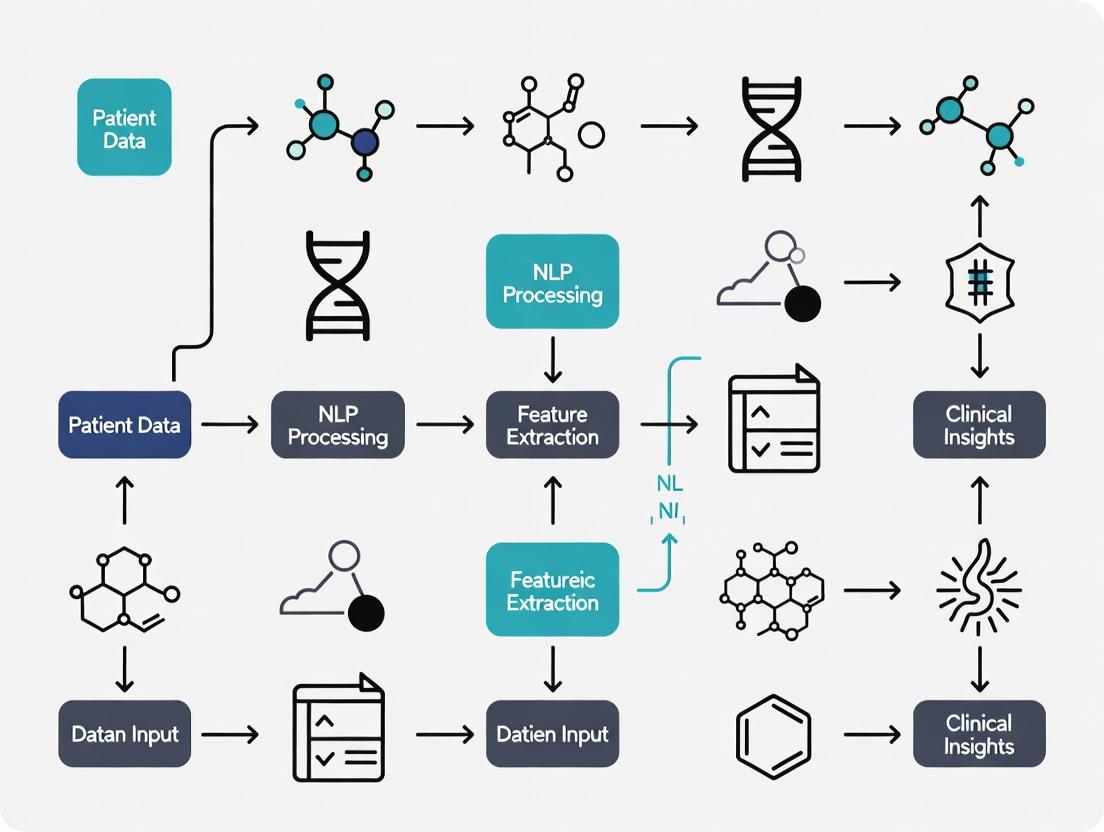
This article provides a detailed examination of Natural Language Processing (NLP) applications for analyzing Electronic Health Records (EHRs) in oncology. Tailored for researchers, scientists, and drug development professionals, it covers the foundational role of NLP in addressing the global cancer burden by transforming unstructured clinical notes into analyzable data. The scope spans from core methodologies like information extraction and text classification to performance comparisons of advanced models, including bidirectional transformers. It further addresses key implementation challenges such as model generalizability and integration into clinical workflows, and validates the real-world feasibility of NLP through case studies in lung, prostate, and brain cancer. The synthesis offers a roadmap for leveraging NLP to accelerate cancer research, enhance clinical trial design, and pave the way for data-driven, personalized cancer care.
Unlocking Cancer Insights: A Comprehensive Guide to Natural Language Processing for EHRs in Oncology Research and Drug Development
Abstract
This article provides a detailed examination of Natural Language Processing (NLP) applications for analyzing Electronic Health Records (EHRs) in oncology. Tailored for researchers, scientists, and drug development professionals, it covers the foundational role of NLP in addressing the global cancer burden by transforming unstructured clinical notes into analyzable data. The scope spans from core methodologies like information extraction and text classification to performance comparisons of advanced models, including bidirectional transformers. It further addresses key implementation challenges such as model generalizability and integration into clinical workflows, and validates the real-world feasibility of NLP through case studies in lung, prostate, and brain cancer. The synthesis offers a roadmap for leveraging NLP to accelerate cancer research, enhance clinical trial design, and pave the way for data-driven, personalized cancer care.
The Unmet Need: Why NLP is a Game-Changer in the Data-Driven Fight Against Cancer
The Growing Global Cancer Burden and the Imperative for Innovation
The global burden of cancer is escalating at an alarming rate, with current estimates projecting over 35 million new cases annually by 2050, a 77% increase from 2022 figures [1]. This surge, driven by population aging, growth, and risk factors like tobacco, alcohol, and obesity, presents an unprecedented challenge to healthcare systems worldwide [1]. Concurrently, the rapid digitization of healthcare has created a vast repository of clinical data, much of which is locked within unstructured narrative text in Electronic Health Records (EHRs). This whitepaper details how Natural Language Processing (NLP) is emerging as a critical technological imperative, transforming unstructured clinical notes into structured, analyzable data to drive oncology research, enhance patient outcomes, and inform drug development in the face of this growing epidemic.
The Escalating Global Cancer Burden
Quantifying the current and future incidence of cancer is essential for strategic planning and resource allocation in research and public health.
Table 1: Global Cancer Statistics and Projections (2022-2050)
| Metric | 2022 Estimate | 2050 Projection | Key Changes & Observations |
|---|---|---|---|
| New Annual Cases | 20 million [1] | 35 million [1] | 77% overall increase. Most striking proportional increase in low HDI countries (142%) [1] |
| Annual Deaths | 9.7 million [1] | - | - |
| 5-Year Prevalence | 53.5 million people [1] | - | - |
| Lifetime Risk | 1 in 5 people [1] | - | - |
| Leading Cancers by Incidence (2022) | 1. Lung (12.4%)2. Female Breast (11.6%)3. Colorectal (9.6%) [1] | - | Lung cancer's resurgence linked to persistent tobacco use in Asia [1] |
| Leading Cancers by Mortality (2022) | 1. Lung (18.7%)2. Colorectal (9.3%)3. Liver (7.8%) [1] | - | - |
In the United States, the American Cancer Society projects 2,041,910 new cancer cases and 618,120 deaths will occur in 2025 [2]. While the overall cancer mortality rate has declined, averting nearly 4.5 million deaths since 1991, this progress is threatened by rampant disparities. For instance, Native American and Black populations bear a significantly higher cancer mortality burden, with rates for specific cancers such as kidney, liver, and prostate being two to three times higher than those in White populations [2].
Electronic Health Records: A Critical Data Reservoir with Inherent Challenges
EHRs are a cornerstone of modern healthcare, yet their current implementation often fragments information, creating significant barriers to effective research and clinical decision-making.
The Documentation Error Crisis
A quality improvement study examining 776 patient records in a cancer center found that 15% of charts contained at least one documentation error related to cancer diagnosis or treatment [3]. Alarmingly, 86% of these errors were classified as "major," meaning their propagation could seriously affect a patient's course of care, such as discrepancies in cancer staging, grading, or treatment regimens [3].
Fragmentation and Interoperability
A 2023 UK survey of gynecological oncology professionals revealed that 92% routinely access multiple EHR systems, with 29% using five or more different systems [4]. This fragmentation leads to severe inefficiencies, with 17% of clinicians reporting they spend over half of their clinical time merely searching for patient information [4]. Key challenges include a lack of interoperability (24.8%) and difficulty locating critical data like genetic results (67%) [4].
Natural Language Processing: A Technical Foundation for Innovation
NLP is a field of artificial intelligence that enables computers to understand, interpret, and generate human language. Its application to clinical text in oncology is revolutionizing how data is abstracted and utilized.
Evolution of NLP Methods
A survey of NLP applications in oncology from 2014-2024 categorized methods into four main stages [5]:
Table 2: NLP Methodologies in Oncology (2014-2024)
| Method Category | Key Characteristics | Common Applications in Oncology |
|---|---|---|
| Rule-Based (n=70) | Relies on human-derived linguistic rules and pattern matching [5]. | High-precision extraction of dates, medications, and biomarkers from pathology reports [5] [6]. |
| Machine Learning (n=66) | Uses statistical algorithms (e.g., logistic regression) to learn from data [5]. | Classifying clinical document types and named entity recognition (e.g., diseases, symptoms) [5]. |
| Traditional Deep Learning (n=70) | Employs multi-layer networks (CNNs, RNNs) to learn complex feature representations [5]. | Classifying clinical documents and extracting structured values from narrative text [5]. |
| Transformer-Based (n=29) | Uses attention mechanisms to capture long-range dependencies in text. Includes encoder-only (e.g., BERT), encoder-decoder, and decoder-only (e.g., GPT) models [5]. | State-of-the-art performance on classification, entity recognition, and generating patient summaries [5]. |
There is a significant shift from rule-based and traditional machine learning approaches to advanced deep learning and transformer-based models, with encoder-only models like BERT and its clinical adaptations (e.g., ClinicalBERT, RadBERT) showing significant promise [5] [7].
Standardized NLP Workflow for Cancer Surveillance
The following diagram illustrates a generalized, high-level workflow for applying NLP to extract structured data from clinical narratives for cancer research and surveillance.
NLP Data Processing Workflow
Experimental Protocols and Application in Oncology Research
Objective: To automate the identification and abstraction of reportable cancer cases from pathology reports into a central cancer registry [6].
- Data Source: Unstructured narrative text from pathology reports and other clinical documents.
- NLP Methodologies:
- Dictionary-Based Approach: Software (e.g., CDC's eMaRC Plus) uses a curated dictionary of terms, abbreviations, and representations of reportable cancers. It follows rules to compare pathology reports to the dictionary and automatically create abstracts [6].
- Machine Learning Approach: A statistical NLP approach uses supervised machine learning on large volumes of pathology reports from many laboratories to account for variation in reporting styles. The U.S. Department of Health and Human Services has supported the development of an NLP Workbench as a platform for developing and sharing these models [6].
- Validation: Abstracted data is validated against manual review by Oncology Data Specialists (formerly Certified Tumor Registrars) to ensure accuracy and completeness [5] [6].
Protocol: NLP for Predicting Psychosocial Referrals
Objective: To predict which patients with cancer may benefit from psychiatric or counseling referrals based on initial oncology consultation documents [8].
- Dataset: 59,800 patient consultation documents.
- Training/Test Split: Models were trained on the full dataset and tested on a subset of 47,625 patients (662 referred to psychiatry, 10,034 to counseling).
- Model Architecture: The study compared various models, finding that convolutional neural networks (CNNs) and long short-term memory (LSTM) networks performed best.
- Performance: The best-performing models achieved 73.1% accuracy for psychiatry referrals and 71.0% for counseling referrals, outperforming simpler models. The models leveraged patterns in clinical text, such as somatic symptoms alongside phrases like "also noticed" for psychiatrist referrals and "current pain" for counselor referrals [8].
- Integration: If validated, such models can be integrated into EHRs to provide real-time alerts for psychosocial support needs [8].
Application: Addressing EHR Fragmentation with an Integrated Platform
Objective: To co-design an informatics platform that integrates structured and unstructured data from multiple EHRs into a unified view for ovarian cancer care [4].
- Method: A human-centered design approach involving healthcare professionals, data engineers, and informatics experts.
- NLP Role: Natural language processing was applied to extract key information (e.g., genomic and surgical details) from free-text records that were not available in structured fields [4].
- Data Pipeline: Validated data pipelines consolidated disparate patient data into a single visual display, with clinicians verifying the extracted information against original clinical system sources [4].
The Scientist's Toolkit: Research Reagent Solutions
Table 3: Essential NLP Tools and Resources for Oncology Research
| Item | Function in NLP Research |
|---|---|
| Clinical Text Corpora | Datasets of de-identified pathology/radiology reports and clinical notes for model training and testing. Essential for developing domain-specific models [5] [7]. |
| Annotation Tools (e.g., Prodigy, brat) | Software to manually label entities (e.g., cancer type, stage) in text, creating gold-standard data for supervised machine learning [5]. |
| Pre-trained Language Models (e.g., ClinicalBERT, RadBERT) | Transformer models pre-trained on vast biomedical literature and clinical text, providing a foundational understanding of medical language that can be fine-tuned for specific tasks [5]. |
| NLP Workbenches (e.g., CDC's ASPE PCOR Platform) | Cloud-based platforms that provide shared environments for developing, testing, and sharing NLP pipelines and algorithms [6]. |
| Rule-Based Engines (e.g., eMaRC Plus) | Systems that use curated dictionaries and syntactic rules to extract information with high precision, useful for well-defined, consistent data fields [6]. |
| Alrestatin Sodium | Alrestatin Sodium, CAS:51876-97-2, MF:C14H8NNaO4, MW:277.21 g/mol |
| Amustaline Dihydrochloride | Amustaline Dihydrochloride, CAS:210584-54-6, MF:C22H27Cl4N3O2, MW:507.3 g/mol |
Visualization of NLP Classification Logic
The following diagram outlines the logical decision process a sophisticated NLP model might use to classify clinical text and trigger specific clinical or research actions.
NLP Clinical Decision Logic
The convergence of a growing global cancer burden and the data-rich, yet fragmented, reality of modern healthcare creates an undeniable imperative for innovation. NLP stands as a pivotal technology to bridge this gap, turning unstructured clinical text into a powerful asset for research and precision medicine. Future progress depends on:
- Improving Model Generalizability: Developing robust models that perform well across diverse healthcare settings, institutions, and patient populations [7].
- Expanding to Understudied Cancers: Applying NLP to underrepresented cancers like pediatric cancers, melanomas, and lymphomas [5].
- Embracing Multi-Modal AI: Integrating NLP with algorithms that analyze genomic and radiologic image data to advance precision oncology [5].
- Addressing Ethical Considerations: Ensuring patient data privacy, mitigating model bias, and navigating the ethical integration of these tools into clinical workflows [9].
For researchers and drug development professionals, the strategic adoption and refinement of NLP methodologies are no longer optional but essential for accelerating discovery, optimizing clinical trials, and ultimately delivering effective, personalized cancer interventions to a global population in need.
Within the realm of oncology research, electronic health records (EHRs) represent a vast repository of patient information, yet a significant portion of this data remains locked in unstructured clinical narratives. This technical guide examines the central role of natural language processing (NLP) in unlocking this potential, detailing how advanced computational techniques can transform unstructured text into structured, analyzable data. We provide a comprehensive analysis of the current state of NLP in oncology, including quantitative performance metrics across various cancer types and tasks, detailed experimental protocols for implementing these systems, and a forward-looking perspective on the integration of emerging technologies like bidirectional transformers (BTs) and large language models (LLMs). The adoption of NLP is not merely a technical enhancement but a fundamental requirement for advancing real-world evidence generation, supporting clinical decision-making, and accelerating oncology drug development by leveraging the rich, contextual details found only in clinical notes [10] [11] [12].
The Landscape of Unstructured Data in Oncology EHRs
In oncology, an estimated 65% to 80% of critical patient data resides in unstructured formats within EHRs [13] [14]. This includes pathology reports, radiology notes, clinical progress notes, and treatment summaries, which contain nuanced information on disease progression, treatment response, functional status, and patient-reported outcomes [10] [15]. This unstructured data is essential for constructing a comprehensive view of a patient's cancer journey, details that are frequently absent from structured data fields like diagnosis codes [4] [12].
The manual abstraction of this information is notoriously resource-intensive. Studies indicate that healthcare professionals in complex fields like gynecological oncology can spend over 50% of their clinical time merely searching for patient information across multiple, fragmented EHR systems [4]. This inefficiency underscores the critical need for automated solutions to make this data accessible for research and quality care.
Table 1: Primary NLP Tasks in Oncology Research (Based on a review of 94 studies, 2019-2024) [10]
| NLP Task Category | Number of Studies | Percentage of Total | Common Applications in Oncology |
|---|---|---|---|
| Information Extraction (IE) | 47 | 50% | Identifying cancer phenotypes, treatment details, outcomes, and biomarkers from clinical notes [10] [16]. |
| Text Classification | 40 | 43% | Categorizing document types, identifying cancer presence, and classifying disease progression or response [10] [11]. |
| Named Entity Recognition (NER) | 7 | 7% | Extracting specific entities such as medication names, anatomical sites, and procedures [10] [14]. |
Quantitative Performance of NLP in Oncology
The performance of NLP models in extracting oncological information has been systematically evaluated, revealing a clear evolution in model efficacy. A systematic review of 33 articles comparing NLP techniques found that model performance varies significantly by architecture, with more advanced models consistently outperforming simpler ones [16].
Table 2: Comparative Performance of NLP Model Categories for Information Extraction in Cancer [16]
| NLP Model Category | Description | Relative Performance (Average F1-Score Difference) | Example Models |
|---|---|---|---|
| Bidirectional Transformer (BT) | Pre-trained models understanding word context bidirectionally. State-of-the-art. | Best Performance (+0.2335 to +0.0439 over other categories) | BioBERT, ClinicalBERT, RoBERTa [16] |
| Neural Network (NN) | Deep learning models capturing complex, non-linear relationships in data. | Second Best | LSTM, BiLSTM, CNN, BiLSTM-CRF [16] [11] |
| Conditional Random Field (CRF) | Statistical model often used for sequence labeling like NER. | Intermediate | Linear CRF [16] |
| Traditional Machine Learning (ML) | Models relying on hand-engineered features. | Lower | Support Vector Machines, Random Forest, Naïve Bayes [16] |
| Rule-Based | Systems based on manually crafted linguistic rules and dictionaries. | Lowest Performance | Regular Expressions, Keyword Matching [17] [16] |
Real-world implementations demonstrate the high accuracy achievable with these models. For instance:
- A neural network system applied to lung cancer notes achieved AUROCs of 0.94 for cancer presence, 0.86 for progression, and 0.90 for treatment response, with extracted outcomes showing significant association with patient survival [11].
- A large-scale deployment of an NLP pipeline achieved a combined F1-score of ~93% for entity extraction and 88% for relationship extraction from over 1.4 million physician notes and reports [12].
- A study using the CogStack toolkit for head and neck cancer data demonstrated that after limited supervised training, the median F1-score improved to 0.750, and further optimization with concept-specific thresholds boosted it to 0.778 [14].
Experimental Protocols for NLP Implementation in Oncology
Protocol 1: Neural Network for Extracting Cancer Outcomes from Progress Notes
This protocol, adapted from a study on lung cancer, details the process of training convolutional neural networks (CNNs) to extract structured outcomes from oncologists' progress notes [11].
1. Study Population and Data Curation:
- Cohort Identification: Define a patient cohort using structured data (e.g., ICD codes for a specific cancer, dates of diagnosis). In the foundational study, patients with lung cancer who had tumor sequencing were selected [11].
- Note Selection: Extract clinical notes written by medical oncologists (e.g., progress notes, consultations). The study curated 7,597 notes for 919 patients [11].
- Manual Annotation (Ground Truth): Expert curators review each note, focusing on the "assessment/plan" section, and label for predefined outcomes. The protocol used labels for: a) Any Cancer Present, b) Progression/Worsening, and c) Response/Improvement [11].
2. Data Preprocessing and Segmentation:
- Section Identification: Implement a model to automatically identify the "assessment/plan" section of each note. This can be done initially with a rule-based classifier (searching for phrases like "a/p," "assessment and plan") and refined with a recurrent neural network to handle notes where these cues are absent [11].
3. Model Training and Validation:
- Data Splitting: Split the annotated notes at the patient level into training (~80%), tuning (~10%), and a held-out test set (~10%) to prevent data leakage [11].
- Model Architecture: Train separate CNN models for each of the three binary outcome tasks. CNNs are effective at identifying informative phrases and patterns regardless of their position in the text [11].
- Cross-Validation: Perform k-fold cross-validation (e.g., 10-fold) on the training set to create an ensemble model and to determine the F1-optimal probability threshold for classifying an outcome as positive [11].
4. Model Evaluation and Clinical Validation:
- Performance Metrics: Evaluate the ensemble model on the held-out test set using Area Under the Receiver Operating Characteristic Curve (AUROC) and Area Under the Precision-Recall Curve (AUPRC) [11].
- Explanatory Analysis: Fit a linear model with Lasso regularization to predict the CNN's output based on word and phrase frequencies (n-grams). This provides human-interpretable insight into which terms (e.g., "growing," "new lesion") most influence the model's prediction of progression or response [11].
- Clinical Relevance Check: Validate the real-world significance of the NLP-extracted outcomes by testing their association with overall survival using Cox proportional hazards models [11].
Protocol 2: Fine-Tuning a General-Purpose NLP Toolkit for Cancer Concept Extraction
This protocol outlines the process of adapting an open-source NLP tool (CogStack/MedCAT) for extracting specific oncology concepts from unstructured EHRs, as demonstrated in a head and neck cancer study [14].
1. Foundation Model and Concept Selection:
- Tool Selection: Choose a flexible NLP platform that supports supervised fine-tuning. The referenced study used CogStack, which incorporates the MedCAT tool for concept recognition and mapping to clinical terminologies like SNOMED-CT [14].
- Define Target Concepts: Identify the specific data elements to be extracted. The study selected 109 SNOMED-CT concepts relevant to head and neck cancer, covering diagnoses, treatments, and outcomes [14].
2. Baseline Performance Evaluation:
- Run Baseline Model: Apply the pre-trained CogStack model to a patient cohort's documents to generate initial concept extractions [14].
- Establish Ground Truth: Compare the model's outputs against a manually curated "gold standard" dataset for the same patient cohort. Calculate baseline performance metrics (Precision, Recall, F1-score). In the study, the baseline F1-score was 0.588, and 19.5% of concepts were unretrieved [14].
3. Supervised Fine-Tuning:
- Annotation: Use a dedicated platform (e.g., MedCATTrainer) to annotate a subset of clinical documents (e.g., 500) with the correct SNOMED-CT concepts [14].
- Model Retraining: Retrain the NLP model on the annotated documents. This cycle significantly improves performance; after one training cycle, the median F1-score increased to 0.692, and all concepts became retrievable [14].
4. Optimization and Final Validation:
- Concept-Specific Thresholding: To reduce false positives, implement a thresholding strategy where a concept is only considered "present" for a patient if it is identified in a minimum number of their documents. Determine the optimal threshold for each concept individually to maximize the F1-score [14].
- Final Test: Evaluate the final, fine-tuned, and optimized model on a completely unseen test cohort of patients. The head and neck cancer study achieved a final median F1-score of 0.778 for 50 validated concepts [14].
Diagram 1: Core NLP Development Workflow in Oncology. This flowchart illustrates the iterative process of developing and validating an NLP system for extracting structured data from unstructured clinical notes [11] [14].
The Scientist's Toolkit: Essential Research Reagents & Materials
Table 3: Key Resources for NLP Implementation in Oncology Research
| Tool / Resource | Type | Primary Function in Research | Example Use Case |
|---|---|---|---|
| CogStack/MedCAT [14] | Open-Source NLP Platform | Extracts and maps clinical concepts from text to standardized terminologies (e.g., SNOMED-CT). | Mining head and neck cancer data from EHRs for real-world evidence studies [14]. |
| BioBERT [16] [12] | Pre-trained Language Model (BT) | Provides a foundation model pre-trained on biomedical literature, offering a head start for clinical NLP tasks. | Identifying cancer entities and relationships in clinical notes with high accuracy [12]. |
| ClinicalRegex [17] | Rule-Based NLP Software | Performs keyword and pattern-based searches in clinical text using regular expressions (Regex). | Initial screening for patients using wheelchairs from EHRs of colorectal cancer patients [17]. |
| John Snow Labs NLP [12] | Commercial NLP Framework | Provides a scalable pipeline for entity extraction, assertion detection, and relationship mapping from clinical documents. | Large-scale processing of physician notes and PDF reports to build an AI-enhanced oncology data model [12]. |
| Llama3 [12] | Large Language Model (LLM) | Used for complex classification tasks where traditional NLP fails, often via prompt engineering on flanking text. | Accurately classifying adverse events like thrombosis from clinical notes in a hybrid NLP/LLM pipeline [12]. |
| TensorFlow [11] | Machine Learning Framework | An open-source library for developing and training deep learning models (e.g., CNNs, RNNs). | Building and training custom neural networks to predict cancer progression from progress notes [11]. |
| Antibiotic-5d | Antibiotic-5d, MF:C13H18N2O4S, MW:298.36 g/mol | Chemical Reagent | Bench Chemicals |
| Auranofin | Auranofin, CAS:34031-32-8, MF:C20H34AuO9PS, MW:678.5 g/mol | Chemical Reagent | Bench Chemicals |
The application of NLP in oncology EHR analysis is rapidly advancing, yet several challenges remain. Model generalizability is a primary concern, as systems trained on data from one institution may perform poorly at another due to variations in documentation practices and EHR systems [10] [14]. Furthermore, the quality of clinical documentation itself, often lacking detail on critical elements like the reason for or duration of a condition like wheelchair use, poses a significant barrier to accurate NLP abstraction [17].
The future lies in addressing these challenges through the use of more sophisticated BTs and LLMs, and by focusing on human-centered design to integrate these tools seamlessly into clinical workflows [4] [12]. As these technologies mature, they will become indispensable in harnessing the full richness of unstructured clinical notes, ultimately driving forward personalized cancer therapy and improving patient outcomes.
In the field of oncology research, a significant information gap exists between the rich, nuanced data contained within clinical documentation and the structured, computable data required for robust research and drug development. Electronic health records (EHRs) contain valuable longitudinal patient data, but approximately 70-80% of critical clinical information is stored as unstructured text notations, including clinical notes, pathology reports, and radiology interpretations [18]. This unstructured data contains invaluable information about disease progression, treatment responses, symptom trajectories, and adverse events that remains largely inaccessible for systematic analysis at scale.
Natural language processing (NLP), a branch of artificial intelligence that enables computers to understand, interpret, and generate human language, is emerging as a transformative solution to this challenge [18]. By automatically analyzing large volumes of clinical text, NLP techniques can identify relevant information and generate structured data for further analysis, potentially revolutionizing cancer research by enabling the extraction of valuable insights from enormous amounts of previously unexplored clinical data [10]. The application of NLP to analyze EHRs and clinical notes has created a promising field for advancing oncology research, with particular utility for accelerating data extraction for observational studies, clinical trial matching, and real-world evidence generation [19].
NLP Methodologies: From Rules to Deep Learning
Rule-Based NLP Approaches
Rule-based NLP represents a well-established methodology that uses predefined linguistic rules, regular expressions, and grammar-based patterns to extract meaningful information from clinical text [18]. This approach requires domain specialists to create rules tailored to specific analysis tasks, such as identifying symptoms like "dyspnoea" or "difficulty breathing" while accounting for negations such as "no" or "without" that would change the clinical meaning [18].
Technical Implementation: Rule-based systems typically employ pattern-matching algorithms that scan text for predefined sequences of words or concepts. For example, a system might use rules to identify medication dosages by looking for numerical values followed by measurement units near drug names. These systems often incorporate specialized clinical terminologies like the Systematized Nomenclature of Medicine - Clinical Terms (SNOMED-CT) or the Unified Medical Language System (UMLS) to standardize extracted concepts [20]. The primary advantage of rule-based systems is their precision in controlled, domain-specific contexts where terminology is relatively standardized [18].
Machine Learning and Deep Learning Approaches
Machine learning NLP represents a more adaptive approach that uses algorithms and statistical models to help computers understand and create human language. Unlike rule-based systems, ML-based NLP can learn and improve automatically by analyzing large amounts of text, helping these systems grasp complex language patterns and contexts [18]. Deep learning (DL), a subset of machine learning focusing on artificial neural networks, has substantially advanced the state of the art in clinical NLP applications [21].
Technical Implementation: Machine learning approaches typically involve training models on annotated clinical texts, where human experts have labeled relevant entities and relationships. These models learn to recognize patterns associated with specific clinical concepts without explicit rule programming. Deep learning architectures, particularly transformer-based models, have demonstrated remarkable capabilities in clinical NLP tasks. These models use self-attention mechanisms to weigh the importance of different words in a sentence, enabling better understanding of clinical context and nuance [10].
Large Language Models in Clinical Research
Large language models (LLMs) represent the most recent fundamental advance in DL-based NLP [21]. Models such as generative pre-trained transformers (GPTs) excel at understanding and generating human-like text by learning from vast amounts of data [18]. When fine-tuned on biomedical and clinical corpora, these foundation models can accommodate multiple types of data (text, imaging, pathology, molecular biology), incorporating them into predictions and enabling "multimodal" analysis that has potential applications for decision-making in oncology [21].
Technical Implementation: LLMs typically undergo a two-stage training process: pre-training on large-scale general domain text corpora, followed by domain-specific adaptation using clinical notes, medical literature, and other healthcare-related texts. This approach allows the models to acquire general linguistic knowledge before specializing in the clinical domain. Promising applications in clinical research include automated data extraction from clinical trial documents, synthesis of scientific literature, and patient-trial matching [22].
Table 1: Comparison of NLP Approaches in Clinical Research
| Approach | Key Characteristics | Advantages | Limitations | Common Applications in Oncology |
|---|---|---|---|---|
| Rule-Based NLP | Predefined linguistic rules and patterns | High precision for specific tasks; interpretable; requires less training data | Limited scalability; labor-intensive to create and maintain; struggles with novel phrasing | Symptom identification; concept extraction using standardized terminologies |
| Machine Learning NLP | Statistical models learn patterns from annotated examples | Adaptable to new data; handles linguistic variation; improves with more data | Requires large annotated datasets; potential bias from training data | Text classification; named entity recognition; relation extraction |
| Deep Learning/LLMs | Multi-layer neural networks; transformer architectures | State-of-the-art performance; handles complex context; enables transfer learning | Computational intensity; "black box" nature; extensive data requirements | Automated data extraction from clinical trials; patient-trial matching; trial outcome prediction |
Experimental Validation and Performance Metrics
Validation Methodologies for Clinical NLP Systems
Rigorous validation is essential for establishing the reliability of NLP systems in clinical research contexts. The standard approach involves comparing NLP-extracted data against manual annotation by clinical experts, often referred to as the "gold standard" [20]. Typically, this process involves randomly selecting a subset of clinical documents for independent review by multiple domain experts, with adjudication processes to resolve discrepancies before comparing against NLP output [20].
Performance Metrics: The accuracy of NLP systems is quantitatively assessed using standard information retrieval metrics:
- Precision: The proportion of NLP-identified concepts that are correct according to the gold standard [precision = true positives / (true positives + false positives)] [20]
- Recall: The proportion of gold-standard concepts successfully identified by the NLP system [recall = true positives / (true positives + false negatives)] [20]
- Accuracy: The overall proportion of correct identifications [(true positives + true negatives) / total cases] [20]
- F-measure: The harmonic mean of precision and recall, providing a single metric that balances both concerns [20] [18]
Representative Performance in Oncology Applications
Recent studies demonstrate the increasingly robust performance of NLP systems in oncology contexts. In gastroenterology, an NLP system achieved 98% accuracy in identifying the highest level of pathology from colonoscopy and pathology reports compared to triplicate annotation by gastroenterologists, with accuracy values of 97%, 96%, and 84% for lesion location, size, and number, respectively [20]. In advanced lung cancer, NLP successfully extracted clinical information from 333 patients in just 8 hours, with minimal missing data for smoking status (n=2) and ECOG performance status (n=5) [19]. The extracted data demonstrated strong external validity, with baseline patient and cancer characteristics comparable to previous studies and population reports [19].
For LLM-specific applications, recent evaluations show promising results in data extraction tasks. In a study assessing LLMs for data extraction from clinical trials, Claude-3.5-sonnet achieved 96.2% accuracy while Moonshot-v1-128k reached 95.1% accuracy, with LLM-assisted methods (combining AI with human expertise) performing even better (≥97%) and significantly reducing processing time [23].
Table 2: Performance Metrics of NLP Systems in Clinical Applications
| Clinical Domain | NLP Task | System/Method | Performance Metrics | Reference Standard |
|---|---|---|---|---|
| Gastroenterology | Pathology classification from colonoscopy reports | cTAKES (Rule-based) | Accuracy: 98% (pathology level), 97% (location), 96% (size), 84% (number) | Triplicate annotation by gastroenterologists |
| Advanced Lung Cancer | Multi-concept extraction from EHRs | DARWEN NLP platform | Data extraction for 333 patients in 8 hours; minimal missing data (<2%) | Manual chart review and comparison to population data |
| Clinical Trial Data Extraction | Data extraction from RCTs | Claude-3.5-sonnet | Accuracy: 96.2%; Time: 82 seconds per RCT | Conventional manual extraction (86.9 minutes per RCT) |
| Clinical Trial Data Extraction | Data extraction from RCTs | Moonshot-v1-128k | Accuracy: 95.1%; Time: 96 seconds per RCT | Conventional manual extraction (86.9 minutes per RCT) |
| Cardiovascular Nursing | Symptom identification from clinical notes | NimbleMiner (Rule-based) | Average F-score: 0.81 | Manual annotation of 400 notes by clinical experts |
Technical Workflows: From Clinical Text to Structured Data
Core NLP Processing Pipeline
The transformation of unstructured clinical text into research-ready data follows a systematic workflow that can be implemented through various technical approaches. The following diagram illustrates the generalized NLP processing pipeline for clinical text:
Specialized Workflow for Clinical Trial Recruitment
In oncology research, one of the most valuable applications of NLP is enhancing clinical trial recruitment through automated screening of EHR data. The following diagram illustrates this specialized workflow:
Implementing NLP solutions for oncology research requires both technical infrastructure and clinical domain expertise. The following table details key resources and their applications in clinical NLP systems:
Table 3: Essential Research Reagents and Resources for Clinical NLP
| Resource Category | Specific Examples | Function in Clinical NLP | Application in Oncology Research |
|---|---|---|---|
| NLP Software Platforms | cTAKES, NimbleMiner | Provide pre-built components for processing clinical text; enable concept extraction and normalization | Extracting cancer concepts from pathology reports; identifying symptoms from clinical notes |
| Clinical Terminologies | SNOMED-CT, UMLS, ICD-10 | Standardize clinical concepts; enable semantic interoperability across systems | Mapping variant descriptions to standardized codes; normalizing cancer diagnosis terminology |
| Programming Frameworks | Apache UIMA, Python NLTK, spaCy | Provide architectural foundation for NLP pipelines; offer pre-trained models for common tasks | Building custom extraction pipelines for specific oncology use cases |
| Annotation Tools | BRAT, Prodigy | Facilitate manual annotation of clinical text for training and evaluation | Creating gold standard datasets for model training and validation |
| Pretrained Language Models | ClinicalBERT, BioBERT, GatorTron | Provide domain-adapted foundation for specific NLP tasks; reduce need for extensive training data | Extracting PICO elements from oncology trial literature; identifying patient cohorts from EHR data |
| Evaluation Metrics | Precision, Recall, F1-score, Accuracy | Quantify performance of NLP systems; enable comparison across different approaches | Validating extraction of cancer staging information from pathology reports |
Applications in Oncology Research and Clinical Trials
Enhanced Clinical Trial Recruitment
Patient recruitment represents one of the most significant challenges in clinical trials, with studies showing that up to 44% of trials fail to reach recruitment targets [22]. NLP applications offer powerful solutions by automatically screening EHR data to identify potentially eligible participants. These systems can analyze vast datasets, including EHRs, to identify suitable participants for clinical trials by predicting patient responses, targeting specific demographics, and enhancing participant matching [24]. This capability is particularly valuable in oncology, where eligibility criteria often involve complex combinations of cancer types, stages, biomarker status, and prior treatment histories.
Implementation Framework: NLP systems for trial recruitment typically extract key oncology concepts such as cancer type, stage, biomarker status (e.g., EGFR mutations, PD-L1 expression), prior treatments, and performance status from clinical notes and pathology reports. This information is then matched against trial eligibility criteria to identify potential candidates. A study focusing on cancer clinical trials demonstrated that over half (55.6%) of patients were ineligible for participation at their treatment institution, and an additional 21.5% were excluded for failing to meet enrollment criteria [22], highlighting the need for more efficient screening approaches.
Real-World Evidence Generation
NLP enables efficient extraction of real-world clinical data at scale, supporting observational studies and comparative effectiveness research in oncology. In a study of advanced lung cancer patients, NLP successfully extracted comprehensive clinical information from 333 patients in just 8 hours, demonstrating exceptional efficiency compared to manual chart review [19]. The extracted data showed strong external validity, with baseline characteristics comparable to population-level data, and enabled robust survival analysis identifying prognostic factors consistent with established literature [19].
Oncology-Specific Applications: NLP techniques have been particularly valuable for extracting complex oncology concepts such as cancer stage, recurrence status, treatment response, and symptom burden from clinical narratives. This capability addresses critical gaps in structured EHR data, where such nuanced clinical information is often incompletely captured. The resulting structured datasets enable researchers to conduct large-scale outcomes studies, safety surveillance, and treatment pattern analyses using real-world populations that may be excluded from traditional clinical trials.
Clinical Trial Data Extraction and Management
Beyond participant recruitment, NLP systems streamline data extraction and management within clinical trials themselves. LLMs show particular promise in automating the extraction of safety and efficacy endpoints from clinical trial documents. For example, one research team developed a GPT-4-based pipeline capable of automatically extracting safety and efficacy data from abstracts of multiple myeloma clinical trials [22]. Similarly, LLMs have been applied to extract PICO (Patient, Intervention, Comparison, Outcome) elements from clinical trial reports, facilitating evidence synthesis and meta-analyses [22].
Efficiency Gains: The automation of data extraction tasks yields substantial efficiency improvements. Traditional manual data extraction for systematic reviews averages approximately 86.9 minutes per RCT, while LLM-assisted approaches can reduce this to 14.7 minutes per RCT while maintaining high accuracy (≥97%) [23]. Similar time savings have been demonstrated for risk-of-bias assessments, with processing times decreasing from 10.4 minutes to 5.9 minutes per RCT [23].
Implementation Challenges and Ethical Considerations
Technical and Operational Challenges
Despite significant advances, several technical challenges impede broader adoption of NLP in oncology research. The "varied vocabulary of healthcare" presents particular difficulties, as each specialty has extensive terminology for disorders, diagnoses, treatments, and medications, compounded by abundant acronyms and abbreviations [25]. This linguistic complexity can lead to extraction errors and contributes to provider mistrust of NLP technologies [25].
Additional challenges include:
- Limited Generalizability: NLP solutions developed at one institution often perform poorly when applied to data from other healthcare systems due to variations in documentation practices, EHR systems, and clinical workflows [10].
- Data Quality and Quantity: Developing robust NLP models requires large, diverse, and accurately annotated datasets, which can be difficult and expensive to create for specialized oncology concepts [10].
- Workflow Integration: Successful implementation requires seamless integration into existing clinical and research workflows, which often necessitates customization and stakeholder buy-in [10].
Ethical and Equity Considerations
The deployment of NLP in clinical research raises important ethical considerations that require careful attention. A recent scoping review highlighted that while the literature on NLP-driven recruitment predominantly emphasizes technical accuracy and efficiency, ethical considerations have received little attention [24] [26]. Semistructured interviews with stakeholders revealed differing opinions on appropriate approaches to anonymization, consent, and the impact of NLP tools on fair access to research opportunities [24].
Key ethical priorities include:
- Patient Autonomy: Ensuring meaningful human oversight, protection of privacy, and appropriate informed consent processes when using patient data for recruitment [24].
- Equity and Bias: Proactively addressing potential biases in NLP algorithms that could disproportionately exclude certain patient populations from research opportunities [24].
- Transparency: Developing clear explanations of how NLP systems make determinations and ensuring accountability for decisions affecting patient care and research participation [22].
Emerging Trends and Advancements
The field of clinical NLP is rapidly evolving, with several emerging trends likely to shape future applications in oncology research. There is a significant shift from rule-based and traditional machine learning approaches to advanced deep learning techniques and transformer-based models [10]. The integration of multimodal data—combining clinical text with imaging, genomics, and digital pathology—represents another promising direction, enabled by foundation models that can process diverse data types [21].
The application of NLP in palliative medicine is gaining recognition as a crucial area for future development [10]. NLP techniques can help identify patients who might benefit from palliative care interventions by extracting information about symptom burden, functional status, and patient goals from clinical notes, potentially transforming palliative care practices in oncology [10].
Natural language processing represents a transformative technology for bridging the information gap between unstructured clinical text and structured research data in oncology. By enabling efficient extraction of meaningful information from EHRs and clinical notes, NLP systems can accelerate clinical trial recruitment, enhance real-world evidence generation, and streamline research data management. While challenges remain in terms of generalizability, workflow integration, and ethical implementation, ongoing advances in AI and machine learning continue to expand the capabilities and applications of these powerful tools. As the field matures, the development of practical guidelines for implementing and reporting ethical aspects throughout the lifecycle of NLP applications will be essential for realizing the full potential of these technologies to advance oncology research and improve patient outcomes.
The integration of Natural Language Processing into oncology research represents a paradigm shift in how we leverage real-world data to combat cancer. Electronic Health Records contain a vast repository of critical patient information, yet a significant portion of this data remains locked in unstructured clinical narratives. NLP technologies serve as the key to unlocking this potential by transforming unstructured text into structured, analyzable data that can accelerate research and inform clinical decisions. The exponential growth of clinical data, combined with advances in AI, has positioned NLP as an indispensable tool for researchers and drug development professionals seeking to extract meaningful insights from oncology-specific clinical text [27] [7]. This technical guide examines the key applications, performance metrics, methodological approaches, and implementation frameworks that define the current state of NLP in oncology research.
Core NLP Applications in Oncology
NLP applications in oncology research have evolved from simple information extraction to complex decision-support systems. The primary applications can be categorized into three key areas that span the research and clinical continuum.
Information Extraction and Concept Mapping
Information extraction represents the foundational application of NLP in oncology, enabling researchers to identify and structure critical clinical concepts from unstructured text. Advanced NLP systems now automatically extract cancer-related entities including tumor characteristics, treatment protocols, symptom profiles, and outcomes documentation from clinical notes, pathology reports, and radiology narratives [28] [29]. The predominant methodologies for this task include rule-based algorithms, machine learning approaches, and hybrid systems. Terminological standards such as Systematized Nomenclature of Medicine-Clinical Terms (SNOMED-CT) and Unified Medical Language System (UMLS) provide the ontological framework for standardizing extracted concepts, ensuring consistency across research datasets [29]. This capability is particularly valuable for populating cancer registries, generating real-world evidence, and identifying patient cohorts for clinical trials.
Cancer Phenotyping and Classification
Beyond simple extraction, NLP enables sophisticated cancer phenotyping by integrating multiple data points from clinical narratives to define disease subtypes with distinct clinical characteristics, treatment responses, and outcomes. Deep learning models can process histopathology reports, genomic data, and clinical notes to identify patterns that may elude manual review [27]. This application has proven particularly valuable for cancers with significant heterogeneity, such as breast, lung, and colorectal cancers, which represent the most frequently studied cancer types in NLP research [7] [29]. Classification models can automatically categorize cancer stages, tumor grades, and molecular subtypes based on textual evidence in EHRs, enabling large-scale epidemiological studies and precision medicine initiatives.
Clinical Decision Support and Outcome Prediction
NLP systems increasingly support clinical decision-making by processing multimodal patient data to provide evidence-based recommendations. Advanced architectures integrate extracted information from clinical notes with structured data elements to predict treatment responses, disease progression, and potential adverse events [30] [31]. For example, transformer-based models have demonstrated remarkable accuracy in predicting cancer progression from radiology reports, with one study reporting an area under the receiver operating characteristic curve (AUROC) of 0.97 for pancreatic cancer and 0.95 for lung cancer [32]. These predictive capabilities enable researchers to identify patterns associated with positive outcomes and support the development of more targeted therapeutic strategies.
Performance Analysis of NLP Methodologies
Comparative Performance Across NLP Approaches
The evolution of NLP methodologies has yielded significant improvements in performance metrics for oncology-specific tasks. Table 1 summarizes the comparative performance of major NLP categories based on comprehensive benchmarking studies.
Table 1: Performance Comparison of NLP Approaches in Oncology Applications
| NLP Category | Average F1-Score | Key Strengths | Common Applications |
|---|---|---|---|
| Rule-Based Systems | 0.355-0.985 | High interpretability, effective for structured narratives | Concept extraction, tumor characteristics identification |
| Traditional Machine Learning | Varies by algorithm | Feature engineering flexibility, moderate data requirements | Document classification, sentiment analysis |
| Conditional Random Fields (CRF) | Competitive for specific tasks | Effective for sequence labeling, handles dependencies | Named entity recognition, temporal relation extraction |
| Neural Networks | Generally superior to traditional ML | Automatic feature learning, handles complex patterns | Phenotyping, outcome prediction |
| Bidirectional Transformers | Highest overall performance | Contextual understanding, transfer learning capabilities | Multimodal integration, clinical decision support |
Bidirectional transformer models consistently achieve the highest performance across multiple oncology NLP tasks, outperforming other methodologies in direct comparisons [28]. The F1-score range for best-performing models across studies spans from 0.355 to 0.985, reflecting significant variation based on task complexity, data quality, and implementation specifics [28]. The performance advantage of advanced models is particularly evident in complex tasks such as relationship extraction and outcome prediction, where contextual understanding is critical.
Domain-Specific Model Performance
Specialized models fine-tuned on oncology-specific data have demonstrated superior performance compared to general-purpose NLP systems. The Woollie model, trained specifically on clinical oncology data from a comprehensive cancer center, achieved an AUROC of 0.97 for cancer progression prediction, significantly outperforming general-purpose models like ChatGPT on domain-specific tasks [32]. This performance advantage highlights the importance of domain adaptation in oncology NLP applications, where specialized terminology, abbreviation conventions, and clinical context present unique challenges for general-purpose models.
Experimental Protocols and Methodologies
Protocol 1: Information Extraction Pipeline for Cancer Concepts
Objective: To extract and standardize cancer-related concepts from clinical narratives for research applications.
Materials: Clinical notes from EHR systems, terminology resources (SNOMED-CT, UMLS), computational resources for NLP processing.
Methodology:
- Data Preprocessing: De-identify clinical notes following HIPAA standards. Apply tokenization, sentence segmentation, and part-of-speech tagging to prepare text for analysis.
- Concept Identification: Implement a hybrid approach combining rule-based pattern matching with machine learning classification. Rule-based components use regular expressions for well-structured concepts (e.g., tumor size, stage). Machine learning components (preferably bidirectional transformers) handle more complex contextual identification.
- Entity Normalization: Map extracted concepts to standardized terminologies using UMLS MetaMap or similar tools. Resolve ambiguity through context-aware disambiguation algorithms.
- Relationship Extraction: Identify semantic relationships between entities (e.g., medication-dosage, symptom-temporality) using dependency parsing and relation extraction models.
- Validation: Manually review a subset of extractions against gold-standard annotations created by domain experts. Calculate precision, recall, and F1-score to quantify performance.
Implementation Considerations: The extraction pipeline should be optimized for oncology-specific concepts such as cancer staging (TNM classification), histologic grades, and treatment regimens. Transfer learning from models pre-trained on biomedical literature (e.g., BioBERT, ClinicalBERT) significantly improves performance [28] [27].
Protocol 2: Multimodal AI Agent for Clinical Decision Support
Objective: To develop an autonomous AI agent that integrates multimodal patient data to support clinical decision-making in oncology.
Materials: Multimodal patient data (clinical notes, radiology images, histopathology slides, genomic data), tool integration framework (APIs for OncoKB, PubMed, vision models), computational infrastructure.
Methodology:
- Tool Integration: Equip the base LLM (e.g., GPT-4) with specialized oncology tools including:
- Vision transformers for detecting genetic alterations from histopathology slides
- MedSAM for radiology image segmentation
- OncoKB for precision oncology knowledge
- PubMed and Google search APIs for evidence retrieval
- Retrieval-Augmented Generation (RAG): Implement a RAG framework with a curated repository of approximately 6,800 medical documents from oncology guidelines, clinical trials, and textbook sources.
- Autonomous Reasoning: The agent follows a two-stage process:
- Tool Selection and Application: Autonomously selects and applies relevant tools to derive supplementary insights from patient data
- Evidence-Based Conclusion: Retrieves and synthesizes relevant medical evidence to support conclusions with appropriate citations
- Evaluation Framework: Assess performance on realistic simulated patient cases evaluating:
- Tool use accuracy (correct invocation of required tools)
- Clinical conclusion accuracy (correct treatment plans based on patient data)
- Citation precision (appropriate referencing of guidelines)
Performance Metrics: In validation studies, this approach achieved 87.5% accuracy in tool use, 91.0% correct clinical conclusions, and 75.5% accuracy in guideline citation. The integrated agent significantly outperformed GPT-4 alone (30.3% to 87.2% in decision-making accuracy) [31].
Figure 1: Workflow of a multimodal AI agent for clinical decision support in oncology, integrating diverse data modalities and specialized tools to generate evidence-based recommendations.
Implementation Framework: The Researcher's Toolkit
Essential Research Reagent Solutions
Successful implementation of NLP in oncology research requires a comprehensive toolkit of specialized resources and methodologies. Table 2 outlines key components of the research reagent solutions necessary for developing and deploying oncology NLP applications.
Table 2: Essential Research Reagent Solutions for Oncology NLP
| Tool Category | Specific Solutions | Function | Implementation Considerations |
|---|---|---|---|
| Pre-trained Language Models | BioBERT, ClinicalBERT, BioMedLM | Domain-specific language understanding | Fine-tuning on oncology corpora improves performance |
| Ontology Resources | SNOMED-CT, UMLS, NCI Thesaurus | Concept standardization and interoperability | Mapping tables needed for institution-specific terminologies |
| Annotation Platforms | Prodigy, BRAT, INCEpTION | Gold-standard corpus creation | Requires domain expert involvement (oncologists, pathologists) |
| Specialized NLP Libraries | spaCy, ScispaCy, CLAMP | Processing pipelines for clinical text | Configuration for oncology-specific entity recognition |
| Knowledge Bases | OncoKB, DrugBank, PubMed | External knowledge integration | API access for real-time evidence retrieval |
| Vision Integration Tools | Vision Transformers, MedSAM | Multimodal data analysis | Specialized models for histopathology and radiology images |
| Lenoremycin | Lenoremycin, CAS:51257-84-2, MF:C47H78O13, MW:851.1 g/mol | Chemical Reagent | Bench Chemicals |
| A-317567 | A-317567, MF:C27H31N3, MW:397.6 g/mol | Chemical Reagent | Bench Chemicals |
Workflow Integration Framework
Figure 2: System architecture for NLP integration in oncology research, showing the sequential processing steps from raw clinical data to research-ready structured information.
Ethical Considerations and Bias Mitigation
The implementation of NLP in oncology research necessitates careful attention to ethical considerations, particularly regarding algorithmic bias and health equity. Studies have demonstrated that AI models can perpetuate and even amplify existing healthcare disparities if trained on non-representative datasets [33]. For instance, underrepresentation of minority populations in training data can lead to reduced model performance for these groups, potentially exacerbating cancer outcome disparities. mitigation strategies include intentional diversification of training datasets, algorithmic fairness techniques, and comprehensive validation across diverse patient populations [30] [33]. Additionally, transparency in model limitations, informed consent processes that address AI involvement in care, and clear accountability frameworks are essential for ethical deployment [30]. Regulatory bodies including the FDA have begun establishing guidelines for AI/ML validation in healthcare contexts, emphasizing the need for robustness across population subgroups [34].
The field of NLP in oncology research is rapidly evolving toward increasingly sophisticated applications. Multimodal AI approaches that integrate textual data with genomic, imaging, and real-world evidence represent the next frontier in personalized oncology [35] [31]. These systems promise to enhance drug development through better patient stratification, accelerate clinical trial recruitment through automated eligibility screening, and support regulatory decision-making with real-world evidence synthesis [34]. Future advancements will likely focus on improving model interpretability, enhancing generalizability across institutions, and developing more efficient fine-tuning approaches that require less labeled data. As these technologies mature, NLP will increasingly serve as the foundational layer that transforms unstructured clinical narratives into actionable insights, ultimately accelerating progress across the oncology research continuum from basic science to clinical application.
For researchers implementing these systems, success depends on collaborative partnerships between computational linguists, oncologists, and domain experts to ensure that models capture clinically relevant nuances. Rigorous validation against gold-standard annotations and prospective evaluation in real-world settings remain essential before clinical deployment. With appropriate attention to methodological rigor and ethical considerations, NLP technologies hold immense potential to revolutionize how we extract knowledge from clinical narratives and translate that knowledge into improved cancer outcomes.
From Theory to Practice: Core NLP Techniques and Their Oncology Applications
The growing volume of unstructured data in Electronic Health Records (EHRs) presents both a challenge and an opportunity for oncology research. Natural Language Processing (NLP) has emerged as a critical technology for transforming this unstructured clinical text into structured, analyzable data [36]. This whitepaper examines the three dominant NLP tasks—Information Extraction, Text Classification, and Named Entity Recognition—that are advancing cancer research by unlocking rich clinical information embedded in EHRs and clinical notes. A comprehensive review of 94 studies published between 2019 and 2024 reveals that these methodologies are facilitating breakthroughs in cancer diagnosis, treatment optimization, and patient outcomes research [36] [10]. The application of these techniques is particularly vital in oncology, where cancer remains one of the most significant global health challenges, with recent projections indicating 1,958,310 new cancer cases and 611,720 cancer deaths in the United States for 2024 alone [36].
Dominant NLP Tasks in Oncology: Scope and Significance
Information Extraction
Information Extraction (IE) stands as the most prevalent NLP task in oncology, with 47 out of 94 studies (50%) focusing on this approach [36] [10]. IE systems automatically identify and extract predefined facts and relationships from unstructured clinical text, converting narrative information into structured data formats suitable for analysis. In cancer research, this typically involves extracting specific clinical entities such as cancer stage, tumor characteristics, treatment protocols, and adverse events [36]. The paradigm has significantly shifted from rule-based systems to advanced machine learning approaches, particularly transformer-based models, which demonstrate superior performance in understanding clinical context and handling linguistic variations [37].
Text Classification
Text Classification represents the second most common NLP application in oncology, comprising 40 out of 94 studies (42.6%) [36] [10]. This task involves categorizing entire documents or text segments into predefined classes, such as cancer types, disease progression status, or treatment response categories. Classification models can automatically sort clinical notes by cancer phenotype, identify documents mentioning specific genetic markers, or flag cases requiring clinical review [38]. Deep learning approaches have substantially improved classification accuracy by learning hierarchical representations of clinical language, enabling more nuanced understanding of contextual clues in oncology narratives [37].
Named Entity Recognition
Named Entity Recognition (NER), while less frequently the primary focus (7 out of 94 studies, 7.4%), serves as a foundational technology for many IE systems [36] [10]. NER identifies and classifies atomic elements in text into predefined categories such as gene names, drug compounds, anatomical sites, and clinical findings [39]. In oncology, NER systems must handle specialized challenges including extensive use of abbreviations, synonyms, and multi-word entities that are characteristic of biomedical nomenclature [39]. Successful NER implementation enables researchers to rapidly identify key clinical concepts across large volumes of text, facilitating subsequent analysis of relationships between these entities.
Table 1: Distribution of Primary NLP Tasks in Cancer Research (2019-2024)
| NLP Task | Number of Studies | Percentage | Primary Applications in Oncology |
|---|---|---|---|
| Information Extraction | 47 | 50.0% | Extracting cancer stage, treatment history, biomarkers, adverse events |
| Text Classification | 40 | 42.6% | Categorizing cancer subtypes, document triage, outcome prediction |
| Named Entity Recognition | 7 | 7.4% | Identifying gene names, drug compounds, anatomical locations |
Table 2: Performance Metrics of NLP Tasks Across Cancer Types
| Cancer Type | NLP Task | Representative Performance | Dataset Size |
|---|---|---|---|
| Lung Cancer | Information Extraction | F1-score: 86-90% for temporal events and smoking status [36] | 1,461 patients, 82,000 notes [40] |
| Breast Cancer | Text Classification | 91.9% accuracy for operative reports; 95.4% for pathology reports [38] | 100 synoptic reports [38] |
| Colorectal Cancer | Named Entity Recognition | F1-score: 0.9848 for entity extraction [37] | 100 TCGA pathology reports [41] |
| Pan-Cancer | Relation Extraction | F1-score: 0.93 for adverse event-drug relationships [42] | Large-scale EHRs [42] |
Technical Approaches and Methodologies
Evolution of Technical Paradigms
The NLP landscape in oncology has undergone a significant transformation from traditional rule-based methods to advanced deep learning architectures. Rule-based systems rely on hand-crafted patterns, dictionaries, and regular expressions designed by domain experts to identify relevant information [38]. While these systems offer transparency and perform well in structured contexts like synoptic reports, they struggle with linguistic variation and require extensive manual maintenance [38].
Machine learning approaches marked a substantial advancement by automatically learning patterns from annotated examples. Traditional feature-based models (e.g., Support Vector Machines, Conditional Random Fields) have been largely superseded by deep learning architectures, particularly bidirectional transformer models [37]. The emergence of transformer-based models like BERT (Bidirectional Encoder Representations from Transformers) and its biomedical variants (BioBERT, ClinicalBERT) has dramatically improved performance on complex NLP tasks in oncology by leveraging pre-trained language representations that capture rich contextual information [43] [37].
Emerging Large Language Model Applications
Recent advances in Large Language Models (LLMs) have opened new frontiers in clinical information extraction. A 2024 scoping review identified 24 studies applying LLMs to oncology data extraction, with the majority (75%) assessing BERT variants and 25% evaluating ChatGPT [37]. These models demonstrate remarkable capability in both zero-shot settings (without task-specific training) and through prompt engineering techniques that provide task descriptions and examples [37]. The trend analysis shows a notable shift: comparing studies published in 2022-2024 versus 2019-2021, the proportion using prompt engineering increased from 0% to 28%, while the proportion using fine-tuning decreased from 100% to 44.4% [37].
Experimental Protocols and Implementation
Protocol 1: Hybrid NLP System for Breast Cancer Data Extraction
A representative study demonstrating high-accuracy information extraction developed a customized NLP pipeline for breast cancer outcomes research [38]. The methodology achieved near-human-level accuracy (91.9% for operative reports, 95.4% for pathology reports) using a minimal curated dataset.
Dataset Preparation:
- Collected 100 synoptic operative and 100 pathology reports, evenly split into training and test sets
- Defined a codebook of 48 clinically relevant variables including tumor characteristics, prognostic factors, and treatment-related variables
- Utilized expert reviewers for manual annotation to establish gold standard labels
Pipeline Architecture:
- Pre-processing: Converted scanned PDF images to text using Optical Character Recognition (OCR)
- Processing: Implemented a rule-based pattern matcher customized for breast cancer synoptic sections
- Post-processing: Encoded extractions using biomedical word embedding models pre-trained on large-scale biomedical datasets
Evaluation Framework:
- Compared NLP extractions against manual expert extractions
- Calculated accuracy, precision, recall, and F-scores for all variables
- Demonstrated that NLP yielded 43 out of 48 variables with F-scores ≥0.90, comparable to human annotators who achieved 44 variables with F-scores ≥0.90
Protocol 2: LLM Pipeline for Oncology Information Extraction
A 2025 study presented an open-source software pipeline (LLM-AIx) for medical information extraction using Large Language Models, specifically designed for oncology applications [41]. This protocol emphasizes privacy preservation by operating on local hospital infrastructure.
Model Configuration:
- Implemented quantized Llama 3.1 70B parameter model reducing memory usage from 139 GB to 43 GB
- Supported various open-source LLMs available in GGUF format (Llama-2, Llama-3.1, Phi-3, Mistral)
- Utilized in-context learning with step-by-step instructions within prompts instead of task-specific fine-tuning
Extraction Methodology:
- Processed 100 pathology reports from The Cancer Genome Atlas (TCGA) for colorectal cancer
- Targeted extraction of TNM stage, lymph node examination counts, resection margin status, and lymphatic invasion
- Transformed unstructured text into structured CSV format for quantitative analysis
Performance Outcomes:
- Achieved overall accuracy of 87% across all extracted variables
- Variable-specific performance: T-stage (89%), N-stage (92%), M-stage (82%), lymph nodes examined (87%), tumor-free resection margin (86%)
- Error analysis revealed primary challenges: conflicting data in original reports and OCR failures in low-quality scans
Protocol 3: Deep Learning for Drug Approval Information Extraction
A study from AstraZeneca demonstrated the application of fine-tuned BERT models for extracting patient population information from drug approval descriptions [43]. This approach addressed the challenge of small, specialized datasets in oncology drug development.
Data Preparation:
- Curated 433 drug approval descriptions from BioMedTracker database
- Focused on 6 drug targets relevant to oncology portfolio (EGFR, HER2, CTLA-4, PD-1/PD-L1, PARP, BTK)
- Manual labeling by subject matter experts for line of therapy, cancer stage, and clinical trial references
Model Development:
- Fine-tuned separate BERT models for each extraction task (classification for line of therapy and stage, NER for trial identification)
- Implemented 5-fold cross-validation to assess performance with limited data
- Compared deep learning approach against rule-based baseline
Performance Results:
- Achieved 61% accuracy for line of therapy classification (5 classes)
- Attained 56% accuracy for cancer stage classification (5 classes)
- Reached 87% F1-score for clinical trial identification (NER task)
- Demonstrated superiority over rule-based approaches for complex classification tasks
Research Reagent Solutions
Table 3: Essential Research Tools for NLP in Oncology
| Tool/Category | Specific Examples | Function | Application Context |
|---|---|---|---|
| Pre-trained Language Models | BERT, BioBERT, ClinicalBERT, RoBERTa | Foundation models for transfer learning | Entity extraction, relation classification [43] [37] |
| Clinical NLP Libraries | John Snow Labs Clinical NLP, spaCy | Domain-specific entity recognition and relation extraction | Processing clinical notes, adverse event detection [42] |
| Annotation Platforms | Label Studio, Brat | Manual annotation of training data | Creating gold-standard datasets for model training [43] |
| LLM Frameworks | Llama.cpp, Hugging Face Transformers | Deployment and fine-tuning of large language models | Local model deployment for privacy-sensitive clinical data [41] |
| Biomedical Knowledge Bases | UMLS Metathesaurus, PubMed | Domain knowledge and entity linking | Terminology standardization and concept normalization [38] [39] |
| Evaluation Metrics | F1-Score, Precision, Recall, Accuracy | Performance assessment and model comparison | Benchmarking against human annotators and baselines [38] |
Challenges and Future Directions
Despite significant advancements, several challenges persist in applying NLP to oncology research. Model generalizability remains a primary concern, as systems trained on data from one institution often experience performance degradation when applied to others due to variations in documentation styles and clinical workflows [36] [40]. Handling complex clinical language with its abundance of abbreviations, ambiguities, and implicit statements continues to challenge even advanced NLP systems [39]. Additionally, ethical considerations around data privacy and the potential for model bias require ongoing attention, particularly as these systems move toward clinical implementation [36] [40].
Future research directions should focus on improving model robustness across institutions, enhancing capabilities for understudied cancer types, and developing more efficient approaches for low-resource settings [36]. The integration of NLP tools into clinical practice and palliative medicine represents another promising direction, potentially enhancing quality of life assessments and end-of-life care documentation [10] [7]. As LLMs continue to evolve, techniques such as retrieval-augmented generation (RAG) offer promising approaches to control hallucinations and improve factuality in clinical information extraction [42].
The application of natural language processing (NLP) to electronic health records (EHRs) is revolutionizing oncology research by transforming unstructured clinical narratives into structured, analyzable data. This technical guide provides a comprehensive framework for extracting three foundational elements essential for oncological research: ECOG Performance Status, primary cancer diagnosis, and clinical trial criteria. The accurate identification of these elements enables automated patient cohort identification, accelerates clinical trial matching, and facilitates large-scale retrospective research, thereby addressing significant bottlenecks in oncology drug development.
Foundational Clinical Concepts and Their Structured Representations
ECOG Performance Status Scale
The Eastern Cooperative Oncology Group Performance Status (ECOG-PS) is a standardized tool used by clinicians and researchers to assess a patient's level of functioning and ability to care for themselves [44]. This metric is critical for determining treatment eligibility, prognosticating survival, and evaluating treatment impact over time. The scale ranges from 0 to 5, with lower scores indicating better functional status [44] [45].
Table: ECOG Performance Status Scale and Corresponding Karnofsky Scores
| ECOG Grade | Performance Status Description | Approximate KPS Equivalent |
|---|---|---|
| 0 | Fully active, able to carry on all pre-disease performance without restriction [44]. | 90-100% [45] |
| 1 | Restricted in physically strenuous activity but ambulatory and able to carry out work of a light or sedentary nature [44]. | 80-90% [45] |
| 2 | Ambulatory and capable of all self-care but unable to carry out any work activities; up and about more than 50% of waking hours [44]. | 60-70% [45] |
| 3 | Capable of only limited self-care; confined to bed or chair more than 50% of waking hours [44]. | 40-50% [45] |
| 4 | Completely disabled; cannot carry on any self-care; totally confined to bed or chair [44]. | 10-30% [45] |
| 5 | Dead [44]. | 0% [45] |
The ECOG-PS has demonstrated a strong correlation with survival outcomes across multiple cancer types, making it a vital prognostic variable for NLP systems to capture [45]. In clinical practice, performance status often dictates therapeutic decisions, as patients with poor scores (ECOG-PS ≥ 2) have traditionally been underrepresented in clinical trials and may experience heightened toxicity from aggressive treatments [45].
Defining Primary Cancer Diagnosis in EHRs
A comprehensive primary cancer diagnosis in EHRs encompasses multiple data points that collectively define the disease. NLP systems must be trained to extract and link these elements from pathology reports, clinician notes, and radiology reports. Critical components include:
- Cancer Type/Location: The primary organ or tissue of origin (e.g., breast, lung, blood).
- Histology: The cellular morphology (e.g., adenocarcinoma, squamous cell carcinoma).
- Biomarker Status: The presence or absence of specific molecular markers that influence prognosis and treatment selection. Key examples include:
- Hormone Receptor Status: Estrogen Receptor (ER) and Progesterone Receptor (PR) in breast cancer.
- HER2 Status: Human Epidermal Growth Factor Receptor 2 in breast and other cancers.
- Genetic Mutations: Somatic mutations in genes such as PIK3CA, ESR1, and BRCA1/2.
- Stage and Anatomic Extent: The TNM (Tumor, Node, Metastasis) classification and overall disease stage (I-IV).
Clinical Trial Eligibility Criteria
Clinical trial protocols specify detailed eligibility criteria to define the patient population for study. These are typically divided into inclusion and exclusion criteria. Key categories relevant for NLP include:
- Disease Characteristics: Specific cancer type, stage, and prior therapy requirements.
- Biomarker Requirements: Mandatory presence or absence of specific genetic mutations or protein expressions.
- Performance Status Thresholds: Maximum allowable ECOG-PS or Karnofsky score.
- Laboratory Values: Minimum thresholds for hematologic, hepatic, and renal function.
- Treatment History: Lines of prior therapy and specific treatments received.
NLP Experimental Protocols for Data Extraction
Protocol 1: Rule-Based Entity Recognition for ECOG Status
Objective: To accurately identify and extract ECOG Performance Status scores and their contextual modifiers from clinical text.
Workflow:
- Pattern Dictionary Creation: Develop a comprehensive dictionary of lexical patterns for ECOG scores, including:
- Numeric patterns: "ECOG 1", "PS = 2"
- Textual patterns: "ECOG performance status of one"
- Ambiguous patterns: "performance status is two"
- Contextual Analysis: Implement rules to capture negation, uncertainty, and temporal context (e.g., "no change in ECOG 1", "ECOG 2 in the past").
- Score Assignment: Create logic to resolve conflicting mentions and assign a final score based on the most recent and certain assertion.
NLP Workflow for ECOG Status Extraction
Protocol 2: Hybrid Deep Learning for Cancer Diagnosis Extraction
Objective: To extract and normalize a comprehensive cancer diagnosis, including histology, primary site, and biomarker status.
Workflow:
- Named Entity Recognition (NER): Utilize a BiLSTM-CRF or transformer-based model to identify diagnosis-relevant entities in text.
- Relation Extraction: Implement an attention mechanism to establish relationships between entities (e.g., links a specific mutation to a cancer type).
- Normalization: Map extracted entities to standardized ontologies such as SNOMED CT, NCIt, and ONCOTREE.
Table: Annotation Guidelines for Cancer Diagnosis Entities
| Entity Type | Subtypes | Example Values | Target Ontology |
|---|---|---|---|
| Cancer Type | Solid Tumors, Hematologic | "Breast cancer", "AML" | ONCOTREE |
| Histology | Carcinoma, Sarcoma, Leukemia | "Adenocarcinoma", "Diffuse large B-cell lymphoma" | SNOMED CT |
| Biomarker | Protein Expression, Genetic Mutation | "ER-positive", "ESR1 mutation", "HER2-negative" | NCIt |
| Anatomic Site | Primary, Metastatic | "Left breast", "Liver metastasis" | UBERON |
Protocol 3: Structured Criteria Matching for Trial Eligibility
Objective: To automatically match patient data from EHRs to clinical trial eligibility criteria.
Workflow:
- Criteria Parsing: Decompose free-text trial eligibility criteria into structured logic statements using semantic parsing.
- Patient Data Abstraction: Extract and structure relevant patient attributes using the methods from Protocols 1 and 2.
- Logic-Based Matching: Execute queries to match structured patient data against structured trial criteria, returning a compatibility score.
Trial Eligibility Matching Pipeline
Case Studies in Advanced Breast Cancer
Case Study 1: Targeting ESR1 Mutations with Novel SERDs
Clinical Context: The evERA Breast Cancer study (phase 3) investigated giredestrant, a novel oral selective estrogen receptor degrader (SERD) and full antagonist, in combination with everolimus for patients with ER-positive, HER2-negative advanced breast cancer [46]. This case exemplifies the need to extract specific resistance mutations for trial eligibility.
NLP Extraction Targets:
- Primary Diagnosis:
Metastatic Breast Cancer+ER-positive+HER2-negative - Biomarker Status:
ESR1 mutation(present in ~55% of study population) [46] - Treatment History:
Prior CDK4/6 inhibitor therapy - ECOG Performance Status: Not explicitly stated, but typically 0-1 for such trials
Clinical Outcome: With a median follow-up of 18.6 months, the giredestrant-everolimus combination demonstrated a statistically significant improvement in median progression-free survival (PFS): 8.77 months versus 5.49 months with standard care, representing a 44% reduction in the risk of disease progression or death [46].
Case Study 2: TRIplet Therapy for PIK3CA-Mutated Breast Cancer
Clinical Context: The INAVO120 (phase 3) trial evaluated the triplet regimen of inavolisib (a PI3K-alpha inhibitor) plus palbociclib-fulvestrant versus placebo plus palbociclib-fulvestrant in patients with PIK3CA-mutated, ER-positive, HER2-negative locally advanced or metastatic breast cancer [47].
NLP Extraction Targets:
- Primary Diagnosis:
Locally Advanced/Metastatic Breast Cancer+ER-positive+HER2-negative - Biomarker Status:
PIK3CA mutation(present in 35-40% of HR-positive breast cancers) [47] - Treatment Context:
First-line setting for metastatic disease - ECOG Performance Status: Implied to be good performance status (trial eligible)
Clinical Outcome: The triplet therapy showed a significant overall survival (OS) benefit, with a median OS of 34 months versus 27 months for the control group (HR=0.67). This regimen also delayed the time to chemotherapy, demonstrating the value of optimized first-line therapy [47].
Case Study 3: PROteolysis-Targeting Chimera (PROTAC) Technology
Clinical Context: The VERITAC-2 (phase 3) trial studied vepdegestrant, an oral PROTAC ER degrader, versus fulvestrant in patients with ER-positive, HER2- advanced breast cancer following progression on a CDK4/6 inhibitor plus endocrine therapy [47] [48].
NLP Extraction Targets:
- Primary Diagnosis:
Advanced Breast Cancer+ER-positive+HER2-negative - Biomarker Status:
ESR1 mutation(drives resistance in 40-50% of patients) [47] - Treatment History:
One prior line of CDK4/6 inhibitor + endocrine therapy - ECOG Performance Status: Not explicitly stated, but required for toxicity assessment
Clinical Outcome: In patients with ESR1 mutations, vepdegestrant improved median PFS to 5 months compared to 2.1 months with fulvestrant (HR=0.57). This corresponds to a 2.9-month improvement in PFS for the novel agent [47] [48].
Table: Comparative Analysis of Breast Cancer Trial Case Studies
| Trial Name | Intervention | Molecular Target | Patient Population | Key Efficacy Outcome |
|---|---|---|---|---|
| evERA Breast Cancer [46] | Giredestrant + Everolimus | ESR1 mutation | ER+/HER2- advanced breast cancer, post-CDK4/6i | PFS: 8.77 vs 5.49 months (HR=0.56) |
| INAVO120 [47] | Inavolisib + Palbociclib-Fulvestrant | PIK3CA mutation | ER+/HER2- advanced breast cancer, first-line | OS: 34 vs 27 months (HR=0.67) |
| VERITAC-2 [47] | Vepdegestrant | ESR1 mutation | ER+/HER2- advanced breast cancer, post-CDK4/6i | PFS in ESR1-mut: 5.0 vs 2.1 months (HR=0.57) |
The Scientist's Toolkit: Research Reagent Solutions
Table: Essential Resources for Oncology NLP and Clinical Research
| Tool or Resource | Type | Function in Research | Source/Access |
|---|---|---|---|
| Common Terminology Criteria for Adverse Events (CTCAE) [49] | Standardized Toxicity Grading | Provides consistent terminology and severity grades for adverse event reporting in cancer clinical trials. Critical for NLP systems extracting safety data. | NCI Cancer Therapy Evaluation Program (CTEP) |
| ECOG Performance Status Scale [44] | Functional Assessment Tool | Standardized scale for assessing patient functional status. Serves as a ground-truth reference for training and validating NLP models. | ECOG-ACRIN Cancer Research Group |
| CTCAE v6.0 (2025) [50] | Updated Toxicity Criteria | Latest version incorporating modern therapy toxicities and population-specific adjustments (e.g., Duffy null variant for neutrophil grading). | NCI (Released 2025, implementation from 2026) |
| CTEP Agents and Agreements [51] | Investigational Drug Repository | Provides access to investigational agents for NCI-sponsored trials. Understanding the portfolio aids in forecasting NLP needs for novel agent toxicities. | NCI CTEP |
| Biomarker, Imaging, and Quality of Life Studies Funding Program (BIQSFP) [51] | Funding Mechanism | Supports correlative studies in NCTN trials. Informs NLP system requirements for extracting complex biomarker and patient-reported outcome data. | NCI National Clinical Trials Network |
| Acodazole | Acodazole, CAS:79152-85-5, MF:C20H19N5O, MW:345.4 g/mol | Chemical Reagent | Bench Chemicals |
| Dapta | Dapta, CAS:106362-34-9, MF:C35H56N10O15, MW:856.9 g/mol | Chemical Reagent | Bench Chemicals |
Discussion and Future Directions
The integration of NLP methodologies with structured oncology data standards represents a paradigm shift in clinical research efficiency. The case studies demonstrate how accurately extracted data elements—ECOG Performance Status, comprehensive cancer diagnosis, and precise biomarker status—are directly applicable to patient identification for modern targeted therapy trials. Future developments should focus on cross-institutional data harmonization, real-time EHR processing for trial matching, and adaptation to evolving standards like CTCAE v6.0 [50].
The recent update to CTCAE v6.0, which includes significant changes to neutrophil count grading to account for the Duffy null variant prevalent in individuals of African ancestry, underscores the need for NLP systems to be agile and updated regularly [50]. This change alone will affect trial eligibility criteria and adverse event reporting, highlighting the dynamic interplay between clinical standards and NLP tool development. As oncology continues to advance toward more personalized and biomarker-driven treatments, the role of sophisticated NLP in unlocking the potential of EHR data will only grow in importance.
Navigating Real-World Hurdles: Strategies for Robust and Generalizable NLP Models
The application of Natural Language Processing (NLP) to Electronic Health Records (EHRs) promises to transform oncology research by unlocking insights from unstructured clinical text. However, a significant barrier impedes widespread clinical implementation: the generalizability challenge. NLP models often experience substantial performance degradation when applied to data from different hospitals, healthcare systems, or patient populations than those on which they were trained. This whitepaper examines the roots of this challenge within oncology research and details evidence-based strategies—encompassing technical methodologies, dataset curation, and evaluation frameworks—to develop robust NLP systems whose performance remains consistent across diverse real-world settings.
Quantifying the Generalizability Challenge in Clinical NLP
The generalizability problem manifests as variable performance on the same clinical task when applied to different datasets. The DRAGON benchmark, a comprehensive benchmark for clinical NLP, clearly illustrates this variability through its evaluation across 28 distinct clinical tasks using 28,824 annotated medical reports from five Dutch care centers [52]. As shown in Table 1, while strong performance was achieved on 18 tasks, performance was subpar on 10 others, highlighting that model efficacy is highly task-dependent and context-specific [52].
Table 1: Performance Variation Across Tasks in the DRAGON Benchmark
| Task Category | Number of Tasks | Representative Performance (Score) | Example Tasks |
|---|---|---|---|
| High-Performing Tasks | 18 | DRAGON 2025 test score of 0.770 (domain-specific pretraining) | Pulmonary nodule presence (AUROC), Adhesion presence (AUROC) [52] |
| Challenging Tasks | 10 | Subpar performance (specific scores not reported) | RECIST lesion size measurements, Medical terminology recognition [52] |
A systematic review of NLP for information extraction within cancer further quantifies performance disparities across model architectures [16]. As summarized in Table 2, the review, which analyzed 33 studies, found that the more advanced Bidirectional Transformer (BT) category, which includes models like BERT and its variants, consistently outperformed all other model categories [16].
Table 2: Relative Performance of NLP Model Categories for Cancer IE
| Model Category | Average F1-Score Range | Key Characteristics | Generalizability Assessment |
|---|---|---|---|
| Bidirectional Transformer (BT) | Best Performance (0.2335 to 0.0439 higher than others) | Models like BERT, BioBERT, ClinicalBERT; pre-trained on large corpora [16] | High; benefits from transfer learning and domain adaptation |
| Neural Network (NN) | Intermediate | Includes BiLSTM-CRF, CNN, RNN [16] | Moderate; requires significant labeled data for training |
| Traditional Machine Learning | Intermediate | Includes SVM, Random Forest, Naïve Bayes [16] | Low to Moderate; performance is highly feature-dependent |
| Rule-based | Lower | Relies on regex, keyword, and dictionary matching [16] | Very Low; custom-made for specific datasets |
Root Causes of Poor Generalizability
The failure of NLP models to generalize stems from several technical and clinical factors:
- Linguistic and Terminological Diversity: Clinical narratives vary greatly between institutions, influenced by local jargon, documentation templates, and individual clinician preferences [16].
- Data Structure and EHR System Heterogeneity: Hospitals use different EHR systems with varying data structures. One study on eSource technology noted that a single institution had "close to 500 source systems," making mapping and standardization a massive challenge [53].
- Patient Population and Clinical Practice Variations: Differences in patient demographics, prevalence of conditions, and standard-of-care practices across geographic regions and healthcare systems can fundamentally change the data distribution, adversely affecting model performance [52].
- Task Complexity and Ambiguity: The DRAGON benchmark revealed that tasks requiring precise numerical extraction (e.g., "Pulmonary nodule size measurement") or complex multi-label classification are particularly prone to performance drops, as shown in Table 1 [52].
Methodologies for Enhancing Model Generalizability
Strategic Pretraining and Domain Adaptation
Foundational Large Language Models (LLMs) pretrained on broad biomedical corpora show a marked advantage. The DRAGON benchmark's foundational LLMs, pretrained on four million clinical reports, demonstrated the superiority of domain-specific pretraining (score of 0.770) and mixed-domain pretraining (score of 0.756) over general-domain pretraining alone (score of 0.734, p < 0.005) [52]. This establishes that investing in pretraining with in-domain clinical text is a critical step for building generalizable models.
Technical protocols for domain adaptation include:
- Continued Pretraining: Initialize a model with a general-domain LLM (e.g., BERT, GPT) and continue unsupervised pretraining on a large, curated corpus of clinical text (e.g., millions of de-identified clinical reports) [52] [22].
- Parameter-Efficient Fine-Tuning: Employ methods like LoRA (Low-Rank Adaptation) to adapt large pretrained models to the clinical domain without the cost of full fine-tuning, making the process more computationally feasible [22].
- Multi-Center Pretraining: Whenever possible, use data from multiple institutions during pretraining to expose the model to a wider range of documentation styles and terminologies, thereby increasing its inherent robustness [52].
Multi-Center Benchmarking and Validation
A cornerstone of assessing generalizability is rigorous evaluation on external datasets. The DRAGON benchmark provides a blueprint for this with its data from five independent Dutch care centers [52]. The workflow for a robust multi-center validation is outlined in Figure 1 below.
Figure 1: Workflow for multi-center NLP model validation.
The experimental protocol involves:
- Dataset Partitioning: Using a benchmark like DRAGON, where data from each center is kept separate in a sequestered manner to preserve patient privacy and ensure independent evaluation [52].
- Execution: Researchers submit their algorithms to a platform (e.g., Grand Challenge) where inference is run on the test sets without exposing the underlying data [52].
- Performance Analysis: Model performance is calculated per center and per task (e.g., using AUROC, F1-score). Significant performance discrepancies between centers indicate a lack of generalizability and pinpoint where domain shift is most impactful [52].
Advanced Technical Architectures and Few-Shot Learning
Bidirectional Transformer architectures have become the foundation for generalizable clinical NLP. As shown in Table 2, BTs outperformed all other model categories in a systematic review of cancer IE tasks [16]. Their ability to capture deep contextual relationships in text makes them more robust to linguistic variations.
For low-resource settings where annotated data from new institutions is scarce, Few-Shot Learning (FSL) is a powerful technique. For instance, the AlpaPICO model was developed for extracting PICO (Patient, Intervention, Comparison, Outcome) elements by using minimal prompting and in-context learning, bypassing the need for extensive supervised fine-tuning [22]. The protocol involves:
- Prompt Engineering: Designing input prompts that include a few annotated examples (the "shots") from the target domain or task.
- In-Context Learning: Leverating the LLM's ability to learn from the provided examples within the prompt itself to perform the task on new, unannotated text from a different healthcare system [22].
The Scientist's Toolkit: Research Reagent Solutions
Table 3: Essential Resources for Generalizable Clinical NLP Research
| Resource Type | Specific Example | Function and Utility |
|---|---|---|
| Public Benchmarks | DRAGON Benchmark [52] | Provides 28 tasks across 5 centers for standardized evaluation of model generalizability. |
| Pre-trained Models | Domain-specific LLMs (BioBERT, ClinicalBERT) [16] | Foundational models that can be fine-tuned for specific tasks, offering a strong starting point superior to general models. |
| Evaluation Platforms | Grand Challenge Platform [52] | Cloud-based platform that facilitates blind evaluation on sequestered datasets, ensuring fair and privacy-preserving validation. |
| Structured Data Standards | FHIR, HL7, SNOMED CT, LOINC [53] | Standards used in eSource technologies to structure data, improving interoperability and providing a cleaner target for NLP systems. |
| Structured Output Schemas | PICO Framework [22] | A structured schema for organizing extracted clinical trial elements, guiding LLMs to produce consistent and machine-readable outputs. |
A Technical Framework for Generalizable System Design
Building a robust NLP system requires a holistic framework that integrates the methodologies above. The following diagram (Figure 2) maps the logical relationships and workflow from data acquisition to a generalizable deployed model.
Figure 2: Technical framework for building generalizable clinical NLP models.
Key phases of this framework are:
- Data Sourcing and Pretraining: Aggregating diverse clinical text for foundational pretraining is the first and most critical step for instilling domain knowledge and robustness into the model [52].
- Task Adaptation: Using targeted fine-tuning or few-shot learning with structured outputs (e.g., the PICO framework) to adapt the foundational model to specific oncology research tasks like patient screening or outcome extraction [22].
- Iterative Benchmarking: The model must be rigorously and iteratively evaluated on external multi-center benchmarks like DRAGON. The results from this benchmarking are used to refine the model, closing the loop in an iterative cycle of improvement [52].
Overcoming the generalizability challenge in clinical NLP is not a single-step problem but a continuous engineering process. The path forward requires a committed shift from single-institution models to those rigorously validated on multi-center benchmarks. By adopting the strategies outlined—leveraging domain-specific pretraining, utilizing Bidirectional Transformer architectures, embedding evaluation within frameworks like the DRAGON benchmark, and embracing iterative refinement—researchers and drug development professionals can build NLP systems that deliver reliable, consistent, and trustworthy performance across the diverse and complex landscape of global oncology research and clinical trials.
Ensuring Data Quality and Combatting Missingness in Real-World EHRs
In the data-intensive field of oncology research, Electronic Health Records (EHRs) represent a cornerstone for generating real-world evidence (RWE) to advance cancer diagnostics, therapeutics, and patient outcomes. The secondary use of EHR data for research, particularly when powered by Natural Language Processing (NLP), offers unprecedented opportunities to extract insights from vast repositories of clinical information [10]. However, the utility of these data is fundamentally constrained by challenges related to data quality and missingness that permeate real-world clinical documentation. Within oncology specifically, where patient pathways involve complex, multidisciplinary care across extended timelines, these challenges are particularly acute [4] [54]. Fragmented information systems, documentation variability, and the inherent complexity of cancer care workflows introduce significant noise, gaps, and inconsistencies in the data available for research [4]. This technical guide examines the dimensions of EHR data quality in oncology, evaluates methodologies for addressing data incompleteness, and explores the pivotal role of NLP in transforming unstructured clinical narratives into structured, research-ready data assets.
Defining Data Quality Dimensions in Healthcare
High-quality healthcare data must be "fit-for-purpose" – meeting the specific requirements of clinical research, analytics, and decision-making [55]. Data quality is multidimensional, and its assessment requires evaluation across several key characteristics as defined below.
Table 1: Core Dimensions of Healthcare Data Quality
| Dimension | Definition | Oncology-Specific Example |
|---|---|---|
| Accuracy | Data values correctly represent the real-world values they are intended to capture. | A patient's medication list correctly reflecting their actual systemic therapy regimen. |
| Completeness | All necessary data elements are present with no critical missing values. | Documentation of biomarker status (e.g., EGFR, BRCA) in the record for applicable cancer types. |
| Consistency | Data values are coherent and do not conflict across sources or time. | A patient's cancer stage is consistent across pathology reports, oncology notes, and registry data. |
| Timeliness | Data is up-to-date and available within a useful time frame from the event it describes. | Genomic test results are available in the EHR prior to treatment decision-making in metastatic disease. |
| Validity | Data conforms to the expected format, type, and range of values. | Blood pressure readings are within physiological ranges and recorded in standard units. |
The consequences of poor data quality extend beyond analytical inconvenience to tangible risks in patient safety and research integrity. In clinical practice, a missing allergy record can lead to a severe drug reaction, while inconsistent documentation of genetic results can compromise therapeutic decision-making [55]. For researchers, poor data quality manifests as selection bias, reduced statistical power, and ultimately, flawed evidence that can misguide clinical practice and policy [55] [56]. One survey of gynecological oncology professionals found that 67% had difficulty locating critical genetic results in EHRs, and 17% reported spending over half their clinical time simply searching for patient information—a stark indicator of systemic data organization and retrieval failures [4] [54].
Assessing and Addressing Data Missingness in EHRs
Classifying Missing Data Mechanisms
The first step in combating missingness is understanding its underlying mechanism, which informs the selection of appropriate handling techniques [57]. The three primary classifications are:
- Missing Completely at Random (MCAR): The probability of data being missing is unrelated to both observed and unobserved data. Example: A laboratory measurement is missing due to a random technical fault.
- Missing at Random (MAR): The probability of missingness may depend on observed data but not on unobserved data. Example: The documentation of a patient's pain score is related to their recorded cancer stage but not to their unrecorded pain level.
- Missing Not at Random (MNAR): The probability of missingness depends on the unobserved value itself. Example: A physician is less likely to order a lactate test if they clinically suspect the value will be normal, leading to systematically missing data for healthier patients [57].
In EHR-derived datasets, data is often MNAR, as clinical measurement frequency is intrinsically linked to a patient's health status and expected value abnormality [57]. This presents a significant challenge, as bias from MNAR can be intractable for inferential models.
Experimental Evaluation of Imputation Methods
A 2025 study systematically evaluated methods for handling missing data in EHR-based prediction models for a pediatric intensive care population, providing a robust experimental protocol for methodology assessment [57].
- Objective: To evaluate the performance of various imputation methods and native machine learning support for missing values in clinical prediction models.
- Dataset: EHR data from an academic medical center PICU, featuring variables with 18.2% inherent missingness. A synthetic complete dataset was generated for ground-truth comparison.
- Experimental Design: Researchers induced missingness into the synthetic complete dataset under three mechanisms (MCAR, MAR, MNAR) at three proportions (0.5x, 1x, and 2x the original missingness), creating 300 distinct datasets per outcome.
- Methods Compared:
- Simple Imputation: Last Observation Carried Forward (LOCF), Mean/Median Imputation.
- Complex Imputation: Random Forest Multiple Imputation.
- Native Support: Using algorithms like XGBoost that can handle missing values without imputation.
- Key Findings: LOCF generally outperformed other methods, achieving the lowest imputation error and best predictive performance across models, while offering minimal computational cost. The study concluded that the amount of missingness influenced performance more than the mechanism of missingness, and that traditional multiple imputation may not be optimal for prediction models [57].
Table 2: Performance Comparison of Missing Data Handling Methods
| Method | Description | Best Suited For | Performance Notes |
|---|---|---|---|
| Last Observation Carried Forward (LOCF) | Replaces a missing value with the last available measurement. | EHR data with frequent, longitudinal measurements (e.g., vital signs). | Showed lowest imputation error and strong predictive performance in recent evaluation [57]. |
| Random Forest Imputation | Uses a random forest model to predict missing values based on other variables. | Complex, high-dimensional datasets with non-linear relationships. | Performance robust but computationally intensive [57]. |
| Native ML Support (XGBoost) | Algorithm internally handles missing values without pre-processing. | Rapid development of tree-based prediction models. | Offers reasonable performance at minimal computational cost [57]. |
| Multiple Imputation | Creates multiple plausible datasets and pools results. | Inferential statistics where characterizing uncertainty is key. | May be less optimal for prediction models than for causal inference [57]. |
Diagram 1: Clinical data quality management workflow, adapted from a systematic review of the clinical data life cycle [56].
The Role of NLP in Enhancing EHR Data Quality
NLP for Information Extraction from Unstructured Text
A significant portion of valuable oncology data—including cancer stage, treatment responses, symptom burden, and genomic information—is locked within unstructured clinical notes [10] [16]. Natural Language Processing (NLP) provides a powerful toolkit for automating the extraction of this information, thereby directly addressing challenges of completeness and accessibility. A 2025 methodological review confirmed that information extraction (47 studies) and text classification (40 studies) are the predominant NLP tasks in cancer research [10] [7].
Comparative Performance of NLP Techniques
A 2025 systematic review directly compared the performance of different NLP model categories for information extraction within cancer-related clinical texts [16]. The study analyzed 33 articles, extracting and comparing model performance based on F1-scores.
- Rule-based models utilize regular expressions and dictionary matching.
- Traditional Machine Learning (ML) includes models like Support Vector Machines and Random Forests.
- Conditional Random Field (CRF)-based models are a classical approach for sequence labeling.
- Neural Network (NN) models include architectures like LSTMs and CNNs.
- Bidirectional Transformer (BT) models include BERT and its clinical variants (e.g., BioBERT, ClinicalBERT) [16].
The review found that Bidirectional Transformer models consistently outperformed all other categories, demonstrating superior F1-scores across a range of extraction tasks [16]. This trend reflects a broader shift in the field from rule-based and traditional ML approaches toward advanced deep learning and transformer-based models [10].
Diagram 2: Relative performance hierarchy of NLP model categories for information extraction in cancer, based on a 2025 systematic review [16].
Practical Implementation: An NLP-Enhanced Informatics Platform
A 2025 study in gynecological oncology offers a compelling model for integrating NLP into a clinical data pipeline [4] [54]. To address severe data fragmentation—where 92% of professionals routinely accessed multiple EHR systems—researchers co-designed an informatics platform that applied NLP to extract genomic and surgical information from free-text records [4]. The pipelines were validated by clinicians against original sources, ensuring high-quality extraction. This integration of NLP enabled the consolidation of disparate data into a unified patient summary, directly enhancing data completeness and usability for clinical decision-making and audit [4] [54].
A Framework for Data Quality Management
A systematic review of clinical data quality proposes a life cycle-based management process, framing quality control as a continuous activity across four stages [56]:
- Planning Stage: Defining data standards and a clear strategy for quality management activities.
- Construction Stage: Collecting data and building integrated datasets that reflect clinical attributes.
- Operation Stage: Conducting multi-perspective data quality assessments on the constructed data.
- Utilization Stage: Sharing validation outcomes, implementing enhancement activities, and recalibrating overall data quality [56].
This framework emphasizes that high-quality data is not produced piecemeal but is managed throughout the entire process from operation to use. Key to this process is the implementation of data observability platforms, which provide continuous monitoring of data flows and alert teams to anomalies—such as a drop in lab feed volume or a spike in default values—in near real-time, preventing data quality issues from impacting downstream analyses [55].
The Scientist's Toolkit: Research Reagents & Solutions
Table 3: Essential Resources for EHR Data Quality and NLP Research in Oncology
| Tool Category | Example / Solution | Function / Application |
|---|---|---|
| Data Quality & Observability Platforms | DQLabs.ai [55] | AI-powered data profiling and continuous monitoring to detect anomalies in healthcare datasets (e.g., EHRs, claims data). |
| Common Data Models (CDMs) | Observational Medical Outcomes Partnership (OMOP) CDM [56] | Standardizes data formats and terminologies across different institutions, enabling scalable and reproducible research. |
| Bidirectional Transformer Models | BioBERT, ClinicalBERT [16] | Pre-trained language models fine-tuned on biomedical or clinical corpora for high-performance information extraction. |
| Data Governance Frameworks | ISPOR RWD Quality Frameworks [58] | Provides structured dimensions (relevance, reliability, external validity) to assess and ensure the quality of real-world data. |
| Secure Data Environments | Federated Data Lakes [59] | Enable secure, compliant storage and sharing of large-scale, multimodal data (e.g., genomic, clinical) across collaborators. |
Ensuring data quality and managing missingness in real-world EHRs are not peripheral technical tasks but foundational to generating reliable evidence in oncology research. A multi-faceted approach is essential: implementing rigorous data governance, selecting appropriate imputation methods like LOCF for longitudinal data [57], and harnessing the power of NLP—particularly transformer-based models [16]—to unlock the rich information within clinical narratives. By adopting a structured, life cycle-oriented framework for data quality management [56] and leveraging modern tools for data observability and integration, researchers can transform fragmented and incomplete EHR data into a robust substrate for advancing precision oncology.
The application of Natural Language Processing (NLP) to Electronic Health Records (EHRs) represents a transformative opportunity for oncology research and clinical practice. With cancer remaining a leading cause of mortality worldwide, the ability to extract structured information from unstructured clinical notes, pathology reports, and radiology impressions enables more comprehensive patient phenotyping, disease trajectory tracking, and personalized treatment planning [10]. The exponential growth of clinical documentation has created rich data assets, yet this information remains largely locked in unstructured format, necessitating sophisticated NLP approaches for liberation and analysis.
Recent analyses of NLP applications in cancer research reveal a field in rapid evolution. A review of 94 studies published between 2019-2024 shows a predominant focus on information extraction (47 studies) and text classification (40 studies), with breast, lung, and colorectal cancers being the most frequently studied [10]. This period has witnessed a significant technical shift from rule-based and traditional machine learning approaches toward advanced deep learning and transformer-based models. Despite this progress, the translation of NLP capabilities into reliable clinical tools faces significant methodological hurdles, including inconsistent reporting practices, limited generalizability across institutions, and challenges in workflow integration [60] [10].
This technical guide establishes a comprehensive roadmap for developing, validating, and implementing NLP models within oncology research, with particular emphasis on EHR data. By addressing critical phases from design through deployment, we provide researchers and drug development professionals with a structured framework for creating robust, clinically impactful NLP solutions.
Model Design: Building on a Foundation of Rigor and Relevance
Defining Clinical Purpose and Engaging Stakeholders
Successful NLP model design begins with precise problem formulation aligned with genuine clinical needs in oncology. Before architecting technical solutions, researchers should conduct systematic reviews of existing models to avoid duplication and identify opportunities for meaningful improvement [61]. The proliferation of prediction models in oncology—with over 900 models for breast cancer decision-making alone—underscores the importance of this preliminary landscape assessment [61].
Early and meaningful engagement with clinical end-users—including oncologists, pathologists, radiologists, nurses, and patients—ensures that NLP solutions address authentic clinical challenges and integrate seamlessly into existing workflows [61]. This collaborative approach informs critical decisions about target variables, necessary input data, and performance requirements. For example, an NLP system designed to extract cancer progression markers from radiology reports must align with how oncologists conceptualize and document disease trajectories to ensure clinical utility [32].
Table 1: Key Considerations for Clinical Problem Formulation
| Consideration | Description | Oncology-Specific Examples |
|---|---|---|
| Clinical Need | The specific clinical problem or decision the model will support | Identifying eligible lung cancer screening patients; extracting cancer progression from radiology notes [10] |
| Target Population | The patient population for whom the model is intended | Patients with specific cancer types (e.g., pancreatic, breast); particular disease stages |
| Clinical Workflow Integration | How the model output will be used in practice | Populating research databases; flagging patients for clinical trial eligibility; supporting treatment decisions [31] |
| Stakeholder Requirements | Functional needs from clinical end-users | Actionable output format; interpretability; processing speed |
Data Curation and Preprocessing Strategies
The foundation of any robust NLP model is representative, high-quality data. In oncology EHR data, this presents unique challenges due to the complexity of cancer documentation, including specialized terminology, ambiguous abbreviations, and temporal relationships across treatment phases.
Data Source Considerations
Oncology NLP projects typically leverage clinical notes from various sources, including pathology reports, radiology impressions, discharge summaries, and oncology consultation notes. The specific mix should reflect the clinical question, with careful attention to institutional documentation practices and potential biases in data availability [10]. Dataset sizes in published studies vary widely, ranging from small, manually annotated corpora to large-scale EHR repositories containing millions of documents [10].
Annotation Protocol Design
Developing comprehensive annotation guidelines is particularly critical in oncology, where disease-specific concepts and relationships require precise operational definitions. The annotation process should involve domain experts with oncology expertise to ensure accurate labeling of complex clinical phenomena [60]. Implementing iterative annotation with multiple annotators and measuring inter-annotator agreement provides quality assurance and identifies ambiguous concepts requiring guideline refinement.
Table 2: Essential Data Quality Assessment Metrics
| Metric | Target | Evaluation Method |
|---|---|---|
| Dataset Representativeness | Reflects target population demographics and cancer subtypes | Comparison with institutional cancer registry data |
| Annotation Consistency | Inter-annotator agreement >0.8 (F1 or Kappa) | Measuring agreement on double-annotated subset |
| Class Balance | Appropriate for clinical prevalence | Analysis of label distribution |
| Temporal Coverage | Sufficient for modeling disease trajectories | Assessment of document timestamps across care continuum |
Model Architecture Selection
The choice of NLP architecture should be driven by the specific clinical task, available computational resources, and size of annotated training data. Current evidence demonstrates a clear shift from rule-based and traditional machine learning approaches toward deep learning techniques in oncology NLP [10].
For information extraction tasks in oncology—such as identifying cancer phenotypes, treatment patterns, or outcomes—transformers and pretrained language models fine-tuned on clinical corpora have demonstrated superior performance [10]. When considering model complexity, researchers should balance potential performance gains against computational requirements, interpretability needs, and deployment constraints. For many clinical applications, moderately-sized models fine-tuned on domain-specific data may provide the optimal balance of performance and efficiency [32].
Validation Frameworks: Ensuring Robustness and Reliability
Methodological Foundations for Validation
Comprehensive validation is the cornerstone of clinically credible NLP models. The validation framework must address multiple dimensions of model performance, with particular attention to the potential consequences of errors in oncology contexts, where misclassification could impact treatment decisions or research conclusions.
The TRIPOD+AI (Transparent Reporting of a multivariable prediction model for Individual Prognosis Or Diagnosis + Artificial Intelligence) statement provides reporting guidelines that can inform validation design, promoting completeness and transparency [61]. Similarly, recent scoping reviews of NLP-assisted observational studies highlight persistent gaps in methodological reporting that undermine reproducibility and scientific rigor [60].
Performance Assessment Metrics
Model evaluation should extend beyond aggregate performance measures to include granular analysis across clinically relevant subgroups and time periods. This is particularly important in oncology, where disease heterogeneity and evolving treatment paradigms may affect model stability.
Table 3: Essential Performance Metrics for Oncology NLP Models
| Metric Category | Specific Metrics | Clinical Interpretation in Oncology |
|---|---|---|
| Discrimination | AUC-ROC, F1-score, Precision, Recall | Ability to distinguish between cancer subtypes, progression states, or treatment responses |
| Calibration | Calibration curves, ECE | Agreement between predicted probabilities and observed outcomes |
| Clinical Utility | Net Benefit, Decision Curve Analysis | Value added to clinical decision-making compared to alternatives |
| Stability | Performance across temporal validation cohorts | Consistency across changing practice patterns and patient populations |
Addressing Methodological Complexities in Oncology
Oncology NLP models must account for several domain-specific complexities during validation:
Temporal Relationships: Cancer progression, treatment response, and survivorship are inherently temporal phenomena. Models should be validated against appropriate time horizons and account for censoring in time-to-event outcomes [61].
Disease Heterogeneity: Performance should be assessed across cancer types, stages, and molecular subtypes to identify potential performance disparities [10]. External validation across institutions is particularly valuable for assessing generalizability across different patient populations and documentation practices [32].
Handling Missing Data: The presence and patterns of missing data in EHRs should be carefully characterized, with appropriate imputation strategies evaluated during validation [61].
Advanced Validation: Addressing Fairness and Robustness
Beyond conventional performance metrics, comprehensive validation should assess model fairness across demographic groups, cancer subtypes, and care settings. This involves stratified analysis to identify performance disparities that could exacerbate existing health inequities [61]. As oncology increasingly embraces multimodal data integration, validation frameworks must also accommodate models that combine NLP extracts with structured data, images, and genomic information [62].
Clinical Workflow Integration: From Model to Practice
Implementation Strategies and Considerations
Successful integration of NLP tools into oncology workflows requires thoughtful attention to human factors, system compatibility, and clinical processes. Even models with excellent technical performance may fail if they disrupt established workflows, create additional burden for clinicians, or generate outputs misaligned with clinical decision needs [61].
Implementation planning should address several practical considerations: interoperability with existing EHR systems and clinical databases, presentation of model outputs in intuitive formats within clinician workflows, and establishment of appropriate update cycles to maintain performance as clinical language and practices evolve [31]. The emergence of autonomous AI agents that leverage NLP alongside other tools demonstrates the potential for sophisticated integration approaches. One recent study reported an AI agent that achieved 87.2% accuracy in developing comprehensive treatment plans by combining NLP with specialized oncology tools and databases [31].
Evaluation of Clinical Utility and Impact
Demonstrating technical accuracy is insufficient; NLP tools must prove their value in clinical contexts. Evaluation should assess whether the tool improves efficiency, enhances decision-making, or ultimately benefits patient outcomes [63]. The hierarchy of evidence should progress from retrospective demonstrations to prospective evaluations and, for high-impact applications, randomized controlled trials [63].
Clinical utility assessment should measure outcomes meaningful to oncology practice, such as reduction in time to data abstraction for research, improved identification of eligible patients for clinical trials, more accurate tracking of treatment response, or enhanced detection of adverse events [64]. For NLP tools that generate inputs to predictive models, evaluation should extend to the performance of downstream tasks in clinical settings.
Regulatory and Ethical Considerations
As NLP tools advance toward clinical deployment, attention to regulatory pathways and ethical implications becomes increasingly important. The U.S. Food and Drug Administration's approach to software as a medical device (SaMD) provides a framework for understanding regulatory requirements, with scrutiny intensity proportional to the tool's intended impact on clinical management [63].
Key ethical considerations in oncology NLP include transparency about model limitations, protection of patient privacy when handling sensitive oncology data, appropriate stewardship of model outputs in life-changing clinical decisions, and vigilance against perpetuating or amplifying health disparities [60]. Maintaining human oversight and clear accountability structures remains essential, particularly for applications influencing cancer diagnosis or treatment selection.
Experimental Protocols and Reagent Solutions
Protocol: NLP Model Development for Oncology Concept Extraction
Objective: Extract specific clinical concepts from oncology EHR notes with performance suitable for research or clinical use.
Materials: De-identified clinical notes from oncology practice; annotation platform; computing infrastructure with GPU capability; standardized oncology terminologies (e.g., NCI Thesaurus, OncoKB).
Procedure:
- Data Curation: Collect relevant clinical notes based on clinical use case. For cancer progression tracking, prioritize radiology and procedure reports.
- Annotation Guideline Development: Create detailed guidelines with oncology subject matter experts. Define concept boundaries, context dependencies, and handling of ambiguous references.
- Corpus Annotation: Train annotators using guidelines. Implement double-annotation for subset with inter-annotator agreement monitoring (target κ>0.8).
- Data Preprocessing: Clean and tokenize text. Apply domain-specific preprocessing (e.g., expansion of common oncology abbreviations).
- Model Training: Fine-tune transformer-based architecture (e.g., ClinicalBERT, BioMedLM) on annotated corpus using stratified split.
- Evaluation: Assess performance on held-out test set with clinical relevance metrics (precision, recall, F1) stratified by cancer type and note type.
Validation Steps:
- Temporal validation on notes from subsequent time period
- External validation using data from different institution if available
- Error analysis focusing on clinically significant misclassifications
Protocol: Multimodal Integration for Cancer Phenotyping
Objective: Develop a multimodal model combining NLP extracts from clinical notes with structured EHR data to improve cancer phenotyping accuracy.
Materials: Structured EHR data (diagnoses, medications, lab values); unstructured clinical notes; multimodal learning framework; high-performance computing resources.
Procedure:
- Unimodal Processing:
- Structured data: Process into feature vectors, handling temporal relationships and missing data
- Unstructured data: Apply NLP model to extract relevant phenotypes, treatments, and outcomes
- Data Alignment: Temporally align features from both modalities at the patient level
- Multimodal Integration: Implement integration strategy (early fusion, intermediate fusion, or cross-attention) based on data characteristics and computational constraints
- Model Training: Train multimodal architecture using appropriate validation strategy
- Ablation Studies: Evaluate contribution of each modality to final performance
Validation Approach:
- Compare against unimodal baselines
- Assess performance across cancer subtypes and demographic groups
- Evaluate clinical utility through retrospective impact analysis
Table 4: Essential Research Reagent Solutions for Oncology NLP
| Reagent Category | Specific Examples | Function in Oncology NLP |
|---|---|---|
| Pretrained Language Models | ClinicalBERT, BioMedLM, GatorTron, Woollie [32] | Foundation for transfer learning on clinical text |
| Oncology-Specific Knowledge Bases | OncoKB [31], NCI Thesaurus, NCBI Disease Ontology | Structured knowledge for concept normalization and relationship extraction |
| Annotation Platforms | BRAT, Prodigy, INCEpTION | Efficient creation of labeled training data |
| NLP Frameworks | spaCy, CLAMP, cTAKES [60] | Text processing pipelines for clinical text |
| Validation Datasets | MIMIC, NCI Genomic Data Commons, Institutional EHR Data | Benchmarking and evaluation resources |
The evolving landscape of NLP in oncology offers tremendous potential to enhance research, improve clinical decision-making, and ultimately advance patient care. Realizing this potential requires meticulous attention to methodological rigor throughout the model lifecycle—from intentional design and comprehensive validation to thoughtful implementation. The roadmap presented herein provides a structured approach for researchers and drug development professionals to develop NLP solutions that are not only technically sophisticated but also clinically meaningful and ethically responsible.
As the field progresses, several emerging trends warrant particular attention: the development of oncology-specific foundation models like Woollie, which has demonstrated exceptional performance in analyzing radiology reports across multiple cancer types [32]; the integration of NLP with multimodal data streams to create more comprehensive patient representations [62]; and the emergence of AI agents that strategically combine NLP with specialized oncology tools to support complex clinical reasoning [31]. By adhering to rigorous practices in model design, validation, and workflow integration, the oncology community can harness the power of NLP to accelerate progress against cancer while maintaining the trust and safety standards essential to clinical medicine.
Benchmarks and Impact: Quantifying NLP Performance and Feasibility in Oncology
The adoption of Electronic Health Records (EHRs) in oncology has generated vast repositories of clinical data, with critical patient information frequently embedded within unstructured text such as radiology reports, pathology findings, and clinical notes [28] [14]. Extracting structured information from these narratives is essential for precision oncology research, enabling the correlation of molecular data with clinical outcomes to identify novel prognostic and predictive biomarkers [65]. Natural Language Processing (NLP) provides the methodological foundation for this information extraction, but the selection of an optimal model requires a clear understanding of their relative performance.
This technical guide provides a systematic, quantitative comparison of NLP model performance for oncology-specific information extraction tasks, with a specific focus on F1-score as a balanced metric of precision and recall. We synthesize evidence from recent literature to benchmark model categories—from traditional rule-based systems to advanced bidirectional transformers—offering researchers a evidence-based framework for model selection.
A systematic review of NLP applications in oncology, analyzing 33 studies that compared multiple models on identical extraction tasks, provides a high-level performance landscape. The analysis categorized models and calculated performance differences based on the best F1-score achieved by each category within each study [28].
Table 1: Overall F1-Score Performance by Model Category
| Model Category | Reported F1-Score Range | Relative Performance |
|---|---|---|
| Bidirectional Transformer (BT) | 0.355 - 0.985 | Best Performing |
| Neural Network (NN) | Information not specified in search results | Intermediate |
| Conditional Random Field (CRF) | Information not specified in search results | Intermediate |
| Traditional Machine Learning | Information not specified in search results | Lower |
| Rule-Based | Information not specified in search results | Lower |
The bidirectional transformer category, which includes models like BERT, BioBERT, and ClinicalBERT, demonstrated superior performance, outperforming every other model category with an average F1-score advantage ranging from 0.2335 to 0.0439 in head-to-head comparisons [28]. The percentage of studies implementing BTs has increased over recent years, reflecting their growing dominance [28].
Detailed Model Performance and Experimental Protocols
Model-Specific F1-Scores in Oncology Applications
Beyond the broad categorization, specific implementations across different oncology tasks provide a more granular view of model performance.
Table 2: Specific Model F1-Scores on Oncology Tasks
| Study/Task | Model | F1-Score | Notes |
|---|---|---|---|
| Clinical Phenotyping (20 Conditions) [66] | GPT-4o (Zero-Shot) | 0.92 | Macro-F1 score |
| Rule-Based | 0.36 | High precision (0.92) but low recall | |
| HNC Data Extraction [14] | CogStack (Post-Tuning) | 0.778 | Median score for 50 SNOMED-CT concepts |
| Pathology Report IE [67] | Gemma 12B | 0.926 - 0.933 | Range for genomic/histological variables |
| Tumor Response Reasoning [67] | Gemma 12B + Prompt | 0.815 | Based on RECIST criteria |
| Cancer Staging Reasoning [67] | Gemma 12B + Prompt | 0.743 - 0.908 | Range for T, N, M staging |
Experimental Protocols and Methodologies
The performance metrics above are derived from distinct experimental methodologies, which are critical for interpreting and reproducing the results.
Systematic Benchmarking Protocol [28]: This study established a standardized framework for comparison. Models were categorized (Rule-based, Traditional ML, CRF-based, NN, BT), and the best-performing model from each category within a given article was identified. The performance difference for each category combination was then calculated as:
category_diffc1,c2,a = maxc1,a - maxc2,a, wheremaxc,ais the highest F1-score for category c in article a. These differences were averaged across all included articles to determine the overall relative performance.Zero-Shot Phenotyping with LLMs [66]: This protocol evaluated the use of Large Language Models for phenotyping 20 chronic conditions without task-specific training. It used synthetic patient summaries generated from real EHRs. The LLMs (GPT-4o, GPT-3.5, LLaMA 3 variants) were prompted to perform the classification, and their performance was benchmarked against a traditional rule-based system. The study also explored a hybrid approach, integrating rule-based methods with LLMs to target manual annotation efforts on discordant cases.
Structured Reasoning with Prompt Engineering [67]: This methodology moved beyond simple information extraction to complex clinical reasoning. Researchers constructed a Question Answering benchmark from 3,650 radiology and 588 pathology reports. Tasks included direct extraction (e.g., EGFR status) and guideline-based reasoning (e.g., RECIST tumor response, AJCC TNM staging). The Gemma family of open-source LLMs were evaluated with and without structured reasoning prompts designed to incorporate clinical guidelines like RECIST v1.1 and AJCC 8th edition, demonstrating the impact of prompt design on reasoning performance.
Shareable AI via Teacher-Student Distillation [65]: To address privacy concerns, this protocol used a teacher-student framework. A "teacher" model was trained on private, labeled EHR data from one cancer center. This teacher was then used to label a public, de-identified dataset (MIMIC-IV). A "student" model was subsequently trained on the public text and teacher-generated labels. This student model could be shared and evaluated at a different cancer center, maintaining performance while mitigating privacy risks from disseminating models trained on protected health information.
Diagram 1: NLP Model Workflow for EHR Data Extraction in Oncology
The Scientist's Toolkit: Essential Research Reagents
Successful implementation of NLP for oncology EHR analysis requires a suite of methodological tools and resources.
Table 3: Essential Reagents for NLP in Oncology Research
| Tool/Resource | Category | Function in Research |
|---|---|---|
| GPT-4o / Gemma 12B [66] [67] | Large Language Model | High-accuracy zero-shot extraction and complex clinical reasoning. |
| BioBERT / ClinicalBERT [28] | Domain-Specific BT | Pre-trained on biomedical/clinical text, providing a foundation for oncology IE. |
| CogStack/MedCAT [14] | NLP Toolkit | Open-source platform for deploying and tuning clinical NLP models within hospital IT systems. |
| RECIST v1.1 / AJCC Staging [67] | Clinical Guideline | Provides the logical framework for structuring prompts and defining reasoning tasks for LLMs. |
| Teacher-Student Framework [65] | Privacy-Preserving Method | Enables model sharing across institutions while protecting PHI, facilitating multi-center research. |
| SNOMED-CT [14] | Clinical Ontology | Standardized vocabulary for mapping extracted concepts to structured codes, ensuring interoperability. |
| Structured Reasoning Prompts [67] | Prompt Engineering | Guides LLMs to follow clinical reasoning pathways, improving accuracy on complex inference tasks. |
The empirical evidence consistently demonstrates a performance hierarchy for NLP models applied to oncology EHRs, with bidirectional transformers achieving the highest F1-scores across diverse information extraction tasks [28]. The emergence of LLMs has further advanced the field, enabling not only high-accuracy entity extraction but also complex, guideline-based clinical reasoning through sophisticated prompt engineering [66] [67]. However, practical implementation must also consider critical factors such as patient privacy, model interoperability, and computational resources. Methodologies like teacher-student distillation [65] and the use of open-source platforms like CogStack [14] provide pathways to deploy powerful, shareable, and clinically relevant NLP tools. For oncology researchers, the current landscape offers a robust set of AI methodologies to unlock the rich, clinically nuanced information trapped within unstructured EHR text, thereby accelerating precision oncology research.
The application of Natural Language Processing (NLP) to Electronic Health Records (EHRs) is transforming oncology research by unlocking rich, unstructured clinical data. These narratives contain a wealth of information critical for understanding cancer progression, treatment effectiveness, and patient experiences, but manually extracting this data is prohibitively time-consuming and resource-intensive. The true value of NLP lies not just in its ability to automate this extraction, but in its demonstrated accuracy when validated against clinical gold standards. This technical guide presents case studies across lung, prostate, and brain cancers, showcasing validated NLP methodologies that achieve high performance in real-world research applications. Framed within a broader thesis on NLP for EHRs in oncology, this review provides researchers and drug development professionals with proven experimental protocols and performance benchmarks, underscoring the maturity of these tools for advancing cancer research and clinical trial processes.
Lung Cancer: Validated Algorithms for Staging and Histology Identification
Case Study: Updated Treatment-Based Algorithm for NSCLC Identification
A pivotal 2024 study successfully updated and validated a treatment-based algorithm to identify patients with incident non-small cell lung cancer (NSCLC) in administrative claims databases, where specific diagnostic codes and staging information are often lacking [68].
- Experimental Protocol: The research used Optum's Market Clarity Data, which links medical and pharmacy claims with EHR data. Eligible patients had an incident lung cancer diagnosis between January 2014 and December 2020. The gold standard for histology and stage was derived from the EHR. The researchers updated a previous 2017 "Turner algorithm" by incorporating newer treatments approved after October 2015, such as immunotherapies and targeted therapies, in accordance with the latest U.S. treatment guidelines. The algorithm uses NSCLC treatments as inclusion criteria and small cell lung cancer (SCLC) treatments as exclusion criteria. Performance was evaluated by comparing the algorithm's classification against the EHR-derived histology [68].
- Quantitative Performance: The updated algorithm showed significantly improved performance metrics compared to the previous version [68].
Table 1: Performance Metrics of the Updated NSCLC Identification Algorithm
| Metric | Performance (Range) |
|---|---|
| Sensitivity | 0.920 - 0.932 |
| Specificity | 0.865 - 0.923 |
| Positive Predictive Value (PPV) | 0.976 - 0.988 |
| Negative Predictive Value (NPV) | 0.640 - 0.673 |
The study also developed a secondary algorithm to distinguish early-stage NSCLC (eNSCLC) from advanced/metastatic NSCLC (advNSCLC), which showed high specificity (0.874) but relatively low sensitivity (0.539), indicating a strength in ruling in eNSCLC cases but a limitation in identifying all true cases [68]. This validated method is crucial for claims-based research when EHR data are unavailable.
NLP for EHR-Driven Early Detection of NSCLC
Another approach leverages EHR data directly to build predictive models for the early detection of NSCLC, a critical factor in improving patient survival.
- Experimental Protocol: One study utilized a three-stage ensemble learning approach with data from Mass General Brigham’s EHR [69]. The methodology involved:
- Self-control design: Comparing data from a 1-year pre-cancer window to a 1-year cancer diagnosis window within the same patients to identify time-varying features.
- Case-control design: Comparing NSCLC cases to matched lung-cancer-free controls to identify static risk factors.
- Prospective Cox modeling: Integrating and calibrating risk scores from the previous two stages to build a final prediction model. The model incorporated 127 EHR-derived features, including smoking status, lab results, and chronic lung diseases, many extracted from narrative clinical texts using NLP and standardized to UMLS Concept Unique Identifiers (CUIs) [69].
- Quantitative Performance: The final model achieved an area under the curve (AUC) of 0.801 for predicting 1-year NSCLC risk in the general adult population, demonstrating superior performance over baseline models that rely only on demographics and smoking history [69].
Prostate Cancer: NLP for Quality of Communication and Patient Identification
Case Study: NLP for Assessing Physician Communication Quality
Adherence to clinical guidelines for shared decision-making (SDM) is vital in prostate cancer care. A 2025 study developed an NLP system to automatically audit the quality of physician communication during patient consultations [70].
- Experimental Protocol: The study used 50 transcribed initial consultation transcripts from men with clinically localized prostate cancer. Study staff manually coded all sentences for the presence of nine key concepts recommended by AUA guidelines: tumor risk (TR), pathology results (PR), life expectancy (LE), cancer prognosis (CP), urinary/erectile function (UF/EF), and treatment side effects (ED, UI, LUTS). A Random Forest model was trained on 75% of the sentences and validated on the remaining 25% [70].
- Quantitative Performance: The Random Forest model achieved high accuracy in identifying sentences related to key concepts, with AUC scores ranging from 0.84 to 0.99 in the internal validation dataset [70]. Furthermore, when the top 10 model-identified sentences were used to grade the communication quality of entire consultations, the accuracy compared to manual coding ranged from 80% to 100% across the nine concepts [70].
Table 2: NLP Model Performance for Prostate Cancer Consultation Analysis
| Key Concept | AUC (Internal Validation) | Accuracy for Grading Consultation Quality |
|---|---|---|
| Tumor Risk (TR) | 0.98 | 100% |
| Pathology Results (PR) | 0.94 | 90% |
| Life Expectancy (LE) | 0.89 | 95% |
| Cancer Prognosis (CP) | 0.92 | 95% |
| Urinary Function (UF) | 0.84 | 80% |
| Erectile Function (EF) | 0.96 | 95% |
| Erectile Dysfunction (ED) | 0.98 | 85% |
| Urinary Incontinence (UI) | 0.97 | 100% |
| Irritative Urinary Symptoms (LUTS) | 0.99 | 95% |
This NLP system provides a scalable solution for quality assessment and feedback, potentially improving SDM in prostate cancer care [70].
Case Study: Identifying Metastatic Castration-Sensitive Prostate Cancer (mCSPC)
Another study highlights the application of NLP for cohort identification in a real-world setting. Researchers developed an AI and NLP tool to extract data from EHRs of patients with metastatic castration-sensitive prostate cancer (mCSPC) [71].
- Experimental Protocol: The tool was designed to extract, encode, and analyze EHR data for key variables such as "prostate cancer diagnosis," "metastasis development," and "initiation of first-line treatment." Performance was measured against a manual chart review [71].
- Quantitative Performance: The tool demonstrated high recall for critical variables: 0.95 for "prostate cancer diagnosis" and 0.91 for "metastasis development." For "initiation of first-line treatment," it achieved a precision of 0.94, recall of 0.97, and an F1-score of 0.95. Performance was lower for more complex variables like "castration resistance detection" (F1-score 0.60), indicating areas for future refinement [71].
Brain Cancer: NLP for Clinical Trial Screening
Case Study: Identifying Eligible Brain Tumor Patients for Clinical Trials
Screening for clinical trial eligibility is a major bottleneck in oncology. A 2025 study addressed this by developing an NLP model to identify eligible brain tumor patients from outpatient clinic letters [72] [73].
- Experimental Protocol: This retrospective cohort study used an NLP model to perform a Named Entity Recognition + Linking (NER+L) algorithm on free-text neuro-oncology clinic letters. The model identified medical concepts and linked them to a Systematized Nomenclature of Medicine Clinical Terms (SNOMED-CT) ontology. These structured concepts were then used to search a clinical trials database. Human annotators reviewed the accuracy of the extracted concepts and the relevance of the recommended trials [72] [73].
- Quantitative Performance: The model demonstrated exceptional performance in concept extraction, with a macro-precision of 0.994, macro-recall of 0.964, and a macro-F1 score of 0.977. By linking these results to a clinical trials database, the system identified 1417 ongoing trials; 755 of these were deemed highly relevant to the individual patient, who met the eligibility criteria for recruitment [72] [73]. This showcases a direct application of NLP for enhancing clinical trial efficiency.
The Scientist's Toolkit: Essential Research Reagents and Materials
The following table details key resources and their functions as derived from the protocols in the cited case studies.
Table 3: Research Reagent Solutions for NLP in Oncology
| Item / Resource | Function in NLP Research |
|---|---|
| Linked Claims-EHR Databases (e.g., Optum Market Clarity) | Provides a gold standard for validating algorithms developed on claims data alone [68]. |
| Systematized Nomenclature of Medicine Clinical Terms (SNOMED-CT) | A comprehensive clinical terminology ontology used to standardize extracted medical concepts for tasks like trial matching [72]. |
| Unified Medical Language System (UMLS) Metathesaurus | A source of Concept Unique Identifiers (CUIs) for normalizing and integrating clinical terms extracted from text via NLP [69]. |
| Natural Language Processing Frameworks (e.g., MedCAT) | Software tools used for tasks like Named Entity Recognition and Linking on clinical free-text [72]. |
| Pre-trained Language Models (e.g., BERT, BioBERT, qwen2.5) | Foundation models that can be fine-tuned on domain-specific clinical text for various information extraction tasks [28] [74]. |
| Manual Annotation and Chart Review | The essential process for creating labeled training data and establishing gold-standard benchmarks for model validation [68] [70] [69]. |
Technical Implementation and Workflow
The efficacy of NLP in oncology hinges on structured and validated workflows. The following diagram illustrates a generalized pipeline for developing and validating an NLP system for oncology applications, integrating common elements from the cited case studies.
Diagram 1: NLP Development and Validation Workflow in Oncology.
This workflow underpins the methodologies described in the case studies. A significant technical trend supporting these applications is the shift from rule-based and traditional machine learning models to more advanced deep learning techniques. A 2024 systematic review of NLP for cancer information extraction found that the Bidirectional Transformer (BT) category, which includes models like BERT and its variants, outperformed every other model category (rule-based, traditional ML, conditional random fields, and other neural networks) in terms of average F1-score [28]. This demonstrates the evolving technical foundation enabling high accuracy in modern oncology NLP applications.
The case studies presented herein provide compelling evidence that NLP applications in oncology have moved beyond theoretical promise to deliver validated, high-accuracy performance in practice. Across lung, prostate, and brain cancers, NLP systems are successfully tackling complex tasks: accurately classifying cancer subtypes from treatment patterns, auditing the quality of clinician communication against guidelines, and identifying eligible patients for clinical trials with remarkable precision and recall. The consistent theme across these studies is the rigorous validation of NLP outputs against clinical gold standards, such as manual chart review and linked EHR data. As the field continues to mature, with a clear trend toward the dominance of advanced bidirectional transformer models, the integration of these robust NLP tools into standard research and clinical workflows holds the potential to dramatically accelerate drug development, improve the quality of patient care, and ultimately enhance outcomes across the spectrum of cancer types.
The translation of electronic health record (EHR) data into structured, research-ready evidence has historically been a protracted process, often requiring months of manual chart abstraction. This whitepaper details how advanced Natural Language Processing (NLP) methodologies are fundamentally altering this timeline, reducing data extraction processes from months to mere hours. Within oncology research, where unstructured clinical notes contain critical information on treatment rationale, toxicity, and disease progression, these efficiency gains are accelerating the pace of real-world evidence generation and precision oncology initiatives. We present a systematic performance analysis of contemporary NLP models, delineate specific experimental protocols for implementing these technologies, and provide a toolkit for researchers to deploy these solutions effectively.
Performance Analysis of NLP Models in Oncology
A systematic review of NLP for information extraction within cancer EHRs provides critical insights into the relative performance of different methodologies, highlighting which are most responsible for the dramatic efficiency gains [16]. Table: Performance of NLP Model Categories for Cancer Information Extraction [16]
| Model Category | Description | Examples | Relative Performance (Average F1-Score Difference vs. Other Categories) |
|---|---|---|---|
| Bidirectional Transformer (BT) | Advanced deep learning models pre-trained on large text corpora. | BERT, BioBERT, ClinicalBERT, RoBERTa | Best Performance (Outperformed all other categories) |
| Neural Network (NN) | Other neural network architectures not based on transformers. | LSTM, BiLSTM-CRF, CNN, RNN | Intermediate Performance |
| Conditional Random Field (CRF) | Probabilistic model often used for sequence labeling. | Linear CRF | Intermediate Performance |
| Traditional Machine Learning | Classical statistical and tree-based models. | SVM, Random Forest, Naïve Bayes | Lower Performance |
| Rule-Based | Systems based on manually crafted linguistic rules. | Regular Expressions, Dictionary Matching | Lowest Performance |
The review, which analyzed 33 eligible articles, found that the best performance per article ranged from an F1-score of 0.355 to 0.985, with the BT category consistently and significantly outperforming every other model type [16]. This superior performance is a primary driver of efficiency, as higher accuracy minimizes the need for costly and time-consuming manual review and correction of extracted data.
Case Studies: Quantifying Efficiency Gains in Practice
A pivotal study demonstrated the ability of NLP to abstract the clinical rationale for treatment discontinuation—a key oncology endpoint—from unstructured EMR notes [75].
- Experimental Protocol: A cohort of 6,115 early-stage and 701 metastatic breast cancer patients was established. EMR notes surrounding treatment discontinuation events were concatenated to form the input data. The study employed two primary models:
- High-dimensional Logistic Regression: A lightweight model using bag-of-words representations (unigram, bigram, and trigram frequencies).
- Convolutional Neural Network (CNN): A deep learning model that learns dense word embeddings and compositional structure.
- Efficiency and Performance: The best logistic regression model identified toxicity events in early-stage patients with an AUC of 0.857 and progression events in metastatic patients with an AUC of 0.752 [75]. Most critically, the NLP-extracted outcomes were not significantly different from manually extracted curves (p=0.95 for toxicity, p=0.67 for PFS), while the common surrogate, time-to-treatment discontinuation (TTD), produced significantly biased estimates. This demonstrates that NLP can achieve human-level accuracy at a machine-level speed.
Shareable AI for Multi-Center Precision Oncology Research
A significant bottleneck in multi-institutional research has been the inability to share AI models trained on private EHR data. A novel "teacher-student" distillation approach has overcome this, dramatically reducing the time to deploy validated models across institutions [65].
- Experimental Protocol:
- Teacher Model Training: A model is trained on private, labeled EHR data (e.g., imaging reports and oncologist notes) from an institution like Dana-Farber Cancer Institute (DFCI) to extract outcomes like "any cancer," "progression," and "response."
- Knowledge Distillation: The teacher model is used to label a public, de-identified dataset (MIMIC-IV).
- Student Model Training: A new "student" model is trained on the public text to predict the labels generated by the teacher.
- Efficiency and Performance: The resulting student model is privacy-preserving and shareable. When evaluated on data from Memorial Sloan Kettering (MSK), the student model maintained high discrimination (AUROC > 0.90 for all three outcomes) [65]. This process enables the rapid dissemination and validation of robust NLP tools across multiple cancer centers, bypassing years of model development and manual annotation at each site.
Diagram: Teacher-Student Model Distillation for Shareable AI
Essential Research Reagent Solutions
The following table details key computational tools and resources essential for implementing NLP-driven data extraction in oncology research.
| Research Reagent | Type | Function in NLP Workflow |
|---|---|---|
| Pre-trained Language Models (e.g., BioBERT, ClinicalBERT) | Software Model | Provides a foundational understanding of biomedical and clinical language, significantly reducing the data and computation needed for task-specific model training [16]. |
| NimbleMiner | Software Tool | An open-source ML-NLP tool specifically designed for rapid symptom identification from EHR notes, validated with high F1-scores (>0.87) [76]. |
| SHapley Additive exPlanations (SHAP) | Software Library | Explains the output of ML models, interpreting the contribution of each input variable (e.g., clinical history, demographics) to the final prediction, crucial for clinical interpretability [76]. |
| Enterprise Data Warehouse for Research (EDW4R) | Data Infrastructure | A centralized repository for EHR data that integrates structured and unstructured data, enabling large-scale cohort construction for model training and validation [76]. |
| Next Generation Evidence (NGE) System | Integrated Software System | Harnesses biomedical NLP to integrate diverse evidence sources (trial reports, guidelines), enabling automated, data-driven analyses for clinical guideline updates [77]. |
Methodological Protocols for Implementation
Protocol for Extracting Treatment Discontinuation Rationale
This protocol is based on the methodology proven effective in automating the abstraction of toxicity and progression events [75].
- Cohort Construction & Labeling: Define a patient cohort from the EHR. For each treatment discontinuation event, have human abstractors label the primary rationale (e.g., toxicity, progression, completion) based on the oncologist's assessment in clinical notes.
- Data Preprocessing: Concatenate all clinical notes within a defined window (e.g., 30 days) of the discontinuation event. Apply standard text preprocessing (e.g., tokenization, lowercasing).
- Model Training & Validation: Split data at the patient level into training (70%), validation (15%), and test (15%) sets.
- Train a high-dimensional logistic regression model on n-gram features.
- In parallel, train a CNN model to learn from word embeddings.
- Tune hyperparameters to maximize AUC on the validation set.
- Outcomes Estimation: Use the best-performing model to label all discontinuation events. Construct time-to-event curves (e.g., Kaplan-Meier for progression-free survival) using the model's predictions and compare them to manually labeled and surrogate (TTD) estimates.
Diagram: NLP Workflow for Automated Data Extraction
Protocol for Developing Shareable AI Models
This protocol outlines the teacher-student distillation process for creating privacy-preserving models that can be rapidly shared across institutions [65].
- Teacher Model Development: At the primary institution (e.g., DFCI), train a high-performance "teacher" model (e.g., a BERT variant) on its internal, private collection of labeled EHR documents.
- Public Data Labeling: Acquire a large, public dataset of clinical text, such as MIMIC-IV. Use the trained teacher model to generate probabilistic labels for all documents in this public dataset.
- Student Model Training: Train a new model (the "student") on the public dataset, using the text as input and the teacher-generated labels as the prediction target.
- Model Dissemination and Validation: The student model, which has never been exposed to private data, can be freely distributed. Its performance is then evaluated on internal test data and, crucially, on held-out test data from external institutions (e.g., MSK).
The integration of advanced NLP, particularly bidirectional transformers and innovative frameworks like teacher-student distillation, is delivering on the promise of reducing data extraction times in oncology research from months to hours. This is not merely an incremental improvement but a paradigm shift that enhances the scale, accuracy, and collaborative potential of real-world evidence generation. By adopting the performance benchmarks, experimental protocols, and research reagents detailed in this whitepaper, researchers and drug development professionals can harness these efficiency gains to accelerate the journey from clinical data to actionable insights, ultimately advancing the field of precision oncology.
Conclusion
The integration of NLP for analyzing EHRs represents a paradigm shift in oncology research and drug development. The evidence confirms that advanced models, particularly bidirectional transformers, consistently achieve high performance in extracting critical clinical information, thereby addressing significant data missingness and unlocking the rich context within clinical narratives. Successful applications across various cancer types—from automating the extraction of ECOG scores to precisely classifying brain metastasis origins—demonstrate tangible feasibility and time efficiency. However, to fully realize this potential, future work must prioritize overcoming challenges in model generalizability, robustness to complex clinical language, and seamless integration into multi-site research networks and clinical workflows. By focusing on these areas, the field can harness NLP to power more precise, efficient, and personalized cancer research, ultimately accelerating the development of new therapies and improving patient outcomes.
References
- 1. Global cancer burden growing, amidst mounting need for ... [https://www.who.int/news/item/01-02-2024-global-cancer-burden-growing--amidst-mounting-need-for-services]
- 2. Cancer statistics, 2025 [https://pubmed.ncbi.nlm.nih.gov/39817679/]
- 3. Real world challenges in maintaining data integrity ... [https://pmc.ncbi.nlm.nih.gov/articles/PMC10824972/]
- 4. Understanding and Addressing Challenges ... - JMIR Cancer [https://cancer.jmir.org/2025/1/e58657]
- 5. A survey of NLP methods for oncology in the past decade with ... [https://pmc.ncbi.nlm.nih.gov/articles/PMC12267331/]
- 6. Natural Language Processing for Cancer Surveillance [https://www.cdc.gov/national-program-cancer-registries/data-modernization/natural-language-processing.html]
- 7. NLP for Analyzing Electronic Health Records and Clinical ... [https://pubmed.ncbi.nlm.nih.gov/39894080/]
- 8. Natural Language Processing Can Tell You Which Patients ... [https://www.ons.org/publications-research/voice/news-views/11-2024/natural-language-processing-can-tell-you-which]
- 9. AI and Cancer: The Emerging Revolution [https://www.cancerresearch.org/blog/ai-cancer]
- 10. NLP for Analyzing Electronic Health Records and Clinical ... [https://www.sciencedirect.com/science/article/abs/pii/S0885392425000375]
- 11. Natural Language Processing to Ascertain Cancer ... [https://pmc.ncbi.nlm.nih.gov/articles/PMC7469582/]
- 12. AI-Enhanced Oncology Data: Unlocking Insights ... [https://www.nlpsummit.org/ai-enhanced-oncology-data-unlocking-insights-from-ehrs-with-nlp-and-llms/]
- 13. Natural Language Processing to Support Cancer Surveillance [https://surveillance.cancer.gov/blog/natural-language-processing-support-cancer-surveillance.html]
- 14. Natural Language Processing to Extract Head and Neck ... [https://www.sciencedirect.com/science/article/abs/pii/S0936655525000603]
- 15. Using natural language processing to analyze unstructured ... [https://pubmed.ncbi.nlm.nih.gov/38383308/]
- 16. Performance of Natural Language Processing for Information ... [https://medinform.jmir.org/2025/1/e68707]
- 17. Challenges of Developing a Natural Language Processing ... [https://pmc.ncbi.nlm.nih.gov/articles/PMC7529728/]
- 18. the application of natural language processing for clinical ... [https://pmc.ncbi.nlm.nih.gov/articles/PMC11879152/]
- 19. Assessing the feasibility and external validity of natural ... [https://www.sciencedirect.com/science/article/pii/S0169500225000017]
- 20. NATURAL LANGUAGE PROCESSING ACCURATELY ... [https://pmc.ncbi.nlm.nih.gov/articles/PMC4026927/]
- 21. Convergence of evolving artificial intelligence and machine ... [https://www.nature.com/articles/s41746-025-01471-y]
- 22. Large language models in clinical trials - BMC Medicine [https://bmcmedicine.biomedcentral.com/articles/10.1186/s12916-025-04348-9]
- 23. Language models for data extraction and risk of bias ... [https://www.nature.com/articles/s41746-025-01457-w]
- 24. Natural Language Processing in Clinical Research Recruitment [https://pmc.ncbi.nlm.nih.gov/articles/PMC12476210/]
- 25. NLP 101: A guide to clinical documentation basics [https://www.imohealth.com/resources/natural-language-processing-101-a-guide-to-nlp-in-clinical-documentation/]
- 26. Natural Language Processing in Clinical Research ... [https://www.thehastingscenter.org/e_and_h_r/natural-language-processing-in-clinical-research-recruitment-a-scoping-review-enriched-with-stakeholder-insights/]
- 27. Use of Natural Language Processing to Extract Clinical ... [https://pmc.ncbi.nlm.nih.gov/articles/PMC7227798/]
- 28. Performance of Natural Language Processing for Information ... [https://pmc.ncbi.nlm.nih.gov/articles/PMC12431712/]
- 29. Extracting cancer concepts from clinical notes using natural ... [https://bmcbioinformatics.biomedcentral.com/articles/10.1186/s12859-023-05480-0]
- 30. Artificial Intelligence and Decision-Making in Oncology [https://pmc.ncbi.nlm.nih.gov/articles/PMC12423120/]
- 31. Development and validation of an autonomous artificial ... [https://www.nature.com/articles/s43018-025-00991-6]
- 32. Large language model trained on clinical oncology data ... [https://www.nature.com/articles/s41746-025-01780-2]
- 33. Revolutionizing Oncology Through AI: Addressing Cancer ... [https://pmc.ncbi.nlm.nih.gov/articles/PMC12427515/]
- 34. Advancing cancer care through artificial intelligence [https://link.springer.com/article/10.1007/s44272-025-00052-0]
- 35. The AI revolution: how multimodal intelligence will reshape ... [https://www.nature.com/articles/s44387-025-00044-4]
- 36. for Analyzing Electronic Health... Natural Language Processing [https://arxiv.org/html/2410.22180v1]
- 37. Large Language Model Applications for Health Information ... [https://cancer.jmir.org/2025/1/e65984]
- 38. Automated medical chart review for breast cancer outcomes research ... [https://bmcmedresmethodol.biomedcentral.com/articles/10.1186/s12874-022-01583-z]
- 39. Frontiers | Named and Relation Detection for... Entity Recognition [https://www.frontiersin.org/journals/cell-and-developmental-biology/articles/10.3389/fcell.2020.00673/full]
- 40. 'Simple' NLP Tool Streamlines Metastatic Cancer Research [https://www.clinicalresearchnewsonline.com/news/2025/10/21/simple--nlp-tool-streamlines-metastatic-cancer-research]
- 41. A software pipeline for medical information extraction with ... [https://www.nature.com/articles/s41698-025-01103-4]
- 42. AI-Enhanced Oncology Data: Unlocking Insights from ... [https://www.johnsnowlabs.com/ai-enhanced-oncology-data-unlocking-insights-from-ehrs-with-nlp-and-llms-2/]
- 43. JMIR Formative Research - Identifying Patient Populations in Texts ... [https://formative.jmir.org/2023/1/e44876]
- 44. ECOG Performance Status Scale [https://ecog-acrin.org/resources/ecog-performance-status/]
- 45. Eastern Cooperative Oncology Group Performance Status [https://www.mypcnow.org/fast-fact/eastern-cooperative-oncology-group-performance-status/]
- 46. Novel Treatment Combination Improves Progression-Free ... [https://www.dana-farber.org/newsroom/news-releases/2025/novel-treatment-combination-improves-progression-free-survival-in-metastatic-estrogen-receptor-positive-her-2-negative-breast-cancer]
- 47. ASCO 2025 News: Groundbreaking Survival Advances for ... [https://www.mskcc.org/clinical-updates/asco-2025-news-groundbreaking-survival-advances-for-patients-with-er-her2-advanced-breast]
- 48. ASCO 2025: Big Advancements Across the Board [https://www.komen.org/blog/asco-2025-advancements/]
- 49. CTCAE and AE Reporting - NCI [https://dctd.cancer.gov/research/ctep-trials/for-sites/adverse-events]
- 50. A paradigm shift in neutrophil adverse event grading [https://pmc.ncbi.nlm.nih.gov/articles/PMC12558435/]
- 51. CTEP Trial Development and Conduct - NCI [https://dctd.cancer.gov/research/ctep-trials/trial-development]
- 52. The DRAGON benchmark for clinical NLP - PMC [https://pmc.ncbi.nlm.nih.gov/articles/PMC12084576/]
- 53. Scaling eSource-Enabled Clinical Trials: Hospital ... [https://www.appliedclinicaltrialsonline.com/view/scaling-esource-enabled-clinical-trials-hospital-perspectives]
- 54. Understanding and Addressing Challenges With Electronic ... [https://pmc.ncbi.nlm.nih.gov/articles/PMC12422591/]
- 55. Importance of Data Quality in Healthcare in 2025 [https://www.dqlabs.ai/blog/importance-of-data-quality-in-healthcare/]
- 56. Challenges for Data Quality in the Clinical Data Life Cycle [https://www.jmir.org/2025/1/e60709]
- 57. Methods for Addressing Missingness in Electronic Health ... [https://pmc.ncbi.nlm.nih.gov/articles/PMC12617989/]
- 58. Implementation of New Real-World Data Quality ... [https://www.ispor.org/heor-resources/presentations-database/presentation-cti/ispor-2025/poster-session-5/implementation-of-new-real-world-data-quality-frameworks-and-initiatives-to-address-challenges-in-oncology-electronic-health-record-ehr-derived-databases-for-research]
- 59. Overcoming data management challenges in oncology ... [https://www.sciencedirect.com/science/article/pii/S0959804925004873]
- 60. Recommended practices and ethical considerations for ... [https://pmc.ncbi.nlm.nih.gov/articles/PMC10014687/]
- 61. Clinical prediction models using machine learning in ... [https://pmc.ncbi.nlm.nih.gov/articles/PMC12506039/]
- 62. Multimodal integration strategies for clinical application in ... [https://pmc.ncbi.nlm.nih.gov/articles/PMC12405423/]
- 63. AI in Drug Development: Clinical Validation and ... [https://globalforum.diaglobal.org/issue/june-2025/ai-in-drug-development-clinical-validation-and-regulatory-innovation-are-dual-imperatives/]
- 64. Large Language Models for Automating Clinical Trial Criteria ... [https://medinform.jmir.org/2025/1/e71252]
- 65. Shareable artificial intelligence to extract cancer outcomes ... [https://www.nature.com/articles/s41467-024-54071-x]
- 66. Zero-shot learning for clinical phenotyping [https://www.sciencedirect.com/science/article/pii/S0010482525005323]
- 67. Clinical reasoning from real-world oncology reports using ... [https://pmc.ncbi.nlm.nih.gov/articles/PMC12615922/]
- 68. Validation of an Updated Algorithm to Identify Patients With ... [https://pmc.ncbi.nlm.nih.gov/articles/PMC10965218/]
- 69. Early detection of non-small cell lung cancer - BMC Medicine [https://bmcmedicine.biomedcentral.com/articles/10.1186/s12916-025-04289-3]
- 70. Development and validation of a natural language ... [https://www.nature.com/articles/s41391-025-01011-5]
- 71. Validation of a Natural Language Processing System to ... [https://pubmed.ncbi.nlm.nih.gov/40775832/]
- 72. Utilising Natural Language Processing to Identify Brain ... [https://www.sciencedirect.com/science/article/pii/S1878875025002633]
- 73. Utilising Natural Language Processing to Identify Brain ... [https://pubmed.ncbi.nlm.nih.gov/40113136]
- 74. large language model-based assisted diagnosis system vs. ... [https://www.frontiersin.org/journals/medicine/articles/10.3389/fmed.2025.1618858/full]
- 75. Automated NLP Extraction of Clinical Rationale for ... [https://pmc.ncbi.nlm.nih.gov/articles/PMC8462597/]
- 76. Using real-world electronic health record data to predict the ... [https://pmc.ncbi.nlm.nih.gov/articles/PMC11397936/]
- 77. High-precision information retrieval for rapid clinical ... [https://www.nature.com/articles/s41746-025-01648-5]