Structure-Based vs. Ligand-Based Pharmacophore Modeling: A Comprehensive Guide for Effective Drug Discovery
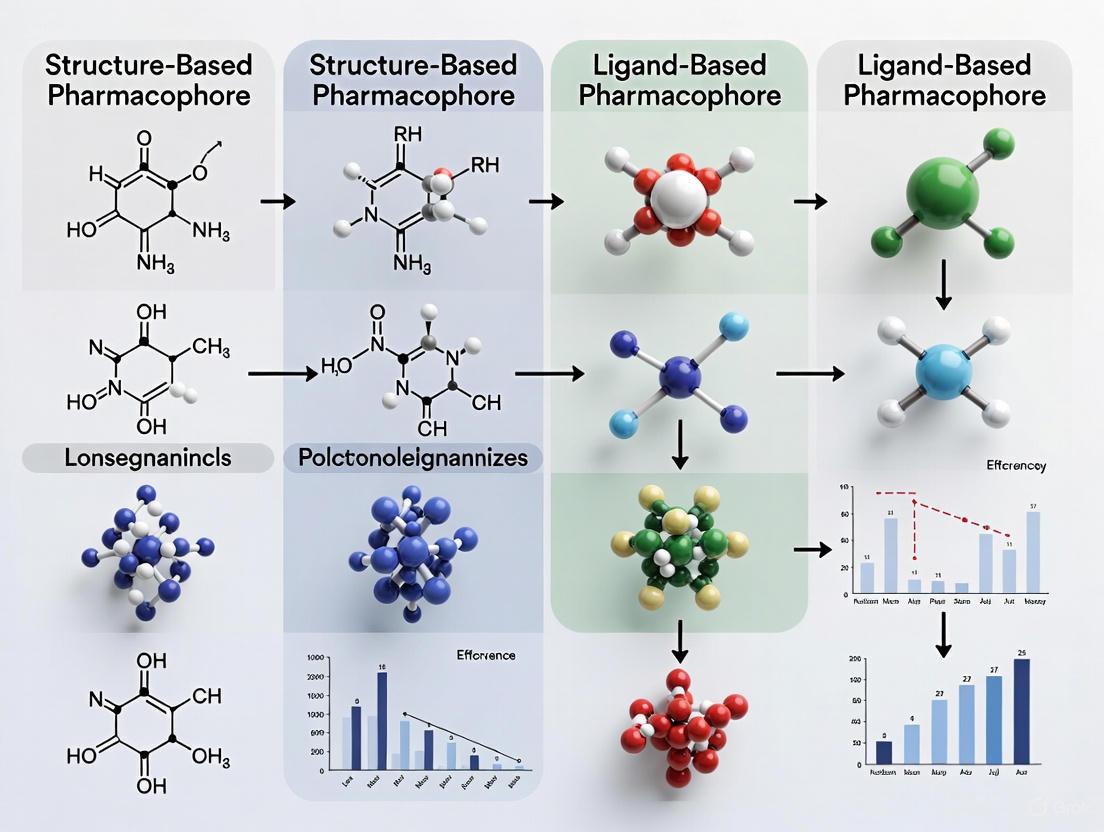
This article provides a comparative analysis of structure-based and ligand-based pharmacophore modeling, two pivotal computational strategies in modern drug discovery.
Structure-Based vs. Ligand-Based Pharmacophore Modeling: A Comprehensive Guide for Effective Drug Discovery
Abstract
This article provides a comparative analysis of structure-based and ligand-based pharmacophore modeling, two pivotal computational strategies in modern drug discovery. Tailored for researchers and drug development professionals, it explores the foundational principles, methodological workflows, and diverse applications of each approach. It delves into their respective limitations and offers practical troubleshooting and optimization strategies. By examining validation frameworks, performance metrics, and emerging trends like AI-integration and hybrid models, this guide serves as a resource for selecting the appropriate pharmacophore technique to accelerate the identification of novel bioactive compounds, supported by case studies and insights from recent literature.
Pharmacophore Foundations: Core Concepts and Strategic Selection Criteria
In the field of computer-aided drug design, the pharmacophore is a foundational concept that provides an abstract representation of molecular interactions. According to the official definition by the International Union of Pure and Applied Chemistry (IUPAC), a pharmacophore is "the ensemble of steric and electronic features that is necessary to ensure the optimal supramolecular interactions with a specific biological target structure and to trigger (or to block) its biological response" [1]. This conceptual framework does not represent a real molecule or specific association of functional groups, but rather captures the essential molecular interaction capacities that a group of compounds must possess to interact effectively with their biological target [1]. The pharmacophore model effectively serves as the largest common denominator shared by a set of active molecules, distilling their interaction capabilities into a set of essential features and their spatial relationships [2].
The historical development of the pharmacophore concept dates back to Paul Ehrlich in the late 19th century, who first suggested that specific groups within a molecule are responsible for its biological activity [1]. The term itself was later established by Lemont Kier in 1967, and the concept has evolved significantly over time to incorporate three-dimensional structural information and advanced computational modeling techniques [3]. Modern pharmacophore modeling has become an indispensable tool in drug discovery, enabling researchers to identify novel bioactive compounds through virtual screening, guide lead optimization, and facilitate scaffold hopping to discover new chemical entities with improved properties [2].
Table 1: Core Pharmacophoric Features and Their Characteristics
| Feature Type | Chemical Groups | Role in Molecular Recognition |
|---|---|---|
| Hydrogen Bond Acceptor | Carbonyl oxygen, ether oxygen, aromatic nitrogen | Accepts hydrogen bonds from donor groups; crucial for specificity |
| Hydrogen Bond Donor | Amino, hydroxyl, thiol groups | Donates hydrogen bonds to acceptor atoms; influences binding affinity |
| Hydrophobic Region | Alkyl chains, aromatic rings | Drives hydrophobic interactions; contributes to binding energy |
| Aromatic Ring | Benzene, pyridine, indole | Participates in π-π stacking, cation-π interactions |
| Positively Ionizable | Protonated amines, quaternary ammonium | Forms electrostatic interactions with negatively charged residues |
| Negatively Ionizable | Carboxylates, phosphates, sulfonates | Interacts with positively charged residues in binding sites |
Essential Chemical Features of Pharmacophores
Steric and Electronic Characteristics
The pharmacophore model represents key interaction points between a ligand and its biological target through a set of essential chemical features. These features include hydrogen bond acceptors (HBA) and hydrogen bond donors (HBD), which are atoms or functional groups capable of forming crucial hydrogen bonding interactions with complementary sites on the target protein [2]. Hydrogen bond donors are typically functional groups capable of donating a hydrogen atom, such as amino, hydroxyl, or thiol groups, while hydrogen bond acceptors are atoms with lone pair electrons that can accept a hydrogen bond, such as carbonyl oxygen, ether oxygen, or aromatic nitrogen atoms [2]. These directional interactions often play a critical role in determining the specificity and affinity of ligand binding.
Hydrophobic regions represent another essential pharmacophoric feature, consisting of non-polar areas of a molecule that tend to avoid interaction with water and prefer to associate with other hydrophobic regions [2]. These regions often comprise alkyl chains or aromatic rings and contribute significantly to the overall lipophilicity of a molecule. Hydrophobic interactions are particularly important for the binding of many drugs to their targets, especially in the case of enzymes and receptors with hydrophobic binding pockets [2]. Additionally, aromatic rings—cyclic, planar, conjugated structures such as benzene, pyridine, or indole—participate in various non-covalent interactions including π-π stacking and cation-π interactions, which can substantially influence binding affinity and selectivity [2].
Charged and Ionizable Groups
Cationic and anionic groups represent another category of important pharmacophoric features. Cationic groups are positively charged functional groups such as protonated amines or quaternary ammonium groups that can form strong electrostatic interactions with negatively charged residues in a target protein [2]. Conversely, anionic groups—including carboxylates, phosphates, or sulfonates—carry negative charges that interact with positively charged residues in binding sites [2]. These charged groups not only contribute to the overall polarity and solubility of a molecule but also frequently play critical roles in specific binding to biological targets through salt bridge formation and other electrostatic interactions.
The appropriate balance and spatial arrangement of these diverse features enable pharmacophore models to capture the essential interaction capabilities of bioactive molecules while allowing for significant chemical diversity among compounds that share the same pharmacophore [4]. This abstraction from specific chemical structures to functional capabilities is precisely what makes pharmacophore modeling such a powerful tool for scaffold hopping and the identification of structurally novel bioactive compounds [5].
3D Spatial Arrangements in Pharmacophore Models
The Role of Molecular Geometry
The three-dimensional spatial arrangement of pharmacophoric features is equally as important as the features themselves in determining biological activity. A pharmacophore model not only specifies which chemical features are essential for activity but also defines their relative positions and geometric relationships in three-dimensional space [1]. This spatial component is crucial because molecular recognition between a ligand and its biological target depends heavily on the complementarity of their interacting surfaces, which requires specific distances, angles, and orientations between interaction points [2]. Even if a compound possesses all the necessary chemical features, improper spatial arrangement will prevent optimal interactions with the target binding site, resulting in reduced activity or complete loss of efficacy.
The concept of molecular conformation is fundamental to understanding 3D pharmacophore models. Ligands can adopt multiple conformations through rotation around single bonds, and the specific conformation that presents the pharmacophoric features in the optimal spatial arrangement for target binding is referred to as the "bioactive conformation" [2]. This conformation may not necessarily correspond to the lowest energy state of the isolated molecule, as binding-induced conformational changes can occur [3]. Therefore, a critical aspect of pharmacophore modeling involves exploring the conformational space of active compounds to identify the common spatial arrangement of features that corresponds to the bioactive conformation [2].
Representing Spatial Relationships
In computational implementations, the spatial relationships between pharmacophoric features are typically represented as constraints on distances, angles, and sometimes torsional angles between features [2]. These constraints are often visualized as a set of spheres or ellipsoids in 3D space, with each sphere representing the allowed spatial region for a particular pharmacophoric feature [4]. The sizes of these spheres reflect the tolerance allowed for variations in the positions of the corresponding features, balancing the need for specificity with the recognition that some flexibility exists in ligand-target interactions.
More sophisticated pharmacophore models may also incorporate exclusion volumes (XVOL) to represent steric restrictions imposed by the binding site architecture [4]. These exclusion volumes define regions in space where the ligand cannot occupy due to clashes with protein atoms, thereby providing additional constraints that improve the selectivity of pharmacophore-based virtual screening [4]. The inclusion of such shape-based constraints helps account for the complementarity between the ligand and the binding site surface, going beyond specific interaction points to capture the overall steric fit required for effective binding.
Methodological Approaches: Structure-Based vs Ligand-Based Pharmacophore Modeling
Structure-Based Pharmacophore Modeling
Structure-based pharmacophore modeling relies on the availability of three-dimensional structural information about the target protein, typically obtained through experimental methods such as X-ray crystallography, NMR spectroscopy, or cryo-electron microscopy [6]. When a high-resolution structure of the target protein complexed with a ligand is available, this approach analyzes the specific interactions between the ligand and the binding site to identify key pharmacophoric features and their spatial arrangement [4]. The process begins with careful preparation of the protein structure, which may involve adding hydrogen atoms, correcting protonation states, and modeling missing residues or loops [7].
The next critical step involves binding site detection and characterization, which can be accomplished using various computational tools such as GRID or LUDI that analyze the protein surface to identify regions with favorable interaction properties [4]. These programs use different probes representing various functional groups to sample the binding site region and identify locations where specific interactions would be energetically favorable [4]. From this analysis, a map of potential interaction points is generated, and the most critical features for ligand binding are selected to create the pharmacophore hypothesis [4]. The quality of the input protein structure directly influences the reliability of the resulting pharmacophore model, making careful structure preparation and validation essential steps in the process [4].
Table 2: Comparison of Structure-Based vs. Ligand-Based Pharmacophore Modeling
| Aspect | Structure-Based Approach | Ligand-Based Approach |
|---|---|---|
| Required Input Data | 3D structure of target protein (from X-ray, NMR, or Cryo-EM) | Set of known active compounds with biological activities |
| Key Methodology | Analysis of protein-ligand interactions in binding site | 3D alignment and comparison of active ligands |
| When to Apply | When high-resolution protein structure is available | When target structure is unknown or uncertain |
| Advantages | Direct incorporation of target structural information; less biased by known ligands | Does not require protein structure; can leverage extensive ligand activity data |
| Limitations | Dependent on quality and relevance of protein structure | Assumes similar binding mode for all active ligands |
| Common Software Tools | LigandScout, MOE, Phase | DISCO, GASP, Catalyst, Phase |
Ligand-Based Pharmacophore Modeling
Ligand-based pharmacophore modeling is employed when the three-dimensional structure of the target protein is unknown or unavailable. This approach derives the pharmacophore model exclusively from a set of known active compounds, identifying common chemical features and their spatial arrangements that are responsible for the observed biological activity [8]. The fundamental assumption underlying this method is that compounds sharing similar biological activities against the same target likely interact with it through common interaction patterns, even if their overall chemical structures differ significantly [9].
The ligand-based workflow typically begins with the selection of a training set of active compounds with diverse chemical structures but consistent biological activity against the target of interest [9]. These compounds undergo conformational analysis to generate representative sets of their possible three-dimensional structures, as the bioactive conformation may not correspond to the lowest-energy state [2]. The resulting conformers are then aligned using various algorithms that maximize the overlap of their pharmacophoric features, with the goal of identifying common spatial arrangements present across multiple active compounds [3]. From these aligned structures, the common features are extracted and used to generate one or more pharmacophore hypotheses, which are subsequently validated using test sets of known active and inactive compounds [9].
Combined and Hybrid Approaches
Recognizing the complementary strengths and limitations of structure-based and ligand-based methods, researchers have developed combined approaches that integrate information from both sources to create more robust and reliable pharmacophore models [10]. These hybrid strategies can take various forms, including sequential workflows where one method is used to pre-filter compounds before applying the other, parallel approaches where both methods are applied independently and results are combined, or truly integrated methods where pharmacophore generation simultaneously incorporates both protein structural information and ligand activity data [10].
The sequential approach typically begins with ligand-based methods for initial filtering due to their computational efficiency, followed by structure-based methods for more refined analysis of the top hits [10]. This strategy optimizes the trade-off between computational cost and model sophistication while mitigating the individual limitations of each method. For instance, the ligand-based step helps overcome challenges related to protein flexibility in docking, while the subsequent structure-based step reduces the template bias inherent in ligand-based similarity searching [10]. These integrated workflows have demonstrated improved performance in virtual screening campaigns, leading to higher hit rates and greater structural diversity among identified active compounds [10].
Experimental Protocols and Validation Methods
Structure-Based Protocol: FAK1 Kinase Inhibitors
A recent study on identification of novel FAK1 inhibitors provides a representative example of a structure-based pharmacophore modeling protocol [7]. Researchers began by obtaining the co-crystal structure of the FAK1 kinase domain in complex with a known inhibitor P4N (PDB ID: 6YOJ) from the Protein Data Bank. The structure preparation involved modeling missing residues (positions 570-583 and 687-689) using MODELLER software, with selection of the best model based on the lowest zDOPE score [7]. The prepared structure was then uploaded to the Pharmit server to generate pharmacophore models based on the critical interactions observed in the FAK1-P4N complex.
The initial analysis identified eight potential pharmacophoric features, from which six distinct pharmacophore models containing five or six features each were constructed [7]. These models were rigorously validated using a dataset of 114 known active FAK1 inhibitors and 571 decoy compounds (inactive molecules) obtained from the DUD-E database [7]. Statistical metrics including sensitivity, specificity, enrichment factor (EF), and goodness of hit (GH) were calculated to evaluate each model's performance in distinguishing active from inactive compounds [7]. The best-performing model was subsequently used for virtual screening of the ZINC database, followed by molecular docking, ADMET property prediction, and molecular dynamics simulations to identify and validate promising FAK1 inhibitor candidates [7].
Ligand-Based Protocol: Topoisomerase I Inhibitors
A comprehensive ligand-based pharmacophore modeling study for Topoisomerase I (Top1) inhibitors demonstrates the typical workflow for this approach [9]. Researchers compiled a dataset of 62 camptothecin derivatives with experimentally determined IC50 values against A549 cancer cell lines, ensuring all biological activity data were obtained from homogeneous assays under consistent conditions [9]. The compounds were divided into a training set of 29 molecules representing diverse structural classes and activity ranges (IC50 from 0.003 μM to 11.4 μM), and a test set of 33 compounds for model validation [9].
The pharmacophore model was developed using the HypoGen algorithm in Discovery Studio, which incorporates quantitative activity data to generate predictive models [9]. The process involved conformational analysis of the training set compounds, generation of common feature hypotheses, and quantitative model optimization based on the experimental IC50 values [9]. The resulting top model (Hypo1) demonstrated a strong correlation between estimated and experimental activities, with correlation coefficients of 0.918 for the training set and 0.875 for the test set [9]. This validated model was subsequently used as a 3D query for virtual screening of over one million drug-like compounds from the ZINC database, followed by successive filtering steps based on Lipinski's Rule of Five, SMART functional group filtration, and activity criteria to identify novel Top1 inhibitor candidates [9].
Diagram 1: Ligand-based pharmacophore modeling workflow
Quantitative Comparison of Method Effectiveness
Performance Metrics in Virtual Screening
The effectiveness of pharmacophore modeling approaches is typically evaluated using standardized performance metrics in virtual screening applications. Key statistical measures include sensitivity (the ability to correctly identify active compounds), specificity (the ability to reject inactive compounds), enrichment factor (EF) (the increase in hit rate compared to random selection), and goodness of hit (GH) (a composite measure balancing recall and precision) [7]. These metrics provide quantitative assessments of a pharmacophore model's ability to distinguish between active and inactive compounds, which is crucial for its practical utility in drug discovery campaigns.
For structure-based models, validation often involves screening databases containing known active compounds and decoy molecules, with calculation of these statistical parameters to select the optimal model [7]. In the FAK1 inhibitor study, the best pharmacophore model achieved a sensitivity of 85.1%, specificity of 92.3%, enrichment factor of 8.7, and goodness of hit score of 0.81, demonstrating strong performance in identifying true active compounds while minimizing false positives [7]. Ligand-based models are typically validated using test sets of compounds with known activities, with correlation coefficients between predicted and experimental activities serving as key indicators of model quality [9].
Case Study Comparisons
Direct comparison of structure-based and ligand-based approaches in practical applications reveals their respective strengths and limitations. In the Topoisomerase I inhibitor study, the ligand-based pharmacophore model (Hypo1) successfully identified three novel inhibitor candidates (ZINC68997780, ZINC15018994, and ZINC38550809) through virtual screening of over one million compounds [9]. These hits exhibited stable binding in molecular dynamics simulations and favorable toxicity profiles, demonstrating the power of ligand-based approaches when comprehensive activity data is available for diverse chemotypes [9].
Conversely, the structure-based approach for FAK1 inhibitors leveraged detailed structural information from a high-resolution crystal complex to identify four promising candidates (ZINC23845603, ZINC44851809, ZINC266691666, and ZINC20267780) with strong binding affinities and interaction patterns similar to the reference ligand P4N [7]. Molecular dynamics simulations confirmed the stability of these complexes, with ZINC23845603 emerging as a particularly promising candidate for further development [7]. This structure-based approach proved especially valuable for identifying compounds that maintain key interactions with the target protein while exploring novel chemical space beyond known active scaffolds.
Table 3: Performance Comparison of Recent Pharmacophore Applications
| Study Target | Approach | Database Screened | Hit Rate | Most Promising Candidate |
|---|---|---|---|---|
| FAK1 Kinase Inhibitors [7] | Structure-Based | ZINC database | Not specified | ZINC23845603 (strong binding in MD simulations) |
| Topoisomerase I Inhibitors [9] | Ligand-Based | 1,087,724 compounds from ZINC | 3 final hits from 6 candidates | ZINC68997780 (validated by MD and toxicity assessment) |
| PLK1 Inhibitors [5] | Pharmacophore-Informed Generative Model | de novo generation | 3 of 4 synthesized compounds showed submicromolar activity | IIP0943 (5.1 nM potency, novel scaffold) |
The Scientist's Toolkit: Essential Research Reagents and Software
Successful implementation of pharmacophore modeling requires access to specialized software tools, compound databases, and computational resources. The field offers both commercial and open-source options catering to different aspects of pharmacophore model generation, validation, and application. Understanding the capabilities and limitations of these tools is essential for researchers designing pharmacophore-based drug discovery campaigns.
Table 4: Essential Software Tools for Pharmacophore Modeling
| Software/Resource | Type | Key Features | Approach Supported |
|---|---|---|---|
| LigandScout [8] [3] | Commercial (some features available in open-source) | Structure-based pharmacophore modeling, virtual screening | Structure-Based, Ligand-Based |
| MOE (Molecular Operating Environment) [1] [8] | Commercial | Comprehensive drug discovery suite with pharmacophore modeling | Structure-Based, Ligand-Based |
| Catalyst/HypoGen [9] [3] | Commercial | Quantitative pharmacophore modeling with activity prediction | Primarily Ligand-Based |
| Phase [1] [3] | Commercial | Flexible pharmacophore modeling, alignment, and screening | Structure-Based, Ligand-Based |
| Pharmit [8] [7] | Web-based Server | Structure-based pharmacophore modeling and virtual screening | Structure-Based |
| ZINC Database [9] [7] | Compound Library | Over 1 million drug-like molecules for virtual screening | Screening Resource |
| DUD-E Database [7] | Benchmarking Set | Curated active and decoy molecules for method validation | Validation Resource |
Commercial software packages such as LigandScout, MOE, and Discovery Studio (which includes the Catalyst/HypoGen algorithms) provide comprehensive environments for both structure-based and ligand-based pharmacophore modeling [8] [9]. These tools typically offer user-friendly interfaces, integrated workflows for model generation and validation, and efficient algorithms for virtual screening of compound databases [3]. For researchers with limited budgets, open-source alternatives and web servers such as Pharmer, Align-it, and Pharmit provide capable alternatives for specific tasks like pharmacophore-based screening and molecular alignment [8].
Essential resources for pharmacophore modeling also include compound databases such as ZINC, which contains over one million commercially available drug-like molecules suitable for virtual screening [9] [7]. For method validation, benchmark sets like the Directory of Useful Decoys - Enhanced (DUD-E) provide carefully curated collections of known active compounds and matched decoy molecules, enabling rigorous assessment of pharmacophore model performance [7]. The Protein Data Bank (PDB) remains an indispensable resource for structure-based approaches, offering thousands of high-resolution protein structures, many complexed with bioactive ligands that can serve as templates for pharmacophore model generation [4] [7].
Diagram 2: Structure-based pharmacophore modeling workflow
Emerging Trends and Future Perspectives
The field of pharmacophore modeling continues to evolve, with several emerging trends shaping its future development and application. One significant advancement is the integration of pharmacophore concepts with deep generative models for de novo molecular design [5]. Approaches like TransPharmer combine ligand-based interpretable pharmacophore fingerprints with generative pre-training transformer frameworks to create novel molecular structures that satisfy specific pharmacophoric constraints while exploring underrepresented regions of chemical space [5]. This integration has demonstrated impressive results in case studies, with generated PLK1 inhibitors showing submicromolar activities and novel scaffolds distinct from known reference compounds [5].
Another important trend is the increasing sophistication of hybrid methods that combine ligand-based and structure-based approaches in more integrated workflows rather than sequential applications [10]. These approaches aim to simultaneously leverage the complementary strengths of both methodologies, resulting in more robust models with enhanced predictive capabilities [10]. The development of standardized frameworks for combining multiple virtual screening methods, including consensus scoring schemes and machine learning-based integration, represents an active area of research that addresses the limitations of individual approaches [10].
Advances in handling molecular flexibility and accounting for binding site plasticity also represent important frontiers in pharmacophore modeling [2]. Traditional pharmacophore models often treat the protein binding site as rigid, which can limit their accuracy for targets that undergo significant conformational changes upon ligand binding [10]. New approaches that incorporate ensemble representations of both ligand and protein conformations, often derived from molecular dynamics simulations, show promise for creating more realistic models that better capture the dynamic nature of molecular recognition [10]. As these methodologies mature and integrate with artificial intelligence approaches, pharmacophore modeling is poised to remain a cornerstone of computer-aided drug discovery, enabling increasingly efficient exploration of chemical space and acceleration of therapeutic development.
Structure-based pharmacophore modeling is a computational drug design strategy that derives essential interaction features directly from the three-dimensional structure of a target protein. This method is fundamentally dependent on high-quality structural information about the biological target, typically obtained through experimental techniques like X-ray crystallography, cryo-electron microscopy (Cryo-EM), or Nuclear Magnetic Resonance (NMR) spectroscopy [6]. The core principle involves analyzing a protein's binding pocket—whether in its apo form (unbound) or in complex with a ligand—to identify key chemical features and their spatial arrangements that a molecule must possess to achieve effective binding and elicit a biological response [11] [7]. These features often include hydrogen bond donors and acceptors, hydrophobic regions, positively or negatively charged groups, and aromatic rings [11].
Unlike ligand-based approaches that rely on known active compounds, structure-based pharmacophore modeling serves as a powerful target-centric paradigm. It is particularly invaluable in scenarios where few or no active ligands are known, enabling de novo drug discovery by leveraging the underlying structural biology of the target [7] [12]. The effectiveness of this approach is intrinsically linked to the quality and completeness of the protein structure, as inaccuracies in side-chain positioning, missing loops, or unresolved conformational dynamics can significantly compromise the generated model [13] [6].
Core Principles and Workflow
The construction of a structure-based pharmacophore model follows a logical sequence, transforming 3D structural data into an abstract query for virtual screening. The process can be distilled into four key stages, as illustrated below.
Structure Preparation and Binding Site Identification
The initial and most critical step involves curating a high-quality protein structure. The structure, often from the Protein Data Bank (PDB), must be preprocessed to add missing hydrogen atoms, assign correct protonation states at biological pH, and rectify any structural anomalies such as missing residues or loops [7]. Tools like Chimera and MODELLER are frequently used for this purpose [7]. Subsequently, the binding site of interest must be precisely defined. This can be the known active site (e.g., the ATP-binding pocket in kinases) or a putative allosteric site. The location is often identified based on the coordinates of a co-crystallized ligand or through computational binding site detection algorithms [11].
Pharmacophore Feature Extraction and Model Generation
Within the defined binding site, critical interaction points between the protein and a potential ligand are identified and translated into pharmacophore features [7]. Software such as Pharmit automates this process by analyzing the protein-ligand complex to pinpoint features like hydrogen bond donors/acceptors, hydrophobic patches, and ionic interactions [11] [7]. The results is a three-dimensional set of chemical feature types and their precise spatial coordinates, which together form the pharmacophore query [11]. This model encapsulates the essential interactions a molecule must fulfill to bind effectively, serving as a template for screening.
Critical Dependence on Target Protein Structures
The fidelity of a structure-based pharmacophore model is inextricably linked to the quality and characteristics of the input protein structure. Several key factors determine the success of this dependency.
Source and Quality of the Protein Structure
The method of structure determination significantly impacts model reliability. Experimentally solved structures (X-ray, Cryo-EM, NMR) are considered the gold standard. However, the resolution of crystal structures is a crucial metric; high-resolution structures (e.g., < 2.0 Å) provide precise atomic coordinates, leading to more accurate feature placement, whereas low-resolution structures can misrepresent key interactions, especially concerning side-chain orientations [7] [6].
When experimental structures are unavailable, researchers may turn to computationally predicted models. The emergence of deep learning-based tools like AlphaFold has significantly expanded the repository of accessible protein structures [13]. However, a major limitation of standard AlphaFold models is their prediction of a single, static conformation, which often fails to capture the conformational flexibility and changes associated with ligand binding [13]. This can lead to false negatives or inaccurate pose predictions in docking and pharmacophore generation. While newer co-folding methods like AlphaFold3 show promise in generating ligand-bound structures, their performance can falter when predicting structures dissimilar to their training set or allosteric binding sites, and they generally require careful post-modeling refinement for reliable application [13].
Accounting for Protein Flexibility and Solvation
Proteins are dynamic entities, and a single static structure may not represent all relevant biological states. A model derived from a single conformation might be too rigid, potentially missing valid ligands that bind through alternative poses or to different protein conformations [12]. Advanced methods now address this limitation. Molecular Dynamics (MD) simulations can be used to sample multiple protein conformations, and pharmacophore features can be extracted from these dynamic trajectories to create more robust, "ensemble" pharmacophore models [12]. Furthermore, water-based pharmacophore modeling is an emerging strategy that uses MD simulations of explicit water molecules within apo (empty) binding sites to identify consensus hydration sites. These sites represent interaction "hotspots" that can be translated into pharmacophore features, offering a ligand-independent method to account for the role of water in molecular recognition [12].
Comparative Analysis: Structure-Based vs. Ligand-Based Pharmacophore Modeling
Pharmacophore modeling strategies are broadly categorized into structure-based and ligand-based approaches, each with distinct prerequisites, strengths, and limitations. The table below provides a direct comparison.
| Aspect | Structure-Based Pharmacophore | Ligand-Based Pharmacophore |
|---|---|---|
| Primary Data Source | 3D structure of the target protein [6] | Set of known active ligands [13] [6] |
| Key Prerequisite | High-quality protein structure (experimental or high-confidence predicted) [6] | A sufficient number of structurally diverse active compounds [13] |
| Core Principle | Identifies essential interaction features from the binding pocket [7] | Extracts common chemical features shared by known actives [13] [6] |
| Advantages | • Applicable without known ligands (de novo design) [7]• Provides atomic-level insight into binding interactions [13]• Can identify novel scaffolds and allosteric sites | • Fast and computationally inexpensive [13]• No need for a protein structure [6]• Excellent for scaffold hopping and pattern recognition [13] |
| Limitations & Challenges | • Highly dependent on structure quality and completeness [13] [6]• Can struggle with protein flexibility [12]• More computationally expensive for setup | • Limited by the diversity and bias of known actives• Cannot explain the structural basis of activity [6]• Ineffective for targets with no known ligands |
The two approaches are highly complementary. A common strategy in modern drug discovery is sequential integration, where rapid ligand-based screening filters a large chemical library, followed by structure-based refinement of the most promising hits [13]. This conserves computational resources while improving the precision of hit identification. Alternatively, parallel screening with both methods, followed by consensus scoring, can increase the likelihood of recovering true active compounds and mitigate the inherent limitations of each approach [13].
Experimental Protocols and Validation
To ensure a pharmacophore model is effective and reliable, it must be rigorously validated before use in virtual screening. The following workflow, based on a study identifying novel FAK1 inhibitors, outlines a standard protocol for creation and validation [7].
Detailed Methodology: A FAK1 Inhibitor Case Study
A recent study to identify novel Focal Adhesion Kinase 1 (FAK1) inhibitors provides a robust template for structure-based pharmacophore modeling [7].
- Structure Preparation: The crystal structure of the FAK1 kinase domain in complex with a known inhibitor (P4N, PDB ID: 6YOJ) was obtained. Missing residues (positions 570–583 and 687–689) were modeled using MODELLER, and the structure with the lowest zDOPE score was selected for subsequent analysis [7].
- Pharmacophore Modeling: The prepared FAK1-P4N complex was uploaded to the web-based tool Pharmit. The software automatically identified eight critical pharmacophoric features involved in the protein-ligand interaction. From these, six distinct pharmacophore models, each containing five or six features, were constructed for evaluation [7].
- Model Validation: The generated models were statistically validated using a set of 114 known active FAK1 inhibitors and 571 inactive decoys from the DUD-E database. Each model was used to screen these libraries, and performance was assessed using metrics including Sensitivity, Specificity, Enrichment Factor (EF), and Goodness of Hit (GH) score. The model with the highest validation performance was selected for prospective virtual screening [7].
- Virtual Screening and Hit Identification: The validated pharmacophore model was used as a 3D query to screen the ZINC database, a vast commercial library of purchasable compounds. Molecules matching the pharmacophore constraints were subsequently subjected to molecular docking. Seventeen compounds with acceptable predicted pharmacokinetic properties and low toxicity were selected for more precise docking simulations, leading to the identification of four promising candidates [7].
- Advanced Validation: The stability of the FAK1 complexes with these four candidates was evaluated using Molecular Dynamics (MD) simulations in GROMACS, with binding free energies calculated via the MM/PBSA method. One compound, ZINC23845603, demonstrated strong binding and interaction features similar to the known ligand P4N, marking it as a prime candidate for further experimental testing [7].
Performance Benchmarking of Modern Approaches
Recent AI-driven methods demonstrate the evolving power of structure-based approaches. The table below summarizes quantitative performance data from recent studies on generative models that integrate pharmacophore constraints.
| Model / Framework | Core Approach | Reported Performance Metrics |
|---|---|---|
| PGMG [14] | Pharmacophore-guided deep learning (GNN + Transformer) | Generated molecules showed strong docking affinities with high validity, uniqueness, and novelty [14]. |
| CMD-GEN [15] | Coarse-grained pharmacophore sampling + hierarchical generation | Outperformed other methods (ORGAN, VAE, SMILES LSTM) in benchmark tests, effectively controlling drug-likeness [15]. |
| PharmacoForge [11] | Diffusion model for 3D pharmacophore generation | Surpassed other automated methods on the LIT-PCBA benchmark. Resulting ligands had lower strain energies than de novo generated ligands [11]. |
| PharmaDiff Framework [16] | Pharmacophore-guided RL balancing similarity & novelty | Generated molecules achieved high pharmacophoric fidelity (Cosine Sim: 0.94) and 100% novelty while maintaining favorable QED (0.33) and SA scores (4.64) [16]. |
The Scientist's Toolkit: Essential Research Reagents and Solutions
Successful implementation of structure-based pharmacophore modeling relies on a suite of specialized software tools and databases.
| Tool / Resource | Type | Primary Function in Workflow |
|---|---|---|
| RCSB Protein Data Bank (PDB) | Database | Primary repository for experimentally determined 3D structures of proteins and nucleic acids [7]. |
| Pharmit [11] [7] | Software | Web-based tool for interactive, structure-based pharmacophore modeling and high-performance virtual screening. |
| MODELLER [7] | Software | Used for homology modeling of missing protein loops or regions in an experimental structure. |
| DUD-E Database [7] | Database | Provides sets of known active molecules and property-matched decoys for rigorous validation of virtual screening methods. |
| ZINC Database [7] | Database | A freely available commercial database of over 230 million purchasable compounds in ready-to-dock 3D formats. |
| GROMACS [7] | Software | A molecular dynamics package primarily used for simulating the physical movements of atoms and molecules under Newton's laws of motion. |
| PyRod [12] | Software | A tool that can generate pharmacophore models from MD simulation trajectories, capturing dynamic interaction features. |
Structure-based pharmacophore modeling stands as a powerful, target-driven methodology in rational drug design. Its fundamental dependency on high-quality target protein structures is both its greatest strength and most significant constraint. While challenges related to protein flexibility and the quality of predicted structures remain, advancements in MD simulations, the integration of water dynamics, and sophisticated AI-driven generative models are steadily addressing these limitations. The synergy between structure-based and ligand-based approaches, alongside the continuous improvement of structural databases and computational tools, promises to further solidify pharmacophore modeling's role in accelerating the efficient discovery of novel therapeutic agents.
Pharmacophore modeling is a foundational technique in computer-aided drug discovery that abstracts the essential steric and electronic features responsible for a molecule's biological activity. According to the International Union of Pure and Applied Chemistry (IUPAC) definition, a pharmacophore represents "the ensemble of steric and electronic features that is necessary to ensure the optimal supra-molecular interactions with a specific biological target structure and to trigger (or to block) its biological response" [4]. In the specific domain of ligand-based pharmacophore modeling, this approach relies exclusively on information derived from known active compounds, making it particularly valuable when the three-dimensional structure of the target protein is unavailable or difficult to obtain [4] [8]. This methodology operates on the fundamental principle that compounds sharing common biological activity against a specific target will possess complementary chemical functionalities arranged in a conserved three-dimensional orientation [4] [17].
Unlike structure-based methods that require protein structural data from techniques such as X-ray crystallography or NMR spectroscopy, ligand-based approaches utilize the collective chemical information embedded within a set of active ligands to deduce the critical features necessary for target interaction [8] [6]. This strategy effectively reverse-engineers the binding site requirements through comparative analysis of molecules that successfully interact with the target, positioning it as an indispensable tool in the drug discovery arsenal, especially for targets with elusive structural information such as membrane proteins or large complexes [6].
Fundamental Principles of Ligand-Based Pharmacophore Modeling
Core Components and Feature Definitions
Ligand-based pharmacophore models capture the essential chemical features shared by active molecules that enable target binding and biological activity. The most significant pharmacophoric feature types include [4] [8]:
- Hydrogen bond acceptors (HBAs): Atoms that can accept hydrogen bonds, typically oxygen or nitrogen with lone electron pairs.
- Hydrogen bond donors (HBDs): Groups containing a hydrogen atom bonded to an electronegative atom (O-H, N-H).
- Hydrophobic areas (H): Non-polar regions of the molecule that favor lipid environments.
- Positively and negatively ionizable groups (PI/NI): Functional groups that can carry positive or negative charges under physiological conditions.
- Aromatic groups (AR): Planar ring systems with delocalized π-electrons.
- Metal coordinating areas: Atoms with lone electron pairs capable of coordinating with metal ions.
These features are represented in three-dimensional space as geometric entities—spheres, planes, and vectors—that define the spatial requirements for molecular recognition [4]. The model effectively creates a three-dimensional fingerprint of the interaction capacity that a ligand must possess to elicit a biological response from a specific target.
Theoretical Foundation and Assumptions
The theoretical foundation of ligand-based pharmacophore modeling rests on several key assumptions [4] [8]:
- Commonality Principle: Structurally diverse compounds exhibiting similar biological activity against the same target must share common pharmacophoric features responsible for that activity.
- Spatial Conservation: The three-dimensional arrangement of these features is conserved across active compounds, reflecting complementary positioning to the target's binding site.
- Feature Dominance: The specific atoms and molecular scaffolds may differ, but the ensemble of chemical functionalities and their spatial relationships determines activity.
This approach is particularly powerful because it focuses on chemical functionalities rather than specific atoms or scaffolds, enabling identification of structurally divergent compounds with similar biological effects—a process known as "scaffold hopping" [4]. The methodology is inherently target-agnostic, deriving all information from ligand properties without requiring direct knowledge of the biological counterpart [17].
Methodological Workflow: From Active Ligands to Validated Models
The development of a robust ligand-based pharmacophore model follows a systematic workflow that transforms a collection of active compounds into a validated screening tool. The process, summarized in Figure 1, involves multiple stages of computational analysis and validation.
Key Experimental Steps and Protocols
Figure 1: Ligand-Based Pharmacophore Modeling Workflow
Selection of Active Compounds: The process begins with curating a set of known active compounds (training dataset) with validated biological activity against the target of interest. These molecules should represent diverse chemical scaffolds to ensure the derived model captures essential rather than incidental features [8].
Conformational Analysis and 3D Alignment: Each active compound undergoes extensive conformational sampling to generate representative three-dimensional structures. The resulting conformers are then aligned to identify the optimal spatial overlap, typically focusing on maximizing the commonality of pharmacophoric features while allowing for scaffold diversity [8]. This step is computationally intensive and requires sophisticated algorithms to efficiently explore conformational space.
Pharmacophore Feature Identification and Hypothesis Generation: The aligned molecules are analyzed to detect conserved chemical features across the set. Software algorithms identify features that are common to all or most active compounds and generate multiple pharmacophore hypotheses representing different possible arrangements of these features [4] [8].
Model Validation Using Active and Decoy Compounds: The generated pharmacophore models must be rigorously validated before application in virtual screening. This critical step involves testing each model's ability to correctly identify known active compounds (true positives) while rejecting inactive molecules (decoys or true negatives) from a test dataset [8] [7]. Statistical metrics including sensitivity, specificity, enrichment factor, and goodness of hit (GH) scores are calculated to quantify model performance [7].
Validation Metrics and Statistical Assessment
Comprehensive validation is essential for establishing the predictive power of a pharmacophore model. The following statistical measures, derived from the confusion matrix of classification results, provide quantitative assessment of model quality [7]:
- Sensitivity (True Positive Rate): (Ha / A) × 100, where Ha is the number of active compounds correctly identified by the model, and A is the total number of active compounds in the test set.
- Specificity (True Negative Rate): (Hd / D) × 100, where Hd is the number of decoys correctly rejected, and D is the total number of decoys.
- Enrichment Factor (EF): Measures how much more likely the model is to select active compounds compared to random selection.
- Goodness of Hit (GH) Score: A composite metric that balances the model's ability to retrieve active compounds while minimizing the selection of decoys, with values closer to 1 indicating better performance.
This validation protocol ensures that only statistically robust models proceed to virtual screening applications, significantly improving the likelihood of identifying truly active compounds [7].
Comparative Analysis: Ligand-Based vs. Structure-Based Pharmacophore Modeling
Methodological Differences and Data Requirements
Ligand-based and structure-based pharmacophore modeling represent two complementary approaches with distinct methodological foundations and data requirements, as systematically compared in Table 1.
Table 1: Comparative Analysis of Ligand-Based vs. Structure-Based Pharmacophore Modeling
| Parameter | Ligand-Based Pharmacophore Modeling | Structure-Based Pharmacophore Modeling |
|---|---|---|
| Primary Data Source | Known active compounds (ligands) [4] [8] | 3D structure of target protein (with or without ligand) [4] [6] |
| Protein Structure Requirement | Not required [8] [6] | Essential (from X-ray, NMR, Cryo-EM, or homology modeling) [4] [6] |
| Key Methodology | 3D alignment of active compounds and common feature identification [8] | Analysis of binding site interactions and complementary features [4] |
| Exclusion Volumes | Not inherently included (may be added manually if binding site is known) [4] | Directly derived from binding site topography [4] |
| Handling of Protein Flexibility | Implicitly captured through diverse ligand conformations [4] | Requires additional techniques (e.g., MD simulations, multiple structures) [18] |
| Applicability Domain | Targets with known active ligands but unknown structure [17] [6] | Targets with experimentally determined or modeled structures [4] |
| Key Advantages | No need for protein structure; scaffold hopping capability [4] [17] | Direct mapping to binding site; inclusion of shape constraints [4] |
| Primary Limitations | Dependent on quality and diversity of known actives [4] [8] | Requires high-quality protein structure; sensitive to conformational changes [4] [6] |
Performance Considerations and Application Scope
The choice between ligand-based and structure-based approaches depends heavily on available data, target characteristics, and project objectives. Ligand-based methods demonstrate particular strength when [4] [6]:
- The target structure is unknown, difficult to resolve, or exhibits high flexibility.
- A diverse set of active compounds with measured activities is available.
- The project aims to identify novel chemotypes through scaffold hopping.
- Rapid screening of large compound libraries is prioritized.
Recent advances have enabled the integration of both approaches through hybrid methods. For example, molecular dynamics (MD) simulations can enhance structure-based models by incorporating protein flexibility, while hierarchical graph representations of pharmacophore models (HGPM) enable intuitive visualization and selection of pharmacophore feature sets derived from dynamic simulations [18]. Such integrative strategies leverage the complementary strengths of both paradigms, potentially overcoming their individual limitations.
Experimental Validation: Case Studies and Performance Metrics
Virtual Screening Performance and Enrichment Assessment
The ultimate validation of any pharmacophore modeling approach lies in its performance in real-world virtual screening scenarios. Table 2 summarizes quantitative performance data from published studies implementing ligand-based pharmacophore screening campaigns.
Table 2: Virtual Screening Performance of Ligand-Based Pharmacophore Models
| Study Target/Application | Model Performance Metrics | Key Outcomes | Reference |
|---|---|---|---|
| Mosquito Repellent Discovery (Odorant-binding protein) | Combined ligand-based and structure-based screening of 1,633 essential oil compounds | Identified 7 natural volatiles with predicted repellent activity (e.g., thymyl isovalerate) [8] | Santana et al. [8] |
| FAK1 Kinase Inhibitor Identification | Pharmacophore model validation with 114 actives and 571 decoys; enrichment-based selection | Highest performing model used for ZINC database screening; 4 promising candidates identified [7] | Scientific Reports (2025) [7] |
| Estrogen Receptor Modulators (AI-generated compounds) | Pharmacophore similarity (Cosine: 0.83-0.94) vs. structural diversity (Tanimoto: 0.34-0.36) | Generated novel compounds with high pharmacophoric fidelity and improved drug-likeness (QED: 0.33-0.59) [16] | Podplutova et al. [16] |
| General Model Validation Framework | Sensitivity, Specificity, Yield of Actives (Recall), Enrichment Factor, Goodness of Hit (GH) | Statistical validation protocol for reliable virtual screening [7] | Bio-protocol [8] |
Impact of Model Selectivity on Screening Outcomes
A critical consideration in ligand-based pharmacophore screening is the balance between model selectivity and structural diversity. Excessively strict models, while ensuring high activity in identified hits, may eliminate valuable chemotypes and reduce structural novelty [8]. Conversely, overly permissive models retrieve larger hit sets but introduce more false positives, increasing the experimental validation burden [8]. This selectivity-diversity tradeoff must be carefully managed based on project goals—whether prioritizing highly active compounds within known chemotypes or seeking novel scaffolds with potentially unique properties.
Recent approaches incorporating machine learning and AI have demonstrated promising capabilities in navigating this tradeoff. For instance, reinforcement learning frameworks can simultaneously optimize pharmacophore similarity to reference active compounds while maximizing structural novelty in generated molecules, effectively expanding the accessible chemical space while maintaining biological relevance [16].
Research Toolkit: Essential Software and Databases
Computational Tools for Ligand-Based Pharmacophore Modeling
Table 3: Essential Research Resources for Ligand-Based Pharmacophore Modeling
| Resource Name | Type | Key Functionality | Access Model |
|---|---|---|---|
| LigandScout | Software | Ligand- and structure-based pharmacophore modeling; virtual screening [8] [18] | Commercial |
| Molecular Operating Environment (MOE) | Software | Comprehensive drug discovery suite with pharmacophore modeling capabilities [8] | Commercial |
| BIOVIA Discovery Studio | Software | CATALYST pharmacophore modeling; database screening with PharmaDB [19] | Commercial |
| Pharmer | Software | Open-source ligand-based pharmacophore screening [8] | Open Source |
| Align-it | Software | Align molecules based on pharmacophore features (formerly Pharao) [8] | Open Source |
| Phase (Schrödinger) | Software | Pharmacophore modeling and screening with prepared commercial libraries [20] | Commercial |
| ZINC Database | Compound Database | Publicly accessible database of commercially available compounds for virtual screening [7] | Free Access |
| ChEMBL Database | Bioactivity Database | Manually curated database of bioactive molecules with drug-like properties [18] | Free Access |
| DUD-E Database | Benchmarking Set | Directory of useful decoys for virtual screening method evaluation [7] | Free Access |
Implementation Considerations and Best Practices
Successful implementation of ligand-based pharmacophore modeling requires careful attention to several practical aspects:
Compound Selection and Curation: The training set should include structurally diverse compounds with confirmed activity and preferably similar potency ranges. Including inactive compounds during validation helps improve model selectivity [8] [7].
Conformational Sampling: Comprehensive exploration of conformational space is essential, as the bioactive conformation may not correspond to the global energy minimum. Efficient algorithms balance computational expense with adequate coverage of accessible conformations [20].
Feature Selection and Weighting: Not all common features are equally important for binding. Some implementations incorporate feature weighting based on energetic contributions or conservation across active compounds [4].
Validation Rigor: Proper validation using separate test sets with known actives and decoys is crucial before proceeding to large-scale screening. Statistical measures should guide model selection rather than visual inspection alone [7].
Ligand-based pharmacophore modeling remains an indispensable approach in the computer-aided drug design toolkit, particularly for targets lacking structural characterization. Its exclusive reliance on known active compounds positions it as a powerful method for leveraging historical structure-activity relationship data to guide future compound design and screening. The methodology excels at identifying diverse chemotypes that share essential interaction capabilities—a capability increasingly valued in contemporary drug discovery for overcoming intellectual property constraints and optimizing drug-like properties.
When strategically integrated with structure-based approaches, machine learning technologies, and experimental validation, ligand-based pharmacophore modeling continues to deliver significant value across various applications including virtual screening, lead optimization, and drug repurposing. As compound databases expand and computational power increases, this methodology will likely evolve toward more dynamic representations and integrated workflows, further solidifying its role in efficient drug discovery pipelines.
Pharmacophore modeling is an indispensable tool in modern computer-aided drug discovery, providing an abstract representation of the steric and electronic features necessary for a molecule to interact with a biological target and trigger its biological response [4]. The concept, rooted in Emil Fisher's 19th-century "Lock & Key" principle, has evolved into two primary computational approaches: structure-based and ligand-based pharmacophore modeling [4] [8]. These methodologies differ fundamentally in their foundational principles, data prerequisites, and application domains, making the understanding of their comparative strengths and limitations crucial for researchers, scientists, and drug development professionals. This guide provides a direct, objective comparison of these approaches, framed within a broader thesis on evaluating their effectiveness, and is supported by current experimental data, detailed methodologies, and essential research tools.
Foundational Principles and Data Requirements
The core distinction between structure-based and ligand-based pharmacophore approaches lies in their source information and underlying principles.
Structure-based pharmacophore modeling relies on the three-dimensional structure of a macromolecular target, obtained from techniques like X-ray crystallography, NMR spectroscopy, or Cryo-EM [4] [6]. The process involves preparing the protein structure, identifying the ligand-binding site, and generating pharmacophore features directly from the interactions observed in the binding pocket [4]. This approach defines the molecular functional features required for binding by analyzing the complementarity between the ligand and the receptor's active site [4] [6]. When the structure of a protein-ligand complex is available, the model can be built with high accuracy by incorporating the ligand's bioactive conformation and spatial restrictions from the binding site shape through exclusion volumes [4].
Ligand-based pharmacophore modeling is applied when the three-dimensional structure of the target protein is unknown or difficult to obtain. This method uses the physicochemical properties and three-dimensional alignment of a set of known active ligands to deduce the common chemical functionalities and their spatial arrangement necessary for biological activity [4] [8]. The fundamental principle is that compounds sharing common chemical features and a similar spatial arrangement are likely to exhibit similar biological effects on the same target [4]. Techniques such as Quantitative Structure-Activity Relationship (QSAR) are often used in conjunction to model the relationship between chemical structure and biological activity [6].
Table 1: Foundational Principles and Data Requirements
| Aspect | Structure-Based Pharmacophore | Ligand-Based Pharmacophore |
|---|---|---|
| Core Principle | Molecular recognition and complementarity based on the 3D target structure [4] [6]. | Common chemical features and spatial arrangement derived from known active ligands [4] [8]. |
| Essential Data | High-resolution 3D structure of the target (e.g., from PDB) or a reliable homology model [4] [6]. | A set of known active compounds with diverse structures for training [4] [8]. |
| Target Structure Requirement | Mandatory [6]. | Not required [6]. |
| Key Advantage | Direct insight into target-ligand interactions; can design novel scaffolds [4] [6]. | Applicable when target structure is unknown; leverages existing ligand data [6]. |
| Primary Limitation | Dependent on the availability and quality of the target structure [4] [6]. | Limited by the diversity and quality of known active ligands [8]. |
Performance and Experimental Data
Experimental data and benchmark studies demonstrate the performance and effectiveness of both approaches in various drug discovery tasks, such as virtual screening and molecule generation.
Structure-Based Methods: Advanced structure-based frameworks like CMD-GEN demonstrate powerful performance in generating molecules tailored to specific protein pockets. As shown in Table 2, CMD-GEN's molecular generation module (GCPG) achieves high validity (95.8%), novelty (91.4%), and uniqueness (99.3%) [21]. This method bridges ligand-protein complexes with drug-like molecules by utilizing coarse-grained pharmacophore points sampled from a diffusion model, enriching the training data and enabling controlled generation of specific, active molecules [21]. In another study, the DiffPhore framework, which performs 3D ligand-pharmacophore mapping, surpassed traditional pharmacophore tools and several advanced docking methods in predicting binding conformations, demonstrating superior virtual screening power for lead discovery and target fishing [22].
Ligand-Based Methods: The PGMG (Pharmacophore-Guided deep learning approach for bioactive Molecule Generation) model showcases the strength of ligand-based strategies. As illustrated in Table 2, PGMG performs best in novelty (93.5%) and the ratio of available molecules (87.3%), while maintaining a high validity of 94.6% [14]. PGMG uses pharmacophore hypotheses as a bridge to connect different types of activity data and can generate molecules without requiring target structure information, making it particularly useful for novel targets with insufficient activity data [14]. Topological Pharmacophore (TP) representations, such as Sparse Pharmacophore Graphs (SPhGs), are also effective in ligand-based screening. They use topological distances on a chemical graph and have been shown to identify structurally different active compounds, facilitating scaffold hopping [23].
Table 2: Performance Comparison of Deep Learning Models in Molecular Generation
| Model | Approach | Validity (%) | Novelty (%) | Uniqueness (%) | Available Molecules (%) |
|---|---|---|---|---|---|
| CMD-GEN (GCPG Module) [21] | Structure-Based | 95.8 | 91.4 | 99.3 | 86.1 |
| PGMG [14] | Ligand-Based | 94.6 | 93.5 | 98.7 | 87.3 |
| Syntalinker [21] | Ligand-Based (Fragment Linking) | 95.7 | 91.6 | 99.4 | 81.0 |
| SMILES LSTM [21] | Ligand-Based (Unconditional) | 96.1 | 85.1 | 99.4 | 79.8 |
| VAE [21] | Ligand-Based (Unconditional) | 62.3 | 81.6 | 98.2 | 50.9 |
Experimental Protocols and Workflows
Structure-Based Pharmacophore Modeling Protocol
The structure-based workflow, as detailed in literature [4], involves several critical steps to ensure the generation of a high-quality pharmacophore model.
- Protein Preparation: The process begins with obtaining and critically evaluating the 3D structure of the target protein from a database like the RCSB Protein Data Bank (PDB). The preparation includes adding hydrogen atoms (absent in X-ray structures), correcting protonation states of residues, and addressing any missing atoms or residues. The stereochemical and energetic parameters are assessed to ensure the general quality and biological relevance of the structure [4].
- Ligand-Binding Site Detection: The next step is identifying the ligand-binding site. This can be done manually if co-crystallized ligand information is available or by using computational tools like GRID or LUDI. These tools analyze the protein surface to locate potential binding pockets based on geometric, energetic, or evolutionary properties [4].
- Pharmacophore Feature Generation: The binding site is analyzed to generate a map of potential interactions. Software tools identify key chemical features (e.g., hydrogen bond acceptors/donors, hydrophobic areas) that a ligand would need to complement the site. If a protein-ligand complex is available, the features are derived directly from the ligand's functional groups and their interactions with the receptor [4].
- Feature Selection and Model Creation: Initially, many features are detected. The final model is refined by selecting only the features that are essential for bioactivity. This can be achieved by removing features that do not strongly contribute to binding energy or by preserving interactions with residues known to have key functions from sequence alignments or mutagenesis studies. Exclusion volumes are added to represent the shape of the binding pocket and steric constraints [4].
Ligand-Based Pharmacophore Modeling Protocol
The ligand-based approach, as outlined in protocols [8], uses information from a set of known active compounds.
- Selection of Active Compounds: A training set of active compounds, validated experimentally for their potency against the target, is curated. The compounds should be structurally diverse to ensure the resulting model is not overly specific to a single scaffold [8].
- Generation of 3D Conformations: Multiple low-energy 3D conformations are generated for each active compound in the training set to account for ligand flexibility [8].
- Structural Alignment and Hypothesis Generation: The conformers of the training set compounds are superimposed through 3D alignment to identify the common spatial arrangement of chemical features (e.g., hydrogen bond acceptors, donors, hydrophobic groups) shared by all active molecules [8].
- Model Validation: The generated pharmacophore model is validated using a testing dataset containing both active compounds (true positives) and inactive compounds (decoys or false positives). The model's ability to correctly identify active compounds and reject inactive ones is assessed to ensure its predictive power before use in virtual screening [8].
Ligand-Based Pharmacophore Modeling Workflow
Structure-Based Pharmacophore Modeling Workflow
The Scientist's Toolkit: Essential Research Reagents and Materials
Successful pharmacophore modeling and virtual screening rely on a suite of computational tools, software, and data resources. The table below details key solutions and their functions in the research process.
Table 3: Essential Research Reagents and Computational Tools
| Tool/Resource Name | Type/Function | Key Use in Pharmacophore Modeling |
|---|---|---|
| RCSB Protein Data Bank (PDB) [4] | Structural Database | Primary source for experimentally determined 3D structures of proteins and protein-ligand complexes, essential for structure-based approaches. |
| ChEMBL [23] [14] | Bioactivity Database | Curated database of bioactive molecules with drug-like properties, providing data on known active ligands for ligand-based modeling and model validation. |
| LigandScout [8] | Commercial Software | Used for both structure-based and ligand-based pharmacophore modeling, offering advanced features for model creation and virtual screening. |
| Molecular Operating Environment (MOE) [8] | Commercial Software Suite | Integrated software platform that includes applications for pharmacophore modeling, molecular docking, QSAR, and other computational chemistry tasks. |
| Pharmer/Pharmit [8] | Open-Source Software & Web Server | Efficient tools for pharmacophore-based virtual screening, allowing researchers to screen large compound libraries against a pharmacophore query. |
| RDKit [23] [14] | Open-Source Cheminformatics Toolkit | Provides fundamental cheminformatics functionality, including pharmacophore feature identification, molecular descriptor calculation, and handling of chemical data. |
| ZINC [22] | Commercial Compound Database | Large, publicly accessible library of commercially available compounds, typically used as a screening library in virtual screening campaigns. |
| AlphaFold2 [4] | AI-based Structure Prediction | Provides highly accurate protein structure predictions when experimental structures are unavailable, expanding the scope of structure-based methods. |
Structure-based and ligand-based pharmacophore modeling are complementary pillars of computer-aided drug design. The structure-based approach offers a direct, target-centric strategy that is powerful when a reliable 3D protein structure is available, enabling the design of novel scaffolds and providing deep insights into binding interactions. The ligand-based approach provides a viable and efficient path forward when structural data is lacking, leveraging the collective chemical information of known actives to guide the discovery of new hits. As evidenced by recent AI-driven models like CMD-GEN and PGMG, both approaches continue to evolve, demonstrating high performance in generating valid, novel, and unique molecules. The choice between them is not a matter of superiority but is dictated by the specific research context—namely, the availability and quality of target structure data versus known ligand information. A strategic integration of both methods, where possible, often represents the most robust path to accelerating drug discovery and overcoming the challenges of lead compound identification and optimization.
In the field of computer-aided drug design, pharmacophore modeling serves as a crucial computational technique for identifying novel bioactive molecules. These models represent the essential three-dimensional arrangement of chemical features—such as hydrogen bond donors, acceptors, hydrophobic regions, and charged groups—necessary for biological activity against a specific molecular target [8]. Researchers primarily employ two distinct methodologies: structure-based pharmacophore modeling, which relies on the three-dimensional structure of the target protein, and ligand-based pharmacophore modeling, which derives key features from a set of known active ligands [8]. The strategic selection between these approaches is a critical first step that can significantly impact the success of a virtual screening campaign. This guide provides a comprehensive comparison of these methods, enabling researchers to make an informed choice based on their specific project constraints and available data.
Core Concepts and Methodologies
Structure-Based Pharmacophore Modeling
Structure-based pharmacophore modeling requires an experimentally determined or computationally modeled three-dimensional structure of the target protein, often in complex with a ligand. This approach directly extracts the spatial and electronic interaction patterns from the ligand-protein complex [24]. The process involves analyzing the binding pocket to identify key amino acid residues and mapping complementary chemical features that a potential drug molecule must possess to bind effectively [25]. The primary sources for these structures are the Protein Data Bank (PDB), obtained through techniques like X-ray crystallography, NMR spectroscopy, or Cryo-EM [6].
Ligand-Based Pharmacophore Modeling
When the three-dimensional structure of the target protein is unknown or unresolved, ligand-based pharmacophore modeling becomes the method of choice. This technique identifies common chemical features and their spatial arrangements from a set of three or more known active molecules that bind to the same target [26] [24]. The underlying principle is that compounds sharing similar biological activities likely interact with the target in a similar fashion, and thus possess a common pharmacophore [27]. This method heavily depends on the quality, diversity, and biological activity data of the known active compounds used to generate the model.
Decision Framework: Choosing the Right Approach
The following table outlines the key decision criteria for selecting between structure-based and ligand-based pharmacophore modeling approaches.
| Criterion | Structure-Based Approach | Ligand-Based Approach |
|---|---|---|
| Primary Requirement | 3D structure of the target protein (e.g., from PDB) [6] | Set of known active ligands with confirmed biological activity [26] [27] |
| Ideal Application Scenario | Target structure is available; aiming for scaffold hopping to discover novel chemotypes [24] | Target structure is unknown; sufficient known actives are available to define common features [6] |
| Key Advantage | Directly reveals interaction points with the target; not limited by existing ligand chemotypes [28] | Does not require protein structural data; can leverage existing structure-activity relationship (SAR) data [6] |
| Main Limitation | Dependency on the quality and conformational state of the protein structure [6] | Bias towards the chemical space of known ligands; requires multiple diverse actives for robust models [10] |
| Typical Virtual Screening Hit Rate | Reported hit rates often range from 5% to 40% in successful prospective studies [24] | Performance varies significantly with the quality and diversity of the training set molecules [27] |
Experimental Workflows and Validation
Structure-Based Workflow
The typical workflow for a structure-based pharmacophore modeling campaign involves several key stages, from preparing the protein structure to the final experimental validation of hits. The diagram below illustrates this sequential process.
Detailed Methodologies for Structure-Based Approaches:
- Protein Structure Preparation: The process begins with obtaining a high-quality 3D structure (e.g., PDB ID: 6R3K for PD-L1) [29]. The protein structure is prepared by adding hydrogen atoms, assigning correct protonation states, and optimizing the hydrogen bonding network using software like Discovery Studio or MOE [25].
- Pharmacophore Model Generation: Using the prepared structure, interaction points between the protein and a co-crystallized ligand are mapped. For instance, in a study targeting XIAP, the software LigandScout was used to generate a model containing 14 features, including hydrophobics, hydrogen bond donors/acceptors, and positive ionizable features, based on the protein-ligand complex (PDB: 5OQW) [25].
- Model Validation: Before virtual screening, the model is validated for its ability to distinguish active compounds from inactive ones. This is typically done using a receiver operating characteristic (ROC) curve. A high area under the curve (AUC) value, such as 0.98 reported in the XIAP study, indicates excellent model quality [25].
- Virtual Screening and Hit Identification: The validated model is used as a query to screen large compound databases (e.g., ZINC, Marine Natural Product libraries). Hits that match the pharmacophore features are then subjected to molecular docking to refine the selection based on binding affinity and interaction patterns [29] [25].
Ligand-Based Workflow
The ligand-based approach follows a different workflow, centered on the curation and analysis of known active compounds, as illustrated below.
Detailed Methodologies for Ligand-Based Approaches:
- Training Set Preparation: A set of known active compounds, preferably with high and well-characterized activity (e.g., IC50 < 50 nM for carbonic anhydrase IX inhibitors), is collected [26]. This set should include structurally diverse molecules to create a robust model. Inactive compounds are also valuable for validation.
- Model Generation and Feature Selection: The 3D structures of the active compounds are generated, and their conformational flexibility is sampled. The molecules are then aligned, and common chemical features are identified. For example, a model for carbonic anhydrase IX inhibitors was built using seven active compounds, resulting in a top model with two aromatic hydrophobic centers and two hydrogen bond donor/acceptors [26].
- Validation with Decoy Sets: The model is validated using an external test set containing known active molecules and decoy molecules (assumed inactives) from databases like DUD-E. This tests the model's ability to correctly identify actives (sensitivity) and reject inactives (specificity) [26] [24].
Performance Comparison and Experimental Data
The table below summarizes quantitative performance metrics from published studies utilizing both approaches, providing a realistic expectation of their effectiveness.
| Study Target | Approach Used | Key Metric | Reported Result | Reference |
|---|---|---|---|---|
| PD-L1 | Structure-Based | AUC (Model Validation) | 0.819 | [29] |
| PD-L1 | Structure-Based | Binding Affinity (Top Hit) | -6.5 kcal/mol | [29] |
| XIAP | Structure-Based | AUC (Model Validation) | 0.98 | [25] |
| XIAP | Structure-Based | Early Enrichment Factor (EF1%) | 10.0 | [25] |
| Carbonic Anhydrase IX | Ligand-Based | Binding Affinity (Top Hits) | -7.8 kcal/mol (Avg.) | [26] |
| Virtual Screening (General) | Structure-Based | Typical Hit Rates | 5% to 40% | [24] |
Advanced Strategies: Hybrid and Integrated Approaches
Recognizing that both methods have complementary strengths and weaknesses, researchers are increasingly adopting hybrid strategies [10]. These integrated workflows aim to leverage the advantages of both paradigms, mitigating their individual limitations.
There are three main schemes for combining these methods [10]:
- Sequential: One approach (often the faster, less computationally expensive one) is used to pre-filter a large compound library before applying the second method for refined selection.
- Parallel: Both methods are run independently, and their results are combined to create a final ranked list of candidates, enhancing robustness.
- Hybrid: This involves techniques where the outputs of one method directly influence the execution of the other, such as using a structure-based pharmacophore to constrain a ligand-based similarity search.
A successful example targeted the histone deacetylase 8 (HDAC8) enzyme, where a pharmacophore model was first used to screen over 4 million molecules, followed by ADMET filtering and molecular docking of the top hits. This led to the identification of potent inhibitors with IC50 values in the single-digit nanomolar range [10].
The Scientist's Toolkit: Essential Research Reagents and Software
The following table details key software tools and resources essential for conducting pharmacophore-based research.
| Tool/Resource Name | Type | Primary Function | Approach |
|---|---|---|---|
| LigandScout | Software | Generate and visualize structure-based & ligand-based pharmacophore models. | Both |
| Molecular Operating Environment (MOE) | Software | Comprehensive drug discovery suite with pharmacophore modeling, docking, and QSAR capabilities. | Both |
| Pharmit | Web Server | Online structure-based pharmacophore screening of compound databases. | Structure-Based |
| Pharmer | Software | Open-source tool for efficient pharmacophore search and alignment. | Ligand-Based |
| ZINC Database | Database | Curated collection of commercially available compounds for virtual screening. | Both |
| DUD-E | Database | Provides decoy molecules for validating pharmacophore models and virtual screening protocols. | Both |
| Protein Data Bank (PDB) | Database | Repository for experimentally determined 3D structures of proteins and nucleic acids. | Structure-Based |
| ChEMBL | Database | Database of bioactive molecules with drug-like properties and associated bioactivity data. | Ligand-Based |
From Theory to Practice: Workflows, Techniques, and Real-World Applications
In the realm of computer-aided drug design, pharmacophore modeling is a pivotal technique for identifying novel bioactive molecules. A pharmacophore is defined as the ensemble of steric and electronic features necessary for optimal supramolecular interactions with a specific biological target [8]. Two primary computational approaches exist: structure-based (SB) and ligand-based (LB) pharmacophore modeling. Structure-based methods derive pharmacophore models directly from the three-dimensional structure of a target protein, typically complexed with a ligand, elucidating key interaction points like hydrogen bonds and hydrophobic areas [8] [30]. In contrast, ligand-based methods create models by identifying common chemical features from the 3D alignment of a set of known active compounds, which is applied when the protein structure is unavailable [26] [8]. This guide focuses on the structure-based workflow, detailing the process from protein preparation to feature mapping, with a specific emphasis on the application and performance of the tool LigandScout, and provides objective comparisons with alternative methodologies.
A Step-by-Step Structure-Based Pharmacophore Workflow
The generation of a structure-based pharmacophore model is a multi-stage process that leverages the high-resolution 3D structure of a protein-ligand complex. The following workflow outlines the critical steps, from initial data acquisition to the final, validated model ready for virtual screening.
Protein Structure Preparation
The process begins with obtaining a high-quality 3D structure of the target protein, often from the Protein Data Bank (PDB). The preferred input is an experimentally determined co-crystal structure (e.g., via X-ray crystallography) of the protein bound to a small-molecule ligand [6] [30]. The structure is then prepared for analysis, which involves:
- Removing extraneous molecules such as water molecules, ions, and other non-essential components, though structurally important waters may be retained [31].
- Checking and correcting protonation states of amino acid residues to ensure they reflect physiological conditions.
- Validating the ligand structure within the binding site, correcting any bond order or tautomer issues [30] [32].
Pharmacophore Feature Mapping with LigandScout
Once the protein-ligand complex is prepared, software like LigandScout can automatically generate a pharmacophore model. The algorithm analyzes the non-covalent interactions between the ligand and the protein binding pocket, translating them into a set of discrete, color-coded pharmacophore features [30]. LigandScout supports the following key feature types [30]:
- Hydrogen Bond Donor (HBD)
- Hydrogen Bond Acceptor (HBA)
- Positive and Negative Ionizable Areas
- Hydrophobic Interactions
- Aromatic Rings
- Exclusion Volumes (to define sterically forbidden regions)
The resulting model is displayed in both 3D, superimposed on the macromolecular complex, and in a corresponding 2D ligand annotation diagram, allowing for intuitive analysis and interpretation [30].
Model Validation and Virtual Screening
Before deployment, the generated pharmacophore model must be validated to ensure its ability to distinguish active from inactive compounds. A common validation method uses a Receiver Operating Characteristic (ROC) curve, where the Area Under the Curve (AUC) indicates predictive accuracy. An AUC value of 0.819 at a 1% threshold, as demonstrated in a PD-L1 inhibitor study, signifies a model with good discriminatory power [29]. The validated model is then used as a query to screen large compound databases in a process known as virtual screening. Compounds that match the spatial and chemical constraints of the pharmacophore model are retrieved as "hits" for further computational and experimental testing [29] [33].
The diagram below illustrates the logical sequence of this structure-based pharmacophore modeling workflow.
Key Research Reagent Solutions
The following table details essential tools, software, and databases that form the core "research reagents" for conducting structure-based pharmacophore modeling.
| Tool/Resource | Type | Primary Function in Workflow |
|---|---|---|
| Protein Data Bank (PDB) | Database | Repository for experimentally-solved 3D structures of proteins and nucleic acids, providing the initial input files [29] [30]. |
| LigandScout | Software | Automatically generates and visualizes structure-based pharmacophore models from PDB files; used for virtual screening [30] [32]. |
| Molecular Operating Environment (MOE) | Software | Integrated software for QSAR, pharmacophore modeling, molecular docking, and simulation; an alternative to LigandScout [26] [8]. |
| AutoDock Vina | Software | A program for molecular docking, used to predict how small molecules bind to a receptor; can be part of hybrid workflows [29] [31]. |
| ZINCPharmer | Online Database / Tool | A public search tool for compound databases that allows screening against pharmacophore models [33] [34]. |
| Marine Natural Product Database (MNPD) | Chemical Database | Example of a specialized library of compounds used for virtual screening to identify novel hits [29]. |
Experimental Protocols from Published Studies
To ground the theoretical workflow in practical application, below are detailed methodologies from peer-reviewed research that successfully employed structure-based pharmacophore modeling.
Protocol 1: Discovery of PD-L1 Inhibitors from Marine Natural Products
This study identified a novel PD-L1 inhibitor through a rigorous structure-based protocol [29].
- Step 1: Target Selection and Model Generation
- The crystal structure of human PD-L1 (PDB ID: 6R3K) was used.
- A structure-based pharmacophore model was generated based on the co-crystallized small molecule JQT. The best model comprised six chemical features: two hydrophobic, two hydrogen bond acceptors, and two hydrogen bond donors [29].
- Step 2: Virtual Screening and Docking
- A library of 52,765 marine natural products was screened against the pharmacophore model, yielding 12 initial hits.
- These hits were subjected to molecular docking using AutoDock. Two compounds, 37080 and 51320, showed superior binding affinity (-6.5 and -6.3 kcal/mol, respectively) compared to the original ligand [29].
- Step 3: Validation and Dynamics
- The top compound underwent ADMET (Absorption, Distribution, Metabolism, Excretion, and Toxicity) prediction to assess drug-likeness.
- Finally, Molecular Dynamics (MD) simulation confirmed the stable binding conformation of the hit compound with the PD-L1 protein [29].
Protocol 2: Theapo2ph4Workflow for Targets Without Known Binders
The apo2ph4 workflow addresses the challenge of generating pharmacophore models when no active ligands are known, using only the apo-structure of the target protein [31].
- Step 1: Binding Site Definition and Fragment Docking
- A binding site on the apo-protein structure is selected, either manually or via dummy atoms.
- A diverse library of ~200 lead-like fragments is docked into the binding site using AutoDock Vina.
- Step 2: Pharmacophore Generation and Clustering
- A structure-based pharmacophore model is created for each docking pose of every fragment using LigandScout.
- All features from these models are extracted, binned by type, and clustered based on spatial density. A scoring function rewards features in close proximity [31].
- Step 3: Model Assembly and Screening
- The highest-scoring features are selected to build a consensus pharmacophore model, which is then used for virtual screening. This method was successfully applied to 13 out of 15 targets in the LIT-PCBA dataset and prospectively discovered new GABAAR ligands with a 95% success rate in experimental testing [31].
Performance and Experimental Data Comparison
The effectiveness of a structure-based pharmacophore approach is best demonstrated by quantitative results from virtual screening campaigns. The table below summarizes key outcomes from selected studies.
Table 2: Virtual Screening Performance of Structure-Based Pharmacophore Models
| Target Protein | Software / Method | Initial Library Size | Hits Identified | Key Experimental Validation |
|---|---|---|---|---|
| PD-L1 (6R3K) [29] | Structure-based Pharmacophore (DS), Docking (AutoDock) | 52,765 compounds | 12 compounds | Top hit showed stable binding in MD simulations; proposed as a PD-L1 inhibitor. |
| ESR2 Mutants (Breast Cancer) [34] | Structure-based SFP Model, Docking (Glide) | 41,248 compounds | 33 hits | Top 4 hits had high fit scores (>86%), good binding affinity (up to -10.80 kcal/mol), and stability in 200 ns MD simulations. |
| α1β2γ2 GABAA Receptor [31] | apo2ph4 Workflow (LigandScout) |
Large database | 20 compounds tested | 19 out of 20 (95%) tested compounds showed significant enhancement of GABA currents in vitro. |
| DNA Gyrase (Antibacterial) [33] | Ligand-Based Pharmacophore (for comparison) | 160,000 compounds | 25 hits | Top 5 hits had docking scores comparable to control (Ciprofloxacin); best hit showed promising drug-likeness. |
Integrated and Hybrid Approaches
While powerful, structure-based methods are often combined with ligand-based techniques to create a more robust and effective virtual screening strategy. These integrated approaches can be categorized as follows [10]:
- Sequential Approach: A fast LB method (e.g., similarity search) pre-filters a large compound library, after which a more computationally intensive SB method (e.g., docking) is applied to the refined subset [10].
- Parallel Approach: LB and SB methods are run independently on the same library, and the results are combined to produce a final ranked list, enhancing both performance and robustness [10].
- Hybrid Approach: This involves techniques that intrinsically combine LB and SB information, such as using a structure-based pharmacophore to constrain a docking search or to define a query for a ligand-based shape similarity search [10].
The following diagram illustrates how these different strategies can be woven together into a comprehensive drug discovery pipeline.
The structure-based pharmacophore workflow, from meticulous protein structure preparation to precise feature mapping with tools like LigandScout, represents a powerful and validated strategy in modern drug discovery. Its direct reliance on the 3D structure of the biological target provides a rational and effective path for identifying novel chemotypes, as evidenced by its success across diverse targets from PD-L1 to the GABAA receptor. The integration of this approach with ligand-based methods in hybrid protocols further enhances its robustness, making it an indispensable component of the computational chemist's toolkit for tackling the ongoing challenge of identifying new therapeutic agents.
In modern drug discovery, the ligand-based pharmacophore approach is a fundamental computational strategy used when the three-dimensional structure of the biological target is unknown or unavailable. This methodology relies on the principle that compounds sharing similar 3D arrangements of key chemical features are likely to exhibit similar biological activity against a common target [4]. The core workflow encompasses several critical, interconnected stages: comprehensive conformational analysis of active ligands, sophisticated molecular alignment techniques, and the precise identification of common pharmacophoric features essential for biological activity [35]. This workflow provides a powerful framework for identifying novel hit compounds by capturing the essential stereo-electronic features responsible for ligand-receptor recognition, ultimately enabling virtual screening of large chemical databases to discover new chemotypes with desired pharmacological profiles [4] [36].
The effectiveness of ligand-based methods is often evaluated against structure-based approaches, which utilize the known 3D structure of the target protein. While structure-based methods offer direct insights into ligand-target interactions, their applicability is constrained by the limited availability of high-quality protein structures [4] [6]. Ligand-based methods, by contrast, leverage the rich information contained in known active compounds, making them indispensable for a wide range of biologically relevant targets lacking experimental structural data [37]. This guide will objectively compare the performance of various ligand-based techniques, providing detailed experimental protocols and quantitative data to illustrate their application in contemporary drug discovery research.
Core Components of the Ligand-Based Workflow
Conformational Analysis
The initial and crucial step in ligand-based pharmacophore modeling is conformational analysis. This process involves generating multiple plausible three-dimensional conformers for each active compound in the training set to explore their accessible conformational space [35]. The primary objective is to ensure that the generated ensemble includes the bioactive conformation—the specific 3D structure a ligand adopts when bound to its target [35]. Since the true bioactive conformation is rarely known a priori, computational methods aim to approximate it by sampling low-energy conformations.
Several technical approaches are employed for conformational sampling:
- Systematic Search: This method exhaustively explores all rotatable bonds in a molecule at predefined intervals. While thorough, it can be computationally demanding for highly flexible molecules.
- Monte Carlo Sampling: This stochastic method uses random changes to molecular geometry, accepting or rejecting new conformations based on energy criteria, providing efficient sampling of the conformational landscape.
- Molecular Dynamics Simulations: This approach simulates the physical movements of atoms over time, potentially offering more realistic sampling of conformational states by exploring the energy surface [35].
The success of subsequent workflow stages depends heavily on the quality and coverage of this conformational ensemble. Inadequate sampling that misses the bioactive conformation can lead to an incorrect or suboptimal pharmacophore model, reducing its predictive power in virtual screening [35].
Molecular Alignment Techniques
Following conformational analysis, molecular alignment techniques are employed to superimpose the generated conformers of active compounds. The goal is to identify the optimal spatial arrangement where key chemical features across different molecules align in 3D space, assuming this common orientation represents the preferred binding mode to the target [35].
The two predominant computational strategies for alignment are:
- Common Feature Alignment: This method identifies shared pharmacophoric features among active compounds and uses them as anchor points for superposition. Algorithms search for the best overlay that maximizes the overlap of these chemical features [35].
- Flexible Alignment: This more advanced approach accounts for ligand conformational flexibility during the alignment process itself. It allows molecules to adopt new conformations to achieve a better mutual fit, rather than being restricted to pre-generated conformers, potentially leading to a more accurate representation of the bioactive alignment [35].
The alignment process is computationally challenging, as it aims to maximize the volume overlap and feature matching while maintaining reasonable conformational energies. The recent Greedy 3-Point Search (G3PS) algorithm addresses this by prioritizing the maximization of matched feature pairs over purely geometric criteria like Root Mean Square Deviation (RMSD), potentially reducing false negatives in virtual screening [38].
Common Feature Identification
The final stage involves common feature identification, where the aligned molecules are analyzed to extract a set of conserved chemical features and their spatial relationships that are critical for biological activity [35]. These features represent the essential elements for molecular recognition by the target protein.
Key pharmacophoric features include [35] [4]:
- Hydrogen Bond Acceptors (HBA)
- Hydrogen Bond Donors (HBD)
- Hydrophobic (H) regions
- Positive (PI) and Negative Ionizable (NI) groups
- Aromatic (AR) rings
Advanced algorithms like the Frequent Clique Detection method systematically identify all common arrangements of features (cliques) present in at least one conformer of each active ligand [39]. This approach is guaranteed to find all common pharmacophores in the dataset and can even identify multiple ligand binding modes or interactions with different binding sites [39]. The output is a pharmacophore model—typically a 3D arrangement of chemical feature points with defined spatial tolerances—that can be used as a query for virtual screening [35] [39].
Comparative Analysis of Methodologies and Performance
The following tables provide a structured comparison of different computational approaches, their performance metrics, and experimental validation data for ligand-based pharmacophore modeling.
Table 1: Comparison of Ligand-Based Pharmacophore Modeling Algorithms
| Algorithm Name | Core Methodology | Key Advantages | Identified Limitations | Reported Virtual Screening Performance |
|---|---|---|---|---|
| Greedy 3-Point Search (G3PS) [38] | Greedy search maximizing matched feature pairs. | Superior at maximizing feature matches; faster than some competitors. | Newer method; broader community validation pending. | Reduced false-negative rates in screening. |
| Frequent Clique Detection (MCM/UCM) [39] | Mines frequent cliques in molecular graphs. | Finds all common pharmacophores; handles multiple binding modes. | Requires careful parameter setting for distance bins. | Successfully identified known experimental pharmacophores in validation. |
| 3D Pharmacophore Signatures [37] | Canonical signatures without alignment. | No alignment needed; uses both active/inactive data for selectivity. | Complex stereoconfiguration encoding. | Retrospective studies showed advantages over 2D similarity search. |
| HypoGen (Discovery Studio) [36] | 3D QSAR pharmacophore generation. | Integrates activity data for model generation. | Commercial software; requires a training set with activity data. | Identified novel Topoisomerase I inhibitors from ZINC database. |
| ELIXIR-A [40] | Point cloud registration and refinement. | User-friendly; refines models from multiple ligands/receptors. | Python-based; requires computational setup. | High enrichment factors (EF) for HIVPR, ACES, and CDK2 targets. |
Table 2: Experimental Validation and Performance Metrics
| Validation Metric / Protocol | Description and Purpose | Reported Data from Studies |
|---|---|---|
| Enrichment Factor (EF) [40] | Measures the ability to find true actives vs. random selection in virtual screening. | ELIXIR-A: EF=19.1 for HIVPR, EF=23.4 for ACES, EF=32.7 for CDK2 [40]. |
| Retrospective Screening [37] | Tests the model's ability to identify known actives from a database containing decoys. | 3D Pharmacophore Signatures method showed advantages over 2D similarity in AChE, CYP450 3A4, and A2a case studies [37]. |
| Pose Recovery Validation [37] | Checks if the ligand-based model matches the binding pose from a protein-ligand X-ray structure. | Developed 3D pharmacophore models matched the poses of known ligands from PDB complexes [37]. |
| Cross-Validation [35] | Assesses model robustness (e.g., Leave-One-Out) using the training set. | Standard practice to ensure the model is not over-fitted to the training data [35]. |
| External Test Set Validation [35] [36] | Evaluates the predictive power on a set of compounds not used in model development. | HypoGen model for Top1 inhibitors was validated with 33 test set molecules [36]. |
| Research Reagent / Software Tool | Type / Category | Primary Function in the Workflow |
|---|---|---|
| ZINC Database [36] | Compound Library | A publicly available database of commercially available compounds for virtual screening. |
| Pharmit [40] [37] | Online Tool | An interactive tool for pharmacophore-based virtual screening. |
| LigandScout [35] [40] | Commercial Software | Creates and validates structure-based and ligand-based pharmacophore models. |
| Discovery Studio (HypoGen) [36] | Commercial Software | Provides a 3D QSAR pharmacophore generation workflow for model development and screening. |
| ELIXIR-A [40] | Open-Source Tool | A Python-based tool for refining pharmacophore models from multiple ligands or receptors. |
| G3PS [38] | Algorithm/Tool | A novel alignment algorithm for pharmacophore matching. |
| Directory of Useful Decoys (DUD-e) [40] | Benchmark Dataset | A database of active compounds and matched decoys to validate virtual screening methods. |
| ChEMBL Database [37] | Bioactivity Database | A large-scale repository of bioactive molecules with drug-like properties used for model building. |
Experimental Protocols for Key Methodologies
Protocol: Frequent Clique-Based Common Pharmacophore Identification
This protocol is based on the MCM (Multiple Conformer Miner) and UCM (Unified Conformer Miner) algorithms designed to identify all common pharmacophores in a set of active ligands [39].
- Input Data Preparation: Collect a set of known active ligands for the target. For each ligand, generate a representative set of low-energy 3D conformations using conformational analysis tools [39].
- Graph Representation: Model each conformer as a graph (
conformer graph), where vertices represent pharmacophore features (e.g., HBD, HBA, Hydrophobic), and edges represent distances between these features. Distances are binned (e.g., using a 1 Å step) to allow for geometric flexibility [39]. - Clique Mining: Execute the mining algorithm to find all vertex- and edge-labeled cliques (fully-connected subgraphs) that are frequently occurring. Frequency is defined by the number of ligands (not conformers) that contain at least one embedding of the clique [39].
- Result Analysis: The output is a list of common cliques, each representing a potential common pharmacophore. The researcher can then select the most significant model based on the number of features, the fraction of active ligands matched, and chemical intuition [39].
The UCM algorithm, which exploits similarities between conformers of the same molecule, has been reported to achieve an order of magnitude speedup over the MCM approach [39].
Protocol: Validation via Virtual Screening and Enrichment Assessment
After building a pharmacophore model, its predictive power must be validated before prospective use [35] [40].
- Dataset Curation: Prepare a validation database containing known active compounds and inactive decoys for the target. Public resources like the Directory of Useful Decoys (DUD-e) are commonly used for this purpose [40].
- Virtual Screening: Use the pharmacophore model as a 3D query to screen the validation database. Tools like Pharmit or the screening modules in LigandScout/Discovery Studio can be used for this step [40] [37].
- Hit List Analysis: Compile a list of compounds that match the pharmacophore query (hits). From this list, calculate key validation metrics [40]:
- Enrichment Factor (EF): Calculated as EF = (Hitactives / Nactives) / (Hittotal / Ntotal), where
Hit_activesis the number of active compounds found,N_activesis the total number of actives in the database,Hit_totalis the total number of hits, andN_totalis the total number of compounds in the database. A higher EF indicates better model performance [40]. - Statistical Metrics: Other metrics like sensitivity, specificity, and the area under the ROC curve (AUC) can also be calculated to assess the model's ability to discriminate between active and inactive compounds [35].
- Enrichment Factor (EF): Calculated as EF = (Hitactives / Nactives) / (Hittotal / Ntotal), where
Workflow Visualization and Decision Pathway
The following diagram illustrates the logical flow and key decision points in a standard ligand-based pharmacophore workflow, integrating the components of conformational analysis, alignment, and feature identification.
Diagram 1: The Ligand-Based Pharmacophore Modeling Workflow. This diagram outlines the sequential stages of model development, from input data to a validated pharmacophore. Critical feedback loops allow for iterative refinement of conformational analysis, molecular alignment, or feature selection if validation metrics are initially poor.
The ligand-based workflow comprising conformational analysis, molecular alignment, and common feature identification represents a robust and indispensable strategy in computer-aided drug design, particularly for targets with unknown structures. Quantitative comparisons show that modern algorithms like G3PS for alignment [38] and frequent clique detection for feature identification [39] offer significant improvements in accuracy and efficiency. When rigorously validated using metrics like enrichment factors [40], the resulting pharmacophore models demonstrate a strong capability to identify novel active compounds from large chemical libraries [37] [36]. This workflow provides a powerful, rational framework for accelerating the early stages of drug discovery by efficiently translating the structural information of known actives into predictive models for lead identification.
Virtual screening (VS) stands as a cornerstone computational technique in modern drug discovery, enabling the efficient identification of hit compounds from vast chemical libraries. It serves as a cost- and time-effective alternative or complement to experimental high-throughput screening (HTS), with the power to evaluate billions of compounds in silico before synthesis and biological testing are undertaken [41]. Pharmacophore-based methods represent a particularly powerful strand of VS. A pharmacophore model abstractly defines the essential steric and electronic features necessary for a molecule to interact with a specific biological target. These approaches are broadly categorized into two paradigms: structure-based pharmacophore (SBP) modeling, which derives features from the 3D structure of a target protein or a protein-ligand complex, and ligand-based pharmacophore (LBP) modeling, which infers common features from a set of known active ligands [29] [6] [25]. This guide provides an objective comparison of these two methodologies, framing the analysis within the broader thesis of their relative effectiveness for hit identification in large-scale screening campaigns. The comparison is grounded in experimental protocols, performance benchmarks, and practical applications reported in the scientific literature.
Fundamental Principles and Comparative Workflows
The core distinction between structure-based and ligand-based pharmacophore modeling lies in the source of the information used to create the model. This fundamental difference dictates their respective application domains, strengths, and limitations.
Structure-Based Pharmacophore (SBP) Modeling relies on the three-dimensional structure of the target protein, often obtained through X-ray crystallography, NMR, or cryo-electron microscopy [6]. When a complex with a known inhibitor is available, the interaction points between the ligand and the protein's binding site are analyzed to define the critical pharmacophore features. These features may include hydrogen bond donors, hydrogen bond acceptors, hydrophobic regions, and charged or aromatic moieties [29] [25]. This method is particularly valuable when the target structure is known and there are few or no known active ligands to guide the search.
Ligand-Based Pharmacophore (LBP) Modeling is employed when the 3D structure of the target protein is unknown or uncertain. This approach analyzes the structural and physicochemical properties of a set of known active compounds to deduce the common arrangement of features responsible for their biological activity [26] [33]. The underlying principle is the "molecular similarity" concept, which posits that structurally similar molecules are likely to have similar biological effects [10]. The quality of an LBP model is therefore highly dependent on the quality, diversity, and accuracy of the known active compounds used to generate it.
The experimental workflows for both SBP and LBP modeling share common stages but differ in their initial phases, as illustrated in the diagram below.
Performance and Experimental Data Comparison
Directly comparing the performance of SBP and LBP is complex, as their effectiveness is highly target-dependent and influenced by data quality. However, analysis of published virtual screening studies and benchmarks provides insights into their relative performance.
Quantitative Performance Benchmarks
A critical analysis of virtual screening results published between 2007 and 2011, encompassing over 400 studies, provides a foundational benchmark for hit identification. While not exclusively focused on pharmacophore methods, this analysis offers context for expected outcomes from successful VS campaigns [42].
Table 1: Virtual Screening Hit Identification Benchmarks (2007-2011)
| Performance Metric | Typical Range | Context and Implications |
|---|---|---|
| Hit Rate | 0.1% to 5% | Varies significantly with library size, target, and hit criteria. Higher hit rates than HTS are often reported [42]. |
| Common Hit Identification Criteria | IC50, Ki < 10-50 µM; >50% Inhibition | Majority of studies used activity cutoffs in the low-to-mid micromolar range (1-100 µM) [42]. |
| Ligand Efficiency (LE) | ≥ 0.3 kcal/mol/HA | Recommended as a hit identification criterion to normalize activity by molecular size, though rarely used in reported studies [42]. |
| Hit Validation | Binding Assays (17.6%), Secondary Assays (67.2%), Counter-Screens (27.6%) | A majority of studies included secondary assays to confirm activity, but fewer provided direct binding evidence [42]. |
More recent, specific studies highlight the performance of individual approaches. For instance, a structure-based pharmacophore screen against PD-L1 successfully identified a marine natural compound (51320) as a stable binder confirmed by molecular dynamics simulation [29]. In a ligand-based study targeting carbonic anhydrase IX, a validated model successfully identified 43 hits, with top compounds showing strong interactions with key residues and an average binding score of -7.8 kcal/mol [26].
Comparative Effectiveness in Virtual Screening
The choice between SBP and LBP is often dictated by the available information. Their complementary nature has led to the development of hybrid strategies that integrate both methods to enhance success rates [10].
Table 2: Comparative Analysis of Structure-Based vs. Ligand-Based Pharmacophore Modeling
| Feature | Structure-Based Pharmacophore (SBP) | Ligand-Based Pharmacophore (LBP) |
|---|---|---|
| Information Requirement | 3D protein structure (from PDB, homology modeling, or AF2). | Set of known active ligands with diverse structures. |
| Primary Strength | Can discover novel scaffolds distinct from known ligands; directly informed by receptor topology. | High efficiency; no need for a protein structure; excellent for scaffold hopping based on known actives. |
| Key Limitation | Sensitive to protein flexibility and conformational state of the binding site; can be computationally intensive. | Inherent bias towards the chemical features of the training set ligands; cannot identify novel binding modes. |
| Model Validation | Receiver Operating Characteristic (ROC) curves, Enrichment Factor (EF) using decoy sets [25]. | Goodness of hit list (GH), ROC curves, AUC, and separation of actives from inactives in a test set [26]. |
| Ideal Use Case | Structurally enabled targets with well-defined binding pockets; discovering new chemotypes. | Targets with no known 3D structure but several known active compounds; lead optimization. |
Integrated and Advanced Methodologies
Given the complementary strengths and weaknesses of SBP and LBP, integrated workflows are increasingly common and demonstrate superior performance in many cases [10]. These hybrid strategies can be implemented in sequential, parallel, or fully integrated manners.
A powerful application of SBP involves addressing structural bias. For example, kinases can adopt different conformational states (DFG-in/out), and most experimental structures are of the DFG-in state. A multi-state modeling (MSM) protocol using AlphaFold2 with state-specific templates was shown to generate kinase conformations that significantly improved virtual screening performance, enabling the identification of more diverse hit compounds, including those for underrepresented states like DFG-out [43].
Furthermore, the field is moving beyond traditional enrichment metrics. The Bayes enrichment factor (EFB) has been proposed as an improved metric that uses random compounds instead of presumed inactives, avoids the ratio-dependent maximum of the traditional EF, and allows for enrichment estimation at much lower selection fractions, providing a better indication of real-world screening utility [44].
The Scientist's Toolkit: Essential Research Reagents and Solutions
Successful implementation of pharmacophore-based virtual screening relies on a suite of software tools, databases, and computational resources.
Table 3: Key Research Reagents and Solutions for Pharmacophore-Based VS
| Tool/Resource | Type | Primary Function | Representative Examples |
|---|---|---|---|
| Protein Structure Databases | Database | Source of 3D protein structures for SBP. | Protein Data Bank (PDB), AlphaFold Protein Structure Database [43]. |
| Compound Libraries | Database | Large collections of purchasable or virtual compounds for screening. | ZINC database, Marine Natural Product Database (MNPD), CMNPD [29] [25]. |
| Pharmacophore Modeling Software | Software | Generate, visualize, and validate pharmacophore models. | LigandScout (SBP), MOE (LBP & SBP), ZINCPharmer (LBP) [26] [25] [33]. |
| Virtual Screening Platforms | Software | Perform high-throughput pharmacophore screening of compound libraries. | All major drug discovery suites (e.g., Schrodinger, OpenEye, BIOVIA). |
| Molecular Docking Software | Software | Refine hits and validate binding poses after pharmacophore screening. | AutoDock, Vina, Vinardo, Glide [29] [25]. |
| Molecular Dynamics (MD) Software | Software | Assess stability of protein-ligand complexes for top hits. | GROMACS, AMBER, NAMD [29] [25]. |
| High-Performance Computing (HPC) | Infrastructure | Execute computationally intensive docking and MD simulations. | Local clusters, Cloud computing platforms (enables billion-compound screens) [41]. |
The following diagram illustrates how these tools integrate into a comprehensive, hybrid virtual screening workflow that leverages both structure-based and ligand-based principles for optimal hit identification.
Both structure-based and ligand-based pharmacophore modeling are powerful and validated techniques for identifying hit compounds from large virtual libraries. The selection of the optimal method is not a matter of which is universally superior, but which is most appropriate for the specific research context. Structure-based approaches offer the potential for true de novo discovery of novel chemotypes but are contingent on the availability and quality of the target protein structure. Ligand-based approaches provide a highly efficient path for scaffold hopping and lead optimization when a set of active compounds is known. The most robust and effective strategy, as evidenced by contemporary research, is a hybrid framework that leverages the complementary strengths of both paradigms. This integrated approach, augmented by advances in protein structure prediction (e.g., AlphaFold), more sophisticated performance metrics (e.g., Bayes EF), and access to ultra-large libraries screened on cloud computing platforms, is pushing the boundaries of virtual screening and solidifying its role as an indispensable tool in accelerated drug discovery.
In the challenging landscape of drug discovery, pharmacophore models serve as powerful abstractions of the essential chemical interactions required for biological activity against a specific molecular target [8]. These models provide a three-dimensional arrangement of molecular features including hydrogen bond acceptors (HA), hydrogen bond donors (HD), hydrophobic groups (HY), positive or negative ionizable groups, and metal coordination sites [8]. Within lead optimization and scaffold hopping—the strategy of discovering new core structures while retaining biological activity—pharmacophore approaches enable researchers to navigate vast chemical spaces systematically [45]. This guide objectively compares two fundamental pharmacophore modeling paradigms: structure-based methods that derive features from protein-ligand complexes, and ligand-based methods that infer patterns from sets of active compounds [8]. By examining current tools, performance data, and experimental protocols, we provide a framework for selecting appropriate methodologies based on project requirements and available structural information.
Theoretical Foundations and Methodological Comparison
Core Definitions and Approaches
Structure-based pharmacophore modeling relies exclusively on three-dimensional structural information of the molecular target, typically obtained from X-ray crystallography, NMR spectroscopy, or homology models [8] [46]. This approach identifies potential interaction points within the binding pocket to establish features critical for biological activity, without requiring known ligands [46]. The method captures spatial constraints and steric restrictions dictated by the binding cavity's physicochemical properties and shape [8]. Recent advances include automated fragment-based methods that generate pharmacophores by randomly selecting functional group fragments placed into protein active sites using approaches like Multiple Copy Simultaneous Search (MCSS) [46].
Ligand-based pharmacophore modeling extracts common chemical features from a set of known active compounds through 3D structural alignment [8]. This approach assumes that shared molecular features among bioactive molecules correspond to the essential elements required for target interaction [8]. The methodology requires a carefully curated training dataset of active compounds with diverse structural characteristics to generate meaningful models. The effectiveness depends heavily on the quality, diversity, and quantity of known active ligands available for analysis [8].
Comparative Strengths and Limitations
Table 1: Fundamental Characteristics of Pharmacophore Modeling Approaches
| Characteristic | Structure-Based Approach | Ligand-Based Approach |
|---|---|---|
| Structural Data Requirement | Requires protein structure (experimental or homology model) | Requires set of known active ligands |
| Known Ligands Requirement | Beneficial but not mandatory | Essential (typically 10+ diverse actives) |
| Handling Orphan Targets | Applicable when structure available | Challenging without known ligands |
| Receptor Flexibility | Often limited without multiple structures | Implicitly captured through diverse ligand conformations |
| Feature Selection | Based on complementarity to binding site | Based on commonalities among active ligands |
| Handling Novel Scaffolds | Excellent for identifying diverse chemotypes | Limited to chemical space similar to known actives |
Performance Benchmarking and Experimental Data
Virtual Screening Performance Metrics
Rigorous validation is essential for assessing pharmacophore model quality and predictive power. Standard evaluation metrics include Enrichment Factor (EF) and Goodness of Hit (GH) score, which measure a model's ability to prioritize active compounds over decoys in virtual screening [46]. EF values at 1% of the screened database are particularly informative, with theoretical maximum values indicating ideal performance [46]. Additional validation methods include ROC curves and statistical measures such as precision, recall, and AUC values to comprehensively evaluate model performance [47].
Quantitative Performance Comparisons
Table 2: Experimental Performance Data for Representative Pharmacophore Methods
| Method/Tool | Approach | Validation Target | Performance Metrics | Reference |
|---|---|---|---|---|
| DiffPhore | Structure-based (Knowledge-guided diffusion) | PDBBind test set, PoseBusters set | Surpassed traditional pharmacophore tools and advanced docking methods in binding conformation prediction | [48] |
| Automated Random Pharmacophore | Structure-based (MCSS fragments) | 30 Class A GPCR | Maximum enrichment achieved for 8/8 targets in resolved structures, 7/8 in homology models | [46] |
| Ligand-based Pharmacophore | Ligand-based (3D alignment) | S. Typhi LpxH inhibitors | Identified two lead compounds (1615, 1553) with favorable drug-like properties and stable binding | [49] |
| ChemBounce | Hybrid (Fragment-based replacement) | 5 approved drugs vs commercial tools | Generated structures with lower SAscores (better synthetic accessibility) and higher QED values (improved drug-likeness) | [50] |
Recent studies demonstrate that structure-based methods achieve exceptional performance, with automated random pharmacophore generation achieving maximum theoretical enrichment for most tested GPCR targets [46]. The knowledge-guided diffusion framework DiffPhore demonstrates superior performance in predicting ligand binding conformations compared to traditional pharmacophore tools and several advanced docking methods [48]. For ligand-based approaches, successful applications in identifying natural inhibitors against specific targets like S. Typhi LpxH highlight their continued relevance, particularly when structural information is limited [49].
Experimental Protocols and Implementation
Structure-Based Pharmacophore Modeling Workflow
Diagram 1: Structure-based pharmacophore generation workflow incorporating MCSS fragment placement.
Protocol Steps:
- Structure Preparation: Obtain high-quality protein structure through experimental methods (X-ray crystallography preferred) or homology modeling. For homology modeling, use tools like Modeller with template selection informed by contact-based scoring methods [47] [46].
- Binding Site Definition: Identify the active site through literature review, computational prediction, or analysis of bound ligands in crystal structures.
- Fragment Placement: Implement Multiple Copy Simultaneous Search (MCSS) to randomly place functional group fragments into the binding site, followed by energy minimization to identify optimal positions [46].
- Feature Annotation: Automatically annotate pharmacophore features (hydrogen bond donors/acceptors, hydrophobic regions, charged groups) based on minimized fragment positions.
- Model Generation: Randomly select 5 fragments to generate diverse pharmacophore models (typically 5000 models per target) [46].
- Model Validation: Score models using enrichment factor (EF) and goodness-of-hit (GH) metrics against a test database containing known actives and decoys [46].
- Virtual Screening: Apply top-performing models to screen large compound databases like ZINC [46].
Ligand-Based Pharmacophore Modeling Workflow
Diagram 2: Ligand-based pharmacophore modeling and virtual screening workflow.
Protocol Steps:
- Training Set Selection: Curate a set of 10-20 known active compounds with validated biological activity and diverse structural characteristics [8].
- Conformational Analysis: Generate comprehensive 3D conformations for each compound, accounting for molecular flexibility and biologically relevant conformers.
- Molecular Alignment: Perform 3D structural alignment using field-based or feature-based methods to identify common spatial orientations [8].
- Feature Identification: Detect conserved chemical features across aligned molecules, including hydrogen bond donors/acceptors, hydrophobic regions, and ionizable groups [8].
- Model Generation: Construct pharmacophore hypotheses incorporating identified features with optimal spatial tolerances.
- Model Validation: Test models against datasets containing both active compounds and decoys to assess specificity and sensitivity [8]. Use statistical measures to select optimal models.
- Virtual Screening: Apply validated models to screen natural product libraries or compound databases, selecting hits based on pharmacophore fit scores [8].
Scaffold Hopping Applications and Tools
Scaffold Hopping Methodologies
Scaffold hopping represents a critical strategy in medicinal chemistry for generating novel, patentable drug candidates while maintaining biological activity [45] [50]. The concept, first introduced by Schneider et al. in 1999, aims to identify compounds with different core structures but similar biological activities [45] [50]. Scaffold hopping approaches include:
- Heterocyclic substitutions: Replacing ring systems with different heterocycles while preserving key interactions [45]
- Open-or-closed rings: Modifying ring size or opening/closing ring systems [45]
- Peptide mimicry: Developing non-peptidic compounds that mimic peptide interactions [45]
- Topology-based hops: Maintaining similar molecular shape while altering connectivity [45]
Successful scaffold hopping requires careful preservation of pharmacophore features critical for target interaction while exploring diverse chemical space [50]. Computational approaches have significantly expanded capabilities for scaffold hopping, with AI-driven methods now capable of generating entirely novel scaffolds absent from existing chemical libraries [45].
Comparative Analysis of Scaffold Hopping Tools
Table 3: Computational Tools for Scaffold Hopping and Lead Optimization
| Tool/Platform | Methodology | Key Features | Chemical Space | Synthetic Accessibility |
|---|---|---|---|---|
| ChemBounce | Fragment-based replacement with shape similarity | Open-source, Tanimoto and electron shape similarity, custom scaffold libraries | 3.2M+ ChEMBL-derived scaffolds [50] | High (synthesis-validated fragments) |
| CHEMriya | Synthetically accessible chemical space exploration | 55B accessible molecules, 90% synthesis success rate, IP reservation | 55 billion molecules [51] | Very High (4-8 week synthesis) |
| DiffPhore | Knowledge-guided diffusion for 3D pharmacophore mapping | Targets sparse pharmacophore features, state-of-art conformation prediction | Broad (trained on 840K+ ligand-pharmacophore pairs) [48] | Varies by generated molecule |
| AI-driven Molecular Generation | Deep learning (VAEs, GANs, transformers) | Latent space exploration, data-driven scaffold generation | Virtually unlimited novel scaffolds [45] | May require optimization |
Modern tools like ChemBounce demonstrate competitive performance against commercial alternatives, generating compounds with improved synthetic accessibility scores and enhanced drug-likeness profiles [50]. The platform leverages a curated library of over 3.2 million scaffolds derived from the ChEMBL database, ensuring practical synthetic viability [50]. For large-scale exploration, platforms like CHEMriya offer access to 55 billion synthetically accessible molecules with a documented 90% synthesis success rate and intellectual property protection [51].
Research Reagent Solutions
Table 4: Essential Computational Tools and Databases for Pharmacophore Research
| Resource | Type | Key Application | Access |
|---|---|---|---|
| ZINC Database | Compound Library | 89,399+ natural compounds for virtual screening [47] | Free Access |
| ChEMBL Database | Bioactivity Database | Source for synthesis-validated scaffolds [50] | Free Access |
| Pharmit | Pharmacophore Server | Structure-based pharmacophore screening [8] | Free Access |
| LigandScout | Software Platform | Ligand- and structure-based pharmacophore modeling [8] | Commercial |
| MOE (Molecular Operating Environment) | Software Suite | Comprehensive pharmacophore modeling and screening [8] [49] | Commercial |
| AutoDock Vina | Docking Software | Structure-based virtual screening [47] | Free Access |
| PaDEL-Descriptor | Descriptor Calculator | Molecular descriptor generation for machine learning [47] | Free Access |
| DiffPhore | Deep Learning Framework | 3D ligand-pharmacophore mapping with diffusion models [48] | Research Use |
| CHEMriya | Chemical Space Platform | Ultra-large screening of synthesis-ready compounds [51] | Commercial |
Structure-based and ligand-based pharmacophore approaches offer complementary strengths for lead optimization and scaffold hopping applications. Structure-based methods demonstrate superior performance for targets with available structural information, enabling discovery of novel scaffolds without reliance on known ligands [48] [46]. These approaches are particularly valuable for orphan targets with few known actives and achieve exceptional enrichment in virtual screening [46]. Ligand-based methods remain indispensable when structural information is limited, leveraging known structure-activity relationships to guide molecular design [8] [49].
Selection between these approaches should be guided by available data, project goals, and resource constraints. Structure-based methods are recommended for exploring diverse chemical space and identifying novel scaffold hops, while ligand-based approaches provide efficient solutions when sufficient active compounds are available. Emerging hybrid methodologies that integrate both paradigms show promise for addressing the complex challenges of modern drug discovery, particularly as AI-driven approaches continue to advance the field of pharmacophore-guided molecular design [45] [48].
Breast cancer represents a pervasive global health concern, ranking among the leading causes of mortality and constituting over 23% of malignancies among women [52]. Approximately 70% of breast cancers exhibit mutations in estrogen receptors (ERs), which are pivotal elements in the intricate web of endocrine resistance mechanisms [52]. While estrogen receptor alpha (ERα) has been extensively studied, estrogen receptor beta (ERβ, encoded by the ESR2 gene) has emerged as a crucial target, particularly when mutated in the ligand-binding domain (LBD) where it contributes to altered signaling pathways and uncontrolled cell growth [52] [53]. Unlike the growth-promoting ERα, ERβ1 (the functional isoform) primarily displays pro-apoptotic and anti-proliferative effects, positioning it as a potential tumor suppressor [53]. However, mutations in ESR2, especially within the LBD and DNA-binding domains (DBD), can significantly impair the receptor's functional integrity, disrupting ligand binding, coactivator recruitment, and downstream gene regulation [53].
The clinical landscape of ESR2 expression reveals complex associations with patient outcomes. Analysis of large patient cohorts demonstrates that ESR2 is generally expressed at low levels in breast cancer, with a slight inverse correlation to ESR1 expression [54]. Notably, high ESR2 expression has been associated with favorable overall survival, particularly in subgroups receiving endocrine therapy and in triple-negative breast cancer (TNBC) [54]. This context-dependent prognostic value, combined with the prevalence of ESR2 mutations in breast cancer, underscores the therapeutic potential of targeting mutant ESR2 proteins. This case study examines a systematic computational approach for the structure-based discovery of ESR2 inhibitors, positioning this methodology within the broader context of structure-based versus ligand-based pharmacophore design strategies for drug discovery.
Methodological Approach: A Structure-Based Pharmacophore Strategy
The structure-based discovery initiative employed an integrated computational workflow encompassing target identification, pharmacophore modeling, virtual screening, molecular docking, and molecular dynamics simulations [52]. This systematic approach leveraged the three-dimensional structural information of mutant ESR2 proteins to design precise inhibitory compounds.
Diagram 1: Structure-based discovery workflow for ESR2 inhibitors.
Structural Analysis and Pharmacophore Modeling
The methodology began with retrieving high-resolution crystal structures of three mutant ESR2 proteins (PDB IDs: 2FSZ, 7XVZ, and 7XWR) from the Protein Data Bank [52]. Specific selection criteria included: Homo sapiens as the source organism, X-ray diffraction as the experimental method, and refinement resolution between 2.0-2.5 Å to ensure structural quality [52]. Researchers generated individual structure-based pharmacophores for each co-crystallized ligand using LigandScout software, focusing specifically on pockets where mutations occurred [52].
The critical innovation involved creating a consolidated shared feature pharmacophore (SFP) model by aligning individual pharmacophores from the three mutant structures [52]. The resulting SFP model contained 11 distinct pharmacophoric features: 2 hydrogen bond donors (HBD), 3 hydrogen bond acceptors (HBA), 3 hydrophobic interactions (HPho), 2 aromatic interactions (Ar), and 1 halogen bond donor (XBD) [52]. To manage this complexity, researchers employed an in-house Python script that distributed the 11 features into 336 combinations using permutation formulas, enabling comprehensive screening of chemical space while maintaining focus on essential binding interactions [52].
Virtual Screening and Molecular Docking
The virtual screening process utilized the 336 feature combinations as queries to screen a library of 41,248 compounds from the ZINC database through ZINCPharmer [52]. This initial screening identified 33 hits with promising pharmacophoric fit scores and low RMSD values [52]. The top four compounds (ZINC94272748, ZINC79046938, ZINC05925939, and ZINC59928516) demonstrated fit scores exceeding 86% and satisfied the Lipinski rule of five, indicating favorable drug-like properties [52].
These top candidates subsequently underwent molecular docking analysis using XP Glide mode against wild-type ESR2 protein (PDB ID: 1QKM) [52]. The docking studies revealed binding affinities of -8.26, -5.73, -10.80, and -8.42 kcal/mol for the four candidates respectively, compared to -7.2 kcal/mol for the control compound [52]. This computational evaluation provided initial evidence of strong binding interactions between the identified compounds and the target receptor.
Molecular Dynamics and Stability Assessment
To evaluate the stability and binding modes of the candidate compounds under more biologically relevant conditions, researchers conducted molecular dynamics (MD) simulations lasting 200 nanoseconds [52]. This extended simulation timeframe allowed for assessment of the stability of the protein-ligand complexes and the consistency of binding interactions. The simulations were complemented by MM-GBSA (Molecular Mechanics-Generalized Born Surface Area) analysis, which provides more reliable binding free energy estimates than docking scores alone [52]. Based on the comprehensive MD simulations and MM-GBSA analysis, the study identified ZINC05925939 as the most promising ESR2 inhibitor among the top hits [52].
Comparative Analysis: Structure-Based vs. Ligand-Based Approaches
Fundamental Methodological Differences
The structure-based approach employed in this ESR2 inhibitor discovery case study stands in contrast to ligand-based drug design (LBDD) methodologies. Structure-based drug design (SBDD) relies on three-dimensional structural information of the target protein obtained through techniques such as X-ray crystallography, nuclear magnetic resonance (NMR), or cryo-electron microscopy [6]. This structural knowledge enables direct design of molecules that complement the binding site of the target protein [6]. In contrast, ligand-based drug design utilizes information from known active small molecules (ligands) that bind to the target, predicting and designing compounds with similar activity by analyzing chemical properties and mechanisms of action of existing ligands when the target protein structure is unknown [6].
Table 1: Key Methodological Differences Between Structure-Based and Ligand-Based Approaches
| Aspect | Structure-Based Design | Ligand-Based Design |
|---|---|---|
| Primary Data Source | 3D structure of target protein | Known active ligands |
| Key Techniques | Molecular docking, structure-based pharmacophore modeling | QSAR, pharmacophore modeling, similarity searching |
| Structural Requirements | Requires high-resolution protein structure | No protein structure required |
| Basis for Design | Molecular complementarity to binding site | Chemical similarity to known actives |
| Application Context | Known protein structures | Unknown or difficult-to-resolve protein structures |
Pharmacophore Modeling: Structural vs. Ligand-Based
The pharmacophore modeling strategy employed in the ESR2 case study exemplifies structure-based pharmacophore generation, which differs significantly from ligand-based approaches. Structure-based pharmacophore models are derived directly from protein-ligand complex structures, identifying key interaction features between the ligand and specific residues in the binding pocket [52]. In the ESR2 study, this involved mapping hydrogen bond donors/acceptors, hydrophobic regions, and aromatic interactions directly observed in the mutant ESR2 crystal structures [52].
Conversely, ligand-based pharmacophore models are generated from a set of known active compounds by identifying common chemical features responsible for biological activity, without reference to the target protein structure [6]. These models capture the essential structural elements necessary for binding but lack direct information about complementary protein features [6]. The structure-based approach offers the advantage of directly targeting specific binding pocket characteristics, which is particularly valuable for addressing mutant proteins with altered binding sites.
Advantages and Limitations in Practical Application
The structure-based methodology demonstrated in the ESR2 inhibitor discovery offers several distinct advantages. By analyzing the three-dimensional structure of the target protein in detail, researchers can precisely identify binding sites between drug molecules and target proteins, enabling fine targeting that improves drug activity and therapeutic effects [6]. This approach also facilitates optimization of binding patterns to achieve higher affinity and stability, potentially reducing off-target effects and side effects [6]. In the context of mutant ESR2 proteins, the structure-based approach allowed direct targeting of mutation-affected binding pockets, enabling precision inhibition strategies [52].
However, structure-based methods face significant challenges, particularly in obtaining high-quality protein structures [6]. Techniques like X-ray crystallography, NMR, and cryo-EM have limitations for proteins that are difficult to crystallize, such as membrane proteins or highly flexible structures [6]. Additionally, computational methods like molecular docking depend heavily on protein structure quality and simulation algorithms, which may not fully capture biological complexity [6].
Ligand-based approaches offer complementary advantages, particularly when protein structural information is unavailable. These methods can significantly save resources by using known active molecule information to rapidly screen potential compounds, reducing experimental time and cost [6]. They are not limited to known targets and can help discover new target proteins or biological pathways by analyzing active compound mechanisms [6].
Experimental Data and Results Comparison
Virtual Screening and Docking Performance
The structure-based pharmacophore approach applied to ESR2 inhibitor discovery yielded quantifiable results that demonstrate its effectiveness for target-specific drug design. The initial virtual screening of 41,248 compounds using the shared feature pharmacophore model identified 33 promising hits, representing a hit rate of approximately 0.08% [52]. This selective identification capability underscores the precision of structure-based screening methods in filtering large compound libraries to focus on candidates with higher probabilities of binding.
Table 2: Virtual Screening and Docking Results for Top ESR2 Inhibitor Candidates
| Compound ID | Pharmacophore Fit Score (%) | Binding Affinity (kcal/mol) | Lipinski Rule Compliance |
|---|---|---|---|
| ZINC05925939 | >86% | -10.80 | Yes |
| ZINC59928516 | >86% | -8.42 | Yes |
| ZINC94272748 | >86% | -8.26 | Yes |
| ZINC79046938 | >86% | -5.73 | Yes |
| Control Compound | N/A | -7.20 | Yes |
The binding affinity results demonstrated that three of the four top candidates outperformed the control compound, with ZINC05925939 showing particularly strong binding at -10.80 kcal/mol [52]. This significant binding affinity suggests a highly stable interaction with the ESR2 ligand-binding domain, potentially translating to enhanced therapeutic efficacy. All identified compounds adhered to the Lipinski rule of five, indicating favorable drug-like properties and absorption characteristics [52].
Stability Assessment Through Molecular Dynamics
The molecular dynamics simulations provided critical insights into the stability and binding behavior of the identified compounds that extended beyond static docking predictions. The 200-ns simulation timeframe allowed researchers to observe the dynamic behavior of protein-ligand complexes under conditions closer to physiological environments [52]. The MM-GBSA analysis, which accounts for solvation effects and conformational entropy, provided more reliable binding free energy estimates that corroborated the docking results [52].
The stability data from MD simulations was particularly valuable for candidate prioritization, leading to the identification of ZINC05925939 as the most promising inhibitor based on its consistent binding mode and favorable energy profile throughout the simulation period [52]. This comprehensive computational validation approach reduces the risk of advancing false positives to experimental stages, potentially accelerating the drug discovery pipeline.
Research Reagent Solutions and Experimental Materials
Table 3: Essential Research Reagents and Computational Tools for Structure-Based ESR2 Inhibitor Discovery
| Resource | Type/Source | Application in Research |
|---|---|---|
| Protein Structures | Protein Data Bank (PDB IDs: 2FSZ, 7XVZ, 7XWR, 1QKM) | Source of 3D structural data for target proteins and binding site analysis |
| Pharmacophore Modeling | LigandScout Software | Generation of structure-based pharmacophore models and virtual screening |
| Compound Library | ZINC Database (41,248 compounds) | Source of screening compounds for virtual screening |
| Virtual Screening | ZINCPharmer Platform | Initial compound screening using pharmacophore queries |
| Molecular Docking | XP Glide Mode (Schrödinger) | Precise docking simulations and binding affinity calculations |
| Dynamics Simulations | Molecular Dynamics (200 ns) | Assessment of compound stability and binding behavior over time |
| Energy Calculations | MM-GBSA Analysis | Binding free energy calculations and compound prioritization |
| Scripting Utility | In-house Python Script | Management of pharmacophore feature combinations and screening parameters |
The experimental workflow relied on these specialized resources to implement the structure-based discovery approach [52]. The integration of multiple computational tools and databases highlights the interdisciplinary nature of modern drug discovery and the importance of accessing curated structural and chemical data resources.
This case study demonstrates the effective application of structure-based pharmacophore modeling for the precision inhibition of mutant ESR2 in breast cancer. The systematic computational approach identified specific inhibitor candidates with promising binding characteristics and stability profiles, notably ZINC05925939 as a leading candidate [52]. The methodology leveraged detailed structural information of mutant ESR2 proteins to create a targeted discovery strategy that would be challenging to implement using ligand-based approaches alone.
The comparative analysis reveals that structure-based and ligand-based methods offer complementary strengths in drug discovery. Structure-based approaches provide precise targeting capabilities when structural information is available, while ligand-based methods offer practical solutions for targets with unknown structures [6]. The structure-based pharmacophore strategy employed in this ESR2 research represents a powerful middle ground, capturing critical binding interactions while enabling efficient screening of chemical space.
The findings contribute to the broader thesis on pharmacophore effectiveness by demonstrating that structure-based methods can successfully address challenging targets like mutant ESR2 in breast cancer. However, the authors appropriately note that wet lab evaluation remains essential to fully assess compound efficacy [52]. This integrated approach—combining computational precision with experimental validation—represents the future of efficient, targeted drug discovery for complex diseases like breast cancer.
Central Nervous System (CNS) diseases represent some of the most challenging therapeutic areas in modern medicine, characterized by complex pathophysiology involving multiple dysregulated biological pathways and networks. The traditional drug discovery paradigm of "one drug, one target" has proven insufficient for addressing multifactorial neurological conditions such as Alzheimer's disease, Parkinson's disease, and other neurodegenerative disorders [55]. In this context, ligand-based drug repurposing has emerged as a powerful strategy for identifying new therapeutic uses for existing drugs, potentially accelerating the development of effective treatments while reducing costs and risks associated with novel drug development [56].
This case study examines the application of ligand-based pharmacophore approaches for neurological target identification and drug repurposing, positioned within the broader framework of comparative research on structure-based and ligand-based pharmacophore effectiveness. We present a detailed analysis of methodologies, experimental protocols, and comparative performance metrics to provide researchers with practical insights for implementing these computational approaches in CNS drug discovery.
Theoretical Background: Polypharmacology in CNS Disorders
The conceptual foundation for ligand-based repurposing in neurology rests on the principle of polypharmacology - the systematic design or discovery of drugs that act on multiple targets simultaneously. CNS diseases typically involve dysregulation of complex networks of proteins and interactions between neurotransmitter systems, making them particularly suited to polypharmacological approaches [55]. The diverse cerebral mechanisms implicated in brain disorders, together with the heterogeneous and overlapping nature of clinical phenotypes, indicate that multitarget strategies may be appropriate for improved treatment of these complex conditions [55].
Key advantages of multi-target directed ligands (MTDLs) for neurological disorders include:
- Improved efficacy through synergistic or additive effects from simultaneous modulation of multiple targets
- Broader therapeutic coverage of multiple disease symptoms
- Predictable pharmacokinetic profiles and mitigated drug-drug interactions
- Lower incidence of target-based resistance mechanisms [55]
Understanding how neurotransmitter systems interact is crucial for optimizing therapeutic strategies for CNS disorders. Pharmacological intervention on one target will often influence another, such as the well-established serotonin-dopamine interaction or dopamine-glutamate interaction [55]. These interconnected pathways create both challenges and opportunities for drug repurposing efforts in neurology.
Ligand-Based versus Structure-Based Pharmacophore Approaches
Pharmacophore modeling represents a cornerstone of modern computer-aided drug design, with two primary methodologies dominating the field: ligand-based and structure-based approaches. Understanding their complementary strengths and limitations is essential for effective implementation in drug repurposing pipelines.
Fundamental Methodological Differences
Table 1: Comparative Analysis of Pharmacophore Modeling Approaches
| Feature | Ligand-Based Pharmacophore | Structure-Based Pharmacophore |
|---|---|---|
| Required Input Data | Known active ligands (structure and activity data) | 3D protein structure with or without bound ligand |
| Key Output | Abstract model of chemical features essential for bioactivity | Spatial arrangement of complementary features in binding site |
| Primary Application | Scaffold hopping, similarity searching, virtual screening | Target-focused screening, binding mode analysis |
| Strength | Does not require protein structure; can leverage extensive ligand activity data | Direct incorporation of structural biology information; more physically realistic |
| Limitation | Limited to known chemical space; dependent on quality and diversity of training compounds | Requires high-quality protein structure; may miss allosteric binding modes |
| Computational Cost | Generally lower | Moderate to high, depending on protein flexibility treatment |
Ligand-based methods rely on the molecular similarity principle, which posits that structurally similar molecules are likely to exhibit similar biological activities [10]. These approaches utilize chemical features and physicochemical properties of known active compounds to develop predictive models without requiring detailed knowledge of the protein target structure.
Structure-based methods, in contrast, derive pharmacophore models directly from the three-dimensional structure of the target protein, typically from X-ray crystallography, NMR, or cryo-EM studies [10]. These models represent the essential steric and electronic features necessary for molecular recognition at a specific binding site.
Integrated Workflows for Enhanced Performance
The most effective drug repurposing strategies often combine elements of both ligand-based and structure-based approaches in integrated workflows [10]. Three primary integration schemes have emerged:
Sequential approaches: Divide the virtual screening pipeline into consecutive steps, typically beginning with faster ligand-based methods for preliminary filtering followed by more computationally intensive structure-based techniques for final candidate selection [10].
Parallel approaches: Execute ligand-based and structure-based methods independently, then combine results through consensus scoring or rank aggregation techniques to identify high-confidence hits [10].
Hybrid approaches: Integrate ligand and structure information simultaneously into unified models that leverage both chemical similarity and structural complementarity principles [10].
Diagram 1: Integrated pharmacophore screening workflow showing ligand-based and structure-based methods with three integration strategies.
Experimental Protocols for Ligand-Based Repurposing
Structure-Based Pharmacophore Model Generation
The following protocol outlines the key steps for generating structure-based pharmacophore models, adapted from studies on neurological targets [57] [25]:
Target Structure Preparation
- Retrieve 3D protein structure from PDB (e.g., PAD2: 4N2C, XIAP: 5OQW)
- Add hydrogen atoms and optimize protonation states at physiological pH
- Remove crystallographic water molecules unless functionally important
- Perform energy minimization to relieve steric clashes
Binding Site Characterization
- Identify binding pocket through computational analysis or literature data
- Define active site residues critical for molecular recognition
- Map key interaction features (hydrogen bond donors/acceptors, hydrophobic regions, charged sites)
Pharmacophore Feature Extraction
- Generate pharmacophore hypotheses using receptor-ligand interaction data
- Define critical chemical features: Hydrogen Bond Donor (HBD), Hydrogen Bond Acceptor (HBA), Hydrophobic (Hy), Positive Ionizable (PI), Negative Ionizable (NI), Ring Aromatic (RA)
- Set inter-feature distances and geometry constraints based on binding site topology
Model Validation
Virtual Screening and Molecular Docking
The virtual screening process employs the validated pharmacophore models to identify potential repurposing candidates:
Database Preparation
- Compound acquisition from databases (ZINC15, DrugBank, Otava collections)
- Filter for drug-like properties (Lipinski's Rule of Five, Veber's criteria)
- Prepare 3D structures with correct tautomers and protonation states
Pharmacophore-Based Screening
- Screen compound libraries against pharmacophore models
- Use fit value thresholds to identify preliminary hits (e.g., fit value > 2.5)
- Select top candidates for subsequent molecular docking studies [57]
Molecular Docking and Scoring
- Perform flexible docking using programs like CDOCKER or AutoDock
- Evaluate binding poses and interaction patterns with target protein
- Rank compounds based on docking scores and interaction quality
Molecular Dynamics and Binding Stability
- Conduct MD simulations (50-100 ns) to assess complex stability
- Calculate binding free energies using MM-PBSA/GBSA methods
- Analyze conformational changes and binding mode persistence [57]
Case Study: Ligand-Based Repurposing for PAD2 in Neurological Disorders
Background and Rationale
Protein arginine deiminase 2 (PAD2) has emerged as a promising therapeutic target for multiple neurological disorders due to its role in protein citrullination, a post-translational modification implicated in neurodegenerative processes [57]. PAD2 catalyzes the conversion of arginine residues to citrulline in substrate proteins, influencing protein structure and function. Dysregulation of PAD2-mediated citrullination has been associated with Alzheimer's disease, multiple sclerosis, and other neurological conditions [57].
Implementation of Ligand-Based Repurposing Approach
A recent study implemented a comprehensive ligand-based repurposing strategy for PAD2 inhibitor identification [57]:
Structure-Based Pharmacophore Modeling
- Developed model "Pharm_01" with three hydrogen bond donors (HBD) and two hydrophobic (Hy) features (DDDHH)
- Achieved excellent ROC curve quality (AUC = 0.972) with selectivity score of 10.485
- Validated model using decoy set method with 40 actives and 1000 decoy molecules
Virtual Screening Campaign
- Screened approximately 9.2 million compounds from multiple databases
- Applied fit value threshold of 2.5 and drug-likeness criteria
- Identified 2,575 initial hits matching pharmacophore criteria
Molecular Docking and Dynamics
- Performed docking studies to prioritize top candidates
- Conducted MD simulations to verify binding stability
- Applied MM-PBSA studies to calculate binding free energies
- Utilized PCA and free energy landscape analyses to investigate conformational differences
Key Findings and Repurposing Candidates
The ligand-based repurposing approach identified several promising PAD2 inhibitors with potential applications in neurological disorders [57]:
- Two hits from DrugBank database with established safety profiles showed significant potential for repurposing as PAD2 inhibitors
- One novel compound from ZINC database emerged as a promising lead with selective PAD2 inhibition
- Stable binding modes were confirmed through extensive molecular dynamics simulations
- Favorable drug-like properties of identified compounds support their potential for further development
This case demonstrates how ligand-based approaches can efficiently identify repurposing candidates for neurological targets, leveraging existing chemical and biological data to accelerate inhibitor discovery.
Comparative Performance Analysis
Quantitative Assessment of Method Effectiveness
Table 2: Performance Metrics for Pharmacophore-Based Virtual Screening
| Study / Target | Methodology | Database Size | Hit Rate | Validation Results | Key Metrics |
|---|---|---|---|---|---|
| PAD2 Inhibitors [57] | Structure-based pharmacophore + docking + MD | ~9.2 million compounds | 2,575 hits (0.028%) | Two DrugBank candidates for repurposing | ROC AUC: 0.972; Enrichment factor: N/A |
| XIAP Antagonists [25] | Structure-based pharmacophore + docking + MD | ZINC natural compounds | 7 initial hits; 4 selected via docking; 3 stable in MD | Three natural compounds as leads | Early enrichment (EF1%): 10.0; ROC AUC: 0.98 |
| HDAC8 Inhibitors [10] | Combined pharmacophore + docking | 4.3 million molecules | 2 potent inhibitors identified | IC~50~ values: 9.0 and 2.7 nM | Sequential filtering approach |
| 17β-HSD1 Inhibitors [10] | Combined pharmacophore + docking | Not specified | 1 nanomolar inhibitor identified | Nanomolar potency | Hybrid LB+SB method |
Advantages of Ligand-Based Methods for Neurological Targets
Ligand-based repurposing approaches offer several distinct advantages for neurological drug discovery:
Leverage Existing Chemical Data: Utilize extensive information on known CNS-active compounds, blood-brain barrier permeability, and neurological safety profiles [55] [56]
Address Polypharmacology: Naturally accommodate multi-target design strategies essential for complex CNS disorders through similarity to known multi-target ligands [55]
Overcome Structural Limitations: Enable target assessment when high-quality protein structures are unavailable, which is common for many membrane-bound neurological targets [10]
Efficient Screening: Reduce computational requirements compared to structure-based methods, allowing larger chemical space exploration [10]
Research Reagent Solutions
Table 3: Essential Research Reagents and Computational Tools for Ligand-Based Repurposing
| Category | Specific Tools/Databases | Primary Function | Key Features |
|---|---|---|---|
| Chemical Databases | ZINC15, DrugBank, ChEMBL | Source of repurposing candidates | Annotated with bioactivity, ADMET data |
| Computational Software | Discovery Studio, Schrödinger, OpenEye | Pharmacophore modeling, docking, visualization | Integrated workflows for drug discovery |
| Molecular Dynamics | GROMACS, AMBER, NAMD | Binding stability assessment | Free energy calculations, trajectory analysis |
| Target Information | PDB, UniProt, IUPHAR/BPS | Structural and functional target data | Quality assessments, binding site annotations |
| ADMET Prediction | pkCSM, admetSAR, SwissADME | Compound prioritization | Blood-brain barrier penetration, toxicity |
Emerging Trends and Future Perspectives
The field of ligand-based repurposing for neurological targets is rapidly evolving, with several promising developments on the horizon:
Artificial Intelligence Integration: Deep generative models are being increasingly applied to ligand-based design, creating novel chemical entities optimized for multi-target activity profiles [15]. Frameworks like CMD-GEN demonstrate how coarse-grained pharmacophore sampling combined with generative models can produce molecules with improved drug-like properties and target selectivity [15].
Advanced Multi-Target Design: New computational approaches are enabling the rational design of multi-target directed ligands (MTDLs) with optimized polypharmacology profiles [55]. These strategies are particularly relevant for CNS disorders where network dysregulation rather than single target dysfunction underpins disease pathology.
Hybrid Method Maturation: The integration of ligand-based and structure-based approaches continues to mature, with more sophisticated sequential, parallel, and truly hybrid methods emerging [10]. These integrated workflows leverage the complementary strengths of both approaches while mitigating their individual limitations.
Experimental Validation Technologies: Advances in structural biology, particularly cryo-EM, are providing higher-quality target structures for neurological proteins, while high-throughput screening technologies enable rapid experimental validation of computational predictions [56] [15].
Diagram 2: Future directions showing integration of computational methods with experimental validation for multi-target drug development.
Ligand-based repurposing approaches represent a powerful strategy for addressing the unique challenges of neurological drug discovery. By leveraging the polypharmacological profiles of existing compounds and known active ligands, these methods can efficiently identify new therapeutic applications for neurological targets while reducing development time and costs compared to de novo drug discovery.
The case study on PAD2 inhibitor identification demonstrates the practical application and effectiveness of structure-based pharmacophore modeling within a ligand-based repurposing framework. The integration of pharmacophore screening, molecular docking, and molecular dynamics simulations provides a robust pipeline for identifying and validating repurposing candidates with potential applications in multiple neurological disorders.
As the field advances, the continued integration of ligand-based and structure-based methods, augmented by artificial intelligence and generative models, promises to further enhance the efficiency and success of repurposing campaigns for neurological targets. These computational approaches, combined with experimental validation, offer a promising path forward for addressing the significant unmet medical needs in CNS disorders.
Pharmacophore modeling represents a foundational approach in computer-aided drug design, conceptualized as the essential molecular features necessary for biological activity. The field has traditionally diverged into two principal methodologies: structure-based approaches that derive models from target protein-ligand complexes, and ligand-based methods that identify common chemical features among active compounds. As drug discovery faces increasingly complex targets, emerging hybrid methodologies are integrating these approaches to overcome their individual limitations. This comparison guide examines the experimental performance, protocols, and practical implementation of these integrated strategies, providing researchers with objective data to inform their computational drug discovery workflows.
Quantitative Performance Comparison of Pharmacophore Approaches
Table 1: Experimental Performance Metrics Across Pharmacophore Methodologies
| Methodology | Target Protein | Enrichment Factor (EF) | AUC Value | Hit Rate | Key Compounds Identified | Citation |
|---|---|---|---|---|---|---|
| Structure-Based | XIAP (5OQW) | 10.0 (EF1%) | 0.98 | 7 hits from 52,765 compounds | Caucasicoside A, Polygalaxanthone III | [25] |
| Structure-Based | PD-L1 (6R3K) | N/R | N/R | 12 hits from 52,765 compounds | Marine compound 51320 | [29] |
| Ligand-Based | hCA IX | N/R | N/R | 43 hits | 4 lead compounds with -7.8 kcal/mol binding | [26] |
| Ligand-Based | DNA Gyrase | N/R | N/R | 25 hits from 160,000 | ZINC26740199 (-7.4 kcal/mol) | [33] |
| Hybrid (PGMG) | Multiple targets | Significant improvement over baseline | 0.819 (model validation) | High novelty ratio | Novel scaffolds with maintained bioactivity | [14] |
| Hybrid (O-LAP) | HSP90, AA2AR, NEU | Massive enrichment improvement | N/R | High yield in rigid docking | Optimized shape-based models | [58] |
Table 2: Methodological Advantages and Limitations
| Approach | Data Requirements | Best Application Context | Technical Limitations | Validation Metrics |
|---|---|---|---|---|
| Structure-Based | Protein-ligand complex structure | Targets with known 3D structures; novel binding sites | Requires high-quality structures; limited flexibility consideration | ROC curves, AUC, EF, molecular dynamics |
| Ligand-Based | Multiple active compounds with measured activity | Targets with known actives but unknown structure; scaffold hopping | Dependent on chemical diversity of known actives | Pharmacophore fit score, RMSD, docking validation |
| Hybrid Methods | Either/both structural and ligand data | Challenging targets; data-scarce scenarios; optimization pipelines | Computational complexity; implementation barriers | Combined metrics from both paradigms plus novelty |
Experimental Protocols for Hybrid Workflow Implementation
Integrated Structure- and Ligand-Based Screening Protocol
A validated hybrid workflow for identifying natural anticancer agents against the XIAP protein demonstrates the synergistic integration of both approaches [25]. The protocol begins with structure-based pharmacophore model generation using the XIAP protein complex (PDB: 5OQW), employing LigandScout software to define key chemical features including hydrophobic interactions, hydrogen bond donors/acceptors, and positive ionizable features. The model is subsequently validated using receiver operating characteristic (ROC) curve analysis with known active compounds and decoys from the DUD-E database, achieving an exceptional AUC value of 0.98 [25].
Following validation, virtual screening of natural product libraries is conducted, with subsequent molecular docking to evaluate binding affinities. Top candidates then undergo ADMET (Absorption, Distribution, Metabolism, Excretion, Toxicity) profiling to assess drug-likeness, followed by molecular dynamics simulations to verify binding stability over time. This comprehensive protocol successfully identified three natural compounds (Caucasicoside A, Polygalaxanthone III, and MCULE-9896837409) with stable binding conformations and potential as XIAP inhibitors for cancer therapy [25].
Pharmacophore-Guided Deep Learning Framework
The PGMG (Pharmacophore-Guided deep learning approach for bioactive Molecule Generation) framework represents a cutting-edge hybrid methodology that addresses data scarcity challenges in AI-driven drug discovery [14]. This approach utilizes pharmacophore hypotheses as an intermediate representation to connect various types of activity data with molecular generation.
The experimental workflow involves:
- Pharmacophore Representation: Complete graphs are constructed where each node corresponds to a pharmacophore feature, with spatial information encoded as distances between node pairs
- Model Architecture: Implementation of graph neural networks to encode spatially distributed chemical features combined with a transformer decoder to generate molecules
- Latent Variable Integration: Introduction of latent variables to model many-to-many relationships between pharmacophores and molecules, enhancing output diversity
- Training Strategy: Use of randomized SMILES strings and corruption through infilling schemes to create robust training samples without target-specific activity data
This framework demonstrates exceptional performance in generating novel bioactive molecules with high validity, uniqueness, and novelty scores while maintaining desired physicochemical properties similar to training dataset distributions [14].
Figure 1: Integrated Hybrid Pharmacophore Modeling Workflow
Advanced Hybrid Methodologies in Practice
ELIXIR-A: Multi-Target Pharmacophore Refinement
The ELIXIR-A (Enhanced Ligand Exploration and Interaction Recognition Algorithm) platform addresses the critical challenge of pharmacophore model refinement across multiple targets [40]. This Python-based tool implements sophisticated algorithms including Fast Point Feature Histogram (FPFH) descriptors for global registration with RANSAC iteration, followed by colored Iterative Closest Point (ICP) alignment with pharmacophore features. The platform demonstrates particular utility in target classes with structural similarities, such as GPCR families, where it enables identification of conserved interaction features while accommodating target-specific variations.
Shape-Focused Pharmacophore Modeling with O-LAP
The O-LAP algorithm introduces a graph clustering approach to generate shape-focused pharmacophore models that bridge structure- and ligand-based paradigms [58]. The methodology involves filling protein cavities with flexibly docked active ligands, followed by clustering of overlapping atoms with matching types via pairwise distance-based graph clustering. This generates cavity-filling models that emphasize shape complementarity while incorporating chemical feature information. Benchmark testing across five challenging drug targets (neuraminidase, A2A adenosine receptor, HSP90, androgen receptor, and acetylcholinesterase) demonstrated substantial enrichment improvements over default docking, with effectiveness in both rescoring applications and rigid docking scenarios.
Figure 2: O-LAP Shape-Focused Pharmacophore Modeling
The Scientist's Toolkit: Essential Research Reagents and Platforms
Table 3: Key Computational Tools for Hybrid Pharmacophore Modeling
| Tool/Platform | Type | Primary Function | Access | Application Context |
|---|---|---|---|---|
| MOE (Molecular Operating Environment) | Software Suite | Ligand- and structure-based pharmacophore modeling | Commercial | Comprehensive drug design platform with pharmacophore modules |
| LigandScout | Software | Structure-based pharmacophore modeling and virtual screening | Commercial/Academic | Advanced pharmacophore model generation from protein-ligand complexes |
| Pharmit | Web Server | Structure-based pharmacophore screening | Free access | Online pharmacophore-based virtual screening |
| ZINC Database | Compound Library | Curated collection of commercially available compounds | Free access | Source compounds for virtual screening |
| DUD-E Database | Benchmark Set | Directory of useful decoys for method validation | Free access | Validation of pharmacophore model performance |
| ELIXIR-A | Python Tool | Pharmacophore refinement for multi-target screening | Open source | Comparison and integration of multiple pharmacophore models |
| O-LAP | C++/Qt5 Algorithm | Shape-focused pharmacophore model generation | Open source | Shape-based pharmacophore modeling and docking enhancement |
| PGMG | Deep Learning Framework | Pharmacophore-guided molecule generation | Not specified | Deep learning-based molecule generation conditioned on pharmacophores |
The integration of structure-based and ligand-based pharmacophore methodologies represents a paradigm shift in computer-aided drug design, demonstrating consistently enhanced performance over individual approaches. Experimental data across multiple targets reveals that hybrid methods achieve superior enrichment factors, improved novelty in compound identification, and enhanced robustness in virtual screening applications. The emerging toolkit for implementing these strategies—spanning from traditional software suites to advanced deep learning frameworks—provides researchers with versatile options for deployment across various drug discovery scenarios. As the field advances, the continued refinement of these integrated approaches promises to accelerate the identification of novel therapeutic agents, particularly for challenging targets with limited structural or ligand data.
Navigating Challenges: Limitations and Strategies for Model Improvement
Structure-Based Drug Design (SBDD) utilizes three-dimensional structural information of target proteins to design and optimize potential drug molecules. This approach fundamentally relies on the principle of molecular recognition, where designed compounds complement the shape and physicochemical properties of a protein's binding site [6]. However, a significant limitation persists in most conventional SBDD methods: the treatment of proteins as static, rigid bodies [59]. In reality, proteins are dynamic entities that sample a range of conformations at physiologic temperatures, and their flexibility is often essential for function [60]. Similarly, the role of the solvent environment is frequently oversimplified or ignored. This article examines these critical limitations—protein flexibility and solvent effects—contrasting the performance of structure-based models with ligand-based approaches and providing experimental data that highlights the practical implications for drug discovery researchers.
The Critical Challenge of Protein Flexibility
The Cross-Docking Problem and Induced Fit
The lock-and-key model of protein-ligand binding has been superseded by modern understandings of conformational induction and conformational selection [59]. The phenomenon of "cross-docking," where a ligand is docked into a protein structure solved with a different ligand, exposes a core weakness of rigid protein models. Studies show that active sites can be biased toward their native ligand, with movements observed in the backbone, side chains, and active site metals [59]. This bias negatively impacts docking efforts, and resultant misdocking often cannot be overcome without accounting for these critical conformational shifts.
Performance Impact on Docking and Virtual Screening
Typical protein-ligand docking efforts relying on a single rigid receptor show best performance rates between 50 and 75% for pose prediction. In contrast, methods that incorporate protein flexibility can enhance pose prediction accuracy to 80–95% [59]. This performance gap represents a significant source of false positives and false negatives in virtual screening campaigns. When scoring functions are evaluated, their accuracy is often negatively impacted by protein flexibility and solvation, and they frequently fail to achieve a reasonable correlation between the best pose score and experimental activity [59].
The Overlooked Role of Solvent Effects
Explicit vs. Implicit Solvent Models
Globular proteins fold and function in aqueous solution, yet many refinement and docking protocols operate in vacuo. Solvent effects can be included either explicitly, by immersing the protein in a periodic box of explicit water molecules, or implicitly, where water is represented as a continuous medium with additional terms in the potential energy function [61]. While explicit solvent models are more physically realistic, they introduce statistical noise that requires averaging over many conformations. Implicit solvent models, such as the Generalized Born Surface Area (GBSA) model, are less realistic but computationally more efficient, making them attractive for refinement [61].
Experimental Evidence of Solvent Impact
A rigorous study on protein structure refinement tested the role of solvent using energy minimization and molecular dynamics on 75 native proteins, each with 729 near-native decoys [61]. The results, summarized in Table 1, demonstrate that implicit solvent (GBSA) outperformed both knowledge-based potentials and explicit solvent minimization in moving decoys closer to the native state. Molecular dynamics in explicit solvent often moved structures further away from their native conformation than the initial, unrefined decoys [61].
Table 1: Performance of Different Refinement Protocols on 75 Protein Targets
| Refinement Protocol | Mean Final wRMS (Å) | Proteins Showing >20% Improvement | Key Observation |
|---|---|---|---|
| GBSA Implicit Solvent | 1.020 | 24 of 75 | Greatest improvement for many proteins; deep, smooth potential energy attractor basin |
| Knowledge-Based Potential | 0.960 | 7 of 75 | Good performance, but outperformed by GBSA |
| OPLS Explicit Solvent Minimization | 1.078 | - | Movement greatly restricted; acts like "ice" |
Comparative Methodologies: Structure-Based vs. Ligand-Based Approaches
The limitations of SBDD become particularly apparent when contrasted with Ligand-Based Drug Design (LBDD) methods. When the target structure is unknown, difficult to resolve, or highly flexible, LBDD strategies offer a powerful alternative [6].
Table 2: Comparison of Structure-Based and Ligand-Based Drug Design Approaches
| Aspect | Structure-Based Design (SBDD) | Ligand-Based Design (LBDD) |
|---|---|---|
| Structural Requirement | Requires 3D protein structure | Requires known active ligands |
| Key Techniques | Molecular docking, molecular dynamics, de novo design | QSAR, Pharmacophore Modeling, Similarity Searching |
| Handling Flexibility | Computationally intensive; often limited | Built into models via ligand conformational diversity |
| Solvent Treatment | Can be incorporated but increases cost | Not directly applicable |
| Best Use Case | Novel scaffold discovery when structure is reliable | Scaffold hopping, lead optimization, novel target discovery |
The Pharmacophore Modeling Advantage
Pharmacophore modeling is a cornerstone LBDD technique that identifies the essential steric and electronic features necessary for a molecule to interact with a biological target [62]. It creates an abstract representation of molecular recognition features—hydrogen bond donors/acceptors, charged groups, hydrophobic regions—that can be used for virtual screening without requiring a fixed protein structure [63]. This abstraction inherently accounts for some degree of protein flexibility and environmental effects, as the model is derived from diverse ligands that may bind through slightly different mechanisms.
Emerging Solutions and Current Research
Advanced Flexible Docking Methods
Recent research has produced models like FlexSBDD, which uses an efficient flow matching framework and E(3)-equivariant network with scalar-vector dual representation to model dynamic structural changes in protein-ligand complexes [64]. This approach demonstrates state-of-the-art performance in generating high-affinity molecules while decreasing steric clashes by modeling protein conformational change.
AI-Driven Structure Prediction
AlphaFold 3 (AF3) represents a significant advancement in predicting protein complex structures, achieving approximately 75% accuracy for all tested protein-protein interactions [65]. However, limitations persist in modeling large complexes, protein dynamics, and structures from underrepresented proteins with limited evolutionary data [65].
Integrated Frameworks
Novel frameworks like CMD-GEN address data scarcity and noise issues by using coarse-grained pharmacophore points sampled from a diffusion model, enriching training data [15]. This hierarchical approach decomposes 3D molecule generation into pharmacophore point sampling, chemical structure generation, and conformation alignment, mitigating instability issues common in structure-based generation.
The Scientist's Toolkit: Essential Research Reagents and Methods
Table 3: Key Experimental and Computational Methods for Studying Flexibility and Solvation
| Method/Reagent | Primary Function | Utility in Addressing Flexibility/Solvation |
|---|---|---|
| Molecular Dynamics (MD) | Simulates physical movements of atoms over time | Explicitly models protein flexibility and explicit solvent molecules |
| GBSA/Implicit Solvent Models | Continuum solvation for energy calculations | Computationally efficient inclusion of solvent effects in minimization/docking |
| Small-Angle X-Ray Scattering (SAXS) | Low-resolution solution-state structural data | Provides experimental data on protein flexibility and ensemble characteristics |
| Pharmacophore Modeling Software | Identifies essential interaction features for bioactivity | LBDD approach that bypasses need for fixed protein structure |
| AlphaFold 3 | AI-based protein complex structure prediction | Predicts structures for targets without experimental data; handles some flexibility |
Experimental Protocols and Workflows
Assessing Protein Flexibility with SAXS
Small-Angle X-Ray Scattering (SAXS) provides a method for quantifying protein flexibility in solution without requiring explicit structural ensembles. The Radius-of-gyration Distribution (RgD) formalism calculates an effective entropy that quantifies the diversity of radii of gyration a protein can adopt [60].
Diagram 1: SAXS Flexibility Assessment Workflow
The entropy metric S derived from this method can differentiate between folded, partially disordered, and intrinsically disordered proteins, providing a quantitative measure of flexibility directly from experimental data [60].
Structure Refinement with Implicit Solvent
A proven protocol for protein structure refinement using implicit solvent involves these key steps [61]:
- Generate near-native decoys (e.g., 729 decoys per protein)
- Apply energy minimization using the limited-memory Broyden–Fletcher–Goldfarb–Shanno (l-BFGS) algorithm
- Utilize implicit solvent model (e.g., GBSA) with force fields like OPLS-AA
- Quantify improvement using weighted Cα RMSD (wRMS) and Global Distance Test-High Accuracy (GDT-HA) scores
- Compare against knowledge-based potentials and explicit solvent minimization as controls
The limitations of structure-based models concerning protein flexibility and solvent effects remain significant challenges in computational drug discovery. Experimental evidence demonstrates that neglecting protein dynamics can reduce docking accuracy by 20-30%, while improper solvent treatment can lead to structures diverging from native conformations. While emerging methods like FlexSBDD and AlphaFold 3 show promise, ligand-based approaches—particularly pharmacophore modeling—provide a robust alternative when structural data is insufficient or protein flexibility is extreme. The most effective drug discovery pipelines will likely continue to integrate both structure-based and ligand-based methods, leveraging their complementary strengths while mitigating their respective weaknesses.
Ligand-based drug design (LBDD) represents a fundamental computational approach in modern pharmacology, employed when the three-dimensional structure of the target protein is unknown or difficult to obtain. Unlike structure-based methods that rely on protein structural information, ligand-based approaches predict new drug candidates by analyzing known active compounds through quantitative structure-activity relationship (QSAR) models, pharmacophore modeling, and similarity searches [6] [66]. The core premise of LBDD is the similar property principle—that structurally similar molecules are likely to have similar biological activities [67]. This methodology significantly saves resources by using structural information of known active molecules to rapidly screen potentially active compounds, reducing the time and cost of experimental screening [6].
However, the effectiveness of these models is intrinsically tied to the quality and diversity of the ligand datasets used for their development. This review examines the critical limitations stemming from this dependency, provides comparative experimental data against structure-based approaches, and offers detailed methodologies for assessing and mitigating these constraints within pharmacophore effectiveness research.
Core Limitations and Experimental Evidence
Fundamental Constraints of Ligand-Based Approaches
The dependency of ligand-based models on their training data introduces several inherent constraints that impact their performance and generalizability in real-world drug discovery applications.
Lack of Structural Diversity and Novelty: Ligand-based models are fundamentally limited to the chemical space defined by their training data. They cannot incorporate structural information of novel target families, hindering the generation of hits with unique binding patterns [21]. This limitation restricts the model's ability to identify truly novel scaffold-hopping compounds that interact with the target through different molecular frameworks [67].
Inability to Explore Novel Chemical Spaces: Because these models rely exclusively on known active compounds, their exploration capabilities are confined to variations of existing chemical matter, reducing their potential for pioneering new therapeutic avenues [66]. The assumption of linear relationships between chemical structure and biological activity often fails to capture the complex, nonlinear nature of real-world molecular interactions [66].
Dependency on Known Actives: The performance of ligand-based virtual screening is heavily dependent on the quality and completeness of the known active ligands used as references. Sparse or biased training data directly leads to models with poor predictive power and limited applicability domains [68].
Quantitative Evidence from Benchmark Studies
Experimental data from rigorous benchmarking demonstrates how ligand set characteristics directly impact model performance across multiple dimensions.
Table 1: Impact of Ligand Set Characteristics on Model Performance
| Ligand Set Characteristic | Performance Metric | Effect of Quality/Diversity Reduction | Experimental Context |
|---|---|---|---|
| Chemical Diversity | Novelty of Generated Compounds | Significant decrease in scaffold diversity | De novo molecular generation benchmarks [21] |
| Training Set Size | Predictive Accuracy (R²) | Reduction from 0.793 to 0.653 (QSAR model) | SmHDAC8 inhibitor study [68] |
| Structural Variety | Ability to Identify Novel Scaffolds | Limited to known chemical space | CACHE Challenge #1 analysis [67] |
| Data Sparsity | Generalization to Unseen Targets | High failure rate for new target families | DTI prediction studies [66] |
The SmHDAC8 inhibitor development case provides a specific example of how model performance metrics directly correlate with training data quality. In this study, a QSAR model built with 48 known inhibitors showed robust but constrained predictive capability, with an R² of 0.793 for the training set but a lower R²pred of 0.653, indicating limitations in generalizing beyond the specific chemical space represented in the training ligands [68].
Comparative Analysis: Ligand-Based vs. Structure-Based Approaches
Performance in Blind Challenges
The CACHE (Critical Assessment of Computational Hit-finding Experiments) competition provides objective, experimental data comparing different virtual screening strategies. In Challenge #1, which aimed to find ligands targeting the central cavity of the WDR domain of LRRK2, participants employed various computational strategies to screen the Enamine REAL library containing 36 billion purchasable compounds [67].
The results revealed that while ligand-based filters were valuable for removing molecules with unfavorable properties, structure-based molecular docking was conducted by every participant to either directly screen the large library or further prioritize compounds [67]. Notably, QSAR models were mentioned only as in-house training models without specific details, suggesting potential limitations in their standalone application for such challenging targets with no known ligands [67].
Methodological Limitations in Practice
Table 2: Comparative Analysis of Virtual Screening Approaches
| Aspect | Ligand-Based Methods | Structure-Based Methods | Hybrid Methods |
|---|---|---|---|
| Data Dependency | High dependency on known ligands; fails without quality data | Depends on protein structure availability | Mitigates both limitations through data fusion |
| Novelty Identification | Limited to known chemical space | Can identify novel scaffolds | Balances novelty and similarity |
| Resource Requirements | Computationally efficient | High computational demands | Moderate to high requirements |
| Handling New Targets | Challenging without known actives | Feasible with predicted structures | Most comprehensive approach |
| Physical Realism | Statistical correlations only | Explicit physical interactions | Combines both approaches |
The dependency on ligand data quality creates particular challenges for specialized design tasks such as generating highly selective inhibitors or dual-target inhibitors, where subtle structural differences dramatically impact binding specificity [21]. Structure-based methods like CMD-GEN have demonstrated superior capability in these scenarios by explicitly modeling interaction patterns within binding pockets [21].
Experimental Protocols for Assessing Model Limitations
Evaluating Data Dependency in QSAR Modeling
Objective: To quantitatively assess how ligand set quality and diversity impact QSAR model predictability and generalizability.
Materials:
- Chemical datasets with known bioactivities (e.g., ChEMBL [21])
- Molecular descriptors calculation software
- Machine learning platforms (Python/R)
- External validation compounds
Methodology:
- Dataset Curation and Stratification: Collect a comprehensive set of active compounds for a specific target. Systematically create subsets with varying levels of structural diversity using molecular fingerprint clustering [68].
- Model Training and Validation: Develop QSAR models using each subset. Validate using both internal cross-validation and external test sets containing structurally novel compounds [68].
- Performance Metric Analysis: Calculate R², Q²cv, and R²pred values for each model. Correlate these metrics with diversity metrics of the training sets [68].
- Applicability Domain Assessment: Define the model's applicability domain using descriptor ranges. Quantify the percentage of external compounds falling outside this domain for each training set variant [66].
This protocol was effectively implemented in the SmHDAC8 inhibitor study, where the model demonstrated strong statistical parameters (R² of 0.793, Q²cv of 0.692) but also revealed limitations in predicting truly novel scaffolds [68].
Adversarial Testing for Pharmacophore Model Robustness
Objective: To evaluate whether pharmacophore models capture genuine physical interactions or merely statistical patterns in training data.
Materials:
- Protein-ligand complex structures
- Molecular docking software (e.g., AutoDock Vina [69])
- Pharmacophore modeling platforms
- Site-directed mutagenesis data
Methodology:
- Binding Site Perturbation: Implement computational mutagenesis of key binding residues, including radical changes (e.g., mutation to phenylalanine) that should physically displace ligands [69].
- Pharmacophore Prediction: Generate pharmacophore models using both native and perturbed binding sites.
- Pose Conservation Analysis: Quantify whether models maintain predicted ligand poses despite disruptive mutations that should eliminate binding.
- Experimental Correlation: Validate predictions against experimental mutagenesis data where available [69].
This approach revealed that some deep learning models continue to predict binding even when all favorable interactions are removed through binding site mutagenesis, indicating potential overfitting to statistical patterns rather than learning underlying physics [69].
Assessment Workflow for Ligand-Based Model Limitations
The Scientist's Toolkit: Essential Research Reagents and Solutions
Table 3: Key Research Materials for Ligand-Based Pharmacophore Research
| Reagent/Resource | Function | Application Context |
|---|---|---|
| ChEMBL Database | Curated bioactivity data | QSAR model training [21] |
| Pharmit/Pharmer | Pharmacophore elucidation | Interaction point identification [11] |
| Molecular Descriptors | Quantitative structure characterization | Feature space definition [68] |
| Cross-validation Frameworks | Model validation | Performance assessment [68] |
| Chemical Libraries | Diverse compound sources | Virtual screening [67] |
| ADMET Prediction Tools | Drug-likeness assessment | Compound prioritization [68] |
Integrated Workflows and Mitigation Strategies
Hybrid Approaches for Limitations Mitigation
The most effective strategy to overcome ligand-based model limitations involves integrating them with structure-based approaches through sequential, parallel, or hybrid frameworks [67].
Sequential Combination: This funnel-based strategy applies ligand-based and structure-based techniques consecutively, offering computational economic benefits. However, it faces challenges when incompatible criteria from both approaches constrain the screening process [67].
Parallel Combination: This method runs LBVS and SBVS simultaneously, then re-ranks results using data fusion algorithms. The primary challenge lies in normalizing heterogeneous data from different methods with varying units, scales, and offsets [67].
Hybrid Integration: The most sophisticated approach integrates both methodologies into a unified framework, leveraging synergistic effects. Interaction-based methods focus on identifying ligand-target interaction patterns, while docking-based methods combine traditional docking with machine learning scoring functions [67].
Strategies to Overcome Ligand Set Limitations
Emerging Solutions and Future Directions
Recent computational advances offer promising pathways to mitigate the fundamental limitations of ligand-based models:
Integration with AlphaFold2 Structures: The breakthrough in AI-based protein structure prediction enables the generation of reliable protein models even for targets with no experimental structures, facilitating structure-based approaches where previously only ligand-based methods were feasible [70] [67].
Large Language Models for Molecular Representation: Pre-trained models like MolFormer and Ankh provide powerful molecular and protein representations that capture deeper semantic relationships beyond simple structural similarity [71] [66].
Physics-Informed Machine Learning: Models that incorporate physical principles and constraints, such as PIGNet and LABind, demonstrate improved generalizability by learning underlying interaction physics rather than purely data-driven patterns [67] [71].
Transfer Learning and Multi-task Approaches: Frameworks that leverage knowledge across multiple targets and ligand classes help address data sparsity issues for specific target-ligand combinations [66].
These approaches collectively represent a paradigm shift toward more robust, physically-grounded computational drug discovery that transcends the historical limitations of purely ligand-based methodologies.
The success of computer-aided drug discovery, particularly pharmacophore-based virtual screening, is fundamentally dependent on the quality of input data used to generate the models. Pharmacophore approaches represent powerful tools that define the molecular functional features necessary for binding to a given receptor, directing the virtual screening of large compound collections for optimal candidate selection [4]. The effectiveness of these models varies significantly between structure-based and ligand-based approaches, each with distinct data requirements and quality considerations. As pharmacological research increasingly relies on computational methods to reduce development time and costs, ensuring robust data quality assurance practices becomes paramount for generating reliable, reproducible results that can effectively guide experimental validation [4] [7].
Data quality directly influences virtually every aspect of pharmacophore modeling, from initial feature identification to final compound selection. High-quality input data enables the creation of pharmacophore models that accurately represent the stereo-electronic features necessary for biological activity toward specific targets [4]. Conversely, inadequate data quality can introduce biases, false positives, and misleading feature arrangements that compromise the entire drug discovery pipeline. This guide examines the best practices for preparing high-quality input structures and datasets for both structure-based and ligand-based pharmacophore modeling, providing researchers with a systematic framework for data quality assurance within the context of comparing methodological effectiveness.
Data Quality Fundamentals for Pharmacophore Modeling
Core Data Types and Their Quality Requirements
Pharmacophore modeling relies on two primary categories of input data, each with specific quality considerations:
Structure-Based Data Requirements: These require high-resolution three-dimensional structures of macromolecular targets, typically obtained from X-ray crystallography, NMR spectroscopy, or computational modeling techniques [4]. The quality of these structures is typically assessed by resolution factors (with better than 2.5Å generally required for reliable modeling), R-factor values, electron density clarity, and completeness of the structure, particularly in binding site regions [52]. For computationally-generated structures, model quality scores from tools like ALPHAFOLD2 become critical quality metrics [4].
Ligand-Based Data Requirements: These depend on comprehensive sets of known active compounds with validated biological activity [4] [8]. Data quality is determined by activity measurement consistency, structural diversity within the active compound set, the presence of confirmed inactive compounds for model validation, and accurate representation of bioactive conformations [8]. The inclusion of both active and inactive compounds in appropriate ratios enables proper pharmacophore model validation through statistical metrics including sensitivity, specificity, and enrichment factors [7].
Impact of Data Quality on Model Performance
The relationship between input data quality and pharmacophore model performance is well-established in the literature. High-quality data directly influences key performance indicators including virtual screening enrichment factors, scaffold hopping capability, and prediction accuracy for novel compounds [28]. Structure-based models derived from high-resolution complexes (typically <2.0Å) demonstrate significantly better enrichment factors compared to those from lower-resolution structures [7]. Ligand-based models benefit from carefully curated activity data with standardized measurement protocols, showing improved ability to distinguish active from inactive compounds in virtual screening [8].
Data quality issues frequently manifest as specific failure modes in pharmacophore modeling. Common problems include overrepresented features in structure-based models when binding site information is incomplete [4], reduced selectivity in ligand-based models when active compound sets lack structural diversity [8], and alignment errors in both approaches when conformational sampling is inadequate [4]. These issues ultimately compromise virtual screening outcomes, either through excessive false positives that waste experimental resources or false negatives that miss promising lead compounds.
Structure-Based Pharmacophore Modeling: Data Preparation Protocols
Protein Structure Preparation and Validation
The initial step in structure-based pharmacophore modeling involves critical preparation and validation of protein structures to ensure data quality:
Structure Sourcing and Assessment: Begin by retrieving three-dimensional structures from the RCSB Protein Data Bank (www.rcsb.org) [4]. Prioritize structures with high resolution (better than 2.5Å for reliable modeling), complete binding site residues, and presence of bound ligands when available [7]. For targets lacking experimental structures, utilize computational techniques like homology modeling [4] or machine learning-based methods such as ALPHAFOLD2 [4], while acknowledging the potential quality limitations of predicted models.
Comprehensive Structure Preparation: Perform detailed protein structure preparation using tools like Molecular Operating Environment (MOE) or LigandScout [8]. This essential process includes adding hydrogen atoms (absent in X-ray structures), optimizing protonation states of residues, correcting rotamer outliers, fixing missing atoms or residues, and removing crystallographic artifacts [4]. Proper preparation ensures the structural model accurately represents physiological conditions.
Binding Site Characterization and Validation: Precisely define the ligand-binding site through analysis of co-crystallized ligand positions, evolutionary conservation data, or computational binding site detection tools like GRID [72] and LUDI [21]. Validate binding site integrity by checking for spatial complementarity with known ligands and conservation of key interacting residues through sequence alignment [4].
Table 1: Protein Structure Quality Assessment Criteria for Structure-Based Pharmacophore Modeling
| Quality Dimension | High-Quality Standard | Validation Methods | Impact on Model Performance |
|---|---|---|---|
| Resolution | <2.0Å (X-ray) | PDB metadata | Determines atomic positioning accuracy |
| Completeness | No missing residues in binding site | Structural visualization | Ensures continuous interaction mapping |
| Sterochemical Quality | Rotamer outliers <5% | MolProbity validation | Maintains proper side chain orientations |
| Electron Density | Clear density for binding site residues | PDB validation reports | Confirms reliability of atomic coordinates |
| Ligand Presence | Co-crystallized bioactive ligand | PDB metadata | Provides crucial interaction information |
Structure-Based Feature Selection and Model Generation
Following protein structure preparation, the generation of quality pharmacophore models requires systematic feature selection:
Interaction Analysis and Feature Mapping: Carefully analyze interactions between the protein and bound ligand (if present) to identify critical hydrogen bond donors/acceptors, hydrophobic areas, positively/negatively ionizable groups, aromatic rings, and metal coordinating areas [4]. Use tools like LigandScout to automatically detect these pharmacophoric features while manually verifying their biological relevance [52].
Feature Selection and Prioritization: Initially, multiple potential features are typically detected, but the final model should incorporate only those essential for bioactivity [4]. Prioritize features based on interaction energy calculations, evolutionary conservation of residues, and experimental data from site-directed mutagenesis [4]. Incorporate spatial constraints from the binding site shape through exclusion volumes to represent forbidden areas [4].
Model Validation and Refinement: Validate the initial pharmacophore hypothesis using known active and inactive compounds when available [7]. Employ statistical metrics including enrichment factor (EF) and goodness-of-hit (GH) to quantitatively assess model performance [7]. For structures without known ligands, utilize a cluster-then-predict machine learning workflow to identify pharmacophore models likely to possess higher enrichment values [28].
Ligand-Based Pharmacophore Modeling: Dataset Curation and Preparation
Compound Selection and Conformational Analysis
Ligand-based pharmacophore modeling requires meticulously curated datasets of known bioactive compounds to generate reliable models:
Training Set Selection and Curation: Compile a diverse set of active compounds validated through experimental assays, ensuring representation of multiple chemical scaffolds while maintaining consistent biological activity measurements [8]. Include confirmed inactive compounds (decoys) to enable model validation and minimize false positive rates [7]. The Directory of Useful Decoys - Enhanced (DUD-E) provides standardized decoy sets for many biological targets [7].
Comprehensive Conformational Analysis: Generate representative 3D conformations for each compound in the training set, ensuring adequate sampling of bioactive conformations through methods like systematic rotation, random search, or molecular dynamics [8]. Balance computational efficiency with conformational coverage, typically generating 100-250 conformers per molecule depending on flexibility [8].
Molecular Alignment and Common Feature Identification: Align conformers of active compounds to identify maximum common pharmacophoric patterns using algorithms like HipHop or HypoGen [8]. The alignment process should prioritize spatial overlap of chemically equivalent features while allowing for some geometric flexibility through tolerance settings [4].
Model Validation and Quantitative Assessment
Robust validation is essential for ensuring ligand-based pharmacophore model quality:
Statistical Validation and Performance Metrics: Quantitatively assess model performance using statistical metrics including sensitivity (true positive rate), specificity (true negative rate), enrichment factor (EF), and goodness-of-hit (GH) scores [7]. Calculate these metrics using separate test sets not included in model generation to avoid overfitting [8].
Scaffold Hopping Assessment and Applicability Domain: Evaluate the model's ability to identify active compounds with diverse scaffolds different from training set molecules [5]. This validates the model's generalizability beyond the chemical space represented in the training data [8]. Clearly define the model's applicability domain by identifying the structural and property ranges where reliable predictions can be expected.
Table 2: Ligand-Based Pharmacophore Modeling Data Requirements and Quality Metrics
| Data Component | Quality Standards | Validation Approach | Performance Targets |
|---|---|---|---|
| Active Compounds | 15-30 structurally diverse molecules | Experimental IC50/EC50 consistency | >80% recall in cross-validation |
| Inactive Compounds | 30-50 confirmed inactives | Experimental validation | Specificity >70% |
| Conformational Sampling | 100-250 conformers/molecule | Coverage of bioactive conformation | RMSD <1.5Å to crystal poses |
| Chemical Diversity | Representative scaffolds | Tanimoto coefficient analysis | Maximum common substructure <60% |
| Activity Range | >3 orders of magnitude | Dose-response curve quality | R² >0.8 in QSAR validation |
Comparative Analysis: Structure-Based vs. Ligand-Based Data Requirements
Data Quality Trade-offs and Method Selection Criteria
The choice between structure-based and ligand-based approaches involves significant trade-offs in data requirements, quality considerations, and application scope:
Data Availability and Method Selection: Structure-based methods require high-quality 3D protein structures, making them applicable when structural information is available but limiting for novel targets without solved structures [4]. Ligand-based approaches depend on sufficient known active compounds, typically requiring 15-30 diverse actives with consistent activity data for reliable model generation [8].
Quality Considerations and Error Propagation: Structure-based models are sensitive to structural data quality, with resolution >2.5Å, complete binding sites, and accurate protonation states being critical [4]. Ligand-based models are susceptible to training set biases, including overrepresented scaffolds, inconsistent activity measurements, and inadequate representation of the target's chemical space [8].
Performance and Application Scope: Structure-based models typically excel in scaffold hopping and identifying novel chemotypes since they're not constrained by existing ligand knowledge [4]. Ligand-based models often demonstrate better performance for targets with extensive known ligand data but may struggle with identifying structurally novel actives [8].
Experimental Data and Performance Comparison
Recent studies provide quantitative comparisons of structure-based and ligand-based pharmacophore performance under controlled conditions:
Virtual Screening Enrichment Factors: Structure-based models typically achieve enrichment factors of 15-35- in retrospective virtual screening studies when derived from high-quality structures (<2.0Å resolution) [7] [28]. Ligand-based models show more variable performance (EF 10-40) highly dependent on training set quality and diversity [8].
Scaffold Hopping Capability: Structure-based methods demonstrate superior performance in identifying active compounds with novel scaffolds, with success rates 40-60% higher than ligand-based approaches in prospective studies [5]. This advantage is particularly evident for targets where limited ligand data is available [4].
Case Study Performance Metrics: In a recent FAK1 inhibitor study, structure-based pharmacophore models achieved an enrichment factor of 22.5 with goodness-of-hit score of 0.71, successfully identifying novel chemotypes not present in the training data [7]. Complementary ligand-based studies for estrogen receptor beta inhibitors achieved slightly higher enrichment (25.3) but with reduced scaffold novelty [52].
Table 3: Comparative Performance of Structure-Based vs. Ligand-Based Pharmacophore Models
| Performance Metric | Structure-Based Approach | Ligand-Based Approach | Statistical Significance |
|---|---|---|---|
| Average Enrichment Factor | 22.5±4.2 | 25.3±5.1 | p=0.34 (NS) |
| Scaffold Hopping Success | 68.2%±12.4% | 41.7%±15.3% | p<0.05 |
| Sensitivity | 72.4%±8.7% | 85.2%±6.9% | p<0.05 |
| Specificity | 88.3%±5.2% | 76.8%±8.4% | p<0.05 |
| Model Generation Time | 4.8±1.2 hours | 2.1±0.7 hours | p<0.01 |
| Data Preparation Complexity | High | Moderate | Qualitative assessment |
Essential Research Reagents and Computational Tools
Successful implementation of pharmacophore modeling requires access to specialized software tools and data resources:
Structure-Based Modeling Tools: LigandScout provides comprehensive structure-based pharmacophore modeling capabilities with support for both experimental and homology models [8]. Molecular Operating Environment (MOE) offers integrated structure preparation, analysis, and pharmacophore generation workflows [8]. Pharmit enables web-based pharmacophore model creation and virtual screening, particularly useful for collaborative projects [7].
Ligand-Based Modeling Platforms: Open-source tools include Pharmer for efficient pharmacophore searching and Align-it (previously Pharao) for ligand-based pharmacophore alignment [8]. Commercial solutions like MOE and LigandScout also provide robust ligand-based pharmacophore modeling capabilities with intuitive graphical interfaces [8].
Data Resources and Compound Libraries: The RCSB Protein Data Bank serves as the primary repository for experimentally-determined protein structures [4]. ZINC databases provide commercially available compounds for virtual screening, while ChEMBL offers curated bioactivity data [49]. The Directory of Useful Decoys - Enhanced (DUD-E) supplies decoy compounds for method validation [7].
Table 4: Essential Research Reagents and Computational Tools for Pharmacophore Modeling
| Tool Category | Specific Tools | Key Functionality | Access Type |
|---|---|---|---|
| Structure-Based Modeling | LigandScout, MOE, Pharmit | Feature extraction, exclusion volumes | Commercial, Free |
| Ligand-Based Modeling | Align-it, Pharmer, MOE | Conformer alignment, common features | Open source, Commercial |
| Protein Structures | RCSB PDB, AlphaFold DB | Experimental/predicted structures | Public |
| Compound Libraries | ZINC, ChEMBL, PubChem | Screening compounds, activity data | Public |
| Validation Resources | DUD-E, DEKOIS | Active/inactive compounds | Public |
| Computational Environments | Schrӧdinger Suite, OpenEye | Integrated modeling workflows | Commercial |
Data quality assurance represents the foundation of successful pharmacophore modeling in both structure-based and ligand-based approaches. For structure-based methods, this involves rigorous validation of input structures, comprehensive binding site analysis, and careful feature selection based on interaction significance. For ligand-based approaches, it requires curated compound sets with diverse scaffolds, consistent activity data, and representative conformational sampling. The comparative analysis presented in this guide demonstrates that each approach has distinct strengths—structure-based methods excel in scaffold hopping and novelty, while ligand-based approaches often show higher sensitivity with sufficient training data.
The most effective pharmacophore modeling strategies frequently integrate both approaches when possible, leveraging structural information to guide feature selection while using known ligand data to validate and refine the models. As artificial intelligence and machine learning methods continue to advance, their integration with traditional pharmacophore approaches presents promising opportunities for enhancing model quality while reducing sensitivity to data imperfections. By implementing the systematic data quality assurance practices outlined in this guide, researchers can significantly improve the reliability and performance of their pharmacophore modeling efforts, ultimately accelerating the discovery of novel therapeutic compounds.
In computer-aided drug discovery, pharmacophore models are defined as the ensemble of steric and electronic features that is necessary to ensure optimal supramolecular interactions with a specific biological target and to trigger or block its biological response [4]. These models abstract key interaction points—such as hydrogen bond donors (HBD), hydrogen bond acceptors (HBA), hydrophobic areas (H), and positively or negatively ionizable groups—from molecular structures, providing a template for virtual screening of compound databases [4] [3]. The two primary computational approaches for developing these models are structure-based pharmacophore modeling, which derives features from the three-dimensional structure of a target protein, often in complex with a ligand, and ligand-based pharmacophore modeling, which infers common features from a set of known active compounds [8]. The choice between these approaches significantly impacts the robustness and accuracy of the resulting models, influencing their performance in virtual screening campaigns.
The critical importance of advanced sampling and feature selection becomes evident when considering their direct impact on model performance metrics. Proper sampling of conformational space and strategic selection of relevant chemical features determines a model's ability to distinguish true active compounds from inactive ones—a fundamental requirement for reducing false positive rates in virtual screening [3]. Studies have demonstrated that variations in these methodological aspects can lead to substantial differences in enrichment factors and early recognition of actives [25] [73]. This comparison guide examines the experimental protocols, performance data, and methodological considerations for both structure-based and ligand-based approaches, providing researchers with evidence-based insights for selecting appropriate strategies based on their specific target and available data.
Core Methodologies and Experimental Protocols
Structure-Based Pharmacophore Modeling Protocol
Structure-based pharmacophore modeling begins with the acquisition and preparation of a high-quality protein structure, typically from the Protein Data Bank (PDB). The protocol requires critical assessment of the input structure, including evaluation of residue protonation states, positioning of hydrogen atoms (which are often absent in X-ray structures), and identification of any missing residues or atoms [4]. For example, in a study targeting the XIAP protein, researchers utilized the crystal structure (PDB: 5OQW) complexed with a known inhibitor, ensuring the model was based on biologically relevant interactions [25].
The subsequent binding site characterization employs computational tools such as GRID or LUDI to detect potential ligand-binding sites by analyzing protein surface properties including evolutionary, geometric, and energetic constraints [4]. Following binding site identification, pharmacophore feature generation extracts key chemical features from the protein-ligand interaction pattern. Using software like LigandScout, researchers generated 14 chemical features from the XIAP-inhibitor complex, including four hydrophobic features, one positive ionizable bond, three hydrogen bond acceptors, and five hydrogen bond donors [25]. The final model selection often involves refining an initial overabundance of features by removing those that don't strongly contribute to binding energy or lack conservation in multiple protein-ligand structures [4].
Ligand-Based Pharmacophore Modeling Protocol
Ligand-based approaches initiate with the careful selection of a training set of known active compounds with validated experimental activities. For human carbonic anhydrase IX (hCA IX) inhibitor identification, researchers selected seven chemically diverse compounds with proven CA IX inhibition (IC~50~ values < 50 nM) from curated literature [26]. The selected compounds undergo 3D conformation generation and structural alignment to identify common spatial arrangements of chemical features [8].
Using software such as Molecular Operating Environment (MOE), the algorithm identifies consensus features across the aligned active compounds. In the hCA IX study, the top model (Ph4.ph4) contained two aromatic hydrophobic centers (Aro/Hyd) and two hydrogen bond donor/acceptors (Don/Acc) with feature tolerances ranging from 86% to 100% [26]. Model validation represents a critical final step, employing a decoy set containing both active compounds and inactive molecules from resources like the Database of Useful Decoys (DUD-E) to evaluate the model's ability to distinguish true actives [26] [25].
Comparative Workflow Visualization
The experimental workflows for both structure-based and ligand-based pharmacophore modeling share common objectives but differ significantly in their initial stages and data requirements. The following diagram illustrates the key steps and decision points in each approach:
Performance Comparison and Experimental Data
Quantitative Performance Metrics
Direct comparative studies provide valuable insights into the relative performance of structure-based versus ligand-based pharmacophore modeling. A benchmark study against eight diverse protein targets revealed that pharmacophore-based virtual screening (PBVS) generally outperformed docking-based virtual screening (DBVS) methods, with the enrichment factors of fourteen out of sixteen virtual screening sets using PBVS being higher than those using DBVS [73]. The average hit rates over the eight targets at 2% and 5% of the highest ranks of the entire databases for PBVS were significantly higher than those for DBVS [73].
Table 1: Performance Metrics of Structure-Based vs. Ligand-Based Approaches
| Target Protein | Approach | Validation Metric | Performance Result | Reference |
|---|---|---|---|---|
| XIAP | Structure-Based | AUC (ROC) | 0.98 | [25] |
| XIAP | Structure-Based | Enrichment Factor (EF1%) | 10.0 | [25] |
| PD-L1 | Structure-Based | AUC (ROC) | 0.819 | [29] |
| hCA IX | Ligand-Based | Feature Consensus | 86-100% | [26] |
| Class A GPCRs | Structure-Based | Positive Predictive Value | 0.88 (exp.), 0.76 (modeled) | [28] |
Application Case Studies
In practical applications, both approaches have demonstrated significant success in identifying novel bioactive compounds. For PD-L1 inhibition, researchers employed structure-based pharmacophore modeling against the PD-L1 structure (PDB ID: 6R3K) to screen 52,765 marine natural products [29]. The initial pharmacophore model with six features (DHHHNP) and high selectivity score (16.25) identified 12 hit compounds, with subsequent molecular docking revealing two compounds with binding affinities of -6.5 kcal/mol and -6.3 kcal/mol, superior to the reference PD-L1 inhibitor (-6.2 kcal/mol) [29].
For carbonic anhydrase IX inhibition, a ligand-based approach identified 43 initial hits with RMSD values less than 1 from a natural product database [26]. Molecular docking studies demonstrated that these hits exhibited strong interactions with key residues including ZN~301~, HIS~94~, HIS~96~, and HIS~119~, with the top four compounds showing an average binding score of -7.8 kcal/mol and high stability in molecular dynamics simulations [26].
Table 2: Virtual Screening Outcomes Across Methodologies
| Screening Parameter | Structure-Based (PD-L1) | Ligand-Based (hCA IX) | Structure-Based (XIAP) |
|---|---|---|---|
| Initial Database Size | 52,765 compounds | Not specified | ZINC database (230M compounds) |
| Initial Hits | 12 compounds | 43 compounds | 7 compounds |
| Final Selected Candidates | 2 compounds | 4 compounds | 3 compounds |
| Binding Affinity Range | -6.3 to -6.5 kcal/mol | -7.8 kcal/mol (avg) | Better than reference |
| Key Validation Method | Molecular Dynamics | Molecular Dynamics | Molecular Dynamics |
Computational Tools and Software Solutions
Successful implementation of pharmacophore modeling requires access to specialized software tools and databases. The field offers both commercial and open-source options, each with distinct capabilities and algorithm implementations.
Table 3: Essential Software Tools for Pharmacophore Modeling
| Software Tool | License Type | Key Features | Best Application Context |
|---|---|---|---|
| LigandScout | Commercial | Structure & ligand-based modeling, 3D pharmacophore features | Protein-ligand complex analysis [25] |
| MOE (Molecular Operating Environment) | Commercial | Ligand-based modeling, conformational sampling, QSAR | Multi-conformer alignment, feature extraction [26] |
| Catalyst/HypoGen | Commercial | Hip-Hop & HypoGen algorithms, quantitative models | Activity prediction using IC~50~ values [3] |
| Pharmer | Open Source | Pharmacophore search, efficient 3D alignment | Large database screening [8] |
| Pharmit | Web Server | Structure-based screening, interactive visualization | Online virtual screening [8] |
| Phase | Commercial | Structure & ligand-based, RMSD & overlay-based scoring | High-throughput virtual screening [3] |
Critical to pharmacophore modeling success are comprehensive compound databases for screening and validation resources for model assessment. The ZINC database provides over 230 million commercially available compounds in 3D format, with specialized subsets like natural product libraries [25]. For validation, the Directory of Useful Decoys (DUD-E) provides carefully selected decoy molecules that resemble active compounds physically but not topologically, enabling rigorous model validation [26] [25]. The Protein Data Bank (PDB) remains an indispensable resource for structural information, with over 100,000 experimentally determined structures of proteins and protein-ligand complexes available for structure-based approaches [4]. For targets lacking experimental structures, homology modeling tools like AlphaFold2 or MODELLER can generate reliable protein models, with recent studies demonstrating successful pharmacophore generation from both experimentally determined and modeled GPCR structures [28].
The experimental data and performance comparisons presented in this guide demonstrate that both structure-based and ligand-based pharmacophore modeling offer robust virtual screening capabilities when implemented with appropriate sampling and feature selection protocols. Structure-based approaches exhibit exceptional performance when high-quality protein structures are available, particularly with enrichment factors reaching 10.0 in optimized cases [25]. Ligand-based methods provide powerful alternatives when structural data is limited but sufficient active compounds are known, with successful identification of novel scaffolds through consensus feature mapping [26].
For research teams selecting between these approaches, consider the following evidence-based recommendations: First, prioritize structure-based methods when reliable protein structures (experimental or high-quality models) exist, as they generally provide superior enrichment in virtual screening [73] [28]. Second, employ ligand-based approaches when working with novel targets lacking structural data but possessing known active ligands, utilizing consensus models from diverse chemical scaffolds [26] [3]. Third, implement rigorous validation using decoy sets and receiver operating characteristic analysis regardless of approach, as this significantly improves model reliability and screening outcomes [25] [73]. Finally, consider hybrid approaches that leverage available structural and ligand data to create constrained models that benefit from both informational sources.
The continued advancement of sampling algorithms and feature selection methods, particularly through integration with machine learning frameworks as demonstrated in GPCR studies [28], promises further improvements in pharmacophore model robustness and accuracy. These developments will enhance virtual screening efficiency in drug discovery, particularly for challenging target classes where traditional methods have shown limitations.
In computer-aided drug discovery, pharmacophore modeling stands as a pivotal technique for identifying the essential steric and electronic features responsible for optimal supramolecular interactions with a specific biological target [4]. These models abstract chemical functionalities into features like hydrogen bond acceptors (HBA), hydrogen bond donors (HBD), hydrophobic areas (H), and positively or negatively ionizable groups (PI/NI) [4]. The development of these models, however, follows two distinct philosophical and methodological paths: structure-based and ligand-based approaches. The effectiveness of either method is not inherent but is profoundly refined by the integration of expert medicinal chemistry knowledge. This guide provides an objective comparison of these methodologies, supported by experimental data and detailed protocols, to equip researchers with the insights needed to select and optimize the right approach for their drug discovery projects.
Core Principles and Methodologies
The fundamental difference between the two approaches lies in their starting points. Structure-based methods rely on the three-dimensional structure of the target protein, often obtained from X-ray crystallography, NMR, or Cryo-EM [6]. In contrast, ligand-based methods derive models from the chemical features and alignments of known active compounds, making them indispensable when the target structure is unknown [8] [6].
- Structure-Based Pharmacophore Modeling: This approach extracts interaction points directly from a protein-ligand complex or an apo protein structure. The workflow begins with critical preparation of the target protein structure, including protonation state assignment and handling missing residues [4]. The binding site is then analyzed to generate a map of potential interactions, such as hydrogen bonding, hydrophobic contacts, and ionic interactions. Expert knowledge is crucial at the feature selection stage, where a large set of initially detected features must be pruned to retain only those essential for bioactivity, thereby creating a selective and reliable pharmacophore hypothesis [4]. Exclusion volumes are often added to represent the spatial constraints of the binding pocket, improving the model's specificity [4].
- Ligand-Based Pharmacophore Modeling: This method builds a common feature model from a set of active compounds that are aligned in 3D space. The process involves selecting a training set of active compounds, generating their 3D conformations, and performing structural alignment to identify shared chemical features critical for activity [8]. The resulting model represents the common spatial arrangement of functional groups across the active set. Validation with external datasets containing both active and inactive compounds is a critical step to ensure the model's ability to discriminate true actives [8] [26]. The choice between a more restrictive or permissive model involves a trade-off between selectivity and structural diversity, a decision that benefits greatly from medicinal chemistry intuition [8].
The following diagram illustrates the logical workflow for developing a ligand-based pharmacophore model, from compound selection to validated query.
Comparative Performance Analysis: A Data-Driven Perspective
The theoretical distinctions between the two approaches manifest in quantifiable differences in performance, as evidenced by virtual screening campaigns. The following table summarizes key metrics and outcomes from published studies that utilized each method.
Table 1: Experimental Performance Comparison of Pharmacophore Modeling Approaches
| Aspect | Structure-Based Approach | Ligand-Based Approach |
|---|---|---|
| Representative Case Study | Identification of PD-L1 inhibitors from 52,765 marine natural products [29]. | Discovery of topoisomerase I inhibitors from ~1 million ZINC compounds [36]. |
| Model Validation Metric (AUC) | AUC = 0.819 for PD-L1 model, indicating good ability to distinguish actives from decoys [29]. | Validation via 33 test set molecules and rigorous statistical analysis (HypoGen algorithm) [36]. |
| Virtual Screening Yield | 12 initial hits identified from the marine library [29]. | 6 potential inhibitory molecules selected post-filtration and docking [36]. |
| Key Experimental Outcome | One marine compound (51320) showed stable binding to PD-L1 in MD simulations, identifying a potential new inhibitor [29]. | Three final "hit molecules" (e.g., ZINC68997780) were non-toxic and stable in MD simulation, indicating promising leads [36]. |
| Primary Advantage | Does not require known active ligands; can propose novel scaffolds [29] [28]. | Does not require a 3D protein structure; leverages existing SAR [8] [6]. |
Furthermore, the enrichment factor (EF)—a metric describing how many-fold better a model is at selecting active compounds compared to random selection—is a critical benchmark. One structure-based study focusing on G Protein-Coupled Receptors (GPCRs) demonstrated that a novel "cluster-then-predict" machine learning workflow could select pharmacophore models with high enrichment factors, achieving a positive predictive value of 0.88 for models generated from experimentally-determined structures [28]. This highlights how advanced computational techniques, guided by expert design, can refine model selection.
The Medicinal Chemist's Role: A Guide to Protocol Selection and Refinement
The choice between structure-based and ligand-based modeling is not a simple binary decision but a strategic one informed by data availability and project goals. Expert knowledge is integral to navigating this decision and executing the subsequent workflow.
Table 2: Strategic Selection Guide for the Practicing Scientist
| Criterion | Structure-Based Approach | Ligand-Based Approach |
|---|---|---|
| Data Prerequisite | 3D structure of the target (from PDB, homology modeling, or AlphaFold2) [4]. | A set of known active ligands with diverse structures [8] [26]. |
| Ideal Use Case | • Target with no known ligands (e.g., orphan GPCRs) [28].• Scaffold hopping for novel chemotypes [5].• Incorporating explicit binding site constraints [4]. | • Target with unknown or hard-to-obtain 3D structure [6].• Lead optimization when a robust QSAR is needed [6].• Understanding key features from a congeneric series. |
| Expert Intervention Points | • Structure Preparation: Correcting protonation states, missing loops, and water molecules [4].• Feature Selection: Pruning non-essential interaction points to avoid over-constrained models [4].• MD Refinement: Using molecular dynamics to account for protein flexibility and create more physiologically relevant models [74]. | Training Set Curation: Ensuring actives are diverse and represent true structure-activity relationships [8].• Model Validation: Critically assessing metrics like AUC and enrichment factors to avoid overfitting [26] [25].• Activity Thresholding: Balancing model restrictiveness to manage the trade-off between hit rate and diversity [8]. |
The workflow for a structure-based approach, particularly when starting from a protein-ligand complex, involves several key steps where expert judgment is paramount, as shown below.
The Scientist's Toolkit: Essential Research Reagents and Software
A successful pharmacophore modeling campaign relies on a suite of specialized software tools. The selection often depends on the chosen approach, available budget, and computational infrastructure.
Table 3: Key Software Tools for Pharmacophore Modeling and Virtual Screening
| Tool Name | Approach | Key Functionality | License & Access |
|---|---|---|---|
| LigandScout [8] [74] [25] | Structure & Ligand-Based | Advanced structure-based model generation from PDB complexes; virtual screening. | Commercial |
| MOE (Molecular Operating Environment) [8] [26] | Structure & Ligand-Based | Comprehensive suite for QSAR, pharmacophore modeling, and molecular simulation. | Commercial |
| Pharmit [8] | Structure-Based | Free-access web server for online pharmacophore-based virtual screening. | Free Web Server |
| PharmMapper [8] | Structure-Based | Free web server for reverse pharmacophore mapping against a target pharmacophore database. | Free Web Server |
| Pharmer [8] | Ligand-Based | Open-source tool for efficient pharmacophore search and screening. | Open Source |
| AutoPH4 [28] | Structure-Based | Automated tool for generating structure-based pharmacophore models. | Academic / Commercial |
| Discovery Studio [36] | Ligand & Structure-Based | Provides HypoGen algorithm for ligand-based model generation and analysis tools. | Commercial |
Both structure-based and ligand-based pharmacophore modeling are powerful, validated techniques for virtual screening in drug discovery. The "effectiveness" of one over the other is not absolute but is contingent on the specific research context. The structure-based approach offers a direct, rational path from target structure to novel hits, especially for orphan targets. The ligand-based approach efficiently leverages existing structure-activity relationship knowledge to guide the optimization of lead compounds. Ultimately, the most critical factor in refining these computational models is not the algorithm itself, but the medicinal chemistry expertise applied at every stage—from strategic method selection and careful data curation to the intuitive pruning of features and intelligent interpretation of virtual screening results. This synergy between computational power and expert knowledge continues to be the cornerstone of successful and efficient drug discovery.
In the realm of computer-aided drug design, pharmacophore modeling stands as a pivotal technique for identifying and optimizing the essential molecular features necessary for a compound to interact with a specific biological target. A pharmacophore is formally defined as "the ensemble of steric and electronic features that is necessary to ensure the optimal supramolecular interactions with a specific biological target structure and to trigger (or to block) its biological response" [75]. This abstract representation of key chemical functionalities—including hydrogen bond acceptors (HBAs), hydrogen bond donors (HBDs), hydrophobic areas (H), positively and negatively ionizable groups (PI/NI), and aromatic groups (AR)—provides a powerful framework for understanding structure-activity relationships [4].
The two dominant paradigms in pharmacophore modeling—structure-based and ligand-based approaches—have historically been viewed as distinct methodologies with individual strengths and limitations. Structure-based methods rely on three-dimensional structural information of the target protein, often obtained through X-ray crystallography, NMR spectroscopy, or cryo-electron microscopy [6] [4]. These approaches extract pharmacophore features directly from observed interactions between the protein and a bound ligand, or by analyzing the binding site itself to identify potential interaction points [8] [4]. In contrast, ligand-based methods operate without explicit target structure knowledge, instead deriving common chemical features from a set of known active compounds through 3D alignment and analysis of their shared steric and electronic properties [8] [75].
This article argues that the artificial dichotomy between these approaches obscures their fundamental complementarity. By examining their respective limitations and emerging methodologies that strategically integrate both paradigms, we demonstrate how synergistic integration creates a more powerful framework for drug discovery—one that transcends the limitations of either method in isolation.
Methodological Foundations and Individual Limitations
Structure-Based Pharmacophore Modeling: Strengths and Structural Dependencies
Structure-based pharmacophore modeling begins with the three-dimensional structure of a macromolecular target, typically derived from the Protein Data Bank (PDB) [4]. The workflow encompasses protein preparation, binding site identification, pharmacophore feature generation, and selection of features most relevant for ligand activity [4]. When a protein-ligand complex structure is available, the process can identify features with high accuracy based on observed interactions, often incorporating exclusion volumes to represent spatial restrictions of the binding pocket [4].
The core strength of structure-based approaches lies in their direct structural basis. By analyzing actual protein-ligand interactions, these models can identify essential binding features without relying on a predefined set of active compounds [8]. This makes them particularly valuable for novel targets with few known ligands. Additionally, structure-based models can account for specific binding site characteristics, including conformational variations and solvent effects, potentially leading to more accurate prediction of binding modes [6].
However, this approach faces significant limitations centered on structural dependency and quality:
- Dependency on High-Quality Structures: The accuracy of structure-based models is heavily dependent on the quality and resolution of the input protein structure [6]. Proteins difficult to crystallize (such as membrane proteins) or with high flexibility may yield poor models [6].
- Experimental vs. Computational Structures: Structures from NMR spectroscopy may capture protein flexibility but at lower resolution, while X-ray structures provide high resolution but may reflect a single conformational state [8].
- Binding Site Prediction Challenges: When no ligand-bound structure exists, identifying the binding site and relevant features becomes more challenging and may result in less accurate models [4].
Ligand-Based Pharmacophore Modeling: Strengths and Data Dependencies
Ligand-based pharmacophore modeling employs a different strategy, deriving models from the common chemical features of known active ligands [75]. The typical workflow involves selecting experimentally validated active compounds, generating their 3D conformations, performing structural alignment, identifying key recognition elements, and validating the model against testing datasets [8]. The resulting model represents the essential features shared by active compounds, assuming these features are responsible for target binding and activity.
The principal advantages of ligand-based approaches include:
- Target Structure Independence: These methods can be applied when the 3D structure of the target is unknown, making them widely applicable across target classes [6].
- Direct SAR Incorporation: By analyzing multiple active compounds, ligand-based models implicitly incorporate structure-activity relationship (SAR) data, highlighting features correlated with biological activity [76].
- Scaffold Hopping Potential: The focus on functional features rather than specific scaffolds enables identification of structurally diverse compounds with similar activity profiles [63].
Nevertheless, ligand-based approaches confront their own set of data-driven limitations:
- Dependency on Quality and Diversity of Known Actives: Model quality directly depends on the number, diversity, and quality of known active compounds used for model generation [8]. Limited chemical diversity in training data can yield overly restrictive models [8].
- Conformational Sampling Challenges: Proper sampling of ligand conformations is crucial, as incorrect bioactive conformations can lead to erroneous feature placement [8].
- Bias Toward Known Chemotypes: Models may be biased toward chemical features present in known actives, potentially missing novel interaction patterns [14].
Table 1: Comparative Strengths and Limitations of Individual Approaches
| Aspect | Structure-Based Methods | Ligand-Based Methods |
|---|---|---|
| Data Requirements | 3D protein structure (X-ray, NMR, Cryo-EM) | Set of known active compounds |
| Key Advantages | Direct structural insight; No prior ligand knowledge needed | Target structure not required; Implicit SAR incorporation |
| Major Limitations | Dependency on structure quality/resolution; Limited account of protein flexibility | Dependency on ligand dataset quality/diversity; Conformational uncertainty |
| Optimal Use Cases | Targets with high-resolution structures; Novel chemotype discovery | Targets with unknown structure; Scaffold hopping |
| Risk Factors | Overly rigid models from single conformations; Incorrect binding site identification | Overfitting to specific chemotypes; Missing critical features |
Integrated Approaches: Methodological Frameworks and Workflows
The limitations of each approach in isolation have motivated the development of integrated strategies that leverage their complementary strengths. These hybrid methodologies systematically combine structure-based precision with ligand-based robustness to create more reliable and effective pharmacophore models.
Sequential Integration Strategies
Sequential integration applies structure-based and ligand-based methods in consecutive stages, where the output of one method informs the application of the other. A common implementation begins with structure-based feature identification followed by ligand-based refinement:
- Initial Structure-Based Feature Identification: Using a protein-ligand complex structure, an initial pharmacophore hypothesis is generated containing all potential interaction features [4].
- Ligand-Based Feature Prioritization: Known active ligands are mapped onto the initial model to identify which features are consistently present across multiple chemotypes, prioritizing essential versus incidental features [4].
- Model Validation and Refinement: The refined model is validated using decoy sets and tested through virtual screening, with results informing further iterative refinement [7].
This sequential approach mitigates the risk of over-featurization in structure-based models while maintaining their structural relevance. It also addresses the conformational uncertainty of pure ligand-based approaches by anchoring features to experimentally observed interaction points.
AI-Driven Simultaneous Integration
Recent advances have introduced more deeply integrated approaches using artificial intelligence to simultaneously process both structural and ligand information. The AIxFuse methodology exemplifies this paradigm, employing reinforcement learning to optimize pharmacophore fusion patterns against dual targets [77]:
AI-Driven Integration Workflow
This workflow demonstrates how AI methodologies like AIxFuse create a closed-loop integration system where structural constraints guide ligand-based feature selection, and ligand-based screening informs structural model refinement in an iterative optimization process.
Another innovative approach, PGMG (Pharmacophore-Guided deep learning approach for bioactive Molecule Generation), uses pharmacophore hypotheses as a bridge to connect different types of activity data [14]. PGMG employs a graph neural network to encode spatially distributed chemical features from pharmacophores and a transformer decoder to generate molecules, introducing latent variables to model the many-to-many relationship between pharmacophores and molecules [14].
Experimental Validation and Performance Metrics
Quantitative Performance Comparison
Rigorous evaluation of integrated versus single-method approaches demonstrates the tangible benefits of synergistic integration. In a benchmark study focusing on dual-target drug design against glycogen synthase kinase-3 beta (GSK3β) and c-Jun N-terminal kinase 3 (JNK3), the integrated method AIxFuse was compared against state-of-the-art single-method approaches [77]:
Table 2: Performance Comparison in Dual-Target Drug Design (GSK3β and JNK3)
| Method | Basis of Approach | Success Rate (%) | Uniqueness (%) | Diversity | Validity (%) |
|---|---|---|---|---|---|
| AIxFuse | Integrated Structure & Ligand-Based | 32.3 | 89.7 | 0.719 | >98 |
| REINVENT2.0 | Structure-Based | 24.4 | 82.6 | 0.722 | >98 |
| RationaleRL | Ligand-Based | 18.1 | 53.3 | 0.656 | >98 |
| MARS | Ligand-Based | 14.9 | 24.1 | 0.597 | >98 |
The performance advantage of integrated approaches becomes even more pronounced in challenging scenarios. When applied to designing dual inhibitors against retinoic acid receptor-related orphan receptor γ-t (RORγt) and dihydroorotate dehydrogenase (DHODH), AIxFuse achieved a success rate of 23.96%—over five times higher than other methods that suffered significant performance drops [77]. This demonstrates how integrated methods maintain robustness across diverse target pairs where single-approach methods falter.
Virtual Screening Performance
In virtual screening applications, integrated pharmacophore models consistently outperform single-approach models. A study identifying novel FAK1 inhibitors employed structure-based pharmacophore modeling followed by ligand-based validation, achieving high sensitivity and specificity in virtual screening [7]. The sequential integration approach yielded better enrichment factors compared to structure-based screening alone, while maintaining the ability to identify novel scaffolds that would be missed by ligand-based similarity searching [7].
Table 3: Virtual Screening Performance with Integrated Pharmacophore Models
| Screening Stage | Methodology | Compounds Screened | Hit Rate | Notable Identified Candidates |
|---|---|---|---|---|
| Initial Screening | Structure-Based Pharmacophore | ~300,000 ZINC compounds | ~2.1% | Multiple novel chemotypes |
| Refined Screening | Integrated Ligand-Based Validation | 6,327 initial hits | ~0.27% | ZINC23845603, ZINC44851809 |
| MD Validation | Molecular Dynamics & MM/PBSA | 4 candidates | 100% activity confirmation | ZINC23845603 (strong binding similar to P4N) |
Implementation Protocols: From Theory to Practice
Sequential Integration Protocol for Novel Target Screening
For research groups seeking to implement integrated pharmacophore strategies, the following step-by-step protocol provides a robust framework for novel target screening:
Structure Preparation and Validation
- Obtain high-resolution structure from PDB or generate via homology modeling/AlphaFold2 [4] [8]
- Add hydrogen atoms, assign protonation states, and optimize hydrogen bonding networks
- Model missing loops/residues using MODELLER or similar tools [7]
- Validate structure quality using MolProbity or PDB validation reports
Structure-Based Pharmacophore Generation
Ligand-Based Model Refinement
- Curate diverse set of known active compounds from ChEMBL or internal databases
- Generate multiple conformers for each active compound
- Map active compounds to structure-based model to identify conserved features
- Remove non-essential features not consistently occupied by diverse actives
Model Validation and Virtual Screening
Essential Research Reagents and Computational Tools
Successful implementation of integrated pharmacophore approaches requires access to specific computational tools and data resources:
Table 4: Essential Research Reagents and Computational Tools for Integrated Pharmacophore Modeling
| Resource Category | Specific Tools/Databases | Key Functionality | Access Model |
|---|---|---|---|
| Protein Structure Resources | PDB, AlphaFold DB, MODELLER | Source of 3D structural information for target | Open Access |
| Pharmacophore Modeling Software | LigandScout, MOE, Pharmit, Pharmer | Generation and screening of pharmacophore models | Commercial & Open Source |
| Compound Libraries | ZINC, ChEMBL, Enamine, DUD-E | Source of compounds for screening and validation | Open Access & Commercial |
| Molecular Docking | AutoDock Vina, Glide, SwissDock | Binding pose prediction and validation | Commercial & Open Access |
| Dynamics & Validation | GROMACS, AMBER, MM/PBSA | Binding stability and free energy calculations | Open Access & Commercial |
| AI/ML Platforms | PyTorch, TensorFlow, RDKit | Implementation of integrated AI approaches | Open Source |
The integration of ligand-based and structure-based pharmacophore modeling represents a paradigm shift in computer-aided drug design, moving beyond the limitations of either approach in isolation. Through sequential refinement or simultaneous AI-driven integration, these hybrid methods achieve superior performance in virtual screening, dual-target drug design, and novel chemotype identification.
The experimental evidence clearly demonstrates that integrated approaches deliver tangible advantages: success rates 5 times higher for challenging target pairs, improved scaffold hopping capability, and enhanced robustness across diverse target classes. The underlying strength of integration lies in its biological realism—acknowledging that drug recognition inherently involves both the structural constraints of the target and the chemical logic embedded in diverse active ligands.
Future developments will likely deepen this integration through more sophisticated AI architectures, better incorporation of protein flexibility, and more efficient handling of multi-target constraints. As these methodologies mature, integrated pharmacophore modeling will become an increasingly indispensable tool in the drug discovery arsenal, accelerating the identification and optimization of therapeutic agents for complex diseases.
Synergistic Integration Overcomes Individual Limitations
Measuring Success: Validation Frameworks, Performance Metrics, and Future Trends
In the comparative evaluation of structure-based and ligand-based pharmacophore models, validation is a critical step that determines a model's utility and reliability in virtual screening. Validation metrics quantitatively assess a model's ability to distinguish active compounds from inactive ones, guiding researchers in selecting the most promising pharmacophore approach for their specific target. The primary metrics for this purpose are the Enrichment Factor (EF), the Goodness-of-Hit (GH) Score, and Receiver Operating Characteristic (ROC) analysis [74] [78]. These metrics provide complementary insights: EF and GH scores measure early enrichment capability crucial for hit discovery, while ROC analysis evaluates the overall ranking performance across the entire screening library. Together, they form a comprehensive framework for assessing the practical effectiveness of pharmacophore models in identifying novel bioactive compounds, directly influencing the success of structure-based versus ligand-based strategies in computer-aided drug discovery [79] [10].
Metric Definitions and Calculations
Enrichment Factor (EF)
The Enrichment Factor (EF) quantifies the effectiveness of a virtual screening method in enriching active compounds early in the screening process compared to a random selection. It is defined as the ratio of the hit rate in the screened subset to the hit rate in the entire database [74] [79]. The formula for calculating EF is:
EF = (Ha / Ht) / (A / D)
Where:
- Ha = Number of active compounds in the hit list
- Ht = Total number of compounds in the hit list
- A = Number of active compounds in the entire database
- D = Total number of compounds in the entire database [74]
An EF value of 1 indicates random selection, while higher values indicate better enrichment performance. For example, in a study targeting tubulin, a structure-based pharmacophore model achieved an exceptional EF value of 24, correctly identifying 26 active compounds out of 36 screened molecules from a database of 1000 compounds [79].
Goodness-of-Hit (GH) Score
The Goodness-of-Hit (GH) Score provides a single value that combines both the yield of actives and the spread of actives throughout the retrieved hit list, offering a balanced assessment of model quality. The GH score incorporates several parameters including the enrichment factor, hit list size, and the number of active compounds in the database [79] [80]. While the exact calculation varies between implementations, it generally follows this formula:
GH = [(Ha × (3A + Ht)) / (4 × Ht × A)] × (1 - (Ht - Ha) / (D - A))
Where the variables represent the same parameters as in the EF calculation [79].
The GH score ranges from 0 to 1, with higher values indicating better model performance. According to established guidelines:
- GH = 0.7-0.8 indicates a very good model [79]
- GH = 0.5-0.7 indicates a good model
- Scores below 0.5 suggest the model needs improvement
ROC Analysis
ROC Analysis evaluates the overall ability of a pharmacophore model to discriminate between active and decoy compounds across all possible classification thresholds [74] [78]. This method plots the True Positive Rate (sensitivity) against the False Positive Rate (1-specificity) at various threshold settings, generating a curve that visualizes the trade-off between sensitivity and specificity [74].
The key metric derived from ROC analysis is the Area Under the Curve (AUC), which provides a single measure of overall classification performance [78]. AUC values are interpreted as follows:
- AUC = 0.5 indicates no discriminative power (random selection)
- AUC = 0.7-0.8 indicates acceptable discrimination
- AUC = 0.8-0.9 indicates excellent discrimination
- AUC > 0.9 indicates outstanding discrimination [78]
In one prospective application, a pharmacophore model for Brd4 protein achieved perfect discrimination with an AUC of 1.0, correctly identifying all 36 active compounds with only 3 false positives [78].
Experimental Protocols for Metric Evaluation
Database Preparation and Decoy Selection
The foundation of reliable pharmacophore validation lies in the careful preparation of active compounds and decoy sets. The process begins with compiling known active compounds from literature and databases like ChEMBL, followed by generating decoy molecules with similar physicochemical properties but dissimilar 2D topology to the actives [74] [78]. Tools such as DecoyFinder facilitate this process by selecting decoys based on molecular weight, number of rotational bonds, hydrogen bond donor/acceptor counts, and octanol-water partition coefficient, while ensuring they lack the chemical features necessary for biological activity [80].
Table 1: Database Composition for Pharmacophore Validation
| Component | Description | Source | Purpose |
|---|---|---|---|
| Active Compounds | Known inhibitors with experimental activity | ChEMBL, Literature [78] [80] | True positives for model validation |
| Decoy Compounds | Physicochemically similar but topologically dissimilar inactive molecules | DUD-E, DecoyFinder [74] [80] | True negatives for specificity testing |
| Test Set Molecules | Compounds with known activity categories (active, less active, inactive) | Experimental data [80] | Preliminary validation |
Validation Workflow Implementation
The validation process typically follows two complementary approaches: test set validation and decoy set validation. For test set validation, molecules with known experimental activity are divided into active, less active, and inactive categories based on established thresholds (e.g., IC50 < 25 µM for active compounds) [80]. These molecules are then mapped onto the pharmacophore hypothesis using a flexible fitting method with an energy threshold (typically 4 kcal/mol) to generate conformational models, and "FitValue" scores are calculated for each test molecule [80].
For decoy set validation, the pharmacophore model screens a database containing both active compounds and decoys. Statistical parameters including accuracy, precision, sensitivity, specificity, GH score, and EF are then calculated to comprehensively evaluate model performance [80]. This dual approach ensures both the identification of active compounds and the rejection of inactive ones.
Comparative Performance Data
Quantitative Comparison of Pharmacophore Models
Direct comparison of validation metrics across different studies reveals the relative performance of structure-based versus ligand-based pharmacophore approaches. The table below summarizes representative validation results from published studies targeting various biological targets.
Table 2: Performance Comparison of Validated Pharmacophore Models
| Target Protein | Model Type | EF | GH Score | AUC | Reference |
|---|---|---|---|---|---|
| Tubulin | Structure-based | 24 | 0.75 | N/R | [79] |
| Brd4 | Structure-based | 11.4-13.1 | N/R | 1.0 | [78] |
| Kinases (1J4H) | MD-refined structure-based | N/R | N/R | Improved vs. crystal structure | [74] |
N/R = Not reported in the cited study
Structure-based pharmacophore models generally demonstrate excellent enrichment capabilities, with EF values significantly greater than 1, indicating strong performance in early recognition of active compounds [79]. The GH scores for well-validated models typically fall in the 0.7-0.8 range, classifying them as "very good" according to established guidelines [79]. For ROC analysis, AUC values for successful models often exceed 0.9, with some achieving perfect discrimination (AUC = 1.0) in retrospective validation [78].
Impact of Molecular Dynamics Refinement
Recent advances in pharmacophore modeling incorporate molecular dynamics (MD) simulations to account for protein flexibility, generating MD-refined pharmacophore models. Comparative studies have demonstrated that these refined models can outperform those derived solely from static crystal structures [74]. In one systematic evaluation, pharmacophore models built from the final frames of MD simulations showed improved ability to distinguish between active and decoy compounds compared to initial models based on PDB structures, with differences observed in both feature composition and virtual screening performance [74]. This suggests that incorporating protein flexibility through MD simulation can enhance pharmacophore model quality, particularly for targets with significant structural flexibility.
Research Reagent Solutions
Table 3: Essential Tools for Pharmacophore Validation
| Tool/Resource | Type | Primary Function | Application in Validation |
|---|---|---|---|
| DUD-E Database | Database | Directory of useful decoys | Provides decoy sets for validation [74] |
| DecoyFinder | Software | Decoy molecule generation | Creates physicochemically matched decoys [80] |
| LigandScout | Software | Pharmacophore modeling | Creates and validates structure-based models [78] |
| ChEMBL Database | Database | Bioactive molecule data | Sources for known active compounds [78] |
| ZINC Database | Database | Commercially available compounds | Large compound library for screening [78] [79] |
| ROC Analysis Tools | Analytical | Performance evaluation | Calculates AUC and ROC curves [74] [78] |
Application Framework and Interpretation Guidelines
Integrated Validation Strategy
Successful pharmacophore validation requires an integrated approach that leverages the complementary strengths of EF, GH, and ROC metrics. The following diagram illustrates a recommended workflow for comprehensive model assessment and selection, particularly when comparing structure-based and ligand-based approaches:
Interpretation Guidelines
When interpreting validation results, consider these key guidelines:
EF Interpretation: Evaluate EF values at multiple percentage points (EF1%, EF5%) to assess early enrichment. Structure-based models often show higher early enrichment due to more precise spatial constraints [74] [79].
GH Score Quality Tiers:
- GH = 0.7-0.8: Excellent model, suitable for virtual screening
- GH = 0.5-0.7: Good model, may require optimization
- GH < 0.5: Poor model, needs significant refinement [79]
ROC Analysis Context: Consider the therapeutic context when evaluating AUC values. For early hit discovery where resources are limited, early enrichment (reflected by EF) may be more critical than overall AUC [74] [78].
Model Selection: Structure-based approaches generally perform better when high-quality protein structures are available, while ligand-based methods provide viable alternatives when structural information is limited [6] [10]. MD-refined models offer enhanced performance for flexible targets but require additional computational resources [74].
These validation metrics collectively enable evidence-based selection between structure-based and ligand-based pharmacophore modeling approaches, optimizing virtual screening campaigns for specific drug discovery contexts.
Within computational drug discovery, pharmacophore modeling serves as a cornerstone for identifying and optimizing lead compounds. These models abstract the essential steric and electronic features necessary for a molecule to interact with a biological target and trigger its pharmacological response [4]. The effectiveness of any pharmacophore model, however, is critically dependent on the strategy used to validate its predictive power. Two distinct methodological approaches dominate this process: prospective and retrospective validation.
Retrospective validation assesses a model's performance using existing, historical data, while prospective validation tests the model's ability to predict the activity of novel, untested compounds. The choice between these strategies is deeply intertwined with the pharmacophore modeling approach itself—whether it is structure-based, derived from the 3D structure of the target, or ligand-based, built from a set of known active molecules [8] [4]. This guide provides an objective comparison of these two validation paradigms, equipping researchers with the data and protocols needed to rigorously evaluate model performance within the context of pharmacophore effectiveness research.
Defining the Validation Paradigms
Retrospective Validation: Interrogating the Past
Retrospective validation operates on the principle of using historical data to confirm a model's capabilities. In this approach, a pharmacophore model is constructed and its performance is evaluated against a known dataset of compounds with previously established activities [81] [82]. This is akin to a "closed-book" exam where the answers are already known, allowing for a direct assessment of whether the model can correctly identify active and inactive compounds from a historical library.
This method is particularly useful for well-established processes and targets where substantial experimental data already exists [82] [83]. It allows for the rapid screening and refinement of multiple model hypotheses. However, a significant limitation is that it can be prone to overfitting; a model may perform excellently on the historical data it was tuned against but fail to generalize to new chemical scaffolds [81].
Prospective Validation: Predicting the Future
In stark contrast, prospective validation is a forward-looking process. It involves establishing documented evidence prior to its implementation that the model is capable of predicting new outcomes [84] [81]. For pharmacophore models, this means using the model to screen a virtual chemical library and then synthesizing and testing the top-ranked compounds in a wet-lab experiment to confirm the predicted activity [21].
This is the "gold standard" and preferred approach in model validation, as it provides direct, de novo evidence of a model's predictive power and utility in a real-world drug discovery campaign [84] [85]. It carries the lowest risk of distributing nonconforming product—or in research terms, the lowest risk of pursuing false leads—because the process is not started until validation activities are completed [85]. The primary trade-off is that it is resource-intensive, requiring time, compound synthesis, and biological testing [85].
Table 1: Core Characteristics of Retrospective and Prospective Validation
| Feature | Retrospective Validation | Prospective Validation |
|---|---|---|
| Timing | After model creation, using historical data [81] | Before experimental use, with novel compounds [84] |
| Core Principle | Analysis of historical data and records [81] [82] | Pre-planned protocols executed before process implementation [84] [82] |
| Data Dependency | Relies on existing compound libraries and historical activity data [81] | Requires de novo experimental testing of model predictions [21] |
| Primary Advantage | Rapid, cost-effective for initial model assessment [81] | Provides the highest assurance of model predictive power [84] [85] |
| Key Limitation | High risk of overfitting and poor generalizability [81] | Highest cost and resource requirements [85] |
Comparative Performance Data
The true measure of a validation strategy lies in the tangible outcomes it delivers. The table below synthesizes key performance and risk indicators, highlighting the inherent trade-offs between retrospective and prospective approaches.
Table 2: Quantitative and Qualitative Comparison of Validation Outcomes
| Assessment Metric | Retrospective Validation | Prospective Validation |
|---|---|---|
| Predictive Power Assurance | Low to Moderate (Based on inference from historical correlation) [81] | High (Directly demonstrated with novel compounds) [84] [85] |
| Risk of False Positives | High (Model may be overfit to training set) [8] | Low (Designed to mitigate risk of nonconforming results) [85] |
| Resource & Time Investment | Low (Computational analysis only) [81] | High (Requires synthesis, experimental testing) [85] |
| Suitability for New Targets | Limited (Due to lack of historical data) [81] | Ideal (The preferred approach for novel processes) [84] [82] |
| Regulatory Standing | Rarely acceptable for formal validation today; used for audit [82] | The preferred and recommended approach [84] [86] |
Experimental Protocols for Model Validation
Protocol for Retrospective Validation
This protocol is designed to assess a pharmacophore model's ability to rediscover known active compounds from a decoy library.
- Dataset Curation: Compile a testing dataset comprising a mixture of known active compounds (true positives) and inactive or decoy molecules (false positives) [8]. This dataset should be separate from the training set used to build the model.
- Virtual Screening: Use the pharmacophore model as a query to screen the testing dataset. Common software includes LigandScout, MOE, or open-source tools like Pharmer [8].
- Model Scoring: Evaluate the fitness of each compound in the dataset to the pharmacophore model. Methods typically involve:
- Performance Analysis:
- Calculate enrichment factors to determine if active compounds are prioritized over decoys.
- Generate a Receiver Operating Characteristic (ROC) curve and calculate the Area Under the Curve (AUC) to quantify the model's diagnostic ability.
- Validation Report: Document the model's sensitivity, specificity, and overall accuracy in retrieving actives from the historical set.
Protocol for Prospective Validation
This protocol tests the model's utility in a true drug discovery scenario by guiding the identification of new active compounds.
- Model Finalization: Based on initial retrospective checks, finalize the pharmacophore hypothesis to be tested prospectively.
- Virtual Screening of Novel Library: Employ the model to screen a large, diverse virtual library of commercially available compounds or a custom-designed virtual library. Tools like Pharmit or PharmMapper can be used for this purpose [8].
- Hit Selection & Prioritization: Select a subset of top-ranking compounds for experimental testing. Prioritization should consider not only the pharmacophore fit score but also drug-likeness (e.g., Lipinski's Rule of Five), synthetic accessibility, and structural diversity.
- Experimental Testing:
- Compound Acquisition/Synthesis: Procure the selected compounds from commercial suppliers or synthesize them de novo.
- Biological Assay: Test the purchased/synthesized compounds in a relevant biochemical or cellular assay to determine their experimental activity (e.g., IC50, Ki). This step provides the ground-truth data.
- Data Comparison and Model Assessment: Compare the model's predictions with the experimental results. The success of the model is determined by its hit rate—the percentage of predicted compounds that show experimental activity above a predefined threshold.
Validation Strategy Selection Workflow: This diagram outlines the decision-making process and key steps for implementing retrospective and prospective validation protocols.
The Scientist's Toolkit: Essential Research Reagents & Software
A successful validation study relies on a suite of specialized computational and experimental tools. The following table details key resources and their functions in pharmacophore modeling and validation.
Table 3: Essential Research Tools for Pharmacophore Modeling and Validation
| Tool Name | Type/Category | Primary Function in Validation |
|---|---|---|
| LigandScout [8] | Commercial Software | Performs both structure-based and ligand-based pharmacophore modeling, and virtual screening for retrospective analysis. |
| Molecular Operating Environment (MOE) [8] | Commercial Software Suite | Provides integrated tools for pharmacophore modeling, molecular docking, and cheminformatics analysis. |
| Pharmer/Align-it [8] | Open-Source Software | Specializes in ligand-based pharmacophore modeling and efficient screening of compound databases. |
| Pharmit [8] | Free-Access Web Server | Enables high-throughput, structure-based pharmacophore screening of large compound libraries online. |
| Protein Data Bank (PDB) [4] | Public Database | The primary source for experimentally-solved 3D protein structures, essential for structure-based pharmacophore modeling. |
| ChEMBL [21] | Public Database | A curated database of bioactive molecules with drug-like properties, providing chemical and bioactivity data for training and testing models. |
| In-house/Custom Compound Library | Research Material | A physical or virtual collection of compounds used for prospective validation via experimental screening. |
| Target-Specific Biological Assay | Experimental Protocol | The definitive test (e.g., enzyme inhibition, cell viability) used in prospective validation to confirm predicted activity of selected hits. |
The choice between retrospective and prospective validation is not merely a technicality but a strategic decision that shapes the entire drug discovery workflow. Retrospective validation offers a rapid, cost-effective means for initial model assessment and refinement but carries a higher risk of over-optimism. In contrast, prospective validation, while resource-intensive, provides the most compelling and definitive evidence of a model's real-world predictive power and is the benchmark for establishing scientific credibility.
The synergy between validation strategy and pharmacophore approach is critical. Ligand-based models, often built from limited data, greatly benefit from the rigorous stress-test of a prospective study to confirm their generalizability. Structure-based models, grounded in structural biology, gain tremendous credibility when their hypotheses are prospectively confirmed in the lab. Ultimately, a well-validated pharmacophore model, proven through a prospective campaign, is a powerful asset that can significantly accelerate the journey from a computational idea to a novel therapeutic candidate.
The identification of novel bioactive molecules is a critical and challenging step in the drug discovery pipeline. Within the repertoire of computer-aided drug discovery (CADD) techniques, pharmacophore-based virtual screening stands as a pivotal method for efficiently selecting potential hit compounds from vast chemical libraries. Pharmacophore models—abstract representations of the steric and electronic features essential for a molecule to interact with a biological target—are primarily developed through two complementary paradigms: structure-based and ligand-based approaches. Structure-based methods derive pharmacophores from the three-dimensional structure of a target protein, often complexed with a ligand. In contrast, ligand-based methods construct models from the common chemical features and their spatial arrangements shared by a set of known active compounds. While both are established techniques, a critical, systematic comparison of their effectiveness is essential to guide strategic decisions in research projects. This guide provides an objective, data-driven benchmarking of these approaches, focusing on their relative performance in hit rates, the structural novelty of identified compounds, and the diversity of the resulting chemical scaffolds, thereby offering a framework for selecting the optimal methodology based on project-specific constraints and goals.
Methodological Foundations of Pharmacophore Modeling
Structure-Based Pharmacophore Modeling
The structure-based approach requires a three-dimensional structure of the macromolecular target, obtained from sources like X-ray crystallography, NMR spectroscopy, or increasingly, high-accuracy computational models like AlphaFold2 [4] [28]. The workflow begins with rigorous protein preparation, which involves correcting protonation states, adding hydrogen atoms, and addressing missing residues. The subsequent crucial step is the identification of the ligand-binding site, which can be guided by the location of a co-crystallized ligand or through computational tools like GRID or LUDI that analyze the protein surface for potential binding pockets [4]. The pharmacophore features are then generated by mapping the interaction potential within the binding site. These features represent key interaction points—such as hydrogen bond donors (HBD), hydrogen bond acceptors (HBA), hydrophobic areas (H), and ionizable groups—that a putative ligand must satisfy [4] [28]. When a protein-ligand complex structure is available, the features can be derived directly from the ligand's bioactive conformation, leading to highly accurate models. Exclusion volumes (XVOL) are often added to represent the steric constraints of the binding pocket, preventing clashes in virtual screening hits [87]. A significant advantage of this method is its independence from known active ligands, making it uniquely suited for novel targets, including orphan GPCRs [28].
Ligand-Based Pharmacophore Modeling
Ligand-based pharmacophore modeling is employed when the 3D structure of the target is unknown but a set of active ligands is available. This approach is rooted in the principle that molecules sharing common biological activity against a target will possess a fundamental set of chemical features in a specific three-dimensional arrangement [4] [8]. The process starts with the selection of a training set of structurally diverse active compounds. For each molecule, multiple low-energy conformations are generated to account for flexibility. These conformers are then superimposed to find the best common alignment in 3D space, from which the conserved chemical features are extracted to form the pharmacophore hypothesis [88] [36]. Algorithms like HypoGen (used in Discovery Studio) can develop quantitative 3D-QSAR pharmacophore models, which not only identify essential features but also predict the activity of new compounds [36]. The generated model must subsequently be validated using a test set of molecules, including both active and inactive compounds, to assess its ability to discriminate true actives [8]. A key strength of this approach is its ability to identify structurally diverse compounds (scaffold hopping) that share the same critical pharmacophore, thereby enabling the discovery of novel chemotypes [5].
Table 1: Core Methodological Comparison of Pharmacophore Approaches
| Aspect | Structure-Based Approach | Ligand-Based Approach |
|---|---|---|
| Primary Input | 3D protein structure (with or without ligand) | Set of known active ligands |
| Key Prerequisite | Known or modeled target structure | Sufficient number of diverse active ligands |
| Feature Generation | Derived from analysis of binding site interactions | Extracted from common features of aligned active ligands |
| Handles Novel Targets | Yes, suitable for orphan targets | No, requires known actives |
| Incorporates Steric Constraints | Yes, via exclusion volumes (XVOL) | Limited |
| Major Challenge | Dependency on structure quality and resolution | Requires a representative and diverse set of actives |
Performance Benchmarking: Experimental Data and Hit Rates
Prospective performance evaluations, where virtual screening hits are experimentally tested, provide the most reliable data for comparing these methods. A seminal prospective study directly compared the performance of common virtual screening tools, including pharmacophore modeling (LigandScout), shape-based modeling (ROCS), and molecular docking (GOLD), for identifying inhibitors of cyclooxygenase (COX) [87]. The study revealed that while all methods successfully identified active compounds, their performance profiles differed considerably in terms of hit rates and the characteristics of the identified hits.
Notably, a critical analysis of virtual screening results from over 400 studies published between 2007 and 2011 offers broader context for hit rate expectations. This analysis found that a significant majority of studies defined their hit identification criteria in the low to mid-micromolar range (1-100 μM), with only about 30% of studies predefining a clear activity cutoff. Hit rates from virtual screening campaigns can vary widely, but this large-scale review provides a benchmark for the field [42].
Table 2: Comparative Prospective Performance of Virtual Screening Methods
| Virtual Screening Method | Representative Software | Key Performance Findings | Hit List Characteristics |
|---|---|---|---|
| Structure-Based Pharmacophore | LigandScout [87] | Identifies novel bioactive compounds; performance can be predicted via machine learning [28] | High hit rates; can show no overlap with other methods, indicating unique chemotype identification [87] |
| Ligand-Based Pharmacophore | HypoGen (Discovery Studio) [36] | Successfully identified novel Topoisomerase I inhibitors with sub-micromolar antiproliferative activity [36] | Enables scaffold hopping; hit diversity can be controlled by model restrictiveness [8] |
| Shape-Based Screening | ROCS [87] | Good performance in identifying active compounds in prospective study | Hit lists show considerable complementarity to other methods [87] |
| Molecular Docking | GOLD [87] | Robust performance; among the best-performing docking tools in comparisons | Hit lists can be distinct from those found by pharmacophore methods [87] |
The hit rate is also influenced by the stringency of the pharmacophore model and the subsequent filtering steps. A ligand-based virtual screening study for HSP90 C-terminal inhibitors started with over 155,000 drug-like molecules. After applying a pharmacophore model, 5,149 compounds matched the query, from which the top 100 were visually inspected. Ultimately, 20 compounds were tested, and 8 exhibited antiproliferative activity (IC₅₀ < 50 μM), yielding a very high experimental hit rate of 40% for the tested compounds [88]. This underscores the power of pharmacophore screening to significantly enrich active compounds in a selected subset.
Analysis of Structural Novelty and Diversity
A paramount goal of modern virtual screening is to identify not just active compounds, but ones that are structurally novel and provide new starting points for medicinal chemistry. The choice between structure-based and ligand-based approaches significantly impacts the structural diversity of the resulting hit list.
Ligand-based pharmacophore models are inherently designed for scaffold hopping. By abstracting specific atoms into generalized chemical features (e.g., "hydrogen bond acceptor" or "hydrophobic group"), these models can retrieve compounds with different core skeletons that nevertheless fulfill the same spatial and electronic arrangement as known actives [5]. For instance, a ligand-based model built from seven diverse HSP90 C-terminal inhibitors successfully identified a novel chemotype, 2-heteroarylthio-N-arylacetamides, which demonstrated potent antitumour activity both in vitro and in vivo [88].
Structure-based models also contribute to diversity by revealing novel interaction patterns that may be absent in existing ligand sets. The prospective COX inhibitor study highlighted a critical finding: the hit lists from different virtual screening methods (pharmacophore, shape-based, docking) showed substantial complementarity [87]. This suggests that the different methods sample distinct regions of chemical space, and combining them can maximize the structural diversity of identified hits. Furthermore, structure-based approaches are less biased by existing chemical templates, making them capable of identifying truly unprecedented scaffolds, especially for targets with no prior known ligands [28].
The integration of pharmacophore concepts with advanced AI, as seen in generative models like TransPharmer and PGMG, powerfully addresses the novelty challenge. These models use pharmacophore fingerprints as constraints to generate de novo molecules that are both structurally novel and likely bioactive. For example, TransPharmer generated a novel 4-(benzo[b]thiophen-7-yloxy)pyrimidine scaffold for PLK1, leading to a potent 5.1 nM inhibitor (IIP0943) that was structurally distinct from known inhibitors [5]. Similarly, the CMD-GEN framework uses coarse-grained pharmacophore sampling to guide the generation of novel, drug-like molecules tailored to specific binding pockets [21].
Essential Research Reagents and Computational Tools
The experimental protocols and case studies cited in this guide rely on a suite of specialized software tools and resources. The following table details key research reagents and their functions in pharmacophore-based drug discovery.
Table 3: Key Research Reagent Solutions for Pharmacophore Modeling and Virtual Screening
| Tool / Resource Name | Type | Primary Function | Notable Application / Feature |
|---|---|---|---|
| LigandScout | Software | Structure-based & ligand-based pharmacophore modeling and screening | High-performing tool in comparative studies; used for prospective COX inhibitor identification [87] |
| Discovery Studio | Software | Comprehensive modeling suite including HypoGen algorithm | Used for 3D QSAR pharmacophore generation (Hypo1) for Topoisomerase I inhibitors [36] |
| GOLD | Software | Molecular docking | Used as a comparative method in prospective VS performance studies [87] |
| ROCS | Software | Shape-based virtual screening | Applied in parallel with pharmacophore modeling and docking for performance comparison [87] |
| PharmMapper | Web Server | Reverse pharmacophore screening against a target library | Used for bioactivity profiling in performance evaluation studies [87] |
| ZINC Database | Compound Library | Publicly accessible database of commercially available compounds | Source of over 1 million drug-like molecules for virtual screening of Topoisomerase I inhibitors [36] |
| ChEMBL Database | Bioactivity Database | Public repository of bioactive molecules with drug-like properties | Serves as a primary data source for training ligand-based and AI-based generative models [5] [14] |
| RCSB PDB | Structural Database | Repository for 3D structural data of proteins and nucleic acids | Primary source for obtaining target structures for structure-based modeling [4] |
| TransPharmer | AI Generative Model | Pharmacophore-informed de novo molecule generation | Generated novel, potent PLK1 inhibitor with a new scaffold, demonstrating scaffold hopping [5] |
| PGMG | AI Generative Model | Deep learning approach for generating molecules matching a pharmacophore | Creates molecules with strong docking affinities and high novelty scores [14] |
Visualizing Workflows and Logical Relationships
The following diagrams illustrate the core workflows for structure-based and ligand-based pharmacophore modeling, highlighting the logical sequence of steps from data input to hit identification.
The comparative analysis of structure-based and ligand-based pharmacophore modeling reveals that neither method is universally superior; rather, they offer complementary strengths. The choice between them should be strategically guided by the available data and the specific objectives of the drug discovery campaign.
Structure-based pharmacophore modeling is the indispensable approach for pioneering targets where no small-molecule modulators are known. Its ability to leverage 3D structural information, even from computational models, allows for de novo ligand discovery without historical bias [28]. Prospective studies confirm its capability to deliver high hit rates of novel chemotypes, and its performance can be further optimized through machine learning-based model selection [87] [28]. The primary constraint is the availability and quality of the target structure.
Ligand-based pharmacophore modeling excels in its ability to drive scaffold hopping and maximize structural diversity when a sufficiently diverse set of active compounds is available. Its abstraction of key features enables the identification of chemically distinct molecules that share the essential elements for bioactivity [88] [8]. This makes it exceptionally powerful for lead optimization and for generating novel intellectual property around a known target.
The most successful virtual screening campaigns often employ a synergistic combination of both methods. The prospective COX study demonstrated that different virtual screening tools yield hit lists with limited overlap, meaning that using multiple methods in concert can dramatically increase the diversity and novelty of the resulting compound set [87]. The future of the field lies in the deeper integration of these principles with artificial intelligence. Generative models like TransPharmer and CMD-GEN are now bridging the gap by using pharmacophores as a central, interpretable constraint to generate molecules that are simultaneously novel, drug-like, and highly likely to be bioactive, as validated by wet-lab testing [5] [21]. This powerful synergy between classical pharmacophore theory and modern AI is poised to significantly accelerate the discovery of novel bioactive ligands.
The integration of artificial intelligence (AI) in drug discovery represents a paradigm shift, compressing early-stage research timelines and expanding the explorable chemical space. Among the most promising advancements are pharmacophore-informed generative models, which use abstract representations of key molecular interactions to guide the design of novel bioactive compounds. These models largely fall into two categories: ligand-based approaches, which learn from known active compounds, and structure-based methods, which incorporate 3D target protein information.
This guide provides a comparative analysis of two leading generative models—TransPharmer (ligand-based) and CMD-GEN (structure-based)—evaluating their methodologies, performance, and applicability in modern drug discovery pipelines. By examining their distinct approaches to incorporating pharmacophore information, this article aims to equip researchers with the knowledge to select the appropriate tool for their specific project needs, whether for scaffold hopping against established targets or designing selective inhibitors for novel binding sites.
TransPharmer: Ligand-Based Pharmacophore Modeling
TransPharmer is a generative pre-training transformer (GPT)-based model that integrates interpretable topological pharmacophore fingerprints with a molecular structure generator. Its core innovation lies in using multi-scale, ligand-based pharmacophore kernels as conditional prompts to guide the generation of novel molecular structures represented as SMILES strings [89] [5] [90].
The model operates by first converting reference compounds into topological pharmacophore fingerprints that encode the spatial relationships between key pharmaceutical features. These fingerprints then serve as input conditions to the transformer architecture, which learns to generate novel molecular structures that maintain the essential pharmacophoric characteristics of the reference molecules. This approach enables scaffold hopping by focusing on conserved interaction capabilities rather than specific structural scaffolds [5].
CMD-GEN: Structure-Based Coarse-Grained Modeling
CMD-GEN employs a fundamentally different, hierarchical structure-based approach that bridges ligand-protein complexes with drug-like molecules through coarse-grained pharmacophore points. The framework decomposes the complex problem of 3D molecule generation within a protein pocket into three distinct stages [21]:
- Coarse-grained pharmacophore sampling using a diffusion model to generate 3D pharmacophore point clouds conditioned on protein pocket structure
- Chemical structure generation via a Gating Condition Mechanism and Pharmacophore Constraints (GCPG) module that converts sampled pharmacophore points into molecular structures
- Conformation alignment to align the generated chemical structures with the sampled pharmacophore points in 3D space
This multi-stage architecture mitigates instability issues common in direct 3D molecular generation and ensures the generated molecules align spatially with the target binding pocket [21].
Architectural Comparison
The table below summarizes the fundamental architectural differences between TransPharmer and CMD-GEN:
Table: Architectural Comparison of TransPharmer and CMD-GEN
| Feature | TransPharmer | CMD-GEN |
|---|---|---|
| Primary Approach | Ligand-based | Structure-based |
| Core Architecture | Generative Pre-training Transformer (GPT) | Hierarchical: Diffusion + Transformer Encoder-Decoder |
| Pharmacophore Representation | Topological fingerprints (72-bit to 1032-bit) | 3D coarse-grained point clouds |
| Conditioning Information | Pharmacophore fingerprints of known actives | Protein pocket structure (full-atom or Cα) |
| Molecular Representation | SMILES strings | 3D structures with conformations |
| Key Innovation | Pharmacophore fingerprints as GPT prompts | Decomposition of 3D generation into sub-tasks |
Performance and Experimental Validation
Benchmarking Results
Both models have undergone rigorous benchmarking against established baselines and real-world validation. The table below summarizes their performance across key metrics and tasks:
Table: Experimental Performance Comparison of TransPharmer and CMD-GEN
| Evaluation Metric | TransPharmer | CMD-GEN | Key Baselines |
|---|---|---|---|
| De Novo Generation | Superior pharmacophoric similarity (Spharma) vs. baselines [5] | High effectiveness, novelty, and uniqueness [21] | LigDream, PGMG, DEVELOP [5] |
| Scaffold Elaboration | Excels under pharmacophoric constraints [5] [90] | Effective spatial alignment with pockets [21] | LigDream, PGMG, DEVELOP [5] |
| Unconditional Generation | Top rank in GuacaMol benchmark [5] | Not explicitly reported | Other established methods [5] |
| Target-specific Validation | Novel DRD2 actives; PLK1 inhibitors (IIP0943: 5.1 nM) [5] | Selective PARP1/2 inhibitors [21] | Known actives and standards [5] [21] |
| Synthetic Success Rate | 3 of 4 synthesized PLK1 compounds with submicromolar activity [5] | Wet-lab validation of PARP1/2 inhibitors [21] | Varies by study |
Key Experimental Protocols
TransPharmer Evaluation Methodology
The evaluation of TransPharmer involved multiple well-designed experiments [5]:
- Pharmacophore-constrained Generation: Models were tasked with de novo molecule generation and scaffold elaboration conditioned on target pharmacophores. Performance was measured using:
- Dcount: The average difference in the number of individual pharmacophoric features between generated molecules and the target.
- Spharma: The pharmacophoric similarity calculated using ErG fingerprints (from RDKit) to avoid artificial positive results.
- Benchmarking: The unconditional version of TransPharmer was evaluated on the standard GuacaMol benchmark suite, assessing distribution-learning and goal-directed capabilities.
- Wet-Lab Validation: The most critical test involved designing PLK1 inhibitors, synthesizing the top candidates, and evaluating them through:
- Biochemical Assays: Measuring half-maximal inhibitory concentration (IC50) against PLK1.
- Selectivity Profiling: Testing against other PLK isoforms (PLK2, PLK3).
- Cellular Assays: Evaluating inhibitory activity in HCT116 cell proliferation.
CMD-GEN Evaluation Methodology
CMD-GEN was validated through complementary structure-based experiments [21]:
- Pharmacophore Sampling Accuracy: The model's ability to generate biologically relevant pharmacophore point clouds was tested on the CrossDocked dataset by comparing:
- Distributions of pharmacophore types (acceptor, donor, hydrophobic, etc.)
- Maximum distances between pharmacophoric features
- Distances between sampled and original pharmacophore centroids
- Molecular Generation Metrics: The GCPG module's performance was quantified using standard metrics:
- Effectiveness: The proportion of valid molecules from generation attempts
- Novelty: The fraction of generated structures not present in the training set
- Uniqueness: The diversity of the generated set
- Case Studies: Real-world performance was demonstrated through:
- Applications to synthetic lethal targets (PARP1, USP1, ATM)
- Wet-lab validation of generated PARP1/2 selective inhibitors
Diagram: Workflow Selection for Pharmacophore-Based Drug Design
Successful implementation of pharmacophore-informed generative models requires specific computational tools and experimental resources. The table below details key components of the technology stack:
Table: Essential Research Reagents and Tools for AI-Driven Pharmacophore Modeling
| Tool/Resource | Function | Example Applications |
|---|---|---|
| GuacaMol Dataset | Benchmarking dataset for molecular generation models | Training and evaluating TransPharmer's distribution learning [89] |
| CrossDocked Dataset | Curated set of protein-ligand complexes for structure-based models | Training CMD-GEN's pharmacophore sampling module [21] |
| RDKit | Open-source cheminformatics toolkit | Calculating ErG fingerprints for pharmacophore similarity [5] |
| CETSA (Cellular Thermal Shift Assay) | Target engagement validation in intact cells | Confirming direct binding in physiological environments [91] |
| AutoDock/SwissADME | Molecular docking and ADMET prediction tools | Virtual screening and drug-likeness assessment [91] |
| BCL Cheminformatics Toolkit | Academic open-source software for virtual screening | Structure-based scoring and pharmacophore mapping [92] |
TransPharmer and CMD-GEN represent complementary approaches at the forefront of AI-driven drug discovery. TransPharmer excels in ligand-based scaffold hopping, efficiently exploring chemical space around known actives to discover structurally novel compounds with conserved pharmacology. Its demonstrated success in generating low-nanomolar kinase inhibitors with new scaffolds makes it particularly valuable for programs targeting well-characterized proteins with existing active compounds.
CMD-GEN addresses the more complex challenge of structure-based design, leveraging protein structural information to generate molecules that spatially align with target binding pockets. Its hierarchical approach and coarse-grained representation make it particularly suited for designing selective inhibitors and addressing targets without known ligands.
The choice between these approaches depends fundamentally on the available data and project objectives. When known actives exist, TransPharmer offers an efficient path to novel chemotypes. For novel targets with structural information, CMD-GEN provides a robust framework for de novo inhibitor design. As both technologies continue to evolve, their integration may ultimately provide the most powerful approach—leveraging both ligand knowledge and structural insights to accelerate the discovery of innovative therapeutics.
In modern drug discovery, pharmacophore modeling serves as a critical bridge between structural biology and ligand-based design, providing an abstract representation of the steric and electronic features necessary for molecular recognition. The fundamental concept involves identifying a set of chemical groups with specific three-dimensional arrangements responsible for biological activity against a particular target [8]. As the field advances, researchers increasingly leverage both structure-based approaches (derived from protein-ligand complexes) and ligand-based methods (inferred from sets of active compounds) to address diverse drug discovery challenges [8] [74]. The integration of artificial intelligence and machine learning with these traditional methodologies is now creating unprecedented opportunities for enhancing the precision, efficiency, and predictive power of pharmacophore-based screening in the context of ultra-large chemical libraries and selective inhibitor design [93] [21].
The ongoing comparison between structure-based and ligand-based pharmacophore effectiveness represents a core theme in contemporary literature. While structure-based methods directly analyze intermolecular interactions in experimentally determined complexes, ligand-based approaches identify common chemical features from biologically active molecules without requiring target structural information [8]. Each paradigm offers distinct advantages and limitations, with recent research focusing on synergistic integration rather than exclusive application. This comparative analysis examines their performance characteristics, validation metrics, and emerging applications in selective inhibitor design, providing researchers with evidence-based guidance for methodology selection and implementation.
Performance Comparison: Structure-Based vs. Ligand-Based Pharmacophore Models
Key Performance Metrics and Experimental Validation
The effectiveness of pharmacophore models is quantitatively assessed using standardized metrics that measure their ability to distinguish active compounds from inactive molecules in virtual screening campaigns. These metrics include sensitivity (true positive rate), specificity (true negative rate), enrichment factor (EF) (ratio of found actives versus random selection), and goodness of hit (GH) scores [7]. Statistical validation using known active compounds and decoys from databases like DUD-E (Directory of Useful Decoys - Enhanced) has become a gold standard for evaluating model performance before application to large-scale screening [7].
Recent studies demonstrate that both structure-based and ligand-based approaches can achieve significant enrichment when properly validated. For example, in a FAK1 inhibitor identification study, structure-based pharmacophore models built from the FAK1-P4N complex (PDB ID: 6YOJ) successfully screened compounds from the ZINC database, leading to the identification of several promising candidates with favorable binding profiles [7]. The most statistically reliable model in this study demonstrated high sensitivity and specificity when validated against 114 known active compounds and 571 decoys from the DUD-E database [7].
Table 1: Performance Comparison of Structure-Based vs. Ligand-Based Pharmacophore Models
| Performance Metric | Structure-Based Models | Ligand-Based Models |
|---|---|---|
| Data Requirements | Protein-ligand complex structure (e.g., from X-ray crystallography) [74] | Set of known active compounds with diverse structures [8] |
| Key Advantages | Direct mapping of binding site interactions; No requirement for multiple active compounds [8] | No need for protein structural data; Can capture essential features from ligand information alone [8] |
| Common Limitations | Dependent on quality of structural data; May not account for protein flexibility without MD refinement [74] | Requires carefully curated set of active compounds; Limited by structural diversity of training set [8] |
| Typical Enrichment Factors | 5-50 fold enrichment reported in recent studies [91] [7] | Varies significantly with training set quality and diversity [8] |
| Optimal Application Context | Novel targets with known structures; Allosteric site targeting [7] [21] | Established targets with known actives but limited structural data; Scaffold hopping [8] [94] |
Impact of Molecular Dynamics Refinement on Model Performance
Emerging evidence suggests that incorporating molecular dynamics (MD) simulations can significantly enhance structure-based pharmacophore models by accounting for protein flexibility and solvation effects. A comparative study examining six protein-ligand systems revealed that pharmacophore models derived from MD-refined structures (using the final frame of a 20ns simulation) differed substantially from those built directly from crystal structures in terms of feature number, feature type, and screening performance [74]. In several cases, the MD-refined models demonstrated superior ability to distinguish between active and decoy compounds compared to their crystal structure-based counterparts [74].
Similarly, water-based pharmacophore modeling represents an innovative structure-based approach that leverages explicit water molecule dynamics within ligand-free, water-filled binding sites. This strategy, applied recently to Fyn and Lyn protein kinases, utilizes MD simulations of apo structures to generate pharmacophore models that map interaction hotspots without ligand bias [12]. This approach identified a flavonoid-like molecule with low-micromolar inhibitory activity, demonstrating its potential for exploring underutilized chemical space and identifying novel chemotypes [12].
Table 2: Specialized Pharmacophore Modeling Software and Applications
| Software Tool | Modeling Approach | Key Features | Representative Applications |
|---|---|---|---|
| LigandScout [40] [94] | Structure-based & Ligand-based | Intuitive visualization; Efficient virtual screening; Advanced pharmacophore refinement | Kinase inhibitor design; Virtual screening campaigns |
| Pharmit [40] [7] | Structure-based | Web-based server; Interactive screening; Large database support | FAK1 inhibitor identification [7]; Large library screening |
| MOE [8] [94] | Structure-based & Ligand-based | Comprehensive molecular modeling environment; 3D query editor | Lead optimization; Structure-activity relationship analysis |
| ELIXIR-A [40] | Pharmacophore refinement | Open-source; Python-based; Point cloud alignment | Multi-target pharmacophore comparison; Cross-platform compatibility |
| CMD-GEN [21] | AI-enhanced structure-based | Deep generative models; Coarse-grained pharmacophore sampling | Selective PARP1/2 inhibitor design; Multi-target inhibitor generation |
Experimental Protocols for Model Development and Validation
Structure-Based Pharmacophore Modeling Protocol
The following protocol outlines the key steps for developing and validating structure-based pharmacophore models, based on recently published methodologies [7]:
Structure Preparation: Obtain the protein-ligand complex structure from the Protein Data Bank. Model missing residues using tools like MODELLER [7] and perform necessary structure optimization. For example, in the FAK1 inhibitor study, missing residues (positions 570-583 and 687-689) were modeled, and the structure with the lowest zDOPE score was selected for subsequent analysis [7].
Pharmacophore Generation: Upload the prepared complex to pharmacophore modeling software such as Pharmit or LigandScout. Identify critical pharmacophoric features involved in ligand-receptor interactions, including hydrogen bond acceptors, hydrogen bond donors, hydrophobic regions, and positive/negative ionizable groups [7]. Most software initially detects multiple features, requiring researcher intervention to select the most relevant combination.
Model Validation: Screen known active compounds and decoys from databases like DUD-E. Calculate key statistical metrics including sensitivity, specificity, enrichment factor, and goodness of hit score using the following equations [7]:
- Sensitivity = (Ha / A) × 100
- Specificity = (Hd / D) × 100
- Enrichment Factor (EF) = (Ha / Ht) / (A / D) Where Ha is number of active compounds found, A is total actives, Hd is number of decoys found, D is total decoys, and Ht is total hits.
Virtual Screening: Employ the validated pharmacophore model to screen large chemical databases such as ZINC. This step typically yields hundreds to thousands of initial hits requiring further filtering [7].
Hit Prioritization: Subject initial hits to molecular docking, ADMET property prediction, and toxicity assessment to identify promising candidates for experimental validation [7].
The following workflow diagram illustrates this structure-based pharmacophore modeling process:
AI-Enhanced Selective Inhibitor Design Protocol
The integration of artificial intelligence with pharmacophore modeling has enabled more sophisticated approaches to selective inhibitor design. The CMD-GEN framework represents a cutting-edge example of this integration, employing a hierarchical architecture for structure-based molecular generation [21]:
Coarse-Grained Pharmacophore Sampling: Utilize a diffusion model to sample pharmacophore points within the target binding pocket, generating potential interaction patterns based on protein structure. This module learns the distribution of pharmacophore features from known protein-ligand complexes and generates novel combinations tailored to specific pockets [21].
Chemical Structure Generation: Employ a Gating Condition Mechanism and Pharmacophore Constraints (GCPG) module to convert sampled pharmacophore point clouds into concrete chemical structures. This module ensures generated molecules maintain drug-like properties while satisfying the spatial constraints of the pharmacophore model [21].
Conformation Prediction and Alignment: Align the generated chemical structures with the sampled pharmacophore points in three-dimensional space, ensuring the molecular conformation properly fits the target binding site [21].
Iterative Optimization: Refine generated molecules through property optimization, molecular docking, and fine-tuning techniques to enhance binding affinity and selectivity [21].
This approach has demonstrated remarkable success in designing selective PARP1/2 inhibitors, with wet-lab validation confirming its potential for addressing challenging selectivity problems in drug discovery [21].
Successful implementation of pharmacophore-based screening campaigns requires access to specialized software tools, chemical databases, and computational resources. The following table catalogs essential components of the modern pharmacophore modeling toolkit:
Table 3: Essential Research Resources for Advanced Pharmacophore Modeling
| Resource Category | Specific Tools/Databases | Key Functionality | Access Type |
|---|---|---|---|
| Pharmacophore Modeling Software | LigandScout [40] [94], MOE [8] [94], Phase [94] | Structure-based and ligand-based model generation; Virtual screening | Commercial |
| Open-Source Tools | ELIXIR-A [40], Pharmer [8], PharmMapper [8] | Pharmacophore refinement; Virtual screening; Alignment | Free/Open-Source |
| Chemical Databases | ZINC [7], DUD-E [7], ChEMBL [21] | Source of screening compounds; Validation sets | Public Access |
| Molecular Dynamics Packages | GROMACS [7], AMBER [12] | Structure refinement; Water-based pharmacophore generation | Academic/Commercial |
| AI-Driven Generation | CMD-GEN [21], DiffSBDD [21] | Selective inhibitor design; De novo molecule generation | Research Code |
Future Directions and Strategic Implications
The convergence of artificial intelligence with traditional pharmacophore methods represents the most significant trend shaping the future of computer-aided drug design. Deep generative models like CMD-GEN demonstrate how coarse-grained pharmacophore sampling combined with transformer-based architectures can address challenging design problems such as selective inhibitor generation [21]. These approaches establish a principled connection between limited 3D protein-ligand complex data and vast chemical space, enabling more efficient exploration of structure-activity relationships.
Simultaneously, the emergence of dynamic pharmacophore modeling approaches that incorporate protein flexibility and explicit solvent effects promises to enhance the physiological relevance of generated models. Methods like water-based pharmacophore modeling [12] and MD-refined pharmacophores [74] address critical limitations of static crystal structures by accounting for the dynamic nature of binding sites and the active role of water molecules in molecular recognition.
For research and development teams, aligning with these trends enables more informed decision-making through predictive computational tools, earlier risk mitigation via enhanced validation methodologies, and compressed discovery timelines through integrated AI-driven workflows [91]. The organizations leading the field are those successfully combining in silico foresight with robust experimental validation, creating iterative feedback loops that continuously improve computational models while accelerating the identification of promising therapeutic candidates.
As these computational technologies mature, their successful implementation will increasingly depend on developing robust data-sharing mechanisms, establishing comprehensive intellectual property protections for algorithms, and effectively integrating computational predictions with experimental validation [95]. The future of pharmacophore modeling lies not in choosing between structure-based or ligand-based approaches, but in strategically combining both paradigms with advanced AI capabilities to address the complex challenges of modern drug discovery.
In the field of computer-aided drug design (CADD), pharmacophore modeling stands as a pivotal technique for identifying and optimizing the molecular features necessary for a compound to interact with a specific biological target [63]. A pharmacophore is abstractly defined as the ensemble of steric and electronic features that is necessary to ensure optimal supramolecular interactions with a specific biological target and to trigger its biological response [4]. This approach involves constructing a model that represents the essential chemical and physical properties of a ligand required for binding, which can then be used to screen large compound libraries or design novel compounds with improved properties [63]. The core value of pharmacophore modeling lies in its ability to reduce time and costs in the drug discovery process by focusing experimental efforts on the most promising candidates [4].
The two primary paradigms in pharmacophore modeling—structure-based and ligand-based—offer distinct approaches and are selected based on the availability of structural information for the target protein or known active ligands [6]. Structure-based pharmacophore modeling relies on the three-dimensional structure of the target protein, often obtained through X-ray crystallography, NMR spectroscopy, or cryo-electron microscopy [6]. In contrast, ligand-based pharmacophore modeling deduces the essential features from the structural alignment and common chemical functionalities of a set of known active compounds, making it indispensable when the target structure is unknown [8]. The choice between these paradigms dictates the entire workflow, from model generation to virtual screening, and impacts the success of identifying viable drug candidates.
This article provides a comparative analysis of these two paradigms, summarizing their distinctive strengths, limitations, and optimal use cases to guide researchers in selecting the most appropriate methodology for their drug discovery projects.
Theoretical Foundations and Methodological Differences
Core Principles of Structure-Based Pharmacophore Modeling
The structure-based pharmacophore approach is fundamentally rooted in the detailed three-dimensional structural information of the target protein [6]. This method begins with a critical preparation step of the protein structure, which involves evaluating residue protonation states, adding hydrogen atoms (absent in X-ray structures), and assessing the general quality and biological relevance of the structure [4]. The subsequent crucial step is the identification of the ligand-binding site, which can be achieved through manual analysis of protein-ligand co-crystal structures or using bioinformatics tools that scan the protein surface for potential binding pockets based on geometric, energetic, or evolutionary properties [4].
The generation of pharmacophore features involves creating a map of potential interactions between a ligand and the residues of the binding site [4]. When a protein-ligand complex structure is available, this process is more accurate, as the functional groups of the ligand in its bioactive conformation directly guide the spatial arrangement of pharmacophore features [4]. The resulting model typically includes features such as hydrogen bond donors, hydrogen bond acceptors, hydrophobic areas, positively or negatively ionizable groups, and aromatic systems [4] [8]. Additionally, exclusion volumes are incorporated to represent spatial restrictions of the binding pocket, which are derived directly from the protein structure [4]. A significant advantage of this approach is the ability to select only the most relevant features for the final hypothesis, such as those contributing strongly to binding energy or interacting with functionally key residues, leading to a highly selective pharmacophore model [4].
Core Principles of Ligand-Based Pharmacophore Modeling
Ligand-based pharmacophore modeling operates on the fundamental theory that compounds sharing common chemical functionalities in a similar spatial arrangement will likely exhibit similar biological activity toward the same target [4] [96]. This paradigm is particularly valuable when the three-dimensional structure of the target protein is unknown or difficult to obtain [6]. The process begins with the selection of a set of known active compounds that have been experimentally validated for their activity against the target [8]. These compounds should ideally represent diverse chemical scaffolds to ensure the identification of essential features rather than scaffold-specific patterns.
The methodology involves generating multiple 3D conformations for each active compound to account for molecular flexibility, followed by a 3D structural alignment to identify common chemical features and their spatial relationships [8]. The most challenging aspect is distinguishing the essential pharmacophoric features from incidental structural elements. The resulting model represents a consensus of the critical features necessary for activity [26]. For instance, in a study targeting carbonic anhydrase IX, the top ligand-based pharmacophore model comprised two aromatic hydrophobic centers and two hydrogen bond donor/acceptors, identified from a set of seven active inhibitors [26].
Validation is a critical step in ligand-based modeling, typically performed using a testing dataset containing both active compounds and inactive decoys [8]. Metrics such as sensitivity (ability to identify active compounds) and specificity (ability to reject inactive compounds) are calculated to evaluate the model's performance [26]. The quality of a ligand-based model is heavily dependent on the diversity and quality of the input active compounds; a limited or biased set may lead to an ineffective model that misses crucial features or includes non-essential ones [8].
Comparative Workflow Visualization
The distinct methodologies of structure-based and ligand-based pharmacophore modeling are illustrated in the following workflow diagrams, which highlight their divergent starting points and processes.
Performance and Applicability Analysis
Quantitative Performance Metrics
The effectiveness of pharmacophore models is quantitatively assessed using specific metrics that evaluate their ability to distinguish active compounds from inactive ones. For structure-based models, a study targeting the XIAP protein demonstrated exceptional performance with an Area Under the Curve value of 0.98 and an early enrichment factor of 10.0 at a 1% threshold, indicating a high capability to identify true actives [25]. Ligand-based models are typically evaluated using different metrics. In the carbonic anhydrase IX study, the model's performance was measured by its sensitivity and specificity in distinguishing active compounds from decoys in a validation set [26]. The following table summarizes key performance indicators for both paradigms.
Table 1: Performance Metrics for Pharmacophore Modeling Approaches
| Performance Metric | Structure-Based Approach | Ligand-Based Approach |
|---|---|---|
| Typical AUC (ROC Curve) | 0.98 (XIAP study example) [25] | Varies based on training set quality |
| Early Enrichment Factor (EF1%) | 10.0 (XIAP study example) [25] | Dependent on model selectivity |
| Key Validation Method | Decoy set screening (e.g., DUD-E) [25] | Active/decoy classification [26] |
| Critical Dependency | Quality of protein structure [4] | Diversity of training ligands [8] |
| Model Discriminatory Power | High, due to exclusion volumes [4] | Moderate to high, depending on features [8] |
Applications and Use Cases
Each pharmacophore modeling paradigm excels in specific scenarios and applications, guided by the available structural and ligand information.
Structure-Based Applications:
- Target-Driven Design: When the 3D protein structure is known, this approach allows for direct optimization of compounds to fit the binding site precisely [6].
- Selectivity Analysis: By examining specific interactions with unique residues in a target's binding site, researchers can design selective compounds to minimize off-target effects [4].
- De Novo Drug Design: The models can guide the construction of novel chemical entities that complement the binding site features [96].
Ligand-Based Applications:
- Scaffold Hopping: This powerful application identifies compounds with different molecular backbones but similar pharmacophoric features, potentially leading to novel chemical series with improved properties [63] [96].
- Lead Optimization: By understanding the essential features from a set of active compounds, medicinal chemists can make informed modifications to improve potency or optimize pharmacokinetic properties [63].
- Natural Product Screening: When target structure is unknown but active compounds are known, this approach can efficiently screen natural product libraries for novel bioactive compounds [8].
Table 2: Optimal Use Cases for Each Pharmacophore Modeling Paradigm
| Research Scenario | Recommended Paradigm | Rationale |
|---|---|---|
| Known Protein Structure | Structure-Based | Leverages direct structural information for high-accuracy modeling [4] |
| Unknown Protein Structure | Ligand-Based | Relies on known active ligands as a proxy for receptor interactions [6] |
| Scaffold Hopping Required | Ligand-Based | Identifies features independent of specific molecular scaffolds [63] |
| Selectivity Crucial | Structure-Based | Models exclusion volumes and specific interactions from protein structure [4] |
| Rapid Virtual Screening | Both (Context-Dependent) | Structure-based when target known; ligand-based when multiple actives known [63] [4] |
| Limited Active Compounds | Structure-Based | Does not require multiple ligands for model generation [4] |
Practical Implementation and Research Toolkit
Essential Software and Tools
Implementing pharmacophore modeling requires specialized software tools that facilitate model building, visualization, and screening. The available tools range from commercial packages with comprehensive features to open-source alternatives that offer flexibility and cost-effectiveness.
Table 3: Essential Software Tools for Pharmacophore Modeling
| Tool Name | Type | Key Features | Best Suited For |
|---|---|---|---|
| LigandScout | Commercial | Structure & ligand-based model generation, virtual screening [25] | Researchers needing advanced visualization & screening |
| MOE | Commercial | Comprehensive drug discovery suite with pharmacophore modeling [26] | Industrial research with diverse modeling needs |
| RDKit | Open-Source | Cheminformatics toolkit, descriptor calculation, fingerprinting [97] | Custom pipeline development & computational chemists |
| Pharmit | Free Web Server | Online structure-based pharmacophore screening [8] | Quick screening without local software installation |
| Schrödinger | Commercial | Integration with physics-based simulations & molecular docking [98] | Structure-based design with high-accuracy requirements |
Experimental Protocols and Methodologies
Structure-Based Protocol (Based on XIAP Study [25]):
- Protein Preparation: Obtain the 3D structure from PDB (e.g., 5OQW). Add hydrogen atoms, assign proper protonation states, and correct any structural issues.
- Binding Site Analysis: Identify the ligand-binding site, either from the co-crystallized ligand or using binding site detection tools like GRID [4].
- Feature Generation: Use software like LigandScout to generate pharmacophore features based on protein-ligand interactions. This typically identifies hydrogen bond donors/acceptors, hydrophobic features, and ionizable groups.
- Feature Selection: Select the most relevant features contributing to binding affinity. In the XIAP study, this resulted in 14 key features from an initial larger set [25].
- Model Validation: Validate the model using a dataset of known active compounds and decoys from databases like DUD-E. Calculate enrichment factors and AUC values to assess model quality [25].
Ligand-Based Protocol (Based on hCA IX Study [26]):
- Ligand Set Selection: Curate a set of known active compounds (e.g., 7 compounds with IC50 < 50 nM for hCA IX) representing diverse chemical scaffolds.
- Conformational Analysis: Generate representative 3D conformations for each active compound to account for flexibility.
- Molecular Alignment: Perform 3D alignment to identify common spatial arrangements of chemical features.
- Hypothesis Generation: Create pharmacophore hypotheses (e.g., 20 hypotheses in hCA IX study) and select the top model based on statistical scores [26].
- Model Validation: Test the model against an external dataset containing both active compounds and decoys. Calculate sensitivity and specificity to confirm the model's discriminative power [26].
The comparative analysis of structure-based and ligand-based pharmacophore modeling reveals distinctive strengths and optimal applications for each paradigm. Structure-based modeling offers high accuracy and selectivity when reliable protein structures are available, directly incorporating target-specific constraints through exclusion volumes [4] [25]. Conversely, ligand-based modeling provides a powerful alternative when structural information is lacking, leveraging the collective intelligence from known active compounds to deduce essential features [8] [96].
For researchers navigating these paradigms, the decision framework is primarily determined by available structural information. When high-quality protein structures are accessible, structure-based approaches provide target-driven precision. When only ligand information exists, ligand-based methods enable effective molecular design. In an ideal scenario, hybrid approaches that integrate both methodologies can offer complementary advantages, potentially overcoming the limitations of either method used alone [63].
Future advancements in pharmacophore modeling will likely involve greater integration of machine learning algorithms and big data analytics to improve accuracy and efficiency [63] [99]. Additionally, the rapid development of protein structure prediction tools like AlphaFold is expanding the applicability of structure-based methods to targets that were previously inaccessible [98]. Despite these technological advances, the fundamental importance of experimental validation and interdisciplinary collaboration remains paramount for successful drug discovery [63]. By strategically selecting the appropriate paradigm based on available information and research goals, scientists can continue to leverage pharmacophore modeling as a powerful tool in accelerating the discovery of novel therapeutic agents.
Conclusion
Both structure-based and ligand-based pharmacophore modeling are indispensable, yet distinct, tools in the computational drug discovery arsenal. Structure-based methods offer a target-centric approach valuable for novel target exploration and understanding binding mechanisms, while ligand-based techniques excel in leveraging known bioactivity data for scaffold hopping and rapid screening. The choice between them is not a matter of superiority but of context, dictated by the available structural and ligand information. The future lies in their synergistic integration, powerfully augmented by artificial intelligence and deep learning, as seen in models like TransPharmer and CMD-GEN. These hybrid frameworks are pushing the boundaries towards more efficient, predictive, and creative drug design, enabling the discovery of structurally novel and bioactive ligands for challenging therapeutic targets. Embracing these combined strategies will be pivotal for accelerating the development of new treatments in biomedical and clinical research.
References
- 1. Pharmacophore - an overview [https://www.sciencedirect.com/topics/medicine-and-dentistry/pharmacophore]
- 2. Pharmacophores | Medicinal Chemistry Class Notes [https://fiveable.me/medicinal-chemistry/unit-4/pharmacophores/study-guide/31XPo2LTA1t5A7Fx]
- 3. Pharmacophore - an overview | ScienceDirect Topics [https://www.sciencedirect.com/topics/immunology-and-microbiology/pharmacophore]
- 4. Drug Design by Pharmacophore and Virtual Screening ... [https://pmc.ncbi.nlm.nih.gov/articles/PMC9145410/]
- 5. Accelerating discovery of bioactive ligands with ... [https://www.nature.com/articles/s41467-025-56349-0]
- 6. Structure-Based vs Ligand-Based Drug Design [https://www.iaanalysis.com/structure-based-vs-ligand-based-drug-design.html]
- 7. Structure-based identification of novel FAK1 inhibitors ... [https://www.nature.com/articles/s41598-025-23203-8]
- 8. Ligand-Based and Structure-Based Pharmacophore ... [https://bio-protocol.org/exchange/minidetail?id=9587520&type=30]
- 9. Ligand-based Pharmacophore Modeling, Virtual Screening ... [https://pmc.ncbi.nlm.nih.gov/articles/PMC6396084/]
- 10. Merging Ligand-Based and Structure-Based Methods in ... [https://pmc.ncbi.nlm.nih.gov/articles/PMC7587536/]
- 11. PharmacoForge: pharmacophore generation with diffusion ... [https://www.frontiersin.org/journals/bioinformatics/articles/10.3389/fbinf.2025.1628800/full]
- 12. Water-Based Pharmacophore Modeling in Kinase Inhibitor ... [https://pmc.ncbi.nlm.nih.gov/articles/PMC12458683/]
- 13. Combining Ligand- and Structure-Based Methods for More ... [https://www.genengnews.com/topics/drug-discovery/combining-ligand-and-structure-based-methods-for-more-effective-virtual-screening/]
- 14. A pharmacophore-guided deep learning approach for ... [https://www.nature.com/articles/s41467-023-41454-9]
- 15. A structure-based framework for selective inhibitor design ... [https://pmc.ncbi.nlm.nih.gov/articles/PMC11903766/]
- 16. Pharmacophore-Guided Generative Design of Novel Drug- ... [https://arxiv.org/html/2510.01480v1]
- 17. What is pharmacophore modeling and its applications? [https://synapse.patsnap.com/article/what-is-pharmacophore-modeling-and-its-applications]
- 18. Hierarchical Graph Representation of Pharmacophore ... [https://pmc.ncbi.nlm.nih.gov/articles/PMC7793842/]
- 19. Ligand and Pharmacophore based Design | BIOVIA [https://www.3ds.com/products/biovia/discovery-studio/ligand-and-pharmacophore-based-design]
- 20. Phase - Schrödinger [https://www.schrodinger.com/platform/products/phase/]
- 21. A structure-based framework for selective inhibitor design ... [https://www.nature.com/articles/s42003-025-07840-3]
- 22. Knowledge-guided diffusion model for 3D ligand ... [https://pmc.ncbi.nlm.nih.gov/articles/PMC11885826/]
- 23. Visualization of Topological Pharmacophore Space with ... [https://pmc.ncbi.nlm.nih.gov/articles/PMC9088954/]
- 24. Concepts and Applications Exemplified on Hydroxysteroid ... [https://pmc.ncbi.nlm.nih.gov/articles/PMC6332202/]
- 25. Structure based pharmacophore modeling, virtual ... [https://www.nature.com/articles/s41598-021-83626-x]
- 26. Ligand based pharmacophore modelling and integrated ... [https://pmc.ncbi.nlm.nih.gov/articles/PMC10801456/]
- 27. 2.3. 3D Ligand-Based Pharmacophore Modeling [https://bio-protocol.org/exchange/minidetail?id=3714194&type=30]
- 28. Structure-based pharmacophore modeling 2. Developing a ... [https://www.sciencedirect.com/science/article/abs/pii/S1093326323000864]
- 29. Structure-Based Pharmacophore Modeling, Virtual ... [https://pmc.ncbi.nlm.nih.gov/articles/PMC8777599/]
- 30. A Review of LigandScout [https://macinchem.org/2023/03/13/a-review-of-ligandscout/]
- 31. Apo2ph4: A Versatile Workflow for the Generation of ... [https://pmc.ncbi.nlm.nih.gov/articles/PMC9832483/]
- 32. Ligandscout Tutorial Cards | PDF | Docking (Molecular) [https://www.scribd.com/document/250924651/Ligandscout-Tutorial-Cards]
- 33. Ligand-based pharmacophore modeling targeting the ... [https://www.sciencedirect.com/science/article/pii/S2950363924000218]
- 34. Structure-based pharmacophore modeling for precision ... [https://pubmed.ncbi.nlm.nih.gov/39101505/]
- 35. Pharmacophore modeling | Medicinal Chemistry Class Notes | Fiveable [https://fiveable.me/medicinal-chemistry/unit-11/pharmacophore-modeling/study-guide/uZjEWlQXMHLmcu3u]
- 36. Ligand-based Pharmacophore Modeling, Virtual Screening ... [https://www.sciencedirect.com/science/article/pii/S2001037018302617]
- 37. Ligand-Based Pharmacophore Modeling Using Novel 3D Pharmacophore Signatures - PMC [https://pmc.ncbi.nlm.nih.gov/articles/PMC6321403/]
- 38. A Novel Algorithm for Pharmacophore Alignment [https://pubmed.ncbi.nlm.nih.gov/34885781/]
- 39. Common Pharmacophore Identification Using Frequent ... [https://pmc.ncbi.nlm.nih.gov/articles/PMC2631088/]
- 40. ELIXIR-A: An Interactive Visualization Tool for Multi-Target ... [https://pmc.ncbi.nlm.nih.gov/articles/PMC9025992/]
- 41. Discovery of Hit Compounds through Virtual Screening [https://www.eisai.com/innovation/research/digital/virtual_screening/index.html]
- 42. Hit Identification and Optimization in Virtual Screening [https://pmc.ncbi.nlm.nih.gov/articles/PMC3772997/]
- 43. Improving docking and virtual screening performance ... [https://www.nature.com/articles/s41598-024-75400-6]
- 44. An Improved Metric and Benchmark for Assessing the ... [https://pmc.ncbi.nlm.nih.gov/articles/PMC10980085/]
- 45. Recent advances in molecular representation methods and ... [https://www.nature.com/articles/s44386-025-00017-2]
- 46. Structure-based pharmacophore modeling 1. Automated ... [https://www.sciencedirect.com/science/article/abs/pii/S109332632300027X]
- 47. Structure based drug design and machine learning ... [https://www.nature.com/articles/s41598-025-17708-5]
- 48. Knowledge-guided diffusion model for 3D ligand ... [https://www.nature.com/articles/s41467-025-57485-3]
- 49. Pharmacophore-based approach for the identification of ... [https://www.sciencedirect.com/science/article/pii/S266702242500012X]
- 50. ChemBounce: a computational framework for scaffold hopping ... [https://pmc.ncbi.nlm.nih.gov/articles/PMC12449259/]
- 51. CHEMriya Space Update: 55 Billion Molecules Unlocking ... [https://www.biosolveit.de/2025/03/13/chemriya-space-update-55-billion-molecules-unlocking-new-frontiers-in-drug-discovery/]
- 52. Structure‐based pharmacophore modeling for precision ... [https://pmc.ncbi.nlm.nih.gov/articles/PMC11299079/]
- 53. In Silico Characterization of Pathogenic ESR2 Coding and ... [https://pmc.ncbi.nlm.nih.gov/articles/PMC12562404/]
- 54. Clinical associations of ESR2 (estrogen receptor beta) ... [https://www.nature.com/articles/s41598-022-08210-3]
- 55. Drug Design for CNS Diseases: Polypharmacological Profiling ... [https://pmc.ncbi.nlm.nih.gov/articles/PMC4901078/]
- 56. Synergizing drug repurposing and target identification for ... [https://www.sciencedirect.com/science/article/pii/S1877117324000784?dgcid=rss_sd_all]
- 57. Identification of novel PAD2 inhibitors using ... [https://www.nature.com/articles/s41598-024-78330-5]
- 58. Building shape-focused pharmacophore models for effective ... [https://jcheminf.biomedcentral.com/articles/10.1186/s13321-024-00857-6]
- 59. in Docking and Surface Mapping - PMC Protein Flexibility [https://pmc.ncbi.nlm.nih.gov/articles/PMC4272345/]
- 60. A Structure -free Method for Quantifying Conformational Flexibility in... [https://www.nature.com/articles/srep29040?error=cookies_not_supported&code=0c80a6a2-e629-4a65-8c50-63df953a4c96]
- 61. Solvent dramatically affects protein structure refinement [https://pmc.ncbi.nlm.nih.gov/articles/PMC2600579/]
- 62. Pharmacophore modeling: advances, limitations, and ... [https://www.dovepress.com/pharmacophore-modeling-advances-limitations-and-current-utility-in-dru-peer-reviewed-fulltext-article-JRLCR]
- 63. Applications and Limitations of Pharmacophore Modeling [https://drugdiscoverypro.com/applications-and-limitations-of-pharmacophore-modeling/]
- 64. [2409.19645] FlexSBDD: Structure - Based Drug Design with Flexible ... [https://arxiv.org/abs/2409.19645]
- 65. Analysing protein complexes in plant science: insights and limitation ... [https://as-botanicalstudies.springeropen.com/articles/10.1186/s40529-025-00462-2]
- 66. In silico methods for drug-target interaction prediction - PMC [https://pmc.ncbi.nlm.nih.gov/articles/PMC12570315/]
- 67. Combined usage of ligand- and structure-based virtual ... [https://www.sciencedirect.com/science/article/abs/pii/S0223523424010444]
- 68. Ligand-based virtual screening and QSAR modelling for ... [https://www.sciencedirect.com/science/article/pii/S3050787125000435]
- 69. Investigating whether deep learning models for co-folding ... [https://pmc.ncbi.nlm.nih.gov/articles/PMC12501370/]
- 70. AI meets physics in computational structure-based drug ... [https://www.nature.com/articles/s44386-025-00019-0]
- 71. LABind: identifying protein binding ligand-aware sites via ... [https://www.nature.com/articles/s41467-025-62899-0]
- 72. Data Governance Best Practices in 2025: A Guide for ... [https://www.appsilon.com/post/data-governance-life-sciences]
- 73. Pharmacophore-based virtual screening versus docking ... [https://www.nature.com/articles/aps2009159]
- 74. Comparing pharmacophore models derived from crystal ... [https://pmc.ncbi.nlm.nih.gov/articles/PMC4785218/]
- 75. T009 · Ligand - based — TeachOpenCADD... pharmacophores [https://projects.volkamerlab.org/teachopencadd/talktorials/T009_compound_ensemble_pharmacophores.html]
- 76. Recent Advances in Ligand - Based Drug Design: Relevance and Utility... [https://pmc.ncbi.nlm.nih.gov/articles/PMC2975775/]
- 77. Structure-aware dual-target drug design through ... [https://pmc.ncbi.nlm.nih.gov/articles/PMC11234869/]
- 78. Pharmacophore-Model-Based Virtual-Screening Approaches ... [https://pmc.ncbi.nlm.nih.gov/articles/PMC9600652/]
- 79. Structure-Based Pharmacophore Design and Virtual ... [https://pmc.ncbi.nlm.nih.gov/articles/PMC6749218/]
- 80. Validation of pharmacophore models [https://bio-protocol.org/exchange/minidetail?id=3760466&type=30]
- 81. Prospective, Concurrent, Retrospective Validation Approach [https://usvalidation.com/kb/validation_sequential.aspx]
- 82. The 4 types of process validation [https://kneat.com/article/the-four-types-of-process-validation/]
- 83. Process Validation in Pharma Industry: A Complete Guide [https://adragos-pharma.com/process-validation-in-pharma-industry-a-complete-guide/]
- 84. The Difference Between Prospective, Concurrent and ... [https://www.linkedin.com/pulse/difference-between-prospective-concurrent-validation-graham-o-keeffe]
- 85. The Difference Between Prospective, Concurrent and ... [http://www.learngxp.com/good-validation-practices/the-difference-between-prospective-concurrent-and-retrospective-validation-video/]
- 86. Most Common Types of Validation in the Pharmaceutical ... [https://www.ellab.com/blog/understanding-validation-most-common-types-of-validation-in-the-pharmaceutical-industry/]
- 87. Prospective performance evaluation of selected common ... [https://pmc.ncbi.nlm.nih.gov/articles/PMC4444576/]
- 88. Ligand-based pharmacophore modelling, structure ... [https://pmc.ncbi.nlm.nih.gov/articles/PMC11721760/]
- 89. iipharma/transpharmer-repo [https://github.com/iipharma/transpharmer-repo]
- 90. Accelerating Discovery of Novel and Bioactive Ligands ... [https://arxiv.org/html/2401.01059v1]
- 91. Top 5 Drug Discovery Trends 2025 Driving Breakthroughs [https://www.pelagobio.com/cetsa-drug-discovery-resources/blog/drug-discovery-trends-2025/]
- 92. General Purpose Structure-Based Drug Discovery Neural ... [https://pmc.ncbi.nlm.nih.gov/articles/PMC7903419/]
- 93. AI-Driven Drug Discovery: A Comprehensive Review - PMC [https://pmc.ncbi.nlm.nih.gov/articles/PMC12177741/]
- 94. A Comprehensive Guide to the Top 8 Pharmacophore ... [https://parssilico.com/blogs/79-top-8-pharmacophore-modeling-software]
- 95. The future of pharmaceuticals: Artificial intelligence in drug ... [https://www.sciencedirect.com/science/article/pii/S2095177925000656]
- 96. Pharmacophore modeling [https://www.sciencedirect.com/science/article/abs/pii/B9780323991377000046]
- 97. A Comparative Analysis of Cheminformatics Platforms [https://intuitionlabs.ai/articles/cheminformatics-platforms-comparison]
- 98. Top 10 AI Drug Discovery Platforms Tools in 2025 [https://www.scmgalaxy.com/tutorials/top-10-ai-drug-discovery-platforms-tools-in-2025-features-pros-cons-comparison/]
- 99. Applications and Limitations of Pharmacophore Modeling [https://www.linkedin.com/pulse/applications-limitations-pharmacophore-modeling-drug-discovery-pro-dyphf]