Safeguarding Sensitivity: A Comprehensive Guide to Preventing Contamination in High-Sensitivity Cancer qPCR
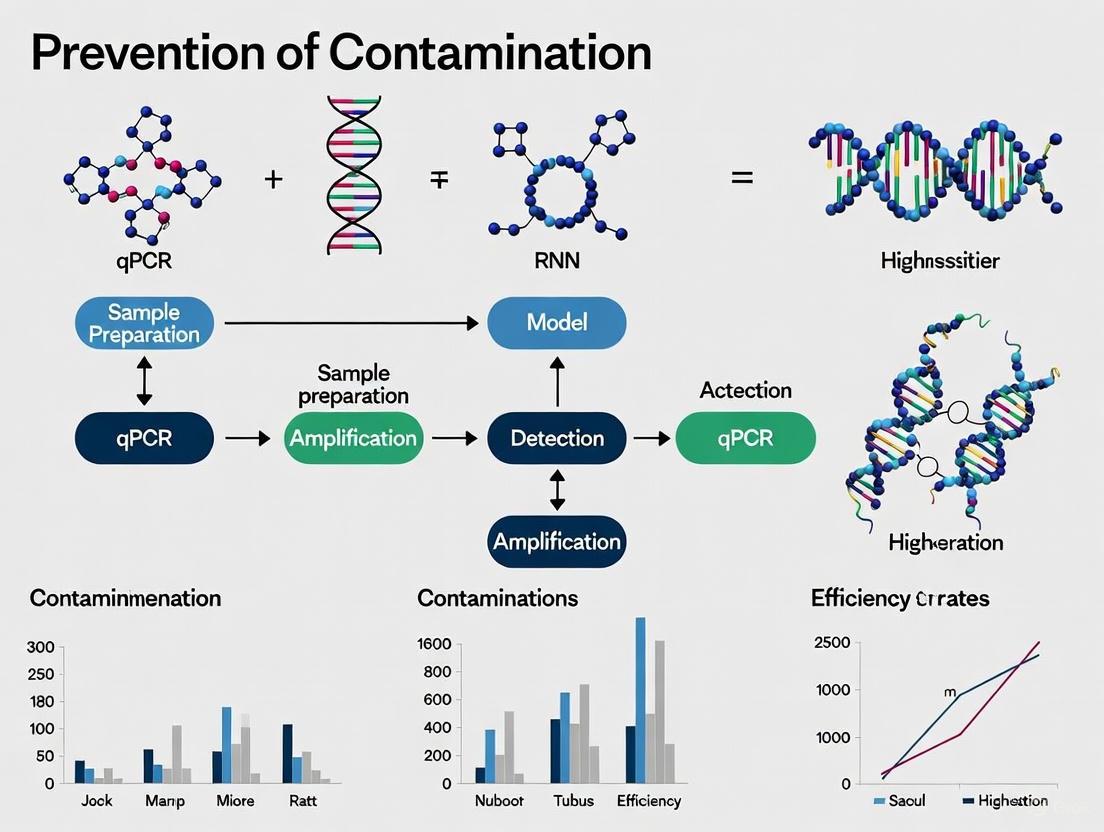
This article provides a critical and current resource for researchers, scientists, and drug development professionals utilizing quantitative PCR (qPCR) in cancer research.
Safeguarding Sensitivity: A Comprehensive Guide to Preventing Contamination in High-Sensitivity Cancer qPCR
Abstract
This article provides a critical and current resource for researchers, scientists, and drug development professionals utilizing quantitative PCR (qPCR) in cancer research. It addresses the complete workflow for preventing contamination, which is paramount for obtaining reliable data in high-sensitivity applications like biomarker discovery, gene expression analysis, and monitoring minimal residual disease. The scope encompasses foundational principles of contamination risks, methodological best practices for laboratory setup and procedure, systematic troubleshooting and optimization strategies, and rigorous validation and comparative frameworks to ensure data integrity and reproducibility.
Understanding the Critical Contamination Risks in Sensitive Cancer qPCR Assays
Troubleshooting Guide: Resolving False Positives in Cancer qPCR
FAQ: Addressing Common Contamination Issues
What are the immediate steps I should take if my no-template control (NTC) shows amplification?
When your NTC shows amplification, this indicates contamination that requires immediate and systematic action [1] [2]:
- Replace all reagents and stock buffers: Discard all opened reagents and prepare fresh aliquots to eliminate contaminated components [1].
- Thoroughly clean PCR preparation areas: Decontaminate all surfaces and equipment with 10% bleach solution followed by 70% ethanol, ensuring at least 10-15 minutes of contact time for the bleach to be effective [2] [3].
- Check for probe degradation: If you're using probe-based assays, degradation can cause high background. Use signal-to-noise assessment, mass spectrometry, or a fluorometric scan to check probe integrity [1].
- Consider your target sequence: For bacterial targets like 16S rRNA, test different master mixes to rule out bacterial DNA contamination from the polymerase itself [1].
How can I distinguish between primer-dimer formation and true contamination in my NTC?
Differentiating between these issues requires analyzing amplification patterns and post-amplification characteristics [1]:
- Amplification cycle threshold: True contamination typically appears earlier (before ~38 cycles for probe-based assays or ~34 cycles for intercalating dyes), while primer-dimers usually amplify later [1].
- Perform melt curve analysis: After PCR completion, run a melt curve analysis. Primer-dimers typically show a distinct, lower temperature melt peak compared to specific amplification products [1].
- Check multiple NTCs: If contamination is from aerosolized DNA, you'll likely see random positive NTCs with different Ct values. If it's reagent contamination, all NTCs will show similar Ct values [2].
My lab consistently gets false positives when detecting lncRNAs like MALAT1 - what could be causing this?
Persistent false positives in lncRNA detection often stem from genomic DNA (gDNA) contamination, especially for targets without intron-exon junctions [4]:
- Implement DNase treatment: Add a DNase treatment step to your RNA extraction protocol. Research shows that MALAT1 expression results are highly affected by gDNA contamination without this step [4].
- Design careful controls: Include no-reverse transcription controls (-RT) to detect gDNA amplification. A positive -RT control indicates DNA contamination [5].
- Verify primer specificity: For lncRNAs without introns, ensure primers cannot co-hybridize to genomic DNA. Consider designing primers that span unique genomic regions when possible [4].
Quantitative Impact of Contamination in Cancer Diagnostics
Table 1: Consequences of False Positive Results in Diagnostic Settings
| Consequence Type | Impact on Patient Care | Resource Implications |
|---|---|---|
| Inappropriate Treatment | Undue patient stress; unnecessary therapies with potential side effects [5] [6] | Wasted expensive therapeutics; additional monitoring costs |
| Diagnostic Delays | Late correct diagnosis while pursuing false leads [6] | Multiple testing rounds; specialist consultations |
| Missed Treatment Windows | Progression of actual disease during false diagnosis management [6] | Higher eventual treatment costs; extended care needs |
Table 2: Effect of DNase Treatment on MALAT1 Detection in NSCLC Samples [4]
| Sample Type | Without DNase Treatment | With DNase Treatment | Interpretation |
|---|---|---|---|
| NSCLC Tissue (Tumor) | High false positive signals | Accurate expression levels | gDNA contamination caused overestimation |
| NSCLC Tissue (Adjacent Normal) | Inconsistent baseline | Normalized baseline | Contamination masked true biological signal |
| Plasma Samples | Reduced specificity | Improved specificity | Critical for liquid biopsy applications |
Research Reagent Solutions for Contamination Control
Table 3: Essential Reagents for Preventing False Positives
| Reagent/Solution | Function | Application Notes |
|---|---|---|
| ULTRA Pure Water (DNA/RNA free) | Solvent for reaction mixtures | Prevents introduction of contaminating nucleic acids [6] |
| UDG/UNG Enzyme | Degrades carryover contamination from previous PCR products | Requires dUTP in master mix; ineffective for GC-rich amplicons [2] [3] |
| Bleach Solution (10-15%) | Surface decontamination | Fresh weekly; 10-15 minute contact time; follow with ethanol and water [2] |
| Aerosol-Resistant Filter Tips | Prevents aerosol contamination | Use in all pre-PCR steps; dedicated to pre-PCR area only [2] [7] |
| DNase I (RNase-free) | Removes genomic DNA contamination | Critical for lncRNA targets without introns (e.g., MALAT1, NEAT1) [4] |
| BSA (Bovine Serum Albumin) | Binds PCR inhibitors | Use 200-400 ng/μL to counteract specific inhibitors like phenolic compounds [6] |
Experimental Protocol: Systematic Decontamination Procedure
Materials and Reagents
- Freshly prepared 10% sodium hypochlorite (bleach) solution
- 70% ethanol solution
- Nuclease-free water
- UV light source (optional)
- Dedicated lab coat and gloves
- Aerosol-resistant filter tips
- Separate pre-PCR and post-PCR workspace
Step-by-Step Procedure
- Replace all contaminated reagents: Discard all opened reagents and aliquots. Use fresh aliquots from storage [1].
- Surface decontamination:
- Apply 10% bleach solution to all work surfaces, pipettes, and equipment
- Allow 10-15 minutes contact time
- Wipe with nuclease-free water to remove bleach residue
- Follow with 70% ethanol wipe [2]
- UV irradiation (if available): Expose work areas to UV light for 15-30 minutes [1]
- Equipment dedication: Ensure separate pipettes and centrifuges for pre-PCR and post-PCR areas [2] [7]
- Verification: Test decontamination with fresh NTCs using all new reagents
Workflow Visualization: Contamination Control System
Contamination Control Workflow: This diagram illustrates the essential unidirectional workflow for preventing cross-contamination in qPCR experiments, highlighting the critical separation between pre-and post-amplification areas.
Advanced Troubleshooting: Persistent Contamination Scenarios
When Standard Decontamination Fails
For recalcitrant contamination that persists despite standard measures [6]:
- Psoralen treatment: Use psoralen compounds for surfaces resistant to standard decontamination
- Hydroxylamine hydrochloride: Add to PCR reaction tubes after amplification to modify amplified products [3]
- Professional pipette servicing: Contamination inside pipettes requires professional cleaning and recalibration [6]
- Assay redesign: For persistent contamination with synthetic templates, consider designing entirely new assays targeting different regions [5]
Manufacturer-Related Contamination
When contamination originates from commercial reagents [5] [3]:
- Source different master mixes: Bacterial-derived enzymes may contain trace bacterial DNA
- Verify oligonucleotide purity: Contact manufacturers about their contamination control procedures
- Use alternative purification: Consider HPLC-purified oligonucleotides to reduce bacterial DNA contamination
By implementing these systematic approaches, cancer researchers can significantly reduce false positives, ensure diagnostic accuracy, and maintain the integrity of their research outcomes while optimizing resource utilization in the high-stakes field of cancer diagnostics.
In high-sensitivity cancer research, quantitative PCR (qPCR) is a cornerstone technique for applications like biomarker validation, minimal residual disease (MRD) monitoring, and oncogene expression profiling [8]. However, the technique's extreme sensitivity also makes it exceptionally vulnerable to contamination, which can lead to misleading false positives or false negatives [2] [5]. For researchers developing diagnostics or therapeutics, such inaccuracies can have serious consequences, including wasted resources, delayed projects, and reduced confidence in experimental data [5]. This guide provides a detailed troubleshooting resource to help you identify, prevent, and address common contamination sources in your qPCR workflows.
1. What are the most frequent sources of contamination in a qPCR assay?
The most common sources can be categorized as follows [2] [5]:
- Amplicon Carryover: This is a major source. When you open a tube containing a previously amplified qPCR product, millions of copies can become aerosolized and disperse into the lab environment. These fragments can then contaminate reagents, master mixes, or subsequent reactions [2].
- Contaminated Reagents: Any component of the reaction mix can be a source.
- Enzymes: Many polymerases are produced in bacterial systems, and traces of bacterial genomic DNA can remain in the preparation if not thoroughly purified. This is a critical concern in microbiome or metagenomics studies [5].
- Oligonucleotides: Primers and probes can be contaminated during synthesis or purification. Biofilms in water purification systems or bacterial contamination in HPLC buffers used for oligo purification are known risks [5].
- Synthetic Templates: Concentrated positive controls and artificial template materials are high-risk contaminants. If opened in an unprotected space, they can easily contaminate an entire facility [5].
- Cross-Contamination: This occurs between samples during handling, often via contaminated pipettes, splashed reagents, or gloves [2] [5].
- Environmental DNA: Human DNA or RNA from skin or hair can be introduced into samples or reagents, which is particularly problematic when the assay targets human sequences [5].
2. How can I determine if my experiment is contaminated?
The primary method is to use a No Template Control (NTC). This well contains all qPCR reaction components—primers, probes, master mix, water—except for the nucleic acid template [2] [5].
- Expected Result: No amplification curve [2].
- Contamination Indicated: If an amplification curve is observed in the NTC, it signals contamination. The pattern can help identify the source [2]:
- Consistent Ct across NTCs: Suggests a contaminated reagent.
- Random Ct values in NTCs: Suggests random environmental contamination, such as aerosolized amplicons drifting into wells.
For RNA targets, a No-Reverse-Transcription Control (No-RT Control) is also essential. Amplification in this control indicates contamination of your RNA sample with genomic DNA [9] [5].
3. What specific steps can I take to prevent carryover contamination?
A multi-layered approach is most effective [2] [5]:
- Physical Separation: Establish separate, dedicated pre- and post-amplification areas. These should ideally be in different rooms with independent equipment (pipettes, centrifuges), lab coats, and consumables. Maintain a one-way workflow where personnel do not move from post-amplification to pre-amplification areas on the same day [2].
- UNG Treatment: Use a master mix containing Uracil-N-Glycosylase (UNG) and replace dTTP with dUTP in your PCRs. This ensures all amplification products contain uracil. UNG will then enzymatically degrade any uracil-containing carryover contamination from previous reactions before thermocycling begins, preserving your true sample template [2] [10].
- Meticulous Lab Practice: Use aerosol-resistant filter pipette tips, open tubes carefully, change gloves frequently, and decontaminate surfaces regularly with 10% bleach followed by 70% ethanol [2].
4. How does contamination specifically impact cancer research applications like MRD monitoring?
In Minimal Residual Disease (MRD) monitoring, qPCR is used to detect extremely low levels of cancer-specific mutations (e.g., in EGFR) after therapy [8]. Contamination in this context can be catastrophic:
- False Positives: Carryover amplicons from a previous positive sample could lead to a false signal, suggesting a patient still has disease. This could result in unnecessary, potentially toxic, further treatment.
- False Negatives: Inhibitory materials carried over during sample preparation can suppress the PCR, leading to a false negative. This might cause a clinician to discontinue an effective therapy prematurely [5].
Given the consequences, implementing the stringent controls and preventative measures outlined in this guide is not just good practice—it is a clinical necessity.
Troubleshooting Guide: Identifying Contamination from Control Results
The table below helps interpret your qPCR control results to diagnose contamination issues and determine the appropriate corrective actions [5].
| Control | Expected Result | Observed Result | Interpretation & Likely Cause | Recommended Action |
|---|---|---|---|---|
| No Template Control (NTC) | Negative | Positive | Contamination or Primer Dimers: Contaminated reagent or environmental amplicon carryover. | Check all reagents. Improve lab practices (physical separation, cleaning). Use UNG [2] [5]. |
| No Reverse Transcription Control (No-RT) | Negative | Positive | Genomic DNA Contamination: DNA is present in the RNA sample. | Redesign assays to span an exon-exon junction. Repeat RNA extraction [9] [5]. |
| Positive Control | Positive | Negative | Failed Reaction: Inhibitors in sample or reagent failure. | Check reagent aliquots. Use an internal positive control (e.g., SPUD assay) to check for inhibitors [5]. |
| Inhibition Control (e.g., SPUD) | Positive (known Cq) | Negative or Higher Cq | PCR Inhibition: Contaminants in the sample or reagents are inhibiting reaction efficiency. | Systematically identify and replace the contaminated component. Use inhibition-resistant reagents [5]. |
Experimental Protocol: Implementing a Robust Contamination Prevention Workflow
The following workflow integrates physical, enzymatic, and procedural best practices to safeguard your cancer qPCR experiments from start to finish.
Key Procedural Steps:
Pre-Amplification Setup (Pre-PCR Area):
- Sample and Reagent Preparation: Prepare your master mix and add sample RNA/DNA in the dedicated pre-PCR area [2].
- Critical Step - UNG Incorporation: Use a master mix where dTTP has been partially or completely replaced with dUTP. Add a UNG enzyme (e.g., 0.01 U/µl) to the mix. For one-step RT-qPCR, ensure compatibility by using a enzyme like Cod UNG, which is inactivated at 55°C and will not degrade cDNA synthesized during the reverse transcription step [10].
- UNG Incubation: Incubate the reaction plate or tubes for 5 minutes at 25°C before starting the thermocycler. This allows the UNG to actively degrade any uracil-containing carryover DNA contaminants [10].
Amplification (Thermocycler):
Post-Amplification Analysis (Post-PCR Area):
- Open Tubes Only in Post-PCR Area: All analysis of amplified products, including gel electrophoresis, must be conducted in the physically separate post-amplification area. Never bring amplified products back into the pre-PCR area [2].
- One-Way Workflow: Personnel who have entered the post-amplification area should not re-enter the pre-amplification area on the same day without changing lab coats and gloves to prevent tracking amplicons back [2].
The Scientist's Toolkit: Key Reagent Solutions
The following table details essential reagents and materials for implementing an effective contamination control strategy in your lab.
| Item | Function in Contamination Control | Key Considerations |
|---|---|---|
| Uracil-N-Glycosylase (UNG) | Enzymatically degrades uracil-containing DNA from previous amplifications (carryover) prior to thermocycling [2] [10]. | For one-step RT-qPCR, use a UNG that inactivates at lower temperatures (e.g., Cod UNG, inactivated at 55°C) to prevent cDNA degradation [10]. |
| dUTP | A nucleotide used to replace dTTP in the PCR master mix. This allows newly synthesized amplicons to incorporate uracil, making them susceptible to degradation by UNG in future runs [2] [10]. | A prerequisite for the UNG carryover prevention system. |
| Aerosol-Resistant Filter Pipette Tips | Prevent aerosols from contaminating the shaft of the pipette, which can be a major source of cross-contamination between samples [2]. | Essential for all liquid handling, especially when adding template DNA. |
| DNA Decontamination Solution | A chemical solution (e.g., diluted bleach or commercial DNA degradation solutions) used to routinely decontaminate work surfaces, equipment, and instruments [2] [9]. | A 10% bleach solution is effective but must be made fresh regularly. Follow with 70% ethanol and water to prevent corrosion [2]. |
| Predesigned Assays (Spanning Exon-Exon Junctions) | Assays designed to amplify across the junction of two exons will not amplify genomic DNA, as the intron sequence disrupts the target site. This controls for gDNA contamination in RNA assays [9]. | An effective alternative to a No-RT control for preventing false positives from gDNA. |
| Internal Positive Control (IPC) | A control sequence added to each reaction to detect the presence of PCR inhibitors, which can cause false negatives [5]. | A significant delay in the IPC's Cq value indicates inhibition, alerting you to potential sample-associated contamination. |
Summary for the Busy Scientist Effective use of controls, particularly the No Template Control (NTC), is a non-negotiable practice in high-sensitivity cancer qPCR research. It is your primary safeguard against contamination and false positives, which can severely compromise data integrity. This guide provides a concise framework for implementation and troubleshooting, empowering you to confidently validate your experimental results.
Core Concepts: The Why and What of qPCR Controls
What is the fundamental purpose of a No Template Control (NTC) in cancer qPCR research?
The No Template Control (NTC) is a critical quality control reaction used to detect contamination in your qPCR reagents and laboratory environment. It contains all the components of the master mix—including primers, probes, enzymes, and buffer—but uses nuclease-free water instead of a DNA or RNA template [2] [5].
In the context of sensitive cancer research, where you might be detecting low-abundance transcripts or rare somatic mutations, the NTC acts as a sentinel. A clean NTC (no amplification) gives you confidence that any amplification signal in your patient samples is genuinely from the target nucleic acid present in that sample, and not from contaminating DNA in your reagents or amplicons from previous experiments [2] [1]. Amplification in the NTC indicates a potential contamination event that must be investigated before trusting the experimental data.
Beyond the NTC: What other essential controls should I use in my qPCR workflow?
A robust qPCR experiment employs a panel of controls to monitor different aspects of the workflow. The table below summarizes these key controls [11].
- Table 1: Essential qPCR Controls for a Comprehensive Quality Assurance Strategy
| Control Type | Purpose | Expected Result | Interpretation of a Failed Control |
|---|---|---|---|
| No Template Control (NTC) | Detects contamination in reagents or the environment [2] [5]. | No amplification. | Contamination is present; results are unreliable. |
| Positive Control | Verifies that the primer set and qPCR assay are functioning correctly. | Amplification at the expected Ct. | The assay has failed; reagents or cycling conditions may be faulty. |
| No Reverse Transcription (No-RT) Control | Used in RT-qPCR to detect amplification from contaminating genomic DNA [12] [11]. | No amplification. | RNA sample is contaminated with genomic DNA. |
| Internal Positive Control (IPC) | Added to each sample to check for the presence of PCR inhibitors [11]. | The IPC amplifies consistently in all samples. | Inhibition is present in the sample; the target's Ct may be artificially high or absent. |
Troubleshooting Guide: Interpreting Your Control Results
My NTC is amplifying. What does this mean, and how can I identify the source?
Amplification in the NTC is a clear sign of contamination. The pattern of amplification can provide crucial clues about the source. The following decision diagram outlines a systematic approach to troubleshooting a positive NTC.
NTC Troubleshooting Decision Guide
Based on the pathways above, here are the specific actions to take:
If the NTC melt curve differs from your samples: The amplification is likely due to primer-dimer formation [12] [13]. This occurs when primers anneal to each other rather than to the target template.
- Solution: Redesign your primers to avoid self-complementarity, or optimize your primer concentrations [14].
If the NTC melt curve matches your samples and Ct is consistent: This indicates a contaminated reagent. One of your core reaction components (e.g., water, master mix, primers) contains the target sequence [2].
If the NTC melt curve matches your samples but Ct is variable: This suggests environmental contamination. Aerosolized amplicons from previous qPCR experiments (carryover contamination) are present in your lab environment and are sporadically entering reactions [2] [5].
My No-RT Control is amplifying, but my NTC is clean. What should I do?
Amplification specifically in the No-RT control indicates that your RNA sample is contaminated with genomic DNA (gDNA) [12] [11]. Since the control lacks the reverse transcriptase enzyme, the signal cannot be coming from your RNA target of interest. This is a common challenge in gene expression studies in cancer research.
- Solutions:
- DNase Treatment: Treat your purified RNA samples with DNase I during the RNA isolation process to degrade any contaminating gDNA [12].
- Primer Design: Redesign your PCR primers to span an exon-exon junction. This ensures that the amplicon can only be produced from cDNA, as the intronic sequence present in gDNA will not be spliced out, preventing efficient amplification [11] [14].
What does it mean if my Positive Control fails to amplify?
A failed positive control, where a known template does not amplify, indicates a fundamental failure of the qPCR reaction itself.
- Probable Causes and Solutions [12] [13]:
- Incorrect Cycling Protocol: Verify that the thermal cycler protocol, especially the reverse transcription step temperature for RT-qPCR, is correct.
- Inactive or Degraded Reagents: Check the expiration dates of your kit reagents and ensure they have been stored properly. Prepare fresh aliquots and avoid multiple freeze-thaw cycles.
- Reagent Omission: Double-check that all necessary components were added to the reaction mix.
- Instrument Error: Confirm that the correct dye channels (e.g., FAM) are selected and detected on your qPCR instrument.
Prevention and Best Practices: Building a Contamination-Resistant Workflow
What are the top laboratory practices to prevent contamination from occurring in the first place?
Prevention is always more effective than troubleshooting. Adopting the following best practices is essential for any lab performing high-sensitivity qPCR.
- Physical Separation of Work Areas: Establish physically separated pre-PCR and post-PCR areas, ideally in different rooms with dedicated equipment, lab coats, and consumables [2] [15]. This is the single most important step in preventing amplicon carryover contamination.
- Unidirectional Workflow: Maintain a strict one-way workflow from the pre-PCR area (reagent preparation, sample addition) to the post-PCR area (amplification, product analysis). Never bring equipment or materials from the post-PCR area into the pre-PCR area [2] [15].
- Meticulous Laboratory Technique:
- Use aerosol-resistant filter pipette tips to prevent aerosol contamination [2] [1].
- Change gloves frequently, especially after handling potential sources of contamination [2].
- Aliquot all reagents to avoid repeated freeze-thaw cycles and cross-contamination of stock solutions [15] [1].
- Clean surfaces and equipment regularly with a fresh 10% bleach solution, allowing 10-15 minutes of contact time before wiping with water or 70% ethanol [2] [12].
Are there reagent-based solutions to help control for contamination?
Yes, incorporating enzymatic methods can provide an additional layer of security against the most common form of contamination: carryover amplicons.
- UNG/UDG Treatment: Use a master mix containing the enzyme Uracil-N-Glycosylase (UNG) or Uracil DNA Glycosylase (UDG) [2] [12] [5].
- Mechanism: In your qPCR reactions, you use dUTP instead of dTTP. All subsequently generated PCR products will then contain uracil. Before the next qPCR run, the UNG enzyme is activated and will degrade any uracil-containing contaminants from previous runs. The enzyme is then inactivated during the initial denaturation step, allowing the new reaction to proceed normally.
- Benefit: This effectively eliminates false positives caused by amplicon carryover.
The Scientist's Toolkit: Key Reagents and Materials
- Table 2: Research Reagent Solutions for Contamination Prevention
| Item | Function in Contamination Control |
|---|---|
| Aerosol-Resistant Filter Tips | Prevents aerosols from contaminating the pipette shaft and subsequent samples [2] [1]. |
| Master Mix with UNG/UDG | Enzymatically degrades carryover contamination from previous PCR amplicons [2] [12]. |
| Bleach (Sodium Hypochlorite) | A 10% solution is the most effective chemical decontaminant for destroying DNA on surfaces and equipment [2] [12]. |
| Nuclease-Free Water | A sterile, nucleic-acide-free water source for preparing reagents and NTCs [1]. |
| DNase I, RNase-free | Removes contaminating genomic DNA from RNA samples prior to RT-qPCR [12]. |
The detection of rare transcripts and circulating biomarkers represents a frontier in cancer diagnostics and minimal residual disease monitoring. However, the inherent low microbial biomass of typical samples—including blood, tumor tissues, and liquid biopsies—presents substantial technical challenges. In these samples, the target molecules (e.g., microbial DNA, cancer-specific RNA, or circulating tumor DNA) are scarce relative to the abundance of host genetic material. This low biomass amplifies the impact of contaminants, making rigorous contamination control not merely a best practice, but an absolute necessity for generating reliable, reproducible data [16] [17]. This technical support center is designed to help researchers navigate these challenges within the broader context of ensuring contamination-free, high-sensitivity cancer qPCR research.
Frequently Asked Questions (FAQs)
Q1: What defines a "low-biomass" sample in the context of cancer research? A low-biomass sample is one where the target analyte (e.g., microbial DNA, rare cancer transcripts, or circulating biomarkers) is present in very low quantities compared to the host background. Examples critical to cancer research include tumor tissues (where microbial signals can be faint), blood or bone marrow (for detecting circulating microbes or minimal residual disease), and liquid biopsies [17] [18]. In these samples, the signal from the target can be easily overwhelmed by background noise or contamination.
Q2: Why is contamination control particularly critical for low-biomass samples? qPCR is an extremely sensitive technique capable of amplifying a few initial copies of a DNA sequence. In high-biomass samples, a small amount of contaminating DNA may be negligible. However, in low-biomass contexts, contaminating DNA from the lab environment, reagents, or previous amplifications can constitute a large proportion of the final signal, leading to false positives and completely misleading results [17] [2]. The high sensitivity that makes qPCR powerful also makes it vulnerable.
Q3: What are the primary sources of contamination in a qPCR workflow? The major sources include:
- Carryover Contamination: Amplified DNA products (amplicons) from previous qPCR runs, which can become aerosolized when tubes are opened [2].
- Reagent and Environmental Contamination: Microbial DNA or nucleic acids present in water, reagents, or introduced from the lab environment [17].
- Cross-Contamination: Between samples during manual pipetting [19].
- Kitome: DNA contamination inherent in DNA extraction kits and sequencing reagents [16].
Q4: How can I determine if my low-biomass qPCR experiment has been compromised by contamination? The most robust method is to include negative controls throughout your workflow. No Template Controls (NTCs) are essential; these wells contain all qPCR reaction components except the DNA template. If amplification occurs in an NTC, it signals contamination. If the contamination is from a reagent, you will likely see amplification in all NTC wells at a similar Ct value. If it's random environmental carryover, you may see amplification in only some NTC wells with varying Ct values [2].
Q5: Are there specific experimental strategies to improve detection sensitivity in low-biomass samples? Yes, key strategies include:
- Using Spike-Ins: Employing known quantities of exogenous microbial cells or specific DNA sequences as internal controls to assess and normalize for sampling and amplification efficiency [16].
- Genome-Resolved Metagenomics: Advanced bioinformatics techniques to better resolve microbial signals from background [16].
- Innovative Biomarker Selection: Targeting specific biomarkers, such as intron-spanning reads (ISRs) in RNA, which can enhance the detection of cancer-specific splicing events while reducing interference from genomic DNA [20].
Troubleshooting Guide: Common Issues in Low-Biomass qPCR
The table below outlines common problems, their potential causes, and recommended solutions for working with low-biomass cancer samples.
| Problem | Potential Causes | Recommended Solutions |
|---|---|---|
| Amplification in No Template Control (NTC) | Contaminated reagents, carryover amplicon contamination, or aerosol exposure during setup [2]. | Implement strict physical separation of pre- and post-PCR areas. Use UNG enzyme treatment with dUTP in the master mix. Prepare fresh reagent aliquots and replace all suspected contaminated stocks [2]. |
| High Ct Values/Low Yield | Poor RNA quality, inefficient cDNA synthesis, suboptimal primer design, or PCR inhibitors in the sample [19]. | Optimize RNA purification and clean-up steps. Re-design primers using specialized software to ensure appropriate length, GC content, and avoid secondary structures. Use automation to improve pipetting consistency [19]. |
| Non-Specific Amplification | Primer-dimer formation or primer-template mismatches, often due to suboptimal annealing temperature [19]. | Redesign primers using validated software. Optimize annealing temperature through a temperature gradient experiment. |
| High Variability Between Replicates | Inconsistent pipetting, uneven mixing of reagents, or heterogeneous sample material [19]. | Use automated liquid handling systems for superior precision. Ensure samples and master mix are thoroughly mixed. Employ accurate pipetting techniques and calibrated equipment. |
| Inconsistent Results with Low-Abundance Targets | Stochastic sampling effects due to very low starting copy number of the target [16]. | Increase the number of technical replicates. Use digital PCR for absolute quantification of very rare targets. Implement rigorous contamination monitoring to distinguish true signal from noise [16] [8]. |
Experimental Workflow for Contamination Control
The following diagram illustrates a rigorously controlled end-to-end workflow for processing low-biomass samples, from collection to data analysis.
Research Reagent Solutions for Enhanced Sensitivity
This table details key reagents and materials that are essential for successfully working with low-biomass cancer samples.
| Item | Function in Low-Biomass Research | Key Considerations |
|---|---|---|
| Aerosol-Resistant Filtered Pipette Tips | Prevents aerosol carryover during pipetting, a major contamination risk [2]. | Essential for all pre-amplification steps. |
| UNG Enzyme & dUTP Mix | Enzymatically degrades carryover contamination from previous PCR amplifications [2]. | Requires incorporating dUTP instead of dTTP in all PCR reactions. Most effective for thymine-rich amplicons. |
| Nucleic Acid Preservation Buffers | Stabilizes DNA/RNA immediately upon sample collection, preventing microbial growth or degradation that alters biomass composition [16]. | Critical for preserving the true biological signal from the moment of collection. |
| 2bRAD-M Sequencing Kit | A reduced-representation sequencing method for high-resolution microbiome profiling, especially useful in samples with high host DNA background [21]. | Helps overcome challenges of traditional metagenomics in low-biomass contexts. |
| High-Fidelity DNA Polymerase | Reduces amplification errors and improves specificity when amplifying rare targets [21]. | Important for ensuring the accuracy of the detected signal. |
| Automated Liquid Handler | Improves pipetting precision and reproducibility, reduces human error and cross-contamination risk [19]. | Particularly valuable for ensuring consistency across large numbers of low-biomass samples. |
Advanced Experimental Protocols
Protocol 1: Validating a Low-Biomass qPCR Assay for Circulating Biomarkers
This protocol is adapted from research on detecting microbial DNA in the blood of colorectal cancer patients [21].
- Sample Collection and Storage: Collect peripheral venous blood using sterile, DNA-free collection tubes (e.g., EDTA-coated Vacutainers). Aliquot and immediately store samples at -80°C. Avoid repeated freeze-thaw cycles.
- DNA Extraction with Controls: Extract DNA using a kit designed for low-concentration samples. Include negative controls in the extraction batch: a "sampling blank" (a sterile tube taken through the collection process) and a "DNA extraction blank" (containing only the extraction reagents).
- Library Preparation (if sequencing): For methods like 2bRAD-M, digest DNA with the appropriate restriction enzyme (e.g., BcgI). Ligate adaptors, amplify with barcoded primers, and purify the final library. Perform these steps in a clean, pre-PCR environment.
- qPCR Setup with Rigorous Controls:
- Reaction Mix: Use a master mix containing UNG enzyme. Include SYBR Green or TaqMan probes specific to your target (e.g., a microbial species like Bosea lupini or a cancer fusion transcript).
- Controls: On every qPCR plate, include:
- No Template Control (NTC): Contains nuclease-free water instead of DNA template.
- Negative Extraction Control: The DNA extraction blank from step 2.
- Positive Control: A synthetic oligo or plasmid containing the target sequence at a known, low concentration.
- Data Analysis and Decontamination:
- Calculate the contamination level (D) using a method like Reads Level Decontamination (RLD):
D = N * (T / (T + N)), where T is reads in the target sample and N is reads in the negative control [21]. - Only proceed with samples where the target signal is significantly higher than the negative control baseline.
- Calculate the contamination level (D) using a method like Reads Level Decontamination (RLD):
Protocol 2: Platelet RNA Profiling for Rare Transcript Detection in Ovarian Cancer
This protocol is based on a study using platelet-derived RNA to detect ovarian cancer with high sensitivity [20].
- Patient Recruitment and Blood Collection: Recruit patients and controls following strict exclusion criteria (e.g., recent use of anti-inflammatory drugs, hormonal therapy, or infections that could confound results).
- Platelet Isolation: Isolate platelets from peripheral blood within 48 hours of collection using a two-step centrifugation process to remove plasma and blood cells.
- RNA Extraction and Quality Control: Suspend the platelet pellet in RNA stabilizer (e.g., RNAlater). Extract total RNA using a kit optimized for low inputs. Assess RNA quality using a BioAnalyzer; an RNA Integrity Number (RIN) ≥ 6 is acceptable.
- cDNA Synthesis and Amplification: For low-input RNA (e.g., 500 pg), use a SMART-Seq or similar kit for cDNA synthesis and amplification. This is critical for obtaining sufficient material from rare transcripts.
- qPCR with Intron-Spanning Primers:
- Biomarker Selection: Focus on biomarkers identified via RNA sequencing that show elevated expression in cancer samples, particularly those based on intron-spanning read (ISR) counts. This approach specifically captures splice junctions and reduces false positives from genomic DNA contamination [20].
- Validation: Validate a panel of markers (e.g., 10 markers) via qPCR. Ensure strong correlation between qPCR results and the original sequencing data.
- Algorithmic Classification: Develop a classification algorithm (e.g., based on the Ct values of the biomarker panel) to differentiate cancer samples from benign controls with high specificity and sensitivity.
Implementing a Contamination-Free qPCR Workflow: From Lab Design to Pipetting
In high-sensitivity cancer research, such as the detection of ovarian cancer using platelet RNA qPCR assays, the extreme sensitivity of the technique is a double-edged sword. It enables the detection of minute quantities of genetic biomarkers but also makes experiments vulnerable to false positives from trace contamination [20] [2]. Establishing a spatially segregated, unidirectional workflow is not merely a best practice but a critical necessity to ensure the integrity of your data, especially when working with precious patient samples aimed at achieving over 94% diagnostic accuracy [20].
Frequently Asked Questions (FAQs)
1. Why is physically separating pre- and post-PCR areas considered mandatory?
PCR is an extremely sensitive technique that amplifies minuscule amounts of DNA. Amplified DNA products from previous experiments are a primary source of contamination. If these products enter a new pre-PCR reaction, they will be amplified, leading to misleading false positives. Physical separation is the most effective way to contain this amplified DNA [22] [2].
2. What are the minimal requirements for establishing separated areas?
Separation can be achieved through several practical measures [22] [2]:
- Two Dedicated Rooms: Ideally, pre-PCR and post-PCR labs should be in separate, dedicated rooms that can be closed individually.
- Dedicated Equipment: Each area must have its own set of instruments (pipettes, centrifuges, PCR cyclers), equipment (racks, magnetic separators), and reagents. Never move equipment or reagents from the post-PCR area to the pre-PCR area.
- Airflow Control: Maintaining a slightly positive air pressure in the pre-PCR area helps prevent the influx of contaminated air from the post-PCR area.
3. What personal practices are crucial when moving between areas?
Maintain a strict one-way workflow. Researchers who have been in a post-PCR area should not enter a pre-PCR area on the same day. If movement from pre- to post-PCR is necessary, you must change gloves and lab coats before re-entering the pre-PCR area [2] [22]. Be aware that contamination can be transmitted via jewelry, cell phones, or hair [2].
4. My No-Template Control (NTC) shows amplification. What does this mean?
Amplification in the NTC is a clear indicator of contamination [2] [13]. The pattern can help identify the source:
- Consistent Ct across all NTCs: Suggests a reagent is contaminated.
- Random Ct values in NTCs: Points to aerosol contamination in the lab environment, possibly from sloppy pipetting or opening tubes with amplified product nearby.
5. Besides spatial segregation, what other steps can reduce carryover contamination?
Using a master mix containing Uracil-N-Glycosylase (UNG) is highly effective. UNG enzymatically degrades any uracil-containing DNA from previous amplifications before the new qPCR cycle begins. This requires using a dNTP mix with dUTP instead of dTTP in all your reactions [2].
Troubleshooting Guide
| Problem | Potential Cause | Recommended Solution |
|---|---|---|
| Amplification in No-Template Control (NTC) | Contaminated reagents or aerosolized amplicons [2] [13] | Prepare fresh primer dilutions; decontaminate workspaces and pipettes with 10% bleach or 70% ethanol; use UNG enzyme treatment [2]. |
| High Variation between Biological Replicates | RNA degradation or inconsistent pipetting [13] [19] | Check RNA quality (260/280 ratio ~1.9-2.0, clear gel bands); use automated liquid handlers for superior precision [13] [19]. |
| Non-Specific Amplification or Primer-Dimers | Suboptimal primer design or low annealing temperature [13] [19] | Redesign primers to span an exon-exon junction; optimize annealing temperature; include a melt curve analysis to verify a single product [13]. |
| Unexpectedly Early Ct Values | Genomic DNA contamination or highly concentrated template [13] | Treat samples with DNase I prior to reverse transcription; dilute template to an ideal Ct range [13]. |
Experimental Protocol: Implementing a Segregated Workflow
Objective: To establish a standard operating procedure for processing samples in a spatially segregated environment to prevent amplicon contamination in qPCR-based cancer biomarker detection.
Materials and Reagents:
- Dedicated pre-PCR and post-PCR rooms/areas
- Dedicated pipettes, centrifuges, and vortexers for each area
- Aerosol-resistant pipette tips
- Lab coats and gloves for each area
- Surface decontamination solutions: 70% ethanol and 10% fresh bleach solution
- UNG-containing qPCR master mix (optional but recommended)
Methodology:
- Sample and Reagent Preparation (Pre-PCR Area):
- All sample handling, RNA extraction, and cDNA synthesis must be performed strictly in the pre-PCR area.
- Prepare the qPCR master mix and aliquot it in the pre-PCR area.
- Use aerosol-resistant tips and open tubes carefully to minimize aerosol generation.
qPCR Plate Setup (Pre-PCR Area):
- Pipette the master mix and templates into the reaction plate.
- Include mandatory No-Template Controls (NTCs) to monitor for contamination.
- Once sealed, the plate is the only item that should transition from the pre-PCR to the post-PCR area.
qPCR Amplification (Post-PCR Area):
- The sealed plate is transported to the post-PCR area.
- Place the plate in the thermocycler located in the post-PCR area and start the run.
- Never open a plate containing amplified PCR products in the pre-PCR area.
Product Analysis (Post-PCR Area):
- All downstream analysis, including gel electrophoresis, fragment analysis, or plate reading, must be confined to the post-PCR area.
The Scientist's Toolkit: Essential Reagent Solutions
| Item | Function in Contamination Prevention |
|---|---|
| UNG (Uracil-N-Glycosylase) | An enzyme added to the master mix that degrades carryover contamination from previous uracil-containing PCR products before the current reaction begins [2]. |
| Aerosol-Resistant Filtered Pipette Tips | Prevent aerosols and liquids from entering the pipette shaft, thereby protecting instruments from becoming a source of cross-contamination [2]. |
| DNA Decontamination Solutions | Freshly diluted sodium hypochlorite (bleach, 10-15%) effectively degrades contaminating DNA on surfaces. 70% ethanol is also useful for general decontamination [2] [23]. |
| DNase I Treatment | Critical for removing contaminating genomic DNA from RNA samples prior to reverse transcription, preventing false positives [13]. |
Workflow Visualization
Unidirectional qPCR Workflow Diagram
qPCR Contamination Troubleshooting Guide
Frequently Asked Questions (FAQs)
What is the most critical first step in preventing qPCR contamination?
The most critical step is establishing physical separation of pre- and post-amplification areas. These should be ideally in different rooms with dedicated equipment, lab coats, and consumables. Maintaining a unidirectional workflow (from pre- to post-PCR) is essential to prevent amplified DNA products from contaminating new reactions [2] [15].
How can I tell if my qPCR reagents are contaminated?
The primary method is to use No Template Controls (NTCs). These wells contain all reaction components except for the DNA template. Amplification in the NTC wells indicates contamination of your reagents or environmental contamination. If all NTCs show similar amplification, a reagent is likely contaminated. If only some NTCs amplify, it may be due to random environmental aerosol contamination [2] [5].
Why should I aliquot my qPCR reagents?
Aliquoting reagents into single-use volumes prevents repeated freeze-thaw cycles and reduces the risk of contaminating your entire stock solution. If one aliquot becomes contaminated, you can discard it without affecting your entire supply. This practice also helps maintain reagent stability [2] [15].
How does a master mix with UNG help prevent contamination?
The Uracil-N-Glycosylase (UNG) enzyme is a carryover prevention system. When you use a master mix containing dUTP (instead of dTTP), all subsequent PCR products incorporate uracil. In future reactions, the UNG enzyme enzymatically destroys (hydrolyzes) any uracil-containing DNA amplicons from previous experiments before the thermocycling begins. The initial heating step in the qPCR cycle then inactivates the UNG enzyme so it does not interfere with the amplification of your new, natural template [2] [5].
What are the best practices for decontaminating my work area?
Regularly decontaminate surfaces and equipment with a freshly prepared 10-15% bleach solution (sodium hypochlorite). Allow it to sit for 10-15 minutes before wiping down with de-ionized water, followed by a wipe with 70% ethanol. This is especially important for equipment like centrifuges and vortexers, which are prone to contamination [2] [15].
Troubleshooting Guides
Problem: Amplification in No Template Control (NTC) Wells
| Observation | Possible Cause | Recommended Action |
|---|---|---|
| All NTCs show amplification with similar Ct values | Contamination of a common reagent (e.g., master mix, water, primers) [2] | Replace contaminated reagents with fresh aliquots. Review pipetting techniques to avoid splashing [13]. |
| Some, but not all, NTCs show amplification with variable Ct values | Random environmental contamination from aerosolized DNA [2] | Decontaminate work surfaces and equipment with bleach. Review physical workflow to ensure strict separation of pre- and post-PCR areas [2]. |
| Amplification in NTC with a melt curve showing a low-temperature peak | Primer-dimer formation [13] | Redesign suboptimal primers or optimize annealing temperature to increase specificity [13]. |
Problem: Reagent Stability and Performance Issues
| Observation | Possible Cause | Recommended Action |
|---|---|---|
| Increased Ct values or loss of sensitivity over time | Repeated freeze-thaw cycles degrading reagents [2] | Aliquot all reagents (primers, probes, master mixes) into single-use volumes to minimize freeze-thaw cycles [2] [15]. |
| Inconsistent results between different reagent batches | Improper storage conditions or inherent batch-to-batch variability | Follow manufacturer's storage instructions. Perform quality control checks on new batches and ensure proper aliquoting upon arrival. |
| Assay failure or low efficiency after prolonged storage | Exceeding reagent shelf-life or improper storage temperature | Use reagents within their validated shelf-life. Monitor freezer temperatures and avoid storing reagents on freezer doors. |
Quantitative Data on Reagent Stability
The following table summarizes key findings from stability studies on qPCR reagents, which can help streamline workflow planning without sacrificing fidelity [24].
| Reagent | Storage Condition | Demonstrated Stability | Key Finding |
|---|---|---|---|
| Pre-plated qPCR Mix (with primers, probe, and template) | 4 °C | 3 days | No loss of performance when the prepared plate was stored at 4°C for three days before thermocycling [24]. |
| Primer-Probe Mix | -20 °C with monthly freeze-thaw cycles | 5 months | Mixes remained stable for five months, indicating resilience to periodic thawing for use [24]. |
| Synthetic DNA Stocks (for standard curves) | -20 °C with monthly freeze-thaw cycles | 3 months | Maintained consistency in standard curve generation and assay sensitivity under these conditions [24]. |
Experimental Workflow for Contamination Prevention
The diagram below illustrates the critical unidirectional workflow and key practices for preventing contamination in a qPCR setup.
Research Reagent Solutions Toolkit
| Item | Function in Contamination Prevention |
|---|---|
| Aerosol-Resistant Filtered Pipette Tips | Prevents aerosolized contaminants from entering the pipette shaft and cross-contaminating samples and reagents [2] [15]. |
| Master Mix with UNG | Enzymatically degrades contaminating amplicons from previous PCR reactions that contain uracil (from dUTP), preventing their re-amplification [2] [5]. |
| dUTP Nucleotides | Used in place of dTTP during amplification, allowing subsequent UNG treatment to selectively target and destroy previous PCR products [2] [5]. |
| Bleach (Sodium Hypochlorite) | A 10-15% solution is highly effective for decontaminating work surfaces and equipment by destroying DNA contaminants. Fresh dilutions must be made regularly [2] [15]. |
| 70% Ethanol | Used for general cleaning of work surfaces and equipment. Often used after bleach decontamination to rinse and dry the area [2] [15]. |
| Single-Use Aliquot Tubes | For storing primers, probes, master mixes, and controls. Prevents contamination of the entire stock and minimizes freeze-thaw cycles that degrade reagents [2] [15]. |
In high-sensitivity cancer research, particularly in qPCR studies of gene expression for biomarker identification and therapeutic development, preventing contamination is not merely a best practice but a fundamental necessity. The exquisite sensitivity of qPCR, which enables detection of minute quantities of DNA, also makes it exceptionally vulnerable to contamination that can compromise data integrity and lead to erroneous conclusions. Contamination in qPCR workflows primarily manifests through three distinct pathways: pipette-to-sample, sample-to-pipette, and sample-to-sample carryover [25]. Aerosol formation during pipetting represents a particularly insidious contamination vector, as these microscopic droplets can contain sufficient nucleic acid material to generate false-positive results in subsequent reactions. This technical guide outlines evidence-based strategies to mitigate these risks through proper equipment selection and technique, ensuring the reliability of gene expression data in cancer research applications.
Troubleshooting Guide: Contamination Issues in qPCR
Table 1: Common Contamination Issues and Solutions
| Problem | Potential Causes | Recommended Solutions | Prevention Tips |
|---|---|---|---|
| False Positive Results | Contaminated pipettes or tips, aerosol transfer between samples | Use filter tips for all applications; clean pipettes regularly; change tips after each sample [25] | Maintain physical separation between pre- and post-PCR areas; dedicate pipettes for specific workflow stages |
| High Background or Primer Dimers | Contaminated reagents, non-specific amplification | Use no-template controls (NTC) to identify contamination sources; optimize primer design and annealing temperatures [19] [26] | Prepare master mixes in clean environments; aliquot reagents to minimize repeated freeze-thaw cycles |
| Inconsistent Ct Values | Variable liquid delivery due to pipette contamination or technician error | Use positive-displacement pipettes for viscous samples; release push button slowly; maintain consistent pipetting angle [25] [19] | Implement regular pipette calibration; provide comprehensive training on pipetting technique; consider automated liquid handling |
| Sample-to-Pipette Contamination | Liquid entering pipette body during aspiration | Keep pipette vertical during use; avoid rapid release of plunger; use filter tips or positive-displacement systems [25] | Pre-wet tips for volatile organic samples; avoid completely filling tips with liquid |
Experimental Protocols for Contamination Control
Protocol: Routine Pipette Maintenance and Decontamination
Purpose: To prevent cross-contamination through regular cleaning of pipettes, essential for maintaining data integrity in sensitive cancer qPCR studies measuring gene expression changes.
Materials:
- 70% ethanol
- DNase decontamination solution (e.g., DNA Away)
- UV irradiation chamber (optional)
- Autoclave (for heat-resistant components)
- Lint-free wipes
Procedure:
- Daily Surface Decontamination: Wipe pipette exterior with 70% ethanol using lint-free wipes, focusing on the shaft and tip ejector mechanism [25].
- Weekly Deep Cleaning: Disassemble pipette according to manufacturer instructions and immerse heat-resistant components in DNase decontamination solution for 10 minutes.
- Rinse and Dry: Rinse components with nuclease-free water and allow to air dry completely before reassembly.
- Autoclaving (if applicable): For pipettes designated for pre-PCR use only, autoclave appropriate components at 121°C for 20 minutes [25].
- UV Treatment: Place reassembled pipettes in UV irradiation chamber for 15-30 minutes for additional nucleic acid degradation.
Validation: Test cleaning efficacy by pipetting nuclease-free water into a qPCR reaction and running through full amplification cycles—no amplification should be detected in these test reactions.
Protocol: Implementing Negative Controls in qPCR Experiments
Purpose: To monitor and identify contamination sources in qPCR workflows for cancer biomarker validation studies.
Materials:
- Nuclease-free water
- qPCR master mix (without template)
- Primers and probes
- Standard qPCR instrumentation
Procedure:
- No Template Control (NTC):
- Prepare reaction mixture containing all components except nucleic acid template [26].
- Replace template volume with nuclease-free water.
- Run alongside experimental samples through full qPCR protocol.
- Interpretation: Amplification in NTC indicates contamination of reagents, primers, or master mix.
No Reverse Transcriptase Control (NRT):
- For RT-qPCR experiments, prepare reactions identical to experimental samples but omit reverse transcriptase enzyme during cDNA synthesis step [26].
- Interpretation: Amplification signals suggest genomic DNA contamination in RNA samples.
No Amplification Control (NAC):
- Prepare reactions without DNA polymerase to assess background fluorescence from degraded probes [26].
- Interpretation: Elevated fluorescence may indicate probe degradation affecting quantification accuracy.
Frequency: Include all three negative controls in every qPCR run for reliable contamination monitoring in cancer research applications.
Research Reagent Solutions for Contamination Prevention
Table 2: Essential Materials for Contamination Control
| Item | Function | Application Notes |
|---|---|---|
| Filter Tips | Prevent aerosol contaminants from entering pipette body; protect samples from pipette-borne contamination [25] | Essential for all PCR setup and handling of template DNA; color-coded options help distinguish pre- and post-PCR use |
| Positive-Displacement Pipettes | Direct contact between piston and sample eliminates air interface where aerosols can form [25] | Particularly valuable for viscous samples (e.g., whole blood, tissue homogenates) common in cancer research |
| Inhibitor-Tolerant DNA Polymerases | Engineered enzyme variants resistant to common PCR inhibitors in complex samples [27] [28] [29] | Enable direct PCR from blood, tissue samples with minimal purification; reduce handling steps and contamination risk |
| Automated Liquid Handling Systems | Minimize human error and variability; closed systems reduce cross-contamination risk [19] | Especially beneficial for high-throughput drug screening applications; improves reproducibility across technicians |
Frequently Asked Questions (FAQs)
Q1: What is the difference between filter tips and positive-displacement pipettes, and when should I use each? Filter tips contain a hydrophobic barrier that traps aerosols, preventing them from entering the pipette body during aspiration. These are suitable for most routine qPCR applications and provide effective protection against both pipette-to-sample and sample-to-pipette contamination [25]. Positive-displacement pipettes use a disposable piston that makes direct contact with the liquid, completely eliminating the air cushion where aerosols can form. These are particularly recommended for handling viscous samples common in cancer research, such as whole blood, tissue homogenates, or archival samples with high glycogen content [25].
Q2: What negative controls are essential for qPCR experiments in cancer research? Three critical negative controls should be included in every qPCR experiment: (1) No Template Control (NTC) containing all reaction components except nucleic acid template to detect reagent contamination; (2) No Reverse Transcriptase Control (NRT) for RT-qPCR experiments to assess genomic DNA contamination in RNA samples; and (3) No Amplification Control (NAC) to identify background fluorescence from degraded probes [26]. These controls are particularly crucial when working with low-abundance transcripts often encountered in cancer biomarker studies.
Q3: How does automated liquid handling improve pipetting precision in high-throughput qPCR screens? Automated pipetting systems significantly enhance precision by reducing human error and technical variability between different operators [19]. This is especially valuable in multi-investigator cancer studies where consistency across experiments is critical. Automated systems with closed designs minimize the risk of cross-contamination during high-throughput screening of compound libraries or clinical samples [19]. Additionally, automation increases throughput by processing multiple samples simultaneously, freeing researcher time for data analysis while improving the reproducibility of drug response assays.
Q4: What techniques minimize aerosol formation during pipetting? To minimize aerosol formation: (1) Always release the push button slowly and steadily—rapid expulsion generates significant aerosols; (2) Keep the pipette vertical during use to prevent liquid from running into the pipette body where it can form aerosols; (3) Use filter tips or positive-displacement pipettes which physically block aerosol transfer; (4) Avoid touching the pipette tip to the sides or bottom of tubes during aspiration and dispensing [25]. These techniques are particularly important when handling concentrated templates such as plasmid standards or amplified products.
Workflow Diagram: Contamination Control in qPCR
Diagram 1: Contamination Control Pathways and Prevention Methods. This diagram illustrates the three primary contamination pathways in qPCR workflows and the specific prevention strategies for each.
FAQs: Decontamination for High-Sensitivity qPCR
What is the most critical step in preventing contamination in cancer qPCR research?
Physical separation of pre- and post-amplification areas is the most critical foundational step. You should establish separate, dedicated areas for different processes in the qPCR workflow, with at minimum separate pre- and post-amplification areas [2]. These areas should ideally be in different rooms with completely independent equipment, including pipettes, centrifuges, and vortexers [2] [15]. Maintain a strict one-way workflow where researchers who have worked in post-amplification areas do not enter pre-amplification areas on the same day without changing protective equipment [2].
How can I tell if my workspace has contamination issues?
Use No Template Controls (NTCs) to monitor for contamination. NTC wells contain all qPCR reaction components except the DNA template [2] [5]. If you observe amplification in these wells, contamination is present. Consistent amplification across NTCs at similar Ct values suggests contaminated reagents, while random amplification with varying Ct values indicates environmental contamination from aerosolized DNA [2].
Which decontamination method is most effective against DNA contamination?
Bleach (sodium hypochlorite) is uniquely effective for destroying DNA contamination. While ethanol kills microorganisms, it doesn't effectively remove DNA traces. A 10-15% bleach solution (0.5-1% sodium hypochlorite) is recommended for surface decontamination in pre-PCR areas [2] [15]. For complete DNA destruction, some protocols recommend decontamination with 80% ethanol followed by a nucleic acid degrading solution [23].
Can UV light replace chemical decontamination methods?
UV light serves as a valuable supplementary method but should not replace chemical decontamination as a standalone solution. UV-C irradiation causes DNA damage that inactivates microorganisms and prevents replication [30]. However, its effectiveness diminishes against G+C-rich and short amplification products, and it cannot remove chemical contaminants [5]. Use UV light in combination with chemical methods for comprehensive decontamination.
How often should I decontaminate my qPCR work surfaces?
Decontaminate before and after each use session. Regularly decontaminate all surfaces and equipment used for preparing qPCR reactions, including bench tops, pipettors, refrigerator handles, centrifuges, vortexes, and other touch points [15]. Thorough cleaning is particularly important after any spill incident [2].
Troubleshooting Common Decontamination Issues
Problem: Persistent contamination in No Template Controls (NTCs)
Solution: Implement a systematic decontamination protocol:
- Freshly prepare 10-15% bleach solution [2] [15]
- Apply to all surfaces and allow 10-15 minutes contact time [2]
- Wipe with deionized water to remove residue
- Follow with 70% ethanol to help surfaces dry quickly [15]
- Replace all aliquots of reagents and master mixes
- Decontaminate equipment like centrifuges and vortexers that are often overlooked [2]
Problem: Inconsistent decontamination results with bleach
Solution: Ensure proper bleach handling and preparation:
- Use fresh dilutions regularly (at least every week) as bleach is unstable and degrades over time [2] [31]
- Mix with cold water only, as hot water decomposes the sodium hypochlorite [32]
- Check concentration: Most household bleach contains 5-9% sodium hypochlorite [31]
- Prepare diluted solutions fresh daily as they lose effectiveness after 24 hours [31] [32]
Problem: Suspected cross-contamination between samples
Solution: Enhance personal and equipment decontamination:
- Change gloves frequently, especially when potentially contaminated by splashed reagents [2] [15]
- Use aerosol-resistant filtered pipette tips to reduce aerosol formation [2] [15]
- Decontaminate not just gloves and lab coats but also be aware that contamination can transmit via jewelry, cell phones, and hair [2]
- Implement UNG (uracil-N-glycosylase) treatment in your master mix to destroy carryover contamination from previous amplifications [2] [15]
Decontamination Methods Comparison Table
Table 1: Effective concentrations and contact times for common decontaminants
| Decontaminant | Effective Concentration | Contact Time | Primary Function | Limitations |
|---|---|---|---|---|
| Bleach (sodium hypochlorite) | 10-15% solution (0.5-1% sodium hypochlorite) [2] [15] | 10-15 minutes [2] | DNA destruction, broad-spectrum disinfection [2] [32] | Corrosive to metals, requires fresh preparation, inactivated by organic matter [2] [32] |
| Ethanol | 70% [32] | Until dry | Broad-spectrum germicide [32] | Does not effectively remove DNA, flammable, may damage certain plastics and rubber [23] [32] |
| UV-C Light | 3.7-16.9 mJ/cm² for viral inactivation [30] | Varies by intensity | Nucleic acid damage, microorganism inactivation [30] | Less effective on G+C-rich and short amplicons, requires direct exposure [5] |
Experimental Decontamination Protocols
Protocol 1: Surface Decontamination with Bleach
Purpose: To effectively eliminate DNA contamination and microorganisms from work surfaces and equipment [2] [32]
Materials:
- Household bleach (5-9% sodium hypochlorite) [31]
- Cold tap water [32]
- Personal protective equipment (gloves, eye protection) [2] [32]
- Dedicated containers and measuring tools
- Deionized water [2]
- 70% ethanol [15]
Procedure:
- Prepare fresh bleach solution: Mix 10-15% bleach (e.g., 5 tablespoons (1/3 cup) of bleach per gallon of room temperature water) [2] [31]
- Pre-clean surfaces: Remove organic material with detergent and water if surfaces are visibly dirty [32]
- Apply bleach solution: Ensure adequate ventilation in the workspace [32]
- Maintain contact time: Allow solution to remain on surfaces for 10-15 minutes [2]
- Rinse: Wipe surfaces with deionized water to remove bleach residue [2]
- Optional ethanol wipe: Use 70% ethanol for quick drying and additional disinfection [15]
- Air dry completely before use
Protocol 2: Equipment Decontamination for DNA Removal
Purpose: To eliminate contaminating DNA from laboratory equipment including pipettes, centrifuges, and vortexers [2] [23]
Materials:
- 80% ethanol [23]
- DNA removal solution (commercial preparations or 10-15% bleach) [2] [23]
- Deionized water
- UV light source (optional) [23] [5]
Procedure:
- Initial decontamination: Wipe equipment with 80% ethanol to kill contaminating organisms [23]
- DNA removal: Apply 10-15% bleach solution or commercial DNA removal solution [2] [23]
- Contact time: Allow 10-15 minutes for bleach solutions [2]
- Rinse: Remove residue with deionized water [2]
- UV treatment (optional): Expose to UV-C light for additional DNA destruction [23] [5]
- Air dry completely before use
Protocol 3: UV-C Inactivation Validation
Purpose: To verify the effectiveness of UV light sources for nucleic acid destruction [30]
Materials:
- UV-C light source (254 nm) [30]
- UV radiometer or dose measurement system
- Test organism or DNA solution
- Culture media and incubation equipment
Procedure:
- Measure intensity: Calibrate UV source to determine output intensity [30]
- Prepare test samples: Use standardized microbial cultures or DNA solutions
- Apply UV doses: Expose samples to varying doses (e.g., 3.7, 16.9, 84.4 mJ/cm²) [30]
- Assess inactivation: Culture samples or perform qPCR to measure viability/amplification [30]
- Determine minimum effective dose: Identify dose required for complete inactivation
Research Reagent Solutions for Decontamination
Table 2: Essential materials for effective decontamination in qPCR laboratories
| Item | Function | Application Notes |
|---|---|---|
| Sodium Hypochlorite (Bleach) | DNA destruction and broad-spectrum disinfection [2] [32] | Use fresh solutions; corrosive to metals; requires proper ventilation [2] [32] |
| 70% Ethanol | Surface disinfection and quick drying [32] [15] | Effective against enveloped viruses; does not destroy DNA; flammable [23] [32] |
| UV-C Light Source | Nucleic acid damage through thymidine dimer formation [5] [30] | Less effective on short amplicons; requires calibration [5] |
| Aerosol-Resistant Filtered Pipette Tips | Prevention of aerosol contamination during pipetting [2] [15] | Essential for all sample handling; reduces cross-contamination between samples |
| UNG (Uracil-N-Glycosylase) | Enzymatic destruction of carryover contamination containing uracil [2] [15] | Requires use of dUTP in master mix; ineffective for GC-rich amplicons [2] |
| DNA Removal Solutions | Commercial formulations for complete DNA destruction [23] | Alternative to bleach; often less corrosive to equipment |
Decontamination Workflow Visualization
Diagram 1: Comprehensive decontamination workflow for qPCR laboratories
Advanced Troubleshooting: Persistent Contamination Scenarios
Scenario: Contamination persists despite rigorous surface decontamination
Investigation and Resolution:
- Test reagent water and master mixes by using them as templates in NTCs
- Check oligonucleotide purity - contamination can occur during manufacturing [5]
- Inspect aerosol-resistant tips for proper filter integrity
- Evaluate ventilation systems - ensure pre- and post-amplification areas have independent ventilation [2]
- Implement UNG treatment if not already in use [2] [15]
Scenario: Intermittent contamination patterns in NTCs
Investigation and Resolution:
- Audit workflow practices - ensure unidirectional movement is maintained
- Decontaminate small frequently-touched items - tube racks, centrifuge handles, freezer doors [15]
- Review personal protective equipment protocols - enforce frequent glove changes and dedicated lab coats [2]
- Evaluate sample storage - ensure samples are stored separately from reagents and PCR products [2] [15]
Troubleshooting Contamination and Optimizing Assay Robustness
FAQ: Why is my No Template Control (NTC) showing amplification?
A positive signal in your No Template Control (NTC) indicates that amplification is occurring in the absence of your target sample. This is a classic sign of contamination or non-specific amplification, which can severely compromise your qPCR results, especially in sensitive applications like cancer research [33] [2]. The underlying causes generally fall into three categories:
- Reagent Contamination: One or more of your reaction components (water, master mix, primers) are contaminated with the target nucleic acid [33] [5].
- Environmental Contamination: Aerosolized amplicons (PCR products) from previous reactions have contaminated your workspace, equipment, or the current reaction setup [2] [5].
- Primer-Dimer Formation: Your primers are self-annealing to form dimers, which are then amplified, particularly when using intercalating dyes like SYBR Green [33] [34].
The following flowchart helps diagnose the specific cause based on the pattern of amplification in your NTC replicates.
FAQ: How do I investigate and resolve a contaminated NTC?
Once you have a preliminary diagnosis, the following tables provide detailed investigative steps and solutions.
Table 1: Diagnosing and Resolving Common Contamination Types
| Contamination Type | Key Diagnostic Clues | Corrective and Preventive Actions |
|---|---|---|
| Environmental Contamination [2] | • Random NTCs on the plate show amplification [33].• Cq values vary between positive NTCs [2]. | • Physical Separation: Use separate, dedicated areas for pre-PCR (reaction setup) and post-PCR (analysis) work [2].• Decontamination: Regularly clean surfaces and equipment with 10-15% fresh bleach solution, followed by 70% ethanol and nuclease-free water [2].• Technique: Always wear gloves, use aerosol-filtered pipette tips, and open tubes carefully [2] [34]. |
| Reagent Contamination [33] [5] | • All NTC replicates show amplification [33].• Cq values are similar across all positive NTCs [2]. | • Systematic Testing: Test each reagent (water, master mix, primers) in a new NTC to identify the contaminated component [2].• Aliquoting: Create single-use aliquots of all reagents to avoid repeated freeze-thaw cycles and cross-contamination [2].• Source New Reagents: Replace contaminated stocks from a different batch if possible [5]. |
| Primer-Dimer (SYBR Green) [33] | • Amplification plot may have lower efficiency or late Cq [33].• Melt curve analysis shows a distinct, low-temperature peak separate from the specific product [33]. | • Primer Optimization: Redesign primers using dedicated software to avoid self-complementarity [34].• Concentration Titration: Test a matrix of forward and reverse primer concentrations (e.g., 100-400 nM each) to find a combination that minimizes dimer formation [33].• Thermal Cycling: Slightly increase the annealing temperature [34]. |
Table 2: Experimental Controls for a Robust qPCR Workflow
| Control Type | Purpose & Expected Result | Interpretation of a Failed Result |
|---|---|---|
| No Template Control (NTC) [2] [5] | Purpose: Detect contamination in reagents or environmental carryover.Expected Result: No amplification (Cq undetermined). | Amplification Observed: Indicates contamination. Proceed with diagnosis using Table 1. |
| No Reverse Transcription Control (No-RT) [5] | Purpose: Detect amplification from genomic DNA contamination in RNA samples.Expected Result: No amplification. | Amplification Observed: Suggests gDNA contamination. Redesign primers to span an exon-exon junction or use a DNase digestion step. |
| Positive Control [5] | Purpose: Verify the entire qPCR process is working correctly.Expected Result: Amplification at the expected Cq. | No Amplification/Delayed Cq: Indicates reaction inhibition, faulty reagents, or instrument error. |
FAQ: What are the key experimental protocols for preventing contamination?
1. Implementing a UNG/UDG Carryover Prevention System This enzymatic method is highly effective against one of the most common contamination sources: amplicons from previous PCRs [2] [5].
- Principle: Use a master mix containing Uracil-N-Glycosylase (UNG) or Uracil-DNA Glycosylase (UDG) and incorporate dUTP (instead of dTTP) in your PCR reactions. This ensures all newly synthesized PCR products contain uracil.
- Protocol: The UNG/UDG enzyme is active at room temperature. During reaction setup, it will degrade any uracil-containing contaminating amplicons from prior runs. The enzyme is then permanently inactivated during the initial high-temperature denaturation step of the PCR cycle, protecting the new uracil-containing amplicons you are about to generate [2] [5].
2. Optimizing Primer Concentrations to Minimize Dimer Formation This protocol is critical for SYBR Green assays.
- Principle: Systematically test different combinations of forward and reverse primer concentrations to find the ratio that yields maximum specific signal with minimal primer-dimer background [33].
- Protocol: Prepare a primer concentration matrix as suggested by Thermo Fisher Scientific [33]. For example, test forward primer at 100, 200, and 400 nM against reverse primer at the same range. Run the qPCR with your template and an NTC for each combination. Analyze the results for the highest amplification efficiency (lowest Cq for the target) and the cleanest NTC, confirmed by melt curve analysis.
The Scientist's Toolkit: Essential Reagents for Contamination Control
| Item | Function in Contamination Control |
|---|---|
| Aerosol-Resistant Filtered Pipette Tips | Prevents aerosolized contaminants from entering pipette shafts and contaminating subsequent samples [2]. |
| UNG/UDG-Containing Master Mix | Enzymatically degrades carryover contamination from previous PCR products, as described above [33] [5]. |
| Molecular Biology Grade Water | Certified nuclease-free and DNA-free, ensuring it does not become a source of contamination [34]. |
| Bleach (Sodium Hypochlorite) Solution | A potent decontaminant for destroying DNA on work surfaces and equipment. Must be freshly diluted (10-15%) weekly for maximum efficacy [2]. |
| Dedicated Pre-PCR Labware | Separate pipettes, centrifuges, and lab coats reserved exclusively for pre-PCR areas to prevent introduction of amplicons [2]. |
Troubleshooting Guides and FAQs
Q1: My No Template Control (NTC) is showing amplification. What are the most likely sources of this contamination and how can I identify them?
Amplification in your NTC wells indicates that one or more of your qPCR reaction components contains contaminating DNA [2]. To identify the source:
- Systematic Reagent Testing: If the contamination appears at a similar Ct value across all NTC wells, the source is likely a contaminated reagent [2]. Test this by preparing fresh aliquots of each reagent (primers, probes, water, master mix) and running new NTCs to identify which component is contaminated.
- Environmental Contamination: If the contamination is random, appearing in only some NTC wells with variable Ct values, the cause is likely aerosolized DNA or cross-contamination from the lab environment [2]. Review your laboratory practices, ensure physical separation of pre- and post-amplification areas, and decontaminate surfaces and equipment.
Q2: I am using UNG carryover prevention, but I am still observing false-positive results. What could be the reason?
The UNG enzyme is highly effective but has specific limitations [5]:
- Target Specificity: UNG only degrades DNA from previous amplification products that contain uracil. It is ineffective against contamination from native DNA, synthetic oligonucleotides, or gDNA [2] [5].
- Amplicon Composition: UNG is most active against thymine (T)-rich amplification products and is less effective for guanine/cytosine (G+C)-rich amplicons [5].
- Enzyme Inactivation: Ensure the UNG incubation step is performed correctly and that the enzyme is properly inactivated at high temperatures at the start of the PCR cycling. If contamination persists, the source is likely non-uracil-containing DNA, and you must reinforce physical separation and cleaning protocols.
Q3: For our high-sensitivity cancer biomarker research, we need to detect minute amounts of circulating tumor DNA. How can we ensure our reagents are free of contaminating DNA?
Contamination of PCR reagents by bacterial or human DNA is a major concern for ultra-sensitive applications [35]. A multistrategy decontamination procedure is most effective:
- Combined Treatments: Use a combination of treatments tailored to different reagent categories. Effective methods include γ-irradiation and UV-irradiation to treat liquid reagents, and the use of a recombinant, heat-labile double-strand specific DNase [35].
- Preserving Efficiency: These treatments must be optimized to eliminate contaminating DNA without affecting the efficiency of the PCR. This often requires precise experimental conditions for each treatment method [35].
Q4: What is the most effective way to decontaminate laboratory surfaces and equipment to prevent DNA carryover?
A rigorous, multi-step cleaning protocol is essential [36]:
- High-Level Disinfection: Wipe down objects and equipment with a hypochlorite (bleach) solution, which is highly effective at degrading DNA [36]. Note that bleach solutions should be made fresh regularly as they are unstable [2].
- Complementary Methods: Follow bleach cleaning by wiping equipment with 75% ethyl alcohol [36]. Additionally, irradiating rooms with UV light for at least one hour helps decontaminate the environment [36].
- Routine Monitoring: Implement a program of regular environmental surveillance by sampling air and surfaces to verify the effectiveness of your decontamination procedures [36].
Quantitative Comparison of Decontamination Methods
The table below summarizes the key characteristics, advantages, and limitations of the three primary decontamination strategies.
Table 1: Comparison of Common DNA Decontamination Methods
| Method | Mode of Action | Key Advantages | Key Disadvantages & Considerations |
|---|---|---|---|
| Enzymatic (UNG) | Enzymatically hydrolyzes uracil-containing DNA from prior amplifications [2] [5]. | Easy to incorporate into master mix; targeted action [5]. | Ineffective against non-uracil DNA (gDNA, primers); less effective on G+C-rich/short amplicons [5]. |
| Chemical (Bleach) | Oxidizes and degrades DNA on laboratory surfaces [36]. | Highly effective surface decontaminant; low cost [36]. | Corrosive; requires fresh preparation; not suitable for direct use in PCR reactions [2] [36]. |
| Physical (Psoralen/IP) | Forms cyclobutane adducts with DNA upon light activation, blocking replication [5]. | Relatively inexpensive; requires minor protocol modification [5]. | Potential carcinogen; can be less effective for short, G+C-rich amplicons; may inhibit PCR [5]. |
Experimental Protocols for Key Procedures
Protocol 1: Implementing UNG Carryover Prevention
This protocol outlines the integration of Uracil-N-Glycosylase (UNG) into a standard qPCR workflow to prevent carryover contamination from previous PCR products [2] [5].
- dUTP Incorporation: Perform all PCR amplifications using a master mix where dTTP is partially or completely replaced with dUTP. This ensures all subsequent amplicons contain uracil.
- UNG Addition: Use a qPCR master mix that contains the UNG enzyme.
- Incubation: Prior to PCR thermocycling, incubate the reaction plate at room temperature (e.g., 25°C) for 2-10 minutes. During this step, UNG will actively degrade any uracil-containing contaminating DNA from earlier runs.
- Enzyme Inactivation: Initiate the standard PCR cycling protocol. The first high-temperature step (usually 95°C) will permanently inactivate the UNG enzyme, preventing it from degrading the newly synthesized uracil-containing PCR products during the current amplification.
Protocol 2: Surface and Equipment Decontamination with Bleach
This protocol describes an effective method for decontaminating laboratory surfaces and equipment to eliminate DNA contamination [2] [36].
- Preparation: Prepare a fresh 10-15% (v/v) dilution of sodium hypochlorite (bleach) in water. For personal safety, wear gloves and eye protection.
- Application: Apply the bleach solution thoroughly to all work surfaces, pipettes, centrifuges, and other equipment. Use a cloth or wipe to ensure even coverage.
- Dwell Time: Allow the bleach to remain on the surface for 10-15 minutes to ensure complete DNA degradation [2].
- Rinsing: After the dwell time, wipe down the surfaces and equipment with de-ionized water to remove any residual bleach, which could corrode equipment or inhibit future PCRs [2].
- Complementary Cleaning: For final cleaning, wipe the area with 70% ethanol to remove any remaining residue [2].
The Scientist's Toolkit: Essential Research Reagent Solutions
Table 2: Key Reagents for Decontamination and Quality Control
| Item | Function in Decontamination |
|---|---|
| dUTP-containing Master Mix | Substrate for UNG; allows for enzymatic degradation of carryover amplicons [2] [5]. |
| Uracil-N-Glycosylase (UNG) | Enzyme that hydrolyzes uracil-containing DNA prior to PCR thermocycling [2] [5]. |
| No Template Control (NTC) | Critical control containing all reaction components except the DNA template to monitor for reagent or environmental contamination [2] [5]. |
| Sodium Hypochlorite (Bleach) | Chemical disinfectant for effective degradation of DNA on laboratory surfaces and equipment [2] [36]. |
| ValidPrime Assay | An alternative to RT(-) controls; uses a primer set targeting a non-transcribed genomic region to accurately measure and correct for gDNA contamination in RNA samples [37]. |
Workflow and Strategy Visualization
The following diagram illustrates the integrated workflow for preventing and troubleshooting contamination in a qPCR experiment, incorporating physical, chemical, and enzymatic strategies.
Core Principles of Contamination Control
How Automation Minimizes Human Error
Automated liquid handlers (ALHs) significantly enhance data integrity by replacing repetitive manual tasks with robotic precision. This directly addresses key sources of human error in the laboratory.
- Enhanced Precision and Reproducibility: ALHs minimize variations in pipetting technique, ensuring precise measurements and consistent results across all experiments, which is crucial for generating reliable data in high-throughput environments like qPCR assay preparation [38].
- Reduced Physical Manipulation: By automating the process, the number of physical transfers and "touches" is drastically reduced, thereby lowering the opportunity for accidental contamination or mistakes during sample handling [39].
- Integrated Process Verification: Advanced integration with Laboratory Information Management Systems (LIMS) enables "pre-flight checks." The system can validate that the correct containers are in the proper deck positions and that reagents have not expired before any liquid transfer occurs, preventing errors related to misidentification or misplaced labware [40].
How Automation Mitigates Cross-Contamination
ALHs are engineered to prevent the transfer of material between samples, a critical feature for sensitive cancer qPCR research where amplicon contamination is a major concern.
- Non-Contact Dispensing Technologies: Many ALHs use air displacement or acoustic dispensing technologies that eliminate the need for physical contact with the sample, thereby preventing tip-based carryover between wells [38].
- Enclosed Workspaces: Automated systems typically operate within enclosed hoods or workstations. These spaces are often equipped with HEPA filters and UV light sterilization systems, which maintain a sterile environment by removing airborne contaminants and killing microbes, protecting samples from environmental contamination [39].
- Optimized Liquid Handling Techniques: ALHs can be programmed to employ best practices that minimize aerosol generation and droplet formation. Techniques such as pre-wetting tips, adding air gaps, and adjusting aspirate/dispense speeds according to the liquid's viscosity can significantly reduce the risk of cross-contamination [41].
Troubleshooting Guide: Addressing Common ALH Issues
This section provides targeted solutions for specific problems that can compromise data in high-sensitivity qPCR workflows.
Troubleshooting Liquid Delivery Errors
| Observed Error | Possible Source of Error | Possible Solutions |
|---|---|---|
| Dripping tip or drop hanging from tip | Difference in vapor pressure of sample vs. water used for adjustment [41] | – Sufficiently prewet tips [41]- Add air gap after aspirate [41] |
| Droplets or trailing liquid during delivery | Liquid viscosity & characteristics different from water [41] | - Adjust aspirate/dispense speed [41]- Add air gaps or blow outs [41] |
| Dripping tip, incorrect aspirated volume | Leaky piston/cylinder [41] | Regularly maintain system pumps and fluid lines [41] |
| Serial dilution volumes varying from expected | Insufficient mixing [41] | Measure and optimize liquid mixing efficiency [41] |
| Amplification in No Template Control (NTC) | Carryover contamination from amplified DNA (amplicons) [5] [2] | - Use UNG/UDG enzyme treatment in master mix [5] [2]- Physically separate pre-and post-amplification areas [2] |
System and Workflow Verification
1. Is the pattern, or "bad data", repeatable? Before adjusting the instrument, repeat the test to confirm the error is not a random event. A consistent, repeatable pattern indicates a systematic issue that requires mitigation [41].
2. When was the liquid handler last maintained and/or serviced? Adhere to a strict preventive maintenance schedule. A service visit can identify sources of error, especially for instruments that have been idle or are in constant use [41].
3. Are the correct containers in the right positions? Implement a LIMS-integrated pre-flight check. The system should scan barcodes to verify that the correct containers are loaded in their expected deck positions before starting a run, thus preventing sample mix-ups [40].
4. Did the liquid transfer occur as expected? Configure the ALH to produce a log file of all transfer operations. This file should be parsed by the LIMS to reconcile what should have happened with what did happen, flagging any failed transfers for investigation [40].
Frequently Asked Questions (FAQs)
Q1: Our qPCR results show false positives, and we've confirmed contamination in our No Template Controls (NTCs). Could our automated liquid handler be the source?
Yes, this is a possibility. However, the contamination might not be from the samples themselves but from aerosolized amplicons (amplified DNA from previous runs) contaminating the instrument's components or the reagent supply [5] [2]. First, run NTCs with fresh, aliquoted reagents to isolate the source. Implement a rigorous decontamination protocol for the ALH deck and surrounding area using a 10-15% bleach solution, followed by wiping with de-ionized water and 70% ethanol [2]. For long-term prevention, use a master mix containing uracil-N-glycosylase (UNG), which enzymatically destroys carryover uracil-containing PCR products before amplification begins [5] [2].
Q2: We observe inconsistent volumes during low-volume serial dilutions for our standard curves. Is this an instrument error?
Inconsistent volumes can stem from several factors. First, characterize the error:
- Is the pattern repeatable? [41]
- Check the liquid type: Viscous liquids may require adjusted aspirate/dispense speeds or the addition of air gaps [41].
- Check the dispense method: A wet dispense (where the tip touches the liquid in the well) can often improve accuracy and repeatability for low volumes by minimizing residual solution in the tip compared to a dry dispense [41].
- Check for sufficient mixing: Inefficient mixing during serial dilution is a common cause of deviations from the theoretical concentration [41].
Q3: How can we be sure our automated system doesn't cause cross-contamination between FFPE tissue samples during nucleic acid extraction?
The risk depends on the instrument design. Systems like the Maxwell RSC that use magnetic particles in a linear processing path are specifically designed so that samples do not cross over other sample wells, essentially eliminating the chance of cross-contamination during the extraction process [42]. For liquid handlers that process samples in 96-well plates, the risk is higher as pipetting arms pass over other wells. To validate your specific method, perform a checkerboard experiment by alternating samples with different, known genotypes (e.g., male/female) and test the eluates for a specific target to confirm there has been no cross-over [42].
Q4: What is the single most effective practice to prevent contamination in a qPCR lab using automation?
The most effective strategy is physical separation of pre- and post-amplification areas [2]. This means having dedicated rooms for reaction setup (pre-PCR) and for thermocycling and product analysis (post-PCR), with dedicated equipment, lab coats, and consumables for each area. Maintain a one-way workflow so staff and materials do not move from post-PCR to pre-PCR areas, preventing the introduction of amplified DNA into sensitive reaction setups [2]. Automation should be located in the pre-PCR area.
Experimental Workflow for Contamination Control
The following diagram illustrates a robust, multi-layered workflow for preventing contamination in an automated qPCR setting.
Integrated qPCR Contamination Control Workflow
Research Reagent Solutions for Contamination Prevention
The following table details key reagents and materials essential for maintaining integrity in automated, high-sensitivity qPCR experiments.
| Item | Function in Contamination Control |
|---|---|
| UNG/Uracil DNA Glycosylase | Enzyme incorporated into master mixes that degrades PCR products (amplicons) from previous reactions, preventing false positives from carryover contamination [5] [2]. |
| Aerosol-Resistant Filtered Pipette Tips | Contain a physical barrier (filter) that prevents aerosols and liquid from entering the pipette shaft, thereby protecting the instrument and subsequent samples from cross-contamination [2]. |
| No Template Control (NTC) | A control well containing all qPCR reaction components except the nucleic acid template. Amplification in the NTC indicates contamination of reagents or environmental carryover [5] [2]. |
| Aliquoted Reagents | Storing reagents in single-use volumes prevents the repeated freezing/thawing and opening of stock solutions, which reduces the risk of introducing contaminants or degrading reagent quality [2]. |
| Bleach Solution (10-15%) & 70% Ethanol | Standard solutions for surface decontamination. Bleach effectively hydrolyzes DNA, while ethanol is a general disinfectant. Fresh bleach solutions must be prepared regularly for maximum efficacy [2]. |
Optimizing Primer Design and Assay Conditions to Minimize Non-Specific Amplification and Primer-Dimers
FAQ: Troubleshooting Non-Specific Amplification and Primer-Dimers
What are primer-dimers and how do they form?
Primer-dimers are small, unintended DNA fragments that form during PCR when primers anneal to each other instead of to the target DNA template. This occurs through two main mechanisms:
- Self-dimerization: A single primer contains regions complementary to itself, allowing it to fold and create a free 3' end for DNA polymerase to extend.
- Cross-dimerization: The forward and reverse primers have complementary regions, causing them to bind to each other. The DNA polymerase then extends this hybrid, creating a short, double-stranded product [43] [44].
Why is minimizing primer-dimer formation critical in high-sensitivity cancer qPCR?
In high-sensitivity cancer qPCR research, such as detecting low-abundance transcripts or rare mutations, primer-dimers and non-specific amplification can severely compromise data integrity. They compete with the target for reaction components, reducing amplification efficiency and sensitivity [43]. This can lead to false positives, inaccurate quantification, and misinterpretation of results, which is particularly detrimental when assessing minimal residual disease or low-level gene expression [45].
How can I prevent primer-dimers through primer design?
Effective primer design is the first line of defense. The following table summarizes the key parameters for optimal primer design.
| Design Parameter | Optimal Value or Characteristic | Rationale |
|---|---|---|
| Length | 18-25 nucleotides [46] [47] | Balances specificity and efficient annealing. |
| Melting Temperature (Tm) | 58-65°C; forward and reverse primers should be within 2°C of each other [46] [47] | Ensures simultaneous and specific annealing. |
| GC Content | 40-60% [46] [47] | Provides stable binding without promoting strong secondary structures. |
| 3' End Sequence | Avoid long runs of a single nucleotide and more than 3 G/C residues (a "GC clamp") [46] [47] | Prevents non-specific binding and mis-priming. |
| Specificity | Use BLAST to ensure unique binding to the target; span exon-exon junctions for cDNA [46] | Avoids amplification of non-target sequences or genomic DNA. |
| Self-Complementarity | Low scores for "self-complementarity" and "self 3'-complementarity" [47] | Minimizes hairpin formation and primer self-dimerization. |
What experimental conditions can I optimize to reduce non-specific amplification?
Even well-designed primers require optimized reaction conditions. The following workflow outlines a systematic approach to assay optimization, highlighting key decision points and adjustments.
How can I identify primer-dimers when analyzing my qPCR data?
In gel electrophoresis, primer-dimers have distinct characteristics:
- Size: They are short, typically appearing as a fuzzy band or smear below 100 base pairs [44].
- Appearance: They often look smeary and less defined than a specific amplicon band [44].
Crucially, always include a No-Template Control (NTC). Since primer-dimers do not require a template for formation, their presence in the NTC confirms their identity and rules out target-specific amplification [44]. In qPCR, primer-dimers are indicated by a late-amplifying signal with a melt curve peak at a lower temperature than the specific amplicon.
What are the best practices for preventing contamination in sensitive qPCR assays?
Contamination is a major concern for high-sensitivity applications. Key strategies include:
- Rigorous Use of Controls: Always include NTCs (to detect reagent contamination) and positive controls [45] [48].
- Spatial Separation: Perform PCR setup, template addition, and post-amplification analysis in separate, dedicated areas [45].
- Reagent Quality: Be aware that commercial PCR enzymes and reagents can be contaminated with bacterial DNA [45]. Use high-quality, molecular-grade reagents and consider enzymes certified for low DNA background.
- Enzymatic Decontamination: For extreme sensitivity, consider using DNases that specifically target double-stranded DNA to treat master mixes, though this requires subsequent inactivation [45].
Experimental Protocol: Validating a qPCR Assay for Low-Abundance Targets
This protocol details the steps to optimize and validate a qPCR assay, crucial for obtaining reliable results in cancer research.
Primer Design and In Silico Analysis
- Design Primers: Using a trusted tool (e.g., PrimerQuest [49]), design primers according to the parameters in the table above. Target an amplicon size of 70-200 bp for qPCR efficiency [46].
- Check Specificity: Perform an in silico PCR or BLAST analysis against the relevant genome (e.g., human or mouse) to ensure specificity for your target gene [48] [46].
- Check for Secondary Structures: Use primer analysis software to predict and avoid hairpins and self-dimers [47].
Empirical Optimization of Reaction Conditions
- Prepare Reaction Mix: Use a hot-start DNA polymerase to minimize primer-dimer formation during reaction setup [43] [44].
- Annealing Temperature Gradient: Perform a gradient qPCR, testing a range of annealing temperatures (e.g., 55°C to 65°C) to identify the temperature that yields the highest amplification efficiency and the lowest signal in the NTC [48].
- Primer Titration: Test a range of primer concentrations (e.g., from 0.1 µM to 0.5 µM) while keeping other components constant. The optimal concentration provides the lowest Cq value without increasing the NTC signal [44] [48].
Assay Validation and Contamination Assessment
- Generate a Standard Curve: Using a serial dilution of a known template (e.g., gBlock [48]), run the optimized qPCR assay. Calculate the amplification efficiency from the slope of the standard curve. Ideal efficiency is 90-110% [48] [46].
- Analyze Controls: Examine the NTCs. Any amplification in the NTC indicates contaminating DNA or primer-dimer formation, which must be addressed before analyzing experimental samples [45] [44].
- Assess Specificity: Analyze the melt curve for a single, sharp peak corresponding to your target amplicon. Broader or multiple peaks suggest non-specific amplification [48].
The Scientist's Toolkit: Research Reagent Solutions
| Reagent / Material | Function & Importance in Contamination Control |
|---|---|
| Hot-Start DNA Polymerase | An enzyme inactive at room temperature, preventing non-specific priming and primer-dimer formation during reaction setup. Critical for assay specificity [43] [44]. |
| Ultra-Pure, Molecular Grade Water | Used in reagent preparation to prevent introduction of nucleases or contaminating DNA that could generate false-positive signals [45]. |
| DNase-Free Tubes and Tips | Certified to be free of contaminating nucleases and DNA, ensuring the integrity of sensitive reactions [45]. |
| Synthetic DNA Standards (e.g., gBlocks) | Defined, double-stranded DNA fragments used to generate standard curves for absolute quantification. They are not a source of biological contamination like plasmid or genomic DNA [48]. |
| dNTPs | High-quality, nuclease-free deoxynucleotide triphosphates are the building blocks for DNA synthesis. Impurities can reduce reaction efficiency [45]. |
| No-Template Control (NTC) | A control reaction containing all PCR components except the template DNA. It is the primary diagnostic tool for detecting reagent or amplicon contamination [45] [44]. |
Validating Your Contamination Control and Benchmarking Against Standards
Frequently Asked Questions
What are LoD and LoQ in qPCR? The Limit of Detection (LoD) is the lowest amount of analyte in a sample that can be detected with a stated probability (e.g., 95% confidence), though not necessarily quantified as an exact value [50]. The Limit of Quantification (LoQ) is the lowest amount of analyte that can be quantitatively measured with stated acceptable precision and accuracy under stated experimental conditions [50].
Why is a clean workflow so critical for accurate LoD determination? qPCR's high sensitivity makes it exceptionally vulnerable to contamination, which can lead to false positives and artificially lower your calculated LoD [15]. Aerosolized PCR products are a major source of contamination and can easily spread to equipment and reagents, compromising your results [51]. A rigorously clean workflow is therefore non-negotiable for generating reliable and reproducible performance metrics.
My negative control shows amplification. What should I do? Amplification in your no-template control (NTC) confirms contamination. You must systematically identify and eliminate the source [51]:
- Rule out the laboratory environment: Decontaminate all surfaces, equipment (pipettes, centrifuges), and your thermocyler with a 10% bleach solution or DNA-away [15] [51].
- Rule out your reagents: Systematically substitute each of your old reagents with a new, unopened aliquot and re-run the negative control. The substitution that removes the contamination identifies the contaminated reagent [51].
- Use dedicated supplies: Always use filter tips and dedicated, clean lab coats and gloves for pre-PCR setup [15] [51].
Experimental Protocol: Determining LoD and LoQ for qPCR
This protocol is based on standard statistical methods adapted for the logarithmic nature of qPCR data [50].
Experimental Setup and Data Collection
- Prepare a Dilution Series: Create a template dilution series covering a wide range of concentrations, extending to a very low copy number. For example, prepare a 2-fold dilution series covering 1 to 2048 molecules per reaction [50].
- Run Replicates: Analyze each standard sample in a high number of replicates (e.g., 64 replicates). The most diluted sample, critical for LoD, should be run in even more replicates (e.g., 128) [50].
- qPCR Run: Perform the qPCR run using your optimized protocol.
- Data Preprocessing: Identify and remove outliers from your Cq data using a statistical test like Grubb's test [50].
Data Analysis for LoD
The LoD is determined using logistic regression, which models the probability of detection as a function of the logarithm of the concentration [50].
- Define a Cut-off Cq Value (Co): Set a maximum Cq value above which a result is considered "not detected."
- Code Your Data: For each replicate at each concentration, assign an indicator value:
1if Cq < Co (detected) and0if Cq > Co (not detected) [50]. - Calculate Detection Rate: For each concentration, calculate
z_i, the number of detected replicates (z_i = sum of indicator values) [50]. - Perform Logistic Regression: Use statistical software (e.g., GenEx) to fit a logistic regression model to the data. The model is:
f_i = 1 / (1 + e^(-β₀ - β₁ * x_i))wherex_iis log2(concentration) andf_iis the probability of detection [50]. - Determine the LoD: The LoD is the concentration corresponding to a specified detection probability (e.g., 95%) on the fitted logistic regression curve [50].
Data Analysis for LoQ
The LoQ is the lowest concentration at which quantification is reliable with acceptable precision. A common approach is to set the LoQ at the lowest concentration where the Coefficient of Variation (CV) is below an acceptable threshold (e.g., 25% or 35%).
- Calculate CV: Because qPCR data is log-normally distributed, calculate the CV for the concentrations (not the Cq values) at each dilution level using the formula:
CV = sqrt( exp(SD_ln(conc)² - 1) )[50]. - Set the LoQ: The LoQ is the lowest concentration where the calculated CV meets your pre-defined acceptability criterion [50].
Troubleshooting Guide: Poor Assay Efficiency or Specificity
| Problem Area | Possible Causes | Recommendations |
|---|---|---|
| Primers & Probe | Problematic design leading to non-specific binding or primer-dimer formation [52]. | (1) Redesign primers: Ensure specificity, optimal GC content (40-60%), and Tm (58-65°C). Avoid 3+ consecutive G/Cs at the 3' end [53]. (2) Use BLAST to check for off-target binding [53]. (3) Optimize concentration (typically 0.1–1 μM) [52]. |
| Template DNA | Poor integrity, low purity (carryover inhibitors), or complex secondary structures [52]. | (1) Assess integrity by gel electrophoresis [53]. (2) Re-purify template to remove inhibitors like phenol or salts [52]. (3) Use PCR additives (e.g., DMSO) for GC-rich targets [52]. |
| Reaction Components | Suboptimal Mg²⁺ concentration, inappropriate/inactive DNA polymerase, or unbalanced dNTPs [52]. | (1) Optimize Mg²⁺ concentration empirically [52]. (2) Use hot-start DNA polymerases to improve specificity [52]. (3) Ensure equimolar dNTP concentrations [52]. |
| Thermal Cycling | Suboptimal annealing temperature or insufficient denaturation [52] [53]. | (1) Optimize annealing temperature using a gradient cycler in 1-2°C increments [52] [53]. (2) Increase denaturation time/temperature for complex templates [52]. |
The Scientist's Toolkit: Essential Materials for a Clean and Efficient Workflow
| Item | Function |
|---|---|
| UNG Enzyme (Uracil-N-Glycosylase) | Prevents carryover contamination from previous PCR products by degrading templates containing uracil (dUTP), which are incorporated in place of thymine in previous amplifications [15]. |
| Hot-Start DNA Polymerase | Reduces non-specific amplification and primer-dimer formation by remaining inactive until a high-temperature activation step [52] [53]. |
| Dedicated Pre-PCR Workstation | A physically separated area (ideally a hood) with dedicated equipment (pipettes, centrifuges) for master mix preparation only, preventing exposure to amplified PCR products [15] [51]. |
| Aerosol-Resistant Filter Pipette Tips | Minimizes the formation and transmission of aerosols, a primary vector for sample-to-sample and amplicon contamination [15]. |
| 10% Bleach Solution / DNA Decontaminant | For effective surface decontamination of benches, equipment, and instrumentation to destroy any contaminating DNA [15] [51]. |
| Aliquoted Reagents | Storing reagents in single-use aliquots prevents repeated freeze-thaw cycles and confines potential contamination to a single aliquot, preserving the rest of your stock [51]. |
Workflow Diagram for Establishing qPCR Metrics
The diagram below outlines the key steps for establishing robust qPCR performance metrics within a contamination-aware framework.
Contamination Prevention Workflow
This diagram details the critical procedures for maintaining a contamination-free qPCR environment.
Core Principles for Low-Biomass Research
In high-sensitivity cancer qPCR research, working with low-biomass samples necessitates a rigorous, contamination-aware mindset. The high sensitivity of qPCR, which allows for the detection of minute amounts of target DNA, also makes it exceptionally vulnerable to contamination, which can lead to misleading results such as false positives [2]. The fundamental principle is that once DNA contamination occurs, it cannot be reduced or removed; therefore, prevention is paramount [15] [2]. Key principles include:
- Proportional Impact: In low-biomass samples, contaminating DNA can constitute a substantial, even dominant, portion of the final sequence-based data, distorting ecological patterns, evolutionary signatures, and clinical conclusions [23].
- Ubiquitous Sources: Contaminants can be introduced from human operators, sampling equipment, laboratory reagents/kits, and the lab environment itself at every stage, from sample collection to data analysis [23].
- Cross-Contamination: A persistent problem is the transfer of DNA or sequence reads between samples, for instance, through well-to-well leakage during plate setup [23].
Troubleshooting Common Contamination Issues
The table below outlines common contamination indicators, their potential sources, and recommended corrective actions based on control results and observations.
Table 1: Troubleshooting Guide for Contamination in Low-Biomass qPCR
| Problem & Observation | Potential Source | Interpretation | Corrective & Preventive Actions |
|---|---|---|---|
| Amplification in No Template Control (NTC) [15] [2] [5] | Contaminated reagent (if all NTCs show similar Cq) or aerosolized amplicons (if random NTCs show variable Cq) [2]. | Primer dimers or environmental contamination are evident [54]. | Replace all reagents systematically [2]. Implement UNG treatment and deep-clean lab areas with bleach [5]. |
| Inconsistent Ct values or false positives [19] | Sample cross-contamination during handling; inconsistent pipetting [5] [19]. | False positive results or poor data reproducibility. | Use automated liquid handlers to improve pipetting accuracy [19]. Employ single-use, DNA-free consumables and maintain a unidirectional workflow [23] [15]. |
| Inhibition (Unexpectedly high Cq or reaction failure) [5] | Inhibitory materials carried over during sample preparation (e.g., from tissue samples) [5]. | False negative results; reduced assay sensitivity. | Re-purify the nucleic acids [19]. Include an internal positive control (IPC) to detect inhibition [5]. |
| Non-specific amplification [19] [54] | Sub-optimal primer design or annealing temperature [19] [54]. | Primer-dimer formation or amplification of non-target sequences. | Redesign primers using specialized software [19]. Optimize annealing temperature and perform melt-curve analysis [54]. |
Experimental Protocol: A Contamination-Aware qPCR Workflow for Low-Biomass Samples
This protocol integrates recent consensus recommendations [23] with established qPCR best practices [15] [2] [55].
I. Pre-Assay Planning and Sample Collection
- Personal Protective Equipment (PPE): Wear a dedicated lab coat, gloves, mask, and goggles. Change gloves frequently and whenever you suspect contamination [23] [2].
- Sample Collection:
- Use single-use, DNA-free collection vessels. If reusing equipment, decontaminate with 80% ethanol followed by a DNA-degrading solution like fresh 10% bleach (sodium hypochlorite) or UV-C irradiation [23].
- For tissue samples, use sterile instruments and minimize exposure to the environment.
- Controls: Collect field and sampling controls (e.g., an empty collection vessel, a swab of the air, an aliquot of preservation solution) to identify contamination sources introduced during sampling [23].
II. Nucleic Acid Extraction and Pre-PCR Setup
- Laboratory Setup: Maintain physically separated pre-PCR and post-PCR areas with dedicated equipment, lab coats, and consumables. A unidirectional workflow (from pre-PCR to post-PCR) must be enforced [15] [2].
- DNA/RNA Extraction:
- qPCR Setup:
- Use aerosol-resistant filter tips and positive-displacement pipettes [15] [2].
- Prepare a master mix to reduce pipetting steps and well-to-well variation [54].
- Incorporate uracil-N-glycosylase (UNG) into the reaction. Use a dNTP mix containing dUTP so that PCR amplicons contain uracil. UNG will enzymatically degrade any contaminating uracil-containing amplicons from previous reactions before thermocycling begins [15] [2] [5].
- Include mandatory controls in every run:
III. Data Analysis and Reporting
- Validation: For clinical research, validate assays for analytical specificity, sensitivity, precision, and trueness according to fit-for-purpose principles [55].
- Reporting: Adhere to minimal standards for reporting contamination information, including details of all controls used and any post-processing contamination removal workflows applied [23] [56].
Workflow Diagram: Contamination Control Pathway
The following diagram visualizes the logical workflow for preventing, identifying, and addressing contamination, integrating physical, chemical, and enzymatic strategies.
Research Reagent Solutions for Contamination Control
Table 2: Essential Materials and Reagents for Low-Biomass qPCR
| Item | Function in Contamination Control |
|---|---|
| Aerosol-Resistant Filter Tips | Prevents aerosols from entering the pipette shaft and cross-contaminating samples and reagents [15] [54]. |
| dUTP/UNG System | Enzymatically degrades carryover contamination from previous PCR amplicons that contain uracil, preventing their re-amplification [15] [2] [5]. |
| Aliquoted Reagents | Prevents repeated freezing/thawing of stock solutions and avoids contamination of entire reagent stocks [2] [54]. |
| Bleach (Sodium Hypochlorite) | Effectively degrades DNA on surfaces and equipment. Fresh 10-15% solutions are recommended for decontamination [15] [2]. |
| Validated Primers/Probes | Primers designed with specialized software and validated for specificity reduce non-specific amplification and primer-dimer formation [19] [54]. |
| DNA-Free Collection Tubes | Single-use, pre-sterilized plasticware ensures no exogenous DNA is introduced at the sample collection stage [23]. |
Frequently Asked Questions (FAQs)
Q1: Our lab space is limited. What is the absolute minimum requirement for physical separation to prevent contamination? At a minimum, you must designate separate benches or workstations for pre-PCR and post-PCR activities. These areas should have dedicated equipment (pipettes, centrifuges, etc.), lab coats, and consumables. The post-PCR area, where amplified products are handled, must be located downstream from the pre-PCR area with a strict one-way workflow. Under no circumstances should PCR products or equipment from the post-PCR area be brought into the pre-PCR area [15] [2] [54].
Q2: Our NTCs are consistently positive. How do we determine if the contamination is from our reagents or the environment? If all NTCs on a plate show amplification at a similar Ct value, the contamination is likely in a shared reagent, such as the water or master mix. If the positive NTCs are random and have variable Ct values, the contamination is likely from aerosolized amplicons in the laboratory environment. To address reagent contamination, systematically replace reagents with new aliquots. For environmental contamination, a thorough decontamination of the pre-PCR area with bleach and a review of workflow practices is necessary [2].
Q3: Why is a bleach solution preferred over 70% ethanol for surface decontamination? While 70% ethanol is effective at killing microbial cells, it does not efficiently degrade DNA. Bleach (sodium hypochlorite) is a potent oxidizing agent that destroys free DNA fragments, making it the superior choice for eliminating DNA contamination. For optimal results, use a fresh 10% bleach solution, allow it to remain on the surface for 10-15 minutes, and then wipe down with deionized water to prevent corrosion [15] [2].
Q4: How do consensus guidelines for low-biomass microbiome studies relate to cancer qPCR research? The fundamental challenge is identical: distinguishing a true, low-abundance signal from high levels of background noise (contamination). The rigorous sample collection, handling, and control strategies advocated for low-biomass microbiome studies [23] are directly applicable to cancer research aiming to detect rare circulating tumor DNA, minimal residual disease, or low-level biomarkers in complex clinical samples like blood or biopsies. Adopting these guidelines enhances the rigor and credibility of findings in high-sensitivity molecular assays.
In high-sensitivity cancer qPCR research, the accuracy of your results is paramount. Choosing the appropriate diagnostic method and implementing rigorous contamination controls are not just best practices—they are essential for generating reliable, reproducible data. This guide provides a direct comparison of quantitative PCR (qPCR) and culture-based methods, focusing on their sensitivity and vulnerability to contamination, with tailored troubleshooting advice to safeguard your experiments.
FAQs: Method Selection and Core Concepts
Q1: What is the fundamental difference in what qPCR and culture methods detect?
qPCR detects target DNA sequences from a sample, amplifying specific genetic material to identify pathogens or genetic markers [57]. Culture methods rely on growing viable organisms from specimens on enriched media to confirm the presence of live, replicating pathogens [57] [58].
Q2: For a suspected sample with low bacterial load, which method is more sensitive?
qPCR is generally more sensitive and can detect a lower abundance of bacterial DNA. It can identify organisms that are present in quantities too low to grow on culture plates, which typically require a higher detection threshold [58]. One study on urinary tract infections found that qPCR could correlate results with bacterial counts as low as 10² CFU/mL, a level often considered below the clinical significance threshold for traditional culture [59].
Q3: Can qPCR determine if a detected organism is alive and viable?
No, a significant limitation of standard qPCR is that it cannot distinguish between live and dead cells, as it detects genetic material that may persist after cell death [58]. Culture methods, by their nature, confirm viability. An advanced technique, culture-based viability PCR, has been developed to bridge this gap. This method involves using species-specific qPCR both before and after a sample is incubated in growth media. A decrease in the quantification cycle (Cq) value after incubation indicates that the detected organisms were viable and have proliferated [58].
Q4: What are the typical turnaround times for these methods?
- qPCR: Rapid, with results often available within 2 to 6 hours [57].
- Culture: Slower, requiring 24 to 96 hours of incubation for visible colony formation, with additional time needed for identification and susceptibility testing [59] [57].
Q5: When is culture method indispensable in a clinical research setting?
Culture remains the gold standard for antimicrobial susceptibility testing. It is critical when a patient has a persistent or recurrent bacterial infection, is suspected of having a drug-resistant infection, or has failed empirical antibiotic therapy, as it provides a live isolate for resistance profiling [57].
Troubleshooting Guide: Preventing and Managing Contamination in qPCR
Contamination is one of the most significant challenges in high-sensitivity qPCR due to the technique's power to amplify trace amounts of DNA. The following strategies are critical for maintaining integrity in cancer research.
Problem: Amplification in No-Template Control (NTC) Wells
Potential Causes and Solutions:
Cause 1: Contaminated Reagents
- Solution: Systematically substitute each old reagent with a new, previously unopened aliquot. Discard any reagent whose substitution resolves the contamination [51].
- Prevention: Aliquot all reagents (polymerase, primers, buffer, nucleotides, water) upon receipt into single-use volumes to minimize freeze-thaw cycles and prevent widespread contamination [2] [51].
Cause 2: Contaminated Laboratory Environment or Equipment
- Solution: Thoroughly decontaminate all surfaces and equipment. Wipe down bench tops, pipettes, centrifuges, vortexers, and tube racks with a 10-15% bleach solution (freshly diluted weekly), allowing it to sit for 10-15 minutes before wiping with de-ionized water. Follow with 70% ethanol [2] [51].
- Prevention: Implement physical separation of pre-and post-amplification areas. Use dedicated rooms, equipment, lab coats, and supplies for each area. Maintain a one-way workflow; personnel should not move from post-PCR to pre-PCR areas on the same day without changing protective gear [2].
Problem: Inconsistent or Spurious Amplification Results
Potential Causes and Solutions:
- Cause: Aerosolized Contamination from Amplified Products
- Solution: Incorporate uracil-N-glycosylase (UNG) into your qPCR master mix. This enzyme destroys carryover contamination from previous PCRs that contain uracil (used in place of thymine in the dNTP mix) prior to thermocycling. The UNG is then inactivated during the PCR cycling [2].
- Prevention: Always use aerosol-resistant filtered pipette tips. Never "flick" open PCR tubes; carefully open them with two hands to minimize aerosol generation. Store PCR products and reagents in separate locations [2] [51].
Quantitative Comparison of qPCR and Culture
The table below summarizes key performance metrics to guide your method selection.
| Feature | qPCR | Culture |
|---|---|---|
| Detection Target | Pathogen-specific DNA/RNA [57] | Viable, replicating organisms [57] |
| Sensitivity | High; can detect low copy numbers [58] | Lower; requires higher microbial load [58] |
| Speed | 2-6 hours [57] | 24-96 hours [59] [57] |
| Viability Assessment | No (unless paired with culture) [58] | Yes [58] |
| Antimicrobial Susceptibility | No [57] | Yes (gold standard) [57] |
| Throughput | High, amenable to multiplexing [57] | Lower, more labor-intensive |
| Major Vulnerability | Carryover amplicon contamination [2] | Prior antibiotic use, fastidious organisms [57] |
Experimental Protocols for Correlation and Viability Assessment
Protocol 1: Correlating qPCR Cq Values with Culture CFU/mL
This protocol is adapted from studies comparing qPCR quantification cycle (Cq) values with traditional colony-forming units (CFU) per mL for clinical sample interpretation [59].
- Sample Preparation: Perform serial dilutions of a bacterial suspension in sterile urine or saline, ranging from 10^8 to 10^0 CFU/mL.
- Culture Quantification: Plate 100 µL of each dilution in triplicate on solid agar media (e.g., Tryptic Soy Agar). Incubate overnight at 37°C and count colonies to confirm the CFU/mL for each dilution [59].
- Nucleic Acid Extraction: For each dilution, aliquot 1.0 mL and centrifuge to pellet cells. Resuspend the pellet in a molecular transport medium and extract total nucleic acid into an elution buffer [59].
- qPCR Analysis: Perform qPCR in triplicate for each dilution using a syndromic panel or specific pathogen assays. Record the average Cq value for each dilution [59].
- Data Correlation: Plot the Cq values against the confirmed CFU/mL values to generate a standard curve. Establish clinical thresholds; for example, one study found:
Protocol 2: Culture-Based Viability PCR
This protocol combines the sensitivity of qPCR with the ability to confirm cell viability, ideal for environmental monitoring or assessing pathogen persistence [58].
- Sample Collection & Initial (T0) qPCR: Collect the sample (e.g., with a swab or sponge). A 500 µL aliquot of the sample homogenate is added to broth, and DNA is immediately extracted and analyzed with species-specific qPCR. This is the T0 measurement [58].
- Incubation for Culture: Another 500 µL aliquot of the sample homogenate is added to a growth broth (e.g., Trypticase Soy Broth) and incubated under species-appropriate conditions (e.g., 24-48 hours at 37°C) [58].
- Post-Incubation (T1) qPCR: After incubation, 500 µL from the broth culture undergoes DNA extraction and qPCR. This is the T1 measurement [58].
- Viability Interpretation: A sample is considered viable if:
- It is detected at T0, and the Cq value decreases by at least 1.0 at T1, indicating growth.
- It is undetected at T0 but is detected at T1, indicating the presence of viable organisms below the initial detection limit [58].
Diagram: Culture-Based Viability PCR Workflow
Research Reagent Solutions
The following table lists essential materials for setting up and troubleshooting qPCR experiments in a cancer research context.
| Item | Function | Considerations for Contamination Control |
|---|---|---|
| Aerosol-Resistant Filtered Pipette Tips | Prevents aerosols from entering pipette shafts and contaminating subsequent samples. | Use in all pre-PCR setup steps. Never use for handling amplified PCR products [2]. |
| Taq DNA Polymerase | Enzyme that catalyzes the PCR reaction. Thermally stable for high-temperature denaturation steps. | Purchase as a hot-start enzyme to reduce non-specific amplification. Use dedicated aliquots [60]. |
| Uracil-N-Glycosylase (UNG) | Enzyme that degrades carryover contamination from previous uracil-containing PCR products. | Include in the qPCR master mix for pre-emptive contamination removal [2]. |
| 10-15% Bleach Solution | Effective chemical decontaminant for destroying DNA on surfaces and equipment. | Prepare fresh weekly. Allow 10-15 minutes of contact time for full efficacy [2]. |
| Molecular Grade Water | Nuclease-free water for preparing reaction mixes. | Aliquot upon receipt. Use for making all master mixes and negative controls [51]. |
| No-Template Control (NTC) | Critical quality control to monitor for contamination. | Contains all reaction components except the DNA template. Should show no amplification [2]. |
Diagram: Physical Workflow Separation to Prevent Contamination
Troubleshooting Guides
Guide 1: Troubleshooting Contamination in High-Sensitivity Cancer qPCR Assays
Problem: Inconsistent results or false positives in cfDNA-based cancer detection. Potential Cause & Solution:
- Cause: Sample contamination with high molecular weight (HMW) genomic DNA.
- Solution: Implement a pre-assay qPCR quality check. Use a system that amplifies both a short (e.g., 106 bp) and a long (e.g., 612 bp) amplicon from a multi-copy genomic region. A high ratio of long to short amplicons indicates HMW contamination, and the sample should be re-purified [61].
- Cause: Amplification carryover contamination from previous PCR products.
- Solution:
- Physical Separation: Establish separate, dedicated pre- and post-amplification laboratory areas with independent equipment and supplies. Maintain a one-way workflow for personnel [2].
- Enzymatic Prevention: Use a master mix containing uracil-N-glycosylase (UNG). In previous amplifications, substitute dTTP with dUTP. UNG will degrade any contaminating uracil-containing amplicons before the new qPCR reaction begins [2] [5].
- Solution:
- Cause: Contaminated reagents or oligonucleotides.
Guide 2: Troubleshooting Low Efficiency in CRISPR-Microfluidic Diagnostics
Problem: Weak or absent signal in an integrated CRISPR-based detection chip. Potential Cause & Solution:
- Cause: Inefficient delivery of CRISPR components into cells.
- Solution (for therapeutic applications): Optimize parameters of microfluidic vortex shedding (µVS). Using a design with a splitter plate between post columns can increase delivery efficiency. Monitor cell viability to ensure the hydrodynamic conditions are not too harsh [62].
- Cause: Loss of CRISPR reaction efficiency in the microfluidic device.
- Solution: Ensure reagents are properly stabilized. Pre-fabricate and freeze-dry CRISPR reaction components directly onto the microfluidic chip to maintain long-term activity and simplify the workflow [63].
- Cause: Suboptimal signal amplification.
- Solution: Integrate a secondary amplification step. Combine Catalytic Hairpin Assembly (CHA) with the CRISPR/Cas12a system. CHA converts the target (e.g., a cancer biomarker) into a double-stranded DNA activator for Cas12a, providing a primary amplification stage before the CRISPR-mediated signal generation [64].
Frequently Asked Questions (FAQs)
Q1: What are the main advantages of integrating CRISPR with microfluidics for cancer detection? The integration creates a powerful, all-in-one diagnostic system. Microfluidics allows for the miniaturization and automation of complex processes, significantly reducing sample and reagent volumes, which lowers cost and the risk of contamination. CRISPR provides unparalleled specificity in recognizing target cancer DNA/RNA sequences. Together, they enable the creation of portable, rapid, and ultrasensitive devices suitable for point-of-care testing [65] [63] [64].
Q2: My qPCR No-Template Control (NTC) shows amplification. What does this mean and how should I proceed? Amplification in your NTC indicates contamination. The pattern can help identify the source:
- All NTCs show similar Ct values: Contamination is systemic, likely from a contaminated reagent (e.g., master mix, water, or primers). Replace all reagents systematically [2].
- Random NTCs show variable Ct values: Contamination is from the laboratory environment, likely from aerosolized amplicons. Review lab practices, enforce physical separation of pre-and post-PCR areas, decontaminate surfaces with 10% bleach, and use filtered pipette tips [2] [5].
Q3: Are there non-viral, scalable methods for delivering CRISPR components into cells for therapy? Yes, microfluidic vortex shedding (µVS) is an emerging non-viral delivery method. This technique uses hydrodynamic forces in micro-channels to transiently make cell membranes permeable, allowing CRISPR ribonucleoproteins (RNPs) to enter. It is gentle, resulting in high cell viability (>80%), and offers a scalable alternative to electroporation and viral delivery for cellular immunotherapies [62].
Q4: What emerging technologies can help with contamination-free, portable nucleic acid testing? Fully integrated, paper-based microfluidic systems are a leading technology. These platforms can perform lysis, amplification (like LAMP), and CRISPR detection on a single, disposable chip with pre-stored, freeze-dried reagents. This creates a closed system, minimizing user handling and contamination risk. When paired with a portable fluorescence reader, they are ideal for point-of-care use in resource-limited settings [63] [66].
Data Presentation: Performance of Emerging Detection Technologies
Table 1: Comparison of Quantitative Data from Emerging CRISPR-Based Detection Systems
| Technology / Platform | Target Analyte | Amplification Method | Detection Limit | Key Performance Metric | Citation |
|---|---|---|---|---|---|
| Liposomal SERS Microfluidic Chip | Ampicillin (Model Analyte) | CHA + CRISPR/Cas12a | 740 aM (attomolar) | Linear range: 1 fM – 1 nM | [64] |
| Microfluidic Vortex Shedding | TRAC-1 Locus in Human T-Cells | CRISPR/Cas9 RNP Delivery | N/A | >35% Editing Efficiency, >80% Cell Viability | [62] |
| Paper-based Microfluidic System | Pathogenic Bacteria | LAMP + CRISPR/Cas12a | 1 copy/μL | 5-plex detection in <60 minutes | [63] |
Table 2: qPCR-Based Quality Control Assay for cfDNA Contamination
| Assay Component | Function | Target Amplicon Length | Interpretation of Results | Citation |
|---|---|---|---|---|
| Short Amplicon System | Quantifies total amplifiable DNA, including short cfDNA fragments. | 106 bp | High levels in both systems indicate presence of HMW DNA. | [61] |
| Long Amplicon System | Quantifies longer, intact DNA fragments; sensitive to HMW genomic DNA contamination. | 612 bp | A high Long/Short ratio suggests significant HMW contamination, requiring re-extraction. | [61] |
Experimental Protocols
Protocol 1: qPCR Method for Assessing cfDNA Quality and HMW Contamination
Purpose: To screen purified cfDNA samples for contamination by high molecular weight genomic DNA from white blood cell lysis prior to downstream cancer sequencing or qPCR assays [61].
Methodology:
- Primer/Probe Design: Design two TaqMan qPCR assays targeting a stable, multi-copy genomic region.
- Short Amplicon Assay: Generate a product ~100-150 bp (e.g., 106 bp) to represent intact cfDNA.
- Long Amplicon Assay: Generate a product >500 bp (e.g., 612 bp) that will only efficiently amplify from longer, contaminating genomic DNA.
- qPCR Setup: Perform two separate monoplex qPCR reactions for each cfDNA sample using the short and long assays. Use a consistent mass of input DNA (e.g., 1 ng) per reaction.
- Data Analysis: Calculate the ∆∆Cq (or Relative Normalized Expression) using the short amplicon as the reference. A higher relative expression of the long amplicon indicates a greater degree of HMW contamination.
Protocol 2: Microfluidic CRISPR-SERS Assay for Ultrasensitive Detection
Purpose: To detect ultralow concentrations of a target (e.g., a cancer-specific biomarker) using an integrated microfluidic chip combining catalytic hairpin assembly (CHA), CRISPR, and surface-enhanced Raman scattering (SERS) [64].
Methodology:
- Chip Fabrication: Create a polydimethylsiloxane (PDMS) microfluidic chip using standard soft lithography techniques.
- Assay Principle:
- The target molecule (e.g., via an aptamer) triggers the CHA reaction, producing double-stranded DNA (dsDNA).
- This dsDNA activates the trans-cleavage activity of the CRISPR/Cas12a complex.
- The activated Cas12a cleaves a single-stranded DNA (ssDNA) linker that was immobilizing SERS-tagged liposomes (loaded with Raman reporter molecules) on the chip.
- The release of liposomes leads to a decrease in the SERS signal, which is inversely proportional to the target concentration.
- Detection: The chip is placed in a portable Raman spectrometer, and the characteristic peak of the Raman reporter (e.g., 4-MPBA at 1597 cm⁻¹) is measured, providing a quantitative readout.
Visualization: Workflows and Signaling Pathways
Diagram 1: CRISPR Microfluidic SERS Assay Workflow
Diagram 2: qPCR Lab Workflow for Contamination Prevention
The Scientist's Toolkit: Research Reagent Solutions
Table 3: Essential Reagents and Materials for Contamination-Free Detection Experiments
| Item | Function / Application | Key Consideration |
|---|---|---|
| UNG/UDG Enzyme | Pre-PCR degradation of carryover contamination from previous amplifications. | Requires previous PCRs to use dUTP instead of dTTP. Most effective for thymine-rich amplicons [2] [5]. |
| Aerosol-Resistant Filtered Pipette Tips | All liquid handling in pre-PCR and reagent preparation areas. | Critical for preventing aerosol-borne contamination from pipettes [2]. |
| CRISPR Ribonucleoprotein (RNP) | Direct delivery of pre-complexed Cas9 protein and guide RNA. | Offers faster editing and reduced off-target effects compared to plasmid delivery. Ideal for microfluidic delivery systems [62]. |
| Freeze-Dried Master Mixes | Pre-storation of reagents in paper-based or cartridge-based microfluidic devices. | Enables long-term, room-temperature storage and enhances portability for point-of-care tests [63]. |
| Bleach Solution (10-15%) | Surface decontamination of workbenches and equipment. | Must be freshly prepared weekly for maximum efficacy against DNA contamination [2] [5]. |
Conclusion
Preventing contamination in high-sensitivity cancer qPCR is not a single step but an integrated, end-to-end commitment that spans foundational knowledge, meticulous laboratory practice, proactive troubleshooting, and rigorous validation. The consequences of contamination are particularly severe in oncology, where results directly impact research conclusions and clinical decisions. By adopting the comprehensive framework outlined—from physical lab separation and strict unidirectional workflows to the consistent use of UNG and robust controls—researchers can safeguard the integrity of their data. Future directions will likely see greater integration of automation and closed-system technologies, like advanced microfluidic devices, to further minimize human-derived errors and aerosol risks, thereby enhancing the reliability and translational potential of qPCR in the ongoing fight against cancer.
References
- 1. Avoiding false positives with PCR | IDT [https://www.idtdna.com/page/support-and-education/decoded-plus/how-to-avoid-false-positives-in-pcr-and-what-to-do-if-you-get-them/]
- 2. Avoiding Contamination | Thermo Fisher Scientific - ES [https://www.thermofisher.com/us/en/home/life-science/pcr/real-time-pcr/real-time-pcr-learning-center/real-time-pcr-basics/good-laboratory-practice-avoid-contamination-qpcr-experiments.html]
- 3. Lucigen | Controlling for contamination in qPCR testing [https://www.genetargetsolutionsshop.com.au/controlling-for-contamination-in-qpcr-testing/]
- 4. The Effect of Genomic DNA Contamination on ... [https://pmc.ncbi.nlm.nih.gov/articles/PMC8305527/]
- 5. Controlling for contamination in qPCR testing - LGC [https://blog.biosearchtech.com/how-to-control-for-contamination-in-qpcr-testing]
- 6. Preventing False Positive and False Negative PCR Results [https://www.clinicallab.com/preventing-false-positive-and-false-negative-pcr-results-26261]
- 7. Seven tips for avoiding DNA contamination in your PCR [https://www.takarabio.com/about/bioview-blog/tips-and-troubleshooting/avoid-dna-contamination-in-pcr?srsltid=AfmBOoreg6qe8bDdRWZjoME6m0BuSpbQoCYsBAw44q_BOA22LJ7zcEUy]
- 8. Cancer Research to Microbes: Harnessing the Power of ... [https://www.thermofisher.com/blog/behindthebench/harnessing-the-power-of-qpcr/]
- 9. Ten Tips for Successful qPCR - Behind the Bench [https://www.thermofisher.com/blog/behindthebench/ten-tips-for-successful-qpcr/]
- 10. PCR Carry-Over Prevention Solutions [https://www.arcticzymes.com/application/pcr-carry-over-prevention]
- 11. PCR controls [https://www.qiagen.com/us/knowledge-and-support/knowledge-hub/bench-guide/pcr/reference-genes-and-controls/pcr-controls]
- 12. Luna® One-Step RT-qPCR Troubleshooting Guide [https://www.neb.com/en-us/tools-and-resources/troubleshooting-guides/luna-one-step-rt-qpcr-troubleshooting-guide?srsltid=AfmBOopl53rUM_GnWtEXd6hY7vgM4H9U-sKMDI_9X_hqQ_awsyqtOUst]
- 13. qPCR Troubleshooting Guide [https://azurebiosystems.com/qpcr-resources/troubleshooting/]
- 14. Troubleshooting fine‐tuning procedures for qPCR system ... [https://pmc.ncbi.nlm.nih.gov/articles/PMC6647679/]
- 15. How to Avoid Contamination in Your qPCR Experiments [https://rheniumbio.co.il/how-to-avoid-contamination-in-your-qpcr-experiments/]
- 16. Challenges and Opportunities in Analyzing Cancer- ... [https://pmc.ncbi.nlm.nih.gov/articles/PMC12419811/]
- 17. challenges of low microbial biomass samples during ... [https://pubmed.ncbi.nlm.nih.gov/31944633/]
- 18. Circulating microbial content in myeloid malignancy ... [https://www.nature.com/articles/s41467-022-28678-x]
- 19. qPCR Troubleshooting: How to Ensure Successful ... [https://dispendix.com/blog/qpcr-troubleshooting]
- 20. Innovative qPCR Algorithm Using Platelet-Derived RNA for ... [https://pmc.ncbi.nlm.nih.gov/articles/PMC11988175/]
- 21. Circulating microbiome DNA features and its effect on ... [https://translational-medicine.biomedcentral.com/articles/10.1186/s12967-025-06164-4]
- 22. Is separating Pre-PCR and Post-PCR working areas ... [https://faqs.lexogen.com/faq/is-separating-pre-pcr-and-post-pcr-working-areas-n]
- 23. Guidelines for preventing and reporting contamination in ... [https://www.nature.com/articles/s41564-025-02035-2]
- 24. Effects of storage conditions on the stability of qPCR reagents [https://pubmed.ncbi.nlm.nih.gov/39026307/]
- 25. Preventing cross-contamination [https://www.thermofisher.com/us/en/home/life-science/lab-plasticware-supplies/lab-plasticware-supplies-learning-center/lab-plasticware-supplies-resource-library/fundamentals-of-pipetting/proper-pipetting-techniques/preventing-cross-contamination.html]
- 26. What negative controls are typically included in qPCR and/ ... [https://www.qiagen.com/us/resources/faq/2672]
- 27. Mutants of Taq DNA polymerase resistant to PCR inhibitors ... [https://pmc.ncbi.nlm.nih.gov/articles/PMC2655666/]
- 28. PCR inhibition in qPCR, dPCR and MPS—mechanisms and ... [https://pmc.ncbi.nlm.nih.gov/articles/PMC7072044/]
- 29. Live culture-based qPCR screening of Taq DNA ... [https://www.frontiersin.org/journals/bioengineering-and-biotechnology/articles/10.3389/fbioe.2025.1624735/full]
- 30. UV-C irradiation is highly effective in inactivating SARS ... [https://www.nature.com/articles/s41598-021-85425-w]
- 31. Cleaning and Disinfecting with Bleach [https://www.cdc.gov/hygiene/about/cleaning-and-disinfecting-with-bleach.html]
- 32. Use of disinfectants: alcohol and bleach - NCBI [https://www.ncbi.nlm.nih.gov/books/NBK214356/]
- 33. Amplification of the No Template Control (NTC) [https://www.thermofisher.com/us/en/home/life-science/pcr/real-time-pcr/real-time-pcr-learning-center/real-time-pcr-basics/real-time-pcr-troubleshooting-tool/gene-expression-quantitation-troubleshooting/amplification-no-template-control.html]
- 34. QPCR Troubleshooting - Technical Support [https://www.biotechrabbit.com/support/technical-support/qpcr-troubleshooting.html]
- 35. An Efficient Multistrategy DNA Decontamination Procedure ... [https://pmc.ncbi.nlm.nih.gov/articles/PMC2946917/]
- 36. DNA decontamination methods for internal quality ... [https://pmc.ncbi.nlm.nih.gov/articles/PMC6816905/]
- 37. Correction of RT–qPCR data for genomic DNA-derived ... [https://pmc.ncbi.nlm.nih.gov/articles/PMC3326333/]
- 38. 7 Benefits of Automated Liquid Handling [https://highresbio.com/blog/automated-liquid-handling/7-alh-benefits]
- 39. How to Avoid Contamination in Lab Samples [https://www.aurorabiomed.com/how-to-avoid-contamination-in-lab-samples/?srsltid=AfmBOooiCCkoLvSj4NsU3knlhAvK-gDNNHZZQyin58Sk7m-2eQj6PawO]
- 40. semaphoresolutions.com/post/how-to-mitigate-three- common - liquid ... [https://www.semaphoresolutions.com/post/how-to-mitigate-three-common-liquid-handler-robot-problems]
- 41. Your liquid robot is broken. Or is it? (Part 2) - Advanced... handling [https://www.aicompanies.com/education-training/knowledge-center/your-liquid-handling-robot-is-broken-or-is-it-part-2/]
- 42. Minimizing Cross-Contamination Risk During Automated ... [https://www.promegaconnections.com/ffpe3/]
- 43. PCR Optimization: Strategies To Minimize Primer Dimer [https://genemod.net/blog/pcr-optimization]
- 44. Troubleshooting primer dimer in PCR [https://www.minipcr.com/primer-dimer-pcr/]
- 45. Bacterial DNA Contamination of Commercial PCR Enzymes [https://pmc.ncbi.nlm.nih.gov/articles/PMC12029200/]
- 46. How to Design Effective Primers for Your qPCR Assay [https://synapse.patsnap.com/article/how-to-design-effective-primers-for-your-qpcr-assay]
- 47. Primer design guide - 5 tips for best PCR results [https://the-dna-universe.com/2022/09/05/primer-design-guide-the-top-5-factors-to-consider-for-optimum-performance/]
- 48. Optimization and validation of a consolidated Set ... [https://www.sciencedirect.com/science/article/pii/S2215016125004443]
- 49. PrimerQuest PCR & qPCR Primer Design Tool | IDT [https://www.idtdna.com/pages/tools/primerquest]
- 50. Methods to determine limit of detection and ... [https://pmc.ncbi.nlm.nih.gov/articles/PMC5496743/]
- 51. Clean Up Your Act! How To Clean Up PCR Contamination [https://bitesizebio.com/20773/clean-up-your-act-how-to-clean-up-pcr-contamination/]
- 52. PCR Troubleshooting Guide | Thermo Fisher Scientific - US [https://www.thermofisher.com/us/en/home/life-science/cloning/cloning-learning-center/invitrogen-school-of-molecular-biology/pcr-education/pcr-reagents-enzymes/pcr-troubleshooting.html]
- 53. How to optimize qPCR in 9 steps? [https://westburg.eu/knowledge/pcr_qpcr/hate_optimizing_qpcr]
- 54. Tips for successful PCR and Troubleshooting PCR-qPCR [https://info.abmgood.com/polymerase-chain-reaction-pcr-qpcr-troubleshooting]
- 55. Consensus guidelines for the validation of qRT-PCR ... [https://pmc.ncbi.nlm.nih.gov/articles/PMC8792405/]
- 56. Guidelines for preventing and reporting contamination in ... [https://pubmed.ncbi.nlm.nih.gov/40542287/]
- 57. qPCR vs Culture Testing: Speed, Accuracy & Use-Cases [https://devlabwerks.com/qpcr-vs-culture-which-respiratory-pathogen-test-fits-your-diagnostic-needs/]
- 58. Culture-based viability PCR: strategies to harness ... [https://pmc.ncbi.nlm.nih.gov/articles/PMC12281229/]
- 59. Clinical Relevance of PCR Versus Culture in Urinary Tract ... [https://pmc.ncbi.nlm.nih.gov/articles/PMC12345694/]
- 60. Guidelines for PCR Optimization with Taq DNA Polymerase [https://www.neb.com/en-us/tools-and-resources/usage-guidelines/guidelines-for-pcr-optimization-with-taq-dna-polymerase?srsltid=AfmBOorZpRsdhagDLFVJgBpOgEYf_UZANDRX1DJ1bWJrt4ja4RFS-Xf0]
- 61. Application of PCR-based approaches for evaluation of cell ... [https://www.frontiersin.org/journals/molecular-biosciences/articles/10.3389/fmolb.2023.1101179/full]
- 62. A New Microfluidics Approach for CRISPR Delivery in ... [https://www.synthego.com/blog/microfluidics-crispr-delivery/]
- 63. An integrated and paper-based microfluidic system ... [https://pubmed.ncbi.nlm.nih.gov/39710780/]
- 64. Integrated CRISPR/Cas12a-Activated Liposomal SERS ... [https://www.sciencedirect.com/science/article/abs/pii/S0956566325010085]
- 65. CRISPR-CAS9 and its Relation with Microfluidics [https://elveflow.com/microfluidic-reviews/crispr-cas9-and-its-relation-with-microfluidics/]
- 66. Advances in Simple, Rapid, and Contamination-Free ... [https://pmc.ncbi.nlm.nih.gov/articles/PMC10377012/]