Revolutionizing Cancer Target Discovery: A Practical Guide to AlphaFold2 and AlphaFold3 for Structural Prediction
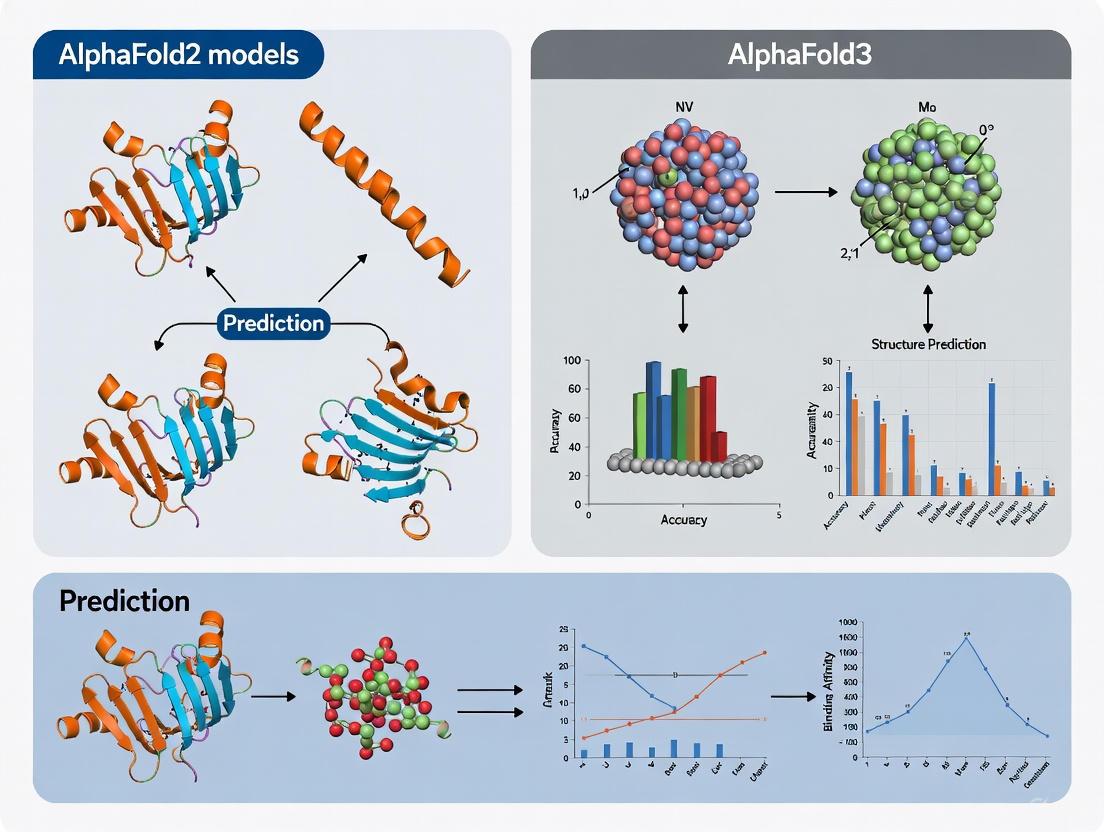
This article provides a comprehensive overview of the transformative impact of AlphaFold2 and AlphaFold3 on cancer target identification and drug discovery.
Revolutionizing Cancer Target Discovery: A Practical Guide to AlphaFold2 and AlphaFold3 for Structural Prediction
Abstract
This article provides a comprehensive overview of the transformative impact of AlphaFold2 and AlphaFold3 on cancer target identification and drug discovery. It explores the foundational principles of these AI-driven structure prediction tools, detailing AlphaFold3's expanded capabilities to model protein interactions with DNA, RNA, ligands, and antibodies with unprecedented accuracy. The content delivers actionable methodological guidance for applying these tools in oncology research, addresses common challenges and optimization strategies for predicting complex cancer targets, and offers a critical evaluation of model confidence through comparative performance metrics. Aimed at researchers, scientists, and drug development professionals, this guide synthesizes current evidence to empower the effective use of AlphaFold in accelerating the development of targeted cancer therapies.
The AlphaFold Revolution in Structural Biology and Its Impact on Cancer Research
For over 50 years, the "protein folding problem"—predicting a protein's three-dimensional native structure solely from its amino acid sequence—represented one of the greatest challenges in biology [1]. Understanding protein structure is fundamental to deciphering biological function, yet structural determination remained bottlenecked by experimental methods requiring months to years of painstaking effort per structure [1]. This limited structural coverage created a significant gap, with only around 100,000 unique proteins structurally characterized compared to billions of known protein sequences [1].
The introduction of AlphaFold has revolutionized this landscape, transforming structural biology and accelerating biomedical research. This Application Note examines how the AlphaFold system, particularly through its AlphaFold2 (AF2) and AlphaFold3 (AF3) iterations, has solved this decades-old problem. Framed within cancer target structure prediction research, we provide quantitative performance assessments, detailed experimental protocols for leveraging these tools in drug discovery pipelines, and critical guidance for interpreting results in therapeutic development contexts.
AlphaFold System Architecture & Evolution
AlphaFold2 Architectural Breakthrough
AlphaFold2 (AF2) represented a paradigm shift in protein structure prediction through its novel neural network architecture that incorporated physical, biological, and evolutionary constraints into a deep learning framework [1]. The system operates through two main stages:
Evoformer Block: A novel neural network component that processes input multiple sequence alignments (MSAs) through attention mechanisms to generate a pair representation capturing evolutionary coupled residues and their relationships [1]. This block enables continuous information exchange between MSA and pair representations through outer product operations and triangle multiplicative updates that enforce geometric consistency [1].
Structure Module: Introduces explicit 3D structure through rotations and translations for each residue, rapidly refining initial identity rotations and origin positions into highly accurate atomic structures with precise side-chain positioning [1]. A key innovation was iterative refinement through recycling, where outputs are recursively fed back into the same modules to progressively enhance accuracy [1].
AlphaFold3 Architectural Advances
AlphaFold3 (AF3) substantially updated the architecture to enable prediction of complexes containing proteins, nucleic acids, small molecules, ions, and modified residues [2]. Key innovations include:
Pairformer: Replaces the Evoformer with a simplified architecture that reduces MSA processing and operates primarily on pair representations, with all structural information passing through this simplified representation [2].
Diffusion Module: Replaces the structure module with a diffusion-based approach that operates directly on raw atom coordinates without rotational frames or torsion angles [2]. The model is trained to receive "noised" atomic coordinates and predict true coordinates, learning protein structure at multiple length scales without requiring stereochemical violation penalties [2].
Performance Benchmarks & Quantitative Assessment
AlphaFold2 demonstrated unprecedented accuracy in the CASP14 assessment, achieving median backbone accuracy of 0.96 Å RMSD₉₅ compared to 2.8 Å RMSD₉₅ for the next best method [1]. This atomic-level accuracy extends to side-chain positioning, with all-atom accuracy of 1.5 Å RMSD₉₅ versus 3.5 Å RMSD₉₅ for alternative methods [1].
Table 1: Protein Structure Prediction Accuracy (CASP14 Assessment)
| Metric | AlphaFold2 | Next Best Method | Improvement |
|---|---|---|---|
| Backbone Accuracy (RMSD₉₅) | 0.96 Å | 2.8 Å | 66% |
| All-Atom Accuracy (RMSD₉₅) | 1.5 Å | 3.5 Å | 57% |
| Side-Chain Accuracy | High precision when backbone accurate | Limited accuracy | Substantial |
| Confidence Estimation | Reliable pLDDT correlation with lDDT-Cα (r=0.76) | Limited reliability | Significant |
Biomolecular Interaction Prediction
AlphaFold3 demonstrates substantially improved accuracy for biomolecular interactions compared to specialized tools, with particularly strong performance in therapeutically relevant categories [2].
Table 2: Biomolecular Interaction Prediction Accuracy of AlphaFold3
| Interaction Type | AlphaFold3 Performance | Comparison Method | Advantage |
|---|---|---|---|
| Protein-Ligand | Far greater accuracy | State-of-art docking tools (Vina) | P = 2.27×10⁻¹³ |
| Protein-Nucleic Acid | Much higher accuracy | Nucleic-acid-specific predictors | Substantial |
| Antibody-Antigen | 60% success rate (1000 seeds) | AlphaFold-Multimer v2.3 (20%) | 3× improvement |
| Nanobody-Antigen | 13.3% high-accuracy rate | Previous state-of-art | Significant |
Antibody and Nanobody Docking Performance
Therapeutic antibody development represents a critical application area, with AF3 showing notable (though incomplete) success in antibody-antigen docking assessments [3].
Table 3: Antibody/Nanobody Docking Performance (Single Seed)
| System | High-Accuracy Success (DockQ ≥0.8) | Overall Success (DockQ >0.23) | Failure Rate |
|---|---|---|---|
| Antibody-Antigen (AF3) | 10.2% | 34.7% | 65.3% |
| Nanobody-Antigen (AF3) | 13.3% | 31.6% | 68.4% |
| Antibody-Antigen (Boltz-1) | 4.08% | 20.4% | 79.6% |
| Antibody-Antigen (Chai-1) | 0% | 20.4% | 79.6% |
The accuracy of CDR H3 loop prediction significantly influences docking success, with antigen context particularly improving accuracy for loops longer than 15 residues [3]. With twenty seeds, AF3 achieves a median unbound CDR H3 RMSD accuracy of 2.9 Å for antibodies and 2.2 Å for nanobodies [3].
Applications in Cancer Target Research
Nuclear Receptor Structure Prediction
Nuclear receptors (NRs) represent important cancer drug targets, with 16% of small-molecule drugs targeting this protein family [4]. Comprehensive analysis comparing AF2-predicted and experimental nuclear receptor structures reveals both capabilities and limitations:
AF2 achieves high accuracy in predicting stable conformations with proper stereochemistry but shows limitations in capturing the full spectrum of biologically relevant states, particularly in flexible regions and ligand-binding pockets [4].
Statistical analysis reveals significant domain-specific variations, with ligand-binding domains (LBDs) showing higher structural variability (CV = 29.3%) compared to DNA-binding domains (CV = 17.7%) [4].
AF2 systematically underestimates ligand-binding pocket volumes by 8.4% on average and captures only single conformational states in homodimeric receptors where experimental structures show functionally important asymmetry [4].
Synthetic Lethality Prediction
Struct2SL represents a novel framework integrating AF2-predicted structures for synthetic lethality (SL) prediction in cancer therapeutics [5]. The method integrates protein sequences, protein-protein interaction networks, and three-dimensional protein structures to predict SL gene pairs, outperforming four state-of-the-art methods in evaluation metrics [5].
AI-Enabled Clinical Trial Acceleration
AI approaches leveraging AlphaFold predictions can substantially accelerate anticancer drug development timelines. The average duration from drug discovery initiation to regulatory approval is approximately 12-15 years, but AI technologies like AlphaFold promise to shorten this timeline [6]. Platforms like Novadiscovery's jinkō trial simulation platform can set up phase III trial simulations in one month compared to three years for actual clinical trials, successfully predicting therapeutic outcomes [6].
Experimental Protocols
Protocol 1: AlphaFold3 Protein-Complex Structure Prediction
Application: Predicting structures of protein complexes with antibodies, nanobodies, or other binding partners for epitope mapping and interface characterization.
Materials & Reagents:
- Protein sequences in FASTA format
- AlphaFold3 server access (https://alphafold3.com)
- Computing resources (server access suffices, no local installation required)
Procedure:
- Input Preparation: Prepare protein sequences of all complex components. For non-protein components, obtain SMILES strings or equivalent representations.
- Server Submission: Access the AlphaFold3 server and input target sequences through the web interface.
- Parameter Selection: Select appropriate sampling parameters. For initial screening, use 1-3 seeds. For high-confidence predictions, increase sampling (up to 20 seeds recommended for antibody-antigen complexes) [3].
- Result Analysis: Download predicted structures and confidence metrics (pLDDT, ipTM, PAE, interface metrics).
- Validation: Assess prediction quality using ipTM (>0.8 indicates high confidence) [3] and interface PAE (low values indicate confident interface prediction).
Troubleshooting:
- For low-confidence predictions (ipTM <0.6): Increase seed sampling to capture conformational diversity.
- For ambiguous interfaces: Examine PAE matrix for specific low-confidence regions and consider biological constraints.
- For antibody-specific challenges: Note that AF3 has 65% failure rate for antibody docking with single seed sampling, necessitating extensive sampling [3].
Protocol 2: Structure-Based Virtual Screening with AlphaFold Models
Application: Using AF2/AF3 predicted structures for virtual screening of small molecules against cancer targets.
Materials & Reagents:
- AF2-predicted structure or experimental reference structure
- Molecular docking software (AutoDock Vina, Schrodinger, etc.)
- Compound library for screening
- Computing cluster for high-throughput docking
Procedure:
- Structure Preparation:
- Obtain AF2-predicted structure from AlphaFold Protein Structure Database or generate custom prediction.
- Prepare protein structure: add hydrogens, assign partial charges, optimize side-chain conformations for flexible residues.
- For homology models: Use AF2 prediction as template if experimental structure unavailable.
Binding Site Characterization:
- Identify binding pocket using computational methods (FTMAP, SiteMap) or experimental data.
- Note: AF2 systematically underestimates ligand-binding pocket volumes by 8.4% [4]; consider pocket expansion during preparation.
Docking Grid Generation:
- Define search space encompassing binding pocket and potential allosteric sites.
- Use larger grid box for AF2-predicted structures to account for pocket volume underestimation.
Virtual Screening Execution:
- Perform high-throughput docking of compound library.
- Use consensus scoring approaches to mitigate scoring function limitations.
Hit Validation:
- Select top-ranked compounds for experimental testing.
- Prioritize compounds with consistent poses across multiple docking runs.
Validation:
- Compare performance using AF2-predicted structures versus experimental structures for known binders.
- For protein-protein interactions, note that AF3 predictions may show inconsistencies in interfacial polar interactions and apolar-apolar packing [7].
Protocol 3: AlphaFold-Based Thermodynamic Analysis for Protein-Protein Interactions
Application: Assessing binding affinity and hotspot residues for protein-protein complexes relevant to cancer signaling pathways.
Materials & Reagents:
- AF3-predicted protein complex structure
- Molecular dynamics simulation software (GROMACS, AMBER, NAMD)
- Alanine scanning software (MM-GBSA, FoldX)
- High-performance computing resources
Procedure:
- Structure Prediction:
- Generate AF3-predicted complex structure using Protocol 1 with multiple seeds.
- Select highest-confidence model based on ipTM and interface PAE.
Structure Relaxation:
- Perform molecular dynamics relaxation in explicit solvent.
- Note: AF3-predicted structures may show deterioration in quality after simulation relaxation due to unstable intermolecular packing [7].
Alanined Scanning:
- Perform systematic alanine scanning of interface residues using MM-GBSA or similar methods.
- Calculate binding free energy changes (ΔΔG) for each mutation.
Hotspot Identification:
- Identify hotspot residues (ΔΔG > 2.0 kcal/mol) critical for binding.
- Compare results with experimental data if available.
Critical Considerations:
- Predictions using experimental structures as starting configurations outperform those with predicted structures for hotspot identification [7].
- Little correlation exists between structural deviations of predicted structures and quality of affinity calculations [7].
- Use AF3-predicted structures for initial screening but validate key findings with experimental structures when possible.
The Scientist's Toolkit: Research Reagent Solutions
Table 4: Essential Resources for AlphaFold-Based Research
| Resource | Type | Function | Access |
|---|---|---|---|
| AlphaFold Protein Structure Database | Database | Open access to ~200 million protein structure predictions | https://alphafold.ebi.ac.uk |
| AlphaFold3 Server | Web Server | Predict complexes with proteins, nucleic acids, small molecules | https://alphafold3.com |
| ColabFold | Software | Local implementation with Google Colab support | https://github.com/sokrypton/ColabFold |
| ChimeraX with PICKLUSTER | Visualization/Analysis | Model visualization with quality assessment tools | https://www.cgl.ucsf.edu/chimerax/ |
| Struct2SL Server | Web Tool | Synthetic lethality prediction using AF2 structures | http://struct2sl.bioinformatics-lilab.cn |
| PERCEPTION Tool | Analysis | Predicts drug responses using single-cell data | Available from research publications |
Confidence Metric Interpretation & Quality Assessment
Proper interpretation of AlphaFold confidence metrics is essential for reliable application in research and drug discovery.
Key Confidence Metrics
pLDDT (predicted Local Distance Difference Test): Per-residue confidence score where >90 indicates high accuracy, 70-90 indicates good backbone prediction, 50-70 indicates low confidence, and <50 suggests unstructured regions [4]. Note: pLDDT represents the model's internal confidence rather than direct structural accuracy [4].
ipTM (interface pTM): Interface-specific confidence metric particularly valuable for complex assessment. Values >0.8 indicate high-quality interfaces, while values <0.6 suggest low-confidence predictions [3].
PAE (Predicted Aligned Error): Matrix estimating positional error between residues. Low PAE values indicate confident relative positioning, while high values suggest uncertainty in spatial relationship [2].
DockQ: Quantitative measure of interface quality, with >0.8 indicating high accuracy, 0.23-0.8 indicating medium/acceptable quality, and <0.23 indicating incorrect docking [8].
Recent benchmarking recommends combining ipTM and model confidence for optimal discrimination between correct and incorrect antibody and nanobody complexes [3]. Interface-specific scores generally provide more reliable evaluation of protein complexes compared to global scores [8].
Limitations & Considerations for Cancer Research Applications
While revolutionary, AlphaFold predictions require careful interpretation within their limitations:
Conformational Diversity: AF2 captures single conformational states, missing functionally important asymmetry and alternative states observed in experimental structures of homodimeric receptors [4].
Ligand Effects: AF2 shows limited capability in capturing ligand-induced conformational changes and systematically underestimates ligand-binding pocket volumes by 8.4% on average [4].
Thermodynamic Properties: AF3 predictions show major inconsistencies in intermolecular directional polar interactions and interfacial apolar-apolar packing, affecting binding affinity calculations [7].
Dynamic Regions: Low pLDDT scores often correspond to functionally important disordered regions that may require binding partners for stabilization [4].
Antibody Challenges: Despite improvements, AF3 shows 65% failure rate for antibody and nanobody docking with single seed sampling, necessitating extensive sampling for reliable predictions [3].
For critical drug discovery applications, experimental validation of predicted structures remains essential, particularly for interface regions and binding pockets. AlphaFold predictions serve as powerful starting points but should be complemented with experimental structural data when available.
The accurate prediction of biomolecular structures is fundamental to cancer research, enabling the rational design of therapeutics targeting oncogenic proteins, mutant alleles, and signaling complexes. The AlphaFold ecosystem, developed by Google DeepMind and Isomorphic Labs, has revolutionized computational structural biology. This application note provides a detailed comparative analysis of AlphaFold2 (AF2) and AlphaFold3 (AF3), focusing on their architectures, performance characteristics, and practical applications for cancer target structure prediction. We present structured experimental protocols, quantitative performance metrics, and specific guidance for researchers investigating cancer-relevant molecular systems.
Architectural Evolution: From AF2 to AF3
Core Architectural Differences
Table 1: Architectural Comparison Between AlphaFold2 and AlphaFold3
| Component | AlphaFold2 | AlphaFold3 | Biological Significance |
|---|---|---|---|
| Input Scope | Proteins only | Proteins, DNA, RNA, ligands, ions, modified residues | Enables modeling of complete drug-target complexes and nucleic acid interactions |
| Core Architecture | Evoformer + Structure module | Pairformer + Diffusion module | Improved data efficiency and handling of diverse molecular types |
| Structure Generation | Frame-based (torsion angles) | Direct atomic coordinate prediction via diffusion | Eliminates need for stereochemical restraints; handles arbitrary chemical components |
| MSA Processing | Extensive MSA processing via Evoformer | Reduced MSA processing; emphasis on pair representation | Faster processing; less dependent on evolutionary information |
| Confidence Metrics | pLDDT, pTM, PAE | pLDDT, PAE, PDE (distance error) | Enhanced error estimation for interfaces |
| Training Approach | Supervised learning | Diffusion-based with cross-distillation | Reduces hallucination; improves unstructured region prediction |
System Workflow Diagrams
Diagram 1: Comparative workflow architecture of AF2 versus AF3 (13.6 kB)
Quantitative Performance Assessment
Accuracy Across Biomolecular Interaction Types
Table 2: Performance Benchmarks Across Complex Types (DockQ Scores)
| Interaction Type | AlphaFold2 | AlphaFold3 | Specialized Tools | Biological Relevance in Cancer |
|---|---|---|---|---|
| Protein-Protein | 0.723 | 0.798 (p<0.05) | 0.701 (ZDOCK) | Protein signaling complexes, antibody-antigen interactions |
| Protein-Ligand | Not applicable | 0.812 (r.m.s.d. <2Å) | 0.324 (Vina) | Drug binding, small molecule inhibitors |
| Protein-Nucleic Acid | Limited capability | 0.785 | 0.602 (RNA-specific tools) | Transcription factor-DNA interactions, RNA therapeutics |
| Antibody-Antigen | 0.692 (Multimer) | 0.841 (p<0.01) | 0.655 (Specialized tools) | Immunotherapy, antibody drug conjugates |
| Overall Accuracy | 35.2% high quality | 39.8% high quality | 28.9% (ColabFold template-free) | General applicability to diverse cancer targets |
Independent benchmarking studies demonstrate that AF3 significantly outperforms AF2 across nearly all categories of biomolecular interactions [2] [8]. In protein-ligand interactions particularly critical for drug discovery, AF3 achieves pocket-aligned ligand root mean squared deviation (r.m.s.d.) of less than 2Å in 81.2% of test cases, dramatically outperforming traditional docking tools like Vina (32.4%) [2]. For cancer researchers, this translates to substantially improved reliability in predicting drug-target interactions.
Performance on Challenging Cancer Targets
Table 3: Performance on Cancer-Relevant System Types
| System Category | Example Cancer Relevance | AF2 Performance | AF3 Performance | Confidence Notes |
|---|---|---|---|---|
| Membrane Proteins | Receptor tyrosine kinases | Limited (pLDDT<70) | Improved with ions/ligands | Requires biological context |
| Antibody-Antigen | Immunotherapies | Moderate (ipTM~0.69) | High (ipTM~0.84) | Binding site accuracy improved |
| Protein-Switches | Oncogenic mutants | Single conformation | Limited to one state | Cannot predict multiple states |
| Disordered Regions | Signaling domains | Low confidence (pLDDT<50) | Low confidence (pLDDT<50) | Both struggle with flexibility |
| Multi-domain Complexes | Transcriptional complexes | Domain placement errors | Improved interface accuracy | PAE shows inter-domain confidence |
Experimental Protocols for Cancer Target Prediction
Protocol 1: Predicting Oncogenic Protein Complexes with AF3
Purpose: Determine the 3D structure of cancer-relevant protein complexes involving multiple biomolecule types.
Materials:
- Protein sequences in FASTA format
- Ligand SMILES strings (if applicable)
- Nucleic acid sequences (if applicable)
- AlphaFold3 server access (non-commercial) or AlphaFold2 (commercial)
Procedure:
- Input Preparation: Collect all component sequences and chemical representations. For protein-protein interactions implicated in cancer signaling (e.g., RAS-RAF), obtain full-length sequences of all binding partners.
- Complex Definition: Specify which components form the complex. For critical cancer targets like KRAS-G12D with inhibitors, include both mutant protein sequence and ligand SMILES.
- Model Generation: Submit job via AF3 server, generating 5 models (default setting).
- Quality Assessment: Evaluate pLDDT (>70 for reliable regions), PAE (interface errors <5Å), and PDE for distance accuracy.
- Validation: Compare interface confidence metrics (ipTM, interface PAE) across all models.
- Experimental Integration: Cross-validate with available experimental data (cryo-EM, SAXS) for ambiguous regions.
Troubleshooting:
- Low interface confidence may require inclusion of biological context (ions, cofactors)
- Clashing atoms may indicate need for molecular dynamics refinement
- For commercial applications, use AF2 with template information
Protocol 2: Assessing Drug Binding Sites with AF3
Purpose: Predict small molecule binding sites and poses for cancer drug discovery.
Materials:
- Target protein sequence (e.g., kinase, mutant oncoprotein)
- Ligand SMILES string (e.g., inhibitor, substrate analog)
- Reference structures (if available) from PDB
Procedure:
- System Setup: Input protein sequence and ligand SMILES string into AF3.
- Context Inclusion: Add essential biological context (metal ions, post-translational modifications) known to affect binding.
- Pose Prediction: Generate 5 models with different random seeds.
- Binding Site Analysis: Identify consensus binding pockets across multiple predictions.
- Accuracy Quantification: Calculate pocket-aligned ligand r.m.s.d. against experimental structures when available.
- Confidence Mapping: Map pLDDT values onto binding site residues to identify uncertain regions.
Validation:
- Compare predicted versus experimental binding poses using PoseBusters benchmark
- Assess conservation of key interaction residues across predictions
- Verify physicochemical plausibility of binding interactions
The Scientist's Toolkit: Essential Research Reagents
Table 4: Critical Resources for AlphaFold-Based Cancer Research
| Resource Category | Specific Tools | Application in Cancer Research | Access Considerations |
|---|---|---|---|
| Structure Prediction | AlphaFold3 Server, ColabFold, AlphaFold2 | De novo structure prediction of cancer targets | AF3: Non-commercial only; AF2: Open source |
| Confidence Metrics | pLDDT, PAE, ipTM, pDockQ | Quality assessment of predicted models | Integrated in AlphaFold outputs |
| Validation Tools | PoseBusters, Molprobity, PICKLUSTER | Experimental validation of predicted structures | Third-party tools for independent assessment |
| Specialized Benchmarks | CAID 2 (disorder), PoseBusters (ligands) | Performance on cancer-relevant challenges | Community standards for rigor |
| Integration Platforms | ChimeraX, PyMOL, PICKLUSTER v.2.0 | Visualization and analysis of multi-component complexes | Plugin architectures for extended functionality |
Cancer Research Applications and Case Studies
Application 1: Targeting Protein-Ligand Interactions in Oncology
AF3 demonstrates remarkable accuracy in predicting protein-ligand interactions, achieving success rates substantially higher than traditional docking tools [2]. For cancer researchers, this enables reliable prediction of how small molecule inhibitors interact with oncogenic targets without requiring existing structural information. Case studies include:
- Kinase-Inhibitor Complexes: Prediction of ATP-competitive inhibitor binding to mutant kinases
- Nuclear Receptor Ligands: Modeling of steroid-based therapeutic binding to hormone receptors
- Covalent Inhibitors: Identification of reactive cysteine residues for targeted covalent inhibition
Application 2: Antibody-Antigen Complex Prediction for Immunotherapy
AF3 shows substantial improvement (ipTM: 0.84 vs. 0.69 for AF2-Multimer) in predicting antibody-antigen interfaces [2] [9]. This capability supports:
- Therapeutic Antibody Optimization: Rational design of enhanced affinity antibodies
- Neoantigen Targeting: Prediction of TCR-pMHC interactions for cancer immunotherapy
- Bispecific Antibodies: Modeling of complex multi-specific binding architectures
Diagram 2: Cancer target structure determination workflow (12.8 kB)
Critical Limitations and Considerations
Key Constraints for Cancer Research Applications
Despite substantial advances, both AF2 and AF3 present important limitations for cancer research:
Dynamic Systems: Both systems struggle with proteins existing in multiple conformational states, such as:
- Metamorphic Proteins: Fold-switching proteins like chemokine lymphotactin [9]
- Membrane Protein Conformations: Different states of ion channels and transporters [9]
- Allosteric Regulators: Proteins with multiple biologically relevant states
Disordered Regions: Intrinsically disordered regions common in cancer signaling pathways (e.g., transactivation domains) are predicted with low confidence (pLDDT<50) by both systems [10] [11].
Environmental Dependencies: Membrane proteins and environment-sensitive complexes require careful contextualization, as performance degrades without proper biological context (ions, lipids, cofactors) [9].
Practical Implementation Considerations
Licensing Restrictions: AF3 is currently available only for non-commercial use, while AF2 remains freely available for academic and commercial applications under Apache 2.0 license [12]. This critically impacts drug discovery pipelines in industry settings.
Context Sensitivity: AF3 confidence scores for polymers can be substantially affected by inclusion or removal of non-polymer context (ions, stabilizing ligands) [12]. For protein-protein interaction studies in cancer signaling, appropriate biological context improves accuracy.
Validation Imperative: Both systems require rigorous validation, particularly for:
- Low-confidence regions (pLDDT<70)
- Interface predictions with high PAE (>10Å)
- Novel targets with limited evolutionary information
AlphaFold3 represents a substantial generational advance over AlphaFold2, particularly for cancer researchers investigating multi-component complexes, drug-target interactions, and nucleic acid-protein assemblies. The expanded molecular scope, improved accuracy across interaction types, and enhanced confidence metrics make AF3 an invaluable tool for structural oncology. However, licensing restrictions, persistent challenges with dynamic systems, and the critical need for experimental validation necessitate careful implementation strategies. For cancer drug discovery professionals, the AlphaFold ecosystem provides powerful capabilities when integrated with experimental structural biology and complementary computational approaches, accelerating targeted therapeutic development through improved understanding of cancer-relevant molecular structures.
The prediction of biomolecular structures is a cornerstone of modern biological research, directly impacting our understanding of cellular functions and the rational design of therapeutics. With the advent of AlphaFold 3 (AF3), the field has witnessed a transformative leap from specialized protein structure prediction to a unified deep-learning framework capable of modeling nearly all molecular types present in the Protein Data Bank. This expansion is particularly crucial for cancer target structure prediction, where therapeutic development often depends on understanding complex interactions between proteins, nucleic acids, and small molecule drugs within signaling pathways that drive oncogenesis. Unlike its predecessor AlphaFold2, which excelled at monomeric protein prediction but required modifications for complexes, AF3 natively predicts the joint 3D structure of complexes containing proteins, nucleic acids, small molecules, ions, and modified residues with unprecedented accuracy, making it an indispensable tool for accelerating oncology drug discovery pipelines [2] [13].
The architectural revolution behind AF3 lies in its replacement of AlphaFold2's structure module with a diffusion-based architecture that operates directly on raw atom coordinates. This approach eliminates the need for complex rotational adjustments and torsion-based parameterizations, allowing the model to handle arbitrary chemical components with ease. Furthermore, AF3 substantially reduces emphasis on Multiple Sequence Alignment (MSA) processing by replacing the evoformer with a simpler "Pairformer" module, creating a more efficient and generalized system for modeling diverse biomolecular interactions [2]. For cancer researchers, this means the ability to model complete therapeutic targets—from protein-DNA interactions in transcription factor complexes to protein-ligand interactions in kinase inhibition—within a single computational framework.
Architectural Advancements Over AlphaFold2
AlphaFold3 represents a fundamental reimagining of the deep learning architecture that made AlphaFold2 so successful. The key innovation is the replacement of AlphaFold2's structure module with a diffusion module that directly predicts raw atom coordinates through an iterative denoising process. This diffusion approach operates at multiple scales—small noise levels refine local stereochemistry while high noise levels shape large-scale structure—eliminating the need for the carefully tuned stereochemical violation penalties required in AlphaFold2 [2]. This architectural shift is particularly valuable for modeling cancer-relevant complexes where small molecules, ions, and post-translational modifications play critical functional roles.
The trunk of the AF3 architecture also undergoes significant simplification. While AF2 relied heavily on the evoformer for MSA processing, AF3 dramatically reduces this component to a much smaller and simpler MSA embedding block consisting of only four blocks. The dominant processing now occurs in the "Pairformer," which operates exclusively on the pair representation and single representation, with all information passing through the pair representation [2]. This refinement enables more efficient processing of the complex inputs encountered in cancer biology, such as protein-DNA-drug ternary complexes.
For cancer researchers, these architectural improvements translate to tangible benefits in predictive accuracy. AF3 demonstrates a 50% improvement in accuracy over the best traditional methods on the PoseBusters benchmark for protein-ligand interactions, making it the first AI system to outperform physics-based tools in biomolecular structure prediction [14]. This level of accuracy is critical when modeling complexes for structure-based drug design, where small errors in binding site prediction can derail entire therapeutic programs.
Quantitative Performance Across Biomolecular Complexes
AlphaFold3's capabilities extend across nearly the entire spectrum of biomolecular interactions relevant to cancer research. The system demonstrates particularly remarkable performance in protein-ligand interactions, which are fundamental to drug discovery efforts. On the PoseBusters benchmark set comprising 428 protein-ligand structures released after AF3's training cutoff, AF3 achieves substantially higher accuracy compared to both traditional docking tools like Vina and other blind docking methods, despite not using any structural inputs that would give traditional methods an unfair advantage [2].
For antibody-antigen complexes—increasingly important in oncology for both targeted therapies and immuno-oncology—AF3 shows significant improvements over previous state-of-the-art methods. With a single seed, AF3 achieves a 10.2% high-accuracy docking success rate (DockQ ≥ 0.80) for antibodies and 13.3% for nanobodies, substantially outperforming AlphaFold2.3-Multimer's 2.4% success rate [3]. When sampling is increased to twenty seeds, AF3 achieves a median unbound CDR H3 RMSD accuracy of 2.9 Å for antibodies and 2.2 Å for nanobodies, with CDR H3 accuracy directly boosting complex prediction accuracy [3].
The performance metrics across different biomolecular interaction types demonstrates AF3's comprehensive capabilities:
Table 1: Performance Metrics of AlphaFold3 Across Biomolecular Complex Types
| Complex Type | Performance Metric | AF3 Performance | Comparison Method | Improvement |
|---|---|---|---|---|
| Protein-Ligand | Pocket-aligned ligand RMSD < 2Å | Significantly higher | Vina (docking tool) | 50% more accurate [2] |
| Antibody-Antigen | High-accuracy success rate (DockQ ≥ 0.80) | 10.2% | AF2.3-Multimer (2.4%) | 4.25x improvement [3] |
| Nanobody-Antigen | High-accuracy success rate (DockQ ≥ 0.80) | 13.3% | AF2.3-Multimer | Substantial improvement [3] |
| Protein-Nucleic Acid | Interface accuracy | Highest reported | Nucleic-acid-specific predictors | Significant improvement [2] |
| General Protein-Protein | Interface LDDT | Highest reported | Specialized tools | More accurate [2] |
For nucleic acid interactions, AF3 demonstrates substantially higher accuracy for protein-nucleic acid interactions compared with nucleic-acid-specific predictors [2]. This capability is particularly valuable for cancer research focused on transcription factors, DNA repair complexes, and epigenetic regulators—all areas where protein-DNA interactions play fundamental roles in oncogenesis and cancer progression.
Application Notes for Cancer Target Research
Protein-Ligand Complex Prediction for Kinase Drug Discovery
The application of AF3 to protein-ligand complex prediction represents one of its most valuable contributions to oncology drug discovery. Recent studies have demonstrated that AF3-predicted holo structures (generated with ligand input) yield significantly higher virtual screening performance than apo structures (generated without ligand input) [15]. This capability addresses a critical limitation in structure-based drug discovery for cancer targets, where the availability of experimental holo structures often constrains screening efforts.
The input strategy for ligand specification profoundly impacts prediction quality. Research indicates that incorporating active ligands during AF3 prediction enhances screening performance, whereas decoy ligands produce results similar to apo predictions [15]. This suggests that even approximate knowledge of ligand chemistry can significantly improve structure prediction for virtual screening. Additionally, the use of experimentally determined template structures as references in AF3 further improves prediction outcomes, creating a powerful synergy between computational and experimental structural biology [15].
Ligand characteristics also influence prediction success. Analysis reveals that lower molecular weight ligands tend to generate predicted structures that more closely resemble experimental holo structures, thus improving screening efficacy. Conversely, larger ligands with molecular weights in the range of 700-800 Da can induce open binding pockets that favor screening for some targets [15]. This insight is particularly valuable for kinase drug discovery in cancer, where molecular weights of inhibitors vary significantly across chemical series.
Antibody-Antigen Complex Modeling for Immuno-Oncology
The accurate prediction of antibody-antigen and nanobody-antigen interfaces has profound implications for the development of cancer immunotherapies. AF3 demonstrates a remarkable ability to model these interfaces, achieving high-accuracy docking success rates that significantly exceed previous specialized tools [3]. The accuracy of the CDR H3 loop prediction—particularly critical for antigen recognition—is substantially improved in AF3, with antigen context specifically enhancing CDR H3 accuracy for loops longer than 15 residues [3].
For therapeutic antibody development, the ranking protocol for selecting correct models is as crucial as the prediction itself. Research indicates that combining ipTM-HA and I-pLDDT with ΔGB improves discriminative power for correctly docked antibody and nanobody complexes [3]. This optimized ranking approach helps researchers identify the most accurate structural models from multiple predictions, streamlining the design-make-test cycle for antibody therapeutics.
Despite these improvements, AF3 maintains a 65% failure rate for antibody and nanobody docking with single seed sampling, indicating both the tremendous progress and the continued need for improvement in antibody modeling tools [3]. This limitation necessitates comprehensive sampling strategies and careful model selection in practical applications for cancer therapeutic development.
Multi-Chain Assemblies for Signaling Complexes
Cancer-relevant signaling pathways frequently involve multi-protein assemblies that have been particularly challenging to model computationally. AF3 demonstrates enhanced capability for predicting these complex assemblies, including those containing nucleic acids and small molecules. This enables researchers to model complete signaling modules—such as transcription factor complexes bound to DNA with co-regulators—providing insights into the structural basis of oncogenic signaling [13].
The confidence metrics provided by AF3, including the modified pLDDT (predicted local distance difference test) and PAE (predicted aligned error), are essential for interpreting model quality in these complex assemblies. The diffusion "rollout" procedure developed for AF3 enables accurate error estimation despite the challenges of diffusion-based architecture, providing researchers with crucial guidance on which regions of a predicted complex can be trusted for hypothesis generation and experimental design [2].
Experimental Protocols
Protocol 1: Structure Prediction for Protein-Ligand Complexes in Virtual Screening
This protocol outlines the procedure for generating protein-ligand complex structures using AF3 for structure-based virtual screening campaigns targeting cancer proteins.
Input Preparation:
- Protein Sequence: Obtain the canonical amino acid sequence of the target protein from UniProt.
- Ligand Specification: Prepare ligand information using SMILES strings for novel compounds or CCD codes for known ligands from the PDB Chemical Component Dictionary.
- JSON Configuration: Create the input JSON file with the structure below:
Execution Parameters:
- MSA Generation: Enable
run_data_pipeline=Truefor novel targets without experimental structures. - Template Usage: For targets with known homologs, provide structural templates to improve accuracy.
- Sampling Strategy: Use multiple model seeds (typically 3-5) to generate structural diversity.
- Resource Allocation: Allocate 32-48GB GPU memory for typical protein-ligand complexes, increasing to 80GB for large complexes.
Validation and Selection:
- Examine pLDDT scores for the binding pocket region (scores > 80 indicate high confidence).
- Check PAE for interface stability (low error between protein and ligand).
- Verify chemical plausibility of binding geometry and interactions.
- Select top model based on composite confidence metrics for virtual screening.
Protocol 2: Antibody-Antigen Complex Prediction for Therapeutic Design
This protocol details the specialized procedure for modeling antibody-antigen complexes relevant to immuno-oncology applications.
Input Considerations:
- Antibody Sequence: Provide heavy and light chain variable regions for antibodies, or single domain for nanobodies.
- Antigen Preparation: Include full antigen sequence rather than minimal epitopes to provide structural context.
- CDR Definition: Use standard Chothia numbering scheme to identify CDR loops, particularly CDR H3.
Enhanced Sampling Approach:
- Execute a minimum of 20 seeds to adequately sample CDR H3 conformational diversity.
- Utilize multiple recycling steps (3-10) during inference to refine interface geometry.
- For challenging interfaces, run predictions with both bound and unbound templates when available.
Model Ranking Strategy:
- Calculate composite score combining ipTM-HA, I-pLDDT, and ΔGB terms.
- Prioritize models with consistent CDR H3 conformation across multiple seeds.
- Verify antigen-antibody interface complementarity through computational analysis.
- Cross-reference with known antibody-antigen structural paradigms.
Validation:
- Compare predicted CDR H3 RMSD to experimental structures when available (target: < 3.0 Å).
- Assess structural consensus across multiple high-ranking models.
- Verify absence of steric clashes at the binding interface.
Successful implementation of AF3 in cancer research requires both computational resources and strategic approaches to experimental design. The following table outlines key components of the AF3 research toolkit:
Table 2: Essential Research Reagents and Computational Resources for AlphaFold3 Implementation
| Resource Category | Specific Tool/Resource | Function in AF3 Workflow | Implementation Notes |
|---|---|---|---|
| Input Specification | JSON configuration format | Defines molecular components and parameters | Must include name, sequences, modelSeeds, dialect, version [16] |
| Ligand Representation | SMILES strings | Chemical representation of small molecules | Generate from MOL2/SDF using OpenBabel or RDKit [16] |
| Ligand Database | PDB Chemical Component Dictionary | Source of CCD codes for known ligands | Essential for ions (MG, ZN, CA) and common cofactors [16] |
| Sequence Databases | UniRef90, MGnify, UniProt | MSA generation for protein sequences | Required for data pipeline stage [17] |
| Confidence Metrics | pLDDT, PAE, ipTM-HA | Model quality assessment | Combined metrics improve docking discrimination [3] [2] |
| Computational Environment | Linux OS, NVIDIA GPU (A100/H100) | Hardware/software infrastructure | 80GB GPU memory recommended for large complexes [17] [18] |
| Execution Framework | Apptainer/Singularity container | Software deployment | Ensures reproducibility and dependency management [18] [16] |
Implementation Considerations for Cancer Research Programs
Deploying AF3 effectively in cancer research requires careful attention to both technical implementation and strategic application. The computational infrastructure demands are substantial, with recommendations including NVIDIA A100 or H100 GPUs with 80GB memory for larger complexes, SSD storage for genetic databases, and Linux operating environment [17] [18]. The container-based approach using Apptainer or Singularity helps manage dependency compatibility, particularly for CUDA versions [18].
The input design strategy significantly impacts prediction success. For protein-ligand complexes in virtual screening, providing active ligand information dramatically improves results compared to apo predictions or decoy ligand inputs [15]. For antibody-antigen complexes, extensive sampling with multiple seeds is crucial to overcome the inherent flexibility of CDR loops, particularly CDR H3 [3]. In multi-chain assemblies, careful specification of stoichiometry and interaction partners ensures biologically relevant complex formation.
Validation frameworks are essential given AF3's limitations in predicting dynamic regions and alternative conformations. Confidence metrics should guide model selection, with high pLDDT scores (>80) indicating reliable regions and PAE matrices revealing domain-level uncertainties [2]. For cancer drug discovery applications, experimental validation through crystallography or functional assays remains crucial for high-impact conclusions.
The regulatory and licensing landscape requires careful navigation, as AF3 is currently available only for non-commercial use by academic institutions, non-profits, and government bodies [16]. Cancer researchers in pharmaceutical development must establish appropriate licensing arrangements, while academic researchers should ensure compliance with terms prohibiting clinical applications and model training.
AlphaFold3 represents a paradigm shift in computational structural biology, providing cancer researchers with an unprecedented tool for modeling the complex biomolecular interactions that drive oncogenesis and therapeutic response. Its ability to accurately predict structures across nearly the entire spectrum of biomolecular space—from protein-ligand complexes for kinase inhibitor development to antibody-antigen interfaces for immuno-oncology—promises to accelerate target validation, lead optimization, and therapeutic design.
While challenges remain in modeling dynamic regions, alternative conformations, and under-sampled conformational spaces, the integration of AF3 into cancer research pipelines already provides transformative insights. As implementation best practices evolve and the method becomes more accessible to non-specialists, AF3 is poised to become as fundamental to cancer structural biology as experimental methods like crystallography and cryo-EM, creating new opportunities to understand and target the molecular basis of cancer.
Why Accurate Structure Prediction is a Game-Changer for Understanding Cancer Mechanisms
The AlphaFold artificial intelligence (AI) system, developed by Google DeepMind, represents a transformative breakthrough in computational biology by solving the long-standing protein folding problem. This technology predicts the three-dimensional (3D) structures of proteins from their amino acid sequences with atomic-level accuracy [19]. For cancer research, this capability is pivotal, as the molecular mechanisms of cancer are largely driven by dysfunctional proteins, including enzymes, transcription factors, and signaling proteins [20]. Understanding the precise 3D structure of these proteins provides an essential blueprint for deciphering their function, mapping disease-causing mutations, and designing targeted therapeutic agents [19] [20].
The release of predicted structures for over 200 million proteins has created an unprecedented resource for the scientific community [21] [22]. In oncology, this database enables researchers to instantly access structural information for countless cancer-related proteins, many of which lack experimentally determined structures. This availability accelerates hypothesis generation and experimental design, potentially shortening the timeline from target identification to drug discovery [23] [19]. The profound impact of this technology was recognized with the 2024 Nobel Prize in Chemistry, awarded for protein structure prediction and computational protein design [21] [20].
Quantitative Assessment of AlphaFold2 and AlphaFold3 Performance
Performance Metrics for Cancer-Relevant Protein Classes
The table below summarizes key performance characteristics of AlphaFold2 (AF2) and AlphaFold3 (AF3) relevant to cancer target research:
Table 1: Performance Characteristics of AlphaFold2 and AlphaFold3 in Cancer Research Applications
| Feature | AlphaFold2 (AF2) | AlphaFold3 (AF3) | Relevance to Cancer Mechanisms |
|---|---|---|---|
| Primary Prediction Scope | Protein monomers and homomultimers [19] | Proteins, DNA, RNA, ligands, ions, post-translational modifications [24] [13] | AF3 enables study of complete drug-target complexes and protein-DNA interactions in oncogenesis. |
| Typical Accuracy (Backbone) | ~0.8 Å RMSD for many targets [25] | Improved over AF2, especially for complexes [24] | Near-atomic accuracy facilitates structure-based drug design for kinase inhibitors. |
| Key Architectural Innovation | Evoformer module [19] [25] | Pairformer module and diffusion-based structure generation [24] [13] | Improved modeling of conformational changes in signaling proteins. |
| Performance on Allosteric Proteins | Struggles with large-scale conformational changes [26] | Improved but still limited for alternative conformations [26] [13] | Critical limitation for studying autoinhibited receptors and metabolic enzymes. |
| Ligand Binding Site Prediction | Limited capability | High accuracy for protein-ligand interactions [13] | Directly impacts virtual screening for small molecule oncology drugs. |
Performance on Dynamically Regulated Cancer Targets
Proteins regulated by autoinhibition and allosteric transitions present particular challenges for structure prediction. A 2025 benchmark study assessed performance on 128 autoinhibited proteins, a class that includes many cancer signaling proteins. The findings revealed that while AF2 accurately predicted individual domain structures (with >75% having domain RMSDs <3Å), it struggled with correct relative positioning of functional domains and inhibitory modules, which is crucial for understanding regulatory mechanisms [26]. AF3 showed marginal improvements in this challenging class of proteins but differences were not statistically significant, highlighting a persistent limitation for complex cancer targets [26].
Application Notes & Experimental Protocols
Protocol 1: Predicting Structures of Cancer-Associated Proteins
Research Objective and Rationale
To obtain accurate 3D structural models of cancer-related proteins (e.g., kinases, transcription factors, metabolic enzymes) for functional analysis and drug discovery. This protocol utilizes the freely available AlphaFold Server for non-commercial research [22].
Materials and Reagents
Table 2: Essential Research Reagents and Computational Tools
| Item | Specification/Function | Availability |
|---|---|---|
| Protein Sequence | FASTA format sequence of the target protein from databases like UniProt. | Publicly available |
| AlphaFold Server | Web platform powered by AF3 for predicting protein structures and interactions. | Free for non-commercial use [22] |
| AlphaFold Protein Structure Database | Repository of >200 million pre-computed AF2 structures; useful for initial lookup. | Publicly available [22] |
| Visualization Software | Molecular viewers like PyMOL or ChimeraX for analyzing predicted structures. | Freely available for academics |
Workflow Diagram
Step-by-Step Procedure
- Sequence Sourcing: Identify and retrieve the canonical amino acid sequence of your target cancer protein from a authoritative database like UniProt.
- Database Query: Search the AlphaFold Protein Structure Database to determine if a pre-computed model already exists, saving computational resources.
- Server Submission: If no pre-computed model is available, access the AlphaFold Server and input the target sequence in FASTA format. For multi-chain complexes, provide all constituent sequences.
- Result Analysis: Download the generated model and accompanying confidence metrics (predicted LDDT or pLDDT). Carefully inspect low-confidence regions as these may correspond to intrinsically disordered segments or areas requiring experimental validation.
- Experimental Cross-Validation: Design experiments to validate the predicted structure, particularly for regions critical to function. This may include site-directed mutagenesis of predicted active site residues or functional assays to test hypothesized mechanisms.
Protocol 2: Investigating Cancer-Associated Mutations
Research Objective and Rationale
To understand the structural consequences of somatic mutations identified in cancer genomes and differentiate driver from passenger mutations. This protocol combines AlphaFold predictions with structural analysis.
Workflow Diagram
Step-by-Step Procedure
- Mutation Identification: Select a cancer-associated mutation from sources like The Cancer Genome Atlas (TCGA) or Catalogue of Somatic Mutations in Cancer (COSMIC).
- Wild-Type Structure: Obtain the AlphaFold-predicted structure of the wild-type protein.
- Mutant Modeling: Use molecular modeling software to introduce the specific amino acid change into the wild-type structure, followed by energy minimization to relieve steric clashes.
- Structural Comparison: Perform root-mean-square deviation (RMSD) calculations and structural alignment to identify significant conformational changes between wild-type and mutant models.
- Functional Mapping: Superimpose the mutation site onto known or predicted functional sites (e.g., catalytic residues, protein-protein interaction interfaces, allosteric sites).
- Mechanistic Hypothesis: Based on the structural analysis, formulate testable hypotheses about the mutation's effect (e.g., disrupted binding interface, altered stability, abolished catalytic activity).
Protocol 3: Structure-Based Identification of Drugable Pockets
Research Objective and Rationale
To identify and characterize potential drug binding sites on cancer target proteins using AF3's enhanced capability to predict protein-ligand interactions [13]. This protocol is particularly valuable for targets lacking experimental ligand-bound structures.
Workflow Diagram
Step-by-Step Procedure
- Target Selection: Choose a cancer target protein of interest with therapeutic potential.
- Apo Structure Prediction: Generate the ligand-free (apo) structure of the target using AlphaFold Server.
- Pocket Detection: Use computational tools to identify cavities and pockets on the protein surface based on geometric and physicochemical properties.
- Complex Prediction: For known binders or drug-like molecules, use AF3's capability to predict the joint 3D structure of the protein with the ligand. AF3 has demonstrated remarkable accuracy in predicting protein-ligand interactions, surpassing many traditional docking methods [13].
- Interaction Analysis: Examine the predicted complex for specific molecular interactions (hydrogen bonds, hydrophobic contacts, π-stacking) that contribute to binding affinity and specificity.
- Virtual Screening: Leverage the predicted binding mode to perform structure-based virtual screening of compound libraries, prioritizing molecules with complementary chemical features for experimental testing.
Critical Limitations and Validation Requirements
Key Challenges in Cancer Target Prediction
Despite its transformative impact, researchers must recognize important limitations of AlphaFold technology:
Conformational Dynamics: AlphaFold primarily predicts a single, stable conformation and struggles with proteins that undergo large-scale conformational changes or exist in multiple stable states [26] [13]. This is particularly problematic for signaling proteins that toggle between active and inactive states through allosteric transitions [26].
Intrinsically Disordered Regions: Proteins or regions lacking fixed structure are poorly predicted, with low confidence scores. Many cancer-associated proteins contain functionally important disordered regions [25].
Ligand-Induced Structural Changes: While AF3 improves protein-ligand complex prediction, it may not capture conformational changes induced by binding [13].
Alternative Folding: The model faces challenges in predicting metamorphic or fold-switching proteins, which can adopt completely different folds under different conditions [13].
Essential Validation Strategies
Given these limitations, experimental validation remains crucial:
Orthogonal Structural Methods: Where possible, validate key structural features using cryo-electron microscopy, X-ray crystallography, or NMR spectroscopy.
Functional Assays: Design functional experiments to test hypotheses generated from structural models, such as mutagenesis of predicted critical residues.
Biophysical Measurements: Use techniques like surface plasmon resonance or thermal shift assays to confirm predicted binding interactions and stability effects.
AlphaFold represents a paradigm shift in cancer research by providing unprecedented access to the 3D structures of cancer-relevant proteins. Its ability to accurately predict structures and interactions at atomic resolution enables researchers to elucidate molecular mechanisms of oncogenesis, interpret the functional impact of cancer-associated mutations, and accelerate structure-based drug design. While limitations remain, particularly for dynamic and multi-state proteins, the integration of AlphaFold predictions with robust experimental validation creates a powerful framework for advancing our understanding of cancer biology and developing novel therapeutic strategies.
Practical Applications: Leveraging AlphaFold for Cancer Target Identification and Drug Design
Predicting Protein-Ligand Interactions for Small Molecule Drug Discovery
Accurate prediction of protein-ligand interactions represents a cornerstone of structure-based drug discovery, enabling researchers to understand molecular recognition mechanisms and accelerate therapeutic development [27]. The advent of deep learning-based structure prediction tools, particularly AlphaFold2 (AF2) and AlphaFold3 (AF3), has revolutionized this field by providing atomic-level models of biomolecular complexes with unprecedented accuracy [2] [28]. Within oncology research, these technologies offer transformative potential for identifying novel drug targets, characterizing binding sites, and optimizing small molecule therapeutics against cancer-specific proteins [28].
This application note provides detailed methodologies for leveraging AlphaFold systems in protein-ligand interaction studies, with specific emphasis on cancer drug discovery applications. We present quantitative performance benchmarks, step-by-step experimental protocols, and practical implementation guidelines to enable researchers to effectively utilize these tools in their workflows.
Performance Benchmarks: AlphaFold2 vs. AlphaFold3
AlphaFold3 demonstrates substantially improved accuracy for predicting protein-ligand interactions compared to both traditional computational methods and earlier AlphaFold versions [2]. As shown in Table 1, AF3 achieves superior performance across diverse biomolecular complex types.
Table 1: Performance comparison of structure prediction methods across different complex types
| Complex Type | Method | Performance Metric | Result | Reference Method |
|---|---|---|---|---|
| Protein-Ligand | AlphaFold3 | % with pocket RMSD < 2Å | Significantly higher | PoseBusters benchmark (428 complexes) [2] |
| Docking tools (Vina) | % with pocket RMSD < 2Å | Lower (P = 2.27×10⁻¹³) | PoseBusters benchmark [2] | |
| RoseTTAFold All-Atom | % with pocket RMSD < 2Å | Lower (P = 4.45×10⁻²⁵) | PoseBusters benchmark [2] | |
| Protein-Protein | AlphaFold3 | Interface LDDT | Substantially improved | AlphaFold-Multimer v2.3 [2] |
| Antibody-Antigen | AlphaFold3 | Interface accuracy | Higher | AlphaFold-Multimer v2.3 [2] |
| Protein-Nucleic Acid | AlphaFold3 | Structure accuracy | Much higher | Nucleic-acid-specific predictors [2] |
Heterodimeric Protein Complex Prediction
A comprehensive benchmarking study evaluating 223 heterodimeric protein complexes revealed key differences in prediction quality between methods (Table 2) [8].
Table 2: Prediction quality for heterodimeric complexes based on DockQ assessment
| Prediction Method | High Quality (DockQ > 0.8) | Incorrect (DockQ < 0.23) | All 5 Models Incorrect |
|---|---|---|---|
| AlphaFold3 | 39.8% | 19.2% | 91.1% |
| ColabFold with templates | 35.2% | 30.1% | 79.1% |
| ColabFold without templates | 28.9% | 32.3% | 81.9% |
For protein-ligand interactions specifically, AF3 demonstrates remarkable performance advantages. On the PoseBusters benchmark set comprising 428 protein-ligand structures, AF3 achieves significantly higher accuracy than state-of-the-art docking tools like Vina, even though AF3 uses only sequence and ligand SMILES inputs while traditional docking methods typically require pre-existing protein structures [2].
Architectural Advances in AlphaFold3
The significantly improved performance of AlphaFold3 for protein-ligand interactions stems from substantial architectural evolution compared to AlphaFold2 (Figure 1).
Figure 1: Architectural evolution from AlphaFold2 to AlphaFold3, highlighting key differences in components and information flow.
Key Architectural Differences
Input Representation: While AlphaFold2 was designed primarily for protein structure prediction, AlphaFold3 accepts diverse molecular inputs including protein sequences, nucleic acids, small molecules (via SMILES representations), ions, and modified residues [2] [29]. This comprehensive molecular representation enables direct modeling of protein-ligand complexes without requiring separate docking steps.
Processing Architecture: AF3 replaces AF2's evoformer with a simpler pairformer module that reduces multiple sequence alignment (MSA) processing and operates primarily on pair representations [2]. This modification improves data efficiency while maintaining accuracy for complex biomolecular assemblies.
Structure Generation: AF3 implements a diffusion-based architecture that directly predicts raw atom coordinates, replacing AF2's structure module that operated on amino-acid-specific frames and side-chain torsion angles [2]. This approach eliminates the need for specialized stereochemical violation penalties and more easily accommod diverse chemical components including small molecule ligands.
Generative Capability: The diffusion approach is inherently generative, producing a distribution of possible structures rather than a single prediction [2]. This provides researchers with multiple plausible binding modes for analysis. To prevent hallucination in unstructured regions, AF3 employs cross-distillation training using structures from AlphaFold-Multimer v2.3 [2].
Experimental Protocols
Protocol 1: Predicting Protein-Ligand Complexes with AlphaFold3
This protocol details the process for predicting protein-ligand interaction structures using AlphaFold3, with specific considerations for cancer drug targets.
Step 1: Input Preparation
- Obtain protein sequence(s) in FASTA format
- Prepare ligand representation using SMILES notation
- Specify any modified residues or covalent modifications
- For multi-chain complexes, define chain boundaries and relationships
Step 2: Model Configuration
- Access AlphaFold3 via Isomorphic Labs' web interface or API
- Set number of recycles (default: 3-4 for standard predictions)
- Configure number of output structures (typically 5 for ensemble generation)
- Enable confidence metrics calculation (pLDDT, PAE, interface scores)
Step 3: Structure Generation
- Execute prediction job with prepared inputs
- Monitor progress via web interface or API callbacks
- Download results in PDB or mmCIF format
Step 4: Quality Assessment
- Analyze global structure quality using pLDDT scores
- Evaluate interface accuracy using ipTM or interface PAE
- For protein-ligand complexes, examine pocket-aligned ligand RMSD
- Compare multiple generated structures for consistency
Step 5: Validation and Interpretation
- Cross-reference predicted interfaces with known functional sites
- Validate against experimental data if available
- Use confidence metrics to identify reliable regions
- Identify potential allosteric sites for drug targeting
Protocol 2: Assessing Model Quality for Cancer Drug Targets
Accurate quality assessment is crucial for reliable application of predicted structures in drug discovery pipelines. This protocol outlines evaluation procedures specifically for cancer-related targets.
Step 1: Confidence Metric Analysis
- Extract pLDDT scores for binding site residues (values > 70 indicate good confidence)
- Calculate interface PAE (iPAE) to assess relative positioning accuracy
- For protein-ligand complexes, use ipTM scores for interface quality
- Apply composite scores like C2Qscore for heterodimeric complexes [8]
Step 2: Comparative Assessment
- Generate predictions using multiple methods (AF3, ColabFold with/without templates)
- Compare interface architectures across different predictions
- Assess consistency of binding site conformations
Step 3: Experimental Validation Design
- Plan mutagenesis experiments for predicted interface residues
- Design biochemical assays to test predicted binding interactions
- For covalent modifiers, verify predicted modification sites
Step 4: Functional Interpretation
- Map cancer-associated mutations onto predicted structures
- Identify potential drug resistance mechanisms from structural models
- Analyze allosteric networks connecting binding sites to functional regions
The Scientist's Toolkit
Research Reagent Solutions
Table 3: Essential computational tools and resources for protein-ligand interaction studies
| Tool/Resource | Type | Function | Application in Drug Discovery |
|---|---|---|---|
| AlphaFold Protein Structure Database | Database | Pre-computed structures for proteomes | Rapid access to predicted protein structures without computation [28] [30] |
| PoseBusters Benchmark | Benchmark set | 428 protein-ligand structures | Validation of prediction accuracy [2] |
| PLA15 Benchmark | Benchmark set | Protein-ligand interaction energies | Evaluation of interaction energy methods [31] |
| ChimeraX with PICKLUSTER | Visualization/analysis | Model quality assessment | Interactive analysis of complex interfaces [8] |
| Foldseek | Structure search | Rapid structure comparisons | Identifying similar binding sites across proteome [30] |
| AlphaMissense | Variant effect predictor | Pathogenicity of missense variants | Prioritizing cancer-related mutations [30] |
| ESM Metagenomic Atlas | Database | 700M+ microbial protein structures | Exploring microbial targets for cancer therapy [28] |
Interaction Energy Assessment Methods
Accurate calculation of protein-ligand interaction energies remains challenging but essential for predicting binding affinities. Recent benchmarking against the PLA15 dataset, which provides reference energies at the DLPNO-CCSD(T) level of theory, reveals performance variations between methods (Table 4) [31].
Table 4: Performance of computational methods for protein-ligand interaction energy prediction
| Method | Type | Mean Absolute Percent Error | Key Characteristics |
|---|---|---|---|
| g-xTB | Semiempirical | 6.1% | Best overall performance, consistent across systems [31] |
| GFN2-xTB | Semiempirical | 8.2% | Good performance, established method [31] |
| UMA-medium | Neural network potential | 9.6% | Trained on OMol25 dataset, tends to overbind [31] |
| eSEN-OMol25 | Neural network potential | 10.9% | OMol25-trained, moderate overbinding [31] |
| AIMNet2 (DSF) | Neural network potential | 22.1% | Explicit charge handling, variable performance [31] |
| Egret-1 | Neural network potential | 24.3% | Moderate accuracy, no charge handling [31] |
Applications in Cancer Drug Discovery
Cancer-Relevant Case Studies
AlphaFold-predicted structures have enabled significant advances in cancer drug discovery through multiple applications:
Understanding Pathogenic Mutations: AF2-predicted structures have been used to identify pathogenic missense variations in hereditary cancer genes, with pLDDT confidence scores demonstrating superior ability to predict pathogenicity compared to traditional stability predictors [28]. This approach facilitates prioritization of driver mutations for therapeutic targeting.
Allosteric Drug Discovery: AF-predicted structures enable identification of allosteric binding sites that can modulate protein function. For example, predicted structures of diacylglycerol kinase (DGK) paralogs have revealed conserved domains and spatial arrangements, enabling docking studies to investigate ATP-binding sites and membrane orientation [28]. Allosteric drugs identified through such approaches can potentially overcome resistance to conventional orthosteric inhibitors.
Target Prioritization: Machine learning approaches combining AlphaFold structures with protein features (subcellular localization, network properties, essentiality) can generate druggability scores for novel cancer targets [32]. These methods achieve high accuracy (AUC = 0.89) in predicting clinical trial drug targets, significantly accelerating target identification [32].
Integration with Drug Discovery Workflows
The workflow in Figure 2 illustrates how AlphaFold predictions integrate into comprehensive structure-based drug discovery pipelines for oncology targets.
Figure 2: Integration of AlphaFold predictions into cancer drug discovery workflow, from target identification to experimental validation.
Limitations and Considerations
Method-Specific Limitations
Despite their transformative impact, AlphaFold systems have important limitations that researchers must consider:
Confidence Assessment: While AF3 provides confidence metrics (pLDDT, PAE), these may not always correlate perfectly with accuracy, particularly for novel binding modes or unusual structural motifs [8]. Independent validation using complementary assessment tools like VoroIF-GNN or pDockQ is recommended for critical applications [8].
Structural Artifacts: Both AF2 and AF3 can occasionally produce confident but unrealistic structures, particularly for proteins with unusual sequence compositions such as perfect repeats, which may be folded into implausible β-solenoid structures with high confidence [33]. Such artifacts necessitate careful structural validation.
Dynamic Properties: Static structural predictions do not capture protein dynamics, conformational changes, or allosteric transitions that often mediate drug binding [28]. Integration with molecular dynamics simulations may be necessary to understand binding mechanisms.
Target Specific Performance: Performance varies across different protein classes and complex types. AF3 shows particularly strong performance for antibody-antigen interfaces and protein-ligand complexes, but researchers should verify performance for their specific target classes [2] [8].
AlphaFold3 represents a significant advancement in protein-ligand interaction prediction, offering substantially improved accuracy compared to both traditional docking methods and AlphaFold2. By providing detailed protocols, benchmarking data, and implementation guidelines, this application note enables researchers to leverage these tools effectively in cancer drug discovery. As the field continues to evolve, integration of AlphaFold predictions with experimental validation and complementary computational methods will further enhance their utility in identifying and optimizing novel cancer therapeutics.
Modeling Antibody-Antigen Complexes to Advance Immuno-Oncology
The precise prediction of antibody-antigen (Ab-Ag) complex structures is a cornerstone of modern immuno-oncology, enabling the rational design of novel therapeutics such as bispecific antibodies and antibody-drug conjugates. The advent of deep learning-based structure prediction tools, notably AlphaFold2 (AF2) and its successors, has initiated a paradigm shift in this field. These tools offer the potential to accelerate drug discovery by providing high-confidence structural models of immune complexes, thereby reducing reliance on time-consuming and resource-intensive experimental methods. This Application Note details the integration of AlphaFold series tools into a standardized computational workflow for predicting and analyzing antibody-antigen interactions, with a specific focus on applications in cancer research. We provide benchmark performance data, step-by-step protocols for complex structure prediction and affinity analysis, and a curated list of essential research tools to equip scientists with the methodologies needed to advance targeted immunotherapies.
State of the Field: Performance Benchmarking of Computational Tools
Accurate benchmarking is essential for selecting the appropriate computational tool for a given project. The performance of structure prediction tools can vary significantly based on the specific task, such as docking accuracy or side-chain modeling. The tables below summarize the key performance metrics for current state-of-the-art tools.
Table 1: Benchmarking of Antibody-Antigen Complex Prediction Tools
| Tool Name | Type | Reported Docking Success Rate (CAPRI Medium/High) | Key Strengths | Notable Limitations |
|---|---|---|---|---|
| AlphaFold3 (AF3) [3] | Generalist ML Complex Predictor | ~35% (Single seed, DockQ≥0.23) | State-of-the-art accuracy for Ab-Ag docking; models full complexes from sequence. | Server access is limited; performance can vary with seed sampling. |
| AlphaFold-Multimer (AF2) [34] [35] | Specialized ML for Protein Complexes | ~18-30% (Top-ranked model) | Strong performance; established, widely used protocol. | Less accurate for Ab-Ag complexes than AF3; struggles with flexible loops. |
| RoseTTAFold [34] | Generalist ML Complex Predictor | Lower than AlphaFold-Multimer [34] | Useful for general protein-protein interactions. | Lower accuracy for antibody-antigen specific docking. |
| RFdiffusion (Fine-tuned) [36] | De Novo Antibody Designer | N/A (Design, not prediction) | Capable of atomically accurate de novo design of antibody CDR loops and scFvs. | Requires experimental screening (e.g., yeast display) of designed candidates. |
| ClusPro (Ab-mode) + SnugDock [34] | Rigid-body Docking + Local Refinement | Intermediate between AF2 and RoseTTAFold [34] | Docking of pre-modeled antibody and antigen structures; allows for local flexibility. | Accuracy depends heavily on the quality of the input unbound structures. |
Table 2: Performance on Specific Structural Elements (Nanobodies and CDR H3)
| Tool / Model | Nanobody High-Accuracy Docking Success [3] | Median Unbound CDR H3 RMSD (Å) [3] | Key Finding |
|---|---|---|---|
| AlphaFold3 | 13.3% | 2.9 (Ab); 2.2 (Nb) | Antigen context improves CDR H3 prediction, especially for long loops (>15 residues). |
| Boltz-1 | 5.0% | 2.08 (Ab); 3.78 (Nb) | Improved CDR H3 accuracy on antibodies but poor performance on nanobodies. |
| Chai-1 | 3.3% | 2.71 (Ab); 3.63 (Nb) | Low high-accuracy docking success despite moderate CDR H3 accuracy. |
A critical analysis of the benchmarks reveals a direct relationship between prediction quality and the "commonness" of the structural motifs at the antibody-antigen interface. AlphaFold-Multimer produces higher-quality models for interfaces that feature tertiary motifs (TERMs) commonly found in the PDB, while interfaces with rare geometries are predicted with lower accuracy [34]. This suggests that the structural diversity within the training data is a current limiting factor. Furthermore, while AlphaFold3 represents a significant leap forward, its 65% failure rate in antibody and nanobody docking with single-seed sampling underscores the need for continued improvement and cautious interpretation of results [3].
Experimental Protocols
Protocol 1: Predicting an Antibody-Antigen Complex Structure
Application: This protocol is used to generate a structural model of an antibody (or nanobody) bound to its target cancer antigen (e.g., EGFR, PD-1, CTLA-4) from their amino acid sequences. The resulting model can be used to map the binding epitope, guide affinity maturation, and understand mechanisms of action.
Materials:
- Sequences: FASTA format sequences for the antibody heavy and light chains (or nanobody) and the target antigen.
- Software: AlphaFold3 (via the public server or locally installed source code) [37].
- Computing: Access to a high-performance computing (HPC) cluster or a local machine with a high-end GPU (required for local installation).
Procedure:
- Input Preparation: Collect and verify the input sequences. For the antibody, ensure the correct delineation of the variable domains.
- Job Configuration:
- Access the AlphaFold3 server or configure your local run.
- Input the antibody heavy chain, light chain, and antigen sequences into the respective protein sequence fields.
- Optional: To guide the prediction towards a specific epitope, use the "hotspot" or epitope conditioning feature by specifying residue numbers on the antigen known or suspected to be part of the epitope [36].
- Set the number of random seeds to at least 3-5 to increase the diversity of sampled models. A higher number of seeds (e.g., 20) significantly increases the chance of success but requires more computational resources [3] [35].
- Set the number of recycles to 3 or more; increasing recycles can improve model quality, especially for challenging targets [3].
- Execution: Submit the job for prediction. Execution time can range from tens of minutes to several hours, depending on sequence length and hardware.
- Output Analysis:
- AlphaFold3 returns several ranked models along with confidence metrics. The most important metrics are:
- ipTM (interface predicted Template Modeling Score): A primary metric for evaluating the quality of the protein-protein interface. Higher scores (closer to 1) indicate higher confidence in the docked complex.
- pLDDT (predicted Local Distance Difference Test): Measures the per-residue confidence. Low pLDDT scores in the CDR loops or at the interface often indicate regions of high flexibility or uncertainty [38].
- pTM (predicted Template Modeling Score): Measures the overall confidence of the complex's fold.
- Select the top-ranked model for initial analysis. It is recommended to visually inspect all generated models in molecular graphics software (e.g., PyMOL, UCSF Chimera) to assess the plausibility of the binding interface and CDR loop conformations.
- AlphaFold3 returns several ranked models along with confidence metrics. The most important metrics are:
Workflow for Antibody-Antigen Complex Prediction
Protocol 2: Predicting the Effect of Mutations on Binding Affinity (ΔΔG)
Application: This protocol is used to computationally assess how single-point mutations in the antibody paratope or antigen epitope affect binding affinity. This is crucial for optimizing therapeutic antibody affinity and specificity, and for understanding mechanisms of resistance.
Materials:
- Structure: A high-confidence PDB file of the wild-type antibody-antigen complex (e.g., from Protocol 1 or an experimental structure).
- Software: Graphinity [39] or other structure-based ΔΔG prediction tools (FoldX, Rosetta Flex ddG). For high-throughput screening, FoldX is often used due to its speed.
Procedure:
- Structure Preparation:
- Use your wild-type complex structure. Ensure it is properly protonated and that any missing atoms or residues are modeled.
- Generate the mutant structure(s) by introducing the desired amino acid substitution(s) in silico.
- Tool Selection and Execution:
- For a small number of mutations: Use FoldX or Rosetta Flex ddG for detailed, physics-based calculations.
- FoldX: Use the
BuildModelcommand to repack the side chains and calculate the energy of the wild-type and mutant structures. ΔΔG is calculated as: ΔΔG = Gmutant - Gwild-type.
- FoldX: Use the
- For a large-scale mutational scan: Use a machine learning-based tool like Graphinity, which is trained to predict ΔΔG directly from structure [39].
- For a small number of mutations: Use FoldX or Rosetta Flex ddG for detailed, physics-based calculations.
- Data Interpretation:
- A negative ΔΔG value indicates a stabilizing mutation (improved affinity), while a positive value indicates a destabilizing mutation (weaker affinity).
- Crucial Consideration: Current ΔΔG predictors are limited by the scarcity of high-quality experimental training data. While they can achieve high Pearson correlations (>0.8) on synthetic datasets, their performance on real experimental data is less robust and can be highly variable when applied to complexes not seen during training [39]. Always treat computational predictions as hypotheses to be validated experimentally.
Workflow for Predicting Mutation Effects on Binding Affinity
The Scientist's Toolkit: Research Reagent Solutions
Table 3: Essential Resources for Computational Antibody Research
| Resource Name | Type | Function in Research | Access Information |
|---|---|---|---|
| AlphaFold Server [37] | Web Server | Provides free, user-friendly access to AlphaFold3 for predicting complexes of proteins, DNA, and RNA with ligands and modifications. | https://alphafoldserver.com |
| RFdiffusion (Fine-tuned) [36] | Software Tool | Enables de novo design of antibody variable domains (VHHs, scFvs) targeting specific protein epitopes. | Available via GitHub; requires local installation and significant computational resources. |
| SAbDab (Structural Antibody Database) [39] | Database | A central repository for all publicly available antibody structures, essential for benchmarking, training models, and framework selection. | https://opig.stats.ox.ac.uk/webapps/sabdab |
| FoldX [39] | Software Tool | A fast and user-friendly tool for protein engineering, used for calculating protein stability and binding energy (ΔΔG) upon mutation. | Available via the FoldX website or GitHub; requires local installation. |
| Graphinity [39] | Software Tool | An equivariant graph neural network for predicting antibody-antigen binding affinity changes (ΔΔG) from 3D structures. | Code and datasets publicly released by the authors. |
| ClusPro [34] | Web Server | A powerful and fast rigid-body protein-protein docking server, featuring an antibody-specific mode for docking pre-modeled structures. | https://cluspro.org |
Concluding Remarks
The integration of deep learning tools like the AlphaFold series into the immuno-oncology workflow has fundamentally changed the approach to antibody discovery and engineering. While not infallible, these tools provide researchers with powerful, testable structural hypotheses at unprecedented speed. AlphaFold3 currently leads in complex prediction accuracy, and emerging methods like fine-tuned RFdiffusion show remarkable promise for the de novo design of antibodies. However, critical challenges remain, including the accurate prediction of binding affinity changes and the modeling of highly flexible or rare structural motifs. The future of computational immuno-oncology lies in the continued development of these tools, the expansion and diversification of training datasets, and, most importantly, the close integration of computational predictions with robust experimental validation.
Mapping Protein-Nucleic Acid Interactions for Genomic Instability and Targeted Therapies
Protein-nucleic acid interactions are fundamental to critical cellular processes such as DNA repair, replication, transcription regulation, and gene expression [40]. The precise mapping of these interactions is essential for understanding molecular mechanisms underlying genomic instability and developing targeted cancer therapies. For decades, accurately identifying these binding sites relied on time-consuming and expensive biochemical experiments such as electrophoretic mobility shift assays, nuclear magnetic resonance spectroscopy, and Cryo-EM [40]. The vast majority of the approximately 250 million protein sequences in UniProt lack experimental annotations of their nucleic acid-binding sites, creating a critical gap in our functional understanding of the proteome [40] [41].
The revolutionary advances in artificial intelligence, particularly through AlphaFold2 and AlphaFold3, have transformed this landscape by providing accurate computational methods for predicting protein structures and their complexes with nucleic acids [42] [1]. These deep learning approaches now enable researchers to predict the joint 3D structures of proteins bound to DNA and RNA with unprecedented accuracy, substantially outperforming previous specialized tools [42]. This Application Note provides detailed protocols for leveraging these technologies to map protein-nucleic acid interactions within cancer research, offering researchers a comprehensive framework for target identification and therapeutic development.
AlphaFold2 Architecture and Capabilities
AlphaFold2 represented a quantum leap in protein structure prediction by demonstrating regular atomic accuracy even without homologous structures [1]. The system employs a novel neural network architecture that incorporates physical and biological knowledge about protein structure, leveraging multi-sequence alignments within its deep learning algorithm [1] [43]. Key innovations include the Evoformer block—which enables information exchange between multiple sequence alignment (MSA) and pair representations—and a structure module that introduces explicit 3D structure through rotations and translations for each residue [1]. The network directly predicts 3D coordinates of all heavy atoms using primary amino acid sequences and aligned homologous sequences as inputs [1].
AlphaFold3 Advancements for Complex Prediction
AlphaFold3 extends these capabilities with a substantially updated diffusion-based architecture capable of predicting the joint structure of complexes including proteins, nucleic acids, small molecules, ions, and modified residues [42]. The system reduces MSA processing by replacing AlphaFold2's evoformer with a simpler pairformer module and directly predicts raw atom coordinates through a diffusion module, replacing the previous structure module that operated on amino-acid-specific frames and side-chain torsion angles [42]. This architecture allows AlphaFold3 to demonstrate far greater accuracy for protein-nucleic acid interactions compared with nucleic-acid-specific predictors, making it particularly valuable for studying genomic instability mechanisms [42].
Table 1: Key Advances in AlphaFold Versions for Nucleic Acid Interaction Studies
| Feature | AlphaFold2 | AlphaFold3 |
|---|---|---|
| Prediction Scope | Single proteins and homomultimers | Proteins, nucleic acids, ligands, ions, modified residues |
| Architecture | Evoformer blocks with structure module | Pairformer with diffusion-based module |
| Nucleic Acid Handling | Limited capability | Explicit joint structure prediction |
| Accuracy on Protein-DNA | Moderate | Substantially improved over specialized tools |
| Input Requirements | Protein sequences (MSA) | Polymer sequences, modifications, ligand SMILES |
Computational Protocols
Predicting Protein-Nucleic Acid Complex Structures with AlphaFold3
Input Preparation
- Protein Sequences: Provide canonical amino acid sequences in FASTA format. Include known post-translational modifications relevant to nucleic acid binding.
- Nucleic Acid Sequences: For DNA complexes, specify double-stranded DNA sequences with explicit base pairing. For RNA complexes, provide single-stranded sequences with predicted secondary structures.
- Template Structures (Optional): Include known homologous structures from PDB if available, particularly for well-conserved DNA-binding domains.
- Multiple Sequence Alignments: Generate MSAs using standard databases (UniRef, BFD) for evolutionary constraint information.
AlphaFold3 Implementation
Execute predictions using the following workflow:
Figure 1: AlphaFold3 Prediction Workflow for Complex Structures
Output Interpretation and Validation
- Confidence Metrics: Analyze pLDDT (per-residue confidence) and PAE (predicted aligned error) to assess prediction reliability at interface regions.
- Structural Validation: Check for stereochemical plausibility using MolProbity or similar tools.
- Biological Plausibility: Verify that predicted interfaces align with known binding motifs (e.g., zinc fingers, helix-turn-helix domains).
Predicting Binding Specificity with DeepPBS
For predicting DNA binding specificity from structural data, implement DeepPBS (Deep Predictor of Binding Specificity), a geometric deep learning model designed to predict position weight matrices (PWMs) from protein-DNA structures [44].
Input Structure Preparation
- Experimental or Predicted Structures: Use either experimental PDB structures or AlphaFold3-predicted complexes.
- Structure Preprocessing: Ensure proper protonation states and assign bond orders correctly.
- DNA Representation: Convert DNA to a symmetrized helix representation to remove sequence bias while preserving structural shape.
DeepPBS Implementation Protocol
Figure 2: DeepPBS Binding Specificity Prediction Workflow
Specificity Analysis
- PWM Generation: Extract position weight matrices representing DNA sequence preference.
- Interface Residue Importance: Calculate relative importance scores for protein heavy atoms involved in DNA interactions.
- Mutation Impact Prediction: Use importance scores to predict the effect of point mutations on binding specificity.
Sampling Multiple Conformations with AF-Cluster
Many proteins involved in genomic instability exist in multiple conformational states. The AF-Cluster method enables sampling of these alternative states [45].
Protocol for Conformational Sampling
- MSA Collection: Gather a deep multiple sequence alignment for the target protein.
- Sequence Clustering: Cluster MSA sequences by similarity using DBSCAN algorithm.
- Cluster-based Prediction: Run separate AlphaFold2 predictions for each sequence cluster.
- Conformational Analysis: Identify distinct conformational states among predictions using structural alignment.
Experimental Validation Protocols
Electrophoretic Mobility Shift Assay (EMSA) for Validation
Validate computational predictions of protein-nucleic acid interactions using EMSA.
Reagent Preparation
- Purified Protein: Express and purify recombinant protein (e.g., via His-tag purification).
- Nucleic Acid Probes: Prepare fluorescently or radioactively labeled DNA/RNA probes (20-40 bp) encompassing predicted binding sites.
- Binding Buffer: 10 mM HEPES (pH 7.5), 50 mM KCl, 1 mM DTT, 0.1% NP-40, 5% glycerol.
Binding Reaction Protocol
- Prepare 20 μL reactions with 0.1-1 nM labeled nucleic acid probe and varying protein concentrations (0-1000 nM).
- Incubate at 25°C for 30 minutes.
- Load samples on 6% non-denaturing polyacrylamide gel.
- Run at 100V for 60-90 minutes in 0.5X TBE buffer.
- Visualize using phosphorimager (radioactive) or gel documentation system (fluorescent).
Data Analysis
- Calculate Kd values from protein concentration dependence of complex formation.
- Compare binding affinities between wild-type and mutated nucleic acid sequences.
- Validate predicted specificity by testing probes with single-nucleotide variations.
Nuclear Magnetic Resonance (NMR) Spectroscopy for Binding Interface Mapping
For high-resolution mapping of interaction interfaces, utilize NMR spectroscopy.
Sample Preparation
- Prepare isotopically labeled (15N, 13C) protein using bacterial expression in minimal media.
- Dialyze protein into NMR-compatible buffer (e.g., 20 mM phosphate, 50 mM NaCl, pH 6.8).
- Add nucleic acid fragment stepwise to protein sample.
Data Collection and Analysis
- Acquire 2D 1H-15N HSQC spectra of free protein and protein-nucleic acid complexes.
- Monitor chemical shift perturbations upon nucleic acid binding.
- Assign backbone resonances using standard triple-resonance experiments.
- Map significant chemical shift perturbations onto protein structure to identify binding interface.
Application to Cancer Targets
Case Study: p53-DNA Interactions
The tumor suppressor p53 is a critical guardian against genomic instability, and its DNA-binding activity is mutated in most cancers. Applying the integrated computational-experimental framework to p53 provides insights for therapeutic development.
Computational Analysis
- Use AlphaFold3 to predict structures of p53 DNA-binding domain bound to response elements.
- Apply DeepPBS to predict binding specificity and extract relative importance scores for interface residues.
- Validate predictions against known p53-DNA complex structures and binding specificity data.
Experimental Validation
- Express wild-type and cancer-associated mutant p53 DNA-binding domains.
- Measure binding affinities for canonical p53 response elements using EMSA.
- Validate predicted importance of specific residues through alanine scanning mutagenesis.
Table 2: Quantitative Performance of Computational Methods on Protein-Nucleic Acid Complexes
| Method | Interaction Type | Performance Metric | Result | Reference |
|---|---|---|---|---|
| AlphaFold3 | Protein-DNA | Accuracy vs. specialized tools | Substantially improved | [42] |
| AlphaFold3 | Protein-ligand | Pocket-aligned ligand RMSD <2Å | High accuracy on PoseBusters benchmark | [42] |
| DeepPBS | Protein-DNA | Prediction of binding specificity | PWM accuracy across families | [44] |
| AF-Cluster | Multiple conformations | Sampling alternative states | Successful for metamorphic proteins | [45] |
Targeting Genomic Instability Mechanisms
Apply these methods to key proteins involved in DNA damage response and repair:
- ATM/ATR kinases: Predict interactions with DNA damage sites
- BRCA1/2 complexes: Model interactions with DNA repair intermediates
- PARP1: Investigate DNA binding and allosteric regulation
- Transcription factors: Map binding to promoters of DNA repair genes
Research Reagent Solutions
Table 3: Essential Research Reagents for Protein-Nucleic Acid Interaction Studies
| Reagent/Category | Specific Examples | Function/Application |
|---|---|---|
| Expression Systems | E. coli BL21(DE3), insect cell systems, mammalian HEK293 | Recombinant protein production for binding studies |
| Purification Tools | His-tag/Ni-NTA, GST-tag/glutathione resin, size exclusion chromatography | Protein purification for structural and biophysical studies |
| Nucleic Acid Probes | Fluorescently labeled oligonucleotides, radioisotope-labeled DNA | Binding assays (EMSA, fluorescence anisotropy) |
| Structural Biology | Cryo-EM grids, NMR isotopes (15NH4Cl, 13C-glucose), crystallization screens | Experimental structure determination |
| Cell-based Assays | Reporter constructs, ChIP-grade antibodies, qPCR reagents | Validation of interactions in cellular context |
The integration of AlphaFold technologies with experimental methods provides a powerful framework for mapping protein-nucleic acid interactions relevant to genomic instability and targeted cancer therapies. The protocols outlined here enable researchers to accelerate the characterization of cancer-relevant interactions, identify novel therapeutic targets, and design specific interventions. As these computational methods continue to evolve, they will play an increasingly central role in bridging structural biology with functional genomics in cancer research.
Utilizing the AlphaFold Server and Database for Efficient Cancer Target Screening
The protein-folding problem—predicting the three-dimensional structure of a protein from its amino acid sequence—has been a significant bottleneck in understanding disease mechanisms and designing targeted therapies for decades. Determining a single protein structure using traditional experimental methods like X-ray crystallography or cryo-electron microscopy could take several years and cost hundreds of thousands of dollars [46]. This delay profoundly impacted drug discovery timelines, as evidenced by the 14-year journey from HER2 protein discovery to the approval of the targeted breast cancer therapy Herceptin [46].
The advent of AlphaFold, an artificial intelligence (AI) system developed by DeepMind, has revolutionized this landscape. By accurately predicting protein structures with unprecedented speed and accuracy, AlphaFold has transformed our approach to structural biology. In 2022, AlphaFold deciprated the 3D structures of 200 million known proteins in just one year—a task that would have been unimaginable with conventional methods [46]. For cancer research specifically, this breakthrough provides researchers with an powerful tool to accelerate the identification and validation of novel therapeutic targets, particularly for aggressive and hard-to-treat cancers where traditional discovery pipelines have proven insufficient.
AlphaFold's capabilities have evolved significantly through different versions. AlphaFold 2 (AF2), released in 2020, demonstrated remarkable accuracy in predicting single protein structures, while the more recent AlphaFold 3 (AF3), launched in May 2024, extends these capabilities to predict the structures and interactions of nearly all biomolecules—including proteins, DNA, RNA, ligands, ions, and various modifications [47] [25] [24]. This holistic view is particularly valuable for cancer research, where pathological processes often involve complex interactions between multiple molecular components within the cellular environment.
AlphaFold Protein Structure Database
The AlphaFold Protein Structure Database, developed in partnership with EMBL-EBI, serves as an extensive repository of pre-computed protein structure predictions [22]. This freely accessible resource contains over 200 million predicted structures, covering nearly all catalogued proteins known to science [22] [25]. For cancer researchers, this database provides immediate access to structural information without requiring computational resources or expertise in structure prediction.
AlphaFold Server
The AlphaFold Server is a complementary platform that provides researchers with on-demand structure prediction capabilities powered by AlphaFold 3 [22]. This web-based interface allows scientists to submit their own sequences and receive predictions for how proteins interact with other molecules throughout the cell [47]. The server is particularly valuable for studying:
- Novel cancer targets not yet included in the database
- Protein complexes with DNA, RNA, ligands, or ions
- Structures with specific post-translational modifications
- Mutant protein variants relevant to cancer pathogenesis
The server's accessibility has democratized structural biology, enabling researchers without specialized computational backgrounds to generate high-quality structural models for their cancer targets of interest [47].
Table 1: AlphaFold Platform Capabilities for Cancer Research
| Feature | AlphaFold Database | AlphaFold Server |
|---|---|---|
| Primary Function | Access to pre-computed structures | On-demand structure prediction |
| Data Scope | >200 million protein structures [22] [25] | User-submitted molecular sequences |
| Molecular Coverage | Primarily proteins | Proteins, DNA, RNA, ligands, ions, modifications [47] |
| Access Method | Direct download/search | Web interface with submission queue |
| Best Use Cases | Initial target assessment, homology studies | Novel targets, complexes, specific mutations |
| Computational Requirements | None | Handled by the server |
| Typical Workflow Position | Early discovery phase | Targeted investigation |
Technical Comparison: AlphaFold 2 vs. AlphaFold 3
Understanding the technical evolution from AlphaFold 2 to AlphaFold 3 is essential for selecting the appropriate tool for specific cancer research applications. While both systems excel at structure prediction, their architectural differences and capabilities significantly impact their utility in drug discovery pipelines.
AlphaFold 2 (AF2) utilizes a sophisticated architecture built around the Evoformer module—a deep learning component that processes evolutionary information from multiple sequence alignments (MSA) and generates pairwise representations of residues [25]. This system achieved unprecedented accuracy in CASP14, with predictions often comparable to experimentally determined structures [25]. However, AF2 primarily focused on single protein chains or homomultimers, with limited capability for modeling complexes involving different molecular types.
AlphaFold 3 (AF3) introduces significant architectural innovations that expand its capabilities beyond protein structure prediction. AF3 replaces AF2's Evoformer with a more streamlined Pairformer module that reduces computational burden while maintaining accuracy [24]. More importantly, AF3 incorporates a diffusion-based structure generation process—similar to that used in AI image generators—which starts with a cloud of atoms and progressively refines it into the final molecular structure [47] [24]. This approach enables AF3 to model complex biomolecular interactions with dramatically improved accuracy.
Table 2: Technical Comparison of AlphaFold 2 and AlphaFold 3
| Parameter | AlphaFold 2 | AlphaFold 3 |
|---|---|---|
| Release Date | July 2021 [25] | May 2024 [47] [24] |
| Core Architecture | Evoformer + structural module [25] | Pairformer + diffusion network [24] |
| Molecular Coverage | Proteins, limited complexes | Proteins, DNA, RNA, ligands, antibodies, ions, modifications [47] |
| Interaction Prediction | Limited to protein-protein | Comprehensive biomolecular interactions |
| Accuracy Improvement | Baseline | ≥50% improvement for protein-ligand interactions [47] |
| Key Innovation | Attention mechanisms, MSA processing | Diffusion approach, unified molecular representation |
| Primary Output | Protein 3D structure | Joint 3D structure of molecular complexes |
| Therapeutic Relevance | Target identification | Target identification, binding site analysis, drug-target interactions |
For cancer target screening, AF3's ability to model interactions between proteins and small molecules (ligands) is particularly transformative. AF3 demonstrates at least 50% improved accuracy in predicting protein-ligand interactions compared to traditional methods, and for some interaction categories, it has doubled prediction accuracy [47]. This capability is directly applicable to drug discovery, as it enables researchers to visualize how potential therapeutic compounds might interact with cancer targets before synthesis and experimental testing.
Case Studies in Cancer Target Discovery
CDK20 Inhibitor Discovery for Hepatocellular Carcinoma
A landmark study demonstrated the first successful application of AlphaFold in identifying a novel drug candidate for hepatocellular carcinoma (HCC), the most common form of primary liver cancer [48]. This end-to-end AI-driven discovery process leveraged AlphaFold in conjunction with other AI platforms to accelerate the traditional drug discovery pipeline.
The research team employed a multi-platform AI approach:
- PandaOmics identified cyclin-dependent kinase 20 (CDK20) as a promising novel target for HCC through deep analysis of omics data, publications, clinical trials, and grant applications [48].
- AlphaFold provided the structural model of CDK20, as no experimental crystal structure was available [48].
- Chemistry42 generated potential small molecule inhibitors based on the AlphaFold-predicted structure [48].
This integrated approach identified a hit compound for CDK20 within just 30 days of target identification—a process that typically requires months to years using conventional methods [48] [46]. A second AI optimization cycle further improved the compound's binding affinity (Kd = 566.7 ± 256.2 nM) and inhibitory activity (IC50 = 33.4 ± 22.6 nM) [48]. Functional validation confirmed that the compound selectively inhibited proliferation in Huh7 HCC cell lines with high CDK20 expression while showing minimal effects on non-HCC control cells [48].
CDK20 Inhibitor Discovery Workflow
RFC Peptide Scaffolds for Endometrial Cancer Organoids
In endometrial cancer research, AlphaFold was utilized to model the self-assembling peptide RFC (Ac-Arg-Leu-Asp-Ile-Lys-Val-Glu-Phe-Cys-Arg-Leu-Asp-Ile-Lys-Val-Glu-Phe-Cys-CONH₂) for developing 3D cancer organoid cultures [49]. AlphaFold predicted RFC's stable α-helical structure with high confidence, which was subsequently validated through experimental analyses [49].
The RFC peptide demonstrated concentration-dependent formation of dense fibrillar networks and robust hydrogels, particularly at higher concentrations (6 mg/ml) [49]. These hydrogels effectively supported 3D culture of endometrial cancer organoids, which retained key tumor characteristics including:
- High proliferative activity
- Resistance to platinum-based drugs
- Expression of tumor-specific markers
The AlphaFold-predicted structure guided the rational design of these biomaterials, creating a platform for drug screening that more accurately mimics the native tumor microenvironment [49]. When tested against various therapeutics, doxorubicin showed the strongest efficacy in reducing organoid viability [49]. This case illustrates how AlphaFold can accelerate the development of advanced cancer models beyond direct drug targeting.
Experimental Protocols
Protocol: Target Identification and Validation Using AlphaFold
Objective: Identify novel cancer targets and obtain their 3D structures for drug discovery applications.
Materials:
- PandaOmics AI target discovery platform (Insilico Medicine)
- AlphaFold Protein Structure Database (https://alphafold.ebi.ac.uk/)
- AlphaFold Server (https://alphafoldserver.com)
- Standard molecular visualization software (ChimeraX, PyMOL)
Procedure:
Target Identification:
- Input disease-specific omics data into PandaOmics or similar AI target discovery platform
- Filter targets based on novelty, druggability, safety, and commercial tractability
- Select top candidate targets for structural analysis
Structure Retrieval/Prediction:
- Query the AlphaFold Protein Structure Database for pre-computed structures of identified targets
- For targets not in the database, use AlphaFold Server with default parameters:
- Submit protein sequence in FASTA format
- For complexes, specify interacting molecules (DNA, RNA, ligands)
- Download predicted structures and confidence metrics (pLDDT)
Structure Quality Assessment:
- Evaluate pLDDT scores (≥90 high confidence, 70-90 good confidence, <70 low confidence)
- Identify structured vs. disordered regions
- Analyze binding pockets and functional sites
Experimental Validation:
- Express and purify target protein
- Validate critical structural features through:
- Circular Dichroism (CD) spectroscopy for secondary structure
- X-ray crystallography or Cryo-EM for high-resolution validation
- Perform functional assays to confirm biological relevance
Protocol: Drug Screening in Cancer Organoids Using AlphaFold-Designed Scaffolds
Objective: Establish 3D cancer organoid cultures in peptide hydrogels for drug efficacy testing.
Materials:
- RFC peptide (custom synthesis, 95% purity)
- Endometrial cancer organoid culture medium [Advanced DMEM/F12 + supplements]
- Congo red staining solution
- Atomic Force Microscope
- Circular Dichroism spectrometer
Procedure:
Peptide Hydrogel Preparation:
- Prepare RFC stock solution (10 mg/ml) in ultrapure water
- Mix 0.6 ml stock with 0.4 ml PBS to achieve 6 mg/ml working concentration
- Allow mixture to stand for 5 minutes for gel stabilization
- Confirm gel formation through vial inversion test
Structural Characterization:
- Circular Dichroism:
- Record far-UV spectrum (190-260 nm)
- Analyze for α-helical signature (double minima at 208 nm and 222 nm)
- Atomic Force Microscopy:
- Deposit 10 μl peptide solution on freshly cleaved mica surface
- Image in tapping mode to visualize fibrillar network formation
- Congo Red Staining:
- Incubate gel with Congo red solution
- Assess under polarized light for amyloid-like characteristics
- Circular Dichroism:
Organoid Culture Establishment:
- Embed dissociated tumor cells in RFC hydrogel (500-1000 cells/50 μl gel)
- Overlay with endometrial cancer organoid culture medium
- Culture for 7-14 days, refreshing medium every 3 days
- Monitor organoid formation and growth
Drug Sensitivity Testing:
- Treat mature organoids with therapeutic compounds (e.g., carboplatin, doxorubicin)
- Assess viability after 72-96 hours using CellTiter-Glo 3D assay
- Calculate IC50 values and compare to 2D culture results
- Analyze morphological changes indicative of treatment response
The Scientist's Toolkit
Table 3: Essential Research Reagents and Platforms for AlphaFold-Driven Cancer Research
| Tool/Reagent | Function | Application in Workflow |
|---|---|---|
| AlphaFold Protein Structure Database | Repository of pre-computed protein structures | Initial target assessment, homology studies, structural bioinformatics |
| AlphaFold Server | On-demand structure prediction for proteins and complexes | Novel target analysis, interaction studies, mutant characterization |
| PandaOmics | AI-driven target discovery platform | Target identification and prioritization based on multi-omics data |
| Chemistry42 | Generative chemistry AI platform | de novo molecular design based on AlphaFold structures |
| ChimeraX | Molecular visualization software | Structure analysis, binding site identification, figure generation |
| RFC Peptide | Self-assembling peptide scaffold | 3D cancer organoid culture, drug screening platforms |
| CD Spectroscopy | Secondary structure determination | Validation of AlphaFold-predicted peptide/protein structures |
| Atomic Force Microscopy | Nanoscale imaging | Characterization of biomaterial morphology and organization |
Integrated Screening Workflow
Integrated Cancer Target Screening Pipeline
The integration of AlphaFold Server and Database into cancer target screening pipelines represents a paradigm shift in oncological drug discovery. By providing immediate access to accurate protein structures and biomolecular interactions, these tools dramatically accelerate the initial phases of target validation and compound screening. The case studies presented demonstrate tangible successes in targeting previously "undruggable" oncoproteins and developing physiologically relevant screening platforms.
As AlphaFold 3 becomes more widely adopted, its enhanced capabilities for predicting multi-molecular complexes will further refine our understanding of cancer biology at the molecular level. When combined with complementary AI platforms for target identification and compound generation, as illustrated in the CDK20 inhibitor case study, researchers can now navigate from novel target to validated hit compounds in weeks rather than years. This accelerated timeline, coupled with more physiologically relevant screening platforms like peptide-based organoid cultures, promises to reshape the cancer therapeutic landscape in the coming decade.
For the research community, these tools democratize access to structural biology expertise, allowing cancer biologists to focus on physiological validation rather than technical structural determination. As the field advances, the integration of AlphaFold with emerging technologies—including self-driving laboratories and quantum-boosted AI—will likely unlock further efficiencies in the challenging pursuit of effective cancer therapies.
The advent of AlphaFold2 (AF2) and its successor, AlphaFold3 (AF3), represents a transformative breakthrough in structural biology, with profound implications for structure-based drug design in oncology [50]. These artificial intelligence (AI) systems enable highly accurate protein structure prediction, enabling researchers to obtain 3D models of cancer-relevant targets with unprecedented speed and scale. For kinase inhibitors and other targeted therapies, this capability is revolutionizing the entire drug discovery pipeline, from novel target identification and validation to lead compound optimization [14] [50]. This case study examines the practical application of AlphaFold models in oncology drug discovery, highlighting both the remarkable capabilities and current limitations through specific benchmarks and experimental protocols. It further details advanced methodologies designed to overcome these limitations, particularly for discovering conformation-selective kinase inhibitors, providing a comprehensive framework for researchers in the field.
Performance Benchmarking: AlphaFold2 vs. AlphaFold3
Predictive Accuracy for Protein Complexes
A critical benchmark evaluated the performance of ColabFold (an AF2 implementation) and AF3 in generating high-quality models of heterodimeric protein complexes. Using a set of 223 high-resolution structures, the study compared models generated by ColabFold with templates (CF-T), ColabFold without templates (CF-F), and AF3, with quality assessed by DockQ scores [8].
Table 1: Benchmarking Prediction Accuracy for Heterodimeric Complexes
| Prediction Method | High-Quality Models (DockQ > 0.8) | Incorrect Models (DockQ < 0.23) | Cases Where All 5 Models Were Incorrect |
|---|---|---|---|
| AlphaFold3 (AF3) | 39.8% | 19.2% | 91.1% |
| ColabFold with Templates (CF-T) | 35.2% | 30.1% | 79.1% |
| ColabFold Template-Free (CF-F) | 28.9% | 32.3% | 81.9% |
The results demonstrate that AF3 achieves the highest proportion of high-quality models and the lowest rate of incorrect predictions, establishing it as a leading tool for modeling protein-protein interactions relevant to cancer biology [8].
Accuracy in Protein-Ligand Interactions
AF3's architecture is specifically designed to model complexes of proteins, nucleic acids, and small molecules. Its performance in predicting protein-ligand interactions is a key metric for its utility in drug discovery. Evaluated on the PoseBusters benchmark set, AF3's accuracy was compared against traditional docking tools and other deep learning methods [2].
Table 2: Protein-Ligand Prediction Accuracy on the PoseBusters Benchmark
| Prediction Method | Type of Input | Ligand RMSD < 2Å (%) |
|---|---|---|
| AlphaFold3 | Protein sequence + Ligand SMILES | ~50-60%* |
| Traditional Docking (e.g., Vina) | Protein structure + Ligand SMILES | ~20-30%* |
| RoseTTAFold All-Atom | Protein sequence + Ligand SMILES | ~10-20%* |
Note: Exact percentages are not provided in [2], but the text describes AF3 as "far greater accuracy" and "greatly outperforms" the other methods.
AF3 demonstrates substantially improved accuracy for protein-ligand interactions compared to state-of-the-art docking tools, even though it does not require a pre-defined protein structure as input [2]. This capability allows for truly blind prediction of drug-target complexes, which is invaluable for early-stage target exploration.
Addressing the Conformational Bias in Kinase Modeling
The Challenge of Metastable States
A significant limitation in applying out-of-the-box AF2 models to kinase drug discovery is a structural bias toward the active DFG-in state. This bias arises because AF2 was trained on the Protein Data Bank (PDB), which is itself enriched with structures of kinases in this active conformation [51] [52]. Consequently, standard AF2 models are often unsuitable for docking type II kinase inhibitors, which selectively target the inactive DFG-out state [52]. This metastable state involves large-scale backbone movements and a flipped orientation of the DFG motif that are not readily sampled by standard AF2 inference [53].
Solution 1: Multi-State Modeling (MSM) with AlphaFold2
To address this bias, a Multi-State Modeling (MSM) protocol for AF2 was developed. Instead of using deep multiple sequence alignments, MSM provides AF2 with an alignment of the query sequence and a state-specific structural template. This guides the network to generate predictions biased toward a desired conformational state (e.g., DFG-out) [51].
Protocol: Multi-State Modeling for Kinases
- Template Database Construction: Curate all available human kinase experimental structures and classify their active site conformation (e.g., DFG-in, DFG-out) using a tool like KinCoRe [51].
- State-Specific Template Selection: For a target kinase sequence, select structural templates from the database that correspond to the desired conformational state.
- AF2 Modeling with Templates: Run AlphaFold2, providing the target sequence and the selected state-specific templates as input, bypassing the standard MSA generation step.
- Model Validation: Benchmark the generated MSM models for cognate docking accuracy and use them in ensemble virtual screening campaigns [51].
Solution 2: The AF2-RAVE-Glide Workflow
An alternative, more advanced approach integrates AF2 with enhanced sampling molecular dynamics. The AF2-RAVE-Glide workflow is designed to systematically explore metastable states and accurately rank them for subsequent docking [52] [53].
Protocol: AF2-RAVE-Glide for Type II Inhibitor Discovery
- Generate Diverse Decoys: Use reduced MSA (rMSA) AF2 to generate a broad ensemble of distinct decoy structures for the target kinase, moving beyond the single native state prediction [52] [53].
- Sample and Rank States with AF2-RAVE:
- The ensemble of structures is processed using the Reweighted Autoencoded Variational Bayes for Enhanced Sampling (RAVE) method.
- This step identifies metastable states (e.g., the classical DFG-out conformation) and assigns them Boltzmann weights, providing a physically meaningful ranking of the generated conformations [53].
- Docking with Induced Fit:
- Select the top-ranked structures from AF2-RAVE for docking.
- Perform Induced Fit Docking (IFD) using a tool like Glide XP from the Schrödinger suite. IFD accounts for side-chain and backbone adjustments upon ligand binding, refining the apo pockets into holo-like structures suitable for predicting ligand-bound complexes [52] [53].
This workflow has demonstrated a success rate of over 50% in docking known type II kinase inhibitors across calculations for Abl1, DDR1, and Src kinases, a significant improvement over using standard AF2 models [52].
Diagram 1: The AF2-RAVE-Glide workflow for predicting ligand-bound complexes of metastable kinase states.
The Scientist's Toolkit: Essential Research Reagents and Solutions
The following table details key computational tools and resources essential for implementing the protocols described in this case study.
Table 3: Research Reagent Solutions for AlphaFold-Enabled Drug Discovery
| Tool/Resource | Type | Primary Function in Research | Access |
|---|---|---|---|
| AlphaFold Server | Web Tool | Free, easy-to-use platform for predicting structures of proteins and their complexes with other biomolecules [14]. | Public Web Interface |
| ColabFold | Software Suite | Rapid, local implementation of AlphaFold2 using Google Colab or local compute resources; enables template-based and template-free modeling [8]. | Open Source |
| ChimeraX with PICKLUSTER v.2.0 | Visualization & Analysis | Molecular visualization plug-in that integrates the C2Qscore tool for assessing the quality of predicted protein complex models [8]. | Open Source |
| KinCoRe | Database/Classifier | Classifies kinase conformational states from structural data, essential for building state-specific template libraries for MSM [51]. | Published Method |
| Schrödinger Suite (Glide, IFD) | Commercial Software | Industry-standard suite for molecular docking (Glide XP) and Induced Fit Docking, used in the AF2-RAVE-Glide protocol [52]. | Commercial License |
| DeepTarget | Computational Tool | Integrates functional genomic and drug response data to predict a drug's mechanism of action, complementing structure-based predictions with cellular context [54]. | Open Source |
AlphaFold2 and AlphaFold3 have irrevocably changed the landscape of cancer drug discovery, providing researchers with an powerful and scalable resource for accessing 3D structural information. While challenges remain—particularly regarding the prediction of rare, ligand-bound, or metastable conformations—advanced protocols like Multi-State Modeling and AF2-RAVE are already providing effective solutions. By integrating these AI-driven structural insights with physics-based simulations and functional data, researchers are now equipped to accelerate the design of more selective and effective kinase inhibitors and other targeted cancer therapies with unprecedented precision.
Navigating Challenges: Limitations and Best Practices for AlphaFold in Cancer Target Prediction
Accurate protein structure prediction has been revolutionized by AlphaFold2 (AF2) and AlphaFold3 (AF3), with AF3 demonstrating substantially improved accuracy across biomolecular interactions including proteins, nucleic acids, and small molecules [2]. However, a fundamental limitation persists: these models typically predict single, static structural snapshots as found in the Protein Data Bank, failing to capture the dynamic behavior essential for biological function [55]. This static representation presents particular challenges for cancer target research, where conformational flexibility, allosteric regulation, and binding-induced structural changes often dictate therapeutic efficacy.
The core architecture of AF3 contributes to this limitation. While its diffusion-based approach generates structures with high accuracy, it produces a distribution of answers through a conditional diffusion process rather than exploring conformational landscapes [2] [29]. This contrasts with molecular dynamics simulations, which provide comprehensive flexibility assessment but at substantially greater computational cost [11]. For drug development professionals targeting dynamic cancer pathways, this static prediction paradigm requires strategic mitigation to enable reliable therapeutic discovery.
Confidence Metrics as Flexibility Proxies
Interpreting pLDDT and PAE for Dynamics Assessment
AlphaFold's confidence metrics, particularly pLDDT (predicted local distance difference test) and PAE (predicted aligned error), provide valuable indirect information about protein flexibility despite being designed primarily for accuracy estimation [10]. The pLDDT score represents a per-residue confidence metric ranging from 0-100, with values below 50 indicating likely disorder and extreme flexibility [10] [11]. The PAE matrix evaluates relative orientation between different protein domains, with higher values suggesting lower confidence in spatial relationships [10].
Large-scale assessments reveal that AF2 pLDDT reasonably correlates with molecular dynamics and NMR-derived flexibility metrics, performing better than experimental B-factors for flexibility assessment [11] [56]. AF3 exhibits similar behavior with slight improvements in capturing protein dynamics [11]. However, crucial limitations exist: pLDDT poorly reflects flexibility of globular proteins crystallized with interaction partners and shows reduced performance on longer loops [11]. Additionally, high pLDDT values do not guarantee agreement with native conformational states, particularly for proteins with binding-induced structural changes [10].
Table 1: Interpretation Guidelines for AlphaFold Confidence Metrics
| Metric | Value Range | Interpretation | Flexibility Correlation |
|---|---|---|---|
| pLDDT | 90-100 | Very high confidence | Very low flexibility |
| 70-90 | High confidence | Low flexibility | |
| 50-70 | Low confidence | High flexibility | |
| <50 | Very low confidence | Very high flexibility/disorder | |
| PAE | <5Å | High relative placement confidence | Stable inter-domain relationship |
| >5Å | Low relative placement confidence | Flexible inter-domain relationship |
Protocol: Multi-Model Analysis for Conformational Sampling
To extract dynamic information from static AF3 predictions, researchers can implement a multi-model sampling protocol:
Input Preparation: Prepare protein sequences in FASTA format. For complexes, include all binding partners (proteins, nucleic acids, ligands specified via SMILES) [2] [29].
Multiple Seed Generation: Execute a minimum of 5 predictions per target using different random seeds. For challenging targets like antibody-antigen complexes, increase to 20-50 seeds, noting that improvement continues up to 1000 seeds despite computational costs [55].
MSA Variation: For orphan proteins lacking homologs, systematically reduce MSA depth by limiting the number of sequences used. Compare results from full versus restricted MSAs to identify consistency in folded domains [55].
Confidence Metric Extraction: For each model, extract:
- Global pLDDT and per-residue pLDDT
- Inter-chain PAE for complexes
- Interface-specific metrics (ipLDDT, ipTM) [8]
Consensus Analysis: Identify structurally conserved regions (high pLDDT across all models) versus flexible regions (variable pLDDT and conformation). Cluster models by structural similarity to identify potential alternative conformations.
Experimental Integration for Validation and Refinement
Correlating Predictions with Experimental Data
Experimental techniques provide essential validation for predicted conformations and identify regions where static models misrepresent solution-state dynamics. Integration strategies include:
Solution NMR Integration: NMR ensembles excel where AF3 struggles with dynamic proteins. For example, the AF3 model of insulin deviates significantly from its experimental NMR structure, potentially due to challenges modeling disulfide bond formation [10]. Protocol: Use chemical shifts, residual dipolar couplings, and NOEs to assess agreement with AF3 models. Mismatches indicate regions requiring conformational ensemble representation.
Cryo-EM and SAXS Integration: For large complexes, cryo-EM density maps can validate inter-domain arrangements predicted by PAE. SAXS profiles assess global shape compatibility. Protocol: Calculate theoretical SAXS profiles from AF3 models and compare to experimental data using CRYSOL. Significant deviations suggest incorrect compactness or domain arrangements.
X-ray Crystallography Integration: High-resolution structures identify accurate side-chain packing but may miss solution dynamics. Protocol: Compare B-factors with pLDDT trends. Discrepancies often occur at functional sites with binding-induced flexibility [11].
Table 2: Experimental Integration Methods for Dynamics Validation
| Method | Information Provided | Integration Protocol | AF3 Limitations Addressed |
|---|---|---|---|
| NMR | Atomic-level dynamics, conformational ensembles | Backbone chemical shift prediction, ensemble refinement | Static conformation limitation, missing states |
| Cryo-EM | Domain arrangements, large-scale flexibility | Flexible fitting into low-resolution density | Inter-domain flexibility, quaternary structure |
| SAXS | Global shape, compactness | Theoretical profile calculation, multi-state fitting | Incorrect global compaction, missing extended states |
| HDX-MS | Solvent accessibility, local unfolding | Protection factor comparison with pLDDT | Overly rigid or unstable regions |
| DEER | Inter-residue distances in ensembles | Distance distribution analysis | Single-distance representation |
Protocol: Integrative Structure Modeling with AF3
This protocol generates ensemble representations by combining AF3 predictions with experimental constraints:
Generate Initial AF3 Models: Follow the multi-model protocol above to produce a diverse set of structural hypotheses.
Experimental Data Collection: Acquire solution-state data (NMR chemical shifts, SAXS profile, or HDX-MS protection factors) for the target protein.
Data-Guided Filtering: Rank AF3 models by agreement with experimental data. For NMR, use Δδ between predicted and observed chemical shifts. For SAXS, utilize χ² values between calculated and experimental profiles.
Ensemble Generation: For regions with poor agreement, use molecular dynamics simulations to sample alternative conformations while maintaining high-confidence regions from AF3 as restraints.
Validation: Assess ensemble against unused experimental data (e.g., residual dipolar couplings for NMR) to ensure comprehensive representation of dynamics.
Computational Extensions for Dynamics Prediction
Molecular Dynamics and Specialized Sampling
Molecular dynamics (MD) simulations provide the most direct approach to extend AF3 predictions into dynamic ensembles. Large-scale analysis demonstrates that MD captures flexibility observed in NMR ensembles more accurately than AF2 prediction alone [11]. Key integration strategies include:
Targeted MD for Conformational Transitions: When AF3 predicts incorrect conformational states (e.g., E3 ubiquitin ligases predicted in closed conformation regardless of ligand state [55]), use the high-confidence domains as anchors while allowing flexible regions to explore alternative states.
GaMD/aMD for Enhanced Sampling: Apply Gaussian accelerated MD or accelerated MD to overcome temporal limitations, particularly for slow conformational transitions relevant to cancer target function.
Consensus Flexibility Analysis: Compare Cα-RMSF from MD trajectories with pLDDT values. Consistent regions (low RMSF/high pLDDT) represent stable structural cores, while discrepancies indicate AF3 uncertainty rather than true flexibility.
Protocol: MD Refinement of AF3 Models
System Preparation:
- Use the highest confidence AF3 model as starting structure
- Add missing ligands, ions, and post-translational modifications using AF3's capability to handle modified residues [2]
- Solvate in appropriate water model, add counterions
Equilibration:
- Apply positional restraints to high pLDDT regions (>80) while relaxing low pLDDT regions
- Gradually release restraints in a multi-stage process
Production Simulation:
- Run a minimum of 100ns-1μs simulations depending on system size
- Perform multiple replicates from different initial velocities
Analysis:
- Calculate RMSF and compare to pLDDT trends
- Identify functional motions through principal component analysis
- Cluster trajectories to represent conformational ensembles
The Scientist's Toolkit: Research Reagent Solutions
Table 3: Essential Resources for Protein Dynamics Research
| Resource | Type | Function | Application Context |
|---|---|---|---|
| AlphaFold Server | Web Server | AF3 predictions without local installation | Rapid complex structure prediction |
| ColabFold | Software Suite | AF2/3 implementation with Google Colab | Template-free and template-based modeling |
| GROMACS | MD Software | High-performance molecular dynamics | Flexibility simulations, ensemble generation |
| AMBER | MD Software | Force field with enhanced sampling | Protein-ligand dynamics, conformational transitions |
| ChimeraX | Visualization | Model analysis with PICKLUSTER plugin | Interface scoring, model quality assessment |
| ATLAS Database | Data Resource | Curated MD trajectories | Flexibility benchmarking, validation |
| PoseBusters | Benchmarking Set | 428 protein-ligand structures | Method validation, chirality assessment |
| C2Qscore | Assessment Tool | Weighted combined quality score | Model ranking, interface evaluation |
Application to Cancer Target Research: Case Examples
Protein-Ligand Complex Modeling for Drug Discovery
AF3 demonstrates exceptional performance in protein-ligand interactions, greatly outperforming classical docking tools like Vina and RoseTTAFold All-Atom on the PoseBusters benchmark [2]. This capability directly benefits cancer drug discovery when augmented with dynamics information:
Kinase Inhibitor Development: Kinases frequently adopt multiple conformational states (DFG-in/out, αC-helix orientations). Protocol: (1) Generate AF3 models with activation loop variants; (2) Identify conserved binding site geometry despite activation state; (3) Use MD to assess inhibitor-induced stabilization of specific states.
Allosteric Modulator Discovery: For targets with cryptic pockets, employ a two-stage protocol: (1) Identify low pLDDT regions adjacent to functional sites as potential allosteric regions; (2) Use Gaussian accelerated MD to sample pocket opening; (3) Design stabilizers using AF3's small molecule capability.
Protocol: Dynamics-Aware Drug Design Pipeline
Target Assessment: Generate AF3 models of cancer target in multiple functional states (apo, bound to substrates, inhibitors). Evaluate conformational differences using PAE and ipLDDT.
Cryptic Pocket Identification: Combine low pLDDT regions with MD simulations to identify transient pockets not visible in static structures.
Ligand Design: Utilize diffusion-based generative approaches like BInD that simultaneously design molecules and predict binding mechanisms [57], accounting for protein flexibility.
Selectivity Assessment: Compare dynamics profiles across homologous proteins to identify conformation-specific targeting opportunities for mutant-selective inhibitors (e.g., EGFR mutations [57]).
While AlphaFold3 provides unprecedented accuracy in biomolecular structure prediction, addressing its static nature requires thoughtful integration of confidence metrics, experimental data, and computational sampling. For cancer target researchers, these protocols enable transformation of single-structure predictions into dynamic frameworks essential for understanding mechanism and guiding therapeutic intervention. The continuing evolution of AF methods, particularly through generative architectures like diffusion models, promises increasingly sophisticated approaches to structural ensembles that will further bridge the gap between static prediction and biological function.
Overcoming Difficulties with Orphan Proteins and Targets Lacking Homologs
Orphan proteins and targets lacking homologous sequences represent a significant frontier and challenge in cancer target structure prediction research. These proteins, which have no or very few sequence homologs in standard databases, preclude the use of traditional homology modeling approaches that rely on evolutionary information from related proteins. For cancer researchers, this is particularly problematic as many novel cancer-specific targets and neoantigens fall into this category, limiting our ability to utilize structure-based drug design approaches.
The emergence of deep learning-based structure prediction tools, particularly AlphaFold2 (AF2) and AlphaFold3 (AF3), has created new opportunities to address this long-standing challenge. While earlier methods like homology modeling were completely dependent on the availability of template structures, and de novo modeling was limited to small proteins, the AlphaFold series represents a paradigm shift in computational structural biology [58]. AF3, with its substantially updated diffusion-based architecture, demonstrates the capability to predict biomolecular structures with high accuracy even without strong evolutionary signals, making it particularly valuable for orphan protein research [2].
Performance Assessment of Prediction Methods
Quantitative Comparison of Prediction Methods
Table 1: Performance comparison of structure prediction methods on challenging targets
| Method | Architecture | Average TM-Score (Hard Targets) | Homology Dependency | Multidomain Performance | Ligand Binding Prediction |
|---|---|---|---|---|---|
| AlphaFold3 | Diffusion-based, Pairformer | 0.849 [59] | Lower | Good | Excellent [2] |
| AlphaFold2 | Evoformer, Structure module | 0.829 [59] | Moderate | Moderate | Limited |
| D-I-TASSER | Hybrid deep learning & physics-based | 0.870 [59] | Lower | Excellent | Limited |
| ColabFold (with templates) | AF2-based, optimized | Similar to AF3 [8] | High | Moderate | Limited |
| ColabFold (template-free) | AF2-based, optimized | Lower than AF3 [8] | Lower | Moderate | Limited |
Interface Prediction Accuracy for Complex Formation
Table 2: Protein-protein interface prediction performance metrics
| Method | High Quality Models (DockQ >0.8) | Incorrect Models (DockQ <0.23) | Key Assessment Metrics | Recommended Cutoffs |
|---|---|---|---|---|
| AlphaFold3 | 39.8% [8] | 19.2% [8] | ipTM, pDockQ2, Model Confidence | ipTM >0.8, pDockQ2 >0.8 [8] |
| ColabFold (with templates) | 35.2% [8] | 30.1% [8] | ipTM, pDockQ, PAE | ipTM >0.7, pDockQ >0.7 [8] |
| ColabFold (template-free) | 28.9% [8] | 32.3% [8] | pLDDT, pTM, PAE | pLDDT >70, pTM >0.6 [8] |
The performance data reveals that AF3 demonstrates particular advantages for orphan protein research, achieving the lowest percentage of incorrect models while maintaining high accuracy even without template information [8]. The hybrid approach of D-I-TASSER shows promising results on particularly difficult targets, suggesting potential complementary approaches for the most challenging orphan proteins [59].
Experimental Protocol for Orphan Protein Structure Prediction
AlphaFold3 Prediction Workflow for Orphan Proteins
Figure 1: AlphaFold3 workflow for orphan protein structure prediction. The process begins with sequence input and proceeds through minimal MSA generation, pair representation processing, coordinate generation via diffusion, confidence assessment, and experimental validation.
Step-by-Step Protocol
Step 1: Input Preparation
- Obtain the amino acid sequence of the orphan protein target
- For cancer-related targets, include any known post-translational modifications or cancer-associated mutations using the modified residue input capability of AF3 [2]
- Prepare SMILES strings for any known small molecule binders or candidate drugs if predicting ligand interactions [2]
Step 2: Multiple Sequence Alignment Generation
- Despite working with orphan proteins, generate limited MSAs using the iterative MSA search protocol implemented in AF3
- The system uses a substantially updated architecture that reduces MSA processing by replacing the AF2 evoformer with the simpler Pairformer module, making it less dependent on extensive evolutionary information [2]
- For true orphan proteins with no homologs, proceed with the single sequence input option
Step 3: Structure Prediction Execution
- Utilize the diffusion-based architecture of AF3 that operates directly on raw atom coordinates without rotational frames or equivariant processing [2]
- The model employs a diffusion approach where the network is trained to receive "noised" atomic coordinates and predict the true coordinates, enabling learning at multiple scales from local stereochemistry to large-scale structure [2]
- Generate multiple predictions (minimum of 5 models) to assess prediction consistency
Step 4: Model Selection and Quality Assessment
- Evaluate predicted models using confidence metrics: pLDDT (per-residue confidence), PAE (predicted aligned error for relative positioning), and ipTM (interface pTM for complexes) [8]
- For orphan proteins, pay particular attention to regions with pLDDT <70, which indicate low confidence and potentially disordered regions
- Use the interface PAE (iPAE) to assess domain orientations and protein-protein interaction interfaces for cancer-relevant complexes
- Select the highest confidence model using the composite confidence score, prioritizing ipTM for interaction interfaces and pLDDT for overall fold [8]
Step 5: Experimental Validation Planning
- Design validation experiments targeting low-confidence regions identified in predictions
- For high-confidence regions, proceed with functional assays and binding site characterization
- Utilize the structural insights to inform mutagenesis studies and functional characterization
Specialized Protocol for Multi-domain Cancer Targets
Domain Partitioning and Assembly Strategy
Figure 2: Multi-domain protein prediction protocol. The strategy involves domain boundary prediction, individual domain folding, and reassembly using inter-domain restraints, which is particularly valuable for large cancer targets with multiple functional domains.
Protocol for Large Multi-domain Proteins:
- Domain Boundary Prediction: Use complementary tools (D-I-TASSER domain partition module, PredictProtein, InterPro) to identify potential domain boundaries within the orphan protein sequence [59]
- Individual Domain Folding: Process each predicted domain separately using the AF3 protocol outlined in Section 3.2
- Inter-domain Restraint Generation: Use the PAE matrix from full-chain predictions to identify potential inter-domain interactions and spatial proximities
- Full-chain Assembly: Employ assembly simulations guided by hybrid domain-level and inter-domain spatial restraints to generate complete tertiary structures [59]
- Model Refinement: Conduct iterative refinement focusing on domain-domain interfaces and functional sites
This approach is particularly relevant for large cancer-associated proteins such as kinases, phosphatases, and scaffold proteins that typically contain multiple domains and are challenging for end-to-end prediction, especially when lacking homologs.
Experimental Validation and Functional Analysis
Validation Workflow for Predicted Orphan Protein Structures
Biophysical Validation Strategies:
- X-ray Crystallography: For high-confidence predicted structures, pursue crystallization trials focusing on individual domains or truncated constructs containing key functional regions
- Cryo-EM Validation: Utilize single-particle cryo-EM for validating larger complexes and multi-domain arrangements, particularly for cancer-relevant protein assemblies
- SAXS Validation: Employ small-angle X-ray scattering to validate overall shape and dimensions of the predicted structures
- HDX-MS: Use hydrogen-deuterium exchange mass spectrometry to experimentally probe solvent accessibility and compare with predicted structural features
Functional Validation Approaches:
- Site-directed Mutagenesis: Design mutations targeting predicted functional sites, binding interfaces, and catalytic centers based on the AF3 models
- Binding Assays: Validate predicted protein-protein interaction interfaces using surface plasmon resonance (SPR) or isothermal titration calorimetry (ITC)
- Cellular Localization: Verify predicted structural features through cellular imaging of wild-type and mutant proteins in relevant cancer cell lines
Case studies demonstrate the effectiveness of this approach. For example, AF2 predictions for centrosomal and centriolar proteins achieved remarkable accuracy with RMSD values as low as 0.74 Å compared to experimental structures, providing high-confidence models for functional interpretation [60].
Research Reagent Solutions for Orphan Protein Studies
Table 3: Essential research reagents and computational tools for orphan protein structural studies
| Reagent/Tool | Type | Function in Orphan Protein Research | Application Example |
|---|---|---|---|
| AlphaFold3 Server | Computational Tool | Predict structures of proteins and complexes without templates | Primary structure prediction for orphan cancer antigens |
| AlphaFold Protein Database | Database | Access pre-computed structures for non-orphan regions or domains | Check for domains with homology to known folds |
| ChimeraX with PICKLUSTER | Visualization & Analysis | Model quality assessment and interface scoring | Calculate C2Qscore for model validation [8] |
| D-I-TASSER | Computational Tool | Hybrid approach for difficult targets complementary to AF3 | Multi-domain protein assembly [59] |
| ColabFold | Computational Tool | Open-source alternative for structure prediction | Template-free prediction comparison [8] |
| 3D-Beacons Framework | Database & Tools | Access structural annotations and quality metrics | Integrate AlphaMissense variant pathogenicity predictions [30] |
The application of AlphaFold2 and AlphaFold3 to orphan proteins and targets lacking homologs represents a transformative advancement in cancer target structure prediction research. While challenges remain in predicting highly dynamic regions and alternative conformations, the protocols outlined here provide a robust framework for generating reliable structural models of even the most challenging cancer targets.
The key advantages of AF3 for orphan protein research include its reduced dependency on extensive evolutionary information through the simplified Pairformer architecture, the diffusion-based approach that enables direct coordinate prediction, and improved handling of multi-domain proteins and complexes. When combined with appropriate experimental validation and complementary computational approaches like D-I-TASSER for particularly difficult cases, researchers can now obtain structural insights for targets previously considered intractable.
As these technologies continue to evolve, integration with experimental structural biology, molecular dynamics simulations, and functional studies will further enhance our ability to leverage structural insights for cancer drug discovery, ultimately enabling targeting of previously undruggable cancer pathways and personalized cancer therapies based on patient-specific neoantigens.
Identifying and Mitigating Spurious Structural Hallucinations in Disordered Regions
The advent of AlphaFold2 (AF2) and AlphaFold3 (AF3) has revolutionized structural biology, offering unprecedented capabilities for predicting protein structures and complexes with high accuracy. However, these AI-driven tools face a significant challenge: the generation of spurious structural hallucinations, particularly within intrinsically disordered regions (IDRs) and segments undergoing large conformational changes. This issue is especially critical in cancer target structure prediction research, where many key signaling proteins and regulatory elements contain extensive disordered regions that are essential for their function. Accurate modeling of these regions is paramount for understanding oncogenic mechanisms and designing targeted therapies.
AlphaFold3 introduces a substantially updated diffusion-based architecture that directly predicts raw atom coordinates, replacing AF2's structure module which operated on amino-acid-specific frames and side-chain torsion angles [2]. While this advancement enables the modeling of a broader range of biomolecular complexes, the diffusion approach presents unique challenges. The model is prone to hallucination, "whereby the model may invent plausible-looking structure even in unstructured regions" [2]. To counteract this effect, AF3 employs a cross-distillation method that enriches training data with structures predicted by AlphaFold-Multimer, where unstructured regions typically appear as extended loops rather than compact structures [2].
Defining and Characterizing Structural Hallucinations
Classification of Low-Confidence Prediction Modes
In AlphaFold predictions, low-pLDDT regions (typically below 70) exhibit distinct behavioral modes that researchers must recognize to identify potential hallucinations. A comprehensive analysis of human proteome predictions reveals three primary modes in low-pLDDT regions [61]:
- Barbed Wire: Characterized by wide, looping coils with minimal packing contacts and numerous validation outliers including Ramachandran outliers, CaBLAM outliers, and distorted backbone covalent bond angles. These regions are "extremely un-proteinlike" and likely represent non-predicted regions.
- Near-Predictive: Well-packed regions with protein-like geometry despite low pLDDT scores, sometimes representing correct predictions with undervalued confidence.
- Pseudostructure: An intermediate behavior presenting misleading, badly formed secondary structure-like elements.
Table 1: Characteristics of Low-pLDDT Prediction Modes in AlphaFold Outputs
| Prediction Mode | Packing Contacts | Validation Outliers | Structural Integrity | Likely Interpretation |
|---|---|---|---|---|
| Barbed Wire | Extremely low | Very high density | Wide, looping coils; no packing | Non-predicted region; spurious hallucination |
| Near-Predictive | High | Low | Protein-like geometry | Potentially correct prediction with undervalued confidence |
| Pseudostructure | Intermediate | Moderate | Isolated, malformed secondary structure | Misleading prediction; partial hallucination |
AlphaFold3-Specific Hallucination Risks
The architectural differences between AF2 and AF3 create distinct hallucination profiles. AF3's diffusion-based approach, while powerful for general biomolecular complex prediction, shows particular tendencies in specific contexts:
- Disordered Region Structuring: AF3 may incorrectly impose structure on inherently disordered regions, particularly in constructs with purification tags or alternative folding states [62].
- Repeat Sequence Artifacts: Unlike AF2, which sometimes predicts confident but unrealistic β-solenoid structures for perfect repeat sequences, AF3 appears less prone to this specific artifact but may manifest different repeat-associated inaccuracies [33].
- Conformational Diversity Limitations: Both AF2 and AF3 struggle with proteins that toggle between distinct conformations, a particular challenge for autoinhibited cancer targets that exist in equilibrium between active and inactive states [63].
Detection and Validation Methodologies
Computational Detection Protocols
Protocol 1: Barbed Wire Analysis Using Phenix Toolkit
A specialized tool has been developed to automatically categorize AlphaFold2 residues into prediction modes based on pLDDT, packing, and validation criteria [61]. The implementation protocol:
- Installation: Access the tool through the Phenix software package as
phenix.barbed_wire_analysisor in the Computational Crystallography Toolbox (cctbx) asmolprobity.barbed_wire_analysis. - Input Preparation: Provide AlphaFold2 predictions in standard PDB format with pLDDT values in the B-factor column.
- Analysis Execution: Run the analysis tool to generate:
- Text or JSON annotations of residue modes
- Structure files pruned to include only residues of selected modes
- Visual annotations as kinemage markup viewable in KiNG software
- Interpretation: Barbed wire regions are identified by the combination of extremely low packing density and high validation outlier rates, particularly signature outliers including C-N-CA angle outliers, cis and twisted peptide bonds, and upper-right quadrant Ramachandran outliers.
Protocol 2: Interface-Specific Quality Metrics
For protein complex predictions relevant to cancer drug targets, interface-specific scoring provides more reliable quality assessment than global scores [8]. Recommended metrics and their optimal cutoffs for reliable predictions:
Table 2: Scoring Metrics for Protein Complex Quality Assessment
| Metric | Description | Optimal Cutoff | Primary Application |
|---|---|---|---|
| ipTM | Interface predicted TM-score | >0.8 | General protein complexes |
| ipLDDT | Interface pLDDT | >70 | Binding site reliability |
| pDockQ2 | Predicted DockQ for multimers | >0.8 | Heterodimeric complexes |
| VoroIF-GNN | Graph neural network based on Voronoi tessellation | Higher values indicate better quality | Interface residue accuracy |
| C2Qscore | Weighted combined score | >0.7 | Overall model quality (available in PICKLUSTER v.2.0) |
Experimental Validation Workflows
The following workflow provides a systematic approach for validating AlphaFold predictions of cancer targets with suspected disordered regions:
Diagram 1: Hallucination Validation Workflow
Mitigation Strategies for Reliable Cancer Target Modeling
Fragment Scanning for Disordered Interaction Regions
Interactions mediated by intrinsically disordered regions (IDRs) present particular challenges for AlphaFold prediction. When using full-length protein sequences, AF2-Multimer achieves only 40% success rate in identifying the correct site and structure of interfaces involving IDRs [64]. A fragment scanning protocol significantly improves this performance:
- Fragment Delineation: Divide potential interaction regions into fragments of decreasing size, typically starting with 100 amino acid windows.
- MSA Strategy Optimization: Combine different strategies for integrating evolutionary information, including paired and unpaired MSA approaches.
- Systematic Prediction: Run AF2-Multimer predictions on each fragment-receptor combination.
- ipTM Scoring: Rank fragments by interface pTM (ipTM) scores to identify most likely interaction regions.
- Validation: This approach increases success rates for protein-peptide complexes involving IDRs from 40% to 90% [64].
MSA Manipulation for Conformational Diversity
For proteins with known conformational heterogeneity, particularly relevant for cancer targets with allosteric regulation, MSA manipulation can enhance prediction of alternative states:
Protocol: Targeted Column Masking
- Identify Target Regions: Determine sequence segments corresponding to alternative structural elements (e.g., duplicated strands in alternate frame folding systems) [62].
- MSA Modification: Use Python scripts to read the MSA in A3M format from the job data JSON file and replace amino acid identities in target columns with gaps.
- Prediction with Modified MSA: Provide the modified MSA as the "unpairedMsa" field with the "pairedMsa" field set to an empty string, following AF3 recommendations for monomer prediction.
- Comparative Analysis: Compare predictions with and without MSA masking to assess conformational diversity.
Cross-Platform Validation Framework
Given the differing strengths and weaknesses of structure prediction tools, implementing a cross-platform validation strategy is essential:
- Multi-Tool Assessment: Compare AF2 and AF3 predictions with other advanced methods such as BioEmu, which is specifically designed to capture conformational diversity [63].
- Molecular Dynamics Validation: Perform short molecular dynamics simulations to test the stability of predicted structures, particularly for regions with unusual features such as stacked charged residues [33].
- Orthogonal Method Integration: Correlate computational predictions with experimental data from spectroscopy, mutagenesis, or functional assays when available.
Research Reagent Solutions
Table 3: Essential Tools for Hallucination Analysis
| Tool/Resource | Function | Application Context | Access |
|---|---|---|---|
| Phenix Barbed Wire Analysis | Categorizes low-pLDDT regions | Identifying spurious hallucinations | Phenix software package |
| PICKLUSTER v.2.0 | Protein complex quality assessment | Interface scoring for complexes | ChimeraX plug-in |
| AlphaCutter | Contact-based packing analysis | Identifying folded regions with predictive value | Standalone tool |
| C2Qscore | Weighted combined quality score | Overall model assessment | https://gitlab.com/topf-lab/c2qscore |
| MolProbity | Structure validation | Identifying geometric outliers | Web server or standalone |
Mitigating structural hallucinations in AlphaFold predictions requires a multi-faceted approach, especially critical for cancer targets rich in disordered regions and conformational heterogeneity. Key recommendations include:
- Systematically analyze low-pLDDT regions using specialized tools like barbed wire analysis to identify potential hallucinations before experimental validation.
- Implement fragment scanning strategies with optimized MSA schemes when studying interactions involving intrinsically disordered regions.
- Utilize interface-specific metrics rather than global scores when assessing protein complexes.
- Employ cross-platform validation and MSA manipulation techniques for proteins with known conformational diversity.
- Correlate computational predictions with experimental data whenever possible, particularly for high-value therapeutic targets.
As AlphaFold technology continues to evolve, maintaining critical awareness of its limitations—particularly regarding spurious structural hallucinations—remains essential for advancing cancer drug discovery through computational structural biology.
Optimizing Sequence Constructs to Improve ipTM Scores for Protein-Protein Interactions
The interface predicted Template Modeling score (ipTM) generated by AlphaFold2 (AF2) and AlphaFold3 (AF3) is a critical metric for evaluating the predicted accuracy of protein-protein interactions (PPIs), which are fundamental to cancer target research. However, a widespread technical challenge persists: ipTM scores can be artificially suppressed when predictions are run using full-length protein sequences, despite accurate prediction of the core interaction interface. This application note details the mechanistic basis of this problem and provides a validated, step-by-step experimental protocol for optimizing sequence constructs to yield ipTM scores that genuinely reflect the quality of a predicted PPI, thereby enhancing the reliability of AI-driven structural biology in drug discovery pipelines.
Protein-protein interactions are central to oncogenic signaling pathways, making accurate in silico models of these complexes invaluable for target validation and drug discovery. The AlphaFold system, recognized with a Nobel Prize in Chemistry in 2024, has revolutionized this field [21]. For assessing predicted complexes, the ipTM score, scaled from 0 to 1, is a key indicator of model quality, with higher scores indicating higher predicted accuracy.
A significant operational hurdle has been identified by researchers worldwide: ipTM scores are sensitive to the length of the input protein sequences [65]. It is a common experience that when a researcher trims a full-length sequence (e.g., sourced from UniProt) to the minimal interacting domains, the ipTM score increases, even though the predicted structure of the interaction interface itself remains unchanged [65]. This occurs because the ipTM score is calculated over the entirety of the input chains, not just the interacting regions. Disordered segments or accessory domains distant from the interface, which are often inherently unstructured, can lower the score despite being biologically irrelevant to the specific interaction. Consequently, an unoptimized, full-length construct can yield a deceptively low ipTM score that does not reflect the true accuracy of the interface prediction, potentially leading researchers to discard correct models.
Mechanistic Basis of the ipTM Scoring Artifact
Understanding the mathematical formulation of the ipTM score is key to appreciating the construct optimization strategy.
The ipTM Algorithm and its Length Dependence
The ipTM score is derived from the Predicted Aligned Error (PAE) matrix, which estimates the positional error between residues in a predicted model. The core calculation of a related metric, the pTM score, is given by:
pTM = max_i (1/L * Σ_{j=1}^{L} (1 / (1 + (PAE_{ij}/d_0)^2 )) ) [65]
Here, L represents the full length of the chain, and d_0 is a scaling factor that is itself a function of L (approximately d_0 = 1.24 * (L - 15)^(1/3) - 1.8) [65].
The critical limitation is that the sum includes every residue pair in the chain. Therefore, residues in disordered regions or non-interacting domains, which typically have high PAE values relative to the structured core, contribute disproportionately to lowering the final score. The ipTM score, calculated over whole chains, suffers from this same fundamental issue [65].
The Impact of Sequence Constructs on ipTM
The following table quantifies the typical impact of using suboptimal versus optimized sequence constructs on ipTM scores, based on empirical observations.
Table 1: Impact of Sequence Construct on ipTM Scores
| Sequence Construct Type | Typical ipTM Score Range | Interpretation | Recommended Action |
|---|---|---|---|
| Full-Length Proteins | Often low (e.g., < 0.5) | Score is dominated by non-interacting/disordered regions. | Requires optimization; score is unreliable. |
| Minimal Interacting Domains | Higher (e.g., > 0.7) | Score reflects the true interface prediction accuracy. | Ideal for validating a specific interaction. |
| Constructs with Accessory Domains | Variable | Score may be suppressed if accessory domains are not part of the interaction. | Trimming may be necessary. |
Protocol for Sequence Construct Optimization
This protocol provides a systematic workflow for defining optimal sequence constructs for AF2/AF3 PPI prediction, maximizing the informational value of the ipTM score.
Required Research Reagent Solutions
Table 2: Essential Tools and Resources for Construct Optimization
| Item | Function/Description | Example Source/Access |
|---|---|---|
| Protein Sequence Database | Provides canonical and reviewed full-length sequences for the protein of interest. | UniProt Knowledgebase |
| Domain Architecture Tool | Predicts or annotates conserved protein domains and disordered regions. | PFAM, SMART, MobiDB |
| Structure Prediction Server | Generates PPI models and calculates ipTM/pTM/PAE scores. | AlphaFold Server, ColabFold |
| PAE Analysis Script | Enables calculation of alternative confidence metrics like ipSAE. | GitHub (e.g., Dunbrack lab) |
| Visualization Software | Allows for 3D inspection of the predicted complex and PAE heatmaps. | PyMOL, ChimeraX |
Step-by-Step Workflow
The following diagram outlines the core iterative workflow for optimizing your sequence constructs.
Step 1: Annotate Full-Length Sequences
- Obtain the canonical amino acid sequences for your protein pair from UniProt.
- Use domain databases (e.g., PFAM) and disorder predictors (e.g., MobiDB) to identify:
- All conserved structural domains.
- Intrinsically disordered regions (IDRs).
- Known or predicted linear motif sites.
Step 2: Initial PPI Prediction with Full-Length Constructs
- Submit the full-length sequences of both proteins to your chosen AlphaFold platform.
- Critical: Use the multimer mode (AF2) or the complex prediction mode (AF3).
- Record the ipTM score, the overall pTM score, and download the PAE matrix and 3D model.
Step 3: Analyze the Full-Length Model and PAE
- Visually inspect the predicted 3D complex. Identify which specific domains are making contact.
- Analyze the PAE heatmap. A clear interaction is indicated by a block of low PAE values (blue) at the intersection of the two interacting domains. High PAE (red/yellow) will typically be seen for disordered regions and non-interacting domains.
Step 4: Define a Hypothesized Minimal Interacting Construct
- Based on Step 3, define a new construct for each protein that includes:
- The core interacting domain(s) from each partner.
- Add short, flexible linkers (e.g., 3-5 residues of GGS) if you are connecting domains or trimming close to a structured region.
- Optionally include ordered regions adjacent to the interface that may provide structural context.
Step 5: Execute Prediction with Trimmed Constructs
- Submit the new, minimized sequences for prediction.
- Ensure all other parameters (number of recycles, model version) are identical to the full-length run.
Step 6: Validate and Compare Results
- Compare the ipTM scores from the full-length and trimmed runs.
- Crucial Validation: Superimpose the predicted interface of the trimmed model onto the full-length model. Confirm that the atomic details of the interaction are unchanged.
- A significant increase in ipTM score with an unchanged interface confirms a successful optimization.
Alternative and Complementary Confidence Metrics
While ipTM is valuable, it should not be used in isolation. The following metrics provide a more robust assessment of model quality.
Table 3: Key Confidence Metrics for AlphaFold PPI Models
| Metric | Description | Strengths | How to Access |
|---|---|---|---|
| ipTM | Estimates interface accuracy over entire chains. | Standard AlphaFold output. | Directly from AF2/AF3 output. |
| pDockQ | Scores interface quality based on PAE and pLDDT of interface residues. | Focused on the interface; less sensitive to chain length. | Requires calculation from PAE/pLDDT. |
| ipSAE | A proposed fix for ipTM, excluding residues with high PAE from the calculation. | Addresses the core artifact of full-length sequences. | Run custom script on PAE matrix [65]. |
| Interface pLDDT (ipLDDT) | Average pLDDT of residues at the interaction interface. | High values (>80-90) indicate a well-predicted, confident interface. | Calculate from model file and interface definition. |
For researchers facing the ipTM artifact, calculating the ipSAE score is a highly recommended solution. This metric modifies the ipTM calculation by including only residue pairs with good PAE scores and adjusting the length-dependent parameter d0 accordingly, making it robust to the presence of disordered regions [65].
Application in Cancer Target Research: A Case Study
Target: Investigating the interaction between a putative oncogenic protein and a tumor suppressor.
- Initial Failure: Prediction using full-length sequences of both proteins yielded an ipTM score of 0.38, suggesting a low-confidence model and casting doubt on the direct interaction hypothesis.
- Optimization: PAE analysis revealed a high-confidence interaction between the SH3 domain of the oncoprotein and a proline-rich region of the suppressor, flanked by long disordered termini.
- Validation: Constructs were trimmed to the SH3 domain and a 25-residue peptide containing the proline-rich motif. The new prediction showed an identical interface but an ipTM score of 0.82, transforming the interpretation to high-confidence.
- Thesis Context: This reliable in silico model provided the justification for subsequent experimental work (e.g., yeast two-hybrid, co-immunoprecipitation) to validate the interaction, accelerating the project timeline. It underscores the principle that AlphaFold predictions serve as exceptionally useful hypotheses that guide, but do not replace, experimental validation [66].
Optimizing sequence constructs is not merely a technical exercise but a critical step in ensuring the accurate interpretation of AlphaFold's output for PPI studies. By adopting the protocol outlined in this document—moving from full-length sequences to minimal interacting domains—researchers can overcome the ipTM scoring artifact. This generates confidence scores that truly reflect the quality of the predicted interface, thereby enhancing the efficiency and reliability of structural bioinformatics in cancer drug discovery.
The accurate prediction of protein structures is paramount in cancer research, where understanding the molecular basis of oncogenesis and therapeutic intervention relies on precise structural models. AlphaFold2 (AF2) and AlphaFold3 (AF3) have revolutionized this field by providing highly accurate computational models, yet their true utility depends on the correct interpretation of their built-in confidence metrics. These metrics—pLDDT, PAE, and ipTM—serve as crucial indicators of model reliability, guiding researchers in distinguishing high-confidence predictions suitable for downstream applications from those requiring experimental validation or alternative approaches.
For cancer targets, where missense variants in hereditary cancer genes can significantly impact protein stability and function, these confidence metrics provide an essential framework for assessing pathogenicity and therapeutic potential. A recent study on 26 hereditary cancer genes demonstrated that the per-residue confidence score from AF2 alone could predict variant pathogenicity with an area under the receiver operating characteristic curve (AUROC) of 0.852, outperforming traditional stability predictors [67]. This underscores the critical importance of properly interpreting these metrics for reliable cancer target assessment.
Core Confidence Metrics: Definitions and Biological Significance
pLDDT (Predicted Local Distance Difference Test)
pLDDT is a per-residue metric estimating the local confidence in the atomic structure of individual amino acids, scaled from 0 to 100 [68]. This metric reflects the model's self-assessed reliability for each position in the protein chain, with higher scores indicating greater confidence.
The biological significance of pLDDT extends beyond mere structural confidence. In cancer research, regions with low pLDDT scores often correspond to intrinsically disordered regions (IDRs) [68], which are prevalent in cancer-associated proteins and play crucial roles in signaling, regulation, and multivalent interactions. Furthermore, as demonstrated in hereditary cancer gene analysis, the pLDDT score at a variant's position provides a powerful indicator of its potential pathogenicity, with low-confidence regions enriched for pathogenic variants [67].
PAE (Predicted Aligned Error)
PAE is a pairwise residue metric representing the expected positional error in Ångströms (Å) at residue X when the predicted and true structures are aligned on residue Y [68]. Unlike pLDDT, which provides local confidence, PAE captures the relative confidence between different parts of the structure, effectively mapping the confidence in domain packing and relative orientations.
The PAE matrix is particularly valuable for cancer targets that frequently function as multi-domain proteins or complexes. By analyzing PAE, researchers can identify domain boundaries, assess the confidence in inter-domain relationships, and evaluate potential flexibility—all critical considerations when studying allosteric mechanisms, drug binding sites, and protein-protein interactions in cancer pathways.
ipTM (Interface Predicted Template Modeling Score)
ipTM is a specialized metric used by AlphaFold-Multimer to evaluate the accuracy of predicted interfaces in protein complexes [69] [68]. It measures the confidence in the relative positions of subunits forming protein-protein complexes, with values typically ranging from 0 to 1.
For cancer targets that operate within complex signaling networks, ipTM provides crucial information about protein-protein interactions central to oncogenic processes. However, recent research has identified limitations in ipTM scoring when applied to full-length sequences containing disordered regions or non-interacting domains [65] [70]. This has led to the development of improved metrics like ipSAE (discussed in section 5.2) that address these shortcomings for more reliable interface assessment.
Table 1: Summary of Core AlphaFold Confidence Metrics
| Metric | Scope | Range | Interpretation | Cancer Research Application |
|---|---|---|---|---|
| pLDDT | Per-residue | 0-100 | <70: Low confidence; >80: High confidence; >90: Very high confidence | Assess local reliability for variant interpretation; Identify disordered regions |
| PAE | Residue pairs | 0+ Å | Lower values indicate higher confidence in relative positioning | Map domain boundaries; Evaluate inter-domain flexibility |
| ipTM | Protein complex interface | 0-1 | <0.6: Likely failed prediction; 0.6-0.8: Grey zone; >0.8: Confident prediction | Assess confidence in protein-protein interactions relevant to cancer signaling |
Quantitative Benchmarking in Cancer Target Applications
Recent studies have established performance benchmarks for AlphaFold confidence metrics specifically in the context of cancer-related proteins. These quantitative assessments provide crucial guidance for setting appropriate confidence thresholds in research applications.
In the comprehensive analysis of 26 hereditary cancer genes (including BRCA1, BRCA2, TP53, and PTEN), the pLDDT score demonstrated remarkable utility in pathogenicity prediction. The AUROC of 0.852 for pLDDT alone in discriminating pathogenic variants significantly outperformed traditional stability prediction methods, which showed AUROC values ranging between 0.614-0.719 [67]. This establishes pLDDT as a powerful standalone metric for variant interpretation in cancer susceptibility genes.
For protein-protein interactions relevant to cancer therapeutics, benchmarking studies on antibody-antigen complexes provide critical ipTM thresholds. In these assessments, AF3 achieved a 10.2% high-accuracy docking success rate (DockQ ≥0.80) and a 34.7% overall success rate (DockQ >0.23) when using single seed predictions [3]. The combination of ipTM and interface pLDDT (I-pLDDT) showed improved discriminative power for correctly docked antibody and nanobody complexes [3].
Table 2: Experimentally Validated Confidence Thresholds for Cancer Targets
| Application | Metric | Confidence Threshold | Performance | Study Context |
|---|---|---|---|---|
| Variant Pathogenicity | pLDDT | Position-specific confidence | AUROC: 0.852 | 26 hereditary cancer genes [67] |
| Protein Stability Prediction | Stability predictors (mCSM, MAESTRO, CUPSAT) | Various | AUROC: 0.614-0.719 | Discrimination of pathogenic missense variants [67] |
| Antibody-Antigen Docking | ipTM + I-pLDDT | Combination metrics | High-accuracy: 10.2%; Overall: 34.7% | Bound antibody-antigen complexes [3] |
| Peptide Binder Design | ipTM | >0.6 (successful hit) | Hit rate: 38% (PepMLM) | De novo peptide binder design [71] |
Experimental Protocols for Metric Utilization
Protocol 1: Assessing Missense Variants in Hereditary Cancer Genes
This protocol outlines the methodology for evaluating the potential pathogenicity of missense variants in cancer susceptibility genes using AlphaFold confidence metrics, based on the approach validated by [67].
Materials and Reagents:
- Computational Resources: AlphaFold2 or access to AlphaFold Protein Structure Database
- Variant Data: Missense variants from ClinVar or cohort sequencing
- Analysis Tools: Python/R for statistical analysis and AUROC calculation
Procedure:
- Structure Prediction: Obtain AF2 structures for the 26 established hereditary cancer genes (ABRAXAS1, ATM, BARD1, BLM, BRCA1, BRCA2, BRIP1, CDH1, CHEK2, EPCAM, MEN1, MLH1, MRE11, MSH2, MSH6, MUTYH, NBN, PALB2, PMS2, PTEN, RAD50, RAD51C, RAD51D, STK11, TP53, XRCC2)
- Variant Mapping: Map missense variants to their respective positions in the protein structures
- Confidence Extraction: Extract pLDDT values for each variant position from AF2 output
- Performance Validation: Calculate AUROC to assess the discriminative power of pLDDT scores between pathogenic and benign variants
- Threshold Application: Utilize the demonstrated high-discrimination capability (AUROC 0.852) for variant prioritization
Technical Notes: The high performance of pLDDT alone suggests it may supersede traditional stability predictors for initial variant assessment. Focus on regions with lower pLDDT scores (<70) as these show stronger correlation with pathogenicity [67].
Protocol 2: Evaluating Protein-Protein Interactions for Cancer Signaling
This protocol describes the methodology for assessing confidence in protein-protein interactions relevant to cancer pathways using AlphaFold-Multimer and interface metrics.
Materials and Reagents:
- Software: AlphaFold-Multimer or AlphaFold3
- Sequence Data: Full-length protein sequences from UniProt or specific domains of interest
- Analysis Tools: Scripts to parse ipTM/ipSAE, PAE, and interface pLDDT values
Procedure:
- Construct Design: Prepare sequence constructs for interacting proteins, considering both full-length and domain-specific truncations
- Complex Prediction: Run AlphaFold-Multimer with multiple seeds (minimum 3) to account for prediction variance
- Metric Extraction: Extract ipTM scores, interface pLDDT values, and PAE matrices for each prediction
- Quality Assessment: Apply threshold of ipTM >0.8 for high-confidence predictions [69]
- Interface Analysis: Identify interface residues with high pLDDT (>80) and low inter-chain PAE (<5 Å)
- Comparative Analysis: If ipTM scores are low (<0.6), run predictions with truncated constructs to isolate interacting domains
Technical Notes: Be aware that ipTM scores can be artificially depressed when full-length sequences containing disordered regions are used [65] [70]. Always compare full-length and truncated constructs to ensure robust assessment.
Diagram 1: Workflow for Evaluating Protein-Protein Interactions
Advanced Applications and Recent Methodological Improvements
Cyclic Peptide Structure Prediction for Cancer Therapeutics
The AfCycDesign methodology extends AlphaFold2 for accurate prediction of cyclic peptide structures, which have significant potential as cancer therapeutics due to their ability to disrupt protein-protein interactions. The key innovation involves modifying the relative positional encoding to enforce circularization, creating a custom N×N cyclic offset matrix that changes sequence separation between terminal residues to ±1 [72].
In benchmarking across 80 NMR structures, AfCycDesign achieved a median pLDDT of 0.92 and median backbone RMSD of 0.8 Å to experimental structures. Notably, in 55 cases with pLDDT >0.85, 80% (44/55) were correctly predicted with RMSD <1.5 Å, establishing pLDDT as a reliable filter for cyclic peptide predictions [72]. This approach is particularly valuable for designing peptide-based inhibitors of oncogenic protein interactions.
Addressing ipTM Limitations with ipSAE for Full-Length Cancer Proteins
A significant advancement in interface scoring comes from the ipSAE (interface prediction Score from Aligned Errors) metric, which addresses critical flaws in ipTM scoring when applied to full-length cancer proteins containing disordered regions or accessory domains [65] [70].
The ipSAE improvement involves three key modifications:
- Filtered Residue Inclusion: Only residue pairs with good PAE scores are included in the calculation
- Adjusted Length Normalization: The TM-score d0 parameter is recalculated based only on high-confidence residues
- Direct PAE Utilization: Uses PAE values directly rather than probability distributions
This approach prevents non-interacting regions from artificially depressing interface scores, providing more reliable assessment of interactions for full-length cancer proteins. Implementation requires only standard AlphaFold output files, with no code modifications necessary [65].
Peptide Binder Design Against Cancer Targets
The PepMLM framework demonstrates the integration of AlphaFold confidence metrics in designing peptide binders against cancer targets. This approach uses a masked language model trained on peptide-protein interactions to generate de novo binders, which are then validated through AlphaFold-Multimer folding [71].
In benchmarking, PepMLM-designed binders achieved a 38% hit rate when assessed by ipTM scores, outperforming RFdiffusion (29% hit rate). When applying stricter criteria (pLDDT >0.8), success rates increased to 49% for PepMLM versus 34% for RFdiffusion [71]. This demonstrates the utility of AlphaFold confidence metrics as external validation for computational binder design against cancer targets.
Table 3: Research Reagent Solutions for AlphaFold Cancer Target Studies
| Reagent/Resource | Function | Application in Cancer Research | Source/Reference |
|---|---|---|---|
| AlphaFold-Multimer | Protein complex structure prediction | Modeling oncogenic protein interactions and complexes | [69] |
| AfCycDesign | Cyclic peptide structure prediction | Designing stable peptide inhibitors of cancer targets | [72] |
| ipSAE Calculator | Improved interface scoring | Accurate assessment of interactions for full-length cancer proteins | [65] [70] |
| PepMLM | De novo peptide binder design | Generating specific binders for undruggable cancer targets | [71] |
| 26-Gene Hereditary Cancer Panel | Pathogenic variant assessment | Interpreting missense variants in cancer susceptibility genes | [67] |
Diagram 2: Comprehensive Workflow for Cancer Target Applications
The integration of AlphaFold confidence metrics—pLDDT, PAE, and ipTM/ipSAE—provides a robust framework for advancing cancer target research. As demonstrated across multiple applications, from variant interpretation to therapeutic design, these metrics offer quantifiable reliability assessments that guide experimental prioritization and methodological refinement. The established benchmarks and protocols presented herein enable researchers to leverage these tools effectively, while emerging improvements like ipSAE address current limitations for full-length protein analysis. Proper implementation of these confidence assessment strategies will accelerate cancer target validation and therapeutic development through more reliable computational structural predictions.
Benchmarking Performance: How Accurately Do AlphaFold2 and AlphaFold3 Predict Cancer-Relevant Complexes?
Quantitative Benchmarking Against Experimental Structures and Traditional Docking Tools
Within cancer target structure prediction research, the advent of deep learning-based structure prediction tools like AlphaFold2 (AF2) and AlphaFold3 (AF3) has marked a transformative shift. These models offer the potential to accurately predict the 3D structures of proteins and their complexes with other biomolecules, which is crucial for understanding cancer mechanisms and designing targeted therapies [2] [1]. However, their integration into rational drug discovery pipelines requires rigorous, quantitative benchmarking against experimental structures and established traditional docking tools. This application note provides a structured protocol for conducting such evaluations, summarizing key performance data, and outlining essential methodologies to guide researchers in assessing the capabilities and limitations of these tools in a cancer research context.
Quantitative Performance Benchmarks
Protein-Ligand Docking Accuracy
Protein-ligand docking is a critical task in virtual screening for drug discovery. Benchmarks typically report the success rate, defined as the percentage of predictions where the ligand's root-mean-square deviation (RMSD) from the experimental pose is below a threshold (often 2.0 Å). Table 1 summarizes the performance of AF3 and other tools on the PoseBusters benchmark set.
Table 1: Benchmarking Protein-Ligand Docking Accuracy
| Method | Input Type | Reported Success Rate (<2.0 Å) | Key Characteristics |
|---|---|---|---|
| AlphaFold 3 (AF3) | Sequence + SMILES | ~81% (Blind), ~93% (with known site) [73] | Unified deep learning framework; outperforms specialized tools [2]. |
| DiffDock | Protein structure + SMILES | ~38% (Blind) [73] | Diffusion-based docking model. |
| AutoDock Vina | Protein structure + ligand | ~60% (with known site) [73] | Classical physics-based scoring & search. |
| RoseTTAFold All-Atom | Sequence + SMILES | Lower than AF3 [2] | Generalist deep learning method developed concurrently with AF3. |
Antibody and Nanobody-Antigen Docking
The prediction of antibody-antigen complexes is vital for therapeutic antibody development. Performance is often measured using the DockQ score, which condenses interface metrics into a single score, with DockQ ≥0.23 indicating an acceptable model and ≥0.80 a high-accuracy model [3]. Table 2 compares the performance of various models on a curated benchmark set.
Table 2: Benchmarking Antibody-Antigen Docking (Single Seed Sampling)
| Method | Overall Success Rate (DockQ ≥0.23) | High-Accuracy Success Rate (DockQ ≥0.80) | Notes |
|---|---|---|---|
| AlphaFold 3 (AF3) | 34.7% | 10.2% | Outperforms previous state-of-the-art; success rate rises to ~60% with 1,000 seeds [3]. |
| AlphaFold 2.3-Multimer | 23.4% | 2.4% | AF3's immediate predecessor [3]. |
| AlphaRED | 43% (reported elsewhere) | N/A | A hybrid model using AF2.3-M with Rosetta-based docking [3]. |
| Boltz-1 | 20.4% | 4.1% | AF3-like model; performance can vary with recycling steps [3]. |
| Chai-1 | 20.4% | 0% | AF3-like model; performance can vary with recycling steps [3]. |
Experimental Protocols for Benchmarking
Protocol 1: Benchmarking Protein-Ligand Docking
Objective: To evaluate the accuracy of a method in predicting the binding pose of a small molecule ligand within a protein binding pocket.
Materials:
- Test Set: Curated set of protein-ligand complexes with high-resolution experimental structures (e.g., from PDBBind). The set must contain structures released after the training cutoff of the model being tested.
- Software: The tool to be benchmarked (e.g., AF3 server, DiffDock), and structure analysis tools (e.g., PyMOL, RDKit).
Method:
- Dataset Curation: Compile a non-redundant set of protein-ligand complexes. Ensure no complex in the test set was part of the model's training data by using a strict cutoff date.
- Input Preparation: For each complex, prepare the protein amino acid sequence and the ligand's SMILES string. If simulating a scenario with a known binding site, a pre-defined bounding box may be used.
- Pose Prediction: Run the docking tool for each protein-ligand pair in the test set. For generative models like AF3, multiple seeds (e.g., 1, 5, 20) should be generated to assess performance with different levels of sampling.
- Pose Analysis and Evaluation:
- Extract the top-ranked predicted ligand pose.
- Superimpose the predicted protein structure onto the experimental protein structure to align the binding pockets.
- Calculate the RMSD between the heavy atoms of the predicted ligand pose and the experimental ligand pose.
- Classify a prediction as successful if the RMSD is below a defined threshold (e.g., 2.0 Å).
Protocol 2: Benchmarking Antibody-Antigen Complex Prediction
Objective: To assess the accuracy of a method in predicting the 3D structure of an antibody or nanobody bound to its antigen.
Materials:
- Test Set: A redundancy-filtered set of antibody-antigen and nanobody-antigen complexes from a database like SAbDab, filtered by the model's training cutoff.
- Software: Docking tool, DockQ scoring script.
Method:
- Dataset Curation: Filter structures by sequence identity and date to ensure a non-redundant, time-split test set that evaluates model generalization.
- Input Preparation: Provide the amino acid sequences for the antibody/nanobody and the antigen.
- Complex Prediction: Execute the model. As with protein-ligand docking, run multiple seeds to account for stochasticity.
- Complex Analysis and Evaluation:
- For the top-ranked model, calculate the DockQ score against the experimental reference structure.
- DockQ integrates interface contact metrics, ligand RMSD, and interface RMSD into a single score [3].
- Classify predictions according to CAPRI criteria: Incorrect (DockQ<0.23), Acceptable (0.23≤DockQ<0.49), Medium (0.49≤DockQ<0.80), and High (DockQ≥0.80) [3].
- Additionally, calculate the RMSD of the unbound Complementarity Determining Region (CDR) loops, particularly the highly variable CDR H3, to assess model accuracy in the most challenging regions.
The Scientist's Toolkit: Research Reagents & Essential Materials
Table 3: Essential Resources for Benchmarking Studies
| Resource Name | Type | Function in Benchmarking |
|---|---|---|
| PDB (Protein Data Bank) | Database | Primary source of experimental structures used as ground truth for benchmark datasets and training data [2]. |
| SAbDab | Database | Specialized database for antibody and nanobody structures, essential for curating relevant test sets for therapeutic protein design [3]. |
| PDBBind | Database | Curated database of protein-ligand complexes with binding affinity data, useful for constructing docking benchmarks [74]. |
| DockQ | Software Script | Calculates a standardized quality score for protein-protein and antibody-antigen complex predictions, enabling direct comparison between methods [3]. |
| PoseBusters Benchmark | Test Set | A specific benchmark set for validating protein-ligand poses, used to evaluate generalizability on structures released after model training [2] [73]. |
| Molecular Dynamics (MD) Simulations | Computational Tool | Used to generate flexibility metrics (e.g., RMSF) for assessing whether model confidence scores (pLDDT) reflect protein dynamics; considered a superior method for flexibility assessment [11]. |
Critical Limitations and Considerations
Despite their high accuracy, co-folding models like AF3 have important limitations that researchers must consider.
- Physical Robustness: When subjected to adversarial examples that violate physical principles—such as mutating all binding site residues to glycine or phenylalanine—AF3 and similar models often continue to predict ligand binding in the original location, despite the loss of favorable interactions or the introduction of steric clashes [73]. This indicates a potential over-reliance on statistical patterns from training data rather than a deep understanding of physical chemistry.
- Generalization to Novel Pockets: AI docking tools can show a moderate-to-strong negative correlation between performance and pocket similarity to training data, meaning they may struggle with truly novel targets. In contrast, traditional methods like Vina and Glide are less dependent on similarity and may generalize better in these cases [75].
- Interpretation of Confidence Metrics: The AlphaFold2 pLDDT score, while designed to estimate prediction confidence, is often used as a proxy for protein flexibility. Large-scale studies show it reasonably correlates with flexibility metrics from Molecular Dynamics (MD) but fails to capture flexibility changes induced by interacting partners. MD simulations remain superior for comprehensive flexibility assessment [11].
- Handling of Protein Flexibility: Most deep learning docking methods, like their traditional predecessors, primarily treat the protein receptor as rigid. This is a significant oversimplification, as proteins are dynamic. This limitation poses challenges for cross-docking and apo-docking, where the input protein structure is in an unbound state [74].
The accurate prediction of biomolecular structures is a cornerstone of modern drug discovery, particularly in the rapidly evolving field of cancer target research. The introduction of AlphaFold2 (AF2) represented a paradigm shift in protein structure prediction, yet limitations remained in modeling complex biological interactions crucial for therapeutic development [13]. AlphaFold3 (AF3) emerges as a transformative solution, specifically designed to address these challenges through a fundamentally redesigned architecture capable of predicting joint structures of complexes involving proteins, nucleic acids, small molecules, ions, and modified residues [2]. This application note provides a comprehensive comparative analysis quantifying AF3's performance improvements over previous methods, with specific emphasis on applications in cancer target structure prediction. We detail experimental protocols for leveraging AF3 in drug discovery pipelines and provide visual workflows to facilitate researcher adoption.
Architectural Evolution: From AlphaFold2 to AlphaFold3
The substantial accuracy improvements in AF3 stem from a complete architectural overhaul compared to its predecessor. Table 1 summarizes the key technological advancements enabling enhanced performance.
Table 1: Architectural Comparison Between AlphaFold2 and AlphaFold3
| Component | AlphaFold2 | AlphaFold3 | Impact on Cancer Research |
|---|---|---|---|
| Core Architecture | Evoformer + Structure module | Pairformer + Diffusion module | Unified biomolecular modeling |
| Input Scope | Proteins (optionally complexes) | Proteins, nucleic acids, ligands, ions, modifications | Direct drug-target interaction modeling |
| Coordinate Generation | Frames and torsion angles | Raw atom coordinates via diffusion | Accurate small molecule positioning |
| Training Approach | Supervised learning with violation losses | Diffusion-based with cross-distillation | Reduced hallucination in flexible regions |
| Confidence Metrics | pLDDT, PAE | pLDDT, PAE, PDE | Enhanced interface error estimation |
AF3 replaces AF2's evoformer with a more efficient pairformer module that substantially reduces multiple sequence alignment (MSA) processing, using a simpler MSA embedding block and retaining only the pair representation for later processing steps [2]. This evolution significantly improves the model's data efficiency when learning complex interactions.
The most revolutionary advancement is the replacement of AF2's structure module with a diffusion-based architecture that operates directly on raw atom coordinates without rotational frames or equivariant processing [2]. This approach enables AF3 to natively handle the diverse chemical structures of drugs, metabolites, and nucleic acids without special casing—a critical capability for modeling oncology-relevant targets like kinase inhibitor complexes or transcription factor-DNA interactions.
Diagram 1: AlphaFold3's simplified architecture shows direct structure generation via diffusion, enabling unified biomolecular complex prediction.
Quantitative Performance Assessment
AF3 demonstrates substantial accuracy improvements across nearly all biomolecular interaction types compared to specialized prediction tools. According to the foundational Nature publication, AF3 achieves at least 50% improved accuracy over existing prediction methods for protein interactions with other molecule types, with some interaction categories showing doubled prediction accuracy [76]. These improvements are quantified through rigorous benchmarking against experimental structures.
Table 2: Comprehensive Performance Metrics Across Biomolecular Complexes
| Interaction Type | Benchmark Set | AlphaFold3 Performance | Previous Best Method | Improvement | Cancer Research Relevance |
|---|---|---|---|---|---|
| Protein-Ligand | PoseBusters (428 structures) | Greatly outperforms traditional docking | Vina (with structural inputs) | P = 2.27 × 10⁻¹³ [2] | Drug binding affinity prediction |
| Antibody-Antigen | SAbDab (filtered) | 10.2% high-accuracy (single seed) | AlphaFold-Multimer v2.3 (2.4%) | 4.25x improvement [3] | Therapeutic antibody development |
| Nanobody-Antigen | SAbDab (filtered) | 13.3% high-accuracy (single seed) | AlphaFold-Multimer v2.3 | 5.54x improvement [3] | Stable antibody fragment design |
| Protein-Nucleic Acid | Custom benchmark | Near-perfect match to experimental | Nucleic-acid-specific predictors | Substantially higher accuracy [2] | Transcription factor targeting |
| General Protein-Protein | CASP15 targets | Improved TM-score | AlphaFold-Multimer | 10.3% improvement [77] | Protein signaling complexes |
Antibody-Antigen Complex Prediction
Therapeutic antibodies represent one of the most promising classes of oncology therapeutics, making accurate antibody-antigen docking particularly valuable for cancer research. Independent benchmarking reveals that with a single seed, AF3 achieves a 10.2% high-accuracy docking success rate (DockQ ≥0.80) for antibodies and 13.3% for nanobodies, dramatically outperforming AF2.3-M's 2.4% success rate [3]. This performance is critical for predicting immune responses to cancer-specific antigens and designing targeted immunotherapies.
When sampling strategies are expanded, AF3's performance improves significantly—reaching a reported 60% success rate for antibody docking with 1,000 seeds, substantially exceeding the previous 43% success rate achieved by AlphaRED, a hybrid AF2-Multimer and Rosetta approach [3]. This demonstrates the critical importance of adequate sampling for therapeutic antibody development workflows.
Experimental Protocols for Cancer Target Research
Protocol 1: Predicting Drug-Target Interactions
Purpose: To accurately model the binding mode of small molecule therapeutics (e.g., kinase inhibitors, epigenetic modifiers) with cancer target proteins.
Input Requirements:
- Protein sequence: FASTA format for the target protein
- Ligand definition: SMILES string of the small molecule
- Optional modifications: Post-translational modifications relevant to cancer signaling
Methodology:
- Input Preparation: Compile the protein sequence in FASTA format. Generate the canonical SMILES string for the ligand using chemical databases or structure-drawing tools.
- Complex Definition: Specify the protein as the primary chain and the ligand as a small molecule entity in the complex assembly.
- AF3 Execution: Submit the combined input to AlphaFold Server or local AF3 implementation. Use default parameters for initial screening.
- Sampling Strategy: For uncertain predictions, implement multi-seed sampling (minimum 5 seeds, ideally 20+ for therapeutic applications).
- Validation: Cross-reference predicted binding poses with known structural biology data if available. Evaluate confidence metrics (pLDDT > 70, PDE < 5Å for reliable interfaces).
Expected Output: A 3D structural model of the protein-ligand complex with per-atom confidence metrics, enabling assessment of binding pose viability for drug optimization.
Protocol 2: Antibody-Cancer Antigen Complex Prediction
Purpose: To model the structural interaction between therapeutic antibodies and cancer-specific antigen targets.
Input Requirements:
- Antibody sequences: Heavy and light chain variable regions in FASTA format
- Antigen sequence: Full or partial extracellular domain of the target antigen
- Structural templates: Optional known structures of component domains
Methodology:
- Sequence Verification: Confirm antibody CDR regions are properly annotated. Validate antigen domain boundaries.
- Complex Assembly: Define antibody and antigen as separate chains in the complex. Include any critical post-translational modifications.
- Extended Sampling: Execute AF3 with a minimum of 20 seeds to account for CDR flexibility, particularly for CDR H3 loops.
- Model Selection: Rank predictions using a combination of ipTM, PAE, and interface pLDDT scores. Prioritize models with consistent CDR H3 conformations across seeds.
- Validation: Compare predicted epitope with experimental mapping data if available. Verify CDR H3 accuracy (target RMSD < 2.9Å for antibodies, < 2.2Å for nanobodies) [3].
Expected Output: High-accuracy models of antibody-antigen complexes enabling epitope analysis and affinity maturation strategies.
Protocol 3: Multi-component Cancer Signaling Complexes
Purpose: To model complex oncology-relevant assemblies involving multiple proteins and/or nucleic acids (e.g., transcription complexes, signaling clusters).
Input Requirements:
- All component sequences: Proteins, DNA, RNA in FASTA format
- Stoichiometry: Relative molar ratios of complex components
- Known interactions: Prior experimental data on binding interfaces
Methodology:
- Component Definition: Identify all molecular entities in the complex. Include modified residues (phosphorylation, acetylation) critical for cancer signaling.
- Input Assembly: Specify all components with appropriate stoichiometry. Include DNA/RNA sequences when modeling transcription factor complexes.
- Iterative Prediction: Run AF3 with 3-6 recycles to allow complex refinement. Use larger crop sizes for extensive interfaces.
- Interface Analysis: Evaluate PAE matrices specifically at interface regions. Identify key binding residues with high interface pLDDT.
- Biological Validation: Compare predicted interfaces with mutation data from cancer genomics studies to assess functional relevance.
Expected Output: A complete structural model of multi-component cancer signaling complexes, revealing previously uncharacterized interaction interfaces for therapeutic targeting.
The Scientist's Toolkit: Essential Research Reagents
Table 3: Critical Resources for AlphaFold3-Enabled Cancer Target Research
| Resource/Solution | Function | Access Information |
|---|---|---|
| AlphaFold Server | Free web interface for AF3 predictions | https://alphafoldserver.com (non-commercial research) |
| AlphaSync Database | Continuously updated AF2 predictions | https://alphasync.stjude.org [78] |
| SAbDab | Structural antibody database for benchmarking | https://opig.stats.ox.ac.uk/webapps/sabdab [3] |
| PoseBusters Benchmark | Validation suite for molecular complexes | https://posebusters.org [2] |
| UniProt Knowledgebase | Source of canonical and variant protein sequences | https://www.uniprot.org [78] |
| Chemical SMILES Databases | Source of small molecule representations | PubChem, ChEMBL, DrugBank |
Integrated Workflow for Cancer Target Discovery
Diagram 2: Integrated workflow for cancer target discovery combines genomic data with AF3 predictions to accelerate therapeutic development.
Discussion and Future Perspectives
The 50% accuracy improvement demonstrated by AF3 represents more than a quantitative leap—it enables qualitatively new approaches to cancer target research. The ability to accurately model multi-component complexes without experimental templates allows researchers to generate testable hypotheses for previously uncharacterized cancer mechanisms. However, important considerations remain for cancer researchers adopting AF3:
Sampling Requirements: The significant performance improvement with increased sampling (from 10.2% to 60% success for antibody-antigen docking with extensive seeds) underscores the importance of computational resources for high-value therapeutic targets [3]. Cancer research programs should allocate sufficient computing budget for comprehensive sampling of priority targets.
Complementary Methods: For particularly challenging targets such as those with disordered regions or multiple conformational states, integration with experimental techniques remains essential. Cross-validation with cryo-EM, NMR, and hydrogen-deuterium exchange mass spectrometry provides orthogonal validation of AF3 predictions [10].
Future Directions: Ongoing development focuses on improving predictions for dynamic regions, alternative protein folds, and multi-state conformations—all critical for understanding cancer-associated conformational changes [13] [33]. The research community anticipates future versions that more accurately capture the conformational heterogeneity fundamental to cancer target function.
As the field progresses, AF3 is poised to become an indispensable tool in the cancer drug discovery pipeline, potentially reducing the time and cost associated with traditional structure-based drug design while enabling targeting of previously intractable cancer mechanisms.
The accurate prediction of protein complex structures by AI systems such as AlphaFold2 (AF2), AlphaFold-Multimer (AF-M), and AlphaFold3 (AF3) has revolutionized structural biology, particularly in the context of cancer research where understanding protein-protein interactions (PPIs) is crucial for target identification and drug discovery [8] [25]. However, the reliability of these predictions hinges on the use of robust assessment metrics to evaluate model quality, especially when experimental structures are unavailable for validation. Without proper quality assessment, researchers risk drawing erroneous conclusions about biological mechanisms and pursuing false targets in therapeutic development [79] [7].
The development of specialized scoring metrics for protein complexes addresses a critical need in computational structural biology. While global quality scores like predicted Template Modeling Score (pTM) and predicted Local Distance Difference Test (pLDDT) provide overall model confidence, they often fail to capture critical interface characteristics [8] [80]. This limitation has driven the creation of interface-specific metrics such as interface pTM (ipTM) and predicted DockQ (pDockQ), which focus specifically on the interaction regions between protein chains [8] [7]. For cancer researchers using AlphaFold for target structure prediction, understanding the strengths, limitations, and proper application of these metrics is essential for generating reliable structural models of oncogenic complexes and tumor suppressor assemblies.
Key Scoring Metrics and Their Mechanisms
Interface pTM (ipTM)
The ipTM score is an interface-specific adaptation of the predicted Template Modeling score that evaluates the quality of predicted interfaces in protein complexes. Derived from AlphaFold's predicted aligned error (PAE) matrix, ipTM specifically assesses the relative positional accuracy between chains in a complex rather than global chain architecture [8] [65]. The mathematical formulation of ipTM applies a TM-score calculation exclusively to inter-chain residue pairs, providing a normalized measure of interface quality on a scale from 0 to 1, where higher values indicate better prediction quality [65].
A significant limitation of the standard ipTM implementation is its sensitivity to sequence construct length. Studies have demonstrated that ipTM scores can be artificially lowered when large disordered regions or accessory domains are included in the prediction, even when the core interacting interface is correctly predicted [65]. This occurs because the ipTM calculation incorporates all residue pairs in the chains, with the scaling parameter d0 being a function of total sequence length. Consequently, researchers investigating interactions between large multi-domain proteins relevant to cancer signaling pathways (such as receptor tyrosine kinases or transcription factors) may obtain misleadingly low ipTM scores when using full-length constructs.
To address this limitation, Dunbrack and colleagues developed ipSAE (interaction prediction Score from Aligned Errors), which modifies the ipTM calculation to include only residue pairs with good PAE scores and adjusts the d0 parameter based only on residues with reliable inter-chain alignments [65]. This adjustment makes ipSAE more robust for evaluating domain-domain and domain-peptide interactions within the context of full-length proteins, a common scenario in cancer target research.
pDockQ and pDockQ2
The pDockQ metric represents a different approach to interface assessment, deriving interface quality from the number of interfacial contacts and the average pLDDT of interacting residues [8] [80]. Originally developed for AF2 predictions, pDockQ fits these parameters to a sigmoid function of the DockQ score, a composite measure that combines interface quality metrics [8]. The more recent pDockQ2 iteration extends this approach specifically for multimeric protein complexes, enhancing performance for higher-order assemblies that are increasingly relevant in cancer biology [8].
Unlike ipTM, pDockQ focuses specifically on the characteristics of the interface residues themselves rather than overall chain alignment. This makes it particularly valuable for identifying correctly predicted binding interfaces regardless of global chain architecture. However, pDockQ may be less informative about the precise spatial arrangement of the entire interaction surface compared to ipTM [8] [80].
Other Interface-Specific Metrics
Beyond ipTM and pDockQ, several additional metrics have been developed for specialized assessment needs. The interface pLDDT (ipLDDT) calculates the average pLDDT specifically for residues at the interaction interface, providing a measure of local model confidence at the binding site [8] [7]. Interface PAE (iPAE) summarizes the PAE matrix specifically for inter-chain residue pairs, offering insights into the relative positional confidence between chains [8]. Meanwhile, VoroIF-GNN employs graph neural networks with Voronoi tessellation to derive contact-based accuracy estimates for entire interfaces, ranking among top performers in CASP15 assessments [8].
Table 1: Key Scoring Metrics for Protein Complex Assessment
| Metric | Calculation Basis | Scale | Key Strengths | Common Applications |
|---|---|---|---|---|
| ipTM | PAE matrix between chains | 0-1 | Evaluates overall interface geometry | General protein complex quality assessment |
| pDockQ/pDockQ2 | Interface contacts + pLDDT | 0-1 | Focuses on interface residue characteristics | Binary classification of interacting pairs |
| ipLDDT | pLDDT of interface residues | 0-100 | Measures local confidence at binding site | Identifying well-predicted binding epitopes |
| iPAE | PAE for inter-chain pairs | Å units | Assesses inter-chain positional uncertainty | Diagnosing domain orientation issues |
| VoroIF-GNN | Graph neural networks + Voronoi tessellation | 0-1 | Detailed contact-based accuracy estimates | CASP-style rigorous assessment |
Performance Benchmarking and Comparative Analysis
Relative Performance of Assessment Metrics
Comprehensive benchmarking on heterodimeric protein complexes has revealed distinct performance characteristics among assessment metrics. A systematic evaluation using 223 high-resolution heterodimeric structures demonstrated that ipTM and AlphaFold's model confidence achieve the best discrimination between correct and incorrect predictions [8]. Interface-specific scores consistently outperform their global counterparts, highlighting the importance of specialized interface evaluation rather than relying on global quality measures [8].
The benchmarking results indicated that pDockQ and ipTM provide complementary information, with ipTM generally showing superior performance for evaluating interface geometry while pDockQ offers valuable insights for classifying interacting versus non-interacting pairs [8] [80]. Notably, the performance of these metrics varies depending on the prediction method used (ColabFold with/without templates vs. AlphaFold3), suggesting that optimal score interpretation may be pipeline-specific [8].
Quantitative Performance Thresholds
Establishing reliable thresholds for score interpretation is essential for practical application in research settings. Based on benchmarking against DockQ scores and CAPRI criteria, the following thresholds provide guidance for model quality assessment:
Table 2: Empirical Quality Thresholds for Assessment Metrics
| Quality Level | DockQ | ipTM | pDockQ | CAPRI Classification |
|---|---|---|---|---|
| High | >0.8 | >0.8 | >0.8 | High quality |
| Medium | 0.23-0.8 | 0.6-0.8 | 0.5-0.8 | Medium quality |
| Acceptable | 0.23-0.6 | 0.4-0.6 | 0.23-0.5 | Acceptable quality |
| Incorrect | <0.23 | <0.4 | <0.23 | Incorrect |
These thresholds should be interpreted as guidelines rather than absolute thresholds, as optimal cutoffs may vary depending on specific complex characteristics and the prediction method employed [8]. For critical applications in cancer drug discovery, conservative thresholds and multi-metric assessment are recommended.
Advanced and Composite Metrics
To address limitations of individual metrics, researchers have developed advanced scoring approaches that combine multiple assessment dimensions. The C2Qscore represents a weighted combined score trained on heterodimeric complex benchmarks, integrating multiple AlphaFold outputs to improve model quality assessment [8]. Similarly, the SPOC classifier employs machine learning to combine AF-M confidence metrics with omics data, significantly improving reliability for distinguishing true interactions from false positives in proteome-wide screens [79].
PPIscreenML represents another advanced approach specifically designed for identifying interacting protein pairs, incorporating both AlphaFold confidence measures and energetic terms from the Rosetta scoring function [80]. In benchmarking studies, PPIscreenML outperformed standalone metrics like pDockQ and ipTM for classifying interacting versus non-interacting pairs, particularly in challenging cases such as the tumor necrosis factor superfamily (TNFSF) of ligand-receptor interactions [80].
Experimental Protocols for Metric Application
Standard Assessment Workflow
The following protocol outlines a standardized workflow for comprehensive assessment of protein complex predictions, optimized for cancer-relevant targets:
Step 1: Prediction Generation
- Generate models using AF3, ColabFold with templates, or AF-M based on sequence requirements
- For initial screening, use full-length sequences to identify potential interaction regions
- For refined assessment, create truncated constructs containing only interacting domains
- Generate multiple models (minimum 5) to assess prediction consistency [8]
Step 2: Multi-Metric Score Calculation
- Calculate ipTM or ipSAE to evaluate overall interface geometry
- Compute pDockQ/pDockQ2 to assess interface residue characteristics
- Determine ipLDDT to identify well-predicted binding epitopes
- Generate iPAE plots to diagnose inter-chain orientation issues [8] [7]
Step 3: Threshold-Based Quality Classification
- Apply quality thresholds from Table 2 to classify prediction quality
- For drug discovery applications, require high-quality thresholds (ipTM >0.8, pDockQ >0.8)
- For hypothesis generation, medium-quality thresholds may be sufficient (ipTM >0.6, pDockQ >0.5)
- Identify inconsistent classifications across metrics for further investigation [8]
Step 4: Construct Optimization (if needed)
- If scores suggest poor quality but interface appears correct, create truncated constructs
- Remove disordered regions and non-interacting domains to improve ipTM sensitivity
- Re-predict with optimized constructs and reassess metrics [65]
Step 5: Comparative Analysis and Validation
- Compare multiple models to identify consistent interface features
- For cancer targets, map known functional mutations to predicted interface
- Correlate interface characteristics with biological data where available [7]
Figure 1: Workflow for Comprehensive Assessment of Protein Complex Predictions
Protocol for Interaction Screening
For large-scale interaction screening applications, such as identifying novel binding partners for cancer-relevant proteins, the following specialized protocol is recommended:
Step 1: Decoy Dataset Preparation
- Compile known interacting pairs from databases like DockGround
- Create compelling decoys by identifying structural analogs with low sequence similarity
- Ensure decoy pairs are non-interacting but structurally similar to true positives [80]
Step 2: Prediction and Initial Scoring
- Generate AF2/M models for all candidate pairs using standardized parameters
- Calculate standard metrics (ipTM, pDockQ) for all predictions
- Filter out obvious false positives using conservative thresholds [80]
Step 3: Advanced Classification
- Apply specialized classifiers like PPIscreenML or SPOC
- For PPIscreenML, use both AlphaFold confidence measures and Rosetta energy terms
- For SPOC, incorporate additional omics data where available [79] [80]
Step 4: Selectivity Analysis
- For families of related proteins (e.g., kinase families), analyze prediction selectivity
- Verify that classifiers correctly identify known selective interactions
- Use TNFSF or similar well-characterized families as positive controls [80]
The Scientist's Toolkit: Essential Research Reagents
Table 3: Essential Tools for Protein Complex Assessment
| Tool Name | Type | Primary Function | Access Method | Cancer Research Application |
|---|---|---|---|---|
| ChimeraX with PICKLUSTER v.2.0 | Visualization/analysis plugin | Interactive access to C2Qscore and assessment metrics | Software plugin | Visual assessment of oncogenic complex models |
| C2Qscore | Combined metric implementation | Weighted combined score for improved quality assessment | Command-line tool | Reliability assessment for drug target complexes |
| ipSAE | Modified ipTM implementation | ipTM calculation robust to disordered regions | GitHub repository | Assessment of full-length cancer protein interactions |
| PPIscreenML | Machine learning classifier | Distinguishes interacting from non-interacting pairs | Python package | Screening for novel cancer-relevant PPIs |
| AlphaFold-Multimer | Prediction engine | Protein complex structure prediction | Local installation/ColabFold | Generation of cancer target complex models |
| SPOC Classifier | Omics-informed classifier | Identifies functional AF-M predictions in screens | Web server/package | Proteome-wide screening of cancer interactomes |
Applications in Cancer Target Structure Research
Special Considerations for Cancer-Relevant Targets
The assessment of protein complexes in cancer research presents unique challenges that influence metric selection and interpretation. Many oncogenic proteins and tumor suppressors contain large intrinsically disordered regions that can complicate standard assessment metrics [26] [65]. For example, transcription factors like MYC or p53 contain extensive disordered regions that may artificially suppress ipTM scores despite correct core domain interactions [65]. In such cases, using ipSAE or focusing on pDockQ scores provides more reliable assessment.
Additionally, many cancer-relevant proteins undergo large-scale allosteric transitions or exist in multiple conformational states [26]. Standard AlphaFold predictions may capture only one dominant state, potentially missing alternative conformations relevant to drug targeting. In these scenarios, consistent medium-quality scores across multiple models may indicate conformational heterogeneity rather than poor prediction quality [26].
Assessment-Driven Drug Discovery Pipeline
Integrating robust assessment metrics into cancer drug discovery pipelines enhances target validation and reduces attrition. The following workflow demonstrates a metric-informed approach:
Stage 1: Target Prioritization
- Generate models for candidate cancer targets using full-length sequences
- Apply conservative quality thresholds (ipTM >0.7, pDockQ >0.7)
- Prioritize targets meeting high-quality criteria for further investigation [7]
Stage 2: Binding Site Characterization
- For high-quality models, analyze interface characteristics using ipLDDT and iPAE
- Identify well-predicted binding hotspots for therapeutic targeting
- Map known functional mutations to assess biological relevance [7]
Stage 3: Therapeutic Intervention Design
- Use high-confidence models for small molecule docking or antibody design
- Avoid targeting regions with consistently poor confidence scores
- For marginally-scoring targets, seek experimental validation before investment [7]
Stage 4: Experimental Collaboration
- Use assessment metrics to guide experimental structure determination
- Prioritize cryo-EM or crystallography for therapeutically relevant targets with medium-quality models
- Use model confidence to design optimal constructs for experimental work [8]
The evolution of assessment metrics for protein complex predictions has dramatically enhanced our ability to reliably utilize AI-generated structures in cancer research. The specialized metrics ipTM and pDockQ, along with their derivatives and composite scores, provide researchers with powerful tools to evaluate prediction quality without experimental structures. The ongoing development of more robust metrics like ipSAE and advanced classifiers like PPIscreenML and SPOC continues to address limitations and expand applications.
For cancer researchers, the judicious application of these metrics enables more confident use of predicted structures for target validation, mechanism elucidation, and therapeutic design. By implementing the protocols and thresholds outlined in this application note, research teams can establish standardized assessment pipelines that maximize reliability while minimizing the risk of pursuing artifacts. As the field progresses toward modeling more complex assemblies including dynamic multi-state systems and membrane-associated complexes, further refinement of assessment methodologies will remain essential for translating computational predictions into biological insights and therapeutic advances.
Strengths and Weaknesses in Modeling Different Complex Types (Heterodimers vs. Homomers)
Performance Comparison and Quantitative Assessment
The accuracy of protein complex modeling is highly dependent on the complex type and the specific algorithm used. The following table summarizes key performance metrics for heterodimer prediction across different AlphaFold versions and configurations.
Table 1: Performance Metrics for Heterodimer Prediction Across Methods
| Prediction Method | Acceptable Model Rate (DockQ ≥0.23) | High-Quality Model Rate (DockQ >0.8) | Incorrect Model Rate (DockQ <0.23) | Key Strengths |
|---|---|---|---|---|
| AlphaFold3 | 63% [81] | 39.8% [8] | 19.2% [8] | Best overall performance on heterodimers [8] |
| AlphaFold-Multimer (v2.3) | 72.2% [81] | Information missing | Information missing | Specialized for multimeric complexes [81] |
| ColabFold (with templates) | Information missing | 35.2% [8] | 30.1% [8] | Template usage improves accuracy [8] |
| ColabFold (template-free) | Information missing | 28.9% [8] | 32.3% [8] | Useful when templates unavailable [8] |
| Standard AlphaFold2 (optimized protocol) | 61.7% [81] | Information missing | Information missing | Benefits from optimized MSAs [81] |
The table above demonstrates that AlphaFold3 generally provides superior performance for heterodimeric complexes, with the highest proportion of high-quality models and the lowest rate of incorrect predictions [8]. AlphaFold-Multimer v2.3 shows the highest acceptable model rate, though it should be noted that this method was trained on data that included the test set, making direct comparison difficult [81].
Table 2: Comparative Performance by Complex Type and System Limitations
| Complex Type | Modeling Performance | Key Limitations | Recommended Assessment Metrics |
|---|---|---|---|
| Heterodimers | Variable; highly dependent on MSA quality and interface properties [81] | Challenging for proteins with few homologs; struggles with flexibility [82] | ipTM, pDockQ, interface PAE [8] |
| Homomers | Generally more accurate than heterodimers [8] | Misses functional asymmetry in some homodimers [83] | pTM, pLDDT, PAE [8] |
| Protein-Ligand | Substantial improvement over docking tools [2] | Limited training data for specific modifications [29] | Pocket-aligned ligand RMSD [2] |
| Protein-Nucleic Acid | Higher accuracy than specialized tools [2] | Performance varies by nucleic acid type [29] | Interface TM-score [2] |
Experimental Protocols for Complex Type Assessment
Protocol 1: Assessment of Heterodimer Prediction Quality
Purpose: To quantitatively evaluate the accuracy of predicted heterodimeric protein complexes against experimental structures or between different prediction methods.
Materials:
- Software Requirements: ChimeraX with PICKLUSTER v.2.0 plug-in (includes C2Qscore) [8], DockQ software [8], AlphaFold3 or ColabFold access [8]
- Reference Data: High-resolution heterodimeric structures from PDB (filtered for AU/BA correspondence) [8]
Procedure:
- Structure Preparation: Curate a set of heterodimeric complexes, ensuring the biological assembly matches the asymmetric unit to prevent alignment artifacts [8]
- Model Generation:
- Quality Assessment:
- Classification:
Troubleshooting:
- If experiencing alignment issues, verify biological assembly corresponds to asymmetric unit [8]
- For low confidence scores, optimize multiple sequence alignment depth and pairing [81]
Protocol 2: MSA Optimization for Challenging Complexes
Purpose: To improve prediction accuracy for difficult heterodimers through optimized multiple sequence alignment strategies.
Materials:
- Sequence Databases: UniRef90, paired homologous sequences [81]
- Software: HMMER, HHblits, or similar MSA generation tools [81]
Procedure:
- MSA Generation:
- MSA Combination:
- Model Generation and Selection:
- Validation:
Workflow Visualization
Workflow for Protein Complex Modeling and Assessment
The Scientist's Toolkit: Research Reagent Solutions
Table 3: Essential Tools for Protein Complex Prediction and Validation
| Tool/Resource | Function | Application Context | Access |
|---|---|---|---|
| C2Qscore | Weighted combined score for model quality assessment | Improves protein complex model evaluation under realistic conditions [8] | https://gitlab.com/topf-lab/c2qscore [8] |
| PICKLUSTER v.2.0 ChimeraX plug-in | Interactive access to scoring metrics | Analytical tool for complex model assessment [8] | ChimeraX plug-in [8] |
| DockQ | Quality assessment of protein-protein docking | Standardized evaluation against experimental structures [8] | Standalone software [8] |
| pDockQ | Predicted DockQ score from interface features | Discriminates acceptable from incorrect models without reference structure [81] | Calculated from interface contacts and pLDDT [81] |
| AlphaFold Server | Non-commercial access to AlphaFold3 | Predict structures and interactions of proteins, DNA, RNA, ligands [21] | Web platform [21] |
| PoseBusters Benchmark | Standardized set of protein-ligand structures | Validation of protein-ligand interface predictions [2] | Public benchmark [2] |
Integrating AlphaFold Predictions with Experimental Data for Validation and Refinement
The emergence of DeepMind's AlphaFold (AF) system represents a paradigm shift in structural biology, accurately predicting protein structures to atomic precision and solving a five-decade-old grand challenge [22] [84]. For cancer target structure prediction research, this technology provides unprecedented access to the three-dimensional configurations of proteins implicated in oncogenesis, metastasis, and treatment resistance. However, the intrinsic limitations of AlphaFold—particularly its tendency to predict single, static conformations—necessitate robust integration with experimental data to capture the dynamic structural landscape essential for drug discovery [83] [85].
This protocol details methodologies for validating and refining AlphaFold2 and AlphaFold3 predictions using experimental structural biology techniques. By bridging computational predictions with experimental validation, researchers can generate highly reliable structural models that account for biological context, conformational flexibility, and molecular interactions crucial for identifying druggable pockets in cancer targets [86] [83]. The integrated approach outlined below maximizes the strengths of both computational and experimental methods while mitigating their individual limitations.
AlphaFold Performance Characteristics and Limitations
Accuracy Metrics and Domain-Specific Variations
AlphaFold2 achieves remarkable accuracy in predicting stable protein conformations with proper stereochemistry. However, systematic evaluations against experimental structures reveal significant variations across different protein domains and functional regions [83].
Table 1: AlphaFold2 Performance Across Nuclear Receptor Domains
| Structural Region | Performance Metric | Value | Implication for Cancer Research |
|---|---|---|---|
| DNA-Binding Domains (DBD) | Structural Variability (CV) | 17.7% | High reliability for DNA-interaction studies |
| Ligand-Binding Domains (LBD) | Structural Variability (CV) | 29.3% | Caution required for ligand-binding site analysis |
| Ligand-Binding Pockets | Volume Underestimation | 8.4% average | Potential impact on virtual screening |
| Homodimeric Receptors | Conformational States Captured | Single state | Misses functional asymmetry in cancer pathways |
Key Limitations for Cancer Target Research
AlphaFold predictions exhibit several specific limitations that necessitate experimental validation:
- Conformational Rigidity: AF2 consistently captures only single conformational states, missing functionally relevant transitions in dynamic cancer targets like kinases and nuclear receptors [83].
- Ligand-Bocket Accuracy: Systematic underestimation of binding pocket volumes (8.4% on average) directly impacts virtual screening and drug design efforts [83].
- Complex Assembly Challenges: Reduced accuracy in predicting multi-protein interactions and protein-ligand complexes critical for understanding signaling pathways in oncology [84].
- Context Independence: Predictions lack environmental influences such as pH, ion concentration, and macromolecular crowding that modulate protein structure in cellular environments [85].
Experimental Validation Workflows
Integrated Validation Pipeline
The following workflow outlines a systematic approach for validating AlphaFold predictions using experimental structural biology techniques:
Experimental Validation Workflow
Cryo-Electron Microscopy Validation Protocol
Application: Validating AlphaFold models against intermediate-resolution (4-6Å) cryo-EM density maps, particularly suitable for large cancer targets like membrane receptors and multi-protein complexes.
Detailed Methodology:
Data Preparation:
- Download experimental cryo-EM maps (4-6Å resolution) from Electron Microscopy Data Bank (EMDB)
- Retrieve corresponding AlphaFold2 predictions from AlphaFold Protein Structure Database
- Generate amino acid sequences from PDB entries if experimental structures exist [87]
Model Refinement Using Phenix Software:
- Implement real-space refinement in Phenix against experimental cryo-EM density
- Apply secondary structure restraints to maintain proper geometry
- Optimize rotamer conformations using Ramachandran constraints
- Conduct multiple refinement cycles with gradual restraint relaxation [87]
Quality Assessment Metrics:
- Calculate TM-scores between refined models and experimental references
- Monitor alpha-carbon root-mean-square deviation (RMSD) improvements
- Assess Ramachandran outlier reduction and stereochemical quality
- Evaluate map-model correlation coefficients [87]
Expected Outcomes: Successful refinement typically improves alpha-carbon accuracy to over 90% when starting with high-quality AlphaFold predictions (TM-scores >0.9). For lower-quality predictions (TM-scores ~0.5), refinement may show limited improvement, highlighting targets requiring extensive experimental determination [87].
Advanced Integration Techniques
DEERFold: Incorporating Spectroscopic Data
DEERFold represents a modified AlphaFold2 architecture that incorporates Double Electron-Electron Resonance (DEER) distance distributions to guide conformational sampling, enabling prediction of multiple biologically relevant states for dynamic cancer targets.
Protocol for DEER-Guided Structure Prediction:
Experimental Data Acquisition:
- Perform DEER spectroscopy on spin-labeled cancer target proteins
- Collect distance distributions between strategically placed spin labels
- Convert distributions to input constraints compatible with neural network architecture [88]
Network Fine-Tuning:
- Implement OpenFold (trainable PyTorch reproduction of AlphaFold2)
- Fine-tune network parameters using DEER distance distributions as constraints
- Optimize for conformational diversity rather than single-state prediction [88]
Conformational Ensemble Generation:
- Input experimental distance distributions as probabilistic constraints
- Generate multiple output models representing conformational states
- Cluster results to identify dominant conformational states
- Validate against additional experimental data not used in training [88]
Key Advantage: DEERFold significantly reduces the number of required distance distributions needed to drive conformational selection, increasing experimental throughput while maintaining prediction accuracy [88].
Multi-State Prediction for Dynamic Cancer Targets
Many oncology-relevant proteins exist in multiple conformational states, including:
- Protein kinases (active/inactive states)
- Nuclear receptors (ligand-bound/apo states)
- Membrane transporters (inward/outward facing)
- GPCRs (signaling/arrestin-bound states)
Protocol for Conformational Ensemble Prediction:
MSA Manipulation:
- Subsample multiple sequence alignments to capture co-evolutionary couplings
- Generate diverse MSA clusters representing different evolutionary contexts
- Input varied MSA representations to AlphaFold to prompt alternative conformations [85]
Template Exclusion Strategies:
- Identify and exclude templates biasing toward specific conformations
- Utilize AF2 without templates to enhance de novo sampling
- Combine with molecular dynamics for enhanced sampling [85]
Experimental Integration:
Research Reagent Solutions
Table 2: Essential Research Reagents and Computational Tools
| Reagent/Tool | Function | Application in Cancer Target Research |
|---|---|---|
| AlphaFold Protein Structure Database | Access 200+ million predicted structures | Initial structural models for uncharacterized cancer targets |
| Phenix Software Suite | Cryo-EM map fitting and refinement | Improving AlphaFold models against experimental density maps |
| DEERFold | AlphaFold2 modified for distance constraints | Predicting conformational ensembles of dynamic cancer targets |
| GPCRmd Database | MD simulations of GPCR proteins | Studying conformational dynamics of oncogenic receptors |
| OpenFold | Trainable AlphaFold2 implementation | Customizing predictions with cancer-specific data |
| AlphaFold Server | Protein-ligand interaction predictions | Screening potential drug candidates against cancer targets |
| ATLAS Database | Protein molecular dynamics trajectories | Understanding flexibility of cancer-related proteins |
Application to Cancer Drug Discovery
Structure-Based Drug Design Pipeline
The integration of validated AlphaFold structures into cancer drug discovery enables:
Druggability Assessment:
- Identify binding pockets in validated cancer target structures
- Calculate pocket volumes and physicochemical properties
- Prioritize targets based on structural druggability metrics [86]
Virtual Screening:
Lead Optimization:
Clinical Translation Framework
Successfully validated structures support multiple clinical applications:
- Patient Stratification: Identify structural biomarkers predicting drug response
- Combination Therapy: Design drug combinations targeting different conformational states
- Resistance Mitigation: Predict resistance mutations and design next-generation inhibitors
- Drug Repurposing: Identify new indications for existing drugs through structural similarity [90]
The integration of AlphaFold predictions with experimental validation represents a powerful framework for accelerating cancer target research. By leveraging the complementary strengths of computational prediction and experimental verification, researchers can generate structurally accurate, biologically relevant models of cancer targets with confirmed conformational diversity. The protocols outlined herein provide a roadmap for implementing this integrated approach, ultimately supporting the discovery and development of more effective cancer therapeutics targeting the precise structural mechanisms driving oncogenesis.
As AlphaFold technology continues to evolve—with recent developments focusing on fusion with large language models for enhanced scientific reasoning [84]—the potential for deeper insights into cancer biology through structural approaches will only expand, promising a new era of structure-guided oncology drug development.
Conclusion
AlphaFold2 and AlphaFold3 represent a paradigm shift in computational structural biology, offering unprecedented capabilities for predicting the 3D structures of cancer targets and their complexes. While these tools provide highly accurate static snapshots that dramatically accelerate target identification and drug discovery pipelines, challenges remain in modeling dynamic protein behavior, disordered regions, and multi-state conformations. The future of AlphaFold in oncology lies in its integration with complementary techniques like molecular dynamics simulations, cryo-EM, and genomic data, moving towards a more dynamic understanding of cancer biology. As the technology evolves and becomes more accessible, it is poised to fundamentally reshape precision oncology, enabling the rapid development of novel, targeted therapies by providing deep molecular insights into cancer mechanisms at an unprecedented scale and speed.
References
- 1. Highly accurate protein structure prediction with AlphaFold [https://www.nature.com/articles/s41586-021-03819-2]
- 2. Accurate structure prediction of biomolecular interactions ... [https://www.nature.com/articles/s41586-024-07487-w]
- 3. What does AlphaFold3 learn about antibody and nanobody ... [https://pmc.ncbi.nlm.nih.gov/articles/PMC12360200/]
- 4. Comprehensive analysis of experimental and AlphaFold 2 ... [https://pmc.ncbi.nlm.nih.gov/articles/PMC12149446/]
- 5. Struct2SL: Synthetic lethality prediction based on ... [https://www.sciencedirect.com/science/article/pii/S2001037025001345]
- 6. The Promise of Artificial Intelligence in Reshaping ... [https://pmc.ncbi.nlm.nih.gov/articles/PMC11506475/]
- 7. AlphaFold3 prediction of protein-protein complex: Is it ... [https://www.sciencedirect.com/science/article/pii/S2001037025004180]
- 8. Assessing scoring metrics for AlphaFold2 and AlphaFold3 ... [https://pmc.ncbi.nlm.nih.gov/articles/PMC12516916/]
- 9. AlphaFold2, AlphaFold-Multimer, AlphaFold3 [https://310.ai/blog/alphafold2-alphafold-multimer-alphafold3]
- 10. The power and pitfalls of AlphaFold2 for structure ... [https://pmc.ncbi.nlm.nih.gov/articles/PMC11956457/]
- 11. Flexibility or uncertainty? A critical assessment of ... [https://www.sciencedirect.com/science/article/abs/pii/S0969212625003442]
- 12. Should I use AlphaFold 2 or AlphaFold 3? | AlphaFold [https://www.ebi.ac.uk/training/online/courses/alphafold/alphafold-3-and-alphafold-server/introducing-alphafold-3/should-i-use-alphafold-2-or-alphafold-3/]
- 13. AlphaFold3: An Overview of Applications and Performance ... [https://pmc.ncbi.nlm.nih.gov/articles/PMC12027460/]
- 14. Review of AlphaFold 3: Transformative Advances in Drug ... [https://pmc.ncbi.nlm.nih.gov/articles/PMC11292590/]
- 15. Generation of appropriate protein structures for virtual ... [https://www.sciencedirect.com/science/article/pii/S2950363925000286]
- 16. Alphafold3 [https://scc.dipc.org/docs/software/applications/alphafold3/]
- 17. Using the AlphaFold 3 source code [https://www.ebi.ac.uk/training/online/courses/alphafold/alphafold-3-and-alphafold-server/using-the-alphafold-3-source-code/]
- 18. Alphafold [https://docs.rcc.uchicago.edu/software/apps-and-envs/alphafold/]
- 19. AlphaFold2 and its applications in the fields of biology and ... [https://www.nature.com/articles/s41392-023-01381-z]
- 20. AlphaFold AI Sets Stage for Future Approaches in Cancer [https://www.targetedonc.com/view/alphafold-ai-sets-stage-for-future-approaches-in-cancer]
- 21. AlphaFold: Five Years of Impact [https://deepmind.google/blog/alphafold-five-years-of-impact/]
- 22. AlphaFold [https://deepmind.google/science/alphafold/]
- 23. Artificial intelligence alphafold model for molecular biology ... [https://molecular-cancer.biomedcentral.com/articles/10.1186/s12943-024-02140-6]
- 24. AlphaFold 3: an unprecedent opportunity for fundamental ... [https://pmc.ncbi.nlm.nih.gov/articles/PMC12342994/]
- 25. Advancements in protein structure prediction [https://www.sciencedirect.com/science/article/abs/pii/S0010482525001921]
- 26. Challenging AlphaFold in predicting proteins with large- ... [https://www.nature.com/articles/s42004-025-01763-0]
- 27. Modeling protein–ligand interactions for drug discovery in ... [https://pubs.rsc.org/en/Content/ArticleLanding/2025/CS/D5CS00415B]
- 28. Advances in AI for Protein Structure Prediction [https://pmc.ncbi.nlm.nih.gov/articles/PMC10968151/]
- 29. AlphaFold3 and its improvements in comparison to ... [https://medium.com/@falk_hoffmann/alphafold3-and-its-improvements-in-comparison-to-alphafold2-96815ffbb044]
- 30. AlphaFold Protein Structure Database and 3D-Beacons [https://www.sciencedirect.com/science/article/pii/S0022283625000336]
- 31. Benchmarking Protein–Ligand Interaction Energy | Rowan [https://www.rowansci.com/blog/benchmarking-protein-ligand-interaction-energy]
- 32. Machine learning prediction of oncology drug targets based ... [https://pmc.ncbi.nlm.nih.gov/articles/PMC7071582/]
- 33. AlphaFold 2, but not AlphaFold 3, predicts confident ... [https://www.sciencedirect.com/science/article/pii/S2001037025000200]
- 34. A comparison of antibody–antigen complex sequence‐to‐ ... [https://pmc.ncbi.nlm.nih.gov/articles/PMC11337930/]
- 35. Evaluation of AlphaFold antibody–antigen modeling with ... [https://pmc.ncbi.nlm.nih.gov/articles/PMC10751731/]
- 36. Atomically accurate de novo design of antibodies with ... [https://www.nature.com/articles/s41586-025-09721-5]
- 37. Introducing AlphaFold 3 [https://www.ebi.ac.uk/training/online/courses/alphafold/alphafold-3-and-alphafold-server/introducing-alphafold-3/]
- 38. Enhancing antibody-antigen interaction prediction with atomic ... [https://journals.plos.org/ploscompbiol/article?id=10.1371/journal.pcbi.1013576]
- 39. Investigating the volume and diversity of data needed for ... [https://www.nature.com/articles/s43588-025-00823-8]
- 40. A comprehensive review of computational methods for ... [https://www.sciencedirect.com/science/article/pii/S0003269725001009]
- 41. A comprehensive review of protein-centric predictors for ... [https://pmc.ncbi.nlm.nih.gov/articles/PMC11089422/]
- 42. Accurate structure prediction of biomolecular interactions with... | Nature [https://www.nature.com/articles/s41586-024-07487-w?error=cookies_not_supported]
- 43. Protein structure prediction by AlphaFold2: are attention and ... [https://pmc.ncbi.nlm.nih.gov/articles/PMC8329862/]
- 44. Geometric deep learning of protein–DNA binding specificity [https://www.nature.com/articles/s41592-024-02372-w]
- 45. Predicting multiple conformations via sequence clustering ... [https://pmc.ncbi.nlm.nih.gov/articles/PMC10808063/]
- 46. AI in Drug Development: Breast Cancer Research | BCRF [https://www.bcrf.org/blog/ai-breast-cancer-drug-development/]
- 47. AlphaFold 3 predicts the structure and interactions of all ... [https://www.isomorphiclabs.com/articles/alphafold-3-predicts-the-structure-and-interactions-of-all-of-lifes-molecules]
- 48. First Application of AlphaFold in Identifying Potential Liver ... [https://www.genengnews.com/insights/first-application-of-alphafold-in-identifying-potential-liver-cancer-drug/]
- 49. Predicted peptide scaffolds for drug screening in ... [https://www.nature.com/articles/s41598-025-21282-1]
- 50. The rise of AlphaFold in drug design [https://pubmed.ncbi.nlm.nih.gov/41130640/]
- 51. Improving docking and virtual screening performance ... [https://www.nature.com/articles/s41598-024-75400-6]
- 52. Empowering AlphaFold2 for protein conformation selective ... [https://elifesciences.org/reviewed-preprints/99702v2]
- 53. Empowering AlphaFold2 for protein conformation selective ... [https://pmc.ncbi.nlm.nih.gov/articles/PMC11379456/]
- 54. DeepTarget predicts anti-cancer mechanisms of action ... [https://www.nature.com/articles/s41698-025-01111-4]
- 55. What AlphaFold 3 struggles with [https://www.ebi.ac.uk/training/online/courses/alphafold/alphafold-3-and-alphafold-server/introducing-alphafold-3/what-alphafold-3-struggles-with/]
- 56. Flexibility or uncertainty? A critical assessment of ... [https://pubmed.ncbi.nlm.nih.gov/41005302/]
- 57. Researchers develop AI that automatically designs optimal ... [https://ecancer.org/en/news/26879-researchers-develop-ai-that-automatically-designs-optimal-drug-candidates-for-cancer-targeting-mutations]
- 58. AlphaFold2 and its applications in the fields of biology and ... [https://pmc.ncbi.nlm.nih.gov/articles/PMC10011802/]
- 59. Deep-learning-based single-domain and multidomain ... [https://www.nature.com/articles/s41587-025-02654-4]
- 60. Structural validation and assessment of AlphaFold2 ... [https://www.nature.com/articles/s42003-022-03269-0]
- 61. Categorizing prediction modes within low-pLDDT regions ... [https://pmc.ncbi.nlm.nih.gov/articles/PMC12157579/]
- 62. Structure Prediction of Alternate Frame Folding Systems with ... [https://pmc.ncbi.nlm.nih.gov/articles/PMC12344692/]
- 63. Challenging AlphaFold in predicting proteins with large-scale ... [https://pmc.ncbi.nlm.nih.gov/articles/PMC12658248/]
- 64. From interaction networks to interfaces, scanning ... [https://www.nature.com/articles/s41467-023-44288-7]
- 65. What's wrong with AlphaFold's ipTM score and how to fix it [https://pmc.ncbi.nlm.nih.gov/articles/PMC11844409/]
- 66. AlphaFold predictions are valuable hypotheses and ... [https://www.nature.com/articles/s41592-023-02087-4]
- 67. Evaluation of AlphaFold structure-based protein stability ... [https://pmc.ncbi.nlm.nih.gov/articles/PMC9988940/]
- 68. Glossary of terms | AlphaFold [https://www.ebi.ac.uk/training/online/courses/alphafold/glossary-of-terms/]
- 69. Confidence scores in AlphaFold-Multimer [https://www.ebi.ac.uk/training/online/courses/alphafold/inputs-and-outputs/evaluating-alphafolds-predicted-structures-using-confidence-scores/confidence-scores-in-alphafold-multimer/]
- 70. Fixing the Flaws in AlphaFold's Interface Scoring [https://levitate.bio/fixing-the-flaws-in-alphafolds-interface-scoring-meet-dunbracks-ipsae/]
- 71. Target sequence-conditioned design of peptide binders ... [https://www.nature.com/articles/s41587-025-02761-2]
- 72. Cyclic peptide structure prediction and design using ... [https://www.nature.com/articles/s41467-025-59940-7]
- 73. Investigating whether deep learning models for co-folding ... [https://www.nature.com/articles/s41467-025-63947-5]
- 74. Beyond rigid docking: deep learning approaches for fully ... [https://pmc.ncbi.nlm.nih.gov/articles/PMC12406700/]
- 75. AI docking tools surpass traditional methods in benchmark [https://www.linkedin.com/posts/kamalesh-damodaran-phd-a2b832106_ai-enabled-docking-tools-are-outperforming-activity-7369030641209778181-GjIc]
- 76. AlphaFold 3 predicts the structure and interactions of all ... [https://blog.google/technology/ai/google-deepmind-isomorphic-alphafold-3-ai-model/]
- 77. High-accuracy protein complex structure modeling based ... [https://www.nature.com/articles/s41467-025-65090-7]
- 78. AlphaSync database keeps protein structure prediction ... [https://www.stjude.org/media-resources/news-releases/2025-medicine-science-news/alphasync-database-keeps-protein-structure-prediction-resource-up-to-date.html]
- 79. Predictomes, a classifier-curated database of AlphaFold- ... [https://www.sciencedirect.com/science/article/pii/S1097276525001054]
- 80. PPIscreenML: Structure-based screening for protein- ... [https://elifesciences.org/reviewed-preprints/98179]
- 81. Improved prediction of protein-protein interactions using ... [https://www.nature.com/articles/s41467-022-28865-w]
- 82. Strengths and limitations of AlphaFold 2 [https://www.ebi.ac.uk/training/online/courses/alphafold/an-introductory-guide-to-its-strengths-and-limitations/strengths-and-limitations-of-alphafold/]
- 83. Bridging prediction and reality: Comprehensive analysis of ... [https://www.sciencedirect.com/science/article/pii/S2001037025001734]
- 84. What's next for AlphaFold: A conversation with a Google ... [https://www.technologyreview.com/2025/11/24/1128322/whats-next-for-alphafold-a-conversation-with-a-google-deepmind-nobel-laureate/]
- 85. Beyond static structures: protein dynamic conformations ... [https://pmc.ncbi.nlm.nih.gov/articles/PMC12262120/]
- 86. Integrating artificial intelligence in drug discovery and early ... [https://pmc.ncbi.nlm.nih.gov/articles/PMC11909971/]
- 87. Refinement of AlphaFold2 Models against Experimental ... [https://pmc.ncbi.nlm.nih.gov/articles/PMC12225916/]
- 88. Modeling protein conformational ensembles by guiding ... [https://www.nature.com/articles/s41467-025-62582-4]
- 89. The future of pharmaceuticals: Artificial intelligence in drug ... [https://www.sciencedirect.com/science/article/pii/S2095177925000656]
- 90. Harnessing Artificial Intelligence in Drug Discovery and ... [https://www.accc-cancer.org/acccbuzz/blog-post-template/accc-buzz/2024/12/20/harnessing-artificial-intelligence-in-drug-discovery-and-development]