Overcoming Molecular Alignment Challenges in CoMFA Studies: A Guide for Robust 3D-QSAR Modeling
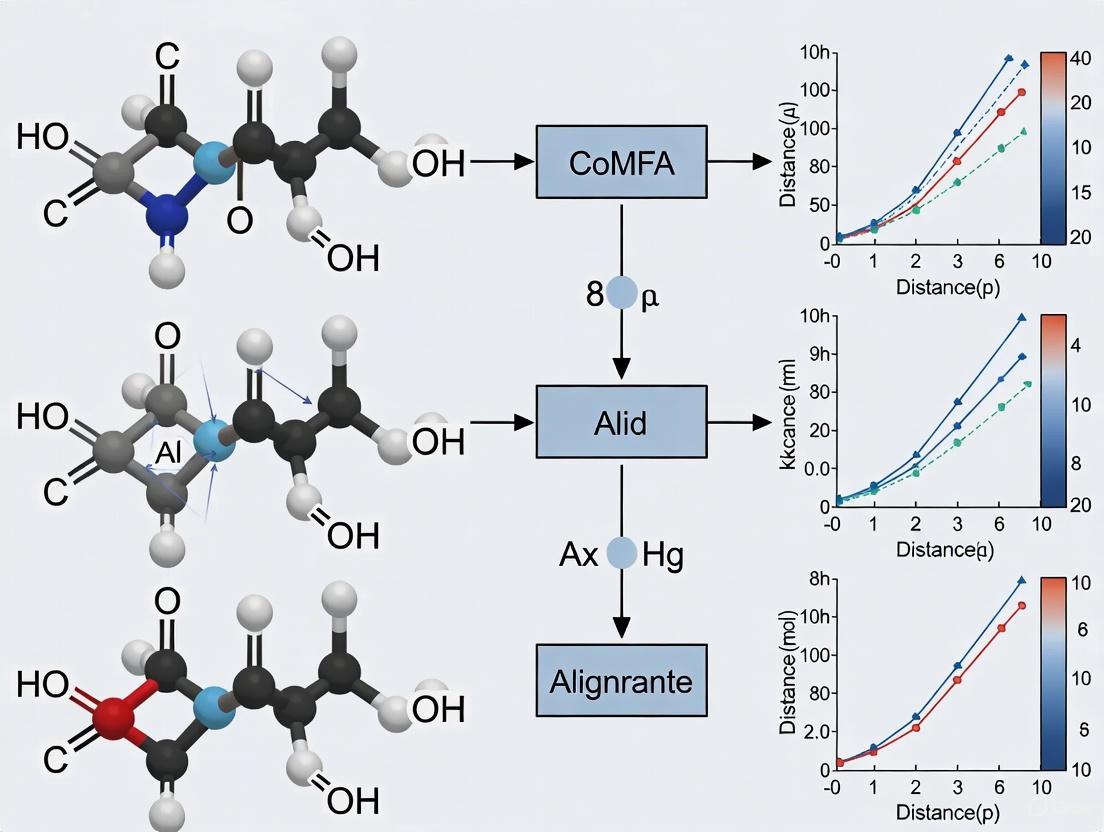
Molecular alignment remains a critical and challenging step in Comparative Molecular Field Analysis (CoMFA), directly impacting the robustness and predictive power of 3D-QSAR models.
Overcoming Molecular Alignment Challenges in CoMFA Studies: A Guide for Robust 3D-QSAR Modeling
Abstract
Molecular alignment remains a critical and challenging step in Comparative Molecular Field Analysis (CoMFA), directly impacting the robustness and predictive power of 3D-QSAR models. This article provides a comprehensive guide for researchers and drug development professionals, exploring the foundational principles of alignment, evaluating advanced methodological approaches like pharmacophore-based and field-fit techniques, and addressing common troubleshooting scenarios. It further details rigorous validation protocols to ensure model reliability and examines emerging trends, including open-source tools and machine learning integration, offering practical strategies to overcome alignment obstacles and accelerate rational drug design.
Why Molecular Alignment is the Cornerstone of Reliable CoMFA Models
Defining Molecular Alignment and Its Impact on CoMFA Descriptors
Frequently Asked Questions
What is molecular alignment in CoMFA, and why is it critical? Molecular alignment, or molecular superimposition, is the process of overlaying 3D structures of molecules in a dataset into a common coordinate system [1] [2]. This step is crucial for Comparative Molecular Field Analysis (CoMFA) because it is an alignment-dependent method [1] [3]. The calculated field descriptors (steric and electrostatic) are highly sensitive to the relative position and orientation of each molecule within the grid [2]. Proper alignment ensures that the descriptor calculation accurately reflects how each molecule would interact with a common receptor, forming the foundation for a robust and predictive 3D-QSAR model [4].
What are the common molecular alignment methods? Several methods are used to superimpose molecules, and the choice often depends on the available structural information about the target and the ligands.
- Atom-Based Overlap: This method involves pairing specific atoms (like common core atoms or putative pharmacophore points) between molecules [1].
- Pharmacophore-Based Alignment: Molecules are aligned based on a common set of pharmacophoric features, such as hydrogen bond donors/acceptors, hydrophobic centers, and charged groups [5]. This is particularly useful when the dataset has a less obvious common substructure.
- Maximum Common Substructure (MCS): Alignment is achieved by superimposing the largest substructure shared among all molecules in the dataset [2].
- Database Mining: Tools like GALAHAD use genetic algorithms to generate pharmacophore models and alignments from sets of ligand molecules [5].
What are the consequences of poor molecular alignment? Incorrect alignment is a primary source of poor CoMFA models [3]. It introduces noise and systematic errors into the field descriptors, leading to several problems:
- Non-Robust Models: The statistical model will have poor reliability and high standard errors [4].
- Low Predictive Power: The model will fail to accurately predict the activity of new compounds, as indicated by low cross-validated correlation coefficients (q²) [3] [4].
- Misleading Contour Maps: The resulting 3D contour maps, which are used to guide chemical modifications, will be incorrect and misleading [1].
How can I validate the quality of my molecular alignment? While there is no single metric, a combination of strategies is effective:
- Statistical Validation: A high cross-validated q² value (typically > 0.5) and a high predictive correlation coefficient (r²pred) for a test set are strong indicators of a sound alignment and a robust model [6] [5].
- Visual Inspection: Examine the superimposed molecules to ensure that key functional groups and hypothesized pharmacophoric elements are well-aligned [4].
- Progressive Scrambling: Perform a progressive scrambling stability test to check the model's robustness against chance correlations [6].
Troubleshooting Guide: Common Molecular Alignment Issues
Problem 1: Low Predictive Power of the CoMFA Model
Symptoms:
- Low leave-one-out cross-validated correlation coefficient (q²) [6] [5].
- Poor predictive performance on an external test set (low r²pred) [6].
Possible Causes and Solutions:
Cause: Inconsistent Bioactive Conformations The molecules are aligned in conformations that are not representative of their receptor-bound state.
- Solution: Determine the bioactive conformation using experimental data (e.g., X-ray crystallography or NMR of protein-ligand complexes) or computational methods like molecular docking [1]. If experimental data is unavailable, use a conformational search (e.g., systematic search, Monte Carlo, molecular dynamics) to identify low-energy conformers before alignment [1].
Cause: Incorrect Alignment Rule The chosen method for superposition does not reflect the true binding mode.
Problem 2: Unstable or Non-Robust CoMFA Model
Symptoms:
- The model's statistics change significantly with minor changes to the training set.
- High standard error of estimate (SEE) [6].
Possible Causes and Solutions:
- Cause: High Sensitivity to Minor Misalignments
CoMFA's Lennard-Jones and Coulombic potentials can change drastically near the molecular surface, making the descriptors very sensitive to small shifts in position [5] [2].
- Solution 1: Manually adjust automated alignments to ensure consistency, especially for flexible side chains [4].
- Solution 2: Consider using Comparative Molecular Similarity Indices Analysis (CoMSIA). CoMSIA employs a Gaussian function that attenuates with distance, making its descriptors less sensitive to small alignment variations and often resulting in more stable models [5] [2].
Problem 3: Handling Structurally Diverse Molecules
Symptoms:
- Difficulty finding a common substructure for alignment.
- Poor visual overlap of key functional groups.
Possible Causes and Solutions:
- Cause: Lack of a Rigid Common Core
The molecules may be flexible or belong to different chemotypes, making scaffold-based alignment impossible.
- Solution: Employ a pharmacophore-based alignment [5]. Identify common interaction features (hydrogen bond donors/acceptors, hydrophobic patches, aromatic rings) that are critical for binding, and align molecules based on these points rather than a maximum common substructure.
Experimental Protocol: A Standard Workflow for Molecular Alignment in CoMFA
The following workflow is adapted from established protocols in CoMFA studies [1] [4] [2].
Step 1: Prepare and Optimize Molecular Structures
- Draw 2D structures of all compounds using molecular modeling software (e.g., SYBYL) [1] [5].
- Generate 3D coordinates and minimize their conformational energy using a molecular mechanics force field (e.g., Tripos Force Field) or quantum mechanical methods to achieve a low-energy state [1] [5] [2].
Step 2: Determine Bioactive Conformations and Alignment Rule
- If the crystal structure of a ligand-receptor complex is available, use this bioactive conformation directly [1].
- If not, perform a conformational analysis (using methods like systematic search, Monte Carlo, or molecular dynamics) to generate a set of low-energy conformers [1].
- Select a template molecule, often the most active compound, and define the alignment rule (e.g., common scaffold or pharmacophore features) [4] [5].
Step 3: Superimpose the Molecules
- Align all molecules in the dataset to the template based on the chosen rule. This can be done manually or using automated software functions [1] [4].
- Critical Check: Visually inspect the final alignment to ensure that pharmacophorically important regions overlap well.
Diagram Title: Molecular Alignment and Model Validation Workflow
Impact of Alignment on CoMFA Model Statistics
The table below summarizes how proper alignment directly influences key statistical metrics of a CoMFA model, based on published studies.
Table 1: Alignment Quality Impact on CoMFA Model Performance
| Study Context | Alignment Method | Key Statistical Results | Interpretation |
|---|---|---|---|
| α1A-AR Antagonists [5] | Pharmacophore-based (GALAHAD) | q² = 0.840, r²pred = 0.694 | Excellent alignment led to a highly predictive and robust model for a diverse set of compounds. |
| VEGFR3 Inhibitors (Thieno-pyrimidines) [6] | Ligand-based | q² = 0.818, r² = 0.917, r²pred = 0.794 | Precise alignment resulted in a model with strong explanatory and predictive power. |
| ODC Inhibitors [4] | Template-based (most active compound) | Model relied on high-quality alignment for robustness and predictability. | Highlights the common practice of using a potent template to guide alignment for reliable models. |
Abbreviations: q²: Leave-one-out cross-validated correlation coefficient; r²: Non-cross-validated correlation coefficient; r²pred: Predictive correlation coefficient for an external test set.
The Scientist's Toolkit: Essential Reagents & Software
Table 2: Key Resources for CoMFA and Molecular Alignment
| Item / Software | Function in CoMFA / Alignment |
|---|---|
| SYBYL (Tripos) [4] [5] | A comprehensive molecular modeling software suite that provides integrated tools for structure sketching, energy minimization, conformational analysis, molecular alignment, and performing CoMFA/CoMSIA studies. |
| GALAHAD [5] | A software module used for generating pharmacophore models and molecular alignments from sets of ligands using a genetic algorithm. Superior for aligning diverse chemotypes. |
| RDKit [2] | An open-source cheminformatics toolkit that can be used to generate 3D structures from 2D, perform MCS-based alignments, and optimize conformations. |
| Partial Least Squares (PLS) [1] [2] | The robust regression method used to correlate the large number of CoMFA field descriptors with biological activity and build the quantitative model. |
| Cambridge Structural Database (CSD) [1] | A repository of experimentally determined small molecule crystal structures. Useful for extracting accurate 3D geometries and torsion angles for molecular modeling. |
| Protein Data Bank (PDB) [1] | A database of 3D structures of proteins, nucleic acids, and complex assemblies. Provides experimental bioactive conformations from protein-ligand crystal structures. |
Frequently Asked Questions (FAQs)
FAQ 1: Why is molecular alignment considered the most critical and challenging step in 3D-QSAR studies like CoMFA?
Molecular alignment is critical because the predictive signal in a 3D-QSAR model is derived almost entirely from the spatial relationship between the molecules in the dataset [7]. An alignment specifies the proposed bioactive conformation and how the key pharmacophoric features of each molecule overlap. An incorrect alignment introduces "noise" into the molecular field calculations, leading to models with little to no predictive power. The challenge arises because the true bioactive conformation and orientation are often unknown and must be inferred [8].
FAQ 2: What are the common pitfalls when choosing bioactive conformations for a flexible molecule?
The primary pitfall is relying solely on the global energy minimum conformation derived from computational modeling. The bioactive conformation is the one the molecule adopts when bound to its target, which may not be the most stable conformation in solution or vacuum [9]. Other pitfalls include:
- Ignoring Experimental Data: Not leveraging available structural data from X-ray crystallography or NMR of ligand-receptor complexes.
- Insufficient Conformational Sampling: Failing to generate a comprehensive set of possible low-energy conformations for each ligand.
- Over-reliance on a Single Rigid Molecule: Not using multiple, somewhat rigid active compounds to collectively restrict the conformational space of more flexible analogs (the Active Analog Approach) [8].
FAQ 3: How can a researcher objectively select the correct alignment rule without biasing the model?
The key principle is that alignments must be defined before and independently of running the QSAR model [7]. Activity data should not influence the alignment process. Objective strategies include:
- Structure-Based Alignment: Using a known protein structure to dock or align ligands directly into the binding site [10] [11].
- Pharmacophore-Based Alignment: Using a validated pharmacophore model to superimpose key functional groups [5].
- Using Multiple Rigid References: Aligning all compounds to a few carefully chosen, representative molecules to ensure the common core and variable substituents are consistently positioned [7].
FAQ 4: What are the consequences of using an incorrect pharmacophore hypothesis for molecular alignment?
An incorrect pharmacophore hypothesis will lead to a systematic misalignment of all molecules in the dataset. This, in turn, causes the 3D-QSAR model to identify false structure-activity relationships. The resulting contour maps will be misleading, and the model will have poor predictive accuracy for new compounds, potentially guiding synthetic efforts in the wrong direction [8] [7].
Troubleshooting Common Experimental Issues
Problem: Poor Predictive Power of the CoMFA Model (Low q² value) A cross-validated correlation coefficient (q²) below 0.3-0.4 is a strong indicator that the model is not predictive.
| Possible Cause | Diagnostic Steps | Solution |
|---|---|---|
| Incorrect Molecular Alignment | Visually inspect alignments of both high- and low-activity compounds. Check if similar substituents are oriented differently without a structural reason. | Re-align the entire dataset using a more robust method (e.g., structure-based or multi-reference field alignment) before any model is built [7]. |
| Poor Conformational Choice | Check if the chosen conformations for highly flexible molecules are energetically reasonable and consistent with known structural data (e.g., from a rigid template). | Perform a conformational analysis to generate low-energy conformers and use methods like the Active Analog Approach or 3-way PLS to select the bioactive conformation [9]. |
| Inclusion of a Model Outlier | Identify molecules with large residuals between predicted and actual activity. | Investigate the outlier's structure, alignment, and experimental data. If a clear reason for the misfit is found (e.g., a different binding mode), exclude it from the training set. |
Problem: The CoMFA Model is Statistically Significant but Provides Unintelligible Contour Maps The model has a good q² but the steric and electrostatic contour plots are chaotic and do not suggest clear design strategies.
| Possible Cause | Diagnostic Steps | Solution |
|---|---|---|
| Over-fitting with Electrostatic Fields | The model may appear good by chance. Check if the model's performance degrades significantly with a small test set of compounds that were not used in training. | Validate the model rigorously with an external test set. Ensure that the alignment was not subtly tweaked to improve statistics, which can render electrostatic fields uninterpretable [7]. |
| Alignment Signal Dominated by Shape | Test if a model using only simple shape descriptors (e.g., a molecular volume grid) performs as well as the full CoMFA model. | If shape alone gives a similar q², it suggests the electrostatic fields are not contributing meaningful information. Re-assess the alignment to ensure it captures electronic features, not just steric bulk. |
Experimental Protocols for Addressing Challenges
Protocol 1: Ligand-Based Pharmacophore Generation and Alignment
This protocol is used when the 3D structure of the biological target is unknown but a set of active ligands is available [10] [12].
Methodology:
- Data Curation: Assemble a set of known active compounds with a wide range of potency. Include inactive compounds if available to improve feature selection.
- Conformational Analysis: For each ligand, generate a representative set of low-energy conformations. Software like Catalyst uses a "polling" algorithm to generate ~250 conformers [12].
- Feature Identification: Define the chemical features (e.g., hydrogen bond acceptor/donor, hydrophobic area, positive/negative ionizable group) for each molecule [10] [12].
- Molecular Alignment: Superimpose the molecules so that their chemical features overlap maximally. Software tools use different algorithms:
- Model Validation: Validate the resulting pharmacophore model by its ability to predict the activity of a test set of molecules or retrieve known actives from a database of decoys.
Protocol 2: Structure-Based Pharmacophore Modeling
This protocol is used when a 3D structure of the target (or a homolog) is available, either alone or in complex with a ligand [10].
Methodology:
- Protein Preparation: Obtain the 3D structure from a database like the Protein Data Bank (PDB). Prepare the structure by adding hydrogen atoms, assigning correct protonation states, and correcting any missing residues [10].
- Binding Site Characterization: Identify the ligand-binding site. This can be done manually from a co-crystallized ligand or using tools like GRID, which maps favorable interaction sites for different probe atoms [10] [8].
- Feature Generation: Analyze the binding site to identify key amino acid residues and map a set of complementary pharmacophore features. If a ligand-receptor complex is available, the features are derived directly from the ligand's functional groups and their interaction points with the receptor [10].
- Model Creation and Refinement: Select the most relevant features for ligand binding to create the pharmacophore hypothesis. Exclusion volumes can be added to represent steric constraints of the binding pocket [10].
Protocol 3: Handling Conformational Flexibility with 3-Way PLS
This advanced statistical protocol addresses the problem of not knowing the correct bioactive conformation or alignment rule [9].
Methodology:
- Conformer Generation: For each compound, generate multiple reasonable low-energy 3D conformations through conformational analysis.
- Create 3-Way Arrays: For each unique conformation of a highly active reference compound, create an alignment rule. Then, create a data matrix (sample-variable sheet) for each rule by aligning all other compounds to it and calculating their CoMFA field descriptors. These multiple matrices are combined into a three-dimensional array (3-way array) [9].
- 3-Way PLS Analysis: Perform a 3-way PLS analysis on this array to correlate the conformational/alignment variations with biological activity.
- Select Bioactive Conformation: The regression coefficients from the 3-way PLS model help identify which conformations and alignment rules contribute most significantly to the biological activity, thereby objectively selecting the bioactive conformation [9].
Essential Research Reagent Solutions
The following tools and software are essential for conducting research in this field.
| Research Reagent / Software | Primary Function | Application in Challenge Resolution |
|---|---|---|
| Molecular Modeling Suites (e.g., SYBYL, MOE, Schrödinger) | Provides an integrated environment for structure sketching, energy minimization, conformational analysis, and running CoMFA/CoMSIA. | The central platform for preparing molecular structures, performing alignments, and calculating 3D-QSAR models [5] [11]. |
| Pharmacophore Modeling Software (e.g., Catalyst, Phase, LigandScout, GALAHAD) | Generates ligand-based or structure-based pharmacophore models and performs molecular alignment based on those models. | Provides an objective, feature-based method for aligning molecules, directly addressing pharmacophore perception challenges [13] [5] [12]. |
| Docking Software (e.g., AutoDock, GOLD, Glide) | Predicts the preferred orientation of a ligand within a protein's binding site. | Generates a structure-based alignment by docking all molecules into the same target, providing a hypothesis for the bioactive conformation [10]. |
| Open-Source Tools (e.g., Py-CoMSIA, Py-CoMFA, ELIXIR-A) | Open-source Python implementations of 3D-QSAR methods and pharmacophore refinement. | Increases accessibility to 3D-QSAR methodologies and provides tools for refining and comparing pharmacophore models from different sources [13] [14] [15]. |
| Protein Data Bank (PDB) | A repository for the 3D structural data of proteins and nucleic acids. | The primary source for obtaining target structures to enable structure-based pharmacophore modeling and docking studies [10]. |
Workflow Visualization
Conformational Analysis and Alignment Workflow
Structure-Based Pharmacophore Workflow
The Critical Link Between Alignment Quality and Predictive Statistics (q², r²)
Troubleshooting Guide: Diagnosing and Resolving Poor Alignment
→ Symptom: Low Cross-Validated Predictive Correlation (q²)
Problem Identification: Your CoMFA model yields a q² value below the acceptable threshold of 0.5 [16] [17]. This indicates the model lacks predictive power, often due to misaligned molecular structures that prevent the extraction of meaningful 3D-field patterns [2] [1].
Root Cause Analysis:
- Inconsistent Bioactive Conformations: Molecules are superimposed in conformations that do not represent their true binding mode at the target protein's active site [1].
- Incorrect Template or Framework Selection: Alignment based on an inappropriate maximum common substructure (MCS) or scaffold fails to reflect the shared binding geometry [2].
- High Structural Diversity Without Common Framework: The dataset contains molecules with significantly different scaffolds, making a common alignment rule difficult to define [2].
Resolution Protocol:
- Review Bioactive Conformation: If available, use crystallographic data (X-ray) or NMR structures of ligand-receptor complexes to guide conformation selection [1]. For homology models, use molecular docking to propose a reasonable bioactive pose [17] [18].
- Re-evaluate Alignment Rule: Test different alignment rules, such as using the most potent compound as a template or focusing on a key pharmacophoric substructure [2] [16]. For example, a study on ionone-based chalcones used "compound 25" as a template for alignment because of its high activity, leading to a successful model with a q² of 0.527 [16].
- Consider Alternative Methods: For highly diverse datasets, switch to an alignment-independent method like HQSAR (Hologram QSAR) or use the more alignment-tolerant CoMSIA method with Gaussian-type fields [16] [19].
→ Symptom: Low Non-Cross-Validated Correlation (r²) Despite High q²
Problem Identification: The model shows a significant gap between a high q² (e.g., >0.5) and a low r² (e.g., <0.6), indicating a good fit to the training data but poor predictive ability for new compounds [16] [1].
Root Cause Analysis:
- Overfitting: The model is too complex and describes noise in the training set rather than the true structure-activity relationship. This can be caused by an excessive number of PLS components [2].
- Inadequate Training Set: The training set lacks the chemical diversity or activity range required to build a robust model [1].
Resolution Protocol:
- Optimize PLS Components: Use cross-validation to determine the optimal number of components that maximizes q² without overfitting. Avoid using components that do not significantly improve the cross-validated statistics [2] [16].
- Curate the Training Set: Ensure the training set covers a wide and representative range of structural features and biological activities. All compounds must act via the same mechanism [1].
→ Symptom: Poor Predictive r² (r²pred) for Test Set Compounds
Problem Identification: The model performs well on the training set but fails to accurately predict the activity of the external test set molecules, as shown by a low r²pred [16] [19].
Root Cause Analysis:
- Alignment Bias: The alignment rule derived from the training set does not generalize well to the structural motifs present in the test set [2].
- Test Set Representativeness: The test set compounds are structurally too distinct from the training set, falling outside the model's "applicability domain" [1].
Resolution Protocol:
- Validate Alignment on Test Set: Manually inspect the alignment of test set molecules. Ensure they align plausibly within the common framework. A poor fit suggests the alignment rule is not universally applicable [2].
- Re-divide Dataset: Ensure test set compounds are selected from the same structural and activity space as the training set. Use methods like Kennard-Stone or sphere exclusion for a representative split [16].
Frequently Asked Questions (FAQs)
Q1: What are the acceptable threshold values for q² and r² in a reliable CoMFA model? According to established criteria, a predictive CoMFA model should generally satisfy q² > 0.5 and r² > 0.6 [16] [17]. For example, a robust CoMFA model for dopamine D2 receptor antagonists reported a q² of 0.63 and an r² of 0.95, while the model for the test set achieved an r² of 0.96 [17].
Q2: My dataset is structurally diverse. How can I achieve a good alignment? For diverse datasets, the Maximum Common Substructure (MCS) approach is often more flexible than rigid scaffold-based alignment [2]. If a reliable common substructure cannot be found, consider using alignment-independent methods like HQSAR [16] or the CoMSIA method, which is less sensitive to small alignment variations due to its Gaussian-type distance dependence [2] [19].
Q3: What is the concrete impact of a minor misalignment on my model's statistics? Minor misalignments can introduce significant noise into the 3D descriptor matrix. This noise obscures the true structure-activity relationship, leading to a decrease in q² as the model's ability to predict left-out compounds diminishes. The contour maps may also show disconnected or illogical regions, reducing their utility for molecular design [2] [1].
Q4: Which software tools can I use for CoMFA/CoMSIA studies today? While the classic software was Sybyl (Tripos), modern alternatives include commercial platforms like Schrödinger and MOE (Molecular Operating Environment) [19]. For open-source solutions, new implementations like Py-CoMSIA, a Python-based library, are emerging and provide a viable alternative [19].
Q5: How does the choice of molecular fields in CoMSIA versus CoMFA affect my model? CoMFA typically calculates only steric and electrostatic fields [2] [1]. CoMSIA can additionally calculate hydrophobic, hydrogen bond donor, and hydrogen bond acceptor fields [19]. This provides a more holistic view of interactions. For instance, a CoMSIA model might reveal that hydrophobic forces are a key driver of activity, an insight a standard CoMFA model could miss [2].
Experimental Protocols for Robust Alignment
→ Protocol 1: Database Alignment Using a Template Molecule
- Application: Best for congeneric series with a known, highly active compound.
- Procedure:
- Select the most active and structurally representative compound as the template [16].
- Generate a low-energy, putative bioactive conformation for the template (e.g., via molecular mechanics or quantum mechanics optimization) [2] [1].
- For each molecule in the dataset, identify the largest common substructure with the template.
- Use a computational method (e.g., "database alignment" in Sybyl or similar) to superimpose this common substructure onto the corresponding atoms of the template [16].
- Visually inspect the alignment of all molecules to ensure consistency.
→ Protocol 2: Pharmacophore-Based Alignment
- Application: Suitable for structurally diverse compounds that share key pharmacophoric features.
- Procedure:
- Identify common critical features (e.g., hydrogen bond donors/acceptors, hydrophobic centers, aromatic rings, charged groups) from the active molecules.
- Generate a pharmacophore hypothesis that defines the spatial relationship between these features.
- For each molecule, find the conformation that best matches the pharmacophore hypothesis.
- Superimpose the molecules based on the best fit to the pharmacophore points.
- This method is often integrated with structure-based design when the protein structure is known [20] [18].
Workflow Visualization: From Alignment to Validation
Statistical Benchmarks from Published CoMFA/CoMSIA Studies
Table 1: Key statistical metrics from various 3D-QSAR studies, demonstrating the critical link between robust methodology and predictive power.
| Study Target / Compound Class | Method | q² | r² | r²pred | Key Alignment Approach | Citation |
|---|---|---|---|---|---|---|
| Ionone-based chalcones (Anti-prostate cancer) | CoMFA | 0.527 | 0.636 | 0.621 | Template-based (most active compound) | [16] |
| Dopamine D2 receptor antagonists | CoMFA | 0.63 | 0.95 | 0.96 (test set) | Docking-guided conformation | [17] |
| Steroids (Benchmark) | CoMSIA | 0.609 | 0.917 | 0.40 | Pre-aligned dataset from literature | [19] |
| 4-amino-1,2,4-triazole derivatives (α-glucosidase inhibitors) | CoMFA & CoMSIA | Good predictive ability reported | High R² reported | N/R | Based on a common triazole scaffold | [18] |
| ACE Inhibitory Peptides | CoMFA | 0.660* | N/R | 0.667 | Based on peptide backbone and side-chain orientations | [21] |
| Reported as Rcv², analogous to q². N/R = Not explicitly reported in the provided excerpt. |
The Scientist's Toolkit: Essential Research Reagents & Software
Table 2: Key computational tools and their roles in ensuring alignment quality and model robustness.
| Tool Category / Name | Specific Function | Role in Addressing Alignment Challenges |
|---|---|---|
| Structure Optimization | ||
| Molecular Mechanics (e.g., UFF, AMBER) | Geometry optimization of 3D structures. | Ensures molecules start from low-energy, realistic conformations before alignment [2]. |
| Quantum Mechanics (QM) | High-accuracy conformation optimization. | Provides precise electronic properties for defining putative bioactive conformations [1] [17]. |
| Alignment & Conformation | ||
| Maximum Common Substructure (MCS) | Finds the largest shared structural framework. | Provides an objective basis for atom-by-atom superposition in a congeneric series [2]. |
| Molecular Docking (e.g., Glide) | Predicts binding pose within a protein active site. | Offers a structure-based hypothesis for the bioactive conformation, guiding alignment [20] [17]. |
| Pharmacophore Modeling | Defines essential steric/electronic features for binding. | Guides the alignment of diverse scaffolds based on functional features rather than atom positions [20]. |
| 3D-QSAR Modeling | ||
| CoMFA (Classic) | Calculates steric/electrostatic fields. | Highly alignment-sensitive; its success is a direct probe of alignment quality [2] [1]. |
| CoMSIA | Calculates similarity indices for multiple fields. | More tolerant to minor alignment deviations, useful for diverse datasets [2] [19]. |
| Py-CoMSIA | Open-source Python implementation of CoMSIA. | Increases accessibility and allows for customization of the 3D-QSAR pipeline [19]. |
| Statistical Validation | ||
| Partial Least Squares (PLS) Regression | Correlates 3D fields with biological activity. | Handles the high-dimensional, collinear descriptor data; optimal component number prevents overfitting [2] [16]. |
| Leave-One-Out (LOO) Cross-Validation | Calculates the predictive q² value. | The primary diagnostic metric for assessing the predictive power of the alignment-dependent model [2] [16]. |
The steroid benchmark dataset is a cornerstone in the field of three-dimensional quantitative structure-activity relationship (3D-QSAR) studies. First introduced in 1988 for Comparative Molecular Field Analysis (CoMFA), this collection of steroids with binding affinity data for various carrier proteins like sex hormone-binding globulin (SHBG) and corticosteroid-binding globulin (CBG) has become the standard for validating and developing 3D-QSAR methods [22]. Its enduring role is to provide a consistent framework for testing new computational models, ensuring that advancements in the field are benchmarked against a common, well-understood standard [23] [22]. For researchers in drug development, mastering the use of this dataset—particularly the critical step of molecular alignment—is fundamental to generating reliable and predictive models.
Key Experiments and Methodologies
The foundational experiment for the steroid benchmark involves applying CoMFA to understand how the shape and electrostatic properties of steroids influence their binding to carrier proteins [22]. The core methodology has been expanded and refined in subsequent studies, which have updated the benchmark set and explored different alignment strategies.
Experimental Protocol: A Typical CoMFA/CoMSIA Workflow
The following workflow outlines the standard procedure for conducting a 3D-QSAR study using a benchmark set, integrating both classical and structure-guided approaches.
1. Data Preparation: The process begins with the acquisition of the steroid molecular structures and their corresponding binding affinity data (e.g., IC50, pKd) [23] [22]. Each structure is then geometry-optimized using a molecular mechanics force field (e.g., Tripos force field) to ensure a reasonable low-energy conformation [24].
2. Molecular Alignment: This is the most critical step. A template molecule is selected, and all other molecules in the dataset are superimposed onto it. The two primary strategies are:
- Ligand-Based Alignment: Molecules are aligned based on their shared common substructure or by comparing steric and electrostatic potentials using algorithms like the Automated Similarity Package (ASP) [24].
- Structure-Based Alignment: If an X-ray crystal structure of the target protein is available, molecules can be docked into the binding site, and the resulting poses can be used for alignment. This method can sometimes contradict classical ligand-based alignments but yield models with higher predictive power [23].
3. Field Calculation: The aligned molecules are placed into a 3D grid. A probe atom (typically an sp³ carbon with a +1.0 charge) is placed at each grid point. The steric (Lennard-Jones potential) and electrostatic (Coulomb potential) interaction energies between the probe and each molecule are calculated, creating the molecular interaction fields [25] [26]. In the related CoMSIA method, additional fields such as hydrophobic, and hydrogen-bond donor and acceptor properties can be calculated [25].
4. Statistical Analysis and Validation: The calculated field values and the biological activity data are correlated using Partial Least Squares (PLS) regression. The model is validated using leave-one-out cross-validation, yielding a cross-validated correlation coefficient (q²). A final model is derived with a conventional correlation coefficient (r²). The model's predictive power is tested on an external set of compounds not used in model building, yielding a predictive r² (r²pred) [24].
5. Model Interpretation: The results are visualized as 3D contour maps. These maps show regions in space where specific steric or electrostatic properties are associated with increased or decreased biological activity, providing a visual guide for chemical modification [25] [26].
Quantitative Data from Foundational Studies
The table below summarizes key quantitative results from various studies that have utilized the steroid benchmark or similar 3D-QSAR methodologies, highlighting the performance achievable with different approaches.
| Study / Dataset | QSAR Method | Alignment Strategy | Statistical Results (q² / r²pred) | Key Achievement |
|---|---|---|---|---|
| Updated Steroid Set for SHBG [23] | 4D QSAR, CoMFA, CoMSIA | Structure-based (Docking) | High statistical significance | Discovery of novel nanomolar nonsteroidal SHBG ligands. |
| 1,2-Dihydropyridine Anticancer Agents [24] | CoMFA & CoMSIA | Ligand-based (ASP) | q² = 0.70 / 0.639r²pred = 0.65 / 0.61 | Designed submicromolar growth inhibitory agents for HT-29 cells. |
| Nitroaromatic Compound Toxicity [25] | CoMFA & CoMSIA | Ligand-based (Atom Fit) | Good self-consistency (R²>0.9) and predictive ability (Q²>0.4) | Provided mechanistic explanation for toxicities of nitroaromatic compounds. |
Troubleshooting Guide: Molecular Alignment Challenges
Molecular alignment is frequently the source of model failure in CoMFA studies. The following FAQs address common alignment issues and their solutions.
FAQ 1: My CoMFA model has poor predictive power (low q²). Could the molecular alignment be the cause, and how can I verify this?
Yes, alignment is a primary suspect. A small shift in alignment can lead to dramatic changes in the calculated fields and, consequently, the model's quality [24] [26].
- Diagnosis: Systematically test different alignment hypotheses. Compare the statistical results (q², r²pred) from models built using:
- Different template molecules.
- Various ligand-based alignment rules (e.g., fitting different common substructures).
- A structure-based alignment from molecular docking, if possible [23].
- Solution: The alignment that produces the model with the highest cross-validated q² and best predictive power for a test set should be selected. A study on SHBG ligands found that an alignment generated by docking, which contradicted the classical ligand-based alignment, yielded a superior model [23].
FAQ 2: What are the practical choices for aligning flexible molecules, and how do I select the right conformation?
Flexible molecules exist in multiple low-energy conformations, and selecting the wrong one for alignment can mislead the model.
- Diagnosis: The bioactive conformation is often unknown. Relying solely on the global minimum energy conformation from a vacuum calculation may not be correct, as the binding event can induce conformational changes.
- Solution:
- Conformational Search: Perform a systematic grid search or molecular dynamics simulation to generate a set of reasonable low-energy conformers for each molecule [24].
- Consensus Alignment: Test alignments based on different low-energy conformers and select the one that yields the most statistically robust model.
- Docking: When a protein structure is available, using the docked pose is the most rigorous approach to define the alignment, as it reflects the putative binding mode [23].
FAQ 3: How do I handle aligning diverse structures, including nonsteroidal ligands, to the steroid benchmark set?
The classical steroid benchmark consists of structurally similar steroids. However, modern drug discovery often involves chemotypes diverse from the native ligand.
- Diagnosis: Force-fitting a structurally distinct molecule (e.g., a linear, nonsteroidal compound) onto a rigid steroid scaffold can create a meaningless alignment and poor fields.
- Solution: In such cases, a structure-based alignment using the protein's binding site is essential. This was successfully demonstrated when an updated steroid benchmark was expanded to include nonsteroidal SHBG ligands; docking provided a common frame of reference that enabled a predictive model encompassing both structural classes [23].
Decision Workflow for Alignment Challenges
The following diagram provides a logical path for resolving common molecular alignment problems.
The Scientist's Toolkit: Essential Research Reagents & Materials
This table details key software tools and resources essential for conducting CoMFA/CoMSIA studies.
| Tool / Resource | Category | Primary Function in 3D-QSAR | |
|---|---|---|---|
| SYBYL/X[cite:2] | Molecular Modeling Suite | The industry-standard platform for performing CoMFA and CoMSIA analyses, encompassing structure building, optimization, alignment, and statistical analysis. | |
| GOLPE[cite:4] | Chemometric Software | An advanced chemometric tool for variable selection and handling 3D-QSAR problems, helping to improve model predictivity. | |
| - | Steroid Benchmark Dataset[cite:1][cite:4] | Benchmarking Resource | The canonical set of steroids with binding affinity data for proteins like SHBG and CBG, used to validate and compare new 3D-QSAR methods. |
| RDKit[cite:8] | Open-Source Cheminformatics | A versatile toolkit for cheminformatics that can be used to handle molecular data, calculate descriptors, and generate canonical SMILES representations. | |
| Automated Similarity Package (ASP)[cite:2][cite:4] | Alignment Tool | A ligand-based alignment method that compares steric and electrostatic potentials to superimpose molecules. |
A Practical Guide to Modern Molecular Alignment Techniques
Pharmacophore-Based Alignment with Tools like GALAHAD
Pharmacophore-based alignment is a foundational step in many computational drug discovery workflows, particularly in Three-Dimensional Quantitative Structure-Activity Relationship (3D-QSAR) studies like Comparative Molecular Field Analysis (CoMFA) [1] [26]. In CoMFA, the biological activity of a molecule is correlated with its steric and electrostatic fields, which are calculated after a set of ligands has been carefully aligned in three-dimensional space [1]. The quality of this alignment is therefore paramount, as even small deviations can lead to poor predictive models [27] [28]. This technical support center addresses the specific challenges researchers face when using tools like GALAHAD for this critical alignment task.
Frequently Asked Questions (FAQs)
Q1: What is GALAHAD's primary function in pharmacophore-based alignment? GALAHAD is a software program that performs pharmacophore identification by constructing hypermolecular alignments of ligands in 3D [29]. Its core algorithm, LAMDA, performs multi-way alignments by iteratively building "hypermolecules" that retain the aggregate attributes of all input ligands [29]. Unlike simple atom-based matching, GALAHED uses a cost function that operates on key chemical features like hydrogen bond donors/acceptors, hydrophobic areas, and steric properties, making it highly effective for identifying shared pharmacophores from a set of active compounds [29] [30].
Q2: When should I use a ligand-based tool like GALAHAD over a structure-based method? The choice depends on the available data. Use ligand-based approaches like GALAHAD when you have a set of known active compounds but the 3D structure of the target protein is unknown [10] [31]. Use structure-based methods when a high-resolution protein structure (e.g., from X-ray crystallography) is available, as they can directly derive pharmacophore features from the binding site topology and key protein-ligand interactions [10].
Q3: My GALAHAD model seems too restrictive and misses known active compounds. How can I improve its recall? GALAHAD allows for the generation of partial-match constraints [29]. This means you can configure the model to identify compounds that match a critical subset of the pharmacophore features, rather than requiring a match to all features. This increases sensitivity and can help in identifying novel scaffolds during virtual screening [29].
Q4: In the context of CoMFA, why is my model's predictive power poor even with a GALAHAD alignment? While GALAHAD produces high-quality alignments, the predictive power of a resulting CoMFA model depends on many factors beyond alignment. Ensure your input biological data is high quality, congeneric, and measured uniformly [1]. Furthermore, studies have shown that fluctuations in ligand poses—even those derived from X-ray crystallography—can sometimes lead to poorer CoMFA predictions than self-consistent, ligand-centric alignments [27] [28]. It is crucial to validate your alignment against known structure-activity relationships.
Troubleshooting Guide
The following table outlines common issues, their potential causes, and recommended solutions.
| Problem | Possible Causes | Recommended Solutions |
|---|---|---|
| Poor Molecular Alignment | High conformational flexibility in ligands [32]; Structurally diverse ligands with different binding modes [32]; Incorrect parameter settings in GALAHAD. | Perform more extensive conformational analysis to better sample the bioactive conformation [1] [32]; Subdivide the ligand set into structurally similar groups and build separate models [32]; Adjust the default cost function parameters and constraints in GALAHAD [29]. |
| Low Yield of Hits in Virtual Screening | Pharmacophore model is overly specific or sensitive [32]; Model does not account for essential protein flexibility [32]. | Use partial-match constraints instead of full-match in the pharmacophore query [29]; If structural data is available, add exclusion volumes to the model to represent the shape of the binding pocket and reduce false positives [10]. |
| Disagreement with Crystallographic Poses | Model is based on ligand features alone, without receptor constraints. | Use a structure-based pharmacophore tool if the protein structure is available [10]; For ligand-based models, use a tool like ELIXIR-A to refine and compare the pharmacophore against receptor-based information [13]. |
| Weak CoMFA Model Statistics | Poor alignment quality; Inadequate field calculation parameters; Issues with the underlying biological data. | Re-assess the alignment; Ensure the grid spacing and probe types in CoMFA are optimally set [1]; Verify that the biological data used for modeling is congeneric, potent, and measured under consistent conditions [1]. |
Experimental Protocols
Protocol: Ligand-Based Pharmacophore Modeling with GALAHAD for CoMFA
This protocol details the steps for generating a pharmacophore-aligned set of ligands suitable for a CoMFA study.
1. Compound and Data Preparation
- Activity Data: Collect a set of molecules with known biological activities (e.g., IC₅₀, Kᵢ). The data should span a wide potency range, be measured uniformly, and the compounds should be congeneric [1].
- 3D Structure Generation: Generate initial 3D structures for all ligands using a molecular builder or by importing from databases.
- Conformational Sampling: For each ligand, perform a conformational search (e.g., using systematic, Monte Carlo, or molecular dynamics methods) to generate a representative ensemble of low-energy conformers [1] [32]. This is critical for identifying the bioactive conformation.
2. Pharmacophore Identification with GALAHAD
- Input: Supply GALAHAD with the multiple conformers of your active ligands.
- Execution: Run the GALAHAD algorithm, which uses hypermolecular alignment to identify common pharmacophoric and pharmacosteric features [29].
- Parameter Adjustment: If the default model is unsatisfactory, iteratively adjust parameters related to the cost function and feature tolerances to improve the alignment against a known reference or to better reflect structure-activity relationships [29].
3. Alignment Export and CoMFA Setup
- Export the Alignment: Export the final, aligned set of ligands in their pharmacophore-derived bioactive conformations.
- Grid Placement: In your CoMFA software, place the aligned molecules in the center of a 3D grid with a typical spacing of 2 Å [1].
- Field Calculation: Calculate steric (Lennard-Jones) and electrostatic (Coulombic) interaction energies at each grid point using a probe atom [1] [26].
The logical workflow for this protocol is summarized in the following diagram:
Protocol: Validating a Pharmacophore Model
1. Internal Validation
- Cross-validation: Use techniques like leave-one-out to assess the model's stability and predictability for the training set compounds [32].
- Statistical Metrics: Calculate the enrichment factor (EF) to quantify the model's ability to prioritize active compounds over inactives in a virtual screen [13].
2. External Validation
- Test Set Screening: Use the pharmacophore model to screen a separate, external database containing known active and inactive compounds that were not used in model development [32].
- Assess Performance: Calculate statistical metrics like sensitivity, specificity, and the area under the ROC curve (AUC) to objectively evaluate the model's predictive power [32].
The Scientist's Toolkit: Essential Research Reagents & Software
The table below lists key computational "reagents" and tools essential for work in this field.
| Tool/Resource Name | Category | Primary Function |
|---|---|---|
| GALAHAD [29] [30] | Ligand-Based Pharmacophore | Performs hypermolecular alignment of diverse ligands to identify common 3D pharmacophores. |
| ELIXIR-A [13] | Pharmacophore Refinement | A Python-based tool for comparing and refining multiple pharmacophore models from different ligands or receptors. |
| LigandScout [13] [32] | Structure & Ligand-Based Modeling | Generates pharmacophore models from either protein-ligand complexes (structure-based) or sets of active ligands (ligand-based). |
| Pharmit [13] | Virtual Screening | A web-based platform for performing high-throughput virtual screening using pharmacophore queries. |
| Directory of Useful Decoys (DUD-e) [13] | Validation Database | A database of annotated active compounds and property-matched decoys, used for validating virtual screening methods. |
| Protein Data Bank (PDB) [10] | Structural Database | The primary repository for experimentally-determined 3D structures of proteins and nucleic acids, essential for structure-based modeling. |
Troubleshooting Guides and FAQs
Frequently Asked Questions
Q1: What is the fundamental principle behind the Field-Fit alignment method? Field-Fit is an alignment technique used in Comparative Molecular Field Analysis (CoMFA) that utilizes molecular interaction fields to superimpose molecules. Instead of relying solely on atom-to-atom pairing, it optimizes the overlap of steric and electrostatic fields around the molecules to determine the best alignment, which is crucial for building a reliable 3D-QSAR model [1] [33].
Q2: My CoMFA model shows high statistical values, but I suspect the alignment is incorrect. What is a common mistake I might have made? A common, yet critical, error is tweaking molecular alignments after running an initial QSAR model, particularly to correct outliers that the model mis-predicted. This process contaminates the model because you are altering the input data (the alignments) based on the output data (the predicted activities). The alignment must be finalized before running the QSAR calculation, without reference to the activity values [7].
Q3: Why is molecular alignment considered the most critical step in 3D-QSAR? In 3D-QSAR, unlike 2D methods, the input data (the aligned molecules) is not independent. The alignment itself provides the majority of the signal for the model. If the alignments are incorrect, the model will have limited or no predictive power, regardless of the sophistication of the subsequent statistical analysis [7].
Q4: What are the consequences of using an incorrect bioactive conformation during alignment? Using an incorrect bioactive conformation can lead to a poor and misleading CoMFA model. The contour maps generated will not accurately reflect the true steric and electrostatic requirements of the receptor's binding site, which can derail the rational design of new compounds [1] [7].
Troubleshooting Common Problems
Problem: Poor Predictive Power of the CoMFA Model (Low q² and r²pred)
- Potential Cause 1: Inadequate Molecular Alignment. This is the most likely cause. The alignments may be based on an incorrect scaffold or may not adequately represent the bioactive conformation.
- Solution: Invest significant time in the alignment step. Use multiple references to constrain the alignments, especially for molecules with substituents in unexplored regions. Employ field-based and substructure alignment algorithms in tandem to ensure both the common core and peripheral groups are correctly positioned. Manually inspect and refine all alignments before any model is built [7].
- Potential Cause 2: Incorrect Bioactive Conformation.
- Solution: Whenever possible, derive the bioactive conformation from experimental data (e.g., X-ray crystallography or NMR of protein-ligand complexes). If experimental data is unavailable, use molecular docking against a homology model or a known protein structure to inform the likely binding mode [17] [34].
Problem: Model Over-reliance on Steric Fields
- Potential Cause: Alignment Bias. If alignments are inadvertently tweaked so that active compounds consistently orient a substituent in one direction and inactive compounds orient it in another, the model will pick up this artificial steric signal while ignoring electrostatics.
- Solution: Ensure alignment is performed blindly with respect to activity. Do not spend more time aligning active compounds than inactive ones. A rigorous alignment protocol that is independent of biological activity data is essential to avoid introducing this bias [7].
Problem: Inconsistent Results When Adding New Compounds
- Potential Cause: The alignment rule is not generalizable. The initial alignment may have been too specific to the training set and does not accommodate the structural diversity of the new compounds.
- Solution: Develop a robust alignment rule using several structurally diverse molecules as references. Using a field-based method like Field-Fit can help create a more universal alignment scheme that is based on molecular similarity rather than just atom positions [33] [7].
Experimental Protocols
Detailed Methodology for Field-Fit Alignment in CoMFA
The following protocol outlines the key steps for performing a Field-Fit alignment as part of a CoMFA study [1] [33].
Step 1: Compound Preparation and Optimization
- Draw the 3D structures of all molecules using molecular modeling software.
- Generate potential bioactive conformations. This can be done via:
- Perform geometry optimization on the selected conformers using molecular mechanics (e.g., force fields), semi-empirical (e.g., AM1, PM3), or ab initio quantum mechanical methods [1].
Step 2: Determination of the Alignment Rule
- Select a reference molecule that is representative of the data set and for which the bioactive conformation is well-understood [7].
- The core principle of Field-Fit is to optimize the overlap of the molecular interaction fields (steric and electrostatic) of the other molecules in the dataset with those of the reference molecule.
- The alignment is achieved by minimizing the difference between the fields of the target molecule and the reference molecule. This is an iterative process that rotates and translates the target molecule to achieve the best possible field overlap [33].
Step 3: Alignment of the Dataset
- Apply the Field-Fit alignment rule to all molecules in the dataset.
- It is often necessary to use multiple reference molecules to fully constrain the alignment of a diverse series, especially for compounds with substituents that explore new regions of space [7].
- Critical Check: Manually inspect all resulting alignments for consistency and rationality before proceeding to the CoMFA analysis. This must be done without considering the biological activity values [7].
Step 4: CoMFA Model Generation and Validation
- Place the aligned molecules into a 3D grid with a typical spacing of 2 Å [1].
- Calculate steric (Lennard-Jones potential) and electrostatic (Coulombic potential) interaction energies at each grid point using a probe atom [1].
- Correlate the field values with the biological activity data using the Partial Least Squares (PLS) regression method [1].
- Validate the model using statistical parameters like the cross-validated correlation coefficient ((q^2)), the non-cross-validated correlation coefficient ((r^2)), and the predictive (r^2) ((r^2_{pred})) for a test set of compounds [35].
The workflow for this methodology is summarized in the following diagram:
Research Reagent Solutions
The following table details key computational tools and descriptors essential for conducting Field-Fit alignment and CoMFA studies.
| Tool/Descriptor Name | Type/Function | Key Application in Field-Fit/CoMFA |
|---|---|---|
| Molecular Modeling Software (e.g., MOE, SYBYL) [36] [33] | Software Platform | Provides the integrated environment for structure building, energy minimization, conformational analysis, molecular alignment, and running the CoMFA calculation itself. |
| Field-Fit Algorithm [33] | Alignment Method | The core computational routine that optimizes the superposition of molecules based on their steric and electrostatic molecular interaction fields, rather than just atom positions. |
| Steric & Electrostatic Fields [1] | Molecular Descriptor | Represented by Lennard-Jones and Coulombic potentials, respectively. These 3D fields are the primary variables used to build the QSAR model and are the basis for the Field-Fit alignment. |
| Partial Least Squares (PLS) [1] | Statistical Algorithm | A robust regression method used to correlate the large number of field descriptor variables (X) with the biological activity data (Y) to generate the predictive CoMFA model. |
| Open Parser for Systematic IUPAC Nomenclature (OPSIN) [36] | Utility Tool | A Java library that accurately converts IUPAC names to chemical structures, ensuring correct initial structure generation for the study. |
| Dipole Moment Calculator [36] | Analytical Tool | Calculates and visualizes the dipole moment of molecules, which can be a critical electrostatic feature considered during field-based alignment and analysis. |
Logical Workflow Diagram
The following diagram illustrates the logical relationship between the key challenges, the recommended solutions, and the final outcomes in a robust CoMFA study, emphasizing the central role of alignment.
Leveraging Rigid Template Molecules for Aligning Flexible Analogs
In Comparative Molecular Field Analysis (CoMFA) and other 3D-QSAR studies, molecular alignment is not merely a preliminary step but a fundamental determinant of model quality and predictive accuracy. The core assumption is that molecules must be positioned in three-dimensional space according to their presumed binding mode at the target receptor site [8]. The challenge intensifies when dealing with structurally diverse and conformationally flexible analogs, where subjective alignment decisions can introduce significant artifacts into the final model. This technical guide addresses these challenges by providing a systematic framework for leveraging rigid template molecules to achieve consistent, pharmacologically relevant alignments for flexible analogs, thereby enhancing the robustness of your CoMFA studies.
Frequently Asked Questions (FAQs)
Q1: Why is molecular alignment so critical in CoMFA studies? Molecular alignment is the cornerstone of a successful CoMFA model because the method calculates steric and electrostatic fields based on the relative positions of molecules in a 3D grid [8]. The resulting QSAR is highly sensitive to spatial orientation; incorrect alignments can lead to models with poor predictive power and misleading structure-activity insights. Proper alignment ensures that the computed molecular fields accurately reflect the true interactions at the biological target site.
Q2: What defines a good rigid template molecule? An ideal rigid template molecule possesses several key characteristics. It should be structurally similar to the flexible analogs under investigation and exhibit high biological activity. Most importantly, it should have limited conformational flexibility, ideally being a semi-rigid or rigid congener from the same chemical series. Its structure should allow for clear identification of key pharmacophore features, such as hydrogen bond donors/acceptors, hydrophobic regions, and charged groups [8].
Q3: My dataset lacks a perfectly rigid molecule. What are my options? If a naturally rigid molecule is unavailable, you can construct a template using several strategies. You can use the crystallographically determined bioactive conformation of a potent ligand from a protein-ligand complex, if available. Alternatively, you can use computational methods like GALAHAD to generate a pharmacophore hypothesis from your dataset, which can then serve as an alignment template [5] [37]. Another option is to design and use a rigid common scaffold that represents the core structure shared by all molecules in your dataset.
Q4: How can I validate the quality of my molecular alignment? Alignment quality can be assessed both statistically and visually. A high cross-validated correlation coefficient (q²) from the initial CoMFA model is a positive statistical indicator [5] [37]. Visually, you should inspect the aligned molecules to ensure that key functional groups and hypothesized pharmacophore points are well-superimposed. Furthermore, the model's predictive power for a test set of compounds (r²pred) provides the most robust validation of the alignment strategy [5] [37].
Troubleshooting Guide
Symptom 1: Poor Statistical Model Quality (Low q² and r²)
Potential Cause: Inconsistent or biologically irrelevant molecular alignment. Solutions:
- Re-evaluate Template Choice: Ensure your rigid template represents the proposed bioactive conformation. If possible, use a crystal structure complex for guidance.
- Refine the Pharmacophore Hypothesis: If using pharmacophore-based alignment (e.g., with GALAHAD), refine the hypothesis to ensure it captures essential features common to all active compounds [5] [37].
- Check Field Calculation Parameters: Verify that your grid spacing and region definition appropriately encompass all aligned molecules.
Symptom 2: Low Predictive Power for External Test Set
Potential Cause: The alignment strategy may be overfitted to the training set or does not generalize well to structurally diverse compounds. Solutions:
- Inspect Test Set Alignment: Manually check how test set molecules align with the template. Large deviations in key regions explain poor predictions.
- Ensure Template Representativeness: Confirm that your rigid template shares critical structural features with the test set compounds. The template should be a "central" representative of the entire chemical space you wish to model.
- Validate with a Sufficient Test Set: Use a test set comprising 25-33% of your total dataset to ensure a reliable assessment of predictive power [37].
Symptom 3: Uninterpretable or Chemically Illogical CoMFA Contour Maps
Potential Cause: Misalignment of molecules, leading to field artifacts that do not correspond to genuine structure-activity relationships. Solutions:
- Verify Superposition of Key Groups: Ensure that functional groups critical for activity (e.g., a hydrogen bond donor present in all active compounds) are perfectly superimposed.
- Simplify the Alignment Rule: If using a common substructure, ensure it is correctly identified and aligned for every molecule. Avoid using overly flexible regions for alignment.
- Triangulate with Other Evidence: Compare your alignment and the resulting contours with known mutagenesis data, structural biology data, or other computational simulations to ensure biological plausibility [38].
Experimental Protocol: Pharmacophore-Based Alignment Using a Rigid Template
The following workflow, leveraging tools like GALAHAD as demonstrated in α1A-AR antagonist studies [5] [37], provides a robust methodology for aligning flexible analogs.
Step-by-Step Methodology
Data Preparation and Conformational Analysis
- Action: Sketch 2D structures of all compounds (both the rigid template and flexible analogs) using molecular modeling software (e.g., SYBYL, Maestro, MOE). Generate realistic 3D structures and optimize their geometry using a standard force field (e.g., Tripos Force Field) with Gasteiger-Hückel charges. Energy minimization should be performed until a convergence criterion is met (e.g., gradient of 0.01 kcal/mol) [37].
- Rationale: This ensures all molecules start from an energetically favorable conformation before the alignment process.
Pharmacophore Model Generation using a Rigid Template
- Action: Use the rigid template molecule, or a small set of highly active and rigid molecules, to generate a pharmacophore hypothesis. Software tools like GALAHAD (Genetic Algorithm with Linear Assignment of Hypermolecular Alignment of Datasets) are specifically designed for this purpose [5] [37]. GALAHAD uses a genetic algorithm to identify common pharmacophore features (e.g., hydrogen bond donors/acceptors, hydrophobic centroids) and produces a model that maximizes steric and electrostatic overlap.
- Rationale: This step distills the essential 3D chemical features responsible for biological activity into a quantitative model, which will serve as the objective alignment rule.
Molecular Alignment of Flexible Analogs
- Action: Align all flexible analog molecules to the generated pharmacophore hypothesis. This is typically an automated process within the software (e.g., using the "Align Molecules to Template Individually" option in GALAHAD) [37]. Each flexible molecule is flexibly fitted to the hypothesis, meaning its conformational degrees of freedom are explored to find the best match to the pharmacophore.
- Rationale: This ensures that all molecules are superimposed based on their shared pharmacophoric features, which is presumed to be biologically more relevant than a simple structural alignment.
Alignment Validation
- Action: Critically assess the quality of the alignment.
- Visual Inspection: Examine the superimposed molecules to ensure key features are well-aligned and the overall arrangement is chemically sensible.
- Statistical Validation: Proceed to build a preliminary CoMFA model. A high cross-validated q² value (e.g., >0.5, ideally >0.6 [5] [37]) and a low standard error indicate a successful alignment. The final validation comes from the model's ability to accurately predict the activity of an external test set.
- Action: Critically assess the quality of the alignment.
Key Research Reagent Solutions
Table 1: Essential Software Tools for Molecular Alignment in CoMFA
| Software/Tool | Type | Primary Function in Alignment | Key Feature |
|---|---|---|---|
| GALAHAD (Tripos) [5] [37] | Commercial Module | Pharmacophore generation and molecular alignment. | Uses a genetic algorithm to derive optimal alignments from a set of ligands. |
| Py-CoMSIA [14] | Open-source Python Library | Calculates CoMSIA fields and can be integrated with alignment tools. | Provides an open-source implementation of the CoMSIA method, increasing accessibility. |
| SYBYL (Tripos) [37] | Commercial Software Suite | Comprehensive molecular modeling; hosts CoMFA/CoMSIA and alignment tools. | Traditional platform for 3D-QSAR; includes tools for structure building, minimization, and alignment. |
| Schrödinger Suite | Commercial Software Suite | Integrated drug discovery platform with multiple alignment options. | Offers robust tools for conformational sampling, pharmacophore development, and protein-ligand docking to guide alignment. |
| Molecular Operating Environment (MOE) | Commercial Software Suite | Integrated drug discovery platform with multiple alignment options. | Provides powerful scripting and applications for pharmacophore discovery and molecular alignment. |
Frequently Asked Questions
Q1: What is the most critical factor for a successful 3D-QSAR CoMFA study? Molecular alignment is the most critical factor. Unlike 2D-QSAR where molecular descriptors are fixed, the signal in 3D-QSAR comes almost entirely from the spatial alignment of your molecules. An incorrect alignment will introduce noise and can lead to a model with little to no predictive power [7].
Q2: How can I avoid creating an invalid or overfitted CoMFA model? A common mistake is to tweak molecular alignments after seeing initial QSAR results. You must not change the alignment inputs (X data) based on the activity values (Y data). Always finalize and validate your alignments before running the QSAR calculation to ensure the independence of your input data [7].
Q3: What is a robust workflow for aligning a congeneric series? A recommended workflow is [7]:
- Identify a representative reference molecule and establish its likely bioactive conformation.
- Align the dataset to this reference, using a substructure alignment method to ensure the common core is correctly positioned.
- Manually inspect alignments for poorly aligned molecules, especially those with substituents in unoccupied regions. Manually adjust a good example and promote it to a new reference.
- Re-align the entire dataset using multiple references and a 'Maximum' scoring mode.
- Iterate steps 3 and 4 until the alignment is satisfactory for all molecules.
Q4: My CoMFA model seems good, but the electrostatic fields are not contributing. What does this mean? If your model's predictive power comes almost exclusively from steric fields, it may be a warning sign. Studies have shown that on some published data sets, a model using only simple shape descriptors performed as well as a full CoMFA. This can indicate that the alignments have been inadvertently tweaked to the point where they separate actives and inactives based solely on gross substituent direction, which may not reflect the true biology [7].
Troubleshooting Common Alignment Challenges
Problem: High Background Noise or Poor Model Predictivity
| Potential Cause | Diagnostic Check | Solution |
|---|---|---|
| Incorrect Bioactive Conformation | Check if low-energy conformers provide a consistent alignment hypothesis. | Use experimental data (X-ray, NMR) or computational methods (molecular dynamics, simulated annealing) to determine the likely bound conformation [1]. |
| Poor Core Substructure Alignment | Visually inspect if the common scaffold atoms are not perfectly overlaid. | Use a substructure alignment algorithm to force the common core to align, then optimize the rest of the molecule for field similarity [7]. |
| Inconsistent Alignment Rule | Check if different substituents are aligned arbitrarily without a unified rule. | Define 3-4 reference molecules that collectively represent the chemical space of your dataset and align all others against this set [7]. |
Problem: Handling Specific Protein Targets
Case Study 1: Xanthine Oxidase (XO)
- Challenge: Aligning diverse substrates and inhibitors like hypoxanthine, xanthine, and allopurinol, which have a common purine scaffold but different substitution patterns [39].
- Alignment Strategy: The purine-hypoxanthine core should be used as the rigid alignment scaffold. The protein crystal structure (e.g., PDB entry 1N5X) shows key interactions with residues like Glu802, Arg880, and Thr1010. Align molecules to ensure these pharmacophore points are maintained [39] [1].
Case Study 2: Indoleamine 2,3-Dioxygenase 1 (IDO1)
- Challenge: IDO1 binds tryptophan and its analogs. The binding pocket accommodes the planar indole ring, which serves as an ideal alignment template [40].
- Alignment Strategy: Use the indole ring of tryptophan as the structural core for alignment. Pay close attention to the orientation of the 2,3-double bond, as this is the site of dioxygenation. Superimposition should maximize overlap of this key molecular fragment [40].
Case Study 3: α1A-Adrenergic Receptor (α1A-AR)
- Challenge: As a GPCR, experimental structures are limited, and ligands are often diverse. Alignment must rely on a presumed common pharmacophore.
- Alignment Strategy: For a congeneric series, align based on a presumed crucial pharmacophore point, such as the protonated amine believed to interact with a conserved aspartate residue (Asp106 in transmembrane helix 3). The use of field-based alignment software is particularly valuable here in the absence of a rigid common scaffold.
Experimental Protocols for Reliable Alignment
Protocol 1: Determining Bioactive Conformation
- Experimental Sources: If available, use conformations from X-ray crystallography (protein-ligand complex) or NMR spectroscopy. Be aware that crystal packing forces can sometimes distort conformations [1].
- Computational Methods:
- Perform a conformational search using systematic, Monte Carlo, or molecular dynamics methods [1].
- Optimize the geometry of low-energy conformers using molecular mechanics (e.g., MMFF94) or semi-empirical quantum mechanics (e.g., PM3) [1].
- Select the conformer that is consistent with the proposed binding mode and has reasonable strain energy.
Protocol 2: Multi-Reference Field-Based Alignment
This protocol is implemented in software like Cresset's Forge/Torch [7].
- Preparation: Generate a low-energy 3D conformation for each molecule in your dataset.
- Initial Reference: Select a potent, rigid molecule with a central scaffold as your first reference.
- Initial Alignment: Align all molecules to the first reference using a field-based or shape-based method.
- Inspection and Iteration: Manually review alignments. For molecules with poor field similarity in certain regions, select a representative and adjust its alignment to a chemically reasonable pose. Add this molecule as a new reference.
- Final Multi-Reference Alignment: Use the software's multi-reference alignment function (e.g., with 'Maximum' scoring) against your 3-4 curated references to produce the final alignment for CoMFA.
Research Reagent Solutions
| Item | Function in Alignment/CoMFA |
|---|---|
| Cambridge Structural Database (CSD) | Provides experimental 3D coordinates of small molecules from crystallography, useful for deriving accurate starting geometries and torsion angle preferences [1]. |
| Protein Data Bank (PDB) | Source for 3D structures of protein-ligand complexes, which are the gold standard for defining the bioactive conformation and validating alignments [1]. |
| Field-Based Alignment Software (e.g., Cresset Forge) | Uses molecular electrostatic and shape fields to superpose molecules, going beyond simple atom-to-atom fitting to find bio-relevant orientations [7]. |
| Multiple Sequence Alignment Viewer (e.g., Jalview) | While used for proteins, it highlights the importance of visualization tools for inspecting and curating alignments before analysis [41] [42]. |
Signaling Pathways and Workflows
IDO1 Signaling Pathway
CoMFA Workflow
Xanthine Oxidase Catalysis
Diagnosing and Solving Common Molecular Alignment Problems
Identifying and Correcting for Alignment Outliers
Molecular alignment is a critical, foundational step in Comparative Molecular Field Analysis (CoMFA) studies. The quality of this alignment directly determines the credibility and predictive power of the resulting 3D-QSAR models [4] [43]. Even with careful execution, the process is susceptible to alignment outliers—molecules that are misaligned due to conformational or orientational errors—which can severely distort the model's statistical robustness and predictive accuracy. This guide provides a structured approach to identifying and correcting these outliers, ensuring the development of reliable and interpretable CoMFA models.
Frequently Asked Questions (FAQs)
1. What is an alignment outlier in a CoMFA study? An alignment outlier is a molecule within a dataset that is incorrectly superimposed onto a common template or pharmacophore. This misalignment can be spatial (incorrect position or orientation) or conformational (incorrect three-dimensional shape). Outliers introduce "noise" into the calculated steric and electrostatic fields, leading to decreased model predictability and misleading contour maps [3].
2. Why does molecular alignment have such a large impact on CoMFA results? CoMFA calculates steric and electrostatic interaction energies at thousands of points in a grid surrounding the aligned molecules [44]. The analysis assumes that differences in these field values correlate with differences in biological activity. Poor alignment invalidates this assumption by introducing field differences that are artifacts of misalignment rather than true structure-activity relationships, a phenomenon often described as the intrinsic data-dependent characteristic of CoMFA [3].
3. What are the common sources of alignment outliers? The primary sources include:
- Incorrect Bioactive Conformation: Using a high-energy or unrealistic conformation for the molecule [45].
- Flawed Template Selection: Aligning to a template whose structure or activity is not representative of the entire dataset [4].
- Inadequate Fitting Atoms: Using an incomplete or incorrect set of atoms for the least-squares fitting procedure [45].
- Handling of Flexible Molecules: Failure to properly account for multiple rotatable bonds or ring conformations during the alignment process.
4. What software tools can assist in alignment?
Several tools are available, often integrated into molecular modeling suites. The FIELD_FIT and AUTOCOMFA commands in SYBYL software provide automated assistance, while rigid-body fitting (FIT command) allows for manual adjustment [44]. Recent research also explores dynamic programming approaches for aligning molecules in SMILES format, which can offer alternative strategies [46].
Troubleshooting Guide: Identifying and Correcting Outliers
Follow this step-by-step guide to diagnose and resolve alignment issues in your CoMFA studies.
Step 1: Visual Inspection of the Alignment
Begin by visually inspecting the aligned molecules in your modeling software.
- Action: Display all molecules simultaneously and rotate the view to check for consistency.
- What to Look For: Molecules that are clearly displaced, rotated, or whose key pharmacophore elements (e.g., hydrogen bond donors/acceptors, hydrophobic centers) do not overlap with the rest of the set.
- Tools: Standard molecular visualization within software like SYBYL or PyMOL.
Step 2: Analyze Preliminary Model Statistics
A poorly predictive initial model can be a key indicator of alignment problems.
- Action: Run a preliminary CoMFA analysis with cross-validation.
- What to Look For: A low cross-validated correlation coefficient ((q^2)) is a major red flag. While there is no universal threshold, a (q^2 > 0.5) is often considered a minimum for a predictive model. A significantly lower value suggests the model lacks robustness, potentially due to alignment issues [3].
Step 3: Implement a Systematic Alignment Protocol
Often, outliers arise from an ad-hoc alignment procedure. Implementing a rigorous, reproducible protocol is crucial.
Table 1: Key Research Reagent Solutions for Molecular Alignment
| Item/Reagent | Function in Alignment | Key Considerations |
|---|---|---|
| Molecular Modeling Suite (e.g., SYBYL) | Provides the computational environment for building, optimizing, and aligning molecules. | Essential for executing CoMFA-specific commands like AUTOCOMFA and FIELD_FIT [44]. |
| Template Molecule | Serves as the structural reference onto which all other molecules are superimposed. | Should be a high-activity, structurally rigid molecule with a known bioactive conformation [4]. |
| Common Scaffold / Pharmacophore | Defines the set of atoms used for the least-squares fitting alignment. | Must be common to all molecules in the dataset and relevant to biological activity [45]. |
| Energy Minimization Protocol | Ensures all molecules are in a low-energy, physically realistic 3D conformation before alignment. | Use a consistent force field (e.g., Tripos) and convergence criteria across the dataset [45]. |
| Conformational Search Algorithm | Systematically explores low-energy conformers to identify the one most similar to the template. | Critical for flexible molecules; can use distance constraints derived from the template [45]. |
The following workflow outlines a robust protocol for aligning molecules to minimize outliers, incorporating the reagents from the table above.
Step 4: Correct Identified Outliers
If outliers are found, take the following corrective actions:
- Re-check Conformation: For the specific outlier molecule, perform a more thorough conformational analysis. Ensure the chosen conformation is both low-energy and biologically relevant. Using a distance constraint derived from the template molecule during conformational search can be highly effective [45].
- Re-align Manually: Use manual rigid-body fitting tools to better superimpose the outlier's key structural features onto the template. Follow this with a final least-squares fit to the common scaffold.
- Re-evaluate Template Choice: In persistent cases, the selected template might be unsuitable. Test an alternative high-activity molecule as the template to see if it improves overall alignment consistency [4].
- Consider Post-Processing: In other computational fields like multiple sequence alignment, post-processing methods such as "realigners" are used to refine initial results by locally adjusting regions with potential errors [43]. A similar philosophy can be applied manually in CoMFA by isolating and re-aligning problematic molecule subsets.
Advanced Alignment and Validation Protocol
For a rigorous study, especially with challenging datasets, employ this detailed protocol.
Objective: To generate a robust, reproducible molecular alignment for a CoMFA study, validated by both statistical and visual criteria.
Materials:
- Molecular modeling software (e.g., SYBYL-X).
- Dataset of molecules with known biological activities.
- Computational resources for energy minimization and conformational analysis.
Methodology:
Template and Scaffold Definition:
Conformation Preparation:
- For each molecule, perform a systematic conformational search.
- From the generated low-energy conformers, select the one that minimizes the root-mean-square deviation (RMSD) of the scaffold atoms relative to the template. The use of distance constraints can guide this selection [45].
- Apply a consistent energy minimization protocol (e.g., Tripos force field, Gasteiger-Hückel charges) to all selected conformers to ensure structural realism [45].
Alignment Execution:
- Use the software's alignment module to perform a least-squares fit of each molecule's scaffold atoms to the corresponding atoms in the template.
- The
AUTOCOMFAroutine can be a good starting point for this process [44].
Validation and Iteration:
- Visual Inspection: Examine the final alignment from multiple angles. Confirm that not only the scaffold but also key functional groups overlap well.
- Statistical Validation: Proceed to build a CoMFA model. A significant improvement in the cross-validated (q^2) after alignment correction is the primary indicator of success. The model should also yield contour maps that are chemically interpretable and consistent with the known structure-activity relationship [3] [4].
By systematically applying these troubleshooting principles and protocols, researchers can significantly enhance the quality of their molecular alignments, leading to more trustworthy and actionable CoMFA models.
Frequently Asked Questions
1. How do grid spacing and padding choices impact my CoMFA/CoMSIA model? Grid spacing determines the resolution of your molecular field calculations. A finer grid (e.g., 1.0 Å) captures more detail but increases computation time and the risk of model noise. A coarser grid (e.g., 2.0 Å) is faster but may miss critical interactions. Padding defines the space between your aligned molecules and the grid boundary; insufficient padding may truncate important molecular fields, while excessive padding adds non-informative space, diluting the model's signal. Optimizing these parameters is crucial for robust predictive models [8] [3].
2. What is the function of the attenuation factor in CoMSIA? The attenuation factor controls the decay rate of the Gaussian function used to calculate molecular similarity indices. A standard value of 0.3 provides a smooth, continuous field that is less sensitive to small changes in molecular alignment and avoids the unrealistic sharp energy cutoffs found in CoMFA [14] [19]. This contributes to CoMSIA's enhanced interpretability.
3. My model shows poor predictive power despite a good fit. Could grid settings be the cause? Yes. Default grid settings often produce serviceable models, but research demonstrates that systematic optimization of settings—including grid spacing, position, and field descriptors—can significantly improve a model's external predictive accuracy (r²pred) [47] [3]. This is especially important when dealing with diverse or complex molecular datasets.
4. Are the optimal grid parameters the same for CoMFA and CoMSIA? While the concepts are similar, the optimal values may differ due to the fundamental differences in how fields are calculated. CoMSIA's Gaussian-based fields are inherently less sensitive to grid spacing and molecular alignment than CoMFA's Coulomb and Lennard-Jones potentials [14] [2]. Therefore, parameter optimization should be performed for each method separately.
Troubleshooting Guides
Problem: Low Predictiveq²from Cross-Validation
Potential Cause: Suboptimal grid placement or spacing that fails to capture essential molecular interaction fields [47] [3].
Solution:
- Reposition the Grid: Ensure the grid box comfortably encompasses all aligned molecules. A common practice is to set the grid padding to 4.0 Å beyond the molecular dimensions in all directions [14] [19].
- Adjust Grid Spacing: Systematically test different grid spacings. Begin with 2.0 Å and try a finer spacing of 1.0 Å to see if it improves the model without overfitting [8] [5].
- Verify Molecular Alignment: The quality of the molecular superposition is paramount. A poor alignment cannot be fixed by adjusting grid parameters alone [8] [2].
Problem: Model Overfitting with Highr²but Lowr²pred
Potential Cause: Excessively fine grid spacing combined with a high number of PLS components, leading to a model that describes noise in the training set [3].
Solution:
- Coarsen Grid Spacing: Increase the grid spacing from 1.0 Å to 2.0 Å. This dramatically reduces the number of descriptors and helps prevent chance correlations [8].
- Use a Test Set: Always validate your model with an external test set of compounds not used in training. A high
q²is not a guarantee of high predictive power [8] [2]. - Optimize PLS Components: Use cross-validation to determine the optimal number of components, avoiding those that do not significantly increase
q²[5].
Problem: Inconsistent or Uninterpretable Contour Maps
Potential Cause: The grid is not aligned consistently with the pharmacophore features of the molecules, or the attenuation factor in CoMSIA is set inappropriately [14] [5].
Solution:
- Center the Grid on the Pharmacophore: Align the grid based on the common molecular scaffold or the hypothesized pharmacophore, not just the collection of molecules' geometric center [5].
- Use Standard CoMSIA Parameters: For CoMSIA, use an attenuation factor of 0.3, which is the standard value that provides smooth and interpretable contour maps [14] [19].
The following table compiles key grid and field parameters from documented 3D-QSAR studies, serving as a reference for your experiments.
Table 1: Experimental Grid and Field Parameters in 3D-QSAR Studies
| Study / Dataset | Method | Grid Spacing (Å) | Grid Padding (Å) | Attenuation Factor | Key Findings / Rationale |
|---|---|---|---|---|---|
| Py-CoMSIA Steroid Benchmark [14] [19] | CoMSIA | 1.0 | 4.0 | 0.3 | Used original research parameters; generated models comparable to proprietary software. |
| α1A-AR Antagonists [5] | CoMFA/CoMSIA | 1.0 | * | * | A fine grid of 1.0 Å was used for both methods to capture field details around diverse ligands. |
| General CoMFA Overview [8] | CoMFA | 2.0 | * | N/A | 2.0 Å is typical, balancing computational load and detail; finer grids require more resources. |
| CoMSIA Method Principle [14] [19] | CoMSIA | * | * | 0.3 | A Gaussian function with 0.3 attenuation avoids sharp cutoffs and improves robustness to alignment. |
Note: An asterisk () indicates the value was not explicitly stated in the source.*
Experimental Protocol: Grid Parameter Optimization
This protocol provides a step-by-step methodology for systematically evaluating grid settings to enhance your model's predictive performance, based on established practices [47] [3].
1. Initial Setup and Baseline Model
- Prepare your dataset with a robust molecular alignment. This is the most critical step.
- Split compounds into a training set and an external test set.
- Generate a baseline model using standard parameters (e.g., 2.0 Å spacing, 4.0 Å padding).
2. Systematic Grid Variation
- Spacing: Keep padding constant and create models with different grid spacings (e.g., 1.0 Å, 1.5 Å, 2.0 Å).
- Padding: Keep spacing constant and create models with different grid padding (e.g., 2.0 Å, 4.0 Å, 6.0 Å).
- Position: Manually translate the grid in different directions (e.g., ±0.5 Å, ±1.0 Å) to account for alignment uncertainties.
3. Model Validation and Selection
- For each parameter set, perform cross-validation (e.g., Leave-One-Out) on the training set to obtain a cross-validated coefficient (
q²). - Use the model with the optimal number of components to predict the external test set, yielding a predictive
r²pred. - Select the final parameter set that yields the highest
r²pred, indicating the best generalizability.
The workflow for this optimization process is outlined below.
The Scientist's Toolkit: Essential Research Reagents & Software
Table 2: Key Resources for 3D-QSAR Modeling
| Item | Function in Experiment |
|---|---|
| Py-CoMSIA | An open-source Python implementation of CoMSIA, providing a free alternative to proprietary software for calculating similarity indices [14] [19]. |
| RDKit | An open-source cheminformatics library used for generating 3D molecular structures, geometry optimization, and molecular alignment [14] [2]. |
| SYBYL (Tripos) | A classic, proprietary molecular modeling software that was the original platform for CoMFA/CoMSIA studies; includes tools for alignment and field calculation [5]. |
| Partial Least Squares (PLS) Regression | A statistical method used to correlate the vast number of 3D field descriptors with biological activity, handling correlated variables via latent variables [8] [2]. |
| GALAHAD | A proprietary tool (Tripos) that uses a genetic algorithm to generate pharmacophore-based molecular alignments, useful for datasets with low structural commonality [5]. |
Strategies for Handling Highly Flexible Molecules and Diverse Chemotypes
Troubleshooting Guides
FAQ: Molecular Conformation and Alignment
Q: My CoMFA results are highly dependent on the molecular alignment I choose. How can I determine the correct bioactive conformation for flexible molecules?
A: The dependency on chosen bioactive conformations and alignment rules is a recognized critical problem in CoMFA and most 3D-QSAR methodologies [9]. Several advanced strategies can address this:
Implement 3-way PLS formulation: This novel method helps solve the conformation/alignment problem by generating possible 3D conformations through conformational analysis and creating 3-way arrays for analysis. The regression coefficient values of the 3-way PLS model can identify conformations that largely contribute to biological activity [9].
Utilize alignment-independent techniques: Consider using 3D-QSDAR (Three-Dimensional Spectral Data-Activity Relationship), which employs alignment-independent 3D molecular descriptors based on NMR chemical shifts and inter-atomic distances, eliminating alignment subjectivity [48].
Apply pharmacophore-based molecular alignment: Using tools like GALAHAD (Genetic Algorithm with Linear Assignment of Hypermolecular Alignment of Datasets) generates superior pharmacophore alignments, especially for compounds with diverse chemotypes that share few structural commonalities [5].
Experimental Protocol: 3-Way PLS for Bioactive Conformation Selection [9]
- Generate possible 3D conformations of all molecules using conformational analysis with molecular mechanics force fields
- Characterize each conformation by CoMFA field variables
- For each unique conformation of the most active compound, define one sample-variable sheet comprising the most similar conformations
- Create 3-way arrays for 3-way PLS analysis by collecting all sample-variable sheets
- Use regression coefficient values from the 3-way PLS model to select conformations largely contributing to inhibitory activity
- Build the final CoMFA model using the selected conformations to generate reasonable 3D coefficient contour maps
Q: What is the most efficient way to generate conformations for large, diverse compound libraries?
A: For large-scale screening, simplified approaches can provide practical solutions:
Consider 2D to 3D direct conversion: Research shows that simple 2D>3D conversion without extensive energy minimization can sometimes outperform more computationally intensive methods. One study achieved R²Test = 0.61 with 2D>3D structures compared to more complex approaches, requiring only 3-7% of the computational time [48].
Implement consensus predictions: Average predictions from models built on different conformations to achieve higher accuracy (consensus R²Test = 0.65 in one study) [48].
Use Kier Index for flexibility assessment: Calculate the Kier Index of Molecular Flexibility to categorize compounds as rigid (<3.0), partially flexible (3.0-5.0), or flexible (>5.0) to prioritize computational resources [48].
Q: How can I effectively handle diverse chemotypes with different structural frameworks in the same CoMFA study?
A: Diverse chemotypes present significant alignment challenges:
Develop a universal binding model hypothesis: For targets like TLR7, create a consolidated binding model that accommodates various chemotypes including quinazoline, benzoxazole, imidazopyridine, and purine scaffolds [49].
Apply chemotype-based diversity analysis: Use automated chemotype perception algorithms to assess chemical diversity, as chemotype-based algorithms can retrieve a larger share of the chemotypes contained in a library compared to traditional descriptor-based methods [50].
Utilize ligand-based and structure-based integration: Combine 2D-QSAR, 3D-QSAR, and pharmacophore modeling with molecular docking and dynamics studies to validate alignment rules across diverse chemotypes [49].
FAQ: Statistical Validation and Model Robustness
Q: How do I validate that my chosen alignment method produces statistically robust models?
A: Implement comprehensive validation protocols:
Apply leave-one-out cross-validation: Determine the optimum number of components and corresponding cross-validation coefficient (q²) [51] [5].
Use test set validation: Validate models with external test sets (typically 25-33% of total samples) to determine predictive r² values [5].
Assess multiple statistical metrics: Evaluate different statistical metrics and perform similarity-based coverage estimation to define applicability boundaries [52].
Experimental Protocol: CoMFA/CoMSIA Model Development with Pharmacophore Alignment [5]
- Collect compounds with diverse structural features covering a wide biological activity range (≥4 orders of magnitude)
- Divide dataset into training (70-75%) and test (25-30%) sets, ensuring both cover the entire activity and structural diversity range
- Generate 3D structures using CONCORD or similar tools and minimize under Tripos standard force field with Gasteiger-Hückel atomic partial charges
- Develop pharmacophore model using GALAHAD or similar tools
- Align all compounds to the pharmacophore template
- Generate 3D cubic lattice with grid spacing of 1.0 Å in x, y, and z directions
- Calculate steric (Lennard-Jones) and electrostatic (Coulombic) potential energies using an sp³ carbon probe atom
- Perform partial least-squares (PLS) analysis with leave-one-out cross-validation to determine optimal components
- Validate model with external test set and analyze contour maps to guide structural modification
Research Reagent Solutions
Table 1: Essential Computational Tools for Handling Flexible Molecules and Diverse Chemotypes
| Tool/Category | Specific Software/Approach | Function/Purpose | Key Application |
|---|---|---|---|
| Molecular Alignment | GALAHAD (Tripos) | Pharmacophore-based molecular alignment | Superior alignment for diverse chemotypes with limited structural commonalities [5] |
| 3D-QSAR Methods | CoMFA (Comparative Molecular Field Analysis) | Steric/electrostatic field analysis | Standard 3D-QSAR with field contribution maps [51] [5] |
| 3D-QSAR Methods | CoMSIA (Comparative Molecular Similarity Indices Analysis) | Similarity indices with Gaussian functions | More stable models with hydrophobic/H-bond fields [5] |
| Alignment-Independent | 3D-QSDAR | Spectral data-activity relationships | Alignment-free 3D-QSAR using chemical shifts and distances [48] |
| Conformation Generation | 3-Way PLS Formulation | Multi-conformational statistical analysis | Selecting bioactive conformations from multiple possibilities [9] |
| Diversity Assessment | Chemotype Analysis Algorithms | Scaffold-based diversity assessment | Maximizing chemotype representation in screening libraries [50] |
Table 2: Comparison of Conformational Generation Strategies for Flexible Molecules
| Strategy | Methodology | Advantages | Limitations | Recommended Use |
|---|---|---|---|---|
| Global Energy Minimum | Conformational search for lowest energy state | Physically meaningful, reproducible | May not represent bioactive conformation | Initial screening, rigid molecules [48] |
| Template Alignment | Alignment to known active templates | Biologically relevant orientation | Requires appropriate template | When crystal structures available [48] |
| 2D>3D Direct Conversion | Simple 2D to 3D conversion without optimization | Computational efficiency (3-7% time) | Less systematic, reproducibility concerns | Large diverse libraries, initial screening [48] |
| Multi-Conformation 3-Way PLS | Statistical analysis of multiple conformations | Accounts for conformational uncertainty | Computationally intensive | Critical studies with flexible molecules [9] |
Advanced Technical Solutions
Integrated Workflow for Challenging Targets
For highly flexible targets with conformational plasticity (e.g., IDO1 with JK-loop flexibility) [38]:
- Construct multiple receptor conformations: Generate both open (IDO1) and closed (IDO1*) conformations using homology modeling
- Perform comparative MD simulations: Run all-atom molecular dynamics on apo and ligand-bound systems
- Analyze free energy landscapes (FELs): Characterize conformational changes and ligand-induced effects
- Profile channel remodeling: Use tools like HOLE for quantitative analysis of substrate access channels
- Integrate with 3D-QSAR: Combine MD insights with CoMFA/CoMSIA studies on inhibitor series
Consensus Modeling Approach
Implement consensus QSAR developed from 2D, CoMFA, CoMSIA, and GRIND (3D-QSAR) predicted endpoints [52]:
- Develop individual models using each technique
- Generate consensus predictions averaged across methods
- Validate using different statistical metrics
- Define applicability domain through similarity-based coverage estimation
- Use for fragment-based bioisosteric replacement and lead optimization
This approach provides superior statistical results and robust predictions for challenging drug targets like γ-secretase in Alzheimer's disease therapeutics [52].
Frequently Asked Questions
FAQ 1: Why is a sensitivity analysis for molecular alignment crucial in CoMFA studies?
Molecular alignment is a critical step in 3D-QSAR methodologies like Comparative Molecular Field Analysis (CoMFA) because the resulting molecular fields (steric and electrostatic) and, consequently, the model's statistical quality and predictive power, are highly dependent on the relative orientation and conformation of the molecules in the dataset [27] [28]. Fluctuations in the positions and conformations of compounds within an alignment can dominate the model, sometimes leading to poorer predictions [28]. A sensitivity analysis systematically tests how variations in alignment strategy—such as using a common scaffold, pharmacophore-based alignment, or X-ray crystallographic poses—impact key model metrics. This process helps researchers identify the most robust and reliable alignment method for their specific dataset, ensuring that the final model captures genuine structure-activity relationships rather than alignment artifacts.
FAQ 2: What is a practical protocol for conducting a sensitivity analysis on alignment variations?
A robust experimental protocol involves creating multiple CoMFA models based on different alignment hypotheses and comparing their validation outcomes. The core steps are:
Generate Multiple Alignments: Create several distinct alignment sets for your molecule library. Common strategies include:
- Template-based Alignment: Align molecules to a common, rigid template or a lead compound with high activity [27] [28].
- Pharmacophore-based Alignment: Superimpose molecules based on key pharmacophoric features (e.g., hydrogen bond donors/acceptors, hydrophobic centers).
- X-ray-based Alignment: Use experimentally determined ligand poses from protein-ligand crystal structures, if available [27] [28].
- Common Scaffold Alignment: Align molecules based on their maximum common substructure (MCS).
Build and Validate CoMFA Models: For each alignment set, construct a CoMFA model. Use Partial Least Squares (PLS) regression for the analysis and perform rigorous validation [53] [54]. Key metrics to record for each model are shown in Table 1.
Compare and Interpret Results: Analyze the collected metrics to determine which alignment method produces the most predictive and stable model. High
q²,R², andr²predvalues, coupled with lowSEEandSEP, indicate a robust model. The workflow for this analysis is summarized in the diagram below.
Diagram: Workflow for Alignment Sensitivity Analysis
FAQ 3: My CoMFA model shows a high q² but poor external prediction. Could alignment be the cause?
Yes, this is a classic symptom of an alignment issue. A high cross-validated q² from the training set can sometimes be misleading and may result from model overfitting or a fortuitous correlation specific to the alignment and training set composition. When this model is applied to an external test set, poor predictive r²pred often emerges. This discrepancy can occur if the alignment used does not accurately reflect the true bioactive conformation or the common binding mode across all molecules. It is recommended to re-assess the alignment strategy, perhaps by employing a template-based method, which has been shown in some studies to yield better external predictions than alignments based on fluctuating X-ray poses [27] [28].
FAQ 4: How do I handle a dataset with molecules of high conformational flexibility during alignment?
High conformational flexibility presents a significant challenge, as the chosen alignment conformation may not represent the bioactive one. To address this:
- Incorporate Conformational Propensity: One advanced method is to account for the conformational entropy of a molecule. This involves calculating the populational ratio (
N_active / N_stable) of how many low-energy conformers resemble the proposed "active-conformation-like" structure. Integrating this propensity value into the CoMFA analysis has been shown to improve the cross-validatedq²compared to a standard CoMFA model, thereby providing a more realistic SAR for flexible molecules [55]. - Use Multiple Conformer Alignments: Generate multiple low-energy conformers for each flexible molecule and include them in the sensitivity analysis. This approach tests the stability of the CoMFA model across different plausible conformational states.
Key Experimental Data and Validation Metrics
The following table summarizes the key quantitative metrics used to evaluate and compare the robustness of CoMFA models derived from different alignment strategies. These parameters are critical for a meaningful sensitivity analysis [53] [54].
Table 1: Key Validation Metrics for CoMFA Model Robustness
| Metric | Description | Interpretation & Ideal Value |
|---|---|---|
| q² | Cross-validation coefficient | Measures model predictive ability for the training set. Typically, q² > 0.5 is considered good. |
| R² | Non-cross-validation coefficient | Indicates goodness-of-fit. Values closer to 1.0 show a good fit to the training data. |
| SEE | Standard Error of Estimate | Measures model precision. A lower value indicates a more precise model. |
| F Value | F Test Value | Assesses the statistical significance of the model. A higher value is better. |
| r²pred | Predictive r² for test set | Evaluates external predictive ability. Values > 0.5–0.6 are generally acceptable. |
| SEP | Standard Error of Prediction | Standard error for the test set predictions. A lower SEP is desirable. |
| Field Contribution | Steric vs. Electrostatic | The relative contribution of steric and electrostatic fields to the activity (e.g., 53.4% electrostatic, 46.6% steric) [53]. |
The Scientist's Toolkit: Essential Research Reagents and Software
Table 2: Essential Software Tools for 3D-QSAR and Alignment
| Tool Name | Primary Function | Role in Alignment & Sensitivity Analysis |
|---|---|---|
| Sybyl-X | Molecular Modeling & QSAR | Industry-standard software for building CoMFA models, generating molecular alignments, and performing PLS analysis [53]. |
| Gaussian 09 | Quantum Chemistry Calculations | Used for geometry optimization and calculating quantum chemical parameters (e.g., partial charges) that can inform alignment and stability evaluations [53]. |
| TEST | Toxicity Estimation Software | Provides estimated properties like bioconcentration factor (BCF) which can be used as an activity in combined QSAR models [53]. |
| Discovery Studio | Life Science Modeling | Used for molecular docking simulations (e.g., with the LibDock module) to propose bioactive conformations for alignment or to validate model conclusions [53]. |
Validating Your Alignment and Comparing CoMFA with CoMSIA
In the field of Comparative Molecular Field Analysis (CoMFA) and Quantitative Structure-Activity Relationship (QSAR) modeling, statistical validation is the cornerstone of developing reliable and useful models. A pervasive challenge in the literature has been the over-reliance on the leave-one-out cross-validated correlation coefficient ((q^2)) as the primary indicator of model quality. A foundational paper titled "Beware of q²!" established that this assumption is generally incorrect, showing that a high (q^2) is a necessary but not sufficient condition for a model to possess high predictive power [56]. The authors demonstrated, using multiple datasets and methods, that there is no consistent correlation between high (q^2) values for a training set and a model's predictive ability for an external test set [56]. This article establishes a troubleshooting guide to help researchers navigate beyond this pitfall, emphasizing that external validation is the only way to establish a reliable QSAR model [56]. This is particularly critical within the challenging context of molecular alignment in CoMFA, where the selection of bioactive conformations and alignment rules can profoundly influence the model's descriptor space and, consequently, its predictive robustness.
Troubleshooting Guides
FAQ: My CoMFA model has a high q² (>0.5), but it performs poorly on new compounds. What went wrong?
Answer: A high (q^2) only indicates internal robustness for your specific training set; it does not guarantee predictive power for new data. This is a common phenomenon noted across QSAR studies [56] [57]. The problem likely stems from one or more of the following issues:
- Insufficient External Validation: You may have relied solely on internal cross-validation ((q^2)). A model must be validated using an external test set of compounds that were not used in any part of the model building process [56] [57].
- Overfitting: The model may be overly complex and has learned the noise in the training set instead of the underlying structure-activity relationship. This is often revealed by a high difference between (q^2) and the external predictive (r^2) ((r^2_{pred})) [57].
- Molecular Alignment Errors: In CoMFA, the results are highly sensitive to the spatial alignment of molecules. An incorrect pharmacophore assumption or "active" conformation can lead to a model that is internally consistent but physically meaningless [8] [1].
- Inadequate Data Set Design: The training set might lack structural or activity diversity, meaning the test set compounds occupy regions of chemical space not represented during training [1].
FAQ: What are the definitive statistical criteria for a validated CoMFA model?
Answer: A truly predictive QSAR model should meet multiple statistical criteria, moving far beyond a single (q^2) value [56] [57]. The following table summarizes the key parameters and their benchmarks:
Table 1: Key Statistical Criteria for QSAR Model Validation
| Parameter | Description | Benchmark for a Good Model | Purpose |
|---|---|---|---|
| (q^2) | Leave-one-out cross-validated correlation coefficient | > 0.5 [56] | Indicates internal robustness and stability of the model. |
| (r^2) | Non-cross-validated correlation coefficient for the training set | High value (e.g., > 0.8) | Measures goodness-of-fit. |
| (r^2_{pred}) | Predictive correlation coefficient for the external test set | > 0.5 [14] [5] | The ultimate test of predictive ability on new compounds. |
| (r^2_0) | Coefficient of determination for the regression between observed and predicted activities through the origin | Close to (r^2) [57] | Checks for bias in predictions. |
| RMSE | Root Mean Square Error | As low as possible | Quantifies the average error of prediction. |
A study comparing various validation methods on 44 reported QSAR models concluded that relying on the coefficient of determination ((r^2)) alone could not indicate the validity of a model, reinforcing the need for a multi-faceted approach [57].
The Scientist's Toolkit: Essential Reagents & Software for CoMFA
Table 2: Key Research Reagent Solutions for CoMFA Studies
| Item Name | Type/Category | Primary Function in CoMFA |
|---|---|---|
| SYBYL | Proprietary Software Suite | The classical platform for CoMFA/CoMSIA; provides integrated tools for molecular modeling, alignment, field calculation, and PLS analysis [5]. |
| Py-CoMSIA | Open-Source Python Library | Provides an open-source implementation of the CoMSIA algorithm, broadening access to grid-based 3D-QSAR methodologies [14]. |
| GALAHAD | Pharmacophore Alignment Tool | Generates pharmacophore models and molecular alignments using a genetic algorithm, crucial for optimal molecular superposition [5]. |
| Partial Least Squares (PLS) | Statistical Algorithm | The core regression method used to correlate the thousands of 3D field descriptors with biological activity in CoMFA/CoMSIA [8] [5]. |
| Tripos Force Field | Molecular Mechanics Force Field | Used for energy minimization and conformational analysis of molecules to obtain stable 3D structures before alignment [5]. |
| Gasteiger-Hückel Charges | Atomic Partial Charge Method | Used to calculate electrostatic properties, which are one of the fundamental fields in a CoMFA study [5]. |
Experimental Protocols
Detailed Methodology: Building a Externally Validated CoMFA Model
This protocol is adapted from a study on α1A-adrenergic receptor antagonists, which successfully built robust CoMFA and CoMSIA models using pharmacophore-based alignment and external validation [5].
Data Set Curation and Preparation
- Collect a set of compounds with known biological activities (e.g., IC₅₀, Kᵢ). Ensure the data is measured using a consistent protocol [1].
- Convert activity values to pKᵢ or pIC₅₀ (-log of the value) to create a linearly scalable dependent variable.
- Divide the entire data set into a training set (typically 70-80%) and a test set (20-30%). The division must ensure both sets cover the entire range of biological activity and structural diversity [5]. A test set of at least 5-10 compounds is recommended for reliable statistics [56].
Molecular Modeling and Alignment
- Sketch 3D structures of all compounds and subject them to geometry optimization using a molecular mechanics force field (e.g., Tripos Force Field) with partial charges (e.g., Gasteiger-Hückel) [5].
- Critical Step: Perform molecular alignment. In the referenced study, a pharmacophore model generated by GALAHAD was used as a template to align all training and test set molecules [5]. This step is highly sensitive and must be chosen based on the best available knowledge of the ligand-receptor interaction.
Field Calculation and PLS Analysis
- Place the aligned molecules into a 3D grid with a spacing of 2.0 Å (CoMFA) or 1.0 Å (finer grid). Use a probe atom (e.g., sp³ carbon with +1 charge) to calculate steric (Lennard-Jones) and electrostatic (Coulombic) field energies at each grid point [8] [5].
- Analyze the data using Partial Least Squares (PLS) regression. First, perform leave-one-out (LOO) cross-validation to determine the optimal number of components (latent variables) that gives the highest (q^2) [5].
- With the optimal number of components, run a final, non-cross-validated analysis to generate the conventional (r^2) for the training set.
External Validation and Model Interpretation
- Use the developed CoMFA model to predict the activities of the compounds in the external test set.
- Calculate the predictive (r^2) ((r^2{pred})) using the formula: (r^2{pred} = 1 - \frac{\sum{(Y{pred(test)} - Y{obs(test)})^2}}{\sum{(Y{obs(test)} - \bar Y{training})^2}}), where ( \bar Y_{training} ) is the mean activity of the training set [56] [57].
- Generate 3D coefficient contour maps to visualize regions where steric or electrostatic features favor or disfavor biological activity.
Workflow: From Molecules to a Validated CoMFA Model
The following diagram illustrates the critical pathway for developing a CoMFA model, with emphasis on the steps that ensure statistical validity beyond (q^2).
Diagram 1: CoMFA Model Development and Validation Workflow
Comparing CoMFA and CoMSIA Sensitivity to Alignment Differences
Molecular alignment constitutes one of the most critical and technically demanding steps in Three-Dimensional Quantitative Structure-Activity Relationship (3D-QSAR) modeling [2]. The process of superimposing molecules in a shared 3D reference frame that reflects their putative bioactive conformations establishes the foundation for all subsequent field calculations and model generation [2]. Within this context, Comparative Molecular Field Analysis (CoMFA) and Comparative Molecular Similarity Indices Analysis (CoMSIA) represent two foundational approaches that differ significantly in their sensitivity to alignment variations. Understanding these differences is paramount for researchers designing reliable 3D-QSAR studies and troubleshooting model performance issues. This technical resource centers on elucidating the comparative alignment sensitivity of these methodologies within the broader thesis that proper alignment handling is the cornerstone of successful CoMFA studies research.
Technical Comparison: Core Methodological Differences
The fundamental distinction in how CoMFA and CoMSIA calculate their molecular fields underlies their differential sensitivity to molecular alignment.
Field Calculation Methods
CoMFA calculates steric fields using the Lennard-Jones potential and electrostatic fields using Coulomb's law [1] [4] [25]. These potentials exhibit rapid changes in energy near molecular surfaces, making them highly sensitive to precise atomic positioning [14] [25].
CoMSIA employs a Gaussian-type function to compute similarity indices for multiple fields, including steric, electrostatic, hydrophobic, and hydrogen bond donor/acceptor properties [14] [4] [25]. This function produces smoothly varying fields with no singularities at atomic positions, inherently reducing alignment sensitivity [14] [25].
Comparative Sensitivity Analysis
Table 1: Fundamental Differences Between CoMFA and CoMSIA Approaches
| Feature | CoMFA | CoMSIA |
|---|---|---|
| Field Calculation | Lennard-Jones & Coulomb potentials [1] [25] | Gaussian function [14] [25] |
| Field Types | Steric, Electrostatic [1] [4] | Steric, Electrostatic, Hydrophobic, Hydrogen Bond Donor, Hydrogen Bond Acceptor [14] [5] |
| Alignment Sensitivity | High [2] | Moderate [2] |
| Surface Field Distribution | Discontinuous, abrupt changes [14] | Continuous, smooth transitions [14] |
| Probe Atom | sp³ carbon with +1 charge [1] [5] | sp³ carbon with +1 charge [5] |
Troubleshooting Guides
FAQ: Addressing Common Alignment Challenges
Q1: Why does my CoMFA model show poor predictive power despite careful initial alignment?
Poor predictive power in CoMFA models often stems from subtle alignment inconsistencies that significantly impact the calculated fields [2]. The Lennard-Jones potential used in CoMFA can produce abrupt, discontinuous field distributions that poorly reflect the gradual nature of changes in molecular structure [14]. Even minor misalignments can cause substantial shifts in these calculated fields, leading to unstable models. Consider transitioning to CoMSIA, which generates continuous molecular similarity maps that are less prone to such artifacts [14].
Q2: How can I determine if alignment quality is responsible for model instability?
To diagnose alignment-related model instability: (1) Assess the impact of slight alignment modifications on model statistics, (2) Compare models generated from different alignment methods (e.g., pharmacophore-based versus common scaffold), (3) Examine the contour maps for unexpected or disjointed regions that may indicate alignment issues [2]. CoMFA models that show significant variation in q² values with minor alignment adjustments indicate high sensitivity to alignment quality [2].
Q3: What practical steps can reduce alignment sensitivity in my 3D-QSAR studies?
Implementation strategies include:
- Pharmacophore-based alignment: Using tools like GALAHAD often produces superior results compared to common structural alignment, especially for diverse compounds [37] [5].
- CoMSIA implementation: When working with structurally diverse datasets or when alignment uncertainty exists, CoMSIA provides more robust models due to its Gaussian function that smooths field calculations [14] [2].
- Multiple alignment validation: Generate models using several alignment hypotheses and select the most statistically robust and chemically intuitive one [2].
Q4: Are there specific molecular characteristics that exacerbate alignment sensitivity?
Yes, molecules with extensive flexible chains, multiple rotatable bonds, or lacking a clear rigid core framework present greater alignment challenges [2]. In such cases, the assumption of a common binding mode becomes more uncertain, making CoMFA particularly vulnerable to alignment artifacts. CoMSIA's smoothed fields offer better performance for these chemically diverse datasets [2].
Decision Framework for Method Selection
The following workflow diagram illustrates the decision process for selecting between CoMFA and CoMSIA based on alignment considerations:
Experimental Protocols: Methodological Considerations
Recommended Alignment Methodologies
Pharmacophore-Based Molecular Alignment Pharmacophore alignment is recognized as a superior tool compared to classical common structural alignment, particularly for compounds that share few structural commonalities [37] [5]. The Genetic Algorithm with Linear Assignment of Hypermolecular Alignment of Datasets (GALAHAD) uses proprietary Tripos technology to generate pharmacophore alignments and hypotheses from sets of ligand molecules [37] [5]. Implementation involves:
- Generating a pharmacophore hypothesis from a subset of active compounds
- Using this hypothesis as a template to align all molecules
- Validating the alignment against known structure-activity relationships [37]
Common Scaffold Alignment For congeneric series with well-defined common frameworks:
- Identify the maximum common substructure (MCS) across all molecules [2]
- Select a template molecule (often the most active compound) [4]
- Superimpose all compounds onto this template using atom-based fitting [2]
- Apply energy minimization to relieve strain while maintaining alignment [24]
Quantitative Comparison Evidence
Table 2: Experimental Evidence of Alignment Sensitivity from Benchmark Studies
| Study Context | CoMFA Performance | CoMSIA Performance | Key Finding |
|---|---|---|---|
| Steroid Benchmark Dataset [14] | High sensitivity to alignment differences | More stable with minor alignment variations | CoMSIA's Gaussian function eliminates sharp cutoffs |
| α1A-AR Antagonists [37] [5] | q² = 0.840 (with optimal alignment) | q² = 0.840 (with optimal alignment) | Both methods perform well with pharmacophore alignment |
| Nitroaromatic Compounds Toxicity [25] | More sensitive to molecular orientation | Less dependent on exact alignment | CoMSIA produces better results when alignment uncertainty exists |
Table 3: Essential Resources for CoMFA/CoMSIA Studies with Alignment Considerations
| Resource Category | Specific Tools | Function in Addressing Alignment Challenges |
|---|---|---|
| Molecular Modeling Software | SYBYL [37] [24] [5], Py-CoMSIA [14] | Provides algorithms for molecular alignment, field calculation, and model generation |
| Alignment Tools | GALAHAD [37] [5], Maximum Common Substructure (MCS) [2] | Generates pharmacophore hypotheses and structural alignments for consistent superposition |
| Conformational Analysis | Molecular Dynamics [1], Systematic Search [1] | Determines low-energy conformations and explores flexible alignment options |
| Field Calculation Methods | Tripos Force Field [24] [5], Gaussian Functions [14] | Computes steric, electrostatic, and similarity fields with different alignment sensitivities |
| Validation Techniques | Leave-One-Out Cross-Validation [14] [16], External Test Sets [16] | Assesses model robustness against alignment variations and predictive capability |
The heightened sensitivity of CoMFA to molecular alignment presents both challenges and opportunities for computational researchers. While CoMFA can provide exquisite detail when optimal alignment is achievable, CoMSIA offers a more robust alternative for structurally diverse datasets or when alignment uncertainty exists [14] [2]. The decision framework and troubleshooting guides presented here equip researchers to make informed methodological choices based on their specific molecular systems and alignment confidence. As the field advances with open-source implementations like Py-CoMSIA [14] and machine learning enhancements [58], the fundamental understanding of alignment sensitivity remains crucial for developing predictive 3D-QSAR models that effectively guide drug discovery efforts.
Visualizing Contour Maps to Interpret and Validate Alignment Logic
In Comparative Molecular Field Analysis (CoMFA) studies, molecular alignment is not merely a preliminary step but the very foundation upon which reliable 3D quantitative structure-activity relationship (3D-QSAR) models are built [7]. The process of visualizing contour maps provides the critical link between your alignment logic and the resulting model's predictive power. These maps allow you to interpret complex molecular interaction fields and validate that your chosen alignment strategy accurately reflects the bioactive conformations and orientations of your molecules. Incorrect alignments can introduce noise, reduce predictive capability, and lead to misleading structure-activity insights [7]. This guide addresses specific challenges researchers face when interpreting and validating alignment logic through contour map visualization.
Troubleshooting FAQs
Q1: Why does my CoMFA model show good statistical fit but poor predictive power despite seemingly correct alignments?
This common issue often stems from subtle alignment errors that are not immediately visible but significantly impact model quality.
- Root Cause: The primary cause is frequently inadvertent bias in alignment refinement. When researchers tweak molecular alignments based on initial model outputs or pay more attention to highly active compounds, they introduce statistical artifacts that compromise predictive validity [7].
- Detection Method:
- Compare field contributions between different alignment sets. Authentic models typically show balanced steric and electrostatic contributions.
- Perform permutation testing or external validation with a truly independent test set that wasn't considered during alignment.
- Solution:
- Establish alignment rules before viewing any QSAR results and apply them consistently across all compounds regardless of activity [7].
- Use multiple alignment methods (e.g., pharmacophore-based, docking-based, field-based) and compare model consistency.
- Implement blind validation protocols where alignment is fixed before test set prediction.
Q2: How can I distinguish genuine contour map features from alignment artifacts?
Contour maps should reflect true structure-activity relationships rather than alignment noise.
- Root Cause: Artifacts arise from inconsistent orientation of substituents across the molecule set, particularly when common scaffolds are aligned but peripheral groups point in different directions [7].
- Detection Method:
- Visualize the molecular alignment underneath contour maps, paying special attention to regions with mixed favorable/unfavorable contours.
- Check if contour features correlate with specific molecular subsets rather than the entire dataset.
- Solution:
- Use multiple reference molecules (typically 3-4) that collectively constrain all parts of your molecules during alignment [7].
- Employ substructure alignment algorithms that ensure common cores remain consistently positioned while optimizing field similarity for variable regions.
- Validate that small conformational changes produce proportionally small changes in field values—sudden shifts suggest alignment instability.
Q3: What does it indicate when my contour maps show unexpected or contradictory regions?
Unexpected contours often reveal issues with alignment logic or dataset composition.
- Root Cause: The alignment may place functionally equivalent groups in different spatial regions, or the dataset may contain activity cliffs (small structural changes causing large activity differences) that challenge the alignment method [19].
- Detection Method:
- Map the actual molecular structures onto the contradictory regions to identify which compounds contribute to these contours.
- Check if active versus inactive compounds are systematically aligned differently.
- Solution:
- Re-evaluate your alignment hypothesis—consider alternative bioactive conformations or binding modes.
- For challenging cases, use field-based alignment methods that maximize similarity in molecular interaction fields rather than atomic positions.
- Stratify your analysis by chemical series if working with diverse scaffolds, as a single universal alignment may not be appropriate.
Best Practices for Visualization and Interpretation
Ensuring Visual Clarity in Contour Maps
Proper visualization techniques are essential for accurate interpretation of contour maps.
Color Contrast Requirements:
- Apply WCAG 2 AA contrast ratio thresholds: at least 4.5:1 for standard text/elements and 3:1 for large text (≥24px or ≥19px bold) [59] [60].
- Use high-contrast color pairs for contour maps:
- Favorable steric (blue) and unfavorable steric (red) against light gray background
- Favorable electrostatic (green) and unfavorable electrostatic (red) with sufficient brightness differentiation
- Avoid color combinations that are indistinguishable to users with color vision deficiencies (8% of men, 0.4% of women) [60].
Optimal Visualization Workflow:
Visualization Workflow for Contour Map Interpretation
Validating Alignment Logic Through Contour Analysis
Systematic validation ensures your alignment produces chemically meaningful contours.
Cross-Validation Technique:
- Leave-one-out validation: Remove one compound, re-align remaining molecules, and predict the omitted compound's activity.
- Group-based validation: Remove structurally similar clusters to test alignment robustness across chemical series.
Statistical Correlation Checks:
- Compare field contribution percentages between different alignment methods—significant shifts may indicate alignment sensitivity.
- Monitor q² and r²pred values across alignment strategies—consistent performance suggests alignment robustness.
Experimental Protocols
Protocol 1: Systematic Molecular Alignment for CoMFA Studies
This protocol ensures consistent, unbiased molecular alignment for reliable contour map generation.
Step 1: Reference Selection
- Choose 1-2 representative compounds with medium activity and central structural features as initial references [7].
- Critical: Determine bioactive conformations using experimental data (crystal structures) or computational methods (FieldTemplater, docking) before alignment.
Step 2: Initial Alignment
- Align all molecules to reference structures using substructure alignment for common cores [7].
- Apply field-based similarity optimization for variable regions using maximum scoring mode.
Step 3: Iterative Refinement
- Identify poorly constrained molecules (those with substituents in regions not covered by references).
- Select the best representative of these as additional references and realign the dataset.
- Repeat until all molecular regions are properly constrained (typically 3-4 reference molecules total) [7].
Step 4: Pre-QSAR Validation
- Crucially: Complete all alignment refinement before running any QSAR calculations [7].
- Document alignment rules and reference molecules for reproducibility.
Protocol 2: Contour Map Interpretation and Validation
This protocol standardizes the process of extracting meaningful insights from contour maps while validating alignment quality.
Step 1: Map Generation
- Generate both steric and electrostatic contour maps at 80% and 20% contribution levels.
- Use consistent, high-contrast color schemes across all visualizations.
Step 2: Structural Correlation
- Visually inspect the relationship between contour locations and specific molecular features.
- Identify which compounds contribute to each contour region.
Step 3: Biological Plausibility Assessment
- Evaluate if favorable contours align with regions known to tolerate modification.
- Check if unfavorable contours correspond to regions where bulky or charged groups decrease activity.
Step 4: Alignment Consistency Check
- Verify that chemically equivalent groups across different molecules occupy consistent positions relative to contours.
- Identify any systematic alignment errors that might create artificial contour patterns.
Research Reagent Solutions
Table 1: Essential Tools for Molecular Alignment and Contour Map Analysis
| Tool/Resource | Function | Application Notes |
|---|---|---|
| Py-CoMSIA (Open-source Python) | Calculates similarity indices & generates contour maps | Alternative to discontinued SYbyl; uses RDKit and NumPy [19] |
| Field-Based Alignment | Aligns molecules based on molecular field similarity | Reduces bias from atomic position matching; implemented in Cresset Forge [7] |
| Pharmacophore Alignment (GALAHAD) | Generates alignments based on pharmacophore features | Superior for diverse scaffolds with limited structural commonality [5] |
| Partial Least Squares (PLS) Regression | Builds QSAR models from field data | Determines optimal components via leave-one-out cross-validation [5] |
| Color Contrast Analyzers | Ensures contour map accessibility | Verifies WCAG 2 AA compliance (≥4.5:1 ratio) [60] |
| Laser Alignment Systems | Precision shaft alignment in equipment | Prevents machine failure; uses laser measurement technology [61] |
Benchmarking Against Known Results and Open-Source Implementations (e.g., Py-CoMFA)
Frequently Asked Questions (FAQs)
FAQ 1: How can I validate my open-source 3D-QSAR implementation against established benchmarks? To validate your implementation, use a canonical benchmark dataset with known results. The steroid dataset from the original CoMSIA studies is a standard choice [14] [19]. Utilize pre-aligned molecular structures to isolate the performance of the field calculation algorithms. Compare key statistical metrics—such as q², r², standard error of estimate (S), and predictive r² (r²pred)—against values published in the literature for the same dataset and parameters [14].
FAQ 2: My model's statistical metrics (q², r²) are significantly lower than the benchmark. What should I check? First, verify that all computational parameters match those used in the reference study. Critical parameters include grid spacing, grid padding, and the Gaussian attenuation factor [14]. Second, meticulously check your molecular alignment, as even minor deviations are a common source of discrepancy. If alignment files are unavailable, this can inherently limit the comparability of results [14]. Finally, ensure the statistical validation method (e.g., Leave-One-Out Cross-Validation) and the method for selecting the optimal number of PLS components are identical.
FAQ 3: When incorporating hydrogen bond donor and acceptor fields, my model's predictive performance decreases. Is this normal? Yes, this can occur. A model with more fields is not inherently better. The SEHAD (Steric, Electrostatic, Hydrophobic, Acceptor, Donor) model may demonstrate a lower predictive r² compared to a simpler SEH model, as observed in the Py-CoMSIA steroid benchmark [14]. This suggests that for some datasets, the additional fields may introduce noise or redundancy. It is often prudent to test different field combinations to identify the most predictive and parsimonious model for your specific dataset.
FAQ 4: What are the essential software and tools required to set up a similar benchmarking workflow? The following toolkit is essential for running and benchmarking open-source 3D-QSAR implementations like Py-CoMSIA:
Research Reagent Solutions
| Item | Function in Benchmarking |
|---|---|
| Py-CoMSIA Library | The core open-source Python library that implements the CoMSIA algorithm for calculating molecular similarity fields [14] [19]. |
| RDKit | An open-source cheminformatics toolkit used for handling molecular structures and fundamental chemical computations [14] [19]. |
| NumPy | A fundamental Python library for efficient numerical computations and handling multi-dimensional arrays, such as the 3D interaction grids [14] [19]. |
| PyVista | A 3D visualization library used to render molecular structures and the resulting 3D field contour maps for interpretation [14]. |
| Benchmark Dataset (e.g., Steroids) | A pre-aligned set of molecules with associated biological activity data, serving as the ground truth for validating the model's performance [14]. |
Experimental Protocols
Protocol 1: Benchmarking with the Steroid Dataset
This protocol outlines the steps to reproduce the CoMSIA benchmarking analysis using the steroid dataset, as implemented in Py-CoMSIA [14].
1. Molecular System Preparation:
- Dataset Acquisition: Obtain the Sybyl pre-aligned steroid benchmark dataset. This dataset typically comprises 21 molecules for training and 10 for testing, ensuring consistency with the original publication [14].
- Alignment Check: Visually inspect the molecular alignment to confirm a closely grouped set of conformations.
2. CoMSIA Field Calculation:
- Grid Setup: Define a calculation grid that encompasses all aligned molecules. Use a grid spacing of 1 Å and a grid padding of 4 Å beyond the molecular dimensions.
- Field Selection: Calculate molecular similarity fields. For a standard benchmark, use the steric, electrostatic, and hydrophobic (SEH) fields.
- Parameter Definition: Set the Gaussian attenuation factor to 0.3 for all field calculations.
- Field Visualization: Generate 3D contour maps to visually confirm the Gaussian distribution of the calculated molecular properties.
3. Statistical Analysis and Validation:
- PLS Regression with LOOCV: Perform Partial Least Squares (PLS) regression on the training set using Leave-One-Out Cross-Validation (LOOCV).
- Optimal Component Determination: Determine the optimal number of PLS components by selecting the model with the highest cross-validated q² value.
- Final Model Training: Train a final PLS regression model using the entire training set and the optimal number of components.
- Predictive Assessment: Use the held-out test set to evaluate the model's predictive power, calculating the predictive r² (r²pred).
4. Benchmarking and Comparison:
- Metric Compilation: Compile the key statistical metrics: q², r², standard error of estimate (S or SPRESS), and the optimal number of components.
- Contribution Analysis: Record the relative contributions of each molecular field (steric, electrostatic, hydrophobic) to the model.
- Literature Comparison: Compare your compiled results against the published Sybyl benchmarks for the same dataset [14].
The quantitative results from a benchmark analysis following this protocol are summarized below:
Table 1: Comparison of CoMSIA Benchmarking Results for the Steroid Dataset
| Metric | Published Sybyl (SEH) | Py-CoMSIA (SEH) | Py-CoMSIA (SEHAD) |
|---|---|---|---|
| q² | 0.665 | 0.609 | 0.630 |
| r² | 0.937 | 0.917 | 0.898 |
| Predictive r² (r²pred) | 0.318 | 0.40 | 0.186 |
| SPRESS | 0.759 | 0.718 | 0.698 |
| Standard Error (S) | 0.33 | 0.33 | 0.366 |
| Optimal No. of Components | 4 | 3 | 3 |
| Field Contributions | |||
| • Steric | 0.073 | 0.149 | 0.065 |
| • Electrostatic | 0.513 | 0.534 | 0.258 |
| • Hydrophobic | 0.415 | 0.316 | 0.154 |
| • Hydrogen Bond Donor | - | - | 0.274 |
| • Hydrogen Bond Acceptor | - | - | 0.248 |
Protocol 2: Handling Molecular Alignment Challenges
A core challenge in 3D-QSAR is obtaining a correct molecular alignment, which is a common source of error during benchmarking.
1. Pharmacophore-Based Alignment:
- Identify Key Features: Define the common pharmacophoric features across the molecule set (e.g., hydrogen bond donors/acceptors, hydrophobic centers, aromatic rings).
- Superimpose Features: Use computational tools to align the molecules based on these key features, ensuring the hypothesized active conformations overlap meaningfully.
2. Database-Docked Conformation Alignment:
- Ligand Preparation: If the structure of the target protein is known, prepare the ligand molecules.
- Molecular Docking: Dock each ligand into the binding site of the target protein.
- Extract Poses: Extract the lowest-energy docked pose for each ligand.
- Superimpose Poses: Superimpose the ligands based on their protein-bound conformations, often using the protein's alpha carbons as a reference frame. This can provide a biologically relevant alignment.
The following workflow diagrams the process of troubleshooting a benchmarking study, with a specific focus on resolving alignment-related discrepancies:
Troubleshooting Workflow for 3D-QSAR Benchmarking
3D-QSAR Benchmarking Protocol
Conclusion
Molecular alignment is not a one-size-fits-all procedure but a nuanced step that demands careful strategy and rigorous validation. A robust CoMFA study integrates a clear understanding of the system's biology, a well-justified alignment rationale, and comprehensive statistical checks. The future of overcoming these challenges lies in the increased adoption of open-source, reproducible pipelines like Py-CoMFA and the integration of machine learning to enhance alignment objectivity and predictive power. By mastering these principles, researchers can build more trustworthy 3D-QSAR models that truly accelerate the discovery of novel therapeutics for diseases ranging from cancer to infectious diseases.
References
- 1. Comparative Molecular Field Analysis - an overview [https://www.sciencedirect.com/topics/biochemistry-genetics-and-molecular-biology/comparative-molecular-field-analysis]
- 2. Beginner's Guide to 3D-QSAR in Drug Design [https://neovarsity.org/blogs/beginners-guide-3d-qsar-drug-design]
- 3. How to generate reliable and predictive CoMFA models [https://pubmed.ncbi.nlm.nih.gov/21182474/]
- 4. 3.2. Molecular Modeling and Molecular Alignment [https://bio-protocol.org/exchange/minidetail?id=10399275&type=30]
- 5. Comparative Molecular Field Analysis (CoMFA) and ... [https://www.mdpi.com/1422-0067/12/10/7022]
- 6. Structure-Activity Relationship Studies Based on 3D-QSAR ... [https://pmc.ncbi.nlm.nih.gov/articles/PMC9698756/]
- 7. The three secrets to great 3D-QSAR: Alignment, alignment ... [https://cresset-group.com/about/news/the-three-secrets-to-great-3d-qsar-alignment-align/]
- 8. Comparative Molecular Field Analysis - an overview [https://www.sciencedirect.com/topics/immunology-and-microbiology/comparative-molecular-field-analysis]
- 9. Rational choice of bioactive conformations through use ... [https://www.sciencedirect.com/science/article/abs/pii/S0169743999000635]
- 10. Drug Design by Pharmacophore and Virtual Screening ... [https://pmc.ncbi.nlm.nih.gov/articles/PMC9145410/]
- 11. Optimization of a pharmacophore model for 5-HT4 agonists ... [https://www.sciencedirect.com/science/article/abs/pii/S0223523405002448]
- 12. Pharmacophore - an overview | ScienceDirect Topics [https://www.sciencedirect.com/topics/immunology-and-microbiology/pharmacophore]
- 13. ELIXIR-A: An Interactive Visualization Tool for Multi-Target ... [https://pmc.ncbi.nlm.nih.gov/articles/PMC9025992/]
- 14. Py-CoMSIA: An Open-Source Implementation of ... [https://pmc.ncbi.nlm.nih.gov/articles/PMC11945924/]
- 15. Py-CoMFA, docking, and molecular dynamics simulations ... [https://www.nature.com/articles/s41598-024-62520-2]
- 16. CoMFA, CoMSIA, HQSAR and Molecular Docking Analysis ... [https://pmc.ncbi.nlm.nih.gov/articles/PMC4852576/]
- 17. Comparative molecular field analysis and molecular dynamics ... [https://pmc.ncbi.nlm.nih.gov/articles/PMC5854747/]
- 18. Design of new α-glucosidase inhibitors through a combination ... [https://arabjchem.org/design-of-new-glucosidase-inhibitors-through-a-combination-of-3d-qsar-admet-screening-molecular-docking-molecular-dynamics-simulations-and-quantum-studies/]
- 19. Py-CoMSIA: An Open-Source Implementation of ... [https://www.mdpi.com/1424-8247/18/3/440]
- 20. Molecular modeling approach in design of new scaffold ... [https://www.sciencedirect.com/science/article/pii/S2405580825000822]
- 21. Discovery of novel angiotensin-converting enzyme inhibitory ... [https://pubs.rsc.org/en/content/articlehtml/2025/ra/d5ra06104k?page=search]
- 22. The CoMFA Steroids as a Benchmark Dataset for ... [https://link.springer.com/chapter/10.1007/0-306-46858-1_13]
- 23. An updated steroid benchmark set and its application in the ... [https://pubmed.ncbi.nlm.nih.gov/18330978/]
- 24. CoMFA and CoMSIA Studies of 1,2-dihydropyridine ... [https://pmc.ncbi.nlm.nih.gov/articles/PMC4980841/]
- 25. Studies of 3D-quantitative structure–activity relationships ... [https://www.sciencedirect.com/science/article/abs/pii/S0045653502001650]
- 26. Molecular field analysis for data-driven molecular design in ... [https://pubs.rsc.org/en/content/articlehtml/2022/ob/d2ob00228k]
- 27. template CoMFA versus X-ray alignment [https://link.springer.com/article/10.1007/s10822-014-9761-z]
- 28. template CoMFA versus X-ray alignment [https://pubmed.ncbi.nlm.nih.gov/24934658/]
- 29. GALAHAD: 1. pharmacophore identification by ... [https://pubmed.ncbi.nlm.nih.gov/17051338/]
- 30. ACS Denver 2015: Alignment of diverse ligands for a protein: a ... [https://cresset-group.com/about/news/acs-denver-2015-alignment-of-diverse-ligands-for-a-protein-a-solved-problem/]
- 31. What is pharmacophore modeling and its applications? [https://synapse.patsnap.com/article/what-is-pharmacophore-modeling-and-its-applications]
- 32. Pharmacophore modeling | Medicinal Chemistry Class Notes [https://fiveable.me/medicinal-chemistry/unit-11/pharmacophore-modeling/study-guide/uZjEWlQXMHLmcu3u]
- 33. Comparative molecular field analysis of CCK-A antagonists ... [https://link.springer.com/article/10.1007/BF00126214]
- 34. Improved 3D-QSAR Prediction by Multiple Conformational ... [https://pubmed.ncbi.nlm.nih.gov/33213349/]
- 35. 3D-QSAR/CoMFA-Based Structure-Affinity/Selectivity ... [https://pmc.ncbi.nlm.nih.gov/articles/PMC6270810/]
- 36. CCG SVL Exchange [https://svl.chemcomp.com/]
- 37. Comparative Molecular Field Analysis (CoMFA) and ... [https://pmc.ncbi.nlm.nih.gov/articles/PMC3211024/]
- 38. Action mechanism and molecular design of ... [https://www.frontiersin.org/journals/molecular-biosciences/articles/10.3389/fmolb.2025.1661700/full]
- 39. A case of xanthinuria type I with a novel mutation ... [https://pmc.ncbi.nlm.nih.gov/articles/PMC5413754/]
- 40. Targeting the IDO1 pathway in cancer: from bench to bedside [https://jhoonline.biomedcentral.com/articles/10.1186/s13045-018-0644-y]
- 41. Jalview Home Page - Jalview [https://www.jalview.org/]
- 42. List of alignment visualization software [https://en.wikipedia.org/wiki/List_of_alignment_visualization_software]
- 43. Advances in post-processing methods for multiple ... [https://pmc.ncbi.nlm.nih.gov/articles/PMC12640688/]
- 44. QSAR COMFA [https://life.nthu.edu.tw/~lslth/QSARandCoMFA/sybyl/sybyl/qsar/qsar_com17.html]
- 45. , Ki determination and Identification analysis of nuclear... CoMFA [https://pmc.ncbi.nlm.nih.gov/articles/PMC2748668/]
- 46. SMILES alignment: a dynamic programming approach for the ... [https://bmcbioinformatics.biomedcentral.com/articles/10.1186/s12859-025-06278-y]
- 47. Improved CoMFA modeling by optimization of settings [https://pubmed.ncbi.nlm.nih.gov/16426070/]
- 48. Alignment-independent technique for 3D QSAR analysis - PMC [https://pmc.ncbi.nlm.nih.gov/articles/PMC4833814/]
- 49. Integration of Ligand-Based and Structure-Based Methods ... [https://www.mdpi.com/1420-3049/27/13/4026]
- 50. Molecular Diversity Assessment using Chemotypes [https://pubmed.ncbi.nlm.nih.gov/33535959/]
- 51. Comparative molecular field analysis (CoMFA) of ... [https://www.sciencedirect.com/science/article/abs/pii/S0960894X03004931]
- 52. CoMFA CoMSIA GRIND (3D) QSAR guided fragment ... [https://link.springer.com/article/10.1007/s11030-012-9388-8]
- 53. Establishment of a CoMFA Model Based on the Combined ... [https://pmc.ncbi.nlm.nih.gov/articles/PMC7865581/]
- 54. 3D-QSAR (CoMFA/CoMSIA) & Alignment Strategies [https://www.nthrys.com/bioinformatics-training/3d-qsar-comfa-comsia-and-alignment-strategies.html]
- 55. A CoMFA Analysis With Conformational Propensity [https://pubmed.ncbi.nlm.nih.gov/10756481/]
- 56. Beware of q2! [https://www.sciencedirect.com/science/article/abs/pii/S1093326301001231]
- 57. Comparison of various methods for validity evaluation ... [https://pmc.ncbi.nlm.nih.gov/articles/PMC9396839/]
- 58. Machine learning-based 3D-QSAR models for predicting ... [https://www.sciencedirect.com/science/article/pii/S3050787125000137]
- 59. Text has enhanced contrast | ACT Rule | WAI [https://www.w3.org/WAI/standards-guidelines/act/rules/09o5cg/]
- 60. Elements must meet minimum color contrast ratio thresholds [https://dequeuniversity.com/rules/axe/4.8/color-contrast]
- 61. 5 Common Misalignments: How to Better Fix Them [Tips ... [https://rms-reliability.com/reliability/how-to-fix-common-misalignment/]