Optimized RNA Extraction from FFPE Samples for Reliable qPCR: A Complete Guide for Researchers
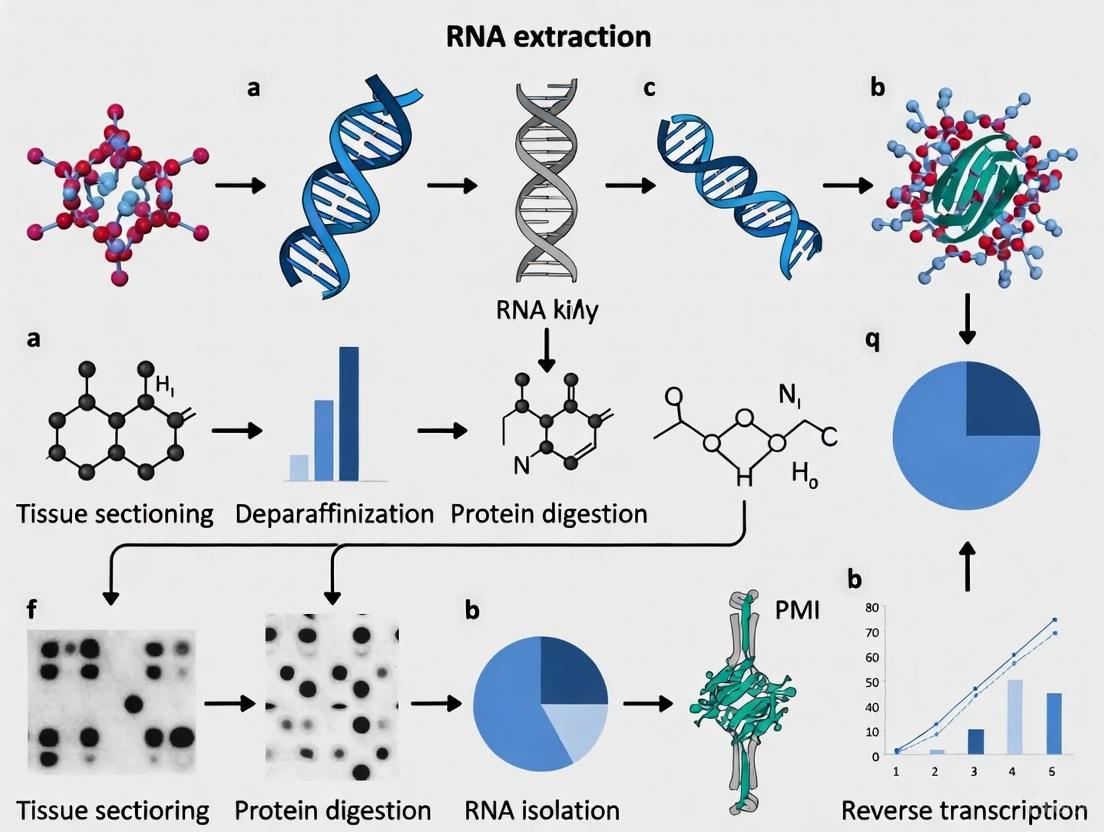
This article provides a comprehensive guide for researchers and drug development professionals on extracting high-quality RNA from Formalin-Fixed Paraffin-Embedded (FFPE) tissues for accurate qPCR analysis.
Optimized RNA Extraction from FFPE Samples for Reliable qPCR: A Complete Guide for Researchers
Abstract
This article provides a comprehensive guide for researchers and drug development professionals on extracting high-quality RNA from Formalin-Fixed Paraffin-Embedded (FFPE) tissues for accurate qPCR analysis. Covering foundational challenges to advanced optimization strategies, it details how factors like fixation chemistry, storage time, and extraction methodology impact RNA yield, purity, and integrity. The content systematically evaluates commercial kits, outlines robust protocols for cDNA synthesis and gene expression analysis, and presents rigorous validation frameworks to ensure data reliability in translational cancer research and clinical applications.
Understanding FFPE RNA Challenges: Degradation, Cross-linking, and Quality Assessment
The Fundamental Chemistry of Formalin Fixation and RNA Cross-linking
Formalin fixation, the standard method for preserving clinical tissue samples, presents a significant paradox for molecular biology: while it creates a stable morphological archive, it chemically modifies and compromises nucleic acids. This whitepaper examines the fundamental chemistry of formaldehyde-induced cross-linking, focusing on its impact on RNA within the context of formalin-fixed paraffin-embedded (FFPE) samples. We detail the biochemical mechanisms underlying RNA-protein and RNA-RNA cross-links, explain how these modifications impede successful RNA extraction and quantification, and present optimized experimental protocols to overcome these challenges for reliable qPCR analysis. Understanding these chemical principles is essential for developing robust RNA extraction methodologies from FFPE tissues, enabling researchers to leverage vast archival sample repositories for transcriptional profiling in research and drug development.
Formalin fixation has served as the cornerstone of pathological tissue preservation for decades, creating stable FFPE blocks that maintain tissue architecture at room temperature. The process involves submerging tissue in formalin, an aqueous solution of formaldehyde (FA), which penetrates cells and reacts with biological macromolecules including proteins, DNA, and RNA. While this process preserves morphological information essential for histological diagnosis, it introduces extensive biochemical modifications that complicate subsequent molecular analyses, particularly RNA extraction.
The primary value of FFPE samples for research, especially in oncology, lies in their ubiquity and association with long-term clinical outcome data. Archival FFPE samples represent an invaluable resource for biomarker discovery and validation studies because they are routinely collected in clinical practice and can be linked to detailed patient records [1]. However, the very chemical reactions that confer preservation stability also fragment and cross-link RNA, making it challenging to obtain high-quality RNA for downstream applications like qPCR and RNA sequencing [2] [3]. Consequently, understanding formalin fixation chemistry is not merely an academic exercise but a practical necessity for researchers aiming to extract biologically meaningful gene expression data from these sample types.
The Biochemistry of Formaldehyde Cross-linking
Fundamental Reaction Mechanisms
Formaldehyde, the smallest and most reactive aldehyde, functions as an effective cross-linking agent due to its high electrophilicity and small molecular size, enabling penetration throughout cellular compartments. Its reactivity primarily targets nucleophilic functional groups in biological macromolecules, including amino groups in nucleic acid bases and side chains of amino acids such as lysine, cysteine, histidine, tryptophan, and arginine [4].
The cross-linking process occurs through a two-step mechanism:
- Methylol Adduct Formation: A nucleophilic group (e.g., the primary amine from adenine or lysine) attacks the electrophilic carbonyl carbon of formaldehyde, forming an unstable methylol adduct (R-NH-CH₂-OH).
- Methylene Bridge Formation: The methylol adduct can rapidly dehydrate to form a reactive Schiff base (R-N=CH₂), which then reacts with a second nearby nucleophile (e.g., from a protein or another RNA molecule) to form a stable methylene bridge (R-NH-CH₂-N-R') [4].
Table 1: Nucleophilic Targets for Formaldehyde in Biological Systems
| Macromolecule | Reactive Groups | Primary Reaction Products |
|---|---|---|
| RNA | Exocyclic amines of adenine, guanine, cytosine | Methylol adducts, RNA-protein cross-links, RNA-RNA cross-links |
| Protein | Side chains of lysine, arginine, cysteine, histidine, tyrosine | Methylol adducts, protein-protein cross-links |
| DNA | Exocyclic amines of adenine, guanine, cytosine | Methylol adducts, DNA-protein cross-links, interstrand cross-links |
For RNA, these reactions result in two particularly detrimental consequences: (1) RNA-protein cross-links that physically trap RNA within protein complexes, and (2) RNA fragmentation due to the alkaline conditions often encountered during tissue processing. The formation of methylene bridges between RNA and surrounding proteins is the principal reason why RNA is difficult to extract quantitatively from FFPE samples [4] [5].
Mass Spectrometry Insights into Cross-link Chemistry
Recent advances in mass spectrometry (MS) have refined our understanding of formaldehyde cross-linking chemistry. Surprisingly, when analyzing structured proteins, the dominant reaction product adds 24 Da (two carbon atoms) to the total mass of two cross-linked peptides, rather than the 12 Da (one carbon atom) expected from a classic methylene bridge [5].
This 24 Da addition is now understood to be a dimerization product of two formaldehyde-induced amino acid modifications. MS/MS fragmentation patterns reveal that this cross-link cleaves symmetrically, producing a mass addition of 12 Da on each peptide. Lysine and arginine residues are the most prevalent participants in this reaction, though aspartic acid, tyrosine, and other residues also contribute significantly [5]. This revised mechanism enhances our ability to interpret cross-linking data and understand the molecular constraints imposed by formalin fixation.
Diagram 1: Formaldehyde cross-linking involves a two-step reaction mechanism that results in stable methylene bridges between macromolecules.
Impact on RNA Integrity and Extraction from FFPE Samples
Chemical Consequences for RNA
The chemical modifications inflicted during formalin fixation have profound implications for RNA integrity:
- Fragmentation: RNA undergoes extensive strand breakage during fixation and storage. The DV200 metric (percentage of RNA fragments >200 nucleotides) is a critical quality indicator, with values below 30% indicating samples that may be unsuitable for many downstream applications [1] [3].
- Cross-linking: Covalent bonds formed between RNA and proteins create a physical barrier to extraction, effectively reducing yield by trapping RNA within an insoluble matrix.
- Base Modification: Chemical alteration of nucleotide bases (e.g., methylol adducts on adenine) can interfere with enzyme binding during reverse transcription and qPCR, leading to inaccurate quantification and potential sequence artifacts [4].
The extent of these damages is influenced by pre-analytical variables including fixation time, formalin pH and concentration, tissue size, and storage conditions of both blocks and sections. While FFPE blocks themselves are stable for decades, cut sections may experience antigenic degradation over time, though one proteomic study found no significant effect on protein identifications from sections stored for up to 48 weeks at either room temperature or -80°C [6].
Quantitative Assessment of RNA Quality
RNA extracted from FFPE samples is typically fragmented, as reflected in DV200 values. A comparative study of extraction kits found that quality scores varied significantly across different kits and tissue types [1]. The Promega ReliaPrep FFPE Total RNA Miniprep System provided the best combination of both quantity and quality across tested tissue samples (tonsil, appendix, and lymphoma lymph nodes), while the Roche kit systematically provided better quality recovery than other kits [1].
Table 2: RNA Quality and Quantity Metrics from FFPE Extraction Studies
| Study / Sample Type | Extraction Method | Concentration Range | DV200 Range | Key Findings |
|---|---|---|---|---|
| OSCC FFPE Samples [3] | PureLink FFPE RNA Isolation Kit | >130 ng/µL | 30% - 50% | All samples met minimum quality thresholds for library prep despite degradation. |
| Melanoma FFPE Samples [2] | Not specified | 25 ng/µL - 374 ng/µL | 37% - 70% | No samples showed DV200 < 30%; all were usable for RNA-seq protocols. |
| Multi-tissue Comparison [1] | 7 Commercial Kits | Variable by kit and tissue | Variable by kit and tissue | Promega kit yielded highest quantity; Roche kit yielded superior quality. |
Experimental Protocols for RNA Analysis from FFPE Samples
RNA Extraction and Quality Control
Optimized RNA extraction from FFPE samples requires specialized protocols designed to reverse formalin cross-links while minimizing further RNA degradation:
Deparaffinization and Digestion Protocol [1] [7]:
- Cut 4-6 sections of 5-20 µm thickness from the FFPE block. Studies found that using six 8µm sections provided sufficient RNA yield without compromising quality [3].
- Deparaffinize using xylene, d-limonene, or commercial deparaffinization solutions. AutoLys M tubes combined with automated systems like KingFisher Duo provided effective deparaffinization with higher yield and consistency, particularly for small samples [7].
- Proteinase K Digestion: Incubate samples with proteinase K (typically 0.2 mg/mL) at 56°C for several hours to overnight to digest proteins and reverse cross-links. Some protocols incorporate Heat-Induced Epitope Retrieval (HIER) by heating samples in citrate or Tris-EDTA buffer to further break cross-links [1].
- RNA Purification: Use silica membrane columns or magnetic beads to bind and wash RNA. Commercial kits like MagMAX FFPE DNA/RNA Ultra Kit are optimized for this purpose [7].
- Elution: Elute RNA in nuclease-free water or TE buffer.
Quality Assessment:
- Quantity: Measure RNA concentration using fluorescence-based methods (e.g., Qubit RNA HS Assay), as spectrophotometry (Nanodrop) may overestimate due to contaminants.
- Quality: Determine the DV200 index using a fragment analyzer or Bioanalyzer. Samples with DV200 > 50% are considered good quality, 30-50% are moderate quality, and <30% are heavily degraded [3].
- Functionality: For qPCR applications, include a test amplification of a control gene with varying amplicon lengths to assess degradation level and amplification efficiency.
Library Preparation Strategies for Sequencing
For comprehensive gene expression analysis, RNA sequencing library preparation from FFPE samples requires specialized approaches:
- rRNA Depletion: This method uses probes to remove abundant ribosomal RNAs, enriching for messenger RNA. However, with highly fragmented FFPE RNA, this approach may yield insufficient material for sequencing [3].
- Exome Capture: This approach involves preparing a cDNA library followed by target enrichment using hybridization probes. A comparative study on oral squamous cell carcinoma FFPE samples found that exome capture significantly outperformed rRNA depletion in library output concentration (p < 0.001) and generated more usable sequencing data from low-quality RNA [3].
Table 3: Comparison of Library Preparation Methods for FFPE-Derived RNA
| Parameter | rRNA Depletion | Exome Capture |
|---|---|---|
| Principle | Removal of ribosomal RNA | Hybridization-based capture of coding regions |
| RNA Input | Higher (e.g., 750 ng) | Lower (e.g., 100 ng) |
| Best For | High-quality RNA (DV200 > 50%) | Low to moderate quality RNA (DV200 30-50%) |
| % mRNA Reads | Variable, often lower for FFPE | Higher (89.4% - 94.1% reported) [3] |
| Advantages | Broad transcriptome coverage | Higher specificity, better for degraded samples |
| Disadvantages | Inefficient with fragmented RNA | More complex workflow, sequence bias |
Diagram 2: Optimized workflow for RNA extraction from FFPE samples includes deparaffinization, digestion, quality control, and library preparation choices based on RNA quality.
The Scientist's Toolkit: Essential Reagents and Methods
Successful RNA analysis from FFPE samples requires carefully selected reagents and methods to overcome challenges posed by formalin fixation:
Table 4: Essential Research Reagents for FFPE RNA Analysis
| Reagent/Method | Function | Example Products | Considerations |
|---|---|---|---|
| Deparaffinization Agents | Paraffin wax removal | Xylene, d-Limonene, commercial oils | d-Limonene is less hazardous than xylene; AutoLys M tubes effective in automated systems [7] |
| Lysis & Digestion Buffers | Reverse cross-links, digest proteins | Proteinase K, proprietary lysis buffers | Combination of enzymatic digestion and heat treatment most effective [1] |
| RNA Extraction Kits | Bind, wash, elute RNA | Promega ReliaPrep, Roche High Pure, MagMAX FFPE, PureLink FFPE | Selection depends on tissue type, sample size, and desired yield/quality balance [1] [7] [3] |
| RNA Quality Assessment | Evaluate RNA integrity | DV200, RQS (RNA Quality Score) | DV200 >30% essential for successful library prep; fluorescence-based quantification preferred [1] [3] |
| Library Prep Kits | Prepare sequencing libraries | NEBNext Ultra II, SMARTer Stranded | Exome capture superior for low-quality FFPE RNA [2] [3] |
| Reverse Transcriptase | cDNA synthesis | Thermostable, processive enzymes | Selected enzymes can overcome modified bases and cross-links for qPCR |
The fundamental chemistry of formalin fixation involves a complex series of reactions that create methylene bridges between RNA and proteins, severely impacting RNA integrity and extractability. These chemical modifications—including fragmentation, base alterations, and cross-linking—present significant but surmountable challenges for gene expression analysis from FFPE samples. Understanding these underlying mechanisms enables researchers to select appropriate countermeasures at each stage, from optimized extraction and quality control to judicious choice of library preparation methods. As mass spectrometry and other analytical techniques continue to refine our knowledge of formalin chemistry, further improvements in RNA recovery from these invaluable archival resources will enhance translational research capabilities, particularly in oncology and personalized medicine. By applying the principles and protocols outlined in this whitepaper, researchers can more effectively leverage the vast biobanks of FFPE samples for robust qPCR-based gene expression studies, bridging the gap between historical pathology specimens and modern molecular analysis.
Formalin-fixed paraffin-embedded (FFPE) tissues represent an invaluable resource for biomedical research and clinical diagnostics, particularly in oncology. However, the RNA derived from these archival samples is subject to extensive degradation and chemical modification, posing significant challenges for downstream molecular analyses such as qPCR and RNA sequencing. This technical guide comprehensively outlines the primary sources of RNA degradation in FFPE tissues, drawing upon recent scientific literature to detail the molecular mechanisms of damage, standardized methods for RNA quality assessment, and optimized experimental protocols for RNA extraction and analysis. By synthesizing current evidence and providing practical recommendations, this review aims to equip researchers with the knowledge necessary to reliably utilize FFPE-derived RNA, thereby unlocking the vast potential of archival tissue banks for gene expression research.
Archival FFPE tissues represent one of the most abundant resources for retrospective clinical and research studies, with over a billion samples stored worldwide in hospital archives and tissue banks [1]. The ability to analyze gene expression from these specimens using techniques such as qPCR and RNA sequencing has transformative potential for understanding disease mechanisms, identifying biomarkers, and advancing drug development. However, the process of formalin fixation and paraffin embedding, along with subsequent long-term storage, introduces substantial challenges for nucleic acid preservation [8] [9].
RNA is particularly susceptible to degradation in FFPE tissues due to a combination of chemical modifications, fragmentation, and cross-linking. Formaldehyde fixation leads to nucleic acid fragmentation through hydrolysis of phosphodiester bonds and creates abasic sites via hydrolysis of N-glycosylic bonds [10]. Furthermore, formalin introduces methylol groups to nucleotides and creates methylene bridges between amino groups, leading to both intramolecular RNA modifications and RNA-protein cross-links that significantly impact downstream enzymatic processes [9] [10]. These alterations substantially reduce the ability of conventional molecular techniques to quantify mRNA accurately, making it difficult to analyze gene expression using fixed tissues [9].
Despite these challenges, methodological advances in RNA extraction, quality assessment, and analysis have made FFPE-derived RNA increasingly viable for research applications. This guide systematically addresses the key sources of RNA degradation in archival FFPE tissues and provides evidence-based strategies for mitigating these effects, with particular emphasis on optimization for qPCR-based research.
Molecular Mechanisms of RNA Degradation in FFPE Tissues
Chemical Modifications from Formalin Fixation
The formalin fixation process initiates a series of chemical modifications that profoundly impact RNA integrity. Formaldehyde reacts with RNA nucleotides through several mechanisms: addition of mono-methylol groups to bases, formation of methylene bridges between amino groups, and induction of strand breaks [9] [10]. These modifications occur because formaldehyde preferentially reacts with amino and imino groups of nucleic acid bases, particularly adenine and guanine, creating unstable methylol derivatives that can further react to form cross-links with proteins or other nucleic acids [10].
The cross-linking between RNA and proteins represents a particularly significant challenge, as it creates a physical barrier that limits the accessibility of RNA to enzymatic manipulation during extraction and subsequent molecular analyses [10]. These cross-links must be reversed through enzymatic digestion or heat-induced epitope retrieval (HIER) to liberate RNA fragments for analysis [1]. Proteinase K is commonly employed for this purpose, as it digests proteins and assists in breaking down the cross-links formed by formalin fixation [1].
RNA Fragmentation Processes
RNA isolated from FFPE specimens is substantially degraded to fragments typically under 300 nucleotides in length [9]. This fragmentation occurs through two primary mechanisms: hydrolysis of phosphodiester bonds in the RNA backbone and cleavage at abasic sites created by formalin modification [10]. The fragmentation pattern is not random, with certain RNA regions becoming more susceptible to degradation based on sequence composition and secondary structure.
The extent of fragmentation increases with the duration of formalin fixation. Prolonged fixation (longer than 48 hours) causes extensive degradation, cross-linking, and irreversible modifications to the RNA, resulting in reduction of quantifiable mRNA molecules [9]. This relationship underscores the importance of standardizing fixation protocols across samples to minimize variability in RNA quality.
Oxidative Damage During Storage
Long-term storage of FFPE tissues introduces additional RNA degradation through oxidative mechanisms. Exposure to oxygen during storage leads to oxidative deamination of bases, particularly affecting cytosine and adenine residues [11]. This process is accelerated by higher storage temperatures and exposure to light, making storage conditions a critical factor in preserving RNA integrity [11].
The storage of thin FFPE sections (typically 5-20μm) is especially problematic, as the increased surface area exposes RNA to greater environmental impacts, resulting in additional oxidative damage [11]. This effect is particularly relevant for clinical laboratories that pre-cut sections for future analyses, as the practice significantly compromises RNA quality compared to storing intact blocks.
Table 1: Major RNA Degradation Mechanisms in FFPE Tissues
| Degradation Mechanism | Chemical Process | Impact on RNA | Resulting Artifacts |
|---|---|---|---|
| Formalin Modification | Addition of methylol groups to nucleotides | Base alteration and miscoding | Reduced reverse transcription efficiency |
| Cross-linking | Methylene bridges between RNA and proteins | Physical trapping of RNA fragments | Inaccessible RNA targets; biased representation |
| Hydrolytic Fragmentation | Hydrolysis of phosphodiester bonds | RNA backbone cleavage | Short fragments (<300 nt); loss of full-length transcripts |
| Abasic Site Formation | Hydrolysis of N-glycosylic bonds | Loss of nucleotide bases | Strand breaks at abasic sites |
| Oxidative Damage | Oxidative deamination of bases | Base modifications and strand breaks | Sequence artifacts; reduced amplifiability |
Critical Factors Affecting RNA Quality in FFPE Tissues
Pre-analytical Variables: Fixation and Processing
Tissue processing conditions represent a major determinant of final RNA quality. The duration of formalin fixation significantly impacts RNA integrity, with longer fixation times leading to progressively greater degradation [9]. Standardization of fixation protocols is therefore essential for generating comparable results across samples. The size of tissue specimens also influences fixation efficiency, with larger blocks requiring longer fixation times that may exacerbate RNA degradation.
The chemical environment during fixation plays an important role in RNA preservation. Buffered formalin solutions (typically 10% neutral buffered formalin) provide better RNA preservation compared to unbuffered alternatives by maintaining a stable pH that minimizes acid-catalyzed hydrolysis [1]. The temperature during fixation and processing should be carefully controlled, as elevated temperatures can accelerate degradation processes.
Storage Conditions and Temporal Effects
Storage conditions for both FFPE blocks and tissue sections significantly impact RNA stability. A systematic evaluation of storage temperatures demonstrated that RNA integrity is best preserved at lower temperatures (-80°C > -20°C > 4°C > 24°C), with both total RNA concentration and the amount of long RNA fragments decreasing at higher storage temperatures [11]. This relationship highlights the importance of proper storage for maintaining RNA quality.
The age of FFPE blocks correlates with RNA degradation, though this relationship is not always linear [12]. Chemical modifications continue to occur gradually during storage, with older specimens typically exhibiting more extensive fragmentation. However, studies have successfully extracted usable RNA from blocks stored for up to 20-32 years, demonstrating that even decades-old material can yield valuable molecular data with appropriate methodologies [8] [13].
For tissue sections, storage with protective paraffin coating (paraffin dipping) provides superior preservation compared to uncoated sections, particularly for long-term storage [14]. This protective barrier minimizes exposure to oxygen and humidity, reducing oxidative damage and hydrolytic degradation.
Tissue-Specific Variability
Different tissue types exhibit varying susceptibilities to RNA degradation during FFPE processing. A systematic comparison of RNA recovery from tonsil, appendix, and lymphoma tissues demonstrated significant variability in both the quantity and quality of RNA obtained, even when using identical extraction methods and processing protocols [1]. This tissue-specific variability may reflect differences in intrinsic RNase content, cellular composition, lipid content, and tissue density that affect fixative penetration and processing.
Tissues with high endogenous RNase activity (such as pancreas and spleen) typically show more rapid degradation unless fixation occurs promptly after collection. Similarly, tissues with high lipid content may exhibit delayed fixative penetration, leading to ongoing autolytic processes before fixation is complete. These factors necessitate consideration of tissue-specific optimization when working with diverse sample types.
Table 2: Impact of Storage Conditions on RNA Quality Metrics
| Storage Condition | Effect on RNA Concentration | Effect on DV200 Values | Effect on Fragment Size Distribution | Recommended Practice |
|---|---|---|---|---|
| Intact FFPE Blocks (RT) | Minimal decrease over years | Gradual decline with age | Progressive fragmentation | Store in climate-controlled environment with stable temperature and humidity |
| Uncoated Sections (4°C) | Moderate decrease over months | Significant decline after 36 weeks | Rapid fragmentation of long molecules | Limit section storage time; use within 6 months |
| Paraffin-coated Sections (4°C) | Minimal decrease over months | Stable for at least 36 weeks | Good preservation of fragments >200 nt | Apply protective paraffin coating for long-term storage |
| Sections (-80°C) | Minimal decrease | Highly stable | Optimal preservation of size distribution | Recommended for valuable or irreplaceable samples |
Quality Assessment and Metrics for FFPE-Derived RNA
RNA Integrity and Fragment Size Analysis
Quality assessment of FFPE-derived RNA requires specialized approaches, as conventional metrics developed for intact RNA are often inadequate. The RNA Integrity Number (RIN) commonly used for fresh frozen samples has limited utility for FFPE-RNA, as degraded samples typically yield very low RIN values (often 1.2-2.5) that do not necessarily correlate with analytical utility [10] [13].
The DV200 metric (percentage of RNA fragments >200 nucleotides) has emerged as a more reliable quality indicator for FFPE samples [8] [10] [12]. This metric provides a practical assessment of RNA fragment size distribution that better predicts downstream performance in qPCR and sequencing applications. For severely degraded samples with DV200 < 30%, the DV100 metric (percentage of fragments >100 nucleotides) may offer better discrimination for quality assessment [8].
Electropherogram visualization provides additional qualitative information beyond numerical metrics. The presence of high-molecular-weight species may indicate incomplete reversal of cross-links, while a smooth size distribution without distinct peaks suggests thorough extraction of fragmented RNA [10]. Visual inspection can thus complement quantitative metrics in determining RNA suitability for specific applications.
Functional Quality Assessment
Functional assessment through qPCR represents a critical complementary approach to physical RNA quality metrics. Amplification efficiency for specific target genes provides a direct measure of RNA suitability for gene expression analysis [9] [10]. This functional assessment is particularly important because chemical modifications from formalin fixation can inhibit reverse transcription and PCR amplification even when adequate RNA fragmentation is present.
When designing qPCR assays for FFPE-derived RNA, amplicon length represents a crucial consideration. Several studies have demonstrated that shorter amplicons (typically <100 bp) significantly increase detection sensitivity and reproducibility [9]. Designing assays to target the 3'-UTR of mRNA molecules can further enhance detection, as this region is often better preserved in degraded RNA [9].
The use of reference genes for normalization requires careful validation in FFPE samples, as degradation patterns may affect reference and target genes differently. Reference genes should demonstrate stable expression across sample groups and show minimal influence of degradation on measured expression levels [10].
Methodological Approaches for RNA Analysis from FFPE Tissues
RNA Extraction Optimization
The choice of RNA extraction method significantly impacts both the quantity and quality of RNA recovered from FFPE tissues. Systematic comparisons of commercial extraction kits have demonstrated substantial variability in performance, with different kits exhibiting strengths in RNA yield, quality, or both [1] [15]. Silica-based methods represent the most common approach, though paramagnetic beads-based methods have also shown excellent performance [1] [15].
Modifications to standard extraction protocols can enhance RNA recovery. Extending tissue lysis time (up to 10 hours) improves the efficiency of cross-link reversal, reducing high-molecular-weight species that represent incompletely liberated RNA [10]. Incorporating a heating step (70°C) during extraction increases RNA yields, potentially by further reversing formaldehyde adducts, without compromising quality metrics [10].
Deparaffinization represents another critical step where methodological choices impact RNA quality. While xylene has traditionally been used for this purpose, the environmentally friendly alternative d-limonene has demonstrated equivalent effectiveness while offering practical safety advantages [11].
Library Preparation Strategies for Sequencing
For RNA sequencing applications, the choice of library preparation method significantly influences data quality from FFPE-derived RNA. Methods that utilize random primers for cDNA synthesis generally outperform those relying on oligo-dT priming, as the poly-A tails necessary for oligo-dT priming are often degraded or modified in FFPE-RNA [8]. Total RNA sequencing approaches that incorporate ribosomal RNA depletion rather than poly-A selection typically provide more comprehensive transcriptome coverage from degraded samples [8] [2].
The required input RNA amount represents another important consideration, particularly for precious clinical samples with limited material. Recent methodological advances have enabled reliable sequencing from increasingly small RNA inputs, with some kits producing high-quality data from as little as 5-10ng of total RNA [2]. This capability is particularly valuable for samples where macrodissection or microdissection has been employed to isolate specific tissue regions.
qPCR Optimization Strategies
qPCR analysis of FFPE-derived RNA requires specific optimization to address the challenges of fragmentation and chemical modification. The most critical factor is designing short amplicons (typically 50-100 bp) to accommodate the fragmented nature of the RNA [9]. One study demonstrated successful mRNA quantification using amplicons as short as 24 nucleotides, highlighting the potential for extreme miniaturization of assay design [9].
Incorporating a pre-amplification step can enhance sensitivity for low-abundance targets, though this introduces additional variability that must be carefully controlled [9]. The use of random hexamers rather than gene-specific primers for reverse transcription improves coverage of degraded transcripts, as fragmentation sites that would prevent extension of a gene-specific primer may be bypassed with random priming [9].
RNA quantity and quality normalization present special challenges for FFPE samples. While spectrophotometric quantification is commonly used, fluorescence-based methods generally provide more accurate measurements for degraded RNA [13]. Some researchers advocate normalization approaches based on the mean expression of multiple reference genes rather than relying solely on RNA quantity metrics [10].
Experimental Protocols and Workflows
Recommended RNA Extraction Protocol
Based on comparative studies of extraction methods, the following protocol represents a robust approach for obtaining high-quality RNA from FFPE tissues:
Sectioning: Cut 5-20μm sections from FFPE blocks using a microtome. For best results, use freshly cut sections rather than stored sections when possible. Collect sections in nuclease-free tubes.
Deparaffinization: Add 1mL of xylene or d-limonene to the sections, vortex thoroughly, and incubate at room temperature for 5 minutes. Centrifuge at maximum speed for 5 minutes and carefully remove the supernatant. Repeat once with fresh xylene/d-limonene.
Ethanol Wash: Add 1mL of absolute ethanol to the pellet, vortex, and centrifuge at maximum speed for 5 minutes. Remove the supernatant completely. Air-dry the pellet for 5-10 minutes to residual ethanol.
Proteinase K Digestion: Resuspend the deparaffinized pellet in appropriate lysis buffer containing 1-2mg/mL Proteinase K. Incubate at 56°C for 10-16 hours with agitation to reverse cross-links and digest proteins.
RNA Isolation: Proceed with RNA isolation using a silica-column based method according to manufacturer's instructions. Include optional DNase digestion step to remove genomic DNA contamination.
Elution: Elute RNA in nuclease-free water rather than TE buffer, as EDTA can interfere with downstream enzymatic reactions.
Quality Assessment: Determine RNA concentration using fluorescence-based methods and assess RNA fragment size distribution using a bioanalyzer or fragment analyzer to calculate DV200 values.
Quality Control Workflow
RNA Quality Assessment Workflow for FFPE Tissues
Research Reagent Solutions
Table 3: Essential Reagents and Kits for FFPE RNA Analysis
| Reagent/Kits | Specific Examples | Primary Function | Considerations for FFPE Tissues |
|---|---|---|---|
| RNA Extraction Kits | AllPrep DNA/RNA FFPE Kit (Qiagen), miRNeasy FFPE Kit (Qiagen), ReliaPrep FFPE Total RNA Miniprep (Promega) | Simultaneous DNA/RNA extraction, optimized for cross-link reversal | Consider yield/quality trade-offs; Promega kit showed best quantity/quality ratio in comparative studies [1] |
| Deparaffinization Reagents | Xylene, d-Limonene | Paraffin wax removal | d-Limonene offers environmental and safety advantages with comparable efficacy [11] |
| DNase Treatment Kits | RNase-Free DNase Set (Qiagen), TURBO DNase (Thermo Fisher) | Genomic DNA removal | Critical for accurate gene expression analysis; include on-column or in-solution treatment |
| Quality Assessment Kits | RNA 6000 Nano Kit (Agilent), High Sensitivity DNA Kit (Agilent) | RNA fragment size analysis | Essential for calculating DV200 metrics; requires bioanalyzer or fragment analyzer instrumentation |
| Reverse Transcription Kits | High-Capacity cDNA Reverse Transcription Kit (Thermo Fisher) | cDNA synthesis from degraded RNA | Use random hexamers rather than oligo-dT primers for better coverage of fragmented RNA |
| qPCR Master Mixes | TaqMan Fast Advanced Master Mix (Thermo Fisher), SYBR Green PCR Master Mix (Thermo Fisher) | Quantitative PCR amplification | Optimized for short amplicons; TaqMan assays may offer better specificity for degraded samples |
Archival FFPE tissues represent an invaluable resource for biomedical research, particularly in molecular pathology and oncology. While RNA degradation presents significant challenges for gene expression analysis, understanding the key sources of this degradation enables researchers to implement appropriate countermeasures at each stage from tissue collection through molecular analysis. Through optimized RNA extraction methods, appropriate quality assessment metrics, and targeted analytical approaches such as short-amplicon qPCR assays, reliable gene expression data can be obtained from even highly degraded specimens. The continued refinement of these methodologies will further enhance the research utility of the vast archives of FFPE tissues available worldwide, enabling retrospective studies with long-term clinical outcome data that would otherwise not be feasible.
The analysis of gene expression from Formalin-Fixed Paraffin-Embedded (FFPE) samples represents a cornerstone of modern biomedical research, particularly in oncology and retrospective clinical studies. These archival tissues provide an invaluable resource for understanding disease progression and prognosis [16]. However, the chemical processes of formalin fixation induce nucleic acid modifications—including oxidation, cross-linking, and fragmentation—that profoundly compromise RNA integrity [16] [10]. This degradation poses significant challenges for downstream applications such as qPCR, where RNA quality directly impacts data reliability and experimental reproducibility.
For researchers working with FFPE samples for qPCR research, assessing RNA quality is not merely a preliminary step but a critical determinant of experimental success. The choice of quality assessment method must align with the specific challenges posed by FFPE-derived RNA and the technical requirements of qPCR. Traditional quality measures developed for fresh or frozen tissues often fail to accurately represent the integrity of FFPE-derived RNA, necessitating specialized metrics and interpretive frameworks [17] [18]. This guide provides an in-depth examination of the three fundamental RNA quality metrics—RIN, DV200, and absorbance ratios—within the specific context of FFPE sample research for qPCR applications.
Essential RNA Quality Metrics: Principles and Applications
RNA Integrity Number (RIN)
The RNA Integrity Number (RIN) is an algorithm-based assessment of RNA quality developed for the Agilent 2100 Bioanalyzer. This automated approach assigns RNA a integrity value from 1 (completely degraded) to 10 (perfectly intact) based on the entire electrophoretic trace of the RNA sample, with particular attention to the ribosomal RNA regions [19].
Mechanism and Interpretation: The RIN algorithm employs a combination of features from the electropherogram, including the total RNA ratio, 28S peak height, 28S area ratio, and the relationship between the 18S and 28S areas to the "fast region" (small fragments) [19]. In intact RNA from fresh or frozen tissues, the 28S:18S ribosomal ratio is approximately 2:1, yielding RIN values typically above 8.0 [17] [19]. However, formalin fixation fragments RNA and disrupts this ratio, making standard RIN interpretation problematic for FFPE samples [10] [18].
Limitations for FFPE Samples: Research demonstrates that RIN values alone do not adequately discern between low and high quality FFPE RNA or reliably predict qPCR success [18]. The fragmentation pattern of FFPE RNA differs fundamentally from fresh RNA degradation, with formalin-induced cross-links creating atypical electrophoregram profiles that compromise RIN accuracy [10].
DV200 Metric
The DV200 metric represents the percentage of RNA fragments longer than 200 nucleotides and has emerged as a more reliable quality indicator for FFPE-derived RNA [16] [18]. This metric directly addresses the fragmentation issue central to FFPE RNA quality assessment.
Principle and Measurement: DV200 is calculated from the size distribution of RNA fragments separated by capillary electrophoresis on platforms like the Agilent 2100 Bioanalyzer. The metric quantifies the proportion of RNA molecules of sufficient length for downstream applications, with higher values indicating better preservation [16]. Studies have validated that DV200 shows stronger correlation with sequencing and qPCR outcomes from FFPE samples compared to RIN [18].
Quality Thresholds and Applications: For the NanoString nCounter platform, a robust and reliable gene expression analysis requires FFPE samples with DV200 values greater than 30% [16]. Illumina recommends that samples with DV200 below 70% require at least twice the normal RNA input for sequencing library preparation, while samples with DV200 below 30% should not be sequenced at all [18]. Research indicates that DV100 (percentage of fragments >100 nucleotides) values above 80% provide the best indication of successful gene detection in whole transcriptome studies [18].
Absorbance Ratios (A260/A280 and A260/A230)
Ultraviolet absorbance spectroscopy provides rapid assessment of RNA purity by detecting contaminants that compromise downstream reactions including qPCR [17].
A260/A280 Ratio: This ratio evaluates protein contamination, with optimal values of 1.8–2.2 indicating pure RNA [17]. Values below 1.8 suggest residual protein or guanidine salts from the extraction process, which can inhibit reverse transcriptase and PCR enzymes [17].
A260/A230 Ratio: This ratio assesses contamination from organic compounds such as phenol, guanidine, or ethanol, with values greater than 1.7 generally considered acceptable [17]. Low A260/A230 ratios indicate contaminants that may interfere with cDNA synthesis and qPCR amplification [17].
Limitations: Absorbance ratios provide no information about RNA integrity or fragmentation state [17]. Even severely degraded RNA samples can yield optimal absorbance ratios if purified effectively, making them insufficient standalone metrics for FFPE RNA quality [17].
Table 1: Comparative Analysis of RNA Quality Metrics for FFPE Samples
| Metric | What It Measures | Optimal Range (FFPE) | Primary Applications | Key Limitations |
|---|---|---|---|---|
| RIN | Overall RNA integrity based on electrophoretic trace | >7.0 (if measurable) [19] | Initial quality screening; fresh/frozen RNA | Limited reliability for FFPE samples [18] |
| DV200 | % of fragments >200 nucleotides | >30% (minimal) [16]; >70% (good) [18] | FFPE-specific quality assessment; input normalization | Requires specialized equipment (Bioanalyzer/TapeStation) |
| A260/A280 | Protein contamination | 1.8–2.2 [17] | Purity assessment; detection of enzyme inhibitors | Does not detect RNA fragmentation [17] |
| A260/A230 | Organic compound contamination | >1.7 [17] | Detection of reverse transcription inhibitors | Does not detect RNA fragmentation [17] |
Experimental Protocols for RNA Quality Assessment
DV200 Determination Using Bioanalyzer
The following protocol outlines the standardized procedure for assessing RNA quality from FFPE samples using the Agilent 2100 Bioanalyzer, a critical workflow for determining DV200 values [16] [10].
Sample Preparation:
- Extract total RNA from FFPE tissue sections (10μm thickness) using specialized kits designed for FFPE tissues (e.g., Qiagen AllPrep DNA/RNA FFPE kit or Cell Data Sciences RNAstorm FFPE RNA extraction kit) [16].
- Determine RNA concentration using spectrophotometry (e.g., Nanodrop 2000). Record A260/A280 and A260/A230 ratios for purity assessment [16].
- Dilute RNA samples to appropriate concentrations (typically 1-5 ng/μL) depending on the specific Bioanalyzer chip being used [10].
Bioanalyzer Procedure:
- Prepare the RNA Pico Chip according to manufacturer specifications: Prime the chip with gel-dye mix using the provided syringe [10].
- Load 1 μL of RNA marker into the designated wells [10].
- Pipette 1 μL of each RNA sample into separate sample wells, followed by 1 μL of RNA marker in each well [10].
- Vortex the chip for 1 minute using the provided IKA vortexer [10].
- Insert the chip into the Agilent 2100 Bioanalyzer instrument and run the analysis using the RNA Pico program [10].
Data Interpretation:
- The software generates an electrophoretogram and calculates the DV200 value automatically [16].
- Visually inspect the electrophoretogram: high-quality FFPE RNA shows a relatively flat size distribution with fragments spanning 100-1000 nucleotides, while poor-quality samples show predominant short fragments (<200 nucleotides) [10].
- Use the DV200 value to determine RNA input requirements for downstream qPCR applications [16].
Absorbance Ratio Measurement Protocol
Spectrophotometric assessment of RNA purity provides critical information about contaminants that may inhibit qPCR reactions [17].
Sample Preparation:
- Isolate RNA from FFPE samples using specialized kits that effectively remove paraffin and reverse formalin cross-links [16] [15].
- Elute RNA in nuclease-free water or TE buffer (10 mM Tris-HCl, 1 mM EDTA, pH 8.0) to maintain stable pH for accurate A260/A280 ratios [17].
- For samples with very low yields, consider fluorescent dye-based quantification methods (e.g., Quant-iT RiboGreen RNA Assay) with greater sensitivity [17].
Measurement Procedure:
- Initialize the spectrophotometer (e.g., NanoDrop) and establish baseline correction with the appropriate blank solution (typically the RNA elution buffer) [17].
- Apply 1-2 μL of RNA sample to the measurement pedestal and perform absorbance scanning from 320nm to 230nm [17].
- Record the following measurements: RNA concentration (derived from A260), A260/A280 ratio, and A260/A230 ratio [17].
- Clean the measurement surfaces thoroughly between samples to prevent carryover contamination [17].
Troubleshooting:
- Low A260/A280 (<1.8): Repeat purification with proteinase K treatment or additional phenol-chloroform extraction [17].
- Low A260/A230 (<1.7): Implement additional wash steps with 70% ethanol during RNA purification or consider ethanol precipitation to remove guanidine salts [17].
Integrated Quality Assessment Workflow for FFPE Samples
Diagram 1: RNA Quality Assessment Workflow for FFPE Samples. This integrated approach combines purity, integrity, and functional assessments to ensure reliable qPCR results.
Research Reagent Solutions for FFPE RNA Quality Control
Table 2: Essential Research Reagents and Equipment for RNA Quality Assessment
| Reagent/Equipment | Primary Function | Example Products | Application Notes |
|---|---|---|---|
| FFPE RNA Extraction Kits | Nucleic acid isolation with cross-link reversal | Qiagen AllPrep DNA/RNA FFPE kit; Cell Data Sciences RNAstorm FFPE RNA extraction kit [16] | Include proteinase K digestion; optimized for fragmented RNA |
| Microspectrophotometers | RNA concentration and purity measurement | NanoDrop 2000 [16] | Requires minimal sample volume (1-2 μL); provides A260/A280 and A260/A230 ratios |
| Capillary Electrophoresis Systems | RNA integrity and fragment size analysis | Agilent 2100 Bioanalyzer with RNA Pico chips [16] [10] | Essential for DV200 calculation; different chips for varying concentration ranges |
| Fluorometric Quantitation Kits | Highly sensitive RNA quantification | QuantiFluor RNA System; Quant-iT RiboGreen RNA Assay [17] | More sensitive than absorbance methods; useful for low-yield samples |
| qPCR QC Assays | Functional assessment of RNA quality | Reference gene amplification with 5' vs 3' amplicon comparison [10] | Evaluates amplification efficiency; detects reverse transcription inhibitors |
The reliable assessment of RNA quality from FFPE samples requires an integrated approach that combines multiple complementary metrics. While RIN provides valuable information for intact RNA, its utility for FFPE samples is limited, making DV200 the preferred integrity metric for formalin-fixed materials [18]. Absorbance ratios remain essential for detecting contaminants that inhibit enzymatic reactions in qPCR workflows [17].
For researchers conducting qPCR studies with FFPE samples, the following strategic approach is recommended: (1) begin with spectrophotometric analysis to ensure sample purity; (2) proceed to fragment analysis (DV200) to determine RNA integrity and appropriate input amounts; (3) implement functional QC using qPCR with control genes to verify amplifiability [10] [18]. This multi-layered quality assessment strategy maximizes the value of precious FFPE samples and ensures the generation of reliable, reproducible gene expression data for drug development and clinical research applications.
Formalin-Fixed Paraffin-Embedded (FFPE) tissue samples represent an invaluable resource for biomedical research, particularly in oncology and drug development, with over a billion specimens archived worldwide [1] [13]. These archives, often linked to extensive clinical data, provide unprecedented opportunities for retrospective studies and biomarker discovery. The ability to extract quality RNA from these specimens for downstream applications like qPCR and next-generation sequencing has become a critical component of modern translational research. However, the utility of FFPE-derived RNA is profoundly influenced by pre-analytical variables that occur during tissue collection, processing, and storage. This technical guide examines the impact of three fundamental pre-analytical factors—fixation time, storage duration, and tissue type—within the broader context of optimizing RNA extraction methods from FFPE samples for qPCR research, providing evidence-based recommendations for researchers and drug development professionals.
The Impact of Fixation Time on RNA Quality and Quantity
Formalin fixation preserves tissue architecture by creating methylene bridges between proteins and nucleic acids, but this process simultaneously compromises RNA integrity. The duration of formalin exposure represents a critical determinant in the quality of recoverable RNA for molecular analyses.
Experimental Evidence on Fixation Duration
A controlled investigation examined the effects of 24-hour versus 72-hour formalin fixation on RNA parameters using matched tissue samples. Despite significantly reduced RNA quality in formalin-fixed tissues compared to fresh frozen controls, the study demonstrated that RT-qPCR values remained comparable across all groups (P value = 0.00002) [20]. This finding confirms that while extended fixation damages RNA integrity, the remaining fragments can still yield reliable qPCR results, which is particularly relevant for clinical samples with standardized fixation protocols.
The molecular degradation mechanism involves formaldehyde-induced cross-linking and RNA fragmentation, which occurs progressively during fixation. While short fixation periods (24 hours) cause moderate fragmentation, extended fixation (72 hours) significantly reduces amplifiable fragment lengths, though the impact on targeted qPCR assays targeting short amplicons may be minimal [20] [21].
Practical Recommendations for Fixation
Standardized fixation in 10% neutral buffered formalin for 18-48 hours is recommended as the optimal window for balancing morphological preservation and molecular integrity [1] [22]. This timeframe minimizes over-fixation artifacts while maintaining RNA in a state suitable for subsequent qPCR analysis.
Effects of Storage Duration on FFPE RNA Integrity
The long-term storage potential of FFPE blocks makes them particularly valuable for retrospective studies, yet storage duration introduces additional considerations for RNA quality.
Quantitative Assessment of Storage Impacts
A systematic evaluation of FFPE breast tissue specimens revealed a significant inverse correlation between storage time and RNA yield (r = -0.38, P = 0.01) [23]. This progressive degradation occurs despite the protective paraffin embedding, suggesting that slow oxidative damage and residual nuclease activity continue even in archived blocks.
However, practical applications demonstrate that properly stored FFPE blocks can retain usable RNA for extended periods. Studies have successfully extracted viable RNA from specimens stored for 10-20 years, though with expected reductions in quality metrics [13]. The DV200 values (percentage of RNA fragments >200 nucleotides) show marked decline with increasing storage duration, falling to a median of just 18.65% in long-term archived specimens [13].
Storage Condition Recommendations
Optimal preservation requires storage at stable room temperature (not exceeding 25°C) with protection from humidity and light [1] [22]. Under these conditions, FFPE blocks can yield serviceable RNA for qPCR analysis even after decades of storage, making them viable for long-term retrospective studies.
Tissue-Type Specific Considerations in RNA Recovery
Different tissue types present unique challenges for RNA extraction due to variations in cellular composition, endogenous nuclease levels, and structural properties.
Comparative Performance Across Tissues
A comprehensive evaluation of seven commercial RNA extraction kits across three tissue types (tonsil, appendix, and lymph node with B-cell lymphoma) revealed significant disparities in both quantity and quality of recovered RNA [1]. Despite standardized processing protocols, tissue-specific factors influenced extraction efficiency, with the Promega ReliaPrep FFPE Total RNA miniprep system demonstrating superior performance for the tested tissue types in both yield and quality metrics.
The structural and biochemical composition of different tissues affects how formalin penetrates and fixes the tissue, subsequently influencing RNA preservation. Tissues with high lipid content or dense connective tissue elements may require protocol modifications to ensure adequate yields [1].
Implications for Experimental Design
Researchers should conduct pilot extractions when working with new tissue types to establish baseline expectations for RNA yield and quality. The DV200 metric provides a valuable quality indicator, with values >50% considered good, 30-50% acceptable for targeted applications, and <30% indicating heavily degraded samples [13] [3].
Table 1: Quantitative Impacts of Pre-analytical Variables on RNA from FFPE Samples
| Pre-analytical Variable | Experimental Conditions | Impact on RNA Yield | Impact on RNA Quality | Reference |
|---|---|---|---|---|
| Fixation Time | 24 hours vs. 72 hours in formalin | Satisfactory quantity in both groups | Significantly reduced quality in both vs. fresh frozen, but RT-qPCR still comparable | [20] |
| Storage Duration | 1-3 years vs. <1 year | Significant inverse correlation (r = -0.38, P = 0.01) | Progressive degradation; DV200 declines with time | [23] |
| Storage Duration | 1-20 years | Average yield: 401.8 ng/cm² tissue; no significant correlation with storage time | Median DV200: 18.65% (wide variation: 1.48%-71.47%) | [13] |
| Tissue Type | Tonsil, appendix, B-cell lymphoma lymph node | Significant variation across tissue types despite identical processing | Quality differences observed; performance kit-dependent | [1] |
Table 2: RNA Quality Thresholds for Downstream Applications
| Quality Metric | High Quality | Moderate Quality | Low Quality | Unacceptable |
|---|---|---|---|---|
| DV200 Value | >70% | 50-70% | 30-50% | <30% |
| Recommended Applications | All NGS applications, microarray | Targeted NGS, qPCR arrays | qPCR (short amplicons) | Not recommended for molecular analysis |
| RIN Value | >7 | 5-7 | <5 | Not applicable for FFPE |
Detailed Experimental Methodology for Assessing Pre-analytical Variables
RNA Extraction and QC Protocol
The following protocol outlines a standardized approach for evaluating pre-analytical variables in FFPE tissues:
Tissue Processing and Sectioning:
- Cut tissue specimens into approximately 0.5 × 1 × 1 cm blocks [1]
- Fix in 10% neutral buffered formalin for standardized durations (18-48 hours recommended) [22]
- Process through graded alcohols (50%, 70%, 90%, 100%) for 45 minutes each [20]
- Clear in xylene grades (50%, 90%, 100%) for 30 minutes each [20]
- Embed in paraffin using standard histological protocols
- Section at 5-20 µm thickness depending on extraction method [20] [22]
RNA Extraction Using TRIzol Method:
- Deparaffinize sections with xylene (2-3 repetitions) [20]
- Rehydrate through graded ethanol series (100%, 90%, 70%, 50%, 30%) [20]
- Add 500 µL TRIzol reagent and store at -80°C overnight [20]
- Homogenize at 4-8 RPM at 4°C [20]
- Add 100 µL chloroform, vortex vigorously, and centrifuge at 14,000 rpm for 15 minutes at 4°C [20]
- Transfer aqueous phase to new tubes, add equal volume isopropanol and 1 µL glycogen [20]
- Centrifuge at 15,000 rpm for 30 minutes at 4°C [20]
- Wash pellet with 80% ethanol in DEPC water, air-dry, and resuspend in DEPC water [20]
Quality Assessment:
- Quantify RNA using Nanodrop spectrophotometer [20] [22]
- Assess quality using Agilent TapeStation for RNA Integrity Number (RIN) or DV200 values [20] [13]
- For qPCR applications, prioritize DV200 over RIN for quality assessment [13]
cDNA Synthesis and qPCR Optimization
cDNA Synthesis:
- Use 5 µg mRNA for cDNA conversion [20]
- Include DNase I treatment (0.5 µL enzyme + 0.5 µL buffer) at 37°C for 10 minutes [20]
- Add random hexamers (1 µL) and dNTPs (1 µL), incubate at 65°C for 5 minutes [20]
- Add 5x prime buffer (4 µL), mRNase inhibitor (0.5 µL), and reverse transcriptase (1.0 µL) [20]
- Consider gene-specific primers for reverse transcription to improve qPCR sensitivity [24]
qPCR Optimization:
- Design primers to generate short amplicons (≤161 bp) for degraded RNA [23]
- Validate primer specificity with melting curve analysis [23]
- Use SYBR Green or TaqMan chemistry with appropriate controls
- Normalize data using stable reference genes (e.g., GAPDH, β-actin) [20]
Visualizing Pre-analytical Variable Impacts and Workflows
Diagram 1: Relationship between pre-analytical variables and RNA quality parameters, highlighting how fixation time, storage duration, and tissue type collectively influence RNA yield and quality, ultimately determining suitability for downstream applications.
Diagram 2: Optimized workflow for RNA extraction from FFPE samples and subsequent qPCR analysis, highlighting key steps for overcoming challenges posed by pre-analytical variables including overnight protein digestion and use of gene-specific primers.
The Scientist's Toolkit: Essential Reagents and Solutions
Table 3: Research Reagent Solutions for FFPE RNA Extraction and qPCR
| Reagent/Category | Specific Examples | Function/Application | Optimization Tips |
|---|---|---|---|
| RNA Extraction Kits | PureLink FFPE RNA Isolation Kit (Invitrogen), ReliaPrep FFPE Total RNA Miniprep (Promega), AllPrep DNA/RNA FFPE Kit (Qiagen) | Nucleic acid isolation from FFPE tissues | Promega kit showed best quantity/quality ratio in systematic comparisons [1] |
| Deparaffinization Agents | Xylene, proprietary oils (kit-specific) | Paraffin removal from tissue sections | Xylene effective but requires proper ventilation; proprietary alternatives safer [1] |
| Digestion Enzymes | Proteinase K | Digests cross-linked proteins to release RNA | Overnight digestion significantly increases RNA yield [24] |
| Reverse Transcriptase Kits | RevertAid First Strand cDNA Synthesis Kit | cDNA synthesis from extracted RNA | Gene-specific primers improve qPCR detection sensitivity [24] |
| qPCR Master Mixes | SYBR Green, TaqMan assays | Target amplification and detection | SYBR Green with melt curve analysis verifies specificity [23] |
| Quality Assessment Tools | Agilent TapeStation, Nanodrop, Qubit Fluorometer | RNA quantity and quality measurement | DV200 more meaningful than RIN for FFPE samples [13] |
The reliability of RNA extracted from FFPE samples for qPCR research is fundamentally influenced by pre-analytical variables including fixation time, storage duration, and tissue type. Evidence indicates that while extended formalin fixation beyond 24-48 hours and prolonged storage reduce RNA integrity, these challenges can be mitigated through optimized protocols including extended proteinase K digestion, appropriate RNA extraction methods, and targeted qPCR approaches using short amplicons. Tissue-specific variations necessitate validation of extraction protocols for different sample types. By systematically addressing these pre-analytical factors through the methodologies and recommendations outlined in this guide, researchers can maximize the utility of invaluable FFPE archives for robust gene expression analysis in both basic research and drug development contexts.
Practical RNA Extraction and qPCR Workflows: From Kit Selection to Amplification
Systematic Comparison of Commercial FFPE RNA Extraction Kits
Formalin-Fixed Paraffin-Embedded (FFPE) tissue samples represent one of the most valuable resources for biomedical research, with over a billion samples stored in hospitals and tissue banks worldwide [1]. These samples are routinely used for diagnostic purposes in oncology and other fields. However, extracting high-quality RNA from FFPE samples remains technically challenging due to formalin-induced cross-linking, fragmentation, and other chemical modifications that occur during the fixation and preservation process [1] [15]. These challenges can negatively impact the reliability of downstream applications such as RT-qPCR and next-generation sequencing (NGS).
The development of commercial RNA extraction kits specifically designed for FFPE samples has made the process more straightforward and reproducible. Nevertheless, these kits vary considerably in their efficiency for different tissue types in terms of both the quantity and quality of RNA recovered [1] [25]. This systematic comparison aims to provide researchers with evidence-based guidance for selecting appropriate RNA extraction methods for their FFPE samples, particularly in the context of qPCR research.
Comparative Performance of Commercial Kits
Experimental Design and Methodology
A comprehensive study directly compared seven commercially available RNA extraction kits using identical FFPE samples from three different tissue types: tonsils from patients with tonsillitis, appendices from patients with appendix inflammation, and lymph nodes from patients with B-cell lymphoma [1] [26]. The study employed a rigorous experimental design where 20 µm thick slices were systematically distributed across collection tubes to avoid regional biases in cell type or abundance. Each of the seven kits was used according to the manufacturer's instructions, with each sample tested in triplicate, resulting in a total of 189 extractions [1].
The kits evaluated in this systematic comparison included:
- RNeasy FFPE (Qiagen)
- ReliaPrep FFPE Total RNA Miniprep System (Promega)
- Norgen FFPE RNA Purification (Norgen Biotek)
- GenElute FFPE RNA Purification (Sigma-Aldrich)
- PureLink FFPE RNA Isolation (Thermo Fisher Scientific)
- AllPrep DNA/RNA FFPE (Qiagen)
- High Pure FFPET RNA Isolation (Roche) [26]
RNA quantity was assessed using spectrophotometry (NanoDrop 8000), while RNA quality was evaluated using two metrics: RNA Quality Score (RQS) and DV200, both measured using a nucleic acid analyzer (Perkin Elmer) [1]. The RQS is an integrity metric on a scale of 1 to 10, with 10 representing intact RNA and 1 representing highly degraded RNA. The DV200 represents the percentage of RNA fragments longer than 200 nucleotides, with higher values indicating better sample quality [1] [25].
Quantitative and Qualitative Performance Metrics
The following table summarizes the key performance metrics across the seven evaluated extraction kits:
Table 1: Comprehensive Performance Metrics of Commercial FFPE RNA Extraction Kits
| Extraction Kit | Maximum Yield Performance | Mean RQS | Mean DV200 (%) | Quality × Quantity Score |
|---|---|---|---|---|
| ReliaPrep FFPE (Promega) | Best for all tonsils, all lymph nodes, and 1/3 appendices | High | High | Significantly higher than all other kits (P<0.002) |
| PureLink FFPE (Thermo Fisher) | Best for 2/3 appendix specimens | Highest overall mean RQS | High | High |
| High Pure FFPET (Roche) | Moderate | High | Highest overall DV200 | High |
| RNeasy FFPE (Qiagen) | Moderate | Moderate | Moderate | Moderate |
| AllPrep DNA/RNA FFPE (Qiagen) | Low | Moderate | Moderate | Moderate |
| GenElute FFPE (Sigma-Aldrich) | Low | Low | Low | Low |
| Norgen FFPE (Norgen Biotek) | Low | Low | Low | Low |
The Promega ReliaPrep kit provided significantly higher RNA quantity than all other kits when all specimen types were considered together (P<0.00001 to P<0.01 depending on the comparison) [26]. In terms of quality, the PureLink FFPE RNA Isolation Kit had the highest mean RQS when all specimens were considered, significantly outperforming the ReliaPrep system (P<0.01) [26]. For DV200 values, the High Pure FFPET RNA Isolation Kit yielded the highest mean percentage of fragments >200 nucleotides, though the difference was not significant when compared to the ReliaPrep system [26].
When all factors (yield, RQS, and DV200) were considered together, the Roche High Pure FFPET RNA Isolation Kit was identified as the most consistent performer, though the Roche, Thermo Fisher, and Promega kits all performed well [26]. However, the Promega ReliaPrep system yielded a significantly higher quality × quantity score (relative yield × DV200) than any other kit evaluated (P<0.002 for all comparisons) [26].
Tissue-Specific Variations in Kit Performance
The study revealed notable tissue-specific variations in kit performance. While the Promega ReliaPrep kit provided the maximum RNA recovery for all three tonsil specimens and all three lymph node specimens, for two of the three appendix specimens, the Thermo Fisher PureLink kit performed better than other kits [1] [26]. This finding highlights that optimal kit selection may depend on the specific tissue type being studied, possibly due to differences in RNAse activity across various tissue types [25].
Table 2: Tissue-Specific Performance Variations of Top-Performing Kits
| Tissue Type | Best Yield Performance | Best RQS Performance | Best DV200 Performance |
|---|---|---|---|
| Tonsil | ReliaPrep (Promega) | PureLink (Thermo Fisher) for 2/3 specimens | High Pure (Roche), PureLink (Thermo Fisher), and ReliaPrep (Promega) showed comparable high DV200 |
| Appendix | PureLink (Thermo Fisher) for 2/3 specimens | High Pure (Roche) for 1/3 specimens, comparable RQS for PureLink and High Pure for others | High Pure (Roche) for 2/3 specimens |
| Lymph Node | ReliaPrep (Promega) | High Pure (Roche) for 1/3 specimens, comparable RQS for ReliaPrep and High Pure for others | High Pure (Roche) and ReliaPrep (Promega) showed highest DV200 |
Protocol Modifications and Optimization Strategies
Kit-Specific Protocol Adjustments
Research indicates that protocol modifications beyond the manufacturer's recommendations can significantly improve RNA yield and quality. A study comparing four RNA extraction methods on FFPE cardiac tissue found that simple adjustments to wash steps and incubation times markedly enhanced outcomes [25].
For the Qiagen AllPrep DNA/RNA FFPE kit, modifying the ethanol wash step after deparaffinization from a single wash to three sequential washes (twice in 96-100% ethanol and once in 70% ethanol) with 2-minute centrifugation at each step improved RNA quality as measured by DV200 values [25]. Similarly, for the CELLDATA RNAstorm kit, extending the lysis incubation time from 2 hours to 24 hours at 72°C significantly increased the proportion of extracts with DV200 values above 30% [25].
Another study utilizing the RecoverAll Total Nucleic Acid Isolation kit (Ambion) found that adding an extra washing step with phosphate-buffered saline (PBS) after sample rehydration with absolute ethyl alcohol significantly improved both RNA quantity and quality, leading to better amplification success in downstream PCR applications [27].
Impact of Extraction Methods on Downstream Applications
The choice of RNA extraction method significantly impacts the success of downstream applications like qPCR and RNA sequencing. Research has demonstrated that RNA extraction methodology affects both preanalytical quality metrics and sequencing-based gene expression results [15]. Studies have found that silica-based and isotachophoresis-based extraction procedures show differences in uniquely mapped reads, detectable genes, duplicate read fractions, and representation of complex genetic elements like the B-cell receptor repertoire [15].
For qPCR applications specifically, implementing gene-specific reverse transcription instead of whole transcriptome priming improved sensitivity by a considerable 4.0-fold increase (equivalent to 2.0 PCR cycles earlier detection) [28]. Targeted cDNA preamplification provided the most substantial improvement in qPCR sensitivity, enabling earlier detection by an average of 172.4-fold (7.43 PCR cycles) [28]. These optimization strategies are particularly valuable when working with FFPE samples where RNA quantity and quality are often limiting factors.
The Scientist's Toolkit: Essential Research Reagents
Table 3: Key Research Reagent Solutions for FFPE RNA Extraction and Analysis
| Reagent/Kit | Primary Function | Application Notes |
|---|---|---|
| Proteinase K | Digests proteins and assists in breaking crosslinks formed by formalin fixation | Widely used enzyme in FFPE RNA extraction protocols [1] |
| Xylene | Deparaffinization of FFPE tissue sections | Used when deparaffinization solution not included in kit [1] [25] |
| DNase I | Degrades genomic DNA during RNA extraction | Prevents DNA contamination in downstream applications [25] |
| RNAse Inhibitors | Prevents RNA degradation during processing | Essential for maintaining RNA integrity [28] |
| MS2 Phage RNA | Control for assessing specificity in preamplification | Helps identify non-specific amplification products [28] |
| Specific Enzymes/Buffers | Reverse formalin crosslinks (e.g., sodium borohydride) | Breaks formaldehyde crosslinks by reducing Schiff bases [1] |
Experimental Workflow and Decision Pathway
The following diagram illustrates the complete experimental workflow for systematic comparison of FFPE RNA extraction kits:
Figure 1: Experimental Workflow for FFPE RNA Extraction Kit Comparison
The decision pathway for selecting an optimal FFPE RNA extraction method can be visualized as follows:
Figure 2: Decision Pathway for FFPE RNA Extraction Method Selection
Based on the systematic comparison of seven commercial FFPE RNA extraction kits, the following recommendations can be made for researchers conducting qPCR studies:
For maximum RNA yield: The Promega ReliaPrep FFPE Total RNA Miniprep System provides significantly higher RNA recovery than other kits, particularly for tonsil and lymph node tissues.
For optimal RNA quality: The Thermo Fisher PureLink FFPE RNA Isolation Kit delivers the highest mean RNA Quality Score (RQS), while the Roche High Pure FFPET RNA Isolation Kit yields the highest DV200 values.
For balanced performance: The Promega ReliaPrep system provides the best combined quality × quantity score, making it an excellent choice when both high yield and good quality are important.
For protocol optimization: Consider implementing modified wash steps (for Qiagen kits) or extended lysis incubation (for CELLDATA kits) to improve RNA quality metrics.
For tissue-specific studies: Evaluate kit performance with your specific tissue type, as performance variations across different tissues were observed.
For downstream qPCR applications: Implement gene-specific reverse transcription and targeted cDNA preamplification to significantly improve detection sensitivity when working with FFPE-derived RNA.
The optimal choice of extraction kit ultimately depends on the specific research requirements, tissue type, and downstream applications. Researchers are encouraged to validate selected methods with their own FFPE samples before committing to large-scale studies.
Step-by-Step Optimized RNA Extraction Protocol for FFPE Tissues
Formalin-fixed paraffin-embedded (FFPE) tissues represent an invaluable resource for biomedical research, particularly in retrospective studies that correlate molecular findings with long-term clinical outcomes [29] [10]. These archives contain vast amounts of pathologically significant specimens from diverse patient populations, offering unprecedented opportunities for biomarker discovery and validation [30] [31]. However, the formalin fixation and paraffin embedding processes introduce significant challenges for nucleic acid extraction, especially for RNA. Formaldehyde creates methylol groups and methylene bridges that cross-link nucleic acids and proteins, while paraffin embedding at elevated temperatures causes RNA aggregation and fragmentation [32] [33]. These chemical modifications result in highly fragmented RNA, typically degraded to less than 300 base pairs, with poor yields that hinder downstream applications like qPCR and next-generation sequencing [32] [33].
Despite these challenges, methodological advances have demonstrated that reliable gene expression analysis from FFPE tissues is achievable with proper optimization [29] [10] [31]. This technical guide provides a comprehensive, optimized protocol for RNA extraction from FFPE samples, specifically framed within the context of preparing high-quality template for qPCR-based research. By implementing these standardized procedures, researchers can unlock the potential of invaluable archival specimens for robust molecular analysis.
Critical Factors Affecting RNA Quality from FFPE Tissues
Pre-Analytical Variables
Multiple pre-analytical factors significantly impact the quantity and quality of RNA obtainable from FFPE tissues. The pre-fixation period (time between tissue collection and formalin immersion) is critical, as biochemical degradation begins within minutes of hypoxia [33]. Fixation conditions including duration, temperature, and formalin concentration must be controlled; extended fixation beyond 24-48 hours progressively destroys nucleic acids through cross-linking [33]. Archiving time also influences RNA quality, showing a negative correlation with RNA integrity, though proper experimental design can overcome this effect, with samples up to 10 years old successfully yielding amplifiable RNA for qPCR [29].
Tissue processing methods before fixation substantially impact outcomes. Specimens stored refrigerated for extended periods before fixation or fixed without proper slicing showed lower success rates in downstream applications [29]. The paraffin embedding process itself has been identified as a major contributor to RNA damage, with heating RNA in hydrocarbon solvent at 60°C for 1 hour causing significant reduction in amplifiable RNA and creating high-molecular-weight aggregates [32].
Comparative Analysis of RNA from Different Stabilization Methods
Understanding how FFPE-derived RNA compares to other stabilization methods informs realistic expectations for downstream applications:
Table 1: RNA Quality Metrics Across Stabilization Methods
| Stabilization Method | Average RIN | Amplifiable Fragment Size | Suitability for qPCR |
|---|---|---|---|
| RNAlater | 7.6 | >400 bp | Excellent |
| Snap Freezing (SF) | 5.2 | ~400 bp | Good |
| SF with OCT | 8.1 | >400 bp | Excellent |
| FFPE | 1.4 | <300 bp | Limited (requires optimization) |
Data adapted from comparative studies on human lung tissue [34]. FFPE-derived RNA consistently shows the lowest RNA Integrity Number (RIN) values, reflecting extensive fragmentation. Despite this, with proper targeting of short amplicons (<100 bp), reliable qPCR results can be obtained [34].
Optimized Step-by-Step RNA Extraction Protocol
Tissue Section Preparation and Deparaffinization
Sectioning: Cut 4-6 sections of 10-20 μm thickness from FFPE blocks using a microtome. For small lesions, additional sections may be necessary to obtain sufficient material [29] [31]. Place sections into RNase-free 1.5-2.0 mL microtubes.
Deparaffinization: Add 1 mL xylene to each tube. Vortex vigorously and incubate at 50°C for 5 minutes. Centrifuge at maximum speed for 5 minutes and carefully discard supernatant. Repeat this process once to ensure complete paraffin removal [33].
Washing and Rehydration: Add 1 mL absolute ethanol to the pellet, vortex, and centrifuge for 5 minutes. Discard supernatant and repeat with 85% and 70% ethanol sequentially. After the final ethanol wash, dry the pellet completely at room temperature or in a 37°C incubator for 10-15 minutes [33].
PBS Washing (Critical Enhancement): Resuspend the pellet in 1 mL phosphate-buffered saline (PBS), vortex, incubate at room temperature for 5 minutes, and centrifuge at full speed for 5 minutes. This step removes potential PCR inhibitors and formalin residues, significantly improving subsequent amplification efficiency [33].
Protein Digestion and RNA Extraction
Proteinase K Digestion: Digest the tissue pellet using 200-400 μg/mL Proteinase K in the appropriate buffer supplied with the extraction kit. Incubate at 60°C for 30 minutes, followed by overnight incubation at 60°C [24]. This extended digestion is crucial for reversing formalin-induced cross-links and efficiently releasing RNA from the tissue matrix.
Optional Homogenization (Yield Enhancement): For particularly fibrous or difficult tissues, employ mechanical disruption using a microHomogenizer (mH) device. Integrate two cycles of two-minute homogenization at 6 volts after the Proteinase K digestion step. This approach can increase RNA yield approximately 3-fold while maintaining RNA quality [30].
RNA Isolation: Isolate RNA using commercial kits specifically designed for FFPE tissues (e.g., Qiagen RNeasy FFPE Kit or MasterPure Complete RNA Purification Kit). The MasterPure kit has demonstrated superior yields for renal tumor tissues [24]. Follow manufacturer protocols with these modifications:
DNase Treatment: Perform on-column or in-solution DNase treatment according to kit instructions to remove genomic DNA contamination.
Elution: Elute RNA in 20-40 μL RNase-free water. Store at -80°C for long-term preservation.
Comprehensive Workflow Visualization
Quality Assessment and Quantification
Comprehensive Quality Control Metrics
Rigorous quality assessment is essential before proceeding to qPCR analysis. Implement a multi-faceted approach:
Quantification: Measure RNA concentration using both UV spectrophotometry (NanoDrop) and fluorescence-based methods (Qubit). The NanoDrop provides A260/A280 ratios (target ~2.0 for pure RNA), while Qubit gives more accurate concentration measurements for fragmented RNA [30] [31]. Note that fluorescence-based quantification typically yields approximately 50% of UV-spectrophotometry values for FFPE samples [31].
Quality Assessment: For FFPE-derived RNA, traditional RNA Integrity Number (RIN) is often unreliable due to ribosomal RNA degradation [10]. Instead, use the DV200 value (percentage of RNA fragments >200 nucleotides), which better correlates with successful downstream applications. A DV200 >70% indicates high-quality FFPE RNA suitable for qPCR [10]. Visually inspect Bioanalyzer electropherograms for a long plateau of fragment sizes rather than distinct ribosomal peaks [10].
Functional Testing: Perform a quality control qPCR assay using primers that generate short amplicons (60-100 bp) for a reference gene (e.g., GAPDH or ACTB). Compare Cq values to established thresholds for your tissue type and fixation method [29] [10]. Significant deviation from expected Cq values indicates potential issues with RNA quality or reverse transcription efficiency.
Table 2: Quality Control Thresholds for FFPE-Derived RNA
| Parameter | Threshold for qPCR | Ideal Value | Assessment Method |
|---|---|---|---|
| Concentration (Qubit) | >10 ng/μL | >20 ng/μL | Fluorometry |
| A260/A280 Ratio | 1.8-2.2 | 2.0 | Spectrophotometry |
| DV200 | >50% | >70% | Bioanalyzer/TapeStation |
| qPCR Cq (GAPDH) | <30 | <26 | Functional QC assay |
| Fragment Size | >100 bp | 200-500 bp | Electropherogram |
Quality Control Decision Pathway
Downstream qPCR Optimization
Reverse Transcription and qPCR Strategies
Optimize cDNA synthesis and qPCR conditions to accommodate fragmented FFPE RNA:
Reverse Transcription: Use a mixture of random hexamers and oligo(dT) primers for comprehensive coverage of fragmented transcripts [10]. Alternatively, for gene-specific expression analysis, employ gene-specific primers during reverse transcription, which significantly increases the quantity of detectable cDNA by TaqMan qPCR [24]. Use reverse transcriptases specifically designed for challenging templates, such as SuperScript II or III [35].
qPCR Design: Design primers to generate short amplicons (60-100 bp) located near the 3' end of the transcript where possible [29]. The success rate of qPCR using short primers (62 bp) remains high even in samples stored for 10 years, while longer amplicons (98 bp) show significantly reduced efficiency [29]. Implement a pre-amplification step if analyzing multiple targets from limited RNA [32].
Data Analysis: Use the 2−ΔΔCq method for relative quantification with appropriate reference genes [35]. Validate reference gene stability across sample sets, as expression of traditional reference genes (e.g., GAPDH, ACTB) may vary in FFPE material [34]. Include positive and negative controls in each qPCR run to monitor technical performance.
The Scientist's Toolkit: Essential Research Reagents and Equipment
Table 3: Essential Research Reagents and Equipment for FFPE RNA Extraction
| Category | Specific Product/Kit | Application Note |
|---|---|---|
| RNA Extraction Kits | Qiagen RNeasy FFPE Kit | Standard protocol with modifications [35] |
| MasterPure Complete RNA Purification Kit | Higher yields for some tissues [24] | |
| RecoverAll Total Nucleic Acid Isolation Kit | Comprehensive nucleic acid recovery [29] | |
| Digestion Enzymes | Proteinase K | Extended digestion critical for yield [24] |
| Reverse Transcriptase | SuperScript II/III | Designed for challenging templates [35] |
| Quantification | NanoDrop Spectrophotometer | Purity assessment (A260/A280) [35] [29] |
| Qubit Fluorometer | Accurate concentration of fragmented RNA [30] [31] | |
| Quality Assessment | Agilent Bioanalyzer/TapeStation | DV200 calculation essential for QC [10] |
| Mechanical Disruption | microHomogenizer (mH) | Significantly increases yield and integrity [30] |
| qPCR Reagents | SYBR Green or TaqMan Master Mixes | Gene-specific primers enhance detection [35] [24] |
Optimized RNA extraction from FFPE tissues enables researchers to leverage invaluable archival specimens for robust qPCR-based gene expression analysis. The critical success factors include: (1) comprehensive deparaffinization with PBS washing to remove inhibitors; (2) extended protein digestion to reverse formalin cross-links; (3) optional mechanical homogenization to maximize yield; (4) multimodal quality assessment focusing on DV200 rather than RIN; and (5) downstream optimization with short amplicons and gene-specific reverse transcription. By implementing this standardized protocol, researchers can reliably generate high-quality data from FFPE tissues, accelerating biomarker discovery and retrospective clinical studies while maintaining reproducibility across experiments.
Effective Deparaffinization and Proteinase K Digestion Strategies
The effectiveness of RNA extraction from Formalin-Fixed Paraffin-Embedded (FFPE) samples is fundamentally determined by the initial steps of deparaffinization and proteinase K digestion. These upstream processes are crucial for overcoming the extensive macromolecular cross-linking introduced during formalin fixation, which traps nucleic acids within a meshwork of proteins and paraffin [36]. Inadequate reversal of these cross-links represents a primary bottleneck, leading to insufficient RNA yield and quality that compromises downstream quantitative PCR (qPCR) results [37] [32]. Within the context of a broader thesis on RNA extraction methodologies, this technical guide details optimized protocols for these critical initial steps, providing researchers with evidence-based strategies to maximize analytical success.
The challenges are substantial: formalin fixation creates methylol groups, ethyl methyl ethers, and methylene bridge cross-links primarily involving the exocyclic amino groups of adenine, cytosine, and guanine bases [32] [36]. Perhaps even more detrimental is the paraffin embedding process itself, which studies identify as a major independent cause of RNA damage through heat-induced aggregation in hydrocarbon solvents, reducing amplifiable RNA by 10- to 1600-fold compared to controls [32]. Effective deparaffinization and digestion strategies must therefore address both formalin-induced cross-linking and paraffin-induced damage to successfully liberate RNA suitable for sensitive downstream applications like qPCR.
Technical Approaches and Methodologies
Deparaffinization Strategies
Deparaffinization is the essential first step in FFPE processing that removes the paraffin matrix to allow subsequent chemical access to embedded tissues. Two primary methodologies have emerged:
Organic Solvent-Based Methods: Traditional approaches utilize xylene or limonene for efficient paraffin dissolution. The standard protocol involves incubating FFPE sections in xylene (e.g., 0.3 mL for 20 minutes at room temperature) followed by ethanol washes of decreasing concentration (100%, 85%, and 70%) to remove both paraffin and the organic solvent [32] [36]. While highly effective, these methods require careful handling due to solvent toxicity and necessitate complete solvent removal to avoid inhibiting downstream enzymatic reactions.
Solvent-Free Automated Methods: Advanced systems like the Covaris truXTRAC FFPE SMART Solution integrate deparaffinization directly into automated workflows using proprietary Adaptive Focused Acoustics (AFA) technology, eliminating separate organic solvent steps [37]. This non-contact energy transfer method enables simultaneous deparaffinization and tissue homogenization through fine-tuned ultrasonication, significantly reducing hands-on time and improving reproducibility.
Table 1: Comparison of Deparaffinization Methods
| Method | Protocol Details | Advantages | Limitations |
|---|---|---|---|
| Xylene-Based | Incubation in xylene (20 min, RT), graded ethanol series (70%-100%) | High paraffin removal efficiency, widely established | Toxic solvent handling, multiple transfer steps, potential for residual inhibition |
| Limonene-Based | Similar protocol to xylene using limonene substitutes | Reduced toxicity compared to xylene | May require optimization for different tissue types |
| Automated AFA | Integrated ultrasonication on Hamilton ARW platform | Walkaway operation, consistent results, no separate solvent handling | Higher initial instrumentation cost, specific cartridge requirements |
Proteinase K Digestion Strategies
Following deparaffinization, proteinase K digestion serves to reverse formalin-induced cross-links by proteolytically degrading proteins that entrap RNA molecules. Optimization of this step is critical for maximizing RNA recovery:
Temperature and Duration Optimization: Systematic comparisons reveal that higher temperature incubation (e.g., 60°C for 45 minutes followed by 80°C for 30 minutes) significantly enhances RNA yield and quality compared to single-temperature or lower-temperature protocols [36] [1]. The initial lower-temperature phase facilitates enzyme penetration and activity, while the subsequent higher-temperature phase effectively reverses heat-labile cross-links.
Combinatorial Lysis Approaches: The most effective extraction kits combine proteinase K with specialized lysis buffers containing additives that further break formaldehyde cross-links, such as sodium borohydride to reduce Schiff bases [1]. Some advanced proprietary systems also incorporate Heat-Induced Epitope Retrieval (HIER) principles by heating samples in citrate or Tris-EDTA buffers to additionally reverse cross-links [1].
Table 2: Proteinase K Digestion Conditions in Commercial Kits
| Kit Name | Digestion Temperature | Digestion Duration | Unique Features |
|---|---|---|---|
| RecoverAll Total Nucleic Acid Isolation Kit | 50°C + 80°C | 15 min + 15 min | Two-temperature phase, filter-based isolation |
| MagMAX FFPE DNA/RNA Ultra Kit | 60°C + 80°C | 45 min + 30 min | Bead-based format, high-throughput compatibility |
| Covaris truXTRAC FFPE SMART Solution | Proprietary (AFA-enhanced) | Integrated with deparaffinization | Automated, ultrasound-enhanced digestion |
Comparative Performance Data
Impact on RNA Yield and Quality
Method selection significantly impacts both the quantity and quality of recovered RNA. Systematic comparisons of seven commercial extraction kits revealed substantial variations in RNA recovery across different tissue types, with the Promega ReliaPrep FFPE Total RNA miniprep system generally yielding the highest quantities across tonsil, appendix, and lymph node tissues [1]. In automated systems, the Covaris truXTRAC workflow demonstrated 6.5-fold higher median RNA yields compared to conventional filter-based automated silica membrane methods, with 98.1% of samples showing improved recovery [37].
Quality metrics show similarly dramatic differences. The Covaris AFA-based workflow achieved a median RNA purity (A260/230 ratio) of 1.29 compared to just 0.03 with alternative automated systems [37]. RNA integrity, as measured by DV200 values (the percentage of RNA fragments >200 nucleotides), also varied significantly across extraction methods, with three of seven tested commercial kits consistently outperforming the others in both DV200 and RQS (RNA Quality Score) metrics [1].
Impact on Downstream qPCR Applications
The ultimate validation of deparaffinization and digestion strategies lies in their performance in downstream qPCR applications. Optimized methods dramatically improve qPCR success rates:
Improved Amplification Efficiency: A robust international study on Diffuse Large B-cell Lymphoma established that optimized RNA extraction methods enabled reliable quantification of a 6-gene prognostic panel (LMO2, BCL6, FN1, CCND2, SCYA3, and BCL2) from FFPE samples, with RNA purity (OD 260/280) ranging from 1.52 to 2.16 [38]. The study further validated that the gene expression scores significantly correlated with overall survival (p<0.01), demonstrating the clinical utility of properly extracted RNA.
Reduced Amplification Bias: Methodological comparisons reveal that suboptimal extraction introduces significant bias in amplicon detection. While short amplicons (60-70 bp) typically yield lower Cq values than longer ones (200-300 bp) regardless of extraction method, this bias is substantially magnified with poorer extraction methods [36]. Optimized deparaffinization and digestion protocols minimize this differential, enabling more accurate transcript quantification across varying amplicon sizes.
Implementation Guide
Workflow Integration
The following workflow diagram illustrates the optimal integration of deparaffinization and digestion steps within a complete FFPE RNA extraction protocol:
Researcher Toolkit: Essential Reagents and Materials
Table 3: Essential Research Reagents for FFPE Deparaffinization and Digestion
| Reagent/Equipment | Function | Implementation Notes |
|---|---|---|
| Xylene or Hemo-De | Paraffin solvent | Efficient paraffin dissolution; handle in fume hood due to toxicity |
| Graded Ethanol Series | Solvent removal and dehydration | Sequential 70%, 85%, 100% ethanol washes after xylene step |
| Proteinase K | Proteolytic enzyme | Digests cross-linked proteins; activity optimized at 50-60°C |
| Specialized Lysis Buffer | Cross-link reversal | Often proprietary compositions with detergents and reduction agents |
| RNase Inhibitors | RNA protection | Essential in all buffers to prevent RNA degradation during processing |
| Heating Block or Water Bath | Temperature control | Precise temperature maintenance during digestion steps |
| Centrifuge | Phase separation and pellet formation | Enables solvent removal and buffer changes |
Troubleshooting and Optimization
Common challenges in deparaffinization and digestion include incomplete paraffin removal, evidenced by cloudy aqueous phases or interfacial material, and inefficient digestion, resulting in low RNA yield. For incomplete deparaffinization, extend xylene incubation time or add a second xylene wash step. For poor digestion yields, increase proteinase K concentration by 1.5-2×, ensure proper pH of digestion buffer (typically pH 7-8), or incorporate an additional heating step at 80°C for 30 minutes to reverse heat-labile cross-links [36] [1].
When processing challenging tissues with high lipid content (e.g., brain) or dense connective tissue (e.g., uterus), consider extended digestion times (overnight at 50°C for DNA; 45-60 minutes at 60°C for RNA) and ensure adequate tissue disruption through mechanical homogenization or AFA technology [37] [36]. For archival samples with extended storage times, anticipate greater cross-linking and implement more stringent digestion conditions with supplemental heating steps.
Effective deparaffinization and proteinase K digestion represent foundational steps in unlocking the molecular potential of FFPE tissues for qPCR research. The evidence presented demonstrates that methodological optimization at these initial stages dramatically impacts RNA quantity, quality, and downstream analytical success. As research continues to refine these techniques, particularly through automated platforms and enhanced biochemical formulations, researchers must remain attentive to these critical upstream processes that ultimately determine the validity and reliability of their gene expression findings.
Robust cDNA Synthesis Protocols Tailored for Fragmented FFPE RNA
Formalin-fixed paraffin-embedded (FFPE) tissue samples represent an invaluable resource for biomedical research, particularly in oncology and retrospective clinical studies. However, RNA derived from FFPE specimens presents significant challenges for downstream molecular applications due to its fragmented nature, chemical modifications, and cross-linking with other biomolecules. This technical guide provides a comprehensive overview of robust cDNA synthesis protocols specifically optimized for degraded FFPE RNA. We detail the critical pre-analytical considerations, including RNA quality assessment and the selection of appropriate reverse transcription strategies, with a emphasis on random-primed cDNA synthesis to ensure comprehensive transcriptome coverage. The protocols outlined herein are designed to enable reliable gene expression analysis from suboptimal RNA sources, thereby maximizing the research potential of archival tissue biobanks.
FFPE tissue preservation maintains tissue morphology excellently but inflicts substantial damage to RNA integrity through chemical modification, fragmentation, and cross-linking with proteins [8] [36]. The formalin fixation process involves reactions with the exocyclic amino groups of nucleic acids, creating a tight meshwork of crosslinks between proteins, RNA, and other biomolecules that stabilizes tissue structure but compromises RNA quality [36]. This damage manifests as RNA fragmentation, with average fragment sizes often ranging between 100-200 base pairs, chemical modifications that impede enzymatic processes, and loss of poly-A tails that limits the applicability of oligo-dT priming strategies [8]. These alterations create substantial obstacles for conventional cDNA synthesis protocols optimized for high-quality RNA.
The degradation pattern of FFPE RNA directly impacts the success of downstream cDNA synthesis and amplification. Studies demonstrate that longer storage times of FFPE blocks correlate with reduced quantity and increased degradation of extractable RNA, though purity generally remains acceptable [39]. Despite these challenges, FFPE-derived RNA can successfully be utilized for molecular analyses when appropriate protocols are implemented. The key lies in understanding the nature of the damage and selecting cDNA synthesis methods that accommodate rather than fight the degraded state of the RNA.
Pre-Analytical Considerations: From Tissue to Quality-Controlled RNA
RNA Extraction and Quality Assessment
Successful cDNA synthesis begins with optimized RNA extraction. Several commercial kits specifically designed for FFPE tissues employ strategies to reverse formalin cross-links, typically through proteolytic digestion and heat-induced epitope retrieval (HIER) [1]. A systematic comparison of seven commercial extraction kits revealed notable differences in both the quantity and quality of recovered RNA, with some kits consistently outperforming others across different tissue types [1].
Quality control represents a critical step before proceeding to cDNA synthesis. While the RNA Integrity Number (RIN) has limited utility for degraded FFPE RNA, the DV200 value (percentage of RNA fragments >200 nucleotides) has emerged as a more reliable metric. For severely degraded samples (DV200 < 30%), the DV100 value (percentage of fragments >100 nucleotides) may provide better discrimination [8]. Research indicates that samples with DV200 values below 30% may be too degraded for reliable sequencing, while those with DV200 > 40% are more likely to generate usable data [8] [2].
Table 1: RNA Quality Metrics and Their Interpretation for FFPE Samples
| Quality Metric | Optimal Range | Marginal Range | Unacceptable Range | Interpretation |
|---|---|---|---|---|
| DV200 | >40% | 30-40% | <30% | Percentage of fragments >200 nt; best for moderately degraded samples |
| DV100 | >50% | 40-50% | <40% | Percentage of fragments >100 nt; better for severely degraded samples |
| RNA Concentration | >10 ng/μL | 5-10 ng/μL | <5 ng/μL | Measured by fluorometric methods; spectrophotometry often overestimates |
| 260/280 Ratio | 1.9-2.2 | 1.8-1.9 or 2.2-2.3 | <1.8 or >2.3 | Indicates protein or chemical contamination |
The Impact of Pre-Analytical Variables
Multiple factors influence the quality of RNA obtainable from FFPE samples. Fixation time plays a crucial role, with prolonged formalin exposure increasing RNA degradation. Storage conditions and tissue block age also significantly affect RNA integrity, with older specimens typically yielding more degraded nucleic acids [39]. Different tissue types may exhibit varying susceptibility to degradation during the FFPE process, requiring tailored approaches for optimal RNA recovery [1].
Core Principles for Robust cDNA Synthesis from FFPE RNA
Reverse Transcription Priming Strategies
The choice of reverse transcription priming method represents a critical decision point for FFPE RNA applications:
Random Hexamer Priming: This approach generates cDNA from fragments throughout the transcript length, making it ideal for fragmented FFPE RNA where the 3' ends may be compromised [8] [40]. Random primers ensure representation of transcripts that have lost their poly-A tails due to degradation, providing more comprehensive transcriptome coverage from suboptimal samples.
Oligo-dT Priming: This method targets the poly-A tail of mRNAs, resulting in cDNA synthesis biased toward the 3' end. While this can be effective for relatively intact RNA, it is suboptimal for severely degraded FFPE samples where the 3' region may be incomplete or the poly-A tail may be partially or completely lost [8].
Target-Specific Priming: This approach uses primers complementary to specific sequences of interest, potentially offering higher sensitivity for particular targets but limited to predefined genes of interest.
For comprehensive transcriptome analysis from FFPE RNA, random priming generally outperforms oligo-dT approaches due to its ability to utilize internal RNA fragments rather than relying on intact 3' ends [40].
Specialized Reverse Transcriptases and Reaction Conditions
The choice of reverse transcriptase significantly impacts cDNA yield from compromised templates. Modern MMLV-derived enzymes with reduced RNase H activity and enhanced processivity are preferred for FFPE RNA, as they can better handle the modified bases and cross-links present in fixed tissues. Increasing reverse transcription reaction time and potentially elevating enzyme concentration can help overcome enzymatic inhibition caused by residual formalin or co-extracted contaminants.
Some protocols incorporate a pre-heating step (e.g., 70°C for 20 minutes) after protease digestion but before nucleic acid isolation to reverse some formaldehyde-induced modifications, which has been shown to improve downstream sensitivity in real-time PCR applications [41].
Detailed cDNA Synthesis Protocols
Protocol 1: Random-Primed cDNA Synthesis with rRNA Depletion
This protocol utilizes random priming combined with ribosomal RNA depletion to maximize informative cDNA yield from FFPE RNA [40]:
- RNA Input: 10-100 ng total FFPE RNA
- rRNA Depletion: Treat RNA with RiboGone Mammalian kit or similar rRNA removal system using hybridization technology and RNase H digestion to specifically degrade 5S, 5.8S, 18S, and 28S nuclear rRNA sequences
- cDNA Synthesis: Use the SMARTer Universal Low Input RNA Kit for Sequencing with the following modified conditions:
- Use random primers instead of oligo-dT
- Increase PCR cycles to 18 (instead of standard 12-14) during ds cDNA amplification to compensate for low input and degraded nature
- Consider extending reverse transcription time to 90 minutes at 42°C
- Library Preparation: Add Illumina adapters and indices using ThruPLEX DNA-Seq Kit or equivalent
This approach has demonstrated excellent results, reducing rRNA reads to <1% of total sequencing reads while identifying >16,000 genes from FFPE breast carcinoma tissue [40].
Protocol 2: Total RNA Library Preparation with Ribosomal RNA Removal
For samples with higher degradation (DV200 < 30%), this alternative protocol is recommended [8] [2]:
- RNA Input: 10-100 ng total FFPE RNA
- rRNA Depletion: Use NEBNext rRNA Depletion Kit (Human/Mouse/Rat) or Ribo-Zero Plus to remove ribosomal RNA
- Library Preparation: Utilize NEBNext Ultra II Directional RNA Library Prep Kit with the following modifications:
- Employ random primers for first-strand cDNA synthesis
- Optimize fragmentation time based on RNA quality (may reduce or eliminate fragmentation for highly degraded samples)
- Increase PCR amplification cycles to 12-15 to compensate for low input
- Quality Control: Assess library quality using Agilent High Sensitivity DNA Kit before sequencing
This method has proven effective for FFPE samples with DV200 values as low as 37%, still producing high-quality sequencing data with good gene detection rates [2].
Table 2: Comparison of cDNA Synthesis and Library Preparation Methods for FFPE RNA
| Parameter | Takara SMARTer Stranded Total RNA-Seq | Illumina Stranded Total RNA Prep | NEBNext Ultra II Directional RNA |
|---|---|---|---|
| Minimum RNA Input | 10 ng | 100 ng | 10 ng |
| Priming Strategy | Random priming | Combination of random and oligo-dT | Random priming |
| rRNA Depletion Method | RiboGone Mammalian | Ribo-Zero Plus | Probe-based depletion |
| Optimal DV200 Range | 30-70% | 30-70% | 20-70% |
| PCR Cycles | 18 (recommended for FFPE) | 10-15 | 12-15 |
| rRNA Residual Content | ~0.6% | ~0.1% | 1-5% |
| Strengths | Excellent for low input, works with highly degraded RNA | High library complexity, excellent alignment rates | Cost-effective, works with moderately degraded RNA |
The Scientist's Toolkit: Essential Reagents and Materials
Table 3: Research Reagent Solutions for FFPE RNA cDNA Synthesis
| Reagent/Kits | Manufacturer | Function | Key Features |
|---|---|---|---|
| AllPrep DNA/RNA FFPE Kit | Qiagen | Simultaneous DNA/RNA extraction | Allows co-extraction from same tissue section; includes cross-link reversal steps |
| RecoverAll Total Nucleic Acid Isolation Kit | Thermo Fisher | Nucleic acid extraction | Optimized for short RNA fragments; includes heating step to reverse modifications |
| SMARTer Universal Low Input RNA Kit | Takara Bio | cDNA synthesis | Utilizes SMART technology and random priming; ideal for damaged RNA |
| RiboGone Mammalian | Takara Bio | rRNA depletion | Specifically removes nuclear and mitochondrial rRNA; works with 10-100 ng input |
| NEBNext Ultra II Directional RNA Library Prep | New England Biolabs | Library preparation | Includes random-primed cDNA synthesis; optimized for degraded RNA |
| High Capacity cDNA Reverse Transcription Kit | Thermo Fisher | Reverse transcription | High efficiency reverse transcriptase; suitable for compromised RNA templates |
Workflow Visualization
Downstream Applications and Validation
qPCR Optimization for FFPE-Derived cDNA
When utilizing cDNA synthesized from FFPE RNA for quantitative PCR, amplicon size represents a critical consideration. Studies consistently demonstrate that shorter amplicons (<150 bp) yield significantly better results, with a clear inverse correlation between amplicon length and cycle threshold (CT) values [41]. This relationship stems from the fragmented nature of FFPE RNA, where the probability of an intact template spanning a large genomic region is substantially reduced.
Experimental validation should include housekeeping gene stability assessment across sample types and storage conditions. Genes traditionally used as references in fresh tissue analyses may exhibit variable expression in FFPE specimens due to differential degradation patterns. Correlation analyses of housekeeping gene expression between different library preparation methods have demonstrated high concordance (R² = 0.9747) when appropriate normalization strategies are employed [2].
Bioinformatics Considerations for Sequencing Data
RNA-seq data derived from FFPE samples often exhibits distinct characteristics that require specialized bioinformatic processing. These include increased reads mapping to intronic regions (up to 61.65% in some protocols), reflecting the presence of pre-mRNA fragments in degraded samples [2]. Additionally, higher duplication rates and non-uniform coverage across transcripts may be observed.
Effective normalization strategies for FFPE RNA-seq data should account for these peculiarities. One validated approach involves filtering non-protein coding genes, calculating 75th percentile values, normalizing by gene size, and applying median absolute deviation (MAD) methods for outlier detection [31]. These specialized processing steps help mitigate technical artifacts and enhance the biological signal in data derived from suboptimal RNA sources.
Robust cDNA synthesis from fragmented FFPE RNA requires a comprehensive strategy addressing pre-analytical variables, appropriate quality control metrics, and specialized biochemical protocols. The implementation of random-primed reverse transcription combined with effective ribosomal RNA depletion enables successful transcriptomic analyses even from highly degraded archival specimens. As commercial kits continue to evolve, researchers now have multiple validated options for unlocking the vast potential of FFPE tissue biobanks for retrospective studies and clinical correlation analyses.
qPCR Assay Design and Validation for Degraded RNA Templates
The use of formalin-fixed paraffin-embedded (FFPE) samples presents a significant opportunity for molecular research, particularly in cancer biology and retrospective studies, due to their wide availability and association with long-term clinical data [42] [13]. However, the RNA derived from these archival specimens is notoriously compromised in quality and integrity, posing substantial challenges for reliable gene expression analysis using quantitative PCR (qPCR) [43] [42]. The process of formalin fixation induces RNA fragmentation and chemical modifications, while prolonged storage can further exacerbate degradation [15] [13]. Within the context of a broader thesis on RNA extraction methods from FFPE samples, this guide addresses the critical subsequent step: designing and validating qPCR assays that can deliver accurate and reproducible results despite these inherent limitations. The fundamental principle is that standard qPCR protocols optimized for high-quality RNA from fresh-frozen tissues frequently fail when applied to FFPE-derived RNA, necessitating specialized approaches throughout the experimental pipeline [44] [45].
The impact of poor RNA quality on qPCR results is measurable and significant. Studies have demonstrated that compromised RNA integrity directly affects the variation in reference gene expression, can alter the statistical significance of differential expression findings between patient groups, and may ultimately impact risk classification performance in multigene signatures [43]. Consequently, a rigorous and tailored approach to assay design, validation, and data analysis is not merely beneficial but essential for generating scientifically valid and clinically relevant data from these valuable biospecimens.
Understanding FFPE RNA Characteristics and Quality Assessment
Key Characteristics of FFPE-Derived RNA
RNA from FFPE samples is characteristically fragmented and chemically modified. Formalin fixation causes nucleic acid fragmentation and the formation of cross-links between RNA and proteins, which reduces the efficiency of downstream enzymatic reactions like reverse transcription [42] [13]. The degree of degradation is often extensive, with reports showing that the percentage of RNA fragments larger than 200 nucleotides (DV200) can vary widely, from as low as 1.48% to above 70% in some samples, with a median value often around 18-20% [13]. This fragmentation profile is fundamentally different from that of intact RNA, which has direct implications for the design of a successful qPCR assay.
Assessing RNA Quality and Purity
Robust quality control (QC) is the first and most critical step in working with FFPE RNA. Relying on a single metric is insufficient; a multi-parameter assessment is recommended to accurately gauge the utility of an RNA extract.
Table 1: Key Metrics for Assessing RNA from FFPE Samples
| Metric | Description | Target/Threshold for FFPE | Significance |
|---|---|---|---|
| DV200 | Percentage of RNA fragments >200 nucleotides [42]. | >30% is desirable; >15% may be functional [46]. | Indicates the fraction of RNA long enough for reverse transcription and amplification. |
| RNA Concentration | Amount of RNA available, measured by fluorescence (Qubit) [42]. | ≥25 ng/μL for library prep; minimum input of 5-100 ng for qPCR [46] [42]. | Fluorescence-based methods are more accurate than absorbance for FFPE RNA [13]. |
| A260/A280 Ratio | Purity assessment for protein/phenol contamination [45]. | ~1.8-2.0 for pure RNA [45]. | Deviations suggest contaminants that can inhibit reverse transcriptase or polymerase. |
| A260/A230 Ratio | Purity assessment for guanidine salts or other organics [45]. | >2.0 for pure RNA [45]. | Low values indicate carry-over salts from extraction that can inhibit PCR. |
| qPCR-based Assays | e.g., 5'/3' assay or SPUD assay [43]. | Minimal Cq difference between 5' and 3' assays. | Directly assesses mRNA integrity and detects PCR inhibitors in the sample. |
It is crucial to note that traditional metrics like the RNA Integrity Number (RIN) are often less informative for FFPE samples, as values are typically very low (e.g., 1.2–2.5) and do not necessarily correlate with the sample's potential to yield usable qPCR data [13]. The DV200 value and RNA concentration have been shown to be more reliable predictors of success [42]. Furthermore, the presence of PCR inhibitors is common, and their detection requires specific tests like the SPUD assay, which involves amplifying a control template spiked into the RNA sample [43].
Diagram 1: A sequential workflow for the quality control of RNA extracted from FFPE samples, incorporating concentration, purity, integrity, and functional assessments.
Designing qPCR Assays for Degraded RNA
The Principle of Short Amplicons
The most critical rule for qPCR assay design with degraded RNA is to keep the amplicon short. Given that the RNA is fragmented, the probability of a reverse transcription or PCR primer binding to an intact template is inversely related to the distance between the two primer binding sites. Designing assays with amplicons between 60-100 base pairs dramatically increases the likelihood of amplifying an intact molecule, even from highly degraded samples [45]. This often requires a complete re-design of assays that were originally developed for intact RNA, which may have longer amplicons.
Optimal Workflow and Primer Design
A rigorous, step-wise approach to assay design is paramount for success. The process begins with in silico design and proceeds through wet-lab validation.
Diagram 2: A systematic workflow for designing and validating robust qPCR assays suitable for degraded RNA templates.
Key considerations for each step include:
- In Silico Design: Primers should be placed as close as possible within the transcript. The use of exon-exon junction spanning primers is highly recommended to prevent amplification of any potential genomic DNA (gDNA) contamination [45].
- Wet-Lab Validation: The assay must be tested using a dilution series of cDNA to determine its amplification efficiency. A distinct single peak in the melting curve analysis confirms the amplification of a single, specific product.
- Stability Assessment: Especially for reference genes, it is essential to verify that expression levels (as indicated by the quantification cycle, Cq) show minimal variation across a representative set of FFPE samples intended for the study [43].
Experimental Validation and Data Analysis
Validation of the qPCR Assay
Before applying a new assay to precious study samples, its performance must be rigorously validated. This involves several key experiments, the results of which should be documented against pre-defined acceptance criteria.
Table 2: Key Experiments for qPCR Assay Validation with Degraded RNA
| Validation Parameter | Experimental Method | Acceptance Criteria |
|---|---|---|
| Amplification Efficiency | Standard curve from a 5-point, 4-fold serial dilution of cDNA [43] [47]. | Efficiency = 90–110%; R² > 0.985 [48]. |
| Dynamic Range | Test amplification over a wide range of template concentrations (e.g., 5–100 ng input RNA) [46]. | Linear detection over at least 3 orders of magnitude. |
| Specificity | Melting curve analysis post-amplification [43] [35]. | A single, sharp peak indicating one specific amplicon. |
| Genomic DNA Contamination | Include a no-reverse-transcriptase (-RT) control for each sample. | Cq value of -RT control is undetermined or ≥5 cycles higher than +RT sample. |
| Robustness to RNA Quality | Test assay on FFPE samples with a range of DV200 values [46]. | Stable Cq values for reference genes across quality spectrum. |
Data Analysis and Normalization Strategies
Accurate data analysis for qPCR from FFPE samples must account for potential variations in amplification efficiency and requires careful normalization.
- Baseline Correction and Threshold Setting: Proper baseline correction is vital for obtaining accurate Cq values. The baseline should be set in the early cycles where fluorescence is stable and above background noise but before obvious amplification begins [48]. The threshold should be set in the linear phase of all amplification curves where they are parallel, ensuring that ΔCq values between samples are not artificially influenced by the threshold placement [48].
Choice of Quantification Method: While the simple 2^–ΔΔCq method is popular, it assumes perfect (100%) amplification efficiency for both the target and reference genes [47]. This is often not the case. The Pfaffl method is strongly recommended as it incorporates the actual amplification efficiencies of each assay, leading to more accurate relative quantification [48] [47]. The formula is:
FC = (Etarget)^(–ΔCqtarget) / (Eref)^(–ΔCqref)
Where E is the amplification efficiency (e.g., 1.95 for 95% efficiency), and ΔCq is the difference in Cq between treatment and control groups [48] [47].
- Normalization with Stable Reference Genes: Normalization is non-negotiable for controlling for technical variation. It is critical to use multiple, stably expressed reference genes that have been validated in the specific FFPE tissue type under investigation [43] [47]. The geometric mean of these genes provides a robust normalization factor. Studies have shown that RNA degradation can significantly affect the variation of reference genes, so their stability must be confirmed in the degraded RNA context [43].
The Scientist's Toolkit: Essential Reagents and Materials
Table 3: Key Research Reagent Solutions for qPCR with FFPE-Derived RNA
| Reagent / Kit | Specific Function | Key Consideration for Degraded RNA |
|---|---|---|
| Specialized FFPE RNA Kits (e.g., Qiagen RNeasy FFPE) [35] | Optimized for de-crosslinking and extraction of fragmented RNA from FFPE tissues. | Includes steps for formalin-induced crosslink reversal and efficient recovery of small fragments. |
| DNase I, RNase-free | Digests genomic DNA co-extracted with RNA. | Essential step to prevent gDNA amplification and false positives, as short amplicons may amplify gDNA [45]. |
| Reverse Transcriptase with High Processivity | Synthesizes cDNA from often damaged and fragmented RNA templates. | Anchored oligo(dT) primers may be inefficient; random hexamers often preferred for 5' representation [43]. |
| Robust Hot-Start DNA Polymerase | Amplifies cDNA in the qPCR reaction. | Hot-start enzymes reduce non-specific amplification and primer-dimer formation, crucial for short amplicons. |
| SYBR Green or TaqMan Probes | Fluorescent detection of amplified DNA. | For SYBR Green, meticulous primer design and melting curve analysis are vital. TaqMan probes offer higher specificity [47]. |
The successful application of qPCR to degraded RNA from FFPE samples is entirely feasible but demands a disciplined and tailored approach. This guide has outlined the critical pathway, from comprehending the nature of the starting material and implementing rigorous quality control, to designing short-amplicon assays and applying mathematically sound data analysis methods. By adhering to these principles—prioritizing RNA quality assessment, designing amplicons under 100 bp, rigorously validating assay efficiency, and normalizing with stable reference genes—researchers can unlock the immense potential held within archival FFPE collections. This enables the robust and reliable gene expression analysis necessary to power impactful translational research and precision medicine initiatives.
Maximizing RNA Yield and Quality: Technical Solutions for Common Problems
Optimizing Tissue Section Thickness and Homogenization Techniques
The reliability of RNA extracted from Formalin-Fixed Paraffin-Embedded (FFPE) samples for quantitative PCR (qPCR) research hinges critically on two fundamental preparatory steps: the optimization of tissue section thickness and the selection of appropriate homogenization techniques. These initial processing stages profoundly influence both the quantity and quality of recoverable RNA, ultimately determining the success of downstream transcriptomic analyses. FFPE tissues represent an invaluable resource in biomedical research, with vast biobanks containing millions of archival samples worldwide that offer tremendous potential for retrospective clinical studies [49]. However, the formalin fixation process introduces significant challenges for nucleic acid recovery, including RNA fragmentation, protein cross-linking, and chemical modifications that can compromise molecular integrity [13].
Within this context, proper sectioning and homogenization serve as critical gatekeepers for maximizing RNA yield while preserving quality. Tissue section thickness must be carefully balanced to provide sufficient material for analysis without introducing excessive formalin-induced damage or overwhelming extraction reagents. Similarly, effective homogenization must thoroughly disrupt the paraffin matrix and cellular compartments to liberate RNA while minimizing further degradation of already-fragile nucleic acids. This technical guide examines current evidence-based methodologies for these crucial steps, providing researchers with practical frameworks for optimizing RNA extraction from FFPE specimens specifically for qPCR applications. By addressing these foundational elements, laboratories can significantly enhance the reproducibility and reliability of their gene expression data from these challenging but valuable sample types.
Optimizing Tissue Section Thickness for RNA Extraction
The thickness of FFPE tissue sections represents a crucial variable that directly impacts both RNA yield and quality. While standard histopathological sections typically range from 3-5 μm for staining procedures, thicker sections are generally required for effective nucleic acid extraction. Evidence indicates that sections of 10 microns or greater, often referred to as "FFPE curls," are necessary for optimal RNA recovery [49]. This increased thickness provides greater tissue volume for extraction, thereby enhancing the yield of nucleic acids from limited archival samples.
Practical Considerations for Section Thickness
Practical implementation requires balancing thickness with technical feasibility. Excessively thick sections (e.g., >20 μm) may challenge microtomy and hinder subsequent processing steps. Research demonstrates that systematic section distribution approaches can mitigate regional biases in tissue composition, ensuring representative sampling across heterogeneous specimens [1]. For RNA extraction, studies have successfully utilized sections of 5-6 μm thickness, with multiple sections pooled to achieve sufficient material [2] [13]. One comprehensive study employing oropharyngeal squamous cell carcinoma specimens used 6 μm sections, with approximately nine slides required to obtain adequate RNA yields for sequencing [13]. This approach yielded an average of 401.8 ng/cm² of tissue, sufficient for most commercial sequencing platforms requiring 200-500 ng of RNA input.
Table 1: RNA Yield Relative to FFPE Section Parameters
| Tissue Type | Section Thickness | Number of Sections | Average RNA Yield | Application | Citation |
|---|---|---|---|---|---|
| Oropharyngeal SCC | 6 μm | ~9 | 402 ng/cm² | RNA-seq | [13] |
| Melanoma lymph node metastases | 5 μm | 1 | 127 ng/μL (range: 25-374 ng/μL) | RNA-seq | [2] |
| General FFPE tissue | 10+ μm ("curls") | Not specified | Not specified | DNA/RNA extraction | [49] |
| Tonsil, Appendix, Lymph Node | 20 μm | 3 combined | Variable by extraction kit | Extraction kit comparison | [1] |
Technical Recommendations for Sectioning
For researchers optimizing section thickness for RNA extraction, the following evidence-based recommendations are proposed:
- Standard Practice: Employ sections of 5-10 μm thickness, with the specific choice dependent on tissue density and cellularity. Denser tissues may require thinner sections to prevent technical issues during microtomy.
- Tissue-Specific Adjustments: For tissues with high lipid content or exceptional density, preliminary testing across a thickness range (5 μm, 10 μm, 20 μm) is recommended to determine optimal parameters.
- Quantity Requirements: When limited by sample availability, prioritize collecting multiple thinner sections rather than fewer thick sections to enhance homogenization efficiency and RNA recovery.
- Documentation: Meticulously record section thickness, number of sections, and total tissue area processed to establish laboratory-specific benchmarks and enable cross-study comparisons.
Advanced Homogenization Techniques for FFPE Tissues
Effective homogenization of FFPE tissues must accomplish two primary objectives: complete disruption of the paraffin matrix and thorough liberation of RNA from cross-linked cellular compartments. Traditional methods often rely on toxic solvents like xylene for deparaffinization followed by mechanical or enzymatic disruption, but recent technological advances have introduced more efficient and reproducible approaches.
Mechanical Homogenization Systems
Bead-based homogenization systems represent a significant advancement in FFPE tissue processing. These instruments utilize rapid shaking with specialized beads to simultaneously disrupt paraffin embedding and cellular structures. The Bead Ruptor Elite system exemplifies this technology, offering precise control over homogenization parameters including speed, cycle duration, and temperature to minimize RNA degradation during extraction [50]. This approach demonstrates particular utility for tough or fibrous samples that might otherwise require harsh chemical or enzymatic treatments that could compromise RNA integrity.
Another innovative system, the PreOmics BeatBox tissue homogenizer, provides a semi-automated approach that integrates seamlessly with proteomic workflows but offers principles applicable to RNA extraction. This technology eliminates separate xylene-based deparaffinization steps, instead combining paraffin removal and tissue disruption into a single streamlined process [51]. When implemented, this method reduces processing time by up to four hours for 96 samples and demonstrates remarkable repeatability, with coefficients of variation below 10% across tissue types [51].
Protocol Optimization for RNA Recovery
Regardless of the specific homogenization technology employed, several key parameters require optimization to maximize RNA recovery:
- Temperature Control: Maintain samples at cool temperatures throughout homogenization to reduce RNA degradation. Some systems offer integrated cooling or cryo capabilities [50].
- Bead Selection: Choose bead compositions (ceramic, stainless steel, glass) based on tissue type. Denser beads provide more aggressive disruption for fibrous tissues, while smaller beads increase surface area for improved lysis efficiency.
- Cycle Optimization: Balance processing duration between complete tissue disruption and minimizing heat generation or RNA shearing. Multiple short cycles often prove more effective than single extended cycles.
- Buffer Compatibility: Ensure homogenization buffers are optimized for RNA stability, typically including RNase inhibitors and compounds to reverse formalin cross-links.
Table 2: Comparison of Homogenization Methods for FFPE Tissues
| Method | Mechanism | Processing Time | Key Advantages | Limitations | Citation |
|---|---|---|---|---|---|
| Bead Ruptor Elite | Mechanical bead beating | Adjustable cycles | Precise parameter control, minimal heat generation | Requires optimization for different tissues | [50] |
| BeatBox Homogenizer | Semi-automated mechanical | 10 minutes for 96 samples | No xylene needed, high reproducibility | Initially developed for proteomics | [51] |
| Sonication | Acoustic energy | Variable | Effective for small samples | Heat generation, potential RNA degradation | [1] |
| Enzymatic Lysis | Proteinase K + buffers | Several hours | Gentle on RNA, reverses cross-links | Longer processing time | [1] |
Integrated Workflow from Sectioning to Homogenization
Successful RNA extraction from FFPE specimens requires a seamlessly integrated workflow that coordinates sectioning strategies with appropriate homogenization techniques. The following experimental protocol outlines a comprehensive approach validated through recent research publications.
Detailed Experimental Protocol
FFPE Tissue Sectioning and Processing:
- Sample Preparation: Obtain FFPE tissue blocks with documented fixation history. Optimal fixation uses 10% Neutral Buffered Formalin with tissue thickness of 2-3 mm and fixation time of 6-72 hours [52].
- Microtomy: Cut sections at 5-10 μm thickness using a calibrated microtome. For RNA extraction, collect "curls" of 10+ μm when possible [49].
- Section Collection: Transfer sections to sterile, nuclease-free tubes. For larger tissue areas, multiple thinner sections (5-6 μm) may be pooled to achieve sufficient material [13].
- Deparaffinization: If using traditional methods, incubate with xylene or alternative deparaffinization solutions. Advanced homogenization systems may eliminate this separate step [51].
Homogenization and RNA Extraction:
- Buffer Preparation: Prepare lysis buffer containing proteinase K and crosslink reversal agents. Commercial kits such as the AllPrep DNA/RNA FFPE kit (Qiagen) or ReliaPrep FFPE Total RNA miniprep (Promega) provide optimized formulations [1] [13].
- Tissue Homogenization:
- For bead-based systems: Add appropriate beads and lysis buffer to samples, then process using optimized cycles (typically 1-3 minutes at high speed) [50].
- Adjust parameters based on tissue type: fibrous tissues may require longer processing or specialized beads.
- Digestion and Incubation: Following mechanical disruption, incubate lysates at 55-65°C for extended digestion (3-16 hours) to reverse formalin crosslinks [1].
- RNA Purification: Complete extraction using column-based or magnetic bead purification methods according to manufacturer protocols.
- Quality Assessment: Evaluate RNA concentration and quality using spectrophotometry and fragment analysis. For FFPE samples, DV200 values (percentage of fragments >200 nucleotides) provide a more relevant quality metric than RIN [2] [13].
Diagram 1: FFPE RNA Extraction Workflow. This diagram illustrates the integrated process from tissue sectioning through quality control, highlighting critical parameters at each stage that impact RNA yield and quality.
Research Reagent Solutions for FFPE RNA Extraction
Table 3: Essential Research Reagents for FFPE RNA Extraction
| Reagent/Kit | Function | Application Note | Citation |
|---|---|---|---|
| AllPrep DNA/RNA FFPE Kit (Qiagen) | Simultaneous DNA/RNA extraction | Modified protocols can enhance yield | [13] |
| ReliaPrep FFPE Total RNA Miniprep (Promega) | RNA purification | Provided highest quantity/quality ratio in systematic comparison | [1] |
| Proteinase K | Digests cross-linked proteins | Critical for reversing formalin crosslinks | [1] |
| truXTRAC FFPE Total NA Auto 96 Kit (Covaris) | Automated nucleic acid extraction | Utilizes specific enzymes to degrade crosslinks | [53] |
| BeatBox Tissue Homogenizer (PreOmics) | Integrated homogenization | Eliminates xylene, increases proteome coverage (principle applicable to RNA) | [51] |
| Bead Ruptor Elite (Omni) | Mechanical disruption | Enables parameter optimization for different tissues | [50] |
Optimization of tissue section thickness and homogenization techniques establishes a critical foundation for successful RNA extraction from FFPE samples destined for qPCR analysis. The evidence reviewed in this technical guide supports several key conclusions: section thickness in the 5-10 μm range provides an effective balance between RNA yield and processing feasibility, with pooling of multiple sections recommended for limited samples. For homogenization, modern bead-based systems offer significant advantages over traditional methods through reduced processing times, elimination of toxic solvents, and improved reproducibility. Implementation of the integrated workflows and quality control measures detailed in this guide will enable researchers to maximize the scientific value derived from precious FFPE archives, ultimately enhancing the reliability of gene expression data in both research and clinical contexts.
Formalin-fixed paraffin-embedded (FFPE) tissue samples represent an invaluable resource for biomedical research, comprising over a billion archived specimens worldwide that are linked to detailed clinical data [1]. However, the formalin fixation process induces chemical RNA-protein crosslinking and extensive RNA fragmentation, presenting significant challenges for obtaining high-quality RNA suitable for quantitative PCR (qPCR) and next-generation sequencing applications [54] [55]. These challenges are particularly pronounced in drug development research, where the accuracy of gene expression data directly impacts therapeutic target identification and validation. The inherent degradation of RNA in FFPE tissues, typically resulting in RNA species with an average size of approximately 200 nucleotides, necessitates optimized extraction protocols to ensure sufficient yield and quality for reliable downstream analyses [56]. This technical guide examines two critical optimization strategies—Proteinase K digestion enhancement and sonication-assisted extraction—within the broader context of improving RNA extraction methodologies from FFPE samples for advanced research applications.
Proteinase K Optimization: Methods and Impact on Yield
The Role of Proteinase K in RNA Extraction
Proteinase K, a broad-spectrum serine protease, plays a crucial role in FFPE RNA extraction protocols by digesting harmful nucleases and breaking down protein-RNA crosslinks formed during formalin fixation [1] [57]. This enzymatic activity releases RNA from its protein complexes, making it accessible for purification. The effectiveness of Proteinase K treatment depends on several controllable factors, including enzyme concentration, digestion duration, incubation temperature, and the specific tissue characteristics [56] [58]. Optimizing these parameters is essential for maximizing RNA recovery while maintaining integrity for sensitive applications like qPCR.
Experimental Evidence for Protocol Optimization
Several systematic investigations have demonstrated the significant impact of Proteinase K optimization on RNA yield and quality:
Digestion Duration: A comprehensive comparison of RNA isolation methods found that extending Proteinase K digestion from 15 minutes to overnight (approximately 3 hours to overnight) resulted in markedly increased RNA yields and improved performance in downstream gene expression assays [56]. The study reported that RNA samples prepared with overnight Proteinase K digestion achieved lower Ct values (indicating higher template quality) in RPL13a TaqMan assays, with Ct values ≤29 being predictive of success in subsequent analyses.
Enzyme Concentration and Digestion Volume: Research focusing on DNA extraction from FFPE tissues (with implications for RNA workflows) demonstrated that doubling the quantity of Proteinase K from manufacturer-recommended protocols resulted in a median increase in yield of 96% [59]. This finding highlights the substantial gains achievable through enzyme concentration optimization.
Temperature Optimization: The optimal digestion temperature for FFPE tissues typically ranges between 55-56°C, balancing efficient proteolytic activity with RNA stability [57]. Some protocols incorporate a subsequent heating step at higher temperatures (e.g., 80°C) to reverse formaldehyde crosslinks after Proteinase K treatment [59].
Table 1: Proteinase K Optimization Parameters and Their Effects on RNA Yield and Quality
| Parameter | Standard Protocol | Optimized Protocol | Impact on Yield/Quality |
|---|---|---|---|
| Digestion Time | 15 min - 3 hours | Overnight (≥12 hours) | ↑ Yield, ↓ Ct values in qPCR [56] |
| Temperature | 37-50°C | 55-56°C | ↑ Digestion efficiency [57] |
| Enzyme Volume | Manufacturer's recommendation | Increased volume (1.5-2×) | ↑ Yield (96% median increase) [59] |
| Post-Digestion Heat | Variable | 80°C for crosslink reversal | ↑ RNA accessibility [59] |
Practical Implementation Guidelines
Based on cumulative experimental evidence, the optimized Proteinase K protocol for FFPE tissues includes the following key steps [56]:
- Deparaffinization: Use xylene or commercial deparaffinization solutions followed by ethanol washes
- Proteinase K Digestion: Utilize increased enzyme volumes (typically 20-40 µL of 20 mg/mL stock) with overnight incubation at 55°C
- Heat Inactivation: Incubate at 80°C for 15-30 minutes to reverse formaldehyde crosslinks
- RNA Purification: Proceed with standard silica-column or magnetic bead-based purification
This optimized approach has been shown to reduce sample failure rates from 33% to 7% in whole genome sequencing studies, with similar improvements expected for RNA applications [59].
Sonication Methods: Principles and Applications
Fundamentals of Sonication-Based Extraction
Sonication-assisted RNA extraction represents an innovative approach that utilizes focused ultrasonication to physically disrupt FFPE tissue structures and break crosslinks, complementing traditional enzymatic and chemical methods. This technique employs high-frequency sound waves to create cavitation bubbles in the sample solution, generating intense localized shear forces that mechanically fragment tissue and disrupt protein-RNA complexes [54] [60]. The Covaris truXTRAC FFPE RNA kit exemplifies this technology, incorporating focused ultrasonication as a key step in the extraction workflow to enhance nucleic acid recovery from challenging samples [55].
Comparative Performance of Sonication vs. Protease-Based Methods
A systematic evaluation of sonication-based extraction compared to conventional protease-based methods demonstrated substantial improvements in RNA yield, particularly from limited samples such as laser-capture microdissected (LCM) material [54]. The study reported:
- 8- to 12-fold increase in total RNA yields using sonication compared to protease-based extraction
- 2.3-fold lower Cq values in RT-qPCR analyses, indicating superior RNA quality and reduced inhibition
- Successful application in next-generation sequencing workflows, with performance comparable to or better than traditional methods
- Enhanced capability to work with low-cellularity samples, such as stromal tissues, which are particularly challenging for standard protocols
Table 2: Sonication vs. Proteinase K-Based RNA Extraction from FFPE Tissues
| Parameter | Protease-Based Method | Sonication-Based Method | Significance |
|---|---|---|---|
| RNA Yield | Baseline | 8-12× increase [54] | p < 0.05 |
| RT-qPCR Cq Values | Baseline | 2.3× lower [54] | Improved detection |
| Sample Input | Higher requirements | Suitable for LCM samples [54] | Enables rare cell studies |
| Sequencing Compatibility | Moderate | High [54] | Better for NGS |
| Processing Time | Longer digestion | Streamlined workflow [60] | Higher throughput |
Integration with Automated Workflows
Sonication methods have demonstrated particular utility in automated extraction systems, addressing the growing need for high-throughput processing in clinical and drug development settings. The Sonication STAR automated method, developed through collaboration between Hamilton Company, Covaris, and Labcorp, has shown a 16% increase in fully reported tumor profiles for patients, primarily through reduction in quantity not sufficient (QNS) samples [60]. This automated approach offers potential savings in workflow costs, improved efficiency, and reduced need for re-extraction and re-sequencing of valuable clinical specimens.
Comparative Analysis of Extraction Methods
Systematic Evaluation of Commercial Kits
A comprehensive comparison of seven commercially available FFPE RNA extraction kits revealed significant variations in both quantity and quality of recovered RNA [1]. The study, conducted across three different tissue types (tonsil, appendix, and B-cell lymphoma lymph nodes), found that:
- The ReliaPrep FFPE Total RNA miniprep from Promega yielded the best combination of both quantity and quality across tested tissue samples
- The Roche kit provided systematically better quality recovery than other kits, though with slightly lower yields
- Despite standardized processing, tissue-specific differences in RNA recovery persisted, highlighting the importance of method selection based on sample characteristics
- RNA Quality Score (RQS) and DV200 values varied significantly between kits, with implications for downstream applications
Quality Assessment Metrics
The evaluation of RNA extracted from FFPE tissues relies on several key quality metrics that predict performance in qPCR and other downstream applications:
DV200 Index: Represents the percentage of RNA fragments >200 nucleotides. Samples with DV200 >70% are considered high-quality, 50-70% medium-quality, 30-50% low-quality, and <30% heavily degraded [3]. Studies have achieved successful sequencing with samples having DV200 indices of 30-50% through protocol optimization [3].
RNA Quality Score (RQS): A numerical scale (1-10) representing RNA integrity, with 10 indicating intact RNA and 1 representing highly degraded RNA [1].
TaqMan Ct Values: Functional assessment of RNA quality, with Ct values ≤29 for reference genes like RPL13a predicting success in gene expression assays [56].
Table 3: Quality Thresholds for FFPE RNA in Downstream Applications
| Quality Metric | Threshold for qPCR | Threshold for Sequencing | Key Considerations |
|---|---|---|---|
| DV200 | >30% [3] | >30% (preferably >50%) [3] | Sample-dependent variability |
| RQS | >8 (ideal) | >7 [1] | Affected by extraction method |
| TaqMan Ct (RPL13a) | ≤29 [56] | Not established | Protocol-dependent |
| Concentration | ≥20 ng/μL [56] | Varies by platform | Yield ≠ quality |
Integrated Protocols and Technical Guidelines
Optimized Combined Protocol for Challenging Samples
Based on the collective evidence from multiple studies, an integrated protocol incorporating both Proteinase K optimization and sonication methods can be implemented for maximum RNA recovery from difficult FFPE samples:
Optimized FFPE RNA Extraction Workflow
Troubleshooting Common Issues
- Low Yield: Increase Proteinase K volume and extend digestion time; incorporate sonication step; ensure complete deparaffinization [59] [54]
- Poor Quality: Optimize tissue processing conditions; minimize ischemic time; use fresh deparaffinization reagents; verify RNase-free conditions [1]
- Inconsistent Results: Standardize section thickness (recommended: 4-6 × 8μm sections); ensure consistent cellularity between samples; implement controlled storage conditions for FFPE blocks [3]
Research Reagent Solutions
Table 4: Essential Reagents for Optimized FFPE RNA Extraction
| Reagent/Kit | Function | Optimization Notes |
|---|---|---|
| Proteinase K (20 mg/mL) | Digests nucleases and reverses crosslinks | Use increased volumes (20-40μL) with overnight incubation [59] [56] |
| Covaris truXTRAC Kit | Sonication-assisted extraction | 8-12× yield increase for LCM samples [54] [55] |
| ReliaPrep FFPE Kit (Promega) | Manual RNA purification | Best quantity-quality ratio in comparative studies [1] |
| High Pure RNA Kit (Roche) | Manual RNA purification | Superior quality recovery in kit comparisons [56] [1] |
| PureLink FFPE RNA Kit | Manual RNA purification | Compatible with low-quality samples (DV200 30-50%) [3] |
| xylene/alternative | Deparaffinization | Critical for tissue accessibility; xylene exposure should be limited [55] |
The optimization of Proteinase K protocols and implementation of sonication methods represent significant advances in addressing the persistent challenge of low RNA yield from FFPE samples. The integration of these approaches—enhanced enzymatic digestion coupled with physical disruption techniques—enables researchers to maximize recovery of nucleic acids from precious clinical specimens, particularly important in drug development research where sample availability is often limited. The quantitative improvements demonstrated across multiple studies, including 96% median yield increases through Proteinase K optimization and 8-12-fold enhancements via sonication, underscore the transformative potential of these methodologies [59] [54].
Future developments in FFPE RNA extraction will likely focus on further automation and standardization of these optimized protocols, making them more accessible to clinical laboratories and ensuring reproducibility across research institutions. Additionally, the growing emphasis on transcriptomic analysis of specific cell populations through techniques like laser-capture microdissection will drive continued refinement of methods capable of extracting high-quality RNA from minimal input material. As the field progresses, the integration of these optimized extraction protocols with advanced downstream applications like single-cell RNA sequencing and spatial transcriptomics will further enhance the research utility of the vast archives of FFPE tissues available worldwide, creating new opportunities for drug target discovery and validation in the era of precision medicine.
In the context of a broader thesis on RNA extraction methods from FFPE samples for qPCR research, managing RNA purity is a foundational challenge. Formalin-fixed paraffin-embedded (FFPE) tissue samples are invaluable resources in biomedical research, oncology, and drug development, with over a billion specimens archived worldwide [1]. However, the very process of formalin fixation and paraffin embedding introduces significant hurdles for nucleic acid extraction. Formaldehyde creates a tight meshwork of cross-links between proteins, nucleic acids, and other biomolecules, which is ideal for preserving tissue morphology but problematic for retrieving intact, pure RNA [36]. These chemical modifications, combined with inherent tissue constituents and contaminants introduced during sample handling, act as potent inhibitors that can compromise downstream applications like qPCR and next-generation sequencing (NGS). This technical guide provides an in-depth examination of the sources of inhibitors and contaminants in FFPE-derived RNA and outlines evidence-based strategies to overcome them, ensuring reliable gene expression data.
Core Challenges: Inhibitors and Contaminants in FFPE RNA Extraction
The Impact of Fixation and Processing
The journey to pure RNA from FFPE samples begins with understanding the damage inflicted during tissue preparation. Formalin fixation causes extensive biochemical alterations, including:
- Cross-linking: Formaldehyde reacts with the ε-amine-N group of lysine residues in proteins and the exocyclic amino groups of adenine, cytosine, and guanine in nucleic acids, creating methylene bridges that form a rigid molecular meshwork [36]. This cross-linking traps RNA within the tissue matrix and must be reversed for extraction.
- Fragmentation: The fixation process, along with the inherent instability of RNA, leads to extensive fragmentation. This makes the RNA susceptible to further degradation and complicates quality assessment, as traditional metrics like RNA Integrity Number (RIN) are often low [13].
- Chemical Modifications: Oxidation and other chemical changes during fixation can introduce lesions that are not readily apparent but affect the RNA's ability to serve as a template in reverse transcription and PCR [36].
Common Co-Extracted Inhibitors
The composition of the source tissue and the reagents used in processing introduce specific classes of contaminants that can co-purify with RNA:
- Polyphenols and Tannins: Plant tissues are particularly rich in these secondary metabolites, which can oxidize and irreversibly bind to RNA, causing damage and inhibiting enzymatic reactions [61]. While highlighted in plant studies, similar principles apply to certain human tissues.
- Polysaccharides: These are common in many tissues and can co-precipitate with RNA, drastically reducing yield and purity [61].
- Proteins and Lipids: Incomplete digestion or removal of proteins and lipids during extraction can lead to contaminants that absorb at critical wavelengths used for nucleic acid quantification [15].
- Carry-Over Organic Solvents: Reagents like phenol, chloroform, or xylene, if not completely removed, can be potent inhibitors of downstream enzymatic reactions [61].
- Paraffin: Incomplete deparaffinization is a primary source of contamination, directly impacting downstream applications.
Strategic Approaches to Purity Optimization
Critical Procedural Optimizations
Research indicates that several pre- and post-extraction factors are critical for success.
Tissue Sectioning and Handling: Studies have shown that using smaller tissue section sizes (e.g., 5x2 µm versus a single 10 µm section) can increase the efficiency of RNA release, likely by improving tissue lysis [23]. Furthermore, systematic distribution of tissue slices across collection tubes helps avoid regional biases in cell type or RNA abundance within a block [1].
Deparaffinization and Lysis: The method of paraffin removal can be a key differentiator. Some commercial kits require xylene for deparaffinization, while others incorporate proprietary reagents or can perform direct proteolytic digestion on the embedded tissue slice, which helps lift away the wax [36]. A robust lysis step that thoroughly digests proteins is crucial for breaking cross-links and liberating RNA. One study on FFPE cardiac tissue demonstrated that extending the lysis incubation from 2 hours to 24 hours at 72°C significantly improved the percentage of RNA extracts with a DV200 value above 30%, a key quality metric [25].
Purification Technology Selection: The solid-phase extraction method impacts purity and potential for automation. The two main approaches are:
The following table summarizes the comparative performance of different purification strategies as reported in the literature.
Table 1: Impact of Protocol Optimization on RNA Quality from FFPE Tissue
| Optimization Factor | Protocol Detail | Impact on RNA Quality | Study |
|---|---|---|---|
| Lysis Incubation Time | Extended from 2 hrs to 24 hrs at 72°C | Significantly increased the proportion of extracts with DV200 > 30% [25] | BMC Res Notes 2024 [25] |
| Post-Deparaffinization Wash | Three ethanol washes (2x 96-100%, 1x 70%) vs. single wash | Improved DV200 values above the 30% threshold [25] | BMC Res Notes 2024 [25] |
| Tissue Section Size | 5 sections of 2 µm vs. 1 section of 10 µm | Increased efficient RNA release and yield [23] | Middle East J Rehabil Health Stud 2018 [23] |
| Storage Time | N/A | Negative correlation; longer storage associated with lower RNA yield [23] | Middle East J Rehabil Health Stud 2018 [23] |
Advanced Chemical and Enzymatic Interventions
To tackle specific contaminants, targeted chemical and enzymatic strategies are employed.
Proteinase K Digestion: This enzyme is a cornerstone of FFPE RNA extraction, as it digests proteins and assists in breaking the formalin-induced cross-links [1]. The quality and source of Proteinase K can significantly impact results; one study found that enzymes from different suppliers yielded RNA of different qualities [23].
Phase Separation with Phenol/Chloroform: This classical method is powerful for removing proteins, lipids, and hydrophobic molecules. It relies on the separation of lysates into an aqueous phase (containing RNA), an interphase (denatured proteins), and an organic phase (lipids) [61]. The use of acidic phenol can further partition genomic DNA into the organic phase, enriching for RNA and avoiding the need for a separate DNase digestion that could damage RNA [61]. To minimize the risk of phenol carry-over, Phase Lock Gel tubes can be used to create a physical barrier between the phases during centrifugation [61].
Detergent-Based Lysis (CTAB): For tissues rich in polysaccharides and polyphenols, CTAB (cetyltrimethylammonium bromide) buffer is highly effective. CTAB acts as a strong detergent to disrupt the rigid cell wall, while a component like polyvinylpyrrolidone (PVP) complexes with polysaccharides and polyphenols, allowing them to be removed by centrifugation [61].
The experimental workflow below outlines a comprehensive strategy for managing inhibitors and contaminants.
Diagram 1: Comprehensive workflow for obtaining high-purity RNA from FFPE samples, incorporating key steps to manage inhibitors.
Quantitative Comparisons of Kits and Methods
The choice of commercial extraction kit significantly influences the quantity, quality, and purity of the recovered RNA, which in turn affects the success of downstream qPCR. Systematic comparisons are essential for informed decision-making.
A large-scale study evaluating seven commercial FFPE RNA extraction kits across three different tissue types (tonsil, appendix, and lymph node) found notable disparities in performance. While the Roche High Pure Paraffin Kit systematically provided better-quality recovery, the Promega ReliaPrep FFPE Total RNA Miniprep kit yielded the best ratio of both quantity and quality on the tested tissues [1]. Another study comparing three different extraction methods (miRNeasy FFPE, iCatcher FFPE Tissue RNA, and Ionic FFPE to Pure RNA) found that the latter two outperformed the first, showing significantly higher fractions of uniquely mapped reads in sequencing and an increased number of detectable genes [15].
Furthermore, protocol modifications within a given kit can be as important as the kit itself. As previously mentioned, optimizing steps like the ethanol wash after deparaffinization or the lysis incubation time can dramatically improve outcomes like the DV200 value [25].
Table 2: Performance Comparison of Selected Commercial FFPE RNA Extraction Kits
| Kit Name | Key Features / Technology | Reported Performance Highlights | Study |
|---|---|---|---|
| Promega ReliaPrepFFPE Total RNA Miniprep | Not specified in detail | Provided the best ratio of both quantity and quality on tested tissues; yielded maximum RNA recovery for tonsil and lymphoma samples [1] | J Transl Med 2025 [1] |
| Roche High PureParaffin Kit | Spin-column format; includes Proteinase K digestion | Provided nearly systematic better-quality recovery than other kits tested [1] | J Transl Med 2025 [1] |
| Ionic FFPE to Pure RNA | Isotachophoresis-based procedure | Outperformed miRNeasy; showed higher uniquely mapped reads, increased detectable genes, and better B-cell receptor representation in sequencing [15] | Sci Direct 2022 [15] |
| Qiagen AllPrep DNA/RNA FFPE | Allows concurrent DNA/RNA extraction; spin-column | Protocol modification (3 ethanol washes) resulted in more extracts with DV200 >30% compared to standard protocol [25] | BMC Res Notes 2024 [25] |
| MagMAX FFPE DNA/RNA Ultra Kit | Magnetic beads; no separate deparaffinization required; suited for automation | Performance comparable to RecoverAll kit; suitable for downstream applications like qPCR [36] | Thermo Fisher Tech Resource [36] |
Quality Control and Downstream Assurance
Essential Quality Metrics
Rigorous quality control is non-negotiable when working with FFPE-derived RNA. Key metrics include:
- Concentration and Purity (Spectrophotometry): The A260/280 ratio should be ~2.0 for pure RNA. A lower ratio suggests protein contamination. The A260/230 ratio, which should ideally be above 2.0, indicates the presence of contaminants like guanidine salts, phenol, or other organic compounds [25] [15]. It is important to note that concentrations measured by absorbance (Nanodrop) can be about half of those obtained by fluorescence methods (Qubit) for FFPE samples, as the latter is more specific for intact nucleic acids [13].
- RNA Integrity: For fragmented FFPE RNA, the DV200 value (the percentage of RNA fragments longer than 200 nucleotides) has become a critical metric. It is more reliable than RIN for assessing FFPE samples. Samples with a DV200 > 30% are often considered usable for downstream NGS applications, with higher percentages indicating better quality [13] [3]. The RNA Quality Score (RQS) is another integrity metric, with a score of 10 representing intact RNA and 1 representing highly degraded RNA [1].
The Scientist's Toolkit: Essential Reagents and Materials
The following table lists key reagents and their critical functions in the battle against inhibitors and contaminants.
Table 3: Research Reagent Solutions for Managing RNA Purity
| Reagent / Kit Component | Primary Function | Technical Note |
|---|---|---|
| Proteinase K | Digest proteins and break formalin-induced cross-links. | Essential for lysis; quality and source can impact RNA quality [1] [23]. |
| Xylene / Limonene | Solvent for dissolving and removing paraffin wax from tissue sections. | A crucial first step; some kits avoid this with direct lysis [36]. |
| Acidic Phenol-Chloroform | Phase separation for removal of proteins, lipids, and gDNA; acidic pH partitions DNA to organic phase. | Powerful for purifying RNA from difficult tissues; requires skill to avoid carry-over [61]. |
| Phase Lock Gel | Aids phenol/chloroform separation by creating a physical barrier between phases. | Minimizes risk of organic solvent carry-over, improving downstream compatibility [61]. |
| CTAB Buffer | Detergent that disrupts rigid cell walls (plants) and complexes polysaccharides/polyphenols. | Particularly useful for polysaccharide-rich tissues [61]. |
| Polyvinylpyrrolidone (PVP) | Complexes with polyphenols and tannins during extraction. | Prevents oxidation of polyphenols and binding to RNA; often included in CTAB buffers [61]. |
| DNase I (RNase-free) | Enzymatically degrades contaminating genomic DNA. | Can be performed on-column/on-bead for convenience and to preserve RNA integrity [25] [36]. |
| Guanidinium Salts | Powerful chaotropic agent that denatures proteins and inactivates RNases. | A key component of many lysis buffers (e.g., in Trizol) [61]. |
| Silica Matrix | Selective binding of RNA in the presence of chaotropic salts. | Foundation of spin-column and magnetic bead purification [36]. |
Obtaining high-purity RNA from FFPE samples is a demanding but achievable goal. Success hinges on a holistic strategy that begins with an understanding of the chemical challenges imposed by fixation and the biological contaminants inherent to the tissue. There is no single "best" method; rather, researchers must select and optimize their protocols based on their specific tissue type, storage conditions, and downstream applications. The consistent themes emerging from recent research are the critical importance of robust deparaffinization and lysis, the potential of protocol modifications to enhance kit performance, and the non-negotiable need for rigorous quality control using FFPE-appropriate metrics like DV200. By systematically applying the principles and methods outlined in this guide, researchers and drug development professionals can confidently leverage the vast potential of FFPE tissue biorepositories to generate reliable and meaningful qPCR data for years to come.
Strategies for Working with Limited or Microdissected FFPE Samples
Formalin-fixed paraffin-embedded (FFPE) tissue archives represent a vast and invaluable resource for biomedical research, particularly in oncology and biomarker discovery, as they are often linked to extensive clinical follow-up data [55] [62]. However, RNA extraction from FFPE samples is notoriously challenging due to formalin-induced RNA-protein cross-linking and nucleic acid fragmentation [36] [55]. These challenges are dramatically amplified when working with limited or microdissected samples, such as those obtained through Laser-Capture Microdissection (LCM), which isolates specific cell subpopulations from tissue sections [55]. When analyzing low-cellularity tissues like stroma or tiny LCM specimens, obtaining sufficient RNA yield for downstream applications like qPCR becomes a significant bottleneck, potentially rendering valuable samples unusable [55]. This guide outlines optimized strategies for successful RNA extraction and analysis from these challenging limited FFPE samples within the context of qPCR-based research.
Core Protocol Comparison: Traditional vs. Advanced Methods
Researchers have two primary methodological paths for RNA isolation from limited FFPE samples. The table below summarizes the core differences between a standard protease-based method and an advanced sonication-based protocol.
Table 1: Comparison of RNA Isolation Protocols for Limited FFPE Samples
| Parameter | Traditional Protease-Based Protocol | Advanced Sonication-Based Protocol |
|---|---|---|
| Core Technology | Proteolytic digestion to reverse crosslinks [55] | Focused ultrasonication to reverse crosslinks [55] |
| Typical Input | 1-2 LCM caps [55] | 1-2 LCM caps [55] |
| Reported RNA Yield | Baseline (Low) [55] | 8- to 12-fold increase over traditional protocol [55] |
| Downstream qPCR Performance | Higher Cq values [55] | Average 2.3-fold lower Cq values [55] |
| Suitability for NGS | Challenging with low yield [55] | Demonstrated to be successful [55] |
| Key Commercial Kits | RecoverAll Total Nucleic Acid Isolation Kit [36] [55] | Covaris truXTRAC FFPE RNA Kit [55] |
Detailed Optimized Protocol for Limited Samples
For researchers working with laser-capture microdissected (LCM) or other limited FFPE samples, the following protocol, adapted for a sonication-based method, is recommended.
Table 2: Step-by-Step Optimized Protocol for Limited FFPE Samples
| Step | Procedure | Key Considerations |
|---|---|---|
| 1. Tissue Sectioning | Cut FFPE blocks at 10 µm thickness and mount on PEN membrane slides [55]. | Use a clean microtome blade and RNase decontaminants to avoid RNA degradation [55]. |
| 2. Staining | Stain with Cresyl Fast Violet or similar to visualize areas of interest [55]. | Ensure slides are completely air-dried before microdissection for proper excision [55]. |
| 3. Laser-Capture Microdissection | Isolate cells of interest using an LCM system [55]. | Verify successful isolation by microscopically examining the LCM cap and the excised tissue area [55]. |
| 4. Sample Transfer | Use a sterile blade to peel the thermoplastic film with captured cells into a sonication vial [55]. | Skip xylene deparaffinization if already performed during staining to protect RNA integrity [55]. |
| 5. RNA Extraction & Reverse Crosslinking | Use Covaris truXTRAC FFPE RNA kit. Sonicate samples, then incubate at 80°C [55]. | Focused ultrasonication is the critical step that significantly boosts yield and quality [55]. |
| 6. DNase Treatment & Purification | Perform on-column DNase digestion and wash [55]. | Follow manufacturer's guidelines for the specific kit used. |
| 7. RNA Elution | Elute in 30 µL of pre-warmed (70°C) elution buffer. A second elution with 20-30 µL is recommended [55]. | Pre-warmed elution buffer increases RNA yield. Aliquot and store at -80°C [55]. |
Workflow Integration from Sample to Data
The following diagram visualizes the integrated experimental workflow, from sample preparation through downstream qPCR analysis, highlighting critical decision points and optimization strategies for limited FFPE material.
Enhancing qPCR Sensitivity for Suboptimal RNA
Even with optimized RNA extraction, the fragmented nature of FFPE-derived RNA requires specific adjustments to the reverse transcription and qPCR workflow to ensure sensitive and reliable gene expression detection.
Critical Reverse Transcription and Preamplification Strategies
Employ Gene-Specific Reverse Transcription: Replacing whole transcriptome reverse transcription (using oligo-dT/random primers) with multiplex gene-specific priming can increase qPCR sensitivity by approximately 4-fold (a decrease of 2.0 Cq cycles). This method directly addresses the issue of fragmented RNA where the poly-A tail can be disconnected from the rest of the transcript [28].
Implement Targeted cDNA Preamplification: The most significant sensitivity gain comes from applying a multiplex gene-specific preamplification step prior to qPCR. This results in a dramatic 172-fold average increase in sensitivity (a decrease of 7.43 Cq cycles) for FFPE samples. This method also maintains accurate gene expression ratios between samples, which is crucial for differential expression analysis [28].
Design Short Amplicons: Due to RNA fragmentation, designing qPCR assays with short amplicons (60-150 bp) is critical for successful amplification. Shorter amplicons will consistently yield a lower Cq (quantification cycle) compared to longer ones from the same sample [36] [28].
Quality Control and the Scientist's Toolkit
Rigorous quality control is essential to determine the utility of extracted RNA. For fragmented FFPE RNA, the RNA Integrity Number (RIN) is often less predictive [56]. Instead, the DV200 value (the percentage of RNA fragments larger than 200 nucleotides) is a more reliable metric. While Illumina recommends a DV200 > 55% for whole transcriptome sequencing, successful qPCR has been demonstrated with much lower values [63] [42]. For qPCR, functional assays like a TaqMan assay for a reference gene (e.g., RPL13a) are highly informative. A Ct value of ≤29 has been correlated with reproducible results in downstream gene expression assays [56].
Research Reagent Solutions
Table 3: Essential Reagents and Kits for RNA Analysis from Limited FFPE Samples
| Reagent/Kits | Primary Function | Key Features for Limited Samples |
|---|---|---|
| Covaris truXTRAC FFPE RNA Kit [55] | RNA Isolation | Uses focused ultrasonication for efficient reverse crosslinking; significantly boosts yield from LCM samples. |
| RecoverAll Total Nucleic Acid Isolation Kit [36] [55] | RNA Isolation | Traditional protease-based method; suitable if starting material is not extremely limited. |
| ArcturusXT LCM System [55] | Sample Procurement | Enables precise isolation of specific cell populations from FFPE tissue sections. |
| High Capacity cDNA Reverse Transcription Kit [38] | cDNA Synthesis | Standardized reverse transcription; can be scaled to low volumes. |
| TaqMan Gene Expression Assays [56] [38] | qPCR Detection | Hydrolysis probe chemistry offers high specificity; design for short amplicons. |
| PreAmplification Primers [28] | cDNA Preamplification | Pooled gene-specific primers for limited-cycle preamplification; crucial for low-input RNA. |
| Qubit RNA HS Assay [42] [13] | RNA Quantitation | Fluorescence-based quantitation; more accurate for fragmented FFPE RNA than absorbance. |
| Agilent 2100 Bioanalyzer [63] [42] | RNA Quality | Provides the DV200 metric, essential for assessing fragmentation level of FFPE RNA. |
Successfully harnessing the potential of limited and microdissected FFPE samples for qPCR research requires a holistic and optimized approach. This involves selecting a high-yield extraction protocol like the sonication-based method, integrating sensitivity-enhancing steps like gene-specific priming and preamplification into the qPCR workflow, and employing relevant quality control metrics. By implementing these targeted strategies, researchers can reliably unlock the rich molecular information stored in these precious and challenging sample archives, thereby advancing biomarker discovery and molecular pathology research.
Adapting Protocols for Different Tissue Types and Storage Conditions
Formalin-fixed paraffin-embedded (FFPE) tissue samples represent an invaluable resource for biomedical research, particularly in oncology and retrospective clinical studies. Their widespread availability, coupled with extensive associated clinical data, makes them ideal for investigating disease mechanisms and biomarker discovery. However, the very processes of formalin fixation and long-term storage that preserve tissue morphology also introduce significant challenges for molecular analyses. RNA extraction from FFPE samples is especially problematic due to chemical modifications, nucleic acid cross-linking, and fragmentation. These issues are compounded by variations in tissue composition and pre-analytical handling, necessitating carefully adapted protocols for reliable downstream applications such as qPCR. This technical guide provides evidence-based strategies for optimizing RNA extraction methodologies across diverse tissue types and storage conditions to ensure reproducible gene expression data.
Tissue-Specific Considerations for RNA Extraction
Different tissue types present unique challenges for RNA extraction due to variations in cellular composition, RNAase content, and structural properties. Recognizing these differences is crucial for selecting appropriate extraction methodologies.
Tissue Composition and RNA Yield
A systematic comparison of RNA recovery from different tissue types revealed significant disparities in both quantity and quality of extracted RNA, even when using identical processing methods and extraction kits [1]. The study evaluated tonsil, appendix, and lymph node tissues from B-cell lymphoma patients, finding that extraction efficiency varied substantially across these tissue types. Specifically, the Promega ReliaPrep FFPE Total RNA miniprep system yielded maximum RNA recovery for all tonsil and lymph node samples, while for most appendix samples, a different kit from ThermoFisher performed better [1]. This tissue-specific performance highlights the importance of validating extraction protocols for each tissue type under investigation.
The cellular architecture of different tissues affects how formalin penetrates during fixation and how efficiently RNA can be recovered during extraction. Tissues with high lipid content (e.g., brain), high collagen content (e.g., connective tissues), or complex microenvironments (e.g., tumors with mixed cellularity) may require specialized deparaffinization and digestion steps. For heterogeneous tissues, pathologist-assisted macrodissection is recommended to enrich for target cell populations and reduce contamination from irrelevant areas [2].
Optimization Strategies for Challenging Tissues
For tissues with inherent challenges such as high RNase content (e.g., pancreas) or extensive fibrous components (e.g., breast tissue), several adaptation strategies can improve RNA recovery:
- Extended protease digestion: Increasing digestion time with proteinase K from the standard 30-60 minutes to 3-16 hours can help reverse formalin cross-links more effectively in dense tissues [1].
- Heated digestion incubation: Performing digestion at 56°C instead of lower temperatures improves efficiency for tough tissues without significantly increasing RNA degradation.
- Section thickness optimization: While standard sections are 5-10μm, increasing to 20μm thickness for low-cellularity tissues can improve yield, though this may require extended xylene deparaffinization [1].
- Alternative deparaffinization methods: While xylene is most common, some commercial kits offer proprietary deparaffinization solutions that may be more effective for waxy tissues [1].
Impact of Storage Conditions on RNA Integrity
Pre-analytical variables, including tissue ischemia time, fixation parameters, and block storage conditions, significantly impact RNA quality and must be carefully controlled to ensure reliable results.
Pre-Analytical Variables and Fixation Conditions
Optimal FFPE preparation begins with controlled ischemia time. Studies indicate that tissue ischemia should be limited to <48 hours at 4°C or <30 minutes at 25°C to preserve RNA integrity [64]. Fixation in 10% neutral buffered formalin for precisely 24-48 hours at 25°C provides optimal balance between morphological preservation and RNA integrity. Prolonged fixation beyond 72 hours contributes significantly to RNA fragmentation and should be avoided [64].
Sampling method from FFPE blocks also affects RNA quality. Research demonstrates that collecting scrolls rather than sections provides higher quality RNA, as scrolls have less exposed surface area for oxidation during storage [64]. When sections must be used, they should be stored in a desiccator at room temperature and processed within a reasonable timeframe, though one study found that FFPE sections stored at either room temperature or -80°C showed no significant difference in molecular integrity for up to 48 weeks [6].
Table 1: Optimal Pre-Analytical Conditions for FFPE Tissue Preparation
| Parameter | Recommended Condition | Impact on RNA Quality |
|---|---|---|
| Ischemia Time | <48h at 4°C or <0.5h at 25°C | Minimizes endogenous degradation |
| Fixation Time | 24-48 hours | Balances morphology and RNA preservation |
| Fixation Temperature | 25°C | Standardized cross-linking |
| Fixative | 10% Neutral Buffered Formalin | Maintains pH for molecular stability |
| Sampling Method | Scrolls preferred over sections | Reduces oxidative damage |
Long-Term Storage and Block Age
While FFPE blocks are stable for decades at room temperature, RNA quality gradually deteriorates over time. However, studies have successfully extracted usable RNA from blocks stored for 20+ years [31]. The critical factor is not necessarily block age but rather consistent storage conditions and protection from environmental extremes.
Research involving oropharyngeal squamous cell carcinoma specimens stored for 1-20 years found no statistically significant relationship between storage time and RNA yield when proper storage conditions were maintained [31]. Blocks should be stored in a stable environment with controlled temperature and humidity, protected from direct light, with the outermost layers of paraffin trimmed away before sectioning to remove oxidized material [64].
Protocol Adaptation Strategies
Extraction Kit Selection and Modification
Commercial RNA extraction kits vary significantly in their efficiency for different tissue types and storage conditions. A systematic comparison of seven commercially available FFPE RNA extraction kits revealed notable differences in both quantity and quality of recovered RNA [1]. Among tested kits, the Roche system provided systematically better quality recovery, while the Promega ReliaPrep FFPE Total RNA miniprep system offered the best balance of both quantity and quality across multiple tissue types [1].
Kit adaptation strategies include:
- Buffer supplementation: Adding fresh β-mercaptoethanol (0.1-0.2%) to lysis buffers can inhibit RNases in tissues with high enzymatic activity.
- Heating step optimization: Incorporating a 70°C heating step for 20 minutes after protease digestion but before nucleic acid isolation can help reverse formalin-induced modifications [41].
- Elution volume adjustment: Using smaller elution volumes (as low as 15-30μL) for low-yield samples increases concentration for downstream applications.
Table 2: Commercial FFPE RNA Extraction Kit Performance Comparison
| Kit Manufacturer | RNA Quantity | RNA Quality (RQS/DV200) | Best Applications |
|---|---|---|---|
| Promega | Highest yield | High quality | Lymph nodes, tonsils, high-yield applications |
| Roche | Moderate yield | Highest quality | Applications requiring superior integrity |
| ThermoFisher | High yield | Moderate quality | Appendix, standard tissues |
| Qiagen | Moderate yield | Moderate quality | Standard extraction with consistent results |
Quality Control and RNA Assessment
Standard RNA quality metrics like RNA Integrity Number (RIN) are inappropriate for FFPE samples due to inherent fragmentation. Instead, DV200 values (percentage of RNA fragments >200 nucleotides) provide a more reliable quality assessment [42] [64]. For successful qPCR analysis, samples should ideally have DV200 > 30%, though samples with lower values may still yield usable data with appropriate protocol adjustments [2].
Quality control metrics should include:
- RNA concentration: Fluorometric quantification (Qubit) is more accurate than spectrophotometry (NanoDrop) for FFPE RNA [42].
- Fragment size distribution: DV200, DV100, and DV50 values provide a profile of RNA fragmentation [42].
- Purity assessment: A260/A280 ratios between 1.8-2.1 and A260/A230 >1.8 indicate minimal contamination.
- qPCR competency: Amplification of housekeeping genes with varying amplicon sizes tests functional RNA quality.
Studies recommend a minimum concentration of 25 ng/μL of FFPE-extracted RNA for library preparation, with ideal concentrations >40 ng/μL for reliable downstream results [42].
Downstream Application Optimization
qPCR-Specific Adaptations
For gene expression analysis using qPCR, several specific adaptations improve performance with FFPE-derived RNA:
- Amplicon size optimization: Designing primers to generate short amplicons (<150 bp, ideally 60-100 bp) significantly improves amplification efficiency as shorter targets are more likely to be intact in degraded RNA [41].
- Housekeeping gene selection: Using stable reference genes validated for FFPE samples is crucial. Research has identified 40 housekeeping genes that maintain stable expression in FFPE samples across various tissues [64].
- cDNA synthesis optimization: Using reverse transcriptases with high processivity and fidelity, such as MultiScribe Reverse Transcriptase, improves cDNA yield from fragmented templates [41].
- Pre-amplification strategies: For limited samples, targeted pre-amplification of cDNA (10-14 cycles) can provide sufficient material for multiple qPCR reactions without introducing significant bias [41].
Experimental Workflow Integration
The Scientist's Toolkit: Essential Research Reagents
Table 3: Key Reagents for FFPE RNA Extraction and Analysis
| Reagent/Category | Specific Examples | Function & Application Notes |
|---|---|---|
| RNA Extraction Kits | Qiagen RNeasy FFPE, Promega ReliaPrep FFPE, Roche High Pure FFPE | Optimized buffers for cross-link reversal and RNA binding |
| Deparaffinization Reagents | Xylene, proprietary oils | Paraffin removal without RNA degradation |
| Digestion Enzymes | Proteinase K | Digests proteins and reverses cross-links; concentration and incubation time vary by tissue |
| Reverse Transcriptases | SuperScript II/V, MultiScribe | cDNA synthesis from fragmented RNA; high processivity essential |
| qPCR Reagents | SYBR Green, TaqMan Gene Expression Master Mix | Detection chemistry; TaqMan MGB probes preferred for short targets |
| RNA Quality Assessment | Qubit RNA HS, Bioanalyzer RNA 6000 Nano | Fluorometric quantification and fragmentation analysis |
| DNase Treatment | RNase-free DNase | Genomic DNA removal critical for accurate qPCR |
| Nuclease-Free Consumables | Tips, tubes, barriers | Prevents environmental RNase contamination |
Successful RNA extraction from FFPE tissues across varying tissue types and storage conditions requires a systematic approach to protocol adaptation. By understanding tissue-specific challenges, controlling pre-analytical variables, selecting appropriate extraction methodologies, and implementing targeted optimization strategies for downstream qPCR applications, researchers can reliably generate robust gene expression data from these valuable archival resources. The protocols and recommendations presented here provide a framework for maximizing the research potential of FFPE collections while acknowledging the need for continued refinement as extraction technologies evolve.
Ensuring Data Reliability: Quality Control, Benchmarking, and Concordance Analysis
Establishing Rigorous QC Thresholds for FFPE RNA in Gene Expression Studies
Formalin-fixed paraffin-embedded (FFPE) tissues represent an invaluable resource for biomedical research, particularly in oncology and personalized medicine, with billions of archived samples worldwide linked to extensive clinical data [1]. However, the formalin fixation process induces extensive RNA degradation, fragmentation, and chemical modifications through cross-linking, oxidation, and other chemical changes that significantly compromise RNA integrity [16] [1]. These challenges necessitate implementing rigorous, standardized quality control (QC) thresholds to ensure the reliability of gene expression data derived from FFPE samples. Establishing robust QC parameters is especially critical for quantitative PCR (qPCR) research, where RNA quality directly impacts amplification efficiency and data accuracy. This technical guide provides a comprehensive framework for establishing and implementing rigorous QC thresholds for FFPE RNA in gene expression studies, with specific application to qPCR research.
Essential QC Parameters for FFPE RNA
RNA Quality and Integrity Assessment
For FFPE-derived RNA, traditional RNA integrity measurement requires replacement with more appropriate metrics due to extensive fragmentation:
- DV200 Value: The percentage of RNA fragments >200 nucleotides is the most reliable quality metric for FFPE samples [16] [42] [10]. This parameter directly correlates with successful downstream applications [64].
- RNA Quality Score (RQS): An alternative integrity metric ranging from 1 (highly degraded) to 10 (intact), based on RNA fragment size distribution [1].
- Functional Quality Testing: qPCR amplification of reference genes using primers annealing near both 5'- and 3'-ends provides a functional assessment of RNA quality [10].
Table 1: QC Thresholds for FFPE RNA Quality
| Quality Parameter | High Quality | Medium Quality | Low Quality | Unacceptable |
|---|---|---|---|---|
| DV200 [3] [64] | >70% | 50-70% | 30-50% | <30% |
| RQS [1] | 8-10 | 5-7 | 3-4 | <3 |
| A260/A280 [16] | 1.8-2.2 | 1.6-1.8 or 2.2-2.4 | 1.4-1.6 | <1.4 or >2.4 |
| A260/A230 [16] | >2.0 | 1.5-2.0 | 1.0-1.5 | <1.0 |
RNA Quantity and Purity Requirements
- Concentration Requirements: Minimum RNA concentration of 25 ng/μL for library preparation, with optimal performance at ≥40 ng/μL [42]. For NanoString assays, approximately 100 ng of total RNA is typically required as starting material, with adjustments based on DV200 values [16].
- Purity Metrics: A260/A280 ratios should approach 2.0 (certainly above 1.8), and A260/A230 ratios should be above 1.5, ideally exceeding 2.0 [16]. Significant deviations may indicate protein or chemical contamination.
RNA Extraction Optimization for FFPE Samples
Extraction Methodology
Optimizing RNA extraction from FFPE samples requires addressing formalin-induced cross-links and fragmentation:
- Extended Lysis Time: Increasing tissue lysis time to 10 hours reduces high-molecular-weight species, indicating more efficient retrieval of cross-linked RNA [10].
- Heat-Induced Epitope Retrieval: Incorporation of a 70°C incubation step increases RNA yields by approximately 2.5-fold without significantly affecting DV200 values [10].
- Enzyme-Based Crosslink Reversal: Proteinase K efficiently digests proteins and assists in breaking formalin-induced crosslinks [1]. Specific proprietary lysis buffers combine enzymes and chemical agents to degrade crosslinks [1].
Extraction Kit Performance
Commercial FFPE RNA extraction kits vary significantly in performance characteristics:
Table 2: Commercial FFPE RNA Extraction Kit Performance Comparison [1]
| Kit Manufacturer | RNA Quantity Recovery | RNA Quality (RQS/DV200) | Key Advantages |
|---|---|---|---|
| Promega | Highest | High | Best quantity-quality ratio |
| Roche | Medium | Highest | Superior quality recovery |
| Thermo Fisher | High (variable by tissue) | Medium | Tissue-dependent high yield |
| Qiagen | Medium | Medium | Reliable performance |
| Cell Data Sciences | Medium | Medium | Optimized for sequencing |
QC-Driven Experimental Design
Input RNA Adjustments Based on Quality
Rather than using fixed RNA quantities, input amounts should be adjusted based on RNA quality metrics:
- DV200-Based Adjustment: For NanoString assays, double the RNA input for samples with DV200 of 50% compared to the recommended 100 ng for high-quality samples [16].
- Minimum Input Requirements: For RNA-seq library preparation, a minimum pre-capture library concentration of 1.7 ng/μL is required to achieve adequate sequencing data [42].
Technology Selection Based on RNA Quality
Different gene expression technologies have varying tolerance levels for FFPE RNA degradation:
- NanoString nCounter: Robust and reliable for RNA samples with DV200 > 30%; uses direct mRNA counting without amplification [16].
- qPCR: Requires rigorous quality assessment and input normalization; benefits from random hexamer priming and amplicon positioning within shorter fragments.
- RNA-seq: Successful with DV200 > 30% when using optimized library preparation methods; requires ribosomal RNA depletion rather than poly-A selection for degraded samples [42] [3].
Pre-analytical Factors Affecting RNA Quality
Tissue Processing Conditions
Pre-analytical variables significantly impact FFPE RNA quality and must be controlled:
- Ischemia Time: Tissues should undergo ischemia at 4°C (<48 h) or 25°C for short durations (0.5 h) [64].
- Fixation Time: Optimal fixation at 25°C for 48 hours; prolonged fixation (72+ hours) contributes to RNA fragmentation [64] [42].
- Storage Conditions: While FFPE blocks can be stored for decades at room temperature, older samples may yield less RNA [65].
Sampling Methods
- Scrolls vs. Sections: Sampling from FFPE scrolls instead of sections improves RNA quality [64].
- Macrodissection: Pathologist-assisted macrodissection ensures high tumor content or specific region analysis [2].
- Section Thickness: Typically 5-20 μm sections are used, with thicker sections potentially yielding more RNA [3].
Implementation of QC Workflows
Comprehensive QC Decision Framework
The following diagram illustrates the complete QC workflow for FFPE RNA processing:
Titration Experimental Design
For establishing laboratory-specific QC thresholds, titration experiments are recommended:
The Scientist's Toolkit: Essential Research Reagents and Solutions
Table 3: Essential Research Reagents for FFPE RNA QC and Analysis
| Reagent/Solution Category | Specific Examples | Function and Application |
|---|---|---|
| RNA Extraction Kits | Promega ReliaPrep FFPE Total RNA Kit, Qiagen AllPrep DNA/RNA FFPE Kit, Cell Data Sciences RNAstorm | Optimized for reversing formalin crosslinks, digesting proteins, and recovering fragmented RNA |
| Quality Assessment Tools | Agilent 2100 Bioanalyzer with RNA Pico Kit, Qubit Fluorometer with RNA HS Assay | Precisely quantify RNA concentration and determine size distribution (DV200) |
| Enzymatic Reagents | Proteinase K, DNase I | Digest proteins and remove genomic DNA contamination |
| Library Preparation Kits | NEBNext rRNA Depletion Kit, Illumina TruSeq RNA Exome, TaKaRa SMARTer Stranded Total RNA-Seq Kit | Specifically designed for degraded RNA; utilize ribosomal depletion |
| Reverse Transcription Reagents | Mixed oligo(dT) and random hexamer primers | Ensure complete cDNA representation from fragmented templates |
| qPCR Reagents | SYBR Green or TaqMan Master Mixes with optimized buffers | Enable sensitive detection and quantification of targets from FFPE RNA |
Establishing rigorous QC thresholds for FFPE RNA in gene expression studies requires a comprehensive, multi-parameter approach. By implementing the standardized metrics, extraction protocols, and experimental designs outlined in this guide, researchers can reliably generate valid gene expression data from FFPE samples. The DV200 value emerges as the single most critical parameter, with a minimum threshold of 30% required for successful gene expression analysis. Quality-driven input adjustment and technology selection further enhance data reliability. As FFPE tissues continue to be invaluable resources for translational research, particularly in biomarker discovery and validation, implementing these rigorous QC standards ensures maximal information recovery from these challenging yet precious samples.
Formalin-fixed paraffin-embedded (FFPE) tissues are invaluable resources in clinical and translational research, offering vast archives of samples linked to long-term clinical data [66] [1]. However, the formalin fixation process induces extensive RNA fragmentation and protein cross-linking, compromising nucleic acid quality and presenting a significant challenge for downstream molecular analyses like qPCR and Next-Generation Sequencing (NGS) [66] [64]. The success of these applications hinges on the initial steps of RNA extraction and library preparation. This guide provides a technical benchmark of current methods and kits, offering a structured framework for researchers to select and optimize protocols for robust and reproducible qPCR research.
Comparative Analysis of RNA Extraction Kits
The choice of RNA extraction method profoundly impacts the quantity, purity, and overall quality of the isolated RNA, thereby directly influencing the sensitivity and accuracy of subsequent qPCR assays.
Key Performance Metrics for Extraction Kits
When evaluating extraction kits, researchers should consider several critical metrics:
- RNA Yield: The total amount of RNA recovered, particularly crucial for small biopsies [66].
- Purity: Assessed by absorbance ratios (A260/A280 and A260/A230), indicating the presence of contaminants like proteins or solvents [27].
- RNA Integrity: While the RNA Integrity Number (RIN) is less informative for degraded FFPE RNA, the DV200 (the percentage of RNA fragments larger than 200 nucleotides) is a reliable predictor of success in downstream applications [67] [64]. A DV200 > 30% is generally considered usable [67].
Benchmarking Commercial Extraction Kits
A systematic comparison of seven commercial kits across three tissue types (tonsil, appendix, and B-cell lymphoma) revealed significant performance variations [1]. The table below summarizes key findings from this and other studies for kits commonly used in research settings.
Table 1: Performance Comparison of Selected FFPE RNA Extraction Kits
| Kit Name | Reported Performance | Key Advantages | Considerations |
|---|---|---|---|
| Promega ReliaPrep FFPE Total RNA Miniprep [1] | High yield and quality (best ratio on tested tissues) | Optimal balance of quantity and quality (RQS and DV200) | |
| Roche High Pure FFPET RNA Isolation Kit [1] | High-quality recovery | Consistently superior RNA quality | Lower yield for small samples [66] |
| Thermo Fisher MagMAX FFPE DNA/RNA Ultra Kit (on KingFisher) [66] | High yield and consistent quantities | Automated; effective for small samples (e.g., IBD biopsies) | Requires compatible automated system |
| Ambion RecoverAll Total Nucleic Acid Isolation Kit [41] | High RNA yields | Effective for short, fragmented RNA; includes crosslink-reversal heating step |
Automated vs. Manual Methods: Automated systems, such as the KingFisher Duo using the MagMAX kit, demonstrate higher yield and consistency, especially from challenging, small-volume samples, while minimizing hands-on time and exposure to hazardous deparaffinization agents like xylene [66]. The choice between automation and manual protocols should balance throughput, sample size, and labor resources.
Benchmarking Library Preparation Methods for RNA-Seq
While qPCR is a primary endpoint, many research pipelines involve transcriptomic profiling via RNA-Seq. The library preparation method must be compatible with degraded FFPE RNA.
Impact of Input RNA and Amplicon Size
For qPCR, a fundamental principle is the inverse correlation between amplicon size and detection efficiency. Shorter amplicons are more reliably amplified from fragmented FFPE RNA [41]. It is strongly recommended to design qPCR assays with amplicons less than 150 base pairs, and ideally below 100 bp, to ensure accurate quantification of even highly degraded samples [41].
Comparison of Stranded Total RNA-Seq Library Kits
For comprehensive gene expression analysis, the library preparation kit must effectively handle low-input, degraded RNA. A recent comparative study of two major kits highlights key trade-offs [67].
Table 2: Comparison of Stranded Total RNA-Seq Library Prep Kits
| Kit Name | Illumina Stranded Total RNA Prep Ligation with Ribo-Zero Plus | TaKaRa SMARTer Stranded Total RNA-Seq Kit v2 |
|---|---|---|
| Required RNA Input | Higher input requirement | 20-fold lower input; ideal for limited samples [67] |
| rRNA Depletion | Highly effective (0.1% rRNA content) [67] | Less effective (17.45% rRNA content) [67] |
| Mapping Efficiency | High percentage of uniquely mapped reads (~90%) [67] | Lower uniquely mapped reads (~58%) [67] |
| Gene Detection | Robust detection of over 20,000 genes [67] | Comparable number of detected genes [67] |
| Best Suited For | Samples with adequate RNA quantity | Precious, low-input samples where RNA is limiting |
Integrated Experimental Protocols
This section outlines a generalized workflow for conducting a benchmarking study, from sample preparation to data analysis.
Sample Preparation and QC Workflow
The following diagram illustrates the critical steps for standardizing sample processing prior to nucleic acid extraction.
Detailed Methodology:
- Sectioning: Cut multiple sections of 5-10 µm thickness from the FFPE block. Using scrolls instead of sections may improve RNA integrity by reducing exposure to air [64].
- Deparaffinization: Use a validated deparaffinization agent. While xylene is traditional, alternatives like d-limonene or automated systems (e.g., AutoLys M tubes) are less hazardous and effective [66].
- Pathologist-assisted Macrodissection: For heterogeneous tissues, guided macrodissection is crucial to isolate the region of interest (ROI), ensuring analytical specificity but resulting in lower RNA yield [67].
- Lysis and Digestion: Digest tissues with a proprietary lysis buffer and protease. Incorporating a heating step (e.g., 70°C for 20 minutes) can help reverse formalin-induced crosslinks [41]. Some protocols include an additional washing step with saline buffer after rehydration to improve RNA purity and subsequent amplification [27].
- RNA Isolation: Bind nucleic acids to silica columns/magnetic beads, followed by DNase treatment to remove genomic DNA contamination, and elution in a small volume [66] [1].
Library Prep and Sequencing QC Workflow
For studies involving sequencing, the library preparation and QC process is critical.
Key QC Metrics in Library Prep:
- Pre-sequencing Metrics: Establish minimum thresholds for input RNA concentration (e.g., >25 ng/µL) and pre-capture library output (e.g., >1.7 ng/µL) to predict sequencing success [68].
- Post-sequencing Bioinformatics Metrics: Samples should pass thresholds for median sample-wise correlation (e.g., Spearman >0.75), number of reads mapped to genes (e.g., >25 million), and number of detectable genes to be considered for downstream analysis [68].
The Scientist's Toolkit: Essential Reagents and Solutions
Table 3: Key Research Reagent Solutions for FFPE RNA Analysis
| Item | Function | Example Products / Notes |
|---|---|---|
| RNA Extraction Kits | Isolate total RNA from FFPE tissues; includes deparaffinization, digestion, and purification reagents. | MagMAX FFPE DNA/RNA Ultra Kit [66]; ReliaPrep FFPE Total RNA Miniprep [1]; RecoverAll Total Nucleic Acid Isolation Kit [41]. |
| Deparaffinization Agents | Remove paraffin wax from tissue sections to enable access for lysis buffers. | Xylene (traditional), d-Limonene (safer alternative), AutoLys M Tubes (automated) [66]. |
| DNase Treatment | Essential for removing genomic DNA contamination, preventing false positives in qPCR. | Included in most high-quality extraction kits. |
| Reverse Transcription Kits | Synthesize cDNA from fragmented RNA templates. | High Capacity cDNA Reverse Transcription Kit; use of random hexamers is recommended over oligo-dT for degraded RNA [41]. |
| qPCR Assays | Gene-specific detection and quantification. | TaqMan Gene Expression Assays are ideal due to their short amplicon length (<150 bp) and MGB probe technology [41]. |
| qPCR Master Mix | Optimized buffer for efficient and specific amplification in real-time PCR. | TaqMan Gene Expression Master Mix [41]. |
| Library Prep Kits | Prepare RNA-seq libraries from degraded, low-input RNA. | Illumina Stranded Total RNA Prep; TaKaRa SMARTer Stranded Total RNA-Seq Kit v2 [67]. |
Benchmarking RNA extraction and library preparation methods is not a one-size-fits-all endeavor but a necessary step to ensure data rigor and reproducibility. Based on current evidence, the following recommendations are proposed:
- Prioritize Sample QC: Begin with a standardized sample processing workflow and rigorously QC input RNA using DV200 and concentration [68] [64].
- Match the Kit to the Sample: For small or precious samples, automated systems like KingFisher with MagMAX or low-input library kits like SMARTer offer significant advantages [66] [67]. For larger samples where quality is paramount, the Roche High Pure or Promega ReliaPrep kits are excellent choices [66] [1].
- Optimize for qPCR: Design assays with amplicons below 150 bp and validate them with a robust reverse transcription protocol using random primers [41].
- Embrace Automation: Where feasible, automated nucleic acid extraction and library preparation systems enhance throughput, improve consistency, and reduce manual error [66] [60].
The billion-plus archived FFPE samples represent a treasure trove for biomedical research. By applying a systematic, benchmarked approach to RNA isolation and analysis, researchers can fully leverage this resource to generate high-quality data for qPCR-based research and drug development.
Assessing Technical Concordance with Fresh-Frozen and Reference Materials
Within molecular research and clinical diagnostics, formalin-fixed paraffin-embedded (FFPE) tissues represent an invaluable resource, with billions of samples archived worldwide in hospitals and tissue banks [1]. These samples are routinely prepared for pathological diagnosis and combine easy storage at room temperature with excellent preservation of cellular morphology [69] [70]. However, the use of FFPE tissues for RNA-based applications, such as quantitative PCR (qPCR), presents significant technical challenges. The formalin fixation process induces RNA-protein cross-linking, fragmentation, and chemical modifications that compromise nucleic acid integrity [71] [70] [1]. Consequently, establishing the technical concordance between gene expression data derived from FFPE tissues and the optimal fresh-frozen reference material is a critical prerequisite for ensuring reliable and reproducible research outcomes, particularly in drug development and clinical biomarker validation.
This whitepaper provides an in-depth technical guide for researchers and scientists requiring robust methodologies to assess and validate the concordance between FFPE and fresh-frozen samples for qPCR gene expression analysis. It synthesizes current evidence, presents summarized quantitative data, outlines detailed experimental protocols, and recommends essential reagents to support rigorous technical validation within the broader context of optimizing RNA extraction from FFPE samples.
Quantitative Concordance Evidence
Evidence from multiple studies demonstrates that with careful processing and quality control, FFPE tissues can yield data that is highly comparable to that from fresh-frozen tissues. The following tables summarize key quantitative findings on technical concordance across different molecular analyses.
Table 1: Summary of Technical Concordance in Gene Expression Studies
| Study Focus | Concordance Metric | Key Finding | Reference |
|---|---|---|---|
| Global Gene Expression (WTS) | Spearman's Correlation (ρ) | ρ > 0.94 for protein-coding transcripts between FFPE and frozen tissues. | [70] |
| Multiplex qPCR Assay (10-gene panel) | Performance Reliability | Robust and concordant performance observed across both FFPE and fresh-frozen tissue specimens. | [46] |
| NGS Multi-Gene DNA Panel | Variant Concordance | >94.0% concordance for genetic variants between paired FFPE and fresh-frozen tissues. | [69] |
Table 2: Impact of RNA Quality on Downstream qPCR Analysis
| Quality Measure | Target Threshold | Interpretation & Impact on qPCR |
|---|---|---|
| RNA Integrity Number (RIN) | RIN ≥ 5.0 | Minimum threshold recommended for reliable RT-qPCR; RIN ≥ 8.0 indicates high-quality, intact RNA [72]. |
| DV200 Value | DV200 > 15% | Minimum threshold for successful library prep; indicates the percentage of RNA fragments > 200 nucleotides [46]. |
| 3':5' Assay Ratio | Ratio approaching 1.0 | Indicates intact mRNA; a high ratio suggests degradation and potential for biased gene expression quantification [72]. |
Experimental Protocols for Concordance Assessment
To ensure the reliability of data generated from FFPE samples, researchers should implement the following experimental protocols designed to directly assess technical concordance with fresh-frozen reference materials.
Paired Sample Study Design
The most rigorous approach involves analyzing paired fresh-frozen and FFPE samples from the same source.
- Tissue Collection and Processing: Divide a single tissue sample immediately after collection. One portion should be snap-frozen in liquid nitrogen and stored at -80°C within 30-60 minutes of resection [69]. The paired portion should be fixed in 4% neutral buffered formalin for a standardized period, ideally 18-24 hours, before being processed and embedded in paraffin [70] [1]. Prolonged fixation should be avoided.
- RNA Co-Extraction and Quality Control: Extract RNA from both sample types in parallel. Use kits specifically validated for the respective sample type (e.g., RNeasy Fibrous Tissue Mini Kit for frozen tissue; RNeasy FFPE Kit for FFPE tissue) [70]. Quantify and assess the quality of all RNA samples using a fluorometer (e.g., Qubit) and a microfluidics-based system (e.g., Agilent Bioanalyzer), recording the concentration, RIN, and DV200 for each sample [70] [1] [72].
- qPCR Analysis and Data Normalization: Convert RNA to cDNA using a reverse transcription kit and random hexamers or gene-specific primers [73] [35]. Perform qPCR using a pre-validated gene panel or assays of interest. The comparative CT (ΔΔCT) method is commonly used for relative quantification [73] [35]. Normalize data using stable reference genes that have been validated for consistent expression across the sample sets [73].
RNA Integrity Assessment via 3':5' qPCR Assay
This method provides a quantitative, cost-effective measure of mRNA integrity that is highly correlated with RIN values [72].
- Principle: The assay measures the relative abundance of amplicons from the 3' and 5' ends of a housekeeping gene transcript (e.g., Pgk1). Intact mRNA will yield a 3':5' ratio close to 1.0, while degraded RNA, where reverse transcription is interrupted, will yield a higher ratio due to under-representation of the 5' amplicon [72].
- Procedure:
- Primer Design: Design two primer sets that span exon-exon junctions, one near the 3' end and one near the 5' end of a suitable reference gene transcript.
- cDNA Synthesis: Synthesize cDNA from total RNA using an anchored oligo-dT primer.
- qPCR Amplification: Perform qPCR for both the 3' and 5' amplicons for each sample.
- Data Analysis: Calculate the 3':5' ratio using the formula: Ratio = 2^(CT(5') - CT(3')). A ratio of 1.0 indicates intact mRNA, while ratios exceeding 1.0 indicate degradation [72].
The Scientist's Toolkit: Research Reagent Solutions
The table below catalogs essential materials and kits critical for conducting robust concordance studies between FFPE and fresh-frozen tissues.
Table 3: Essential Reagents and Kits for FFPE-Fresh Frozen Concordance Studies
| Item Name | Function/Application | Specific Example |
|---|---|---|
| RNA Extraction Kit (FFPE) | Purifies total RNA from FFPE sections, often with buffers to reverse formalin cross-links. | RNeasy FFPE Kit (Qiagen) [71] [70] [35] |
| RNA Extraction Kit (Frozen) | Purifies high-integrity RNA from fresh or frozen tissues. | RNeasy Fibrous Tissue Mini Kit (Qiagen) [70] |
| DNase Treatment Kit | Removes genomic DNA contamination during RNA purification to prevent false positives in qPCR. | Included in many RNeasy kits [70] |
| Reverse Transcription Kit | Synthesizes first-strand cDNA from RNA templates for downstream qPCR. | SuperScript II/IV (Thermo Fisher) [35] |
| qPCR Master Mix | Provides enzymes, buffers, and dyes for real-time PCR amplification and detection. | SYBR Green or TaqMan-based kits [73] [35] |
| Predesigned qPCR Assays | Gene-specific primer and probe sets for highly specific and reproducible quantification. | TaqMan Assays (Thermo Fisher) [73] |
| RNA Quality Assessment | Provides quantitative analysis of RNA integrity and concentration (RIN, DV200). | Agilent 2100 Bioanalyzer [70] [1] [72] |
Methodological Workflow and Decision Pathway
The following diagram outlines a logical workflow for designing and executing a technical concordance study, integrating the key protocols and quality control checkpoints discussed.
Achieving high technical concordance between FFPE and fresh-frozen reference materials is an attainable goal that hinges on standardized pre-analytical sample processing, rigorous RNA quality control, and the use of appropriately validated methods. Evidence confirms that despite the inherent degradation of RNA in FFPE samples, gene expression data can exhibit high correlation with fresh-frozen data when proper protocols are followed. By adhering to the detailed methodologies, quality thresholds, and reagent recommendations outlined in this guide, researchers and drug development professionals can confidently utilize the vast archives of FFPE tissues for robust and reliable qPCR-based research and biomarker validation.
Validating Gene Expression Profiles in International Multi-center Studies
Validating gene expression profiles in international multi-center studies presents significant technical and logistical challenges, particularly when relying on formalin-fixed paraffin-embedded (FFPE) samples. These specimens represent an invaluable resource for biomedical research, with over a billion samples stored worldwide in hospitals and tissue banks [1]. However, the formalin fixation process causes RNA degradation, chemical modification, and cross-linking with proteins, making extraction of high-quality RNA particularly challenging [74]. Success in these studies depends on standardized protocols for RNA isolation, appropriate reference gene selection, and careful consideration of library preparation methods for downstream sequencing applications. This technical guide provides a comprehensive framework for researchers conducting gene expression analyses from FFPE samples across multiple institutions, with emphasis on methodological standardization to ensure data reliability and reproducibility.
Pre-analytical Considerations for FFPE Samples
The quality of gene expression data derived from FFPE samples is heavily influenced by pre-analytical factors that begin during tissue collection and processing. The formalin fixation process introduces chemical modifications and nucleic acid cross-links that fragment RNA and reduce its quality [74]. To maximize RNA integrity, fixation conditions must be carefully controlled, with 10% neutral buffered formalin for 18-24 hours representing the optimal standard [1]. Prolonged fixation beyond 48 hours significantly compromises RNA integrity and should be avoided whenever possible.
Tissue processing and storage conditions similarly impact RNA quality. FFPE blocks should be stored at room temperature not exceeding 25°C in low-humidity environments to prevent RNA degradation over time [1]. While some studies report successful RNA extraction from samples stored for up to 20 years [31], RNA yield and quality generally decrease with extended storage. When preparing sections for RNA extraction, researchers should use 5-6 μm thick sections [31] and employ systematic sampling approaches to avoid regional biases in tissue composition [1]. For transcriptomic studies focusing on specific tissue regions, pathologist-assisted macrodissection or laser capture microdissection is recommended to ensure analysis of the relevant cell populations [2].
Table 1: Impact of Pre-analytical Variables on RNA Quality from FFPE Samples
| Pre-analytical Factor | Optimal Condition | Effect on RNA Quality |
|---|---|---|
| Fixation Time | 18-24 hours | Preserves RNA integrity; longer fixation increases fragmentation |
| Fixative Type | 10% neutral buffered formalin | Minimizes acid-induced degradation |
| Storage Temperature | <25°C | Prevents additional RNA degradation over time |
| Storage Duration | <10 years recommended | RNA quality decreases with extended storage |
| Section Thickness | 5-6 μm | Balances tissue representation with extraction efficiency |
| Macrodissection | Pathologist-guided | Enriches for target cell populations |
RNA Extraction Methodologies
Comparison of Extraction Methods
Selecting an appropriate RNA extraction method is crucial for obtaining sufficient quantity and quality of RNA from FFPE samples. Recent systematic comparisons of commercial extraction kits reveal significant variability in performance across different tissue types [1]. The Promega ReliaPrep FFPE Total RNA Miniprep System consistently demonstrates superior performance in both RNA quantity and quality, as measured by RNA Quality Score (RQS) and DV200 values [1]. Alternative effective options include kits from ThermoFisher Scientific, particularly for specific tissue types like appendix specimens [1].
When comparing extraction methodologies, the combination of Ambion Trizol with RNeasy Micro Kit yields RNA with excellent integrity (RIN 7-9) and clearly visible 18S and 28S rRNA peaks [75]. This method outperforms Trizol alone, which produces more variable RIN values (2-9), and significantly surpasses results from FFPE-specific kits like RecoverALL, which typically yield poor RIN values around 2 [75]. For studies requiring concurrent DNA and RNA extraction from limited specimens, the AllPrep DNA/RNA FFPE kit (Qiagen) provides a robust solution that enables both transcriptomic and genomic analyses from the same sample [31].
Quantitative and Qualitative Assessment
Comprehensive assessment of extracted RNA should include both quantitative and qualitative measures. Standard spectrophotometric methods (NanoDrop) tend to overestimate RNA concentration compared to fluorescence-based approaches [31]. Quality assessment should incorporate the RNA Integrity Number (RIN) when possible, though FFPE-derived RNA typically yields low RIN values due to inherent fragmentation. As an alternative, the DV200 metric (percentage of RNA fragments >200 nucleotides) provides a more reliable quality indicator for FFPE samples, with values >30% generally considered acceptable for downstream applications [2] [31].
Average RNA yields from FFPE tissues vary substantially based on tissue type, storage duration, and extraction methodology. Studies report average yields of approximately 402 ng/cm² of tissue processed, with concentrations ranging from 25 ng/μL to 374 ng/μL [31]. This variability underscores the importance of processing sufficient tissue volume to obtain the 200-500 ng of RNA typically required for commercial sequencing platforms [31].
Table 2: Performance Comparison of RNA Extraction Methods for FFPE Samples
| Extraction Method | Average Yield | Quality (RIN/RQS) | Best Application |
|---|---|---|---|
| Trizol/RNeasy Combination | 1424 ng ± 120 | RIN 7-9 | Fresh frozen tissue stored in RNAlater |
| Promega ReliaPrep | Highest yield | Best RQS/DV200 values | Most FFPE tissue types |
| ThermoFisher Kits | Variable by tissue | Moderate RQS/DV200 | Appendix tissues |
| Qiagen AllPrep | 3629 ng (average) | Sufficient for RNA-seq | Concurrent DNA/RNA extraction |
| FFPE High Pure | No RNA obtained | N/A | Not recommended |
| FFPE RecoverALL | 3.7 ng ± 1.0 | RIN ~2 | Limited applications |
Reference Gene Validation
Selection of Appropriate Reference Genes
The selection of validated reference genes is crucial for accurate normalization of gene expression data, particularly in developmental studies or when examining subtle expression changes. Commonly used reference genes like GAPDH or ACTB are frequently adopted without proper validation, potentially introducing significant bias in results [75]. Systematic evaluation of twelve candidate reference genes across gestational weeks 11-19 in fetal human inner ear tissue revealed substantial variation in expression stability [75].
Among the tested genes, B2M and GUSB demonstrated highly significant variation during development, while PPIA, RPLP, and RRN18S showed no significant variation [75]. Moderate variations were observed in seven other reference genes (ACTB, GAPDH, HPRT1, TBP, TUBB, UBC, YWHAZ) [75]. These findings underscore the necessity of experimentally validating reference genes for each specific tissue type and developmental stage rather than relying on conventional choices without verification.
Impact on Target Gene Expression
The choice of reference genes directly influences expression profiles of target genes. When examining OTOF and TECTA expression in developing inner ear tissue, the use of appropriately validated reference genes (B2M, HPRT1, GAPDH, and GUSB) revealed consistent expression patterns that aligned with immunostaining results [75]. This concordance between mRNA expression data and protein-level validation confirms the critical importance of reference gene selection for accurate biological interpretation.
Statistical assessment of reference gene stability should incorporate methods such as Brown-Forsythe one-way ANOVA for RT-qPCR data and DESeq2 for NGS data [75]. Expression stability should be evaluated across the entire experimental timeline, with fold changes calculated relative to an appropriate experimental calibrator, such as the earliest developmental time point in longitudinal studies [75].
Diagram 1: Reference Gene Validation Workflow. This diagram illustrates the iterative process for selecting and validating appropriate reference genes for gene expression studies.
Library Preparation and Sequencing Considerations
Library Preparation Methods
Selection of appropriate library preparation methods significantly impacts the quality of gene expression data derived from FFPE samples. Comparative studies of FFPE-compatible stranded RNA-seq library preparation kits reveal important performance differences. The TaKaRa SMARTer Stranded Total RNA-Seq Kit v2 (Kit A) generates high-quality data with only 20-fold less RNA input than the Illumina Stranded Total RNA Prep Ligation with Ribo-Zero Plus (Kit B), making it particularly advantageous for samples with limited material [2]. However, this advantage comes with the trade-off of requiring increased sequencing depth to achieve comparable coverage [2].
Performance metrics demonstrate that Kit B achieves better library concentrations and alignment performance, with higher percentages of uniquely mapped reads and more effective ribosomal RNA (rRNA) depletion (0.1% vs. 17.45%) [2]. Both methods show comparable gene detection capabilities, with similar numbers of genes covered by at least 3 or 30 reads and comparable mapping to exonic regions (8.73% vs. 8.98%) [2]. These findings suggest that the choice between kits should be guided by specific project requirements regarding input material availability, sequencing resources, and experimental goals.
rRNA Depletion Strategies
Effective ribosomal RNA depletion is particularly crucial for FFPE samples due to RNA fragmentation and potential poly-A tail degradation that limits the utility of poly-A selection methods [74]. Comparative studies of two major rRNA depletion methods—Ribo-Zero and RNase H—demonstrate superior performance of the RNase H approach for FFPE specimens [74]. The RNase H method provides higher quality RNA-seq data, better detection of non-coding RNAs (including lncRNAs and enhancer RNAs), and more consistent molecular subtype identification between replicates [74].
The Ribo-Zero method utilizes biotinylated antisense DNA capture probes that bind to rRNA, followed by magnetic bead-based removal of rRNA complexes [74]. In contrast, the RNase H method employs antisense DNA probes that hybridize to rRNA, forming RNA:DNA hybrids that are subsequently degraded by RNase H enzyme, followed by DNase I treatment to remove excess probes [74]. Despite the superior performance of RNase H for most applications, neither method produces reliable single nucleotide variation (SNV) data from FFPE-derived RNA [74].
Table 3: Comparison of Library Preparation and rRNA Depletion Methods
| Method | Input Requirements | Key Advantages | Limitations |
|---|---|---|---|
| TaKaRa SMARTer | Low input (20-fold less) | Suitable for limited samples | Higher sequencing depth needed |
| Illumina Stranded | Standard input | Better alignment performance | Requires more input material |
| RNase H Depletion | 200 ng | Better non-coding RNA detection | Does not enable reliable SNV calling |
| Ribo-Zero Depletion | 200 ng | Standardized protocol | Lower quality for FFPE samples |
| Poly-A Selection | Varies | Effective for intact RNA | Not suitable for degraded FFPE RNA |
Multi-Center Standardization
Analytical Harmonization
International multi-center studies require meticulous analytical standardization to ensure data comparability across sites. Implementation of standardized operating procedures for RNA extraction, quality control, and library preparation is essential to minimize technical variability [31]. The use of centralized processing facilities for critical steps like RNA sequencing can reduce inter-site technical variation, though this approach must be balanced against practical constraints related to sample shipping and regulatory considerations [76].
For studies utilizing the NanoString nCounter platform, which is particularly suitable for multi-center investigations due to its reproducibility and minimal technical variability [77], consistent normalization methods must be implemented across all participating sites. The platform's digital counting technology provides direct molecular barcoding without amplification steps, reducing technical noise and enhancing inter-laboratory reproducibility [77]. When transitioning between measurement technologies, correlation analyses (e.g., Spearman's correlation coefficients) should be performed to ensure consistency between platforms [74].
Quality Control and Data Processing
Robust quality control pipelines are essential for identifying technical outliers and ensuring data reliability in multi-center studies. A comprehensive RNA data processing pipeline should include: (1) filtering of non-protein coding genes; (2) exclusion of zero count data to calculate 75th percentile read values for each sample; (3) calculation of cohort median count upper quartile values; (4) application of minimum gene size thresholds to prevent data distortion; (5) normalization accounting for sample-specific quartiles and gene sizes; and (6) statistical outlier detection using median absolute deviation approaches [31].
Data normalization should address both technical variability (e.g., differences in sequencing depth) and biological factors (e.g., gene length biases) [31]. Following normalization, data rescaling to a consistent global median facilitates cross-study comparisons and enables application of uniform low-expression thresholds [31]. Implementation of standardized bioinformatic pipelines across all participating centers further enhances data harmonization and reduces analytical variability in multi-center investigations.
Diagram 2: Multi-Center Study Coordination. This diagram outlines the coordinated approach necessary for successful gene expression validation across multiple research sites.
The Scientist's Toolkit: Research Reagent Solutions
Table 4: Essential Research Reagents and Kits for FFPE Gene Expression Studies
| Reagent/Kit | Manufacturer | Primary Function | Application Notes |
|---|---|---|---|
| ReliaPrep FFPE Total RNA Miniprep | Promega | RNA extraction from FFPE | Provides best quantity/quality ratio [1] |
| AllPrep DNA/RNA FFPE Kit | Qiagen | Concurrent DNA/RNA extraction | Enables multi-omic analysis from limited samples [31] |
| SMARTer Stranded Total RNA-Seq Kit v2 | TaKaRa | Library preparation | Optimal for low-input samples [2] |
| Stranded Total RNA Prep Ligation | Illumina | Library preparation | Superior alignment performance [2] |
| RNase H rRNA Depletion | Various | rRNA removal | Preferred method for FFPE samples [74] |
| High Pure FFPET RNA Isolation Kit | Roche | RNA extraction | Provides systematic quality recovery [1] |
| Immune Profiling Panel | bioMérieux | Multiplex gene expression | Compatible with FilmArray system for rapid analysis [76] |
Validating gene expression profiles in international multi-center studies using FFPE samples requires meticulous attention to pre-analytical variables, standardized RNA extraction methodologies, appropriate reference gene selection, and harmonized analytical approaches. The successful implementation of the strategies outlined in this technical guide enables researchers to leverage the vast potential of archival FFPE specimens while ensuring data reliability and reproducibility across participating institutions. As gene expression diagnostics continue to evolve, with emerging applications in clinical trial stratification and personalized medicine [76], robust validation frameworks will become increasingly important for translating molecular profiles into meaningful biological insights and clinical applications.
Statistical Approaches for Normalizing and Analyzing FFPE-derived qPCR Data
Formalin-fixed paraffin-embedded (FFPE) tissues represent a vast and invaluable resource for clinical research, particularly in oncology and biomarker discovery. These archival samples are routinely collected and stored with comprehensive clinical follow-up data, making them essential for retrospective studies. However, the chemical processes involved in formalin fixation and paraffin embedding present significant challenges for molecular analysis. Formaldehyde fixation introduces methylol groups to nucleic acid bases and creates methylene bridges between molecules, leading to RNA-protein cross-linking, while hydrolysis reactions cause RNA fragmentation and the creation of abasic sites [10]. These modifications result in RNA that is chemically modified, degraded, and cross-linked to other molecules, substantially compromising RNA integrity and quality [41].
The degraded nature of FFPE-derived RNA has profound implications for quantitative PCR (qPCR) analysis. The random fragmentation across the RNA length means that the probability of obtaining an intact template for reverse transcription and PCR amplification decreases significantly with increasing amplicon size. Studies have demonstrated a direct correlation between target amplicon size and cycle threshold (CT) values in real-time PCR, with shorter amplicons consistently performing better [41]. This relationship underscores the critical importance of experimental optimization when working with FFPE specimens. Furthermore, the variable degree of RNA degradation across samples introduces substantial noise that must be accounted for through appropriate normalization strategies to generate biologically meaningful and reliable gene expression data.
Pre-analytical Phase: RNA Extraction and Quality Control
Optimized RNA Extraction Protocol
Successful gene expression analysis from FFPE samples begins with optimized RNA extraction procedures. Based on comparative studies of multiple commercial kits, the most effective protocols share several key features:
Extended proteinase K digestion: Overnight digestion at 50°C significantly increases both RNA yield and quality compared to shorter digestion times (3 hours or 15 minutes). This extended digestion helps reverse formaldehyde-induced cross-links, with one study showing the Ambion RecoverAll kit with overnight digestion achieving RPL13a CT values ≤ 29 and high reproducibility in downstream assays (Log R2 > 0.9) [56].
Incorporation of a heating step: A heating step (70°C for 20 minutes) after protease digestion but before nucleic acid isolation can help reverse chemical modifications. This step has been shown to improve sensitivity in downstream real-time RT-PCR assays by reducing CT values, though the degree of improvement may vary depending on initial fixation and storage conditions [41].
Specialized extraction kits: Kits specifically designed for FFPE tissues, such as the Ambion RecoverAll Total Nucleic Acid Isolation Kit, consistently yield higher quantities of RNA compared to other methods while effectively recovering short RNA fragments characteristic of degraded FFPE RNA [41].
Table 1: Optimized RNA Extraction Protocol for FFPE Tissues
| Step | Parameter | Optimal Condition | Effect |
|---|---|---|---|
| Deparaffinization | Solvent | 100% xylene, 50°C, 3 min | Complete paraffin removal |
| Digestion | Proteinase K | Overnight at 50°C | Increased yield and quality |
| Demodification | Heat treatment | 70°C for 20 min | Reversal of cross-links |
| Isolation | Method | Column-based purification | Recovery of short fragments |
RNA Quality Assessment
Traditional RNA quality metrics like RNA Integrity Number (RIN) are often inadequate for FFPE samples, as the extensive fragmentation typically results in very low RIN values (often 1.2-2.5) that don't necessarily predict performance in qPCR applications [13]. Instead, these alternative quality metrics have proven more valuable:
DV200 value: This metric represents the percentage of RNA fragments longer than 200 nucleotides. While Illumina considers DV200 > 70% as high quality, studies have successfully performed gene expression analysis on samples with much lower DV200 values (median 18.65% in one study of oropharyngeal squamous cell carcinomas) [13]. For severely degraded samples, DV100 may provide a more useful metric [8].
Functional quality assessment: The use of reference gene assays, such as RPL13a TaqMan analysis, provides a functional assessment of RNA quality. Samples with RPL13a CT values ≤ 29 have been shown to yield reproducible results in gene expression assays [56]. This real-time PCR-based quality control directly tests the RNA's performance in the intended application.
A260/A280 ratios: While useful for detecting contamination, these ratios have limited predictive value for FFPE RNA performance. Samples with A260/A280 ratios ≥ 1.5 can still perform well in downstream applications if other parameters are met [56].
Table 2: RNA Quality Assessment Metrics for FFPE Samples
| Metric | Target Value | Utility | Limitations |
|---|---|---|---|
| DV200 | >30% (minimum) | Predicts sequencing success | Less predictive for qPCR |
| RPL13a CT | ≤29 | Functional quality assessment | Gene-specific |
| A260/A280 | ≥1.5 | Detects contamination | Poor predictive value |
| TaqMan PCR | Amplification <35 CT | Direct functionality test | Requires sample consumption |
cDNA Synthesis and Preamplification Strategies
cDNA Synthesis Optimization
The reverse transcription step is particularly critical for FFPE-derived RNA due to its fragmented nature. Systematic comparisons have revealed that:
High-volume cDNA synthesis (100 μL reaction volume) using 1000 ng input RNA consistently yields lower CT values with less variation within technical triplicates compared to standard-volume protocols (20 μL) for multiple genes including ABL, BCL2, BCL6, CCND2, FN1, LMO2, and SCYA3 [38].
The use of a combination of oligo(dT) and random hexamer primers for reverse transcription helps ensure comprehensive coverage of both intact and fragmented transcripts. This mixed-primer approach addresses the potential loss of poly-A tails in FFPE samples [10].
The High Capacity cDNA Reverse Transcription Kit (Applied Biosystems) has demonstrated high efficiency for FFPE samples, making it suitable for challenging samples with extensive degradation [41].
Targeted Preamplification
When working with limited RNA or when analyzing multiple genes from small samples, preamplification can enhance detection sensitivity. When properly optimized, preamplification using the TaqMan PreAmp Master Mix Kit introduces minimal bias in RNA representation while significantly increasing template abundance [41]. The preamplified product can be diluted and used in subsequent real-time PCR experiments, typically resulting in a gain in CT value of approximately 5.7 cycles (equivalent to ~102.4-fold increase in template) without distorting relative expression patterns [41].
Diagram 1: Comprehensive workflow for FFPE-derived qPCR analysis, highlighting critical optimization points.
Statistical Normalization Methods for FFPE qPCR Data
Reference Gene Normalization
The selection of appropriate reference genes is particularly crucial for FFPE samples due to the variable RNA degradation. The classical delta-delta CT (ΔΔCT) method relies on stable reference genes, but traditional housekeeping genes may show increased variability in FFPE samples. Experimental validation of reference gene stability is essential using algorithms such as geNorm, NormFinder, or BestKeeper. In one international study of Diffuse Large B-cell Lymphoma using FFPE samples, ABL was successfully used as a reference gene for normalizing a 6-gene predictor panel (LMO2, BCL6, FN1, CCND2, SCYA3, and BCL2) [38].
Alternative Normalization Approaches
When stable reference genes cannot be identified, these alternative normalization strategies can be employed:
Global mean normalization: This approach assumes that the average expression across all genes remains constant between samples. While computationally simple, it may be influenced by large changes in a subset of genes.
Quantile normalization: This method forces the distribution of expression values to be identical across all samples. It is robust but may remove biologically relevant distribution differences.
External control normalization: The use of synthetic RNA spikes added at the beginning of RNA extraction can control for variations in extraction efficiency, reverse transcription, and amplification.
Research comparing normalization methods has demonstrated that different calculation methods (delta-delta CT, Pfaffl's method, and copy number ratio) produce concordant results when applied to the same FFPE dataset, providing flexibility in analysis approach [38].
Diagram 2: Normalization strategies for FFPE-derived qPCR data, highlighting both reference gene and alternative approaches.
The Impact of Amplicon Size on Data Normalization
The fragmented nature of FFPE RNA means that amplicon size significantly influences PCR efficiency and must be considered in normalization strategies. Studies have consistently shown that shorter amplicons (recommended <150 bp, ideally <100 bp) yield lower CT values and better amplification efficiency [41]. This size bias introduces systematic variation that should be accounted for in statistical models. When comparing genes with different amplicon sizes, efficiency correction methods like Pfaffl's approach become essential for accurate relative quantification [38].
Table 3: Comparison of Normalization Methods for FFPE qPCR Data
| Method | Principle | Advantages | Limitations | Best For |
|---|---|---|---|---|
| ΔΔCT | Normalization to reference genes | Simple, widely used | Requires stable references | High-quality RNA |
| Pfaffl's Method | Efficiency-corrected relative quantification | Accounts for different PCR efficiencies | Requires standard curves | Variable amplicon sizes |
| Copy Number Ratio | Absolute quantification using standard curves | Direct interpretation | Resource-intensive | Absolute quantification needed |
| Global Mean | Normalization to geometric mean of all genes | No reference genes needed | Sensitive to large expression changes | Large gene panels |
Experimental Design and Validation Framework
Experimental Design Considerations
Robust experimental design is essential for generating meaningful data from FFPE samples. Key considerations include:
Replication strategy: Include both technical replicates (same RNA sample analyzed multiple times) and biological replicates (different FFPE blocks from similar cases) to properly estimate and account for technical variability, which is typically higher in FFPE samples compared to fresh frozen material [10].
Block matching: When comparing experimental groups, match FFPE blocks by storage time, fixation protocol, and tissue type to minimize pre-analytical variations. Studies have identified storage time, fixation time, specimen size, and storage conditions as important factors influencing RNA quality [78].
Positive controls: Include RNA from fresh-frozen tissue or commercially available reference RNA when possible to assess technical performance and enable cross-platform comparisons.
Validation of Signatures and Biomarkers
When applying gene signatures developed in fresh-frozen tissues to FFPE samples, rigorous validation is essential. In the case of the 6-gene predictor for Diffuse Large B-cell Lymphoma, the signature was successfully validated in an international FFPE cohort comprising 162 patients from 8 countries [38]. The validation demonstrated that:
- The 6-gene predictor score correlated significantly with overall survival (p<0.01) in the FFPE cohort, confirming the prognostic value originally identified in frozen samples.
- The predictor score provided complementary information to clinical indices like the International Prognostic Index (IPI), with significant correlation in high IPI patients (p<0.05).
- Different RNA isolation methods, cDNA synthesis protocols, and detection chemistries (TaqMan vs. SYBR Green) produced equivalent results after proper normalization [38].
The Scientist's Toolkit: Essential Reagents and Materials
Table 4: Research Reagent Solutions for FFPE qPCR Analysis
| Reagent/Kits | Function | Key Features | Example Use |
|---|---|---|---|
| AllPrep DNA/RNA FFPE Kit (Qiagen) | Concurrent DNA/RNA extraction | Maximizes yield from limited samples | 6 μm sections, xylene deparaffinization [13] |
| RecoverAll Total Nucleic Acid Isolation Kit (Ambion) | FFPE RNA extraction | Optimized for short fragments, includes heating step | High yield from degraded samples [41] |
| High Capacity cDNA Reverse Transcription Kit (Applied Biosystems) | cDNA synthesis | High efficiency with degraded RNA | 100 μL volume with 1000 ng input [38] [41] |
| TaqMan PreAmp Master Mix | cDNA preamplification | Increases template without bias | Limited RNA or multiple targets [41] |
| TaqMan Gene Expression Assays | Target detection | Short amplicons (<100 bp), MGB probes | Optimized for degraded RNA [41] |
The statistical normalization and analysis of qPCR data from FFPE samples requires careful consideration of the unique challenges posed by this valuable sample type. Through optimized RNA extraction, appropriate quality assessment, optimized cDNA synthesis, and thoughtful application of normalization methods, reliable gene expression data can be obtained from even highly degraded samples. The fragmented nature of FFPE RNA makes amplicon size a critical factor in experimental design, with shorter amplicons (<150 bp) providing more robust detection. By implementing the systematic approaches outlined in this technical guide, researchers can leverage the vast archives of FFPE tissues for robust gene expression analysis, enabling powerful retrospective studies correlated with long-term clinical outcomes.
Conclusion
Successful RNA extraction from FFPE samples for qPCR requires a comprehensive understanding of pre-analytical variables, careful selection of extraction methodology, and rigorous validation. Key takeaways include the significant impact of extraction kits on downstream results, with certain commercial systems providing superior quality and yield; the critical importance of optimizing tissue processing, storage conditions, and cDNA synthesis protocols; and the necessity of implementing robust QC metrics and normalization strategies. When properly optimized, FFPE-derived RNA enables reliable gene expression analysis, unlocking vast archives of clinically annotated tissues for biomarker discovery, retrospective studies, and personalized medicine approaches. Future directions should focus on standardizing protocols across laboratories, developing more effective reversal of cross-linking, and creating integrated RNA/DNA extraction workflows to maximize the value of precious FFPE specimens in translational research and clinical diagnostics.
References
- 1. Systematic comparison of quantity and quality of RNA ... [https://translational-medicine.biomedcentral.com/articles/10.1186/s12967-024-05890-5]
- 2. Comparative analysis of library preparation approaches for ... [https://www.nature.com/articles/s41598-025-12992-7]
- 3. Optimizing RNA extraction and library preparation from oral ... [https://bmrat.org/index.php/BMRAT/article/view/840]
- 4. Formaldehyde Crosslinking: A Tool for the Study of Chromatin Complexes - PMC [https://pmc.ncbi.nlm.nih.gov/articles/PMC4646298/]
- 5. Mass spectrometry reveals the chemistry of formaldehyde cross-linking in structured proteins | Nature Communications [https://www.nature.com/articles/s41467-020-16935-w]
- 6. The effect of storage time and temperature on ... [https://pmc.ncbi.nlm.nih.gov/articles/PMC11796064/]
- 7. Comparison of Semi-Automated RNA Isolation Methods ... [https://www.mdpi.com/2409-9279/7/6/101]
- 8. Optimization for Sequencing and Analysis of Degraded ... [https://pmc.ncbi.nlm.nih.gov/articles/PMC8815082/]
- 9. Reliable quantification of mRNA in archived formalin-fixed ... [https://www.sciencedirect.com/science/article/abs/pii/S1056871914002652]
- 10. Systematic evaluation of RNA quality, microarray data ... [https://www.nature.com/articles/s41598-018-24781-6]
- 11. Setting out the frame conditions for feasible use of FFPE ... [https://www.sciencedirect.com/science/article/abs/pii/S0344033818310744]
- 12. RNA-seq from archival FFPE breast cancer samples [https://bmcmedgenomics.biomedcentral.com/articles/10.1186/s12920-019-0643-z]
- 13. Reliable RNA-seq analysis from FFPE specimens as a means ... [https://pmc.ncbi.nlm.nih.gov/articles/PMC12011225/]
- 14. Quantitative RNA assessment and long-term stability in the ... [https://pmc.ncbi.nlm.nih.gov/articles/PMC9216648/]
- 15. RNA Extraction Method Impacts Quality Metrics and ... [https://www.sciencedirect.com/science/article/pii/S0023683722004433]
- 16. Gene Expression Profiling of FFPE Samples: A Titration Test [https://pmc.ncbi.nlm.nih.gov/articles/PMC9706083/]
- 17. Methods of RNA Quality Assessment [https://www.promega.com/resources/pubhub/methods-of-rna-quality-assessment/]
- 18. Enhanced quality metrics for assessing RNA derived from ... [https://pmc.ncbi.nlm.nih.gov/articles/PMC7029400/]
- 19. The RIN: an RNA integrity number for assigning integrity ... [https://bmcmolbiol.biomedcentral.com/articles/10.1186/1471-2199-7-3]
- 20. Effect of duration of fixation with formalin on mRNA ... [https://pmc.ncbi.nlm.nih.gov/articles/PMC12283036/]
- 21. Are pre-analytical factors fully considered in forensic FFPE ... [https://link.springer.com/article/10.1007/s00414-025-03480-8]
- 22. Systematic review and feasibility study on pre-analytical ... [https://www.nature.com/articles/s41598-024-69285-8]
- 23. Optimized Storage Methods of RNA Extraction from ... [https://brieflands.com/journals/mejrh/articles/63356]
- 24. Maximizing RNA Yield from Archival Renal Tumors and ... [https://www.sciencedirect.com/science/article/pii/S2472555222078741]
- 25. Optimizing RNA extraction methods for high-throughput ... [https://pmc.ncbi.nlm.nih.gov/articles/PMC11670944/]
- 26. Systematic comparison of quantity and quality of RNA ... [https://brd.nci.nih.gov/brd/paper/j-transl-med/2025/systematic-comparison-of-quantity-and-quality-of-rna-recovered/141176]
- 27. Comparison of Two Methods of RNA Extraction from Formalin ... [https://pmc.ncbi.nlm.nih.gov/articles/PMC4106052/]
- 28. Straightforward and sensitive RT-qPCR based gene ... [https://www.nature.com/articles/srep21418]
- 29. Optimization of RNA Extraction from Formalin-Fixed Paraffin ... [https://pmc.ncbi.nlm.nih.gov/articles/PMC5744000/]
- 30. A novel method for RNA extraction from FFPE samples ... [https://pmc.ncbi.nlm.nih.gov/articles/PMC5351598/]
- 31. Reliable RNA-seq analysis from FFPE specimens as a means ... [https://journals.plos.org/plosone/article?id=10.1371/journal.pone.0321631]
- 32. Paraffin Embedding Contributes to RNA Aggregation ... [https://pmc.ncbi.nlm.nih.gov/articles/PMC3194049/]
- 33. Nucleic Acids Extraction from Formalin-Fixed and Paraffin- ... [https://www.intechopen.com/chapters/49457]
- 34. Impact of different stabilization methods on RT-qPCR ... [https://www.nature.com/articles/s41598-020-60618-x]
- 35. RNA extraction from formalin-fixed paraffin-embedded ... [https://bio-protocol.org/exchange/minidetail?id=10429465&type=30]
- 36. Extraction of Nucleic Acids from FFPE Samples [https://www.thermofisher.com/us/en/home/references/ambion-tech-support/rna-isolation/general-articles/extraction-of-nucleic-acids-from-ffpe-samples.html]
- 37. Unlock Your FFPE Samples. Unleash ... [https://www.covaris.com/blogs/unlock-your-ffpe-samples-unleash-your-comprehensive-genomic-profiling-workflow]
- 38. Protocol for qRT-PCR analysis from formalin fixed paraffin ... [https://pmc.ncbi.nlm.nih.gov/articles/PMC5347772/]
- 39. Effect of preservation time of formalin-fixed paraffin-embedded ... [https://pmc.ncbi.nlm.nih.gov/articles/PMC7309401/]
- 40. Prepare RNA-seq libraries from FFPE samples [https://www.takarabio.com/learning-centers/next-generation-sequencing/rna-seq/technotes/nonstranded-libraries-from-ffpe-inputs?srsltid=AfmBOoq_cqmtSdEQbuKhlm2qJpazGFUr7pkI5Jll10XAGMvGqbEjq133]
- 41. Optimized Gene Expression Analysis from FFPE Samples [https://www.thermofisher.com/us/en/home/references/ambion-tech-support/rna-isolation/tech-notes/optimized-gene-expression-analysis-from-ffpe-samples.html]
- 42. Quality control recommendations for RNASeq using FFPE ... [https://bmcmedgenomics.biomedcentral.com/articles/10.1186/s12920-022-01355-0]
- 43. Measurable impact of RNA quality on gene expression results ... [https://pmc.ncbi.nlm.nih.gov/articles/PMC3089491/]
- 44. Controlled RNA contamination and degradation and its ... [https://www.sciencedirect.com/science/article/abs/pii/S016770121300273X]
- 45. qPCR: RNA Quality and Why It Matters [https://bitesizebio.com/20778/the-importance-of-rna-quality/]
- 46. Development and analytical validation of a multiplex ... [https://www.sciencedirect.com/science/article/pii/S1936523325002591]
- 47. rtpcr: a package for statistical analysis and graphical ... [https://pmc.ncbi.nlm.nih.gov/articles/PMC12530193/]
- 48. PCR/qPCR Data Analysis [https://www.sigmaaldrich.com/US/en/technical-documents/technical-article/genomics/qpcr/data-analysis?srsltid=AfmBOoruYBHU2SX0jrQiDBy3JYq2lqiZb52IZf4Fj1QehHZ88TQ-j8-p]
- 49. Applications of FFPE samples in modern research [https://www.lexogen.com/blog/applications-of-ffpe-samples-in-modern-research/]
- 50. How to Work with Challenging or Limited Genomic ... [https://blog.omni-inc.com/blog/how-to-work-with-challenging-or-limited-genomic-samples-updated-for-2025]
- 51. Reliable FFPE Tissue Homogenizer for Greater Proteome ... [https://www.preomics.com/blog/reliable-ffpe-tissue-homogenizer-for-greater-proteome-coverage]
- 52. Optimal FFPE Tissue Fixation, Processing, and Embedding [https://cellcarta.com/science-hub/optimal-ffpe-tissue-fixation-processing-and-embedding-a-comprehensive-guide/]
- 53. Optimization of DNA Fragmentation Techniques to ... [https://www.mdpi.com/2075-4418/15/18/2294]
- 54. An optimised protocol for isolation of RNA from small ... [https://pubmed.ncbi.nlm.nih.gov/28835206/]
- 55. An optimised protocol for isolation of RNA from small sections of laser-capture microdissected FFPE tissue amenable for next-generation sequencing | BMC Molecular Biology | Full Text [https://bmcmolbiol.biomedcentral.com/articles/10.1186/s12867-017-0099-7]
- 56. Optimization of RNA extraction from FFPE tissues for ... [https://pmc.ncbi.nlm.nih.gov/articles/PMC2672087/]
- 57. 5 Important Proteinase K Protocol Tips [https://www.goldbio.com/blogs/articles/5-important-proteinase-k-protocol-tips?srsltid=AfmBOoo0DKr70edQhKxpXMKbGaazvs0kEQxYd6kCJJm74vfaX2C7WxKx]
- 58. Test of an Improved DNA and RNA Purification Protocol—Importance of Proteinase K and Co-Purified Small RNAs | MDPI [https://www.mdpi.com/2297-8739/9/11/324]
- 59. Effect of Different Proteinase K Digest Protocols and Deparaffinization Methods on Yield and Integrity of DNA Extracted From Formalin-fixed, Paraffin-embedded Tissue - PMC [https://pmc.ncbi.nlm.nih.gov/articles/PMC7045302/]
- 60. Fully automated extraction of high-quality total nucleic ... [https://www.sciencedirect.com/science/article/pii/S247263032500010X]
- 61. Plant RNA Extraction: Challenges, Methods, and Tips to ... [https://www.lexogen.com/blog/challenges-in-plant-transcriptomics-rna-extraction-and-how-to-improve-it/]
- 62. What are FFPE samples and how are they prepared? [https://www.lexogen.com/blog/what-are-ffpe-samples-and-how-are-they-prepared/]
- 63. Recommended quality control of FFPE samples for Illumina ... [https://knowledge.illumina.com/library-preparation/general/library-preparation-general-reference_material-list/000001941]
- 64. Optimization of FFPE preparation and identification of gene ... [https://pmc.ncbi.nlm.nih.gov/articles/PMC10830353/]
- 65. Quantitative Expression Profiling in Formalin-Fixed Paraffin ... [https://pmc.ncbi.nlm.nih.gov/articles/PMC2893624/]
- 66. Comparison of Semi-Automated RNA Isolation Methods ... [https://pmc.ncbi.nlm.nih.gov/articles/PMC11678837/]
- 67. Comparative analysis of library preparation approaches for ... [https://pmc.ncbi.nlm.nih.gov/articles/PMC12343946/]
- 68. Quality control recommendations for RNASeq using FFPE ... [https://www.rna-seqblog.com/quality-control-recommendations-for-rnaseq-using-ffpe-samples/]
- 69. Comparison of Fresh Frozen Tissue With Formalin-Fixed ... [https://pmc.ncbi.nlm.nih.gov/articles/PMC7083147/]
- 70. Comparison of whole transcriptome sequencing of fresh, ... [https://pmc.ncbi.nlm.nih.gov/articles/PMC10058139/]
- 71. RNeasy FFPE Kit for RNA Extraction [https://www.qiagen.com/us/products/discovery-and-translational-research/dna-rna-purification/rna-purification/total-rna/rneasy-ffpe-kit]
- 72. A PCR-based quantitative assay for the evaluation of mRNA ... [https://pmc.ncbi.nlm.nih.gov/articles/PMC6006387/]
- 73. Introduction to Quantitative PCR (qPCR) Gene Expression ... [https://www.thermofisher.com/us/en/home/life-science/pcr/real-time-pcr/real-time-pcr-learning-center/gene-expression-analysis-real-time-pcr-information/introduction-gene-expression.html]
- 74. RNA Sequencing of Formalin-Fixed, Paraffin-Embedded ... [https://pmc.ncbi.nlm.nih.gov/articles/PMC5059559/]
- 75. Validation of RNA Extraction Methods and Suitable ... [https://www.mdpi.com/1422-0067/25/5/2907]
- 76. An international observational study validating gene ... [https://pmc.ncbi.nlm.nih.gov/articles/PMC11877781/]
- 77. Multi-gene expression assays in breast cancer: a literature ... [https://tcr.amegroups.org/article/view/106002/html]
- 78. Determinants of RNA quality from FFPE samples [https://pubmed.ncbi.nlm.nih.gov/18060057/]