Harnessing 3D-QSAR for Anticancer Drug Discovery: A Computational Guide for Natural Product Optimization
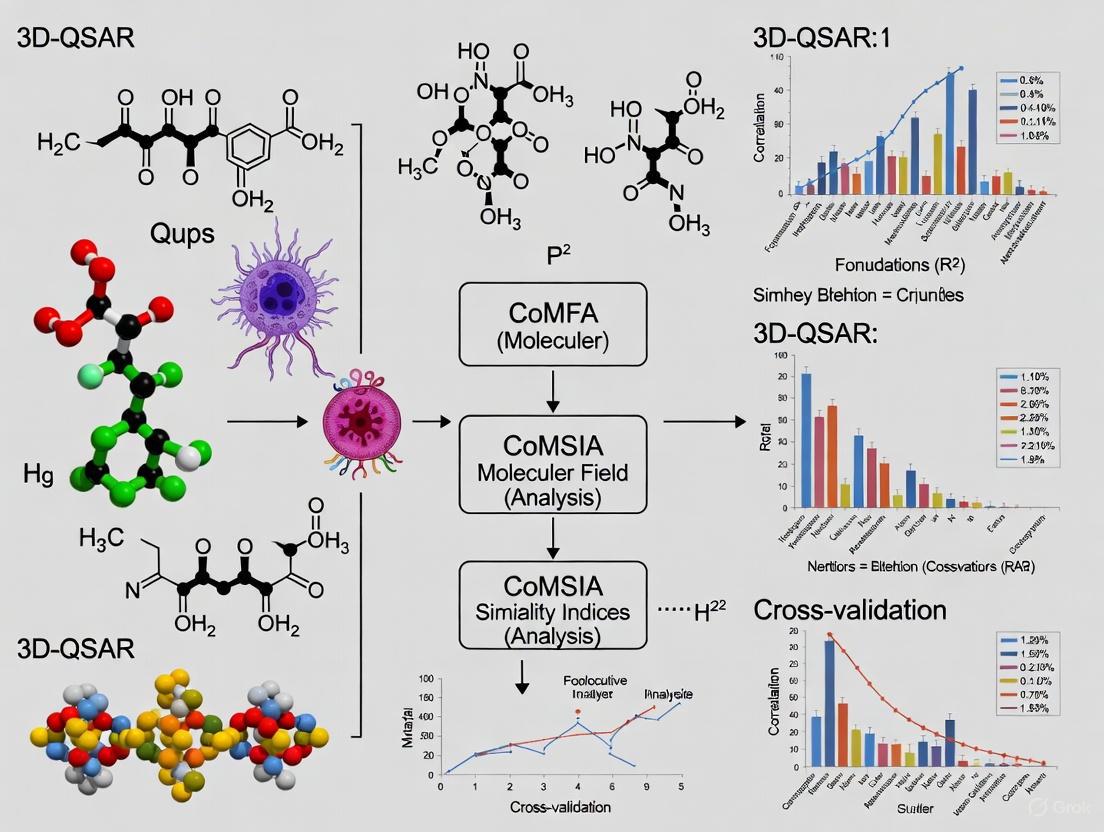
This article provides a comprehensive guide to the foundational principles and advanced applications of Three-Dimensional Quantitative Structure-Activity Relationship (3D-QSAR) modeling in the discovery and optimization of natural product-based anticancer compounds.
Harnessing 3D-QSAR for Anticancer Drug Discovery: A Computational Guide for Natural Product Optimization
Abstract
This article provides a comprehensive guide to the foundational principles and advanced applications of Three-Dimensional Quantitative Structure-Activity Relationship (3D-QSAR) modeling in the discovery and optimization of natural product-based anticancer compounds. Tailored for researchers and drug development professionals, it explores the critical methodology from pharmacophore generation and molecular field analysis to model validation and troubleshooting. The content further details the integration of 3D-QSAR with complementary computational techniques like molecular docking and dynamics simulations, supported by case studies on compounds such as shikonin and maslinic acid derivatives. Finally, it outlines the pathway from in silico predictions to experimental validation, discussing future directions and the transformative potential of these methodologies in accelerating oncology drug development.
From Plant to Prediction: Unveiling the Principles of 3D-QSAR for Natural Anticancer Leads
Quantitative Structure-Activity Relationship (QSAR) modeling represents a cornerstone of modern computational drug discovery, providing a predictive framework to correlate chemical structure with biological effect. While traditional 2D-QSAR methods utilize numerical descriptors that treat molecules as flat structures—such as logP for hydrophobicity or molecular weight—they fundamentally lack spatial information about how these molecules interact in three-dimensional biological systems [1]. Three-dimensional QSAR (3D-QSAR) addresses this critical limitation by incorporating the molecular shape, conformation, and interaction potentials into the modeling process [1]. This paradigm shift is particularly valuable in the context of natural product anticancer research, where complex molecular architectures interact with biological targets through precise three-dimensional complementarity. The transition from 2D to 3D descriptors enables researchers to visualize and quantify the spatial requirements for biological activity, transforming the drug optimization process from molecular feature counting to rational, structure-based design.
Theoretical Foundations: Core Concepts of 3D-QSAR
Molecular Descriptors in 3D Space
In 3D-QSAR, molecules are represented not by global molecular properties but by detailed spatial descriptors derived from their three-dimensional structures. The most established approaches calculate interaction energies between the molecule and chemical probes positioned at numerous points within a grid surrounding the molecular structure [1]. These interaction fields capture the essential steric (shape-based) and electrostatic (charge-based) properties that govern molecular recognition and binding. Steric fields map regions where molecular bulk may create favorable van der Waals contacts or unfavorable clashes with the target. Electrostatic fields identify areas of positive or negative potential that can form favorable charge-charge interactions or repulsions with the biological target [1]. Some advanced methods like Comparative Molecular Similarity Indices Analysis (CoMSIA) extend this concept to include additional fields such as hydrophobic interactions and hydrogen-bonding capabilities, providing a more comprehensive description of the molecular interaction profile [1].
The Critical Role of Molecular Alignment
A fundamental requirement of classical 3D-QSAR methods is the correct spatial alignment of all molecules in the dataset [1]. This process assumes that all compounds share a similar binding mode to their common biological target. Alignment typically involves superimposing molecules based on either a common scaffold (using approaches like Bemis-Murcko scaffolding) or the maximum common substructure (MCS) shared among the dataset compounds [1]. The quality of this molecular alignment directly impacts the reliability and predictive power of the resulting 3D-QSAR model, as misaligned molecules will generate inconsistent field descriptors that do not correspond to equivalent positions in three-dimensional space. This alignment dependency represents both a challenge and an opportunity—while it requires careful conformational analysis and bioactive pose estimation, it also ensures that the resulting model reflects the actual spatial relationship between molecular features and biological activity.
Methodological Workflow: Building a 3D-QSAR Model
Data Preparation and Molecular Modeling
The construction of a reliable 3D-QSAR model begins with the assembly of a high-quality dataset of compounds with experimentally determined biological activities (e.g., IC₅₀ or Kᵢ values) measured under uniform conditions [1]. For natural product research, this typically involves structurally related analogs derived from a common scaffold. These 2D structures are converted into three-dimensional coordinates using cheminformatics tools like RDKit or Sybyl, followed by geometry optimization to ensure they adopt realistic, low-energy conformations [1]. Optimization may employ molecular mechanics force fields (e.g., UFF) or more accurate quantum mechanical methods, with the selected conformation critically influencing subsequent alignment and descriptor calculation.
Field Calculation and Statistical Modeling
Following alignment, steric and electrostatic field descriptors are calculated using a probe atom at regular grid points surrounding the molecules [1]. In Comparative Molecular Field Analysis (CoMFA), a carbon atom with a +1 charge serves as this probe, calculating steric (Lennard-Jones) and electrostatic (Coulombic) potentials at each grid point [1]. The resulting data matrix, comprising thousands of field values for each compound, is analyzed using Partial Least Squares (PLS) regression to identify the field components most strongly correlated with biological activity [1]. PLS effectively handles the high dimensionality and collinearity of 3D-field data by projecting it into a reduced space of latent variables that maximize the covariance with the activity data.
Table 1: Comparison of Major 3D-QSAR Methodologies
| Method | Field Types | Alignment Dependency | Key Advantages | Common Applications |
|---|---|---|---|---|
| CoMFA [1] | Steric, Electrostatic | High | Established methodology, intuitive interpretation | Lead optimization for congeneric series |
| CoMSIA [1] | Steric, Electrostatic, Hydrophobic, H-bond Donor/Acceptor | Moderate | Smoother fields, additional field types, more tolerant to alignment variations | Diverse compound sets, natural product analogs |
| Similarity-Based [2] | Shape, Electrostatic | Low | Consensus predictions, machine learning integration, domain of applicability | Large virtual screening, scaffold hopping |
Model Validation and Interpretation
Robust validation is essential to ensure a 3D-QSAR model possesses genuine predictive power for novel compounds. Internal validation techniques like leave-one-out (LOO) cross-validation measure a model's stability, producing a Q² value that estimates predictive ability [1]. External validation using a completely separate test set provides the most reliable assessment of a model's utility in real-world applications [1]. A successfully validated model is interpreted through 3D contour maps that visually identify specific spatial regions where molecular properties enhance or diminish biological activity. These maps directly guide chemical modification: green steric contours indicate regions where bulky groups increase activity, while yellow contours flag unfavorable steric interactions [1]. Similarly, blue electrostatic contours mark regions favoring positive charges, with red contours preferring negative charges [1].
Application in Anticancer Natural Product Research
Case Study: Naphthoquinone Derivatives Against Colorectal Cancer
A compelling application of 3D-QSAR in natural product anticancer research involves naphthoquinone derivatives evaluated against HT-29 colorectal cancer cells [3]. Researchers synthesized 36 naphthoquinone analogs and tested their anti-proliferative activity, identifying 15 active compounds (IC₅₀ = 1.73-18.11 μM) [3]. The subsequent 3D-QSAR study employing Comparative Molecular Field Analysis (CoMFA) generated a highly reliable model (r² = 0.99, q² = 0.625) that correlated structural features with cytotoxic potency [3]. The model revealed that tricyclic naphtho[2,3-b]furan-4,9-dione and naphtho[2,3-b]thiophene-4,9-dione systems substituted at the 2-position with electron-withdrawing groups demonstrated enhanced cytotoxicity [3]. This 3D-QSAR analysis enabled the rational design of five novel proposed compounds with predicted two-fold higher anti-proliferative activity than the most potent compound identified in the initial series [3].
Case Study: Nitrogen-Mustard Derivatives for Osteosarcoma
Another innovative application involves dipeptide-alkylated nitrogen-mustard compounds with anti-osteosarcoma activity [4]. In this research, both 2D- and 3D-QSAR models were established to predict the anti-tumor activity of these derivatives [4]. The 3D-QSAR study utilized the CoMSIA method, which incorporated steric, electrostatic, hydrophobic, and hydrogen-bonding fields to generate a comprehensive model [4]. By analyzing the contour plots from this model, researchers designed 200 novel compounds, with one particular candidate (I1.10) demonstrating both high predicted anti-tumor activity and favorable molecular docking characteristics [4]. This integrated approach exemplifies how 3D-QSAR can guide the optimization of natural product-derived chemotherapeutic agents against challenging malignancies like osteosarcoma.
Table 2: Experimental Protocol for 3D-QSAR Model Development
| Stage | Key Procedures | Software Tools | Critical Parameters |
|---|---|---|---|
| Dataset Preparation | Collect uniform activity data (IC₅₀); Curate structurally related compounds; Divide into training/test sets | Manual curation; ChemDraw | Experimentally consistent IC₅₀ values; Structural diversity with common scaffold; ~80/20 training/test split |
| 3D Structure Generation | Convert 2D to 3D coordinates; Geometry optimization; Conformational analysis | RDKit; Sybyl; HyperChem | Force field selection (MM+, UFF, AM1, PM3); Convergence criteria (RMS gradient ≤0.01) |
| Molecular Alignment | Identify common scaffold; Superimpose molecules; Verify bioactive conformation | Maximum Common Substructure (MCS); Bemis-Murcko scaffolds | Alignment hypothesis; Template selection; Consensus scoring |
| Descriptor Calculation | Generate interaction fields; Place grid around molecules; Calculate steric/electrostatic potentials | CoMFA; CoMSIA | Grid spacing (1.0-2.0Å); Probe atom type; Field type selection |
| Model Building | Perform PLS regression; Select optimal components; Avoid overfitting | CODESSA; SAMFA | Cross-validation; Component significance; Statistical significance (q², r²) |
| Validation & Interpretation | External test set prediction; Generate contour maps; Design new analogs | Custom visualization; Docking software | Predictive r²; Contour map analysis; Synthetic feasibility |
Advanced Approaches and Future Directions
Integration with Machine Learning and AI
Modern 3D-QSAR implementations increasingly incorporate machine learning algorithms and artificial intelligence to enhance predictive performance and interpretability. Recent approaches utilize descriptors based on 3D molecular shape and electrostatic similarity tools, with predictions generated as a consensus of multiple models to improve robustness [2]. Studies have demonstrated successful applications of Support Vector Regression (SVR), Categorical Boosting Regression (CatBoost), Extreme Gradient Boosting (XGBoost), and Backpropagation Artificial Neural Networks (BPANN) for 3D-QSAR modeling [5]. These methods can handle the high-dimensional nature of 3D-field data while providing insights into complex structure-activity relationships through interpretation tools like SHAP analysis [5]. The integration of deep learning with traditional 3D-QSAR represents a promising frontier for enhancing the anticancer potential of natural products [6].
Table 3: Key Research Reagent Solutions for 3D-QSAR Studies
| Tool Category | Specific Solutions | Function | Application Context |
|---|---|---|---|
| Commercial Platforms | 3D-QSAR.com [7]; OpenEye's 3D-QSAR [2] | Web-based and standalone platforms for developing ligand-based and structure-based 3D-QSAR models | Academic and industrial drug discovery projects |
| Molecular Modeling | RDKit; Sybyl; HyperChem [4] [1] | 2D to 3D structure conversion; geometry optimization; conformational analysis | Initial structure preparation and optimization |
| Descriptor Calculation | CoMFA; CoMSIA; ROCS and EON [1] [2] | Calculate steric, electrostatic, and similarity-based descriptors from aligned molecules | Field-based QSAR analysis; Shape-based similarity screening |
| Statistical Analysis | CODESSA [4]; PLS algorithms [1] | Perform partial least squares regression; variable selection; model optimization | Building and optimizing the QSAR model |
| Validation Tools | Cross-validation scripts; External test set validation [1] | Assess model predictivity; determine domain of applicability | Model validation and performance assessment |
The evolution from traditional 2D-QSAR to three-dimensional methodologies represents a fundamental advancement in computational drug discovery, particularly for the complex structural landscape of natural product anticancer research. By incorporating spatial molecular features—steric bulk, electrostatic potentials, hydrogen-bonding capabilities, and hydrophobic character—3D-QSAR models provide medicinal chemists with visually interpretable guidance for rational compound optimization. The integration of these approaches with modern machine learning algorithms and the continued development of user-friendly computational platforms will further enhance their utility in the ongoing challenge of anticancer drug development. As demonstrated in successful applications against colorectal cancer and osteosarcoma, 3D-QSAR serves as a powerful bridge between structural information and biological activity, accelerating the transformation of natural product scaffolds into promising therapeutic candidates.
Why Natural Products? Exploring a Rich Source of Anticancer Scaffolds
Natural products (NPs) and their derivatives have been, and continue to be, an indispensable source of innovative anticancer therapeutics. Historically, approximately 60% of all cancer drugs are derived from natural products, a statistic that underscores their profound impact on oncology [8]. Iconic examples include the Vinca alkaloids (vincristine and vinblastine), isolated from the Madagascar periwinkle (Catharanthus roseus), which have been fundamental in managing leukemia and Hodgkin's disease [9]. The significance of NPs extends into the modern era; from 1981 to the present, 79 out of 99 small molecule anticancer drugs are natural product-based or inspired [10]. This enduring utility stems from the unique biological relevance of NPs. As a result of co-evolution with biological targets over millennia, natural products possess complex chemical structures and privileged scaffolds that are pre-validated for biological interaction, making them exceptionally effective at modulating a wide range of targets, including many considered "challenging" for synthetic, drug-like libraries [11] [10].
In the contemporary drug discovery landscape, computational methods are pivotal for harnessing the potential of NPs. Among these, three-dimensional Quantitative Structure-Activity Relationship (3D-QSAR) modeling has emerged as a powerful ligand-based drug design approach. It allows researchers to quantitatively correlate the three-dimensional spatial and electronic fields of natural compounds with their biological activity. This technique is particularly valuable for optimizing lead compounds derived from NPs, guiding the rational design of more potent and selective anticancer agents by pinpointing the critical steric, electrostatic, and hydrophobic features necessary for target binding [12] [13] [14]. This whitepaper explores the rationale behind using natural products as a rich source of anticancer scaffolds and examines the integral role of 3D-QSAR methodologies in translating these natural templates into promising therapeutic candidates.
The Chemical and Biological Rationale for Natural Products
Accessing Unexplored Chemical Space
A primary advantage of natural products lies in their ability to access regions of "biologically relevant chemical space" that are largely untapped by conventional synthetic libraries. An analysis of the human druggable genome reveals a stark concentration of existing drugs on a narrow set of targets; approximately 50% of all drugs target just four protein classes [11]. It is estimated that only 10-14% of proteins encoded by the human genome are 'druggable' using existing drug-like molecules [11]. This limitation exists because synthetic libraries are often biased towards structures with favorable synthetic accessibility and drug-like properties, as defined by rules such as Lipinski's Rule of Five.
Natural products, by contrast, exhibit a much broader diversity in their structural and physicochemical properties. A comparative principal component analysis of top-selling drugs, drug-like synthetic compounds, and natural products reveals that NPs generally cluster in a distinct and wider area of chemical space. They often possess higher molecular polarity, increased stereochemical complexity, and fewer aromatic rings compared to their synthetic counterparts [11]. It is estimated that 83% of natural product scaffolds with ≤11 heavy atoms are absent from commercially available screening collections [11]. This vast underrepresented structural diversity makes NPs ideal for addressing biologically challenging targets such as protein-protein interactions (PPIs), which often feature flat, extensive binding interfaces that are difficult for small, synthetic molecules to modulate effectively [11] [10].
Intrinsic Bioactivity and Privileged Scaffolds
The inherent bioactivity of many natural products is not accidental. These molecules have evolved over billions of years to interact precisely with biological macromolecules, such as proteins and nucleic acids, serving as ligands, signal transducers, or defense mechanisms [11]. This process of co-evolution has selected for structures with "privileged scaffolds" that are inherently capable of high-affinity binding to a variety of biological targets. This is why libraries based on natural product scaffolds are considered "biologically pre-validated" and demonstrate a higher hit rate in screening campaigns compared to purely synthetic libraries [8].
This privileged status is evident in recent successes. For instance, the natural products FR901464 and pladienolide B were discovered to inhibit the spliceosome, a massive macromolecular complex involved in mRNA splicing, by binding to the SF3b subcomplex and modulating critical protein-protein interactions [11]. Their analogs have even advanced to clinical trials for cancer, demonstrating the potential of NPs to drugg challenging targets. Furthermore, a 2025 study on HER2-positive breast cancer identified several natural scaffolds, including oroxin B and liquiritin, which suppressed HER2 catalysis with nanomolar potency and showed promising selective anti-proliferative effects in cellular assays [15].
Table 1: Key Advantages of Natural Products in Anticancer Drug Discovery
| Advantage | Description | Implication for Anticancer Discovery |
|---|---|---|
| Structural Diversity | Complex skeletons with high stereochemical complexity; distinct from synthetic libraries [11]. | Access to novel mechanisms of action and ability to target undrugged cancer pathways. |
| Biological Pre-Validation | Results from co-evolution with biological targets; contain "privileged scaffolds" [8]. | Higher probability of hit discovery in biological screens; effective against challenging targets like PPIs [11]. |
| Proven Clinical Success | ~60% of cancer drugs and 80% of recent small molecule anticancer drugs are NP-based/inspired [9] [10]. | Strong historical precedent and reduced development risk for NP-derived leads. |
| Synergy with Computation | NP scaffolds provide excellent starting points for computational optimization via 3D-QSAR, docking, etc. [9]. | Enables rational, data-driven optimization of complex NP structures for improved potency and selectivity. |
3D-QSAR as a Bridge from Natural Products to Drug Candidates
Core Principles and Workflow of 3D-QSAR
Three-dimensional Quantitative Structure-Activity Relationship (3D-QSAR) is a computational methodology that establishes a quantitative correlation between the three-dimensional molecular field properties of a set of compounds and their biological activity. Unlike traditional 2D-QSAR, which uses molecular descriptors derived from the two-dimensional structure, 3D-QSAR considers spatial characteristics such as steric bulk, electrostatic potential, and hydrophobic interactions surrounding the molecule [14]. This is particularly suited to natural products, where activity is often governed by specific conformational and spatial arrangements.
The standard workflow for a 3D-QSAR study, such as those employing a Gaussian-based method or the Field-based QSAR tool in Schrödinger, involves several critical steps [12] [13]:
- Data Set Compilation and Molecular Modeling: A series of structurally related natural products with experimentally determined biological activities (e.g., IC50 values) are collected. Their 3D structures are built and subjected to geometry optimization, often using semi-empirical or ab initio methods to obtain energetically stable conformations.
- Molecular Alignment: This is the most critical step. All molecules are superimposed in 3D space based on a common pharmacophore hypothesis or a rigid core structure. The quality of the alignment directly dictates the success of the model.
- Descriptor Calculation and Model Building: A grid is placed around the aligned molecules. At each point on the grid, molecular field values (steric, electrostatic, hydrophobic, hydrogen bond donor/acceptor) are calculated for every compound. Partial Least Squares (PLS) regression is then used to correlate these field descriptors with the biological activity, generating the QSAR model.
- Model Validation: The model's predictive ability is rigorously tested. Statistical parameters like the cross-validated correlation coefficient (q² > 0.5) and the non-cross-validated correlation coefficient (r² > 0.6) are used to assess internal and external predictive power [16]. A stable model with a high predictive r² for an external test set is considered reliable.
- Model Interpretation and Application: The model is interpreted using contour maps that highlight regions in 3D space where specific molecular properties favorably or unfavorably influence biological activity. These maps guide the design of new analogs with predicted higher activity.
The following diagram visualizes this interconnected experimental and computational workflow:
Case Studies in Anticancer Discovery
The integration of 3D-QSAR with natural products research has yielded several success stories, demonstrating its power in lead optimization.
Case Study 1: Indole-Based Aromatase Inhibitors for Breast Cancer A 2025 study on indole-based aromatase inhibitors for ER+ breast cancer successfully integrated Gaussian-based 3D-QSAR with pharmacophore mapping [12]. The generated model exhibited excellent statistical quality (r² = 0.7621, stability = 0.817). The model revealed that specific steric and electrostatic features surrounding the indole core were critical for optimal inhibitory activity. Concurrent pharmacophore mapping identified that a Hydrogen-bond Donor (D), a Hydrophobic (H) feature, and three aromatic rings (R) are essential for potent activity. Using these computational insights, the researchers designed a novel compound, S1, which demonstrated a predicted IC50 of 9.332 nM, a potency comparable to the reference drug letrozole [12].
Case Study 2: Lonchocarpin, a Natural Chalcone for Lung Cancer A 3D-QSAR study on lonchocarpin, a natural chalcone from Pongamia pinnata, aimed to understand its potent pro-apoptotic activity against lung cancer cells (H292) [13]. The field-based QSAR model indicated that steric (51% contribution) and hydrophobic (23% contribution) features were the most critical determinants of its antitumor activity. The contour maps guided the interpretation, showing that methyl substitutions on one ring system were located in a sterically favorable region (green contours), while the aromatic rings were positioned in areas favoring hydrophobic interactions (yellow contours) [13]. This information is crucial for designing more potent chalcone analogs. Further docking and experimental validation confirmed that lonchocarpin induces apoptosis by binding to the BH3-binding groove of Bcl-2 and modulating the Bax/Caspase-9/Caspase-3 pathway [13].
Case Study 3: Naphthoquinones with Broad-Spectrum Activity QSAR modeling was applied to a series of fourteen 1,4-naphthoquinones with demonstrated anticancer activities against four cell lines (HepG2, HuCCA-1, A549, and MOLT-3) [17]. Four robust QSAR models were constructed using Multiple Linear Regression (MLR). The models highlighted that potent anticancer activity was primarily influenced by descriptors related to polarizability (MATS3p), van der Waals volume (GATS5v), electronegativity (E1e), and dipole moment [17]. These insights into the key structural features governing activity were then used to rationally design and predict the activities of 248 new structurally modified compounds, significantly accelerating the lead optimization process.
Table 2: Summary of Recent 3D-QSAR Studies on Anticancer Natural Products
| Natural Product Class | Biological Target / Cancer Model | Key 3D-QSAR Findings | Experimental Validation | Citation |
|---|---|---|---|---|
| Indole Derivatives | Aromatase / ER+ Breast Cancer | Steric and electrostatic features critical; H-bond donor & hydrophobic pharmacophore essential. | Designed compound S1 showed predicted pIC50 of 9.332 nM, comparable to Letrozole. | [12] |
| Chalcones (e.g., Lonchocarpin) | Bcl-2 / Lung Cancer (H292 cells) | Steric (51%) and hydrophobic (23%) field properties are major activity determinants. | Induced apoptosis (47.9% at 48h); inhibited tumor growth by up to 72.51% in S180-bearing mice. | [13] |
| 1,4-Naphthoquinones | Multiple Cell Lines (e.g., HepG2, A549) | Polarizability, van der Waals volume, and dipole moment are key activity drivers. | Guided rational design of 248 new compounds; top compound 11 showed IC50 = 0.15 – 1.55 μM. | [17] |
| Flavonoids from C. procera | Wound Healing Proteins / Antimicrobial | Model identified structural parameters for antimicrobial IC50, relevant for adjuvant cancer care. | Identified Stigmasterol as a hit compound with better activity than standard antibiotics. | [16] |
Advancing from a natural product lead to a pre-clinical candidate requires a suite of specialized experimental and computational tools. The following table details key resources for this process.
Table 3: Research Reagent Solutions and Essential Materials for NP-Based Anticancer Discovery
| Category / Item | Function / Description | Application in Workflow |
|---|---|---|
| Natural Product Libraries | Curated collections of pure NPs or NP-inspired compounds for screening. (e.g., ChemDiv's NP Library: 18,500 compounds, 22 scaffolds). | Initial hit discovery; source of diverse scaffolds for building QSAR datasets [10]. |
| Cell-Based Assay Kits | Reagents for evaluating cytotoxicity and mechanism (e.g., MTT assay kits, Annexin V/PI apoptosis kits). | In vitro activity testing (IC50 determination); validation of apoptotic mechanisms [13]. |
| Protein Targets | Recombinant human cancer target proteins (e.g., HER2 kinase domain, Bcl-2, Aromatase). | In vitro biochemical assays; target identification and binding affinity studies [15]. |
| Molecular Modeling Software | Platforms for 3D-QSAR, docking, and dynamics (e.g., Schrödinger Suite, FLARE). | 3D structure optimization, molecular alignment, QSAR model generation, and contour map visualization [12] [16]. |
| Chemical Descriptor Software | Tools for calculating molecular descriptors and fingerprints (e.g., PaDEL, Dragon). | Generation of thousands of structural and physicochemical descriptors for QSAR model building [17] [14]. |
| ADMET Prediction Tools | In silico prediction of pharmacokinetics and toxicity (e.g., QikProp, SwissADME). | Early assessment of drug-likeness, oral bioavailability, and potential toxicity liabilities [15]. |
Natural products remain an irreplaceable foundation for anticancer drug discovery. Their unparalleled structural diversity and biologically validated scaffolds provide a critical starting point for addressing both established and novel, challenging oncology targets. The synergy between this natural chemical resource and advanced computational methodologies like 3D-QSAR creates a powerful pipeline for modern drug development. 3D-QSAR transforms the complex structures of natural products into quantifiable, interpretable data, guiding the rational optimization of potency and selectivity. As computational power increases with the integration of artificial intelligence and deep learning, the ability to efficiently mine and optimize the vast potential of natural products will only accelerate, promising a continued flow of innovative and effective anticancer therapies derived from nature's blueprint.
Molecular Fields, Alignments, and the Bioactive Conformation
In the realm of computer-aided drug design, particularly for anticancer natural products, understanding the three-dimensional molecular interactions that govern biological activity is paramount. Molecular fields, alignments, and the bioactive conformation represent foundational concepts in three-dimensional quantitative structure-activity relationship (3D-QSAR) modeling. These elements bridge the gap between a compound's chemical structure and its biological effect by quantifying the spatial and electronic features critical for target recognition [14]. The bioactive conformation refers to the specific three-dimensional geometry a molecule adopts when bound to its biological target, a state that may differ from its lowest energy solution conformation [18]. Accurate determination of this conformation is essential for meaningful 3D-QSAR analysis, as the model's predictive power hinges on correctly representing this interaction state. For natural product research, where compounds often serve as complex scaffolds, these principles provide a systematic framework for optimizing anticancer activity by revealing the steric, electrostatic, and hydrophobic requirements of target binding sites.
Core Concepts in 3D-QSAR
The Nature of Molecular Fields
Molecular fields are computational representations of the physicochemical forces a molecule exerts in its surrounding three-dimensional space. These fields are calculated at grid points surrounding a molecule and represent the potential energy of interaction with a probe. The principal fields used in 3D-QSAR studies include:
- Steric Fields: Represent the van der Waals forces and shape characteristics of a molecule, indicating regions where bulk is favorable or unfavorable for activity [18] [19].
- Electrostatic Fields: Map the positive and negative electrostatic potentials, revealing areas where charge interactions with the target occur [18] [19].
- Hydrophobic Fields: Describe the propensity for hydrophobic interactions, a key driver in ligand binding [18].
These fields collectively define a pharmacophore – the essential arrangement of structural features responsible for a molecule's biological activity [14]. In anticancer drug discovery, particularly with natural products, mapping these fields helps identify which structural regions control potency and selectivity.
The Critical Role of Molecular Alignment
Molecular alignment is the process of superimposing a set of molecules to maximize the similarity of their chemically relevant features. This step is crucial because 3D-QSAR models assume all compounds interact with the same biological target in a geometrically consistent manner [20]. The alignment process determines how molecular fields are compared across compounds, directly impacting model quality and interpretability.
Several alignment strategies exist, each with advantages and limitations:
- Template-Based Alignment: Molecules are aligned to a common reference structure, often the most active compound or a known pharmacophore [18].
- Common Substructure Alignment: A shared structural scaffold is used for superimposition.
- Field-Based Alignment: Direct alignment based on molecular field similarity rather than atomic positions.
The choice of alignment method significantly affects model performance. Studies have shown that even simple 2D-to-3D conversion without extensive optimization can sometimes produce superior models compared to energy-minimized and conformation-aligned approaches, achieving high predictive accuracy in significantly less computational time [20].
Defining the Bioactive Conformation
The bioactive conformation is the three-dimensional arrangement of atoms when a ligand is bound to its biological target. A fundamental challenge in 3D-QSAR is that this conformation is often unknown, especially in the early stages of drug discovery when structural data on the target protein may be unavailable [18].
Several approaches exist to approximate bioactive conformations:
- Global Energy Minimum: Assumes the lowest energy conformation represents the bound state, which may not always be accurate [20].
- Pharmacophore-Based Conformer Selection: Uses field and shape information to determine a hypothesis for the 3D conformation [18].
- Dock-Derived Conformations: Utilizes molecular docking to generate putative bound conformations when target structure is available.
For natural products with complex, flexible structures, identifying the true bioactive conformation is particularly challenging but essential for developing predictive 3D-QSAR models in anticancer research.
Experimental Protocols for 3D-QSAR Model Development
Data Collection and Preparation
The initial phase involves compiling a structurally diverse set of compounds with reliably measured biological activities (e.g., IC₅₀ values). For natural product studies, this typically includes analogs with modified functional groups to explore structure-activity relationships. Activity data is converted to pIC₅₀ (-logIC₅₀) to normalize the scale for modeling [18].
Structure preparation involves:
- Drawing 2D chemical structures using tools like ChemDraw [21].
- Converting 2D structures to 3D using converter modules (e.g., ChemBio3D) [18].
- Geometry optimization using molecular mechanics (MM+ force field) followed by semi-empirical methods (AM1 or PM3) [21].
- Conformational analysis to identify low-energy conformers.
Conformational Analysis and Pharmacophore Generation
When structural information for the target-bound state is unavailable, as is common with novel natural products, the FieldTemplater module (Forge software) can determine a hypothesis for the 3D conformation using field and shape information from known active compounds [18]. The process involves:
- Selecting a subset of highly active and structurally diverse compounds as potential templates.
- Generating field points using the eXtended Electron Distribution (XED) force field to calculate positive/negative electrostatic, shape, and hydrophobic fields.
- Creating a 3D field point pattern that provides a condensed representation of the compound's key interaction features.
- Annotating the hypothesis with calculated field points to produce a pharmacophore template.
Molecular Alignment and Descriptor Calculation
Using the pharmacophore template, compounds are aligned with the identified template in 3D-QSAR software [18]. Field point-based descriptors are then calculated for building the 3D-QSAR model after alignment. Key parameters include:
- Setting the maximum number of PLS components (typically 15-20).
- Defining sample point maximum distance (e.g., 1.0 Å).
- Including relevant molecular fields (electrostatics, sterics, hydrophobics).
- Using the SIMPLS algorithm for PLS regression during QSAR modeling.
Model Validation and Visualization
Robust validation is essential for reliable 3D-QSAR models. Standard validation protocols include:
- Internal Validation: Leave-one-out (LOO) cross-validation yielding q² value [18] [22].
- External Validation: Using a test set of compounds not included in model building [18].
- Statistical Assessment: Evaluating regression coefficient (r²), F-value, and standard error of estimate [21].
Activity-Atlas modeling provides qualitative 3D visualization of structure-activity relationships, revealing favorable/unfavorable regions for steric bulk, positive/negative electrostatics, and hydrophobicity [18].
Comparative Analysis of 3D-QSAR Methodologies
Statistical Performance of Different Approaches
Table 1: Comparison of 3D-QSAR Methodologies and Their Performance Metrics
| Methodology | Application | Statistical Performance | Key Advantages | Reference |
|---|---|---|---|---|
| CoMSIA | Dihydropteridone derivatives as PLK1 inhibitors | Q²=0.628, R²=0.928, F-value=12.194, SEE=0.160 | Combines steric, electrostatic, and hydrophobic fields; Excellent predictive power | [21] |
| Field-Based QSAR | Maslinic acid analogs against breast cancer | R²=0.92, q²=0.75 | High correlation; Effective for natural product analogs | [18] |
| 3D-QSDAR | Androgen receptor binders | R²Test=0.61 (2D>3D approach) | Alignment-independent; Fast computation; Good for large datasets | [20] |
| Alignment-Independent GRIND | Mer tyrosine kinase inhibitors | q²=0.77, r²pred=0.94, RMSEP=0.25 | No alignment needed; Excellent external prediction | [23] |
Alignment Strategies: Comparative Effectiveness
Table 2: Impact of Molecular Alignment Strategies on 3D-QSAR Model Quality
| Alignment Strategy | Description | Computational Demand | Predictive Accuracy (R²) | Recommended Use Cases | |
|---|---|---|---|---|---|
| 2D>3D Conversion | Direct conversion without optimization | Low (3-7% of other methods) | R²=0.61 | Large datasets; Initial screening; Rigid molecules | [20] |
| Energy Minimization | Global minimum of potential energy surface | High | R²=0.56-0.61 | Flexible molecules when bioactive conformation unknown | [20] |
| Template Alignment | Alignment to common pharmacophore | Medium to High | Varies by template selection | When reliable template exists; Series with common scaffold | [18] |
| Field-Based Alignment | Alignment by molecular field similarity | Medium | Dependent on field calculation | Diverse structures; Natural products with varied scaffolds | [18] |
The Scientist's Toolkit: Essential Research Reagents and Computational Solutions
Table 3: Key Research Reagent Solutions for 3D-QSAR Studies
| Tool/Category | Specific Examples | Function in 3D-QSAR | Application Context | |
|---|---|---|---|---|
| Structure Drawing | ChemDraw | 2D structure creation and initial optimization | Initial molecular representation | [21] |
| 3D Optimization | HyperChem, ChemBio3D | 2D to 3D conversion; geometry optimization | Molecular mechanics and semi-empirical optimization | [21] [18] |
| Descriptor Calculation | CODESSA | Computation of molecular descriptors | Quantum chemical, structural, topological descriptor generation | [21] |
| Pharmacophore Generation | FieldTemplater (Forge) | Field-based pharmacophore hypothesis creation | Bioactive conformation determination without structural target data | [18] |
| 3D-QSAR Modeling | Forge, SYBYL | Alignment, field calculation, and PLS regression | Core 3D-QSAR model development and validation | [18] |
| Docking Validation | Molecular docking software | Binding mode analysis and model verification | Confirm putative binding poses and interaction patterns | [21] [18] |
Workflow Visualization: 3D-QSAR Model Development
Figure 1: 3D-QSAR Model Development Workflow. This diagram illustrates the comprehensive process from initial compound collection to final new compound design, highlighting critical decision points in conformational analysis and molecular alignment.
Molecular fields, alignments, and the bioactive conformation constitute the fundamental triad of effective 3D-QSAR modeling in natural product anticancer research. The integration of these elements enables researchers to transform structural information into predictive models that guide rational drug design. As demonstrated across multiple studies, the careful selection of alignment strategies and bioactive conformation determination methods directly impacts model quality and predictive capability. The ongoing advancement of alignment-independent techniques and robust validation protocols continues to enhance the applicability of 3D-QSAR to complex natural product scaffolds, accelerating the discovery of novel anticancer therapeutics with improved efficacy and selectivity profiles.
The discovery of novel anticancer compounds from natural products presents a unique challenge due to the structural complexity and diversity of phytochemicals. Within this endeavor, Three-Dimensional Quantitative Structure-Activity Relationship (3D-QSAR) modeling has emerged as a pivotal computational methodology for rational drug design. This technical guide details the comprehensive workflow from initial data curation to final predictive model building, specifically framed within natural product anticancer research. The systematic application of this workflow enables researchers to decode the essential structural features responsible for biological activity, thereby accelerating the identification and optimization of lead compounds against cancer targets such as estrogen receptors for breast cancer [24] [14].
Data Curation and Preparation
The foundation of any robust 3D-QSAR model is a high-quality, well-curated dataset. This initial phase is critical, as the model's predictive power is directly contingent upon the accuracy and consistency of the input data.
Data Collection and Curation
The process begins with the assembly of a library of chemical structures and their associated biological activities, typically expressed as half-maximal inhibitory concentration (IC₅₀), inhibitory constant (Kᵢ), or dissociation constant (K𝒹). For natural products, data can be sourced from public databases such as the Traditional Chinese Medicine Database (TCMDb), ChEMBL, and BindingDB [25]. The primary objective is to collect a congeneric series of molecules that interact with a specific anticancer target, such as estrogen receptors (ESR1/ESR2) or aromatase [24] [26].
Key Steps in Data Curation:
- Structure Standardization: Remove salt ions, standardize tautomers, and handle stereochemistry consistently using software like Molecular Operating Environment (MOE) or Open Babel [25].
- Activity Data Standardization: Convert all biological activities to a common unit (e.g., nM) and scale them, often by converting to negative logarithmic units (pIC₅₀ = -log₁₀IC₅₀) to create a uniformly varying response variable [27] [28].
- Duplicate Removal: Identify and remove duplicate compounds using unique molecular identifiers like InChIKey [25].
- Data Splitting: Divide the dataset into a training set (typically 70-80% of compounds) for model development and a test set (the remaining 20-30%) for external validation. Methods like the Kennard-Stone algorithm can be used to ensure both sets are representative of the overall chemical space [27] [29].
Molecular Geometry Optimization
Once curated, the 3D structures of all compounds must be generated and energetically optimized. This is a crucial step for 3D-QSAR, as the model is sensitive to the spatial orientation of functional groups.
- Conformer Generation: Multiple low-energy conformers are generated for each molecule using algorithms like MCMM/LMOD, typically producing hundreds of conformers with a relative energy difference threshold of 20 kcal/mol [24] [29].
- Energy Minimization: The generated conformers are subjected to geometry optimization using force fields (e.g., MMFF94) or quantum mechanical methods to obtain the most stable 3D structure [24].
Table 1: Key Data Curation and Preparation Steps
| Step | Description | Common Tools/Software |
|---|---|---|
| Data Collection | Assembling structures and bioactivity data from literature and databases. | TCMDb, ChEMBL, BindingDB, DrugBank [25] |
| Structure Standardization | Removing salts, standardizing tautomers, defining correct chirality. | MOE, Open Babel [25] [27] |
| Activity Conversion | Converting IC₅₀/Kᵢ values to pIC₅₀/pKᵢ for uniform analysis. | In-house scripts, Excel [27] [28] |
| Conformer Generation | Creating multiple 3D structures representing possible molecular shapes. | Schrödinger Maestro, MOE, Open Babel [24] [29] |
| Molecular Alignment | Superimposing molecules based on a common scaffold or pharmacophore. | Schrödinger Phase, ROCS [24] [29] |
Molecular Modeling and Pharmacophore Development
With a prepared dataset, the next phase involves translating 3D structural information into quantitative descriptors and identifying the common pharmacophoric features essential for biological activity.
Molecular Alignment and Descriptor Calculation
Molecular alignment is the most critical step in 3D-QSAR, as it defines the spatial frame of reference for comparing molecules.
- Alignment Rules: Molecules can be aligned using a common rigid scaffold, a known active compound, or a pharmacophore hypothesis [28] [29].
- Field Calculation: Once aligned, molecules are placed into a 3D grid. Probe atoms (e.g., an sp³ carbon for steric fields and a proton for electrostatic fields) are used to calculate interaction energies at each grid point. Methods like Comparative Molecular Field Analysis (CoMFA) calculate steric (Lennard-Jones potential) and electrostatic (Coulombic potential) fields, while Comparative Molecular Similarity Indices Analysis (CoMSIA) may include additional fields like hydrophobic, hydrogen bond donor, and acceptor [28].
Pharmacophore Model Generation
A pharmacophore is an abstract representation of the molecular features necessary for biological recognition. It is derived either from a set of active ligands (ligand-based) or from the 3D structure of the target protein (structure-based).
- Ligand-Based Pharmacophore Modeling: Using a training set of active and inactive compounds, software like Schrödinger's Phase generates hypotheses comprising features such as hydrogen bond acceptors (A), donors (D), hydrophobic regions (H), aromatic rings (R), and positively ionizable groups (P). The best hypothesis is selected based on statistical scores like survival score, volume overlap, and selectivity [24] [29]. For example, a model named
HPRRRindicates one Hydrogen bond donor, one Positive ionizable group, and three aRomatic Rings [29]. - E-Pharmacophore Modeling: This structure-based method combines energy terms from protein-ligand docking (e.g., using Glide) with traditional pharmacophore features to create energy-optimized (
e-pharmacophore) hypotheses, which are often more precise [29].
Table 2: Core Components of a 3D-QSAR Modeling Toolkit
| Category | Research Reagent / Software | Primary Function in Workflow |
|---|---|---|
| Cheminformatics | PaDEL-Descriptor, Dragon, RDKit | Calculates thousands of 1D, 2D, and 3D molecular descriptors and fingerprints. |
| Molecular Modeling | Schrödinger Suite, MOE, Open Babel | Generates 3D structures, performs geometry optimization, and conformational analysis. |
| Alignment & Modeling | ROCS, Schrödinger Phase | Superimposes molecules and performs 3D-QSAR calculations (CoMFA, CoMSIA). |
| Pharmacophore Modeling | Schrödinger Phase, Catalyst | Generates and validates ligand-based and structure-based pharmacophore models. |
| Statistical Analysis | SIMCA, R, Python (scikit-learn) | Performs Partial Least Squares (PLS) regression and other multivariate analyses. |
3D-QSAR Model Building and Validation
This stage involves constructing the mathematical model that relates the computed 3D fields to the biological activity and rigorously testing its predictive capability.
Model Construction using Partial Least Squares (PLS) Regression
Given the high dimensionality and collinearity of 3D-field descriptors (where the number of variables far exceeds the number of compounds), Partial Least Squares (PLS) regression is the algorithm of choice [28] [29]. PLS reduces the descriptor variables to a smaller number of latent variables that have the highest covariance with the biological activity.
- Model Statistics: The quality of the model is assessed using several statistical parameters derived from the training set [29]:
- R² (Coefficient of Determination): Measures the goodness of fit (how well the model explains the variance in the training data). A value closer to 1.0 indicates a good fit.
- Q² (or q² from Cross-Validation): Measures the internal predictive power of the model. A Q² > 0.5 is generally considered acceptable, and > 0.7 is good.
- Standard Deviation (SD): The standard error of the estimate.
- F Value: The Fischer statistic indicating the overall significance of the model.
- Root-Mean-Square Error (RMSE): The average magnitude of the prediction errors.
Model Validation
Validation is paramount to ensure the model is robust and not over-fitted to the training data. It involves both internal and external validation [27] [28].
- Internal Validation:
- Leave-One-Out (LOO) Cross-Validation: Iteratively, one compound is removed from the training set, the model is rebuilt with the remaining compounds, and the activity of the left-out compound is predicted. The predicted activities are used to calculate Q² [29].
- Leave-Group-Out Cross-Validation: Similar to LOO, but a group of compounds is left out in each iteration.
- External Validation: The ultimate test of a model's utility is its ability to accurately predict the activity of the external test set of compounds that were never used in model building. The predictive R² (r²pred) for the test set should be greater than 0.6 [30] [29].
- Y-Scrambling: This test checks for chance correlation. The biological activity data is randomly shuffled, and new models are built. A valid original model should have significantly higher R² and Q² values than the scrambled models [28].
Table 3: Key Statistical Metrics for 3D-QSAR Model Validation
| Metric | Description | Interpretation & Threshold |
|---|---|---|
| N | Number of compounds in the training set. | Should be sufficient for the chosen descriptors (typically > 20). |
| R² | Coefficient of determination. | Goodness-of-fit; should be high (e.g., > 0.8) [29]. |
| Q² | Cross-validated R². | Internal predictivity; Q² > 0.5 is acceptable, > 0.7 is good [29]. |
| RMSE | Root-Mean-Square Error. | Average prediction error; lower values are better. |
| PLS Factors | Number of latent variables used in the model. | Should be optimal; too few lead to underfitting, too many to overfitting. |
| r²pred | Predictive R² for the external test set. | Gold standard for external predictivity; should be > 0.6 [30]. |
Application in Natural Product Anticancer Research
The integrated 3D-QSAR and pharmacophore workflow has proven highly effective in identifying and optimizing natural products for cancer therapy. For instance, a study targeting breast cancer estrogen receptors curated a library of 202 natural phytochemicals. Following the outlined workflow, the research identified key pharmacophore features and built a reliable 3D-QSAR model, which highlighted five promising candidates—Genistein, Coumestrol, Apigenin, Emodin, and Rhein—as potent inhibitors [24].
The generated 3D-QSAR models provide visual contour maps that offer intuitive insights for medicinal chemists. These maps show regions in 3D space where increased steric bulk or specific electrostatic properties would enhance or diminish biological activity. This guides the rational design of novel derivatives with improved potency [24] [26] [14]. Furthermore, the validated pharmacophore model can be used as a query for virtual screening of large chemical databases, including natural product libraries, to identify new hit compounds with novel scaffolds that match the essential features for anticancer activity [24] [29].
The computational workflow from data curation to 3D-QSAR model building is a powerful, iterative process that leverages the structural information of natural products to decipher the complex code of biological activity. By adhering to rigorous protocols for data preparation, molecular alignment, statistical modeling, and—most critically—model validation, researchers can develop robust predictive tools. These models serve as invaluable guides in the rational design of novel, potent, and selective anticancer agents derived from nature's chemical wealth, thereby streamlining the drug discovery pipeline and reducing reliance on serendipity.
Natural products have served as a cornerstone of cancer chemotherapy for decades, providing a rich source of chemical diversity with profound therapeutic potential. It is estimated that over 60% of approved anticancer drugs are derived from natural sources in one way or another [31]. These compounds have not only revolutionized cancer treatment but have also provided invaluable insights into cancer biology through their unique mechanisms of action. The historical successes of natural products in oncology demonstrate the power of nature to yield complex chemical scaffolds that would be difficult to conceive or synthesize through conventional medicinal chemistry approaches. This review examines pivotal case studies of natural product-derived cancer therapeutics, with particular emphasis on how these historical successes inform modern computational approaches, specifically three-dimensional quantitative structure-activity relationship (3D-QSAR) methodologies, in the ongoing search for novel anticancer agents from nature.
Foundational Case Studies of Natural Products in Oncology
Plant-Derived Anticancer Agents
Vinca Alkaloids
The first plant-derived agents to advance into clinical use were the vinca alkaloids, vinblastine and vincristine, isolated from the Madagascar periwinkle, Catharanthus roseus G. Don [31]. This plant was historically used by various cultures for the treatment of diabetes, but during investigations of its potential as a source of oral hypoglycemic agents, researchers observed that extracts reduced white blood cell counts and caused bone marrow depression in rats. Subsequent testing revealed activity against lymphocytic leukemia in mice, leading to the isolation of vinblastine and vincristine as the active anticancer agents.
Mechanism of Action: Vinca alkaloids disrupt microtubule formation, causing arrest of cell division at metaphase and ultimately leading to apoptotic cell death [31]. They achieve this by binding to tubulin and inhibiting the assembly of microtubules, which are essential components of the mitotic spindle.
Clinical Applications and Development: These agents are primarily used in combination with other chemotherapeutic drugs for treating various cancers, including leukemias, lymphomas, advanced testicular cancer, breast and lung cancers, and Kaposi's sarcoma [31]. Semisynthetic analogues such as vinorelbine and vindesine were subsequently developed, with the most recent being vinflunine, a second-generation bifluorinated analogue of vinorelbine.
Taxanes
The taxanes represent one of the most important classes of cancer chemotherapeutic drugs in clinical use. Paclitaxel (Taxol) was originally isolated from the bark of the Pacific yew, Taxus brevifolia Nutt., while docetaxel (Taxotere) is a semisynthetic analogue synthesized from 10-deacetylbaccatin III isolated from the leaves of the European yew, Taxus baccata [31]. Interestingly, the leaves of T. baccata are used in traditional Asiatic Indian (ayurvedic) medicine, with one reported use being in the treatment of 'cancer' [31].
Mechanism of Action: Unlike vinca alkaloids, paclitaxel and other taxanes promote the polymerization of tubulin heterodimers to microtubules and suppress dynamic changes in microtubules, resulting in mitotic arrest [31]. This unique mechanism represents a complementary approach to targeting the mitotic apparatus in cancer cells.
Clinical Applications and Challenges: Paclitaxel is used in the treatment of breast, ovarian, and non-small cell lung cancer (NSCLC), and has also shown efficacy against Kaposi's sarcoma, while docetaxel is primarily used in the treatment of breast cancer and NSCLC [31]. The clinical development of taxanes faced significant challenges, including supply issues due to the slow growth of yew trees and poor solubility of the compounds. These hurdles were overcome through the development of semisynthetic production methods and novel formulations, such as albumin-bound nanoparticle (nab) technology, which circumvented the severe toxicities caused by earlier formulations [32].
Camptothecins
The anticancer activity of camptothecin, isolated from wood and bark of Camptotheca acuminata, was initially noted in the early 1960s, but its application as an anticancer agent languished for almost 20 years until its mechanism of action was uncovered [32]. Camptothecin specifically traps topoisomerase I, an enzyme critically involved in both DNA replication and transcription processes, forming topoisomerase-DNA complexes that cause severe genomic stress when colliding with ongoing DNA replication forks or transcription machinery, ultimately leading to cell death [32].
Clinical Development: In the mid-1990s, two camptothecin analogs, topotecan and irinotecan, received FDA approval for treating various cancers including ovarian, lung, breast and colon cancers [32]. Additionally, 10-hydroxycamptothecin, with reduced toxicity compared with camptothecin, has been used against hepatoma, colon cancer and bladder cancer in China since the 1970s. The legacy of camptothecin continues with new derivatives such as chimmitecan currently undergoing clinical trials [32].
Table 1: Historical Plant-Derived Anticancer Agents and Their Properties
| Natural Product | Source Plant | Mechanism of Action | Clinical Applications | Year of Discovery/Approval |
|---|---|---|---|---|
| Vinblastine/Vincristine | Catharanthus roseus | Microtubule disruption, mitotic arrest | Leukemias, lymphomas, testicular cancer | 1960s (discovery) |
| Paclitaxel | Taxus brevifolia | Microtubule stabilization, mitotic arrest | Breast, ovarian, NSCLC, Kaposi's sarcoma | 1971 (structure), 1992 (FDA approval) |
| Docetaxel | Semisynthetic from Taxus baccata | Microtubule stabilization | Breast cancer, NSCLC | 1995 (FDA approval) |
| Camptothecin | Camptotheca acuminata | Topoisomerase I inhibition | Various cancers via analogs | 1966 (isolation) |
| Etoposide | Semisynthetic from Podophyllum peltatum | Topoisomerase II inhibition | Lymphomas, bronchial, testicular cancers | 1983 (FDA approval) |
Microorganisms have yielded numerous impactful anticancer agents, showcasing the chemical diversity present in microbial metabolism. Microbial natural products often possess complex structures that have been optimized through evolution for specific biological interactions, making them invaluable as both therapeutic agents and biochemical probes.
Actinomycin D and Mitomycin C
These bacterial-derived compounds represent early successes in cancer chemotherapy. Actinomycin D, isolated from Streptomyces bacteria, intercalates into DNA and inhibits transcription, while mitomycin C functions as a DNA cross-linking agent, causing irreversible damage to DNA structure and function [32]. These mechanisms highlight how natural products can target fundamental cellular processes essential for cancer cell proliferation.
Bleomycin
Bleomycin, a glycopeptide antibiotic isolated from Streptomyces verticillus, causes single-strand and double-strand breaks in DNA through a metal-dependent oxidative process [32] [31]. Its unique mechanism and relative sparing of bone marrow toxicity made it particularly valuable in combination chemotherapy regimens, especially for Hodgkin's lymphoma and testicular cancer.
Marine-Derived Anticancer Agents
The marine environment represents a relatively untapped reservoir of chemical diversity with significant anticancer potential. Marine organisms often produce unique secondary metabolites as chemical defenses in highly competitive ecosystems, and these compounds frequently possess novel mechanisms of action.
Ecteinascidin 743 (Trabectedin)
Isolated from the marine tunicate Ecteinascidia turbinata, trabectedin was approved for the treatment of advanced soft tissue sarcoma and ovarian cancer [31]. It operates through a unique mechanism that includes alkylation of DNA minor grooves and interaction with transcription-coupled nucleotide excision repair processes.
Halichondrin B and Derivatives
Halichondrin B, originally isolated from the marine sponge Halichondria okadai, served as the lead compound for the development of eribulin (Halaven), a fully synthetic analog approved for metastatic breast cancer and liposarcoma [31]. Like vinca alkaloids, eribulin inhibits microtubule dynamics but through a distinct binding site and mechanism, demonstrating how natural products can reveal new targeting opportunities even within well-established target classes.
Traditional Medicine-Derived Success: Arsenic Trioxide
The development of arsenic trioxide (Trisenox) for acute promyelocytic leukemia (APL) represents a compelling case study in the modernization of traditional medicine [32]. Beginning in the 1970s, arsenic-containing preparations were used for treating APL in China, initially in the form of Ailing-1, a preparation containing arsenic and a trace amount of mercury chloride. Clinical data using the pure form of arsenic trioxide was reported in the mid-1990s, and subsequent trials consolidated its remarkable benefit in APL patients [32].
Mechanistic Insights: In-depth mechanistic studies revealed that arsenic trioxide exhibits its effect by degrading PML-RARα fusion protein, the oncogenic driver of APL [32]. Arsenic trioxide targets the PML moiety of PML-RARα and specifically induces SUMO-dependent degradation via the ubiquitination-proteasome system. The combination of arsenic trioxide with retinoic acid has revolutionized APL treatment, achieving stunning cure rates of approximately 90% [32].
Table 2: Natural Product-Derived Anticancer Agents from Non-Plant Sources
| Natural Product | Source | Mechanism of Action | Clinical Applications | Unique Features |
|---|---|---|---|---|
| Actinomycin D | Streptomyces bacteria | DNA intercalation, transcription inhibition | Wilms' tumor, rhabdomyosarcoma | One of the earliest natural product anticancer antibiotics |
| Mitomycin C | Streptomyces caespitosus | DNA cross-linking | Gastric, pancreatic cancers | Bio-reductive activation |
| Bleomycin | Streptomyces verticillus | DNA strand breakage | Hodgkin's lymphoma, testicular cancer | Limited bone marrow toxicity |
| Trabectedin | Marine tunicate Ecteinascidia turbinata | DNA minor groove alkylation | Soft tissue sarcoma, ovarian cancer | Also targets tumor microenvironment |
| Eribulin | Synthetic analog of Halichondrin B from marine sponge | Microtubule inhibition | Metastatic breast cancer, liposarcoma | Distinct binding site from other microtubule agents |
The Transition to Modern Computational Approaches
Challenges in Natural Product Drug Discovery
Despite their remarkable successes, natural products present significant challenges for drug discovery, including technical barriers to screening, isolation, characterization, and optimization [33]. These challenges contributed to a decline in their pursuit by the pharmaceutical industry from the 1990s onwards, as attention shifted to combinatorial chemistry and target-based screening approaches. Specific challenges include:
Supply and Sustainability: Many natural products occur in minute quantities in their source organisms, creating supply challenges for development and clinical use [32]. The story of taxol, originally isolated from the bark of the Pacific yew tree, exemplifies this challenge, as sustainable production required development of semisynthetic methods from more abundant precursors [31].
Structural Complexity: The complex structures of many natural products make total synthesis economically challenging, though semisynthetic approaches often provide viable solutions [31].
Mechanistic Understanding: Elucidating the precise molecular mechanisms of natural products can be challenging but is essential for their rational development and application [32].
The Role of 3D-QSAR in Modern Natural Product Research
Three-dimensional quantitative structure-activity relationship (3D-QSAR) methodologies have emerged as powerful tools for optimizing natural product leads and understanding their interactions with biological targets. These computational approaches analyze the relationship between the three-dimensional structural properties of molecules and their biological activities, enabling rational drug design even for complex natural product scaffolds.
Fundamentals of 3D-QSAR
3D-QSAR techniques, such as Comparative Molecular Field Analysis (CoMFA) and Comparative Molecular Similarity Indices Analysis (CoMSIA), employ statistical methods to correlate biological activity with spatial characteristics of molecules, including steric, electrostatic, hydrophobic, and hydrogen-bonding properties [3] [16]. These methods generate predictive models that can guide the optimization of lead compounds by suggesting specific structural modifications likely to enhance potency and selectivity.
Application to Natural Products
The application of 3D-QSAR to natural product research is particularly valuable given the structural complexity of these compounds. For example, a study on naphthoquinone derivatives demonstrated the successful implementation of 3D-QSAR for predicting anti-proliferative activity against colorectal cancer cells [3]. The generated CoMFA model exhibited strong statistical reliability (r² = 0.99 and q² = 0.625), enabling the proposal of five new compounds with predicted two-fold higher theoretical anti-proliferative activity than the parent compounds [3].
Similarly, Gaussian-based 3D-QSAR studies of indole derivatives as aromatase inhibitors have identified essential steric and electrostatic features required for optimal biological activity, with developed models successfully predicting compound activity in the nanomolar range [12]. These approaches allow researchers to prioritize which natural product analogs to synthesize and test, significantly accelerating the optimization process.
Integrating Historical Knowledge with Contemporary 3D-QSAR Approaches
From Historical Cases to Computational Models
The historical case studies of natural products in cancer therapy provide invaluable structural and mechanistic information that informs contemporary 3D-QSAR studies. The well-characterized mechanisms of action of established natural product drugs offer validated biological targets for which additional natural product leads can be optimized using computational approaches. Furthermore, the structural diversity represented by historical successes provides templates for molecular alignment and field calculation in 3D-QSAR studies.
Workflow for 3D-QSAR in Natural Product Development
The application of 3D-QSAR to natural product-based drug discovery follows a systematic workflow that integrates computational and experimental approaches:
Diagram 1: 3D-QSAR Guided Natural Product Development Workflow. This workflow illustrates the iterative process of combining computational predictions with experimental validation in natural product-based drug discovery.
Successful Applications of 3D-QSAR to Natural Product-Derived Compounds
Recent studies demonstrate the successful application of 3D-QSAR methodologies to natural product-derived anticancer agents:
Naphthoquinone Derivatives: As mentioned previously, 3D-QSAR modeling of naphthoquinone derivatives against colorectal cancer cells yielded highly predictive models that guided the design of more potent analogs [3]. The study specifically found that tricyclic naphtho[2,3-b]furan-4,9-dione and naphtho[2,3-b]thiophene-4,9-dione systems substituted at the 2-position with an electron-withdrawing group exhibited enhanced cytotoxicity.
Indole-Based Aromatase Inhibitors: Gaussian-based 3D-QSAR combined with pharmacophore mapping identified hydrogen bond donor, hydrophobic features, and three aromatic rings as essential for potent aromatase inhibitory activity [12]. The developed model (r² = 0.7621) enabled the design of a compound with predicted activity comparable to the reference drug letrozole.
Calotropis procera Constituents: 3D-QSAR studies on natural compounds from Calotropis procera for wound healing applications demonstrate the broader utility of these approaches for natural product optimization [16]. The generated models successfully identified stigmasterol as a hit compound with better predicted activity than standard antibiotics.
Research Reagent Solutions for Natural Product Anticancer Research
Table 3: Essential Research Reagents and Computational Tools for 3D-QSAR Natural Product Studies
| Reagent/Tool Category | Specific Examples | Function in Natural Product Research | Application in 3D-QSAR Workflow |
|---|---|---|---|
| Natural Product Libraries | NCI Natural Products Repository [34] | Source of diverse chemical scaffolds for screening | Provides initial lead compounds for 3D-QSAR model development |
| Fractionation Tools | Automated flash chromatography, HPLC [34] | Separation of complex natural extracts into individual components | Enables isolation of pure compounds for structural characterization and activity testing |
| Structural Elucidation Instruments | NMR spectroscopy, LC-MS, X-ray crystallography [32] [33] | Determination of precise molecular structures | Provides essential 3D structural data for molecular alignment and field calculations |
| Computational Chemistry Software | FLARE, SYBYL, Schrodinger Suite [16] [12] | Molecular modeling, docking, and QSAR analysis | Performs molecular alignment, field calculation, and statistical model generation |
| Cell-Based Assay Systems | HT-29, MCF-7 cancer cell lines, MTT assay [3] | Evaluation of anti-proliferative activity | Generates biological activity data for QSAR model training and validation |
| Protein Expression & Crystallization | Recombinant protein production, crystallization kits | Target protein structure determination | Provides structural data for structure-based 3D-QSAR and validation of predicted interactions |
The historical successes of natural products in cancer therapy provide both inspiration and foundation for contemporary drug discovery efforts. From the vinca alkaloids and taxanes to arsenic trioxide, these natural products have not only transformed cancer treatment but also revealed fundamental biological processes and potential therapeutic targets. The ongoing revolution in computational methodologies, particularly 3D-QSAR approaches, is addressing historical challenges in natural product research by enabling more efficient optimization of lead compounds and prediction of biological activities. By integrating the structural diversity and validated mechanisms of action from historical natural product successes with modern computational tools, researchers are well-positioned to unlock the next generation of natural product-derived cancer therapeutics. The continued investigation of nature's chemical repertoire, guided by sophisticated computational approaches, promises to yield additional breakthroughs in the ongoing battle against cancer.
Building Predictive Power: A Step-by-Step Guide to 3D-QSAR Model Development and Application
Data Set Preparation and Conformational Analysis for Natural Products
Cancer remains one of the leading global health challenges, with current treatments often limited by toxicity, drug resistance, and lack of selectivity [35]. Natural products represent valuable scaffolds for anticancer drug discovery due to their structural diversity and complex biological activities [6]. Within this context, Three-Dimensional Quantitative Structure-Activity Relationship (3D-QSAR) modeling has emerged as a powerful computational approach that correlates the three-dimensional molecular structures of natural compounds with their biological activities against cancer targets [36].
The foundation of reliable 3D-QSAR models depends critically on two fundamental pillars: the careful preparation of high-quality data sets and the accurate determination of molecular conformations [37]. This technical guide provides researchers with comprehensive methodologies for these essential preparatory stages, framed within the specific challenges posed by natural product anticancer research. The protocols outlined herein enable the generation of robust, predictive models that can prioritize promising natural product-derived leads for experimental validation, thereby accelerating the anticancer drug discovery pipeline [35] [6].
Data Set Preparation: Curation and Preprocessing
Data Collection and Selection Criteria
The initial phase of data set preparation involves the systematic collection and curation of natural product structures and their corresponding anticancer activity data.
- Source Selection: Prioritize databases providing standardized bioactivity measurements for natural products against cancer cell lines or molecular targets. Reputable sources include PubChem, ChEMBL, and the ZINC database, which contain experimentally determined IC₅₀, EC₅₀, or Kᵢ values suitable for QSAR modeling [37] [38].
- Activity Data Preparation: For QSAR modeling, quantitative biological activity data should be converted to a logarithmic scale (e.g., pIC₅₀ = -log₁₀(IC₅₀)) to improve data normality and model performance [36]. The dataset should encompass a broad activity range to facilitate meaningful structure-activity relationship analysis.
- Structural Diversity: Ensure the data set includes structurally diverse natural products spanning multiple chemical classes. This diversity enhances the model's applicability domain and predictive capability for novel compounds [36]. A minimum of 20-30 compounds is typically required for initial model development, though larger datasets (containing 100+ compounds) yield more robust and generalizable models [36] [38].
Molecular Structure Standardization
Consistent molecular representation is essential for accurate descriptor calculation and conformational analysis.
- Structure Representation: Convert all molecular structures into a standardized format. While Simplified Molecular-Input Line-Entry System (SMILES) strings or 1D representations are common, they must be converted to 2D or 3D formats for 3D-QSAR studies [37].
- Protocol: 2D Structure Cleaning
- Remove counterions, solvents, and salts.
- Standardize tautomeric states and functional group representations.
- Assign correct bond orders and formal charges at biological pH (7.4).
- Perform energy minimization using molecular mechanics force fields (e.g., MMFF94) to resolve steric clashes and geometric distortions [36].
- Chemical Space Analysis: Apply principal component analysis (PCA) on molecular descriptors to visualize chemical space coverage and identify potential outliers before proceeding to conformational analysis [35].
Table 1: Standardization Protocol for Natural Product Data Sets
| Processing Step | Technical Objective | Recommended Tools/Methods | Quality Control Check |
|---|---|---|---|
| Data Curation | Assemble consistent bioactivity data | PubChem, ChEMBL, EDKB | Uniform measurement type (e.g., all IC₅₀) |
| Structure Cleaning | Generate canonical, representative structures | RDKit, OpenBabel | Consistent stereochemistry, charge states |
| Activity Conversion | Normalize data for modeling | pIC₅₀ = -log₁₀(IC₅₀) | Linear distribution of transformed values |
| Chemical Diversity | Ensure broad applicability domain | PCA on molecular descriptors | Clusters representing multiple chemotypes |
Conformational Analysis Methodologies
Conformation Generation Strategies
The biological activity of a molecule is influenced by its three-dimensional conformation when interacting with a biological target. Selecting an appropriate conformational analysis strategy is therefore critical for meaningful 3D-QSAR models [36].
- Global Energy Minimum Approach: This method involves identifying the single lowest-energy conformation on the potential energy surface for each molecule through rigorous conformational searching followed by quantum mechanical or semi-empirical optimization [36]. While this provides a thermodynamically stable reference structure, it may not represent the biologically active conformation.
- Alignment-to-Template Approach: Molecules are aligned to a common template structure (e.g., a known active compound or co-crystallized ligand) based on steric and electronic similarities [36]. This method assumes a common binding mode and can be highly effective when reliable template structures are available.
- 2D-to-3D Conversion (2D > 3D): A computationally efficient method that generates 3D coordinates directly from 2D structures without extensive energy minimization or alignment. Recent studies have demonstrated that for certain data sets, particularly those involving fairly inflexible substrates, this approach can produce models with predictive accuracy comparable to more computationally intensive methods while requiring only 3-7% of the processing time [36].
Evaluating Conformational Strategies for Natural Products
Natural products often possess complex ring systems and multiple chiral centers, presenting unique challenges for conformational analysis. The optimal approach depends on the specific characteristics of the data set and the computational resources available.
- Flexibility Considerations: Assess molecular flexibility using indices such as the Kier Flexibility Index [36]. For data sets where a significant proportion of compounds are fairly rigid (Kier Index < 3.0), the 2D > 3D approach may be sufficient. For highly flexible natural products, more rigorous conformational sampling is recommended.
- Performance Validation: A study on 146 androgen receptor binders found that models based on simple 2D > 3D conversion (structures imported directly from ChemSpider) achieved a coefficient of determination (R²) of 0.61, outperforming models based on energy-minimized and conformation-aligned approaches for that specific endpoint [36].
- Advanced Integrative Approaches: State-of-the-art deep learning frameworks, such as the Self-Conformation-Aware Graph Transformer (SCAGE), now incorporate multitask pretraining that includes both 2D atomic distance prediction and 3D bond angle prediction. This enables learning comprehensive conformation-aware molecular representations without relying solely on a single conformational hypothesis [37].
Table 2: Comparison of Conformational Analysis Methods for Natural Products
| Method | Computational Demand | Recommended Scenario | Key Advantages | Performance Indicators |
|---|---|---|---|---|
| 2D-to-3D Conversion | Low | Large datasets, rigid molecules, initial screening | Speed, simplicity, automation | R²Test = 0.61 (AR binders) [36] |
| Global Energy Minimum | High | Small datasets, flexible molecules, detailed analysis | Thermodynamic relevance, no template bias | Varies by system and optimization level |
| Alignment-to-Template | Medium | Known binding mode, congeneric series | Biologically relevant orientation | Dependent on template choice and quality |
| Multiconformer Ensemble | Very High | Flexible ligands, MD simulations | Captures conformational diversity | Requires significant validation |
Conformational Analysis Workflow
3D-QSAR Model Development and Validation
Molecular Descriptor Calculation and Data Reduction
Following conformational analysis, the next critical step involves calculating 3D molecular descriptors that encode spatial and electronic properties relevant to biological activity.
- Descriptor Types: For 3D-QSAR, common descriptors include steric field energies (e.g., Lennard-Jones potentials), electrostatic potentials (Coulombic energies), and hydrophobic fields calculated at grid points surrounding the molecules [36]. Alignment-independent 3D-SDAR (Spectral Data-Activity Relationship) descriptors, which utilize NMR chemical shifts and inter-atomic distances, offer an alternative approach that avoids molecular superposition [36].
- Data Reduction: The generated descriptor space is typically high-dimensional. Principal Component Analysis (PCA) or Partial Least Squares (PLS) regression are employed to reduce dimensionality and eliminate multicollinearity, enhancing model robustness and interpretability [35].
Model Construction and Validation Protocols
Robust model validation is essential to ensure predictive reliability for novel natural products.
- Protocol: QSAR Model Development with PLS
- Data Splitting: Divide the data set into training and test sets using a rational method such as scaffold splitting, which separates compounds based on core molecular frameworks to assess model performance on structurally distinct compounds [37].
- Model Training: Use the training set to construct a PLS regression model, optimizing the number of components to avoid overfitting.
- Internal Validation: Evaluate the model using cross-validation techniques (e.g., leave-one-out or k-fold) on the training set to estimate predictive ability.
- External Validation: Use the held-out test set for final model validation. A model with R² > 0.6 and RMSE (Root Mean Square Error) as low as 0.119 for the test set is considered to have good predictive performance [35] [38].
- Activity Cliff Identification: Advanced frameworks like SCAGE can identify "structure-activity cliffs"—small structural changes that lead to large activity drops—thereby providing valuable insights for rational design and avoiding synthetic dead-ends [37].
Table 3: Key Statistical Metrics for 3D-QSAR Model Validation
| Metric | Interpretation | Target Value (Typical Good Performance) |
|---|---|---|
| R² (Training) | Goodness-of-fit for training data | > 0.8 |
| Q² (LOO-CV) | Internal predictive ability from cross-validation | > 0.5 |
| R² (Test) | External predictive ability on unseen data | > 0.6 [35] [38] |
| RMSE | Average error of prediction; lower is better | ~0.119 - 0.375 [35] [38] |
| Components | Number of latent variables in PLS model | Avoid overfitting (Q² peaks then drops) |
Integrated Workflow and ADMET Profiling
End-to-End Protocol for Natural Product 3D-QSAR
Integrating data preparation, conformational analysis, and modeling into a coherent workflow maximizes efficiency and reproducibility.
Integrated 3D-QSAR Workflow
ADMET and Docking Integration
To enhance the translational potential of 3D-QSAR models in anticancer drug discovery, in silico ADMET (Absorption, Distribution, Metabolism, Excretion, and Toxicity) profiling and molecular docking should be integrated.
- Early ADMET Screening: Predict pharmacokinetic properties and toxicity endpoints early in the discovery process to eliminate compounds with unfavorable profiles. This is particularly crucial for natural products, which may have chemical instability, poor solubility, or extensive first-pass metabolism [39].
- Molecular Docking: Use docking simulations against cancer-associated targets (e.g., protein kinase 4ZAU) to propose binding modes and validate QSAR predictions. This helps identify key interactions, such as hydrogen bonds and hydrophobic contacts, that drive anticancer activity [35].
- Synergistic Workflow: An integrated QSAR-docking-ADMET workflow can effectively rationalize structure-activity relationships, prioritize lead candidates with balanced efficacy and safety profiles, and accelerate their translation into experimental testing [35] [6].
Table 4: Essential Computational Tools for 3D-QSAR of Natural Products
| Tool/Category | Specific Examples | Primary Function in Workflow |
|---|---|---|
| Cheminformatics Toolkits | RDKit, OpenBabel | Molecular standardization, descriptor calculation, file format conversion |
| Conformation Generation | OMEGA, CONFAB, CORINA | Generate low-energy 3D conformers from 2D structures |
| Quantum Chemistry Software | Gaussian, GAMESS | High-level optimization of molecular geometry and electronic properties |
| 3D-QSAR Modeling Suites | Schrodinger, SYBYL, Open3DQSAR | Calculate 3D field descriptors, build and validate comparative molecular field models |
| Molecular Docking Platforms | AutoDock Vina, GOLD, Glide | Predict binding modes and affinities against protein targets |
| ADMET Prediction Tools | SwissADME, pkCSM, ProTox-II | Predict pharmacokinetic properties and toxicity endpoints in silico |
| Deep Learning Frameworks | SCAGE [37], Uni-Mol [37] | Learn complex structure-activity relationships using graph-based neural networks |
The meticulous preparation of data sets and rigorous conformational analysis form the foundational stages of successful 3D-QSAR modeling for natural product anticancer research. By applying the standardized protocols and strategic evaluations outlined in this guide—from initial data curation through integrated model validation—researchers can construct predictive models that effectively capture the complex relationships between molecular structure and biological activity. The integration of these computational approaches with experimental validation holds great promise for accelerating the discovery and development of novel, effective, and selective anticancer therapies derived from natural products.
Molecular Field Templating and Pharmacophore Generation with Tools like FieldTemplater
Molecular field templating represents a pivotal advancement in ligand-based drug design, enabling the reconstruction of bioactive conformations and critical pharmacophoric elements when structural data for the target protein is unavailable. This whitepaper delineates the foundational principles and methodologies of field-based templating using tools such as FieldTemplater, contextualized within the framework of three-dimensional quantitative structure-activity relationship (3D-QSAR) for natural product anticancer compound research. By translating molecular shape and electrostatic properties into quantifiable field points, this approach provides researchers with a powerful hypothesis for virtual screening and lead optimization. The integration of these computational techniques is particularly transformative for exploring the vast chemical space of natural products, offering a structured pathway to elucidate their mechanism of action and accelerate the discovery of novel oncology therapeutics.
Molecular field theory posits that the biological activity of a ligand is intrinsically linked to the three-dimensional arrangement of its electrostatic, hydrophobic, and steric fields, which complement the interaction sites within the target's binding pocket [40]. Tools like FieldTemplater (a component of Flare software) operationalize this theory by working from a few 2D structures of known active ligands to generate a series of biologically relevant conformations [40]. The analysis identifies sets of conformers that exhibit high electrostatic and shape similarity, thereby inferring shared binding properties. In cases where all ligands with a common activity align well, this provides a reliable hypothesis for the bioactive conformation—the three-dimensional structure a compound adopts when bound to its target [40]. This is especially critical in natural product research, where targets like GPCRs, ion channels, or novel oncology targets often lack experimental structural information [40] [9]. The resulting field template is a condensed representation of the consensus molecular fields of active compounds, serving as a pharmacophore model for virtual screening and the design of novel bioactive molecules.
The FieldTemplater Workflow: From Ligands to a Field-Based Pharmacophore
The generation of a field template follows a systematic, multi-stage process that transforms a set of active ligands into a predictive, three-dimensional pharmacophore model.
Data Curation and Conformational Analysis
The process initiates with the careful selection of a set of known active ligands. For natural product anticancer research, this set should exhibit structural diversity while maintaining potency against the cancer cell line or molecular target of interest [18]. The 2D structures of these ligands are imported and processed to generate realistic 3D conformations. FieldTemplater explores the conformational space of each molecule, generating a series of low-energy conformers that the ligands might adopt under physiological conditions [40]. This step is crucial, as the subsequent alignment and template generation are highly dependent on the quality and coverage of the conformational search. The XED (eXtended Electron Distribution) force field is typically employed for this conformational hunt, as it provides a more accurate treatment of electrostatic interactions and lone pairs compared to classical force fields [18].
Field Calculation and Molecular Alignment
For each generated conformer, FieldTemplater calculates four distinct types of molecular field descriptors:
- Electrostatic Fields: Represented by both positive (blue) and negative (red) field points, these descriptors map the regions of the molecule that are likely to engage in hydrogen bonding, ionic, or dipole-dipole interactions with the target [18] [41].
- Shape (van der Waals) Field: This descriptor defines the overall steric volume of the molecule, indicating regions where bulky substituents may be tolerated or required for activity [18].
- Hydrophobic Field: Represented as a density function correlated with steric bulk and hydrophobicity, this field identifies non-polar regions of the molecule that may participate in van der Waals or dispersive interactions within the binding pocket [18].
The core of the templating process involves the optimal alignment of these calculated molecular fields across the set of active compounds. The software uses sophisticated algorithms to find the superposition that maximizes the overlap of both shape and electrostatic properties, thereby revealing the common interaction pattern responsible for biological activity [40].
Template Generation and Validation
The consensus alignment of the most active compounds forms the basis of the field template. This template, annotated with its calculated field points, provides a pharmacophore hypothesis that encapsulates the essential features for target binding [18]. The quality of the generated template is often ranked by an internal scoring function that incorporates factors such as field similarity, shape overlap, and the potency of the aligning compounds [41]. For instance, in a study on DPP-4 inhibitors, the top-ranking field template demonstrated a general similarity of 59.3%, comprising 50.5% field similarity and 68% shape similarity [41]. The final template can be used to align other compounds for 3D-QSAR model building or as a query for virtual screening of large compound databases to identify novel scaffolds with similar field patterns.
The following diagram illustrates this multi-stage workflow:
Integration with 3D-QSAR for Natural Product Anticancer Research
Field-based templates provide the essential molecular alignment required to build robust and predictive 3D-QSAR models, creating a powerful combined workflow for natural product anticancer discovery.
Building the 3D-QSAR Model
Once a reliable field template is established, a set of compounds with known biological activity (e.g., half-maximal inhibitory concentration (IC~50~) against a specific cancer cell line) is aligned to it. This alignment ensures that all molecules are positioned in a consistent, biologically relevant orientation. Following alignment, a 3D grid is placed around the molecules, and their steric and electrostatic interaction energies with a probe atom are calculated at each grid point [42] [18]. These interaction energies constitute the independent variables, while the biological activity (often expressed as pIC~50~ = -logIC~50~) is the dependent variable. The Partial Least Squares (PLS) regression method is then employed to construct a mathematical model that correlates the spatial distribution of molecular fields with the observed biological activity [42] [18]. A key strength of PLS is its ability to handle a large number of collinear descriptors, making it ideal for 3D-QSAR.
Model Validation and Interpretation
A validated 3D-QSAR model must demonstrate both statistical robustness and predictive power. Key validation metrics include:
- Cross-Validation Coefficient (q²): Calculated using the Leave-One-Out (LOO) method, a q² value > 0.5 is generally considered indicative of a model with good internal predictive ability [42] [18].
- Non-Cross-Validation Coefficient (R²): This value should be high (e.g., > 0.8) to confirm a good fit for the training set data [42].
- Predicted R² (pred_r²): The correlation coefficient for an external test set of compounds not used in model building; a value > 0.6 demonstrates the model's external predictive capability [43].
The model's output is often visualized as 3D contour maps, which are directly overlaid on the aligned molecules. These maps highlight regions in space where specific molecular properties are associated with increased or decreased biological activity. For example, in a 3D-QSAR study on maslinic acid analogs for breast cancer (MCF-7 cell line), the model showed excellent predictive power with R² = 0.92 and q² = 0.75 [18]. The contour maps provided clear guidance that specific regions of the triterpene scaffold were sensitive to steric bulk and electrostatic modifications, directly informing the design of new analogs.
Table 1: Key Validation Metrics for Exemplary 3D-QSAR Models in Anticancer Research
| Study Focus | Statistical Metric | Value | Interpretation | Citation |
|---|---|---|---|---|
| Cytotoxic Quinolines (Tubulin Inhibitors) | R² | 0.865 | High model fit | [42] |
| Q² (LOO) | 0.718 | Good internal predictability | [42] | |
| Maslinic Acid Analogs (MCF-7 Cell Line) | R² | 0.92 | Excellent model fit | [18] |
| Q² (LOO) | 0.75 | Good internal predictability | [18] | |
| PfM18AAP Inhibitors (Antimalarial) | pred_r² (Test Set) | 0.6101 | Acceptable external predictability | [43] |
Case Study: Application in Breast Cancer Research
A seminal study demonstrates the integrated application of FieldTemplater and 3D-QSAR on maslinic acid, a natural triterpene with demonstrated activity against the MCF-7 breast cancer cell line [18]. With no structural information available for the target-bound state, FieldTemplater was used to determine the bioactive conformation from a set of five active analogs. The resulting field template served as the alignment rule for a set of 74 compounds with known IC~50~ values. The derived 3D-QSAR model exhibited strong statistical characteristics (R² = 0.92, q² = 0.75), validating its utility for prediction [18].
The generated activity-atlas models provided a qualitative, three-dimensional view of the structure-activity relationship (SAR). These models revealed key positive and negative electrostatic regions and defined favorable hydrophobic areas critical for activity. Researchers used this information to screen a virtual library of 593 compounds from the ZINC database. The top hits were subsequently filtered for oral bioavailability using Lipinski's Rule of Five and for favorable ADMET (Absorption, Distribution, Metabolism, Excretion, Toxicity) properties. Final docking studies against identified potential protein targets (e.g., AKR1B10, NR3C1, PTGS2, HER2) confirmed the binding mode of the best hit, compound P-902 [18]. This end-to-end workflow, from template generation to validated hit identification, underscores the power of field templating in rationalizing and accelerating natural product-based drug discovery.
Essential Research Reagents and Computational Tools
Implementing a molecular field templating and 3D-QSAR workflow requires a suite of specialized software tools and computational resources.
Table 2: Key Research Reagent Solutions for Field Templating and 3D-QSAR
| Tool/Resource Category | Example | Primary Function in Workflow | Citation |
|---|---|---|---|
| Field Templating Software | FieldTemplater (within Flare, Cresset) | Generates bioactive conformations and field-based pharmacophore templates from a set of active ligands. | [40] [18] |
| 3D-QSAR & Modeling Suites | Forge (Cresset), Phase (Schrödinger) | Aligns compounds to a template and performs 3D-QSAR analysis using field points or pharmacophore features. | [18] [42] |
| Molecular Docking Software | GOLD, GLIDE (Schrödinger), FlexX | Validates the binding mode of proposed active compounds into a known or homology-modeled protein structure. | [43] [41] |
| Natural Product Databases | Phenol-Explorer, ZINC, ChEMBL | Provides libraries of natural compounds and their analogs for virtual screening. | [41] [43] |
| Structure Preparation & Optimization | LigPrep (Schrödinger), CORINA, HyperChem | Prepares high-quality, all-atom 3D structures with correct chirality and minimized energy for analysis. | [42] [44] |
Detailed Experimental Protocol
This protocol outlines the key steps for conducting a field templating and 3D-QSAR study, based on established methodologies from the literature [42] [18] [41].
Data Set Curation and Preparation
- Compound Selection: Curate a set of 20-50 compounds with consistent biological data (e.g., IC~50~) against a specific anticancer target or cell line. Ensure structural diversity while maintaining a core scaffold or common pharmacophoric features.
- Activity Data Conversion: Convert the IC~50~ values to pIC~50~ (-logIC~50~) to linearize the relationship for QSAR modeling.
- Structure Preparation: Use a tool like LigPrep or a similar module to generate 3D structures from 2D inputs. Assign correct protonation states at physiological pH (e.g., 7.4 ± 0.5) and generate possible stereoisomers.
- Data Set Division: Randomly divide the data set into a training set (≈80%) for model development and a test set (≈20%) for external validation. Use activity-stratified sampling to ensure both sets cover a similar range of activity.
Field Template Generation with FieldTemplater
- Input Active Ligands: Select 3-5 of the most active and structurally diverse compounds from your training set as input for FieldTemplater.
- Conformational Generation: Use the built-in conformational search engine (e.g., using the XED force field) to generate a representative set of low-energy conformers for each input ligand.
- Run FieldTemplater: Execute the template generation process. The algorithm will find the optimal alignment of the conformers based on their field and shape similarity.
- Template Selection: Review the top-ranked templates based on the software's scoring function (which often combines field similarity, shape similarity, and consensus among actives). Select the most chemically intuitive template that aligns the key functional groups of your active compounds.
3D-QSAR Model Development and Validation
- Compound Alignment: Align all compounds in your training and test sets to the selected field template.
- Descriptor Calculation: Calculate field interaction energies (steric and electrostatic) at grid points surrounding the aligned molecules.
- PLS Regression: Build the 3D-QSAR model using the PLS algorithm on the training set. Determine the optimal number of PLS components that maximizes the q² value to avoid overfitting.
- Model Validation:
- Internal Validation: Report the LOO cross-validated correlation coefficient (q²) and the non-cross-validated correlation coefficient (R²) for the training set.
- External Validation: Use the test set to calculate the predictive R² (predr²). A model with predr² > 0.5 is considered to have reasonable predictive power.
- Contour Map Analysis: Generate and interpret 3D contour maps. These maps visually indicate where increased steric bulk (green) or positive electrostatics (blue) are favorable, and where disfavored (yellow and red, respectively).
Virtual Screening and Hit Identification
- Database Screening: Use the generated field template or the 3D-QSAR model as a query to screen large natural product databases (e.g., Phenol-Explorer) or virtual compound libraries.
- Filtering: Apply drug-likeness filters (e.g., Lipinski's Rule of Five) and predict ADMET properties to prioritize compounds with a higher probability of becoming successful drugs.
- Docking Studies: Perform molecular docking of the top virtual hits into the binding site of a known protein target (if available) to validate the proposed binding mode and interactions.
- Experimental Validation: Synthesize or procure the top-ranked virtual hits for in vitro testing in relevant biological assays to confirm predicted activity.
The integrated relationship between these computational techniques and experimental validation is summarized below:
Comparative Molecular Field Analysis (CoMFA) and Comparative Molecular Similarity Indices Analysis (CoMSIA)
The discovery and optimization of natural product-based anticancer agents represent a cornerstone of modern medicinal chemistry, driven by the structural diversity and biological relevance of compounds derived from biodiversity. Within this domain, three-dimensional quantitative structure-activity relationship (3D-QSAR) methodologies have emerged as indispensable tools for deciphering the complex interplay between molecular structure and biological activity. Unlike traditional 2D-QSAR approaches that utilize molecular descriptors derived from two-dimensional representations, 3D-QSAR techniques account for the spatially dependent properties that govern molecular recognition and binding interactions between ligands and their biological targets [45]. The foundational principle underpinning 3D-QSAR is that biological activity correlates with the interaction fields surrounding a molecule rather than with its isolated structural features [46].
Among the various 3D-QSAR methodologies developed over the past three decades, Comparative Molecular Field Analysis (CoMFA) and Comparative Molecular Similarity Indices Analysis (CoMSIA) have established themselves as particularly powerful and widely adopted approaches [47]. First introduced by Cramer et al. in 1988, CoMFA pioneered the concept of correlating biological activity with steric and electrostatic interaction fields sampled at grid points surrounding aligned molecular structures [48] [46]. This methodology was subsequently refined with the introduction of CoMSIA by Klebe and colleagues in the 1990s, which incorporated additional molecular fields and employed Gaussian functions to address certain limitations of the original CoMFA approach [49] [50]. Together, these techniques have significantly advanced the field of rational drug design, particularly for optimizing natural product scaffolds with demonstrated anticancer potential but suboptimal efficacy or pharmacokinetic properties.
The application of CoMFA and CoMSIA to natural product research offers distinct advantages for anticancer drug discovery. These methods facilitate the extraction of crucial pharmacophoric information from sets of structurally related compounds, enabling researchers to identify specific structural modifications that enhance potency and selectivity against cancer molecular targets [51] [52]. Furthermore, the visual representation of results as 3D contour maps provides intuitive guidance for medicinal chemists seeking to optimize lead compounds through targeted structural alterations [46]. As natural products continue to serve as valuable starting points for anticancer drug development—with prominent examples including vinblastine, vincristine, paclitaxel, and camptothecin—CoMFA and CoMSIA have become essential components of the modern computational toolkit for translating complex structure-activity relationships into design principles for novel therapeutic agents [52].
Theoretical Foundations and Methodological Principles
Core Concepts of CoMFA
Comparative Molecular Field Analysis (CoMFA) operates on the fundamental premise that the biological activity of a molecule depends primarily on its non-covalent interaction properties with a biological target, which can be adequately described through steric (van der Waals) and electrostatic (Coulombic) force fields [46]. The methodology makes three key assumptions: (1) that biologically relevant molecular properties are shape-dependent; (2) that molecular interactions producing observed biological effects are predominantly non-covalent; and (3) that molecular mechanics force fields treating non-bonded interactions as steric and electrostatic forces can accurately account for a wide variety of observed molecular properties [49]. Based on these principles, CoMFA hypothesizes that a suitable sampling of the steric and electrostatic fields surrounding a set of ligand molecules provides sufficient information to understand their observed biological properties [48].
The technical implementation of CoMFA involves calculating steric fields using Lennard-Jones potential and electrostatic fields using a Coulombic potential [49]. These calculations employ probe atoms—typically a neutral carbon atom for van der Waals interactions and a charged atom for Coulombic interactions—to determine interaction energies between each molecule and every point on a regularly spaced three-dimensional lattice that encompasses all aligned molecules [49] [46]. The resulting field energy values at each grid point serve as structural descriptors that are correlated with biological activity using partial least squares (PLS) regression, a statistical technique specifically designed to handle the large number of correlated variables generated in the analysis [46].
A critical aspect of CoMFA methodology is its dependence on molecular alignment according to a presumed bioactive conformation [46]. The alignment process typically relies on a pharmacophore hypothesis derived from active compounds, with rigid molecules often serving as templates for aligning more flexible analogs [46]. This alignment sensitivity represents both a strength and limitation of the CoMFA approach, as proper alignment is essential for generating meaningful models but often requires careful consideration of molecular conformation and orientation [46].
Core Concepts of CoMSIA
Comparative Molecular Similarity Indices Analysis (CoMSIA) was developed as an advanced successor to CoMFA, addressing several methodological limitations while expanding the scope of molecular properties considered in the analysis [49] [50]. While maintaining the fundamental alignment-dependent nature of 3D-QSAR, CoMSIA introduces five distinct similarity fields that provide a more comprehensive characterization of molecular interaction properties: steric, electrostatic, hydrophobic, hydrogen bond donor, and hydrogen bond acceptor fields [49]. This expanded set of descriptors significantly enhances the method's applicability, particularly for natural product anticancer compounds where hydrophobic forces and hydrogen bonding often dominate receptor-ligand recognition [50].
A fundamental methodological advancement in CoMSIA is the implementation of Gaussian-type distance-dependent functions for calculating molecular similarity indices, replacing the Lennard-Jones and Coulomb potentials used in CoMFA [49] [50]. This approach eliminates the abrupt, discontinuous field distributions that can occur in CoMFA models when grid points approach too close to molecular surfaces, resulting in smoother potential maps that better reflect the gradual nature of changes in molecular structure [50]. The Gaussian function ensures that small differences in molecular conformation or alignment translate into proportionately small differences in activity predictions, enhancing model interpretability and reducing sensitivity to alignment variations [50].
Another distinguishing feature of CoMSIA is its focus on similarity indices rather than interaction energies [49]. The method calculates similarity between molecules using a common probe atom with specific properties (typically 1 Å radius, charge of +1, hydrophobicity of +1, and hydrogen bond donor and acceptor properties of +1) at regularly spaced grid points throughout the molecular lattice [49]. The resulting similarity fields indicate areas within the region occupied by the ligands that favor or disfavor the presence of groups with specific physicochemical properties, providing more direct guidance for molecular optimization compared to the receptor-environment-focused contours of CoMFA [49].
Comparative Analysis: CoMFA vs. CoMSIA
Methodological Differences
While CoMFA and CoMSIA share the common foundation of being ligand-based, alignment-dependent 3D-QSAR methods, they differ significantly in their theoretical approaches, field calculations, and practical implementations. The table below summarizes the key methodological distinctions between these two techniques:
Table 1: Methodological Comparison Between CoMFA and CoMSIA
| Feature | CoMFA | CoMSIA |
|---|---|---|
| Field Types | Steric, Electrostatic | Steric, Electrostatic, Hydrophobic, Hydrogen Bond Donor, Hydrogen Bond Acceptor |
| Potential Functions | Lennard-Jones (steric), Coulombic (electrostatic) | Gaussian-type distance-dependent functions |
| Probe Atoms | Neutral carbon (+1 charge for electrostatic) | Common probe with radius 1Å, charge +1, hydrophobicity +1, H-bond properties +1 |
| Field Interpretation | Regions where ligand would interact with receptor environment | Areas within ligand region that favor/disfavor specific physicochemical properties |
| Cutoff Limits | Uses energy cutoffs, leading to potential discontinuities | No arbitrary cutoffs, smoother field distributions |
| Sensitivity | Highly sensitive to molecular alignment and grid positioning | Less sensitive to alignment variations due to Gaussian functions |
The expansion of field types in CoMSIA represents a significant advancement, as it incorporates hydrophobic and hydrogen bonding properties that are often critical for biological activity but neglected in traditional CoMFA [49]. This is particularly relevant for natural product anticancer compounds, which frequently engage in complex hydrogen bonding networks with their molecular targets and exhibit activity dependent on hydrophobic interactions [52]. The inclusion of these additional fields provides a more comprehensive representation of the physicochemical forces governing molecular recognition.
The shift from Lennard-Jones/Coulomb potentials to Gaussian functions in CoMSIA addresses a fundamental limitation of CoMFA related to field discontinuities [50]. In CoMFA, the steepness of the potential functions near molecular surfaces can lead to dramatic changes in interaction energies with minor alterations in molecular position or conformation, potentially introducing artifacts into the model [50]. The softer Gaussian potentials in CoMSIA produce smoother, more continuous fields that better reflect the gradual nature of molecular interactions and enhance model stability [49] [50].
Operational Workflows
The operational workflows for CoMFA and CoMSIA share common stages but differ in specific implementation details. The following diagram illustrates the generalized workflow for both methodologies, with annotations highlighting key differences:
Diagram 1: Comparative Workflow of CoMFA and CoMSIA
The initial steps of molecular structure preparation and alignment are critical for both methods and require careful execution [49] [46]. Researchers typically begin with energy minimization of molecular structures using appropriate force fields, followed by determination of partial atomic charges using methods such as Gasteiger-Hückel or Mulliken analysis [49]. The alignment phase employs pharmacophore hypotheses to superimpose molecules according to their presumed bioactive conformations, with rigid analogs often serving as templates for aligning more flexible compounds [46].
Following alignment, a three-dimensional grid is constructed around the molecules, typically extending 2.0 Å beyond their combined dimensions in all directions [49]. At this stage, the methodologies diverge in their field calculation approaches. CoMFA computes steric (Lennard-Jones) and electrostatic (Coulombic) potentials at each grid point, while CoMSIA calculates similarity indices for five physicochemical properties using Gaussian functions [49] [50]. The resulting field values serve as independent variables that are correlated with biological activity data using PLS regression, with model quality assessed through cross-validation techniques that generate q² values [46].
The final stage involves visualization of results as 3D contour maps that highlight regions where specific molecular properties enhance or diminish biological activity [46]. While both methods generate such maps, their interpretation differs: CoMFA contours indicate regions where the aligned molecules would favorably or unfavorably interact with a probable receptor environment, whereas CoMSIA contours indicate areas within the region occupied by the ligands that favor or dislike the occurrence of a group with a particular physicochemical property [49].
Experimental Protocols and Implementation
Standardized CoMFA Protocol
Implementing a robust CoMFA analysis requires meticulous attention to each step of the experimental protocol. The following detailed methodology outlines the standardized procedure for conducting CoMFA studies, with particular emphasis on critical parameters that influence model quality:
Compound Selection and Dataset Preparation: Select a congeneric series of 20-50 compounds with known biological activities spanning at least 3-4 orders of magnitude [46]. Divide compounds into training and test sets, ensuring the training set includes both active and inactive compounds representative of structural diversity within the series [46]. Include rigid compounds when possible to facilitate conformational analysis and alignment [46].
Molecular Structure Preparation and Optimization: Generate 3D structures for all compounds using appropriate software tools. Conduct energy minimization using molecular mechanics force fields (e.g., Tripos, MMFF94) with convergence criteria set to 0.01 kcal/mol Å gradient [51]. Calculate partial atomic charges using the Gasteiger-Hückel method or alternative approaches consistent with the force field employed [49].
Molecular Alignment: Identify a common structural framework or pharmacophore for molecular superposition. Select the most active compound as a template for alignment [51]. Align all molecules using atom-based fitting, field-fit minimization, or database alignment methods [46]. Verify alignment quality through visual inspection and statistical measures of molecular similarity.
Grid Generation and Field Calculation: Create a 3D lattice with grid spacing of 1.0-2.0 Å, extending 2.0-4.0 Å beyond the van der Waals volume of all aligned molecules in all directions [49] [50]. Calculate steric (Lennard-Jones) and electrostatic (Coulombic) fields using an sp³ carbon atom with +1.0 charge as the probe [53]. Set energy cutoffs typically to 30 kcal/mol for both steric and electrostatic fields to avoid excessive values near molecular surfaces [46].
Statistical Analysis and Model Validation: Perform PLS regression analysis with leave-one-out (LOO) or leave-group-out (LGO) cross-validation to determine the optimal number of components [46]. Calculate cross-validated correlation coefficient (q²) with a threshold of q² > 0.3 indicating predictive significance [46]. Validate the final model using an external test set not included in model development, calculating predictive r² (r²pred) to assess external predictive ability [51].
Contour Map Generation and Interpretation: Generate 3D coefficient contour maps using standard deviation coefficients from the PLS analysis [46]. Visualize steric fields as green (favorable) and yellow (unfavorable) contours, and electrostatic fields as blue (positive charge favorable) and red (negative charge favorable) contours [46]. Interpret contours in the context of molecular structures to derive structure-activity relationship insights.
Standardized CoMSIA Protocol
The CoMSIA methodology builds upon the CoMFA framework while introducing distinct parameters related to its expanded field types and Gaussian functions. The following protocol details the CoMSIA-specific implementation:
Compound Selection and Dataset Preparation: Follow the same guidelines as for CoMFA, ensuring compounds represent structural diversity and a suitable range of biological activities.
Molecular Structure Preparation and Optimization: Identical to CoMFA protocol, with energy minimization and partial charge calculation using consistent methodologies.
Molecular Alignment: Employ the same alignment strategy as used for CoMFA to ensure direct comparability between models.
Grid Generation and Field Calculation: Create a 3D lattice with similar dimensions to the CoMFA grid. Calculate five similarity fields (steric, electrostatic, hydrophobic, hydrogen bond donor, hydrogen bond acceptor) using a common probe atom with 1 Å radius, charge +1, hydrophobicity +1, and hydrogen bond donor/acceptor properties +1 [49]. Employ a Gaussian function with attenuation factor α = 0.3 for similarity index calculations [50].
Statistical Analysis and Model Validation: Conduct PLS regression analysis following the same procedures as for CoMFA. Evaluate model quality using cross-validated q² and external test set prediction. Compare field contributions to assess the relative importance of different molecular properties in determining biological activity.
Contour Map Generation and Interpretation: Generate 3D coefficient contour maps for all five field types. Interpret contours as regions where introducing specific functional groups would enhance or diminish biological activity [49]. Compare CoMSIA maps with CoMFA results to identify consistent trends and additional insights from the expanded field set.
Validation Criteria and Statistical Measures
Robust validation is essential for ensuring the predictive capability and reliability of both CoMFA and CoMSIA models. The following table summarizes key statistical parameters and their interpretation:
Table 2: Statistical Validation Parameters for 3D-QSAR Models
| Parameter | Description | Interpretation | Acceptable Threshold |
|---|---|---|---|
| q² | Cross-validated correlation coefficient | Internal predictive ability | > 0.3 (significant) [46] |
| r² | Non-cross-validated correlation coefficient | Goodness of fit for training set | > 0.7 (acceptable) |
| ONC | Optimal Number of Components | Model complexity | Should be < N/5 (N = number of compounds) |
| SEE | Standard Error of Estimate | Model precision | Lower values indicate better fit |
| r²pred | Predictive r² for test set | External predictive ability | > 0.3 (acceptable) [51] |
| F | F-statistic | Statistical significance | Higher values indicate significance |
In addition to these statistical measures, model robustness should be assessed through randomization tests (Y-scrambling) to ensure the model does not result from chance correlations, and bootstrapping to evaluate the stability of regression coefficients [51]. The biological relevance of contour maps should be verified through comparison with known structure-activity relationships and, when available, structural information about the target binding site.
Research Applications and Case Studies
Anticancer Natural Product Optimization
CoMFA and CoMSIA have been successfully applied to optimize numerous natural product scaffolds with demonstrated anticancer activity. A notable example involves the structural refinement of artemisinin derivatives for enhanced activity against non-small-cell lung adenocarcinoma A549 cells [51]. In this study, both CoMFA and CoMSIA models were developed using a series of 46 artemisinin derivatives with reported IC₅₀ values, resulting in models with strong statistical parameters (CoMFA: q² = 0.547, R² = 0.980; CoMSIA: q² = 0.567, R² = 0.968) [51]. The CoMSIA model demonstrated superior predictive ability (r²pred = 0.991) compared to CoMFA (r²pred = 0.787) when applied to an external test set, highlighting the advantage of CoMSIA's additional field types for capturing the structural determinants of anticancer activity in this compound series [51].
The contour maps generated from this analysis provided clear guidance for molecular optimization, identifying favorable regions for introducing specific substituents to enhance potency [51]. For instance, the models indicated that bulky electronegative substituents at specific positions on the artemisinin scaffold would improve activity against A549 cells, enabling rational design of second-generation analogs with improved therapeutic profiles [51].
In a separate study focused on gastric cancer, pharmacophore generation and 3D-QSAR modeling were applied to identify natural compounds with potential anti-gastric cancer activity from a database of 183,885 compounds [52]. The resulting models facilitated virtual screening that identified 21 lead compounds with favorable binding characteristics to key protein targets involved in gastric cancer pathogenesis, including 7BKG, 4F5B, and 4ZT1 [52]. This application demonstrates the power of combining 3D-QSAR with virtual screening for efficiently identifying promising anticancer candidates from extensive natural product libraries.
Protocol for Natural Product Database Screening
The integration of CoMFA/CoMSIA with virtual screening represents a powerful strategy for leveraging natural product diversity in anticancer drug discovery. The following workflow outlines a standardized protocol for conducting such studies:
Database Curation: Compile a database of natural products and natural product-derived compounds from commercial sources or public repositories. Apply data curation protocols to standardize structures, remove duplicates, and ensure chemical integrity [54].
QSAR Model Development: Develop robust CoMFA and/or CoMSIA models using a training set of compounds with known anticancer activity. Employ best practices for model validation, ensuring adequate q² values and external predictivity [54].
Virtual Screening: Apply the validated QSAR models to predict the anticancer activity of all compounds in the natural product database. Prioritize compounds based on predicted potency, structural novelty, and drug-like properties [54].
Structural Diversity Clustering: Group predicted active compounds using clustering algorithms (e.g., Butina method) based on molecular similarity to ensure selection of structurally diverse hits [54].
In Vitro Experimental Validation: Test selected compounds against relevant cancer cell lines (e.g., A549 for lung cancer, gastric cancer cell lines for gastric cancer) using standardized assays such as MTT or SybrGreen-based proliferation assays [51] [54]. Determine IC₅₀ values and compare with predicted activities to validate model accuracy.
ADME/Tox Profiling: Evaluate promising hits for absorption, distribution, metabolism, excretion, and toxicity properties using in vitro assays and in silico predictions to identify candidates with favorable pharmacological profiles [54].
This integrated approach has demonstrated success in multiple anticancer natural product discovery campaigns, efficiently identifying potent and selective compounds while reducing the experimental resources required for screening large compound libraries [52] [54].
Successful implementation of CoMFA and CoMSIA studies requires access to specialized software tools, computational resources, and chemical databases. The following table catalogues essential resources for researchers in this field:
Table 3: Essential Research Resources for CoMFA/CoMSIA Studies
| Resource Category | Specific Tools/Platforms | Function/Purpose |
|---|---|---|
| Molecular Modeling Software | SYBYL (Tripos) [48], Schrödinger Suite, Molecular Operating Environment (MOE) [50] | Commercial platforms offering comprehensive CoMFA/CoMSIA implementation |
| Open-Source Alternatives | Py-CoMSIA [50], RDKit [50], KNIME [54] | Open-source implementations and workflows for 3D-QSAR analysis |
| Natural Product Databases | AnalytiCon Discovery, IBScreenNP, SpecNatural, Zinc15 [52] | Sources of natural product structures for virtual screening |
| Protein Data Resources | RCSB Protein Data Bank (PDB) [52] | Source of 3D protein structures for structure-based alignment |
| Statistical Analysis | Partial Least Squares (PLS) implementation in SYBYL [46], Python scikit-learn [50] | Statistical correlation of field properties with biological activity |
| Visualization Tools | PyMOL, Discovery Studio, PyVista [50] | Generation and interpretation of 3D contour maps |
| Experimental Validation | MTT assay [54], SybrGreen-based proliferation assays [51] | In vitro testing of predicted active compounds against cancer cell lines |
The recent development of open-source implementations such as Py-CoMSIA represents a significant advancement in the field, addressing accessibility challenges associated with discontinued commercial platforms like SYBYL [50]. Py-CoMSIA provides a Python-based implementation of the CoMSIA algorithm using RDKit for calculations and PyVista for visualizations, offering comparable results to original SYBYL implementations while providing greater flexibility for method customization and integration with advanced machine learning techniques [50].
For researchers focusing on natural product anticancer applications, curated natural product databases are essential resources for virtual screening campaigns [52] [54]. These databases provide structurally diverse compounds that cover chemical space distinct from synthetic libraries, increasing the likelihood of identifying novel scaffolds with unique mechanisms of action [54]. When combined with robust CoMFA/CoMSIA models, these resources enable efficient exploration of natural product diversity for anticancer drug discovery.
CoMFA and CoMSIA have established themselves as cornerstone methodologies in the 3D-QSAR toolkit, providing powerful approaches for elucidating the complex relationships between molecular structure and biological activity in natural product anticancer research. The complementary strengths of these techniques—with CoMFA offering proven reliability for steric and electrostatic analysis, and CoMSIA providing expanded field coverage and smoother potential functions—enable researchers to extract detailed pharmacophoric information from sets of structurally related compounds. The visual nature of the contour maps generated by both methods facilitates intuitive interpretation of results, providing clear guidance for structural optimization campaigns.
The continuing evolution of these methodologies is addressing current limitations and expanding their applications. The development of open-source implementations such as Py-CoMSIA is increasing accessibility and enabling integration with modern machine learning algorithms [50]. The combination of 3D-QSAR with molecular docking and dynamics simulations represents a powerful trend that leverages complementary strengths of different computational approaches [47]. Furthermore, the application of these methods to natural product databases through virtual screening workflows is dramatically increasing the efficiency of anticancer lead discovery from biodiversity [52] [54].
As natural products continue to provide valuable starting points for anticancer drug development, CoMFA and CoMSIA will remain essential tools for translating complex structural information into design principles for optimized therapeutic agents. The ongoing refinement of these methodologies, coupled with their integration with experimental validation, ensures their continued relevance in the challenging but critical endeavor of developing effective natural product-based cancer therapies.
Natural products serve as pivotal scaffolds in modern anticancer drug discovery, offering diverse chemical structures with significant therapeutic potential. Within this domain, quantitative structure-activity relationship (QSAR) modeling provides a powerful computational framework to correlate chemical structure with biological activity, guiding the rational design of more effective analogs. While traditional 2D-QSAR utilizes numerical descriptors, three-dimensional QSAR (3D-QSAR) extends this by incorporating the molecule's spatial and interaction properties, offering superior insights into stereoelectronic requirements for biological activity [1]. This case study details the development and application of a field-based 3D-QSAR model for maslinic acid, a natural triterpene, and its analogs against the MCF-7 human breast cancer cell line. Breast cancer's global prevalence and rising incidence underscore the critical need for such research, with it accounting for nearly 27% of all cancers in women [18]. The integration of 3D-QSAR with other in silico methods represents a foundational approach in modern natural product research, accelerating the identification and optimization of novel anticancer leads.
Methodology: Workflow for 3D-QSAR Model Development
Data Collection and Structure Preparation
The initial phase involved assembling a training dataset of 74 compounds with known in vitro anticancer activities (IC50 values) against the MCF-7 cell line from scientific literature [18]. The two-dimensional (2D) chemical structures were converted into three-dimensional (3D) models using the converter module of ChemBio3D Ultra software. This step is crucial for generating accurate spatial coordinates necessary for subsequent conformational analysis and alignment [18].
Conformational Analysis and Pharmacophore Generation
A critical challenge in 3D-QSAR is determining the bioactive conformation of molecules, especially when structural information of the target-bound state is unavailable. For maslinic acid, this was addressed using the FieldTemplater module in Forge v10 software. The template was derived from five representative compounds (M-159, M-254, M-286, M-543, M-659) using their field and shape information [18]. The software employed the XED (eXtended Electron Distribution) force field to calculate four distinct molecular fields:
- Positive electrostatic
- Negative electrostatic
- Shape (van der Waals)
- Hydrophobic (a density function correlated with steric bulk and hydrophobicity)
The resulting field point pattern provides a condensed representation of the compound's key physicochemical properties, forming the basis for the pharmacophore hypothesis [18].
Molecular Alignment and 3D-QSAR Model Construction
The pharmacophore template from FieldTemplater was transferred to Forge v10, and all 74 compounds were aligned onto this template. Field point-based descriptors were then calculated for the aligned molecules to build the 3D-QSAR model [18]. The experimental IC50 values were converted to pIC50 (-log IC50) to linearize the relationship for modeling. The partial least squares (PLS) regression method, specifically the SIMPLS algorithm, was employed to construct the model [18]. Key parameters during model building included:
- Maximum number of components: 20
- Sample point maximum distance: 1.0 Å
- Y scrambles: 50
- Utilization of both electrostatic and volume fields
The dataset was partitioned into a training set (47 compounds) and a test set (27 compounds) using an activity-stratified method to ensure representative sampling [18].
Model Validation
Model robustness was assessed using multiple validation strategies. The leave-one-out (LOO) cross-validation technique was employed, where training is performed with (N-1) compounds and the remaining one is used for testing, repeated N times until every compound has been through the testing process [18]. The model's predictive power was quantified using:
- Regression coefficient (r²): 0.92, indicating excellent goodness-of-fit
- Cross-validated correlation coefficient (q²): 0.75, demonstrating strong predictive capability Additionally, the test set (27 compounds not used in training) was used for external validation [18].
Figure 1: 3D-QSAR Model Development Workflow. This diagram outlines the key computational steps from data collection to hit identification in the maslinic acid case study.
Results and Interpretation
3D-QSAR Model and Statistical Evaluation
The derived 3D-QSAR model demonstrated excellent statistical performance, with a conventional regression coefficient (r²) of 0.92 and a cross-validated correlation coefficient (q²) of 0.75 [18]. These values indicate both strong explanatory power for the training data and robust predictive capability for new compounds. The high q² value is particularly significant as it validates the model's utility in virtual screening and lead optimization campaigns.
Activity-Atlas Visualization and SAR Interpretation
The activity-atlas models provided a qualitative, three-dimensional understanding of the structure-activity relationships (SAR). This Bayesian approach revealed key structural features influencing anticancer activity through three complementary visualizations [18]:
- Average of Actives: Highlighted common structural features shared by the most active compounds, establishing a pharmacophoric consensus pattern.
- Activity Cliff Summary: Identified regions where specific molecular modifications caused significant changes in activity, pinpointing critical electrostatic, hydrophobic, and shape requirements.
- Regions Explored Analysis: Mapped the chemical space thoroughly sampled by the dataset, indicating areas where structural variations had been adequately explored.
The 3D-QSAR contour maps specifically revealed positive and negative electrostatic regions, favorable and unfavorable hydrophobic areas, and steric constraints that modulate anticancer potency against MCF-7 cells [18].
Table 1: Key Statistical Parameters of the Developed 3D-QSAR Model
| Parameter | Value | Interpretation |
|---|---|---|
| r² | 0.92 | Excellent goodness-of-fit |
| q² (LOO-CV) | 0.75 | Strong predictive ability |
| Training Set Size | 47 compounds | Sufficient for model development |
| Test Set Size | 27 compounds | Adequate for external validation |
| Field Descriptors | Electrostatic, Shape, Hydrophobic | Comprehensive molecular representation |
Virtual Screening and Hit Identification
Leveraging the validated 3D-QSAR model, virtual screening was performed on the ZINC database using a Tanimoto similarity threshold of ≥80% compared to maslinic acid [18]. This initial search yielded 593 potential hits. These compounds were subsequently filtered through a multi-tiered screening cascade:
- Lipinski's Rule of Five: Assessed oral bioavailability potential; compounds violating more than one criterion were eliminated.
- ADMET Risk Assessment: Evaluated absorption, distribution, metabolism, excretion, and toxicity profiles.
- Synthetic Accessibility: Ensured feasible chemical synthesis of proposed analogs.
This rigorous filtering process narrowed the initial 593 hits to 39 top candidates with favorable drug-like properties and predicted synthetic accessibility [18].
Molecular Docking and Binding Mode Analysis
The 39 prioritized compounds were subjected to molecular docking studies against potential protein targets implicated in breast cancer progression:
- AKR1B10 (Aldo-keto reductase family 1 member B10)
- NR3C1 (Nuclear receptor subfamily 3, group C, member 1, Glucocorticoid receptor)
- PTGS2 (Prostaglandin-endoperoxide synthase 2, COX-2)
- HER2 (Receptor tyrosine-protein kinase erbB-2)
Docking simulations revealed that compound P-902 exhibited the strongest binding affinity and formed specific interactions with key residues in the active sites [18]. These interactions suggested a putative mechanism of action and provided structural insights for further optimization.
The Scientist's Toolkit: Essential Research Reagents and Materials
Table 2: Key Research Reagents and Computational Tools for 3D-QSAR Studies
| Tool/Reagent | Function/Role | Application in Maslinic Acid Study |
|---|---|---|
| Forge v10 (Cresset) | 3D-QSAR model development, field point calculation, and molecular alignment | Primary software for pharmacophore generation, alignment, and QSAR model construction [18] |
| FieldTemplater Module | Pharmacophore hypothesis generation from field and shape similarity | Identified bioactive conformation template from five reference compounds [18] |
| XED Force Field | Calculation of molecular interaction fields and energy minimization | Generated positive/negative electrostatic, shape, and hydrophobic field points [18] |
| ZINC Database | Public repository of commercially available compounds for virtual screening | Source of 593 initial hits based on structural similarity to maslinic acid [18] |
| ChemBio3D Ultra | 2D to 3D structure conversion and molecular modeling | Prepared 3D molecular structures from 2D representations for analysis [18] |
| Lipinski's Rule of Five | Filter for evaluating oral bioavailability potential | Primary screening step to eliminate compounds with poor drug-like properties [18] |
Integration with Broader Anticancer Drug Discovery Paradigms
The maslinic acid case study exemplifies a modern integrated computational workflow that combines 3D-QSAR with complementary in silico techniques. This approach aligns with current trends in natural product-based drug discovery, where computational methods significantly accelerate the identification and optimization of promising scaffolds [6].
Similar integrated approaches have demonstrated success with other natural product classes. For instance, studies on shikonin derivatives employed QSAR modeling combined with molecular docking and ADMET profiling to identify promising anticancer candidates [35]. Likewise, research on dihydropteridone derivatives utilized both 2D and 3D-QSAR approaches to guide the design of novel PLK1 inhibitors for glioblastoma treatment [21].
Figure 2: Integration of 3D-QSAR within the Broader Drug Discovery Pipeline. The model serves as the computational foundation guiding experimental validation efforts.
The contour maps generated from 3D-QSAR models provide medicinal chemists with intuitive visual guidance for structural modification. These maps indicate spatial regions where specific molecular changes—such as introducing bulky substituents, electron-donating groups, or hydrophobic moieties—are likely to enhance biological activity [1]. This transforms drug design from a trial-and-error process to a rational, structure-guided endeavor.
This case study demonstrates the successful application of field-based 3D-QSAR modeling to maslinic acid analogs, resulting in a statistically robust model (r² = 0.92, q² = 0.75) with significant predictive power for anti-MCF-7 activity. The integration of this approach with virtual screening, drug-likeness filtering, and molecular docking identified compound P-902 as a promising lead candidate [18].
The foundational principles illustrated in this study extend beyond maslinic acid to natural product research broadly. As computational methodologies advance, the integration of 3D-QSAR with artificial intelligence and machine learning presents exciting opportunities for enhanced predictive accuracy and efficiency in anticancer drug discovery [6]. Furthermore, the incorporation of molecular dynamics simulations can provide dynamic insights into binding mechanisms and residence times, complementing the static picture offered by docking studies [55].
The continued development and application of 3D-QSAR methodologies within natural product research holds tremendous promise for addressing the ongoing challenges in cancer therapy, particularly in overcoming drug resistance and reducing side effects through targeted design. This case study contributes to this foundation by providing a validated computational framework that can be adapted and applied to other natural product scaffolds with therapeutic potential.
Cancer remains one of the leading global health challenges, with current treatments often limited by toxicity, drug resistance, and lack of selectivity [35]. In the quest for more effective therapeutics, natural products have re-emerged as valuable scaffolds for anticancer drug discovery due to their diverse biological activities and structural complexity [35] [6]. Among these, shikonin and its derivatives—bioactive compounds derived from the roots of Lithospermum erythrorhizon—have demonstrated significant potential across multiple cancer types [35] [56] [57]. The systematic identification of structural modifications that optimize the pharmacological profiles of these compounds, however, remains technically challenging, creating an urgent need for predictive computational approaches [35].
This case study explores the integration of quantitative structure-activity relationship (QSAR) modeling and molecular docking within a unified computational workflow to accelerate the development of shikonin-based anticancer agents. This integrated approach aligns with the broader thesis that three-dimensional QSAR (3D-QSAR) methodologies, which account for the spatial orientation and interaction fields of molecules, provide a powerful framework for optimizing natural product compounds [1] [47]. By moving beyond traditional 2D descriptor-based models, 3D-QSAR captures essential steric and electrostatic interactions that dictate binding affinity and biological activity, offering medicinal chemists visual and quantitative guidance for rational drug design [1] [58].
Computational Methodology
The integrated workflow combines ligand-based (QSAR) and structure-based (molecular docking) approaches to prioritize shikonin derivatives with optimized anticancer potential. The methodology follows a sequential, iterative process where outputs from one stage inform the next, creating a rational design cycle.
The diagram below illustrates the key stages of the integrated computational workflow.
Dataset Curation and Molecular Descriptor Calculation
The foundation of a robust QSAR model depends entirely on the quality of the initial dataset.
Data Source and Curation: The process begins with assembling a dataset of compounds with experimentally determined biological activities (e.g., IC₅₀ values from anti-proliferative assays) [59] [1]. For natural products like shikonin, specialized databases such as NPACT are valuable sources [59]. Data must be rigorously curated to remove duplicates and incorrect structures, and biological values (IC₅₀) are converted to pIC₅₀ (-logIC₅₀) for modeling [59]. All activity data should be acquired under uniform experimental conditions to minimize noise and systemic bias [1].
Descriptor Calculation: For 3D-QSAR, the 2D molecular structures are converted into three-dimensional conformations using tools like RDKit or Sybyl and then geometry-optimized using molecular mechanics or quantum mechanical methods to adopt realistic, low-energy conformations [1]. Subsequently, 3D molecular descriptors are computed. In the widely used Comparative Molecular Field Analysis (CoMFA) method, this involves placing each aligned molecule within a 3D grid and using a probe atom to calculate steric (Lennard-Jones) and electrostatic (Coulombic) interaction energies at thousands of grid points [1] [47]. Comparative Molecular Similarity Indices Analysis (CoMSIA) extends this by also evaluating hydrophobic and hydrogen-bonding fields, often providing smoother and more interpretable results [1] [47].
QSAR Model Development and Validation
With descriptors calculated, the next step is to build and validate the predictive model.
Model Building: The relationship between the 3D descriptor fields and biological activity (pIC₅₀) is typically established using Partial Least Squares (PLS) regression [35] [1]. PLS is particularly suited for handling the large number of highly correlated descriptors generated in 3D-QSAR [1]. A study on 24 acylshikonin derivatives successfully developed a Principal Component Regression (PCR) model that demonstrated high predictive performance (R² = 0.912, RMSE = 0.119) [35].
Model Validation: A critical step to ensure the model's reliability for predicting new compounds. This involves:
- Internal Validation: Using techniques like leave-one-out (LOO) cross-validation, reported as Q² [1]. A robust model should have a high Q² value.
- External Validation: The model is used to predict the activity of a test set of compounds that were not used in model building [59] [60]. This assesses the model's true predictive power and generalizability.
Molecular Docking and Dynamics Simulations
While QSAR predicts activity, molecular docking explains it at an atomic level.
Molecular Docking: This technique predicts the preferred orientation (binding pose) of a shikonin derivative within the binding pocket of a target protein (e.g., Tubulin, HER2, or CREBBP) [59] [61]. The binding affinity is often scored, helping to rank derivatives. For instance, docking of shikonin derivatives against the cancer-associated target 4ZAU identified compound D1 as the most promising candidate, forming multiple stabilizing hydrogen bonds and hydrophobic interactions with key residues [35]. The accuracy of the docking protocol is first verified by re-docking a known co-crystallized ligand and calculating the root-mean-square deviation (RMSD); a value below 2.0 Å is generally acceptable [57].
Molecular Dynamics (MD) Simulations: To assess the stability of the docked protein-ligand complex under physiologically relevant conditions, MD simulations (e.g., 100 ns) are performed [59] [61]. Key metrics like RMSD and root-mean-square fluctuation (RMSF) are analyzed. A stable complex will show low, stable RMSD values, indicating a tightly bound conformation [61]. For shikonin derivatives targeting the CREBBP bromodomain, MD simulations confirmed that propionylshikonin formed a more stable complex than acetylshikonin [56].
ADMET and Drug-Likeness Profiling
Promising computational hits must be evaluated for pharmacokinetic and safety profiles.
- In silico ADMET: Computational tools are used to predict Absorption, Distribution, Metabolism, Excretion, and Toxicity (ADMET) properties [35] [6]. Key parameters include predicted human oral absorption, Caco-2 permeability, and potential cardiac toxicity via hERG channel inhibition [57].
- Drug-Likeness Filters: Compounds are screened against established rules like Lipinski's Rule of Five to prioritize those with higher probability of success as oral drugs [35] [57]. A study on shikonin derivatives found that most satisfied major drug-likeness filters and exhibited acceptable synthetic accessibility [35].
Key Findings and Quantitative Results
The application of this integrated workflow to shikonin derivatives has yielded specific, quantifiable insights driving lead optimization.
Performance of Developed QSAR Models
Table 1: QSAR Model Performance Metrics from Case Studies
| Study Compound Class | Model Type | Statistical Performance (R²/Q²) | Key Influential Descriptors | Citation |
|---|---|---|---|---|
| Acylshikonin Derivatives (24 compounds) | Principal Component Regression (PCR) | R² = 0.912, RMSE = 0.119 | Electronic and hydrophobic descriptors | [35] |
| Natural Products (MCF-7 cell line) | 2D-QSAR (Multiple Models) | R² = 0.666–0.669, Q² = 0.636–0.714 (External) | Not Specified | [59] |
| 1,2,4-Triazine-3(2H)-one Derivatives | Multiple Linear Regression (MLR) | R² = 0.849 | Absolute electronegativity (χ), Water Solubility (LogS) | [61] |
The high R² value of 0.912 for the shikonin derivative model indicates an excellent fit between the chemical structures and their cytotoxic activity, successfully capturing the critical structural features responsible for biological activity [35].
Docking and Binding Affinity Results
Table 2: Molecular Docking and Dynamics Results for Promising Inhibitors
| Identified Lead Compound | Target Protein | Docking Score (kcal/mol) | Key Binding Interactions | MD Simulation Stability |
|---|---|---|---|---|
| Shikonin Derivative D1 | Cancer-associated target 4ZAU | Not Specified | Multiple hydrogen bonds and hydrophobic interactions | Not Specified |
| Compound Pred28 (Triazine derivative) | Tubulin (Colchicine site) | -9.6 | Not Specified | Stable (Lowest RMSD: 0.29 nm) |
| Propionylshikonin | CREBBP Bromodomain | Not Specified | Direct contacts with conserved active site residues | Stronger binding and stability than acetylshikonin |
These results demonstrate that the integrated workflow can successfully identify derivatives with strong, stable interactions at the target site. For example, the stability of compound Pred28, confirmed by its low RMSD (0.29 nm) during MD simulation, strongly suggests it maintains its binding pose, a positive indicator of potential efficacy [61].
The Scientist's Toolkit: Essential Research Reagents and Software
Implementing this workflow requires a suite of specialized software tools and computational reagents.
Table 3: Essential Computational Tools for Integrated QSAR and Docking
| Tool/Reagent Name | Category | Primary Function in Workflow | Key Features |
|---|---|---|---|
| PaDEL Descriptor | Cheminformatics | Calculates molecular descriptors for 2D/3D QSAR | Extracts thousands of structural descriptors from molecular structures [59] |
| Sybyl (Tripos) / RDKit | Molecular Modeling | Generates and optimizes 3D molecular structures; Performs CoMFA/CoMSIA | Industry-standard platform for 3D-QSAR; Open-source toolkit for cheminformatics [1] |
| Gaussian 09W | Quantum Chemistry | Computes quantum mechanical descriptors (e.g., HOMO/LUMO energies) | Performs DFT calculations to derive electronic structure properties [61] |
| Orion (OpenEye) / ROCS | 3D-QSAR & Shape Similarity | Machine-learning-based 3D-QSAR; Rapid molecular shape comparison | Featurizes molecules with shape and electrostatics; Aligns molecules by shape [58] |
| Glide (Schrödinger) | Molecular Docking | Predicts binding pose and affinity of ligands in protein targets | Uses XP mode for extra precision in sampling and scoring [57] |
| GROMACS / AMBER | Molecular Dynamics | Simulates the physical movement of atoms in a system over time | Assesses stability of protein-ligand complexes using physics-based force fields [56] [61] |
| QikProp (Schrödinger) | ADMET Prediction | Predicts pharmacokinetic and drug-likeness properties | Screens for violations of Lipinski's Rule of Five and key ADMET parameters [57] |
This case study demonstrates that an integrated QSAR-docking-ADMET workflow provides a powerful, rational framework for advancing shikonin derivatives in anticancer drug discovery [35]. The synergy between these methods allows researchers to move beyond simple activity prediction to gain a comprehensive understanding of the structure-activity relationship (SAR), binding mode, and pharmacokinetic potential of novel compounds before they are ever synthesized [35] [6].
The future of this field is bright and points toward increased integration and sophistication. The adoption of machine learning (ML) and artificial intelligence (AI) algorithms is set to enhance the predictive power and speed of QSAR models, enabling the analysis of larger and more chemically diverse datasets [60] [58]. Furthermore, the use of advanced quantum mechanical/molecular mechanical (QM/MM) calculations, as applied to the study of shikonin derivatives as CREBBP inhibitors, will provide even deeper insights into the electronic properties and reaction mechanisms governing inhibitor binding [56]. As these computational methodologies continue to evolve, they will undoubtedly play an increasingly central role in unlocking the therapeutic potential of natural products like shikonin, accelerating the delivery of novel, effective, and safer anticancer agents to patients.
The discovery of new bioactive compounds, particularly from natural sources, represents a significant challenge in modern drug development. Virtual screening has emerged as a pivotal computational approach that leverages models to efficiently identify novel analogs with therapeutic potential, dramatically accelerating the early drug discovery pipeline [62]. Within anticancer research, where natural products have historically provided invaluable lead compounds, the integration of three-dimensional quantitative structure-activity relationship (3D-QSAR) modeling has proven especially powerful for optimizing and identifying novel bioactive analogs [9].
This technical guide examines the foundational principles of 3D-QSAR and its application in virtual screening campaigns focused on natural product anticancer compounds. We explore the key methodologies, provide detailed experimental protocols, and present case studies demonstrating successful implementation, offering researchers a comprehensive framework for leveraging these computational approaches in their drug discovery efforts.
Theoretical Foundations: 3D-QSAR and Pharmacophore Modeling
Core Principles of 3D-QSAR
Three-dimensional quantitative structure-activity relationship (3D-QSAR) modeling establishes a correlation between the biological activities of compounds and their three-dimensional structural and electronic properties. Unlike traditional QSAR, which relies on simple molecular descriptors, 3D-QSAR utilizes field-based descriptors that capture shape, electrostatic, and hydrophobic properties distributed around molecules, providing superior insights for analog optimization [18].
The fundamental premise is that biologically active compounds sharing a common mechanism of action will interact with their target in similar three-dimensional space. By aligning molecules and calculating their properties at grid points surrounding their structures, 3D-QSAR models can identify specific regions where particular molecular features enhance or diminish biological activity [42]. These models have become indispensable in anticancer drug discovery, especially for optimizing natural product scaffolds where structural complexity often limits rapid analog synthesis [9].
Pharmacophore Model Generation
A pharmacophore represents the essential molecular features responsible for a compound's biological activity, defined as the ensemble of steric and electronic features necessary to ensure optimal interactions with a specific biological target [42]. Pharmacophore modeling can be structure-based (using target protein structures) or ligand-based (using active compounds), with the latter being particularly valuable when structural target information is limited.
In 3D-QSAR-based pharmacophore modeling, the process typically involves:
- Conformational Analysis: Generating representative conformational ensembles for each training set compound
- Feature Mapping: Identifying key pharmacophoric features (hydrogen bond acceptors/donors, hydrophobic regions, aromatic rings, charged groups)
- Hypothesis Generation: Creating alignment rules that correlate molecular features with biological activity
- Model Validation: Statistically validating the model using test set compounds and randomization tests [63]
The resulting pharmacophore hypothesis serves as a 3D query for virtual screening of compound databases to identify novel scaffolds possessing the essential features for biological activity [24].
Computational Methodologies and Protocols
3D-QSAR Model Development Workflow
A robust 3D-QSAR model development requires meticulous execution of multiple stages, each with specific methodological considerations essential for predictive accuracy.
Data Curation and Preparation The initial phase involves assembling a structurally diverse set of compounds with consistent biological activity data (e.g., IC₅₀, Ki) determined under comparable experimental conditions [63]. For natural product studies, this typically includes analogs derived from a common scaffold, such as maslinic acid or quinoline derivatives [18] [42]. Activity values are converted to negative logarithmic scales (pIC₅₀ = -logIC₅₀) to create a normally distributed dataset suitable for regression analysis. The dataset is then divided into training (typically 70-80%) and test (20-30%) sets using activity-stratified sampling to ensure representative distribution [18].
Molecular Alignment and Field Calculation This critical step aligns all compounds to a common reference frame, typically using the most active compound or a pharmacophore hypothesis as a template [18]. Field-based descriptors are then calculated at grid points surrounding the aligned molecules, capturing:
- Steric effects (van der Waals interactions)
- Electrostatic potentials (Coulombic interactions)
- Hydrophobic character (entropic contributions to binding)
Statistical Analysis and Model Validation Partial Least Squares (PLS) regression is commonly employed to correlate field descriptors with biological activity while avoiding overfitting [42]. Model quality is assessed using multiple statistical metrics:
Table 1: Key Statistical Metrics for 3D-QSAR Model Validation
| Metric | Description | Acceptable Range | Interpretation |
|---|---|---|---|
| R² | Coefficient of determination | >0.7 | Goodness of fit for training set |
| Q² | Cross-validated correlation coefficient | >0.5 | Model predictive ability |
| F Value | Fisher statistic | Higher values preferred | Overall model significance |
| RMSE | Root mean square error | Lower values preferred | Average prediction error |
| Pearson-R | Correlation for test set predictions | >0.7 | External prediction reliability |
Additionally, Y-randomization tests verify model robustness by confirming low correlation coefficients for models built with scrambled activity data [42].
Virtual Screening Implementation
Virtual screening employs the validated pharmacophore model as a 3D query to search compound databases for novel structures possessing the essential features for biological activity. The screening workflow typically incorporates multiple filtering stages:
Database Preparation Compound libraries (ZINC, PubChem, in-house collections) are prepared by generating 3D structures, enumerating stereoisomers, and generating low-energy conformers [64]. For natural product-focused screening, specialized databases containing plant-derived compounds or natural product-like scaffolds are particularly valuable [9].
Pharmacophore-Based Screening The pharmacophore model serves as a search query to identify compounds that match the spatial arrangement of essential features. Fitness scores quantify how well each compound aligns with the hypothesis [24].
Drug-Likeness and ADMET Filtering Promising hits undergo filtering based on:
- Lipinski's Rule of Five for oral bioavailability assessment [18]
- ADMET properties (absorption, distribution, metabolism, excretion, toxicity) using QSAR models [9]
- Synthetic accessibility for practical feasibility
Molecular Docking and Binding Mode Analysis Top-ranked compounds proceed to molecular docking studies against the target protein structure to validate binding modes and estimate interaction energies [42]. This step helps prioritize compounds for experimental validation.
The following diagram illustrates the complete virtual screening workflow integrating 3D-QSAR and pharmacophore modeling:
Case Studies in Anticancer Natural Product Research
Cytotoxic Quinolines as Tubulin Inhibitors
A recent study demonstrated the power of 3D-QSAR-based pharmacophore modeling for identifying novel tubulin inhibitors from quinoline derivatives [42]. Researchers developed a six-point pharmacophore model (AAARRR.1061) containing three hydrogen bond acceptors (A) and three aromatic rings (R) based on sixty-two cytotoxic quinolines. The model showed exceptional statistical quality (R² = 0.865, Q² = 0.718) and successfully identified key structural features responsible for tubulin inhibitory activity.
The validated pharmacophore served as a query for screening the IBScreen database, followed by ADMET filtering and molecular docking. This approach identified compound STOCK2S-23597 as a promising candidate with a high docking score (-10.948 kcal/mol) and favorable hydrophobic interactions, forming four hydrogen bonds with active site residues. This case exemplifies how 3D-QSAR guides the identification of novel analogs with improved target affinity.
Maslinic Acid Analogs Against Breast Cancer
Another compelling application involved triterpene maslinic acid analogs with activity against breast cancer cell line MCF-7 [18]. Researchers developed a field-based 3D-QSAR model using the FieldTemplater module, aligning compounds to a pharmacophore derived from active conformations. The resulting model demonstrated excellent predictive power (r² = 0.92, q² = 0.75) and identified crucial regions where steric bulk and electrostatic properties influenced anticancer activity.
Virtual screening of the ZINC database identified 593 initial hits, which were progressively filtered through Lipinski's Rule of Five, ADMET risk assessment, and synthetic accessibility criteria. The final candidate, compound P-902, showed promising docking results against multiple breast cancer targets (AKR1B10, NR3C1, PTGS2, HER2), demonstrating the utility of this approach for natural product optimization.
Phytochemical Screening for Estrogen Receptor Targeting
A 2024 study integrated 3D-QSAR and pharmacophore modeling to screen natural phytochemicals against breast cancer estrogen receptors ESR1 and ESR2 [24]. Researchers built a comprehensive library of 202 plant-derived compounds, developing 3D-QSAR models that identified five promising candidates (Genistein, Coumestrol, Apigenin, Emodin, and Quercetin) with potential superior activity to the control drug tamoxifen.
The study demonstrated how 3D contour maps could visualize structure-activity relationships, revealing favorable and unfavorable regions for substitution around the phytochemical scaffolds. This approach provides a robust framework for targeted therapy development against hormone-responsive breast cancers using natural product libraries.
Advanced Virtual Screening Platforms and Algorithms
AI-Accelerated Screening Platforms
Recent advances in artificial intelligence have transformed virtual screening capabilities, enabling the evaluation of billion-compound libraries in practical timeframes. The RosettaVS platform exemplifies this progress, incorporating improved force fields (RosettaGenFF-VS) and active learning techniques to efficiently triage compounds for detailed evaluation [65].
This AI-accelerated platform demonstrated remarkable success in screening multi-billion compound libraries against unrelated targets (KLHDC2 and NaV1.7), achieving hit rates of 14% and 44%, respectively, with all hits showing single-digit micromolar binding affinity. The entire screening process was completed in under seven days using a high-performance computing cluster, highlighting the dramatic acceleration possible with modern implementations.
Machine Learning and Deep Learning Approaches
Machine learning (ML) and deep learning (DL) algorithms have become increasingly integrated into virtual screening workflows, offering enhanced performance for specific tasks:
Table 2: Machine Learning Algorithms in Virtual Screening
| Algorithm Type | Representative Methods | Applications in VS | Advantages |
|---|---|---|---|
| Similarity-Based | Tanimoto coefficient, Euclidean distance | Ligand-based virtual screening | Fast computation, interpretable results |
| Quantitative Methods | PLS regression, PCA | 3D-QSAR model development | Handles multidimensional data, establishes structure-activity relationships |
| Machine Learning | Random Forest, SVM, k-NN | Classification of active/inactive compounds | Handles nonlinear relationships, robust with noisy data |
| Deep Learning | CNNs, GNNs, Autoencoders | Protein-ligand interaction prediction | Automatic feature extraction, handles raw structural data |
| Meta-heuristics | Genetic algorithms, Particle swarm optimization | Conformational search, feature selection | Global optimization, avoids local minima |
These approaches are particularly valuable for navigating the vast chemical space of natural products, where structural complexity often challenges traditional methods [62].
Successful implementation of 3D-QSAR and virtual screening requires specific computational tools and data resources. The following table summarizes essential components for establishing a virtual screening pipeline:
Table 3: Essential Research Reagents and Resources for Virtual Screening
| Resource Category | Specific Tools/Databases | Function/Purpose | Key Features |
|---|---|---|---|
| Chemical Databases | ZINC, PubChem, ChEMBL, DrugBank | Source compounds for virtual screening | Diverse chemical structures, annotated bioactivities |
| Natural Product Databases | NPASS, UNPD, CMAUP | Specialized natural product collections | Plant-derived compounds, traditional medicine associations |
| Molecular Modeling Software | Schrödinger Suite, MOE, OpenVS | 3D structure preparation, conformational analysis | Force field implementation, high-throughput capabilities |
| Pharmacophore Modeling | Phase (Schrödinger), Catalyst | Hypothesis generation, 3D-QSAR model development | Feature identification, statistical validation tools |
| Molecular Docking | Glide, GOLD, AutoDock Vina, RosettaVS | Binding pose prediction, affinity estimation | Scoring functions, flexible receptor handling |
| ADMET Prediction | QikProp, admetSAR, ProTox-II | Drug-likeness assessment, toxicity prediction | Property prediction models, risk assessment |
| Visualization & Analysis | Discovery Studio, PyMOL, Chimera | Results interpretation, binding mode analysis | 3D visualization, interaction diagram generation |
These resources provide the foundational infrastructure for conducting robust virtual screening campaigns focused on natural product anticancer compounds [64] [62].
Virtual screening leveraging 3D-QSAR and pharmacophore models represents a powerful strategy for identifying novel bioactive analogs from natural product space. The methodologies outlined in this technical guide provide researchers with a comprehensive framework for conducting computationally-driven anticancer drug discovery. As artificial intelligence and computational power continue to advance, these approaches will become increasingly sophisticated, enabling more efficient exploration of chemical space and acceleration of natural product-based drug development. The integration of these computational techniques with experimental validation promises to enhance our ability to discover and optimize novel anticancer therapeutics from nature's chemical treasury.
Navigating Pitfalls and Enhancing Model Robustness in 3D-QSAR Studies
The application of Three-Dimensional Quantitative Structure-Activity Relationship (3D-QSAR) modeling in the discovery of natural product anticancer compounds represents a powerful strategy for leveraging nature's chemical diversity. However, the path to developing robust, predictive models is fraught with technical challenges that can compromise their validity and utility. The complex, often flexible structures of natural products exacerbate these issues, making the adherence to rigorous computational protocols not just beneficial, but essential. This guide details the three pillars of reliable 3D-QSAR—data quality, molecular alignment, and overfitting mitigation—providing researchers with a foundational framework to advance anticancer drug discovery.
Foundational Principles of 3D-QSAR
3D-QSAR techniques, such as Comparative Molecular Similarity Indices Analysis (CoMSIA), advance beyond traditional 2D methods by quantifying how the spatial and electrostatic characteristics of a molecule influence its biological activity [66]. These models are critical for understanding the structure-activity relationships of natural products, which often interact with biological targets in complex, three-dimensional ways.
The fundamental workflow involves:
- Data Curation: Assembling a set of compounds with known biological activities (e.g., IC₅₀ values).
- Conformational Sampling and Alignment: Generating biologically relevant 3D structures and aligning them based on a common scaffold or pharmacophore.
- Field Calculation: Calculating interaction energies (steric, electrostatic, etc.) at points in a grid surrounding the molecules.
- Model Building and Validation: Using statistical or machine learning methods to correlate the interaction fields with biological activity and rigorously validating the model's predictive power [66] [67].
The integrity of every subsequent step is wholly dependent on the quality of the initial data and the rationality of the molecular alignment, making these areas particularly vulnerable to errors that can invalidate the entire model.
Core Challenge 1: Data Quality and Curation
The principle of "garbage in, garbage out" is acutely relevant to 3D-QSAR. The predictive capability of a model is directly tied to the quality, consistency, and relevance of the underlying experimental data.
Key Issues and Impacts
- Inconsistent Biological Data: For natural product research, biological activity data (e.g., IC₅₀) may be sourced from diverse assays (cell-based, enzymatic) across different studies. Variations in protocol, cell lines, and measurement techniques introduce noise, obscuring the true structure-activity relationship.
- Structural and Stereochemical Ambiguity: Natural products frequently contain multiple chiral centers. The incorrect stereochemistry in a 3D model can lead to a completely invalid pharmacophore and misguide the alignment, rendering the model useless.
- Limited Dataset Size: The scarcity of purified natural compounds with reliably measured anticancer activity can lead to datasets that are too small for robust model development, increasing the risk of overfitting.
Best Practices and Experimental Protocols
To ensure high data quality, researchers should implement the following protocols:
Table 1: Protocol for Curating a High-Quality Natural Product Dataset
| Step | Action | Rationale |
|---|---|---|
| 1. Data Sourcing | Collect data from peer-reviewed literature and reputable databases like ChEMBL or PubChem. | Ensures data reliability and traceability. |
| 2. Activity Standardization | Convert all activity values to a uniform scale (e.g., pIC₅₀ = -logIC₅₀) and note the assay type. | Enables direct comparison of compounds from different sources. |
| 3. Structure Standardization | Remove salts, standardize tautomers, and verify stereochemistry using tools like RDKit or ChemAxon. | Creates a consistent and chemically accurate structural dataset. |
| 4. Outlier Detection | Use statistical methods (e.g., Z-scores) or PCA to identify and investigate compounds with anomalous activity. | Removes noise and prevents model skewing by erroneous data points. |
Core Challenge 2: Molecular Alignment Rules
Molecular alignment is the cornerstone of 3D-QSAR. It involves superimposing a set of molecules in 3D space to ensure that the computed field descriptors correspond to equivalent spatial positions relative to a common framework.
Key Issues and Impacts
- Pharmacophore Misidentification: Choosing an incorrect bioactive conformation or misaligning key functional groups will produce a model that correlates noise, not a real biological interaction.
- Handling Conformational Flexibility: Natural products are often flexible. Using a single, potentially non-bioactive conformation for a flexible molecule is a major source of model failure.
Best Practices and Methodologies
A rigorous, multi-step approach to alignment is required:
- Identify a Common Scaffold: Use the largest common substructure (e.g., 6-hydroxybenzothiazole in MAO-B inhibitors) as the initial alignment template [66].
- Database Conformational Search: Perform a systematic search (e.g., using Omega, MOE) to generate a representative ensemble of low-energy conformers for each molecule.
- Multiple Alignment Hypotheses: If the bioactive conformation is unknown, generate and test several alignment hypotheses based on different plausible pharmacophore features.
- Model and Validate: Build a separate 3D-QSAR model for each alignment and select the one with the best predictive performance on an external test set, not just internal fit.
Diagram: Iterative workflow for developing and validating molecular alignment rules, highlighting the critical feedback loop driven by external validation.
Core Challenge 3: Model Overfitting
Overfitting occurs when a model learns the noise in the training data rather than the underlying structure-activity relationship. This results in a model with excellent statistical fit for the training data but poor predictive power for new compounds.
Key Issues and Impacts
- High Descriptor-to-Compound Ratio: 3D-QSAR fields can generate thousands of descriptors. If the number of descriptors approaches or exceeds the number of compounds, the model can easily fit random noise.
- Inadequate Validation: Relying solely on internal validation metrics like R² without external testing gives a false sense of security.
Best Practices and Mitigation Strategies
Table 2: Strategies to Mitigate Overfitting in 3D-QSAR
| Strategy | Description | Implementation Example |
|---|---|---|
| Dataset Division | Split data into training, validation, and external test sets. The test set must never be used for model tuning. | Use algorithms like Kennard-Stone to ensure representative splits of chemical space [27]. |
| Feature Selection | Reduce the number of field descriptors to only the most relevant ones. | Use Recursive Feature Elimination (RFE) or genetic algorithms [67] [68]. |
| Cross-Validation | Estimate model performance during training. | Apply k-fold (e.g., 5-fold) cross-validation and monitor Q² [27]. |
| Integration of Machine Learning | Use ML algorithms robust to overfitting and perform hyperparameter tuning. | Employ Random Forest or Gradient Boosting with tuned parameters, which can outperform traditional PLS [67] [68]. |
A study integrating ML with CoMSIA demonstrated that methods like GB-RFE (Gradient Boosting with Recursive Feature Elimination) effectively mitigated overfitting, yielding a superior external predictive R² of 0.759 compared to 0.575 for a standard PLS model [67].
The Scientist's Toolkit: Essential Research Reagents and Computational Tools
Successful 3D-QSAR modeling relies on a suite of software tools for specific tasks in the workflow.
Table 3: Essential Computational Tools for 3D-QSAR Modeling
| Tool Category | Example Software | Primary Function in 3D-QSAR |
|---|---|---|
| Cheminformatics & Modeling | Sybyl-X [66], MOE, Schrodinger Suite | Core platform for molecular modeling, conformational analysis, CoMSIA field calculation, and model building. |
| Descriptor Calculation | DRAGON [68], PaDEL-Descriptor [68], RDKit [27] [68] | Calculates thousands of 1D-3D molecular descriptors for complementary QSAR analyses. |
| Machine Learning & Scripting | Scikit-learn [68], KNIME [68] | Provides algorithms for feature selection (RFE), advanced regression (Random Forest), and hyperparameter tuning. |
| Validation & Interpretation | QSARINS [68], SHAP (SHapley Additive exPlanations) [68] | Performs rigorous model validation and provides interpretability for complex ML models. |
Integrated Workflow for Robust 3D-QSAR
Combining all the elements discussed, the following diagram outlines a comprehensive workflow designed to systematically address data quality, alignment, and overfitting.
Diagram: Integrated 3D-QSAR workflow with feedback loops. The model must pass external validation (Step 6) to be accepted; failure requires revisiting alignment or model building steps.
Navigating the challenges of data quality, alignment rules, and overfitting is fundamental to constructing 3D-QSAR models that are truly predictive and insightful for natural product anticancer research. By adhering to rigorous data curation protocols, systematically evaluating molecular alignments, and implementing modern machine learning techniques with stringent validation, researchers can transform these challenges from roadblocks into a disciplined methodology. This foundation enables the full exploitation of 3D-QSAR to uncover the intricate structure-activity relationships of nature's complex molecules, accelerating the journey towards novel cancer therapeutics.
In the field of 3D Quantitative Structure-Activity Relationship (3D-QSAR) modeling, particularly in the high-stakes domain of natural product anticancer compound research, the reliability of predictive models is paramount [14]. Model validation transcends mere procedural formality; it represents the critical foundation for ensuring that computational predictions can successfully translate into real-world therapeutic candidates [69] [70]. The process separates robust, predictive models from those that are statistically flawed or misleading, thereby guiding efficient resource allocation in drug discovery pipelines [71].
Among the various validation techniques available, Leave-One-Out Cross-Validation (LOO-CV) and external test set validation have emerged as cornerstone methodologies [69] [70]. These strategies are especially crucial when working with natural products for cancer therapy, where compound libraries are often structurally diverse but limited in size due to the challenges of isolation and synthesis [6]. This technical guide provides an in-depth examination of these validation strategies, framing them within the specific context of 3D-QSAR for anticancer natural product research. We will explore their theoretical underpinnings, detailed experimental protocols, comparative strengths and limitations, and advanced integrated approaches, providing researchers with a comprehensive toolkit for developing validated, trustworthy models.
Theoretical Foundations of Model Validation
The Critical Need for Validation in 3D-QSAR
The fundamental goal of a 3D-QSAR model is to predict the biological activity of novel compounds based on their three-dimensional structural and electrostatic features [42] [14]. These models establish a mathematical relationship between molecular field values or pharmacophore features and biological response, typically using techniques like Partial Least Squares (PLS) regression [42] [18]. However, any model derived from a finite dataset is susceptible to overfitting—where the model learns not only the underlying structure-activity relationship but also the statistical noise present in the training data [69] [70].
Overfitting creates a dangerous illusion: the model appears to perform excellently on the compounds used to build it but fails miserably when presented with new, previously unseen structures [69]. In anticancer drug discovery, where the ultimate test involves predicting activity for truly novel molecular scaffolds, this discrepancy can lead to costly experimental failures and missed opportunities [72] [6]. Proper validation directly addresses this concern by providing realistic estimates of a model's predictive power before committing to synthesis and biological testing.
Core Validation Concepts and Terminology
- Model Building: The process of using a training dataset to establish a quantitative relationship between molecular descriptors and biological activity [14].
- Model Selection: The procedure of choosing optimal model parameters (e.g., number of PLS components, feature selection) that define the final model architecture [70].
- Model Assessment: The unbiased evaluation of the predictive performance of the finally chosen model [70].
- Model Selection Bias: The optimistic bias that occurs when the same data is used for both model selection and assessment, leading to overestimation of predictive ability [70].
- Prediction Error (Generalization Error): The expected error when the model is applied to new, previously unseen data [70].
The following table summarizes key statistical metrics essential for interpreting validation results in 3D-QSAR studies:
Table 1: Key Statistical Metrics for QSAR Model Validation
| Metric | Formula | Interpretation | Ideal Value |
|---|---|---|---|
| R² (Coefficient of Determination) | R² = 1 - (SSₑᵣᵣ/SSₜₒₜ) | Proportion of variance in activity explained by the model | > 0.6 [71] |
| Q² (LOO Cross-Validated R²) | Q² = 1 - (PRESS/SSₜₒₜ) | Estimate of model predictive ability based on training set | > 0.5 [69] |
| RMSE (Root Mean Square Error) | RMSE = √(∑(Ŷᵢ - Yᵢ)²/n) | Average magnitude of prediction error | Lower is better |
| SEE (Standard Error of Estimate) | SEE = √(SSₑᵣᵣ/(n-p-1)) | Standard deviation of residuals | Lower is better |
| F-value | F = (SSₑₓₚ/DFₑₓₚ)/(SSₑᵣᵣ/DFₑᵣᵣ) | Ratio of explained to unexplained variance | Higher is better [42] |
Leave-One-Out Cross-Validation (LOO-CV)
Theoretical Basis and Algorithm
Leave-One-Out Cross-Validation (LOO-CV) represents a special case of k-fold cross-validation where k equals the number of compounds in the training set (N) [70] [18]. In each iteration, a single compound is omitted from the training set, and the model is built using the remaining N-1 compounds. This model then predicts the activity of the left-out compound, generating a prediction that is independent of its own activity value in the model building process [18]. The process repeats until every compound has been omitted exactly once.
The primary output of LOO-CV is Q² (also denoted as q²), which is calculated as:
Q² = 1 - (PRESS / SSₜₒₜ)
where PRESS is the Prediction Error Sum of Squares (∑(Yᵢₒᵦₛ - Yᵢₚᵣₑ𝒹)²) and SSₜₒₜ is the total sum of squares of the activity values (∑(Yᵢₒᵦₛ - Yₘₑₐₙ)²) [42] [18].
Detailed Experimental Protocol
Implementing LOO-CV in a 3D-QSAR study for natural anticancer products involves the following methodical protocol:
Training Set Preparation: From your complete compound dataset, select a representative training set that spans the structural diversity and activity range of your natural product library [18]. For studies on maslinic acid analogs, this involved 47 training compounds with pIC₅₀ values covering the active range [18].
Model Construction with Sequential Omission:
- Begin with your full training set of N compounds.
- Remove compound i from the dataset.
- Build the complete 3D-QSAR model using the remaining N-1 compounds, including all steps of conformational analysis, molecular alignment, and PLS regression with the optimal number of components [42] [18].
- Use the resulting model to predict the activity of the omitted compound i.
- Return compound i to the dataset and repeat the process for all N compounds.
Q² Calculation and Interpretation:
- Collect all N predicted activity values from the cross-validation process.
- Calculate PRESS as the sum of squared differences between observed and predicted activities.
- Compute Q² using the formula above.
- A Q² > 0.5 is generally considered indicative of a predictive model, though this alone is insufficient to guarantee external predictive power [69].
The following diagram illustrates the LOO-CV workflow:
Figure 1: LOO-CV Workflow. This iterative process validates model robustness by systematically omitting each compound.
Advantages and Limitations in Natural Product Research
Advantages:
- Maximizes Training Data Utilization: Particularly valuable for natural product studies where sample sizes are often limited due to challenges in compound isolation and purification [18].
- No Random Sampling Effects: Unlike single train-test splits, LOO-CV uses all available data and produces a deterministic result [70].
- Comprehensive Assessment: Each compound contributes equally to the validation assessment.
Limitations:
- Computationally Intensive: For large datasets, building N models can be time-consuming, though this is less problematic for most natural product datasets which tend to be modest in size [70].
- Variance in Error Estimate: The resulting Q² can have high variance as an estimate of true predictive error [70].
- Potential for Overoptimism: High Q² does not guarantee predictive performance on truly external compounds, as the left-out compound is still structurally similar to those in the training set [69].
External Test Set Validation
Theoretical Basis and Rationale
External validation represents the most rigorous method for assessing a QSAR model's predictive power [69] [70]. This approach involves testing the model on compounds that were completely excluded from every stage of model development—including descriptor selection, model building, and parameter optimization [71] [69]. The fundamental principle is that these compounds are truly "unseen," providing an authentic test of how the model will perform in practical virtual screening scenarios when predicting activities of novel natural product scaffolds [72].
The statistical foundation of external validation relies on calculating the correlation between predicted and observed activities exclusively for the test set compounds [69]. Various metrics can be used, with R²ₑₓₜ and RMSEₑₓₜ being the most common. Crucially, as demonstrated in a comprehensive comparison of validation methods, a high R² for the training set alone cannot indicate the validity of a QSAR model [71].
Detailed Experimental Protocol
Implementing proper external validation requires careful planning from the initial stages of a 3D-QSAR study:
Initial Data Division:
- Before any model development begins, randomly divide the complete dataset into training and test sets [42] [18].
- Maintain similar distributions of activity values and structural features in both sets through activity stratification [18].
- Recommended test set size: 20-30% of total compounds, with an absolute minimum of 5 compounds to obtain reliable statistics [69].
Model Development and Validation:
- Develop the final 3D-QSAR model using ONLY the training set compounds, including all steps of conformational analysis, molecular alignment, pharmacophore identification, and PLS regression [42].
- Freeze the model parameters (number of components, field contributions, etc.) once optimized on the training set.
- Apply the frozen model to predict activities of the test set compounds without any further parameter adjustments.
- Calculate validation metrics (R²ₑₓₜ, RMSEₑₓₜ) by comparing predicted versus observed activities for the test set only.
Acceptance Criteria:
- For a model to be considered predictive, the external validation correlation coefficient R²ₑₓₜ should be > 0.6 [71].
- The difference between R² and Q² should not be excessively large (suggesting overfitting).
- The slopes k and k' of the regression lines between predicted and observed activities (through the origin) should be close to 1 (0.85 < k < 1.15) [69].
The following diagram illustrates the external validation workflow:
Figure 2: External Validation Workflow. This process provides the most reliable assessment of model predictive power.
Advantages and Limitations in Natural Product Research
Advantages:
- Unbiased Assessment: Provides the most realistic estimate of how the model will perform on genuinely new natural product scaffolds [69].
- Simple Interpretation: The results directly indicate expected prediction errors for future compounds.
- Gold Standard Recognition: Widely considered the most convincing validation approach in scientific literature [69] [70].
Limitations:
- Reduced Training Data: Particularly challenging for natural product studies where the total number of available compounds with reliable activity data is often small [18] [6].
- Single Split Variability: A single train-test split might be fortuitous or unfortunate; multiple splits are preferable but often impractical with small datasets [70].
Comparative Analysis and Practical Implementation
Strategic Comparison of Validation Methods
The following table provides a direct comparison of LOO-CV and external test set validation, highlighting their respective roles in 3D-QSAR model validation for anticancer natural product research:
Table 2: Strategic Comparison of LOO-CV vs. External Test Set Validation
| Characteristic | Leave-One-Out CV | External Test Set |
|---|---|---|
| Primary Purpose | Model robustness assessment | Predictive power estimation |
| Data Usage | All compounds used for training and validation | Strict separation: training vs. test compounds |
| Independence from Model Selection | No (biased) [70] | Yes (unbiased) [69] |
| Result Interpretation | Q² > 0.5 indicates internal predictability [69] | R²ₑₓₜ > 0.6 indicates external predictability [71] |
| Computational Cost | High (N models built) | Low (single model built) |
| Optimal Dataset Size | Smaller datasets (<50 compounds) [18] | Larger datasets (>30 compounds) [69] |
| Natural Product Applications | Suitable for limited natural product libraries [18] | Preferred when sufficient diverse analogs available [72] |
Case Studies in Anticancer Natural Product Research
The practical application of these validation strategies in 3D-QSAR studies of natural anticancer products demonstrates their critical importance:
Maslinic Acid Analogs: A 3D-QSAR study on maslinic acid analogs for breast cancer (MCF-7 cell line) demonstrated robust validation metrics with LOO-CV Q² = 0.75 and external validation R² = 0.92 on 27 test compounds [18]. This combination of strong internal and external validation provided confidence for subsequent virtual screening that identified novel potential inhibitors.
Cytotoxic Quinolines: Research on quinoline-based tubulin inhibitors developed a pharmacophore model (AAARRR.1061) with excellent internal statistics (R² = 0.865, Q² = 0.718) [42]. The model was further validated through Y-randomization and ROC-AUC analysis, confirming its utility for database screening that identified promising candidates confirmed by molecular docking.
Dihydropteridone Derivatives: A comparative QSAR study on dihydropteridone derivatives as PLK1 inhibitors for glioblastoma revealed the superiority of 3D-QSAR models (Q² = 0.628, R² = 0.928) over 2D approaches [21]. The consistent performance across validation methods enabled rational design of novel derivatives with predicted enhanced activity.
The table below summarizes validation results from recent 3D-QSAR studies in anticancer research:
Table 3: Validation Metrics from Recent 3D-QSAR Studies in Anticancer Research
| Compound Class | Target | Training/Test | R² | Q² | R²ₑₓₜ | Reference |
|---|---|---|---|---|---|---|
| Maslinic acid analogs | Breast cancer (MCF-7) | 47/27 | 0.92 | 0.75 | 0.92 (test) | [18] |
| Cytotoxic quinolines | Tubulin inhibition | 50/12 | 0.865 | 0.718 | N/R | [42] |
| Dihydropteridone derivatives | PLK1 inhibition | 26/8 | 0.928 | 0.628 | N/R | [21] |
| Mer kinase inhibitors | Mer tyrosine kinase | 65/16 | N/R | 0.77 | 0.94 (pred) | [23] |
| Thiosemicarbazone derivatives | Aromatase inhibition | 33/14 | 0.87 (CoMFA) | 0.62 | 0.85 | [72] |
N/R = Not explicitly reported in the source
Advanced and Integrated Validation Strategies
Double Cross-Validation
For natural product research where dataset sizes are typically limited, double cross-validation (also called nested cross-validation) offers an attractive compromise between LOO-CV and external validation [70]. This approach uses the available data very efficiently while providing nearly unbiased estimates of prediction error.
The double cross-validation process consists of two nested loops:
- Outer Loop: Divides data into training and test sets multiple times
- Inner Loop: Performs cross-validation on the training set for model selection
This method reliably estimates prediction errors under model uncertainty and is particularly valuable when dealing with the structural diversity typical of natural product libraries [70].
Complementary Validation Techniques
Beyond LOO-CV and external validation, several additional methods strengthen the validation framework:
Y-Randomization: This technique involves scrambling the activity values while keeping the descriptor matrix intact, then attempting to rebuild the model [42] [72]. A valid original model should perform significantly better than models built with randomized activities, confirming that the observed structure-activity relationship is not due to chance correlations.
Applicability Domain (AD) Analysis: Defining the chemical space region where the model's predictions are reliable is especially important for natural products, which often occupy distinct regions of chemical space compared to synthetic compounds [72]. The AD establishes boundaries for model interpolation rather than extrapolation.
Bootstrapping: This technique involves creating multiple replica datasets by random sampling with replacement, building models on each, and assessing prediction error on compounds not selected in each sample [70]. Bootstrapping provides robust estimates of model stability and prediction error distribution.
Successful implementation of 3D-QSAR validation strategies requires both computational tools and conceptual frameworks. The following table details essential components of the validation toolkit:
Table 4: Essential Research Reagents and Computational Resources for 3D-QSAR Validation
| Resource Category | Specific Tools/Approaches | Function in Validation | Key Considerations |
|---|---|---|---|
| Molecular Modeling Software | Schrodinger Suite (Phase) [42], Forge [18], Open3DALIGN | Molecular alignment, descriptor calculation, pharmacophore generation | Consistent parameterization critical for reproducibility |
| Statistical Analysis | PLS regression [42] [18], SIMPLS algorithm [18] | Model building with collinear descriptors | Optimal component selection prevents overfitting |
| Validation Algorithms | LOO-CV [18], Double CV [70], Bootstrapping [70] | Robust error estimation | Double CV recommended for small natural product datasets [70] |
| Domain Definition Tools | PCA-based approaches [14], Leverage methods | Applicability domain characterization | Essential for natural products with unique scaffolds |
| Visualization Platforms | Contour map analysis [42], Activity-atlas models [18] | Interpretation of 3D-QSAR results | Guides rational design of new analogs |
In the challenging field of anticancer natural product research, rigorous model validation is not merely an academic exercise but a practical necessity for efficient resource allocation and successful drug discovery [6]. Both Leave-One-Out Cross-Validation and External Test Set validation play complementary but distinct roles in the comprehensive assessment of 3D-QSAR models [69] [70].
LOO-CV serves as an excellent tool for model robustness assessment during the development phase, particularly valuable for the limited compound libraries typical of natural product research [18]. However, the warning "Beware of q²!" remains highly relevant—a high Q² value alone cannot guarantee predictive performance for novel scaffolds [69].
External validation represents the gold standard for predictive assessment, providing the most realistic estimate of how a model will perform in actual virtual screening scenarios when predicting activities of untested natural product analogs [71] [69]. The implementation of a rigorously separated test set from the initial study design phase is critical for obtaining meaningful external validation results [69] [70].
For researchers working with natural anticancer compounds, we recommend an integrated validation strategy incorporating both LOO-CV and external validation where dataset size permits, supplemented by Y-randomization and applicability domain analysis [42] [72]. When compounds are too limited for a meaningful external test set, double cross-validation provides a robust alternative that efficiently utilizes available data while minimizing validation bias [70]. Through the conscientious application of these validation strategies, the natural product research community can develop more reliable, predictive 3D-QSAR models that successfully bridge computational predictions and experimental reality in the quest for novel anticancer therapeutics.
Interpreting Contour Maps to Guide Rational Molecular Design
The discovery of novel anticancer agents from natural products presents a unique challenge, requiring the optimization of complex chemical structures for potency, selectivity, and pharmacokinetic properties. Within the framework of Three-Dimensional Quantitative Structure-Activity Relationship (3D-QSAR) studies, contour map analysis has emerged as an indispensable tool for rational molecular design [1]. This methodology translates abstract computational data into visually intuitive maps that guide chemists in strategically modifying molecular structures. For natural product research, this is particularly valuable, as it provides a systematic approach to optimizing inherently complex scaffolds, such as those derived from shikonin or vinca alkaloids, which have demonstrated significant anticancer potential [9] [35].
Unlike traditional QSAR, which relies on numerical descriptors, 3D-QSAR considers the molecule as a three-dimensional entity positioned within a spatial grid [1]. It quantifies critical interaction fields—steric, electrostatic, hydrophobic, and hydrogen-bonding—around a set of aligned molecules. Statistical models, most commonly Comparative Molecular Field Analysis (CoMFA) and Comparative Molecular Similarity Indices Analysis (CoMSIA), then correlate these field values with biological activity [73] [1]. The output of these models is not merely an equation, but a visual, three-dimensional contour map. These maps highlight specific regions in space where the presence or absence of particular molecular properties favorably or unfavorably influences biological activity, such as the inhibition of cancer cell growth or the overcoming of multidrug resistance [73].
This technical guide delves into the core principles of interpreting these contour maps, providing methodologies for their generation, and demonstrating their application within a research pipeline focused on natural product anticancer compounds. The ultimate goal is to equip researchers with the knowledge to transform visual contours into actionable design strategies for the next generation of anticancer therapeutics.
Core Principles of 3D-QSAR Contour Maps
Conceptual Foundation and Workflow
At its core, a 3D-QSAR contour map is a graphical representation of a mathematical model that defines the relationship between a molecule's spatially-dependent properties and its biological activity. The maps are generated from fields calculated at thousands of points in a 3D grid surrounding a set of structurally aligned molecules [1]. The following diagram illustrates the essential workflow that leads to the creation of these critical visual tools.
Standard Color Conventions and Interpretation
The utility of contour maps hinges on a standardized color code that immediately communicates design directives to a medicinal chemist. The contours are always analyzed in the context of a reference molecule, typically a highly active compound from the dataset. The most common conventions for CoMFA and CoMSIA maps are detailed below.
Table 1: Standard Color Conventions for Interpreting 3D-QSAR Contour Maps [1].
| Field Type | Favorable Region Color | Design Implication | Unfavorable Region Color | Design Implication |
|---|---|---|---|---|
| Steric | Green | Increasing molecular bulk (e.g., adding alkyl groups) is favorable for activity. | Yellow | Increasing molecular bulk is unfavorable, likely due to a steric clash with the target. |
| Electrostatic | Blue | The presence of electropositive groups (e.g., carbocations) is favorable for activity. | Red | The presence of electronegative groups (e.g., carbonyls) is favorable for activity. |
| Hydrophobic*/ | Orange / Yellow | The presence of hydrophobic groups (e.g., aryl rings) is favorable for activity. | White | The presence of hydrophilic groups (e.g., hydroxyl, amine) is favorable for activity. |
| H-Bond Donor | Cyan | Positioning a hydrogen bond donor group is favorable for activity. | Purple | Positioning a hydrogen bond donor group is unfavorable for activity. |
| H-Bond Acceptor | Magenta | Positioning a hydrogen bond acceptor group is favorable for activity. | Red | Positioning a hydrogen bond acceptor group is unfavorable for activity. |
Note: *Hydrophobic field colors can vary between software implementations, but the interpretation of favorable hydrophobic regions remains consistent.
Interpreting a contour map involves a spatial analysis of these colored regions. A green contour near a substituent on the reference molecule suggests that elongating or enlarging that substituent could enhance activity, perhaps by filling a hydrophobic pocket in the protein target. Conversely, a yellow contour indicates a "no-go" zone where added bulk would cause a detrimental steric clash [1]. Similarly, a red electrostatic contour suggests a region where the target protein prefers to interact with a negatively charged atom, guiding the introduction of a carbonyl or other electronegative group.
Experimental Protocols for Generating Contour Maps
Molecular Modeling and Alignment
The integrity of any 3D-QSAR model is entirely dependent on the quality of the initial molecular alignment, as this ensures that calculated field descriptors are compared consistently across the entire dataset [1].
- Data Collection and Preparation: Assemble a congeneric series of compounds (typically 20-50 molecules) with reliably measured biological activities (e.g., IC₅₀, Ki) determined under uniform assay conditions [1] [35]. The activities are converted to logarithmic values (pIC₅₀, pKi) for modeling.
- 3D Structure Generation and Optimization: Convert 2D molecular structures into 3D coordinates using tools like RDKit or Sybyl. These initial structures must then be geometry-optimized to adopt a low-energy conformation using molecular mechanics force fields (e.g., Universal Force Field) or more accurate quantum mechanical methods [1].
- Critical Alignment Step: Superimpose all molecules in a shared 3D reference frame based on a putative "bioactive" conformation. This is often the most demanding step. Common strategies include:
- Maximum Common Substructure (MCS): Identifying the largest substructure shared among all molecules and using it as a template for alignment [1].
- Scaffold-Based Alignment (Bemis-Murcko): Using the core ring systems and linkers, with side chains removed, to align molecules [1].
- Docking-Based Alignment: Using the predicted binding poses from molecular docking into a protein active site as the alignment rule.
Field Calculation, Model Building, and Validation
Once molecules are aligned, the 3D molecular fields that form the basis of the contour maps are calculated.
- Descriptor Calculation (Field Calculation):
- CoMFA: A probe atom (typically a sp³ carbon with a +1 charge) is placed at each point of a lattice grid surrounding the molecules. Steric (Lennard-Jones) and electrostatic (Coulombic) interaction energies between the probe and each molecule are calculated at every grid point [73] [1].
- CoMSIA: Instead of classical potentials, CoMSIA uses Gaussian-type functions to evaluate similarity indices for steric, electrostatic, hydrophobic, and hydrogen-bond donor/acceptor fields. This method is less sensitive to molecular alignment and avoids singularities at atomic positions [73] [1].
- Statistical Model Building: The high-dimensional field data (thousands of X-variables) is correlated with the biological activity data (Y-variable) using Partial Least Squares (PLS) regression. PLS reduces the descriptor space to a smaller set of latent variables that maximize the correlation with activity [1] [35].
- Robust Model Validation: A model must be validated to ensure its predictive power for new compounds. Key metrics include:
- Cross-Validation: Leave-one-out (LOO) or leave-several-out methods are used to calculate the predictive squared correlation coefficient, Q². A Q² > 0.5 is generally considered statistically significant [1].
- External Validation: The model's performance is tested on a set of compounds that were excluded from the model building process. The correlation coefficient (R²ₚᵣₑd) between the predicted and observed activities of this test set is a strong indicator of external predictability [35].
- Goodness-of-Fit: The non-cross-validated correlation coefficient, R², indicates how well the model fits the training data. A high R² coupled with a high Q² indicates a robust and predictive model. For example, a cited CoMFA model achieved an R² of 0.968 and a CoMSIA model achieved an R² of 0.982 [73].
Table 2: Key Statistical Metrics for 3D-QSAR Model Validation.
| Metric | Description | Interpretation | Exemplary Value from Literature |
|---|---|---|---|
| R² | Non-cross-validated correlation coefficient. | Goodness-of-fit for the training set. | 0.982 (CoMSIA model) [73] |
| Q² | Cross-validated correlation coefficient (e.g., LOO). | Internal predictive ability of the model. | > 0.5 is generally acceptable. |
| RMSE | Root Mean Square Error. | Average magnitude of prediction errors. | 0.119 (PCR model) [35] |
| Number of Components | Optimal number of latent variables from PLS. | Model complexity; should be prevented from being too high to avoid overfitting. | 5 (exemplary CoMFA model) [73] |
The Scientist's Toolkit: Essential Reagents and Software
Successfully implementing a 3D-QSAR and contour map analysis project requires a suite of specialized computational tools and conceptual "reagents."
Table 3: Essential Research Reagent Solutions for 3D-QSAR.
| Item / Software | Category | Primary Function in 3D-QSAR |
|---|---|---|
| SYBYL | Commercial Software Suite | Industry-standard platform for performing CoMFA and CoMSIA studies, including molecular modeling, alignment, and visualization. |
| Open3DQSAR | Open-Source Tool | A tool for performing 3D-QSAR analyses. |
| RDKit | Open-Source Cheminformatics | Used for fundamental tasks like 2D to 3D structure conversion, conformational analysis, and maximum common substructure (MCS) alignment [1]. |
| Gaussian | Quantum Chemistry Software | Used for high-accuracy geometry optimization and electrostatic potential calculation using quantum mechanical methods. |
| Partial Least Squares (PLS) | Statistical Algorithm | The core regression method used to correlate the thousands of 3D field descriptors with biological activity [1] [35]. |
| Molecular Force Fields (e.g., UFF, MMFF94) | Computational Reagent | Sets of equations and parameters for calculating molecular energies and optimizing 3D geometries using molecular mechanics [1]. |
| Probe Atom | Conceptual Reagent | A virtual atom (e.g., sp³ C⁺) used to sample interaction energies (steric, electrostatic) at each grid point in CoMFA [1]. |
Application in Natural Product Anticancer Research
The integration of contour map analysis is particularly powerful in the optimization of natural products, which often serve as promising but suboptimal starting points for drug discovery.
A prominent example is the work on tariquidar analogues as modulators of Multidrug Resistance Protein 1 (MRP1), a key contributor to chemotherapy failure in cancer. 3D-QSAR studies using CoMFA and CoMSIA on these analogues yielded highly predictive models (R² > 0.96). The resulting contour maps clearly illustrated that steric, electrostatic, hydrophobic, and hydrogen bond donor fields were critical for MRP1 inhibition. Researchers can use these maps to design new analogues that maximize favorable interactions in the green (steric), red (electronegative), and other favorable contours while avoiding unfavorable yellow steric regions [73].
Similarly, in the study of shikonin derivatives for anticancer activity, a QSAR model (R² = 0.912) emphasized the importance of electronic and hydrophobic descriptors. While this specific study focused on 2D descriptors, the principle translates to 3D-QSAR [35]. Contour maps from a 3D-QSAR would visually identify the precise locations on the shikonin scaffold where modifying electronic character or hydrophobicity would boost cytotoxicity, thereby guiding the semi-synthesis of more potent derivatives.
The following diagram summarizes the closed-loop, iterative process of using contour maps for molecular design within a natural product research program.
Interpreting contour maps is a cornerstone of modern, rational molecular design within 3D-QSAR frameworks. For researchers dedicated to unlocking the therapeutic potential of natural products in oncology, these visual tools provide an indispensable, atom-level blueprint for optimization. By following rigorous protocols for model generation, validation, and interpretation—utilizing the specialized toolkit of software and methods—scientists can systematically transform promising natural scaffolds into potent, selective, and clinically viable anticancer agents. This approach effectively bridges the gap between traditional natural product discovery and contemporary computational precision medicine.
Integrating ADMET and Drug-Likeness Predictions Early in the Design Process
The global prevalence of breast cancer and its rising frequency make it a key area of research in drug discovery programs [18]. However, the traditional drug development process is both time-consuming and expensive, often hampered by high failure rates in later stages due to poor pharmacokinetic properties or unanticipated toxicity [74]. In estrogen receptor-positive breast cancer, specific enzymes such as aromatase (which catalyzes the conversion of androstenedione to estrone) represent promising drug targets for treatment [75]. The emergence of computational methods has revolutionized this landscape, providing powerful in silico tools to predict biological activity and pharmacokinetic profiles before synthesis [42]. For natural product research—particularly in the context of 3D-QSAR studies for anticancer compounds—the integration of Absorption, Distribution, Metabolism, Excretion, and Toxicity (ADMET) predictions and drug-likeness assessments early in the design process represents a foundational shift in methodology. This integrated approach allows researchers to prioritize synthetic efforts toward lead compounds with not only potent anticancer activity but also favorable pharmacokinetic and safety profiles, thereby increasing the likelihood of clinical success [18].
Theoretical Foundations: 3D-QSAR in Natural Product Research
Principles of 3D-QSAR
Three-dimensional Quantitative Structure-Activity Relationship (3D-QSAR) techniques define descriptors by calculating different molecular properties at the intersection points of a 3D frame or grid that covers the whole volume of aligned training set compounds [18]. Unlike traditional QSAR, which relies on calculated molecular descriptors, 3D-QSAR methodologies consider the spatial arrangement of molecules and their non-covalent interaction fields with a hypothetical receptor. The two most prominent approaches are Comparative Molecular Field Analysis (CoMFA) and Comparative Molecular Similarity Indices Analysis (CoMSIA) [75]. CoMFA describes steric (Lennard-Jones) and electrostatic (Coulombic) fields around aligned molecules, while CoMSIA can additionally account for hydrophobic, hydrogen bond donor, and hydrogen bond acceptor fields [76]. These methods have proven particularly valuable for studying natural product scaffolds like maslinic acid analogs and quinolone derivatives, where the complex three-dimensional structures play crucial roles in their biological activity against targets such as topoisomerase IIα and tubulin [42] [74].
Molecular Alignment and Pharmacophore Modeling
A critical and sensitive step in 3D-QSAR analysis is molecular alignment [75]. When structural information for the target-bound state is unavailable, researchers employ field-based similarity methods to determine bioactive conformations and generate pharmacophore hypotheses [18]. The FieldTemplater module in software like Forge uses field and shape information to create a 3D field point pattern representing a compound's shape, electrostatics, and hydrophobicity [18]. For instance, in a study of cytotoxic quinolines as tubulin inhibitors, a six-point pharmacophore model (AAARRR.1061) consisting of three hydrogen bond acceptors (A) and three aromatic rings (R) was identified as the best model through Phase software [42]. This model demonstrated high correlation coefficient (R² = 0.865) and cross-validation coefficient (Q² = 0.718), indicating its robust predictive capability for identifying novel tubulin inhibitors [42].
Table 1: Common Pharmacophore Features in 3D-QSAR
| Feature Symbol | Feature Type | Description | Role in Molecular Recognition |
|---|---|---|---|
| A | Hydrogen Bond Acceptor | Atoms that can accept hydrogen bonds | Forms specific interactions with donor groups in protein binding sites |
| D | Hydrogen Bond Donor | Atoms that can donate hydrogen bonds | Complementary to acceptor groups in protein binding sites |
| H | Hydrophobic Group | Non-polar atoms or groups | Drives burial of non-polar surfaces in binding pockets |
| R | Aromatic Ring | Planar conjugated systems | Enables π-π and cation-π interactions with protein side chains |
| P | Positively Charged Group | Atoms with positive formal charge | Facilitates electrostatic interactions with negatively charged groups |
| N | Negatively Charged Group | Atoms with negative formal charge | Enables salt bridges with positively charged residues |
Validation of 3D-QSAR Models
Robust validation is essential for ensuring the predictive power of 3D-QSAR models. The derived model must be assessed using both internal validation (using the training set) and external validation (using a test set not included in model building) [75]. Leave-one-out (LOO) cross-validation is widely used, particularly with small training datasets, where training is performed with a dataset of (N-1) compounds and tested on the remaining one, repeating this process N times [18]. Additionally, the Y-Randomization test helps verify that the model is not the result of chance correlation [42]. For example, in a study on thioquinazolinone derivatives against breast cancer, the generated CoMFA model showed a conventional correlation coefficient R² of 0.82 and a cross-validated coefficient Q² of 0.73, demonstrating excellent predictability [76]. Similarly, a 3D-QSAR model for maslinic acid analogs achieved acceptable R² = 0.92 and Q² = 0.75 values, confirming its statistical robustness [18].
Integration of ADMET Predictions
Key ADMET Parameters for Early-Stage Screening
The ADMET profile encompasses a compound's Absorption, Distribution, Metabolism, Excretion, and Toxicity characteristics—critical determinants of its suitability as a drug candidate. Early integration of ADMET screening helps identify potential liabilities before significant resources are invested in synthesis and biological testing. Key parameters include aqueous solubility (critical for absorption), Caco-2 permeability (predicting intestinal absorption), plasma protein binding (affecting volume of distribution), cytochrome P450 inhibition (drug-metabolism interactions), and hERG inhibition (cardiotoxicity risk) [74]. For natural product-derived anticancer compounds, these parameters should be evaluated alongside potency to ensure balanced optimization. In a study on naphthoquinone derivatives, researchers employed ADMET predictions to filter proposed compounds, assessing their pharmacokinetic properties, bioavailability, and elimination profiles from the body [74].
Table 2: Key ADMET Properties for Anticancer Compound Design
| ADMET Property | Target Range/Preference | Significance in Drug Development | Common Assays/Descriptors |
|---|---|---|---|
| Absorption | |||
| Aqueous Solubility | > -4.0 log mol/L | Ensures adequate dissolution for oral bioavailability | LogS |
| Caco-2 Permeability | > 5 × 10⁻⁶ cm/s | Predicts intestinal absorption | LogPapp |
| P-glycoprotein Substrate | Non-substrate preferred | Avoids efflux transport limiting bioavailability | Yes/No prediction |
| Distribution | |||
| Plasma Protein Binding | Moderate (80-95%) | Affects volume of distribution and free drug concentration | PPB (%) |
| Blood-Brain Barrier | Variable by intent | Prevents CNS side effects for non-CNS targets | LogBB |
| Metabolism | |||
| CYP Inhibition | Non-inhibitor preferred | Reduces drug-drug interaction potential | CYP1A2, 2C9, 2C19, 2D6, 3A4 |
| Toxicity | |||
| hERG Inhibition | Non-inhibitor preferred | Avoids cardiotoxicity risk | pIC50 |
| AMES Toxicity | Non-mutagenic | Prevents genotoxic carcinogenicity | Yes/No prediction |
| Hepatotoxicity | Non-toxic | Avoids liver damage | Yes/No prediction |
Drug-Likeness and Lead-likeness Criteria
Drug-likeness represents a qualitative concept describing how closely a compound resembles known drugs, typically assessed using rule-based filters. The most widely used is Lipinski's Rule of Five, which states that poor absorption or permeability is more likely when a compound has: >5 H-bond donors, >10 H-bond acceptors, molecular weight >500, and LogP >5 [18]. For natural product-derived compounds, which often have higher molecular complexity, these rules provide important guidance for optimization toward oral bioavailability. In the study on maslinic acid analogs, researchers used Lipinski's Rule of Five as a primary screening step for oral bioavailability evaluation, removing predicted active compounds that violated more than one property [18]. Beyond these basic filters, additional assessments such as synthetic accessibility scoring help prioritize compounds that can be feasibly synthesized for experimental validation [18].
ADMET Risk Assessment
Comprehensive ADMET risk assessment goes beyond simple property calculation to evaluate the overall likelihood of successful development. This involves integrating multiple parameters into a unified risk score that helps rank compounds and identify potential liabilities. For example, in the maslinic acid analog study, after initial screening through Lipinski's Rule of Five, researchers performed secondary screening based on ADMET risk assessment before evaluating synthetic accessibility [18]. Modern in silico tools can predict various ADMET endpoints simultaneously, providing a comprehensive profile that informs optimization strategies. This integrated approach is particularly valuable for natural product research, where complex scaffolds may present unique challenges for development.
Experimental Protocols and Methodologies
Protocol: Developing a Validated 3D-QSAR Model with Integrated ADMET
Objective: To create a predictive 3D-QSAR model for natural product-derived anticancer compounds with integrated ADMET assessment to guide lead optimization.
Materials and Software:
- Chemical structures of known active and inactive compounds (typically 30-100 compounds)
- Computational chemistry software: Forge, SYBYL, or Schrodinger Suite
- ADMET prediction tools: pkCSM, SwissADME, or QikProp
- Molecular docking software: AutoDock, GOLD, or Glide
Procedure:
Dataset Curation and Preparation
- Collect experimental biological data (e.g., IC₅₀ values) from peer-reviewed literature for a congeneric series of compounds [74]. For example, in a study on naphthoquinone derivatives, researchers sourced 151 compounds with measured IC₅₀ values against MCF-7 breast cancer cells from established literature [74].
- Convert concentration-based activity values to pIC₅₀ using the formula: pIC₅₀ = -log₁₀(IC₅₀) [42] [18].
- Divide the dataset randomly into training (typically 80%) and test (20%) sets using activity stratification to ensure representative distribution [42].
Molecular Structure Preparation and Conformational Analysis
- Generate 3D structures from 2D representations using builder modules in computational chemistry software [42].
- Optimize structures using appropriate force fields (e.g., OPLS_2005, Tripos Force Field) with implicit solvation models [75] [42].
- For pharmacophore-based alignment, generate multiple low-energy conformers for each compound (typically up to 100 conformers) using molecular field-based similarity methods [18].
Molecular Alignment and Pharmacophore Generation
- Select the most active compound as a template for alignment in field-based approaches [75].
- Alternatively, use field point patterns to identify common pharmacophores across active compounds. For instance, in the maslinic acid study, field points were generated using the XED (eXtended Electron Distribution) force field, calculating positive/negative electrostatic, shape, and hydrophobic fields [18].
- Align all compounds to the identified pharmacophore template using molecular field similarity and volume overlap [18].
3D-QSAR Model Development and Validation
- Calculate interaction fields (steric, electrostatic, hydrophobic, hydrogen bond donor/acceptor) at grid points surrounding the aligned molecules [75] [76].
- Use Partial Least Squares (PLS) regression to correlate field values with biological activity [18]. Implement the SIMPLS algorithm during QSAR modeling for enhanced performance [18].
- Validate the model using Leave-One-Out (LOO) cross-validation, calculating Q² values [18]. A model with Q² > 0.5 is generally considered predictive [75] [76].
- Externally validate the model using the test set compounds, calculating R²ₜₑₛₜ and predictive R² [75].
- Perform Y-Randomization testing (typically 50-100 scrambles) to ensure the model is not the result of chance correlation [42].
Contour Map Analysis and Interpretation
- Generate 3D contour maps showing regions where specific molecular fields enhance or diminish biological activity [75].
- Interpret steric (green/yellow), electrostatic (blue/red), and hydrophobic (yellow/gray) contour maps to derive structure-activity relationships [75].
- Use Activity-Atlas models to gain a global view of the training data, including average of actives, activity cliffs summary, and regions explored analysis [18].
ADMET and Drug-likeness Screening
- Calculate key physicochemical properties (molecular weight, logP, H-bond donors/acceptors, topological polar surface area) [18].
- Screen compounds against Lipinski's Rule of Five and other drug-likeness filters [18].
- Predict ADMET properties using in silico tools: aqueous solubility, Caco-2 permeability, plasma protein binding, cytochrome P450 inhibition, hERG inhibition, and AMES mutagenicity [74].
- Apply an ADMET risk filter to identify compounds with potential developmental liabilities [18].
Virtual Screening and Hit Identification
- Screen chemical databases (e.g., ZINC, in-house collections) using the validated QSAR model and pharmacophore hypothesis [18].
- Filter hits based on predicted activity, drug-likeness, and ADMET profile.
- Assess synthetic accessibility of prioritized hits [18].
- Perform molecular docking of top hits against relevant anticancer targets (e.g., topoisomerase IIα, tubulin, aromatase) to validate binding mode and interactions [74].
Figure 1: Integrated Workflow for 3D-QSAR with Early ADMET Assessment. This diagram illustrates the comprehensive process combining structure-activity modeling with pharmacokinetic profiling early in the drug design cycle.
Protocol: ADMET-Centric Compound Optimization
Objective: To optimize lead compounds using a cycle of structural modification, activity prediction, and ADMET assessment.
Procedure:
Identify Structural Modification Sites
- Based on 3D-QSAR contour maps, identify regions where structural changes may improve potency while maintaining favorable properties [75].
- Focus on modifications that address specific ADMET liabilities while maintaining or enhancing target engagement.
Design Analog Series
- Create virtual analogs with systematic modifications at identified sites.
- Consider bioisosteric replacements to improve properties while maintaining activity.
Predict Activity and ADMET Profile
- Use the validated QSAR model to predict potency of designed analogs.
- Calculate ADMET properties for each analog using in silico tools.
Multi-parameter Optimization
- Apply desirability functions to balance potency, selectivity, and ADMET properties.
- Prioritize compounds with optimal overall profiles.
Synthesis and Experimental Validation
- Synthesize top-ranking compounds (typically 5-20).
- Determine experimental activity against target cancer cell lines (e.g., MCF-7 for breast cancer) [18].
- Assess key ADMET properties experimentally (e.g., metabolic stability, permeability).
Model Refinement
- Incorporate new experimental data to refine the QSAR model.
- Iterate the design cycle until compounds with desired profiles are obtained.
Table 3: Essential Research Tools for Integrated 3D-QSAR and ADMET Studies
| Tool Category | Specific Tools/Software | Key Functionality | Application in Research |
|---|---|---|---|
| Molecular Modeling & QSAR | Forge, SYBYL, Schrodinger Suite | Structure building, energy minimization, conformational analysis, molecular alignment, PLS regression | Develop 3D-QSAR models using CoMFA/CoMSIA approaches; generate and validate pharmacophore hypotheses [18] [75] |
| ADMET Prediction | pkCSM, SwissADME, QikProp, admetSAR | Prediction of absorption, distribution, metabolism, excretion, and toxicity parameters | Screen virtual compounds for drug-likeness; identify potential toxicity liabilities early in design [74] [18] |
| Chemical Databases | ZINC, PubChem, ChEMBL | Source of commercially available compounds for virtual screening; access to bioactivity data | Identify lead compounds and purchase analogs for experimental validation [18] |
| Molecular Docking | AutoDock, GOLD, Glide | Predict binding modes and affinities of ligands to target proteins | Validate hypothesized binding interactions; rationalize structure-activity relationships [75] [74] |
| Dynamics & Simulation | GROMACS, AMBER, Desmond | Assess ligand-protein complex stability under physiological conditions | Confirm binding stability from docking studies; provide insights into molecular recognition [74] |
Case Study: Integrated Approach for Maslinic Acid Analogs Against Breast Cancer
A comprehensive study on maslinic acid analogs demonstrates the power of integrating 3D-QSAR with ADMET predictions early in the design process [18]. Maslinic acid, a natural triterpene derived from olive oil processing byproducts, shows promising anticancer activity but lacked detailed structure-activity relationship understanding. Researchers developed a field-based 3D-QSAR model based on the anticancer activity of triterpene analogs against MCF-7 breast cancer cells [18].
The study employed FieldTemplater to determine the bioactive conformation when target structural information was unavailable, using field and shape information from five representative compounds to generate a pharmacophore template [18]. The resulting 3D-QSAR model showed excellent statistical parameters (R² = 0.92, Q² = 0.75) after leave-one-out cross-validation [18]. Activity-atlas models provided a qualitative understanding of the electrostatics, hydrophobic, and shape features underlying the SAR [18].
Researchers then performed virtual screening of the ZINC database using the field point-based model, identifying 593 initial hits [18]. These compounds underwent sequential filtering through:
- Lipinski's Rule of Five for oral bioavailability assessment
- ADMET risk filter for drug-like features
- Synthetic accessibility evaluation [18]
This rigorous filtering narrowed the candidates to 39 top hits, which were then subjected to molecular docking screening against potential protein targets including AKR1B10, NR3C1, PTGS2, and HER2 [18]. Compound P-902 emerged as the best hit, showing promising binding interactions and predicted properties [18]. This integrated approach demonstrates how early consideration of ADMET and drug-likeness parameters can efficiently prioritize the most promising candidates for further development.
The integration of ADMET and drug-likeness predictions early in the design process represents a paradigm shift in natural product-based anticancer drug discovery. By combining 3D-QSAR modeling with in silico ADMET assessment, researchers can simultaneously optimize for potency and pharmaceutical relevance, significantly increasing the likelihood of clinical success. The case studies on thioquinazolinone derivatives, maslinic acid analogs, and naphthoquinone compounds demonstrate that this integrated approach efficiently identifies lead compounds with balanced profiles of activity and drug-like properties [75] [18] [74]. As computational methods continue to advance, this strategy will become increasingly sophisticated, further accelerating the development of natural product-inspired anticancer therapeutics. For medicinal chemists working on breast cancer and other malignancies, this integrated framework provides a powerful foundation for rational drug design and optimization.
Optimizing Lead Compounds Based on Steric and Electrostatic Field Contributions
In modern anticancer drug discovery, particularly from natural products, the transition from identifying a bioactive lead compound to developing a potent clinical candidate presents a significant challenge. Three-dimensional Quantitative Structure-Activity Relationship (3D-QSAR) methodologies have emerged as indispensable tools for addressing this challenge by quantifying how the steric (shape-related) and electrostatic (charge-related) properties of molecules influence their biological activity. Unlike traditional 2D-QSAR, which considers molecular descriptors independent of spatial orientation, 3D-QSAR explicitly accounts for the three-dimensional nature of molecular interactions [77]. By analyzing the correlation between these molecular fields and biological activity, medicinal chemists can rationally optimize lead compounds to enhance their potency, selectivity, and pharmacokinetic profiles.
The foundation of 3D-QSAR lies in the concept that biological activity (e.g., enzyme inhibition, receptor binding) is a function of the complementary steric and electrostatic interactions between a molecule and its target binding site. Steric fields represent the repulsive and attractive forces arising from molecular shape and size, while electrostatic fields capture the influence of charge distribution on molecular recognition and binding affinity [78]. For natural products, which often serve as privileged scaffolds in anticancer drug discovery due to their structural complexity and diverse bioactivities [35], understanding these field contributions is crucial for systematic optimization while preserving favorable molecular frameworks.
Theoretical Foundations of Steric and Electrostatic Fields
Molecular Field Theory in Drug-Target Interactions
The interaction between a drug molecule and its biological target is governed by non-covalent forces that depend fundamentally on the spatial arrangement of atoms and their electronic properties. Steric fields quantify the degree of spatial occupancy around molecules, identifying regions where bulky substituents may cause unfavorable clashes (steric hindrance) or create favorable van der Waals contacts with the target. Electrostatic fields map the molecular electrostatic potential, highlighting areas where positive or negative charges enhance binding through attractive interactions with complementary charges in the binding pocket or diminish binding through repulsive forces [77] [78].
In the context of natural product anticancer compounds, these field contributions often explain why specific structural modifications enhance or diminish activity. For instance, in marine-derived latrunculin macrolides that disrupt actin polymerization, the precise spatial orientation of the thiazolidinone moiety and the charge distribution across the macrolide ring are critical for forming a 1:1 complex with G-actin [77]. Similarly, for indole-based aromatase inhibitors used in ER+ breast cancer treatment, the steric bulk of specific substitutions and the electrostatic character of hydrogen bond acceptors/donors significantly impact nanomolar potency [12].
3D-QSAR Methodologies: CoMFA and CoMSIA
The two most established computational approaches in 3D-QSAR are Comparative Molecular Field Analysis (CoMFA) and Comparative Molecular Similarity Indices Analysis (CoMSIA). Both methods require the alignment of molecules based on their presumed bioactive conformation and calculate interaction energies at regularly spaced grid points surrounding the molecules.
CoMFA (Comparative Molecular Field Analysis) calculates steric (Lennard-Jones potential) and electrostatic (Coulomb potential) fields for each molecule in the dataset. The resulting values are correlated with biological activity using Partial Least Squares (PLS) regression, generating predictive models and contour maps that visualize regions where specific steric or electrostatic features enhance or diminish activity [77] [79].
CoMSIA (Comparative Molecular Similarity Indices Analysis) extends beyond CoMFA by incorporating additional molecular fields, including hydrophobic, hydrogen bond donor, and hydrogen bond acceptor fields. CoMSIA employs a Gaussian function to calculate similarity indices, potentially making it less sensitive to small changes in molecular alignment and providing a more holistic view of interaction requirements [77] [79].
Table 1: Key 3D-QSAR Methodologies and Their Field Contributions
| Method | Field Types | Probe Atoms | Advantages | Limitations |
|---|---|---|---|---|
| CoMFA | Steric, Electrostatic | sp³ carbon (+1 charge) | Intuitive interpretation, established methodology | Sensitive to molecular orientation and alignment |
| CoMSIA | Steric, Electrostatic, Hydrophobic, H-bond Donor, H-bond Acceptor | Various probe atoms | Includes additional fields, less sensitive to alignment | More complex interpretation of multiple fields |
| Field-Based 3D-QSAR | Steric, Electrostatic, Hydrophobic, etc. | User-defined | Customizable for specific targets | Requires careful parameterization |
Experimental Protocols for Field-Based Optimization
Molecular Alignment Strategies
The accuracy and predictive power of 3D-QSAR models critically depend on the proper alignment of molecules, as this determines how molecular fields are sampled and compared. Several alignment strategies have been developed, each with specific advantages depending on the dataset and target information available.
Rigid Body Alignment utilizes the maximum common substructure (MCS) shared among molecules in the dataset. Using software like Distill in SYBYL, a template molecule (typically the most active compound) is selected, and all other molecules are aligned to this template based on their common structural core [79]. This approach works well for congeneric series with well-defined core structures but may be suboptimal for structurally diverse datasets.
Pharmacophore-Based Alignment employs tools like DISCOtech to identify common pharmacophoric features (hydrogen bond donors/acceptors, hydrophobic centers, aromatic rings, etc.) across active molecules. Compounds are then aligned to maximize the overlap of these features, which may represent the essential elements for target interaction [79]. For indole-based aromatase inhibitors, pharmacophore mapping revealed that one hydrogen bond donor, one hydrophobic feature, and three aromatic rings constitute the essential pharmacophore for potent inhibitory activity [12].
Docking-Based Alignment leverages molecular docking simulations to align compounds based on their predicted binding modes within a protein's active site. This approach incorporates structural information about the target protein and can be particularly valuable when the protein structure is known. Studies on PKB/Akt inhibitors demonstrated that docking-based alignment could produce 3D-QSAR models of comparable statistical quality to other alignment methods while providing insights into specific inhibitor-target interactions [79].
Field Calculation and Model Validation
Once molecules are aligned, steric and electrostatic fields are calculated at grid points using appropriate probe atoms. For CoMFA, a standard sp³ carbon atom with a +1 charge is typically used. The calculated field values together with biological activity data (usually pIC50 or pKi values) are analyzed using Partial Least Squares (PLS) regression to build the QSAR model.
Statistical Validation is crucial to ensure model robustness and predictive power. Key validation parameters include:
- q² (cross-validated correlation coefficient): Assesses internal predictive ability, typically through leave-one-out validation. Values >0.5 are generally considered acceptable.
- r² (non-cross-validated correlation coefficient): Measures the goodness-of-fit for the training set.
- Predicted r²: Evaluates external predictive ability using an independent test set not included in model building.
Table 2: Representative 3D-QSAR Model Statistics from Recent Studies
| Study/Compound Class | Target | Method | q² | r² | Application in Optimization |
|---|---|---|---|---|---|
| Indole derivatives [12] | Aromatase | Gaussian-based 3D-QSAR | - | 0.7621 | Designed compound S1 with predicted IC50 of 9.332 nM |
| Latrunculin derivatives [77] | Actin | CoMFA | 0.621 | 0.938 | Identified key structural elements for actin disruption |
| Latrunculin derivatives [77] | Actin | CoMSIA | 0.659 | 0.965 | Guided design of derivatives with enhanced activity |
| PKB/Akt inhibitors [79] | Akt1 | CoMFA (rigid alignment) | 0.627 | 0.991 | Explored structural requirements across diverse scaffolds |
| PKB/Akt inhibitors [79] | Akt1 | CoMSIA (rigid alignment) | 0.598 | 0.994 | Identified favorable hydrophobic and H-bond regions |
| NAMPT inhibitors [78] | NAMPT | Field-based 3D-QSAR | - | - | Mapped steric and electrostatic requirements for inhibition |
Case Studies in Natural Product-Derived Anticancer Compounds
Indole-Based Aromatase Inhibitors for Breast Cancer
A recent study on indole-based aromatase inhibitors demonstrates the powerful integration of steric/electrostatic optimization with pharmacophore mapping for ER+ breast cancer treatment. The Gaussian-based 3D-QSAR model achieved strong statistical performance (r² = 0.7621, stability = 0.817), enabling precise characterization of substitution patterns that enhance aromatase inhibitory activity [12].
The contour map analysis revealed that:
- Steric contributions: Bulky substituents at specific positions on the indole ring significantly enhanced activity, while steric bulk at other positions diminished binding, likely due to clashes with aromatic residues in the aromatase binding pocket.
- Electrostatic contributions: Regions favoring electron-withdrawing groups were identified near positions that likely interact with the heme iron coordination sphere, while areas preferring electron-donating groups were mapped to regions interacting with hydrophobic residues.
By integrating these field contributions with pharmacophore mapping (which identified one H-bond donor, one hydrophobic feature, and three aromatic rings as essential), researchers designed compound S1, which demonstrated predicted activity comparable to the reference drug letrozole (pIC50 = 9.332 nM) [12]. This case exemplifies how steric/electrostatic optimization guided by 3D-QSAR can rapidly advance natural product-derived scaffolds toward clinical candidates.
Latrunculin-Based Actin Disruptors
Marine-derived latrunculins represent another compelling case where 3D-QSAR has illuminated the steric and electrostatic determinants of anticancer activity. Latrunculins A and B from the Red Sea sponge Negombata magnifica disrupt microfilament organization by binding G-actin, exhibiting remarkable potency that exceeds cytochalasin D by 1-2 orders of magnitude [77].
CoMFA and CoMSIA models developed for latrunculin derivatives showed excellent predictive power (CoMFA: q² = 0.621, r² = 0.938; CoMSIA: q² = 0.659, r² = 0.965), with both models validated using an external test set of five compounds [77]. The contour maps revealed that:
- Modifications to the thiazolidinone moiety significantly influenced activity through both steric and electrostatic effects.
- Specific regions around the macrolide ring were sensitive to steric bulk, explaining the activity differences among derivatives with varying alkyl substituents.
- Electrostatic potential near the tetrahydropyran ring oxygen was critical for maintaining hydrogen bonding with tyrosine 69 of actin.
These insights provided a structural roadmap for optimizing latrunculin derivatives while preserving the essential interactions with key actin residues (glutamate 214, arginine 210, tyrosine 69, aspartate 157, and threonine 186) [77].
Shikonin Derivatives and NAMPT Inhibitors
For shikonin derivatives, QSAR modeling highlighted the significance of electronic and hydrophobic descriptors in cytotoxic activity, with a Principal Component Regression (PCR) model demonstrating high predictive performance (R² = 0.912, RMSE = 0.119) [35]. Similarly, field-based 3D-QSAR studies on amide- and urea-containing NAMPT (nicotinamide phosphoribosyltransferase) inhibitors elucidated spatial and property features essential for inhibition, enabling the rational design of compounds with optimized binding to the NAMPT active site [78].
Table 3: Key Research Reagent Solutions for 3D-QSAR Studies
| Reagent/Resource | Function | Example Applications |
|---|---|---|
| SYBYL Software | Comprehensive molecular modeling environment for CoMFA, CoMSIA, and HQSAR | Latrunculin derivative analysis [77]; PKB/Akt inhibitor studies [79] |
| Gaussian Software | Quantum mechanical calculations for electronic structure | Gaussian-based 3D-QSAR for indole derivatives [12] |
| AMBER99SB-ILDN Force Field | Molecular dynamics parameters for proteins | MD simulations of protein-ligand complexes [80] |
| GAFF (General Amber Force Field) | Force field parameters for small molecules | MD simulations of drug-like molecules [80] |
| TIP3P Water Model | Solvation model for aqueous simulations | Solvation in molecular dynamics [80] |
| GROMACS | Molecular dynamics simulation package | Analyzing protein-ligand binding stability [80] |
| SwissTargetPrediction | Online target prediction platform | Identifying potential protein targets for bioactive compounds [80] |
| PubChem Database | Chemical structure and bioactivity repository | Screening targets for breast cancer active compounds [80] |
Integrated Workflow for Lead Optimization
The following workflow diagram illustrates the integrated process of optimizing lead compounds based on steric and electrostatic field contributions:
3D-QSAR Lead Optimization Workflow
The optimization of lead compounds based on steric and electrostatic field contributions represents a powerful paradigm in natural product-based anticancer drug discovery. Through methodologies like CoMFA and CoMSIA, researchers can quantitatively map the structural requirements for potent biological activity, transforming qualitative structural insights into predictive, quantitative models. The case studies discussed—spanning indole-based aromatase inhibitors, latrunculin actin disruptors, shikonin derivatives, and NAMPT inhibitors—demonstrate the broad applicability and impact of this approach across diverse target classes and chemical scaffolds.
As computational methods continue to advance, integrating 3D-QSAR with complementary techniques like molecular dynamics simulations, free energy calculations, and structural biology will further enhance our ability to rationally optimize natural product-derived compounds. For researchers embarking on this path, adherence to rigorous model validation protocols, careful molecular alignment, and thoughtful interpretation of contour maps in the context of target structural biology will maximize the likelihood of successful lead optimization campaigns. Ultimately, this field-driven approach promises to accelerate the development of effective anticancer therapeutics from nature's chemical repertoire.
From In Silico to In Vitro: Validating 3D-QSAR Predictions and Multi-Method Integration
Benchmarking 3D-QSAR Performance Against Other CADD Methods (e.g., 2D-QSAR, Molecular Docking)
Within modern Computer-Aided Drug Design (CADD), the choice of methodology can significantly influence the efficiency and success of drug discovery programs, particularly in the complex field of natural product anticancer compounds. These compounds, derived from plants, marine organisms, and microorganisms, often possess unique and intricate chemical structures that present both opportunities and challenges for computational analysis. Quantitative Structure-Activity Relationship (QSAR) modeling stands as a cornerstone technique, existing primarily in two forms: traditional 2D-QSAR and three-dimensional 3D-QSAR. The fundamental distinction lies in the molecular descriptors used; 2D-QSAR utilizes numerical descriptors (e.g., logP, molecular weight) that are invariant to molecular conformation, while 3D-QSAR derives descriptors from the spatial structure of the molecule, quantifying steric, electrostatic, and hydrophobic fields surrounding it [1]. Alongside these, structure-based methods like molecular docking provide a complementary approach by predicting the binding orientation and affinity of a small molecule within a protein's active site.
This whitepaper provides a technical benchmark of 3D-QSAR against 2D-QSAR and molecular docking. Framed within the context of anticancer natural product research, it synthesizes comparative performance data, delineates detailed experimental protocols, and offers a foundational guide for researchers and drug development professionals tasked with selecting the optimal computational tool for their specific challenge.
Quantitative Performance Benchmarking
Direct comparisons between these CADD methods reveal distinct performance profiles, heavily influenced by the context of the study, the quality of the data, and the biological target.
3D-QSAR vs. 2D-QSAR
A seminal study on arylbenzofuran histamine H3 receptor antagonists provides a clear, quantitative comparison. The research found that 2D methods, specifically Multiple Linear Regression (MLR) and Artificial Neural Networks (ANN), performed comparably and even surpassed the 3D-QSAR method (HASL) used in the analysis [81].
Table 1: Performance Comparison of 2D-QSAR and 3D-QSAR on H3 Receptor Antagonists [81]
| Method | Type | Key Descriptors Used | Statistical Performance (MAPE) | Statistical Performance (SDEP) |
|---|---|---|---|---|
| Multiple Linear Regression (MLR) | 2D-QSAR | E_HOMO, LogD, Mor19v, Mor30m [81] | 2.9 - 3.6 | 0.31 - 0.36 |
| Artificial Neural Network (ANN) | 2D-QSAR | E_HOMO, LogD, Mor19v, Mor30m [81] | 2.9 - 3.6 | 0.31 - 0.36 |
| HASL | 3D-QSAR | 3D lattice interaction fields [81] | Results not as good as 2D methods | Results not as good as 2D methods |
The study concluded that "simple traditional approaches such as MLR method can be as reliable as those of more advanced and sophisticated methods like ANN and 3D-QSAR analyses" [81]. This highlights that for certain datasets, particularly where global molecular descriptors are highly informative, 2D-QSAR can provide robust and reliable models with lower computational cost.
In contrast, 3D-QSAR has demonstrated excellent predictive power in other anticancer contexts. For instance, a 3D-QSAR model for maslinic acid analogs against the MCF-7 breast cancer cell line showed high statistical reliability, with a regression coefficient (r²) of 0.92 and a cross-validated coefficient (q²) of 0.75 [18]. Similarly, a CoMSIA model for 1,4-quinone and quinoline derivatives against breast cancer targets demonstrated the significant influence of electrostatic, steric, and hydrogen bond acceptor fields on activity [19]. The key strength of 3D-QSAR, as evidenced in these studies, is its ability to produce intuitive contour maps that visually guide chemists on where to add bulky or electronegative groups to enhance potency [18] [1].
3D-QSAR and Integration with Other Methods
3D-QSAR rarely operates in isolation. Its true power is often realized when integrated with other CADD methods, forming a complementary workflow. For example, a study on 6-hydroxybenzothiazole-2-carboxamide derivatives as MAO-B inhibitors for neurodegenerative diseases successfully combined 3D-QSAR (CoMSIA), molecular docking, and molecular dynamics (MD) simulations [82].
Table 2: Integrated Workflow Performance in MAO-B Inhibitor Design [82]
| Method | Role in Workflow | Key Outcome/Performance Metric |
|---|---|---|
| 3D-QSAR (CoMSIA) | Predict biological activity (IC50) and define SAR | Model q² = 0.569, r² = 0.915 [82] |
| Molecular Docking | Validate binding mode and screen designed compounds | Identified compound 31.j3 with highest docking score [82] |
| Molecular Dynamics (MD) | Confirm binding stability and analyze key residues | RMSD values of 31.j3-MAO-B complex: 1.0-2.0 Å [82] |
This synergistic approach is a hallmark of modern drug discovery. The 3D-QSAR model identifies critical structural features for activity, which inform the design of new compounds. These compounds are then virtually screened through docking to evaluate their potential binding modes, and the most promising hits are subjected to MD simulations to assess the stability of the ligand-receptor complex and calculate binding free energies, providing a more rigorous validation [82] [19]. For natural products, which are often complex and target multiple pathways, this multi-technique approach is particularly valuable [9].
Detailed Experimental Protocols
Protocol for 3D-QSAR Model Development
The construction of a robust 3D-QSAR model is a multi-step process that requires careful execution at each stage. The following protocol, synthesizing methods from multiple studies, is tailored for anticancer natural product research.
Data Collection and Curation
- Assemble a congeneric series of natural products and their analogs with experimentally determined biological activities (e.g., IC50 against a specific cancer cell line) obtained under uniform conditions [18] [1].
- Divide the dataset into a training set (~80%) for model building and a test set (~20%) for external validation. An activity-stratified splitting method is recommended to ensure representative distribution [18].
Molecular Modeling and Conformational Analysis
- Convert 2D structures into 3D coordinates using software like ChemBio3D or RDKit [18] [1].
- Geometry-optimize the structures using molecular mechanics (e.g., UFF) or quantum mechanical methods to achieve low-energy conformations [1].
- Identify the putative bioactive conformation. If a crystal structure of a ligand-target complex is unavailable, use tools like FieldTemplater or the Maximum Common Substructure (MCS) to generate a pharmacophore hypothesis that resembles the bioactive conformation [18].
Molecular Alignment
- This is a critical step. Superimpose all molecules onto the identified bioactive conformation or common scaffold within a shared 3D grid [1]. This alignment assumes a consistent binding mode and directly impacts model quality.
Descriptor Calculation (Field Calculation)
- Calculate interaction energy fields at thousands of grid points surrounding the aligned molecules.
- CoMFA (Comparative Molecular Field Analysis): Calculates steric (Lennard-Jones) and electrostatic (Coulombic) fields using a probe atom [1].
- CoMSIA (Comparative Molecular Similarity Indices Analysis): Can compute steric, electrostatic, hydrophobic, and hydrogen-bond donor/acceptor fields using Gaussian-type functions, which are less sensitive to minor alignment errors [82] [1].
Model Building and Validation
- Use the Partial Least Squares (PLS) regression algorithm to correlate the field descriptors with the biological activity [18] [1].
- Internal Validation: Perform Leave-One-Out (LOO) cross-validation on the training set to determine the optimal number of components and the cross-validated correlation coefficient (q²) [18].
- External Validation: Use the held-out test set to evaluate the model's predictive power, reported as the predictive r² (or r²pred) [18]. A model with q² > 0.5 and r²pred > 0.6 is generally considered robust.
Model Interpretation and Visualization
Protocol for Molecular Docking
Molecular docking is used to predict the binding pose and affinity of a ligand within a protein's binding site.
Protein and Ligand Preparation
- Obtain the 3D structure of the target protein (e.g., from the Protein Data Bank, PDB). Remove water molecules and co-crystallized ligands, add hydrogen atoms, and assign partial charges [82].
- Prepare the ligand structures by generating 3D conformations and optimizing their geometry. Assign correct torsion angles and partial charges [82].
Grid Generation
- Define the binding site of interest on the protein. A grid box is then created to encompass this site, which will be used by the docking algorithm to evaluate interaction energies [82].
Docking Execution
- Run the docking simulation using software such as AutoDock Vina or GOLD. The algorithm will search for the optimal binding orientation and conformation (pose) that minimizes the free energy of the system [82].
Pose Analysis and Scoring
- Analyze the top-ranked poses by examining key hydrogen bonds, hydrophobic interactions, and pi-stacking with amino acid residues in the binding pocket.
- The docking score provides an estimated binding affinity. Critically, poses should be prioritized not only by score but also by their chemical rationality and consistency with known SAR data [82] [19].
Successful application of these CADD methods relies on a suite of specialized software and computational resources.
Table 3: Key Research Reagents and Computational Tools for CADD
| Category | Tool / Resource | Primary Function | Application in Natural Product Research |
|---|---|---|---|
| Cheminformatics & Modeling | RDKit, ChemBio3D, Sybyl | 2D/3D structure handling, conformation generation, optimization [18] [1] | Handles diverse and complex structures of natural products. |
| 3D-QSAR Software | Forge, SYBYL (CoMFA/CoMSIA) | Pharmacophore generation, molecular alignment, field calculation, PLS analysis [82] [18] | Maps SAR of natural product analogs to guide semi-synthesis. |
| Molecular Docking Software | AutoDock Vina, GOLD, Glide | Predicting ligand binding pose and affinity [82] | Validates binding hypotheses for natural products to specific cancer targets. |
| Molecular Dynamics Software | GROMACS, NAMD, CHARMM | Simulating dynamic behavior and stability of protein-ligand complexes [82] [83] | Confirms stability of natural product binding observed in docking. |
| Data & Databases | ChEMBL, PubChem, PDB, ZINC | Source of bioactivity data, compound structures, and protein targets [18] [84] | Provides experimental data for model building and virtual screening. |
| Computational Hardware | High-Performance Computing (HPC) Clusters, Cloud Computing (AWS, Azure) | Running computationally intensive tasks (MD, virtual screening) [83] | Essential for processing large natural product libraries and long simulations. |
The benchmarking analysis presented herein underscores a foundational principle in CADD: there is no single "best" method. The choice between 3D-QSAR, 2D-QSAR, and molecular docking is dictated by the specific research context. 2D-QSAR offers a computationally efficient and often highly predictive approach when dealing with congeneric series and high-quality experimental data, sometimes even outperforming 3D methods [81] [84]. Molecular docking is indispensable when a protein's 3D structure is known, providing atomic-level insights into binding interactions. 3D-QSAR excels in its unique ability to translate complex structural data into visually interpretable contour maps, making it an invaluable tool for lead optimization, especially when structural data on the target is lacking.
For the field of natural product anticancer research, where compounds are often structurally complex and may have poorly defined molecular targets, a synergistic strategy is most powerful. 3D-QSAR can elucidate the critical structural features of a natural product scaffold required for activity. This information can then guide the design of simplified or more potent analogs, which can be virtually screened against a panel of cancer targets via molecular docking. The most promising candidates can subsequently be validated through more rigorous molecular dynamics simulations and experimental assays. This integrated, rational approach leverages the respective strengths of each computational method to accelerate the discovery and optimization of anticancer therapeutics from nature's chemical treasury.
The complexity of natural products and the challenges of target identification in anticancer drug discovery necessitate integrated computational approaches. This technical guide details the methodology and profound benefits of combining 3D-QSAR with molecular docking for robust target validation. The synergy between these techniques creates a powerful pipeline that overcomes the limitations of either method used in isolation. By leveraging the predictive quantitative modeling of 3D-QSAR and the detailed structural insights from molecular docking, researchers can efficiently validate the interactions between natural product-derived compounds and their proposed protein targets, thereby de-risking and accelerating the early stages of anticancer drug development.
3D-QSAR and molecular docking are two pivotal computational techniques in modern structure-based drug design. 3D-QSAR is an advanced form of Quantitative Structure-Activity Relationship modeling that correlates the biological activities of a set of compounds with their three-dimensional structural and physicochemical properties [47]. Unlike traditional QSAR, which relies on molecular descriptors, 3D-QSAR analyzes properties within a three-dimensional grid surrounding the molecules, providing a spatial understanding of the features required for biological activity. Key methodologies include Comparative Molecular Field Analysis (CoMFA) and Comparative Molecular Similarity Indices Analysis (CoMSIA), which evaluate steric, electrostatic, hydrophobic, and hydrogen-bonding fields [47].
Molecular docking, conversely, is a structure-based technique that predicts the preferred orientation and binding affinity of a small molecule (ligand) when bound to a macromolecular target (protein) [85]. Its primary goal is to simulate the molecular recognition process, identifying key interacting residues and estimating the strength of the association through scoring functions.
When used in isolation, each technique has inherent limitations. Ligand-based 3D-QSAR does not explicitly consider the structure of the biological target, while molecular docking's accuracy can be compromised by scoring function inaccuracies and ligand conformational sampling. However, their integration creates a synergistic loop where 3D-QSAR models can be informed by protein-ligand interaction data from docking, and docking studies can be guided by the structure-activity relationship insights from 3D-QSAR [47]. This combination is particularly powerful for validating the binding mode and biological relevance of hits identified from virtual screening campaigns.
The Synergistic Workflow: An Integrated Methodology
The power of combining 3D-QSAR and molecular docking lies in a sequential, iterative workflow where the output of one method informs the application of the other. This integrated approach is especially valuable for studying natural products, where the precise molecular target is often unknown. The following diagram illustrates this synergistic process:
Figure 1: Integrated 3D-QSAR and Molecular Docking Workflow for Target Validation
Key Stages of the Integrated Workflow
Data Curation and 3D Structure Preparation: A congeneric series of natural product analogs with measured biological activity (e.g., IC₅₀ against cancer cell lines) is assembled. 3D structures are built and energy-minimized using molecular mechanics force fields [18].
Molecular Alignment and Conformational Analysis: This critical step aligns all molecules based on a common scaffold or pharmacophore. The alignment can be ligand-based or use a docking-derived pose as a template [85].
3D-QSAR Model Development and Validation: Field descriptors are calculated, and a Partial Least Squares (PLS) regression model is built. The model must be rigorously validated using statistical metrics [18].
Molecular Docking and Binding Mode Analysis: Potential protein targets are selected, prepared, and compounds are docked into the binding site. The resulting poses provide atomic-level interaction details [85].
Integrated Analysis and Target Validation: This crucial stage synthesizes information from both techniques, mapping 3D-QSAR contour maps onto the protein binding site to explain the structural basis for activity and validate the target.
Experimental Protocols & Data Presentation
Detailed Protocol for 3D-QSAR Model Development
Data Set Preparation
- Collect a minimum of 20-30 natural product analogs with consistent biological activity data (e.g., IC₅₀ values against specific cancer cell lines) [18].
- Convert IC₅₀ values to pIC₅₀ (-logIC₅₀) for linear regression analysis [85].
- Divide compounds into training (~70-80%) and test sets (~20-30%) using activity-stratified sampling [18].
Molecular Alignment using the Distill Method
- Select the most active compound as the template for alignment [85].
- Sketch and optimize all molecular structures using a force field (e.g., Tripos) with Gasteiger-Hückel charges [85].
- Perform molecular alignment in SYBYL using the distill alignment technique with the template structure [85].
CoMSIA Field Calculation
- Generate a 3D cubic grid with 2 Å spacing extending beyond all aligned molecules [85].
- Calculate five CoMSIA fields (steric, electrostatic, hydrophobic, hydrogen-bond donor, acceptor) using a probe atom [85].
- Use a Gaussian function with default slope parameter of 0.3 to avoid singularities [85].
PLS Analysis and Validation
- Perform Leave-One-Out (LOO) cross-validation to determine optimal number of components (N) and cross-validation coefficient (Q²) [85].
- Conduct non-cross-validated analysis to calculate conventional correlation coefficient (R²), standard error of estimate (SEE), and F-value [85].
- Validate model externally using the test set to calculate predictive R² (R²Pred) [18].
Detailed Protocol for Integrated Docking Studies
Protein Preparation
- Retrieve 3D protein structures from Protein Data Bank (PDB) for proposed targets [85].
- Remove water molecules, heteroatoms, and co-crystallized ligands using MGLTools or similar software [85].
- Add polar hydrogen atoms, assign Gasteiger charges, and convert to pdbqt format [85].
Grid Box and Docking Parameters
- Center grid box on the binding site of co-crystallized ligands [85].
- Set grid box spacing to 0.375 Å with dimensions covering the entire binding pocket [85].
- Generate multiple poses per ligand (typically 9-10) based on docking affinity [85].
Binding Mode Analysis
- Visualize docking poses in molecular visualization software (e.g., Discovery Studio Viewer, UCSF Chimera) [85].
- Identify critical interactions between ligands and protein binding site residues [85].
- Compare binding modes of high-activity versus low-activity compounds to explain SAR [85].
Table 1: Key Statistical Metrics for 3D-QSAR Model Validation [18] [85]
| Metric | Formula/Description | Acceptance Threshold | Interpretation |
|---|---|---|---|
| Q² (LOO-CV) | ( Q^2 = 1 - \frac{\sum(Y{pred} - Y{actual})^2}{\sum(Y_{actual} - \bar{Y})^2} ) | > 0.5 | Internal predictive ability |
| R² | ( R^2 = 1 - \frac{\sum(Y{pred} - Y{actual})^2}{\sum(Y_{actual} - \bar{Y})^2} ) | > 0.8 | Goodness of fit |
| SEE | ( \text{SEE} = \sqrt{\frac{\sum(Y{pred} - Y{actual})^2}{n - c - 1}} ) | Close to 0 | Standard error of estimate |
| F-value | Ratio of model variance to error variance | Higher is better | Statistical significance |
| R²Pred | ( R^2{Pred} = 1 - \frac{\sum(Y{pred(test)} - Y{actual(test)})^2}{\sum(Y{actual(test)} - \bar{Y}_{training})^2} ) | > 0.6 | External predictive ability |
Table 2: Performance Metrics from Recent Integrated Studies on Anticancer Compounds [18] [85]
| Study Compound | 3D-QSAR Method | Q² | R² | R²Pred | Docking Targets | Best Docking Score (kcal/mol) |
|---|---|---|---|---|---|---|
| Maslinic Acid Analogs | Field-based QSAR | 0.75 | 0.92 | N/R | AKR1B10, NR3C1, PTGS2, HER2 | -9.8 (Compound P-902) |
| Phenylindole Derivatives | CoMSIA/SEHDA | 0.814 | 0.967 | 0.722 | CDK2, EGFR, Tubulin | -9.8 (Designed Compound) |
Case Studies in Anticancer Natural Product Research
Maslinic Acid Analogs for Breast Cancer Therapy
A field-based 3D-QSAR model was developed for maslinic acid analogs tested against the MCF-7 breast cancer cell line [18]. With no structural information available for the target-bound state, the FieldTemplater module in Forge software was used to generate a pharmacophore hypothesis using field and shape information from highly active compounds [18]. The resulting model showed excellent statistical parameters (r² = 0.92, q² = 0.75) after leave-one-out cross-validation [18]. Virtual screening of the ZINC database identified 593 hits, which were filtered through Lipinski's Rule of Five and ADMET risk assessment, yielding 39 top candidates [18]. Subsequent molecular docking against potential targets (AKR1B10, NR3C1, PTGS2, and HER2) identified compound P-902 as the best hit, demonstrating how the integrated approach can identify and validate targets for natural products [18].
Phenylindole Derivatives as Multi-Target Inhibitors
In a study exploring 2-phenylindole derivatives as MCF7 breast cancer cell line inhibitors, a highly reliable CoMSIA model was developed (R² = 0.967, Q² = 0.814) and externally validated (R²Pred = 0.722) [85]. Molecular docking studies revealed that newly designed compounds exhibited better binding affinities (-7.2 to -9.8 kcal/mol) to key cancer-related targets (CDK2, EGFR, and Tubulin) compared to reference drugs [85]. The 3D-QSAR contour maps provided insights into structural requirements for activity, which were consistent with the docking-predicted binding modes [85]. Molecular dynamics simulations confirmed the stability of the best-docked complexes, highlighting the potential of this multi-targeted approach to overcome resistance mechanisms in cancer therapy [85].
The Scientist's Toolkit: Essential Research Reagents & Software
Table 3: Essential Computational Tools for Integrated 3D-QSAR and Docking Studies
| Tool Category | Specific Software/Package | Primary Function | Application in Workflow |
|---|---|---|---|
| Molecular Modeling | SYBYL (Tripos) | 3D structure building, optimization, and CoMFA/CoMSIA analysis [85] | Core 3D-QSAR model development |
| Pharmacophore Modeling | Forge (Cresset) | Field-based pharmacophore generation and 3D-QSAR [18] | Ligand-based alignment and template creation |
| Docking & Visualization | UCSF Chimera, Discovery Studio | Protein preparation, docking visualization, and interaction analysis [85] | Binding mode analysis and validation |
| Automated Docking | MGLTools/AutoDock | Preparation of protein and ligand files in pdbqt format [85] | High-throughput docking simulations |
| Dynamics & Validation | GROMACS, AMBER | Molecular dynamics simulations to validate complex stability [85] | Confirm binding pose stability over time |
| Cheminformatics | ChemBio3D | 2D to 3D structure conversion and preliminary optimization [18] | Initial compound database preparation |
The synergy between 3D-QSAR and molecular docking represents a paradigm shift in computational approaches for target validation in natural product anticancer research. This integrated methodology creates a powerful feedback loop where ligand-based and structure-based approaches mutually inform and validate each other. The contour maps from 3D-QSAR provide a quantitative, visual guide for molecular optimization, while docking offers atomic-level insights into the structural basis of binding and activity. This combined approach is particularly valuable for multitarget drug discovery, where compound selectivity and polypharmacology can be rationally designed. As computational power increases and algorithms become more sophisticated, this integrated paradigm will continue to play a crucial role in translating the complex chemical diversity of natural products into validated therapeutic candidates for cancer treatment.
Advanced Validation through Molecular Dynamics (MD) Simulations and Binding Free Energy Calculations
In the context of natural product anticancer research, the initial identification of candidate compounds through computational techniques like 3D Quantitative Structure-Activity Relationship (3D-QSAR) represents merely the first step in a protracted discovery pipeline. The critical transition from a predicted "hit" to a validated "lead" demands rigorous biophysical validation, a role increasingly fulfilled by molecular dynamics (MD) simulations and binding free energy calculations. These advanced computational techniques provide a dynamical and thermodynamic assessment of ligand-receptor interactions, bridging the gap between static structural predictions from 3D-QSAR and the complex biological reality of a fluctuating protein in an aqueous environment. For natural products—notorious for their structural complexity and often unique binding modalities—this validation is indispensable. It offers researchers a powerful, atomic-resolution lens to confirm the stability, binding mode, and affinity of 3D-QSAR-prioritized compounds before committing to costly and time-consuming experimental assays. This guide details the foundational principles, methodologies, and practical protocols for employing MD and free energy calculations to validate and advance anticancer natural product research, providing drug development professionals with the technical framework to enhance the predictive accuracy and success rate of their discovery campaigns.
Foundations of Binding Free Energy Calculations
Theoretical Underpinnings
The binding free energy (ΔGbind) is the fundamental thermodynamic quantity that dictates the affinity between a ligand (L) and its protein receptor (R). The binding process is described by the equilibrium L + R ⇌ RL, and ΔGbind is directly related to the experimental binding constant Ka via the equation ΔGbind = -RT lnKa, where R is the gas constant and T is the temperature. A more negative ΔGbind indicates stronger binding. Computationally, this free energy is a composite of multiple contributions: favorable enthalpy from molecular interactions (electrostatics, van der Waals) and unfavorable entropy from the loss of translational, rotational, and conformational freedom upon binding [86] [87]. The surrounding solvent molecules also contribute significantly to the free energy through hydrophobic effects and the disruption or formation of hydrogen-bond networks.
Several computational approaches have been developed to estimate ΔG_bind, each with distinct trade-offs between accuracy, computational cost, and ease of use. The three primary methods are:
- Alchemical Methods: These methods calculate the absolute binding free energy by computationally "annihilating" the ligand in the binding site and in solution through a series of non-physical intermediate states. This is often done using Free Energy Perturbation (FEP) or Thermodynamic Integration (TI). Alchemical methods are considered highly accurate but are computationally intensive as they require extensive sampling of these intermediate states [86] [88].
- End-Point Methods: These methods, such as Molecular Mechanics Poisson-Boltzmann Surface Area (MM-PBSA) and Molecular Mechanics Generalized Born Surface Area (MM-GBSA), estimate the binding free energy using only the endpoints of the binding process: the bound complex, the free receptor, and the free ligand. They combine molecular mechanics energy calculations with implicit solvation models to approximate solvation free energies. While generally less accurate than alchemical methods, they offer a favorable balance of speed and reasonable accuracy, making them popular for screening applications [87].
- Linear Interaction Energy (LIE): This semi-empirical method estimates the binding free energy based on the difference in the van der Waals and electrostatic interaction energies of the ligand with its environment in the bound and unbound states, scaled by empirically determined parameters [87].
Table 1: Comparison of Primary Binding Free Energy Calculation Methods.
| Method | Theoretical Basis | Computational Cost | Typical Use Case | Key Advantages | Key Limitations |
|---|---|---|---|---|---|
| Alchemical (FEP/TI) | Statistical mechanics, pathway sampling | Very High | Lead optimization, accurate affinity prediction | High accuracy, rigorous theoretical foundation | Slow, complex setup, requires significant expertise |
| MM-PBSA/MM-GBSA | Continuum solvation, endpoint sampling | Medium | Virtual screening, binding mode analysis | Faster than alchemical methods, easy setup | Less accurate for charged ligands, ignores full entropy |
| Linear Interaction Energy (LIE) | Empirical scaling of interaction energies | Low-Medium | Rapid affinity ranking | Computationally efficient, good for congeneric series | Requires parameterization, less generalizable |
Integrating 3D-QSAR with MD and Free Energy Validation
The Sequential Workflow for Natural Product Research
The journey from a library of natural products to a validated anticancer lead candidate follows a logical, multi-stage computational workflow. This process efficiently leverages the strengths of each method, beginning with broad screening and culminating in rigorous atomic-level validation.
This workflow (Diagram 1) initiates with 3D-QSAR Modeling, which correlates the biological activity of known compounds with their 3D molecular fields to create a predictive model. For instance, a 3D-QSAR study on indole derivatives as aromatase inhibitors for breast cancer successfully identified a hydrophobic feature, a hydrogen-bond donor, and three aromatic rings as essential for potent activity [12]. The model is then used to predict the activity of new natural compounds or to propose structural optimizations, as demonstrated with naphthoquinone derivatives against colorectal cancer cells [3].
The resulting pharmacophore hypothesis and activity predictions guide the selection of compounds for Molecular Docking, which provides an initial, static prediction of the binding pose. However, the true validation begins with Molecular Dynamics Simulation, where the docked complex is solvated in a physiologically realistic water box and simulated for tens to hundreds of nanoseconds. This critical step assesses the stability of the predicted pose and captures the induced-fit dynamics of the protein. A subsequent Stability Analysis checks if the ligand remains bound and if the protein-ligand interactions are stable over the simulation time, weeding out compounds that dissociate or adopt unrealistic conformations [89].
Finally, for the most stable complexes, Binding Free Energy Calculations are performed. Methods like MM-PBSA or the more rigorous FEP are applied to snapshots from the MD trajectory to obtain a quantitative estimate of binding affinity. This step directly validates the initial 3D-QSAR prediction. A study on FK506-related ligands to FKBP12 demonstrated that such an approach, especially when using restraining potentials and explicit solvent models, can yield binding free energies within ~1-2 kcal/mol of experimental data [86]. The final output is a Validated Lead Candidate with a confirmed binding mode and a quantitatively predicted binding affinity, de-risking the compound for further experimental investigation.
Addressing the Limitations of Static Models
The integration of MD is crucial because it overcomes significant limitations inherent in 3D-QSAR and docking, which typically treat the protein as a rigid body. Research has shown that relying solely on the ligand-protein interaction energy from a single, rigid structure (an "empirical score") is insufficient. One study found a weak correlation between such a static score and the true binding free energy calculated using advanced MD (MP-CAFEE), indicating that rigid models cannot reliably distinguish high-affinity (nM) from moderate-affinity (μM) binders [89]. MD simulations incorporate critical physical effects missing from static models:
- Protein Flexibility and Induced Fit: The protein backbone and side chains can adjust to better accommodate the ligand.
- Explicit Solvation: Water molecules can mediate interactions, form bridging hydrogen bonds, or be displaced from the binding pocket, all of which significantly impact binding affinity [89].
- Entropic Contributions: The loss of ligand flexibility upon binding and changes in protein vibrational entropy can be approximated from MD trajectories.
Experimental Protocols and Methodologies
Protocol for Absolute Binding Free Energy Calculation with BFEE2
The Binding Free-Energy Estimator 2 (BFEE2) is a robust protocol published in Nature Protocols for calculating standard binding free energies with high accuracy [88]. The following steps outline a generalized workflow based on this protocol:
System Preparation:
- Obtain the 3D structure of the protein:ligand complex from X-ray crystallography, NMR, or a high-confidence docking pose.
- Use software like CHARMM-GUI or tleap to parameterize the protein and ligand with a modern force field (e.g., CHARMM36, AMBER ff19SB), solvate the system in a water box (e.g., TIP3P), and add ions to neutralize the system and achieve a physiological salt concentration.
System Equilibration:
- Perform energy minimization to remove steric clashes.
- Carry out a multi-stage equilibration using MD in the NVT and NPT ensembles. Gradually release position restraints on the protein and ligand over hundreds of picoseconds to nanoseconds until the system density and potential energy stabilize.
Umbrella Sampling (US) or Adaptive Biasing Force (ABF) Simulations:
- Define a collective variable (CV) that describes the physical path of binding, typically the distance between the centers of mass of the protein binding site and the ligand.
- Using PLUMED plugin with GROMACS or NAMD, run a series of restrained simulations (umbrella windows) along this CV to sample the entire pathway from the bound to the unbound state.
- Ensure sufficient overlap of the ligand probability distribution between adjacent windows.
Free Energy Analysis with BFEE2:
- Use the WHAM or MBAR method to unbias the simulations from all windows and reconstruct the potential of mean force (PMF), which is the free energy profile along the CV.
- The standard binding free energy is calculated from the PMF using the protocol outlined in the BFEE2 software, which automates the analysis and estimator selection [88].
Protocol for Binding Affinity Validation with MM-PBSA
For a faster, though less rigorous, validation of binding affinity, the MM-PBSA method is widely used. The following protocol can be applied to a pre-run MD trajectory of the bound complex:
Trajectory Generation:
- Run a production MD simulation (e.g., 100-200 ns) of the protein:ligand complex in explicit solvent, ensuring the simulation is well-equilibrated and the binding pose is stable.
Trajectory Post-Processing:
- Extract a representative set of snapshots (e.g., every 100 ps) from the stable portion of the trajectory.
- For each snapshot, remove all water molecules and ions to create the vacuum structures for the complex, the isolated protein, and the isolated ligand.
Energy Calculations:
- Calculate the molecular mechanics energy (EMM) in vacuum for the complex (EMMcomplex), protein (EMMprotein), and ligand (EMM_ligand) for each snapshot.
- Calculate the polar solvation free energy (ΔG_polar) for each entity by solving the Poisson-Boltzmann equation.
- Calculate the non-polar solvation free energy (ΔG_nonpolar) from the solvent-accessible surface area (SASA).
Binding Free Energy Calculation:
- For each snapshot
i, compute the binding free energy as:ΔG_bind(i) = [E_MM_complex(i) - E_MM_protein(i) - E_MM_ligand(i)] + [ΔG_polar_complex(i) - ΔG_polar_protein(i) - ΔG_polar_ligand(i)] + [ΔG_nonpolar_complex(i) - ΔG_nonpolar_protein(i) - ΔG_nonpolar_ligand(i)] - The final reported ΔG_bind is the average over all snapshots, and the standard error can be estimated from block averaging or bootstrapping [87].
- For each snapshot
The Scientist's Toolkit: Essential Research Reagents and Software
Successful execution of the protocols above requires a suite of specialized software tools and computational resources. The following table details the key components of the modern computational scientist's toolkit for MD and free energy calculations.
Table 2: Essential Research Reagent Solutions for MD and Free Energy Calculations.
| Category | Tool/Reagent | Specific Function | Application in Workflow |
|---|---|---|---|
| MD Simulation Engines | GROMACS, NAMD, AMBER, OpenMM | Performing energy minimization, equilibration, and production MD simulations. | Core engine for simulating the dynamics of the solvated molecular system. |
| Enhanced Sampling Plugins | PLUMED | Providing a vast library of methods for enhanced sampling and free energy calculations (e.g., Umbrella Sampling, Metadynamics). | Essential for running alchemical or pathway-based free energy calculations [88] [90]. |
| Free Energy Analysis Software | BFEE2, PyAutoFEP, alchemical-analysis | Automating the setup, execution, and post-processing of absolute binding free energy calculations. | Streamlines the complex process of FEP calculations, reducing human error [88]. |
| Continuum Solvation Tools | APBS, PBSA | Solving the Poisson-Boltzmann equation for polar solvation energy contributions. | Key component for MM-PBSA end-point free energy calculations [87]. |
| Visualization & Analysis | VMD, PyMOL, MDAnalysis | Visualizing trajectories, analyzing root-mean-square deviation (RMSD), hydrogen bonds, and other interaction metrics. | Critical for qualitative and quantitative analysis of simulation results and for preparing figures [88] [90]. |
| Force Fields | CHARMM36, AMBER ff19SB, OPLS-AA | Providing the set of parameters that define the potential energy of the system (bonds, angles, dihedrals, non-bonded interactions). | The foundational "law of physics" governing all atomic interactions in the simulation. |
The integration of Molecular Dynamics simulations and binding free energy calculations represents a paradigm shift in the validation of anticancer natural products identified through 3D-QSAR. This advanced validation framework moves computational drug discovery beyond static structural approximations, offering a dynamic, physics-based assessment of binding stability and affinity. By adopting the protocols and tools outlined in this guide, researchers can significantly de-risk the transition from in silico predictions to wet-lab experiments, prioritizing the most promising natural product candidates for further development. As computational power continues to grow and methods like BFEE2 become more automated and accessible, this rigorous validation standard is poised to become a central pillar in the foundation of efficient and successful anticancer drug discovery.
Glioblastoma (GBM) is the most common and aggressive malignant brain tumor in adults, characterized by a tragically short survival rate of less than 15 months post-diagnosis [91] [92]. Its highly invasive nature, genetic heterogeneity, and the protective barrier of the blood-brain barrier (BBB) pose significant challenges for therapeutic intervention [92] [93]. Current standard-of-care involves surgical resection followed by radiotherapy and chemotherapy, primarily using the alkylating agent temozolomide. However, the development of drug resistance and systemic toxicity often leads to treatment failure [44] [92]. Consequently, there is a pressing need to develop new chemotherapeutic agents with improved efficacy and reduced toxicity for GBM treatment.
Natural products and their derivatives have long served as cornerstone inspirations for innovative anticancer drug discovery [9]. Within this context, dihydropteridone derivatives represent a novel class of bioactive compounds with promising anticancer activity. They function primarily as Polo-like kinase 1 (PLK1) inhibitors [44] [94]. PLK1, a proto-oncogene, is a serine/threonine kinase that plays a pivotal role in cell cycle regulation, DNA replication/repair, and microtubule dynamics. Its expression is significantly elevated in various malignancies, including glioblastoma, making it an attractive therapeutic target [44] [94].
Computational methods have become indispensable in modern anti-cancer drug discovery, offering pathways to reduce the time and cost associated with traditional drug development [95] [96]. This case study details the integrated application of three-dimensional quantitative structure-activity relationship (3D-QSAR) modeling and molecular docking to validate and design novel dihydropteridone derivatives, establishing a foundational framework for their development as therapeutic agents targeting glioblastoma.
Theoretical Foundations: QSAR in Natural Product Research
The exploration of natural products and their derivatives is a fundamental strategy in anticancer drug discovery. Compounds like Vincristine and Vinblastine, derived from the periwinkle plant, are seminal examples of successful natural product-based cancer therapeutics [9]. The research on dihydropteridone derivatives is firmly situated within this paradigm.
Quantitative Structure-Activity Relationship (QSAR) modeling is a computational technique that builds mathematical models to correlate the chemical structure of compounds with their biological activity [44] [97]. This approach is particularly powerful for the rational optimization of natural product-derived leads:
- 2D-QSAR: Focuses on the impact of molecular descriptors' quantity and class (e.g., lipophilicity, geometry, electronic properties) on drug activity, without considering 3D geometry [44] [97].
- 3D-QSAR: Places emphasis on the correlation between the spatial configuration of the molecule and its biological activity, providing a more detailed understanding of steric and electrostatic interactions with the target [44].
By leveraging these computational models, researchers can predict the activity of novel compounds before their synthesis, prioritize the most promising candidates for experimental testing, and gain deep insights into the structural requirements for effective target inhibition [44] [96].
Materials and Computational Methods
Dataset Curation and Preparation
The foundation of any robust QSAR model is a high-quality, curated dataset. In the referenced study, the structures and corresponding half-maximal inhibitory concentration (IC₅₀) values for 34 dihydropteridone derivatives with an oxadiazole moiety were obtained from prior experimental work [44]. The oxadiazole moiety is of particular interest as it significantly improves metabolic stability by ameliorating the inherent vulnerability of amides to hydrolysis by esterases and hepatic amidases [44].
To standardize the biological response data for modeling, IC₅₀ values were converted to pIC₅₀ values using the formula: pIC₅₀ = -log₁₀(IC₅₀). The dataset was then randomly partitioned into a training set (∼76%, 26 compounds) for model construction and a test set (∼24%, 8 compounds) for external model validation [44].
Molecular Modeling and Descriptor Calculation
The computational preparation of the compounds involved a multi-step process:
- Structure Sketching: Initial 2D chemical structures were drawn using ChemDraw [44].
- Geometry Optimization: Structures were optimized using HyperChem. This involved an initial optimization with the molecular mechanics force field (MM+), followed by more refined calculations using semi-empirical methods (AM1 or PM3, chosen based on the presence of sulfur and phosphorus atoms). The Polak-Ribiere algorithm was used cyclically until the root mean square gradient reached a threshold of 0.01 [44].
- Descriptor Calculation: The CODESSA program was utilized to compute a wide array of molecular descriptors encompassing quantum chemical, structural, topological, geometrical, and electrostatic properties [44].
2D-QSAR Model Development
Two distinct 2D-QSAR approaches were employed to capture different aspects of the structure-activity relationship:
- Heuristic Method (HM) for Linear Models: This approach was used to select the optimal set of molecular descriptors from a large pool. The method iteratively adds descriptors based on objective measures like the F-test, coefficient of determination (R²), and cross-validated R² (R²cv), stopping when additional descriptors no longer significantly improve the model. The final linear model incorporated six key descriptors [44].
- Gene Expression Programming (GEP) for Nonlinear Models: GEP is an algorithm that evolves computer programs to model complex relationships. It uses linear chromosomes which are then expressed as expression trees (ETs) to calculate the final equation. Fitness functions are applied, and genetic operations like mutation and recombination are used to evolve the population until a termination condition is met [44].
3D-QSAR (CoMSIA) Model Development
The Comparative Molecular Similarity Indices Analysis (CoMSIA) method was introduced to construct the 3D-QSAR model. Unlike 2D methods, CoMSIA evaluates the influence of the molecular field on biological activity. It typically considers steric, electrostatic, hydrophobic, and hydrogen bond donor/acceptor fields. The model's quality was assessed using several statistical parameters, including the non-cross-validated correlation coefficient (R²), cross-validated correlation coefficient (Q²), F-value, and standard error of estimate (SEE) [44].
Molecular Docking Validation
To confirm the binding mode and affinity of the newly designed compounds, molecular docking studies were performed. This process involves predicting the preferred orientation of a small molecule (ligand) when bound to its target protein (e.g., PLK1). The docking simulations help validate that the compounds designed based on QSAR insights maintain strong and specific interactions with the target's active site [44].
The following diagram illustrates the integrated computational workflow employed in this case study, from initial data preparation to the final validation of newly designed compounds.
Results and Discussion
Performance and Validation of QSAR Models
The developed QSAR models were rigorously validated, with the 3D-QSAR model demonstrating superior predictive performance.
Table 1: Statistical Parameters of the Developed QSAR Models
| Model Type | Method | R² | Q² / R²cv | Other Key Parameters | Interpretation |
|---|---|---|---|---|---|
| 2D-Linear | Heuristic Method (HM) | 0.6682 | R²cv: 0.5669 | S²: 0.0199 | Moderate fit and predictive ability [44]. |
| 2D-Nonlinear | Gene Expression Programming (GEP) | Training: 0.79Validation: 0.76 | - | - | Good fit and robust predictive ability for both sets [44]. |
| 3D-QSAR | CoMSIA | 0.928 | Q²: 0.628 | F-value: 12.194SEE: 0.160 | Excellent fit and strong predictive power [44]. |
The results clearly indicate the preeminence of the 3D-QSAR model. Its high R² and Q² values, coupled with a strong F-value and low standard error, confirm it as a highly reliable tool for predicting the activity of new dihydropteridone derivatives [44]. The GEP nonlinear model also showed robust performance, while the HM linear model was suboptimal.
Interpretation of QSAR Models and Design Insights
A key outcome of QSAR analysis is the identification of critical structural features governing biological activity.
- Key 2D Descriptor: The most significant molecular descriptor in the 2D model was identified as "Min exchange energy for a C-N bond" (MECN) [44]. This quantum chemical descriptor is related to the electron exchange energy for a carbon-nitrogen bond, providing insight into the electronic environment crucial for interaction with the target.
- 3D Contour Map Analysis: The CoMSIA model generates contour maps that visually represent regions around the molecules where specific physicochemical properties enhance or diminish activity. By analyzing these maps in conjunction with the key 2D descriptor (MECN), researchers can generate specific suggestions for structural modifications. For instance, combining the MECN descriptor with insights from the hydrophobic field of the 3D model can guide the design of compounds with optimized electronic properties and lipophilicity, which is critical for both target binding and bioavailability [44].
Lead Compound Identification and Docking Validation
Guided by the QSAR analyses, researchers designed 200 novel dihydropteridone derivatives. Their anti-glioma activity was predicted using the established models. From this set, compound 21E.153 was identified as a standout candidate, predicted to exhibit outstanding antitumor properties [44].
Molecular docking studies were conducted to confirm the binding mode and affinity of compound 21E.153 with its target, PLK1. The docking results confirmed its strong binding affinity, validating the predictions made by the QSAR models. This critical step bridges computational prediction and theoretical biological interaction, providing confidence that the designed compound can effectively interact with the intended target [44].
Table 2: Essential Research Reagents and Computational Tools
| Reagent/Tool Name | Function in the Research | Specific Application/Note |
|---|---|---|
| Dihydropteridone-oxadiazole Derivatives | Novel small-molecule PLK1 inhibitors under investigation. | The oxadiazole moiety improves metabolic stability [44]. |
| ChemDraw | 2D chemical structure sketching. | Preparation of initial molecular structures for computation [44]. |
| HyperChem | Molecular mechanics and semi-empirical optimization. | Used for geometry optimization prior to descriptor calculation [44]. |
| CODESSA | Calculation of molecular descriptors. | Computes quantum chemical, topological, and geometrical descriptors [44]. |
| Gaussian 09 | Quantum chemistry software for electronic descriptor calculation. | Employed for DFT calculations (e.g., B3LYP/6-311G(d,p) basis set) [97]. |
| Heuristic Method (HM) | Development of linear 2D-QSAR models. | Used for feature selection and building a linear model [44]. |
| Gene Expression Programming (GEP) | Development of nonlinear 2D-QSAR models. | An algorithm that evolves computer programs to model complex data [44]. |
| CoMSIA (Comparative Molecular Similarity Indices Analysis) | Development of 3D-QSAR models. | Evaluates the influence of molecular fields (steric, electrostatic, hydrophobic) on activity [44]. |
| Molecular Docking Software | Validation of binding affinity and mode. | Used to confirm the strong binding of the designed lead compound (21E.153) to PLK1 [44]. |
This case study successfully demonstrates the power of integrating computational techniques in anti-cancer drug discovery. The development and application of robust 2D and 3D-QSAR models, particularly the high-performing CoMSIA model, facilitated the rational design of novel dihydropteridone derivatives. The identification and in-silico validation of the lead compound 21E.153 underscores the efficacy of this approach for creating promising therapeutic agents targeting glioblastoma.
The journey from a computational lead to a clinical candidate requires further rigorous investigation. Future work should focus on:
- Chemical Synthesis: The actual synthesis of the proposed lead compound, 21E.153, and other high-priority candidates.
- In Vitro and In Vivo Assays: Experimental evaluation of the synthesized compounds' efficacy against glioblastoma cell lines, toxicity profiles, and effectiveness in animal models.
- ADMET Profiling: Comprehensive in-silico and experimental assessment of Absorption, Distribution, Metabolism, Excretion, and Toxicity (ADMET) properties to optimize drug-likeness and safety [92].
- Advanced Simulations: Employing molecular dynamics (MD) simulations to study the stability and detailed interactions of the protein-ligand complex over time, providing insights beyond static docking [97].
In conclusion, the synergy of QSAR modeling and molecular docking provides a formidable foundation for accelerating the discovery of new chemotherapeutic agents. This integrated computational strategy offers novel concepts and efficient pathways for developing much-needed therapies for challenging diseases like glioblastoma.
Dihydrofolate reductase (DHFR) is a crucial enzyme in the synthesis of purines and thymidylate, converting dihydrofolate (DHF) to tetrahydrofolate (THF). Since purines and thymidylate are essential raw materials for cell proliferation, they are critical for synthesizing RNA and DNA. In rapidly dividing cancer cells, inhibiting this pathway leads to cell death, making DHFR one of the most attractive targets for novel anticancer drugs [55]. Methotrexate (MTX), a well-known DHFR inhibitor, is used for cancers such as meningeal leukemia, lymphoma, and breast cancer. However, its clinical utility is limited by significant side effects, including hepatotoxicity, pulmonary complications, and renal impairment [55] [98]. This provides a compelling rationale for designing novel DHFR inhibitors with improved safety profiles.
Natural products offer a rich source of molecular scaffolds for drug discovery. This case study details a combinatorial in silico approach, integrating Quantum Mechanics (QM), Molecular Mechanics (MM), and Molecular Dynamics (MD) simulations to design novel natural product-based DHFR inhibitors. The research was framed within a broader thesis on establishing the foundations of 3D-QSAR for natural product anticancer compounds, demonstrating how advanced computational methods can streamline the rational design of more effective and less toxic therapeutic agents [55].
Theoretical Foundations: QM/MM and MD in Drug Design
The accurate simulation of biomolecular systems requires sophisticated multiscale modeling. Quantum Mechanics/Molecular Mechanics (QM/MM) approaches solve this by partitioning the system: a small region of interest where quantum chemical events occur is treated with accurate but computationally expensive QM methods, while the surrounding environment is handled with efficient molecular mechanics force fields [99] [100].
The total energy in such an additive QM/MM scheme is given by: [ E{\text{add}}(\text{ES}) = E{\text{MM}}(\text{MM}) + E{\text{QM}}(\text{QM}) + E{\text{QM/MM}}(\text{QM,MM}) ] where ( E_{\text{QM/MM}} ) includes electrostatic, bonded, and van der Waals interactions between the QM and MM regions. A key advantage of this additive scheme is that the electronic structure of the QM region is polarized by the charge distribution of the MM environment, leading to a more realistic description [99]. This methodology is indispensable for studying chemical reactions, binding interactions, and electronic properties in complex biological environments like enzyme active sites [100].
Molecular Dynamics (MD) simulations complement this by modeling the time-dependent conformational changes and thermodynamic stability of the protein-ligand complex, providing critical insights that static docking poses cannot [55] [101].
Experimental Protocol: A Step-by-Step Workflow for DHFR Inhibitor Design
The following workflow was applied to design natural product-based DHFR inhibitors, leveraging a combinatorial QM and MD approach [55].
Ligand Design and Initial Selection
- Design Rationale: Twenty structures were designed incorporating carbohydrate and amino acid scaffolds. Carbohydrates like glucose were chosen for their improved metabolic stability, enhanced solubility, and the overexpression of glucose transporters in cancer cells, which could enhance selectivity. Amino acids like tyrosine (for O-glycosylation potential), tryptophan, and histidine (to mimic aromatic centers in folate/MTX) and glutamic acid (to mimic MTX and facilitate cell entry) were integrated [55].
- Geometry Optimization: The initial geometrical optimization of the designed structures was performed using the MMFF force field in Spartan software [55].
- Selection Parameters: Designed structures were compared with MTX based on Electrostatic Potential (ESP) maps, surface area, volume, number of aromatic rings, and number of electronegative atoms [55].
Molecular Docking
- Protein Preparation: The DHFR protein structure (PDB ID: 3EIG) was retrieved from the Protein Data Bank. The structure was prepared by removing water molecules and adding hydrogens [55].
- Docking Execution: Docking studies were performed using the AutoDock/Vina plugin. The selected structures from the initial design phase were optimized at the HF/6-31G* level of theory before docking [55].
- Analysis: Interactions between the designed structures and DHFR were analyzed and compared to MTX-DHFR interactions. The structure with the greatest similarity to MTX in its receptor interactions, referred to as MNK, was selected for further study. MNK is identified as Trp-Tyr(Gluc)-Glu (Tryptophan, Tyrosine(Glucose), Glutamic acid) [55].
Quantum Mechanics (QM) and QM/MM Calculations
- Electronic Structure Analysis: The electrostatic potential (ESP) of the designed molecules and MTX were calculated and compared to guide the initial design [55].
- Higher-Level Optimization: The selected structures were optimized at the HF/6-31G* level of theory, a quantum mechanical method, to refine their geometry and electronic properties for accurate docking [55].
- Advanced QM/MM Setup: While not explicitly detailed in the primary case study, a robust QM/MM setup for such a problem involves:
- System Partitioning: The ligand (e.g., MNK) and key residues from the DHFR active site are typically assigned to the QM region. The rest of the protein and solvent are treated with the MM region [100].
- Software: An interface program connecting GAMESS (for QM) and AMBER (for MM) can be used [99].
- Methodology: The QM region can be calculated using Density Functional Theory (DFT) with a functional like B3LYP and a basis set such as 6-31G*, which balances accuracy and computational cost [101].
Molecular Dynamics (MD) Simulations
- System Setup: Two conformers of the MNK molecule—one with the optimal pose and another with the most negative binding energy toward DHFR—were solvated in a water box, and ions were added to neutralize the system [55].
- Simulation Execution: MD simulations were performed using GROMACS 5.2. The system was energy-minimized, equilibrated under NVT and NPT ensembles, followed by a production run to gather trajectory data [55].
- Trajectory Analysis: The resulting trajectories were analyzed for root-mean-square deviation (RMSD), root-mean-square fluctuation (RMSF), and hydrogen bonding to evaluate the stability of the ligand-protein complex [55] [101].
Interaction Analysis
- Intermolecular Forces: The Discovery Studio modeling environment was used to analyze specific intermolecular interactions, including hydrogen bonding, electrostatic interactions, and van der Waals forces, between DHFR and MTX, as well as between the selected MNK conformers and the receptor [55].
The entire experimental workflow is summarized in the diagram below.
Results and Data Analysis
Key Research Reagents and Computational Tools
Table 1: Essential Research Reagent Solutions for Combinatorial QM/MM and MD Studies
| Category | Item/Software | Function in the Workflow |
|---|---|---|
| Computational Software | GAMESS [99] | Performs ab initio Quantum Mechanics (QM) calculations. |
| AMBER [99] | Molecular Mechanics (MM) force fields and simulations. | |
| GROMACS [55] | Molecular Dynamics (MD) simulation engine. | |
| AutoDock/Vina [55] | Molecular docking to predict protein-ligand binding poses and affinity. | |
| Discovery Studio [55] | Visualizes and analyzes intermolecular interactions (H-bonds, electrostatic, van der Waals). | |
| Spartan [55] | Molecular modeling and geometry optimization using MM and QM. | |
| Target & Scaffolds | DHFR (PDB: 3EIG) [55] | The primary enzymatic target for inhibitor design. |
| Carbohydrate Scaffolds (e.g., Glucose) [55] | Improves solubility, metabolic stability, and cancer cell selectivity via GLUT transporters. | |
| Amino Acid Scaffolds (e.g., Tyr, Trp, Glu) [55] | Provides key functional groups for binding and mimics structural features of folate/MTX. | |
| Reference Compound | Methotrexate (MTX) [55] | A well-known DHFR inhibitor used as a reference for comparison and validation. |
Quantitative Results from the DHFR Inhibitor Design Study
Table 2: Summary of Key Design Parameters and Comparative Analysis
| Parameter | Methotrexate (MTX) | Designed Inhibitor (MNK) | Significance/Outcome |
|---|---|---|---|
| Core Scaffold | Pteridine, PABA, Glutamate | Tryptophan, Tyrosine(Glucose), Glutamate (Trp-Tyr(Gluc)-Glu) [55] | Natural product-based scaffold with potential for improved biocompatibility. |
| Key Design Features | Three aromatic centers, Glutamate tail | Incorporates aromatic residues (Trp, Tyr), Glucose moiety, Glutamate [55] | Mimics critical MTX features while introducing solubilizing/modulating groups. |
| Selectivity Mechanism | Relies on RFC1 transporter | Overexpression of glucose transporters in cancer cells may enhance selectivity [55]. | Potential for targeted delivery to cancerous cells, reducing off-target effects. |
| Primary Analytical Validation | Docking and MD with DHFR | Superior binding similarity to MTX in the presence of DHFR receptor; stable complex in MD simulations [55]. | Confirms the designed inhibitor's ability to effectively bind and occupy the DHFR active site. |
| Therapeutic Prospect | Proven efficacy, but with significant side effects (hepatotoxicity, nephrotoxicity) [55]. | Proposed to exhibit fewer side effects than methotrexate [55]. | Suggests a potentially safer alternative while maintaining anticancer activity. |
The designed molecule, MNK, demonstrated the greatest similarity to MTX in its interactions with the DHFR receptor during docking studies. Subsequent MD simulations confirmed the stability of the MNK-DHFR complex, validating its potential as a viable inhibitor. The incorporation of a glucose moiety is a critical strategic advantage, potentially leveraging the Warburg effect (the heightened glucose metabolism in most cancer cells) to enhance tumor selectivity [55].
Integration with 3D-QSAR in Natural Product Research
This combinatorial QM/MM and MD case study provides a powerful framework that can be integrated with 3D Quantitative Structure-Activity Relationship (3D-QSAR) models to accelerate natural product-based anticancer research. 3D-QSAR is a computational technique that correlates the 3D molecular field properties of compounds with their biological activity to create a predictive model [66] [16].
The relationship between the detailed structural insights from QM/MM/MD and the predictive power of 3D-QSAR is synergistic, as illustrated below.
A robust 3D-QSAR model, such as a Comparative Molecular Field Analysis (CoMFA) model, can be generated from a library of natural products with known anticancer activity (e.g., IC₅₀ values) [66]. This model identifies the critical steric and electrostatic fields required for activity, forming a pharmacophore hypothesis. Researchers can then use this hypothesis to design new derivatives or optimize lead compounds. Before synthesis, the proposed compounds can be fed back into the QSAR model for activity prediction, and their binding mode and stability can be rigorously validated using the detailed QM/MM and MD protocols described in this case study [55] [101]. This iterative cycle between predictive modeling and atomic-level simulation creates a powerful, rational design pipeline for natural product-based drug discovery.
This case study successfully demonstrates a robust in silico pipeline for designing novel DHFR inhibitors. By combining quantum mechanics, molecular mechanics, and molecular dynamics simulations, a natural product-based inhibitor (MNK) was designed that mimics the binding of methotrexate while incorporating structural elements for potentially improved selectivity and reduced toxicity. The study underscores the power of computational methods in modern drug discovery, providing a deep, atomic-level understanding of ligand-target interactions that guides rational design. When integrated with predictive 3D-QSAR models, this approach establishes a formidable foundation for the efficient and targeted discovery of anticancer agents from natural products, accelerating the journey from initial concept to pre-clinical candidate.
The journey from a computer-based prediction to a laboratory-validated result is a critical pathway in modern drug discovery. Three-Dimensional Quantitative Structure-Activity Relationship (3D-QSAR) modeling represents a significant evolution beyond traditional QSAR methods by incorporating the spatial and electrostatic properties of molecules to predict their biological activity [1] [102]. Unlike classical QSAR that uses molecular descriptors invariant to molecular orientation (e.g., logP, molar refractivity), 3D-QSAR characterizes molecules based on their three-dimensional shape, steric bulk, and electrostatic potential distribution [102]. This approach allows medicinal chemists to understand how the structural features of compounds influence their affinity for biological targets, particularly in natural product anticancer research where complex molecular architectures are common.
The core premise of 3D-QSAR is that a molecule's biological activity can be correlated with its interaction fields—the regions around the molecule where it exerts steric, electrostatic, hydrophobic, or hydrogen-bonding influences [102]. These fields represent how the biological receptor "perceives" the ligand, not as a collection of atoms and bonds, but as a shape carrying complex forces [102]. The ultimate validation of any 3D-QSAR model lies in its ability to accurately predict the half-maximal inhibitory concentration (IC50) of new compounds before they are synthesized and tested, thereby accelerating the drug discovery pipeline while reducing costs and resource utilization.
Theoretical Foundations of 3D-QSAR
Molecular Interaction Fields and Probe Concept
3D-QSAR methodologies are fundamentally based on the calculation and comparison of Molecular Interaction Fields (MIFs) surrounding the compounds of interest [102]. These fields are measured by placing probe atoms at grid points within a 3D lattice encompassing the aligned molecules [102]. The probe concept is analogous to using a compass to detect a magnetic field; without an appropriate receiver, the field cannot be measured [102]. Common probes include:
- A carbon sp³ atom with a +1 charge for electrostatic fields
- A carbon sp³ atom for steric (van der Waals) fields
- Multi-atom probes (e.g., water, methyl group, carbonyl oxygen) for specific interactions [102]
The interaction energy between the molecule and each probe is calculated at every grid point using potential energy functions: Coulomb's law for electrostatic interactions and Lennard-Jones potential for steric interactions [102]. This process generates extensive datasets representing how each molecule would interact with a hypothetical binding site.
Key Methodological Approaches
Two primary methodologies have dominated the 3D-QSAR landscape:
Comparative Molecular Field Analysis (CoMFA) calculates steric (Lennard-Jones) and electrostatic (Coulomb) fields on a 3D grid around aligned molecules [1]. It uses a probe atom (typically a carbon with +1 charge) at each grid point to measure interaction energies [1]. While highly informative, CoMFA is notably sensitive to molecular alignment and can produce abrupt field changes near van der Waals surfaces [1].
Comparative Molecular Similarity Indices Analysis (CoMSIA) extends this approach by using Gaussian-type functions to compute multiple fields including steric, electrostatic, hydrophobic, and hydrogen bond donor/acceptor properties [1]. This methodology offers smoother sampling of the molecular fields and is more robust to small alignment variations, making it suitable for structurally diverse datasets [1].
Table 1: Comparison of Primary 3D-QSAR Methodologies
| Feature | CoMFA | CoMSIA |
|---|---|---|
| Fields Calculated | Steric, Electrostatic | Steric, Electrostatic, Hydrophobic, Hydrogen Bond Donor/Acceptor |
| Probe Type | Carbon with +1 charge | Various chemical group probes |
| Potential Function | Coulombic (electrostatic), Lennard-Jones (steric) | Gaussian-type similarity functions |
| Alignment Sensitivity | High | Moderate |
| Field Visualization | Contour maps showing favorable/unfavorable regions | Contour maps with smoother transitions |
The 3D-QSAR Workflow: From Prediction to Experimental Validation
The process of building, validating, and applying 3D-QSAR models follows a systematic workflow that ensures predictive reliability and experimental relevance.
Diagram 1: 3D-QSAR Workflow
Data Collection and Preparation
The foundation of any robust QSAR model is a high-quality dataset of compounds with experimentally determined biological activities (e.g., IC50 values) measured under uniform conditions [1]. The integrity of this dataset directly impacts model reliability. For natural product research, this often involves collecting diverse structural analogs with measured cytotoxicity against specific cancer cell lines. As demonstrated in a study on maslinic acid analogs, researchers assembled 74 compounds with known IC50 values against MCF-7 breast cancer cells, which were converted to pIC50 (-logIC50) values for modeling [18]. Similarly, in developing models for thyroid peroxidase inhibitors, researchers curated 466 active and 88 inactive compounds from the Comptox database with IC50 values ranging from 0.001 to 74.60 μM [103].
Molecular Modeling and Alignment
With the dataset defined, 2D molecular structures are converted into 3D coordinates using cheminformatics tools like RDKit or Sybyl [1]. These structures undergo geometry optimization using molecular mechanics (e.g., Universal Force Field) or quantum mechanical methods to ensure they adopt realistic, low-energy conformations [1]. The critical next step is molecular alignment, where all compounds are superimposed within a shared 3D reference frame that reflects their putative bioactive conformations [1]. This can be achieved through:
- Scaffold-based alignment using Bemis-Murcko scaffolds or maximum common substructures
- Pharmacophore-based alignment using field points or functional features
- Docking-based alignment using predicted binding poses
A study on cytotoxic quinolines utilized the Phase module in Schrödinger to generate conformers and align compounds based on a six-point pharmacophore hypothesis consisting of three hydrogen bond acceptors and three aromatic rings [42].
Descriptor Calculation and Model Building
Following alignment, 3D molecular descriptors are computed that numerically represent the steric and electrostatic environments of each molecule [1]. In CoMFA, this involves placing aligned molecules within a 3D grid and calculating interaction energies at each grid point [1]. The resulting descriptor matrices are then correlated with biological activities using Partial Least Squares (PLS) regression, which handles the high dimensionality and multicollinearity of 3D field data [1] [18]. The model's performance is quantified using statistical metrics including:
- R²: Goodness-of-fit indicating how well the model explains variance in the training data
- Q²: Cross-validated correlation coefficient indicating predictive ability
- Standard Error of Estimate: Measure of precision
- F-value: Overall statistical significance
In the maslinic acid study, the resulting 3D-QSAR model showed excellent statistical parameters with R² = 0.92 and Q² = 0.75, indicating high predictive reliability [18].
Model Validation and Interpretation
Before deploying a model for prediction, rigorous validation is essential. Internal validation through leave-one-out (LOO) or leave-many-out cross-validation assesses model robustness [1] [18]. External validation using a completely independent test set not included in model building provides the truest measure of predictive power [1]. For example, in the thyroid peroxidase inhibitor study, the model was validated using an external experimental dataset containing 10 molecules, demonstrating 100% accuracy in qualitative identification of inhibitors [103].
Validated models are interpreted through contour maps that visualize regions where specific molecular features enhance or diminish biological activity [1]. These maps provide intuitive guidance for medicinal chemists: green steric contours indicate regions where bulky groups increase activity, while yellow contours suggest steric hindrance; blue electrostatic contours mark areas favoring positive charge, while red contours favor negative charge [1].
Experimental Validation of Predicted Activities
Correlation of Predicted and Experimental IC50 Values
The critical transition from in silico prediction to experimental validation involves synthesizing or acquiring predicted active compounds and determining their actual biological activity through standardized assays. The correlation between predicted and experimental IC50 values serves as the ultimate measure of model success.
Table 2: Case Studies of 3D-QSAR Prediction and Experimental Validation
| Study Focus | Model Statistics | Validation Results | Reference |
|---|---|---|---|
| Maslinic Acid Analogs (MCF-7) | R² = 0.92, Q² = 0.75 | 39 top hits identified; Compound P-902 showed best docking score | [18] |
| Thyroid Peroxidase Inhibitors | N/A | 10/10 molecules correctly identified as inhibitors (100% accuracy) | [103] |
| Cytotoxic Quinolines (A2780) | R² = 0.865, Q² = 0.718 | 10 compounds selected based on ADMET and docking studies | [42] |
| Estrogen Receptor Binders | Machine Learning-based | Predictions included error estimates for reliability assessment | [58] |
Experimental Protocols for IC50 Determination
The experimental validation of predicted activities requires standardized protocols to ensure reliable and reproducible IC50 values. While specific protocols vary based on the biological target, the general principles remain consistent across anticancer research.
Cell-Based Cytotoxicity Assays typically employ colorimetric or fluorometric methods to measure cell viability after compound treatment. The MTT assay, which measures mitochondrial dehydrogenase activity, or resazurin-based assays like the Amplex UltraRed assay [103] are commonly used. Cells are seeded in multi-well plates and treated with a concentration gradient of test compounds for 48-72 hours. Following incubation, viability reagents are added, and absorbance/fluorescence is measured. IC50 values are calculated using nonlinear regression of the dose-response data [18].
Enzyme Inhibition Assays are used for specific molecular targets like thyroid peroxidase [103] or dihydrofolate reductase [55]. These assays monitor enzyme activity in the presence of test compounds, typically using spectrophotometric or fluorometric methods to track substrate conversion. Positive and negative controls are essential for normalization, and IC50 values are derived from inhibition curves at varying inhibitor concentrations.
The Scientist's Toolkit: Essential Research Reagents and Materials
Successful implementation of 3D-QSAR and experimental validation requires specific computational and laboratory resources.
Table 3: Research Reagent Solutions for 3D-QSAR and Validation
| Category | Specific Tools/Reagents | Function/Purpose | |
|---|---|---|---|
| Software Platforms | Forge (Cresset), Schrödinger Suite, OpenEye Orion, SYBYL | Molecular modeling, field calculation, pharmacophore generation, and 3D-QSAR model building | [1] [58] [18] |
| Conformational Sampling | XED Force Field, Monte Carlo Methods, Molecular Dynamics | Generation of bioactive conformations for alignment | [18] |
| Docking Tools | AutoDock Vina, GOLD, Glide | Validation of binding modes and interaction patterns | [55] [18] |
| Cell Lines | MCF-7 (Breast Cancer), A2780 (Ovarian Cancer), Various cancer cell lines | Experimental validation of anticancer activity | [18] [42] |
| Viability Assays | MTT, Resazurin, Amplex UltraRed | Measurement of cell viability and cytotoxicity for IC50 determination | [103] [18] |
| Chemical Databases | ZINC, Comptox, PubChem | Source of compounds for virtual screening and prediction | [103] [18] |
Case Study: Integrated Computational and Experimental Approach
A comprehensive study on maslinic acid analogs demonstrates the complete pathway from prediction to experimental validation [18]. Researchers began by developing a 3D-QSAR model based on 74 compounds with known activity against MCF-7 breast cancer cells. The model showed excellent predictive statistics (R² = 0.92, Q² = 0.75) and was used to screen the ZINC database, identifying 593 potential hits [18].
These hits underwent progressive filtering through:
- Lipinski's Rule of Five for oral bioavailability
- ADMET risk assessment for drug-like properties
- Synthetic accessibility evaluation [18]
This process narrowed the candidates to 39 top hits, which then underwent molecular docking studies against identified anticancer targets (AKR1B10, NR3C1, PTGS2, and HER2) [18]. Compound P-902 emerged as the best candidate with the highest docking score and favorable interaction profiles [18]. This integrated approach demonstrates how 3D-QSAR serves as the foundational filter in a multi-tiered drug discovery pipeline, efficiently prioritizing candidates for experimental validation.
The correlation between predicted and experimental IC50 values represents a critical validation point in computational drug discovery. 3D-QSAR methodologies provide a powerful framework for understanding structure-activity relationships and predicting biological activity before synthetic investment. The continued integration of machine learning approaches with traditional 3D-QSAR promises enhanced predictive capabilities, with recent studies demonstrating methods that include prediction error estimates to guide decision-making [58].
For natural product anticancer research, these methodologies offer particular value in optimizing complex molecular scaffolds while retaining desired biological activity profiles. As computational power increases and algorithms become more sophisticated, the path from in silico prediction to laboratory validation will shorten, accelerating the discovery of novel anticancer agents from natural product sources. The future of 3D-QSAR lies in its integration with multi-omics data, structural biology, and high-throughput screening to create comprehensive predictive platforms that span from molecular interactions to cellular phenotypes.
Conclusion
3D-QSAR has emerged as an indispensable computational methodology that powerfully bridges the gap between the complex chemical structures of natural products and their anticancer activity. By providing three-dimensional insights into steric, electrostatic, and hydrophobic requirements for bioactivity, it enables the rational optimization of lead compounds, moving beyond traditional trial-and-error approaches. The integration of 3D-QSAR with molecular docking, dynamics simulations, and ADMET profiling creates a robust, multi-faceted framework for accelerating drug discovery. Future advancements lie in the deeper incorporation of artificial intelligence and machine learning to handle larger chemical spaces, the application of these integrated workflows to under-explored natural product libraries, and the continued validation through rigorous experimental and clinical studies. This synergy between computational prediction and experimental validation holds the key to unlocking the full potential of natural products in the development of next-generation, targeted anticancer therapies with improved efficacy and safety profiles.
References
- 1. Beginner's Guide to 3D-QSAR in Drug Design [https://neovarsity.org/blogs/beginners-guide-3d-qsar-drug-design]
- 2. 3D-QSAR - Lead Optimization in Orion [https://www.eyesopen.com/3d-qsar]
- 3. Synthesis, Anti-Proliferative Activity Evaluation and 3D ... [https://pmc.ncbi.nlm.nih.gov/articles/PMC6017957/]
- 4. 3D- and 2D-QSAR models' study and molecular docking of ... [https://pmc.ncbi.nlm.nih.gov/articles/PMC10090277/]
- 5. 2D and 3D QSAR-Based Machine Learning Models for ... [https://www.sciencedirect.com/science/article/pii/S2468227625005381]
- 6. Anticancer Drug Discovery Based on Natural Products [https://www.mdpi.com/2227-9059/12/1/201]
- 7. 3D-QSAR.com | Online 3D QSAR Platform [https://www.3d-qsar.com/]
- 8. Libraries from natural product-like scaffolds [https://www.sciencedirect.com/science/article/abs/pii/S1367593104000560]
- 9. Anticancer Drug Discovery Based on Natural Products [https://pmc.ncbi.nlm.nih.gov/articles/PMC10813144/]
- 10. Natural Product Based Library [https://www.chemdiv.com/catalog/focused-and-targeted-libraries/natural-product-based-library/]
- 11. Expanding the Range of 'Druggable' Targets with Natural ... [https://pmc.ncbi.nlm.nih.gov/articles/PMC2878877/]
- 12. Gaussian-based 3D-QSAR and Pharmacophore Mapping ... [https://pubmed.ncbi.nlm.nih.gov/40820449/]
- 13. A natural chalcone induces apoptosis in lung cancer cells [https://www.nature.com/articles/s41598-017-11369-9]
- 14. A (Comprehensive) Review of the Application ... [https://www.mdpi.com/2076-3417/15/3/1206]
- 15. Discovery of natural scaffolds as HER2 inhibitors for breast ... [https://www.nature.com/articles/s41598-025-11177-6]
- 16. Unveiling Calotropis procera's promising wound healing ... [https://www.nature.com/articles/s41598-025-06822-z]
- 17. Substituted 1,4-naphthoquinones for potential anticancer ... [https://www.sciencedirect.com/science/article/pii/S2001037025003046]
- 18. 3D-QSAR studies on Maslinic acid analogs for Anticancer ... [https://www.nature.com/articles/s41598-017-06131-0]
- 19. Design, 3D-QSAR, molecular docking, ADMET ... [https://www.sciencedirect.com/science/article/pii/S2667022423002943]
- 20. Alignment-independent technique for 3D QSAR analysis [https://link.springer.com/article/10.1007/s10822-016-9909-0]
- 21. Exploration of 2D and 3D-QSAR analysis and docking studies ... [https://pmc.ncbi.nlm.nih.gov/articles/PMC10501407/]
- 22. Simulation studies, 3D QSAR and molecular docking on a ... [https://pmc.ncbi.nlm.nih.gov/articles/PMC8564994/]
- 23. Alignment independent 3D-QSAR, quantum calculations ... [https://www.sciencedirect.com/science/article/pii/S1319016415000754]
- 24. Integrating computational 3D-QSAR and pharmacophore ... [https://www.sciencedirect.com/science/article/abs/pii/S3050475924000125]
- 25. Quantitative and Systems Pharmacology. 1. In Silico ... [https://pmc.ncbi.nlm.nih.gov/articles/PMC5971208/]
- 26. QSAR-ANN modeling, molecular docking, ADMET ... [https://pubs.rsc.org/en/content/articlelanding/2025/nj/d5nj02417j]
- 27. A Beginner's Guide to QSAR Modeling in Cheminformatics ... [https://neovarsity.org/blogs/cheminformatics-qsar-beginner-guides]
- 28. Quantitative structure–activity relationship [https://en.wikipedia.org/wiki/Quantitative_structure%E2%80%93activity_relationship]
- 29. Multiple 3D-QSAR modeling, e-pharmacophore, molecular ... [https://pubs.rsc.org/en/content/articlehtml/2018/ra/c8ra08198k]
- 30. Pharmacophore model, docking, QSAR, and molecular ... [https://www.sciencedirect.com/science/article/pii/S2405844021007088]
- 31. Natural Products as a Vital Source for the Discovery of Cancer ... [https://pmc.ncbi.nlm.nih.gov/articles/PMC5588531/]
- 32. Natural Products in Cancer Therapy: Past, Present and ... [https://link.springer.com/article/10.1007/s13659-020-00293-7]
- 33. Natural products in drug discovery: advances and ... [https://www.nature.com/articles/s41573-020-00114-z]
- 34. Discovering New Cancer Drugs from Nature - NCI [https://www.cancer.gov/news-events/cancer-currents-blog/2019/cancer-drugs-natural-products-nci-program]
- 35. Design, Quantitative Structure–Activity Relationships and ... [https://www.sciencedirect.com/science/article/pii/S2667022425001458]
- 36. Alignment-independent technique for 3D QSAR analysis - PMC [https://pmc.ncbi.nlm.nih.gov/articles/PMC4833814/]
- 37. A self-conformation-aware pre-training framework for ... [https://www.nature.com/articles/s41467-025-59634-0]
- 38. Substituted 1,4-naphthoquinones for potential anticancer ... [https://pmc.ncbi.nlm.nih.gov/articles/PMC12345971/]
- 39. In Silico ADME Methods Used in the Evaluation of Natural ... [https://pmc.ncbi.nlm.nih.gov/articles/PMC12389637/]
- 40. Flare FieldTemplater™ | Cresset [https://cresset-group.com/software/fieldtemplater/]
- 41. Structure–Activity Relationship and Molecular Docking of ... [https://www.mdpi.com/1420-3049/23/6/1368]
- 42. 3D-QSAR-Based Pharmacophore Modeling, Virtual ... [https://pmc.ncbi.nlm.nih.gov/articles/PMC8410400/]
- 43. 3D QSAR, pharmacophore and molecular docking studies of ... [https://bmcstructbiol.biomedcentral.com/articles/10.1186/s12900-016-0063-7]
- 44. Exploration of 2D and 3D-QSAR analysis and docking ... [https://www.frontiersin.org/journals/pharmacology/articles/10.3389/fphar.2023.1249041/full]
- 45. QSAR in natural non-peptidic food-related compounds [https://www.sciencedirect.com/science/article/abs/pii/S0924224423002807]
- 46. sciencedirect.com/topics/immunology-and-microbiology/ comparative ... [https://www.sciencedirect.com/topics/immunology-and-microbiology/comparative-molecular-field-analysis]
- 47. Recent Developments in 3D QSAR and Molecular Docking ... [https://pmc.ncbi.nlm.nih.gov/articles/PMC7123761/]
- 48. ( Comparative ) | SpringerLink molecular field analysis CoMFA [https://link.springer.com/chapter/10.1007/978-94-011-1350-2_12]
- 49. Comparative Molecular Similarity Indices Analysis [https://www.sciencedirect.com/topics/biochemistry-genetics-and-molecular-biology/comparative-molecular-similarity-indices-analysis]
- 50. Py-CoMSIA: An Open-Source Implementation of ... [https://pmc.ncbi.nlm.nih.gov/articles/PMC11945924/]
- 51. Computational Analysis of Artimisinin Derivatives on the ... [https://pmc.ncbi.nlm.nih.gov/articles/PMC5709249/]
- 52. Identifying natural for gastric products treatment through... cancer [https://pmc.ncbi.nlm.nih.gov/articles/PMC10624797/]
- 53. Development of new CoMFA and CoMSIA 3D-QSAR ... [https://www.sciencedirect.com/science/article/abs/pii/S0968089606005086]
- 54. QSAR-Based Virtual Screening of Natural Products ... [https://www.mdpi.com/2218-273X/11/3/459]
- 55. Combinatorial QM and MD in silico design of natural ... [https://www.nature.com/articles/s41598-025-21262-5]
- 56. Structural dynamics and quantum mechanical aspects of ... [https://pubmed.ncbi.nlm.nih.gov/29758466/]
- 57. Unveiling the Potentiality of Shikonin Derivatives Inhibiting ... [https://www.mdpi.com/1422-0067/24/4/3100]
- 58. Science Brief: 3D-QSAR Machine Learning for Binding ... [https://www.eyesopen.com/science-briefs/3d-qsar-machine-learning]
- 59. QSAR-based virtual screening, molecular docking, ADMET ... [https://pmc.ncbi.nlm.nih.gov/articles/PMC11490471/]
- 60. Advancing QSAR models in drug discovery for best ... [https://www.sciencedirect.com/science/article/abs/pii/S0169743925002291]
- 61. one derivatives as tubulin inhibitors for breast cancer therapy [https://www.nature.com/articles/s41598-024-66877-2]
- 62. Virtual Screening Algorithms in Drug Discovery: A Review ... [https://www.mdpi.com/2813-2998/2/2/17]
- 63. 3D-QSAR-Based Pharmacophore Modeling, Virtual ... [https://www.frontiersin.org/journals/cellular-and-infection-microbiology/articles/10.3389/fcimb.2022.909111/full]
- 64. Exploiting PubChem and other public databases for virtual ... [https://pubmed.ncbi.nlm.nih.gov/40908921/]
- 65. An artificial intelligence accelerated virtual screening ... [https://www.nature.com/articles/s41467-024-52061-7]
- 66. 3D-QSAR, design, molecular docking and dynamics ... [https://www.frontiersin.org/journals/pharmacology/articles/10.3389/fphar.2025.1545791/full]
- 67. Integration of machine learning in 3D-QSAR CoMSIA ... [https://pubs.rsc.org/en/content/articlelanding/2023/ra/d3ra06690h]
- 68. AI-Integrated QSAR Modeling for Enhanced Drug Discovery [https://pmc.ncbi.nlm.nih.gov/articles/PMC12525248/]
- 69. Beware of q2! [https://www.sciencedirect.com/science/article/abs/pii/S1093326301001231]
- 70. Reliable estimation of prediction errors for QSAR models ... [https://jcheminf.biomedcentral.com/articles/10.1186/s13321-014-0047-1]
- 71. Comparison of various methods for validity evaluation ... [https://pmc.ncbi.nlm.nih.gov/articles/PMC9396839/]
- 72. Exploring innovative strategies for identifying anti-breast ... [https://www.sciencedirect.com/science/article/abs/pii/S0022286024020106]
- 73. 3D-QSAR AND CONTOUR MAP ANALYSIS OF ... [https://pmc.ncbi.nlm.nih.gov/articles/PMC4762489/]
- 74. Integrating QSAR modeling, ADMET screening, molecular ... [https://www.sciencedirect.com/science/article/abs/pii/S0010482525013241]
- 75. 3D-QSAR, molecular docking and ADMET studies of ... [https://www.sciencedirect.com/science/article/abs/pii/S0019452222003375]
- 76. 3D-QSAR, ADMET, and molecular docking studies of ... [https://pmc.ncbi.nlm.nih.gov/articles/PMC11350533/]
- 77. 3D-QSAR Studies of Latrunculin-Based Actin ... [https://pmc.ncbi.nlm.nih.gov/articles/PMC2918725/]
- 78. Field-based 3D-QSAR studies on amide- and urea ... [https://www.sciencedirect.com/science/article/abs/pii/S0169743923002344]
- 79. 3D QSAR and HQSAR analysis of protein kinase B (PKB/Akt ... [https://arabjchem.org/3d-qsar-and-hqsar-analysis-of-protein-kinase-b-pkb-akt-inhibitors-using-various-alignment-methods/]
- 80. Target screening and optimization of candidate ... [https://www.frontiersin.org/journals/pharmacology/articles/10.3389/fphar.2025.1467504/full]
- 81. Comparison of Different 2D and 3D-QSAR Methods on Activity ... [https://pmc.ncbi.nlm.nih.gov/articles/PMC3876572/]
- 82. 3D-QSAR, design, molecular docking and dynamics ... [https://pmc.ncbi.nlm.nih.gov/articles/PMC11841475/]
- 83. Computer-Aided Drug Design Methods – An update - PMC [https://pmc.ncbi.nlm.nih.gov/articles/PMC9838881/]
- 84. Benchmarking compound activity prediction for real-world ... [https://www.nature.com/articles/s42004-024-01204-4]
- 85. Insights from 3D-QSAR, molecular docking, and dynamics for ... [https://journals.plos.org/plosone/article?id=10.1371/journal.pone.0326245]
- 86. (PDF) Absolute Binding Using Free ... Energy Calculations Molecular [https://www.academia.edu/5113056/Absolute_Binding_Free_Energy_Calculations_Using_Molecular_Dynamics_Simulations_with_Restraining_Potentials]
- 87. Frontiers | Recent Developments in Free for... Energy Calculations [https://www.frontiersin.org/journals/molecular-biosciences/articles/10.3389/fmolb.2021.712085/full]
- 88. Accurate determination of protein:ligand standard binding ... free [https://www.nature.com/articles/s41596-021-00676-1?error=cookies_not_supported&code=a0109379-c88c-4b6d-a2f8-f6b2244c983d]
- 89. -Based Evaluation of the Molecular ... Dynamics Simulation Binding [https://www.jstage.jst.go.jp/article/cpb/62/7/62_c14-00132/_html/-char/en]
- 90. Using advanced to estimate the molecular ... simulations free energy [https://molmod.ugent.be/subject/using-advanced-molecular-simulations-estimate-free-energy-binding-glycans-proteins]
- 91. Molecular Docking and Simulation Analysis of ... [https://pmc.ncbi.nlm.nih.gov/articles/PMC12563906/]
- 92. Small molecule drug discovery for glioblastoma treatment ... [https://www.frontiersin.org/journals/pharmacology/articles/10.3389/fphar.2024.1389440/full]
- 93. Advances in bridging computational and clinical outcomes ... [https://www.sciencedirect.com/science/article/pii/S2949829525001044]
- 94. Discovery of novel dihydropteridone derivatives as orally ... [https://www.sciencedirect.com/science/article/abs/pii/S0223523425002454]
- 95. Computer-aided drug design in anti-cancer drug discovery [https://www.sciencedirect.com/science/article/pii/S2352914823001788]
- 96. Discovering Anti-Cancer Drugs via Computational Methods [https://www.frontiersin.org/journals/pharmacology/articles/10.3389/fphar.2020.00733/full]
- 97. In silico design of novel dihydropteridone derivatives with ... [https://pmc.ncbi.nlm.nih.gov/articles/PMC12336981/]
- 98. Combinatorial QM and MD in silico design of natural ... [https://pubmed.ncbi.nlm.nih.gov/41145653/]
- 99. Biological Applications of Hybrid Quantum Mechanics ... [https://pmc.ncbi.nlm.nih.gov/articles/PMC3321478/]
- 100. Quantum mechanics/molecular mechanics multiscale ... [https://www.sciencedirect.com/science/article/abs/pii/S0065316020300046]
- 101. QSAR modeling, DFT, molecular docking, molecular dynamic ... [https://bjbas.springeropen.com/articles/10.1186/s43088-025-00669-z]
- 102. 3D-QSAR : Principles and Methods [https://drugdesign.org/chapters/3d-qsar/]
- 103. Development and experimental validation of 3D QSAR ... [https://pmc.ncbi.nlm.nih.gov/articles/PMC11040118/]